Chouteau County’s Plains Country Towns

IMG_9327

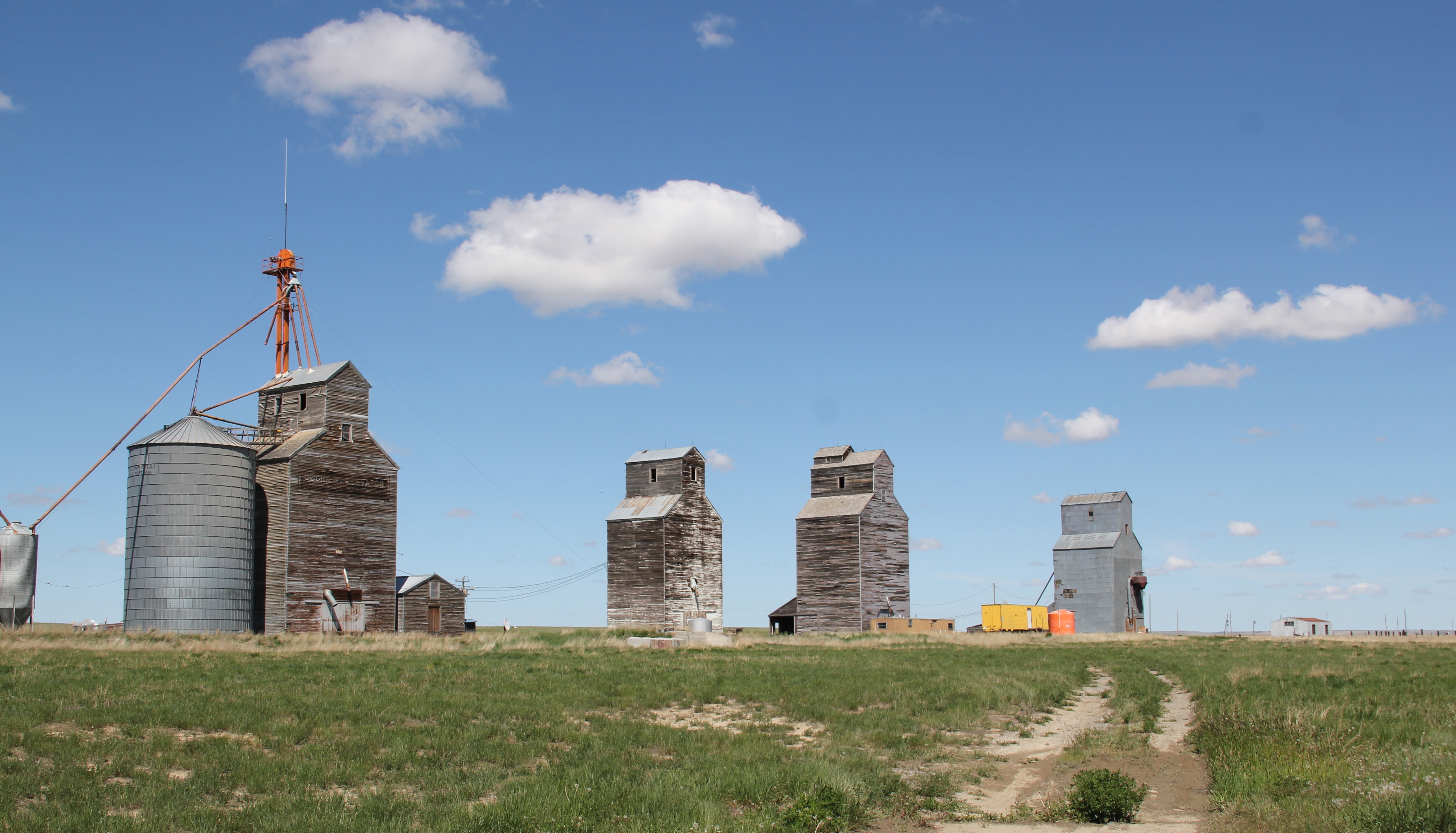
Thirty years ago geographer John Hudson wrote a series of articles and a book on the topic of “plains country towns,” addressing the landscape patterns he found among the railroad-established towns of the northern plains.  Ever since Hudson’s concept of plains country towns has influenced how I look at the Montana’s small towns.  Even in such river counties as Chouteau County where the Missouri River trade base of Fort Benton has dominated the county’s economy and population since the mid-19th century, you can still find the unmistakeable imprint of the railroad and the grain elevators that mark the presence of a town.

IMG_8832

Earlier in this blog I have discussed Square Butte (above) and Geraldine.  Today I want to review two other small towns, Highwood and Carter.  Highwood is the largest, counting

IMG_8873

just about 175 people in the last census.  Like most plains country towns, it has steadily lost population in the last 50 years.  In fact this weekend’s Great Falls Tribune discussed how the Highwood High School was going to forge a co-op for sports with Geraldine so both schools could continue to have basketball, volley ball and 7-man football, played at this tiny field in Highwood.

IMG_8875

IMG_8877

The Highwood School is no doubt the pride and center of this community, a place not often found by travelers nestled as it is in a gulch formed by Highwood Creek along Montana Highway 228.  It began in the 1880s as cattle country but with the coming of the railroad in the 1910s t became an outlet for grains, as its set of tall elevators makes apparent.  A small one-story false front building for the 1912 Highwood Mercantile Company also remains to mark the town’s railroad years.

IMG_8881

IMG_8880

Carter has one-third the population of Highwood–only about 50 people in the 2010 census–but is better known to travelers due to its location along U.S. Highway 87 between Great Falls and Fort Benton.  The Rocking K Bar is the roadside landmark but travelers

IMG_9334should turn south and drive down into Carter proper since the town, despite its tiny number of residents, still has many of the community institutions that defined a proper plains country town of 100 years ago.

IMG_9318

First, there is the still operating Carter Elementary School, probably the one institution that keeps the town alive–when country towns lose their school soon everything else goes too.

IMG_9319

Next comes the tracks, railroad depot, and the grain elevators–while not public institutions they do give the community commercial lifeblood, and as long as the trains roll by there remains an economic reason for Carter to exist.

IMG_9326

The depot has been moved from its original location paralleling the tracks, but this early 20th century standardized designed combination depot for the Great Northern Railway still stands–there were hundreds across the state in my survey of 1984-1985 and one of the more disturbing trends of the new survey of 2013-2015 is how many Great Northern depots are gone, eliminating from the landscape they once dominated.

IMG_9325

Faith too has remained in Carter, with the persistence of the town’s small vernacular styled gable-front little white Methodist church, although in its first generation several congregations had been established here.

IMG_9329

Carter also still has its Community Hall–an institution across the northern plains that defined hope and persistence in the years following the homesteading bust of the 1920s.
IMG_9331
Community halls too were more numerous in 1984-1985 than today–the building in Carter is a significant community link between past and present.

IMG_9330Finally there is the federal presence–marked by a concrete block post office from the last decades of the 20th century.  The threat a few years ago to close hundreds of rural post offices across the region brought new, and necessary, addition to role of post offices as modern community landmarks for plains country towns.

Admittedly, Carter is a place that hundreds roar pass daily as they drive U.S. Highway 87. But with its extant school, depot, brace of elevators, church, community hall, and post office, Carter is a valuable physical document of the plains country towns that once populated eastern Montana, serving as important way stations along the metropolitan corridors of rails and sidings that crisscrossed the west.

Circling Back to Rosebud, Montana

IMG_6998

Rosebud, Montana, is a small Northern Pacific era railroad town in Rosebud County.  A recent commentator on the blog asked for more about this town, admitting that a real loss had been a fire that destroyed its historic school from the turn of the 20th century.  But Rosebud has rebuilt a modern school and like any credible Montana town, students maintain a “R” for the school on a bluff outside of town, and when the football season starts this month, this tiny field will be full of spectators, family, and players.

IMG_6999

IMG_6995

One reason I liked Rosebud back in 1984-1985 was the town bar, which had great food.  I didn’t remember it as the Longhorn Bar, but that’s the name today and the place still is friendly and worth a stop along old U.S. Highway 10. Another blog reader reminded me that it has always been known as the Longhorn Bar–so that shows you what you can forget in 30 years plus of Montana field study.  Note also in this photo–at the far right in the background is the football field goal posts, a visual of how small the place is.

IMG_6992

Rosebud was never a major railroad town in this part of the Yellowstone Valley but it has kept its school, a handful of businesses, and its post office, which had been updated since my last visit here. It’s still an important part of the valley’s historic landscape. And an important intact 1920s section of the Yellowstone Trail–the initial transcontinental highway that followed the Milwaukee Road’s tracks into eastern Montana.

IMG_6993

Grassrange: Fergus County Crossroads

IMG_0025

Grassrange is a central Montana crossroads, where U.S. Highway 87 meets Montana highways 19 and 200, and it serves as the eastern gateway to Fergus County.  The wonderful vernacular roadside statement of “Little Montana”–an obvious homage to the much larger and more famous “Little America” in southeast Wyoming–reminds even the most oblivious traveler that you have reached a highway crossroads.

IMG_0028

As the name implies, this is ranching country, with several of the state’s most famous spreads nearby.  The school reflects the pride in ranching, witness its school emblem and name the Rangers.

IMG_0030

There is more than livestock to the history of Grassrange, as the elevators attest.  This is also farmers’ country since the early 20th century homesteading boom.  Yet Grassrange has never been a bit town itself.  It dates to 1883 when the first post office was stab listed to serve surrounding ranchers; the town still has its standardized 1970s post office building.

IMG_0020

IMG_0021

Grassrange has a definite sense of its past.  Despite its scant population–just over 100 in the 2010 census–it has a city park (top image of this blog) plus its own public interpretation of its history, literally carved from local hands.

IMG_0026

It also has surviving historic landmarks, from a false-front Masonic Lodge to a vernacular Gothic-styled United Methodist Church, to a well-worn one-block commercial building that, considering its add-ons and alterations, has served the community in several different ways over the last 100 years.

Fergus Co Grassrange masonic hall  - Version 2

IMG_0027

IMG_0022

Many rural Montana crossroads are little more than a combination bar/cafe/store/gas station today.  Grassrange has dwindled in size since my first visit in 1984 but it has kept its school and such community buildings as the church, Masonic hall, and city park.  It is home than the home of “Little Montana”; it’s a reminder of the precarious state of Montana’s small towns across the vastness of the northern plains.

Coffee Creek: More than a Romance Novel

IMG_9870

Coffee Creek, Montana, located on the high plains of northeastern Fergus County, is undoubtedly best known today as the backdrop for a series of Harlequin romance novels. The setting and the starkness of the landscape is probably not what you envision in a romance novel but it does convey the reality of what Coffee Creek was, and is, today.

IMG_9878

Coffee Creek was a railroad town, established in the same year as many of its neighbors, in 1913.  Unlike Denton to the east or Stanford to the south, Coffee Creek never grew beyond its booster beginnings.  Like the others it had a state bank, a post office, school, churches.  Today the post office remains–one of the best rural historic post offices of the region–but most everything else is closed.  The church is a well-kept example of early

IMG_9875

20th century vernacular Gothic design, but it no longer holds regularly scheduled services. It remains a community landmark.

IMG_9872

Another community landmark is the building above, which I believe is a Community Hall from the 1920s or 1930s.  Throughout rural Montana in the 1920s a movement began to build structures where the homesteaders who stayed could gather and have events, play basketball, or dance the night away.  New Deal agencies in the 1930s built many more, like the one this blog has already recorded in Sanders, Montana.  This building in Coffee Creek reminds me of the Sanders community hall–hopefully someone reading this blog can add details about it.

IMG_9874

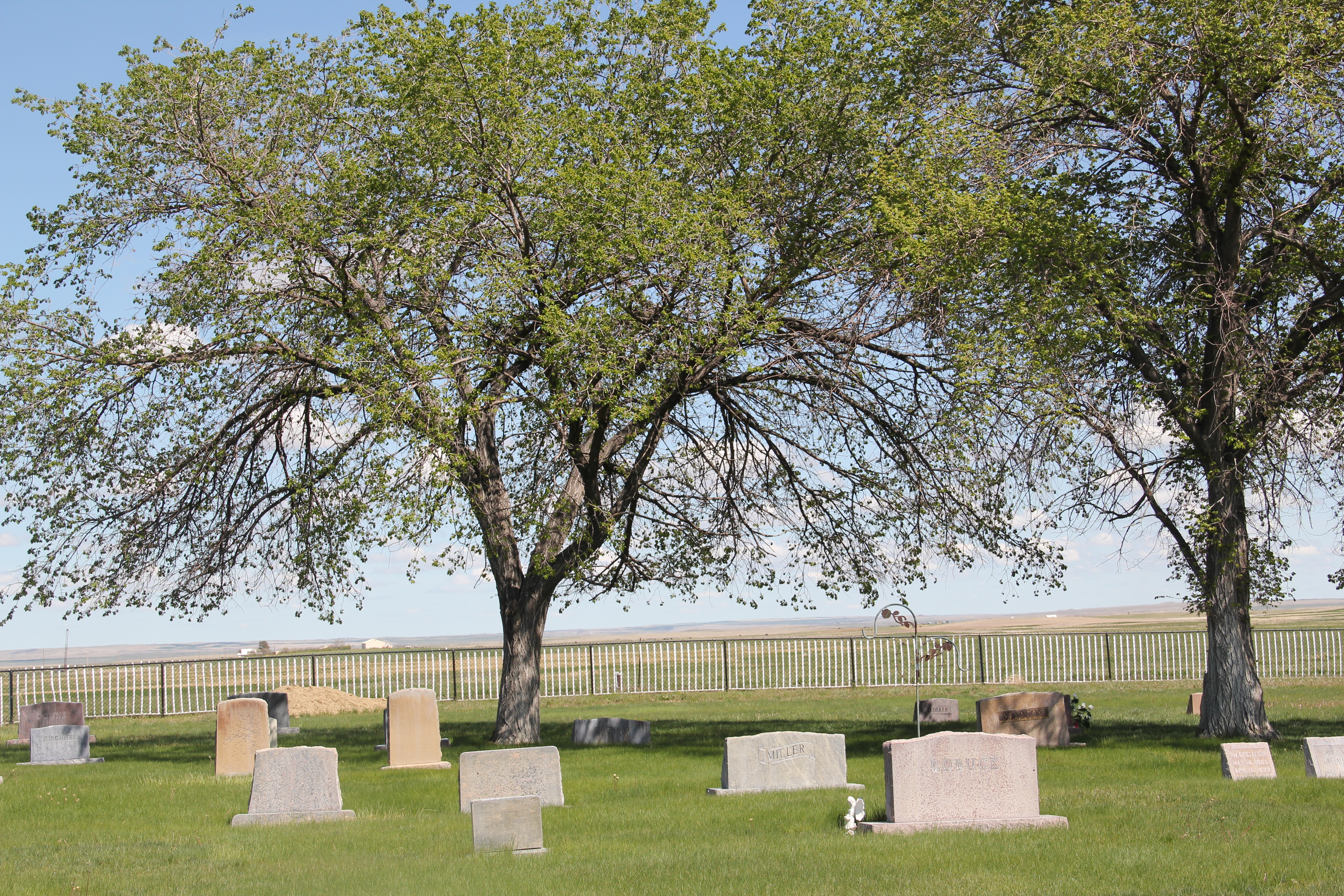
The volunteer fire hall, like the post office, is one community institution still in service to local residents and surrounding ranches as is the town cemetery, perched to the north, high on a hill overlooking the town, Highway 81, and ranches as far as you can see.

IMG_9871

As the buildings of Coffee Creek fade away, here the cemetery will record the names of those who staked out this place as their home, while those who return to pay their respects will keep the memories of this disappearing place alive for as long as they remember to return.

Denton: Fergus County’s Agricultural Trade Centers

IMG_9892

Fergus County, with Lewistown as the county seat, lies at the heart of Central Montana.  Although gold and other precious minerals were found at Maiden and other sites in the early years, the region grew once the railroads came at the turn of the century.  More than a dozen substantial agricultural trade centers, all connected to Lewistown by the rails, soon surrounded the county seat.  When I surveyed the region in the 1980s, the continued vitality of these towns impressed–and they still deserve a close look today.

Denton Fergus Co

In 1984 I came looking for railroad depots, frankly, but was blown away by the Farmers State Bank, one of the best “strongbox” style of small town banks I had encountered anywhere in Montana.  The town then was in a pattern of slow, steady decline, from a high of 435 residents in 1950 to 356 in 1980.  That rate in most Montana country towns meant that the bank was long gone–but here it remained and stood proudly along Highway 81.

IMG_9884

Thirty years later, the bank building still made its statement of permanence in materials (brick) and in style along the highway.  Indeed, the town’s population had continued to slip downward, especially in the last 20 years, reaching a mere 255 residents in the last census.  But the bank remains–and even has a new addition to the rear of the building.

IMG_9885

I passed by this iconic Fergus County building in late May of this year, just weeks after the completion of its merger with Dutton State Bank (another great building to be discussed later).  All was well: it remained one of Denton’s anchors.

IMG_9896The town’s schools are another important anchor.  The football field (see the first image) serves as the eastern gateway to Denton; the schools are bunched together as though they grew organically from that spot one hundred years ago and have evolved ever since.

IMG_9880

True, Denton and its neighbor to the west Coffee Creek celebrated their centennials in 2013.  And it was appropriate that a granary announced this fact since grain is king here. The elevators standing along the old Milwaukee Road line still boldly state the importance of agriculture to Denton. Even after the Milwaukee ceased operations in 1980 state officials worked with local governments and ranchers to create a new Central Montana line, which kept the elevators running, and in more recent times, has made Denton the western terminus of the popular Charlie Russell Choo-Choo excursion train.

IMG_9881

IMG_9882

Schools, a bank, and grain elevators are anchors but Denton also has maintained vibrant cultural institutions from its town library, housed in a brilliant c1960 building, and churches such as the historic Gothic-styled Our Savior Lutheran Church and St. Anthony Catholic Church.

IMG_9887

IMG_9897

IMG_9898

Residents also have kept the local Masonic Lodge in operation, housed in the 2nd floor of the post office building, which, due to its overall neoclassical style-appearance and corner lot setting, was probably a bank building built shortly after Denton became a town in 1913.

Fergus Co Denton post office and masonic hall  - Version 2

Toston: Another Northern Pacific Town in Broadwater County

IMG_7073

Toston has become a forgotten town of the Northern Pacific Railroad line as it stretched from Logan, in Gallatin County, through the headwaters of the Missouri River and into the broad Missouri River valley of Broadwater County. Today Toston is best known to travelers of U.S. 287 as a scenic stop on the Missouri River, and the access to Toston Dam reservoir, a project of the U.S. Bureau of Reclamation.

IMG_7069

The town’s heyday came early, especially with the discovery of pyrite goal ore at Radersburg to the west in the Elkhorn Mountains and the establishment of a smelter at Toston in the late 1880s.  In the 21st century the old smelter site has received a superfund clean-up and a large interpretive marker explains the smelter and its impact on both Toston and Radersburg, another good example of the much better public interpretation you can encounter on the Montana landscape.

IMG_7074

At the Missouri River fishing access, Montana Wildlife and Park erected another interpretive marker, a huge boulder marking the location of the Lorentz homestead.  William B. Lorentz was the Northern Pacific’s agent in Toston and he filed for a homestead along the Missouri south of the tracks in 1887.

IMG_7070

Toston had a second economic boom during the homesteading era when state officials decided to build a new steel truss bridge over the Missouri River.  The Toston Bridge was listed in the National Register of Historic Places in 2005.  Its interpretive marker records that state engineer Charles A. Kyle designed “a riveted steel Warren through truss design”

IMG_7072

for the bridge in 1918, with Security Bridge Company of Billings as the contractor.  The Billings company used 11 local residents, including William Lorentz, the former Northern Pacific station master. and the bridge was opened in the summer of 1920. Soon thereafter, the Bureau of Reclamation announced its intention to create a new irrigation project, initially called the Townsend Bench project. Reclamation officials designed a project for what they called 15,000 “excellent acres,” irrigated by a gravity system with the diversion dam located east of Toston on the Missouri River, identified today as the Crow Creek Pump Unit.  Consequently, Toston has several buildings remaining from the first two decades of the 20th century, including concrete block commercial buildings and the town’s most impressive building, a two-story frame school, which is now a private residence.

IMG_7079

IMG_7078

With the irrigation project came a set of large grain elevators, which in 1984 dominated the highway view of Toston along U.S. Highway 287. These have been demolished.  One historic church building, I believe it is a Methodist Church, remains but does not hold services.

IMG_7076

The Toston Bridge kept the town vibrant since its location meant that all traffic between Helena and Bozeman on U.S. Highway 287 passed over the bridge, over the tracks, and through the middle of town.  In 1955, however, a new bypass bridge was constructed and Toston began a decline that has slowly drained away most of its population.  At the 2010 census, it had 108 residents.

IMG_7080

Townsend: A Railroad Town on the Missouri River

IMG_9524

Townsend is a classic Montana crossroads town, with its historic heart, and primary commercial district, centered on the intersection of U.S. Highways 12 and 287.  But a closer look reminds you of the town’s origins as a railroad town, part of the Northern Pacific route, as it moved westward from Bozeman to Helena, Montana, along the valley of the Missouri River.  The town’s layout is a good example of a T-town plan, with Front Street (now U.S. 287) forming the top of the “T” while Broadway (U.S. 12) forming the stem, as shown above.

IMG_9529

Grain elevators and other light industrial and transportation-related buildings the lots between the railroad tracks and Front Street.  At the corner of the highway junction is one of the town’s oldest buildings, the Commercial Hotel of 1889, which still operates today as

IMG_9528

a bar and restaurant.  Historically this large two-story frame building, with hipped roof dormers creating even additional rental space under the roof, would have been an attraction for travelers and business people looking for a place just off the tracks, or later the highway. It is among a handful of late 19th century railroad hotels left in Montana.

IMG_7092

Broadway also had its historic landmarks, especially the neoclassical-styled State Bank of Townsend, which is listed in the National Register of Historic Places.  Dating to 1918, the building’s architect was the Albert Mooreman and Company firm from St. Paul, MN. The flanking two-story classical columns root the yellow brick building to its prominent corner lot–the bank’s survival into the twenty-first century is also a rarity in rural Montana.

IMG_7111

Broadway also has its mix of one- and two-story business buildings, from the American Legion and another Montana Mint Bar to the Professional Building of 1911.  Despite its proximity to both Helena and Bozeman, the town has retained its commercial vitality.

IMG_7107

IMG_7096

IMG_7112

At the end of the commercial district is the Broadwater County Courthouse, a mid-1930s New Deal project that has expanded significantly in the three decades since I carried out the original historic preservation plan survey in 1984-1985.  Its understated Art-Deco styling fits well its highway location.  And as to be expected in a “T-town” plan, its location at the end of Broadway, meaning the end of the stem of the “T” reflected well the comparative power between local government and the corporate power of the railroad.

IMG_9521

IMG_9522

Being a resident of Helena from 1981 to 1985, I passed through Townsend many times on my way east since US 12 was a favorite trek.  I noticed these major landmarks and the patterns of railroad town plans but I must admit that I never strayed off of either Front Street or Broadway, and that was a mistake.

IMG_7099

IMG_7103

IMG_7102

South of Broadway are several valuable late-19th or turn of the century Victorian-styled residences, some of which have found their champions and have been restored while others need that champion to see the potential jewel underneath decades of change.  One historic neighborhood school building–now a Masonic lodge–also remains, along with many different churches, most of which date to the second half of the twentieth century.

IMG_7105

North of Broadway is a notable exception, the Victorian Gothic styled Townsend United Methodist Church, again an important survivor from the town’s opening generation of history.

IMG_7110

Townsend also had a set of interesting bungalows from c. 1920 on U.S. 12 as it moves east of the courthouse.  These are made of concrete block, shaped to mimic stone masonry.  It was a popular technique to give a house a solid, permanent look, and you tend to find it more in the west than in the east.  Of course, Townsend was not far from the major concrete works at Trident–a topic for a later posting.

IMG_7119

IMG_7120

Last but not least Townsend, and Broadwater County, has an active historical society and local museum, established during the American Bicentennial in 1976–and expanding ever since at its location behind the county courthouse.

IMG_7123

A second look at Ringling

IMG_9499

Ringling, a stop along the Milwaukee Road in northern Meagher County just off U.S. Highway 89, served as the eastern gateway for the railroad’s move west into the Rocky Mountains along its electric line.  From Ringling the Milwaukee passed through the famous Sixteenmile Canyon then crossed the Missouri at Toston and began its ascent in the copper kingdom of Butte.

IMG_9512

I had last passed quickly through the village in 2011 and its iconic Milwaukee Road combination depot was weathered but appeared as if it would yet survive for sometime.  Within four years, however, its fate was much more uncertain.  Roof decking is missing–will this now rare survival of the railroad’s corporate stamp on the northern plains survive till the end of the decade?

IMG_9509

IMG_9508

Brumfield’s Garage is more an example of roadside architecture from the first half of the twentieth century than a building that dates back to the Milwaukee’s heyday.  Its vernacular interpretation of Art Deco styling by means of the four brick pilasters catches the eye–this adaptable property has been many things, and in my past visits has served as a store and as a bar.

IMG_9504

Ringling also retains its school–now a residence–another of the remarkable rural frame standardized designed schoolhouses found throughout central Montana. It sits south of the depot, as if the corporate and the public defined the north-south boundaries of the village.

IMG_9501

Still overlooking the town, and serving as an important landmark on U.S. Highway 89, is the historic Arts and Crafts-styled St. John’s Catholic Church, to which I have already devoted one post in this blog.  What I was pleased to find in 2015 is that some preservation work was underway–with weatherboards being repaired and replaced.  With a decent roof and a recent paint job, the church is in much better shape than many of its brethren across the region. The continued use of this Montana plains church as a “community church” is the best way to keep it alive in the 21st century even as the rest of Ringling shrinks and disappears from the Meagher County landscape.

IMG_9495

Geraldine: A Milwaukee Road Town that made it

IMG_8825

My last post looked at the disappearing towns of the Milwaukee Road in central Montana’s Meagher County.  Those themes of a railroad, town creation, and abandonment were constant in several posts as I traced the imprint  of the Milwaukee on Montana’s landscape in the 20th century.  However, not all central Montana plains towns tied to the Milwaukee Road have disappeared–Geraldine in Chouteau County is one of those exceptions.

Geraldine MR Depot Choteau Co

Milwaukee Road depot at Geraldine, c. 1998

Geraldine was established c. 1913 along a major spur line of the Milwaukee Road that connected its division point at Harlowtown to the much larger railroad transportation center of Great Falls to the north.  Due to the richness of the high plains agriculture of southern Chouteau County–the land south of the Missouri River–and the commitment of its citizens, Geraldine has remained generally solid through the decades.  According to census records, the town has never topped 400 residents, 375 being the largest number of residents, and now, according to the 2010 count, there are only about 100 less, a little over 260 residents.  Losing what amounts to 25-30% of the population over the 100 years sounds like a disappearing town, true, but in an eastern Montana perspective, it is not.  As this blog has documented at many places, too many plains country towns have lost 50% or more of their population in just the last 30 years.

IMG_8822

In the 1984-85 historic preservation survey, Geraldine impressed me for several reasons.  First was the dominating presence of the grain elevators, as seen above and with the first photo in this blog.  I had grown accustomed to Milwaukee Road towns where the corporate standardized design for the combination depot–a building that joined both freight and passenger operations–dominated the railroad corridor.  Here the elevators punctuate the skyline and loom over the town itself–the railroad created the need for them, certainly, but by the end of the 20th century the elevators were still viable businesses while the depot had become a local museum and community center.

IMG_8808

Then there was the town plan.  Milwaukee Road country towns were “T-plan” towns where the tracks, depot, and elevators defined the top of the T while the town’s business district formed the stem of the T.  Geraldine was a bit different, a tilted T-plan town, where the top

IMG_8818of the T, due to the railroad’s approach was slanted, giving Geraldine, compared to other Milwaukee towns, an off-kilter look.  Geraldine also still had business, although the number of independent places had diminished since 1984-1985.  Two key institutions today are

IMG_8817

the local state bank, a Classical Revival-styled two-story building from c. 1914 that is listed in the National Register of Historic Places as the First National Bank of Geraldine.  Unlike scores of other local institutions in the 1920s and 1930s, the Geraldine bank did not close its doors and continues to serve ranchers and town residents today.  It is a rock from Geraldine’s past that surely helps to define its future.  The same can be said for the

IMG_8823

Geraldine school–home of the Tigers.  This local school has several different building periods, as this image of its facade indicates, but maintaining a school district is vital to the town–plains country towns that lose their schools soon become abandoned places.

IMG_8815

Geraldine touches upon many key theme of eastern Montana history–in subtle yet significant ways.  It even lightly touches on another theme of this blog–Montana Modernism.  No one was much looking at the contemporary styled buildings of the late 1950s and 1960s in 1984-1985.  I was no exception.  But in the 21st century, we want to document those buildings and appreciate how the new architecture expressed the hopes of the post World War II generation.  Geraldine’s contribution is its United Methodist

IMG_8816

Church, with its particularly notable tall concrete bell tower, mixing a bit of tradition with the new look of the postwar generation.

IMG_8820

Geraldine of course has a classic western watering hole–Rusty’s Bar and Grill, completed with its front glass block windows.  It is highly recommended–not much on the outside admittedly but a full community experience on the inside.  Historic depot and bank, modern-styled church, unique town plan, and great bar:  more than enough reasons to come to Geraldine, not once but whenever travels take you between Great Falls and the Musselshell River Valley.

The Disappearing Act of the Milwaukee Road

2011 MT Meagher County 052

Montana State 294 is one of my favorite highways.  For Montana it is a short route, just around 30 miles between Martinsdale and where the road junctions with US 89 and meets up with Ringling.  But these 30 miles are packed–well in a Montana sense–with resources of the original mainline of the Chicago, Milwaukee, St. Paul, and Pacific Railroad (the Milwaukee Road) as an electric line, such as the roadbed that parallels the state highway above at Lennep–it now serves as a secondary dirt road for residents.
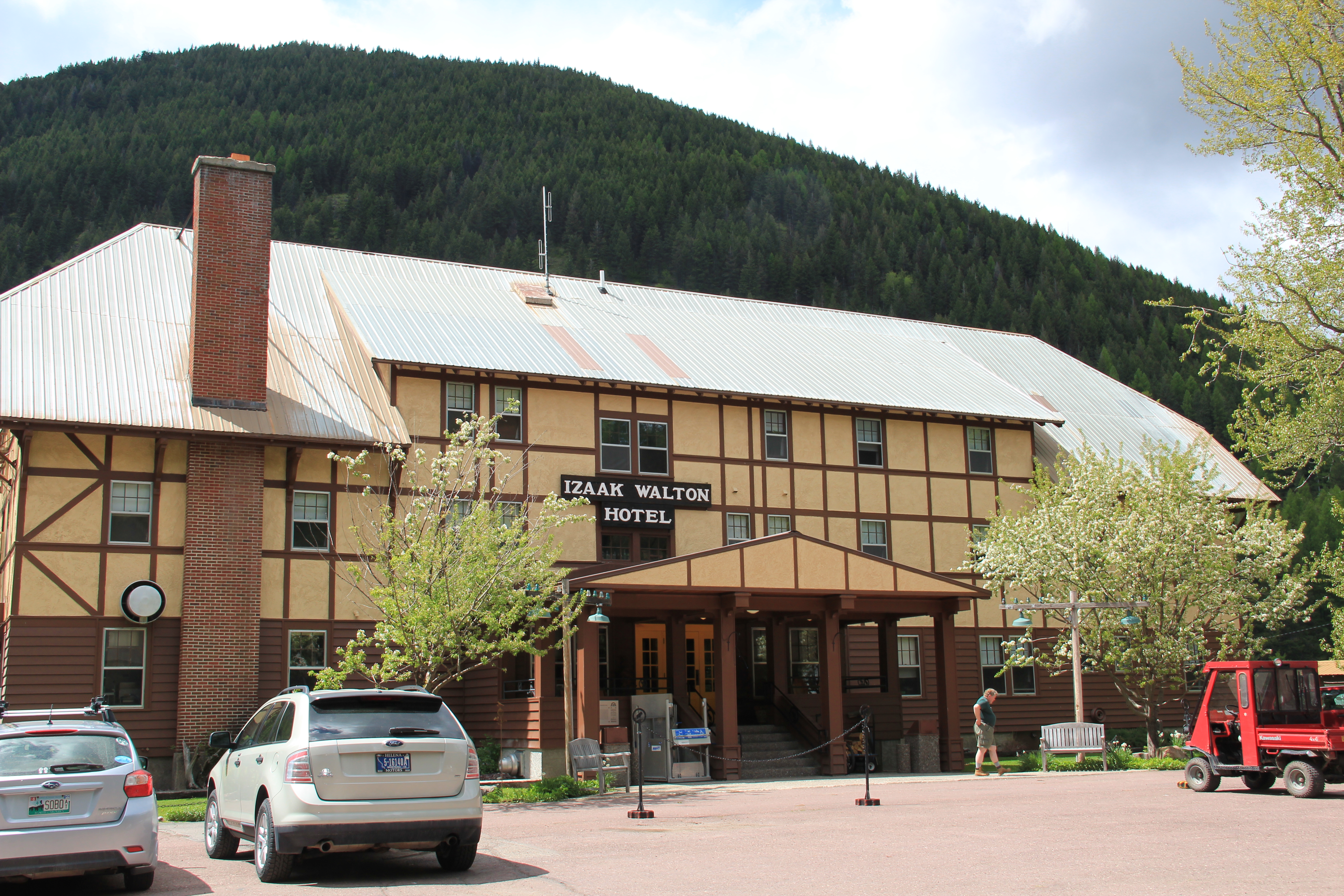
MR station

The Milwaukee maintained transformer stations about every 30 miles of its electrified tracks so AC power could be converted into DC current for its trains.  I apologize for the poor quality of my 1984 image of the station along Montana 294 but then it was still generating power for local use.  Thirty years later that had ended–the power lines were gone, taking away context from the building itself and leaving those who don’t know any better wondering why a big two story brick building was out here by itself.

2011 MT Meagher County 054

The station is about five miles west of Lennep, which I described in 1986 as “a tiny village where residents have preserved an old store and where the schoolhouse is still in use.”

2011 MT Meagher County 046

The school is now a residence and the store is still there, though not in business.

2011 MT Meagher County 045

The true landmark of the entire road is the Trinity Lutheran Church, built in 1910.  Its soaring Gothic bell tower, gleaming bright in the sun, is a beacon for anyone traveling along the road. It is one of my absolute favorite rural Montana churches and clearly eligible for listing in the National Register–as would be the entire remaining hamlet of Lennep.

2011 MT Meagher County 049

To the east of Lennep is Martinsdale, a tiny place that somehow has already managed two different blog posts about it.  Maybe that tells you that it too is a favorite place.  In 1984, its intact combination depot, what the Milwaukee called a “Standard Class A Passenger Station.”  This standardized design building, standing at the head of the town, spoke

IMG_9678

volumes of how the Milwaukee reshaped this landscape in the first decade of the twentieth century. But since this image from 2013 I have learned that the depot is gone–part of the roof decking was missing then so I am not surprised at the lost.  Just disappointed in the lack of vision of keeping this heritage asset together for the future.

IMG_1618

The news is not all bad from Martinsdale.  In 2013 the Stockmen’s Bank was listed in the National Register of Historic Places, only the sixth such place in Meagher County.  Yeah I know the photo above from 2007 shows it missing one entire bay from when it was converted from a bank into a garage.  But its brick construction and classical style made it

Renovations at the Stockman's Bank, 2013

Renovations at the Stockman’s Bank, 2013

a landmark in Martinsdale.  Can’t way to see its condition in 2015 because the town has several key buildings, and I just don’t mean the Mint Bar.

IMG_9679

I really mean the Martinsdale Community Center.  Rural reformers in the early 20th century pushed western communities to establish centers–where people could gather in a secular public space, vital for not only individual sanity but community togetherness in the dispersed population of the northern plains.  The center at Martinsdale has always been well maintained, and now that the depot is gone, it is the community landmark.

IMG_9675

Business, however, is not booming in Martinsdale.  The Crazy Mountain Inn serves as the local restaurant and lodging option, the older classic false-front Martinsdale Hotel is now shuttered.

IMG_9681

IMG_9676

Even classic roadside institutions like the town’s two historic service stations/garages have closed–their mid-20th century designs are reminders of the days when automobiles came this way in numbers.

IMG_9683

IMG_9680

Now let’s shift attention to the “eastern end” of this route, the town of Ringling, a place once of high hopes founded by the circus master John Ringling.  Like Lennep, the Ringling townscape is dominated by two elements:  the Milwaukee Road standardized depot–in

2011 MT Meagher County 056

better shape in 2011 than the Martinsdale station–and the sacred landmark that dominates the view from U.S. Highway 89 for miles:  St. John’s Catholic Church.  The church dates c. 1910 and is a wonderful example of Arts and Crafts style in an otherwise basic gable-front rural church building.  Although used much more sparingly today, it has been restored and maintained well.  It too is eligible I would think for the National Register.

2011 MT Meagher County 057

Montana 294, like the Milwaukee Road itself, is no longer a major artery–it wasn’t really in 1984 and it is even moreso in 2015.  But what remains is a reminder of how the Milwaukee Road shaped the state’s landscape for 100 years, leaving in its wake landmarks of transportation, engineering, architecture, settlement, and faith.