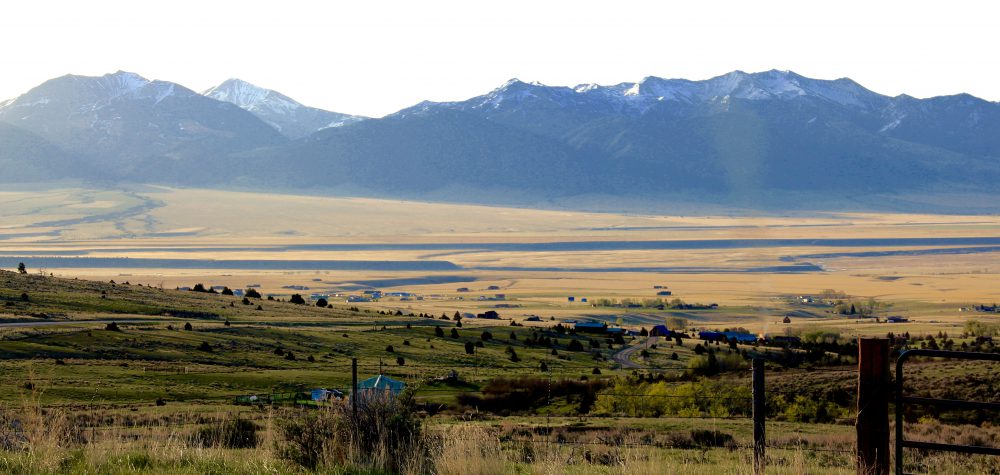
About 13 years ago, I made a quick stop at the Mountain View Cemetery in Big Timber. Located south of the interstate exit, next to the local historical society museum, the cemetery’s well crafted stone gates, walls, and stone office dated to a Works Projects Administration undertaking in the late 1930s.
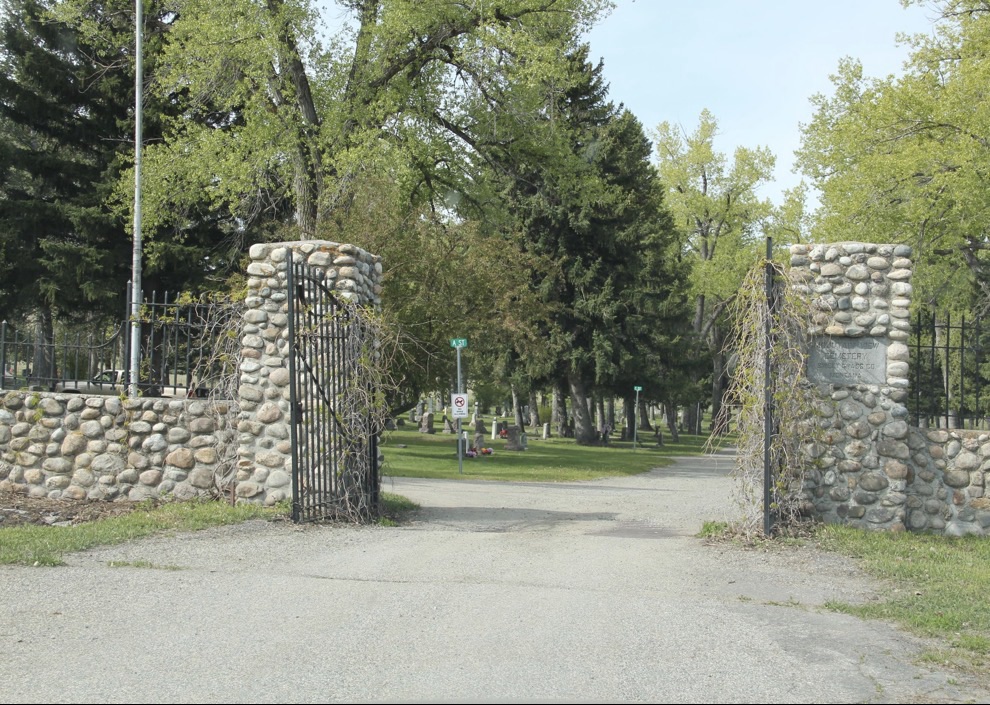
Thirteen years later, in the summer of 2026, I took the time to explore beyond the gates and found a quite fascinating place, full of interesting grave markers and stories.
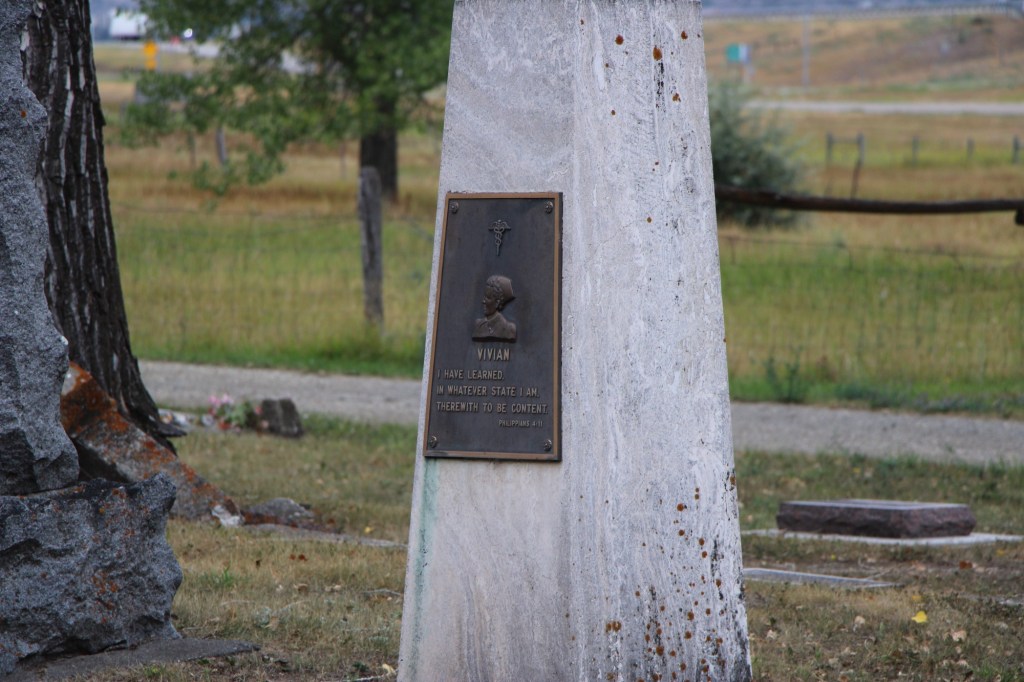
On the north side of the cemetery is a tall concrete obelisk dedicated to Vivian Ogilvie, who died in 1967. A native of Sweet Grass County, she graduated from high school and then worked on ranches around Melville. In about 1935 she moved to California to train as a nurse and made her career there before returning with her husband George Ogilvie to Big Timber in 1964.
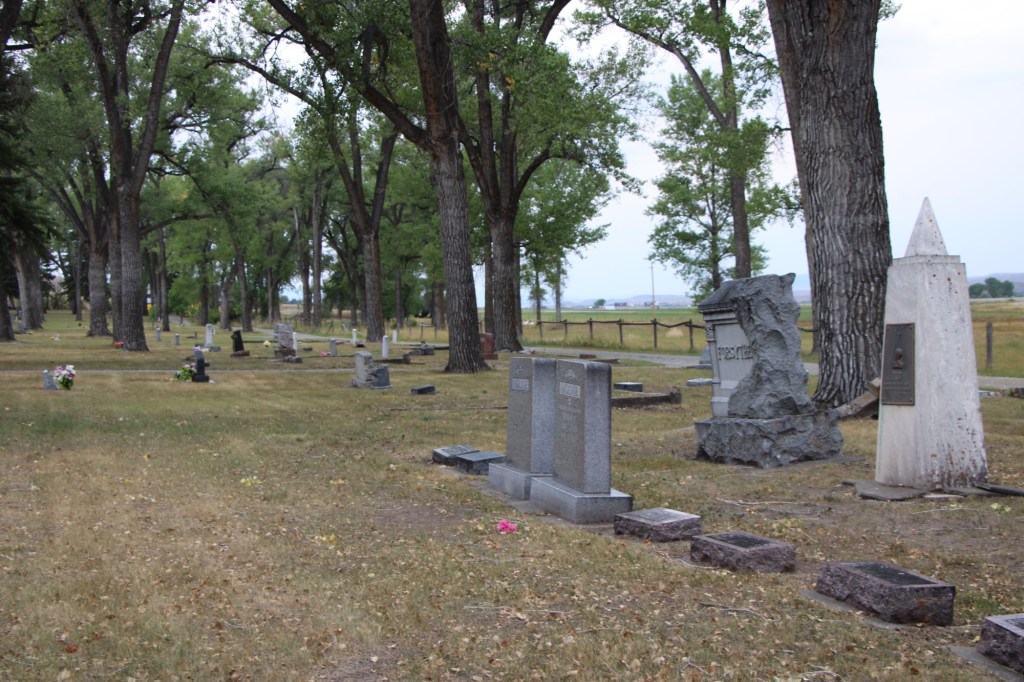
Adjacent to the Ogilvie markers is a large ornate granite marker for Santos Forsythe, who grew up in the Melville area. He died in 1918, at the age of 30. A member of the Elk lodge in Livingston, he received a heartfelt goodbye from his fellow Elk members at his funeral.
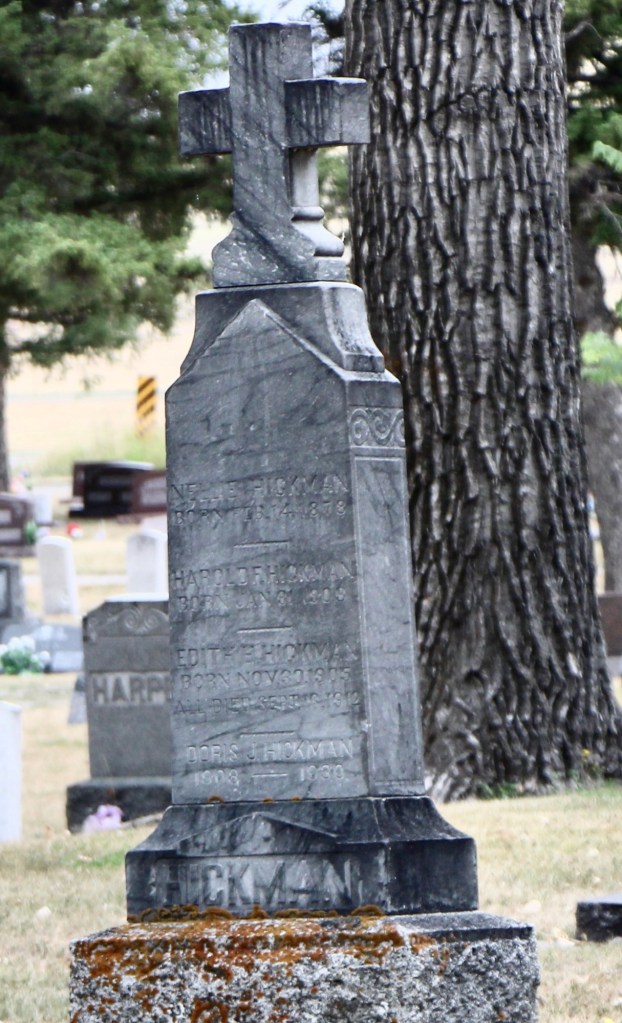
I next moved to the center of the cemetery to pay respects at the Hickman family, erected following the tragic and horrific death of Nellie Hickman and two children at their Sweetgrass County ranch.
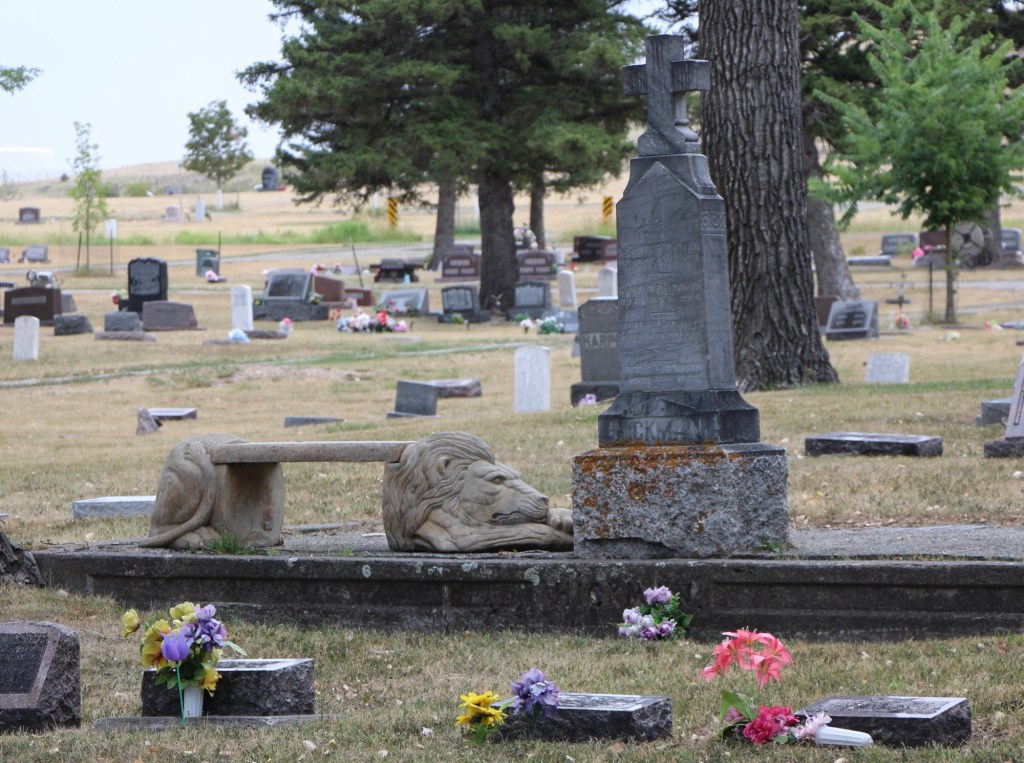
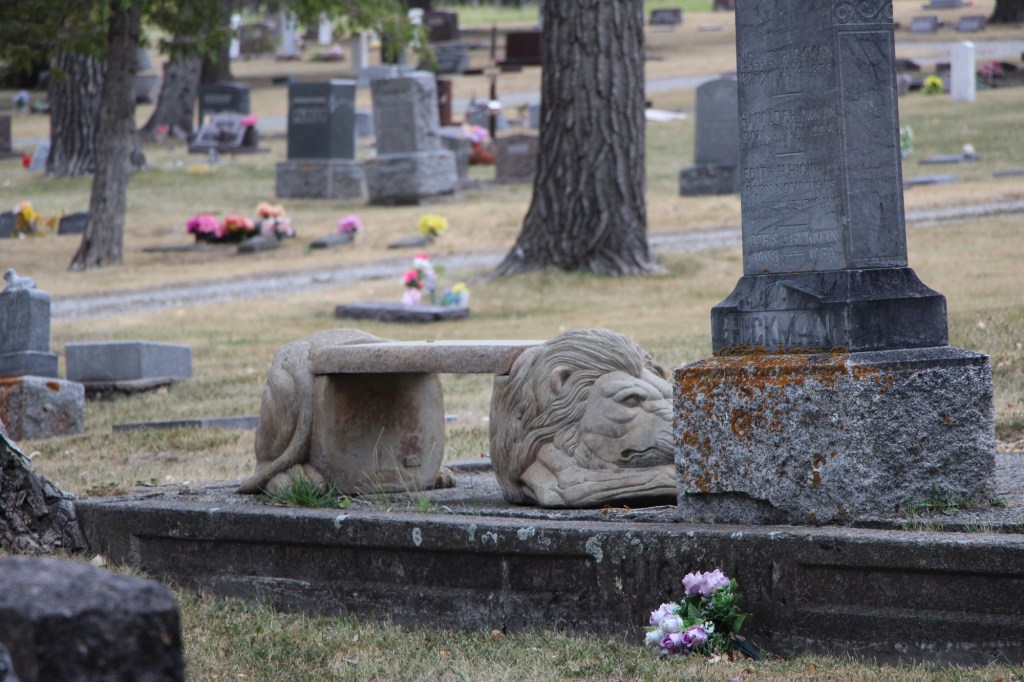
But much to my surprise—you had to rub your eyes—there was a new piece of cemetery furniture installed at the Hickman marker. On the east side was a bench in the shape of a lion. I have never seen anything like it in a Montana cemetery.
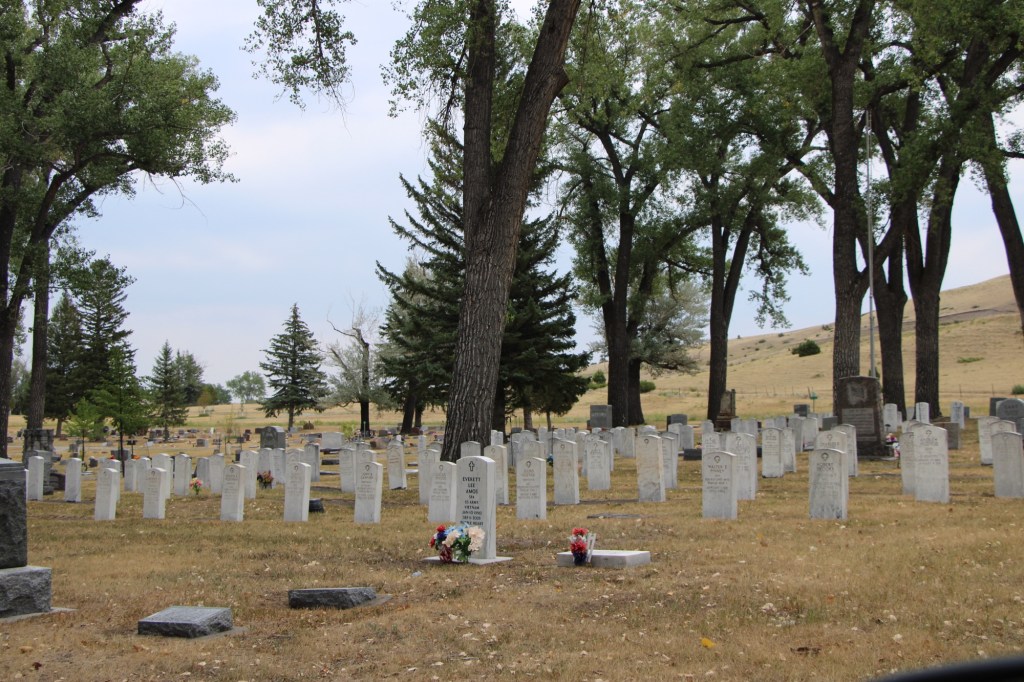
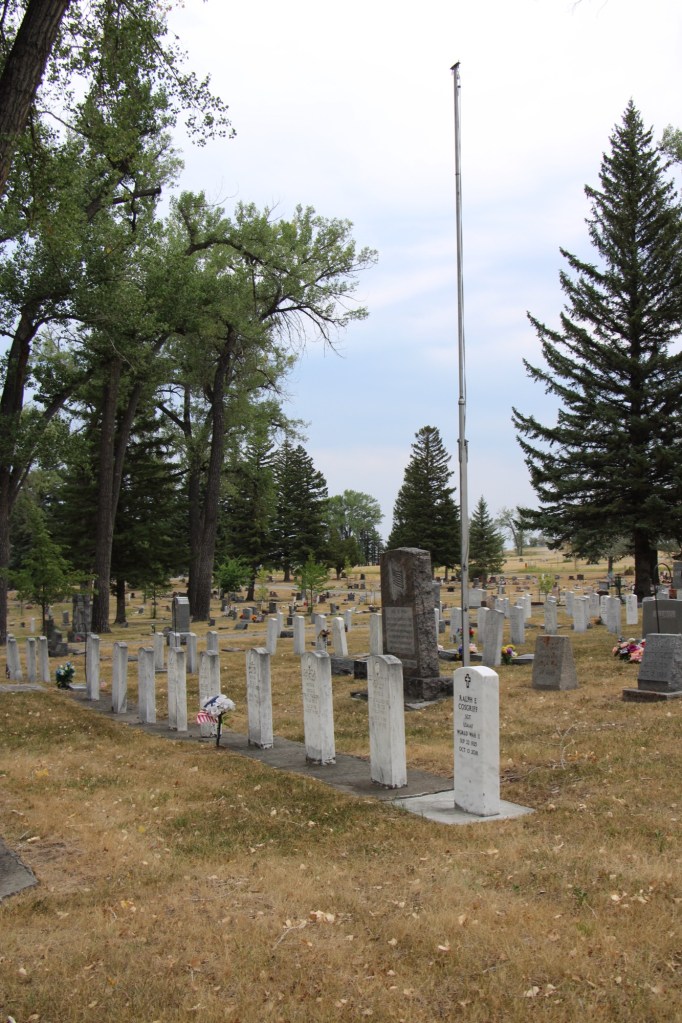
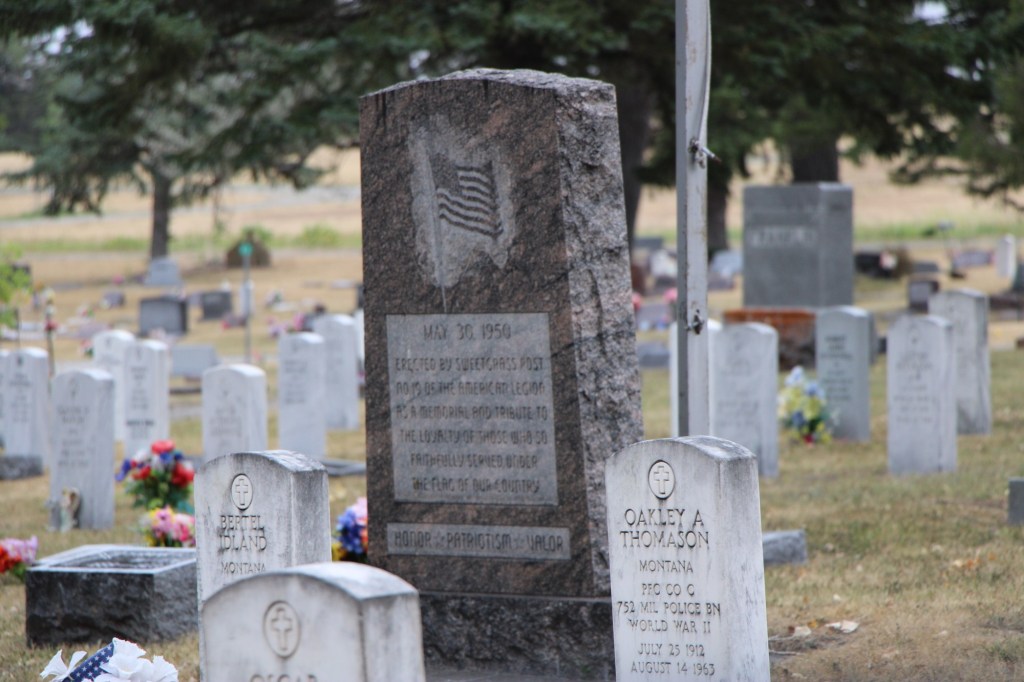
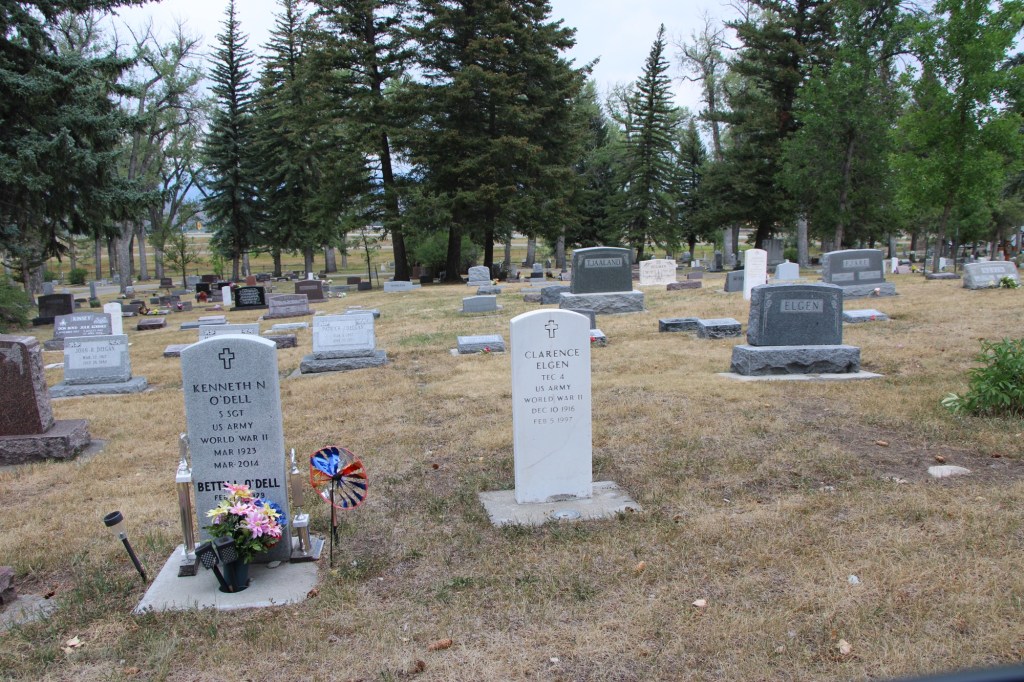
The dedicated veterans section is near the west end of the cemetery. The local American Legion chapter established this humble, respectful section in 1950.
U.S. veterans from the Civil War era are also found in earlier sections of the cemetery. Peter McMartin served in a Colorado unit. James Woods served in. West Virginia unit.
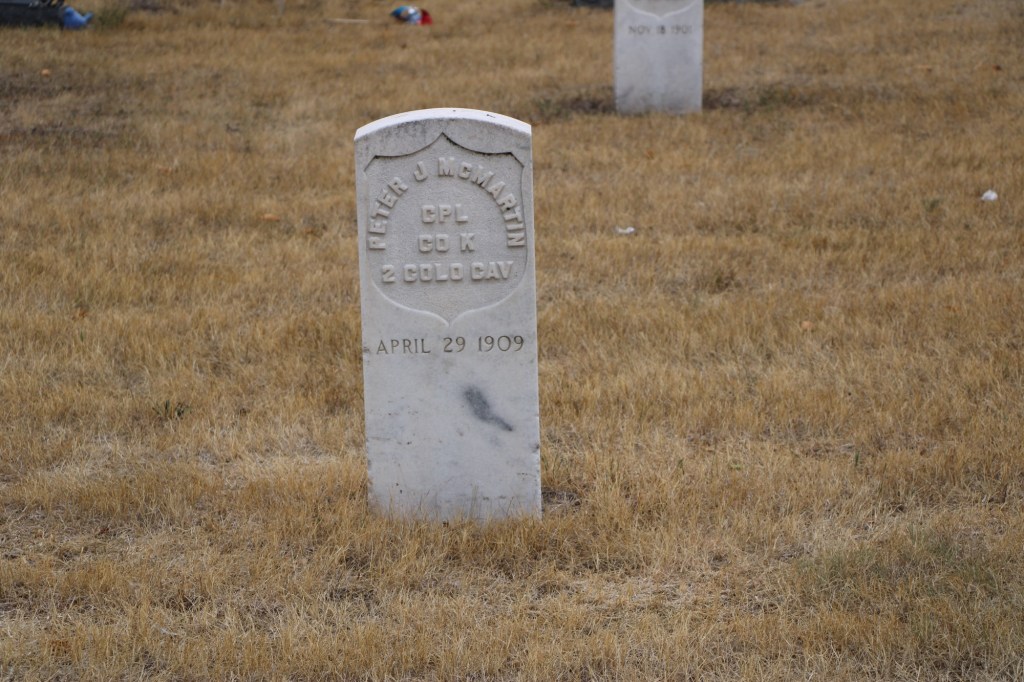
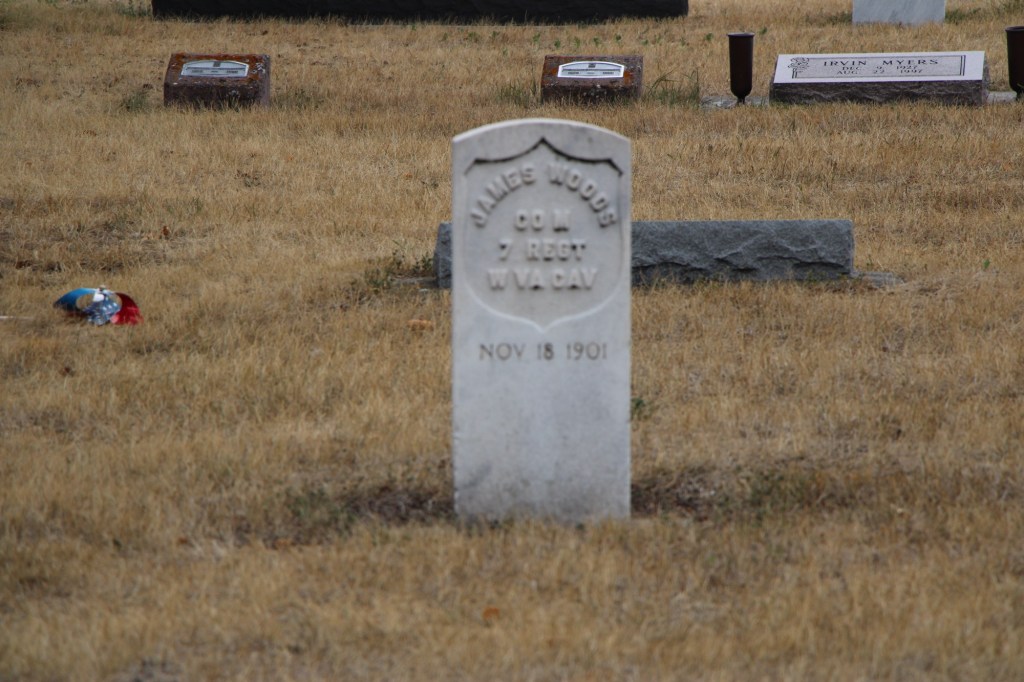
McMaster worked as a sheep herder in the county. He died in 1909. Woods left the South after the war and farmed in Minnesota marrying his wife Elizabeth in 1873. They were still in Minnesota in 1880 but after the construction of the Northern pacific railroad they moved west. Woods died in 1901.
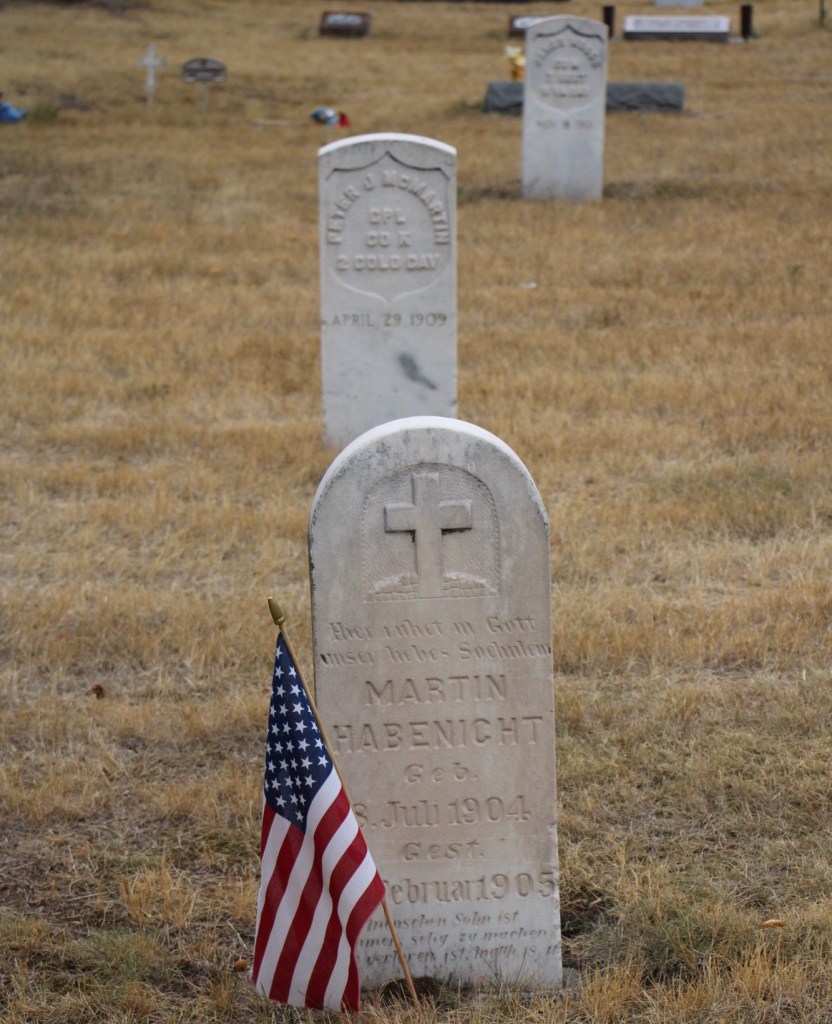
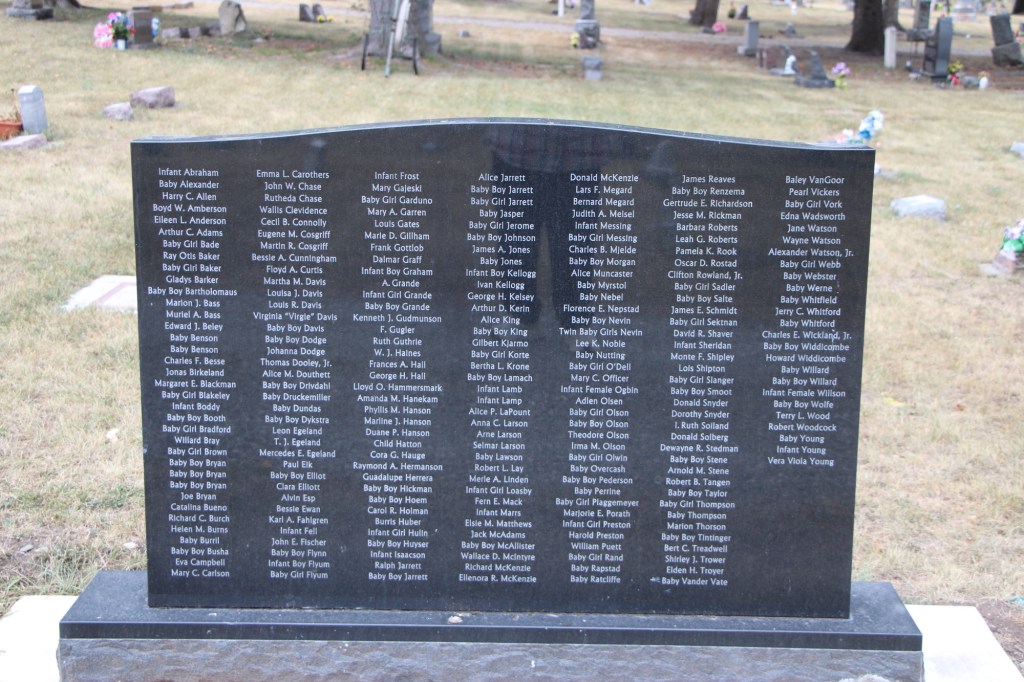
Nearby the two veterans is a beautifully carved child’s grave marker, Martin Habenicht who died only eight months old. Not far way, also in the cemetery’s west end, is a modern monument, to all of the children buried in the cemetery who did not have a tombstone.
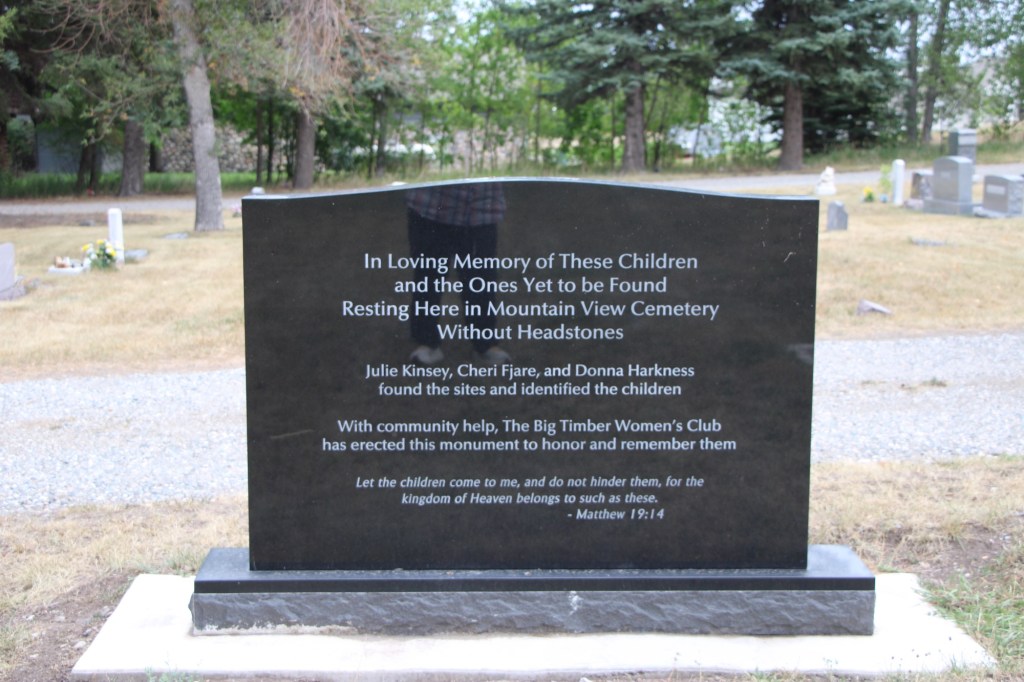
What a commendable effort to identify all of these children! One side credits the hard work of three women and the support of the Big Timber Women’s Club. The children names are on the reverse side.
The cemetery is well maintained and watered. It is a restful place to visit although traffic noise from the nearby interstate interrupts quiet reflection.
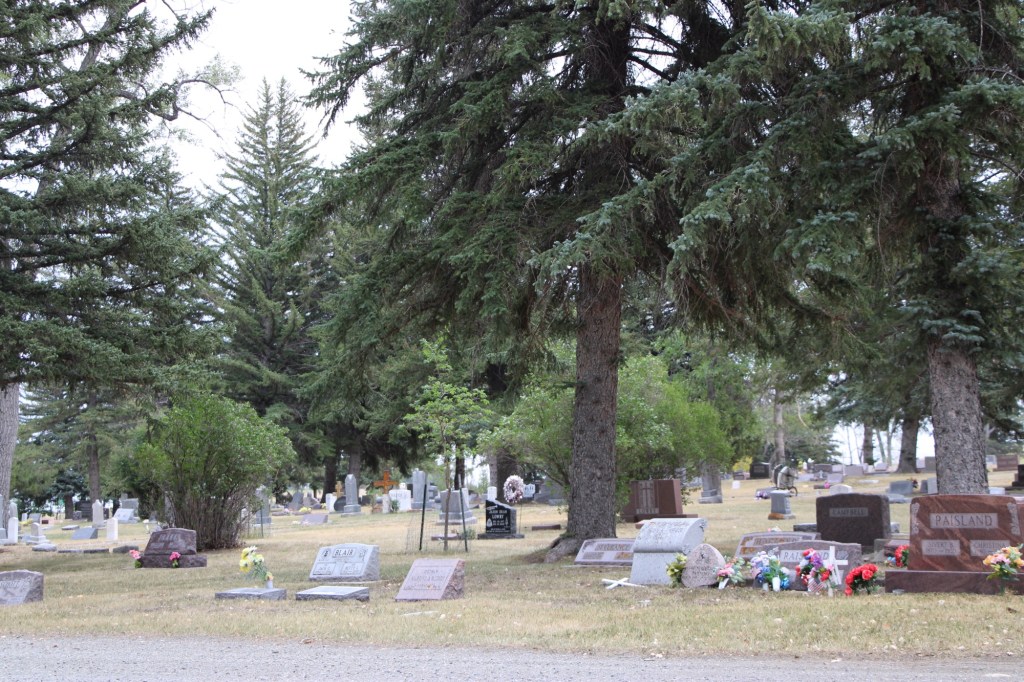
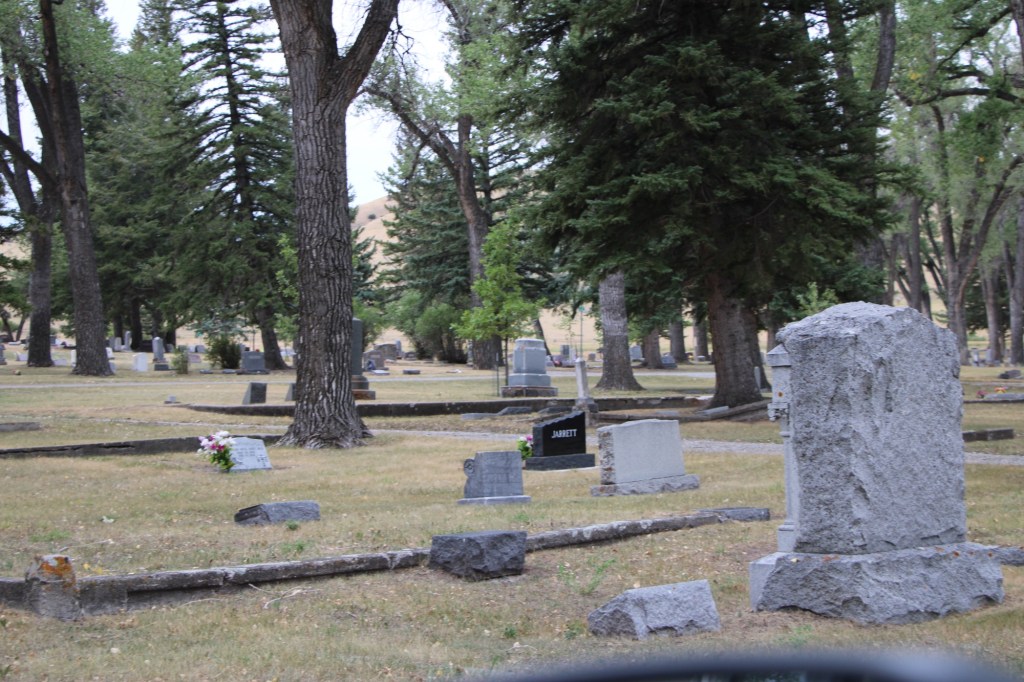
Family plots are scattered throughout as subscriptions helped to pay for the cemetery’s creation. Many are adorned with beautiful markers.
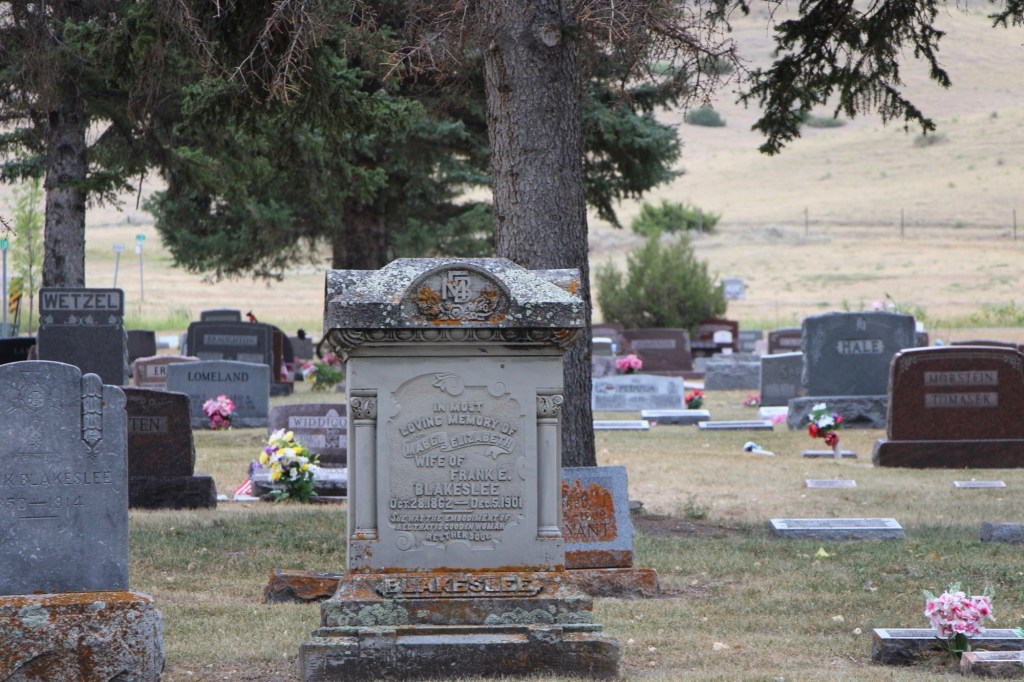
Mabel Blakeslee died in 1901. She and her husband Grank operated the Blakeslee Hotel and were considered among the pioneers of Big Timber.
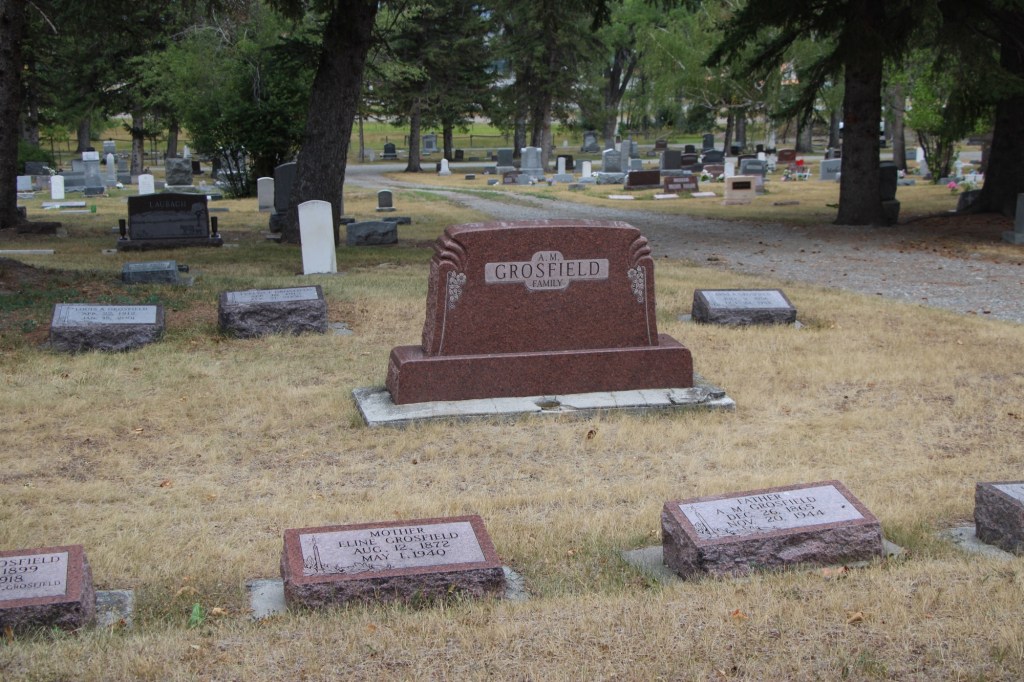
A stylish Art Deco style gravestone marks the plot of Abraham Grosfield’s family plot. He and his wife Alena emigrated to the United States in 1883. They were ranchers in the county. Alena died in 1940 and Abraham died in 1944. At his funeral at the Big Timber Lutheran Church, the minister sand a hymn in Norwegian.
Many more stories await exploration at this special place in Big Timber.