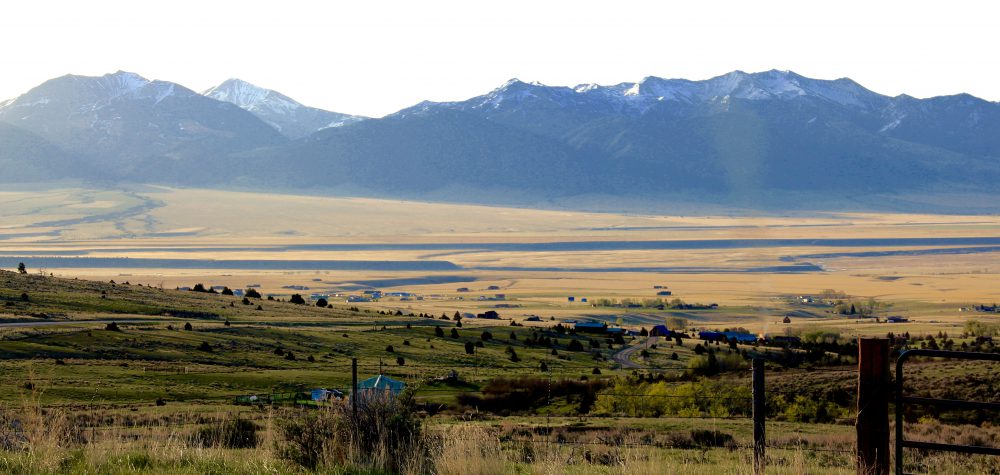
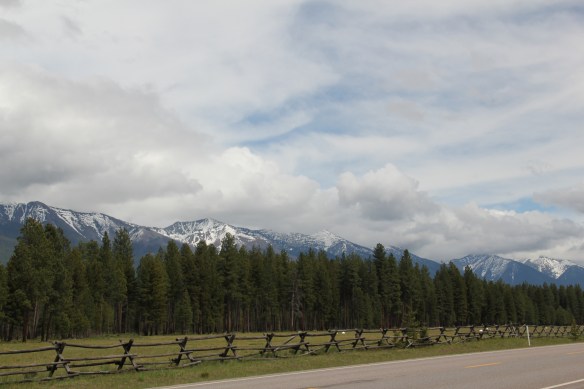
 Missoula County has grown, a lot, since my state historic preservation plan work in 1984-1985, especially in the county seat of Missoula and surrounding suburbs. Yet Missoula County still has several spectacular rural drives, like Montana Highway 83 above at Condon, along with distinctive country towns. This post will share some of my favorites.


Let’s just stay at Condon. The Swan Valley Centre–it was just a general store back in the day–still operates, providing for locals and in the summer the tourists who are flocking to Seeley Lake or passing through on the way to Glacier National Park or Flathead Lake.

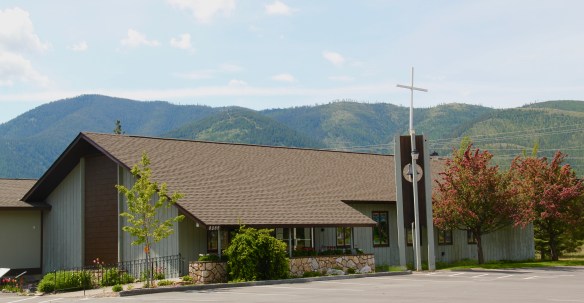
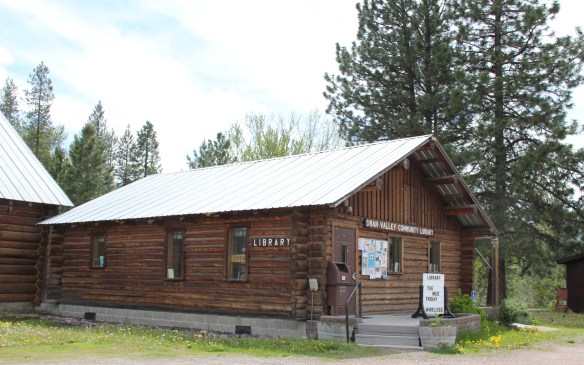 The Condon Community Center and adjacent Swan Valley Community Library serve as additional hubs for those living along the lakes and mountains of northeast Missoula County. Both buildings are excellent examples of mid-20th century Rustic style–a look that, in different variations, dominates the Highway 35 corridor.
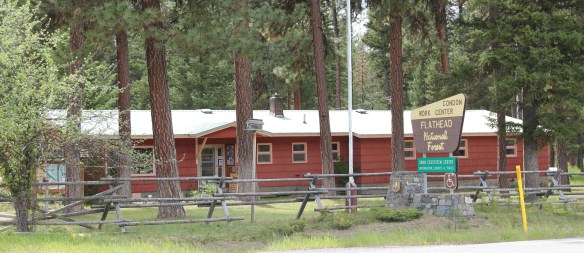
 Condon is also the base for the Condon Work Center, home to the Great Northern Fire Crew, of the Flathead National Forest. Here you can take a mile-long Swan Ecosystem Trail and learn of the diversity of life in this national forest region.
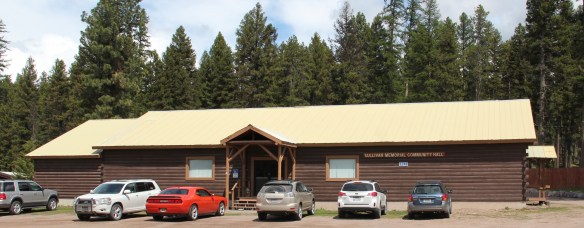
 South of Condon on Montana Highway 83 is Seeley Lake–a place that certainly has boomed in the last 30 years–witness the improved highway, new businesses, and population that has increased over 60 percent since my last visit in 1992. Yet it still had places rooted in the community’s earlier history such as the Sullivan Memorial Community Hall–a good example of mid-20th century Rustic style.
 And it had added one of my favorite bits of roadside architecture in this part of Montana: the Chicken Coop Restaurant as well as opening a new Seeley Lake Historical Museum and Chamber of Commerce office at a spectacular highway location just outside of town.


Let’s stay in the mountains but go northwest of Missoula to the historic Ninemile Remount Depot of the U.S. Forest Service. In earlier posts I have praised the historic preservation work of the Forest Service at various places across Montana–30 years ago it might have been like pulling teeth to have forest service managers to recognize the many heritage assets under their jurisdiction but no more. The Forest Service has done right by many of its National Register historic places, with Ninemile Depot being a particularly good example. It is listed in the National Register of Historic Places.
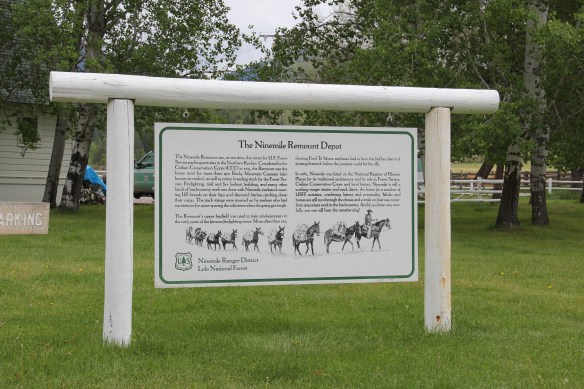
In 1984 too few of us were focused on resources coming from the New Deal era. When I was at Ninemile in 1984 I was looking for the historic school house–and was pleased 30 years later to find that it stood, and had been converted into a residence.
 I don’t recall even thinking about the forest service facility, but here was an entire complex devoted to the forest service’s use of mules and horses before the days of the ATV that was built by the Civilian Conservation Corps. The remount depot is an interesting


mix of restrained Colonial Revival styled offices and residences combined with a early 20th century functional aesthetic for the various barns and work buildings, which could have come straight from the USDA’s standardized plans for farm buildings of that time.


If you want to explore how the New Deal transformed the Montana landscape, the Ninemile Remount Depot is a must stop. It has a museum about what has and still happens here and campgrounds are located nearby in the national forest.
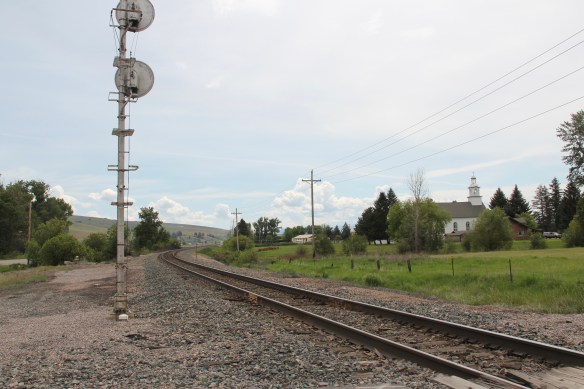
Frenchtown is a Milwaukee Road railroad town closer to Missoula and the city’s sprawl to the northwest has impacted the town, as evident from the new school complex. When I visited in 1984 the town was a paper mill town. Waldorf Paper Products Company opened the mill in 1957, but a successor company, Smurfit-Stone, closed the mill in 2010. At that time the town had experienced a significant population boom, having grown from 883 in 2000 to over 1800 in 2010.
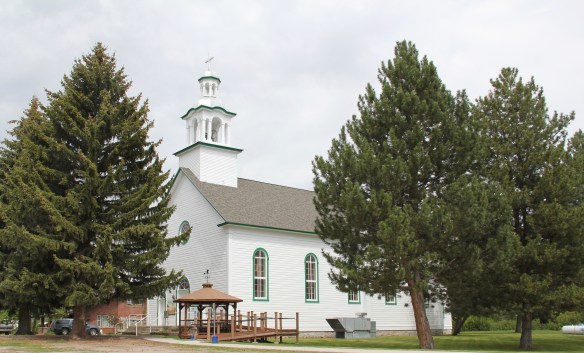
 The name Frenchtown dates to 1868 and is a reference to a number of French Canadians who moved here in the early settlement period. A National Register-listed church, the St. John the Baptist Catholic Church (1884) marks that first generation of settlers. Its classical-tinged cupola has long been the town’s most famous landmark.
 The Milwaukee Road built through here in 1907-1908 and there remains a handful of historic business buildings from the time of the Milwaukee boom. There is one landmark

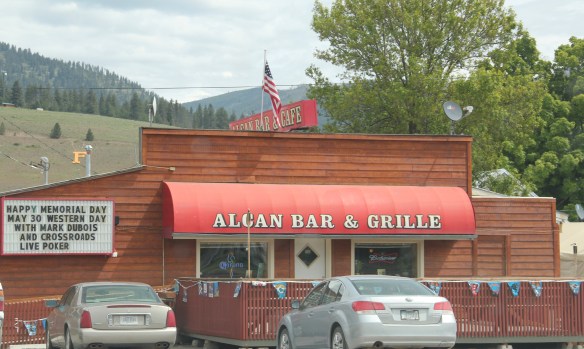
from the paper mill days that I recall from my work in 1984–because I stopped here for a break back then: the Alcan Bar–and note the “F” for Frenchtown on the hill behind it.
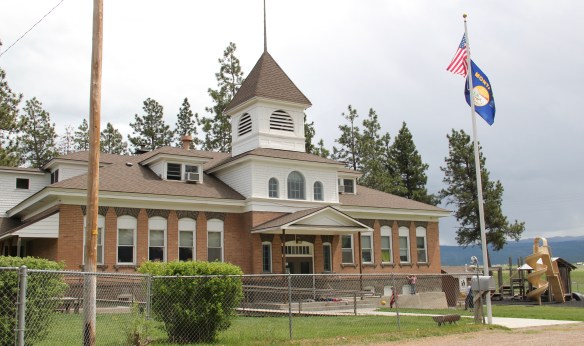
Evaro is also northwest of Missoula, more north than west along U.S. Highway 93. The highway’s four-lane expansion has changed so much of the roadside landscape between this place and Hamilton far to the south. Yet Evaro still has its c. 1930 one-room school, which is now the community center, helping to preserve this historic building. And its has
 another roadside landmark–the Bucksnort Bar, just further evidence to add to the Chicken Coop and the Alcan that you won’t go hungry if you explore the small towns of Missoula County.


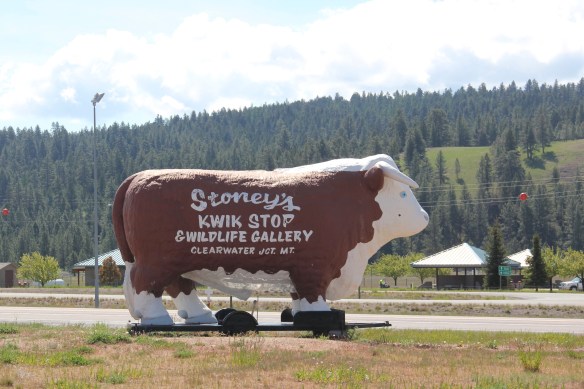
 It is a land watered by the river, framed by the mountains, and famous for its beef–which they even brag about at the crossroads of Montana Highways 200 and 83.
 But soon after passing the junction, you enter a much different landscape, particularly at the point where the Blackfoot River meets the Clark’s Fork River. This is an industrial world, defined by the company town design of Bonner and the active transportation crossroads at Milltown. Suddenly you shift from an agricultural landscape into the timber industry, which has long played a major role in the history of Missoula and northwest Montana.
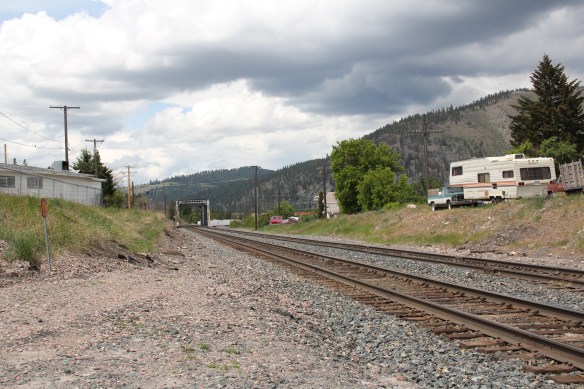 In 1881 the Northern Pacific Railroad was approaching the river confluence. It contracted with a company led by E. L. Bonner, Andrew Hammond, and Richard Eddy to supply everything the railroad needed but steel as it passed through the region. Two years later the railroad provided the capital for Bonner, Hammond, Eddy, and M.J. Connell to establish the Montana Improvement Company. In c. 1886 the improvement company dammed the rivers and built a permanent sawmill–the largest in the northern Rockies, and created the town of Bonner. The sawmill works and town would later become the Blackfoot Milling and Manufacturing Company and eventually by the late 1890s it was under the control of Marcus Daly and his Anaconda Copper Company. Anaconda ran Bonner as a company town until the 1970s.
 Although buildings have been lost in the last 30 years, especially at the sawmill complex which had a disastrous fire in 2008 and a heavy snow damaged another historic structure in 2011, I found Bonner in 2014 to remain a captivating place, and one of the best extant company towns left in Montana.
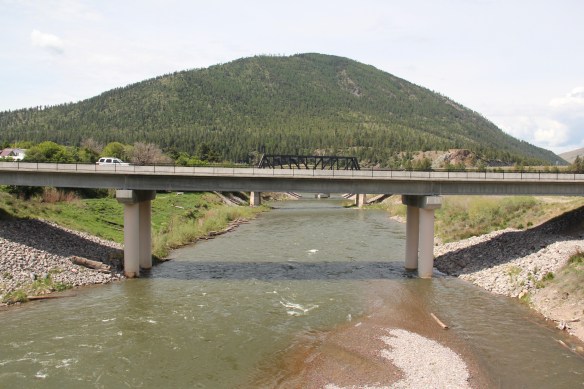 Montana Highway 200 passes through the heart of Bonner while Interstate I-90 took a good bit of Milltown when it was constructed in the 1970s. Both Bonner and Milltown are heavily influenced by transportation and bridges needed to cross the Blackfoot and Clark’s Fork rivers.
 The Milltown Bridge has been restored as a pedestrian walkway over the Blackfoot River. It is the best place to survey the Blackfoot Valley and the old sawmill complex.
 The pedestrian bridge and heritage trail serve as a focal point for public interpretation, for the Lewis and Clark Expedition, the Mullan Road, and then the lumber industry, which all passed this way over time, a conjunction of rivers and history that lie at the heart of the local and state (Milltown State Park) effort to interpret this important place.


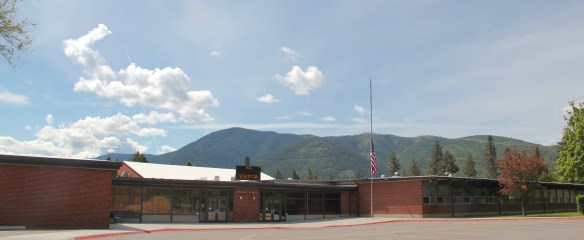
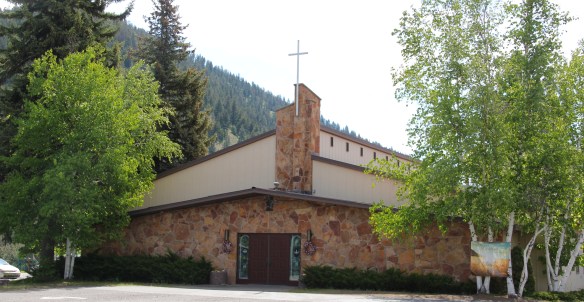


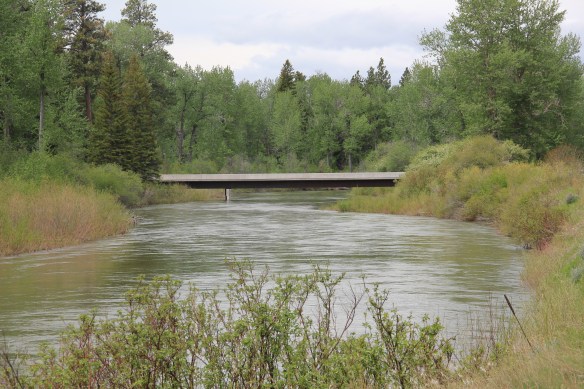 Between Garrison Junction, where U.S. Highway 12 and Interstate I-90 meet, to Elliston, at near the Mullan Pass over the continental divide, is a beautiful, historic valley carved by the Little Blackfoot River. It is a part of Powell County that hundreds whiz through daily as they drive between Missoula and Helena, and it is worth slowing down a bit and taking in the settlement landscape along the way.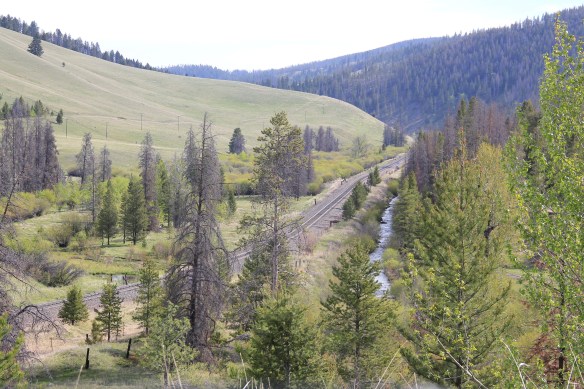
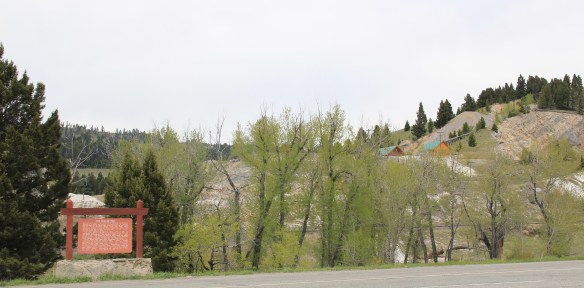 Captain John Mullan came this way shortly before the Civil War as he built a military road between Fort Benton and Walla Walla, Washington. A generation later, in the early 1880s, the tracks of the Northern Pacific Road used the Mullan Pass to cross the divide and then followed the Little Blackfoot River west towards Missoula.


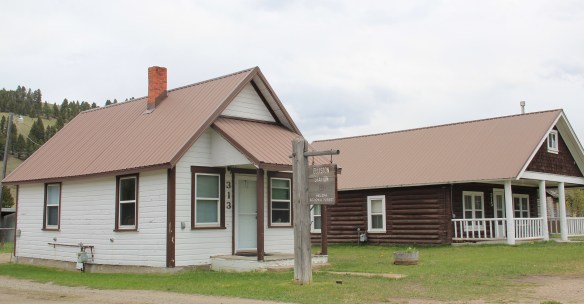
 The oldest federal imprint in Elliston comes from the ranger’s headquarters for the Helena National Forest in its combination of a frame early 20th century cottage and then the Rustic-styled log headquarters.
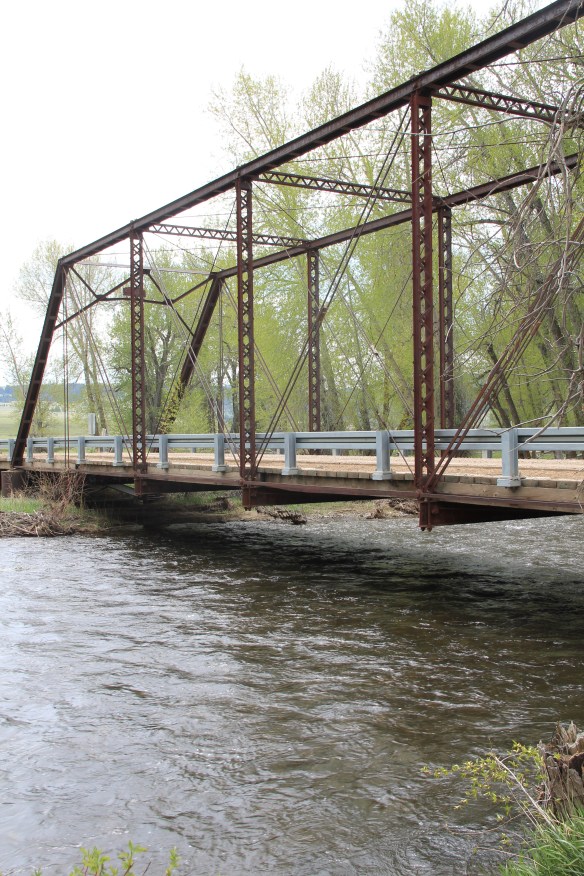
 The next railroad town west is Avon, which is also at the junction of U.S. Highway 12 and Montana Highway 141 that takes travelers northwest toward the Blackfoot River. Like Elliston, Avon has several buildings to note, although the National Register-listed property is the historic steel truss bridge that crosses the Little Blackfoot River and then heads into ranch territory.
 The bridge is a Pratt pony truss, constructed in 1914 by contractor O.E. Peppard of Missoula, and little altered in the last 100 years. As the National Register nomination notes, the bridge’s camelback trusses are unusual and have not been documented in other Montana bridges from the early 20th century.
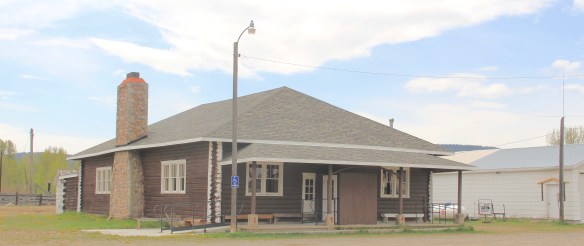
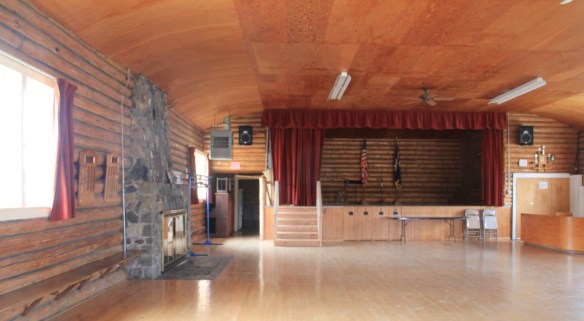
 Avon has another clearly National Register-worthy building in its 1941 community hall, a late New Deal era building, which has served the community in multiple ways, as a meeting place for the Avon Grange, a polling place, and a place for celebrations of all sorts, including stage presentations and bands.
 The Avon School also has a New Deal era affiliation, with the Works Progress Administration. Although remodeled in the decades since, the school still conveys its early 20th century history.
 Avon even has its early 20th century passenger station for the Northern Pacific Railroad, although it has been moved off the tracks and repurposed for new uses.
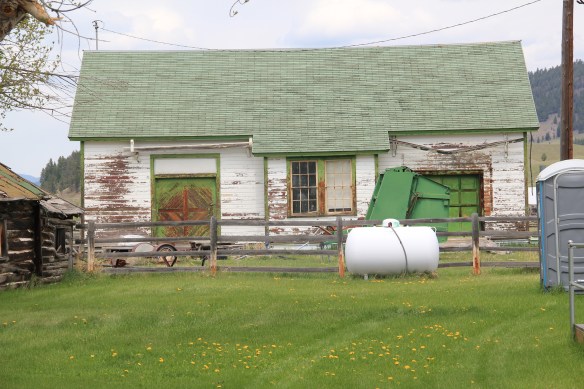 In front of the depot is the turn of the 20th century St. Theodore’s Catholic Church. The historic Avon Community Church incorporates what appears to be a moved one-room school building as a wing to the original sanctuary.


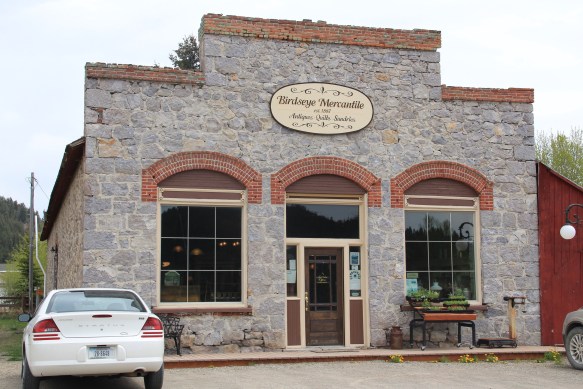 Another important property in Avon, but one I ignored in 1984-85, is the town cemetery, which also helps to document the community’s long history from the 1880s to today.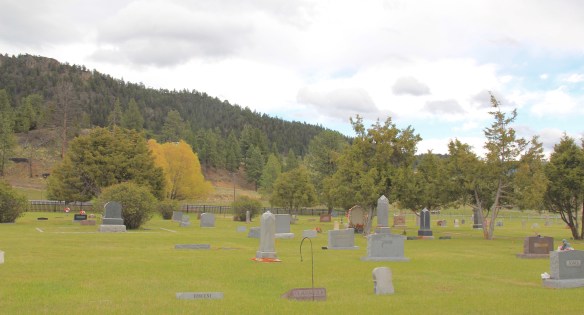
 Heading west from Avon on U.S. Highway 12 there are various places to stop and enjoy the river valley as it narrows as you approach Garrison. I always recalled this part fondly, for the beaverslide hay stackers–the first I encountered in Montana in 1981–and they are still there today, connecting the early livestock industry of the valley to the present.


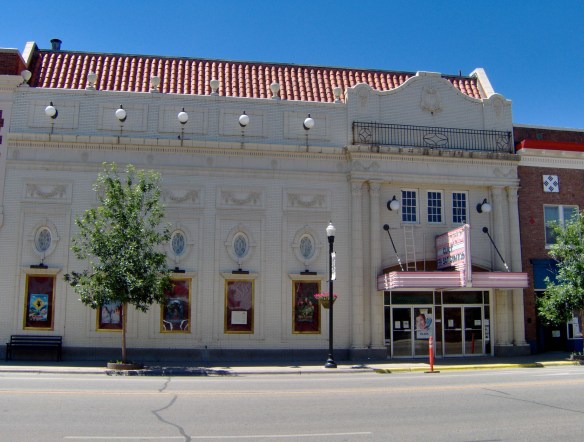
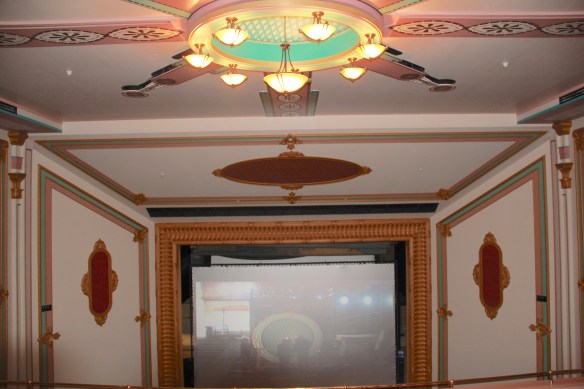
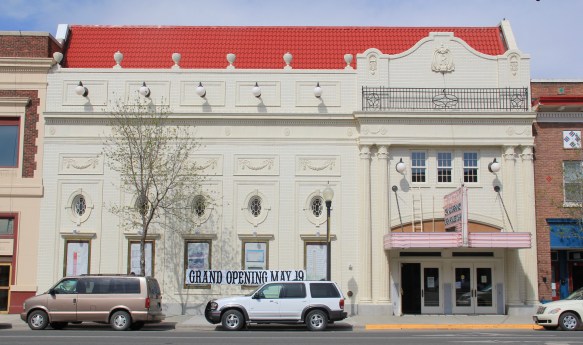 Imagine my pleasure to be there for the theatre’s grand opening May 19, 2012. Not only had the community raised the funds to repair and reopen the business, they also took great pains to restore it to its earlier architectural glory. Such an achievement for a town of just over 3,000 residents–when you consider that the next city south on Interstate I-90 is Anaconda with its monument Washoe Theatre, I immediately began to think of future “movie palace” trips. What a treat, both for the experience and architecture.



 In that same trip to Deer Lodge, I noted how the community had recently enhanced the National Register-listed W. K. Kohrs Memorial Library (1902), one of the region’s great Classical Revival buildings by the Butte architectural firm of Link and Carter (J.G. Link would soon become one of the state’s most renowned classicists), by expanding the library
 with an addition to the side and behind the commanding entrance portico. Although it has proven to be difficult for such a small town to keep the library professionally staffed, the care they have shown the exterior and interior indicate they understand the value of this monument from the past.

 Then add in the impressive examples of turn of the 20th century church architecture, represented by the Cotswold Gothic stone work of St. James Episcopal Church, the more former Tudor Revival of the 1st Presbyterian Church, and the more vernacular yet


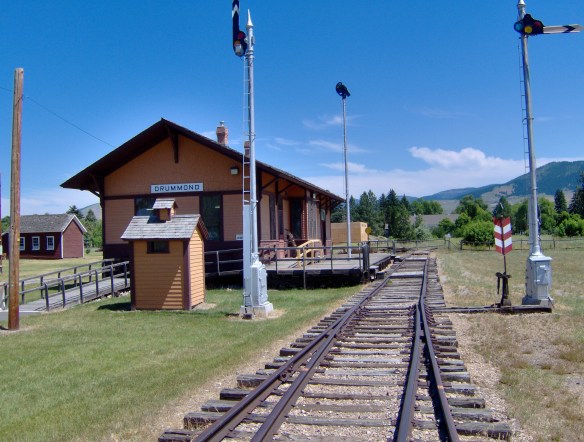
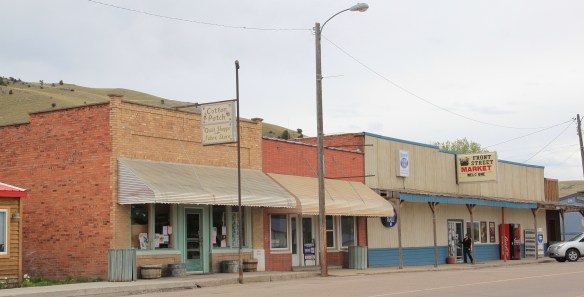 Drummond is the north entrance of the Pintler Scenic Route. The first ranchers settled here in the 1870s but a proper town, designed in symmetrical fashion facing the railroad tracks, was not established until 1883-1884 as the Northern Pacific Railroad built through here following the Clark’s Fork River to Missoula.


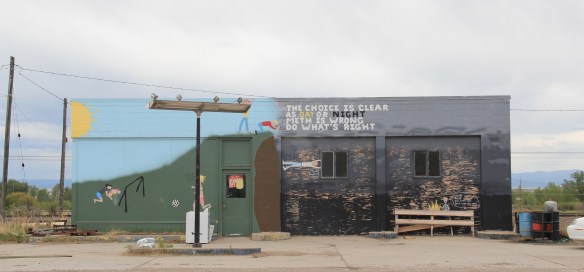 There is a faintly classically influenced two-story brick commercial block, a Masonic Lodge made of concrete block, various bars and cafes, a railroad water tank, and a slightly Art Deco movie theater, which was open in the 1980s but is now closed.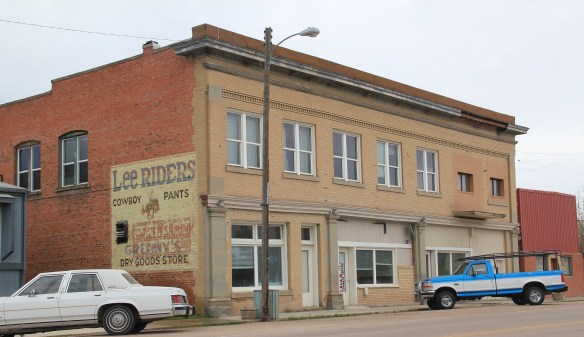


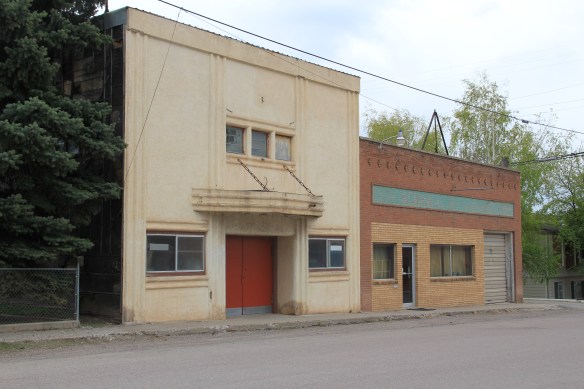 Due to the federal highway and the later Interstate I-90 exit built at Drummond, the town even has a good bit of motel roadside architecture from c. 1970 to 1990.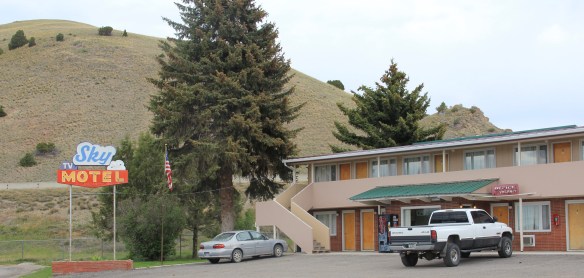
 Between the Northern Pacific corridor and old U.S. 10 is the town’s most famous contemporary business, its “Used Cow” corrals, and now far away, on the other side of the
 tracks are rodeo grounds named in honor of Frank G. Ramberg and James A. Morse, maintained by the local American Legion chapter.
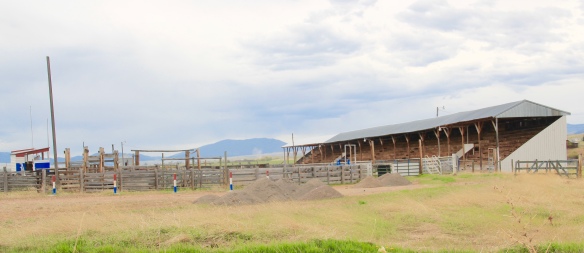 The rodeo grounds are not the only cultural properties in Drummond. The Mullan Road monument along the old highway is the oldest landmark. The local heritage museum is at the New Chicago School (1874), an frame one-story school moved from the Flint River Valley to its location near the interstate and turned into a museum.

 Another local museum emphasizes contemporary sculpture and painting by Bill Ohrmann. A latter day “cowboy artist” Ohrmann grew up in the Flint River Valley but by the 12960s he was producing sculpture and painting on a regular basis. The museum is also a gallery and his works are for sale, although the huge sculptures might not be going anywhere.


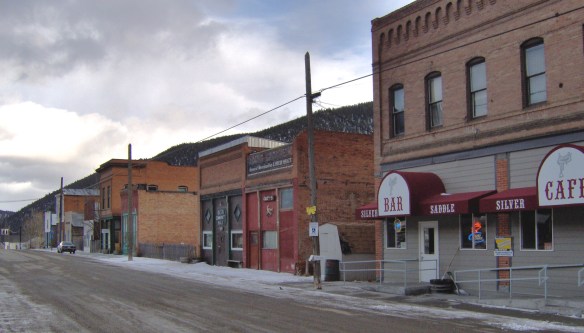 When I carried out the Montana State Historic Preservation Plan field work in 1984-1985 I passed through Basin Street in the heart of “downtown” Basin quite frequently, not because of the Silver Saddle Bar–fine place it is–but because I had no choice if headed
 The glory days of Basin had long since passed, although some locals and visitors would go to the Merry Widow Mine for a dose of radon, thinking it could cure their ills (of course radon exposure is actually dangerous). Led by the Butte capitalist Augustus Heinze, the town from the mid-1890s to mid-1920s had been a quite thriving place, served as both the Great Northern and Northern Pacific Railroads with its Basin Street becoming the route for U.S. Highway 91. The numerous two-story brick commercial buildings reflected that era of prominence while a decaying c. 1930 garage on the town’s outskirts documents the impact of the federal highway.
 Several key community landmarks remain. The most impressive is the two-story frame Basin School, built in 1895 and still in use as a school today. Here is another great Montana rural school building–the state is so rich in this type of public architecture.
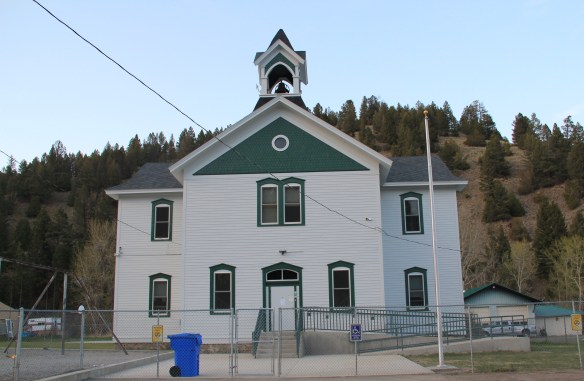 Nearby is the Community Church, another late Victorian-era styled building, with its tall bell tower and distinctive corner entrance.


 Miners first began to gather at what is now Philipsburg in the late 1860s; the town was later named for Philip Deidesheimer, who operated the Bi-Metallic Mine works. As the Bi-Metallic Mine and Mill expanded operations in the 1880s, a rapid boom in building


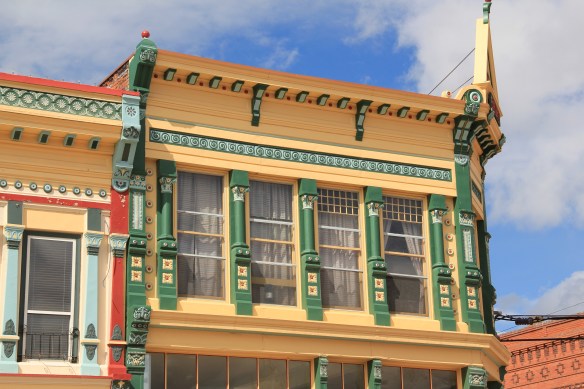 The quality of the Victorian commercial architecture still extant in Phillipsburg, such as the 1888 Sayrs Block above, astounded me during the 1984-85 preservation work. So much was intact but so much needed help. Residents, local officials, and the state preservation office understood that and by 1986 the Philipsburg Commercial historic district had been added to the National Register of Historic Places.
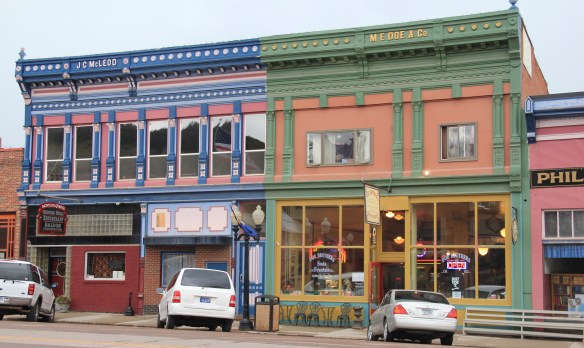 What is exciting is that in this decade, entrepreneurs are building upon early successful renovations and adaptive reuse project to launch new businesses and create new jobs. The town’s population is growing, after 30 years of decline.


 The new developments in Philipsburg are interesting and invaluable changes since 1984-1985. At the same time, I am happy that residents have still embraced their historic public buildings in a similar fashion. The photograph I used in my book about the town in 1985
 was the Philipsburg School, with its soaring tower symbolizing the hopes that residents had for Philipsburg’s future in the 1890s. The historic school, which is listed in the National Register, remains although the community built a new building adjacent to the historic one in 1987. (you can see a corner of the new building at the lower left).
 When I first visited in 1984 the only building in Philipsburg listed in the National Register was the Queen Anne-styled Granite County Jail of 1902. It also remains in use.
 But now the Classical Revival-styled Granite County Courthouse (1913) is also listed in the National Register. Designed by the important Montana architectural firm of Link and Haire, this small town county courthouse also speaks to the county’s early 20th century ambitions, with its stately classical columned portico and its central classical cupola.


 By climbing the hill above the courthouse you also gain a great overview look of the town, reminding you that these rather imposing public buildings are within what is truly a modest urban setting that is connected to the wider world by Montana Highway 1.


 The Philipsburg Cemetery, which like so many that I ignored in 1984-1985, was a revelation, reflecting the quality of Victorian period architecture found in the town.
 The beauty and serenity of its setting were impressive enough, but then some of the family plots and individual markers reflected Victorian era mortuary art at its best.
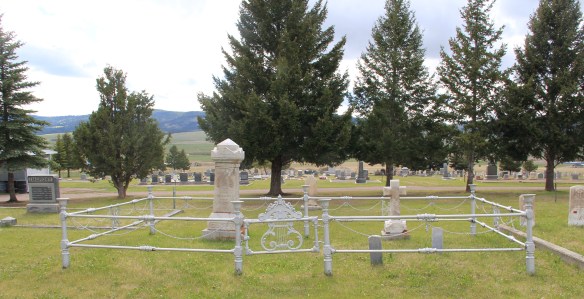 This cast-iron gate, completed with urns on each post and the music lyre gate, is among the most impressive I have encountered in any small town across America. And this cemetery has two separate ones.
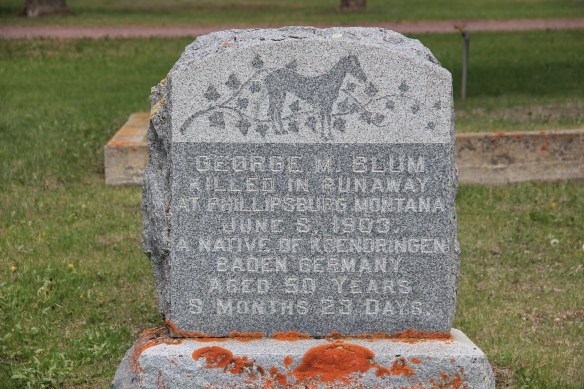
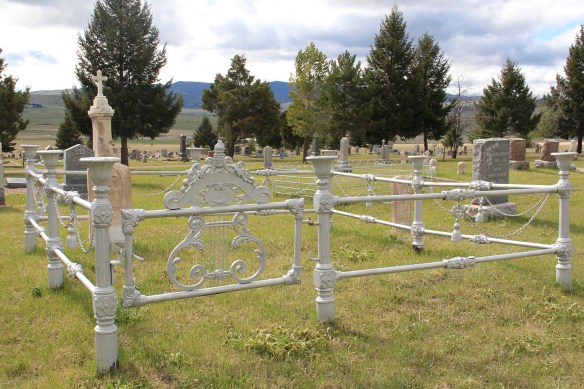 Many grave markers came from local or nearby masons but others, like these for the Schuh and Jennings families, were cast in metal, imitating stone, and shipped by railroad to Philipsburg.

 Since my earlier work on the state historic preservation plan in 1984-1985, few places in Montana had experienced such rapid population growth as Stevensville. The place had just over 1200 residents in the 1980s, and that increased to a mere 1221 in 1990. But now Stevensville is close to 2,000 in population.
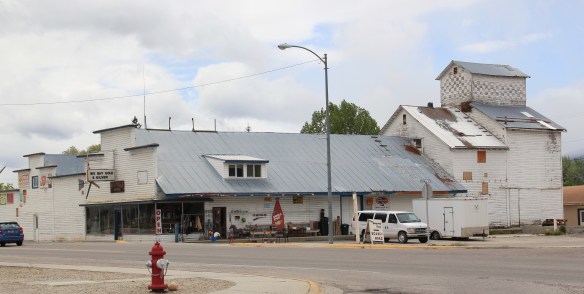 But enough is still here–like the historic mill complex above–that even as the business changes there is still the feel of an agricultural town at Stevensville. A major reason for the sense of continuity is the Stevensville Commercial Historic District, which has helped to protect the core of the town.
 Also, buildings such as the two-story Old Fellows Hall (1912) have been individually listed in the National Register, adding prominence to the historic district. The district has a range of one-story and two-story brick buildings, most from the agricultural boom of the first two decades of the 20th century. A notable exception is a two-story concrete block

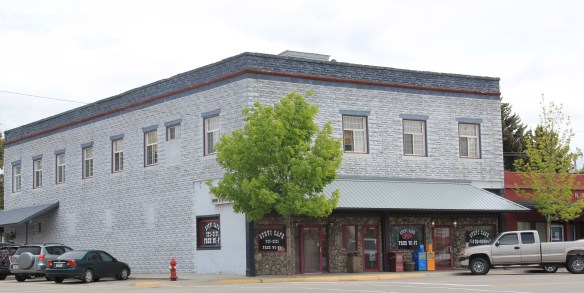
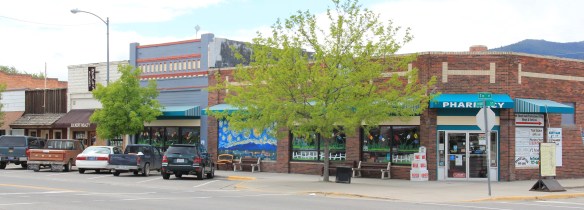 One major trend of Stevensville over 30 years is how buildings have been adapted to new uses. You expect that in a commercial area with a rising population, but here it has happened to such landmarks as the historic turn of the 20th century school building,
 which is now the United Methodist Church, while the two-story brick American Four-Square house below is the historic Thornton Hospital (1910), but now serves as the Stevensville Hotel. Both buildings are listed in the National Register.
 One area that I really failed to consider in the 1984-1985 work was the diversity and cohesiveness of the historic residential neighborhood. It too has been documented by a National Register historic district, but some dwellings, such as the impressive Classical Revival-styled Bass House have been individually listed.
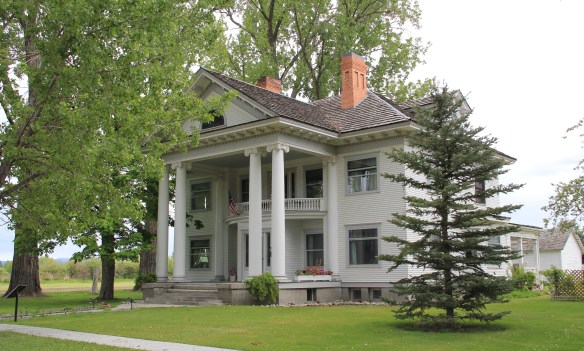 Another favorite dates to the 1930s and the impact of the International Style on Montana domestic architecture: the Gavin House, with its flat roof, its boxy two-story shape and bands of windows at the corners.
 Between these two extremes of early 20th century domestic design, Stevensville has an array of architectural styles, from the Folk Victorian to the more austere late 19th century vernacular to bungalows to revival styles.


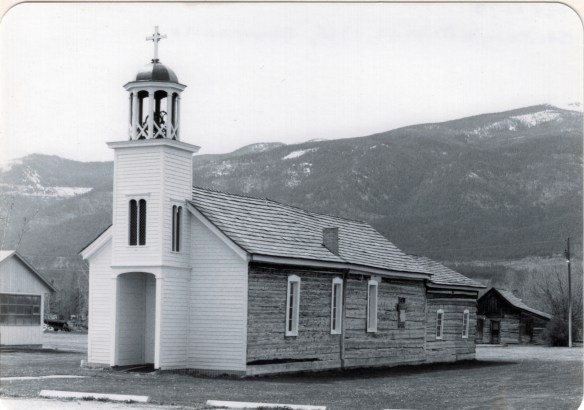

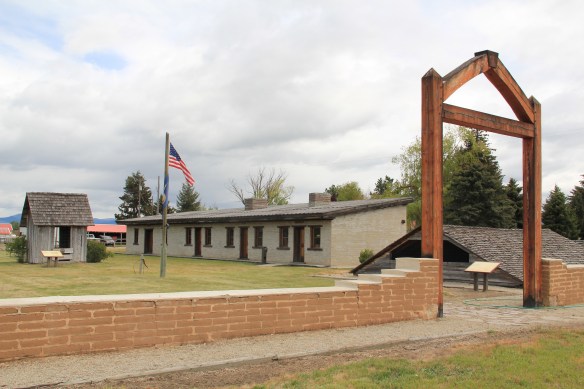 Much to my surprise I found a “pocket” park, set almost like you will find historic sites within major cities, except here the site is next to a working ranch. Not what I expected.
 But no complaints either. We are lucky that the ranchers shared a bit of the ranch and preserved some of the site’s history, especially the one remaining adobe barracks since this type of building and method of construction is so rare to find today. Most western forts are nothing more than archaeological sites.
 The barracks has much to say but public interpretation here has not improved to the degree found at several other state parks in Montana like at First Nations in Cascade County. We get enough of the story to tantalize the average visitor and perhaps confound the scholar who wants more context.
 The turn of the 20th century historic photo above shows how much was still here about 100 years ago but a storm ripped the roof off one of the barracks, and after all the construction Owen used here over 150 years ago was never meant to last for long. Traders wished to make an outpost impressive–why would anyone trade with a business that lacked substance?–but it made no business sense to build anything grandiose.


 that the open views to the greater landscape which remain as they were in the past might not last in the rapidly suburbanizing upper Bitterroot Valley. The Fort Owen park is still an invaluable national story set within a working ranch–but what if it becomes a pocket park surrounded by a 21st century suburb? The chance for meaningful archaeology–not to
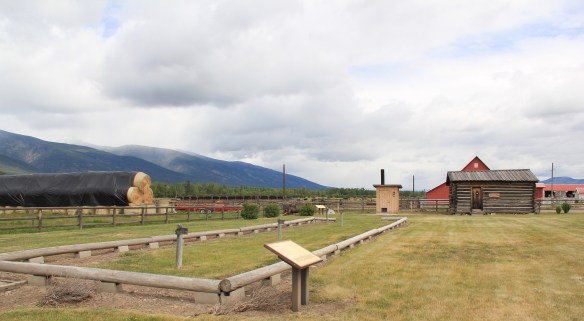 rebuild the fort as what has happened at its cousins in Fort Benton and Fort Union–but to understand much more about the formative period of Montana history: that could be lost forever.
 Luckily at St. Mary’s Mission enough land has been secured that even as Stevensville expands (its population has jumped over 50% since 1984), perhaps the historic site’s future will not be that of a pocket park.


 Let’s hope that future development in and around the historic mission keep these vistas as they are–for it is here that the modern story of the Bitterroot–meaning the last 175 years–begins.
 Dillon is not a large county seat but here you find public buildings from the first third of the 20th century that document the town’s past aspirations to grow into a large, prosperous western city. It is a pattern found in several Montana towns–impressive public buildings designed to prove to outsiders, and perhaps mostly to themselves, that a new town out in the wilds of Montana could evolve into a prosperous, settled place like those county seats of government back east.


 The Dillon City Hall also belongs to those turn-of-the-20th century public landmarks but it is a bit more of a blending of Victorian and Classical styling for a multi-purpose building that was city hall, police headquarters, and the fire station all rolled into one.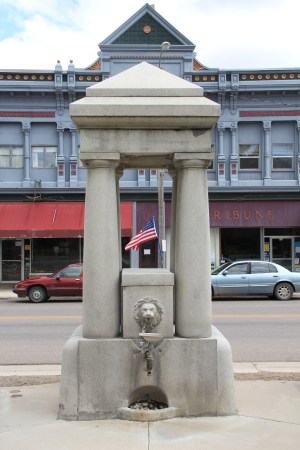
 A New Deal era post office introduced a restrained version of Colonial Revival style to Dillon’s downtown. The central entrance gave no hint to the marvel inside, one of the
 state’s six post office murals, commissioned and executed between 1937 and 1942. The Dillon work is titled “News from the States” painted by Elizabeth Lochrie in 1938. It is a rarity among the murals executed across the country in those years because it directly addressed the mail and communication in early Beaverhead County. Ironically, few of the post office murals actually took the mail as a central theme.
 The New Deal also introduced a public modernism to Dillon through the Art Deco styling of the Beaverhead County High School, a building still in use today as the county high school.
 A generation later, modernism again was the theme for the Dillon Middle School and Elementary school–with the low one-story profile suggestive of the contemporary style then the rage for both public and commercial buildings in the 1950s-60s, into the 1970s.
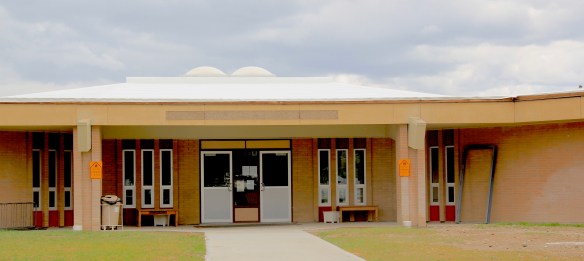
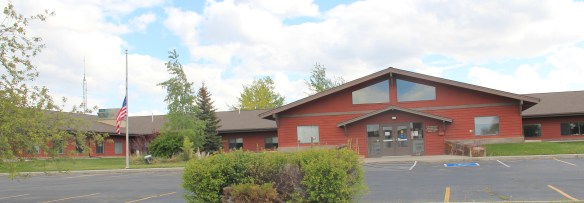
 The contemporary style also made its mark on other public buildings, from the mid-century county office building to the much more recent neo-Rustic style of the Beaverhead National Forest headquarters.


 Montana's Historic Landscapes