Stanford: Railroad Town Deluxe in Montana’s Judith Basin

IMG_9845The sign on U.S. Highway 87/Montana 200 says it all:  why not stop in Stanford?  If you are a railroad town planning fan, it is an absolute.  Geographer John Hudson a generation ago talked about the distinctive historical northern plains landscape created by the great transcontinental lines at the turn of the 20th century in his book, Plains Country Towns. His work, then just recently published when I was surveying the state for its preservation plan in 1984, became a conceptual bible of a sorts for me–allowing to see significance where others might just say, ah it is just another dusty western town.

IMG_8839Stanford, the seat of Judith Basin County, might appear to be exactly that when I first stopped in 1984.  The county had been established in 1920, one of the last during the homesteading boom.  The town’s  rhythm of one-story, often false-front stores conveyed little that might be considered special or noteworthy (although the Pump Bar is always worth a stop).

IMG_8838The old state bank building and a neighboring retail establishment were the only spaces that conveyed a sense of architectural styling.  The post office was a rustic-front building that didn’t automatically say “here’s the federal government.”  The local county museum–also worth a stop–stood in a typical mid-1960s commerical-type building.

IMG_8841

IMG_8844Stanford had been relatively stable since reaching its population height in 1960 of 615 residents–when I visited in 1984 it had only dropped by a few families to 595.  But now the town was boomed, to well over 700 residents, reflected in the new fronts to the town’s businesses and maybe an indication that the sign on the highway has worked.

IMG_8837With that growth, however, has come one significant loss to Stanford’s historic fabric–the standardized design of its Great Northern depot.  It was there during my last visit c. 1998 but is now an empty spot along the tracks.

IMG_8840Despite this loss, Stanford remains an excellent example of the T-plan railroad town of the Great Northern Railway.  The top of the “T” comes from the railroad tracks themselves and the lineup of grain elevators along the top of the “T.”  In the classic design, the next element is the passenger station, on the other side of the tracks from the elevators, serving as the opening to the actual town. The rest of the plan is intact, especially the long main commercial corridor with businesses and offices on either side terminating in the lot for the county courthouse, in other words local government was at the bottom of the “T” while the railroad, represented by the tracks and depot” stood at the top.

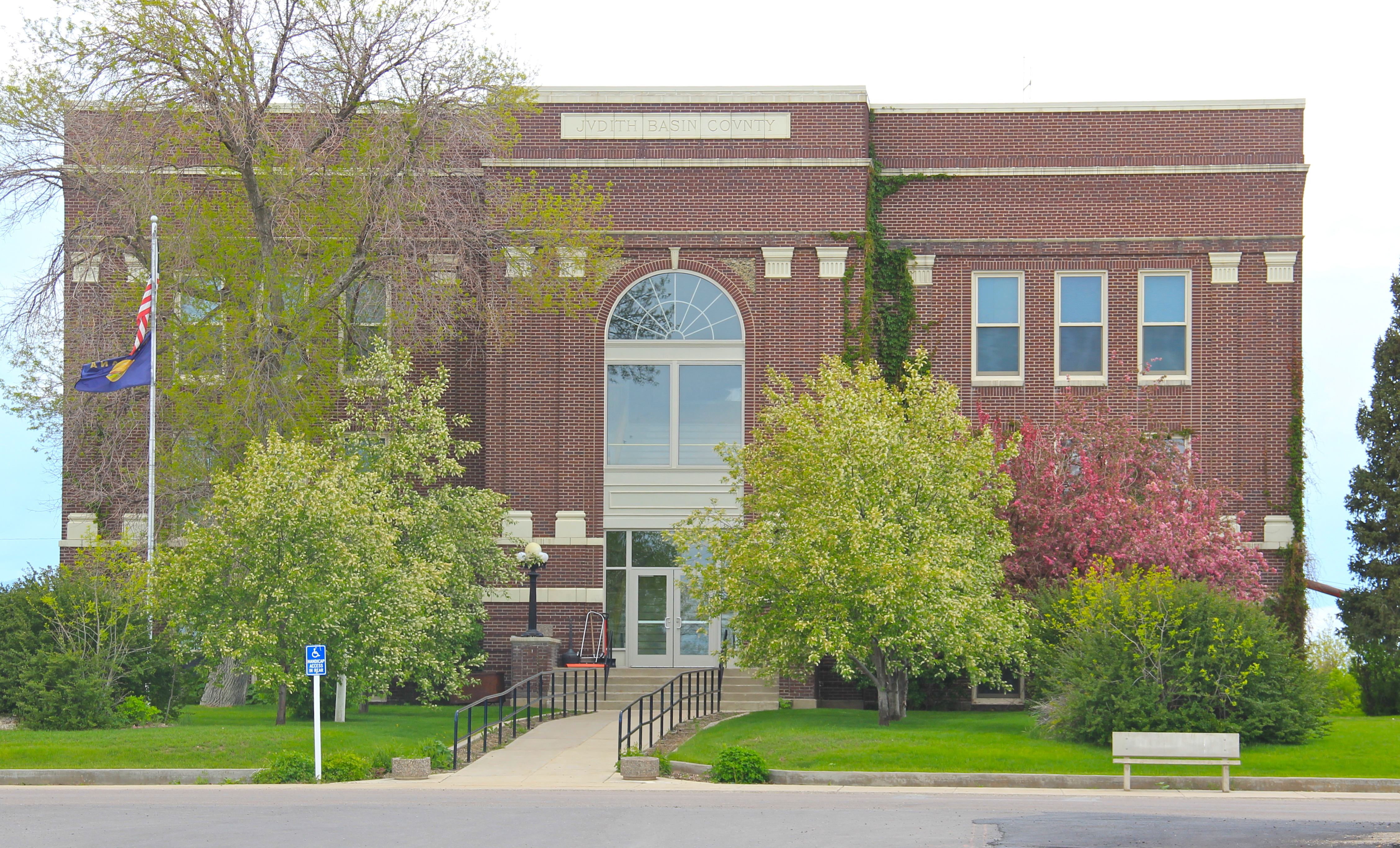
IMG_8842The Judith Basin Courthouse is an understated Classical Revival design finished in 1925 and designed by Havre architect Frank Bossuot. Its location, according to John Hudson’s interpretation, said it all about the power of the railroad companies in this era compared to local government.
IMG_8843

But today, in the 21st century, that earlier arrangement of space has lost much symbolic significance. The courthouse, with its inviting landscaping and plantings, is the town gateway.  People enter Stanford not by train but by highway and the highway runs south of town, meaning the courthouse and the residents around it are what you first encounter–the community comes first and the railroad comes second.
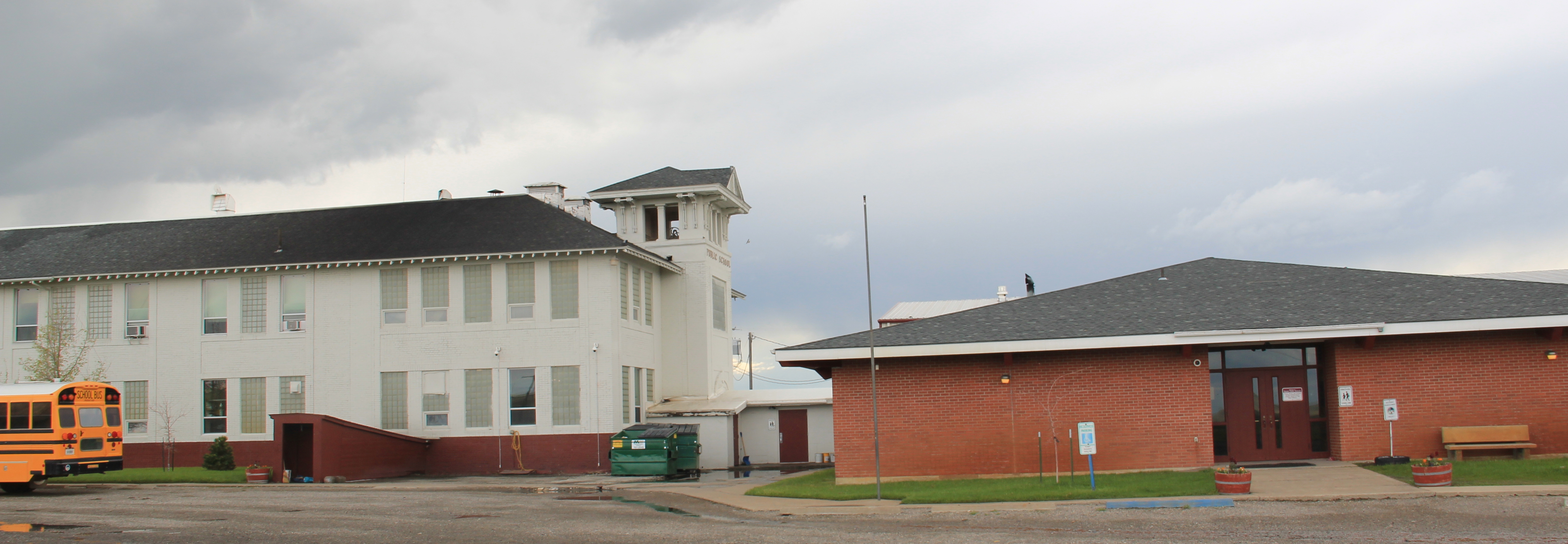
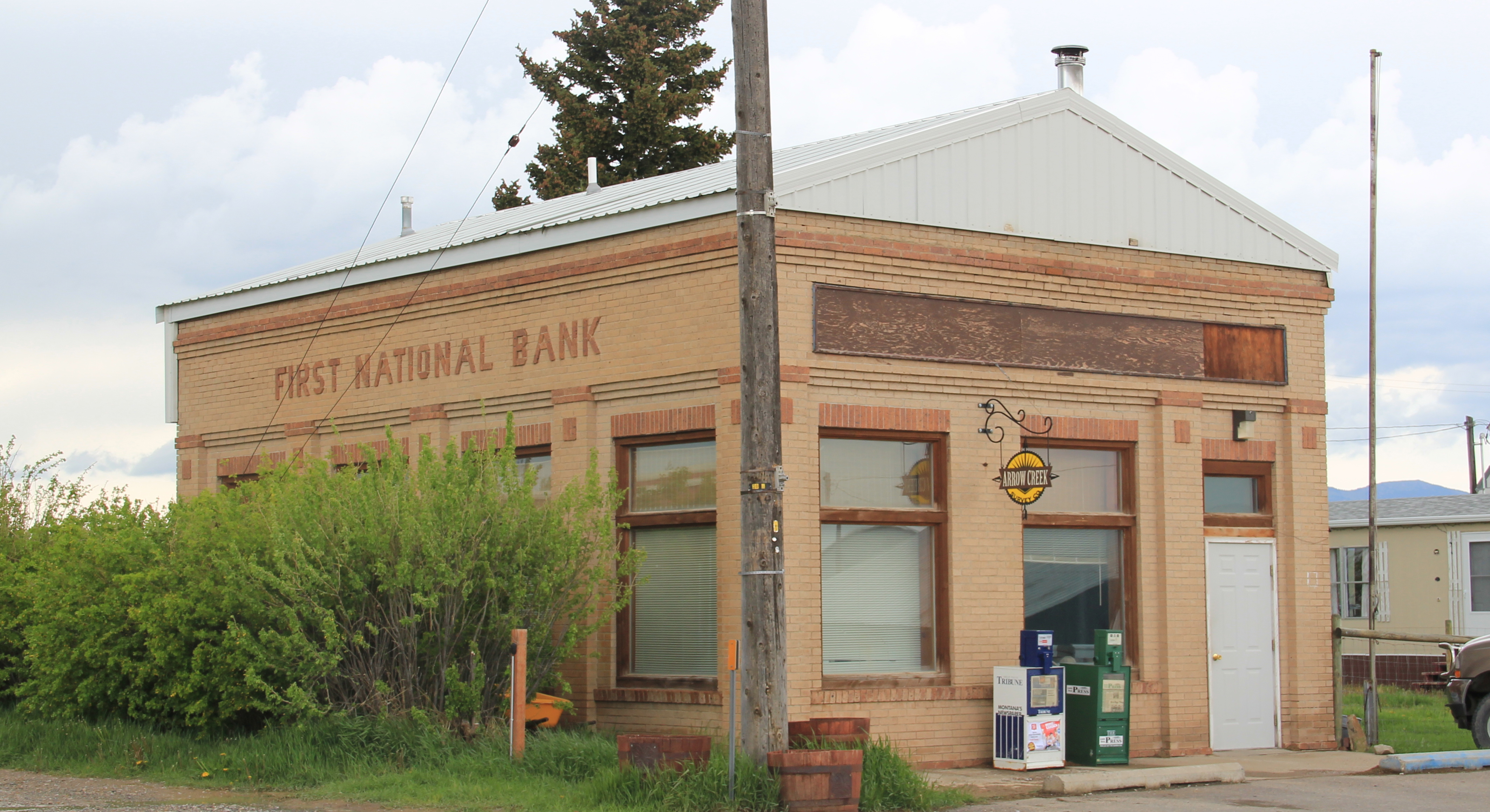
IMG_8848So plains country towns can change–as in Geyser the next stop to the west, where a modern school extension works in partnership with the classic two-story front-tower building from the 1910s-1920s.  And where, in Geyser, the old state bank has been converted into a surveyor’s office, for growth is coming into western Judith Basin County.
IMG_8849Yet whatever the 21st century promises for these places across central and eastern Montana–most do not have much of a future to contemplate–the past is always near, as the grain elevators from 100 years ago stand as silent sentinels of the hopes and ambitions of the homesteading generation.

IMG_8850

Baker: The Milwaukee Road’s Eastern Gateway to Montana

Fallon Co Baker Milwaukee Road corridor  - Version 2The Milwaukee Road, the last transcontinental railroad to crisscross Montana, enters eastern Montana at the town of Baker, established in 1908, which served as an important rail center for the company with the full name of the Chicago, Milwaukee, St. Paul and Pacific.  When I visited Baker in 1984 i noted that many of its buildings dated from the homesteading era although there was a clear second layer of development died to the region’s oil boom of the late 1960s and 1970s.  In A Traveler’s Companion to Montana History (1986) I noted “Baker’s railroad corridor is still largely intact, and the spatial arrangement created by its Milwaukee depot and the neighboring Baker Hotel, an imposing brick building dating to 1916, symbolizes the railroad’s importance to the town.” Both buildings are gone now unfortunately but an indication of the prominence of the corridor is still conveyed by the brick building below which has served the community in many commercial and professional ways over the decades.

IMG_0390

Insurance was just one of the services provided by this neoclassical styled building.

Today the hotel, the tracks, and the huge grain elevators along the railroad corridor remain, and the elevators still visually dominate the surrounding mostly one-or two-story built environment.  But the depot is gone, leaving a hole in the town’s historic fabric.

IMG_0402Buildings and railroad tracks were not the only legacy of the Milwaukee in Baker–there was the large lake the company developed to provide water for its trains in a largely parched region.  The Baker Lake, 30 years ago, was undergoing another improvement project, part of the town’s generation-long effort to turn a forgotten corporate remnant into a community asset.  The company built the lake c. 1908 but soon found that the water was too salty–it corroded the equipment.  And so the lake sat, until the 1950s when the Baker’s Woman Club began an effort to convince the railroad to transfer the lake to local

IMG_0462government.  County leaders became convinced that yes, Baker needed a community recreation asset, and eventually the land was transferred into the public use, and Baker Lake by the end of the century was an unique asset in southeastern Montana, and a center for recreation and special events.

Fallon Co Baker library  - Version 2The lake is not the only contribution of the Woman’s Club.  it also was central in creating, staffing, and maintaining a public library, and the contemporary-designed library from 1970 remains but also has been enlarged since 1984.

IMG_0407

The Fallon County-City of Baker Administration Building, 1974-1975

Indeed, I noted the recent construction of the 1970s in Baker, like the new county courthouse/city administration building where I held a public meeting, but I didn’t really process the layer of modernism in the town, a reflection of its growth from 1950 to 1970, when the population grew from 1,772 to 2,584.  The new joint administration building, designed by the Billings firm of Johnson Graham Associates, remains an impressive piece of contemporary design.  Architects Willard Johnson and Orval Graham had established the firm in 1967.  The Baker project established a connection between the firm and county that continued into the present:  the new grandstand at the Fallon County Fairgrounds is also a JGA design, from 2011.

IMG_0417

IMG_0419

The tradition of county fairs dates to 1909 and today the Fallon County Fair is one of the region’s largest.

IMG_0465Historic schools are other important contributions to the town’s built environment.  Above is the Washington School, built in 1927.  It is a brick Classical Revival statement of the town’s insistence for permanence in the face of the homesteading bust. When I last visited in 2013, the school was undergoing rehabilitation to become an office building. On the other side of town stood a more modern design, the Longfellow School, built in 1968 during the height of the population boom in Baker.  Its low, rectangular mass was modern school design at its best, although since my 1984 visit the casement windows have been covered so central heat and air could be installed.

IMG_0410The second building in Baker listed in the National Register was the only one designated in 1984, and it was the pride and joy of the community:  the old county courthouse converted into the O’Fallon Museum.  Here was not only the historical exhibits typical of the area but also installations about the region’s prehistoric past and moved buildings to host special

IMG_0414collections but also to interpret the homesteading past.  I will always remember my public meeting in Baker, for the obvious pride residents had in the museum but also for the comment that they could not wait to show me “our really old stuff,” such as a 1916 homestead.  Coming from my training at Colonial Williamsburg, considering places from 1916 as really old was a notion that took some getting used to, but of course in the context of settlement and development of southeastern Montana, it made perfect sense.

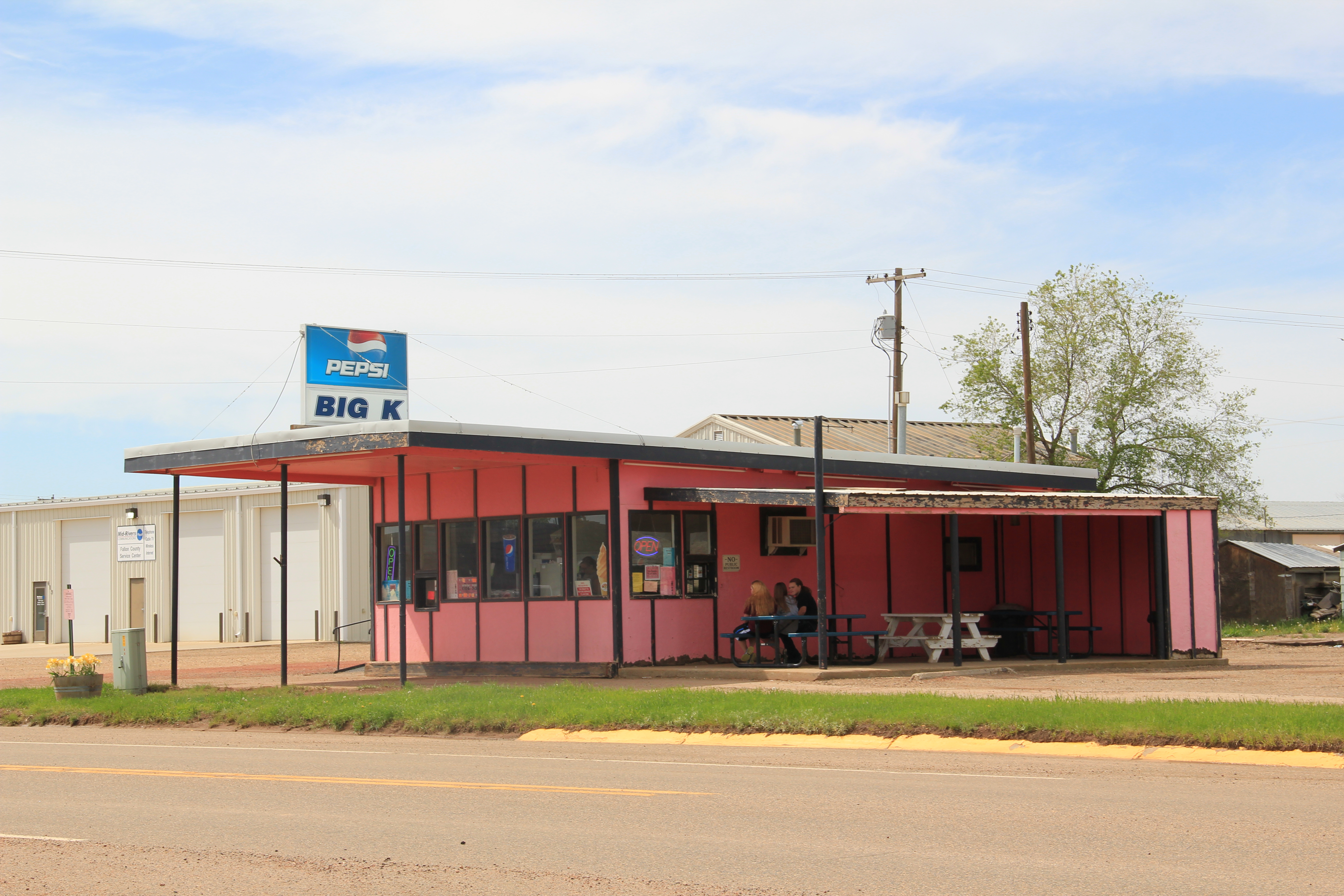
IMG_0463Today I would even join into the call for the “really old stuff”–like the Lake Theatre of 1918.  It certainly deserves a place in the National Register as so few classic movie theaters remain in this part of the state.  The same could be said for this classic c. 1960 drive-in,

IMG_0404which is part of the town’s roadside architecture traditions along U.S. Highway 12, the federal road that parallels so much of the Milwaukee Road’s route through Montana.  For

IMG_0472good measure I would even dare say that it’s time to assess the significance of the oil wells and facilities along Montana Highway 7 as you enter or leave Baker.  The discovery of oil and its development in the 1960s and 1970s certainly was the major economic story of the town and county in the second half of the 20th century.

IMG_0468In 2015 Baker has retreated from that c. 1960-1970 boom.  Population peaked at 2584 in 1970.  It remained just a hundred or so under that in 1980, but changes in demand, technology and the bankruptcy of the Milwaukee meant that Baker in the last 30 years has lost residents, in 2010 down to 1741, about the same number as in 1950.  Yet I like that the lake had been restored, and it remained a vibrant part of the town, that new banks and new renovations were part of the town, and indeed, that an old car dealership and garage was now the very good Three Garages Bar.  Historic preservation can play a larger role in Baker’s future just as it did during Baker’s boom in the past.

IMG_0397

Townsend: A Railroad Town on the Missouri River

IMG_9524

Townsend is a classic Montana crossroads town, with its historic heart, and primary commercial district, centered on the intersection of U.S. Highways 12 and 287.  But a closer look reminds you of the town’s origins as a railroad town, part of the Northern Pacific route, as it moved westward from Bozeman to Helena, Montana, along the valley of the Missouri River.  The town’s layout is a good example of a T-town plan, with Front Street (now U.S. 287) forming the top of the “T” while Broadway (U.S. 12) forming the stem, as shown above.

IMG_9529

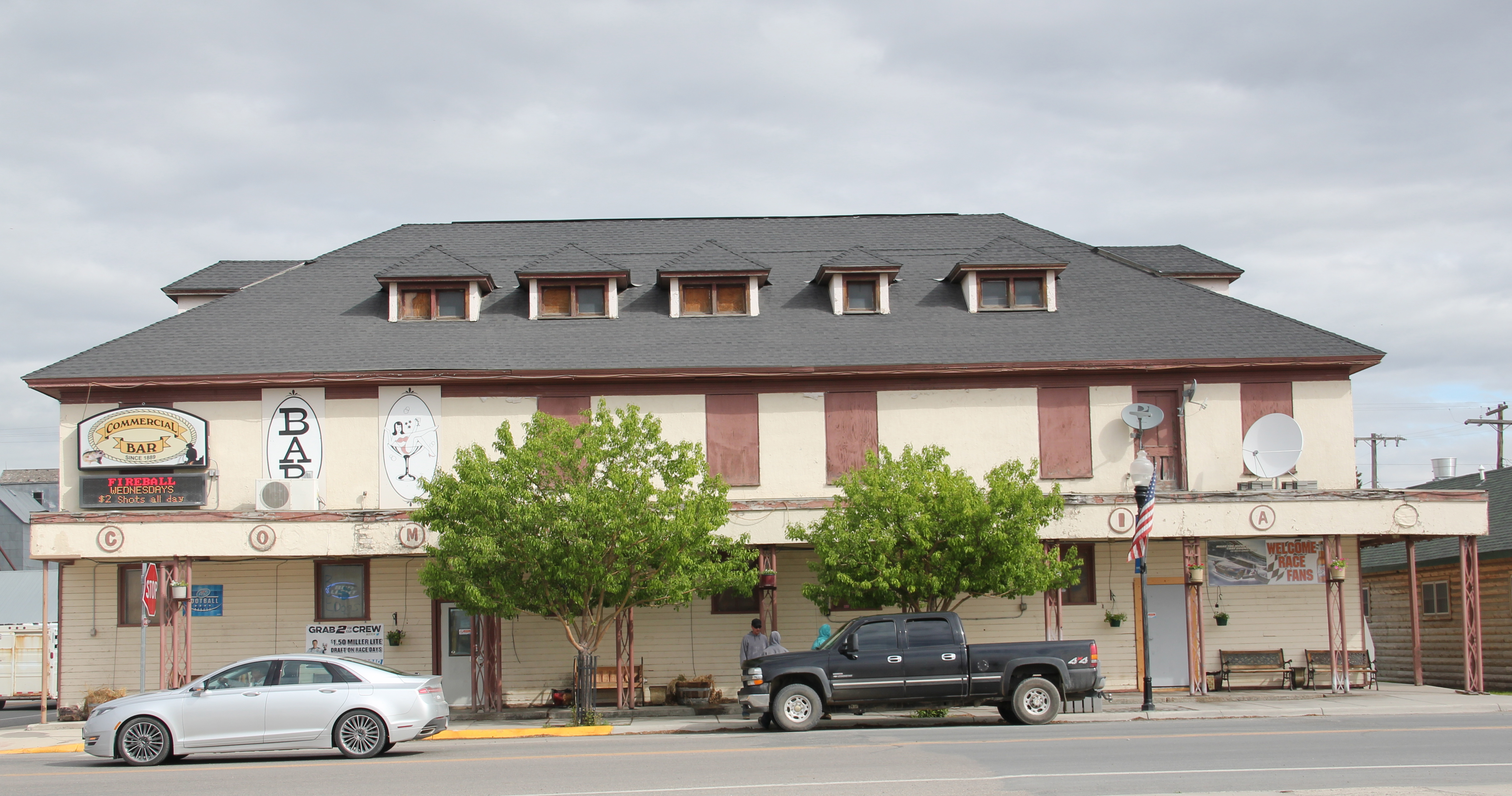
Grain elevators and other light industrial and transportation-related buildings the lots between the railroad tracks and Front Street.  At the corner of the highway junction is one of the town’s oldest buildings, the Commercial Hotel of 1889, which still operates today as

IMG_9528

a bar and restaurant.  Historically this large two-story frame building, with hipped roof dormers creating even additional rental space under the roof, would have been an attraction for travelers and business people looking for a place just off the tracks, or later the highway. It is among a handful of late 19th century railroad hotels left in Montana.

IMG_7092

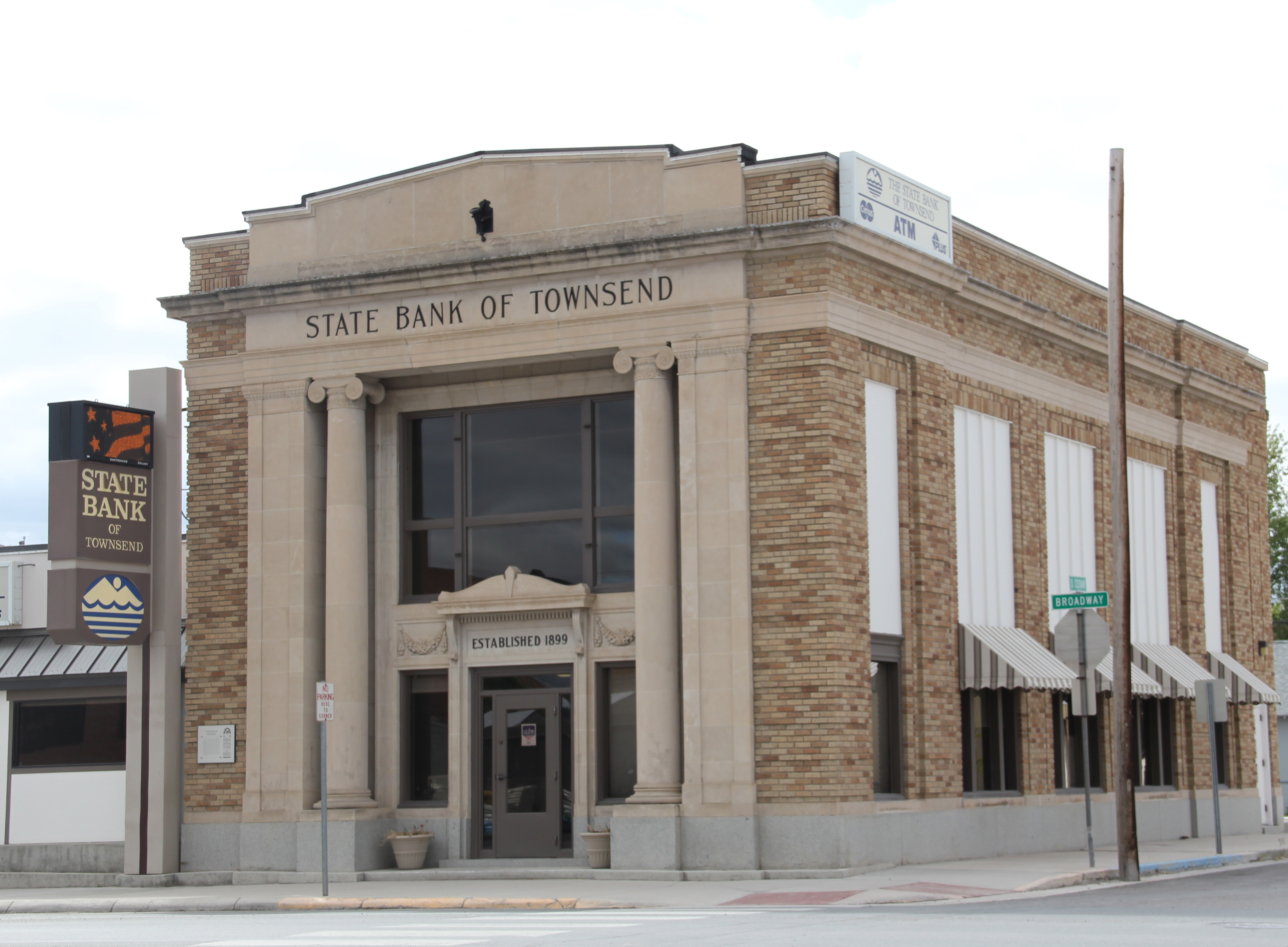
Broadway also had its historic landmarks, especially the neoclassical-styled State Bank of Townsend, which is listed in the National Register of Historic Places.  Dating to 1918, the building’s architect was the Albert Mooreman and Company firm from St. Paul, MN. The flanking two-story classical columns root the yellow brick building to its prominent corner lot–the bank’s survival into the twenty-first century is also a rarity in rural Montana.

IMG_7111

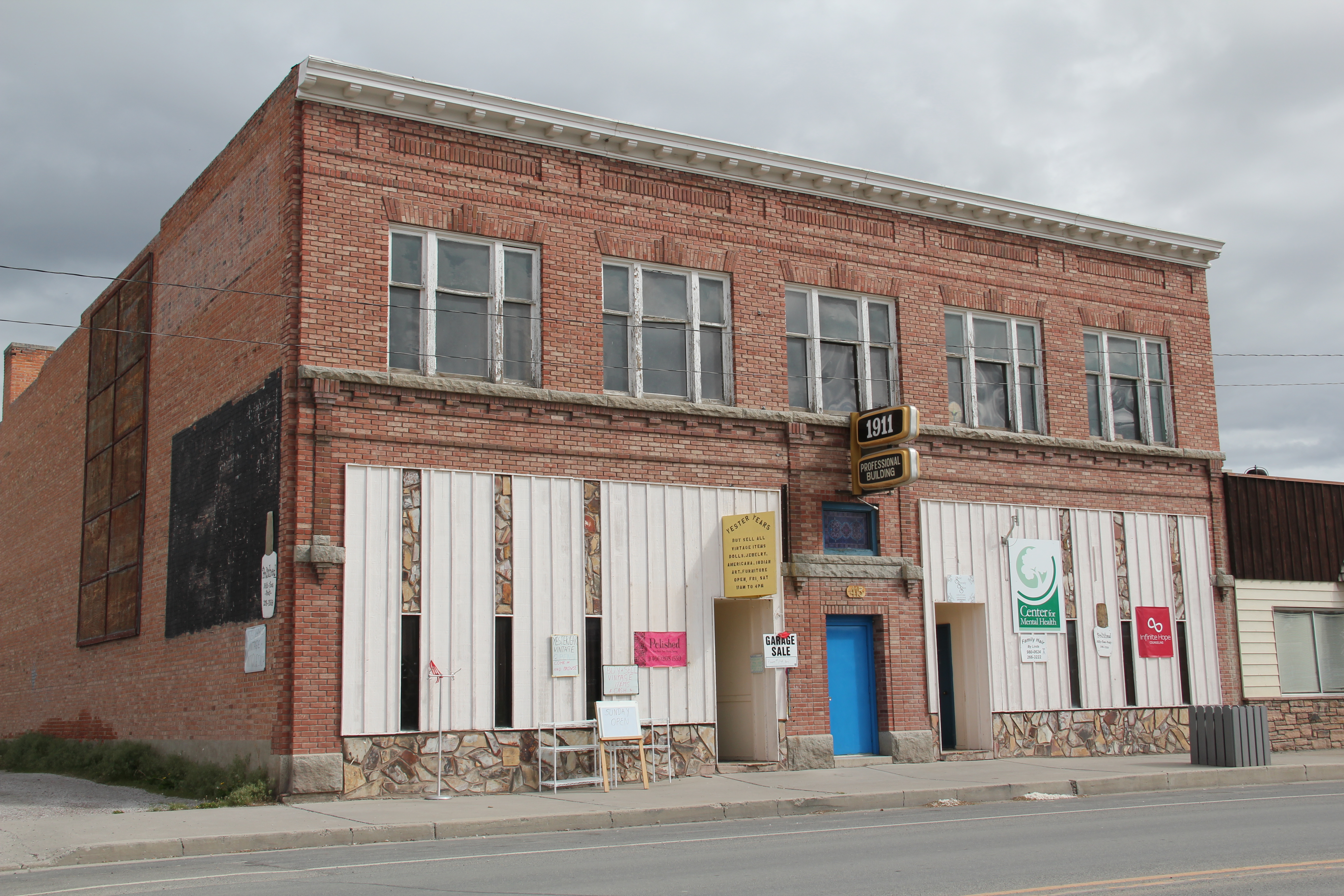
Broadway also has its mix of one- and two-story business buildings, from the American Legion and another Montana Mint Bar to the Professional Building of 1911.  Despite its proximity to both Helena and Bozeman, the town has retained its commercial vitality.

IMG_7107

IMG_7096

IMG_7112

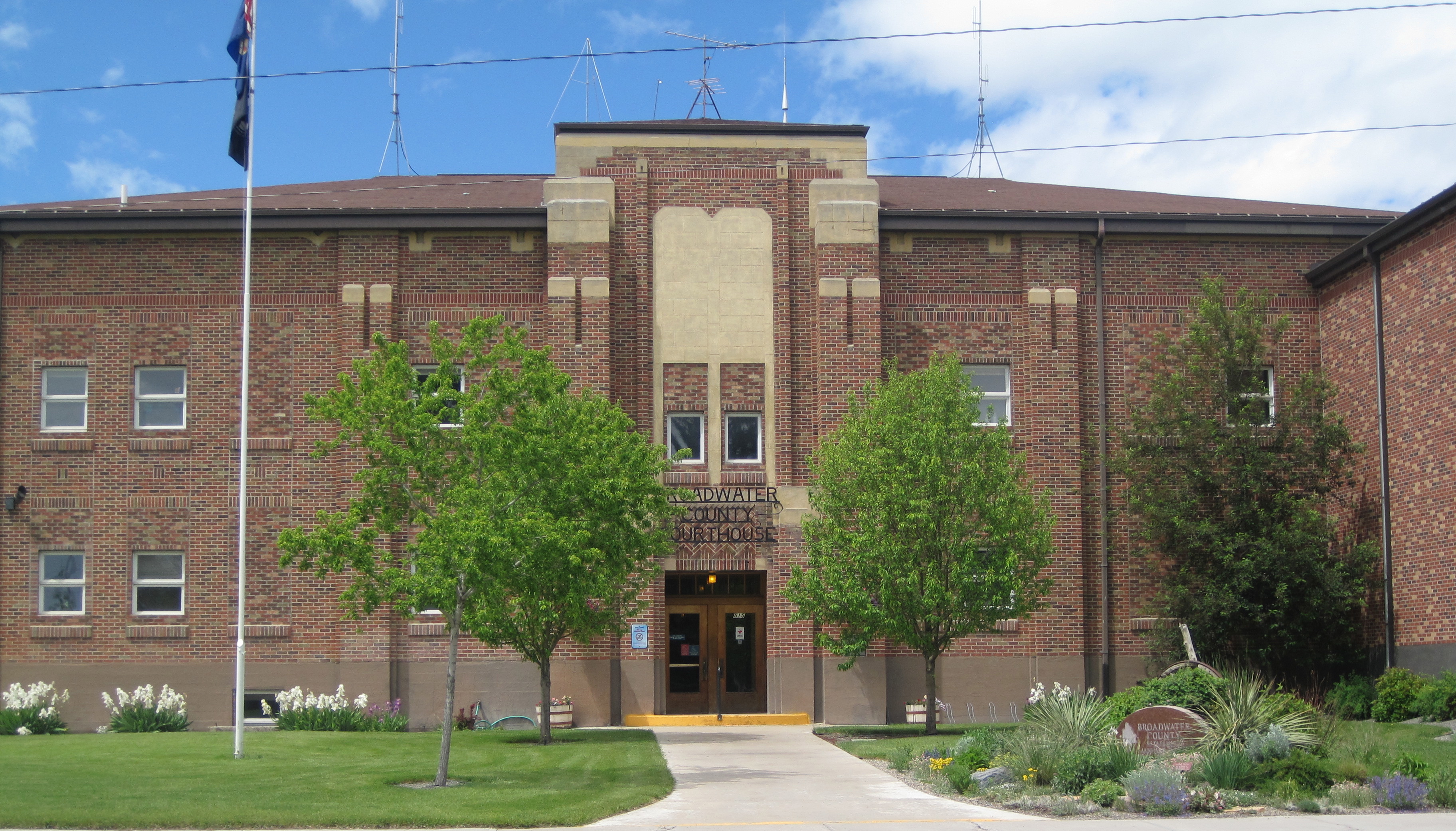
At the end of the commercial district is the Broadwater County Courthouse, a mid-1930s New Deal project that has expanded significantly in the three decades since I carried out the original historic preservation plan survey in 1984-1985.  Its understated Art-Deco styling fits well its highway location.  And as to be expected in a “T-town” plan, its location at the end of Broadway, meaning the end of the stem of the “T” reflected well the comparative power between local government and the corporate power of the railroad.

IMG_9521

IMG_9522

Being a resident of Helena from 1981 to 1985, I passed through Townsend many times on my way east since US 12 was a favorite trek.  I noticed these major landmarks and the patterns of railroad town plans but I must admit that I never strayed off of either Front Street or Broadway, and that was a mistake.

IMG_7099

IMG_7103

IMG_7102

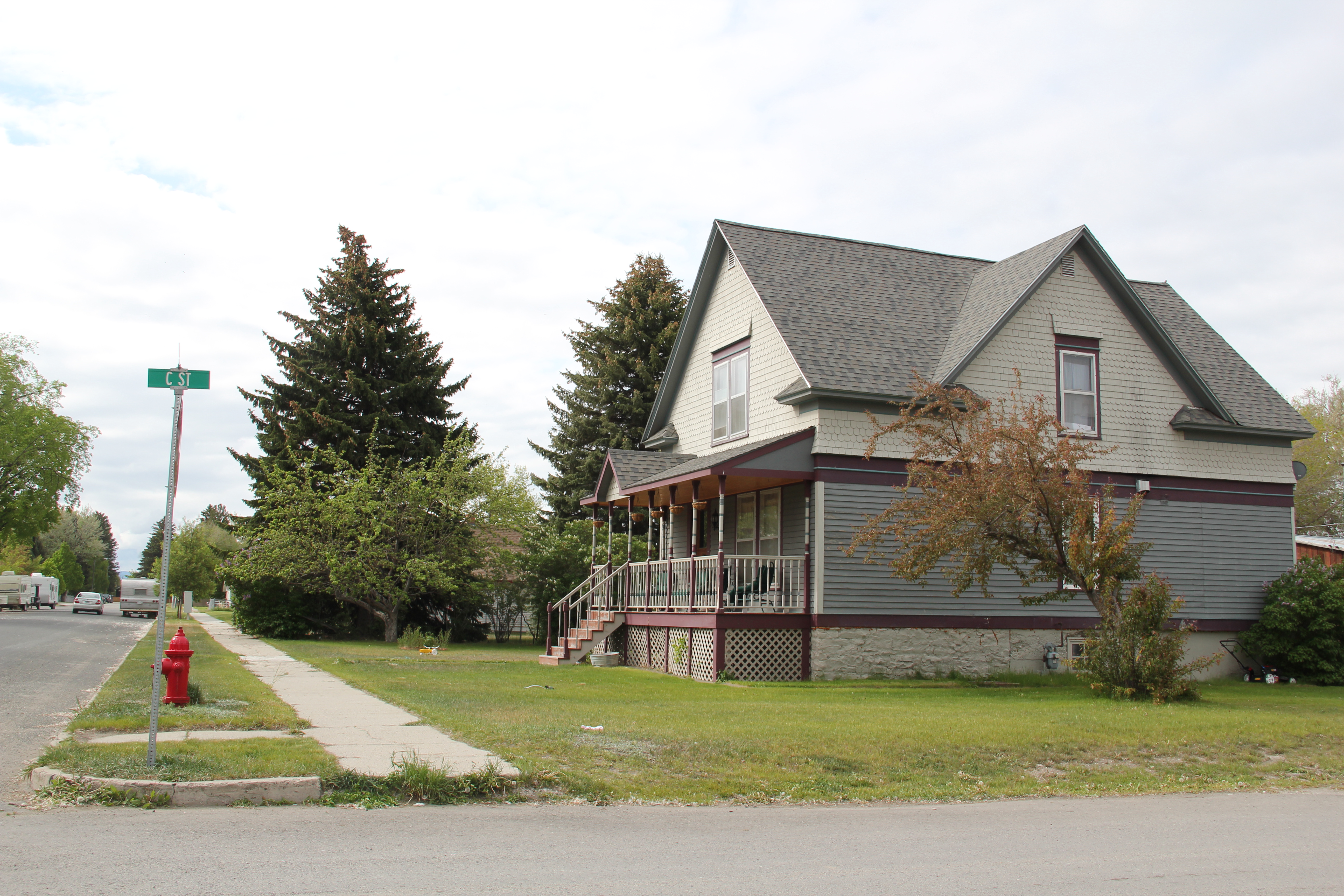
South of Broadway are several valuable late-19th or turn of the century Victorian-styled residences, some of which have found their champions and have been restored while others need that champion to see the potential jewel underneath decades of change.  One historic neighborhood school building–now a Masonic lodge–also remains, along with many different churches, most of which date to the second half of the twentieth century.

IMG_7105

North of Broadway is a notable exception, the Victorian Gothic styled Townsend United Methodist Church, again an important survivor from the town’s opening generation of history.

IMG_7110

Townsend also had a set of interesting bungalows from c. 1920 on U.S. 12 as it moves east of the courthouse.  These are made of concrete block, shaped to mimic stone masonry.  It was a popular technique to give a house a solid, permanent look, and you tend to find it more in the west than in the east.  Of course, Townsend was not far from the major concrete works at Trident–a topic for a later posting.

IMG_7119

IMG_7120

Last but not least Townsend, and Broadwater County, has an active historical society and local museum, established during the American Bicentennial in 1976–and expanding ever since at its location behind the county courthouse.

IMG_7123

Reedpoint, Stillwater County, Montana

IMG_1213

Reedpoint, a tiny Yellowstone Valley town located between Columbus to the east and Big Timber to the west, typically never makes the news, except when a forest fire sweeps near the town boundary, as was the case a few years ago, or when it is Labor Day Weekend and the state’s big newspapers arrive, along with thousands of others, for the tongue-in-cheek “Great Sheep Drive” through the town’s main street.

IMG_1208

But the Great Sheep Drive, which has now been around for a generation, is more than what keeps Reedpoint on the map, and surviving.  The Reedpoint Community Club, established in 1979, keeps the community together and looks for opportunity.  Historic buildings such as the ones above and below have been remodeled or renovated for new uses, reflecting the railroad’s town greatest prosperity in the early 20th century.

IMG_1207

The local dive bar comes alive on weekend, when anglers come in greater numbers to fish along the Yellowstone.  Its ramshackle appearance is new “Old West” at its best.

IMG_1215

The Reedpoint School–a photo of the older historic building is featured here–remains a key to the town’s survival and its future.  With somewhere south of 200 residents, good schools are a must or the sinews of the place come apart.

IMG_1217So too are community institutions important.  The local library is small but still there, a place of valued interaction between young and old.

IMG_1209

I worry about the historic Occidental grain elevator.  For 30 plus years I have roared past this place going to and from Billings, but the elevator was a landmark.  Not only did it link

IMG_1210

the homesteaders of 100 years ago to the railroad, it also linked whatever grains from this part of the valley to that worldwide market accessed by the tracks of the Northern Pacific Railway.  Some years ago the old depot was moved off

IMG_1216

the tracks and found a new life in town.  That conversion is not so easy with an elevator.  When this tall landmark goes so too does a key part of Reedpoint’s history, and yet another link to its origins as a Northern Pacific railroad town.

Roundup, Montana: 19th Century Trail Crossroads and 20th Century Railroad Town

IMG_0080

Roundup, the seat of Musselshell County, has long been one of my favorite Montana county seats.  The old 19th century cattle trails are one important defining feature of the eastern Montana landscape; another are the railroad lines that crossed the region.  Here at Roundup, a north-south cattle trail crosses the east-west railroad line,  creating a town environment rich in history.

IMG_0078

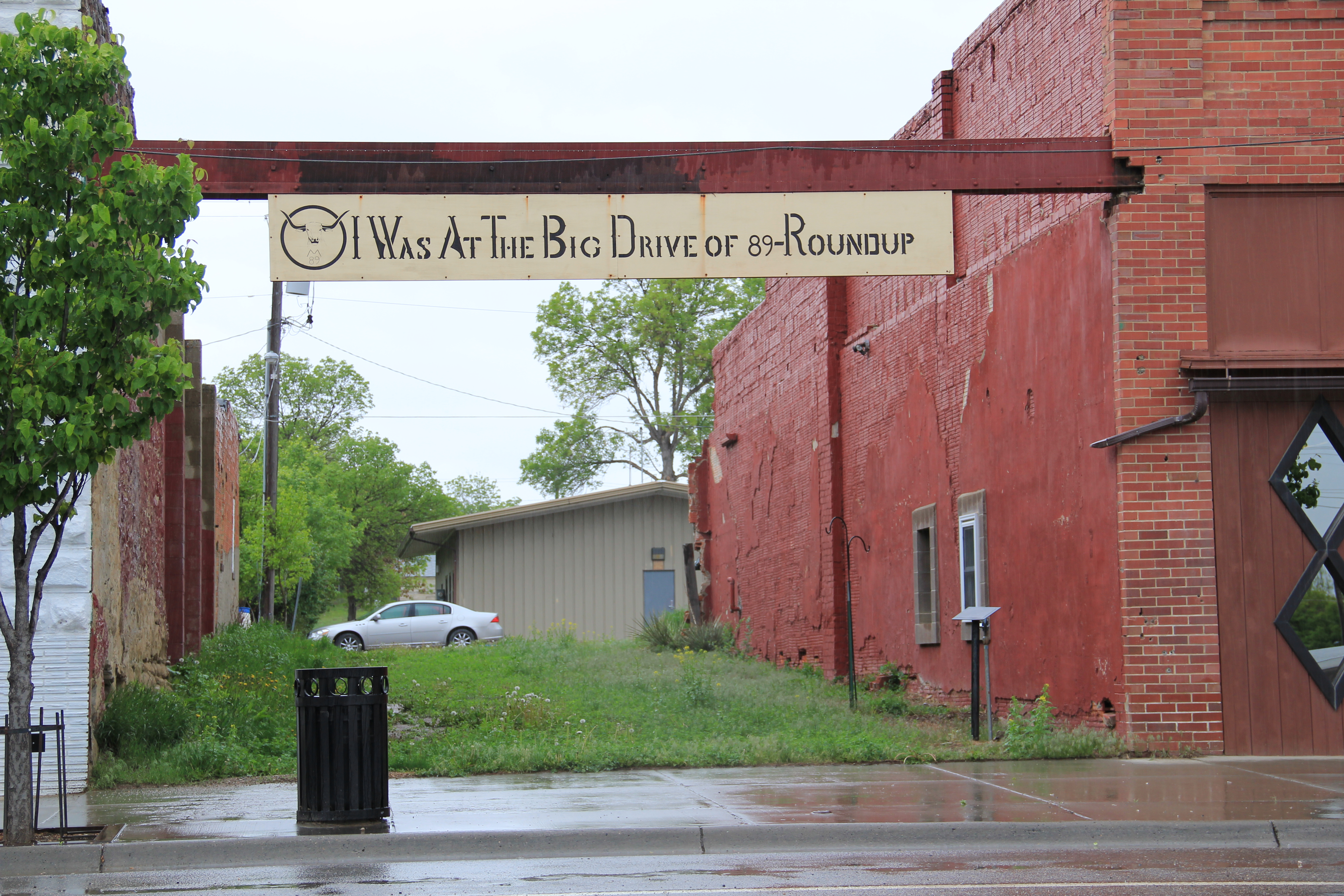
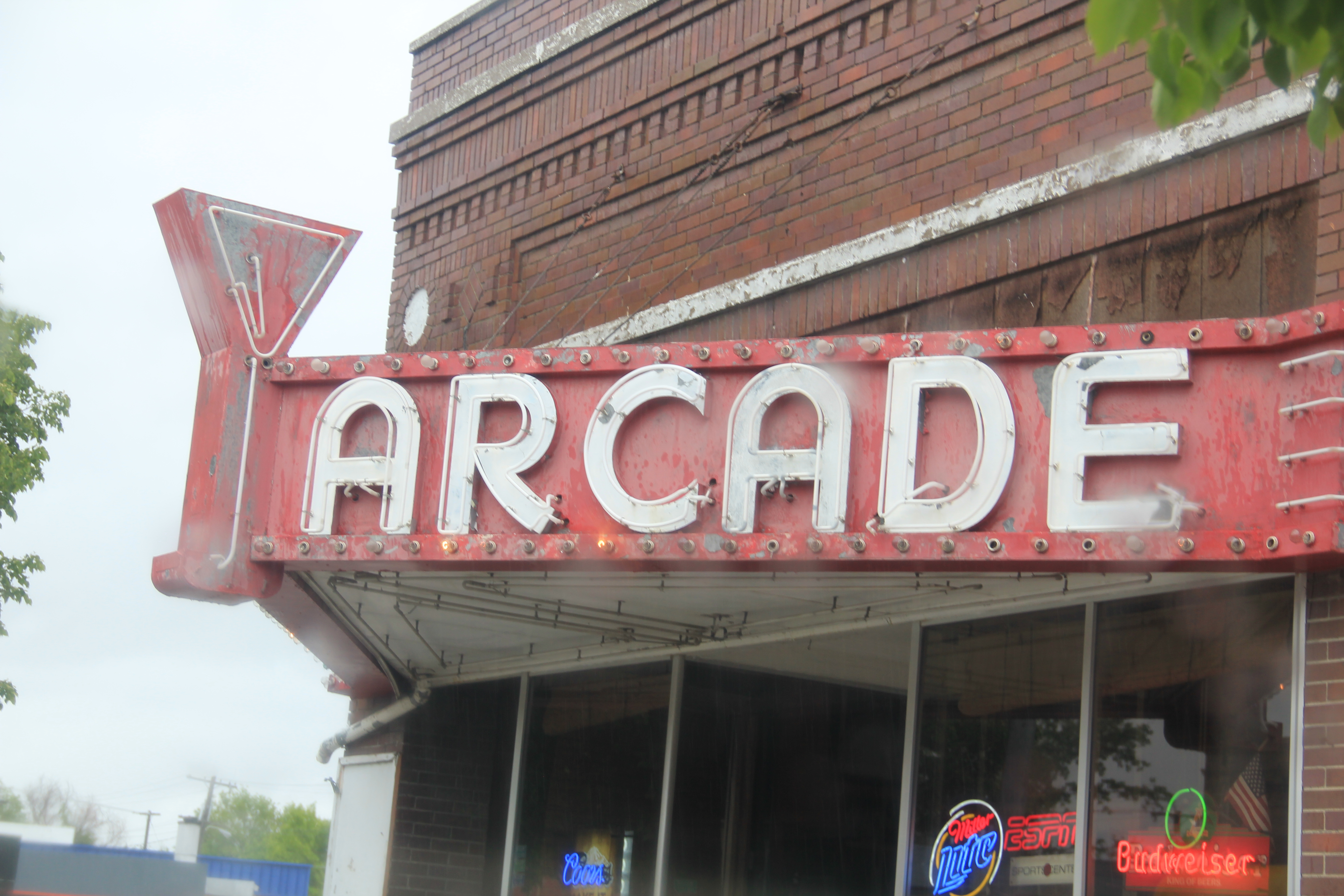
Locals gathered at the town’s several good historic bars–the Arcade being my favorite–are rich in tales of the chaos and fun of early September 1989 when cowboys and pretend cowboys gathered in mass to recreate the “Great Montana Cattle Drive.”  A monument to that crazy day stands next to Roundup’s outstanding New Deal-era courthouse.  Another sign to that time is much more lonely, on Main Street, the old historic route of the trail (now part of U.S. Highway 87). Are you supposed to stand there for a selfie if you rode in ’89?

IMG_0077

IMG_0076

Arcade Bar, Roundup, a real Montana classic

IMG_0057

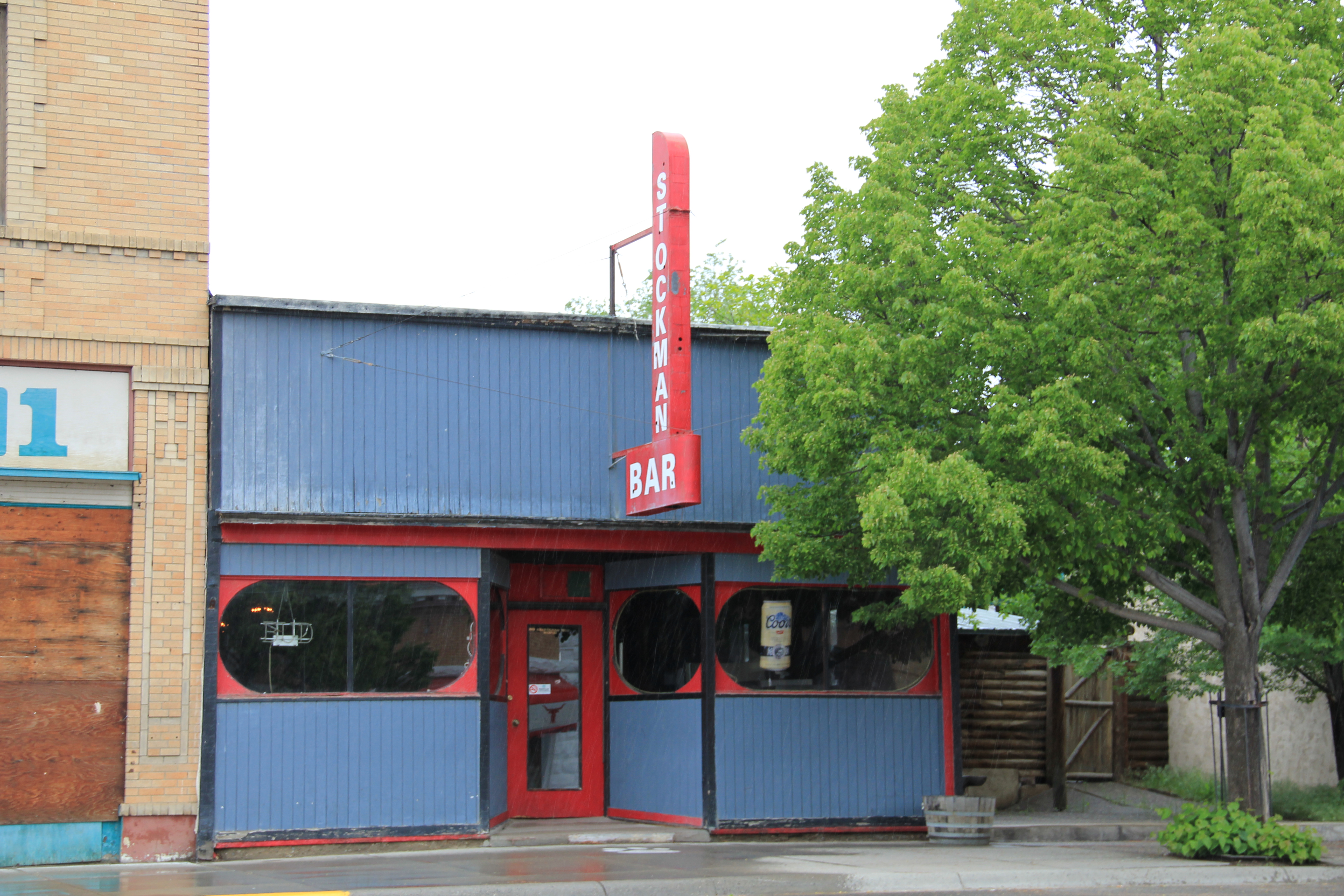
There are so many Stockman Bars in Montana. The one is Roundup has these two great Art Deco-like windows.

The coming of the Milwaukee Road in 1906-1907 created a new look to Roundup.  Like many Milwaukee towns in Montana, it has a T-plan, with the route of the tracks (the rails

IMG_0050

I was glad to see this light industrial adaptive reuse of the Milwaukee depot–it was abandoned in 1985 and could have been demolished.

have been removed since c. 1985) and the location of the depot forming the top part of the T while the stem of the T is the route of U. S. 87 as it stretches to the north.

IMG_0048

U.S. 87 N (Main Street), Roundup

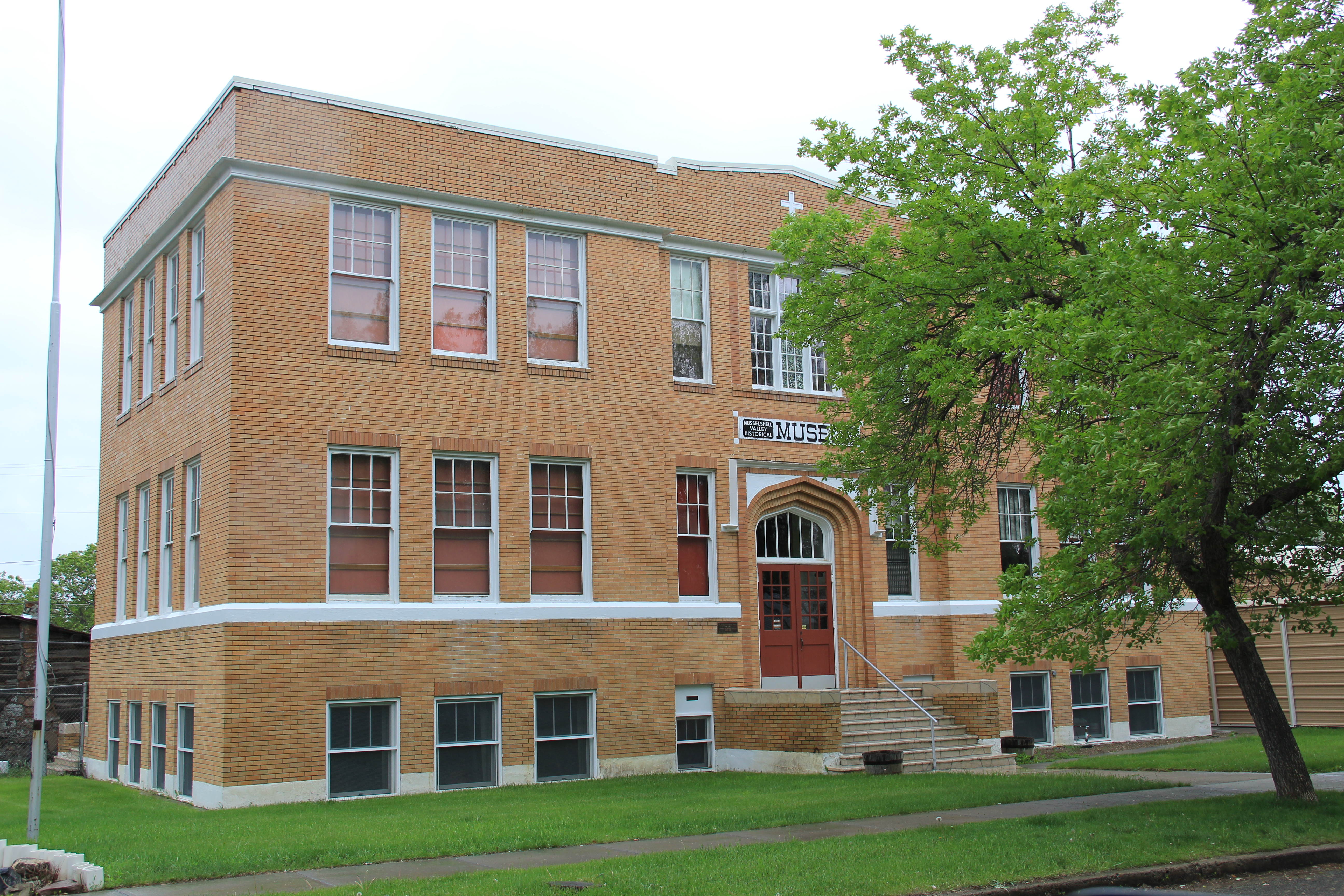
Earlier posts have discussed the town’s contribution to Montana modernism, St. Benedict’s Catholic Church, and the superb Musselshell County Fairgrounds, one of my favorite in the state (and a public property eligible for the National Register IMHO). Roundup has two National Register properties–its two historic schools.  The St. Benedict Catholic School (c. 1920), designed by Roundup’s own John Grant, is now the Musselshell Valley Museum.

IMG_0036

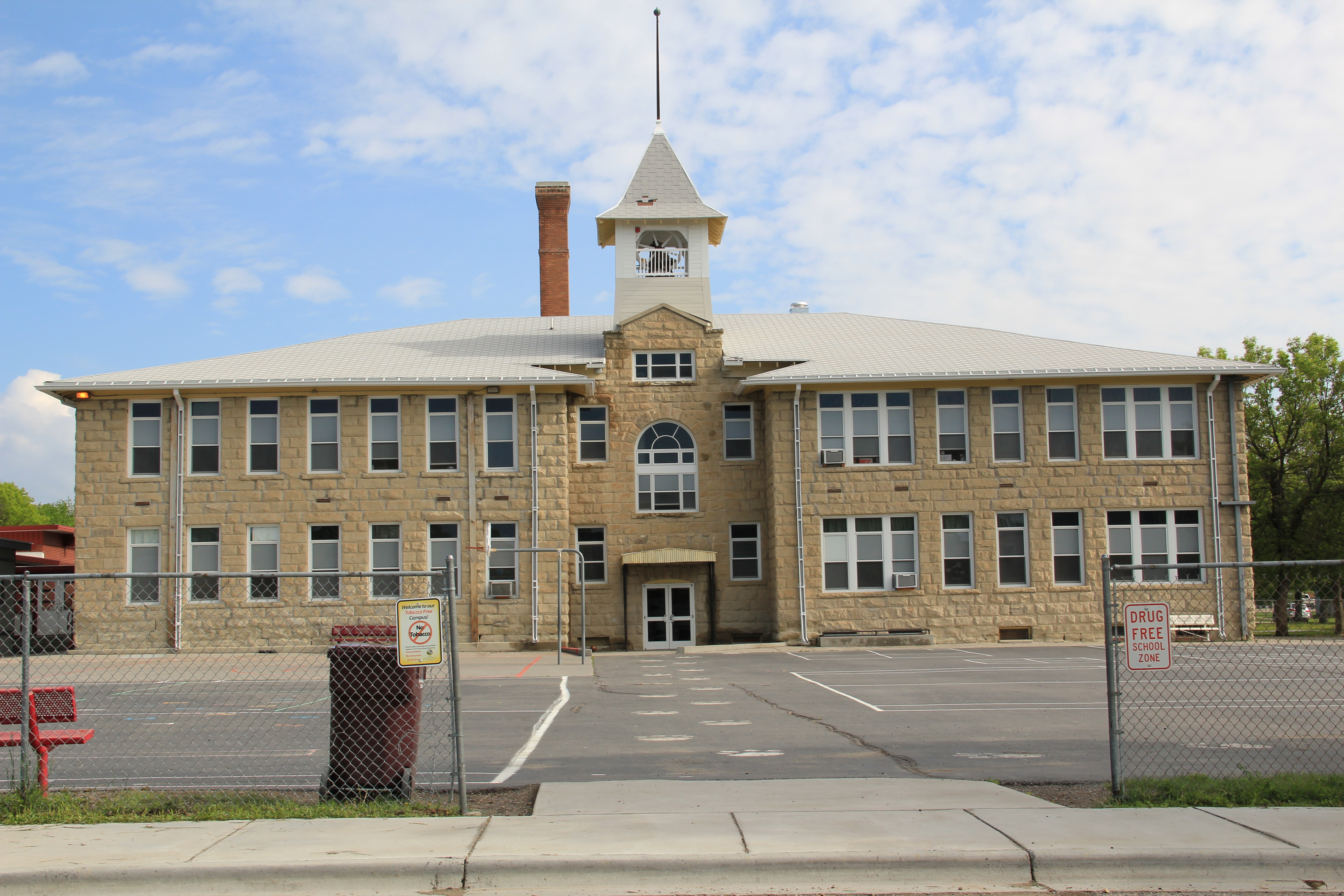
The town’s historic public school, but in two major sections in 1911 and 1913, was designed by the Billings architectural firm of Link and Haire.   It is an impressive landmark, built from stone taken from the bluffs of the Musselshell River Valley, and one maintained with pride by the community.

IMG_0235

Many historic buildings from the early 20th century line Main Street–naturally many one-story buildings but also commercial blocks of style and substance.  There is also a lot of homes that would contribute to a residential historic district.  Roundup has lost population like almost all eastern Montana towns since 1980 but not by such a severe amount–just over 200 in the last 30 years.  Thus, the town’s historic buildings remain in use and in fairly good condition.

IMG_0063

IMG_0046

IMG_0039

The historic schools in Roundup have been a great start for heritage efforts in Roundup but this quick overview shows that more can be done, to document and preserve this pivotal place in the Musselshell Valley.

Musselshell school and the Musselshell Valley

IMG_0091

Traveling west of U.S. 12 along the Musselshell River Valley, I eagerly sought out the town of Musselshell, assuming that the 30 years since my last visit had not been kind to the small country town.  I hope that the iconic 1913 school–a gleaming yellow brick landmark–was still there.  It had survived, as the photo above attests, although students no longer attend classes there.  Musselshell School closed as an education institution over 10 years ago, but a group of determined community-minded residents formed the Friends of Musselshell School and saved the building, turning it into community center for the western end of the county.  When I visited in 2013–new work to the building was evident, including newly installed windows, courtesy of a $10,000 grant from PPL Montana Community Fund.

Handel store, c. 1912, and Musselshell overview

Handel store, c. 1912, and Musselshell overview

Musselshell prospered in its first decade of existence, after the arrival of the Milwaukee Road, and has been in decline, really, ever since.  But it retains both the historic high school and elementary school (which is now headquarters for the volunteer fire department), along with early 20th century churches, community institutions for a vanishing population.

IMG_0093

IMG_0094

Community Bible Church, Musselshell

Vanishing as well is the story told by the area’s mid-20th century irrigation project, the Delphia-Melstone Canals, built in 1950 and 1953 by the State of Montana.  The diversion dam at Musselshell was the project’s largest at 182 feet.

IMG_0098

Somehow Musselshell has been able to hang on to its tiny false-front post office, a reminder of the community’s persistence along a railroad that has disappeared and a highway that receives so few travelers today.

IMG_0095

The Milwaukee Road Heads into the Musselshell Valley

As the Milwaukee Road left the Yellowstone Valley at Forsyth and struck northwest toward the Musselshell River valley, it created one of Montana’s most classic prairie railroad towns, Ingomar, established in 1908.  The hamlet, with 25 or so residents today, compared to perhaps the 100 who lived around there in 1980 has several historic buildings that document its quick twentieth century rise, and just as quick fall in the 1920s and 1930s depression years.

IMG_6844

Jersey Lily Bar, Ingomar, 1984

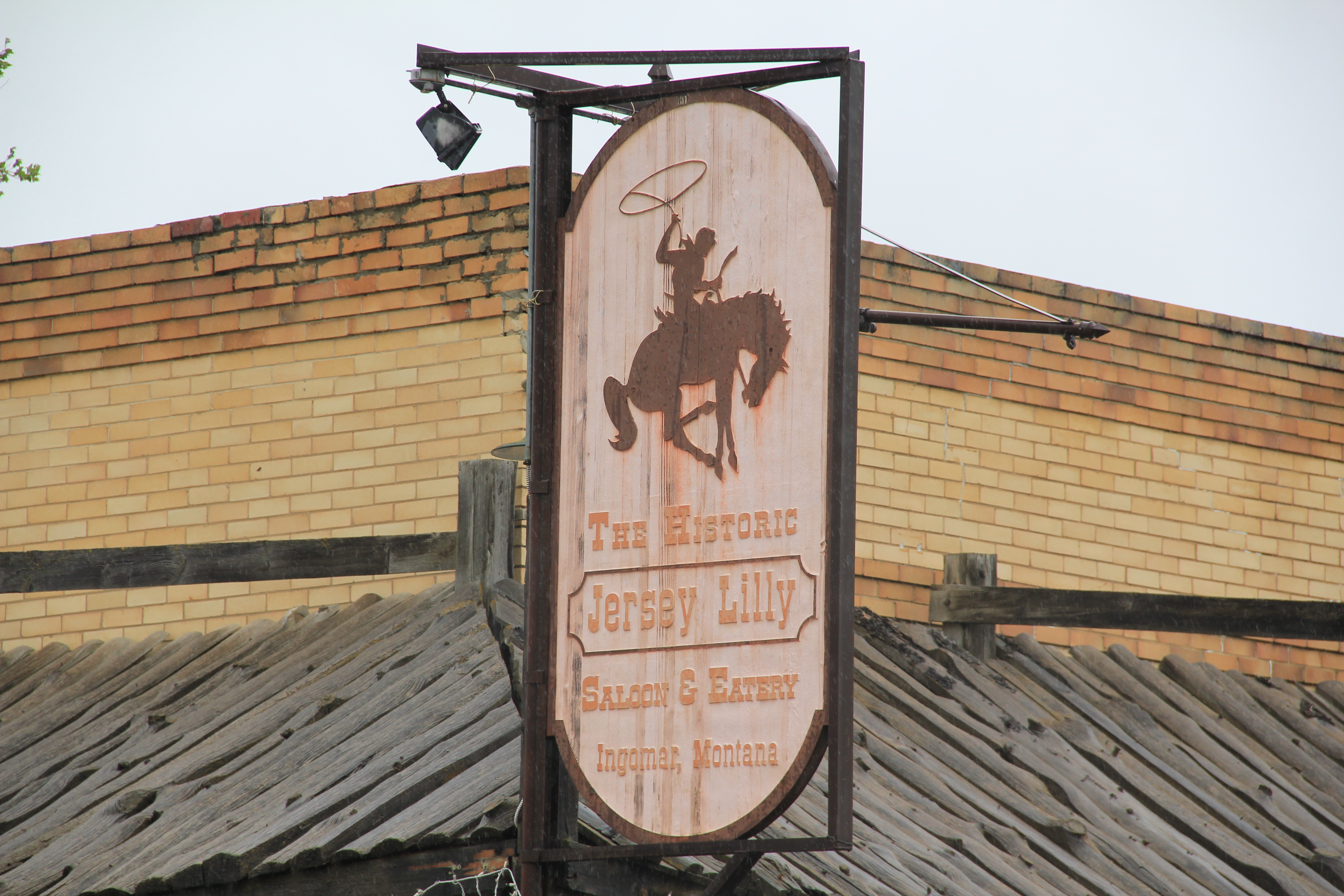
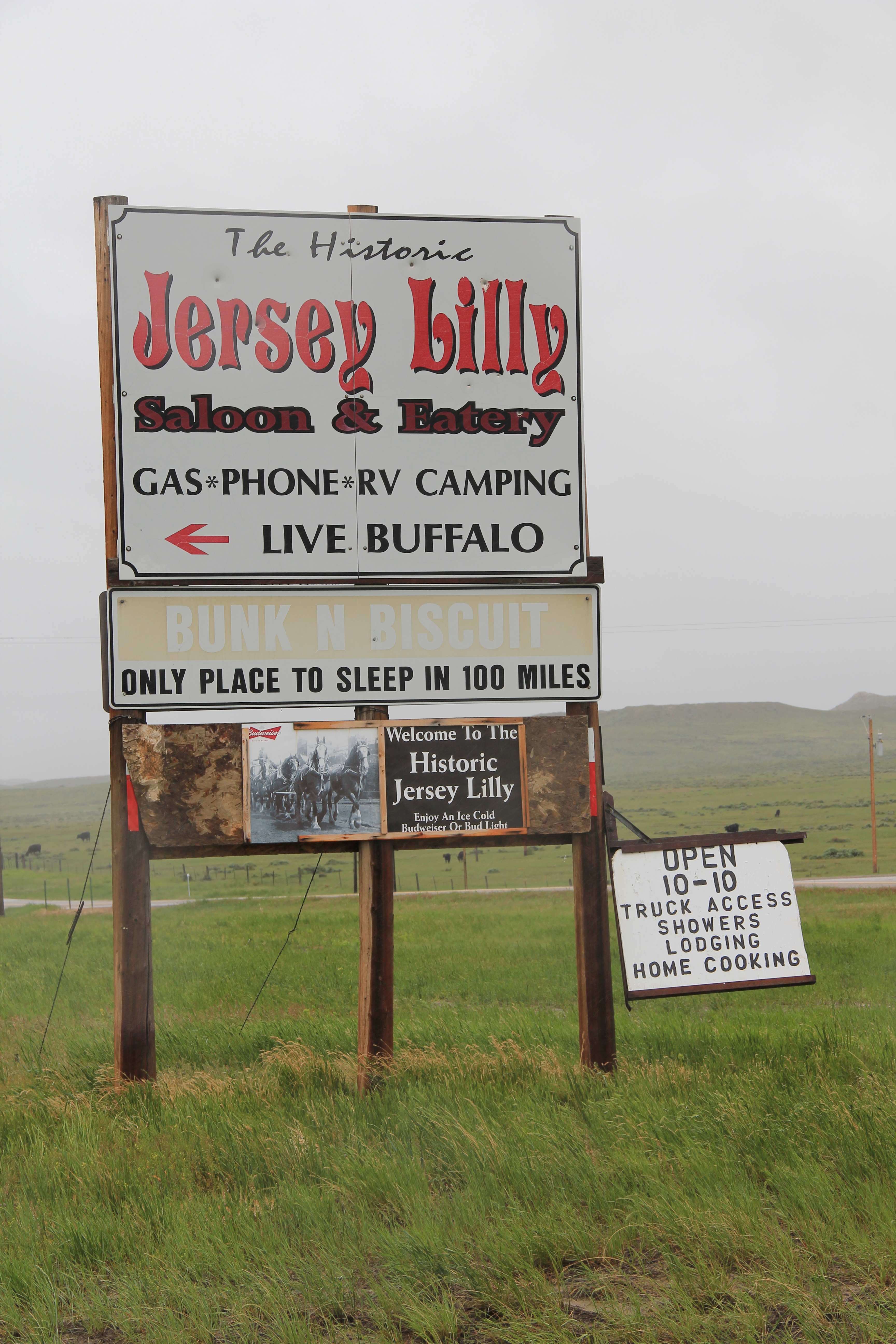
In the 1984 survey of Montana, Ingomar really just had one reason to stop:  the Jersey Lilly Bar, owned and managed by Bill Seward, who had done so since 1984.  That spring Seward and I became good friends.  Few people stopped there in February and March and since I was in the region, I found ways to stop in. do coffee (strong, hot, always ready) and have whatever Bill was thinking of cooking.  He was proud of his beans, and liked sliced red potatoes when he had them.  Seward added the faux western wood porch to a 1914 bank building:  he said that the tourists liked it, that it made the otherwise Classical Revival bank look “Old West.”  Until Seward’s death in 1995, I found reasons to visit Ingomar three other times, in a way just to make sure that both Seward and the bar was still going on.  Since the construction of the interstate highway to the south had so killed traffic along U.S. Highway 12, you wondered when the bar would close.

IMG_0115

This former homestead-era bank building, the Wiley, Clark, and Greening Bank, opened in 1914 and closed as a bank seven years later.  In 1933, the height of the Depression, it re-opened as the Oasis Bar (it certainly was that along U.S. 12) and it became the Jersey Lilly Bar in 1948.  Almost seven decades later, it is a well-known landmark on the highway, and was listed in the National Register of Historic Places in 1995.

IMG_0116

IMG_0126

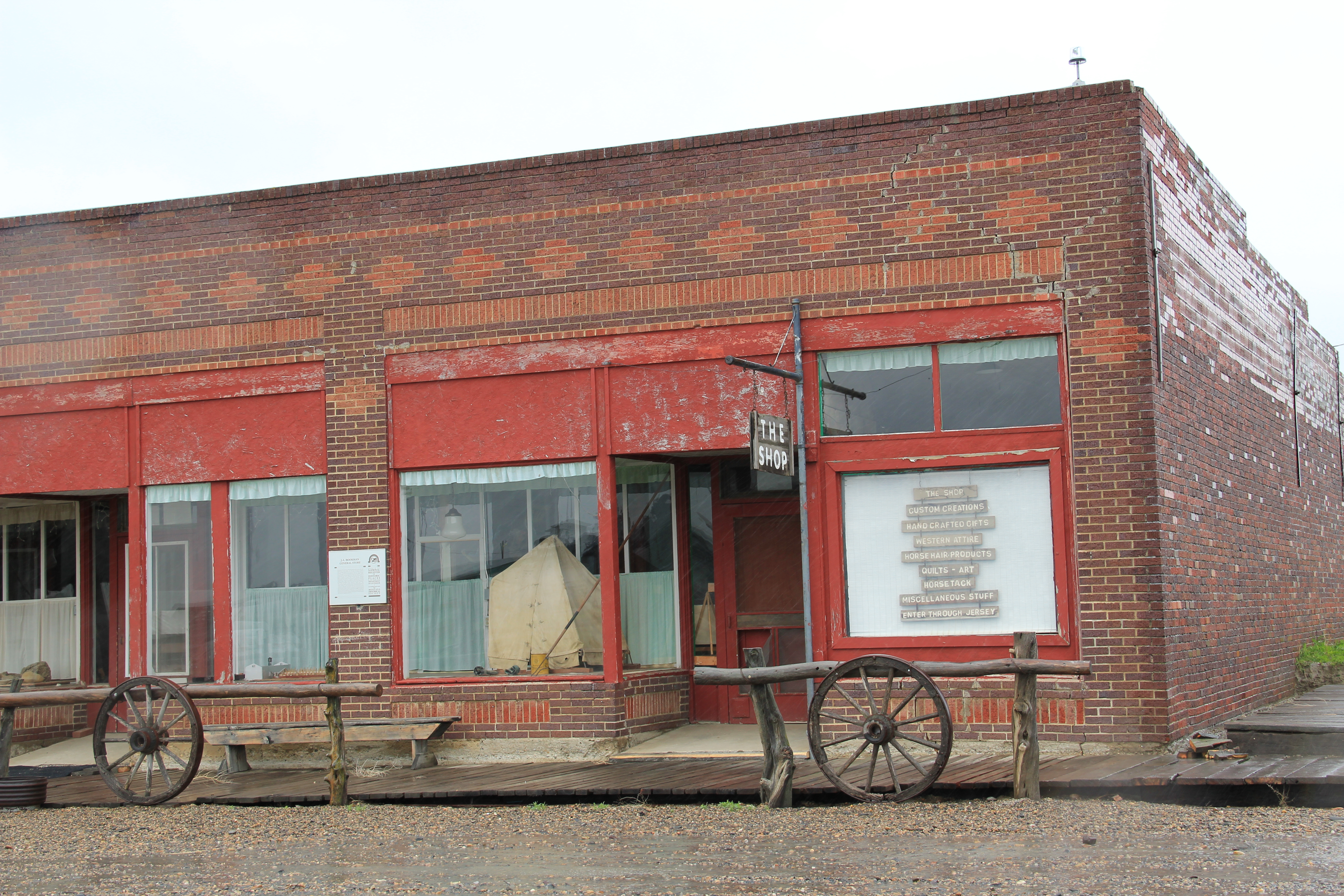
Adjoining the bar, and accessible only through the bar, is another National Register building, the Bookman General Store, constructed as really an act of faith in 1921, replacing an earlier store that had burned.  The prospects for Ingomar was not so rosy by that time but the Bookman family stayed the course–lost the store for two years from 1933-1935–but reacquired it and kept it open to 1943.

IMG_0122

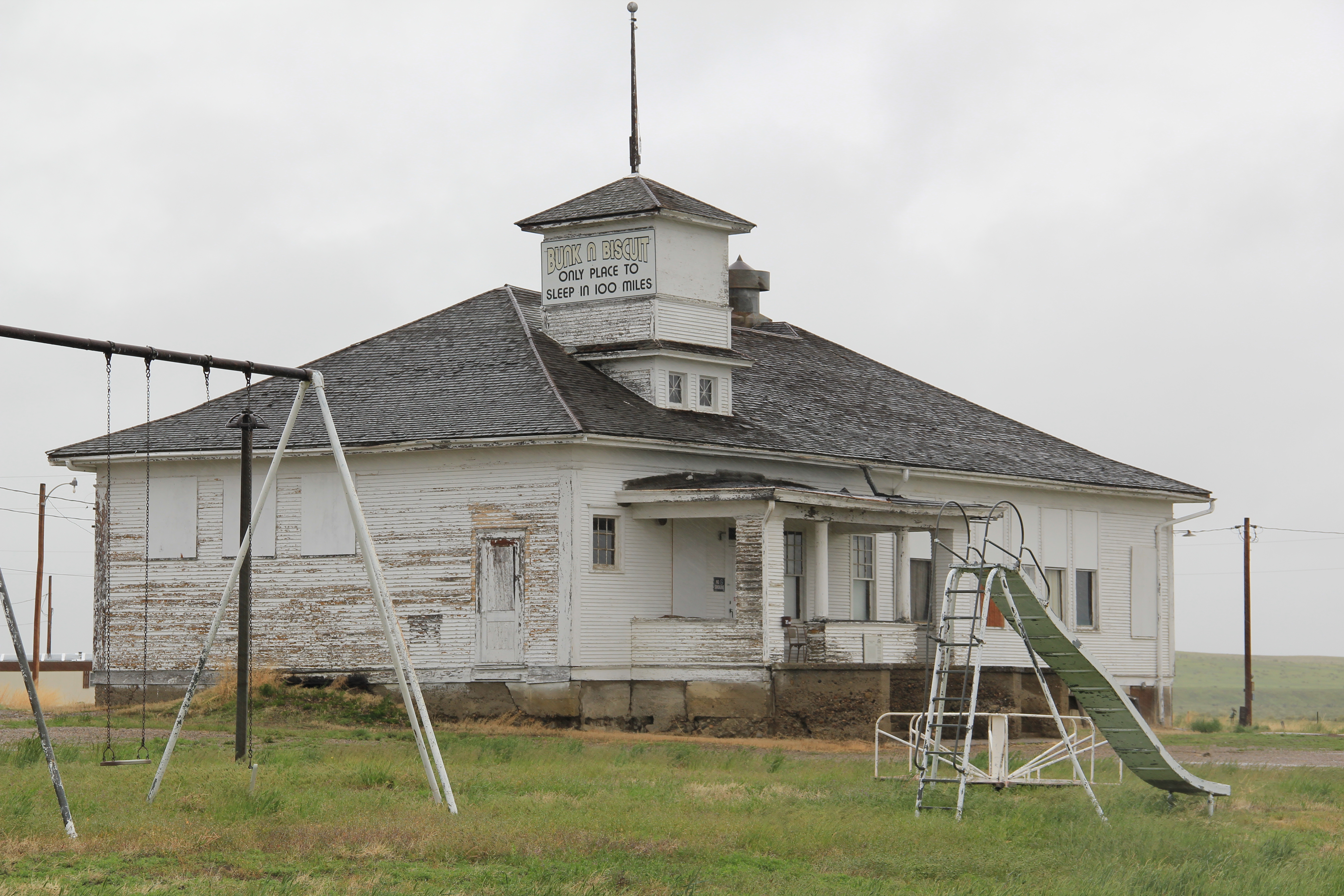
A third Ingomar landmark on the National Register is the public school, which evolved from  a one-room in 1913 to the rambling building you see today, constructed by Neils Hanson of Melstone in 1915.  When I surveyed Ingomar in 1984, the school still operated but closed for good in 1992.  It was converted into a “biscuit and bunk” later that decade.

IMG_0111

Another important historic building is the Milwaukee Road “combination-style” depot, where the passenger and freight service was combined into one building.  Many of these have disappeared along the line since its closure, and too many have disappeared or have been moved since my survey work of 1984-1985.  Ingomar has its depot, converted into a private residence along the now-gone tracks in the 1990s.

IMG_0123

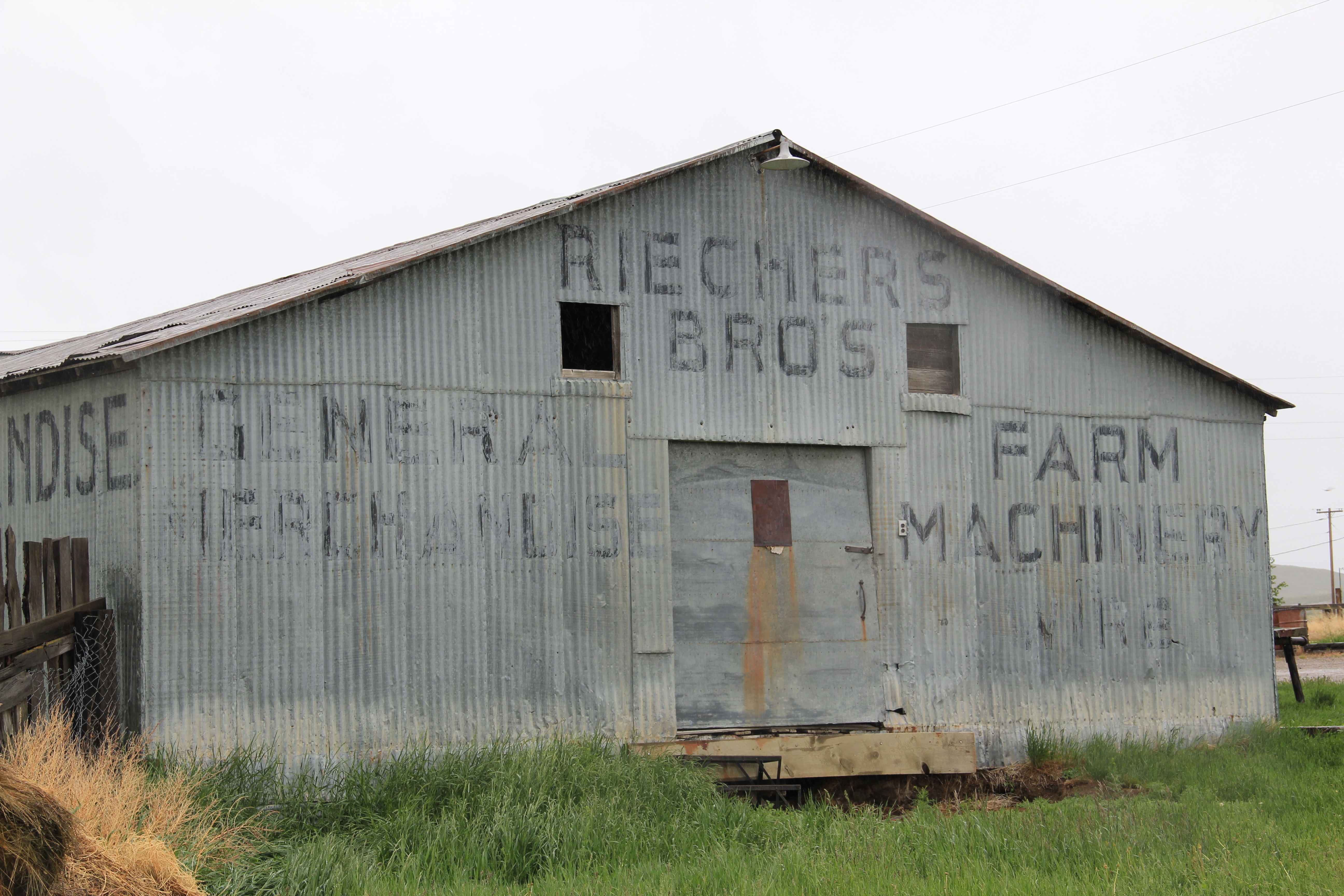
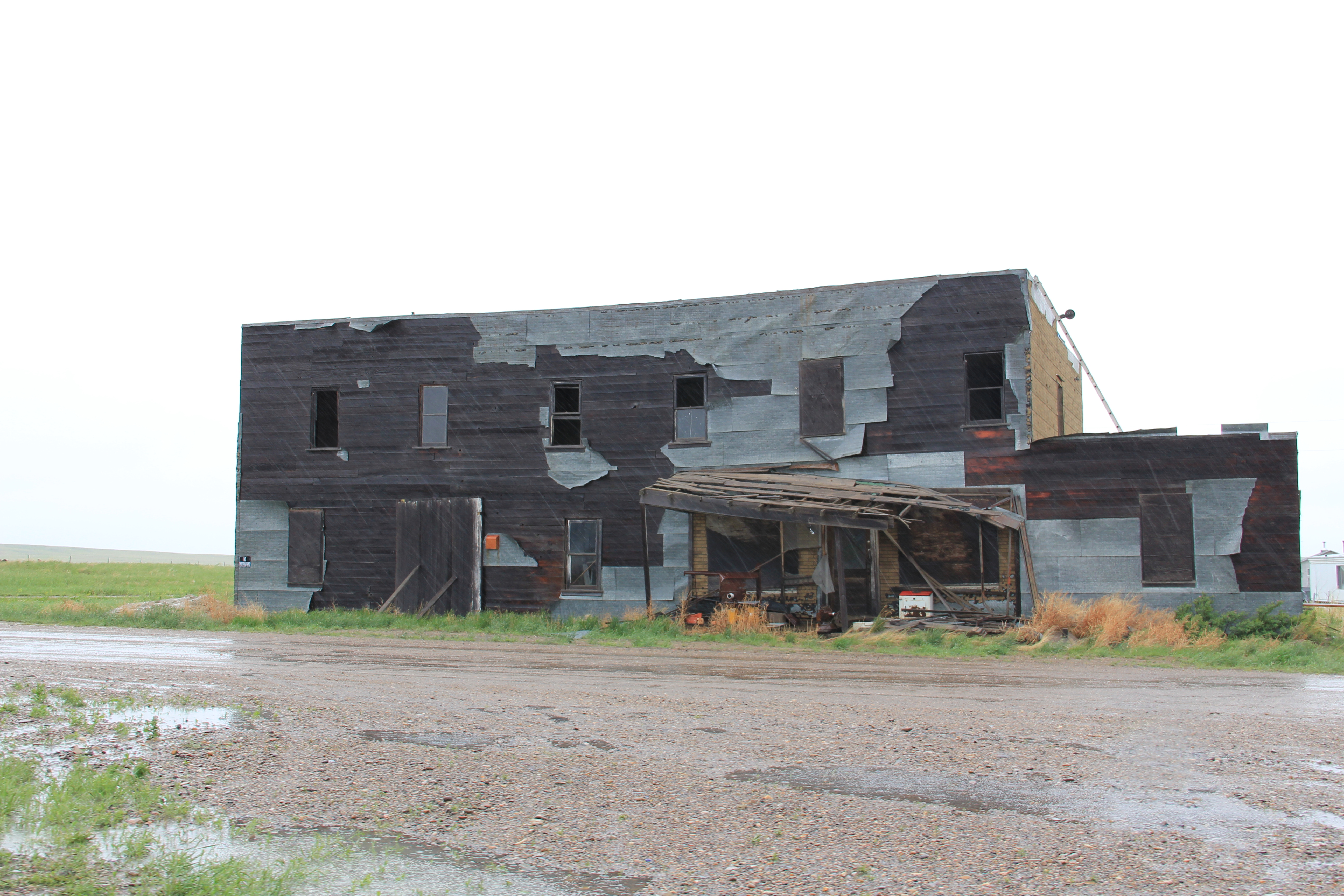
Other historic properties exist, perhaps waiting new futures.  The rodeo grounds stay in use while the Riechers Brothers general merchandise and machinery store building remains standing.  Other structures are barely hanging on.

IMG_0113

IMG_0114

IMG_0109

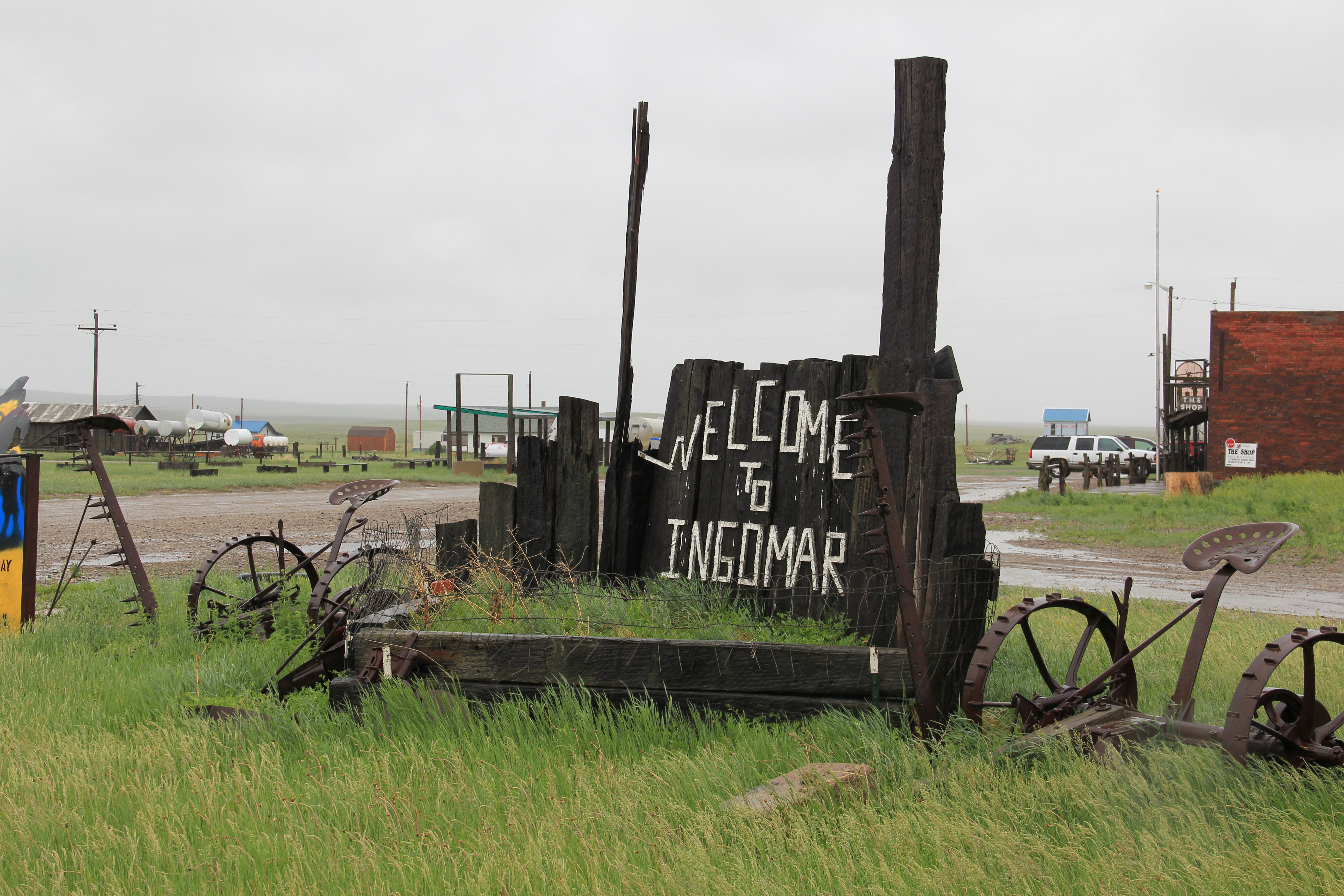
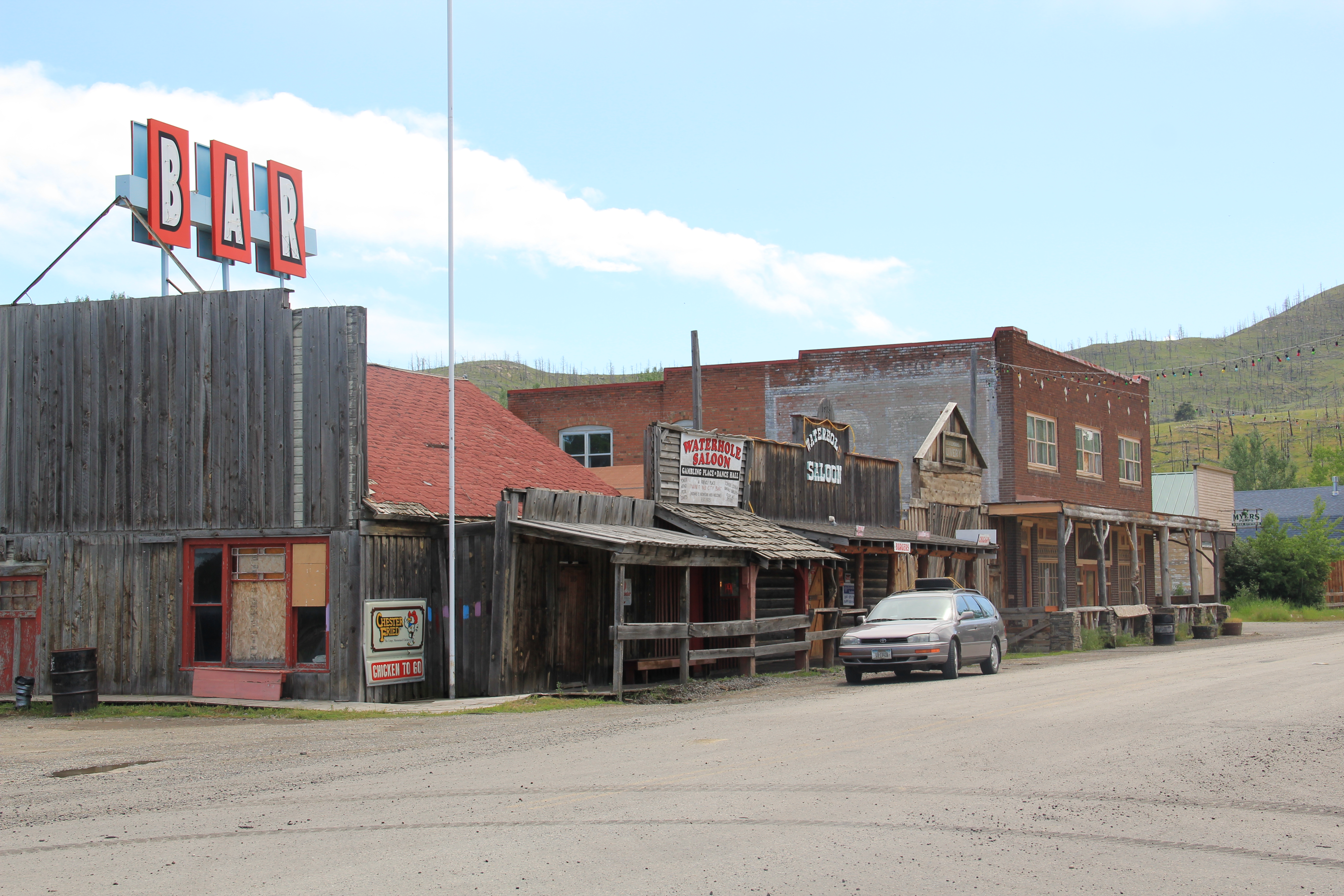
As travel dwindles and population disappears, you worry about the future of Ingomar.  Their signs and their heritage assets beckon visitors daily but will enough even come by to make a difference?
IMG_0108

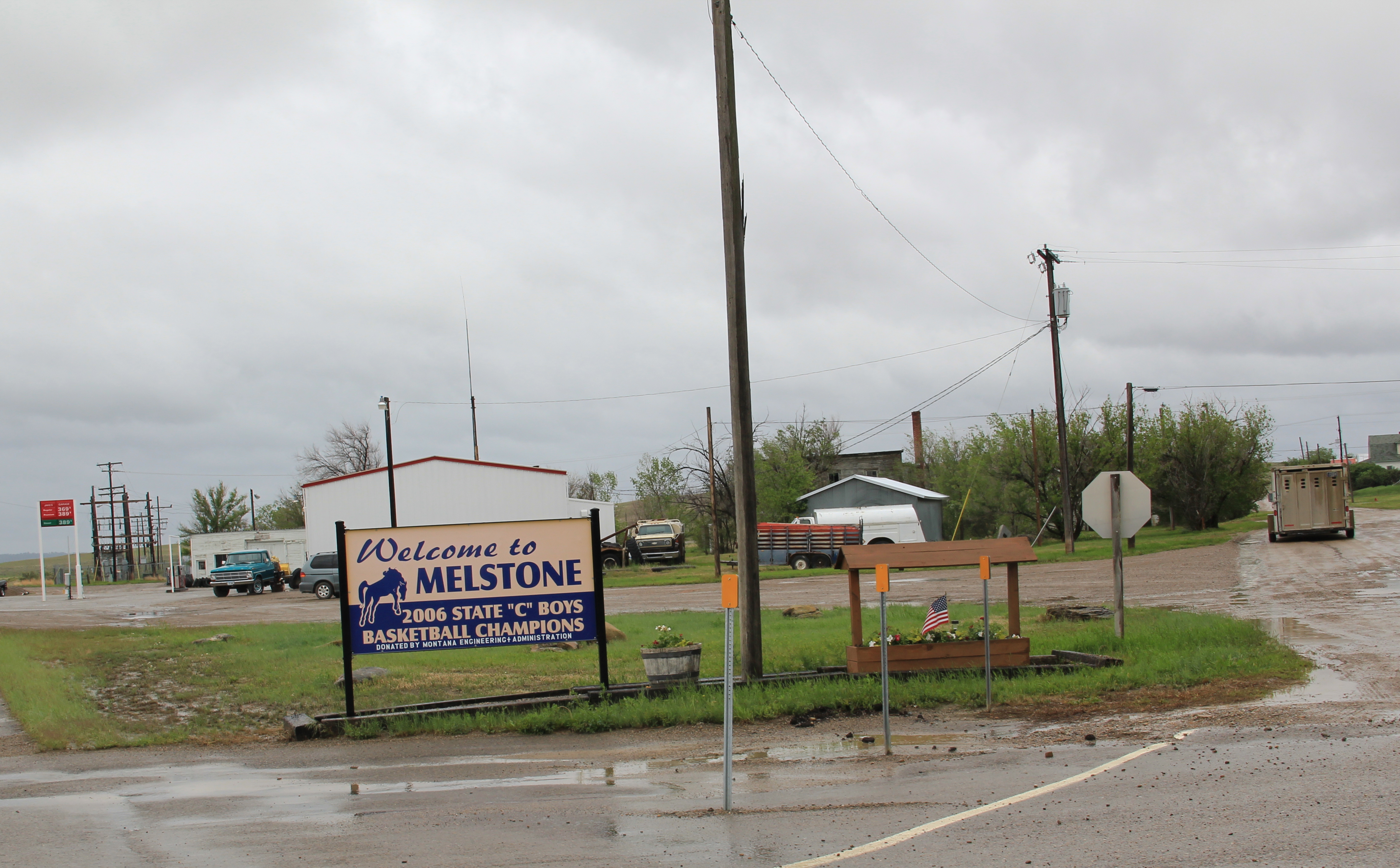
Melstone, just west of where the Milwaukee Road crossed the Musselshell River and entered its valley, is another worrisome case.  Its population has dropped to under 100–almost 150 lost since my visit in 1984.  But it still has its school, which is very much the town’s central institution and point of pride.

IMG_0103

Melstone has lost its signature building, the 1912 Antlers Hotel, located on the town’s most prominent corner between its main street, that leads to the school, and the intersection with U.S. Highway 12.

IMG_4071

Antlers Hotel, Melstone, 1984

The location of the Antlers Hotel is now a grassy spot.

The location of the Antlers Hotel is now a grassy spot.

Melstone has a hardware/general store along with Jakes Garage on the highway and the Melstone Bar and Cafe, another classic roadside stop along u.S. 12.

IMG_0104

IMG_0099

Ingomar and Melstone–I understand to most eyes they are dumps, not worth a look–but in my fieldwork they are interesting and valuable, physical signs of the 20th century determination to make rural settlements work, and despite their losses, they are still here some 100 years later.

Winnett and Petroleum County

IMG_0261
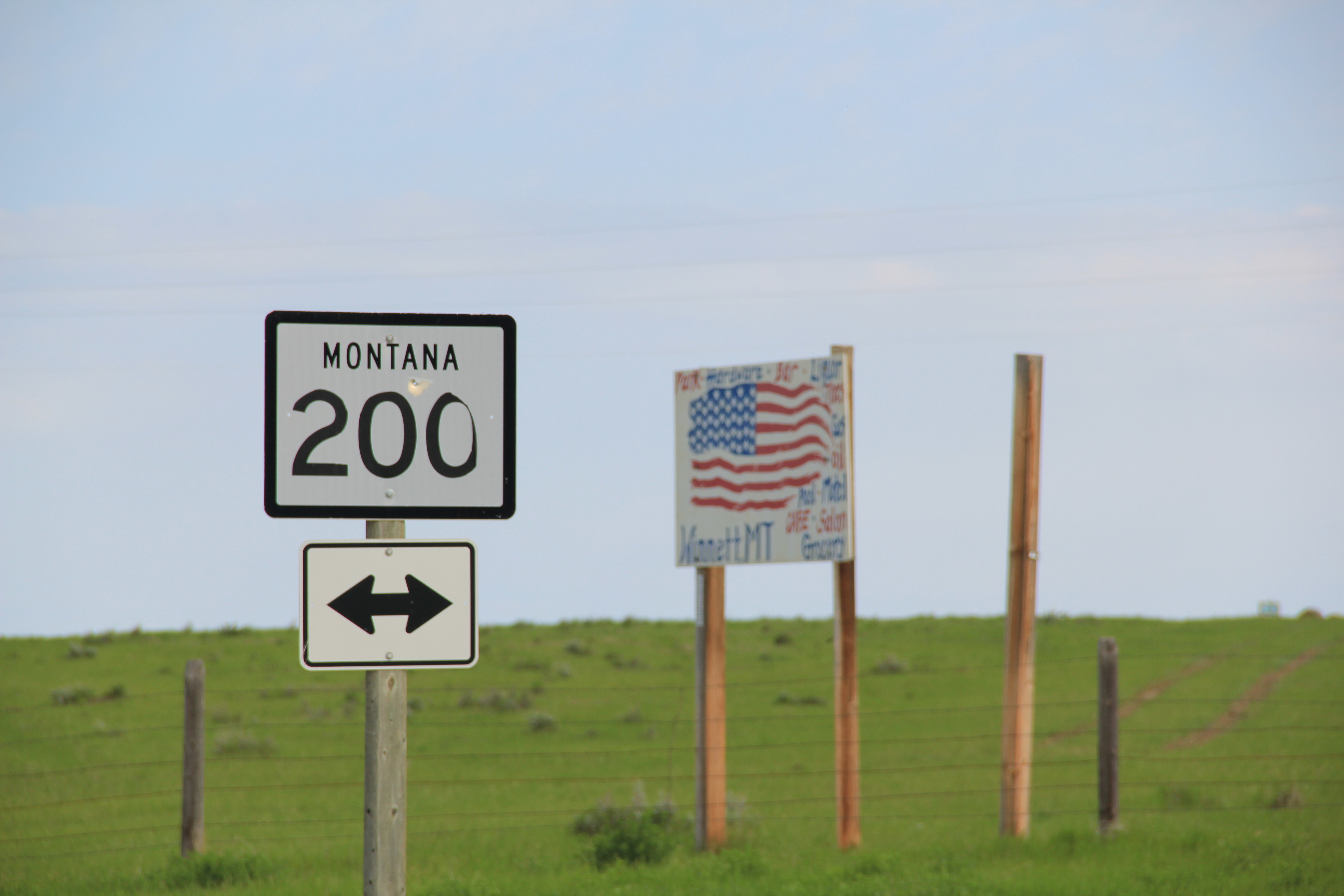
West of Jordan, crossing the Musselshell River, on Montana 200 is Petroleum County, the last county to be created in Montana in 1925. Its county seat, Winnett, was never big–even at the height of the Cat Creek oil strike the town numbered only 500 residents. It now has 188 in 2010–a slight decrease of twenty from when I first visited in 1984.

Petroleum County Courthouse, mid-1980s

Petroleum County Courthouse, mid-1980s


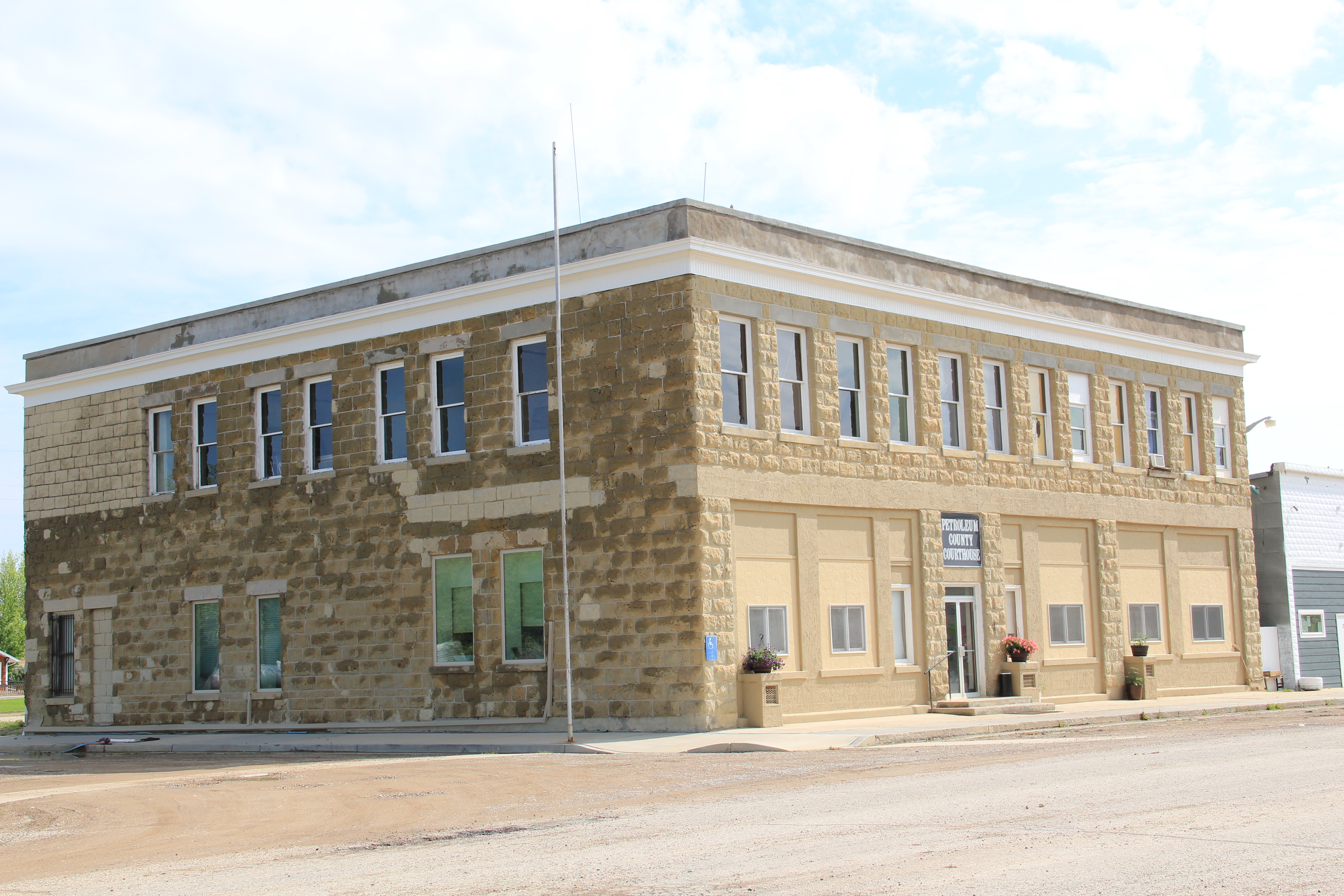
In 1928, county officials moved the courthouse into the town’s one substantial business block, a beautiful locally quarried stone building from the town’s beginnings in 1918. The courthouse is now the county’s one listed property in the National Register of Historic Places.
IMG_0255
IMG_0256
Another public building is the 1960s post office–I noted it in the 1984 because of the use of a stone veneer on the front of the building, different than many other standardized designs found in the region. That building is
Created with GIMP
still there, now as then, an important community gathering place, changed only by the growth of landscaping around it in the last 30 years.
IMG_0251
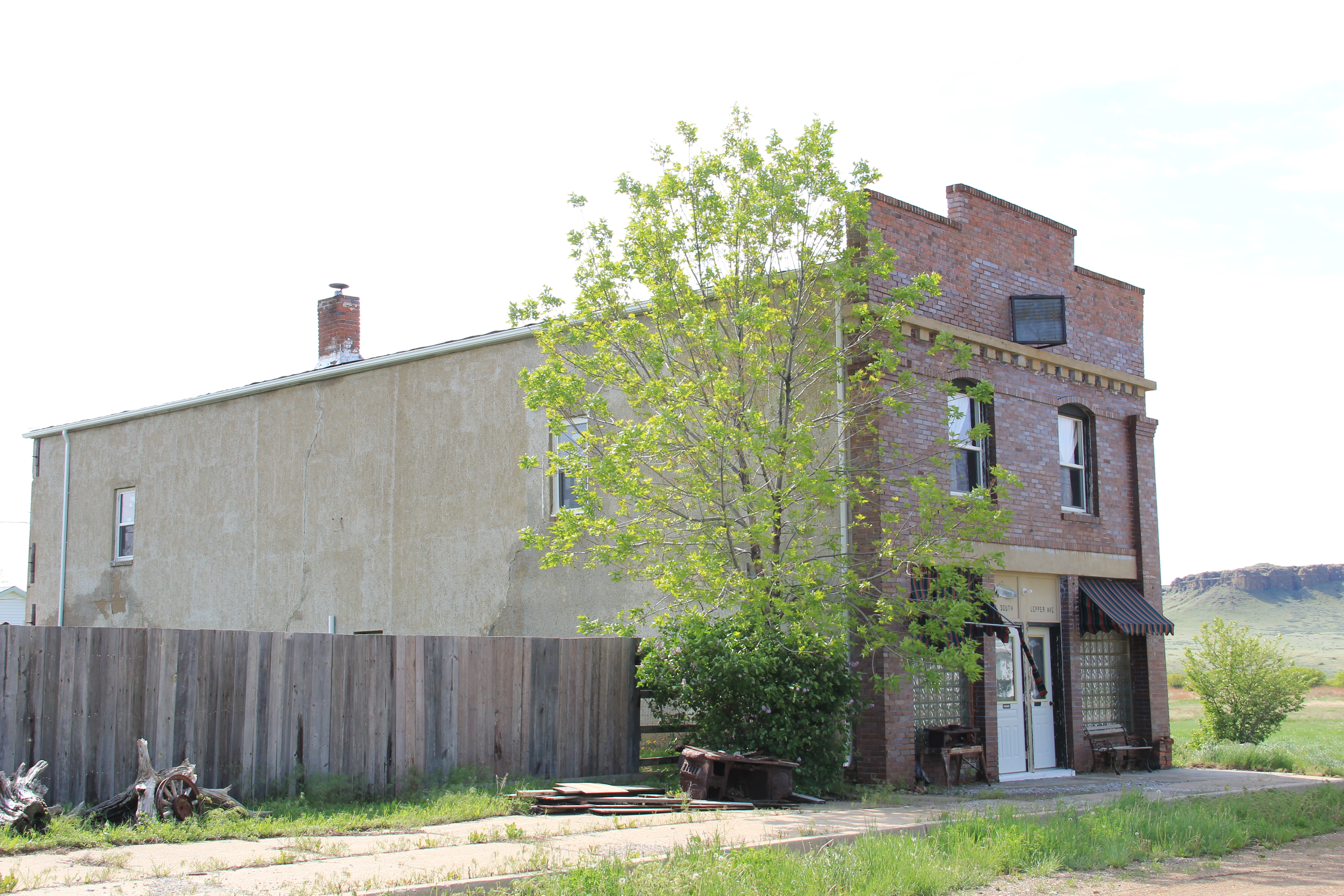
There is only a single historic grain elevator left in Winnett, but it has two bars, one a converted gas station, the other the iconic Winnett Bar, one of the most famed in the region, especially for its steaks. If you only need one reason to visit Winnett, this is the one.
IMG_0250
IMG_0260
IMG_0252
While there, you also can take in a bit of Montana modernism, in the A-frame First Baptist Church, which the town’s “W” overlooks from the bluffs above. Other earlier classic vernacular designs, such as false front stores await new futures.
IMG_0246
IMG_0254
The future in Winnett and Petroleum County is naturally given a physical space by its schools–the most substantial buildings constructed here in the second half of the 20th century. with less than 500 residents in 210, the county’s future seems to be non-existent but the schools say otherwise.
IMG_0248IMG_0245

Garfield County: the forgotten land of eastern Montana

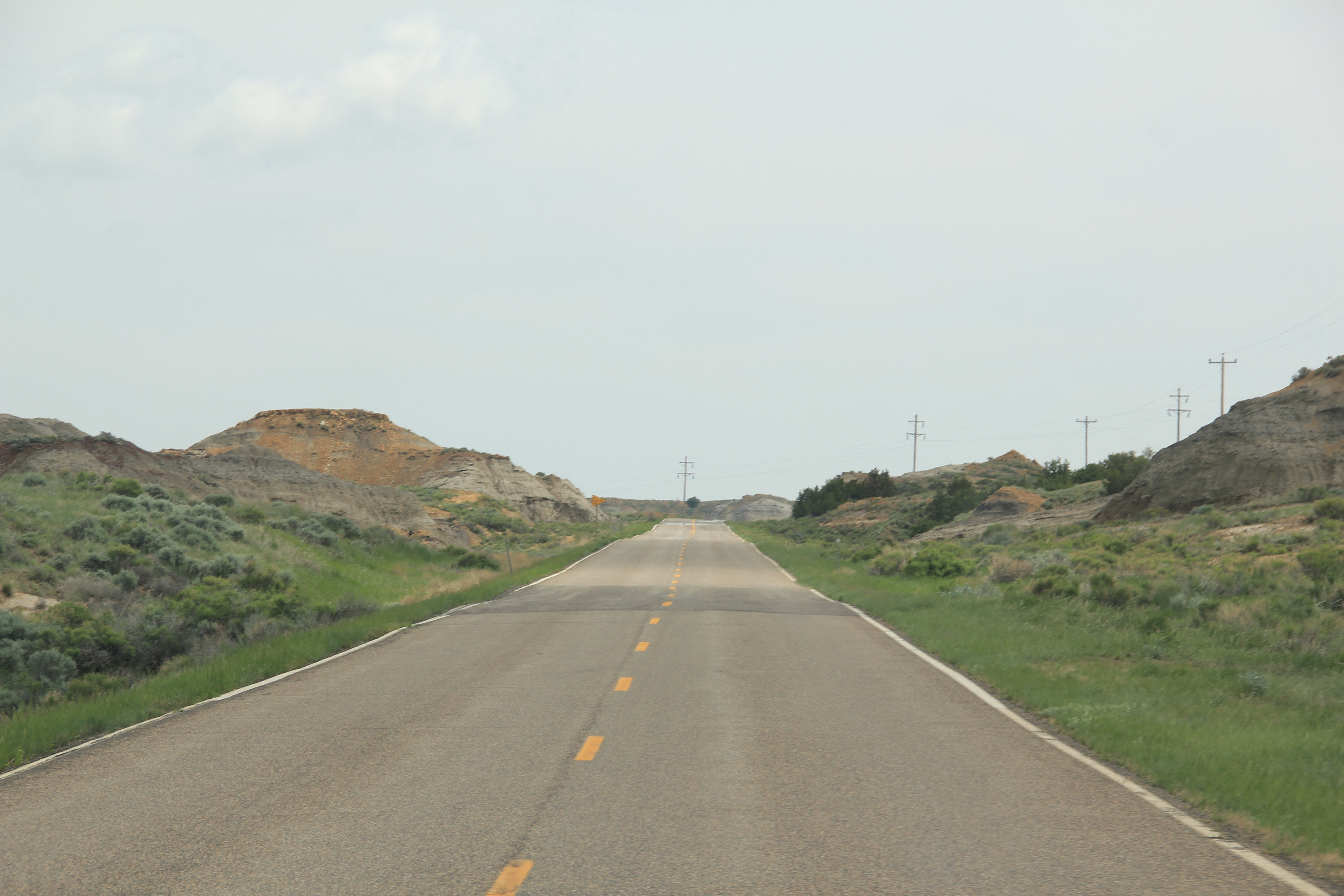
IMG_0310Before I began crisscrossing over Montana in 1984 for the state historic preservation plan, I sought out ideas and locales from friends, colleagues, and others knowledgeable about the state’s history and built environment.  No one could offer anything about Garfield County, which I found surprising because the county was huge in size, and located smack in the middle of eastern Montana, with major north-south and east-west state highways crossing at Jordan, the county seat.  I knew the population was sparse–just over 1600 in 1980, making it one of the least densely populated places in the lower 48, and the least densely populated place in Montana.

IMG_0316

But as you rolled into the county via Montana 200–which became a favorite route of mine by the time I was done with the survey in 1985–I just knew there had to be something here, especially at Jordan, the county seat, numbering about 485 people in the early 1980s but now just 340 plus residents in the 2010s.

Jordan, mid-1980s

Main Street, Jordan, mid-1980s

IMG_0292

Main Street, Jordan, 2013

Despite the drop in population over 30 years, Jordan had not remained frozen in time–as I sorta expected to find–but rather changes were everywhere.  Traffic signals were at the crossroads of MT 200 and Main Street; Main Street had been paved.  The historic high school dormitory (1936) for Garfield County–a property type of the early 20th century that absolutely fascinated me, that kids came and stayed the week in town for school due to the distances otherwise they would have to travel daily–was still there, but shuttered.

IMG_0285

Both times I had visited Jordan in the 1980s, students thought it weird that I found their “dump” to be interesting, and historic:  but it was, and still is:  creating community, even temporary, in the far-flung reaches of the northern plains was important to the New Dealers who helped to fund the dorm in 1936.  This building should be on the National Register of Historic Places; Garfield County has no National Register buildings, just one historic site, the Hornaday camp, associated with the Smithsonian’s study of the “last” buffalo in the late 19th century.

IMG_0284

The historic high school adjacent to the dormitory, another New Deal building from 1936, still stood too, but it had been renovated and remodeled, keeping its general shape and simple classical entrance but little else from its 1980s look; across the street was a new annex and gym.  There was also a shiny new elementary school but that did not mean that the old Jordan Elementary from 1930 was gone:  in 2013 last touches were underway to turn it into the town’s library.

IMG_0283

IMG_0289

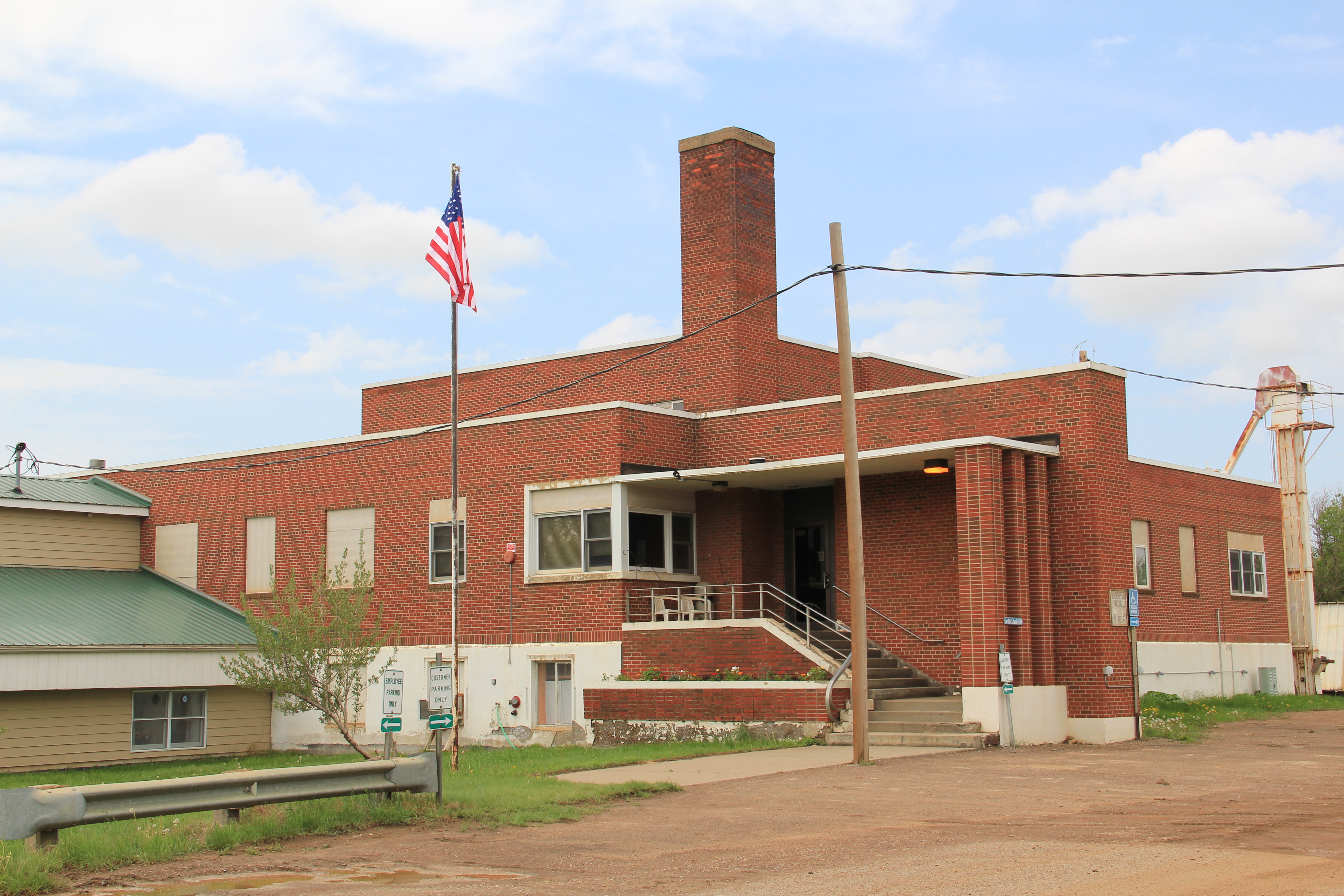
In 2013, the biggest change to my eyes was the courthouse.  In 1984 I was captivated by this tiny, frame courthouse, that looked more like a mid-20th century tract home than a county’s primary public building.  Indeed, I circled through the town a bit more than

garfield jordan - Version 2

needed:  the old courthouse was no more, lost in a c. 1998 fire.  The new county courthouse was a red brick building, the former 1960s county-owned, modernist-styled hospital, perhaps the biggest change I encountered in Jordan.

IMG_0304

The new Main Street bars were also a surprising but welcome change. Ranchers and Hell Creek bars speak to images and realities of Garfield County.

IMG_0294

IMG_0295

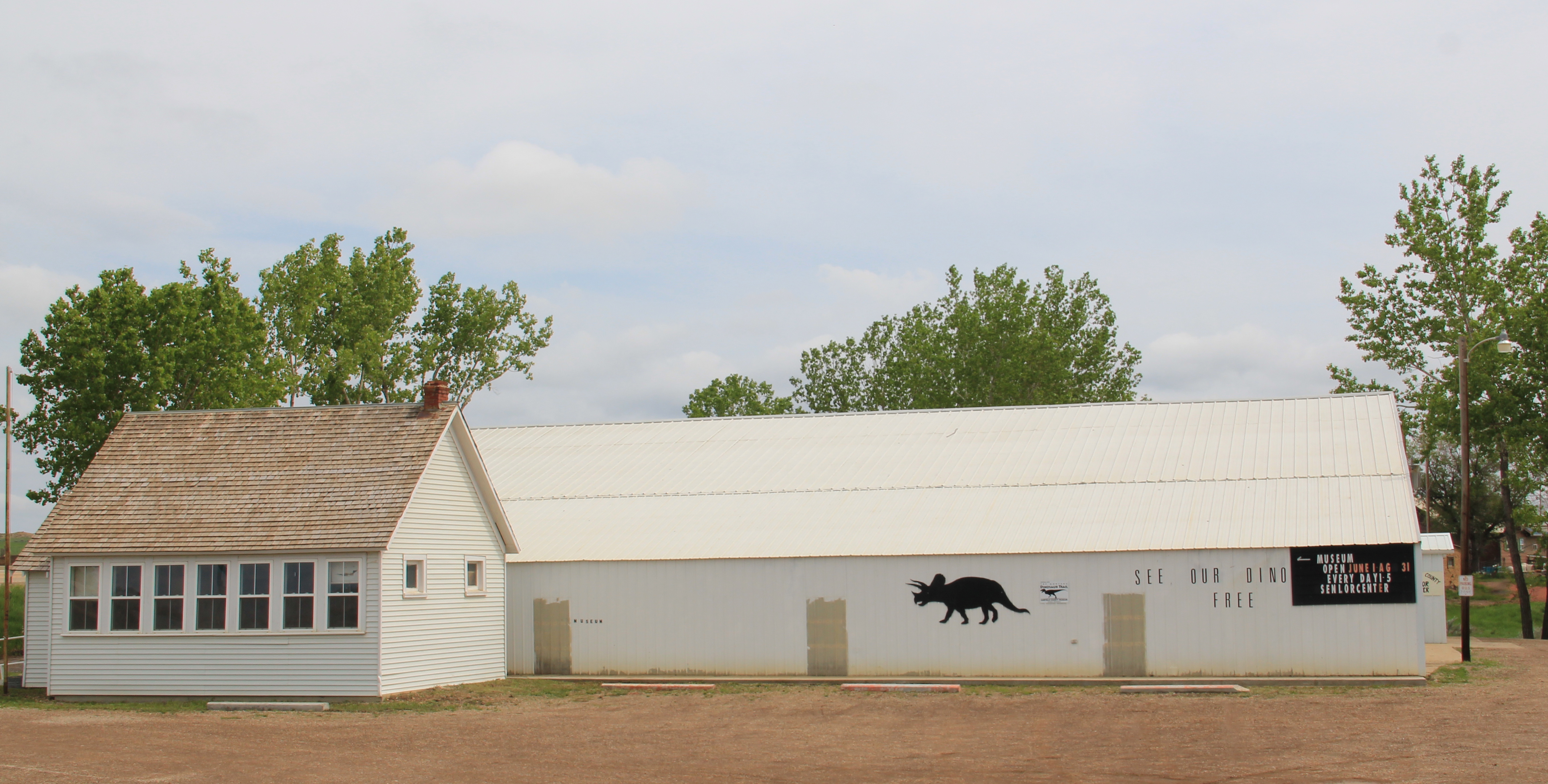
Another change was the growth of the local heritage offerings, from the Veterans Memorial park, kiosk, and sculpture to the Garfield County museum in Jordan–the old schoolhouse making it easy to locate along the road–and various reminders to passerby’s, like the mural on the town’s old service station/auto dealership, that the county had been a major location of dinosaur finds in the late 20th century.

IMG_0290

IMG_0302

IMG_0293

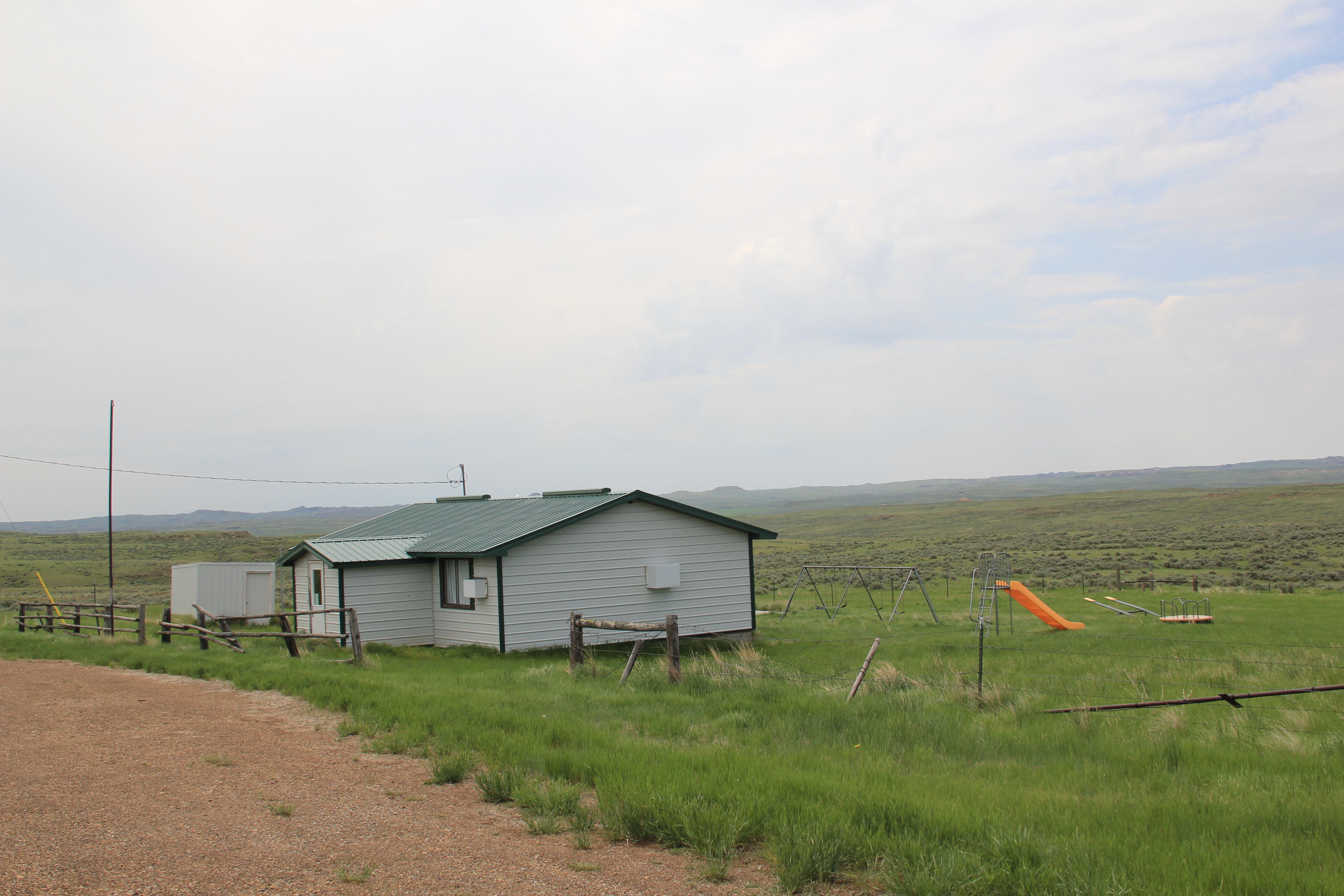
The old schoolhouse at the museum is also a reminder that one-room schools still operate in Garfield County.  When I came through in 1984, the county school superintendent encouraged me to visit them, but also warned me that some were on basically roads cut into the ground, and if there was rain, never go that way, unless I wanted to stay awhile.

Some things don't change in Garfield County.

Some things don’t change in Garfield County.

But one-room schools along MT Highway 200 are easily located, at Sand Springs, and then at Big Dry.  In 1984 I was shocked at the persistence of such tiny buildings across the region; their persistence 30 years later say much about commitment to a land many have left and forgotten. Past ways and smallness of life in the biggest of countries still shape Garfield County, Montana.

IMG_0274

IMG_0277

The Yellowstone’s Treasure County: Small Place, Big History

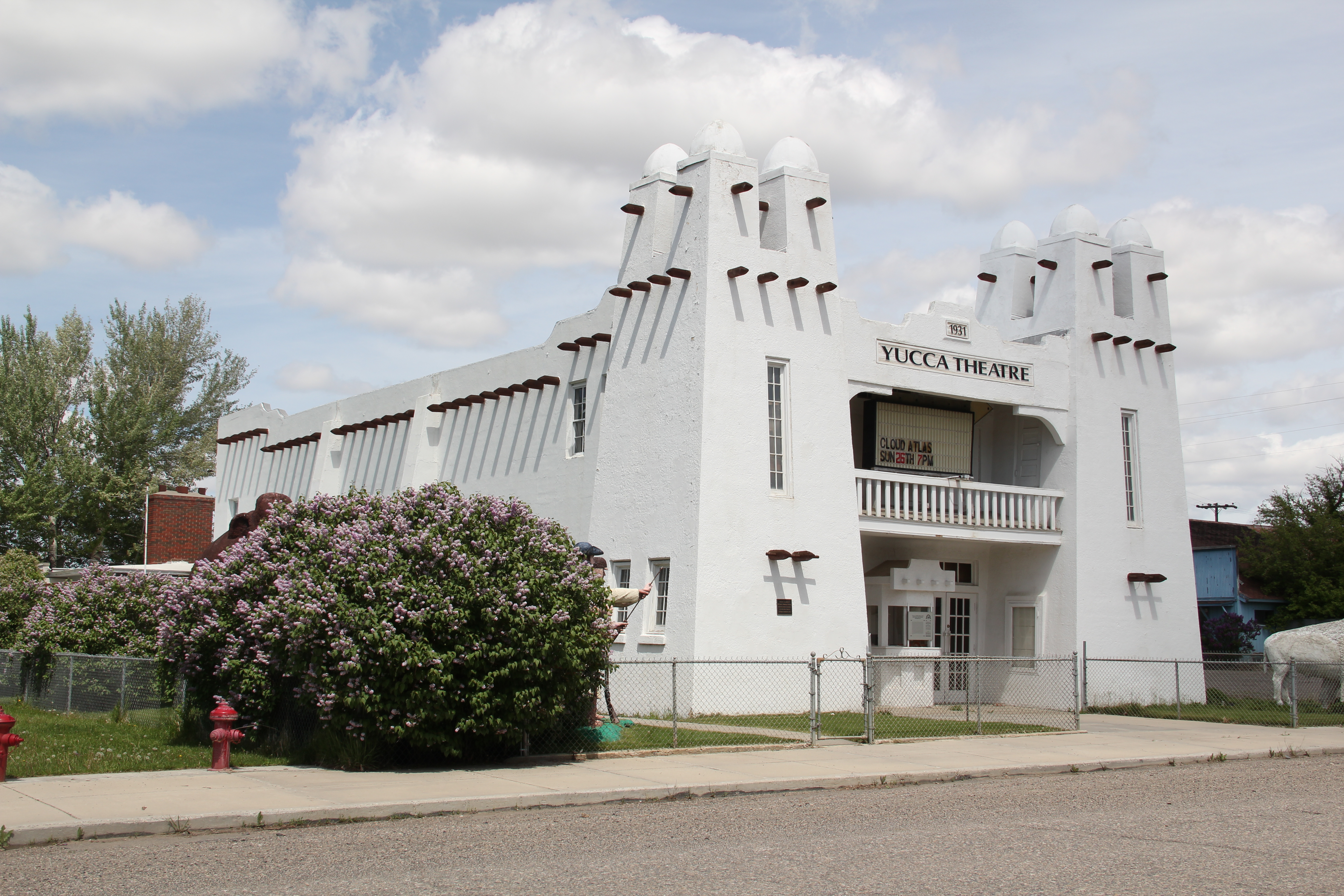
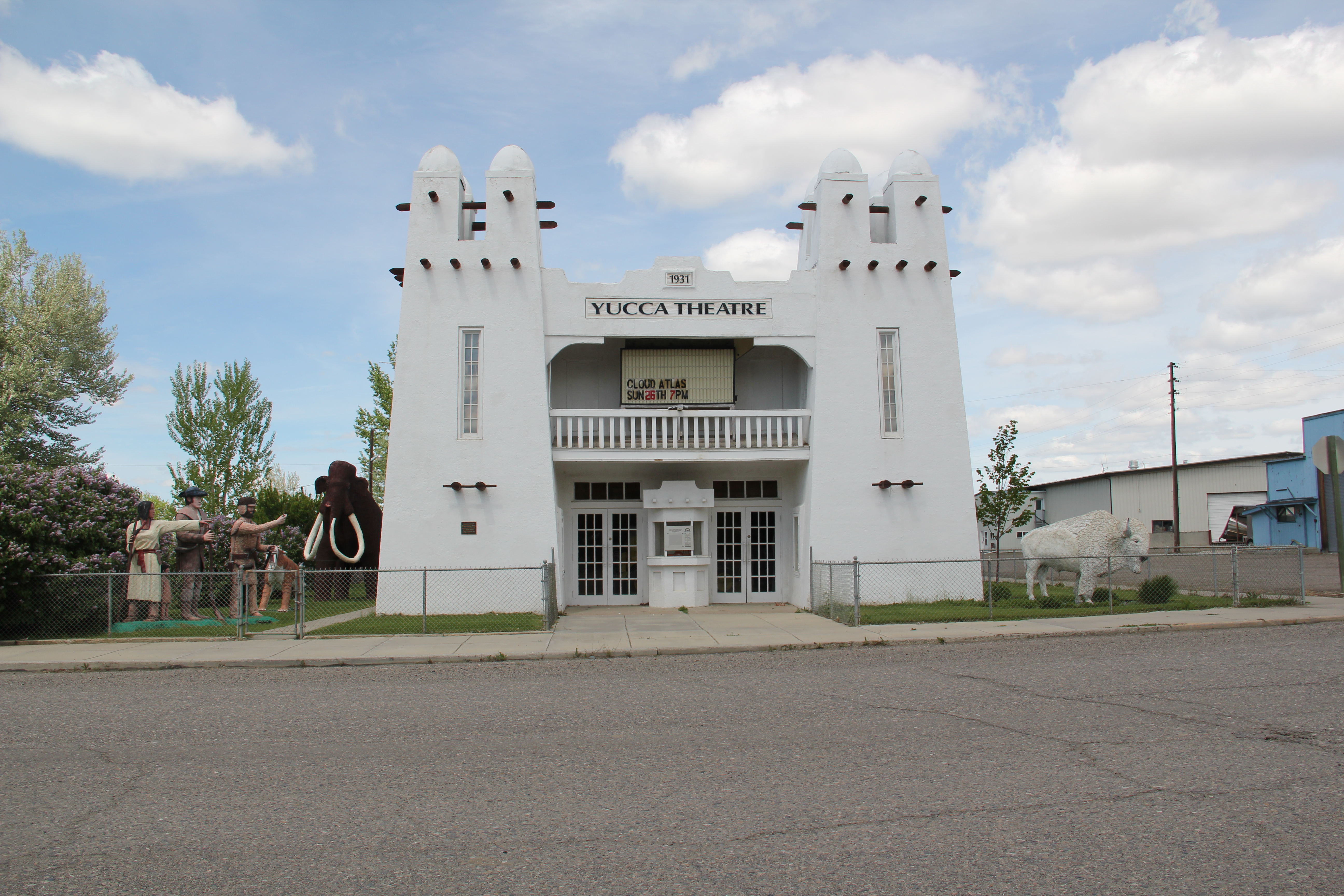
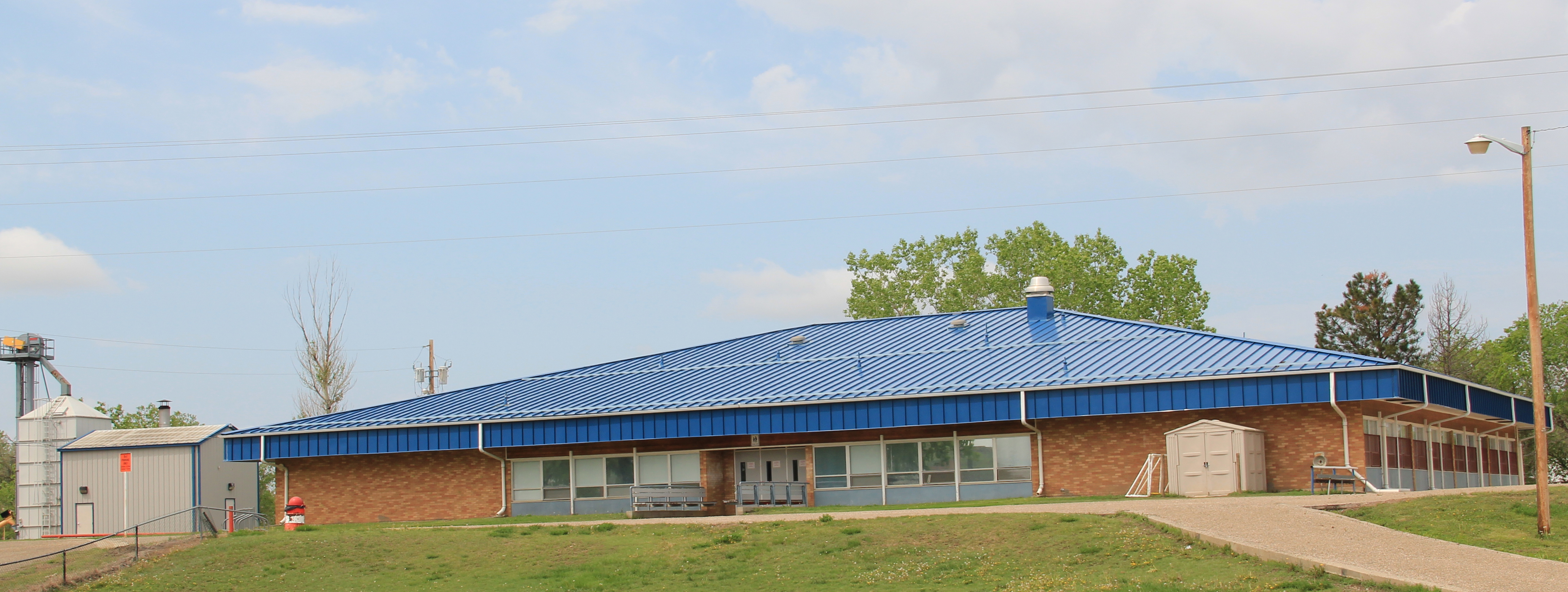
IMG_6911Treasure County dates to 1919, one of the last counties created in the Yellowstone Valley.  Among the smallest counties in size, it has just over 700 residents, a drop of over 200 since my visit in 1984.  But the county has some of the most evocative buildings in the state, starting with the Yucca Theatre, built in 1931 by brothers David and Jim Manning, who wanted to give their community a spark, a glimmer of hope in the increasing hard times of the depression.  David Manning had liked the Spanish Mission style when he had traveled in the Southwest, and he thought, why not for Hysham, since the town was near the spot on the Yellowstone River where Manuel Lisa had established one of the valley’s earliest trading posts.
IMG_6913

Despite the brothers’ best intentions, the theatre struggled as the town and county dwindled in population, but David was devoted to it and transformed it into his home, a convenient landmark, it would turn out, for his political career.  Manning was elected to the Montana legislature in 1932, and he was still serving in the House when I worked at the State Capitol from 1982-1983.  He told me about his theatre, and urged me to go and enjoy his town, and stay at the house, if needed.

IMG_6916

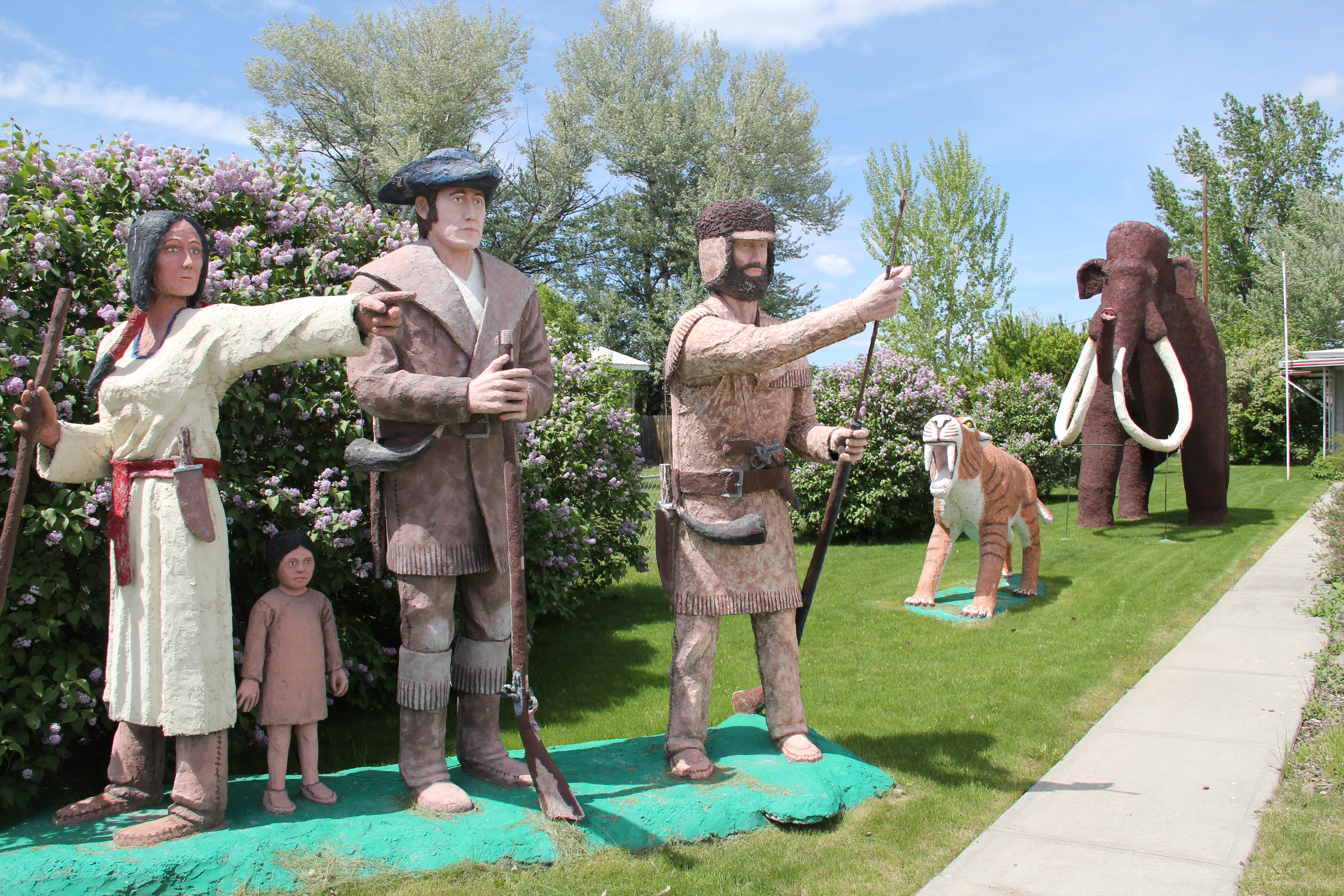
The Yucca Theatre was the first building listed in the National Register in Treasure County and it serves once again as a theatre but also a historic site. Local sculptor Bob Schulze has added statues of Lewis and Clark, along with Sacajawea and Pomp, and a saber-tooth tiger, wooly mammoth and a white buffalo to boot.  Across the street, in an old storefront, is the county museum, another addition to Hysham’s heritage tourism offerings since my 1984 visit.

IMG_6918

Rep. Manning also recommended a stop at the Brunswick Bar, and I am glad he did–this is a great place with great Montana bar food.  The bar has been in business since the 1950s, at least, and the building stands at the location of the original county courthouse.

IMG_6910

And speaking of the courthouse, it is a sparkling “contemporary style” building of the 1950s, an important contribution to Montana modernism.  Many have commented on unique treatment of the exterior, with a map of the county serving as the primary design motif.  The building, as you might expect, has changed little since its opening in 1955.

IMG_6921

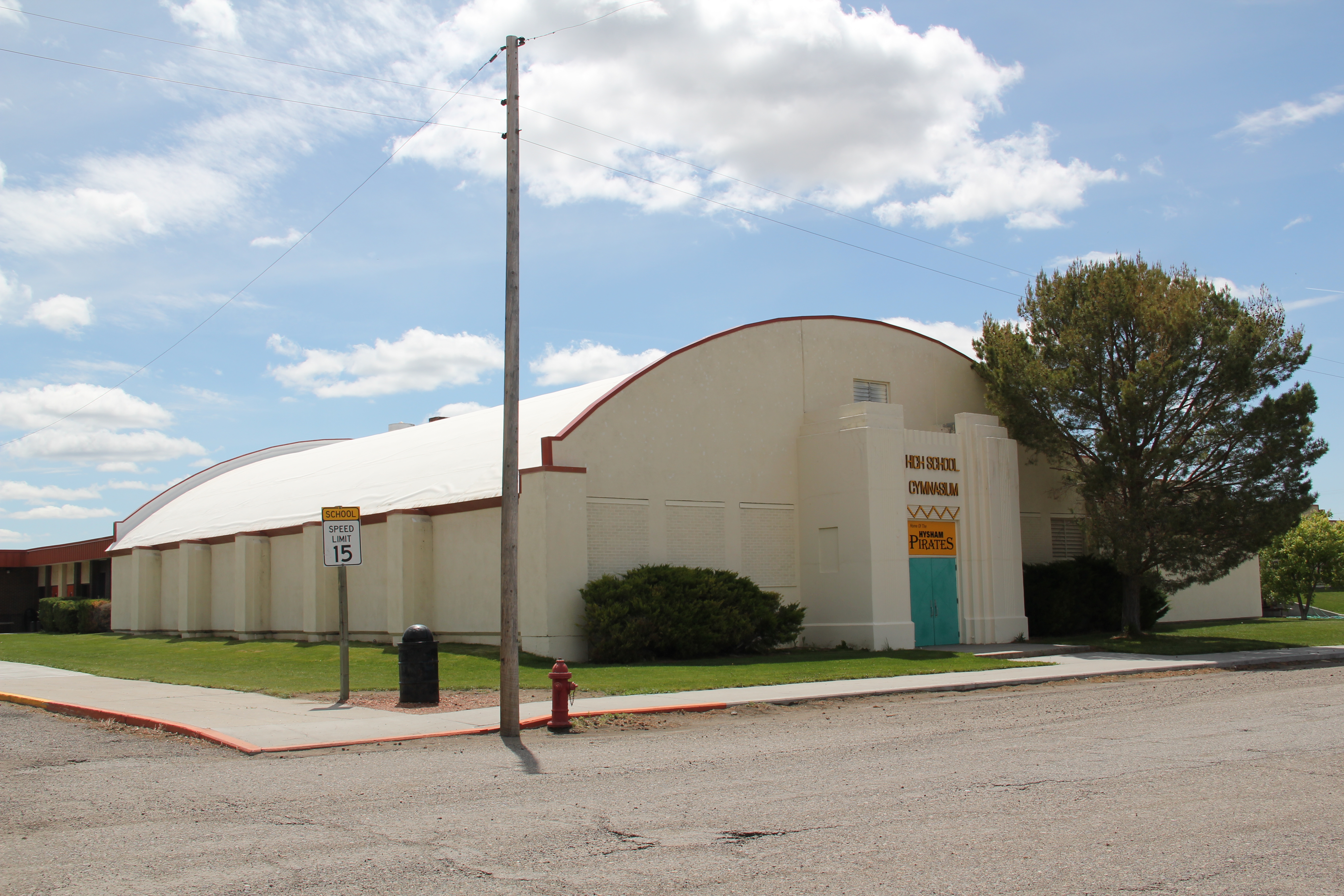
But there’s another Hysham contribution to Montana modernism:  the Treasure County High School Gym–an Art Moderne styled building from the New Deal era right on old U.S. 10 as it passed through town.

IMG_6927

But this is not the National Register-listed New Deal gym in Treasure County, that is at the hamlet of Sanders, where the WPA built the Sanders School Gymnasium and Community Hall in 1940.  This is not Montana Modernism but Montana Rustic, a design from the Billings architectural firm of J.G. Link. It is one of my favorite New Deal buildings in all of

IMG_6929

IMG_6931

New Dealers believed that children needed recreation, and built hundreds of gyms and sports field across the state.  They also believed that devastated, declining rural communities needed spaces–like this community hall–where they could gather for local sports, social events, funerals, and elections.  But the Rustic style in this part of the Yellowstone Valley–not really fitting, the style would have made much more sense in the mountainous western half of Montana.

IMG_6904

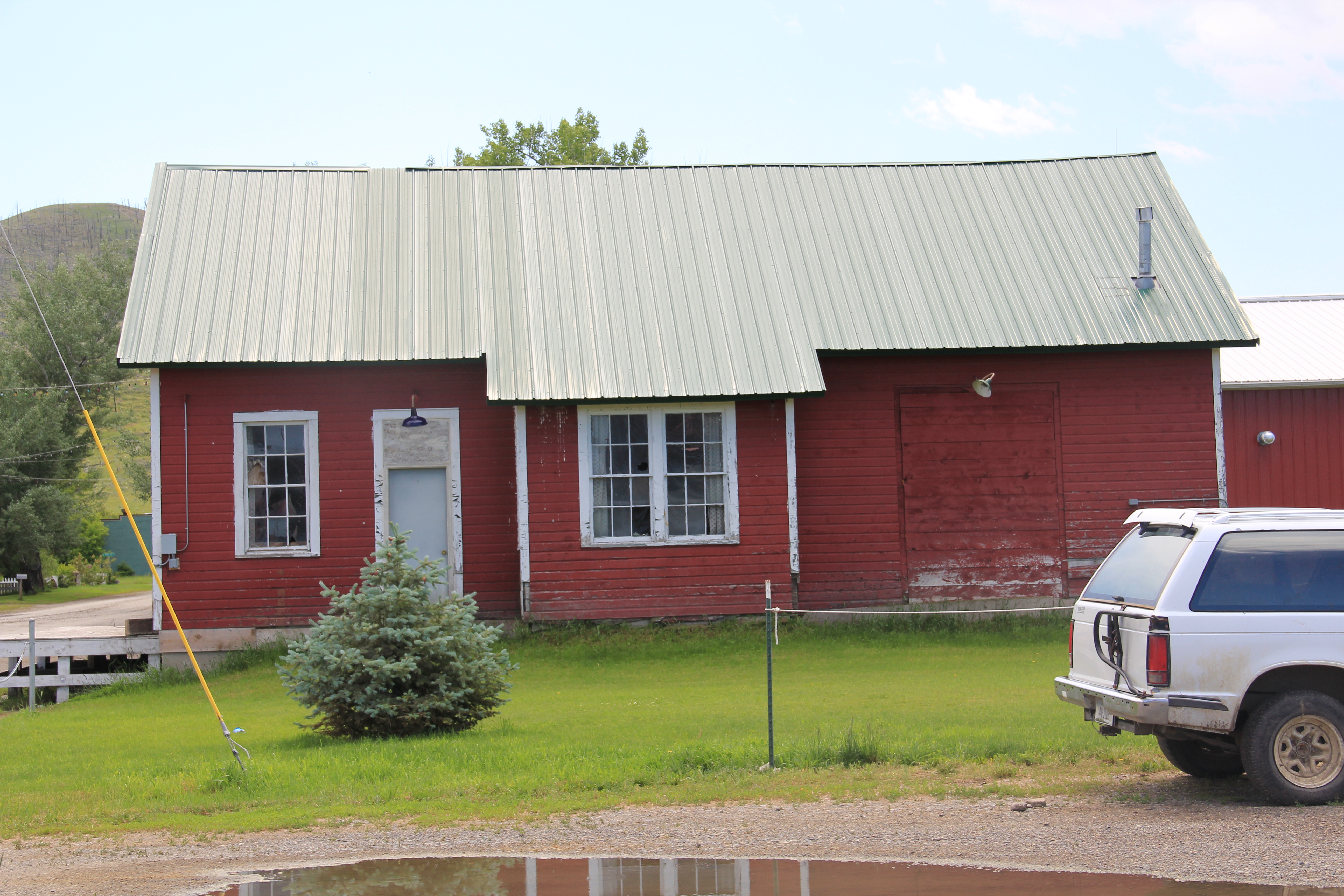
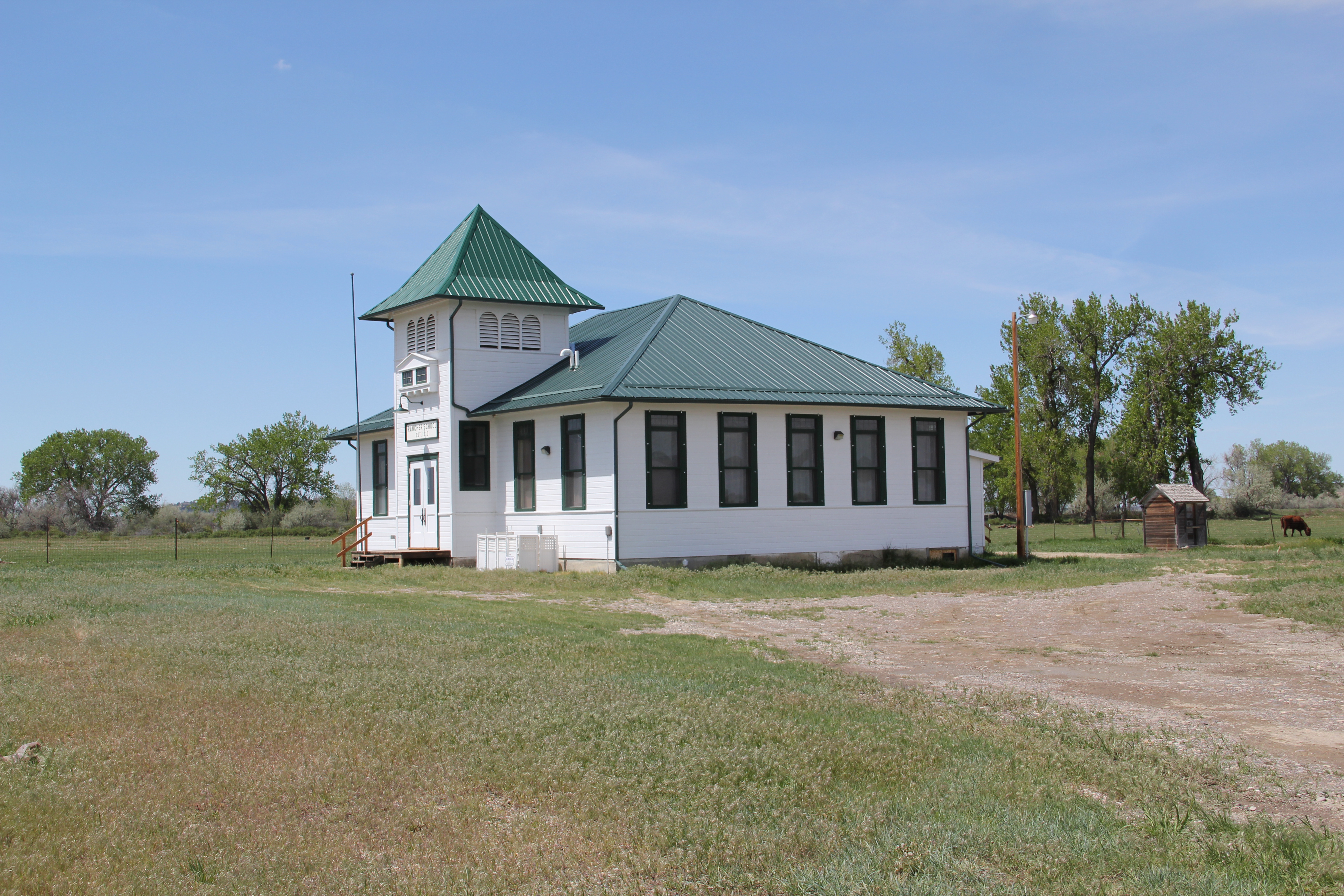
At Sanders, the public school has been gone for decades.  But in the northern part of Treasure County, far, really from everywhere is the Rancher School, perhaps the oldest pubic building in the county since its 1910 construction date means that the school predates the actual creation of Treasure County.  Here is a classic early 20th century school–protected still by barb wire and used periodically for community events.  When the National Trust of Historic Preservation placed Montana’s rural schools on its endangered list, everyone had buildings just like the Rancher School in mind.

IMG_6906

Kudos to everyone who has contributed to keeping this building standing as a symbol of communities long gone but not forgotten, not as long as rural landmarks like all of the historic buildings in Treasure County continue to serve owners and residents.