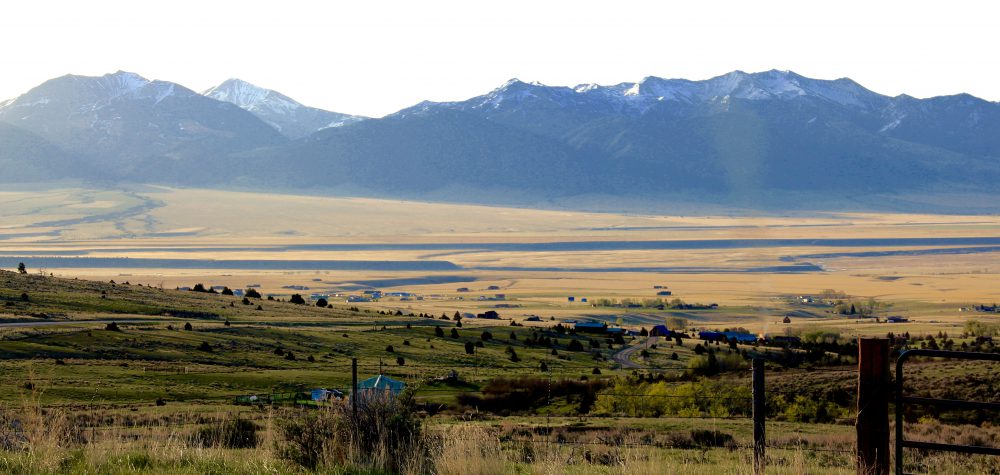
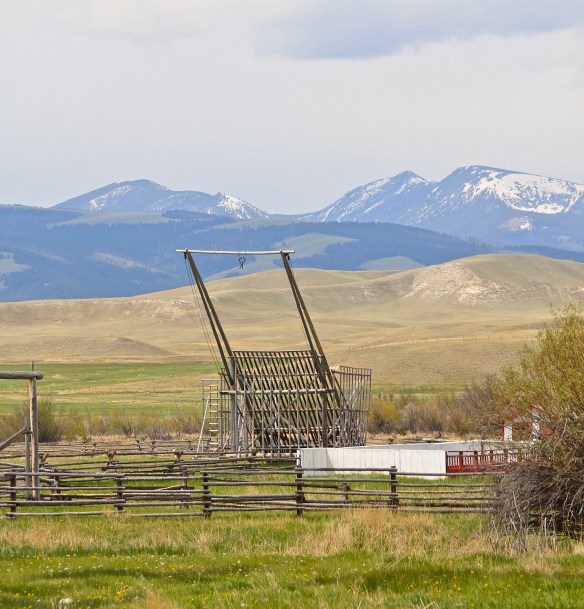
 Powell County’s Deer Lodge Valley is another favorite western Montana landscape. I visited there often during the 1980s, and in the years since I found myself often back in places like Deer Lodge, the county seat, if for nothing else to stop at the R&B Drive-In.
 Let’s start with the town of Deer Lodge, a place that has changed much in the last 30 years, a process that was underway in the early 1980s after the Milwaukee Road closed its division point and declared the entire line bankrupt. Besides Miles City, it is difficult to find a town more impacted by the Milwaukee’s failure than Deer Lodge.


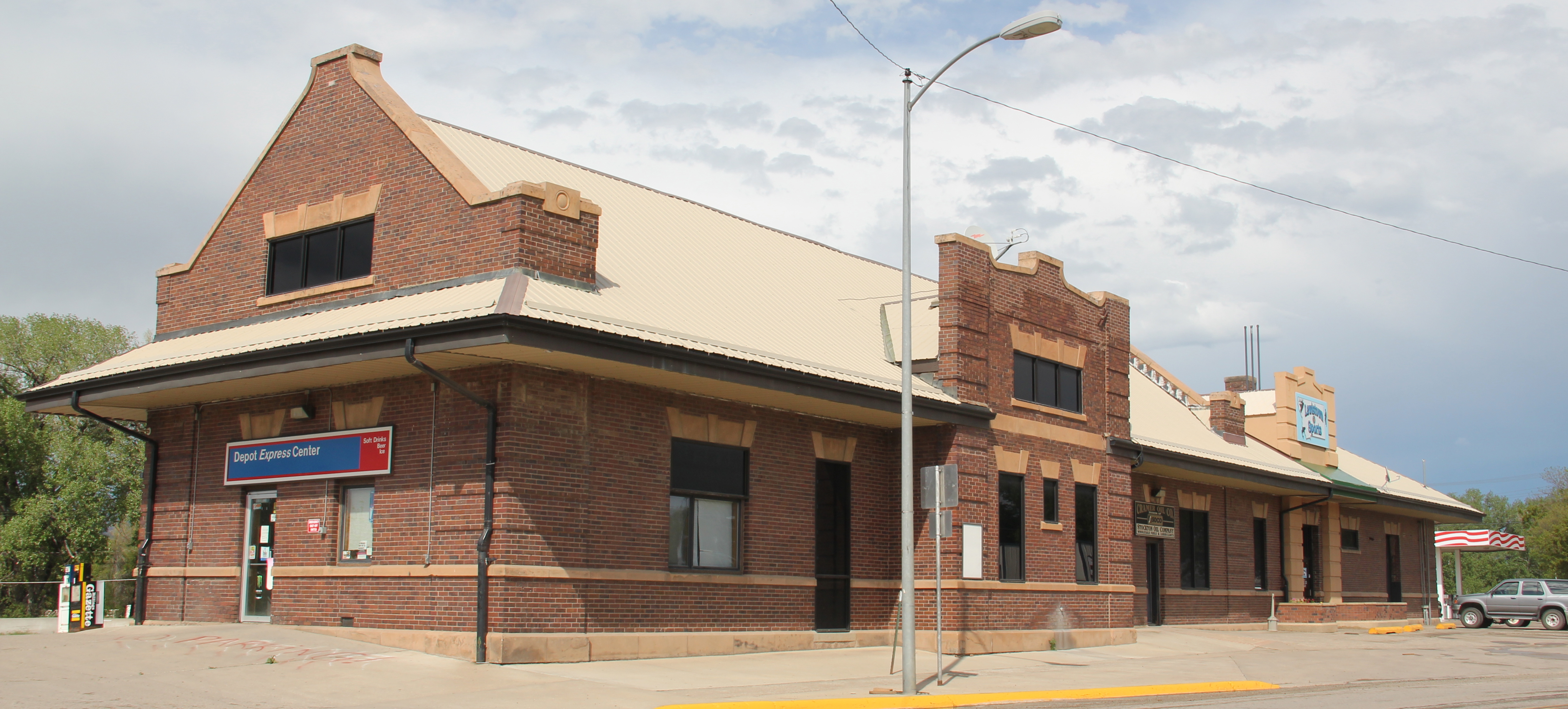
My images of the wasting away roundhouses and other buildings that the Milwaukee once operated in Deer Lodge cannot be replicated today–the complex is gone, scrapped. The town’s Milwaukee Road depot survives, has been repainted, and now serves as the Depot Church, a great example of how Montanans practice adaptive reuse with historic buildings.

On the Main Street, there is a memorial to the Milwaukee’s impact, commemorating the line’s “silver spike” event in 1909 and the E-70 electric engine, one of the trains that ran through this region for most of the 20th century.


Another interesting remnant on the Milwaukee’s side of the tracks in Deer Lodge is the Civic Pavilion of 1911. Here in this large brick building with stone quoins and pilasters is a statement both of the general movement to establish “community halls” in rural communities in the early 20th century plus the Milwaukee Road’s wish to have at least one landmark on its side of town. This was the city’s social center for most of the century.
 Yet, Deer Lodge was not a typical small town base for the Milwaukee Road; railroads typically wanted to create their own place. But Deer Lodge was one of the oldest places in the state, where ranchers in the 1850s first arrived–the early site is now interpreted at the Grant-Kohrs National Historic Site of the National Park Service–soon followed by Capt. John Mullan as he and his soldiers built the Mullan Road through this valley.


The Milwaukee in the first decade of the 20th century came to a town whose general outline had been imprinted on the landscape by the Northern Pacific Railroad in the early 1880s. Deer Lodge, in other words, had been a Northern Pacific town for a generation before the Milwaukee arrived.
 The Northern Pacific passenger depot exists across the tracks from the Milwaukee Road station. It too has a new use: the Northern Pacific depot is now the senior citizens center.
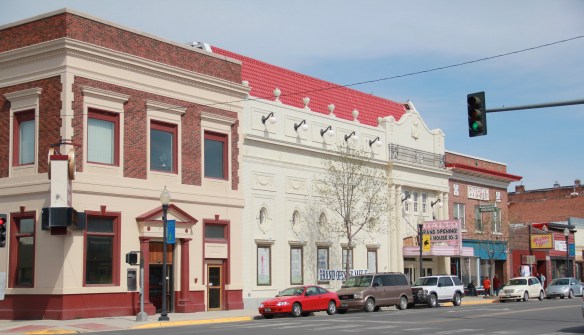

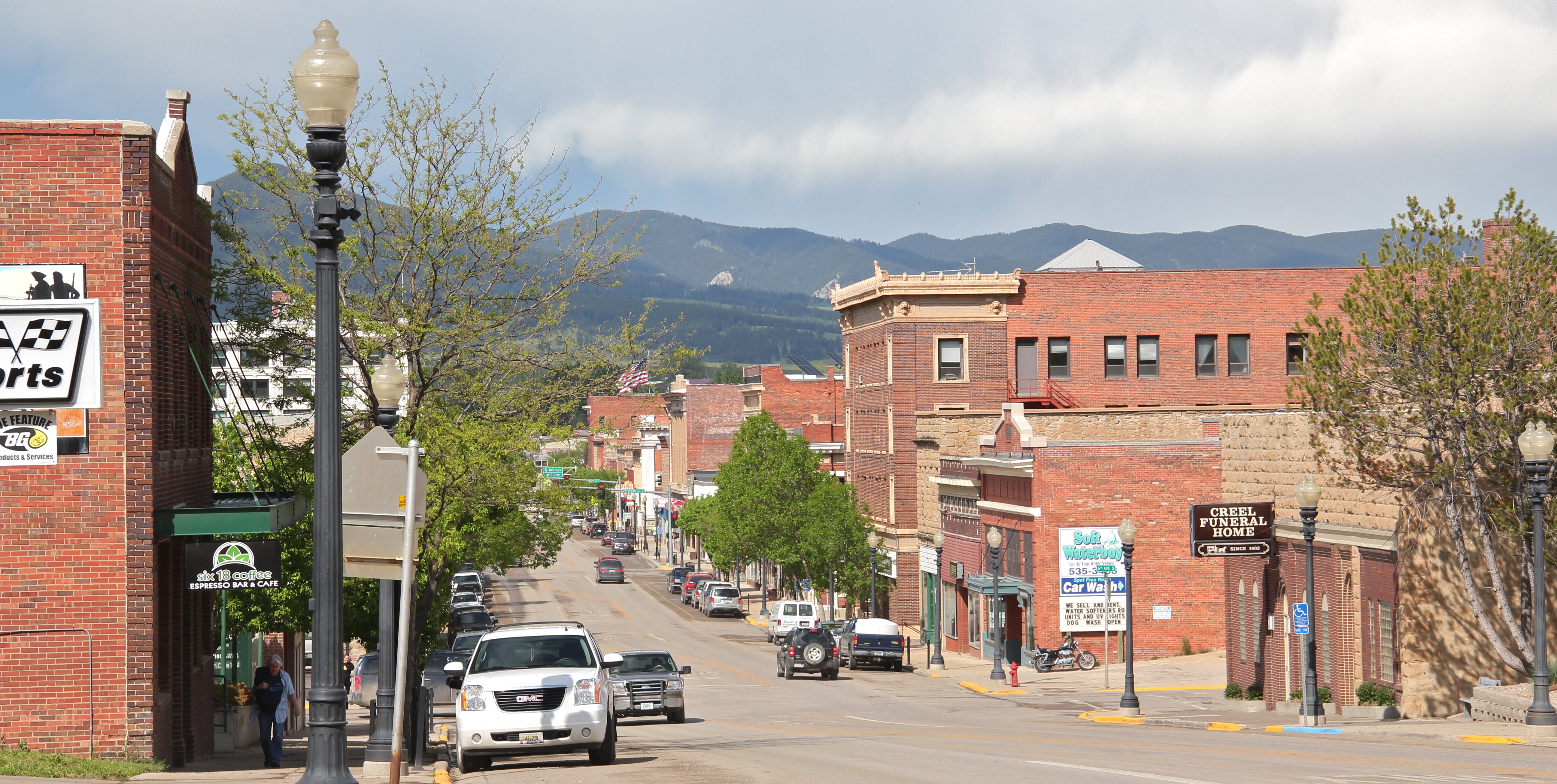
Main Street in Deer Lodge is a long symmetrical commercial district that links the Grant-Kohrs Ranch to another early territorial landmark, the Territorial (and later State) Prison.
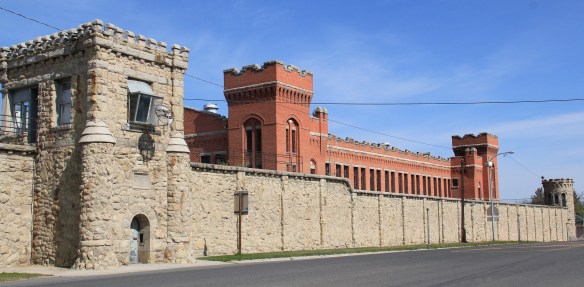 Before Deer Lodge was a railroad town, it was a prison town, the location for the Territorial Prison, and later the state prison. Most of the buildings you can visit today are from the state prison era. It operated here until 1980 when it moved to a facility outside of town.


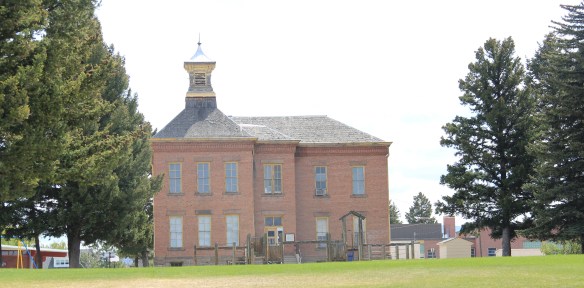 Deer Lodge also was an early center for education, represented by Trask Hall (1870s), which, like the territorial prison, is listed in the National Register. So with the themes of settlement, ranching, railroads, education, prisons, and the beauty of the valley why has Deer Lodge struggled to be recognized as one of Montana’s premier heritage designations? As the next post will discuss, citizens are taking steps to remedy the situation.
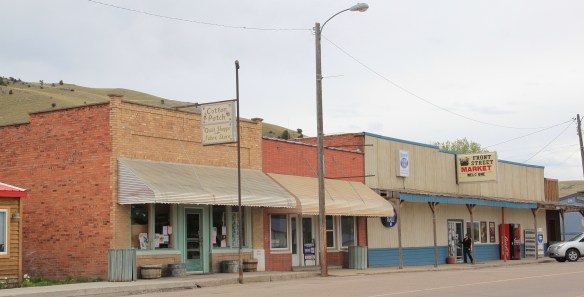 Drummond is the north entrance of the Pintler Scenic Route. The first ranchers settled here in the 1870s but a proper town, designed in symmetrical fashion facing the railroad tracks, was not established until 1883-1884 as the Northern Pacific Railroad built through here following the Clark’s Fork River to Missoula.


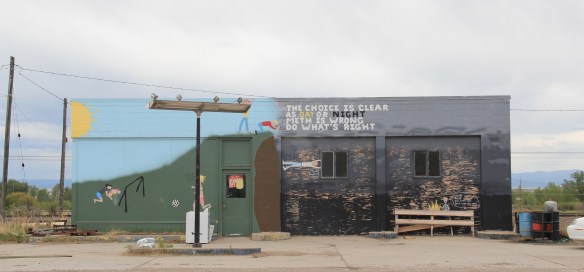 There is a faintly classically influenced two-story brick commercial block, a Masonic Lodge made of concrete block, various bars and cafes, a railroad water tank, and a slightly Art Deco movie theater, which was open in the 1980s but is now closed.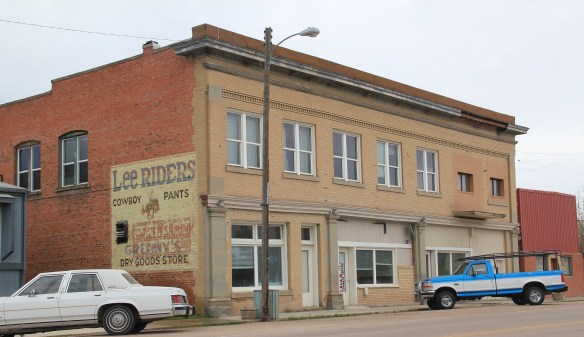


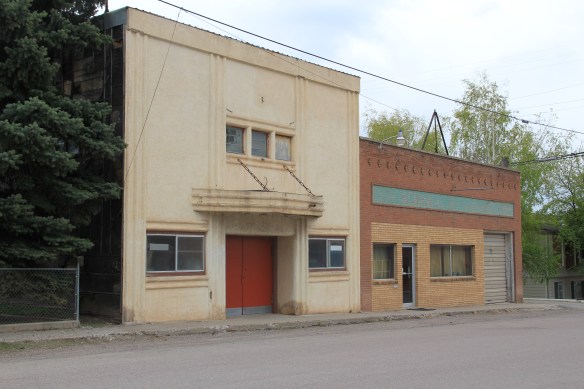 Due to the federal highway and the later Interstate I-90 exit built at Drummond, the town even has a good bit of motel roadside architecture from c. 1970 to 1990.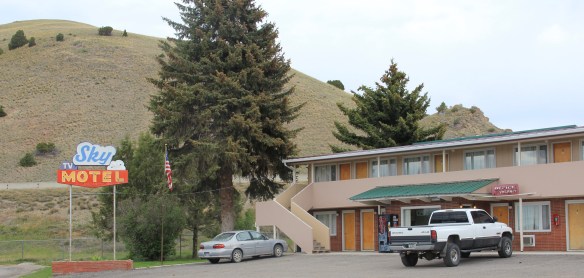
 Between the Northern Pacific corridor and old U.S. 10 is the town’s most famous contemporary business, its “Used Cow” corrals, and now far away, on the other side of the
 tracks are rodeo grounds named in honor of Frank G. Ramberg and James A. Morse, maintained by the local American Legion chapter.
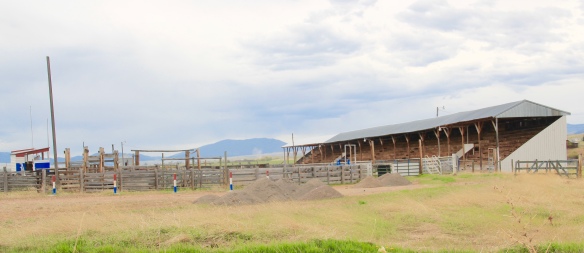 The rodeo grounds are not the only cultural properties in Drummond. The Mullan Road monument along the old highway is the oldest landmark. The local heritage museum is at the New Chicago School (1874), an frame one-story school moved from the Flint River Valley to its location near the interstate and turned into a museum.

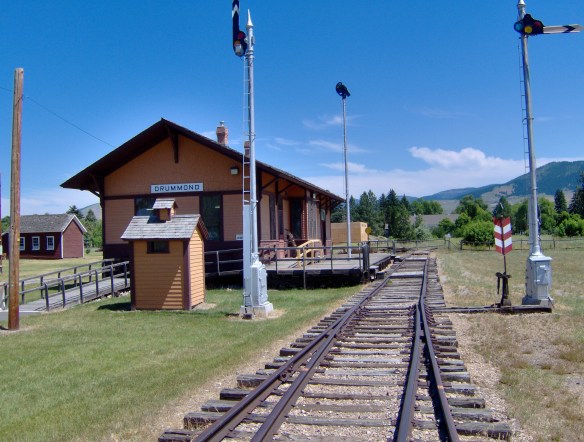 Another local museum emphasizes contemporary sculpture and painting by Bill Ohrmann. A latter day “cowboy artist” Ohrmann grew up in the Flint River Valley but by the 12960s he was producing sculpture and painting on a regular basis. The museum is also a gallery and his works are for sale, although the huge sculptures might not be going anywhere.


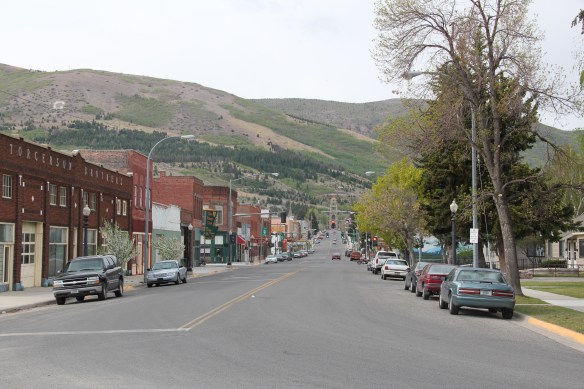


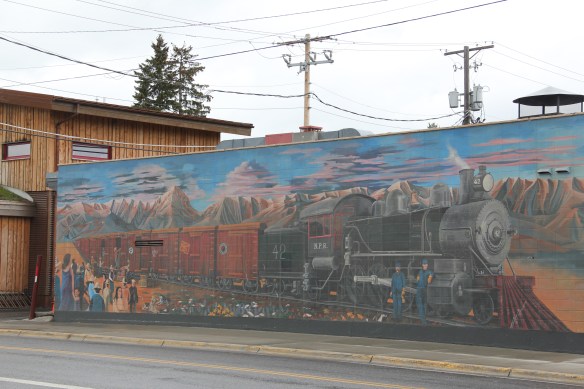 On Bozeman’s Main Street today there is a huge mural celebrating the arrival of the Northern Pacific Railroad in 1882. The impact of the railroad on the town was certainly a topic of interest in the 1984-85 survey, and one image included the existing Northern Pacific Railroad and adjoining grain elevators and other businesses reliant on the corridor.
 Today that same place has been transformed, through adaptive reuse, into a micro-brewery and restaurant–pretty good place too, and a great place in 2015 for me to get out of a persistent rain. The Northern Pacific reached a deal with rancher Nelson Story in 1882 to build through his property but also provide a spur line to his existing mill operations. From the beginning both the railroad and local entrepreneurs saw an agricultural future for Bozeman and Gallatin County.

 The depot and adjoining buildings have been designated as a historic district, with a pocket city park providing some new life to the area. But this impressive building’s next life remains uncertain even as the city encourages creative solutions for the area.
 The c. 1922 depot is adequately moth-balled–the new roof has lots of life left–and as the city maintains it is structurally sound with key interior features intact. Yet graffiti now mars one end of the building, and any building that is empty, especially in such a booming local economy, is cause for concern.

 The same fate did not befell the Milwaukee Road’s other significant building in Bozeman, its concrete block warehouse, shown above in an 1985 image. The open space, solid construction, and excellent location helped to ensure a much longer life for the building, which is now a building supplies store, with a repainted company sign adorning the elevations of the building.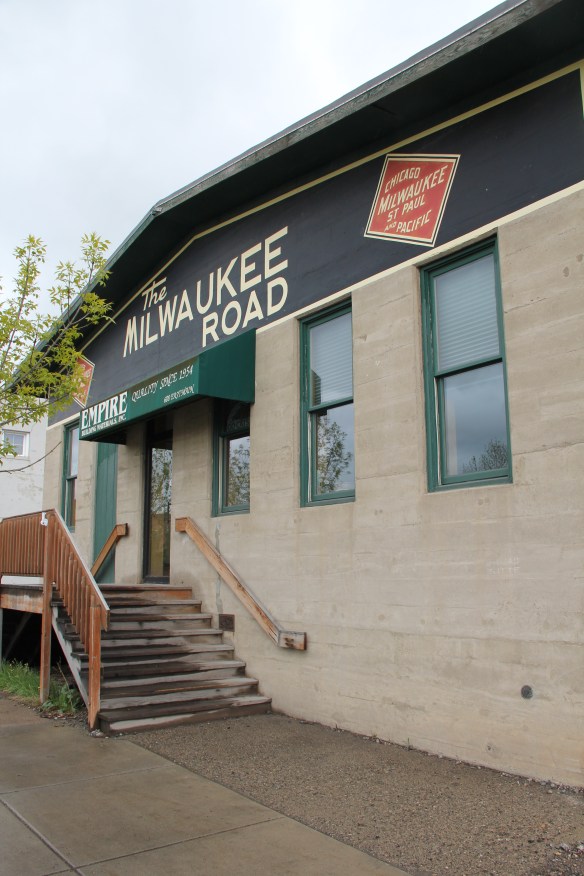
 It is encouraging that the city recognizes the significance, and the possibilities, for the historic buildings along Bozeman’s railroad corridor. Let’s hope that a permanent solution soon emerges for the empty Northern Pacific depot.

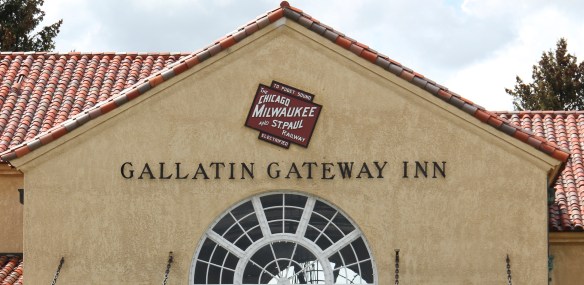


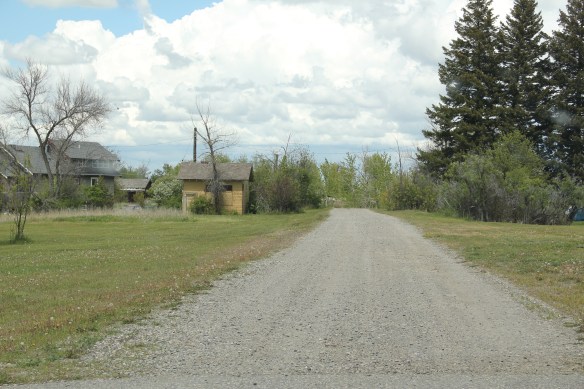


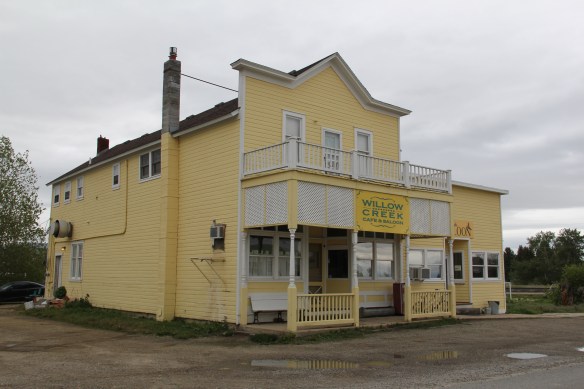
 Willow Creek was the end of the line for both the Northern Pacific and Milwaukee Road railroads as they vied for dominance in turn of the 20th century western Gallatin County. The Northern Pacific came first with its spur line to Butte in the late 1880s then the Milwaukee arrived c. 1908. Both used the same corridor, along what is now called the Old Yellowstone Trail on some maps; the Willow Creek Road (MT 287) on others. It was a route that dated to 1864–the town cemetery, according to lore, dates to that year and Willow Creek has had a post office since 1867.


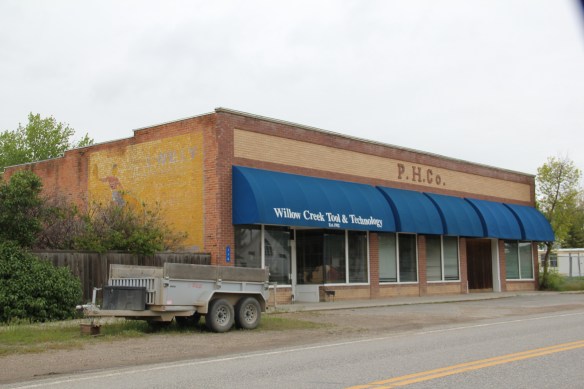
 Across the street is the “employment center,” the Willow Creek Tool and Technology which sells its wares across the west out of its brick building from the 1910s. (Note the faded advertising sign that once greeted travelers on the Yellowstone Trail highway.)
 The cultural side of Willow Creek is represented by several places: homes and galleries of different artists, a monthly arts festival in the summer, and two special buildings from the 1910s. The Stateler Memorial Methodist Church, c. 1915, is listed in the National Register of Historic Places. Built from rusticated concrete blocks (from the cement factory at Three Forks) designed to resemble stone masonry, the church building is home to one of the oldest congregations (1864) in the Methodist Church in Montana. The Gothic Revival-styled sanctuary is named in honor of its founding minister Learner B. Stateler.
 Nearby is another crucial landmark for any rural Montana community–the local school. The Willow Creek School is an excellent example of the standardized, somewhat Craftsman-styled designs used for rural Montana schools in the 1910s. Two stories of classrooms, sitting on a full basement, was a large school for its time, another reflection of the hopes of the homesteading era.
 Additions in form of a gym and added rooms had come to the north and the school and its lot is the town’s community center. Although so close to Three Forks, the school kept its


 Three Forks, Montana, is unique in how competing railroads shaped this one small town between the 2008 and 2010. The last post discussed how the Milwaukee Road came first, and its landmark Sacajawea Inn stands at the north end of the town’s main street. On the east side–see the Google Map below–became the domain of the Northern Pacific Railroad and its spur line to the copper kingdom of Butte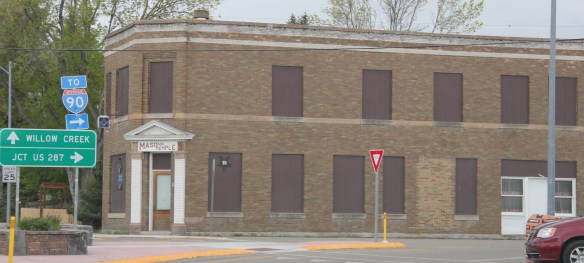


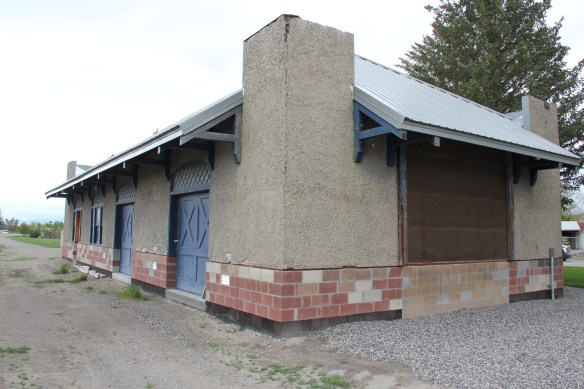 Company. In 1914 Charles Botcher bought the plant, renamed it the Ideal Cement Company and kept it in business under that name until the 1980s.


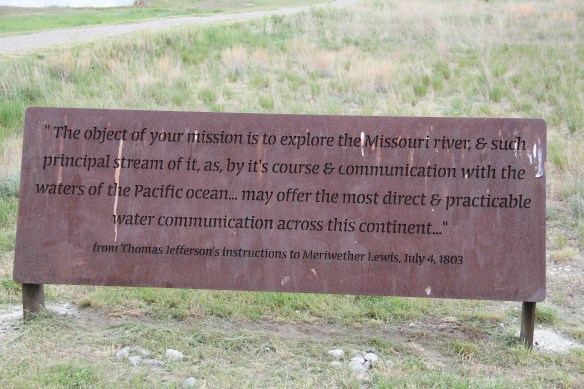


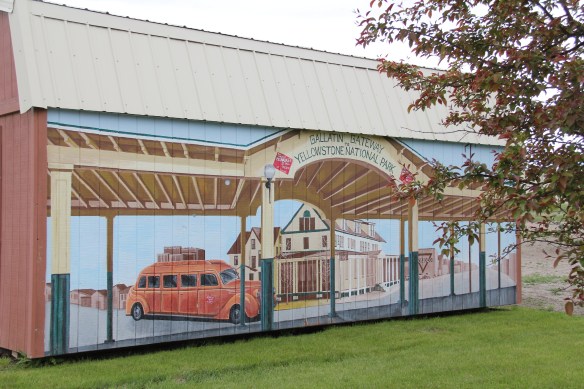
 As you leave the Missouri Headwaters State Park access road (Montana 286) and return south to old U.S. Highway 10, you encounter a plaintive sign hoping to attract the thousands of heritage tourists who come to the state park–go a bit farther south and west and find the town of Three Forks.
 The story of Three Forks, on the western edge of Gallatin County, is not of rivers but of railroads, of how both the Northern Pacific and the Milwaukee Road corridors shaped this part of the state at the end of the first decade of the 20th century.


 Many heritage areas in the eastern United States emphasize the relationship between rivers, railroads, and industrial development and how those resources contributed to national economic growth and wartime mobilization. Great Falls can do that too. Situated on the Missouri River and designed by its founders to be a northwest industrial center, entrepreneurs counted on the falls to be a source of power and then on the railroads coming from Minnesota, especially the promising Manitoba Road headed by James J. Hill, to provide the transportation.
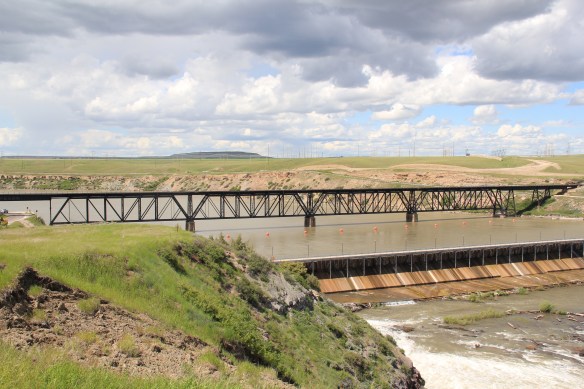 Paris Gibson, the promoter of the Electric City, allied his interests to two of most powerful capitalists of the region: Marcus Daly, the baron of the Anaconda Copper Company interests and James J. Hill, the future rail king of the northwest. Their alliance is embodied in several different properties in the city but the most significant place was where the Anaconda Copper Company smelter operated at Black Eagle until the last decades of the 20th century. When I surveyed Great Falls for the state
 decade of the 20th century and soon erected its tall tower depot right on the Missouri River. But wherever you go along the river you find significant buildings associated with the Great Northern and its allied branch the Montana Central Railroad, especially the downtown warehouses. Some are still fulfilling their original function but others







 Montana's Historic Landscapes