Lewistown’s Public Buildings: Legacies of Service in Two Centuries

IMG_9398

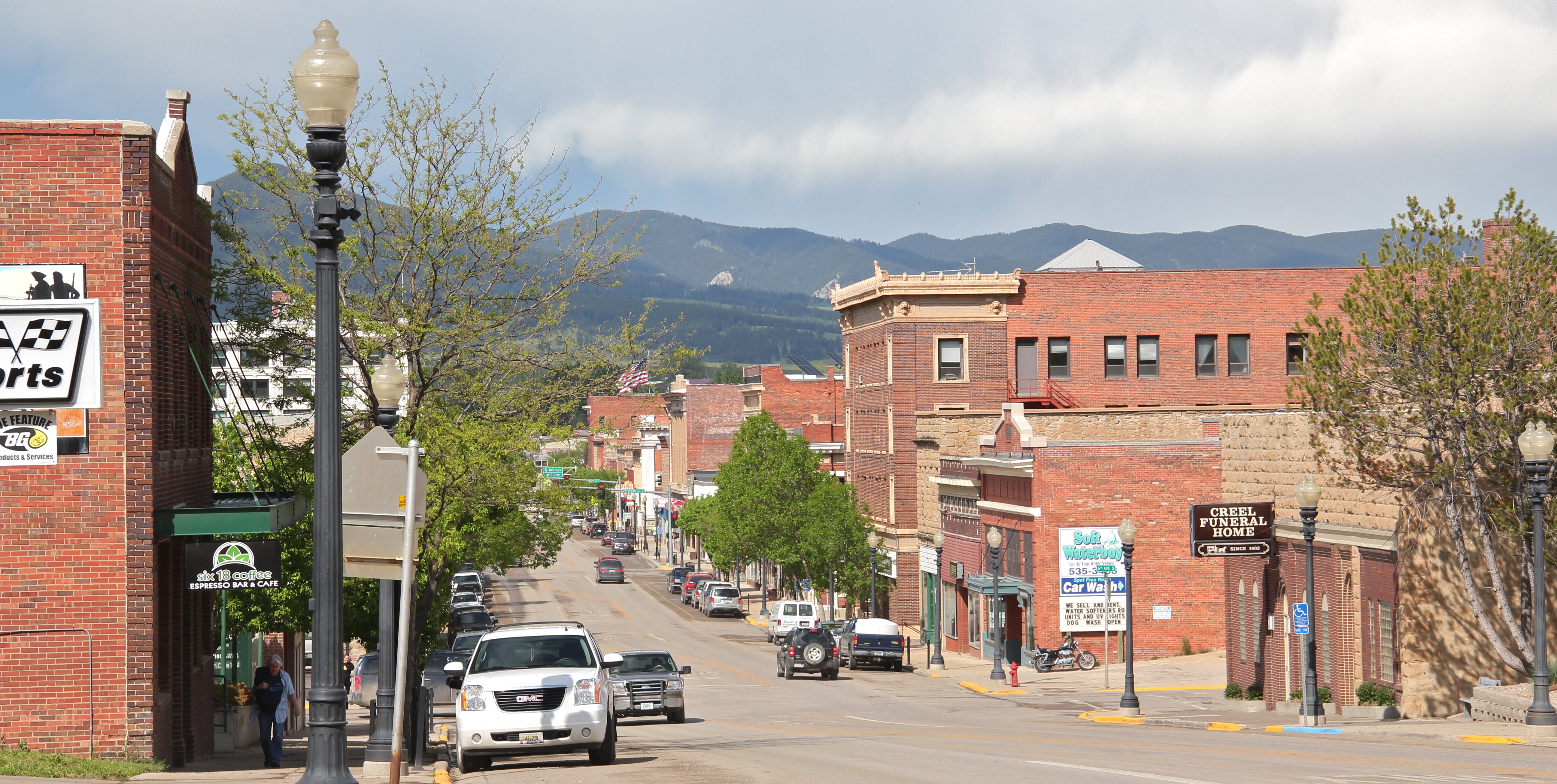
For a town of 6,000, Lewistown has an imposing, impressive public presence in its historic built environments.  Clearly town founders and generations of later residents have taken the meaning of public architecture to heart–not only are they just buildings meant to hold public services but they are buildings that are meant to ennoble–to say that the town matters to those who use them, and those who come this way.

IMG_9392

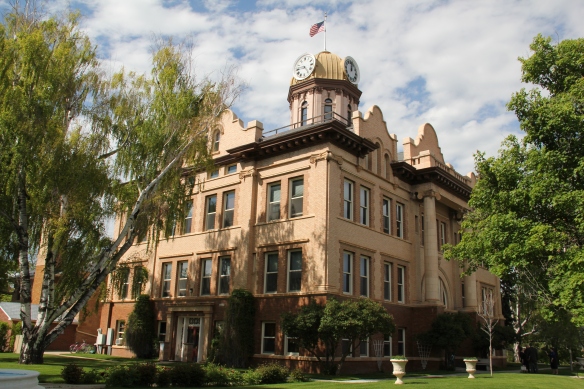
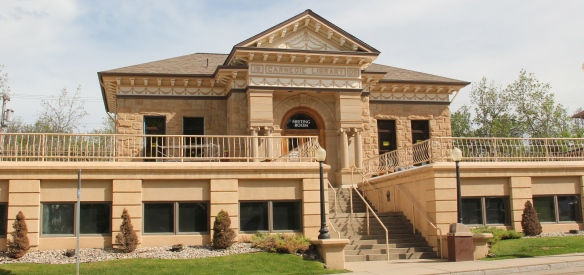
The Fergus County Courthouse (1907-1908) lies at the center of town, on a rise above the railroads tracks and central business district and then the homes and schools that surround it.  Newton C. Gauntt of Yakima, Washington, was the architect.  He also designed courthouses in Washington and Oregon.  His Classical Revival design reflected a more vernacular interpretation of the style that preceded the courthouse by two years–that would be the Carnegie Library of 1905.  T. J. Tubb was the

IMG_9386

contractor/designer and used the town’s Croatian stone masons to create one of the most distinctive Carnegie designs in the state.  The additions below and in front came in 1990–quite the change in 30 years but also a necessary one to keep the original building as a community landmark and to serve a much different public library audience of the late 20th century.

IMG_9385

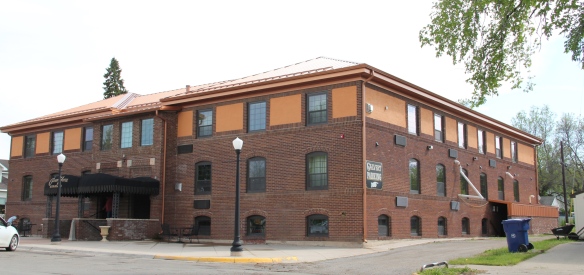
Behind the library was the place I always stayed at in Lewistown during the fieldwork of 1984–the Calvert Hotel.  Originally built as a girls’ high school dormitory, the building was a disappearing relic from the early homesteading days before buses and automobiles dominated traffic do and from county schools.  Students in faraway ranches would spend the week, maybe more, in the dorms during the school term–a reality that spoke to sense of distance and the limits of transportation 100 years ago.  In the 1980s, the Calvert was much like its dorm-day appearances: some modern upgrades but it was a rustic, and inexpensive, stay, perfect for someone like me.  New owners, thankfully, carried out a complete restoration and upgrade between 2007-2009.  The Calvert is now a totally different place, and fits squarely in our theme of a public building serving the community well, through adaptive reuse and historic preservation, in the 21st century.

IMG_9383

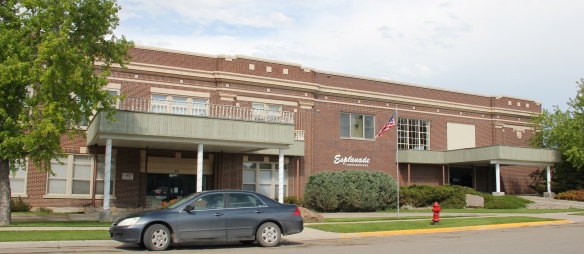
The same can be said for the historic school just up the street from the Calvert and its conversion into the Esplanade condominiums.  Here again, a public building still serves the community but in a different way than before.

IMG_9979

IMG_9976

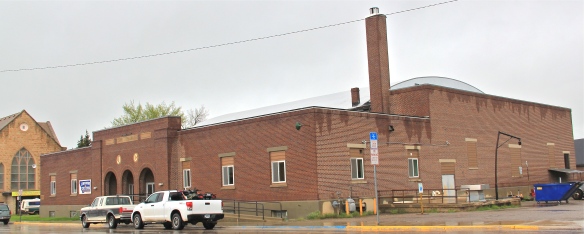
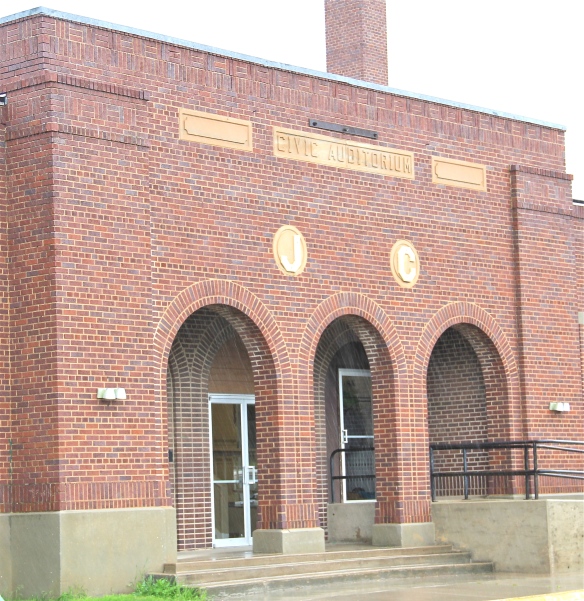
In the central business district, the grand triple-arched entrance of the Civic Auditorium is a reminder of the impact of the New Deal on the city.  The Works Progress Administration did a lot of little things in Lewistown, streets, sidewalks, utilities, but its most lasting contribution is the civic auditorium of 1936, still a meeting place for community events.

IMG_9921

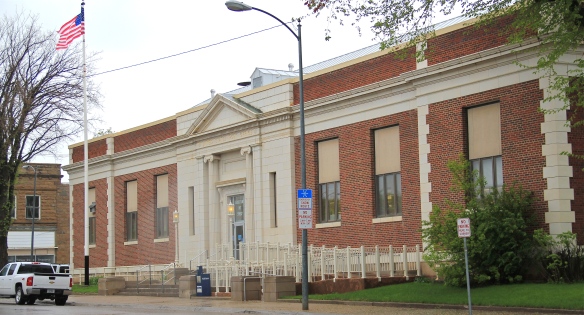
Another federally funded building a few steps away was finished during the beginning of the Great Depression, the Lewistown Post Office, an impressive Classical Revival design from 1931.


IMG_9907

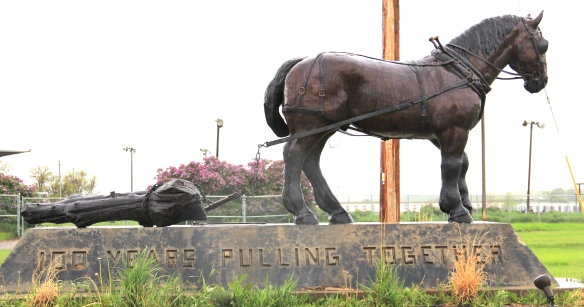
On the outskirts of town is another important set of buildings still in community service, not just to Lewistown but to towns and villages from miles away:  the Central Montana Fairgrounds.  The monument at the front entrance, part of the fair’s centennial celebration a few years ago, says it all:  100 years of pulling together.  Yes, it is a good motto for the fair, but to my eye it’s also a fitting motto for the entire town.

IMG_9378

IMG_9372

IMG_9373

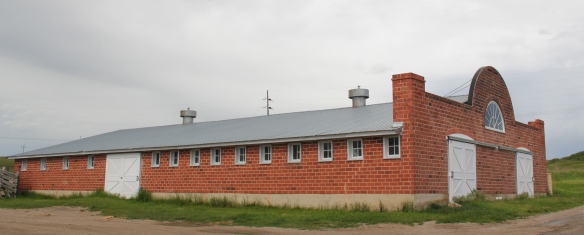
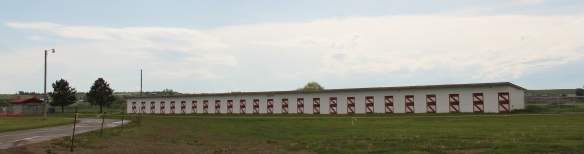
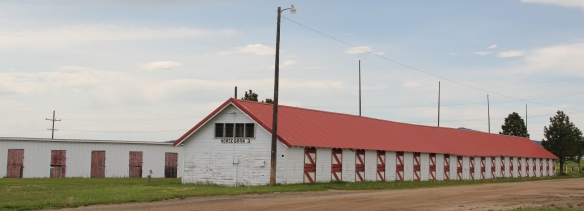
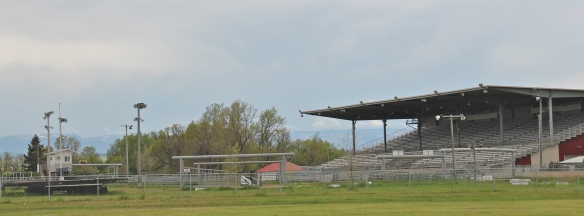
The fairgrounds has an array of historic barns, stalls, and exhibition buildings that define the grounds while the new grandstand defines the signature events of today’s 21st century fair experience.

IMG_9377


Lewistown: at the heart of Eastern Montana

IMG_9389Lewistown, the seat of Fergus County, has been a hub for trade and government for eastern Montana since the 1880s.  Beginning as a trading post, the town next served as a crossroads for traffic going to short-lived precious metal mines at Kendall, Maiden, Giltedge, and other places.  Cattle ranches, such as the famous DHS Ranch and the N-Bar Ranch, also surrounded the place.  By the turn of the 20th century, the town had over 1,000 residents.  But by this time, railroad companies eyed the area for possible agricultural development, and within 20 years Lewistown had boomed–gaining six times its population–and a fascinating array of commercial and public buildings in the wake of the population growth.

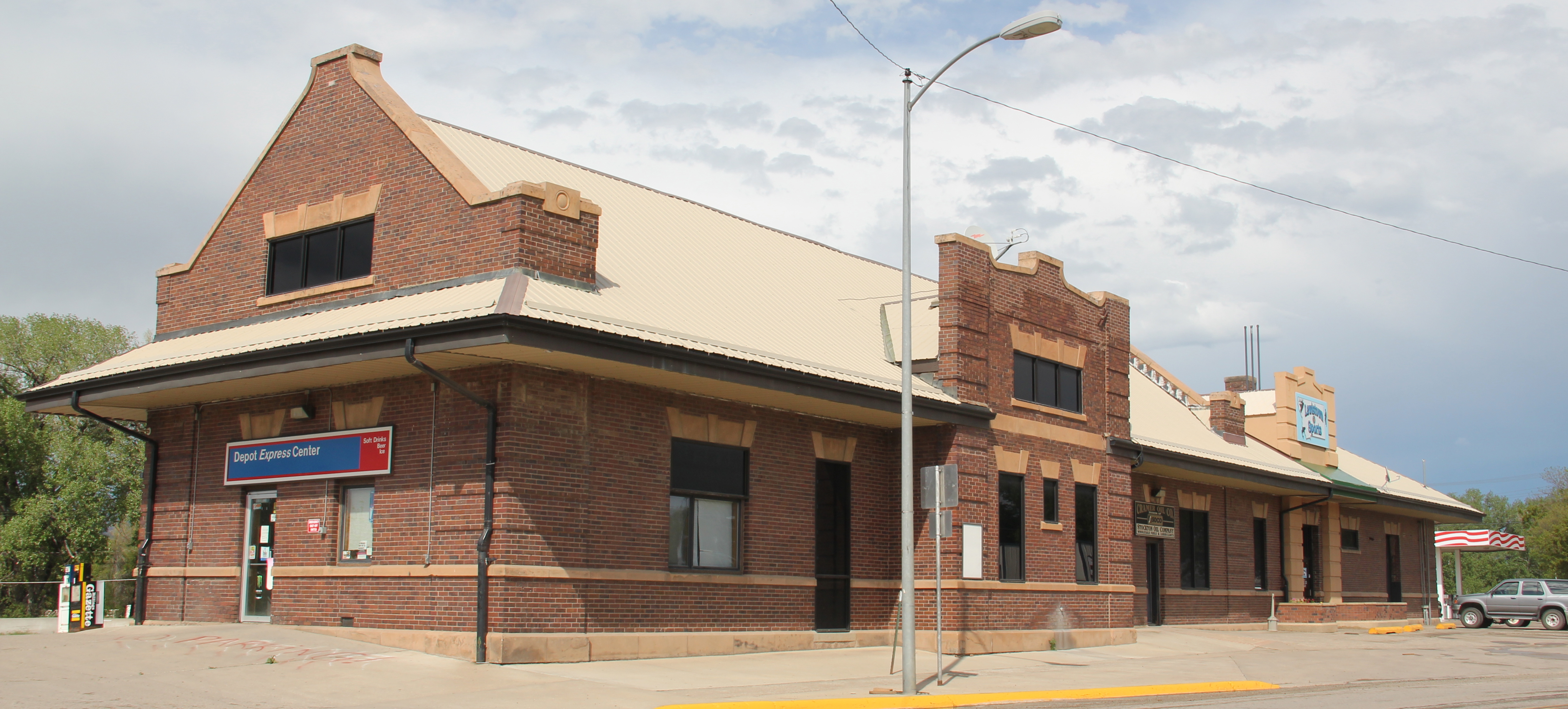
IMG_9381The Great Northern Railway not only an understated Classical Revival depot on one end of the town, it also expanded lines throughout Fergus County like tentacles desperate to grab as many wheat crops as possible.  The depot remains today, converted into a convenience mart and gas station (an adaptive reuse you do not commonly find for railroad depots).  On the other end of town stands the other major line–the Milwaukee Road–devoted to the homesteading rush in Fergus County.  It built an even grander

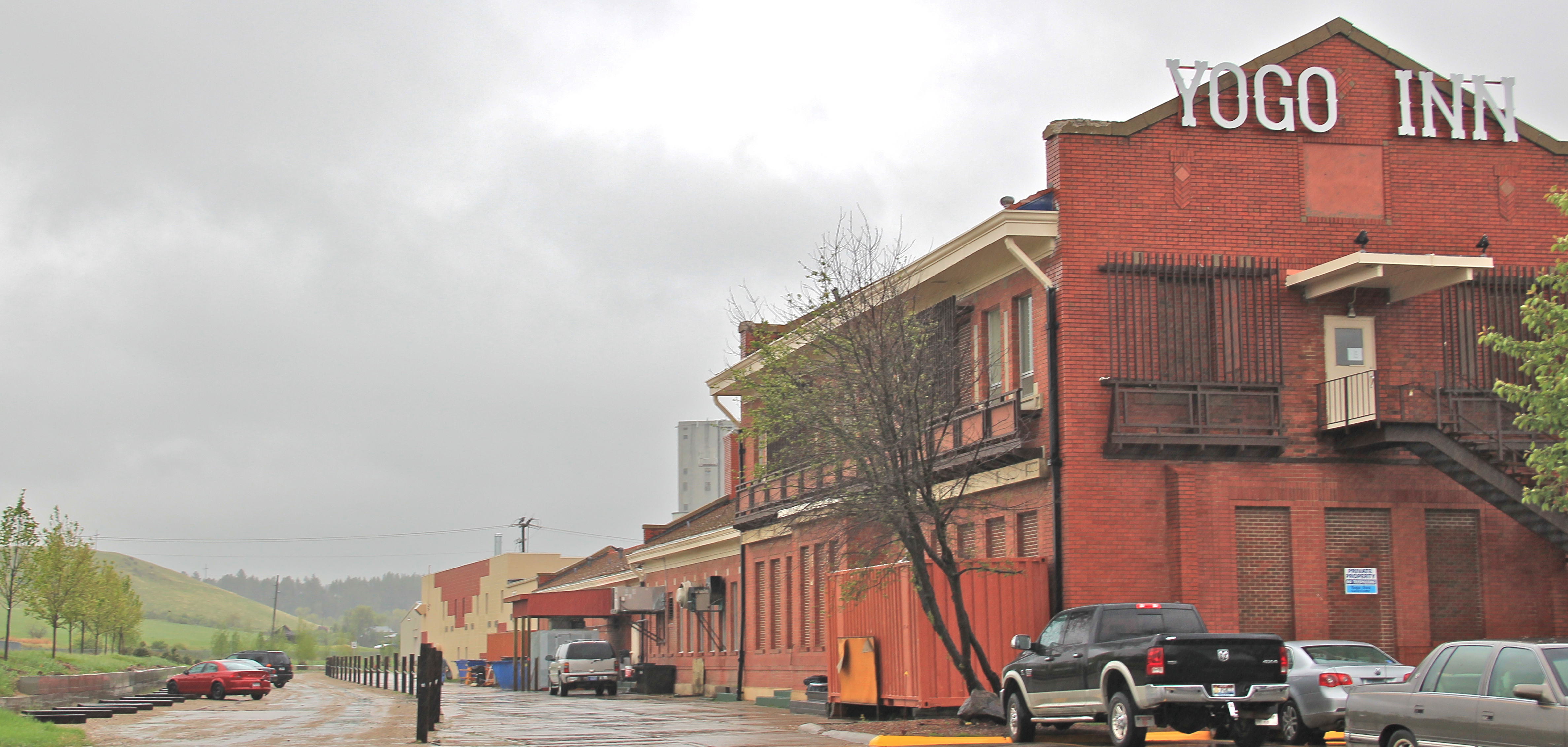
IMG_0004complex as a statement to its wishful dominance of the agricultural trade.  Shortly after the closure and bankruptcy of the line in the late 1970s and early 1980s, the depot became a large adaptive reuse project, turning the Milwaukee Road complex into the Yogo Inn and convention center, where, in 1984, I attended the Montana Historical Society statewide history conference.

IMG_9400The bloom grew stale over the decades and when I visited in 2013, the Yogo was clearly on life support; I was encouraged in May 2015 to find renovations underway–maybe there will be a third life for this Milwaukee Road landmark in Lewistown.

The Great Northern and the Milwaukee created the transportation network that brought homesteaders to central Montana by the thousands. Merchants, bankers, and craftsmen then rebuilt the downtown from 1904 to 1916, and much of that flurry of construction still serves residents today in the central business historic district, which is listed in the National Register of Historic Places.

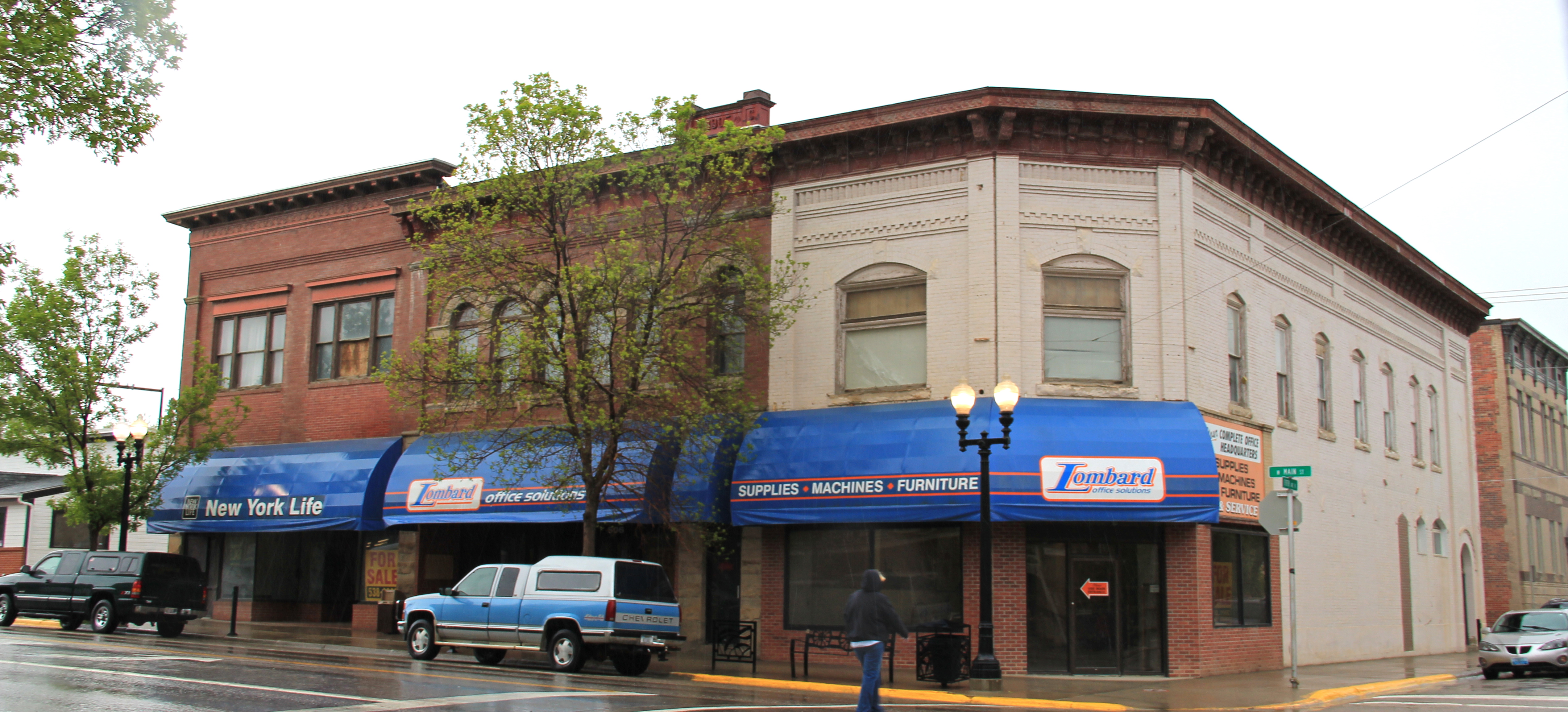
IMG_9973Classical Revival was the architectural statement of choice to this new Lewistown taking shape along Main Street.  The architects of the Montana State Capitol, Bell and Kent, designed a new Bank of Fergus County (above, on the right) in 1904.  It received another layer of classicism in the pilasters a decade later when owners wanted to match the flashy Judith Theater (1914), certainly one of the great examples of Beaux Arts design in a small Montana town movie palace.

Fergus Co Lewistown neoclassical bank  - Version 2

By 1916, however, bank officials were ready to support the town’s most complete interpretation of Classical Revival design in the new Montana Building, designed by the firm of Link and Haire.  The bank seemingly had few limits in front of it–homesteaders still arriving and agricultural prices were high.  But the boom went bust in the early 1920s and by 1924 the building had new owners, the First National Bank.  It has remained home to financial institutions ever since.

IMG_9967

IMG_9969

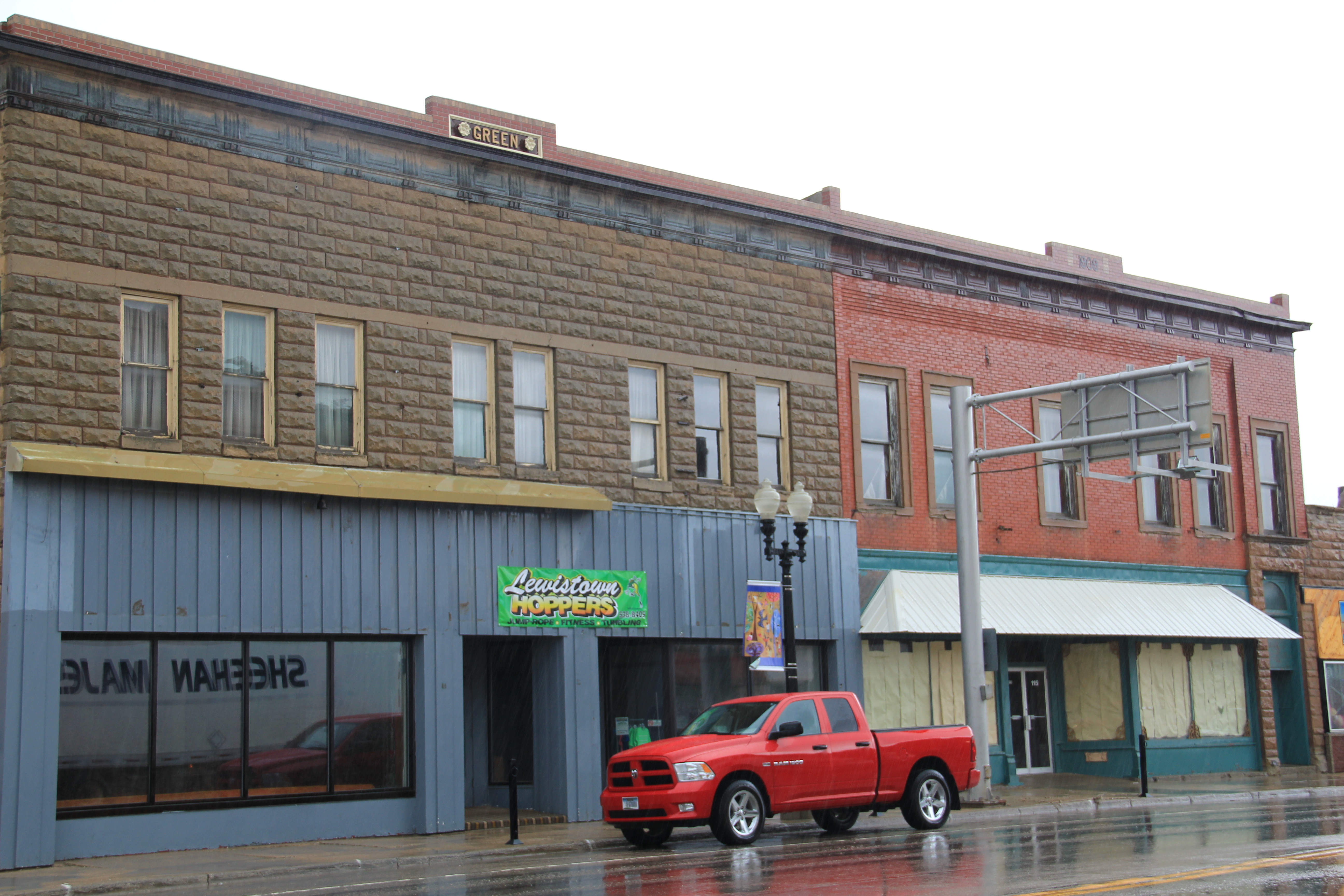
IMG_9951The splashy Beaux Arts classicism of the banks and theater catch your eye but much more common are two-story commercial blocks, often with a more understated classicism, where retail businesses used the first floor and professionals occupied the second.  The town had a several gifted craftsmen who left their mark in these buildings and others.

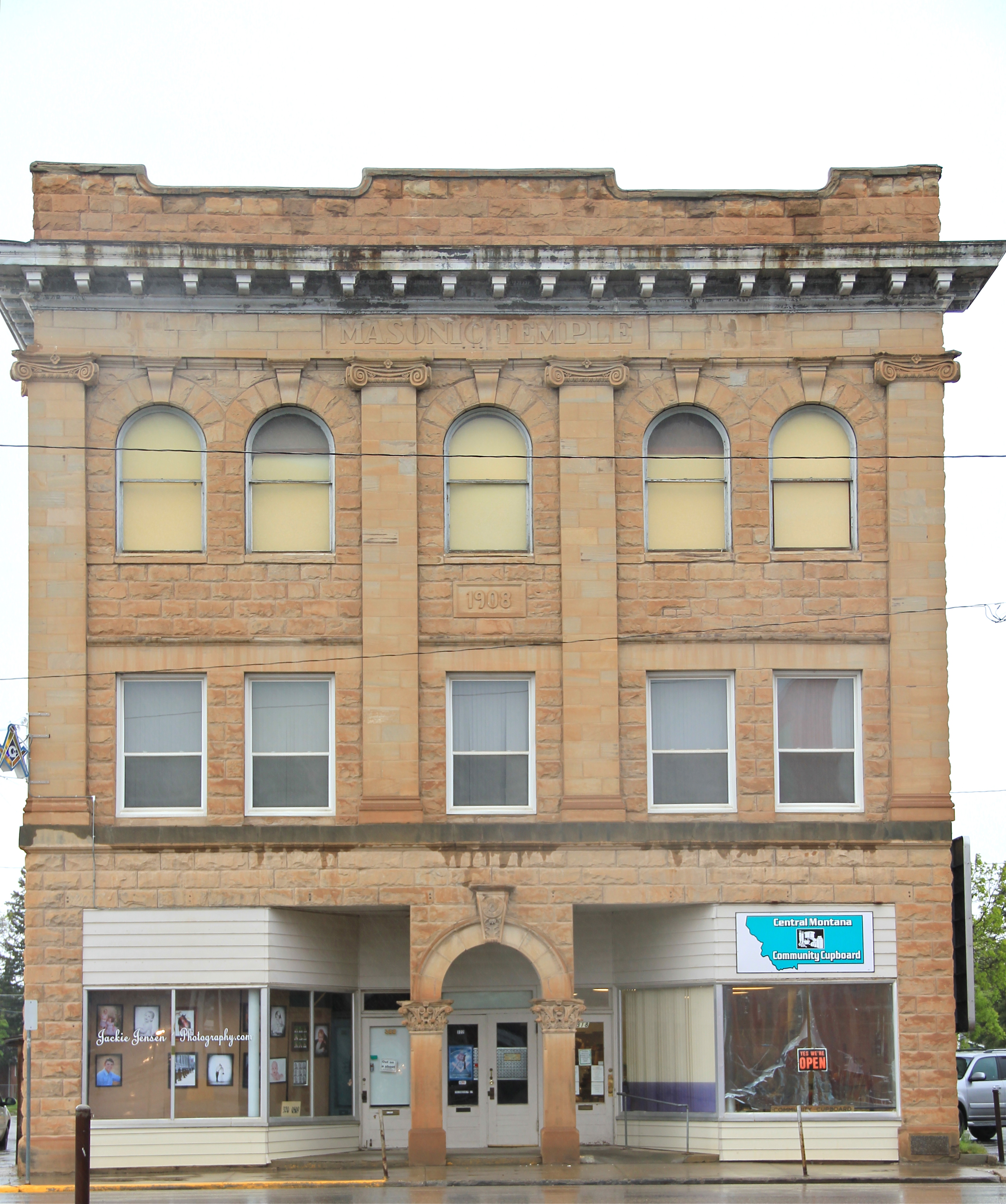
Detail Masonic Temple Lewistown Fergus Co IMG_9955Croatian stonemasons left impressive stone Romanesque arches at the Masonic Lodge, a detail I photographed in 1984 (left) and 2013 (right).  The building itself is a dignified statement of both craftsmanship and purpose, combining both classical and Romanesque elements using locally available stone.  It’s one of my favorite buildings in town.

Fergus Co Lewistown masonic temple downtown commercial HD 13 - Version 2Not far away is the I.O.O.F. Hall, from 1914.  Here is an even later example of Romanesque arches highlighting a building that is both a fraternal lodge but also valuable retail space.

IMG_9966Be they multi-story or just one-story commercial businesses, this set of commercial designs convey so strongly the promise of early 1900s to thousands of Montanans.  Lewistown’s population had reached 6,000 by 1920–that generation would be shocked to know that remains the population today. Much more on Lewistown to come.

IMG_9984

Stanford: Railroad Town Deluxe in Montana’s Judith Basin

IMG_9845The sign on U.S. Highway 87/Montana 200 says it all:  why not stop in Stanford?  If you are a railroad town planning fan, it is an absolute.  Geographer John Hudson a generation ago talked about the distinctive historical northern plains landscape created by the great transcontinental lines at the turn of the 20th century in his book, Plains Country Towns. His work, then just recently published when I was surveying the state for its preservation plan in 1984, became a conceptual bible of a sorts for me–allowing to see significance where others might just say, ah it is just another dusty western town.

IMG_8839Stanford, the seat of Judith Basin County, might appear to be exactly that when I first stopped in 1984.  The county had been established in 1920, one of the last during the homesteading boom.  The town’s  rhythm of one-story, often false-front stores conveyed little that might be considered special or noteworthy (although the Pump Bar is always worth a stop).

IMG_8838The old state bank building and a neighboring retail establishment were the only spaces that conveyed a sense of architectural styling.  The post office was a rustic-front building that didn’t automatically say “here’s the federal government.”  The local county museum–also worth a stop–stood in a typical mid-1960s commerical-type building.

IMG_8841

IMG_8844Stanford had been relatively stable since reaching its population height in 1960 of 615 residents–when I visited in 1984 it had only dropped by a few families to 595.  But now the town was boomed, to well over 700 residents, reflected in the new fronts to the town’s businesses and maybe an indication that the sign on the highway has worked.

IMG_8837With that growth, however, has come one significant loss to Stanford’s historic fabric–the standardized design of its Great Northern depot.  It was there during my last visit c. 1998 but is now an empty spot along the tracks.

IMG_8840Despite this loss, Stanford remains an excellent example of the T-plan railroad town of the Great Northern Railway.  The top of the “T” comes from the railroad tracks themselves and the lineup of grain elevators along the top of the “T.”  In the classic design, the next element is the passenger station, on the other side of the tracks from the elevators, serving as the opening to the actual town. The rest of the plan is intact, especially the long main commercial corridor with businesses and offices on either side terminating in the lot for the county courthouse, in other words local government was at the bottom of the “T” while the railroad, represented by the tracks and depot” stood at the top.

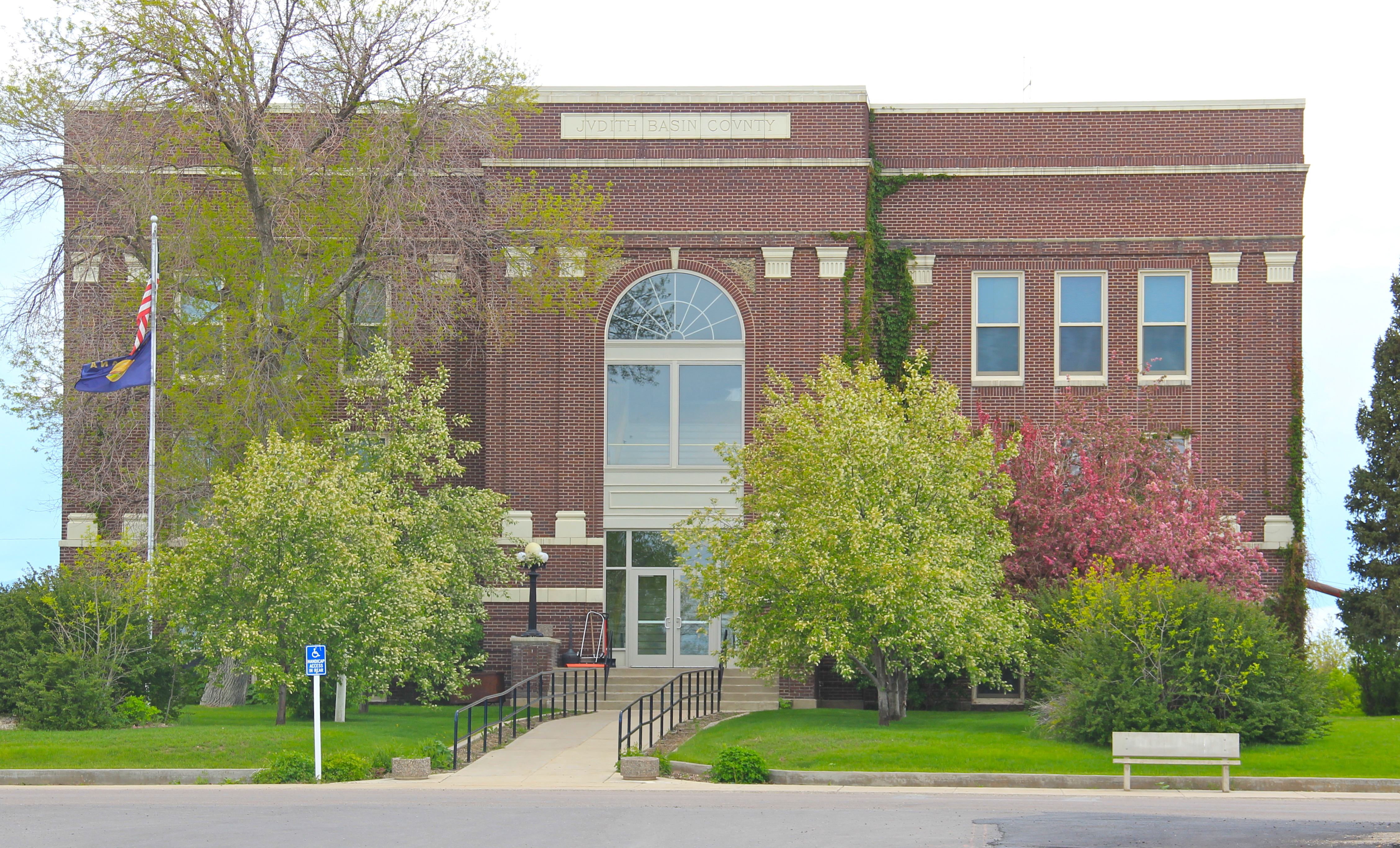
IMG_8842The Judith Basin Courthouse is an understated Classical Revival design finished in 1925 and designed by Havre architect Frank Bossuot. Its location, according to John Hudson’s interpretation, said it all about the power of the railroad companies in this era compared to local government.

IMG_8843

But today, in the 21st century, that earlier arrangement of space has lost much symbolic significance. The courthouse, with its inviting landscaping and plantings, is the town gateway.  People enter Stanford not by train but by highway and the highway runs south of town, meaning the courthouse and the residents around it are what you first encounter–the community comes first and the railroad comes second.

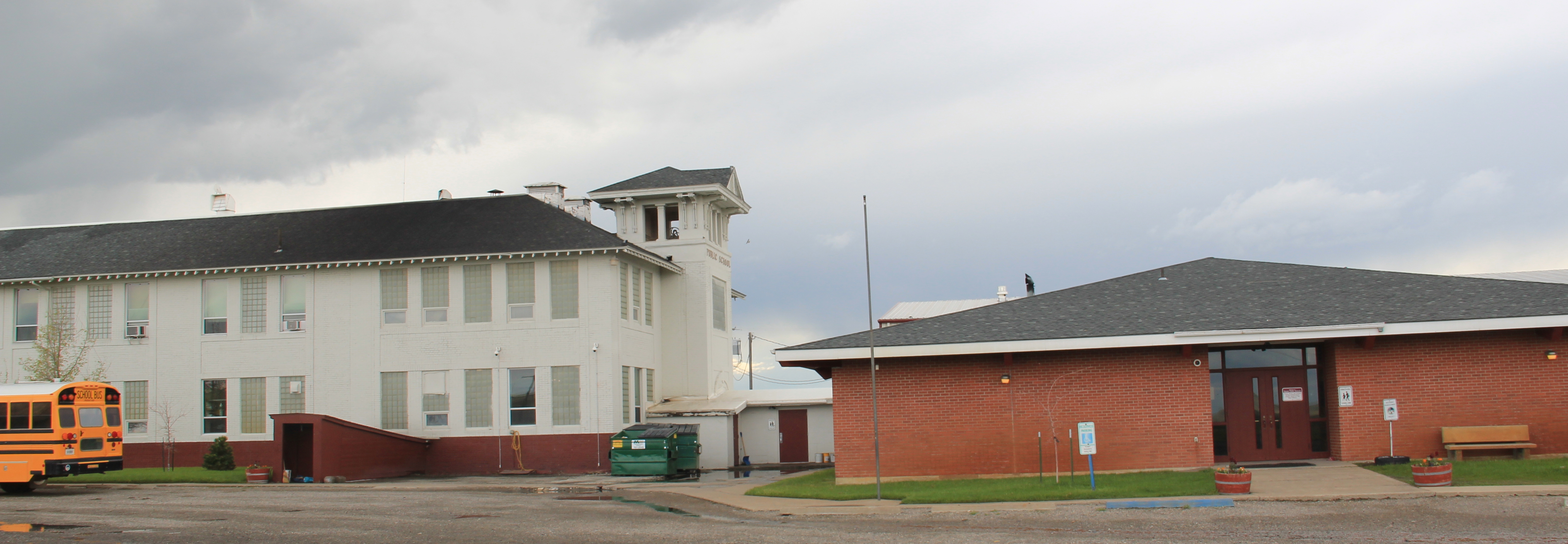
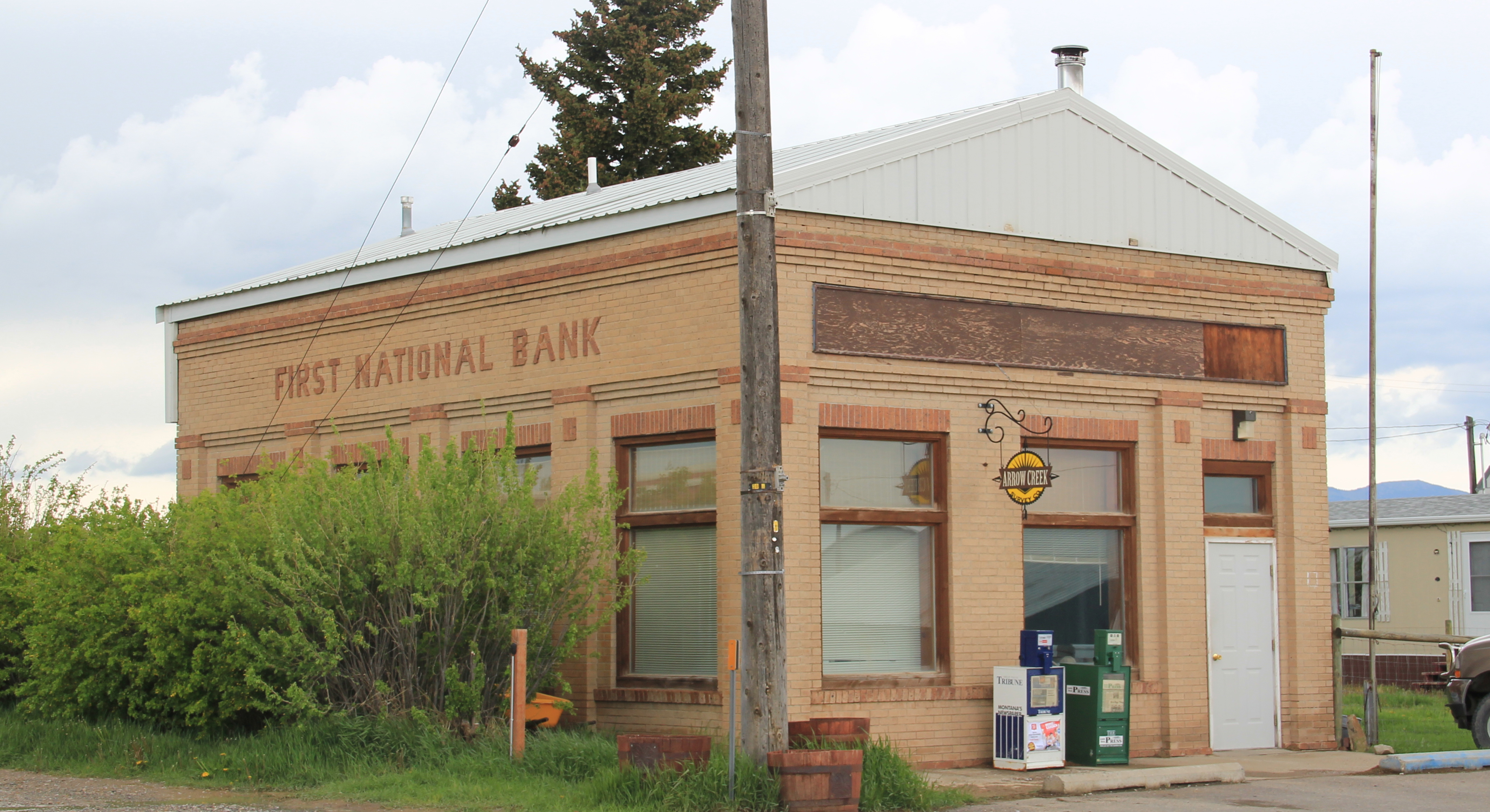
IMG_8848So plains country towns can change–as in Geyser the next stop to the west, where a modern school extension works in partnership with the classic two-story front-tower building from the 1910s-1920s.  And where, in Geyser, the old state bank has been converted into a surveyor’s office, for growth is coming into western Judith Basin County.

IMG_8849Yet whatever the 21st century promises for these places across central and eastern Montana–most do not have much of a future to contemplate–the past is always near, as the grain elevators from 100 years ago stand as silent sentinels of the hopes and ambitions of the homesteading generation.

IMG_8850

Plains Country Towns in Montana’s Judith Basin

Created with GIMP

Milwaukee Road Corridor, Moore, 1984.

In my work with the State Historic Preservation Office in 1984-1985, my colleagues put up with many of my own peculiar interests and views of the Montana historic landscape, especially the focus on public buildings and the state’s railroad corridors.  My interests, however, in the country towns of the Judith Basin was probably always a puzzler; staff always wished I would press on to Lewistown, where some of the best preservation work in the state was taking place in the mid-1980s (much more on Lewistown a bit later).  But I must admit that the maze of small towns–never numbering more than 200 or so souls in any given place–created by the railroads as they fought for market dominance in the rich agricultural region of the Judith Basin some 100 years ago was just fascinating.
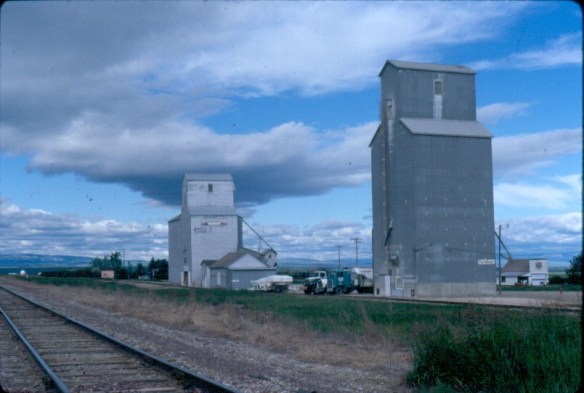
Moore Elevators Fergus Co

Grain elevators at Moore, 1984

And they remain so today.  The geographer John Hudson had provided basic insights on the creation, distribution, and purpose of the country towns in the larger development of the northern plains–he coined the phrase “plains country towns.” The constant elements that they all shared–oriented to the tracks, the dominance of grain elevators, the prominence of depots–underscore the railroad era origins.  But the towns all had their own individual places and statements, be it a woman’s club, a library, the school, and the bars and taverns.  Thirty years later, much was missing from what I experienced in 1984–every place lost population between 1980-2010–but much still remained, and residents seemed determined to keep it that way.
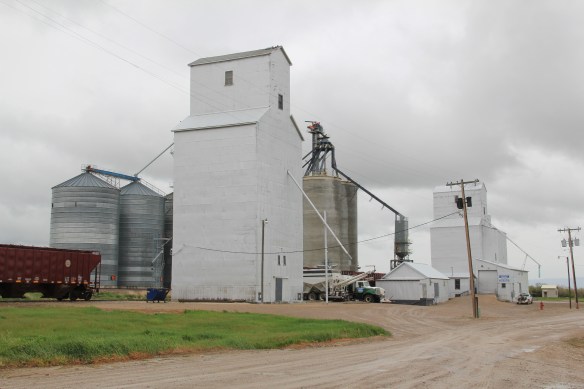
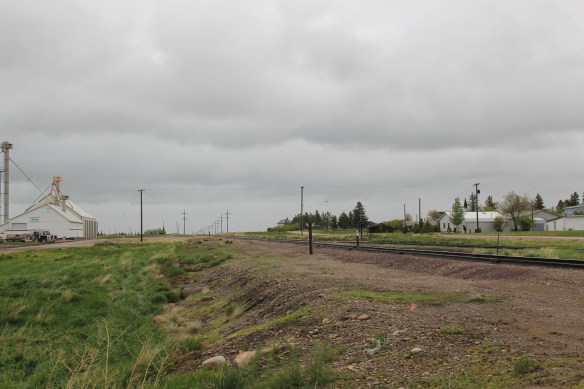
IMG_9782

IMG_9783

Moore still has its grain elevators but the Milwaukee depot is long gone, creating an empty space along the corridor.  Moore has the look of so many Milwaukee Road towns with a T-plan design apparent today even as the town decline from its height of 575 residents in 1920 to the 193 of today.

IMG_9790But the town, which compared to many I visited in 1984 had declined to a lesser degree (229 residents in 1980 to 193 in 2010), still has its public institutions.  The Moore Woman’s Club is celebrating its centennial in 2015 while the town’s public library is another key community center while the continued operation of the unassuming Moore public school

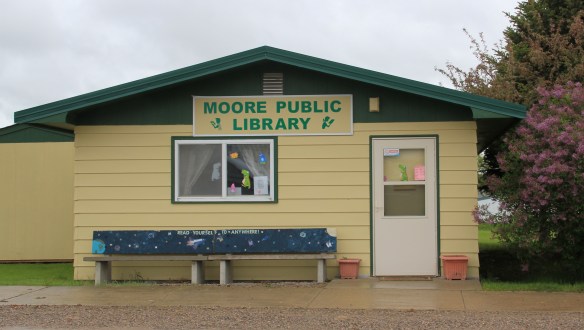
IMG_9787

IMG_9785_2is undoubtedly the major reason that the town is still here today.

IMG_9788

The Great Northern Railway spur line that snaked north from the Yellowstone Valley at Laurel through the Judith Gap then the basin was always a corridor of great interest to me, although the towns created along the way were small, seemingly inconsequential compared to the linking of Great Falls and Billings.

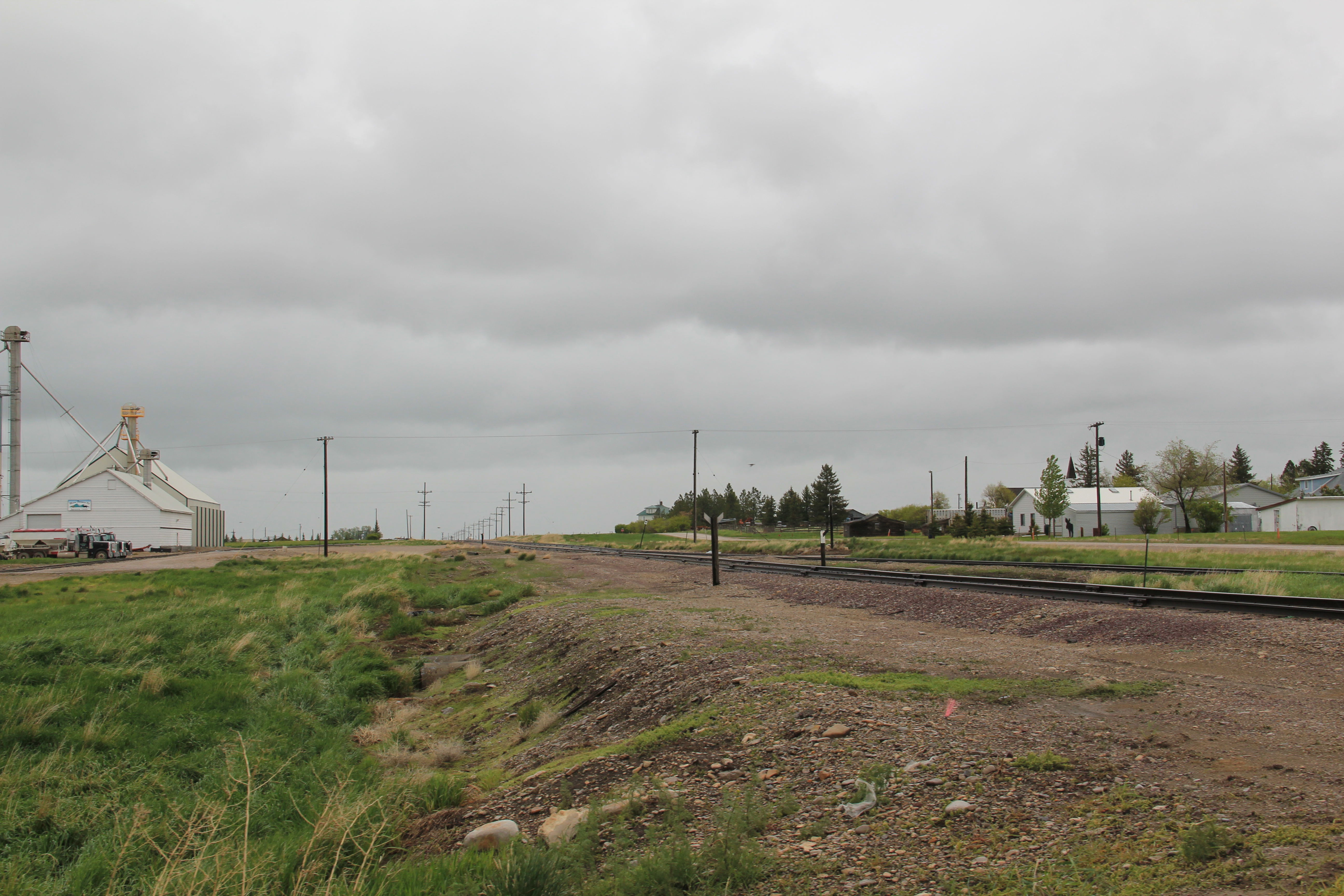
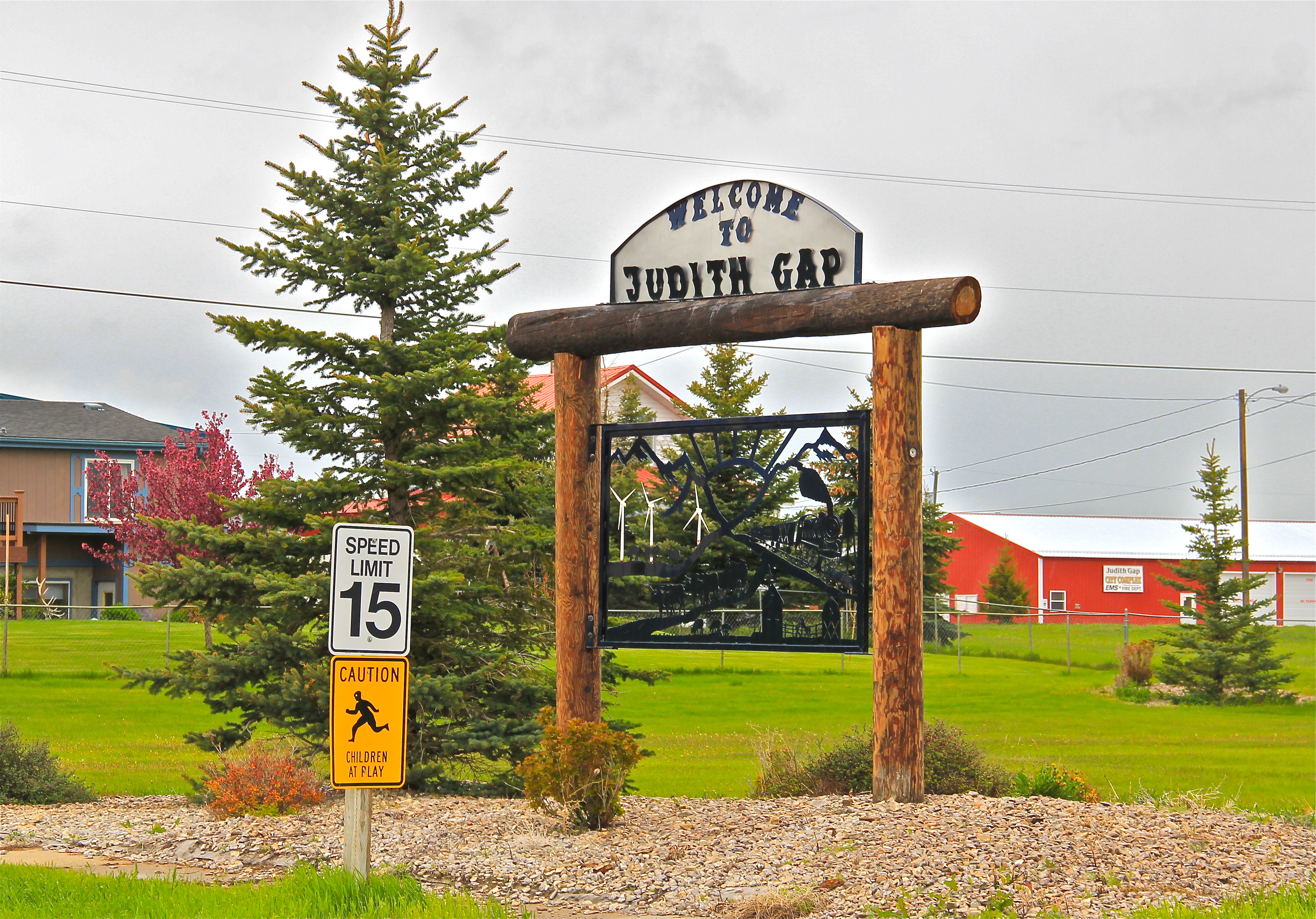
IMG_9770Traveling north out of the Yellowstone then Musselshell valleys, the Great Northern line entered the basin at Judith Gap, and the homesteaders who followed built a grand two-story brick school that spoke of their ambitions.

IMG_9769

The corridor then left in its wake places forgotten today.  Travelers along U.S. 191 may notice the old brick state bank building and elevators at Garneill, but they may not.

IMG_9779

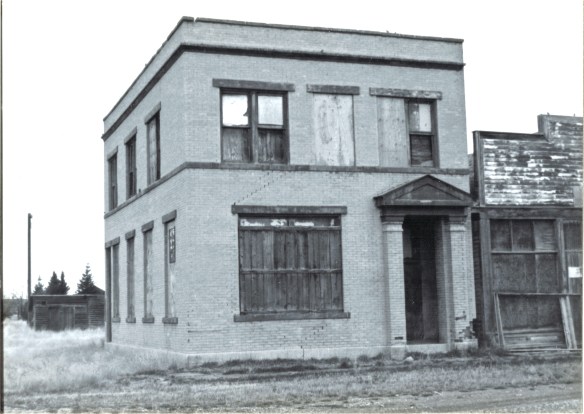
The highway veers away from the railroad line at Garneill, meaning that the old state bank at Buffalo was a forgotten place in 1984–and the town remains so today.

Buffalo, Judith Basin Co (p84 35-15)

First State Bank, Buffalo, 1984.

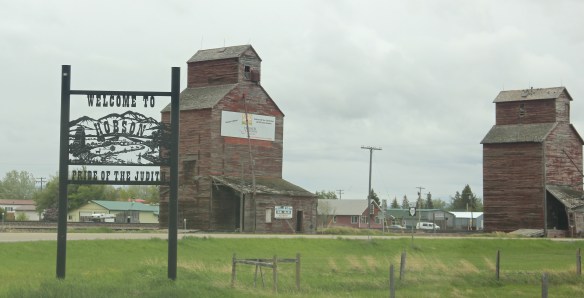
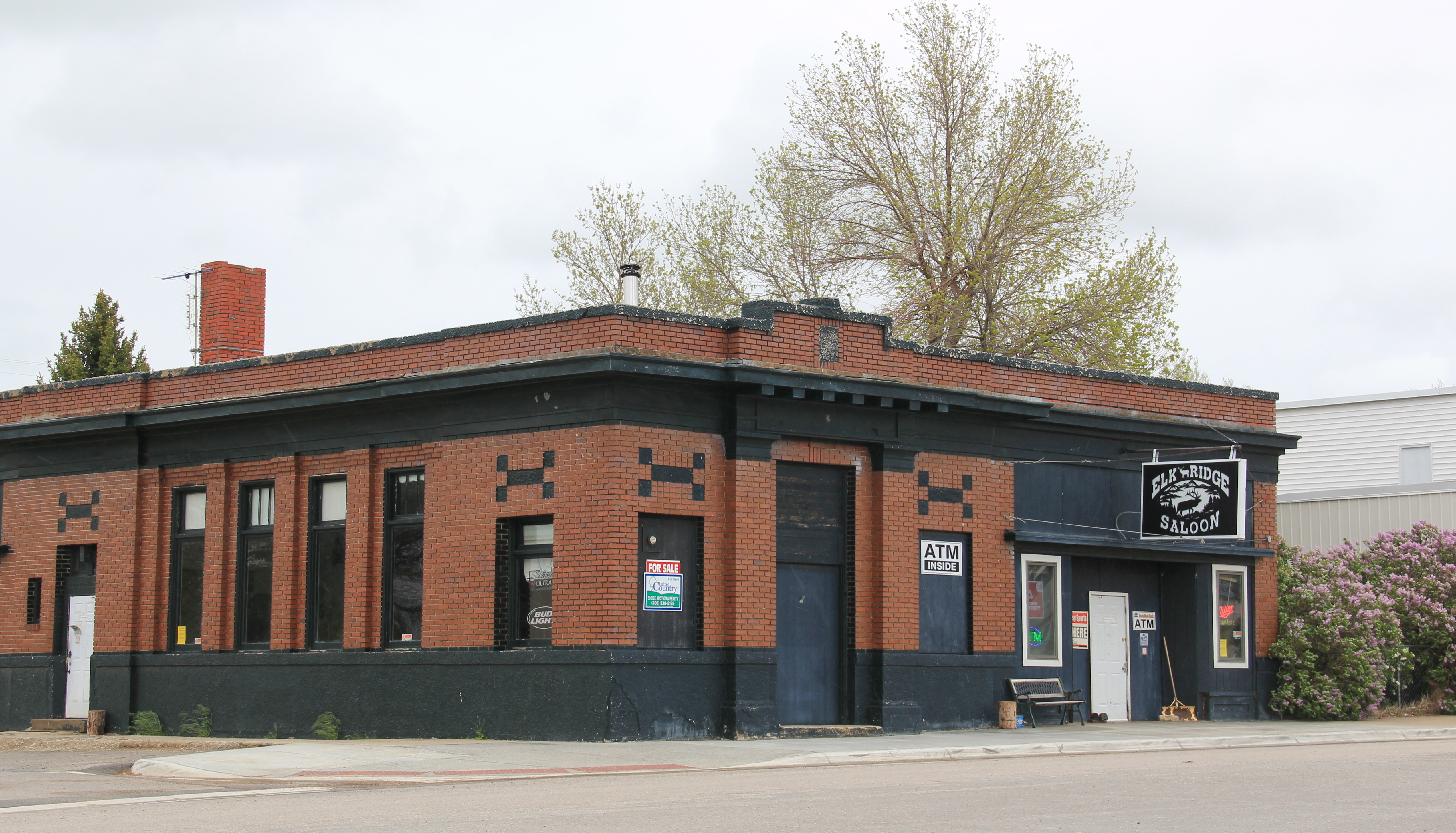
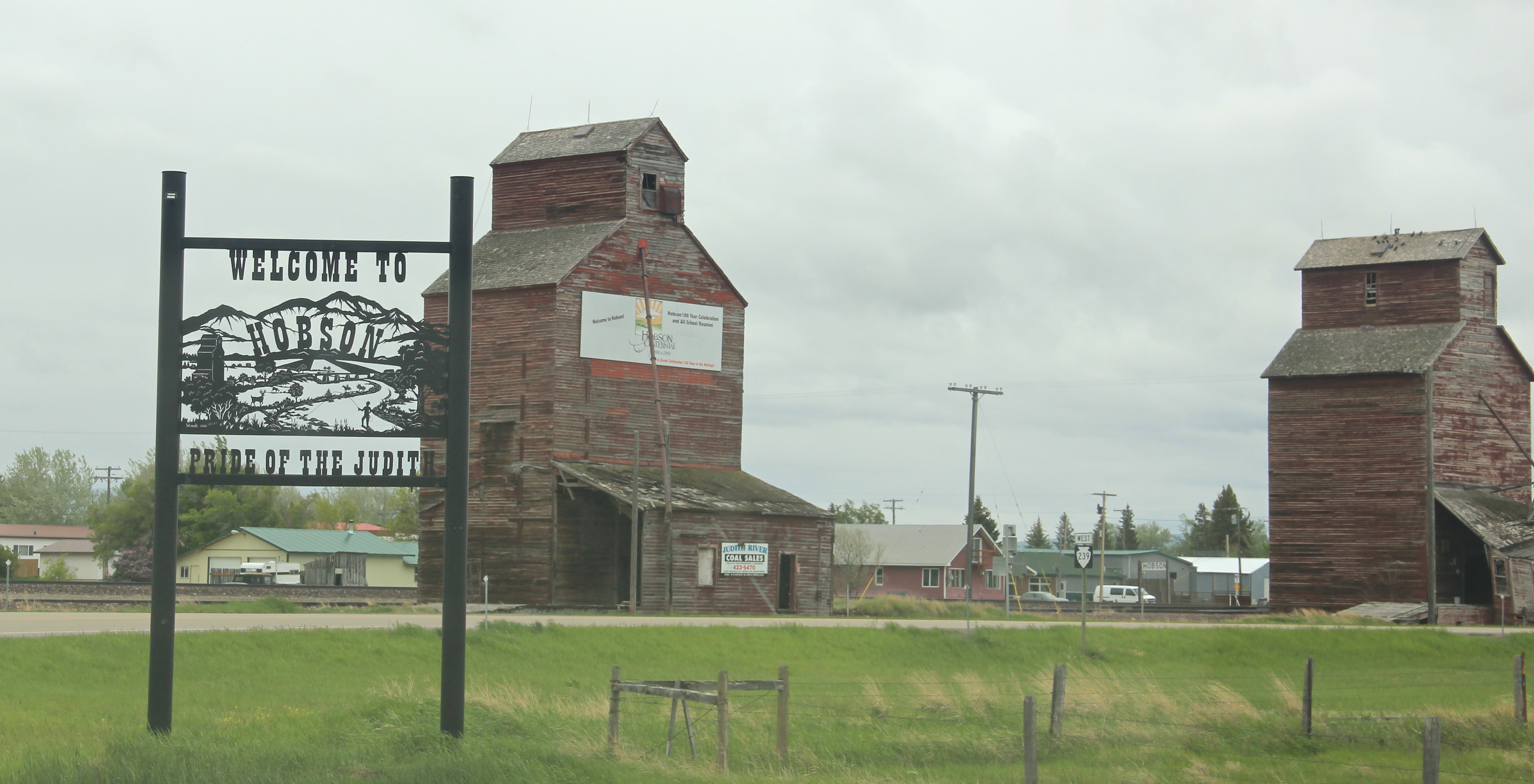
Hobson, on U.S. 87/Montana 200, has experienced a much brighter history. Its brick bank building houses a local bar.  While no depot remains, the town’s railroad line remains a IMG_9797
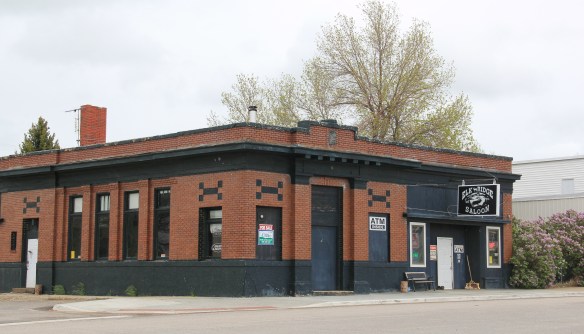
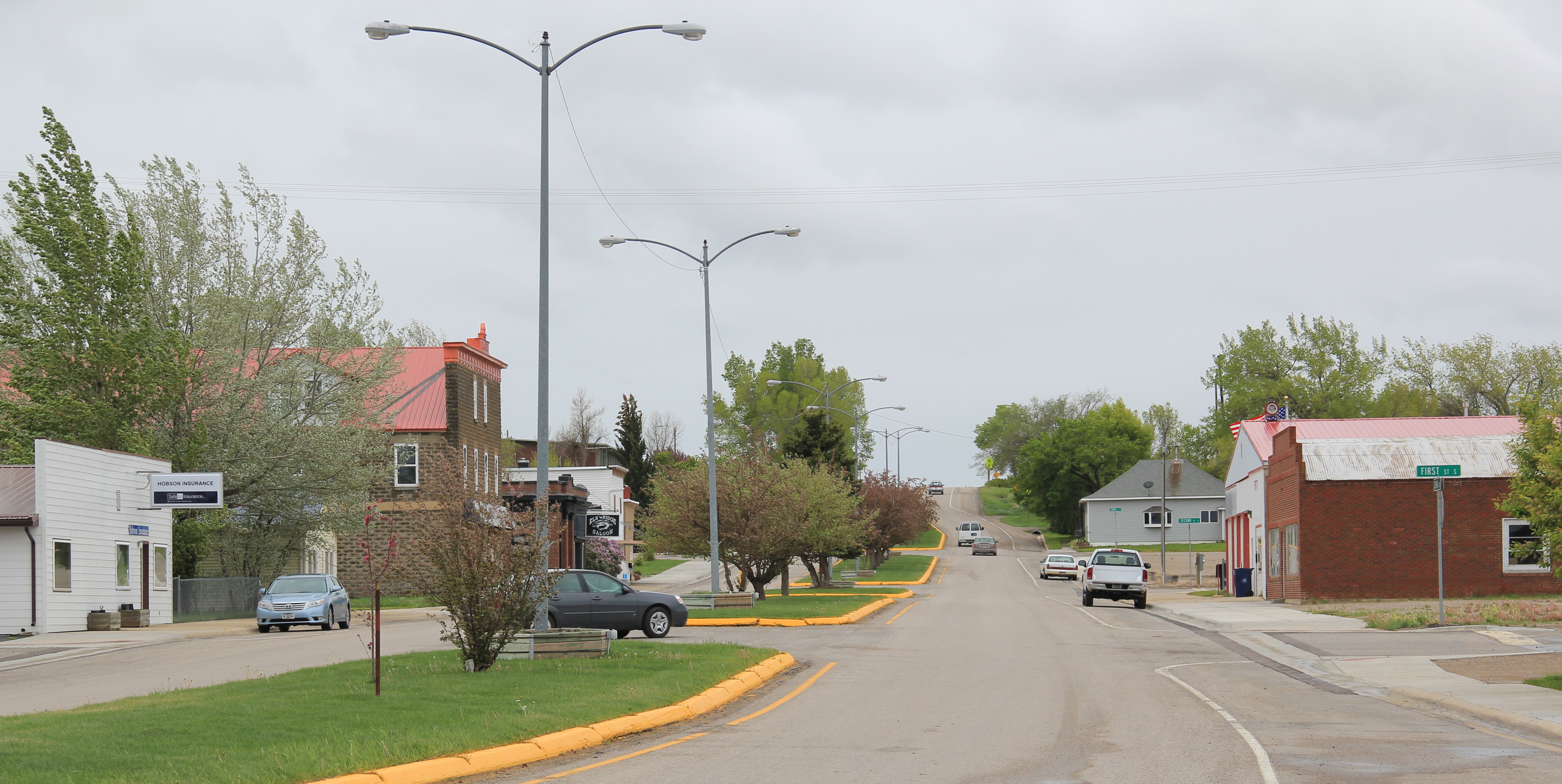
IMG_9792point of focus, although most traffic, commercial and otherwise, relies on the highway.  Hobson’s population when I visited in 1984 was at its height, 261 people in 1980, and it still tops over 200 today.  Another defining characteristic is Hobson’s rather unique (for a plains country town) boulevard plan.
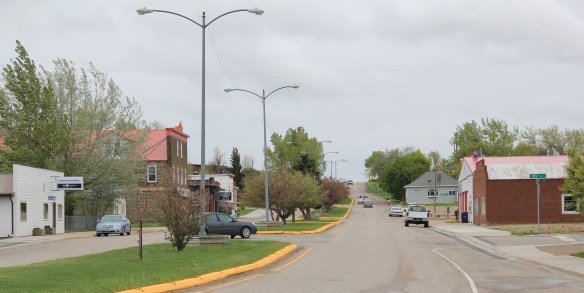
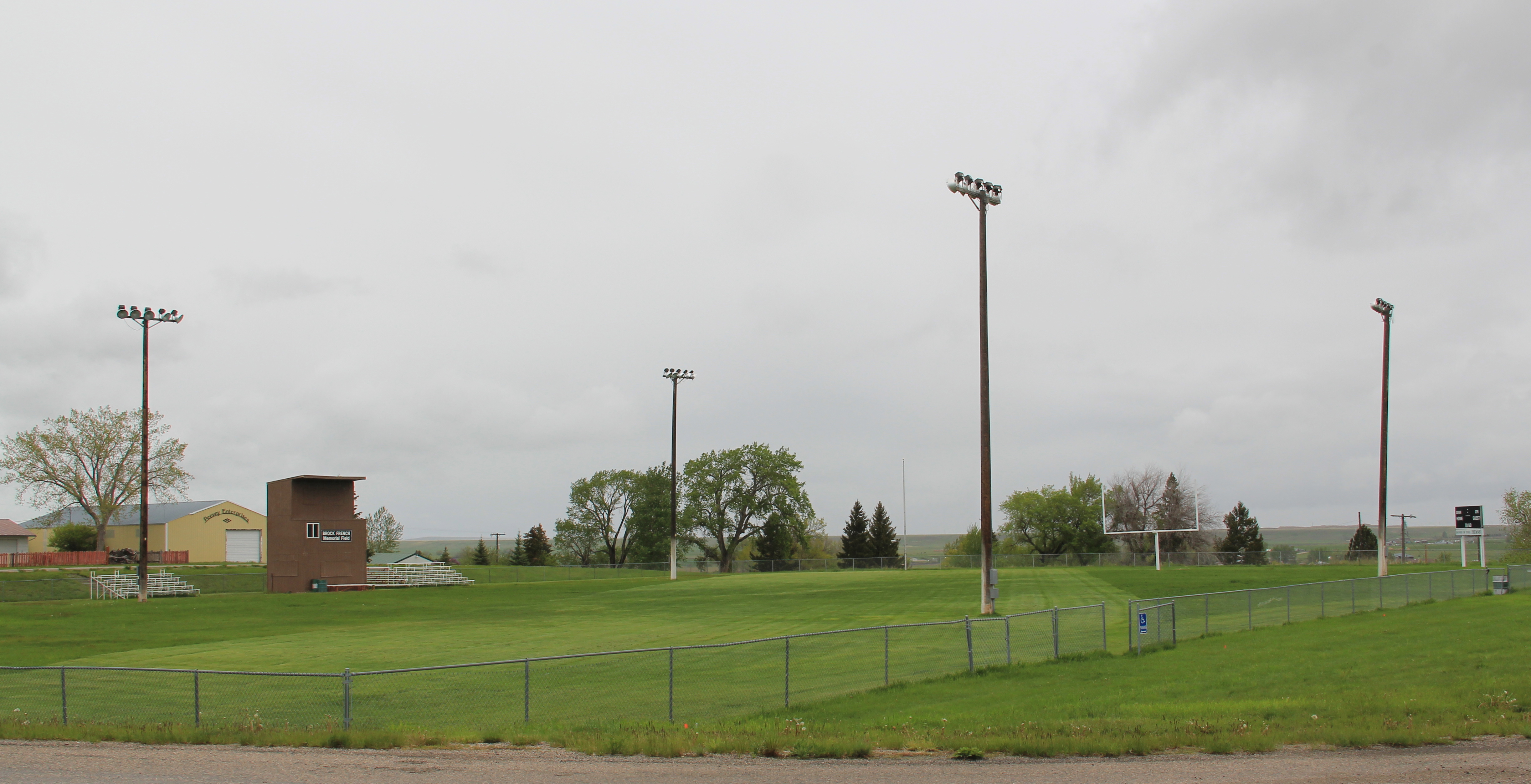
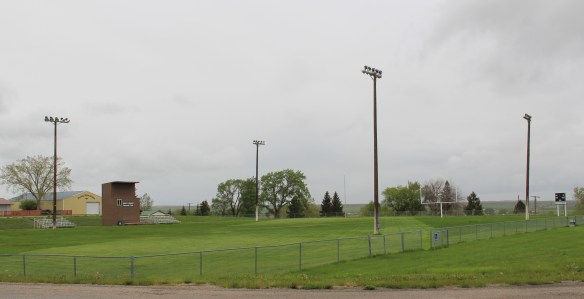
IMG_9794On either side lie business and public buildings and the street ends at the high school, where the six-man football field is a central element of the community’s public landscape.
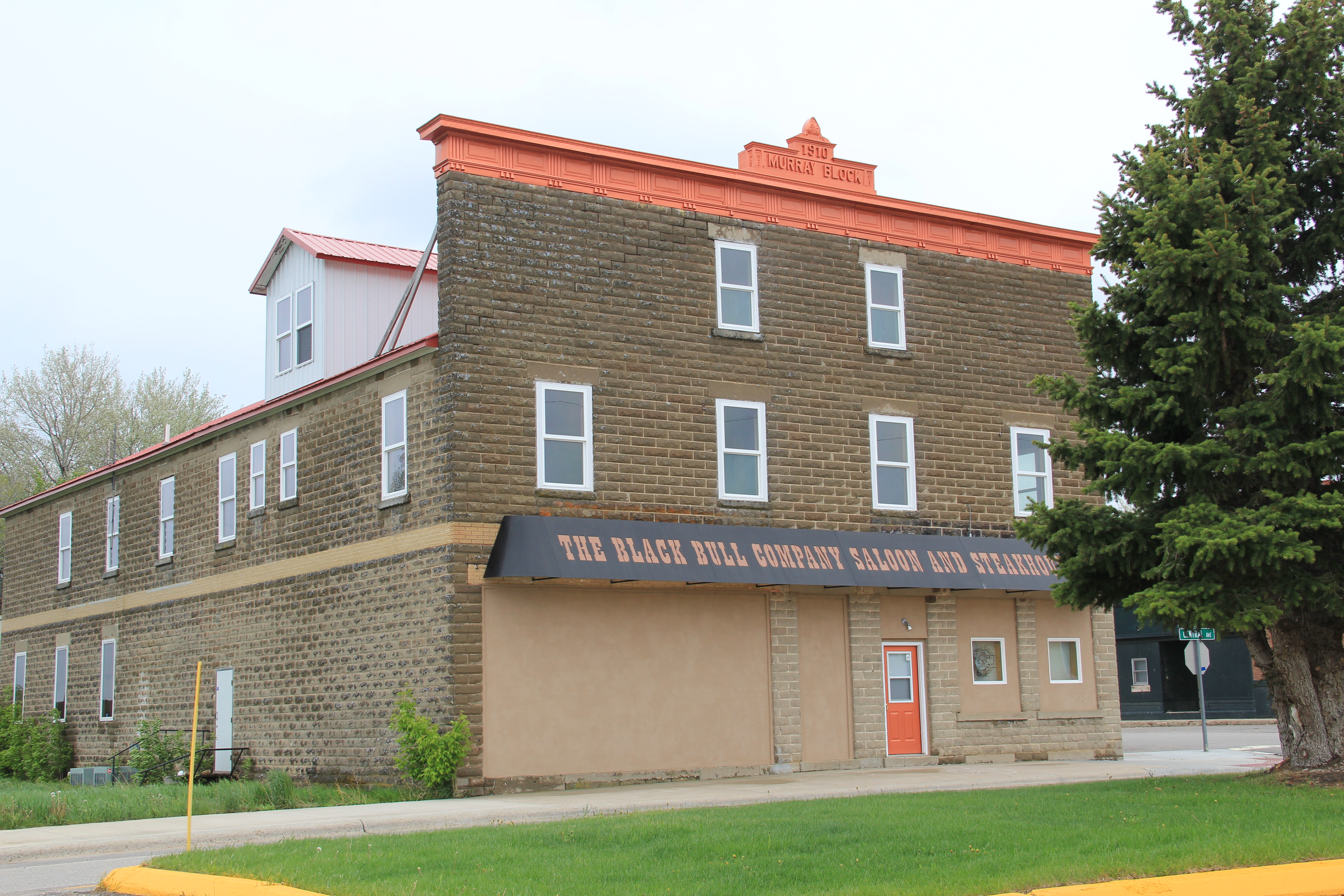
IMG_9801The Murray Block, 1910, dominates the business district today as it much have done one hundred years ago–it is rare to see a false-front concrete block building.  The Masonic
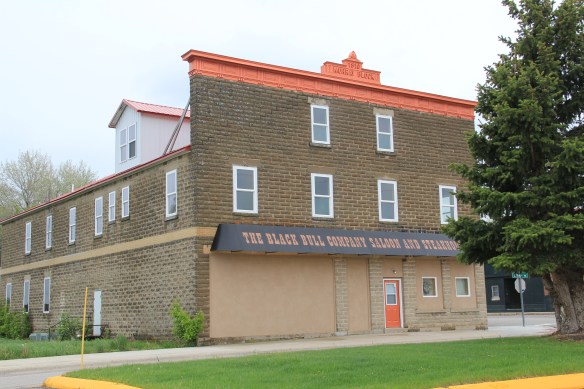
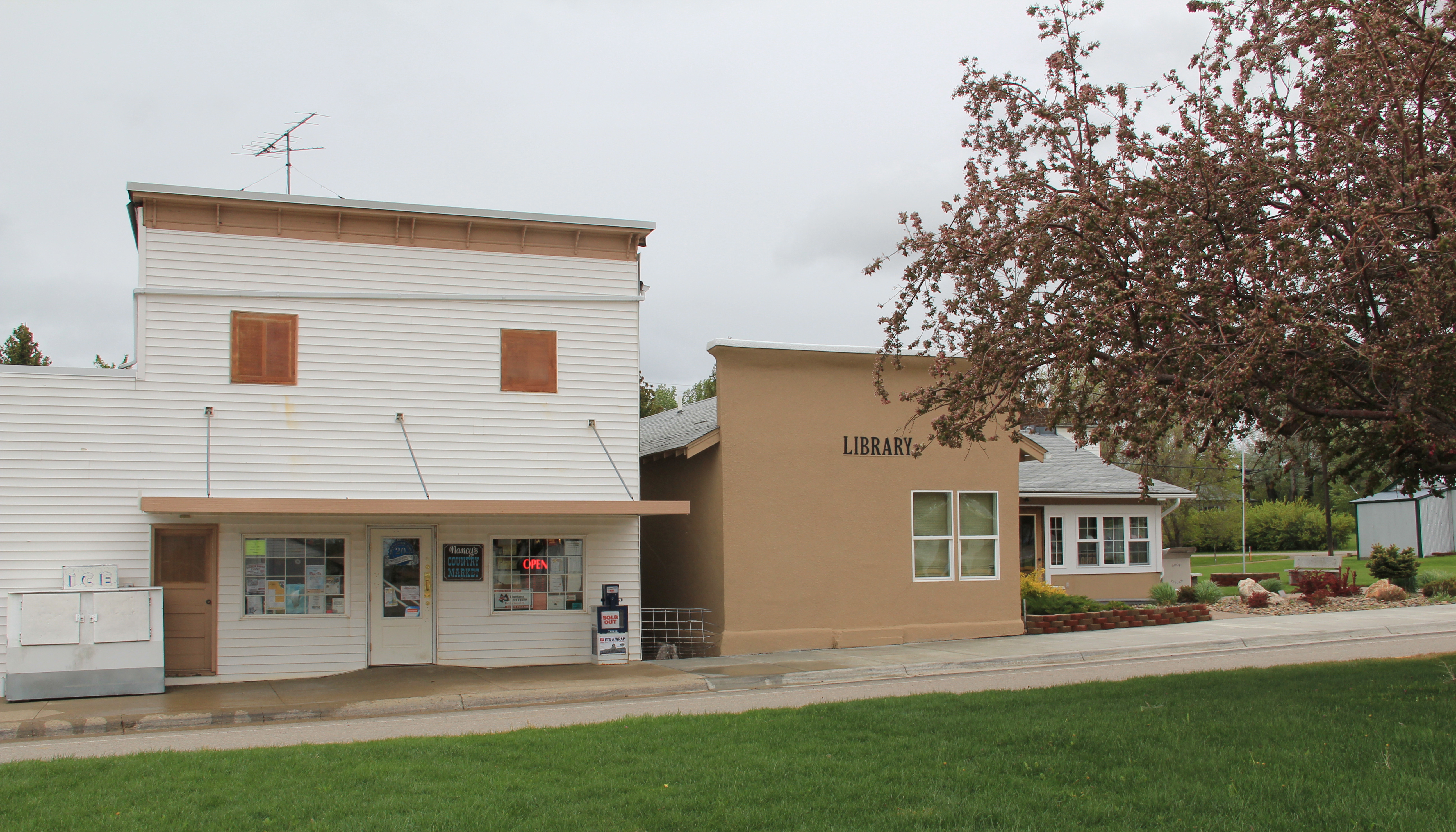
IMG_9795Lodge probably helps to identify some of the builders of Hobson’s historic structures located on the boulevard.  But whoever the builders were, here is a very interesting place

IMG_9802

IMG_9798

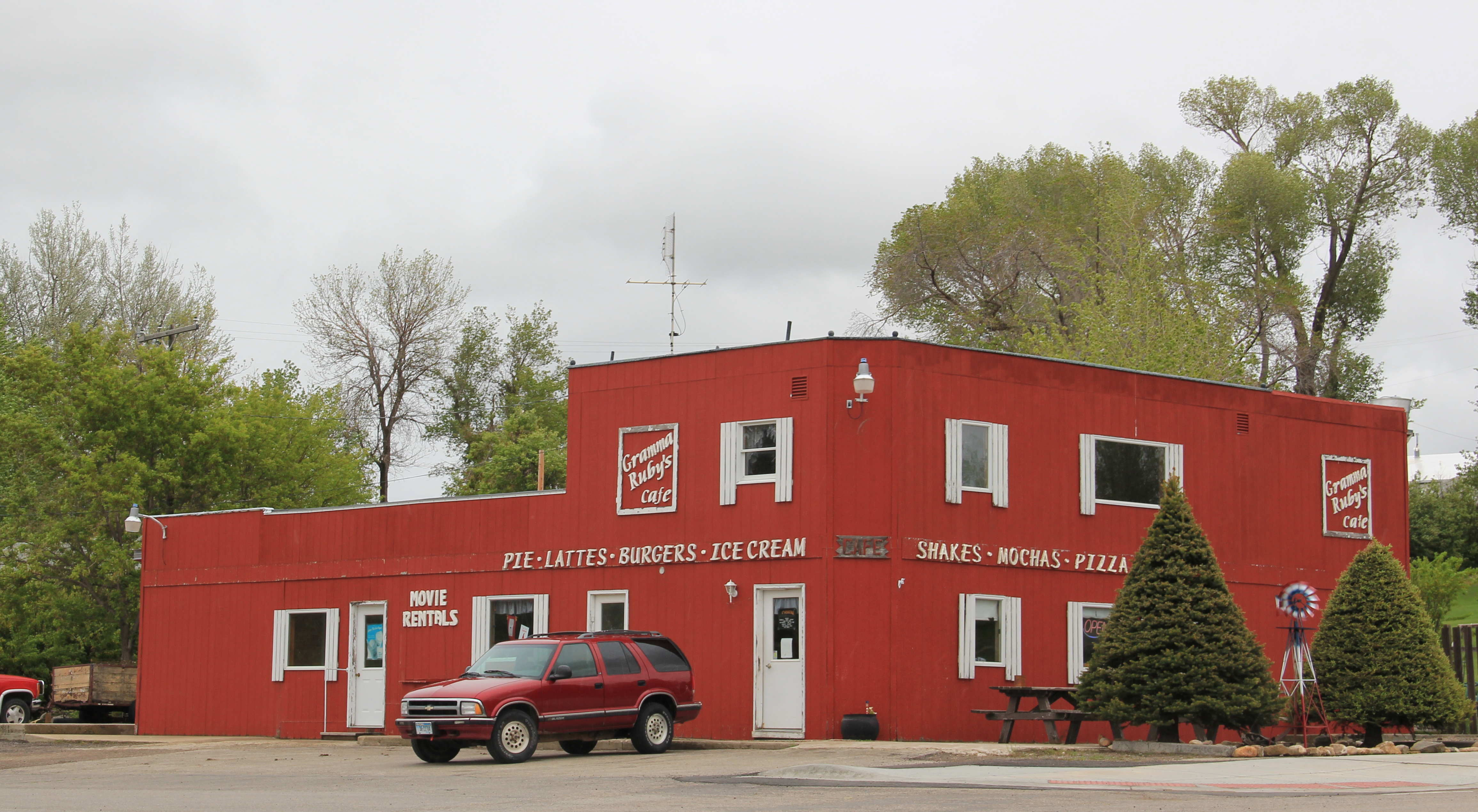
IMG_9799and just as importantly the properties are in use, be they a cafe, a store, or a library. A long two-lane road, Montana 239, stretches east from Hobson along the Judith River and headed into Little Belt Mountains.  The paved road ends at the earlier settlement of the

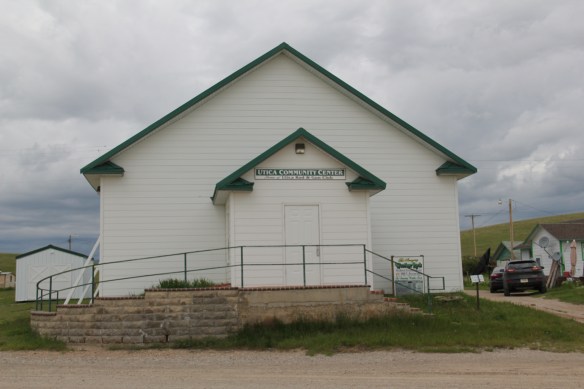
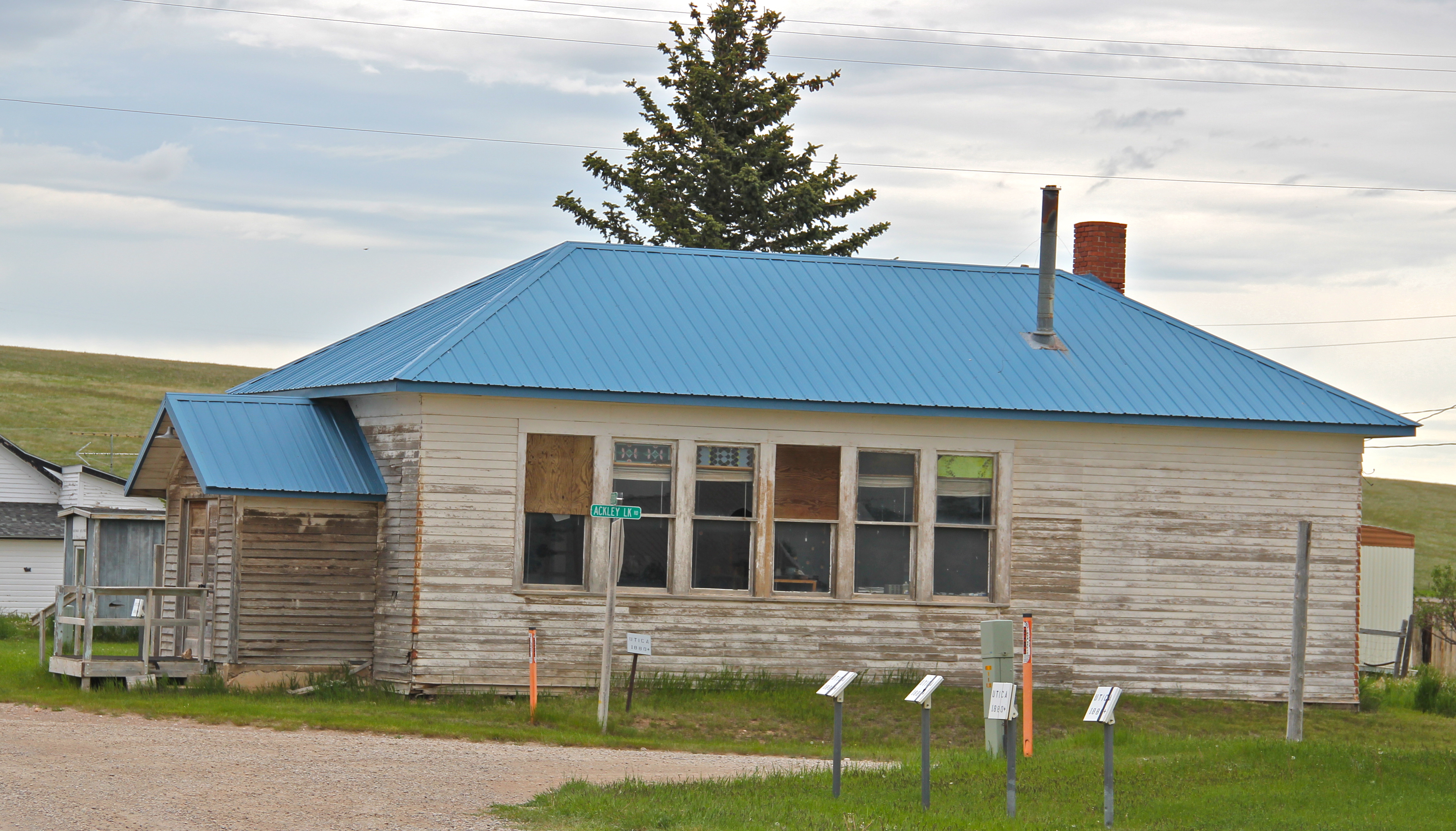
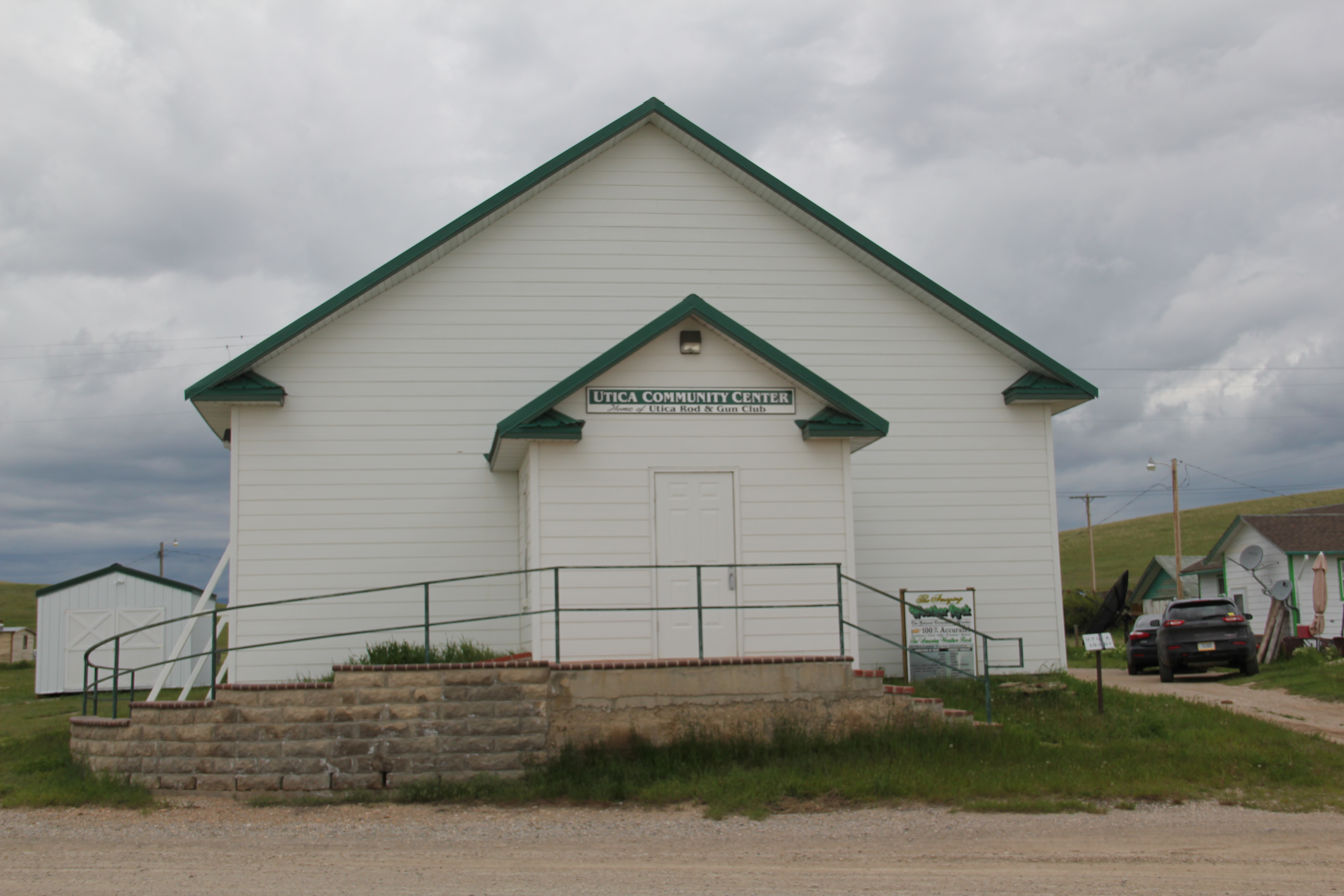
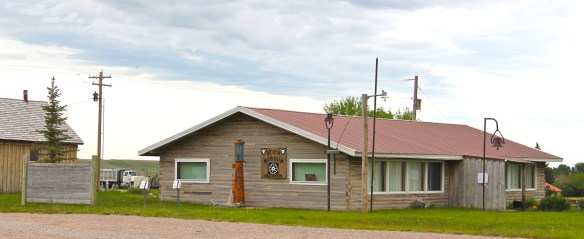
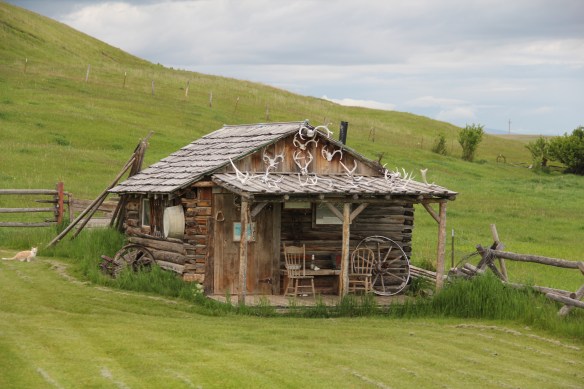
IMG_9419basin, the cowboy town of Utica, made famous by the paintings and writings of Charles M. Russell, the state’s most famous artist.  Utica has a strong sense of itself, although it is justa tiny place today.  A large part of that sense of the past is maintained and enhanced by the work of the Utica museum, the local historical society, and the town rod and gun club.  Utica has a level of public interpretation that was certainly not in place in 1984 and that today is rarely matched in a small Montana town.
IMG_9425

IMG_9429

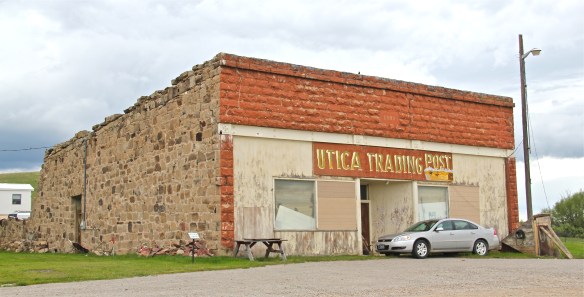
IMG_9422Utica also has done a commendable job of maintaining and preserving key community buildings, such as the early 20th century school and community hall, both properties associated with the homesteading boom of that time.  The town’s historic store is a little

IMG_9426

IMG_9427worse for the wear of 100 years of use, but it is still here, and the stone construction speaks strongly to the vernacular quality of the area’s built environment.
IMG_9428History and preservation are not the only reasons for Utica’s survival.  In true Montana fashion, most people who take the long drive here come for the food, drink, and good
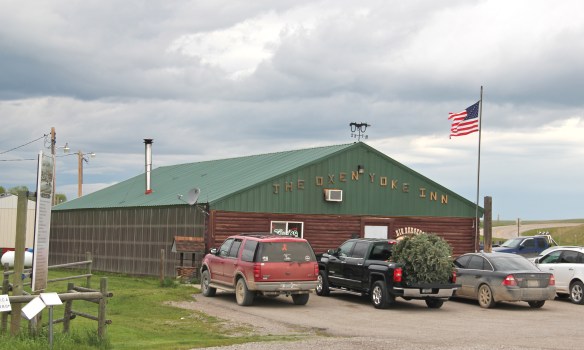
IMG_9430times at the Oxen Yoke Inn–why else would you locate the town’s primary interpretive sign next to the bar’s parking lot.

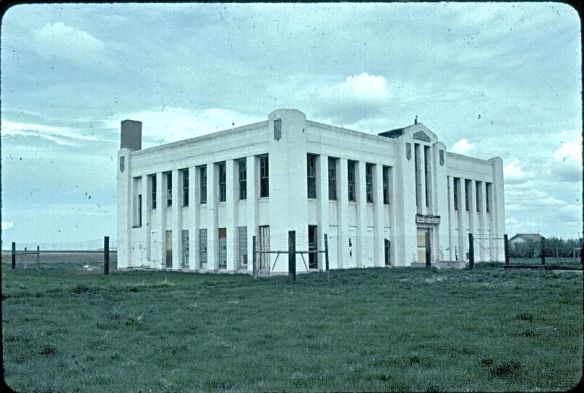
IMG_9431For most travelers the highway from Hobson at the eastern end of Judith Basin County to Stanford, the county seat, in the center of the county, is just open road.  But between those two towns three Great Northern hamlets still have significant remnants of their past.  Moccasin was such a favorite in 1984 that the resulting book from the survey work,  A Traveler’s Companion to Montana History, had two images from the place–the New Deal school, with its totally out of place but flashy Art Deco design, and the two-story Classical Revival styled bank building. Moccasin MT JB CoMoccasin, Judith Basin Co (p84 85-1)Those landmarks remain in Moccasin, but much worse for the wear.  The school is clearly among those threatened landmarks highlighted by the National Trust for Historic Preservation in 2012.  The bank is hanging on, barely.
IMG_9818

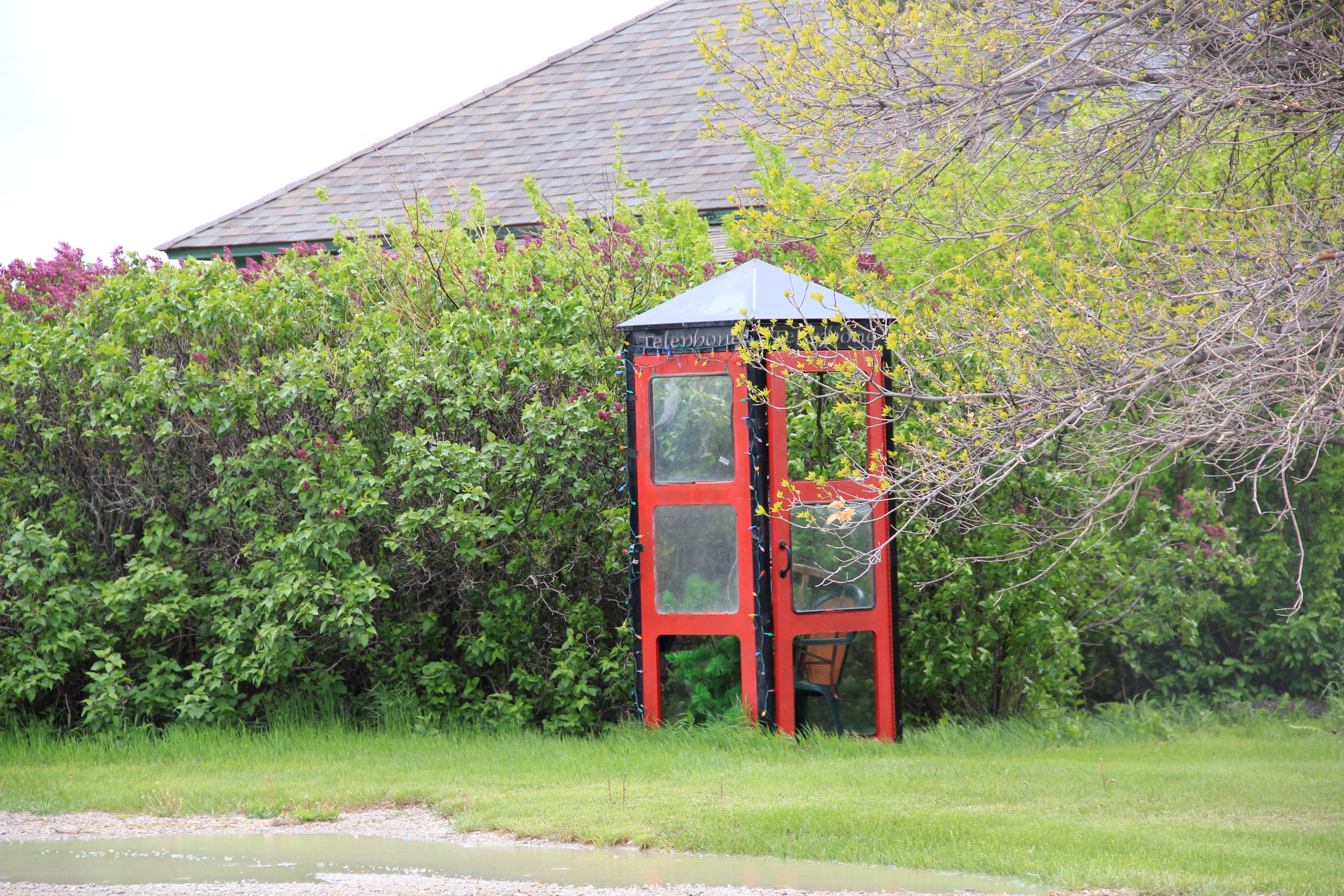
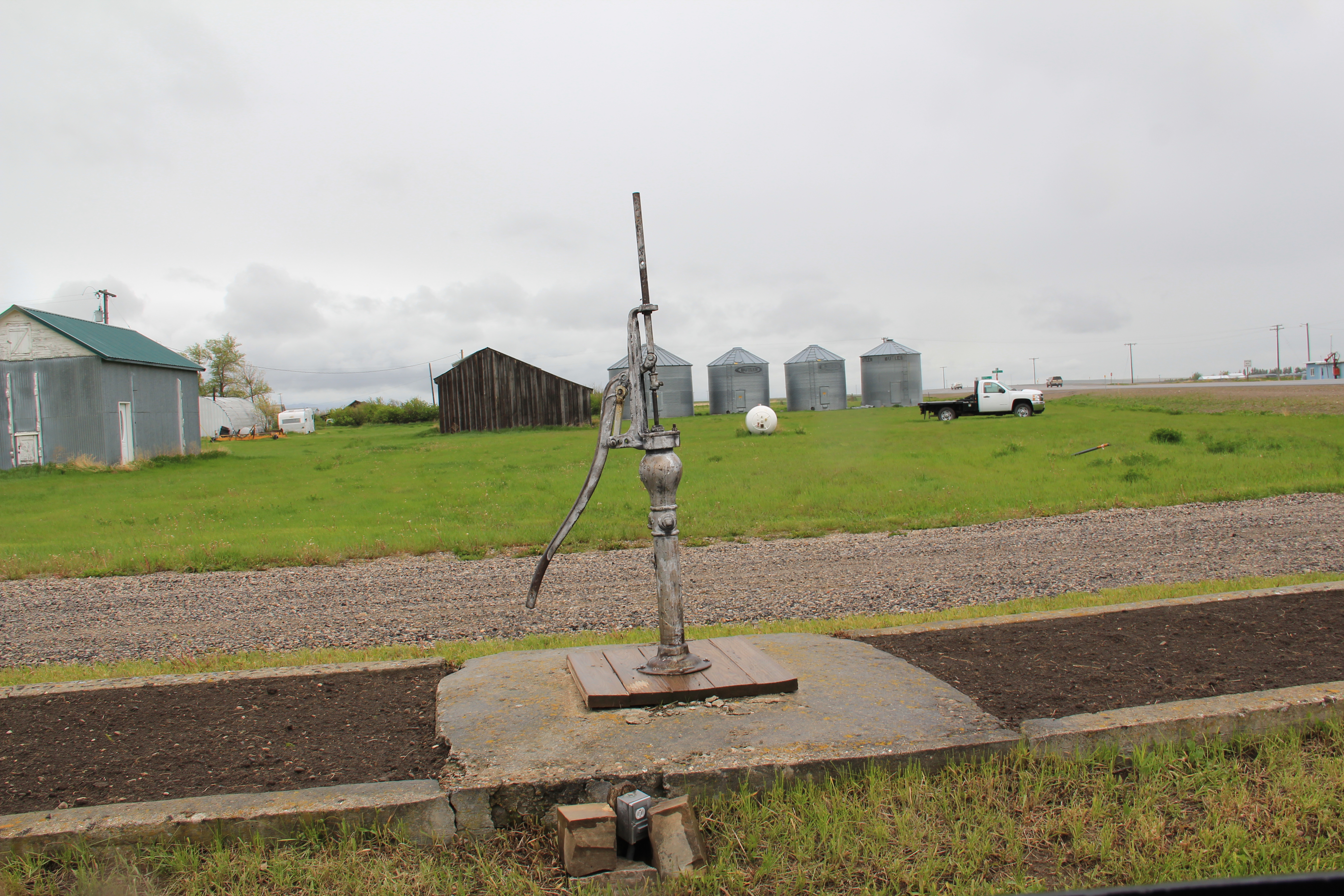
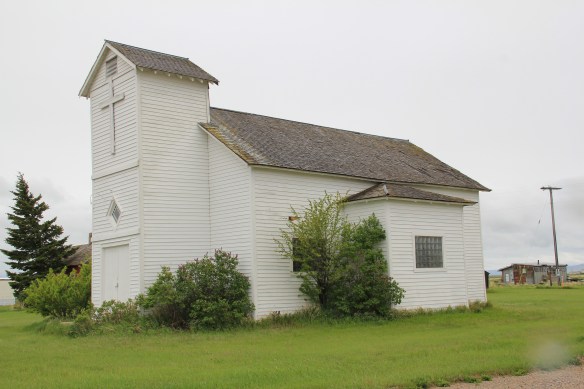
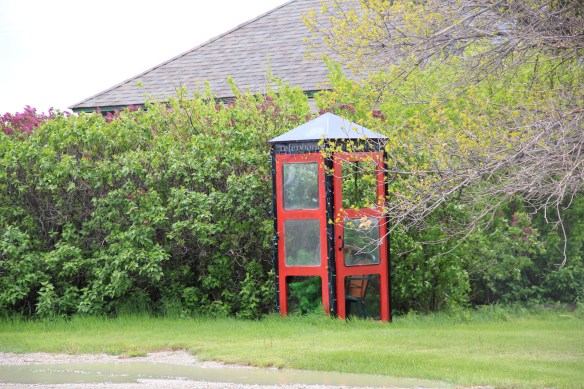
IMG_9821Moccasin still has other historic buildings worthy of note, such as a church, its town pump, even a telephone booth (a real disappearing part of the landscape from 1984 to 2014).
IMG_9812

IMG_9810

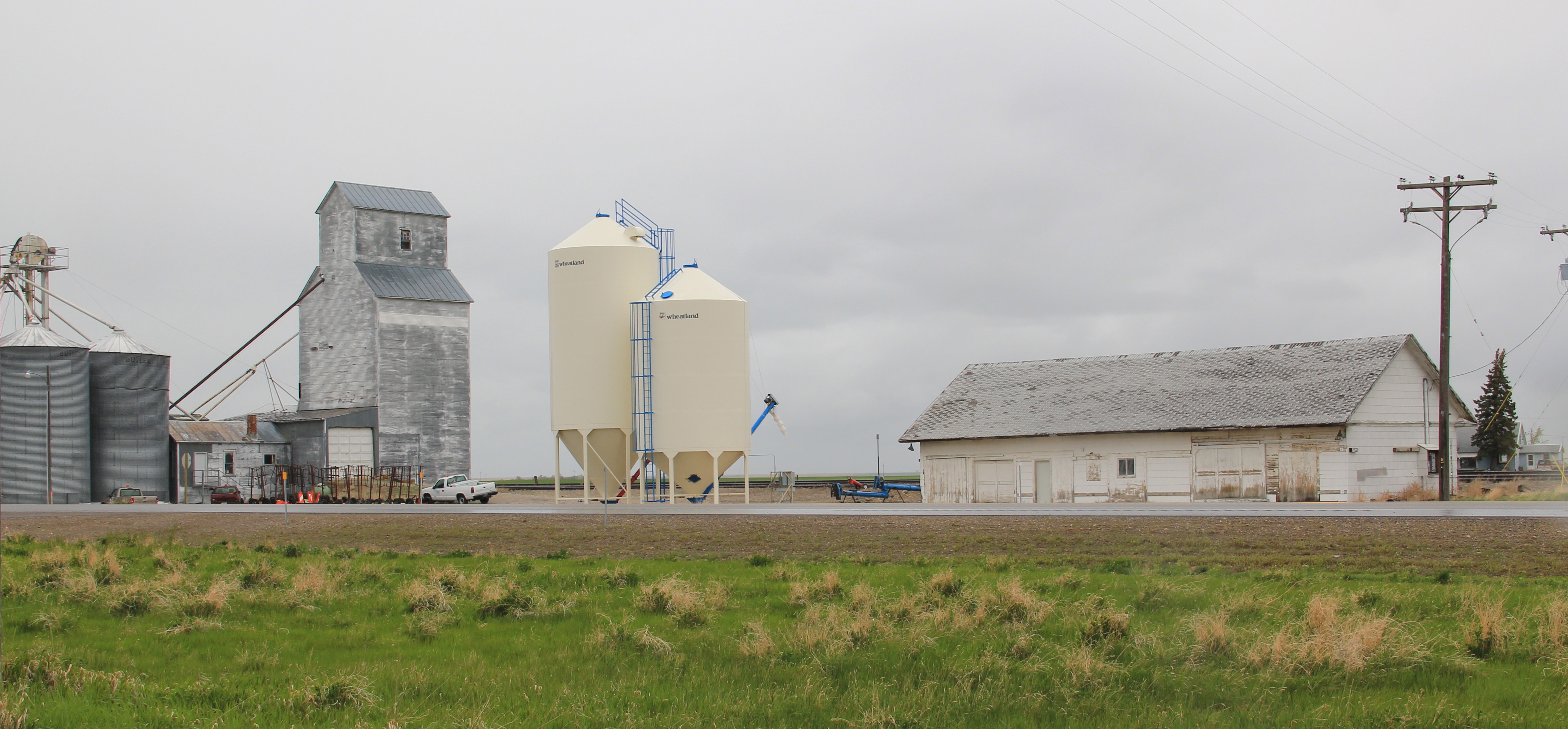
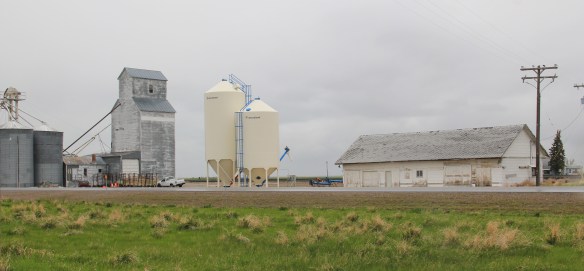
IMG_9822More importantly, its historic Great Northern combination depot, although battered, still is along the tracks nearby the elevators, reminding anyone looking closely enough of the railroad roots of the place.
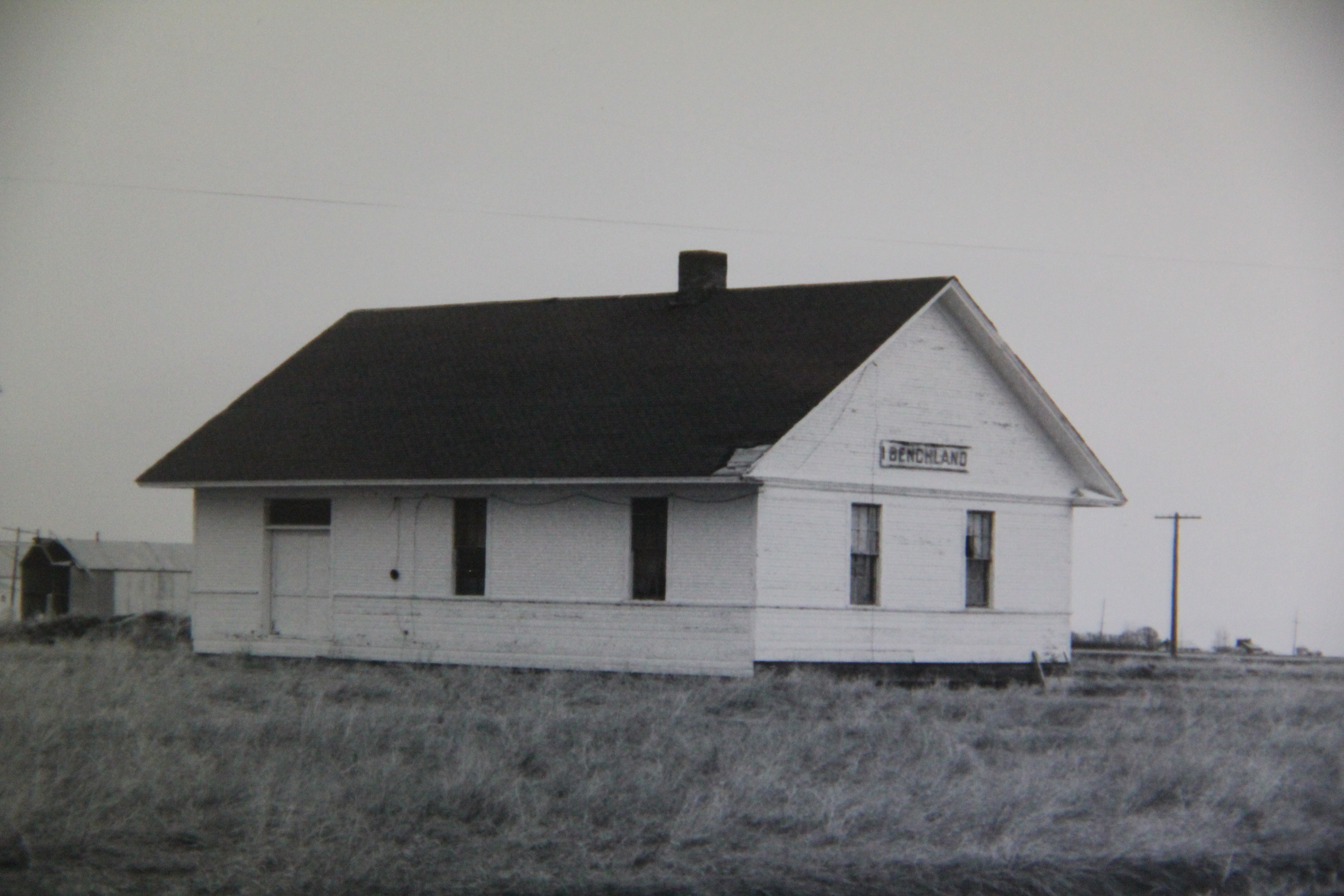
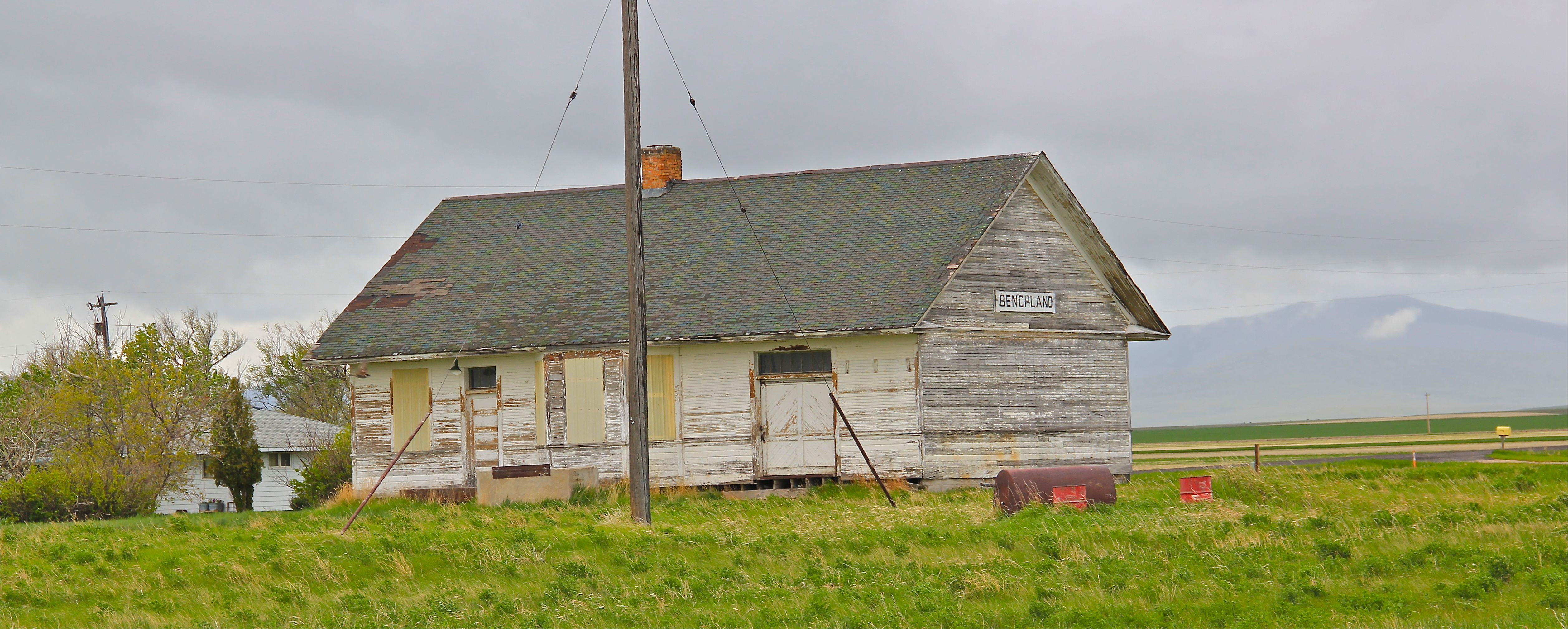
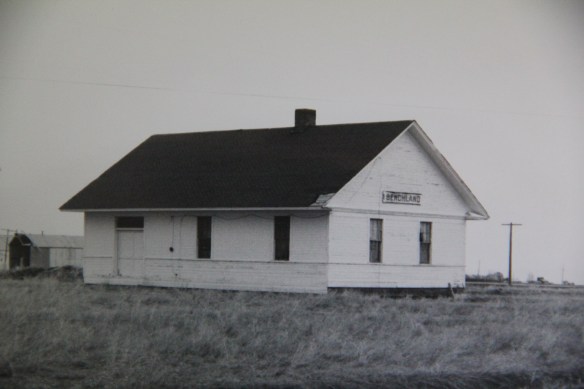
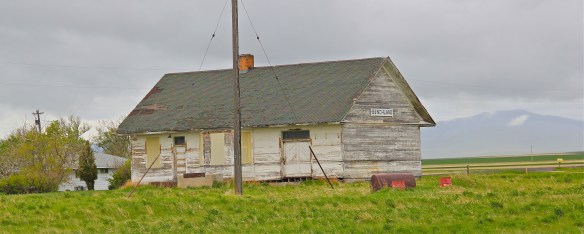
IMG_9809The next two towns of Benchland and Windham also retain their historic depots.  The Benchland station has deteriorated in the last generation as documented in a comparison of a 1984 image with one from 2014.
IMG_4054

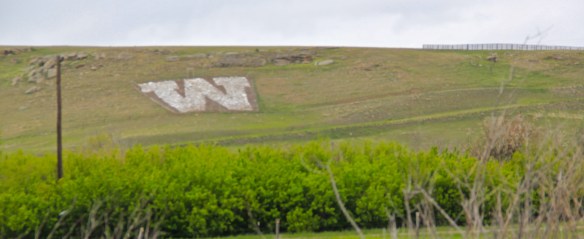
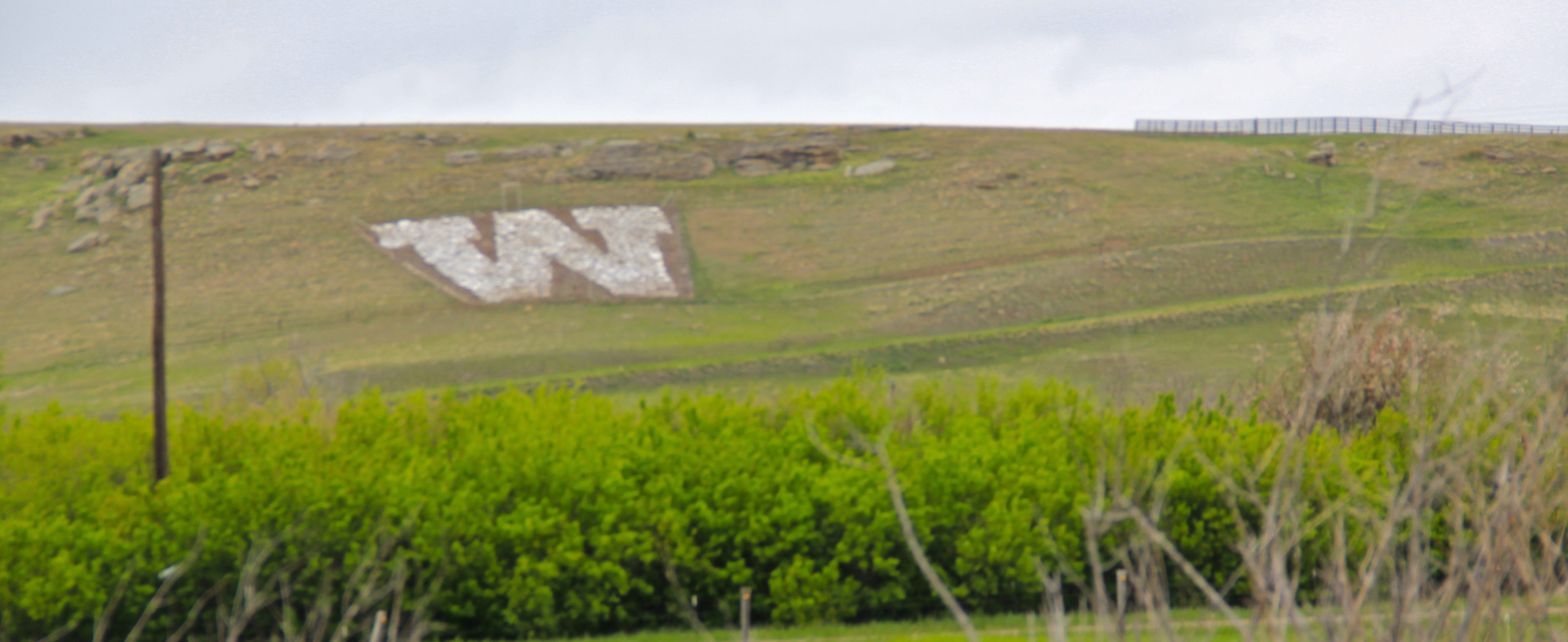
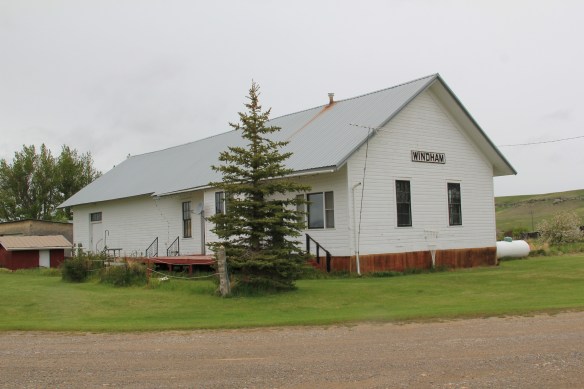
IMG_9834The Windham depot has been moved slightly off the tracks–but still within a stone’s throw of the rails.  The station, along with the historic commercial strip of the T-town plan, and historic elevators, still give meaning to the “W” of the town sign.
IMG_9840

IMG_9838

IMG_9841

IMG_9839The curve of the tracks headed to Stanford is a good place to rest with this post–more on the plains country towns of the Judith Basin in the next post.

The Warrior Trail of U.S. Highway 212

IMG_5457U.S. Highway 212, as it heads west out of the high prairies of southeast Montana, becomes known as the Warriors Trail, an appropriate description because the road provides various access points to some of the most important battlefields associated with the Great Sioux War of 1876-1877.  At Busby, immediately south of the highway, stands a monument and grave of one of the most prominent Northern Cheyenne warriors, Two Moons (1847-1917),

IMG_5472who fought in all three major battles (Rosebud, Little Big Horn, and Wolf Mountains) of the campaign in southeast Montana .  After surrendering at Fort Keogh in Miles City in April 1877, Two Moons joined the U.S. Army as a scout.  He later became a recognized reservation leader and made Busby his home; his monument along the highway became a landmark.  Since my last visit to the grave, a new security fence had been installed around the monument and nearby too were numerous other Cheyenne warriors, followers of Dull

Rosebud Co Busby Too Moons Grave 1 - Version 3Knife, who died in 1879 trying to escape confinement at Fort Robinson, Nebraska.  Their remains were kept in a museum until they were interred here in 1993, a result of the Native American Graves Protection and Repatriation Act of 1990.

Rosebud Battlefield 015South of Busby is the Rosebud Battlefield State Park, a place barely on anyone’s radar (except for the Northern Cheyenne) when I carried out the 1984 fieldwork.  A local rancher had preserved the battlefield and donated some of its land to the state, and a basic park,

Rosebud Battlefield 021

Rosebud Battlefield 016

Interpretive markers in 2007 at Rosebud Battlefield.

with basic public interpretation, had been installed.  In the last ten years, however, due to threats from energy development in the area and the leadership of local ranchers, concerned Native Americans, tribal preservation officers, non-profit groups such as the Montana Preservation Alliance, land conservation groups, and the American Battlefield

Rosebud Battlefield 028Protection Program, and state parks, this important battlefield has been enhanced with new interpretation and a new commitment to protect the battlefield’s view sheds.  The battlefield commemorates the June 17, 1876 fight between U.S. Gen. George Crook and his Crow and Shoshoni Indian allies who were advancing up Rosebud Creek as part of a

Rosebud Battlefield 026pincher movement to find and defeat a combined Lakota-Cheyenne force led by Crazy Horse.  The Lakota and Cheyenne carried the day and would have surprised Crook’s troops if not for their Native American allies.  Crook claimed victory but returned to his base near Sheridan, Wyoming Territory, for weeks.  He was nowhere near when the Lakota and Cheyenne crushed the 7th cavalry of George A. Custer just days later.  The Battle of Rosebud Creek is the army’s name for the fight; the Cheyenne call it the Battle Where the Girl Saved Her Brother.  The last battle of the Great Sioux War in Montana took place in early 1877 at Wolf Mountains, in the Tongue River Valley, south of the village of Birney.  Like Rosebud, the battlefield is designated a National Historic Landmark but is largely on a private ranch.

IMG_5471

The Tongue River near Ashland, Montana.

Carter County’s Country Schools on U.S. Highway 212

IMG_5418U.S. Highway 212 enters Montana from South Dakota in Carter County at the state’s southeast corner.  U.S. 212 in this part of the state is a flat, fast ride.  You typically meet little other traffic except for trucks using the highway as a cut-off from Billings to the Black

IMG_5417

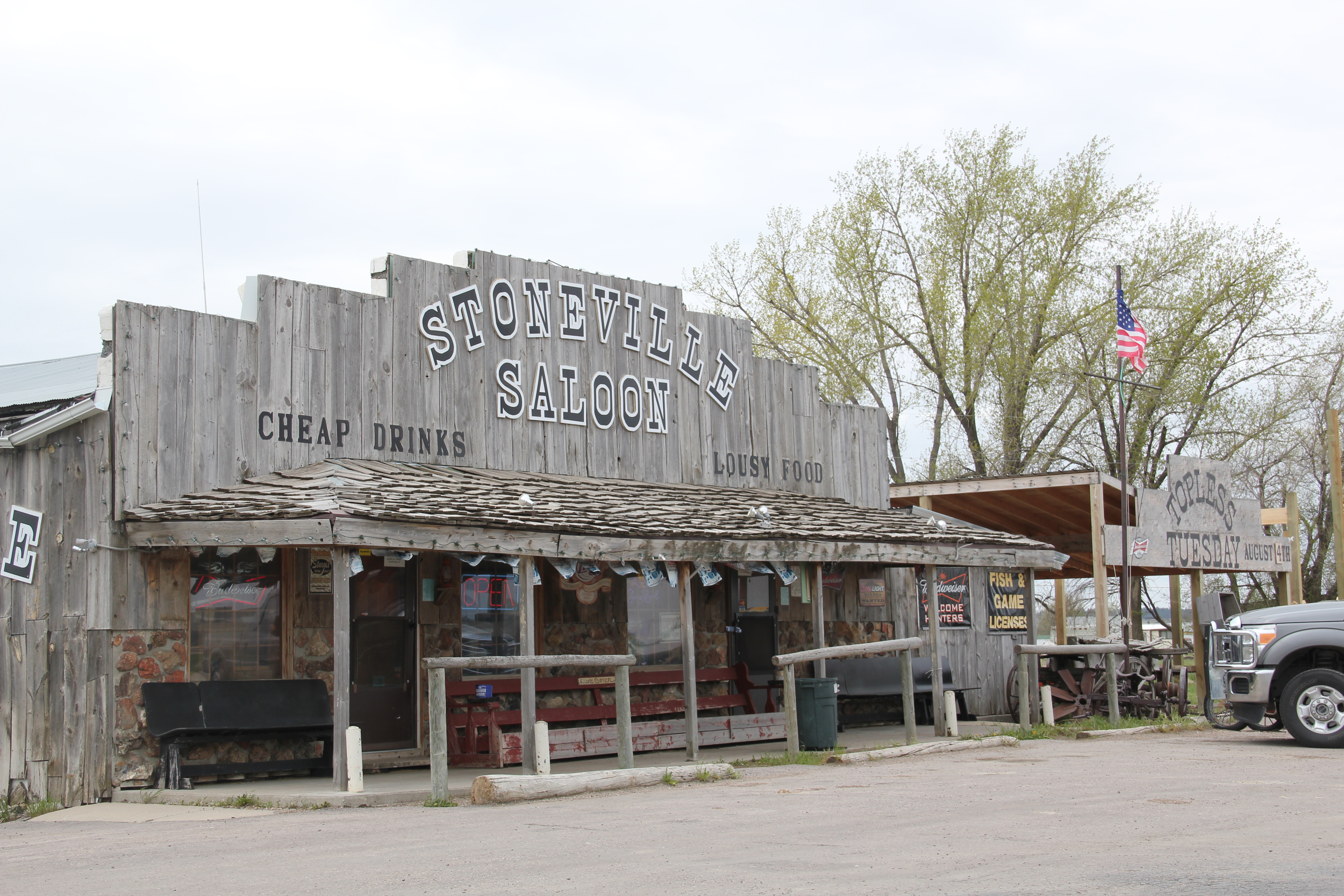
Hills.  Traveler accounts from today typically say nothing about this section of the state, save, perhaps, for the Stoneville Saloon in Alzada, really the only serious watering hole for miles around, with its inviting false front–“cheap drinks”–capturing your attention.

IMG_5420But if you slow down a bit, you can find three country schools, with all three being good examples of the types of Montana rural schools that the National Trust for Historic Preservation called attention to in 2012.

IMG_5427Alzada’s school is the largest, with its bracketed hipped roof recalling the schoolhouse style so common in the United States from 1910 to 1940.  It is located a few hundred yards off of the highway, a place that is still the heart of the community.

IMG_5433The Hammond school is a later 20th century version of schoolhouse design–it looks much like a Ranch style house of the 1960s and 1970s.  It faces the highway–you can’t miss it.

IMG_5437Nor can you miss the Boyles school, now closed, like pretty much everything else in this hamlet at the western end of Carter County.  This school is a classic example of the one-room schools of the homesteading era.  Like the other two schools, it faces south, with its band of windows facing east, better to capture as much sunlight as possible since it was built in the era before electricity served this section of Montana.

Three small places–three small schools, important parts of Carter County history that you can still explore today.,

Baker: The Milwaukee Road’s Eastern Gateway to Montana

Fallon Co Baker Milwaukee Road corridor  - Version 2The Milwaukee Road, the last transcontinental railroad to crisscross Montana, enters eastern Montana at the town of Baker, established in 1908, which served as an important rail center for the company with the full name of the Chicago, Milwaukee, St. Paul and Pacific.  When I visited Baker in 1984 i noted that many of its buildings dated from the homesteading era although there was a clear second layer of development died to the region’s oil boom of the late 1960s and 1970s.  In A Traveler’s Companion to Montana History (1986) I noted “Baker’s railroad corridor is still largely intact, and the spatial arrangement created by its Milwaukee depot and the neighboring Baker Hotel, an imposing brick building dating to 1916, symbolizes the railroad’s importance to the town.” Both buildings are gone now unfortunately but an indication of the prominence of the corridor is still conveyed by the brick building below which has served the community in many commercial and professional ways over the decades.

IMG_0390

Insurance was just one of the services provided by this neoclassical styled building.

Today the hotel, the tracks, and the huge grain elevators along the railroad corridor remain, and the elevators still visually dominate the surrounding mostly one-or two-story built environment.  But the depot is gone, leaving a hole in the town’s historic fabric.

IMG_0402Buildings and railroad tracks were not the only legacy of the Milwaukee in Baker–there was the large lake the company developed to provide water for its trains in a largely parched region.  The Baker Lake, 30 years ago, was undergoing another improvement project, part of the town’s generation-long effort to turn a forgotten corporate remnant into a community asset.  The company built the lake c. 1908 but soon found that the water was too salty–it corroded the equipment.  And so the lake sat, until the 1950s when the Baker’s Woman Club began an effort to convince the railroad to transfer the lake to local

IMG_0462government.  County leaders became convinced that yes, Baker needed a community recreation asset, and eventually the land was transferred into the public use, and Baker Lake by the end of the century was an unique asset in southeastern Montana, and a center for recreation and special events.

Fallon Co Baker library  - Version 2The lake is not the only contribution of the Woman’s Club.  it also was central in creating, staffing, and maintaining a public library, and the contemporary-designed library from 1970 remains but also has been enlarged since 1984.

IMG_0407

The Fallon County-City of Baker Administration Building, 1974-1975

Indeed, I noted the recent construction of the 1970s in Baker, like the new county courthouse/city administration building where I held a public meeting, but I didn’t really process the layer of modernism in the town, a reflection of its growth from 1950 to 1970, when the population grew from 1,772 to 2,584.  The new joint administration building, designed by the Billings firm of Johnson Graham Associates, remains an impressive piece of contemporary design.  Architects Willard Johnson and Orval Graham had established the firm in 1967.  The Baker project established a connection between the firm and county that continued into the present:  the new grandstand at the Fallon County Fairgrounds is also a JGA design, from 2011.

IMG_0417

IMG_0419

The tradition of county fairs dates to 1909 and today the Fallon County Fair is one of the region’s largest.
IMG_0465Historic schools are other important contributions to the town’s built environment.  Above is the Washington School, built in 1927.  It is a brick Classical Revival statement of the town’s insistence for permanence in the face of the homesteading bust. When I last visited in 2013, the school was undergoing rehabilitation to become an office building. On the other side of town stood a more modern design, the Longfellow School, built in 1968 during the height of the population boom in Baker.  Its low, rectangular mass was modern school design at its best, although since my 1984 visit the casement windows have been covered so central heat and air could be installed.
IMG_0410The second building in Baker listed in the National Register was the only one designated in 1984, and it was the pride and joy of the community:  the old county courthouse converted into the O’Fallon Museum.  Here was not only the historical exhibits typical of the area but also installations about the region’s prehistoric past and moved buildings to host special

IMG_0414collections but also to interpret the homesteading past.  I will always remember my public meeting in Baker, for the obvious pride residents had in the museum but also for the comment that they could not wait to show me “our really old stuff,” such as a 1916 homestead.  Coming from my training at Colonial Williamsburg, considering places from 1916 as really old was a notion that took some getting used to, but of course in the context of settlement and development of southeastern Montana, it made perfect sense.

IMG_0463Today I would even join into the call for the “really old stuff”–like the Lake Theatre of 1918.  It certainly deserves a place in the National Register as so few classic movie theaters remain in this part of the state.  The same could be said for this classic c. 1960 drive-in,

IMG_0404which is part of the town’s roadside architecture traditions along U.S. Highway 12, the federal road that parallels so much of the Milwaukee Road’s route through Montana.  For

IMG_0472good measure I would even dare say that it’s time to assess the significance of the oil wells and facilities along Montana Highway 7 as you enter or leave Baker.  The discovery of oil and its development in the 1960s and 1970s certainly was the major economic story of the town and county in the second half of the 20th century.

IMG_0468In 2015 Baker has retreated from that c. 1960-1970 boom.  Population peaked at 2584 in 1970.  It remained just a hundred or so under that in 1980, but changes in demand, technology and the bankruptcy of the Milwaukee meant that Baker in the last 30 years has lost residents, in 2010 down to 1741, about the same number as in 1950.  Yet I like that the lake had been restored, and it remained a vibrant part of the town, that new banks and new renovations were part of the town, and indeed, that an old car dealership and garage was now the very good Three Garages Bar.  Historic preservation can play a larger role in Baker’s future just as it did during Baker’s boom in the past.

IMG_0397

Shifting Meanings in the Big Horn Landscape

IMG_5494When I first arrived in Montana in 1981 the first place that I stopped at was Little Bighorn Battlefield, then known as Custer Battlefield National Monument.  As a southerner new to the west, here was a place that “everyone” knew about, an iconic western battlefield where Gen. George A. Custer and the 7th Calvary suffered a devastating defeat from a combined Sioux-Cheyenne force.  Everything then was focused on “Last Stand Hill” where

Custer Battlefield, Crow Agency (43-30)

Little Big Horn Battlefield, 1984

Custer and his troops had stood for almost 100 years.  As a veteran visitor to southern Civil War battlefields, it struck me how what you saw and experienced was all about the federal side–similar to what you found back then at southern Civil War memorial parks, where valiant Confederates fought what seemed to be a foe with no name outside of enemy.

IMG_5484

This quotation from Theodore O’Hara’s “Bivouac of the Dead” is found in many Civil War era national cemeteries.

IMG_1364Over the decades I have returned to the battlefield numerous times, even once (by accident I hadn’t even thought that the day would be an anniversary) when re-enactors posed by the famous obelisk monument, creating a very odd juxtaposition between past and present. (I don’t think Custer and his men were smiling on that hill in 1876).

IMG_1383By this time, meaning at the battlefield had shifted to a larger, more inclusive narrative, beginning with the actual name of the park, now Little Bighorn Battlefield.  Public interpretation, fueled not only by the changing times but an intensive archaeological investigation of the park in the late 1980s, suddenly located Native Americans within the battle landscape.  There was a growing feeling that yes this was a battle between enemies, but enemies with names, motivations, and their own sense of what it all meant.

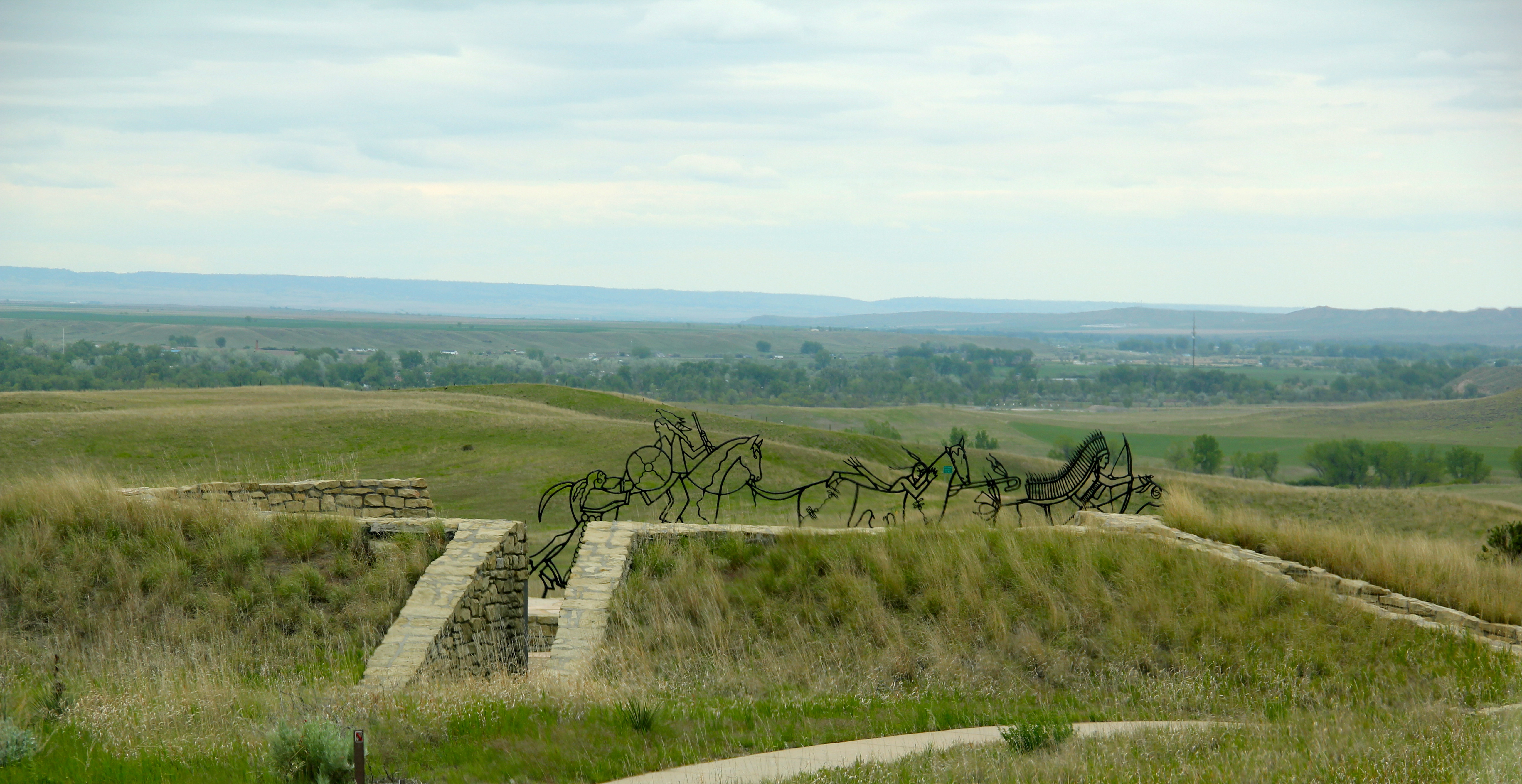
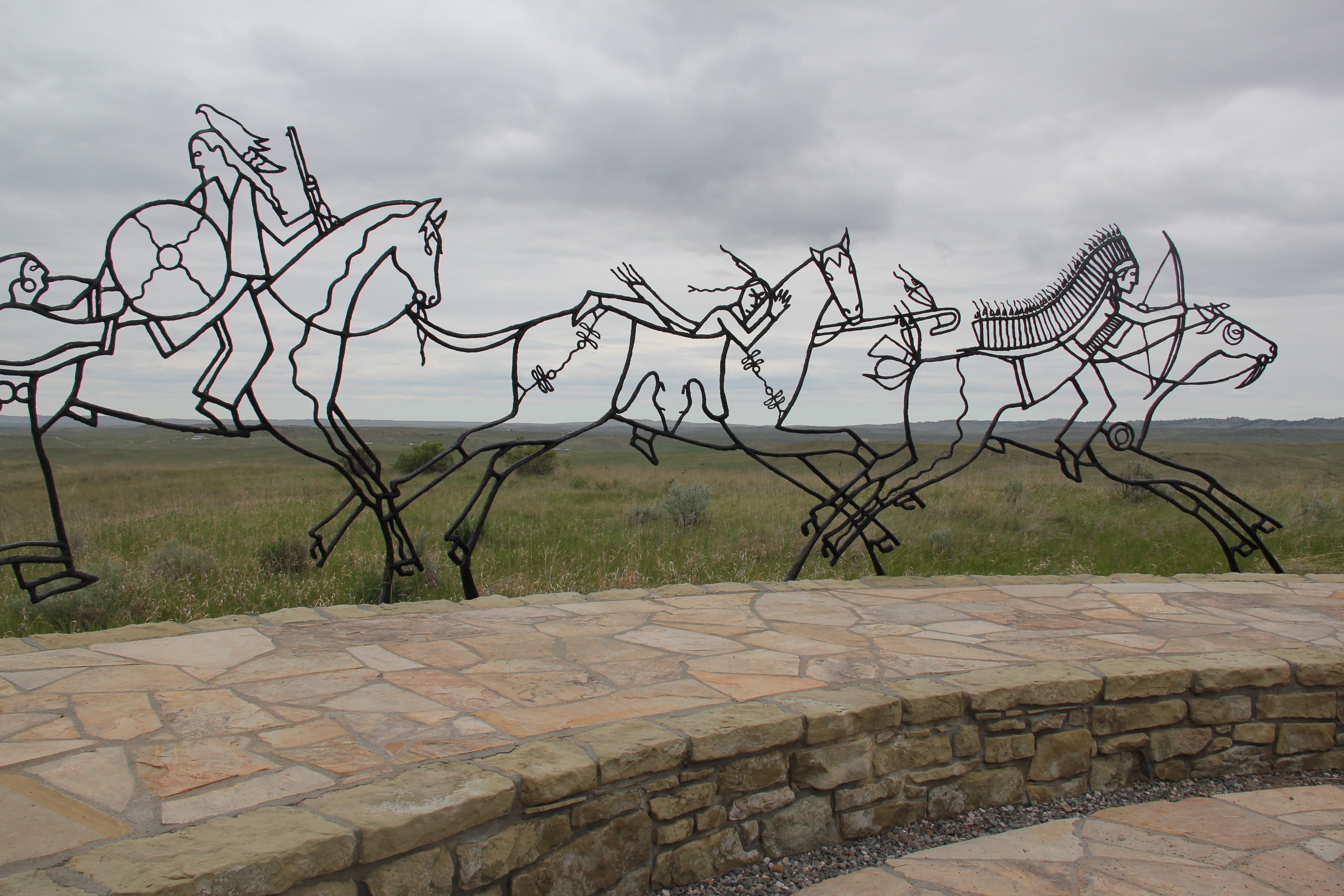
IMG_1377Last Chance Hill was still a focal point in 2015 but now its narrative of unity and sacrifice was countered by a new monument, built to consider the story of Little Bighorn from the perspective of the Native American warriors who fought here.

IMG_5520The monument compels reflection—the metal profiles of Native American warriors blend into the actual battlefield landscape as if ghosts of warriors past were again upon the field.  Text and images add additional layers of interpretation and meaning to the battlefield, from a decided Native American perspective.

IMG_5514Then new tombstones, in a brownish stone, distinguished fallen Cheyenne warriors from the marble tombstones for soldiers from the 7th Calvary.  The place has been ennobled, transformed as a both a park and a place of reflection on what the Indian Wars of the 1870s have meant to the nation and to the peoples who fought in them.

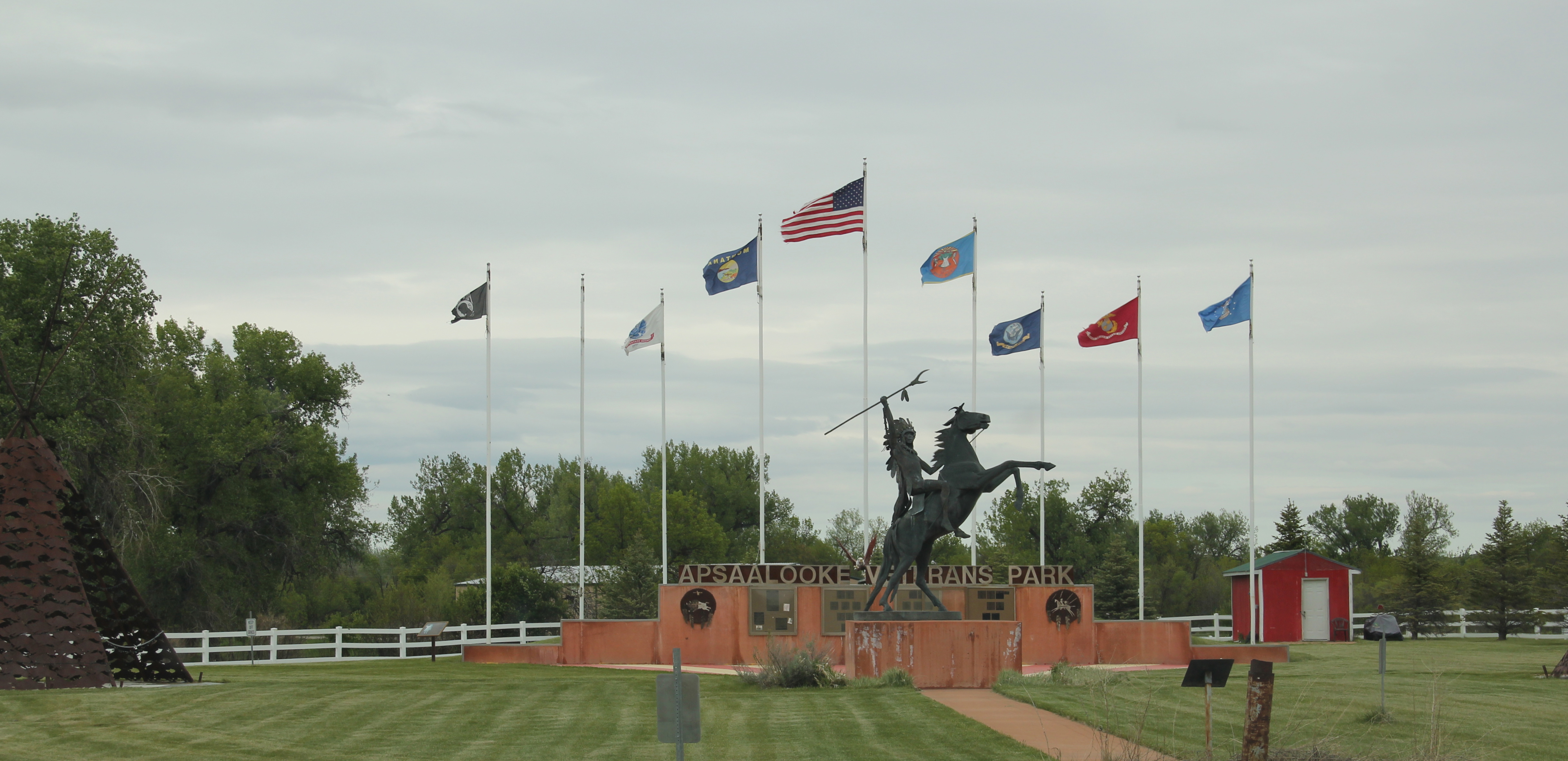
IMG_5504Nearby within Crow Agency is a further addition to the public interpretation of the region’s military history: the exemplary Apsaalooke Veterans Park, an installation that celebrates veterans past and present.  IMG_5530At the I-90 exit for U.S. 212 at Crow Agency, a new landscape has emerged through spaces such as the park, the new Apsaalooke casino, and especially the modernist styled medical center, located near the fairgrounds for the annual Crow fair.

IMG_5527

The sparking bright lights of casino sign stand in stark contrast to the old mission church, now The Father’s House place of worship.

IMG_5524In the middle of the Crow Indian Reservation is another landscape of change, one not so visited by tourists.  St. Xavier was an important Catholic mission among the Crow Indians, established along the Big Horn River in 1887-1888 by Father Peter Prando.  The understated Gothic-styled church was a building documented in my A Traveler’s Companion to Montana History book in 1986 and the survey included both the church and small gable-front residence built for the priests.

St. Xavier Mission Chapel, Crow Reservation (45-2)    

Those same buildings remain today, as does the nearby Pretty Eagle Catholic Academy, representing community continuity and the Catholic commitment to the reservation.  But

IMG_5963

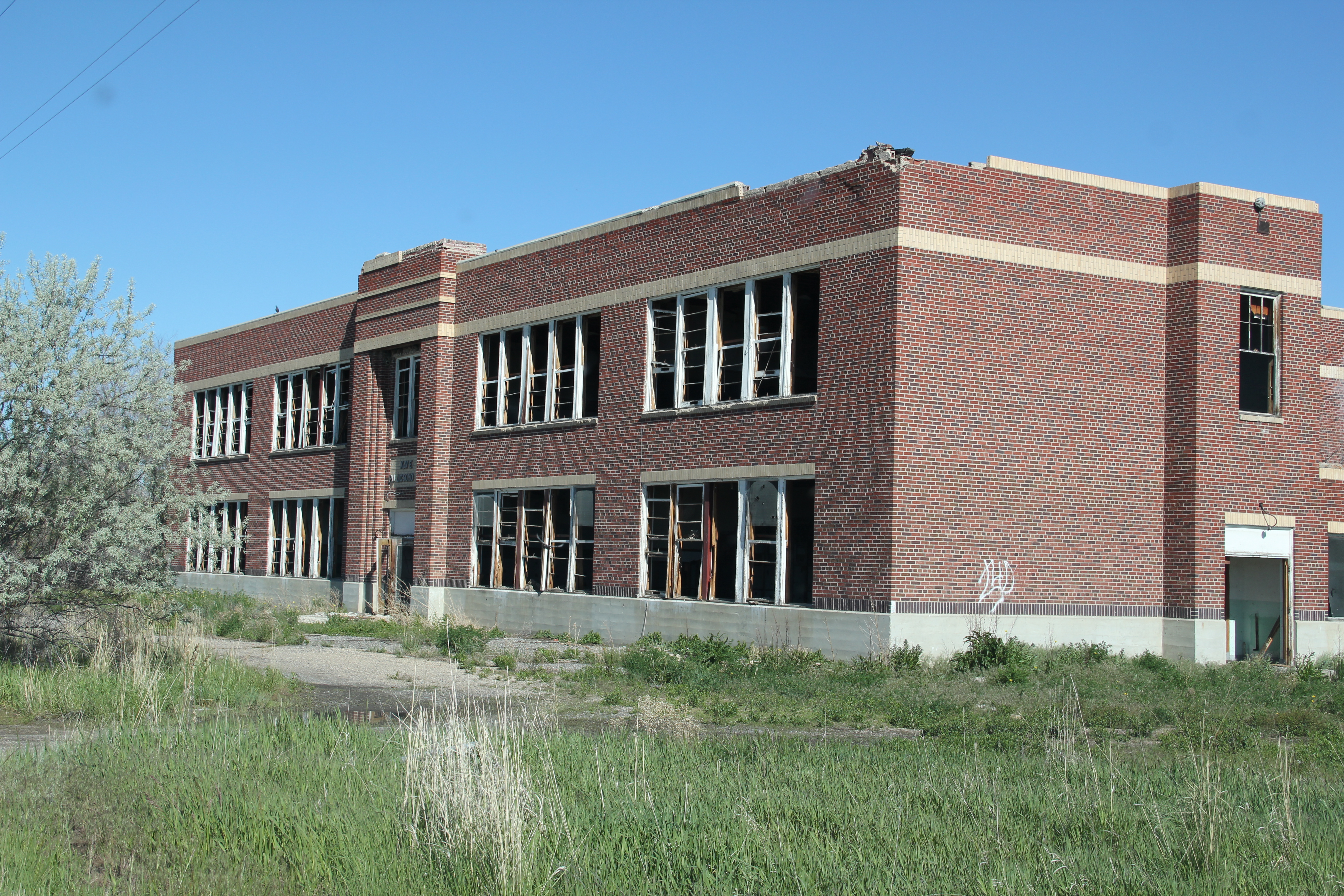
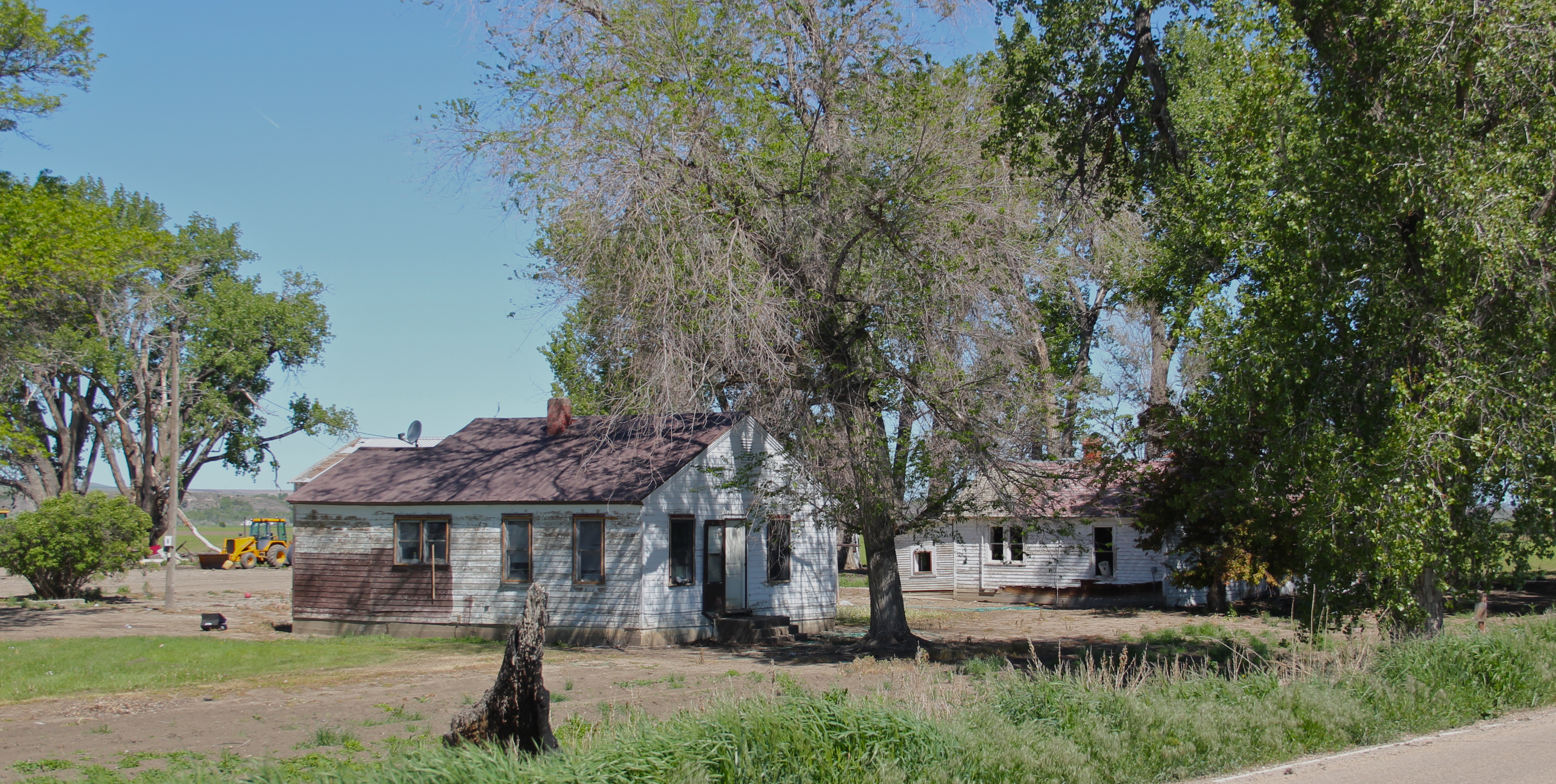
IMG_5961the mid-20th century St. Xavier town site has not weathered the decades so well.  Businesses have largely disappeared and the Art Deco-styled St. Xavier public school, a Public Works Administration project from the New Deal designed by Billings architect J.G. Link in 1938 is now abandoned and decaying.

IMG_6005

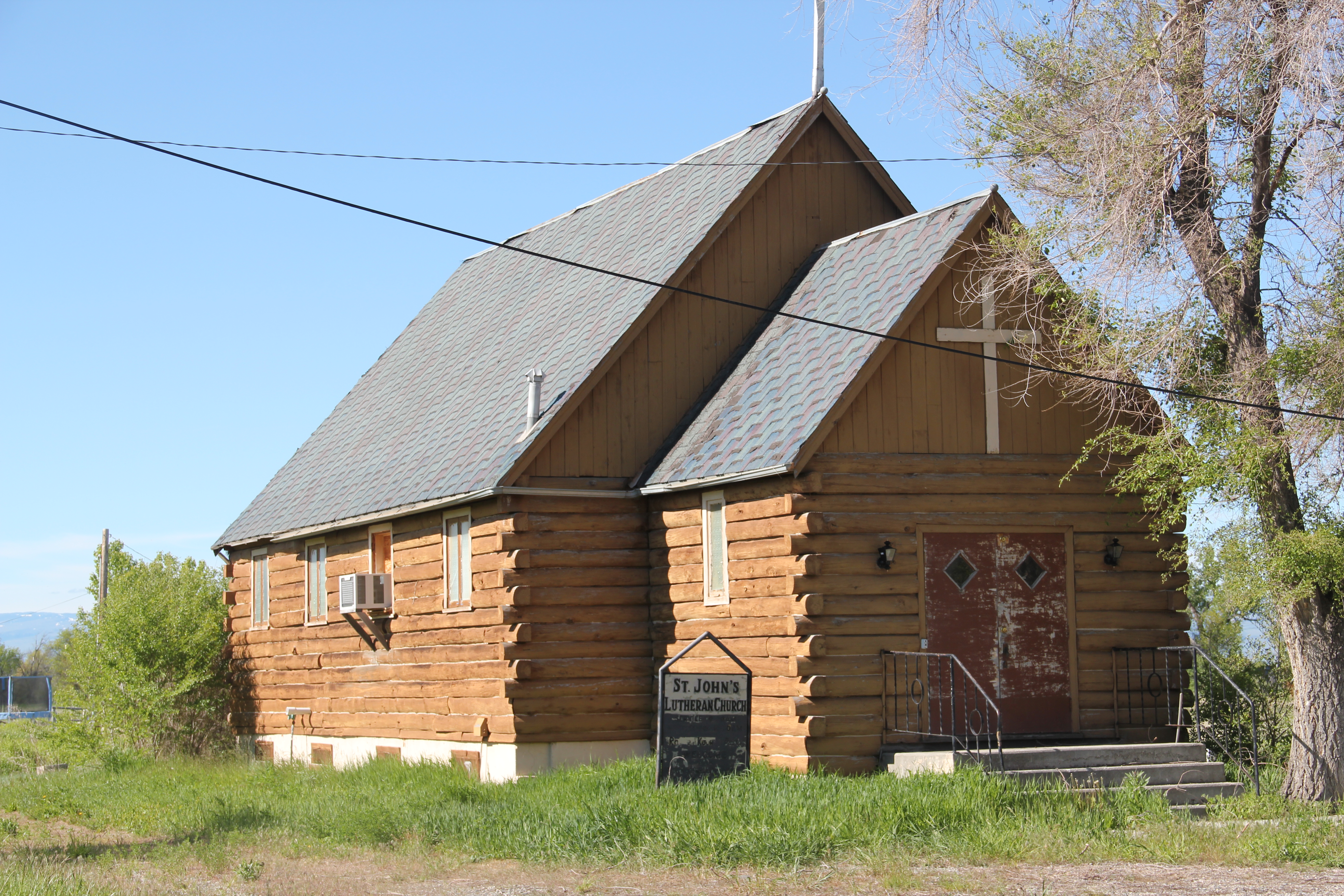
IMG_5953Across the road from the school is St. John’s Lutheran Church, a weather- and time-worn, a 20th century log building speaking more to the past than the present. And running

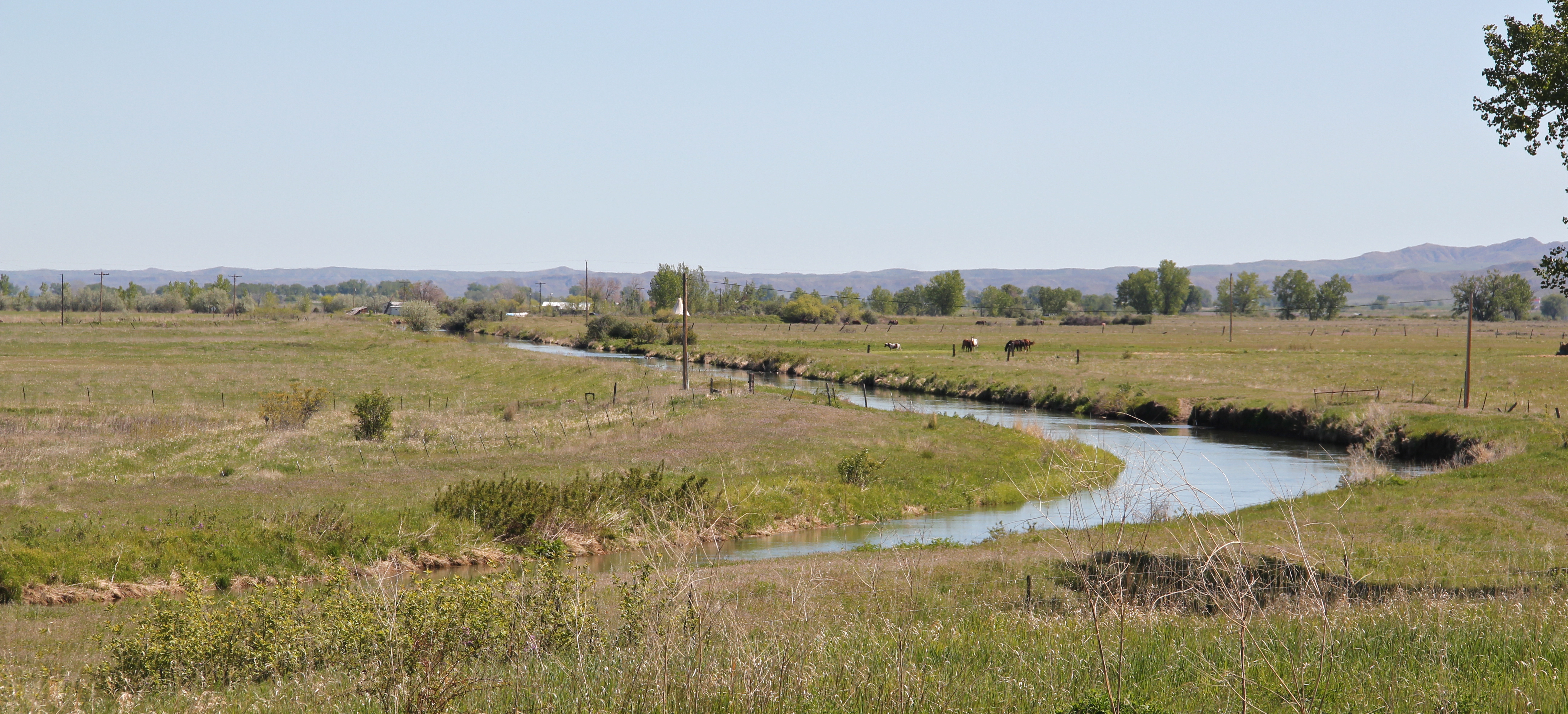
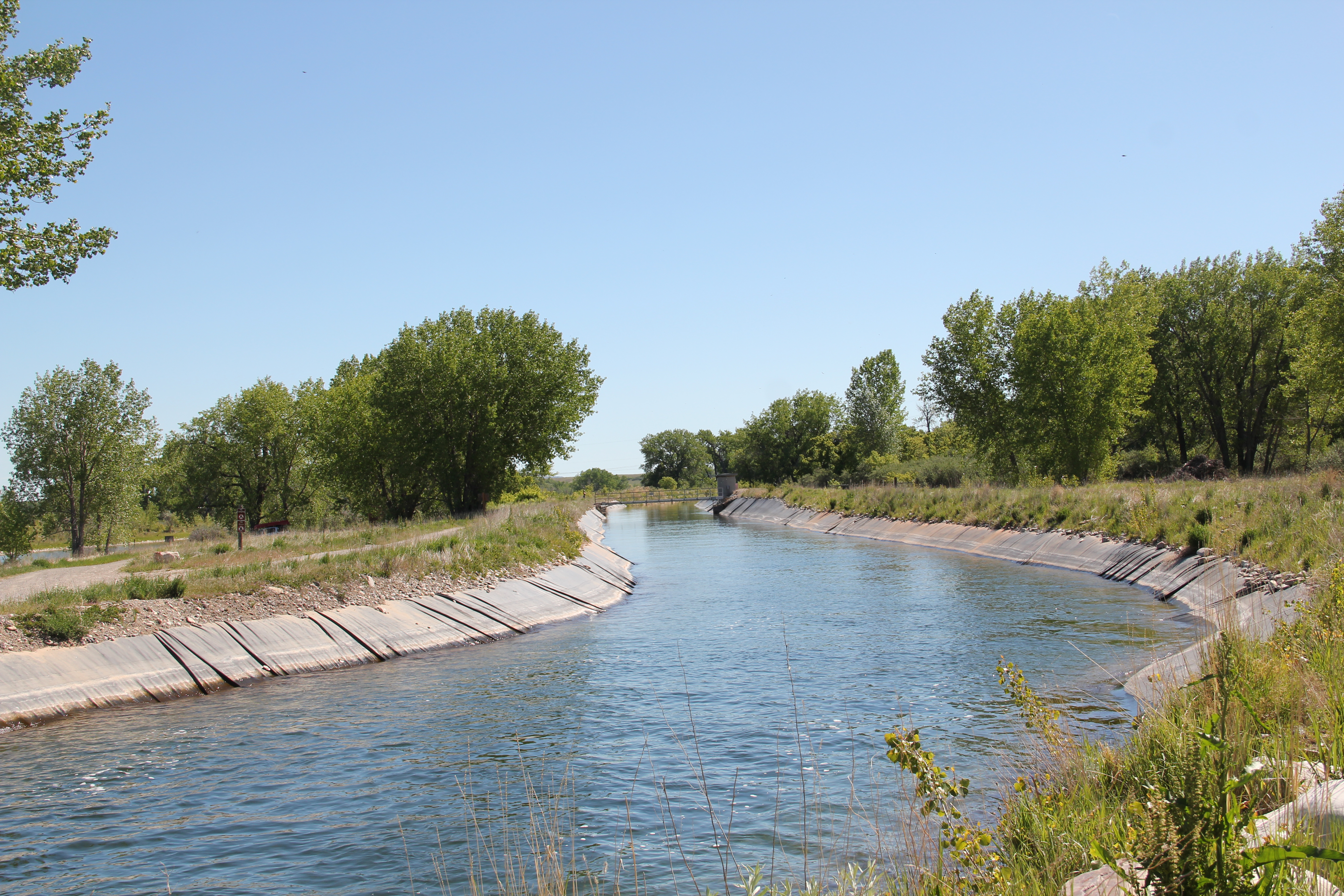
IMG_5958nearby is one of many irrigation ditches that promised the transformation of the Big Horn Valley for 20th century homesteaders but as the forgotten ranches surrounding St. Xavier remind us, the irrigated empire of eastern Montana did not bring riches to everyone.

IMG_6001

IMG_6003Transformations and shifting meanings of the past from the perspective of the present make the Big Horn a fascinating place to explore.

Two Forts on the Bighorn

IMG_6010The Big Horn River is among Montana’s most famous as it winds its way out of the high mountains and empties into the Yellowstone River near the village of Custer.  In the southern end of Big Horn County are two forts, one barely noticeable today while the other speaks to the radically different history of the Big Horn over the last 50-plus years.

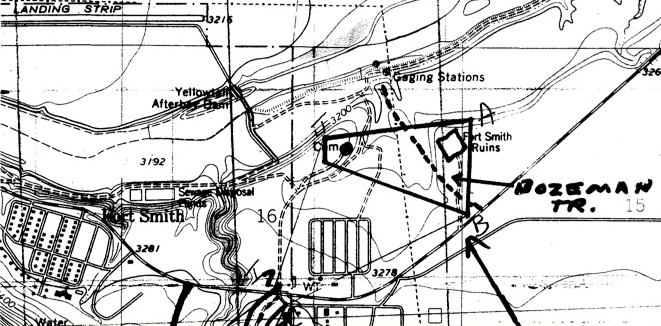
Fort smith mapThe oldest is Fort C. F. Smith, established by the U.S. Army in 1866-1868 as part of its system of defensive installations to protect travelers along the Bozeman Trail.  Named for Civil War general Charles Ferguson Smith, the post stood near the trail, as seen above, and also near a major Big Horn ferry, a location deemed almost 100 years later as perfect for a major federal dam and reservoir project.  A peace treaty between the federal government and Sioux and Cheyenne Indians who had opposed the trail and the forts led to the abode constructed fort’s abandonment in 1868.  Today, the site is marked–the Big Horn County chapter of the Federation of Montana Woman’s Clubs did so in 1933–but on private property.    It has become a forgotten place within the state’s historic landscape.

Fort_CF_Smith_Marker

Photograph courtesy of the National Park Service and its website on the Big Horn Canyon National Recreation Area.

The second Fort Smith is the name given to the government-planned town developed by the Bureau of Reclamation as part of its Yellowtail Dam project of the early 1960s.  The project was part of the massive federal reordering of the plains landscape through the Pick-Sloan Missouri River Basin Program, an attempt to coordinate efforts between the Bureau of Reclamation and the Army Corps of Engineers.  The Yellowtail Dam project received Congressional funding in 1961.  The contractors included Morrison-Knudsen Company from Boise; Kaiser Company from Oakland, CA; Perini Corporation from Massachusetts, the Walsh Construction Company of Iowa, and the S Contracting Company from Butte.  The contractors received almost $40 million for the project.

IMG_5985Built from 1961 to 1966, Yellowtail Dam, named for Crow Indian Robert Yellowtail and standing at 525 feet in height, instantly dominated the surrounding landscape and turned the Big Horn Canyon into a huge lake some 72 miles along, that is managed as the Big Horn Canyon National Recreation Area.

IMG_5983

Access to the dam and its power plant was significantly curtailed after 9/11/2001.

The dam was part of an entirely new engineered landscape that defined this part of Big Horn Canyon and the Crow Indian reservation, with new ditches, the spillway, and a planned town for government employees.

IMG_5998

IMG_5997The town of Fort Smith was an obvious nod to the earlier army installation.  But this was not a rectangle of adobe quarters; it was a typical 1960s suburban development dropped into the middle of the Crow Reservation.  The streets are wide and circular, a concession to suburban models of planning but also taking advantage of the surrounding landscape.IMG_5980

In keeping with other suburbs of the early 1960s, the houses mixed “contemporary” styles such as split-levels and the long, horizontal Ranch house.  There were set-aside open

IMG_5972

IMG_5979

spaces for recreation and parks as well as a separate commercial area.

IMG_5976

IMG_5966

At the heart of the community was not a agency headquarters but a modernist styled public school–recognizing that children and their needs would help to define community among the different federal officials.

IMG_5978

The second Fort Smith is a fascinating landscape documenting the federal impact on the Big Horn River in the middle decades of the 20th century–a basic reordering of nature that created new impetus for recreation in the county and impacted the county seat of Hardin with its own new wave of modernist styling.  A suburb in the middle of nowhere–Fort Smith is among the state’s most distinctive places.

A last look at Carbon County, and a visit into the Crow Nation

In the northern reaches of Carbon County are two additional towns on U.S. 212 I would like to review before I turn into a far different landscape in neighboring Big Horn County.  I looked earlier at the Boyd store, and its changes over 30 years, briefly in passing on to other railroad towns in the Clark’s Fork Valley.

IMG_5916But Boyd is worth a second look if for nothing more than its rambling vernacular design post office since so many of those buildings have been replaced in the last 30 years by standardized USPS designs.  The same can be said of the Boyd School, a frame building now encased in vinyl that has layers of history in it as the community made additions as necessary over the decades.IMG_5917Continuing north on U.S. Highway 212 is the much larger, prosperous town of Joliet. Joliet is an anomaly–its population now is larger than it has ever been since census data has been recorded.  So many eastern Montana towns steadily lost population to where they are mere skeletons of themselves today.  Joliet has avoided that fate; in fact its population in 2010 was slightly more than when I first visited in 1984.

IMG_5928

The Joliet Community Center symbolizes the town’s stability and sense of itself.

The Rock Creek State Bank, now the Rebakah Lodge Building, anchors one of the town’s most prominent commercial corners.  It is one of several buildings in Joliet listed in the National Register of Historic Places, including a large historic residential district, in the last 30 years.  Joliet had nothing designated in the National Register when I visited in 1984.

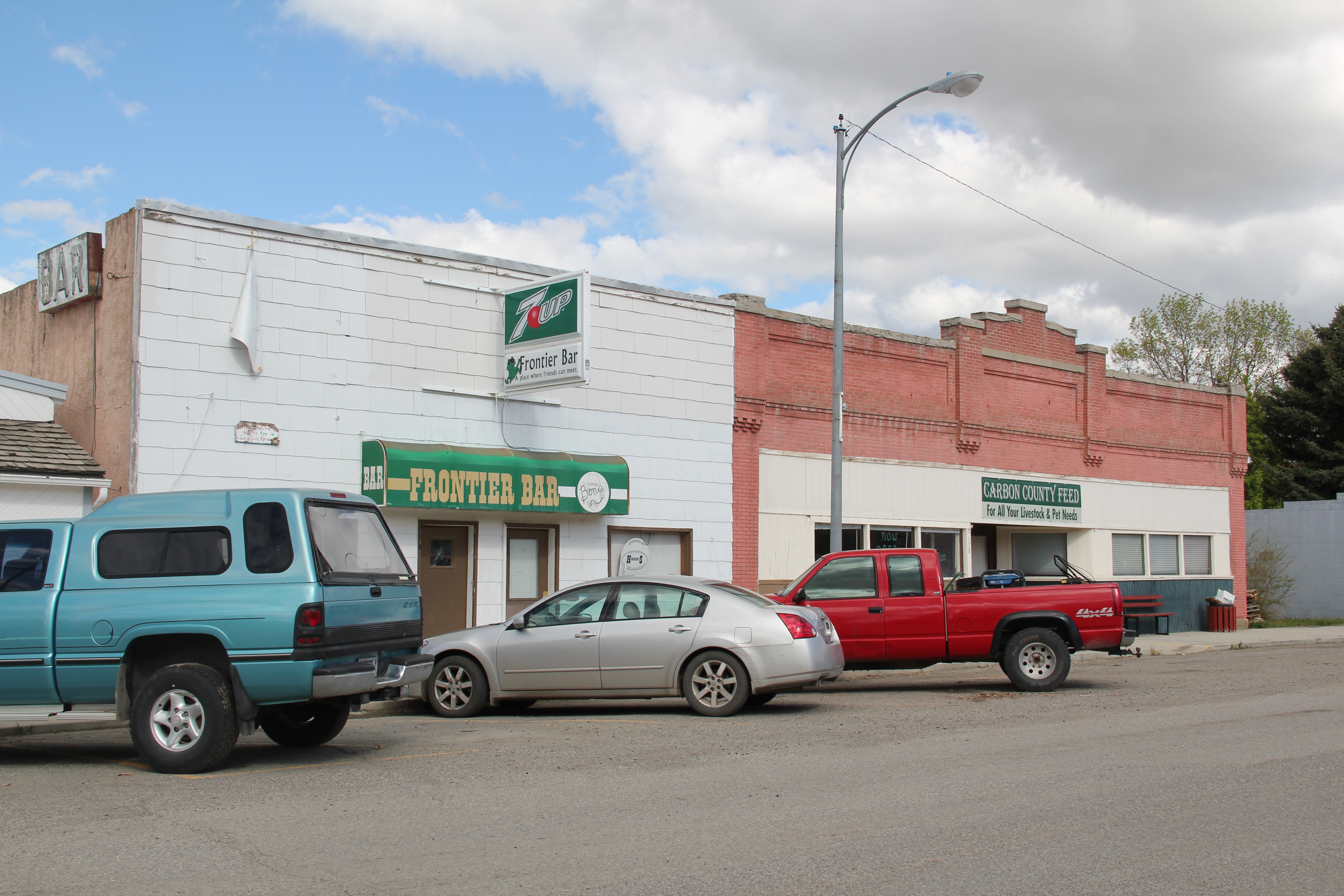
IMG_5923While there is a bright new sheen to a good bit of Joliet, the downtown still has that classic mix of vernacular frame and brick one-story commercial buildings typical of the turn of the century railroad/homestead boom towns.  And like most, a tavern, in this case the Frontier Bar, is a permanent fixture in the town.

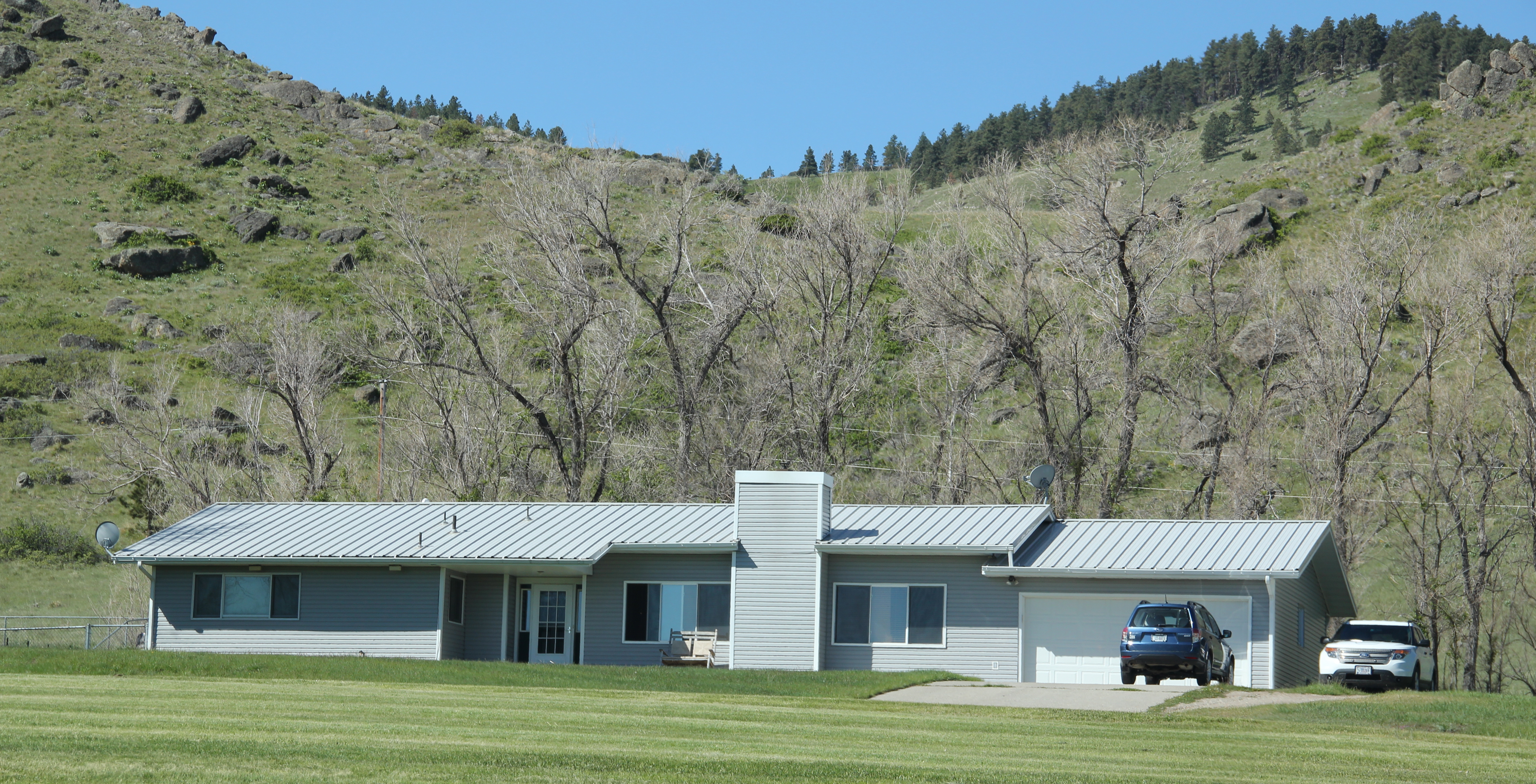
IMG_5920Outside of town is a wonderful array of roadside public sculpture, courtesy of long-time Joliet resident Charles Ringer.  Ringer moved to town, purchasing an old junk yard and part of a WPA granary, in 1971.  His works have become landmarks for travelers along U.S. Highway 212.  Ringer runs a studio shop out of an old ranch-style house.

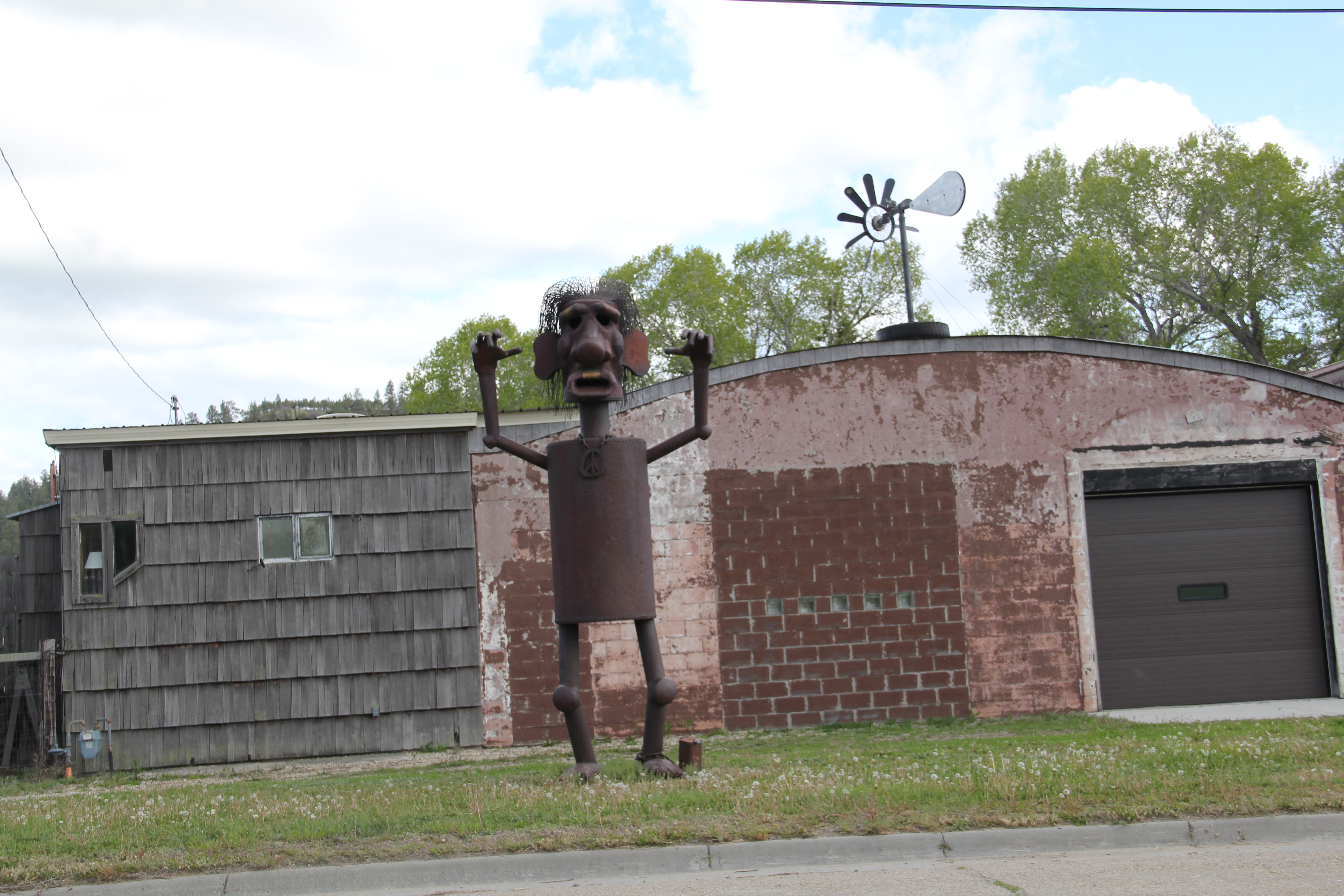
IMG_5932Known to many winter travelers as “The Snow God” but named “The Creature” by its creator Charles Ringer, this huge metal sculpture is roadside art at its best in Montana.

IMG_5930

Ringer is also known for his various kinetic sculptures, and the entire property becomes a way for travelers to interact with, or just enjoy, the general wackiness of his creations.

IMG_5931

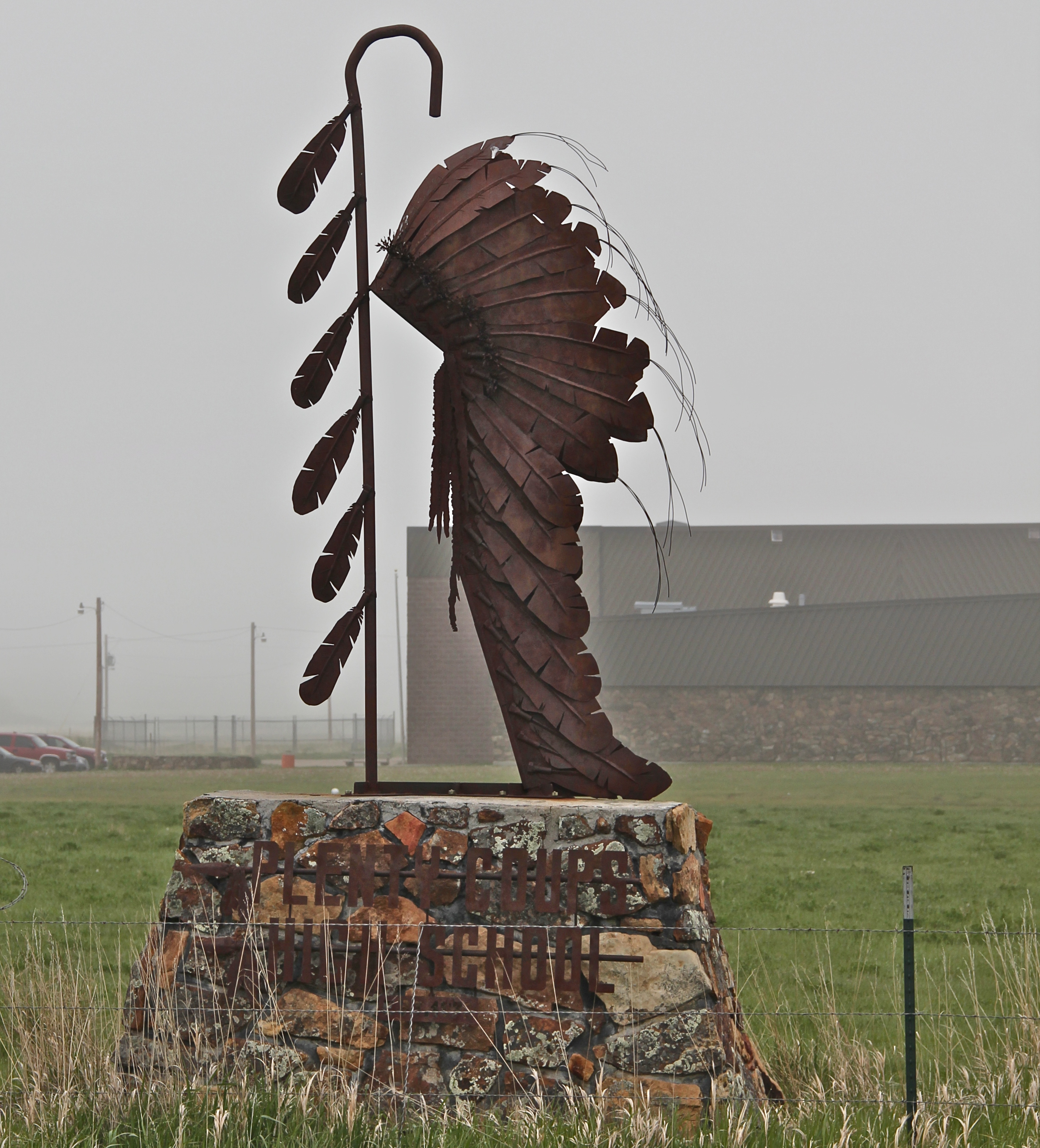
From Joliet you can strike out east on an improved gravel road, passing through the town of Edgar, and then climbing up out of the Clark’s Fork Valley and into the land of the Apsaalooke, or the Crow Indian Tribe.  Traveling west in the Crow reservation, you encounter two instant landmarks, one much more recent than the other but both are tightly intertwined.  A compelling metal sculpture of a warrior announces the entrance to the Plenty Coups High School, shrouded on the morning I went there in 2015 by an early morning fog.

BH Co Plenty Coups HS - Version 2

Across the road is the Plenty Coups State Park, a fascinating memorial to the former Crow chief Plenty Coups, who the Crow Indian Tribe has designated as its last traditional tribal

IMG_5544 IMG_5575

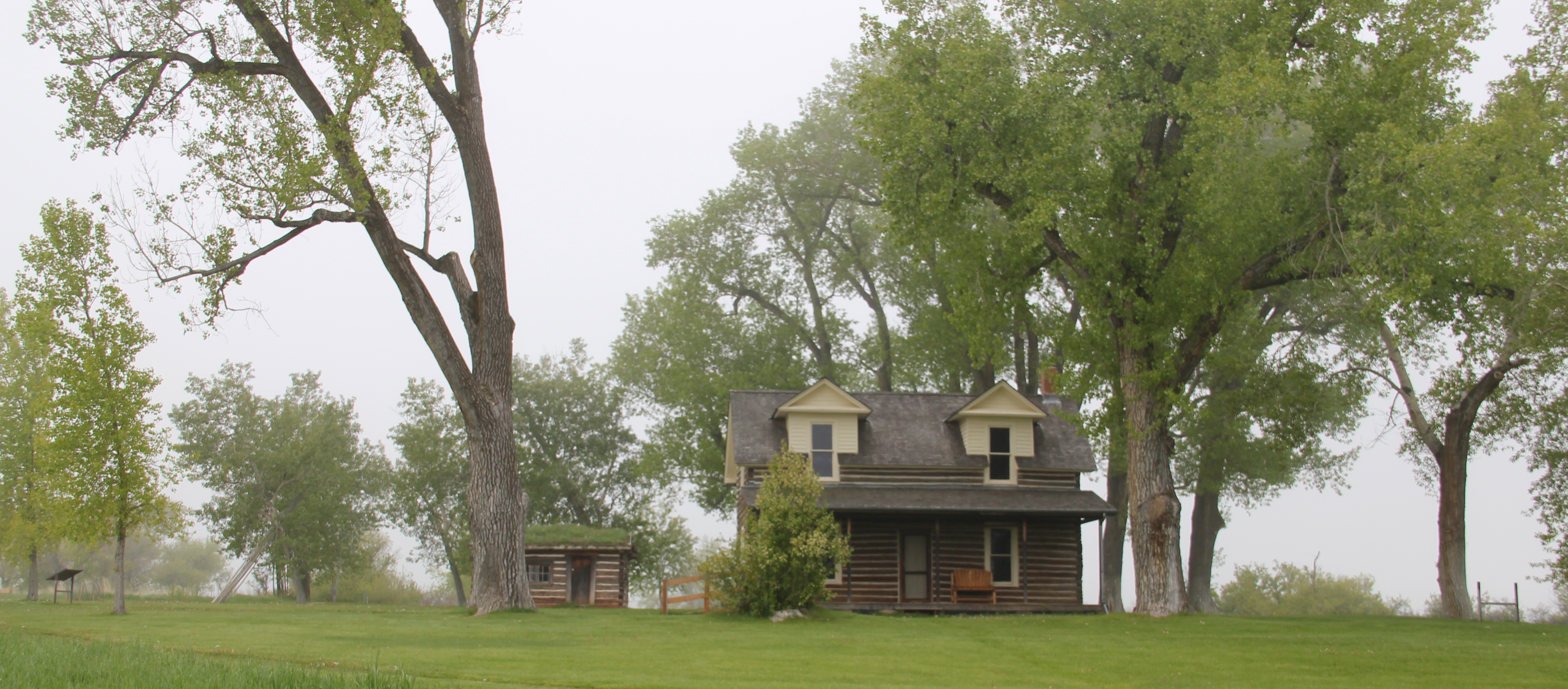
chief.  Plenty Coups had been among the first Crow Indians to take up a homestead, 320 acres along Pryor Creek, in 1884.  His succession of dwellings, using locally available

IMG_5564materials to build a log house, help to tell his story as well as how some Crows became ranchers.  The park has erected a modern tipi to show earlier Crow dwelling types; the rambling nature of the log house, is both typical and spectacular.  Typical in that

IMG_5549

IMG_5559

IMG_5551it is a three-bay house with a centered front door, but actually quite spectacular in its interior feel of open space, and that its very size would have spoken to the family’s prominence and achievements. The park also interprets a traditional sweat lodge, adding to the understanding of tradition and new ways that blended to create the homestead.

IMG_5561

IMG_5578When Plenty Coups died in 1932 he was 84.  He and his wife Strikes the Iron left 195 acres of their property to be a public park.  Later the National Park Service designated the site as a National Historic Landmark. Since my first visit in 1982 a new museum building had been added to the park, significantly enhancing the public interpretation of the site; you left with the feeling that this was just not a static installation and memorial (as it was in the 1980s) but a true museum and park which will continue to grow and adapt to the needs of the Crown Indian Tribe and the park’s visitors.

IMG_5572

To the east of Pryor, on Pryor Creek Road, was another historical place associated with the Apsaalooke–the Pryor Creek Battlefield.  Where in the low creek bluffs and the narrow

IMG_5533

valley created by the water, a major battle between the Apsaalooke and their enemies the Lakota, Cheyenne, and Arapaho took place c. 1861–just at the time the Civil War was beginning in the United States far to the east.

IMG_5536

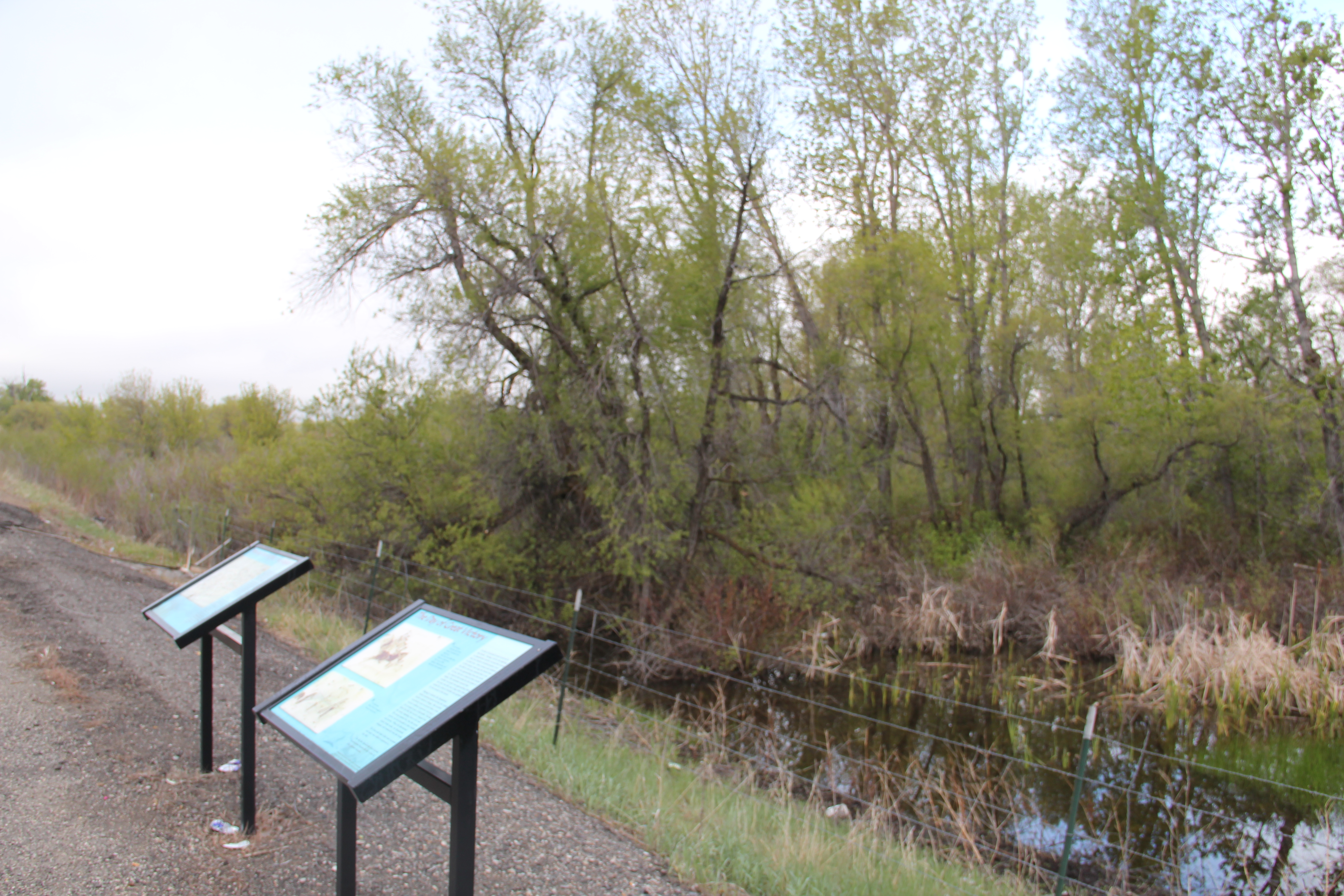
The Crows had worked with federal officials to build a road turn-off and place interpretive markers about this key battle for the control of the Yellowstone Country c. 1861, just before the time that the first permanent white settlers entered what would become Montana Territory.  Thirty years ago, I knew from Crow historian Joe Medicine Crow that this famous battle, where the Apsaalooke secured control of the region in what Medicine Crow called a “glorious victory,” took place along Pryor Creek Road. But the markers now pinpoint the battlefield and interpret what happened plus the significance of the fight.

IMG_5538

Here was suddenly a place that I had truly never “seen” before–and an indication of how good interpretive markers can make a desolate place come alive with historical meaning.  Kudos to all for bringing forth this forgotten battlefield and a site of a famous Crow victory.

IMG_5539