Changes at Sleeping Buffalo Hot Springs

In 2013 I last visited Sleeping Rock Hot Springs, just north of U.S. Highway 2 in Phillips County. The following year I posted about the obvious changes then underway to put this once vibrant mid-20th century recreational area back to greater prominence.

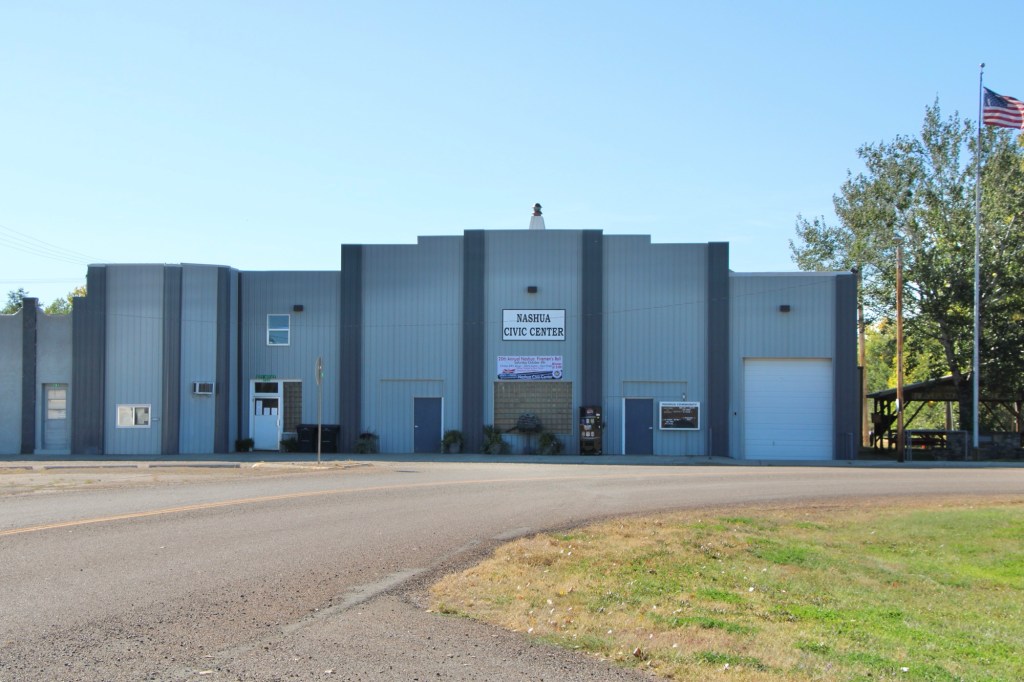
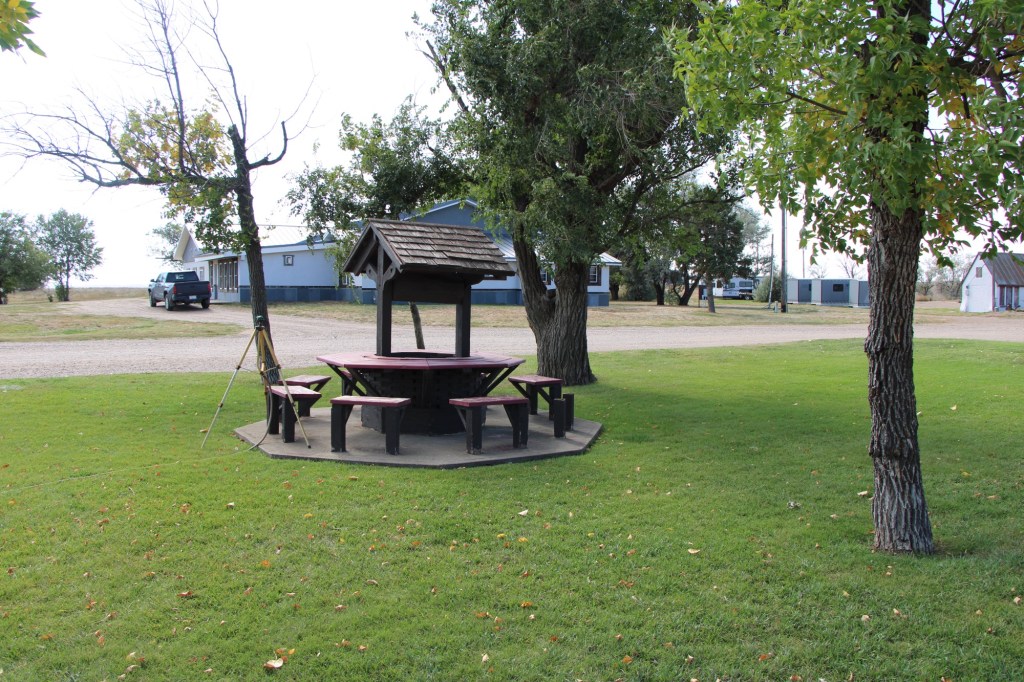
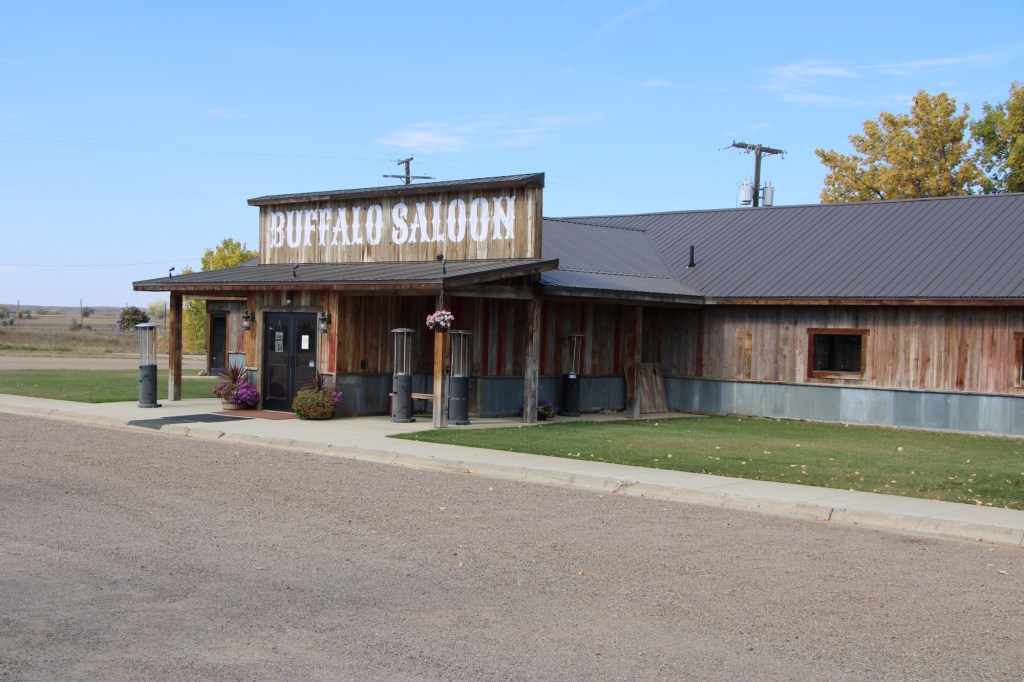
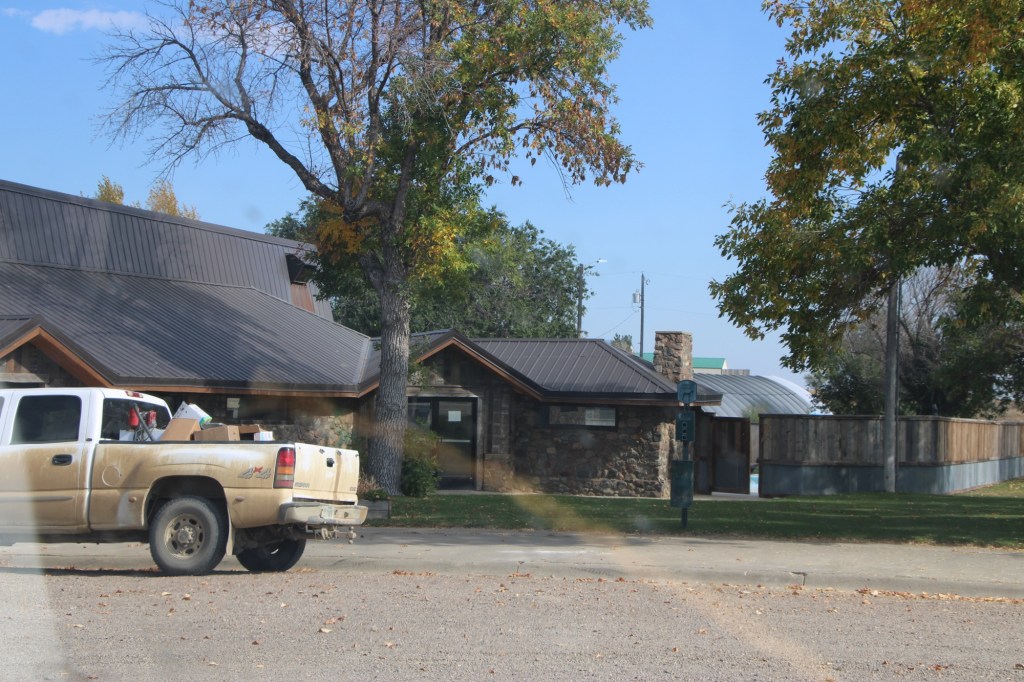
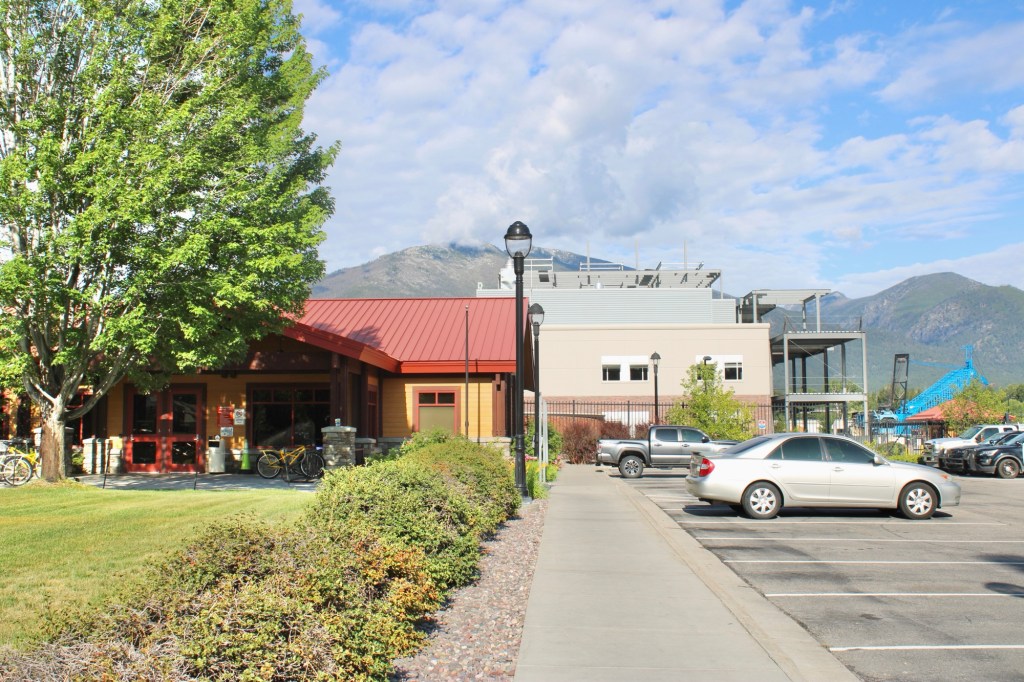
I returned in late September 2025 to find that, indeed, lots of improvements were made in the last ten years. A large bar/restaurant had been built, the grounds expanded and modernized, and the pool greatly enlarged.

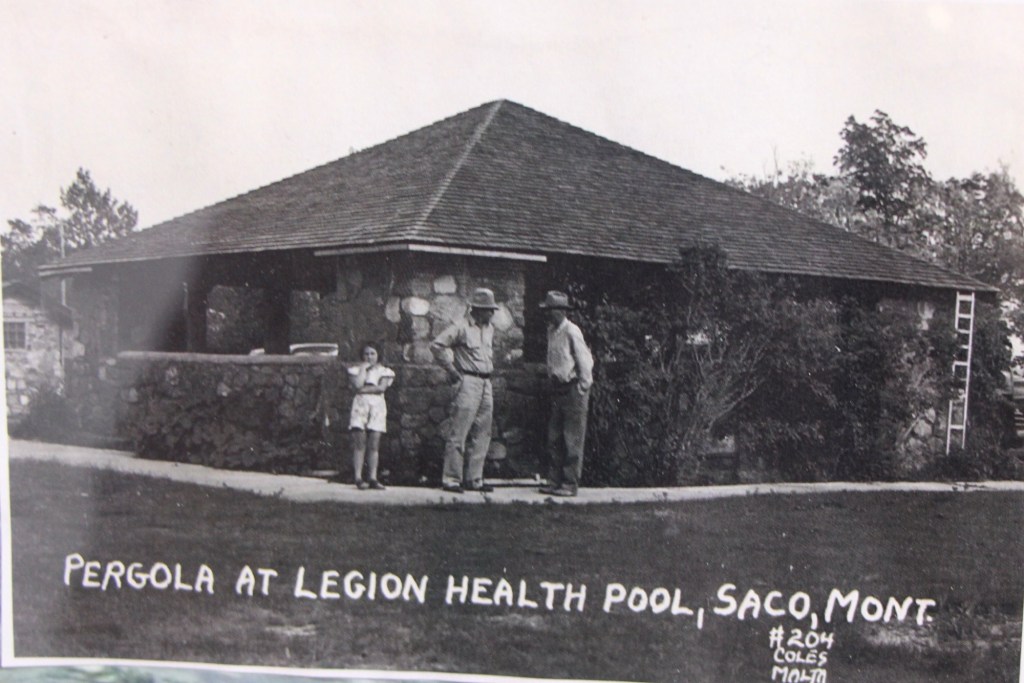
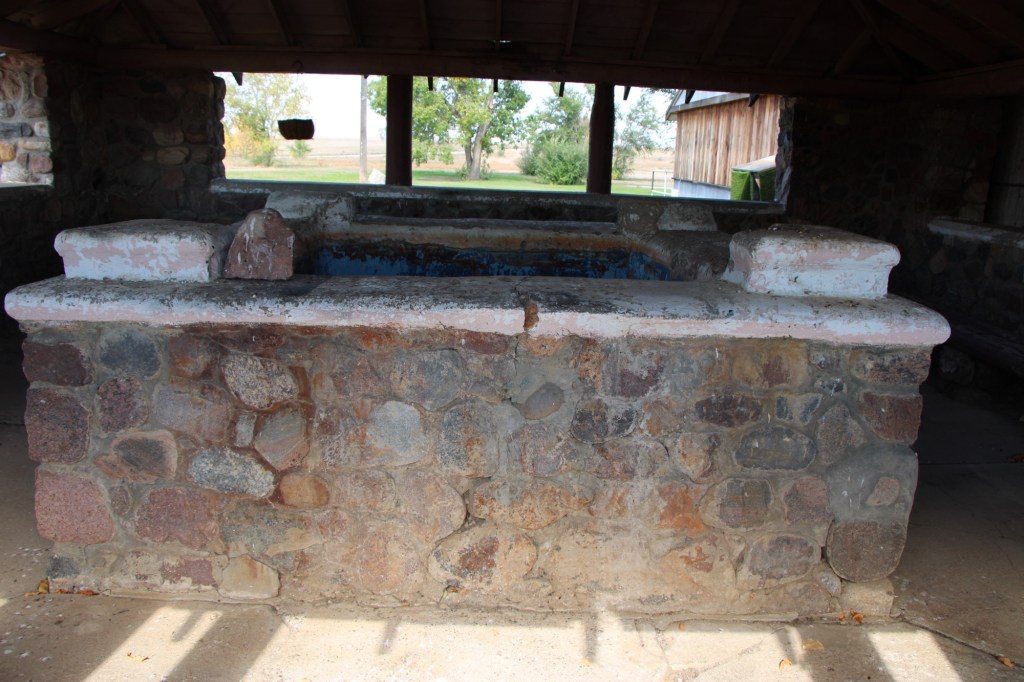
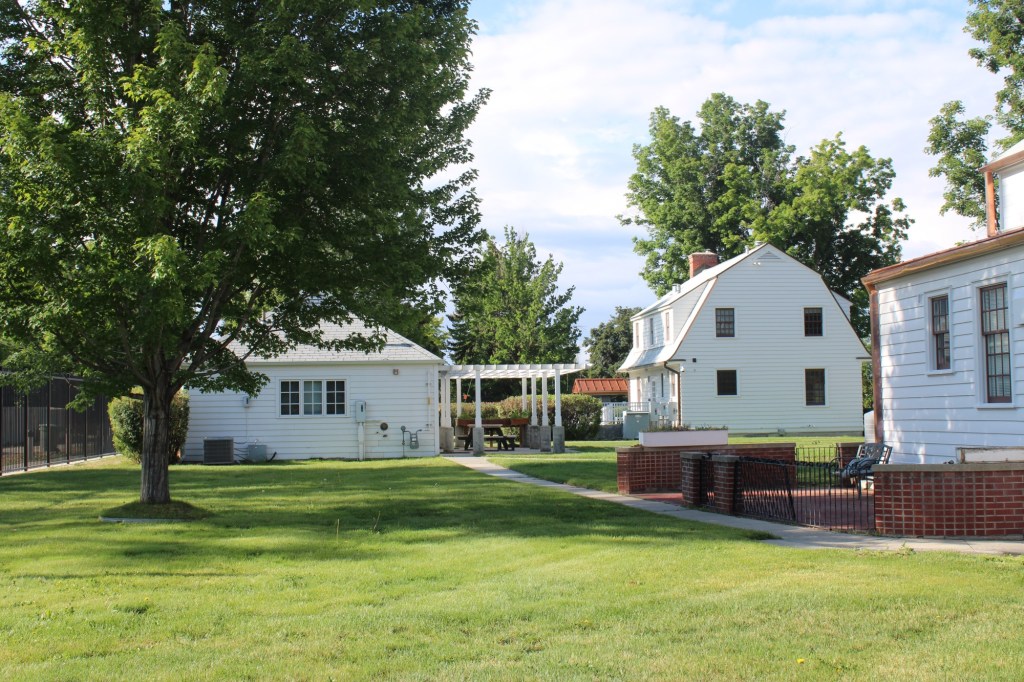
But the hot springs’ New Deal roots were still apparent because attached to the pool facility was the pergola of the early 1930s.

This hipped roof stone structure came about due to the joint efforts of local residents and government officials. An exhibit at the Phillips County Museum in Malta (more on that place later) points out that a rancher Elbert Davison first saw the mineral springs as having medicinal qualities. He built a small pool that brought relief to his son who had polio. That effort convinced the Saco American Legion to do more and soon a local effort to gain control of the spot for public use met its success in 1931. Later that year the American Legion Hot Springs was in operation, quite a feat in Depression-era northeast Montana.

That effort caught the attention of county agent H.L. Lantz to work with the New Deal’s Resettlement Administration, then active in the Milk River Project area, to get the Public Works Administration to fund the pergola. That story is told in the marker (above) still at the pergola today.

Bruno Partzsch was the stone mason for the buildings, and some of his work is still visible in the expanded and modernized pool building of today (2025). I wonder if Partzsch is also the crafter behind the stone building at Zurich Park in Blaine County since both places have ties with the Milk River Project.

Sleeping Buffalo Hot Springs is on the market in the fall of 2025. Business is tough—actually way beyond tough—in this part of Montana’s Hi-Line. I only hope that new owners who can keep the momentum going can be found and this jewel of a historic place—shaped by a partnership between locals and government—will survive well beyond its 100th anniversary in 2031.

Glasgow’s amazing Federal building

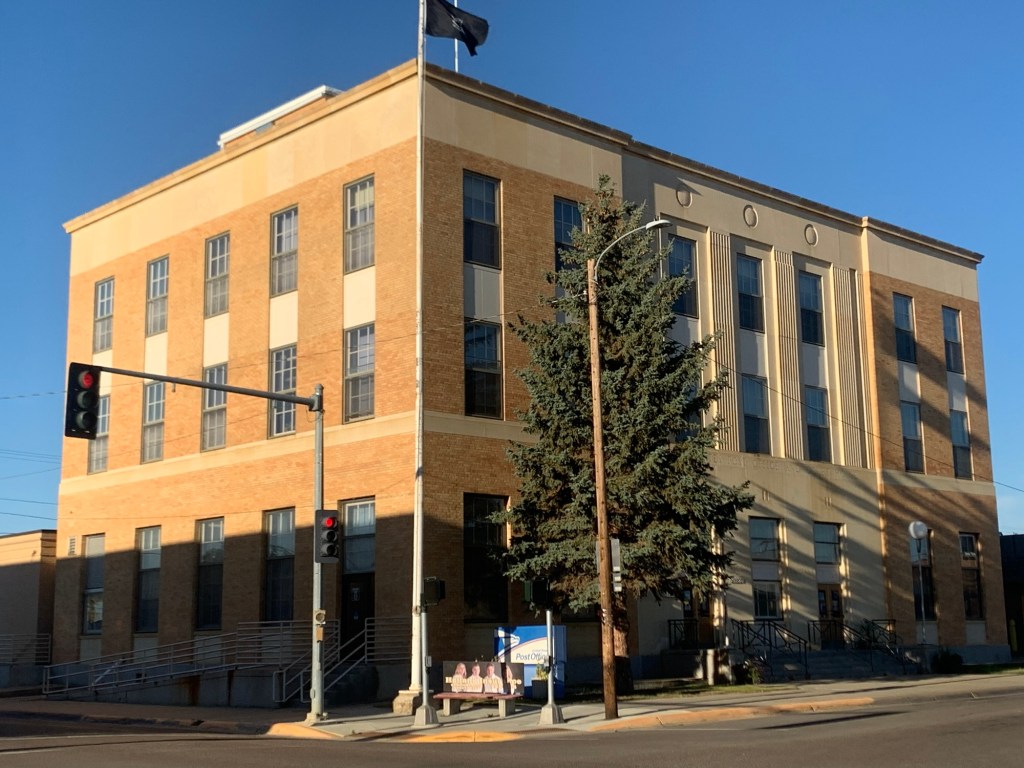
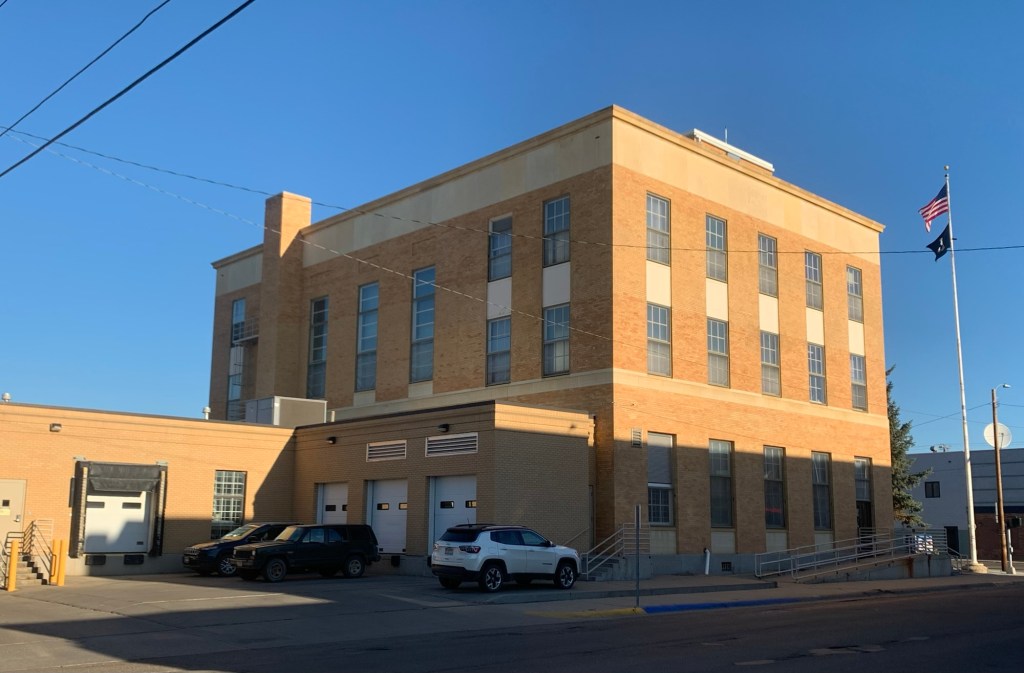
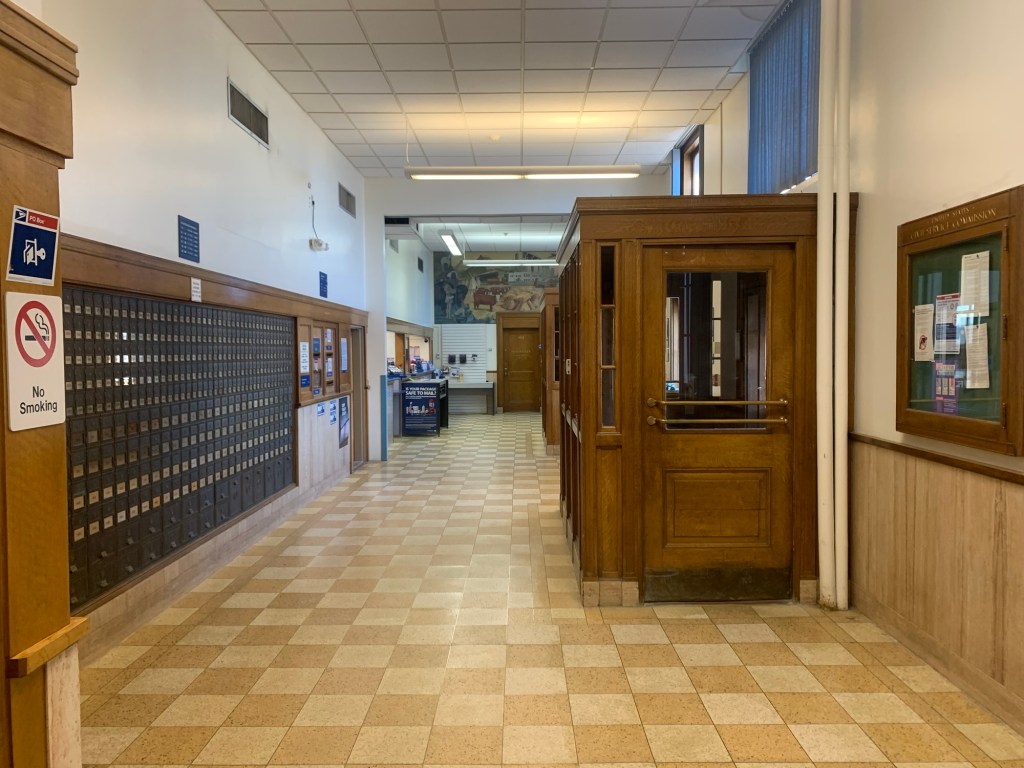
One of my favorite, if not #1 itself, Depression-era buildings in Montana is the amazing Federal building in Glasgow. First, this triumph of New Deal design from 1939 is a powerful statement in the public architecture of northeast Montana.

As you may know, Glasgow embraces its reputation as the most isolated place in the nation, that it is the definition of the middle of nowhere (a reputation however that I really challenge). But the restrained classicism of the building is refined and tasteful, perfect of the region.

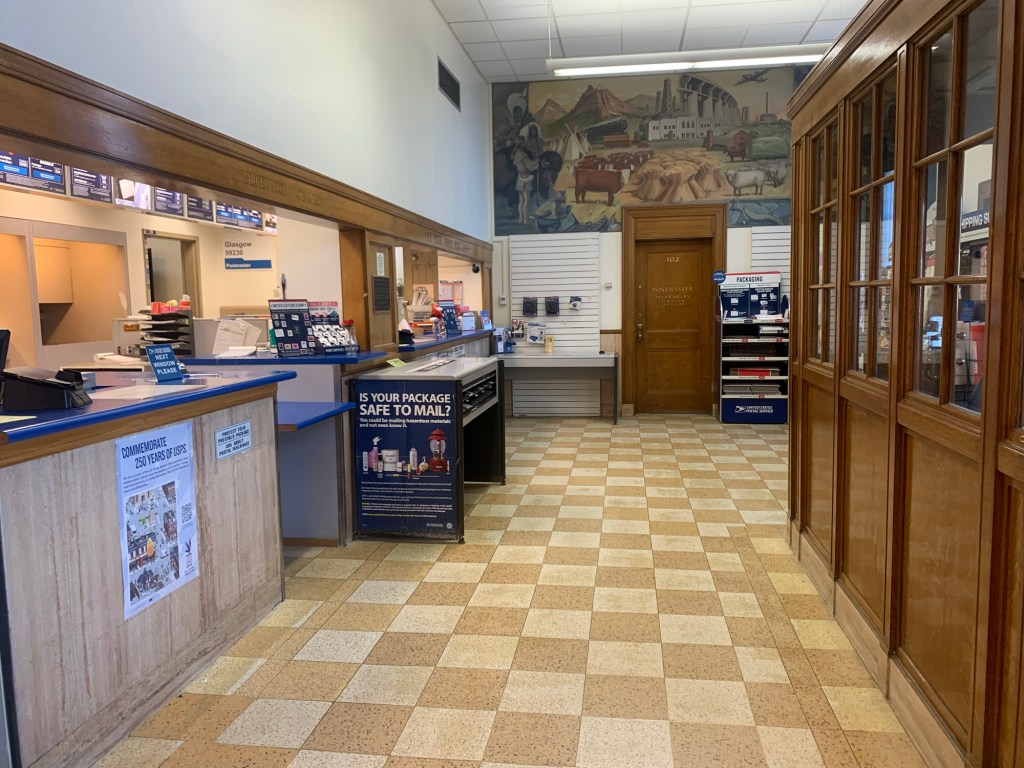
Second, I really admire the building because it is so intact after 86 years of use. Yes, there are some alterations, but when you step into the post office lobby, you do feel like you stepped back in the 1930s.

Then there is the wonderful mural, “Montana’s Progress,” by Forest Hill. Completed in 1942, as the county’s other major, and huge, New Deal project, Fort Peck Dam and powerhouse, was gearing up to maximum production for World War II.

The left side speaks to the Native American past and the nearby presence of Fort Peck Reservation. There’s even a reference to gold panning, which never happened along this section of the Missouri. Then the right side reference the coming of settlers and the parceling of once open land into regular measured surveys.

The center section speaks to the Progress, predicted to come, centered on railroads, agriculture (cattle, wheat, hay, sheep), and industry, with the commanding image of the amazing Fort Peck spillway ( already world famous to an earlier feature story in Life magazine) and in the top corner, a sugar beet refinery.

The bomber flying above it all of course spoke to the immediate present , of World War II, but it also correctly predicted the future. The town and county would have its greatest period of prosperity in the 1950s and 1960s with the Glasgow Air Force Base.

What a historic document of its time and what an amazing building, still serving the community almost 90 years later.

Hamilton’s historic public architecture

In the first half of the 20th century few Montana county seats matched the quality and diversity of public architecture of Hamilton, the seat of Ravalli County.

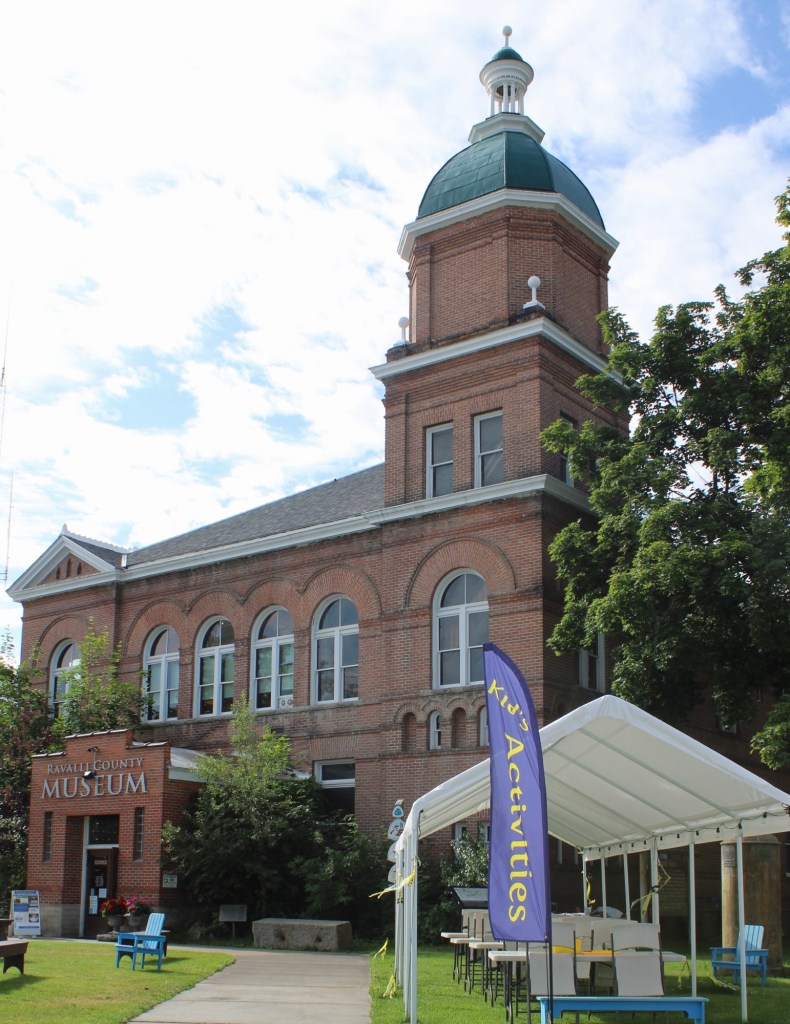
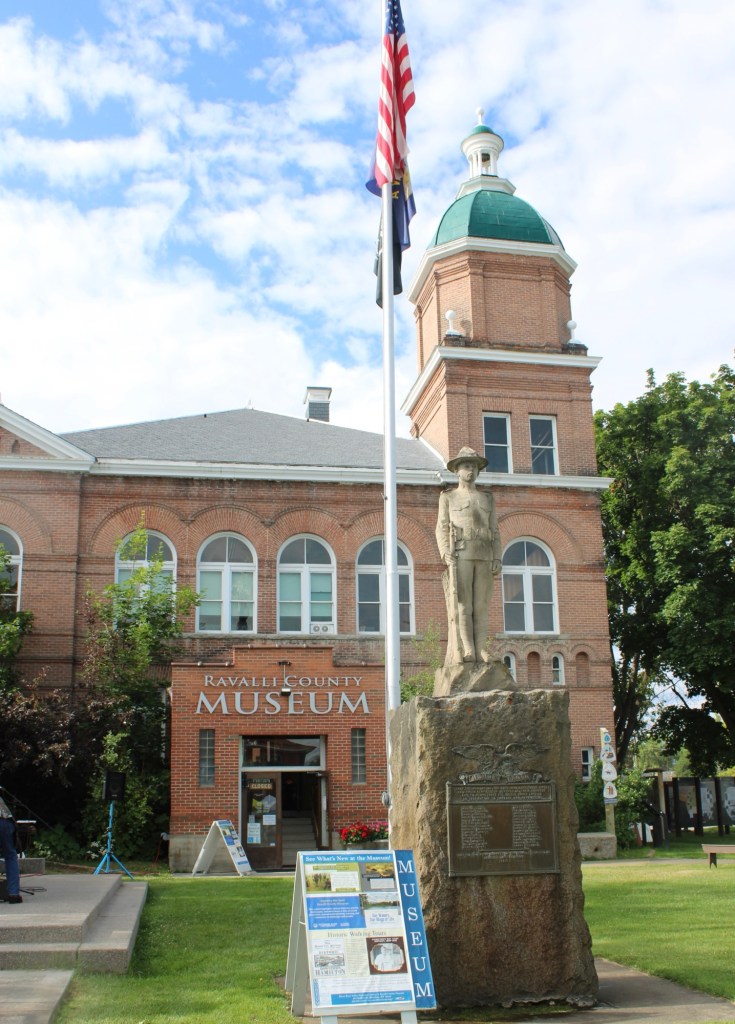
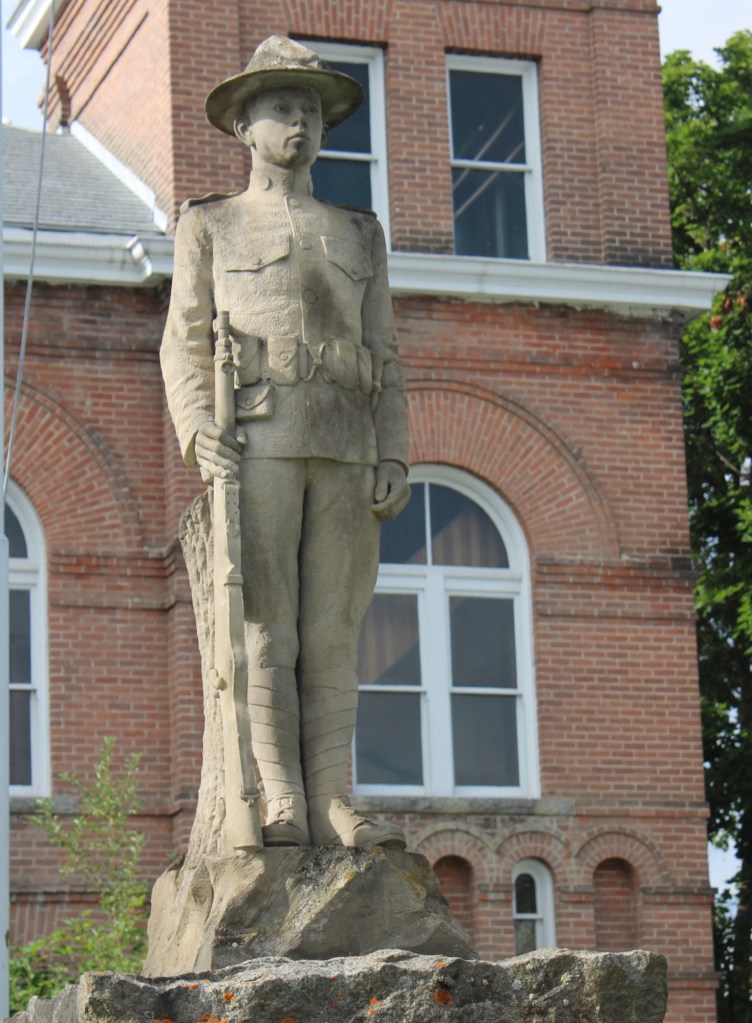
The oldest, the Ravalli County Courthouse of 1900, remains the most distinguished, although the county left the building for a new courthouse in the mid-1970s. Fifty years later, its conversion into an excellent county museum has kept this landmark of Romanesque infused design as a vital part of county life, especially during the city’s Saturday market in the summer. Designed by architect A.J.Gibson of Missoula, the courthouse graces a grand public space in the 21st century city, a space made even more meaningful by the Doughboy tribute monument that stands on guard in front of the building.

Installed in 1921 the monument itself is over 100 years ago and is a rare courthouse yard tribute to World War I veterans.

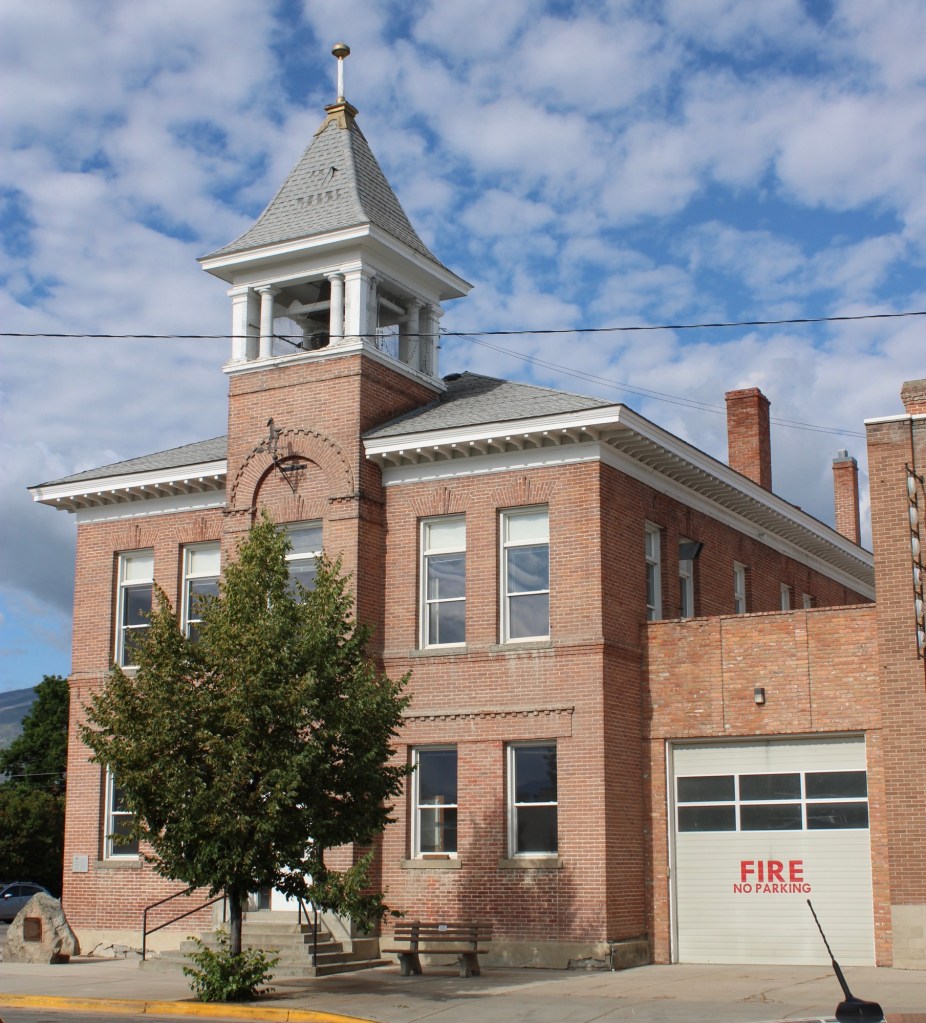
In 1906, only a block away, the city built a Victorian style flavored town hall for almost all city affairs, from governance to police in fire fighting and even the public library.

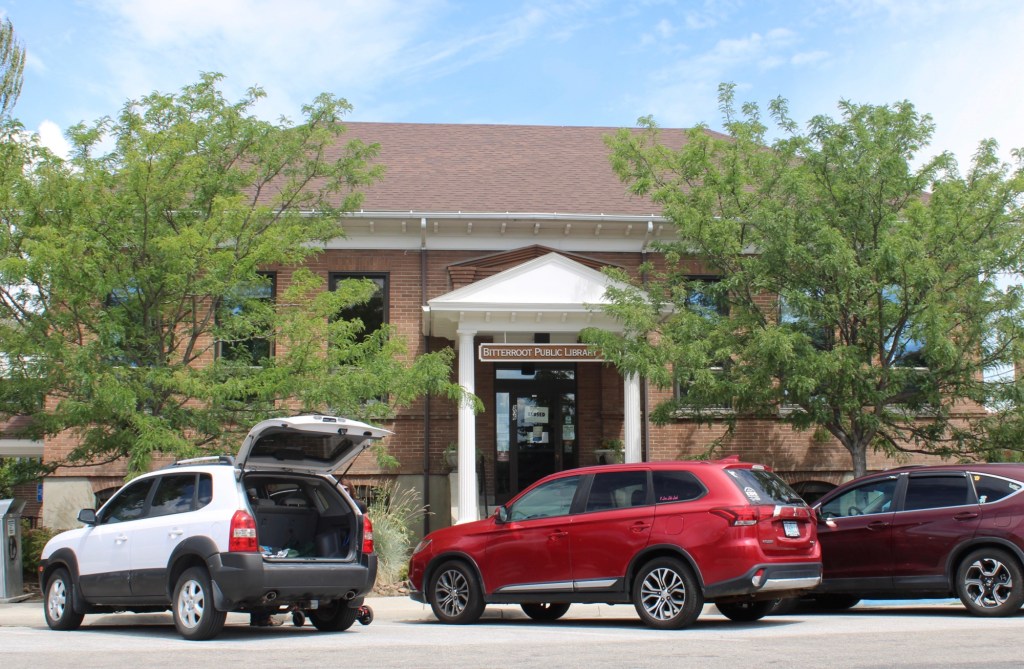
The library was not long for the Town Hall. Within 10 years it had its own Classical Revival building, due to the diligence of the Hamilton Woman’s Club and the funding of Margaret Daly, the widow of copper magnate Marcus Daly, who lived across the valley at her grand Colonial Revival mansion.

Margaret Daly was not done. In the mid-1920s she funded the Colonial Revival style Marcus Daly Hospital just blocks away from the library.

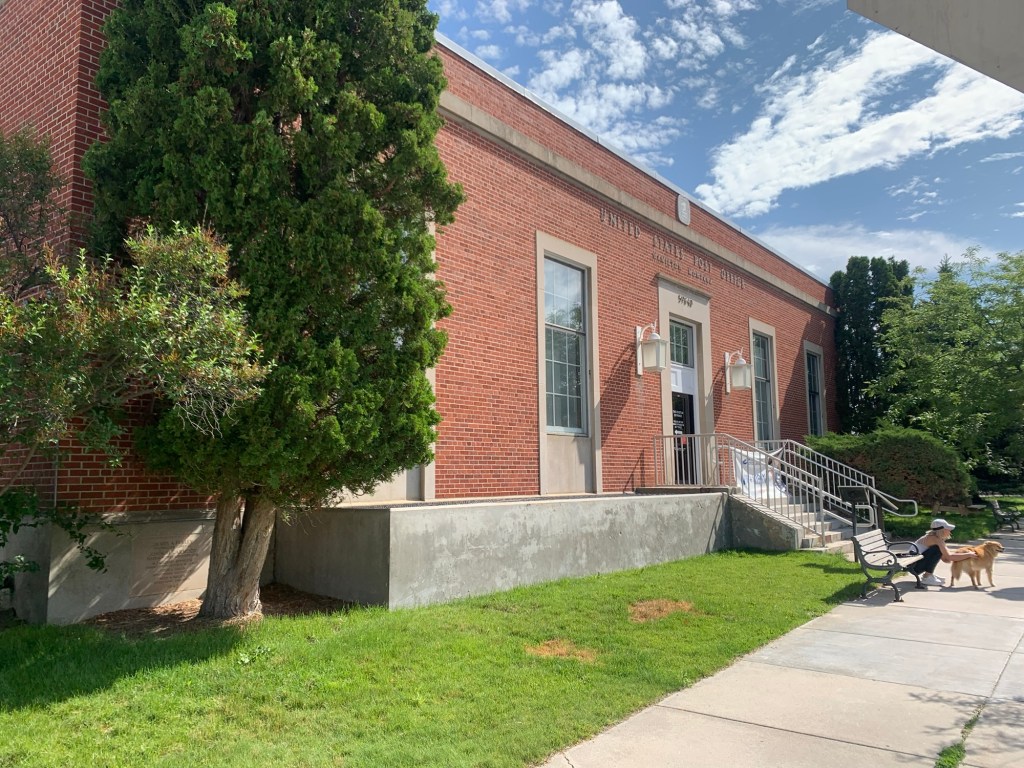
The New Deal added to the city’s Colonial Revival traditions of public architecture. Those depression years of the 1930s added a more restrained take on the colonial style in the new post office by Louis A. Simon.

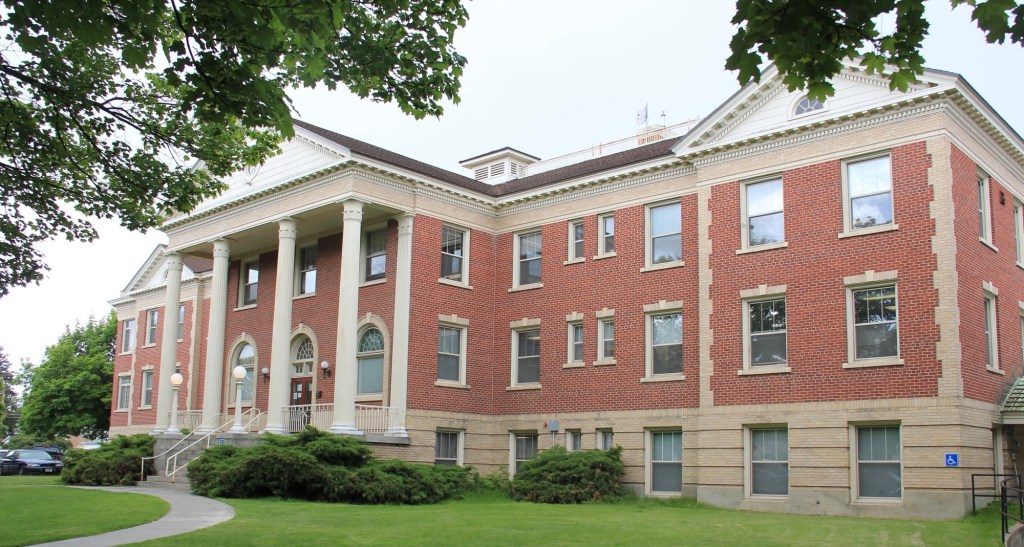
Then after World War II public architecture charted a new course into modernism although Hamilton took cautious steps in its blocky modern design of the present city hall and community building, a very effective bending of uses.

Days before I visited Hamilton on July 4, 2025 plans were finalized to begin the serious work of converting the historic town hall into a new library facility. Even as we celebrate the town’s public architecture, change is coming later this decade.

Rocky Mountain Laboratory: medical solutions in Ravalli County

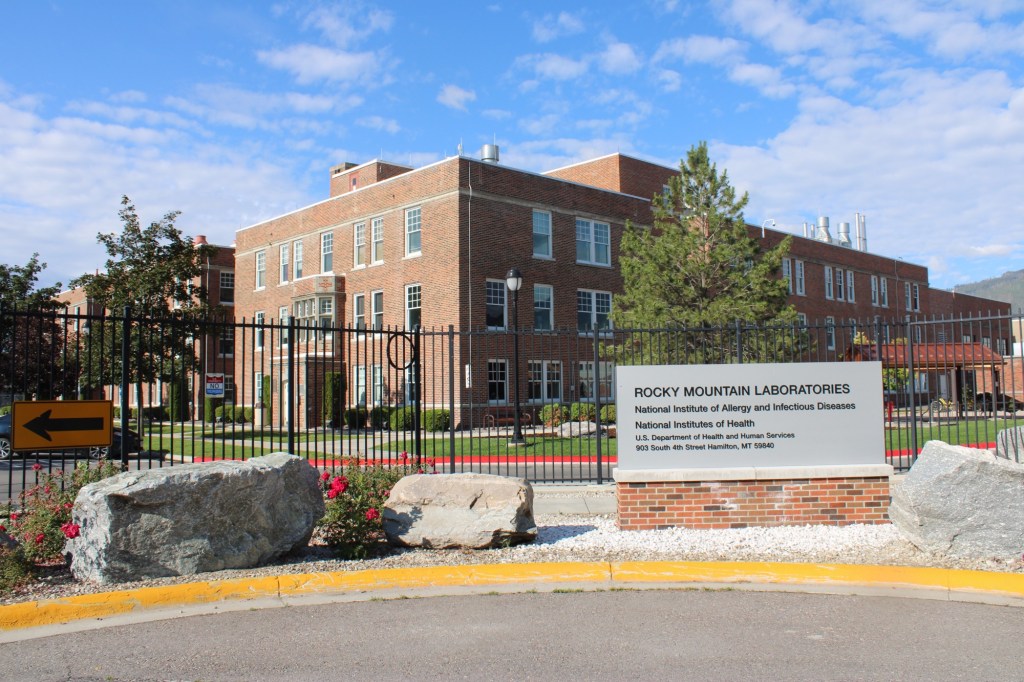
Nestled in the south end of Hamilton’s historic residential neighborhood is the Rocky Mountain National Laboratories. It began as a state initiative, as a way to combat Rocky Mountain spotted fever, a disease carried by the wood tick. For 20 years scientists searched for solutions and at one time worked out of an old abandoned log school. By 1924 an effective vaccine against Rocky Mountain spotted fever had been developed. The state of Montana built the first permanent brick laboratory at Hamilton in 1928.

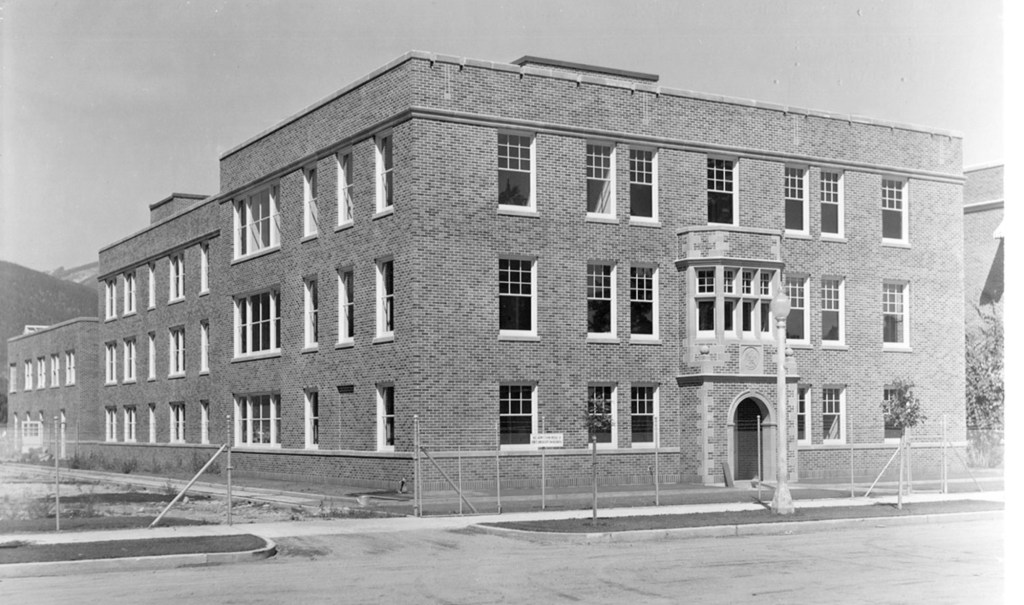
Rocky Mountain Laboratory c. 1940, National Archives

During the New Deal, the federal government took over the state program and with Public Works Administration funding, it built a new modern campus, allowing the scientists to expand their research.

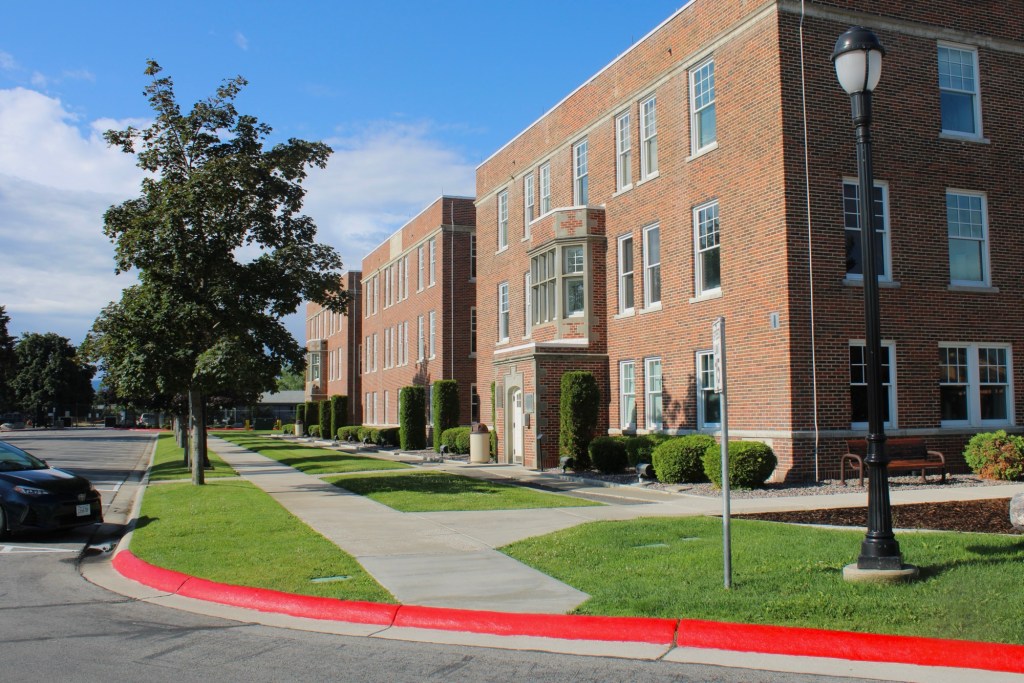
The new campus, completed c. 1940, created a quad of three-story brick buildings for the laboratory, with the new buildings having a slight Collegiate Gothic style.

Across from the labs was housing for scientists, with the north house reflecting a modest Colonial Revival style while the south house was a classic Dutch Colonial styled house. There was a shared garage in back of the homes.

Good thing the lab was expanded. Officials looked to it to find solutions for yellow fever and vaccines against diseases common in the Pacific theater of Wirld War II. It developed the standard Army vaccine to fight yellow fever in 1942.

You can discover more about the laboratories and its 21st century at the visitor center, which opened in 2006.

The older section of the laboratories from the New Deal era was listed in the National Register of Historic Places in 1988.

Glasgow, Montana: It might be in the middle but it’s not nowhere

In 2024 I began to see media accounts, both regionally and nationally, of how Glasgow, the seat of Valley County, was the most isolated place you can imagine, truly in the Middle of nowhere.

Historic Great Northern Railroad corridor in Glasgow

I’m not one to argue with geographers and economists. I’m sure from their perspective, they got it right. But I never thought of Glasgow as isolated: it is on the Great Northern mainline, and part of the famed Empire Builder Amtrak route, and on U.S. Highway 2.

Great Northern depot, Glasgow

Then the town has always shown a great deal of pride and ambition, conveyed so effectively by its many historic buildings, starting with the First National Bank, built c. 1884 and listed in the National Register of Historic Places.

1st National Bank building, Glasgow

When you enter the town from the underpass of the railroad, the bank is the first landmark to catch your eye, appropriate too for the impact of local banks on a town’s economic prospects during the homesteading boom and bust of the 1910s and 1920s, respectively.

Rundle Hotel, during renovation in 2013

Another landmark from the homesteading era is the Rundle Building, once the Glasgow Hotel and restored in the last ten years as an upscale hotel in the heart of downtown. Built c. 1916 and designed by the important Billings firm of Link and Haire, the Rundle is a captivating statement of an Arts and Crafts-infused Mediterranean Revival style. I have been trying to get back to Glasgow to stay here for the last four years—maybe I will make it in 2025.

The 1930s transformed Valley County through the construction of the mammoth Fort Peck Dam on the Missouri River. Glasgow too has a major New Deal landmark in its U.S. post office and courthouse, built c. 1939 and designed by federal architect Louis A. Simon.

Post office/federal courthouse, Glasgow

Its understated New Deal Deco exterior obscures a jewel of an interior, highlighted by its New Deal-funded 1942 mural depicting local history and the changes brought about by the Fort Peck Dam by artist Forest Hill. This building too is listed in the National Register.

Glasgow post office mural

Another important New Deal supported building was all about the community, and providing new opportunities: the Glasgow Civic Center. It too has a New Deal Deco style, and its large public space has been used for almost every type of event or gathering you can imagine.

Glasgow Civic Center

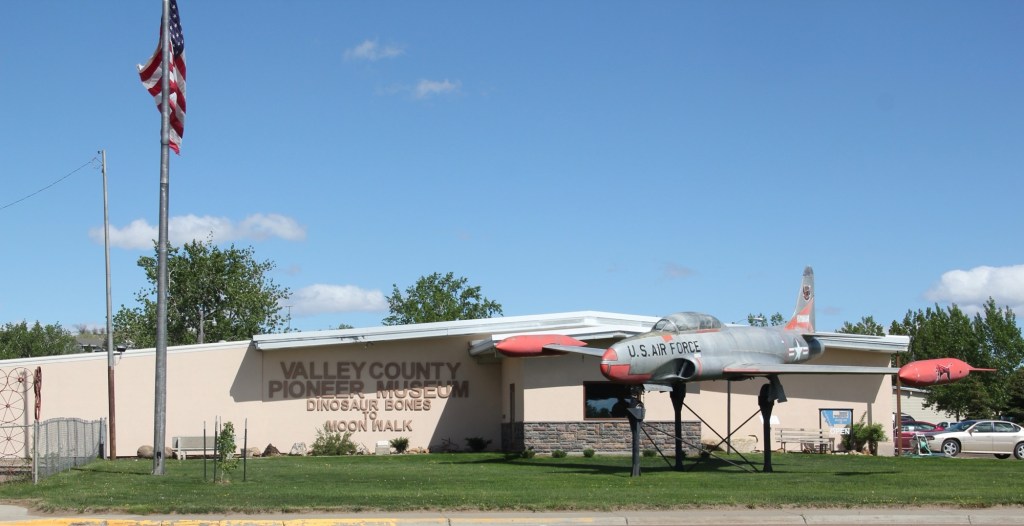
Glasgow’s sense of itself today still respects it past, brilliantly conveyed by its large and expansive museum. When I first visited Glasgow 40 years

Valley County Museum

ago, I held a public meeting on the state historic preservation plan here, and the next morning residents gave me a detailed tour of the recently established museum. I was impressed with its collection then, now it sprawls through the building to the adjoining grounds.

Veterans section of the museum
The high school band section
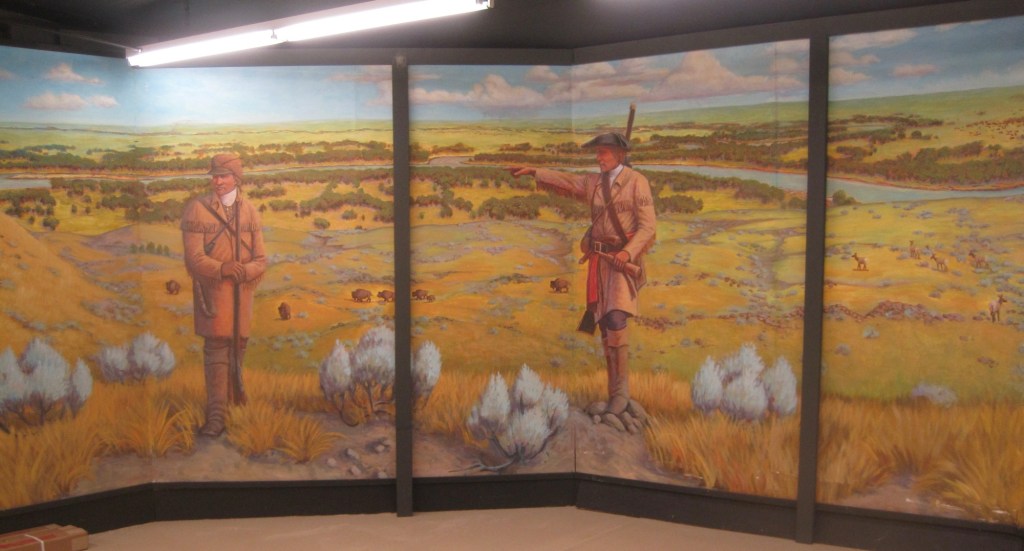
Lewis and Clark mural, 2095, by Jessie Henderson, a Chippewa/Cree artist
The back bar at saloon exhibit

Indeed, the saloon exhibit underscores another fun part of Glasgow—across from the depot in the original route of Highway 2 is an amazing collection of bars, stores, and eateries, right out of the early 1900s.

Glasgow bars at depot

But back to the museum, and its important Montana decorative arts collection of the work of modern craftsman Thomas Molesworth, once in the town’s Carnegie library.

The newer exterior exhibits led the museum to move entire building to the property, including examples of the homestead shacks of the early 1900s that were followed by permanent homes such as this white painted bungalow.

Representative ranch house from homesteading boom

Pride of place, pride of the past. Glasgow might be in the middle but it is far from being nowhere as this small sampling of properties demonstrates.

A fall drive along U.S. 12

When I lived in Helena from 1981 to 1985 one of my favorite jaunts was along U.S. Highway 12 from Townsend to Roundup. It remains so today, 40 years later. My initial interest centered on railroad corridors. Helena to Townsend followed the Northern Pacific Railroad and a good bit of the Missouri River (now Canyon Ferry Lake).

Northern Pacific bridge over Missouri River near Townsend
Missouri River and Canyon Ferry valley near Townsend
Missouri River campground near Townsend

It was a brilliant day with fall colors just popping as we left US 287 and turned into the heart of Townsend.

As soon as you leave town to the east you encounter a lovely mix of ranches and irrigated fields until you thread your way through a national forest along Deep Creek.

Fall colors along Deep Creek

We decided to continue east by briefly jumping off US 12 and go to Montana 284 so we could follow the Milwaukee Road corridor from Lennep to Martinsdale where we would reconnect with US 12. Two of my travelers had never been to the Milwaukee Road “ghost town” of Lennep. It was a beautiful morning to be there.

Milwaukee Road powerhouse

You first realize that this abandoned railroad corridor is different when you encounter an electric powerhouse—the Milwaukee Road’s tracks were electrified from Harlowton Montana west to Idaho.

Lennep

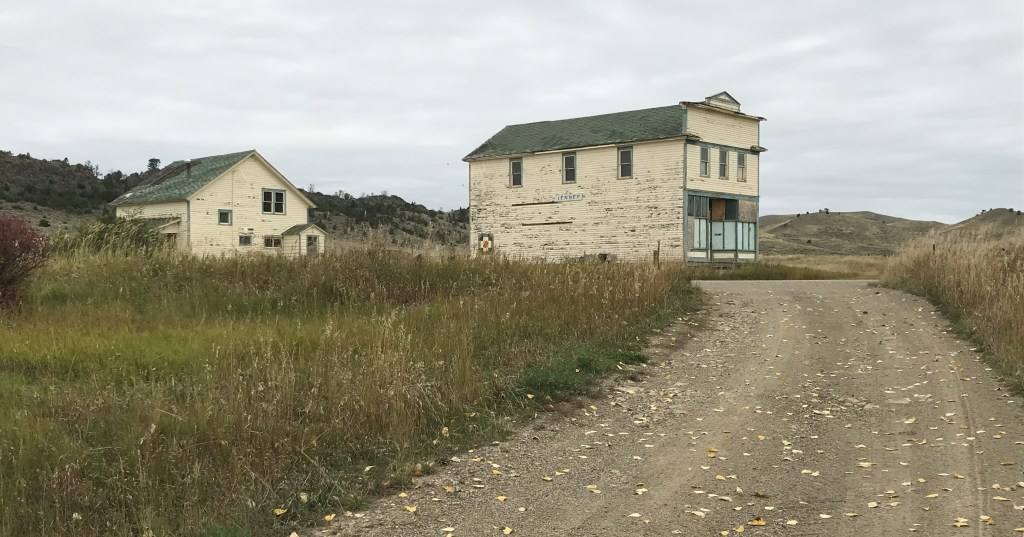
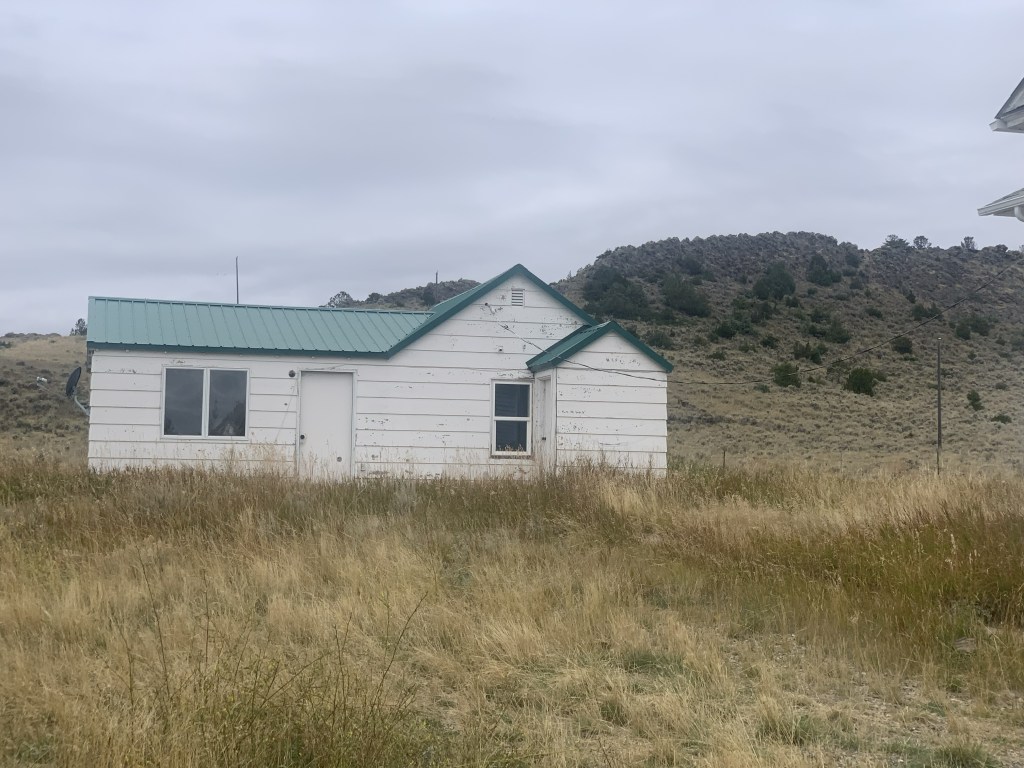
At Lennep the landmarks remain—the Trinity Lutheran Church, the store, the school, a teacher’s cottage and an early notched log house—but all were a little worse for the wear compared to my last visit 10 years earlier.

As we traveled east that morning we quickly moved through the county seats of Harlowton and Ryegate to get to Roundup by lunch. The Musselshell Valley was brilliant even as signs of the old railroad almost disappeared.

Near Ryegate
Near Lavina

Roundup continues its renaissance with new businesses and restored buildings. The town core, clustered around the intersection of US highways 12 and 87, was busy on a fall weekend.

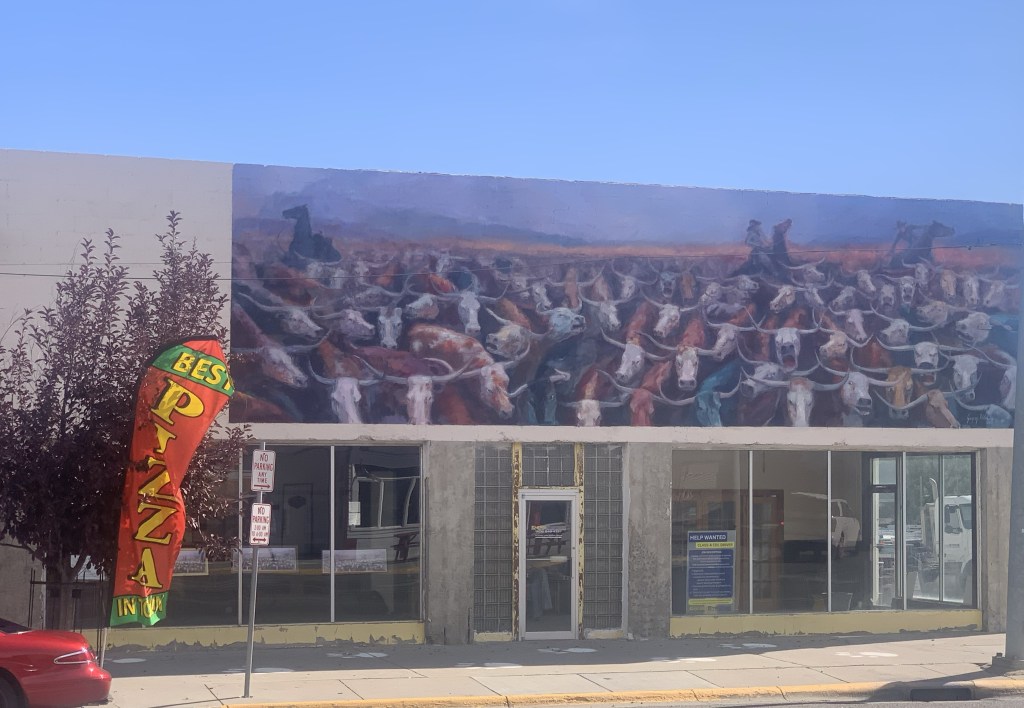
A mural on the great cattle drive of 1989
The Backporch—great bbq
New mural at the Keg
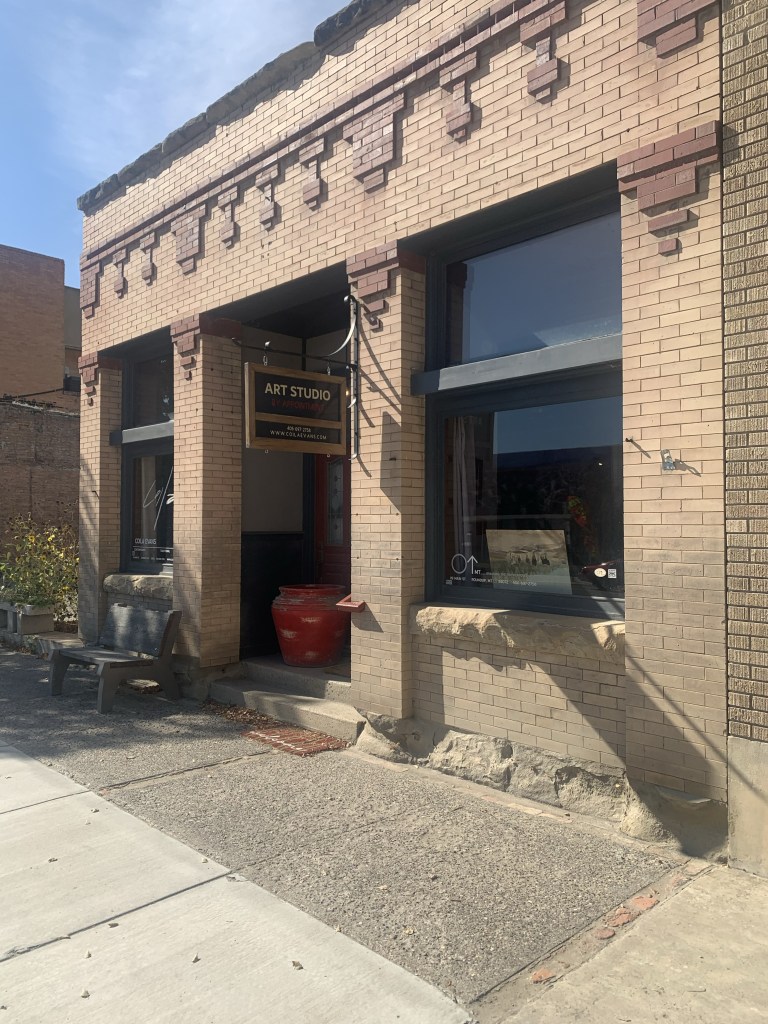
Art studio doing well
Awaiting its renovation
Community green spot

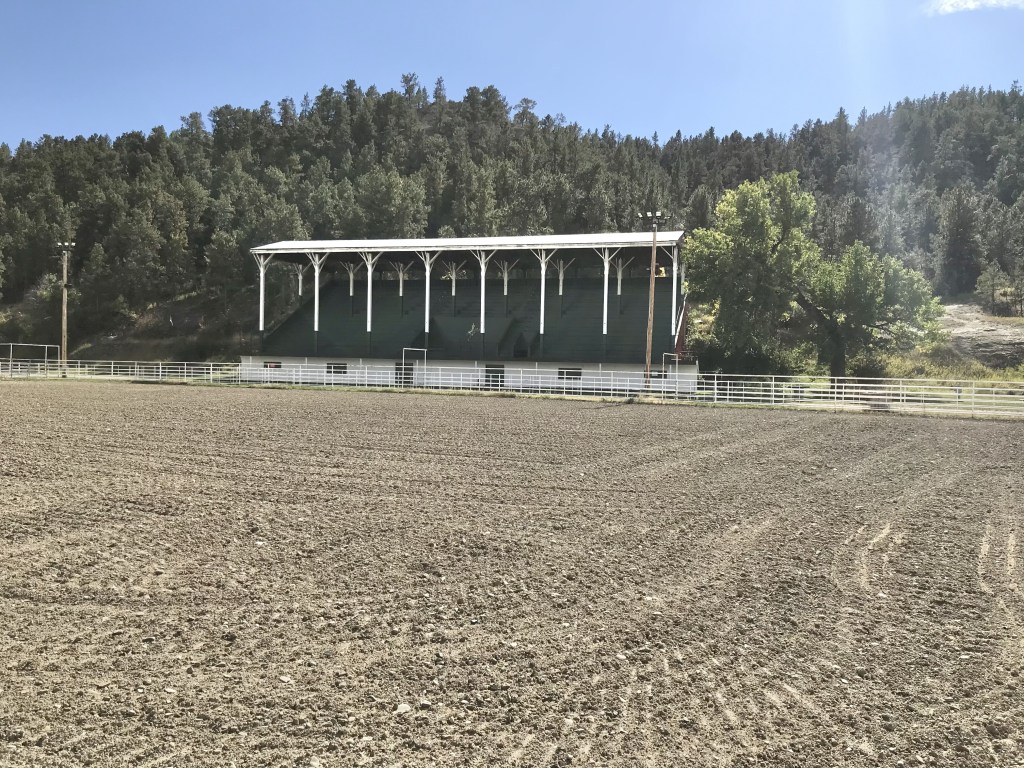
As I observed a few years ago Roundup residents worked together and created a plan—and the place continues to work the plan, from the adaptive reuse of its historic stone school to the careful stewardship of its historic fairgrounds. It’s impressive.

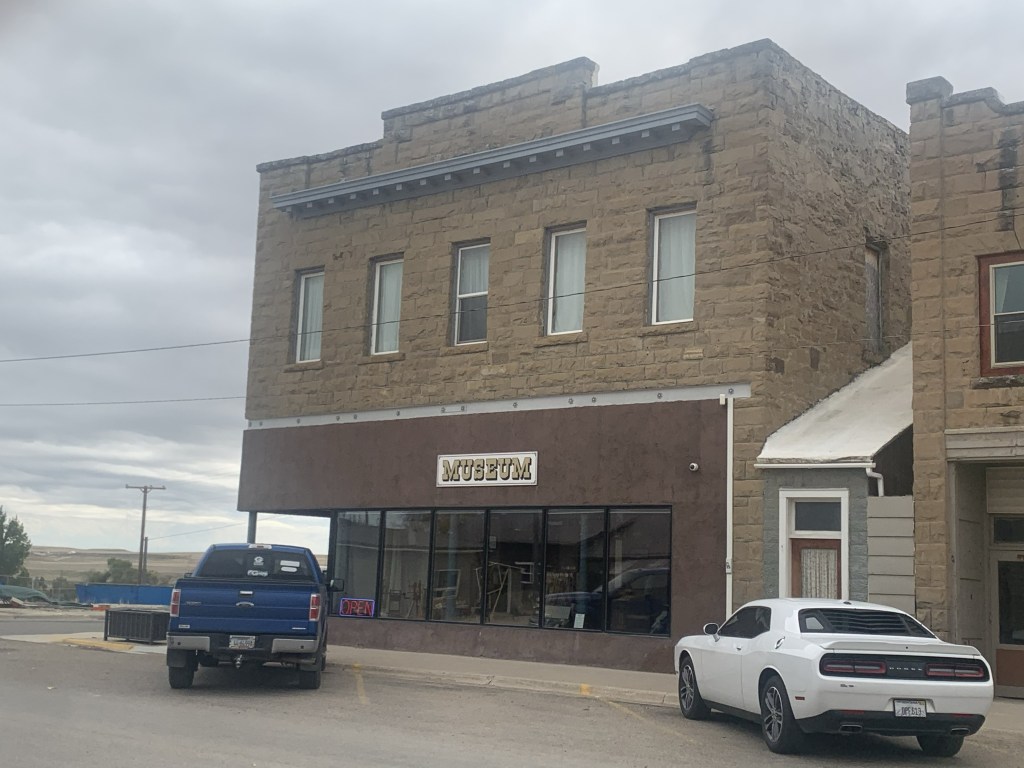
After Roundup we stopped at two county seats on the return to Helena. Harlowton was rocked by the closing of the Milwaukee Road over 40 years ago. It has struggled to reach the economic comeback achieved at Roundup. But the historic stone buildings have great potential. Three of them are now part of a large museum complex.

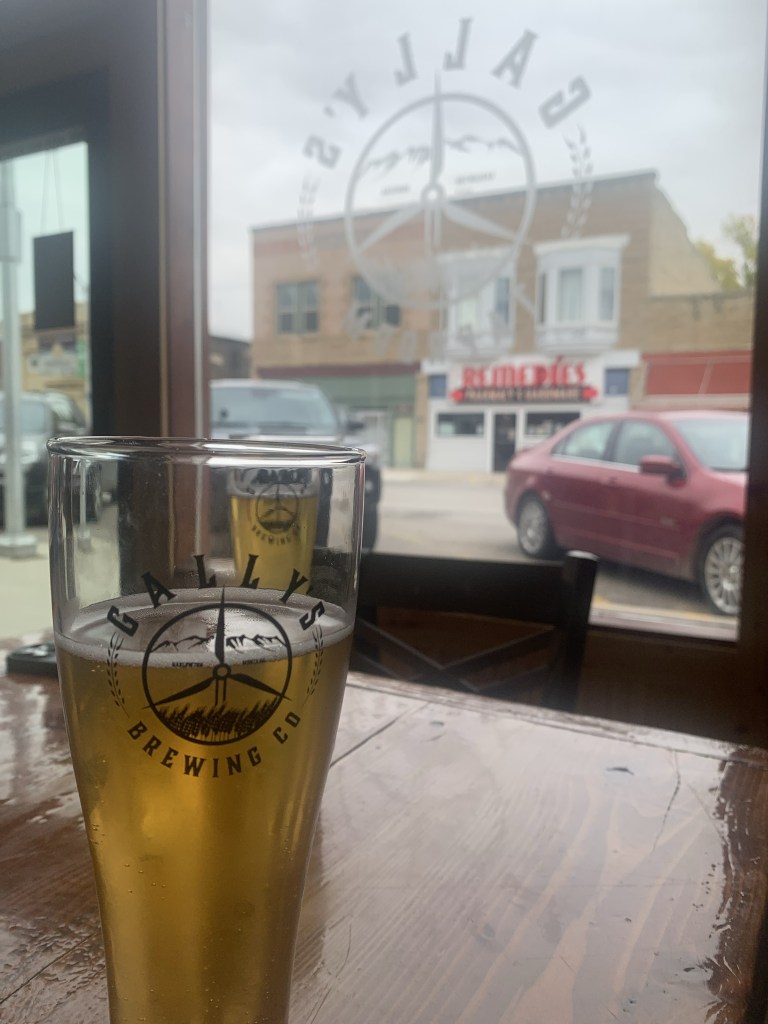
Then there’s the newcomer: the Gally’s microbrewery and pub, housed in the 1913 Montana Block.

It’s a great place for local beer and good conversation—and maybe the start of something good for the town.

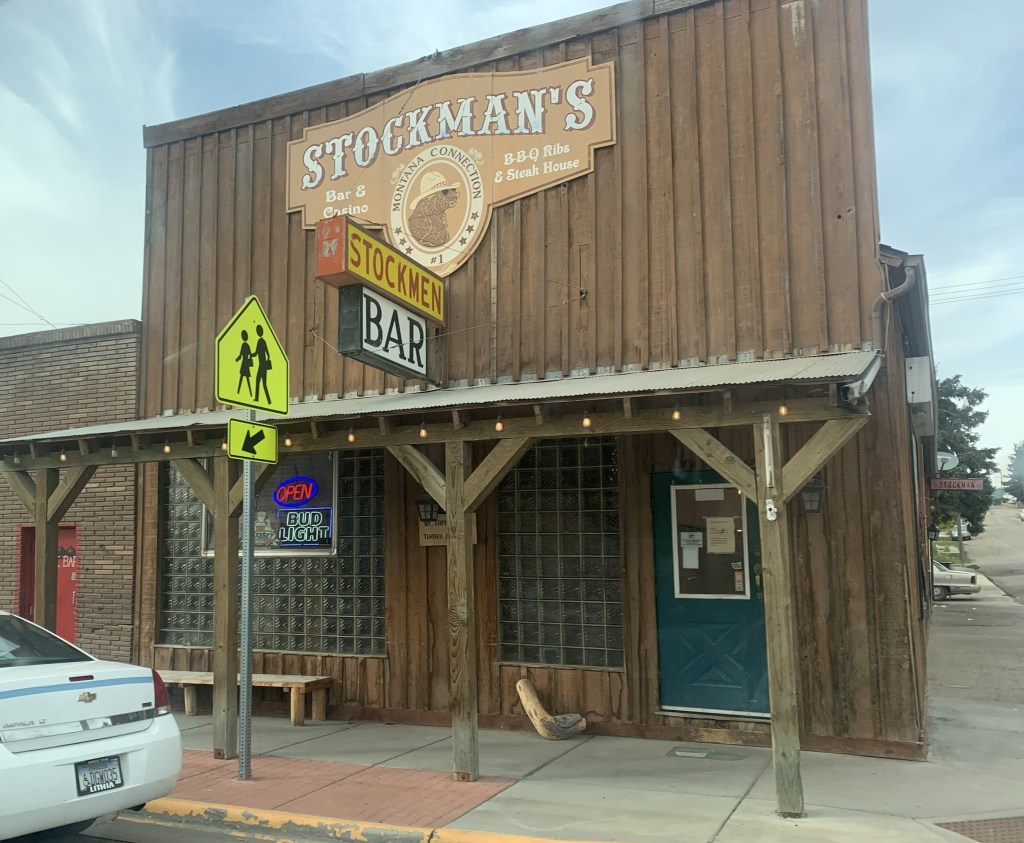
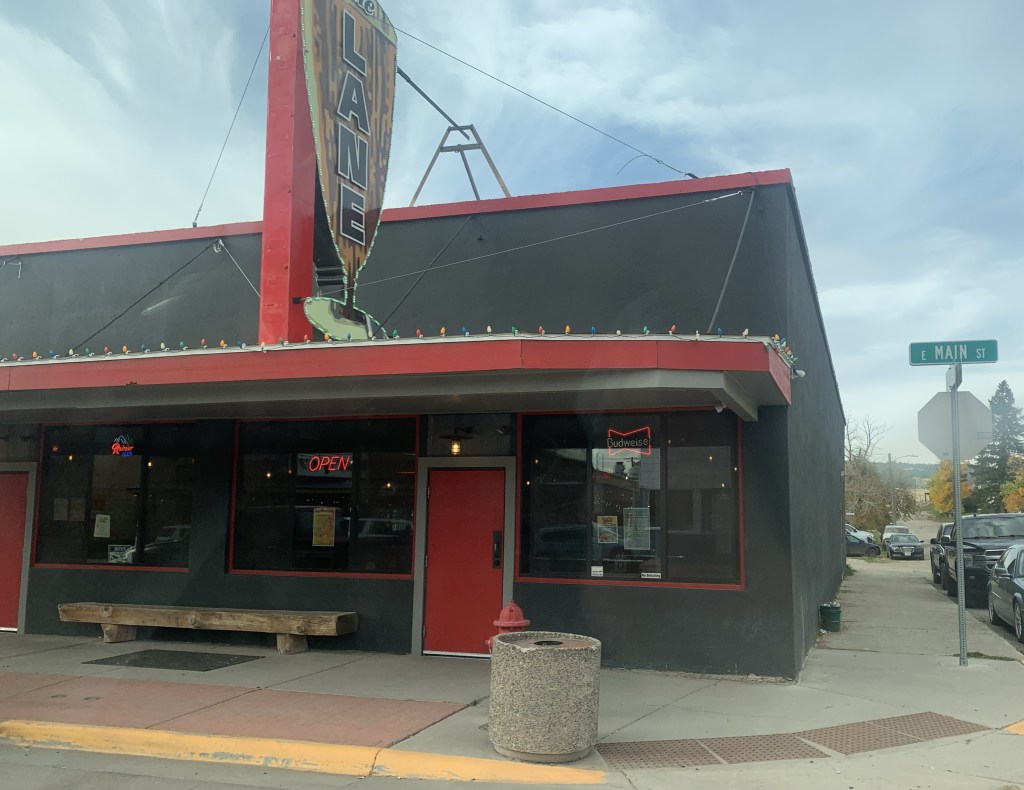
US Highway 12 was torn up for major repairs when I last visited White Sulphur Springs last decade. The improvement along its population growth and the ever expanding hot springs gives the place a new look, reflected in new catchy fronts to local bars along with new businesses such as a huge Town Pump.

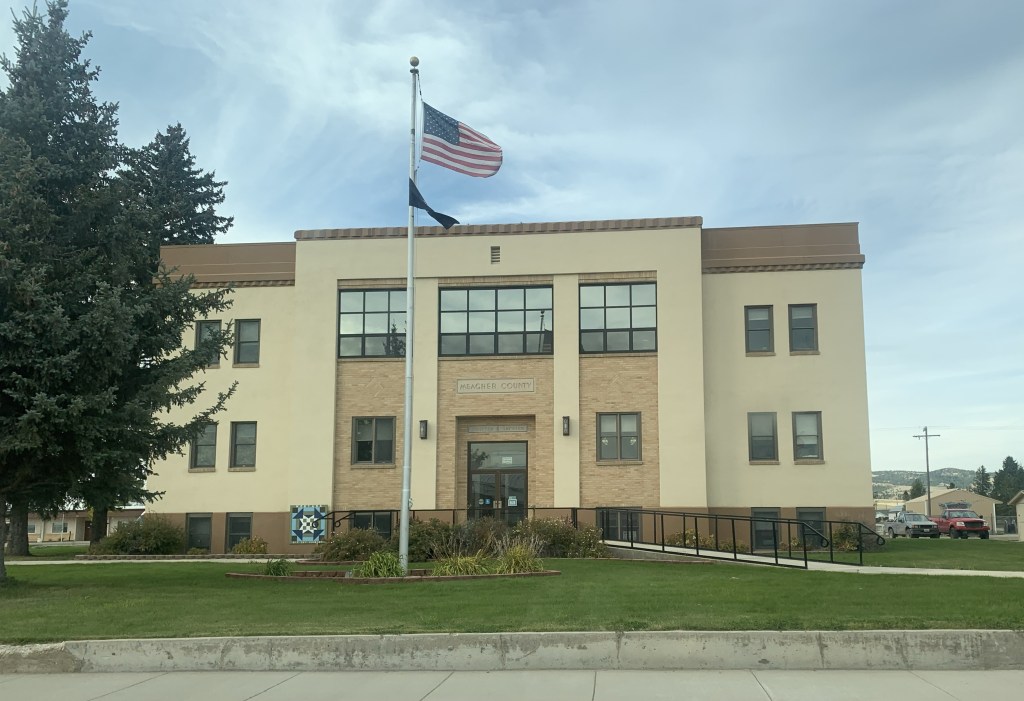
But historic White Sulphur Springs is doing ok too: the New Deal constructed Meagher County Courthouse is still a roadside landmark while the old railroad corridor, just west of the Hot Springs, remains, awaiting its rebirth.

These places are mere highlights along a historic route that’s worth a drive anytime in the fall.

Rimini, a “ghost town” in the Helena-Lewis and Clark National Forest

Rimini is another “ghost town” in Lewis and Clark County that actually has a number of permanent residents and that number increases during the summer and on weekends. The town served mines first discovered c. 1864 but not developed until the 1880s once the Northern Pacific Railroad ran a branch line to the town. the buildings from the late 19th century are excellent examples of False-front commercial architecture, especially where log buildings have a frame front.

The town’s 1904 school house is listed in the National Register of Historic Places. It serves as the Rimini community hall today.

Nearby is the Moose Creek Ranger Station, another National Register-listed building. Made of logs, the station was built in 1908, at the time the federal government established Helena National Forest. It is also associated with Camp Rimini, a CCC camp established across the road from the station in 1939.

The building then became associated with the U.S. army’s dog training facility from 1942-1944. The soldiers trained dogs to serve in Artic search and rescue teams.

Moose Creek Ranger Station garage

Thus this 100-year old log building is not only associated with the history of the US Forest Service but also helps to tell the story of the New Deal and World War II.

Zurich Park: New Deal Landmark in Blaine County

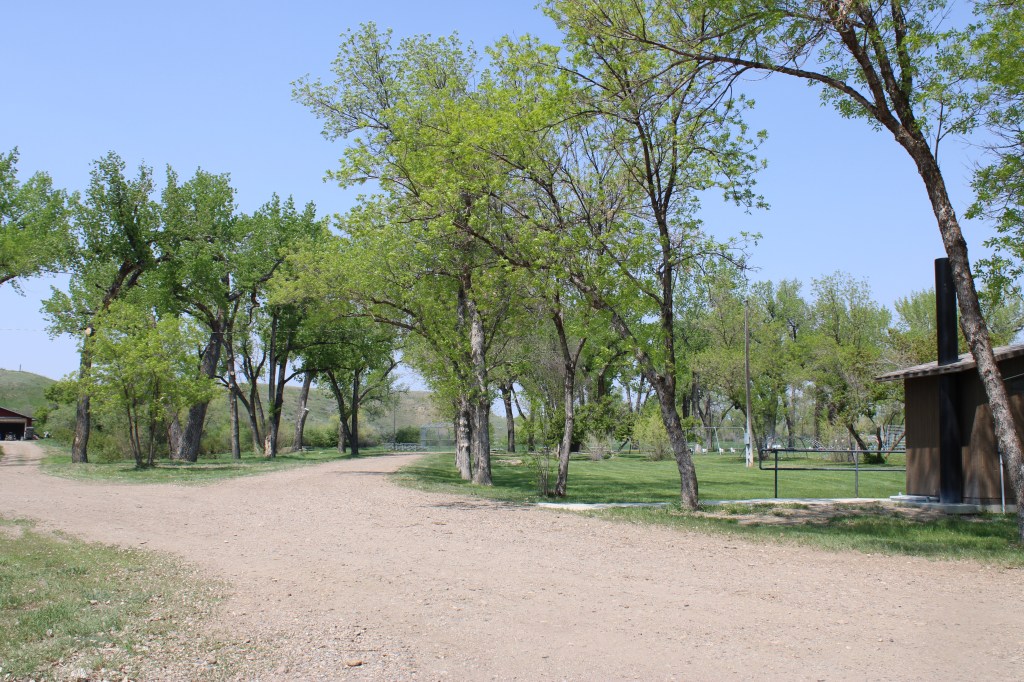
Zurich Park, 2023

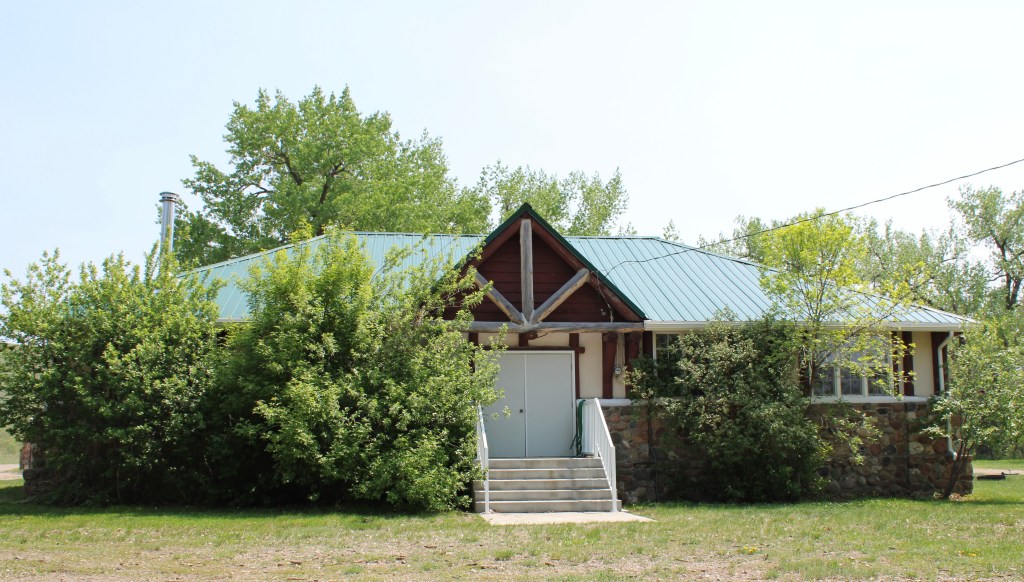
North of the railroad town of Zurich along US Highway 2 in Blaine County is Zurich Park, a New Deal era landmark from 1936-1937.

Originally called the Zurich Recreation Park, it developed as one three recreation areas in the planned South Wagner Resettlement Project. And the park in turn centered on the Community hall built at the park’s entrance.

The Chinook Opinion on July 16, 1936 reported the initial plans for the park. The facility was centered on 30 Mile Creek, not far from the river and you crossed one of the canals of the Milk River Project as you approached the park from Zurich.
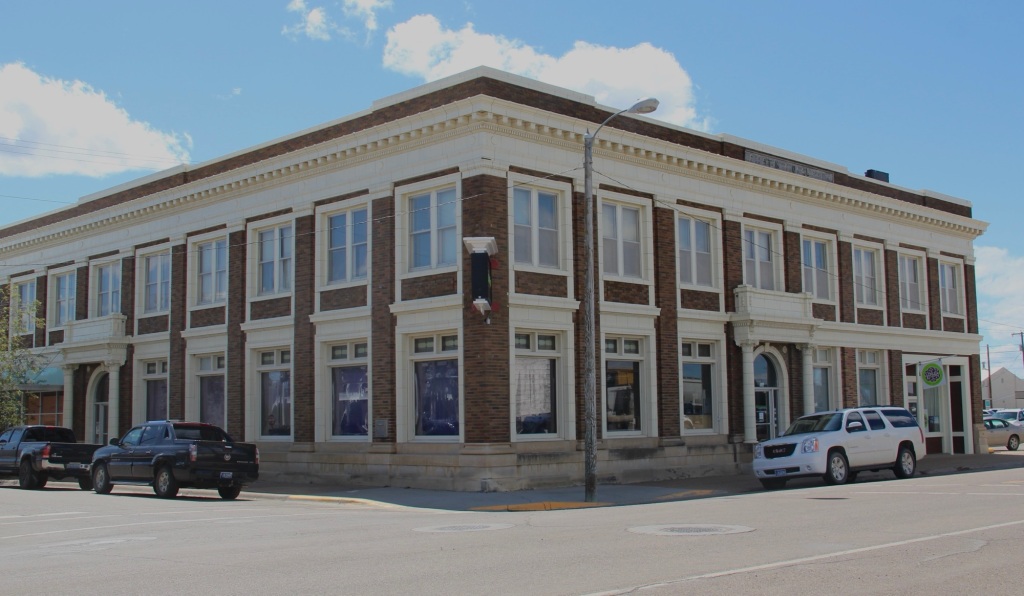
Milk River Project

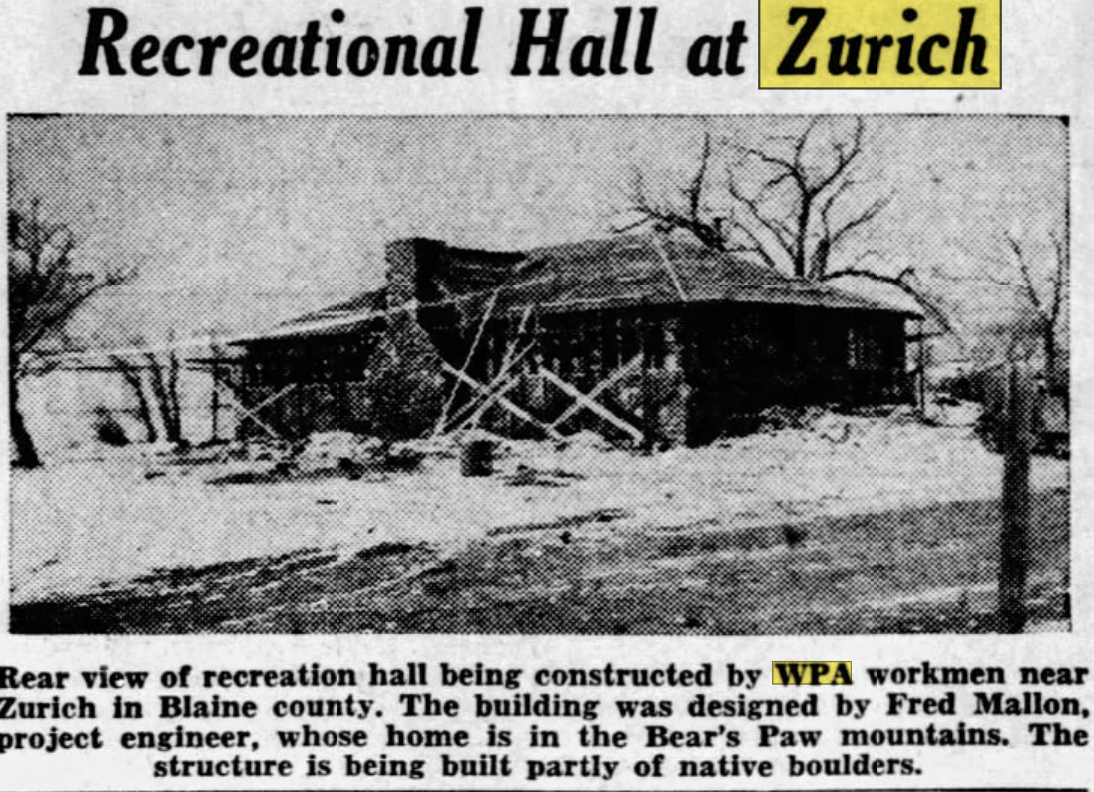
The community hall was 30 by 60 feet. 25 men, supervised by Floyd White of the county, constructed the building and other park features. The newspaper reported that the community hall “will be of native stone, logs and rough timber in rustic effect, plans having been drawn by Fred Mallon, project engineer” for the Resettlement Administration. The newspaper added that “This type of building will have the advantage of being more permanent, more attractive and will provide more labor and cost less for materials.”
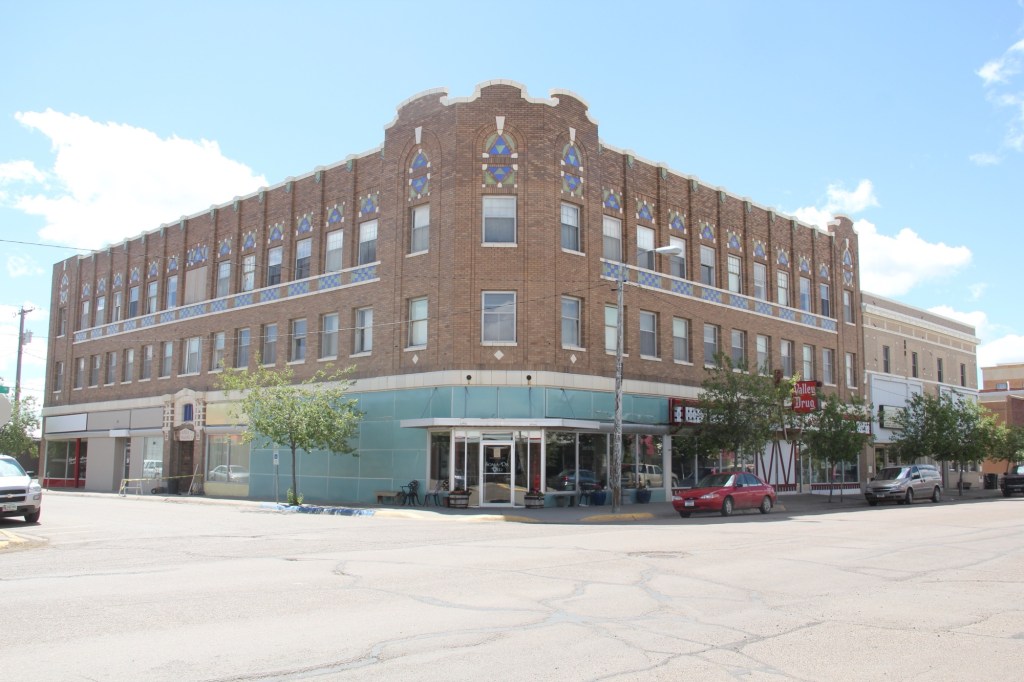
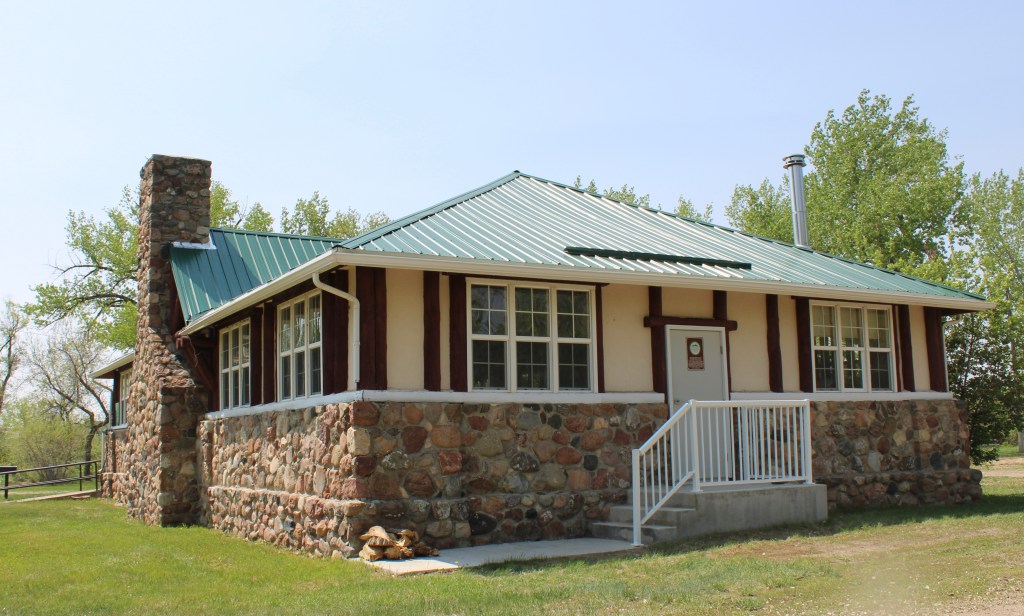
The park initially included a swimming area, picnic facilities and playgrounds.

In the winter of 1937 the Great Falls Tribune published a photograph of the almost completed community hall, with snow piled about the building. By the time summer rolled around the park was ready for use.

It served not just Zurich but hosted groups from Chinook and Harlem for decades. It quickly became a recreation and community center for all sorts of activities and meetings. The newspaper ad below was in the Harlem News of October 27, 1939.

For instance, regular district meetings of the Soil Conservation Service, the Beet Growers Association, 4-H clubs and home demonstration clubs met at the community hall. In 1939 the city of Chinook, who appreciated that local children had refrained from heavy use of fireworks, hosted a party at the park and bussed some 200 kids from Chinook for the afternoon event with hot dogs and ice cream. Even 40 years later the community hall was constantly in use by all sorts of groups.

In 1966 Chinook Lions club members gave the park and hall a facelift, installing five new picnic tables. The Harlem club joined in the effort and added six new picnic tables. Both groups made improvements to the playgrounds. The Chinook Opinion of June 9, 1966 reported: “These tables were built by the Chinook and Harlem high school shop department[s]. It is understood that a new resurfacing of the highway to the park [today’s Park Road] will be done this summer, and the park will be put in first class shape.” Zurich Park remains well maintained today as these images prove. Rural life and community events have changed in the 21st century but Zurich Park remains as an important legacy of the Great Depression decade.

Glendive In 1988: the Business District

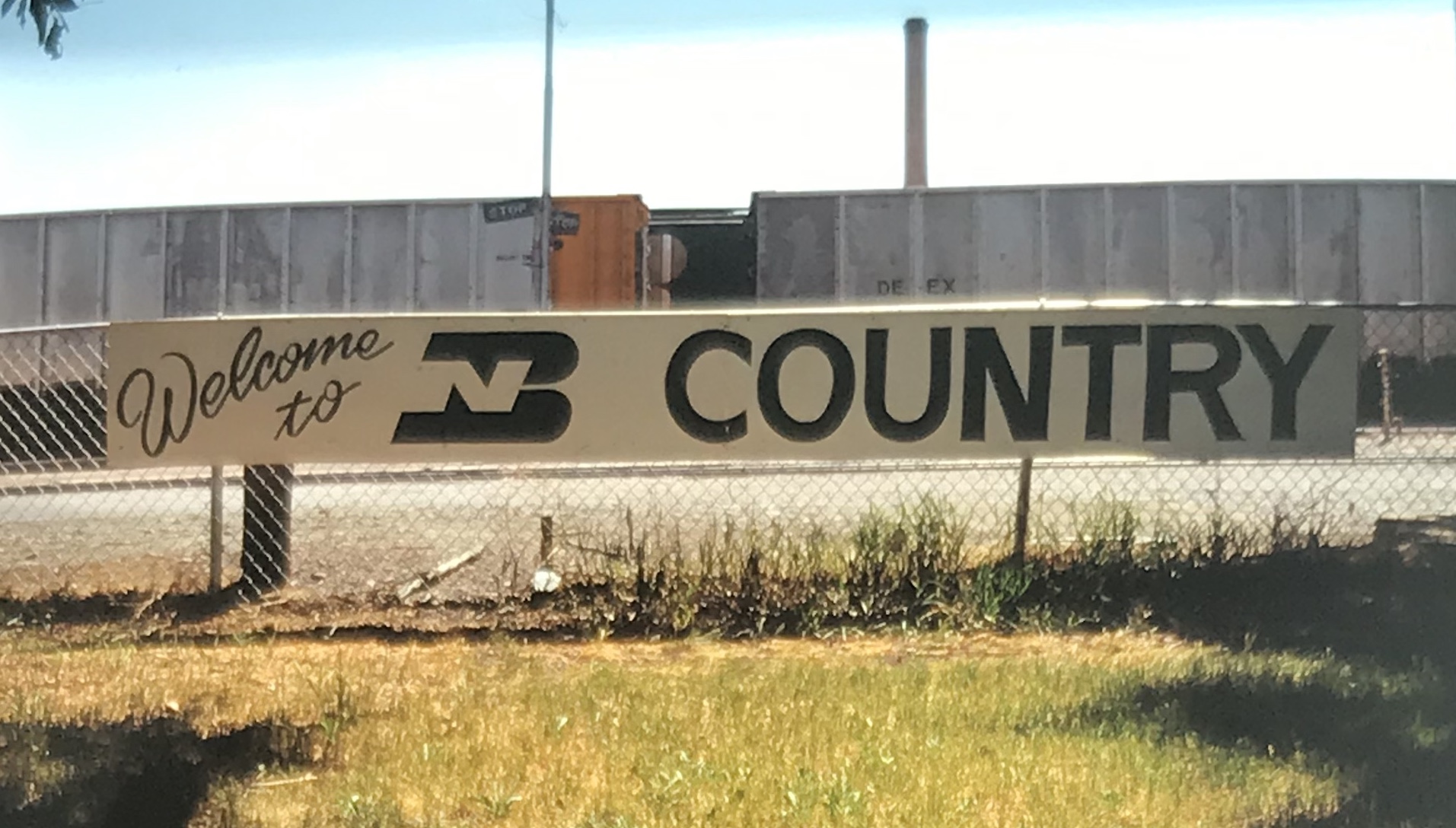
In my 1988 work in Montana I sought out Glendive and spent the night there due to a new research project on the Yellowstone Valley (which would yield the book Capitalism on the Frontier in 1993). Glendive was a division point on the Northern Pacific Railroad and some 100 years later it remained a key to the Burlington Northern Line.

A good bit of the historic machine shops (above) still operated in 1988. The depot and railroad offices still dominated the Merrill Avenue business district (below).
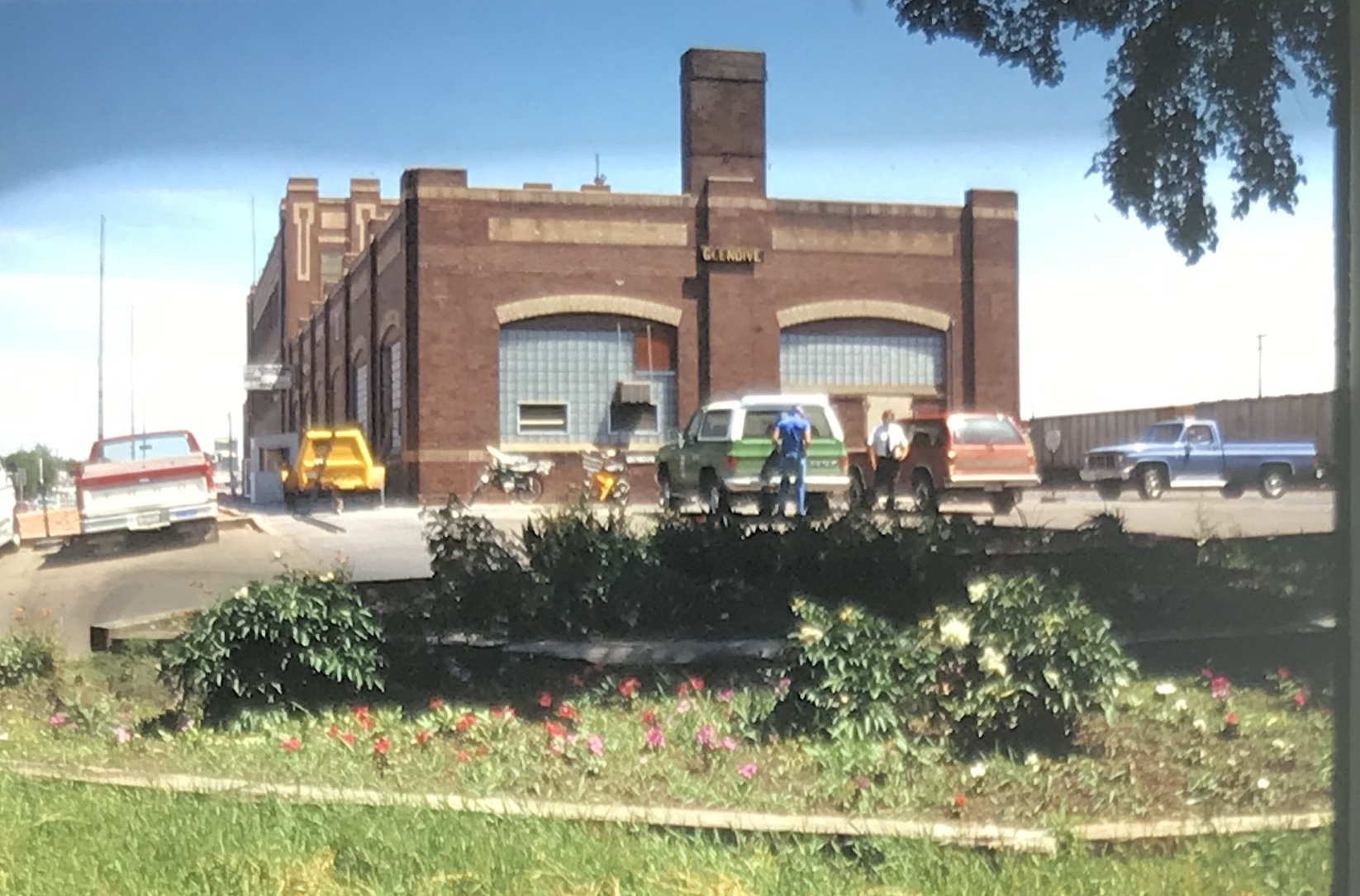
The older Northern Pacific lunchroom had been converted to the Chamber of Commerce offices, and visitors center.

Many businesses remained focused on Merrill Avenue, which from the 1910s forward was also the historic route of the Yellowstone Trail and later US Highway 10.

My favorite Merrill Avenue business was the wonderful Art Moderne style of the Luhaven Bar (below). You gots love the black carrera glass and glass block entrance.

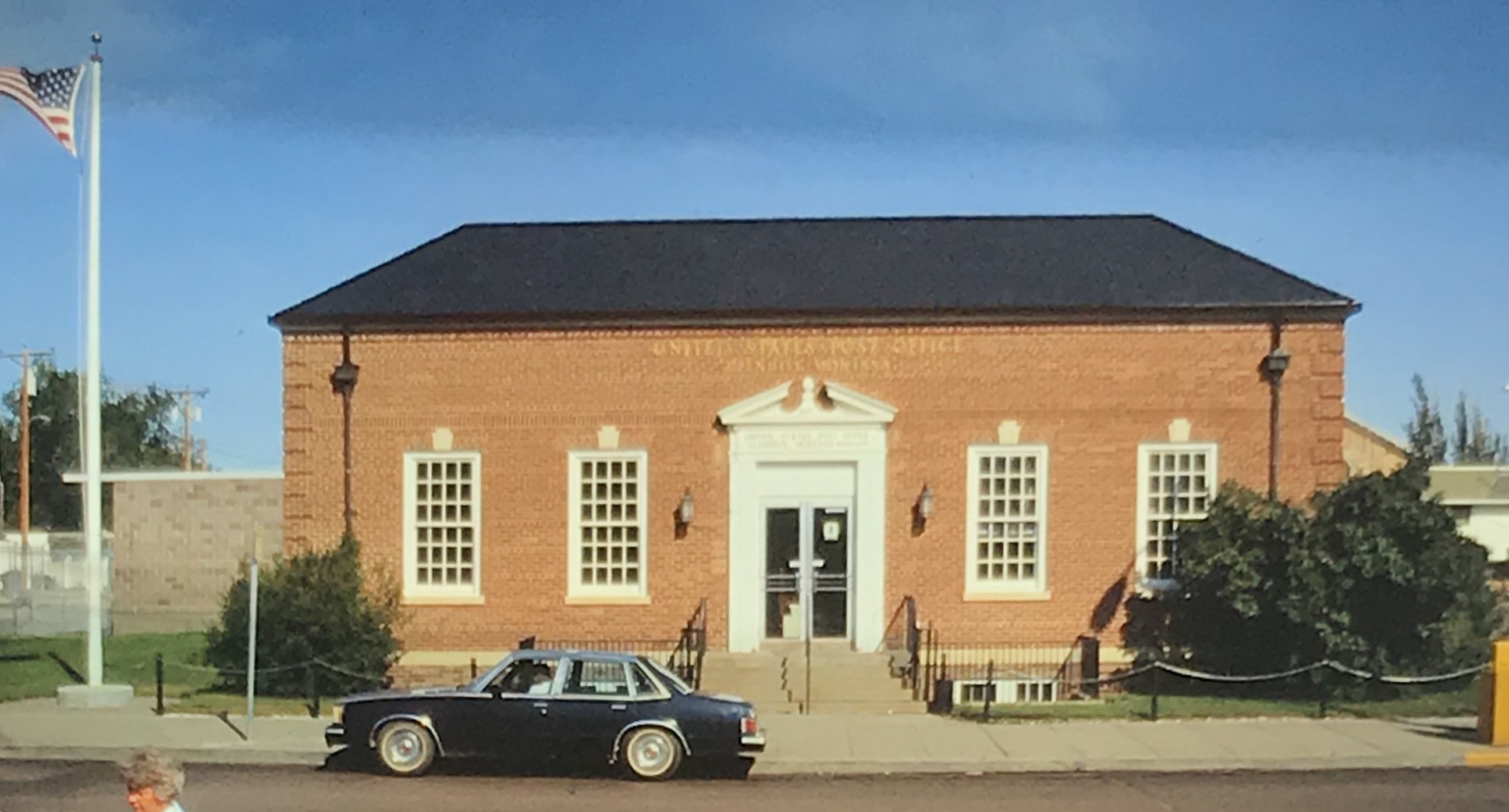
Not all architectural delights were along Merrill Avenue. The Dawson County Courthouseis an excellent mid-century modern public building, a real contrast to the town’s traditional Colonial Revival-styled post office from the New Deal era.

But my favorite modernist building was the First National Bank, which was later converted to the town’s public library.

Next posting will include homes from the town’s residential district from the early 20th century to the mid-century as I continue a look back to the Yellowstone River and its towns in 1988.

Sheridan County In 1988

After my comprehensive work in Montana from 1984-85 I returned in 1988 to revisit and add new places to my visual understanding of the state. Here are most of the color slides I took in Sheridan County on my second trip to Plentywood and environs.

I particularly looked at the railroad corridors–big surprise I know. Above is the Great Northern depot at Medicine Lake and below is a similar combination of Great Northern depot and elevators at Antelope.

The other railroad corridor I wanted to look at was the Soo Line, which operated a short spur line into the county in the early 20th century. I’m glad I did since hardly any buildings exist along this route today. Below is the T-town plan of Outlook.

Outlook in 1988 still had its classic Soo Line combination depot, with both passenger services, baggage warehouse and station office wrapped in one building. Below is the Outlook railroad corridor.

The station was in fair condition then (it is gone now) and I took a couple of images along with a close-up of the two-seat privy.

Other “towns” on the Soo Line had nothing left but deteriorating elevators. Here in 1988 was what was left in Raymond.

In Plentywood, the county seat, I took images of the great fairgrounds sign and the New Deal-era Sheridan County Courthouse.

I also was so happy to see the Orpheum movie theater still in operation.

Finally I always have found it fascinating that at Plentywood’s main intersection stood 3 bank buildings at the three corners–and at Montana’s best known socialist county in the early 20th century.

And in 1988 I also took care to document the town’s Northern Pacific depot. Railroads and banks dominated the county at its founding.

Last scenes: the Flandrem community monument on Highway 16 and a bit of badlands scenery along Highway 5 (the image is from my original trip in 1985, this the bit of snow, taken February 1985).