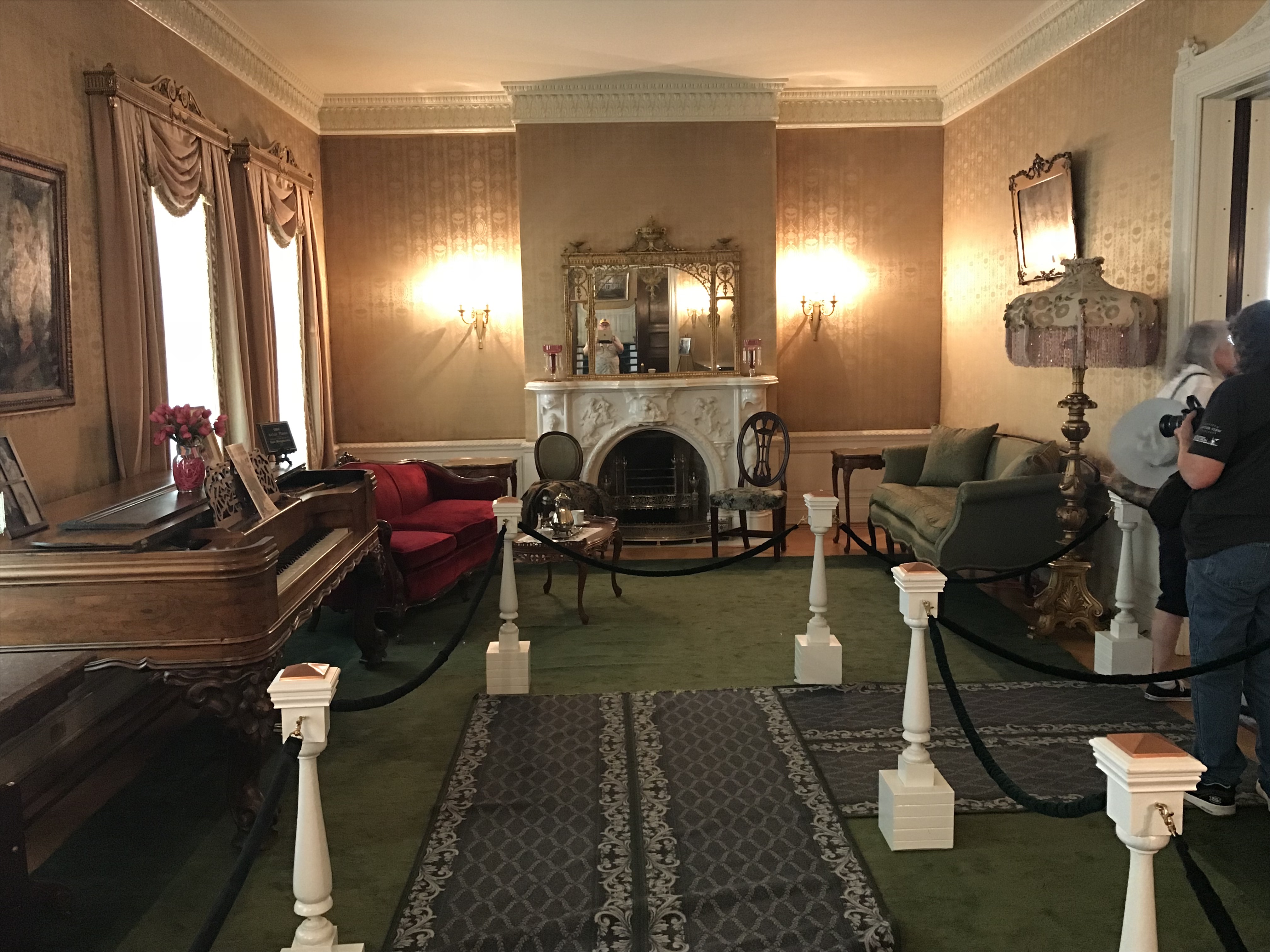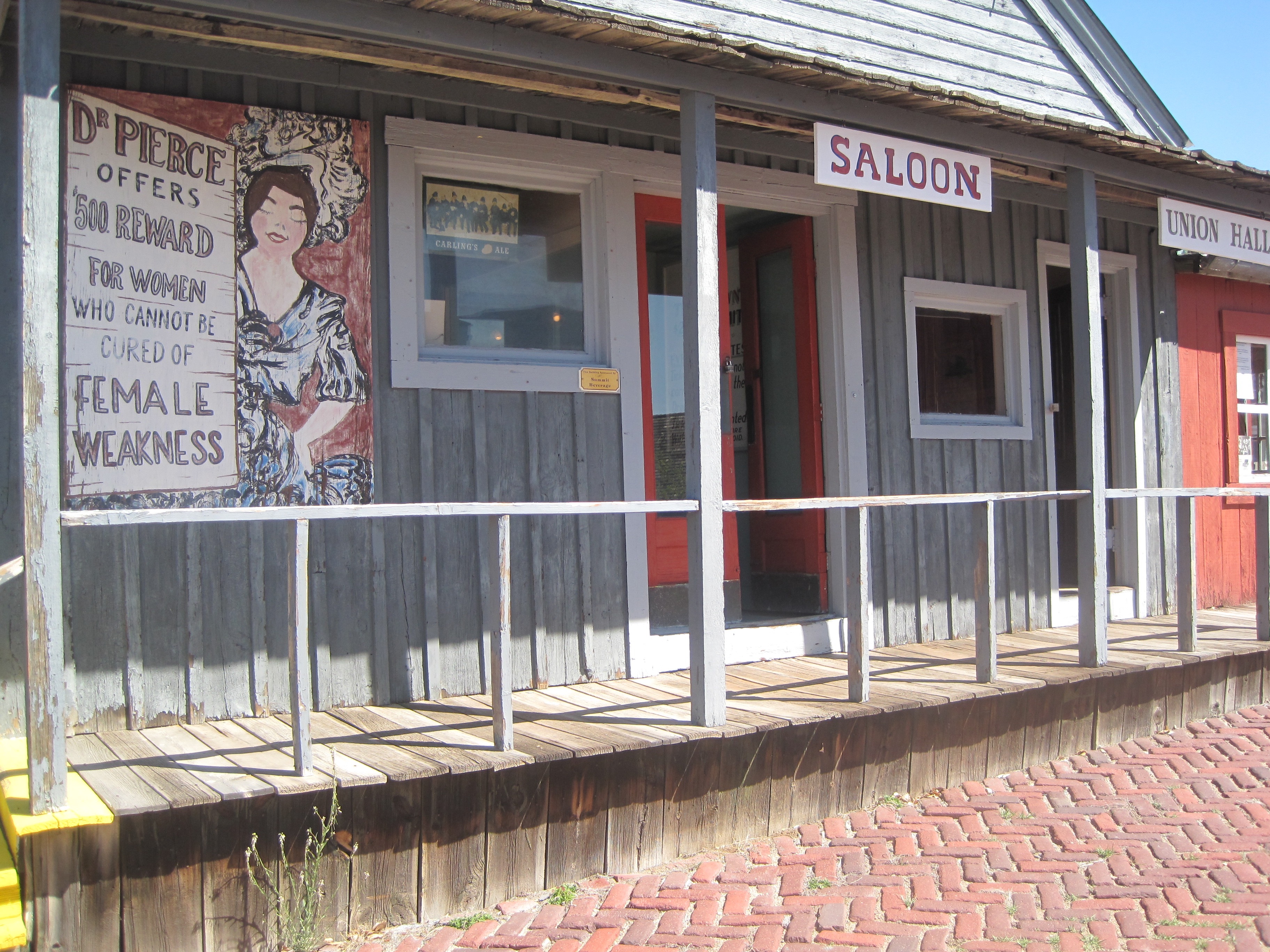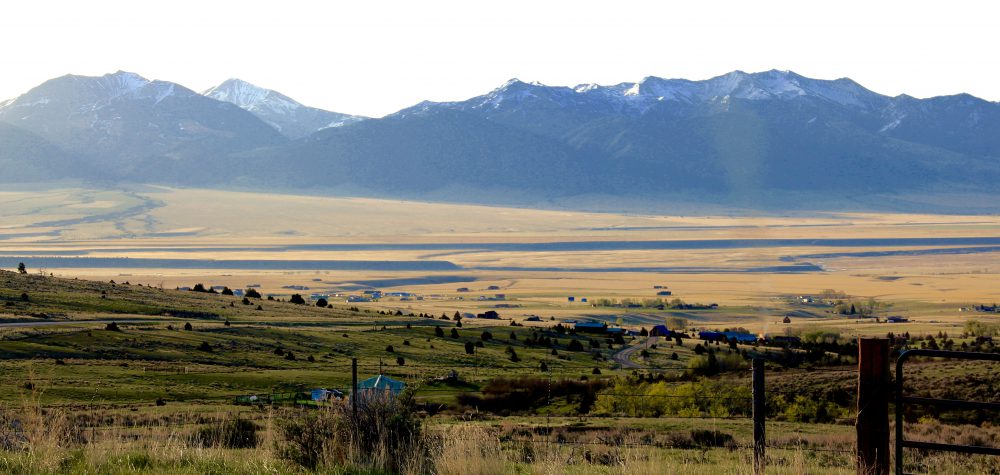
The new state history exhibit: looking to the future but feet planted firmly in the present.

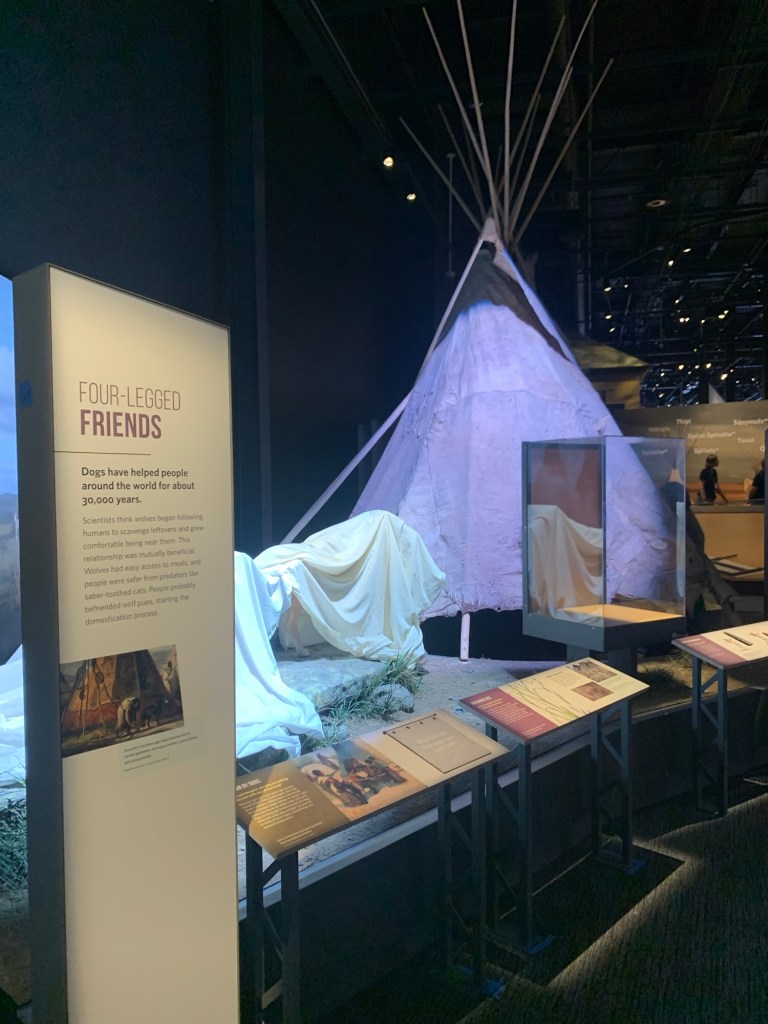
Like hundreds of others who crowded into the new wing of the Montana Historical Society to get a sneak peek of the new state history exhibit, titled Montana Homeland, I expected to be dazzled. After all it had been 40 years since MHS had last updated its primary history exhibit.

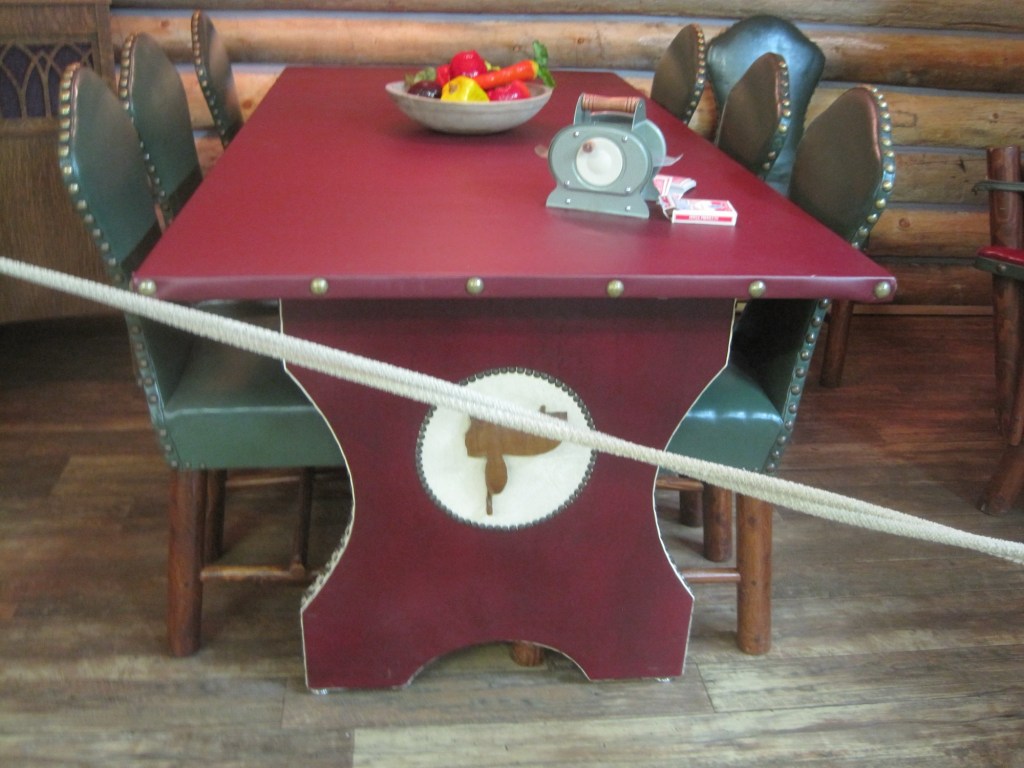
The architects gave the exhibit designers a huge lofty space and there are tipis galore, their height dominating everything around them, challenged only by a reproduction headframe.
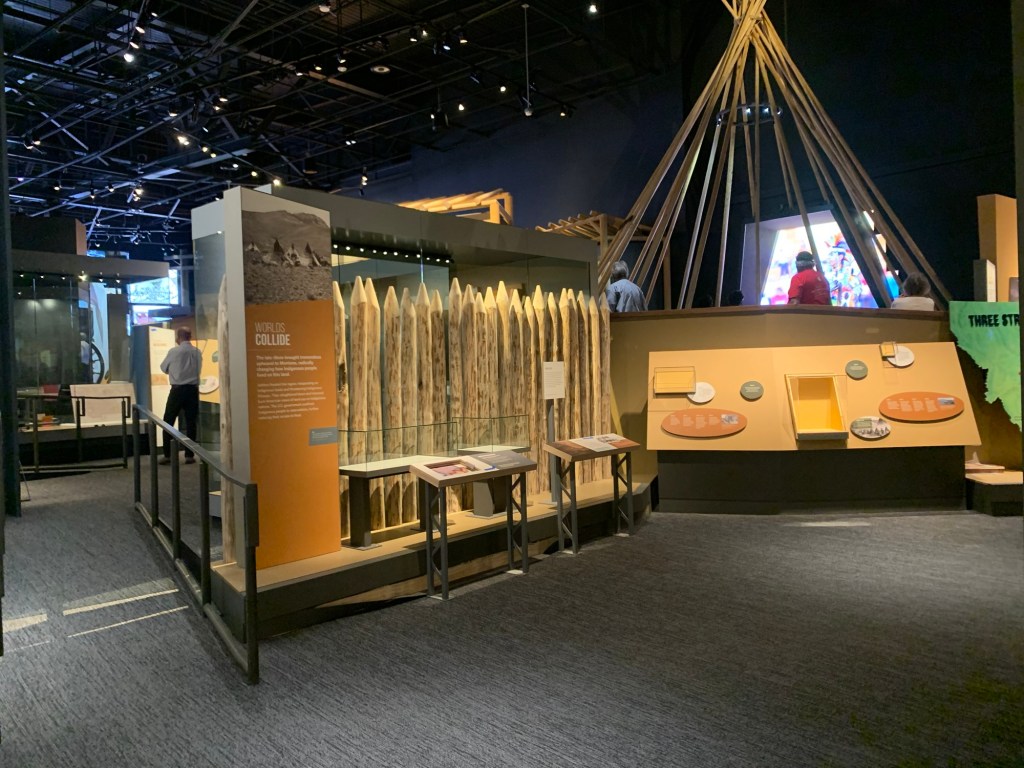
The headframe is in a corner and fades into the background unlike the tips which literally command most views within the exhibit, even at the end.

The message of the exhibit team is not subtle—Indigenous people dominate the past of the lands that today comprise Montana—but the hand of people in the last 100 years also dominate the built environment. The exhibit is missing the one lofty structure that is still found everywhere, representing a property type that also ties together so much of the state’s history—the Grain Elevator. Wish there was one in these lofty spaces. It helps to explain the impact of agriculture, the homesteading era, railroad lines, and town creation.

20th century Montana is thus far greatly underrepresented in the exhibit, almost as if the attitude was that nothing matters that much after the homesteaders—let’s wrap this baby up!

But by so doing you downplay the huge impact of the engineered landscape on the homeland, especially the federal irrigation programs that produced mammoth structures that reoriented entire places—Gibson Dam comes right to mind, and then there’s Fort Peck.

Irrigation also is central because of the diversity of peoples who came in the wake of the canals and ditches. Not just the Indigenous, not just the miners but the farmers and ranchers added to the Montana mosaic. A working headgate—would that help propel the story?
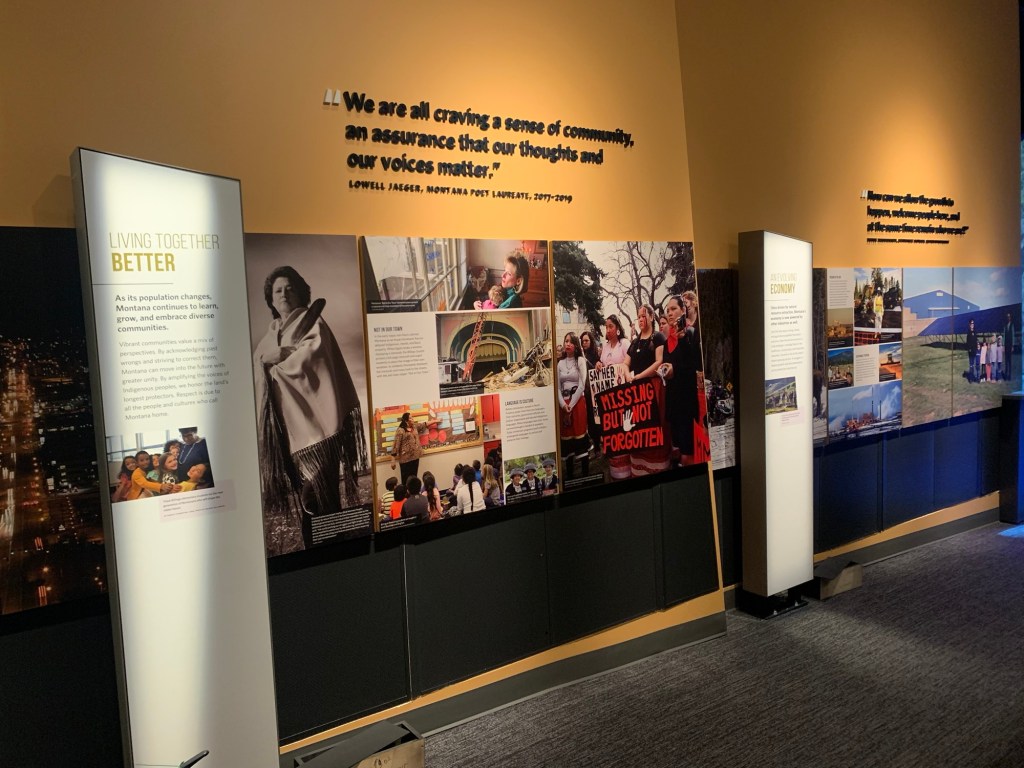
Right now the answer is no. There are many, many words in this exhibit, and, as people seem to want to do nowadays, the words are often preachy. I wondered about the so 2020s final section, where visitors are implored to live better together by accepting diverse peoples.

Montana is nothing but a melding of diverse peoples, from 14 tribes, the 17-18 ethic groups at Butte, the Danes of the northeast, the Finns of the Clark’s fork, and the Mennonites of the central plains, etc etc. if they had started challenging character of the actual Montana landscape had been front and center, then let history unfold to show how many people of all sorts of origins and motives tried to carve a life from it—you would have a different exhibit and one not so preachy.

Let’s hope the Final Cut has many less words, many more objects and a greater embrace of the state’s 20th century transformations.
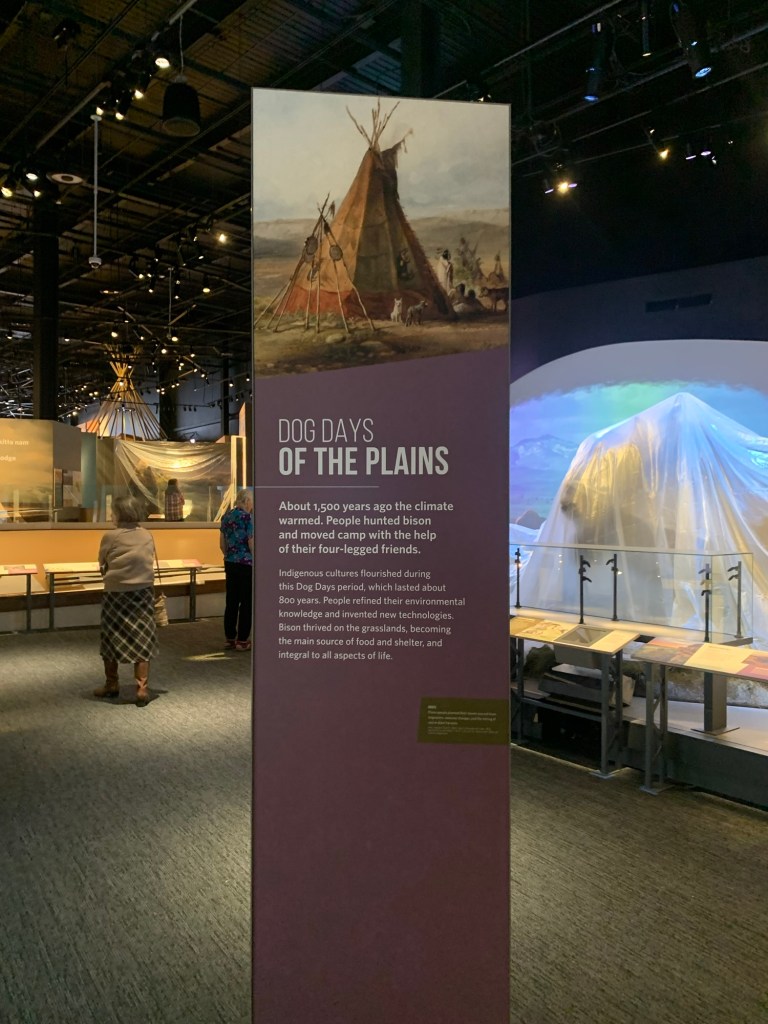
Transforming State History: the new Montana Historical Society museum

At the state history conference in Helena next month, the almost complete new museum at the Montana Historical Society will be unveiled. (The completed museum will have its full public opening in December.) while we won’t be able to see everything yet I’m still looking forward to a peak behind the curtain.

It will be a transformational change for state history—a new platform to explore, interpret and preserve the state’s past. Why do I have such confidence—I was already part of such a project in the creation of a new Tennessee State Museum from 2016-2018. The new museum in Nashville has created a huge new platform for all types of activities in state history and everyone is benefiting, especially the state’s robust heritage tourism industry.

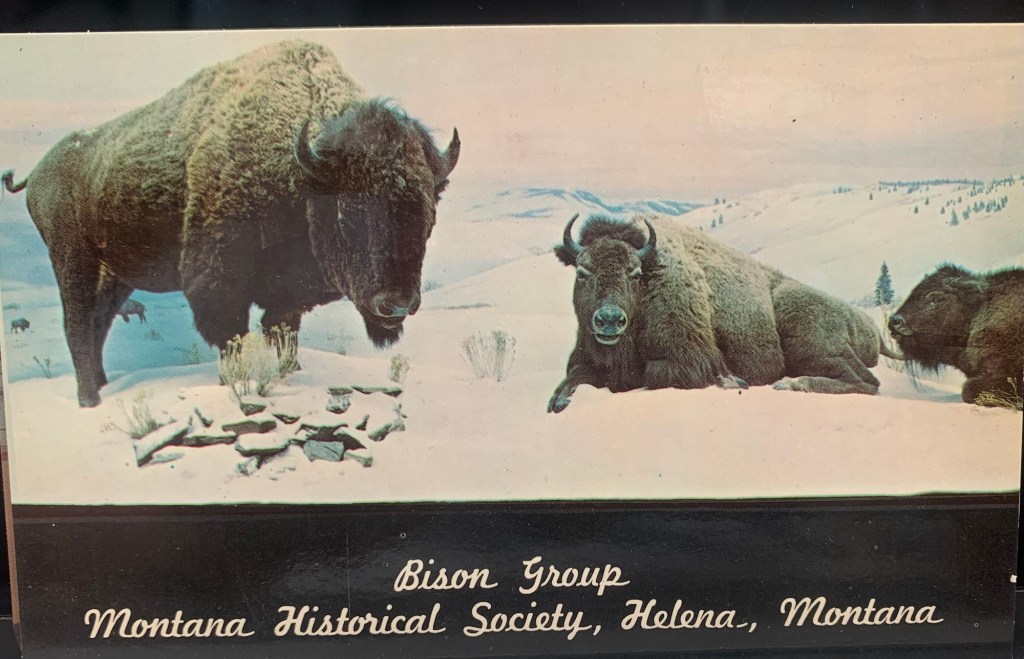
But before we get too excited about the future, let’s remember how this new change at MHS is just the latest chapter in how this amazing institution has served Montana. For this post I’m using some photographs but mostly postcards that I collected in Montana in the 1980s.

The Veterans and Pioneers Memorial Building dates to 1953. Here are two views, one emphasizing the Liberty Bell installation from the Bicentennial and the second reminding us how the tour train, established in 1954, started its tours there and connected visitors to downtown.

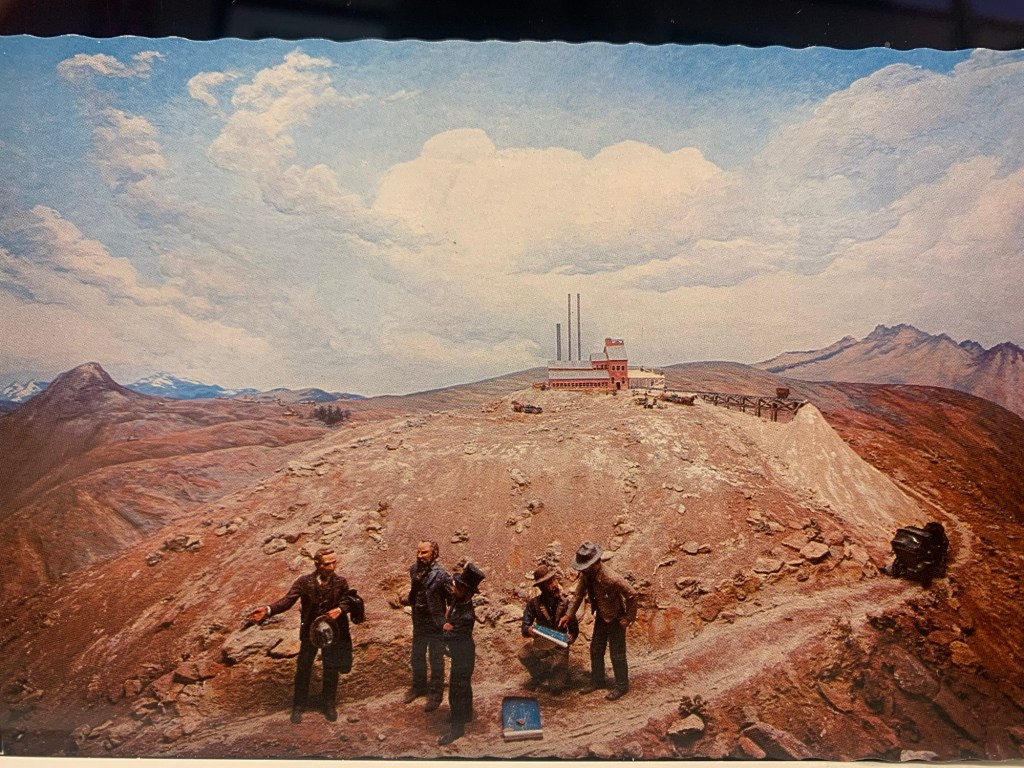
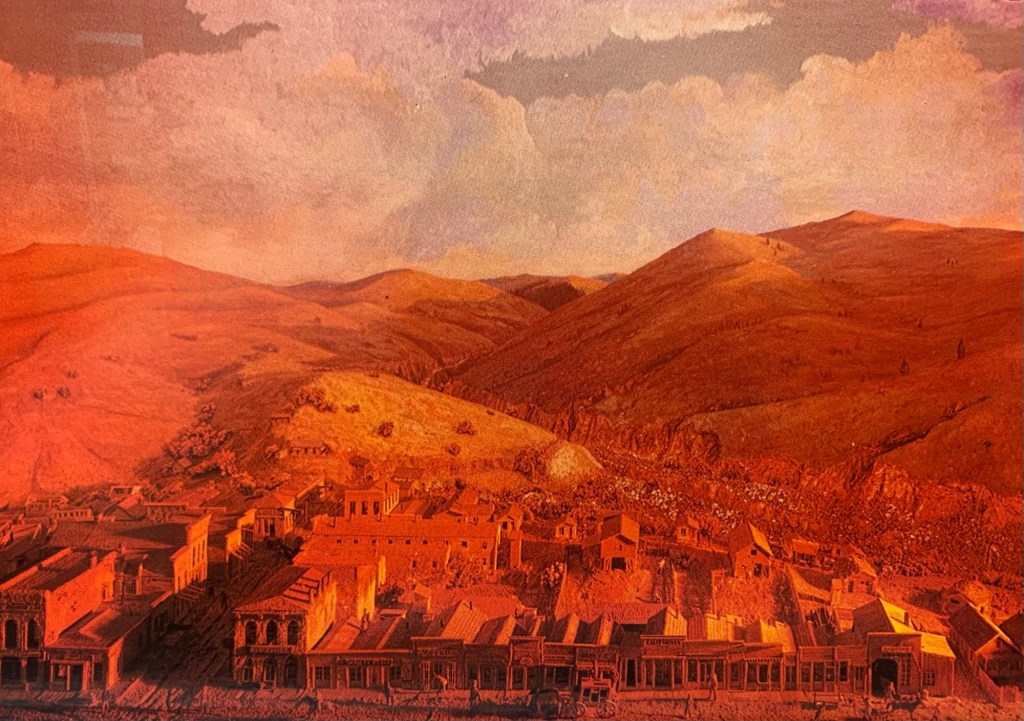
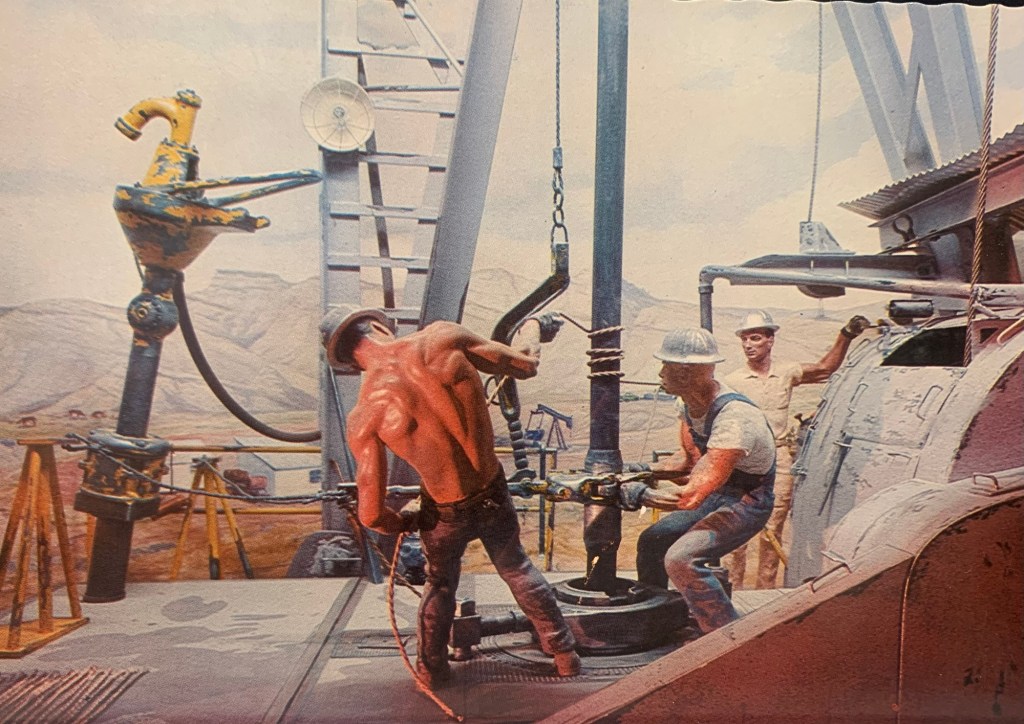
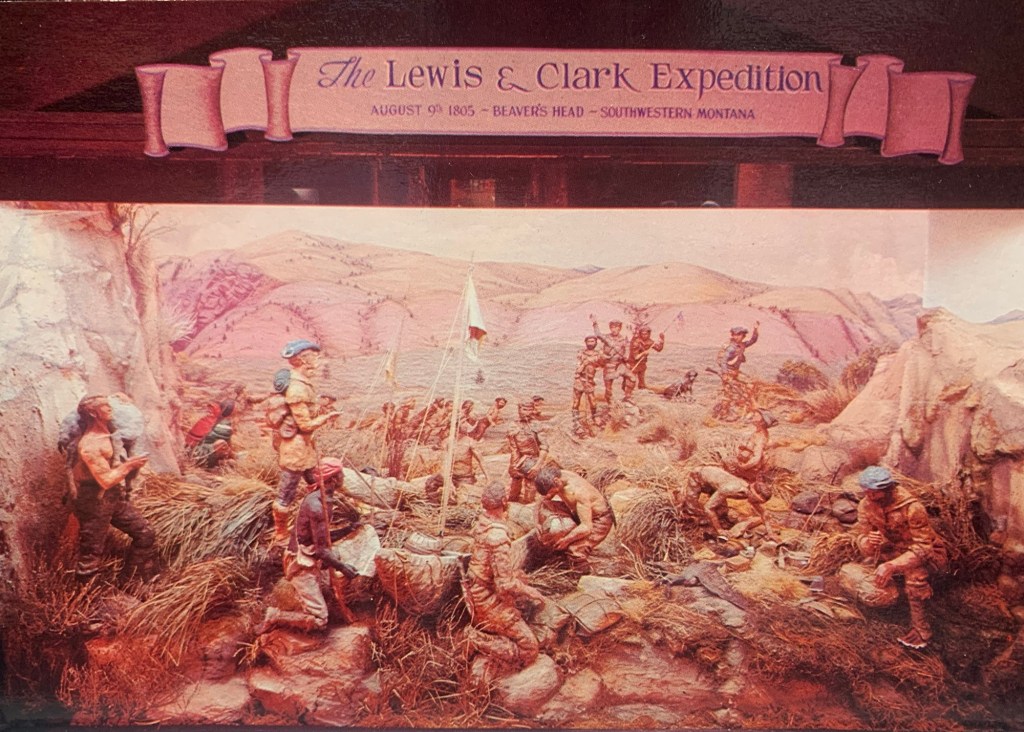
Some of us are old enough to remember the early exhibits—and the dominance of dioramas, dioramas, dioramas!

“The richest hill on earth”
Virginia City
Oil in Eastern Montana
Power lines on the plains
Lewis and Clark diorama, the museum opened during the 150th anniversary of the expedition
That diorama has had a second life at the Beaverhead County Museum in Dillon. Rudy Autio, the famous art potter associated with the Archie Bray Foundation and University of Montana, was the sculptor.

The highlight of the collection, then and now, was the Charles M. Russell gallery, although his work seemed out of sorts with the modern style of the building.

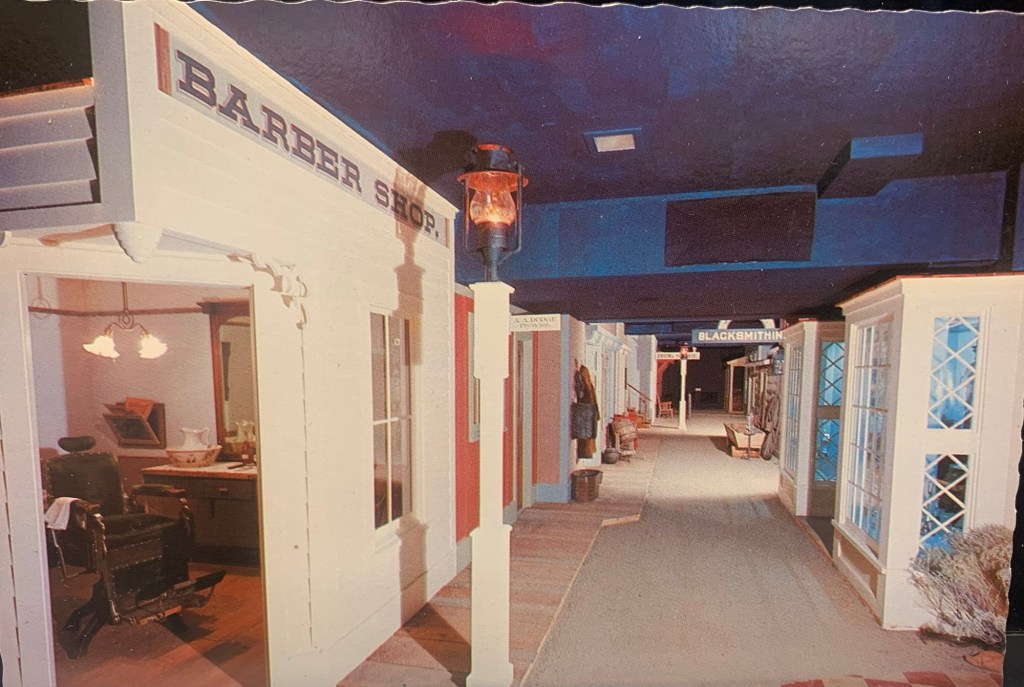
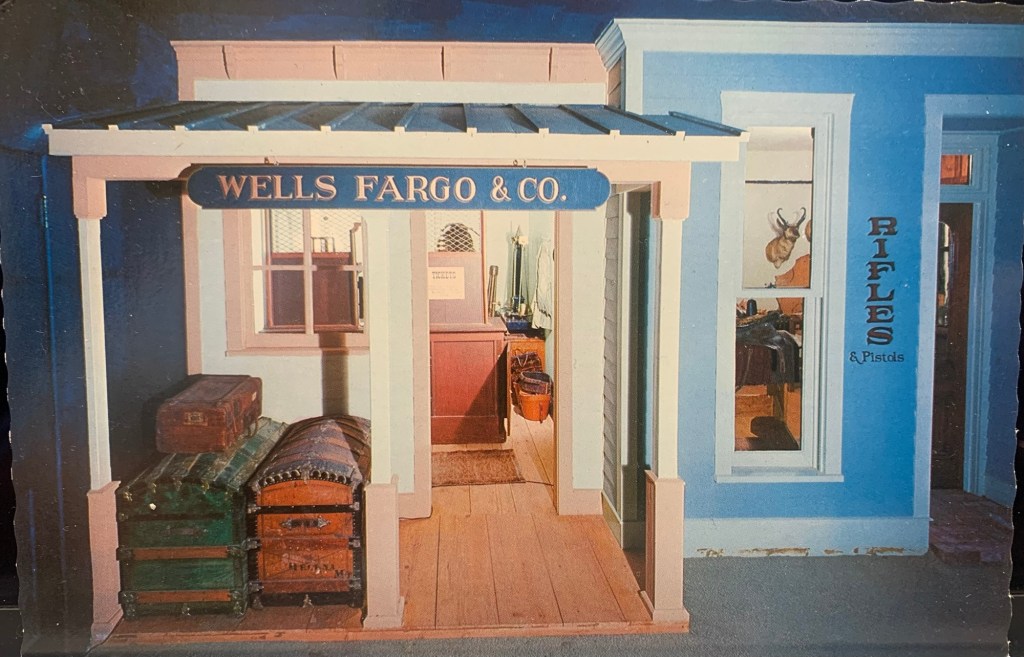
Then in the 1970s came the first transformation—placing Territorial Junction in the basement, a series of period rooms themed to a certain business or activity.

This installation had a tremendous influence on the many county museums that were built in the 1970s and 1970s as so many had their own territorial junction sections.

Mondak Heritage Center , Sidney, 2013

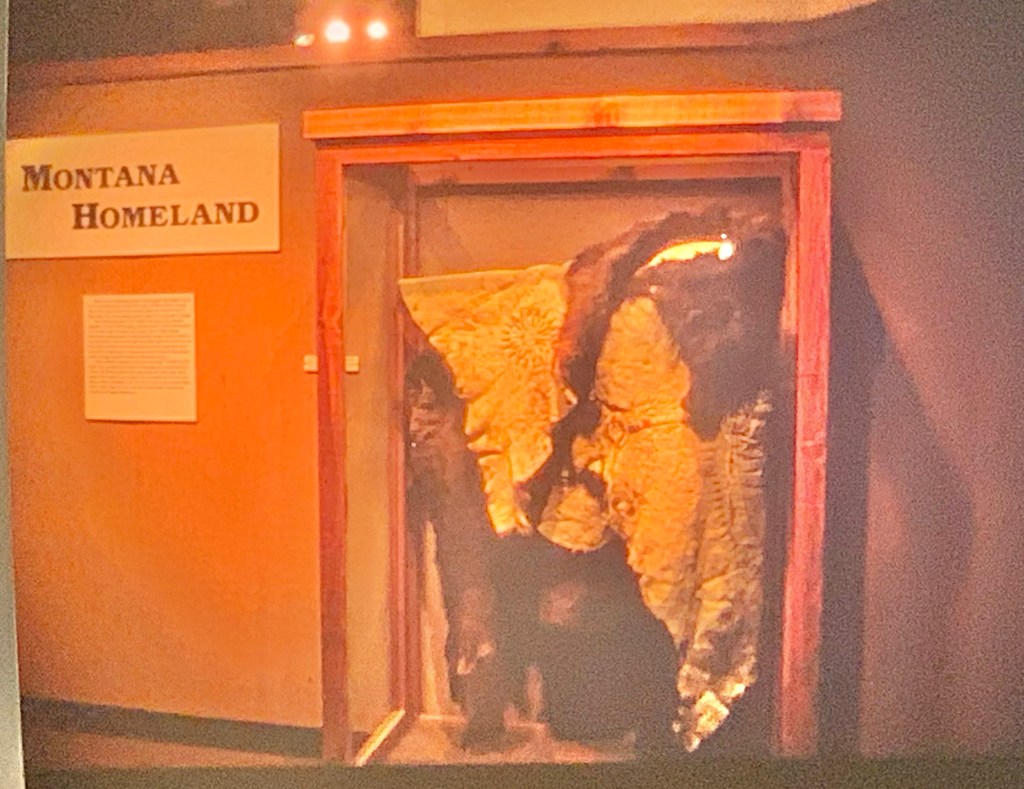
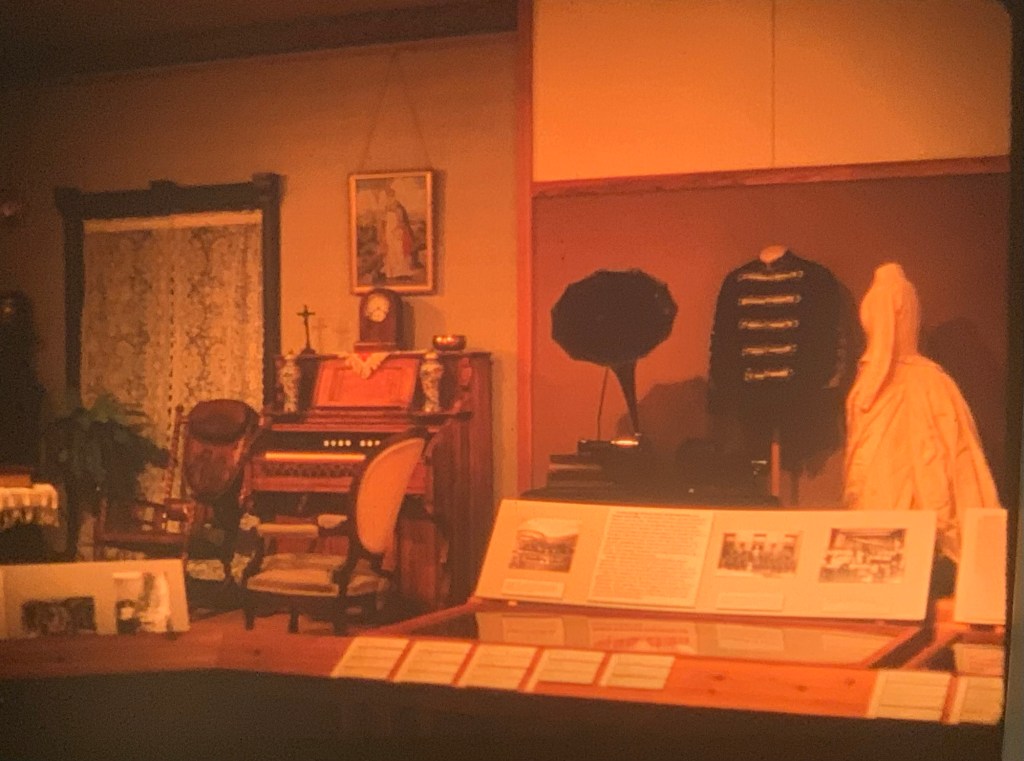
In the mid-1980s MHS staff planned and installed a new history gallery, named Montana Homeland. I visited it in 1988 and took a few slides—and in the dark light my images aren’t great but there’s enough to see how the approach had changed.

The new exhibit highlighted objects from the extensive and valuable MHS collections on Native American history.

Everywhere, from the sections on steamboats to the Victorian era to a 1930s kitchen, objects dominated the senses. It was a visual feast, an approach that I expect the new museum to continue but probably in a much more interactive way.

Yes, no doubt I will miss the old MHS museum but I’m pumped about the new one. What an opportunity! I will report more on this topic after September’s conference.

A bit more on Wilsall

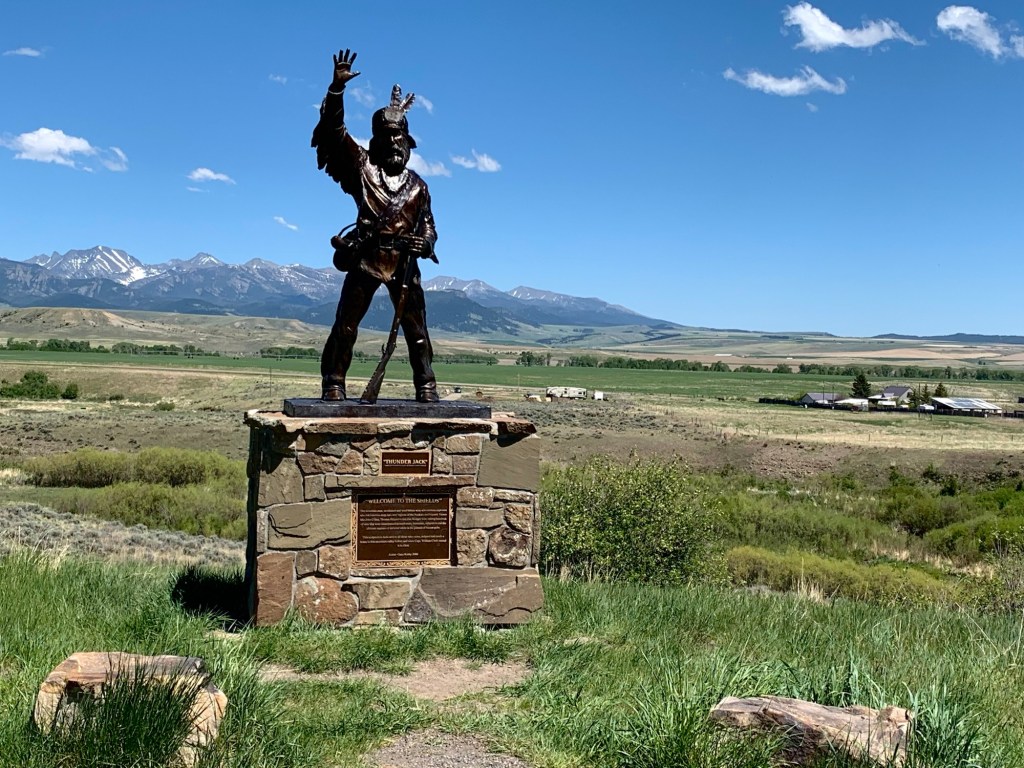
As readers of the blog know, the Shields River Valley is one of my favorite places in Montana. A good place to start any exploration is the village Wilsall, which, from my perspective, is close to a lot of larger towns and population but, then, also thrives quite well in its own.

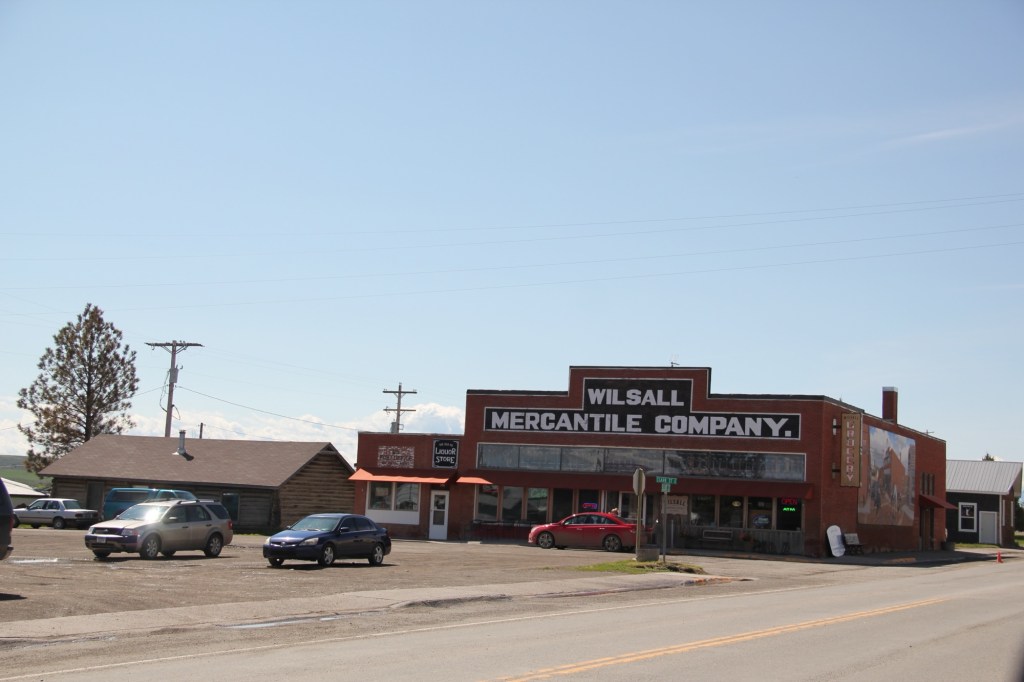
The town’s past lies with the cattle ranch of Will and Sally Jordan—thus the same Wilsall—and the building of a spur line by the Northern Pacific Railroad in 1909, and the homesteading boom in northern Park County. The historic grain elevator is one potent reminder of both the railroad and homesteading. The tracks ran to the west of the present US 89 highway.

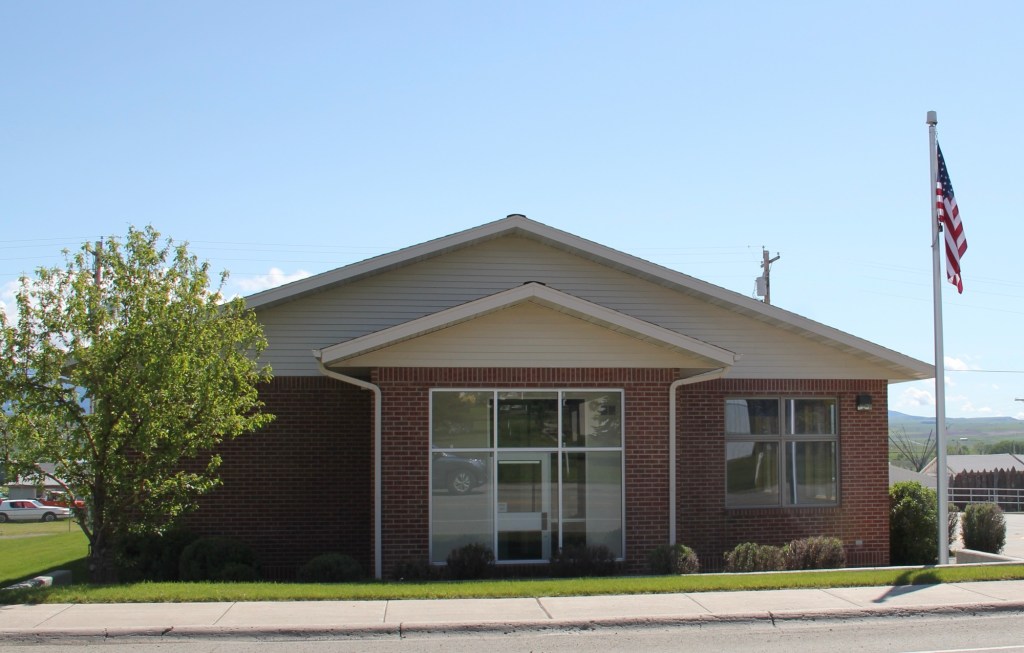
By 1910, the place had a post office; a modern one stands along the highway while an older one is attached to the mercantile building.

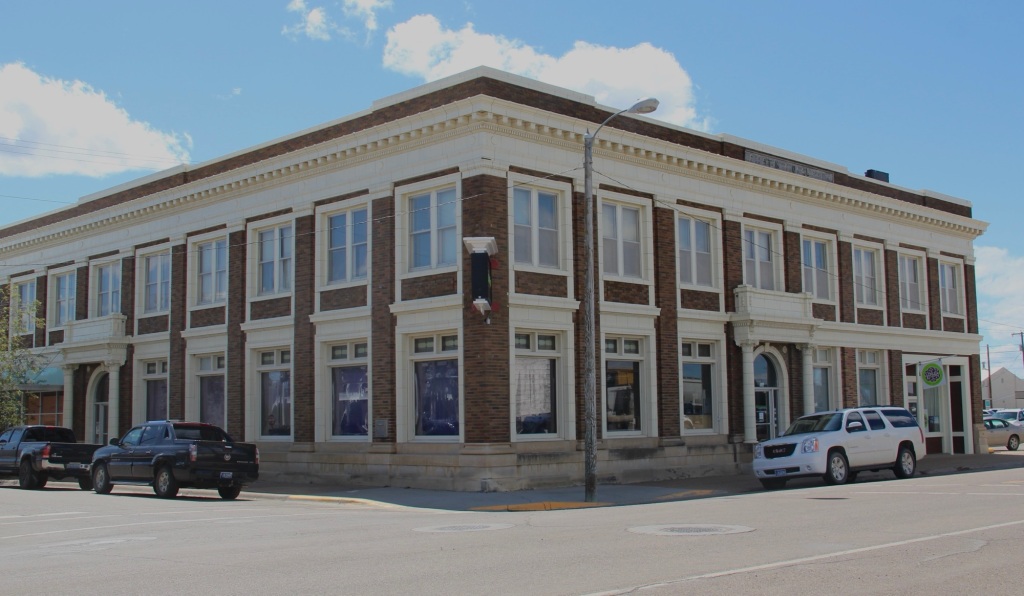
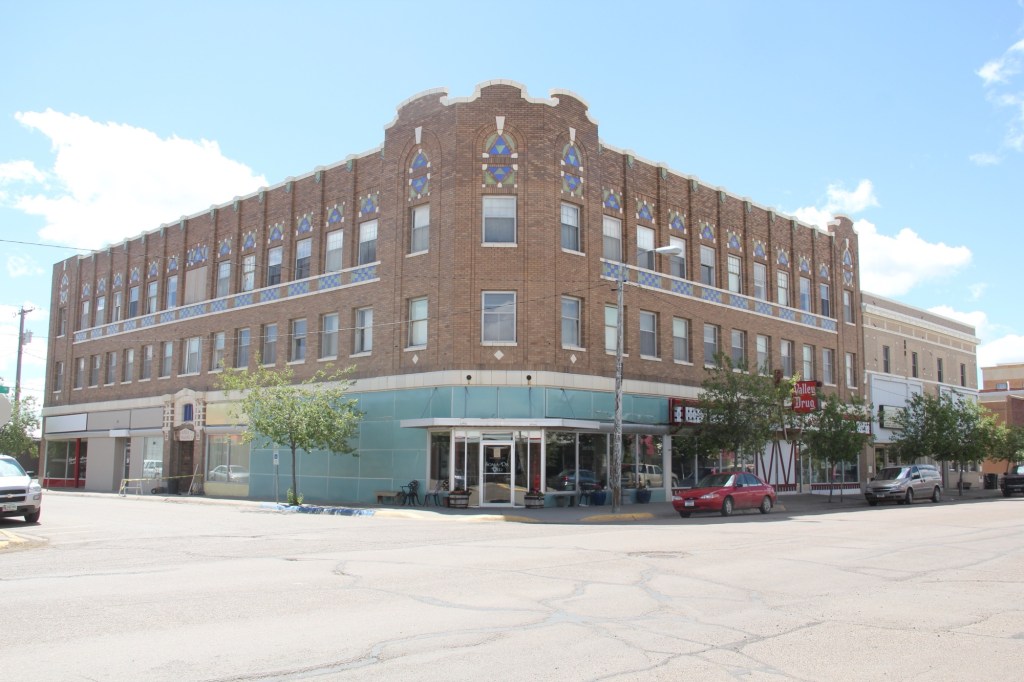
Soon the town’s primary crossroads at Elliot and Clark streets was defined by an impressive classical style bank on the west side and a large brick mercantile store on the east side.

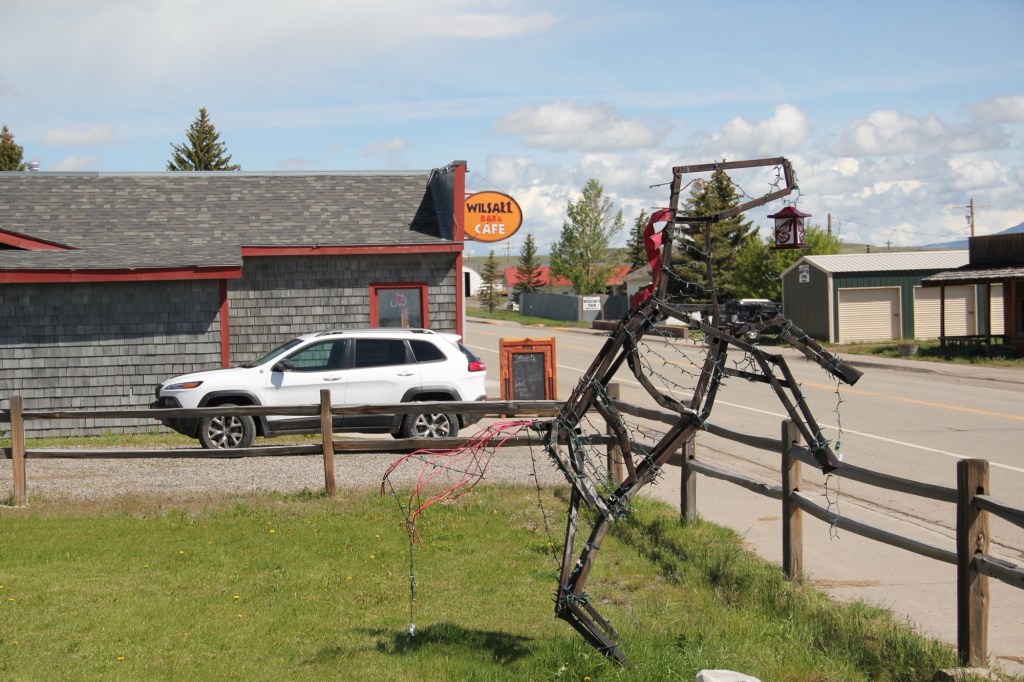
The Bank Bar in fact has recently been in the news because, guess what, national media has again “discovered” a great Montana eatery—

something that locals have known about for years. Maybe the review will get more people to slow down a bit and look around.

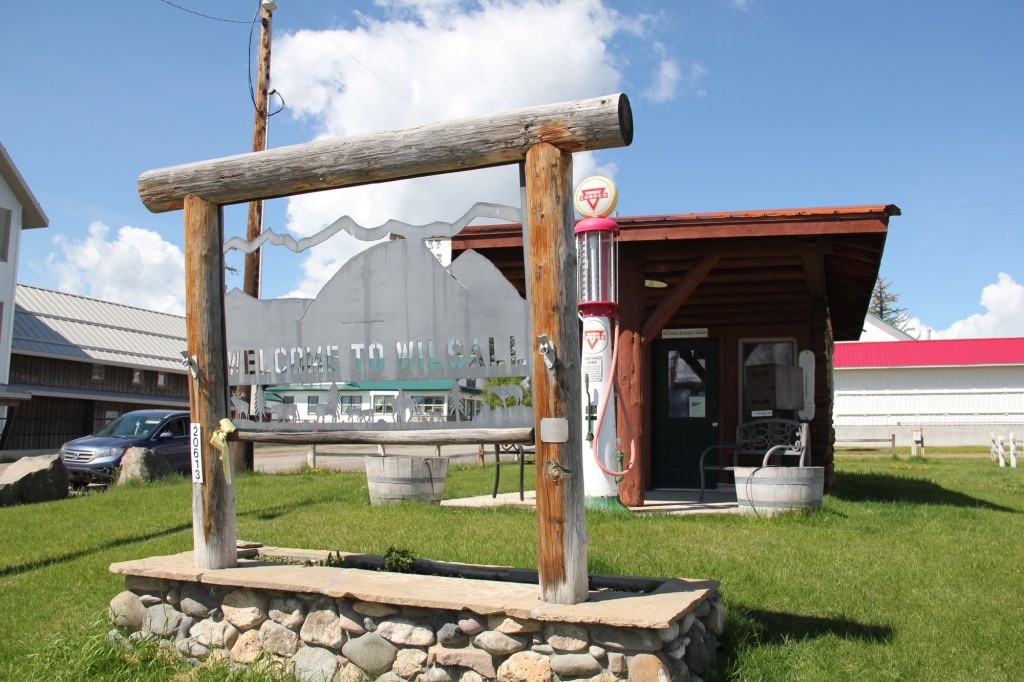
The stop is worth it, not just for a cold brew and perfect burger, but for the town’s Crazy Little Museum (also called the former Norwegian Embassy). It’s always refreshing when a place has a good perspective on itself and honors a person like Bob Tomasko who did a lot for the town before his death in 2012.

Historic community buildings survive such as the school from the 1910s, now boarded up.

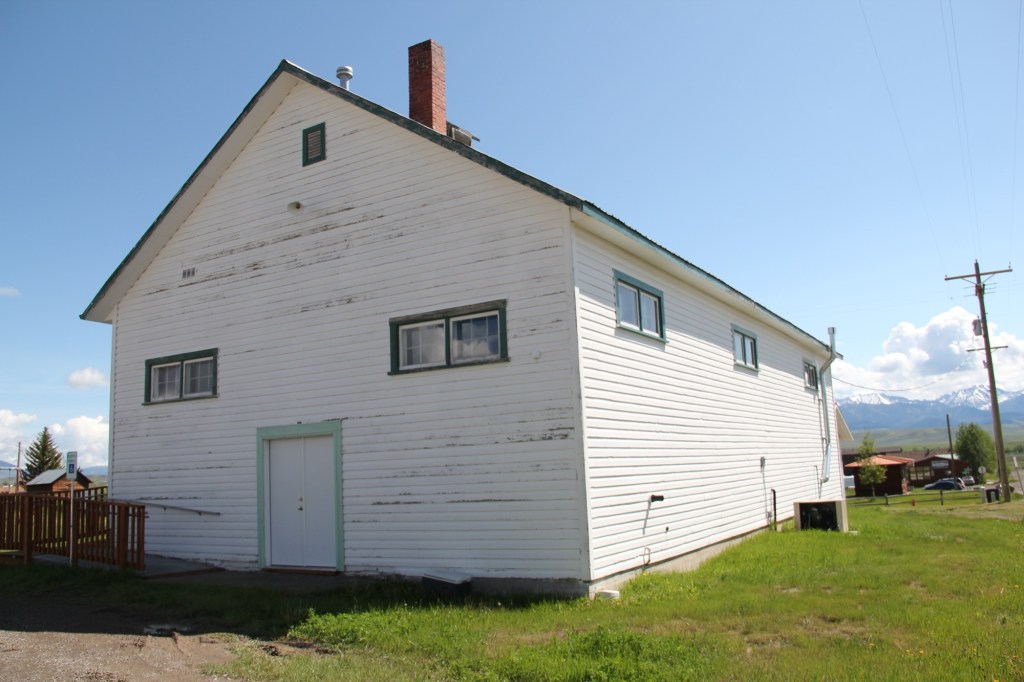
And the town community hall, which remains in use even as the population has dwindled from 237 in 2000 to under 200 in 2020.

US Highway 89 is one of my favorite north-south routes in Montana stretching into Wyoming. I always look forward to my next visit to Wilsall.

Glasgow, Montana: It might be in the middle but it’s not nowhere

In 2024 I began to see media accounts, both regionally and nationally, of how Glasgow, the seat of Valley County, was the most isolated place you can imagine, truly in the Middle of nowhere.

Historic Great Northern Railroad corridor in Glasgow

I’m not one to argue with geographers and economists. I’m sure from their perspective, they got it right. But I never thought of Glasgow as isolated: it is on the Great Northern mainline, and part of the famed Empire Builder Amtrak route, and on U.S. Highway 2.

Great Northern depot, Glasgow

Then the town has always shown a great deal of pride and ambition, conveyed so effectively by its many historic buildings, starting with the First National Bank, built c. 1884 and listed in the National Register of Historic Places.

1st National Bank building, Glasgow

When you enter the town from the underpass of the railroad, the bank is the first landmark to catch your eye, appropriate too for the impact of local banks on a town’s economic prospects during the homesteading boom and bust of the 1910s and 1920s, respectively.

Rundle Hotel, during renovation in 2013

Another landmark from the homesteading era is the Rundle Building, once the Glasgow Hotel and restored in the last ten years as an upscale hotel in the heart of downtown. Built c. 1916 and designed by the important Billings firm of Link and Haire, the Rundle is a captivating statement of an Arts and Crafts-infused Mediterranean Revival style. I have been trying to get back to Glasgow to stay here for the last four years—maybe I will make it in 2025.

The 1930s transformed Valley County through the construction of the mammoth Fort Peck Dam on the Missouri River. Glasgow too has a major New Deal landmark in its U.S. post office and courthouse, built c. 1939 and designed by federal architect Louis A. Simon.

Post office/federal courthouse, Glasgow

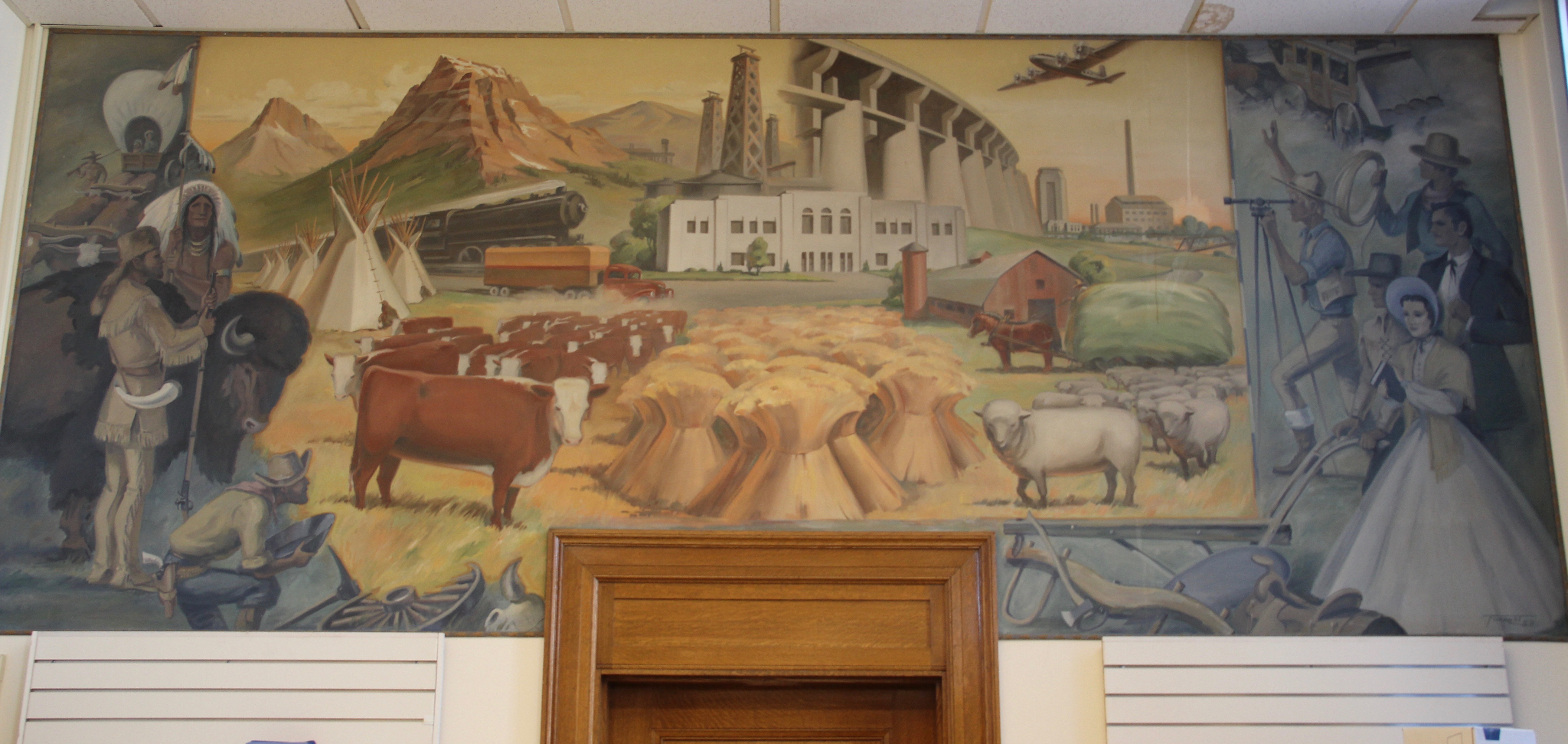
Its understated New Deal Deco exterior obscures a jewel of an interior, highlighted by its New Deal-funded 1942 mural depicting local history and the changes brought about by the Fort Peck Dam by artist Forest Hill. This building too is listed in the National Register.

Glasgow post office mural

Another important New Deal supported building was all about the community, and providing new opportunities: the Glasgow Civic Center. It too has a New Deal Deco style, and its large public space has been used for almost every type of event or gathering you can imagine.

Glasgow Civic Center

Glasgow’s sense of itself today still respects it past, brilliantly conveyed by its large and expansive museum. When I first visited Glasgow 40 years

Valley County Museum

ago, I held a public meeting on the state historic preservation plan here, and the next morning residents gave me a detailed tour of the recently established museum. I was impressed with its collection then, now it sprawls through the building to the adjoining grounds.

Veterans section of the museum
The high school band section
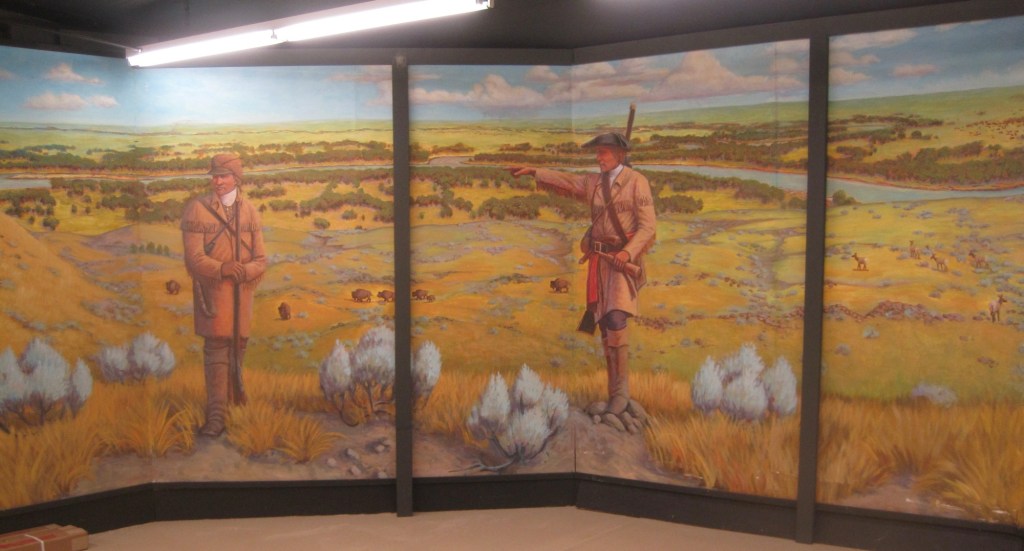
Lewis and Clark mural, 2095, by Jessie Henderson, a Chippewa/Cree artist
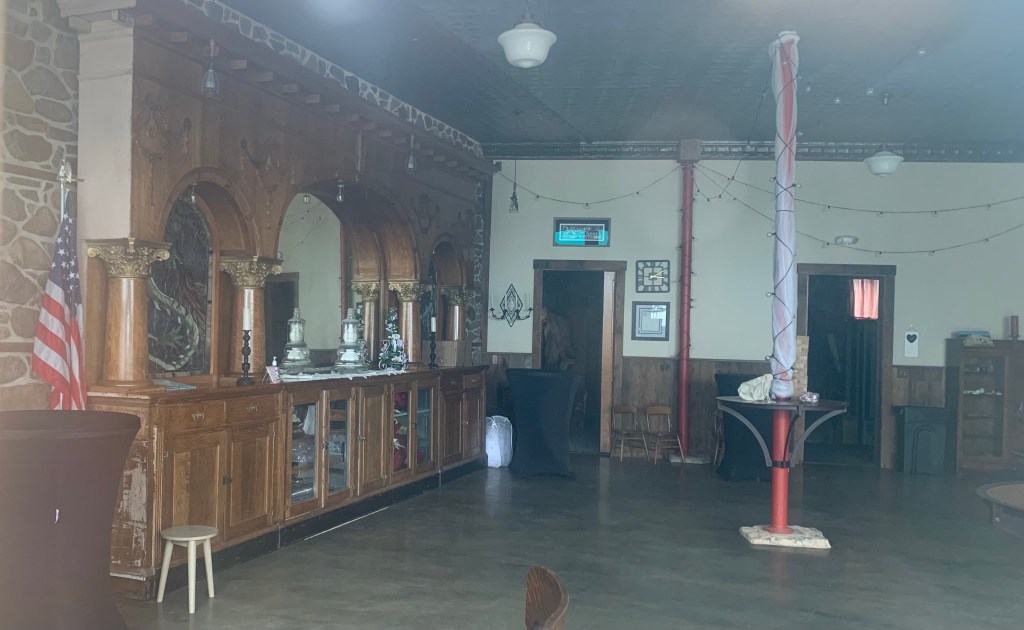
The back bar at saloon exhibit

Indeed, the saloon exhibit underscores another fun part of Glasgow—across from the depot in the original route of Highway 2 is an amazing collection of bars, stores, and eateries, right out of the early 1900s.

Glasgow bars at depot

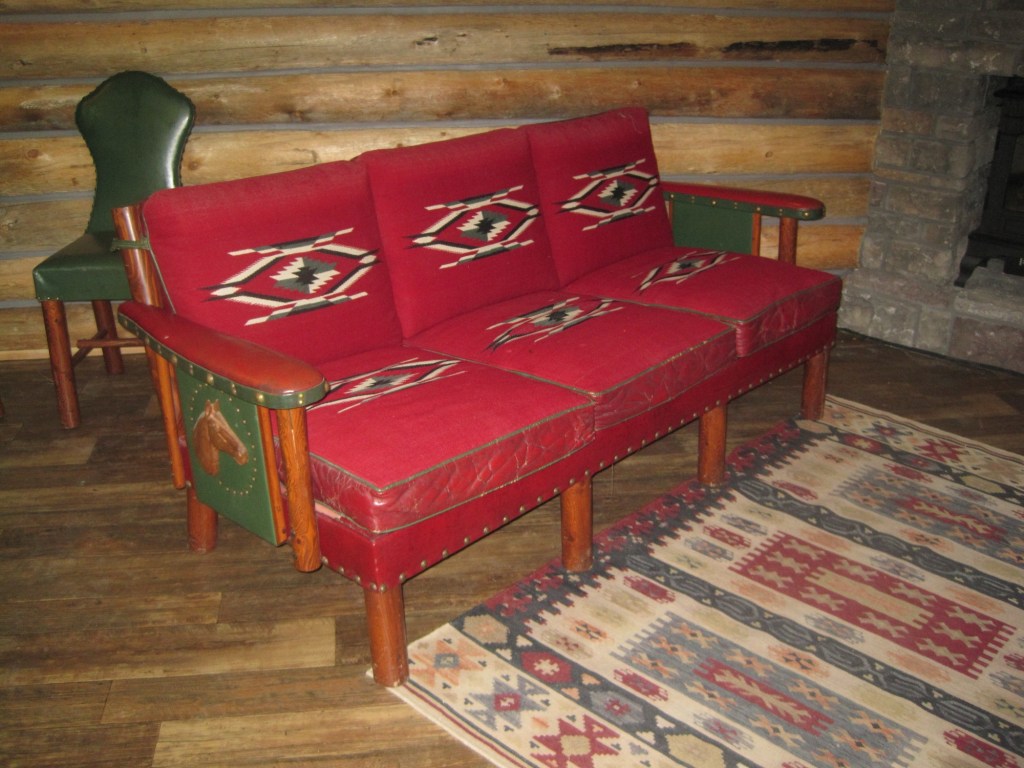
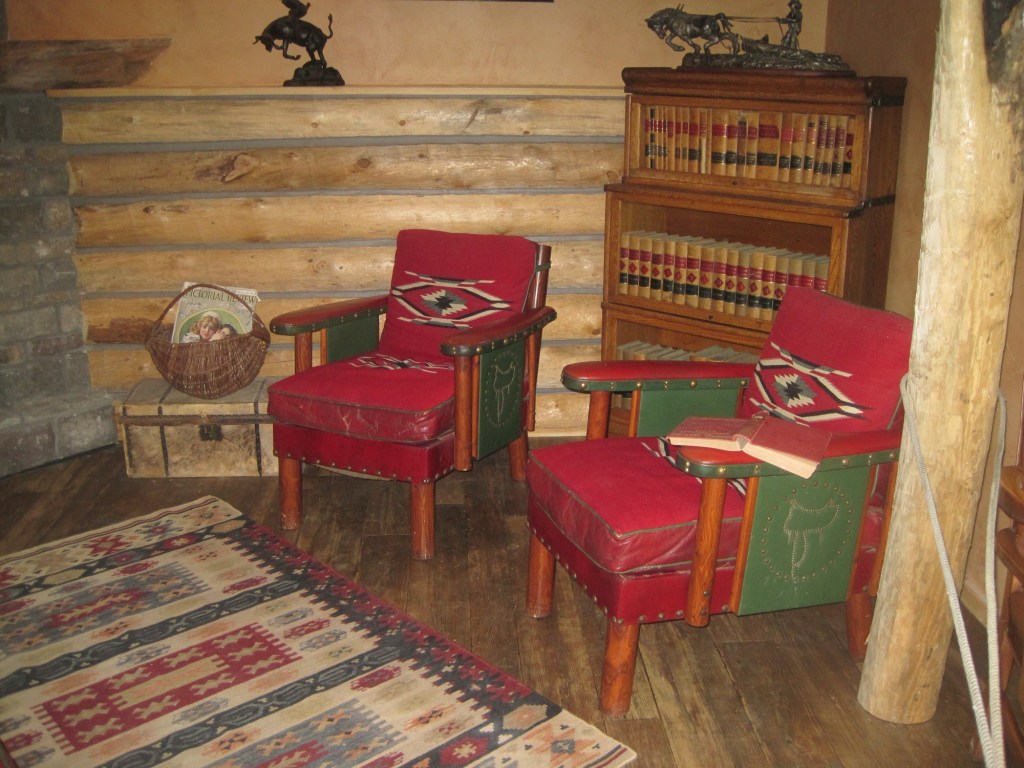
But back to the museum, and its important Montana decorative arts collection of the work of modern craftsman Thomas Molesworth, once in the town’s Carnegie library.

The newer exterior exhibits led the museum to move entire building to the property, including examples of the homestead shacks of the early 1900s that were followed by permanent homes such as this white painted bungalow.

Representative ranch house from homesteading boom

Pride of place, pride of the past. Glasgow might be in the middle but it is far from being nowhere as this small sampling of properties demonstrates.

A fall drive along U.S. 12

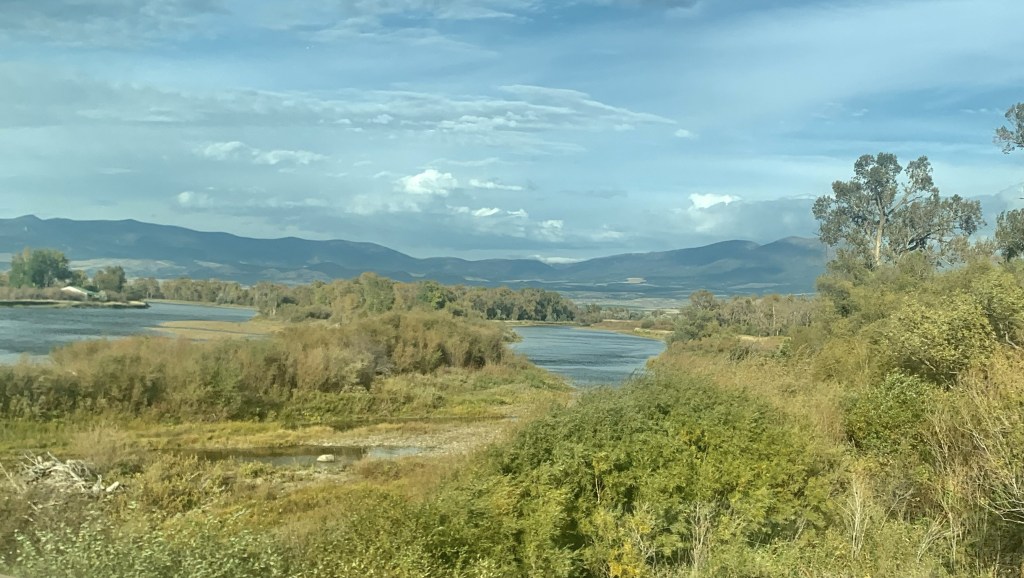
When I lived in Helena from 1981 to 1985 one of my favorite jaunts was along U.S. Highway 12 from Townsend to Roundup. It remains so today, 40 years later. My initial interest centered on railroad corridors. Helena to Townsend followed the Northern Pacific Railroad and a good bit of the Missouri River (now Canyon Ferry Lake).

Northern Pacific bridge over Missouri River near Townsend
Missouri River and Canyon Ferry valley near Townsend
Missouri River campground near Townsend

It was a brilliant day with fall colors just popping as we left US 287 and turned into the heart of Townsend.

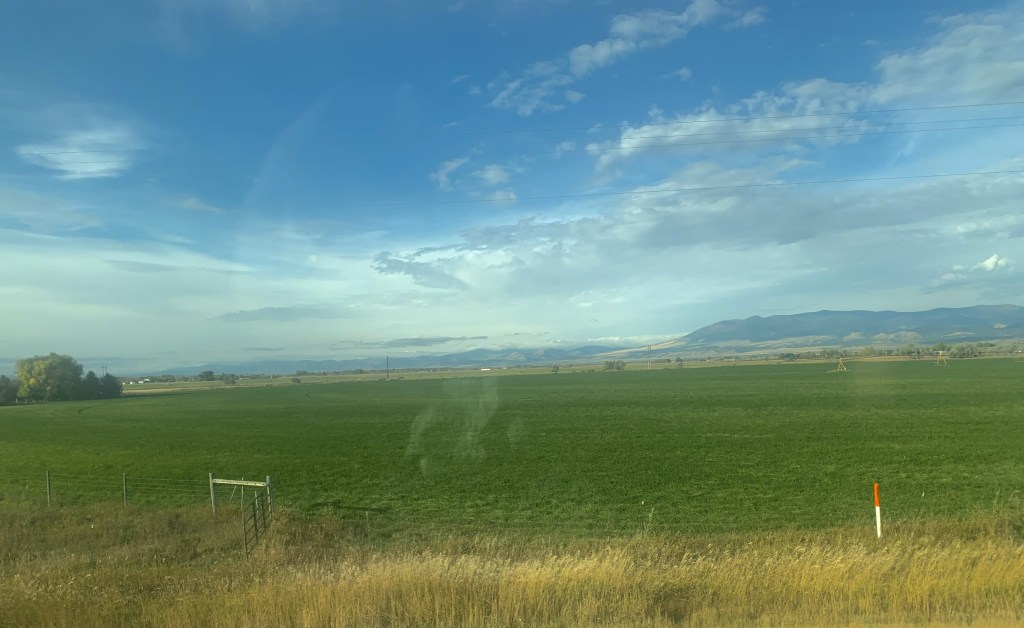
As soon as you leave town to the east you encounter a lovely mix of ranches and irrigated fields until you thread your way through a national forest along Deep Creek.

Fall colors along Deep Creek

We decided to continue east by briefly jumping off US 12 and go to Montana 284 so we could follow the Milwaukee Road corridor from Lennep to Martinsdale where we would reconnect with US 12. Two of my travelers had never been to the Milwaukee Road “ghost town” of Lennep. It was a beautiful morning to be there.

Milwaukee Road powerhouse

You first realize that this abandoned railroad corridor is different when you encounter an electric powerhouse—the Milwaukee Road’s tracks were electrified from Harlowton Montana west to Idaho.

Lennep

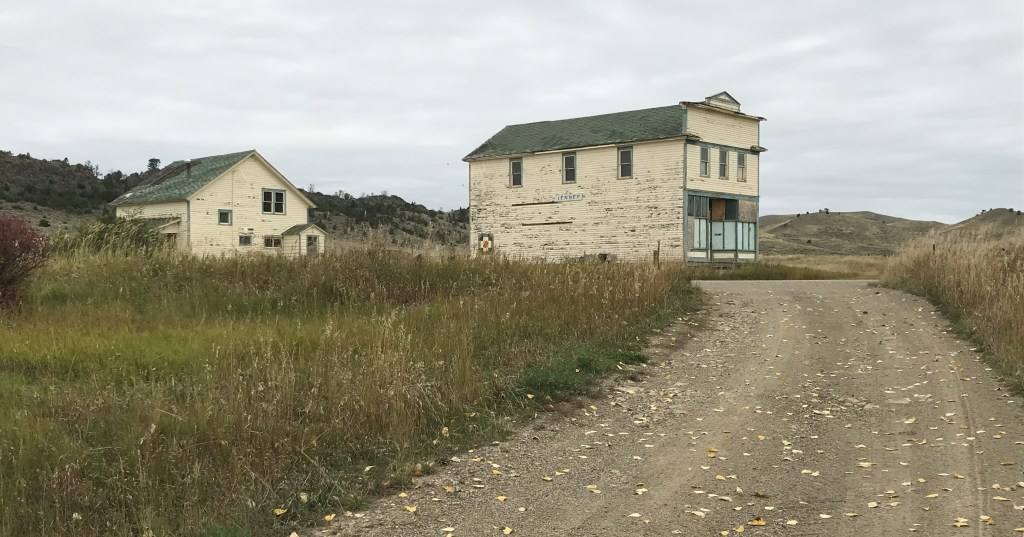
At Lennep the landmarks remain—the Trinity Lutheran Church, the store, the school, a teacher’s cottage and an early notched log house—but all were a little worse for the wear compared to my last visit 10 years earlier.

As we traveled east that morning we quickly moved through the county seats of Harlowton and Ryegate to get to Roundup by lunch. The Musselshell Valley was brilliant even as signs of the old railroad almost disappeared.

Near Ryegate
Near Lavina

Roundup continues its renaissance with new businesses and restored buildings. The town core, clustered around the intersection of US highways 12 and 87, was busy on a fall weekend.

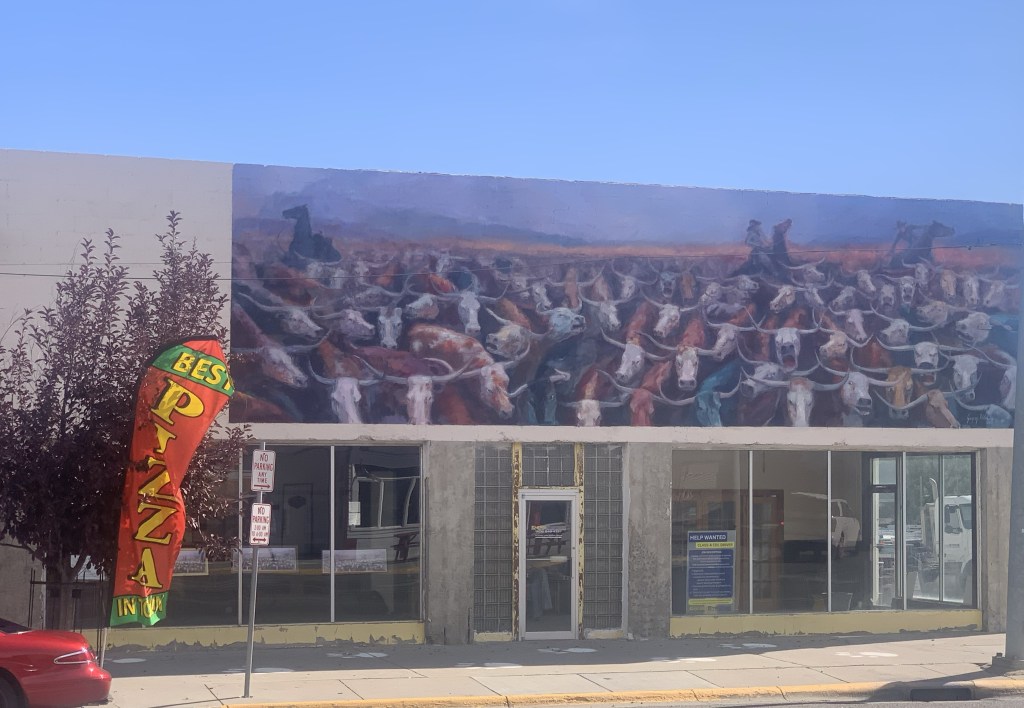
A mural on the great cattle drive of 1989
The Backporch—great bbq
New mural at the Keg
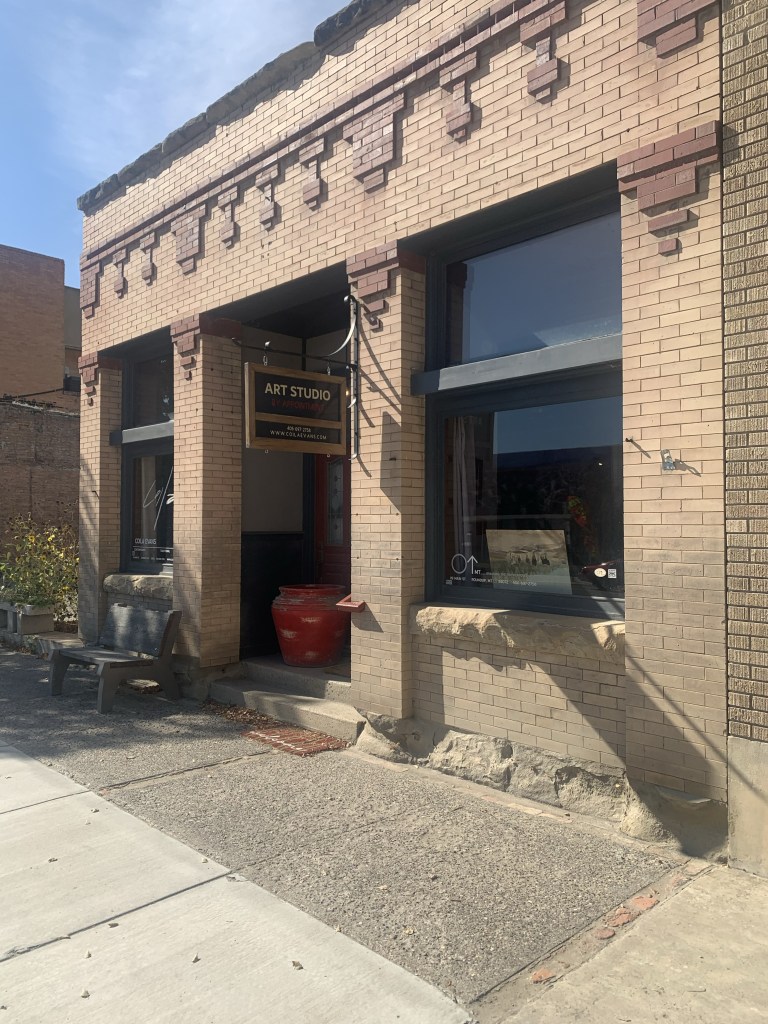
Art studio doing well
Awaiting its renovation
Community green spot

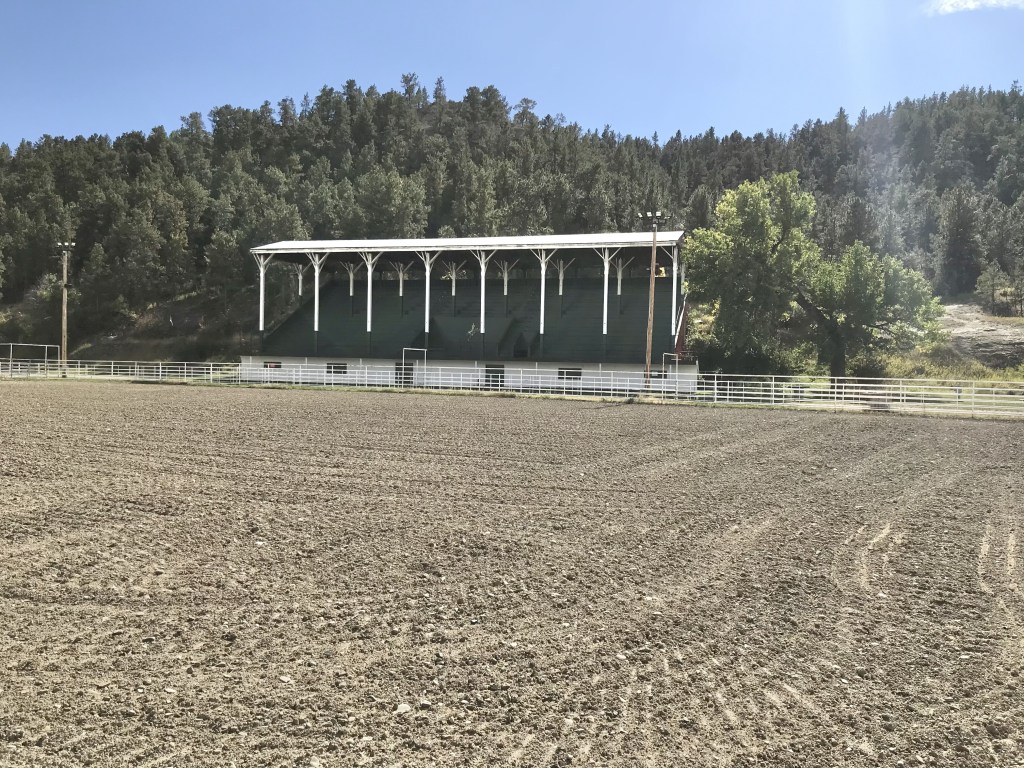
As I observed a few years ago Roundup residents worked together and created a plan—and the place continues to work the plan, from the adaptive reuse of its historic stone school to the careful stewardship of its historic fairgrounds. It’s impressive.

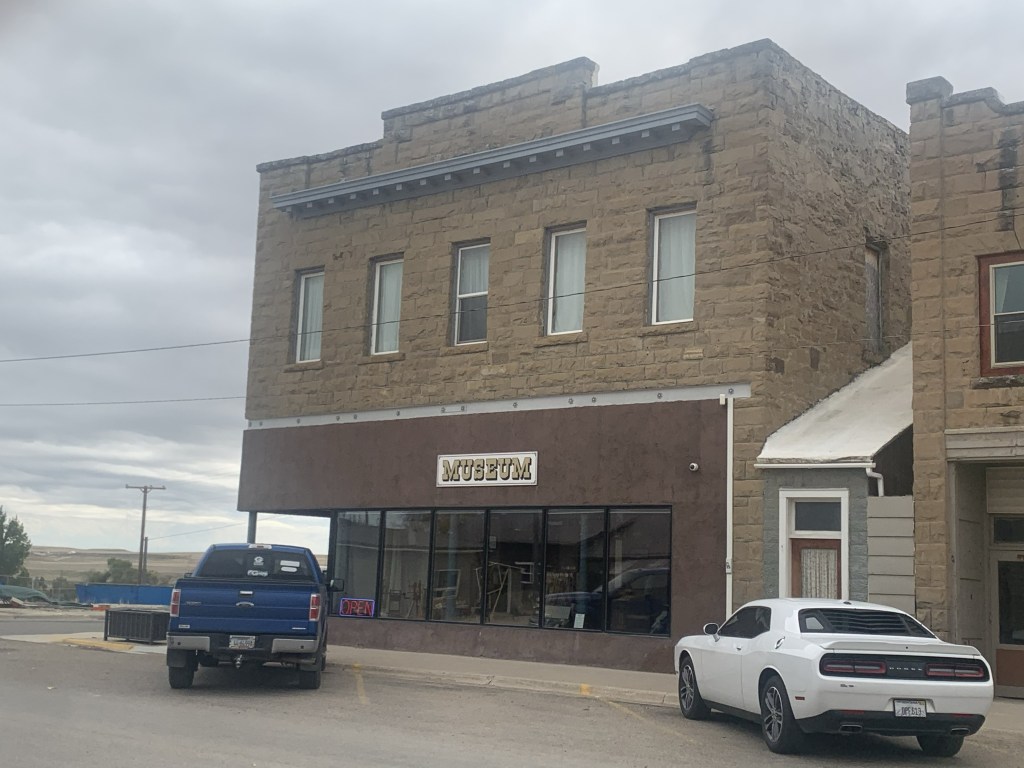
After Roundup we stopped at two county seats on the return to Helena. Harlowton was rocked by the closing of the Milwaukee Road over 40 years ago. It has struggled to reach the economic comeback achieved at Roundup. But the historic stone buildings have great potential. Three of them are now part of a large museum complex.

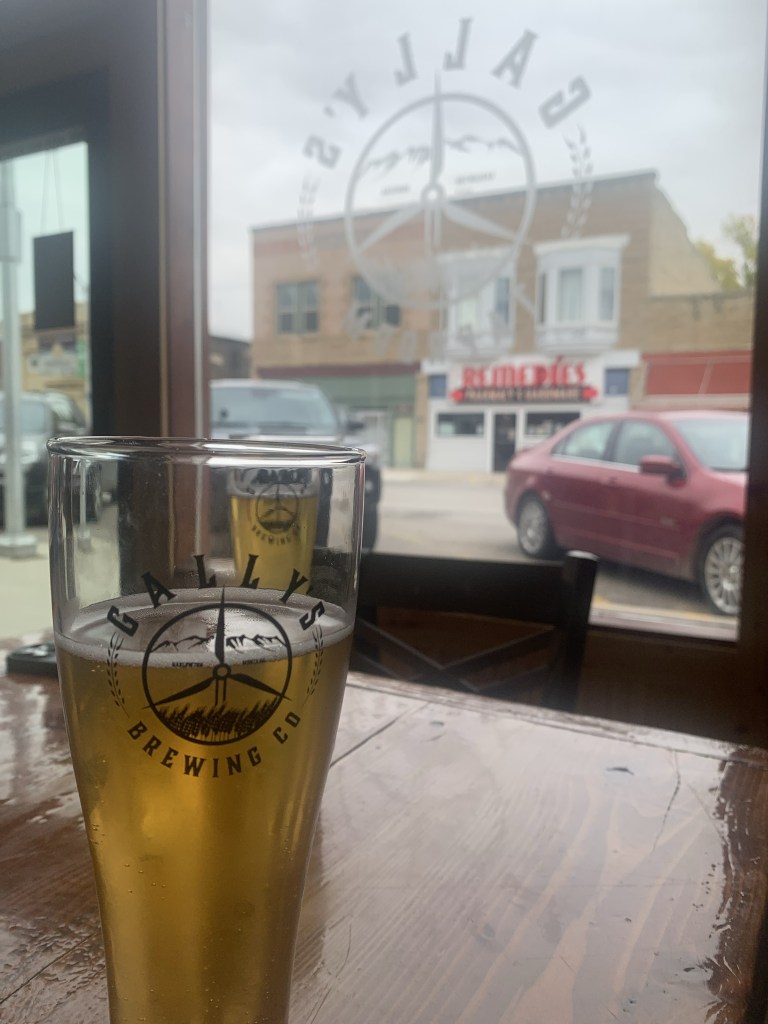
Then there’s the newcomer: the Gally’s microbrewery and pub, housed in the 1913 Montana Block.

It’s a great place for local beer and good conversation—and maybe the start of something good for the town.

US Highway 12 was torn up for major repairs when I last visited White Sulphur Springs last decade. The improvement along its population growth and the ever expanding hot springs gives the place a new look, reflected in new catchy fronts to local bars along with new businesses such as a huge Town Pump.

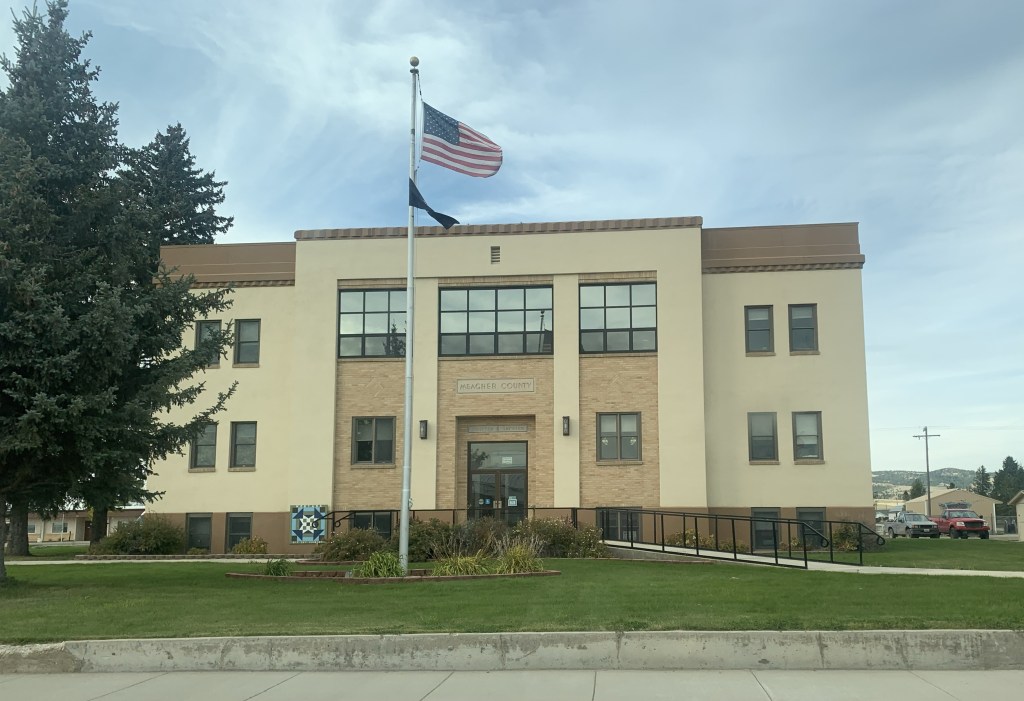
But historic White Sulphur Springs is doing ok too: the New Deal constructed Meagher County Courthouse is still a roadside landmark while the old railroad corridor, just west of the Hot Springs, remains, awaiting its rebirth.

These places are mere highlights along a historic route that’s worth a drive anytime in the fall.

Marysville, a Montana “ghost town”

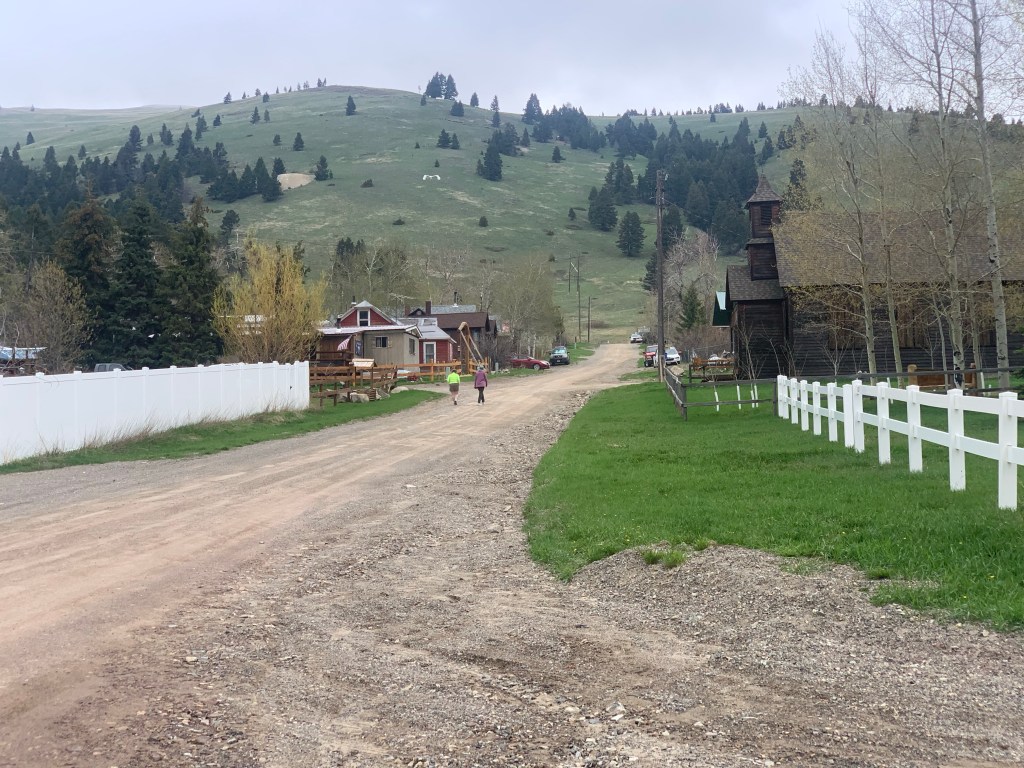
Marysville was the first mining ghost town that I visited in Montana in 1982. Forty years ago it wasn’t really a ghost town—several families lived there year round. But many buildings were abandoned, in disrepair, even one of the historic churches. Whenever families or friends visited me in Helena, I always took them to Marysville to see what was left because I wondered just what the future of the place would be.

I need not have worried. I had not been in Marysville since 1985 when I visited in May 2023. Today about 80 people live in Marysville—again far from being a ghost town. But so much preservation work had taken place since the 1980s.

Today many historic buildings from c. 1880 to the 1920s help to tell the story of gold mining in Montana at the fabled Drumlummon Mine owned by Thomas Cruse, a mine that overlooked the town. But work remains—other key buildings need their champion to ensure their preservation.

Drumlummon concentrator ruins
Ruins only remain of this dwelling
Stone commercial building from 1895
The 1898 Masonic Lodge Building with its impressive brick exterior dates to 1898. Both Mountain Star 130 and Ottawa 51 met in the building.
Another important building was the general store, initially established by Ann and Blibal Betor (Betor was from Lebanon) c. 1898. When I lived in Helena the place was abandoned and in rough shape. A well planned restoration began in 2004 and was finished in 2018.
The general store interior speaks to its conversion into a saloon and dance hall c. 1940.
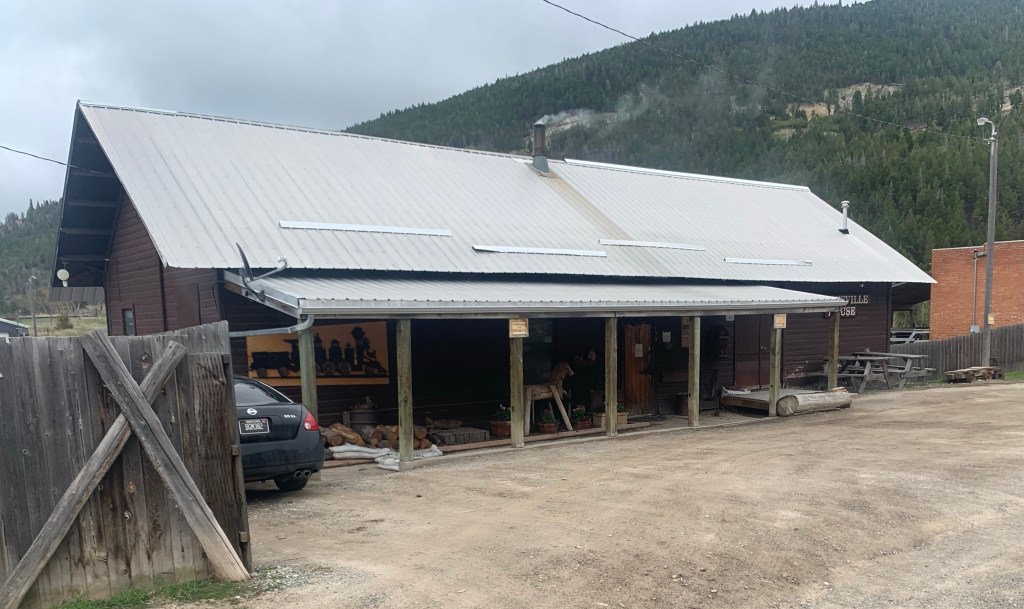
The former Northern Pacific railroad depot is now home to the town’s bar and cafe.
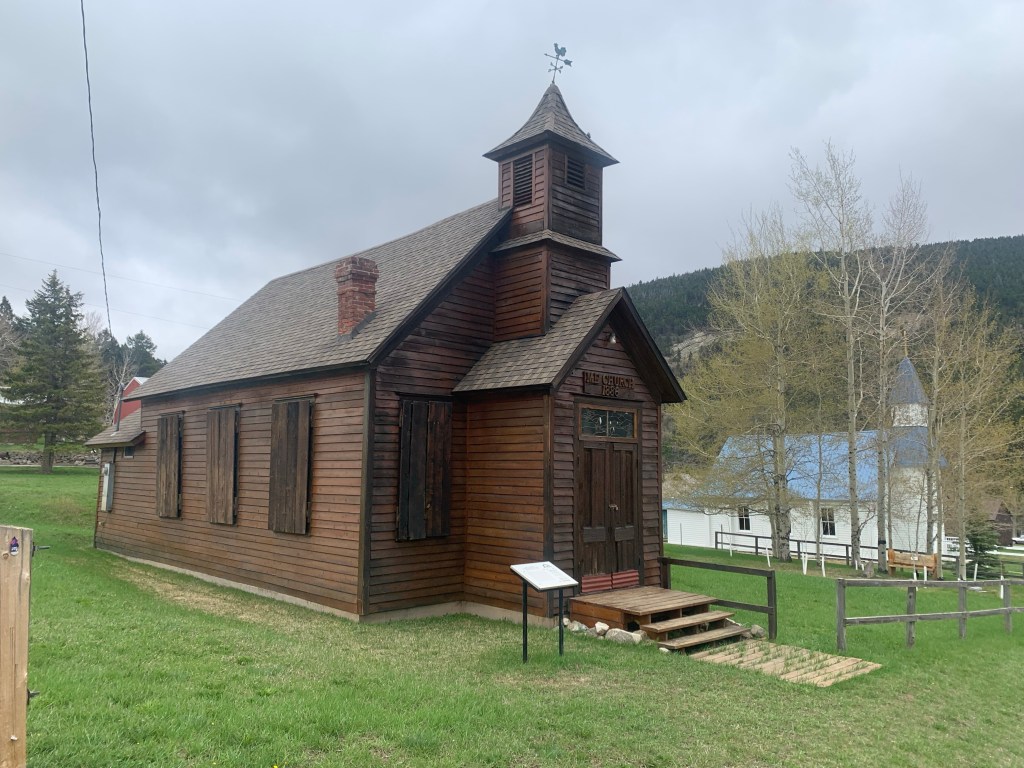
Another restoration was led by the Hollow family at the town’s Methodist Episcopal church. This 1886 building is listed in the National Register of Historic Places.
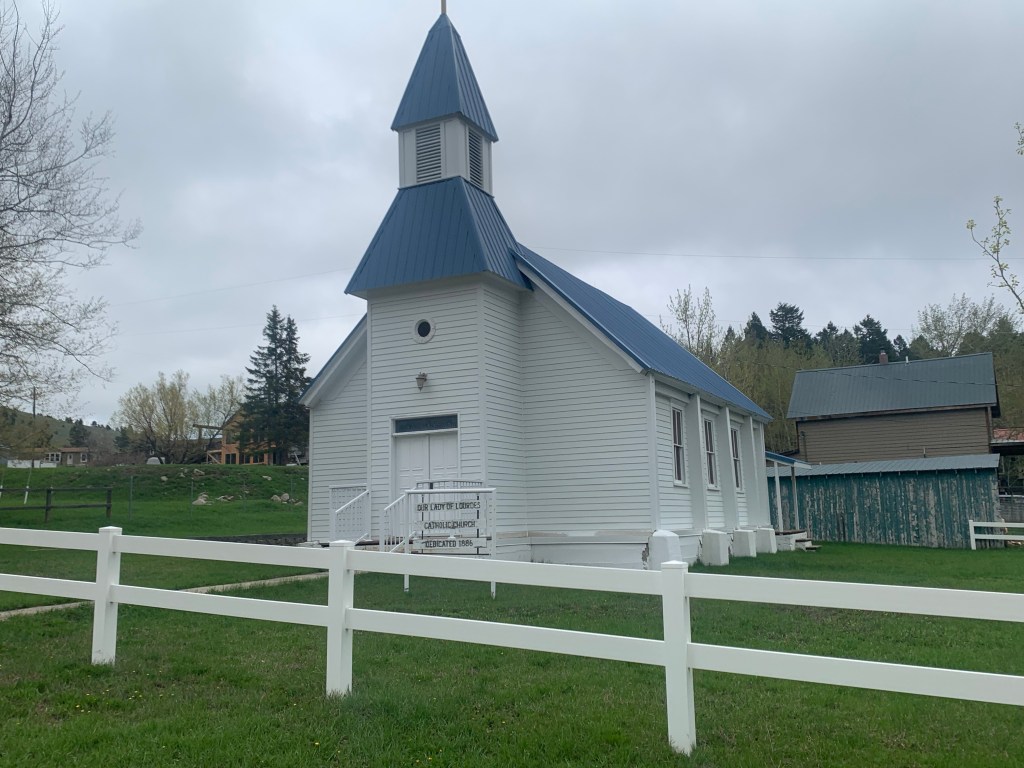
Our Lady of Lourdes Catholic Church also dates to 1886. Thomas Cruse later took some of his Drumlummon fortune and donated it for the construction of the Cathedral of St. Helena in Helena, MT.
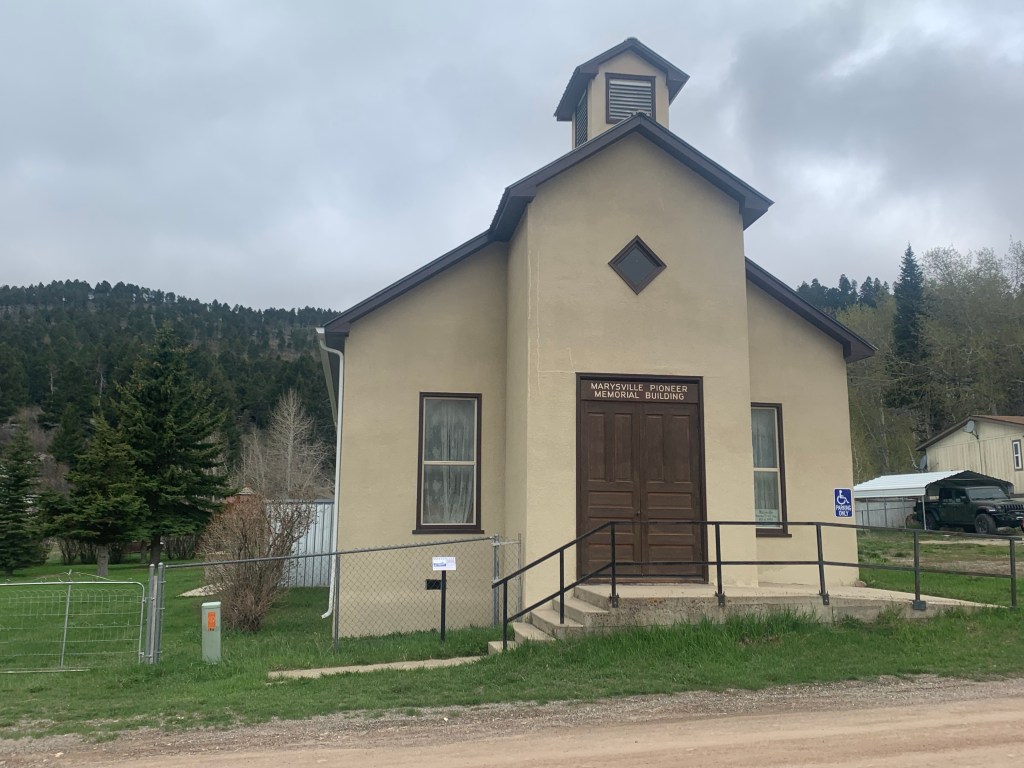
The Marysville Pioneer Memorial Building contains a museum about the town and its mining history.

The people who call Marysville home have been remarkable stewards. By keeping the town alive they also have preserved a special place in Montana’s mining past.

Back on the Hi-Line: Culbertson

The Hi-Line is Montana’s major northern transportation corridor–first carved by the St. Paul, Minneapolis and Manitoba Railway in the 1880s and then extended by the Great Northern Railway a decade late.  Today most travelers use U.S. Highway 2, which largely parallels the railroad, to traverse the Hi-Line.  The first place you encounter of more than 500 people is Culbertson, established in the 1880s and named for Alexander Culbertson, who was once the factor (the manager) of the Fort Union fur trading post at the confluence of the Missouri and Yellowstone rivers.

Roosevelt Co Culbertson GN depot

The Great Northern depot at Culbertson

Earlier in this documentary blog on the Montana landscape, I discussed Culbertson as part of the landscape of oil and fracking then taking place in the region.  Today I want to share images of community institutions that link the town’s more than 130 year history to the present.  Historic churches are a good place to start.

Roosevelt Co Culbertson 1st UM Church

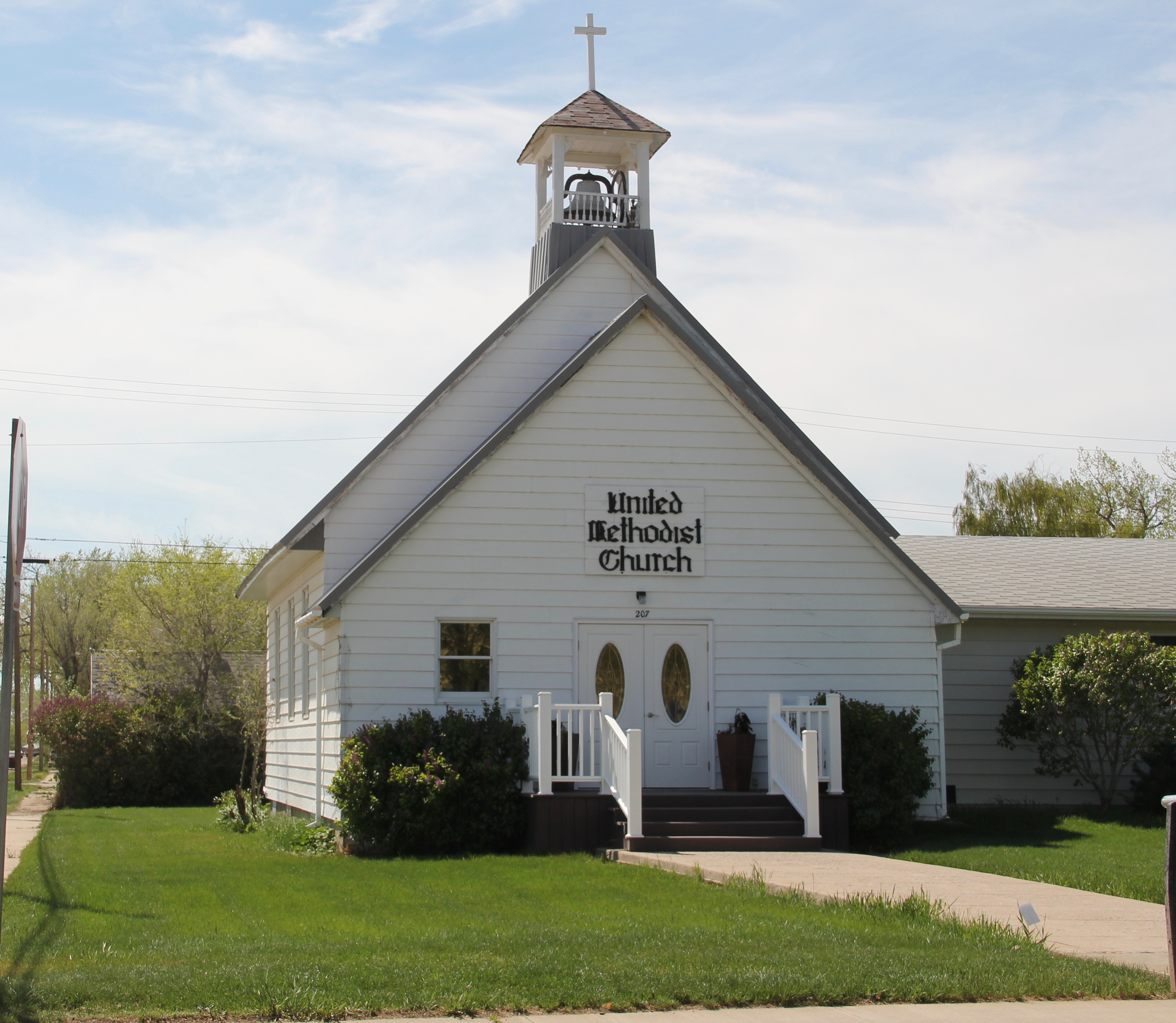
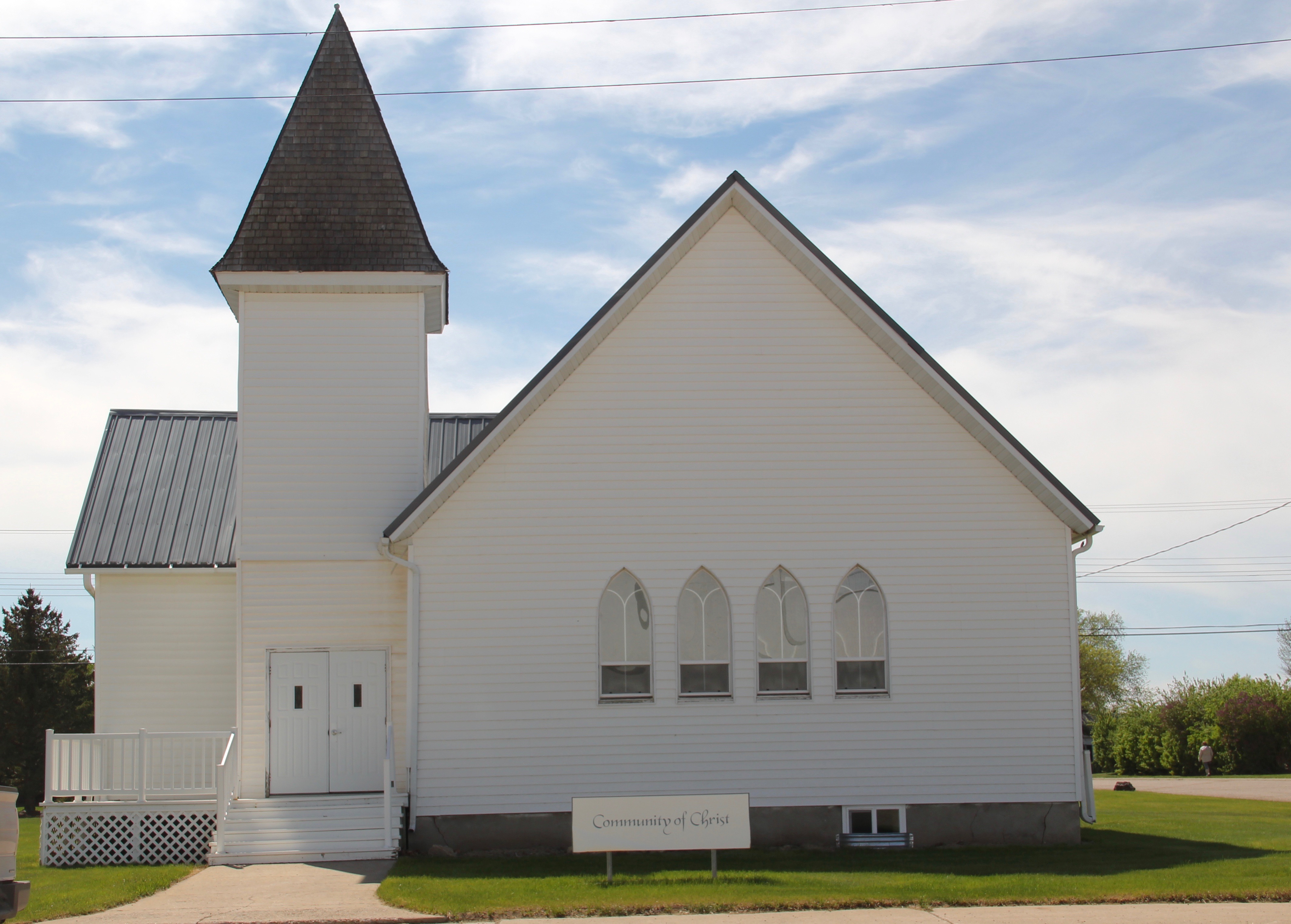
The United Methodist Church reflecting a vernacular Gothic type that can be found all across the northern plains in the late 19th and early 20th century.  The Community of

Roosevelt Co Culbertson 11

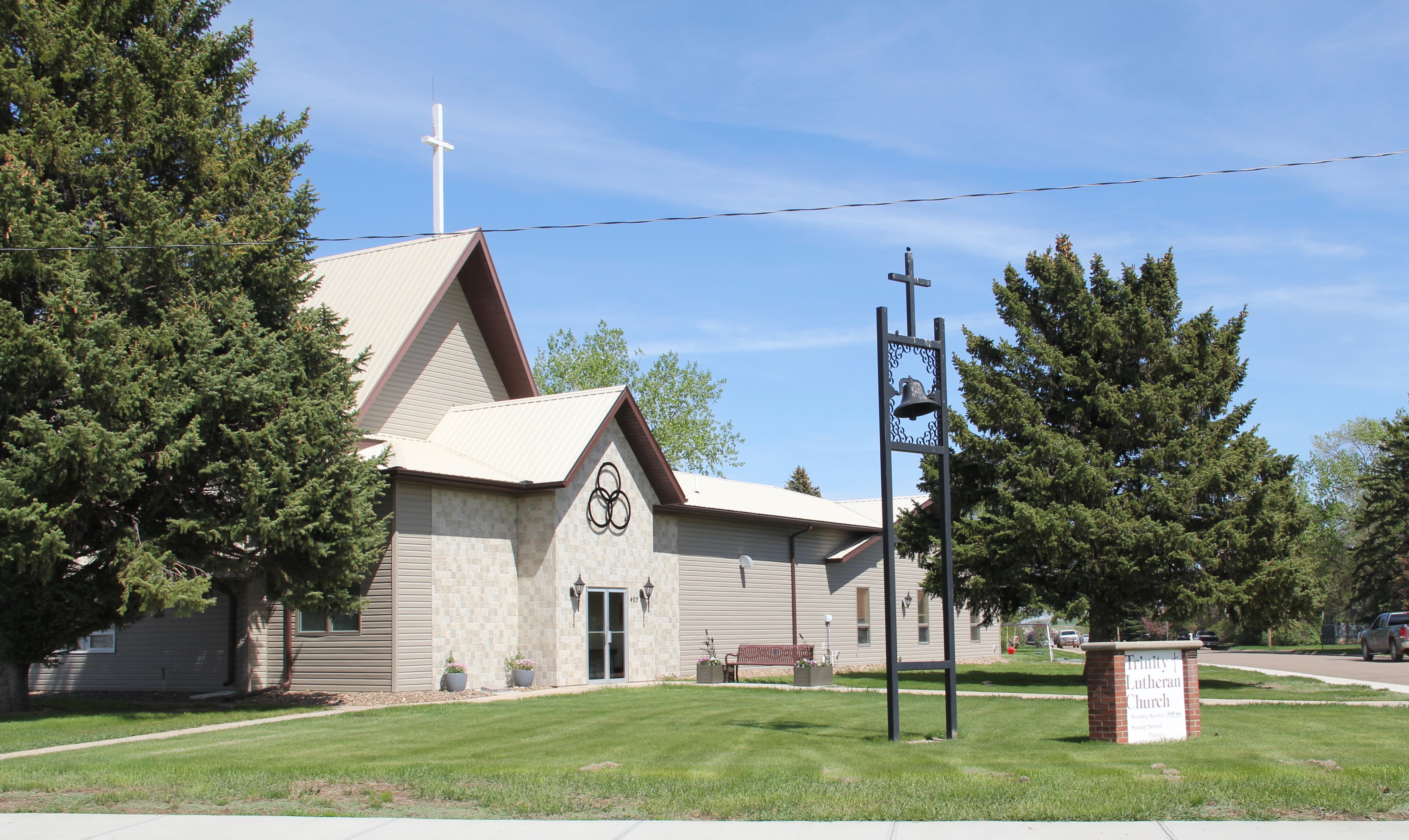
God Church shares that similar vernacular Gothic style and retains its bell tower.  Mid-20th century modern style can be found in St. Anthony Catholic Church.  As regular readers of the blog may recall, I have explored the diocese’s choice of mid-century Roosevelt Co Culbertson St Anthony Catholicmodern style for many Catholic churches in eastern Montana.  The Culbertson church is a good example of that pattern.  Another church that belongs to the modern design era of the 20th century is Trinity Lutheran Church, especially as this distinguished building expanded over the decades to meet its congregation’s needs.

Roosevelt Co Culbertson Trinity Lutheran

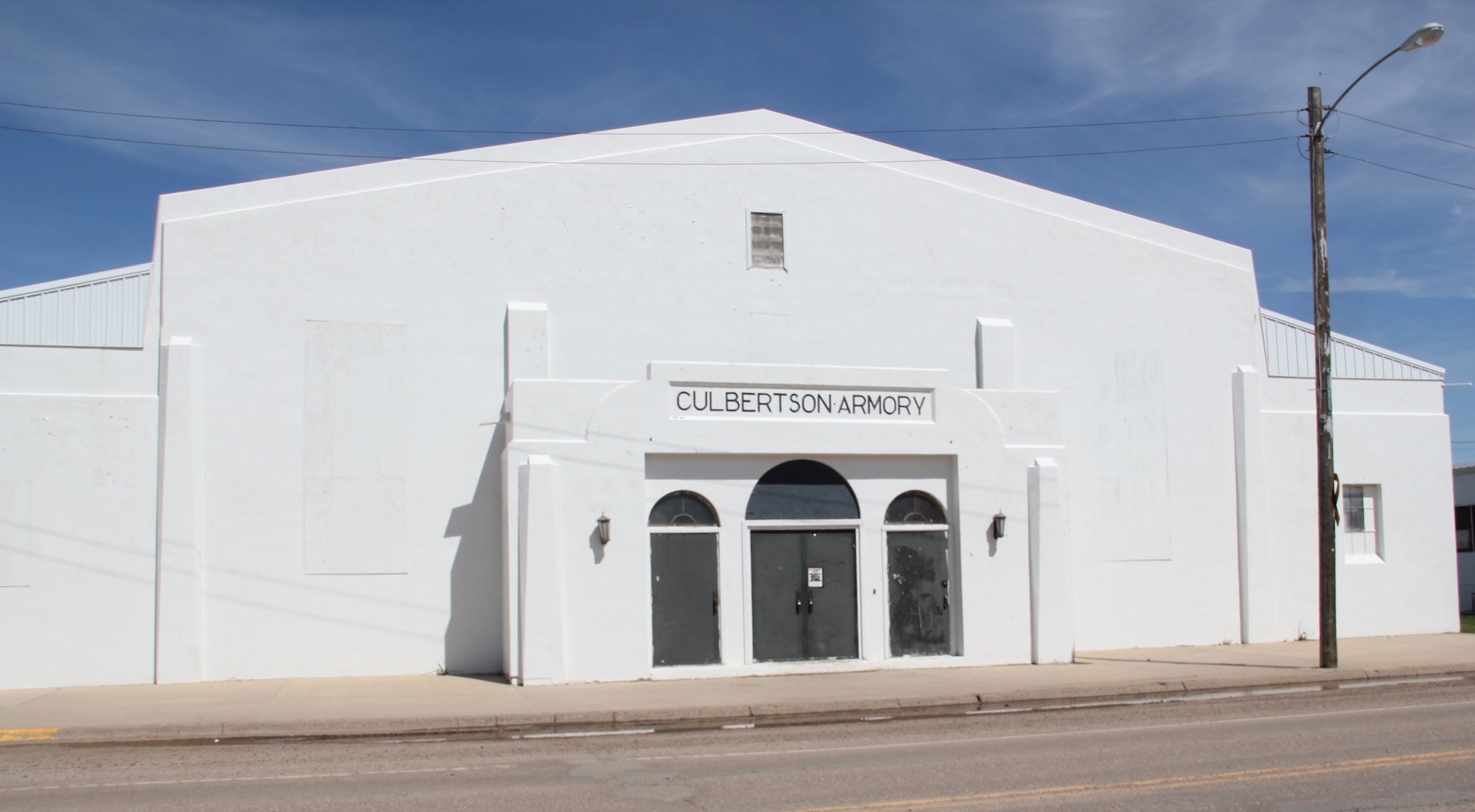
Roosevelt Co Culbertson armory 2

One of the most interesting buildings in Culbertson is the Armory, part of the significant impact that New Deal agencies had on the built environment of Roosevelt County in the 1930s.  Justified as part of the nation’s war preparedness efforts in the late 1930s, so many armories across the country have found second life as public buildings, serving local government and community events.

Roosevelt Co Culbertson armory New Deal

In my earlier post about Culbertson I should have focused more on surviving commercial buildings from the early 20th century–the time of the homesteading boom.  The beautiful cast-iron cornice on the Moen Building (1908) is impressive, one of the best examples of that Victorian commercial style still extant on the Hi-Line.

Roosevelt Co Culbertson 7 C.S. Moen Block 1907

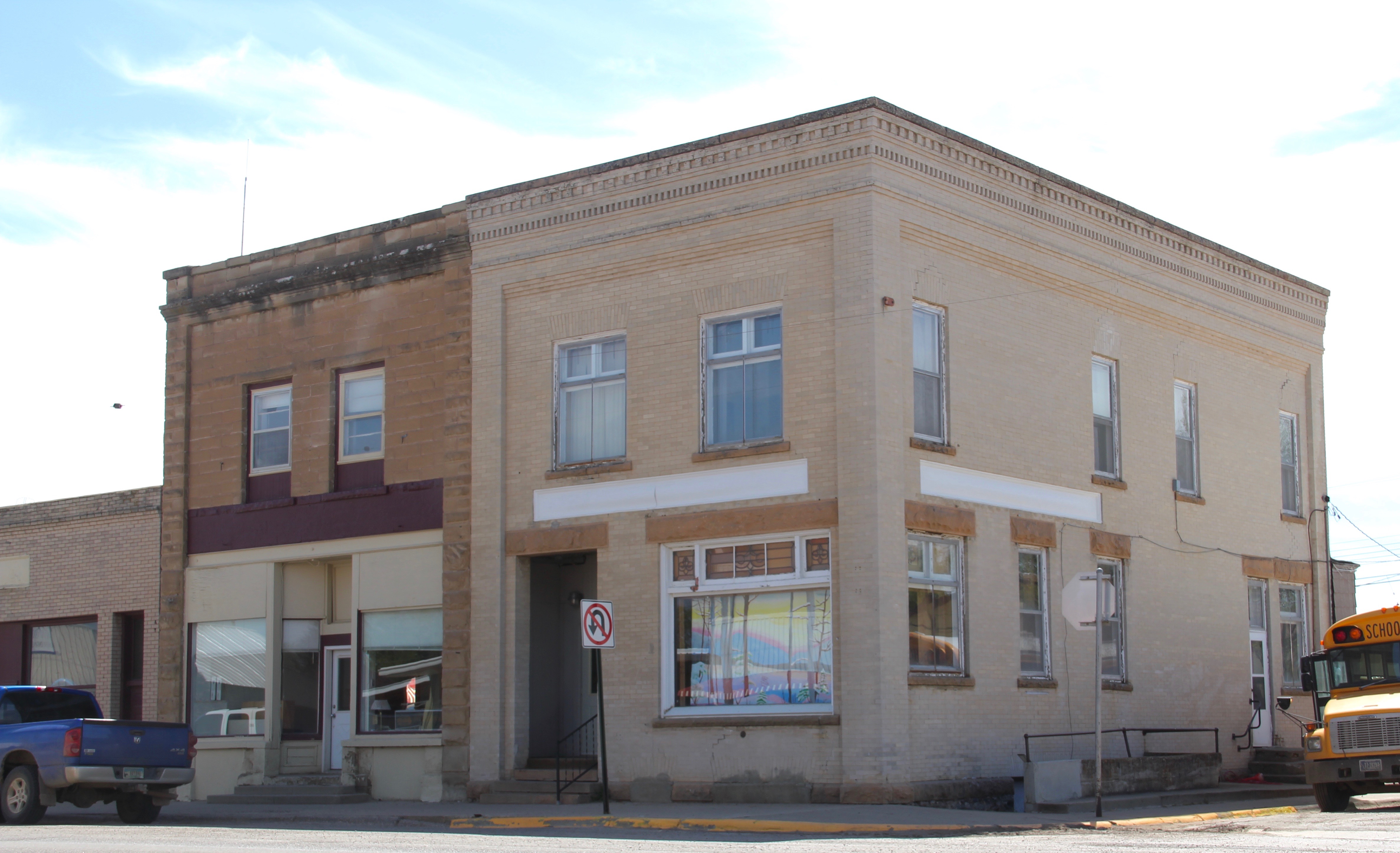
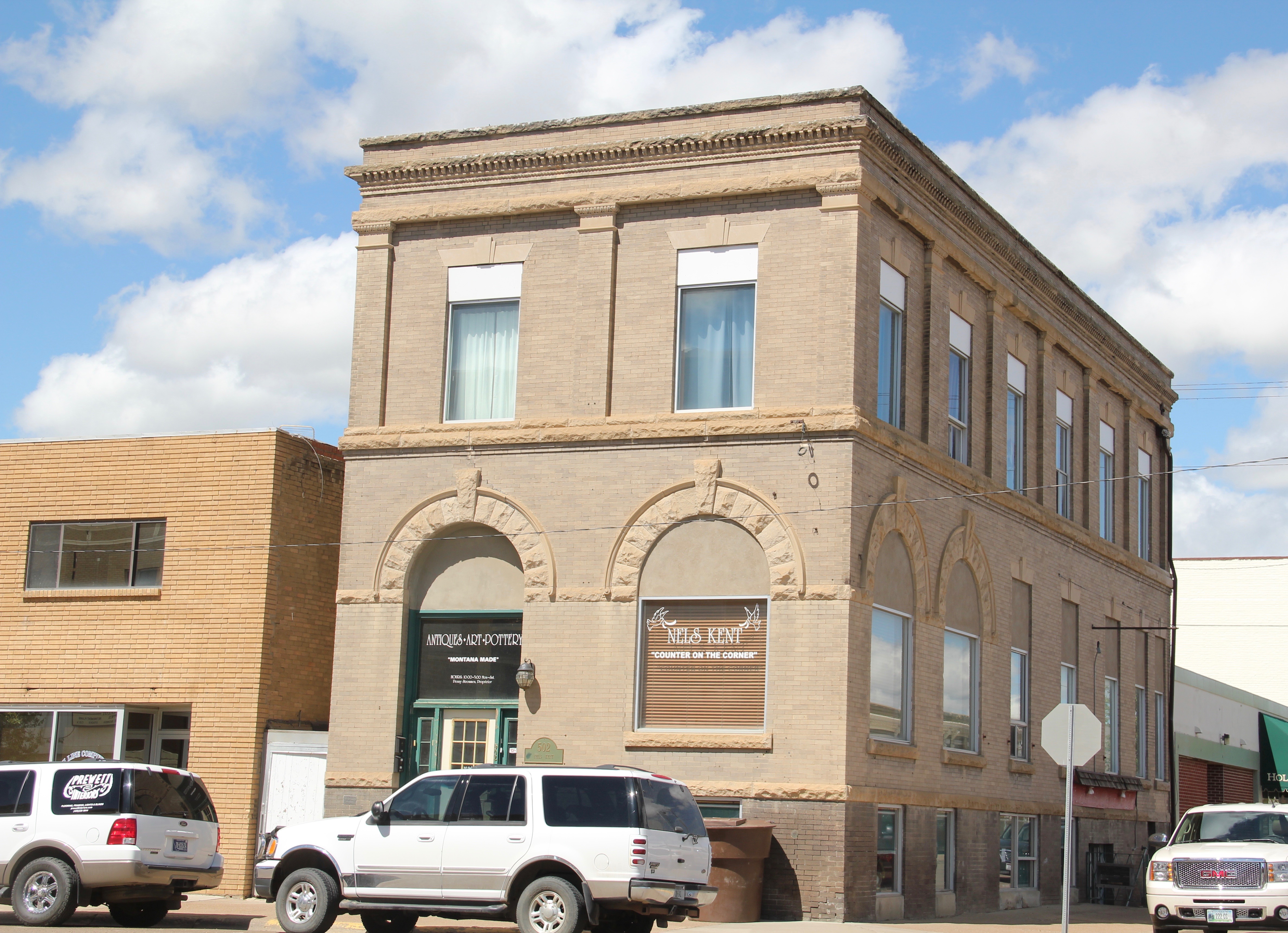
Some of the extant two-story commercial buildings from the homesteading boom show some architectural styling, like the two below, but then a former town bank is impressive in its detail and masonry as any in the region.  Culbertson had high hopes in the 1910s.

Roosevelt Co Culbertson 6

Roosevelt Co Culbertson 4

On either side of the town center are two additional important institutions.  The Culbertson Museum serves as a community heritage center but also as a visitor center for travelers entering Montana.  Its outdoor sculpture of the Lewis and Clark Expedition is a reminder to all travelers that traces of the Corps of Discovery can be found along so much of the Hi-Line.
Roosevelt Co Culbertson museum 1

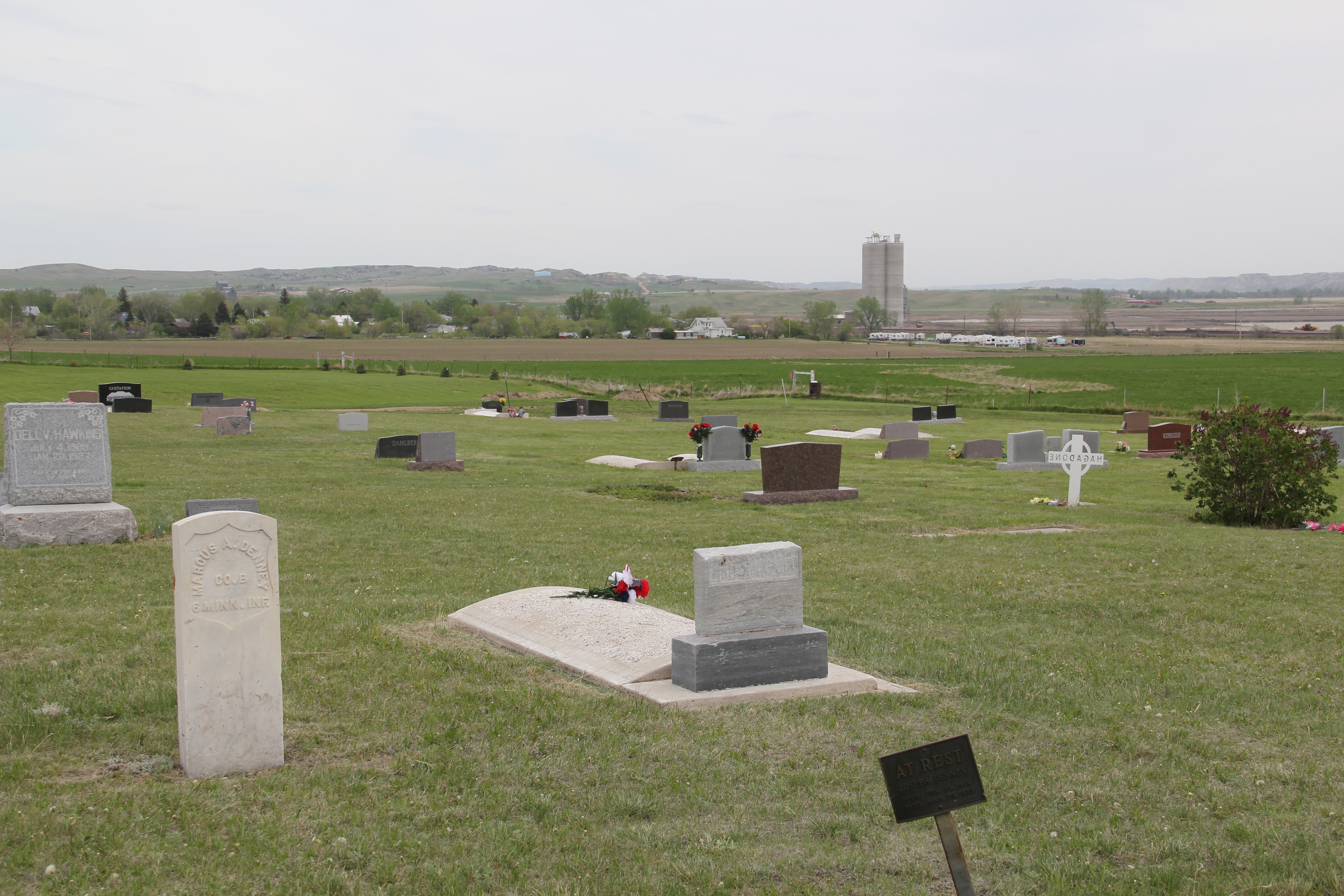
Roosevelt Co L&C sculpture Culbertson museumOn the west side of town is its historic cemetery, the Hillside Cemetery.  At first glance, it seems unimposing, more quaint that important.  But the cemetery is the oldest historic

Roosevelt Co Culbertson cemetery

Roosevelt Co Culbertson cemetery 3

Roosevelt Co Culbertson cemetery  2

Roosevelt Co Culbertson cemetery 7

resource in Culbertson, and in fact is the the burial place of two former Union soldiers, one from Illinois and one from Minnesota, who fought in the Civil War.  The markers are a reminder that the mid-19th century roots of Montana are never far away, even at the small town of Culbertson.


Eastern Montana County Seats: Glasgow

Valley Co Glasgow courthouse

It has been five years since I revisited the historic built environment of northeast Montana.  My last posting took a second look at Wolf Point, the seat of Roosevelt County.  I thought a perfect follow-up would be second looks at the different county seats of the region–a part of the Treasure State that I have always enjoyed visiting, and would strongly encourage you to do the same.

Valley Co Glasgow 2 elevators

Grain elevators along the Glasgow railroad corridor.

Like Wolf Point, Glasgow is another of the county seats created in the wake of the Manitoba Road/Great Northern Railway building through the state in the late 1880s.  Glasgow is the seat of Valley County.  The courthouse grounds include not only the modernist building above from 1973 but a WPA-constructed courthouse annex/ public building from 1939-1940 behind the courthouse.

Valley Co Glasgow WPA public building behind courthouse

The understated WPA classic look of this building fits into the architectural legacies of Glasgow.  My first post about the town looked at its National Register buildings and the blending of classicism and modernism.  Here I want to highlight other impressive properties that I left out of the original Glasgow entry.  St. Michael’s Episcopal Church is an excellent late 19th century of Gothic Revival style in Montana.

Valley Co Glasgow St Mike Episcopal NR

The town has other architecturally distinctive commercial buildings that document its transition from late Victorian era railroad town to am early 20th century homesteading boom town.

Valley Co Glasgow 23

Valley Co Glasgow 14

The fact that these buildings are well-kept and in use speaks to the local commitment to stewardship and effective adaptive reuse projects.  As part of Glasgow’s architectural legacy I should have said more about its Craftsman-style buildings, beyond the National

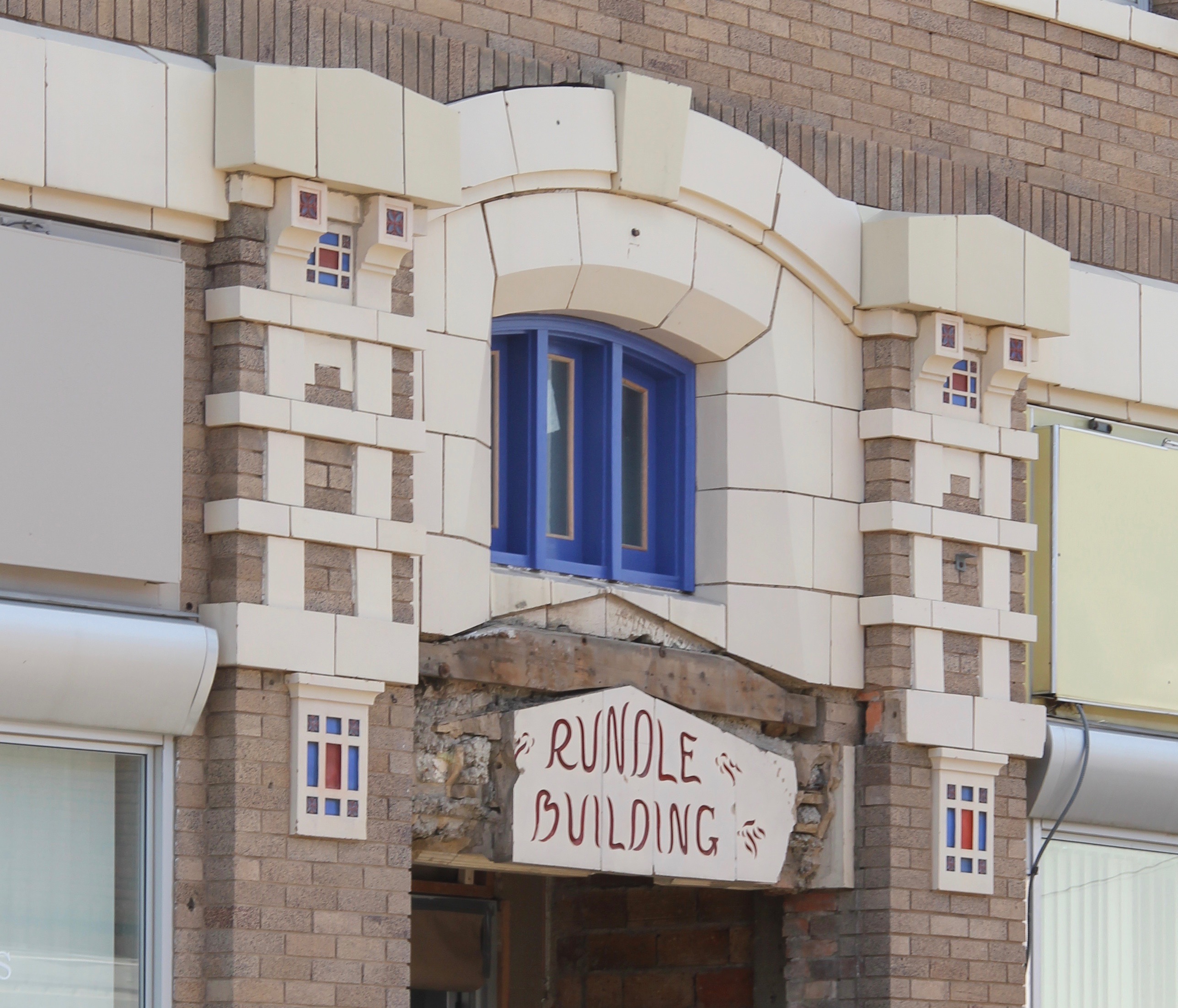
Valley Co Glasgow Art Deco Rundle building name

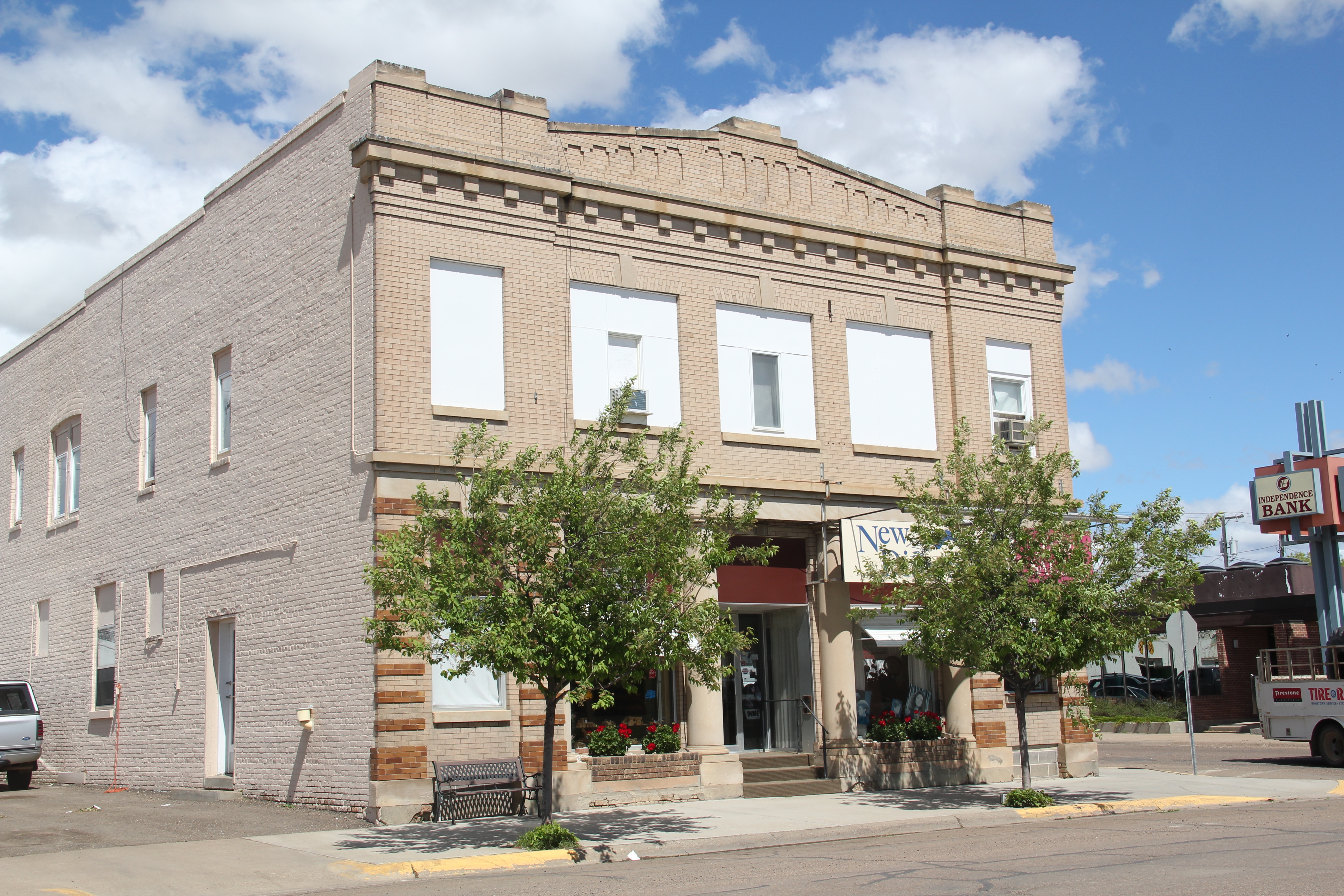
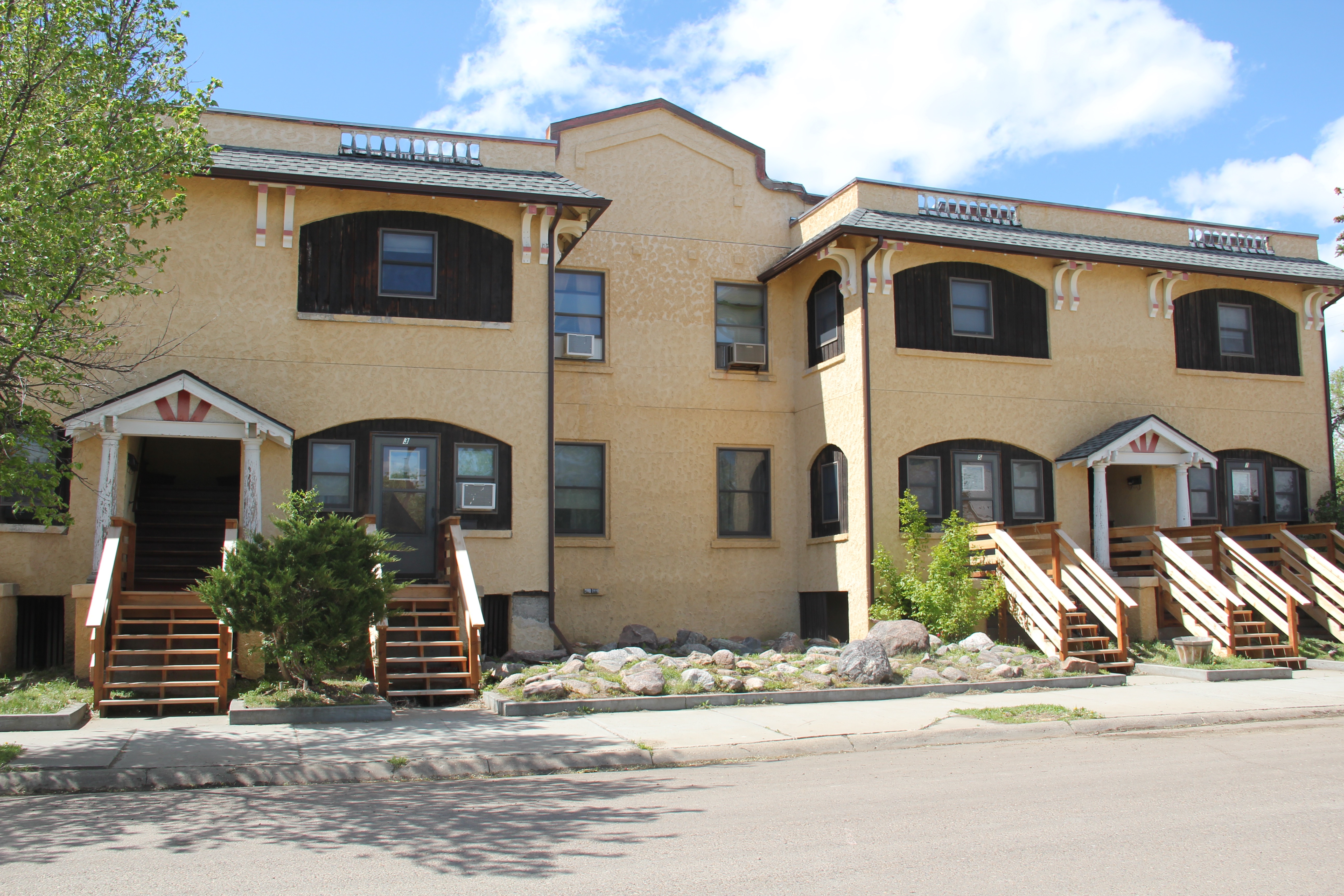
Register-listed Rundle Building.  The Rundle is truly eye-catching but Glasgow also has a Mission-styled apartment row and then its historic Masonic Lodge.

Valley Co Glasgow 20

Valley Co Glasgow masonic lodge

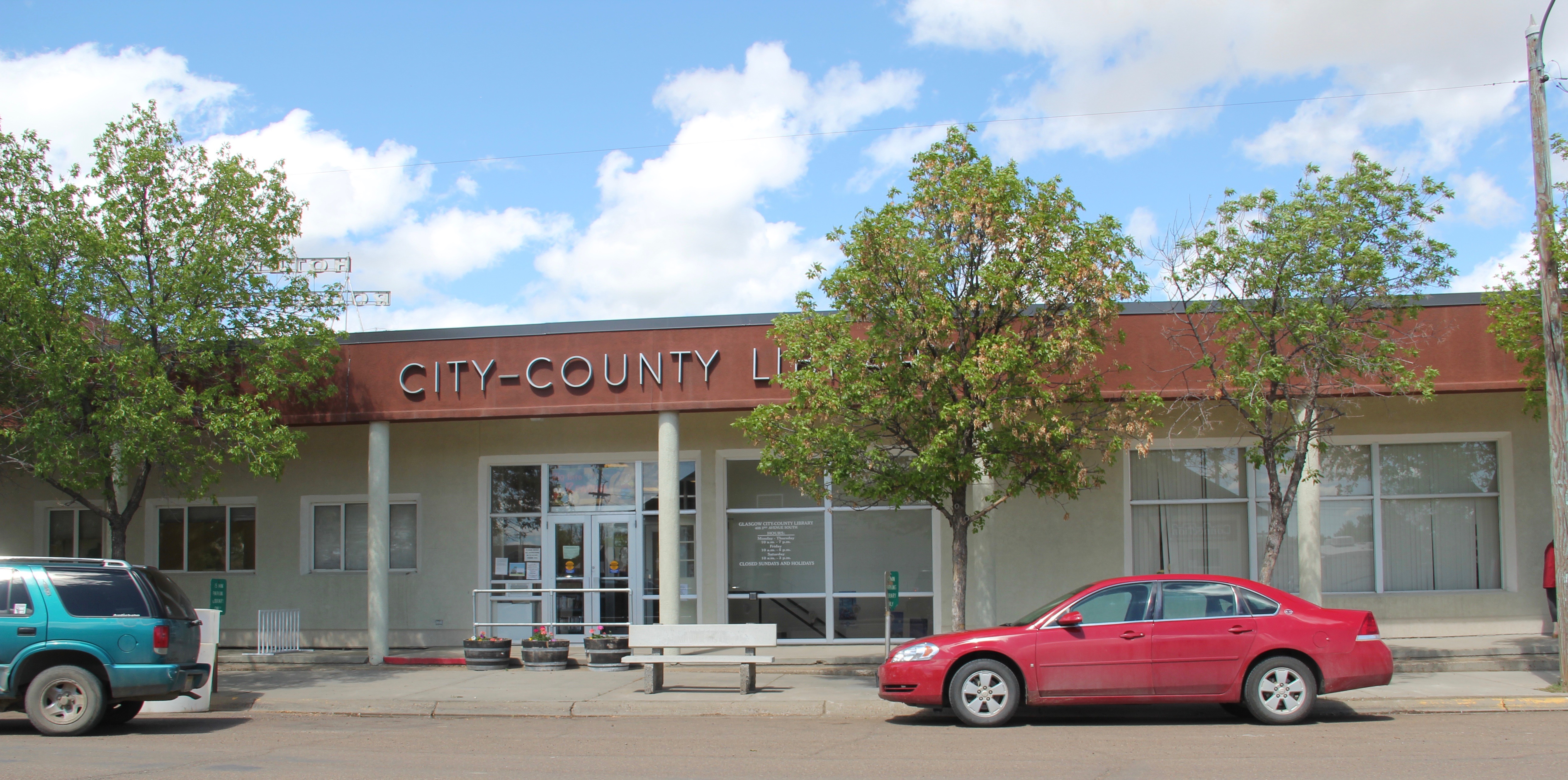
I have always been impressed with the public landscapes of Glasgow, from the courthouse grounds to the city-county library (and its excellent local history collection)


Valley Co Glasgow library

and on to Valley County Fairgrounds which are located on the boundaries of town.

Valley Co Glasgow fairgrounds

Valley Co Glasgow fairgrounds 2

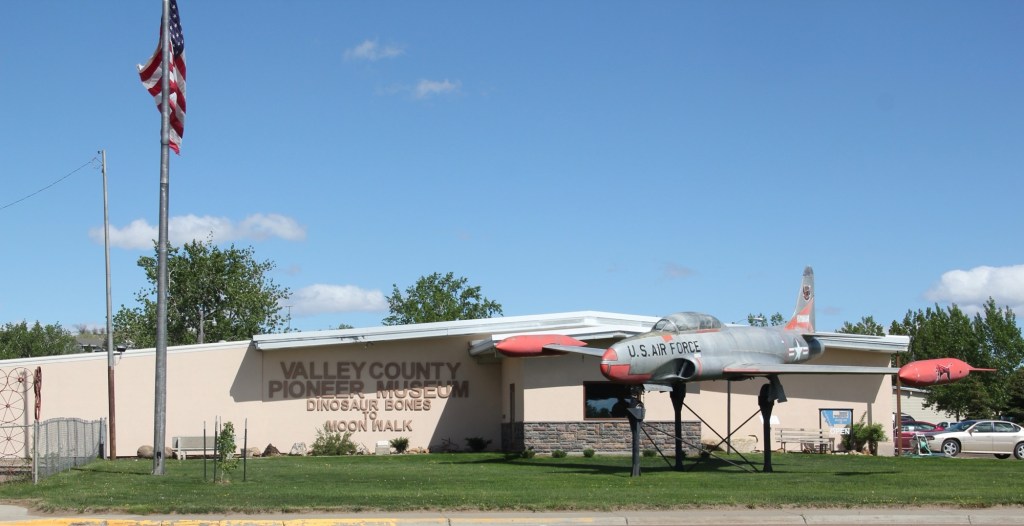
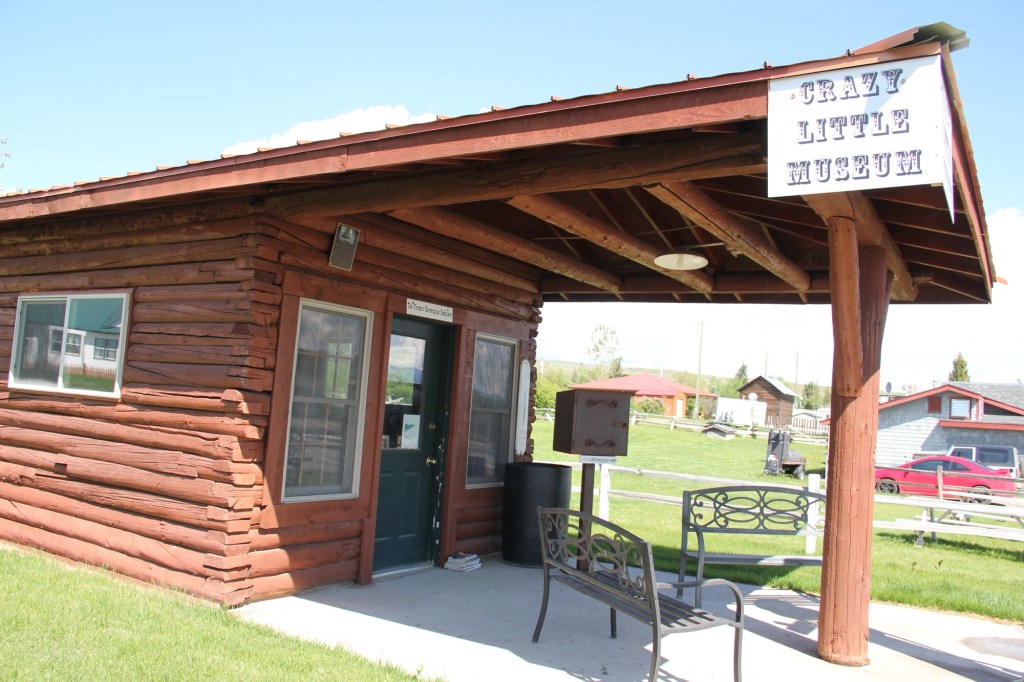
Another key public institution is the Valley County Pioneer Museum, which proudly emphasizes the theme of from dinosaur bones to moon walk–just see its entrance.

Valley Co Glasgow museum roadside

The museum was a fairly new institution when I first visited in 1984 and local leaders proudly took me through the collection as a way of emphasizing what themes and what places they wanted to be considered in the state historic preservation plan.  Then I spoke with the community that evening at the museum.  Not surprisingly then, the museum has ever since been a favorite place.  Its has grown substantially in 35 years to include buildings and other large items on a lot adjacent to the museum collections.  I have earlier discussed its collection of Thomas Moleworth furniture–a very important bit of western material culture from the previous town library.  In the images below, I want to suggest its range–from the deep Native American past to the railroad era to the county’s huge veteran story and even its high school band and sports history.
Valley Co Glasgow museum 1

Valley Co Glasgow museum 11

Valley Co Glasgow museum 16

Valley Co Glasgow museum 13

Valley Co Glasgow museum 17

A new installation, dating to the Lewis and Clark Bicentennial of 2003, is a mural depicting the Corps of Discovery along the Missouri River in Valley County.  The mural is signed by artist Jesse W. Henderson, who also identifies himself as a Chippewa-Cree.  The mural is huge, and to adequately convey its details I have divided my images into the different groups of people Henderson interprets in the mural.

The Henderson mural, together with the New Deal mural of the post office/courthouse discussed in my first Glasgow posting (below is a single image of that work by Forrest

Valley Co Glasgow 1 New Deal mural

Hill), are just two of the reasons to stop in Glasgow–it is one of those county seats where I discover something new every time I travel along U.S. Highway 2.

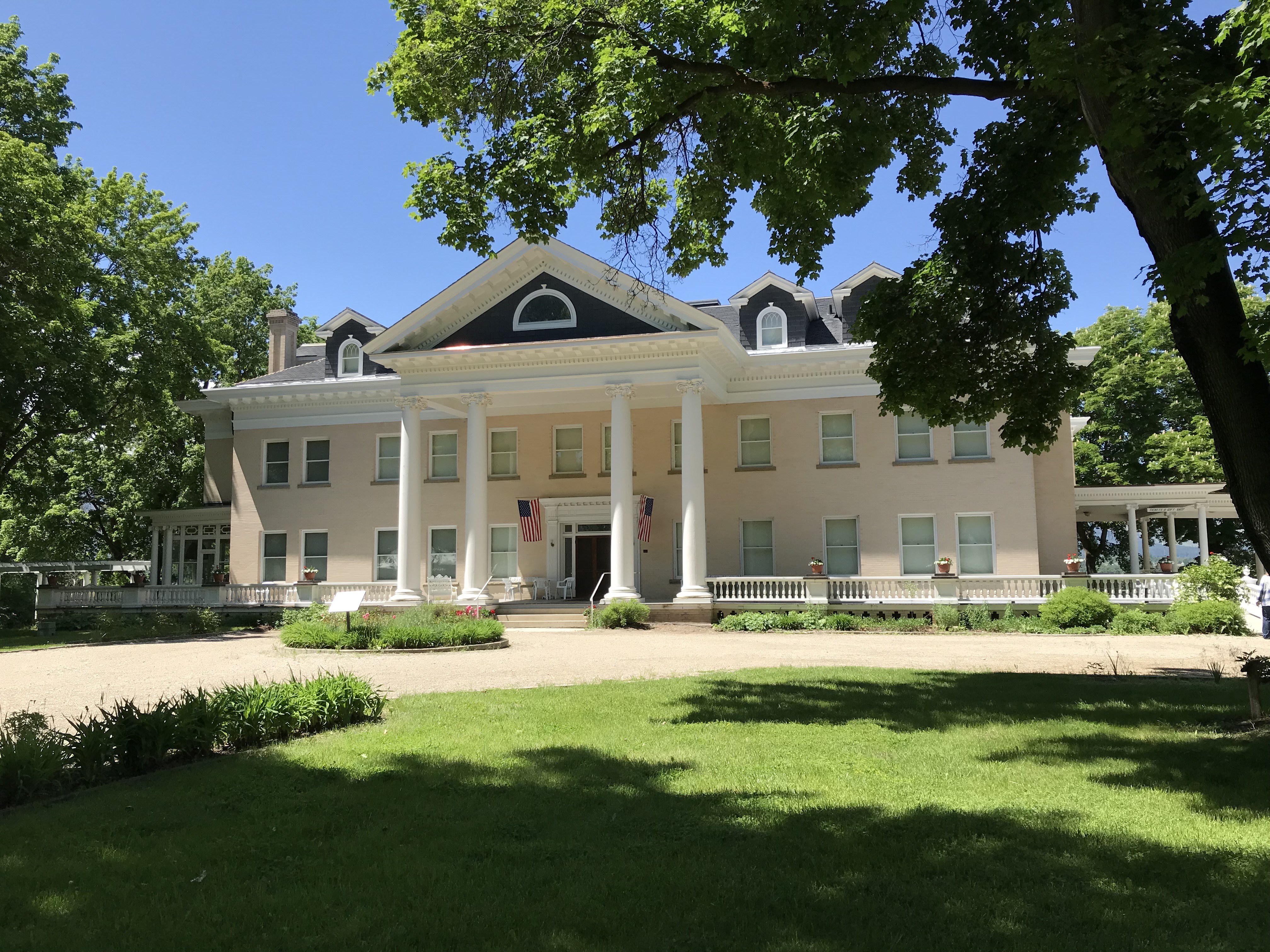
Hamilton’s Daly Mansion: A New Interior and New Interpretive Directions

4hZrqaLtSzmk1rzEQCa6FQ

The story of the Daly Mansion from a shuttered family owned property in 1984-1985 to a fully realized historic house museum 30 years later also reflects well my timeline of engagement with the historic landscapes of the Big Sky Country.  It was a time capsule in the mid-1980s–a house starting to come apart but full of family furniture, papers, and countless treasures.  When the house was saved but the interior furnishings sold at auction, it seemed like a permanent separation.
EkyLHB8mRjeXZA7n+lufyw

My first post on this blog in 2013 about the Daly Mansion and its restoration lauded the determination of the local non-profit to finish the exterior renovation and repairs, and to have the place open to the public on a regular basis.  It was and is an impressive achievement in a time when so-called experts say the era of historic house museums is over. But it was very much an exterior tour–when I visited six years ago, photographs were not allowed, not so much to protect items but because so much remained to be done. The place just did not have a historic “lived in” look.
Q%Yw%lY1Tt6X8k2QSSHZWg

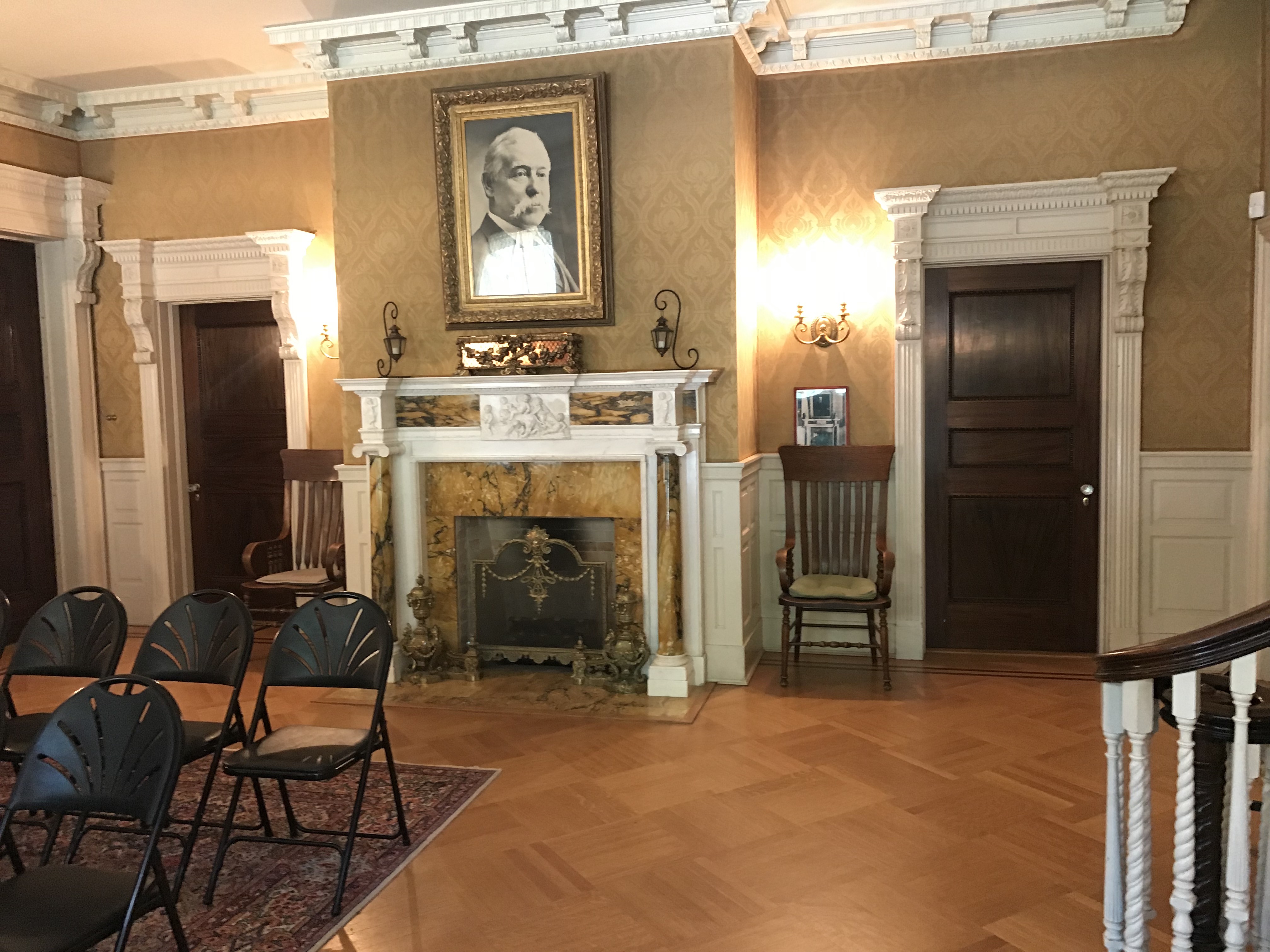
In the last five years, the Daly Mansion board and its many local supporters have finished the job.  Key pieces of family furniture, like the settee above and much of the dining room below, have returned, due in large part to purchases and commitments made at the original auction in the 1980s but many objects coming back to the house due to the persistence of board members and the willingness of auction buyers to return items now that 30 years have passed.

NTJeRCuDQvK2cOyUD7zVYQ.jpg

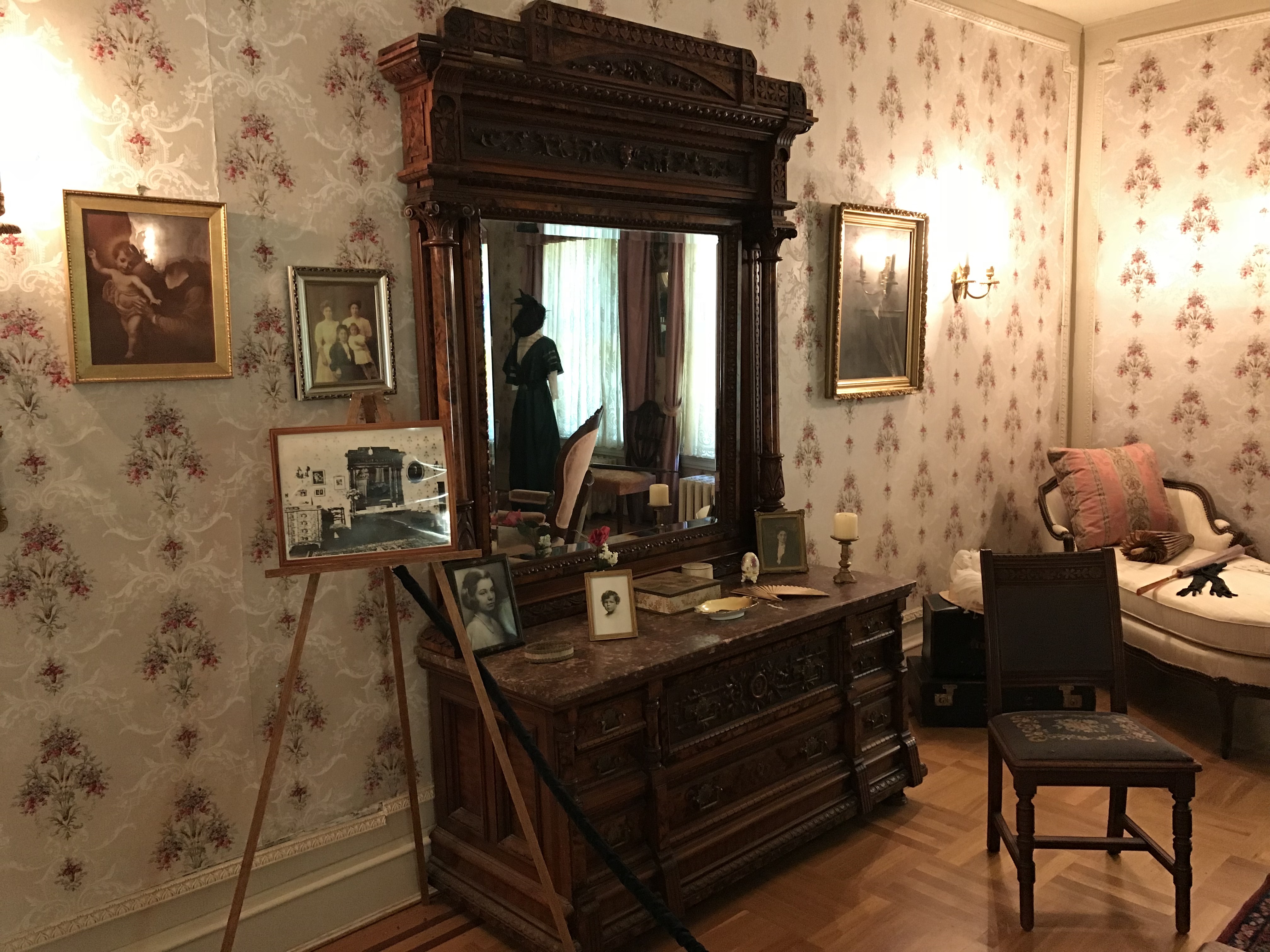
The result is a house museum that depicts well the life of a wealthy family on their version of the 20th century country estate, and now with an appropriate focus on Margaret Daly, who selected the architectural style, purchased many of the furnishings, and kept the estate forefront in Montana luxury for four decades (Marcus Daly died in 1900, before the Colonial Revival conversion of the original house; Margaret lived until 1941).  Margaret Daly’s bedroom furniture had long been in the collections of the University of Montana Library–they are now in their rightful place in the Daly Mansion.

smgC1%CUR7KuSbdZj9mqcA.jpg

fosNfzQiRMypST1%yswmEQ

NLsfGdg6SoalUOfw4Uv2+g

The lushness, and personality, of Margaret Daly’s private quarters is now the norm across the house, from the first floor parlor to the second floor setting room.

OhKso7MERLSfWjgo2u6oEw.jpg

SbH30%5tRFajxuL%Bb0TrQ.jpg

Even the third floor ballroom, once an evocative but largely empty space, is now used to display and interpret the rather amazing clothing collections of the museum.

OC04pgQ+QjyDWAqPjJ8DXQ.jpg

Certainly the words of one visitor during my May 2018 ring true:  “they were rich but had little taste” in the decorative arts.  But for Margaret Daly her Riverside estate was not a showplace as much as a place to escape for the summer.  The hodge-lodge of trendy but individually undistinguished furniture and objects suited that purpose just fine.

fOljPdfFSMO3yiJxDTQqUg

The Daly Mansion is at a new place–a preservation and restoration project that had stretched out for thirty years.  But now the interior story, especially the focus on Margaret Daly, steps up to center stage.  The meaning of Riverside and the Bitter Root Stock Farm is still waiting for a full exploration and analysis.

mBtku6y1Tw6O+dhoStGj4g


Butte’s World Museum of Mining: A forgotten jewel

Established in 1963, Butte’s World Museum of Mining is both a historic site and a historic building zoo. It preserves and interprets the Orphan Girl Mine while it also re-creates a fanciful Hell Roarin’ Gulch, with the townscape filled with both moved historic buildings and modern interpretations of the mining camp that existed in Butte in the late 19th century.

Butte WMM Orphan Girl mine work crew

The Orphan Mine historic site is the best single place in Montana to explore the gritty reality of deep-shaft mining in the Treasure State.

Butte WMM Orphan Girl Mine 4

Butte WMM Hell Roarin Gulch 14

The metal cages that the mines used to go down into the mines still give me the chills–the sacrifices these men made for their families and community is impressive.

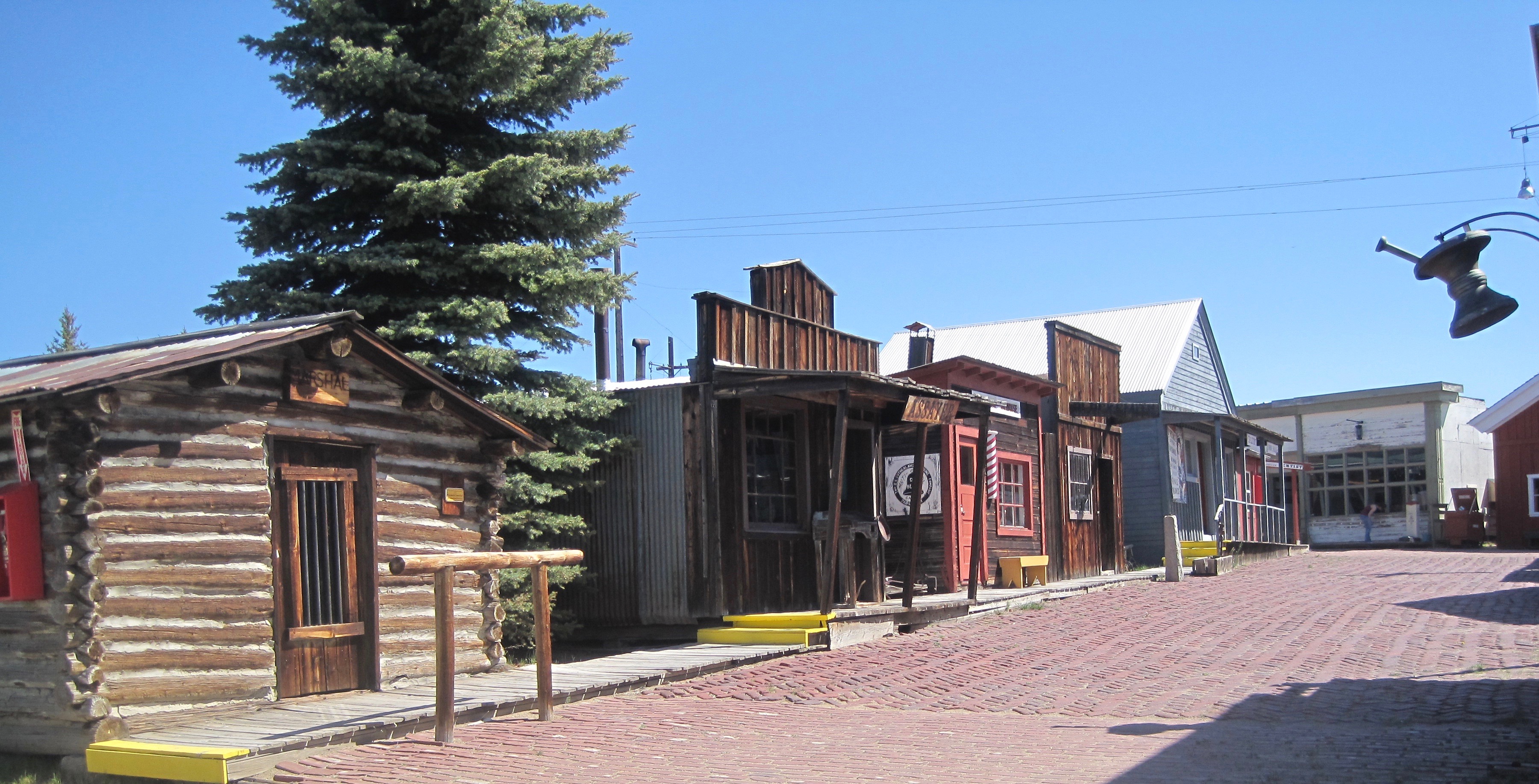
Butte WMM Hell Roarin Gulch 1The Hell Roaring’ Gulch part of the museum is in stark contrast to the mid-20th century engineered, technological landscape of the Orphan Girl Mine.  It interprets the mining camp days of Butte from the late 1860s into the 1880s before the corporations stepped in and reshaped the totality of the copper mining industry and built environment of Butte.
Butte WMM Hell Roarin Gulch 4

Butte WMM Hell Roarin Gulch 3

Butte WMM Hell Roarin Gulch 20

Like many building zoos of the highway era (the museum is easily accessed from the interstate), the recreated town emphasizes the ethnic diversity of the mining camp as well as some of the stereotypes of the era.

Butte WMM Hell Roarin Gulch 9

Butte WMM Hell Roarin Gulch 10

Butte WMM Hell Roarin Gulch 9

But the exhibit buildings also have several strong points, especially in their collections, such as the “union hall” (you do worry about the long-term conservation of the valuable

Butte WMM Hell Roarin Gulch Union Hallartifacts and banners shown in this photo); the store, which displays common items sought by the miners and their families; and various offices that show the business of

Butte WMM Hell Roarin Gulch 5mapping the mines, registering claims, and assaying the metals .
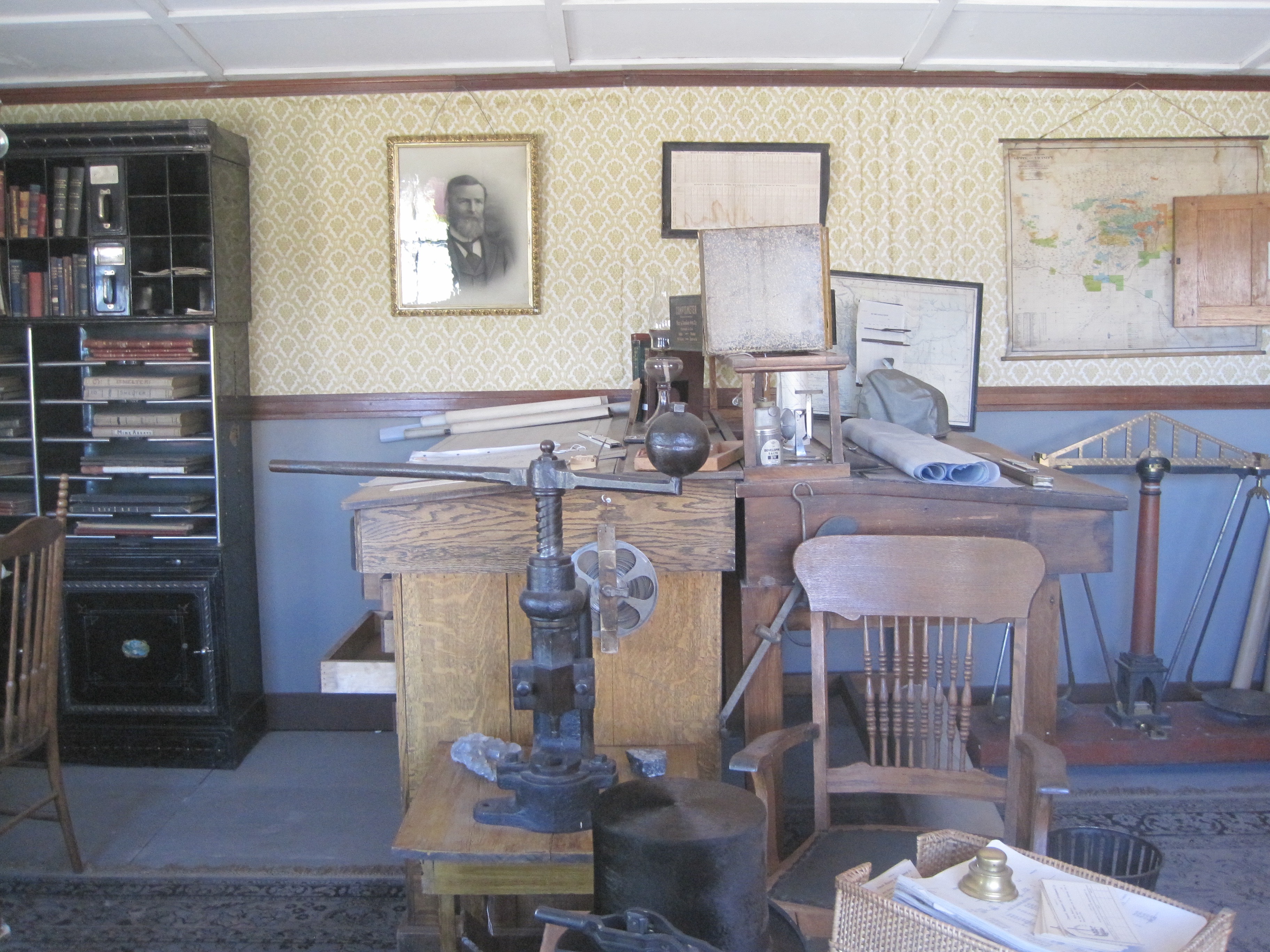
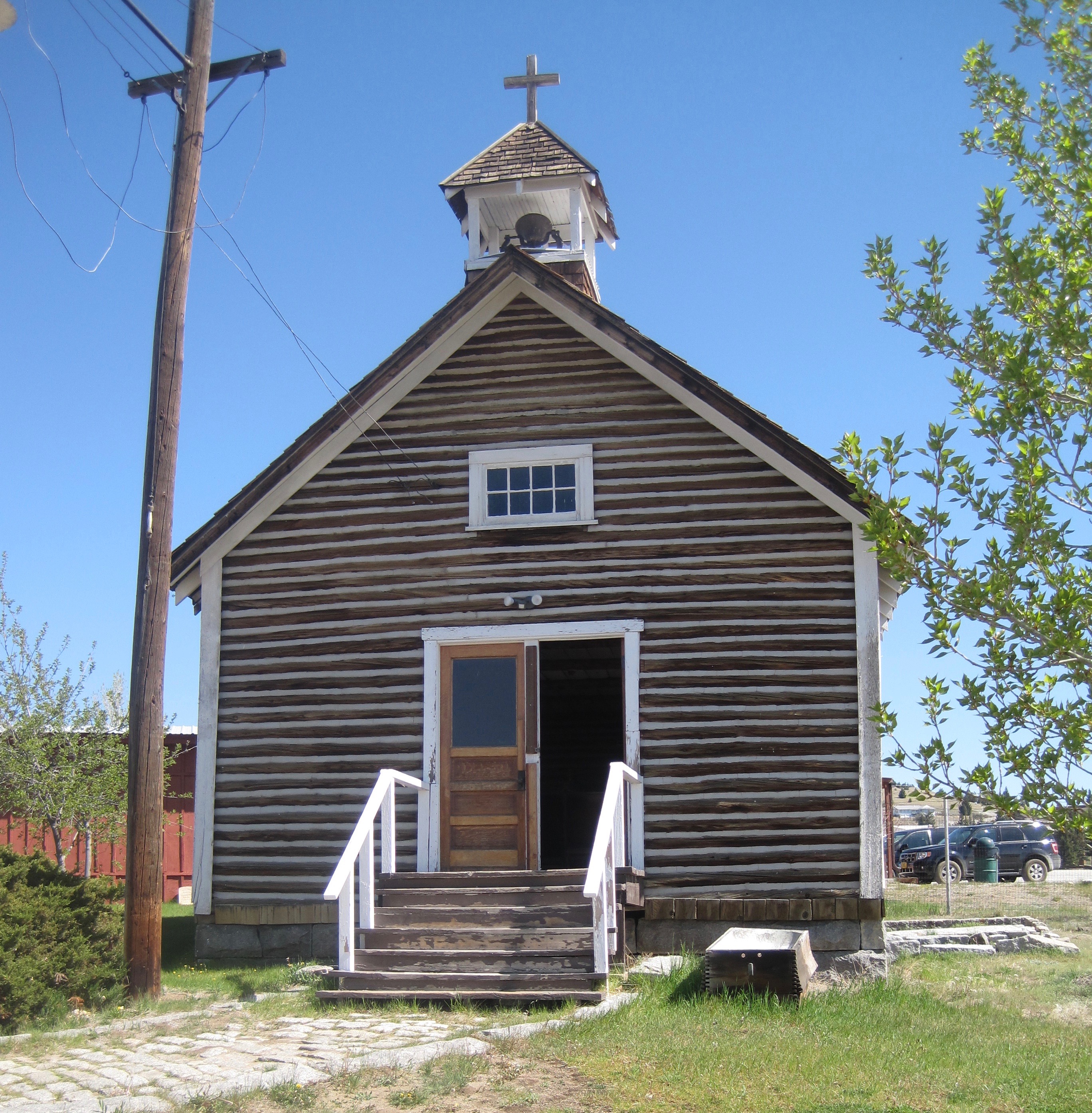
Butte WMM Hell Roarin Gulch 21In my first post about the World Museum of Mining, I addressed this valuable collection of a historic mine, several historic buildings, and thousands of historic artifacts briefly.  Properties like the impressive log construction of St. Patrick’s Catholic Church, shown below,  are invaluable. The World Museum of Mining deserved more attention, and it deserves the attention of any serious heritage tourist to Montana.
Butte WMM Hell Roarin Gulch