
I take pride in my effort to travel the state of Montana and listen to its residents to learn about its history and its special places. And I take great pride in creating this WordPress site where I can share my findings with you. But back here in the south, few ask me about Montana history–most want to know where to go to eat and drink when they encounter the Big Sky Country. So to get into the holiday spirit(s) and have a good cheer (just wish there was some place in Tennessee to get Tom and Jerry mix), I will offer my favorite Montana restaurants–but only those in historic buildings.
I have already spoken about many favorites, such as the Grizzly Bar in Roscoe (above) and the Oxford Bar and Double Front Cafe in Missoula, the M&M Bar and Cafe in Butte, the Izaak Walton in Essex, and especially Chico Hot Springs in Pray. If you have only one stop in Montana, make it Chico–I always do.

HPIM0677.JPG
The Izaak Walton is the only “new” restaurant in the bunch, the rest being mainstays of my field work in 1984-85. But they are only the tip of the iceberg–and I am not talking salads either.
Nope I am talking beef and booze, be in at the Wagon Wheel in Drummond (above), or the much more fancy digs of the Montana Club in Helena. Whatever you do in Montana, you don’t want to miss the beef. It would be a Dirty Shame if you did (thank you, Yaak!, below)
There are the classic supper club steakhouses of central Montana such as Eddie’s Supper Club, a stone’s throw from the gates of Malstrom Air Force Base, and Borrie’s, nestled in the Black Eagle neighborhood, both in Great Falls.
Throughout rural Montana, it is the classic cafe, always good for breakfast but really superb for pie. And you don’t want to miss Montana pie, be it from Glen’s in Florence on the western end of the state to the Wagon Wheel Cafe in Choteau to the Dell Cafe (in an old school house) in the southwest corner to the Madison Valley’s Ennis Cafe to the Eat Cafe in White Sulphur Springs (right in the middle of the state). Indeed my favorite pie stop was once the small cafe at the Dude Rancher Lodge in Billings–but I understand that place has changed in recent years.

HPIM0195.JPG
What has really been great to experience over the last 30 years is the number of “fine” dining places to come about. In Helena, back in the early 1980s, it was On Broadway, still going strong today.
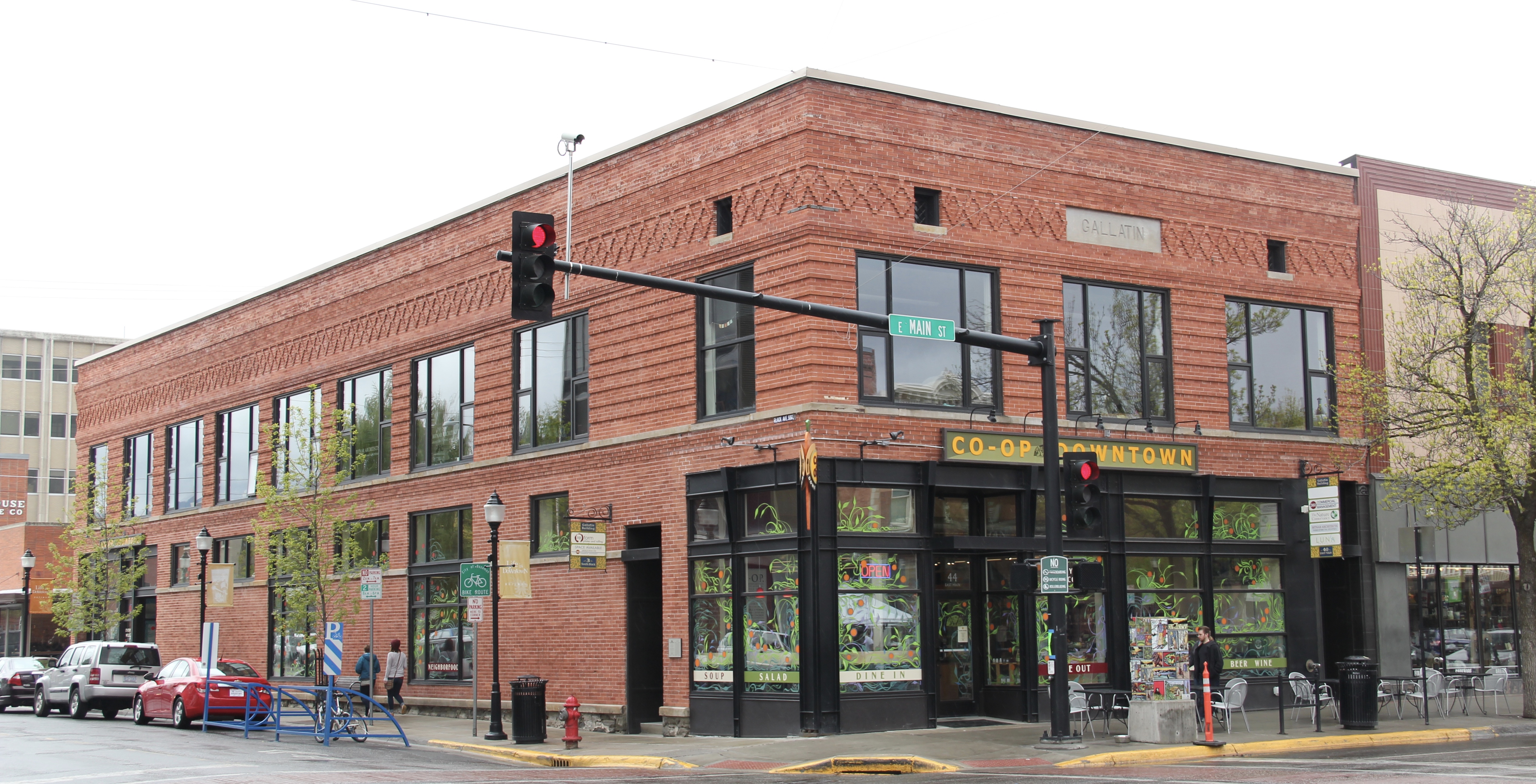
 Bozeman has boomed with many new chef-driven restaurants but of the downtown establishments my favorite for good fresh, creative food remains the Co-Op Downtown nestled within the Gallatin Block, a historic building, tastefully renovated, in the downtown historic district.
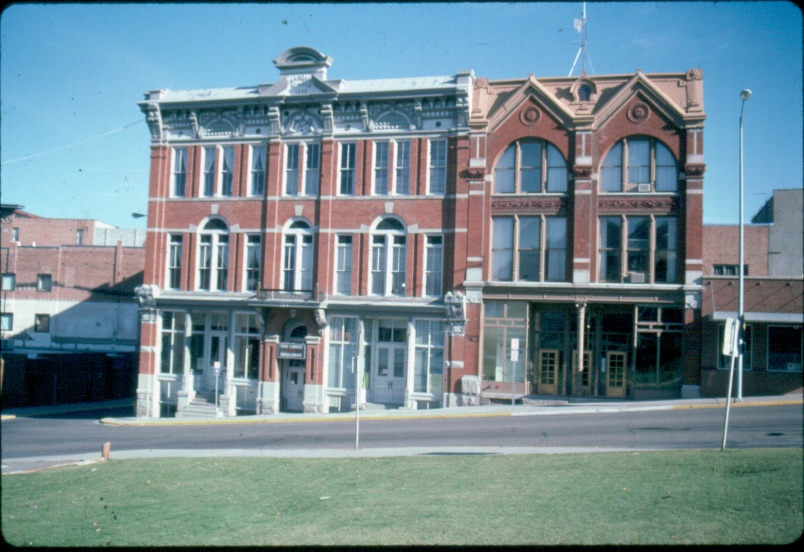
In Billings, it is Walker’s Grill–a rather newcomer on the stage but now a staple of downtown life in Billings, and a big part of its re-vitalization in the 19980s, just as its neighbor to the east, the Rex Hotel restaurant, was the first really successful adaptive reuse project on Montana Avenue, the city’s old railroad corridor.

HPIM0178.JPG
Another railroad era hotel that has gone through various restorations before meeting a happy conclusion is the magnificent Grand Union Hotel and its bar/ restaurant in Fort Benton. Here is a place worth a long drive–for there is so much to see and explore in this mid-19th century Montana place.


30 years later the Grand Union still is a jewel among Montana’s territorial era buildings.
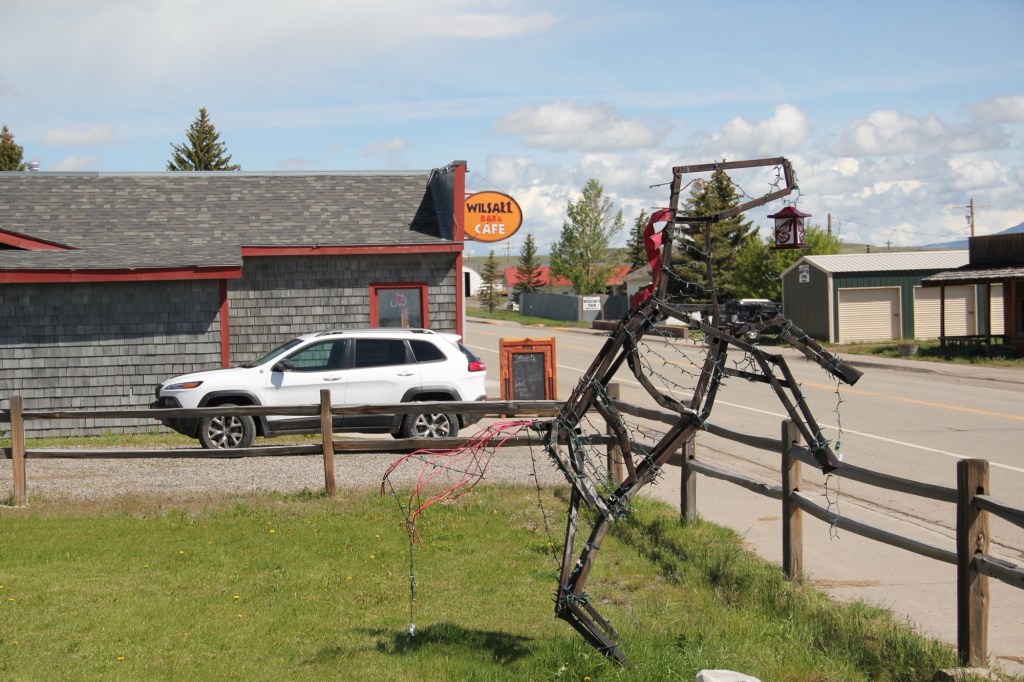
I have already ranged across a good part of the state–what about the eastern third, that vast landscape north and east of Billings. Winnett on Montana Highway 200 has a great local bar/ steakhouse (below) while for an endless abundance of eastern Montana fare  head to Miles City, which is the place to go if you wonder, still, “where’s the beef” and a city that is the proud home of the famous Montana Bar.

Oh yes, let’s go way up north to the state’s northeast corner and take in the Fort Peck Hotel and its equally good lounge and restaurant. Here is a New Deal era building, set
 within New Deal landscape that forever changed the look of this region in the 1930s. Locals and tourists mix together–because the hotel is the only place to go, unless you want to backtrack to Glasgow and check out Sam’s Supper Club on U.S. Highway 2, and its equally neat 1960s roadside look.

Ready to go–hope so. At least everyone is now in the holiday mood for the feasting to come. Happy holidays, and thanks for checking out my explorations into historic Montana.
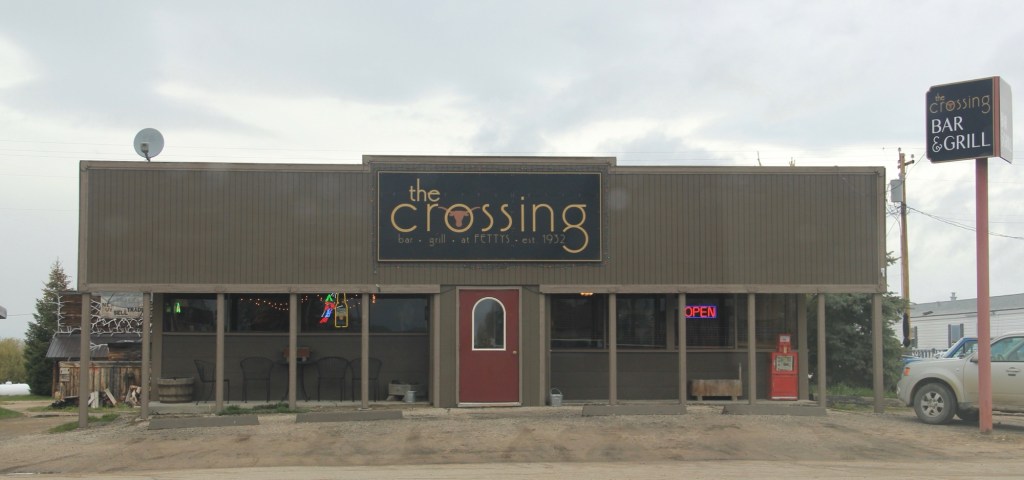


























 Community Center Bowl in Hardin, Big Horn County, is a wonderful recreational space, with its bays defined by c. 1960 styled “picture windows” framed in glass blocks. The owners have refurbished the lanes two years ago–this institution still has years left in it.
 From the southeast corner of the state to its northwest corner–the Trojan Lanes (so named for the school mascot) in Troy, Montana. Here you find the type of alley that is common throughout the small towns of Big Sky Country. Not only do you have a recreational center but you often have the best family restaurant in town. That’s the
 case where at Troy’s Trojan as well as–returning to the southeast corner–the Powder River Lanes in Broadus. This tiny county seat has lost several of its classic cafes from the 1980s–the Montana Bar and Cafe on the opposite side of the town square being my favorite in 1984–but Powder River Lanes makes up for it.
 I am sorta partial to the small-town lanes, like the Lucky Strike above in Ronan, Lake County. Located next door to “Entertainer Theatre,” this corner of the town is clearly its center for pop culture experience.
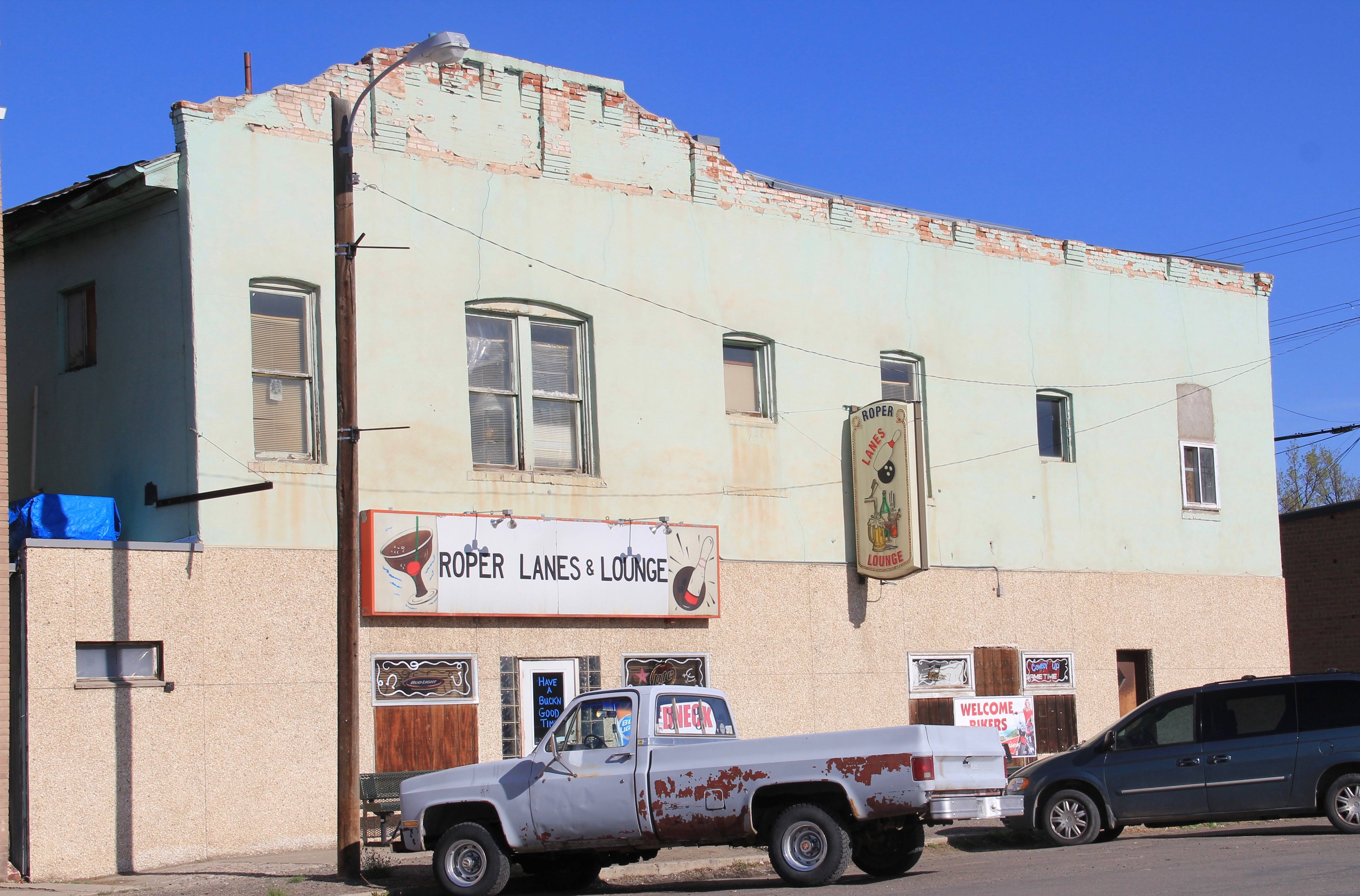 Another fav–admittedly in a beat-up turn of the 20th century building–is Roper Lanes and Lounge in Whitehall, Jefferson county, in the southwest corner of the state. Gotta love the painted sign over the entrance–emojis before they were called emojis.


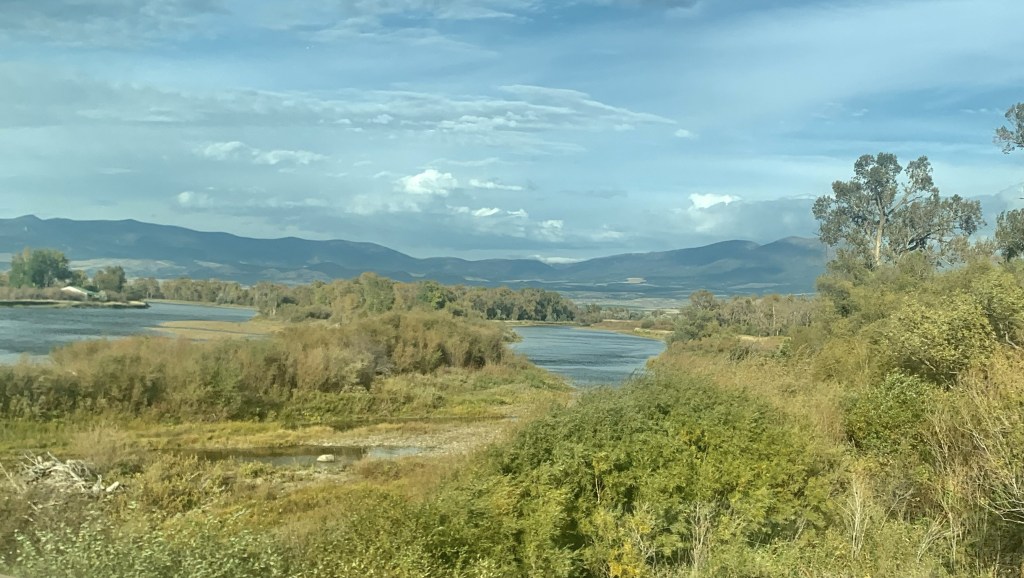
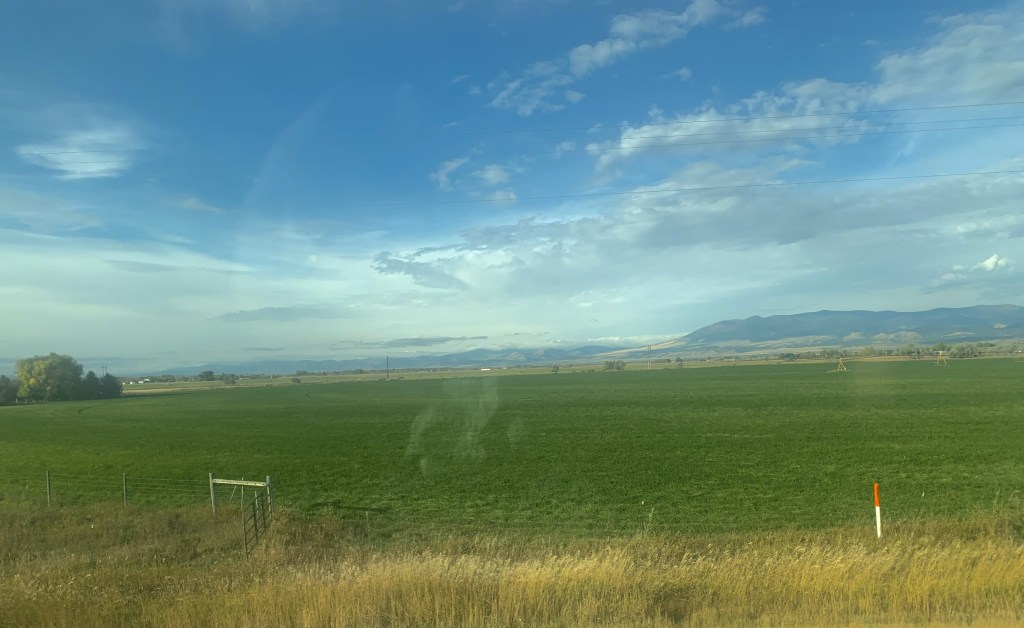
 One of my favorite weekend drives, when I lived in Helena over 30 years ago, was to head north, via the Flesher Pass (above) and Montana Highway 279, and hit the very different landscape of Montana Highway 200 (below) and eastern end of the Blackfoot Valley.
 The destination was breakfast, often at Lambkin’s, a family business that, to my delight, still operates when I visited in 2015. Lambkin’s is one of those classic small town Montana eateries, great for breakfast, and not bad for a burger and pie later in the day. The town is








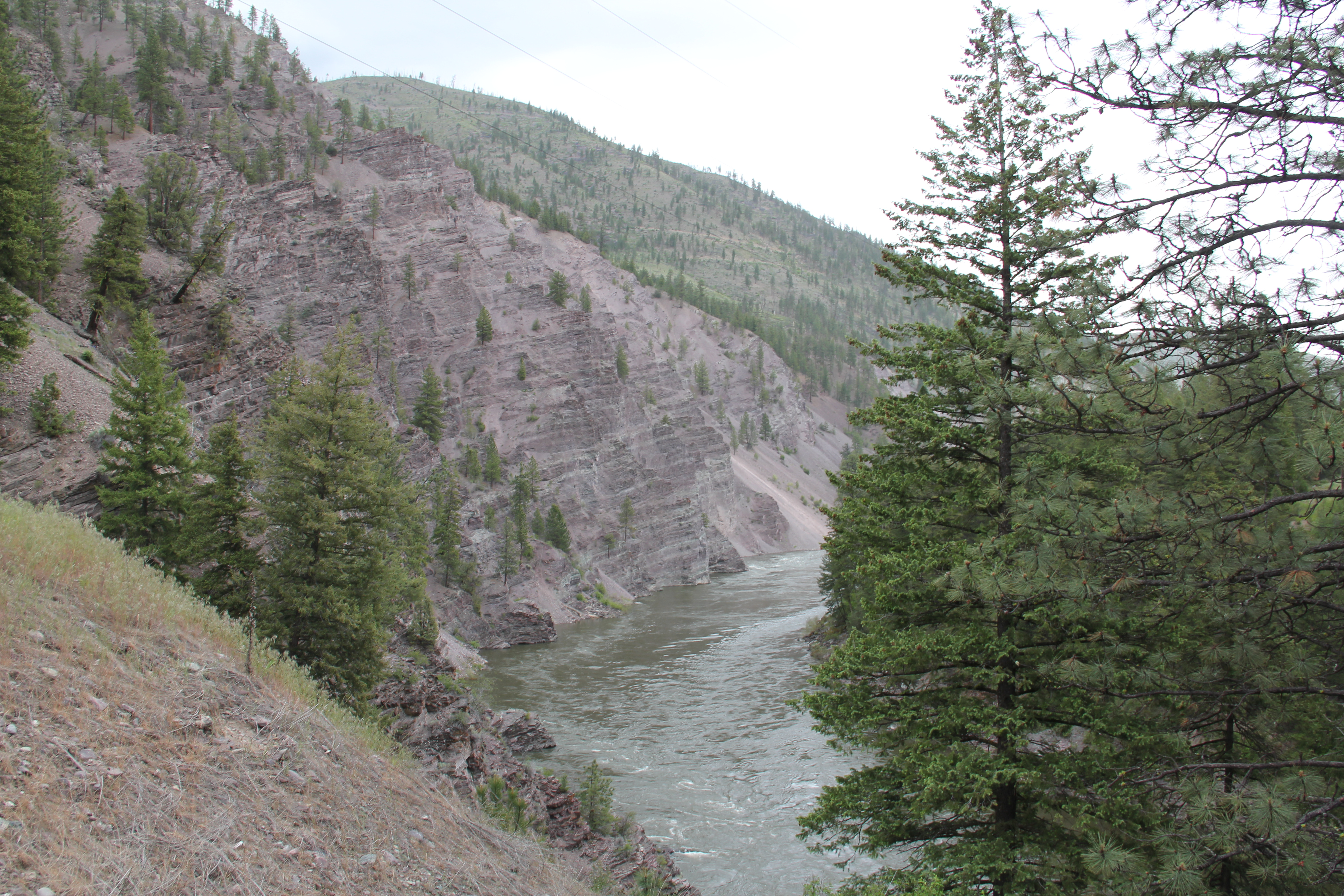 The two railroads and the river that shaped Missoula also carved the landscape to the northwest. Following the Clark’s Fork River to the northwest, the Milwaukee Road passes through Mineral County, adding to a transportation corridor that, earlier, included the Mullan Road, and then later U.S. Highway 10. It is now the route of Interstate Highway I-90 as i heads west to Idaho and then Washington State.


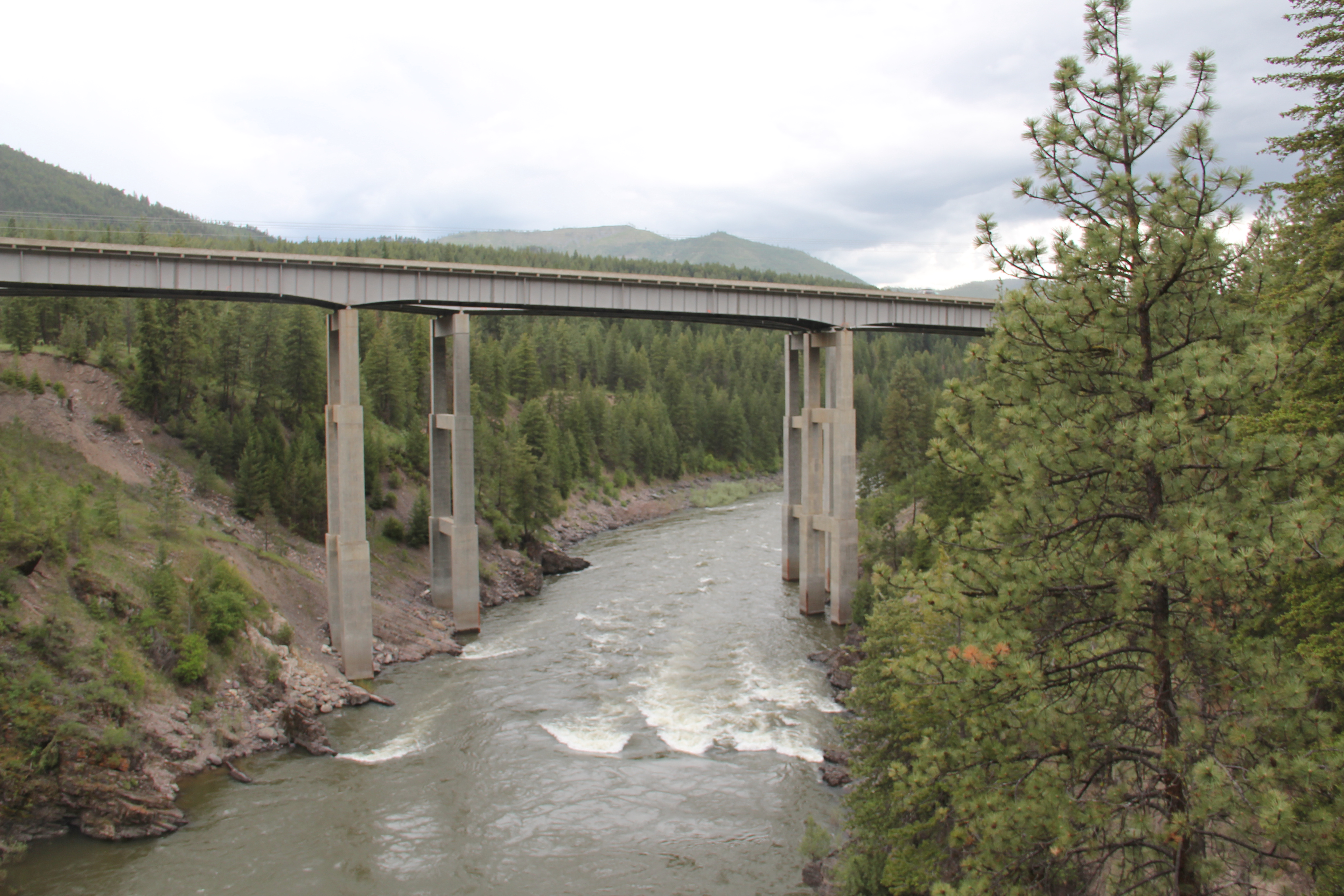 As the interstate crosses the Clark’s Fork River near Tarkio it bypasses the earlier transportation network. A particular marvel is the Scenic Bridge, listed in the National Register in 2010, especially how the bridge of U.S. 10, built in 1928, was designed in dialogue with the earlier high-steel bridge of the Milwaukee Road.
 The Scenic Bridge has been closed to traffic but is safe to walk across, creating great views of both bridges and the Clark’s Fork River–travel here has always been challenging.


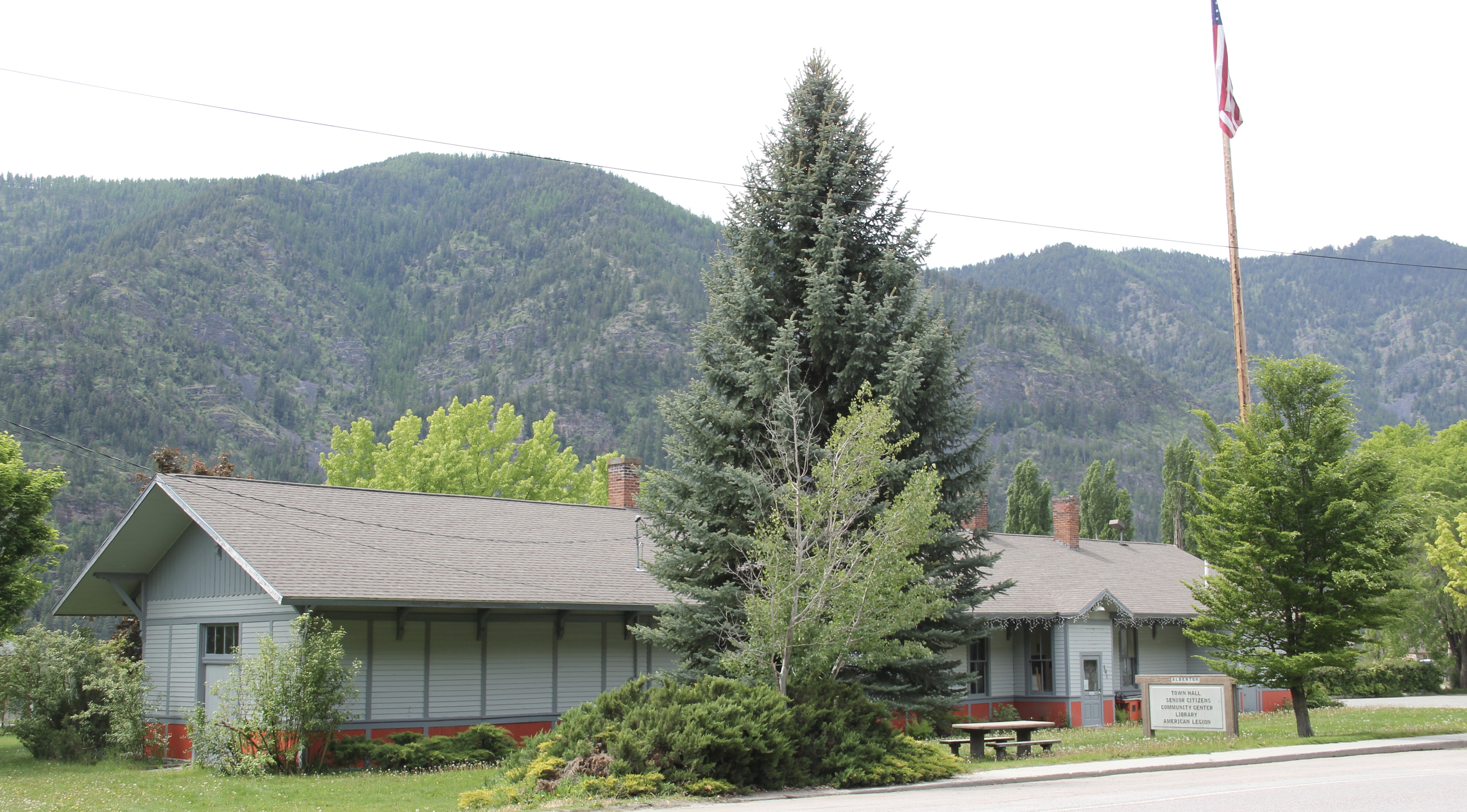


 Twenty years historic preservationists stepped up to add numerous properties to the National Register throughout the county. In addition to the passenger depot, the Montana Valley Book Store, above, was listed. This two-story false front building, with attached one-story building, was once the town’s commercial heart and known as Bestwick’s Market–it has been close to the heart of book lovers for years now. Montana Valley Book Store was a relatively new business when I first visited in 1984 but now it is one of the region’s cultural institutions, especially when a visit is combined with a quick stop at the adjacent Trax Bar.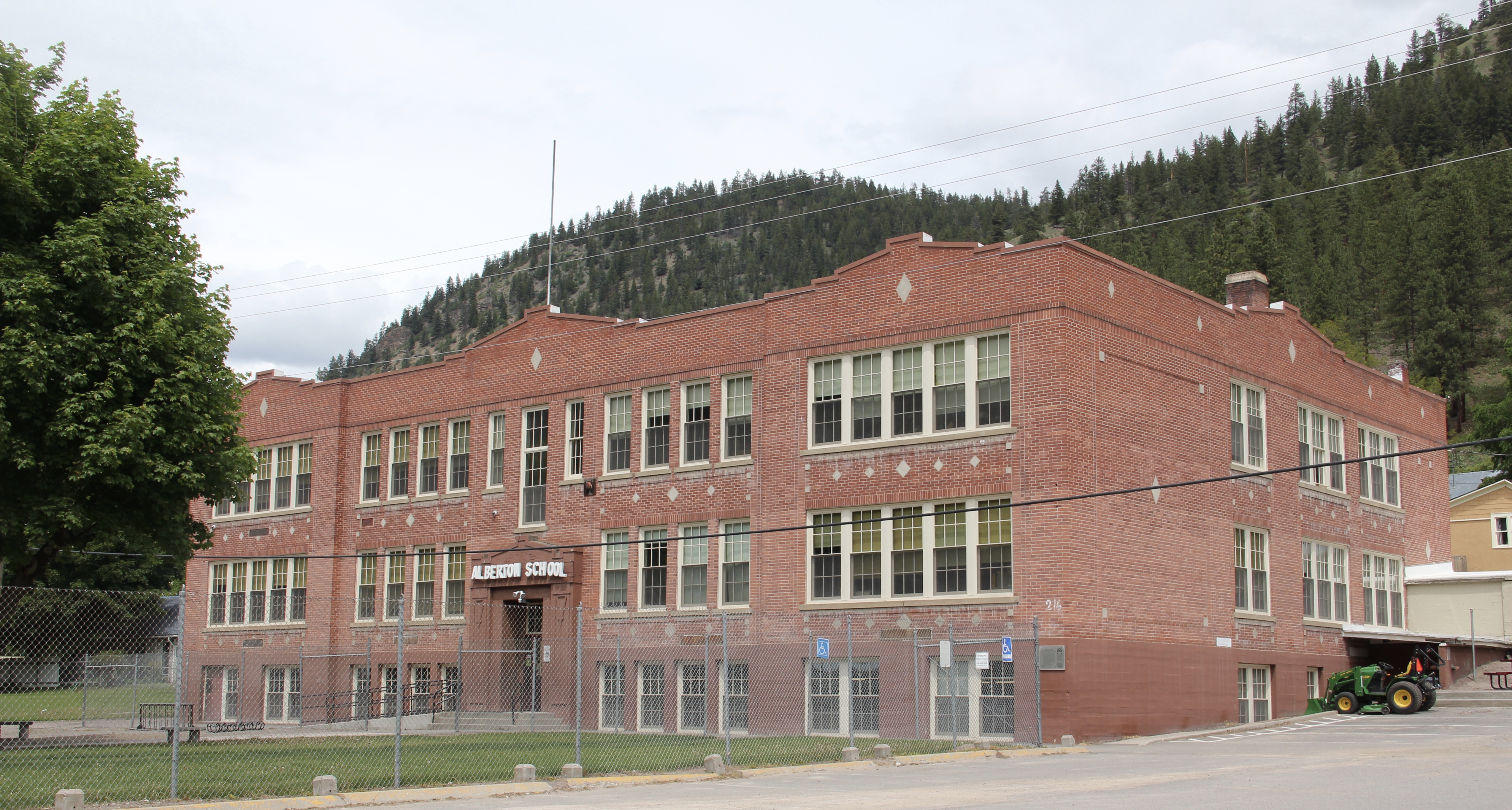
 The historic three-story brick Alberton High School (now the Alberton School) operated from 1919 to 1960 as the only high school facility within miles of the railroad corridor. It too is listed in the National Register and was one of the community landmarks I noted in the 1984-1985 state historic preservation plan work.
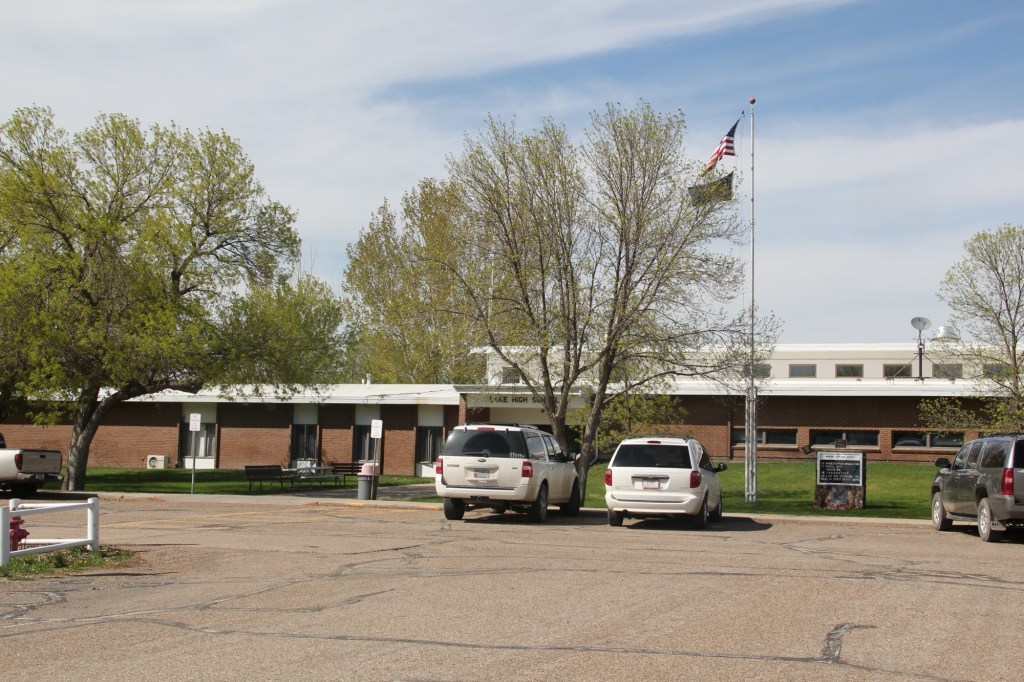
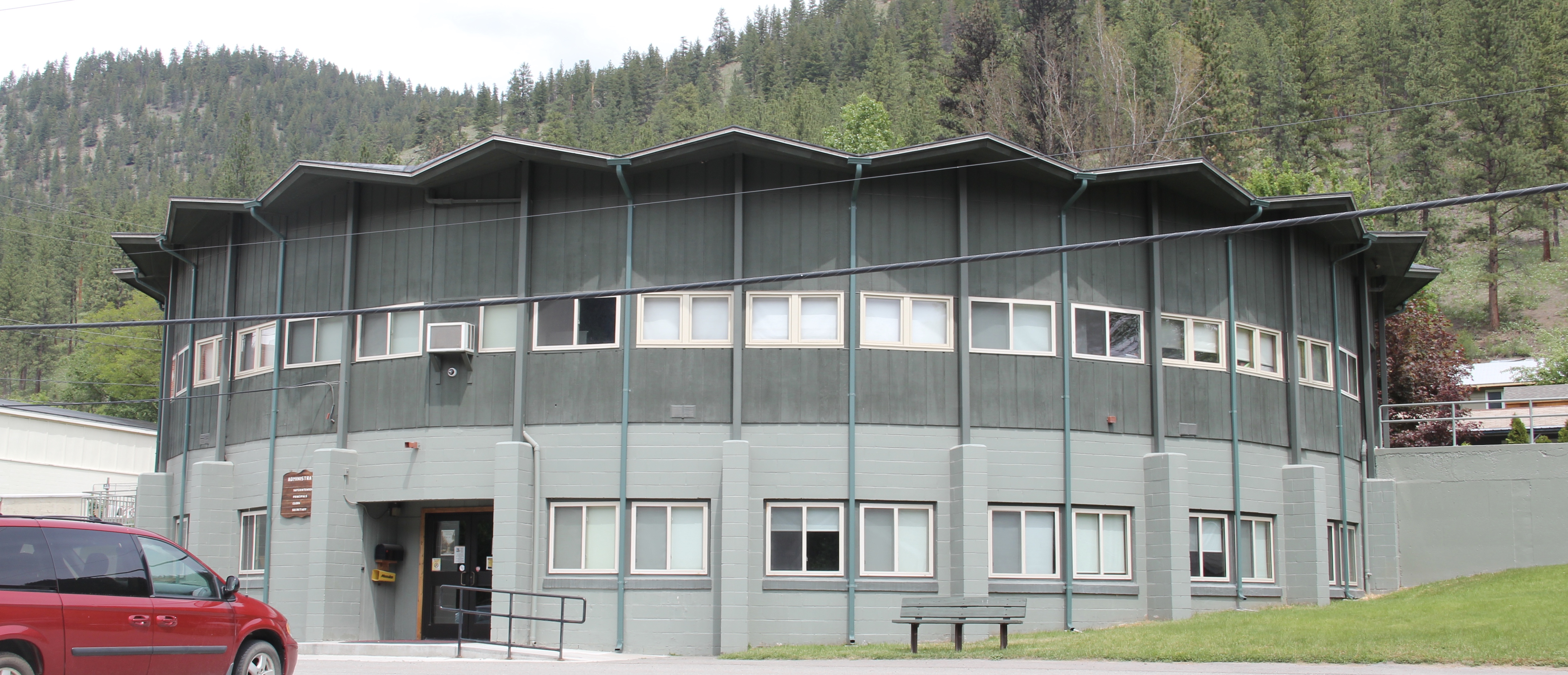 I gave no notice to the replacement school, the modern Alberton High School, c. 1960. That was a mistake–this building too reflects school design ideas of its time–the Space Age of the late 1950s and 1960s, when open classrooms, circular designs, and a space-age aesthetic were all the rage. Alberton High School is one of my favorite small-town examples of Montana modernism.
 The school is a modern marvel just as the high school football field and track are reminders of how central the schools are to rural community and identity in Montana. Alberton has held its own in population in the decades since the closing of the Milwaukee Road, largely due to its proximity to Missoula and the dramatic gorges created by the Clark’s Fork River. Change is probably coming, and hopefully these landmarks will remain in service for years to come.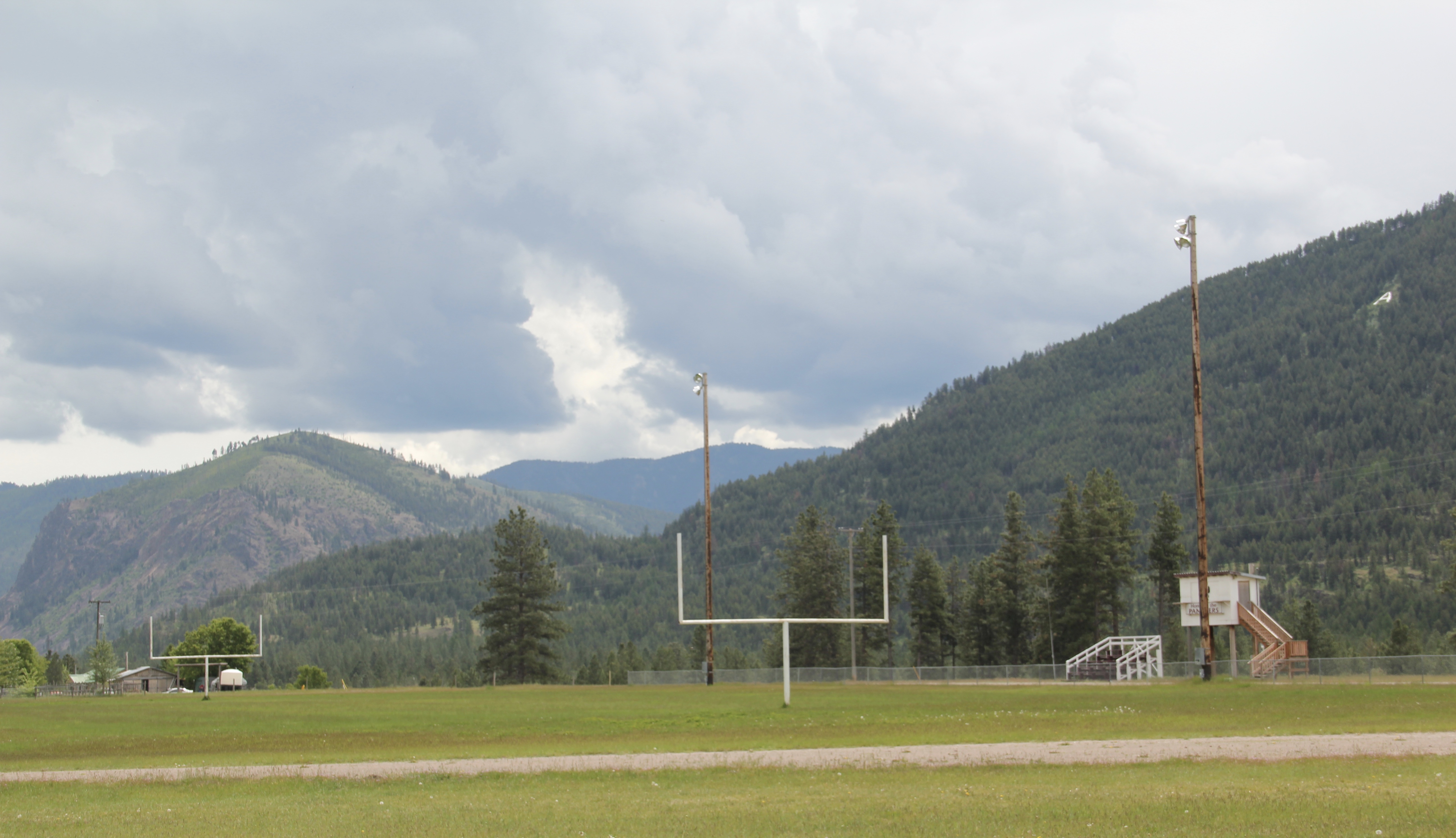


 The Silver Dollar, like the Double Front, were meccas not just for railroad workers but also travelers weary of life on the rails and looking for a bit of liquid refreshment. It remains a drinkers’ bar today.
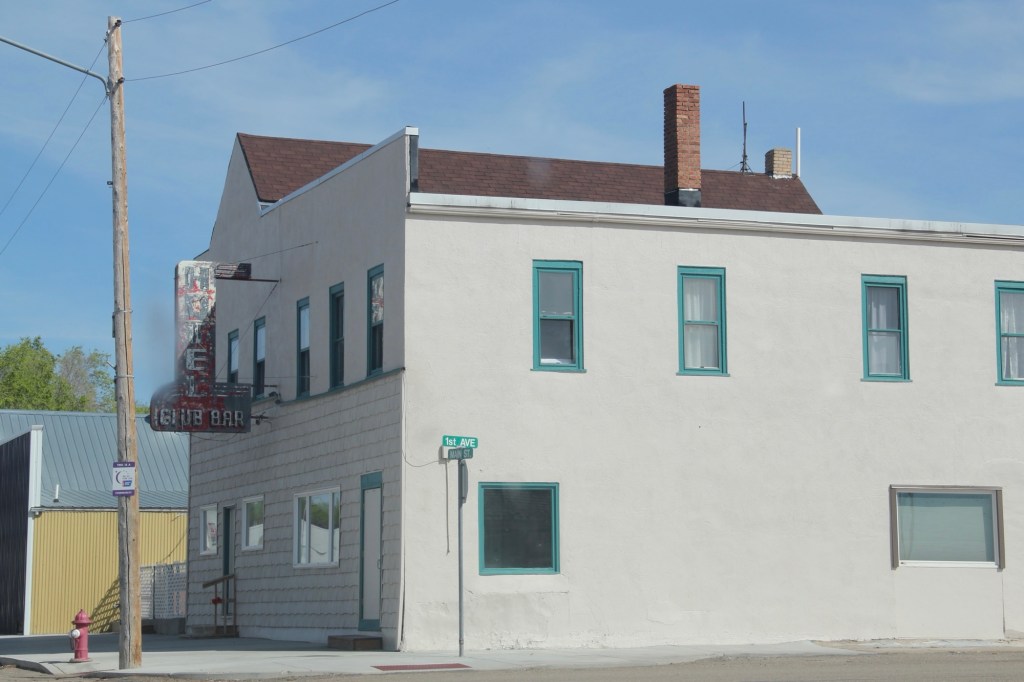
 I realize that Missoula now has a wide range of downtown establishments–even a wine bar for a good measure–and I wish them well. But give me the Ox, the Double Front, or the Club any day, any time.
 Drummond is the north entrance of the Pintler Scenic Route. The first ranchers settled here in the 1870s but a proper town, designed in symmetrical fashion facing the railroad tracks, was not established until 1883-1884 as the Northern Pacific Railroad built through here following the Clark’s Fork River to Missoula.


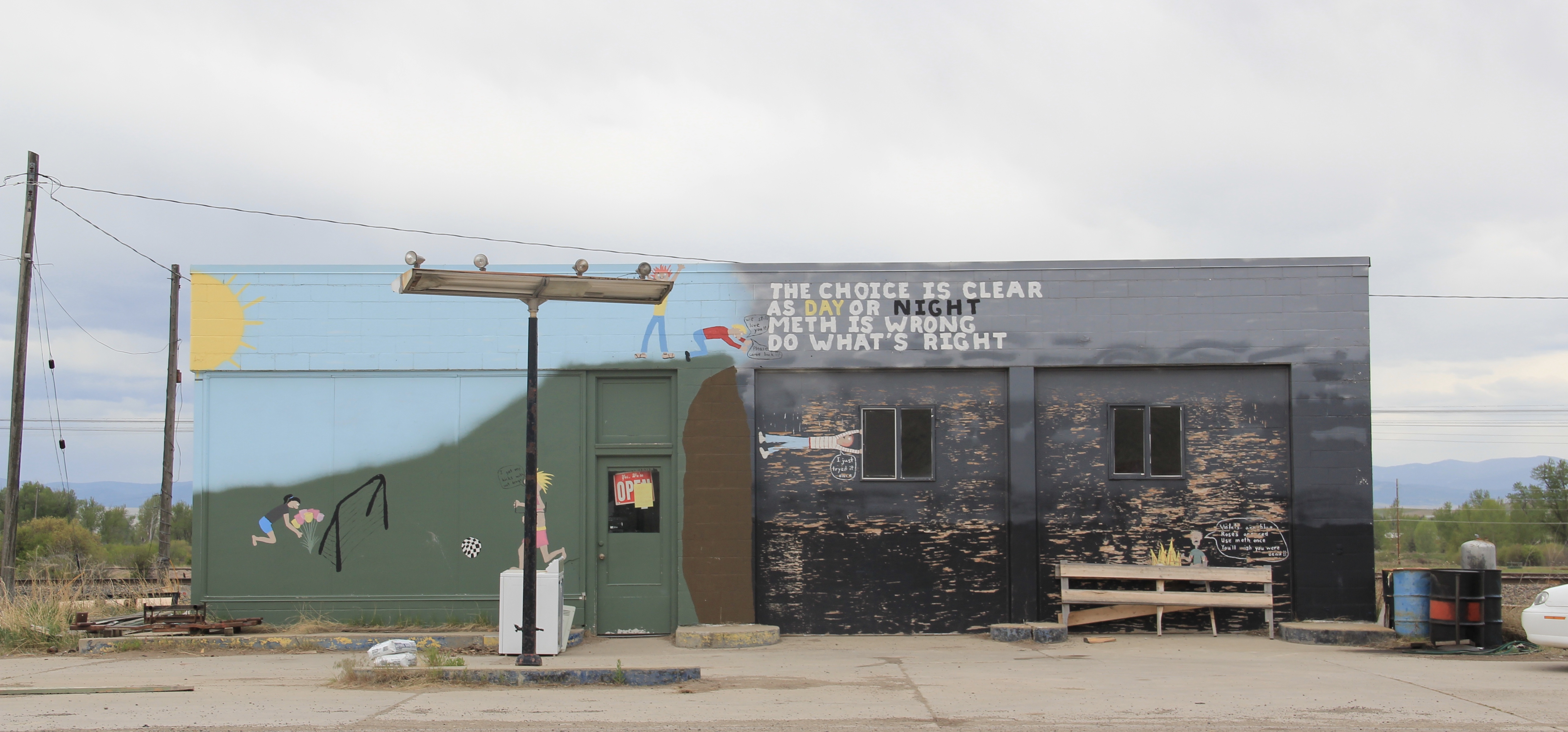 There is a faintly classically influenced two-story brick commercial block, a Masonic Lodge made of concrete block, various bars and cafes, a railroad water tank, and a slightly Art Deco movie theater, which was open in the 1980s but is now closed.


 Due to the federal highway and the later Interstate I-90 exit built at Drummond, the town even has a good bit of motel roadside architecture from c. 1970 to 1990.
 Between the Northern Pacific corridor and old U.S. 10 is the town’s most famous contemporary business, its “Used Cow” corrals, and now far away, on the other side of the
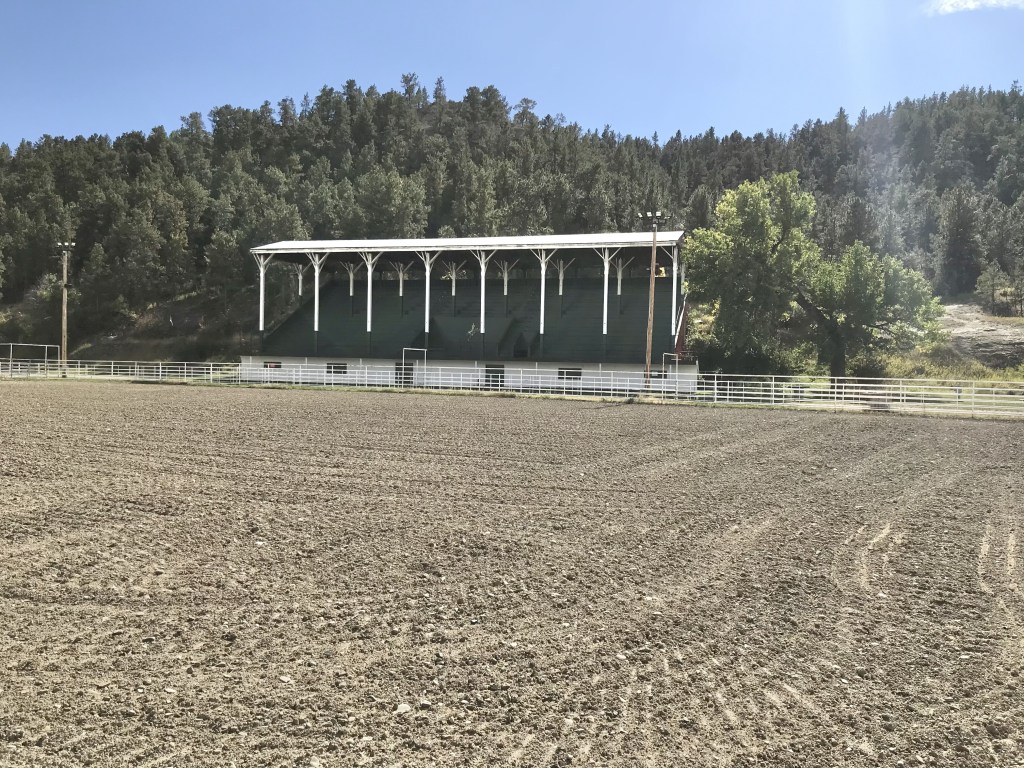
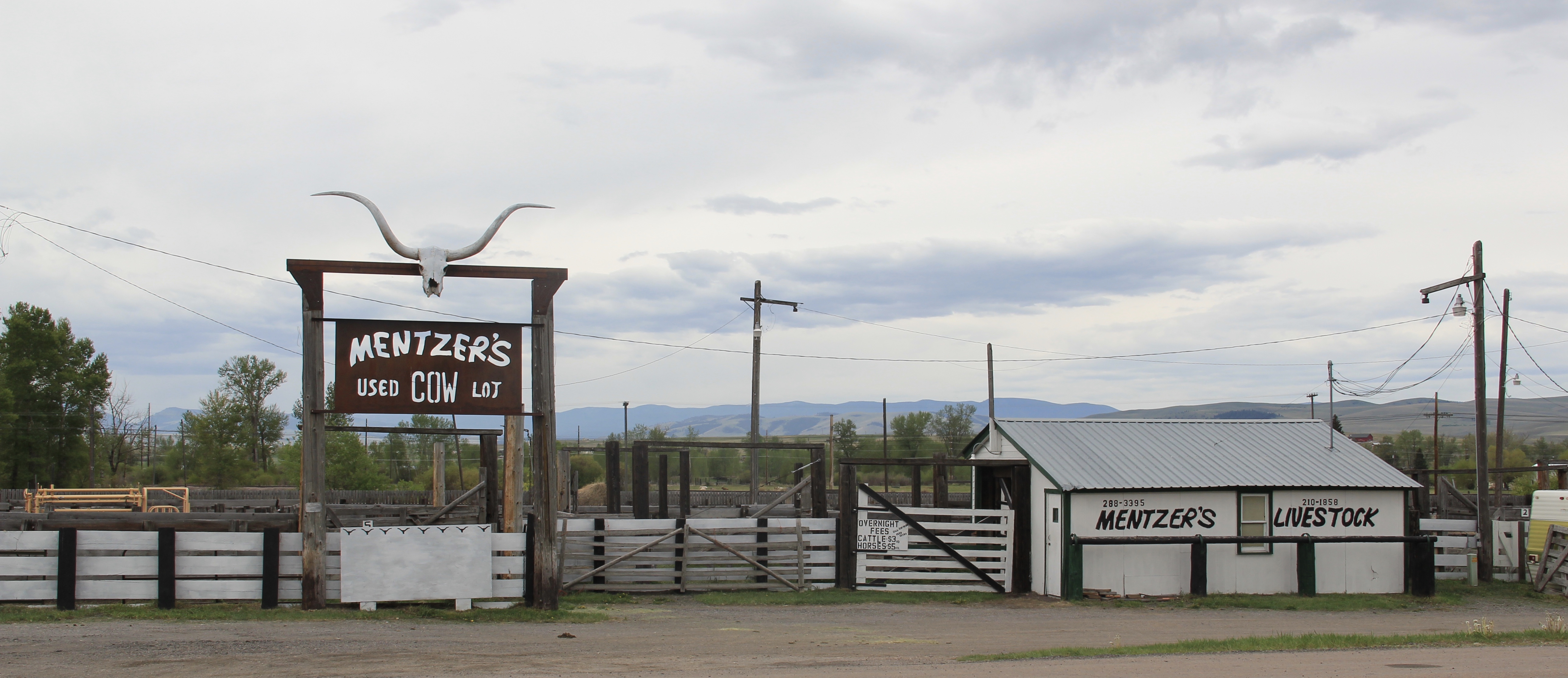 tracks are rodeo grounds named in honor of Frank G. Ramberg and James A. Morse, maintained by the local American Legion chapter.
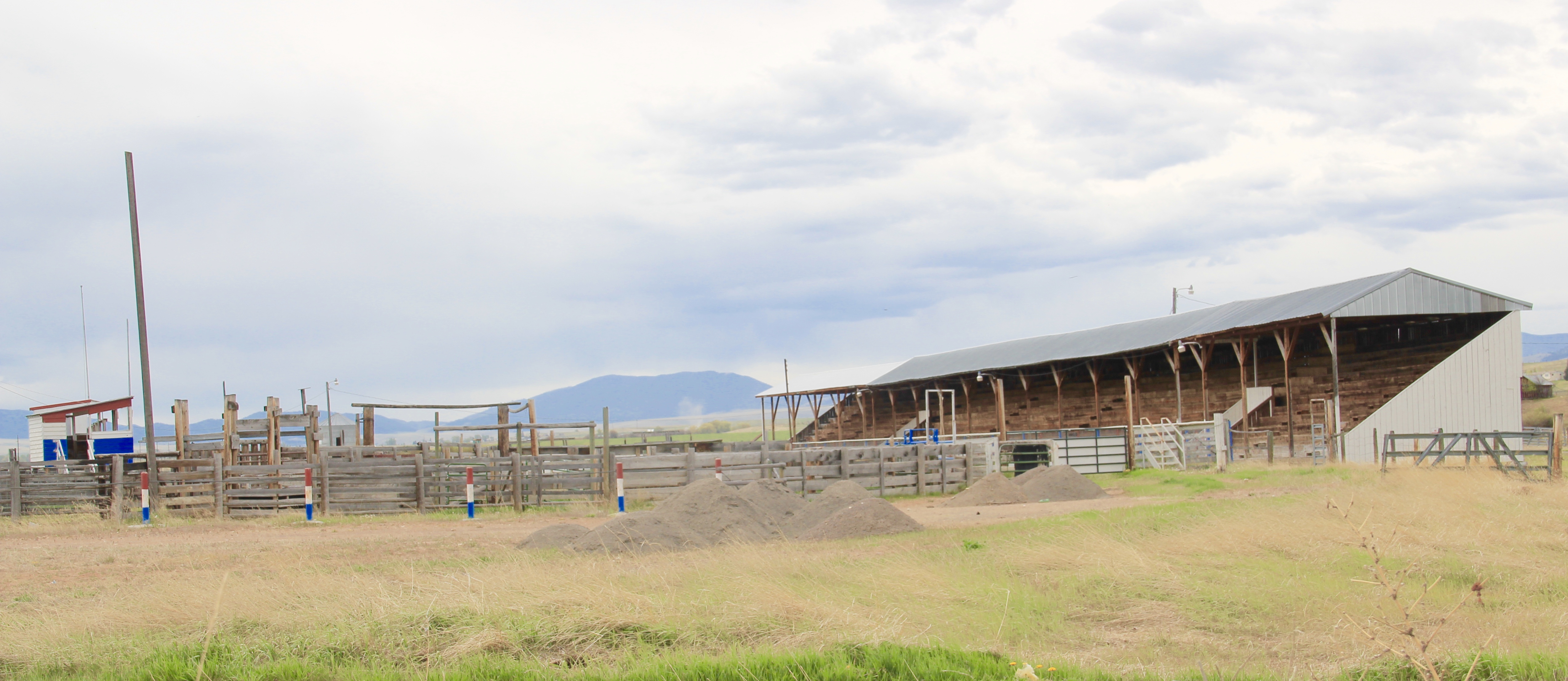 The rodeo grounds are not the only cultural properties in Drummond. The Mullan Road monument along the old highway is the oldest landmark. The local heritage museum is at the New Chicago School (1874), an frame one-story school moved from the Flint River Valley to its location near the interstate and turned into a museum.

 Another local museum emphasizes contemporary sculpture and painting by Bill Ohrmann. A latter day “cowboy artist” Ohrmann grew up in the Flint River Valley but by the 12960s he was producing sculpture and painting on a regular basis. The museum is also a gallery and his works are for sale, although the huge sculptures might not be going anywhere.


 Montana's Historic Landscapes