A last look at Carbon County, and a visit into the Crow Nation

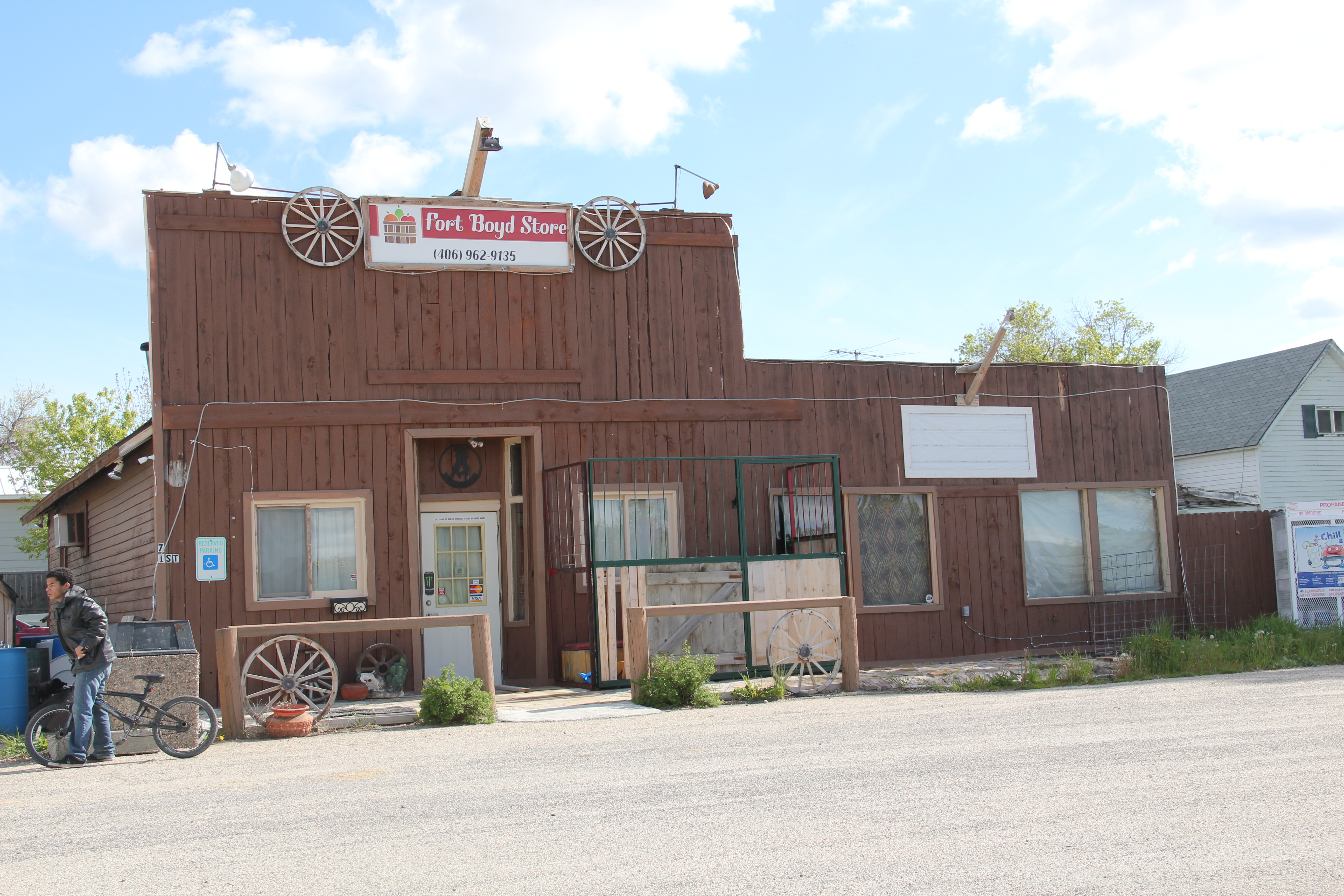
In the northern reaches of Carbon County are two additional towns on U.S. 212 I would like to review before I turn into a far different landscape in neighboring Big Horn County.  I looked earlier at the Boyd store, and its changes over 30 years, briefly in passing on to other railroad towns in the Clark’s Fork Valley.

IMG_5916But Boyd is worth a second look if for nothing more than its rambling vernacular design post office since so many of those buildings have been replaced in the last 30 years by standardized USPS designs.  The same can be said of the Boyd School, a frame building now encased in vinyl that has layers of history in it as the community made additions as necessary over the decades.IMG_5917Continuing north on U.S. Highway 212 is the much larger, prosperous town of Joliet. Joliet is an anomaly–its population now is larger than it has ever been since census data has been recorded.  So many eastern Montana towns steadily lost population to where they are mere skeletons of themselves today.  Joliet has avoided that fate; in fact its population in 2010 was slightly more than when I first visited in 1984.

IMG_5928

The Joliet Community Center symbolizes the town’s stability and sense of itself.

The Rock Creek State Bank, now the Rebakah Lodge Building, anchors one of the town’s most prominent commercial corners.  It is one of several buildings in Joliet listed in the National Register of Historic Places, including a large historic residential district, in the last 30 years.  Joliet had nothing designated in the National Register when I visited in 1984.

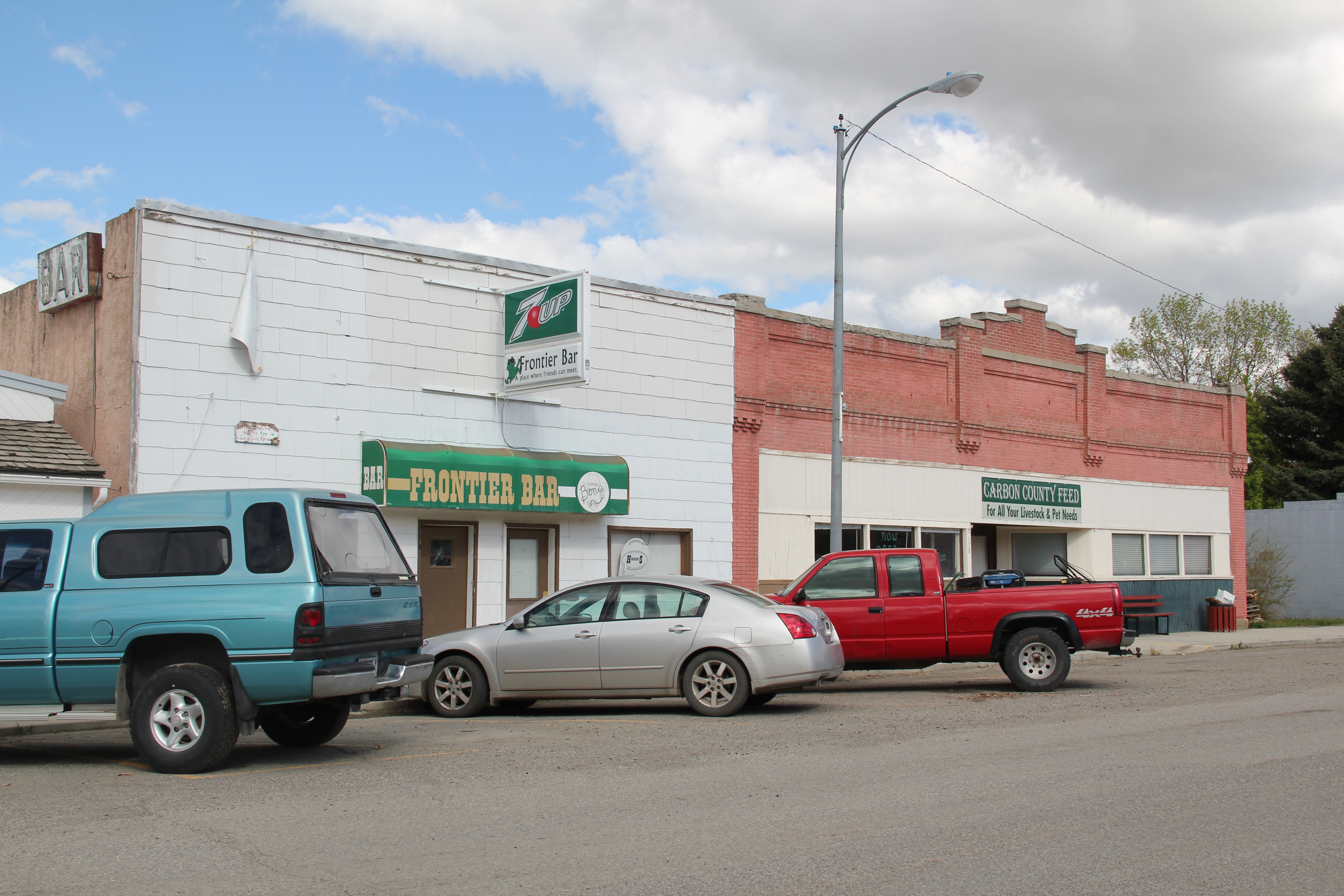
IMG_5923While there is a bright new sheen to a good bit of Joliet, the downtown still has that classic mix of vernacular frame and brick one-story commercial buildings typical of the turn of the century railroad/homestead boom towns.  And like most, a tavern, in this case the Frontier Bar, is a permanent fixture in the town.
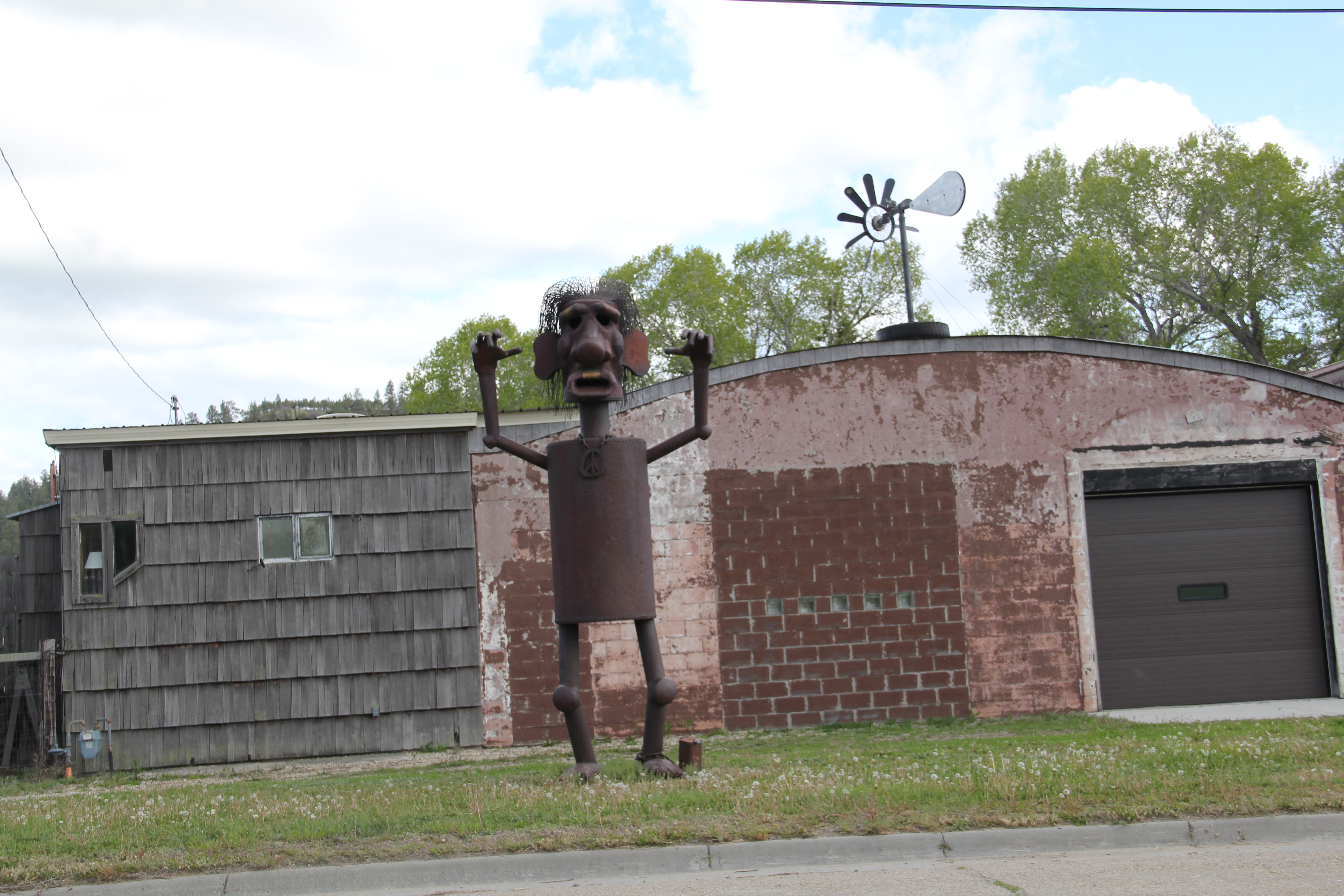
IMG_5920Outside of town is a wonderful array of roadside public sculpture, courtesy of long-time Joliet resident Charles Ringer.  Ringer moved to town, purchasing an old junk yard and part of a WPA granary, in 1971.  His works have become landmarks for travelers along U.S. Highway 212.  Ringer runs a studio shop out of an old ranch-style house.

IMG_5932Known to many winter travelers as “The Snow God” but named “The Creature” by its creator Charles Ringer, this huge metal sculpture is roadside art at its best in Montana.
IMG_5930

Ringer is also known for his various kinetic sculptures, and the entire property becomes a way for travelers to interact with, or just enjoy, the general wackiness of his creations.

IMG_5931

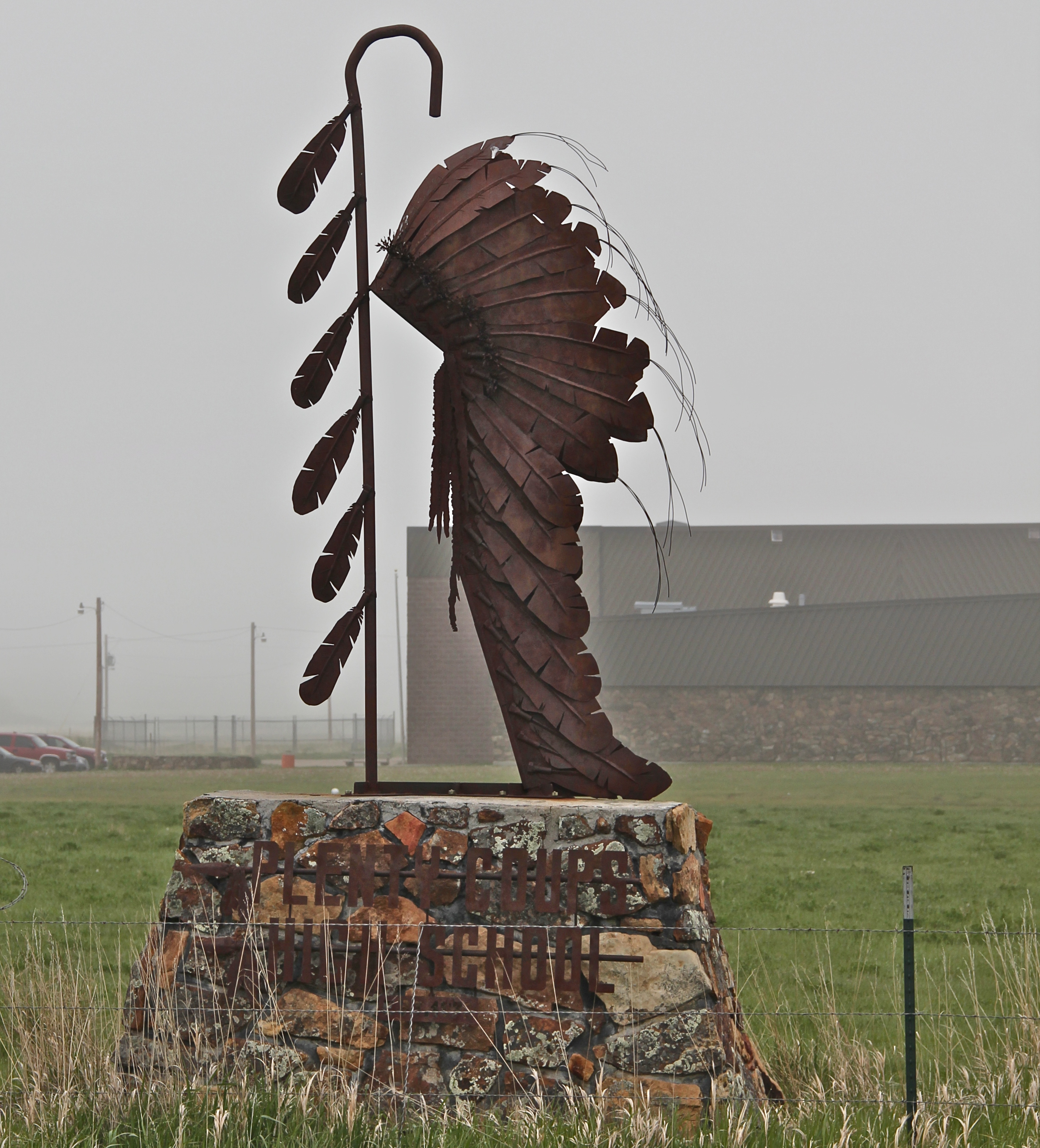
From Joliet you can strike out east on an improved gravel road, passing through the town of Edgar, and then climbing up out of the Clark’s Fork Valley and into the land of the Apsaalooke, or the Crow Indian Tribe.  Traveling west in the Crow reservation, you encounter two instant landmarks, one much more recent than the other but both are tightly intertwined.  A compelling metal sculpture of a warrior announces the entrance to the Plenty Coups High School, shrouded on the morning I went there in 2015 by an early morning fog.
BH Co Plenty Coups HS - Version 2

Across the road is the Plenty Coups State Park, a fascinating memorial to the former Crow chief Plenty Coups, who the Crow Indian Tribe has designated as its last traditional tribal

IMG_5544 IMG_5575

chief.  Plenty Coups had been among the first Crow Indians to take up a homestead, 320 acres along Pryor Creek, in 1884.  His succession of dwellings, using locally available
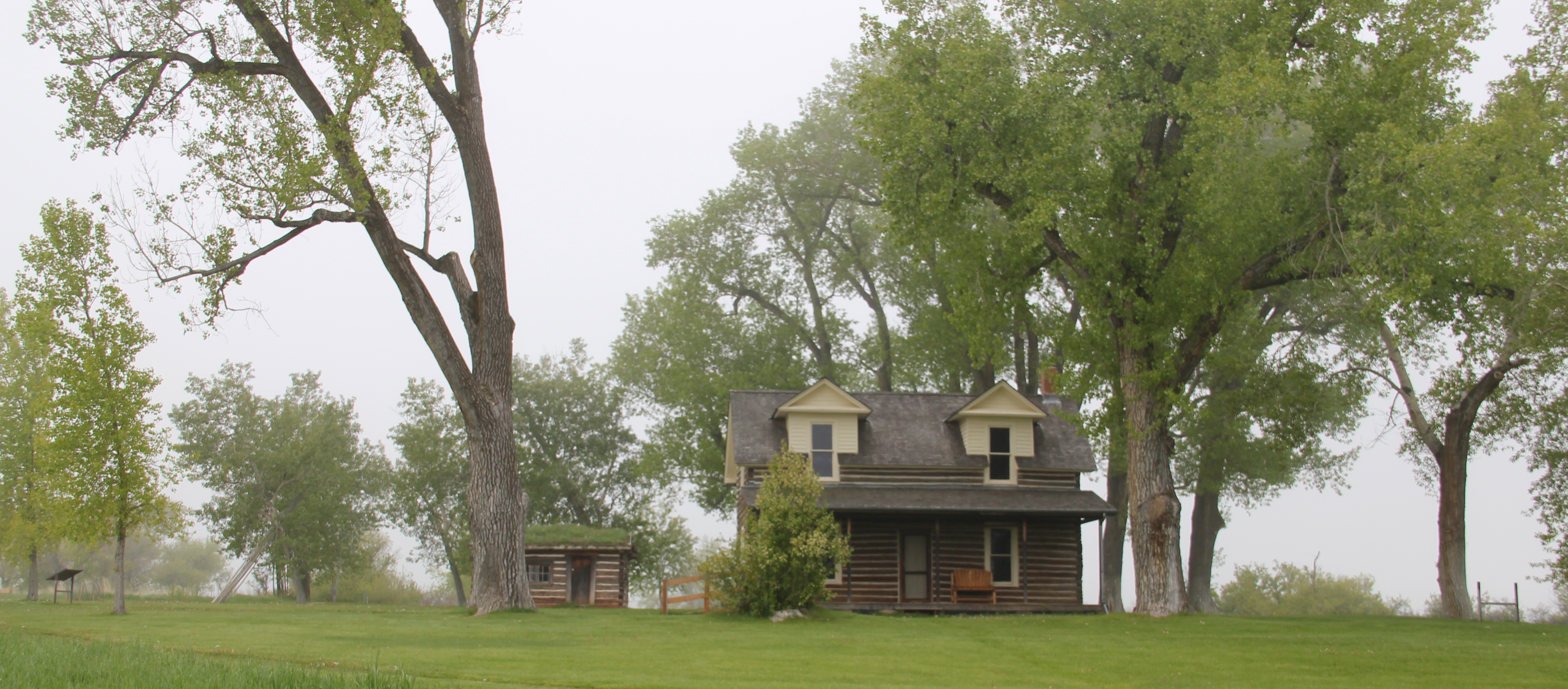
IMG_5564materials to build a log house, help to tell his story as well as how some Crows became ranchers.  The park has erected a modern tipi to show earlier Crow dwelling types; the rambling nature of the log house, is both typical and spectacular.  Typical in that

IMG_5549

IMG_5559

IMG_5551it is a three-bay house with a centered front door, but actually quite spectacular in its interior feel of open space, and that its very size would have spoken to the family’s prominence and achievements. The park also interprets a traditional sweat lodge, adding to the understanding of tradition and new ways that blended to create the homestead.

IMG_5561

IMG_5578When Plenty Coups died in 1932 he was 84.  He and his wife Strikes the Iron left 195 acres of their property to be a public park.  Later the National Park Service designated the site as a National Historic Landmark. Since my first visit in 1982 a new museum building had been added to the park, significantly enhancing the public interpretation of the site; you left with the feeling that this was just not a static installation and memorial (as it was in the 1980s) but a true museum and park which will continue to grow and adapt to the needs of the Crown Indian Tribe and the park’s visitors.

IMG_5572

To the east of Pryor, on Pryor Creek Road, was another historical place associated with the Apsaalooke–the Pryor Creek Battlefield.  Where in the low creek bluffs and the narrow

IMG_5533

valley created by the water, a major battle between the Apsaalooke and their enemies the Lakota, Cheyenne, and Arapaho took place c. 1861–just at the time the Civil War was beginning in the United States far to the east.
IMG_5536

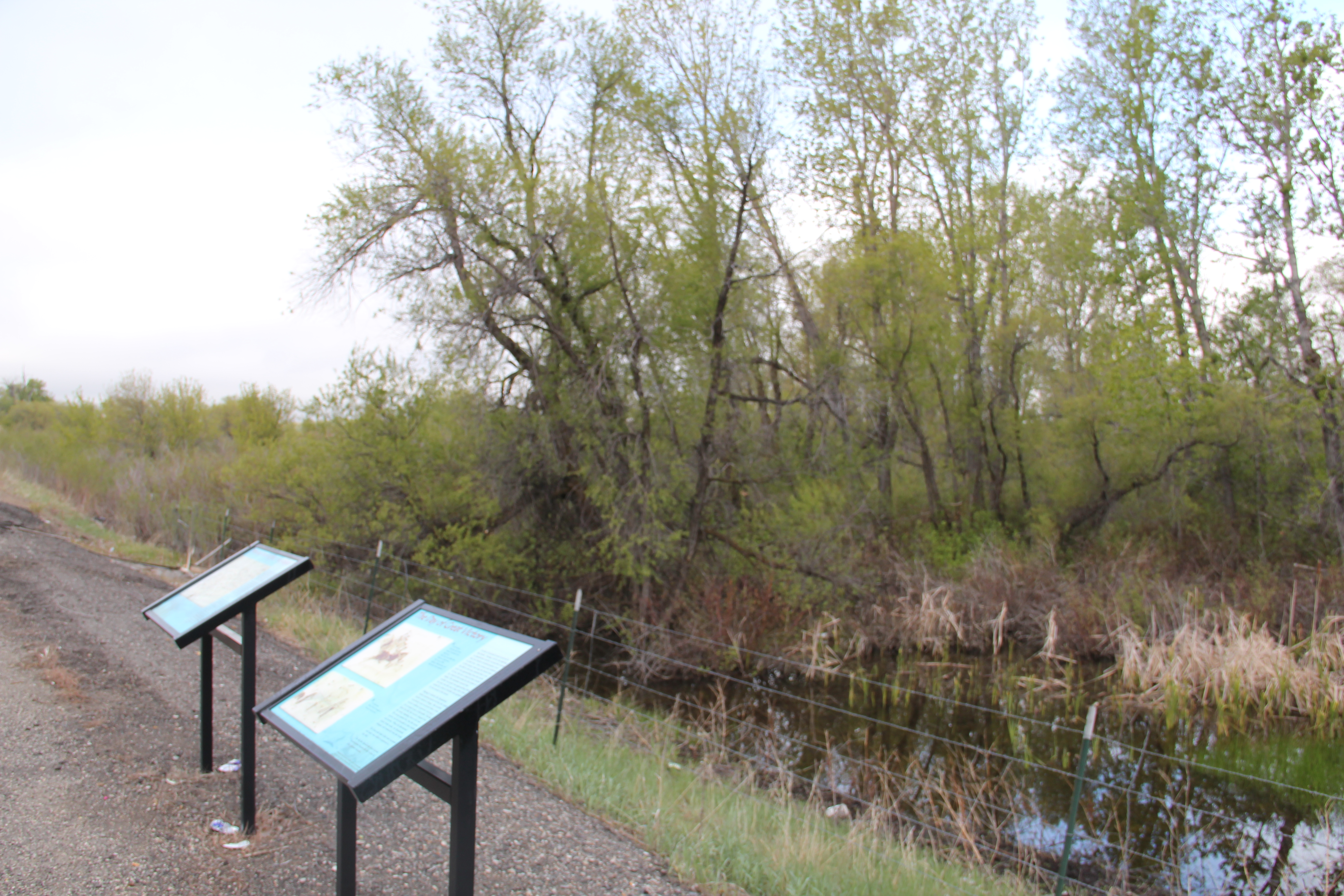
The Crows had worked with federal officials to build a road turn-off and place interpretive markers about this key battle for the control of the Yellowstone Country c. 1861, just before the time that the first permanent white settlers entered what would become Montana Territory.  Thirty years ago, I knew from Crow historian Joe Medicine Crow that this famous battle, where the Apsaalooke secured control of the region in what Medicine Crow called a “glorious victory,” took place along Pryor Creek Road. But the markers now pinpoint the battlefield and interpret what happened plus the significance of the fight.

IMG_5538

Here was suddenly a place that I had truly never “seen” before–and an indication of how good interpretive markers can make a desolate place come alive with historical meaning.  Kudos to all for bringing forth this forgotten battlefield and a site of a famous Crow victory.

IMG_5539

Railroad Towns of the Clark’s Fork Valley

IMG_5595

The name Carbon County seemingly says it all–here is a Montana place that is mining country, and coal mining at all.  As earlier posts have discussed, coal mining is vitally important to the county’s history.  The county seat of Red Lodge was a major coal mining town. But even Red Lodge’s historic built environment speaks of another side of Carbon County’s history. Its tall shiny grain elevator along the railroad tracks remind us that Carbon County was also agricultural country, especially in the Clark’s Fork River Valley.Carbon Co Red Lodge elevator - Version 2
The next couple of posts will explore this part of Carbon County–the towns and places many tourists roar by as they seek out Red Lodge and the mountains beyond.  Some places were, and are, tiny but still changes over 30 years are apparent. Boyd, for instance.  In 1984 I caught this iconic view of past and present at the historic Boyd store. The building is still there but the facade is changed, to a rustic western style, one more to the liking of fast-moving tourists.

General Store- PO. Boyd Caron Co. MT  IMG_5919

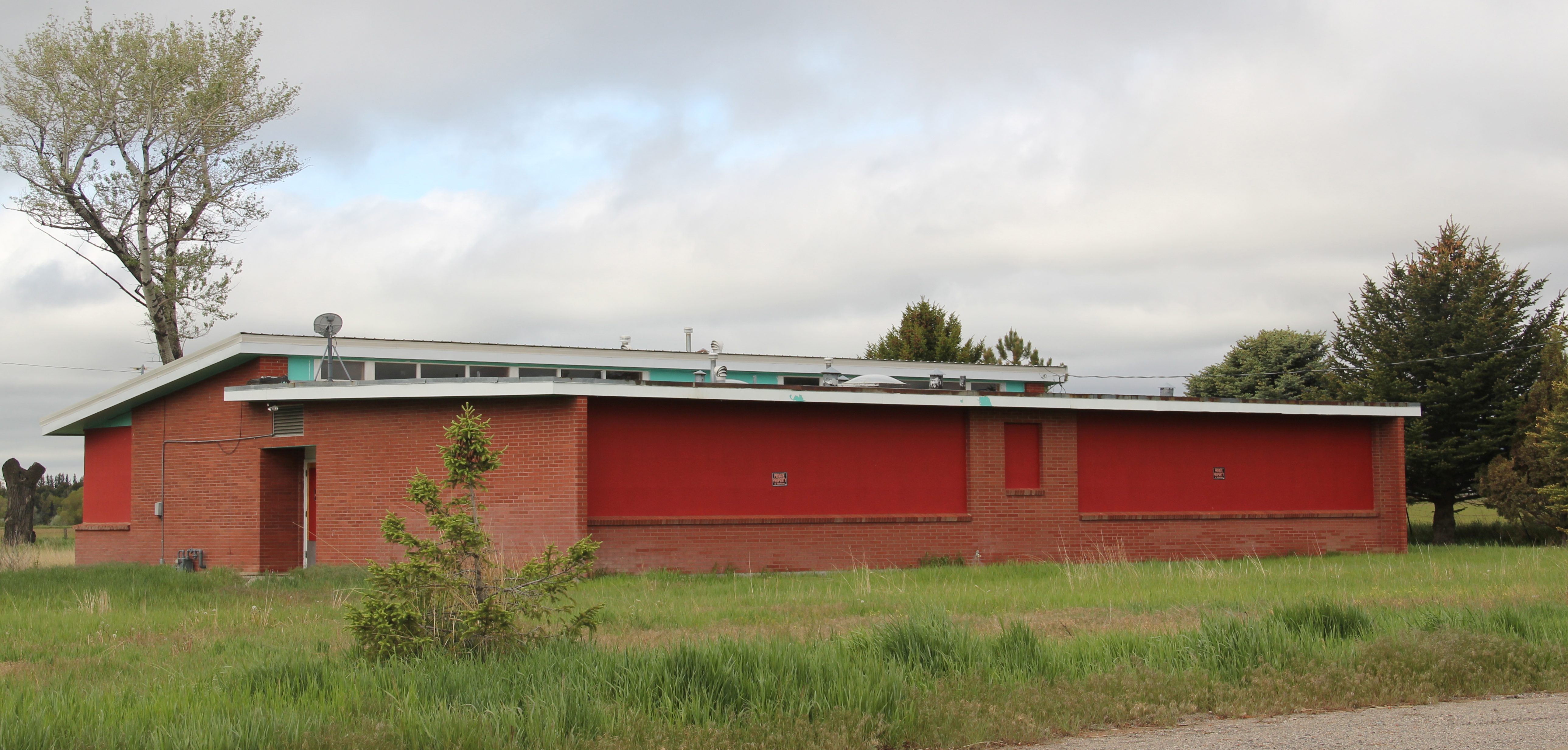
Edgar is a place that admittedly I gave little attention to in 1984.  That was a mistake.  I missed a very interesting modernist-styled school, probably part of the county-wide WPA projects for schools in the late 1930s, along with another 1960s styled addition.  The school closed in 2009.

Carbon Co Edgar New Deal school 3 - Version 2

IMG_5594

Edgar still has its bar, located in a fine one-story brick building–but not much else from the decades when it mattered in the 20th century.

IMG_5589Fromberg is a different story.  Unlike so many country railroad towns in Montana, Fromberg has a strong sense of itself, both in the present and in the past.  Part of that has to be a reflection of its comparative stability.  Its population height came in 1940, with mover 500 residents.  Today the population remains over 400, just about a 100 person decrease over 70 years.  For Montana rural towns that is exceptional.  Indeed, from my first visit in 1984 to my last in 2015, the town had only lost a few families.

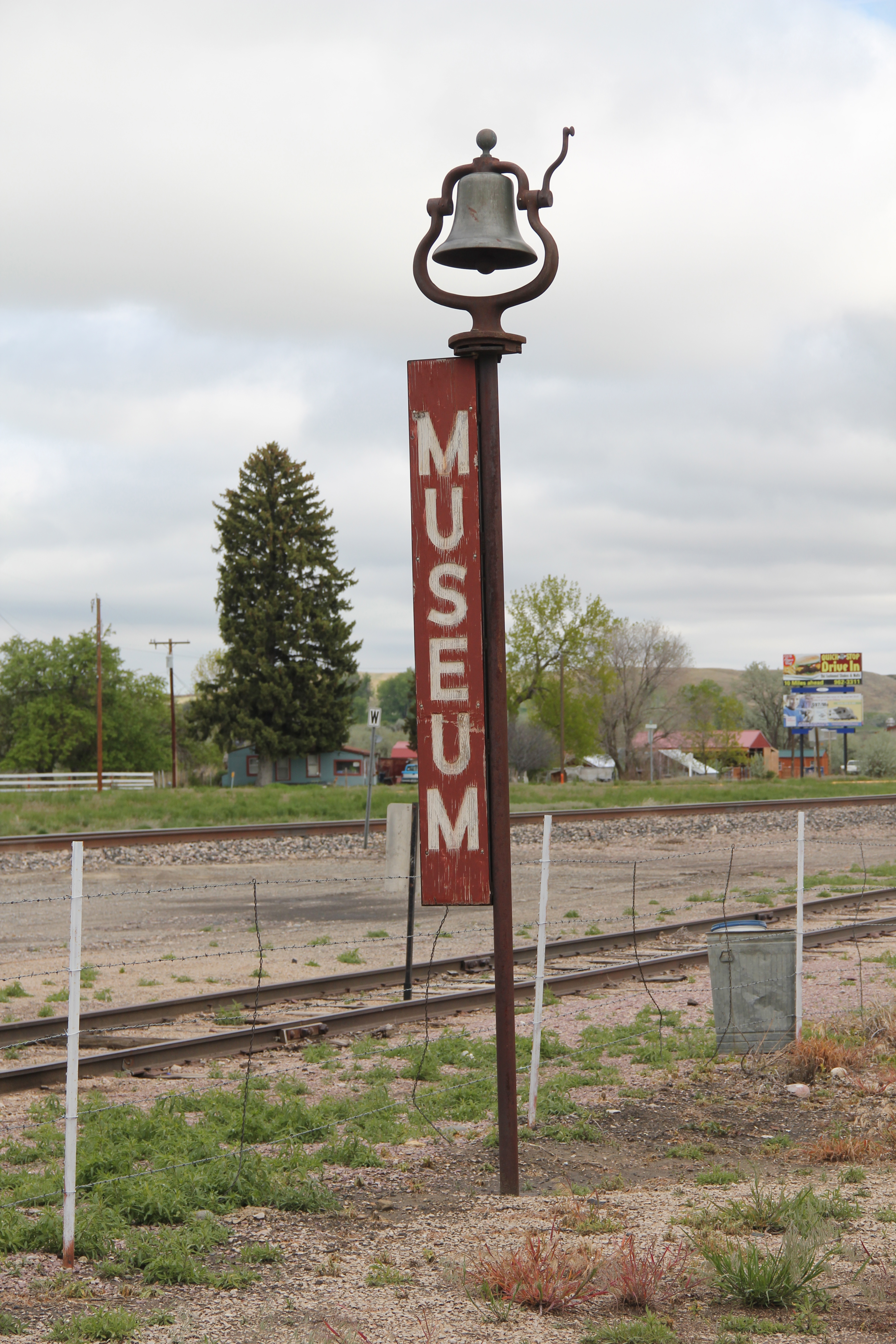
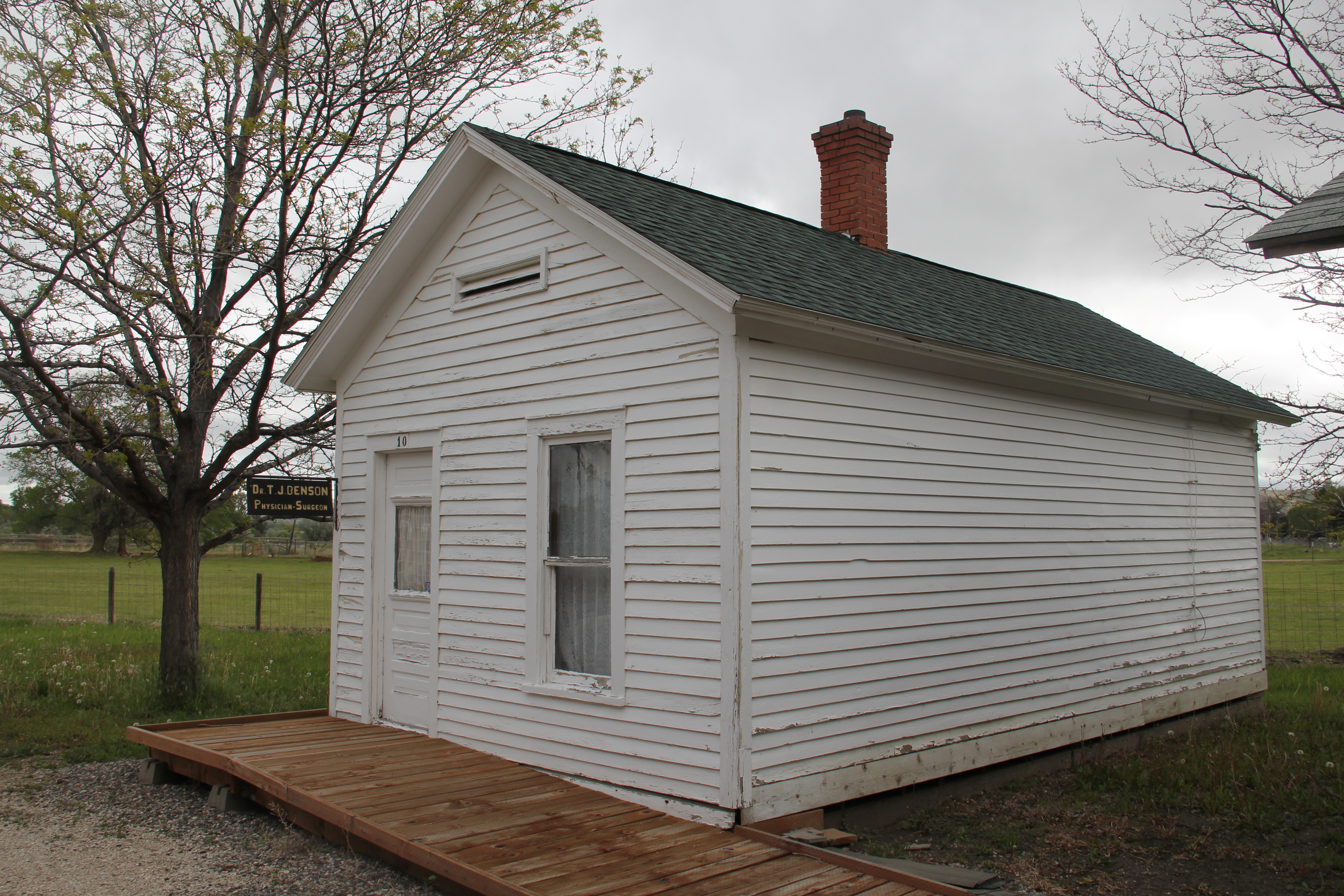
IMG_5598 IMG_5597Fromberg has its own museum; the centerpiece of which is its restored railroad depot, part of the old Northern Pacific spur line.  In true northern plains fashion, other historic buildings have been moved onto the museum grounds.  It’s not quite a building zoo but the buildings give the place enough presence to attract visitors speeding along the highway.

IMG_5600 IMG_5599

Fromberg is a t-plan town, and all of the patterns of that type of town planning are apparent.  From the depot, running west, is the primary commercial street, with brick and fame buildings on either side.

IMG_5601

IMG_5622

The historic Odd Fellows hall dominates the commercial district–its conversion into the town’s post office, rather than a historic building being lost so a modern standardized design post office could be put in its place, is an excellent example of historic preservation done right.  Indeed, Fromberg residents have embraced the possibilities of preservation and multiple buildings are listed in the National Register of Historic Places.

IMG_5623

IMG_5618The mural about overland travel on the front of the Clark’s Fork Bank adds a touch of public interpretation.  If you want first-person stories, a stop at the Little Cowboy Bar (and “museum”, located at where the commercial district intersects with the highway, will be worth it.  It is one of the region’s classic watering holes.

IMG_5626

Fromberg also has documented its historic domestic architecture, raining from vernacular styled early 20th century homes to more stylish bungalows and even a couple of good examples of Dutch Colonial Revival style.

IMG_5617

IMG_5614

The homes are clustered around two historic churches, the brick St. Joseph Catholic church and the frame Gothic-styled and National Register-listed Methodist Church, built in 1907-1908 by contractor Charles Darnell and the community.

Carbon Co Fromberg St. Joseph Catholic - Version 2   IMG_5615T

The historic Fromberg school, like its counterpart in Edgar, was part of the countywide program of building modern schools by the WPA during the New Deal.  Its still impressive facade conveys well the WPA’s sense of modernism, and it remains the town’s primary community center today.

IMG_5607

Red Lodge: Preservation Maybes and Maybe Nots

It’s no secret that I have long admired the towns of the Yellowstone Valley.  Thirty plus years ago, the attitude across much of Montana was dismissive of this region:  I even was told by someone who should have known better that “outside of Custer, there’s really isn’t much history there.”  Not only was their history in spades–chronologically deep, thematically rich–there was this tremendous built environment that I began to explore in 1982, and haven’t stopped since.

Snag Bar (1901) Red Lodge Carbon Co  IMG_5715

Admittedly I take an old school approach to the preservation of this landscape.  Red Lodge has many exemplary preservation achievements but in the 21st century success may be leading to the community losing that edge, admittedly rough edge, that once characterized this region of Montana.  Case in point:  the Snag Bar.  The image on the left is from the 1980s–on the right is an image from this summer.  I was happy that the Snag was still with us–always a cozy watering hole in the past.  But now its entrance spoke to a different audience, and the place had taken on the “Main Street Preservation” look that you can find across the country–and a bit of distinctiveness was gone.

IMG_5725

IMG_5716

Red Lodge was not tipped into that preservation fantasy land right out of Disney’s “Main Street U.S.A.” But new infill of modern false-fronts and even a heavy mountain-like Rustic feel doesn’t help, not to mention the northern California wine bar with its set-backs and sidewalk seating.  It is just worrisome.  As is the future of this once grand movie theater,

IMG_5799which has been hanging on, seemingly by a thread, for decades.  The theater has one of the great Classical Revival facades found in the state, full of whimsy and wonderful detail.

IMG_5782

IMG_5785   IMG_5783

Its conversion into a garage was kept it alive but a conversion into a new public use:  well it is a huge building, that needs work, and Red Lodge is already blessed with a brilliant historic movie theater, the Roman.  Multiple theaters in the early 20th century made sense: today not so much.

IMG_5797

Red Lodge also has gotten it right in its residential historic districts.  The “Hi-Bug” neighborhood–a designation 100 years ago that spoke to the merchant class that lived in the town’s most affluent neighborhood–has made a remarkable recovery in the last 30 years, and looks great as these few images attest.

IMG_5751

IMG_5812

IMG_5815

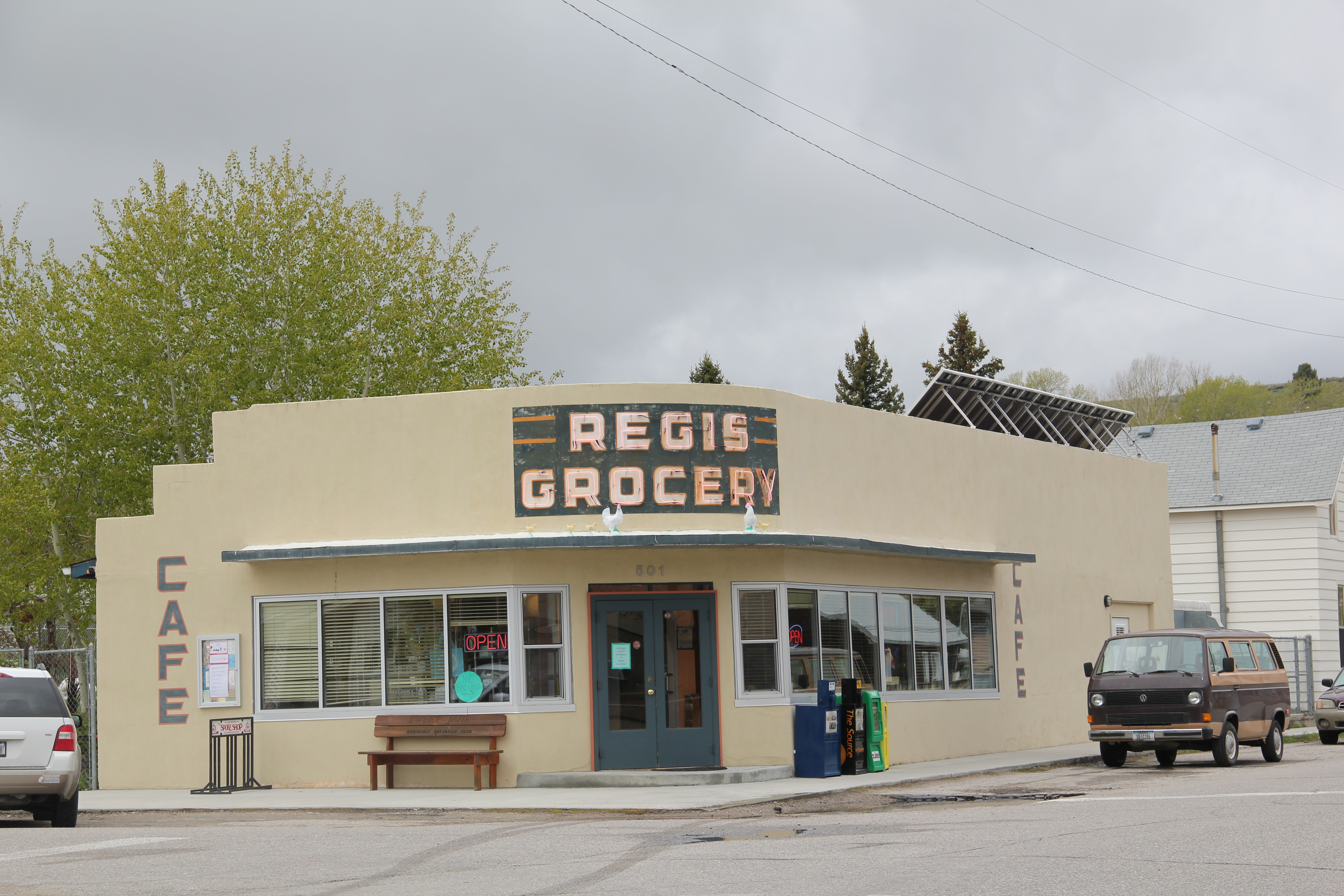
Throughout town there are similar preservation success stories, ranging from a historic service station (that has a nifty exhibit about Yellowstone tour buses and their preservation lurking inside) and one of my new favorites, the Regis Grocery, now a neighborhood (meaning off the tourists’ beaten path of US 212) cafe worth a stop.

IMG_5737

IMG_5804Red Lodge does have challenges–growth that can overwhelm historic character, too many tourism focused businesses–but the changes here over 30 years are impressive achievements, sure signs of how the 1966 National Historic Preservation Act has helped to change the face of Montana.

The Scenic and Historic Landscape of Montana Highway 78

IMG_5824Montana Highway 78 is not one of the state’s major roads nor one of its recognized special routes of scenic and cultural wonders.  Yet as the road cuts away from the Stillwater River in southern Stillwater County and heads into the bare yet compelling rolling hills of Carbon County, it cuts quite a path, a winding road that goes by historic stock barns, one-room schools, streams coming out of the mountains, and overviews suggesting the grandeur and mystery of this place.

IMG_5818

IMG_5838

Gambrel-roof barn near Fishtail, Highway 78

IMG_5831

Classic center-aisle stock barn with side extensions, Highway 78 outside of Roscoe

IMG_5819The Hogan School is a turn of the twentieth century delight, the model one-room schoolhouse design of that period.  The Hogan family had established the county’s first rural school in 1887; this later building served the surrounding ranch kids until 1967.  Its preservation today is an excellent example of local stewardship by the property owner.

IMG_5841 IMG_5840

There are several different pull-offs along the road, with one dedicated to two very different historic markers.  One interprets how the Bozeman Trail cut through this landscape in the 1860s:  it is the historic Montana Highway Historic Marker, part of the program documented by Glenda Bradshaw and Jon Axline in their work, and dates back to the mid-20th century when the state got serious about developing heritage tourism experiences for visitors. Next to the rustic-themed state marker is a private marker, honoring J.E. Madson, an influential early Lutheran pastor in the region.  Its Art Deco styling is totally different from the historical marker but it also ties into the highway aesthetic of the mid-20th century.

IMG_5833Roscoe is my favorite hamlet along Highway 78, in part because of the local effort to preserve such key landmarks as the schoolhouse along the highway and because of the preservation of historic commercial buildings from the town’s heyday 100 years ago.

IMG_5825The real reason I always visit Rosecoe whenever possible is the same reason generations of Montanans come here–the Grizzly Bar.  I first discovered the Grizzly in 1984 and loved its look, its hospitality, its community feel, and oh yeah, its steaks.

Created with GIMP

IMG_5828Thirty years later, thank goodness the grizzly bear sculpture still dominated the facade, although the sign itself had been modernized.  The place also had expanded in size–but its feel remained much as it was in the 1980s and 1990s:  mostly a community gathering place particularly on the weekend that also could be flexible and accommodating enough to welcome us visitors in the summer.  It is one of the best rural bars in the state.

IMG_5711Another highway pull-off provides one of those “Scenic Overlooks” found through the state.  This one perhaps not as spectacular as others but also giving travelers a sense of what this landscape is like, and what awaits them as they continue down to Highway 78’s southern terminus at Red Lodge, where the preservation ethic and the successes over 30 years will be the next topics of the blog.
South of the Yellowstone in Stillwater County

2011 MT Stillwater county 012

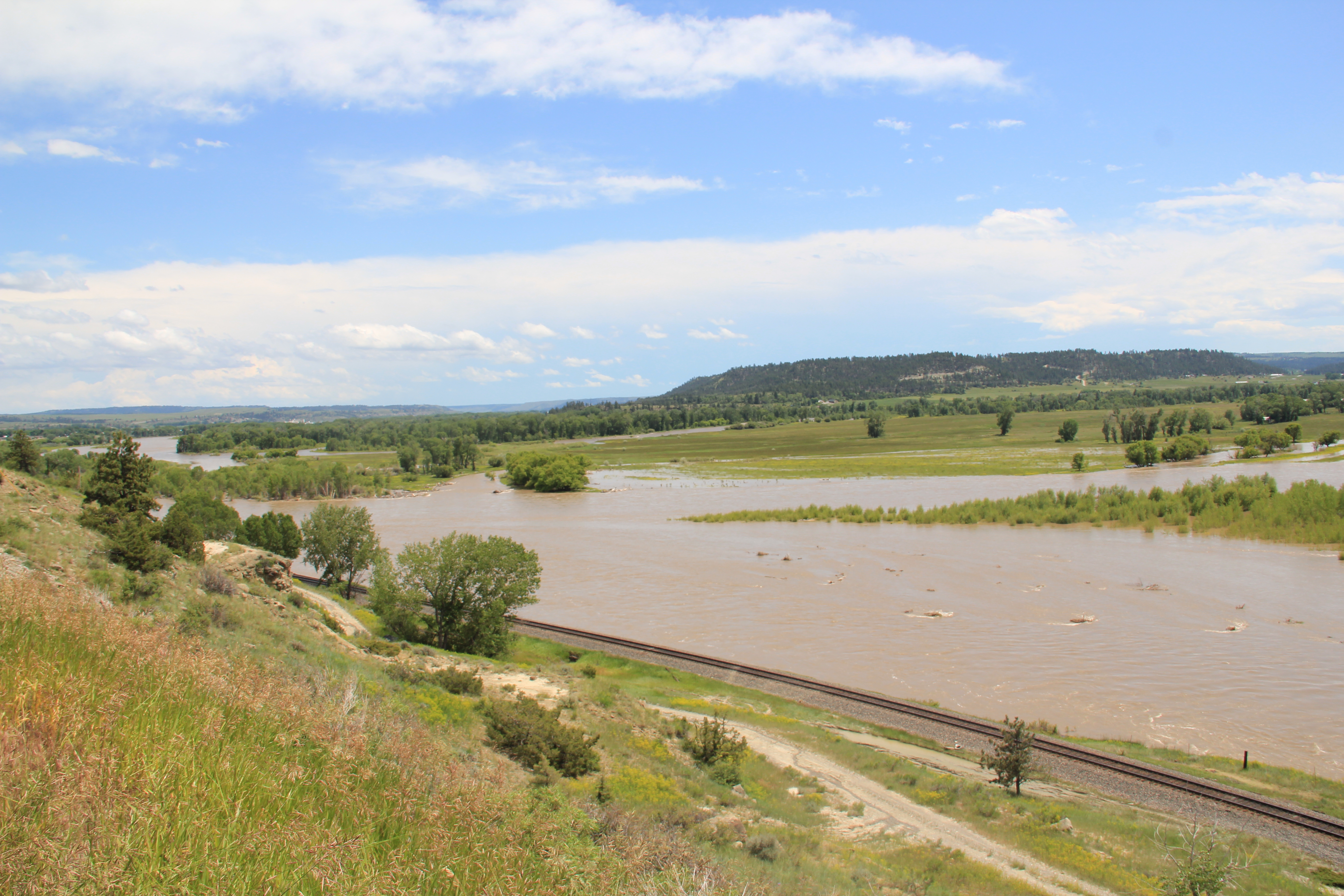
The Yellowstone River, along with the parallel tracks of the Northern Pacific Railroad, divides Stillwater County, with the south side of the county more mountainous but with the rich Stillwater River Valley coming out of the mountains to meet the Yellowstone at Columbus, the county seat.  Let’s talk about two towns along the river valley that were once down but now more vibrant than 30 years ago due to the population growth in the southern end of the county.

IMG_5857Absorkee began in the mid-1890s after another taking of lands from the Crow Reservation.  The Oliver Hovda house, a Classical Revival-styled residence on the main artery of Woodard Street, dates to c. 1900 and was built by local carpenter Jacob Wagner.  Listed in the National Register, the big yellow house, as it is known locally, remains the town’s primary domestic architecture landmark.

IMG_5862

IMG_5858

IMG_5863Just steps away are an array of masonry commercial buildings, not finished to the degree that you find north in Columbus but still substantial buildings from c. 1910-1920 that reflect the determination of town boosters to show permanence and seriousness in this small country town. The 5 Spot is the town’s iconic bar, just as welcoming in 2014 as it had been in 1984.

IMG_5848

IMG_5854The town’s school is its pride and joy (I apologize for the distance images with fences but school was in session when I visited in May).  Among the historic school buildings is a 1903 two-room section, see below, and then what is known as the Cobblestone School, a more modern building constructed in 1921 with river cobblestones as the primary exterior wall treatment.  W. R. Plew, an engineer at Montana State University, promoted good rural school designed and is credited with this striking building.

IMG_5850Historic churches also define Absorkee’s built environment, no more so than the historic Emmanuel Lutheran Church, with its soaring Gothic steeple but also its modern c. 1970 concrete block screen, an unusual but effective combination of styles and materials.

IMG_5844Further south along the Stillwater River is Fishtail, a place that in 1984 I noticed more for its sleepy general store (c. 1900) but now a town that is much more alive with residents and visitors.  The re-energized store, who got new owners in 2000, is a large part of that as is the general boom in recreational opportunities and offerings in the Fishtail to Nye section of the Stillwater River Valley.

IMG_5845

IMG_5846The rustic-styled front to the Community Hall speaks to the permanent residents while the sprawling Cowboy Bar attracts visitors and locals.  The south side of Stillwater County may be cut off from the mainstream of Montana life since the railroad and interstate are north of the Yellowstone River, but in the last 30 years its sense of itself has grown and is embodied by the care shown many of its community landmarks.

Sandstone Masonry and Historic Landmarks in Columbus, Montana

IMG_5866Columbus, the seat of Stillwater County, has long served as an architectural and settlement landmark in the Yellowstone Valley.  Today when you drive down old U.S. highway 10 (Pike Street) next to the very active tracks of the Northern Pacific Railroad, two patterns stand out.  First, the town retains its historic depot and a well-defined railroad corridor–reminding everyone that here is one of the valley’s original railroad towns, from 1882-1883.  In a state where so many small town depots have been lost in the last 30 years, I always stop in Columbus just to see if its depot remains.

IMG_5910

This historic NP caboose is part of the displays at the Stillwater County Museum, which sits in a new building near the schools in the north end of town.

This historic NP caboose is part of the displays at the Stillwater County Museum, which sits in a new building near the schools in the north end of town.

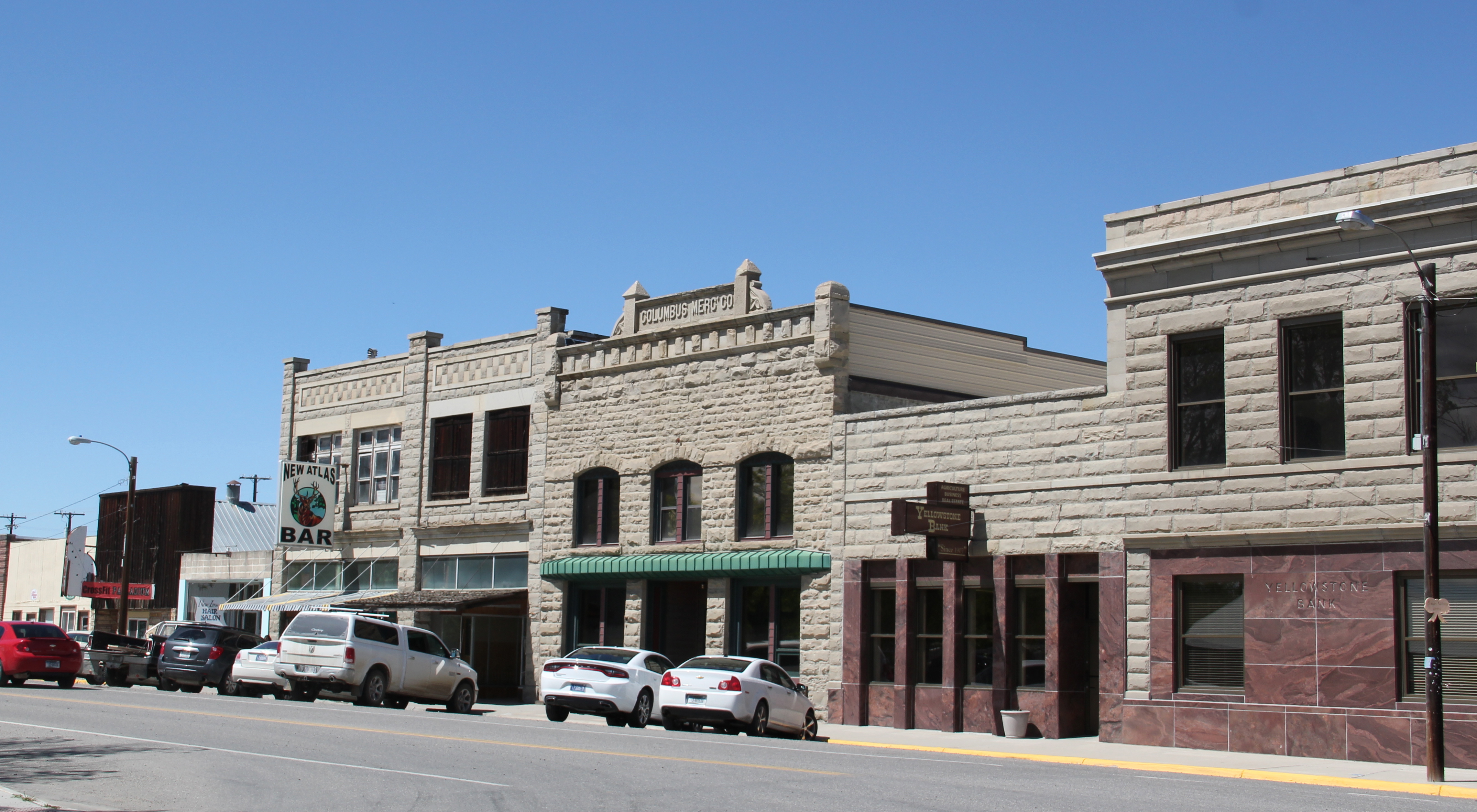
The second feature is the striking stone masonry, found not only along the primary commercial blocks of the town but also throughout the residential neighborhood.  This beautiful turn-of-the-20th-century work is largely attributed to Michael Jacobs, a native of Italy who anglicized her name from the original Jacobucci.  Jacobs was a principal in the Montana Sandstone Company, a firm that not only built Columbus’s historic buildings but also took on commissions in Billings and Butte and its most famous project, the Montana State Capitol in Helena.  Jacobs’ imprint on the town was part of its recovery from the

IMG_5912Depression of 1893, which had rocked towns all along the Northern Pacific line.  But Colubmus recovered and rebuilt frame buildings in stone from c. 1900 to 1920 as the homesteading boom spread through the region.  in Italy, the Montana Sandstone Company provided facing stone to numerous buildings in Butte, but it was the contract for the Montana State Capitol that put the company on the map and established Jacobs’ fame and fortune.

New Atlas Bar Columbus

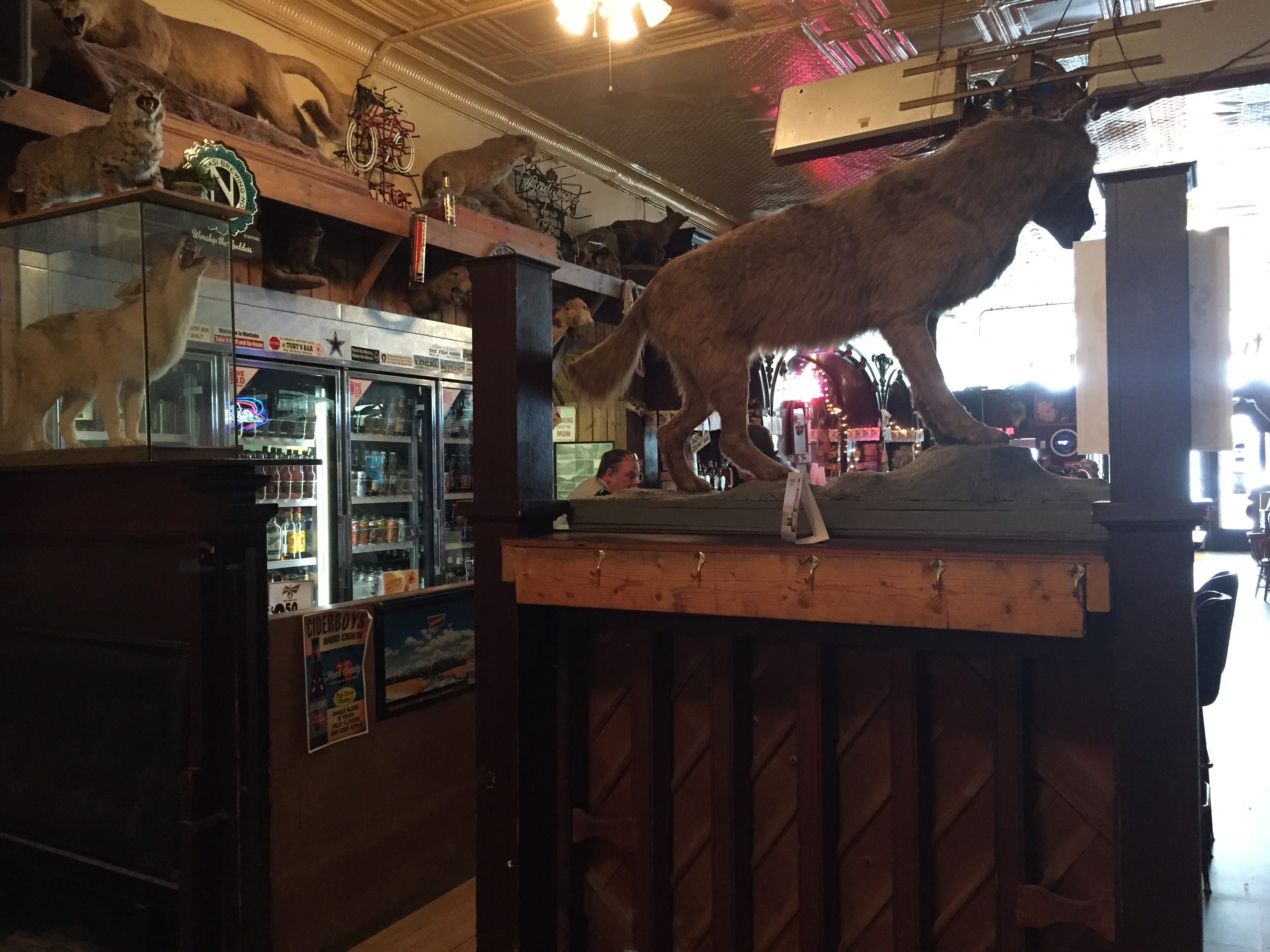
My favorite Jacobs building is the New Atlas Bar, which I first visited in 1982 and then made it tradition to introduce this special place to anyone traveling through the valley with me on fieldwork.  Listed in the National Register of Historic Places, the bar dates to 1915-1916, and was designed by Curtis Oehme.  For almost all of the 20th century it was operated by the same family who opened it, the Mulvihill family.  Known in the 1980s as the “See ‘Em Dead Zoo,” the historic interior features dozens of stuffed trophies, of all sorts of animals from the region.

IMG_0858

IMG_0855

IMG_0854 IMG_0860

But its historic interior of back bars and ladies lounge is intact, and although the place doesn’t quite have the vibe of 20 years ago, it is still a community gathering spot along historic Pike Street.

IMG_5876Michael Jacobs’ stately Victorian residence is another example of the firm’s craftsmanship as are a series of remarkable tombstones in the town’s Mountain View Cemetery.  The carvers of these monuments are either Jacobs or another firm employee Pasqual Petosa.

IMG_5887 IMG_5889

The county courthouse, however, is not of sandstone, but still it is an impressive Classical Revival statement in its porticoed Ionic entrance and symmetrical facade.  Located in the north end of town, the courthouse, designed by Warren Dedrick, remains an anchor for the county’s history during the homesteading boom.  It first opened its doors in 1921.

IMG_1236

Unfortunately the courthouse faces an uncertain future.  This year proposals have come forth to replace the building, or to modify it significantly with additions, due largely to the county’s population growth and need for greater public space in the last 15 years.  The local preservation commission called for discussions and full consideration before the town, and county, loses such a heritage asset as this striking historic landmark.

The Sweet Grass of the Yellowstone Valley

IMG_6258

Sweet Grass County has one of the most spectacular landscapes of the entire state of Montana.  Located in the middle of the Yellowstone Valley, the county has long been a significant crossroads, from the prehistoric era to today.  At the county seat of Big Timber, Interstate Highway 90 (along with the historic route of old U.S. Highway 10) parallels the Yellowstone River.  The town is also the southern point of origin for U.S. Highway 191,

2011 MT Sweetgrass county 014

The Lazy J, near the intersection of U.S. 191 and old U.S. 10, is a classic bit of mid-20th century roadside architecture.

which strikes northward cutting across Central Montana and continuing until the highway ends at the Canadian border, north of Malta.

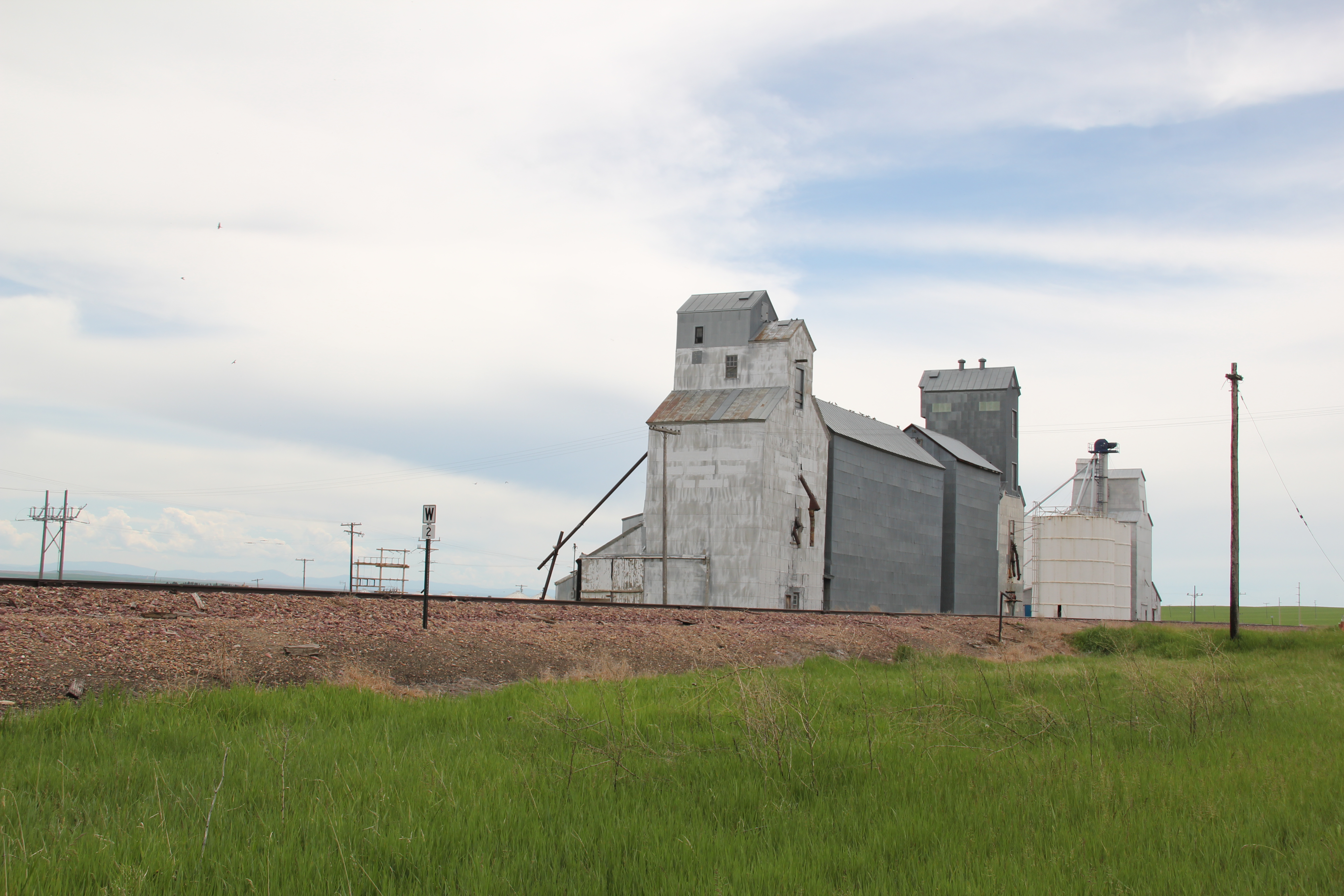
IMG_6331Established by the Northern Pacific Railroad in 1882-1883, Big Timber has the classic T-Plan town plat found on so many Northern Pacific towns.  But one reason I have long liked this place is the quirkiness of its town plan.  The depot and the elevators are where they

IMG_6329should be, forming the top of the “T,” but the beautiful early 20th century stone masonry Sweet Grass County Courthouse is neither on McLeod Street (the stem of the T) nor at the end of the T, dividing the town’s commercial area from its residential neighborhood.  No, it IMG_6333is a block west of the intersection of McLeod Street and old U.S. Highway 10–an uncommon arrangement of public space in northern plains railroad towns.  A public park

IMG_6314

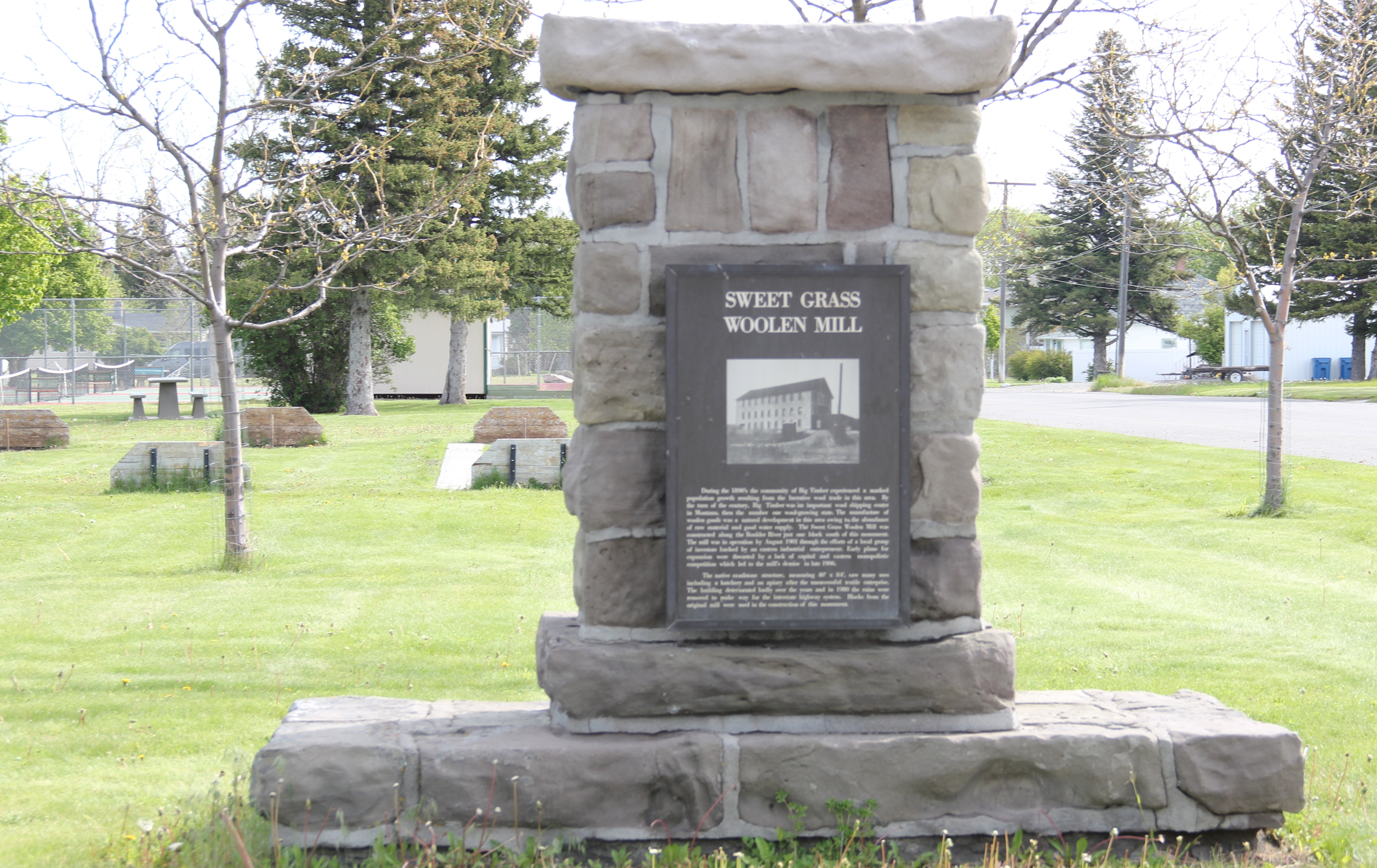
effectively marks the end of the historic town.  When I first surveyed the town in 1984, I found that an old 1946 highway marker for the Lewis and Clark Expedition had been moved to the park a year prior to my visit, and the interpretive sign told me that the town had a sense of its place in history.  In the decades since, residents have added a monument to the town’s early wool industry along with a bronze sculpture, titled “Free Spirit” by Dave Hodges, linking the place to the open spaces and cowboy culture of the valley.  Coming soon will be the new headquarters for the Montana Cowboy Hall of Fame, an institution that searched high and long for a home until finding Big Timber.

IMG_6316

IMG_6313

IMG_6271Public interpretation through art is another change I encountered in Big Timber.  The most striking dates to the Lewis and Clark Bicentennial at the start of this century.  On the walls of the local grocery store are three panels telling the story of the expedition in Sweet Grass County as the men encountered the confluence of the Boulder and Yellowstone rivers.  IMG_6296On another commercial building near the intersection of U.S. 191 and old U.S. 10 was an unexpected surprise:  a mural recreating–or is it reinterpreting–the famed Milwaukee Road promotional poster from the turn of the 20th century that encouraged homesteaders

IMG_6267to head to Montana. Oddly the reproduction mural gives the Northern Pacific corporate emblem but the route shown is the Milwaukee’s route, admittedly also showing where the two lines ran side by side in parts of the Yellowstone Valley.

IMG_6290

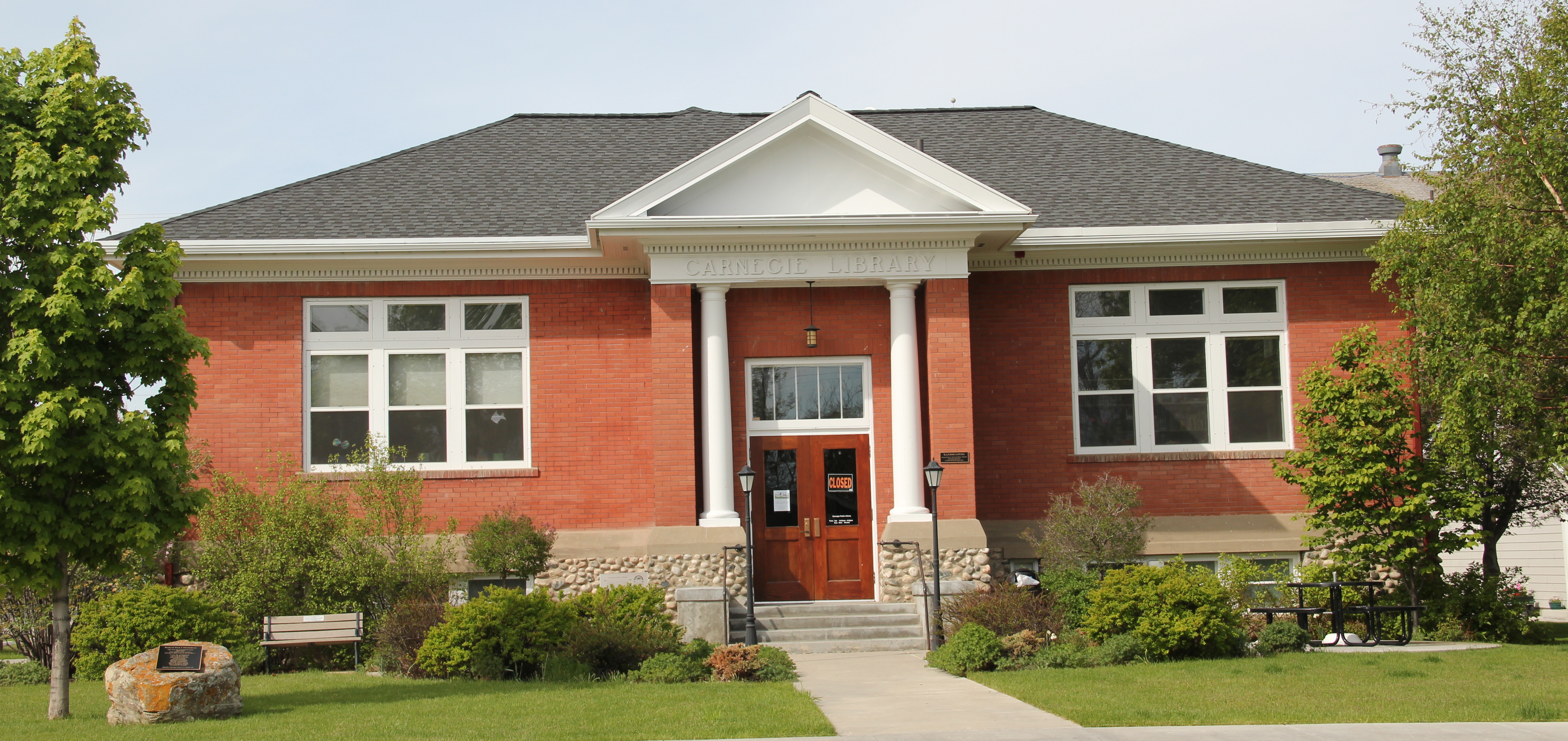
Public interpretation has not extended into an intensive involvement with the National Register of Historic Places.  In 1984, only one property–a segment of the Bozeman Trail where it crossed the Yellowstone–in the county was listed, and that stood on Sweet Grass’s far western border to Park County.  Then, right after I had finished the project, the iconic western hotel, The Grand, was listed in the National Register.  In the 30 years, a handful of Big Timber landmarks also have been designated on the National Register:  the Classical Revival-styled Carnegie Library, St. Mark’s Episcopal Church, and the Big

IMG_6324

Sweetgrass Co Big Timber 6 - Version 2 IMG_6306Timber City Hall.  Little doubt these landmarks are cherished–when more library space was necessary this century the expansion of the historic building was done appropriately, keeping this landmark in service for decades.

IMG_6308But when you consider just how intact the town’s historic environment from the 1880s to the 1950s is today, you think a National Register historic district nomination in order, or at least one for the historic commercial district, which has a wonderful array of building types, designs, and, luckily for Big Timber, open businesses, including one of my favorite bars in all of the state–at least favorite bar signs–the Timber Bar.

IMG_6273

IMG_6274

IMG_6275IMG_6284The next post will look deeper in the historic buildings of Big Timber, and then stretch north to a real jewel, the Melville Lutheran Church.

Chouteau County’s Plains Country Towns

IMG_9327

Thirty years ago geographer John Hudson wrote a series of articles and a book on the topic of “plains country towns,” addressing the landscape patterns he found among the railroad-established towns of the northern plains.  Ever since Hudson’s concept of plains country towns has influenced how I look at the Montana’s small towns.  Even in such river counties as Chouteau County where the Missouri River trade base of Fort Benton has dominated the county’s economy and population since the mid-19th century, you can still find the unmistakeable imprint of the railroad and the grain elevators that mark the presence of a town.

IMG_8832

Earlier in this blog I have discussed Square Butte (above) and Geraldine.  Today I want to review two other small towns, Highwood and Carter.  Highwood is the largest, counting

IMG_8873

just about 175 people in the last census.  Like most plains country towns, it has steadily lost population in the last 50 years.  In fact this weekend’s Great Falls Tribune discussed how the Highwood High School was going to forge a co-op for sports with Geraldine so both schools could continue to have basketball, volley ball and 7-man football, played at this tiny field in Highwood.

IMG_8875

IMG_8877

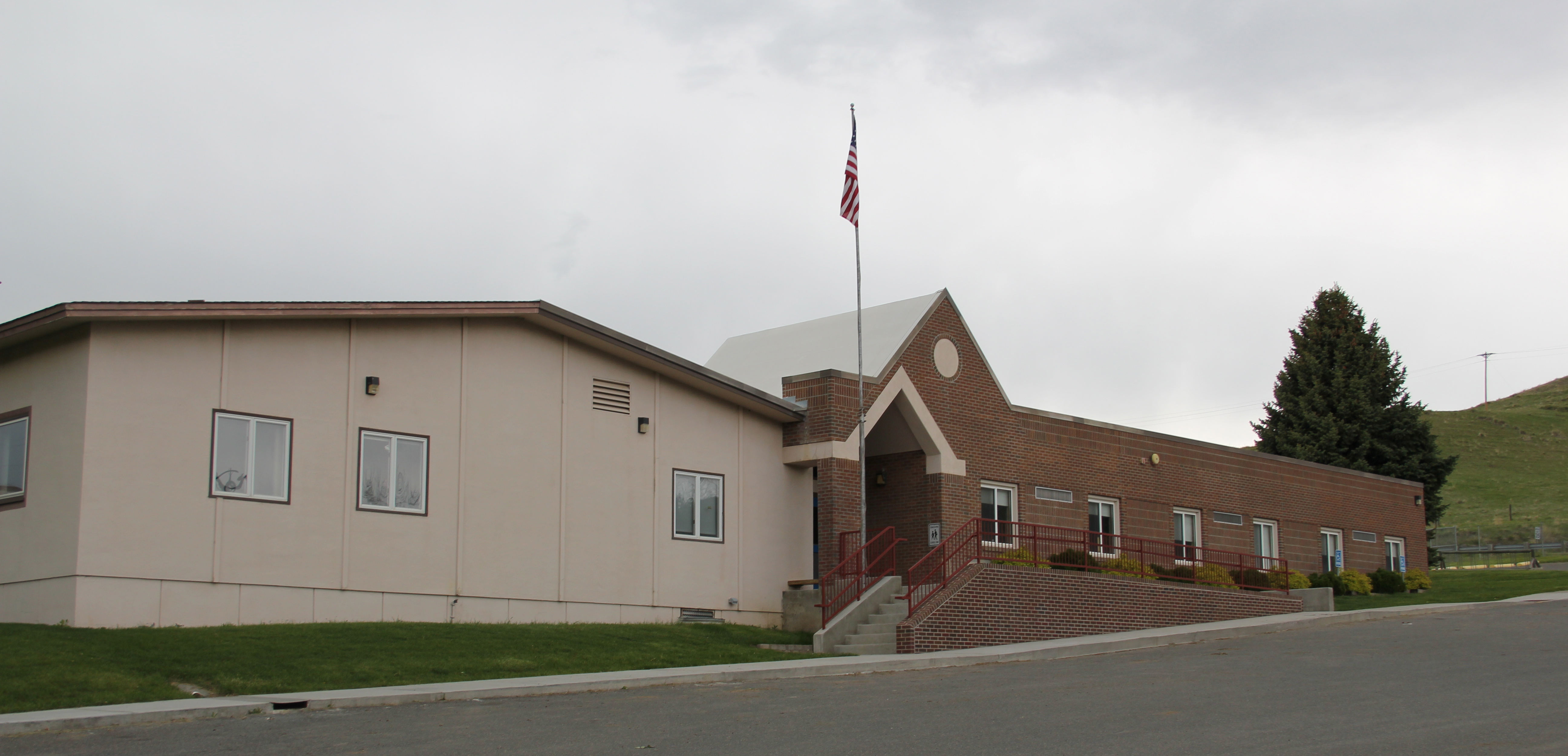
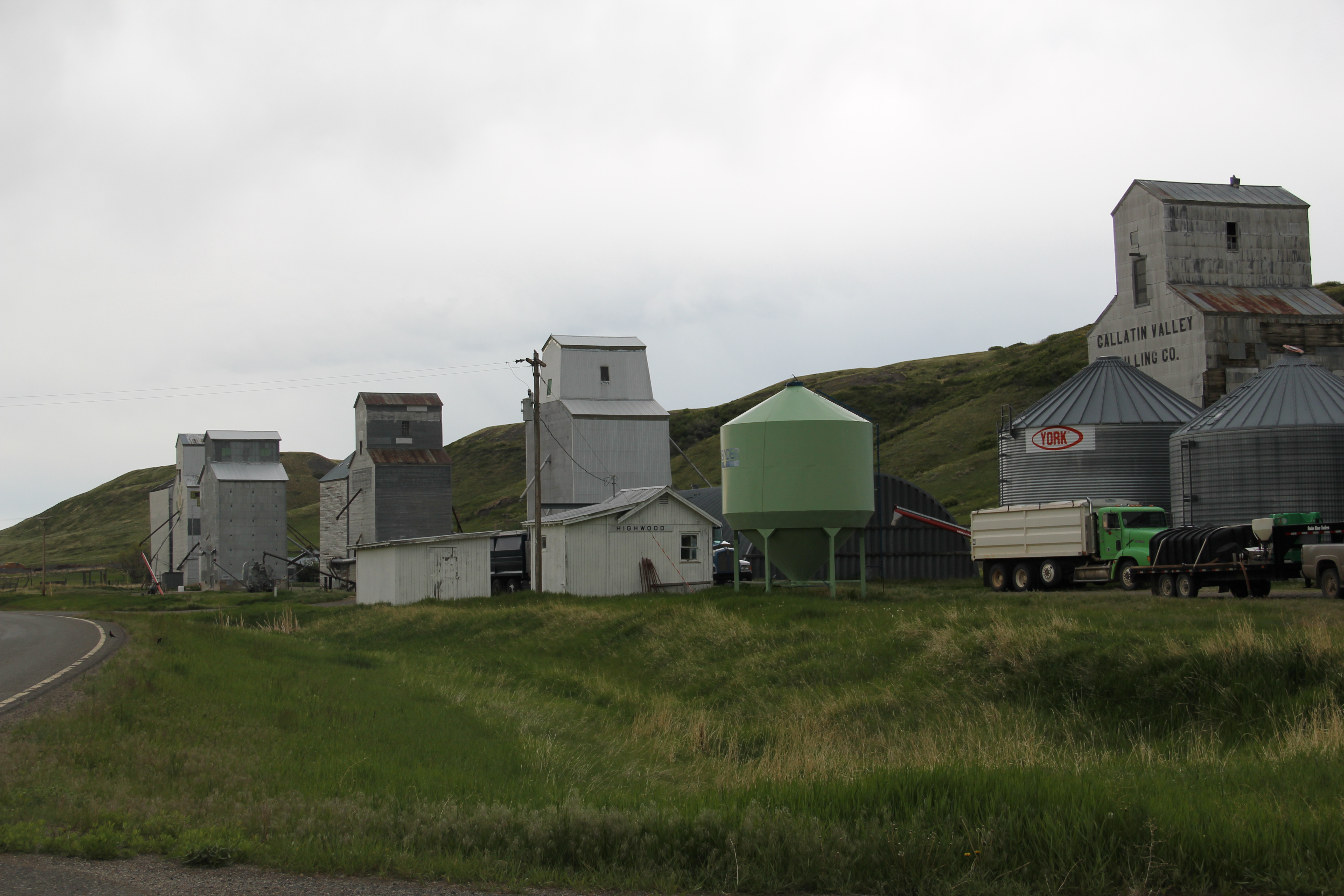
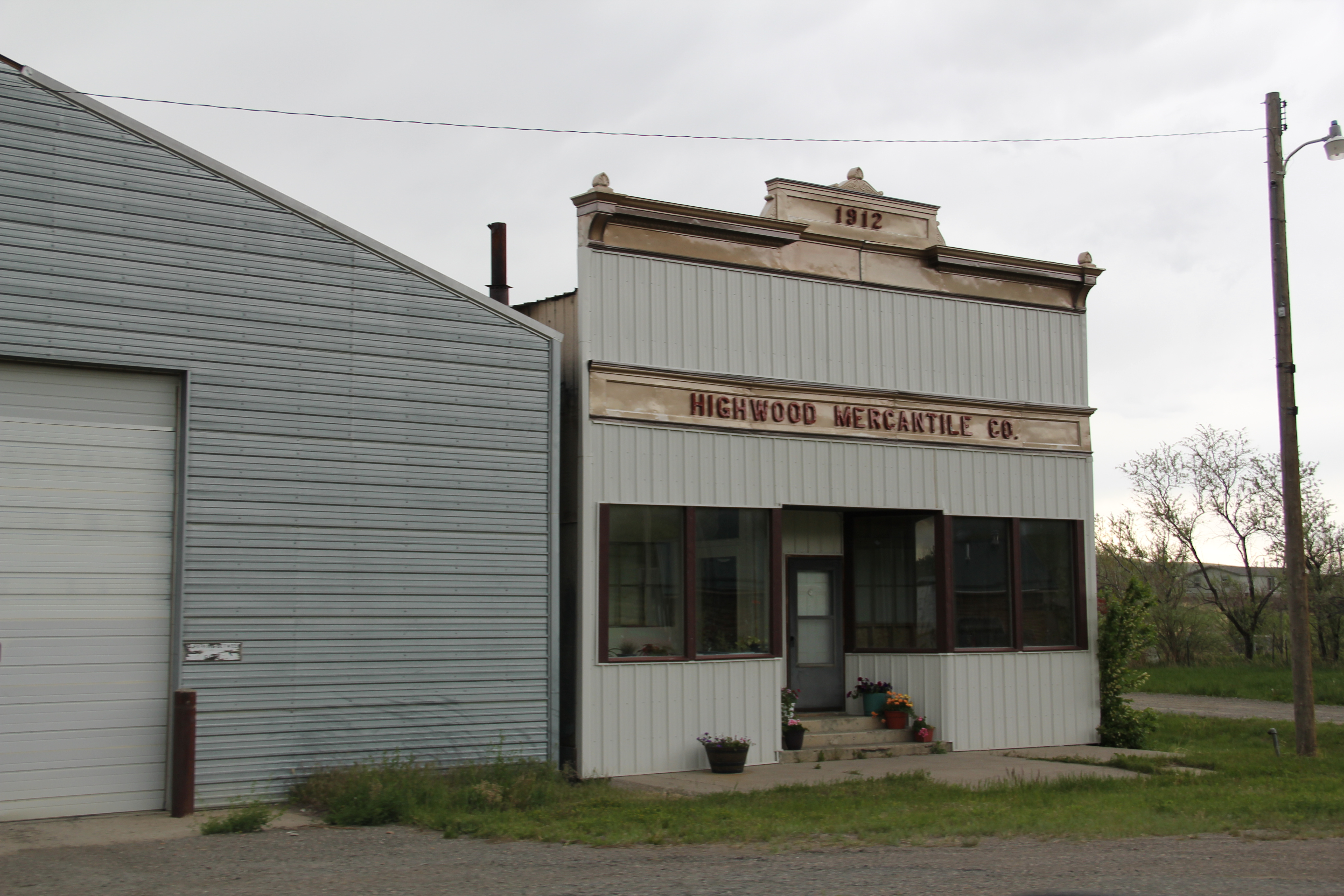
The Highwood School is no doubt the pride and center of this community, a place not often found by travelers nestled as it is in a gulch formed by Highwood Creek along Montana Highway 228.  It began in the 1880s as cattle country but with the coming of the railroad in the 1910s t became an outlet for grains, as its set of tall elevators makes apparent.  A small one-story false front building for the 1912 Highwood Mercantile Company also remains to mark the town’s railroad years.

IMG_8881

IMG_8880

Carter has one-third the population of Highwood–only about 50 people in the 2010 census–but is better known to travelers due to its location along U.S. Highway 87 between Great Falls and Fort Benton.  The Rocking K Bar is the roadside landmark but travelers

IMG_9334should turn south and drive down into Carter proper since the town, despite its tiny number of residents, still has many of the community institutions that defined a proper plains country town of 100 years ago.

IMG_9318

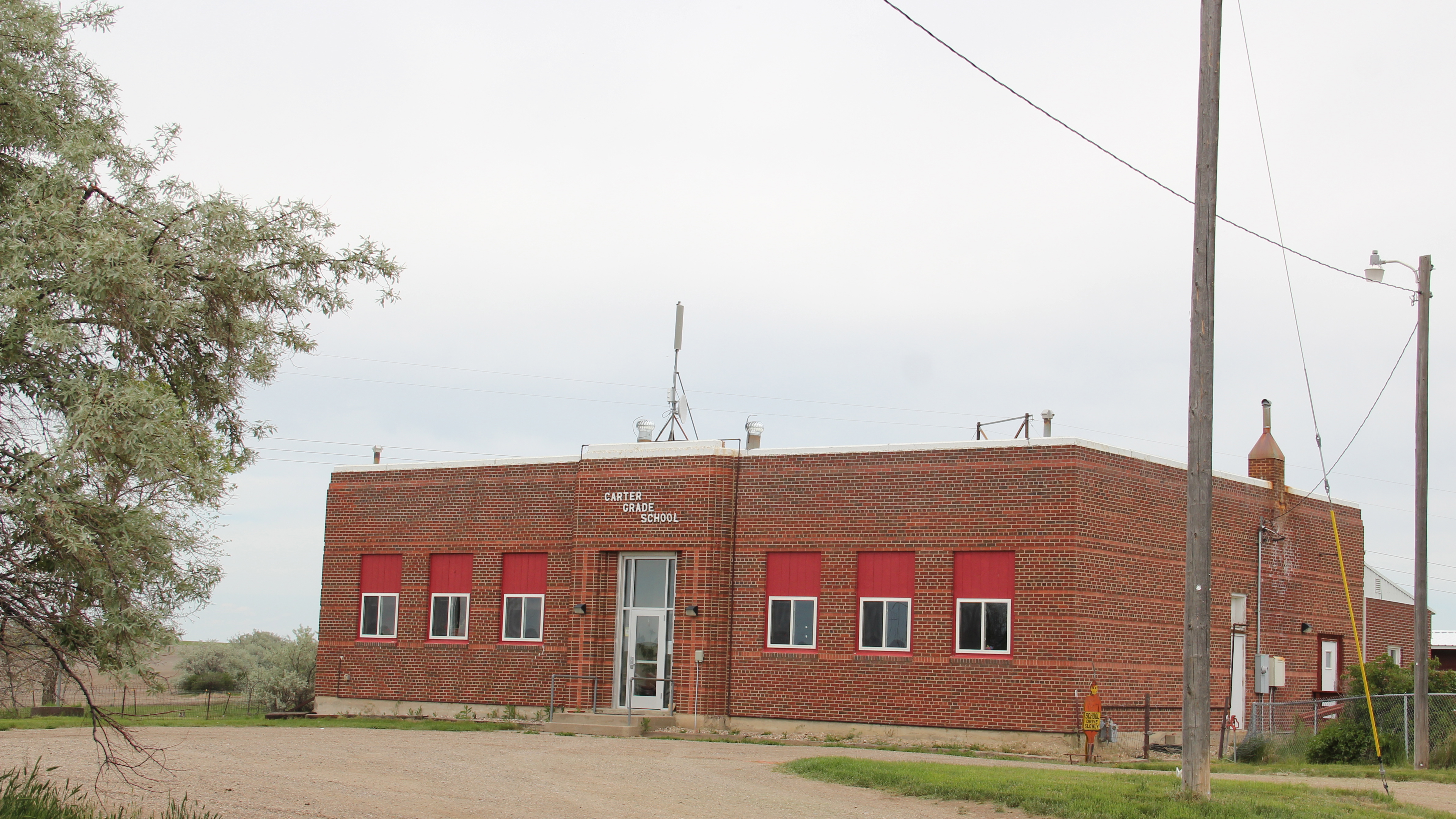
First, there is the still operating Carter Elementary School, probably the one institution that keeps the town alive–when country towns lose their school soon everything else goes too.

IMG_9319

Next comes the tracks, railroad depot, and the grain elevators–while not public institutions they do give the community commercial lifeblood, and as long as the trains roll by there remains an economic reason for Carter to exist.

IMG_9326

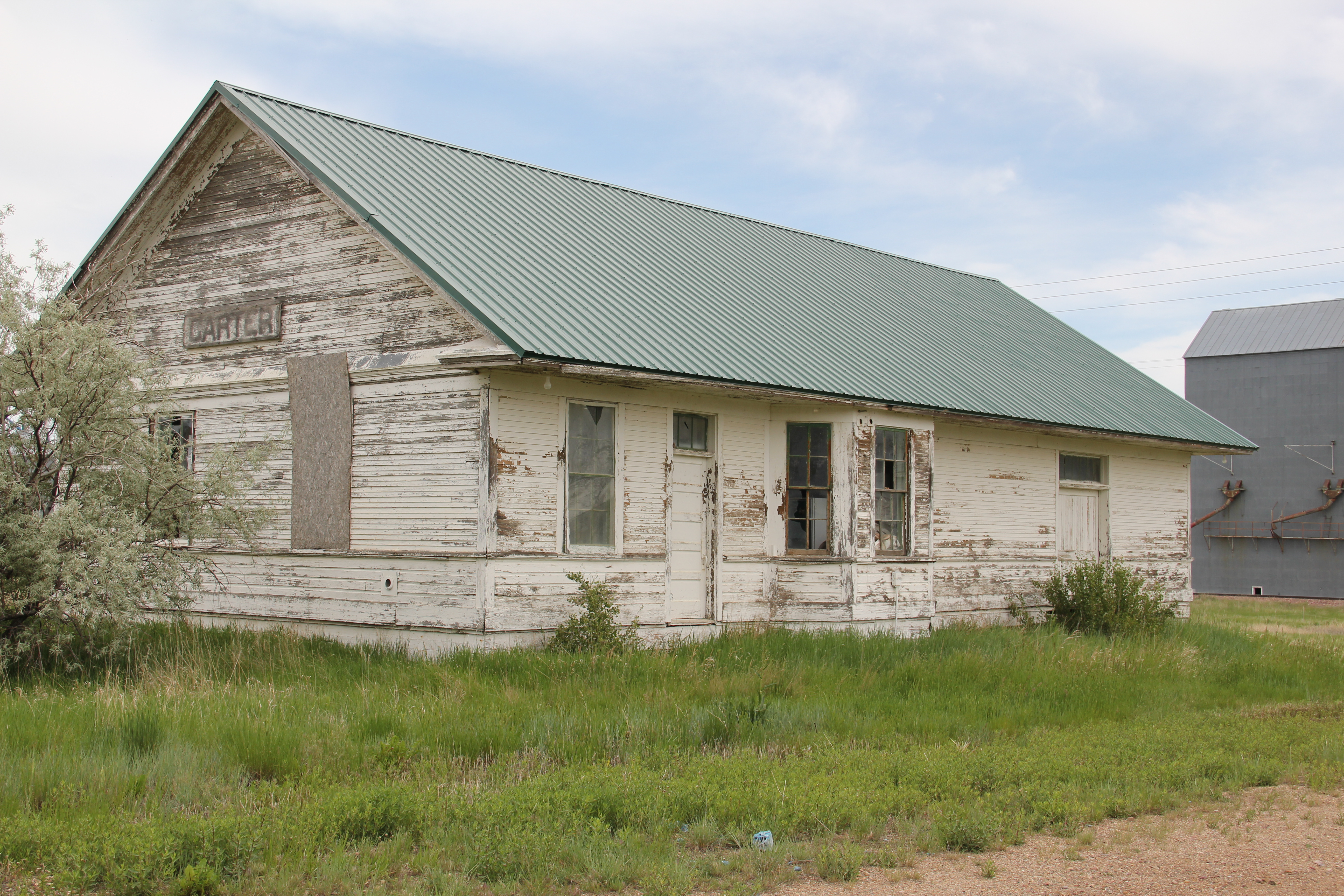
The depot has been moved from its original location paralleling the tracks, but this early 20th century standardized designed combination depot for the Great Northern Railway still stands–there were hundreds across the state in my survey of 1984-1985 and one of the more disturbing trends of the new survey of 2013-2015 is how many Great Northern depots are gone, eliminating from the landscape they once dominated.

IMG_9325

Faith too has remained in Carter, with the persistence of the town’s small vernacular styled gable-front little white Methodist church, although in its first generation several congregations had been established here.

IMG_9329

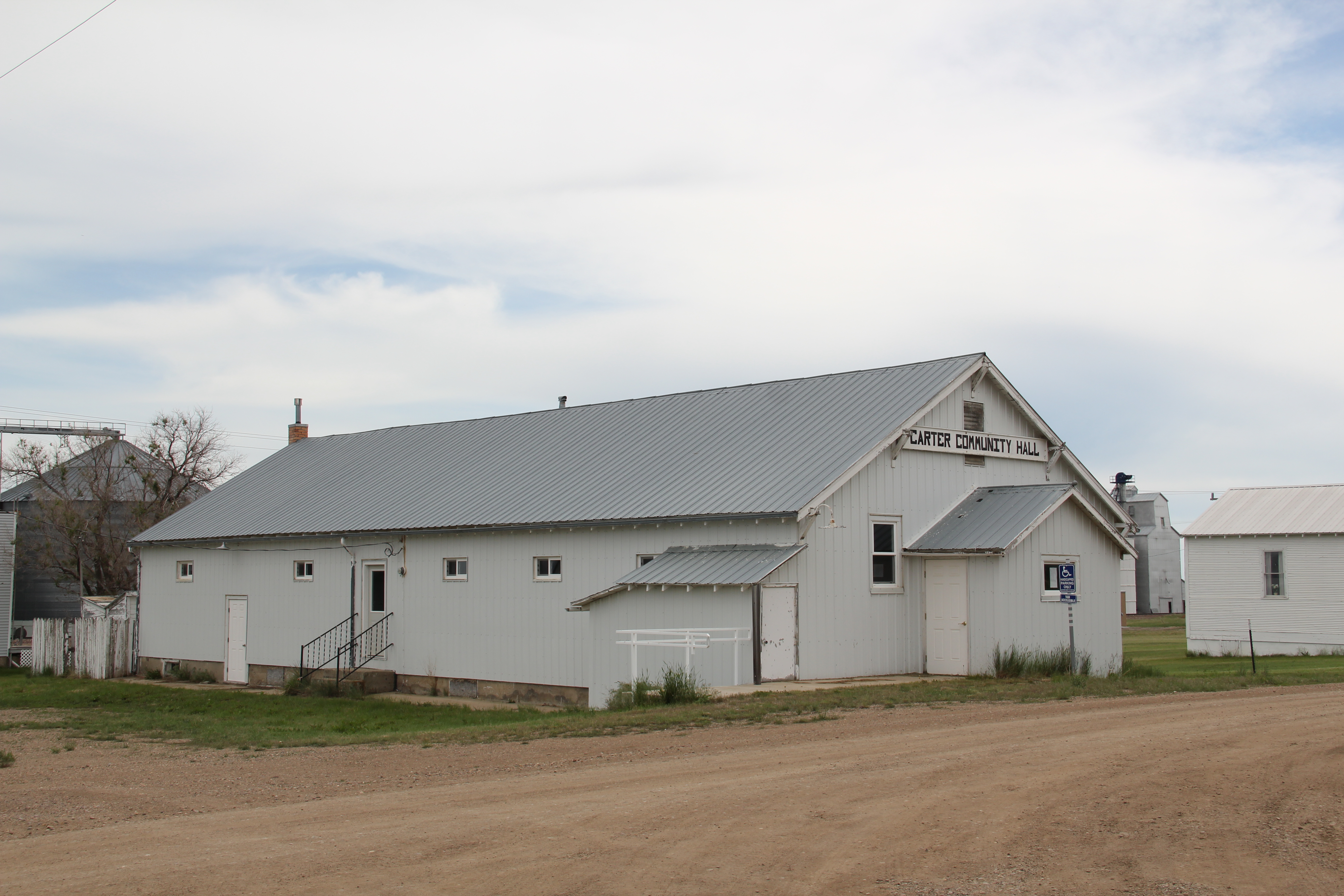
Carter also still has its Community Hall–an institution across the northern plains that defined hope and persistence in the years following the homesteading bust of the 1920s.
IMG_9331
Community halls too were more numerous in 1984-1985 than today–the building in Carter is a significant community link between past and present.

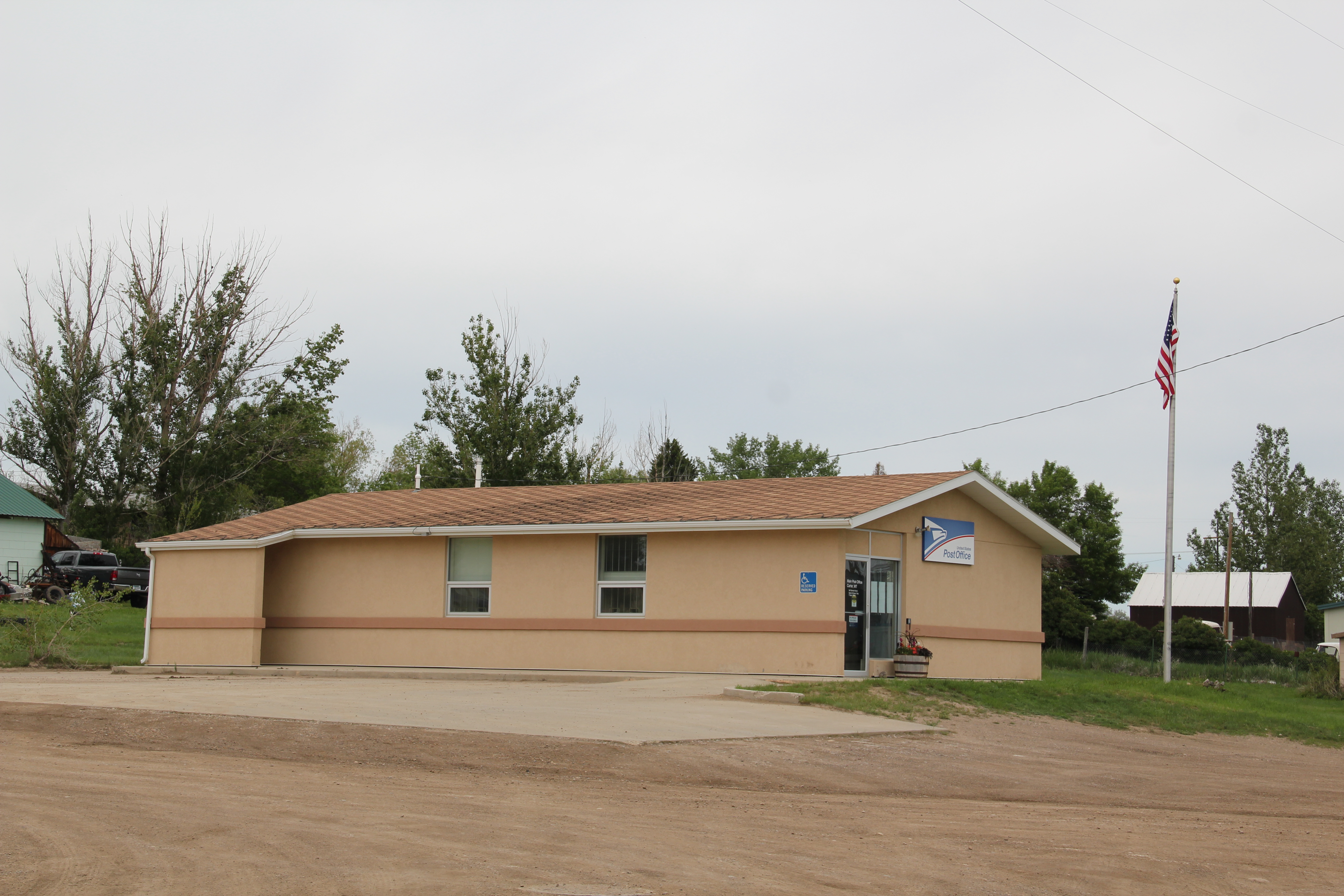
IMG_9330Finally there is the federal presence–marked by a concrete block post office from the last decades of the 20th century.  The threat a few years ago to close hundreds of rural post offices across the region brought new, and necessary, addition to role of post offices as modern community landmarks for plains country towns.

Admittedly, Carter is a place that hundreds roar pass daily as they drive U.S. Highway 87. But with its extant school, depot, brace of elevators, church, community hall, and post office, Carter is a valuable physical document of the plains country towns that once populated eastern Montana, serving as important way stations along the metropolitan corridors of rails and sidings that crisscrossed the west.

Circling Back to Rosebud, Montana

IMG_6998

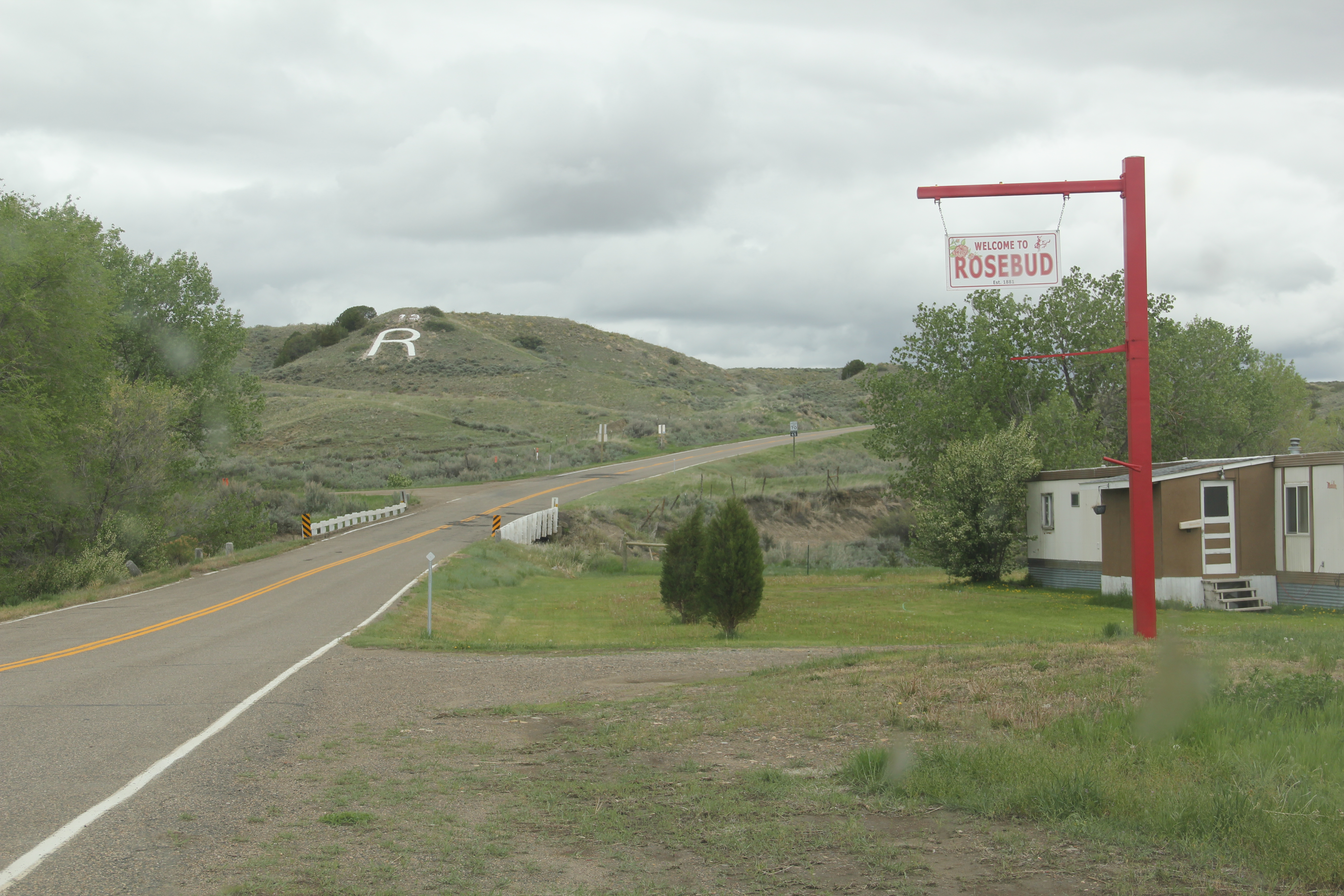
Rosebud, Montana, is a small Northern Pacific era railroad town in Rosebud County.  A recent commentator on the blog asked for more about this town, admitting that a real loss had been a fire that destroyed its historic school from the turn of the 20th century.  But Rosebud has rebuilt a modern school and like any credible Montana town, students maintain a “R” for the school on a bluff outside of town, and when the football season starts this month, this tiny field will be full of spectators, family, and players.

IMG_6999

IMG_6995

One reason I liked Rosebud back in 1984-1985 was the town bar, which had great food.  I didn’t remember it as the Longhorn Bar, but that’s the name today and the place still is friendly and worth a stop along old U.S. Highway 10. Another blog reader reminded me that it has always been known as the Longhorn Bar–so that shows you what you can forget in 30 years plus of Montana field study.  Note also in this photo–at the far right in the background is the football field goal posts, a visual of how small the place is.

IMG_6992

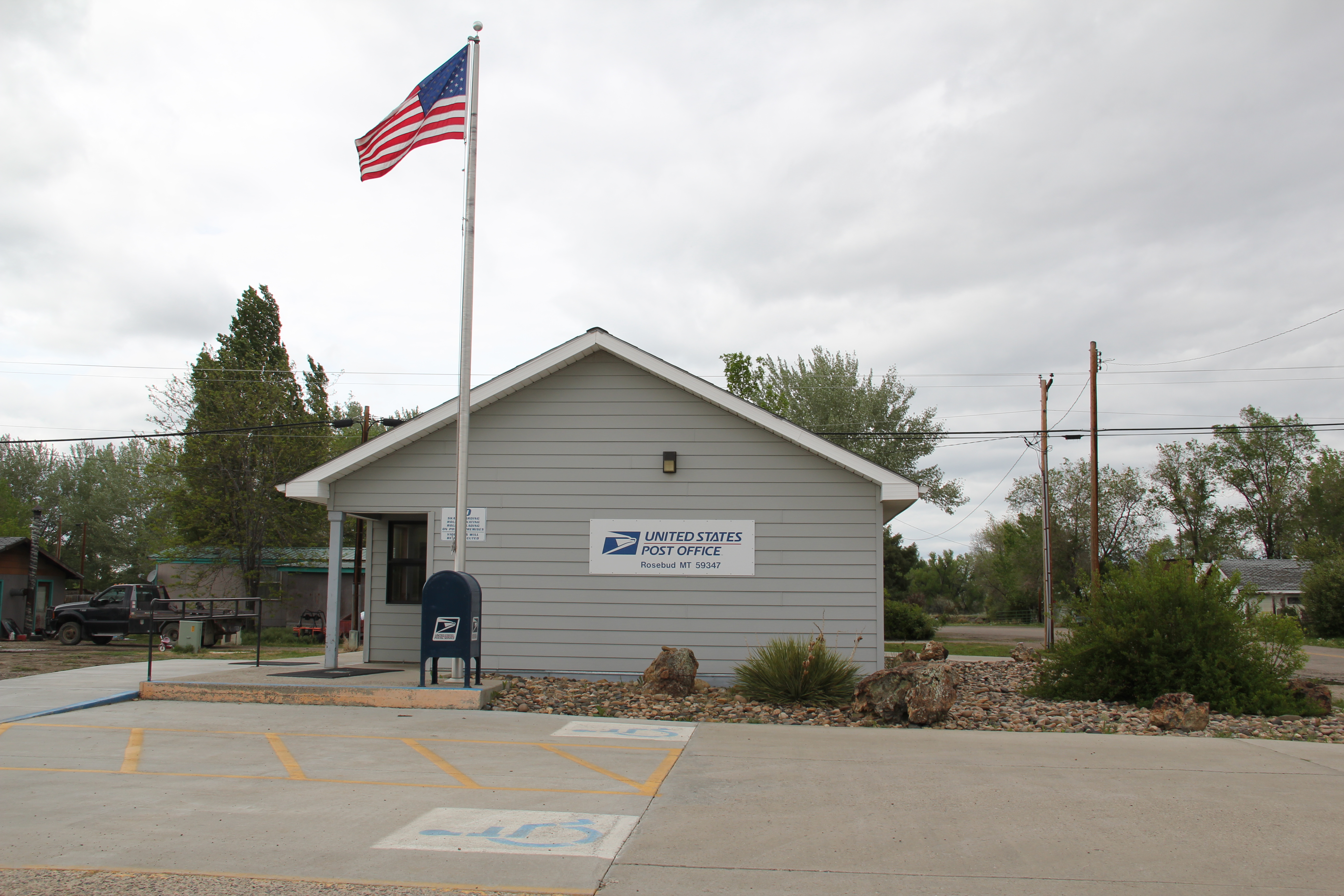
Rosebud was never a major railroad town in this part of the Yellowstone Valley but it has kept its school, a handful of businesses, and its post office, which had been updated since my last visit here. It’s still an important part of the valley’s historic landscape. And an important intact 1920s section of the Yellowstone Trail–the initial transcontinental highway that followed the Milwaukee Road’s tracks into eastern Montana.

IMG_6993

Grassrange: Fergus County Crossroads

IMG_0025

Grassrange is a central Montana crossroads, where U.S. Highway 87 meets Montana highways 19 and 200, and it serves as the eastern gateway to Fergus County.  The wonderful vernacular roadside statement of “Little Montana”–an obvious homage to the much larger and more famous “Little America” in southeast Wyoming–reminds even the most oblivious traveler that you have reached a highway crossroads.

IMG_0028

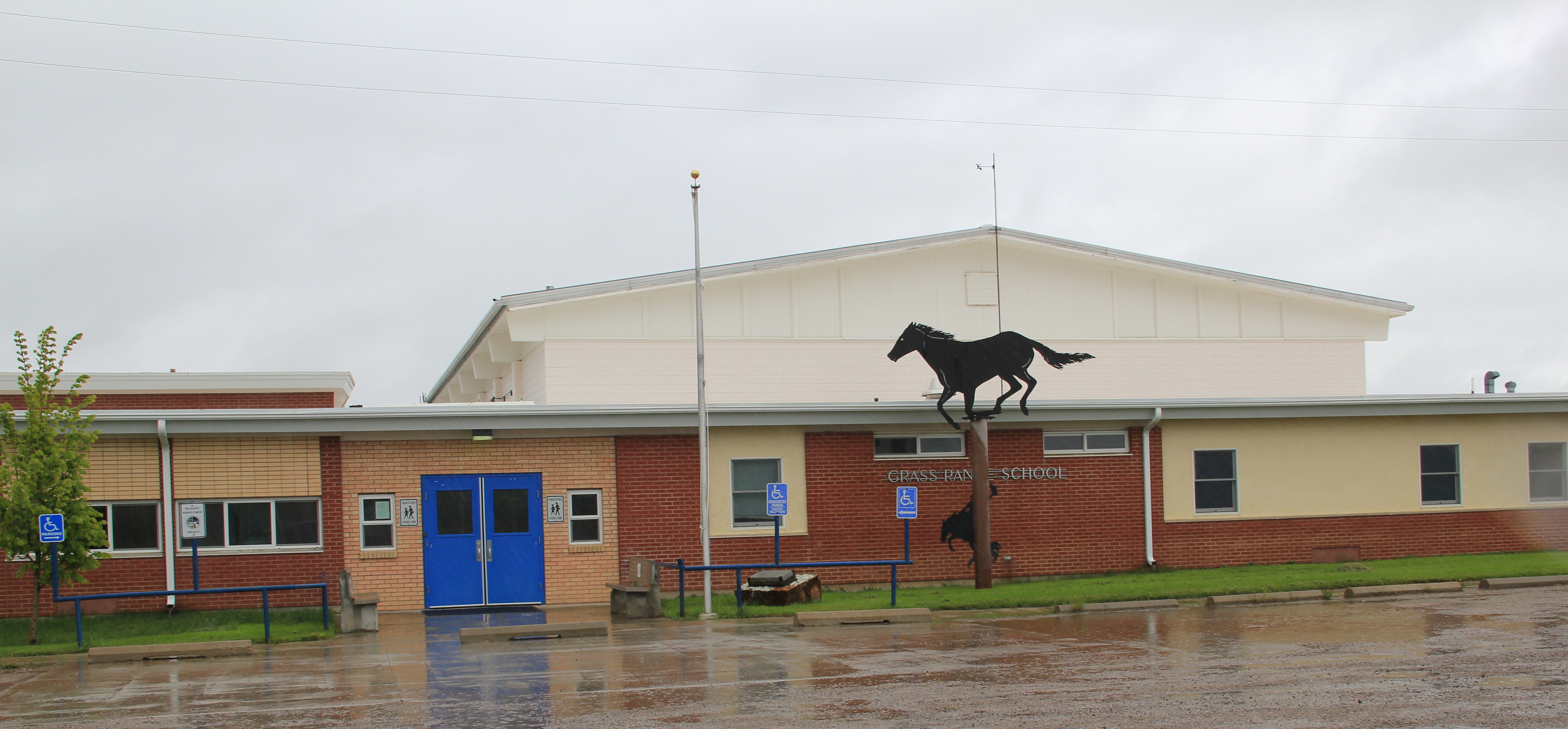
As the name implies, this is ranching country, with several of the state’s most famous spreads nearby.  The school reflects the pride in ranching, witness its school emblem and name the Rangers.

IMG_0030

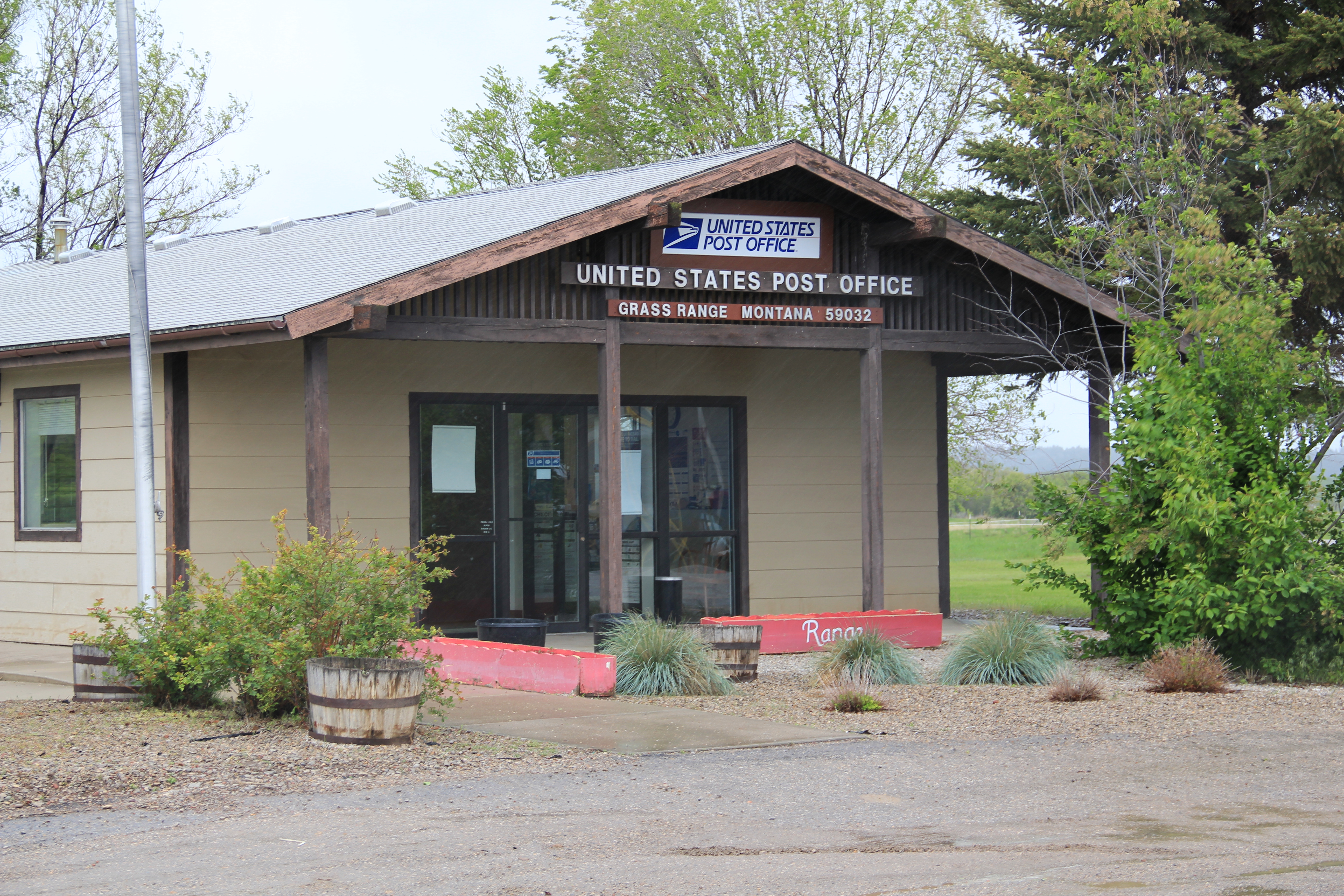
There is more than livestock to the history of Grassrange, as the elevators attest.  This is also farmers’ country since the early 20th century homesteading boom.  Yet Grassrange has never been a bit town itself.  It dates to 1883 when the first post office was stab listed to serve surrounding ranchers; the town still has its standardized 1970s post office building.

IMG_0020

IMG_0021

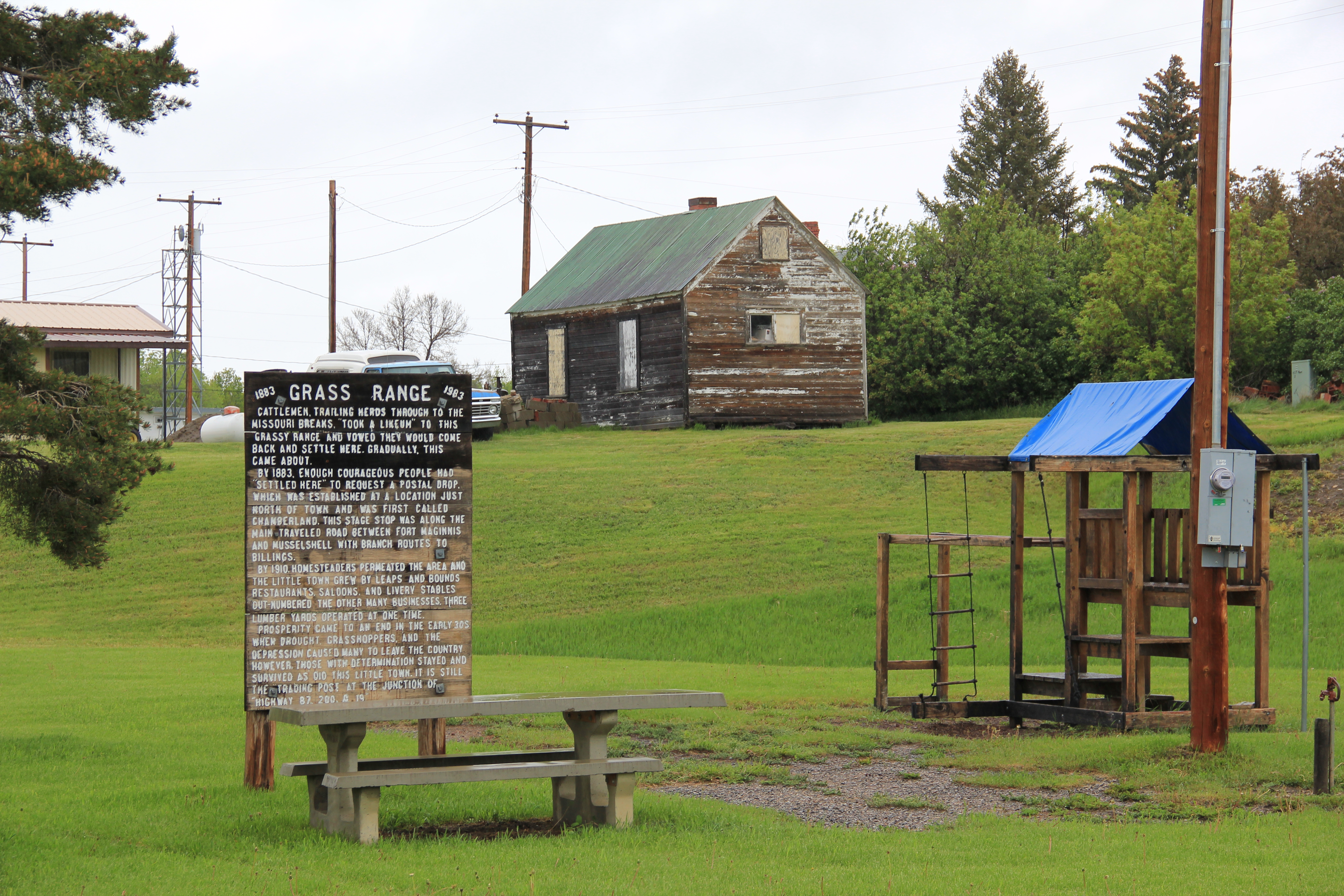
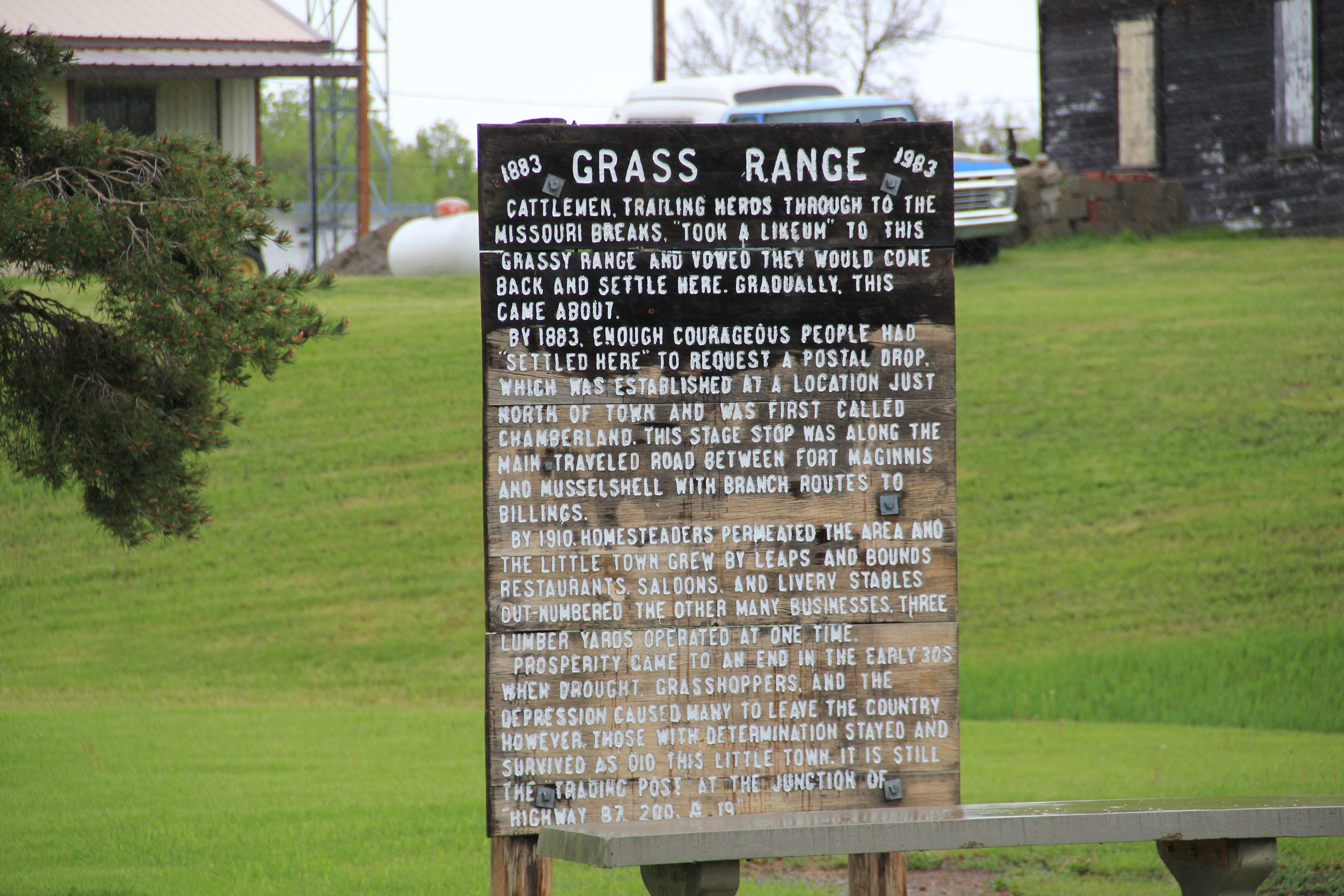
Grassrange has a definite sense of its past.  Despite its scant population–just over 100 in the 2010 census–it has a city park (top image of this blog) plus its own public interpretation of its history, literally carved from local hands.

IMG_0026

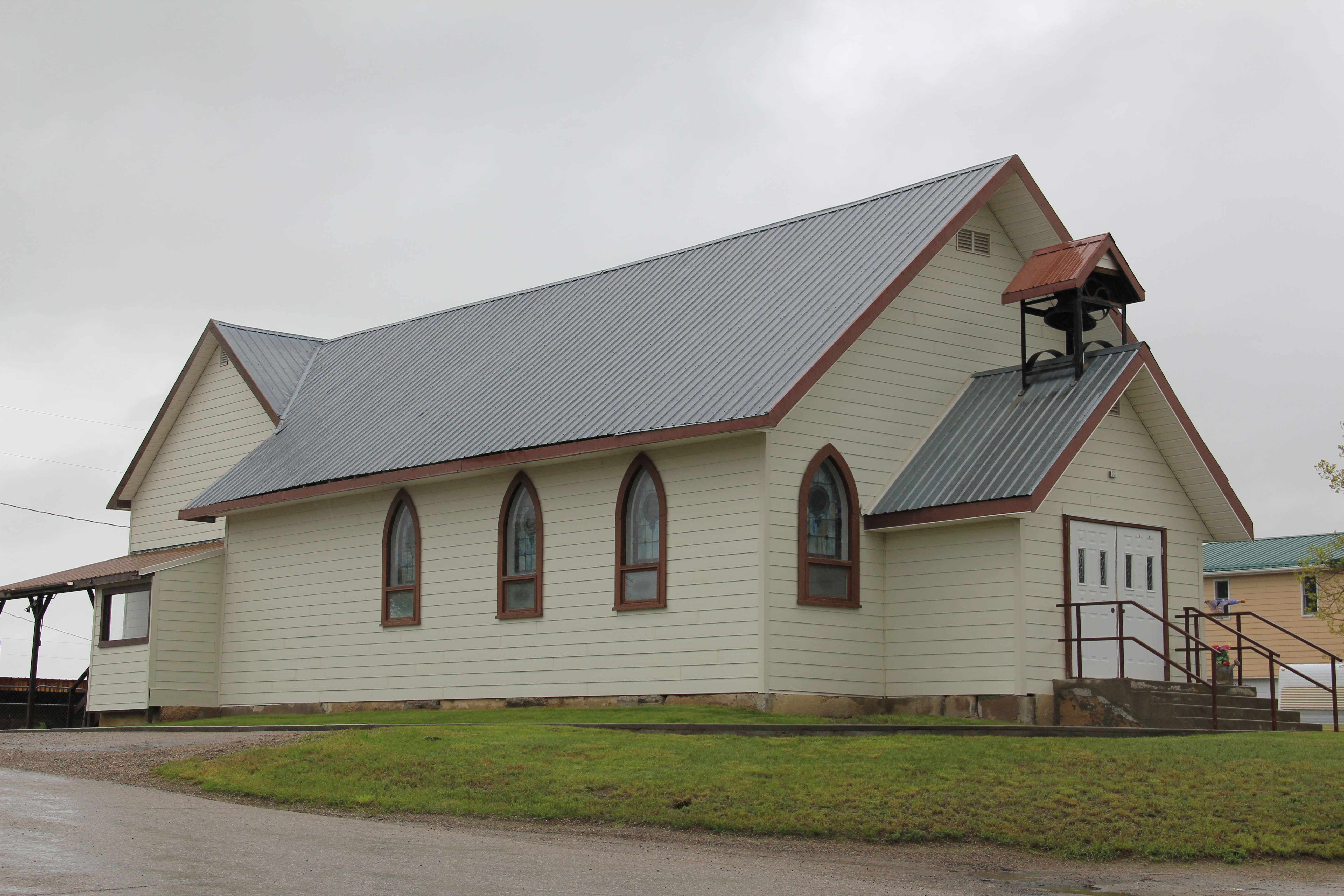
It also has surviving historic landmarks, from a false-front Masonic Lodge to a vernacular Gothic-styled United Methodist Church, to a well-worn one-block commercial building that, considering its add-ons and alterations, has served the community in several different ways over the last 100 years.

Fergus Co Grassrange masonic hall  - Version 2

IMG_0027

IMG_0022

Many rural Montana crossroads are little more than a combination bar/cafe/store/gas station today.  Grassrange has dwindled in size since my first visit in 1984 but it has kept its school and such community buildings as the church, Masonic hall, and city park.  It is home than the home of “Little Montana”; it’s a reminder of the precarious state of Montana’s small towns across the vastness of the northern plains.