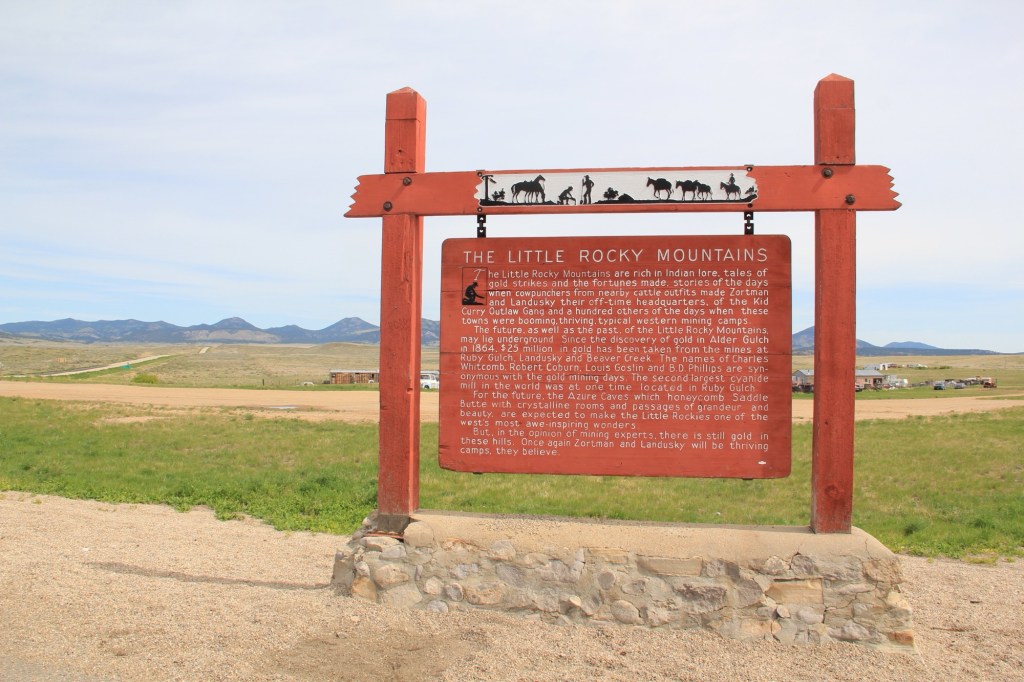
It would not be unfair to suggest that, perhaps, Montana has too many highway history markers. There are the classic ones of the mid-20th century by the state highway department with wonderful silhouettes from Helena artist Shorty Shope, as shown above.
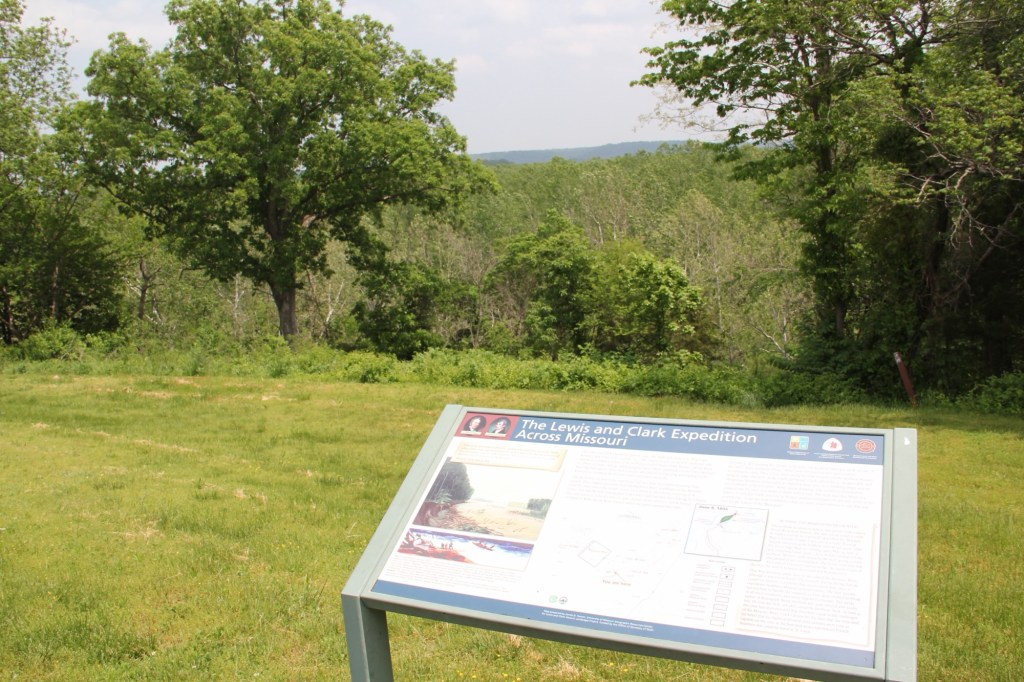
Then there are hundreds of contemporary interpretive markers everywhere—markers that you just didn’t see back at the time of my historic preservation plan survey of 1984.
But early in that survey work in March 1984 I encountered along Highway 16 in Roosevelt County a sign that marked an “Agricultural History Site” crediting farmer Ira Jensen McCabe for the northern plains’ first “grass barrier applied to farmland.”
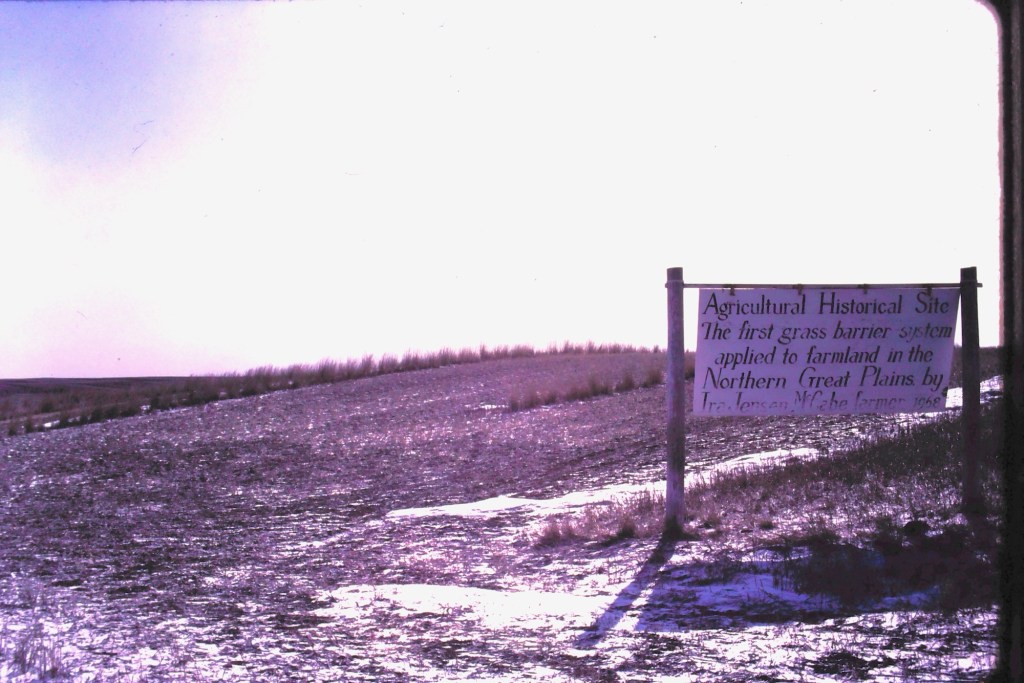
Ever since that encounter, I have been fascinated by Montana’s handmade history signs. Here are some of my favorites.
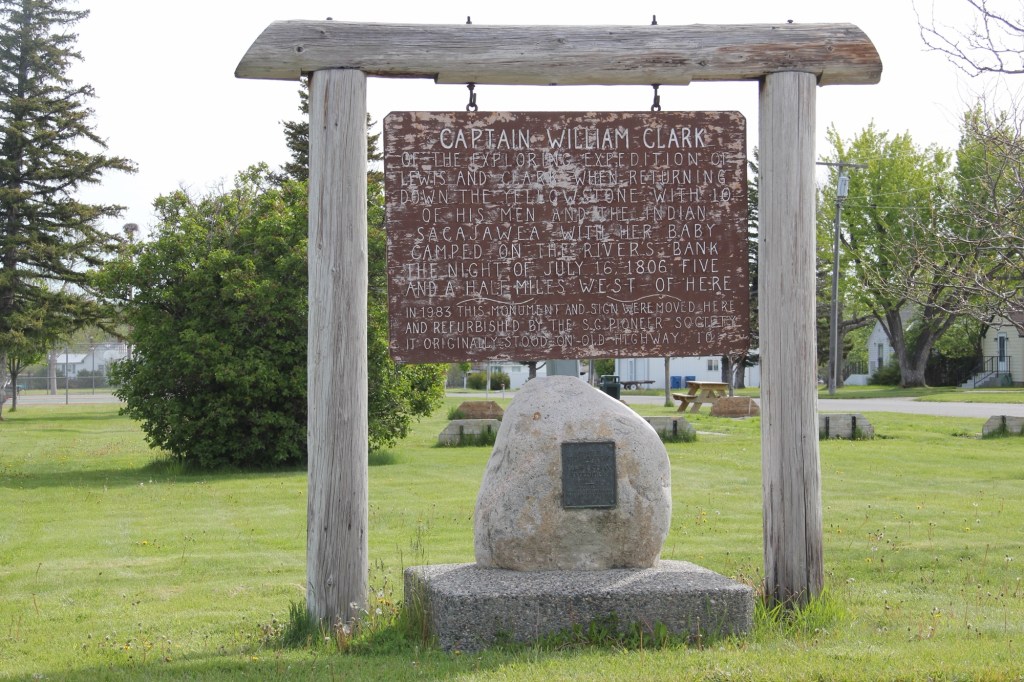
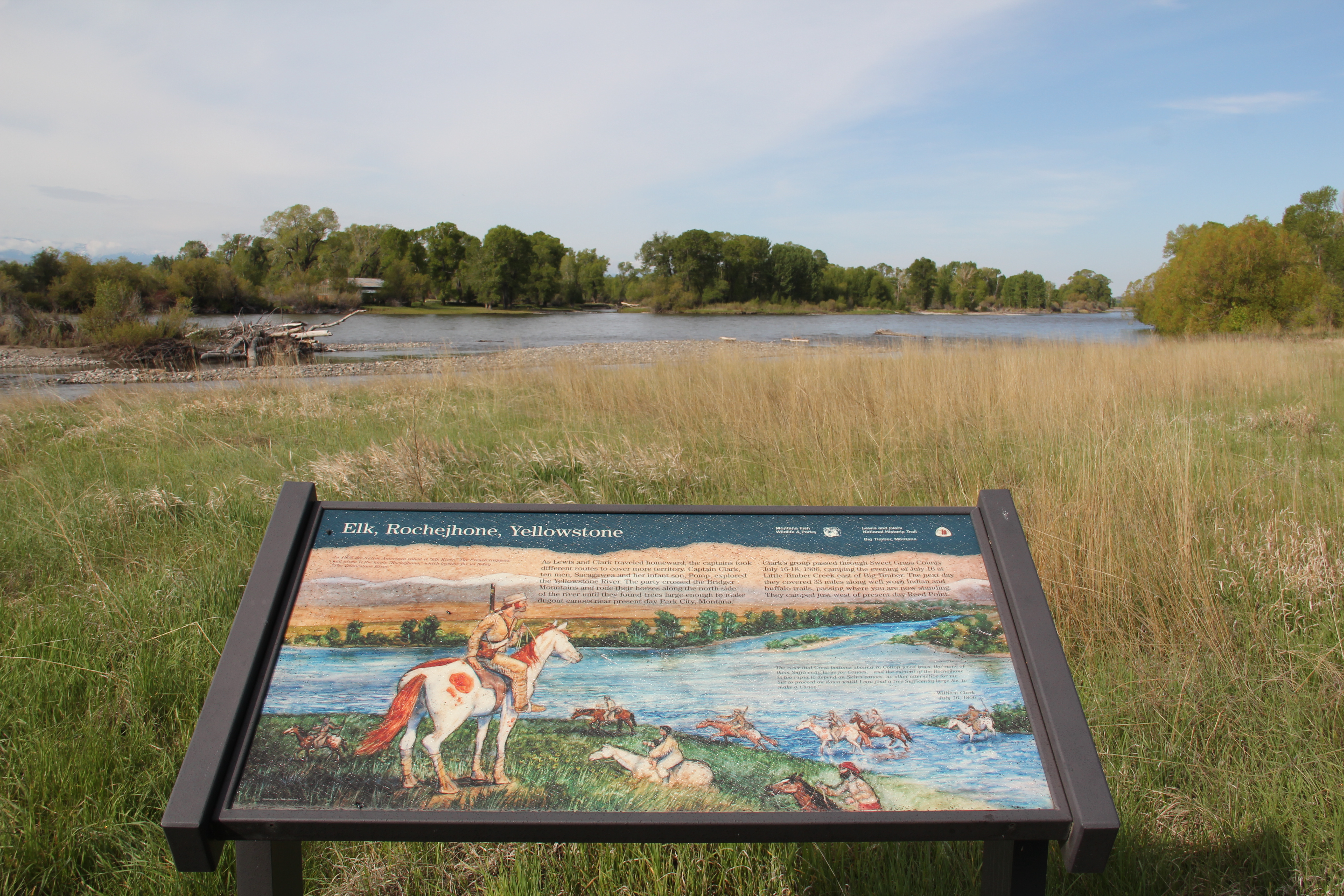
In Big Timber this marker (above) about Captain William Clark was on old U.S. Highway 10 until 1983 when it was moved to the city park of Big Timber. It was fresh and somewhat shiny then—40 years later it’s a bit worse for wear.
At the town park of Grass Range in Central Montana residents shared their history at some depth. This place is not on Highway 200 and it’s almost like the 1983 sign is there to remind residents of their past—then you find out that the park was where the community celebrated its 100th anniversary in 1983.
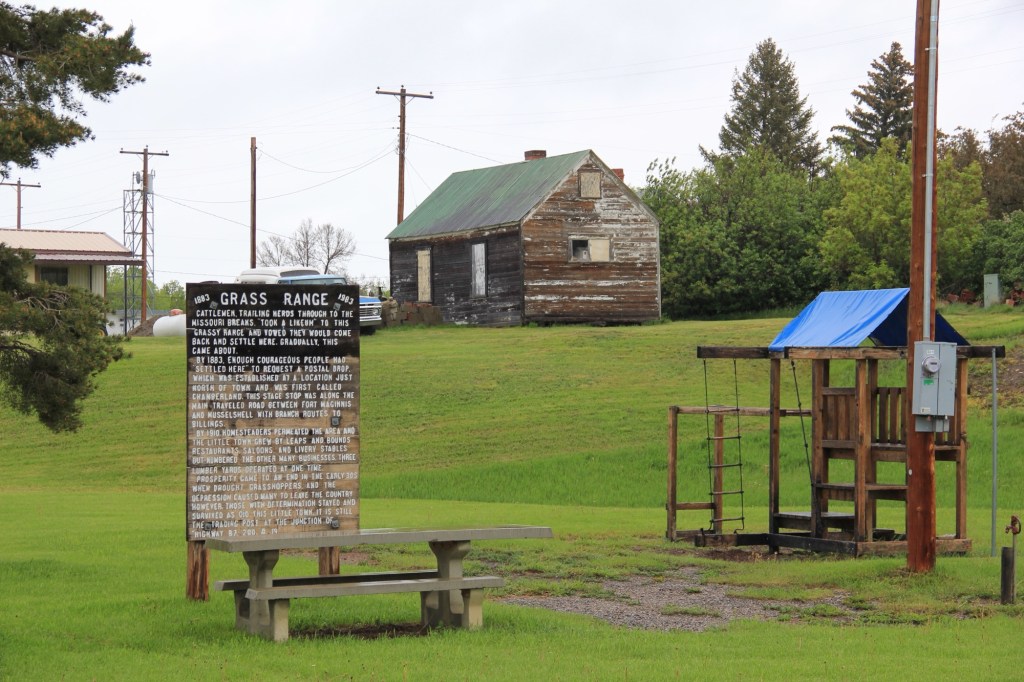
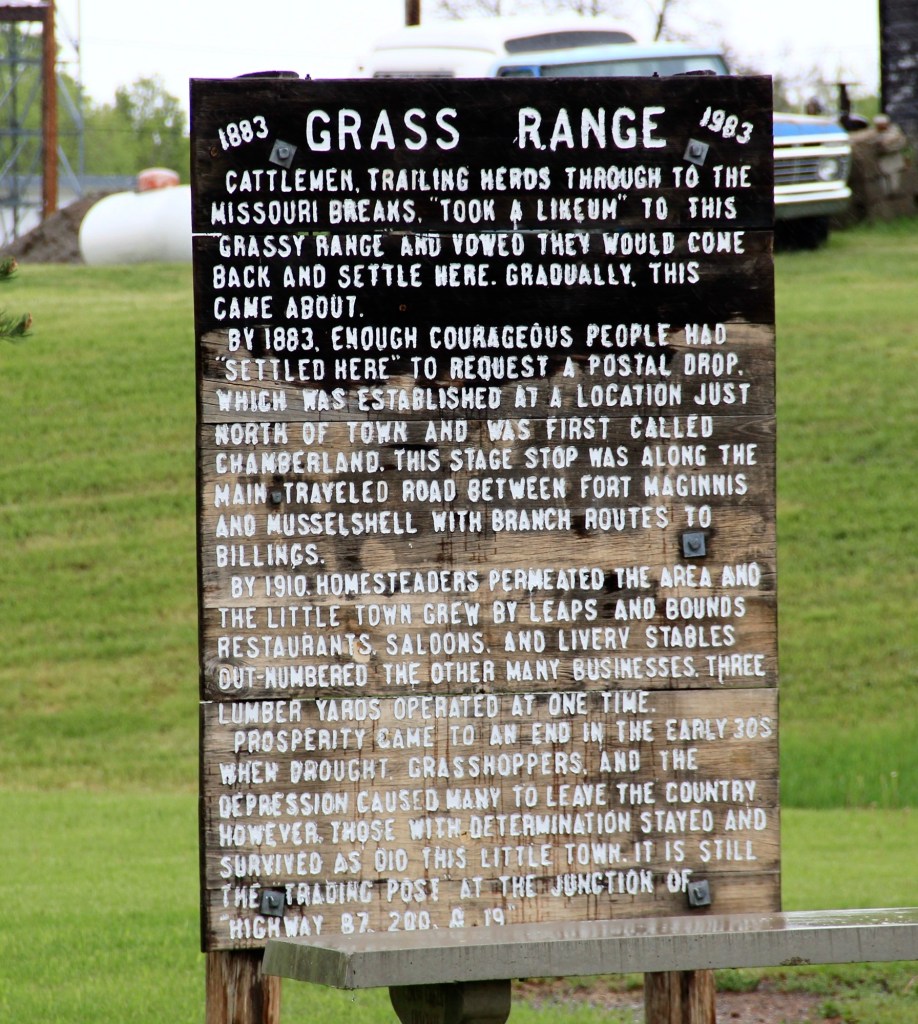
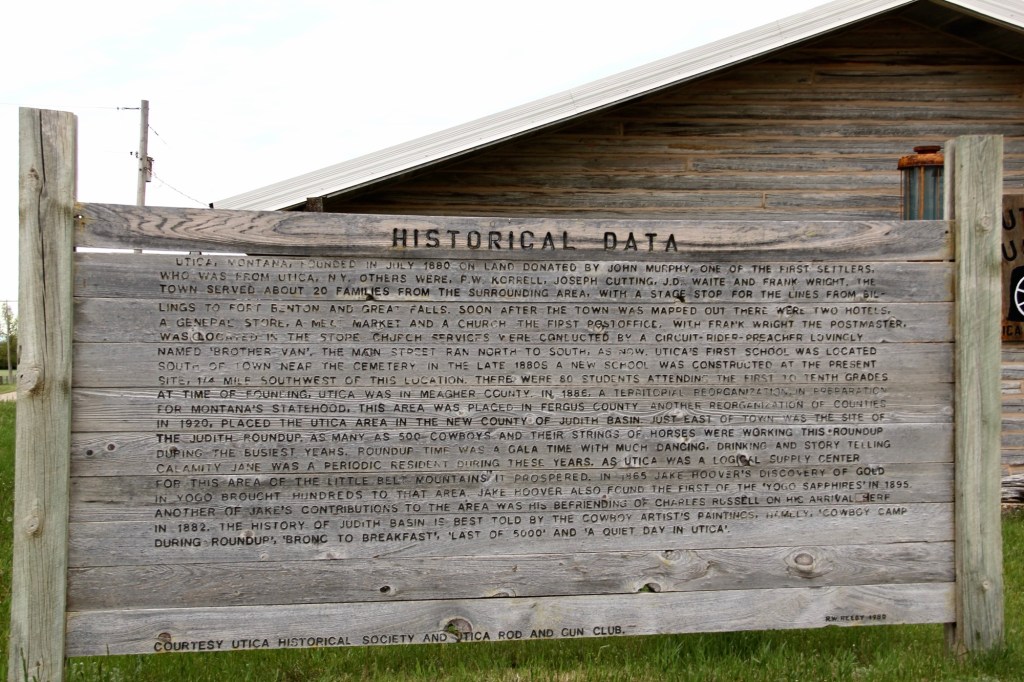
Grass Range seems concise and to the point compared to the Historical Data marker at Utica crafted by R.W. Reedy in 1980 for the Utica Historical Society and the Utica Rod and Gun Club.
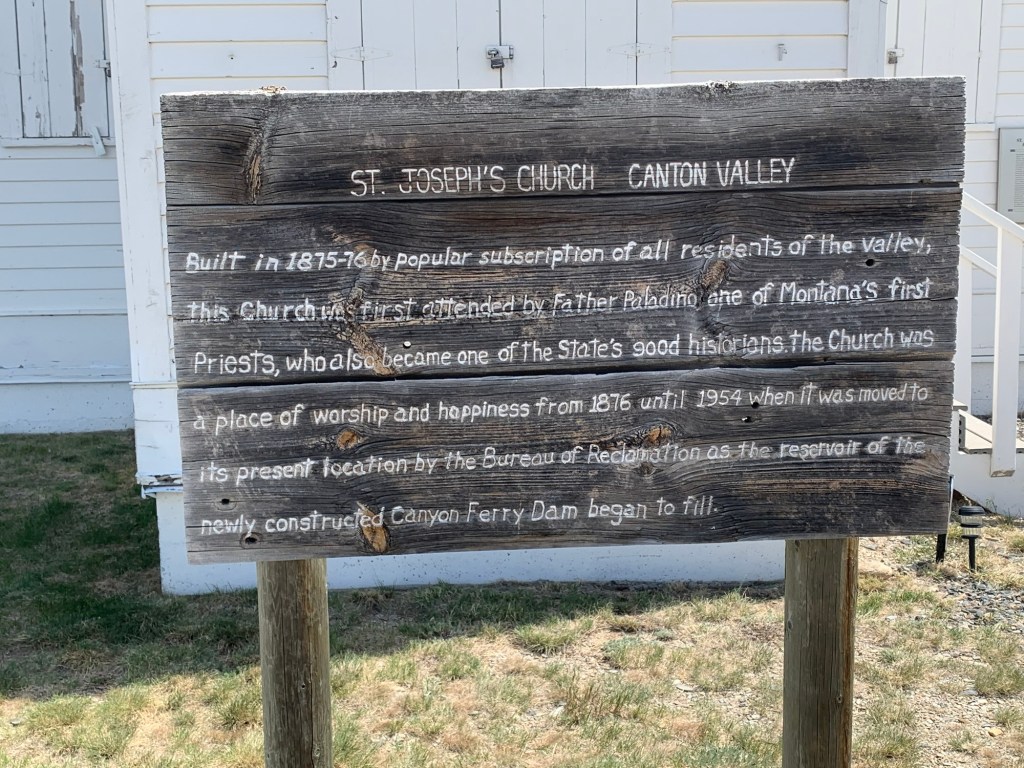
Sometime after 1954, residents of Broadwater County added the marker below about the history of St. Joseph’s Catholic Church.
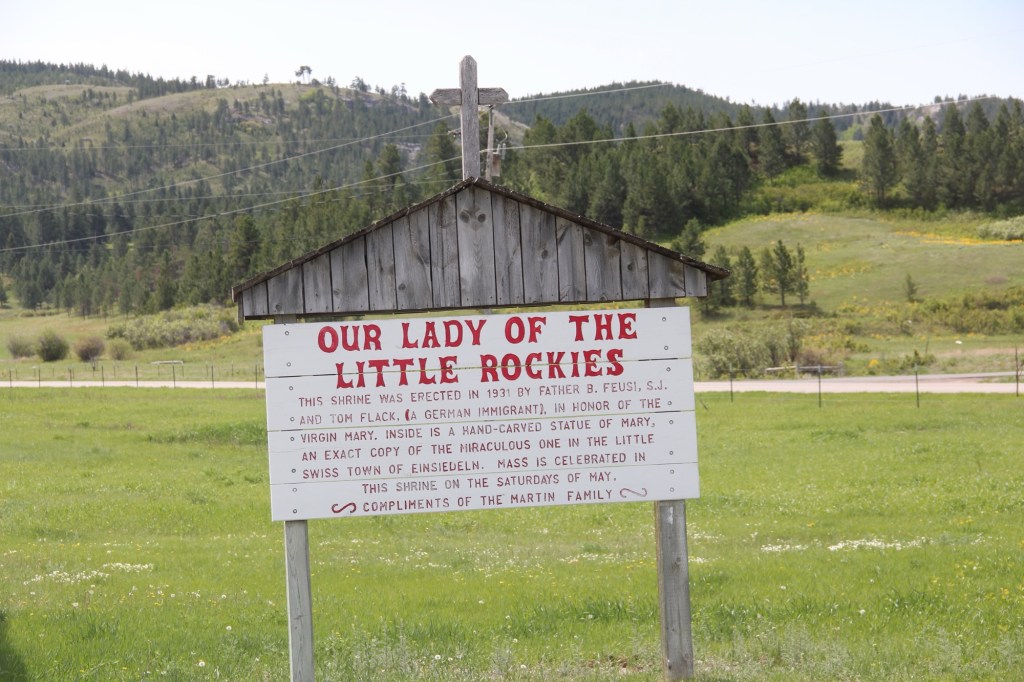
The Martin family explained the story of Our Lady of the Little Rockies” (below) outside of Hays in Blaine County.
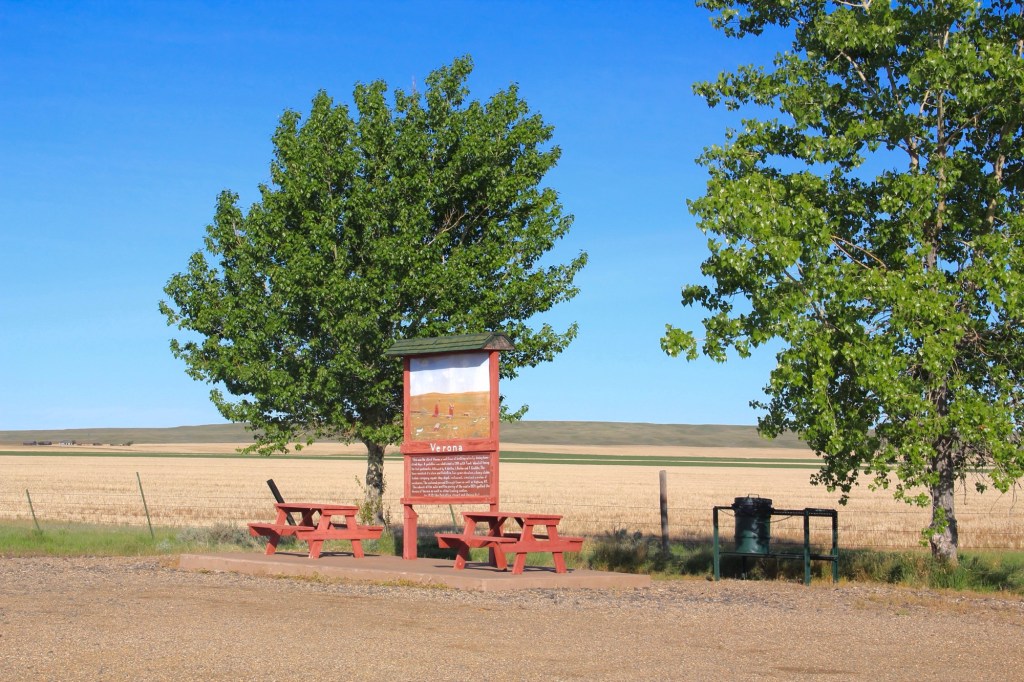
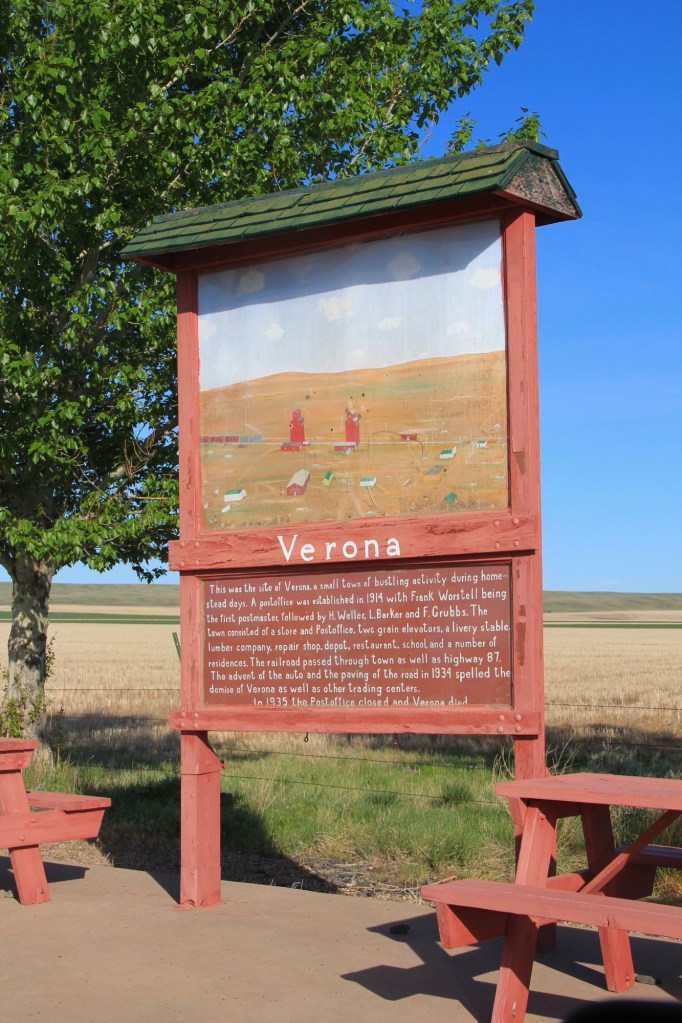
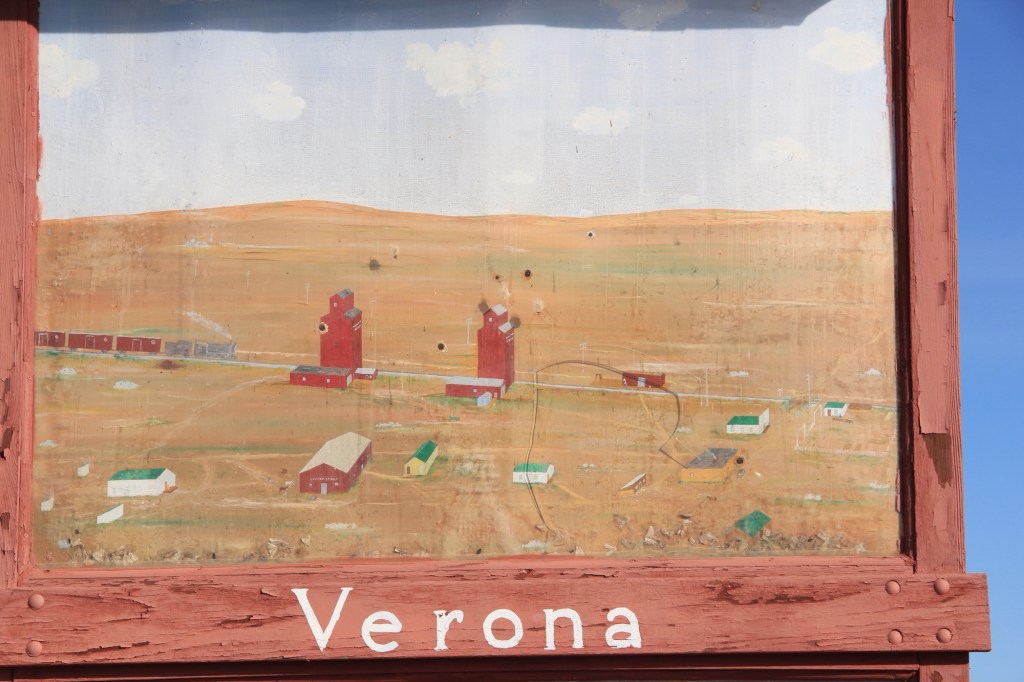
My favorite, however, is in Chouteau County along old Highway 87. It tells the story of Verona, one of the many homestead era towns that once covered Central Montana. The marker serves as a roadside stop but it’s not for tourists as it’s far from the present highway. It serves as a tribute to the past, complete with a painting of what Verona was like more than 100 years ago.
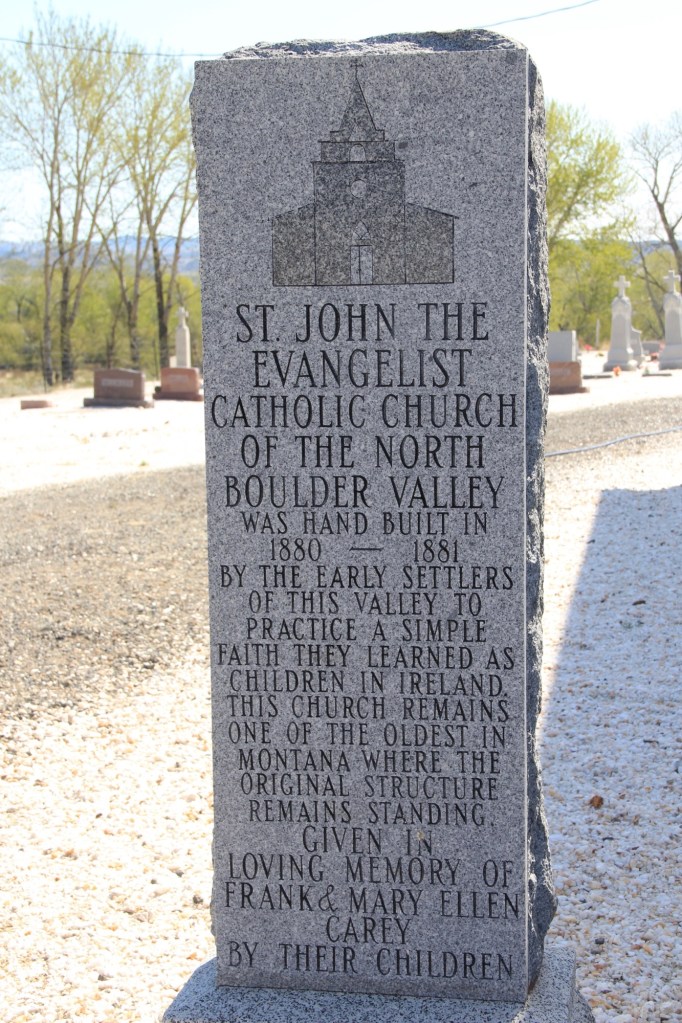
Handmade history hasn’t disappeared, but it does take different forms, such as a permanent stone marker for St John the Evangelist Catholic Church in the Boulder Valley (below) put up by the Carey family.
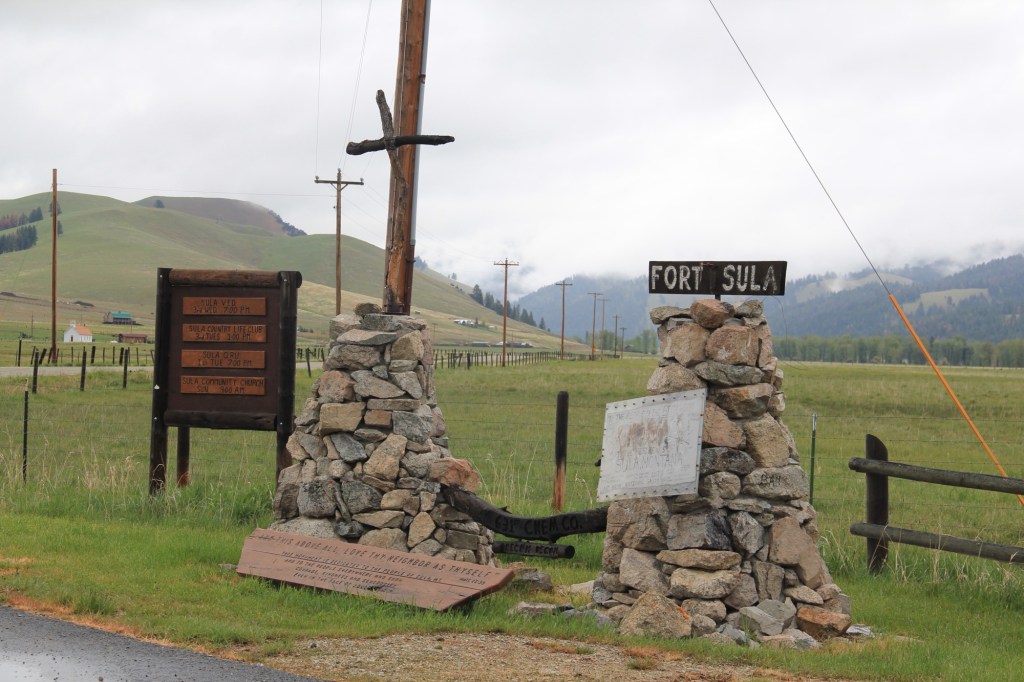
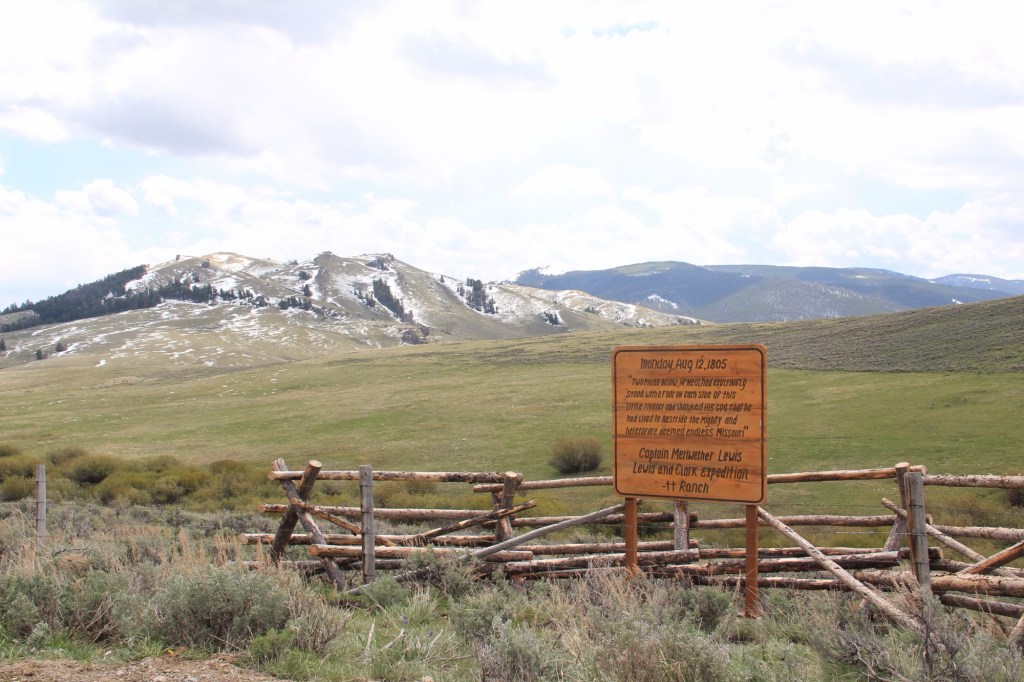
Or the interpretive marker for local history at Sula, in the state’s southwestern tip. Ranches have gotten into the act as well as seen by this wooden sign (below) about the location of Meriwether Lewis on August 12, 1805.
Montanans sharing stories about the places that matter to them—it doesn’t get more “public history” than this.




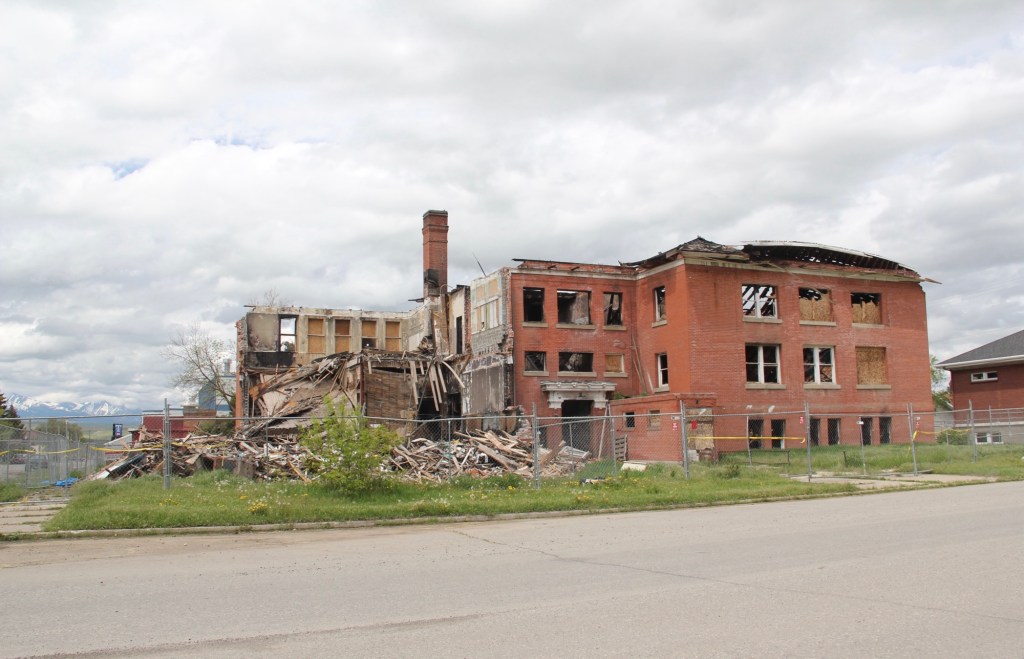
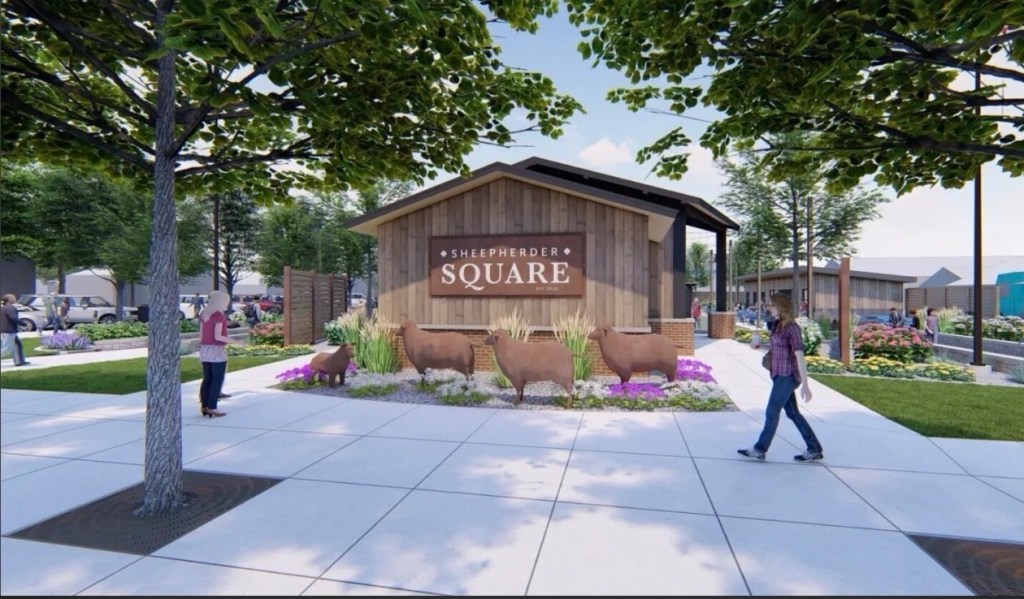
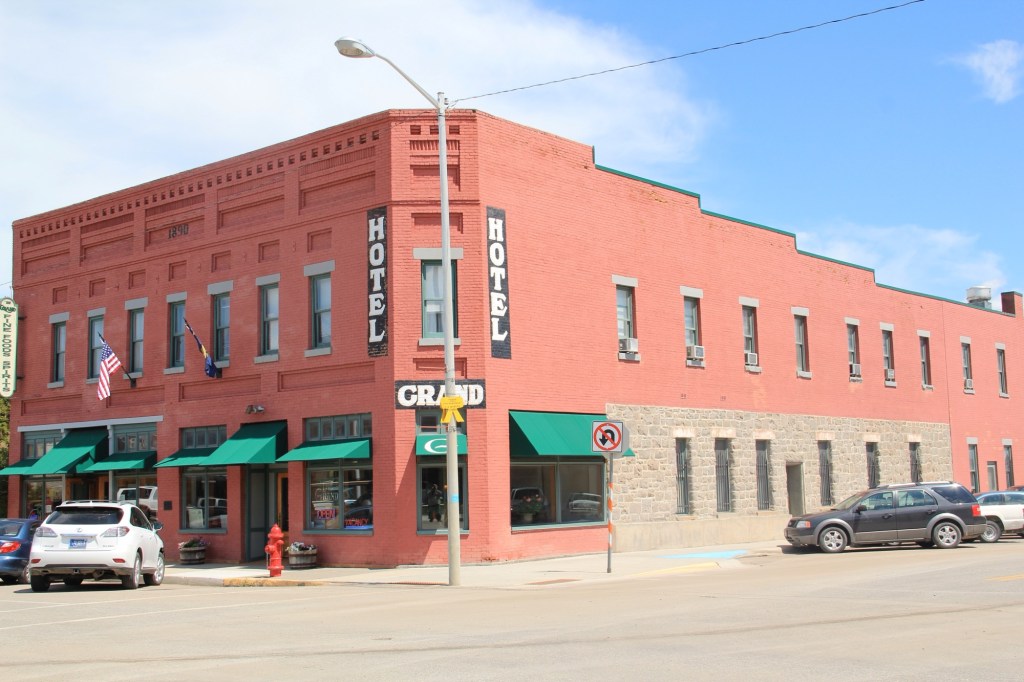
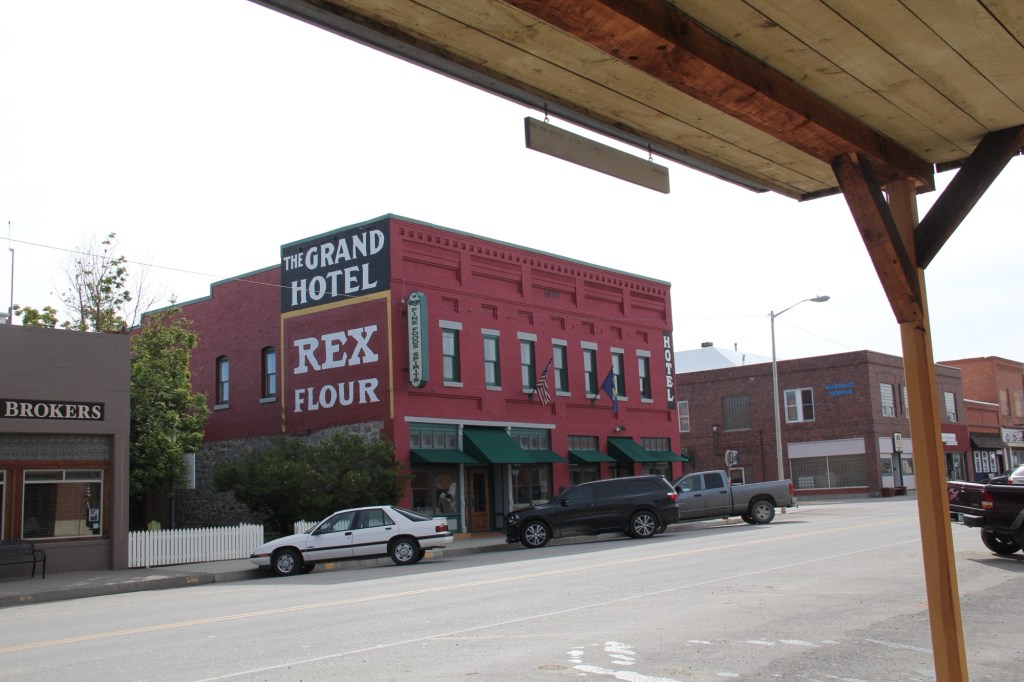







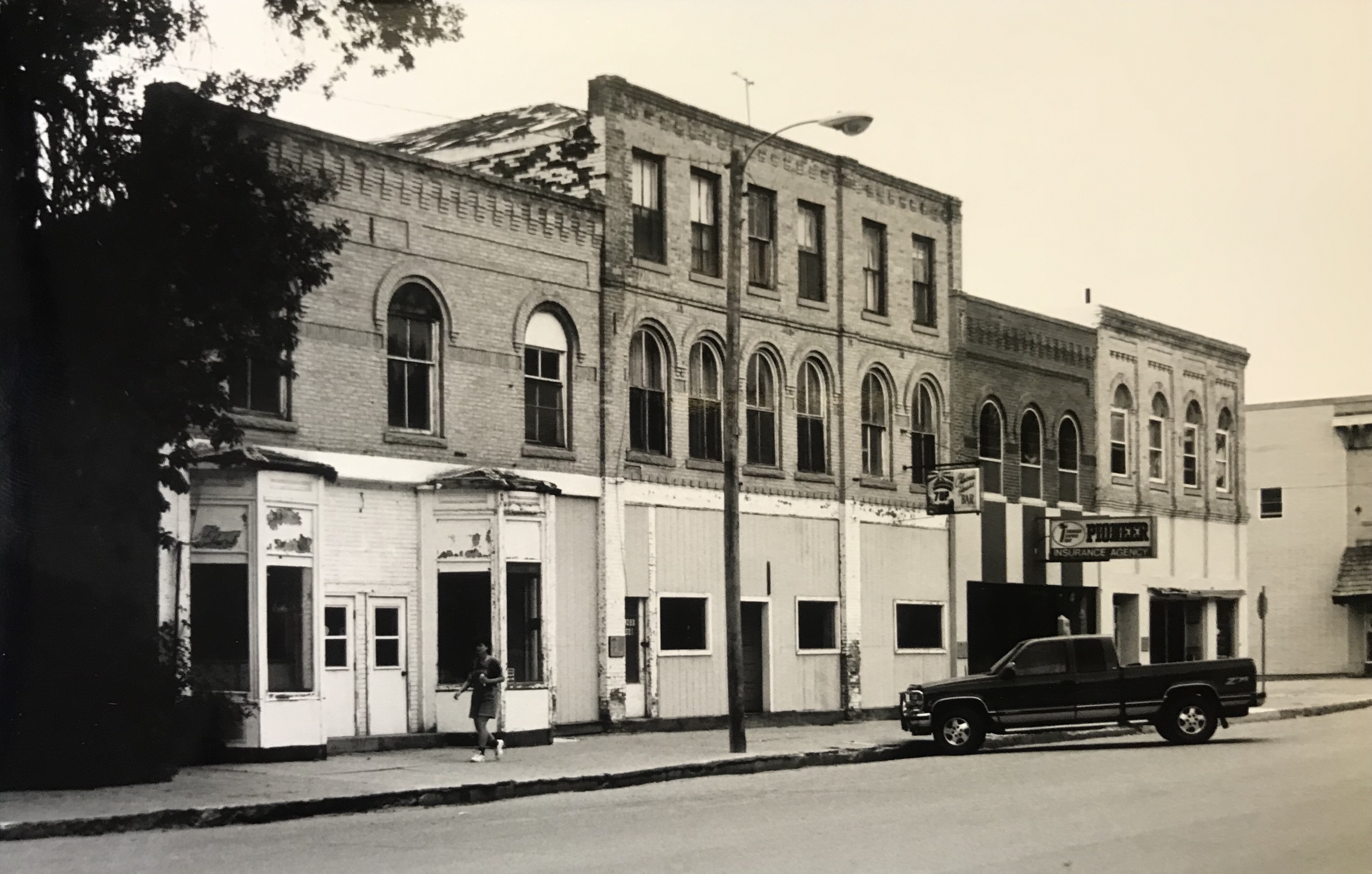


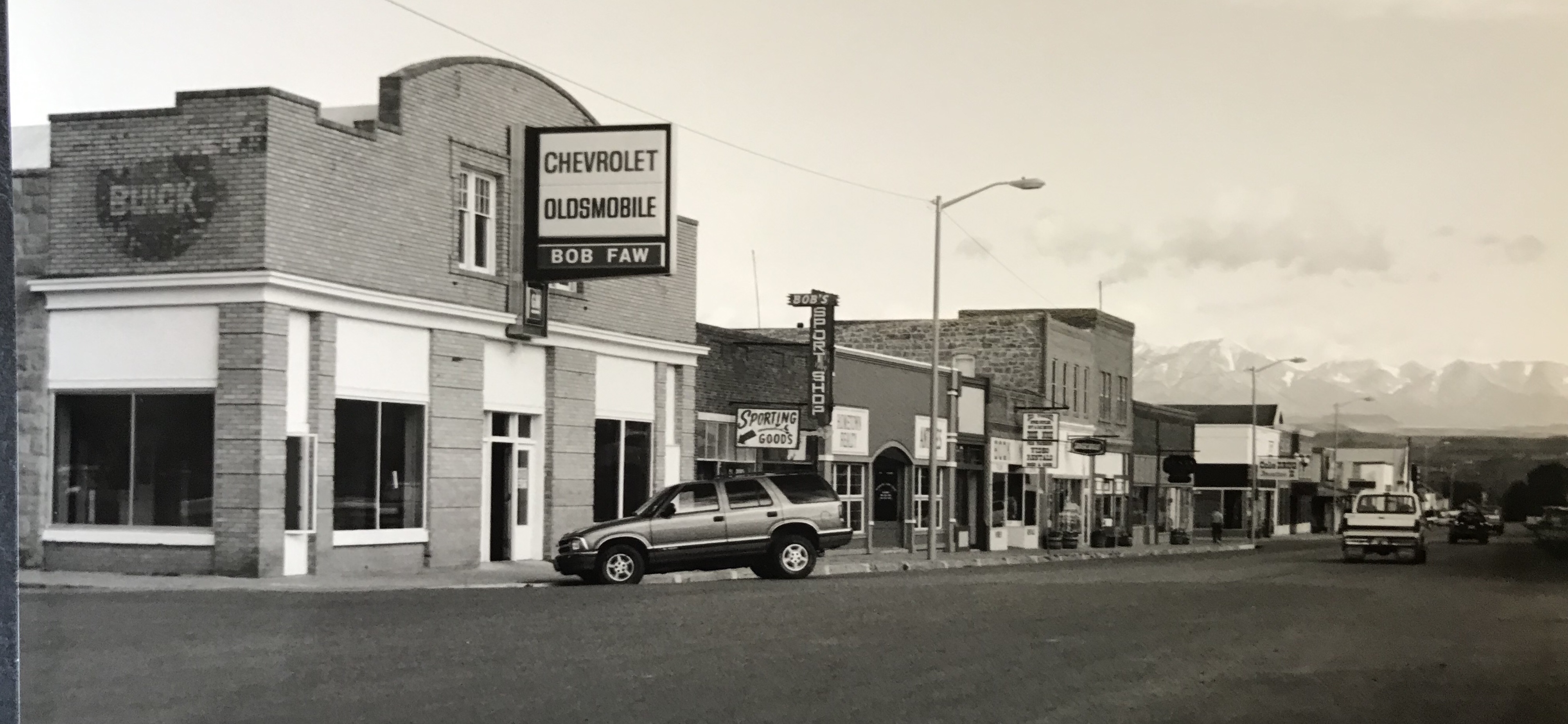


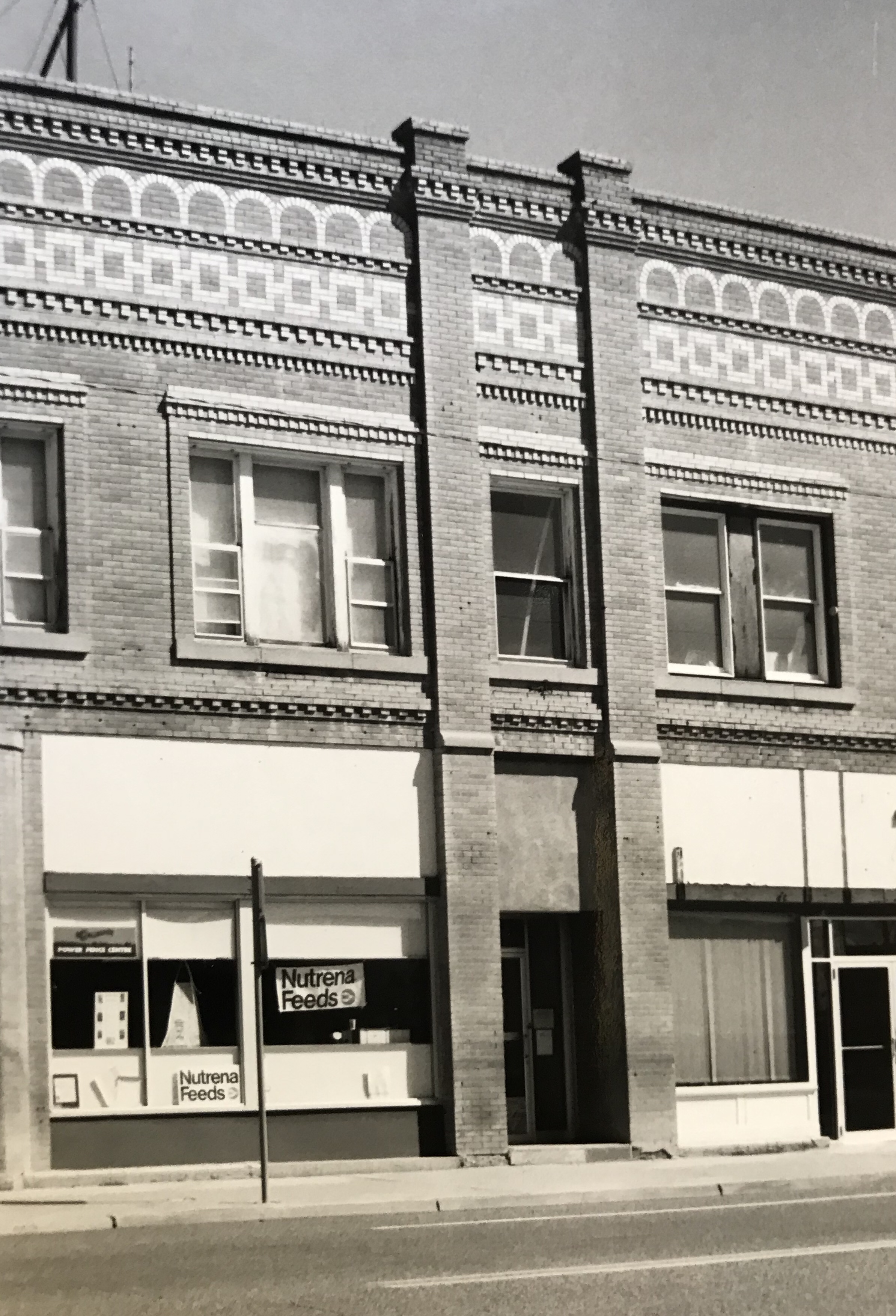


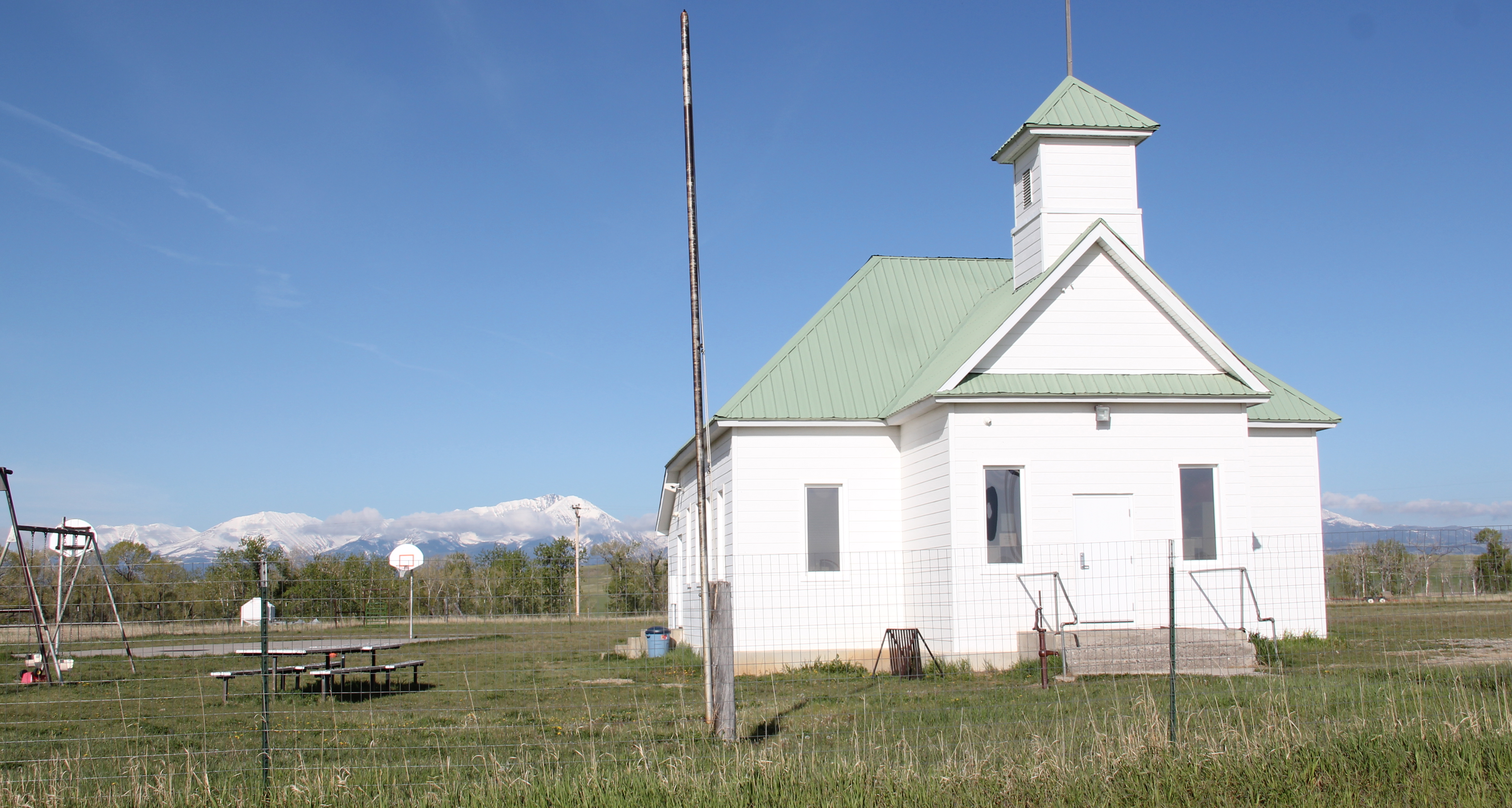
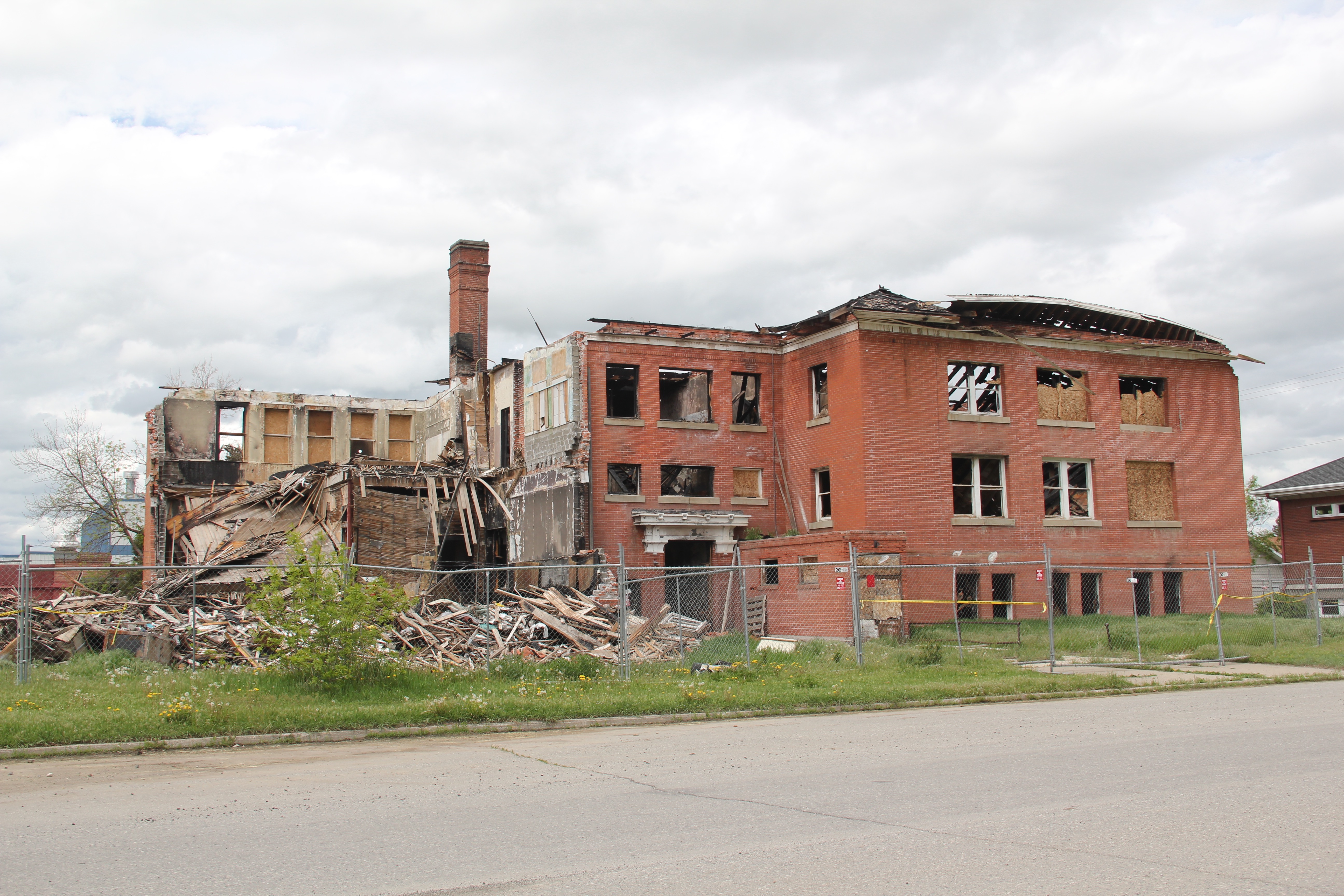 Then in October 2017, someone set a fire that almost totally destroyed the school building. When I pulled into Big Timber the following May, I expected to see a parking lot or at least an empty lot (the local Episcopal Church had purchased the property). The damaged building was still there, however, giving me one final chance to take an image, one that now represents dreams dashed, and yet another historic building gone from the Montana landscape.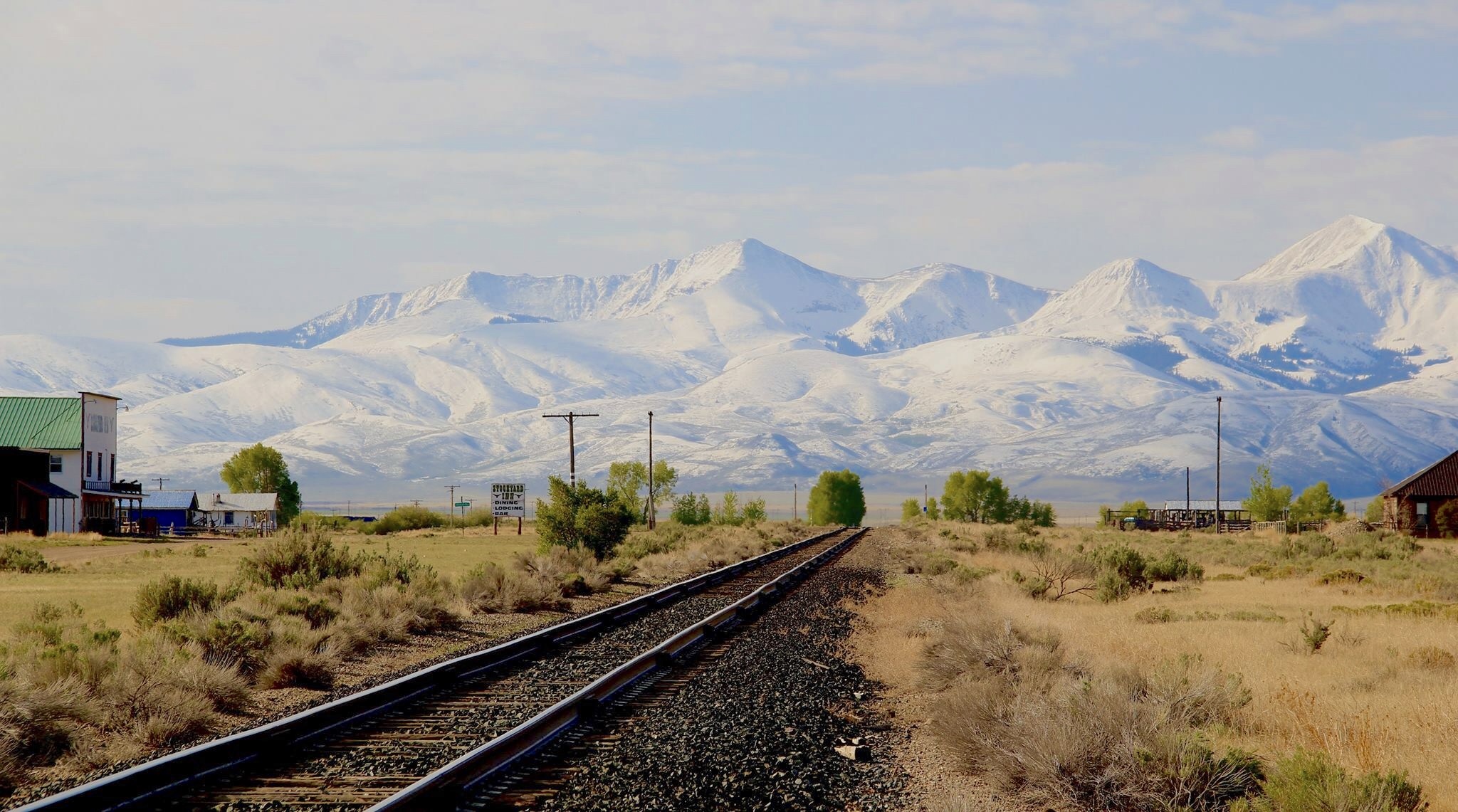
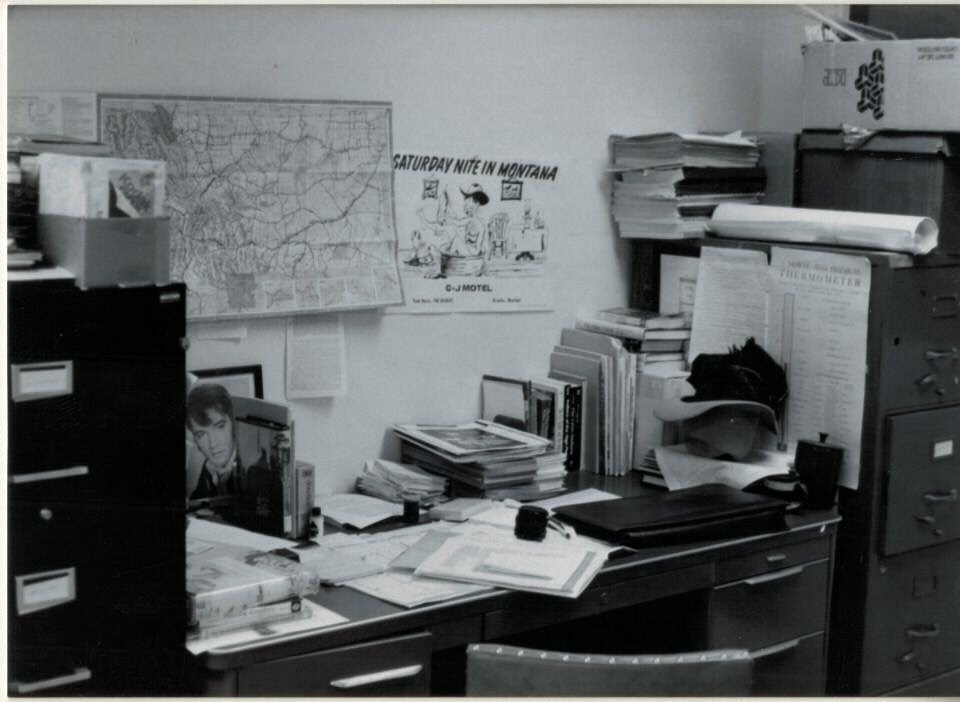

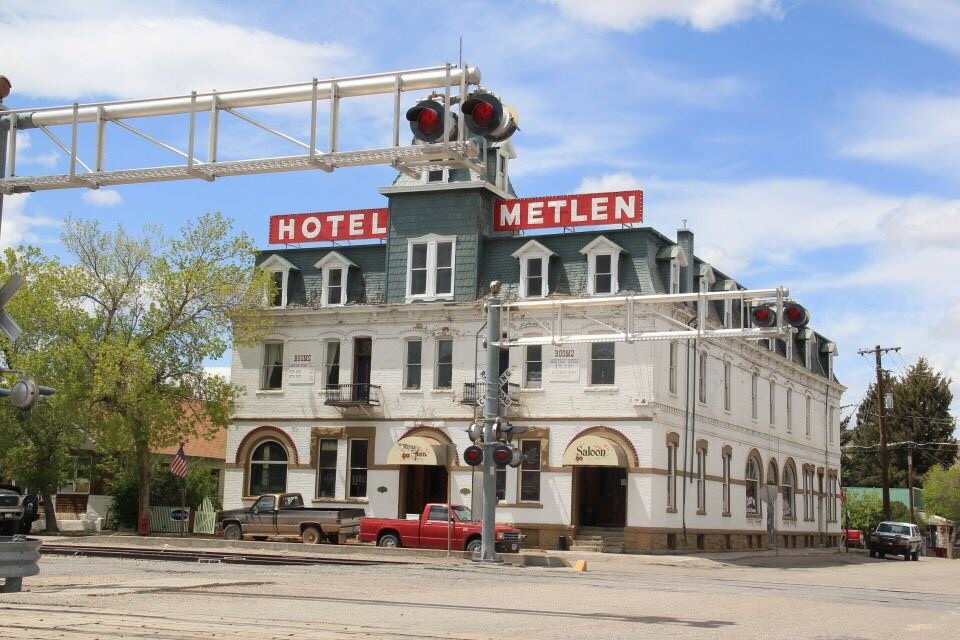

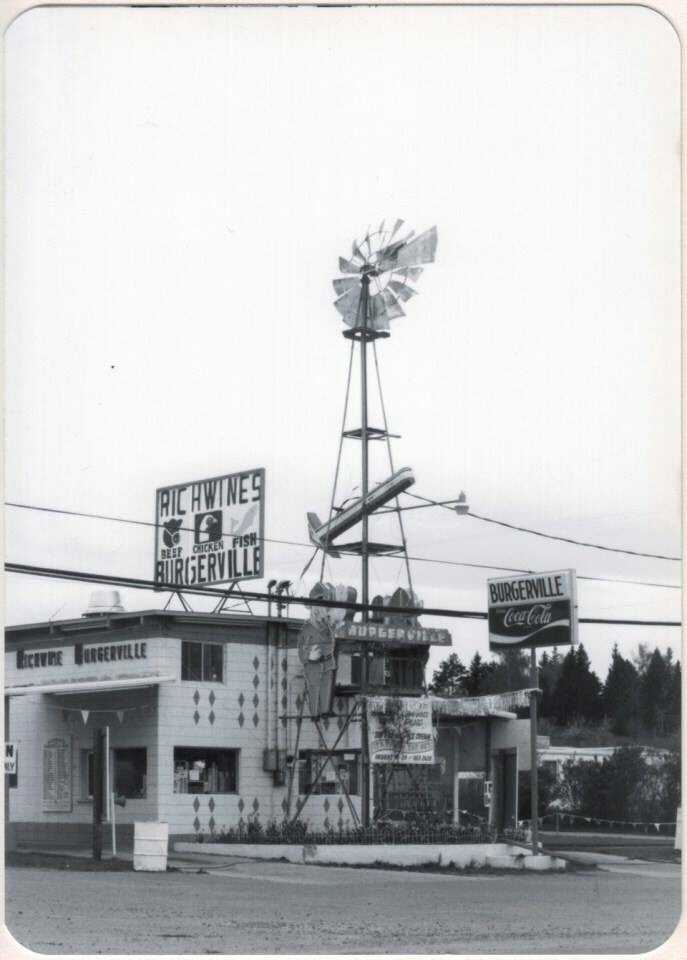
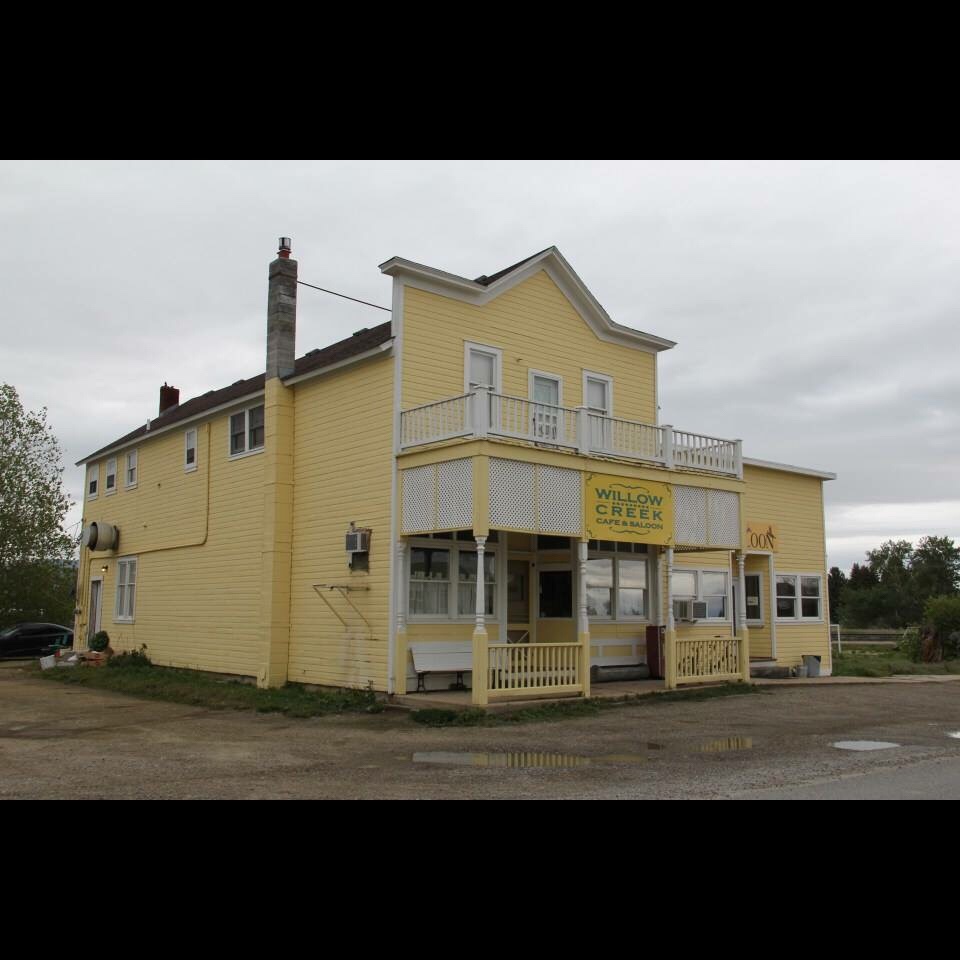

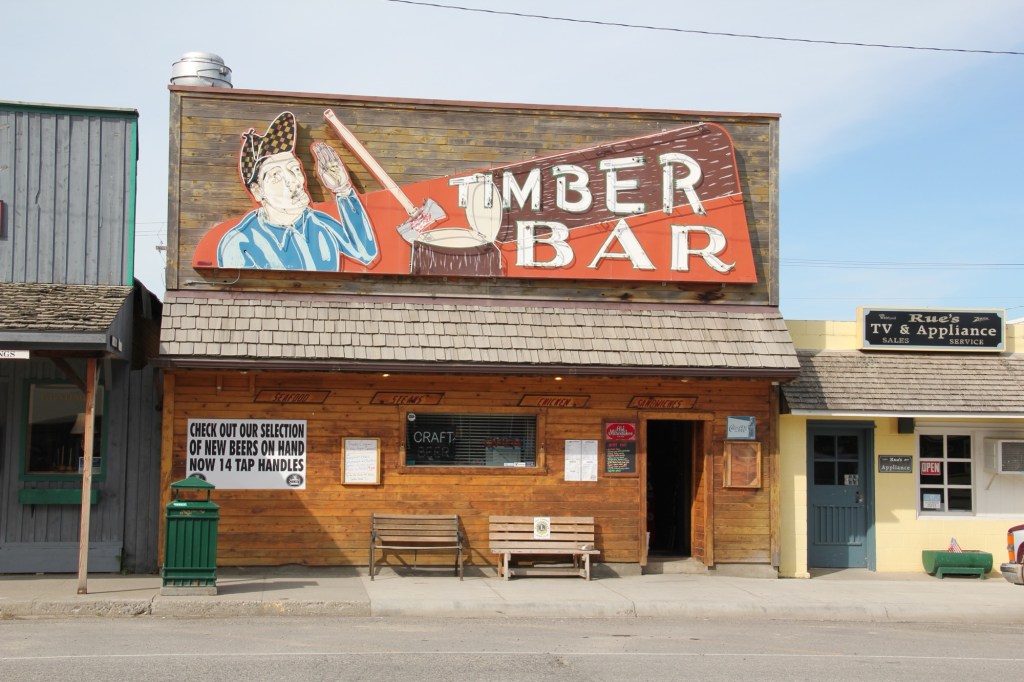
 chops away and the beer is still cold. That is what you need on the road.
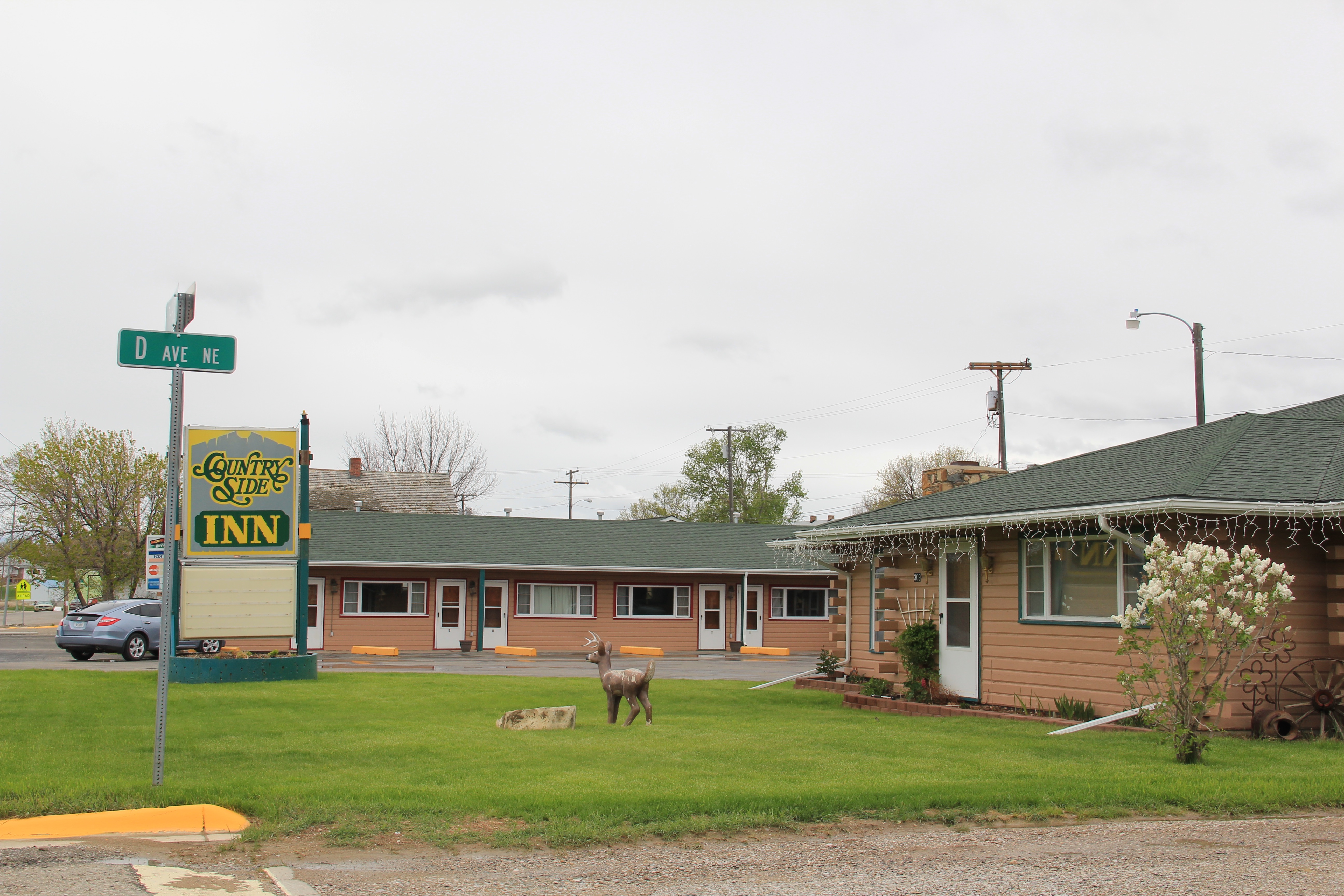
 In the 1984-1985 fieldwork for the state historic preservation plan, the impact of lodging chains in Montana was pretty limited to the larger towns, and gateways to the national parks. Many what I called “mom and pop” motels, largely from the pre-interstate highway era of the 1940s and 1950s, still operated. I was working with the state employee lodging rate of $24 a night (remember it was 1984!) and I found that the per diem eliminated the chains and I was left with the local establishments. During those months of intense travel I came to respect and really like the Moms and Pops. Several of the places I stayed in 1984-1985 are long gone–but ones like the Lazy J Motel in Big Timber remain. In this post I am merely sharing a range of historic motels from across Big Sky Country.
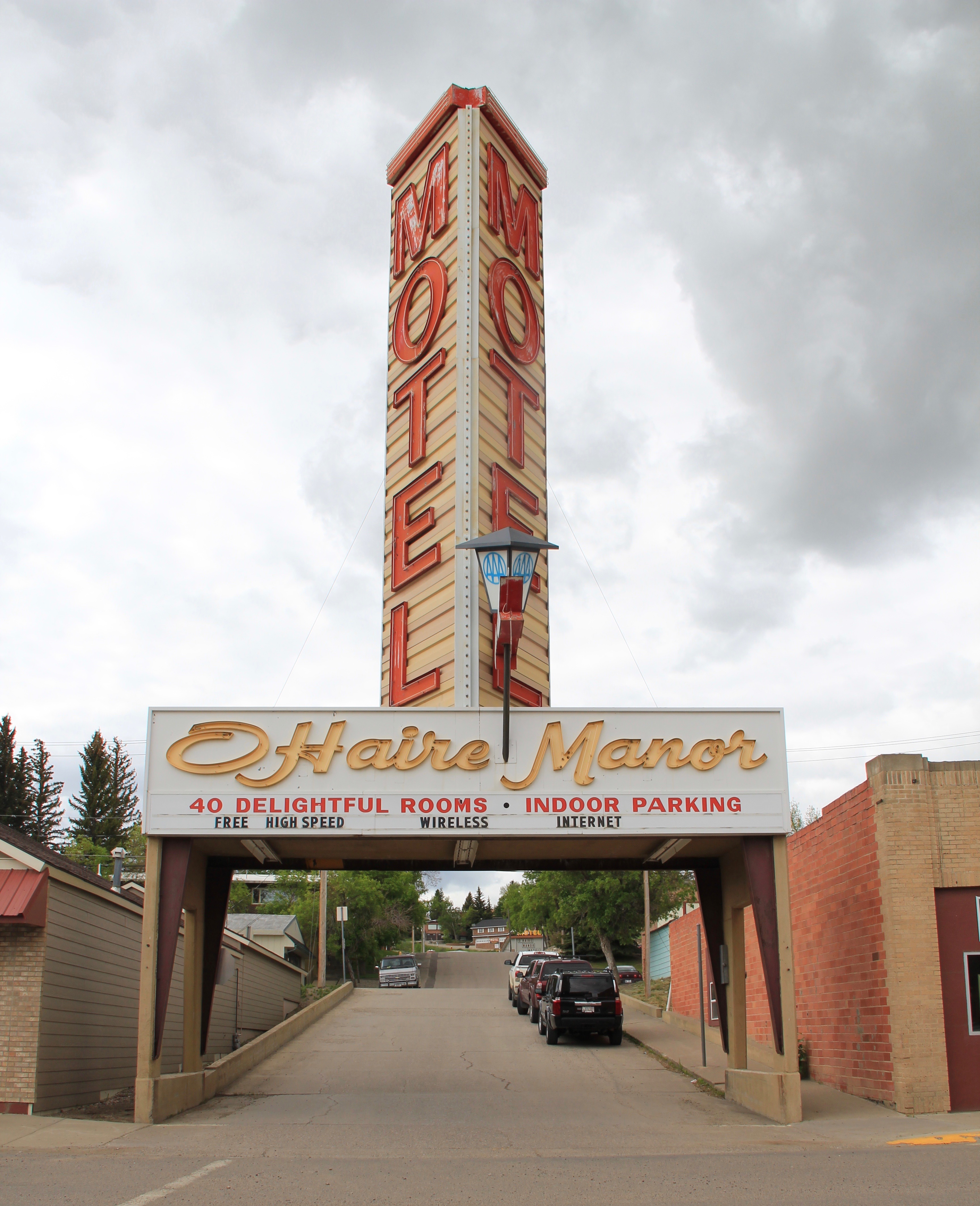 I began the fieldwork in February 1984 and the first stop was a public meeting at the Toole County Courthouse in Shelby. My first overnight was just as memorable–for good reasons–at the O’Haire Manor Motel. Its huge neon sign on the town’s main street, which was U.S. Highway 2, could not be missed, and actually the sign replaced a building that once stood along the commercial district, knocking it down so travelers would have a clear shot to the motel itself.
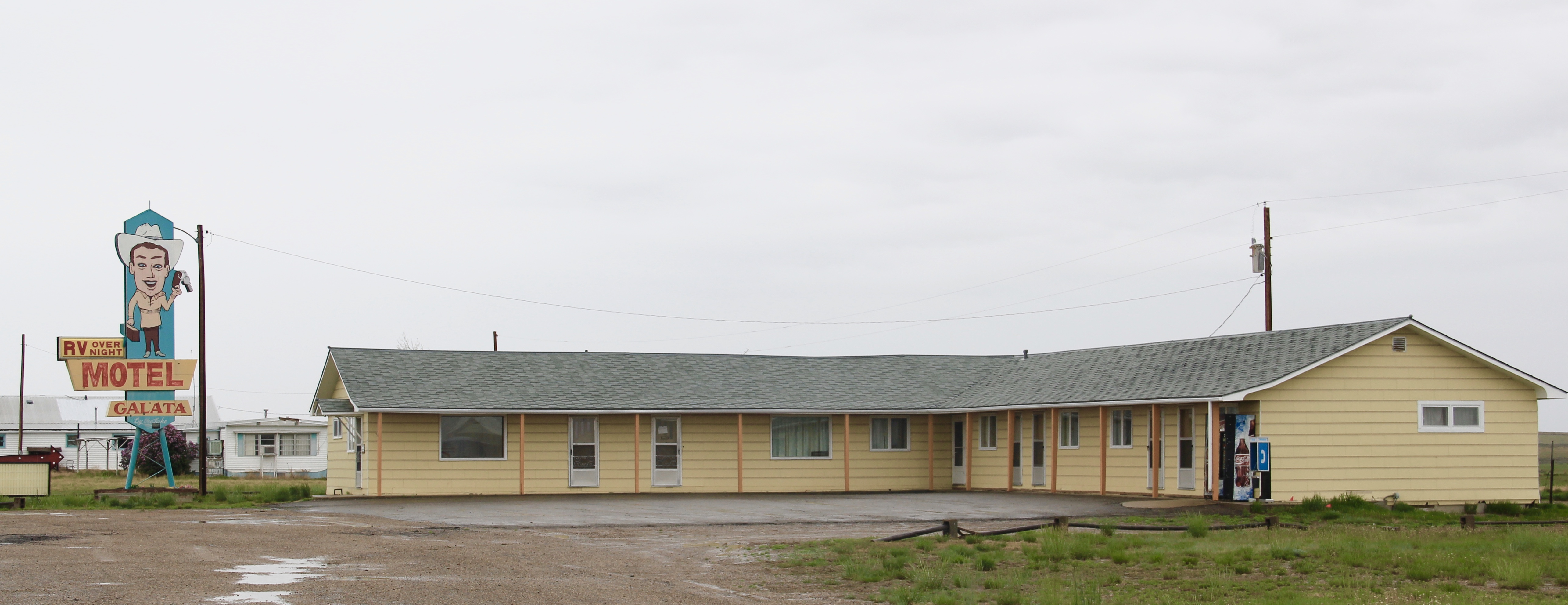 Cut Bank’s Glacier Gateway, on the other hand, reminded visitors that it was that “coldest place” in the United States that they had heard about in weather forecasts.


 Another example from the old Yellowstone Trail and U.S. Highway 10 is the Shade Tree Inn Motel in Forsyth–although coal and railroad workers help somewhat to keep it going in the 21st century.
 Just a block west of another historic section of U.S. Highway 10 in Deer Lodge is the Downtowner Motel, with its sloping roof and extended rafters representing the best in “contemporary” style from the 1960s. This place too was clean, cheap, and well located for a day of walking the town back in 1984.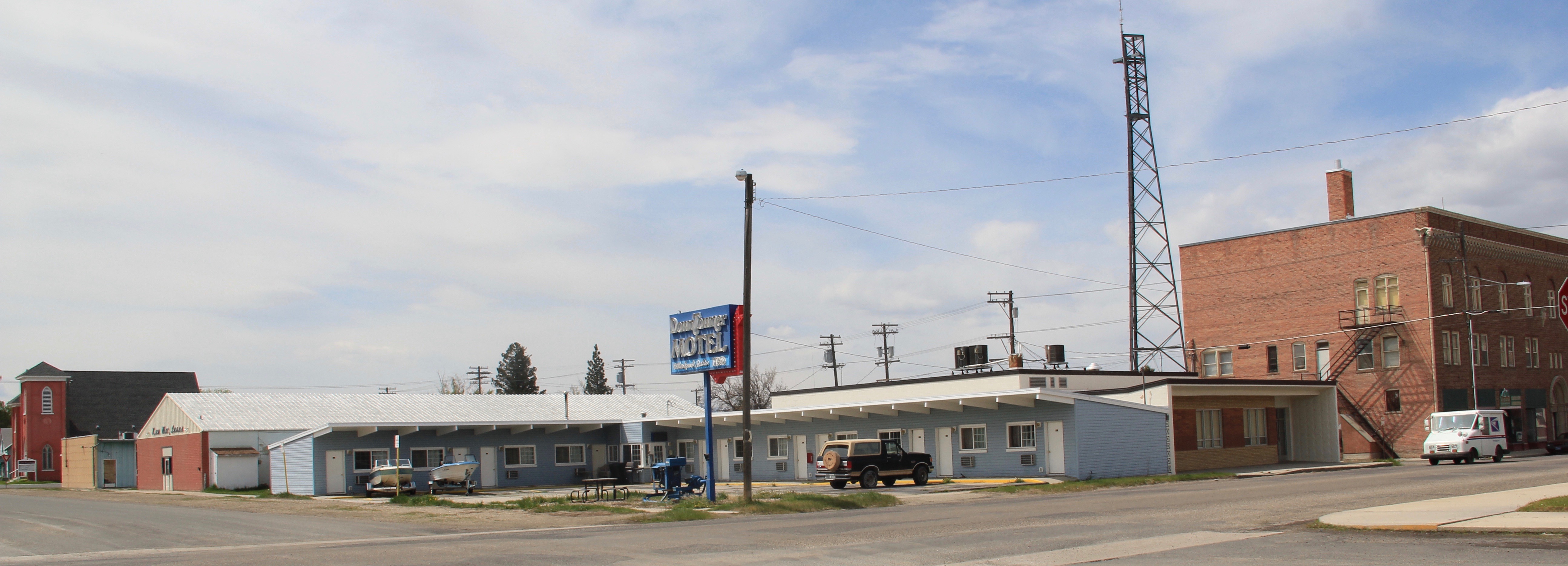

 Not only have the changes in traffic patterns been important, the present generation’s preference for chain motels–and the proliferation of chains across the state–have shaped the future of the mid-20th century motel. A good example is the challenges facing the continuation of the Cherry Hill Motel in Polson, located along U.S. Highway 93. Here was a favorite spot in 1984–near a killer drive-in–a bit out of the noise of the town, and sorta fun surroundings with a great view of Flathead Lake.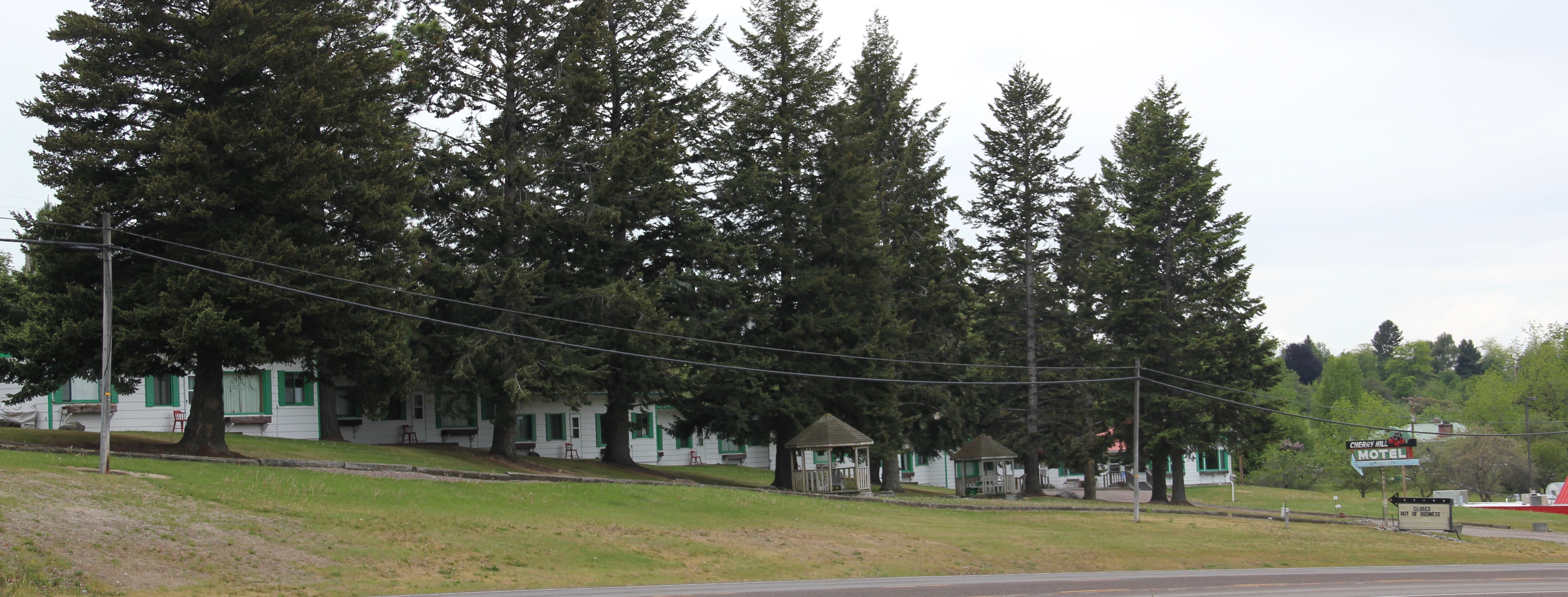
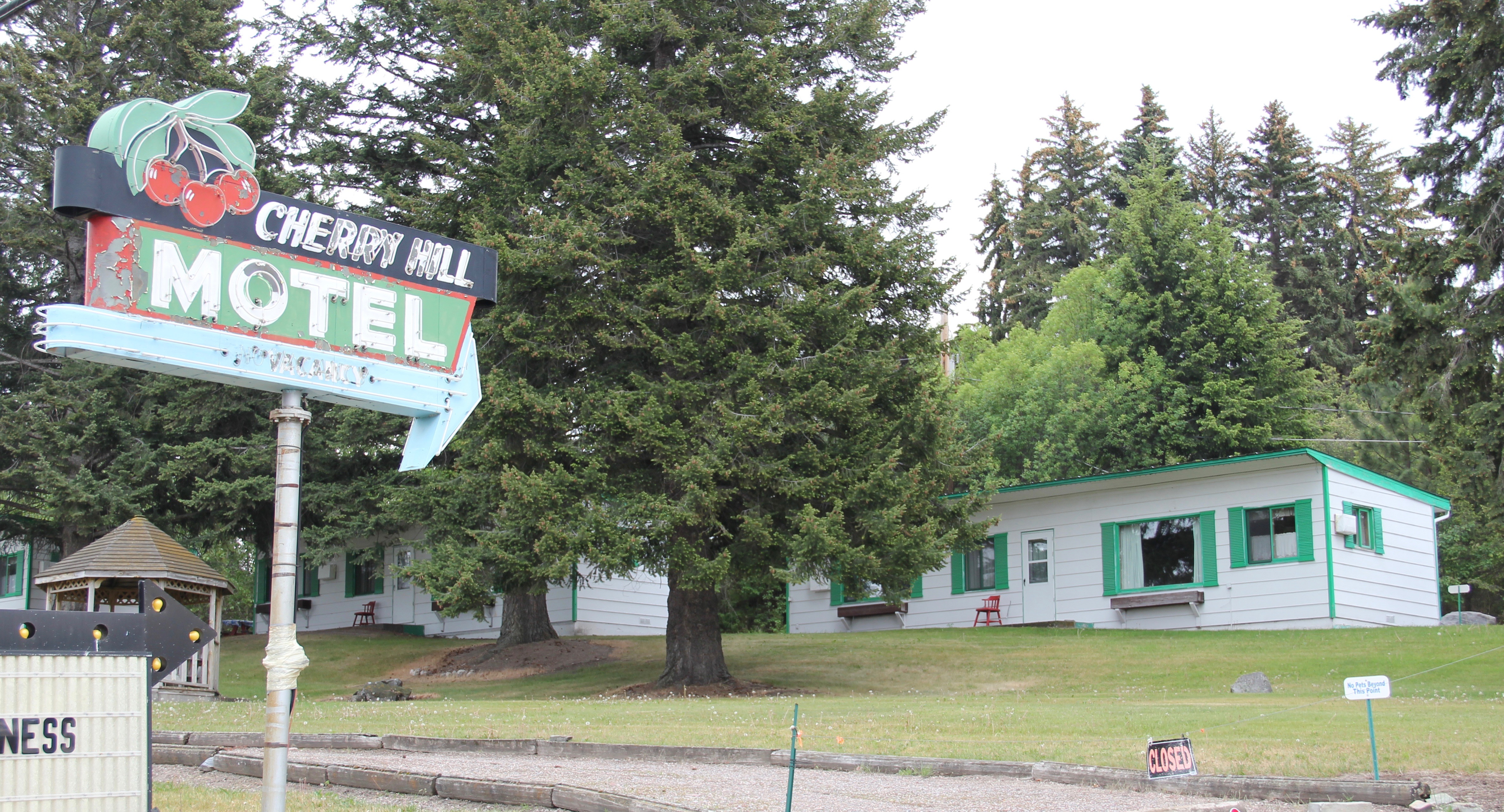 The place was up for sale in 2015–and the internet today tells me that it is “permanently closed.” I hope it can find a new owner and is still there when I next return to Polson but with the general boom in the Flathead Lake region, one assumes its days are numbered.
 The bear might be hugging the tree but does anyone else care enough–or want this type of lodging, complete with the “picture window” of the 1950s and 1960s, in the comfort obsessed 21st century?












 Montana's Historic Landscapes