When Billings was established in 1882, there were two primary streets: Montana Avenue on the north side of the Northern Pacific Railroad tracks and Minnesota Avenue on the south side of those tracks. The street names came from the Minnesota and Montana Improvement Company, which developed the town.
By the turn of the 20th century Montana Avenue had become the dominant corridor and has never looked back. Still, in 1990, Minnesota Avenue still had a bit of its railroad past as a row of bars and flophouses faced the tracks.
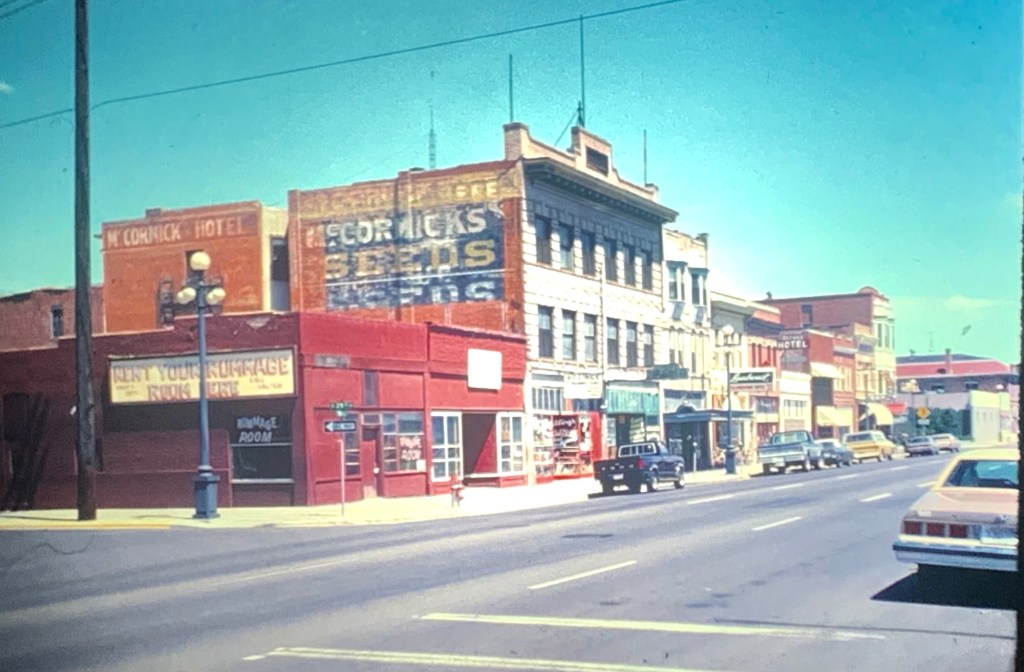
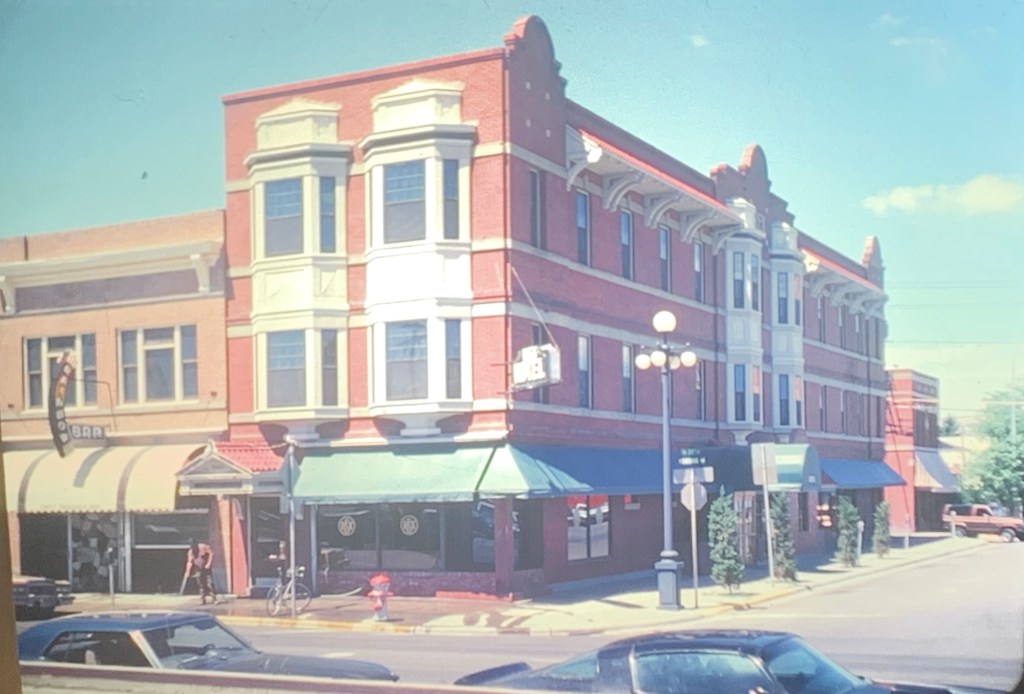
I took these 3 slides (including the cover slide) in 1990–and today this block has changed dramatically. But boy do I miss the neon!
I was last in Billings in early July and, as usual, I immediately walked around Montana Avenue to see what was going on—doing that walk has been a tradition for me for over 40 years.
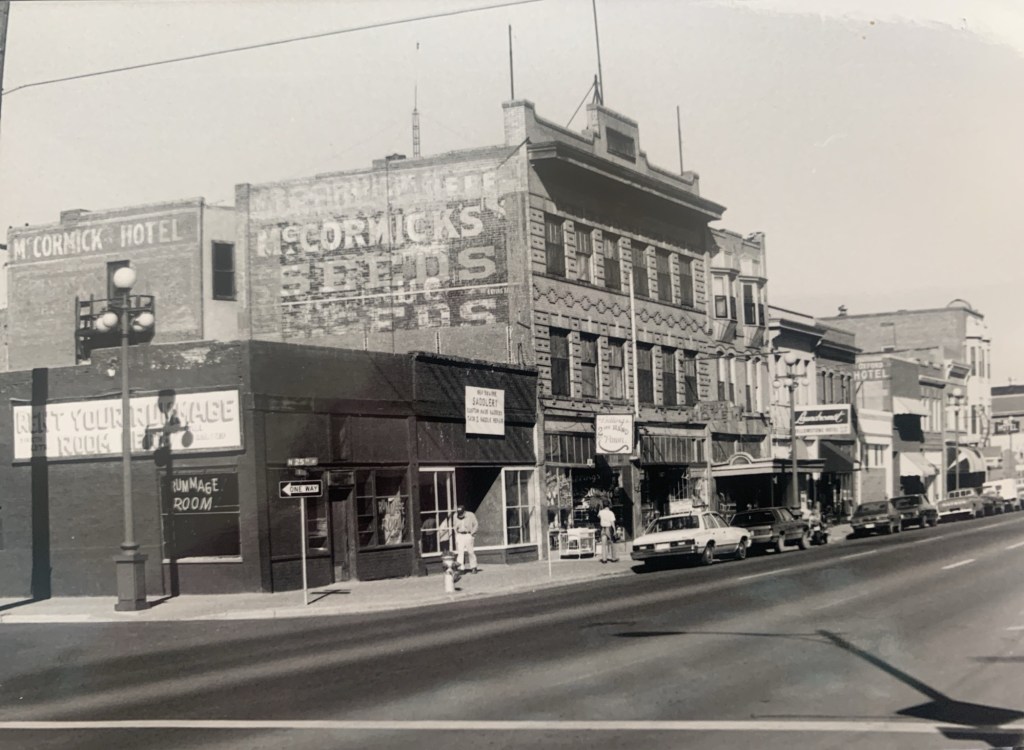
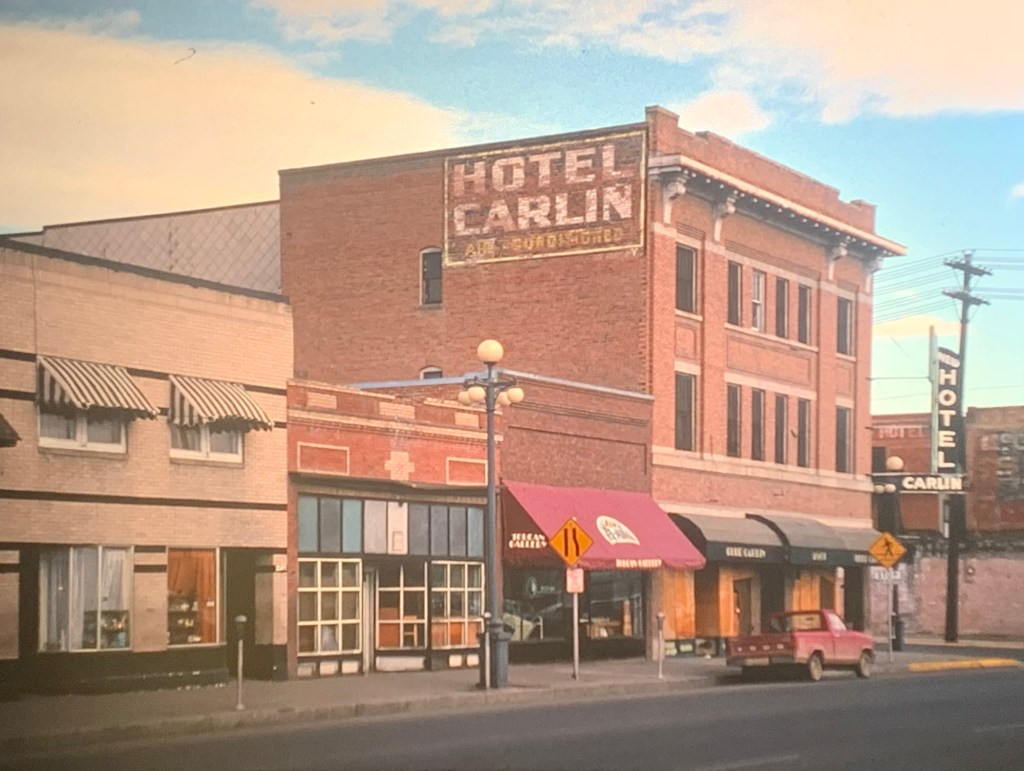
Do you remember what Montana Avenue was like in 1985–well here’s two views if you don’t recall, or were even around in 1985. It was a mix of second hand, rummage, stores, “antique” stores, flophouses, and an emerging galley scene, led by Toucan Gallery.
Rex Hotel 1985
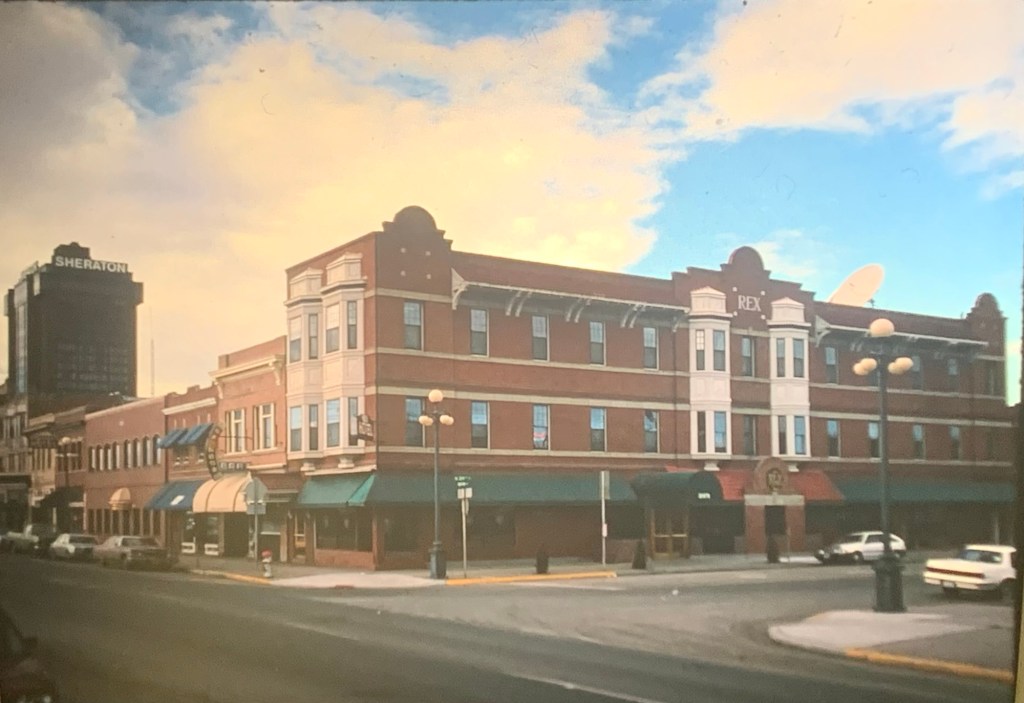
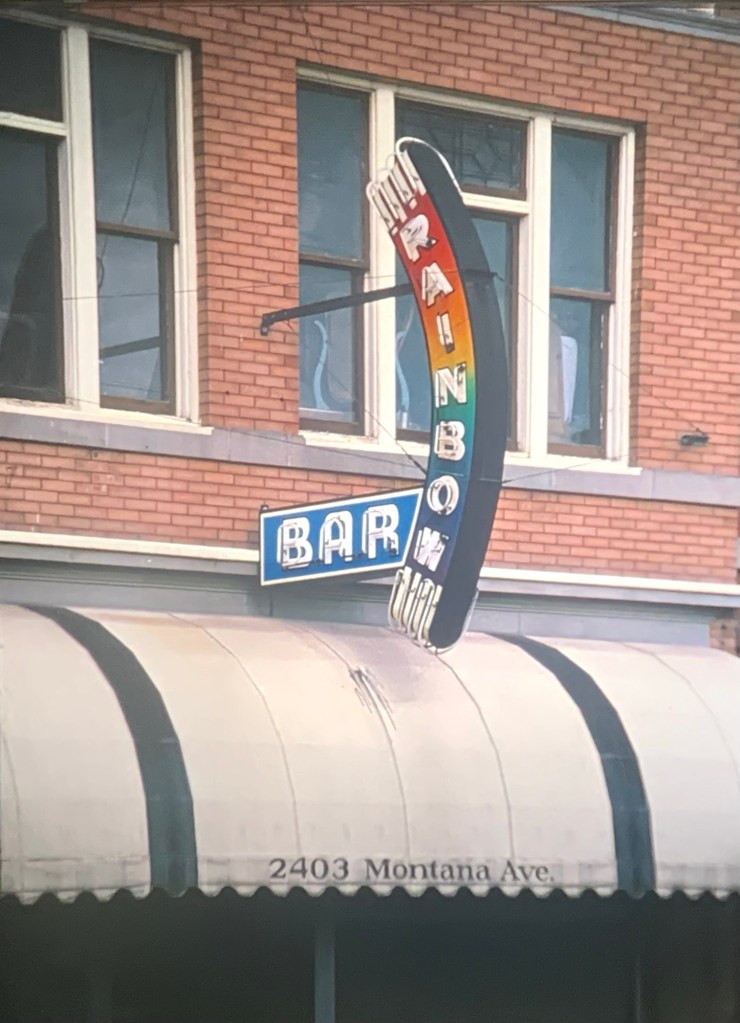
There was an oasis—the restored Rex Hotel, with one of the city’s best restaurants, and next door, the Rainbow Bar, an oasis of a far different type. Thankfully both businesses, with some changes, remain anchors to the district today.
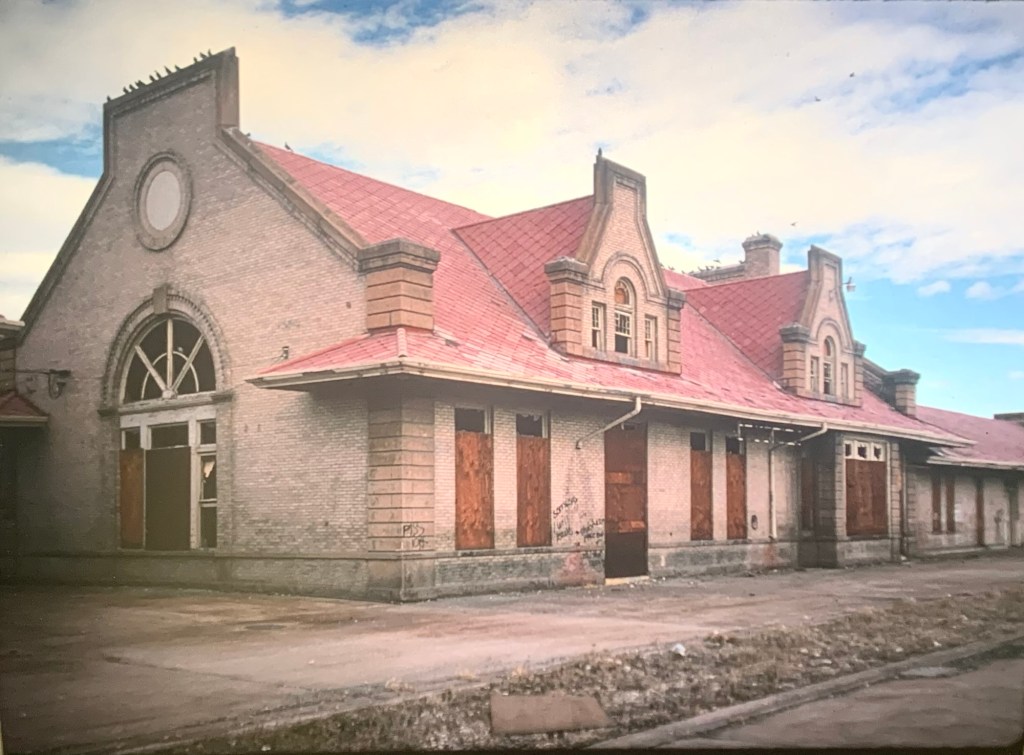
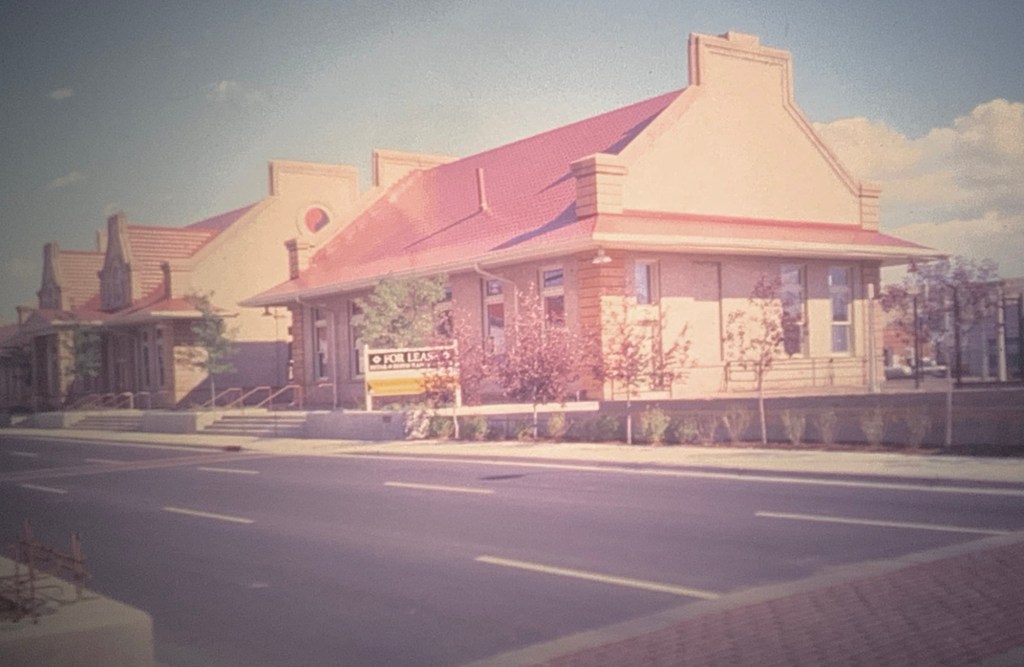
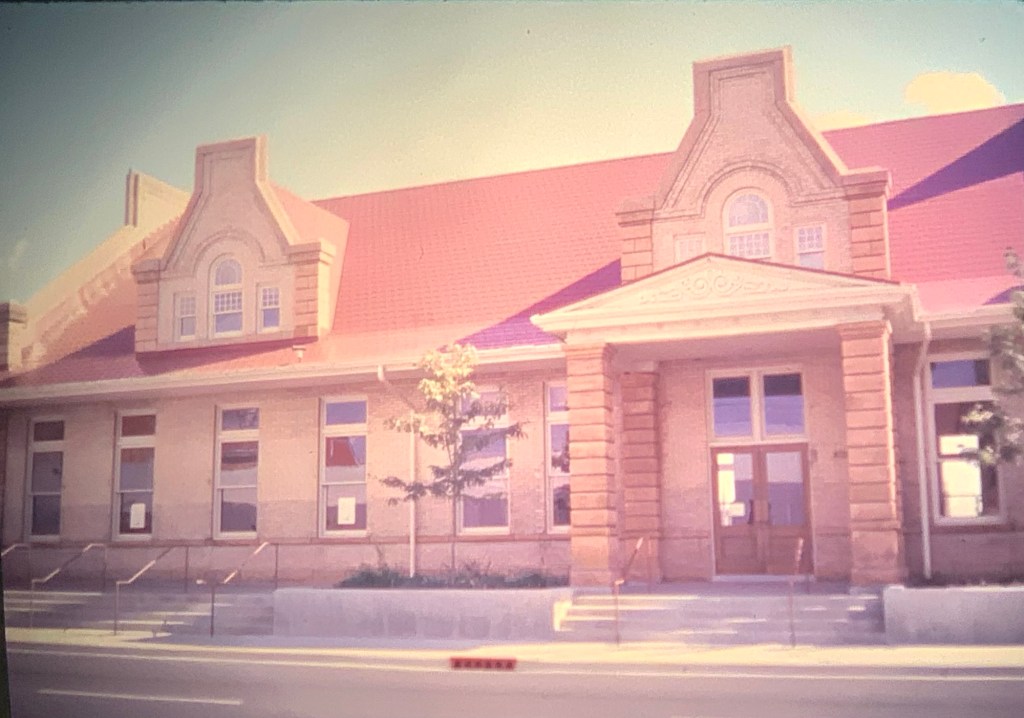
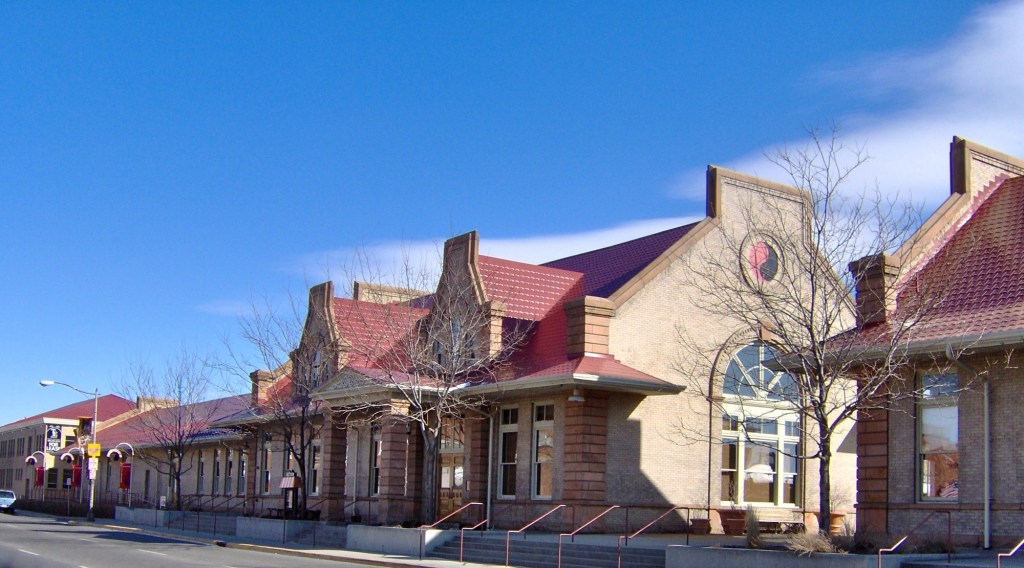
On the opposite side of the street—despair. The imposing 1907 Northern Pacific Railroad depot was boarded up, forgotten and deteriorating. The reality was a puzzle to me because already in Great Falls and Missoula investors had restored and reopened historic Milwaukee Road depots. Why not Billings?
Five years later, 1990, it had gotten worse instead of better at the depot. When graffiti begins to mark a historic building the end is often near. On the other side of the street, however, new investment kept the historic buildings moving forward.
Rex Hotel and Montana Avenue 1990Rainbow Bar 1990Hotel Carlin block, 1990McCormick Block, 1990
Changes were afoot at the McCormick Block where two adjacent one story 100 year old buildings had been torn away to create a parking lot.
And the district had a new east end, with the conversion of a 20th century building into the Coulson Bar. I loved the reference to the river town that was a precursor to Billings.
The 1990s was when the historic preservation movement transformed Montana Avenue. The Montana Avenue Historic District was listed in the National Register of Historic Places, thanks to the vision of property owners supported by the city and the State Historic Preservation Office and the work of Chere Jiusto.
When I next visited in 1998, I found the depot, finally, restored and serving as a new anchor.
The new courtyard at the Rex was quite the place to be and be seen. I even saw Hollywood stars there in 1998. the 21st resurgence of Montana Avenue was ready to begin.
How many of you used the Internet cafe at the McCormick Block? I did in 2000 when I took the image above.
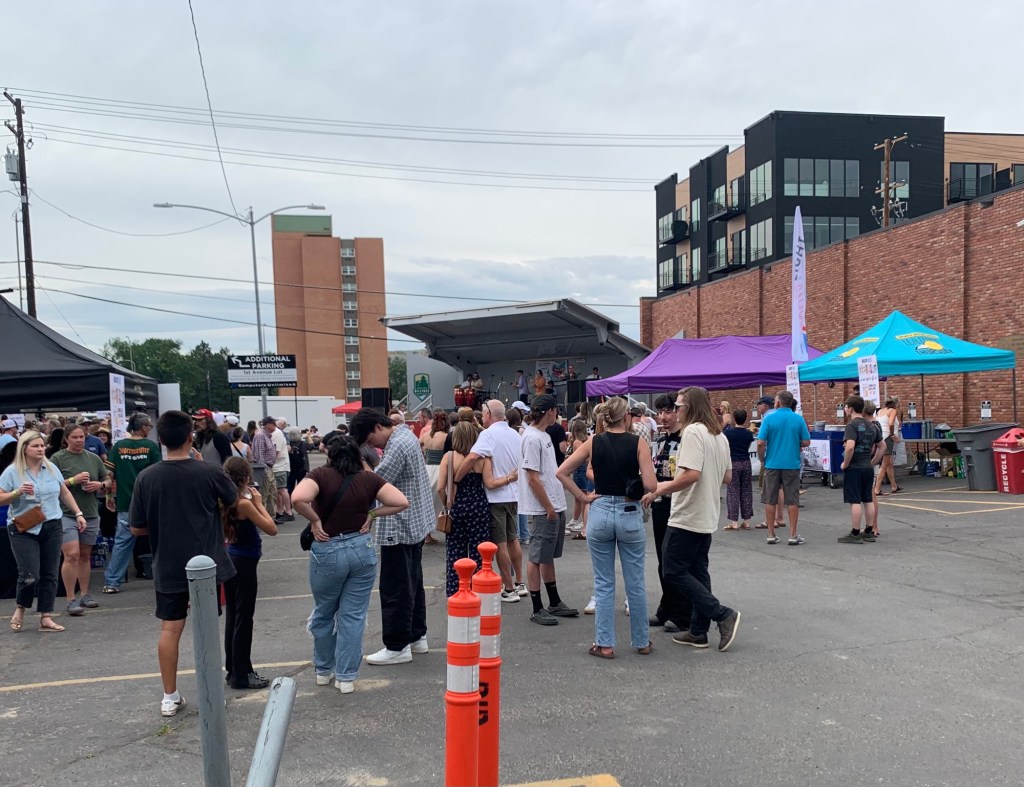
Fast forward to July 2025. The once neglected district is a city downtown hub, hosting a street event and businesses booming. What a change from 1985.
Readers of this blog know that Big Timber is one of my favorite Yellowstone Valley towns. It still has that classic Northern Pacific Railroad town plan with a long commercial artery extending south from the railroad tracks that then turns into a quite captivating residential neighborhood.
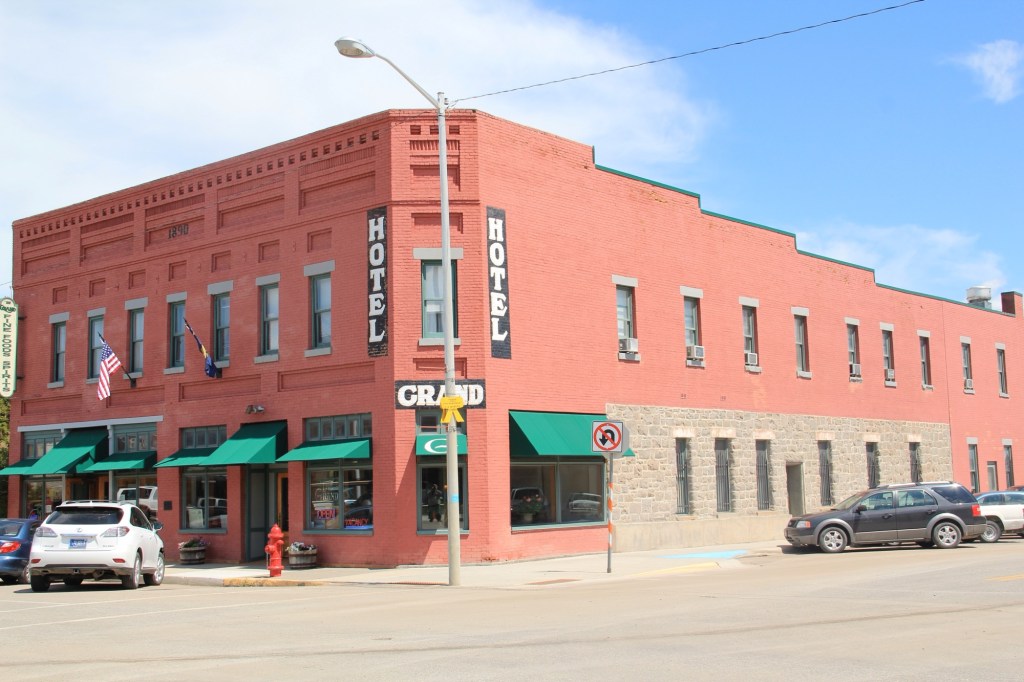
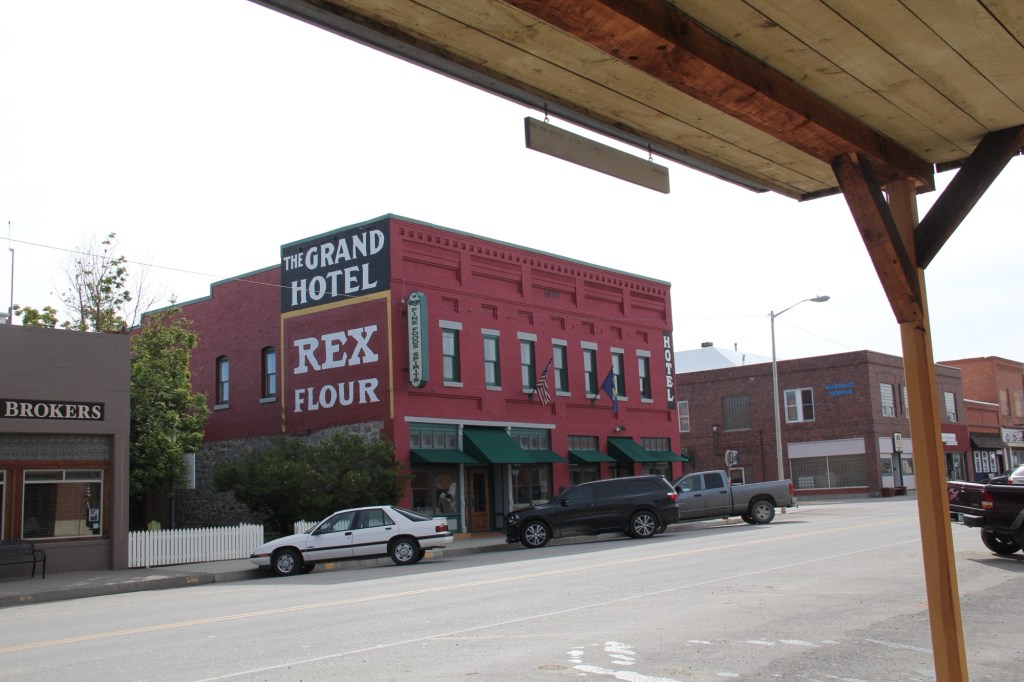
The restoration of the Grand Hotel in the 1990s really helped the commercial area turn a corner.
I have spent nights at the hotel and had a couple of meals there, always thought it would be a mainstay for years. The pandemic alas hurt a lot of small town businesses everywhere and Big Timber’s Grand Hotel struggled. When I was there in July 2025 it was closed but promised a reopening.
But there had been another quite jarring— the read brick was gone and everything was painted black, like the place was in mourning.
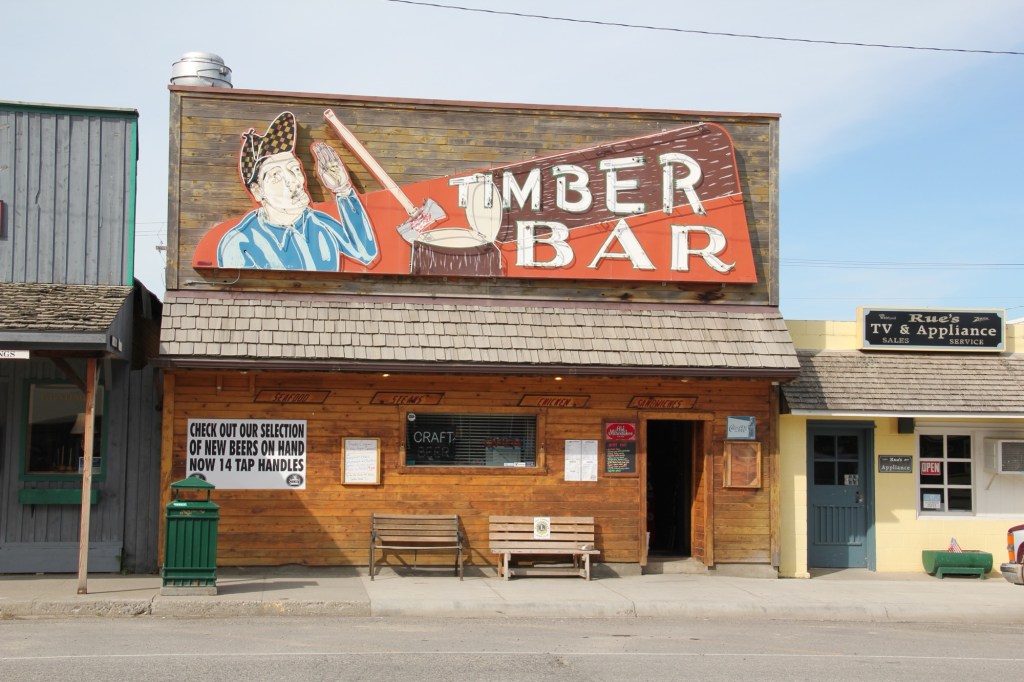
Then I noticed a second shock, the classic Rustic style Timber Bar (one of my favs for 40 years) also was covered in black.
I always tell folks—don’t sweat the paint colors on a historic building. It can always change. But black in Big Timber, it just didn’t seem right.
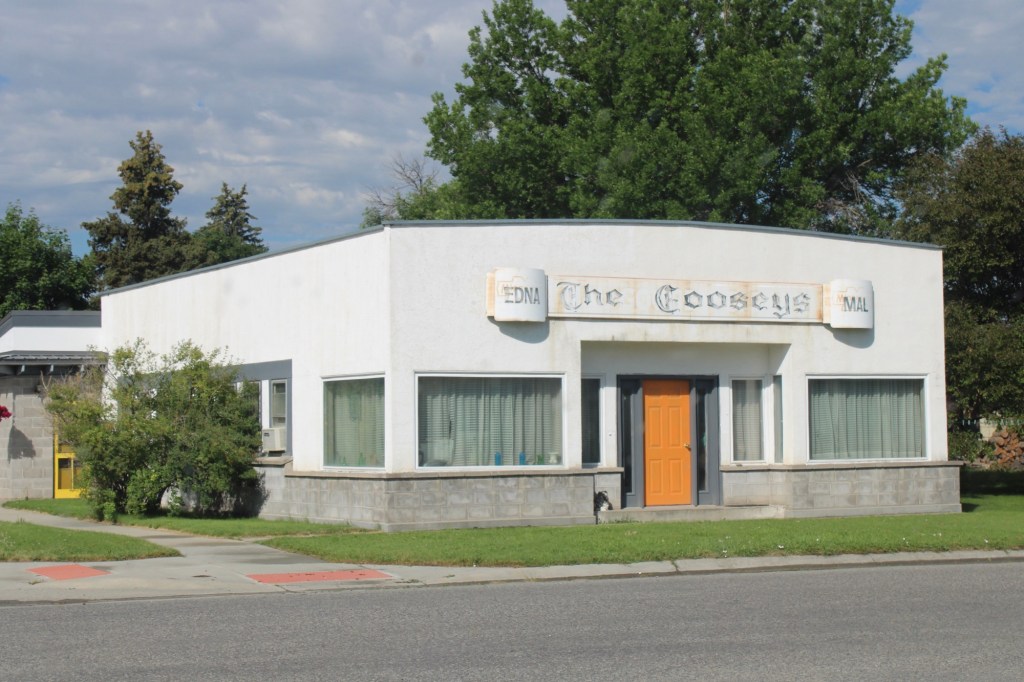
But please don’t paint over Edna and Mel’s Gooseys place. What a jewel!
And leave the town plain in place. Here is a western town always worth a stop. Change is ok but please respect the classic.
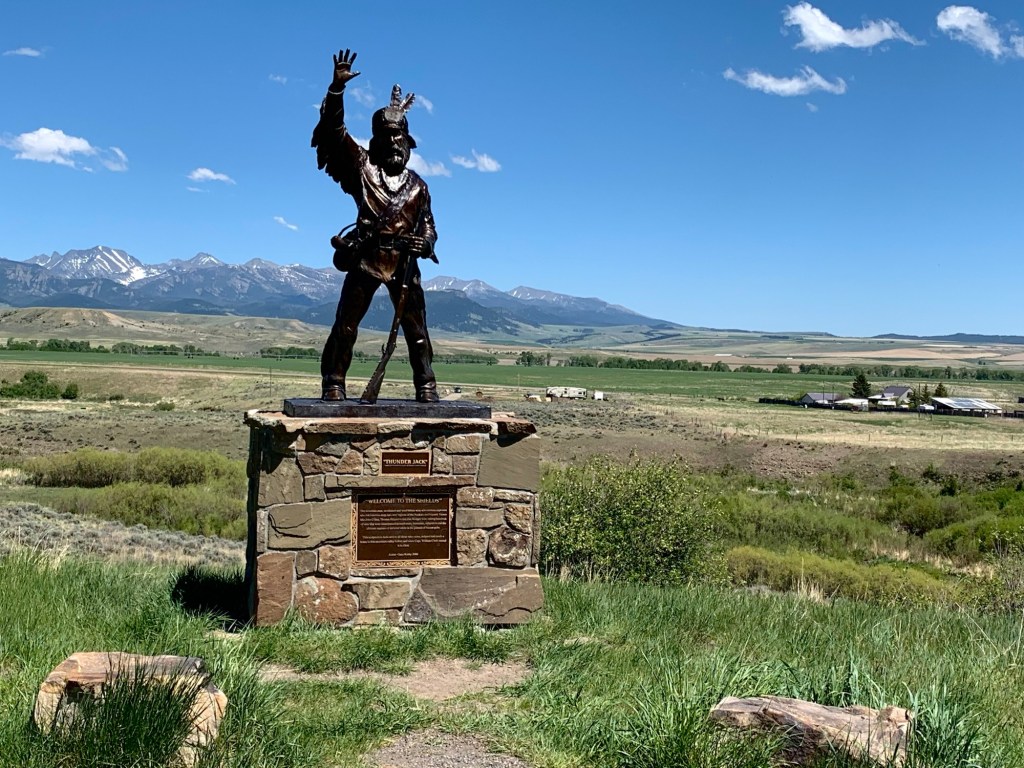
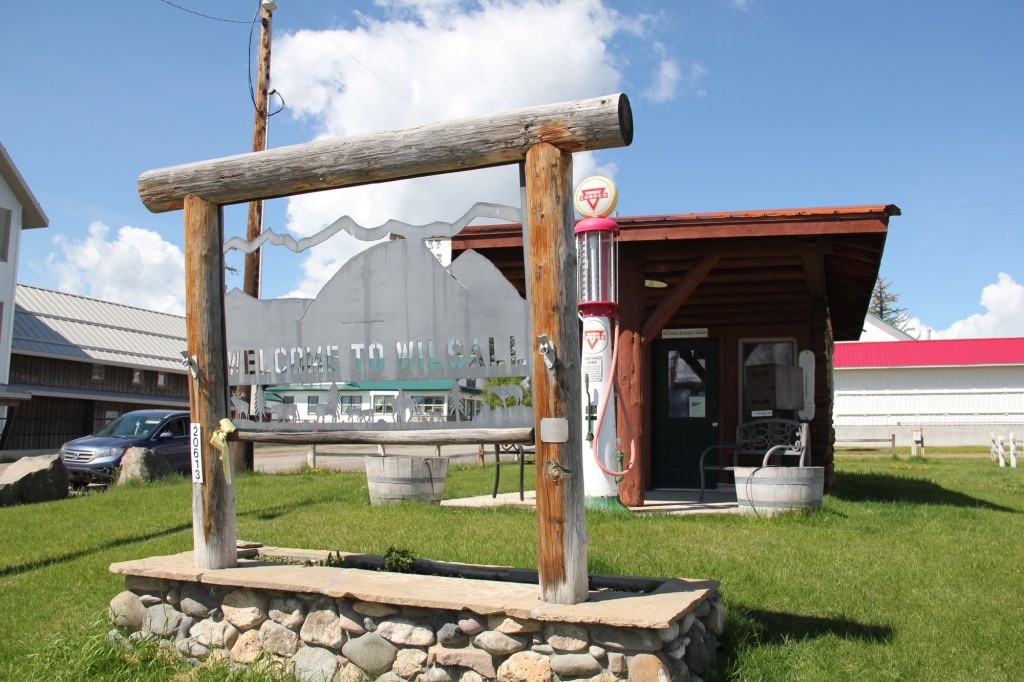
As readers of the blog know, the Shields River Valley is one of my favorite places in Montana. A good place to start any exploration is the village Wilsall, which, from my perspective, is close to a lot of larger towns and population but, then, also thrives quite well in its own.
The town’s past lies with the cattle ranch of Will and Sally Jordan—thus the same Wilsall—and the building of a spur line by the Northern Pacific Railroad in 1909, and the homesteading boom in northern Park County. The historic grain elevator is one potent reminder of both the railroad and homesteading. The tracks ran to the west of the present US 89 highway.
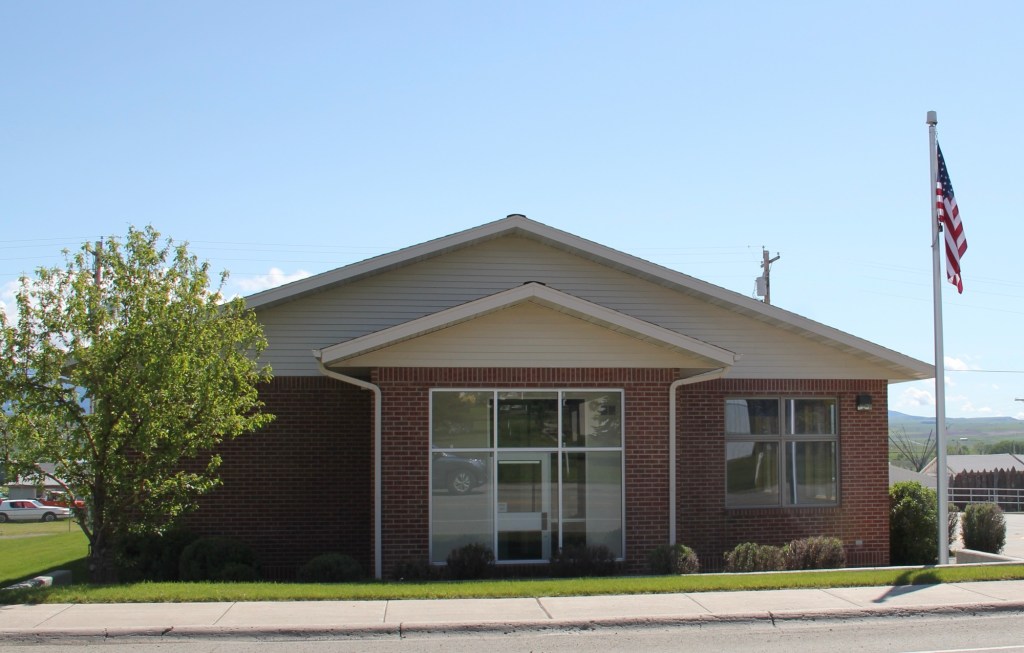
By 1910, the place had a post office; a modern one stands along the highway while an older one is attached to the mercantile building.
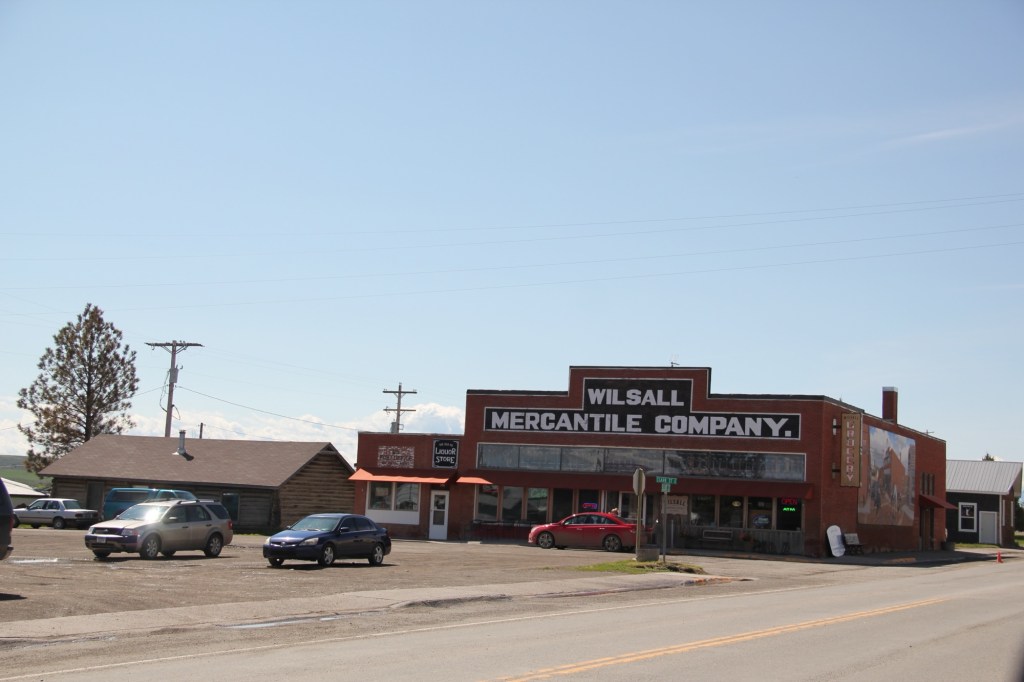
Soon the town’s primary crossroads at Elliot and Clark streets was defined by an impressive classical style bank on the west side and a large brick mercantile store on the east side.
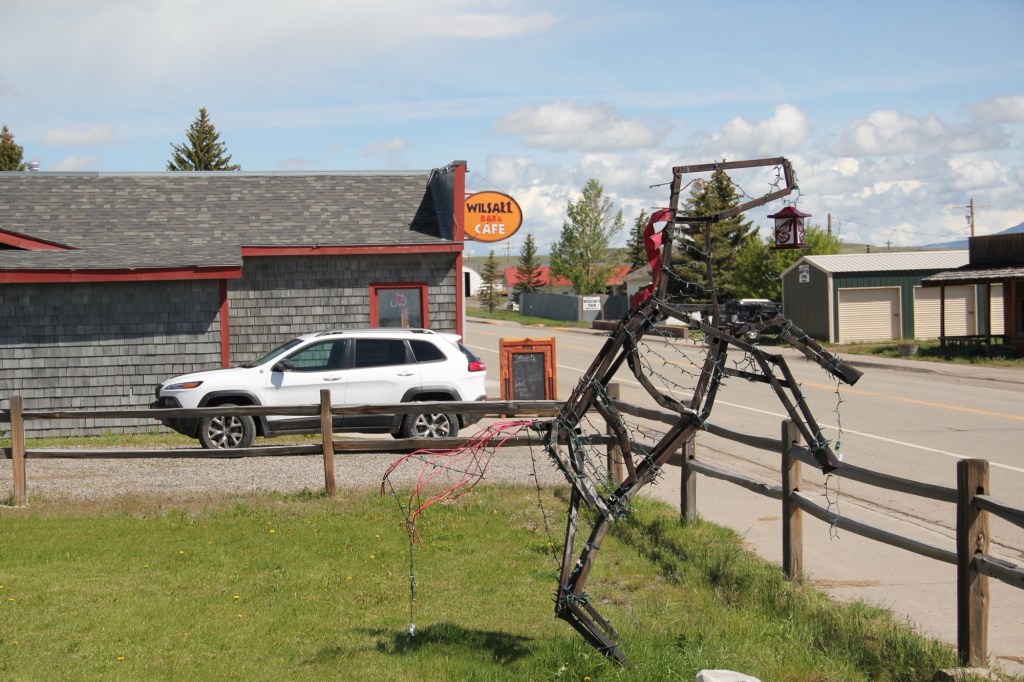
The Bank Bar in fact has recently been in the news because, guess what, national media has again “discovered” a great Montana eatery—
something that locals have known about for years. Maybe the review will get more people to slow down a bit and look around.
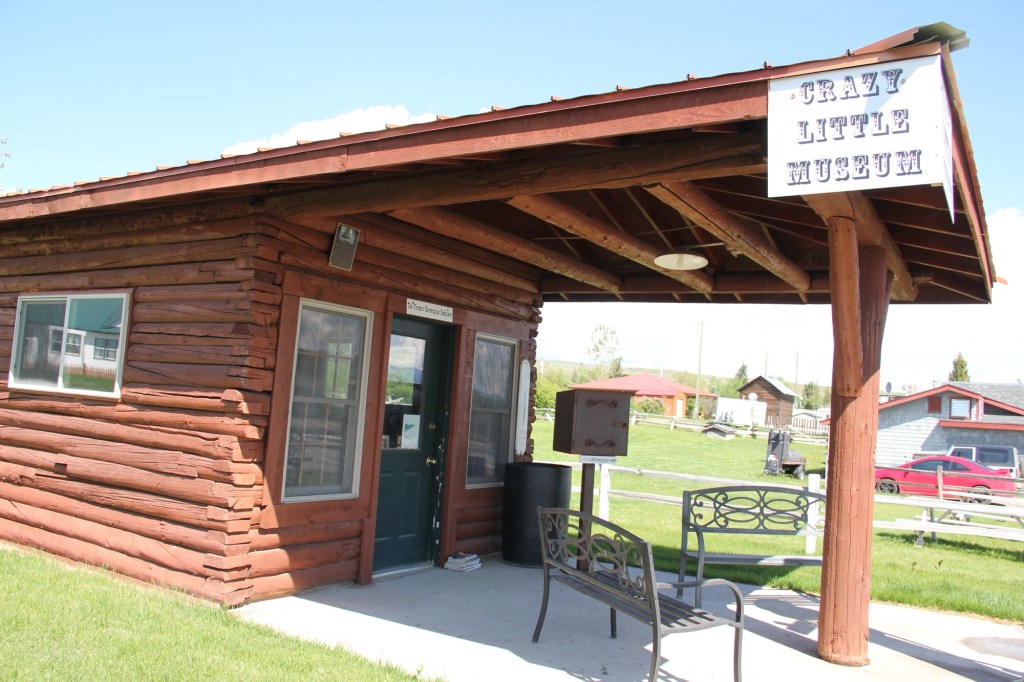
The stop is worth it, not just for a cold brew and perfect burger, but for the town’s Crazy Little Museum (also called the former Norwegian Embassy). It’s always refreshing when a place has a good perspective on itself and honors a person like Bob Tomasko who did a lot for the town before his death in 2012.
Historic community buildings survive such as the school from the 1910s, now boarded up.
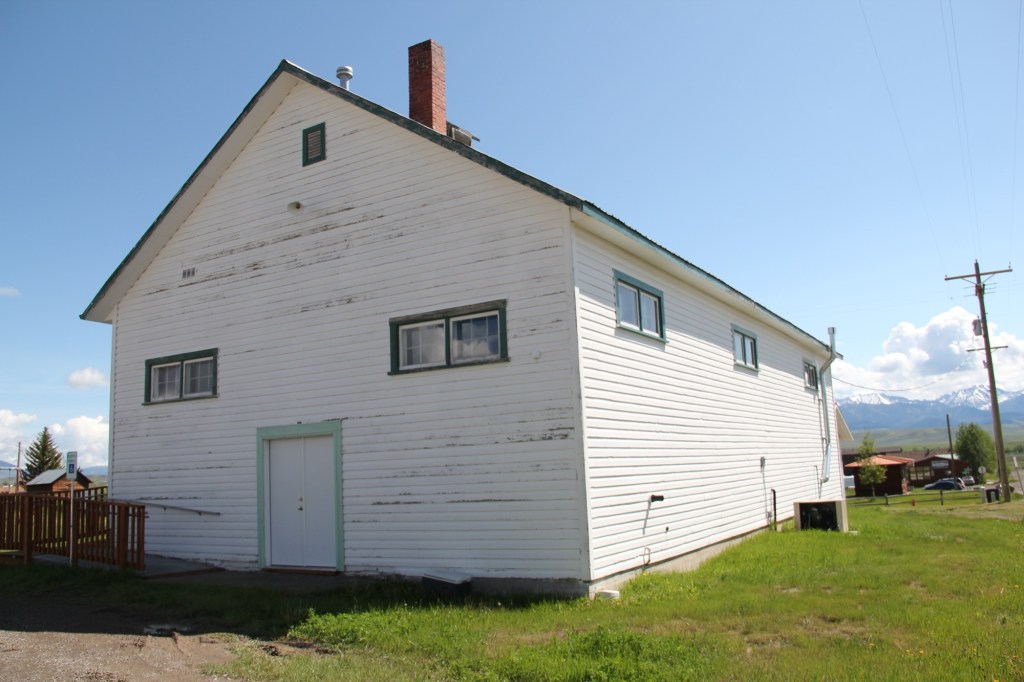
And the town community hall, which remains in use even as the population has dwindled from 237 in 2000 to under 200 in 2020.
US Highway 89 is one of my favorite north-south routes in Montana stretching into Wyoming. I always look forward to my next visit to Wilsall.
When I lived in Helena from 1981 to 1985 one of my favorite jaunts was along U.S. Highway 12 from Townsend to Roundup. It remains so today, 40 years later. My initial interest centered on railroad corridors. Helena to Townsend followed the Northern Pacific Railroad and a good bit of the Missouri River (now Canyon Ferry Lake).
Northern Pacific bridge over Missouri River near TownsendMissouri River and Canyon Ferry valley near TownsendMissouri River campground near Townsend
It was a brilliant day with fall colors just popping as we left US 287 and turned into the heart of Townsend.
As soon as you leave town to the east you encounter a lovely mix of ranches and irrigated fields until you thread your way through a national forest along Deep Creek.
Fall colors along Deep Creek
We decided to continue east by briefly jumping off US 12 and go to Montana 284 so we could follow the Milwaukee Road corridor from Lennep to Martinsdale where we would reconnect with US 12. Two of my travelers had never been to the Milwaukee Road “ghost town” of Lennep. It was a beautiful morning to be there.
Milwaukee Road powerhouse
You first realize that this abandoned railroad corridor is different when you encounter an electric powerhouse—the Milwaukee Road’s tracks were electrified from Harlowton Montana west to Idaho.
Lennep
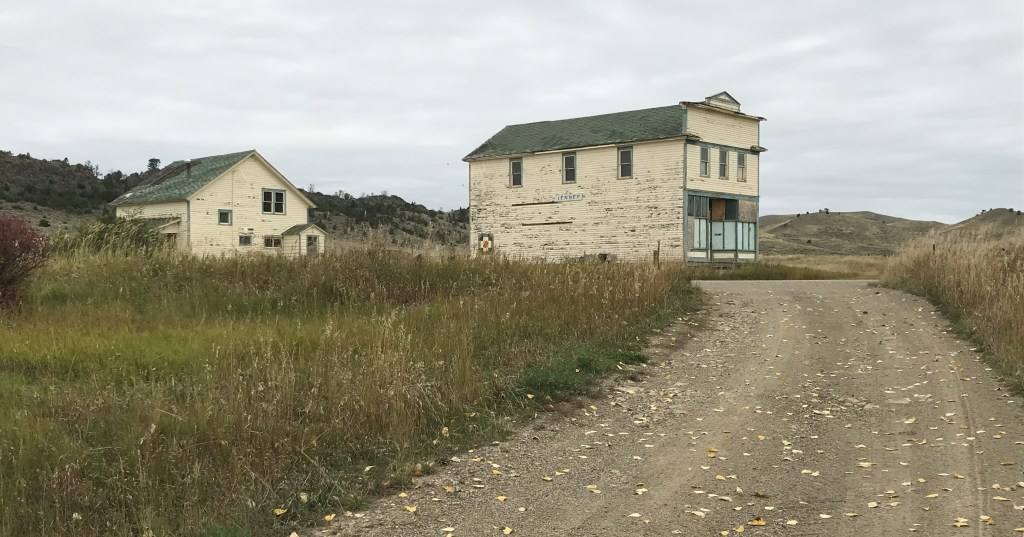
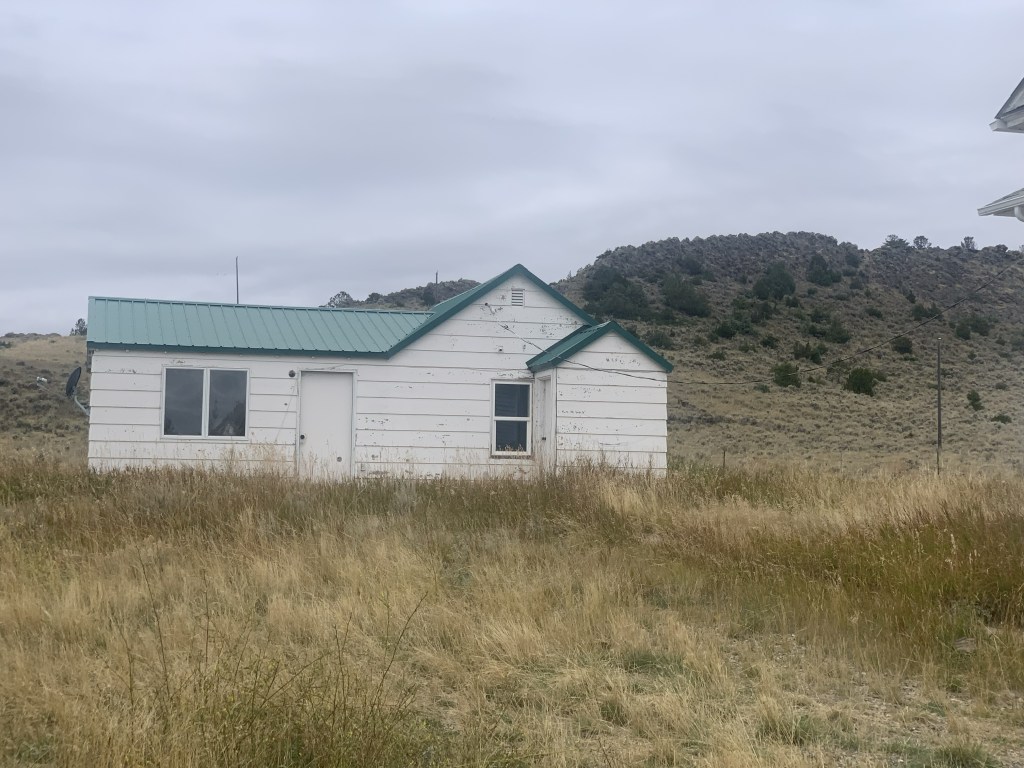
At Lennep the landmarks remain—the Trinity Lutheran Church, the store, the school, a teacher’s cottage and an early notched log house—but all were a little worse for the wear compared to my last visit 10 years earlier.
As we traveled east that morning we quickly moved through the county seats of Harlowton and Ryegate to get to Roundup by lunch. The Musselshell Valley was brilliant even as signs of the old railroad almost disappeared.
Near Ryegate Near Lavina
Roundup continues its renaissance with new businesses and restored buildings. The town core, clustered around the intersection of US highways 12 and 87, was busy on a fall weekend.
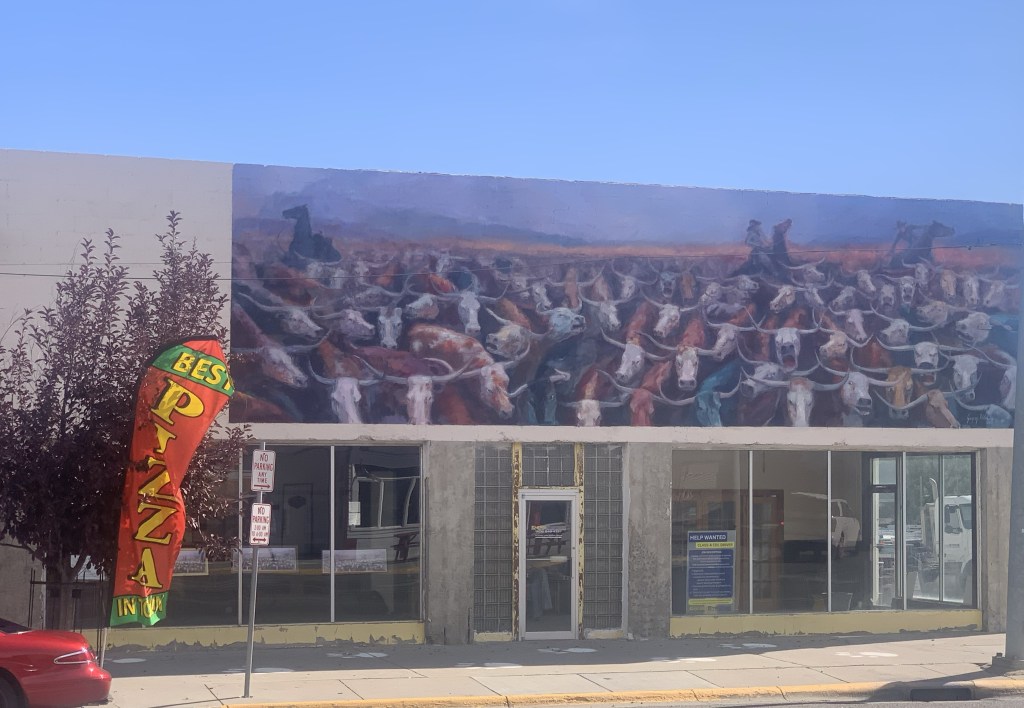
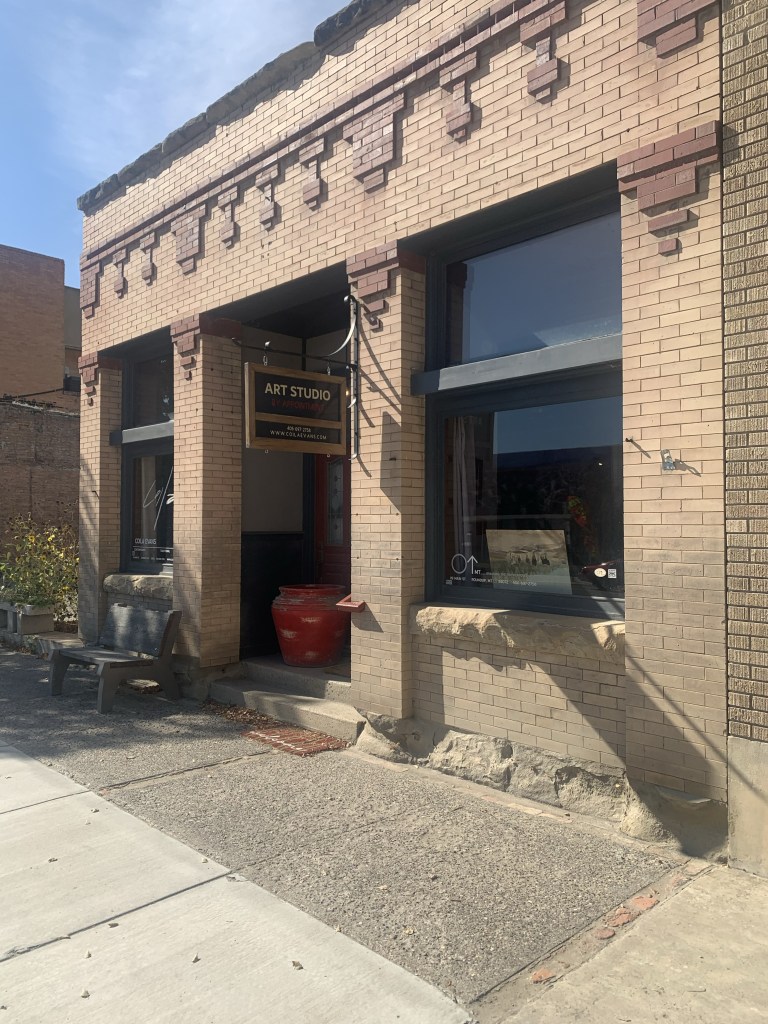
A mural on the great cattle drive of 1989The Backporch—great bbqNew mural at the KegArt studio doing wellAwaiting its renovation Community green spot
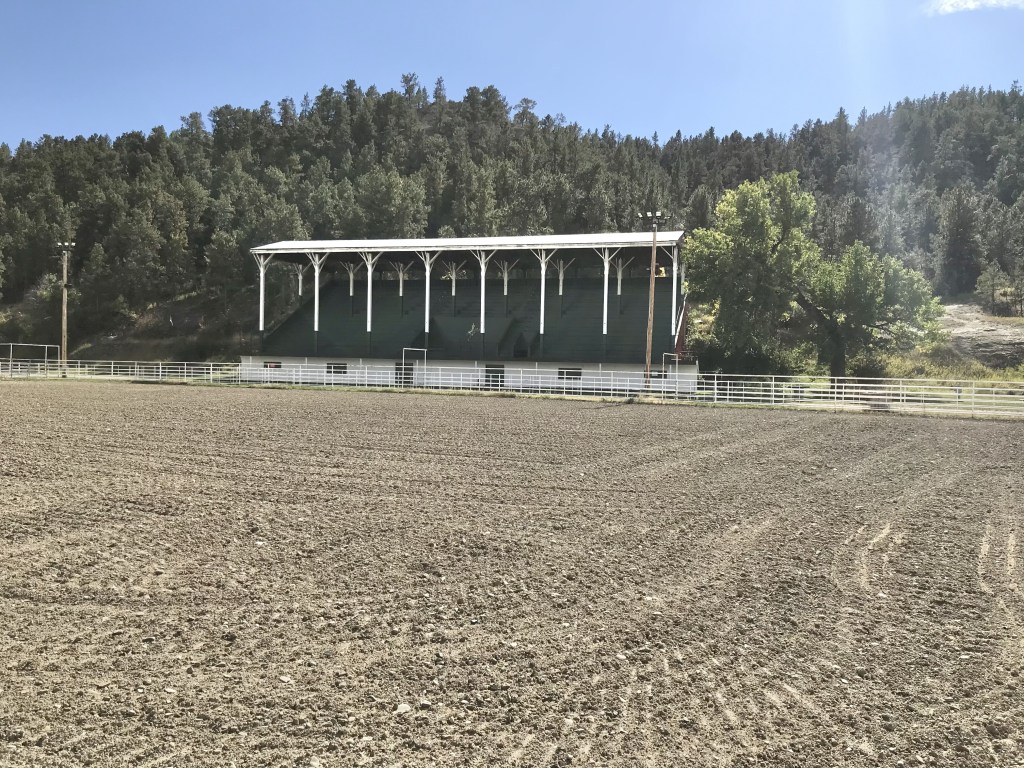
As I observed a few years ago Roundup residents worked together and created a plan—and the place continues to work the plan, from the adaptive reuse of its historic stone school to the careful stewardship of its historic fairgrounds. It’s impressive.
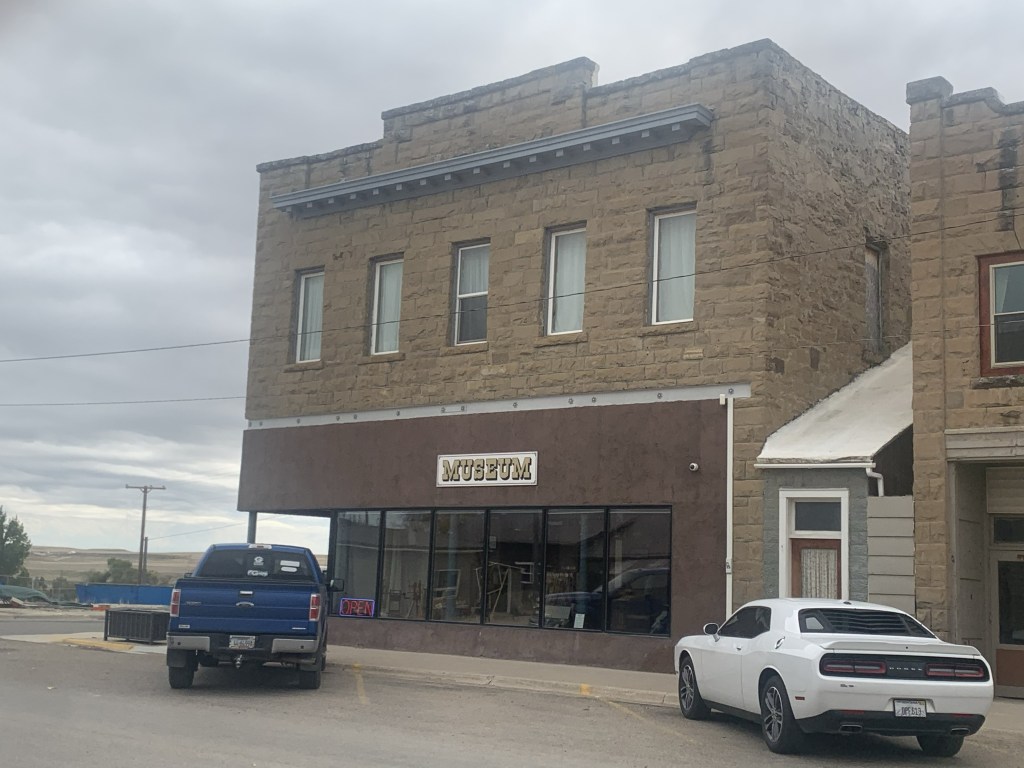
After Roundup we stopped at two county seats on the return to Helena. Harlowton was rocked by the closing of the Milwaukee Road over 40 years ago. It has struggled to reach the economic comeback achieved at Roundup. But the historic stone buildings have great potential. Three of them are now part of a large museum complex.
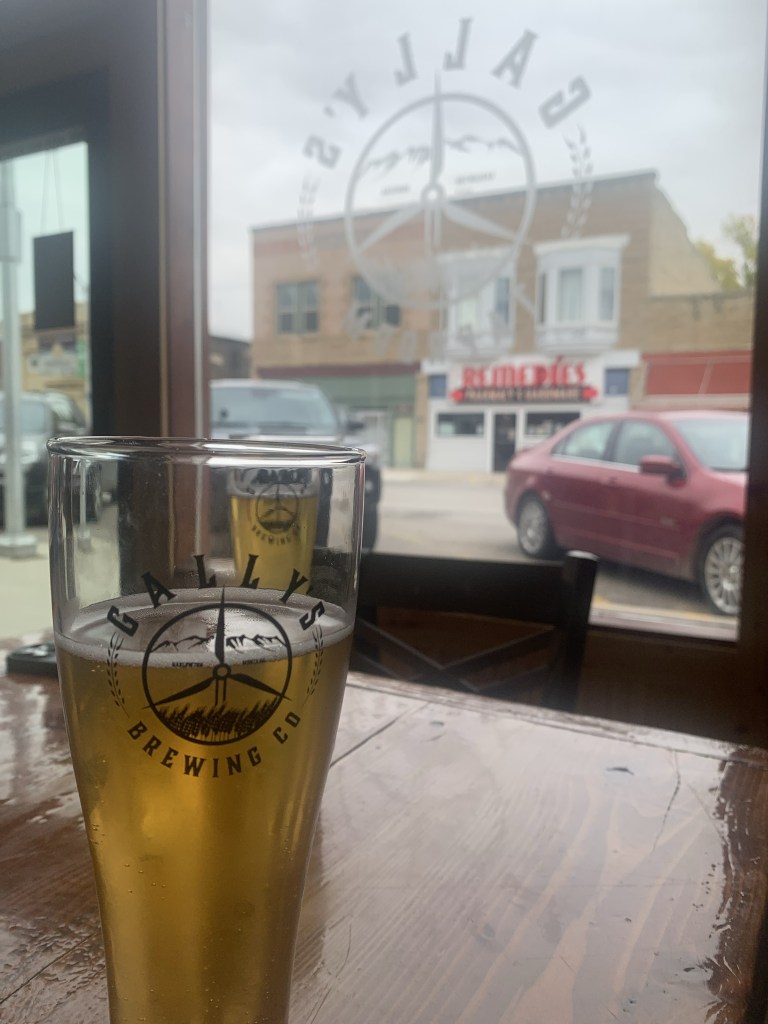
Then there’s the newcomer: the Gally’s microbrewery and pub, housed in the 1913 Montana Block.
It’s a great place for local beer and good conversation—and maybe the start of something good for the town.
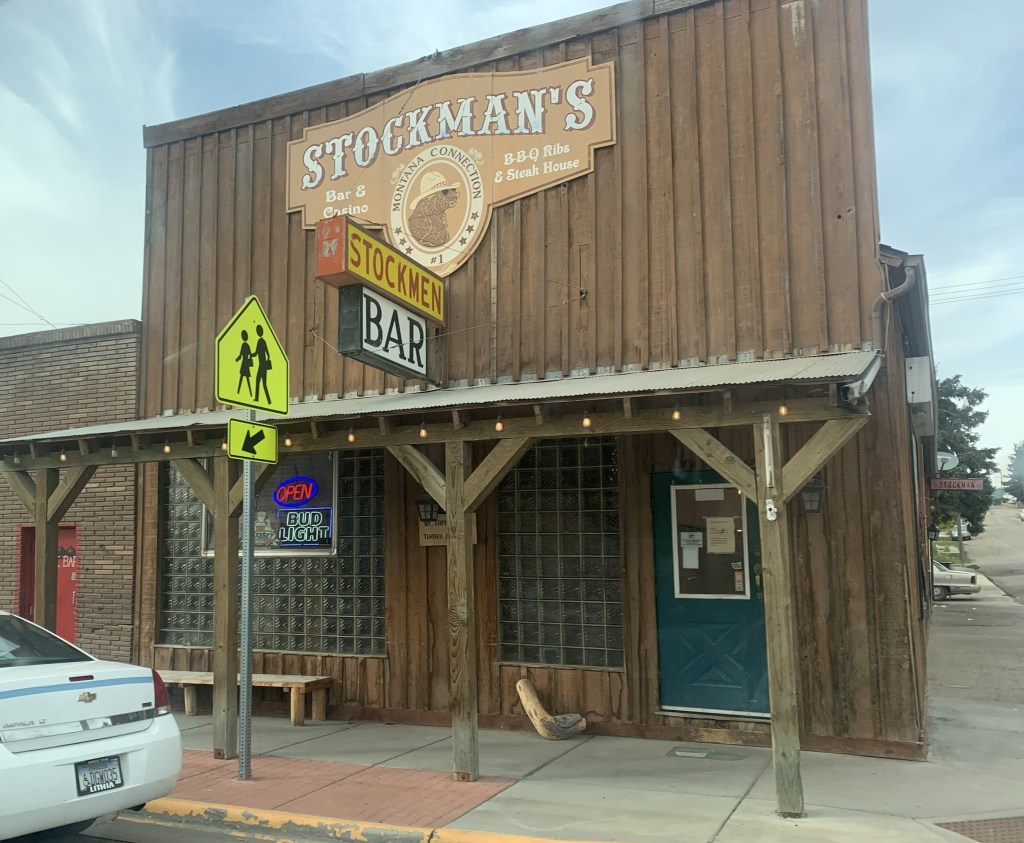
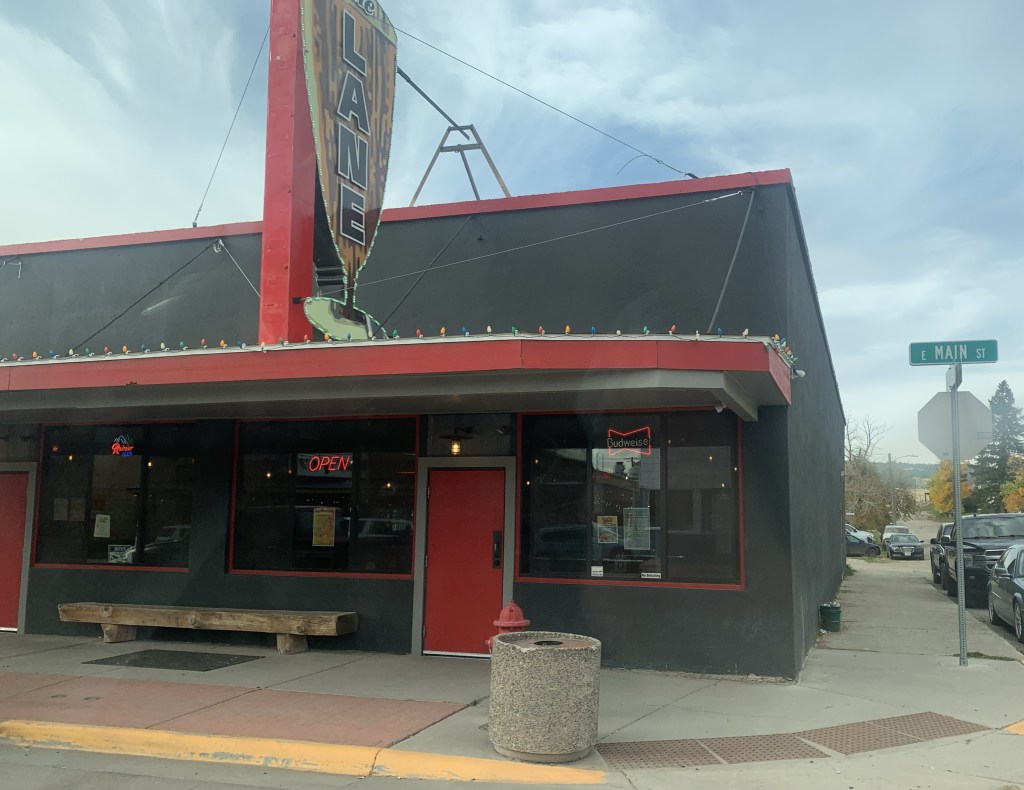
US Highway 12 was torn up for major repairs when I last visited White Sulphur Springs last decade. The improvement along its population growth and the ever expanding hot springs gives the place a new look, reflected in new catchy fronts to local bars along with new businesses such as a huge Town Pump.
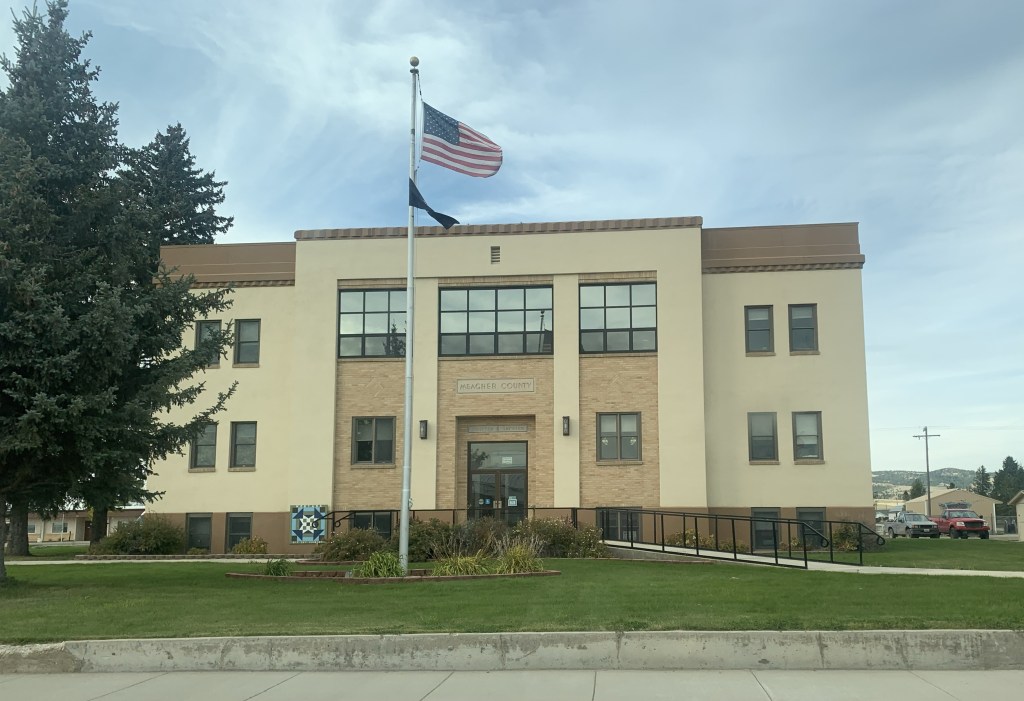
But historic White Sulphur Springs is doing ok too: the New Deal constructed Meagher County Courthouse is still a roadside landmark while the old railroad corridor, just west of the Hot Springs, remains, awaiting its rebirth.
These places are mere highlights along a historic route that’s worth a drive anytime in the fall.
When I last explored Bonner and Milltown in 2015, the effort to reclaim the river landscape created at the confluence of the Blackfoot and Clark’s Fork rivers—but long hidden by past industrial uses—was underway but far from finished. At the end of September 2023 I was able to return to the park and see the transformation myself. It is a quite remarkable super-fund project that restored a natural landmark but also told a significant historical story.
At the confluence section of the park, the removal of the dam is now 15 years old and while you can still visualize its location, to many it must look like a place that hasn’t changed in decades.
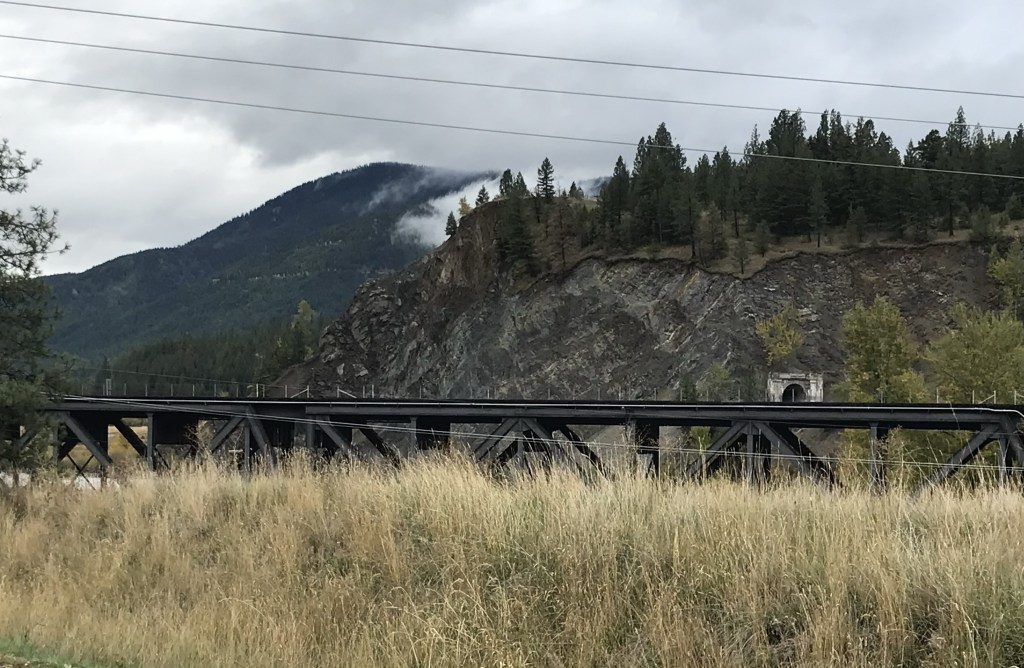
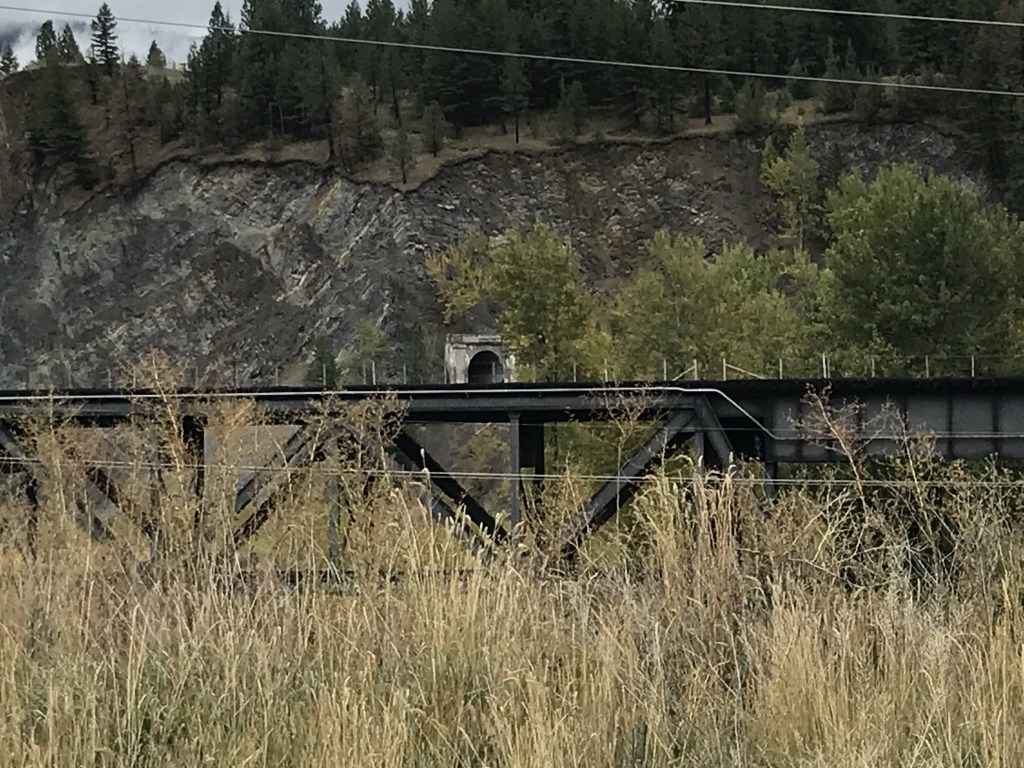
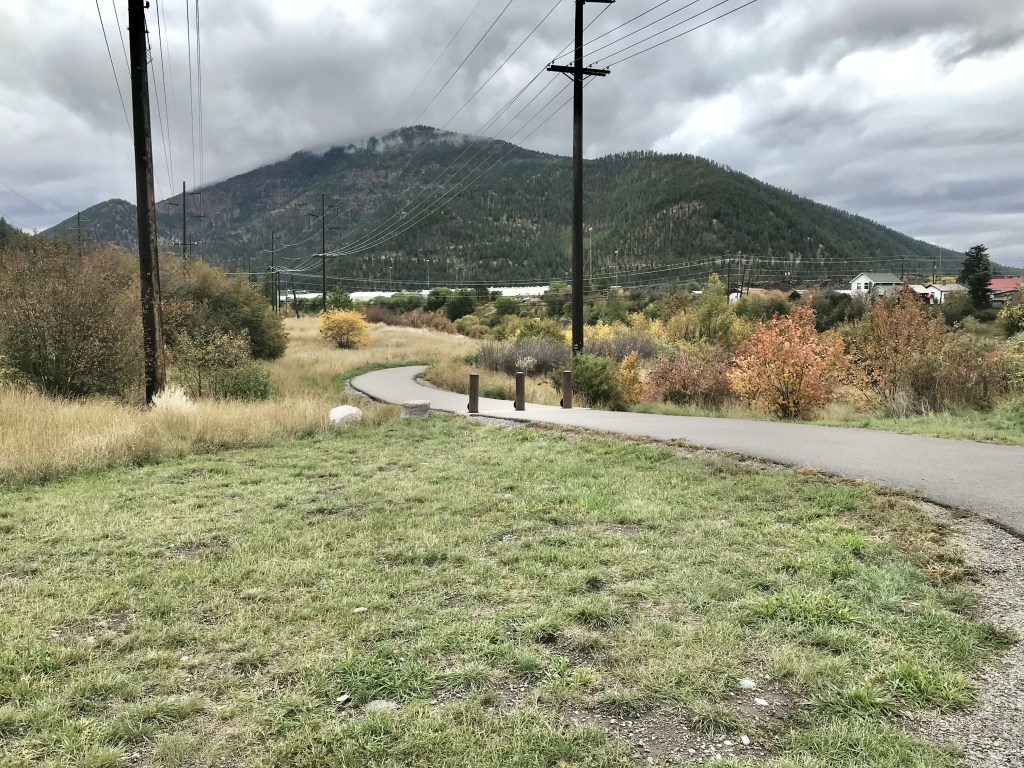
The interpretation kiosk relates the changes well but I like how the park is not inundated with markers. Paved trails take you everywhere, and give you an up close but safe way to view the steel bridge of the Northern Pacific Railroad’s mainline along with the nearby but now abandoned tunnel for the Milwaukee Road.
Talk about a transportation crossroads for the Mountain West—still a great site from the Milltown Bridge where you have bridges for Montana 200, the Interstate and the two railroad lines easily viewable from the pedestrian bridge.
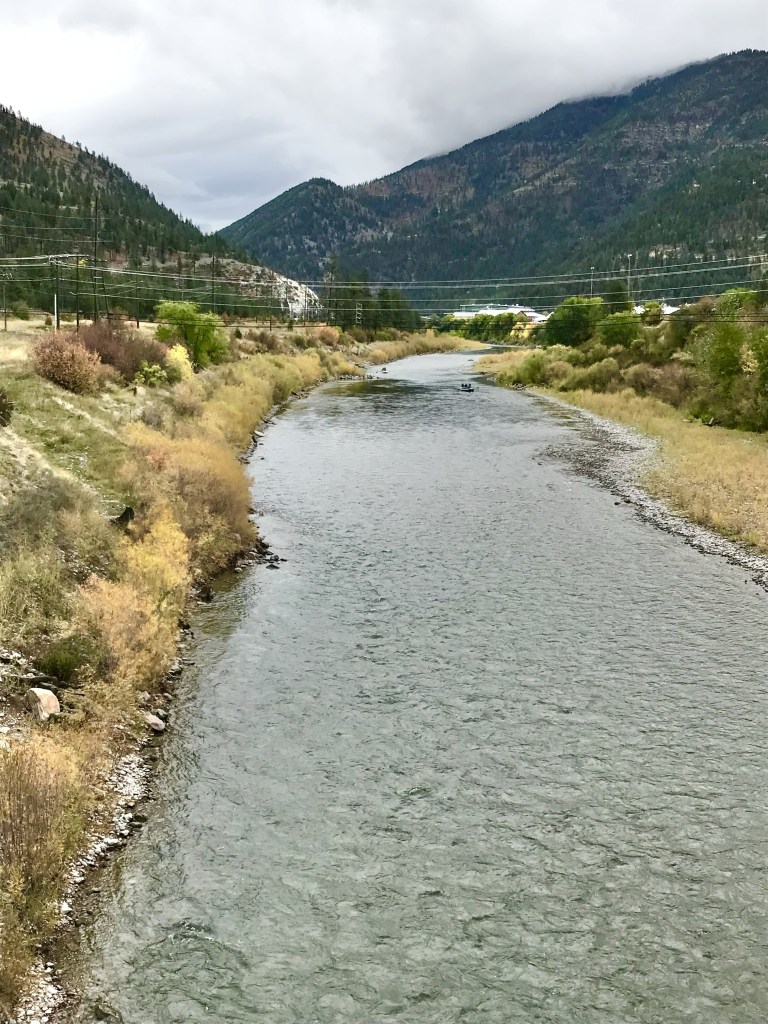
Trails that link the pedestrian bridge to the river were not complete in 2014 but now they are finished and give you another opportunity to go to the Blackfoot river bank.
Milltown State Park is a remarkable historical landscape, whether you explore by hiking, biking or by boat.
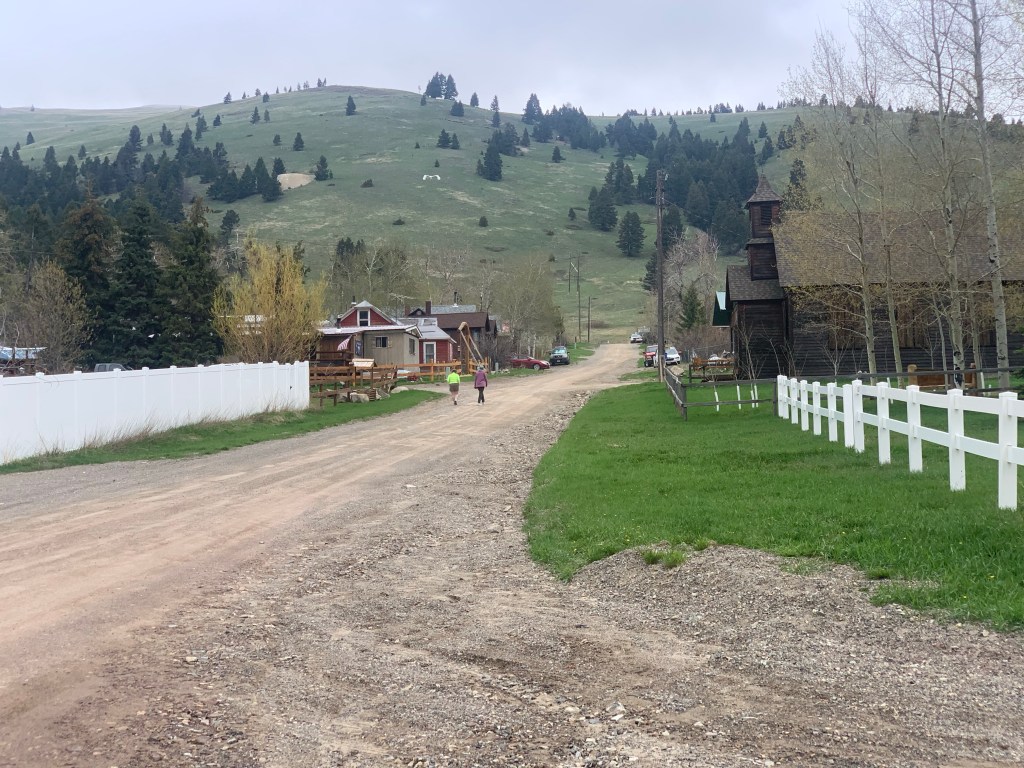
Marysville was the first mining ghost town that I visited in Montana in 1982. Forty years ago it wasn’t really a ghost town—several families lived there year round. But many buildings were abandoned, in disrepair, even one of the historic churches. Whenever families or friends visited me in Helena, I always took them to Marysville to see what was left because I wondered just what the future of the place would be.
I need not have worried. I had not been in Marysville since 1985 when I visited in May 2023. Today about 80 people live in Marysville—again far from being a ghost town. But so much preservation work had taken place since the 1980s.
Today many historic buildings from c. 1880 to the 1920s help to tell the story of gold mining in Montana at the fabled Drumlummon Mine owned by Thomas Cruse, a mine that overlooked the town. But work remains—other key buildings need their champion to ensure their preservation.
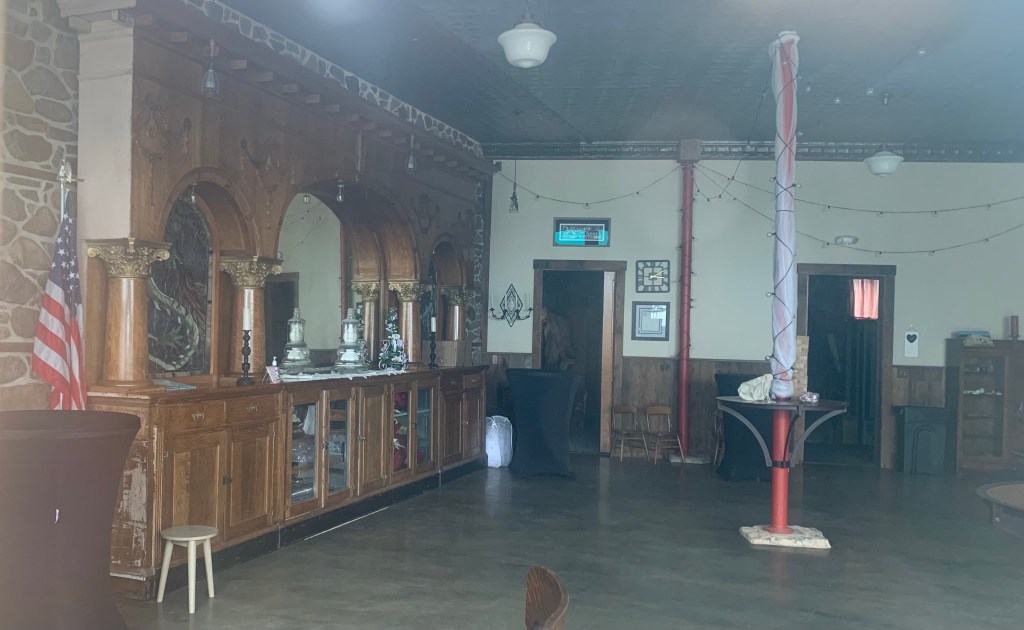
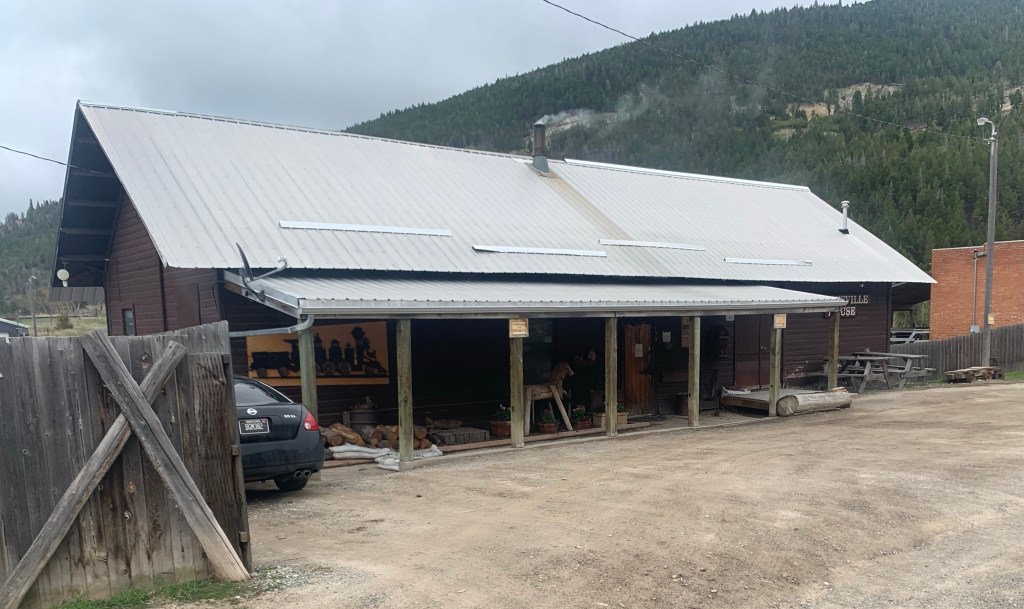
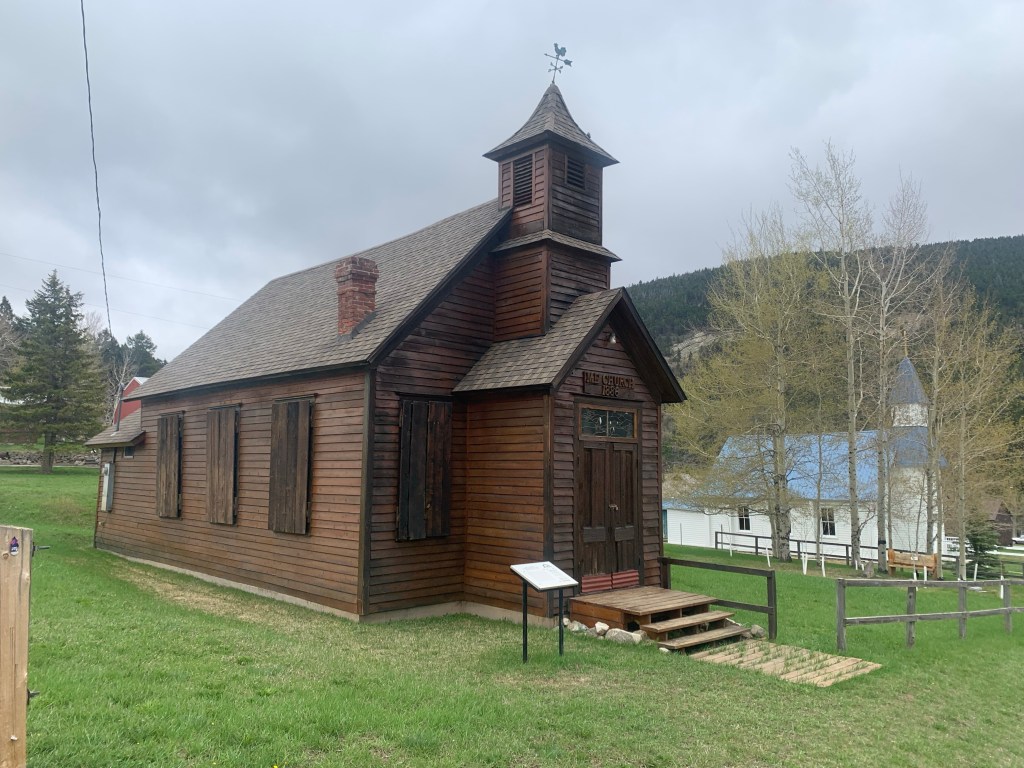
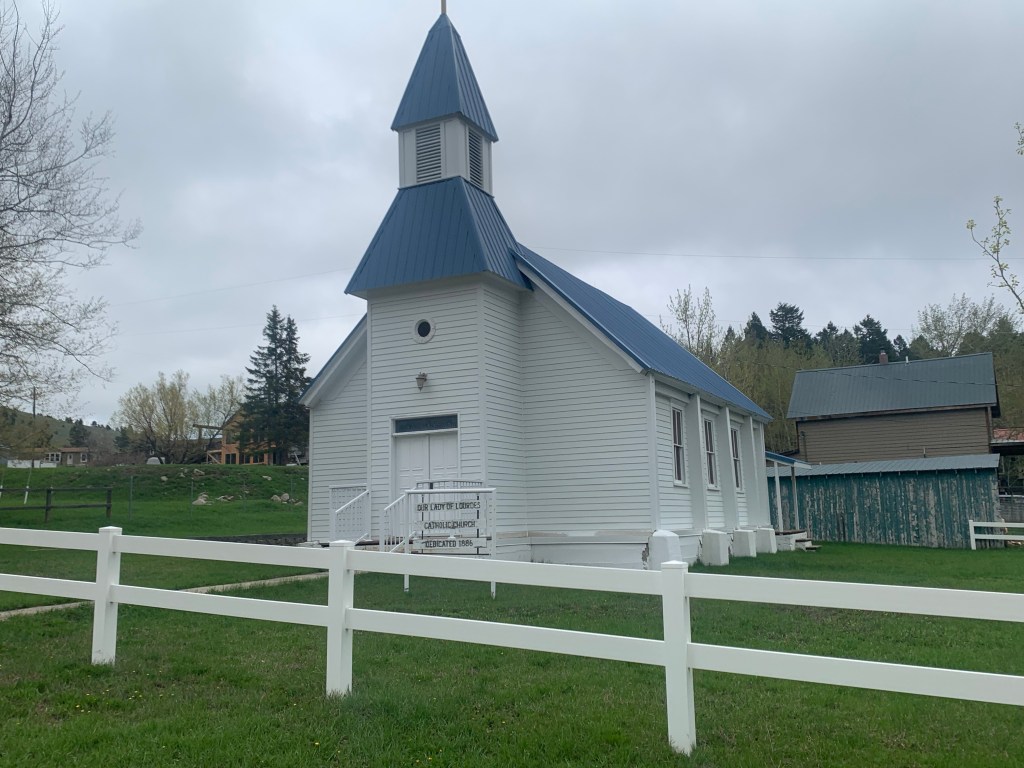
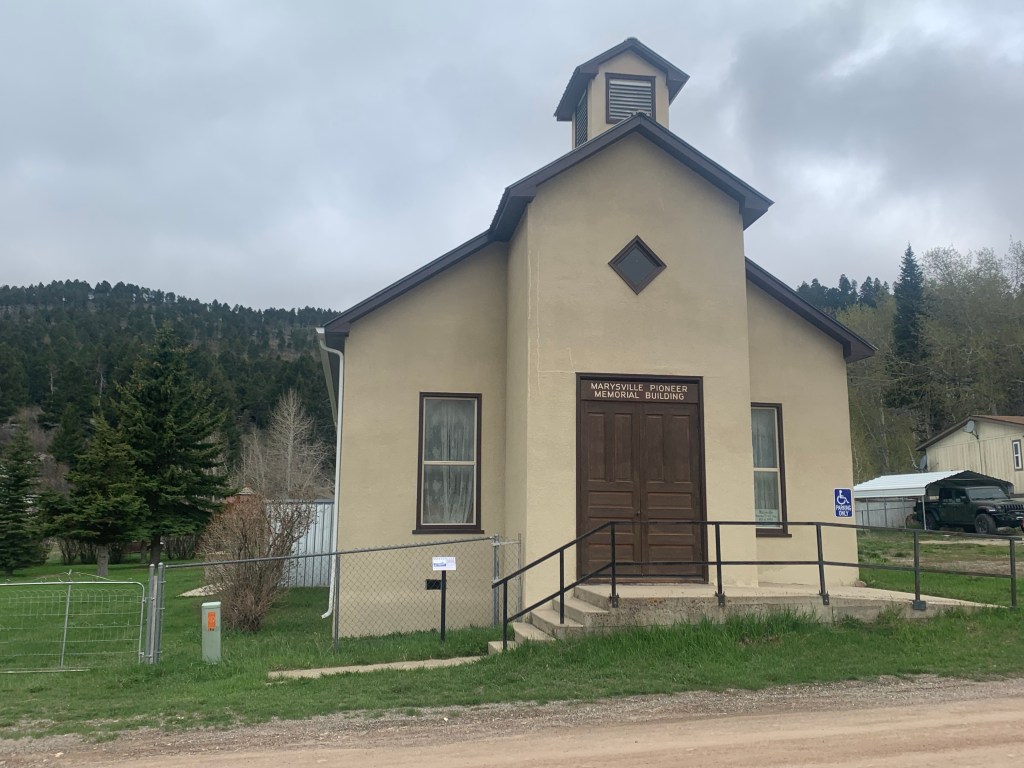
Drumlummon concentrator ruinsRuins only remain of this dwellingStone commercial building from 1895The 1898 Masonic Lodge Building with its impressive brick exterior dates to 1898. Both Mountain Star 130 and Ottawa 51 met in the building.Another important building was the general store, initially established by Ann and Blibal Betor (Betor was from Lebanon) c. 1898. When I lived in Helena the place was abandoned and in rough shape. A well planned restoration began in 2004 and was finished in 2018.The general store interior speaks to its conversion into a saloon and dance hall c. 1940.The former Northern Pacific railroad depot is now home to the town’s bar and cafe.Another restoration was led by the Hollow family at the town’s Methodist Episcopal church. This 1886 building is listed in the National Register of Historic Places.Our Lady of Lourdes Catholic Church also dates to 1886. Thomas Cruse later took some of his Drumlummon fortune and donated it for the construction of the Cathedral of St. Helena in Helena, MT.The Marysville Pioneer Memorial Building contains a museum about the town and its mining history.
The people who call Marysville home have been remarkable stewards. By keeping the town alive they also have preserved a special place in Montana’s mining past.
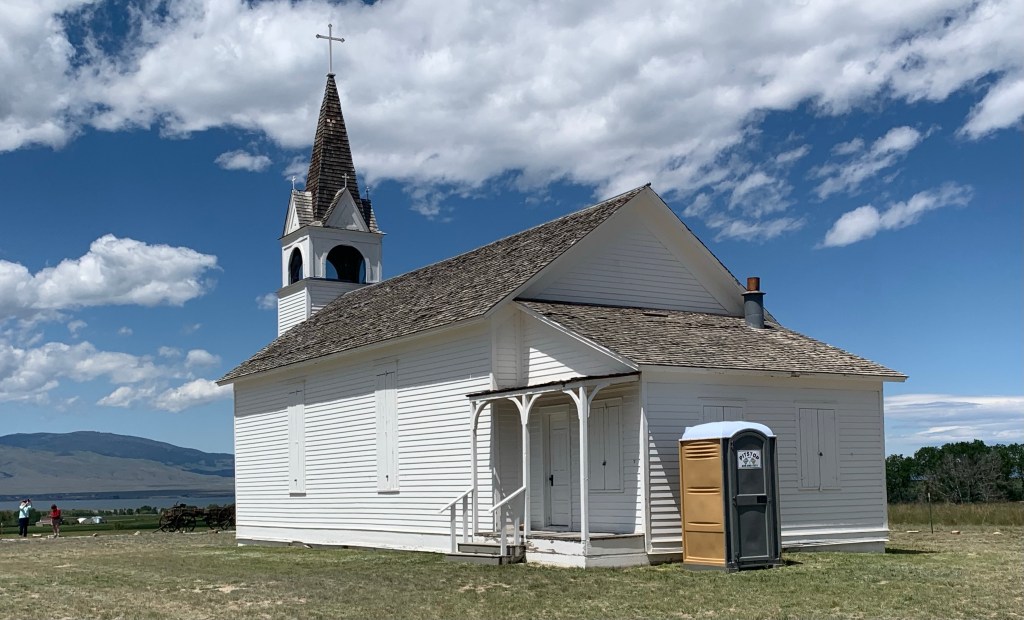
Canton was one of the early Missouri River towns in what is now Broadwater County, Montana. Canton was never much of a place but it had enough people and vision to build one of the first landmarks in this part of the Missouri River valley, St. Joseph’s Catholic Church in 1875-76.
Listed in the National Register of Historic Places, the church served local residents from almost the beginning of the town’s settlement through the homesteading boom of the early 20th century. The Northern Pacific Railroad ran along the other side of the River, diminishing the importance of Canton but never really indenting the significance of the church as a territorial-era landmark and as a compelling example of vernacular church architecture. Regularly held services continued until 1954.
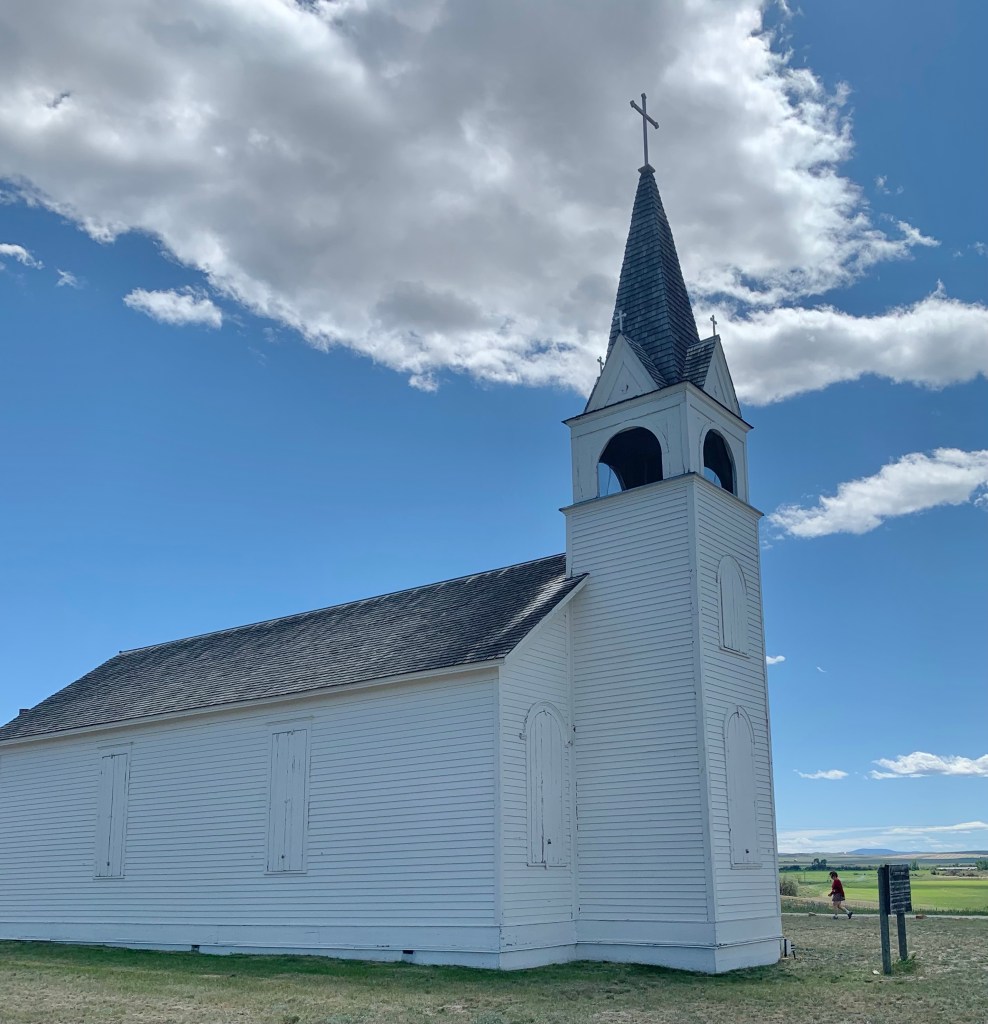
The church faces the River (now Canyon Ferry Lake)
It really is a splendid bit of craftsmanship. The Gothic influenced bell tower entrance dates to the homestead boom of the early 20th century while the rounded arches over the windows well express its late 19th century roots.
Determined residents saved the church from destruction in 1954. They had the building moved to this place, higher ground away from the lake and lakeside developments created by Canyon Ferry Dam and Reservoir. The grand Bureau of Reclamation project totally reshaped Broadwater County. The town of Canton was erased but St. Joseph’s remained.
Thirty years later when I stopped at the church in 1984, it was ragged and needed attention. Residents did that in the 1990s and ever since the church has stood as a quiet but imposing marker of the territory days of Montana.
St Mary’s Catholic Church became a 6th Ward landmark upon its opening in 1910 and a recent renovation will keep the building in community service for another generation.
The sixth ward in Helena in the late nineteenth century was a focal point for the new capital city of Montana. The arrival of the Northern Pacific Railroad and the location of its railroad yards some mile and a half southwest of Last Chance Gulch created a new part of the city with plenty of bars and cafes for rail workers and travelers but also a historic neighborhood that often gets forgotten.
The historic block o& commercial buildings facing the depotHap’s has served customers for decades along this commercial block.Nationally recognized railroad architect Charles Reed of the St Paul firm Reed & Stem designed a new modern passenger station for the Northern Pacific in 1904.Northern Pacific depot’s clock tower. The passenger station is the centerpiece of the neighborhood’s National Register-listed historic district
The architecturally expressive Northern Pacific passenger station of 1903-1904 led to new investment of brick buildings in the neighborhood but many small vernacular dwellings remained in use and today the neighborhood retains a railroad workers’ feel.
Hap’s Beer Parlor transformed from a rail workers’ hangout to a neighborhood institution. It was a popular place when I lived in Helena almost 40 years ago—it remains legendary.
In 2016 the city of Helena established the Railroad Urban Renewal District which encouraged new investments in the neighborhood and its immediate environs, such as the Vanilla Bean coffee shop and bakery. Another key addition was the Sixth Ward Garden Park, an impressive example of the community garden movement.
The changes in the neighborhood are promising but also challenging as new businesses such as Headwaters brewery move to the outskirts. Let’s hope the modern does not crowd out the historic in Helena’s Sixth Ward.
In my 1988 work in Montana I sought out Glendive and spent the night there due to a new research project on the Yellowstone Valley (which would yield the book Capitalism on the Frontier in 1993). Glendive was a division point on the Northern Pacific Railroad and some 100 years later it remained a key to the Burlington Northern Line.
A good bit of the historic machine shops (above) still operated in 1988. The depot and railroad offices still dominated the Merrill Avenue business district (below).
The older Northern Pacific lunchroom had been converted to the Chamber of Commerce offices, and visitors center.
Many businesses remained focused on Merrill Avenue, which from the 1910s forward was also the historic route of the Yellowstone Trail and later US Highway 10.
My favorite Merrill Avenue business was the wonderful Art Moderne style of the Luhaven Bar (below). You gots love the black carrera glass and glass block entrance.
Not all architectural delights were along Merrill Avenue. The Dawson County Courthouseis an excellent mid-century modern public building, a real contrast to the town’s traditional Colonial Revival-styled post office from the New Deal era.
But my favorite modernist building was the First National Bank, which was later converted to the town’s public library.
Next posting will include homes from the town’s residential district from the early 20th century to the mid-century as I continue a look back to the Yellowstone River and its towns in 1988.










































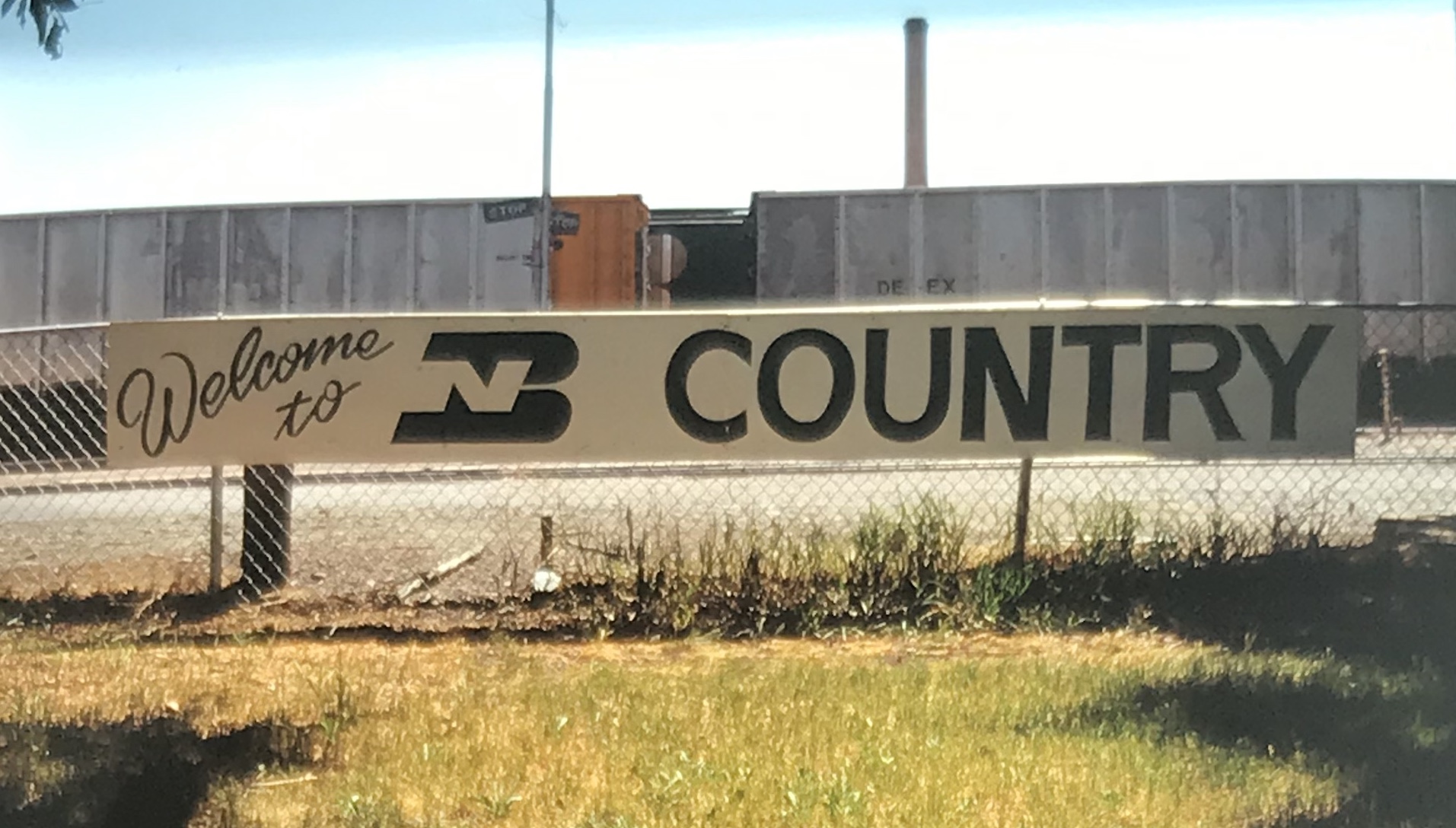
 A good bit of the historic machine shops (above) still operated in 1988. The depot and railroad offices still dominated the Merrill Avenue business district (below).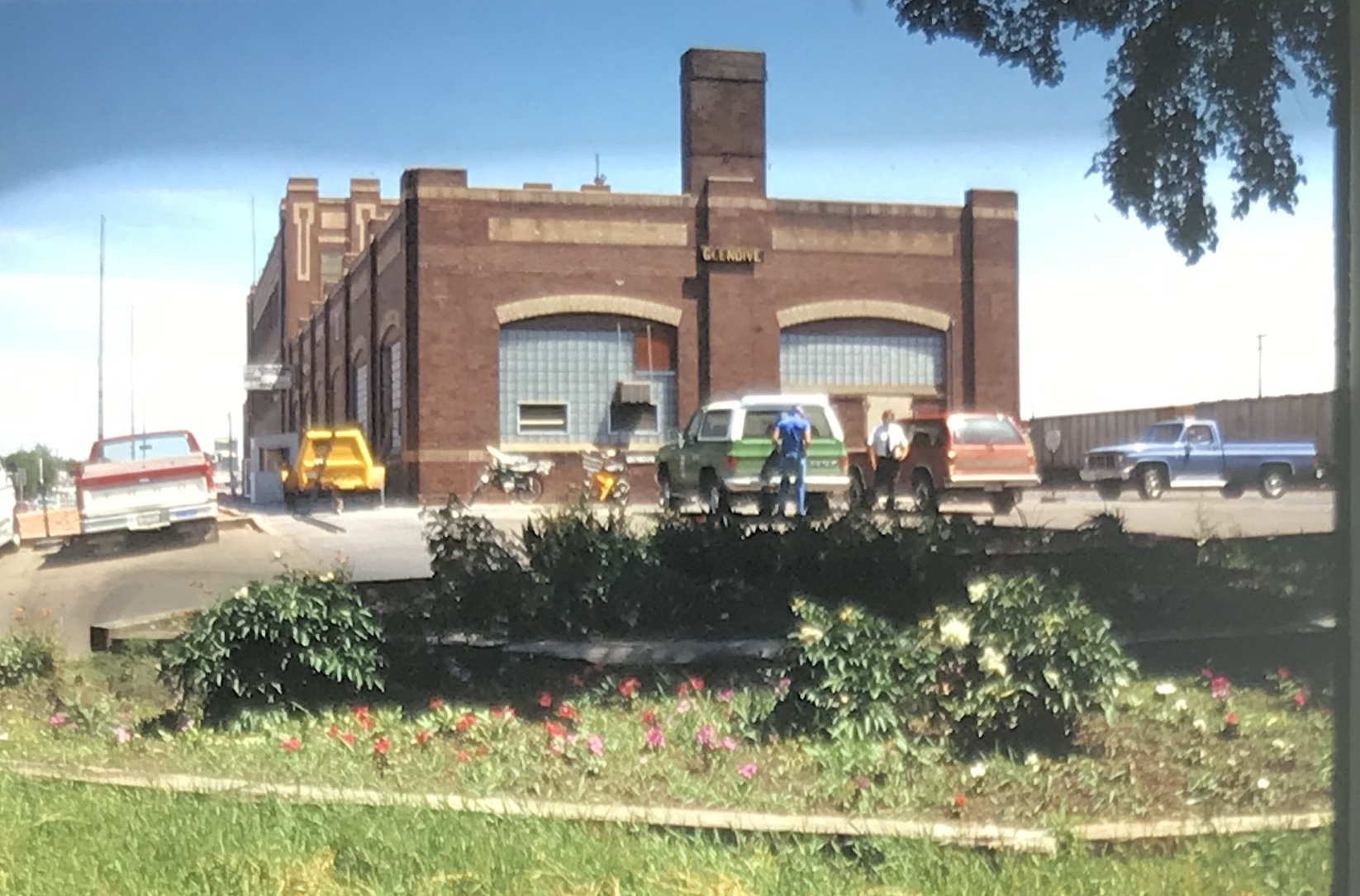


 My favorite Merrill Avenue business was the wonderful Art Moderne style of the Luhaven Bar (below). You gots love the black carrera glass and glass block entrance.

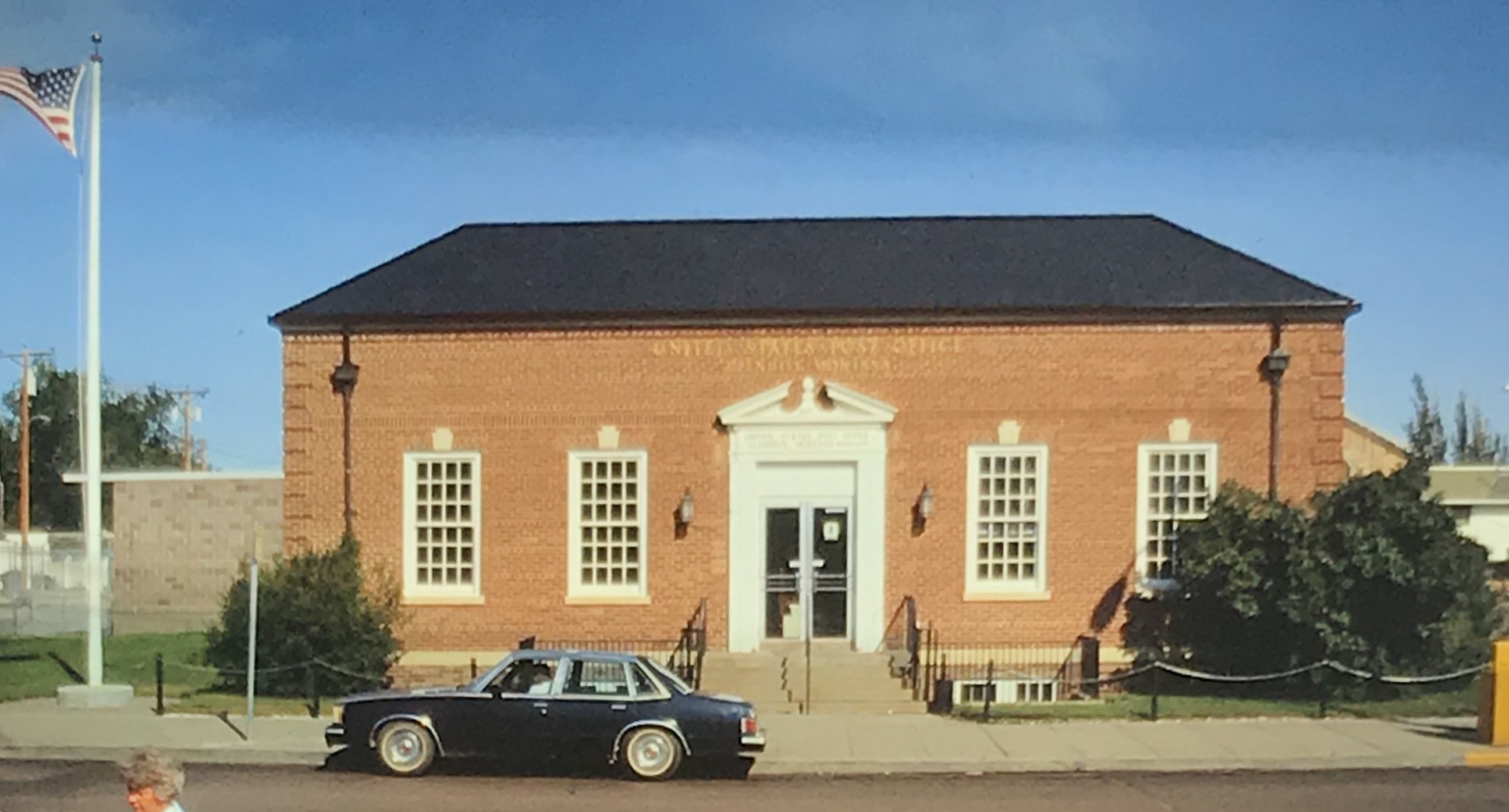 But my favorite modernist building was the First National Bank, which was later converted to the town’s public library.
 Next posting will include homes from the town’s residential district from the early 20th century to the mid-century as I continue a look back to the Yellowstone River and its towns in 1988.
 Montana's Historic Landscapes