Big Hole National Battlefield: A Second Look

Beaverhead Co, Big Hole Battlefield 9

On this wintery day I return to Big Hole National Battlefield, one of the most solemn and sacred places in Big Sky Country, out of a request from a MTSU graduate student who is trying to come to grips with western battlefields and their interpretation.  In 2013 I posted about the new visitor center museum exhibits at Big Hole, lauding them for taking the “whole story” approach that we have always attempted to take with our work in Tennessee through the Tennessee Civil War National Heritage Area.

Beaverhead Co, Big Hole Battlefield

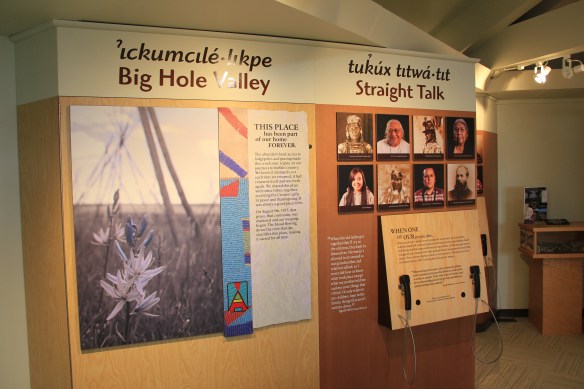
The Big Hole Battlefield exhibits, how at least 5 years old, do the whole story approach well, as you can see from the panel above where voices from the past and present give you the “straight talk” of the Nez Perce perspective.

Beaverhead Co, Big Hole Battlefield 6

Beaverhead Co, Big Hole Battlefield 1

One of the most telling quotes on how the military viewed the original residents of the northern Rockies is not that of Sherman–damning enough–but the one above by General O.O. Howard, best known in the American South for his determination and leadership of the Freedman’s Bureau and its attempt to secure civil rights for the newly emancipated enslaved of the nation.

Beaverhead Co, Big Hole Battlefield 2

Beaverhead Co, Big Hole Battlefield 3

Beaverhead Co, Big Hole Battlefield 7

The exhibit panels, together with a new set of exterior interpretive panels scattered across the battlefield, do an excellent job of allowing visitors to explore, reflect, and decide for themselves.  The more comprehensive approach to telling the story is nothing really new.  NPS historian Robert Utley called for it decades ago, and Marc Blackburn recently reviewed efforts across the country in his excellent book, Interpreting American Military History (2016).  For the Big Hole itself, all scholars can benefit from Helen A. Keremedjiev’s ethnographic study of this park and other military sites in Montana in his now decade old master’s thesis at the University of Montana.

Beaverhead Co, Big Hole Battlefield 30

Of course Big Hole Battlefield is now part of a larger thematic effort, the Nez Perce Historical Park, to mark and tell the story of Chief Joseph and his attempt to find a safe haven in land that once the tribe had dominated.  These few images, which, as many of you regular readers know, can be enlarged and viewed intently, only start the exploration–you really have to go to the Big Hole to understand what the events of 1877 meant to the new residents flooding the country and those who had lived and thrived there for centuries.


Reserve, Montana: a Sheridan County Railroad Town

Sheridan Co Reserve 4

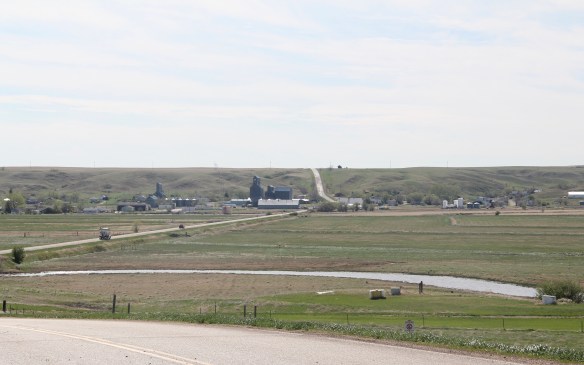
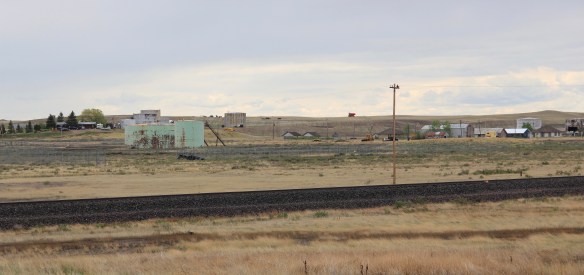
Readers of this blog have been generous, sharing thoughts, and history about the many fascinating places of the Big Sky Country.  Most recently I had an inquiry about a place that even most Montanans do not know about–Reserve, Montana.  When I earlier wrote about railroad towns in Sheridan County I briefly mentioned this place of a couple dozen residents today–and the inquiry has led me back to the images I took in 2012 and wish to share more about this place. The image above shows the town in its entirety–a rather common Great Northern town in the northern plains.

img_7471The town’s grain elevators really are its landmark–the town is along the railroad spur and sits off Montana Highway 16–without the elevators you might not even notice it.

img_7472Agriculture defines the use of the largest buildings of the town, and while it is a tiny place Reserve serves a much larger region of ranches located between Plentywood, the county seat, to the north and Medicine Lake, to the south.

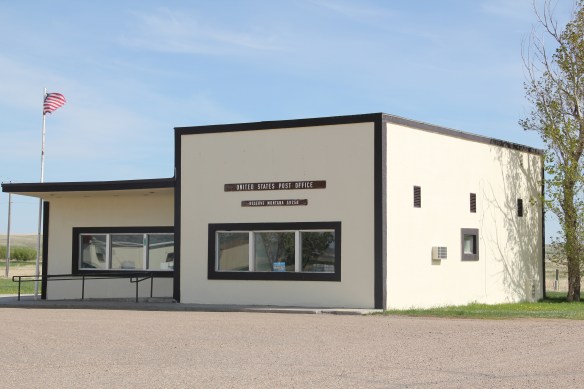
img_7474This larger audience for services in Reserve helps to explain the survival of the Reserve Post Office–so many tiny Montana towns have lost the one federal institution that had been there since the town’s beginning.

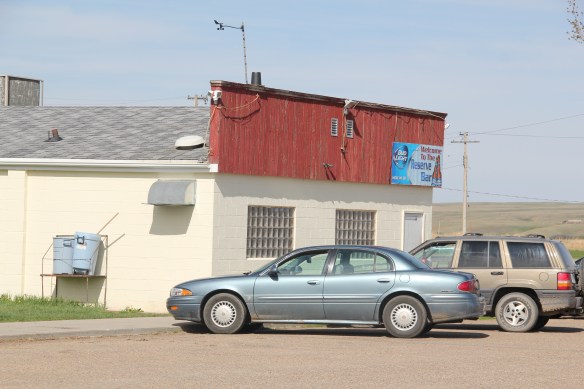
img_7475But naturally I will urge you to make a stop, however brief, at the Reserve Bar.  This concrete block building, with its period glass block windows, is a friendly place, and a great way to talk with both residents and surrounding farmers.

Transformations of Montana Avenue

3-billings1883

Billings c. 1882.  All historic images courtesy of Western Heritage Center.

At the time of my field work for the Montana state historic preservation plan in 1984, I had already gotten myself deep into one Montana place–Billings, the seat of Yellowstone County, and its early history.  I have to blame June Sampson, David Carroll, and Lynda Moss at the city’s Western Heritage Center for my initial immersion–they along with board members wanted a research report about both the town of Coulson, the short-lived precursor to Billings along the Yellowstone River, and the early history of Billings, the railroad town.

billings-map-1904

Billings birdseye view, detail, 1904.

Starting in 1982, I began  to drive to Billings, explore the landscape, dig into archives and museums, and talk to people, which of course meant in 1982, when the city was a mere 100 years old, there were a few children of the founders still around for interviews.

McAdow store 2011

At first the competition between Coulson and Billings captivated me, particularly the efforts of regional merchant Perry W. McAdow to transfer his business dominance from Coulson to the new city of Billings by placing his store on Minnesota Avenue, on the south side of the Northern Pacific Railroad, rather than on Montana Avenue, on the north side of the tracks, where development was controlled by one of the west’s leading capitalists, Frederick Billings.

Perhaps it is symbolic, or even appropriate, that McAdow’s first store on Minnesota Avenue still stands–but its best days long ago passed away, leaving it today as a junk store in 2011, or in 2015 the Big Sky Blue Gallery.  While, on the other hand, a grand statue of Frederick Billings–who never lived here but did come to visit his son Parmly–stands on the north side of the tracks, and helps to mark Montana Avenue as the predominant commercial street in Billings.

HPIM0183.JPG

HPIM0178.JPG

No doubt, Montana Avenue, and the north side of the tracks became the public face of Billings.  Not only did a range of two to three-story commercial blocks populate a long stretch of the street, here too was the grand Classical Revival styled passenger depot of the

Billings 2006 002 NPRR depot

Northern Pacific Railroad.  And when U.S. Highway 10 was designated through the city in the 1920s–first known as the Yellowstone Trail–it used Montana Avenue to pass through Billings.  The bright, shiny, and busy appearance of Montana Avenue in this second decade of the 21st century, however, is a fairly recent phenomenon.  When I did the bulk of my research in Billings from 1982 to 1992, there was not much going on, outside of the Rex Hotel.  The depot was boarded up, and falling apart.

Listing Montana Avenue as a historic district in the National Register of Historic Places in the 1990s began to change the street’s fortunes, along with the development in that same decade of the Western Heritage Center as a real cultural anchor and heritage tourism lure, and then the investments by new entrepreneurs who convinced city officials to revisit sidewalks, add plantings, and make the street more pedestrian friendly.  It has been a bit amazing to see this transformation in the past decade as Montana Avenue became an “it” place–and shed its forgotten, tired past as a railroad corridor.


Livingston’s Mountain View Cemetery

img_3013On the northwestern outskirts of Livingston is Mountain View Cemetery, another of the historic properties that certainly existed when I carried out the 1984-1985 fieldwork for the Montana state historic preservation plan, but since it was a cemetery, we as a field gave it, or any cemetery for that matter, little consideration thirty years ago.

img_3019

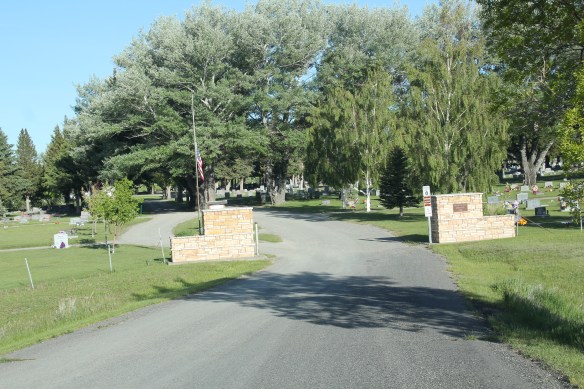
As soon as you get past the 1966 entrance gates, you find a cemetery that is certainly historic–established as the town was beginning in the 1880s and still used by community over 125 years later.  Mountain View is also aesthetically interesting in its overall plan, with its intricate pattern of curvilinear drives and well-ordered arrangement of graves, then several of the grave markers themselves are impressive Victorian statements, of grief, of family, and of pride of accomplishment.

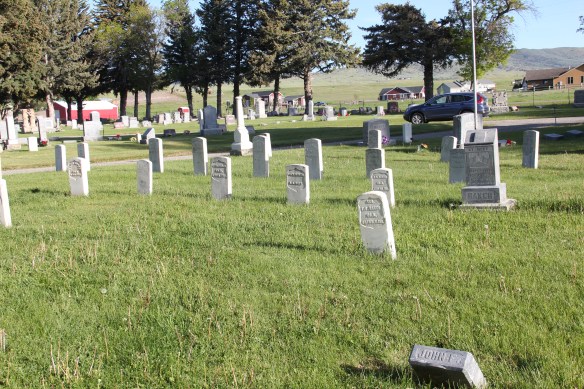
The section set aside for Union veterans of the Civil War was the most interesting historic feature to me.  As explored in other posts over the last three years, Montana has many reminders of the Civil War era within its built environment. Clearly in the early decades of the cemetery, this section with its separate flag pole and government-issued grave markers was very similar to what a national cemetery might be.  The generation that established the cemetery also wished to remember and signal out for praise the veterans of the great war that had just consumed the nation.

img_3031

Within this section of Mountain View are also grave markers that are not government issued slabs of marble but that are more expressed of the sense of loss felt by the family. Below is the granite pulpit, with a bible resting on top, for Frank Baker, who died in 1896 but, as the marker notes, was a veteran of Company I of the 49th New York Infantry.

img_3028

The David K. Buchanan marker, of the stone masonry type associated with the Woodmen of the World in other Yellowstone Valley cemeteries, dates to 1907, and records the calvary career of this Union veteran from Pennsylvania in the “civel war.” (original spelling)

Mountain View has several impressive examples of these Woodmen of the World grave markers that have a floral tree motif, with limbs sawn off to suggest how the body of society was lessened by the individual’s death.

Of particular interest is the marker for the Rickard family where the two trees, one for each spouse and one child , are linked together, symbolizing a family tightly intertwined in death as they were in life.

img_3034

The George Gannon grave marker is a variation on the Woodmen trees, where a logs carved in stone serve as a base for an open book that tells his story.  Victorian era cemeteries are often very expressive, and the Mountain View Cemetery in Livingston has many other


interesting grave markers scattered throughout its grounds. The cemetery, with its beautiful setting, well-kept grounds, and expressive memorials, give night to the historic people of Livingston in a way that streetscapes and historic houses rarely capture.

img_3040

Billings’s historic cemeteries

For 90 years, Billings residents have marked and told the stories of its first cemetery–that of the short-lived Yellowstone River settlement of Coulson (c. 1877)–and of those early pioneers buried on the southern rimrocks overlooking the valley.  This early effort of preservation and interpretation was led by leading Billings civic capitalist, I. D. O’Donnell, himself one of the first settlers of the region.  

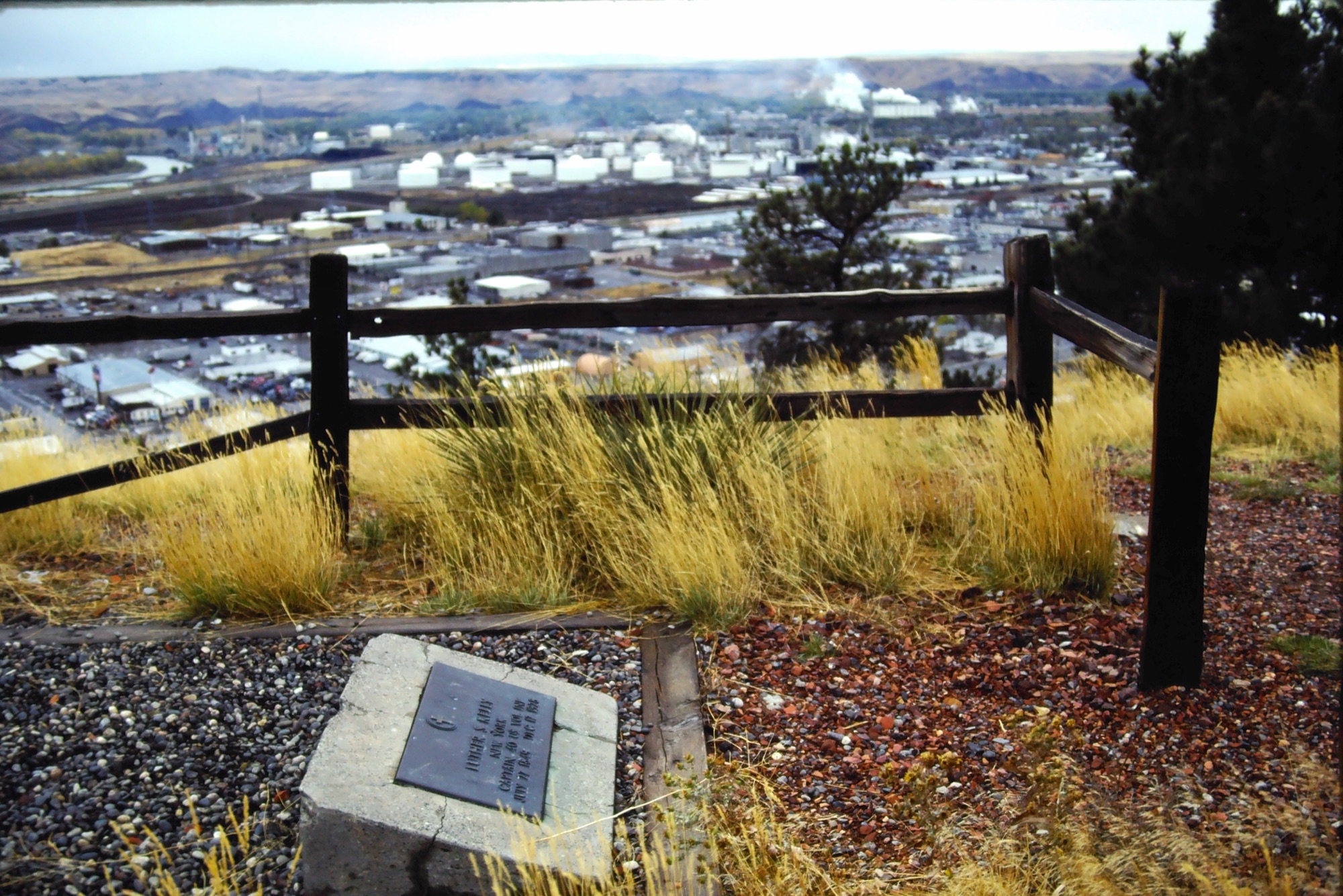
O’Donnell led the creation of both the monument to Luther “Yellowstone” Kelly (a project that now is getting a major renovation) and the monument to the Coulson, or “Foothill,” Cemetery.

yellowstone co billings boothill 4

yellowstone co billings boothill 5

In the 1920s, after his retirement as the chief of irrigation for the U.S. Bureau of Reclamation, O’Donnell took up a greater interest in local history.  He interviewed many of his fellow early citizens, creating the collection Montana Monographs that you can still read at the Parmly Billings Library, and taking steps to restore the forgotten Coulson cemetery and Kelly gravesite.

yellowstone co billings boothill 18

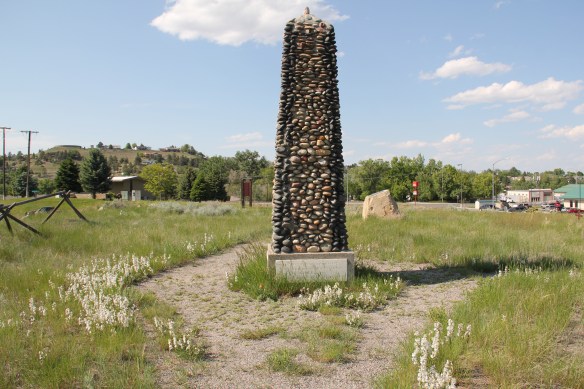
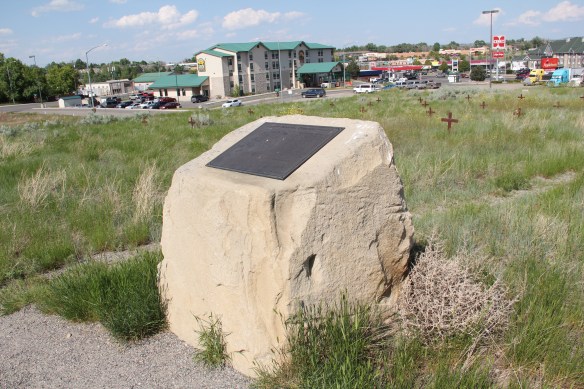
The obelisk monument made of river rock became the city’s initial historic site–or historic spot as the monument stated–and it fed right into the romance of the west as portrayed in movies, popular fiction, and radio:  the image of “Foothill,” where men died with their boots on, from gun fights or other stereotypical frontier violence.  

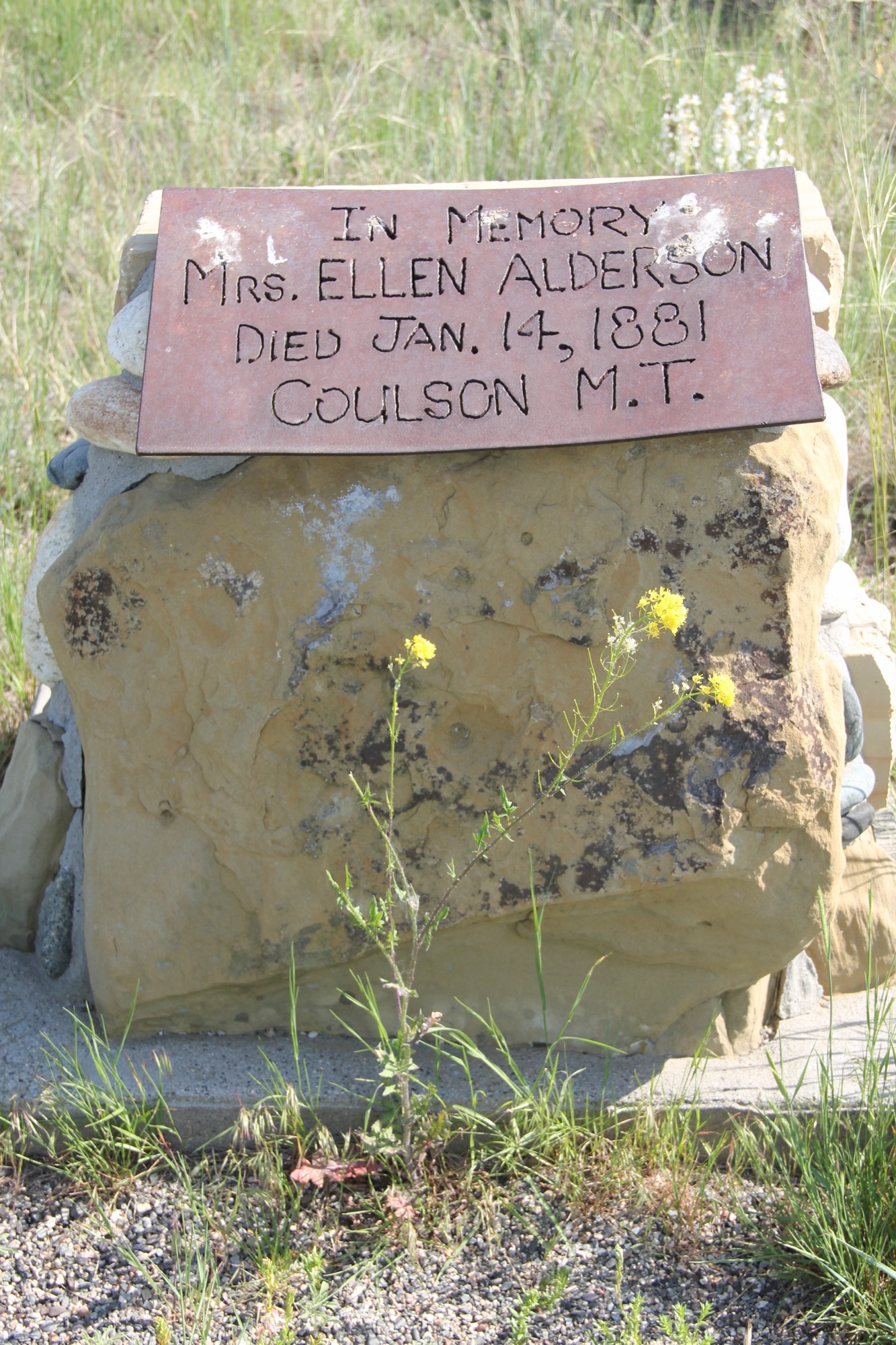
The reality was far different–most, such as Ellen Alderson, the wife of early merchant and hotel operator John Alderson, died from diseases, accidents, and not violence.

yellowstone co billings boothill 8

In the last 30 years, the sprawl of the modern city to the east has surrounded what was once a quiet, even forlorn space. Efforts from the city to provide improved parking and walkways in recent years are positive improvements at the cemetery.

The historic driving tours of Billings always include a stop, or at least a mention, of the Kelly grave and Boothill Cemetery.  But on the eastern side of town, along Central Avenue, is just as important of a historic cemetery, the Mountview Cemetery–which expanded c. 1920 out of the earlier Billings Cemetery, established during the town’s initial settlement in 1882.

Many visitors appreciate the beauty and landscaping at Mountview Cemetery but it seems that few consider it to be a historic site.  But to my mind, it is certainly the most significant historic cemetery in Billings for here lie the graves–many understated to be sure–of a group of civic capitalists who built not only Billings but led the development of the Yellowstone Valley in the late 19th and early 20th centuries.

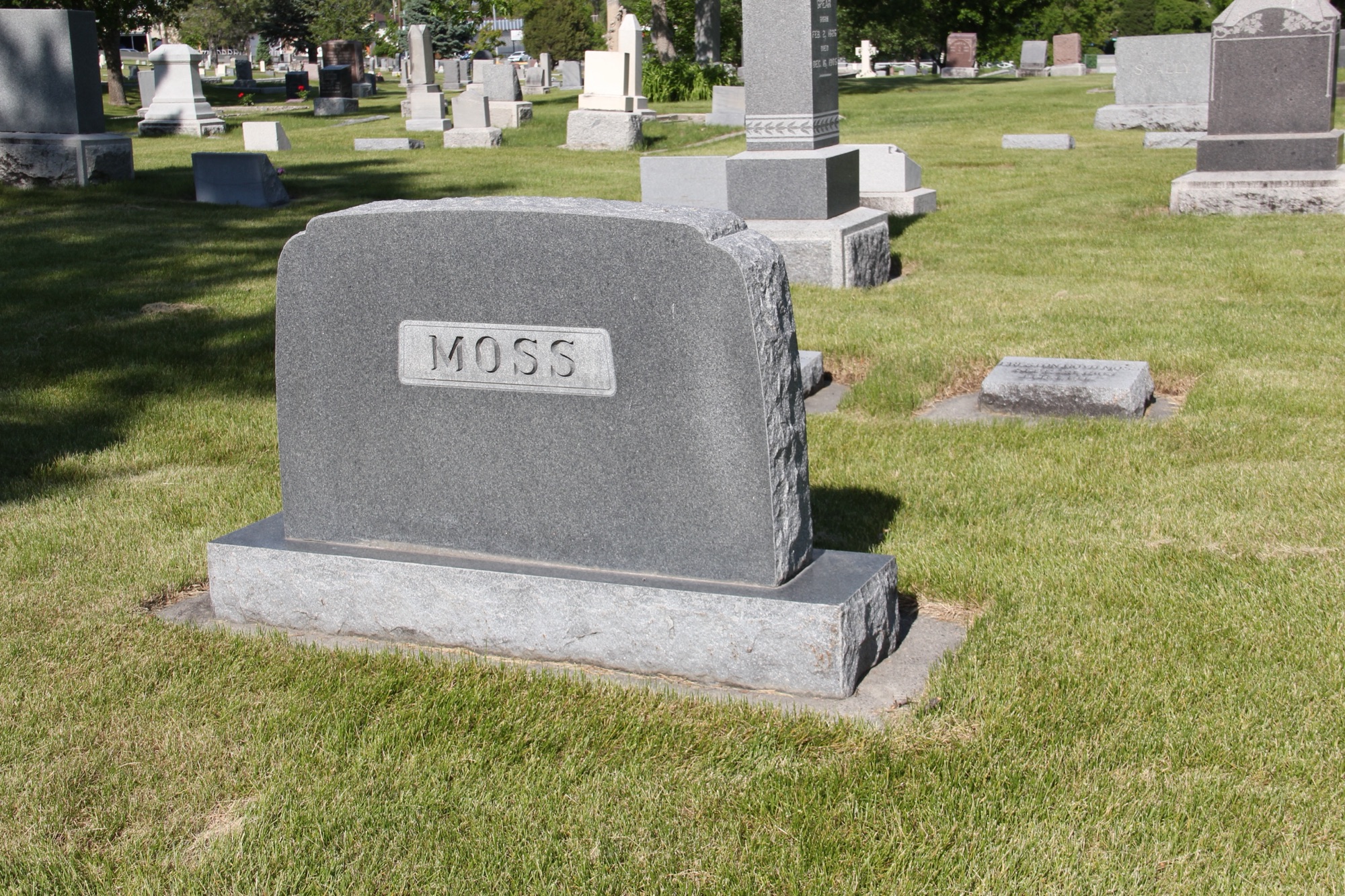
I.D. O’Donnell (d. 1948) is buried here as is his grand collaborator in the early 1900s Preston B. Moss (d. 1947)–their historic homes, both on the National Register of Historic Places, still stand next to each other in downtown Billings.

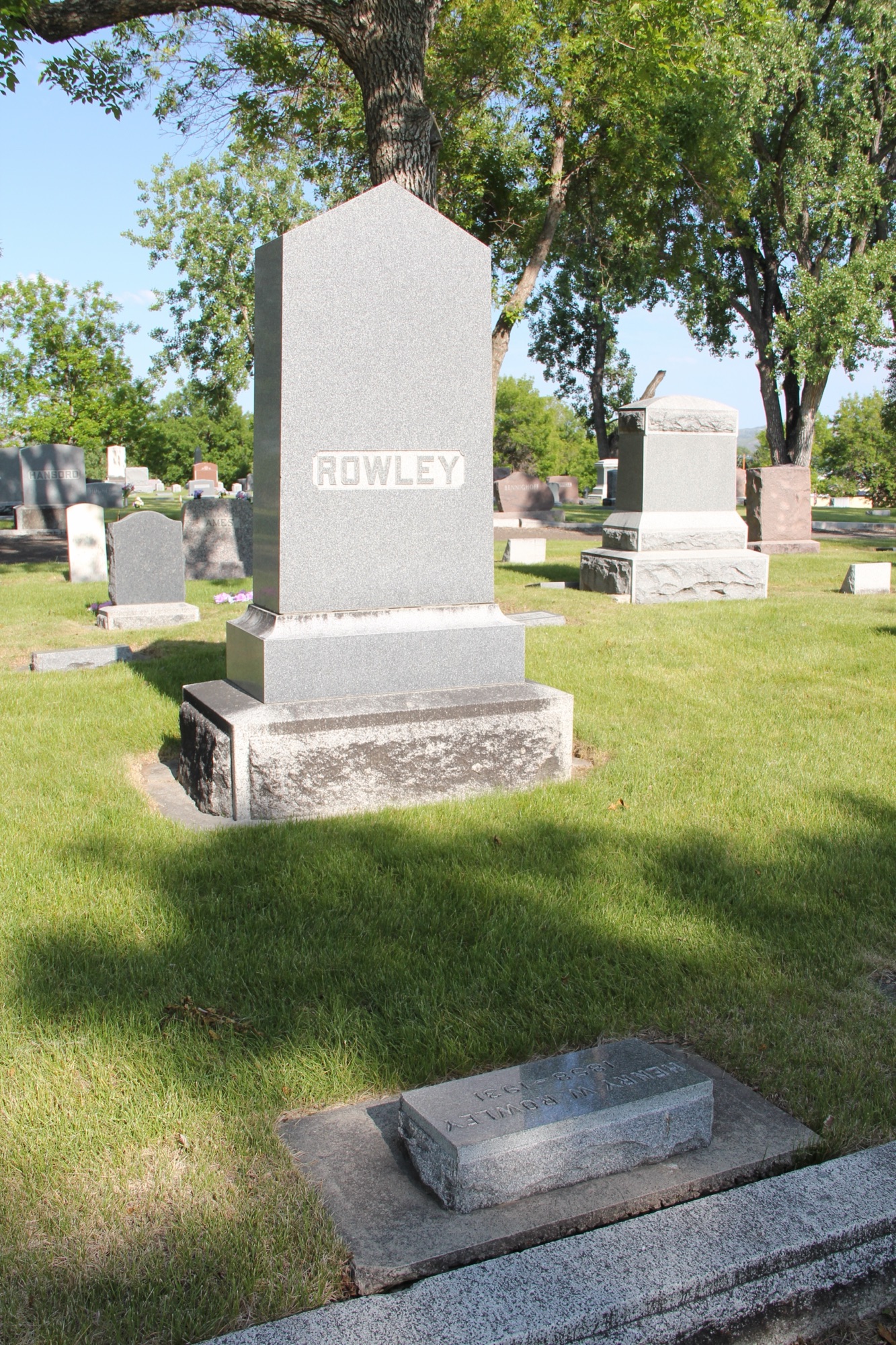
Another neighbor is the home of Henry W. Rowley, the engineer who came with the Minnesota and Montana Land Company to build the Big Ditch in 1882 and who stayed to work with his colleagues to build the city.

Albert L. Babcock was not tight, let’s say, with O’Donnell, Moss, and Rowley, who brought the Billings Sugar Company into existence in the first decade of the 20th century, but Babcock was a Republican political leader and major investor in his own right, as downtown landmarks attest.

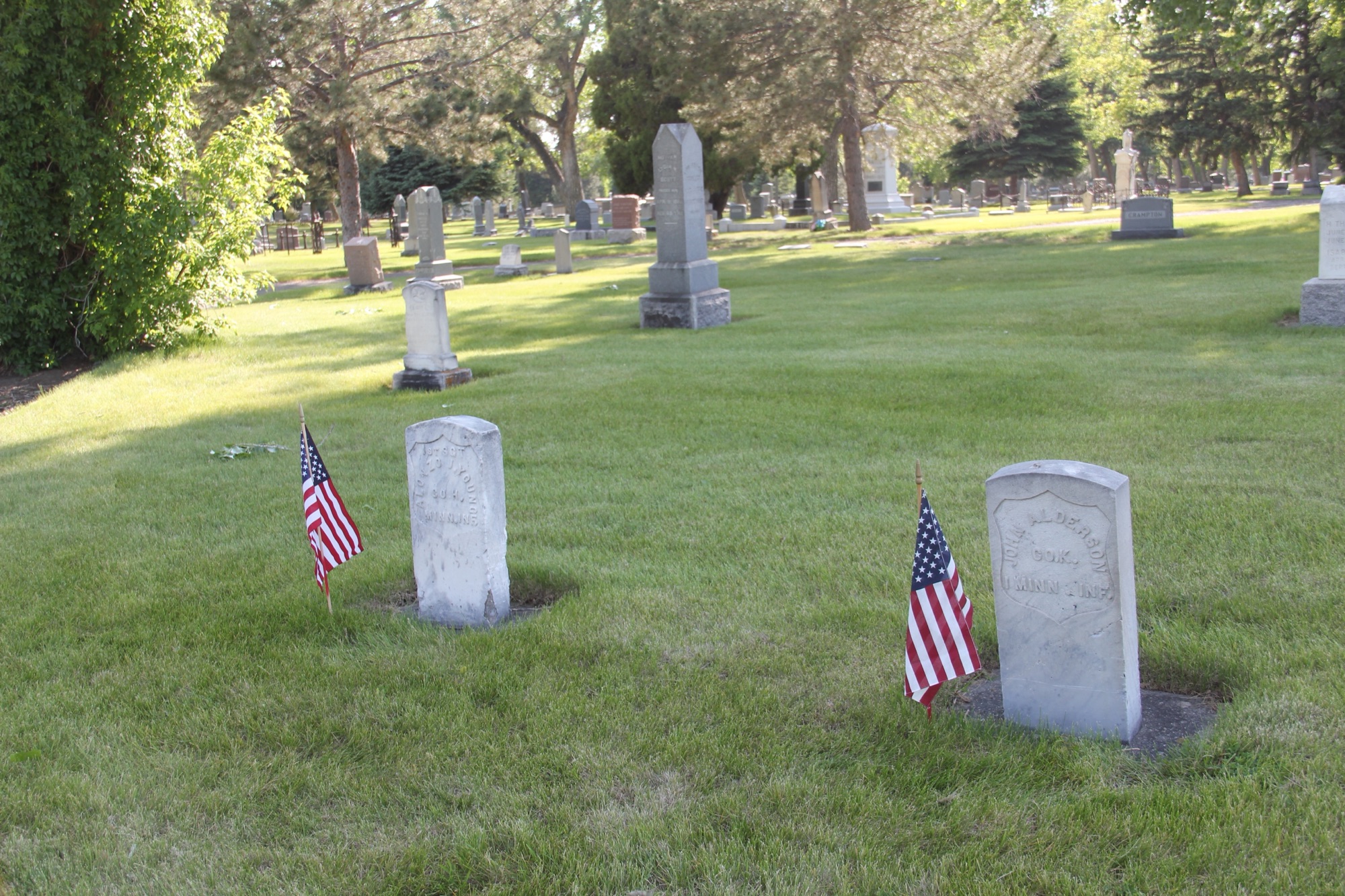
In the earlier Billings Cemetery you find the Civil War veterans markers for Alonzo Young, whose Young’s Point was an early Yellowstone River landmark (now approximately the location of Park City) and the previously mentioned John Alderson, who ran the National Hotel, the two-story log building that put Coulson “on the map” back in 1878. The contributions of Young and Alderson, buried here side by side, are forgotten today–which is truly unfortunate.

The defined family plots, either by property cast-iron Victorian fences or by low stone walls, are a key architectural feature of the earlier cemetery, as well as some of region’s famous stone carved Odd Fellows grave markers, such as that for the Bundys, located just beyond the grave of early settler Thomas McGirl.

Yellowstone Co Billings Mountview Cemetery 12This brief overview does not do justice to the  city’s historic cemeteries.  Certainly I gave Boothill consideration in the 1984-1985 and even wrote about it in both of my books on Billings history.  But Mountview is a historic landscape that only now I recognize–and I hope to do more exploration in the future.

Montana’s oil landscape

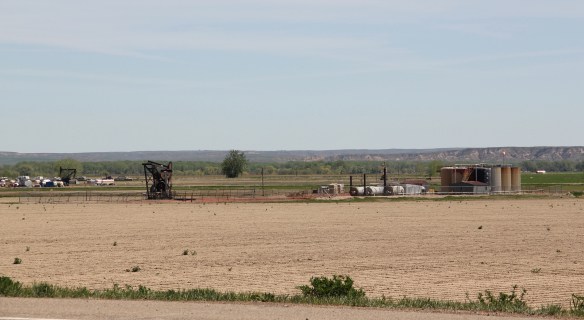
Fallon Co? MT 7 oil fieldThe last post addressed Montana’s famous ranching landscape.  Intermixed with the ranches, especially in the eastern third of the state, is a very different landscape of technology, one of pumps, storage facilities, pipelines, and refineries–the oil landscape of 20th and 21st century Montana.

Billings oil IMG_1352

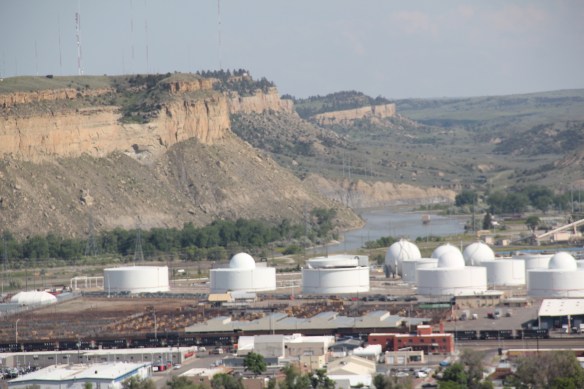
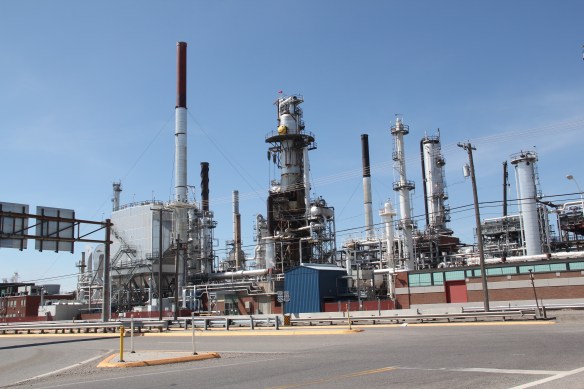
Billings is the largest city in Montana, and oil refineries along the railroad lines, are a major reason why.  At the beginning of the 20th century, Billings was not close to being the largest town in the Yellowstone Valley–both Glendive and Livingston held that honor.  But due to its railroad network, and the rise of oil from the 1940s onward, Billings had far surpassed any place in the Yellowstone, and, in fact, had become the largest city of the northern plains.  Go up on the bluffs overlooking the city and it is easy to see how oil has impacted this place.

Yellowstone Co Billings from rims 13 oil

Yellowstone Co Billings from rims 19 oil

Billings boomed in the mid-20th century because of oil–and the impact spread throughout the county.  The former Cenex refinery at Laurel–the next railstop to the west–dominates the town’s exit on Interstate Highway I-90.


Yellowstone Co Laurel Refinery 2

img_3046

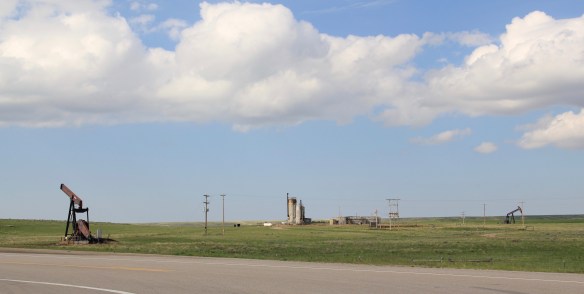
Yellowstone County is the distribution center for oil and petroleum in Montana.  The production areas can be found in almost any eastern county, where companies have established wells that pump crude non-stop–there are few oil fields here but plenty of pumps within the fields of Montana.

Musselshell Co US 87 oil wells at MT 244

Sheridan Co Homestead oil well

Richland Co Hwy 200 to Fairview 2 oil

Richland Co Hwy 200 to Fairview 1 oil

The number of pumps stretched across the landscape amazed me during the 1984-1985 state historic preservation plan fieldwork.  I didn’t really think of oil when I thought about Montana back then. The focus 30 years ago was not on the transformative boom that had begun ten years earlier but we did know enough to consider the earlier boom from the 1920s which began at a place called Cat Creek in what became Petroleum County in central


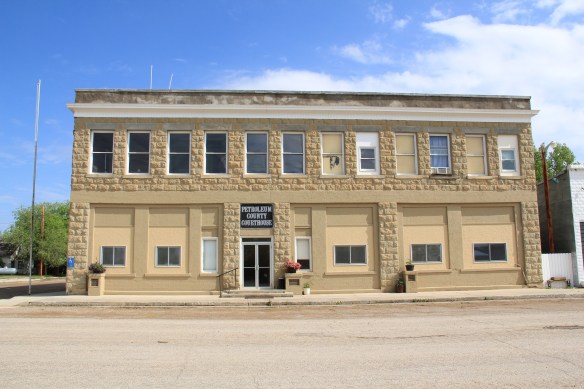
Petroleum Co Winnett courthouse 2

Petroleum County Courthouse in Winnett is listed in the National Register.

Montana to the similar 1920s boom, which lasted a good deal longer, in east side of the Rockies next to the Canadian border in Toole and Glacier counties.  Cut Bank, the seat of

cut-bank-sign

Glacier County, still bragged about its role as the “north oil center” in 1984.  To the south of Cut Bank at Kevin, you can still find both active and historic resources associated with the region’s oil production.

Toole Co Kevin 7 oil

Toole Co Kevin 8 oil

The towns of Kevin and Oilmont, however, have lost hundreds of residents since the boom–their deteriorating buildings tell a common Montana story of boom and bust, the patterns of extractive industries everywhere.

Toole Co Oilmont school

The former Oilmont School.

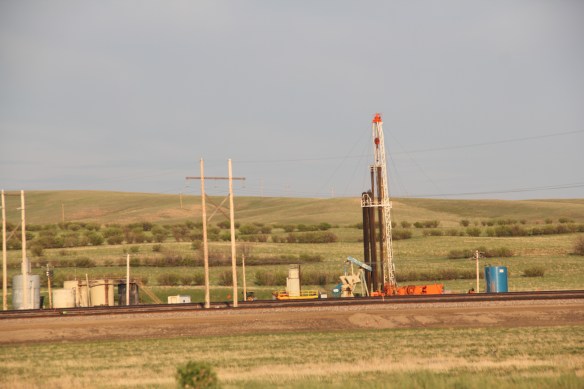
Now I wonder what will be the fate of the sudden boom towns of the fracking excitement of the early 21st century.  When I planned my fieldwork for the revisit to the Montana landscape, I decided that I must go to the eastern counties first–places like Plentywood, Sheridan, Culbertson, etc., because they would be the next to transform due to the Baker

Roosevelt Co Bainville fracking

field expansion.  Fracking I found–like in Roosevelt County above–but fractured communities–not so much, as I have discussed in earlier posts.  And now the boom has subsided–for how long? International markets will decide.

Toole Co Kevin oil storage

No matter what happens, Montana’s oil landscape will remain, past and present, and become one of the layers of history that speaks to how technology and international markets shaped the Big Sky Country.


Ranches and the Montana landscape


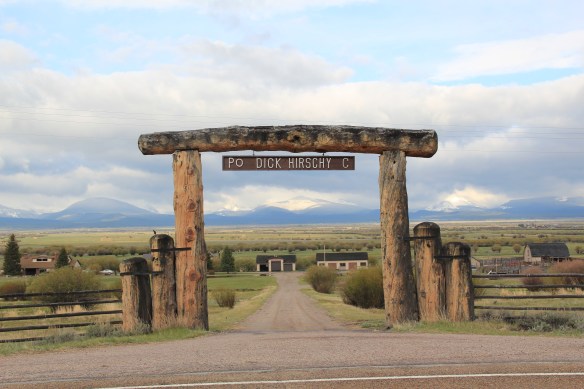
Hirschy Ranch, Big Hole Valley, MT 278, 45 mmHere is a property category that could be, probably should be, a blog of its own–the ranching landscape of Big Sky Country.  Historic family ranches are everywhere in the state, and being of rural roots myself, and a Tennessee Century Farm owner, the ways families have crafted their lives and livelihood out of the land and its resources is always of interest.

Wibaux Co Wibaux ranch house 1988

Wibaux ranch house, 1985.

When I carried out the 1984-1985 fieldwork for the Montana state historic preservation plan, a handful of ranches had been preserved as museums.  On the eastern end of the state in Wibaux was the preserved ranch house of Pierre Wibaux, one of the 1880s cattle barons of eastern Montana and western North Dakota.  The ranch house today remains as a historic site, and a state welcome center for interstate travelers–although you wish someone in charge would remove the rather silly awning from the gable end window.
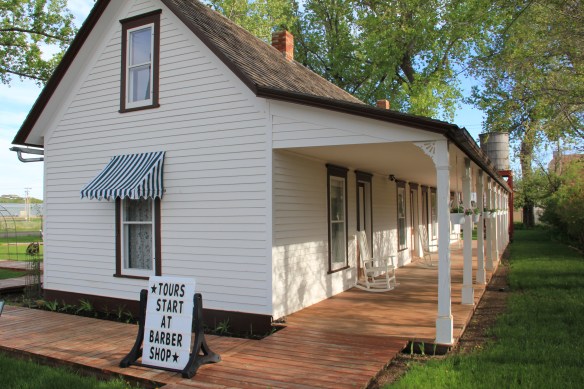
Wibaux Co Wibaux Pierre Wibaux ranch NR 1Preserving merely the ranch house, and adding other period buildings, is one thing.  The massive preserved landscape of hundreds of acres of the Grant-Kohrs Ranch in the western end of Montana is a totally different experience. This National Park Service site

not only preserves one of the earliest settlement landscapes in the state it also shows how successful ranches change over time. John Grant began the place before the Civil War: he was as much an Indian trader than ranch man.  Grant Kohrs however looked at the rich land, the railroad line that ran through the place, and saw the potential for becoming a cattle baron in the late 19th century.  To reflect his prestige and for his family’s comfort, the old ranch house was even updated with a stylish Victorian brick addition. The layers of history within this landscape are everywhere–not surprisingly. There is a mix of 19th and 20th century buildings here that you often find at any historic ranch.

When I was working with the Montana Historical Society in 1984-1985 there were two additional grand ranches that we thought could be added to the earlier preservation achievements.  Both are now landmarks, important achievements of the last 30 years.

Bitterroot Stock Farm painting at Ravalli Co Courthouse 1The Bitter Root Stock Farm, established in 1886 by soon-to-be copper magnate Marcus Daly outside of Hamilton, came first.  I can recall early site visits in 1985–that started the ball rolling but the deal wasn’t finalized for several years.  All of the work was worth it.

Here was one of the grand showplace ranches of the American West, with its own layers of a grand Queen Anne ranch house (still marked by the Shingle-style laundry house) of Daly’s time that was transformed into an even greater Classical Revival mansion by his Margaret Daly after her husband’s death.  It is with us today largely due to the efforts of a determined local group, with support from local, state, and federal governments, a group of preservation non-profits, and the timely partnership of the University of Montana.

Daly Mansion by A.J. Gibson


The second possibility was also of the grand scale but from more recent times–the Bair Ranch in Martinsdale, almost in the center of the state. Charles Bair had made his money in sheep and wise investments.  His daughters traveled the world and brought treasures home to their Colonial Revival styled ranch house.  To get a chance to visit with Alberta Bair here in the mid-1980s was a treat indeed.

Once again, local initiative preserved the ranch house and surrounding buildings and a local board operates both a house museum and a museum that highlights items from the family’s collections.

The success of the Bitter Root Stock Farm and the Bair Ranch was long in the making, and you hope that both can weather the many challenges faced by our public historic sites and museums today.  We praise our past but far too often we don’t want to pay for it.
Tash Ranch, 1200 MT 278 Hwy, Dillon

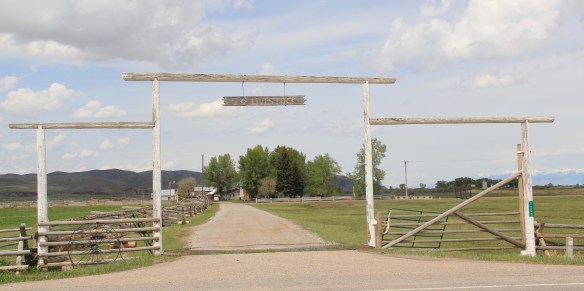
That is why family stewardship of the landscape is so important.  Here are two examples from Beayerhead County.  The Tash Ranch (above and below) is just outside of Dillon and is listed in the National Register of Historic Places.  But is also still a thriving family ranch.

The same is true for the Bremmer Ranch, on the way to Lemhi Pass.  Here is a family still using the past to forge their future and their own stories of how to use the land and its resources to maintain a life and a culture.

MT 324, mm 23, log ranch later visited with group

One family ranch that I highlighted in my book, A Traveler’s Companion to Montana History (1986), was the Simms-Garfield Ranch, located along the Musselshell River Valley in Golden Valley County, along U.S. Highway 12.  This National Register-property was not, at

Golden Valley Co Ryegate Simms-Garfield Ranch NR 3first glance, architecturally magnificent as the properties above.  But in its use of local materials–the timber, the rocks from the river bluffs–and its setting along a historic road, this ranch is far more typical of the Montana experience.

Similar traditions are expressed in another way at a more recent National Register-listed ranch, the Vogt-Nunberg Ranch south of Wibaux on Montana Highway 7. Actively farmed from 1911 to 1995, the property documents the changes large and small that happened in Montana agriculture throughout the 20th century.

Wibaux Co Vogt-Nunberg Ranch NR MT 7 4

The stories of these ranches are only a beginning.  The Montana Preservation Alliance has done an admirable job of documenting the state’s historic barns, and the state historic preservation office has listed many other ranches to the National Register.  But still the rural landscape of the Big Sky Country awaits more exploration and understanding.
 

Headlines and Kremlin, Montana that is

Multiple news stories and headlines at the end of 2016 spoke of the federal government’s warm relationship with those residing in the Kremlin, Moscow, Russia.  Have no idea of what the federal government’s new relationship with the Kremlin in Moscow might mean, but it did get me thinking that, perhaps, on the off chance, it might bring new federal attention to the Montana Kremlin–a tiny Great Northern Railroad town in Hill County.

Hil Co Kremlin 7 sign

The federal government first impacted this place in 1911 after it threw open the old Fort Assiniboine reserve to homesteading.  The railroad had maintained a stop here as early as 1901 but with the federal opening of new land, permanent settlers came to carve out their new homesteads.

Hill Co Kremlin 2Kremlin never grew to be much, perhaps 300 residents at its height (around 100 today), not because it never participated in the region’s agricultural boom–the decaying elevators speak to prosperity but a tornado and then drought doomed the town to being a minor player along the Great Northern main line.

During the Great Depression, the federal government made its second impact on the town.   New Deal agencies installed a new water system. Funding from the Public Works Administration led to the construction of a new school in 1937-38, an institution, with changes, that still serves the community.


Hil Co Kremlin school

Hil Co Kremlin school 1

Hil Co Kremlin possible WPA kitchen?

I have wondered if this separate building on the school yard was built as the lunchroom–it is similar to lunchroom buildings I have found in the South, or was it built as a teacher’s residence.  You find that in the northern plains.

The early history of Kremlin is marked by one architecturally interesting building–this rectangular building covered with pressed tin–when new it must have gleamed in the

Hil Co Kremlin 5 pressed tin

sun.  Note the classical cornice at the top of the roof line–this entire decorative scheme belongs more to the late 19th century but here it is, in Kremlin, from the 2nd or 3rd decade of the 20th century.

Hil Co Kremlin 6 pressed tin

Kremlin’s Lutheran Church (below) in 2013 was holding services every other week in the month, while the Methodist (?) Church had already seemingly closed its doors.  Religious freedom thrives in Montana’s Kremlin, probably not so much in that other Kremlin.

Hil Co Kremlin Lutheran Church

Hil Co Kremlin check notes

Nor would that other Kremlin in the past have cared a whit about the Montana Farmers Union, which has shaped the life and economy of Kremlin and its neighbors for the decades.  That other Kremlin, however, would like the oil………

Hil Co Kremlin 3

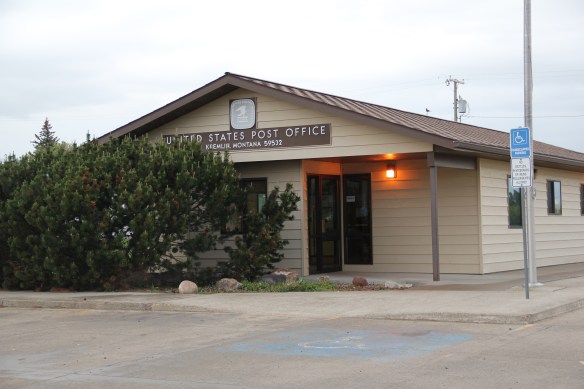
The last time Kremlin directly felt the hand of the federal government was in this decade, when the U.S. Postal Service, which had been building new small-town facilities like the one in Kremlin below for a decade, announced that it needed to close hundreds of rural post offices.

Hill Co Kremlin post office

Kremlin residents joined their neighbors in protest: and the federal backed down. When I last visited Kremlin 3 years ago, I mailed a letter from its post office.  Persistence, commitment, community mark the Montana Kremlin–maybe that’s why I would rather hear about this place in Hill County than that other one, which suddenly new decision makers are courting.


Lincoln and its log traditions

img_7245One of my favorite weekend drives, when I lived in Helena over 30 years ago, was to head north, via the Flesher Pass (above) and Montana Highway 279, and hit the very different landscape of Montana Highway 200 (below) and eastern end of the Blackfoot Valley.

Lewis & Clark Co MT 200 W to LincolnThe destination was breakfast, often at Lambkin’s, a family business that, to my delight, still operates when I visited in 2015.  Lambkin’s is one of those classic small town Montana eateries, great for breakfast, and not bad for a burger and pie later in the day.  The town is

Lincoln, known back in the early 1980s as a logging town, and known better today as the location of  Ted’s Kaczynski shack, from where as the Unabomber, he brought death and wrecked havoc on the lives of his fellow citizens, in the 1980s and 1990s.

Obviously Ted and I did not travel in the same circles.  He was a hermit who rarely engaged with anyone.  Lincoln is totally different:  a friendly town that invites repeat visits–if it was not breakfast for me, it was a stop at the Wilderness Bar.  Good times, open, interesting people in this town of several hundred is how I recall Lincoln.

Lewis & Clark Co Lincoln library

Lincoln in 2015 is clearly a place where the population has grown–over 1,000 now, which is reflected in the recently added public buildings, be it the town Library and the Chamber of Commerce, but more impressively the Lincoln Public School.

Here you see the future linked to the town’s logging past, and how log architecture has now become such a defining feature of Lincoln’s roadside.  There was always a log, rustic theme here but the additions of the last 20 years give not only a frontier aesthetic to the town, but reinforces its identity as place where people and the forests, in this case the surrounding Helena National Forest, have learned to co-exist.

Lewis & Clark Co Lincoln lodge

The log/ rustic theme of the new post office is rare in Montana–and I am grateful that it is not the standardized designed rectangular box that the postal service has built in too many Montana towns in the last generation.  The log aesthetic of the buildings are further enhanced by various log sculptures set in and around the town.  They too harken to the imagined past of the frontier era of the late 19th century.

Lewis & Clark Co Lincoln 9

On the eastern end of Lincoln, however, is emerging an entirely new, and welcome, tradition:  the Sculpture in the Wild park.  A vision of Rick Dunkerly, the park invites artists from across the country and around the world to come to Lincoln and  to leave, on


getlstd-property-photo

Source: Wikipedia

the ground, their own vision of the interplay between environment, culture, and people in the Blackfoot Valley.  The park idea is breathtaking–and just getting underway when I visited in 2015.  But it is promising indeed, and a much better way to identify and think about what the people of Lincoln, Montana, are all about–than a crazed PhD who saw little hope in the future.


Montana’s Best Restaurants–in a historic building

img_5827

I take pride in my effort to travel the state of Montana and listen to its residents to learn about its history and its special places.  And I take great pride in creating this WordPress site where I can share my findings with you.  But back here in the south, few ask me about Montana history–most want to know where to go to eat and drink when they encounter the Big Sky Country.  So to get into the holiday spirit(s) and have a good cheer (just wish there was some place in Tennessee to get Tom and Jerry mix), I will offer my favorite Montana restaurants–but only those in historic buildings.

I have already spoken about many favorites, such as the Grizzly Bar in Roscoe (above) and the Oxford Bar and Double Front Cafe in Missoula, the M&M Bar and Cafe in Butte, the Izaak Walton in Essex, and especially Chico Hot Springs in Pray.  If you have only one stop in Montana, make it Chico–I always do.

The Izaak Walton is the only “new” restaurant in the bunch, the rest being mainstays of my field work in 1984-85.  But they are only the tip of the iceberg–and I am not talking salads either.

Nope I am talking beef and booze, be in at the Wagon Wheel in Drummond (above), or the much more fancy digs of the Montana Club in Helena.  Whatever you do in Montana, you don’t want to miss the beef. It would be a Dirty Shame if you did (thank you, Yaak!, below)

There are the classic supper club steakhouses of central Montana such as Eddie’s Supper Club, a stone’s throw from the gates of Malstrom Air Force Base, and Borrie’s, nestled in the Black Eagle neighborhood, both in Great Falls.

Throughout rural Montana, it is the classic cafe, always good for breakfast but really superb for pie.  And you don’t want to miss Montana pie, be it from Glen’s in Florence on the western end of the state to the Wagon Wheel Cafe in Choteau to the Dell Cafe (in an old school house) in the southwest corner to the Madison Valley’s Ennis Cafe to the Eat Cafe in White Sulphur Springs (right in the middle of the state). Indeed my favorite pie stop was once the small cafe at the Dude Rancher Lodge in Billings–but I understand that place has changed in recent years.

What has really been great to experience over the last 30 years is the number of “fine” dining places to come about.  In Helena, back in the early 1980s, it was On Broadway, still going strong today.

masonic-hall-helenaBozeman has boomed with many new chef-driven restaurants but of the downtown establishments my favorite for good fresh, creative food remains the Co-Op Downtown nestled within the Gallatin Block, a historic building, tastefully renovated, in the downtown historic district.

Gallatin Co Bozeman Main St historic district 26

In Billings, it is Walker’s Grill–a rather newcomer on the stage but now a staple of downtown life in Billings, and a big part of its re-vitalization in the 19980s, just as its neighbor to the east, the Rex Hotel restaurant, was the first really successful adaptive reuse project on Montana Avenue, the city’s old railroad corridor.

Another railroad era hotel that has gone through various restorations before meeting a happy conclusion is the magnificent Grand Union Hotel and its bar/ restaurant in Fort Benton.  Here is a place worth a long drive–for there is so much to see and explore in this mid-19th century Montana place.

img_8791

I have already ranged across a good part of the state–what about the eastern third, that vast landscape north and east of Billings.  Winnett on Montana Highway 200 has a great local bar/ steakhouse (below) while for an endless abundance of eastern Montana fare img_0252head to Miles City, which is the place to go if you wonder, still, “where’s the beef” and a city that is the proud home of the famous Montana Bar.

img_7005

Oh yes, let’s go way up north to the state’s northeast corner and take in the Fort Peck Hotel and its equally good lounge and restaurant.  Here is a New Deal era building, set

img_8109within New Deal landscape that forever changed the look of this region in the 1930s.  Locals and tourists mix together–because the hotel is the only place to go, unless you want to backtrack to Glasgow and check out Sam’s Supper Club on U.S. Highway 2, and its equally neat 1960s roadside look.

img_7889

Ready to go–hope so.  At least everyone is now in the holiday mood for the feasting to come.  Happy holidays, and thanks for checking out my explorations into historic Montana.