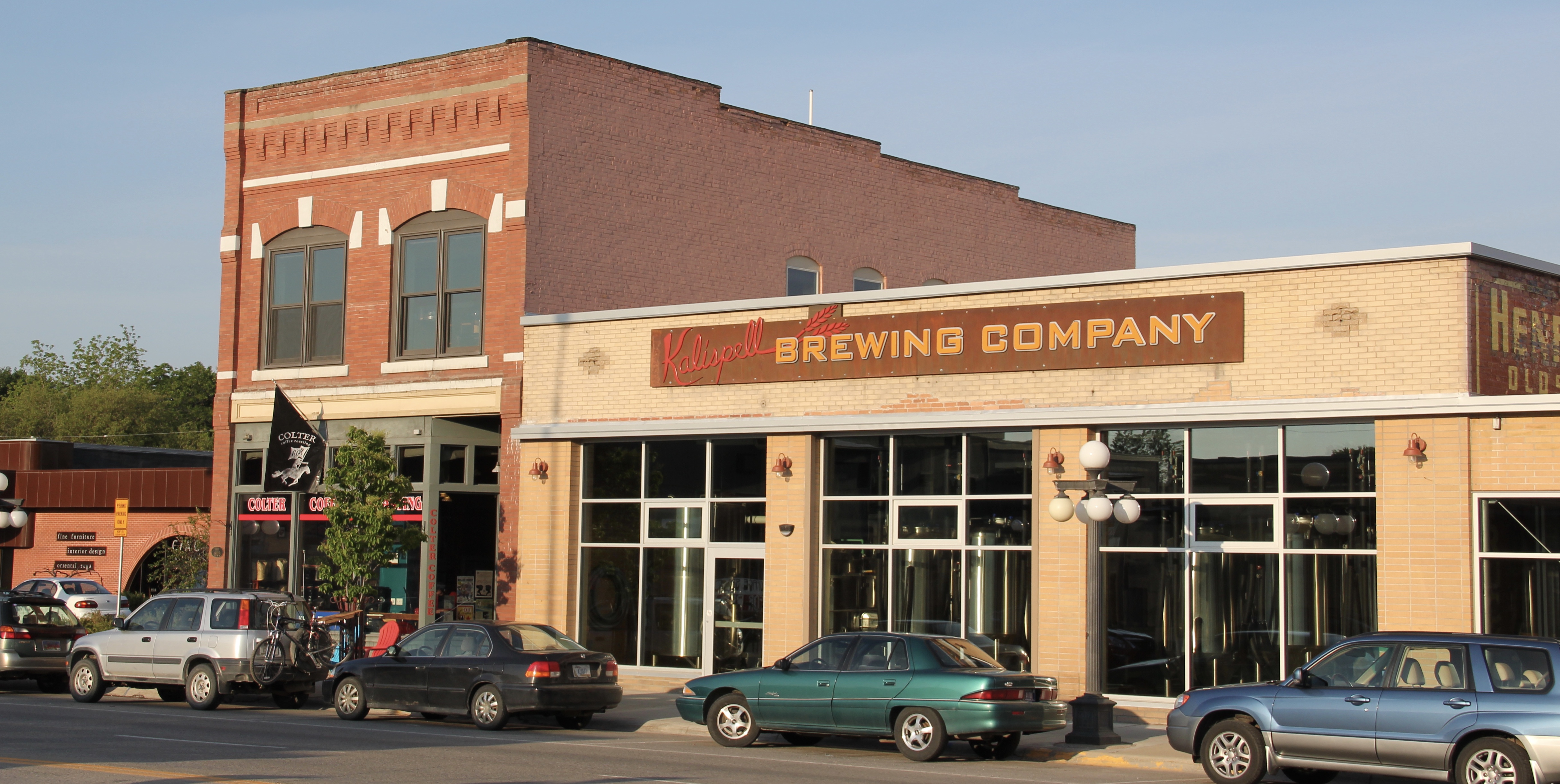
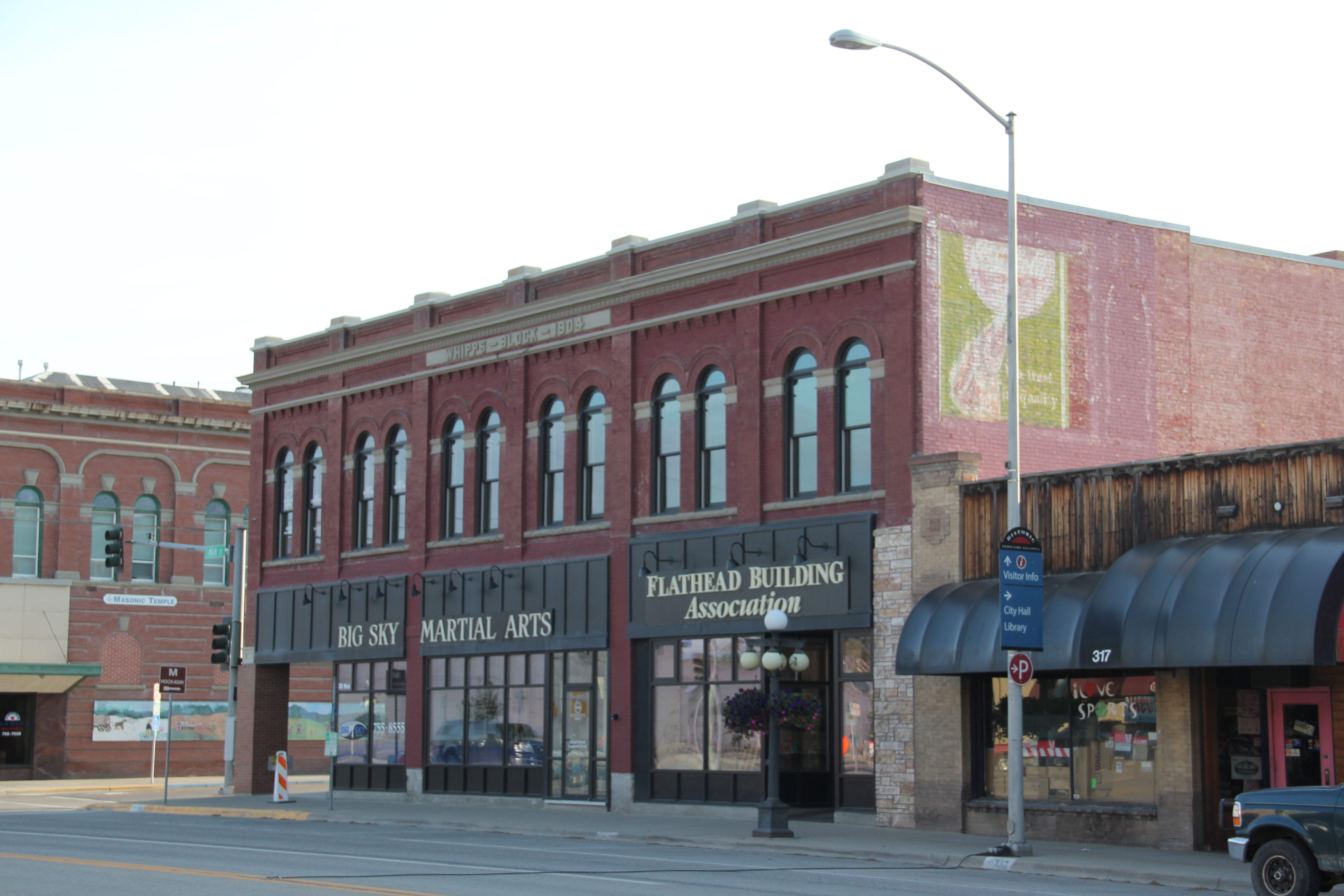
 Kalispell’s Main Street–the stem of the T-plan that dates to the town’s very beginning as a stop on the Great Northern Railway–has a different mix of businesses today than 30 years ago when I visited during my state historic preservation plan survey. It also now is a historic district within National Register of Historic Places, noted for its mix of one-story and two-story Western Commercial style businesses along with large historic hotels and an opera house for entertainment.
 The Opera House, and I’m sorry you have to love the horse and buggy sign added to the front some years ago, dates to 1896 as the dream of merchant John MacIntosh to give the fledging community everything it needed. On the first floor was his store, which over the years sold all sorts of items, from thimbles to Studebakers. The second floor was a community space, for meetings, a gymnasium, and even from a brief period from 1905 to 1906 a skating rink. In this way, MacIntosh followed the ten-year-old model of a much larger building in a much larger city, the famous Auditorium Building in Chicago, providing Kalispell with a major indoor recreation space and landmark. Allegedly over 1000 people attended a performance of Uncle Tom’s Cabin soon after the opening.
Another highlight of the historic is the Kalispell Grand Hotel (1912), designed by local architect Marion Riffo and constructed by B. B. Gilliland, a local builder. Designed not only as a railroad hotel for traveling “drummers,” it also served as a first stop for homesteaders flooding into the region in that decade. Montana writer Frank B. Linderman was the hotel manager from 1924 to 1926, and his friend western artist Charles M Russell visited and stayed at the hotel in those years. This place, frankly, was a dump when I surveyed Kalispell in 1984-1985 but five years later a restoration gave the place back its dignity and restored its downtown landmark status.
 The Alpine Lighting Center dates to 1929 when local architect Fred Brinkman designed the store for Montgomery Ward, the famous Chicago-based catalog merchant. Its eye-catching facade distinguished it from many of the other more unadorned two-part commercial blocks on Main Street.
My favorite Main Street building is probably the cast-iron, tin facade over a two-story brick building that now houses an antique store. It was once the Brewery Saloon (c. 1892). This is a classic “Western Commercial” look and can be found in several Montana towns.
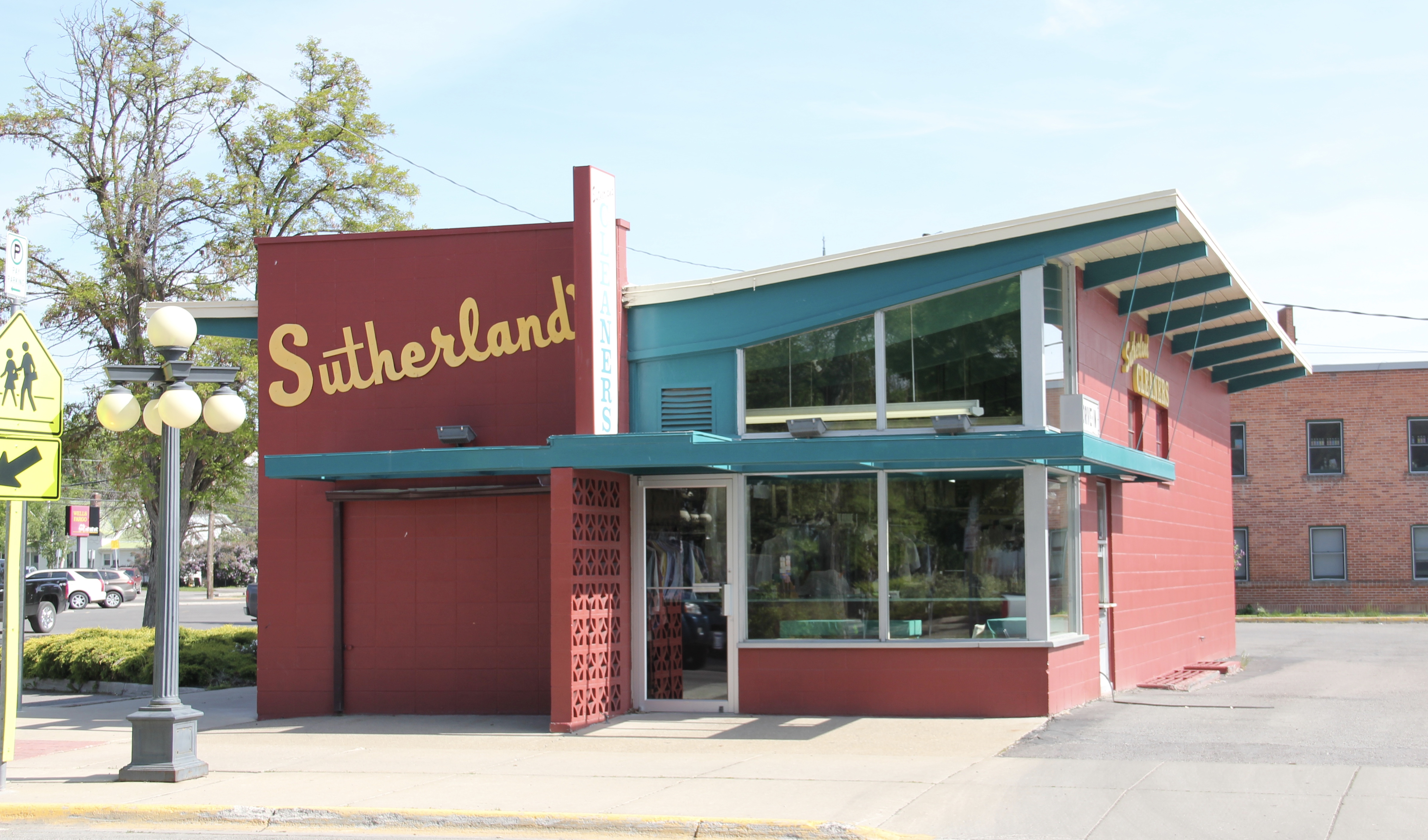
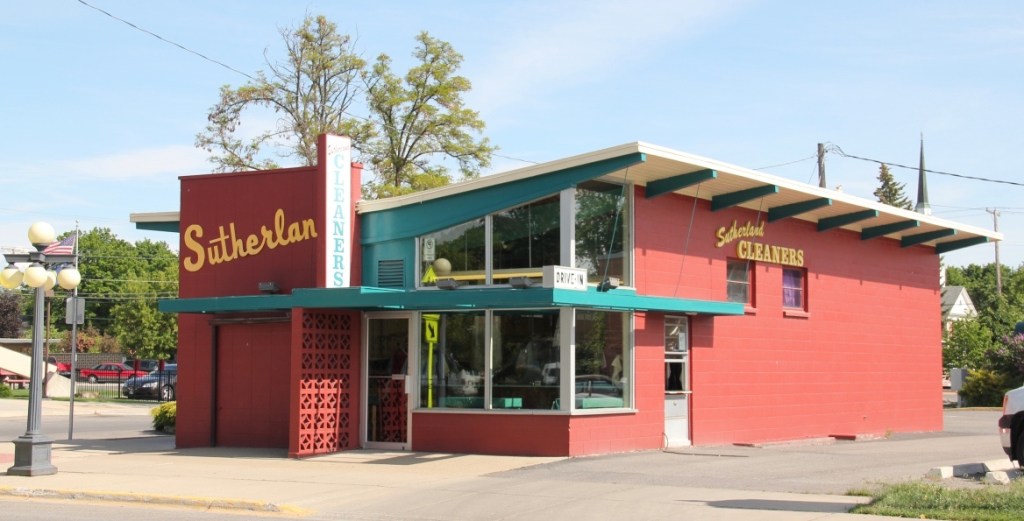
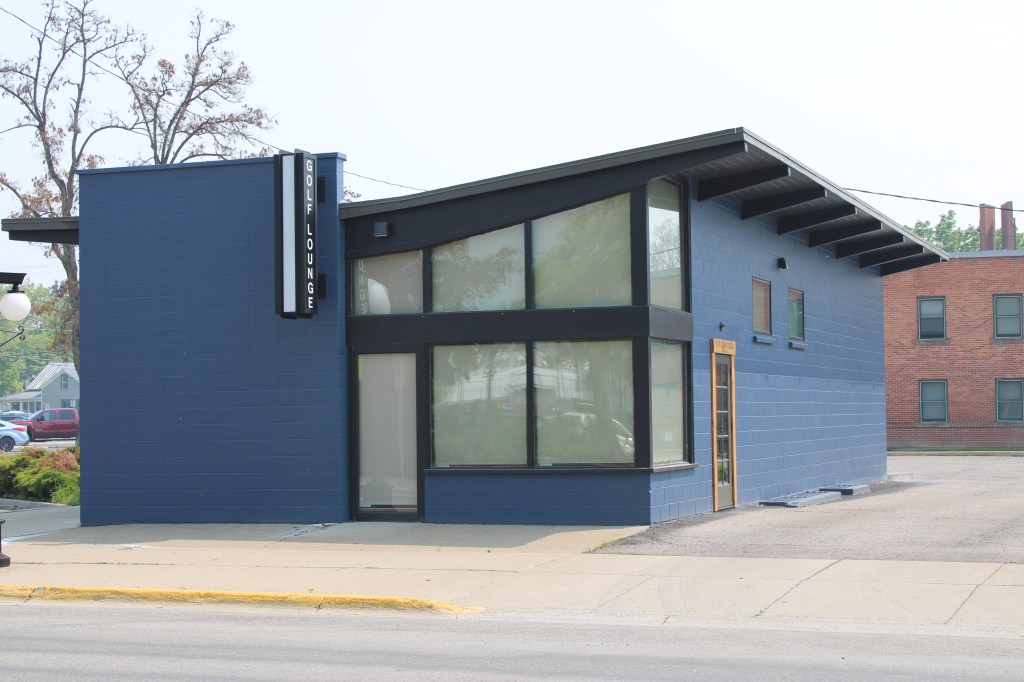
Main Street defines the heart of the business district. Along side streets are other, more modern landmarks. Let me emphasize just a few favorites, starting with the outstanding contemporary design of the Sutherland Cleaners building, located on 2nd Street, the epitome of mid-20th century Montana modernism. It is such an expressive building but of course in 1984 it was “too recent” for me to even note its existence.

At least I had enough good sense to note the existence of its neighbor, the Art Deco-styled Strand Theater (1927). I enjoyed a movie there in 1984–and the theater kept showing movies until 2007.
The preservation of the Strand Theater, and the other downtown historic theater building, the Classical Revival-styled Liberty Theater (1920-21) by Kalispell architect Marion Riffo, is the work of the Fresh Life Church, which owns and uses both buildings to serve its congregation and the community.
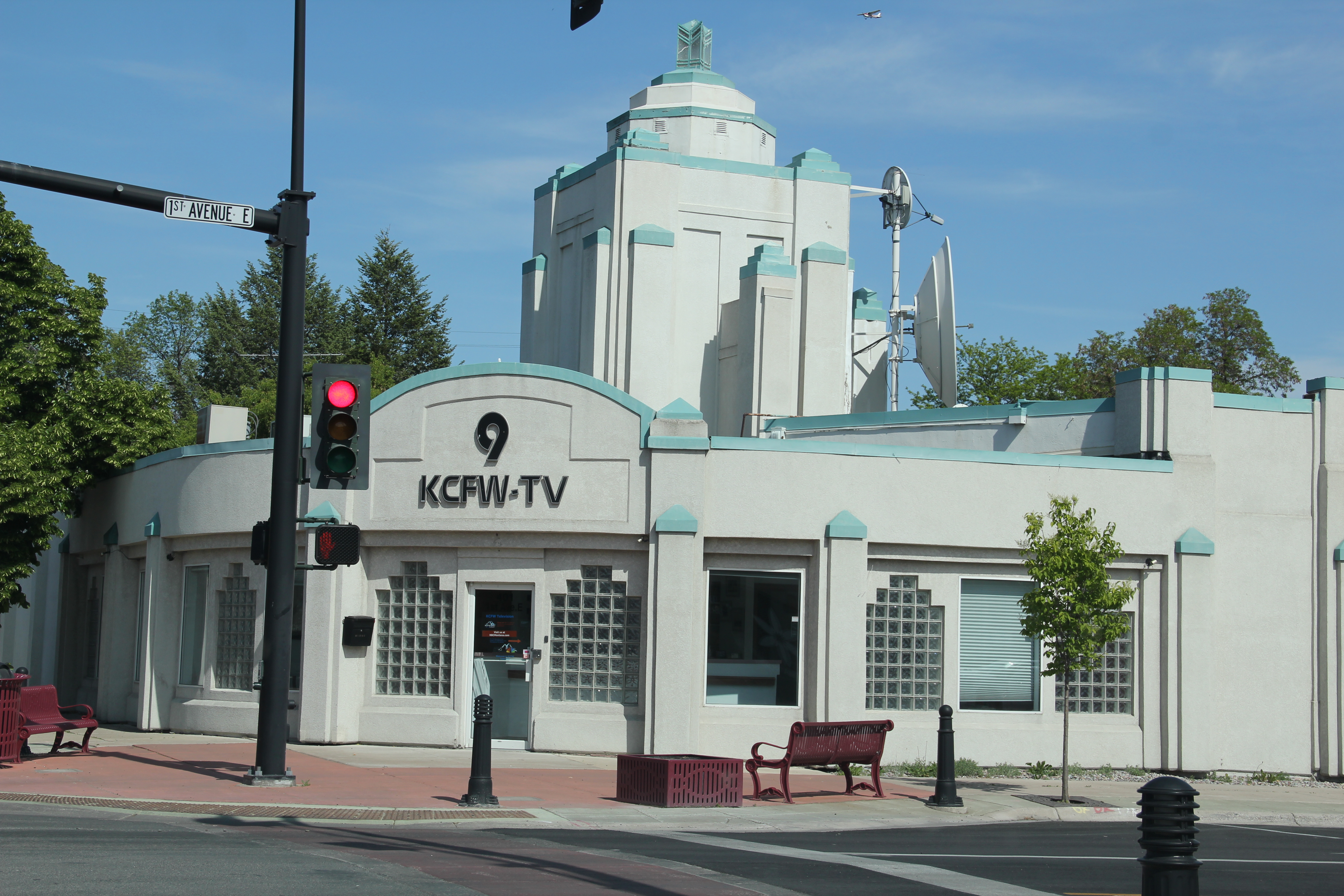
Another modernist favorite is a Fred Brinkmann-inspired design, the flamboyant Art Deco of the historic City Garage (1931), now home to local television station.
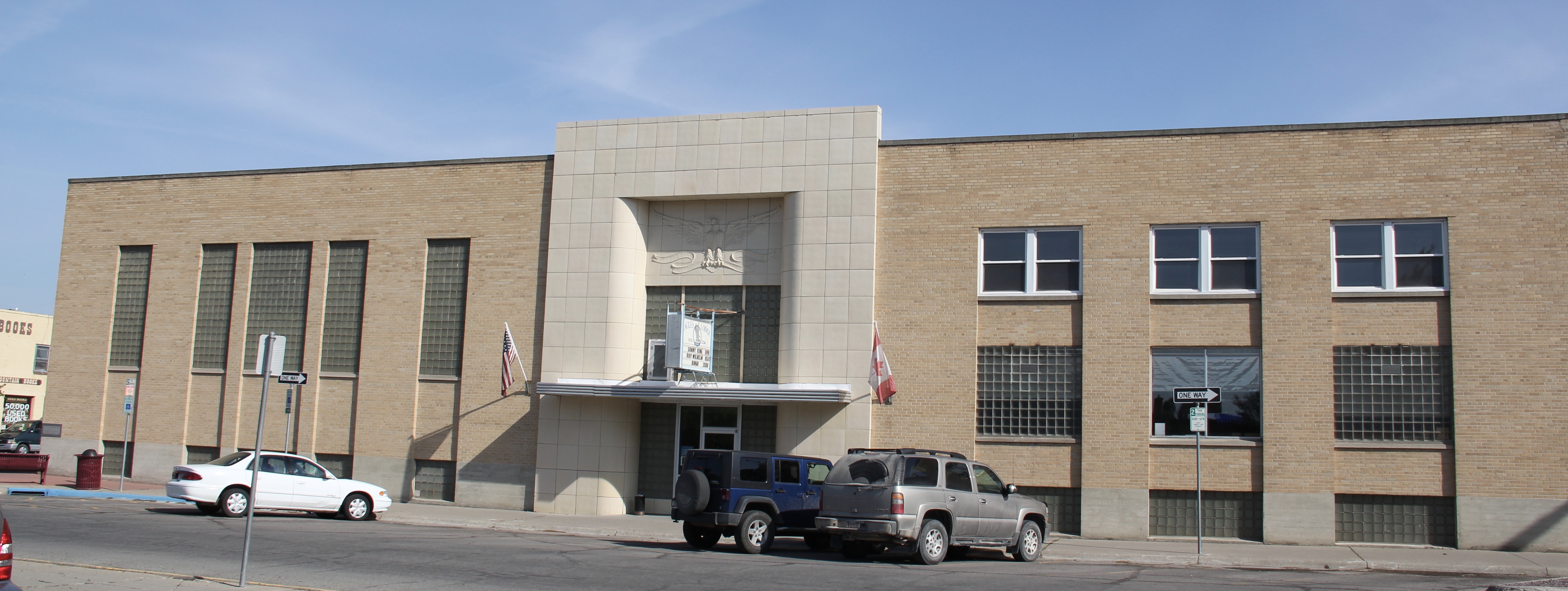
On the other side of Main Street is another building that evokes 1930s interpretation of Art Deco, the Eagles Lodge Building, a reminder of the key role played in fraternal lodges in developing towns and cities in early Montana.
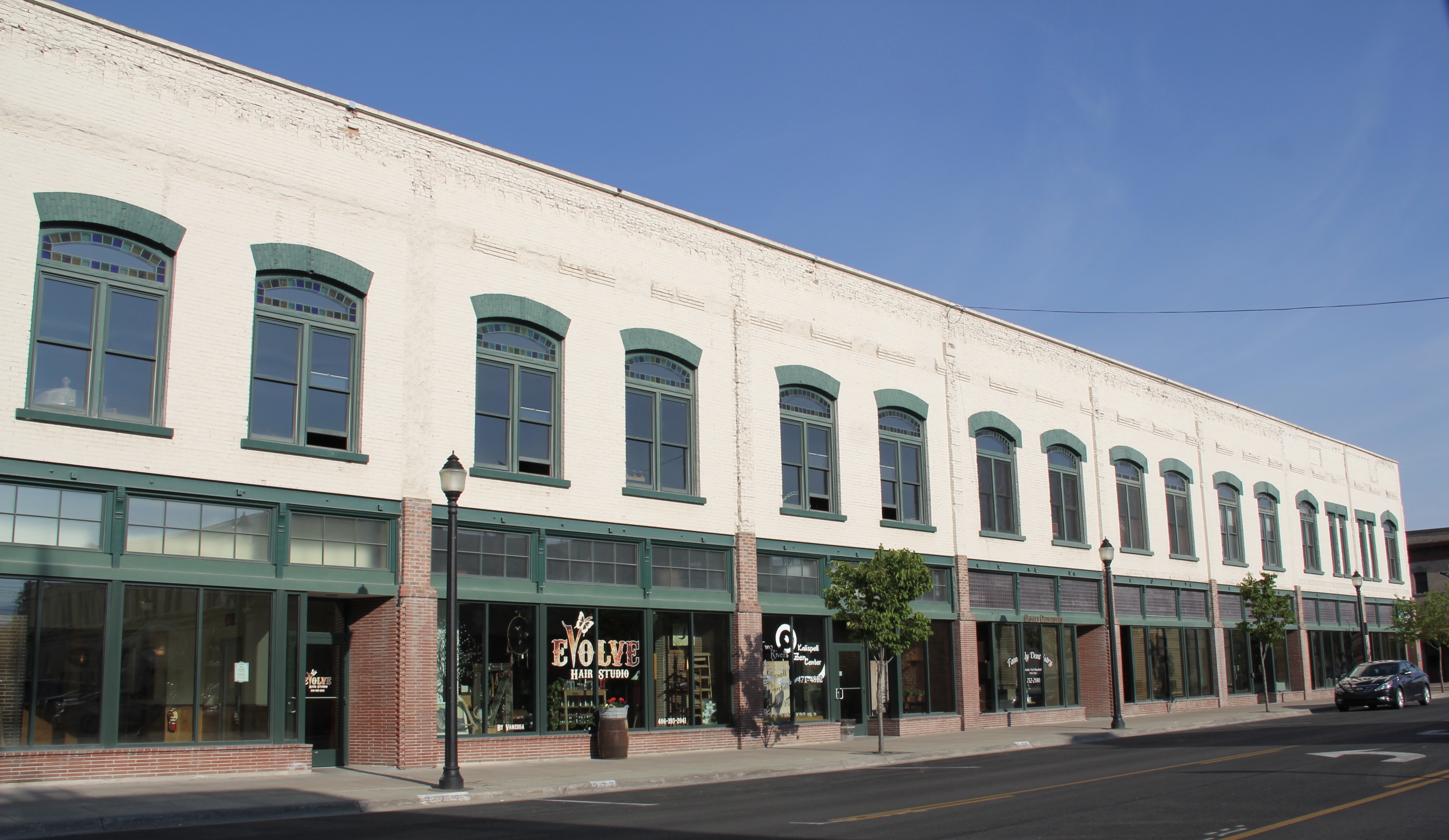
Let’s close this look at Kalispell’s commercial architecture with the Kalispell Mercantile Building (1892-1910), which was established by the regional retail powerhouse, the Missoula Mercantile, at the very beginning of the city’s existence. Kalispell has figured out what Missoula refuses to do–that a building such as this is worthy of preservation, and if maintained properly, can continue to serve the town’s economy for decades more.






























 The town’s early religious institutions also built to stay, leaving key landmarks throughout the neighborhoods that serve as historic anchors today. On Main Street alone there is the unique Arts and Crafts styled First Presbyterian Church (1925-26) by architect Fred Brinkman, and the Gothic Revival masonry and tower of Bethlehem Lutheran Church (1932-1937).


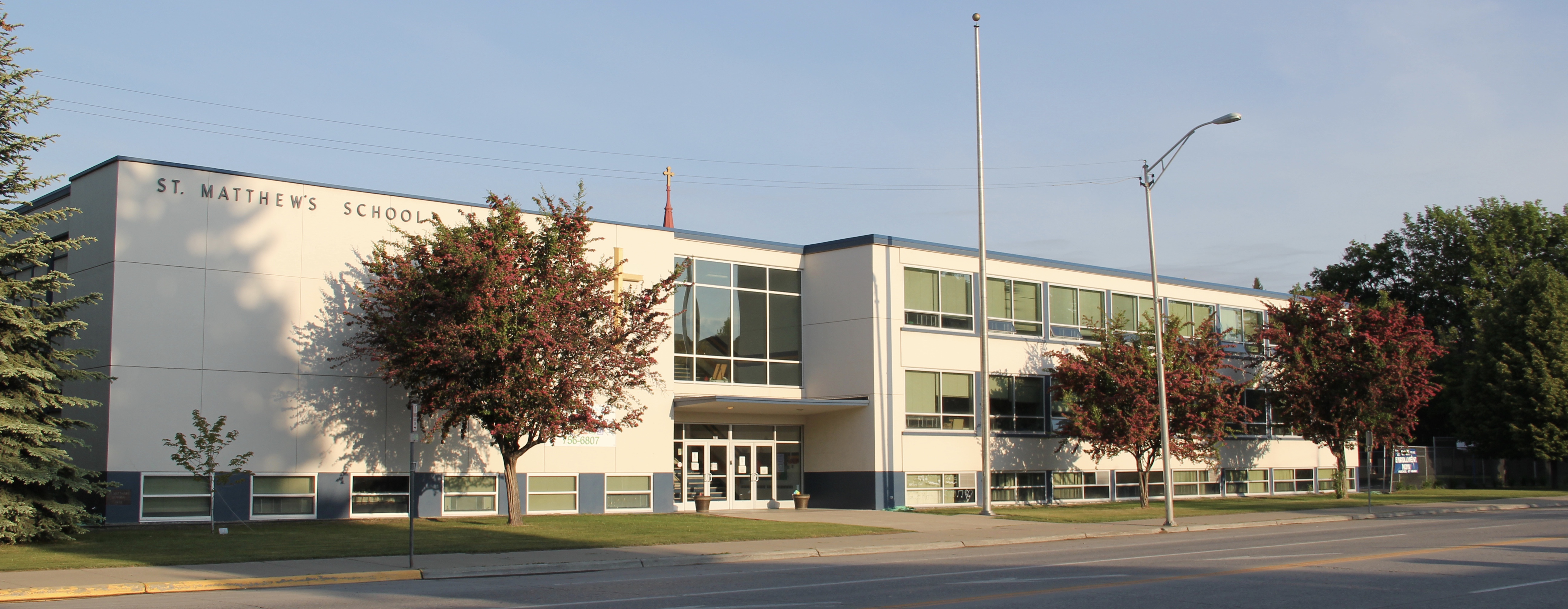
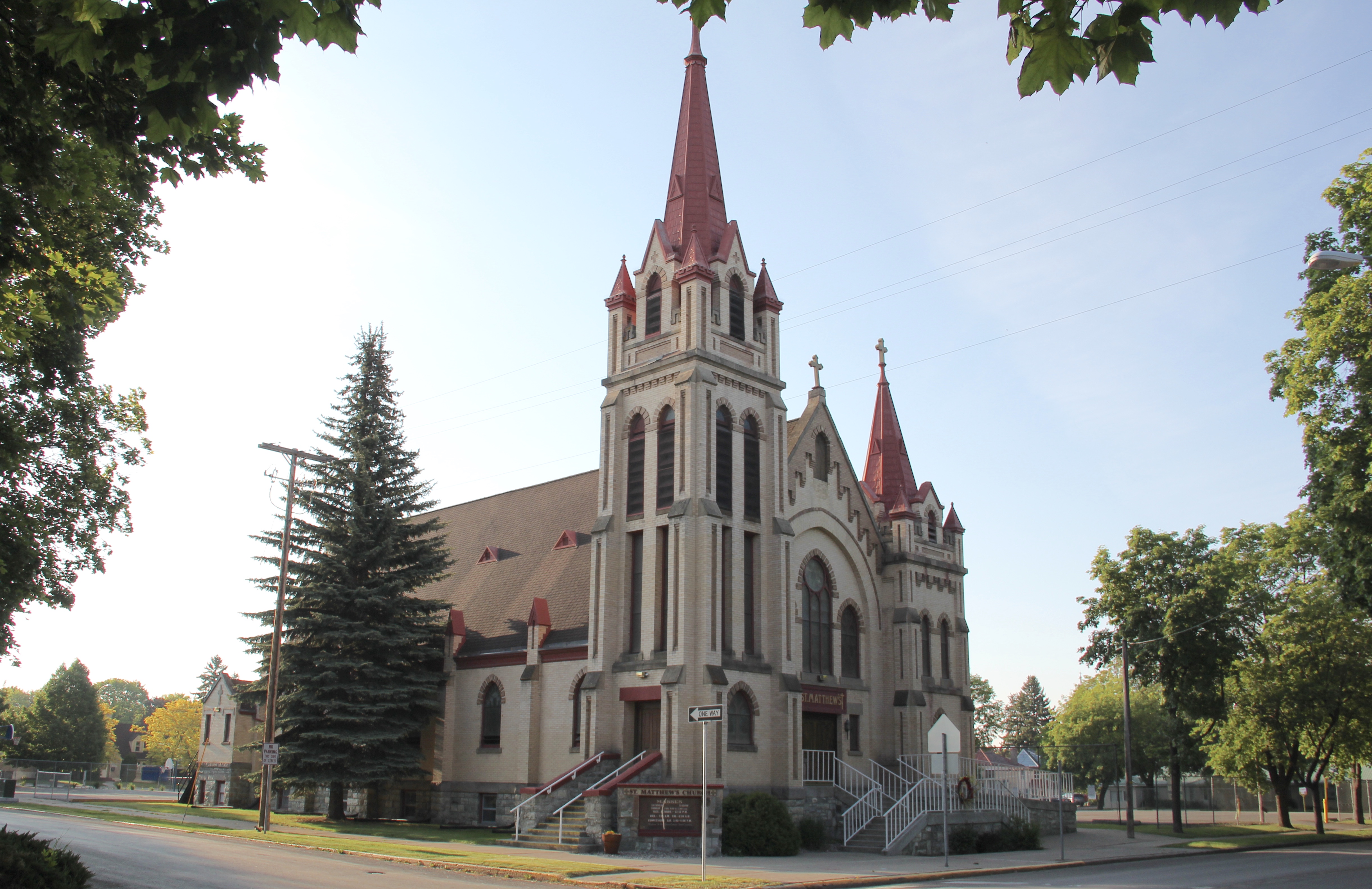
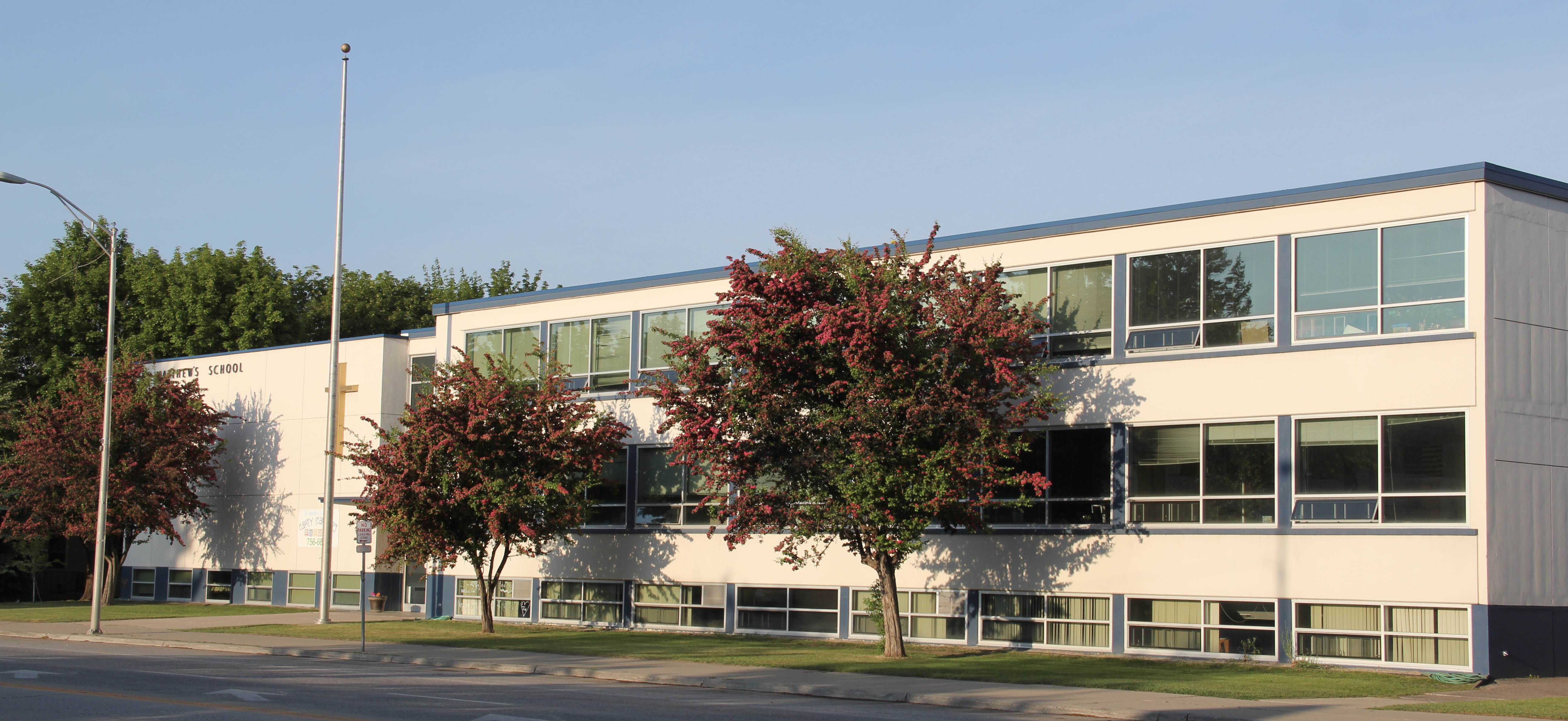 The city’s first Catholic school dated to 1917. The historic St. Matthew’s Catholic Church (1910) by Great Falls architect George Shanley remains the city’s most commanding Gothic landmark.