 In the preservation plan survey of 1984-1985 rarely did I give much attention to historic cemeteries–no one in the Helena office was focused on this property type and in all of my public meetings I never heard someone to make a case for cemeteries as either designed landscapes or community memory palaces. But in the thirty years since my work in the south has constantly drawn me to cemeteries, and when I began my re-survey of the Montana historic landscape in 2012 I was determined to look closely at cemeteries across the state.
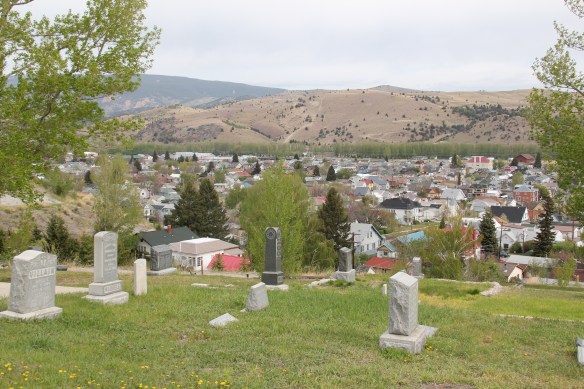
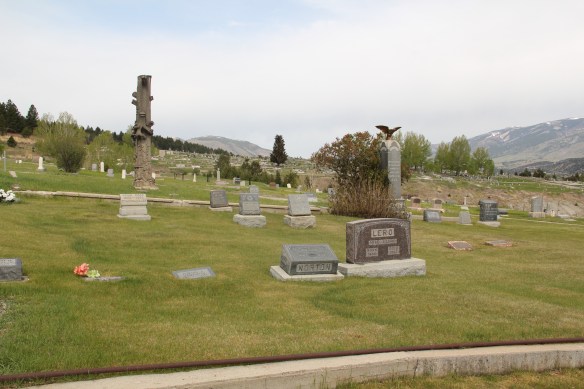 As i climbed the hill behind the courthouse and walked into Upper Hill Cemetery, I found acres of graves and monuments, a reflection of the town’s late 19th and early 20th century roots, and marker upon market that spoke to the ethnic groups, trade loyalties, and general working-class makeup of Anaconda. Here was a true artifact that I most certainly missed in 1984, and worthy of listing in the National Register of Historic Places.
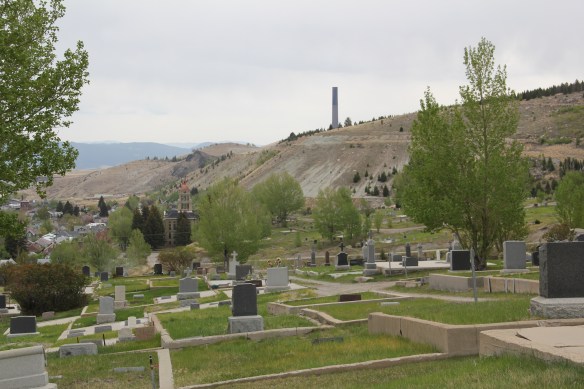
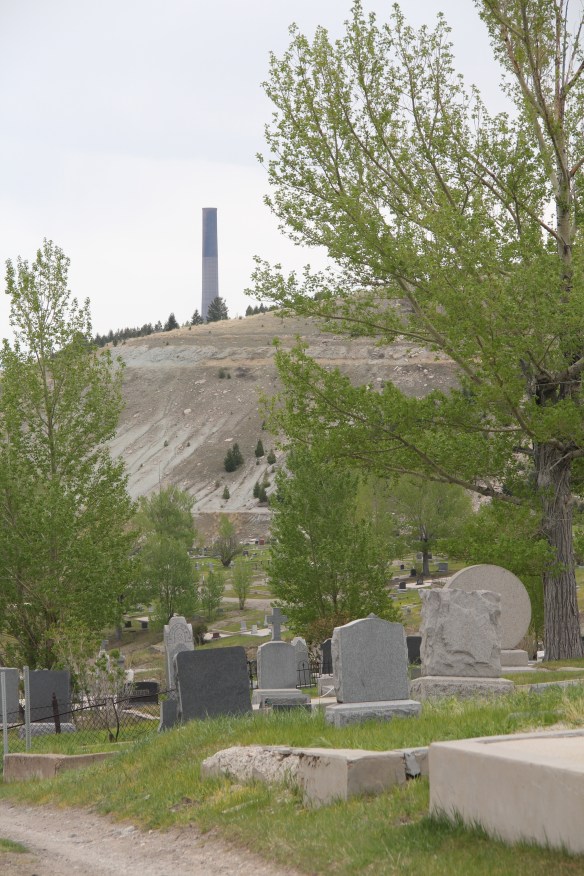 One unmistakable reality was that in death, as in life, Anaconda laborers could never leave the overwhelming presence of the Stack–wherever you go within the acres of the Upper Hill and Mt. Carmel Cemeteries you need leave the presence of the concrete and steel giant of the Anaconda Copper Company. Striking how many of the headstones face the stack.
 Another reality was that fraternal loyalties–the brotherhood of labor–remained even as the bones that had once labored so diligently had decayed into dust. Fraternal organization often offered burial insurance–you were guaranteed a place within the fraternal plot even if your own birth family–who might be on the other side of the ocean–had long ago forgotten your face.
 The Brotherhood of American Yeomen offered a gated plot, defined by a Victorian cast-iron fence that made a perfect rectangle.
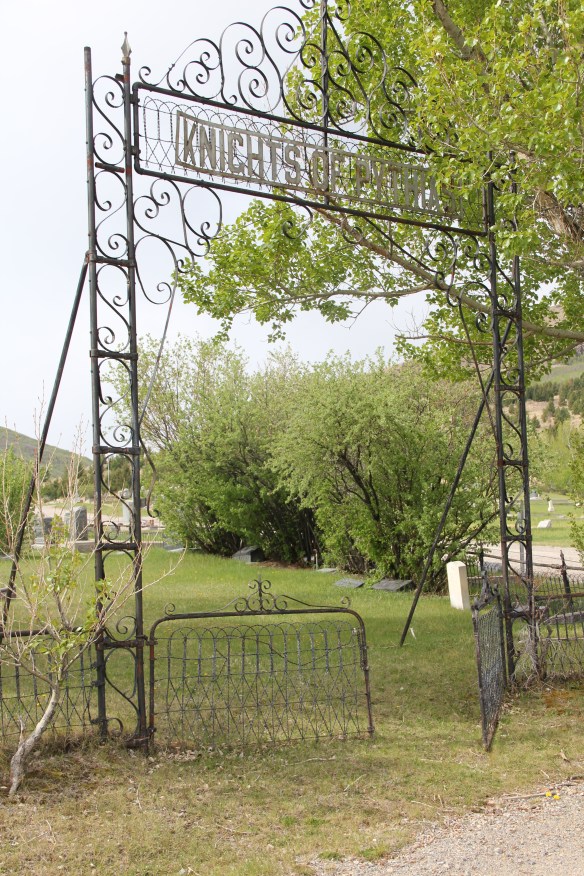
 The Knights of Pythias, on the other hand, offered a monumental cast-iron gate, emblazoned with their name, as the entrance to their fraternal plots.
The Eagles plot is identified by a large concrete column with an aggressive appearing metal American bald eagle spread across the top.


Some organizations, often forgotten today, left intricately carved memorials to their brothers. The T.O.T. E. is a secret password, purported to mean “totem of the eagle,” that belongs to the Improved Order of Red Men, the nation’s oldest fraternal organization that traces its roots to the Sons of Liberty and the Boston Tea Party of the American Revolution. Its monument in Upper Hill Cemetery is the most evocative of all.
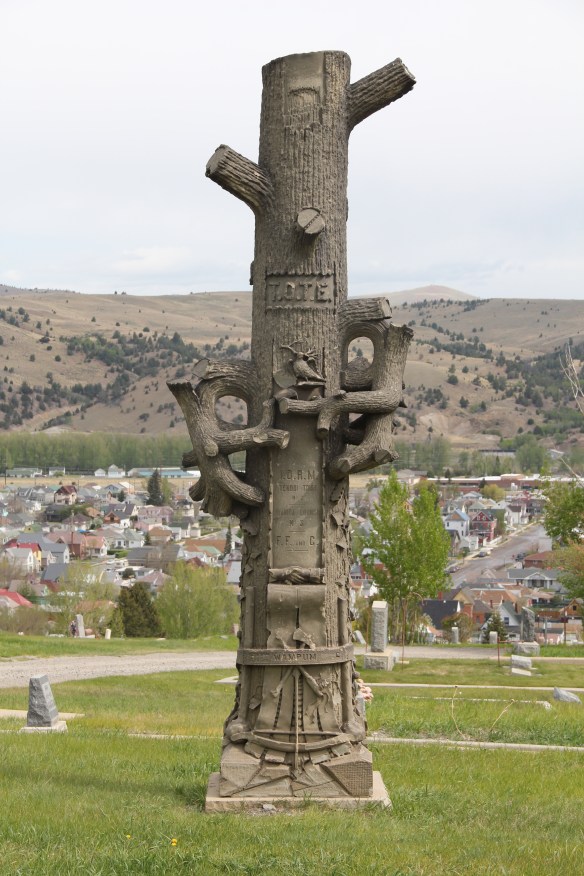
 Details and hidden meanings abound in this graveyard sculpture, and it is impossible to take it all in at once.


 Hayes Lavis, who died in the Great Depression, is one of the few of the Improved Order of Red Men identified in this fraternal grouping.
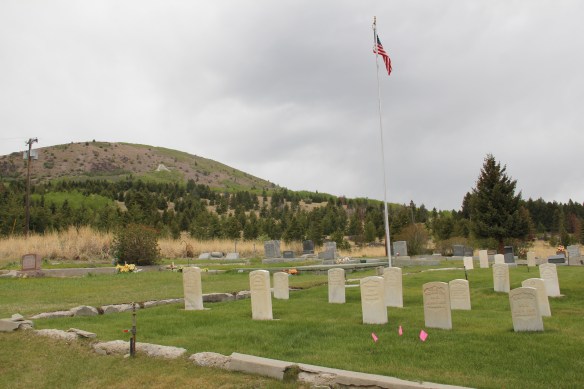 Military veterans are found throughout the cemetery–that is no surprise, but then it is surprising to see how many local men fought and died in the Spanish-American War of the late 1890s. The plot in their honor rests at one end of the cemetery, under the watchful gaze of the town “A” on the nearby hillside, but the low concrete wall that once defined the memorial is crumbling, just as our memory of this war and its veterans fade in the 21st century.


Other markers speak to the diverse ethnic communities that comprise Anaconda. My Carmel is the Catholic half of the huge cemetery.


The McGrath marker is one of the hollowed imitation stone but actually metal markers that were made elsewhere and shipped to Anaconda.
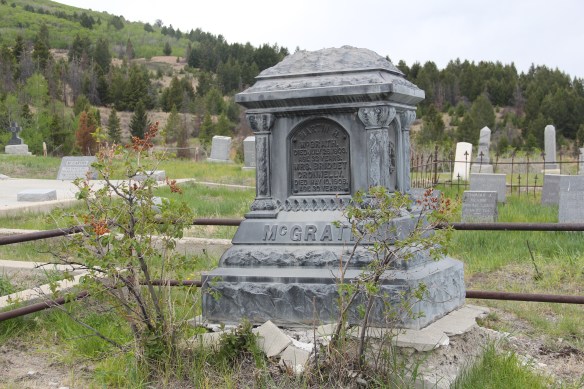 Family plots are also prevalent, with that of the Brown family and the loss of a child being particularly poignant.


The Thomas Michael monument also features statuary mourning the death of a child. Few places anywhere are sadder than the “children’s” section of this cemetery.


The huge cemeteries are certainly an interesting and significant historic property, one that should be listed along with the Stack as one of Anaconda’s attractions.


It looms over the entire city and leaves an unmistakable human face to the industrial and transportation history of Anaconda.


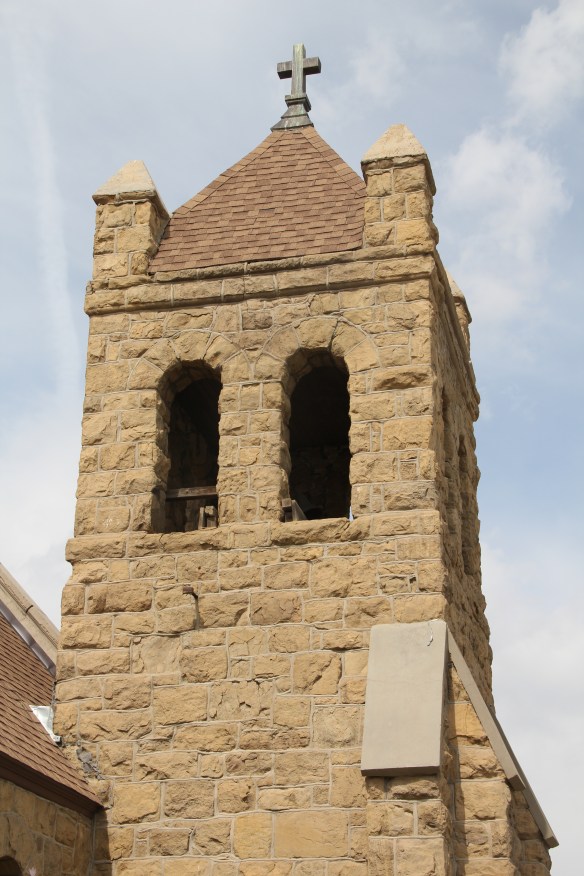 The craggy sandstone tower of St. Mark’s Episcopal Church is the town’s earliest religious architectural landmark, with the sanctuary dating to 1891. In 1978 t was among the first Anaconda landmarks to be listed in the National Register and remains one of the state’s most impressive examples of church architecture.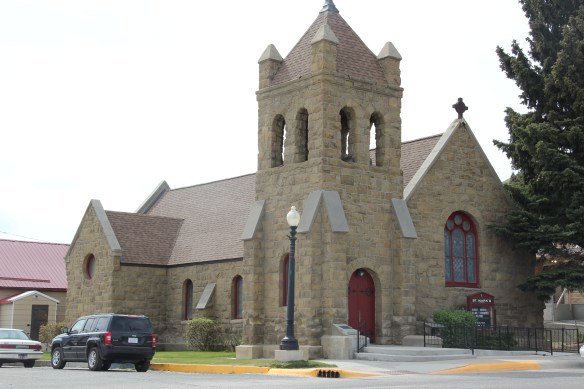
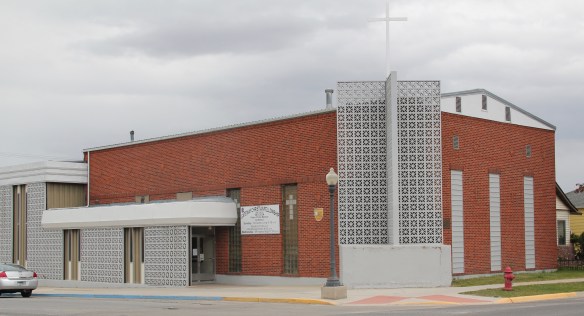
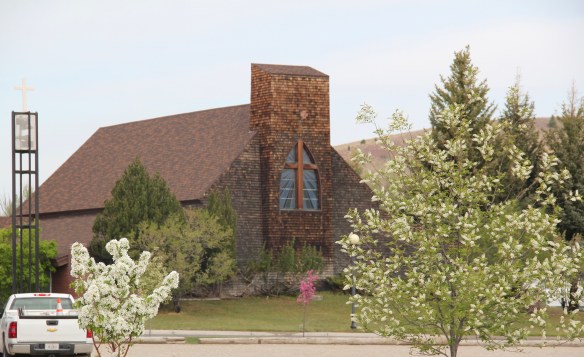
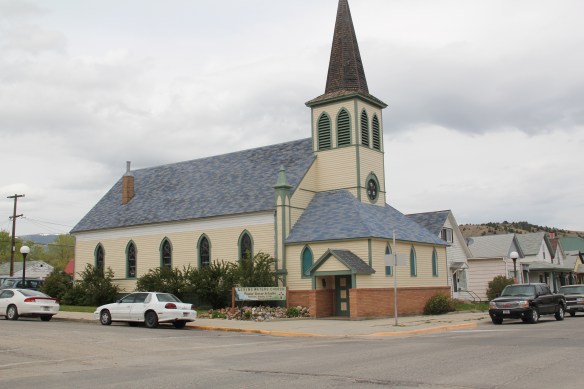
 for places to rest, relax, and enjoy the precious hours away from the workplace. So much has changed in Anaconda since the closing of the smelter in the early 1980s–but the town’s distinctive places for recreation and relaxation remain, a big part of the reason Anaconda is one of my favorite places in Montana.
 Let’s start with the magnificent Art Deco marvel of the Washoe Theater. Designed in 1930 by B. Marcus Priteca but not finished and opened until 1936, the theater has stayed in operation ever since. It is remarkably intact, especially when owners refused to follow the multi-screen craze of the 1970s and kept the lobby and massive screen


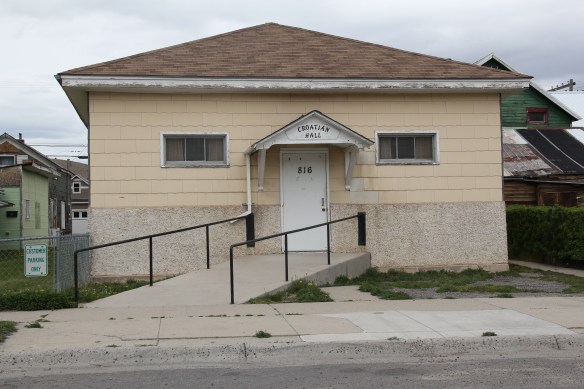
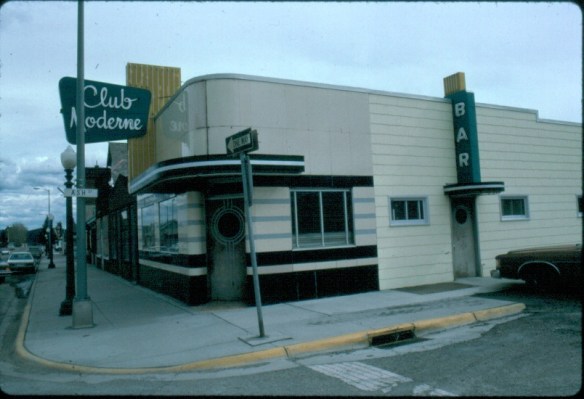
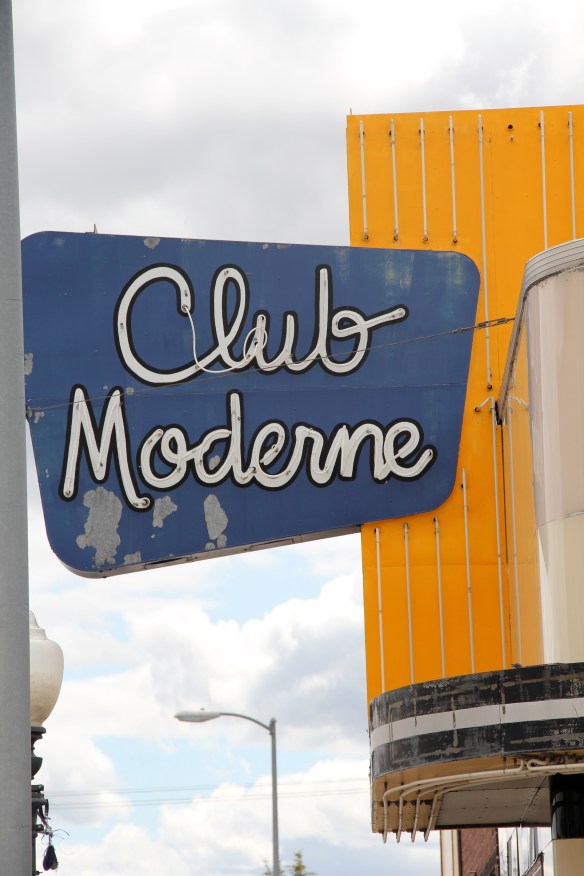
 A drink after the movie: still happens with regularity in Anaconda, due to the plethora of neighborhood bars, from the Anaconda Bar to the Thompson Bar. The range of sizes and styling speaks to the different experiences offered by these properties.


 The Elks Club in the heart of downtown is a totally different statement, with its sleek 1960s modernist facade over an earlier turn of the century Victorian styled brick building reflecting a more prosperous and larger membership.

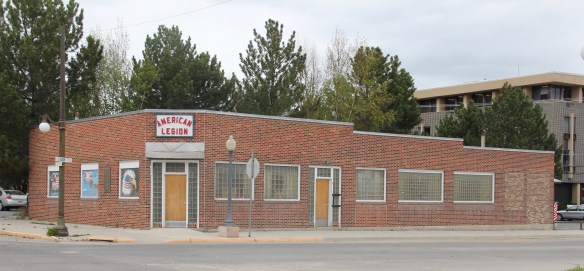 With its glass block entrances and windows, the American Legion lodge seems like another lounge, but the American Eagle mural says otherwise.

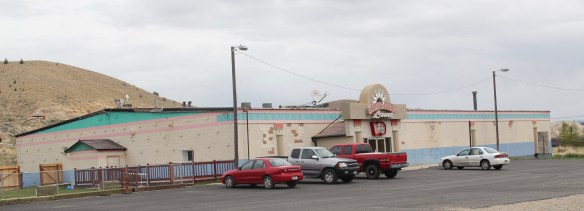 If not bowling, why not read a book. At least that was the motivation behind Progressive reformers and their initiative to create “free” (meaning no membership fees) public libraries at the turn of the 20th century. Anaconda has one of the state’s earliest and most architecturally distinctive libraries in the Hearst Free Library.

 Another Progressive-era institution is Washoe Park, established by the copper company and home to the first fish hatchery in the state. Washoe Park was a place for outdoor recreation, with ball fields, picnic areas, and amusement attractions. It also was home for the town’s baseball field and its historic grandstands and refreshment


 New renovations at the park have been underway, improving trails, the hatchery, and the outdoor experience plus adding public interpretation at appropriate places. The park is being re-energized but respect still shown its early elements, such as the historic Alexander Glover cabin, built c. 1865 and identified as the oldest residence in Anaconda, which was moved into the park as an interpretive site, early, c. 1920.
 Another outdoor recreational space that has been receiving renovation is the historic Mitchell Stadium complex, a New Deal project of the Works Progress Administration from 1938-1939. The stadium, designed to give the high school modern facilities for football and track and field, is quite the place, retaining so much of its original understated Art Deco styling.
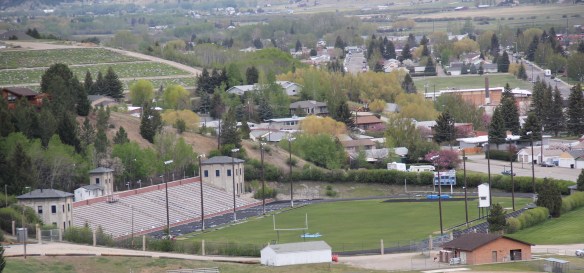 Unlike Washoe Park, here was a new public space, in keeping with the New Dealers’ faith in recreation and community, that was not a creation of the copper company for adult workers but for high school athletes.


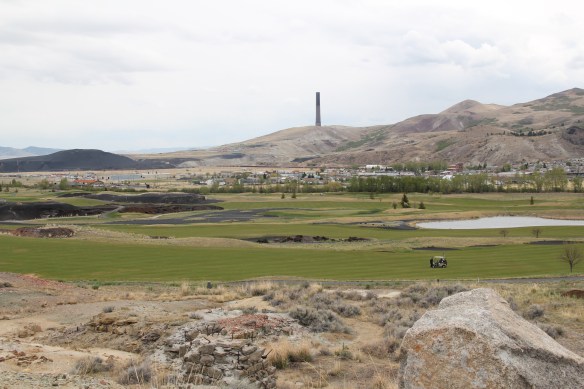 But even on the links of this innovative adaptive reuse project you cannot escape the overwhelming presence of the copper company stack, and mounds of devastation it left behind. Here is an appropriate view that sums up the company influence on the distinctive place of Anaconda.
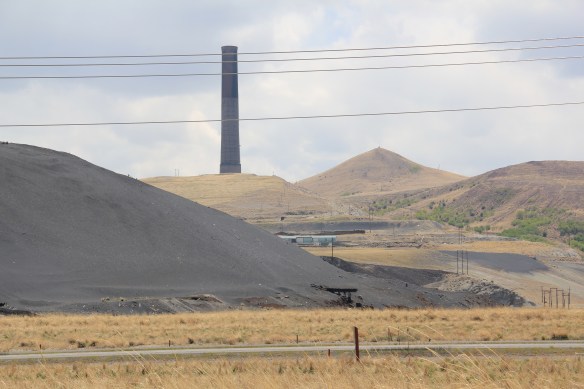
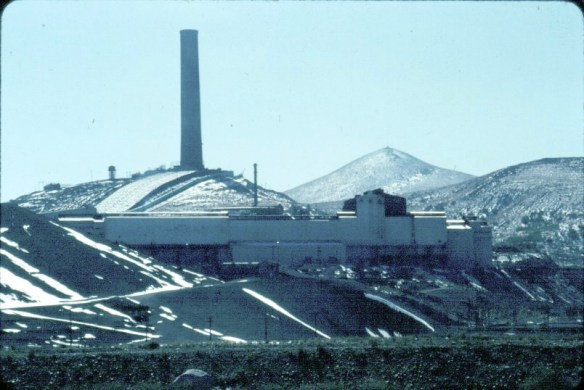 In my work across Montana in 1984-85 there was no more imposing structure than the smelter stack and works at Anaconda, in Deer Lodge County. The image above was one I used in the 20 plus listening sessions I had across the state in 1984, gathering perspectives and recommended properties for the state historic preservation plan. I used the stack because the smelter had just closed–and how this chapter in the state’s mining history could be preserved was on many minds.
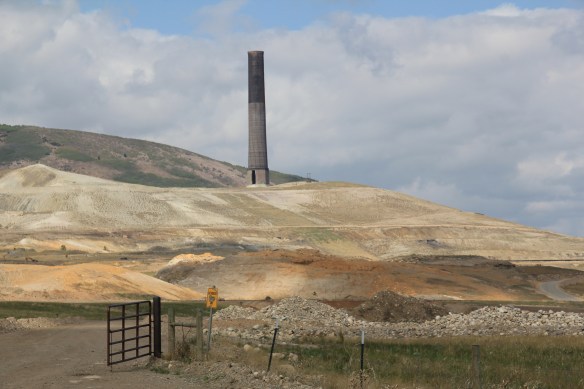 The Washoe Stack is one of the state’s most dominant man-made environments. For like the massive dams and reservoirs at Hungry Horse, Canyon Creek, and Fort Peck, there is the massiveness of the structure itself, and the thousands of surrounding acres impacted by the property. Unlike the lakes created by the dams of the first half of the 20th century, however, the stack left devastation in its wake, not recreation, not rebirth.
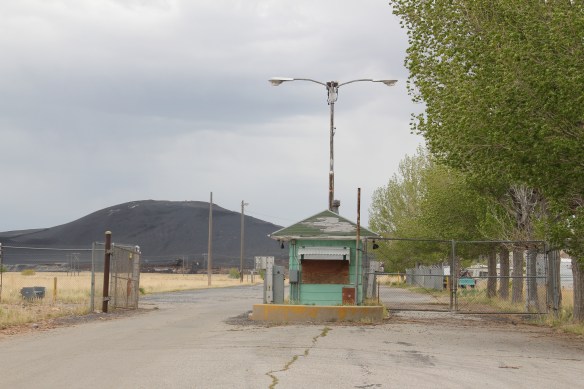 The old gateway to the smelter introduces you to one lasting legacy of the stack–the tons of slag located along the highway leading in and out of Anaconda. The huge pile of
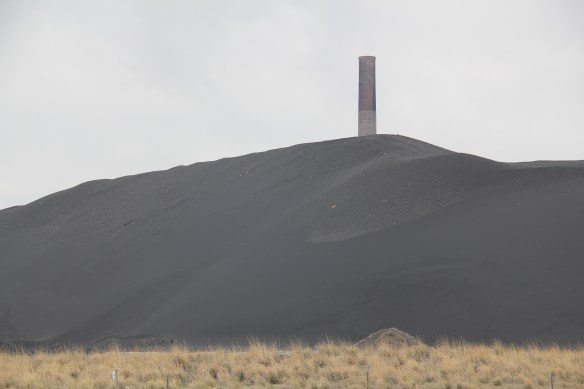 seems like some sort of black sand that has washed up on a beach rather the environmental spoils left by 100 years or production.
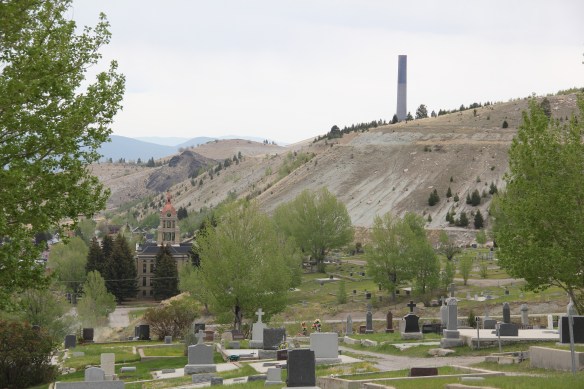
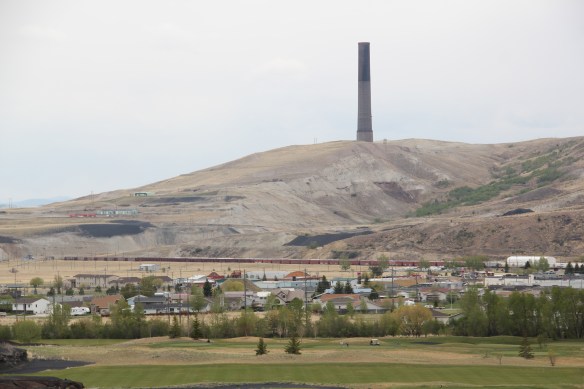 In the 1980s, the Atlantic Richfield Corporation, a later owner of the Washoe works, announced the stack’s closing and possible demolition. A community-wide effort to save the stack was launched because, in the poetic words of local union activist Tom Dickson:


 That the place remained so intact in the early 1980s was impressive to me–that it remains that way 30 years later is a testament to local stewardship, and continued good times. The interior design of Art Deco details also remain to treat the eye and tempt


 Few places in Montana, or for the nation for that matter, have benefited more from historic preservation and heritage development than Bozeman. To see a grain elevator complex find new uses and life in a century where grain elevators are typically a relic of a bygone era, tall hulking figures on the northern plains landscape, you discover that so much of our historic built environment can be re-imagined and put back into use.


 The town’s historic churches are other important anchors. Listed in the National Register of Historic Places, St. James Episcopal Church is a distinguished statement of Gothic Revival executed in locally quarried sandstone designed by architect George Hancock of Fargo, North Dakota and built by local contractor James Campbell in 1890.
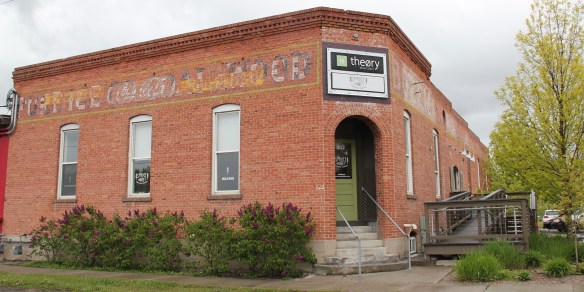 Preservation efforts 30 years ago were focused on Main Street landmarks, with much success. But the combination of preservation and adaptive reuse has moved into the town’s railroad corridor with similar positive results, and the number of historic neighborhoods have multiplied.


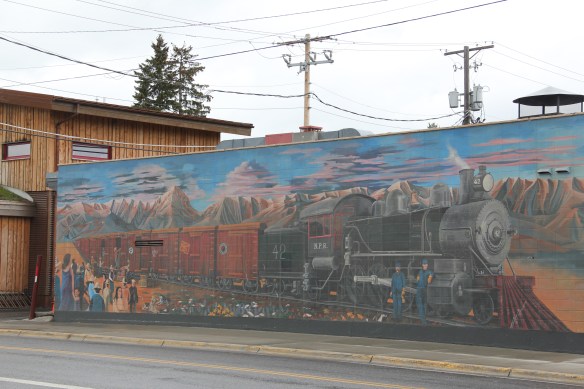 On Bozeman’s Main Street today there is a huge mural celebrating the arrival of the Northern Pacific Railroad in 1882. The impact of the railroad on the town was certainly a topic of interest in the 1984-85 survey, and one image included the existing Northern Pacific Railroad and adjoining grain elevators and other businesses reliant on the corridor.
 Today that same place has been transformed, through adaptive reuse, into a micro-brewery and restaurant–pretty good place too, and a great place in 2015 for me to get out of a persistent rain. The Northern Pacific reached a deal with rancher Nelson Story in 1882 to build through his property but also provide a spur line to his existing mill operations. From the beginning both the railroad and local entrepreneurs saw an agricultural future for Bozeman and Gallatin County.

 The depot and adjoining buildings have been designated as a historic district, with a pocket city park providing some new life to the area. But this impressive building’s next life remains uncertain even as the city encourages creative solutions for the area.
 The c. 1922 depot is adequately moth-balled–the new roof has lots of life left–and as the city maintains it is structurally sound with key interior features intact. Yet graffiti now mars one end of the building, and any building that is empty, especially in such a booming local economy, is cause for concern.

 The same fate did not befell the Milwaukee Road’s other significant building in Bozeman, its concrete block warehouse, shown above in an 1985 image. The open space, solid construction, and excellent location helped to ensure a much longer life for the building, which is now a building supplies store, with a repainted company sign adorning the elevations of the building.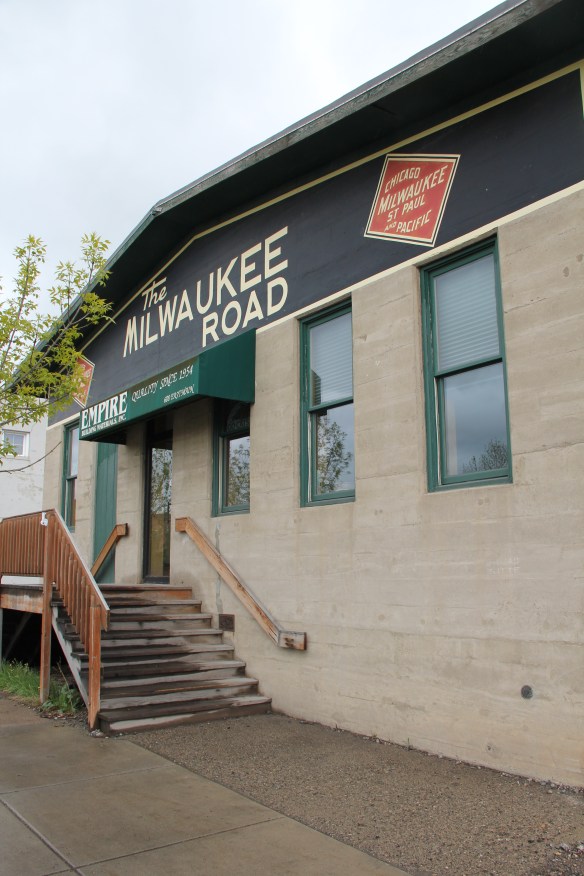
 It is encouraging that the city recognizes the significance, and the possibilities, for the historic buildings along Bozeman’s railroad corridor. Let’s hope that a permanent solution soon emerges for the empty Northern Pacific depot.


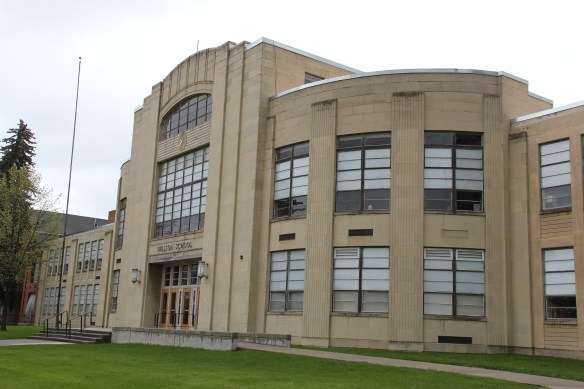


 Then Senator Moss took me for a quick tour of its late 1990s renovation in 2007–its conversion into law offices respected both its original spaces and interior design.


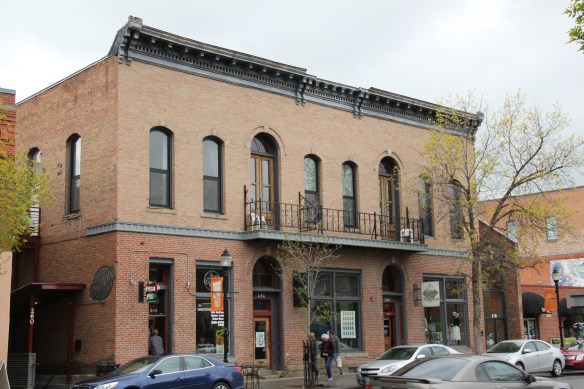


 The district’s architectural jewel, the Dining Room, dates almost a generation later to 1926. Architect Gilbert S. Underwood designed one of the late marvels of the Rustic style as defined in the northern Rockies. With its rugged stone exterior rising as it was a natural formation in the land, the dining room immediately told arriving visitors that an adventure awaited them, especially once they stepped inside and experienced the vast log interior spaces.


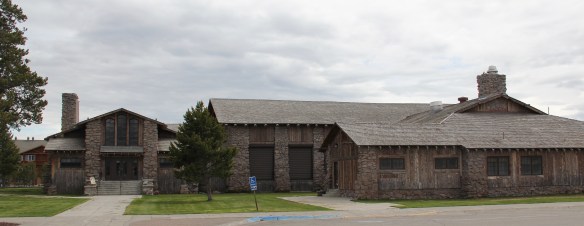 Other former Union Pacific buildings have been given adaptive reuse treatment by the town, with a baggage building becoming police headquarters and the former men’s dormitory has been converted into a local health clinic.

 Thus, West Yellowstone is among Montana’s best examples of roadside architecture as distinctive 19502-1960w motels and a wide assortment of commercial types line both U.S. 191 but also the side arteries to the highway.