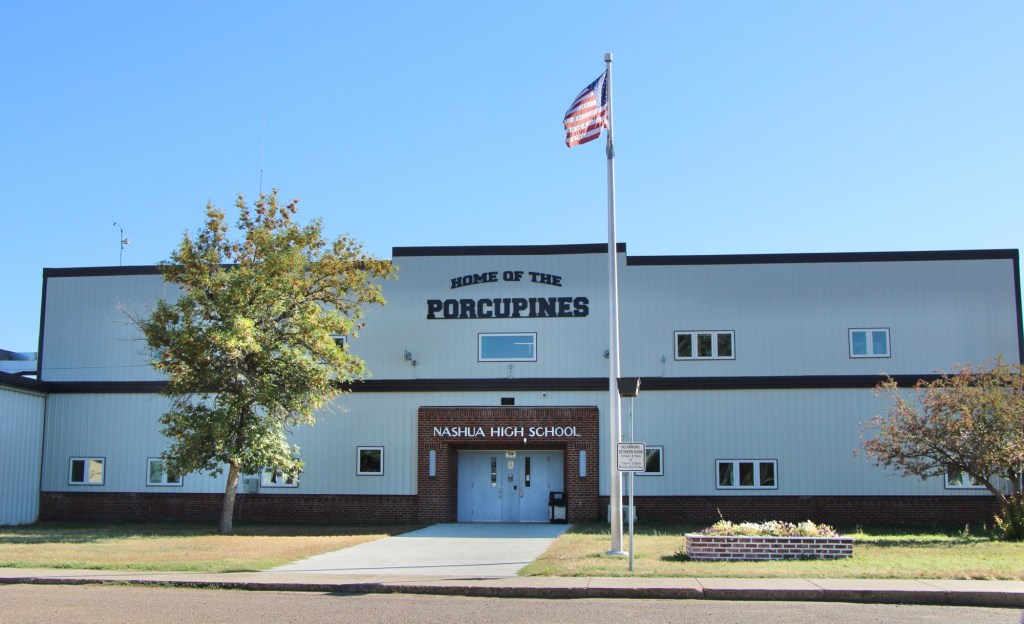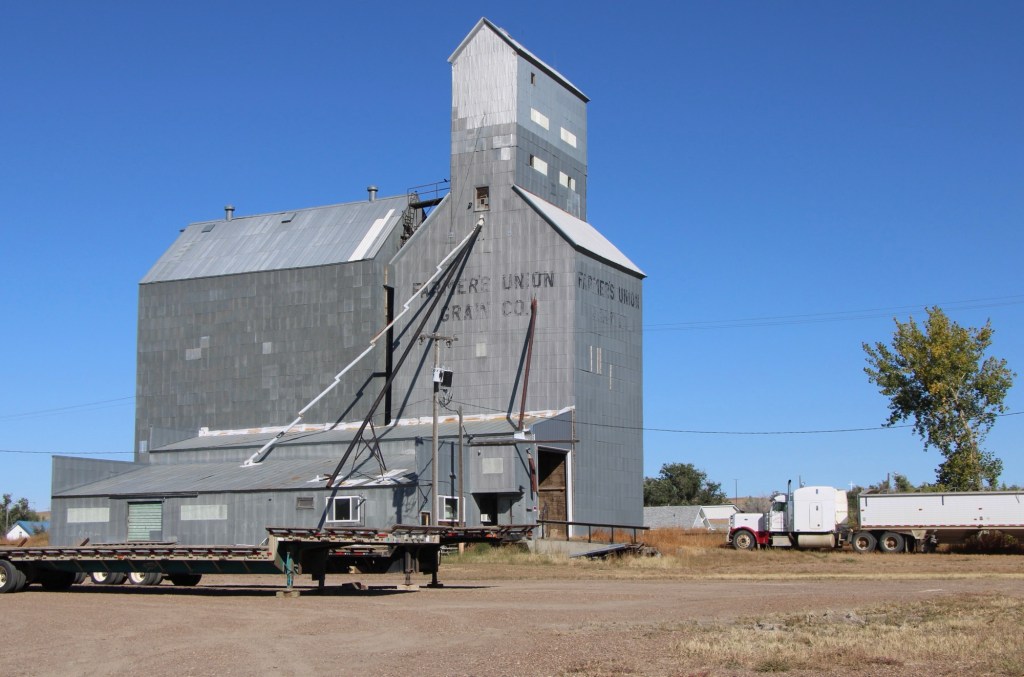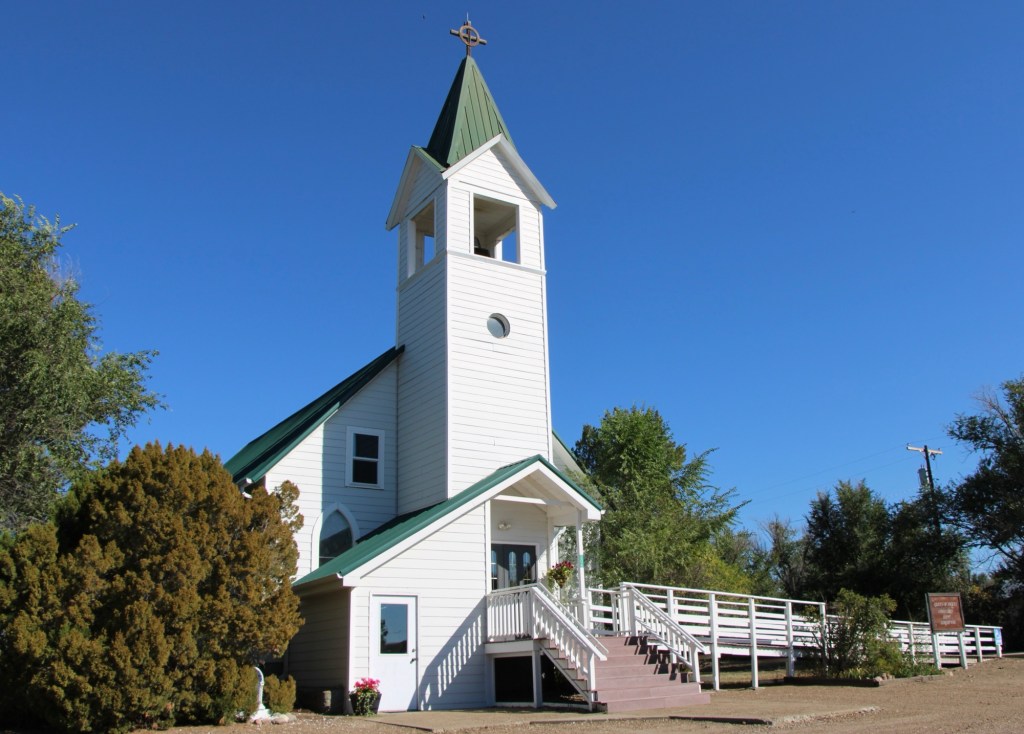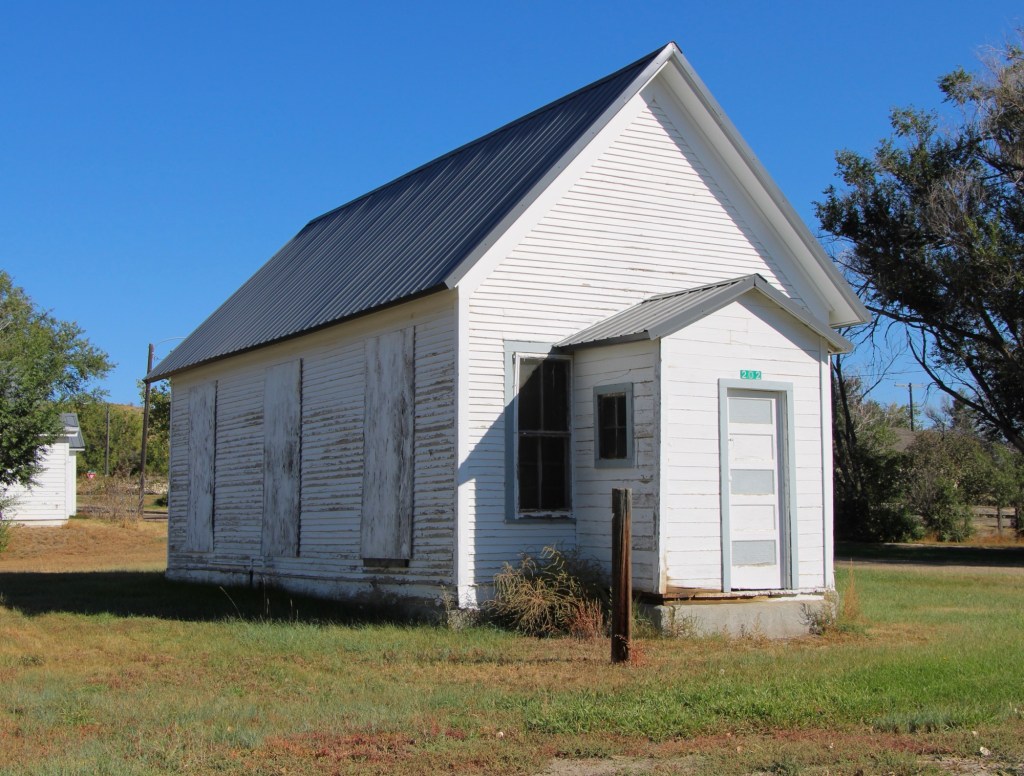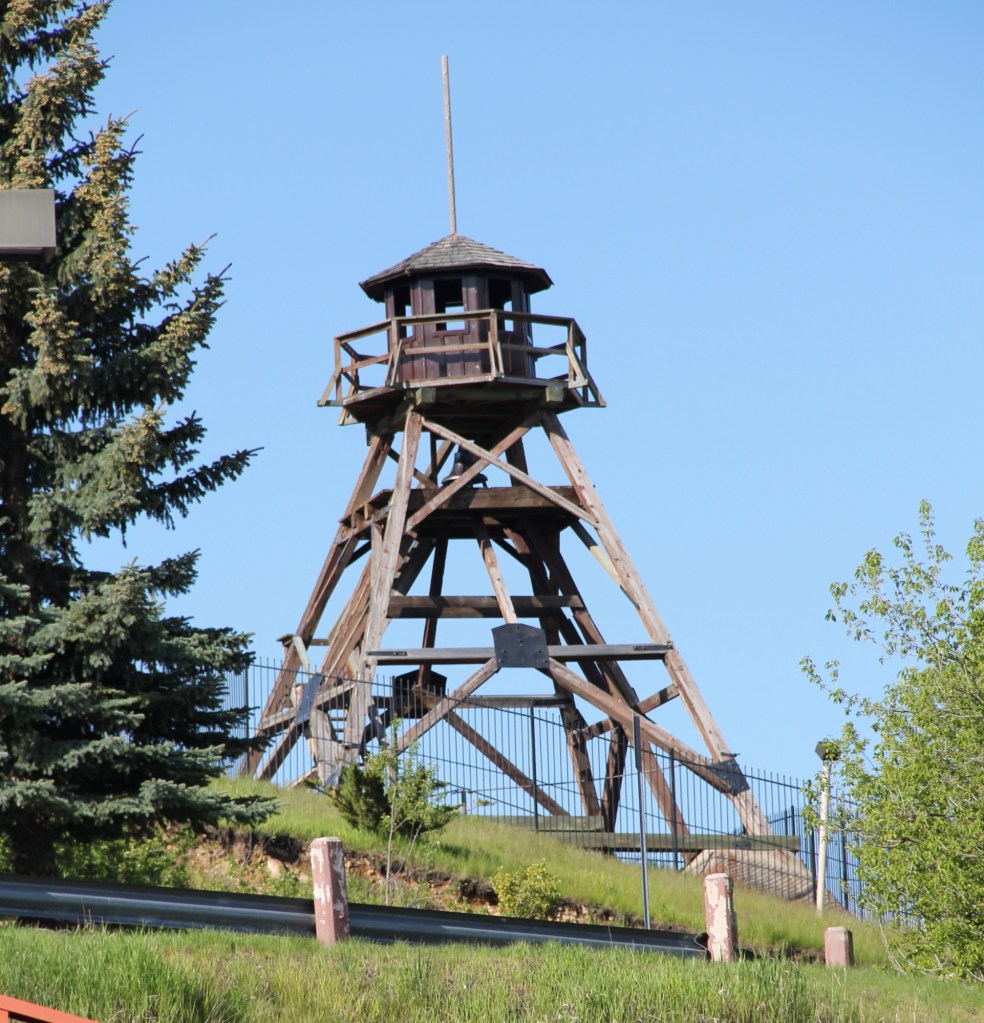
Last post was a shout-out to the restoration of KPRK radio station in Livingston. That is not the only success of the summer of 2025. In Helena came the successful restoration of the iconic fire tower that has watched over the city for decades. it too some discussions and considerations but the outcome of giving this city landmark a life to the end of the century was certainly worth it.
Tower in 2006
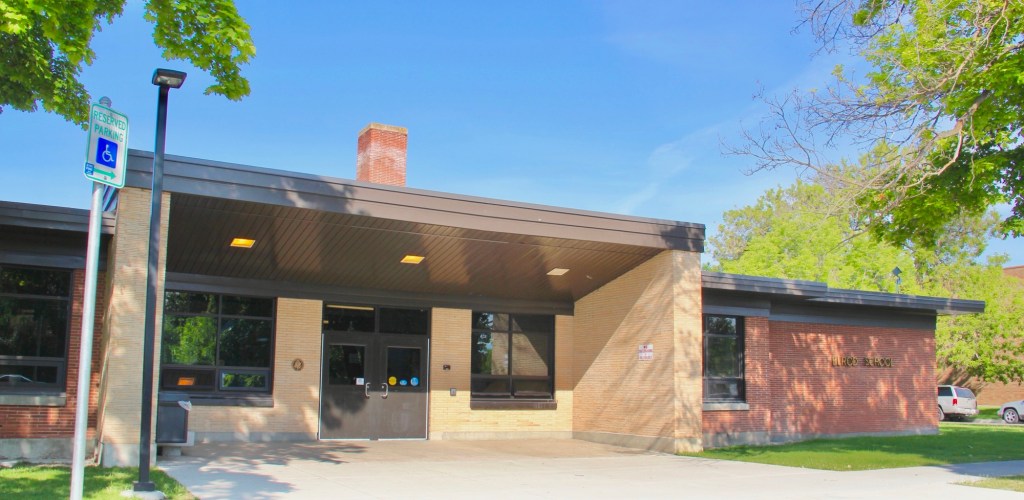
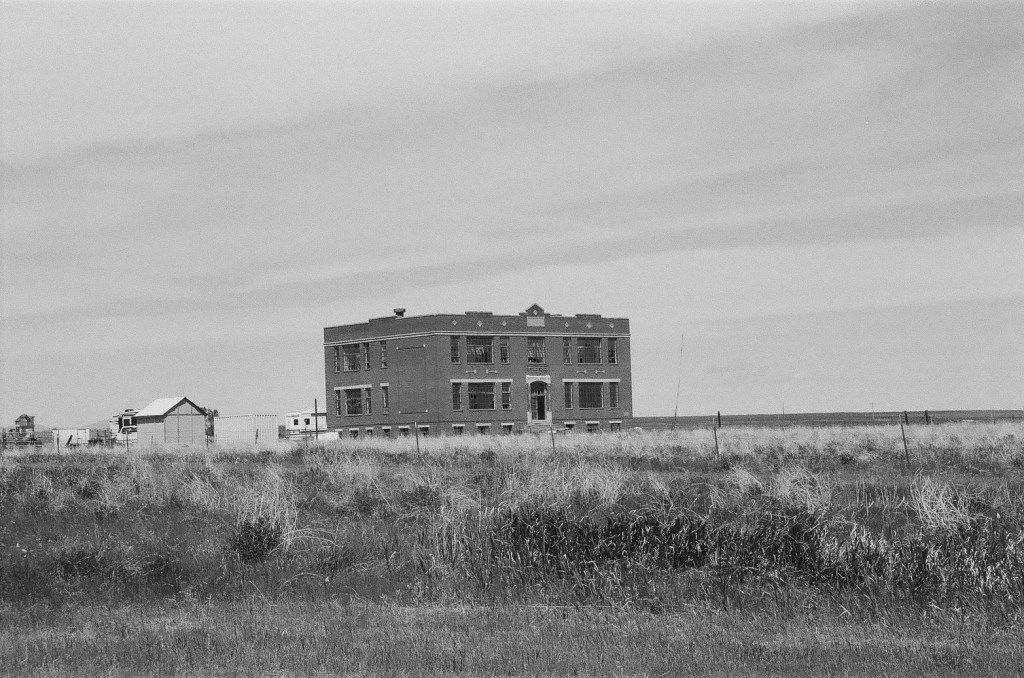
On the other side of the Gulch in Helena an uncertain future awaits the historic Hawthorne School. It closed at the send of the spring 2025. Let’s hope new life, and a new purpose, can be given to this neighborhood landmark. So many Montana towns have carried out effective adaptive reuse projects with historic schools. Helena can follow those traditions.
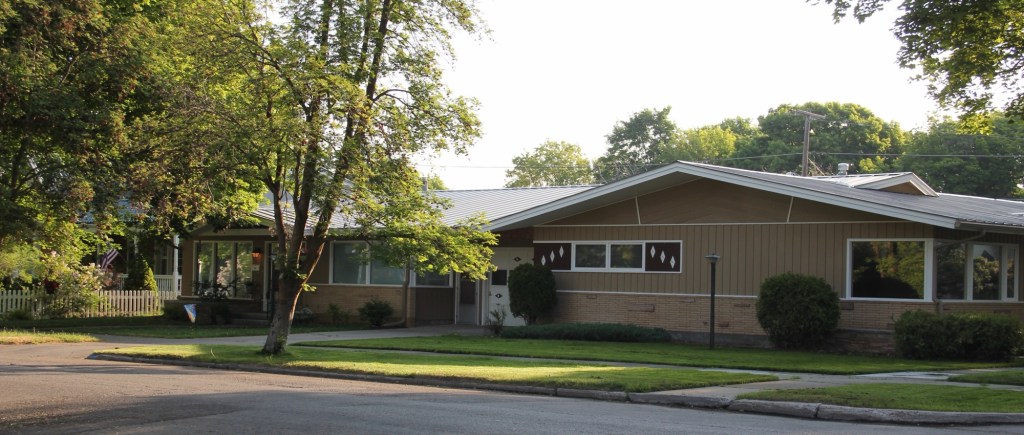
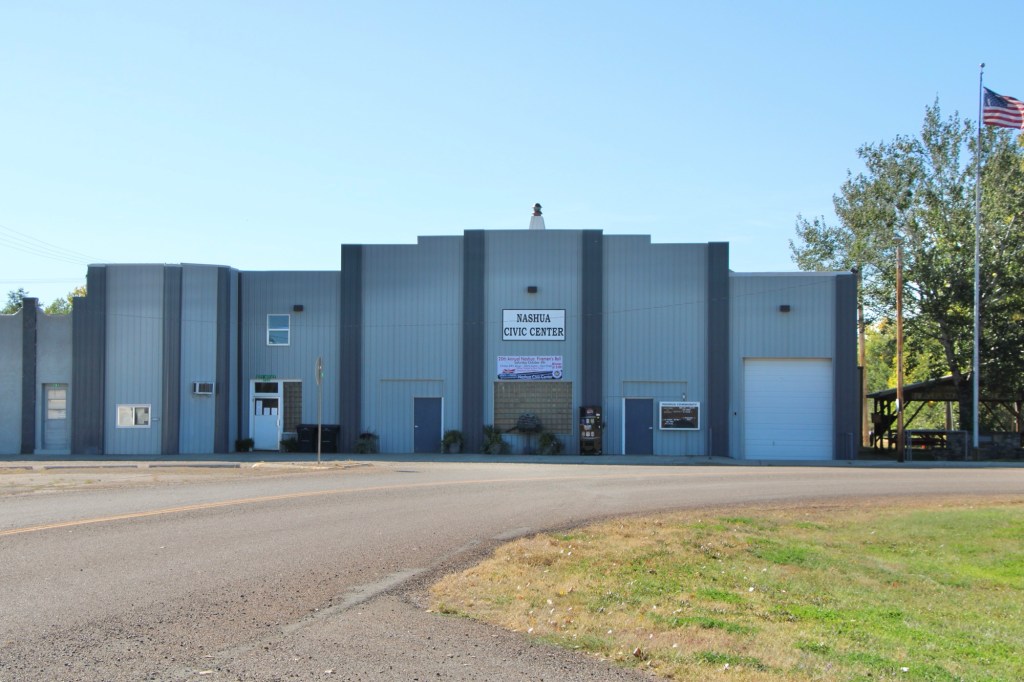
Repeat visitors to this blog about historic places in Montana quickly see that the focus is very much on the era of 1860 to 1960. But I have taken time to also record the modern past. This brief detour into northeast Montana (Roosevelt, Sheridan and Daniels counties) shares commercial, public, and religious buildings from the late 20th and early 21st century.
The Montana State Bank (now in 2024 the Bank of Plentywood) in Plentywood has its business roots in earlier bank in the railroad town of Reserve. Its echoing of classical columns in a modern setting makes it my favorite modern style bank in the region.
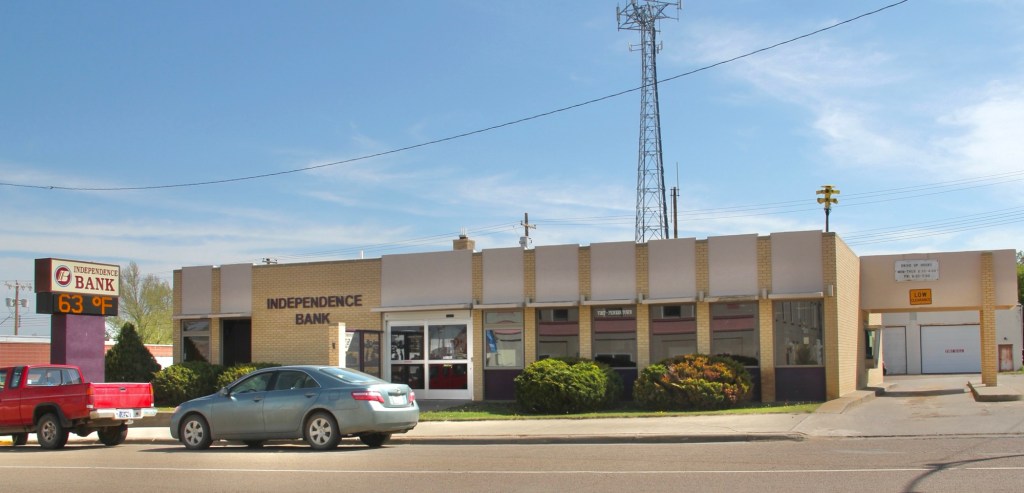
Not far behind is the Independence Bank in Scobey, built in 1972. After the First Security bank of Havre acquired the bank in 1998 it changed the name to Independence in 2000.
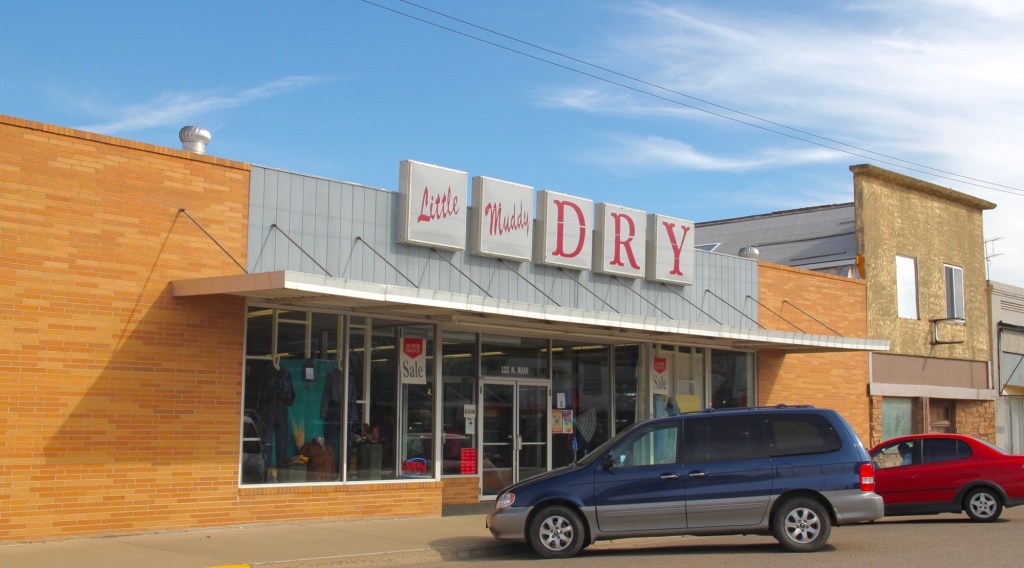
The store is now closed.The store front has changed since this image from 2013
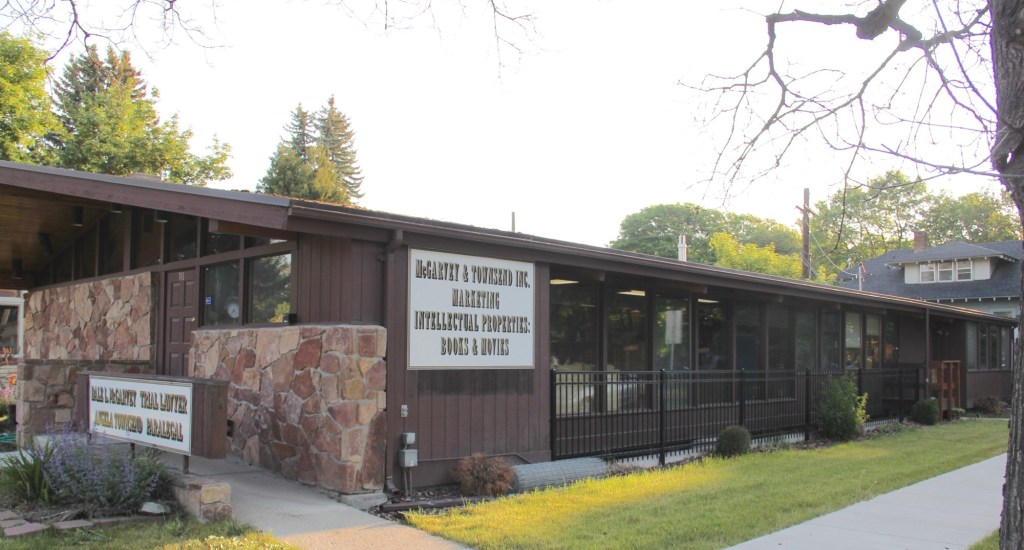
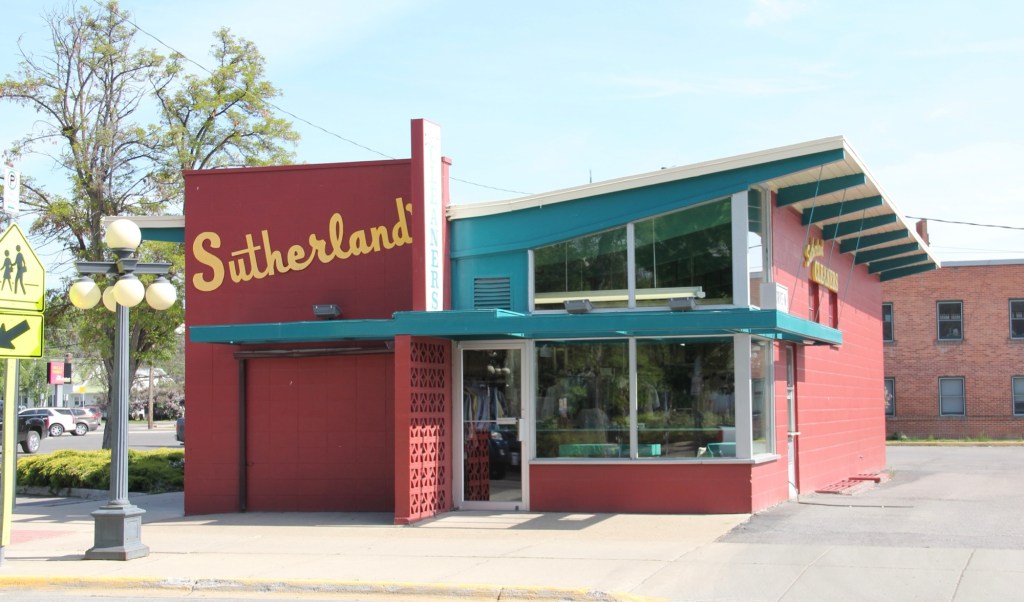
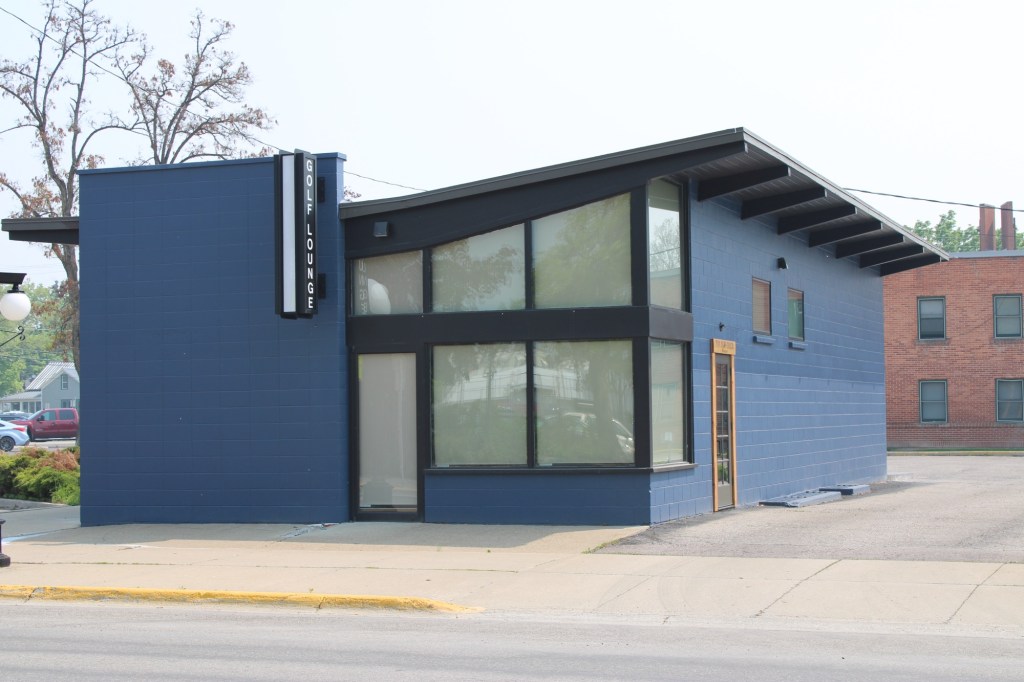
Colorful metal sheathing over old storefronts helped owners update their businesses from the 1960s into the 1980s, enabling downtown locations seem more like shopping centers. The top example is from Plentywood while the bottom, Bryan’s, is from Wolf Point.
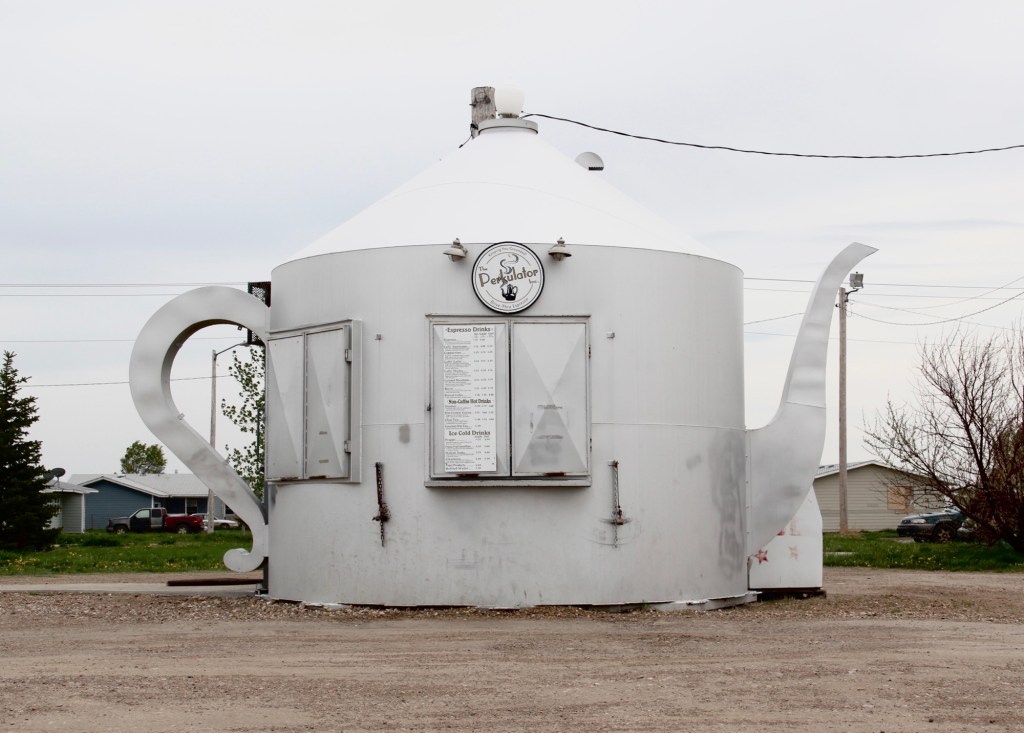
The Perkulator coffee shop is still going strong on U.S. Highway 2 in Poplar. Highly recommended!
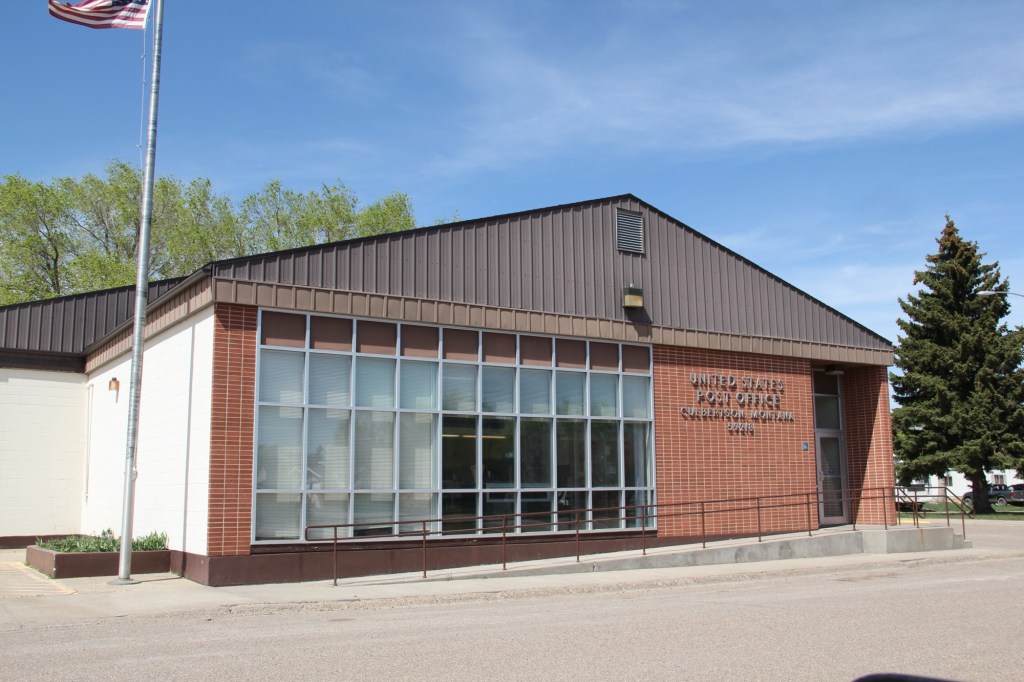
The design of U.S. post offices moved away from the preference for Colonial Revival styles in the first half of the 20th century and embraced a modern look as shown in Culbertson (top) and Scobey (bottom).
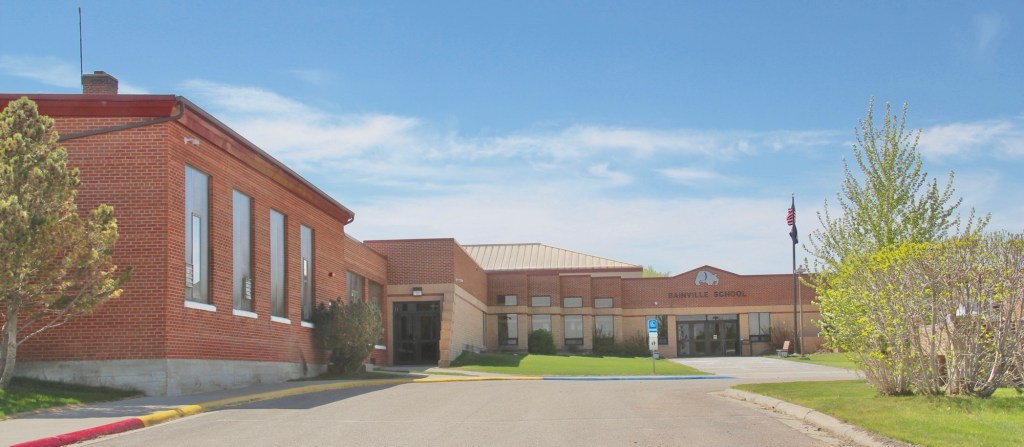
The Roosevelt County office building in Culbertson continued with modem styling into the 21st century. Staying in Roosevelt County new schools for Culbertson and Bainville in the early 21st century also shared contemporary styling. Bainville school
Fort Peck Community College in Poplar has significantly expanded its campus after achieving accreditation in 1991 and the gaining land-grant status in 1994.
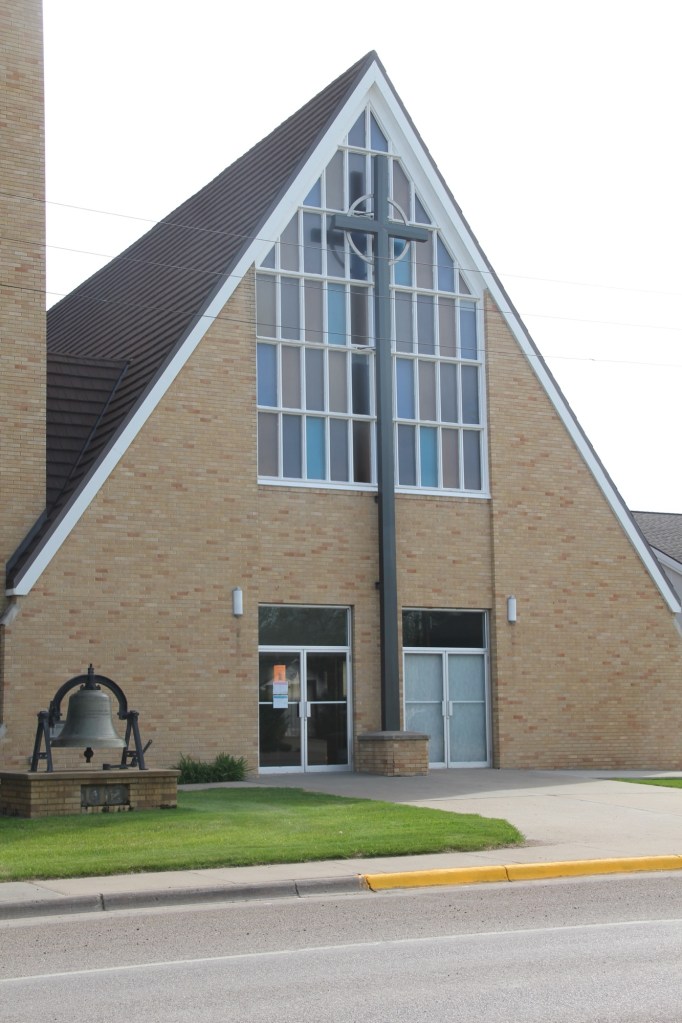
Lutheran churches in Plentywood and Wolf Point are also modern landmarks. Plentywood Lutheran ELCA dates to c. 1957-1960 while the Trinity Lutheran Church is a late 19th century congregation that worships in a 1960s building.
Plentywood Lutheran Plentywood Lutheran ELCATrinity Lutheran in Plentywood Trinity Lutheran in Plentywood
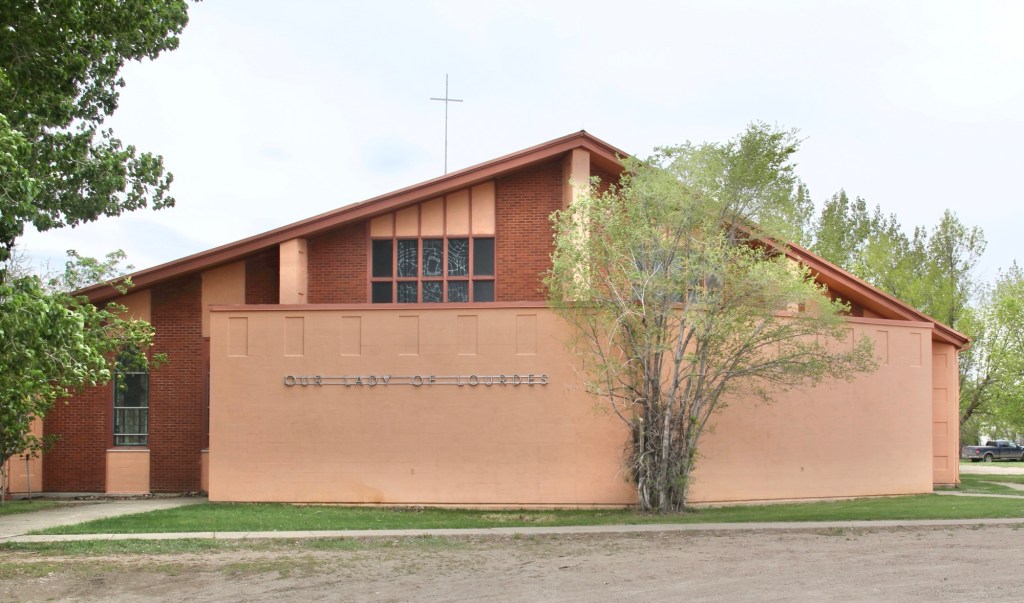
Our Lady of Lourdes Catholic Church, a 19th century congregation, in Wolf point ends our regional tour of Montana modernism. the building reflects the diocesan decision to build contemporary style churches in towns large and small through eastern Montana in the 1950s and 1960s.
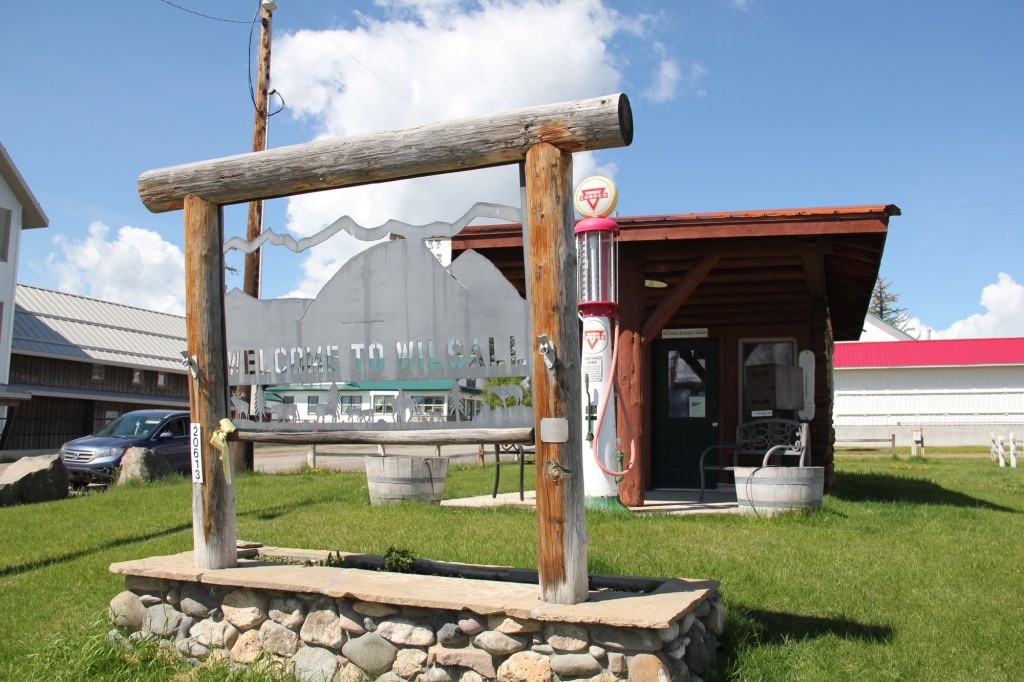
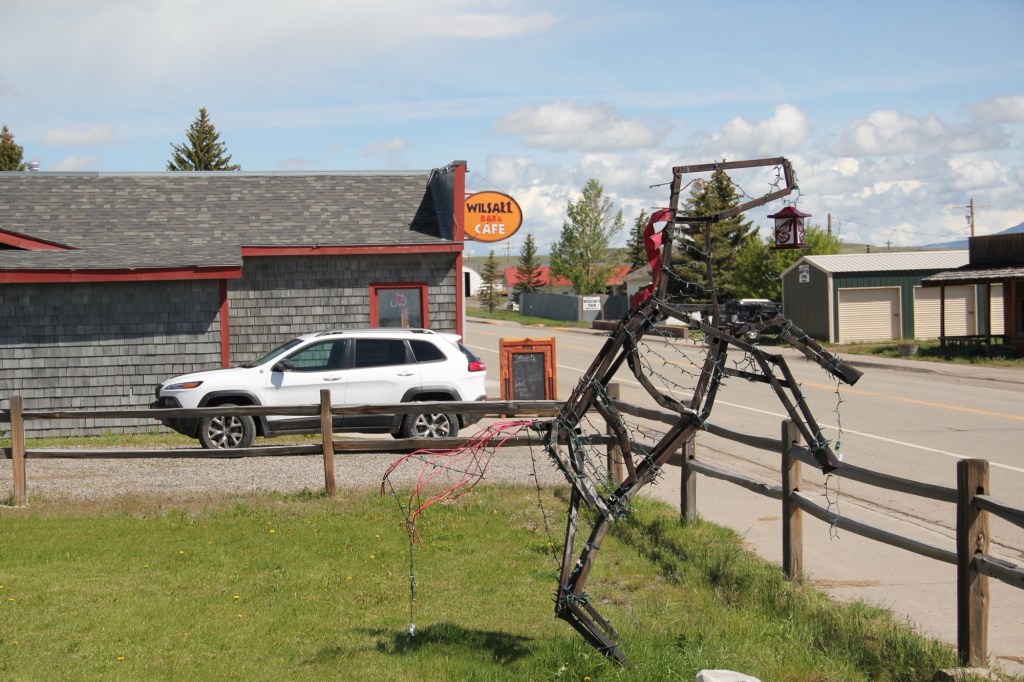
As readers of the blog know, the Shields River Valley is one of my favorite places in Montana. A good place to start any exploration is the village Wilsall, which, from my perspective, is close to a lot of larger towns and population but, then, also thrives quite well in its own.
The town’s past lies with the cattle ranch of Will and Sally Jordan—thus the same Wilsall—and the building of a spur line by the Northern Pacific Railroad in 1909, and the homesteading boom in northern Park County. The historic grain elevator is one potent reminder of both the railroad and homesteading. The tracks ran to the west of the present US 89 highway.
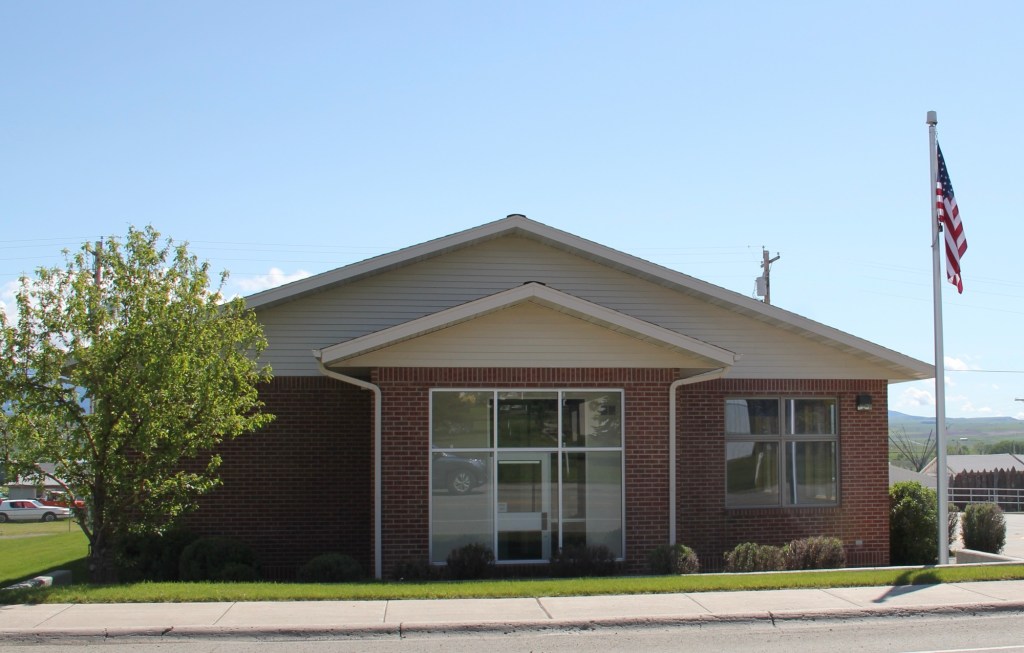
By 1910, the place had a post office; a modern one stands along the highway while an older one is attached to the mercantile building.
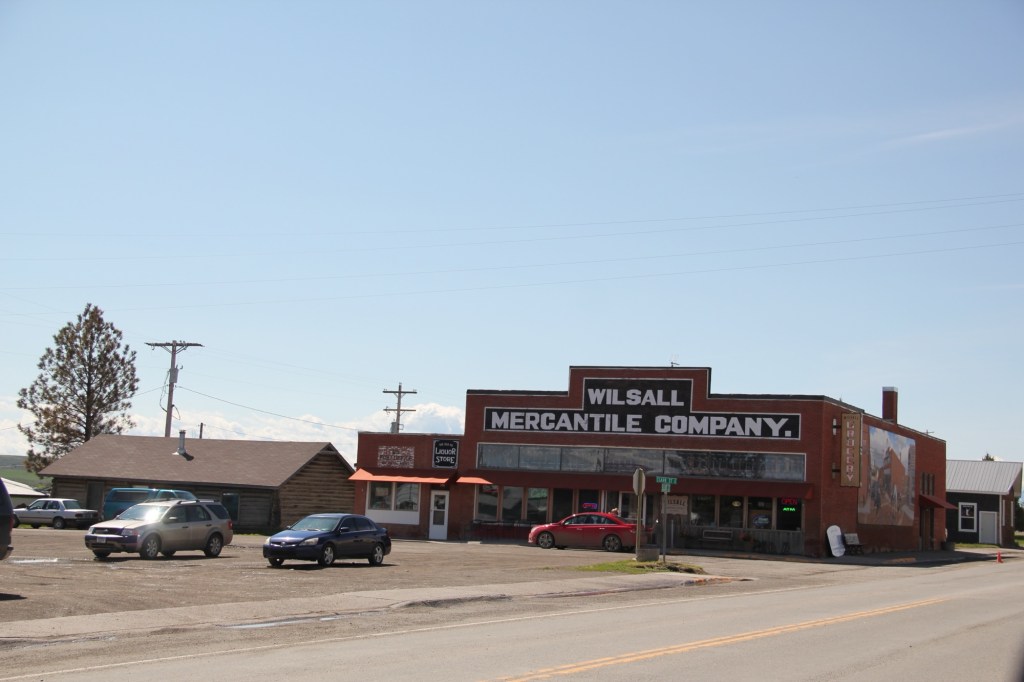
Soon the town’s primary crossroads at Elliot and Clark streets was defined by an impressive classical style bank on the west side and a large brick mercantile store on the east side.
The Bank Bar in fact has recently been in the news because, guess what, national media has again “discovered” a great Montana eatery—
something that locals have known about for years. Maybe the review will get more people to slow down a bit and look around.
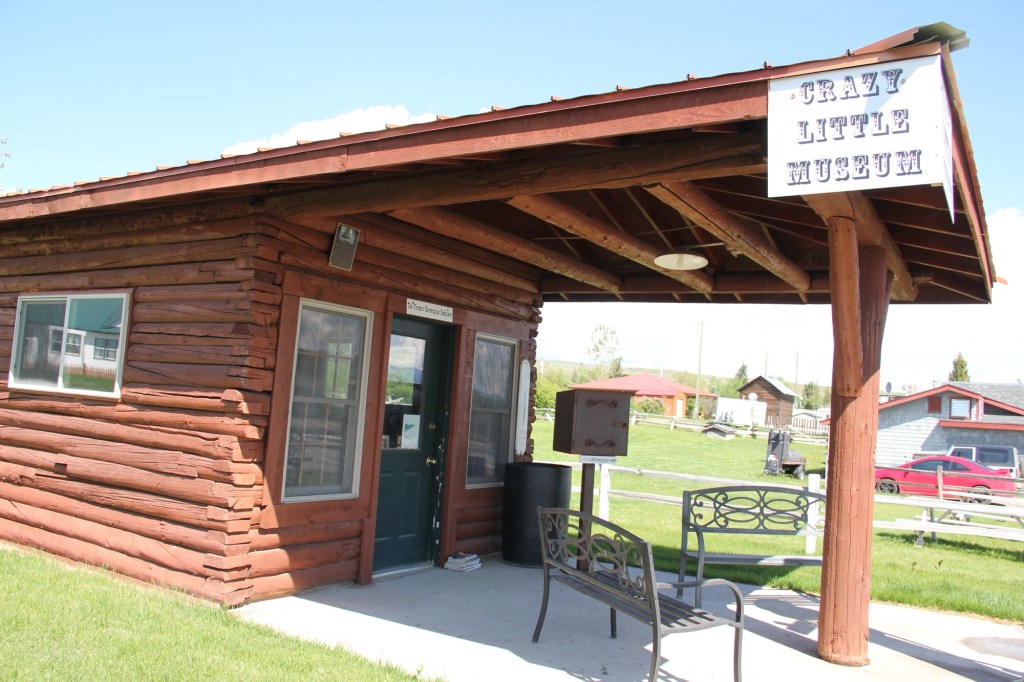
The stop is worth it, not just for a cold brew and perfect burger, but for the town’s Crazy Little Museum (also called the former Norwegian Embassy). It’s always refreshing when a place has a good perspective on itself and honors a person like Bob Tomasko who did a lot for the town before his death in 2012.
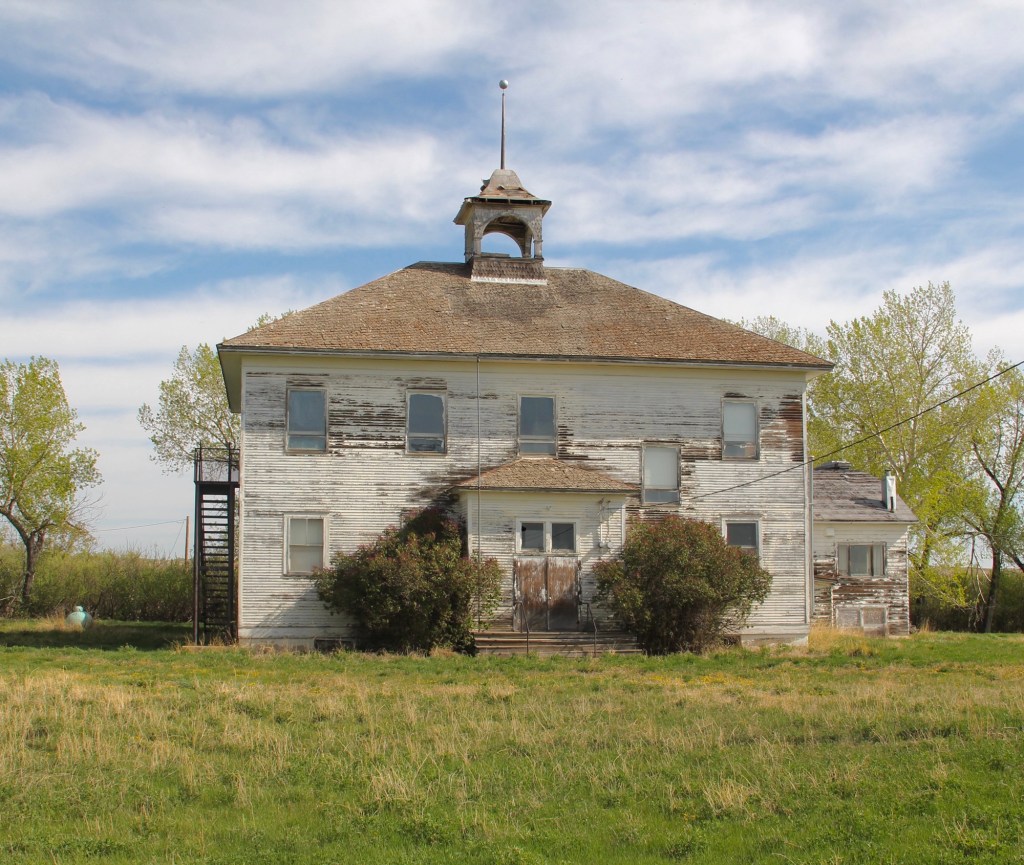
Historic community buildings survive such as the school from the 1910s, now boarded up.
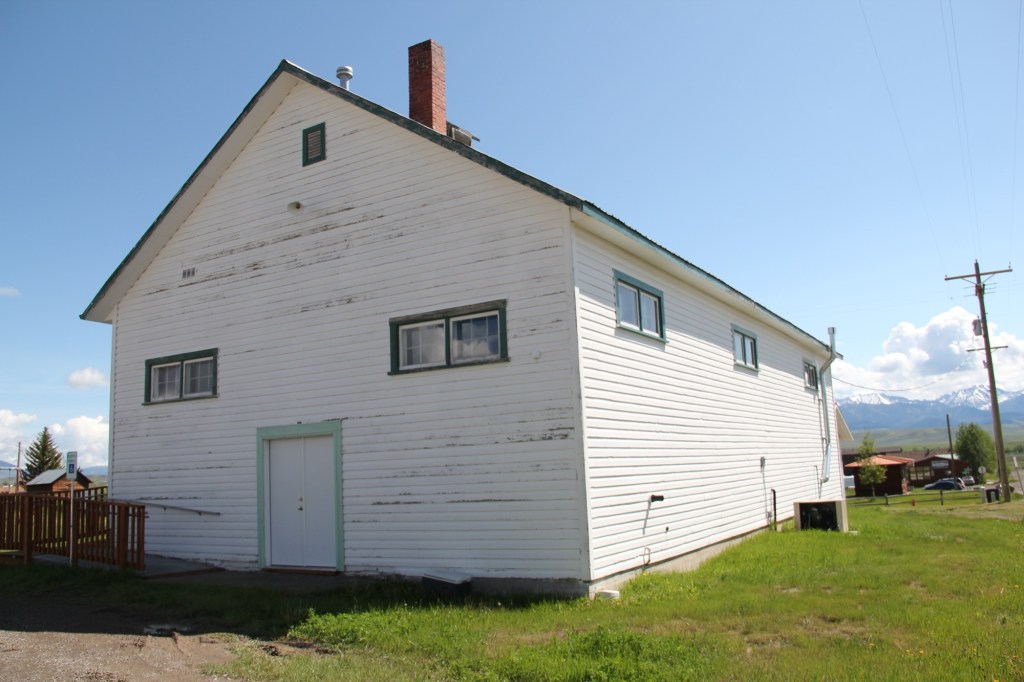
And the town community hall, which remains in use even as the population has dwindled from 237 in 2000 to under 200 in 2020.
US Highway 89 is one of my favorite north-south routes in Montana stretching into Wyoming. I always look forward to my next visit to Wilsall.
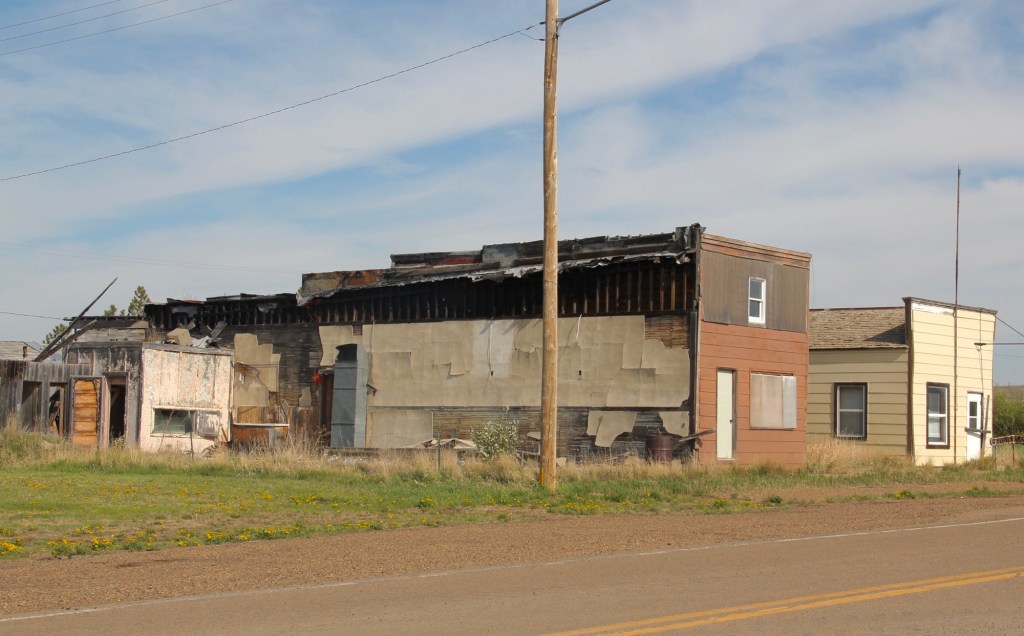
I last visited Whitetail ten years ago. Established along the Canadian-based Soo Railroad line a century earlier, the town was in a free fall, from a height of 500 c. 1920 to a handful of families in 2010. Then the Canadian, then the U.S. government closed the border crossing between 2011 and 2013. Now the town is down to a population of nine in 2020. God bless those still there, doing what they can.
The school building tells much of the story. Built when hopes for the town were high in the 1920s, it’s two-story height and bell cupola made it a landmark in the flat open terrain. I hope when I visit next, the school is there, a silent statement of the dreams with which our high plains were settled.
Secure in its concrete base, the old school bell, removed 50 years ago, is still there to ring, or so I can hope.
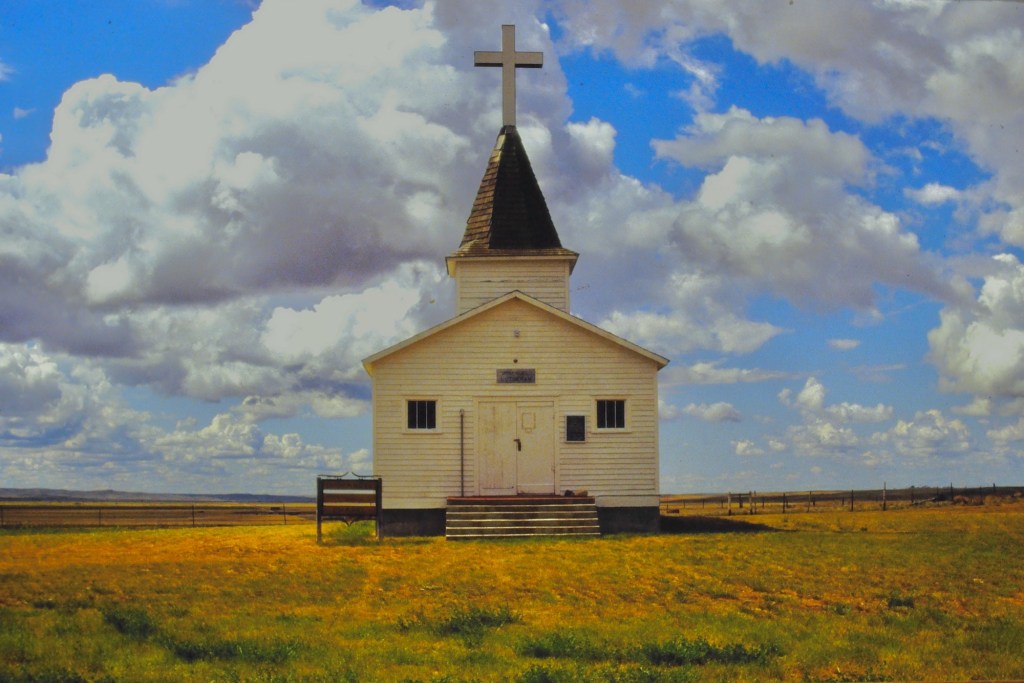
The community church, still a gathering place or has it gone the way of the Catholic Church, moved to the Daniels County Museum in Scobey?
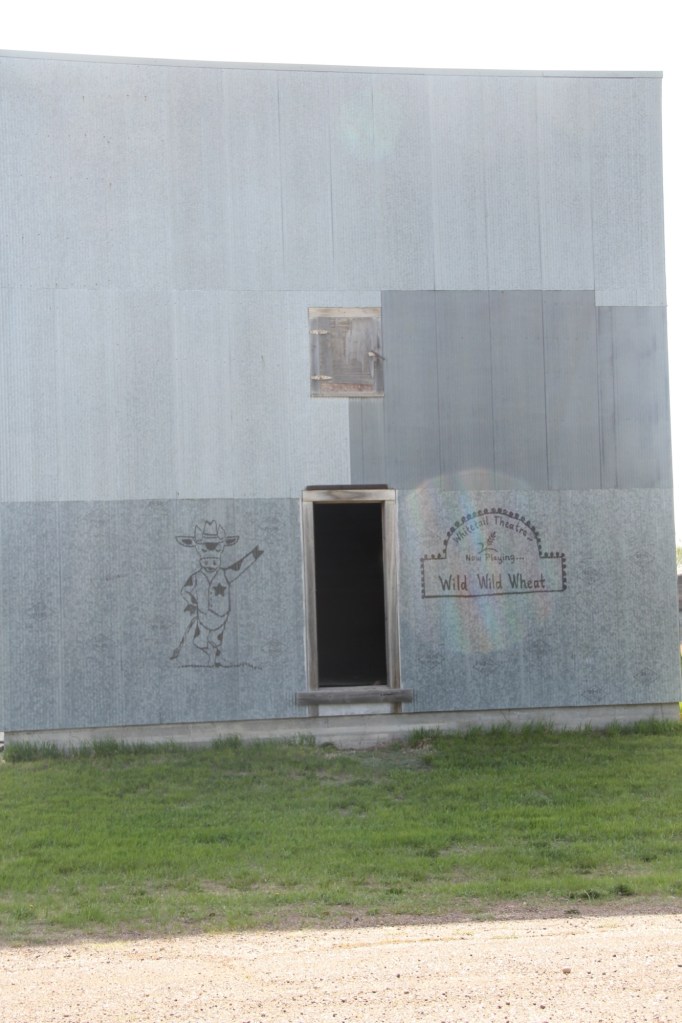
Grain Company BuildingGas station and Garage, 2013Abandoned businesses, 2013A metal facade and open door marked what was left of the Whitetail Theater.
Businesses were largely gone ten years ago. But the post office and grain elevators remained. I bet the elevators are still there serving ranch families but you wonder about the post office.
Whitetail in Montana’s northeast corner is as far removed from Whitefish in Montana’s northwest corner as two places could ever be. They both began as railroad towns. One didn’t make it; the other thrives.
Abandoned home at Whitetail
But what’s been lost at Whitetail tells as much about history as what has been gained in Whitefish. You cannot understand Montana history without both.
In doing the photography for the 1984-85 survey for the State Historic Preservation Office, everything was in Black and White, both for the stability of black and white negatives but also for the cost—color slides were expensive. Thirty plus years later, it’s totally different. Everything is digital and only a few places will even process black and white film.
But I have continued to take a few rolls of black and white film on my recent work in Montana. Here are a few images to share.
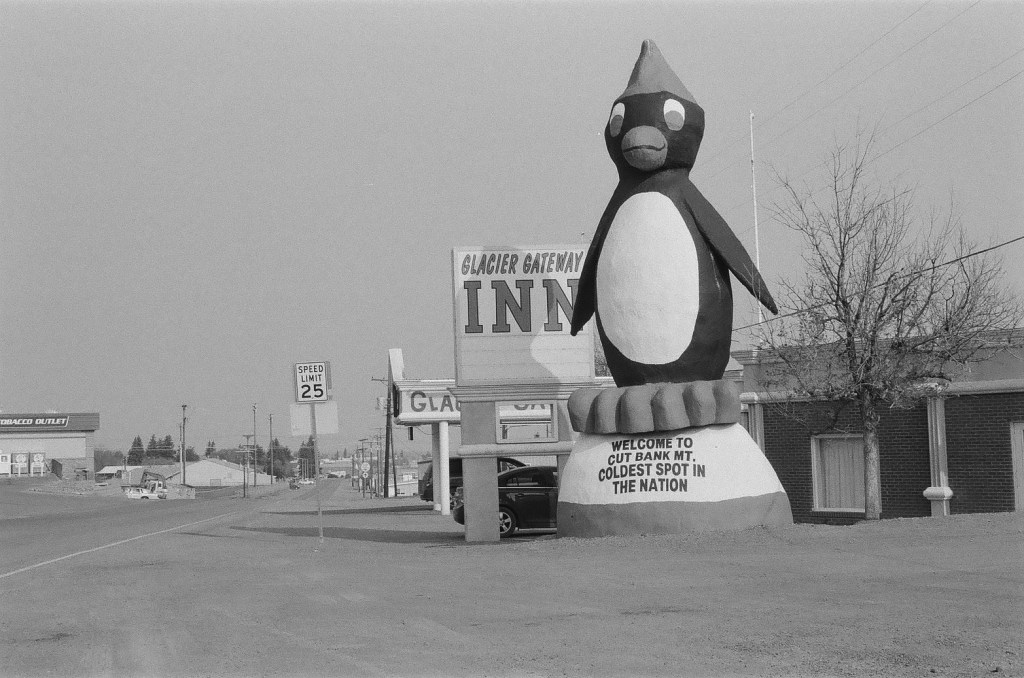
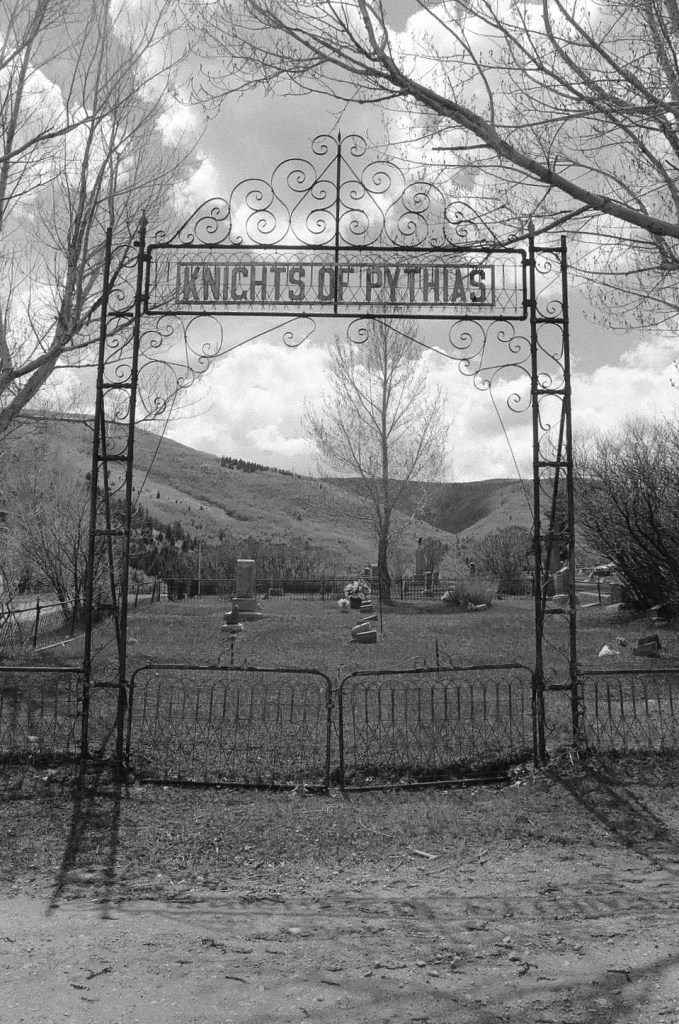
The older US 2 route into Cut Bank features this wonderful piece of roadside sculpture. And back in 1984 the Glacier Gateway Inn was the place to stay.Frank Little Grave in Butte. The starkness and shadows of black and white film is perfect for cemetery work, as this famous grave at Mountain View Cemetery shows.The same is true for Anaconda’s historic cemetery. As I have said in earlier posts, this place is one of the state’s most compelling places. I can explore there all day long. Love the decorative iron work on the gate and entrance to the Knights section at AnacondaGhost towns from either the mining or homestead eras always leave buildings that just seem to say more in black and white. Here we are at Barber on US Highway 12 in central Montana.Abandoned schools that become lonely landmarks of hopes crushed: Buffalo, Montana
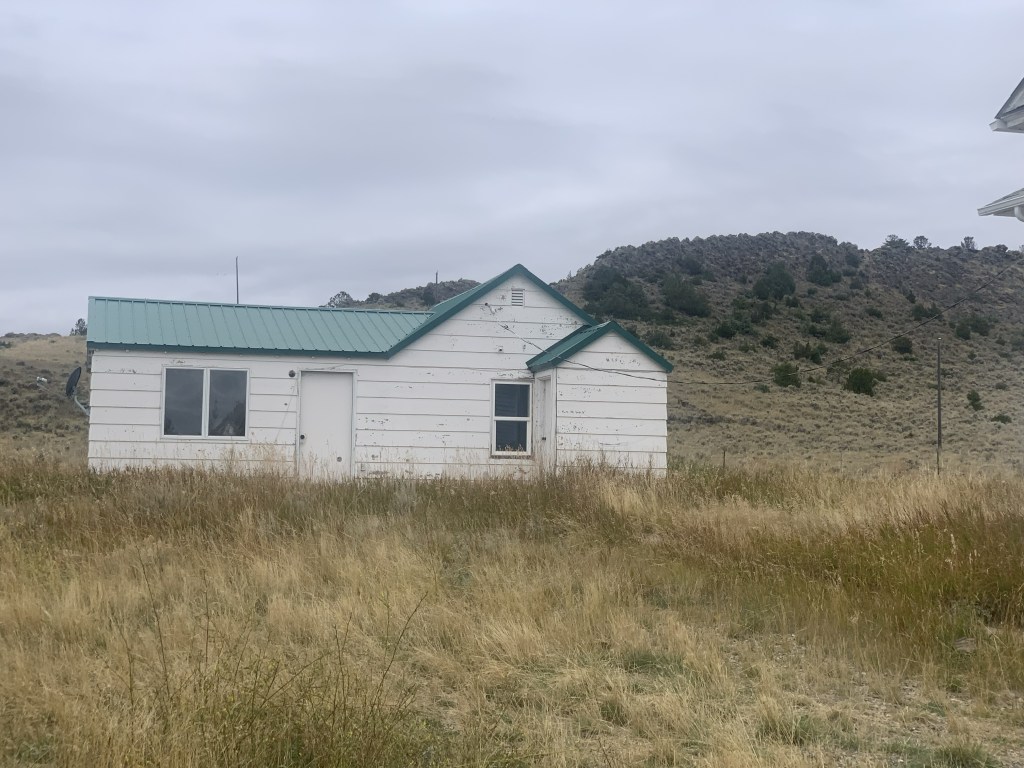
When I lived in Helena from 1981 to 1985 one of my favorite jaunts was along U.S. Highway 12 from Townsend to Roundup. It remains so today, 40 years later. My initial interest centered on railroad corridors. Helena to Townsend followed the Northern Pacific Railroad and a good bit of the Missouri River (now Canyon Ferry Lake).
Northern Pacific bridge over Missouri River near TownsendMissouri River and Canyon Ferry valley near TownsendMissouri River campground near Townsend
It was a brilliant day with fall colors just popping as we left US 287 and turned into the heart of Townsend.
As soon as you leave town to the east you encounter a lovely mix of ranches and irrigated fields until you thread your way through a national forest along Deep Creek.
Fall colors along Deep Creek
We decided to continue east by briefly jumping off US 12 and go to Montana 284 so we could follow the Milwaukee Road corridor from Lennep to Martinsdale where we would reconnect with US 12. Two of my travelers had never been to the Milwaukee Road “ghost town” of Lennep. It was a beautiful morning to be there.
Milwaukee Road powerhouse
You first realize that this abandoned railroad corridor is different when you encounter an electric powerhouse—the Milwaukee Road’s tracks were electrified from Harlowton Montana west to Idaho.
Lennep
At Lennep the landmarks remain—the Trinity Lutheran Church, the store, the school, a teacher’s cottage and an early notched log house—but all were a little worse for the wear compared to my last visit 10 years earlier.
As we traveled east that morning we quickly moved through the county seats of Harlowton and Ryegate to get to Roundup by lunch. The Musselshell Valley was brilliant even as signs of the old railroad almost disappeared.
Near Ryegate Near Lavina
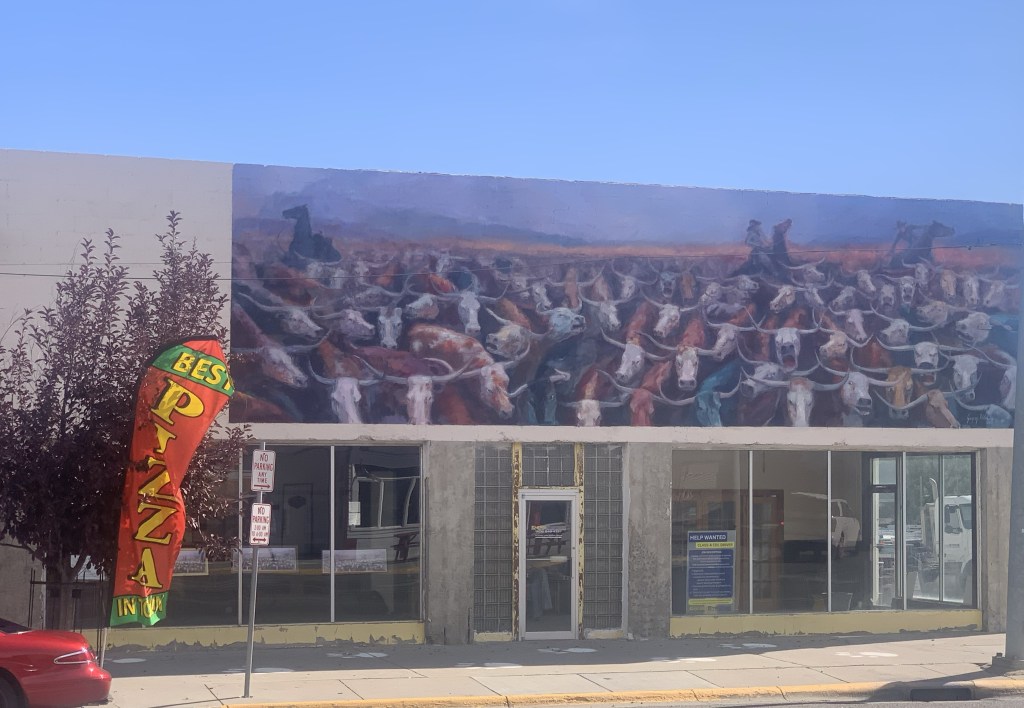
Roundup continues its renaissance with new businesses and restored buildings. The town core, clustered around the intersection of US highways 12 and 87, was busy on a fall weekend.
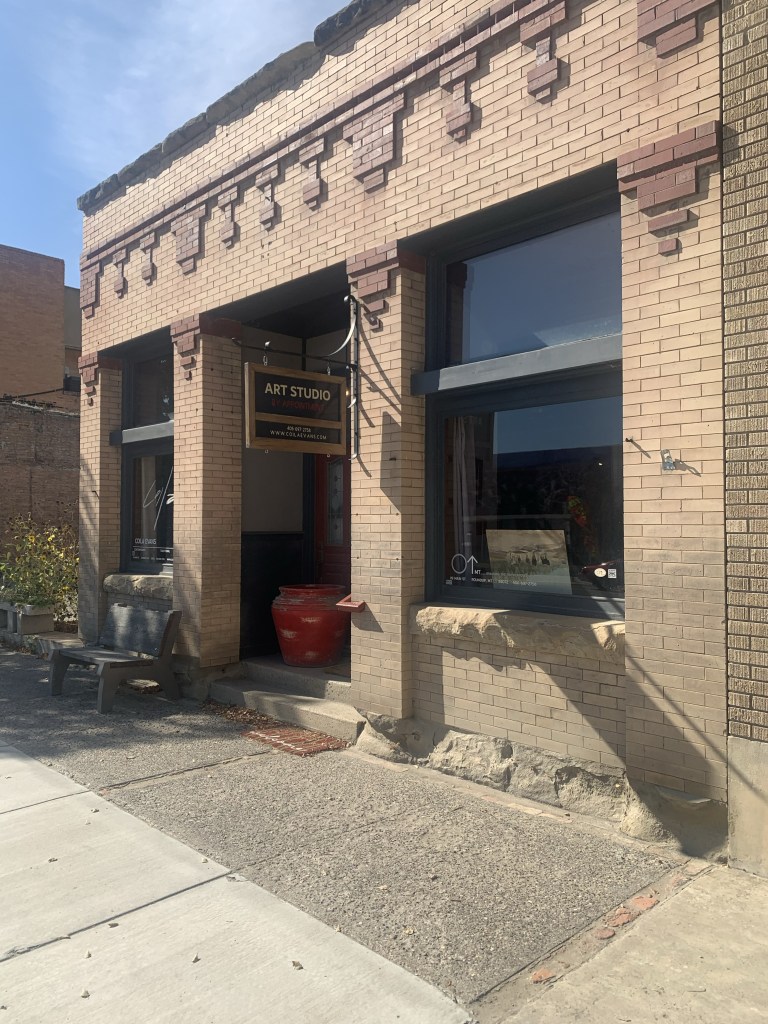
A mural on the great cattle drive of 1989The Backporch—great bbqNew mural at the KegArt studio doing wellAwaiting its renovation Community green spot
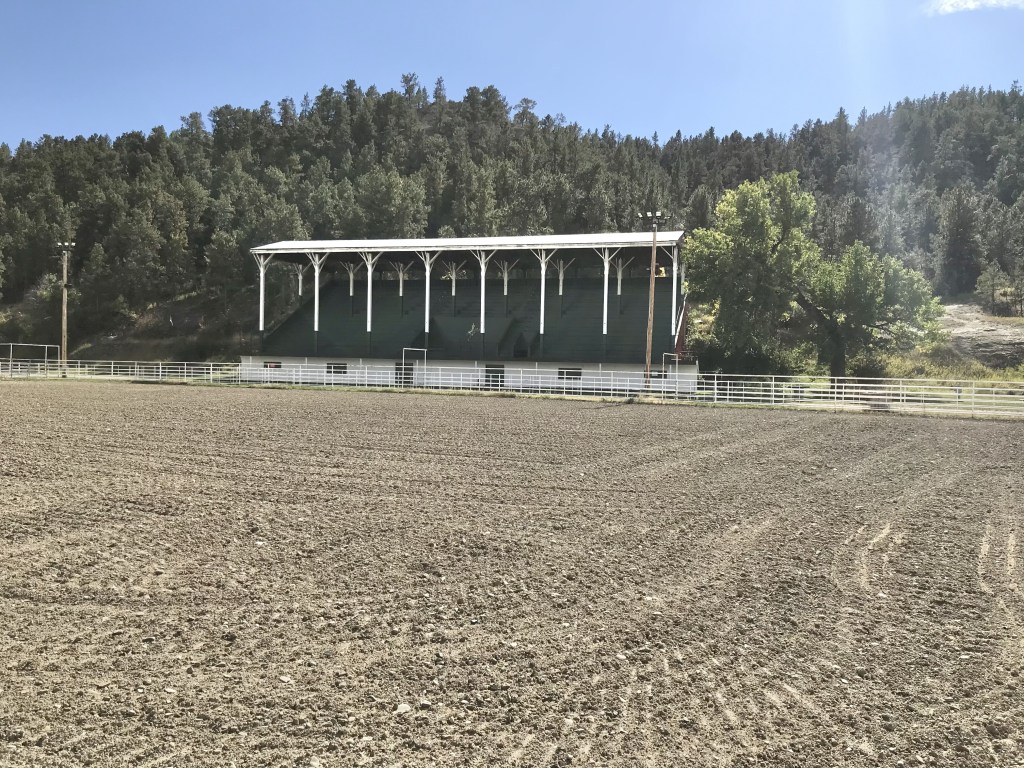
As I observed a few years ago Roundup residents worked together and created a plan—and the place continues to work the plan, from the adaptive reuse of its historic stone school to the careful stewardship of its historic fairgrounds. It’s impressive.
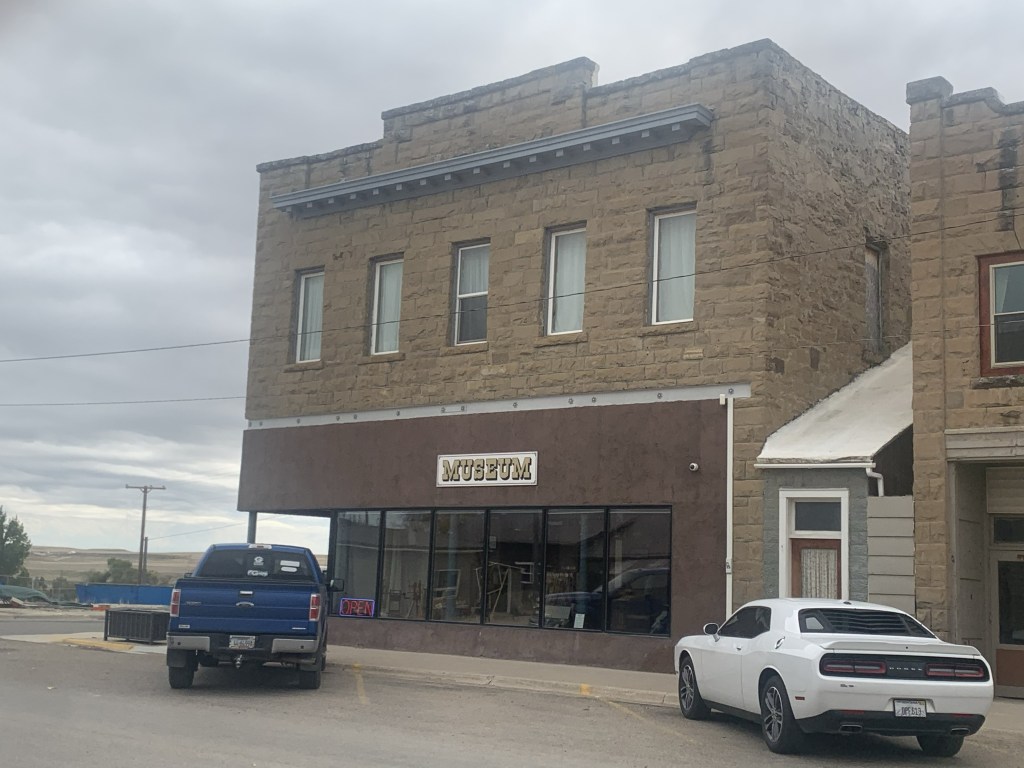
After Roundup we stopped at two county seats on the return to Helena. Harlowton was rocked by the closing of the Milwaukee Road over 40 years ago. It has struggled to reach the economic comeback achieved at Roundup. But the historic stone buildings have great potential. Three of them are now part of a large museum complex.
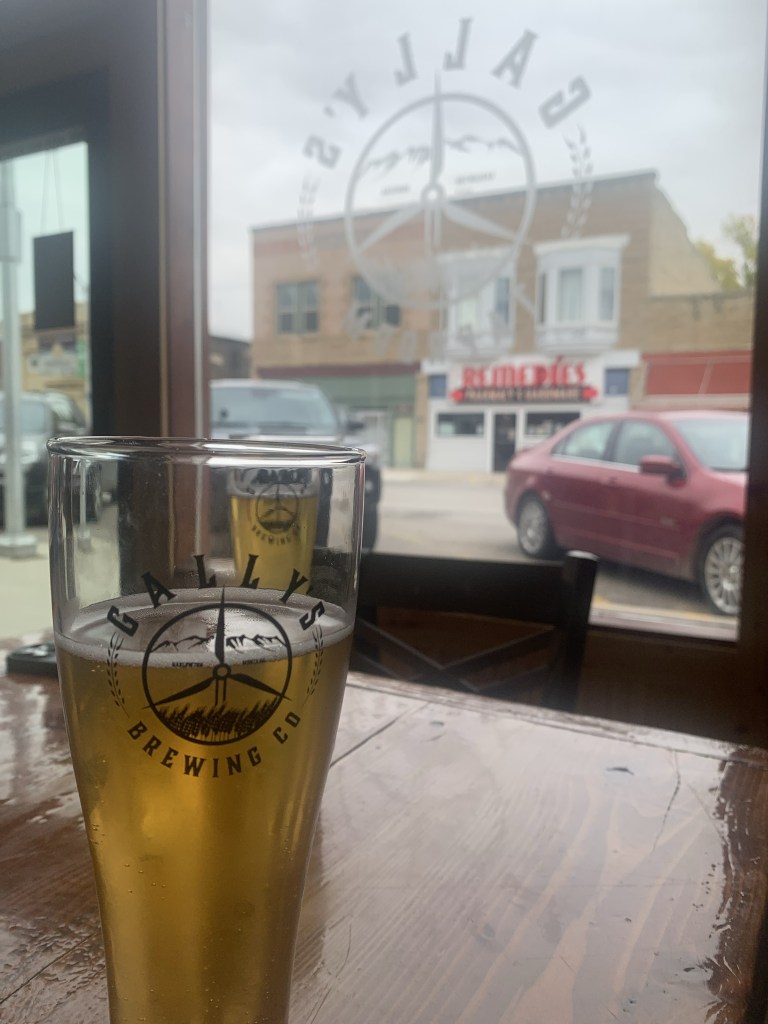
Then there’s the newcomer: the Gally’s microbrewery and pub, housed in the 1913 Montana Block.
It’s a great place for local beer and good conversation—and maybe the start of something good for the town.
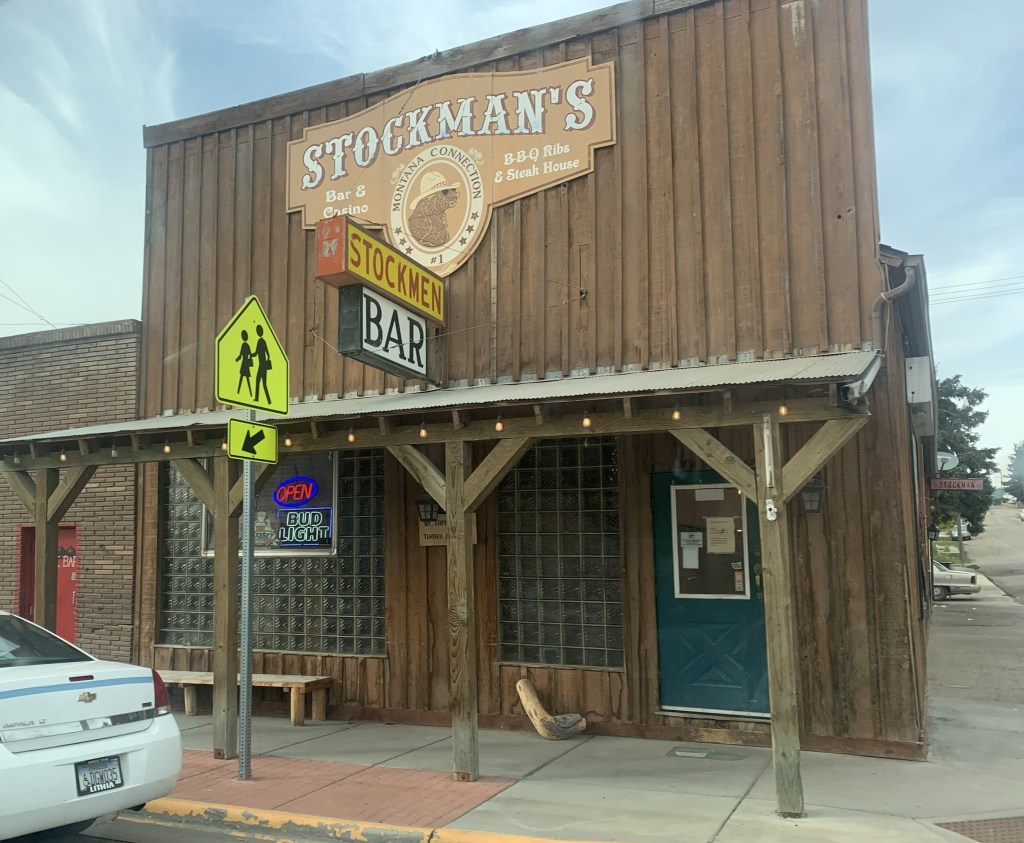
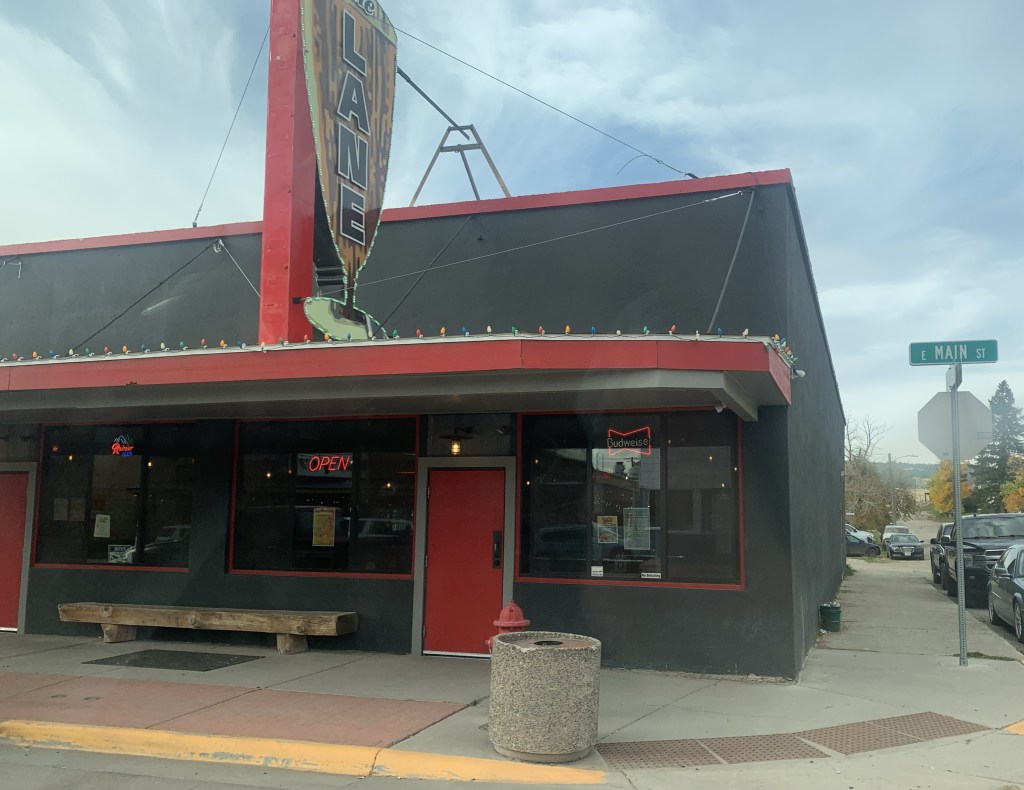
US Highway 12 was torn up for major repairs when I last visited White Sulphur Springs last decade. The improvement along its population growth and the ever expanding hot springs gives the place a new look, reflected in new catchy fronts to local bars along with new businesses such as a huge Town Pump.
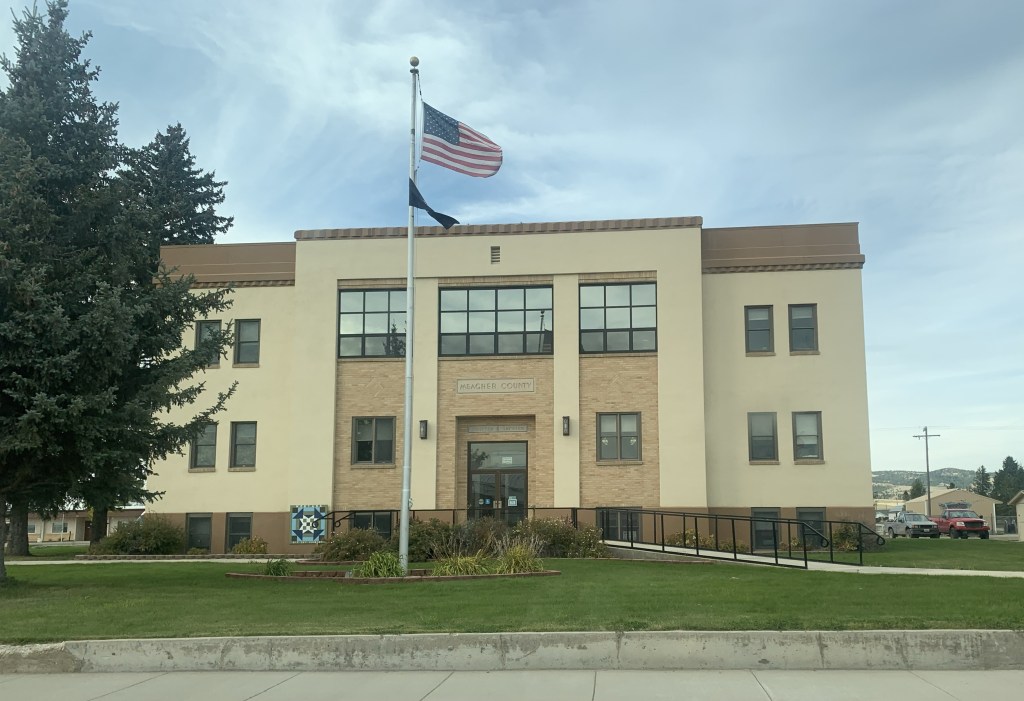
But historic White Sulphur Springs is doing ok too: the New Deal constructed Meagher County Courthouse is still a roadside landmark while the old railroad corridor, just west of the Hot Springs, remains, awaiting its rebirth.
These places are mere highlights along a historic route that’s worth a drive anytime in the fall.
Preserve Montana is leading a community effort in Lewis and Clark Counto to preserve the historic Baxendale School.
Located adjacent to the historic campus of the Archie Bray Foundation and just down the road from Ft William Henry Harrison, the school with the neat Victorian entrance will become a preservation resource center where residents can have hands-on experiences in historic restoration.
I had not been to Buffalo in Fergus County, Montana since 1984–some 37 years ago in the summer of 2021. The place dates to the late 19th century with a post office and trading post. In 1908 it took on the town plan you find today–elevation at the head of town along with railroad line and the public school at the other end of town–as it became part of the Great Northern Railroad route between Billings and Great Falls.
The same landmarks I found in 1984 still defined the town. The First State Bank of Buffalo (there was never a second one) was slowly ebbing away then; the bank had closed during the Great Depression, when so many Montana towns from the homesteading boom had their economic life sucked away. In 1921 I was frankly amazed that it still stood, missing a roof and part of a wall but still expressing its small-town neoclassical style with pride.
Buffalo bank in 1984Buffalo bank in 2021
The Buffalo school was another statement building from the homesteading era, its two-story brick construction expressing not only the need of a rapidly booming place but how the residents valued public education. The school was the community’s statement of pride.
The community church made a statement of faith and community spirit for the 21st century. The town numbers less than 200 inhabitants but actually that number had grown in recent years. The Craftsman-styled church is extremely intact for a 100 year old plus building–the maintenance of the church is a credit to its members.
Not everything was as it had been in 1984. The community hall had fallen on lean times indeed.
But the hipped roof post office–the one civic building–hadn’t changed a bit. Here was a statement of continuity, and thanks to everyone who fought the good fight last decade to keep post offices alive in rural Montana.
In the winter/spring of 2020, a new German newspaper contacted me about using several images from the website taken at Lennep, a small Milwaukee Road Town, along Montana 294 in Meagher County. The newspaper wanted to consider its American counterpoint, its isolated location in Montana, and is history. The editors named the story Ghostown Lennep.
I won’t provide a translation of the entire article, but the author Leon Hohmann provided me a transcript in English, from which I learned quite a bit about Lennep, Montana. The author wrote:
“But the history of the small town begins with another person: Martin T. Grande settled in 1877 in the place that was probably still nameless at that time. This is what history books tell us. He was the first white man in this area an immigrant from Norway who made his living by keeping 3000 sheep. Shortly afterwards, other settlers from Grande’s home village came to the mountain region, worked on his ranch or built their farms.
But this arrival does not seem to have gone very smoothly: A descendant of the first settler reported in an interview that Indians had burned down the first buildings because the border between the area of the natives and the immigrants was moved further and further to the west. Thus the territory of the Indians became smaller and smaller.
In the following years, Martin T. Grande’s ranch became bigger and bigger, more Norwegians came, whom he gave work, and he took an increasingly important position. His countrymen called him “good old patriarch”.
But quite fast the contemplative collection of some ranches and farms became a bigger village. Almost overnight the actual town of Lennep, west of Martinsdale, was built along the Jawbones railway line and served as a small stopover, according to a dissertation on the history of the region. That must have been in 1899. It was also the year that an auditor from the operating company Montana Railroad travelled there and named the place after his German homeland. His name: Johann Wilhelm Fuchs “
Since interest in Lennep, Montana, has an international audience and it has always been among my favorite Milwaukee Road places, I made plans to revisit in 2021–ten years since my last visit–and see the condition of the town.
Lennep Memorial Park Cemetery
I started with a resource given a brief look in 2011–the town cemetery, which is well maintained as the Lennep Memorial Park. The names of the early settlers such as the Grande, Hoyem and Hereim families are prominent as are the Thompsons, who were Masons. The wives–not named–of Andrew Berg have a distinctive obelisk grave marker.
Martin and Karen Grande grave maker. Martin Grande founded the town in late 1870s.
Leon Hohmann continued with the story of Johann Fuchs–who became Wilhelm Fuchs in his new adopted town of Lennep, Montana. Hohmann wrote:
“Johann Wilhelm Fuchs was born on September 2, 1859, in Lennep, Sarah Baldy from the Remscheid town archive found out. His parents: Hermann Fuchs from Elberfeld, who was a teacher at the higher citizen school in Lennep, and his wife Elise a born Hilger.
Growing up on Munsterplatz, he was a young adult when he decided to train as a businessman, which was quite astonishing since his father did not have this profession. But Sarah Baldy has an idea why young Johann Wilhlem took this path: Because his maternal grandfather, Johann Wilhelm Hilger, who died only a few months before the birth of his grandson, was a merchant.
The archivist suspects that this Johann Wilhelm Hilger founded the company Gebrüder Hilger with his brother Daniel. Around 1856 the brothers built a large cloth factory in Wilhelmsthal in Radevormwald, where up to 600 people worked at times. After a fire in 1890, the company had to file for insolvency. Later, the cloth factory became a paper mill, whose production was only stopped on November 30 1970. Since then, the main building has been empty and neglected.
To what extent Johann Wilhelm Fuchs became active in his grandfather’s business has not been communicated. If he did, then probably not for too long. For at the age of 23, he left his home country to start a new life in the United States of America. This is the conclusion drawn from data in the North Rhine-Westphalia State Archive.
He arrived as Johann Fuchs on August 11, 1882, on Ellis Island, New York with two pieces of luggage. He started his journey from Antwerp on the Belgenland I of the Red Star Line as passenger number 23. What he did after his arrival is unclear.
His name only reappears around 1894, when Montana Railroad is founded as the third railway company in the state. At that time, however, he called himself Wilhelm J. Fuchs. He is said to have already planned a train route from Helena to the East with Montana Railroad President Richard A. Harlow. In 1899, in the course of the construction of the Jawbones Railroad, he also travelled to the village of the settlers from Norway. He named the railway station there “Lennep”. Whether he also lived in Lennep is not known, however. His trace is finally lost in 1904 after the operating company of the Montana Railroad had left.”
The buildings that remain today appear to date to the decade of the railroad’s arrival, from c. 1907 to 1917. Certainly that decade marked the height of population and activity here. The wind-swept setting of Trinity Lutheran Church is unchanged. This Gothic Revival church remains the town’s commanding landmark, and remains the active community center. Hohmann noted: “In 1914, the beautiful building was constructed from wooden shingles. The invitation to tender for the church was published in The Harlowtown News on 25 July 1913 with the aim that the construction should be completed by 15 November of the same year. But apparently, the structure of the Trinity Lutheran Church had been delayed. The new building cost 4300 dollars, paid by the Lutheran church congregation, which was founded in 1891.”
Trinity Lutheran Church. The handicap access ramp is an addition in the last 10 years.
The old town general store remains closed, and it has been mothballed to a degree with plywood over damage windows, I suspect. Hohmann wrote about this building: “The train line was necessary for the inhabitants of the ranches around Lennep because the trains supplied the grocery store with food. The goods were not only sold to the people of Lennep, but also inhabitants of the neighbouring villages. Also, the gold-digger camps in the Castle Mountains to the north are said to have supplied from Lennep. At least some hobby historians in American internet forums suspect this. Furthermore, a gravel road connected the village with the Cumberland Mine. Silver and lead were mined there.” The building clearly was a center point for trade and communication. Some deterioration has occurred, but relative minor repairs and a new coat of paint would correct that. The congregation renovated the church in 2016 and at that time added the new porch and handicap access ramp.
The school house–which has not had students since 2011– remains in decent condition although some missing roof shingles could pose water problems. Water and moisture is not the threat in this part of the west as I am accustomed to in the east but a leaky roof is never a good thing. A nearby dwelling has that modern replacement metal roof–it too stood quiet at the time of my visit in June 2021 but appears to be in solid condition.
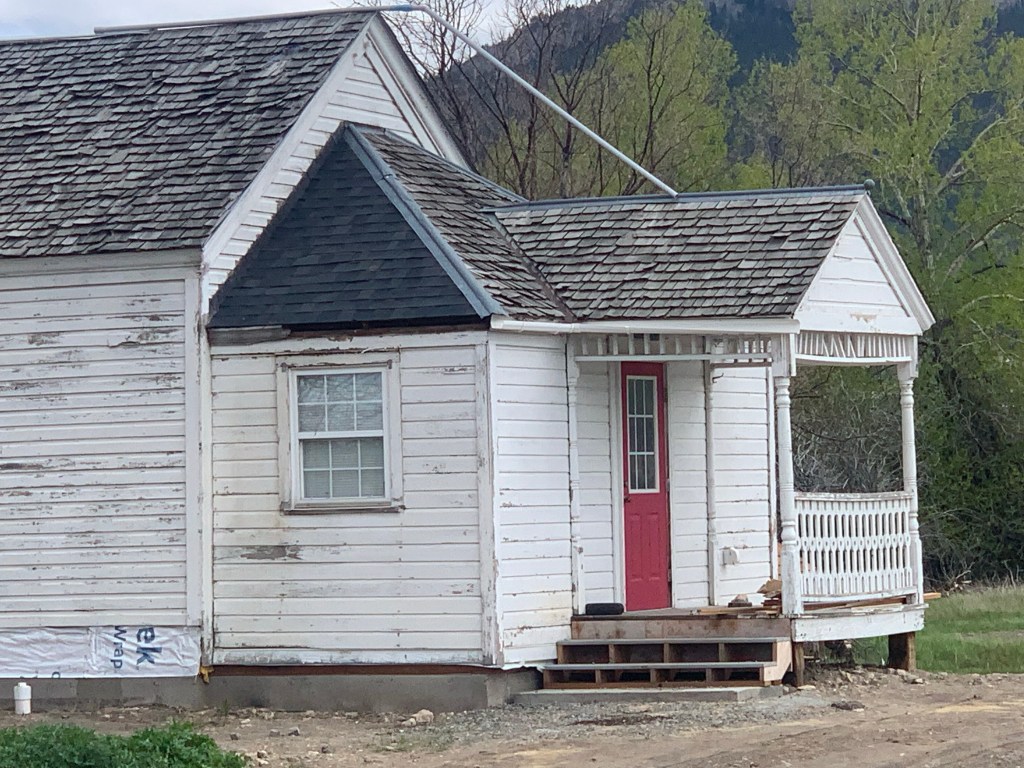
The dwelling between the store and school, however, is in danger of serious deterioration. Half of its shingles are missing–the deck is not in great shape. You wonder if this building is not the next to disappear from Lennep.
Yet, when you stand back at the church and took back southeast toward the railroad line and town, the view of the buildings and landscape is little changed in ten years. Lennep might be a ghost town but it is still there, as a marker of the impact of the Milwaukee Road on the Meagher County landscape.
A final marker to the east can be found by continuing on Montana Highway 294, which closely follows the old Milwaukee Road corridor for several miles before the track and the highway diverge.
A portion of the Milwaukee Road corridor along Montana 294, now turned into a ranch road.
That would be the brick powerhouse necessary to power the electric engines that the Milwaukee Road used in this section of its route. Cows might surround it today but in the early 20th century the brick powerhouses scattered along the line were signs of modernity, of the electric power that distinguished the Milwaukee from all of the other transcontinental railroads in Montana.
The vast majority of my effort to document and think about the historic landscapes of Montana lie with two time periods, 1984-85 and 2012-16. But in between those two focused periods, other projects at the Western Heritage Center in Billings brought me back to the Big Sky Country. Almost always I found a way to carve out a couple of additional days to get away from the museum and study the many layers of history, and change, in the landscape by taking black and white images as I had in 1984-85. One such trip came in 1999, at the end of the 20th century.
In Billings itself I marveled at the changes that historic preservation was bringing to the Minnesota Avenue district. The creation of an “Internet cafe” (remember those?) in the McCormick Block was a guaranteed stop.
But my real goal was to jet up highways 191 and 80 to end up in Fort Benton. Along the way I had to stop at Moore, one of my favorite Central Montana railroad towns, and home to a evocative set of grain elevators.
Then a stop for lunch at the Geraldine bar and the recently restored Geraldine depot, along a historic spur of the Milwaukee Road. I have always loved a stop in this plains country town and this day was especially memorable as residents showed off what they had accomplished in the restoration. Another historic preservation plus!
Then it was Fort Benton, a National jewel seemingly only appreciated by locals, who faced an often overwhelming task for preserving and finding sustainable new uses for the riverfront buildings.
It was exciting to see the recent goal that the community eagerly discussed in 1984–rebuilding the historic fort.
A new era for public interpretation of the northern fur trade would soon open in the new century: what a change from 1984.
I beat a quick retreat back to the south, following the old Manitoba Road route along the Missouri and US Highway 87 and back via highway 89 to the Yellowstone Valley. I had to pay a quick tribute to Big Timber, and grab a brew at the Big Timber
Bar. The long Main Street in Big Timber was obviously changing–new residents and new businesses. Little did I know how much change would come in the new century.
One last detour came on the drive to see if the absolutely spectacular stone craftsmanship of the Absarokee school remained in place–it did, and still does.
My work in Tennessee had really focused in the late 1990s on historic schools: few matched the distinctive design of Absarokee. I had to see it again.
Like most trips in the 1990s to Billings I ended up in Laurel–I always felt this railroad town had a bigger part in the history of Yellowstone County than
generally accepted. The photos I took in 1999 are now striking– had any place in the valley changed more than Laurel in the 21st century?