Big Timber and suburban aesthetics

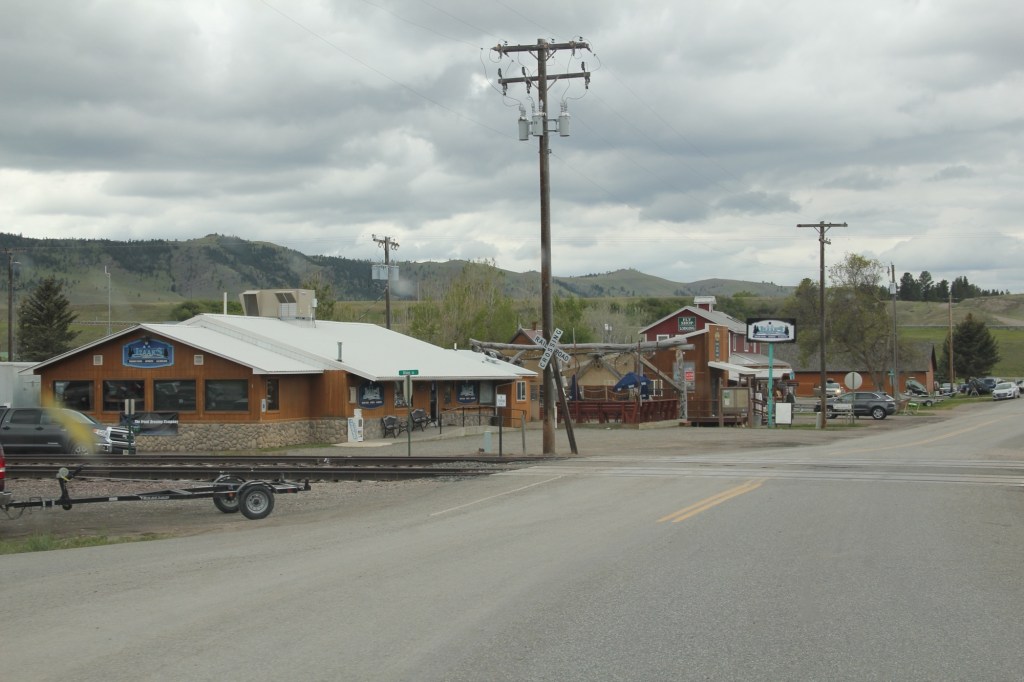
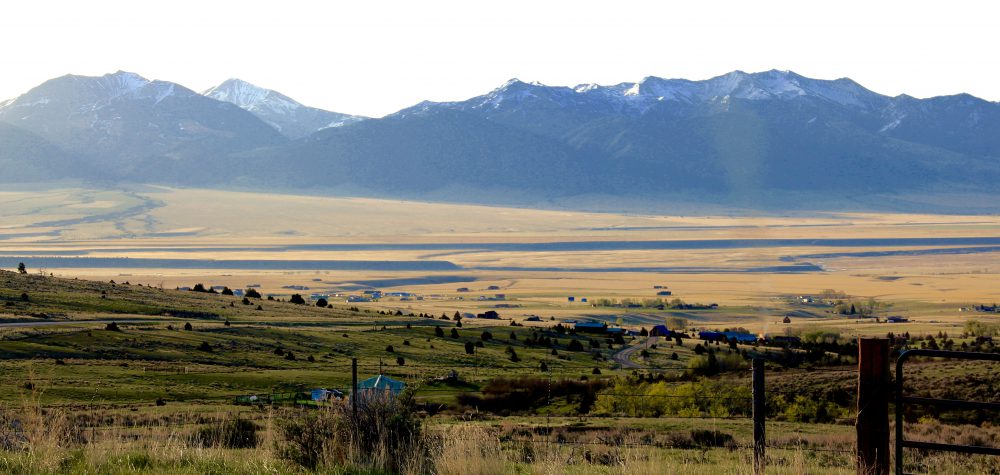
Readers of this blog on Montana’s historic places will see that, clearly, Big Timber is one of my favorite railroad towns of the Yellowstone Valley. Its classic T-plan is one reason why. The top of the “T” runs roughly along the river and railroad tracks, facing the Crazy Mountains, while the stem of the “T” becomes the town’s Main Street, as you can see above.

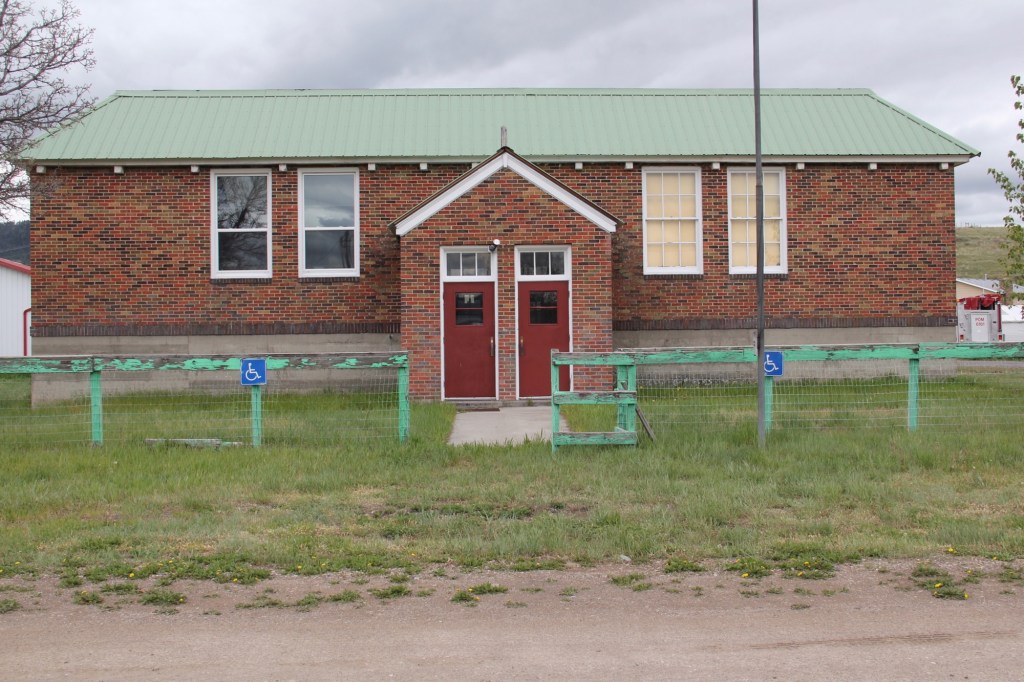
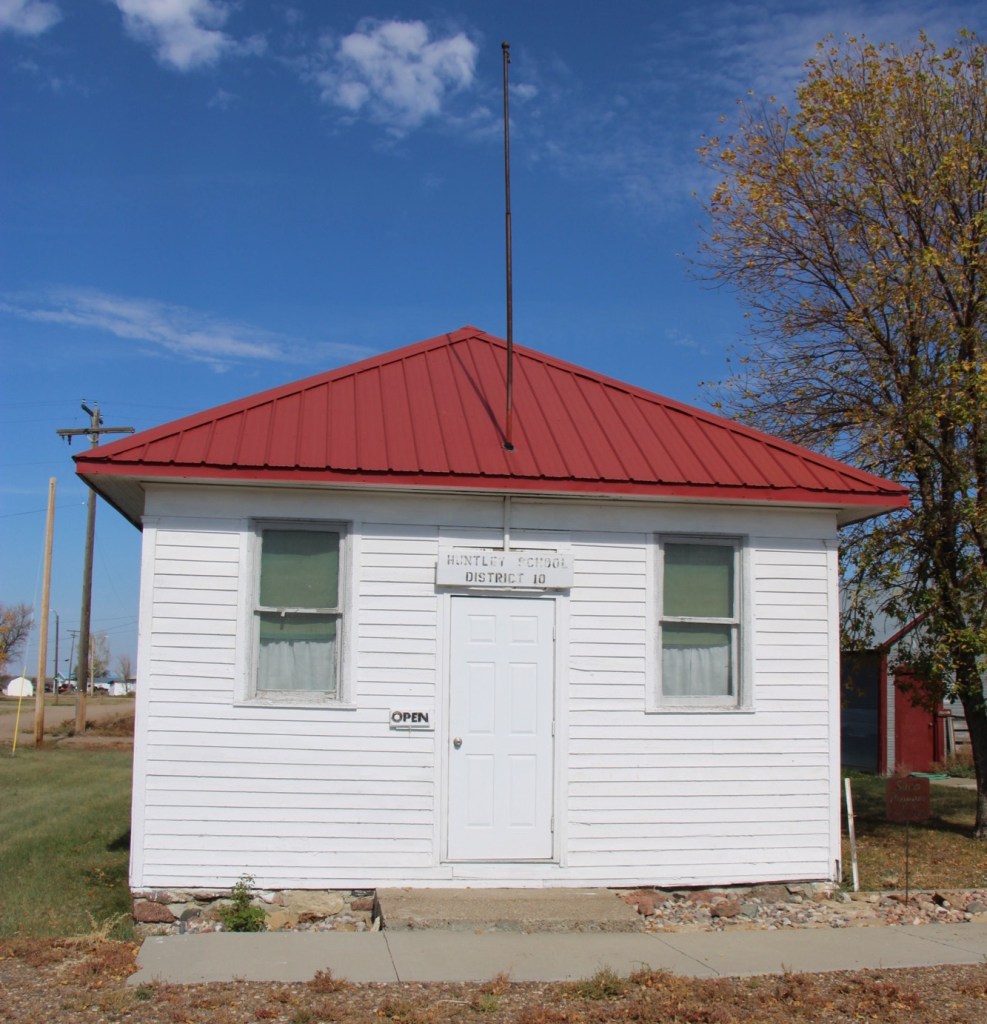
Big Timber school in 2014

Distinguished one and two-story historic buildings along Main Street and scattered throughout the town are among the other reasons I enjoy Big Timber. The fate of of one of those places is the theme of today’s post.

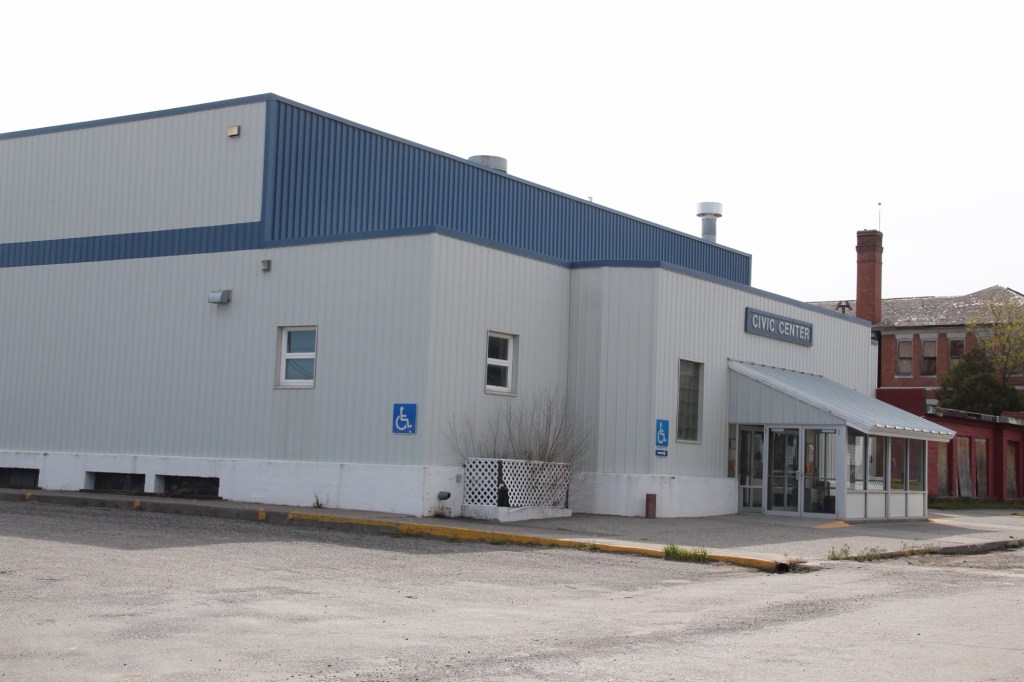
I have earlier talked about the town’s three primary public spaces (the courthouse, the school/library, and the Sweet Grass Mill park at the south end of Main Street.) The second oldest space is defined by its historic school and the adjacent Civic Center (which also served as the school’s gym) and the Carnegie Library, which was expanded last decade.

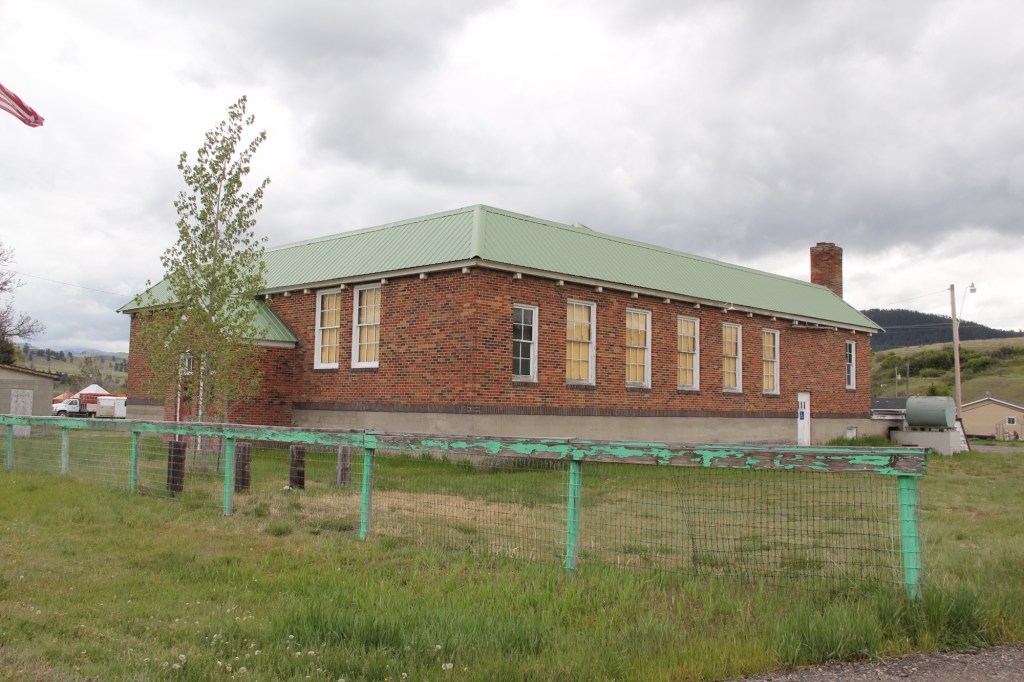
Civic Center in 2014. Note the rear of the school in the far right side of the image
Expanded Carnegie Library, 2021
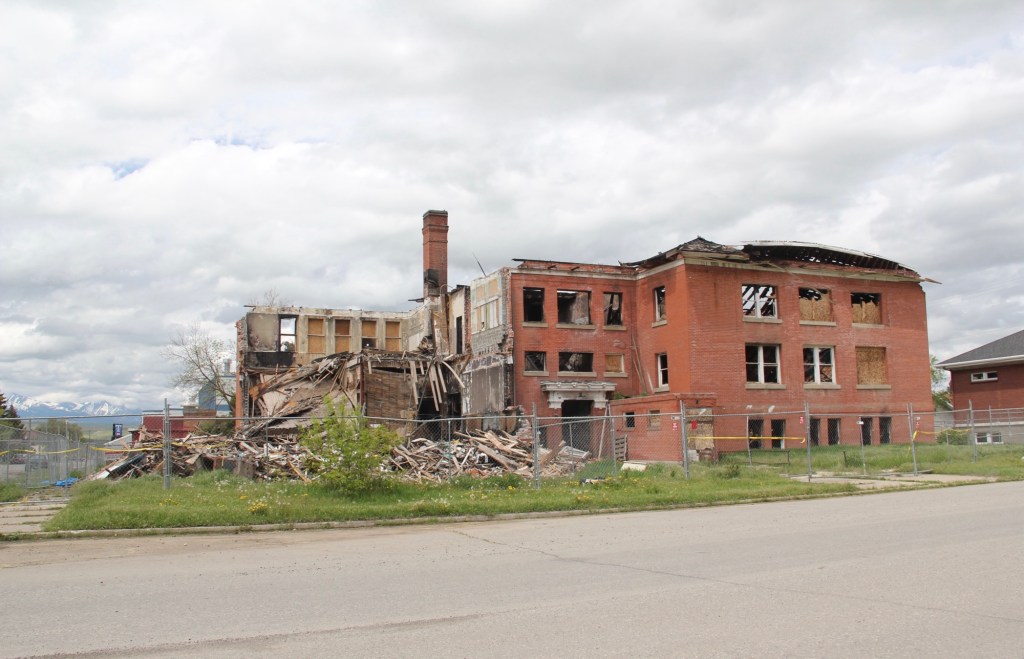
School after fire, taken in 2018

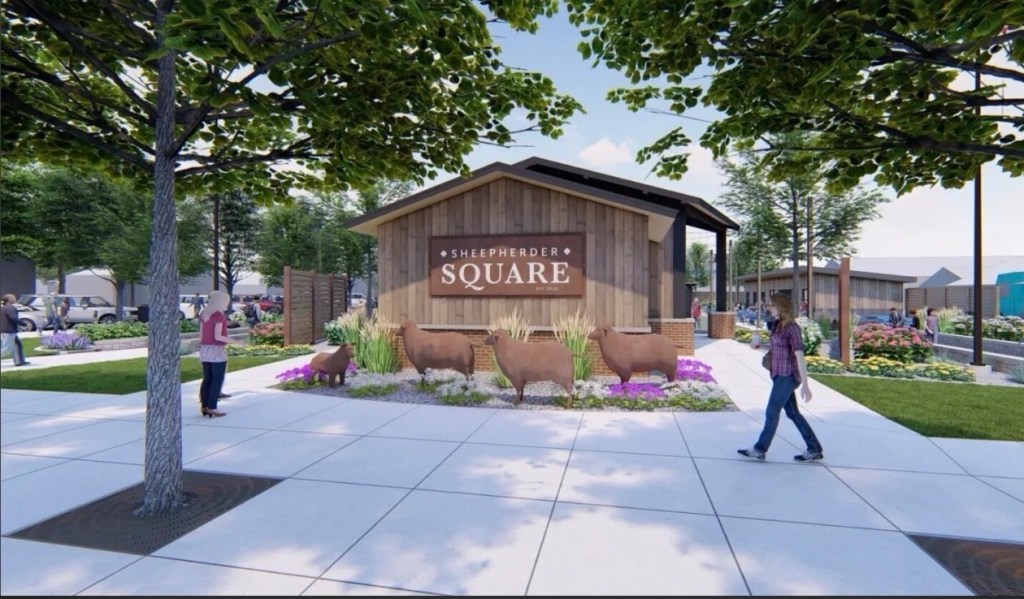
After the disastrous fire of 2017 that destroyed the school, the future of this public space was left in doubt. Here at the end of 2025 an answer has been presented—a new outdoor space called Sheepherder Square, designed by a Bozeman-based architectural firm. A foundation has been established to support the project and fundraising is underway.

The square will be an open space with an amphitheater and other amenities that link the library and civic center. The rendering above, from the Helena Independent Record website, shows a lot of concrete walkways, perhaps too much of a suburban aesthetic for a western railroad town. Will it compete with/ replace the Sweet Grass mill park? How will it blend with pedestrian traffic at the library and the Main Street business district?

This envisioned transformation of an empty lot will be interesting to monitor over the next year or two. Is the look and feel of Big Timber headed in the right direction?

Revisiting Nashua in Valley County in 2025

It had been over a decade since I last stopped in late September 2025 at the tiny railroad town of Nashua in Valley County. Recently in the state and regional press, there have been stories about the uptick in tourism in northern Montana. It’s about time, especially for intrepid heritage tourists. As my posts from over ten years ago emphasized, an amazing array of stories and places await those who venture beyond Havre on U.S. Highway 2.

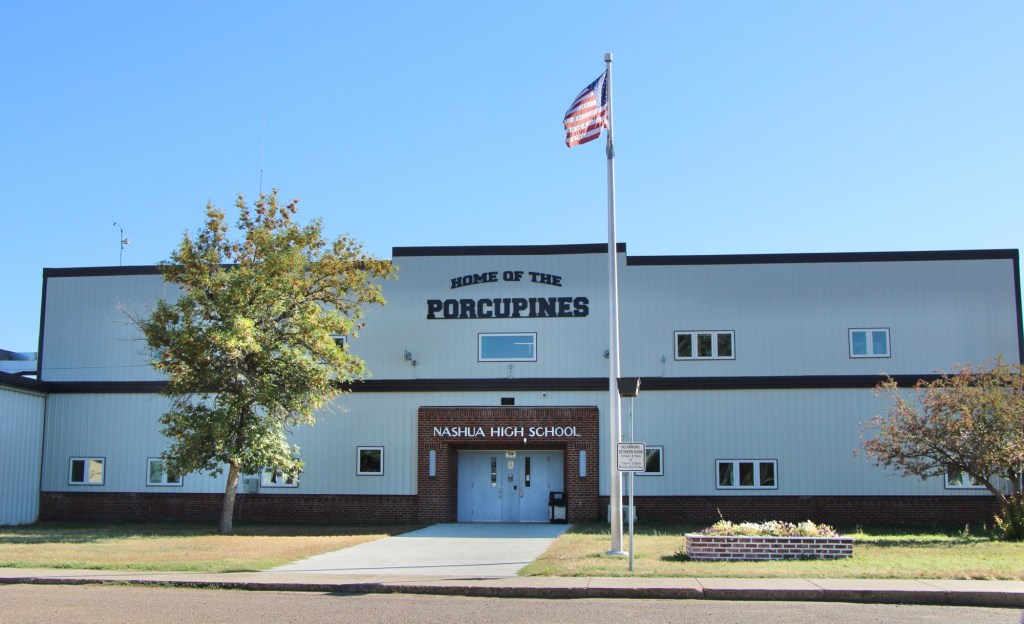
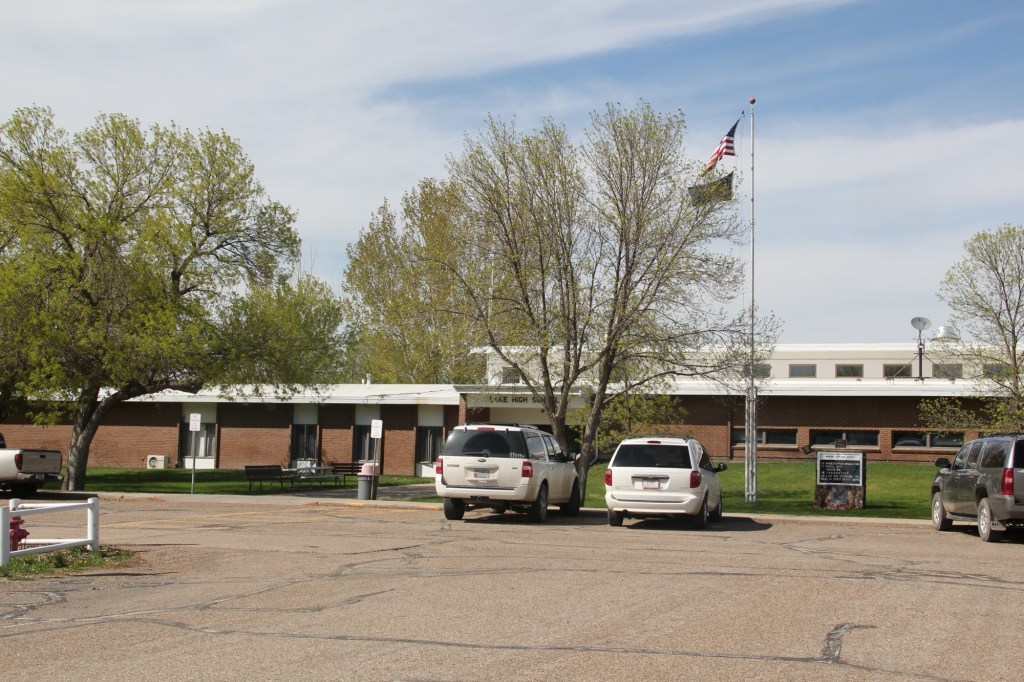
Even tiny Nashua (probably less than 300 residents today) reflects virtues worth exploring—community pride especially as reflected at the recently renovated Nashua High School, above. Since the town had lost population since my last visit, I had wondered if the school was still there as an anchor. Indeed it was, and looked almost modern as its 1935 core from the New Deal had been layered over with a new facade.

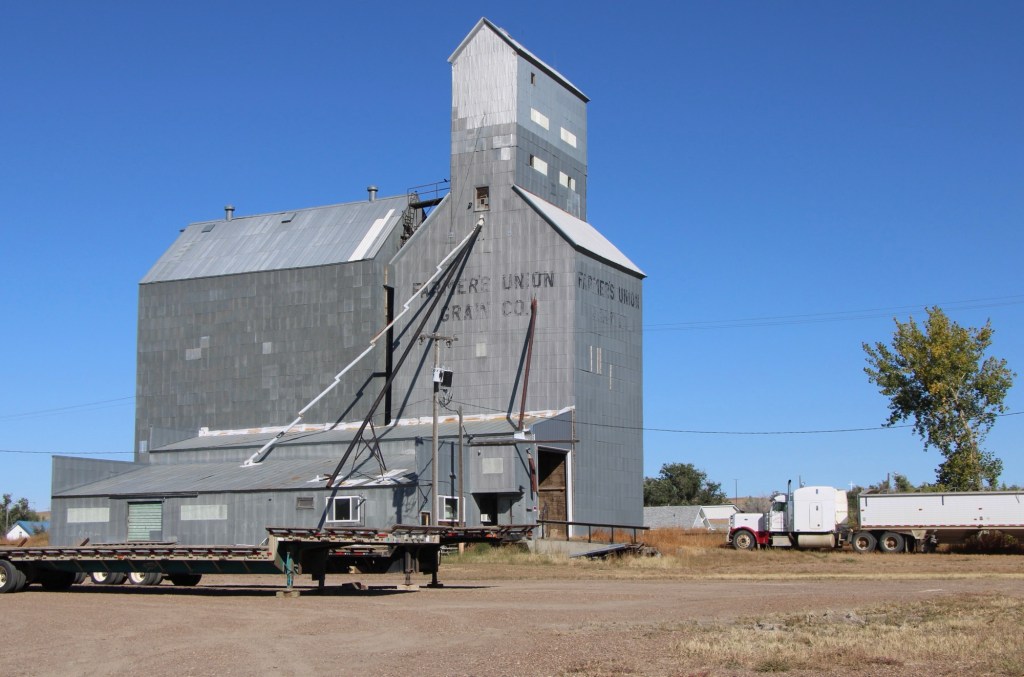
The railroad was the dominant influence in the town’s history—save for the 1930s boom during the construction of nearby Fort Peck Dam—and the town’s rail corridor is still defined by its grain elevators.

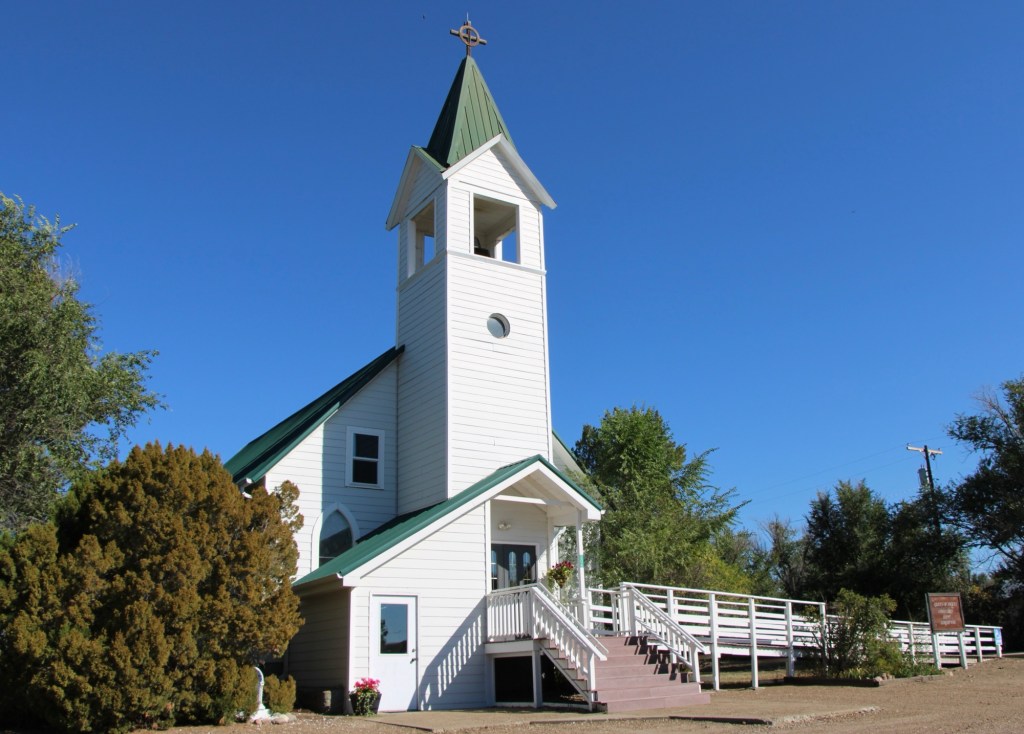
Queen of Angels Catholic Church

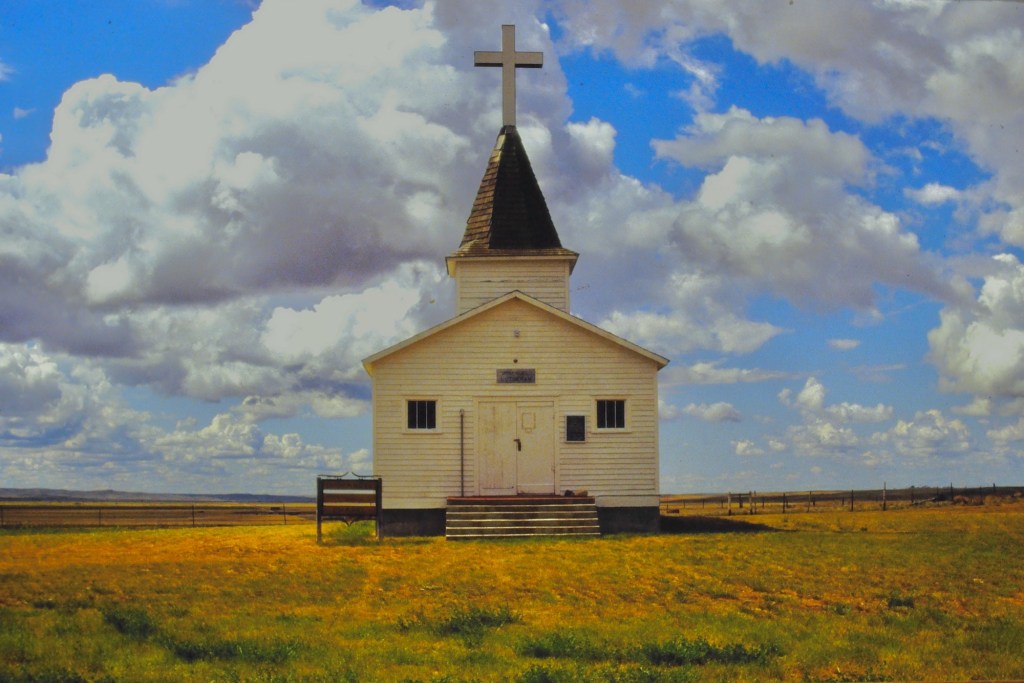
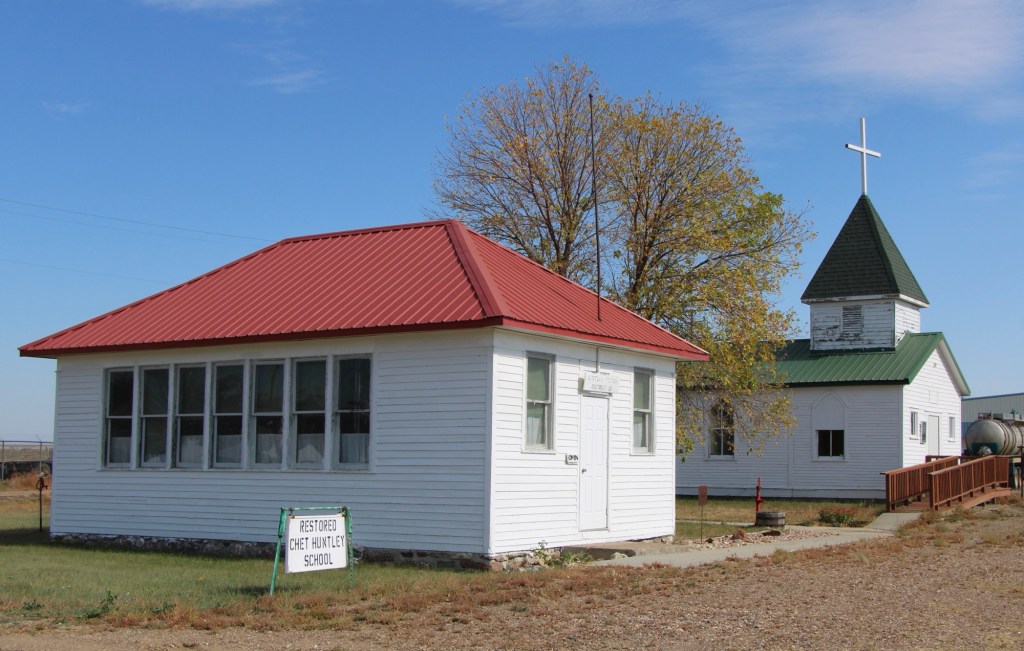
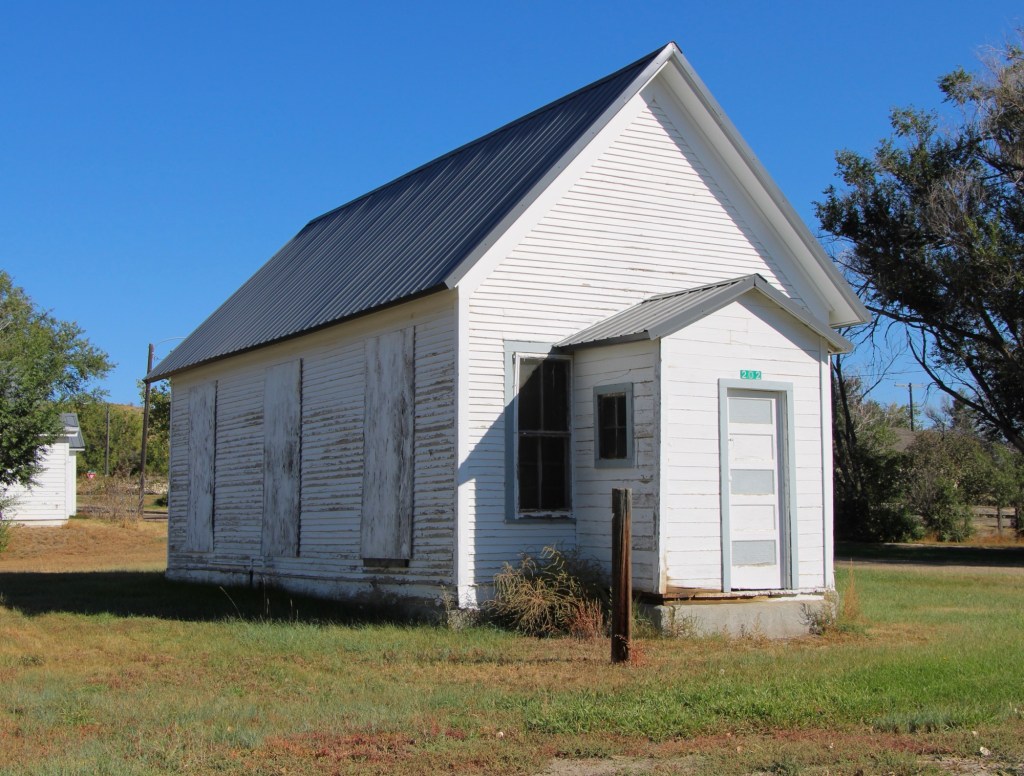
Competing for the Big Sky line of Nashua is the tall Gothic style bell tower of the Catholic Church. Established in 1917, Queen of Angeles Catholic Church began as a mission church. The Sisters of Charity worked with the diocese to establish an adjacent one-room school, below, as a way of growing and maintaining the congregation after the end of the Fort Peck Dam boom.

Then in 1953 Rev A. J. Schuh wrote an appeal to The Catholic Worker, a major newspaper, asking for the support for the construction of a rectory so that a more permanent foundation for the church’s work in Nashua could be laid. I had no idea if the appeal worked or not—but something happened. Queen of Angels Catholic Church was in great condition, and a major town landmark.

Front Street, Nashua

Along the old highway route was another landmark, of a quite different purpose: Vic’s Bar and Bowling Alley. Here is the private social center for the town. Great rural Montana towns always have at least one traditional watering hole. Vic’s is that place in Nashua.

Victor Dostert (1886-1961) homesteaded south of the town along the Milk River during the boom of the 1910s but when the bust came in the 1920s Dostert, his wife Anna, and their three sons stayed, making their mark with construction projects (from a theater to the Catholic Church) and taking advantage of the thousands of construction workers passing through by building and operating Vick’s Bar in 1935. He added the bowling alley in the 1950s—a decade when the bowling craze as a community institution reached its peak across the nation.

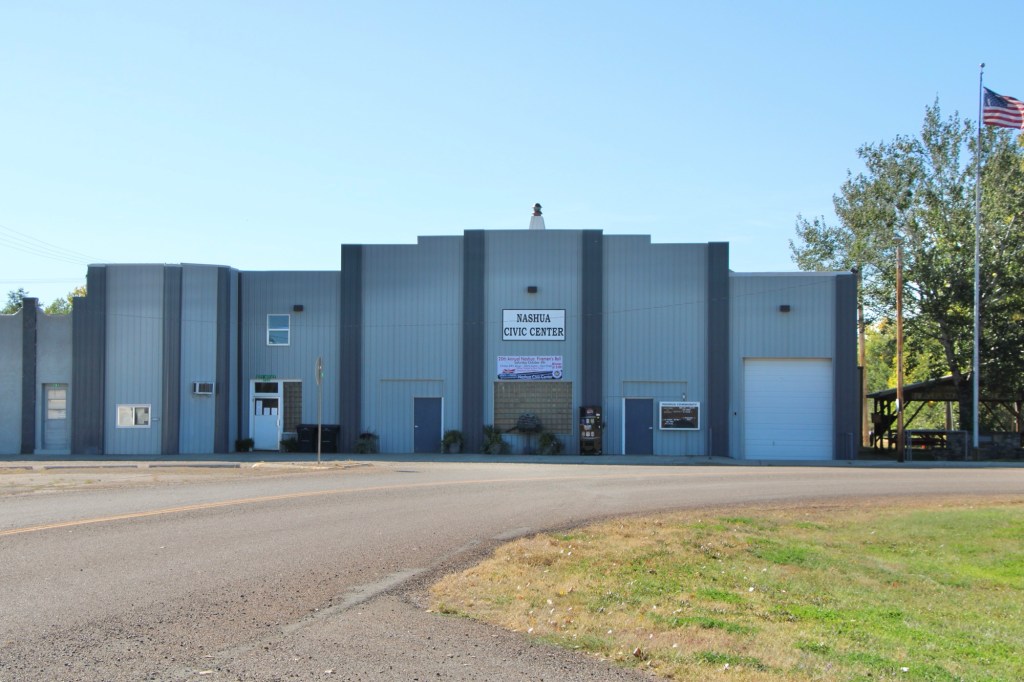
Dostert as Nashua’s town official had already been instrumental a few years earlier in the creation of the Nashua Civic Center, the public community center for this part of Valley County still today.

These places and brief stories hint at the richness of heritage experiences in Valley County. I’m glad I stopped at Nashua again (just too bad that it was early in the morning and Vic’s Bar was not yet opened). But give the residents much credit—they hung through another tough decade through commitment, community spirit, determination and faith.

A bit more on Wilsall

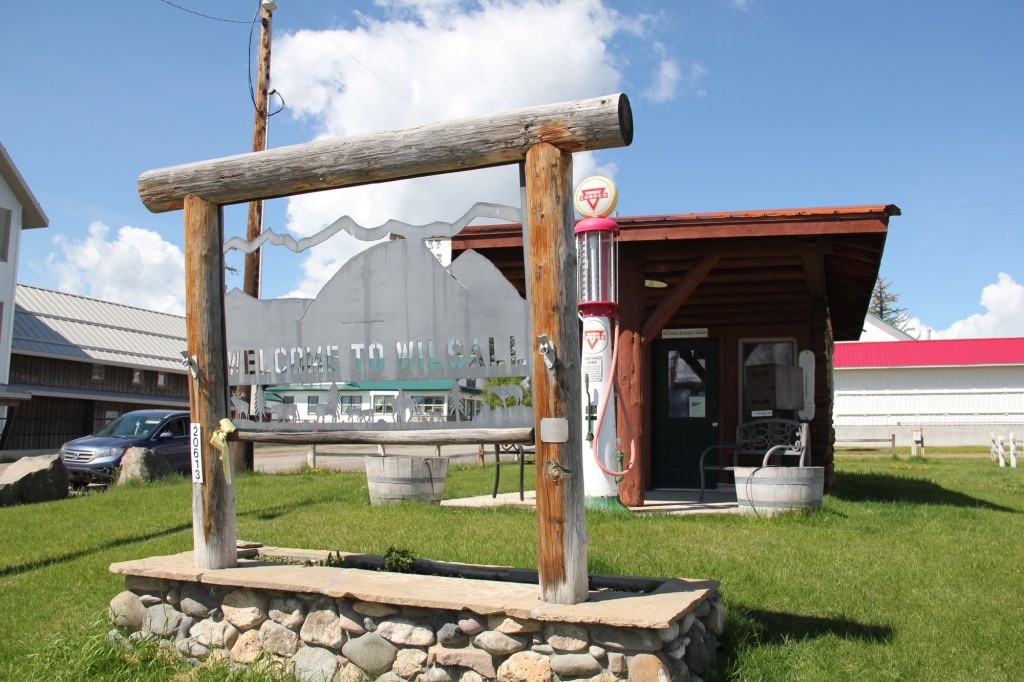
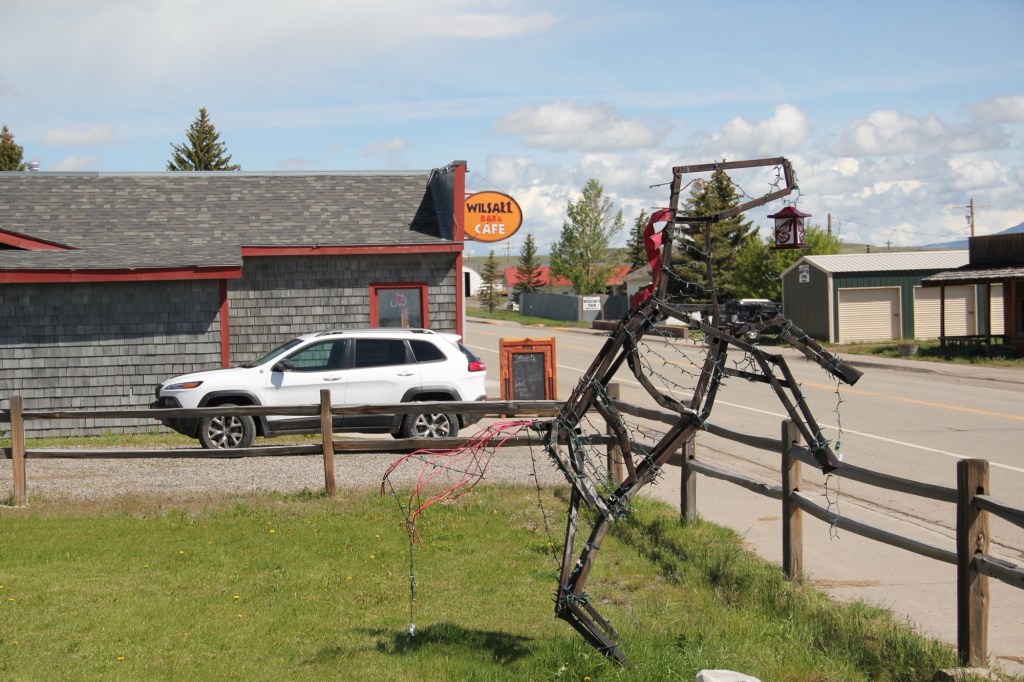
As readers of the blog know, the Shields River Valley is one of my favorite places in Montana. A good place to start any exploration is the village Wilsall, which, from my perspective, is close to a lot of larger towns and population but, then, also thrives quite well in its own.

The town’s past lies with the cattle ranch of Will and Sally Jordan—thus the same Wilsall—and the building of a spur line by the Northern Pacific Railroad in 1909, and the homesteading boom in northern Park County. The historic grain elevator is one potent reminder of both the railroad and homesteading. The tracks ran to the west of the present US 89 highway.

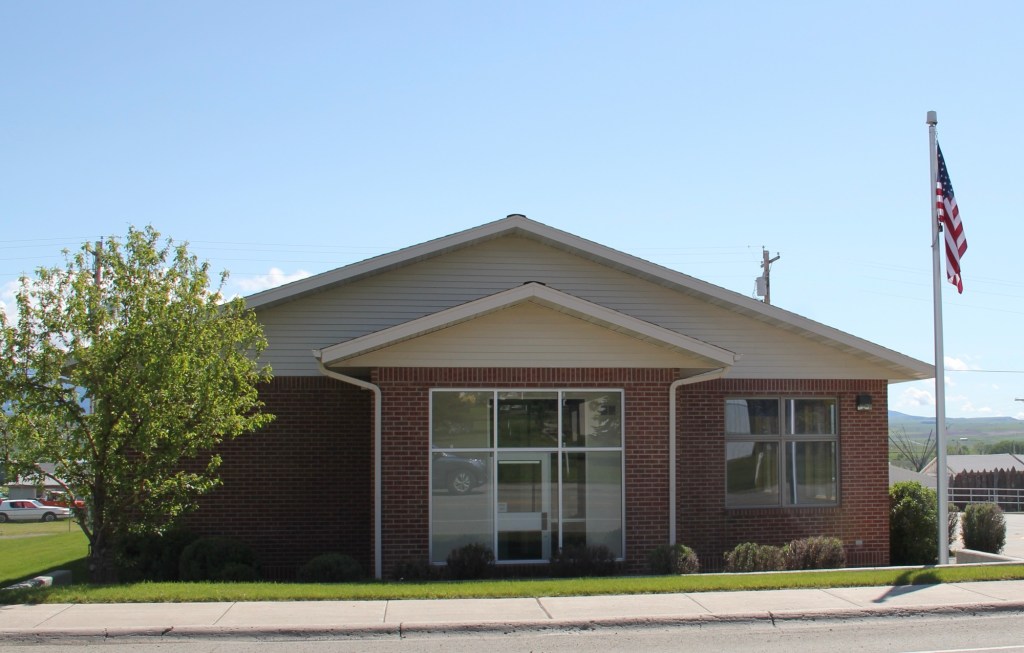
By 1910, the place had a post office; a modern one stands along the highway while an older one is attached to the mercantile building.

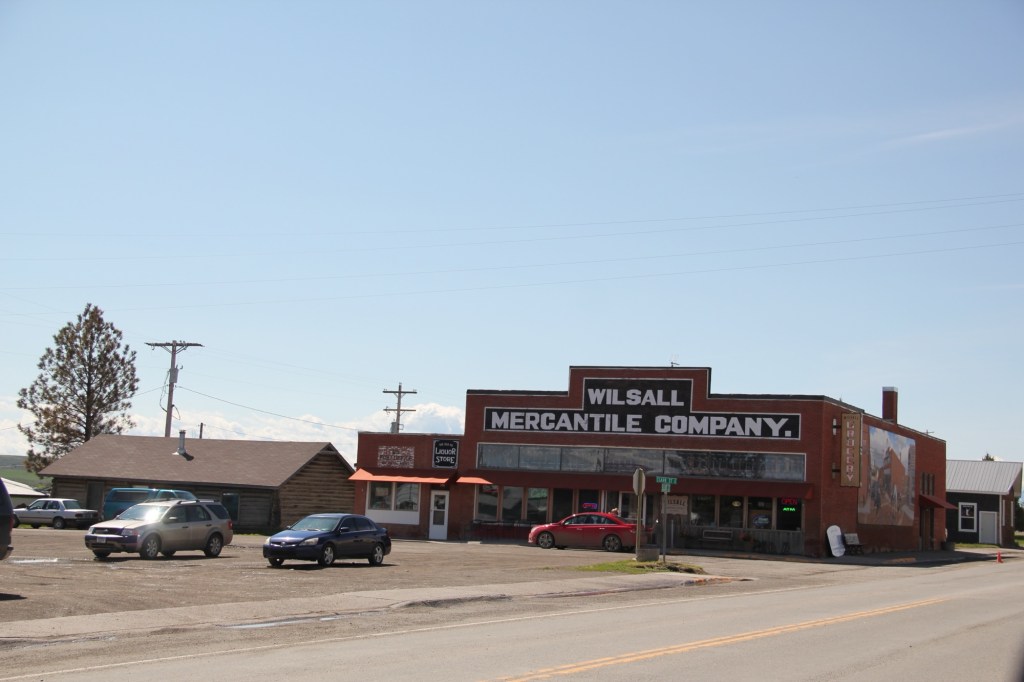
Soon the town’s primary crossroads at Elliot and Clark streets was defined by an impressive classical style bank on the west side and a large brick mercantile store on the east side.

The Bank Bar in fact has recently been in the news because, guess what, national media has again “discovered” a great Montana eatery—

something that locals have known about for years. Maybe the review will get more people to slow down a bit and look around.

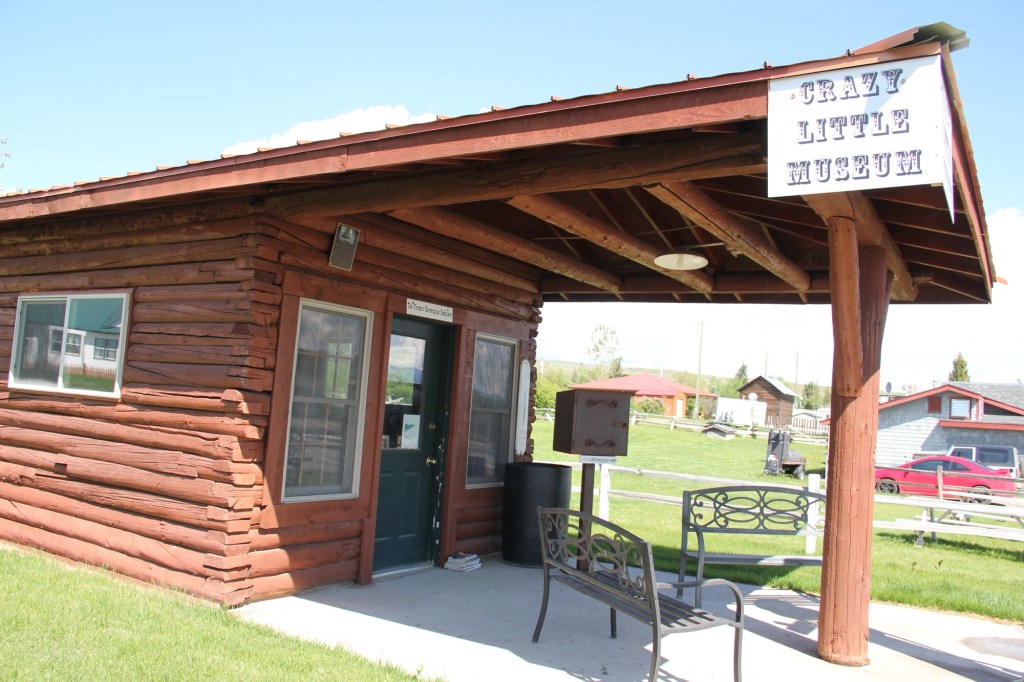
The stop is worth it, not just for a cold brew and perfect burger, but for the town’s Crazy Little Museum (also called the former Norwegian Embassy). It’s always refreshing when a place has a good perspective on itself and honors a person like Bob Tomasko who did a lot for the town before his death in 2012.

Historic community buildings survive such as the school from the 1910s, now boarded up.

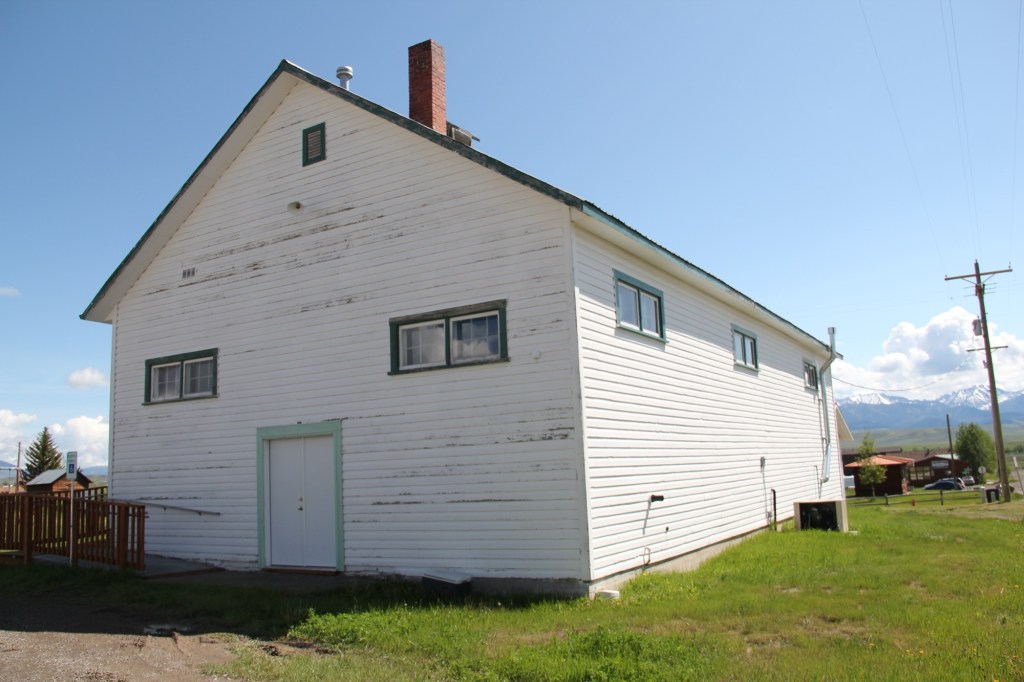
And the town community hall, which remains in use even as the population has dwindled from 237 in 2000 to under 200 in 2020.

US Highway 89 is one of my favorite north-south routes in Montana stretching into Wyoming. I always look forward to my next visit to Wilsall.

Medicine Lake, the place and town in Sheridan County

Montana Highway 16 stretches north from U.S. Highway 2 following a spur line of the Great Northern Railway laid about 1910. Following that railroad corridor first brought me to Medicine Lake, the actual lake and town of that name in February 1984.

Great Northern depot in 1984

When I returned over thirty years later, the depot was gone, but the lake and town were doing ok.

Depot is gone today

Medicine Lake is a very important place in northeast Montana and the 8,000 + acre lake has been protected as a National Wildlife Refuge since 1935.

Medicine Lake NWR
Medicine Lake NWR

Native Americans for centuries visited and hunted here, as hundreds of tipi rings along the lake bluffs documented. The lake remains a touchstone for several tribes today.

Medicine Lake, MT

The town is much more recent, established by the railroad in 1910, with the iconic Club Hotel and Bar in business within a year.

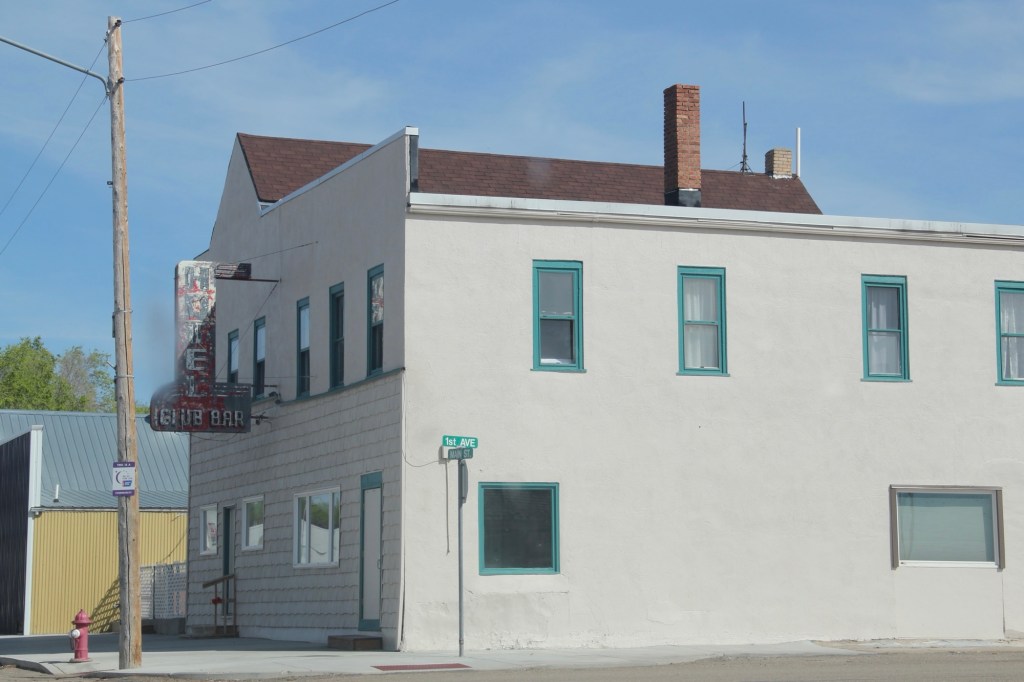
I have stopped at the Club Bar where the old neon sign was a bit weathered but hospitality was everywhere. Don’t know about the hotel—maybe rooms was still used during the hunting season.

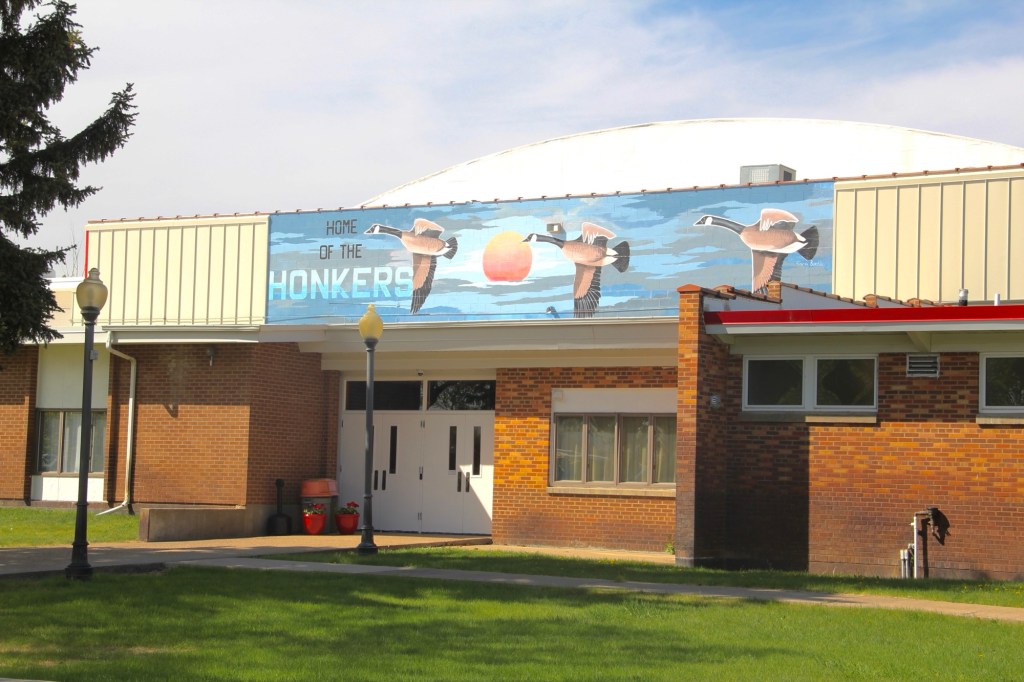
The Medicine Lake K-12 school keeps the town of about 250 people together but since my last visit the school lost its distinctive mascot name of The Honkers. For sports the school has merged with Froid and took us nickname of Red-Hawks. Did that mean that town gathering spot would change its name from the Honker Pit? Absolutely not. Great place!

Medicine Lake, the town, has several buildings from its first generation of settlement, including a corner gas station (adapted into a new business) and classic false-front one-story commercial buildings, including a lumber business and a hardware store.

Yet a dwindling population has hurt the business core. For 40 years between 1940 and 1980 the town’s population stayed around 400. The next 40 years witnessed a decline—and in a small town a loss of 150 people can really hurt.

But the town began a slight rebound in population in between 2010 and 2020, with some of it fueled by fracking man-camps

The bones of an early 20th century homestead town are still there. I hope to visit again and see new changes in 2025.

Whitetail: almost another Soo Line ghost town in northeast Montana

Town sign 2013

I last visited Whitetail ten years ago. Established along the Canadian-based Soo Railroad line a century earlier, the town was in a free fall, from a height of 500 c. 1920 to a handful of families in 2010. Then the Canadian, then the U.S. government closed the border crossing between 2011 and 2013. Now the town is down to a population of nine in 2020. God bless those still there, doing what they can.

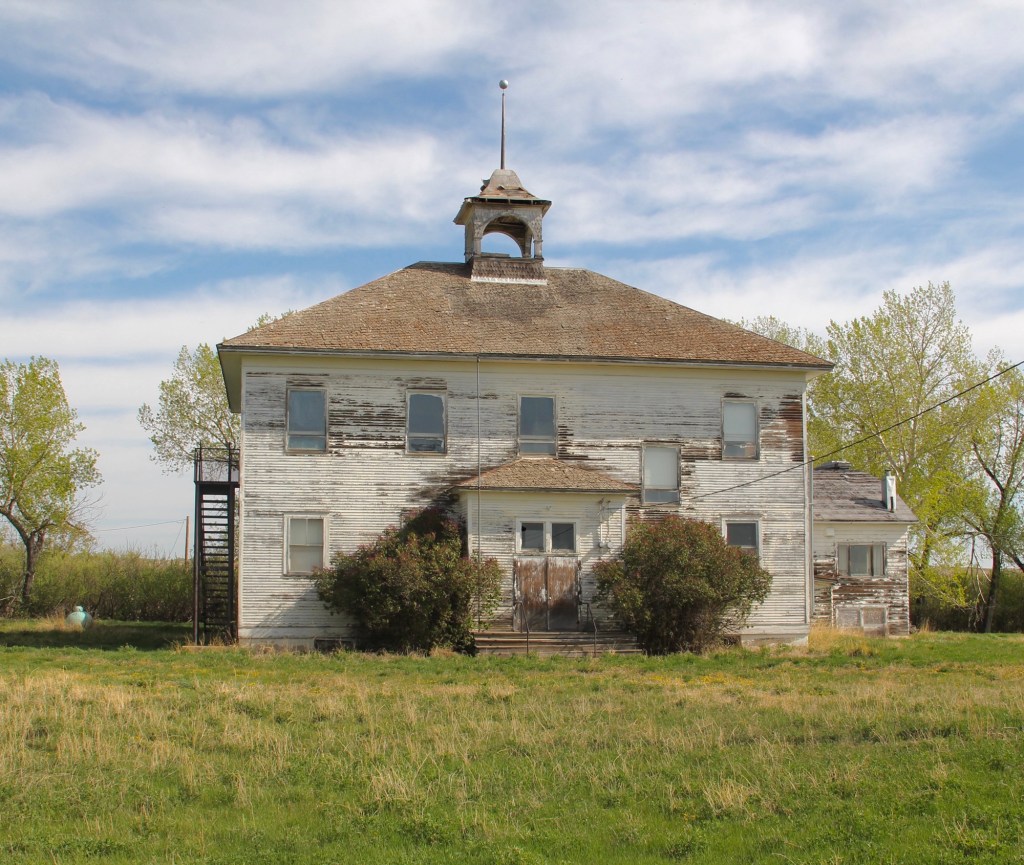
The school building tells much of the story. Built when hopes for the town were high in the 1920s, it’s two-story height and bell cupola made it a landmark in the flat open terrain. I hope when I visit next, the school is there, a silent statement of the dreams with which our high plains were settled.

Secure in its concrete base, the old school bell, removed 50 years ago, is still there to ring, or so I can hope.

The community church, still a gathering place or has it gone the way of the Catholic Church, moved to the Daniels County Museum in Scobey?

Grain Company Building
Gas station and Garage, 2013
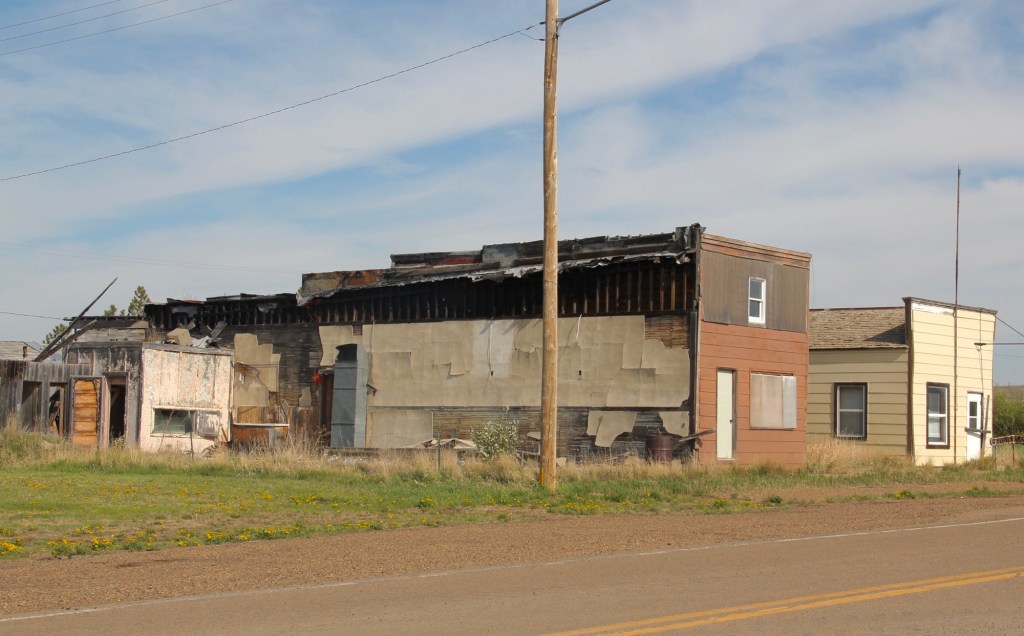
Abandoned businesses, 2013
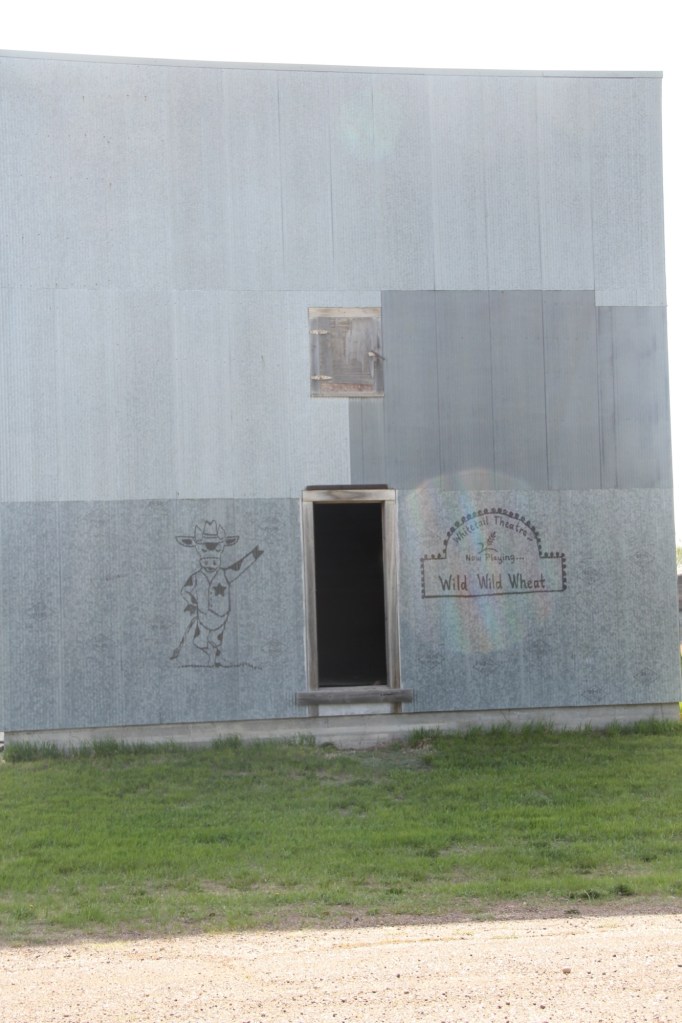
A metal facade and open door marked what was left of the Whitetail Theater.

Businesses were largely gone ten years ago. But the post office and grain elevators remained. I bet the elevators are still there serving ranch families but you wonder about the post office.

Whitetail in Montana’s northeast corner is as far removed from Whitefish in Montana’s northwest corner as two places could ever be. They both began as railroad towns. One didn’t make it; the other thrives.
Abandoned home at Whitetail

But what’s been lost at Whitetail tells as much about history as what has been gained in Whitefish. You cannot understand Montana history without both.
Soo Line corridor at Whitetail

Montana in Black and White

In doing the photography for the 1984-85 survey for the State Historic Preservation Office, everything was in Black and White, both for the stability of black and white negatives but also for the cost—color slides were expensive. Thirty plus years later, it’s totally different. Everything is digital and only a few places will even process black and white film.

But I have continued to take a few rolls of black and white film on my recent work in Montana. Here are a few images to share.

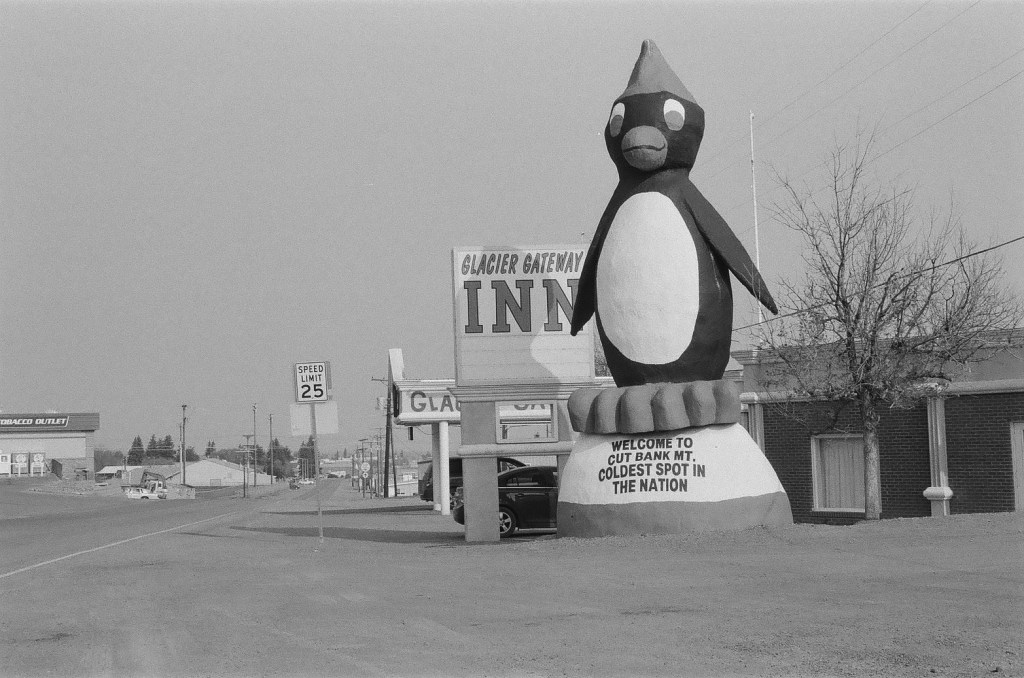
The older US 2 route into Cut Bank features this wonderful piece of roadside sculpture. And back in 1984 the Glacier Gateway Inn was the place to stay.
Frank Little Grave in Butte. The starkness and shadows of black and white film is perfect for cemetery work, as this famous grave at Mountain View Cemetery shows.
The same is true for Anaconda’s historic cemetery. As I have said in earlier posts, this place is one of the state’s most compelling places. I can explore there all day long.
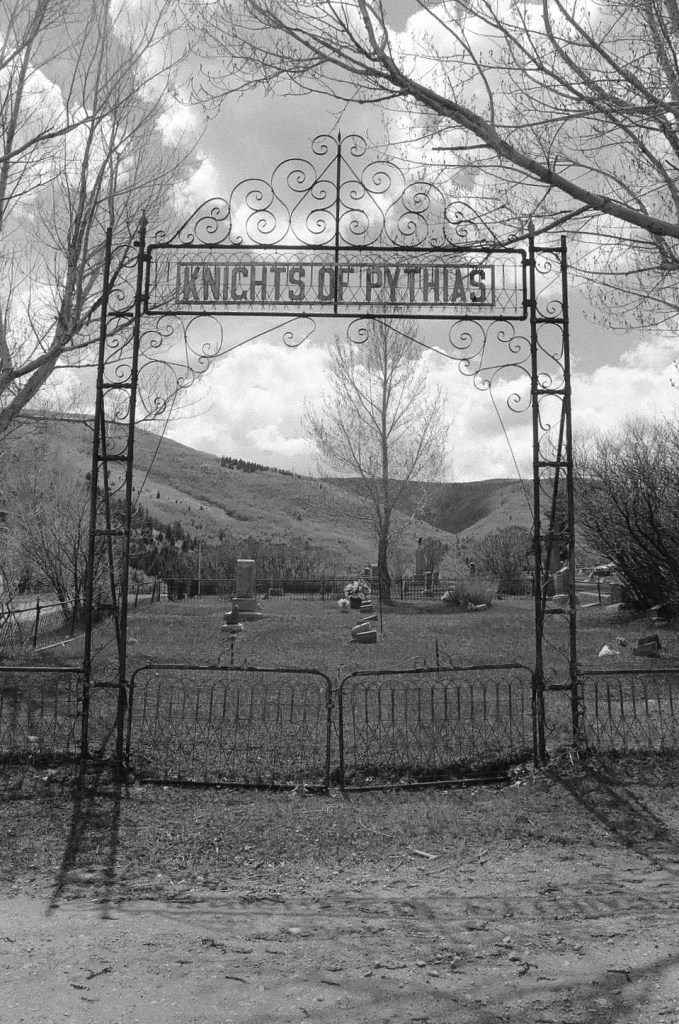
Love the decorative iron work on the gate and entrance to the Knights section at Anaconda
Ghost towns from either the mining or homestead eras always leave buildings that just seem to say more in black and white. Here we are at Barber on US Highway 12 in central Montana.
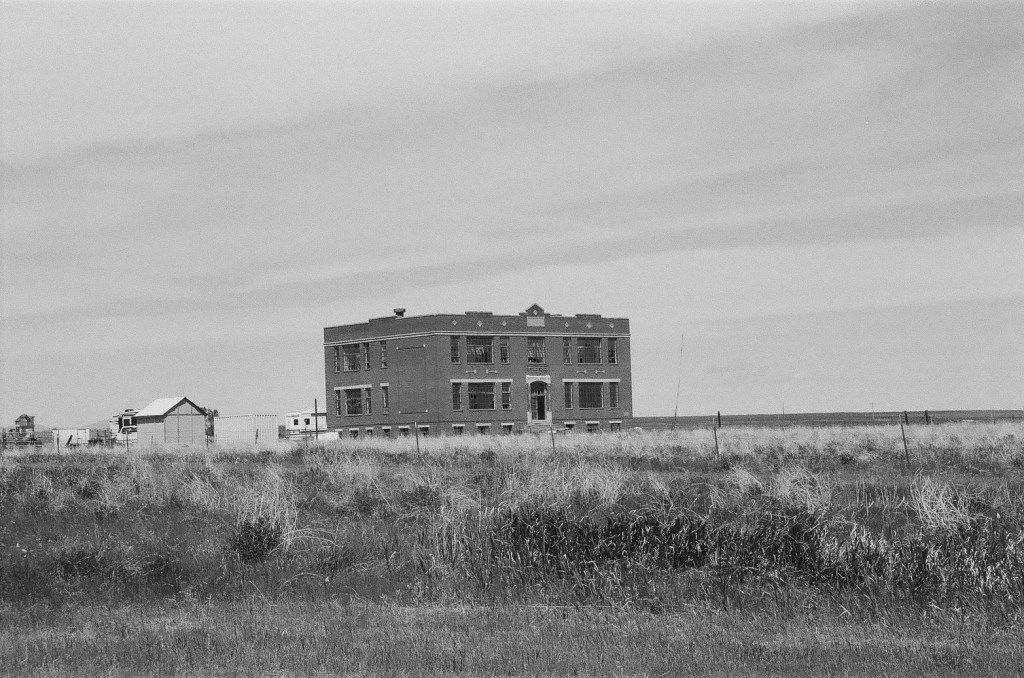
Abandoned schools that become lonely landmarks of hopes crushed: Buffalo, Montana

A fall drive along U.S. 12

When I lived in Helena from 1981 to 1985 one of my favorite jaunts was along U.S. Highway 12 from Townsend to Roundup. It remains so today, 40 years later. My initial interest centered on railroad corridors. Helena to Townsend followed the Northern Pacific Railroad and a good bit of the Missouri River (now Canyon Ferry Lake).

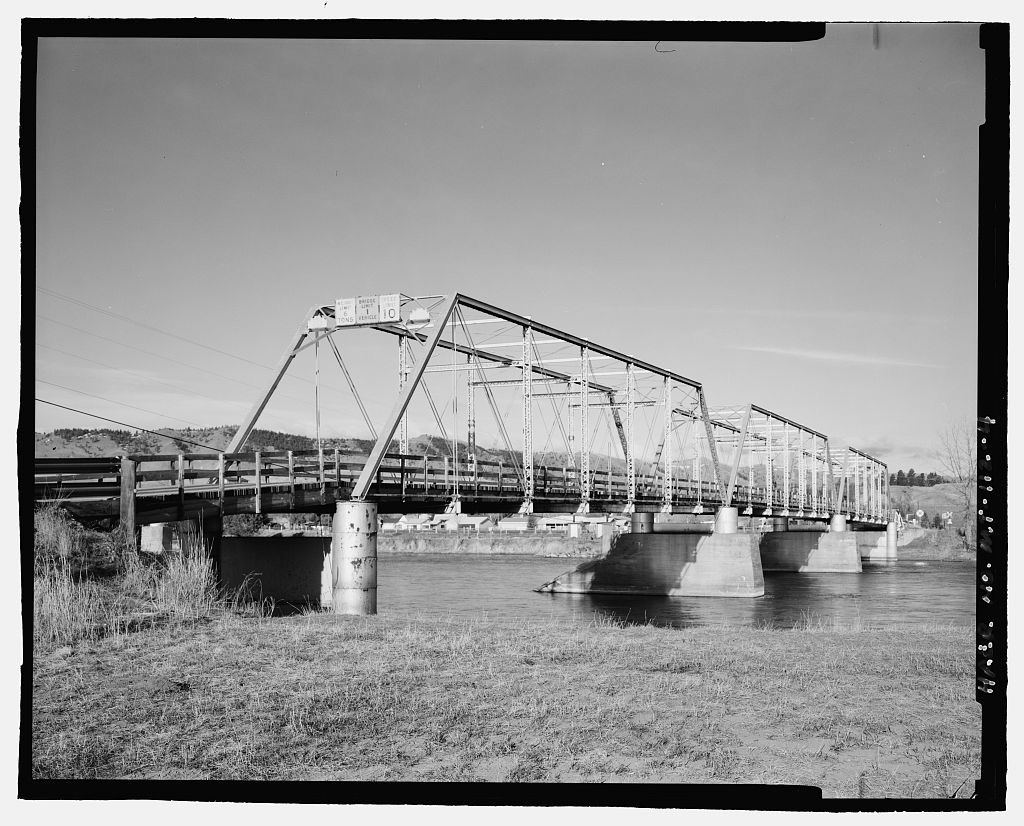
Northern Pacific bridge over Missouri River near Townsend
Missouri River and Canyon Ferry valley near Townsend
Missouri River campground near Townsend

It was a brilliant day with fall colors just popping as we left US 287 and turned into the heart of Townsend.

As soon as you leave town to the east you encounter a lovely mix of ranches and irrigated fields until you thread your way through a national forest along Deep Creek.

Fall colors along Deep Creek

We decided to continue east by briefly jumping off US 12 and go to Montana 284 so we could follow the Milwaukee Road corridor from Lennep to Martinsdale where we would reconnect with US 12. Two of my travelers had never been to the Milwaukee Road “ghost town” of Lennep. It was a beautiful morning to be there.

Milwaukee Road powerhouse

You first realize that this abandoned railroad corridor is different when you encounter an electric powerhouse—the Milwaukee Road’s tracks were electrified from Harlowton Montana west to Idaho.

Lennep

At Lennep the landmarks remain—the Trinity Lutheran Church, the store, the school, a teacher’s cottage and an early notched log house—but all were a little worse for the wear compared to my last visit 10 years earlier.

As we traveled east that morning we quickly moved through the county seats of Harlowton and Ryegate to get to Roundup by lunch. The Musselshell Valley was brilliant even as signs of the old railroad almost disappeared.

Near Ryegate
Near Lavina

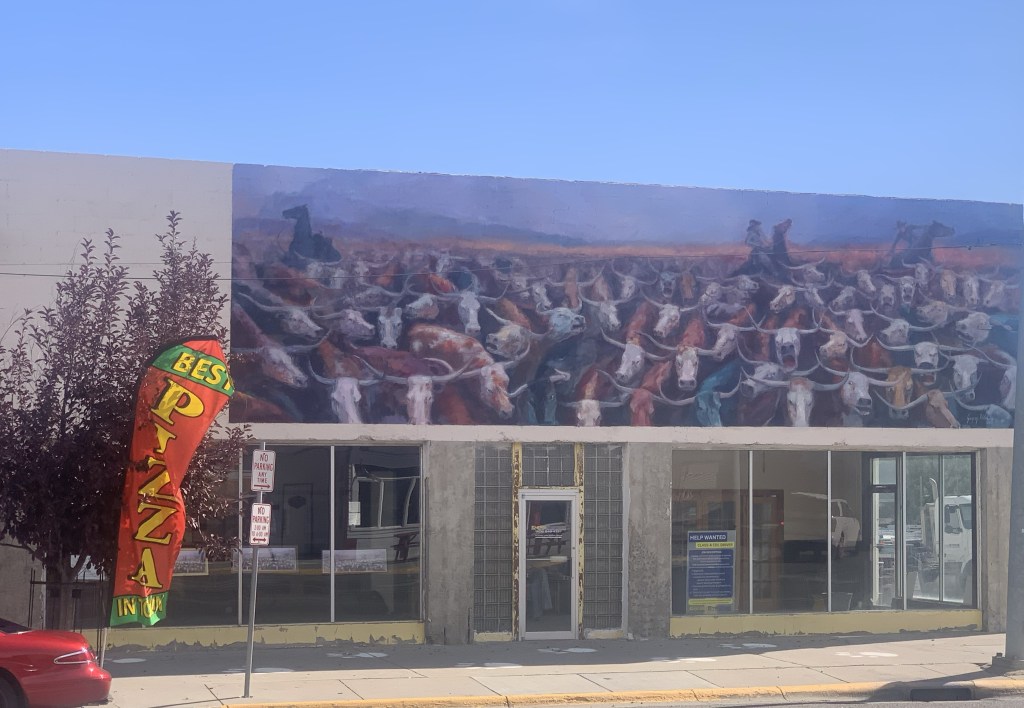
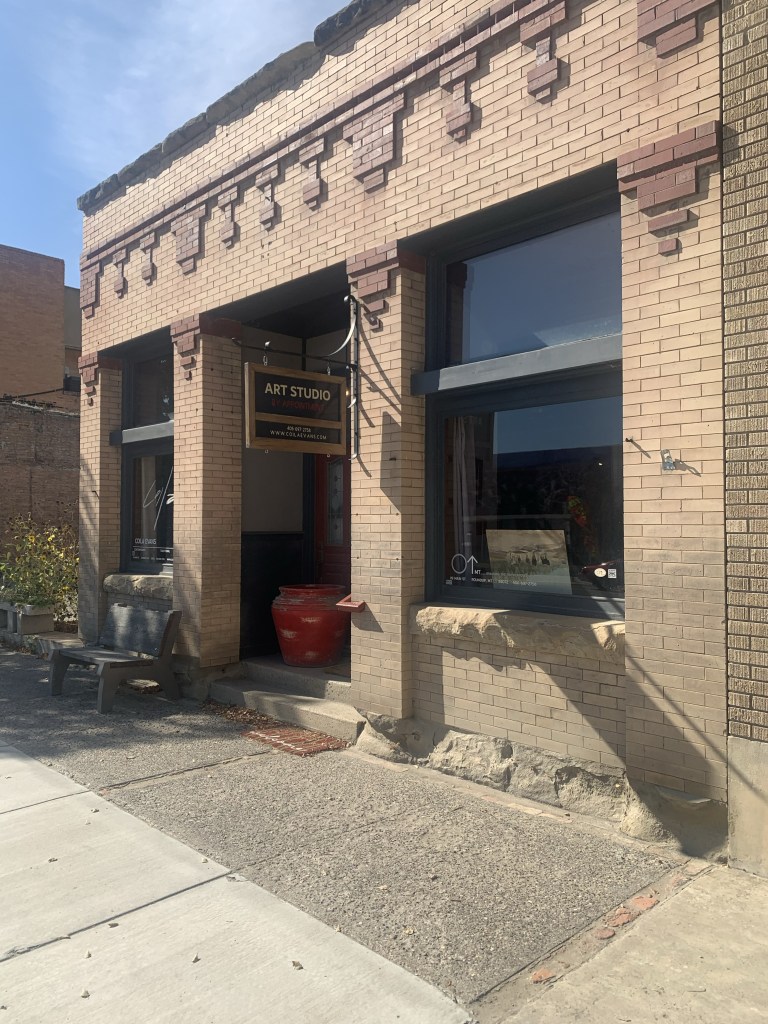
Roundup continues its renaissance with new businesses and restored buildings. The town core, clustered around the intersection of US highways 12 and 87, was busy on a fall weekend.

A mural on the great cattle drive of 1989
The Backporch—great bbq
New mural at the Keg
Art studio doing well
Awaiting its renovation
Community green spot

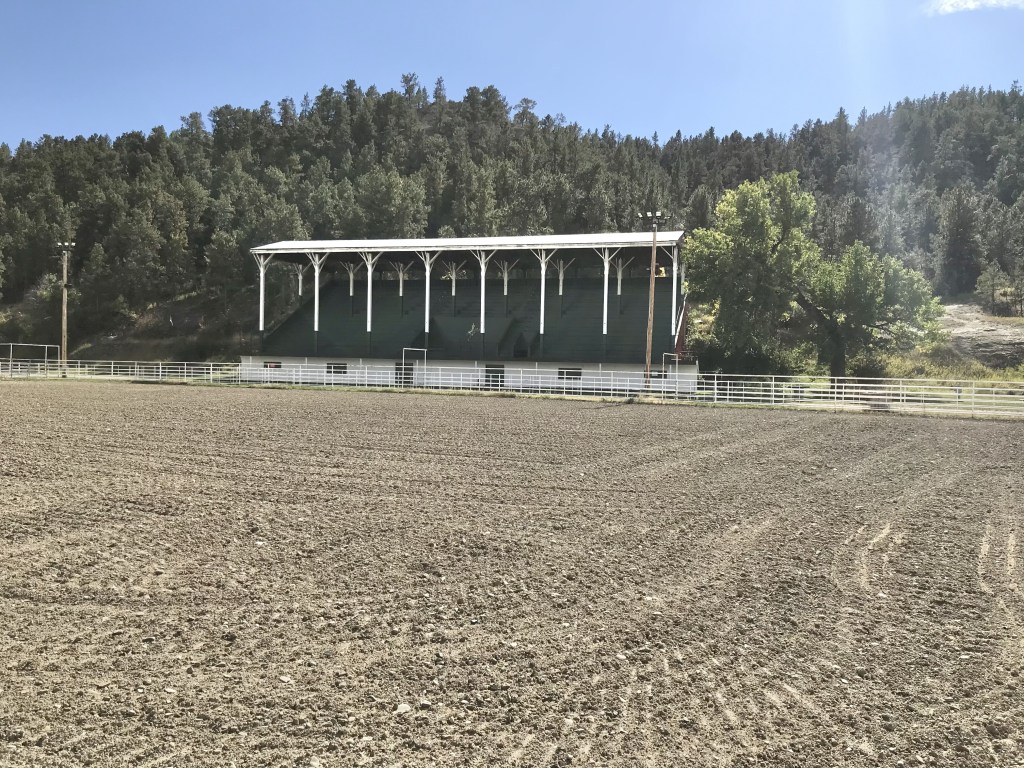
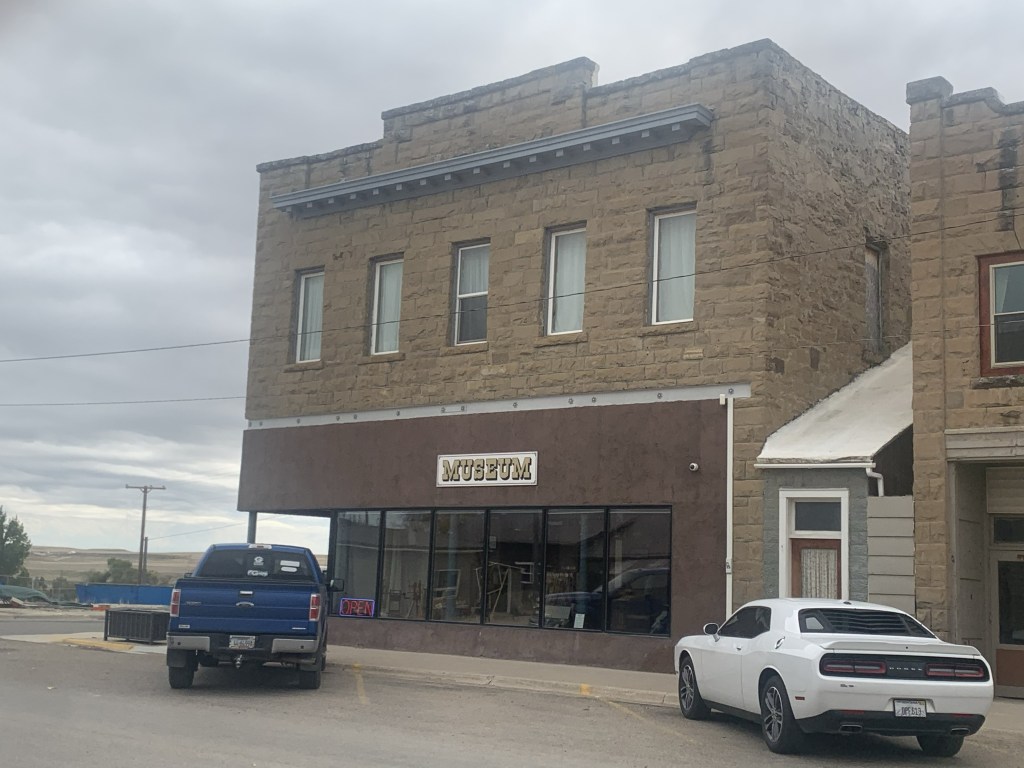
As I observed a few years ago Roundup residents worked together and created a plan—and the place continues to work the plan, from the adaptive reuse of its historic stone school to the careful stewardship of its historic fairgrounds. It’s impressive.

After Roundup we stopped at two county seats on the return to Helena. Harlowton was rocked by the closing of the Milwaukee Road over 40 years ago. It has struggled to reach the economic comeback achieved at Roundup. But the historic stone buildings have great potential. Three of them are now part of a large museum complex.

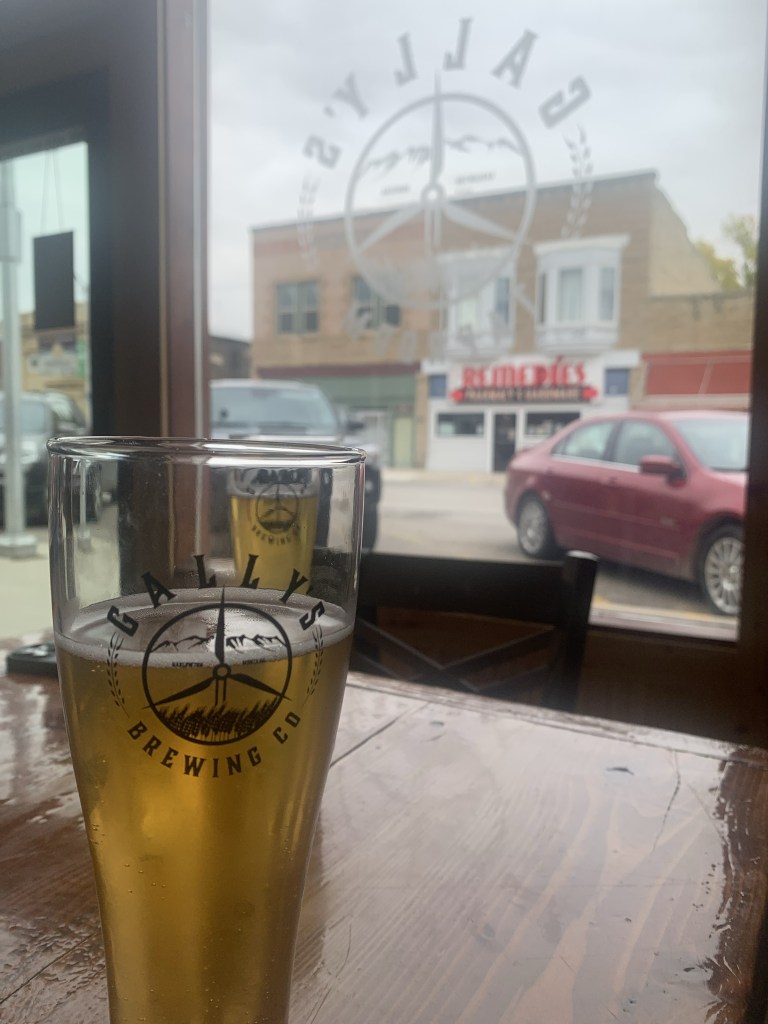
Then there’s the newcomer: the Gally’s microbrewery and pub, housed in the 1913 Montana Block.

It’s a great place for local beer and good conversation—and maybe the start of something good for the town.

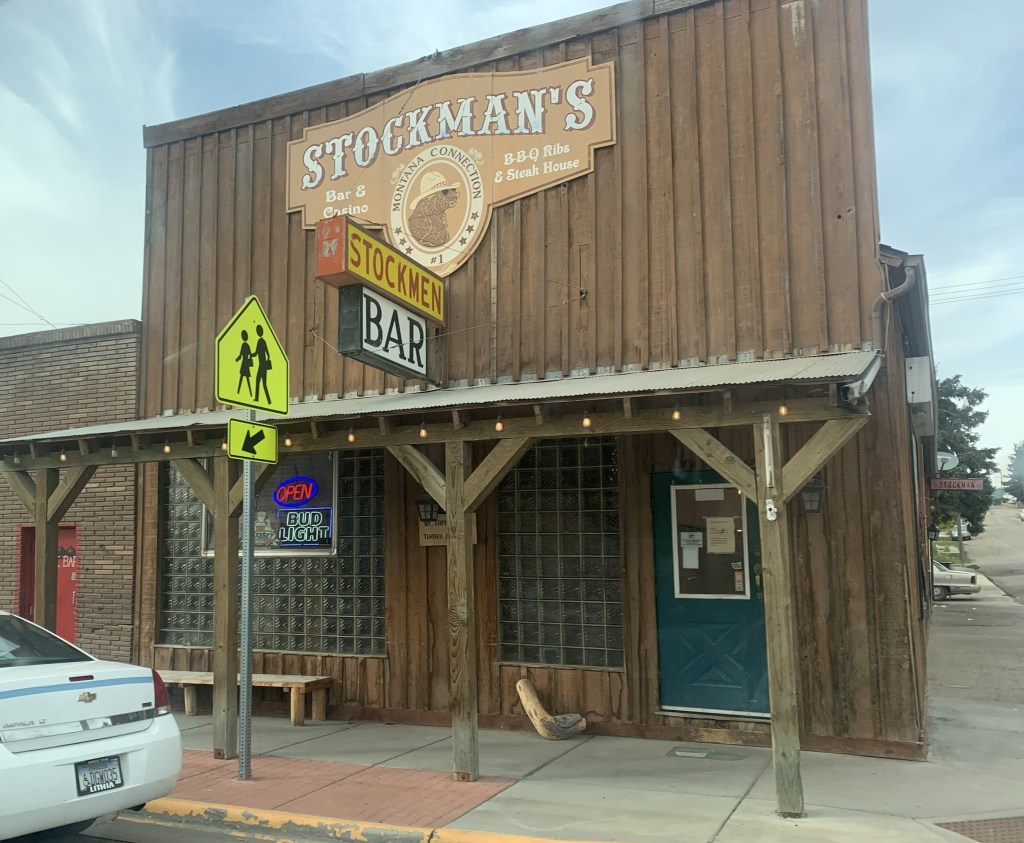
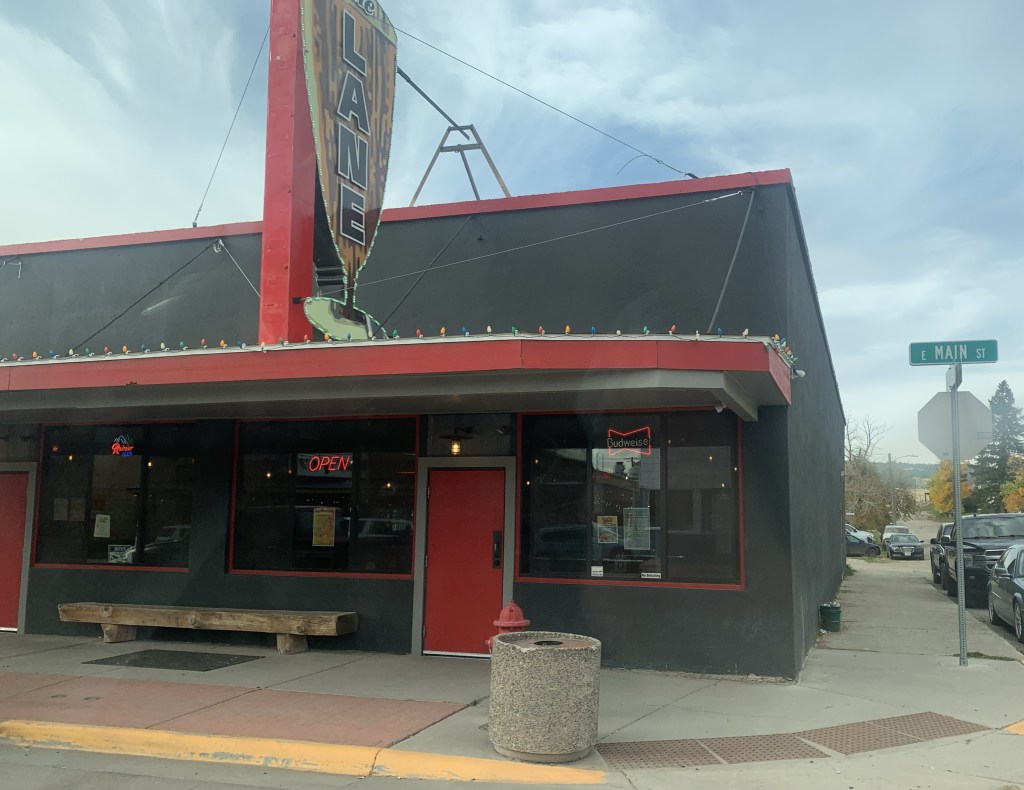
US Highway 12 was torn up for major repairs when I last visited White Sulphur Springs last decade. The improvement along its population growth and the ever expanding hot springs gives the place a new look, reflected in new catchy fronts to local bars along with new businesses such as a huge Town Pump.

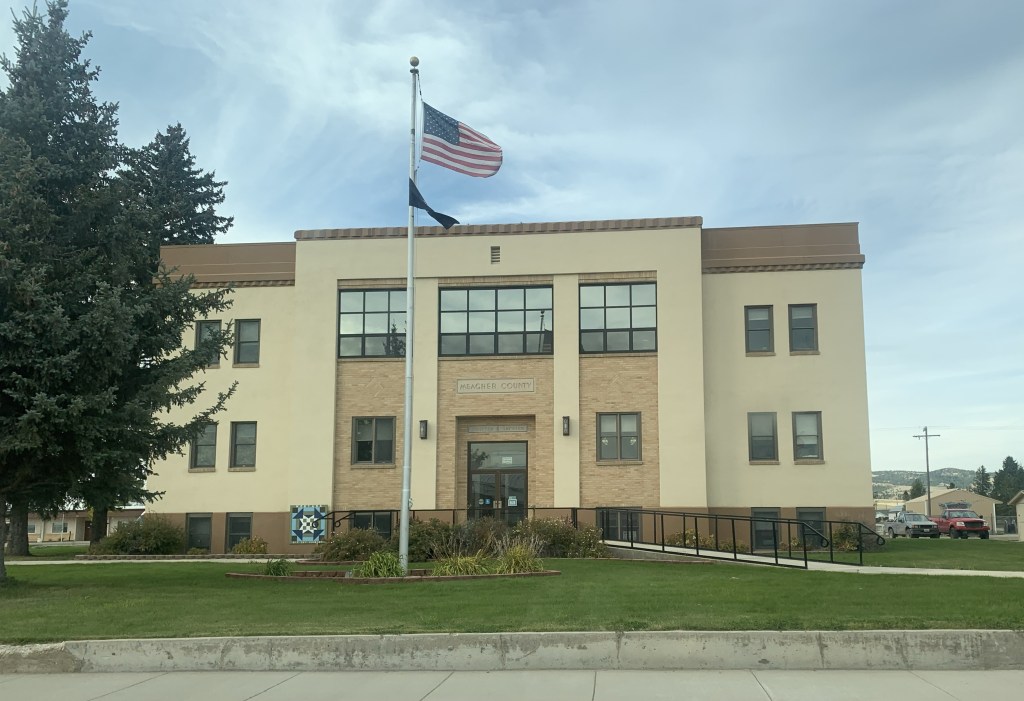
But historic White Sulphur Springs is doing ok too: the New Deal constructed Meagher County Courthouse is still a roadside landmark while the old railroad corridor, just west of the Hot Springs, remains, awaiting its rebirth.

These places are mere highlights along a historic route that’s worth a drive anytime in the fall.

A new visit to Augusta

I had not been in Augusta since 2016–two years before the foods of June 2018 rattled this northern Lewis and Clark County town.

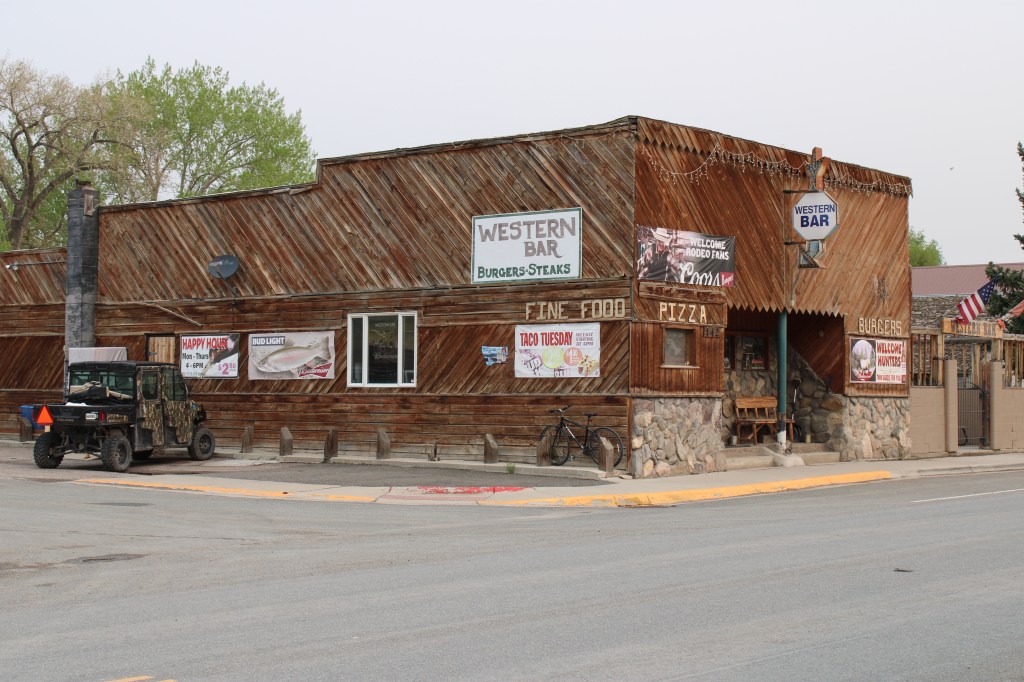
Old haunts like the Western Bar and the Lazy B Cafe were still operating, looking good.

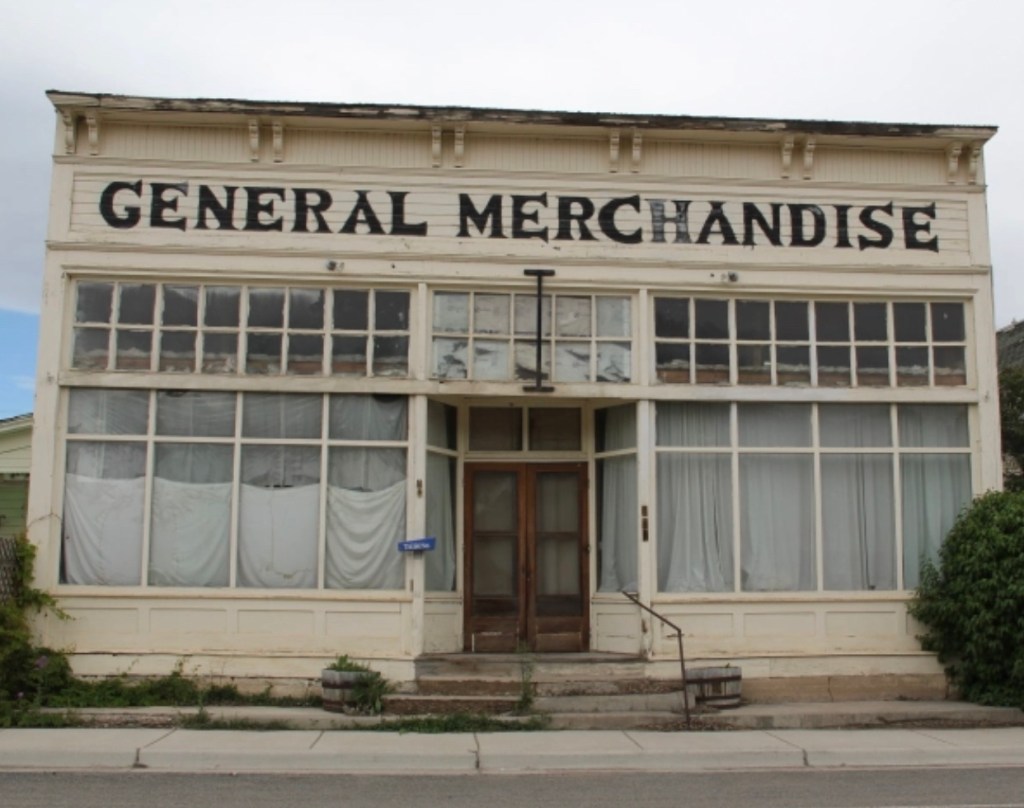
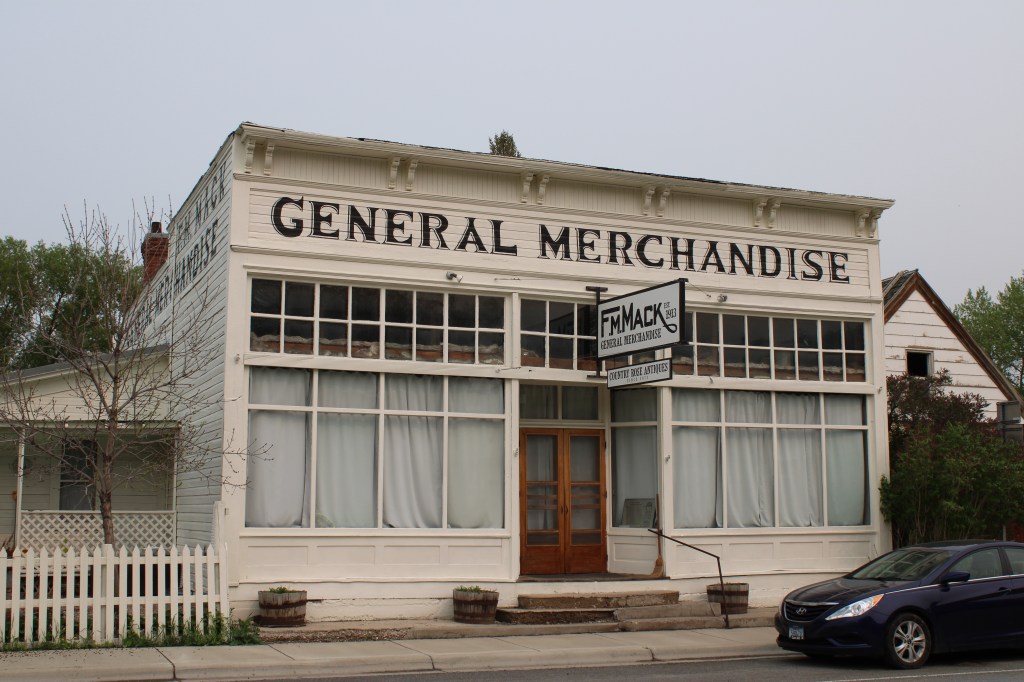
Recent historic preservation efforts had given a new life and a restored appearance to such as National Register-listed landmarks as the Mack general store and Quinn’s garage.

Mack’s general store, 2016
Mack general store, 2023
Quinn’s Garage, closed in 2016
Quinn’s Garage, 2023. Now listed in the National Register, the garage is restored and open for commercial use.

The Augusta Branch, first established almost 50 years ago, of the Lewis and Clark County Library also had recent renovations and a new ramp. A great place for more information about this very historic rural Montana town.

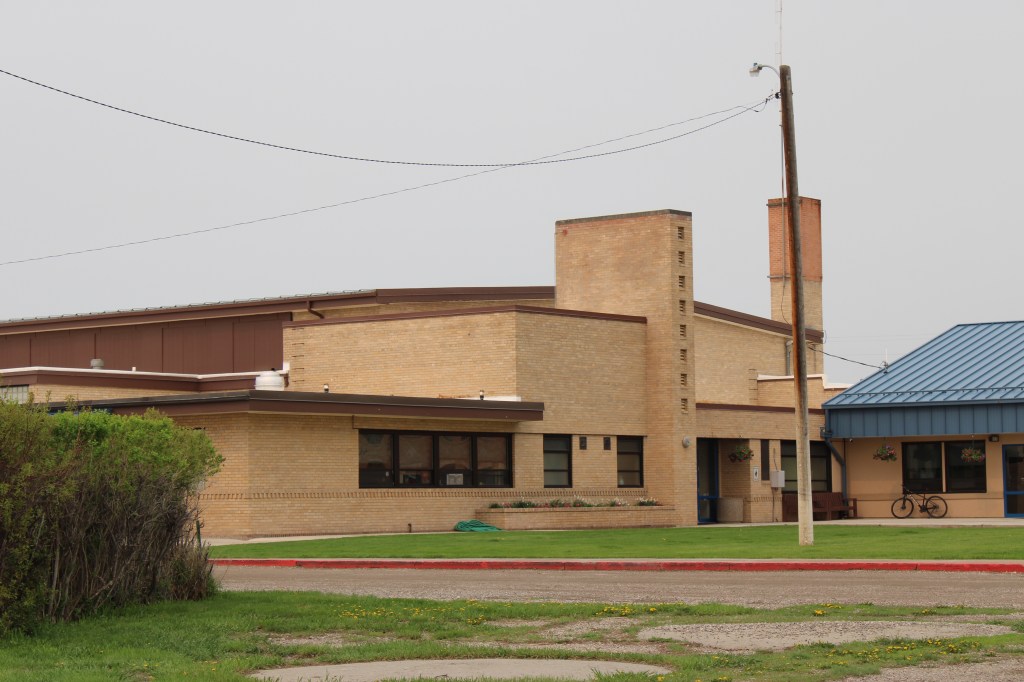
And I still love the historic school, both the classical building from the first decades of the 20th century and the more modern styled building from the mid-20th century.

Augusta is a place, as I discussed in this blog in 2016, that is long in history and short in pretense. You need more evidence—just trim around from the school and consider its neighbor, a Masonic Lodge with a concrete block facade fitting a Quonset hut-like structure behind. What a great place.

Baxendale School restoration

Preserve Montana is leading a community effort in Lewis and Clark Counto to preserve the historic Baxendale School.

Located adjacent to the historic campus of the Archie Bray Foundation and just down the road from Ft William Henry Harrison, the school with the neat Victorian entrance will become a preservation resource center where residents can have hands-on experiences in historic restoration.

Buffalo, Montana: the town, not the mammal

I had not been to Buffalo in Fergus County, Montana since 1984–some 37 years ago in the summer of 2021. The place dates to the late 19th century with a post office and trading post. In 1908 it took on the town plan you find today–elevation at the head of town along with railroad line and the public school at the other end of town–as it became part of the Great Northern Railroad route between Billings and Great Falls.

The same landmarks I found in 1984 still defined the town. The First State Bank of Buffalo (there was never a second one) was slowly ebbing away then; the bank had closed during the Great Depression, when so many Montana towns from the homesteading boom had their economic life sucked away. In 1921 I was frankly amazed that it still stood, missing a roof and part of a wall but still expressing its small-town neoclassical style with pride.

Buffalo bank in 1984

Buffalo bank in 2021

The Buffalo school was another statement building from the homesteading era, its two-story brick construction expressing not only the need of a rapidly booming place but how the residents valued public education. The school was the community’s statement of pride.

The community church made a statement of faith and community spirit for the 21st century. The town numbers less than 200 inhabitants but actually that number had grown in recent years. The Craftsman-styled church is extremely intact for a 100 year old plus building–the maintenance of the church is a credit to its members.

Not everything was as it had been in 1984. The community hall had fallen on lean times indeed.

But the hipped roof post office–the one civic building–hadn’t changed a bit. Here was a statement of continuity, and thanks to everyone who fought the good fight last decade to keep post offices alive in rural Montana.