Montana’s Three Forks, Part 2

Gallatin Co Three Forks 6Three Forks, Montana, is unique in how competing railroads shaped this one small town between the 2008 and 2010.  The last post discussed how the Milwaukee Road came first, and its landmark Sacajawea Inn stands at the north end of the town’s main street.  On the east side–see the Google Map below–became the domain of the Northern Pacific Railroad and its spur line to the copper kingdom of Butte

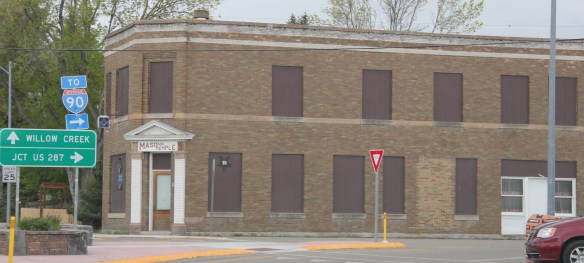
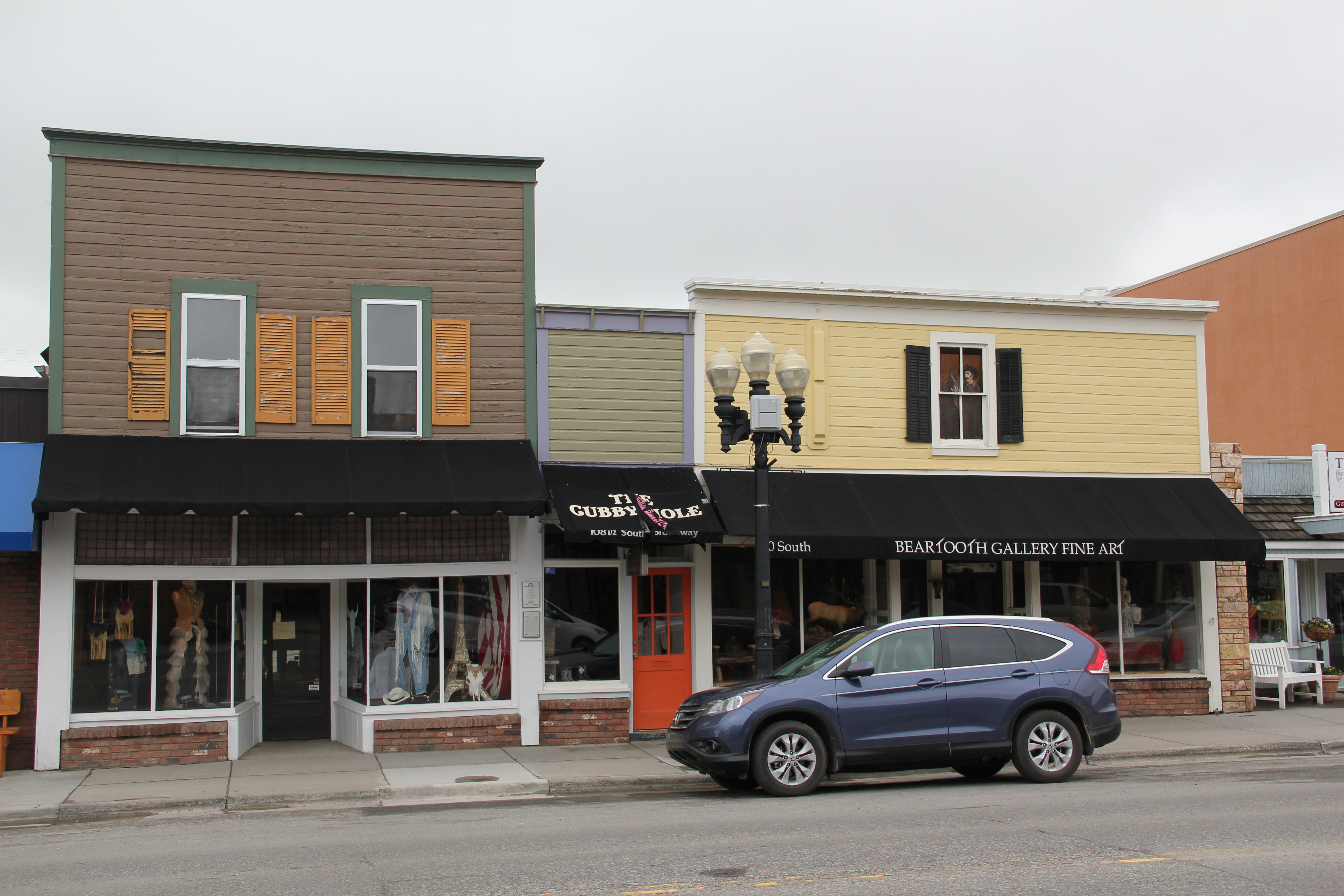
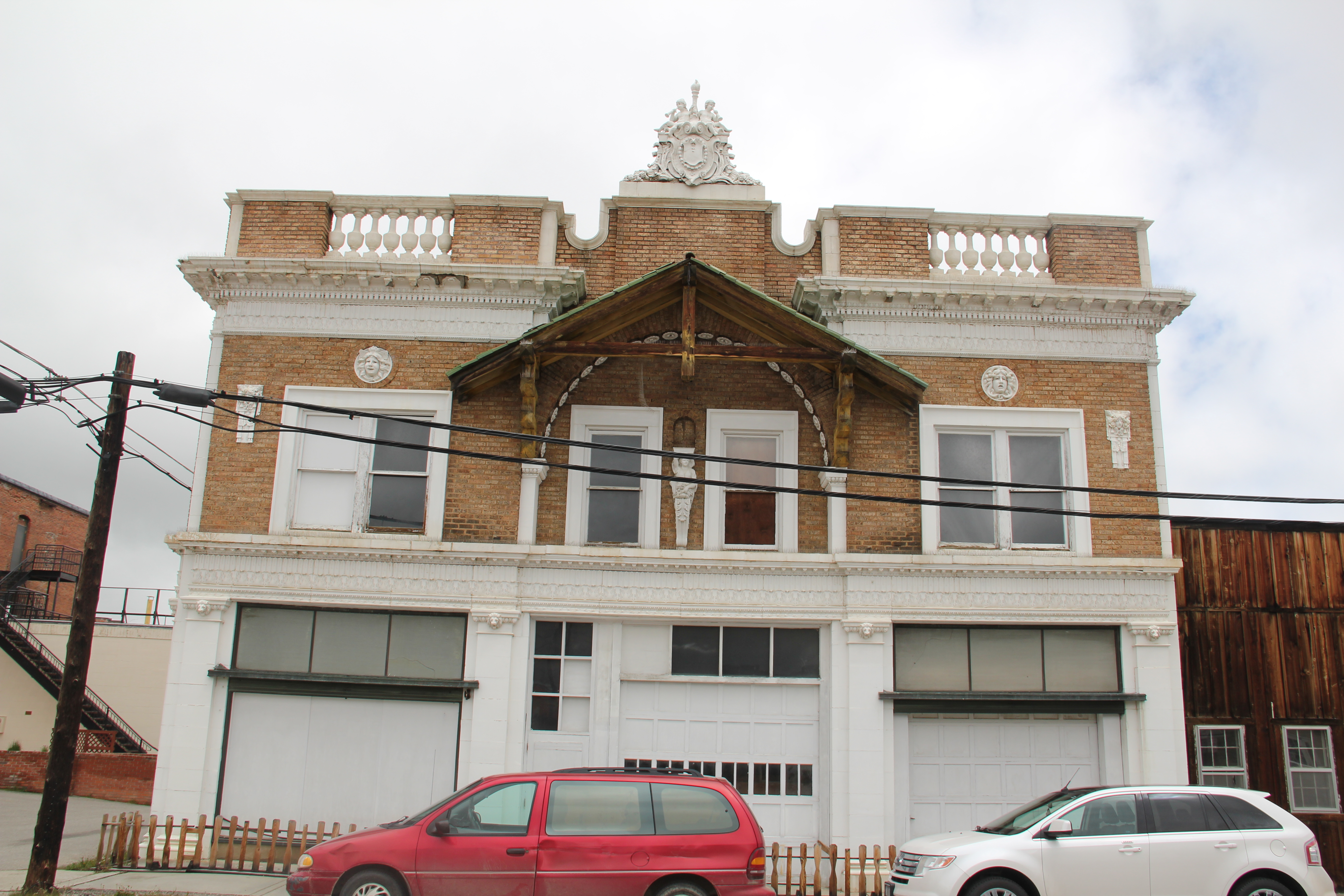
Gallatin Co Three Forks bank/ Masonic temple

Screen Shot 2016-02-01 at 10.29.07 AM

Between the two railroads, Three Forks grew rapidly in the second decade of the 20th century during the homesteading boom.  Two places that help you decode the town’s history and built environment.  At the south end of Main Street is the Headwaters Heritage Museum, which is located in the National Register-listed Three Valleys Bank, a Romanesque Revival-styled two-story brick building from 1910, when John Q. Adams started the town. The museum opened in 1982–I can recall its beginnings as place of pride and energy, now it maintains a fine local history collection.

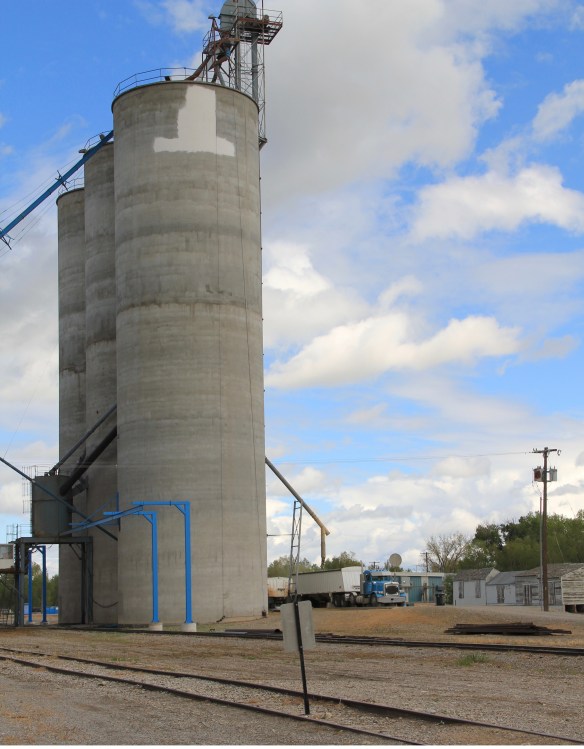
Other National Register properties from the 1910s help to tell the town’s story as they remain in use creating new futures in the 21st century.  These include the classical styled Ruby Theater of 1916, listed in 1982, and the 1913 United Methodist Church, later damaged during a 1925 earthquake but restored by the congregation to its Gothic Revival style in 1993.  All of these buildings speak to town hopes and dreams during the homesteading boom as much as the slowly deteriorating grain elevators at the north end, not listed in the National Register, speak to what happened to those dreams in the 1920s and 1930s.

You can also explore the story of transportation and Three Forks at a new visitor center facility–at least new to this traveler in 2015–at you enter the town from the north.

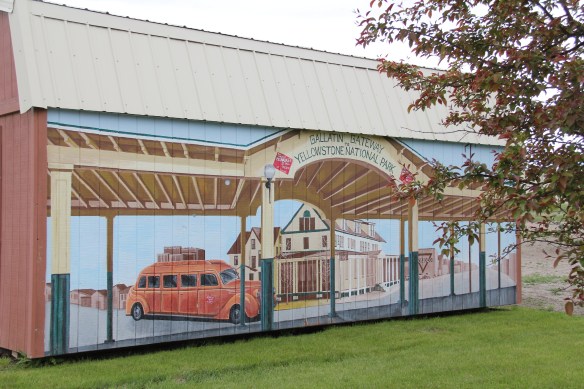
It is just north of the Sacajawea Hotel and the town’s historic Milwaukee Road depot, which is now a restaurant and casino.  The visitor center emphasizes the Milwaukee story, especially how the railroad viewed the town as its first gateway to Yellowstone.

IMG_6783

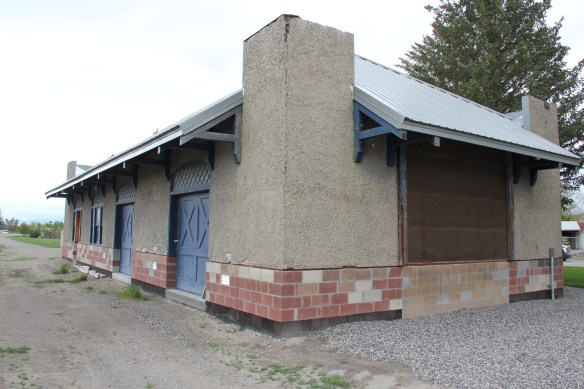
The planned centerpiece of the visitor center is the moved railroad depot from Trident, a planned company town from 1908 that produced cement from the abundant resources along the river.  The community is raising money for its restoration and adaptive reuse as a heritage center.  The original company name was the Three Forks Portland Cement

IMG_6785Company. In 1914  Charles Botcher bought the plant, renamed it the Ideal Cement Company and kept it in business under that name until the 1980s.

Little remains of Trident today, except for its concrete roads that help to mark the blocks of the town, although no houses remain today.  They were still there into the 1990s but later company owners, who still produce cement from the plant, and ship it by railroad across the region, tore them down early in this century.  Trident is now a fascinating remnant, a historical archaeology site, and its depot in Three Forks will probably become the place to tell that story into the future.


Choteau, U.S. Highway 89 Crossroads

Teton Co ChoteauOne of my favorite county seats is Choteau, where U.S. Highways 89 and 287 meet.  Both of those roads were and are among my favorite to take in the state, and Choteau I quickly found had one of my favorite local dives the Wagon Wheel.  Back in the day, however, I did not appreciate how the town’s history and built environment was shaped by the Sun River Irrigation project and the overall growth in the county during the first two decades of the 20th century and later a second boom in the 1940s.

Teton Co Choteau courthouseChoteau has a different look than most towns from this era of Montana history.  The centerpiece of the towns plan is not a railroad depot but the magnificent Teton County Courthouse (1906), which occupies a spot where the two federal highways junction.  Designed by architects Joseph B. Gibson and George H. Shanley, the National Register-listed courthouse is made of locally quarried stone in a late interpretation of Richardsonian Romanesque style, similar to, but to a much lesser scale and detail, than H. H. Richardson’s own Allegheny County Courthouse (c. 1886) in Pittsburgh.

The courthouse defines the south end of town and then U.S. Highway 89 heading north defines Main Street.  Since my first visit to Choteau in 1982 the town’s population has only declined marginally, about 100 less residents in 2010 than in 1980.  But there is a clear pattern of building change in more recent years.  Some are successful adaptive reuse projects, such as the conversion of this old service station/garage across from the courthouse (left above) into offices.

Teton Co Choteau 6This historic neoclassical-styled bank building is now home to a coffee shop but other commercial buildings have changed very little, except for the mix of retail business.  This is not a dying business district but one with a good bit of jump, of vitality.

The historic Roxy Theater is still open, and its Art Deco-styled marquee gives a bit of flash and dash to Main Street.

Teton Co Choteau theater 12

Choteau has its share of eye-catching roadside architecture on both the south and north ends of town.  South on U.S. 89 is the Big Sky motel, little changed over 50 years but on the north end of town is a far different story

Teton Co Choteau 13 US 89 roadsidewhere the historic Bella Vista Motel–a perfect example of a 1950s motel with separate units like tiny Ranch-styled houses–has given way to a c. 2015 conversion into apartments.

The north end of town is also home to Choteau’s heritage tourism, with the local Old Trail museum significantly expanded since the 1980s with more moved buildings, artifacts, and a special focus on dinosaurs.

The stability of Choteau is reflected in its historic church buildings, defining architectural landmarks within the residential neighborhood to the west of Main Street.  Arts and Crafts style influences the look of the Trinity Lutheran Church while the United Methodist Church is a textbook example of Colonial Revival style.  St. Joseph’s Catholic church is also a revival styled building, one in keeping with a vernacular Gothic than the modern look shared by so many Catholic Church buildings in rural Montana.

East of Main Street is the railroad corridor and associated warehouses, elevators, and other industrial buildings along with the historic county fairgrounds and a pretty city park, watered by an irrigation ditch.

Stability, continuity, yet change have marked Choteau over the last 30 years–let’s hope all three traits remain for another generation.

Signs across Livingston

As a tourism gateway, Livingston is a place full of signs, designed to catch the attention of people in a hurry, and/or to give some sort of distinction to what is otherwise just another western brick building.  Whatever the reason, here is a sampling of my favorite Livingston signs.  Can’t explain why several are connected with bars–just goes with the territory I guess.


Lewistown: at the heart of Eastern Montana

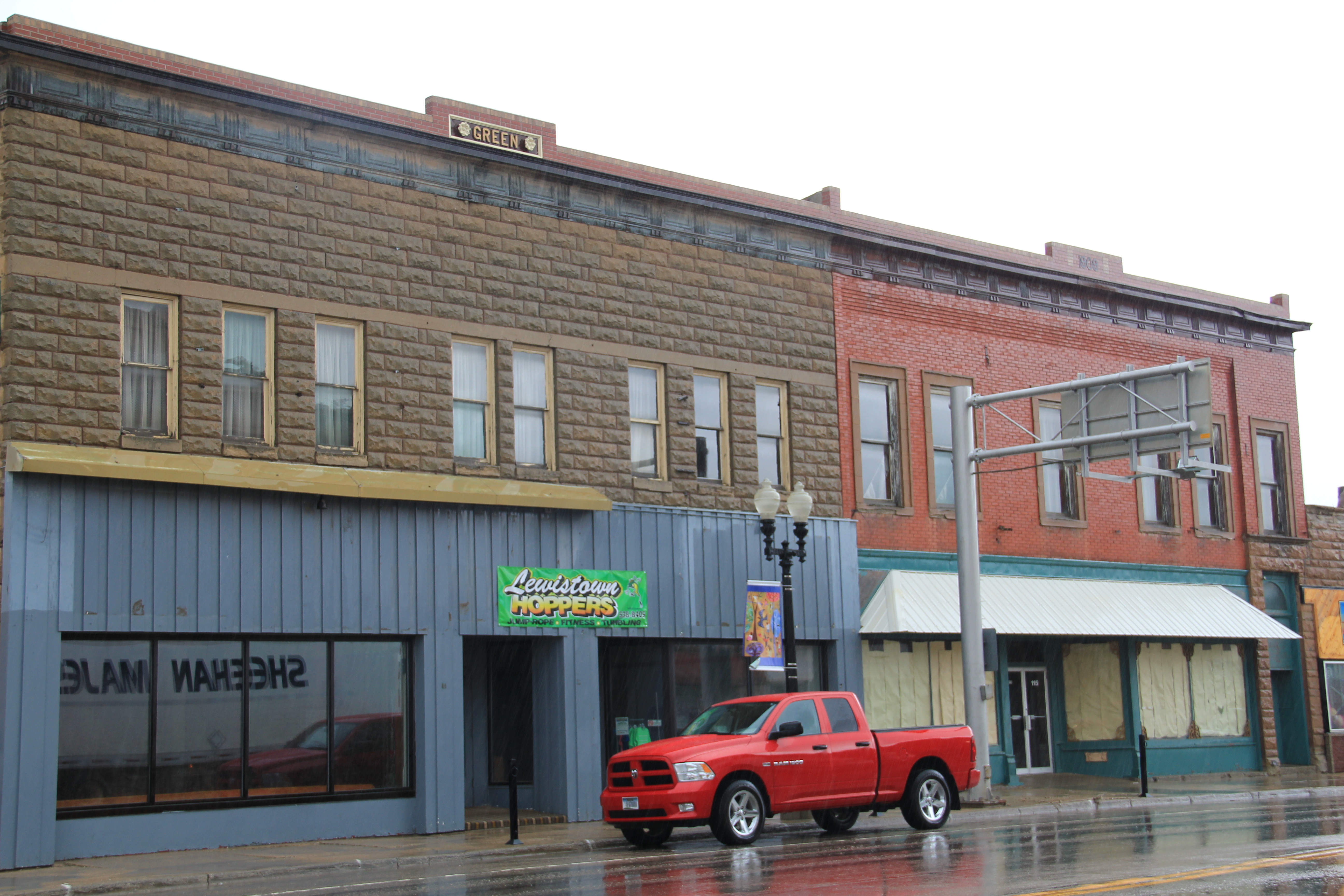
IMG_9389Lewistown, the seat of Fergus County, has been a hub for trade and government for eastern Montana since the 1880s.  Beginning as a trading post, the town next served as a crossroads for traffic going to short-lived precious metal mines at Kendall, Maiden, Giltedge, and other places.  Cattle ranches, such as the famous DHS Ranch and the N-Bar Ranch, also surrounded the place.  By the turn of the 20th century, the town had over 1,000 residents.  But by this time, railroad companies eyed the area for possible agricultural development, and within 20 years Lewistown had boomed–gaining six times its population–and a fascinating array of commercial and public buildings in the wake of the population growth.

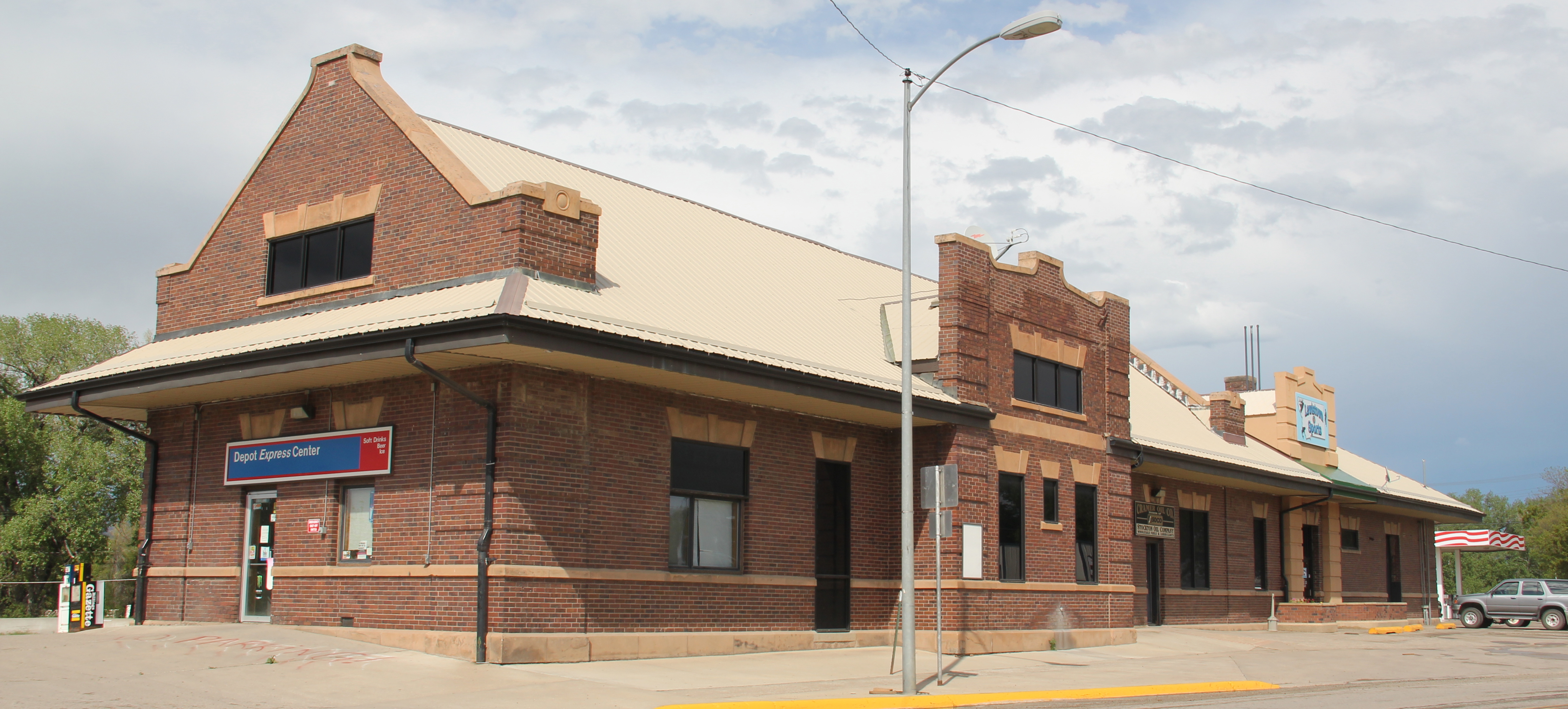
IMG_9381The Great Northern Railway not only an understated Classical Revival depot on one end of the town, it also expanded lines throughout Fergus County like tentacles desperate to grab as many wheat crops as possible.  The depot remains today, converted into a convenience mart and gas station (an adaptive reuse you do not commonly find for railroad depots).  On the other end of town stands the other major line–the Milwaukee Road–devoted to the homesteading rush in Fergus County.  It built an even grander

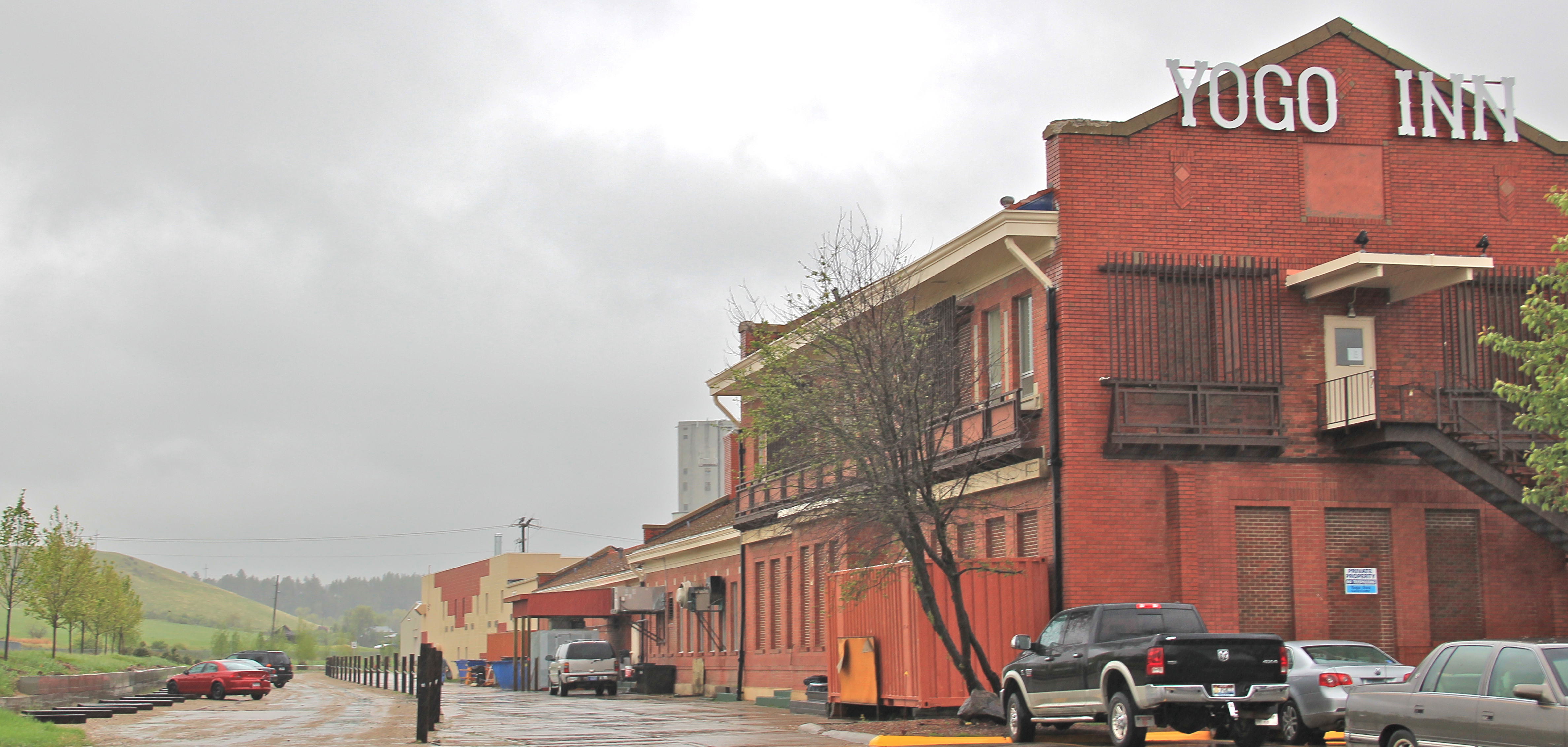
IMG_0004complex as a statement to its wishful dominance of the agricultural trade.  Shortly after the closure and bankruptcy of the line in the late 1970s and early 1980s, the depot became a large adaptive reuse project, turning the Milwaukee Road complex into the Yogo Inn and convention center, where, in 1984, I attended the Montana Historical Society statewide history conference.

IMG_9400The bloom grew stale over the decades and when I visited in 2013, the Yogo was clearly on life support; I was encouraged in May 2015 to find renovations underway–maybe there will be a third life for this Milwaukee Road landmark in Lewistown.

The Great Northern and the Milwaukee created the transportation network that brought homesteaders to central Montana by the thousands. Merchants, bankers, and craftsmen then rebuilt the downtown from 1904 to 1916, and much of that flurry of construction still serves residents today in the central business historic district, which is listed in the National Register of Historic Places.

IMG_9973Classical Revival was the architectural statement of choice to this new Lewistown taking shape along Main Street.  The architects of the Montana State Capitol, Bell and Kent, designed a new Bank of Fergus County (above, on the right) in 1904.  It received another layer of classicism in the pilasters a decade later when owners wanted to match the flashy Judith Theater (1914), certainly one of the great examples of Beaux Arts design in a small Montana town movie palace.

Fergus Co Lewistown neoclassical bank  - Version 2

By 1916, however, bank officials were ready to support the town’s most complete interpretation of Classical Revival design in the new Montana Building, designed by the firm of Link and Haire.  The bank seemingly had few limits in front of it–homesteaders still arriving and agricultural prices were high.  But the boom went bust in the early 1920s and by 1924 the building had new owners, the First National Bank.  It has remained home to financial institutions ever since.

IMG_9967

IMG_9969

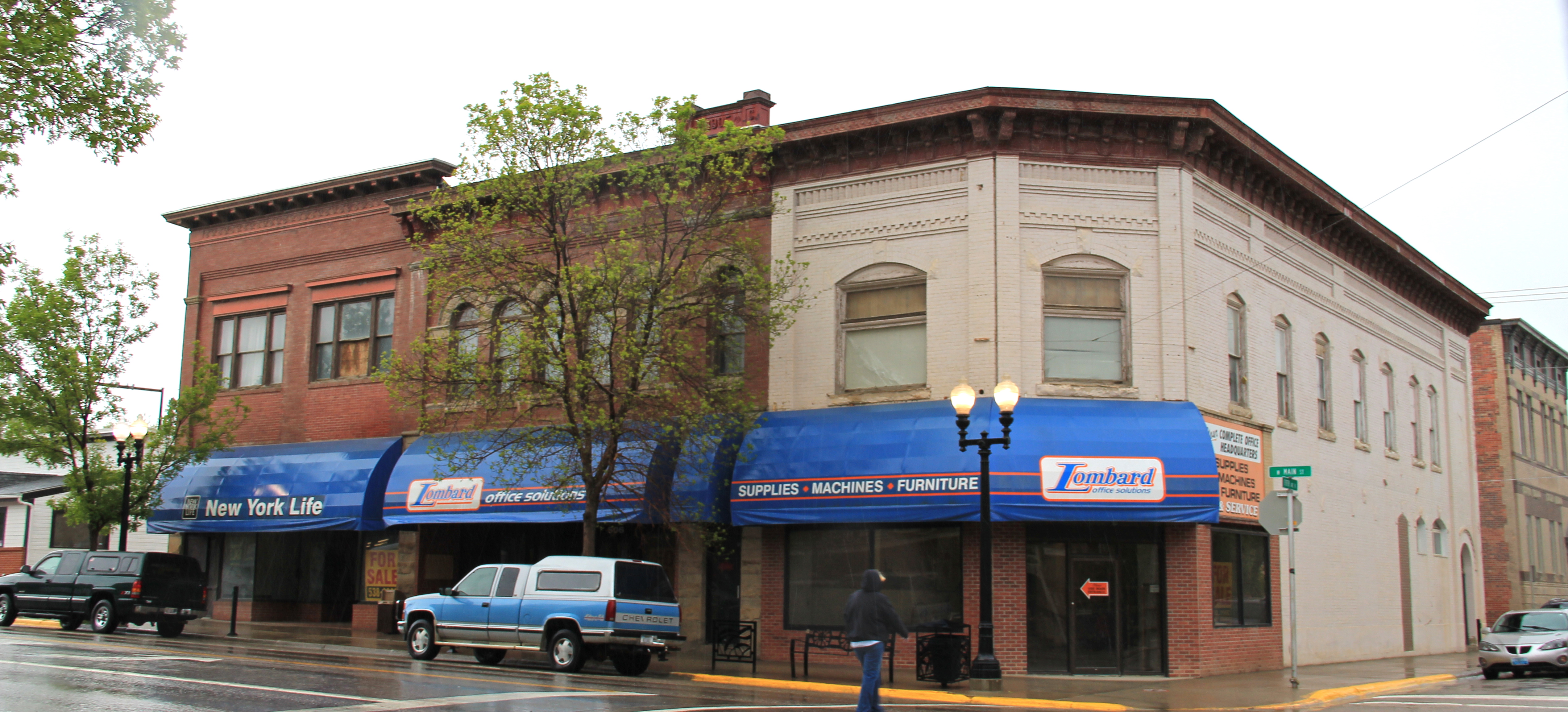
IMG_9951The splashy Beaux Arts classicism of the banks and theater catch your eye but much more common are two-story commercial blocks, often with a more understated classicism, where retail businesses used the first floor and professionals occupied the second.  The town had a several gifted craftsmen who left their mark in these buildings and others.

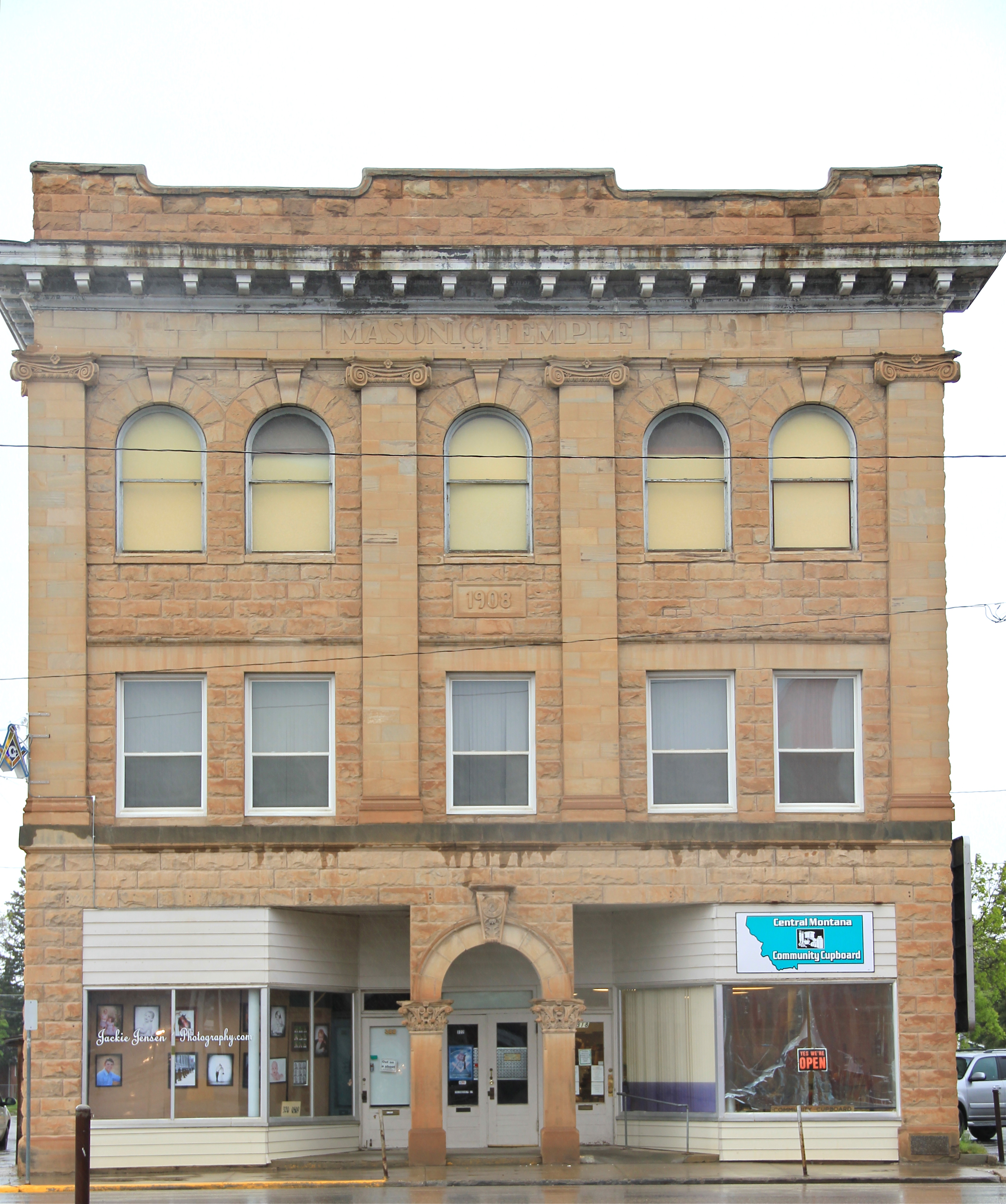
Detail Masonic Temple Lewistown Fergus Co IMG_9955Croatian stonemasons left impressive stone Romanesque arches at the Masonic Lodge, a detail I photographed in 1984 (left) and 2013 (right).  The building itself is a dignified statement of both craftsmanship and purpose, combining both classical and Romanesque elements using locally available stone.  It’s one of my favorite buildings in town.

Fergus Co Lewistown masonic temple downtown commercial HD 13 - Version 2Not far away is the I.O.O.F. Hall, from 1914.  Here is an even later example of Romanesque arches highlighting a building that is both a fraternal lodge but also valuable retail space.

IMG_9966Be they multi-story or just one-story commercial businesses, this set of commercial designs convey so strongly the promise of early 1900s to thousands of Montanans.  Lewistown’s population had reached 6,000 by 1920–that generation would be shocked to know that remains the population today. Much more on Lewistown to come.

IMG_9984

Baker: The Milwaukee Road’s Eastern Gateway to Montana

Fallon Co Baker Milwaukee Road corridor  - Version 2The Milwaukee Road, the last transcontinental railroad to crisscross Montana, enters eastern Montana at the town of Baker, established in 1908, which served as an important rail center for the company with the full name of the Chicago, Milwaukee, St. Paul and Pacific.  When I visited Baker in 1984 i noted that many of its buildings dated from the homesteading era although there was a clear second layer of development died to the region’s oil boom of the late 1960s and 1970s.  In A Traveler’s Companion to Montana History (1986) I noted “Baker’s railroad corridor is still largely intact, and the spatial arrangement created by its Milwaukee depot and the neighboring Baker Hotel, an imposing brick building dating to 1916, symbolizes the railroad’s importance to the town.” Both buildings are gone now unfortunately but an indication of the prominence of the corridor is still conveyed by the brick building below which has served the community in many commercial and professional ways over the decades.

IMG_0390

Insurance was just one of the services provided by this neoclassical styled building.

Today the hotel, the tracks, and the huge grain elevators along the railroad corridor remain, and the elevators still visually dominate the surrounding mostly one-or two-story built environment.  But the depot is gone, leaving a hole in the town’s historic fabric.

IMG_0402Buildings and railroad tracks were not the only legacy of the Milwaukee in Baker–there was the large lake the company developed to provide water for its trains in a largely parched region.  The Baker Lake, 30 years ago, was undergoing another improvement project, part of the town’s generation-long effort to turn a forgotten corporate remnant into a community asset.  The company built the lake c. 1908 but soon found that the water was too salty–it corroded the equipment.  And so the lake sat, until the 1950s when the Baker’s Woman Club began an effort to convince the railroad to transfer the lake to local

IMG_0462government.  County leaders became convinced that yes, Baker needed a community recreation asset, and eventually the land was transferred into the public use, and Baker Lake by the end of the century was an unique asset in southeastern Montana, and a center for recreation and special events.

Fallon Co Baker library  - Version 2The lake is not the only contribution of the Woman’s Club.  it also was central in creating, staffing, and maintaining a public library, and the contemporary-designed library from 1970 remains but also has been enlarged since 1984.

IMG_0407

The Fallon County-City of Baker Administration Building, 1974-1975

Indeed, I noted the recent construction of the 1970s in Baker, like the new county courthouse/city administration building where I held a public meeting, but I didn’t really process the layer of modernism in the town, a reflection of its growth from 1950 to 1970, when the population grew from 1,772 to 2,584.  The new joint administration building, designed by the Billings firm of Johnson Graham Associates, remains an impressive piece of contemporary design.  Architects Willard Johnson and Orval Graham had established the firm in 1967.  The Baker project established a connection between the firm and county that continued into the present:  the new grandstand at the Fallon County Fairgrounds is also a JGA design, from 2011.

IMG_0417

IMG_0419

The tradition of county fairs dates to 1909 and today the Fallon County Fair is one of the region’s largest.

IMG_0465Historic schools are other important contributions to the town’s built environment.  Above is the Washington School, built in 1927.  It is a brick Classical Revival statement of the town’s insistence for permanence in the face of the homesteading bust. When I last visited in 2013, the school was undergoing rehabilitation to become an office building. On the other side of town stood a more modern design, the Longfellow School, built in 1968 during the height of the population boom in Baker.  Its low, rectangular mass was modern school design at its best, although since my 1984 visit the casement windows have been covered so central heat and air could be installed.

IMG_0410The second building in Baker listed in the National Register was the only one designated in 1984, and it was the pride and joy of the community:  the old county courthouse converted into the O’Fallon Museum.  Here was not only the historical exhibits typical of the area but also installations about the region’s prehistoric past and moved buildings to host special

IMG_0414collections but also to interpret the homesteading past.  I will always remember my public meeting in Baker, for the obvious pride residents had in the museum but also for the comment that they could not wait to show me “our really old stuff,” such as a 1916 homestead.  Coming from my training at Colonial Williamsburg, considering places from 1916 as really old was a notion that took some getting used to, but of course in the context of settlement and development of southeastern Montana, it made perfect sense.

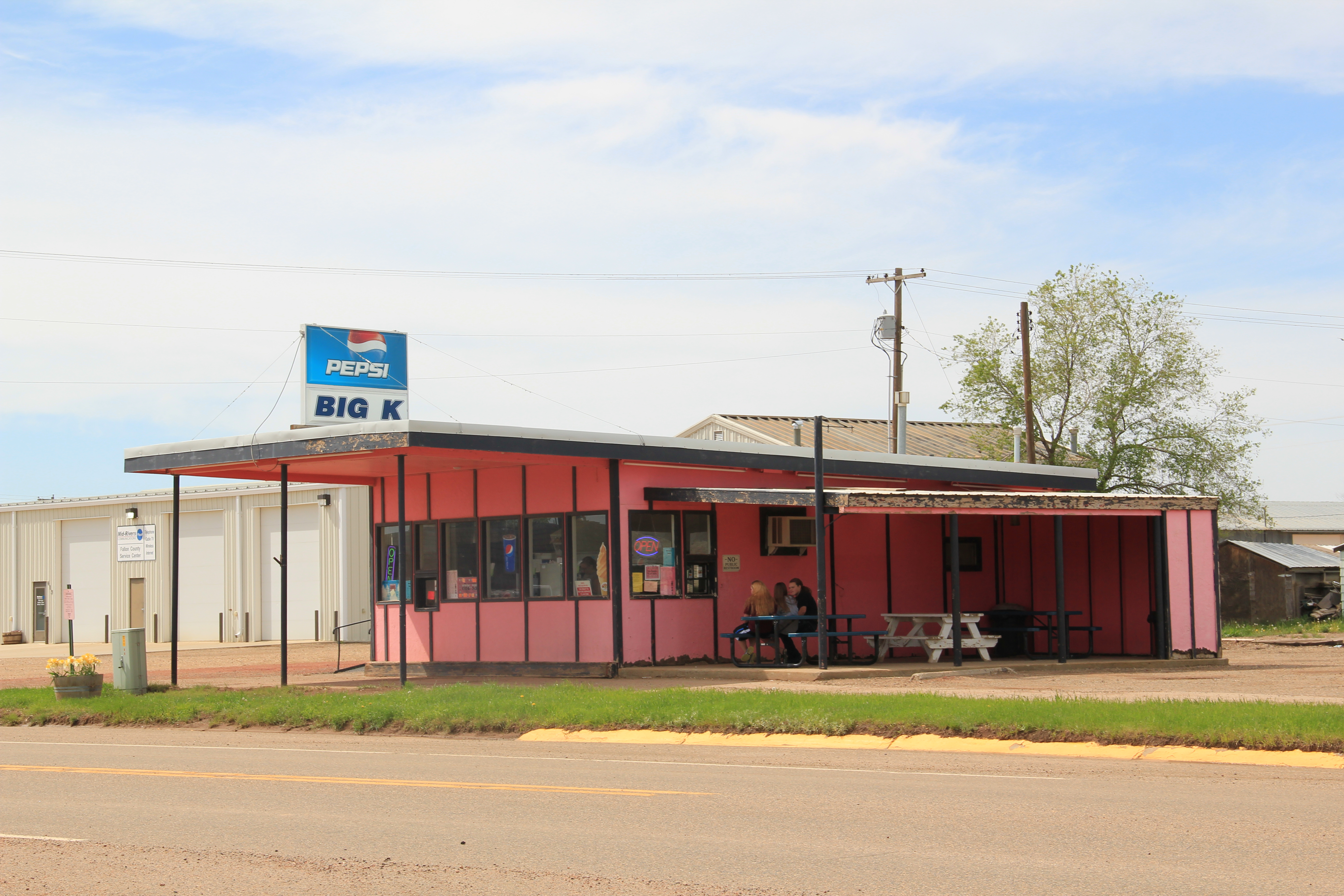
IMG_0463Today I would even join into the call for the “really old stuff”–like the Lake Theatre of 1918.  It certainly deserves a place in the National Register as so few classic movie theaters remain in this part of the state.  The same could be said for this classic c. 1960 drive-in,

IMG_0404which is part of the town’s roadside architecture traditions along U.S. Highway 12, the federal road that parallels so much of the Milwaukee Road’s route through Montana.  For

IMG_0472good measure I would even dare say that it’s time to assess the significance of the oil wells and facilities along Montana Highway 7 as you enter or leave Baker.  The discovery of oil and its development in the 1960s and 1970s certainly was the major economic story of the town and county in the second half of the 20th century.

IMG_0468In 2015 Baker has retreated from that c. 1960-1970 boom.  Population peaked at 2584 in 1970.  It remained just a hundred or so under that in 1980, but changes in demand, technology and the bankruptcy of the Milwaukee meant that Baker in the last 30 years has lost residents, in 2010 down to 1741, about the same number as in 1950.  Yet I like that the lake had been restored, and it remained a vibrant part of the town, that new banks and new renovations were part of the town, and indeed, that an old car dealership and garage was now the very good Three Garages Bar.  Historic preservation can play a larger role in Baker’s future just as it did during Baker’s boom in the past.

IMG_0397

Red Lodge: Preservation Maybes and Maybe Nots

It’s no secret that I have long admired the towns of the Yellowstone Valley.  Thirty plus years ago, the attitude across much of Montana was dismissive of this region:  I even was told by someone who should have known better that “outside of Custer, there’s really isn’t much history there.”  Not only was their history in spades–chronologically deep, thematically rich–there was this tremendous built environment that I began to explore in 1982, and haven’t stopped since.

Snag Bar (1901) Red Lodge Carbon Co  IMG_5715

Admittedly I take an old school approach to the preservation of this landscape.  Red Lodge has many exemplary preservation achievements but in the 21st century success may be leading to the community losing that edge, admittedly rough edge, that once characterized this region of Montana.  Case in point:  the Snag Bar.  The image on the left is from the 1980s–on the right is an image from this summer.  I was happy that the Snag was still with us–always a cozy watering hole in the past.  But now its entrance spoke to a different audience, and the place had taken on the “Main Street Preservation” look that you can find across the country–and a bit of distinctiveness was gone.

IMG_5725

IMG_5716

Red Lodge was not tipped into that preservation fantasy land right out of Disney’s “Main Street U.S.A.” But new infill of modern false-fronts and even a heavy mountain-like Rustic feel doesn’t help, not to mention the northern California wine bar with its set-backs and sidewalk seating.  It is just worrisome.  As is the future of this once grand movie theater,

IMG_5799which has been hanging on, seemingly by a thread, for decades.  The theater has one of the great Classical Revival facades found in the state, full of whimsy and wonderful detail.

IMG_5782

IMG_5785   IMG_5783

Its conversion into a garage was kept it alive but a conversion into a new public use:  well it is a huge building, that needs work, and Red Lodge is already blessed with a brilliant historic movie theater, the Roman.  Multiple theaters in the early 20th century made sense: today not so much.

IMG_5797

Red Lodge also has gotten it right in its residential historic districts.  The “Hi-Bug” neighborhood–a designation 100 years ago that spoke to the merchant class that lived in the town’s most affluent neighborhood–has made a remarkable recovery in the last 30 years, and looks great as these few images attest.

IMG_5751

IMG_5812

IMG_5815

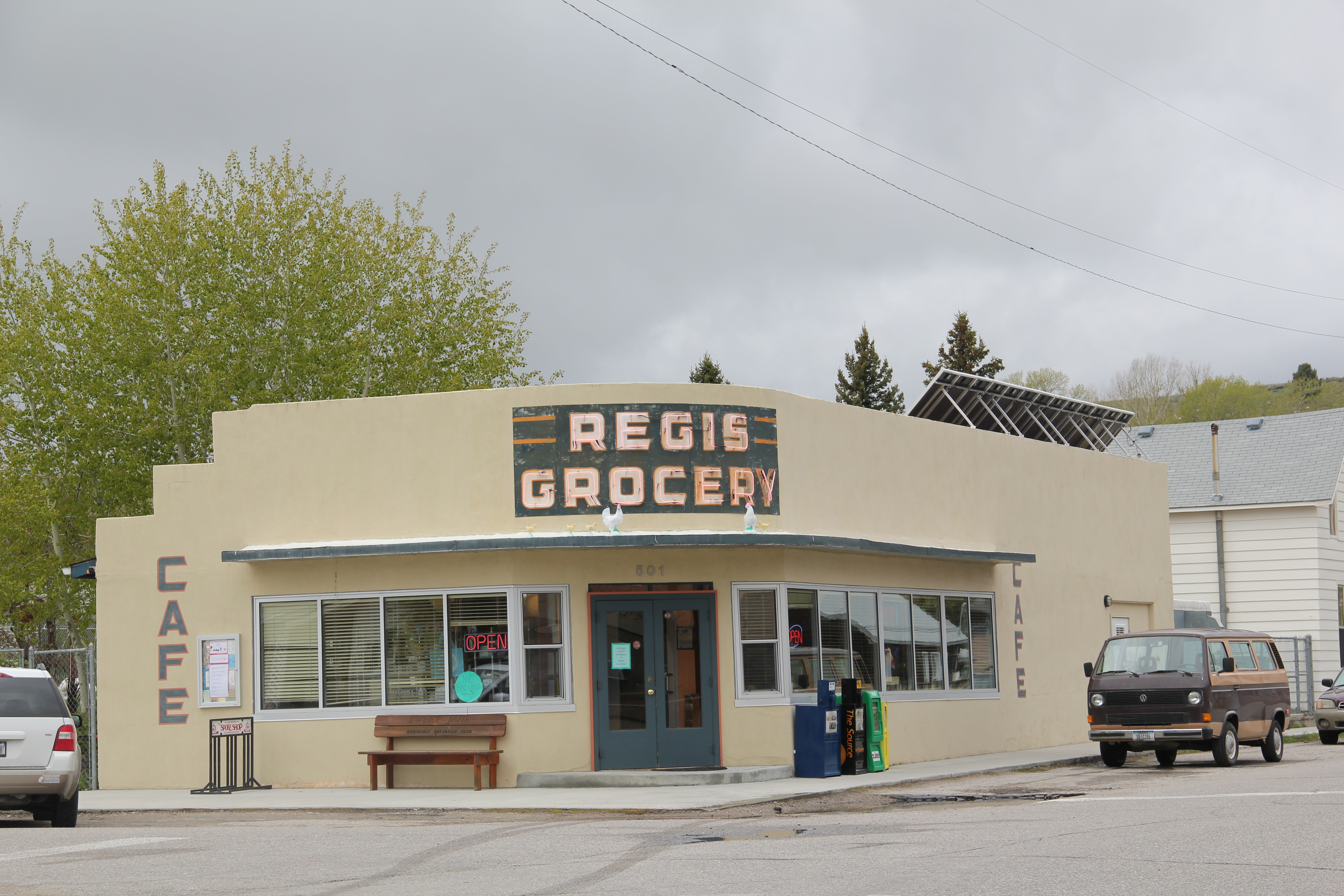
Throughout town there are similar preservation success stories, ranging from a historic service station (that has a nifty exhibit about Yellowstone tour buses and their preservation lurking inside) and one of my new favorites, the Regis Grocery, now a neighborhood (meaning off the tourists’ beaten path of US 212) cafe worth a stop.

IMG_5737

IMG_5804Red Lodge does have challenges–growth that can overwhelm historic character, too many tourism focused businesses–but the changes here over 30 years are impressive achievements, sure signs of how the 1966 National Historic Preservation Act has helped to change the face of Montana.

Harlowton: Lost Landmarks in a Milwaukee Road Town he

IMG_9748Harlowton is my favorite of Montana’s Milwaukee Road towns.  Its roots lay with the vision of Richard Harlow to build an independent central Montana railroad.  When the Milwaukee Road assumed control of Harlow’s mini-empire, it turned Harlowton into one of the line’s key division points, the place where steam engines switched to electric power for the journey up and over the Rocky Mountains.

IMG_1591 copy

Fischer Park with Milwaukee Road electric engine, Harlowton, 2006

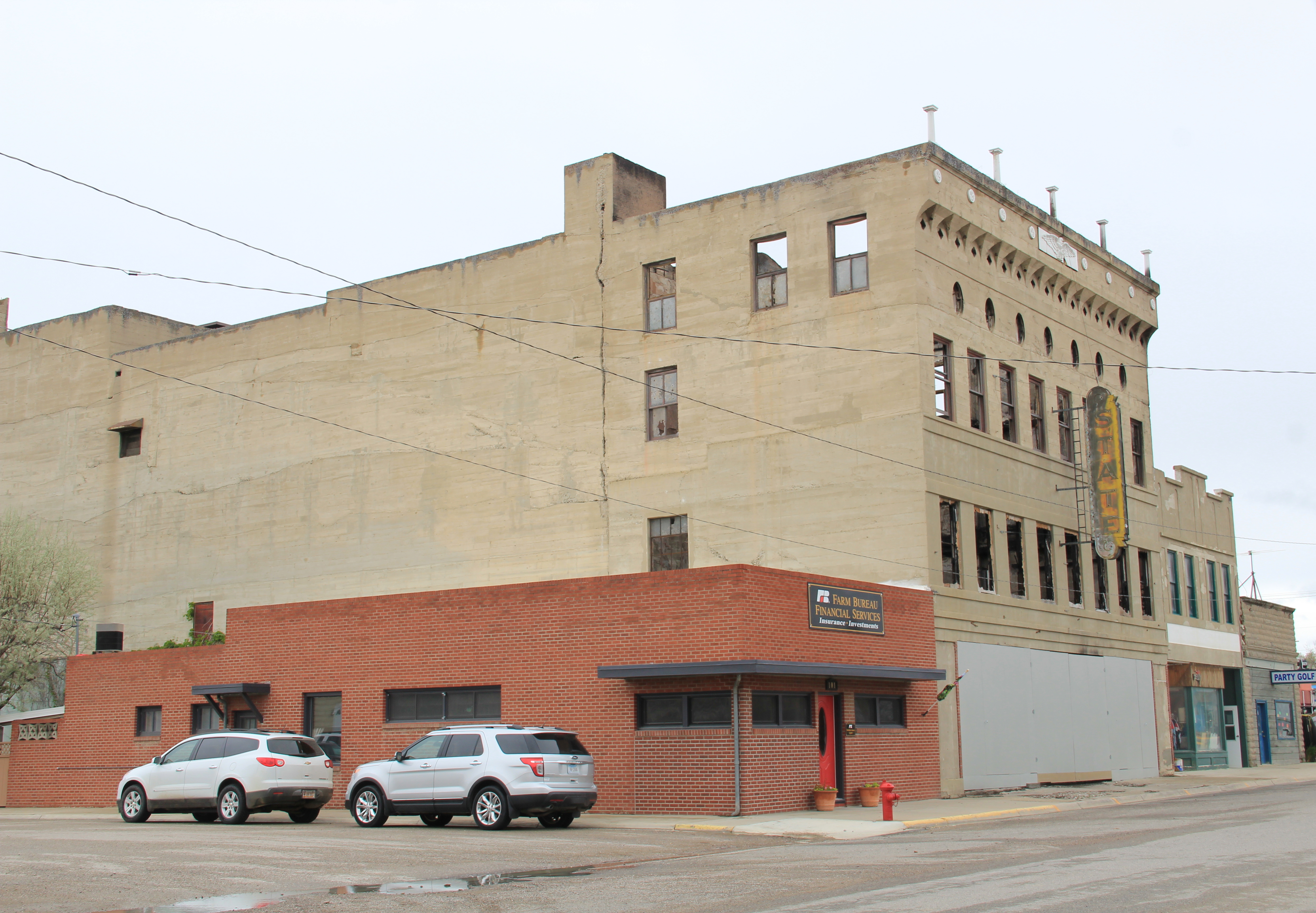
When I surveyed the town in 1984, I did so with the blessing and insight of Lon Johnson, then the historic architect of the Montana State Historic Preservation Office.  Harlowton was a special case for Lon, especially the dream of restoring and reopening the magnificent State Theatre (1917), a hallmark of its days when Milwaukee passenger traffic promised so much for this small plains town.

IMG_9739

IMG_9738

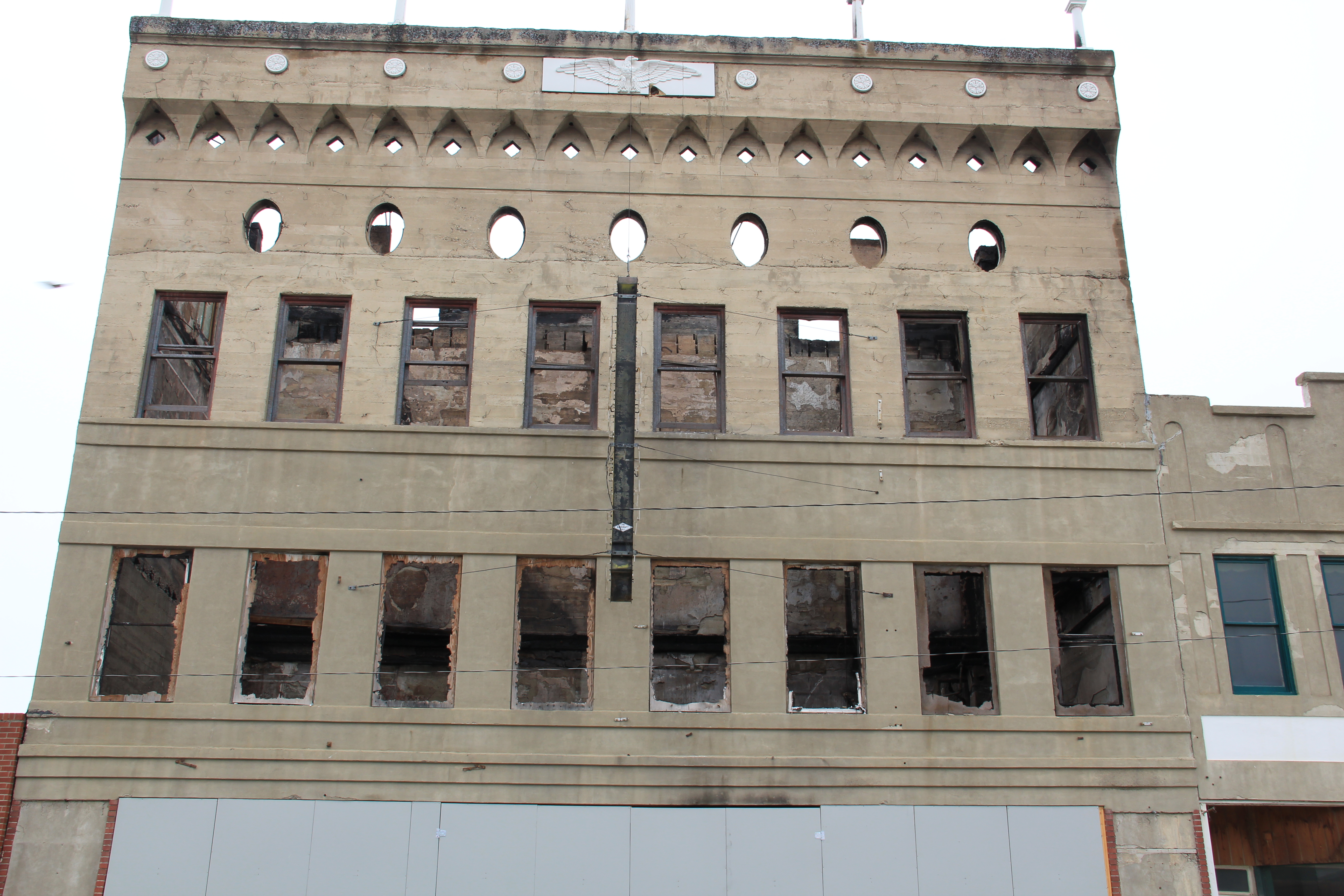
Before the restoration could take place, however, the theatre caught fire in 1997 and plans were set aside until 2011 when a new effort to restore the building occurred, but a second fire in 2012 again stopped progress.  The photos above from 2013 show that the hulk of the 1917 theatre remain but with the declining local population, renewal of the theatre will be difficult.

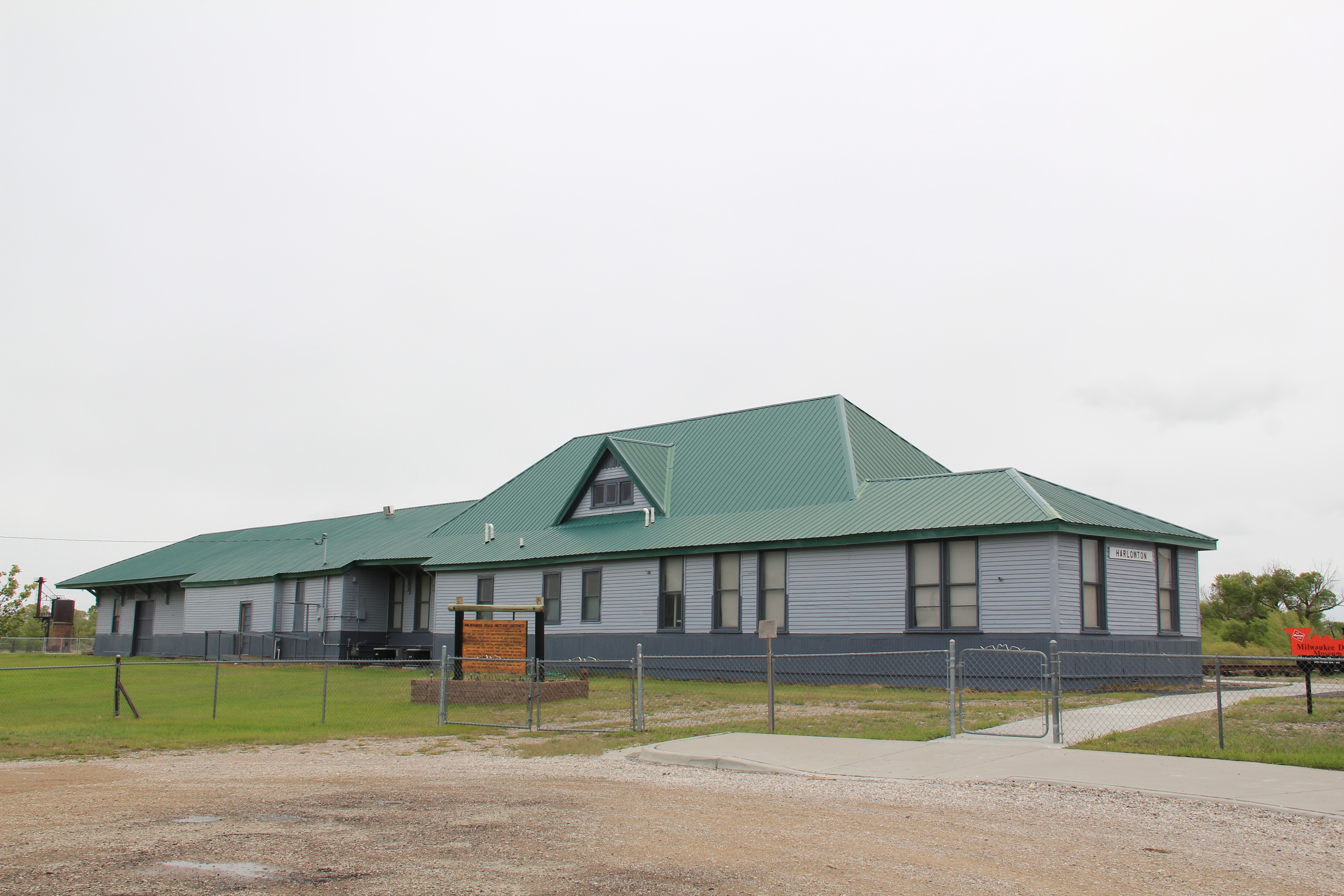
Milwaukee Road depot and offices, Harlowton, 2006

Milwaukee Road depot and offices, Harlowton, 2006

My great interest in Harlowton centered on the Milwaukee Road and its works.  In 1984, the company’s bankruptcy was only a few years old.  Down at the tracks, there was still the railroad line, the depot, the roundhouse, and other buildings.  I considered these remnants, especially in the local context, as extremely significant.  Afterwards, locals and the SHPO agreed and the Milwaukee Road depot historic district was created.  Over the next 25 years, I would stop by Harlowton periodically to monitor the district, and noted with approval how the depot had been repaired.  The roundhouse, unfortunately, was lost.

Harlowton depot and offices in 2013

Harlowton depot and offices in 2013

Looking north from the depot, on the bluffs of the Musselshell River overlooking the railroad tracks, stood a third key landmark, the Graves Hotel.  My colleague Lon Johnson also had

IMG_1594

Harlowton, from the railroad depot, 2006

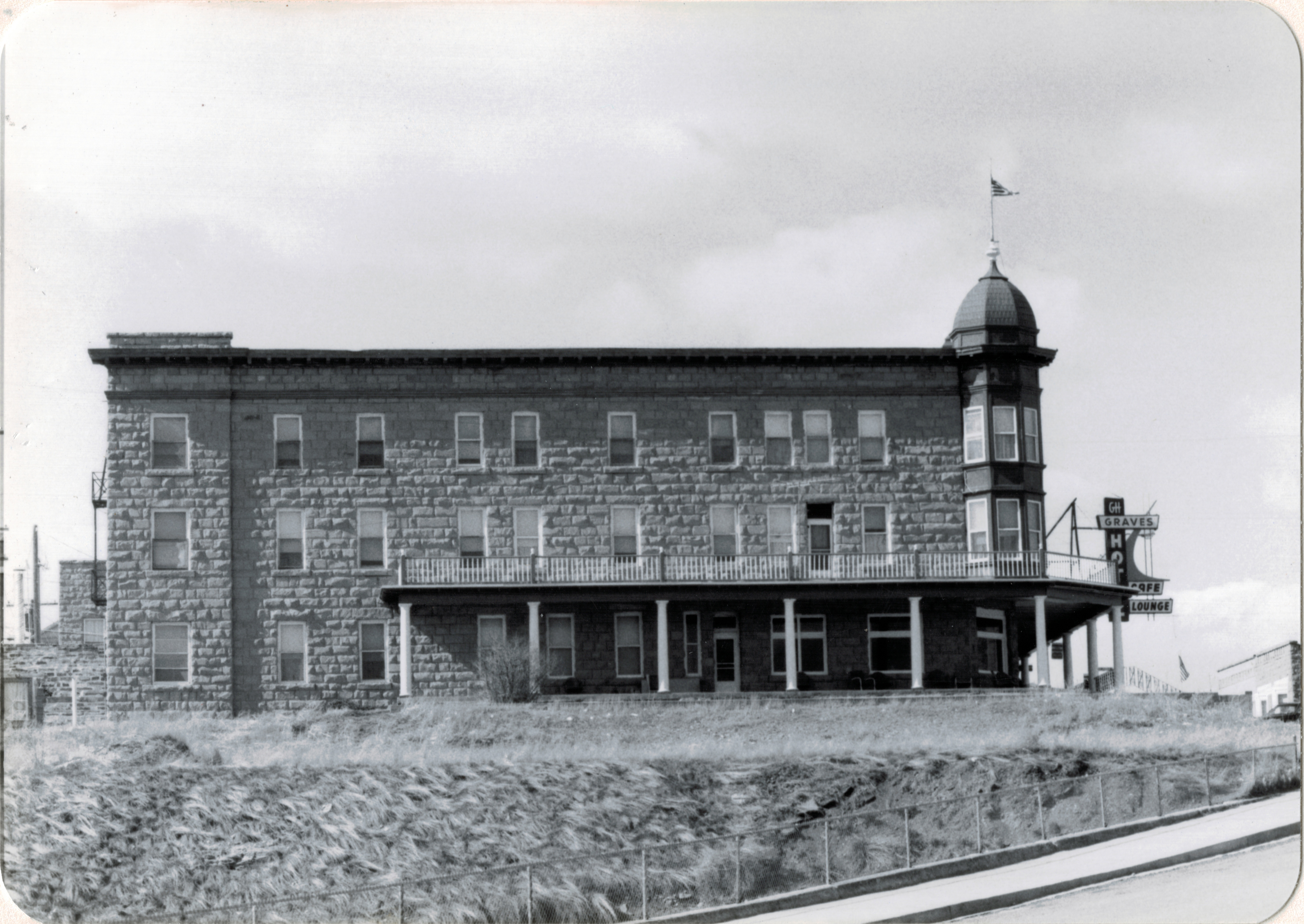
been a big fan of this Queen Anne-styled stone railroad hotel, with the stone carved from the nearby bluffs.  I too fell in love with the Graves, staying here periodically in the 1980s.

Graves Hotel, Harlowton, MT, 1984

Graves Hotel, Harlowton, MT, 1984

When I visited in 2006, however, the Graves looked good–from a recent repainting of its late Victorian detailing–but it was closed, and so it has remained ever since.  I do not

Graves Hotel harlowton

pretend to have the answers on how do you maintain a large three-story National Register hotel that is miles from an interstate and located instead on a little-used-by-tourists route

Graves Hotel in 2013

Graves Hotel in 2013

(U.S. Highway 12), but even if the hotel can come partially back to life, it would be a real tourism boost to Harlowton.

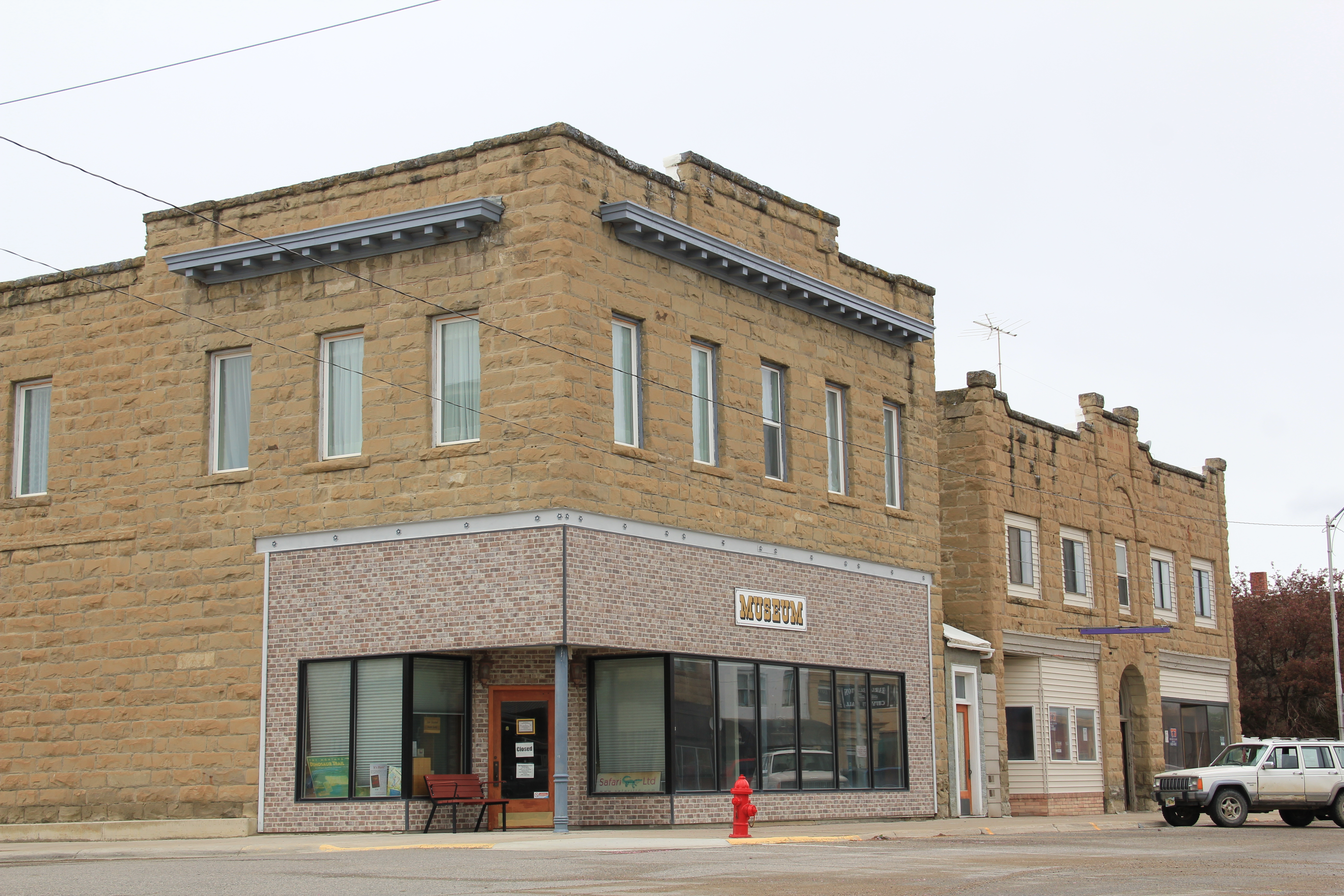
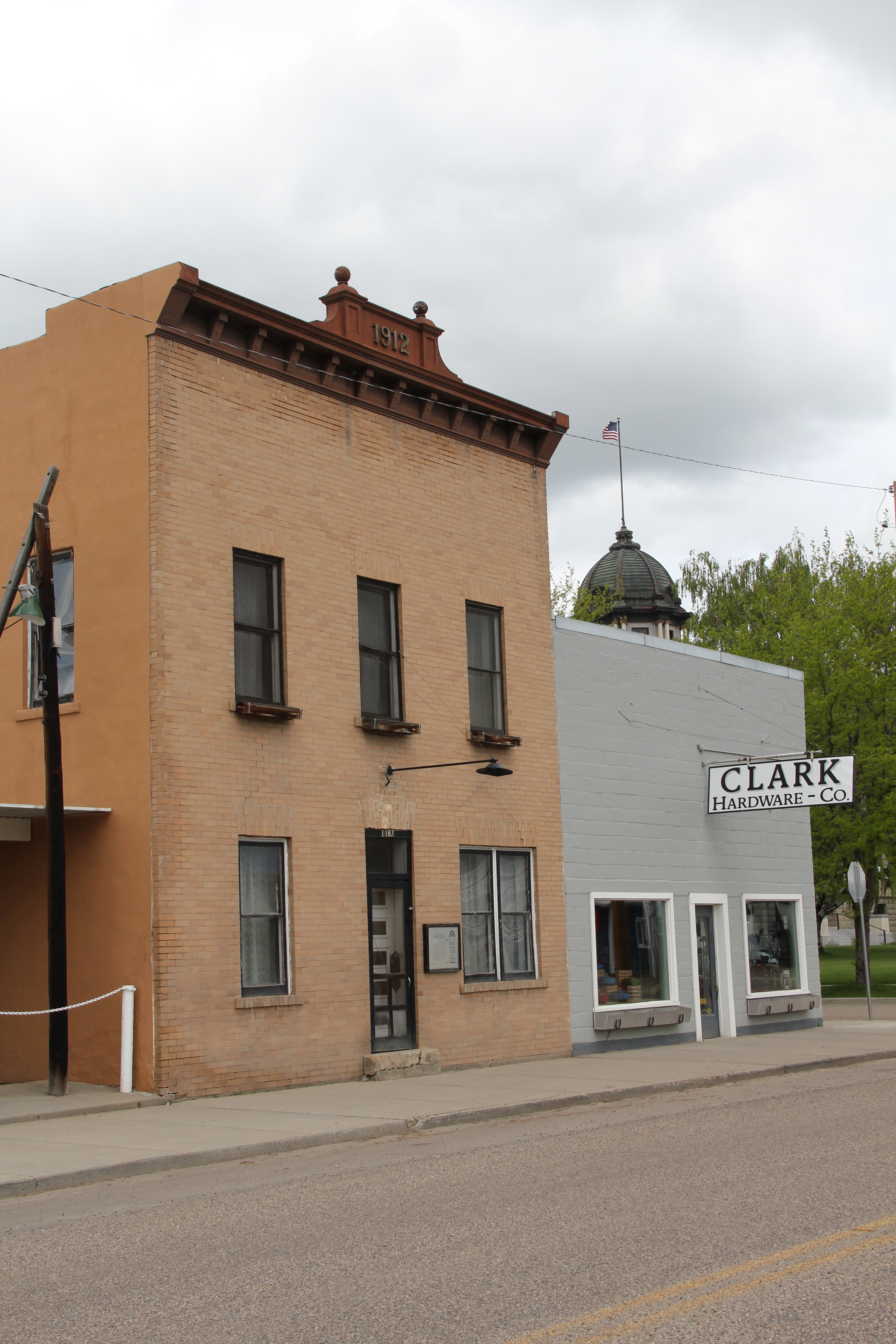
It’s not like the local residents aren’t in the game and trying.  The county museum, the Upper Musselshell Valley Museum, continues to grow its profile along Central Avenue.  The buildings made of locally quarried stone, with late Victorian cornices, harken to the turn of the 20th century when Harlowton held such promise with the Milwaukee Road’s arrival.

IMG_9719

IMG_9731

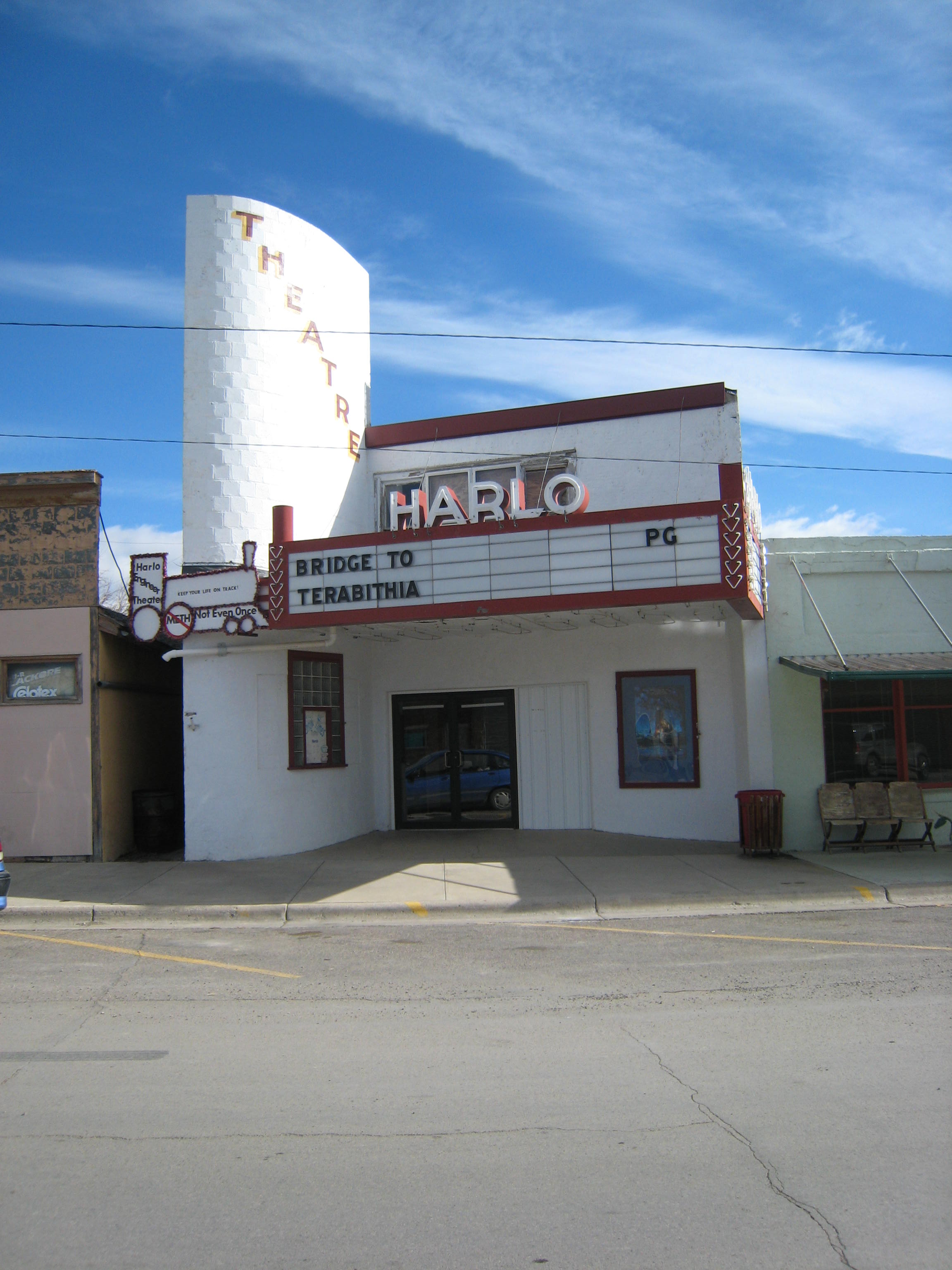
The Harlo Theatre remains in business too, and is a throwback to small town theaters, and a rare survivor in today’s home entertainment world.  Plus it is a cool building.

IMG_1592 copyDespite missing out on the interstate, losing a railroad, and dropping a lot of population, there is still something to Harlowton that makes me return, trip after trip.  More on that something in the next blog.

Forsyth’s historic districts

Forsyth, the seat of Rosebud County, has used historic preservation effectively as one of many community assets to guide its economic sustainability over the last 30 years.  When I first visited there in 1984, the community had already started to grapple with the impact of the coal mining far south at Decker.  The passing of coal trains defined much of rhythms of traffic and life back then.  But even 30 years ago, residents were determined to keep their identity and to celebrate their heritage, despite being drawn into a different world.  That was impressive–and from 1986 to 1990, they put their commitment into physical terms by listing many properties in the National Register of Historic Places.

IMG_6943

You really haven’t been to Forsyth unless you take in a movie at the Roxy Theater (1930) and an after-movie libation at the Lariat Bar

Earlier posts talked about such key heritage institutions as the Rosebud County Courthouse, the adjacent Rosebud County Museum, the Howdy (Commercial) Hotel, and then the adaptive reuse of the Vananda State Bank as new landmark business.  Forsyth also has a downtown commercial historic district, which includes both the hotel, bank, the Roxy Theater shown above, but additional classic Montana two-story commercial buildings, with their understated Victorian or classical cornices.

IMG_6944

The Masonic Temple, designed by Miles City architect Byrnjulf Rivenes in 1911, served the community in many ways during its formative years, including the town library.  The Blue Front rooming house came in 1912 and served as home for Northern Pacific railroad employees for many years–today it is a remarkably intact example of that type of single-man housing from 100 years ago.

IMG_6945

Residents also have designated a historic district of their homes and churches that developed in the early 20th century.  It is an impressive array of buildings, from the c. 1920 First Presbyterian Church, a Gothic Revival design by Howard Van Doren Shaw of Chicago in partnership with McIver and Cohagen of Billings, to the brilliant Craftsman-style of the McQuistion House (1914) built by Louis Wahl of Forsyth for ranchers Joshua and Grace McQuistion as their “town” home.  Then there is the 1897 Queen Anne-style house moved to its Forsyth lot by ranchers Robert and Dora Lane in 1909.  The Lanes moved on but the house has stayed, becoming over 100 years a real cornerstone to the historic neighborhood.

IMG_6967

IMG_6963

IMG_6966

Indeed, that is a theme found throughout town. Despite the coal industry that rumbles in the southern end of the county, Forsyth still holds on, and shows pride in, its ranching past.  No better emblem can be found than the modern front to the Forsyth high school.

IMG_6974

Like the vast majority of eastern Montana towns I visited in 2013, Forsyth has lost population from 1980.  Then over 2500 lived there; in 2010 the census takers counted over 1700 residents.  But unlike many, Forsyth is not beat up, abandoned, forgotten, depressing.  The murals by Bob Watts, discussed in an earlier post, are part of the

IMG_6975

answer.  Local stubbornness is another.  But pride in community as expressed through the town’s many historic preservation projects is another.  Forsyth has figured out how to gain a future through an appreciation of the past.  Let’s hope others follow their lead.

IMG_6985

Miles City: Bust and Recovery, 1925-1960

IMG_7005The thirty years between 1925 and 1955 were among the worst of times for residents of Miles City, but these were years where the town created and gained new institutions that would serve them well for the rest of the century. Population growth stalled, then sharply declined.  1930 census counted 7,175, a drop of over 750 from 1920.  And the number only ticked up slightly during the 1930s, gaining less than 150 new residents.
IMG_7007

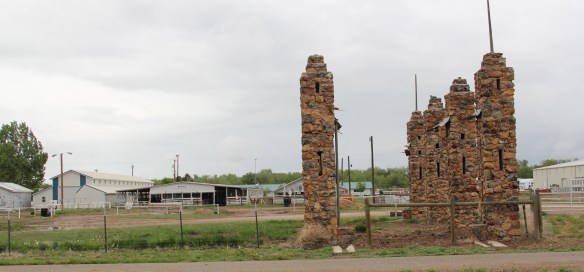
In the late 1920s, stockgrowers worked with local boosters to establish the Eastern Montana Fairgrounds, and over the next twenty years, they added new buildings and features to transform the place into a historic district that showcases what fairgrounds mean to rural Montana communities. Stockgrowers also met with local railroad officials to devise a plan to reinvigorate the grazing lands south of Miles City, properties that had been overgrazed since there were no restrictions on grazing on public lands.  The group established a concept that called for formal leasing of public lands for grazing in return for private investment and better conservation practices.  Congress agreed that the concept was worth an experiment and in 1928 it established by law the Mizpah-Pumpkin Creek Grazing District. As Depression stalked the land in the early 1930s, Congress took the Custer County experiment and transformed it into a national law that impacted the entire West:  the Taylor Grazing Act.

Rosebud Battlefield 035

The Taylor Grazing Act combined with other New Deal agricultural programs to call for the slaughter of thousands of cattle and horses in the region.  That, combined with the end of the open range, devastated the cowboy culture that had so defined Custer County and left everyone in a funk.

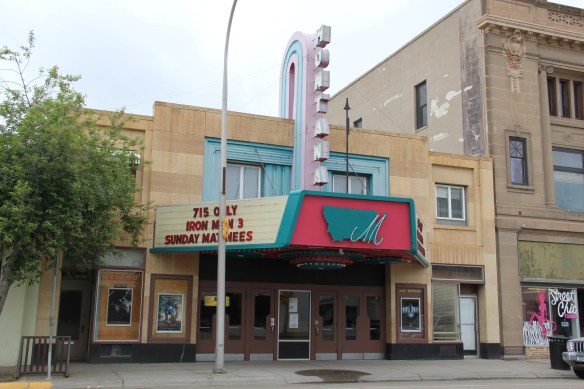
At least one bright spot lit up Main Street.  In 1936 the Montana Theatre, a splendid Art Deco building, opened, and the movies provided one important escape from the hard times.
IMG_7077

IMG_5982

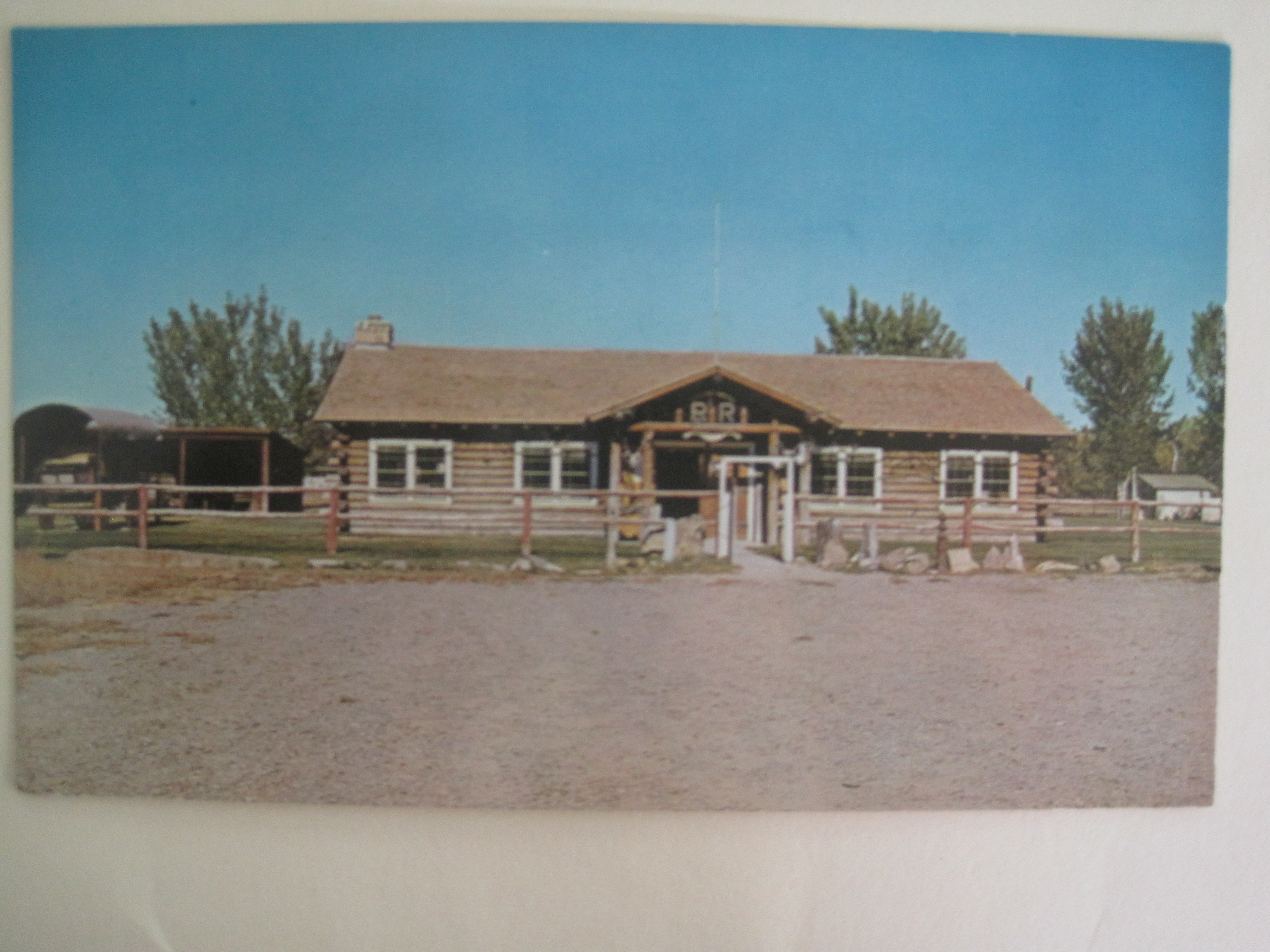
Postcard of Range Riders Museum c. 1960

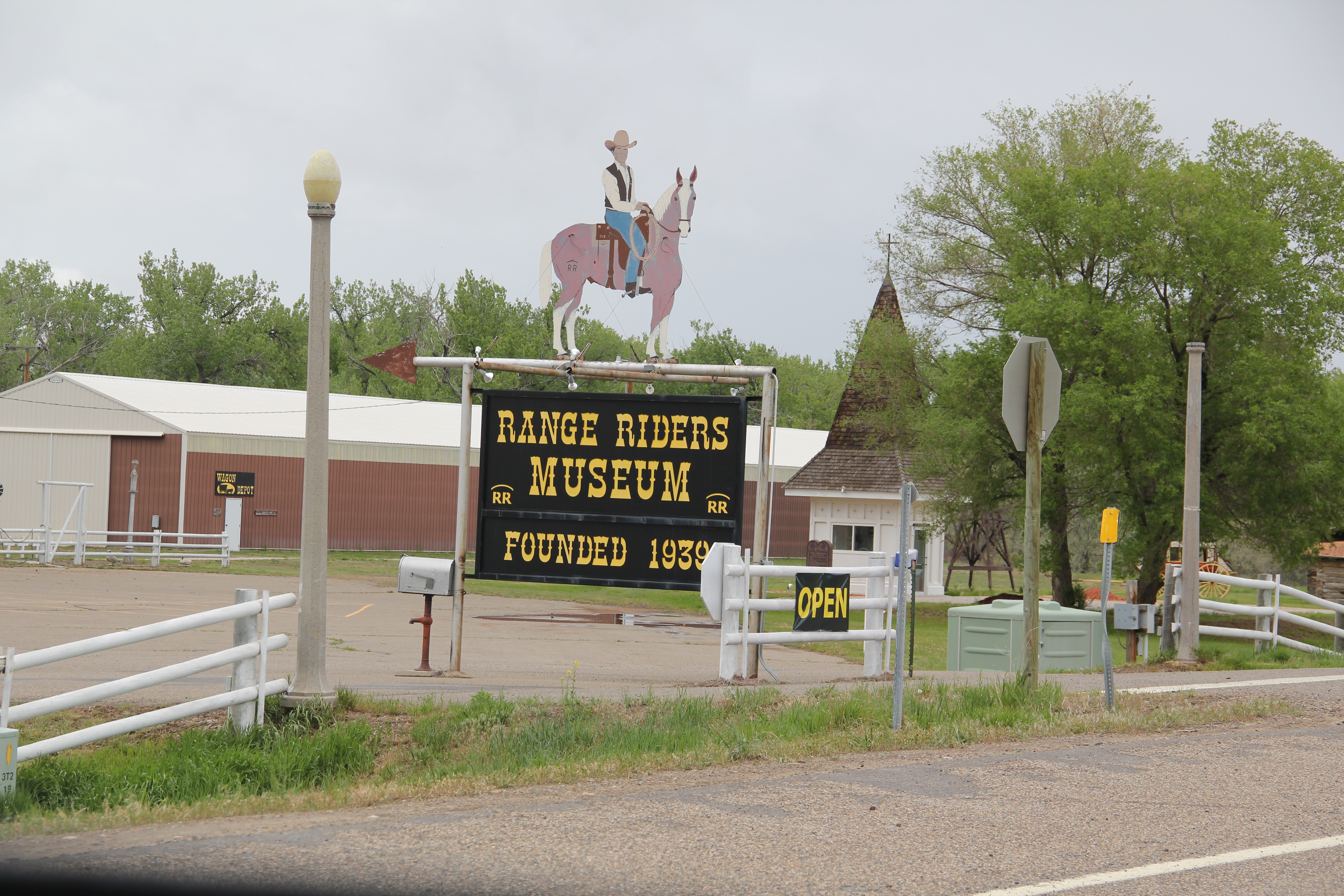
Another local reaction came in 1939 when residents met and celebrated the cowboys who came in the early years of settlement and created the culture that everyone hated to see pass.  A year later they gathered in Miles City again and decided to raise money for a “cowboy’s memorial building,” which when completed in 1942 became the Range Riders Museum. As a history of the museum concludes, the building “serves two other principal purposes: A meeting place for cowboys and a headquarters for the annual reunion. The members were satisfied that it was a fitting memorial to an industry in which the raising and furnishing of livestock needed to be preserved for future generations.”

Range Riders Museum, 2013

Range Riders Museum, 2013

The museum has steadily expanded ever since, with the addition of new exhibition space and adding other historic buildings from the county to the property.

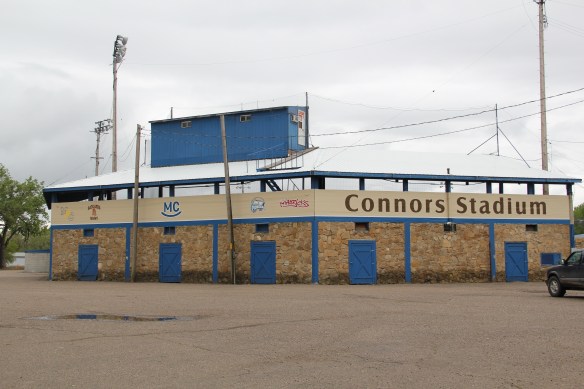
IMG_7011Another community institution, Riverside Park, received a new ballpark, fearing beautiful stone masonry, known now as Connors Stadium, in 1940.  This New Deal project was just one of many across Montana in the late 1930s and 1940s, designed to improve public recreation and school athletics.
IMG_7018

IMG_7020

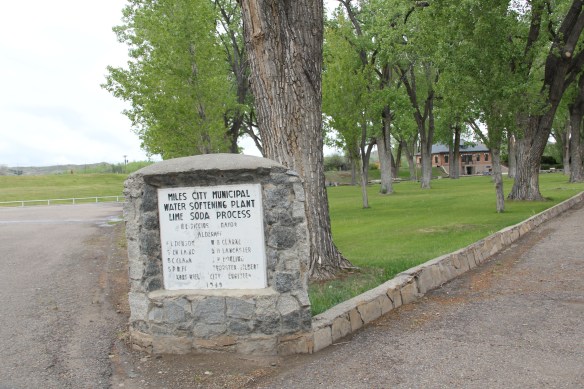
New Deal support also combined with local funding to create the Pumping Station Park at the nearby city waterworks plant.  Custer County now had re-energized public spaces.
IMG_7015

Northeast of Miles City, and north of the Yellowstone River, federal agencies created a huge reformed landscape, the Kinsey Flats project (1938-1941), which was a double-layered landscape of the New Deal. Here, federal Resettlement Administration officials relocated formerly displaced ranchers—many of whom the New Deal had dislocated earlier in the decade during its massive purchase of marginal lands throughout the region—to a new planned community north of Miles City. One of the officials involved with both projects, David G. Rivenes of Miles City, recalled: “I know what a terrible experience it was for folks from Fallon County, East Custer County, and Prairie County, to pull up stakes, leave their life-long friends and relatives, the land that some had even homesteaded—and move into strange surroundings and convert to irrigation farming.”

Federal funding also bettered educational opportunities.  The National Youth Administration supported not only the high school but also expanding its offerings to create the Custer County Junior College.  During World War II, federal funding supported civil pilot training at the college, which at that time held its classes at the high school.  In 1957, it moved classes to the historic Milwaukee Road depot.

Milwaukee Road Depot, Miles City

Milwaukee Road Depot, Miles City

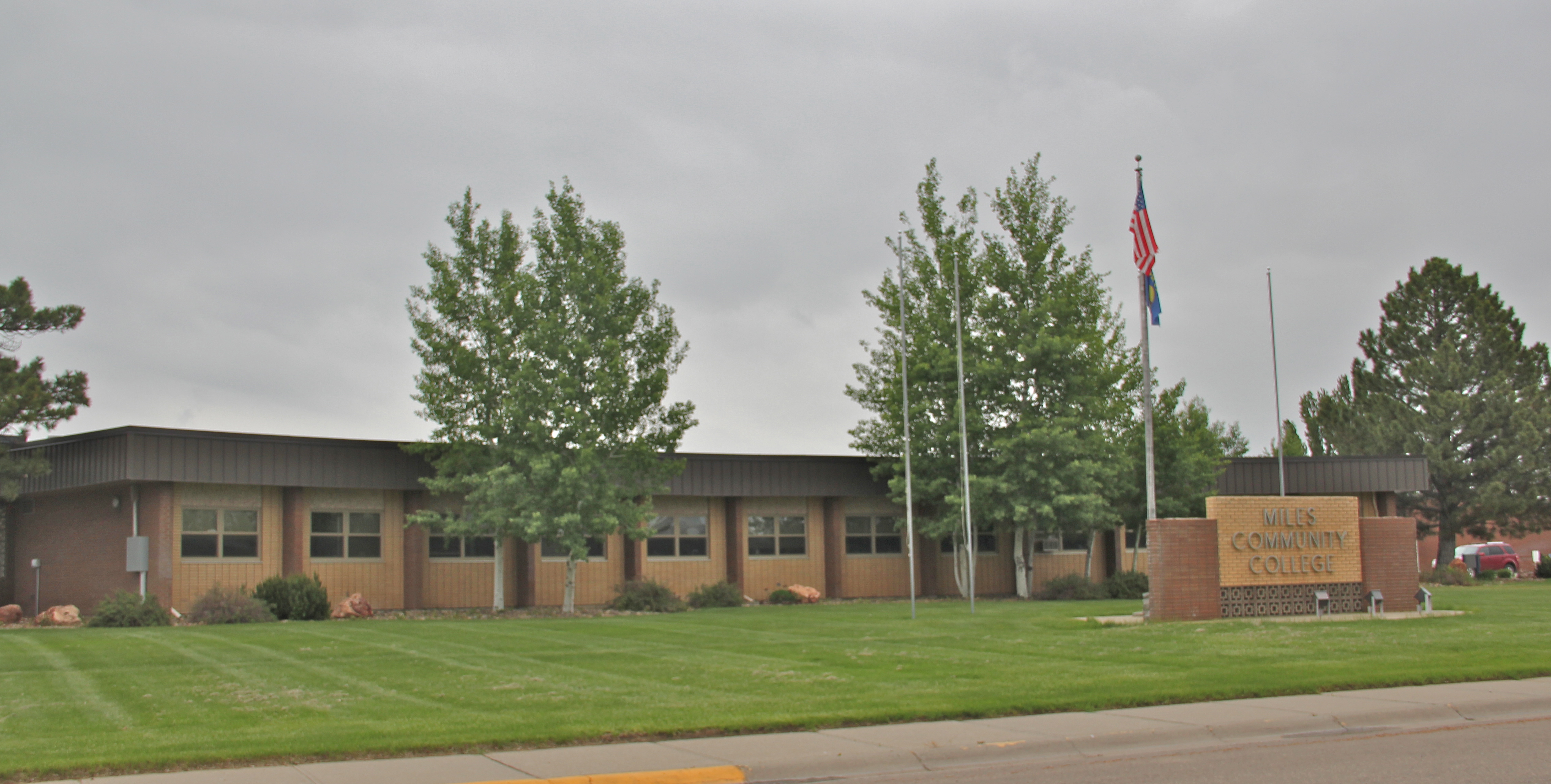
In 1966 the college changed its name to Miles Community College and began the process of relocating to its present campus, near the VA hospital complex.  The first junior college in the region continues to shape Miles City today.
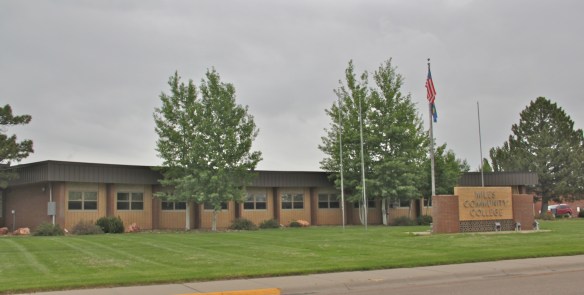
Miles Community College

Miles Community College, c. 1967

These different public institutions played a crucial role in Miles City’s decade of recovery from 1945 to 1960 as population grew to 9243 in 1950 and almost 10,000 by 1960.  Federal funding was important but local support was critical.  County government, for example, added a Art Deco Modern courthouse, designed by the firm of J.G. Link of Billings, in 1948-1949.
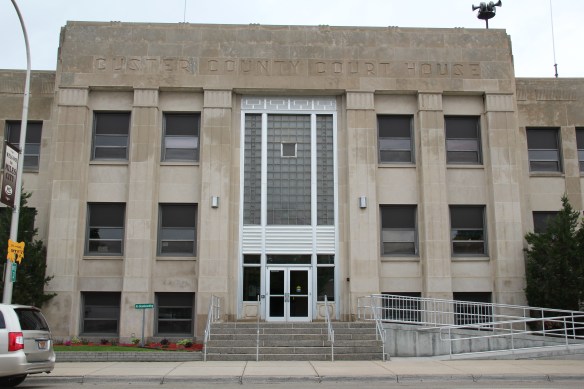
IMG_7074

Then residents and local governments pooled resources to donate almost $30,00 to purchase prime east side property to attract the construction of a modern Veterans Administration hospital. Groundbreaking took place in October 1948 and the hospital admitted its first patients on August 1, 1951.
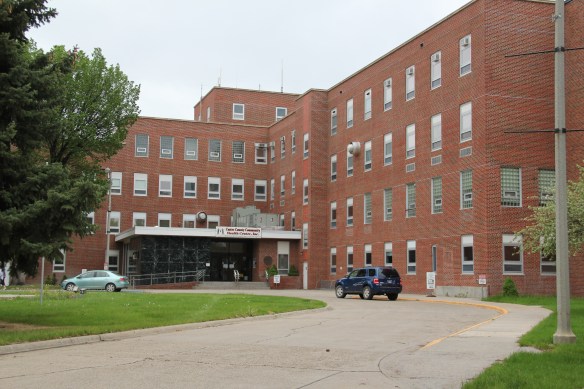
IMG_7105

The architect was Great Falls native, Angus V. McIver, working in collaboration with Cushing and Terrell of Billings.  McIver had been a prominent architect in Great Falls and Billings for a generation, along with a distinguished career with the military and other federal agencies.  Shortly after receiving this commission, McIver was elected a Fellow of the American Institute of Architects.

As contractors were building the 100-bed hospital, local ranchers and civic leaders launched, in 1950, the annual Miles City Bucking Horse Sale, one of the premier cultural events in eastern Montana every May.  The sale uses both the Eastern Montana Fairgrounds, the Range Riders Museum, and Riverside Park–among other venues–to pay homage to the city’s cowboy roots but also the persistence of stockraising in this region.

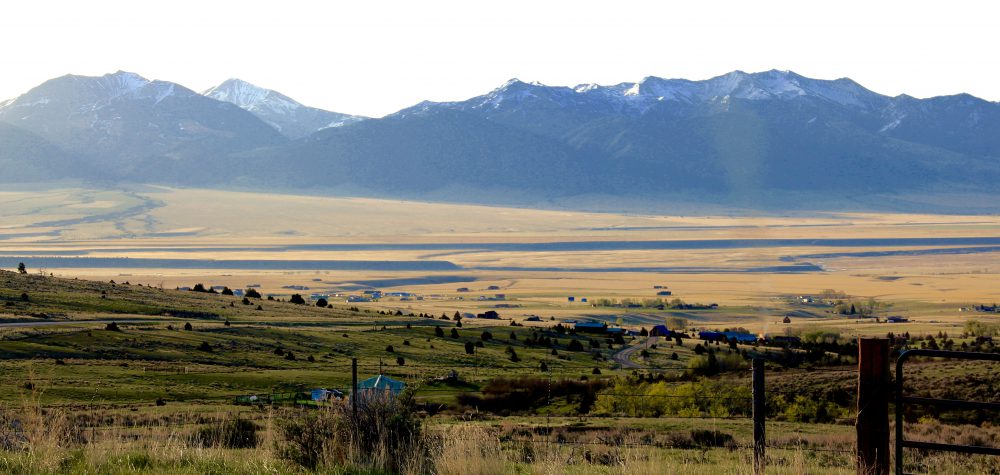
IMG_7009