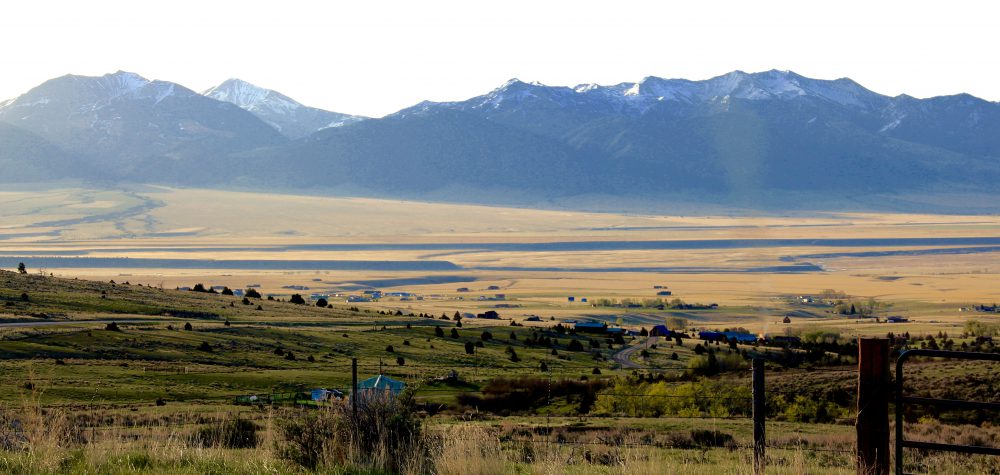
During a break in the infection rates of the pandemic in the late spring of 2021, I was able to get to Montana and spend a bit over a week considering historic cemeteries in places large and small. Many of these towns I had visited multiple times, such as Ryegate, the seat of Golden Valley County along U.S. Highway 12. A town that developed along the mainline of the Milwaukee Road about 115 years ago, Ryegate is a small town, population 223 in 2020, nestled between the railroad tracks, highway, and the bluffs of the Musselshell River.
Ryegate’s Main Street MT 238), on a quiet weekday midday
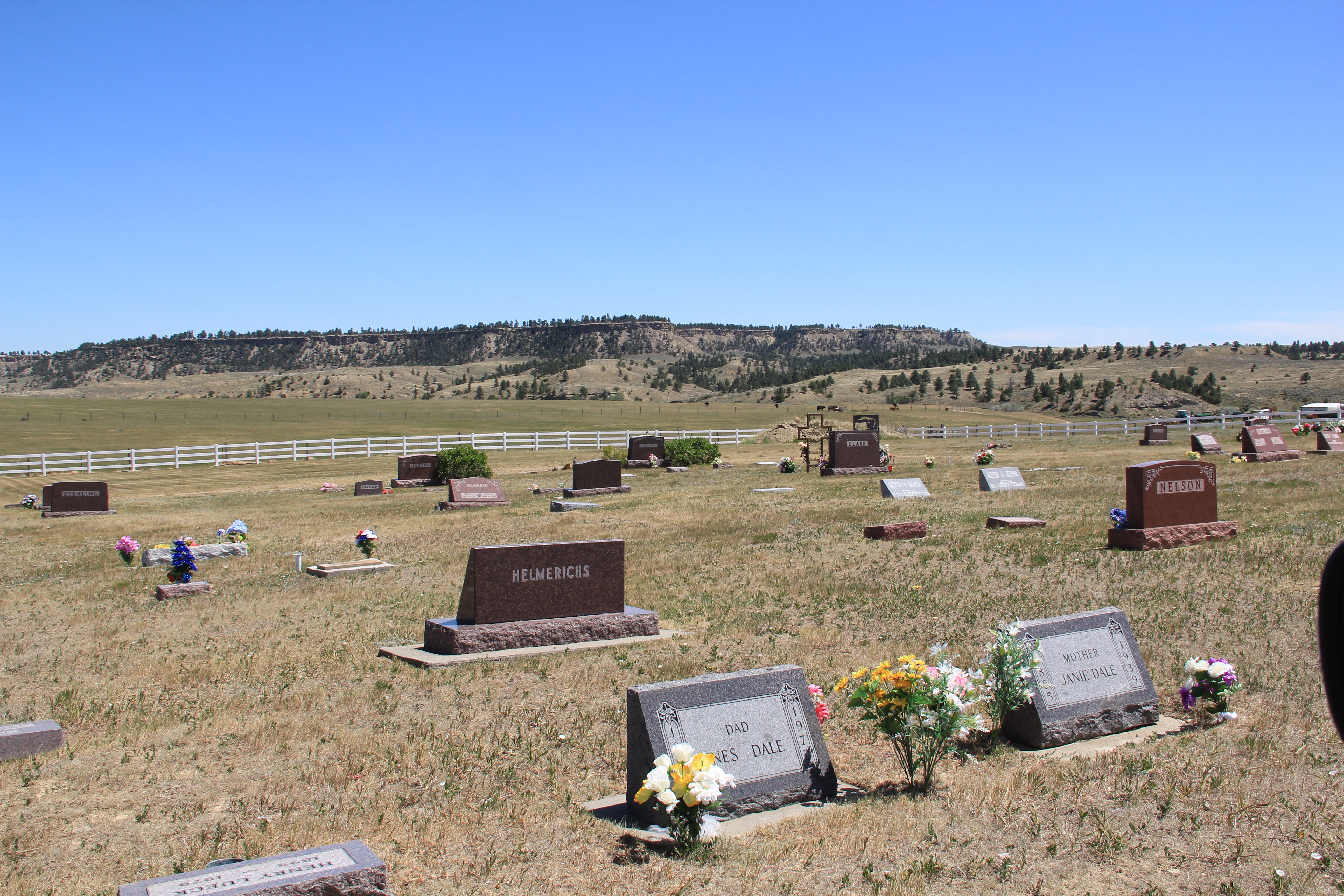
The cemetery is located on a rising set of hills as you travel south on Montana 238, perhaps a mile or so south of the railroad tracks. A white picket fence marks it and a metal gate allows access.
There are no grave markers that are large and pretentious, a reflection of the hard life but solid values of a rural community of ranchers and homesteaders. With markers covering every decade of the twentieth century, the cemetery is an understated but telling marker of community continuity, faith, and pride.
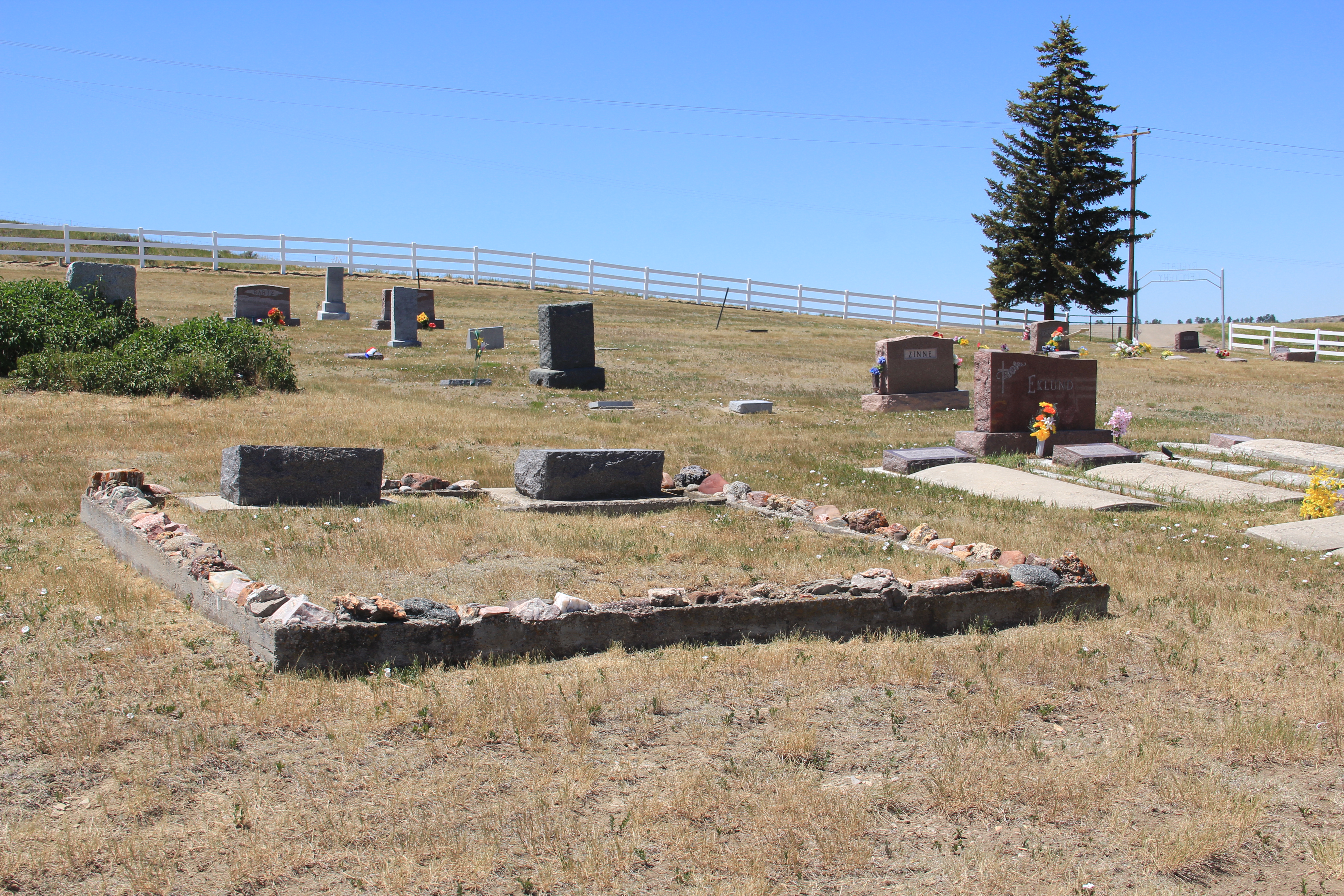
The family plot marked by a low concrete wall topped by local rocks–a tradition you find more in the south than in Montana.This early sandstone marker is one of the very few disfigured by time in the cemetery.
In my 1984 field study for the Montana state historic preservation plan, there were many places that were “known” to Native American tribal historians, students of the Lewis and Clark expedition, and scholars of the northern plains fur trade. But few of these places were provided public interpretation. much less public access. Such was the case with the Lewis and Clark campsite of early June 1805 at the confluence of the Missouri and Marias River.
Location of Lewis and Clark Expedition campsite
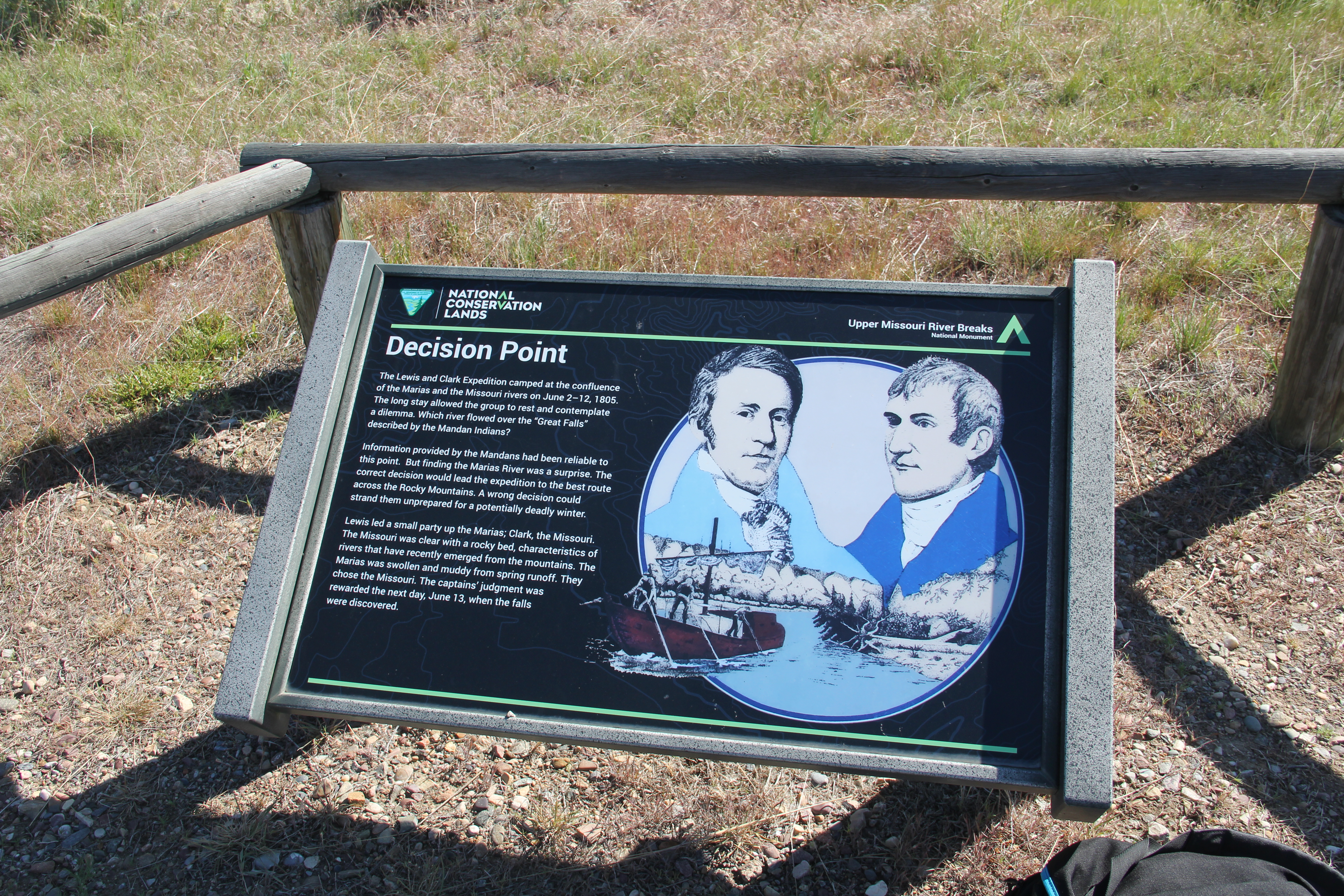
The campsite became known as decision point because as the expedition rested and regrouped there, they also decided which river to follow. After initial investigations, the members chose correctly and soon found themselves at the great falls of the Missouri River.
When I carried out my 1984 work, everyone knew that the confluence was at Loma, seen in the background of the photograph above. But access to the actual location and significant public interpretation was still to come. As I have written in numerous prior posts, one of the most significant changes from 1984-1985 and my recent work in Montana from 2012 to 2021 is the amount and quality of public interpretation and public access to significant historical landscapes. There has been a huge improvement, and Decision Point is an excellent example of federal agencies working with landowners and state and local government as part of the Upper Missouri River Breaks project.
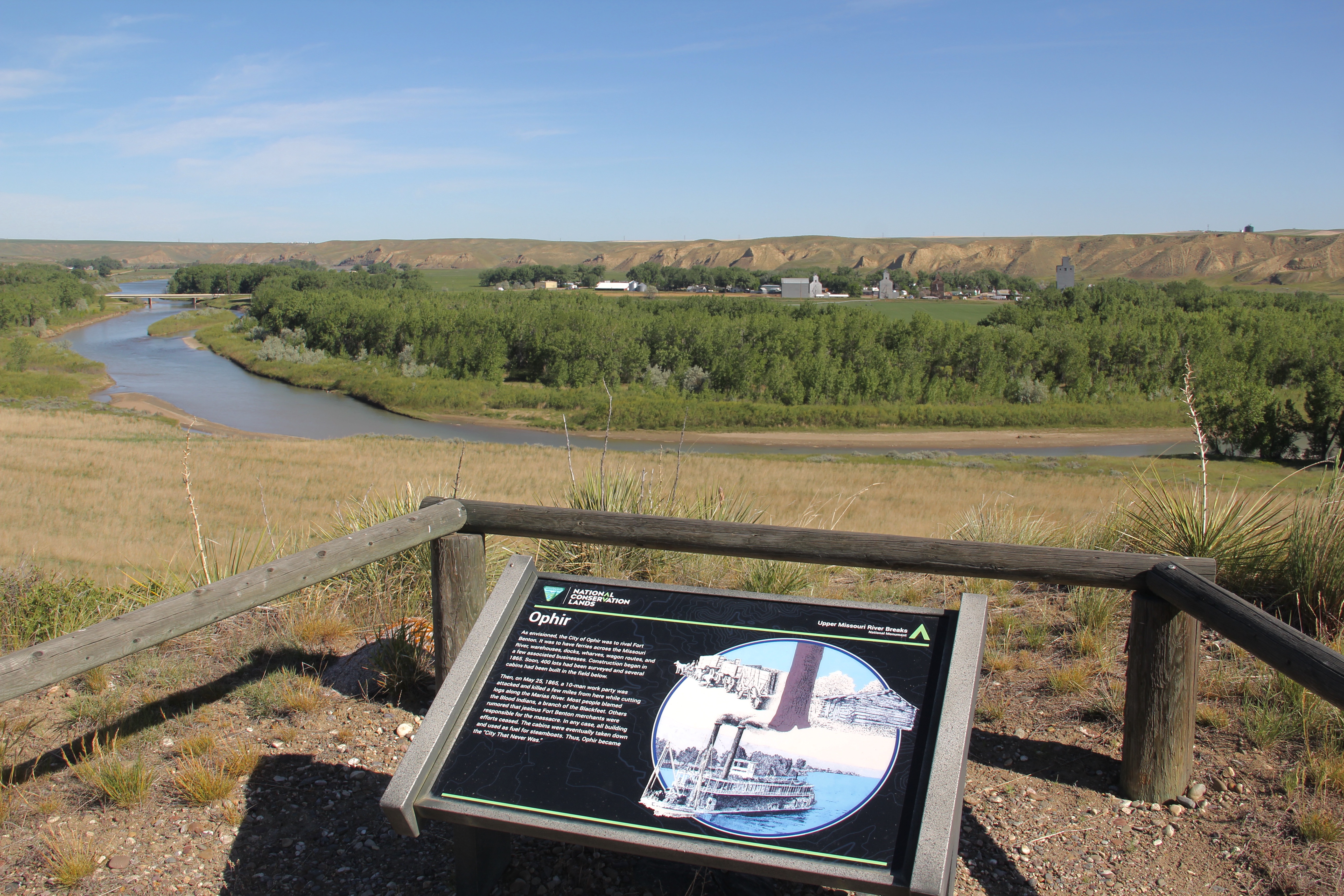
The image above tells the story of the steamboat Ophir and the amount of river trade that once marked the Missouri River. The interpretive marker below tells the story of the early American Fur Company trading post known as Fort Piegan.
Fort Piegan site
Even if you are not into the history of the region, the overlook created and maintained by the Upper Missouri River Breaks National Monument is a beautiful vista, and conveys strongly the landscape as encountered by generations of Native Americans and then in much more rapid succession by the Lewis and Clark expedition, American and Canadian fur traders, steamboat travelers, and by the 1880s the tracks of the Great Northern Railroad. An absolutely stunning historic site.
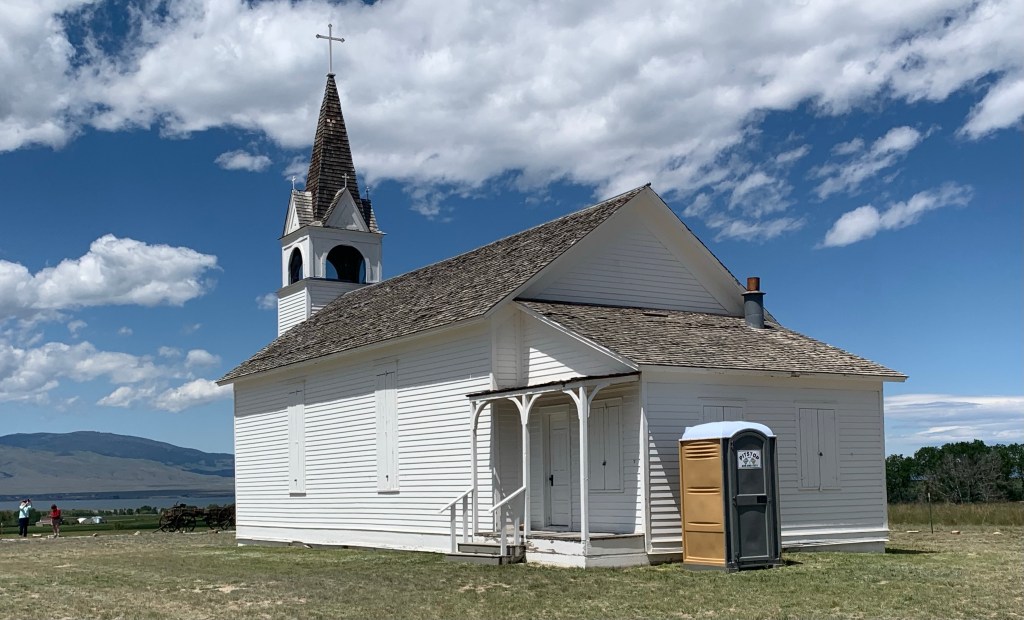
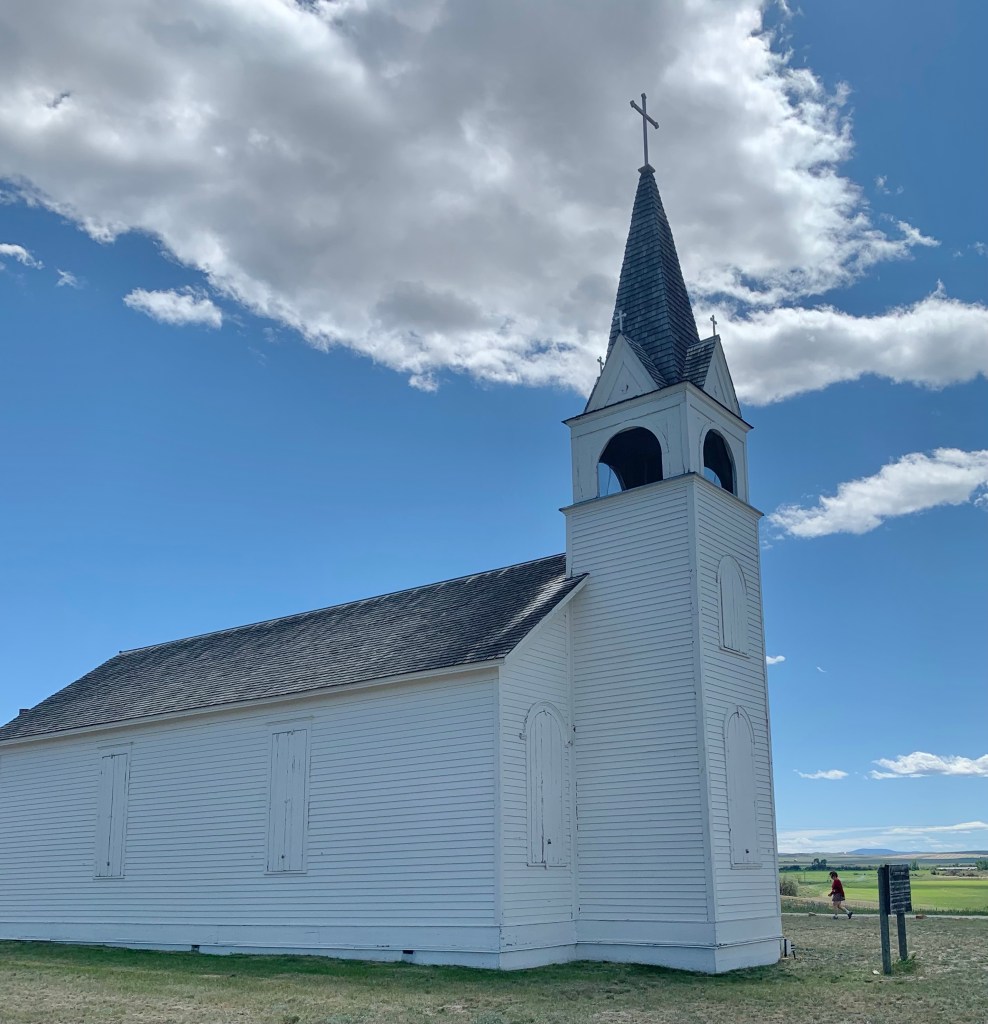
Canton was one of the early Missouri River towns in what is now Broadwater County, Montana. Canton was never much of a place but it had enough people and vision to build one of the first landmarks in this part of the Missouri River valley, St. Joseph’s Catholic Church in 1875-76.
Listed in the National Register of Historic Places, the church served local residents from almost the beginning of the town’s settlement through the homesteading boom of the early 20th century. The Northern Pacific Railroad ran along the other side of the River, diminishing the importance of Canton but never really indenting the significance of the church as a territorial-era landmark and as a compelling example of vernacular church architecture. Regularly held services continued until 1954.
The church faces the River (now Canyon Ferry Lake)
It really is a splendid bit of craftsmanship. The Gothic influenced bell tower entrance dates to the homestead boom of the early 20th century while the rounded arches over the windows well express its late 19th century roots.
Determined residents saved the church from destruction in 1954. They had the building moved to this place, higher ground away from the lake and lakeside developments created by Canyon Ferry Dam and Reservoir. The grand Bureau of Reclamation project totally reshaped Broadwater County. The town of Canton was erased but St. Joseph’s remained.
Thirty years later when I stopped at the church in 1984, it was ragged and needed attention. Residents did that in the 1990s and ever since the church has stood as a quiet but imposing marker of the territory days of Montana.
I had not been to Buffalo in Fergus County, Montana since 1984–some 37 years ago in the summer of 2021. The place dates to the late 19th century with a post office and trading post. In 1908 it took on the town plan you find today–elevation at the head of town along with railroad line and the public school at the other end of town–as it became part of the Great Northern Railroad route between Billings and Great Falls.
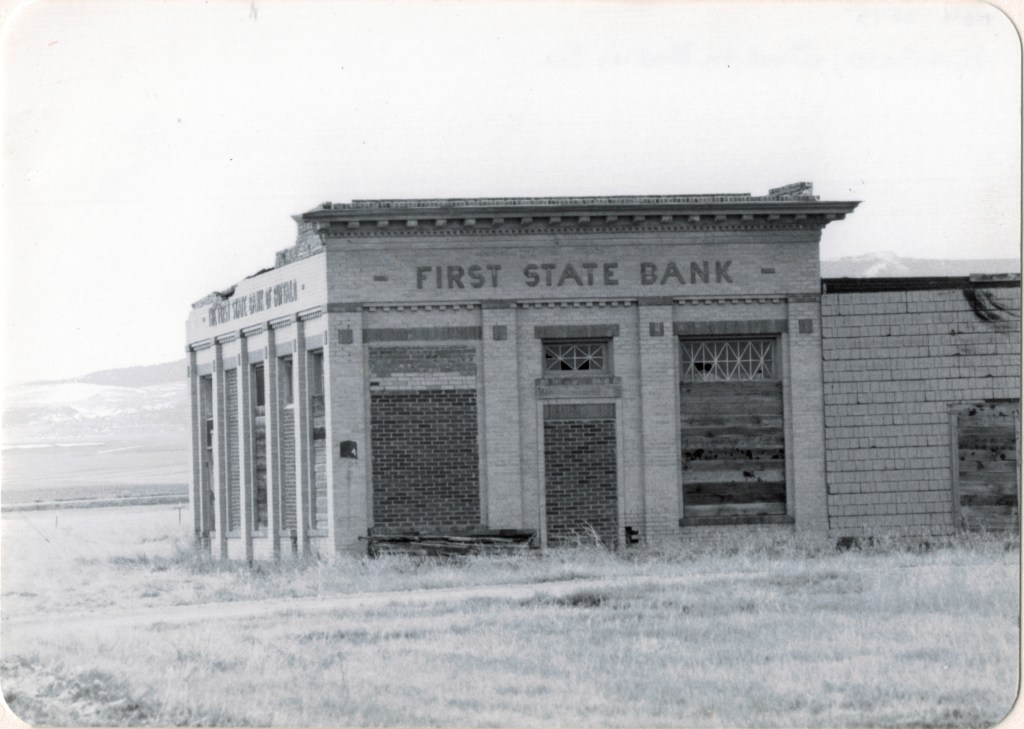
The same landmarks I found in 1984 still defined the town. The First State Bank of Buffalo (there was never a second one) was slowly ebbing away then; the bank had closed during the Great Depression, when so many Montana towns from the homesteading boom had their economic life sucked away. In 1921 I was frankly amazed that it still stood, missing a roof and part of a wall but still expressing its small-town neoclassical style with pride.
Buffalo bank in 1984Buffalo bank in 2021
The Buffalo school was another statement building from the homesteading era, its two-story brick construction expressing not only the need of a rapidly booming place but how the residents valued public education. The school was the community’s statement of pride.
The community church made a statement of faith and community spirit for the 21st century. The town numbers less than 200 inhabitants but actually that number had grown in recent years. The Craftsman-styled church is extremely intact for a 100 year old plus building–the maintenance of the church is a credit to its members.
Not everything was as it had been in 1984. The community hall had fallen on lean times indeed.
But the hipped roof post office–the one civic building–hadn’t changed a bit. Here was a statement of continuity, and thanks to everyone who fought the good fight last decade to keep post offices alive in rural Montana.
On the east side of U.S. Highway 87, directly across from the UMW Cemetery in Klein, is the Miracle Lodge #84 cemetery. Fraternal lodges meant much to the early generations of Montana settlers, and all types of organizations were active in the state in the early 20th century, when this cemetery was established.
Klein, Montana.Looking southwest of the cemetery toward Klein
Miracle Lodge #84 was affiliated with the Independent Order of Odd Fellows, a fraternal organization that began in the United States in 1819 when the first lodge organized in Baltimore, Maryland. The organization was designed to take care of members in illness and in old age, and provide burial services. There are numerous I.O.O.F. grave markers in the cemetery. There also are several markers related to the Endeavor Rebekah Lodge #71, which was the women’s side of organization. The Odd Fellows allowed for women members in 1851, with most male lodges having associated Rebekah lodges.
Miracle Lodge #84 Cemetery is a large, sprawling cemetery, that is still active. Among its most distinguishing features are the numerous family plots, outlined with low, concrete walls, which sometimes have several grave markers within, or no markers at all, with probably wooden or metal markers lost over the decades.
Miracle Lodge #84 CemeteryFrom Miracle Lodge Cemetery looking west to UMW Cemetery
Together these two cemeteries, nestled in the foothills of the Bull Mountains and facing each other on U.S. Highway 87, are powerful historic sites, reminding us of mining communities long forgotten as well as the stunning diversity of the settlers who made up the founding generations of so many Montana communities.
Without the striking cast-iron front gate proclaiming the U.M.W. of A. Cemetery, passengers in the cars and trucks roaring along U.S. 87 in Musselshell County would have no idea that they were passing through mining country. Outside of Red Lodge in Carbon County, Colstrip and Decker in Rosebud County, and Belt in Cascade County you don’t hear much about coal mining in Montana. The focus in the state’s history has always been squarely on the more extensive, and lucrative, mining in precious minerals, especially in western Montana. But here in the Bull Mountains north of Billings, investors were interested in the coal deposits as early as the 1880s. Significant investment didn’t come, however, until the Milwaukee Road decided to drive its transcontinental railroad line through the Musselshell Valley, just north of the coal deposits in and around the Bull Mountains.
In 1907 Republic Coal Company opened its first mine, but it was mine no. 2 that became the great producer, with miners at the peak bringing up 150 cars of coal a hour–and the production rarely slowed for the next 20 years until the Milwaukee Road lost interest in coal as it transformed its engines to diesel fuel and the depression came in 1930.
Most miners lived in Klein while others boarded at nearby Roundup, the county seat. Klein reached an estimated 1500 residents at its peak. Republic No. 2 stayed open to 1956, 25 years later the Milwaukee Road had abandoned the line and the region.
Klein is still here, greatly diminished by the closing of the mines and railroad in decades past. But the town’s cemeteries convey stories of those who lived, worked, and died there. The UMW and Miracle Lodge #84 face each other on U.S. 87 and are worth exploring in some depth.
The setting of the UAW cemetery is beautiful, nestled between the highway and the foothills to the west. The graves are facing east and most of the grave markers are small to medium in size; little ostentatious display by the families here.
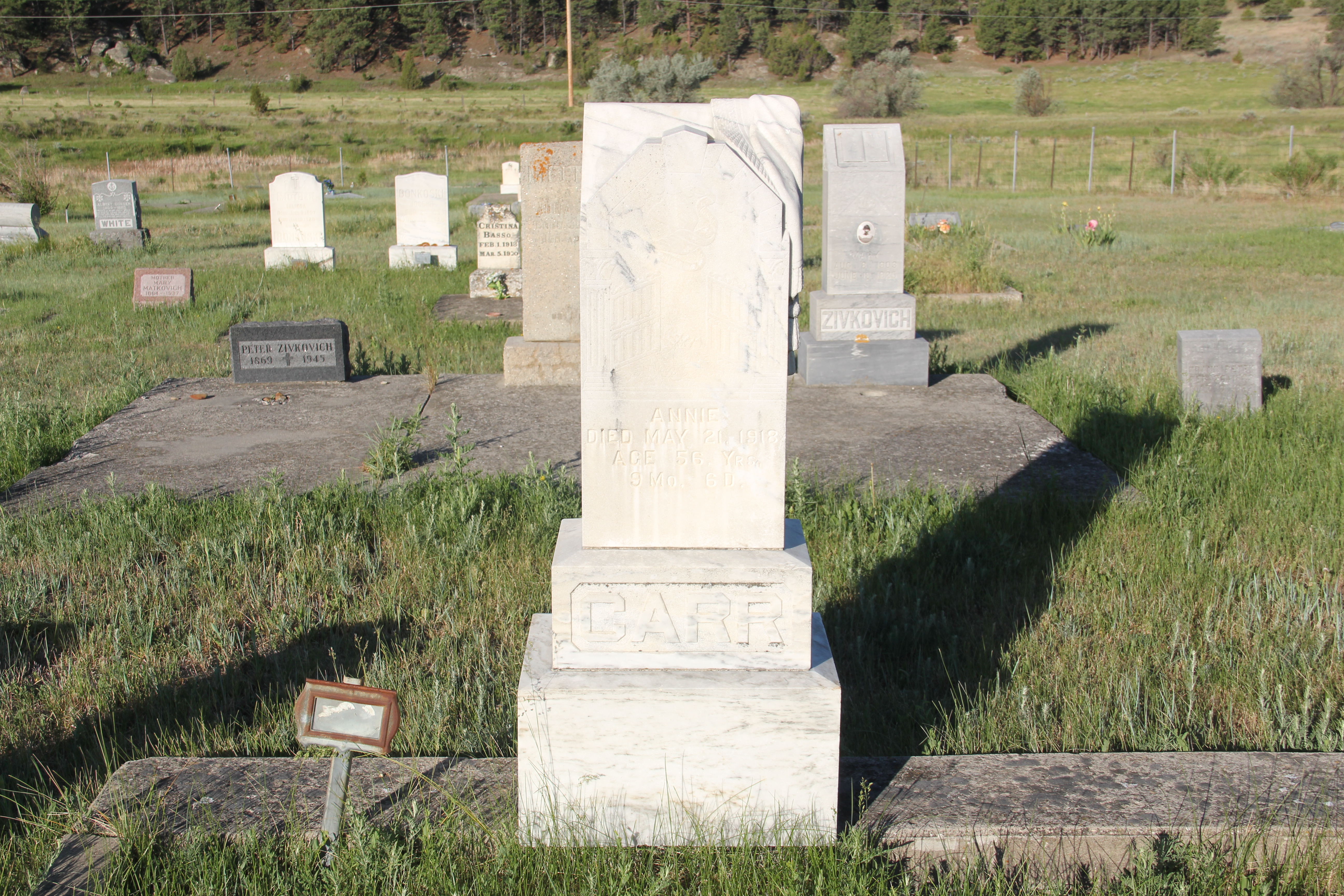
Mary Bedel (d. 1919).The shroud over the Carr family stoneCristina Basso gravemarker
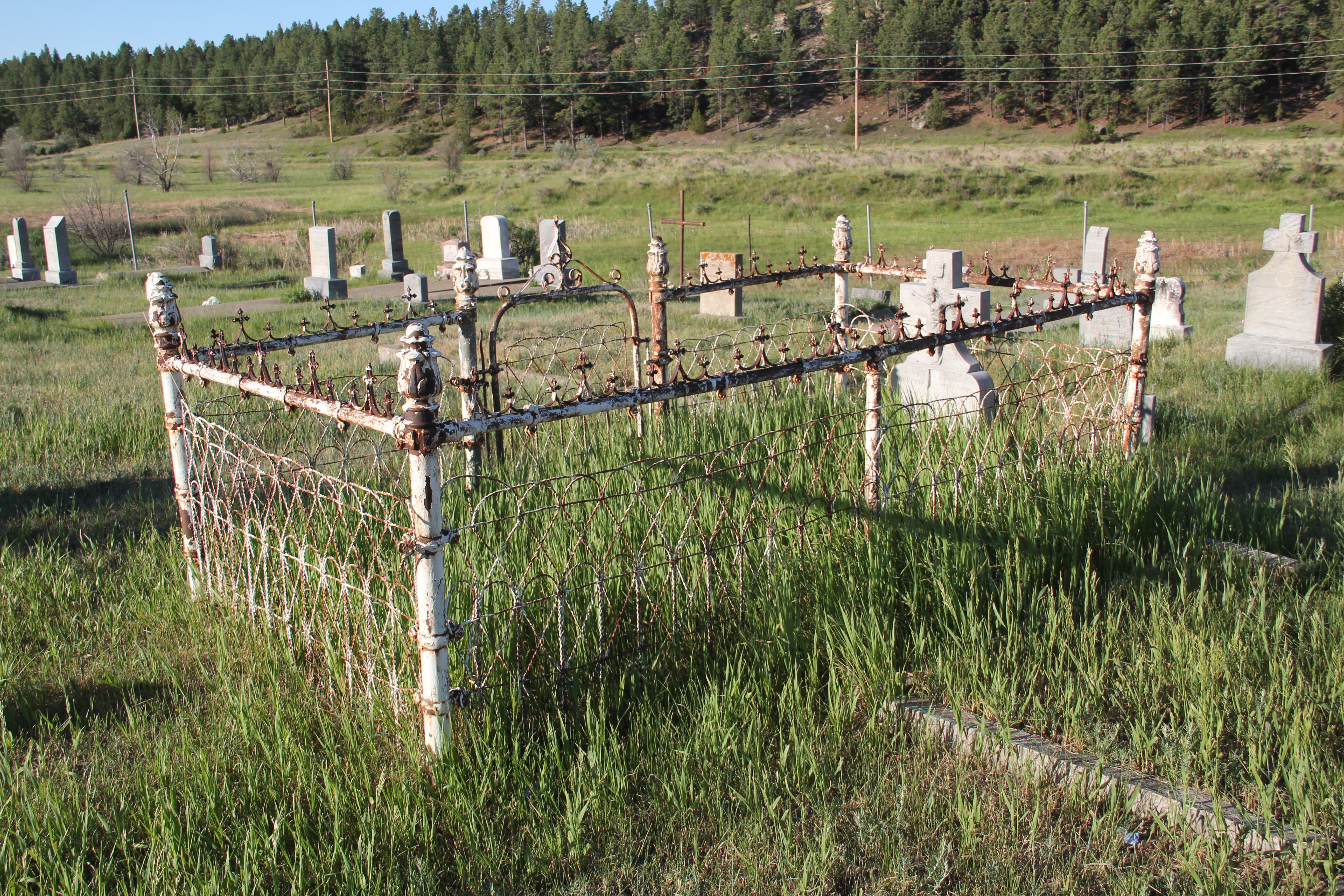
Although the cemetery dates to the early 20th century, it has a few examples of Victorian-styled cast-iron fences to define family plots or in the case of the second image, to highlight the death of a child.
But throughout the cemetery, you are drawn to the many ethnic names, members or at least supporters of the United Mine Workers, who came to America to find a new life, and lie buried in this rural cemetery in central Montana.
I first visited Barber, a Milwaukee Road-associated town in the Musselshell River Valley, in 1984. Now almost 40 years later, I revisited the place to see, particularly, if the landmark Grace Lutheran Church still stood. Yes, indeed, it has survived another four decades, but now had a handicap access ramp to better serve its aging congregation.
Grace Lutheran Church photo from 1984Grace Lutheran Church, Barber, MTGrace Lutheran Church, Barber, MT
This vernacular Gothic styled building dated from 1917–the one decade of Barber’s prosperity–and when I visited in 1984 it was the smallest American Lutheran congregation in the country. Its defining Gothic architectural elements–the Gothic window hoods and the tracery in the gable ends–remain intact. Clearly the surrounding ranch families are effective stewards for this National Register-listed jewel of a rural northern plains church.
Barber, MT
I noted in 1984 that a store still operated–but now it is barely hanging so, with the foundation has failed and you wonder how much longer its false-front facade will remain standing. I observed that all that was left of the town bank was the vault–that is still there–but a two-story turn-of-the-century house is now abandoned, almost on its last legs.
Abandoned Victorian-styled house, Barber, MT
The Milwaukee Road created scores of towns similar to Barber across the plains in the first two decades of the twentieth century. One hundred years later–some 40-plus years since the railroad went bankrupt–a few buildings remain at these spots on the map, physical reminders of the homesteading boom and bust of that era. Hats off to the residents keeping Grace Lutheran Church alive–as along the church remains, there will be a Barber, Montana.
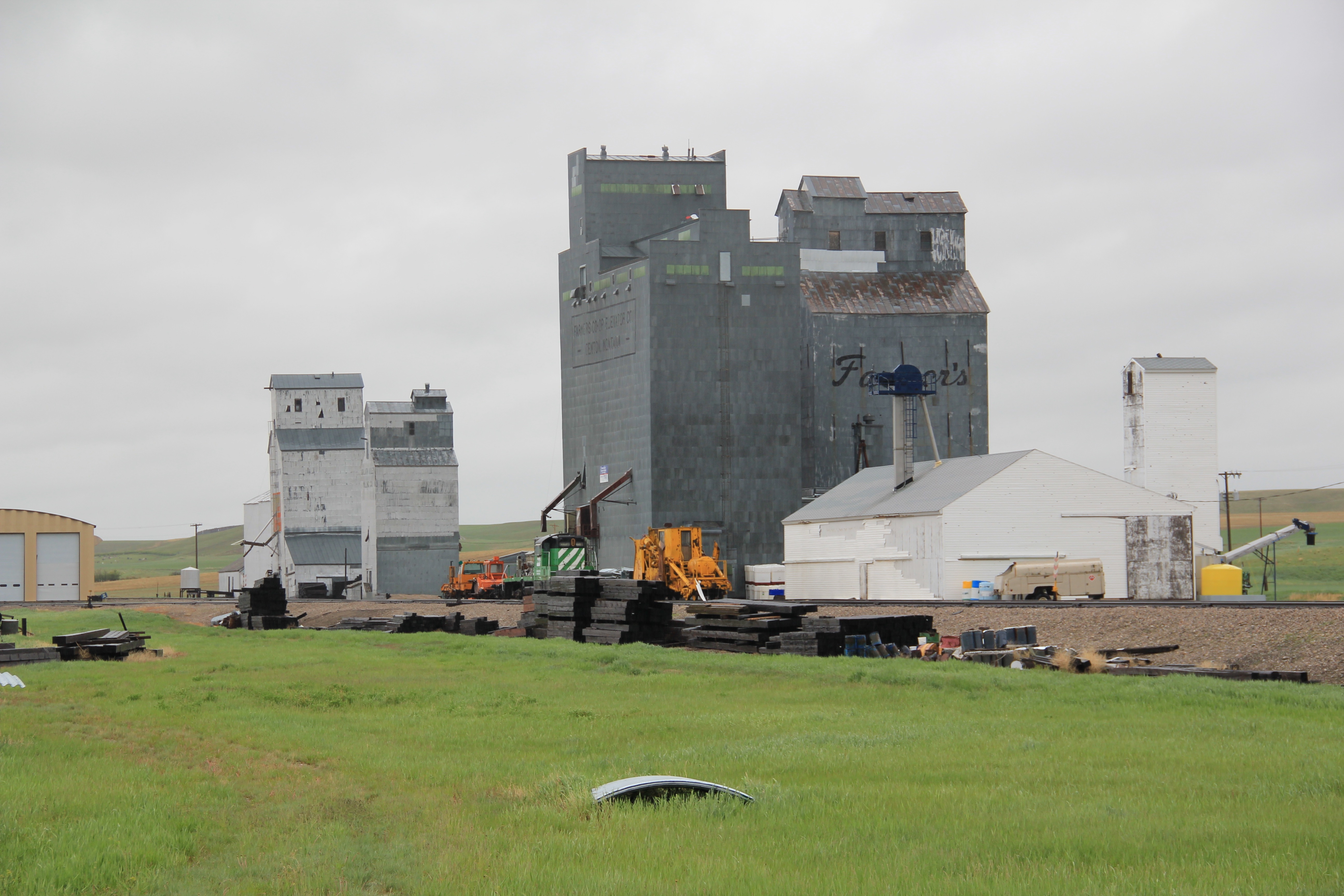
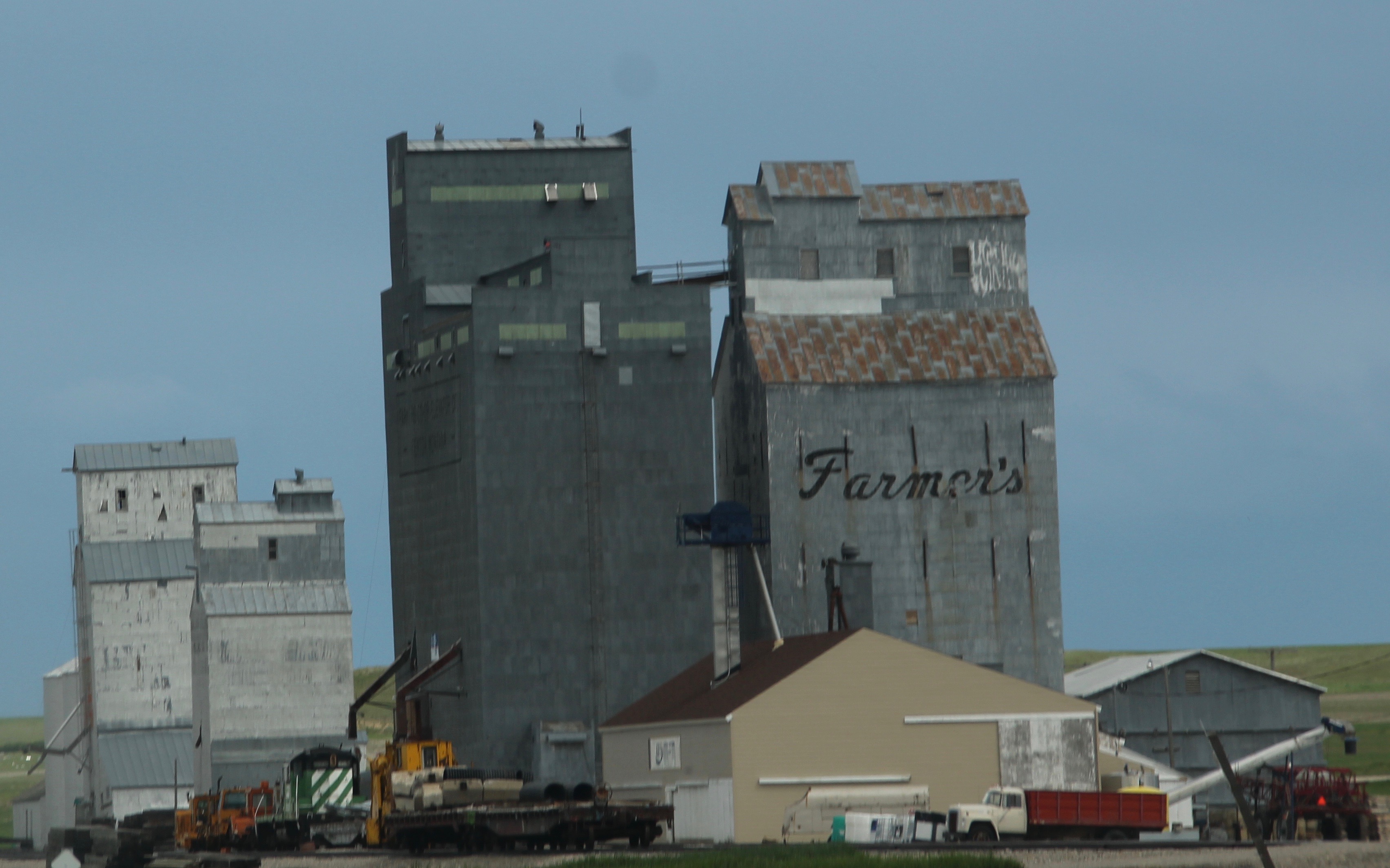
This week’s wildfire was terrible in its damage to buildings, structures, places, and landscapes in central Montana. The newspaper coverage focused on the burning of historic grain elevators in Denton, in Fergus County. I have included three images of those elevators that I took in 2013.
It is sad to lose these sentinels of the plains because the shipping of grain via railroads were the primary reasons the towns came into existence in the first place.
I have earlier written about Denton’s amazing historic bank buildings and other community landmarks. It was good news indeed to learn that most of the damage happened along the railroad corridor. Prayers and best wishes go out to everyone who suffered losses from these terrible fires.
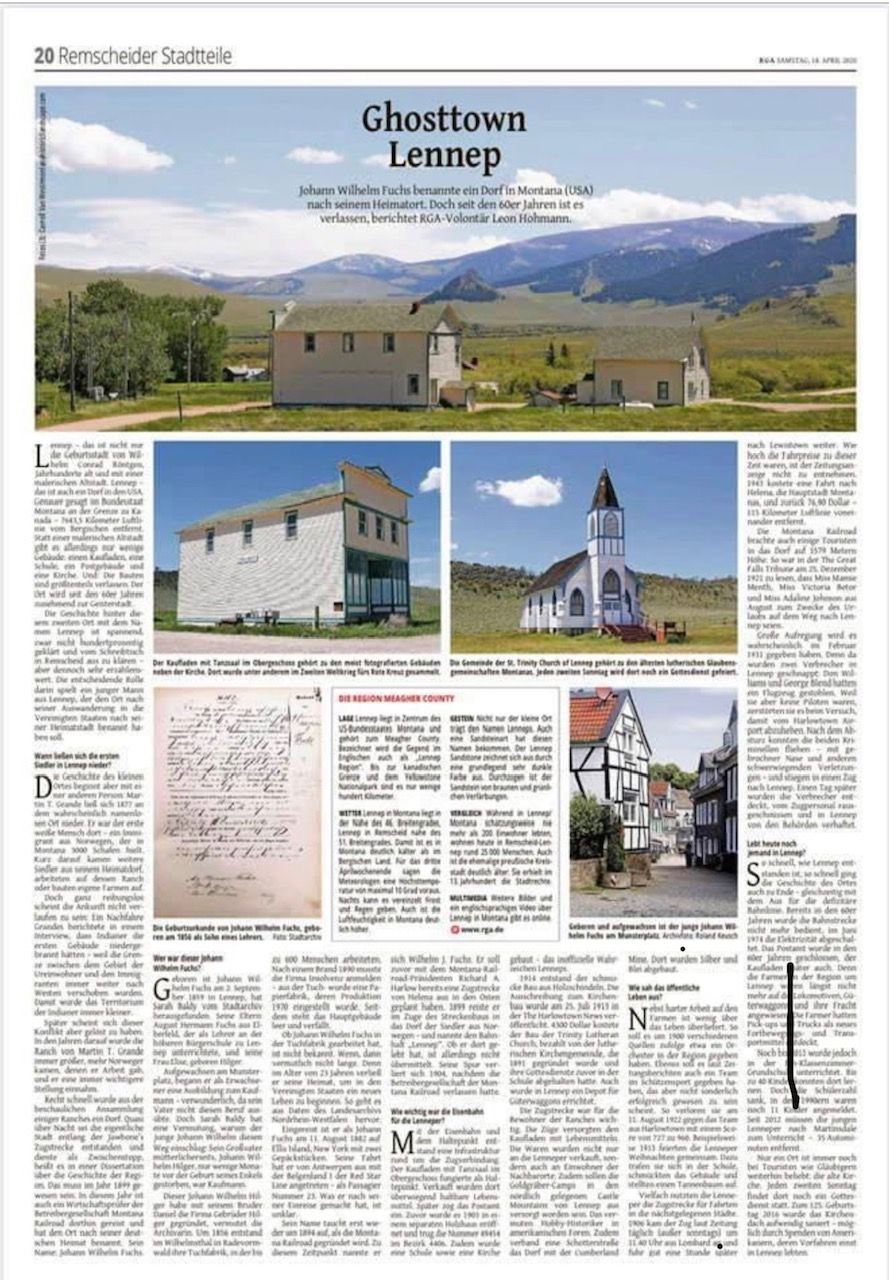
In the winter/spring of 2020, a new German newspaper contacted me about using several images from the website taken at Lennep, a small Milwaukee Road Town, along Montana 294 in Meagher County. The newspaper wanted to consider its American counterpoint, its isolated location in Montana, and is history. The editors named the story Ghostown Lennep.
I won’t provide a translation of the entire article, but the author Leon Hohmann provided me a transcript in English, from which I learned quite a bit about Lennep, Montana. The author wrote:
“But the history of the small town begins with another person: Martin T. Grande settled in 1877 in the place that was probably still nameless at that time. This is what history books tell us. He was the first white man in this area an immigrant from Norway who made his living by keeping 3000 sheep. Shortly afterwards, other settlers from Grande’s home village came to the mountain region, worked on his ranch or built their farms.
But this arrival does not seem to have gone very smoothly: A descendant of the first settler reported in an interview that Indians had burned down the first buildings because the border between the area of the natives and the immigrants was moved further and further to the west. Thus the territory of the Indians became smaller and smaller.
In the following years, Martin T. Grande’s ranch became bigger and bigger, more Norwegians came, whom he gave work, and he took an increasingly important position. His countrymen called him “good old patriarch”.
But quite fast the contemplative collection of some ranches and farms became a bigger village. Almost overnight the actual town of Lennep, west of Martinsdale, was built along the Jawbones railway line and served as a small stopover, according to a dissertation on the history of the region. That must have been in 1899. It was also the year that an auditor from the operating company Montana Railroad travelled there and named the place after his German homeland. His name: Johann Wilhelm Fuchs “
Since interest in Lennep, Montana, has an international audience and it has always been among my favorite Milwaukee Road places, I made plans to revisit in 2021–ten years since my last visit–and see the condition of the town.
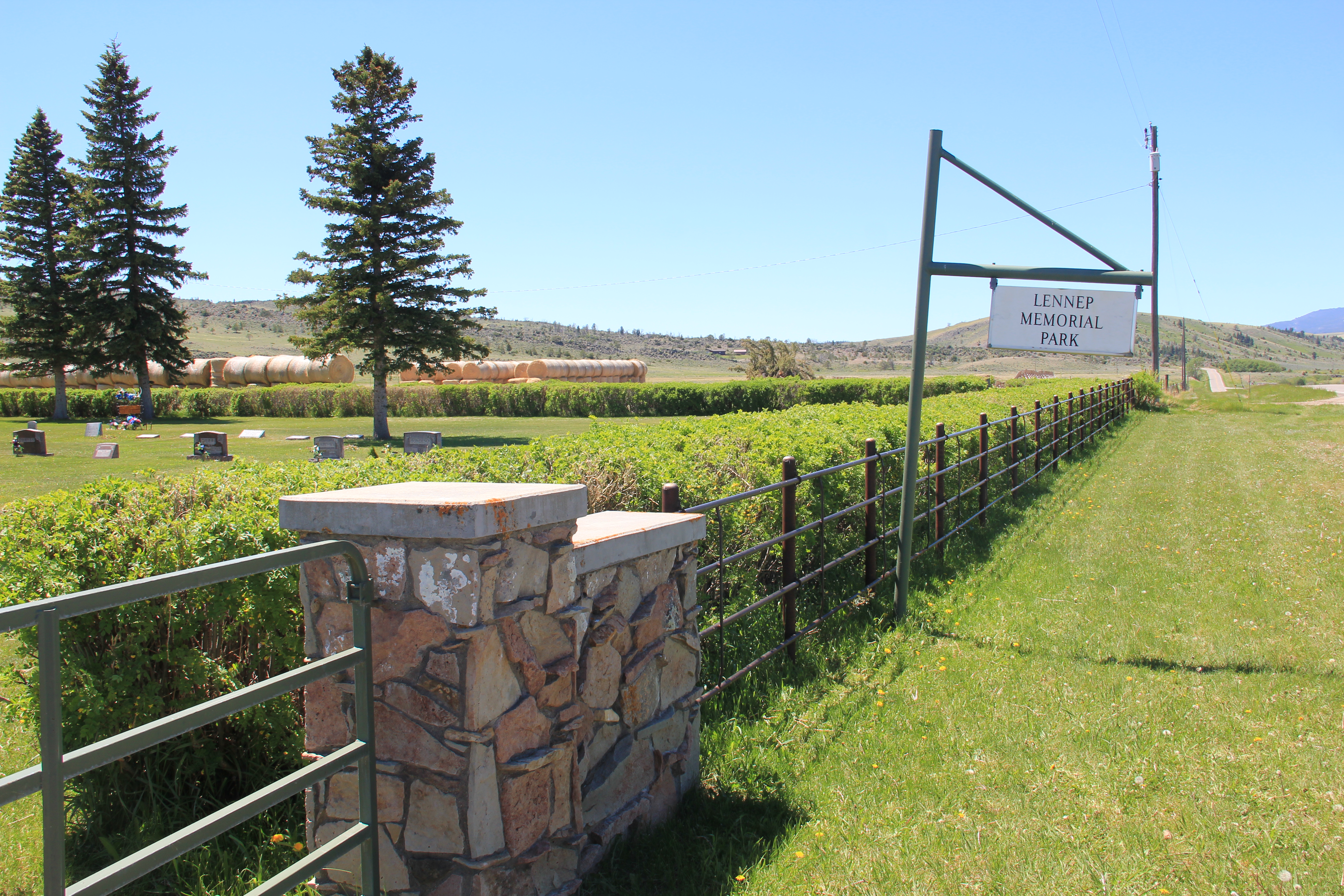
Lennep Memorial Park Cemetery
I started with a resource given a brief look in 2011–the town cemetery, which is well maintained as the Lennep Memorial Park. The names of the early settlers such as the Grande, Hoyem and Hereim families are prominent as are the Thompsons, who were Masons. The wives–not named–of Andrew Berg have a distinctive obelisk grave marker.
Martin and Karen Grande grave maker. Martin Grande founded the town in late 1870s.
Leon Hohmann continued with the story of Johann Fuchs–who became Wilhelm Fuchs in his new adopted town of Lennep, Montana. Hohmann wrote:
“Johann Wilhelm Fuchs was born on September 2, 1859, in Lennep, Sarah Baldy from the Remscheid town archive found out. His parents: Hermann Fuchs from Elberfeld, who was a teacher at the higher citizen school in Lennep, and his wife Elise a born Hilger.
Growing up on Munsterplatz, he was a young adult when he decided to train as a businessman, which was quite astonishing since his father did not have this profession. But Sarah Baldy has an idea why young Johann Wilhlem took this path: Because his maternal grandfather, Johann Wilhelm Hilger, who died only a few months before the birth of his grandson, was a merchant.
The archivist suspects that this Johann Wilhelm Hilger founded the company Gebrüder Hilger with his brother Daniel. Around 1856 the brothers built a large cloth factory in Wilhelmsthal in Radevormwald, where up to 600 people worked at times. After a fire in 1890, the company had to file for insolvency. Later, the cloth factory became a paper mill, whose production was only stopped on November 30 1970. Since then, the main building has been empty and neglected.
To what extent Johann Wilhelm Fuchs became active in his grandfather’s business has not been communicated. If he did, then probably not for too long. For at the age of 23, he left his home country to start a new life in the United States of America. This is the conclusion drawn from data in the North Rhine-Westphalia State Archive.
He arrived as Johann Fuchs on August 11, 1882, on Ellis Island, New York with two pieces of luggage. He started his journey from Antwerp on the Belgenland I of the Red Star Line as passenger number 23. What he did after his arrival is unclear.
His name only reappears around 1894, when Montana Railroad is founded as the third railway company in the state. At that time, however, he called himself Wilhelm J. Fuchs. He is said to have already planned a train route from Helena to the East with Montana Railroad President Richard A. Harlow. In 1899, in the course of the construction of the Jawbones Railroad, he also travelled to the village of the settlers from Norway. He named the railway station there “Lennep”. Whether he also lived in Lennep is not known, however. His trace is finally lost in 1904 after the operating company of the Montana Railroad had left.”
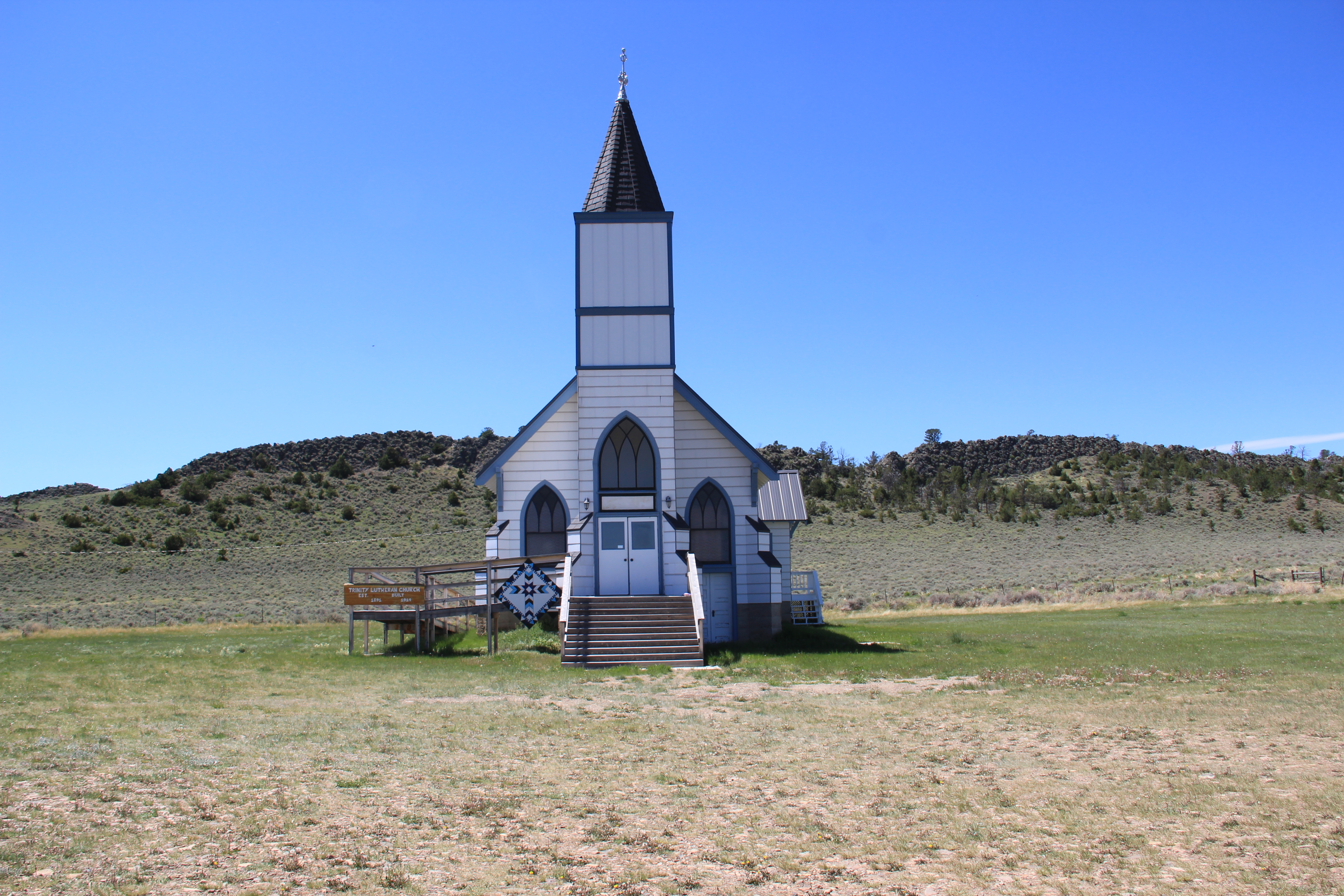
The buildings that remain today appear to date to the decade of the railroad’s arrival, from c. 1907 to 1917. Certainly that decade marked the height of population and activity here. The wind-swept setting of Trinity Lutheran Church is unchanged. This Gothic Revival church remains the town’s commanding landmark, and remains the active community center. Hohmann noted: “In 1914, the beautiful building was constructed from wooden shingles. The invitation to tender for the church was published in The Harlowtown News on 25 July 1913 with the aim that the construction should be completed by 15 November of the same year. But apparently, the structure of the Trinity Lutheran Church had been delayed. The new building cost 4300 dollars, paid by the Lutheran church congregation, which was founded in 1891.”
Trinity Lutheran Church. The handicap access ramp is an addition in the last 10 years.
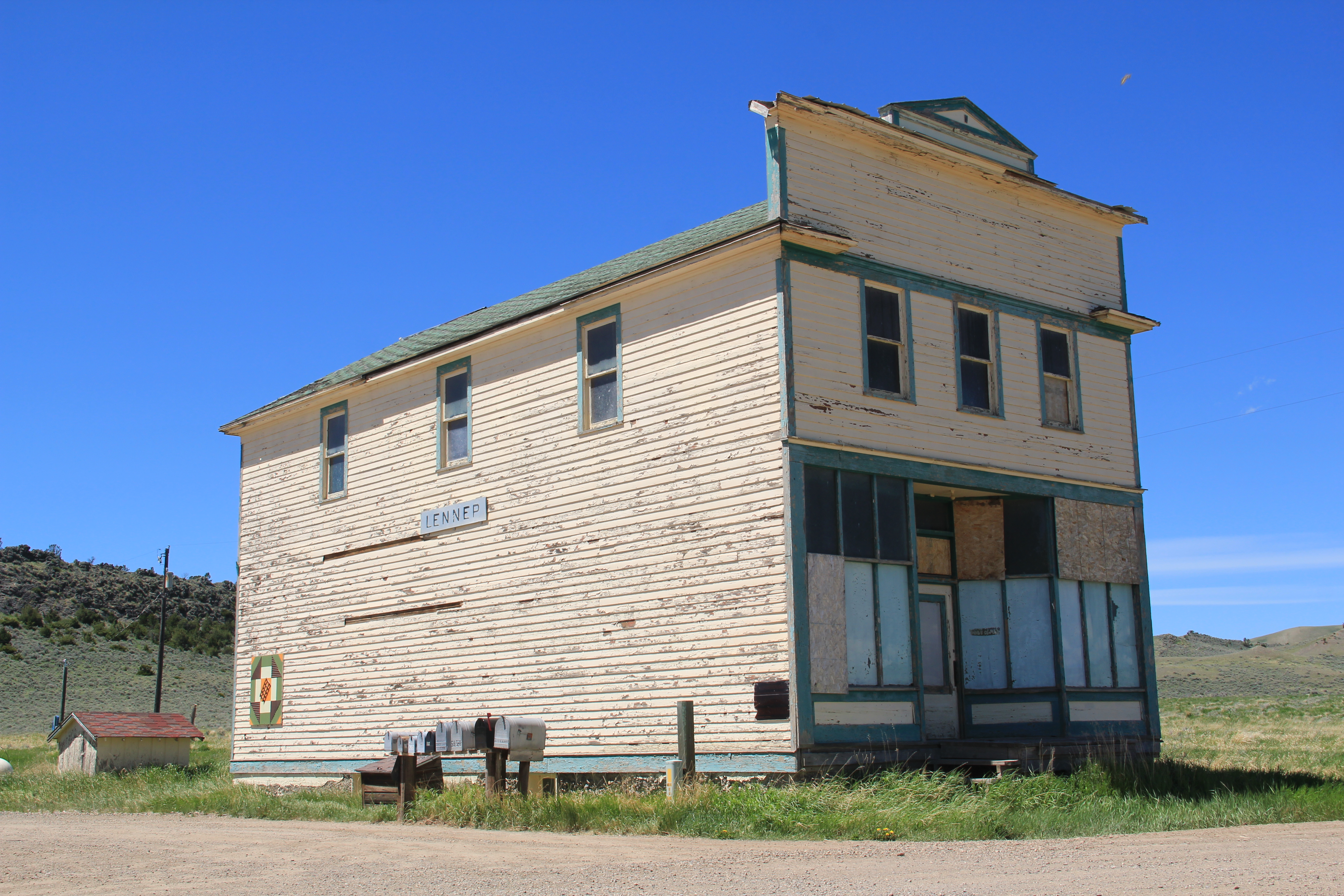
The old town general store remains closed, and it has been mothballed to a degree with plywood over damage windows, I suspect. Hohmann wrote about this building: “The train line was necessary for the inhabitants of the ranches around Lennep because the trains supplied the grocery store with food. The goods were not only sold to the people of Lennep, but also inhabitants of the neighbouring villages. Also, the gold-digger camps in the Castle Mountains to the north are said to have supplied from Lennep. At least some hobby historians in American internet forums suspect this. Furthermore, a gravel road connected the village with the Cumberland Mine. Silver and lead were mined there.” The building clearly was a center point for trade and communication. Some deterioration has occurred, but relative minor repairs and a new coat of paint would correct that. The congregation renovated the church in 2016 and at that time added the new porch and handicap access ramp.
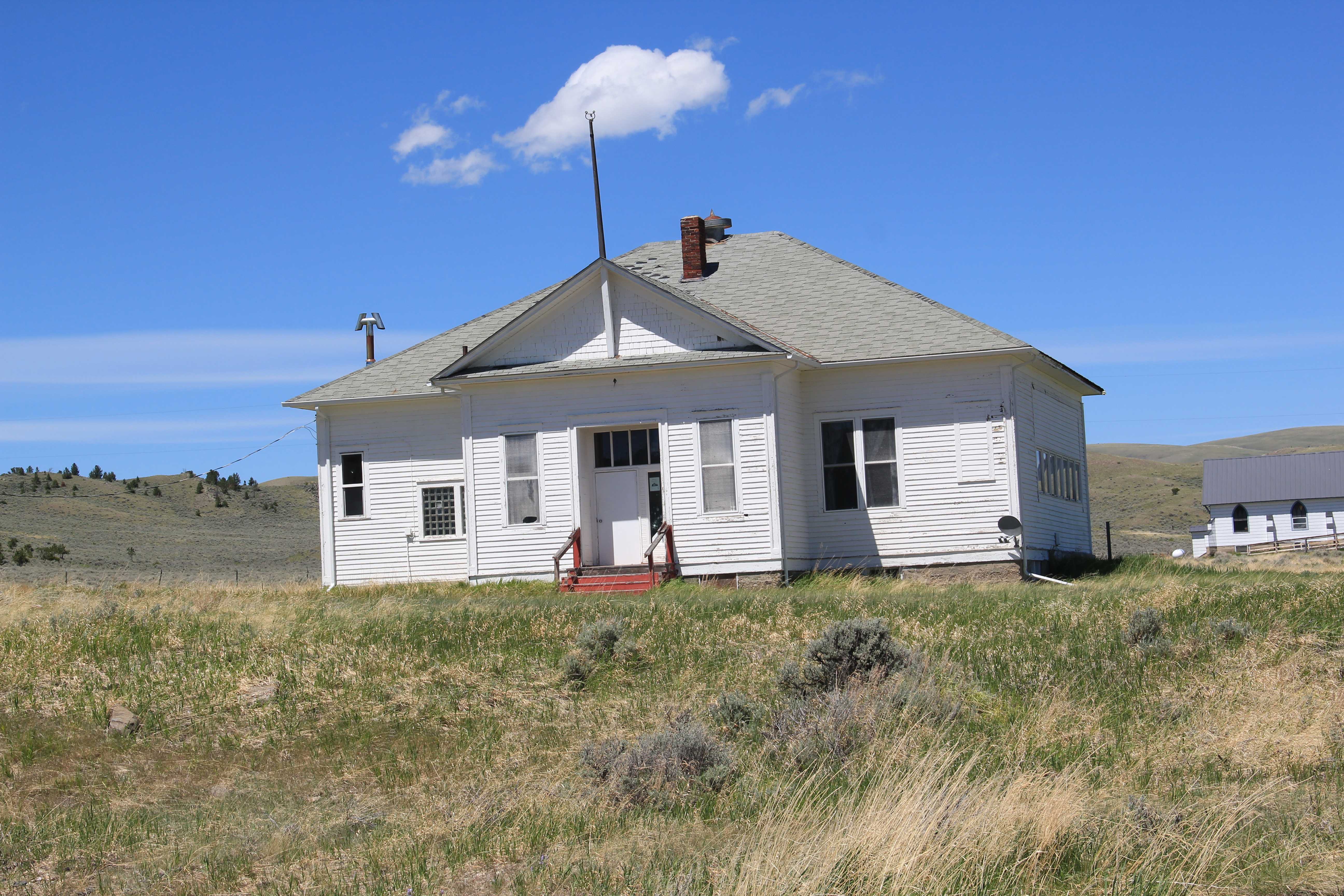
The school house–which has not had students since 2011– remains in decent condition although some missing roof shingles could pose water problems. Water and moisture is not the threat in this part of the west as I am accustomed to in the east but a leaky roof is never a good thing. A nearby dwelling has that modern replacement metal roof–it too stood quiet at the time of my visit in June 2021 but appears to be in solid condition.
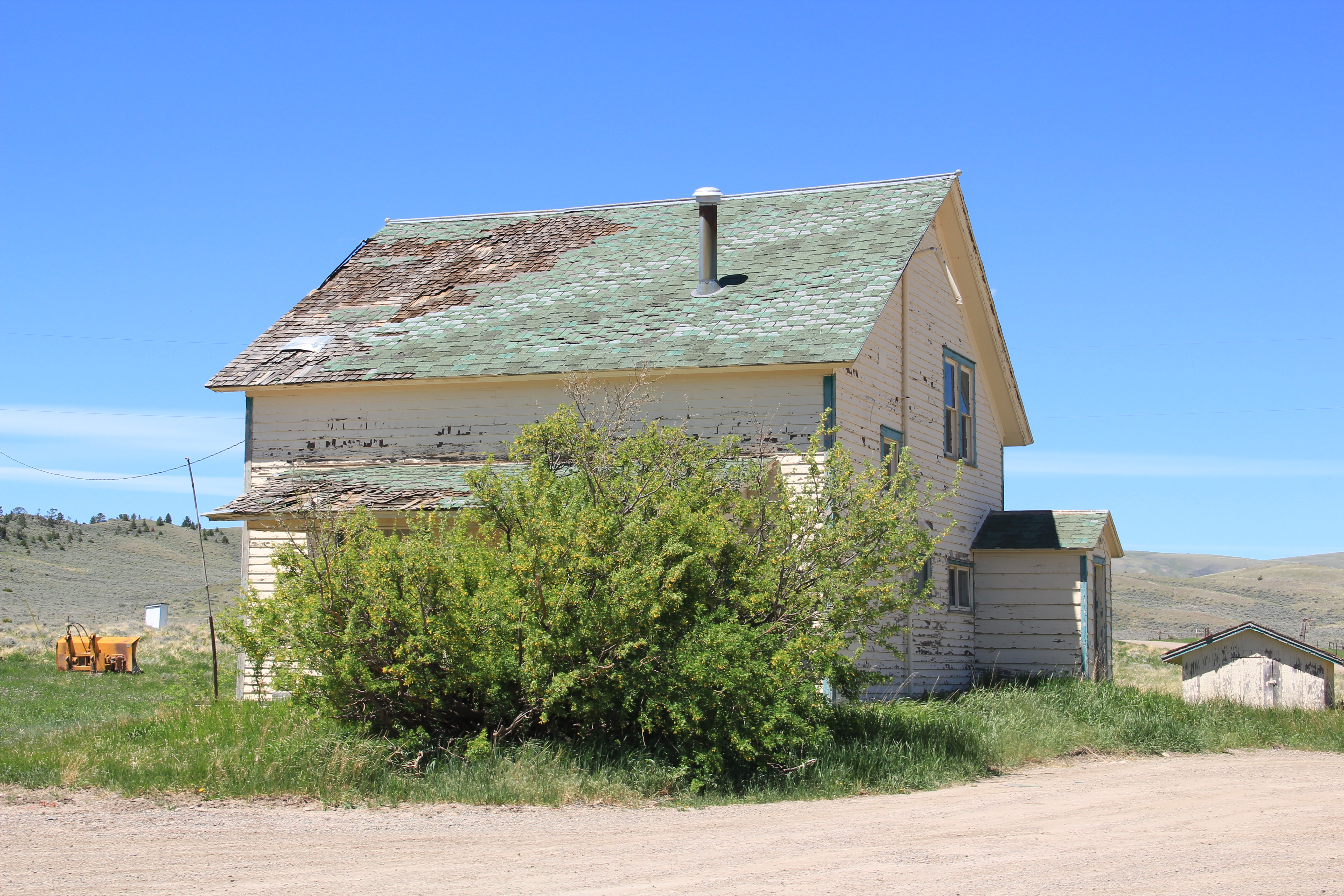
The dwelling between the store and school, however, is in danger of serious deterioration. Half of its shingles are missing–the deck is not in great shape. You wonder if this building is not the next to disappear from Lennep.
Yet, when you stand back at the church and took back southeast toward the railroad line and town, the view of the buildings and landscape is little changed in ten years. Lennep might be a ghost town but it is still there, as a marker of the impact of the Milwaukee Road on the Meagher County landscape.
A final marker to the east can be found by continuing on Montana Highway 294, which closely follows the old Milwaukee Road corridor for several miles before the track and the highway diverge.
A portion of the Milwaukee Road corridor along Montana 294, now turned into a ranch road.
That would be the brick powerhouse necessary to power the electric engines that the Milwaukee Road used in this section of its route. Cows might surround it today but in the early 20th century the brick powerhouses scattered along the line were signs of modernity, of the electric power that distinguished the Milwaukee from all of the other transcontinental railroads in Montana.
St Mary’s Catholic Church became a 6th Ward landmark upon its opening in 1910 and a recent renovation will keep the building in community service for another generation.
The sixth ward in Helena in the late nineteenth century was a focal point for the new capital city of Montana. The arrival of the Northern Pacific Railroad and the location of its railroad yards some mile and a half southwest of Last Chance Gulch created a new part of the city with plenty of bars and cafes for rail workers and travelers but also a historic neighborhood that often gets forgotten.
The historic block o& commercial buildings facing the depotHap’s has served customers for decades along this commercial block.Nationally recognized railroad architect Charles Reed of the St Paul firm Reed & Stem designed a new modern passenger station for the Northern Pacific in 1904.Northern Pacific depot’s clock tower. The passenger station is the centerpiece of the neighborhood’s National Register-listed historic district
The architecturally expressive Northern Pacific passenger station of 1903-1904 led to new investment of brick buildings in the neighborhood but many small vernacular dwellings remained in use and today the neighborhood retains a railroad workers’ feel.
Hap’s Beer Parlor transformed from a rail workers’ hangout to a neighborhood institution. It was a popular place when I lived in Helena almost 40 years ago—it remains legendary.
In 2016 the city of Helena established the Railroad Urban Renewal District which encouraged new investments in the neighborhood and its immediate environs, such as the Vanilla Bean coffee shop and bakery. Another key addition was the Sixth Ward Garden Park, an impressive example of the community garden movement.
The changes in the neighborhood are promising but also challenging as new businesses such as Headwaters brewery move to the outskirts. Let’s hope the modern does not crowd out the historic in Helena’s Sixth Ward.