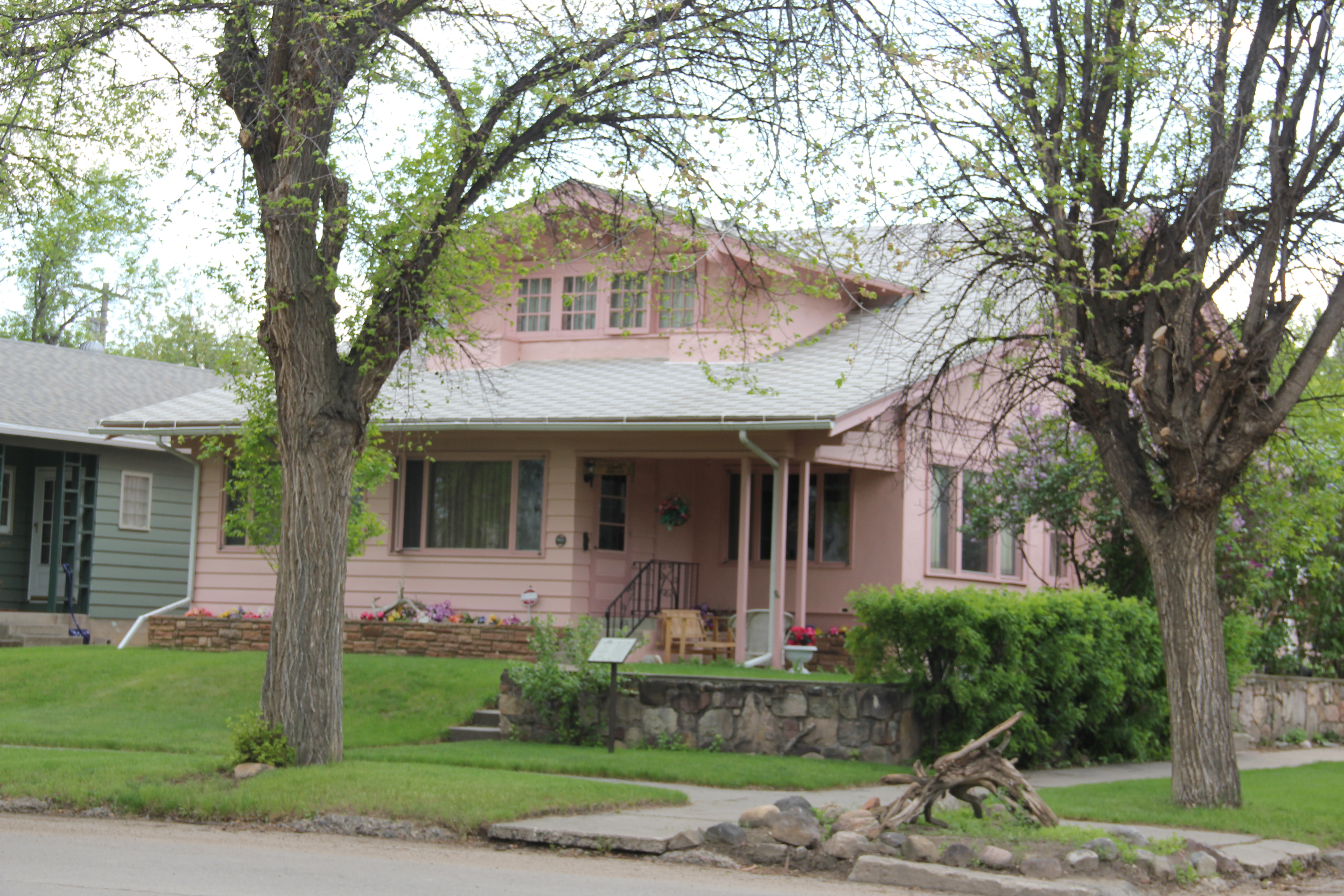
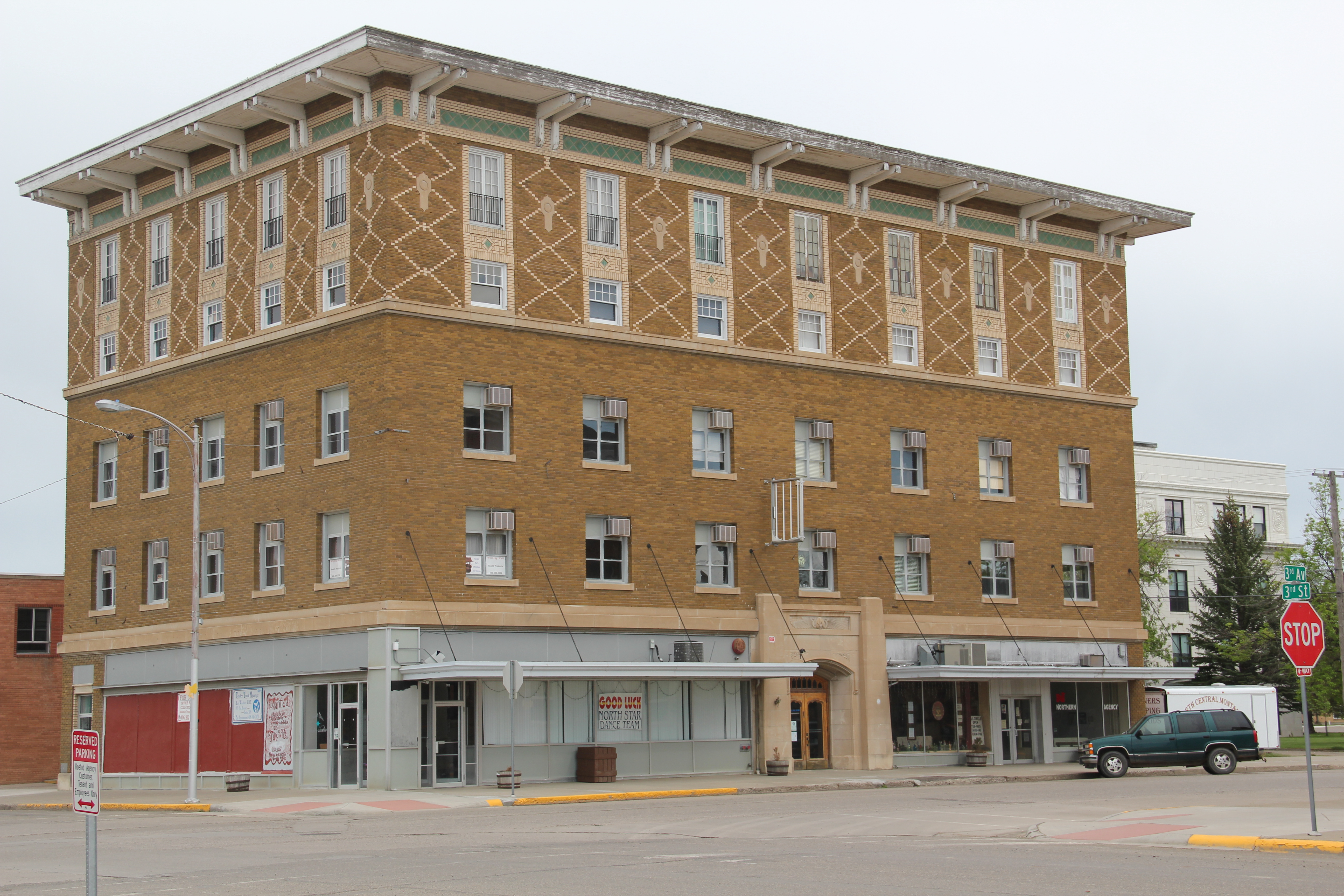
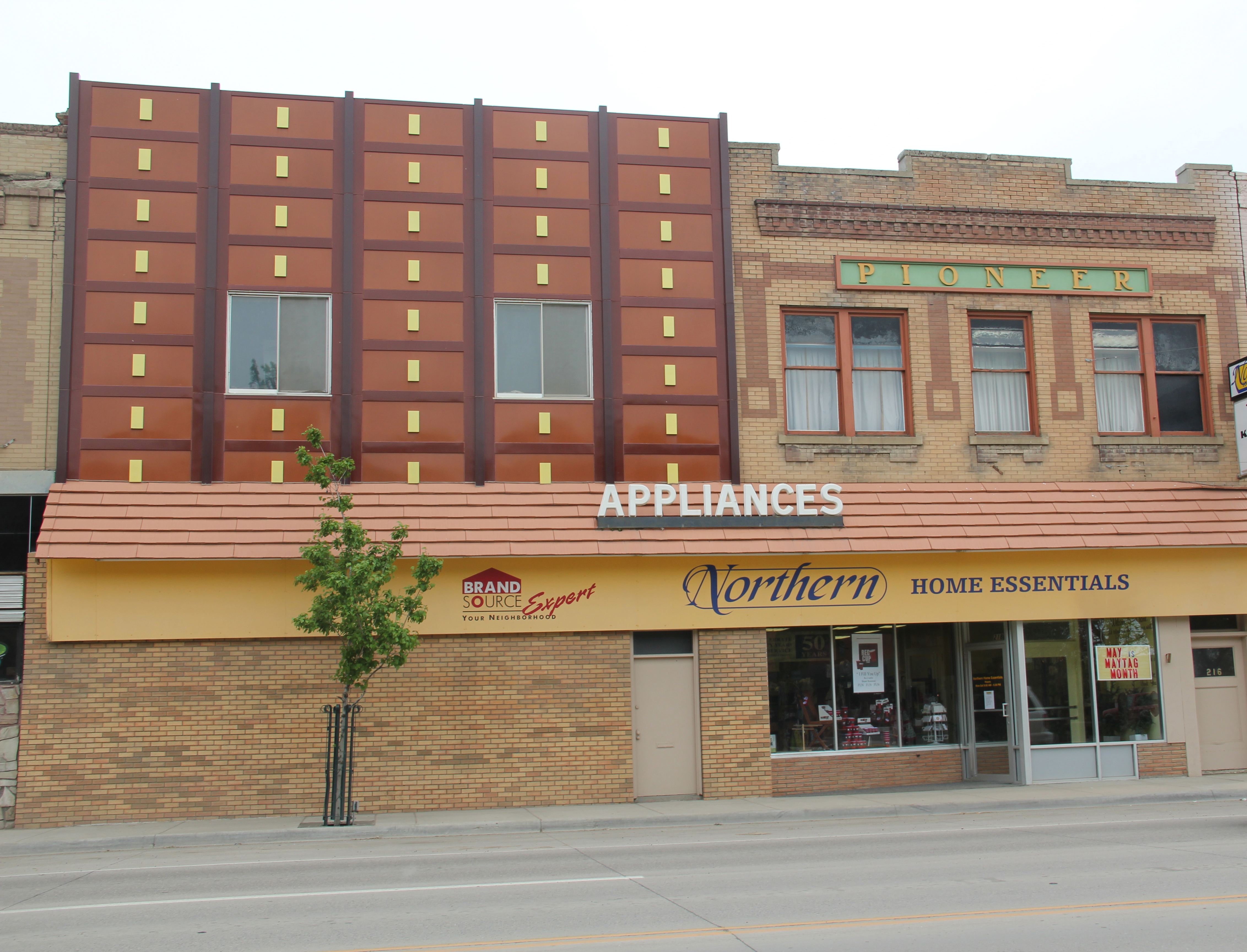
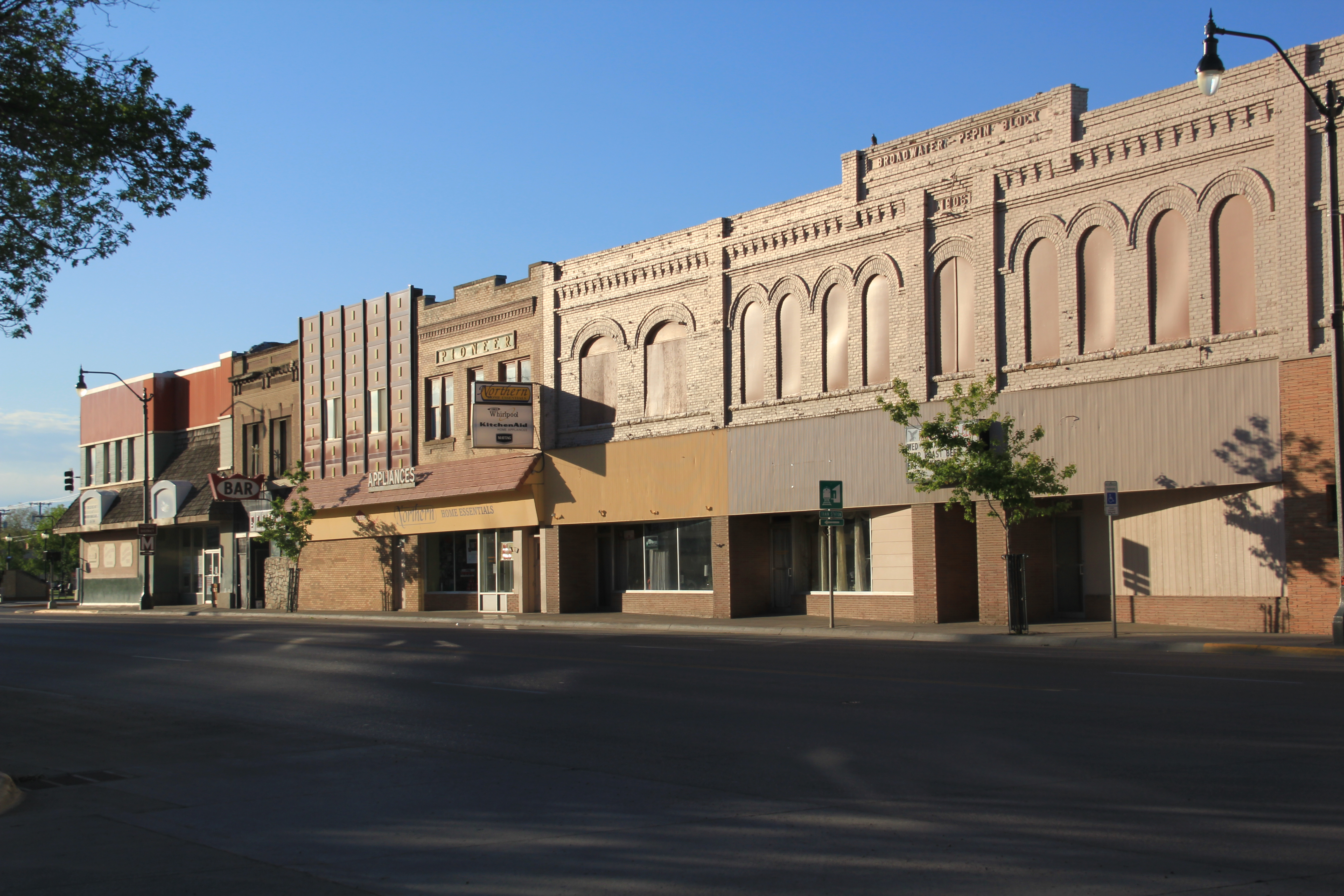
On the Hi-Line at Liberty County, 1984 and now

Image

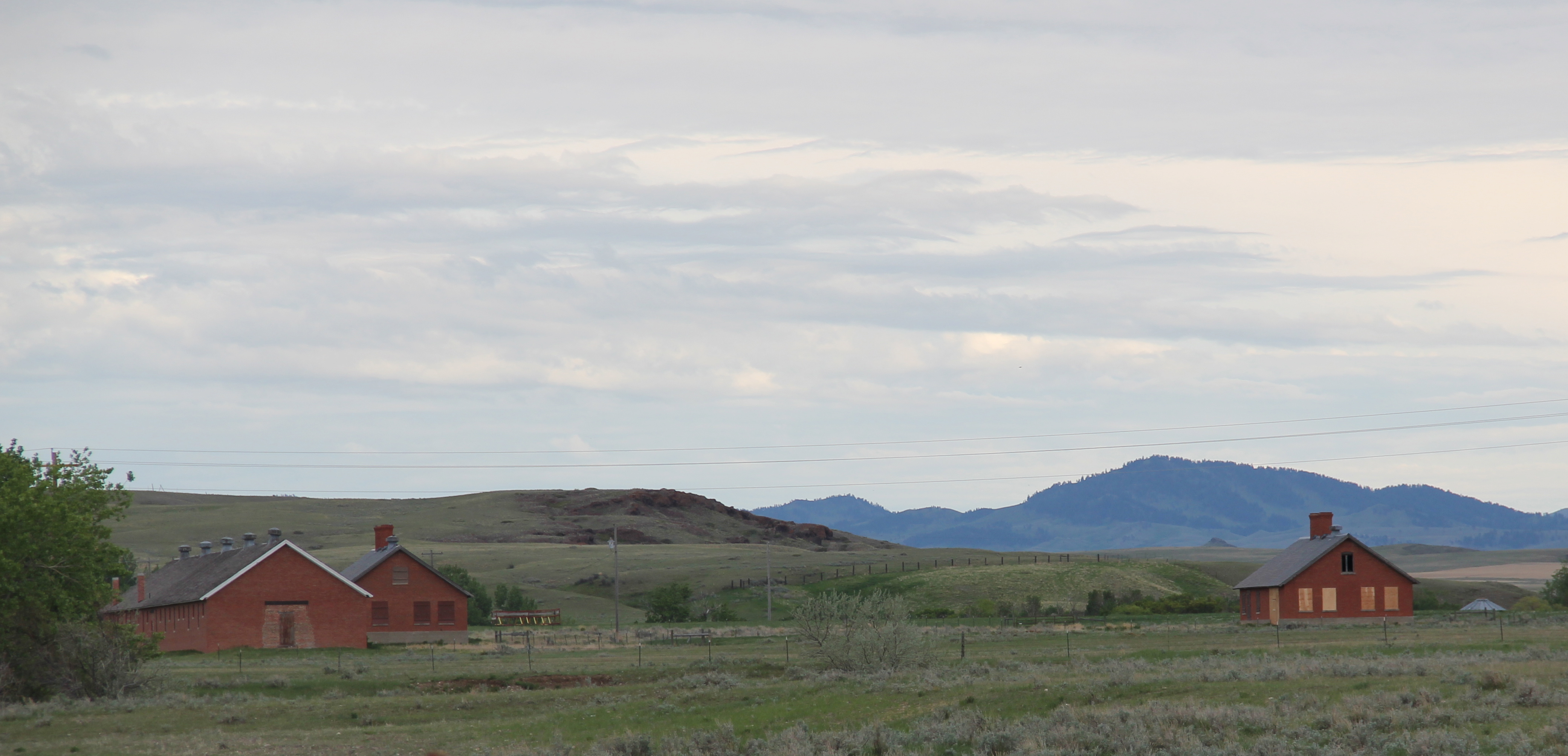
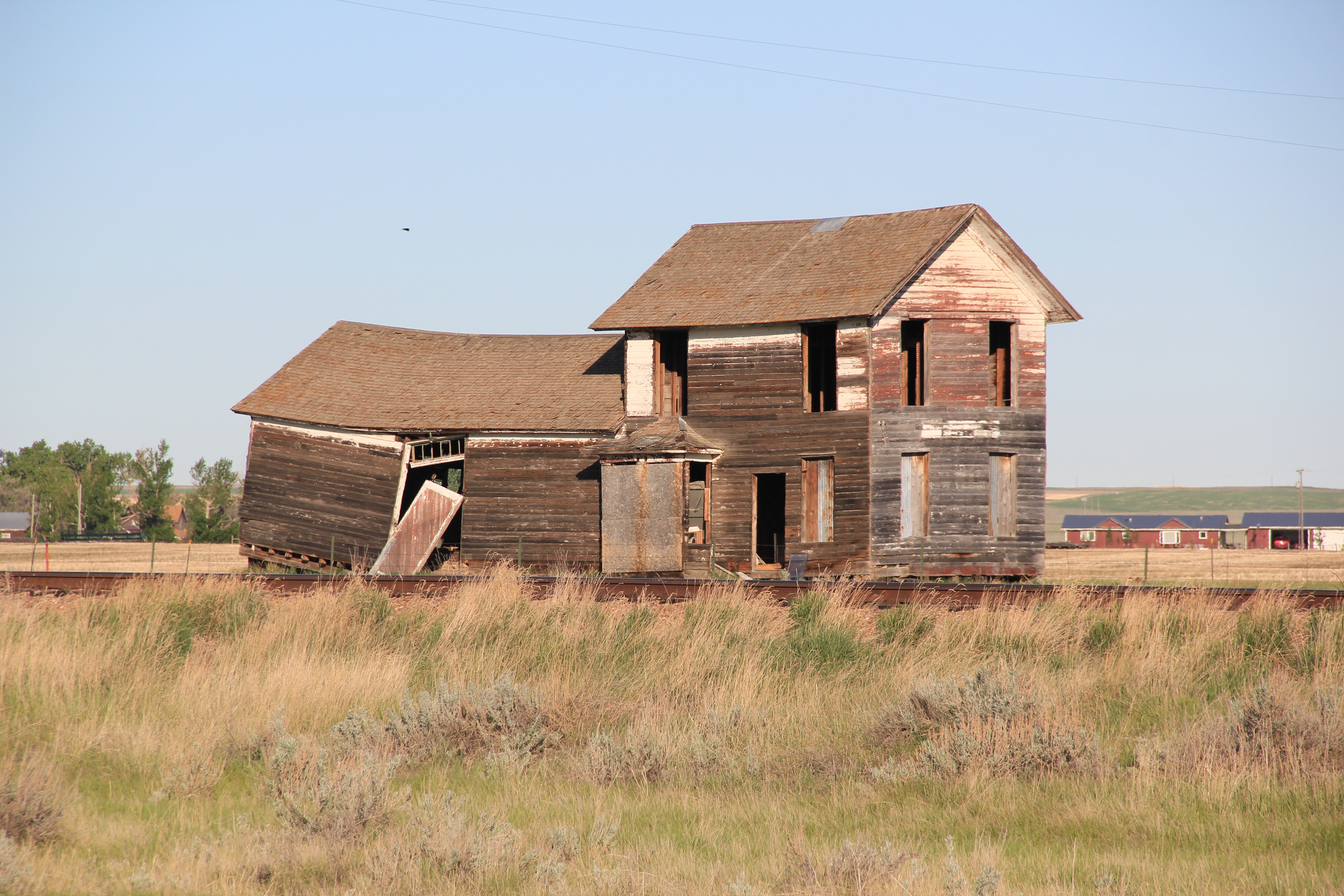
Abandoned homestead in 1984, north of Joplin, Sweetgrass Hills in background


Liberty County, created in 1919 with Chester as county seat, was the next place I visited, and it proved to be one of my favorites along the Hi-Line.  Stuck between the larger railroad towns of Shelby, a junction point, to the west and Havre, a division point with Great Northern maintenance yards to the east, the Great Northern never saw a need to invest in or to encourage investment in town development in Liberty County.  In the 1910s, hundreds of homesteaders flooded into the area:  this 1984 image above of an abandoned homestead with the sacred Sweetgrass Hills in the background is one of my favorities.  Today a little over 2000 people live in the county.Image

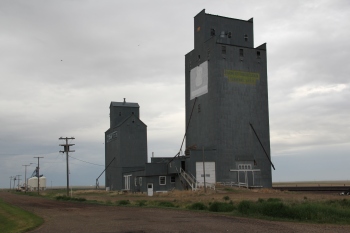
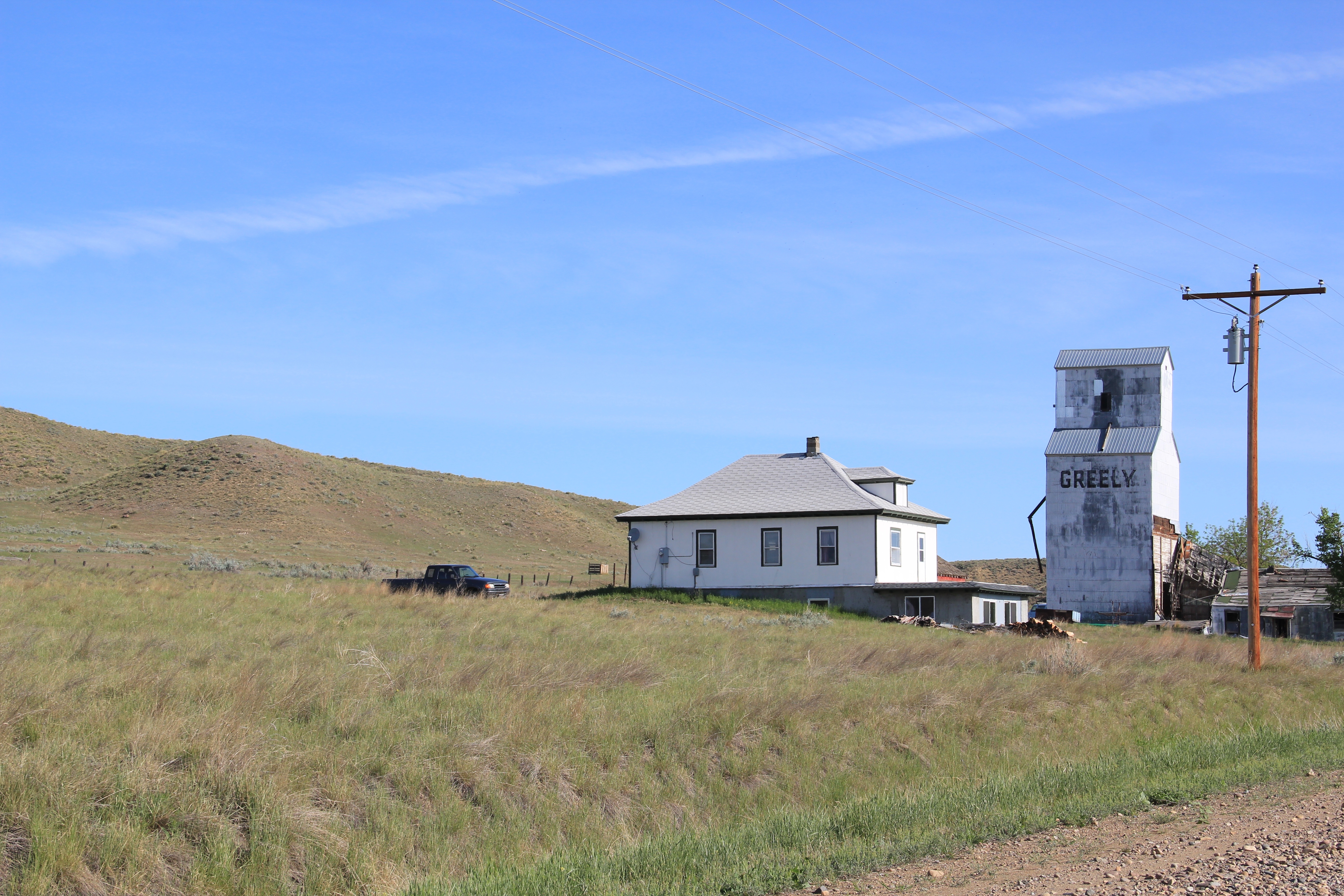
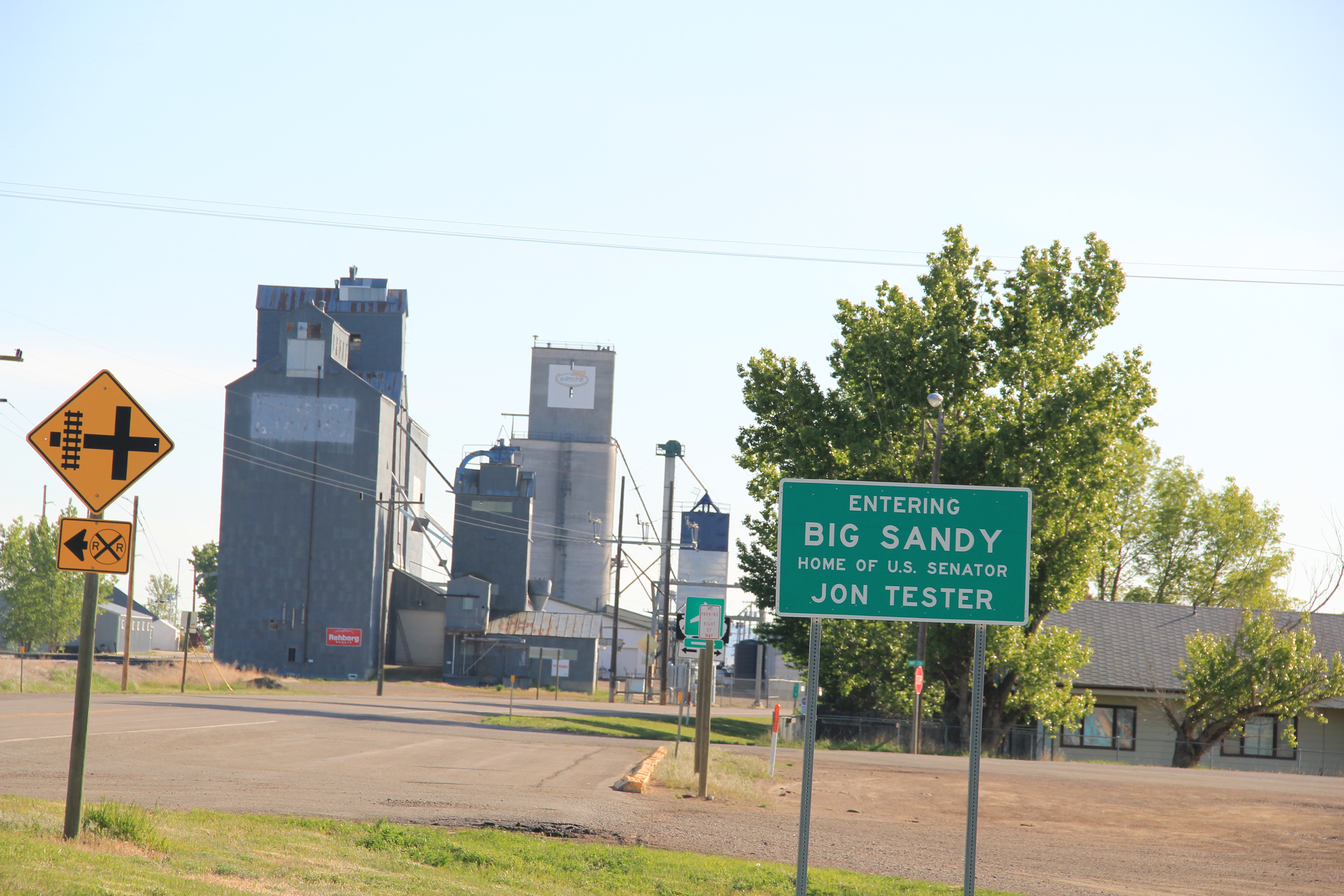
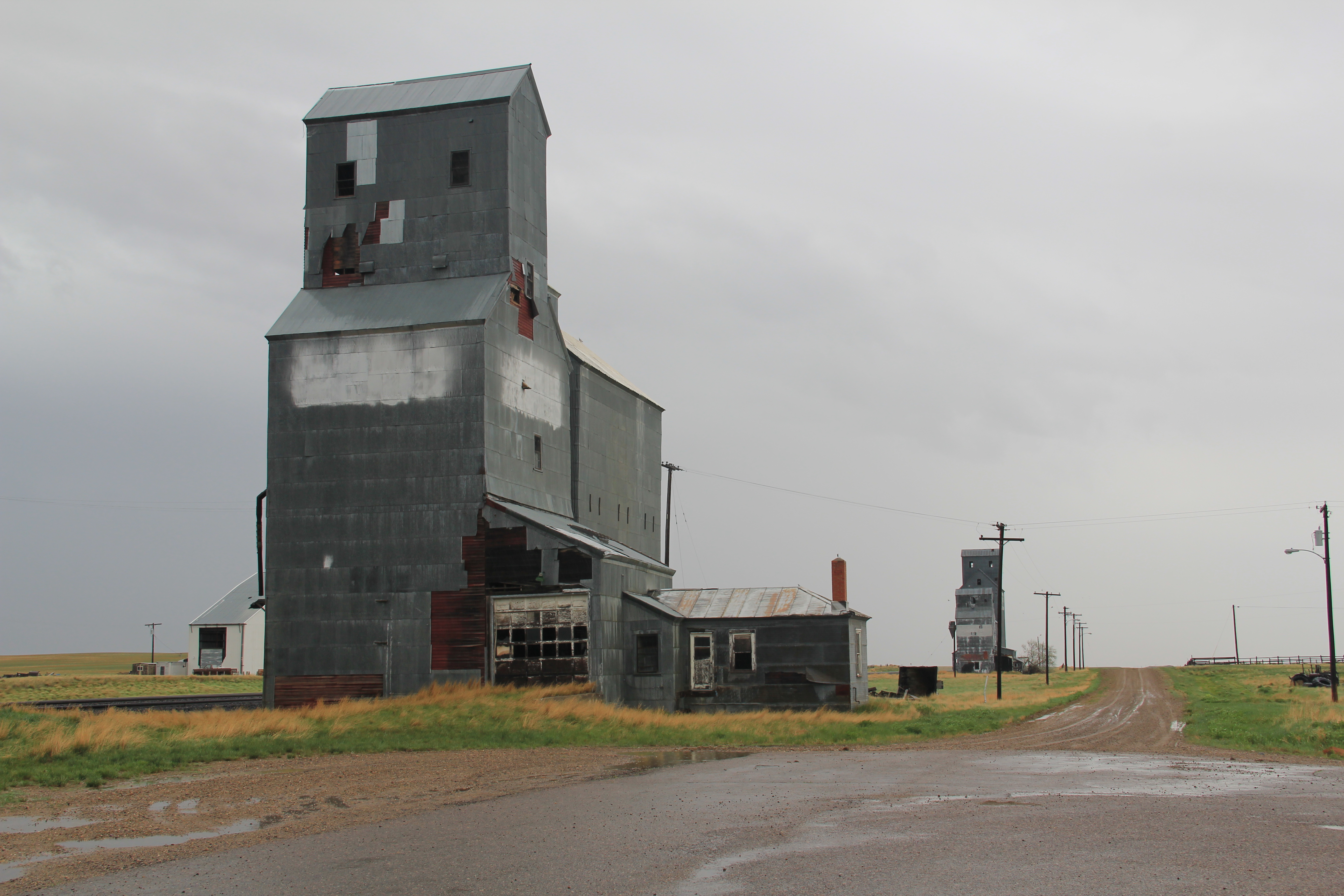
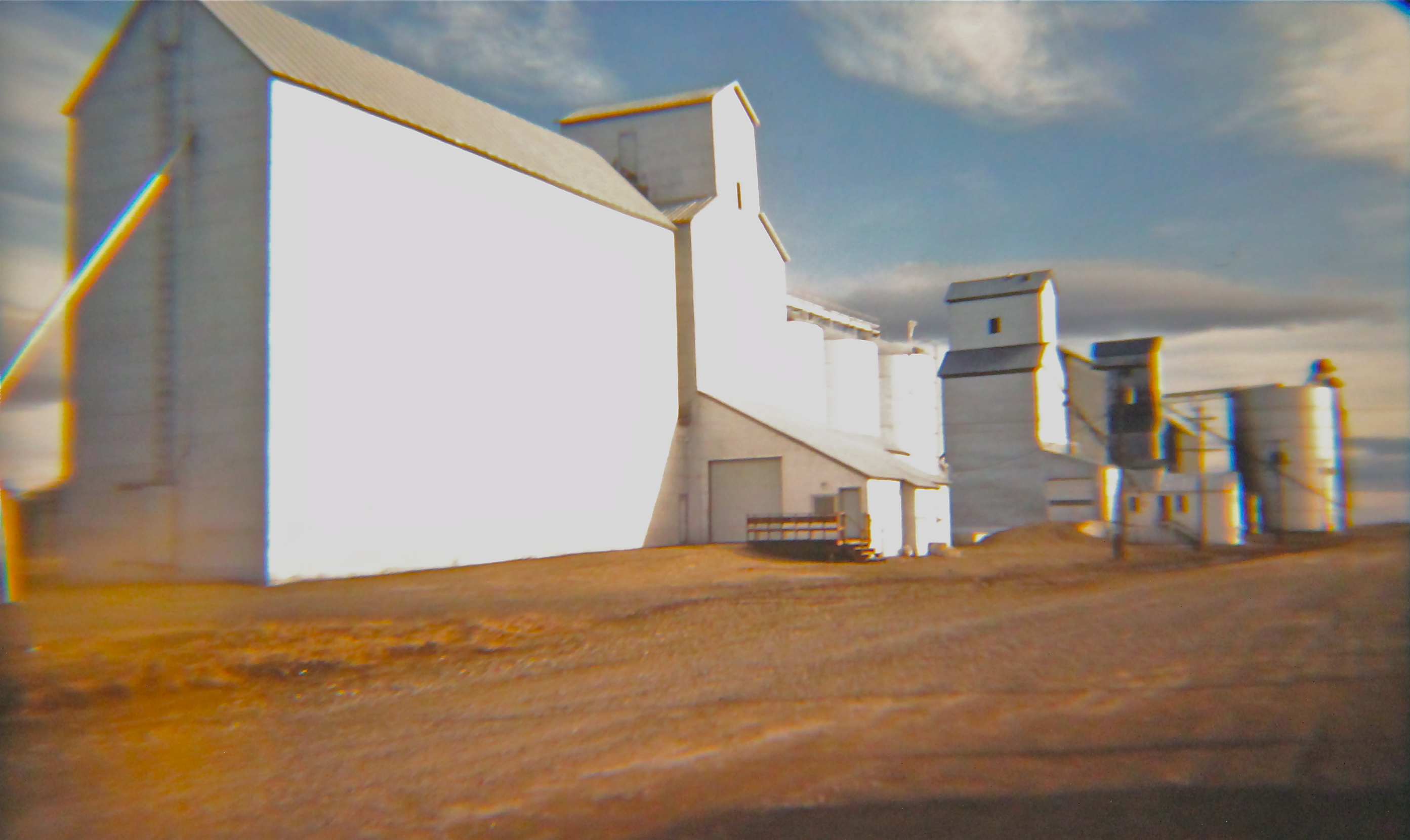
Lothair was the first town I encountered in Liberty County.  Its grain elevators called me off the highway in 1984; they remain landmarks today. 

Image

Nothing else much is there, although in the 1910s residents and nearby homesteaders petitioned the state railroad commissioners to force the Great Northern to treat their town more seriously.  The 1918 petition, launched by the Lothair Commercial Club and others, called on the railroad to replace a depot that had burned in 1912.  The residents complained that “the depot now in use is of the portable style 12×34 feet, which with a box car body for freight, constitutes the facilities for the handling of passengers, freight, baggage, and express, as well as for the housing of the agent and operator. . . . The waiting room is only of sufficient size to accomodate four or five people comfortably.”  The petitioners argued that their town was at “the center of a very extensive dry land farming territory, nearly all of which has been filed on, but only about one-third is under active cultivation at the present time.”  But the hopes of Lothair never survived the homesteading crash of the 1920s.

Image

mid-1980s town sign of Chester

 Chester has fared better.  It retains a historic Great Northern depot, from the 1950s, although it was been moved from its earlier prominent location a bit farther to the east along the line. 

Image

Chester has a T-town plan, with one attribute that I later found in other turn-of-the-century Montana railroad towns:  an architecturally compelling two-story brick building on one corner, situated so its entrance faced both the tracks and the highway that paralleled the railroad. 

Image  Image

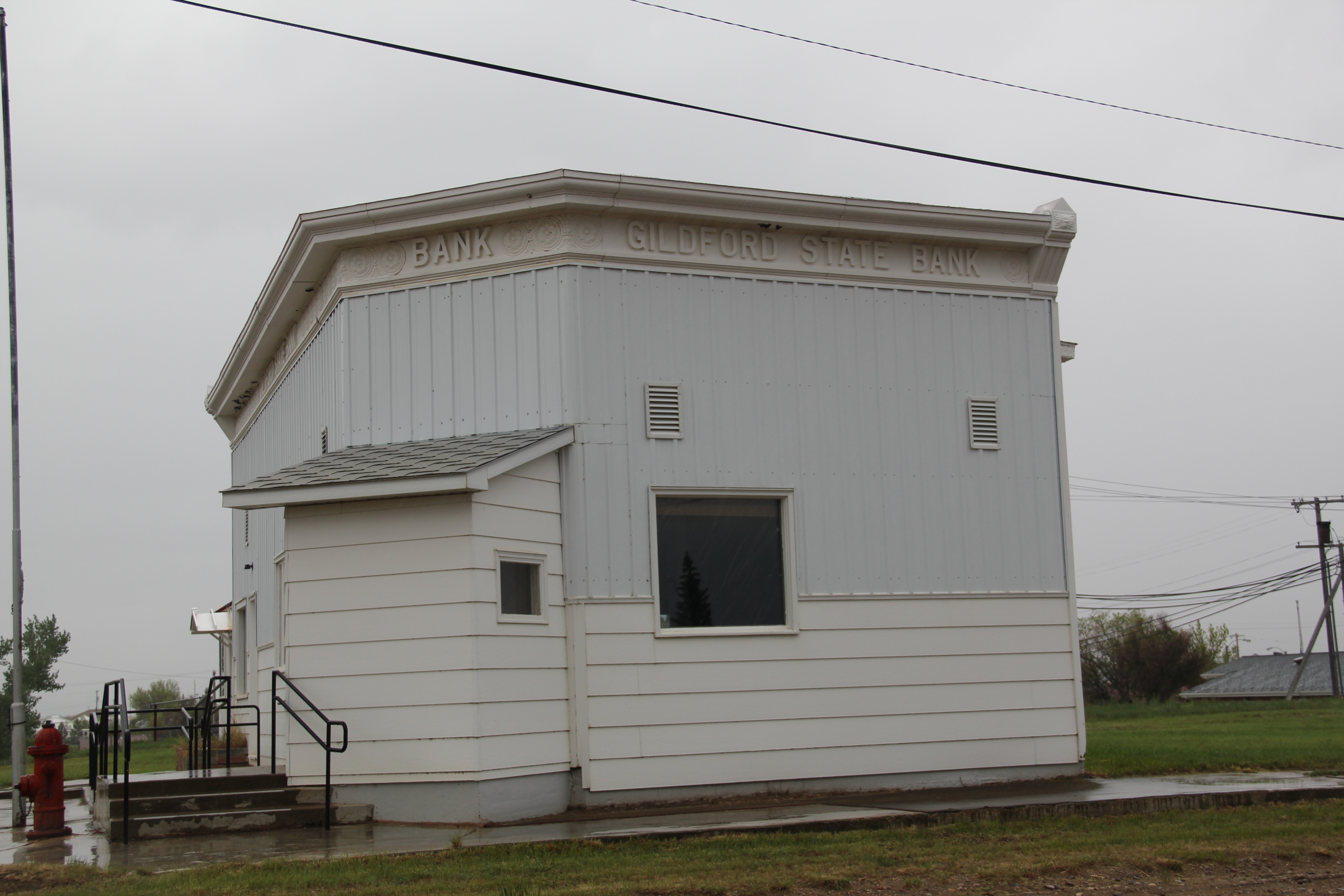
This building is the historic First State Bank of Chester (1910), one of two Liberty County buildings in the National Register of Historic Places.  The bank closed in 1920, but the building remained important to the community, serving all sorts of function; a local high school class researched its history for the National Register nomination in 1997.

Image

1st State Bank, Chester, 2013

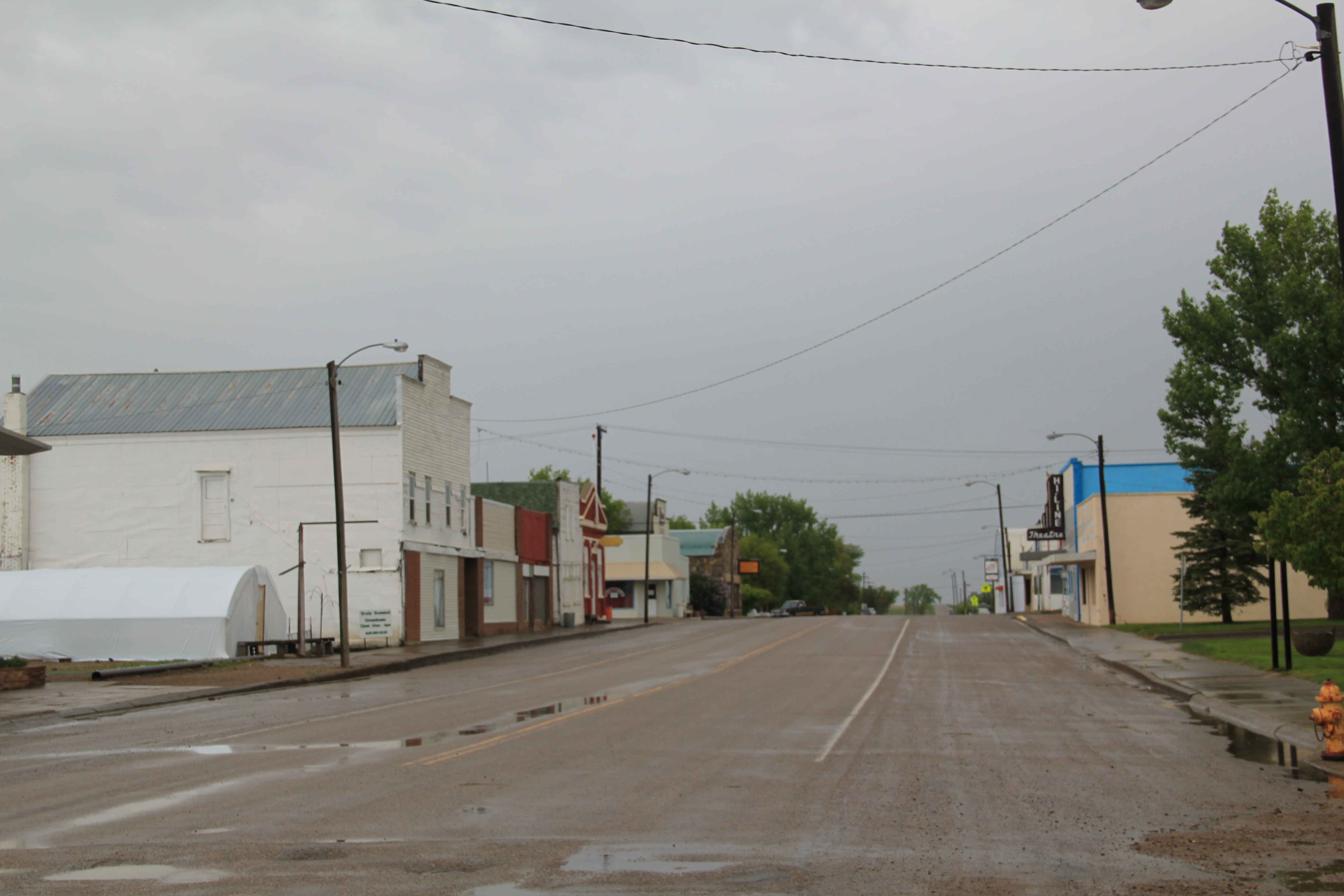
 The organization of space in Chester is interesting.  As typical of a T-town plan, the railroad corridor dominates the top of T with the tracks, elevators, warehouses, and railroad buildings.  

Image

Chester t-town plan, 2013

The adjacent route of U.S. Highway 2 creates sorta of a “bottom” to the top of the T, where gas stations and other auto- and traveler-focused buildings, including a diner and an automobile museum, stand.  One bit of roadside architecture–the MX Motel–really captured my attention in 1984 because only a few years earlier Montana and especially Liberty County eagerly pursued

Image

MX Motel sign, 1984

the Carter administration idea of a defense system where nuclear missiles would be moved on tracks over a huge expanse of land, creating uncertainty for enemy targeting of missile silos. Liberty County had good reason to be excited about the MX–the time Chester had enjoyed sustainable growth was in the 1950s when the Bureau of Reclamation constructed the Tiber Dam/Lake Elwell project in the southern end of the county. 

Image

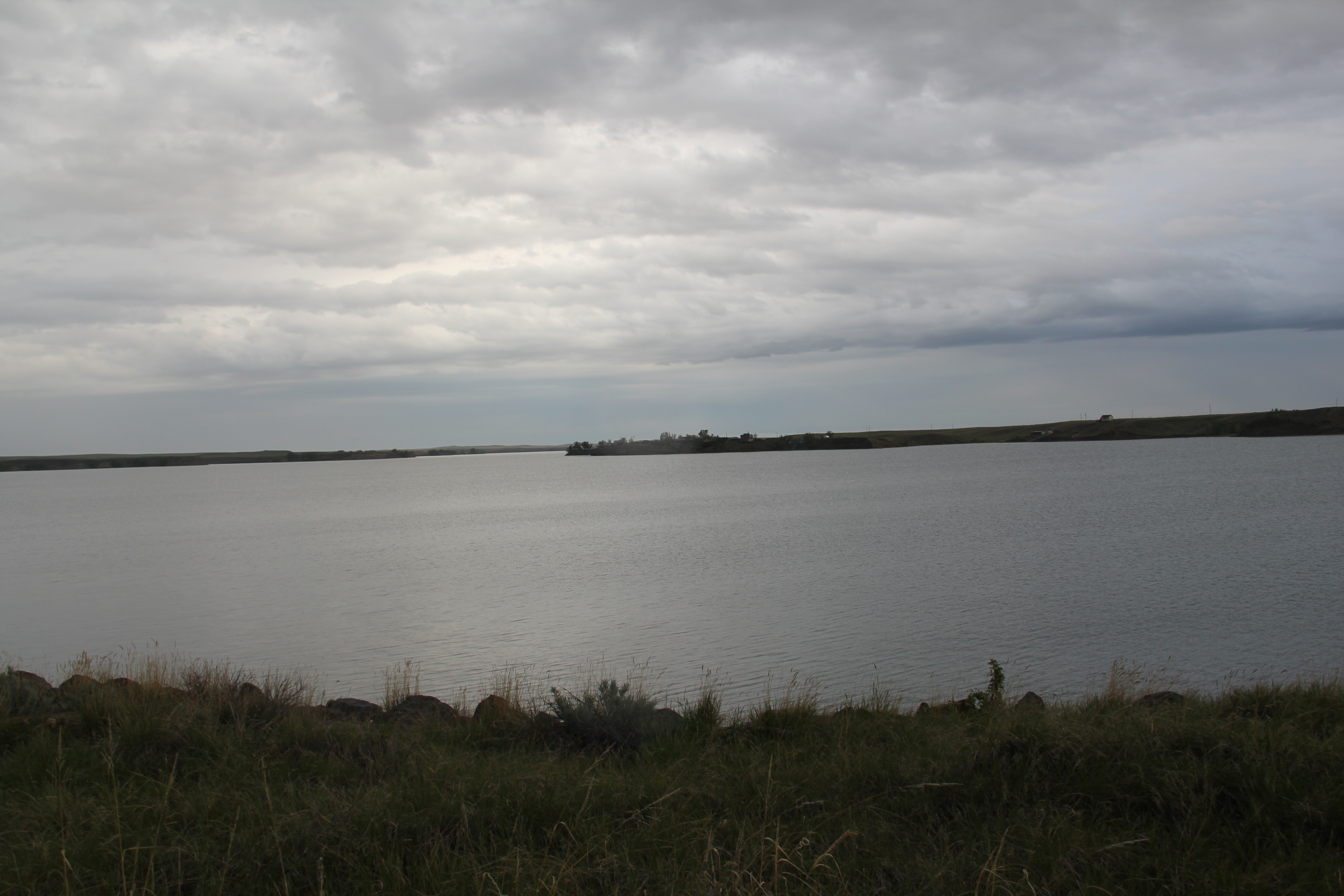
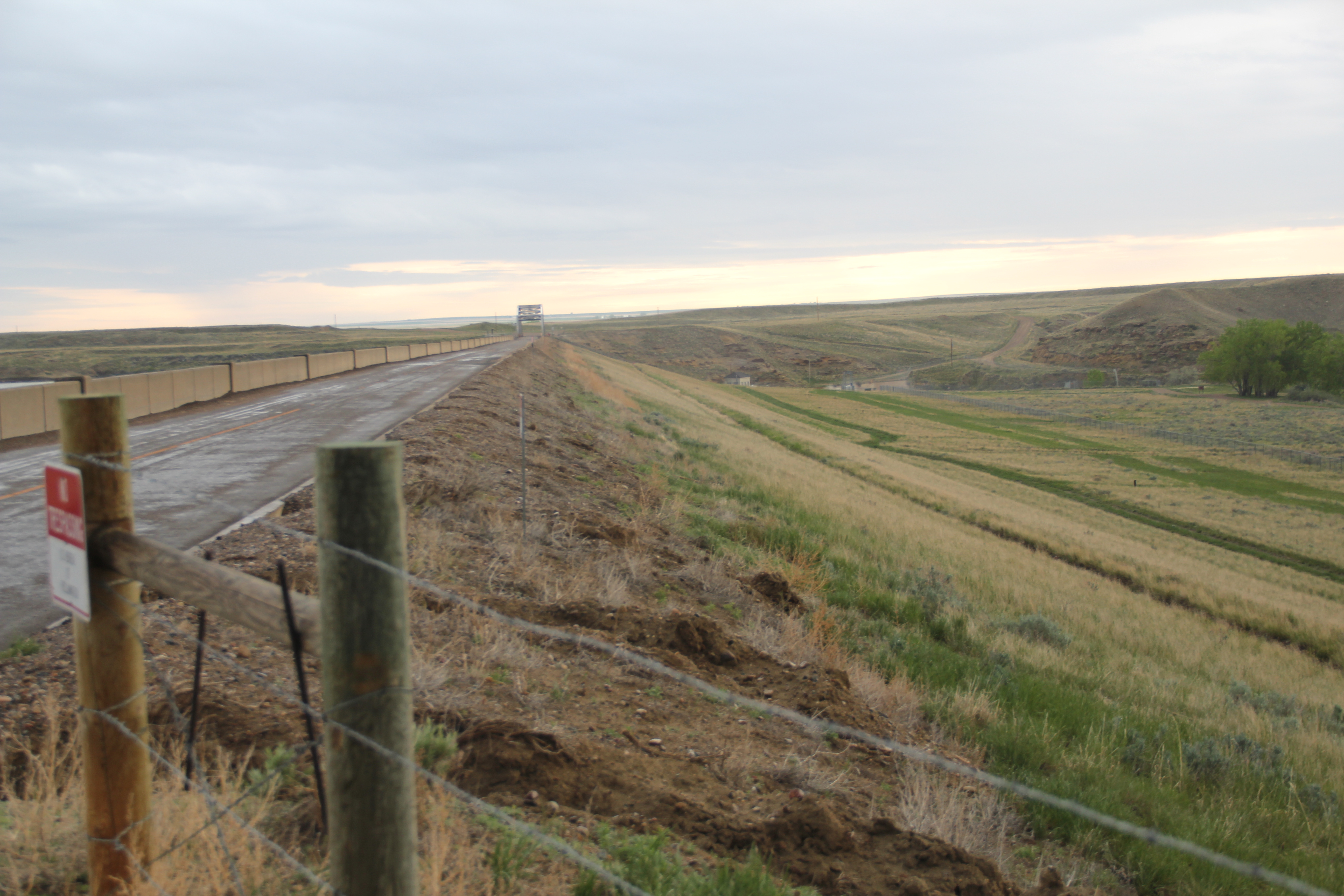
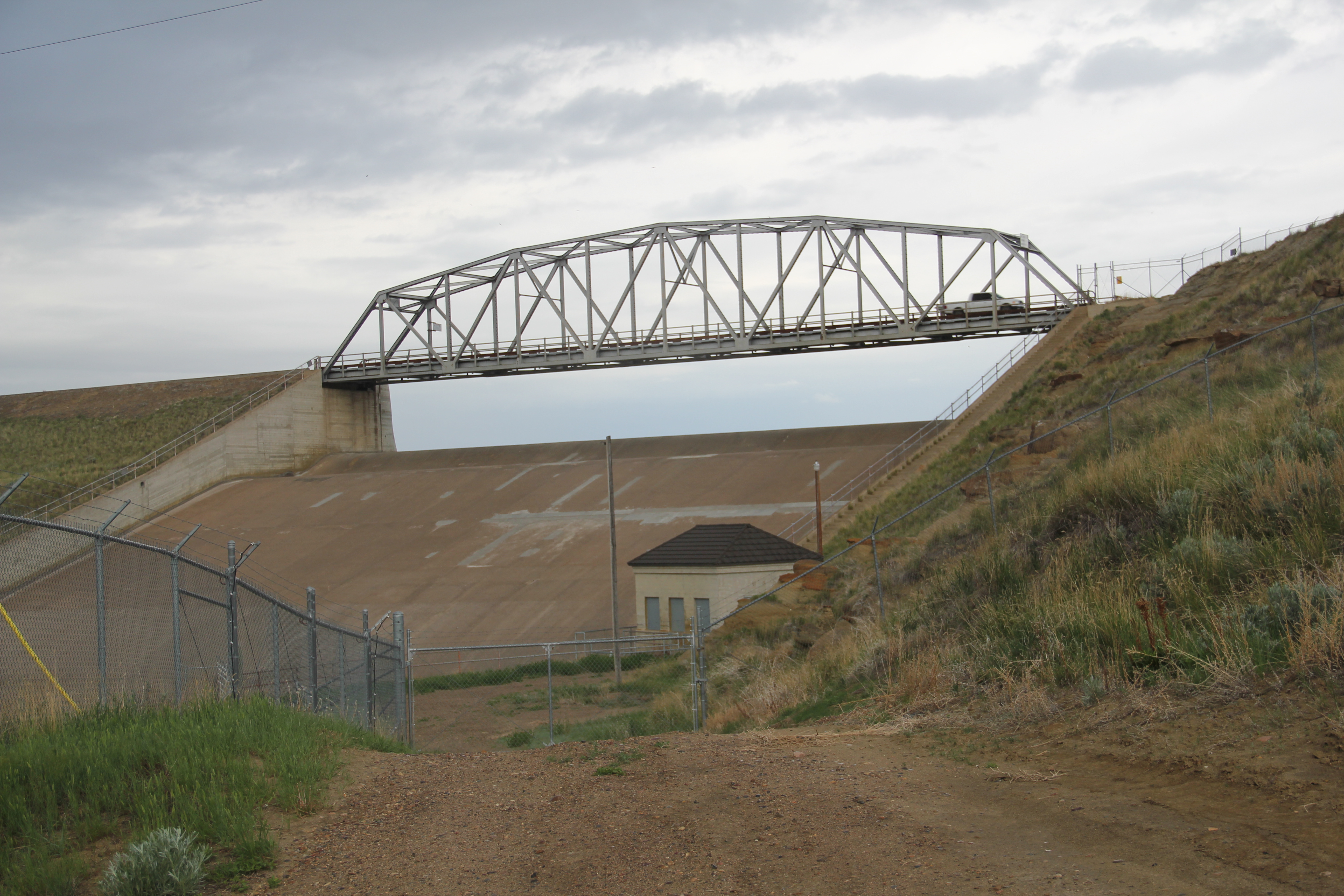
Tiber Dam Reservoir (Lake Elwell), 1984

I stayed at the MX Motel in 1984–and never imagined it would still be there 30 years ago.  It remains, but I wonder if anyone recalls why the name MX made sense to Liberty County in the past.  

Image 

The stem of the T-town plan in Chester is also interesting.  The bank is the visually prominent element while the county courthouse is a large two-story brick facade a bit farther down the street.  At the base of the T is the school campus, a sprawling group of brick Art Deco-influenced buildings (1935 for the Art Deco elementary school; the high school building dates to 1952) that now serve students with three old railroad towns: Chester, Joplin, and Inverness, and the school nickname is the Hi-Line Hawks.

 Image Image

Located between the commercial district and the school is the National Register-listed First Episcopal Methodist Church (1911-1968); it became the county museum in 1970, and soon will have served that cultural function for longer than it was a church. A much more recent yet still appropriate adaptive reuse is the conversion of another church into a county arts center.  This portion of Montana has actively pursued cultural tourism in the 21st century and the arts center plus the earlier museum are parts of that effort.

Image Image

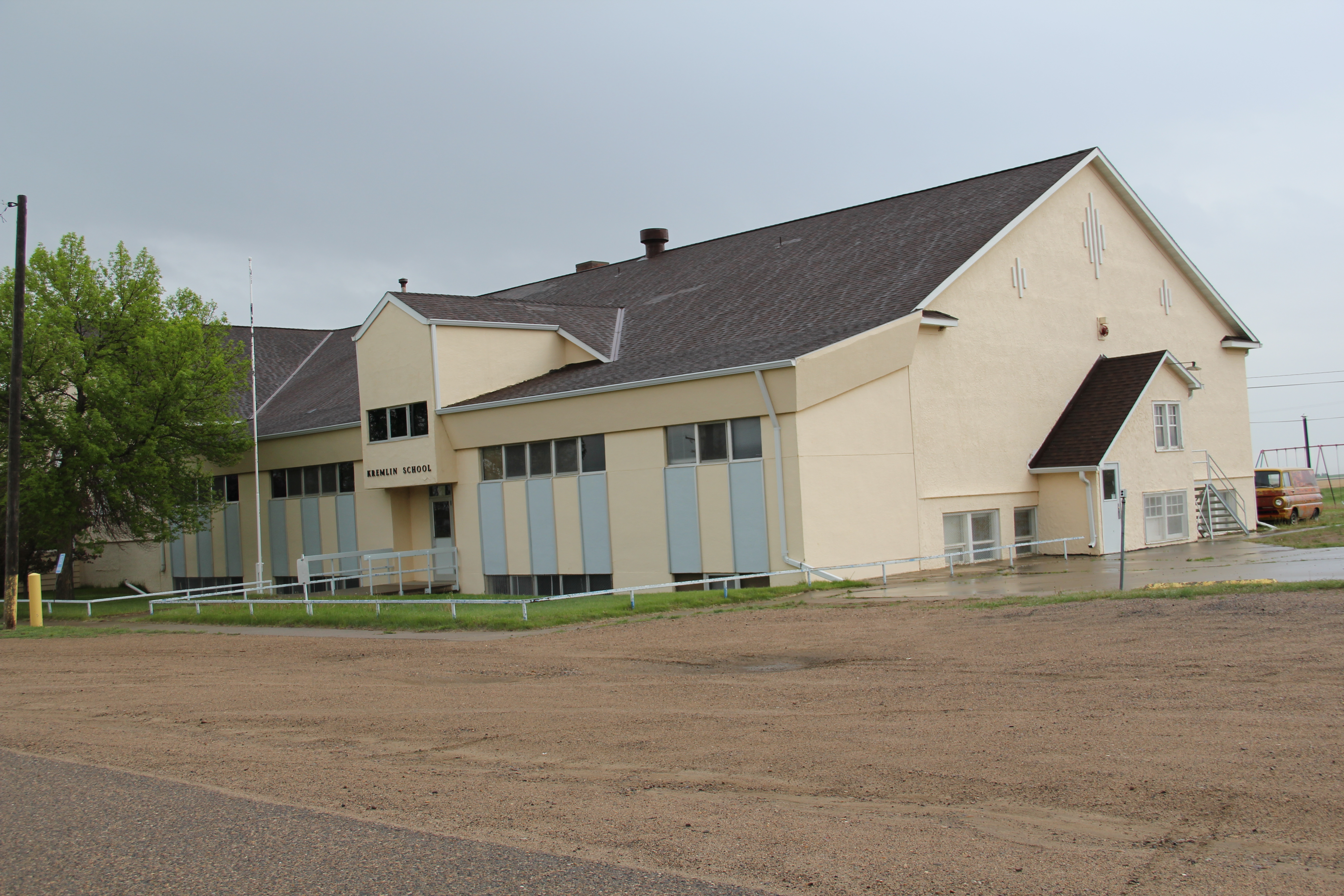
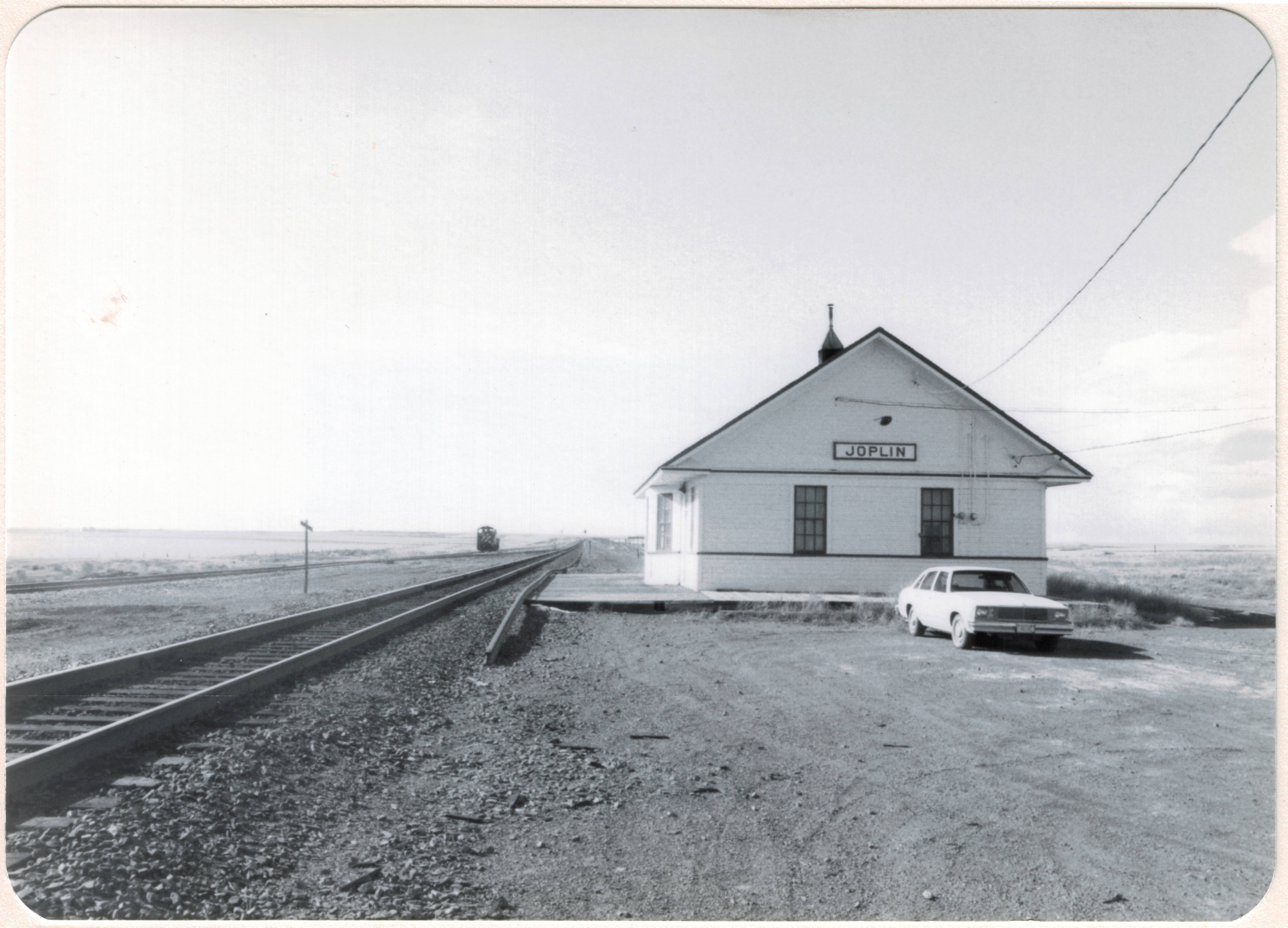
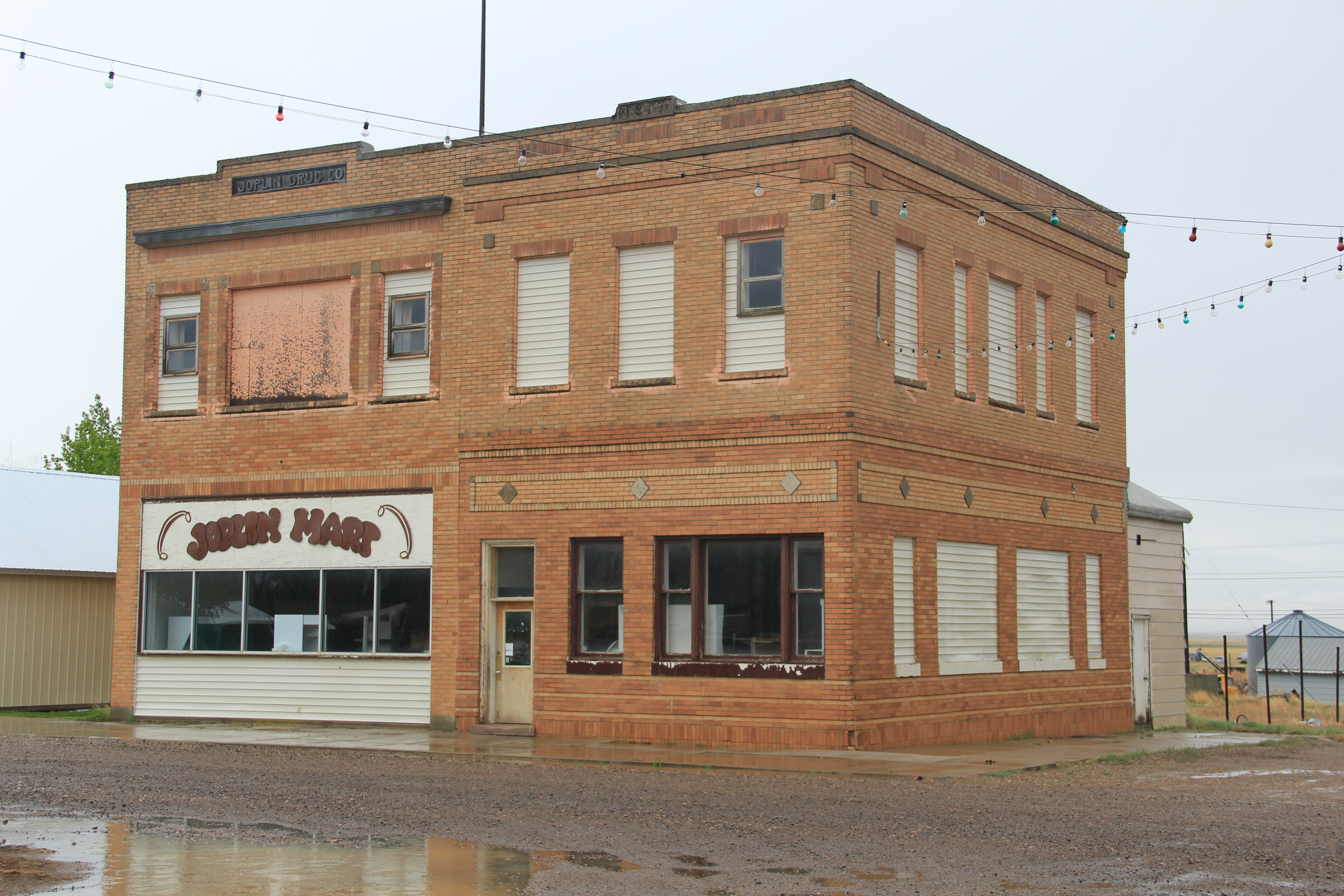
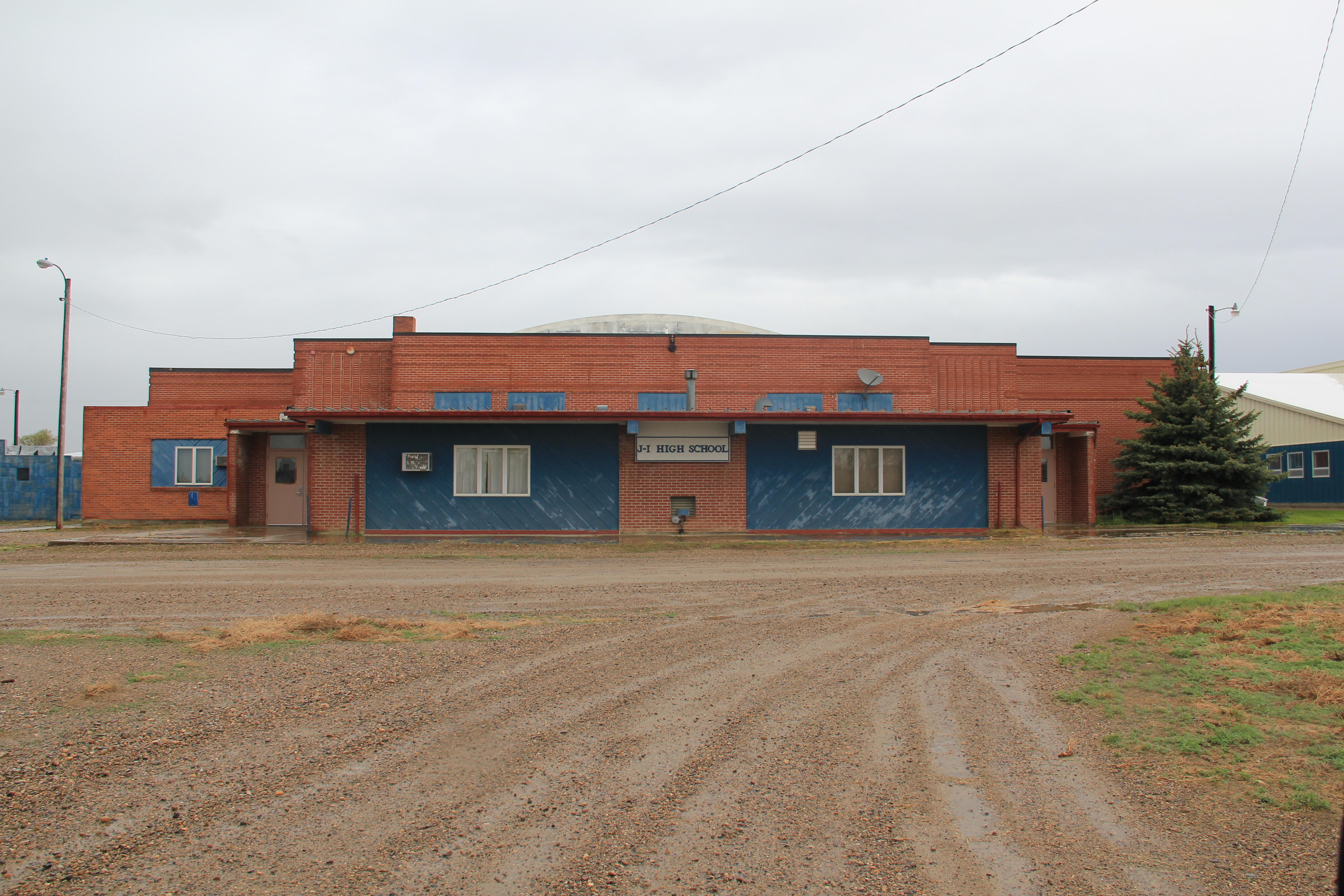
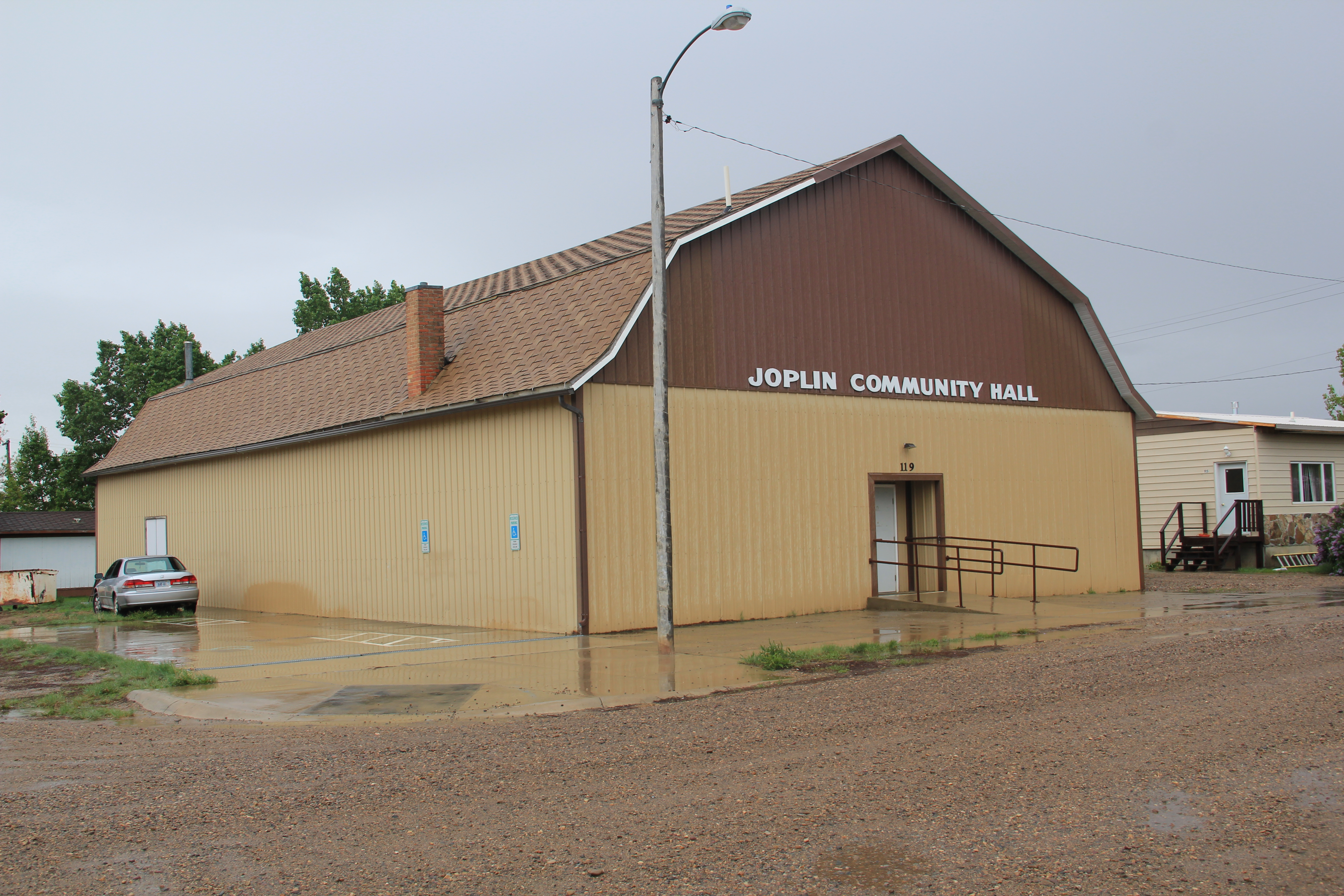
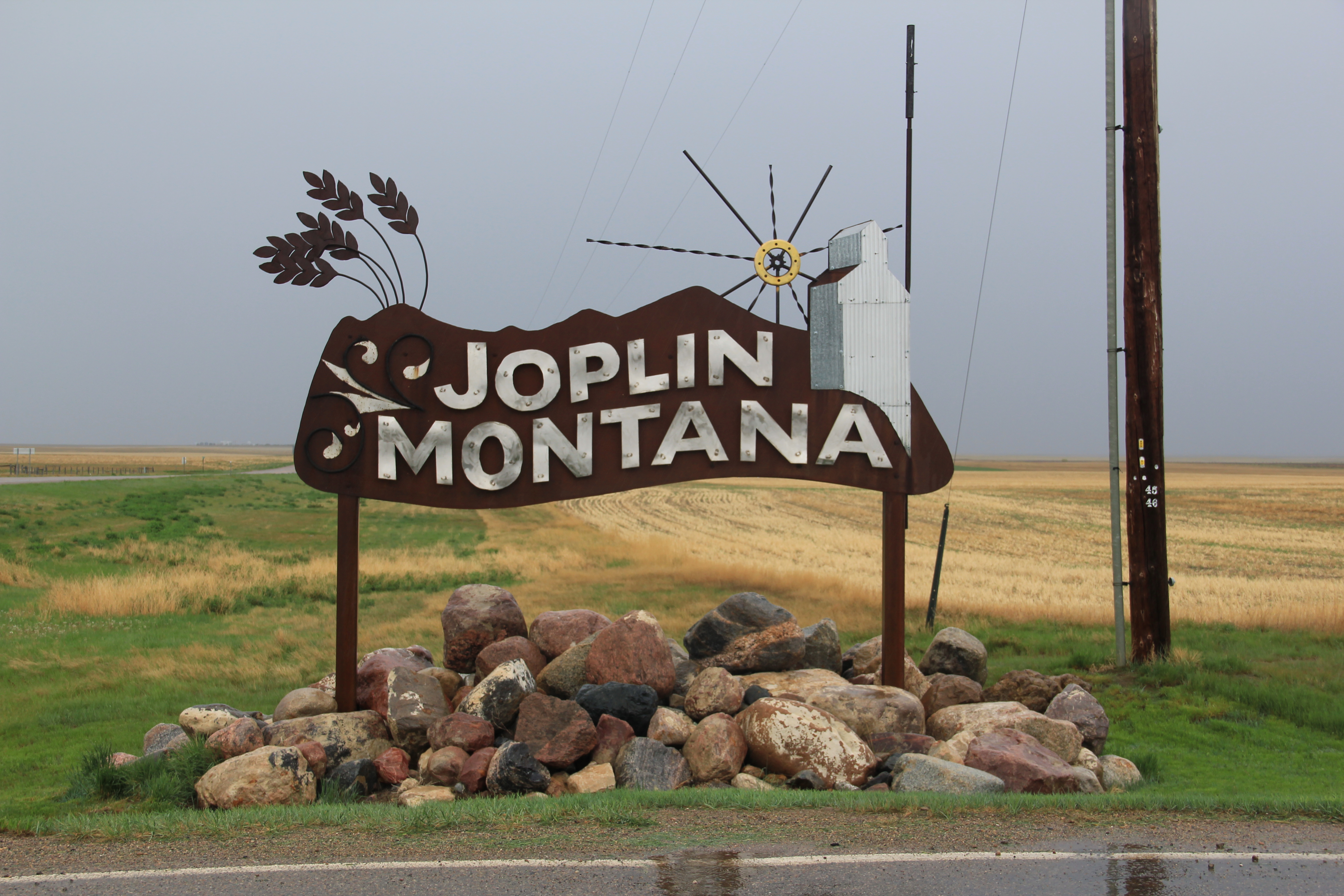
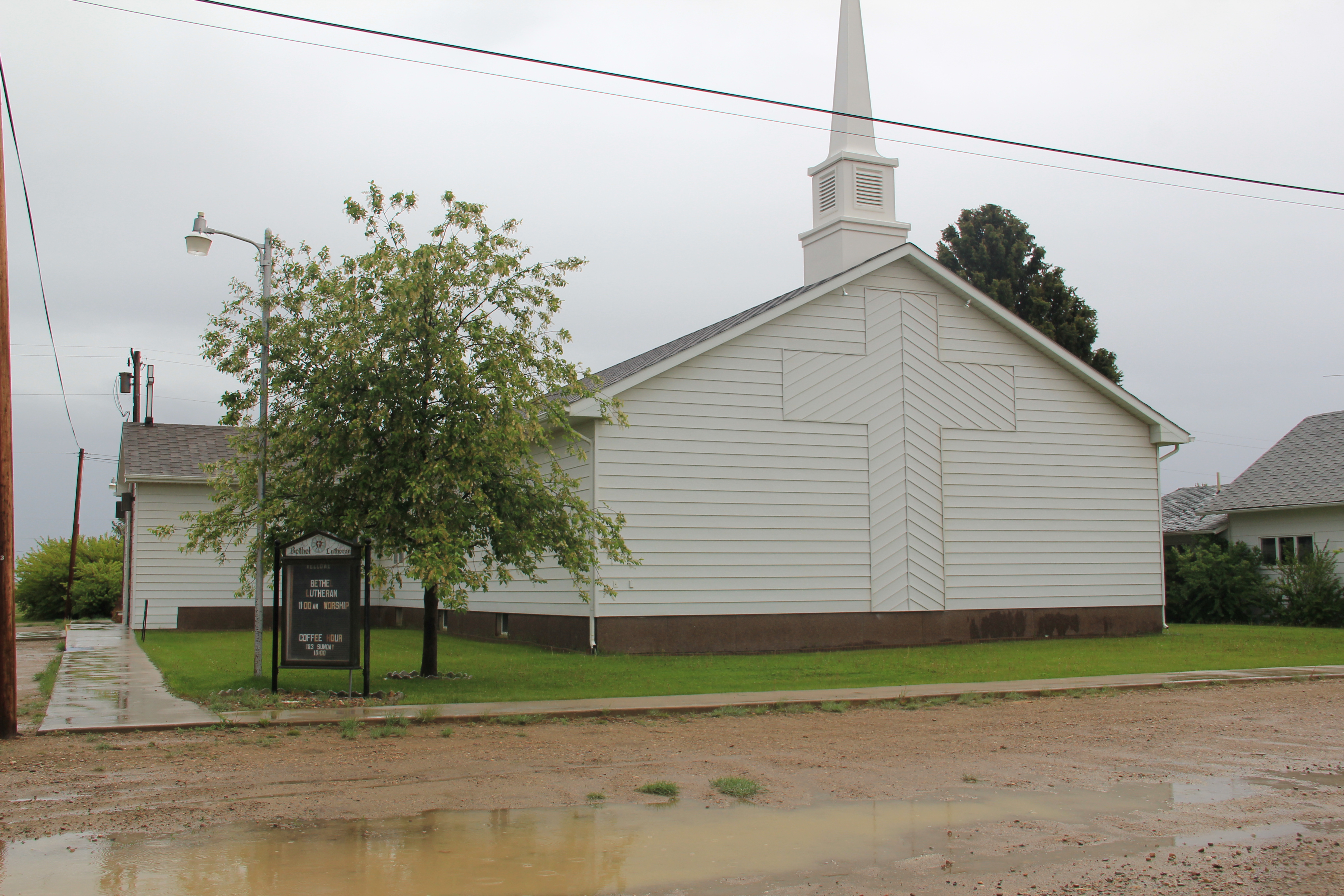
Next: Joplin, a Liberty County town on the border with Hill County

Toole County, 1984 and Now: to the east along U.S. Highway 2

As soon as you move east of the historic Shelby visitor center on U.S. 2, you encounter the landmarks that physically mark the region’s agricultural character.  On the north side of the highway, immediately adjacent to the tracks are complexes of grain elevators. Here at Shelby there is a tall concrete group of elevators run by CHS–the appearance of concrete elevators always mark a town that has experienced economic growth in the second half of the twentieth century.  Many of the smaller Hi-Line towns have the classic frame elevators of the homesteading era.  Grain elevators thus become a physical barometer of a place’s economic prosperity and development.

Image Image

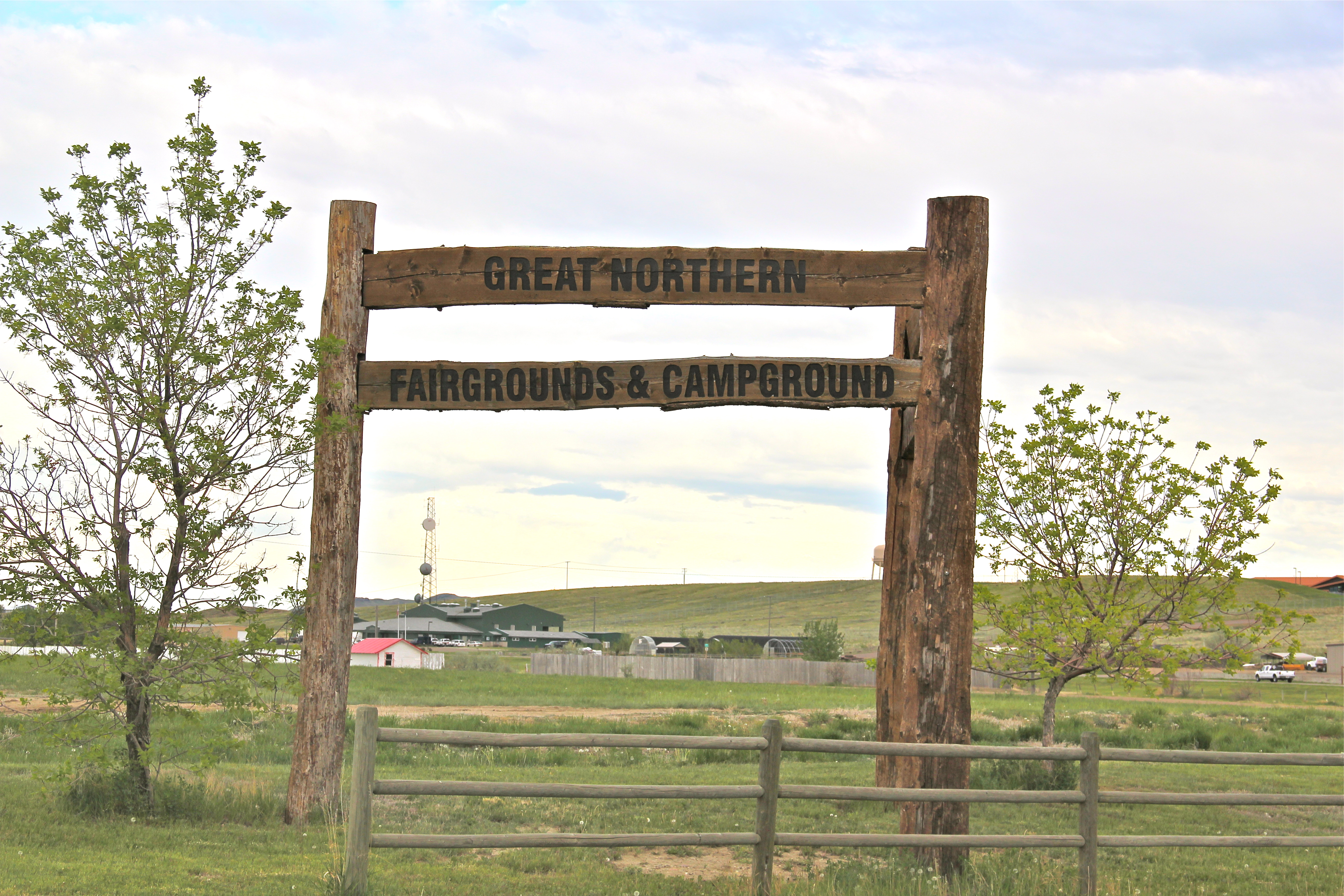
On the south side of the highway in Shelby is the second crucial agricultural institution, the county fairgrounds and rodeo arena.  Livestock is not only important to the economy but maybe even more important to the culture of the region.  The Marias 4 County Fair, held the third week of July, is a regional gathering of no equal.  Thousands attend, and they do so at a fairgrounds with an impressive collection of historic buildings.

Image Image

Image

In 1984, I noted this east side of Shelby as I left the town, but my eyes and camera were focused on the small railroad towns that I would next encounter, along with two important historic sites I wanted to document.

Image

Whoop-Up Trail site, U.S. 2, 1984 

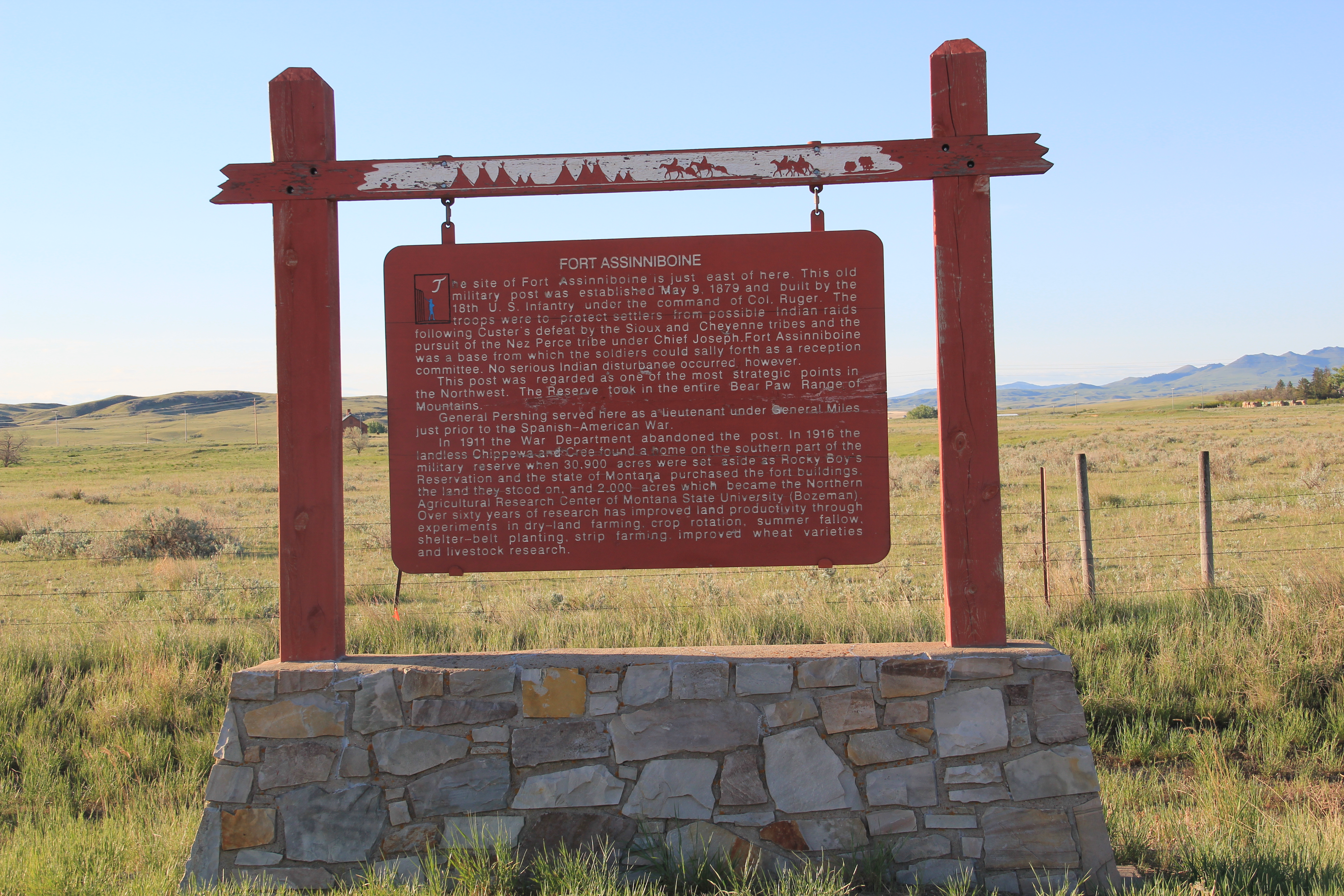
The first was the Whoop-Up Trail remnant, a site first documented by state archaeologists in 1968 and among the handful of historic properties then identified in Toole County (another section of the trail near Kevin is listed in the National Register).  In 1984 the location along the highway was well marked, with a series of stones marking the trail and encouraging visitors to go to the property edge and look into the Marias landscape where this historic route between Fort Benton and Fort Whoop-Up in Canada once passed.  

 Image In fact to the south of U.S. 2, a county road still crosses the Marias near the old trail crossing:  it was a somber, beautiful place in 1984. In 2013, the Whoop-Up Trail site is still maintained, put the line of stones to mark the path has either been taken up or covered by growth.  

 Image

Across the highway remains another key landmark of the Hi-Line and Central Montana region:  a nuclear missile silo. These military bases are everywhere it seems, and sometimes in the most unlikely places.  By 1984 I had become somewhat accustomed to their presence–coming from the South I had no idea of the role Montana played in our nation’s defense.  

 Image

But the missile silo was a surprise:  what I really was seeking was something on the Marias River–or Baker–Massacre, one of the most horrific events of Montana’s early territorial period.  The site is east of Shelby and south of U.S. 2 on private ranch land–and the family has been excellent stewards of this place.  No need for me to tred on such sacred ground, but there is a need to intepret that story, and to tell visitors and residents that here in this seemingly peaceful beautiful countryside a group of territorial citizens murdered Blackfeet women, children, and elderly in some sort of mindless bloody search for revenge.  That story wasn’t told in 1984 but a long text marker does so now. It strikes the right message: that the massacre “profoundly impacted the Blackfeet people and is very much alive in tribal memory.”  A small bouquet of flowers at the marker’s base in 2013 testifies to the truth of this simple memorial.

 Image

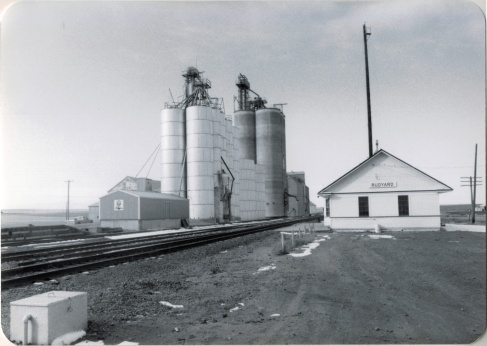
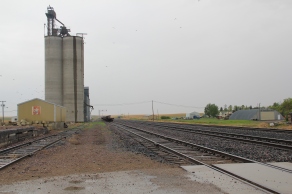
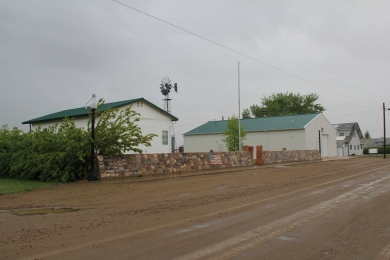
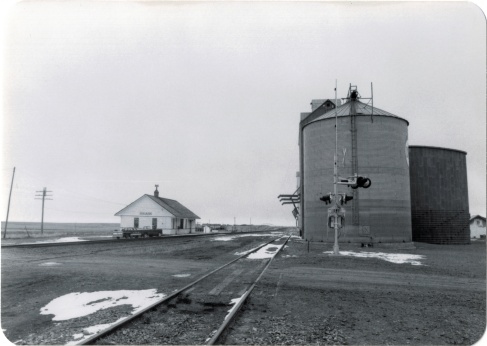
Dunkirk, the first of a trio of Toole County railroad villages east of Shelby, was too close to Shelby itself to ever maintain its own identity for long.  Its Frontier Bar was long a worthy roadside stop for thirsty travelers.  Outside of the Westermark Grain Corporation elevators, the bar was the only reason to even give Dunkirk a glance.

 Image Image

Devon is a plains country town on the Great Northern Railway that was the first “prairie ghost town” of the 1984 survey.  Numerous false-front frame buildings from the 1910s and 1920s existed in 1984:  30 years later several of these were gone. 

Image


Image

Devon streetscape, 1984


Image

Devon, Montana, 1984

Image

Devon grain elevator, 1984

Yet I must admit that Devon now had more to it than what I recalled from 1984.  Certainly the old brick bank building had been abandoned, and the town community hall appeared shuttered, but the contemporary-styled Devon Lutheran Church spoke to persistence, even after decades of economic change. The grain elevators that were prominent in 1984 also had persisted, and stood as three sentinels on the plains.

Image Image

 Image


Image

Galata, established in 1901, is another Great Northern Railway stop, with its corridor landscape speaking to its isolation and agricultural dependence.  It is a T-town plan town, where the main street forms the stem of the T while the railroad tracks form the top of the T.Image

 In the latter half of the 20th century, Galata had actually reached beyond its T-town plan and out to the highway.  Its Motel Galata is a classic piece of roadside architecture, and its huge highway sign of a Montana frontiersman with cowboy hat waving his car keys beckoning travelers to stop.

 Image

Galata also has kept its post office–a classic 1960s standardized design.  But the real key is the strength of its community institutions, churches, American Legion lodge hall, and especially the

Image Image

school.  The school campus contains two eras:  the classic frame country school of the homesteading era, with additions, and then the more ranch-styled flat roof school building common in American suburbs in the 1950s and 1960s.

 Image Image

As discussed earlier in this blog, Hi-Line residents also make their presence known by signs, even if they are a little worn or emblematic of the loss of other community buildings.  Galata is no exception.

Image

Image 

Toole county, 1984 and now: Day Two

ImageToole County, second day: As I ventured out from Shelby into Toole County in February 1984 I followed old US Hwy 91 route (surpassed then as now by I-15)  into an early 20th century  oil patch region–the Kevin-Sunburst field–that had been discovered in the 1920s during Montana’s initial oil boom, but had dried up until the 1950s, although limited production remains even today.  In 1984 everyone in Helena thought that I should give the region a look for early resources associated with the oil industry.

Oilmont school had closed already in 1984 but the hipped roof frame building remained as a symbol of the boom days.  Thirty years later, I was surprised to see, the school was still there, barely–the years had not been kind to it. Jerry Funk in his memoir, “Life is an Excellent Adventure,” recalled that “The school plant itself was an ungainly hodge-podge of after-thoughts and additions and mismatched free-standing structures.  Its construction was obviously undertaken, with boom-town gusto and elan, as and when new space was needed, without the constraints of dealing with architects and planners.  The result was perhaps not what one would call pretty, but it was quite serviceable, and certainly memorable.”

ImageBetter stories in 2013 awaited me in Kevin, to the west. Here the historic Kevin depot, which is listed in the National Register, had been moved off the tracks, but it had been converted to a community center and senior citizens center, a very appropriate and successful adaptive reuse.  The town numbers under 200 residents and their commitment to keeping this connection to the town’s railroad roots along this spur line alive and well is commendable.

Image

Image

Image

Image

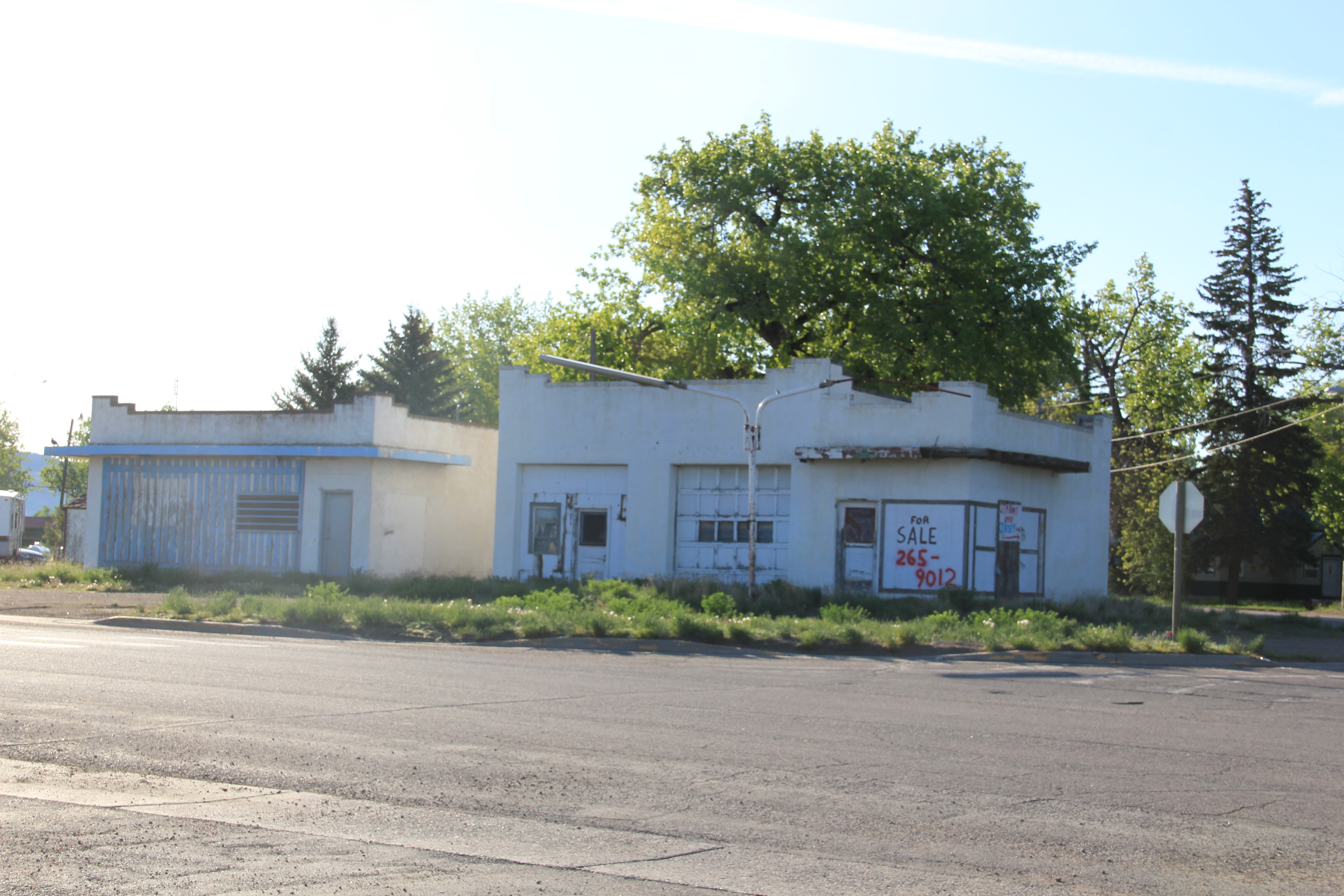
Also in Kevin in 1984 a circa 1930 service station caught my eye, with especially the period “Firestone” signs. ImageRather amazingly the building still stands at the town’s prominent corner, although the roof is sagging and its original function is more difficult to discern today.

Image

Another favorite building in 1984 was the Derrick Bar, a friendly place where the very name spoke to what was happening in Kevin in the mid-20th century. Its miniature derrick sign, on the top of the building, was a beacon; unlike anything else I would see in Montana.

Image Image

The bar is still there–still friendly too–but the derrick had come off of the top–although it too was preserved on the side of the building.
Kevin-Oilmont was a section of Toole County that had promised untold wealth in the 1920s and 1930s–and the boom at the Kevin-Sunburst field helps to explain the strong imprint of 1930s modernism in Shelby.

The most important Jazz Age building in Shelby is the visitor center, from 1923.  Listed in the National Register, the building served as the local headquarters for the city’s ambitious attempt to host a world’s heavyweight fight between legendary boxer Jack Dempsey and Tommy Gibbons.  Flush with oil money, town boosters thought the fight would put Shelby on the map, but the projected tens of thousands of spectators never materialized–only 7,000 made it to Shelby–and the event bankrupted the town.

Image

At the western end of the historic downtown is another National Register landmark, the Rainbow Service Station.  The development of U.S. 2 as the region’s key east-west automobile/truck corridor happened at the same time as the oil boom, and as auto travel to Glacier National Park also was growing in numbers.

.Image

In between these two landmarks grew an impressive collection of commercial buildings, along with some of the best roadside neon in the state. Modernism isn’t confined to the commercial strip.  There are impressive residential designs of International Style and Art Deco from the 1930s.

Image Image

And both the New Deal Art Deco high school (now middle school) and the contemporary-styled St. William Catholic School make their own statements of mid-century modern architecture.

Image Image

Shelby might be a modern urban oasis on the Hi-Line but as soon as I started to move east of the visitor center along U.S. 2 I discovered that I was entering a very rural, agricultural landscape: more on that later.

The 1984 Survey 30 Years Later: Toole County

My exploration of Montana’s historic landscape–an experience that has shaped my career and teaching philosophy so deeply–began in earnest 30 years ago this month.  I had been working with the Montana State Historic Preservation Office for several weeks, organizing information already known about the state but also realizing that much was unknown.  That is why the MT SHPO Marcella Sherfy wanted to send someone out of the road–to look, listen, and find what was missing.  In February 1984, the fieldwork began, with the initial focus on the Hi-Line and the first stop, Toole County and the county seat of Shelby.

Image

View of Shelby, looking north, taken from county courthouse, 2013

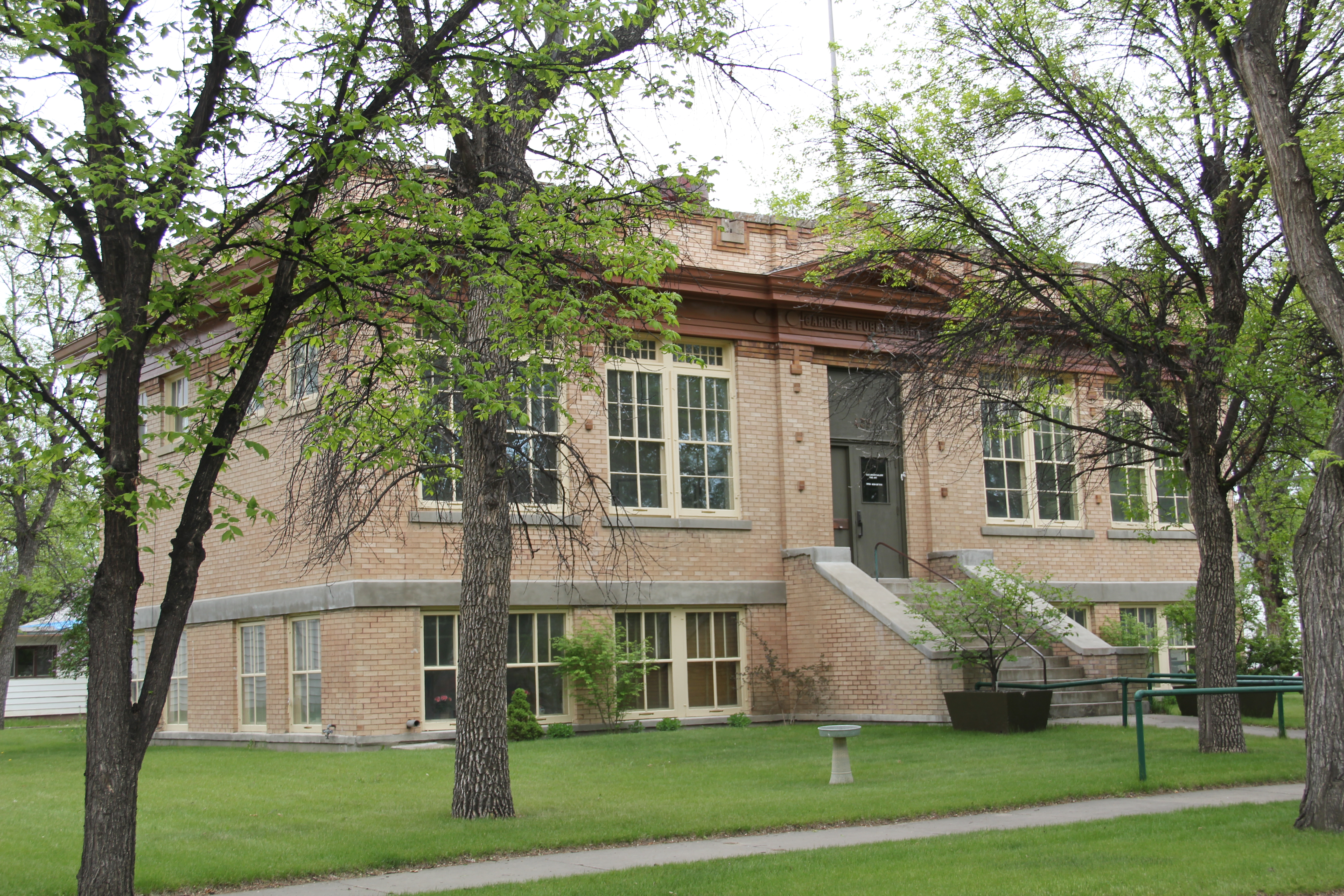
 The first stop was Shelby, where I also launched my effort to talk about historic places and the preservation planning process with local communities.  We met at the local library/museum which stood next to the courthouse.

Image

Toole County Library, Shelby, MT

I learned two things that February 1984 night in Shelby that shaped my work for the next 3 months:  do the community meetings first–Montanans were intensely engaged with their history and made information and primary sources to share.  Just as important, I learned of their pride in the county courthouse–an architectural statement of Art Deco modernism in the guise of local materials and stone that might not be “technically eligible” for the National Register (at that time it was not yet 50 years old) but that everyone considered the landmark of the city.

Image


Image Image


This 1934 building, one of the many Federal Emergency Relief Administration projects that shaped small towns and agricultural landscapes across the state during the Great Depression, looms high over the time, with the overall setting enhanced by the period landscaping and stone veneer steps from the parking area to the front door.

Image


The new courthouse gave the town a new focus, away from the railroad corridor created by the Great Northern Railway, and then the flashy commercial strip of stores and taverns along the adjacent highway corridor of U.S. Highway 2, a route also improved during the New Deal years.

 Image

Image


Image


In Shelby, at the first of the 1984 work, I learned of the imprint of the successive waves of the railroad, then highways, and then the New Deal on Montana’s Hi-Line towns.  Those patterns of development would be constants throughout the fieldwork.  But after the stop to Shelby, I was then ready to explore the surrounding rural landscape.  And that will be the next story.


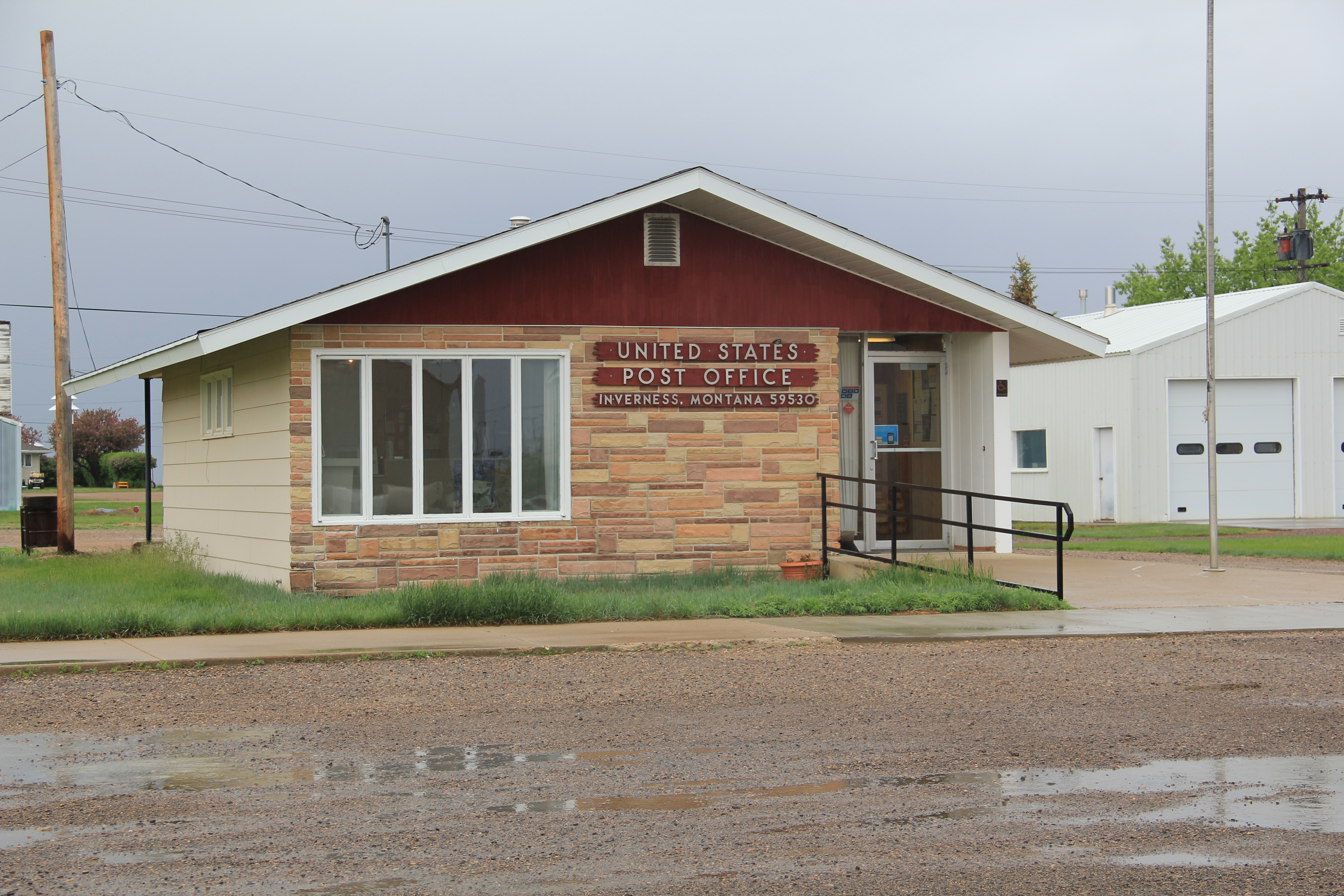
Montana’s historic post offices

Image Fallon, Prairie Co.

In the recently approved federal appropriations bill, Congress made clear its intent that the U.S. Postal Service follow existing federal laws and regulations and protect the nation’s many historic post offices.  A story this week in the Washington Post, sent to me by one of my MTSU colleagues, emphasized the preservation effort in the northeast United States and quoted, Steve Hutkins, a New York University professor who “has been troubled by the increasing number of buildings the USPS has been trying to sell since the agency tried to close his rural outpost in New York’s Hudson Valley.” Hutkins said:  “These are historic landmarks that are very important to the community as a public space,” he said. “They were paid for by taxpayers.”

In considering rural Montana’s historic post offices. truer words were never spoken.  The state’s federal elected officials have been steadfast in their opposition to recent moves to close Montana’s rural post offices, a stance shared by local government officials, citizen activists, and preservationists.

Image Saco, Phillips Co.

Image Coffee Creek, Fergus Co.

In my preservation plan survey of 1984-1985, I documented hundreds of Montana post offices, and continued doing the same in the last two years.  Why?  in most cases the buildings are the only representations of federal government in these communities, the only physical presence of the benefits of citizenship in the United States.  Here the federal government touches the lives of local residents on a regular basis. The post offices are public spaces that the virtual reality of the internet cannot replicate. When the post office closes, the community declines: witness the image below from Sanders.

Image

Old Sanders post office, note the replacement metal box

Nor are our rural communities strengthened when the solution becomes the metal postal box, even if gussied up with a plexiglass cover.  is this the fate awaiting the rural Montana landscape?

Image

Glentana postal service structure

Women’s Club Buildings in Montana

Montana celebrates the sesquicentennial of Montana Territory in 2014.  This week the Montana Historical Society announced that one of its key themes would be women’s history and then pinpointed key individuals and places, including the East Glacier Women’s Club.  I could not agree more that new attention needs to be given to community institutions, established by and operated for women.  In my 1984-85 work on the Montana historic preservation plan, I did not ignore women’s clubs–the Deer Lodge club house, an attractive Bungalow from 1904 was included in the survey–but I did not systematically look for these buildings and think about what they meant to local women and to the community at large.

Image 

Woman’s Club in Deer Lodge, 1904

The General Federation of Women’s Clubs in Montana organized that same year, 1904, and the federation’s magazine, The Montana Woman, is a great way to trace the creation and expansion of clubs across the state, from the major cities to places as small as Sula in the southwest corner of Montana.  Once you make a commitment to locate extant historic club buildings, you find a range of building types.

Image


The Moore Woman’s Club and Community Center in Fergus County dates to 1915, and so many existing rural club buildings belong to that decade of the homesteading boom of the early 20th century. In 2012 I spent two days is Wisdom, where the old woman’s club building of the 1910s has been converted into a lodge, one of the best examples I have encountered in rural America of finding a new, effective use for a community building.
Image


The Wisdom club house is a small frame building, seemingly too small to be a community building but when placed into the overall context of the emerging built environment of the homesteading landscape, it was a substantial building–compared to the typical homesteading tar-paper shack. 
Image

Women’s organizations also proved adept at adapting older buildings for their use. The Coalwood Ladies Aid Society, established 1915 in Powder River County north of Broadus, meets at the Coalwood School, built c. 1945.  A small rural population does not deter 21st century Montana club women from keeping the institution alive, witness the earlier post on the Wise River Women’s Club, dated to 1958, but with a recent expansion of the club house/community building.
Image

One of my favorite club buildings in eastern Montana is a striking Rustic-styled clubhouse in Malta, Phillips County. Image  Image


The Malta Woman’s Club organized in 1903 but the clubhouse dates to the New Deal era of 1937. Construction of the building was part of a $40,000 Works Progress Administration project in Malta that included the construction of a new city hall, a resettlement administration building, and a “ladies community center.”  (Phillips County News, January 24, 2001). As in other Montana towns, the clubhouse served as a town’s de facto library, using books donated by club members, and the club undertook such community improvement projects as erecting a fence around the Malta cemetery and supporting the town’s first blood mobile.  

There’s more to come in this discussion of women’s club and Montana’s landscape, but this initial post certainly agrees with the MHS announcement that there’s a big, significant women’s history story to be found in the Treasure State–club buildings are a good place to start.


Wise River Club, then and now

Image

 In my 1984 travels in northern Beaverhead County, I found few local dives more evocative than the Wise River Club, which stands along Montana Highway 43 near the confluence of the Big Hole and Wise rivers.  I have used this image in the decades since multiple times to illustrate the vernacular of the Montana roadside.  At the Wise River Club, the food, company, and adult beverages were great then, as they were in the spring of 2012, when I repeated my visit.

Image

 The club was still there, and the food remained excellent but certainly the exterior had evolved over the past thirty years.  A new stone veneer–like something out of the mid-20th century–had replaced the rustic log look of 1984.  A portico was there too.  But what you really missed were the racks, wagon wheels, and totem pole of the earlier exterior.  Until you ventured inside.

Image


The racks had moved into the ceiling, throughout the tavern area.  Quiet when I first arrived and everyone stepped back to accommodate the photo.  Residents could still tolerate visitors at the Wise River Club.

Wise River is a village, and like the club, little had changed there in 30 years.  I did document one building that I had unwisely ignored in 1984:  the Wise River Women’s Club, established in 1958. (Once again the so-called “50 year rule” clouded my vision).  The impact of women on community institutions can be found in any diary or book about rural Montana in the 19th and 20th centuries.  But we do not often look for the buildings that embody in a physical sense that impact.  This unadorned frame building is just one of many across the state that deserve much more than a quick look.

Image 

Image


Backdrops to Montana History: The Irrigation Ditch

Coming to Montana in 1981 from the wet, humid South, I thought little of irrigation as a moving force in history.  To my mind, irrigation was about sprinklers keeping suburban lawns nice and green in the summer.  I cared little for that, and thought no more about it.

Image


Milk River system, Tampico, Valley County

Realizing that irrigation had shaped the history of the United States was another of those primary contributions living and working in Montana brought to my understanding of history.  In the 1984-85 historic preservation survey of the state, I noted a few key systems and thought about their significance.  But in the time since, I came to understand irrigation as one of the key components of an engineered landscape, that literally reshaped the state and made towns, cities, and ranches possible in the early 20th century.

Image


Big Hole Valley

Early Montana settlers, especially the pioneering irrigator I.D. O’Donnell of Billings,  understood by the turn of the century that there would never be enough water to make Montana an agricultural paradise.  Men could not conquer nature–but they could build a machine that could harness it, even replace it.

Image


This irrigation effort in Valier took advantage of the 1894 Carey Act.

So with the financial assistance of the federal government, first with the Carey Act of 1894 and then the vastly more important Newlands Reclamation Act of 1902, the transformation of Montana through irrigation took place in the first third of the 20th century. 

Image


The U.S. Reclamation Service Office at Ballatine, Yellowstone County.  Championed by I.D. O’Donnell, the Huntley project was the second USRS project in the nation.

The engineered landscape represented by irrigation is everywhere in Montana.  I will pick up this theme in later postings but end today with another image that evokes the impact, even beauty, of the man-made streams that crisscross the state.

Image


Madison County, along Montana Highway 249


Hi-Line Roadside

Image


U.S. Highway 2 originally closely followed the tracks of the Great Northern Railway as it crossed Montana’s high plains counties.  Today there are places where the modern highway and the railroad tracks diverge, but still you can travel most of the route from Bainville to Glacier and still discover an astounding array of roadside architecture, from the early 20th century to the more recent past, such as the coffee pot above, on the south side of U.S. 2 in Poplar.  

This week begins the holiday traveling season.  With that in mind, I offer up a range of roadside images from the Hi-Line–places that you may roar by in a hurry to arrive at your destination but places nonetheless worth a stop and visit.

Image Image


Gas stations of course are a constant, and some may be well kept as an artifact of their function–service stations such as this one on the left in Liberty County–or they may be transformed into ice cream parlors like the station on the right from Chinook.

Motels are everywhere too–but the “mom and pop” businesses of the first 2/3 of the twentieth century have been rapidly replaced by the major chains, from Super 8 to the Hilton and Marriott properties of recent vintage.  This classic from just outside of Havre is a throwback to roadside lodging of a generation or two ago.

Image


Of course there are creative types all about the Hi-Line. Buck Samuelson’s collection of roadside sculpture just west of Glasgow not only plugs into that expressive tradition but also in the tourism focus on dinosaurs that you can find throughout eastern Montana.  I actually prefer the roadside 

Image


signs that you find along the highway.  Two from Hinsdale, in Valley County, are favorites. The 

Image


painted sign, courtesy of the Matthew Hansen Endowment, remands everyone of community vitality even though surface appearances may suggest otherwise.  The second sign is among the state’s most popular–painted rocks in white that outline the first letter of the town–positioned so that travelers and residents can view it.

Image


Commercial signs are another constant along the Hi-Line.  Most of course are just like millions across the nation–back-lit plastic signs.  But places like Sam’s Supper Club in Glasgow

Image


and the line of bar signs in the middle of Shelby remind us that once travelers were enticed to stop and jump into another world of flash and class behind the neon signs of U.S. 2.

Image


The roadside of U.S. is nothing if not varied, and I can spin many more words and images about the compelling and the mundane along the roadside.  We do keep up with the trends, and try out best to merge the roadside with current events, as this coffee stand in Culbertson proves.

Image


But I will close with this image from Dodson as a reminder that the roadside can be fleeting, and a place that I enjoyed in 1984 is falling apart today as everyone gravitates to the standardized chain-experiences that define our time.

Image


Martinsdale’s Milwaukee Road Depot

Martinsdale is a tiny town in Meagher County, just off U.S. Highway 12.  Many travelers have stopped by the historic Bair Family Ranch, the former private estate of stockman Charles Bair and his daughters, which is now a historic site and museum.

Image

But 30 years ago, the building that most captured my attention in Martinsdale was the recently abandoned combination passenger station and freight depot of the Chicago, Milwaukee, St. Paul, and Pacific Railroad, better known as the Milwaukee Road.

Image

Why did such a nondescript building interest me? Built in the first decade of the 20th century, the depot represented the increasing standardization of design across what was once a vernacular landscape.  The company constructed a full set of this combination stations across the state, but by 1984 only a handful remained.  At Martinsdale not only was the building there; it was in good shape, and even had its privy–also a standardized design–standing just east of the depot.Then there was the matter of where the depot stood.

IMG_9678


It was at the head of town–a most privileged position indeed–and that placement reflected the significance of the Milwaukee Road to the town and region.  It also reflected the Milwaukee’s decided preference for “T-town” plans, where the tracks formed the top of the T and the town’s commercial district flowed down both sides of the stem of the “T.”

IMG_9674


The building is no longer in good shape, with part of the roof decking missing just being the most obvious issue.  Thirty years ago, the assessment of this depot was a centerpiece of my “Resource Protection Planning Process” document for the State Historic Preservation Office at the Montana Historical Society.  The depot spoke to so many of the trends of that plan–design, history, settlement patterns, community planning. Now you wonder if the building will survive another year.