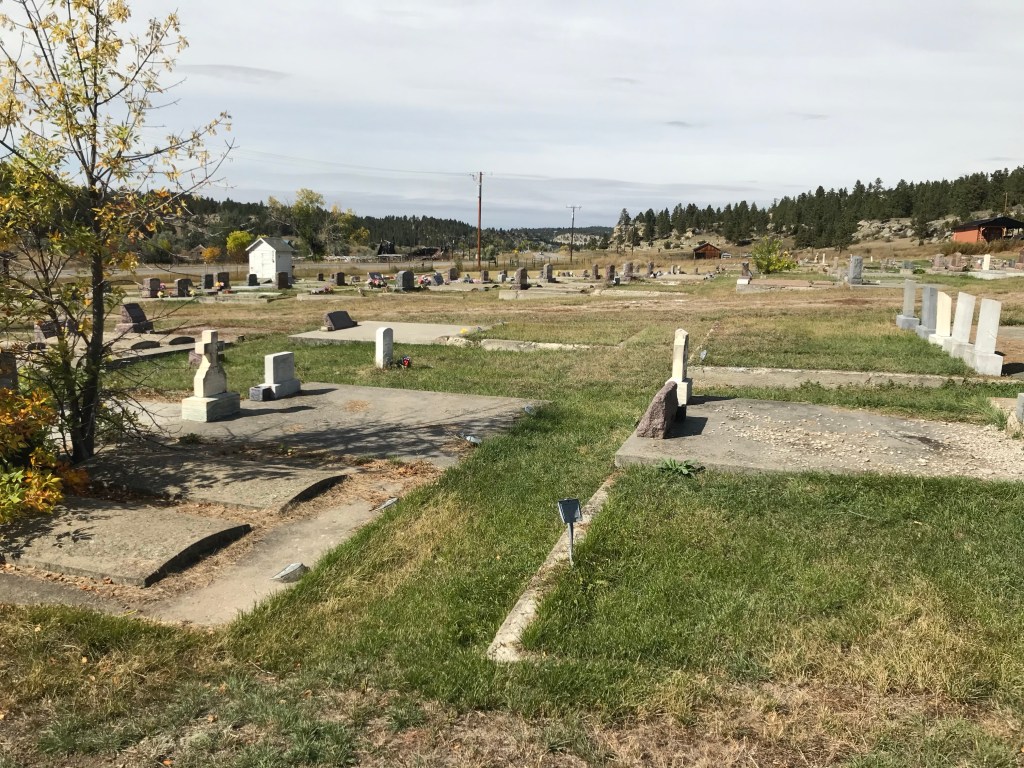
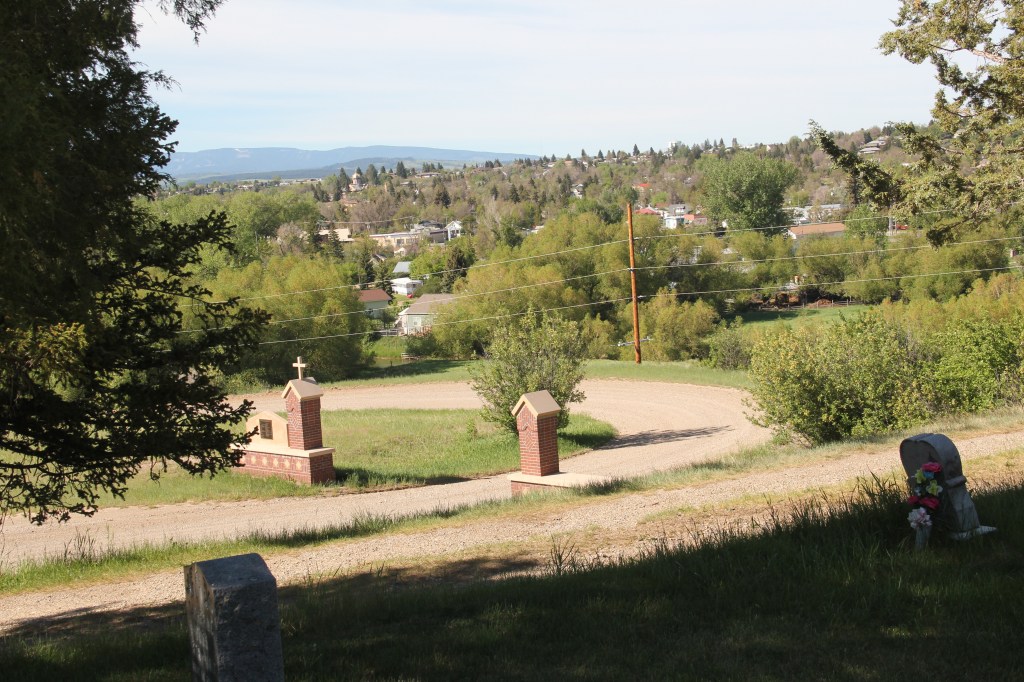
The “new” UMW cemetery refers to the southern section of the cemetery, nestled in the bluffs of the Bull Mountains outside of the historic coal mining town of Klein. The UMW local 2866 operated from 1919 to 1973. The northern section contains early burials of members.
The “new cemetery” has numerous burials from the late 1920s, 1930s, and 1940s but most of the internments date to the second half of the 20th century.
The cemetery faces west (US Highway 87) and is centered on a long driveway that ends at a flagpole. Then the rows of graves on either side are roughly equal in size, giving the “new” cemetery a sense of symmetry not apparent in the earlier north section.
Looking northwest from the center drivewayLooking northwest from the center drivewayLooking south from the center drivewayLooking southwest from the center driveway.
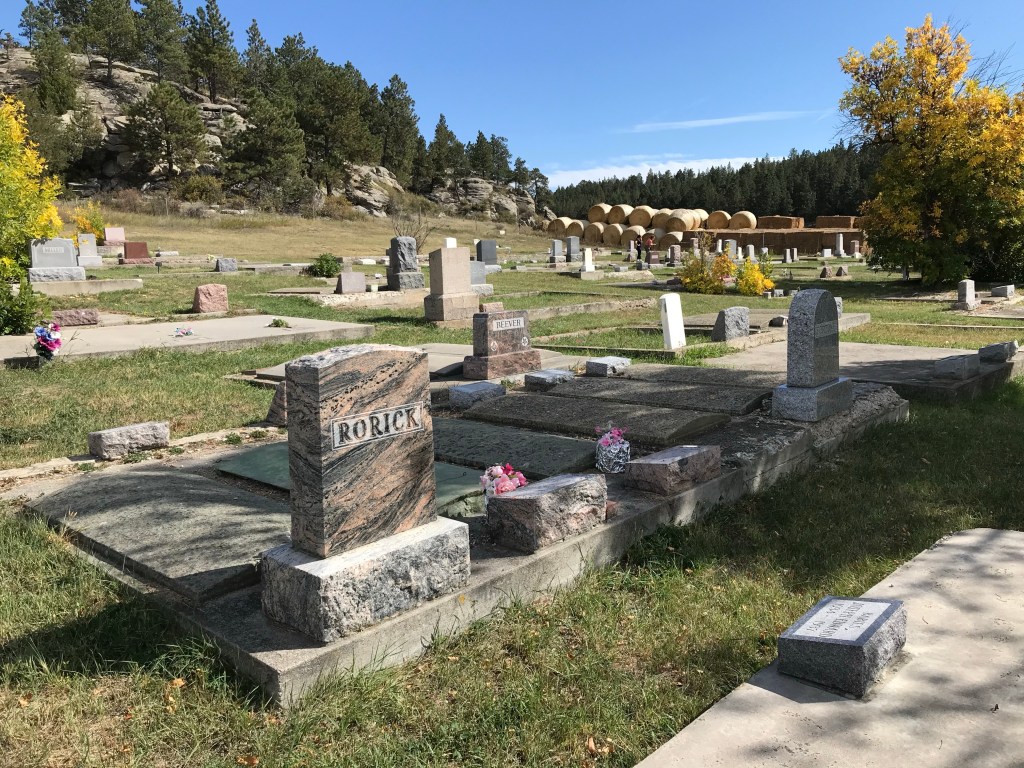
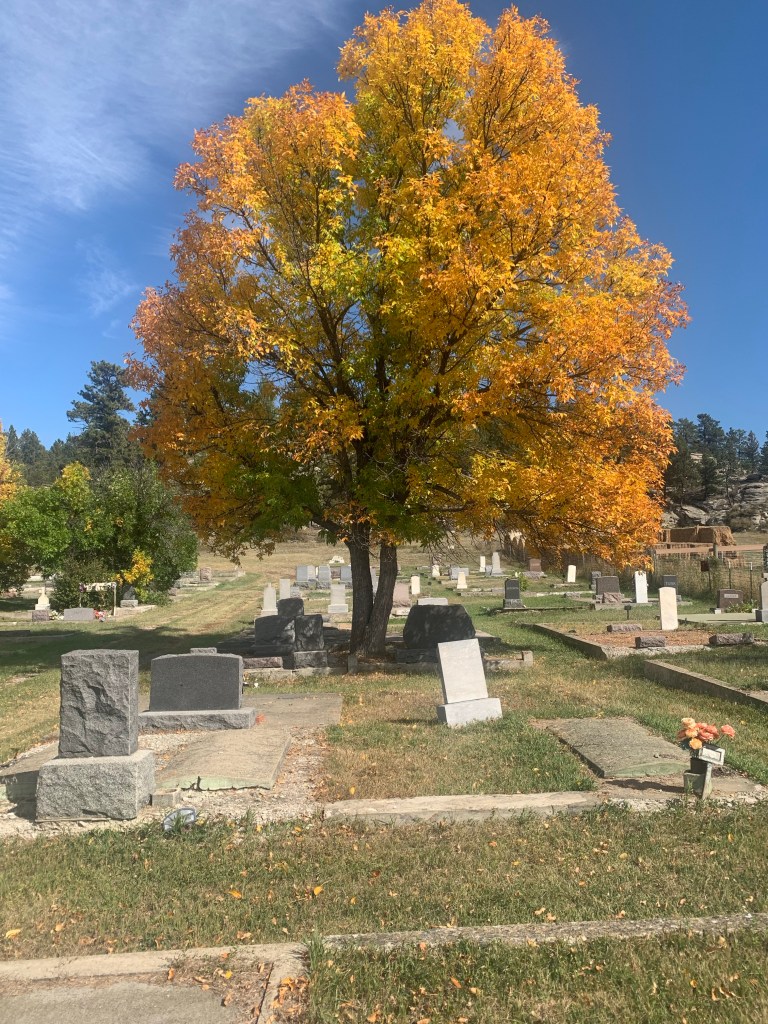
The cemetery’s rocky bluff setting, combined with colorful fall trees, is beautiful in September and October. It’s use of foliage and shade is another difference with the northern section of the UMW Cemetery.
South section facing eastSouth section facing southeast
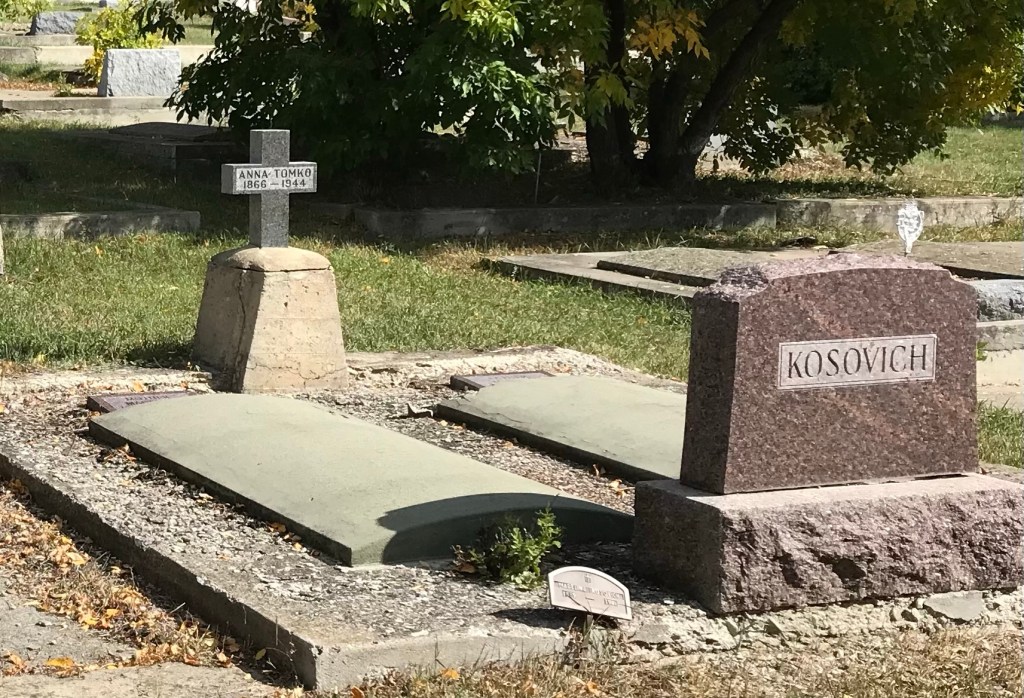
There are several interesting grave markers. Anna Tomko (d. 1944) was born in Croatia in 1866. She arrived in the United States in 1901 and was leaving in Roundup by 1920 where she became known as Annie Tomko.
The beautiful cut and polished stone marker for Carl Eldon Rorick dates to 1941. Rorick was a native of Klein and only 17 years old at the time of his death.
The large grave marker for Mary (b. 1872) and David Murphy (b. 1870) dates to 1942; she died in January while he died in December.
David was a native of Scotland, who was working as a coal miner at Klein at least by 1920. He married his wife Maggie (Margaret) McCann Murphy in about 1892.
When I lived in Helena from 1981 to 1985 one of my favorite jaunts was along U.S. Highway 12 from Townsend to Roundup. It remains so today, 40 years later. My initial interest centered on railroad corridors. Helena to Townsend followed the Northern Pacific Railroad and a good bit of the Missouri River (now Canyon Ferry Lake).
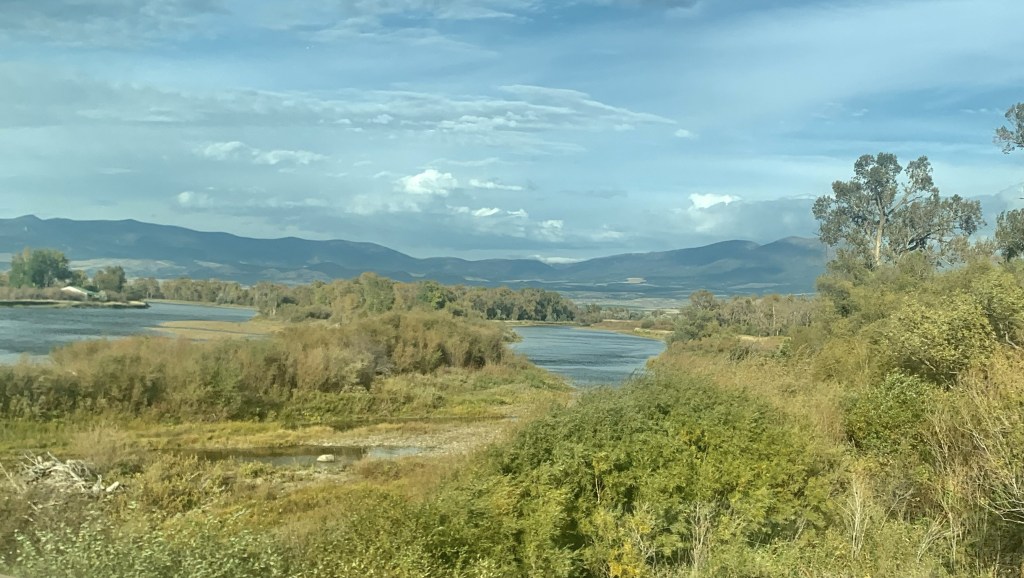
Northern Pacific bridge over Missouri River near TownsendMissouri River and Canyon Ferry valley near TownsendMissouri River campground near Townsend
It was a brilliant day with fall colors just popping as we left US 287 and turned into the heart of Townsend.
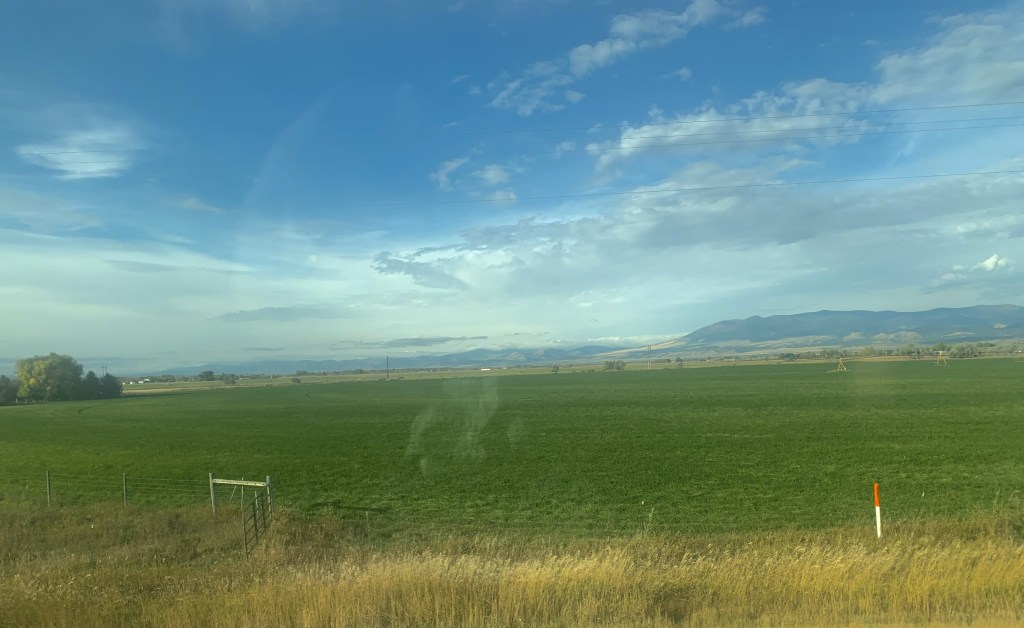
As soon as you leave town to the east you encounter a lovely mix of ranches and irrigated fields until you thread your way through a national forest along Deep Creek.
Fall colors along Deep Creek
We decided to continue east by briefly jumping off US 12 and go to Montana 284 so we could follow the Milwaukee Road corridor from Lennep to Martinsdale where we would reconnect with US 12. Two of my travelers had never been to the Milwaukee Road “ghost town” of Lennep. It was a beautiful morning to be there.
Milwaukee Road powerhouse
You first realize that this abandoned railroad corridor is different when you encounter an electric powerhouse—the Milwaukee Road’s tracks were electrified from Harlowton Montana west to Idaho.
Lennep
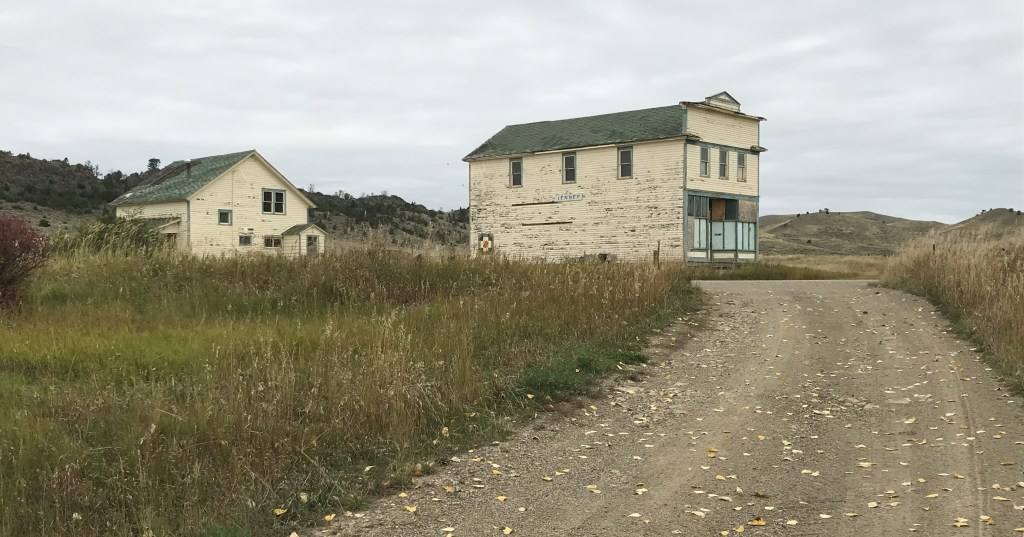
At Lennep the landmarks remain—the Trinity Lutheran Church, the store, the school, a teacher’s cottage and an early notched log house—but all were a little worse for the wear compared to my last visit 10 years earlier.
As we traveled east that morning we quickly moved through the county seats of Harlowton and Ryegate to get to Roundup by lunch. The Musselshell Valley was brilliant even as signs of the old railroad almost disappeared.
Near Ryegate Near Lavina
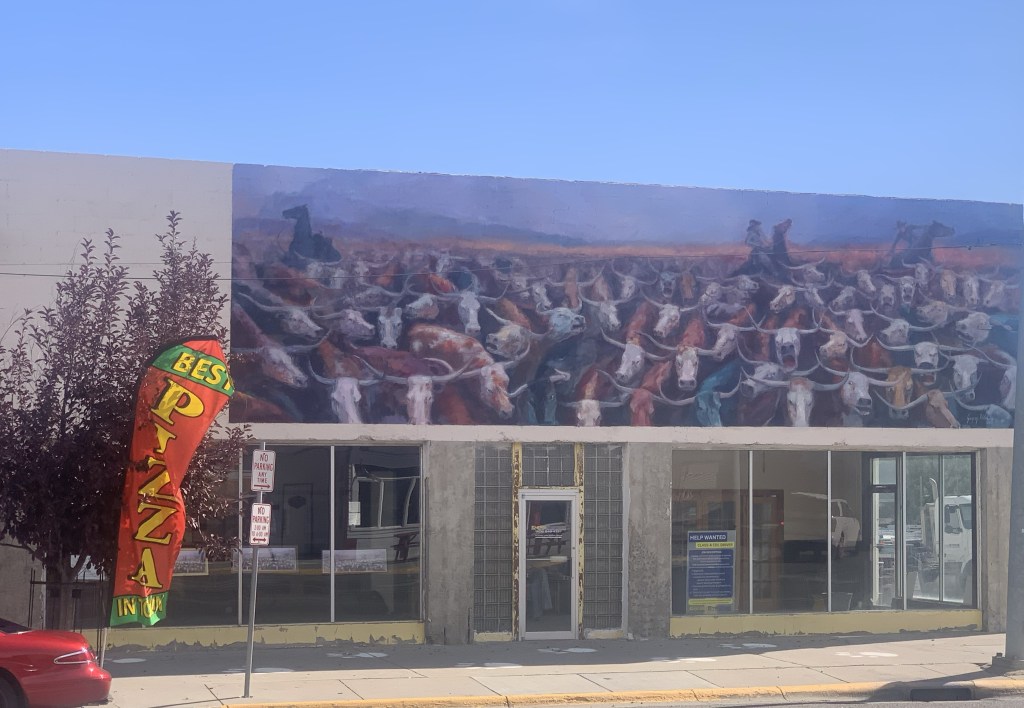
Roundup continues its renaissance with new businesses and restored buildings. The town core, clustered around the intersection of US highways 12 and 87, was busy on a fall weekend.
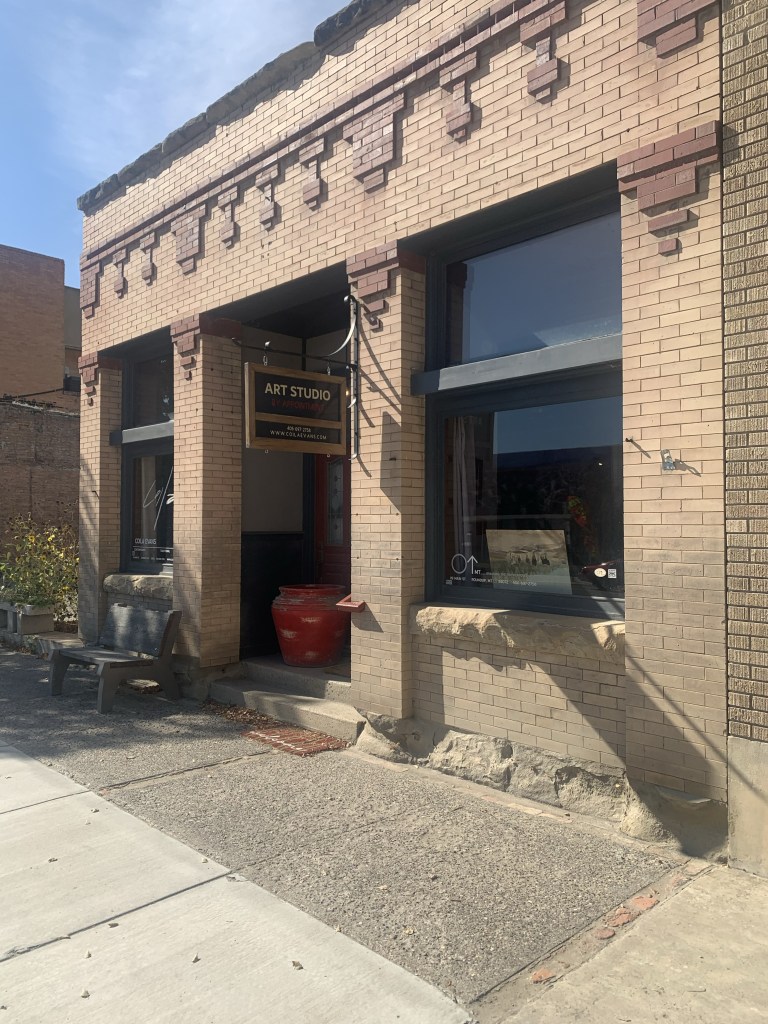
A mural on the great cattle drive of 1989The Backporch—great bbqNew mural at the KegArt studio doing wellAwaiting its renovation Community green spot
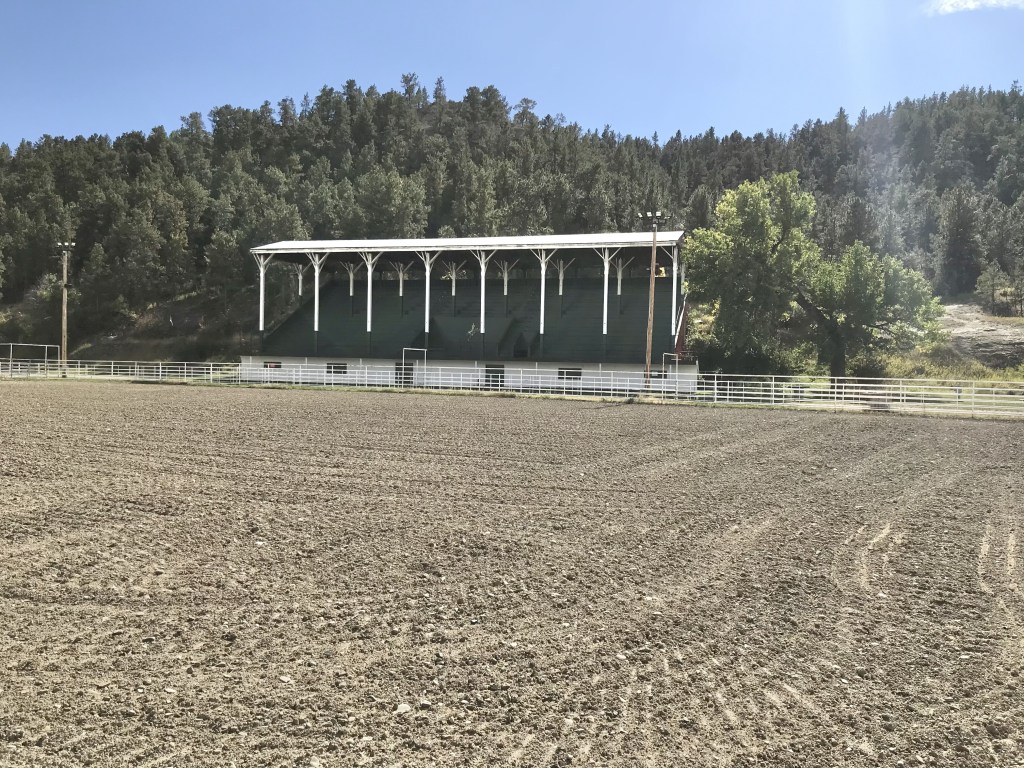
As I observed a few years ago Roundup residents worked together and created a plan—and the place continues to work the plan, from the adaptive reuse of its historic stone school to the careful stewardship of its historic fairgrounds. It’s impressive.
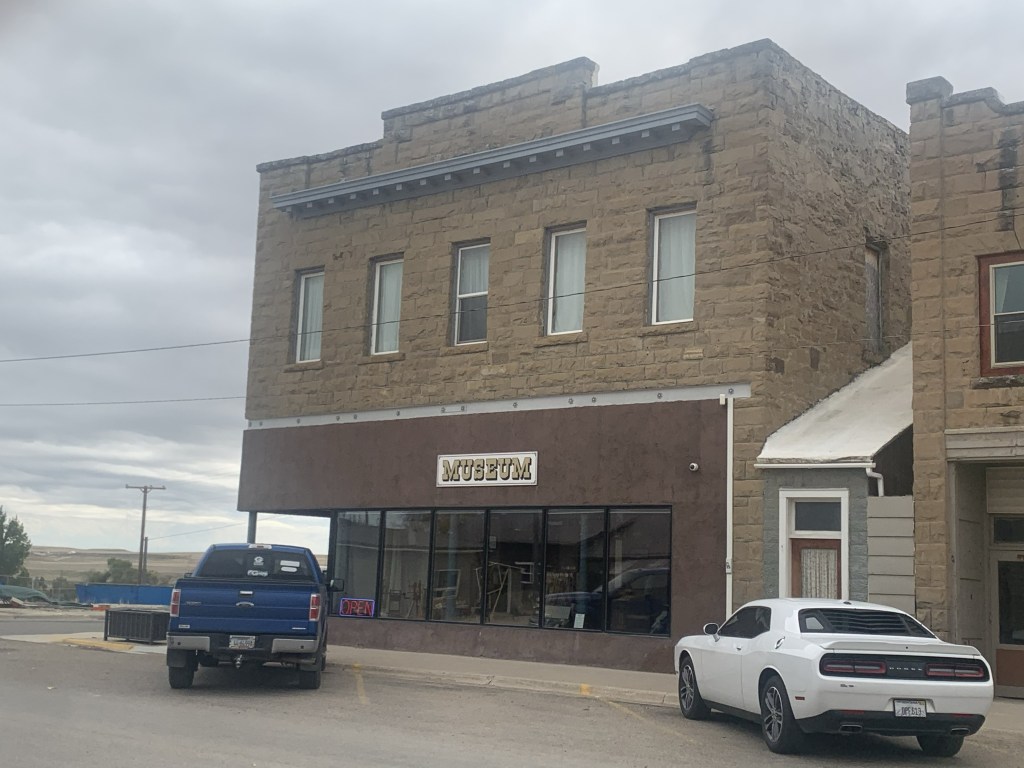
After Roundup we stopped at two county seats on the return to Helena. Harlowton was rocked by the closing of the Milwaukee Road over 40 years ago. It has struggled to reach the economic comeback achieved at Roundup. But the historic stone buildings have great potential. Three of them are now part of a large museum complex.
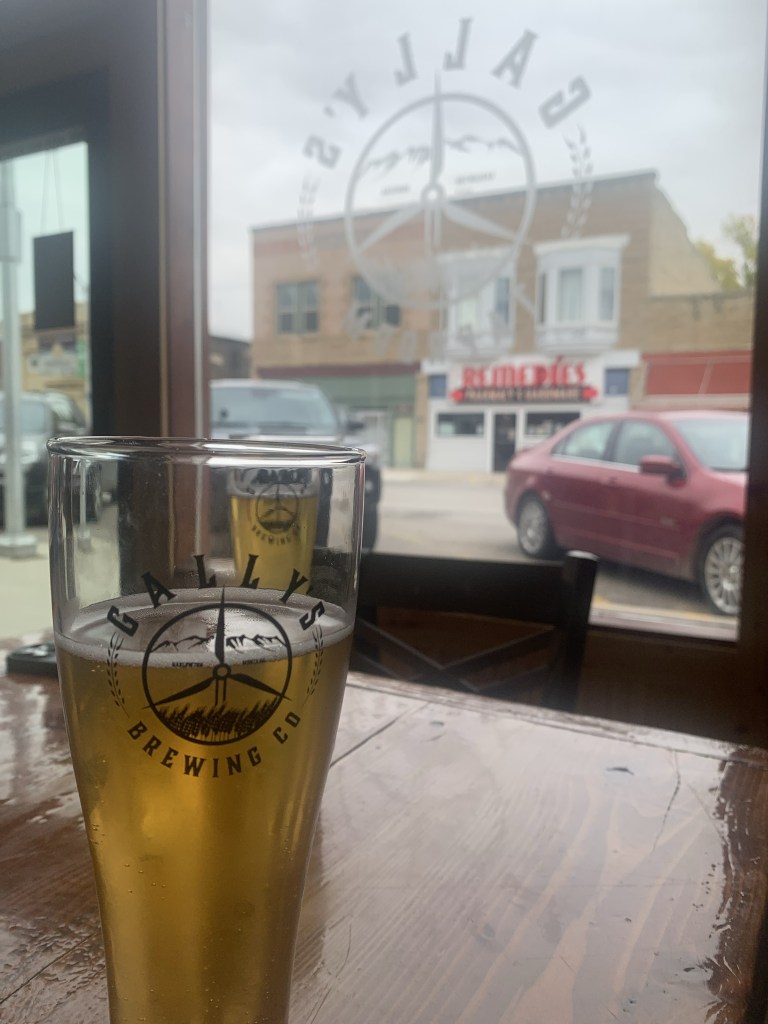
Then there’s the newcomer: the Gally’s microbrewery and pub, housed in the 1913 Montana Block.
It’s a great place for local beer and good conversation—and maybe the start of something good for the town.
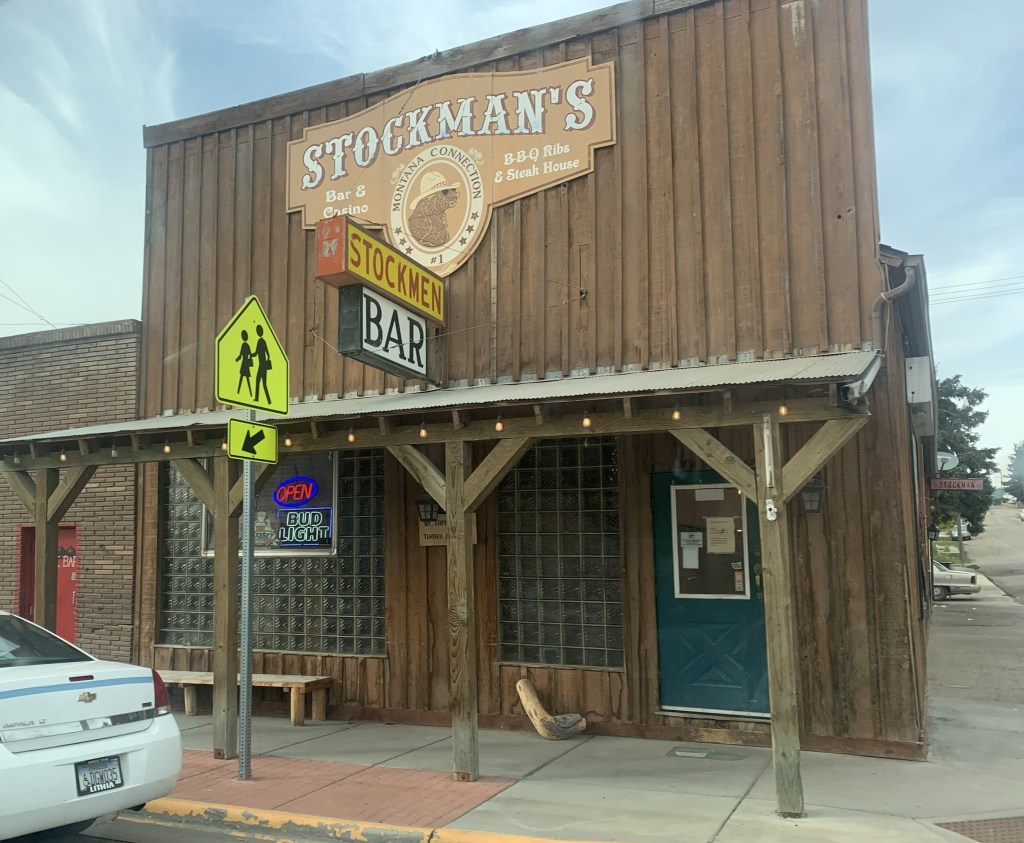
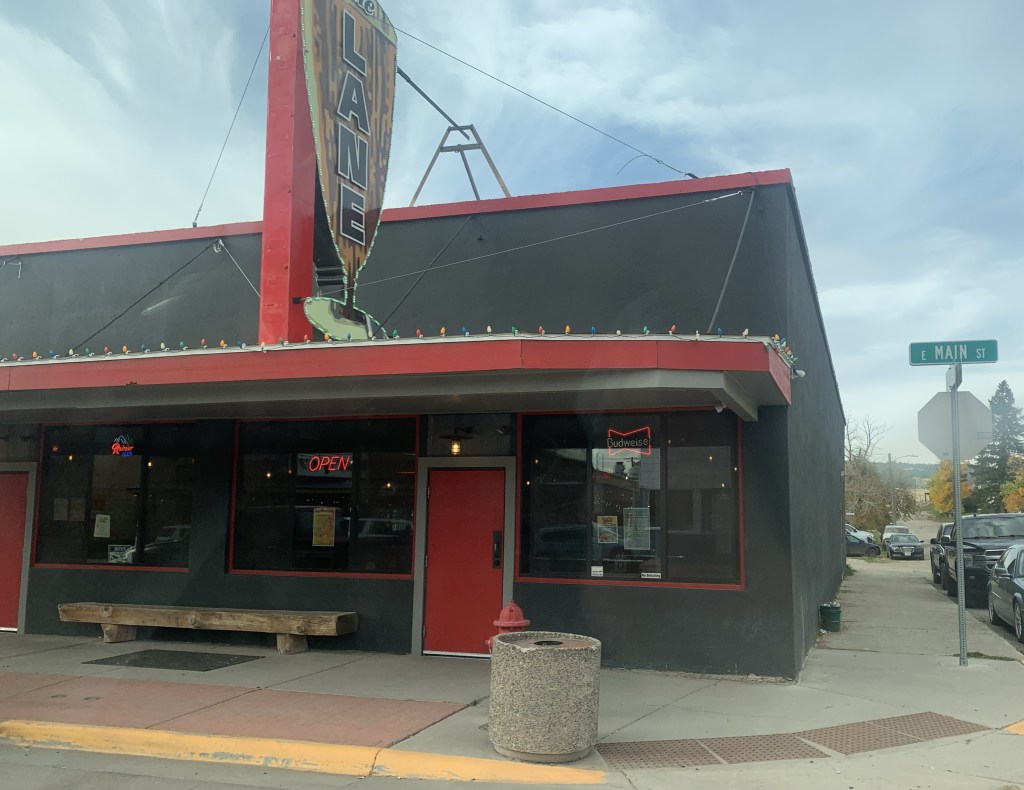
US Highway 12 was torn up for major repairs when I last visited White Sulphur Springs last decade. The improvement along its population growth and the ever expanding hot springs gives the place a new look, reflected in new catchy fronts to local bars along with new businesses such as a huge Town Pump.
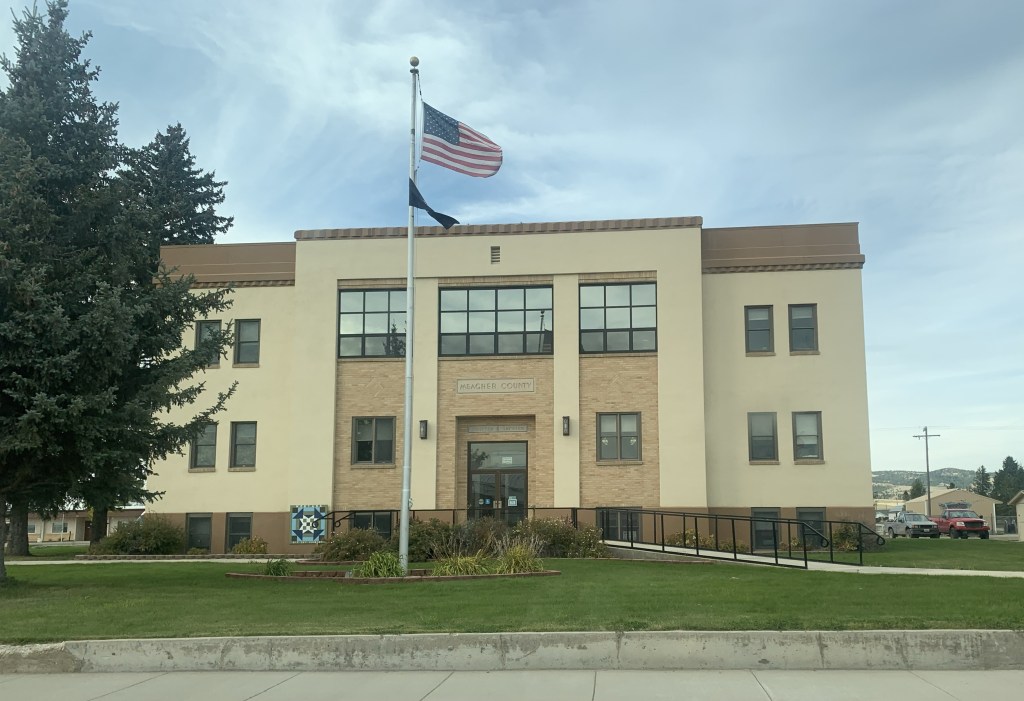
But historic White Sulphur Springs is doing ok too: the New Deal constructed Meagher County Courthouse is still a roadside landmark while the old railroad corridor, just west of the Hot Springs, remains, awaiting its rebirth.
These places are mere highlights along a historic route that’s worth a drive anytime in the fall.
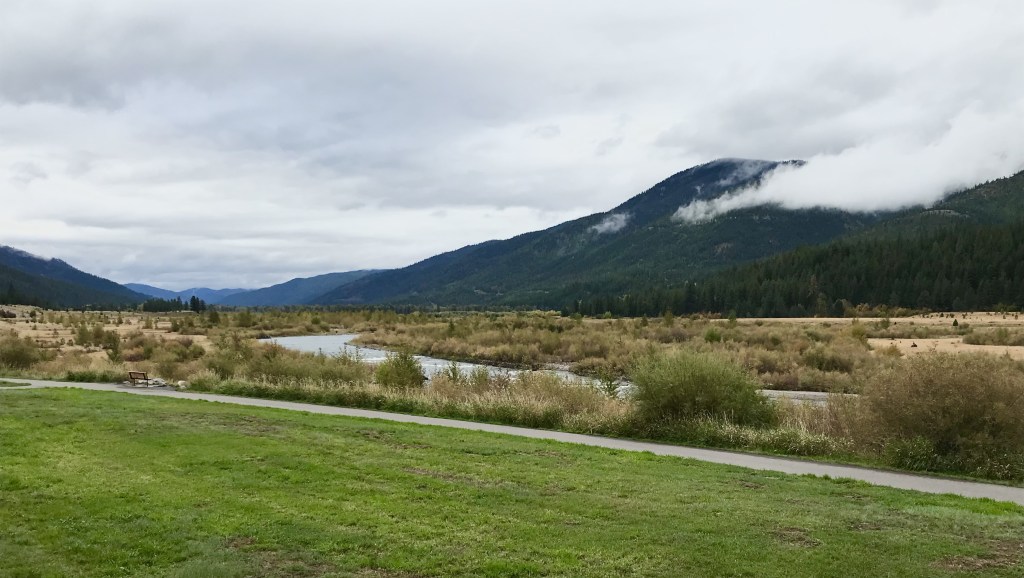
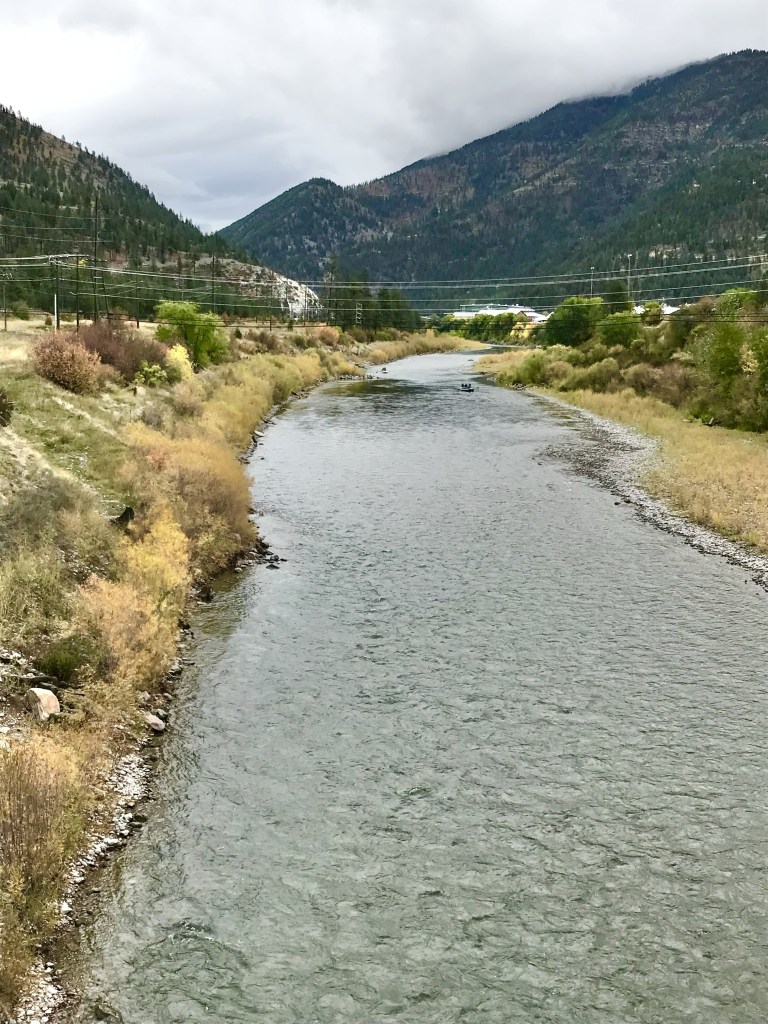
When I last explored Bonner and Milltown in 2015, the effort to reclaim the river landscape created at the confluence of the Blackfoot and Clark’s Fork rivers—but long hidden by past industrial uses—was underway but far from finished. At the end of September 2023 I was able to return to the park and see the transformation myself. It is a quite remarkable super-fund project that restored a natural landmark but also told a significant historical story.
At the confluence section of the park, the removal of the dam is now 15 years old and while you can still visualize its location, to many it must look like a place that hasn’t changed in decades.
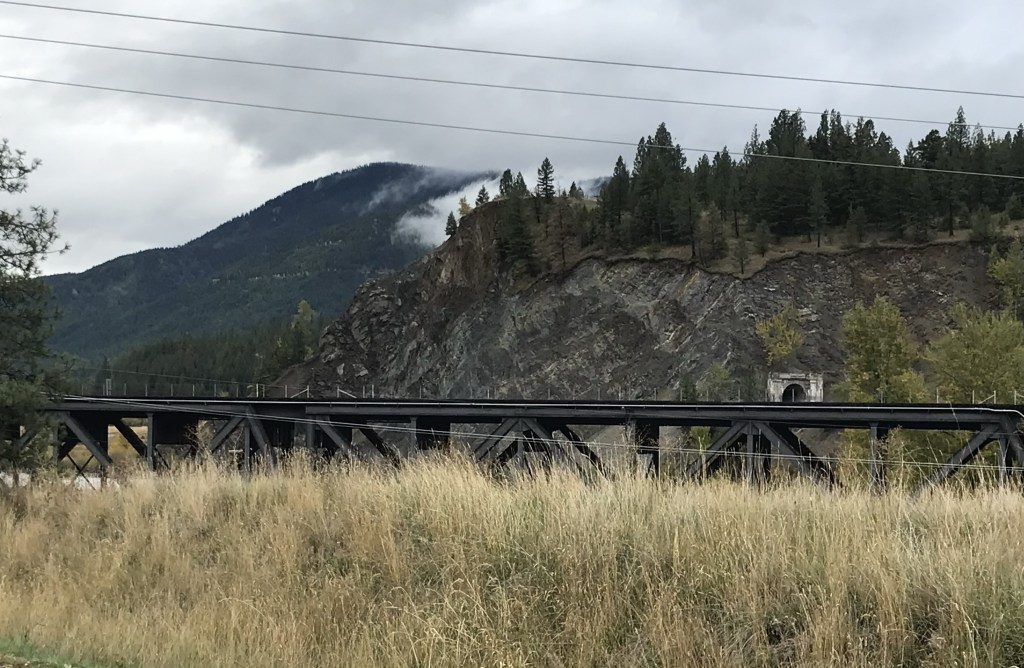
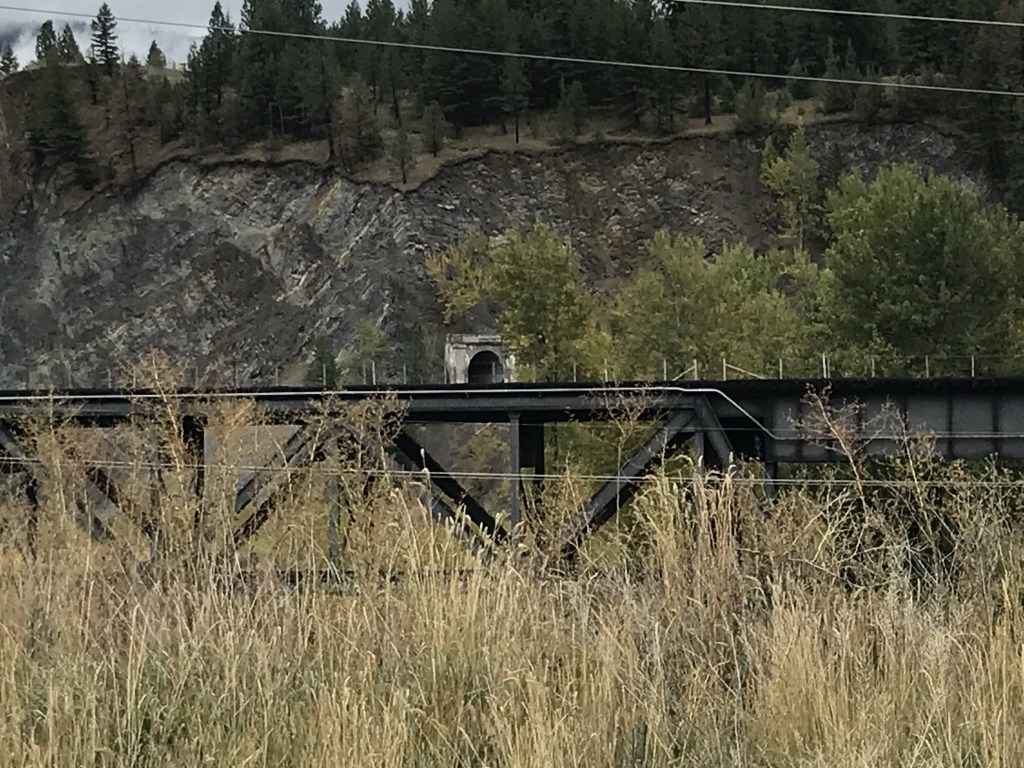
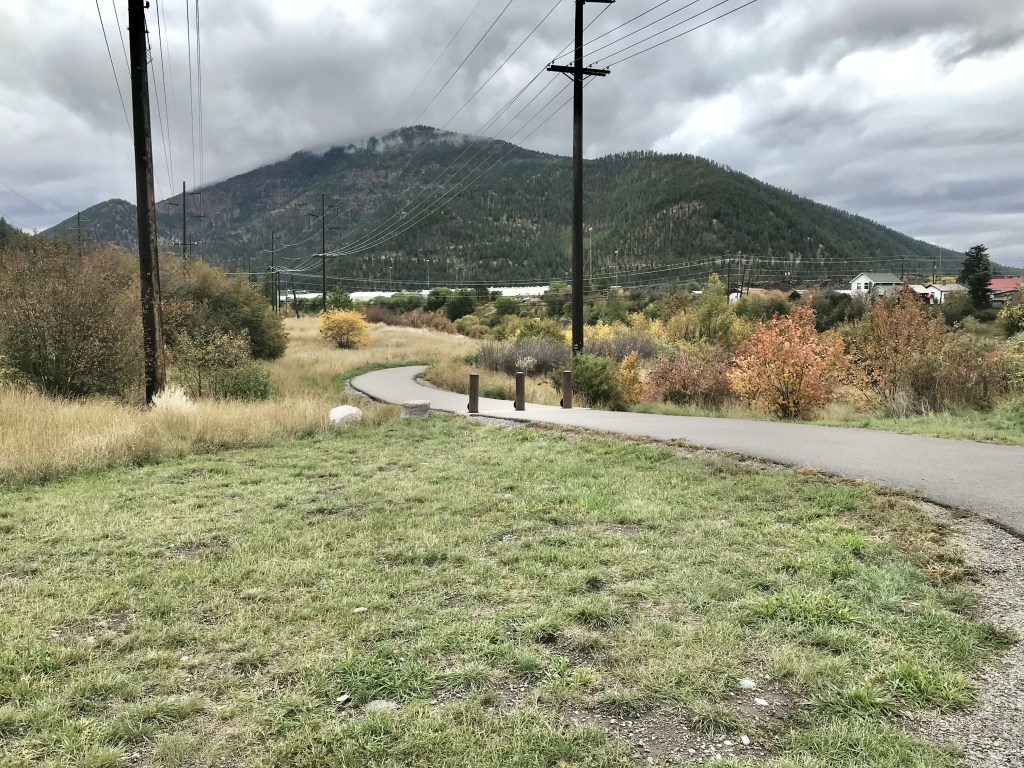
The interpretation kiosk relates the changes well but I like how the park is not inundated with markers. Paved trails take you everywhere, and give you an up close but safe way to view the steel bridge of the Northern Pacific Railroad’s mainline along with the nearby but now abandoned tunnel for the Milwaukee Road.
Talk about a transportation crossroads for the Mountain West—still a great site from the Milltown Bridge where you have bridges for Montana 200, the Interstate and the two railroad lines easily viewable from the pedestrian bridge.
Trails that link the pedestrian bridge to the river were not complete in 2014 but now they are finished and give you another opportunity to go to the Blackfoot river bank.
Milltown State Park is a remarkable historical landscape, whether you explore by hiking, biking or by boat.
My exploration of historic town cemeteries in Montana over the last two years ends at one of my favorite county seats, Harlowton, the seat of Wheatland County. Located on bluffs overlooking the Musselshell River, Harlowton is a classic railroad town, full of interesting and architecturally compelling buildings.
The two cemeteries share that significance. The city cemetery dates to c. 1907 and coincides with the construction of the Milwaukee Road through the valley.
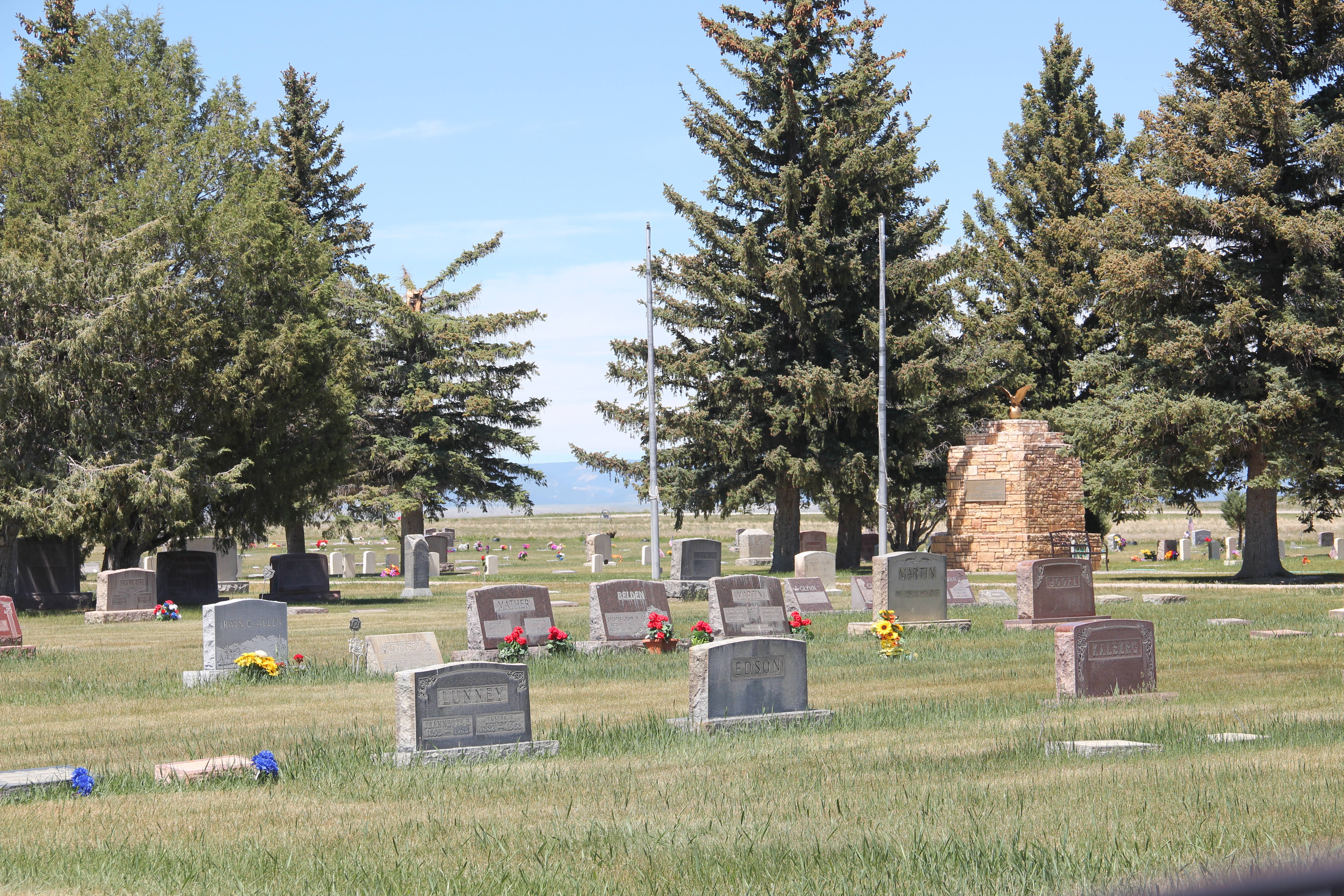
A key focus of the cemetery is its veterans memorial, built with local stone in 1927 by the Al-Be-Dad Shrine Club. The stone pillar is topped with a gold American eagle, similar to other war memorials across the state from the 1920s. It is dedicated to all veterans of American wars.
The distinctive metal marker for June Adeline Ehler Vezey dates to 1997.
There are over 2000 burials at the Harlowton Cemetery. The Harlowton Catholic Cemetery is much smaller. The first burials took place in late 1907.
The prominent cross marker for Leopold Labrie is dated 1884 but probably represents a memorial. Other family members are buried nearby.
The rectangular shape of the cemetery is defined by a high hedge that surrounds it.
Both cemeteries are irrigated and well maintained, a reflection of the deep respect for their past held by residents of Harlowtown and Wheatland County.
For almost 50 years the Sun River Valley Historical Society has undertaken the preservation and restoration of Fort Shaw (1867-1891), one of the most important federal sites in the west. When I first met and talked with the group in 1984 during the state historic preservation planning process, efforts were just underway, focused on the officers duplex, the wash house, and bakery.
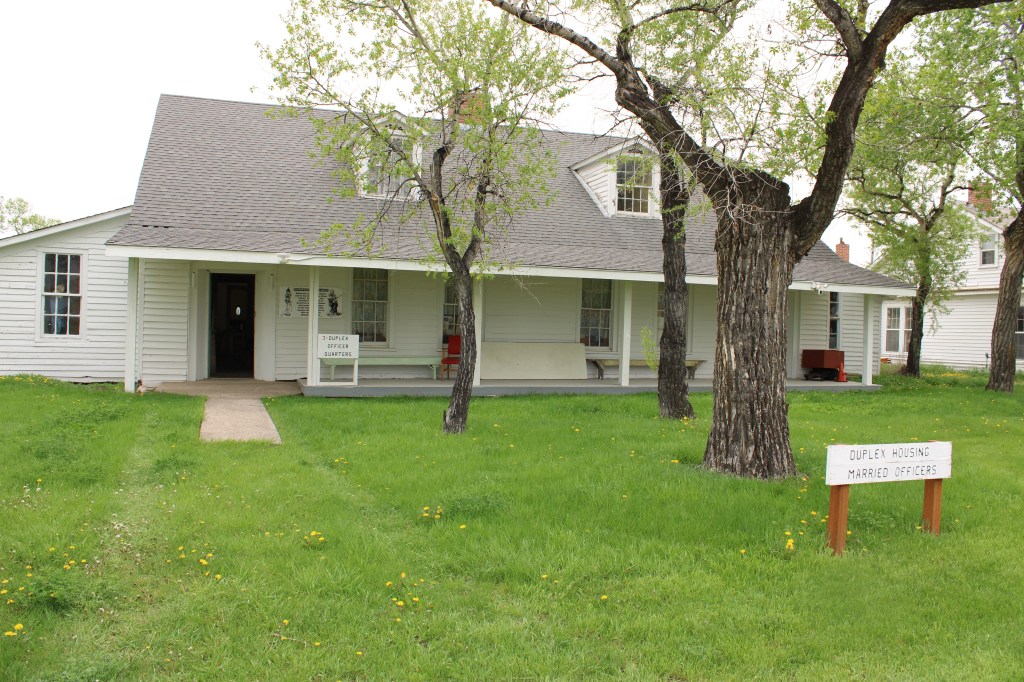
Officers duplex
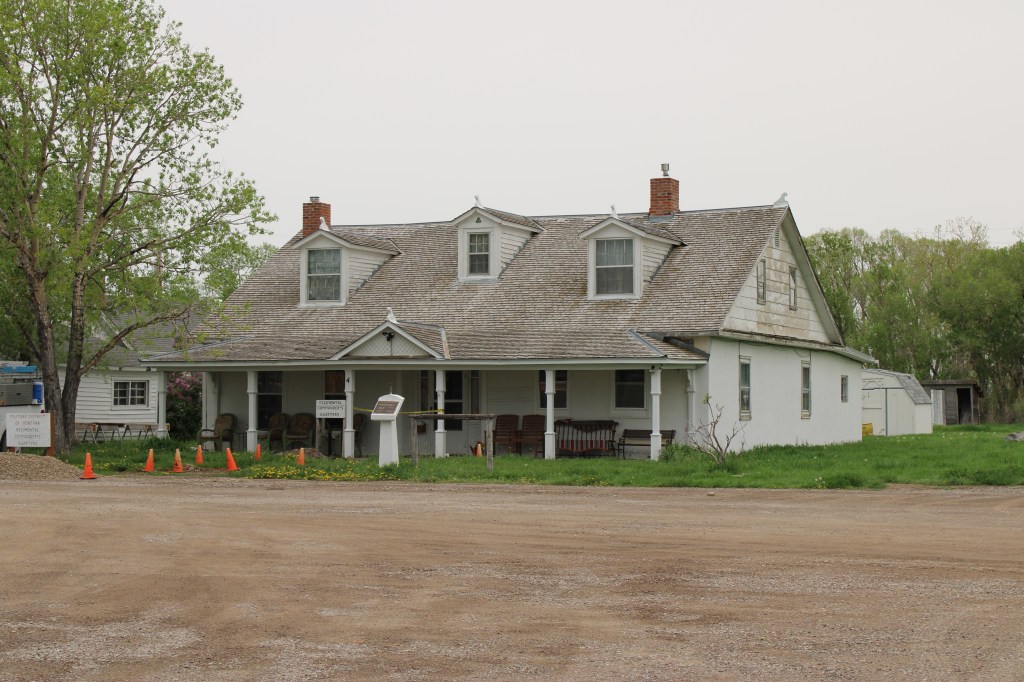
Now I would like to focus on achievements of the last 10 years since the last visit in 2013. I have posted earlier about how the society has restored the cemetery. This post is about the regimental officers quarters, where restoration began with repairing the historic adobe walls in 2014 and continued with a comprehensive interior restoration over the next several years.
Commanding Officers quarters
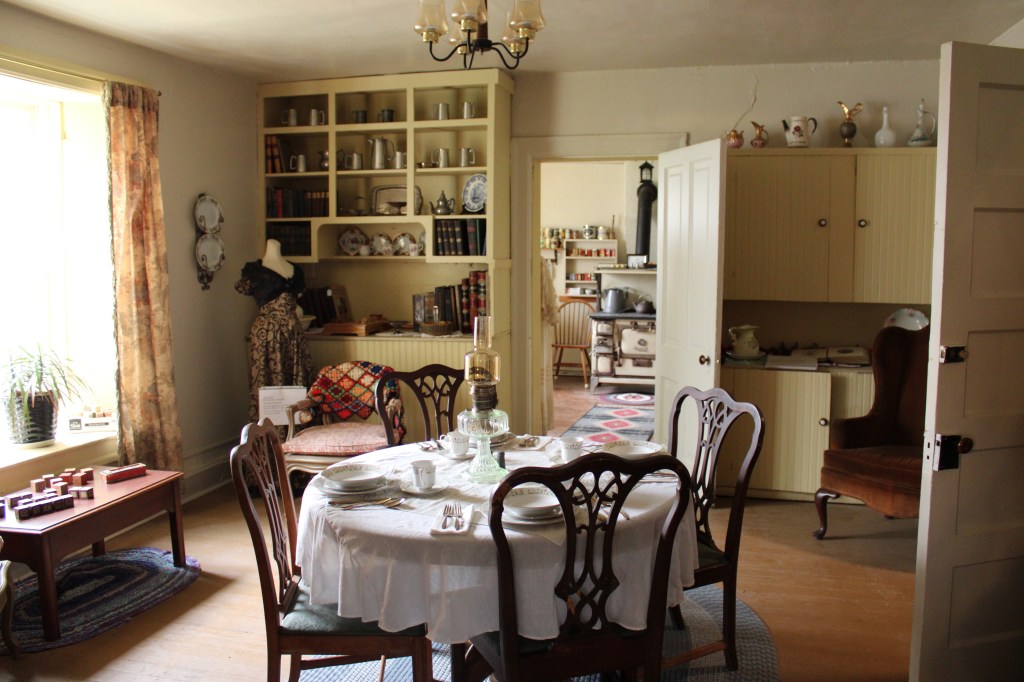
While the first restored building serves as a general history exhibit about the fort and immediate region, the society restored the Commanding Officers quarters as a period historic building.
Dining roomParlor
Within the period objects found in each room, the society also empathizes a “First Lady” theme, adding a strong historic textiles collection to the museum.
Restored interior doors and floorsRestored staircase and flooring
The society took care with the kitchen and also addressed the presence of Chinese cooks at the property. The federal census of 1880 records 5 Chinese men at Fort Shaw. A letter from 1887 documents that Ah Wai was employed as a cook for the private company that operated the post’s mess hall and store. The Fort Shaw Indian School superintendent, who may have resided in this building, hired Joe Ling as a cook in 1898.
A bedstead for an unidentified Chinese cook at Fort Shaw is located within the pantry of the building Bedrooms arranged in the second floor—note the massive chimney flue of adobe brick.Desk within officer’s bedroomCentral hall restoration, first floor
My initial impression is that the many period objects are both a blessing and a curse. A blessing is that the furnishings make the place “come alive” and creates ample opportunities for storytelling about the inhabitants. It reinforces the Victorian era that the fort was part of—and the storyline of military families in the west. The curse is that the rooms may have too many objects—and few that are directly tied to the property. Do overfurnished interiors overwhelm the visitors visually—it is too much to take in?
Such is the challenge of the period room historic house museum. If the past here is any indication, the preservation of Fort Shaw is far from over—I look forward to future visits.
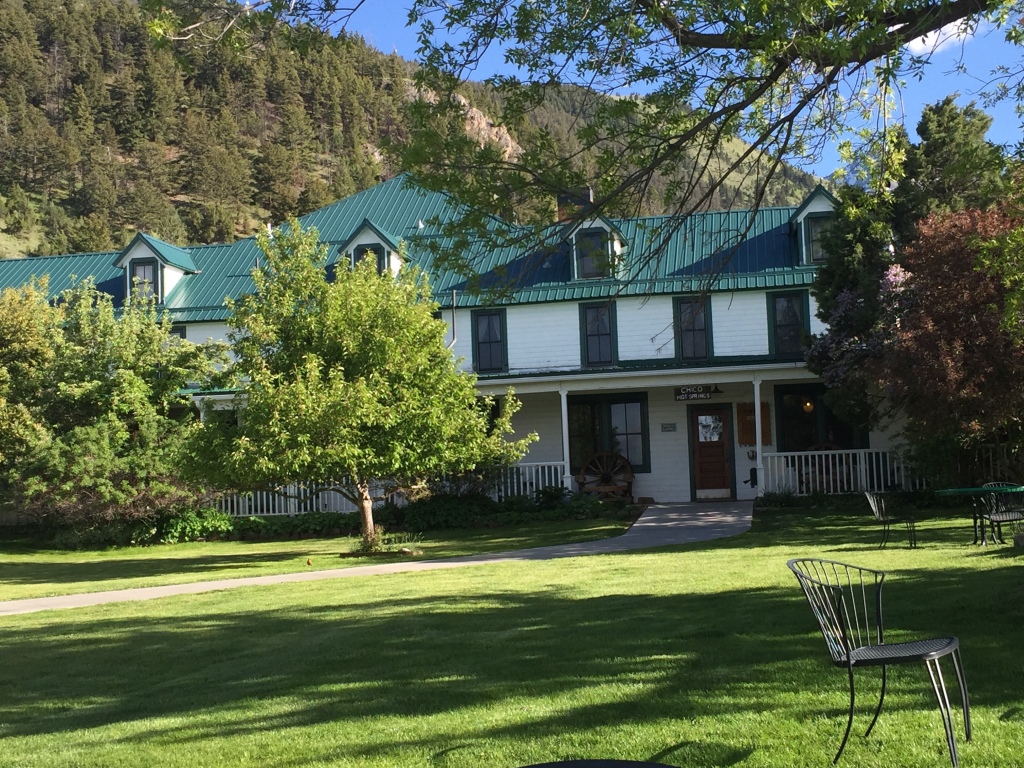
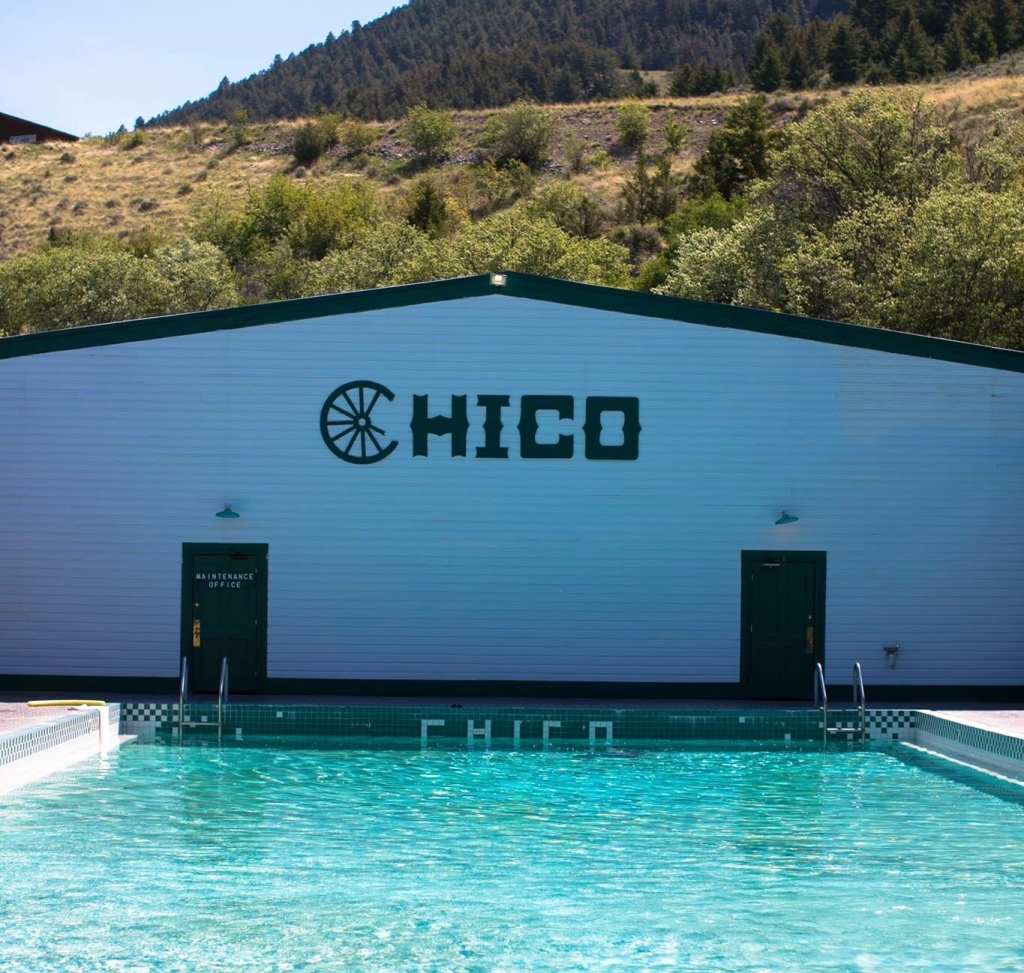
This week Chico Hot Springs and 500-plus acres were sold—shocking news for many but really not surprising, considering what happened earlier in the year at Izaak Walton Inn in Essex. A big development company that operates high end hotels and resorts from California to New York purchased the property and surrounding acreage for $33 million.
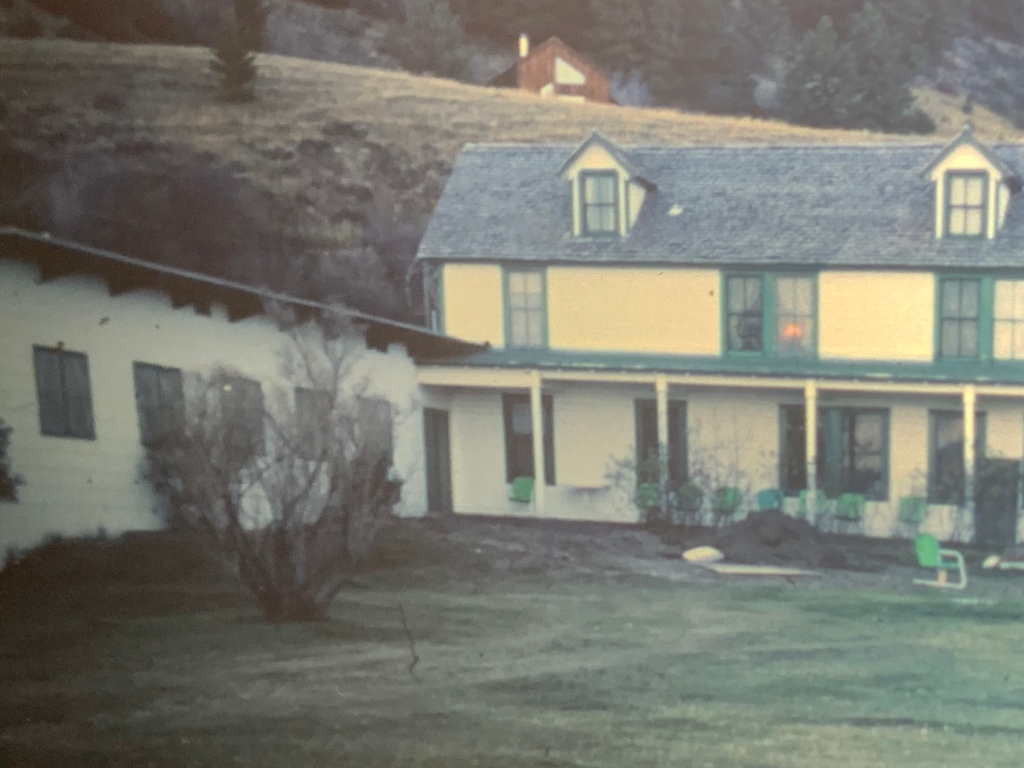
First I am glad the long-term owners got “paid.” They deserved it. They have been successful and effective stewards of this special place, a property I first documented during the historic preservation plan survey in 1984.
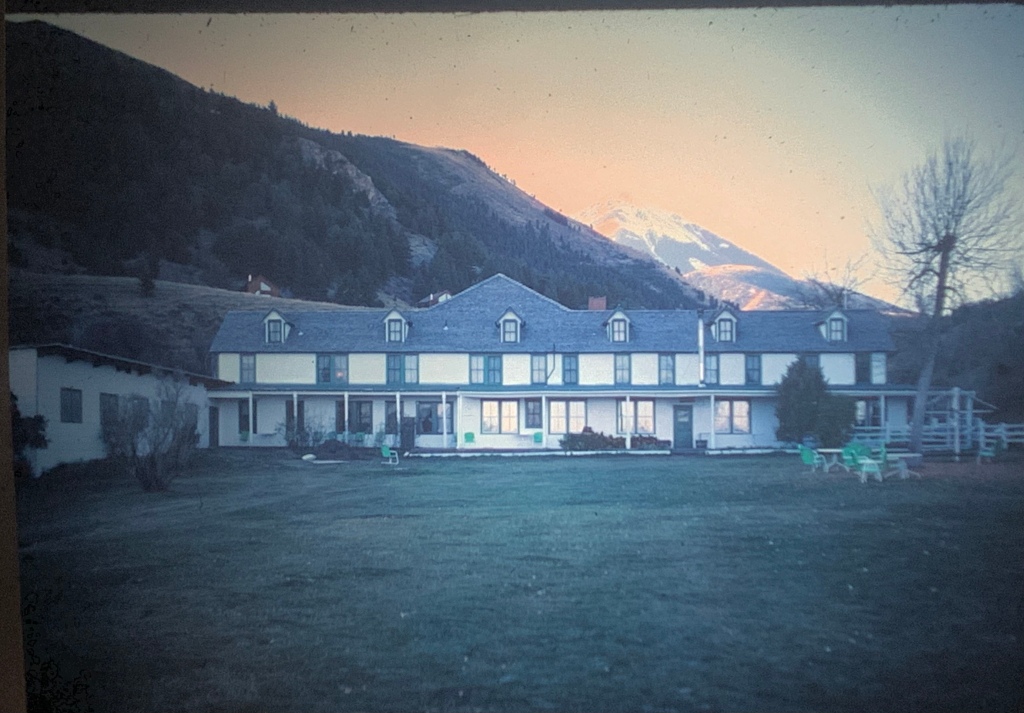
Chico Hot Springs in 1984
Let’s hope the new owners “get it” and respect the history and traditions of the place. After all it is listed in the National Register of Historic Places. (You can read my earlier 2016 blog “Chico Hot Springs” on the place for more on the history).
Detail of one-story wing in 1984
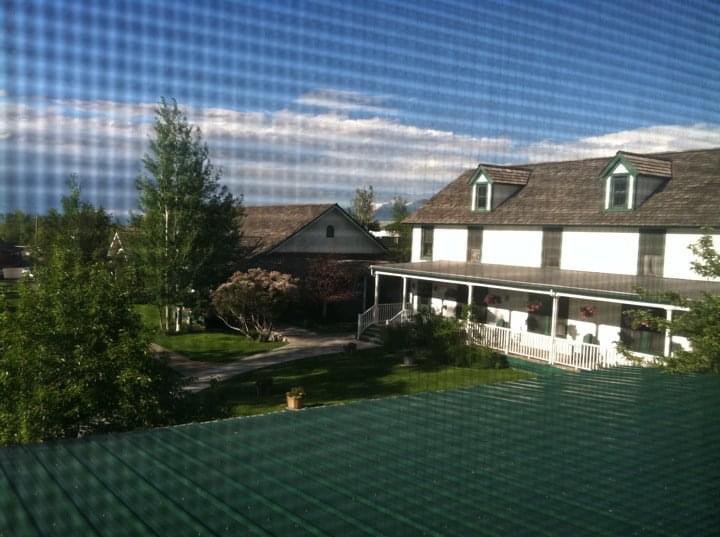
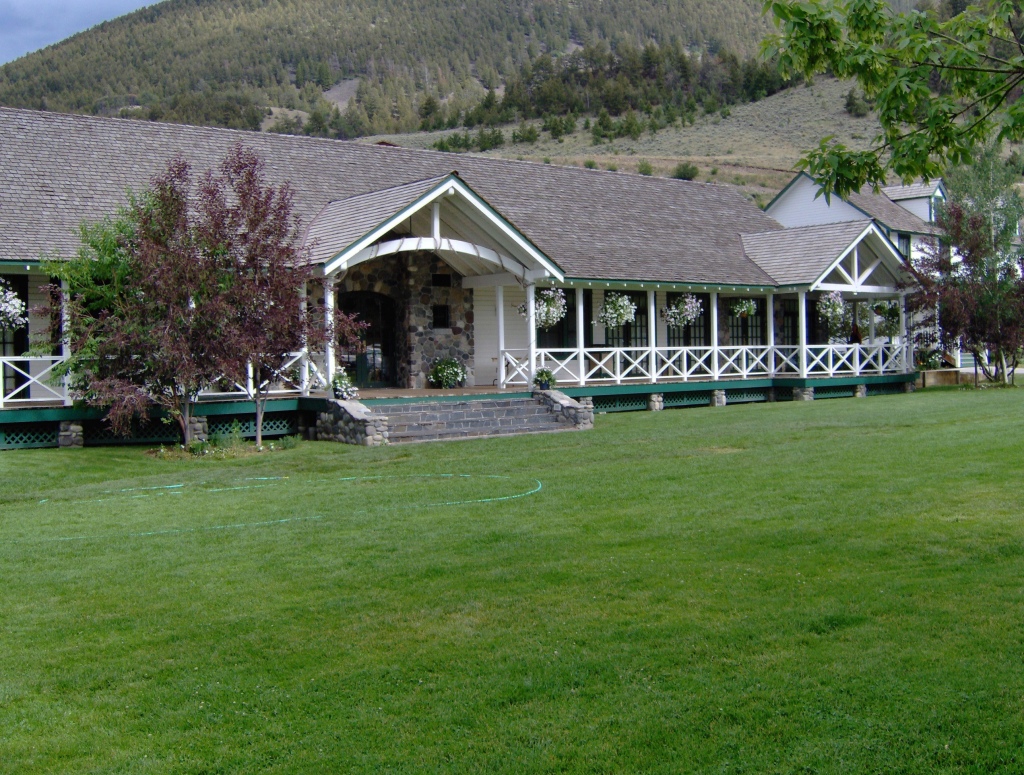
The place has changed in my 40 years of visiting. By the 21st century, the one-story side wing had grown to two stories and a small conference center had been built.
2011 view from second story windowConvention center in 2006
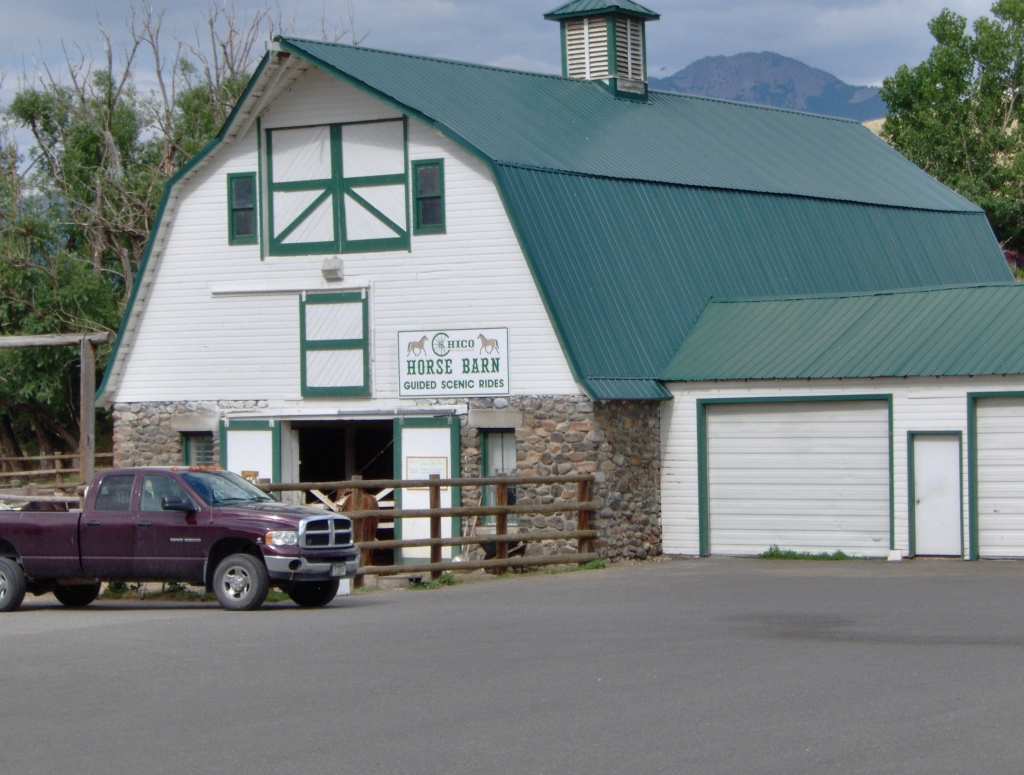
However these changes left the historic barn and stables intact. My children loved to pet the horses at the barn.
Barn in 2006
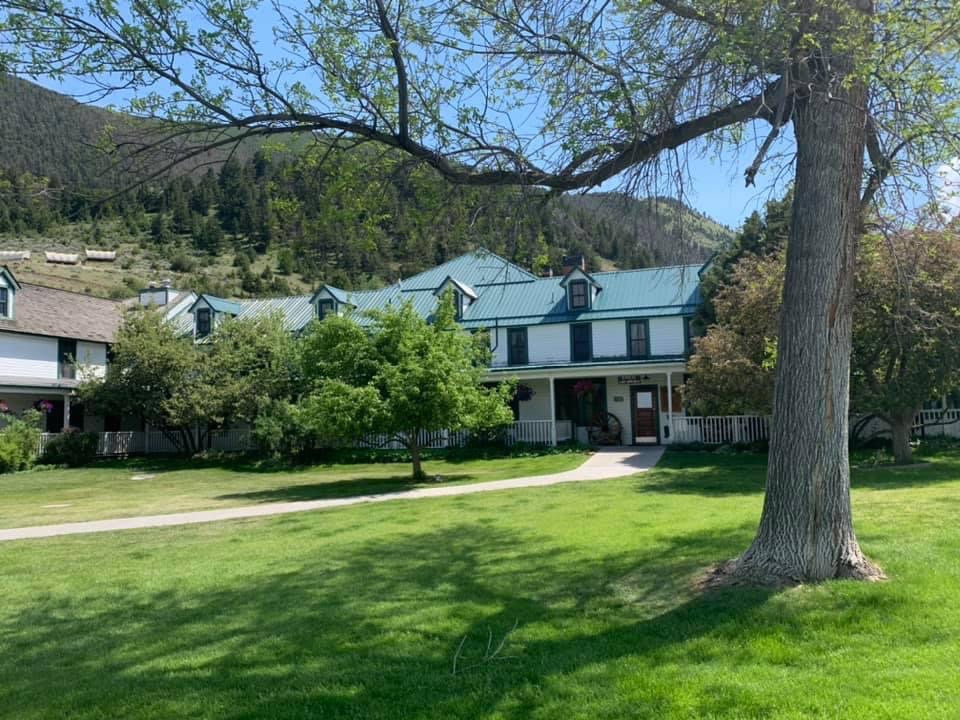
Over the last 40 years other buildings were added: cabins, wagons, separate spa and more—but the historic lodge remained at the center and the heart of the experience. From 1984 to today, Chico had evolved into a destination not just a hot springs pool with an absolute killer bar and restaurant. (In fact the restaurant has been legendary for almost 50 years and was highlighted in the classic western movie “Rancho Deluxe” from 1975.)
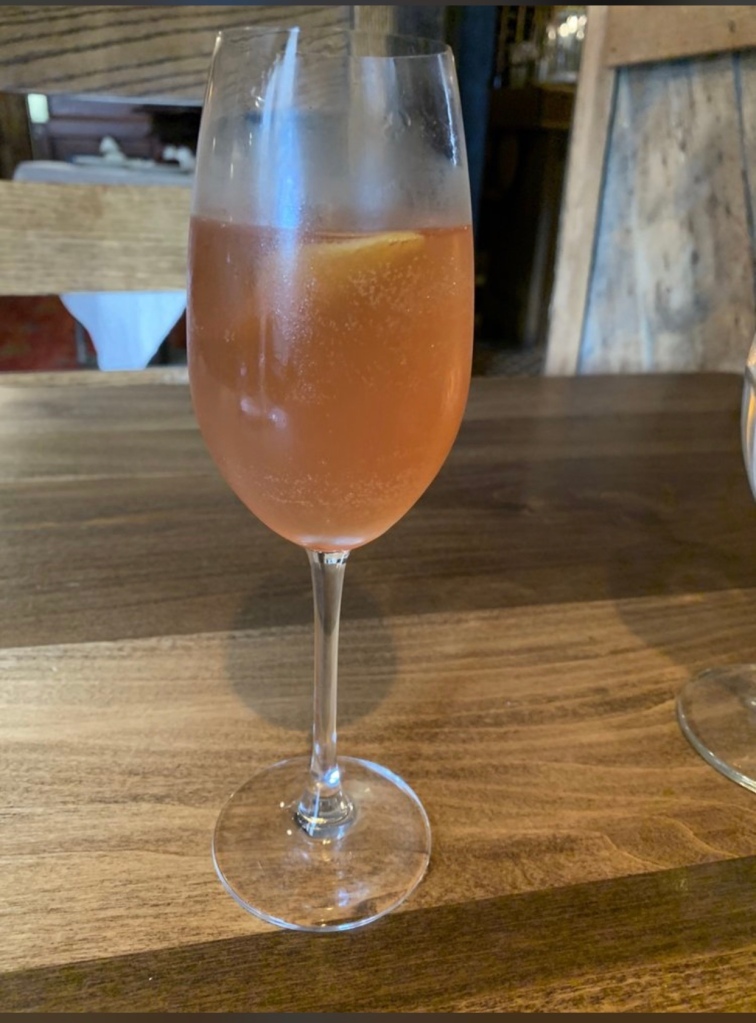
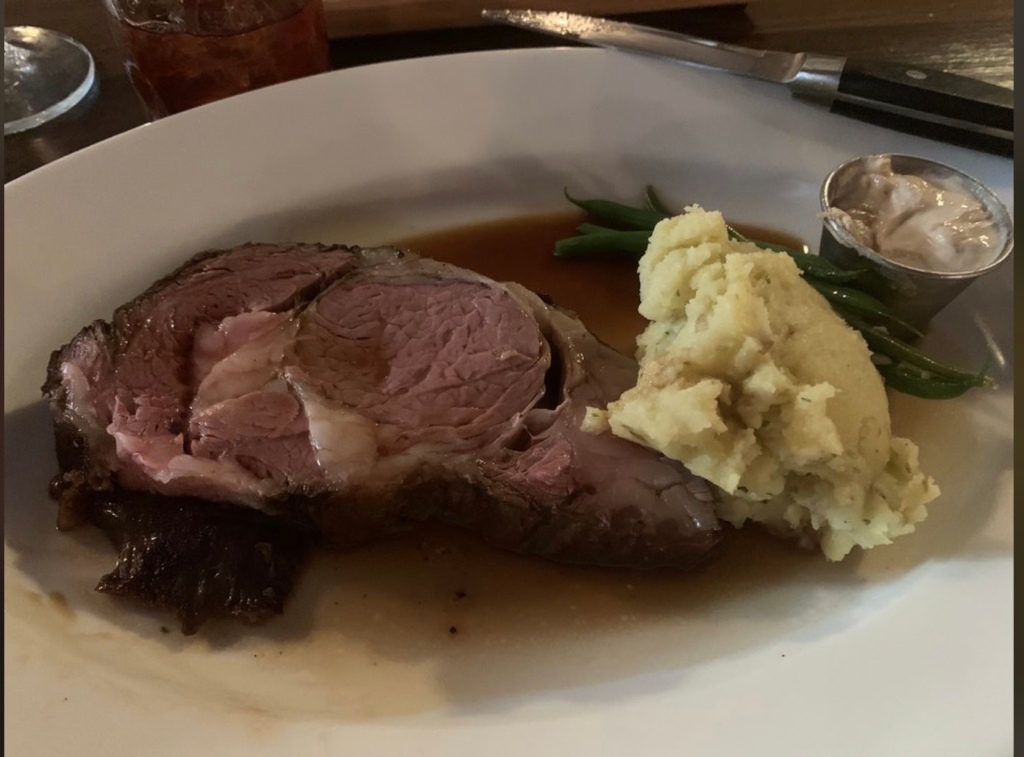
Sazerac 75Prime rib—a house special for over 40 years.
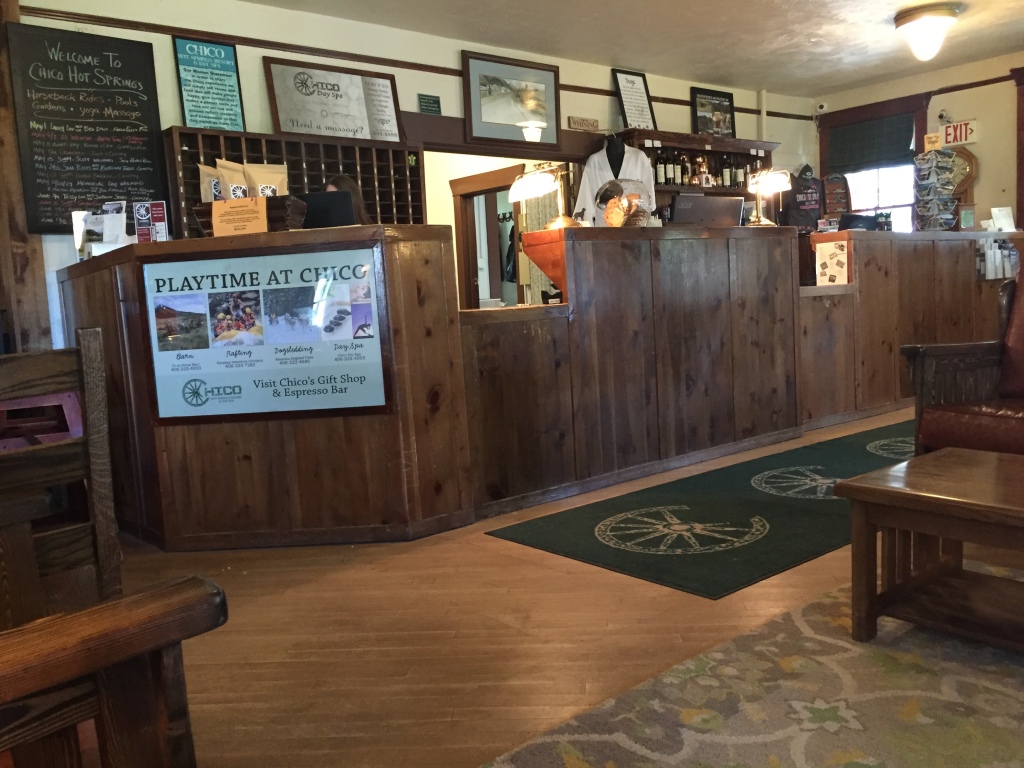
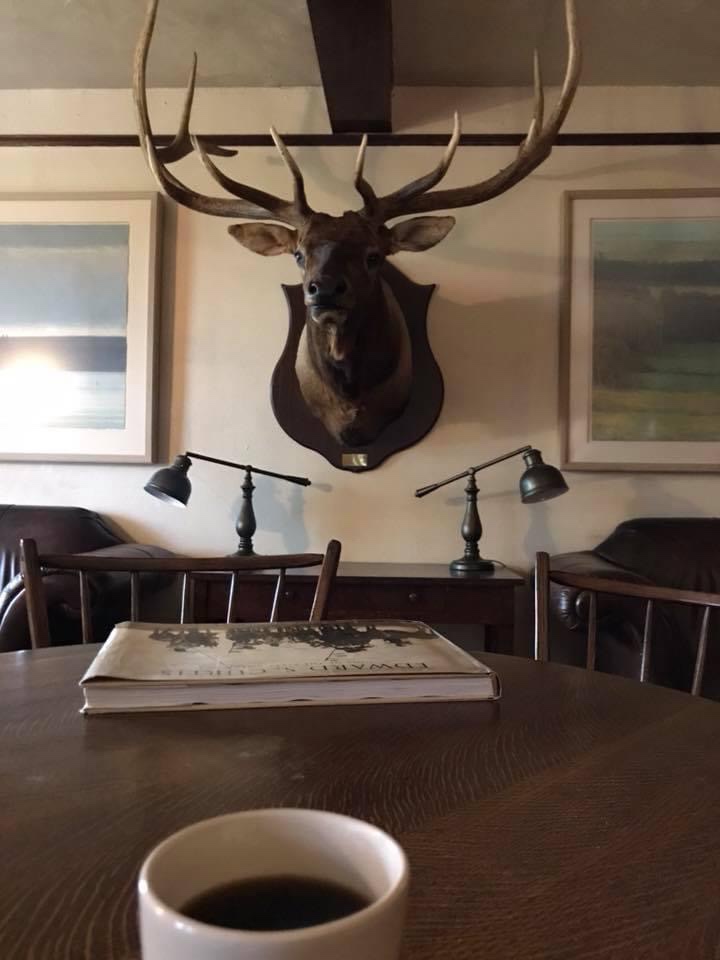
Throughout the changes the rustic feel, the early 20th century aura of the place remained. The lobby had the same lumpy chairs, the same heavy tables, well worn. If you had to have more modem facilities, they had it. But if you wanted a taste of the west from decades ago, you had the lobby—the perfect place to have a great cup of coffee and watch people in way too big of a hurry.
And you have the plain, no air conditioner third floor rooms—a bed, sink, and common bathroom down the hall. I have heard now for years that visitors complain about the third floor. I really hope the renovation leave these plain but comfortable rooms as they are.
Chico has many character defining nooks and crannies that could disappear in an over-wrought renovation. There’s no need to make every room a $300 “suite”. Do that in the modern additions of the last 30 years; respect the old historic inn and the pool. Keep Chico accessible to all, not just the few.
For years I have emphasized the national significance of Fort Shaw, Montana, often to deaf ears it seems. But just stop and think: at this one place in the valley you have centuries of Native American history, then immediately after the Civil War comes the federal presence with the establishment of Fort Shaw in 1867. The last regiment serving at Fort Shaw were four companies from the 25th U.S. Infantry, an all African American unit, with the troops often called Buffalo soldiers. Once the military left the post in 1891 another federal program through the Interior department created the Indian Industrial Boarding School that operated 1892-1910. By that time the U.S. Reclamation Service already had launched the massive Sun River Irrigation Project, which created the infrastructure that shapes the valley today, designating the Fort Shaw district as its initial project. So much change in less than 50 years. Whew!
Sun River between Simms and Fort Shaw
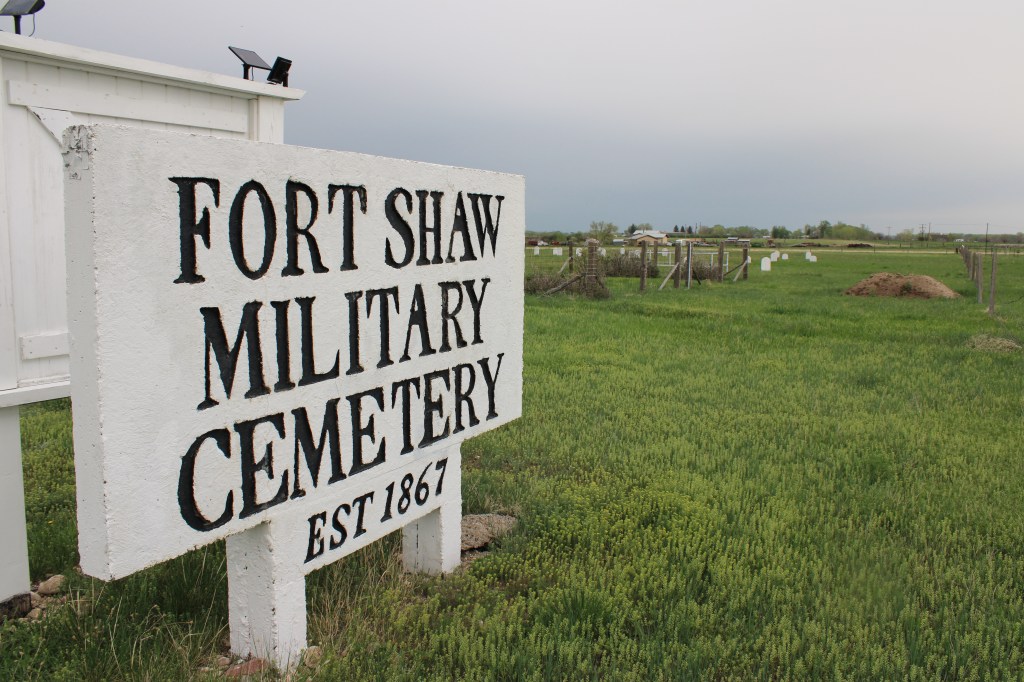
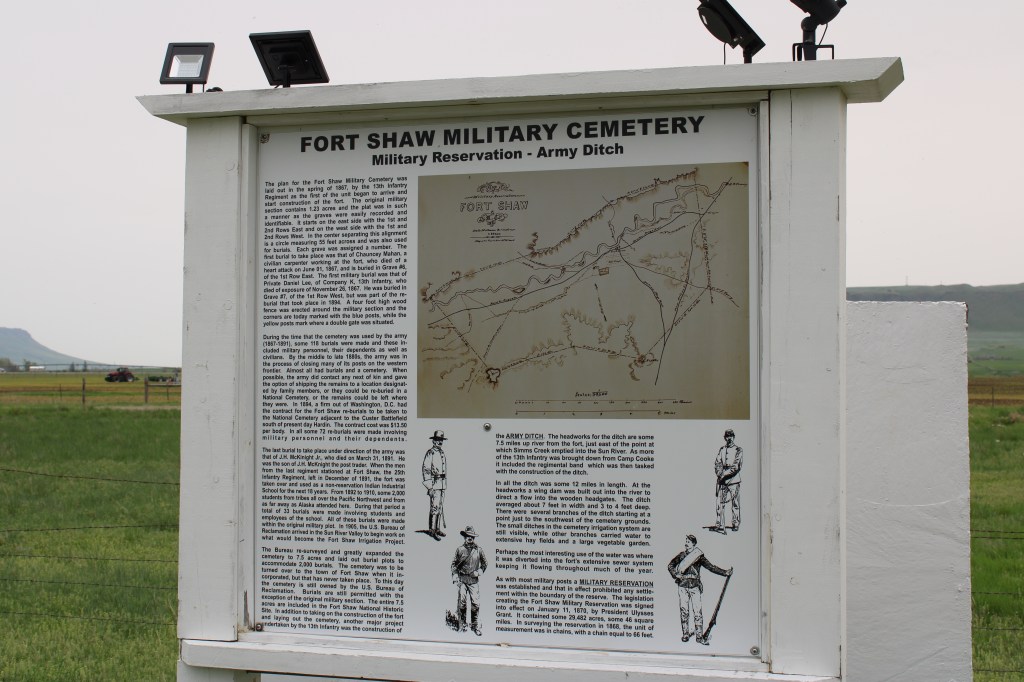
Telling this huge story has largely been left to the Sun River Historical Society. I first met the group when I did a public meeting at Fort Shaw during the 1984 state historic preservation planning process. The society’s vision then was huge—but over two generations the members have met, even exceeded, that vision. In this post I want to highlight the efforts of the society and Blackfeet Nation in restoring the Fort Shaw Military Cemetery.
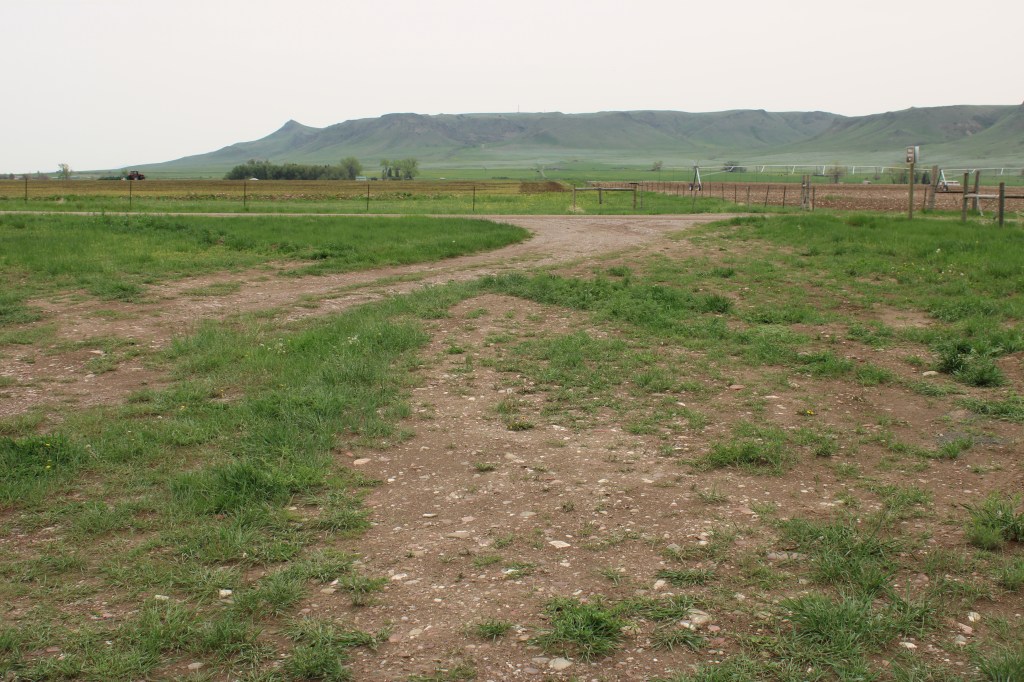
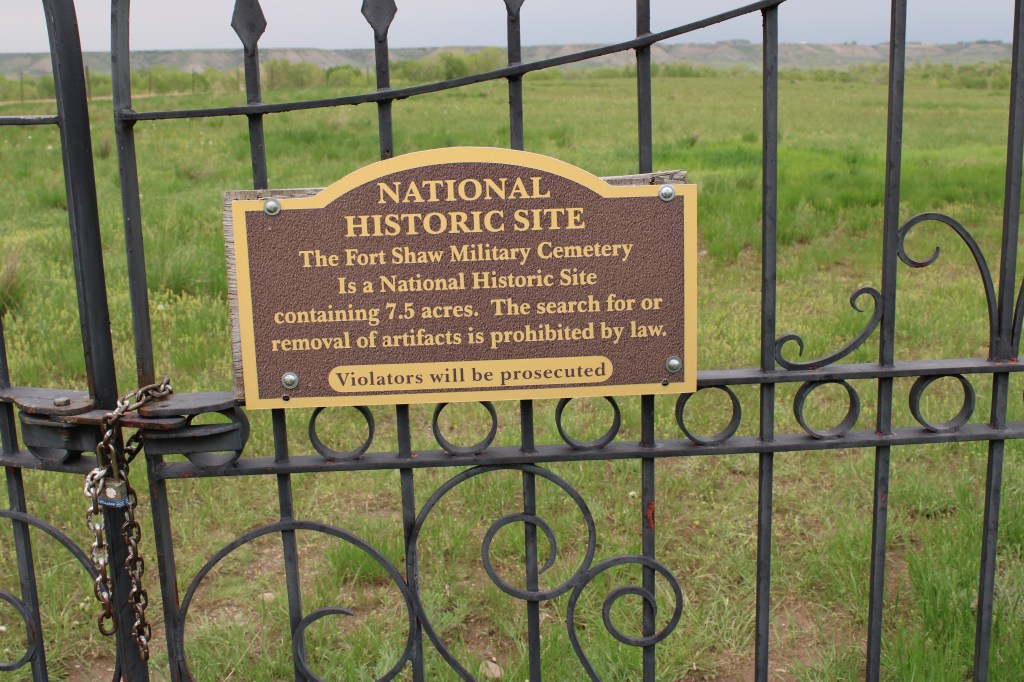
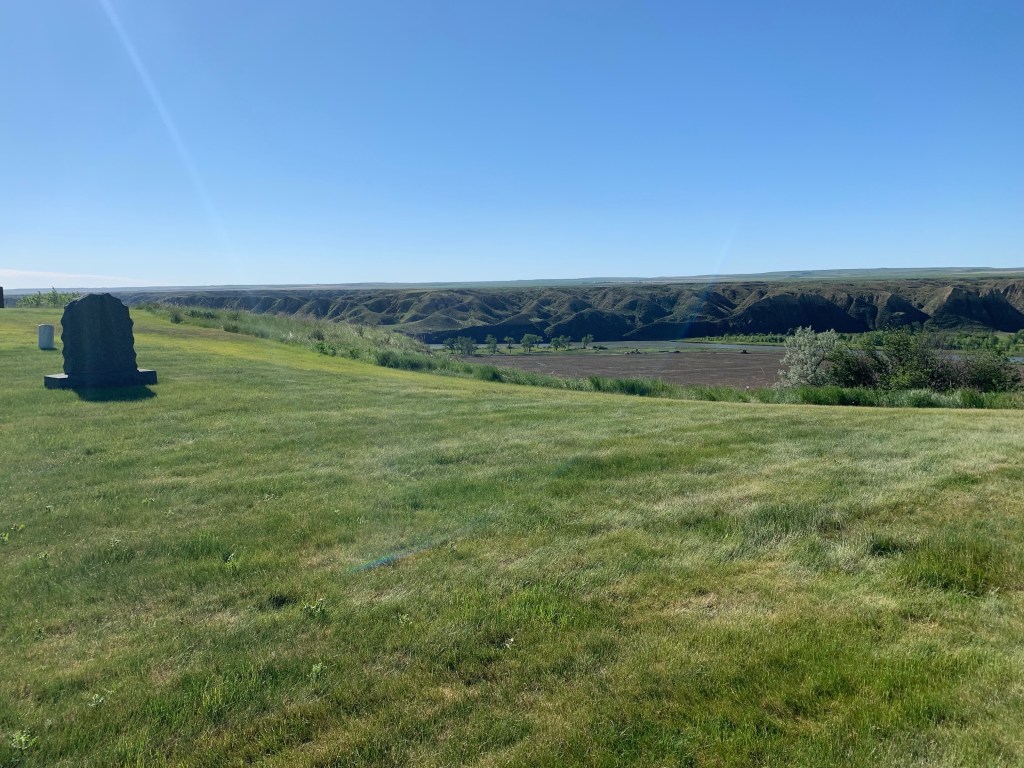
The cemetery is on a graveled county road on land managed by the federal Bureau of Land Management.
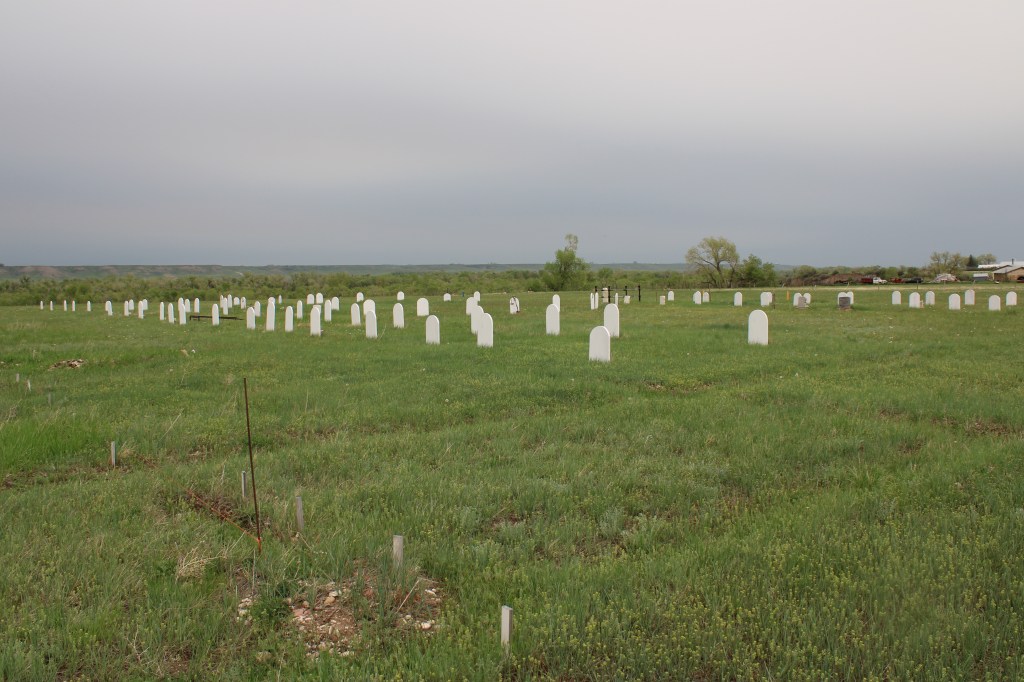
At the time of the historic preservation survey the cemetery was known but not well maintained. There were some extant grave markers but many more grave depressions that marked lost tombstones or removed graves.
The U.S. Army, after closing the fort, had decided to remove the soldiers from the military cemetery. In 1894 that process began and 74 soldiers, fort employees, and family members were moved from Fort Shaw to either family cemeteries or to Custer Military Cemetery at the Little Big Horn Battlefield.
Seven soldiers remained buried at Fort Shaw; eventually the standardized military tombstone marked their graves.
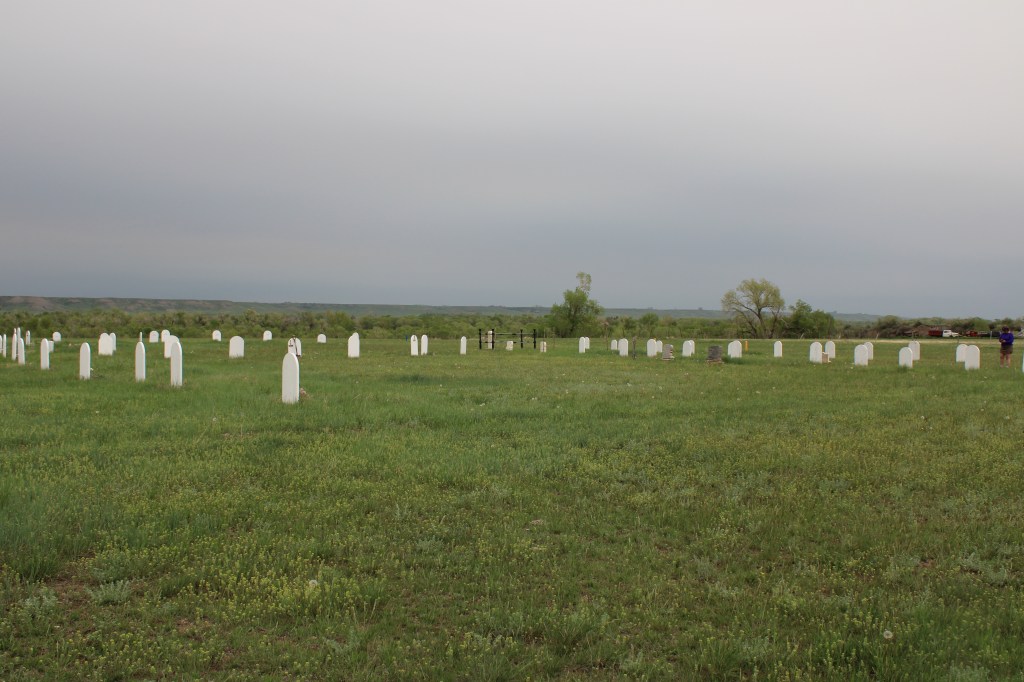
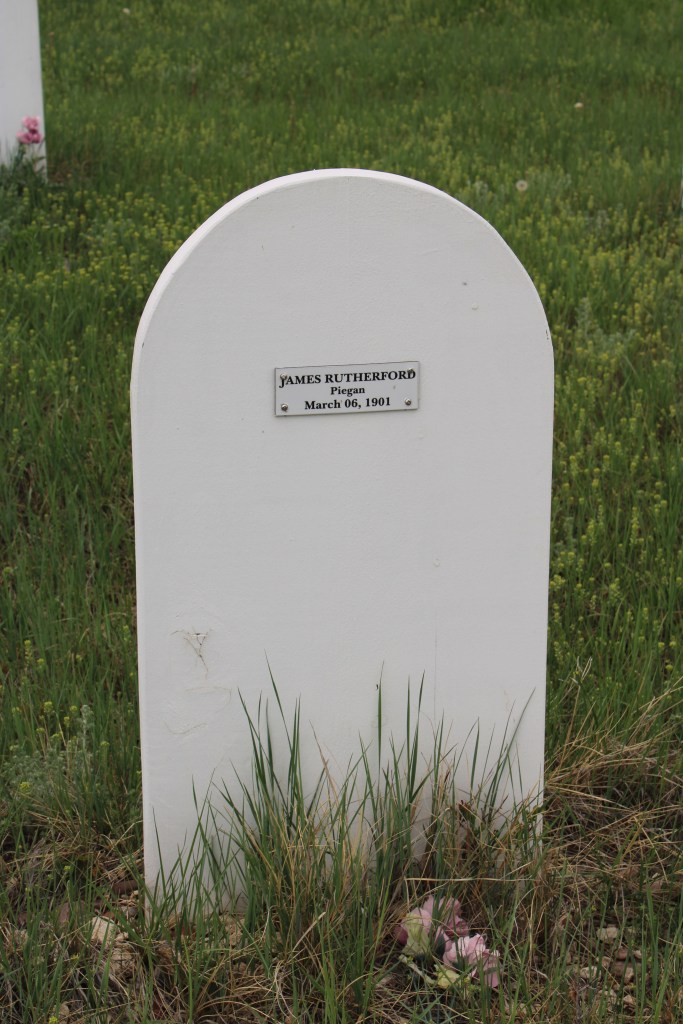
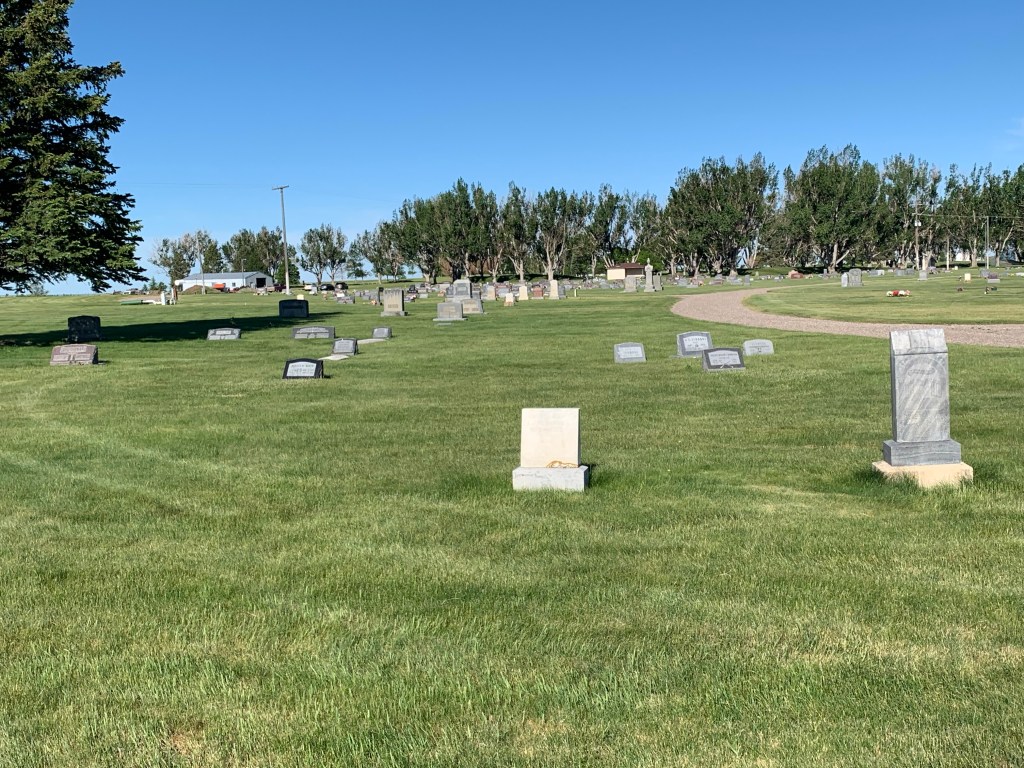
In 2016 Dick Thoroughman (who has since sadly passed away) convinced his fellow society members that they could restore the cemetery and restore a sense of dignity to those buried there by “saying their names.” The society built replica tombstones and then placed a small insert that gave the name and identification of the deceased
Among the marked graves are thirty-three students from the Indian Industrial Boarding School. Each tombstone is a testament to the horrors of the boarding school program. The names are not just of Blackfeet children but from many nations in the West and Alaska.
The federal boarding school program ripped children from their families, isolating them at the schools where their teachers too often literally tried to beat native culture and identity out of the students. Almost 2000 Native American children attended the Fort Shaw school from 1892-1910. Tribal members today believe that there might well be more than 33 Native American children buried at Fort Shaw.
Blackfeet Nation members have held vigils at the cemetery for years to honor and remember the victims of the boarding school. As Christine Diindiisi McCleave of the Native American Boarding school Healing Coalition told the University of Montana’s Byline Magazine, “We are in a moment of history where the wound of unresolved grief from Indian boarding schools is being ripped wide open. The truth is being unearthed and yet so much more is still unknown .”
The Sun River Historical Society recently restored the commanding officers house in 2019, where they are trying to find out more on the life of “Chinaman Joe” who worked as a domestic and is also buried at the cemetery (see below).
Many, many stories are yet to be identified, researched, and interpreted at this 7.5 acre property. But the 2016-17 restoration started the process. The Sun River Historical Society has earned thanks for their commitment and dedication to the task.
Riverside Cemetery dates to 1883, a time of considerable change and expansion in Fort Benton’s history. Just 2 years earlier, summer 1881, the U.S. Army left the fort, and it began a rapid decline. In the following winter of 1881-1882 the town began a building boom that led to the construction of the Grand Union Hotel by the end of 1882.
Grand Union Hotel
Freight traffic on the Missouri River also boomed and the River Press, the city’s leading newspaper for the next 100 plus years, published its first edition. 1882 also witnessed the city’s first electric lights and the construction of many new residences. And by the year resident had formed the Riverside Cemetery Association.
Gate to Riverside Cemetery
The loss of the Chouteau County Courthouse to fire in early 1883 didn’t seem to slow momentum at all. That spring voters incorporated Fort Benton—what had been a trading and military town was now a formally established town. Soon thereafter Riverside Cemetery was established on the Missouri River bluffs northeast of town.
The new town cemetery had approximately 40 fenced acres and was ready for use by Decoration Day (now known as Memorial Day) in 1883. The cemetery also had reinterred graves from earlier in-town cemeteries at approximately the location of First Christian Church and behind Haas and Associates and Farmers Union Oil Company.
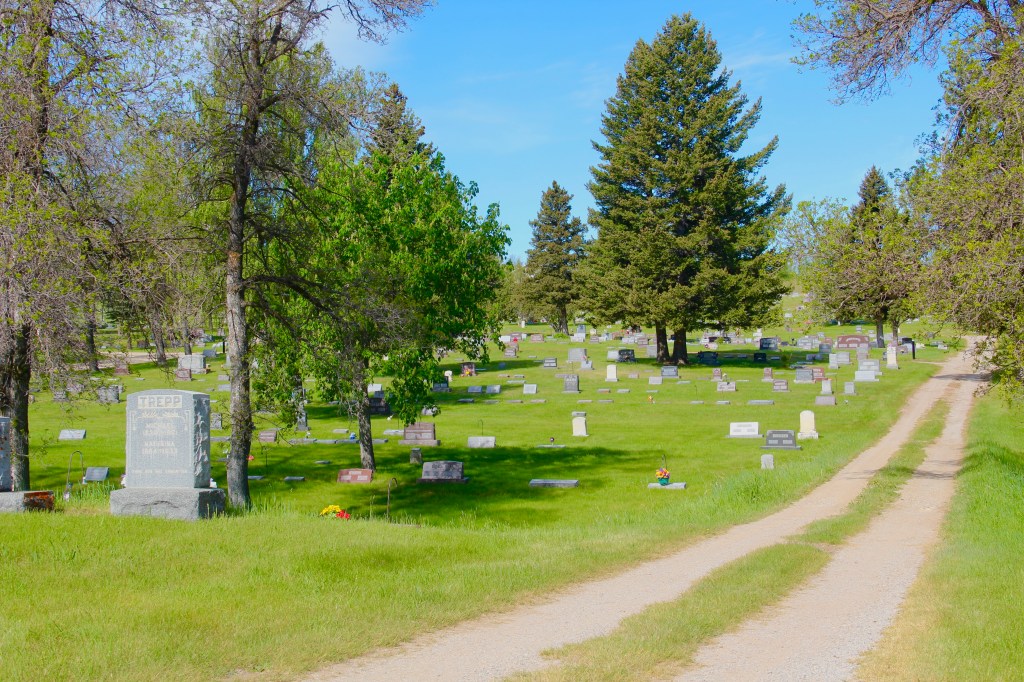
Today the gap between the initial cemetery and burials in the 20th century is noticeable. The early burials are on the east side while the modern section is on the east side clustered near a row of trees m. Clearly early tombstones have been lost—the number of grave depressions indicate that there are many additional burials that lack a grave marker.
East side of cemetery Central section with the west section in the background among the trees. In general the west section dates to mid 20th century and later
The remaining grave markers from the late 19th century tell powerful stories. The Charles Fish (d. 1890) obelisk with urn marker below honored a Canadian native who served as a drummer boy with the 38th Wisconsin Infantry in the Civil War; he was only 15 years old when he joined.
The Patterson family section is one of the cemetery’s oldest, with the earliest tombstone dating to 1886.
Tombstones with cross themes mark the graves of Jane Jackson (d. 1885) and Edward Kelly (d. 1890).
This image of the Jackson tombstone is another visual example of the number of empty spaces in the east side of the cemetery. Existing depressions indicate that many burials without grave markers are in the section.
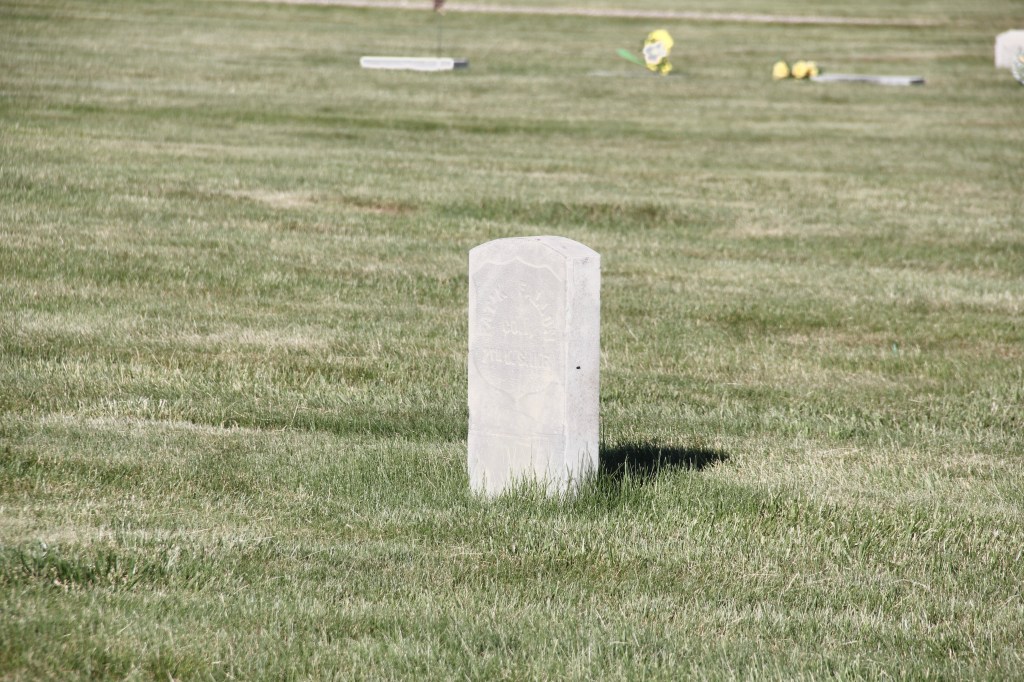
In 1891 the cemetery received its first U.S. military veterans markers. The one below was for Patrik (the spelling used on the tombstone) Fallon, a Civil War veteran. By now Fort Benton had grown to the point that its Decoration Day ceremony involved hundreds, led by the cemetery association, camps of the Grand Army of the Republic and soldiers from Fort Assiniboine.
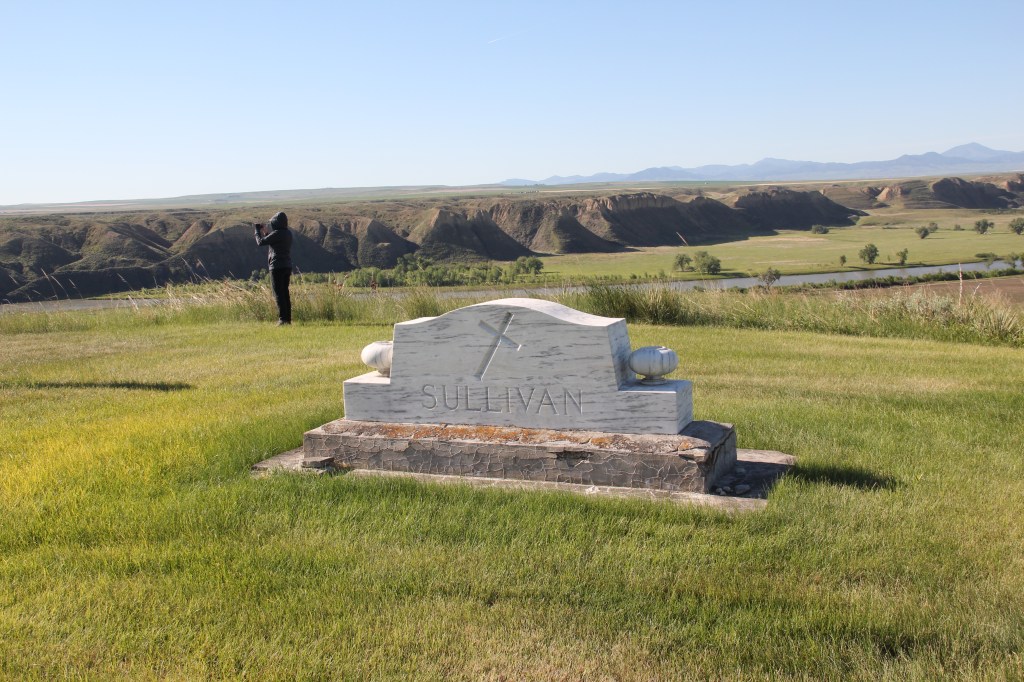
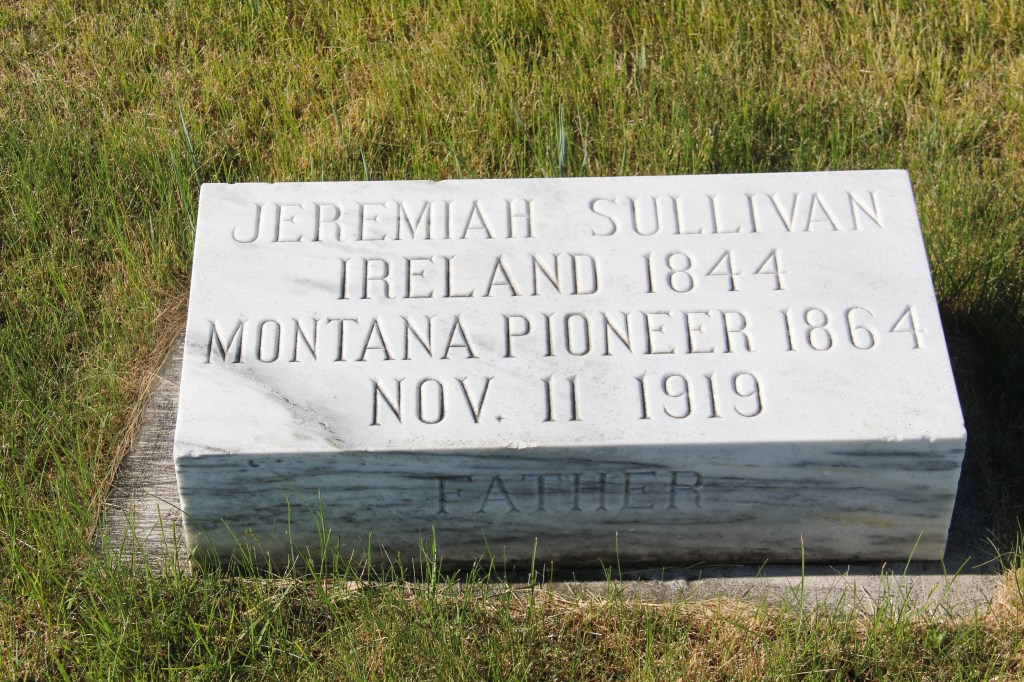
While the graves of many pioneers are unmarked, the Sullivan family located its graves near the edge of the bluff, truly an awe-inspiring setting overlooking the town, river, and railroad tracks.
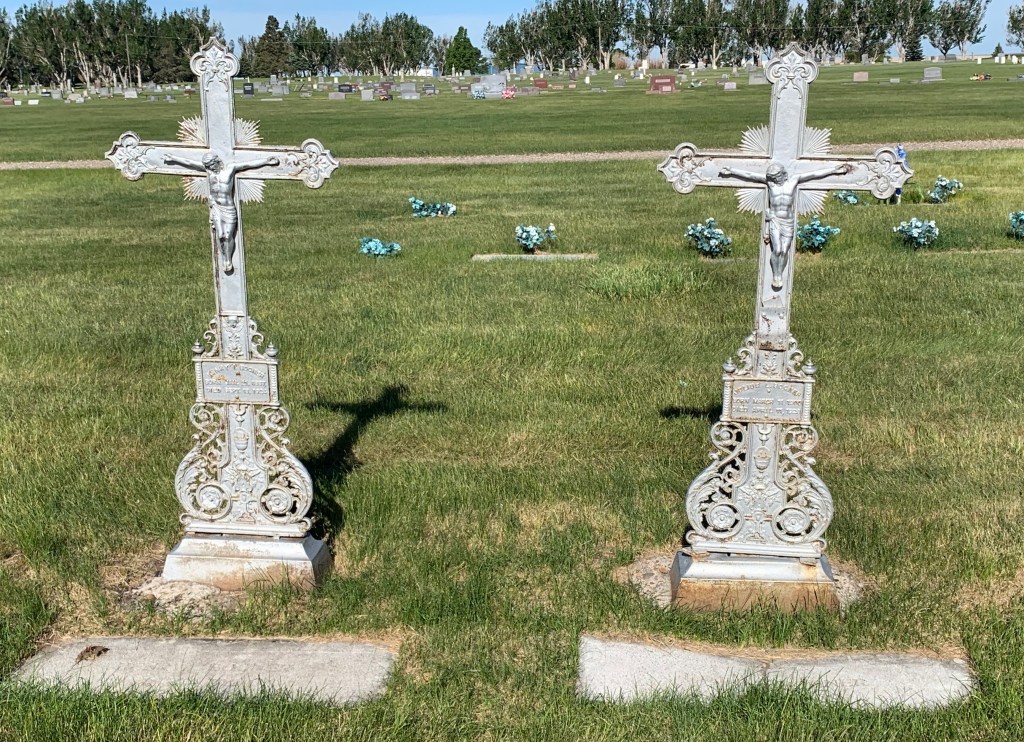
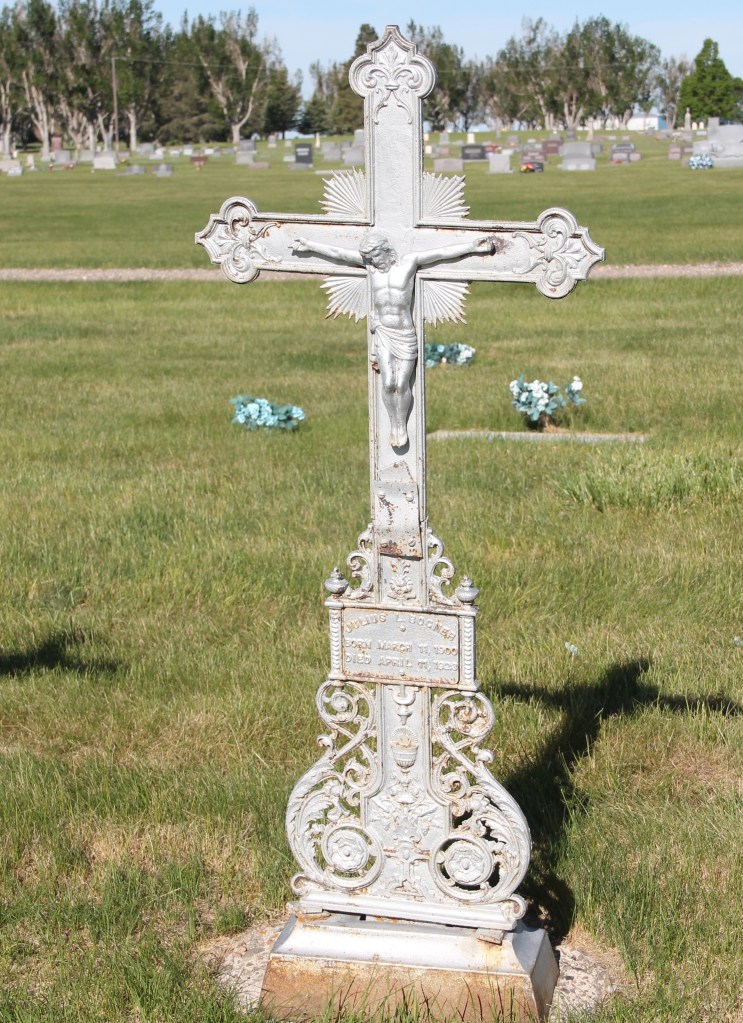
Impressive tombstone art is scattered throughout the cemetery. The unique yet beautiful pressed metal crosses for brothers Julius (d. 1923) and Henry (d. 1924) Bogner belong, stylistically to the Victorian era, but were commissioned and installed in the Jazz Age.
Julius and Henry BognerThe Winfred and Margaret Stocking marker (c. 1910-12) is unusual in that a sizable base supports a triangular rock Boulder. Margaret Stocking upon her death in 1812 was identified as the first white woman to settle in Fort Benton in 1865.The marker for Bessie Bright (d. 1917) has an open Bible motif, typically found in tombstones of the 19th century
Riverside Cemetery has an impressive veterans section, known as the Military Plot. Veterans from the Spanish American War of the 1890s to the conflicts of the 21st century are buried here.
The City Cemetery is one of the oldest public institutions in Lewistown, the seat of Fergus County. Residents incorporated the city in 1899. Almost immediately citizens banded together to establish the Lewistown Cemetery Association. The association filed its articles of incorporation with the state c. 1901.
The population of Lewistown and Fergus County boomed for 20 years. Just over 1,000 people lived there in 1900; by 1920 the city had well over 6,000 residents. Such supercharged growth, fueled by homesteaders, railroads, and mining, meant that demands on the Cemetery Association were too much for a private organization. In 1918 the association transferred the property to the city.
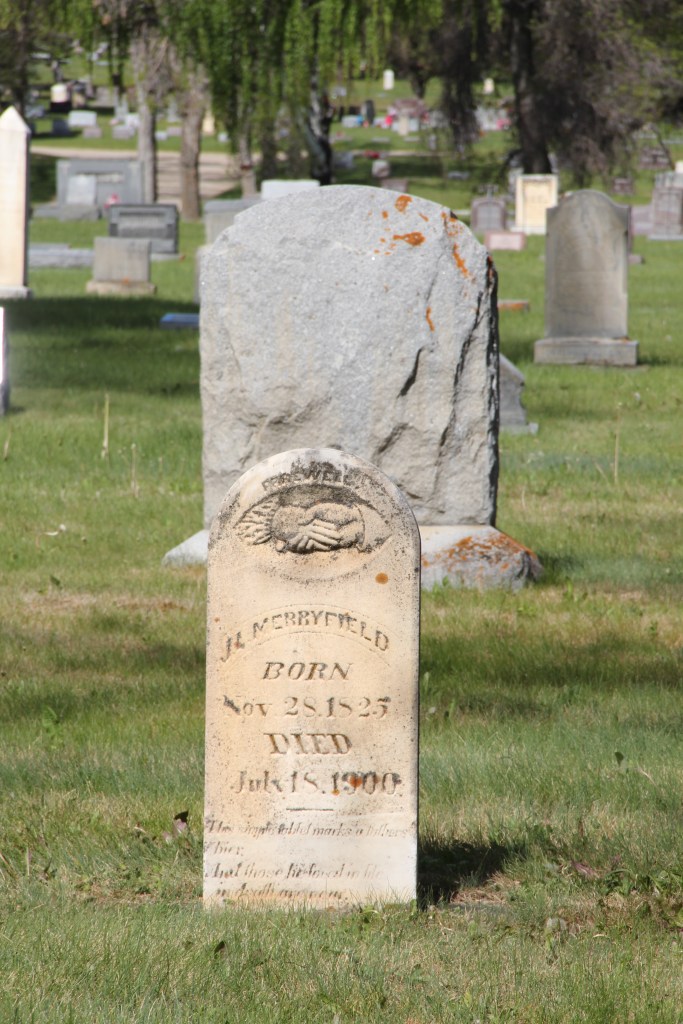
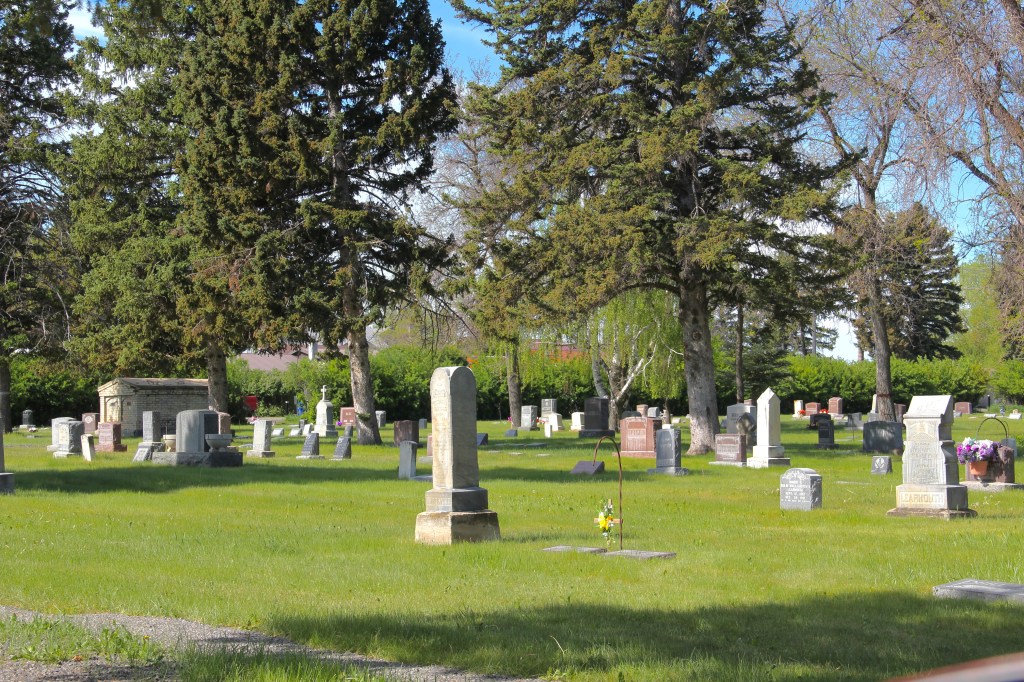
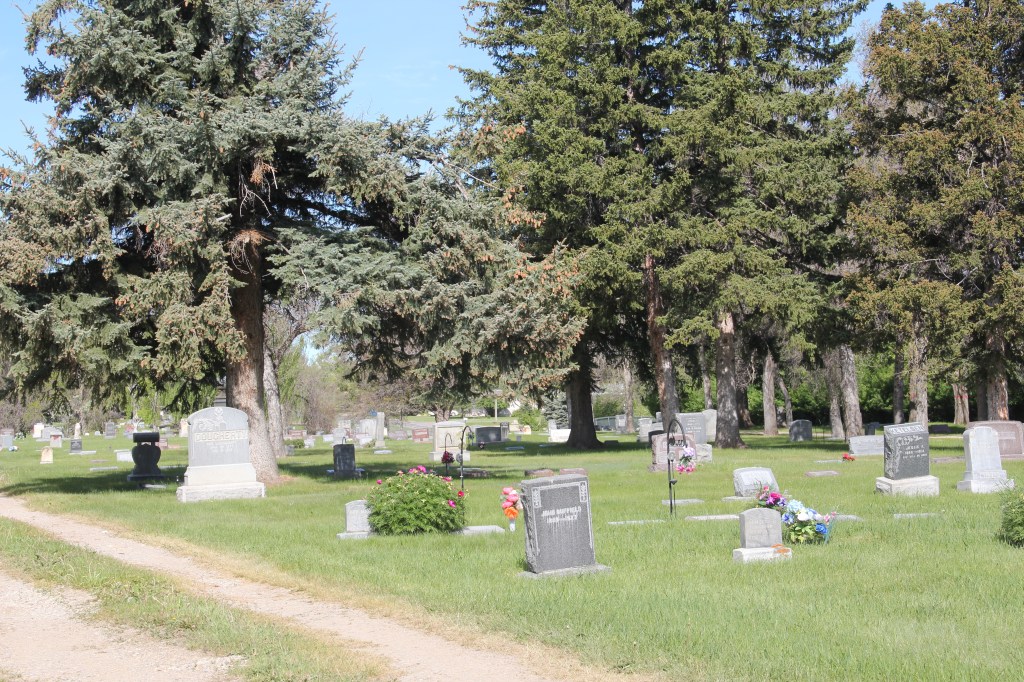
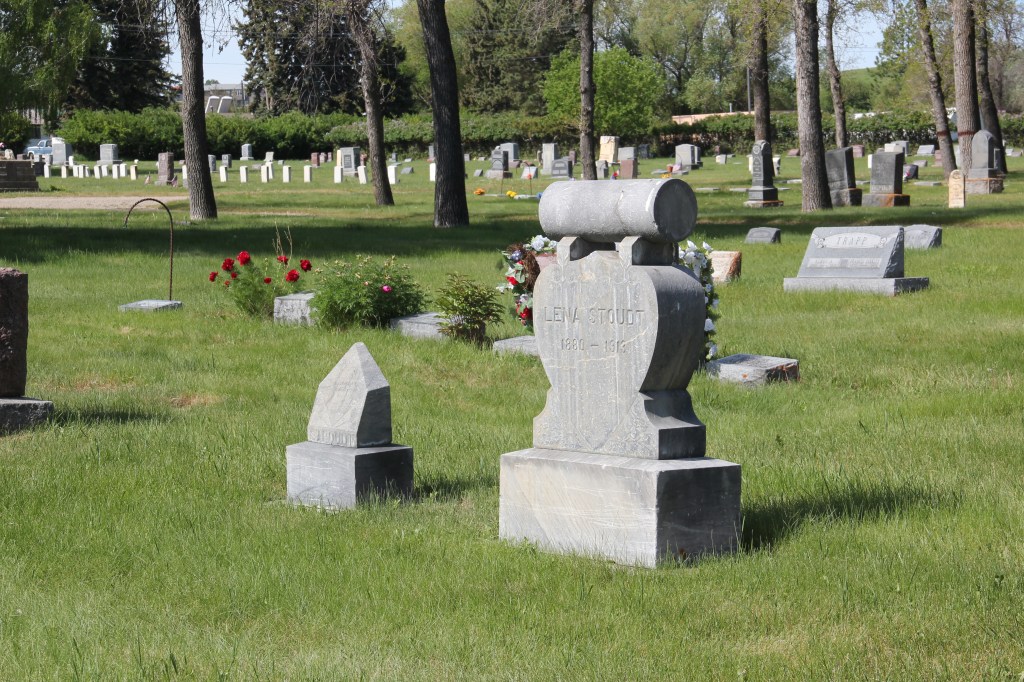
The Ethel Gilkerson marker, c. 1900, is one of the cemetery’s early burials. The John Merryfield marker is another early burial, 1900. He was a miner at Maiden.Early 20th century section
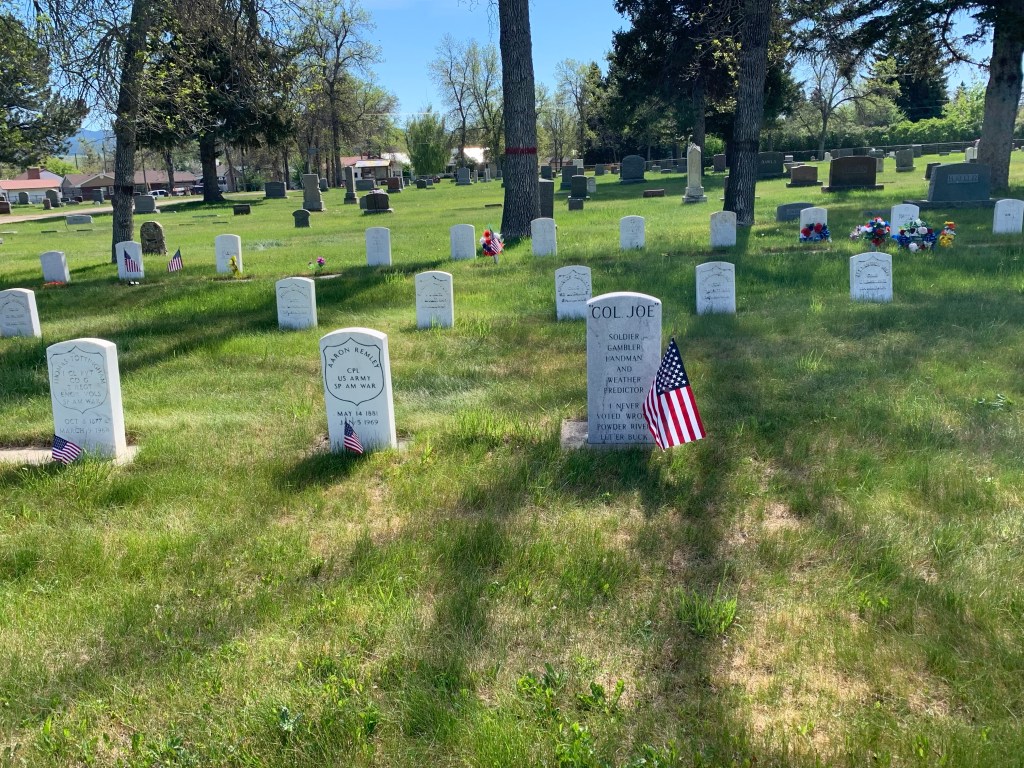
The heart of the cemetery is reserved for veterans, where the setting is low-key, dignified and effective. A gravel drive divides two sections reserved for veterans.
North side veteran’s sectionSouth side veteran’s section. Note the bell. South side section
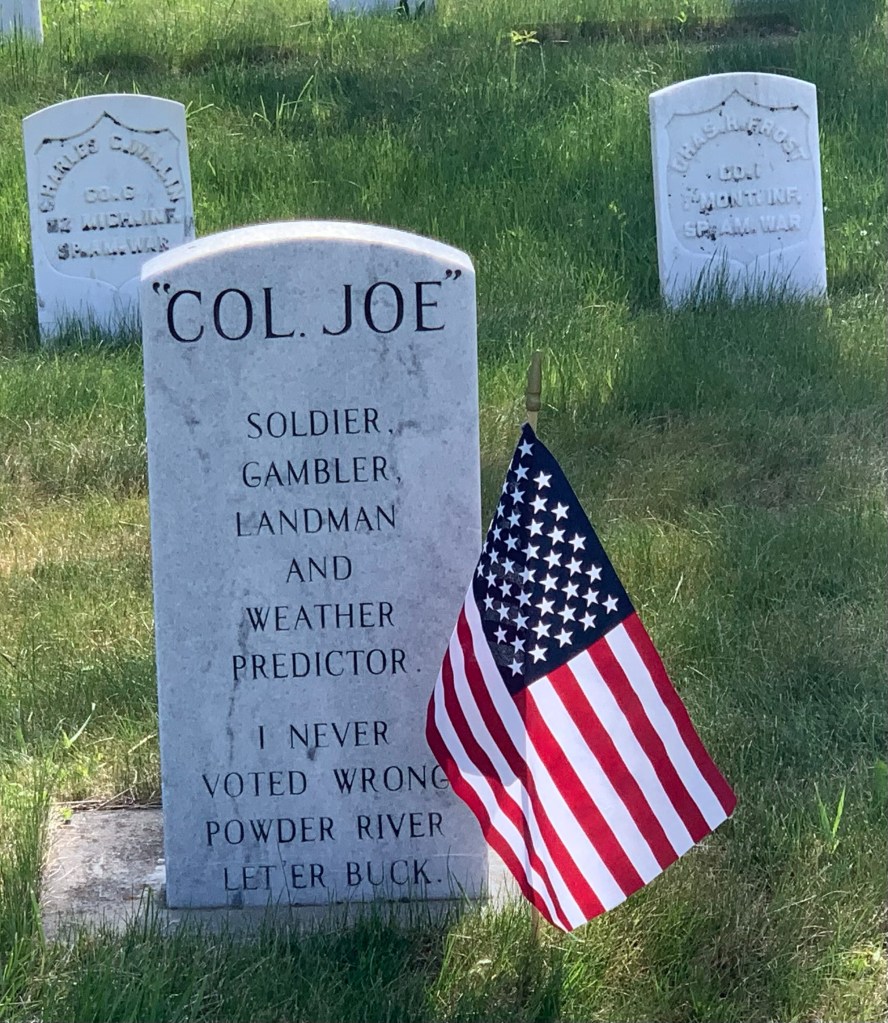
One veteran marker that catches your eye is for “Col. Joe” Montgomery. He proudly bragged: “Soldier, Gambler, Landman, and Weather Predictor. I never voted wrong. Powder River Let ‘em buck.” What a summation. And he had every right to brag. A veteran of the Spanish American War, he was 107 years old when he died in 1984. He first came to the area to work in the Kendall mines in 1894. A true Montana original.
Most of the city’s prominent Protestant leaders are buried here, as are thousands of other citizens who have made Lewistown work and progress for the last 100 years.
The Sherwood marker (d. 1904) simply notes “here lies a Woodman of the World.” There are many fraternal lodge markers in the cemetery.
High on a hill northeast of downtown Lewistown is the historic Catholic cemetery, Mount Calvary, established in 1895. The cemetery is a bit challenging to find but well worth the efforts.
It is a significant property marking early settlement patterns in Lewistown, which was incorporated in 1899. But its greatest value is its wealth of funerary art.
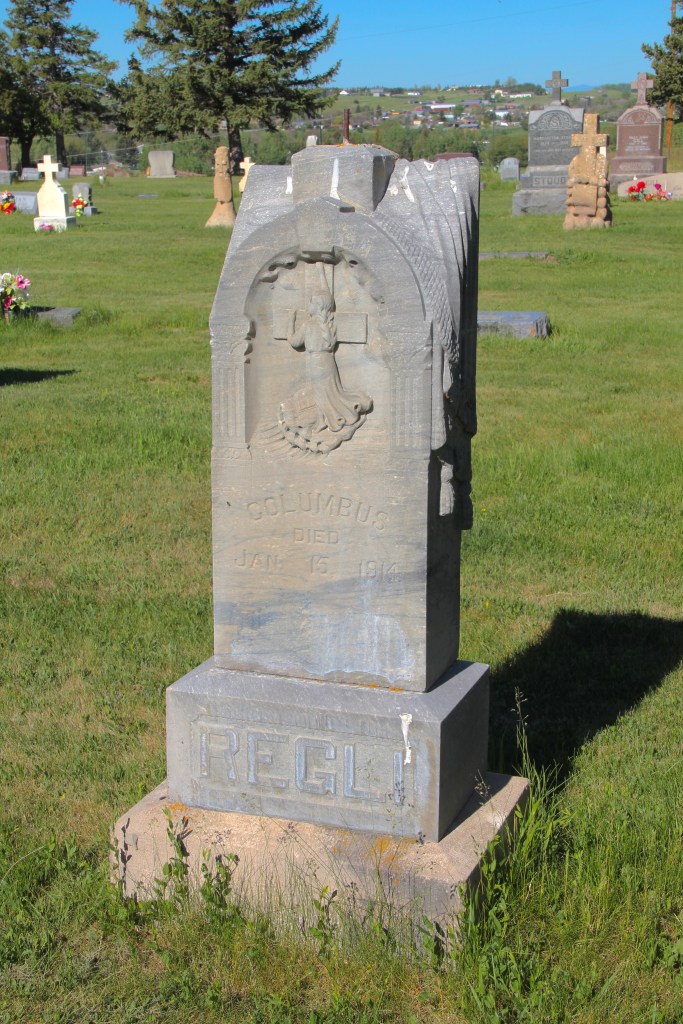
Griffith cross tombstone c. 1915Brooks mausoleum 1912Columbus Regli, 1914 with a lovey insert carving of mourning Burke gravehouse, c. 1921The Hruska marker is near the Burke gravehouseBiglen marker, statue has been damaged Nearby the Biglen marker are burials of sisters who served the community at St Leo the Great Catholic Church and/or St. Joseph Hospital. South of those graves are an array of artistically expressive memorials. Older section, looking southwestOlder section, looking southwest
Mount Calvary’s first generation of burials is concentrated on the hill top. But this cemetery is large and still active. The lower section has numerous interesting tombstones from the second half of the 20th century.






















































 Montana's Historic Landscapes