
In my Montana travels over the last two years, one of the most interesting, and potentially impactful, projects I encountered was in Red Lodge, where the Red Lodge Area Community Foundation is leading efforts to revitalize the historic Roosevelt School. When, earlier in the decade, the National Trust for Historic Preservation announced its interest in the one-room and rural schools of the Treasure State, I worried somewhat that the larger historic schools in small towns and county seats might be forgotten. Red Lodge showed me that was not the case.

I attended a historic preservation conference there in the summer of 2016, where the Montana Preservation Alliance used the school’s historic gymnasium as the conference hall–a simple yet very effective conversion. Gyms had always been community gathering spots, for basketball obviously but also for all sorts of events. There is always a comfortable feel to these spaces.

My surprise came when we toured the building. I thought that due to the name Roosevelt, that the school had been yet another of the dozens of schools constructed in Montana during the “New Deal” of President Franklin D. Roosevelt during the depression decade of the 1930s. Wrong–it was a 1921 building, named for former President Theodore Roosevelt, who was the champion of national parks and the open rugged west that Red Lodge was very much part of. Charles Suiter was the architect. He had twenty plus years earlier worked with the much more famous Montana architect John Paulsen as the contractor for the landmark Montana Hall at Montana State University in Bozeman.


So, the overall context for the school was different from what I had gathered in the past. Here was an early 1920s community statement by Red Lodge leaders–the homestead boom had already busted, and tough times were just ahead for Montanans but the community then felt it was time for a modern building, with well-lit interiors and well-placed blackboards that did not glare in the sunlight. And throughout the building there
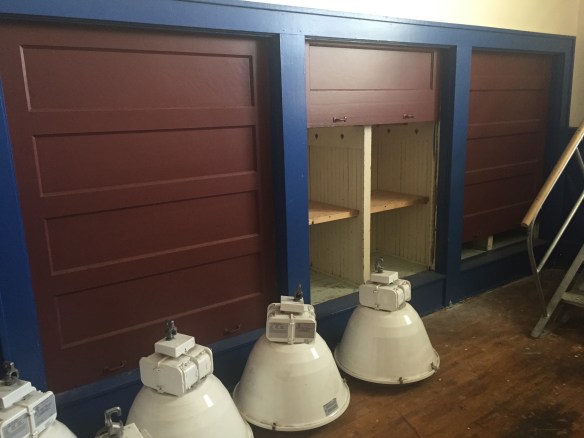
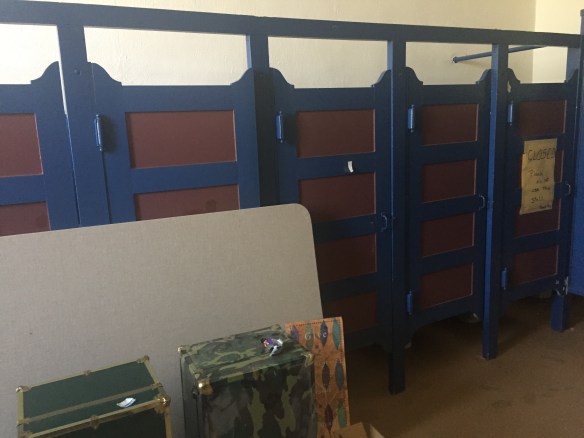 were so many intact details from the time of construction–built-in storage spaces, private restroom stalls, when hallway clocks ticking down the minutes in a day–the place was like a time capsule.

And then there was the third floor masterpiece, the combination library and performance hall. Classical pilasters framed the stage and added touches of class and seriousness to the space. Here was a public building that spoke to community ambitions but also community pride.
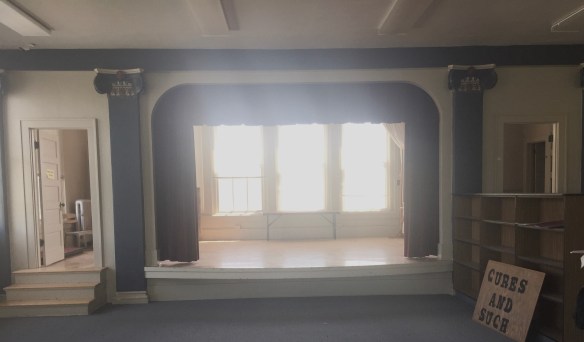 Intimate spaces, classroom spaces, grand public spaces. The Roosevelt School meant too much to be left to the wrecking ball, and the progress the community foundation is making there is reassuring: once again smart, effective adaptive reuse can turn a building in a sustainable heritage asset for the town. It’s worth checking out, and supporting. And it is next door to one of the state’s amazing throwback 1960s roadside
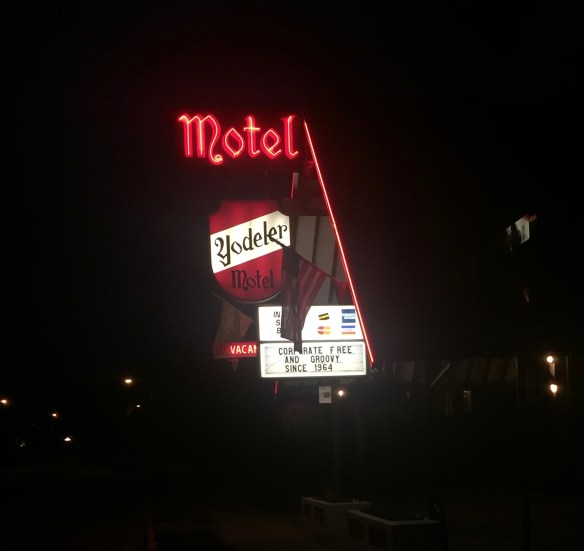
experience, The Yodeler Motel, built in 1964. Step back in time but also look at the heritage-infused future of Red Lodge: a worthwhile stop indeed.

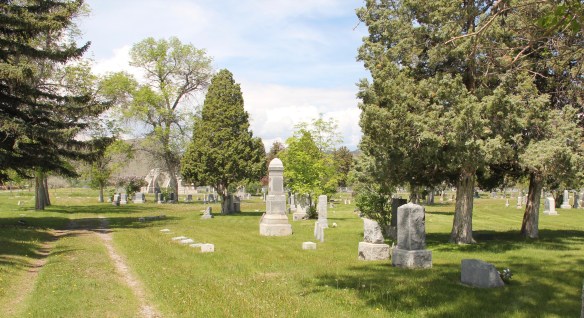 Standing quietly next to Forestvale Cemetery is Helena’s Odd Fellows Cemetery, formed in 1895 when several local lodges banded together to create a cemetery for its members. Most visitors to Forestvale probably think of this cemetery as just an extension of Forestvale but it is very much its own place, with ornamental plantings and an understated arc-plan to its arrangement of graves.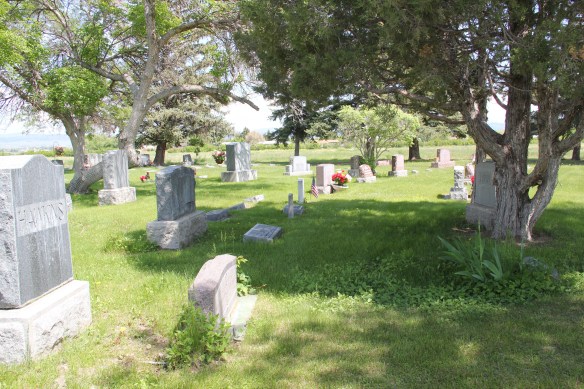
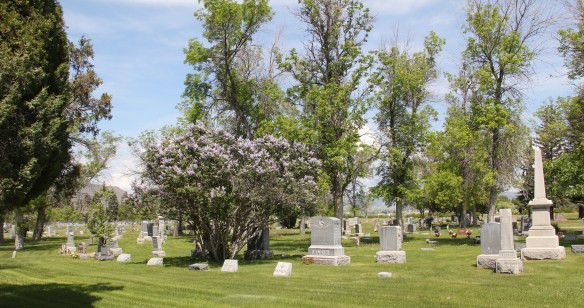
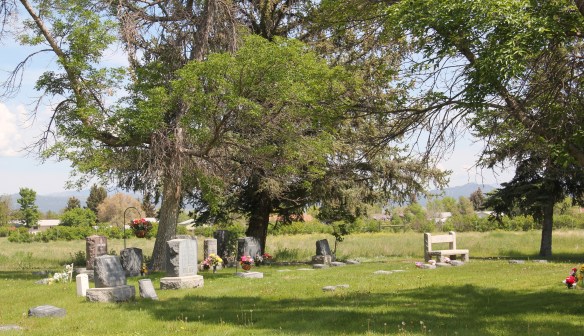 Compared to Forestvale, there are only a handful of aesthetically imposing grave markers, although I found the sole piece of cemetery furniture, the stone bench above, to be a compelling reminder of the reflective and commemorative purpose of the cemetery.
 One large stone monument, erected in the 1927 by the Rebekah lodges (for female members) of the town, marks the burial lot for IOOF members who died in Helena’s Odd Fellows Home, a building that is not extant. The memorial is a reminder of the types of social services that fraternal lodges provided their members, and how fraternal lodges shaped so much of Helena’s social and civic life in the late 19th and early twentieth century. Helena’s Odd Fellows Cemetery is a significant yet overlooked contributor to the town’s and county’s historic built environment.




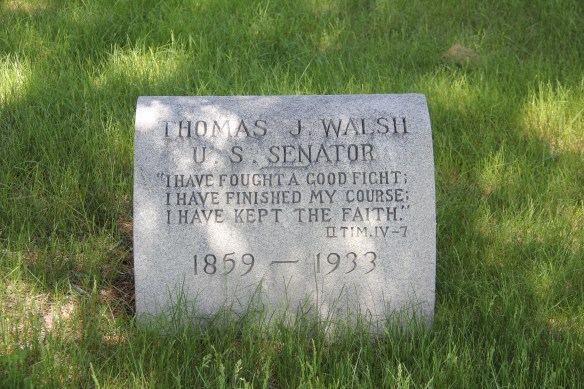
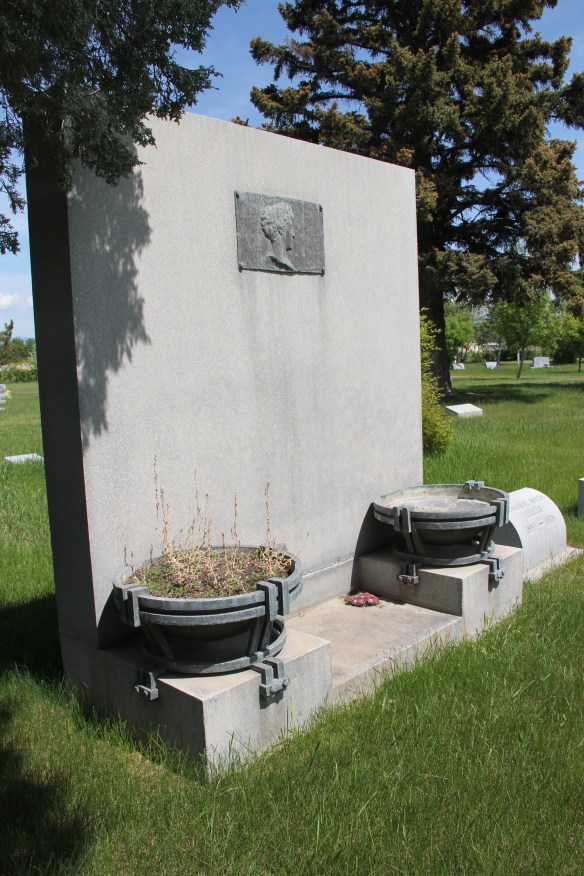
 Another compelling marker with statuary is that of another young woman rendered in marble, a memorial to James and Catherine Ryan.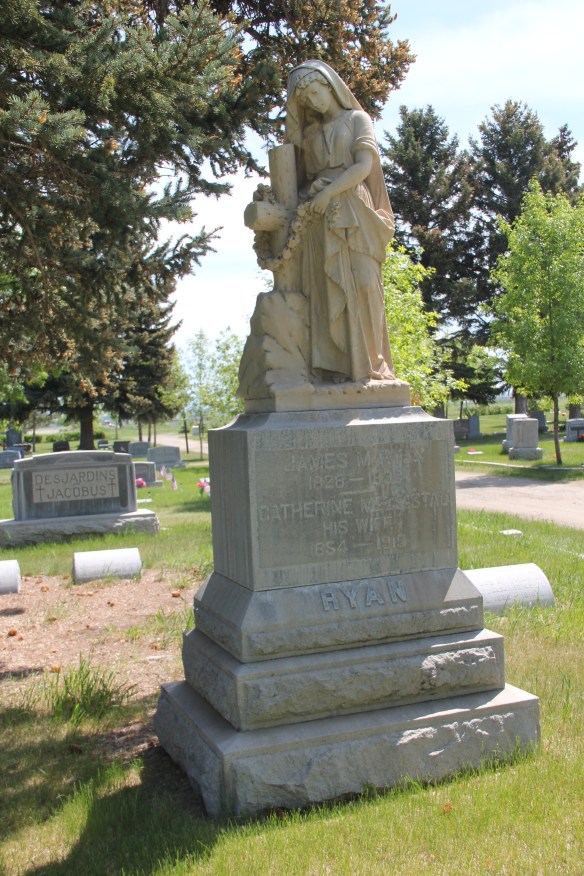


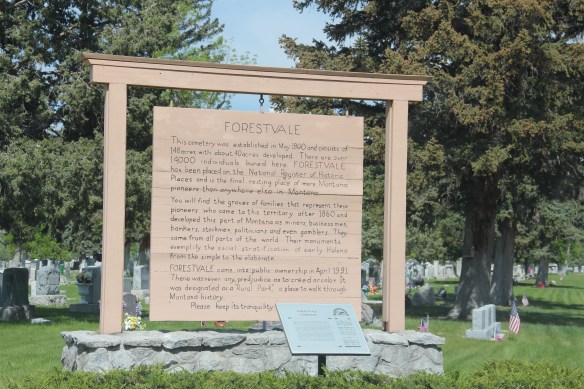
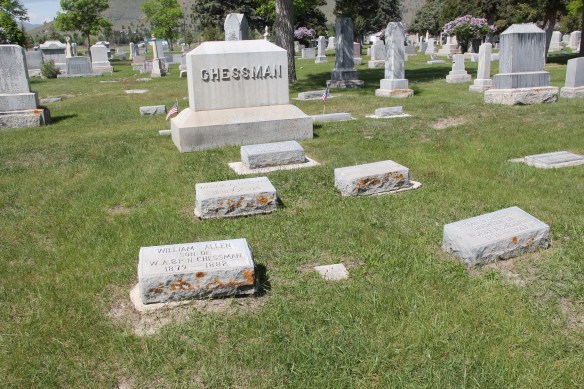


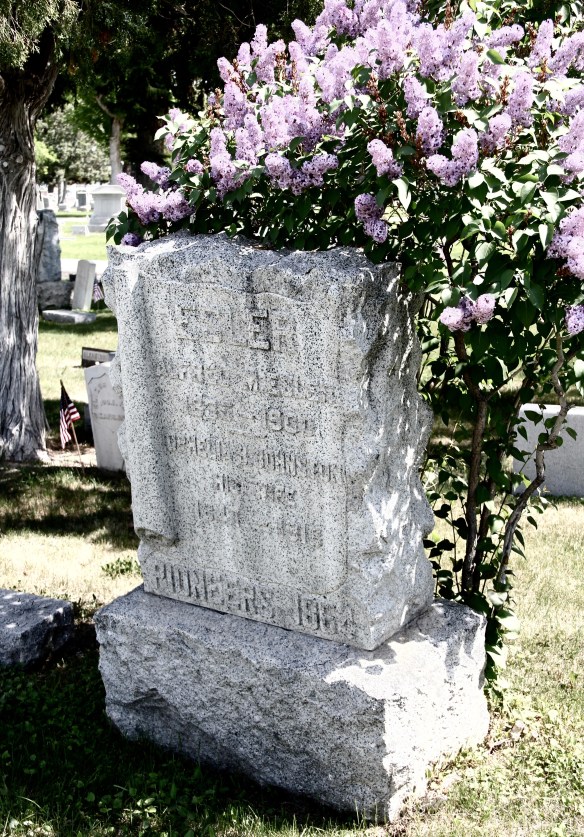
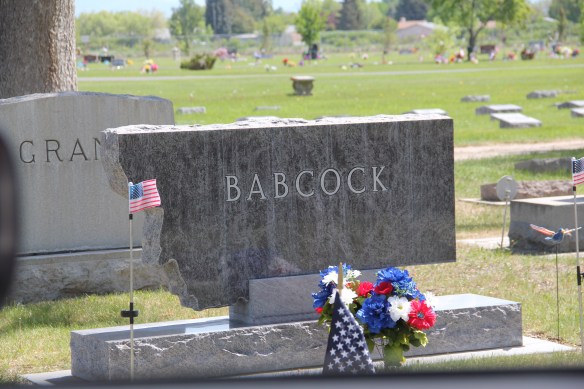

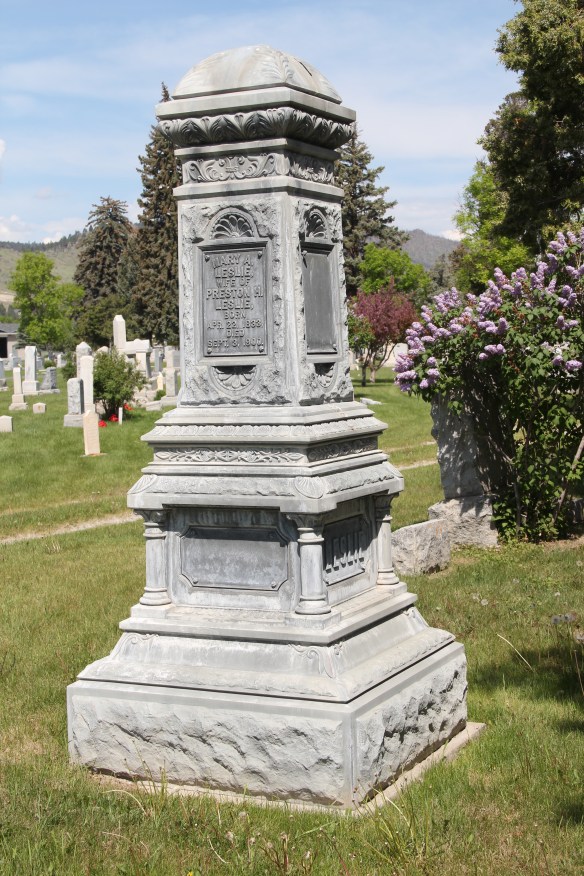


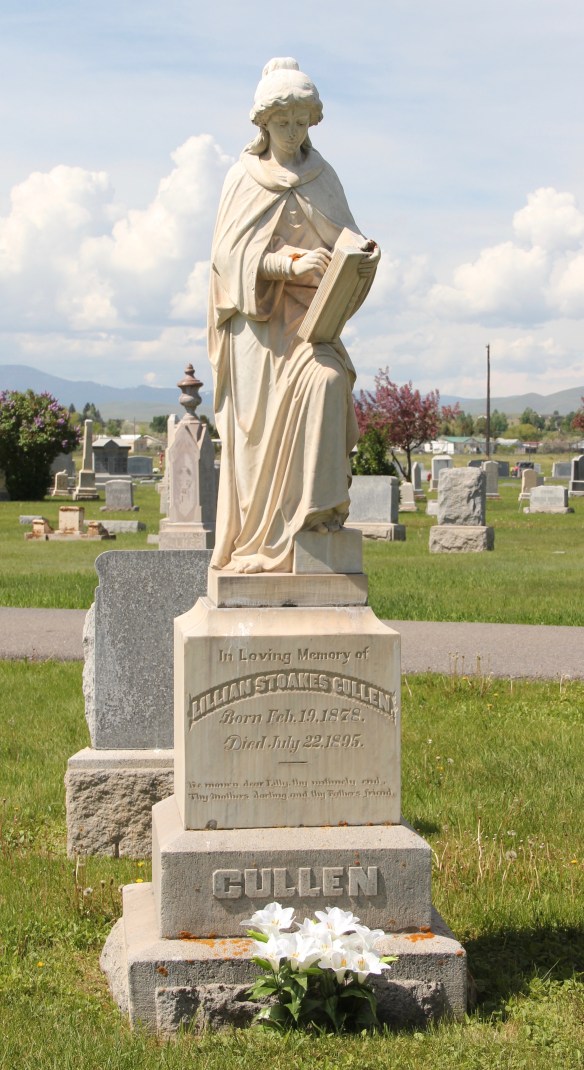


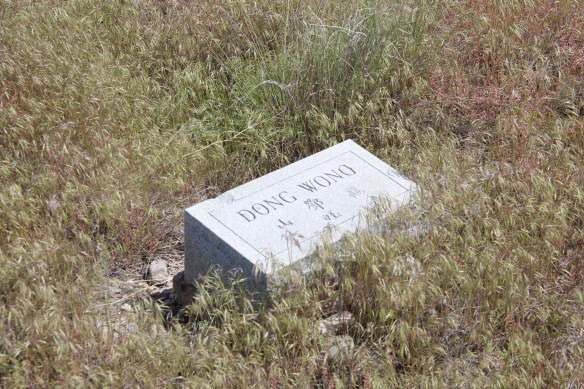


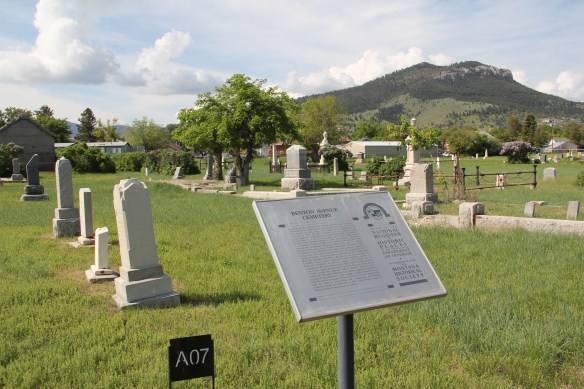 But my visit on Memorial Day 2018 left me with the feeling that the cemetery is an under-appreciated historic property. There are no signs of true neglect, but it was so quiet on Memorial Day that I did think the place had become an almost forgotten historic asset–an afterthought in today’s busy world. I hope not–because this cemetery has many jewels to explore and appreciate. Perhaps the most striking–certainly most rare to see–are the cast iron baskets–or bassinets, see below, that surround two children’s graves.
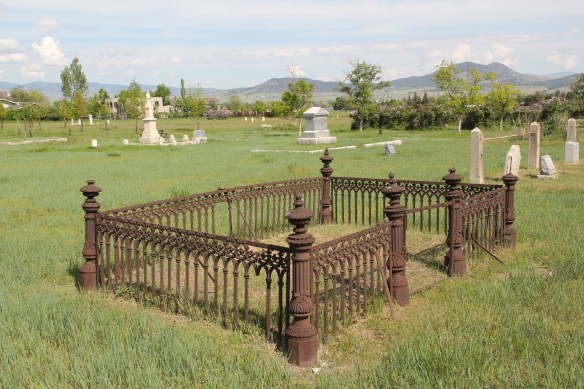
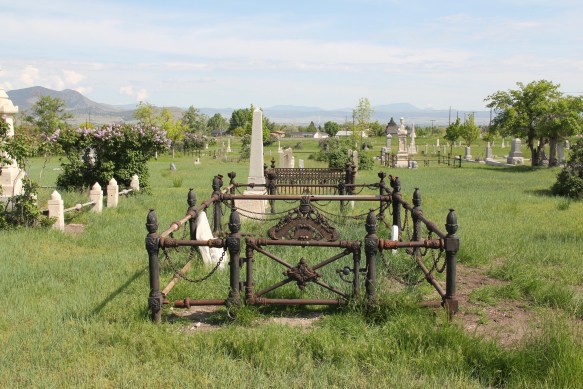 plots–certainly the ironwork was a status symbol in the late 19th century and there is no one statement. Families adorned their graves with fences much as they surrounded their houses in the nearby neighborhoods.
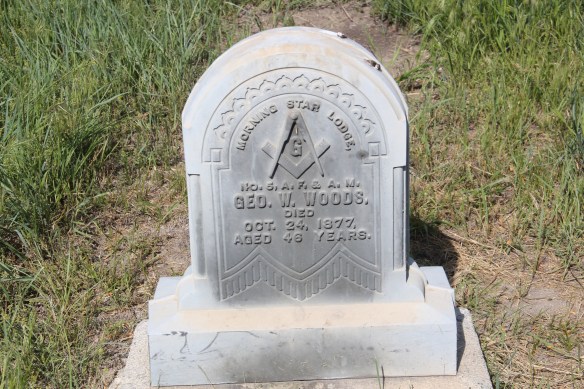
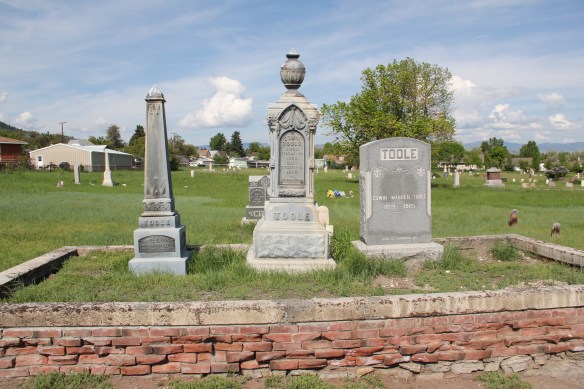


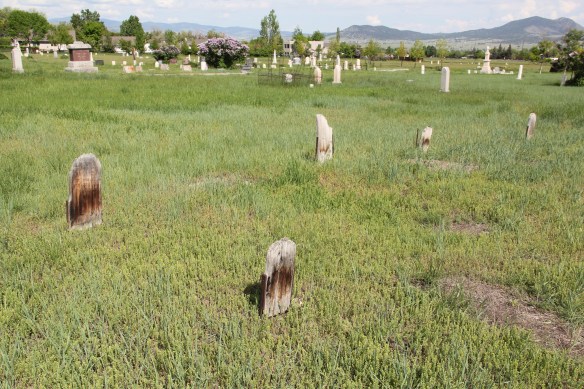
 Benton Avenue Cemetery is worth a new consideration for its many different forms, materials, and designs. When I lived in Helena some thirty-five years ago, I gave it scant attention–it deserves so much more.

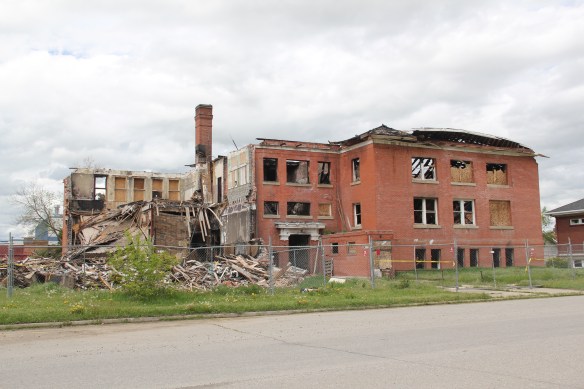 Then in October 2017, someone set a fire that almost totally destroyed the school building. When I pulled into Big Timber the following May, I expected to see a parking lot or at least an empty lot (the local Episcopal Church had purchased the property). The damaged building was still there, however, giving me one final chance to take an image, one that now represents dreams dashed, and yet another historic building gone from the Montana landscape.


 The date of most markers are from the late 19th century to the early 20th century. Mostly made of granite and sandstone, with some marble as well, the grave markers reflect Victorian styles and Classical influences. Herman Gans’ marker from 1901, seen below, is a mixture of both.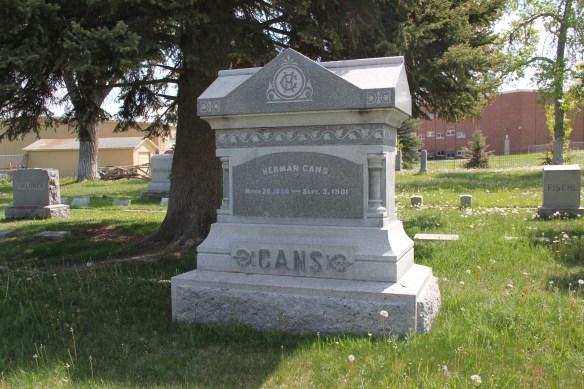


 The looming presence of the school grounds is a worry for future preservation of the cemetery–could it be possibly overlooked, ignored, and abandoned? One online resource about the cemetery remarks that there are more Jews buried in the cemetery than live in Helena today. But this sacred place is a powerful reminder of the contributions of the Jewish community to Helena’s growth and permanence. Listed in the National Register of Historic Places, the cemetery should be valued as one of the city’s oldest and most significant historic properties.