In my 1984-1985 work on the state historic preservation plan, the working assumption was that Madison County was, well, good. Tons of attention since the 1930s had been showered on the mining towns of Virginia City and Nevada City. The former was recognized as a National Historic Landmark; if one back then thought of rural counties where preservation was valued and key resources identified, then Madison County was the place.
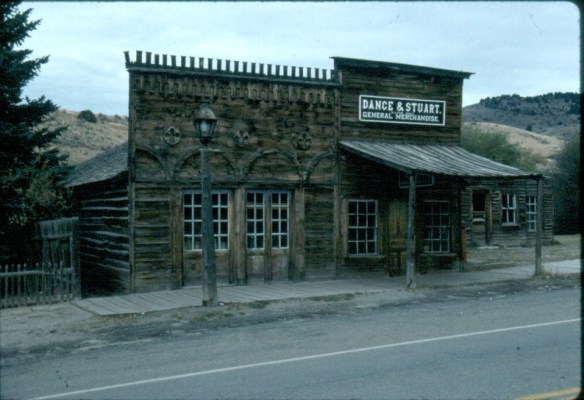
Virginia City, 1984
I came to appreciate that Madison County is much more than ghost towns, and that appreciation has grown in the decades since. It is a rich agricultural landscape, what I like to call a working landscape where ranching still matters, a lot. Here the past blends with the present in interesting and challenging ways, thus several blogs will explore the historical landscapes of Madison County, from the territorial era to today.
 Montana Highway 41 and the western side of the county is where I start, with the town of Silver Star, nestled between a spur line of the Northern Pacific Railroad, Highway 41, and Jefferson River. Gold was discovered nearby in 1866 and the town is named for a mine, but growth came more from transportation, with Silver Star serving as an early transportation stop between Virginia City and Helena in the 1870s. Today the place is best known for a privately held massive collection of mining machines, tools, and artifacts established by Lloyd Harkins, and for its rural post office that is nestled within the town’s general store.
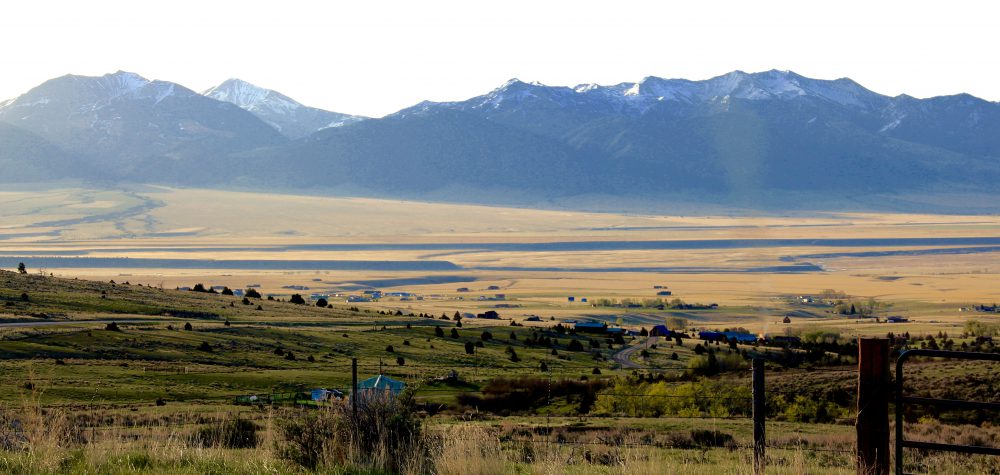
South of Silver Star along MT Highway 41 is frankly a spectacular rural landscape, with the Jefferson River and the Tobacco Root Mountains providing most of the backdrop. The river
 valley and its irrigation systems helped to produce one of the most famous barns in the state: the Round Barn, just north of Twin Bridges. In 1882 Noah Armstrong, who had made a fortune in mining, built the barn as part of his Doncaster Stable and Stud Farm. In 1933
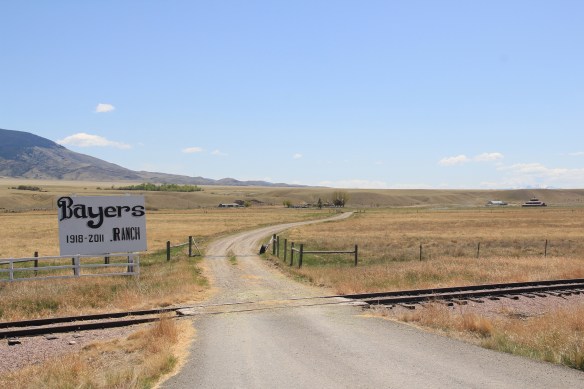 the Bayers family acquired the barn and incorporated it into their cattle business. When I visited in 1912 the barn was still an agricultural structure, with its wedding cake shape casting a distinct profile on the landscape. In 2015, the barn was restored to a new use: as a wedding and event reception space.
This section of Montana 41 also followed a route traveled by the Lewis and Clark expedition in August 1805. Today, like most of the trail throughout the state, there is much more public interpretation than in the 1980s. The marker below on Montana 41 explains the expedition’s confusion over the junction of the Big Hole and Jefferson rivers; in Twin Bridges there is an outdoor interpretive area at the county fairgrounds that commemorates the expedition, especially the role of Sacajawea.
The real jewels at the Madison County Fairgrounds are the historic buildings themselves–a wonderful set of New Deal-era public buildings crafted by the Works Progress Administration in the mid-1930s. An earlier post reviewed the fairgrounds history, noting that “‘WPA engineer C. D. Paxton drew the plans and Tosten Stenberg, well known for his log structures in Yellowstone Park, directed construction. Local foreman Fred Sommers was brought out of retirement with a special waiver from Washington to supervise the project. Lodgepole pine, fir logs, and other building materials were gathered locally and prepared by workers on site.'”

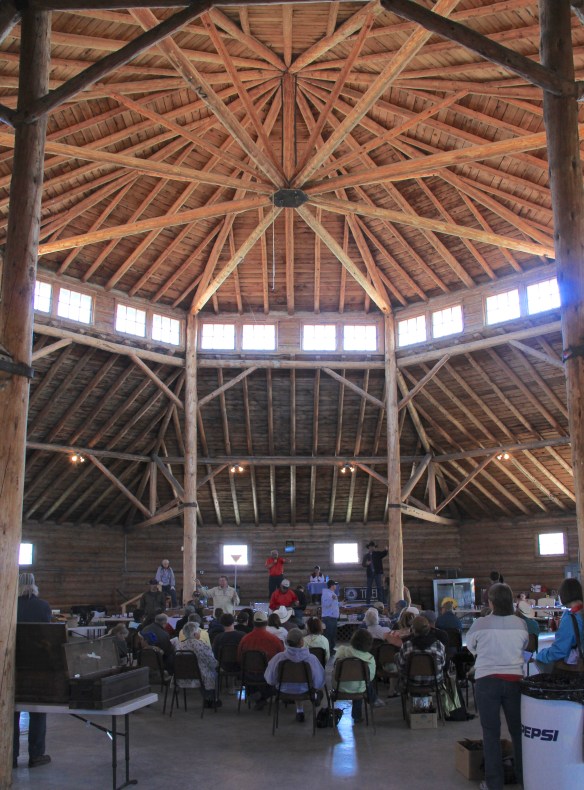 The result is spectacular, and with their restoration in the last 30 years, the buildings are not just landmarks but busy throughout the spring, summer, and fall.

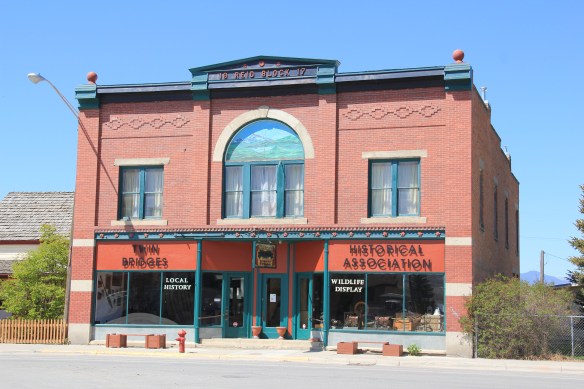
Twin Bridges is also more than the fairgrounds. When I visited for the first time in almost 30 years in 2012, the entire business district has getting an infrastructure facelift. The construction did not diminish my appreciation for the range of historic commercial
buildings along the highway. Most worthy of note is the late Victorian-styled Reid Block of 1917, the construction of which coincided with the homesteading boom in this part of the county. The Reid Block is now home to the Twin Bridges Historical Association.
 The Old Hotel, a brick two-story gable-front building, also marks the town’s ascent during the early 20th century when the town achieved its highest population, about 750 in 1920. Today about half of that number call Twin Bridges home.
 My personal favorite, and a frequent stop during the 1980s, is the Blue Anchor Bar, nestled on the first floor, with an Art Deco style redesign, in a two-story commercial block.
 Twin Bridges is a very important river junction, thus the name, where the Beaverhead, Big Hole, and Ruby rivers all meet to form the Jefferson River. A public park near the confluence just south of the Montana 41/287 helps to tell that story. Nearby is the Twin Bridges School and its amazing modernist styled gymnasium.


Twin Bridges School is award winning and clearly the pride of every resident. Another part of Montana’s history of childhood education is also at Twin Bridges, the Montana State Orphanage later known as the State Home for Children. The Queen Anne-style orphanage

dates to 1894–it was known as “The Castle” and is listed in the National Register– and as the decades passed the state enlarged the facility and added modern-styled facilities to the complex. The state closed the orphanage in 1975. Ever since that time, preservationists statewide and residents locally have tried to come up with an adaptive reuse plan that could put the buildings back in service.
For a brief history of the orphanage, visit the blog post “There’s No Place like Home: The Role of the Montana State Orphanage” on the montanawomenshistory.org blog. It features historic photographs of the orphanage. In 2010 the Bozeman Daily Chronicle featured the deteriorating campus in a news feature, wondering when and if preservation and adaptive reuse would happen. That question remains today.


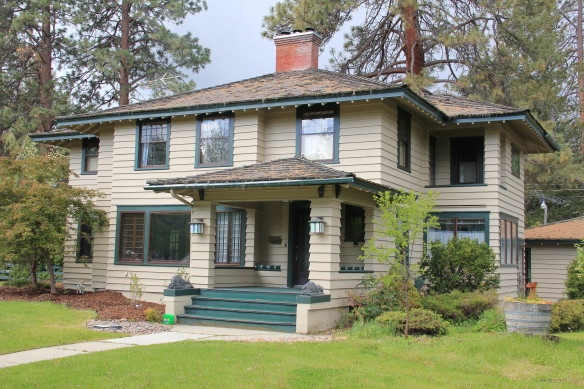 South 3rd Street also has a strong set of bungalows, Montana style, which means that they take all sorts of forms and use all sorts of building materials.


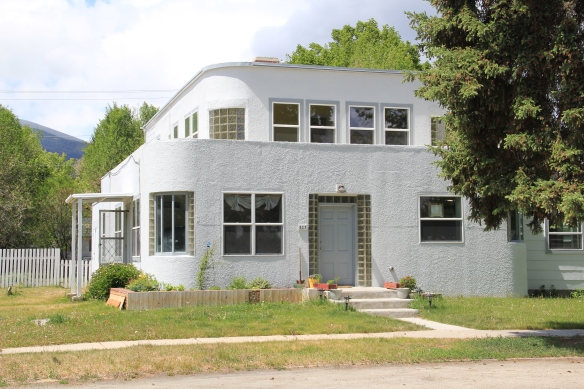
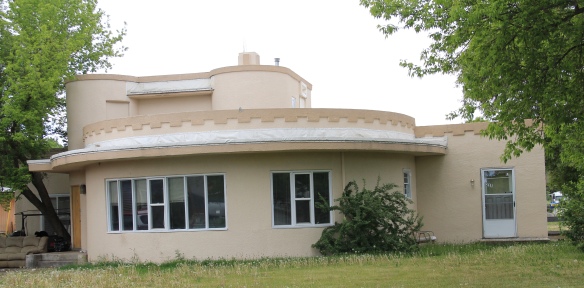


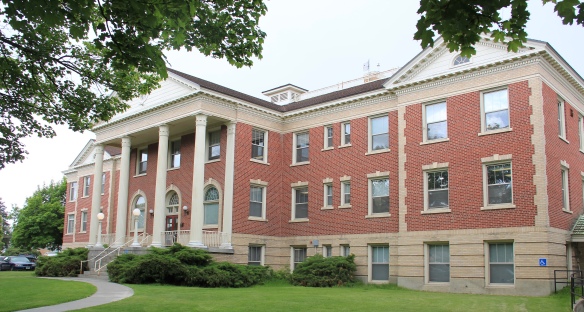 My favorite set of public buildings in Hamilton got back to the theme of town and ranch and how community institutions can link both. The Ravalli County Fairgrounds began on
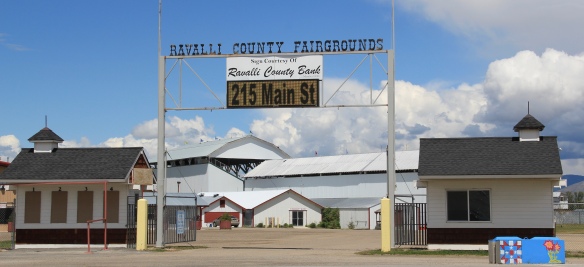 40 acres located south of downtown on the original road to Corvallis in 1913. Its remarkable set of buildings date from those early years into the present, and the Labor Day Rodeo is still one of the region’s best.


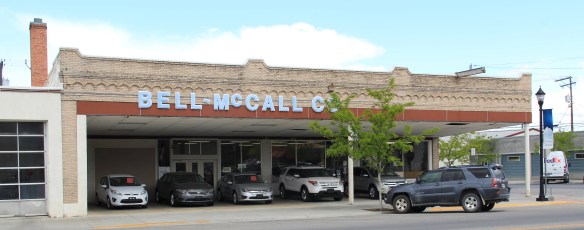


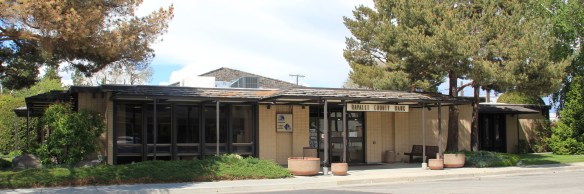 contemporary styling of the Ravalli County Bank or the “new” county courthouse of 1976, a building that I totally dismissed in 1984 but now that it has reached the 40 year mark the design seems so much of its time, and a very interesting local reaction by the firm of Howland and Associates to the ne0-Colonial Revival that gripped so much of the nation during the American bicentennial.

 Adaptive reuse had put some buildings back into use, such as the historic Creamery, once such an important link between town and ranch in the county. Other landmarks didn’t


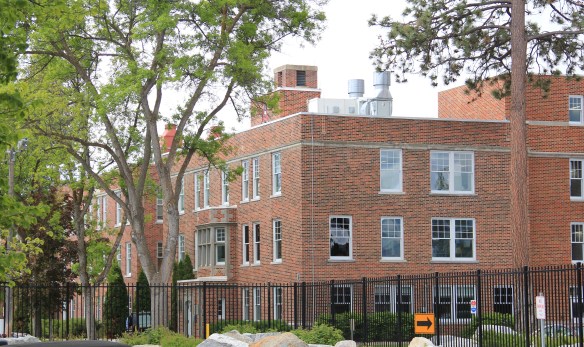
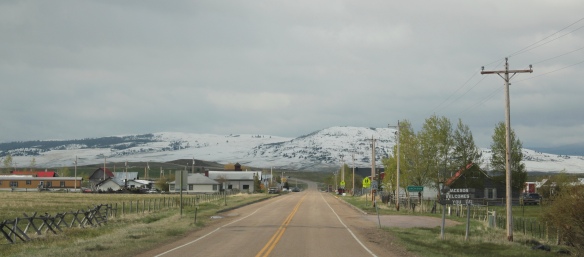 Jackson, Montana, is another favorite place of mine in Beaverhead County. Located on Montana Highway 278, far away from any neighborhoods, the town dates to the 1880s, as
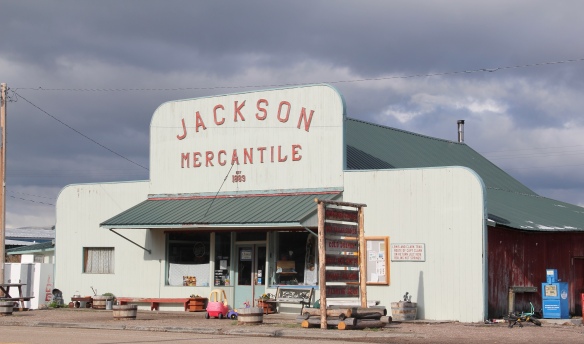 this area of the Big Hole Valley opened up to ranching. Its name came from Anton Jackson, the first postmaster; the town still has a historic post office building even though its

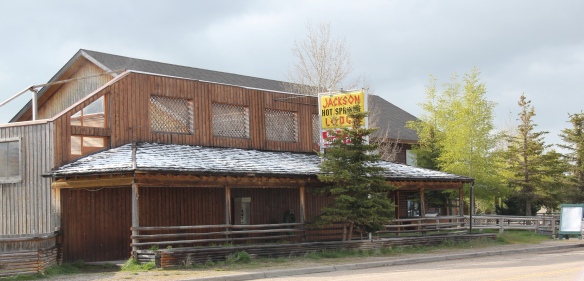
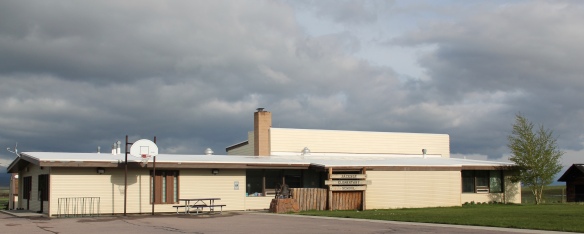 Jackson grows significantly during the winter, as it is an increasingly popular winter get-away destination, centered on the historic Jackson Hot Springs, which had been upgraded and significantly expanded since my last visit in 1984.
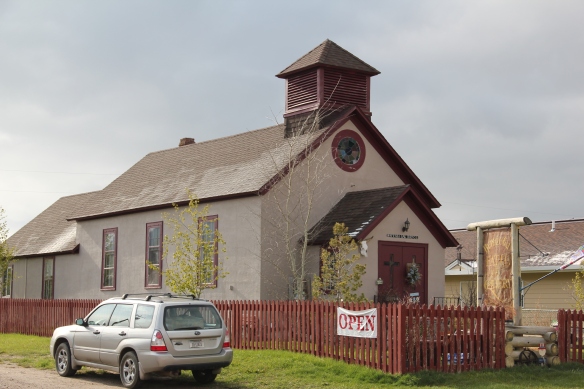
 But my real reason to tout the wonders of Jackson, Montana, lie with a simple but rather unique adaptive reuse project. A turn of the 20th century church building has been converted into a hat manufacturer business, the Buffalo Gal Hat Shop–and I like hats!
 Grant is another ranching town along a Montana secondary highway, this time Montana Highway 324. Like Jackson, it too has enough year-round residents and children from nearby ranches to support a school, a tiny modernist style building while an older early 20th century school building has become a community center.

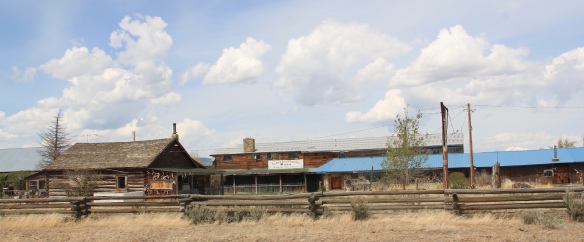 Back when I visited in 1984, Monte Elliott (only the third owner of the property he claimed) showed off his recent improvements made within the context of a business location that dated to the Civil War era. The lodge still keeps records from those early days that they share with interested visitors. In the 21st century, new owner Jason Vose additionally upgraded the facilities, but kept the business’s pride in its past as he further expanded its offerings to hunters and travelers.
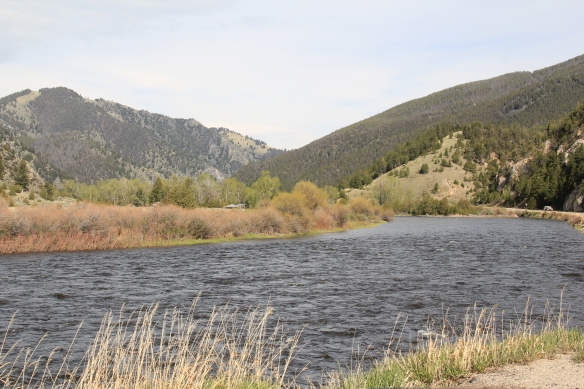 Far to the north along Montana Highway 43 is the Big Horn River Canyon, a spectacular but little known landscape within the state. Certainly anglers and hunters visited here, but the two towns along the river in this northern end of Beaverhead County are tiny places, best known perhaps for their bars as any thing else.


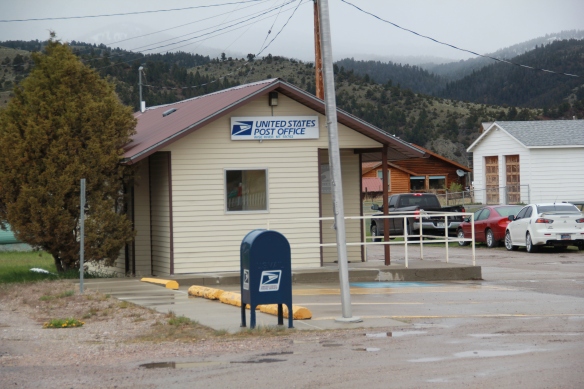
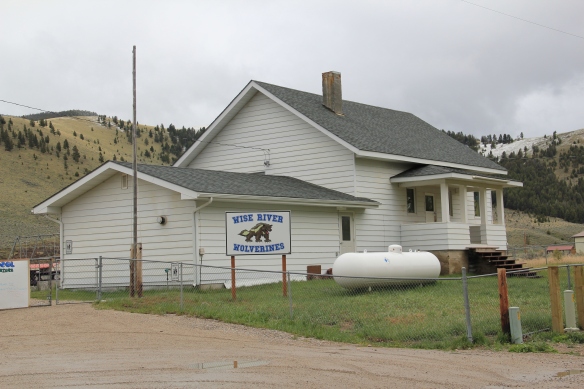 Just as important as a town anchor is the Wise River Community Center, which began in the gable-front frame building as the Wise River Woman’s Club but has expanded over the last 30 years into the larger building you find today.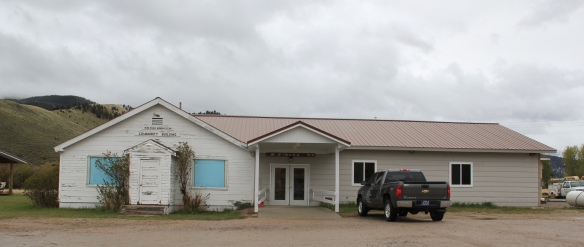
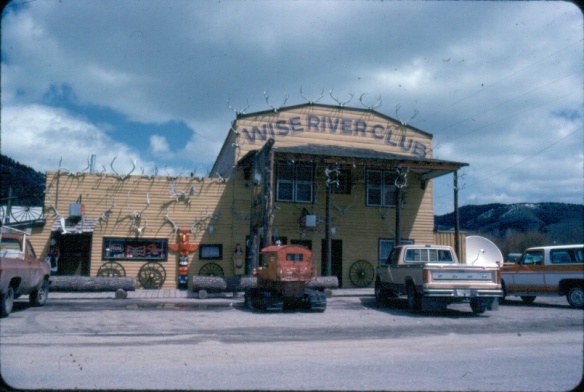 The liveliness of that 1984 exterior–note the mini-totem pole, the log benches, wagon wheels, and yes the many antlers defining the front wall–is muted in today’s building.
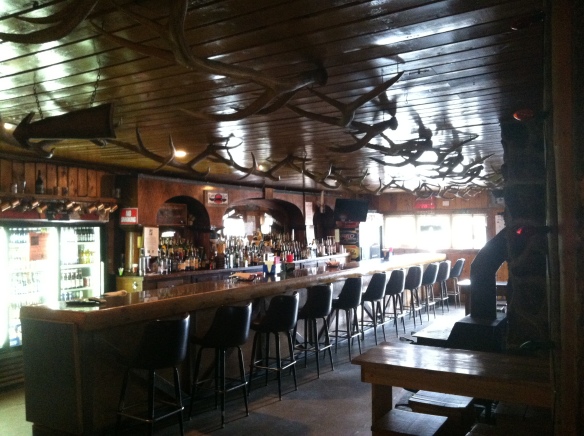
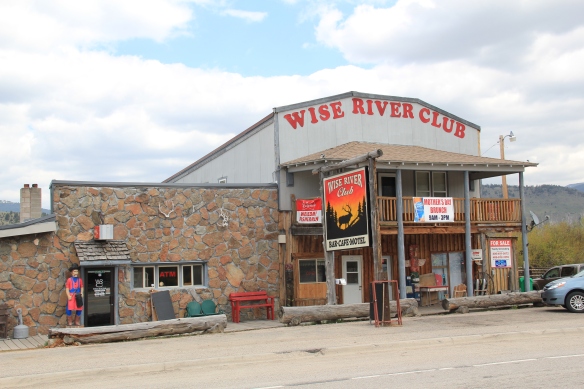 But the place is still there, serving locals and travelers, and a good number of the antlers now grace the main room of the bar.
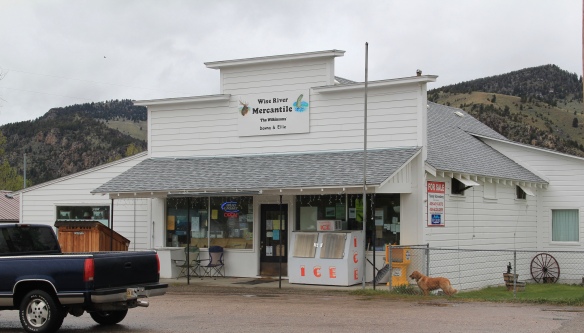
 Wise River, unlike Dewey but similar to Jackson, has been able to keep its historic general store in business. The post office moved out in the 1990s to the new separate building but the flag pole remains outside to mark how this building also served both private and public functions.
 The country towns of Beaverhead County help to landmark the agricultural history of this place, and how such a huge county as this one could still nurture tiny urban oases. Next I will leave the rural landscape and look at Beayerhead’s one true urban landscape–the county seat of Dillon.
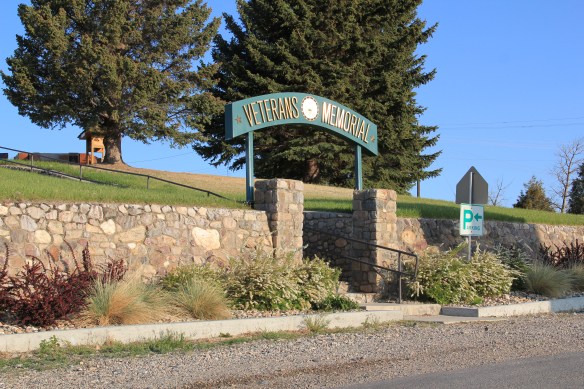 Nestled where Montana Highway 287 encounters U.S. Highway 287 in the southern end of Madison County, Ennis has changed in significant ways in the last 30 years. Its earlier dependence on automobile tourism to Yellowstone National Park has shifted into the favor of population growth and development in this portion of the county.
 The iconic Ennis Cafe, always a favorite place back in the day of the statewide work, remains, with a new false front emphasizing the wildlife and open spaces of this area. That place, along with several classic watering holes, served not only locals but the


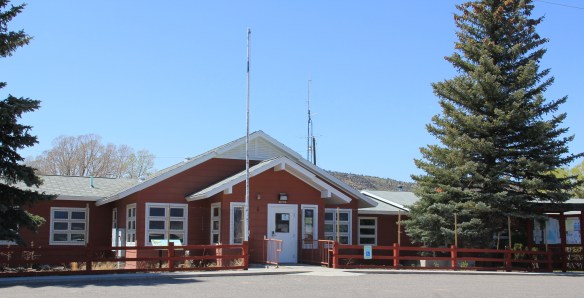


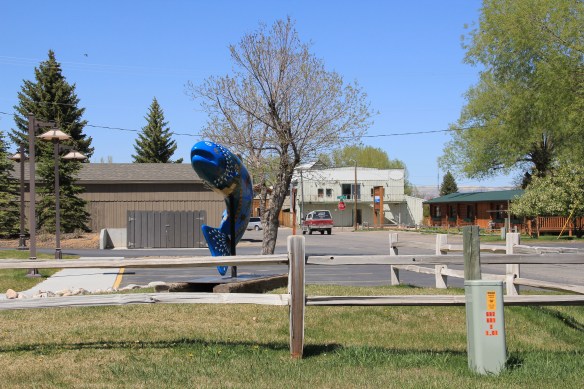


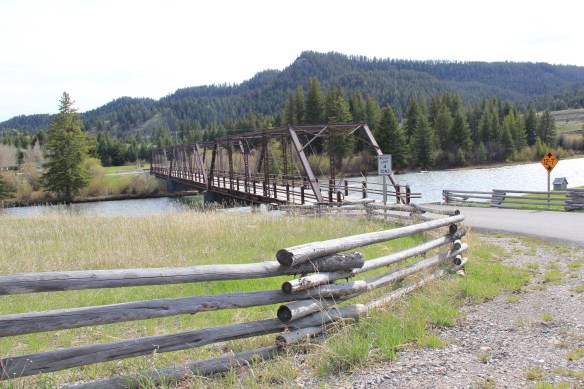 of a section of the highway where you will encounter magnificent views of the Madison River Valley and open ranch lands.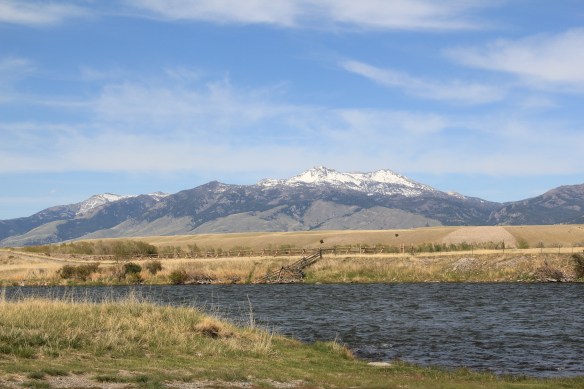
 Cutting through Montana’s southeast corner is state highway 287, not a particularly long route at a little over 40 miles in length, but a spectacular one nonetheless as it connects the Madison River Valley (seen above) with the Ruby River Valley, with the famous mining town of Virginia City in the mountains in between.
 We have already talked about the western gateway to the highway, the town of Twin Bridges. Now I wish to move from west to east, stopping first Sheridan and its Bethel United Methodist Church, a brick late 19th century Gothic Revival church, which is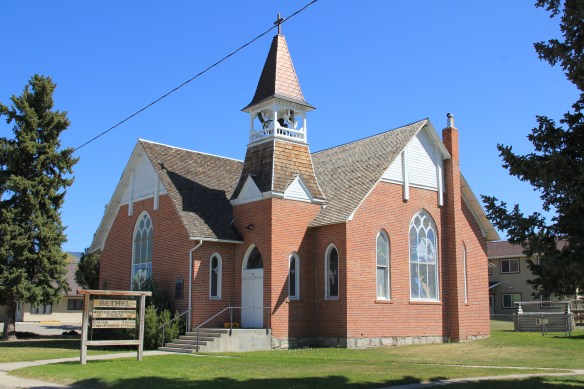
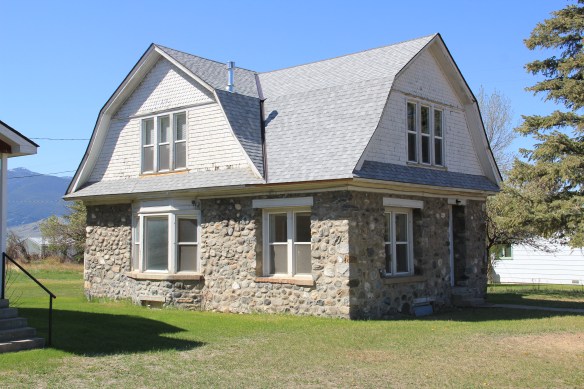 The O’Brien House is also listed in the National Register. Built in 1894, this two-story brick home is another example of Sheridan’s boom following railroad development. It is a rather late example of Italianate style (typically more popular in Montana in the 1870s).

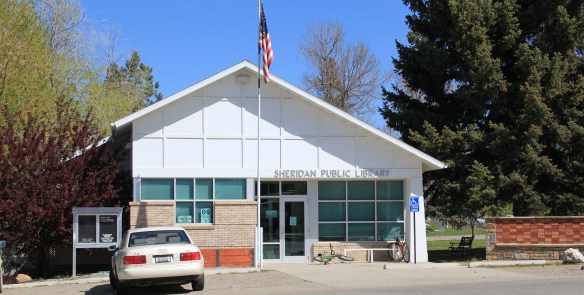
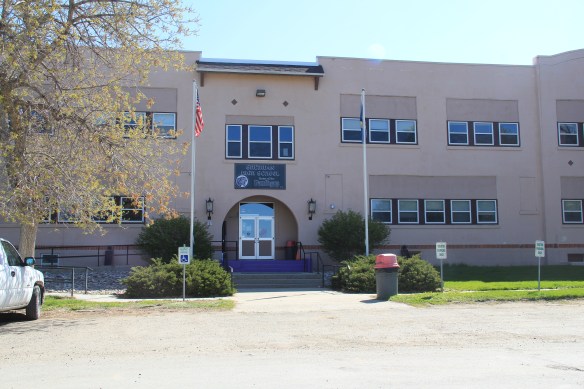 This Craftsman-style building dates c. 1920. Along the street are several interesting examples of domestic architecture from the early 20th century. You wonder if Mill Street might not be a possible National Register historic district.



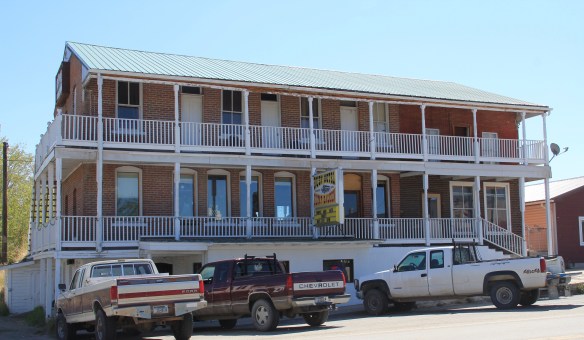


 When travelers, and most Montana residents even, speak of Silver Bow County, they think of Butte. Outside of the Copper City, however, are small towns and a very different way of life. To the west we have already discussed Ramsay and its beginnings as a munitions factory town during World War I. Let’s shift attention now to the southern tip of the county and two places along the historic Union Pacific spur line, the Utah Northern Railroad, into Butte.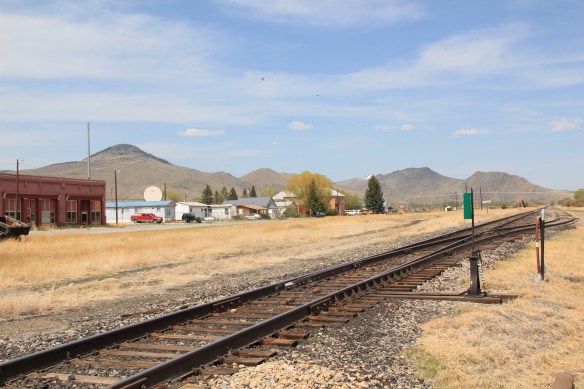


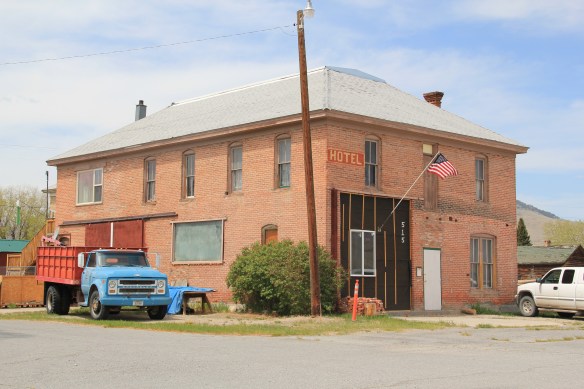 when Melrose was a substantial, busy place. This 1870s-1880s history is largely forgotten today as the town has evolved into a sportsmen’s stop off Interstate I-15 due to its great access to the Big Hole River and surrounding national forests as well as the quite marvy Melrose Bar and Cafe, a classic western watering hole.
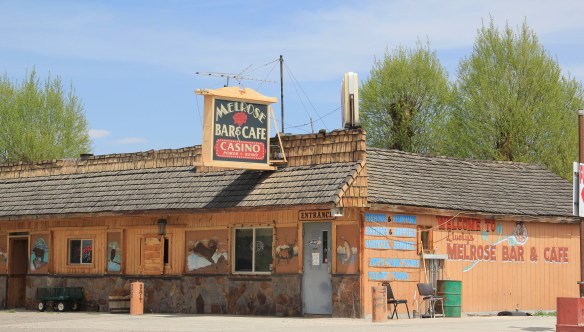 Community institutions help to keep Melrose’s sense of itself alive in the 21st century. Its school, local firehall, the historic stone St John the Apostle Catholic Mission and the modernist styled Community Presbyterian Church are statements of stability and purpose.


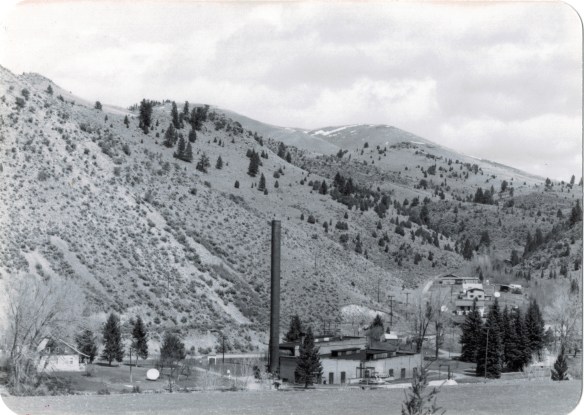 The photo above was published in A Traveler’s Companion to Montana History, in part because of the preservation excitement over this landmark but also because it documented how the boom in Butte helped to transform the historic landscape on the “other side of the divide.” The pump station took water from the Big Hole River and pumped it over the mountains to the Butte Water Company–without the pump station, expansion of the mines and the city would have been difficult perhaps impossible in the early 20th century.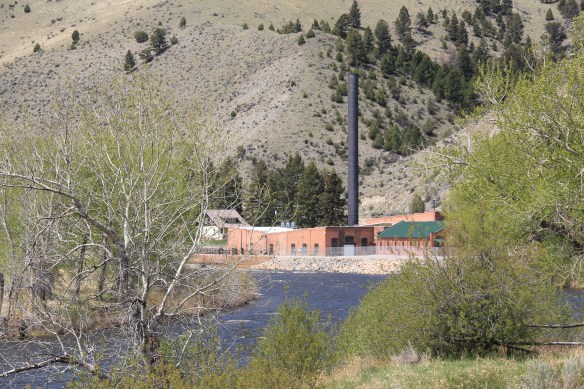
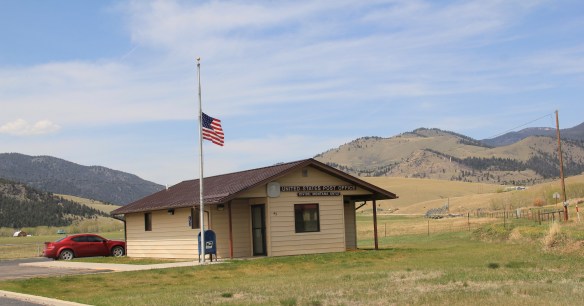 In 2014, in reaction to the listing of Montana rural schools as a threatened national treasure by the National Trust of Historic Preservation, CBS Sunday Morning visited Divide School for a feature story. Teacher Judy Boyle told the Montana Standard of May 16, 2014: “The town of Divide is pretty proud of its school and they want to keep it running. We have a Post Office, the Grange and the school — and if you close the school, you basically close the town.”
 Divide is one of many Montana towns where residents consider their schools to the foundation for their future–helping to explain why Montanans are so passionate about their local schools.






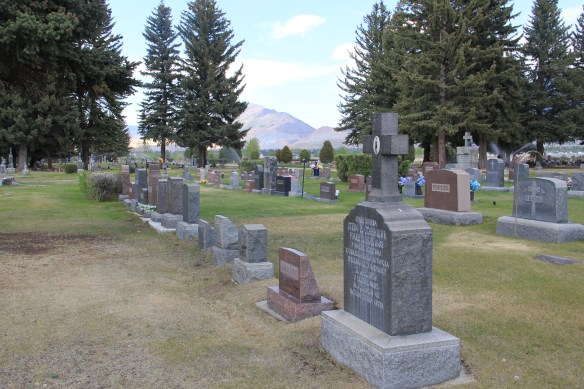

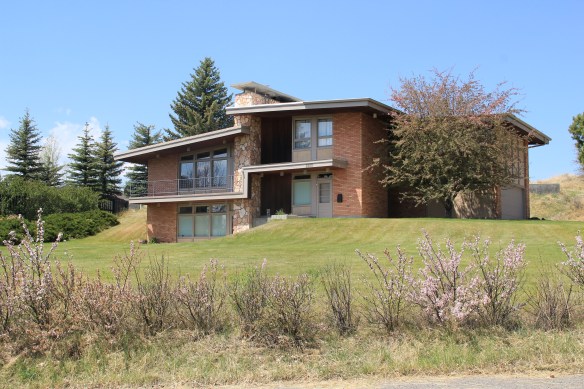 You don’t think Montana modernism when you think of Butte, but as this overview will demonstrate, you should think about it. I have already pinpointed contemporary homes on Ophir Street (above). The copper mines remained in high production during the Cold War era and many key resources remain to document that time in the city. For discussion sake, I will introduce some of my favorites.


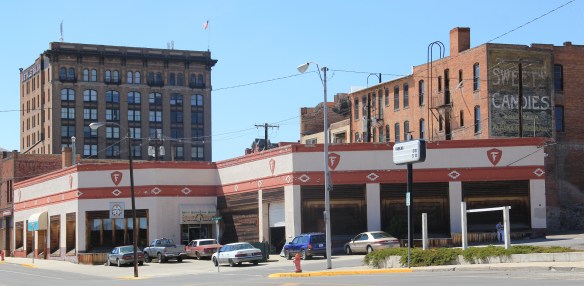 I looked at schools constantly across the state in 1984-1985 but did not give enough attention to the late 1930s Butte High School, a classic bit of New Deal design combining International and Deco styles in red brick. Nor did I pay attention to the modernist buildings associated with Butte Central (Catholic) High School.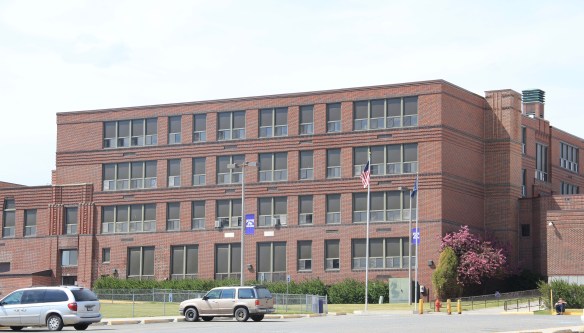


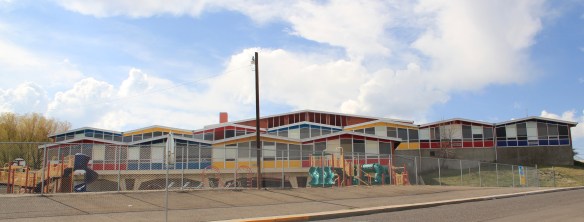


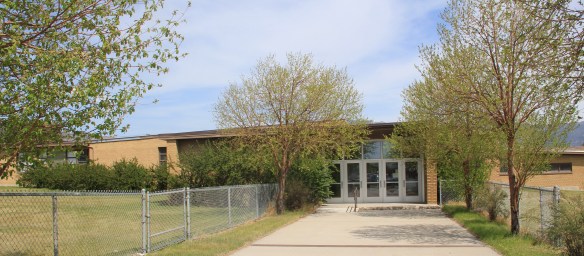

 You would think that I would have paid attention to the Walker-Garfield School since I stopped in at the nearby Bonanza Freeze, not once but twice in the Butte work of 1984. I
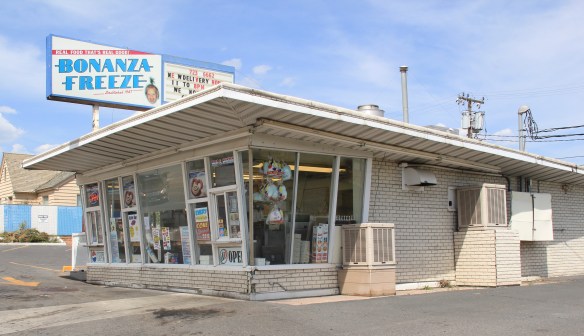 never gave a thought about recording this classic bit of roadside architecture either. Same too for Muzz and Stan’s Freeway Bar, although maybe I should not recount the number of stops at this classic liquor-to-go spot.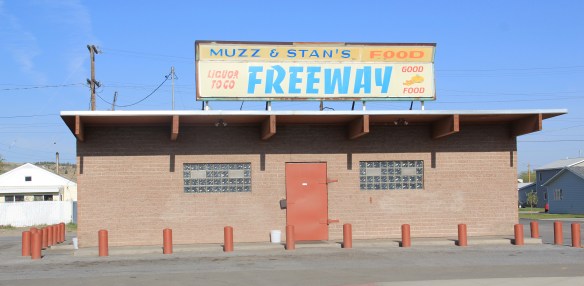


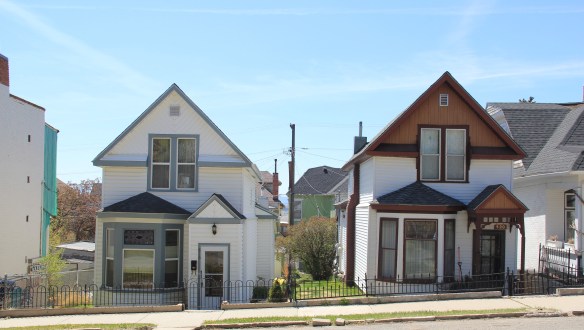
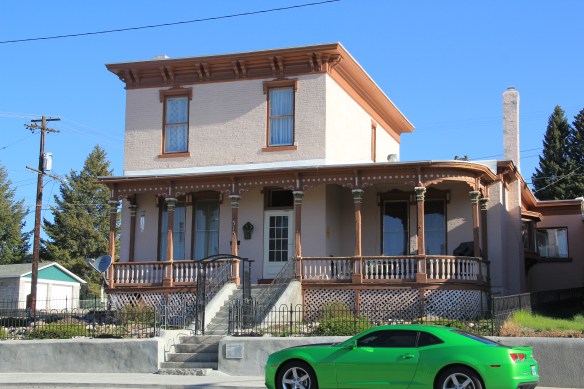


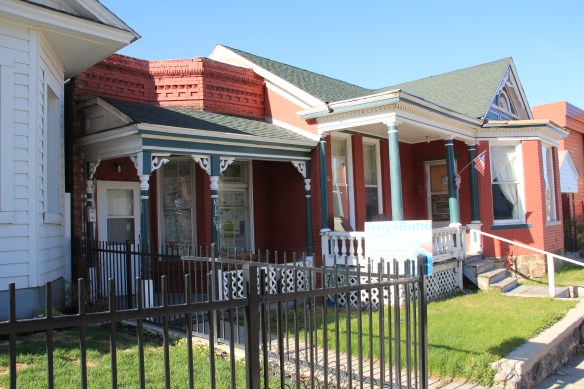


 In the north end, Walkerville still shows this working side of domestic architecture well.
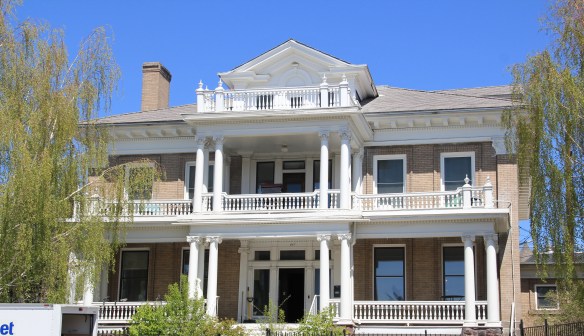
 Here are blocks upon blocks of the unpretentious, yet homey, dwellings of those drilling out a life below the ground. And elsewhere in the city you have surviving enclaves of the


 Some places speak to larger truths, often hidden in the landscape, of segregated spaces and segregated lives. This corner of Idaho Street (see below) was once home to the local African Methodist Episcopal church, which served a small surrounding neighborhood of black families.



 Montana's Historic Landscapes