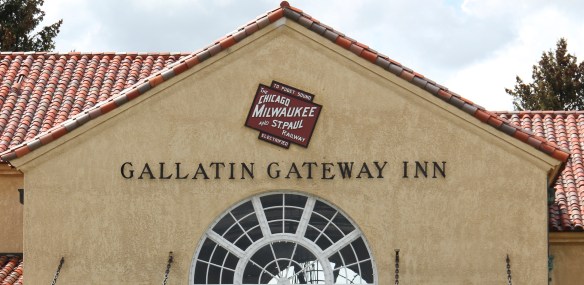
 The most popular Montana gateway into Yellowstone National Park is at Gardiner, in the southern tip of Park County. Here is where the Northern Pacific Railway stopped its trains, at a Rustic styled passenger station long ago demolished, and travelers passed through the gate above–designed by architect Robert Reamer–and started their journey into the park.
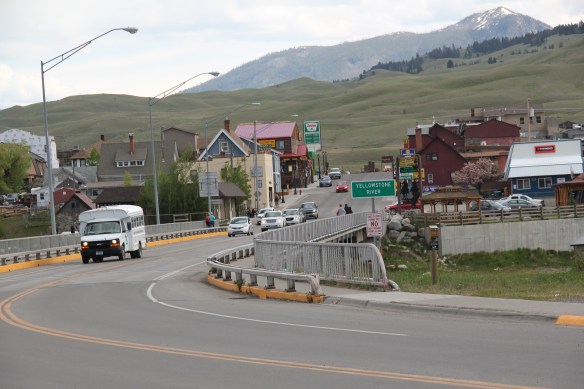 By the mid-20th century, Gardiner had become a highway town, the place in-between the beautiful drive through the Paradise Valley on U.S. Highway 89 (now a local paved road)

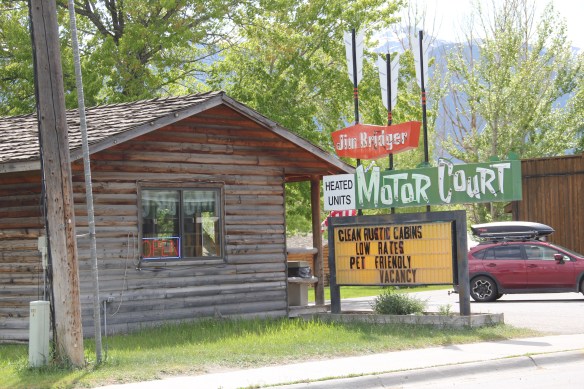
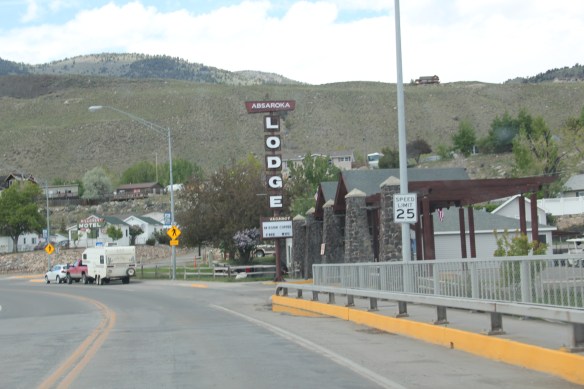
to the northern edge of the national park boundary. Here at Gardiner, there are two rather distinct zones of tourism development. On the north side of the Yellowstone River along U.S. 89 is a mid to late 20th century roadside landscape, including such classic bits of roadside architecture as the Hillcrest Motel and Cabins, the Jim Bridger Motor Lodge, and the Absaroka Lodge as well as a plethora of other visitor services

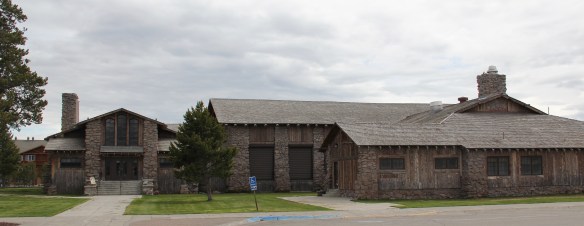
On the south side river, closest to the park entrance, is an earlier layer of commercial development, ranging from the turn of the 20th century to the early years of the 21st century. A major change in the last 30 years is how this section of town has been remodeled and rebuilt (such as the modern Rustic style of the Yellowstone Association building below) with a wholly new streetscape and road plan installed c. 2015.
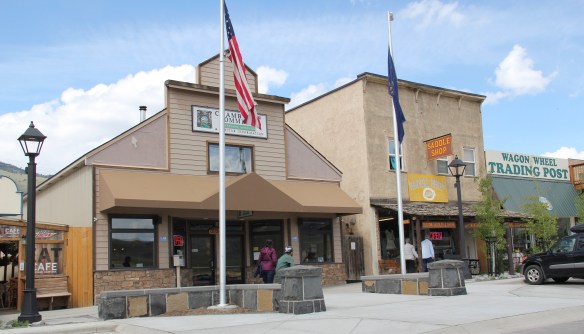


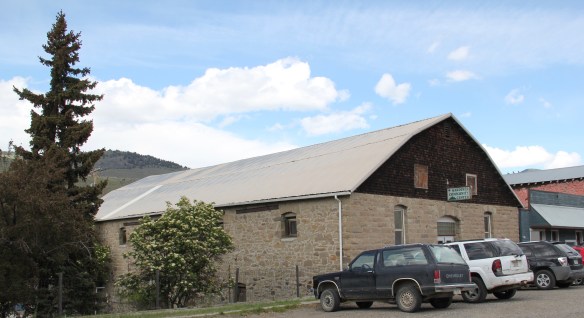
Yet, mixed in with all of tourism businesses, are community institutions that have served local residents for decades. My favorite is the Gardiner Community Center, built in 1910 as an opera house but transformed into a community building by the Fraternal Order of Eagles when it took over the building’s management in 1928. The building has served the community as a school, with basketball games in the large open hall, and then for many other community functions and as home to the local WFW chapter. The Greater Gardiner Community Center acquired this landmark in 2015 and is developing plans for its restoration and revitalization, good news indeed.


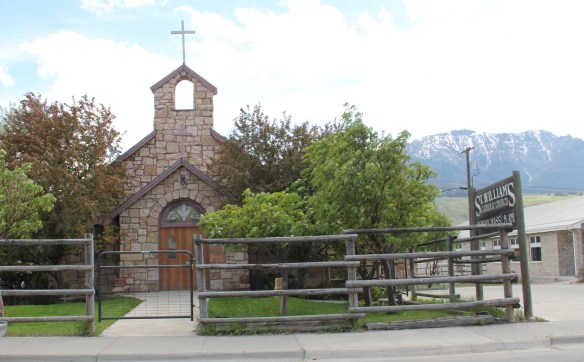
Another key community institution with Gardiner’s trademark stonework comes from the second half of the 20th century, St. Williams Catholic Church.
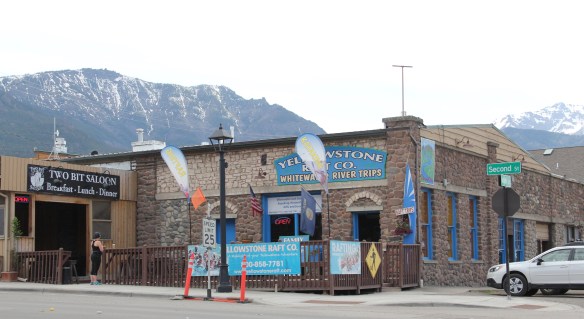
Recent and on-going local efforts to re-energize the historic town should meet with success, for there are significant historic commercial buildings, dwellings, and public buildings on both sides of the Yellowstone River.


 The plan to develop a new Gardiner library at the old Northern Pacific depot site at part of the Gardiner Gateway Project is particularly promising, giving the town a new community anchor but also reconnecting it to the railroad landscape it was once part of. Something indeed to look for when I next visit this Yellowstone Gateway.
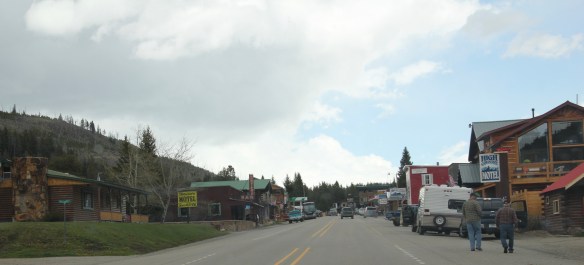 Montana’s gateways into Yellowstone National Park are known far and wide. The most popular are associated with the trains that delivered mostly easterners to the wonderland of the park–West Yellowstone for the Union Pacific line and Gardiner for the Northern Pacific Railway.
 Cooke City, located in the corner of Park County, was never a railroad town but an overland connection that did not become popular until the development of the Beartooth Highway out of Red Lodge in the 1920s.
 It is all about the Beartooth Highway (U.S. 212) here–when it opens, Cooke City booms as a tourism oasis. When the highway closes for its long winter, business doesn’t end since the road to Mammoth Hot Springs far to the west is kept open as best as it can be, but the number of visitors drops remarkably. Snow mobile traffic in the winter has meant a lot to local business in the last 30 years.

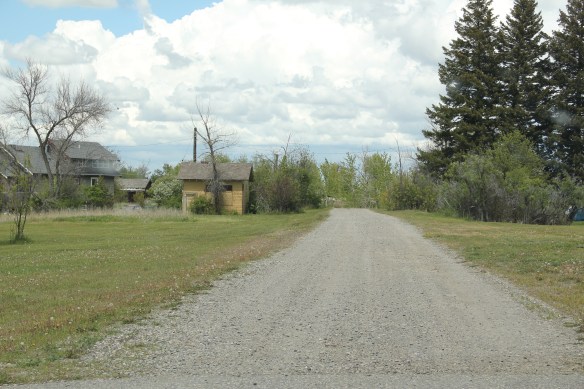
 Cooke City uses its mining past to define its identity today, from moving log mining shacks and cabins into town, as shown above, for potential new lures for tourism, to the recently established visitor center and museum, which includes some of the local mining


 Perhaps the best example is the rustic yet modern styling of the Mt Republic Chapel of Peace between Silver Gate and Cooke City on U.S. 212. It is no match for the soaring mountains that surround it but its quiet dignity reflects well the people and environment of this part of Montana.

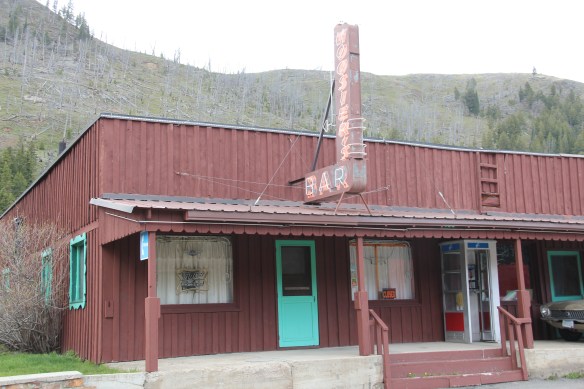 The same can be said for Hoosier’s Bar–a favorite haunt here in Cooke City for several decades, easy to find with its neon sign, and then there is the throwback telephone booth–a good idea since many cell phones search for coverage in this area. Cooke City and Silver Gate are the smallest Montana gateways into Yellowstone National Park but they tell and preserve their story well.
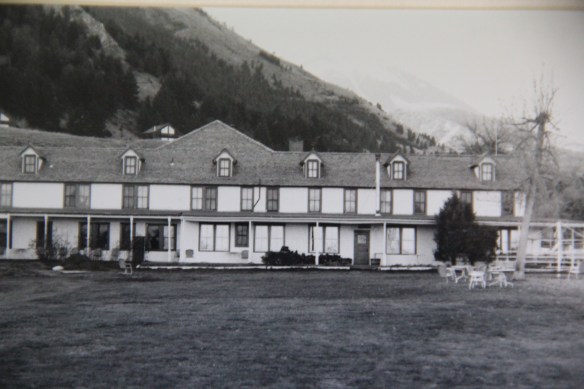


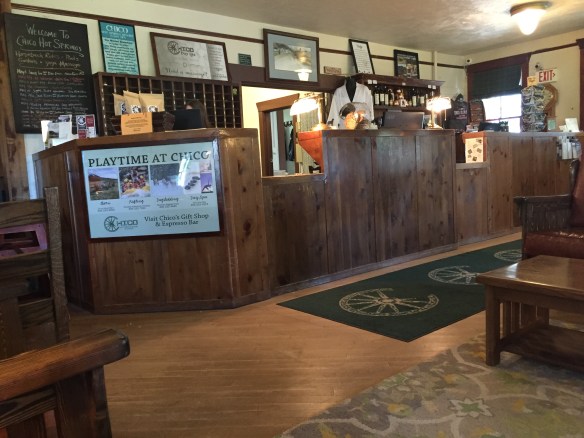


 The district’s architectural jewel, the Dining Room, dates almost a generation later to 1926. Architect Gilbert S. Underwood designed one of the late marvels of the Rustic style as defined in the northern Rockies. With its rugged stone exterior rising as it was a natural formation in the land, the dining room immediately told arriving visitors that an adventure awaited them, especially once they stepped inside and experienced the vast log interior spaces.


 Other former Union Pacific buildings have been given adaptive reuse treatment by the town, with a baggage building becoming police headquarters and the former men’s dormitory has been converted into a local health clinic.

 Thus, West Yellowstone is among Montana’s best examples of roadside architecture as distinctive 19502-1960w motels and a wide assortment of commercial types line both U.S. 191 but also the side arteries to the highway.






 Montana's Historic Landscapes