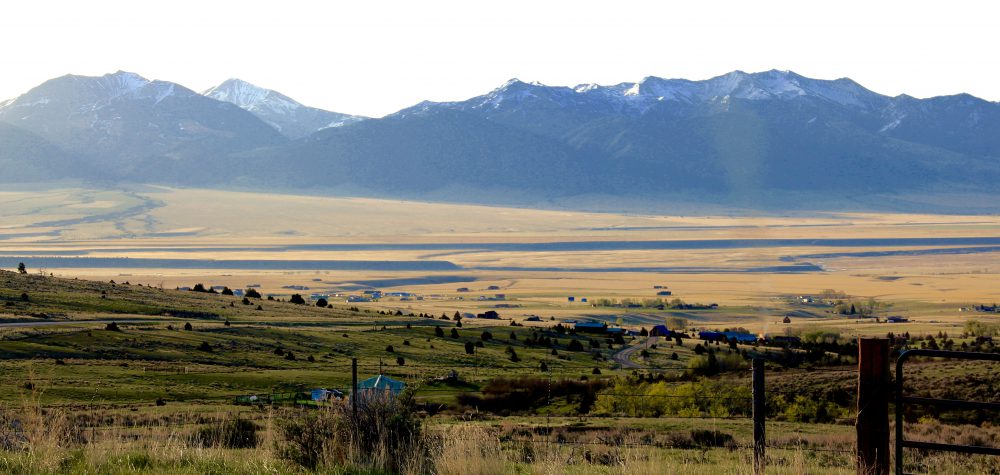

For whatever reason, readers of Montana’s Historic Landscapes have been very interested in Daniels County, way up in the northeast corner of the state. In previous posts I have discussed the Daniels County Courthouse–one of my favorites–the county’s historic rural schools and Flaxville, one of the most interesting tiny towns left from the homesteading era in all of eastern Montana.

Today I want to look back at Scobey, the seat of Daniels County, which was established in 1920 at the end of the homesteading era. Sometimes it is referred to as the most isolated county seat in America. But whatever its isolation may be, I found Scobey a relaxing, interesting place, and actually took many images. But outside of the courthouse, schools, the fairgrounds, and wonderful Pioneer Museum, I did not share much with the readers. This post changes that.
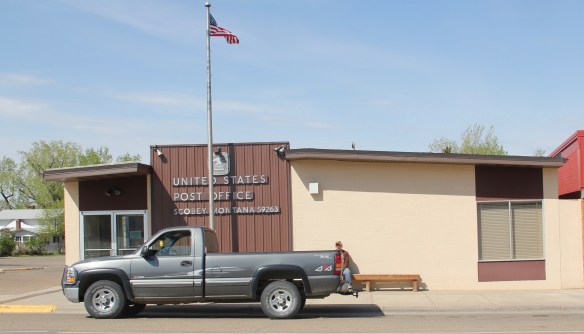
 The county library, above, is small but busy, a reminder of how important these public buildings can be. About 5 years ago, the time of my last visit, Scobey still had its own medical center, below, as well as a distinctive post office, different from many in the region due to its modernist style.

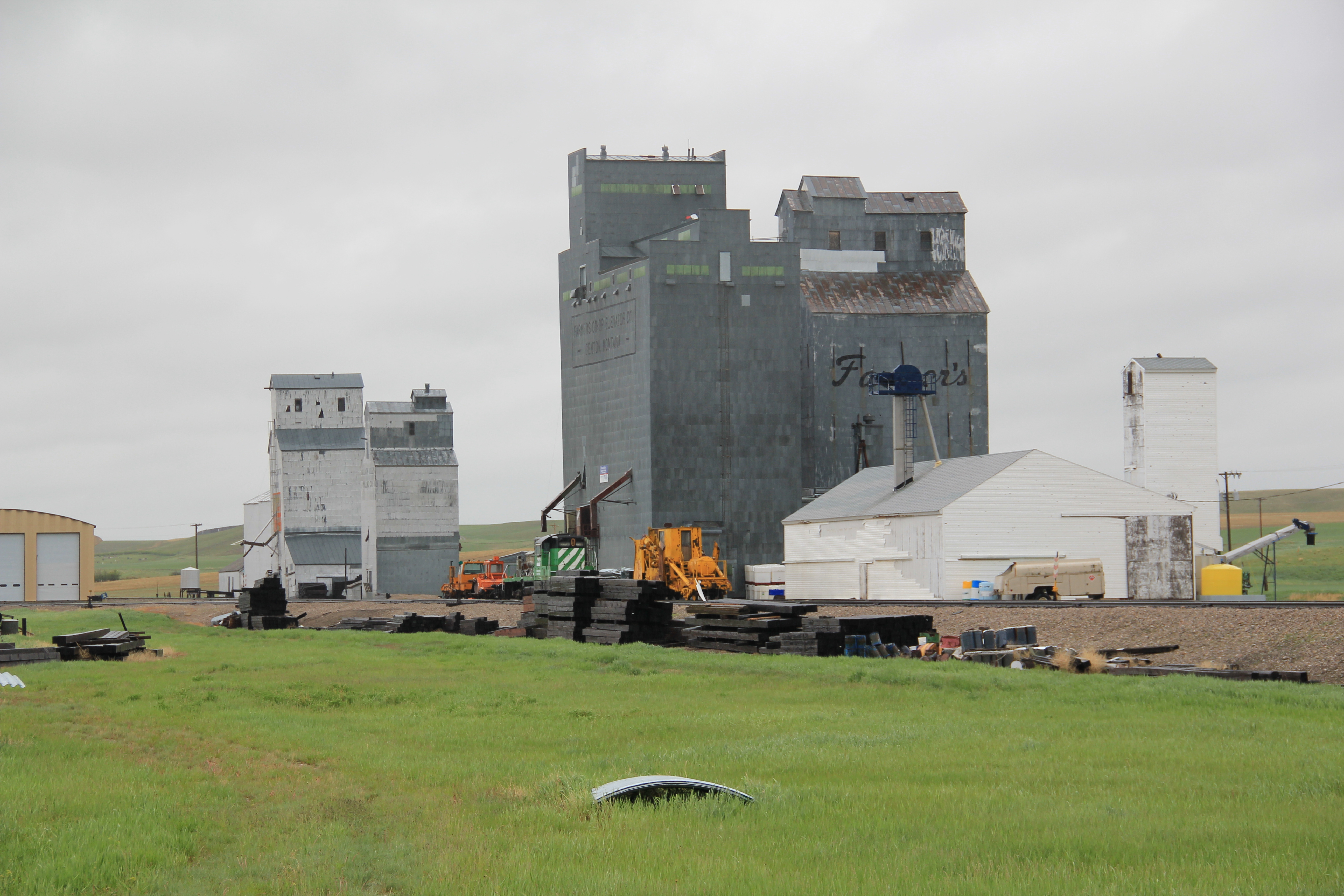
Much of its past remains, and remains in use. The railroad corridor had changed–the passenger depot was gone, but historic grain elevators still mark how Scobey was a major grain shipping point for much of the 20th century.

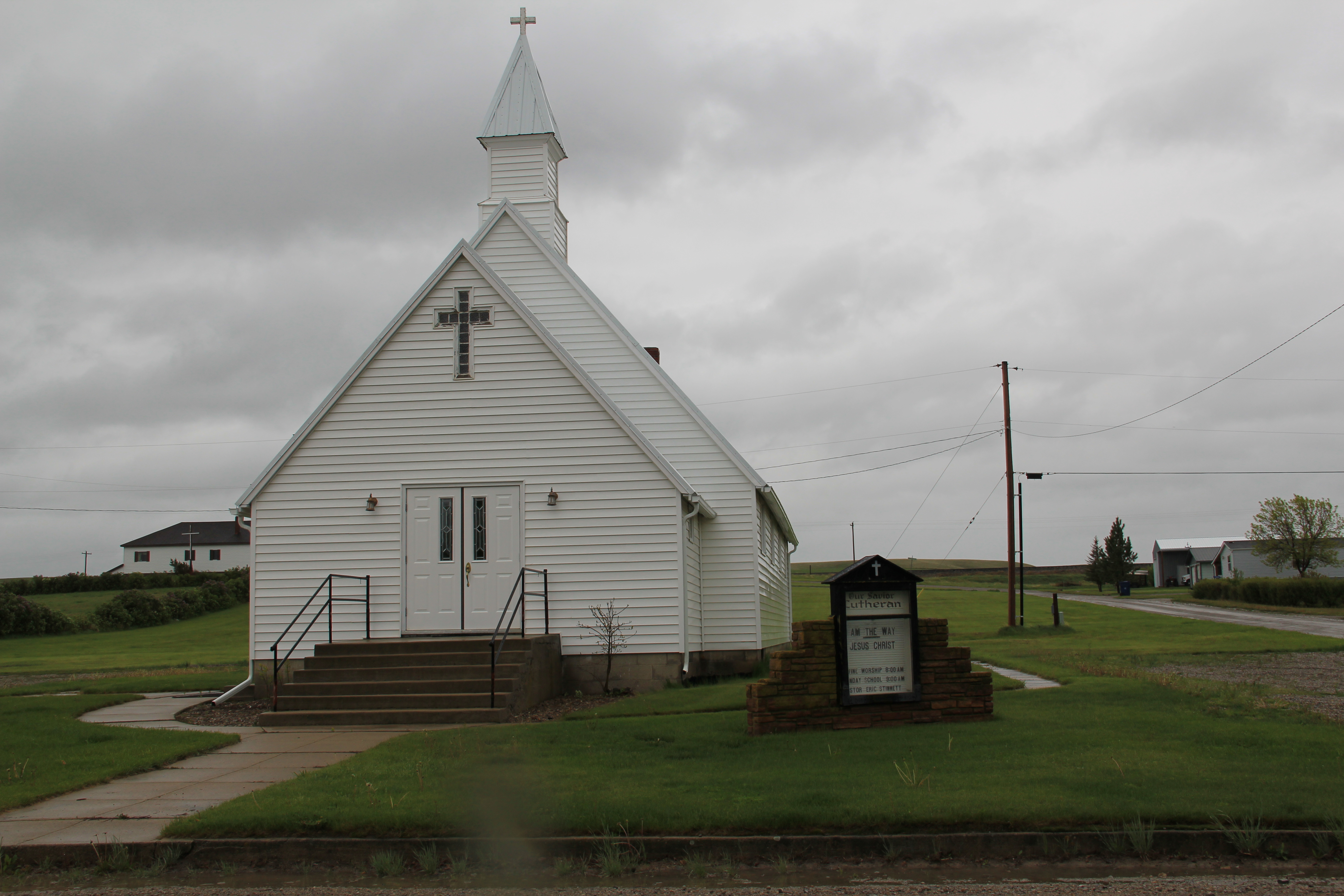
Historic churches have left deep roots in Scobey. Below are the Scobey United Methodist Church, the Scobey Lutheran Church (which has a wonderful Gothic altar), and St. Bonitus Catholic Church, another example of mid-century modern in the Catholic church buildings of Eastern Montana.


The residential area has plenty of vernacular-styled 20th century homes, most from the first half of the century. I particularly liked the next two bungalows on Timmons Street.


Five years ago the business district had clearly weathered the 2007-2008 recession and lots of stores and bars were open, anchored by Independence Bank, another example of 1960s-1970s modern commercial style in Scobey.


There is a persistence in Scobey that is admirable. The Daniel County Leader, the local newspaper, also has weathered the storm of media change in the 21st century and stands in the heart of town, still undoubtedly serving as a community communication center.

How I missed these properties in my initial post–well I can’t explain that. I am sure I had a good reason 5 years ago. But what is really inexplicable to me is why I did not share more of my photos from the Scobey School–especially its football and track field below–

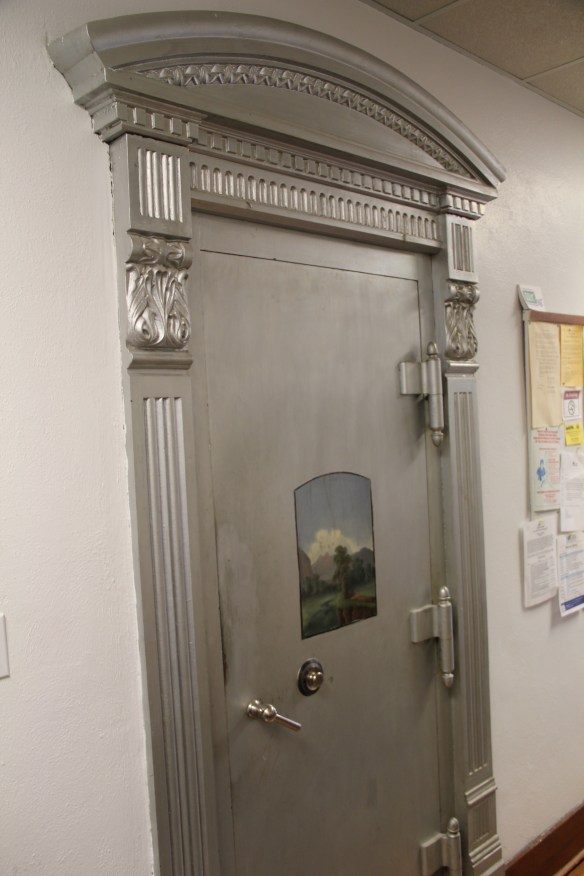
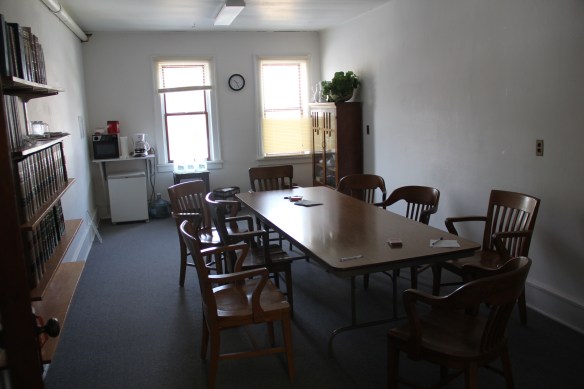
along with more interior images from the Daniels County Courthouse, the one building in Scobey that is listed in the National Register of Historic Places. Here you see the courthouse’s long hallway (with its National Register sign in the corner), the records vault, the courtroom’s jury box, and the jury room. Just walking into this place takes me to the beginning years of Daniels County.


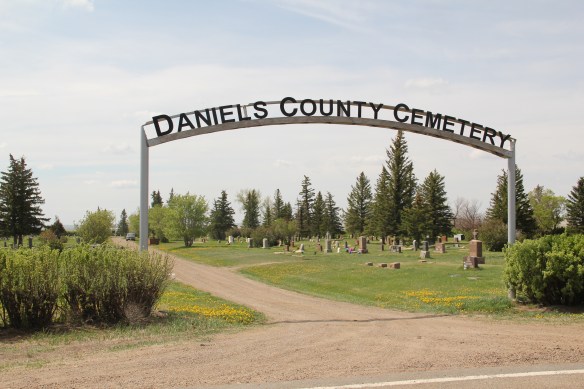
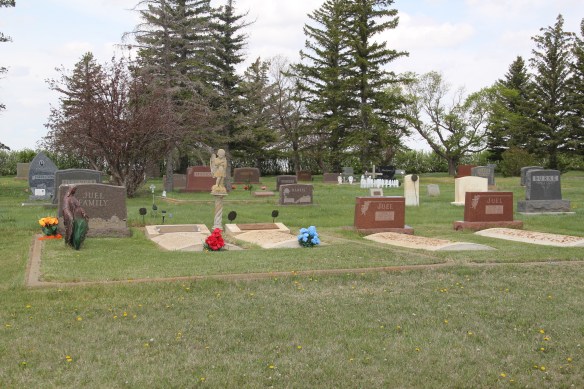
One property type many people ask about are cemeteries. Unfortunately I did not have the time to record every tombstone in these places–another time, perhaps. But I can add to the blog additional images from the Daniels County Cemetery, which lies outside of Scobey. These images hardly cover everything but they do document what a special place this tiny county seat is, for residents and for visitors willing to go exploring.



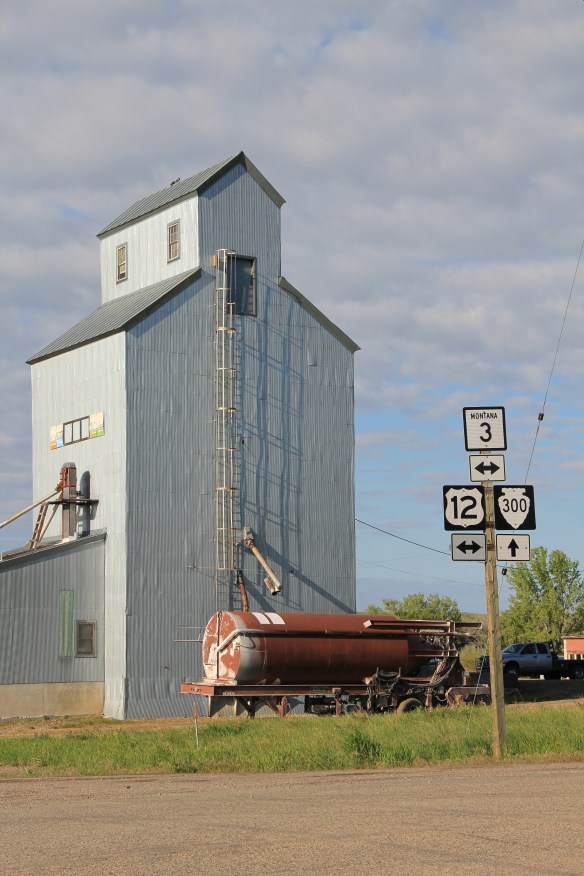 But like most travelers I roar down the highway, perhaps noting the tall grain elevators facing the town proper, and pay little attention to anything else. In a post of four years ago, I spoke of Golden Valley County and its historic landmarks, highlighting the grain elevators, the Golden Valley Courthouse, the Sims-Garfield historic ranch, and the historic town bar in Ryegate. But like the other eastern Montana county seats, Ryegate deserves a closer look.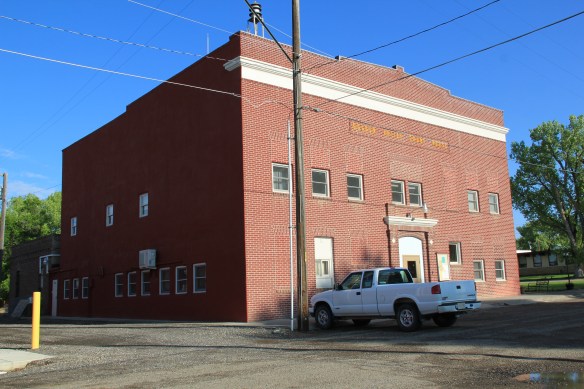
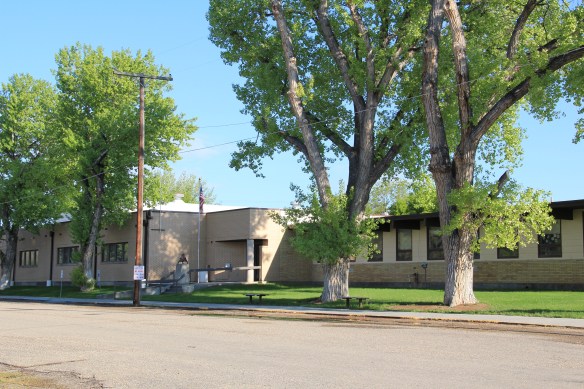
 Ryegate received one of the standardized “modern” post office designs from the federal government in the 1970s–the town’s fortunes have remained basically frozen after the Milwaukee Road declared bankruptcy and shut down the tracks in 1980.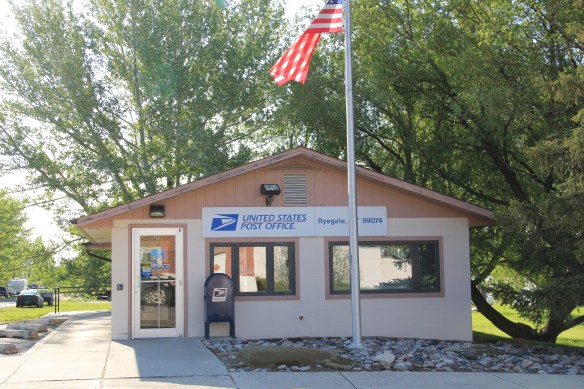


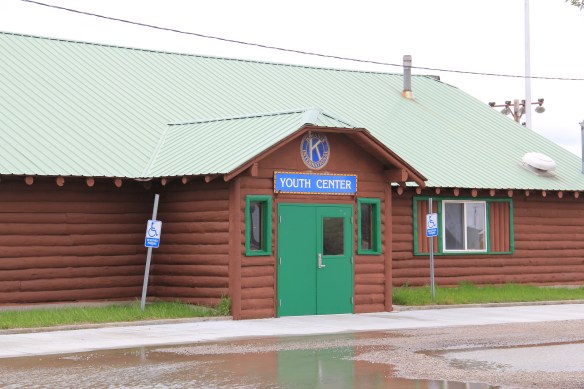 The woman’s club began c. 1921 and had already made a major contribution to the town’s well-being in establishing its first library. After World War II, however, club members felt they should once again help build the community, by building a youth center and veterans memorial garden. Mrs. Norman Good proposed the project in 1946 and Mrs. G. D. Martin provided the first substantial donation. The club then held fundraisers of all sorts. By 1950, construction was underway, with contractor Clyde Wilson building the center with logs from Colby and Sons in Kila, Montana.
 As the youth center was under construction, the woman’s club also reached an agreement with the school board to use land for the construction of a new football field, named McQuitty Field. Located behind the youth center, the field opened in 1950.
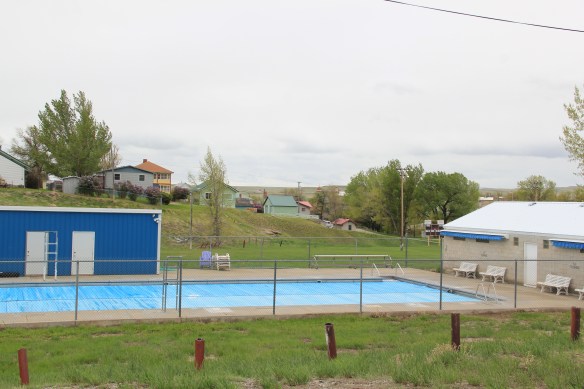 Thus, on U.S. Highway 12 lies the public recreation heart of Harlowton–a postwar gift of residents and service clubs to the community. In 1956, the woman’s club deeded the Youth Center to the Kiwanis Club, which still manages it today.


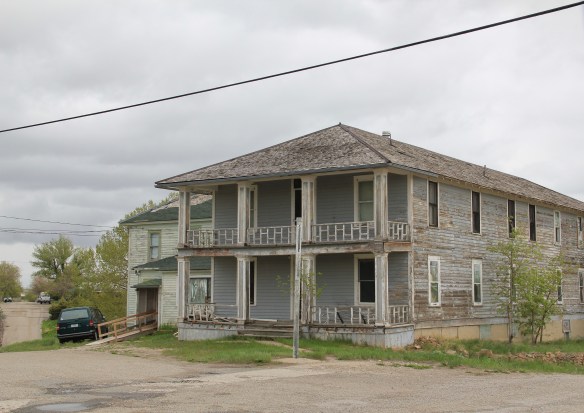 Road, it once also had several hotels and more short-term housing for workers and travelers–a good bit of that has disappeared, or is disappearing.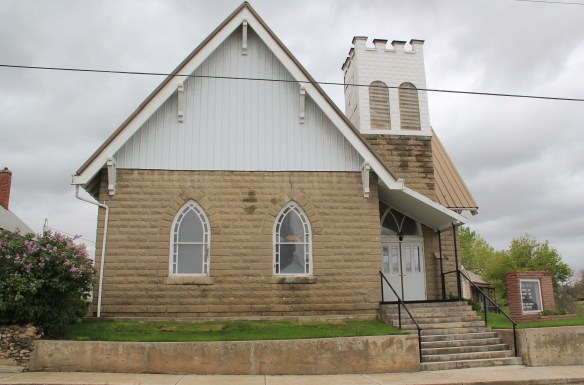
 It is difficult to visit Harlowton and not notice the mammoth Montana Flour Mills set of concrete grain silos–today’s silent sentinels of what ranchers once produced in abundance in these lands.
 The mill, made from locally quarried stone, came within months of the completion of the railroad to Harlowton–the concrete silos reflected the hopes of investors and local ranchers, as grain production soared in the 1910s–reaching some 1.2 million bushels in 1918. It wasn’t called Wheatland County for nothing. I still wish the big electric sign that once adorned the silos was still there.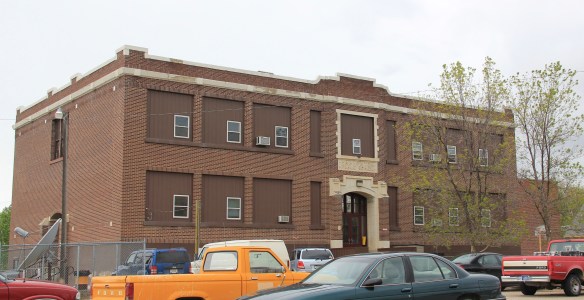


 Willow Creek was the end of the line for both the Northern Pacific and Milwaukee Road railroads as they vied for dominance in turn of the 20th century western Gallatin County. The Northern Pacific came first with its spur line to Butte in the late 1880s then the Milwaukee arrived c. 1908. Both used the same corridor, along what is now called the Old Yellowstone Trail on some maps; the Willow Creek Road (MT 287) on others. It was a route that dated to 1864–the town cemetery, according to lore, dates to that year and Willow Creek has had a post office since 1867.


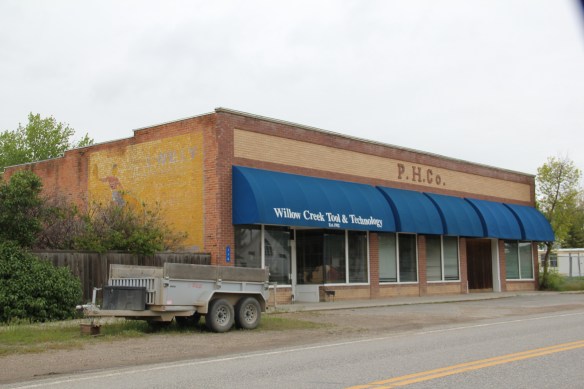
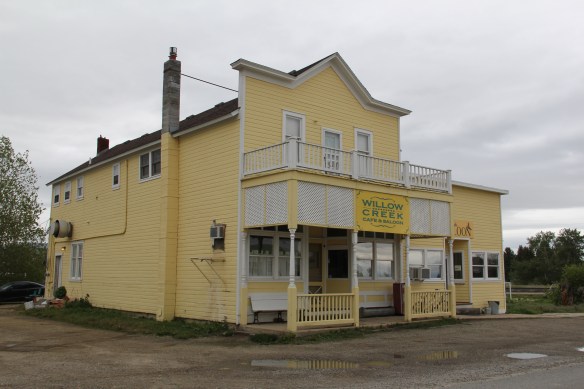 Across the street is the “employment center,” the Willow Creek Tool and Technology which sells its wares across the west out of its brick building from the 1910s. (Note the faded advertising sign that once greeted travelers on the Yellowstone Trail highway.)
 The cultural side of Willow Creek is represented by several places: homes and galleries of different artists, a monthly arts festival in the summer, and two special buildings from the 1910s. The Stateler Memorial Methodist Church, c. 1915, is listed in the National Register of Historic Places. Built from rusticated concrete blocks (from the cement factory at Three Forks) designed to resemble stone masonry, the church building is home to one of the oldest congregations (1864) in the Methodist Church in Montana. The Gothic Revival-styled sanctuary is named in honor of its founding minister Learner B. Stateler.
 Nearby is another crucial landmark for any rural Montana community–the local school. The Willow Creek School is an excellent example of the standardized, somewhat Craftsman-styled designs used for rural Montana schools in the 1910s. Two stories of classrooms, sitting on a full basement, was a large school for its time, another reflection of the hopes of the homesteading era.
 Additions in form of a gym and added rooms had come to the north and the school and its lot is the town’s community center. Although so close to Three Forks, the school kept its





 Montana's Historic Landscapes