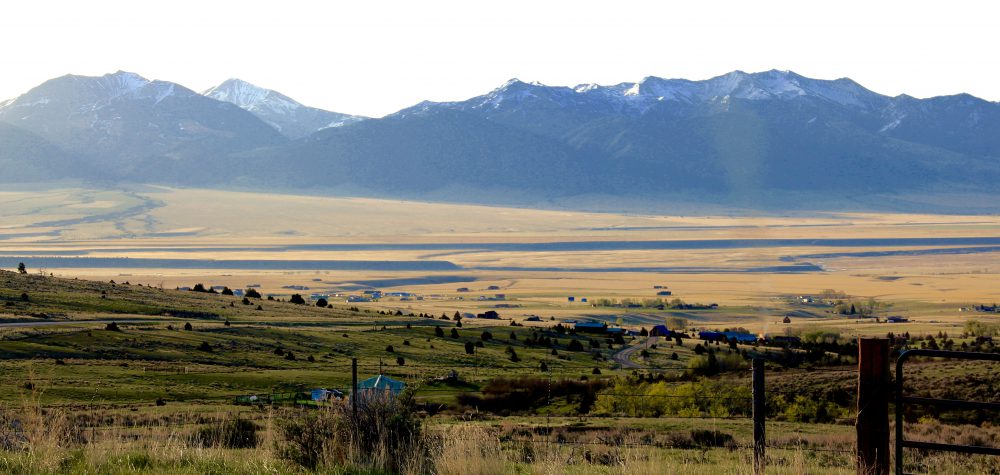
Kalispell is the seat of Flathead County, established on the Great Northern Railroad line in the 1890s. Today the city is the hub for commerce, transportation and medical care in northwest Montana. The Advisory Council on Historic Preservation designated it as a Preserve America community in recognition of its historic downtown and multiple National Register of Historic Places properties.
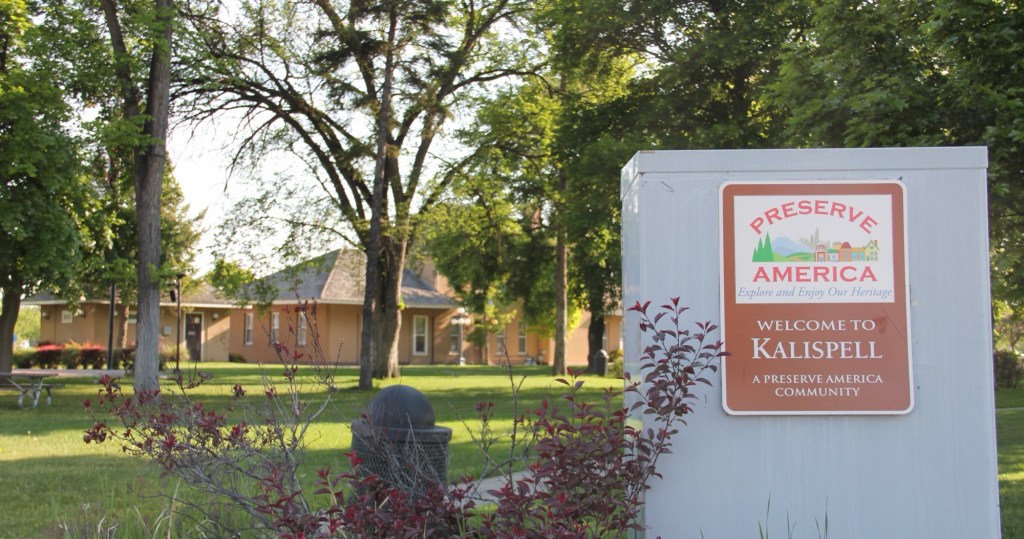
Certainly the town has many impressive late Victorian era buildings, like the County Courthouse, but this post focuses on a part of Kalispell’s historic built environment that doesn’t get enough attention—its buildings of modern 20th century styles.
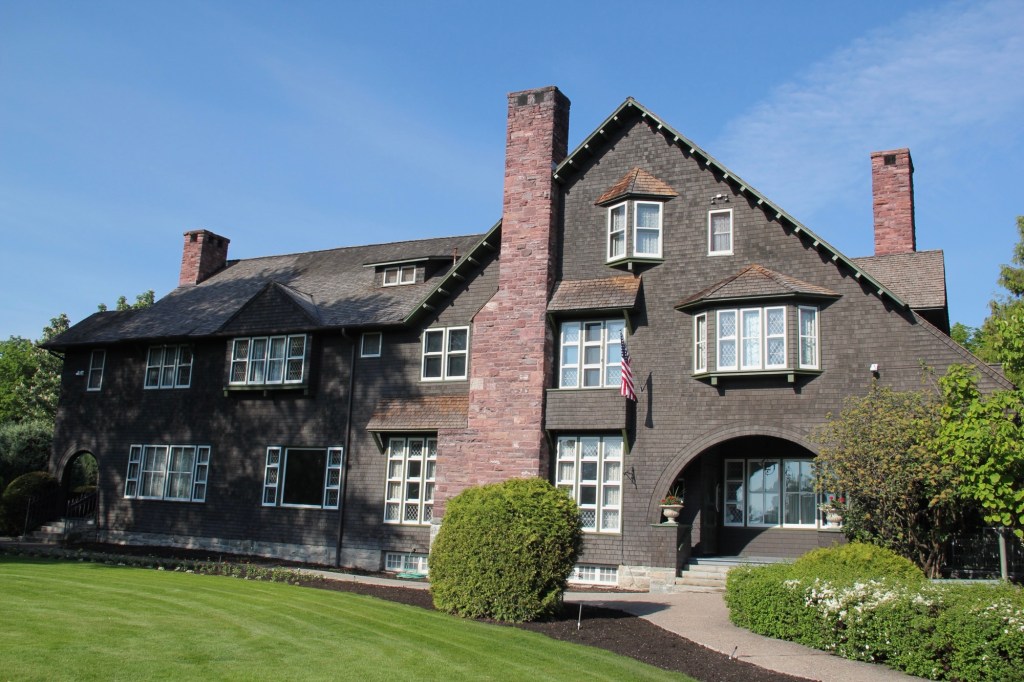
The key town founder was C. E. Conrad and similar to how he started the town, you could also say he started the modernist traditions by commissioning his grand Shingle-style mansion from architect A.J.Gibson in 1895. Architectural historians consider the Shingle style, introduced by major American architects Henry Hobson Richardson and the New York Firm McKim, Mead, and White, to be an important precursor to the modernist buildings that would flourish in Kalispell during the 1930s.
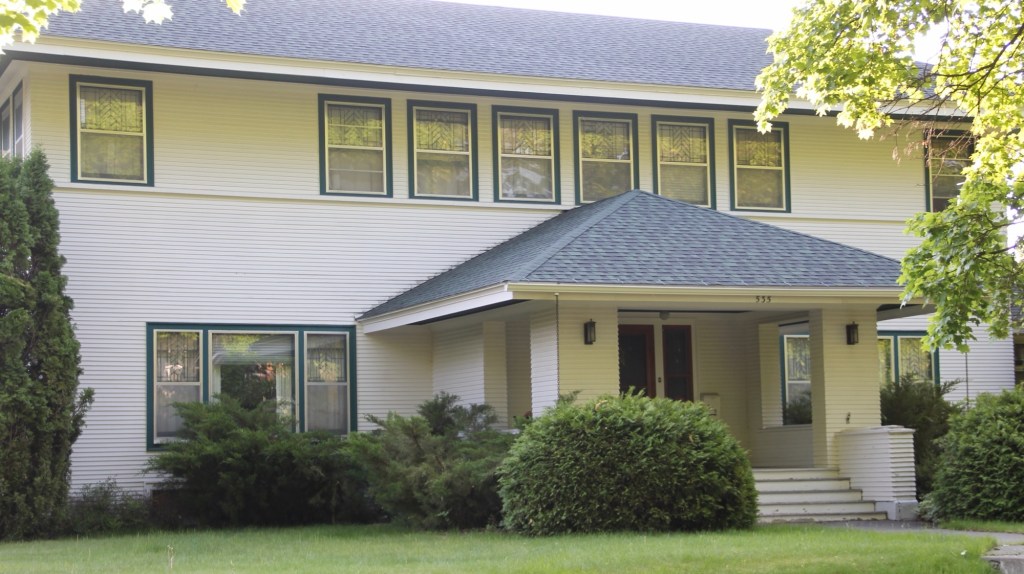
Another important example of early modernist style is this local adaptation of Prairie house style, a form introduced and popularized by the designs of American master Frank Lloyd Wright.
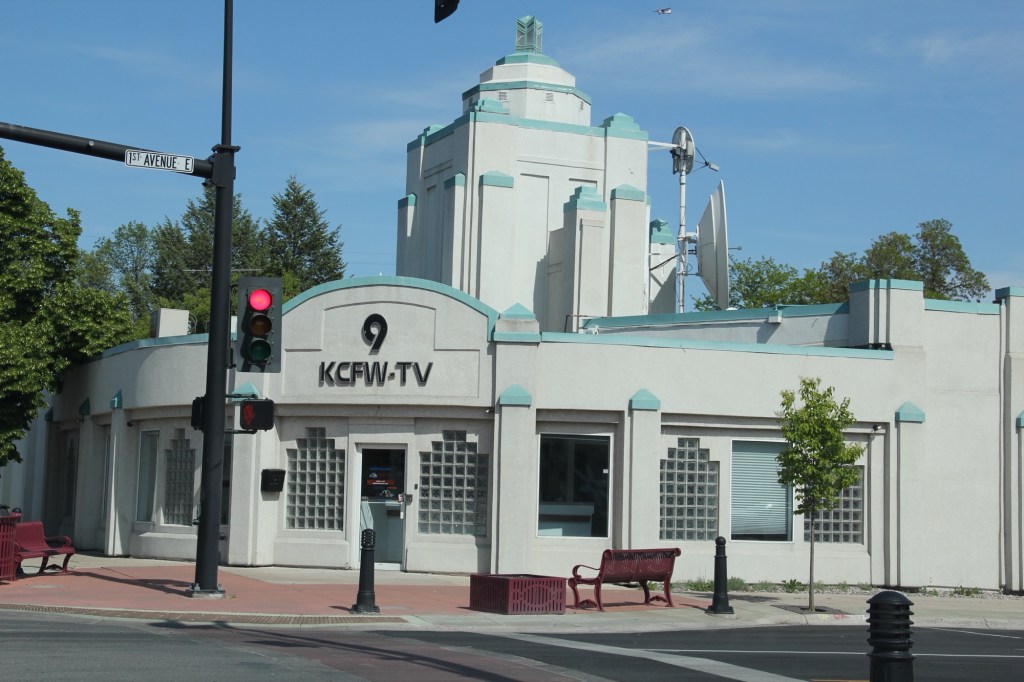
Kalispell’s best modernist examples come from the 1930s to 1960s. In 1931 Brinkman designed the KCFW-TV building in a striking Art Deco style. It was originally a gas station but has been restored as an office building with its landmark tower intact.
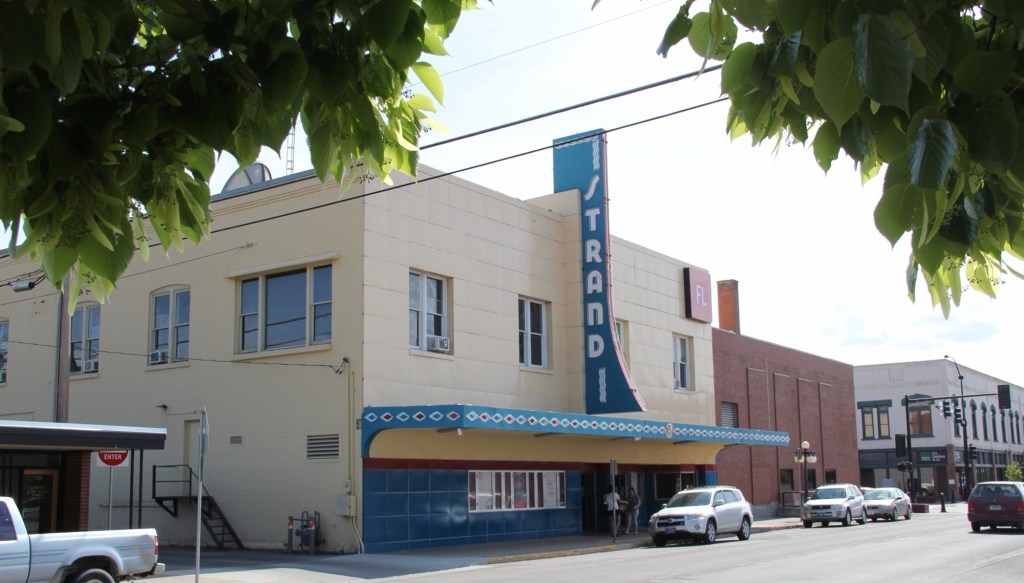
The Strand Theatre closed as a movie house in 2007 but its colorful Art Deco marquee and facade remain, another landmark across the street from the History Museum which is housed in the old high school.
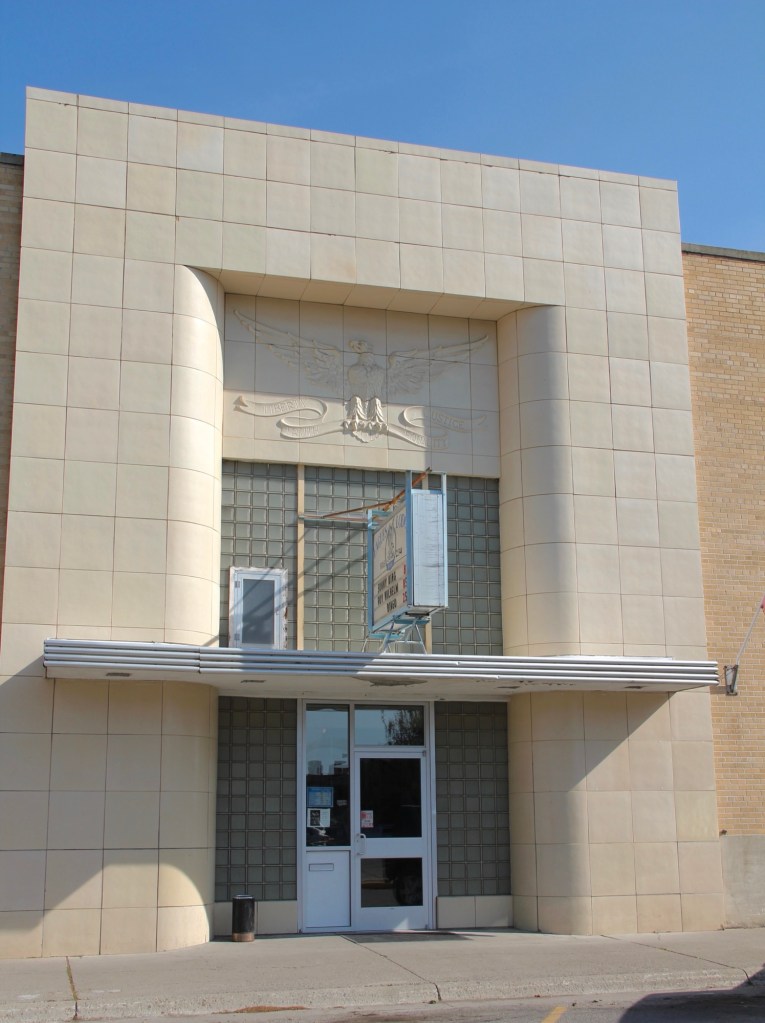
The Eagles Lodge (1948-1949) is an impressive example of late Art Deco style, especially influenced by the federal “WPA Moderne” buildings from the New Deal. G.D. Weed was the architect.
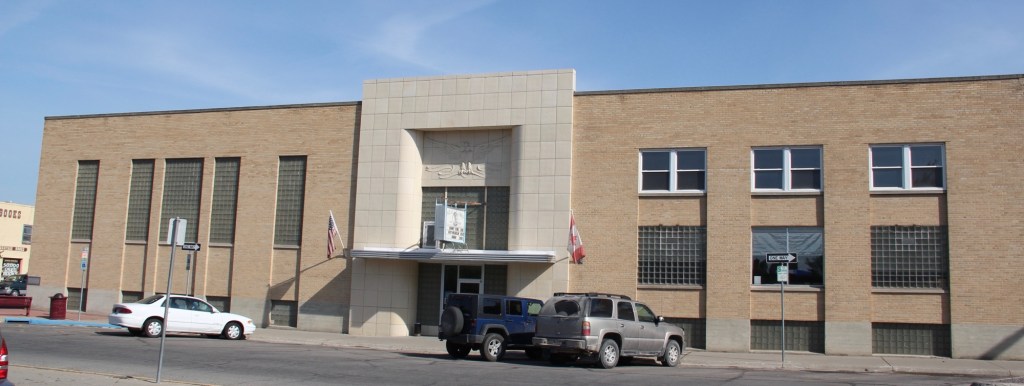
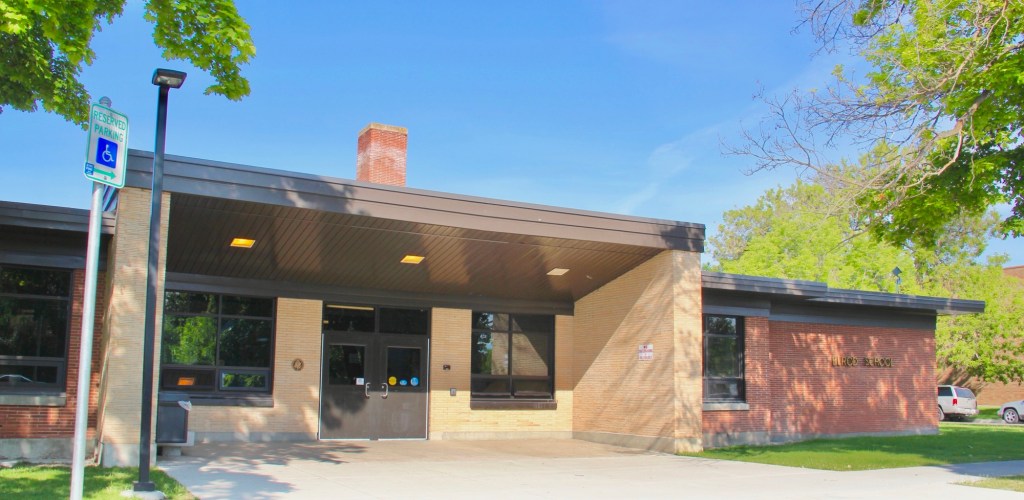
Then the town opened Elrod School in 1951. It is a good example of mid-century International style in a public building.

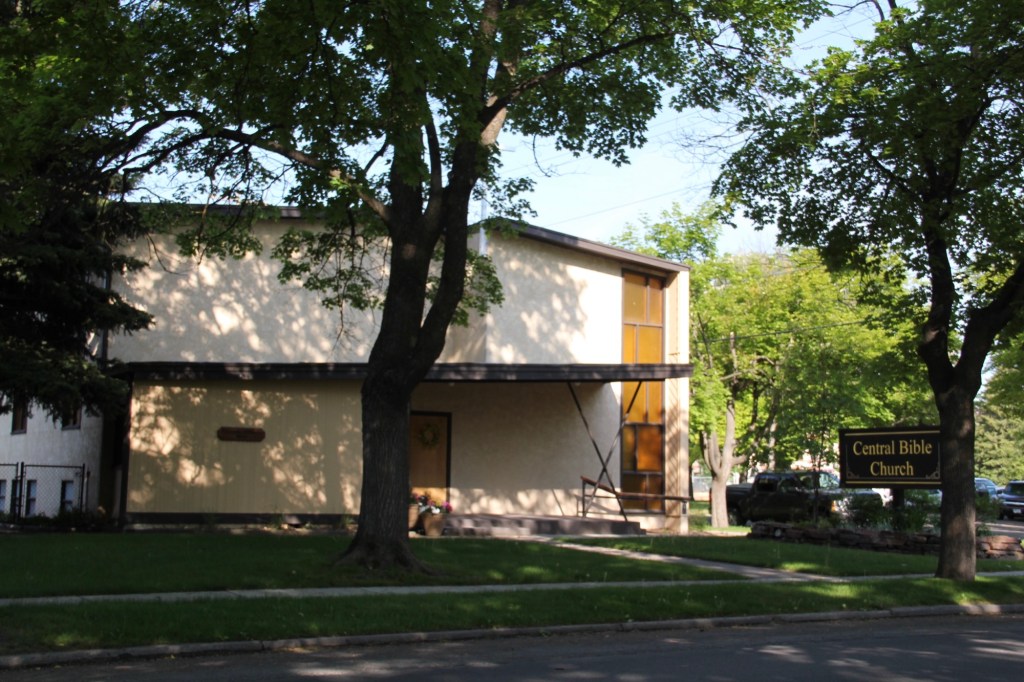
The 1950s decade witnessed new modern style religious buildings. The Central Bible Church (1953) evolved from a merger of Central Bible and the West Side Norwegian Methodist Church. Harry Schmautz was the architect.
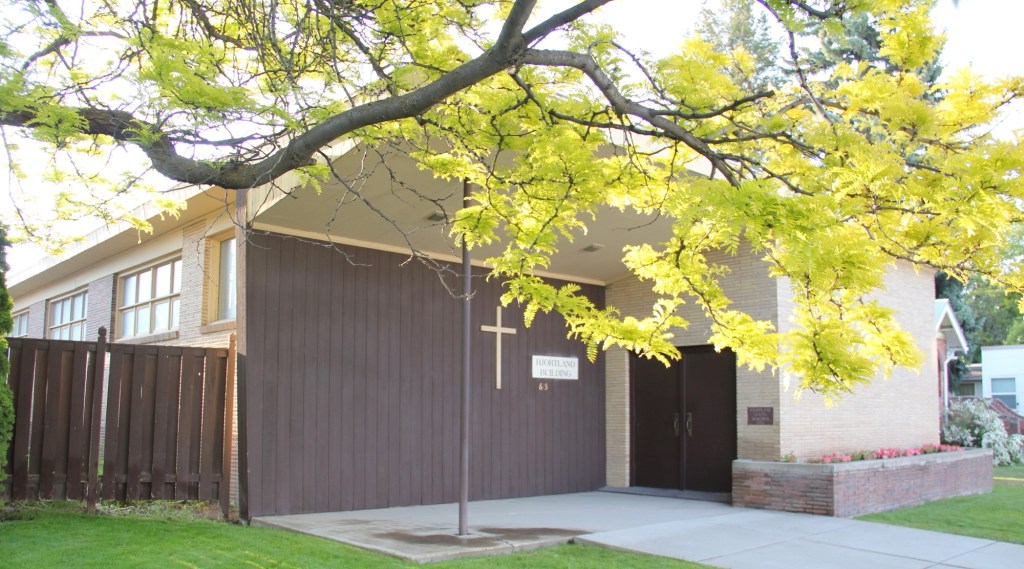
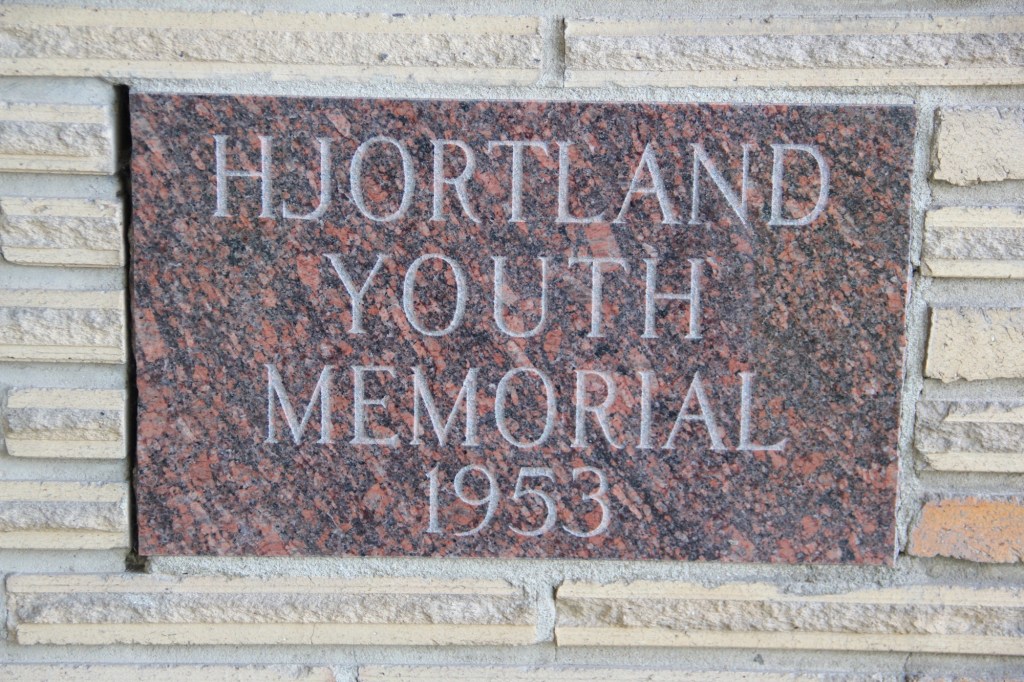
That same year, the Lutheran church added a new wing for its youth ministry, the Hjortland Memorial, which is one of Kalispell’s most impressive 1950s design. Ray Thone was the architect.

In 1958 Central Christian Church completely remodeled its earlier 1908 building to a striking modern design.
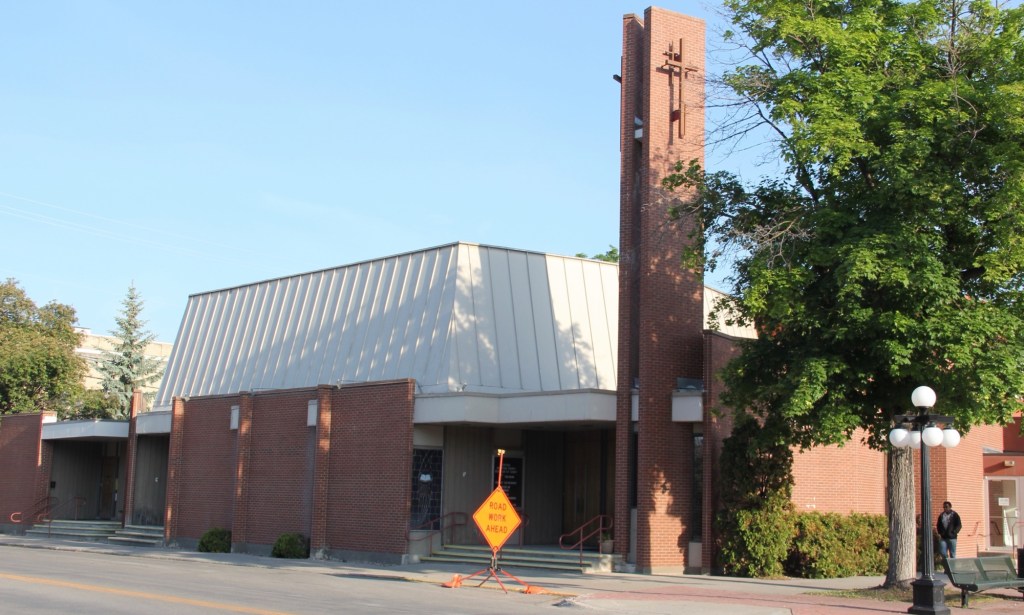
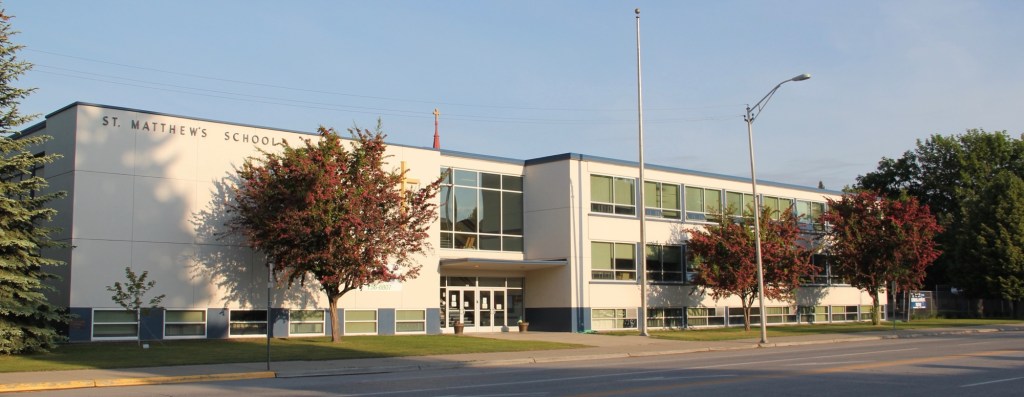
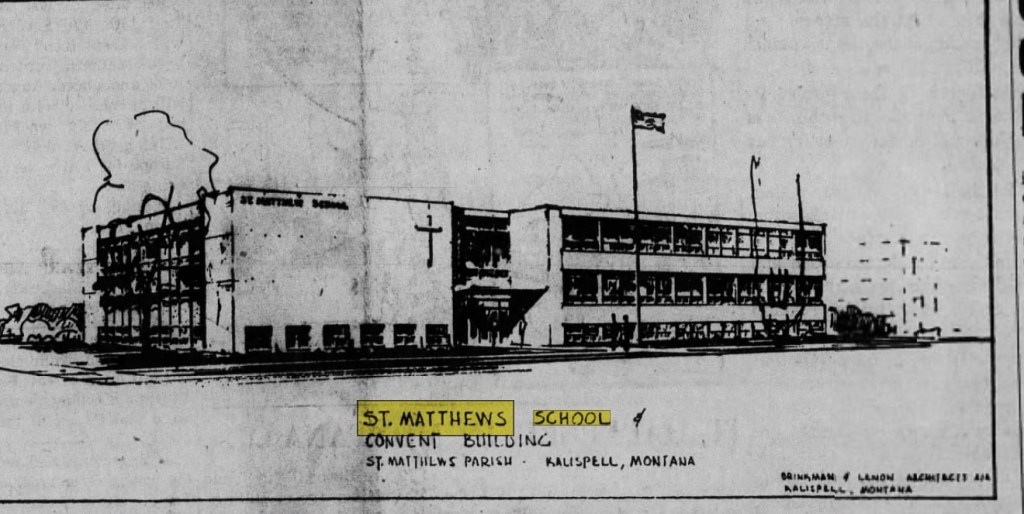
That same year came the opening of St. Matthew Catholic School, an impressive two-story example of International style in an institutional building. the architect was the firm of Brinkman and Lenon.
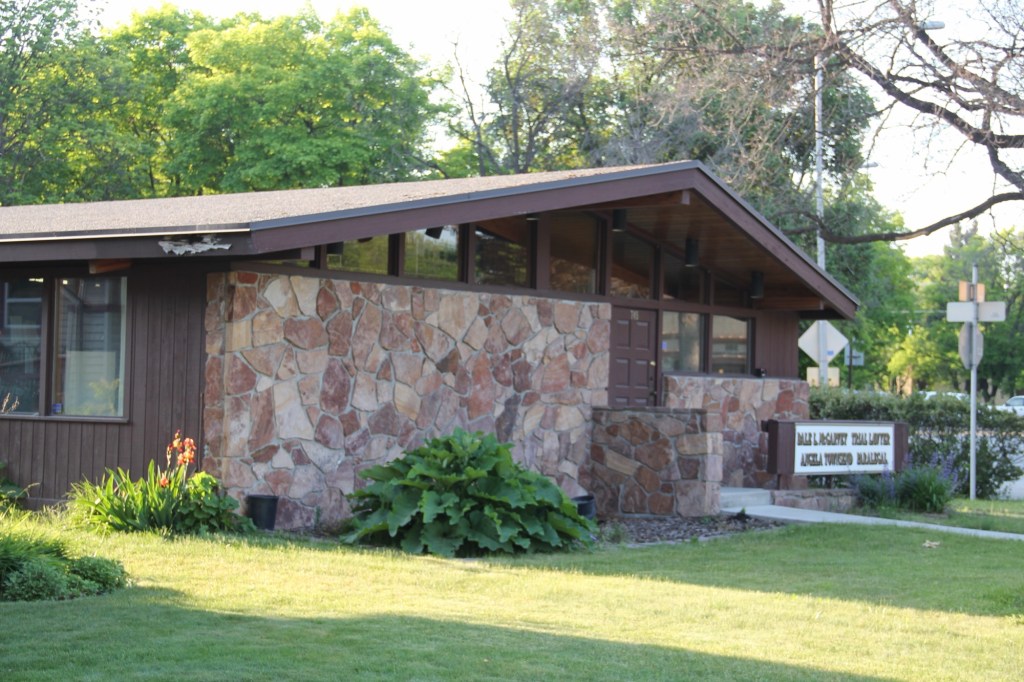
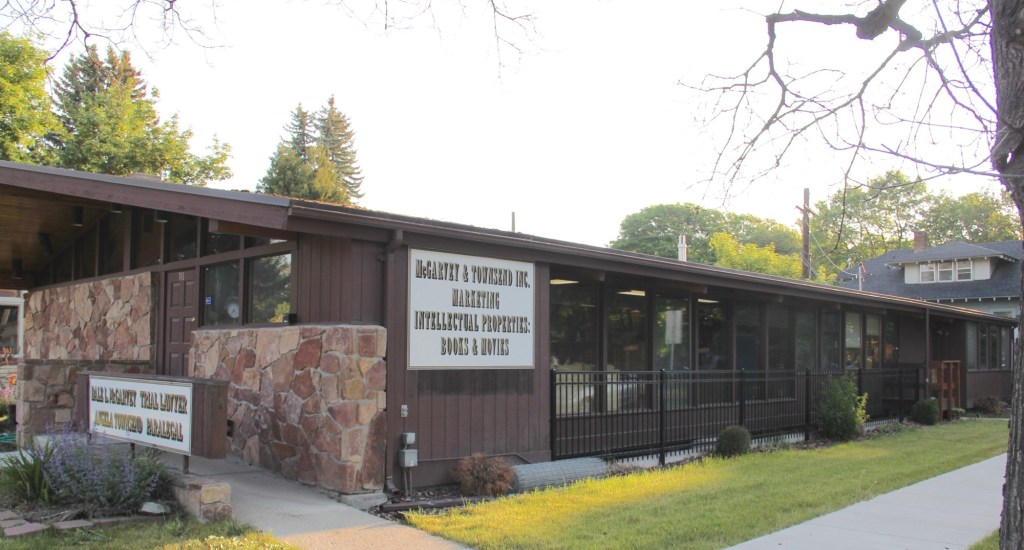
Kalispell also has two excellent examples of commercial buildings in the mid-century contemporary style. Below is the stone veneer and window wall of the McGarvey and Townsend building.
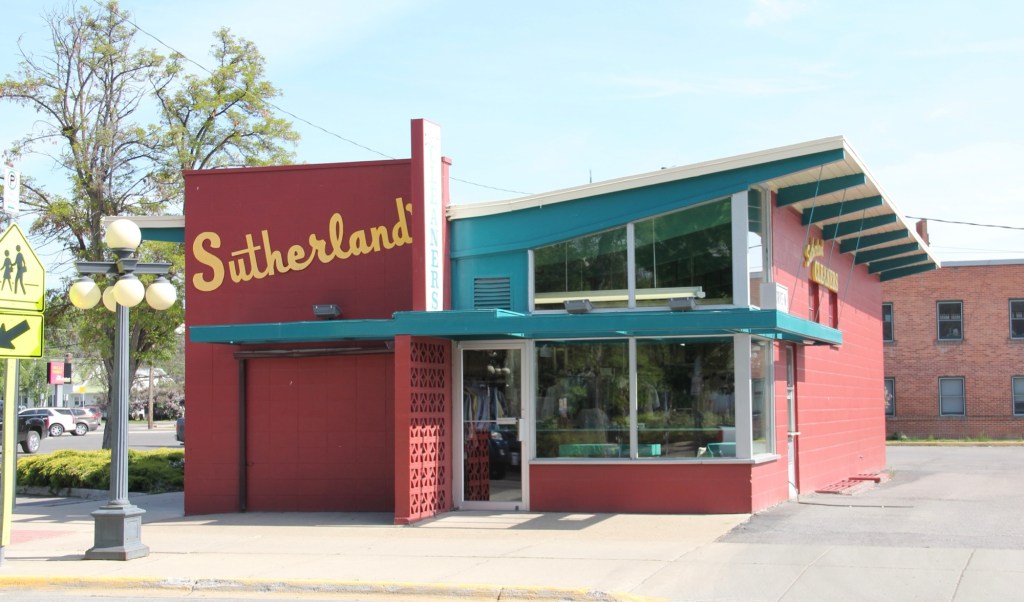
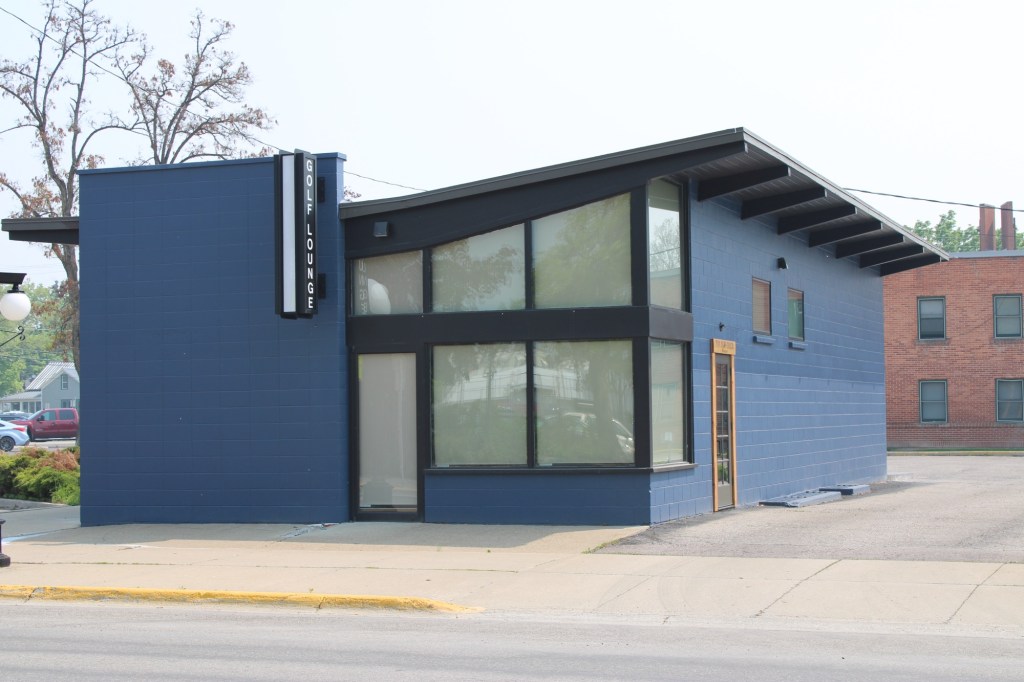
But my favorite, until a recent “remuddling,” is the Sutherland Dry Cleaners, now a golf supply shop.
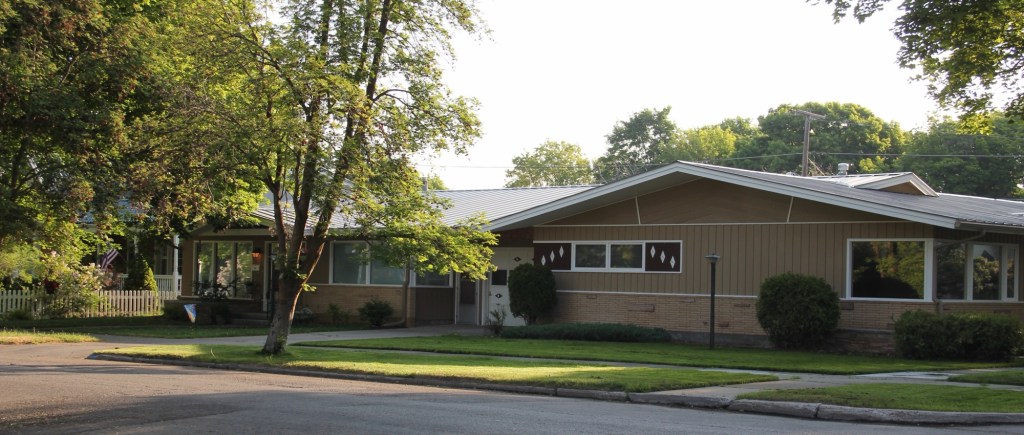
Kalispell has several good examples of mid-century domestic design. My favorite is this Ranch-style residence near the Conrad Mandion.
This post doesn’t include all of Kalispell’s modernist designs but hopefully I have included enough to demonstrate that the town has a significant modernist architecture tradition.
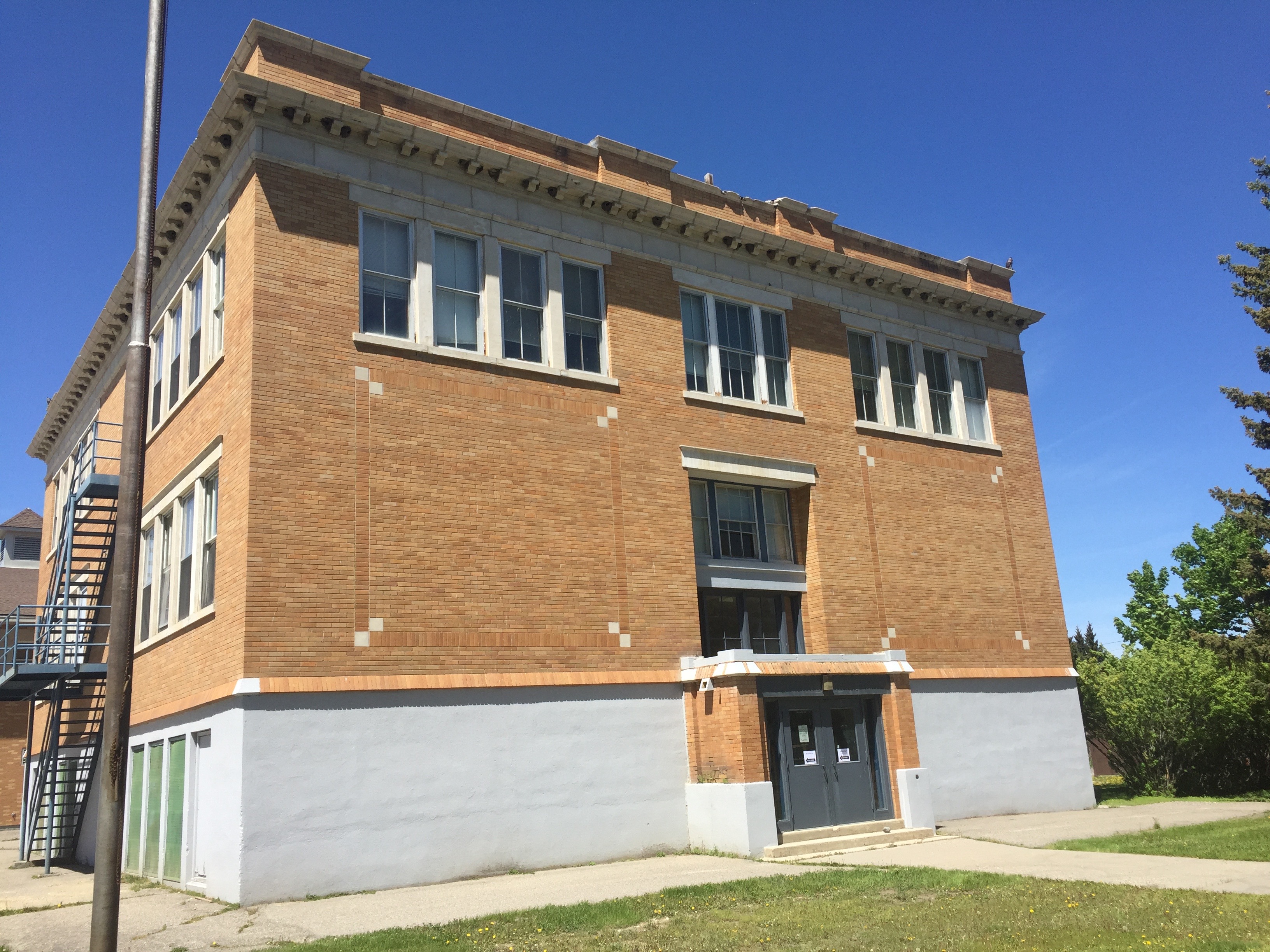

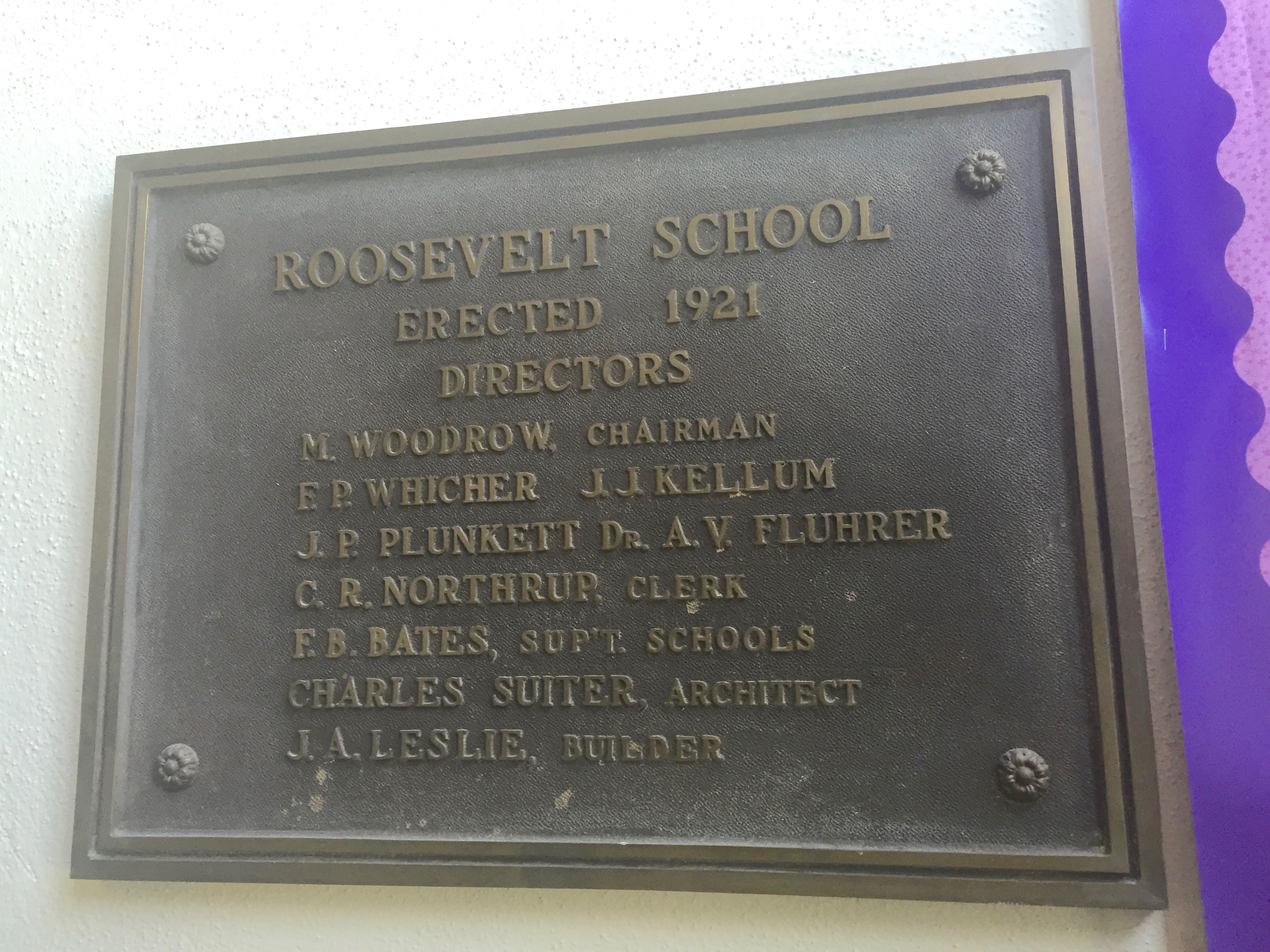


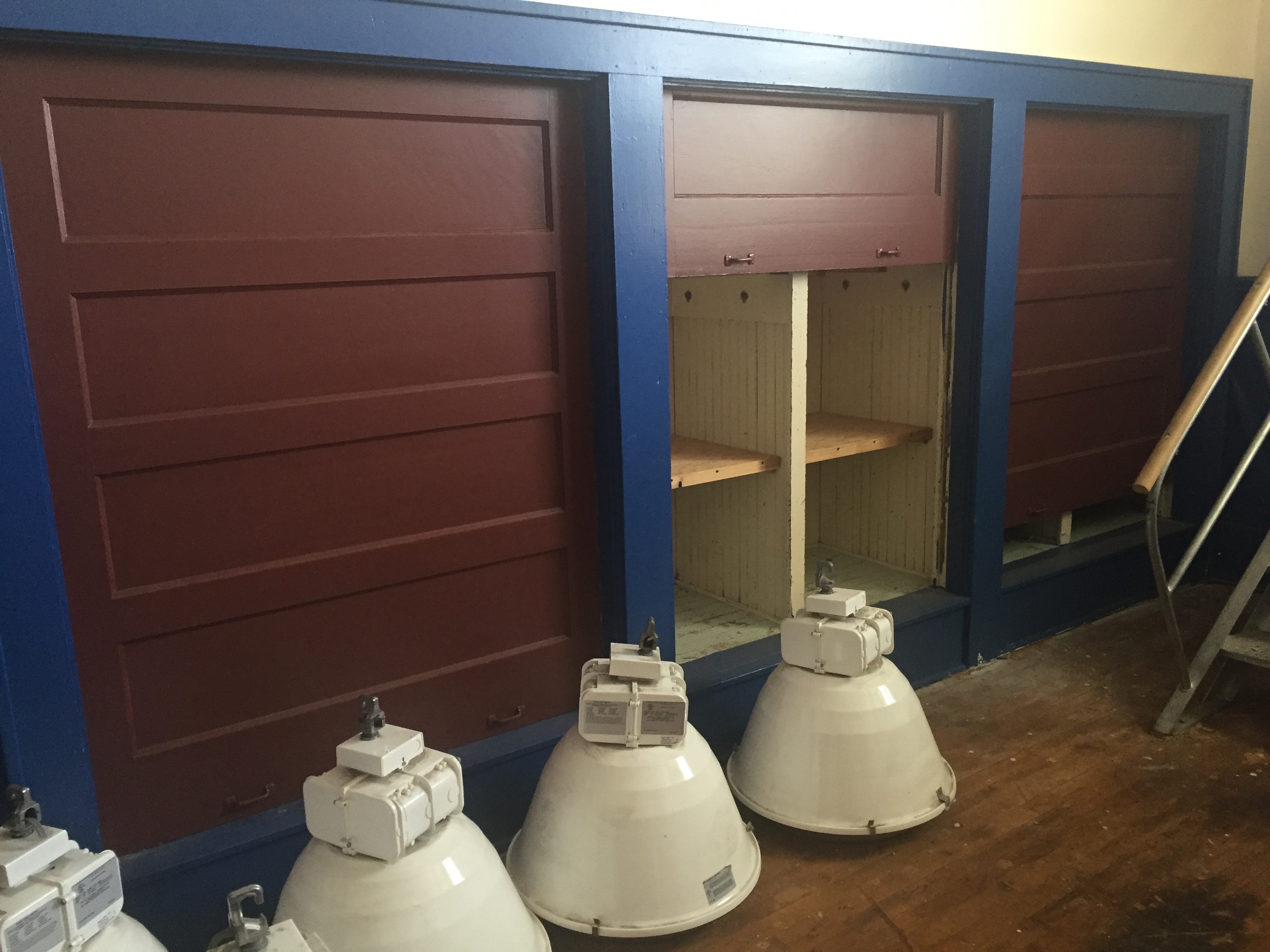
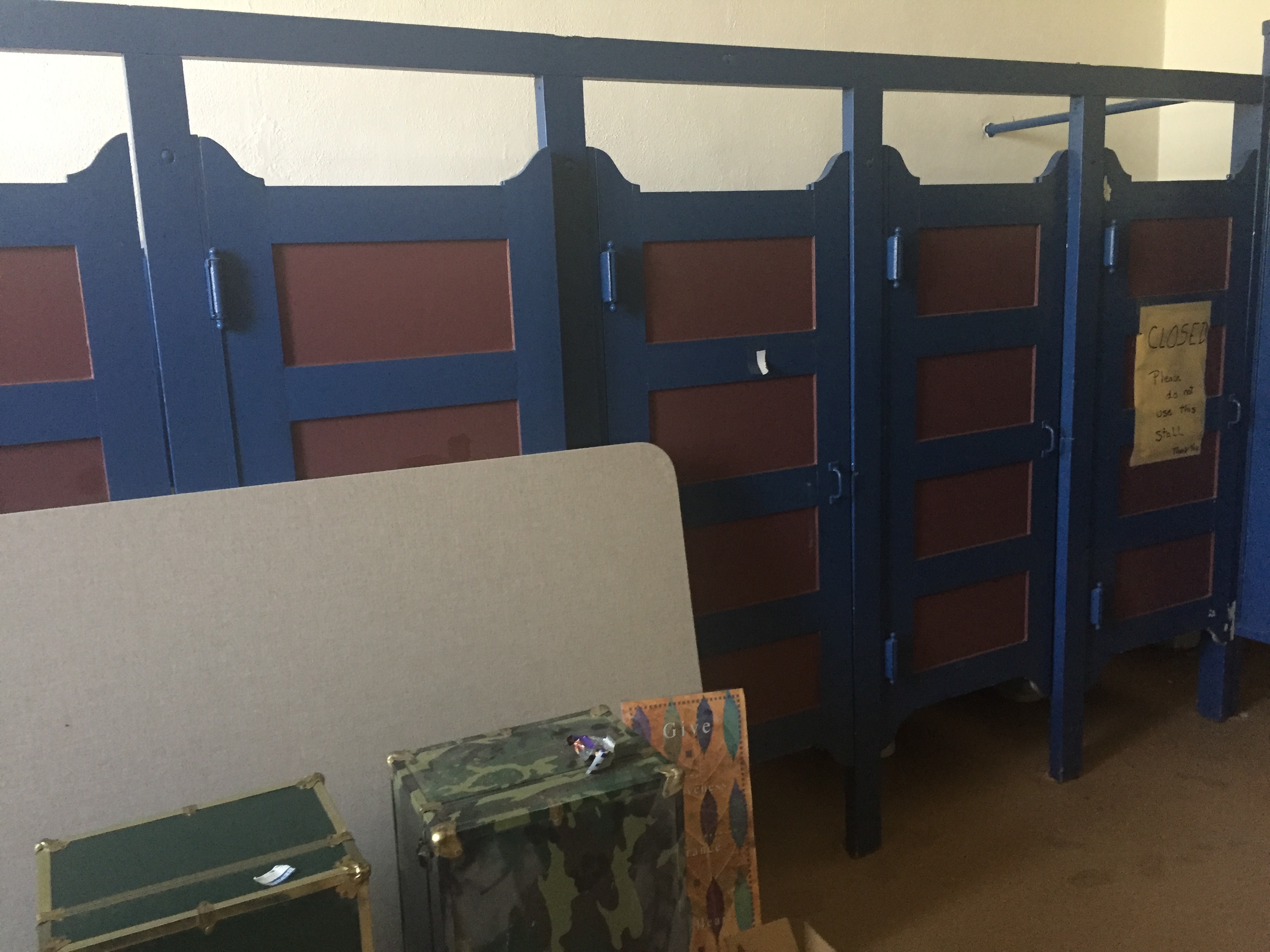 were so many intact details from the time of construction–built-in storage spaces, private restroom stalls, when hallway clocks ticking down the minutes in a day–the place was like a time capsule.
 Intimate spaces, classroom spaces, grand public spaces. The Roosevelt School meant too much to be left to the wrecking ball, and the progress the community foundation is making there is reassuring: once again smart, effective adaptive reuse can turn a building in a sustainable heritage asset for the town. It’s worth checking out, and supporting. And it is next door to one of the state’s amazing throwback 1960s roadside
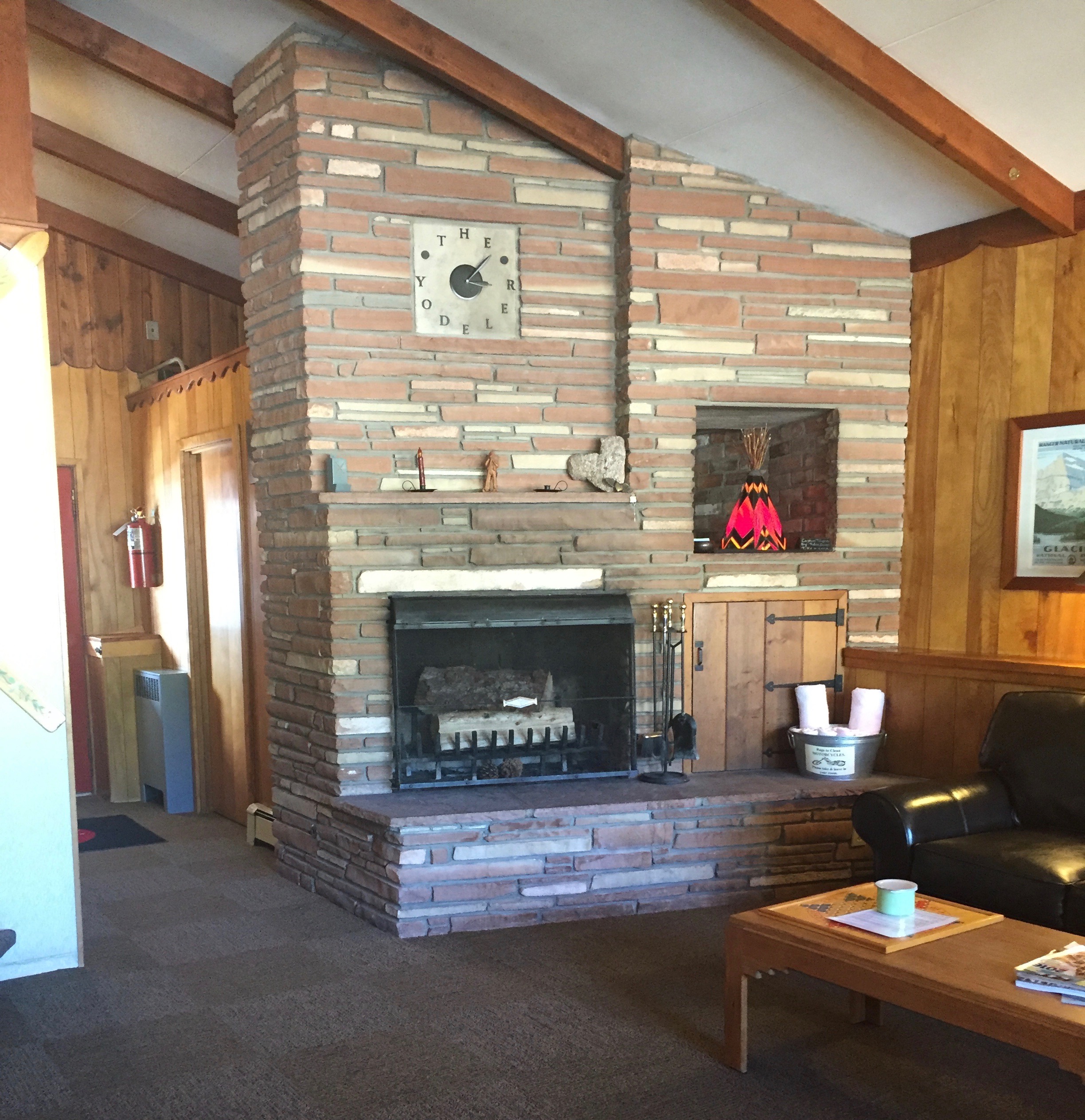
 In the 1984-1985 fieldwork for the state historic preservation plan, the impact of lodging chains in Montana was pretty limited to the larger towns, and gateways to the national parks. Many what I called “mom and pop” motels, largely from the pre-interstate highway era of the 1940s and 1950s, still operated. I was working with the state employee lodging rate of $24 a night (remember it was 1984!) and I found that the per diem eliminated the chains and I was left with the local establishments. During those months of intense travel I came to respect and really like the Moms and Pops. Several of the places I stayed in 1984-1985 are long gone–but ones like the Lazy J Motel in Big Timber remain. In this post I am merely sharing a range of historic motels from across Big Sky Country.
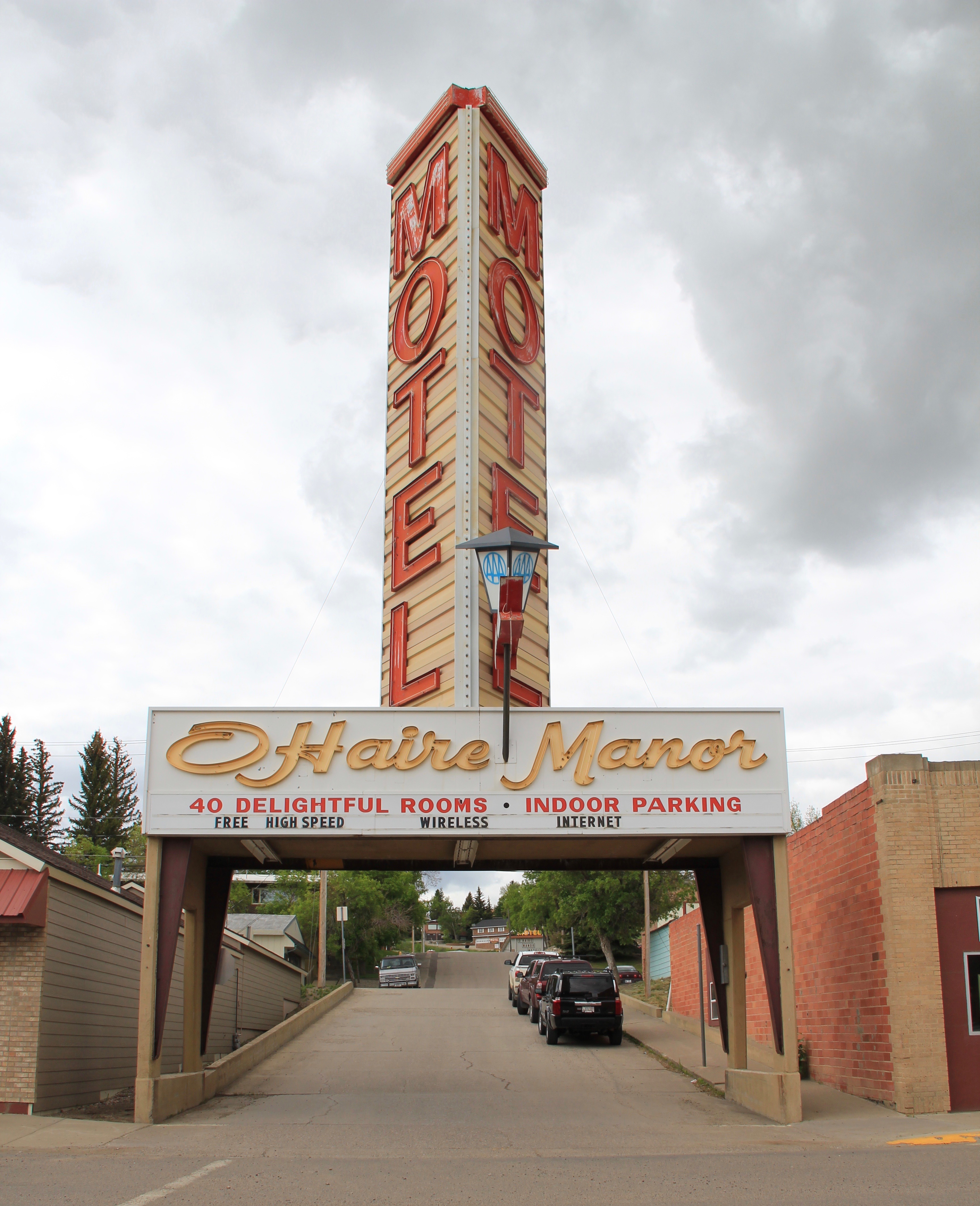 I began the fieldwork in February 1984 and the first stop was a public meeting at the Toole County Courthouse in Shelby. My first overnight was just as memorable–for good reasons–at the O’Haire Manor Motel. Its huge neon sign on the town’s main street, which was U.S. Highway 2, could not be missed, and actually the sign replaced a building that once stood along the commercial district, knocking it down so travelers would have a clear shot to the motel itself.
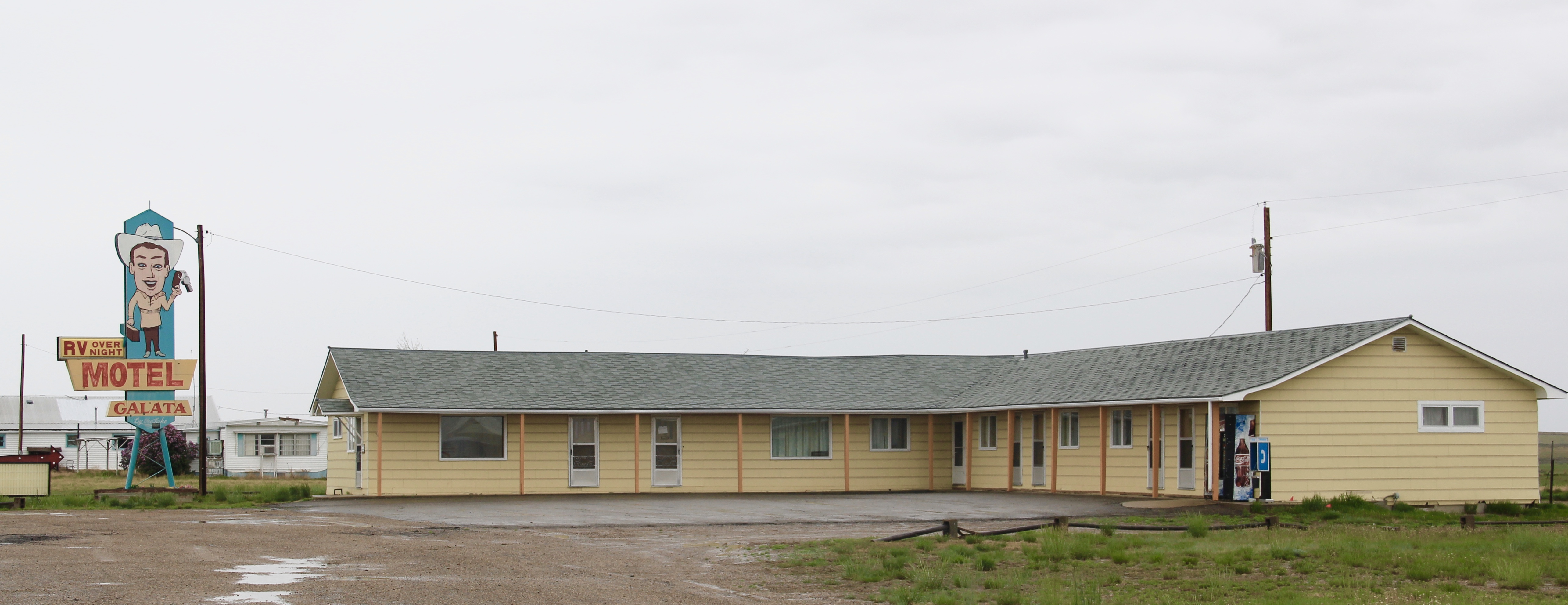 Cut Bank’s Glacier Gateway, on the other hand, reminded visitors that it was that “coldest place” in the United States that they had heard about in weather forecasts.


 Another example from the old Yellowstone Trail and U.S. Highway 10 is the Shade Tree Inn Motel in Forsyth–although coal and railroad workers help somewhat to keep it going in the 21st century.
 Just a block west of another historic section of U.S. Highway 10 in Deer Lodge is the Downtowner Motel, with its sloping roof and extended rafters representing the best in “contemporary” style from the 1960s. This place too was clean, cheap, and well located for a day of walking the town back in 1984.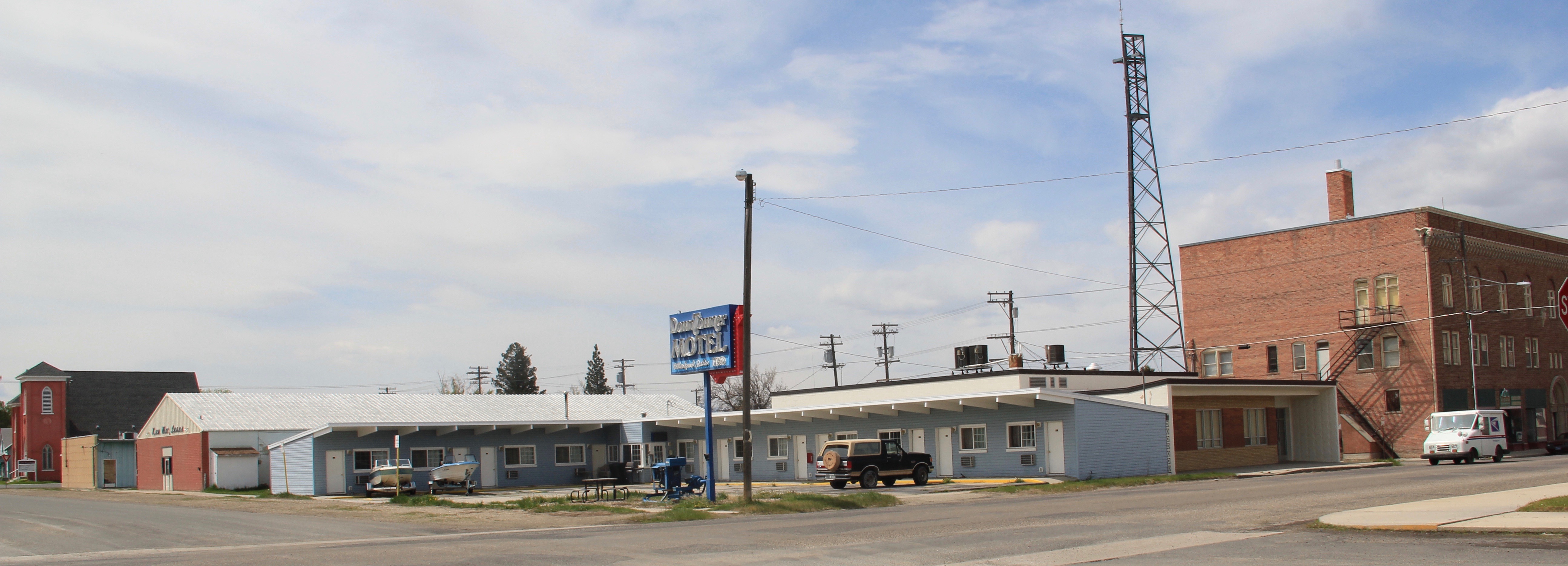

 Not only have the changes in traffic patterns been important, the present generation’s preference for chain motels–and the proliferation of chains across the state–have shaped the future of the mid-20th century motel. A good example is the challenges facing the continuation of the Cherry Hill Motel in Polson, located along U.S. Highway 93. Here was a favorite spot in 1984–near a killer drive-in–a bit out of the noise of the town, and sorta fun surroundings with a great view of Flathead Lake.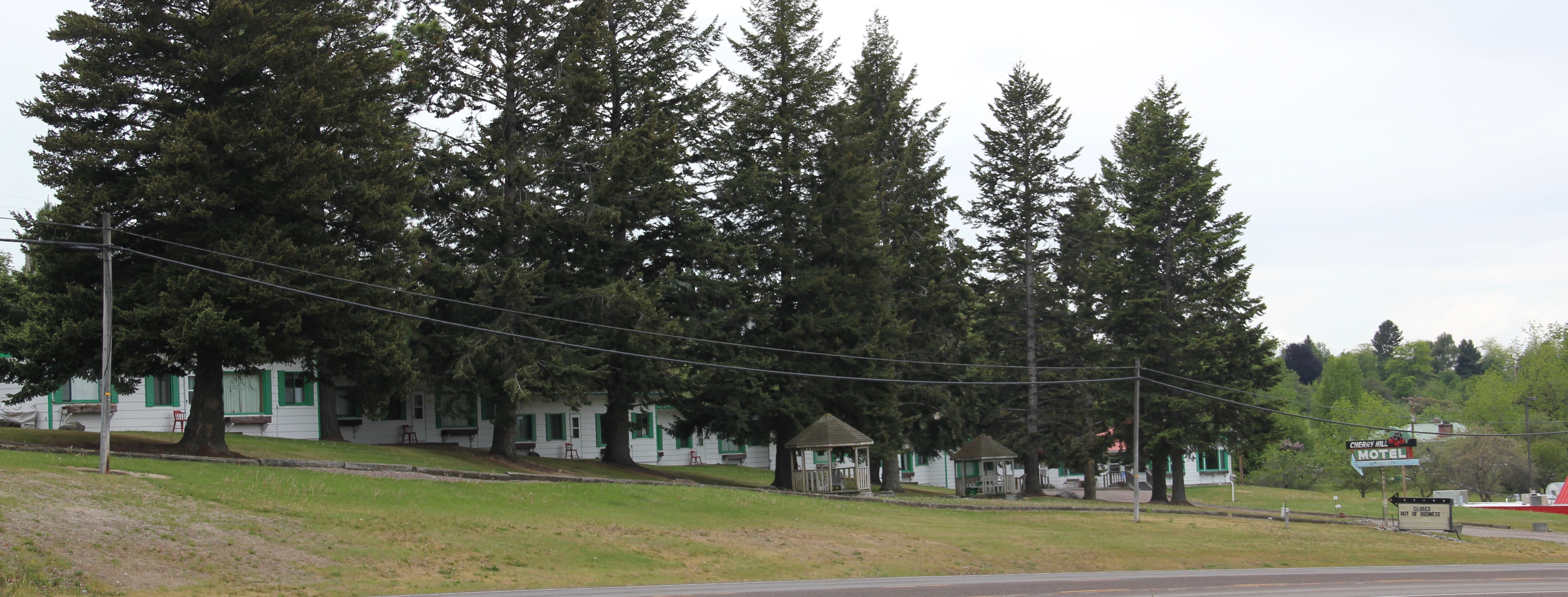
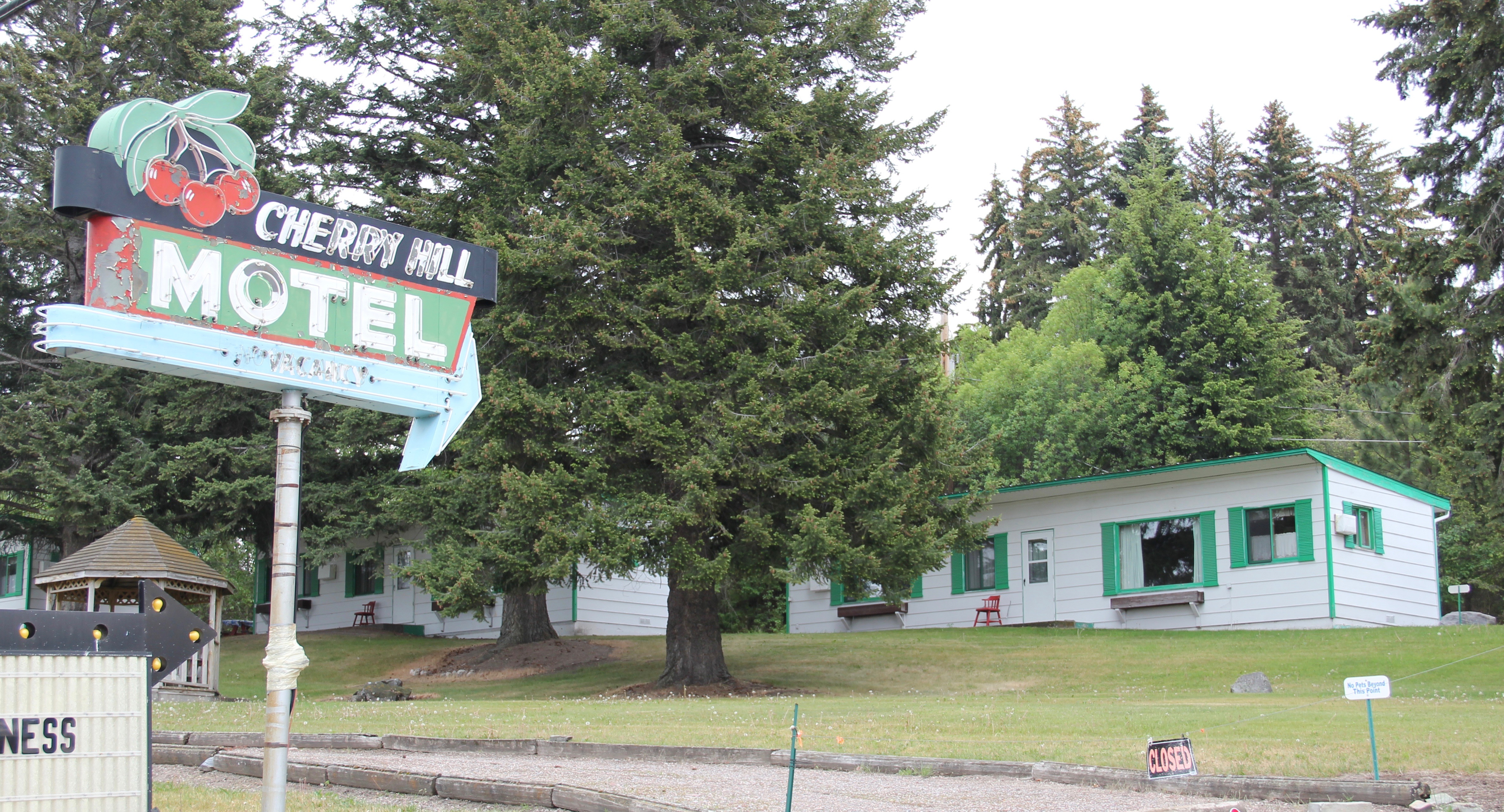 The place was up for sale in 2015–and the internet today tells me that it is “permanently closed.” I hope it can find a new owner and is still there when I next return to Polson but with the general boom in the Flathead Lake region, one assumes its days are numbered.
 The bear might be hugging the tree but does anyone else care enough–or want this type of lodging, complete with the “picture window” of the 1950s and 1960s, in the comfort obsessed 21st century?

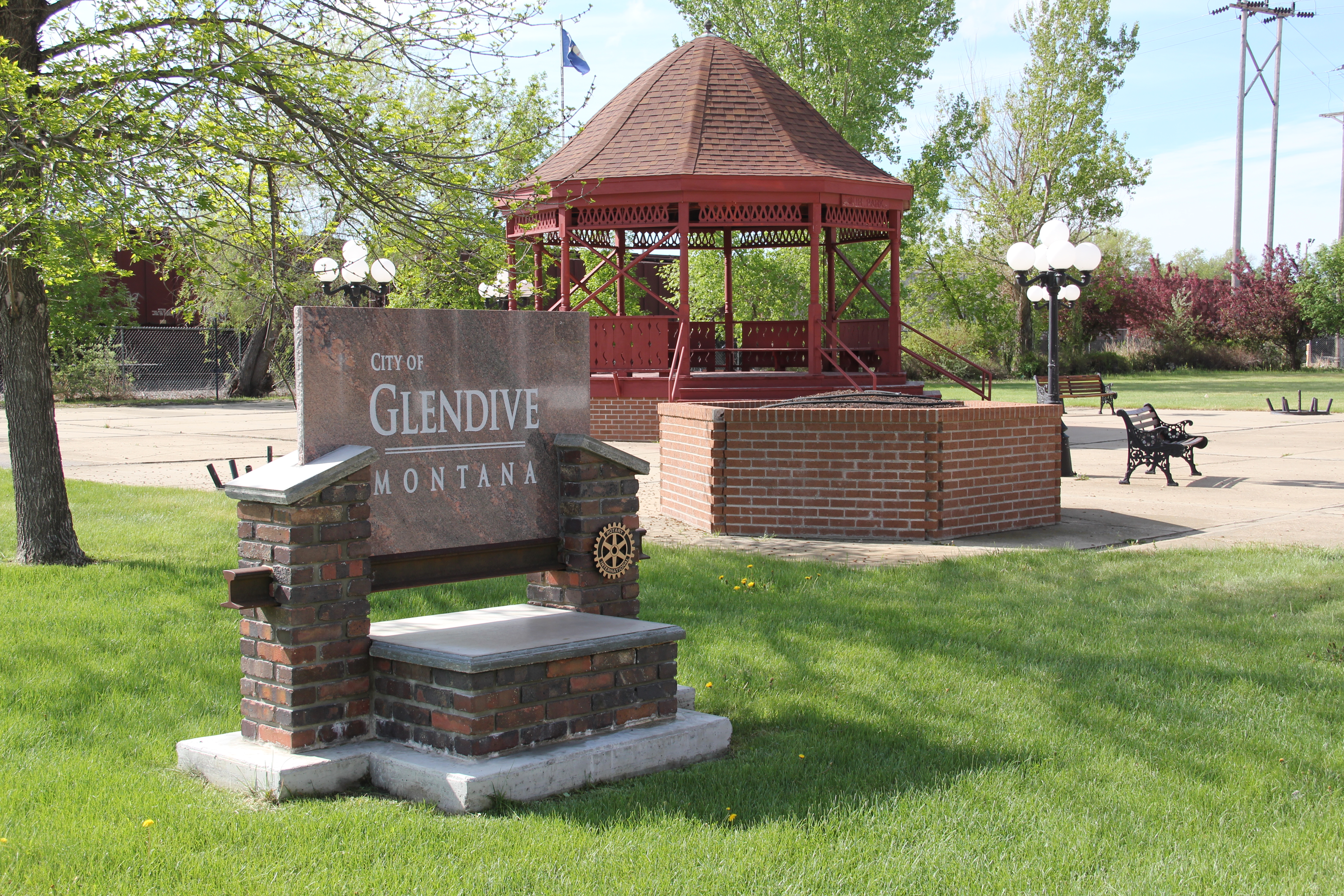 In the early posts of this exploration of Montana’s historic landscape I spoke of the transformation that I encountered when I revisited Glendive, the seat of Dawson County, for the first time in about 25 years, of how local preservation efforts had kept most of the town’s railroad era landscapes alive while leading to the revitalization of its amazing number of historic residences from 1900 to 1950.
 Let’s now turn our attention to public landmarks, old and more recent, that also deserve notice, starting with the magnificent Classical Revival-styled City Hall, one of the anchors of the Merrill Avenue historic district, which is listed in the National Register of Historic Places. Built in 1914, this all-in-one municipal building is an impressive architectural
 statement by the second generation of Glendale’s leaders that the town would grow and prosper during the homesteading boom of the first two decades of the 20th century. The architect was Brynjulf Rivenes of Miles City. His firm had so many commissions coming from eastern Montana and Yellowstone Valley patrons that by this time Rivenes operated offices in both Glendive and Miles City.
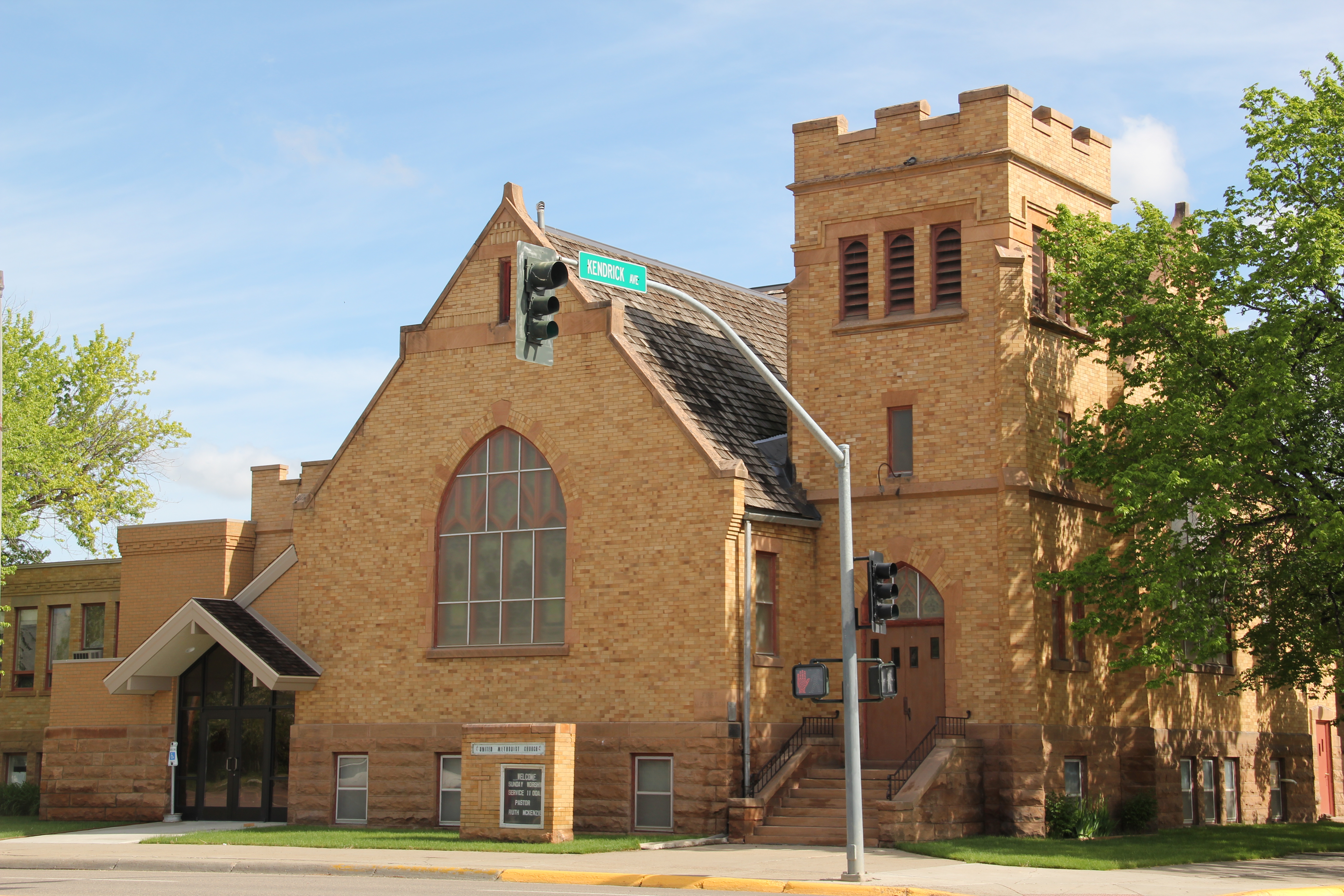 Rivenes had earlier marked Glendive’s new emerging townscape with his Gothic design for the First Methodist Church, in 1909. Fifteen years later, he added another landmark church design with the Romanesque styled Sacred Heart Catholic Church (1924-1925).

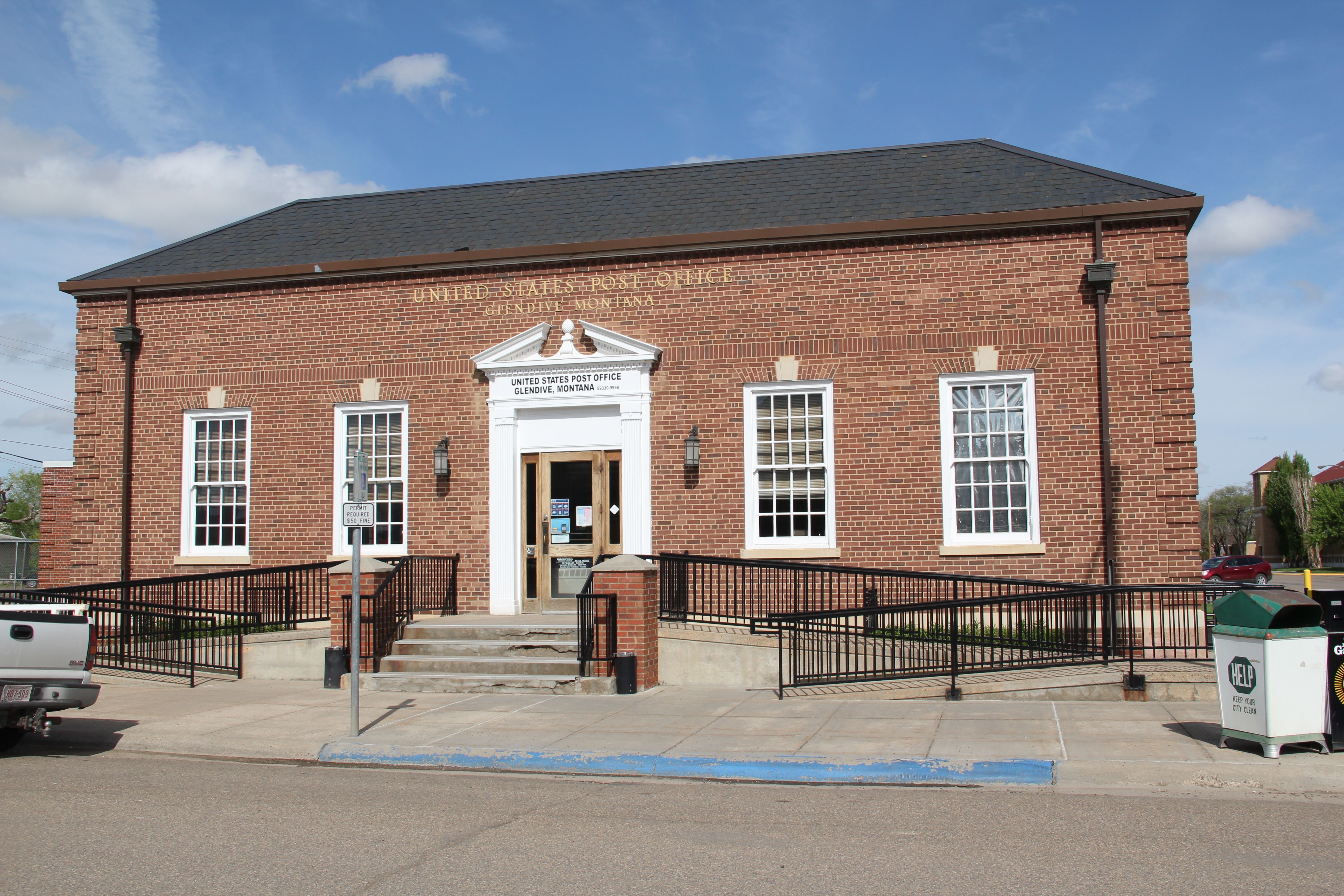 With recovery and the arrival of more and more automobile traffic from the late 1930s to the 1950s, many of the older buildings received mid-century updates. The remodels could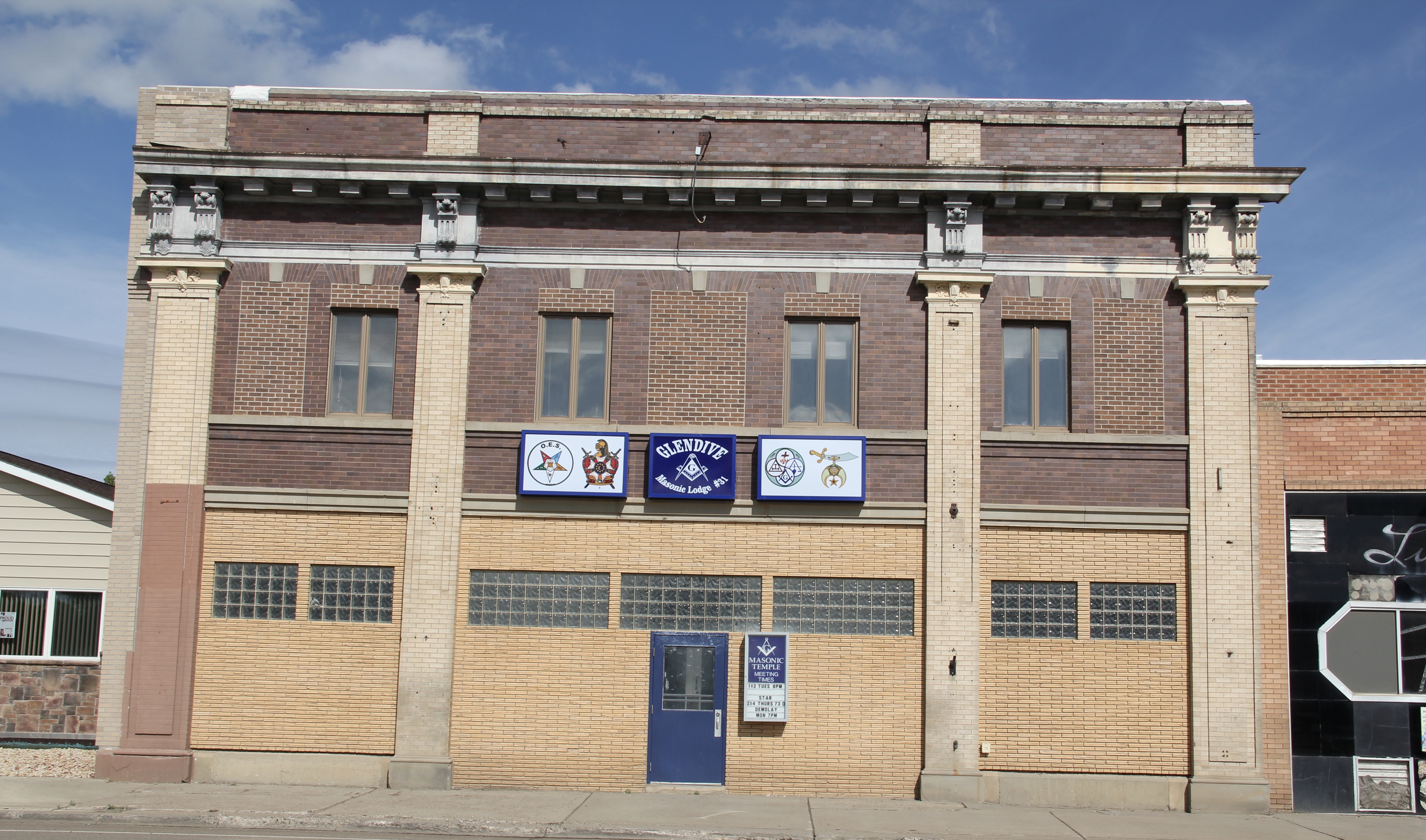
 The 1950s and 1960s brought many changes to Glendive. Post World War Ii growth both in the town and the many surrounding ranches led to expansion and remodeling at the historic Glendive Milling Company in 1955. When the historic districts for Glendive were designated in the late 1980s, preservationists questioned the inclusion of this important industrial/agricultural complex due to the changes of the 1950s. Viewed today, however, the mill complex is clearly a very significant historic site.
 More contemporary styled church buildings were also dedicated in the mid-century, such as the classic “contemporary” styling of the Assembly of God building, with classrooms at
 at the front rather than the rear, or the modified A-frame style of the First Congregational Church, which I shared in an earlier post on Glendive.
 Glendive is very much a blending of different 20th century architectural styles, reaching back into the region’s deep, deep past, as at Makoshika State Park, where the visitor
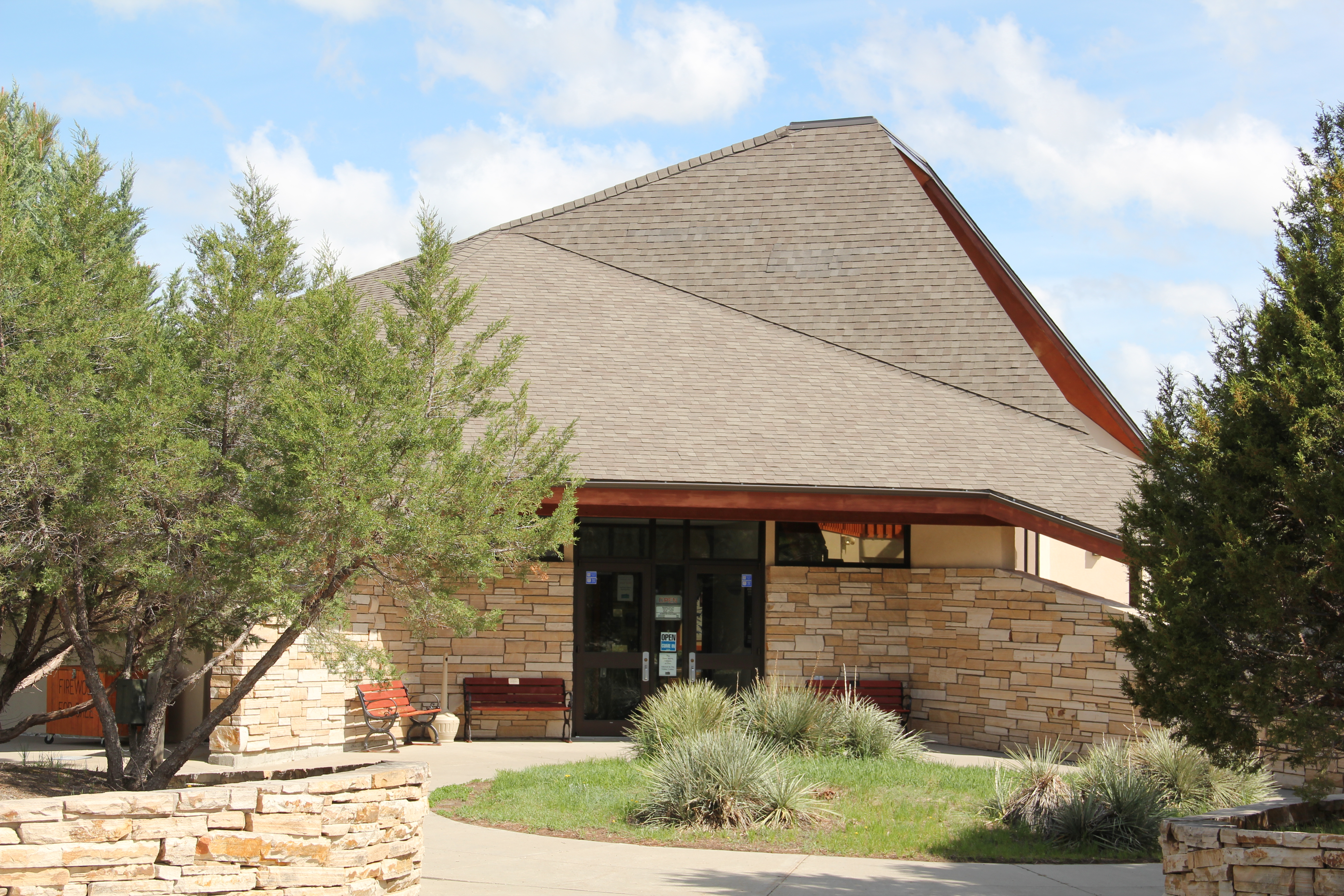 center/museum is an excellent example of late 20th century modern style–clearly a building of the present but one that complements, not overwhelms, the beauty of the park itself.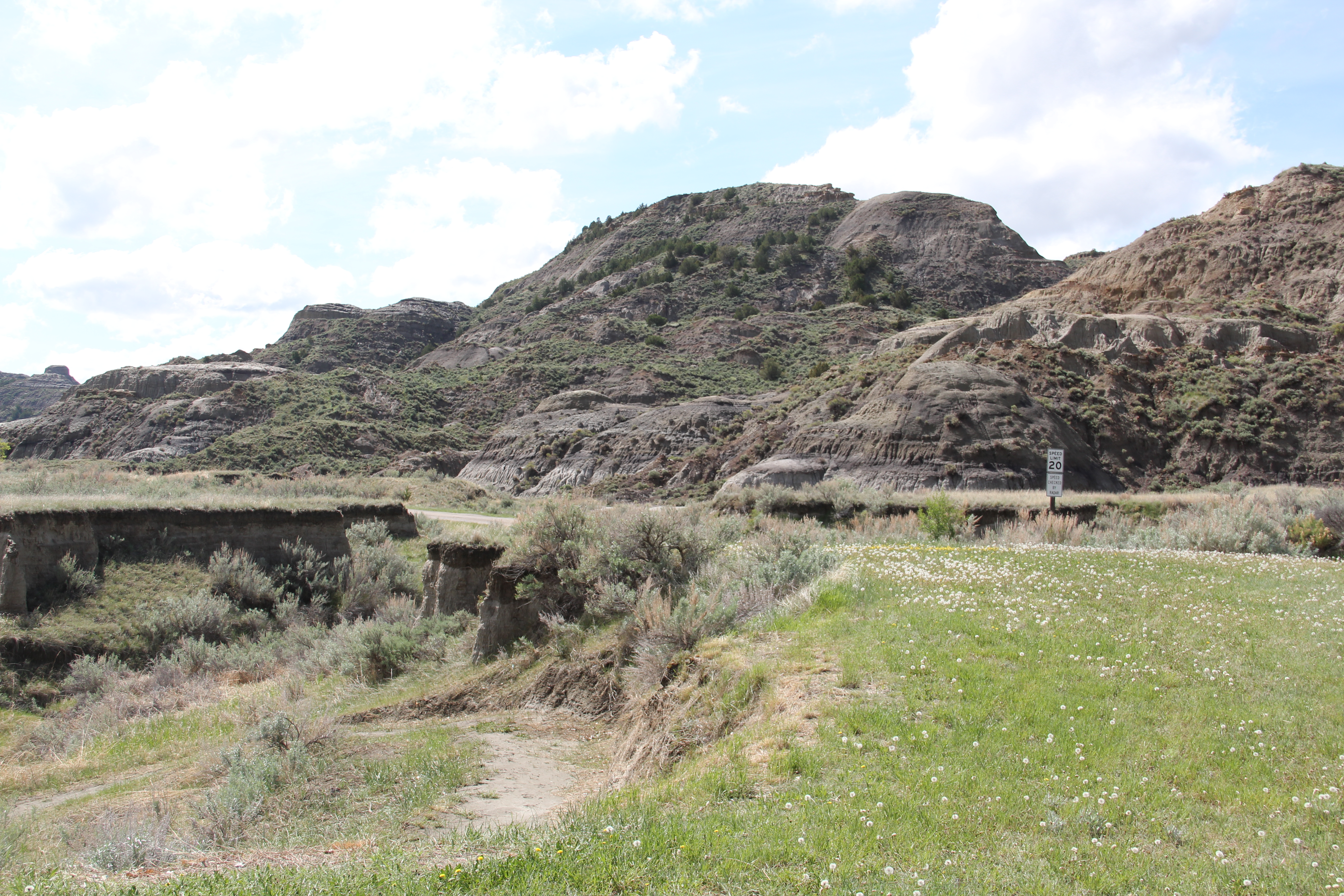
 Montana's Historic Landscapes