Malta Cemetery, a Hi-Line Landmark

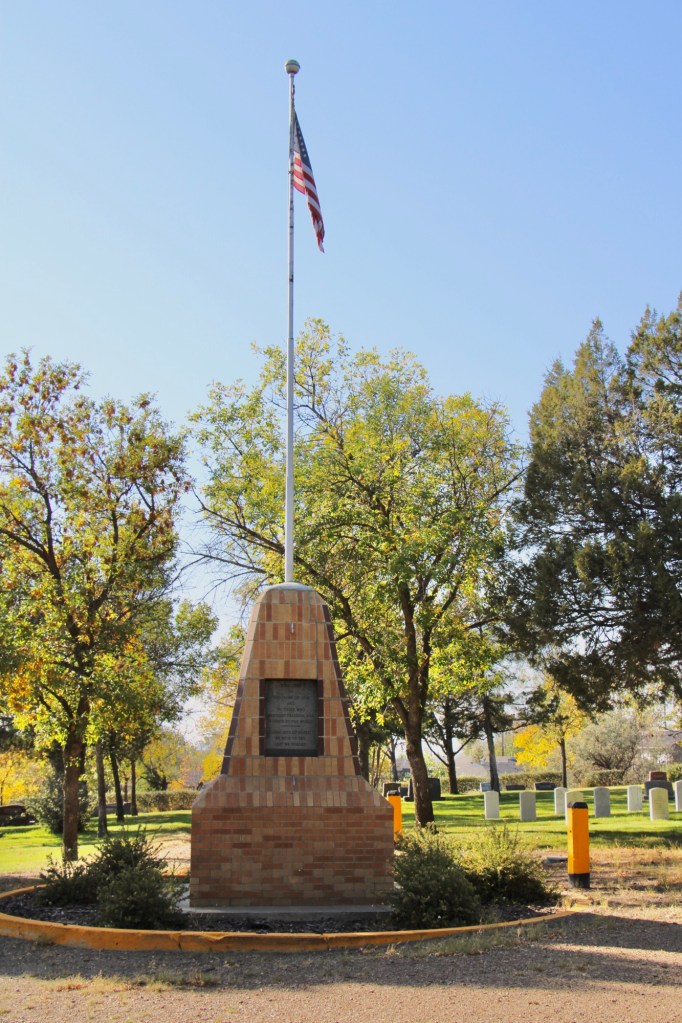
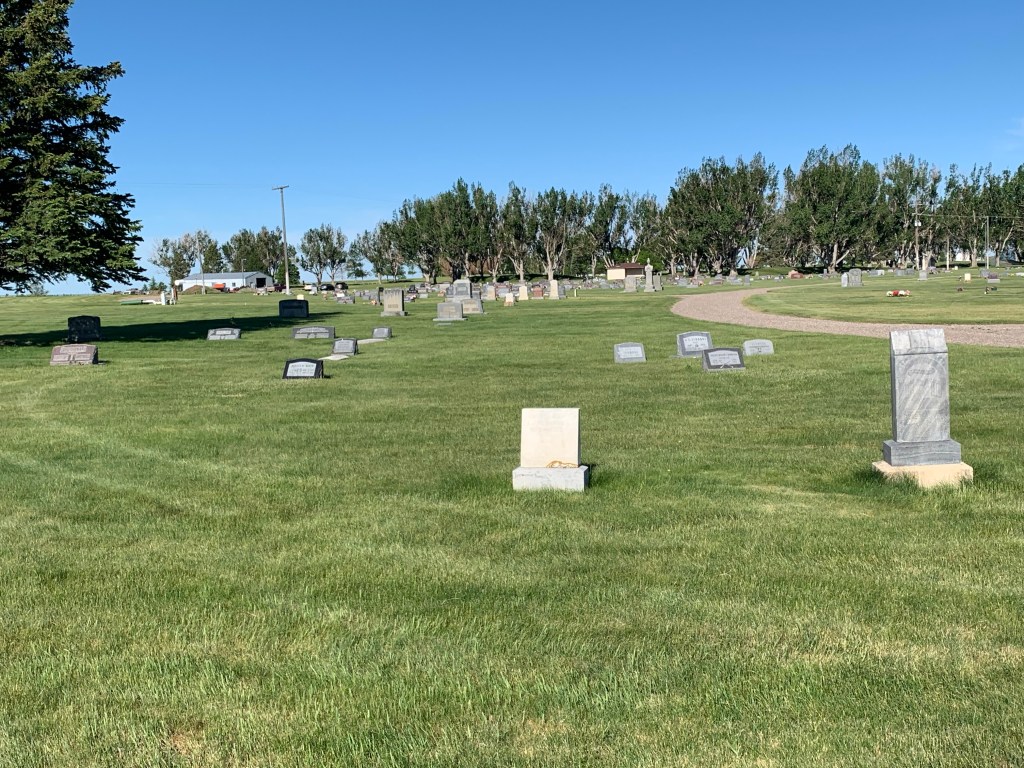
When the state government in 2014 identified 18 businesses that had been operating in Montana for at least 100 years, the Malta Cemetery was one of those 18. The Manitoba Road, the precursor to the Great Northern Railroad, established a siding here in 1887. Three years later, a post office named Malta was established and settlement followed.
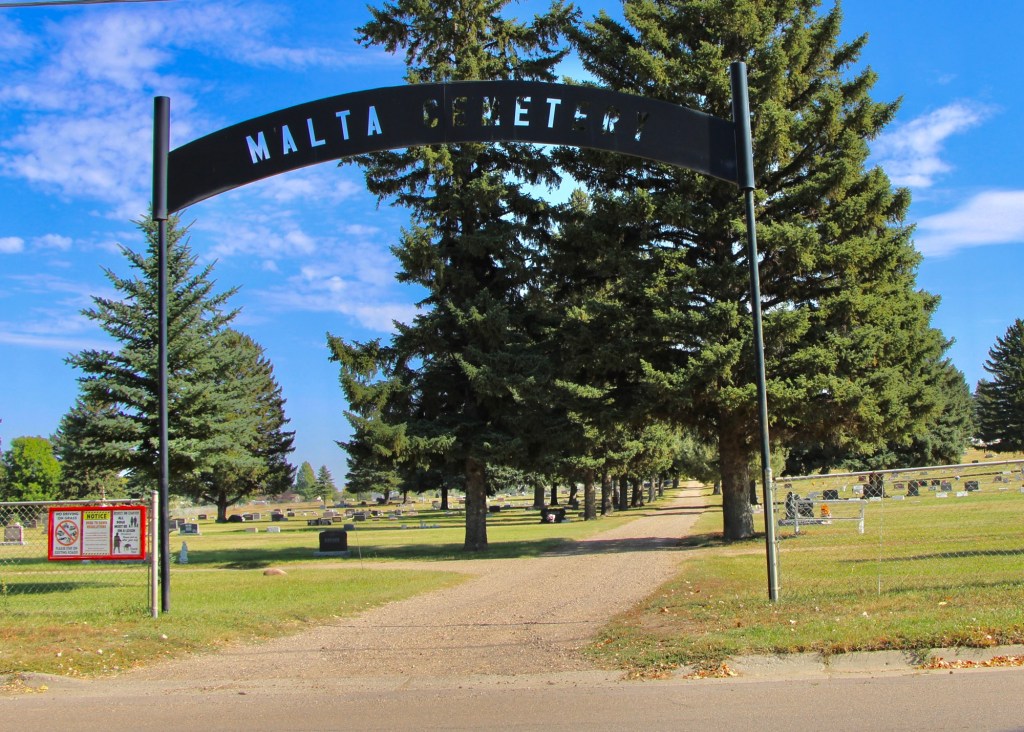
Then came the homesteading boom of the early 1900s. The town of Malta was formally established in 1909. The cemetery association—still a private corporation headed by three trustees today—came soon thereafter.
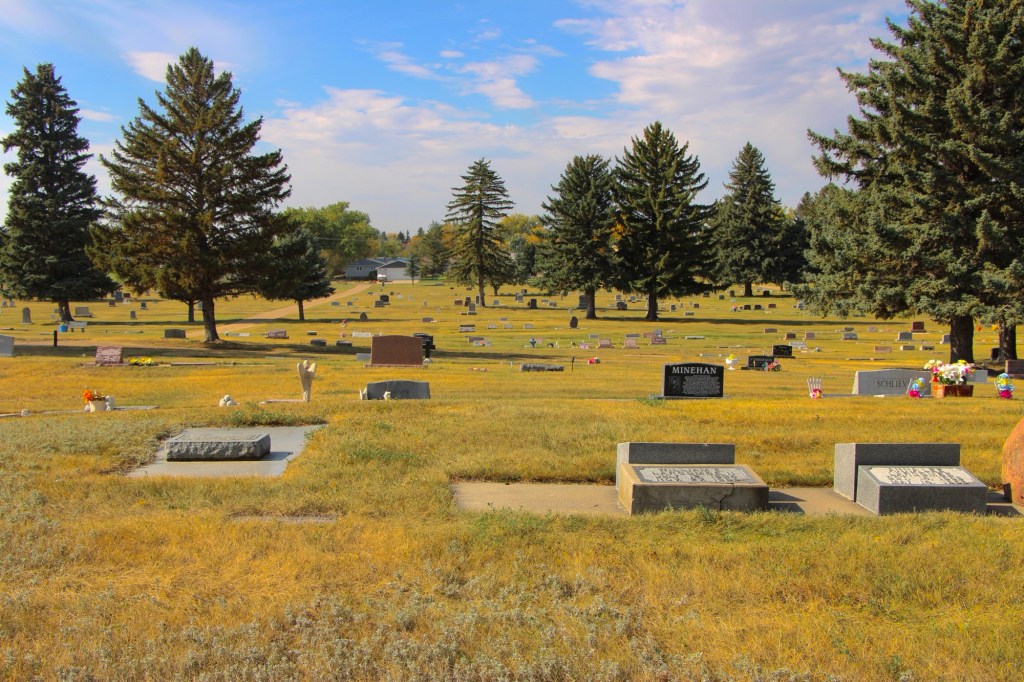
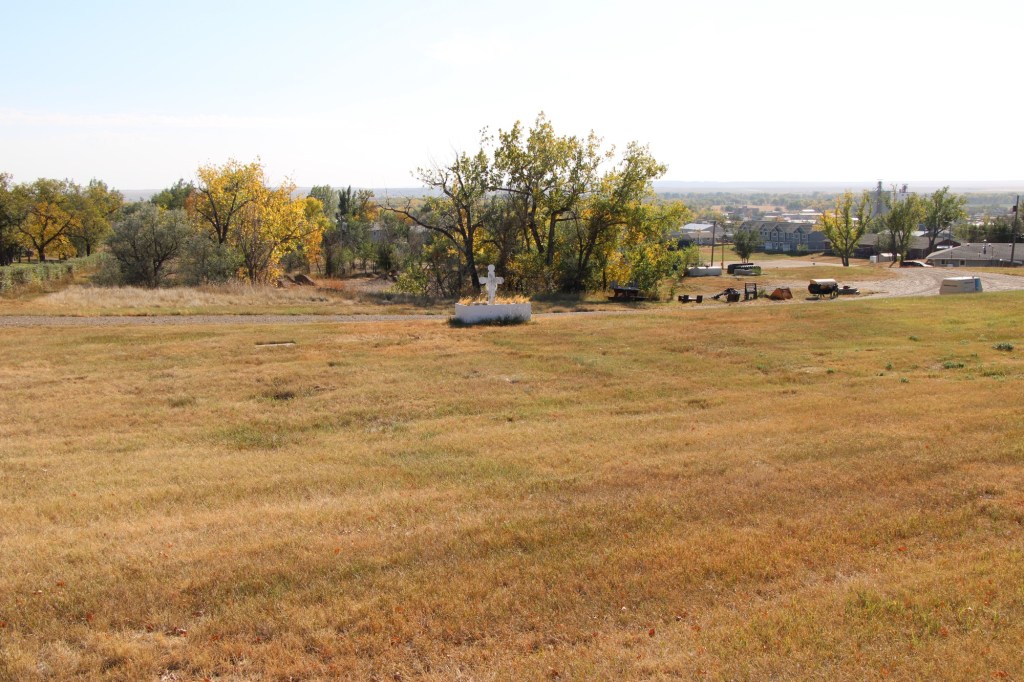
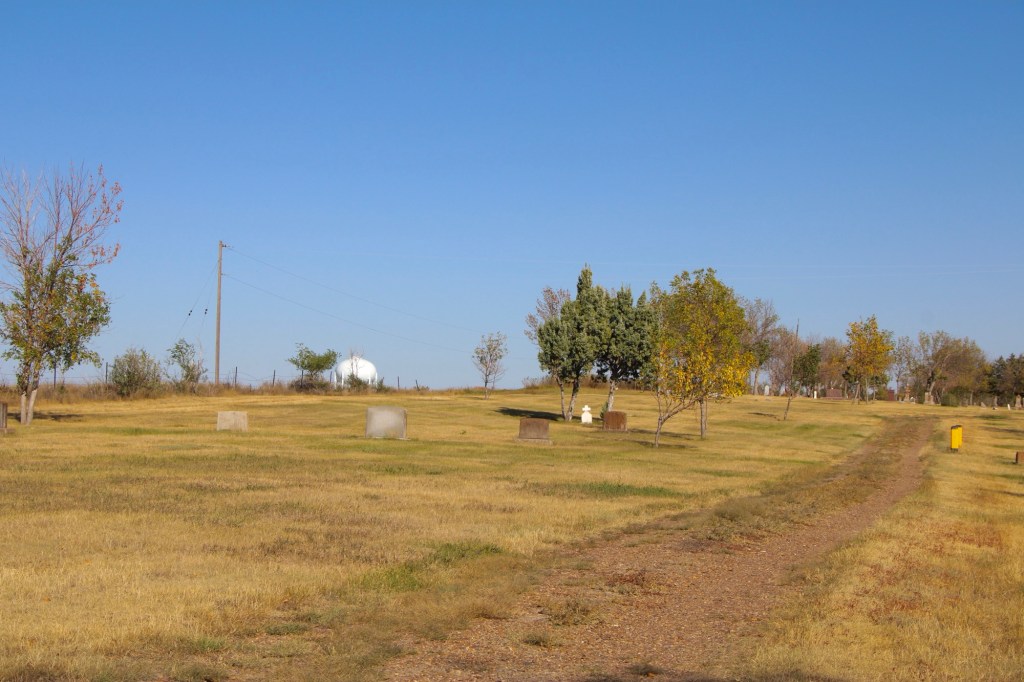
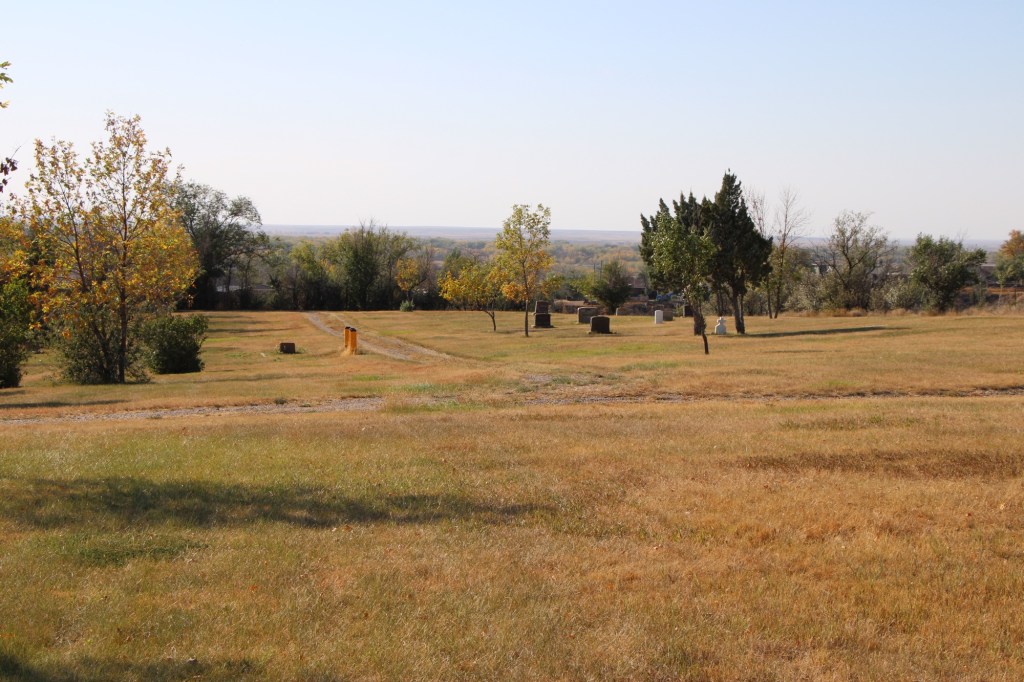
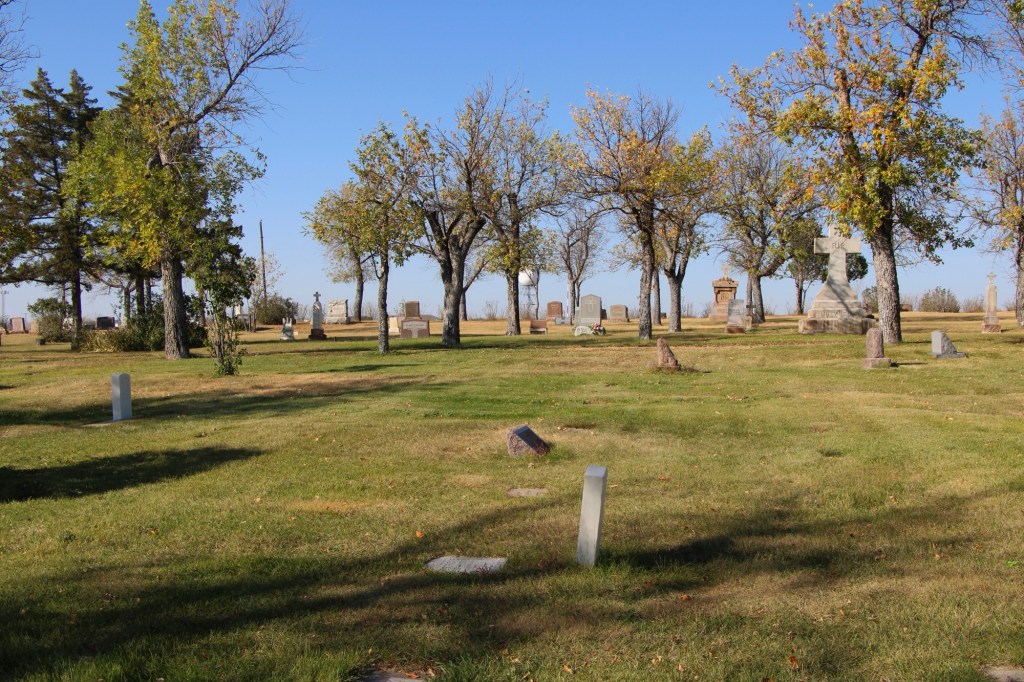
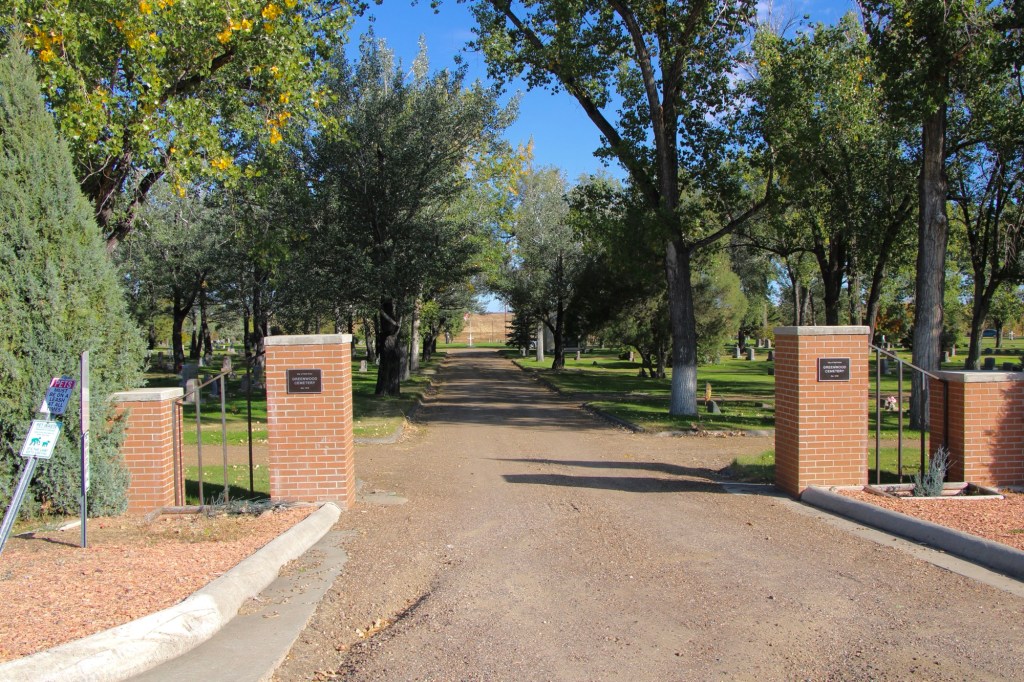
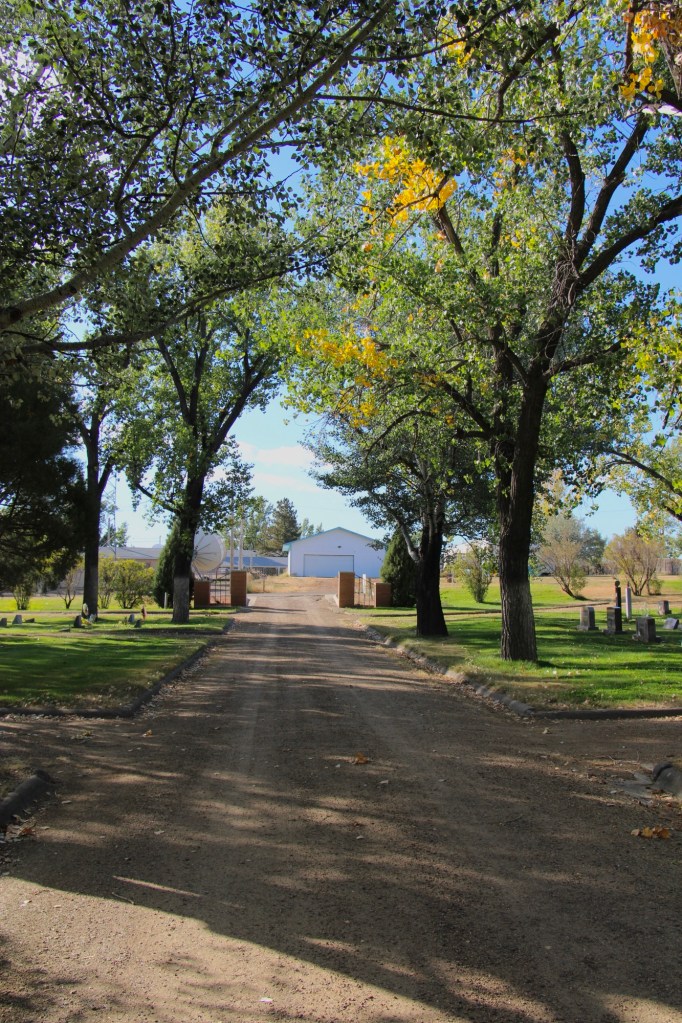
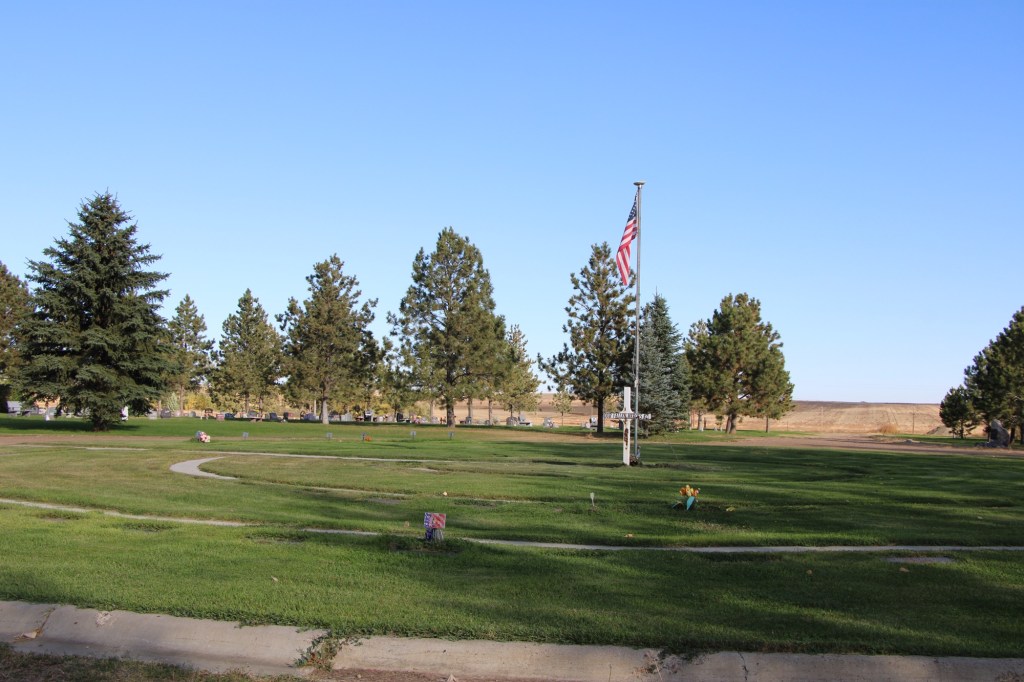
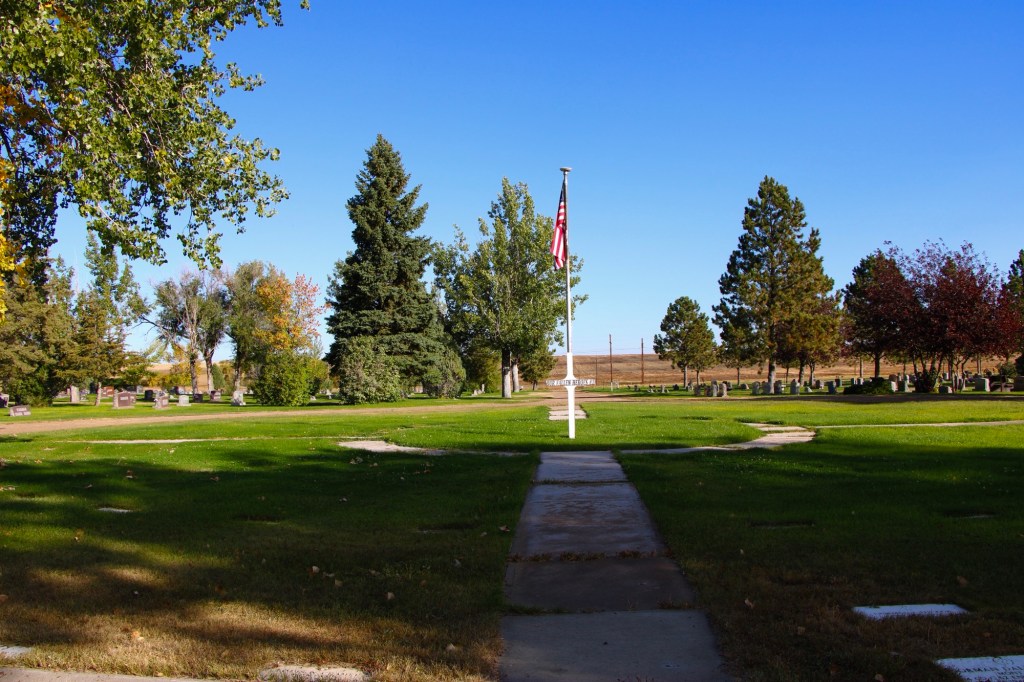
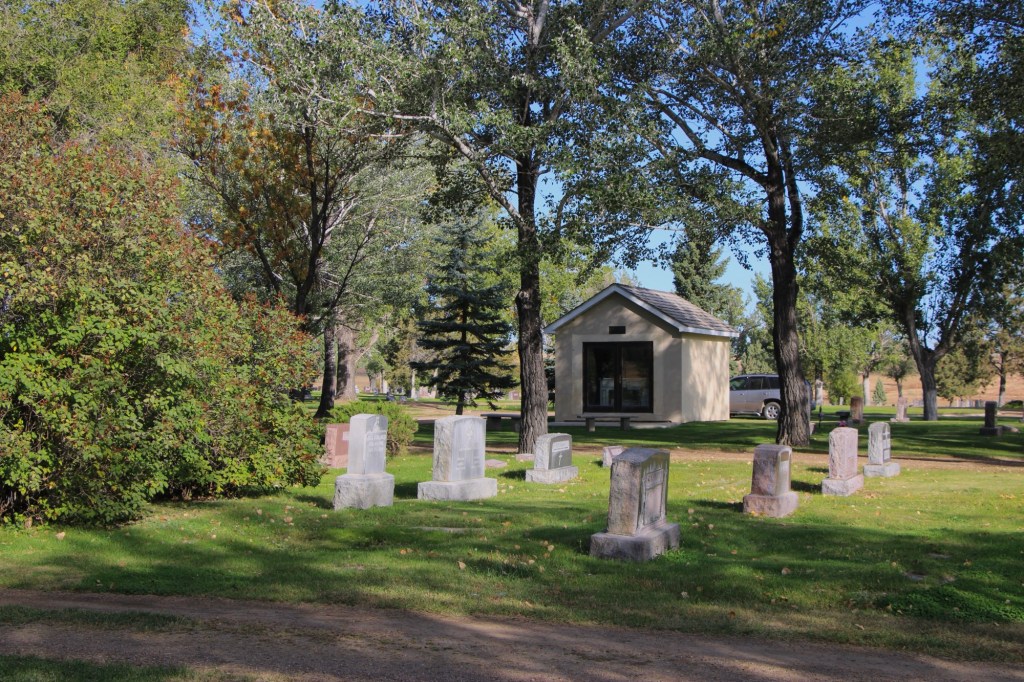
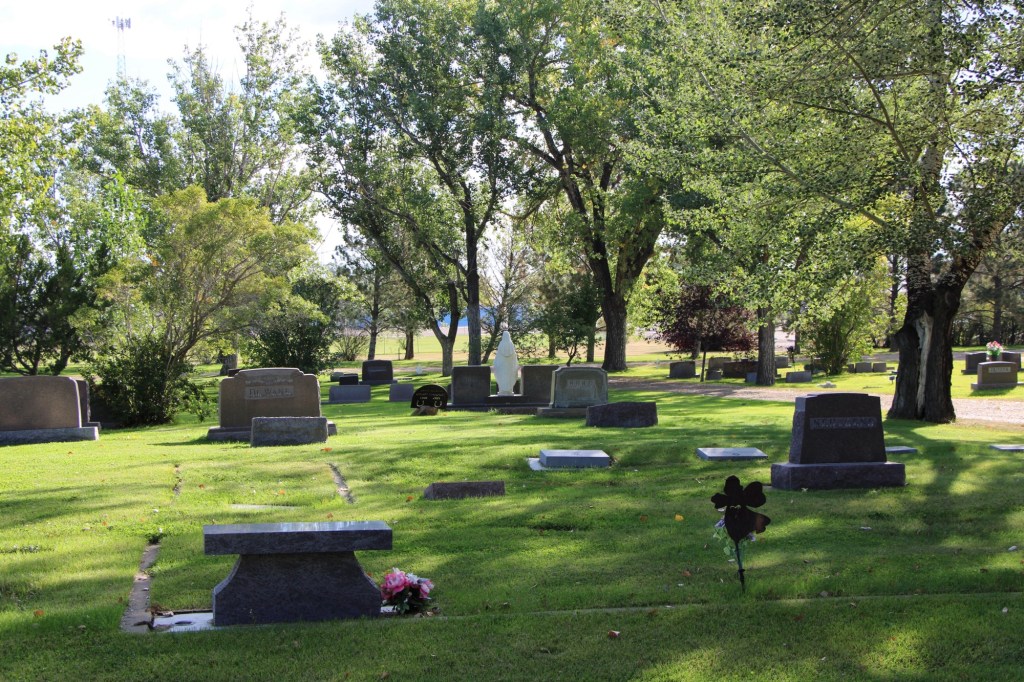
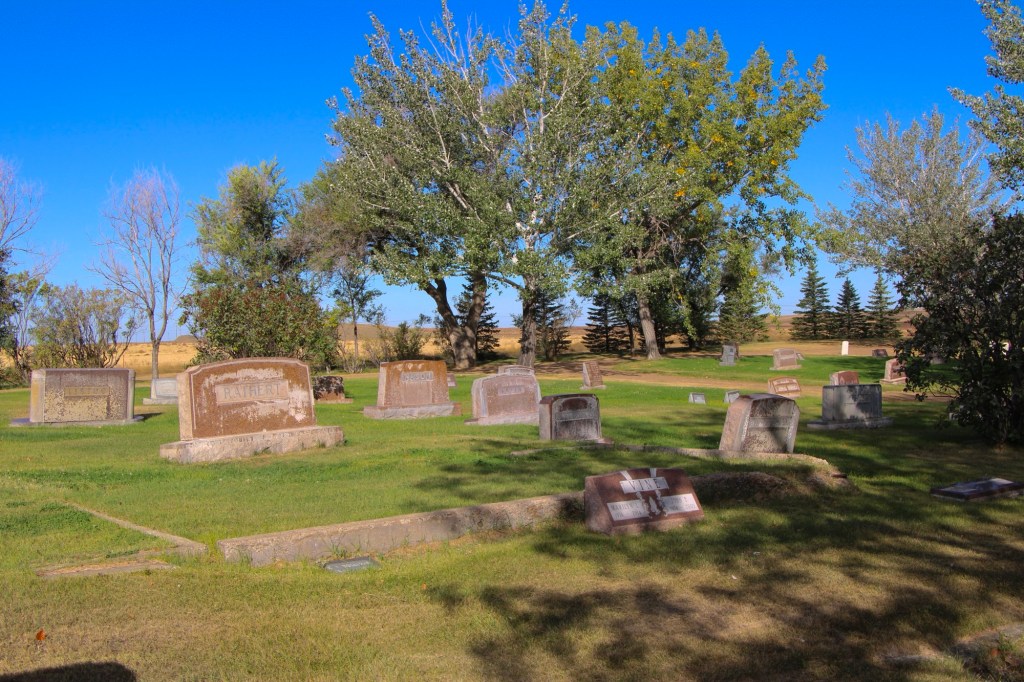
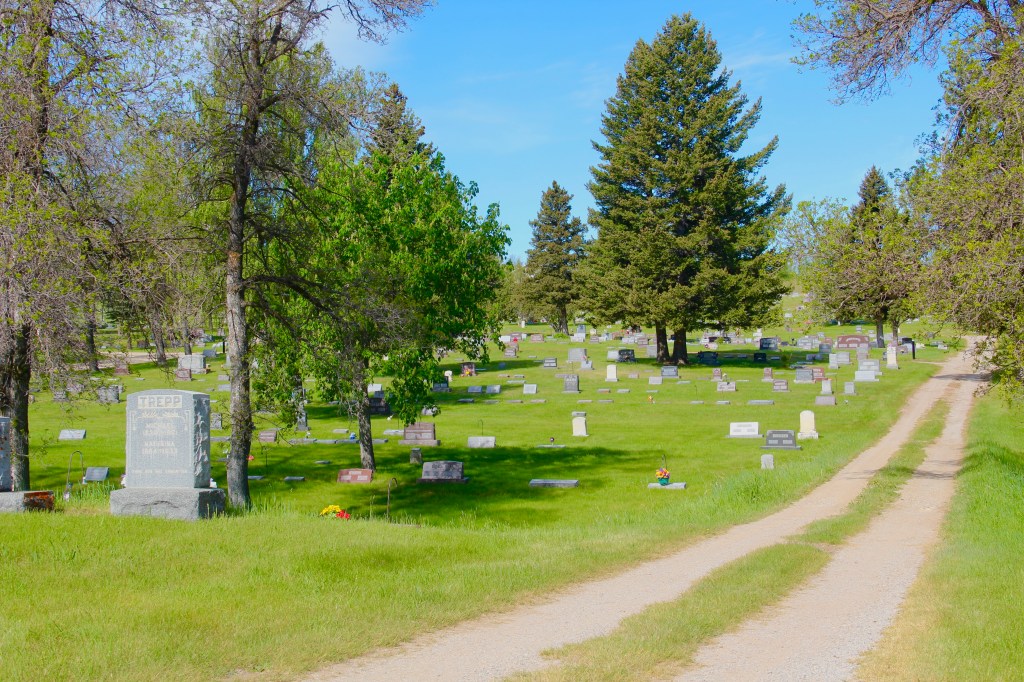
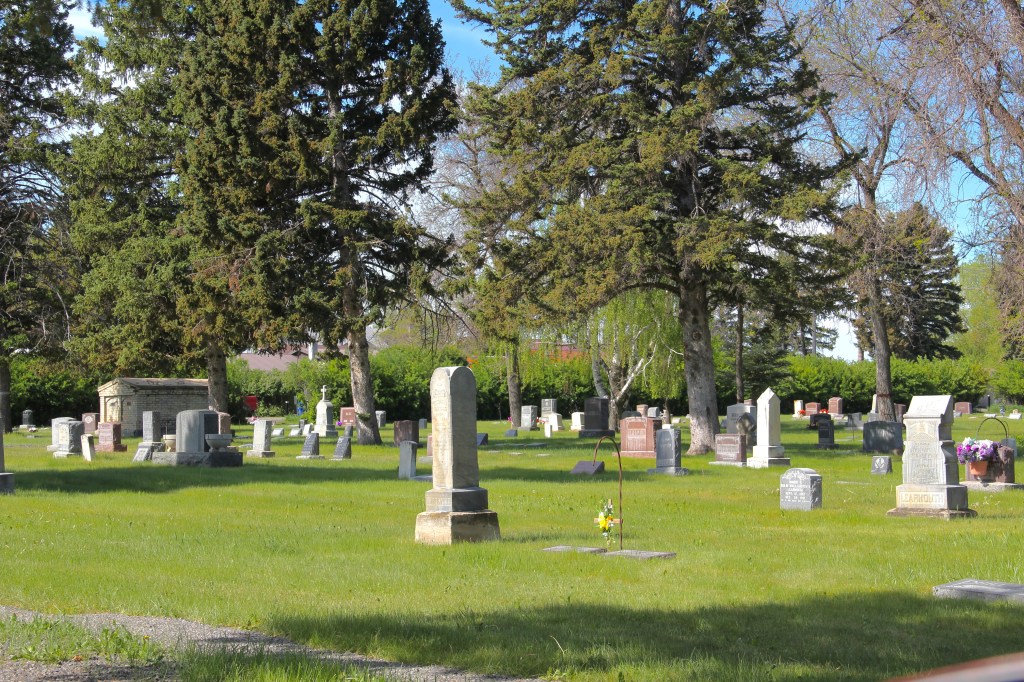
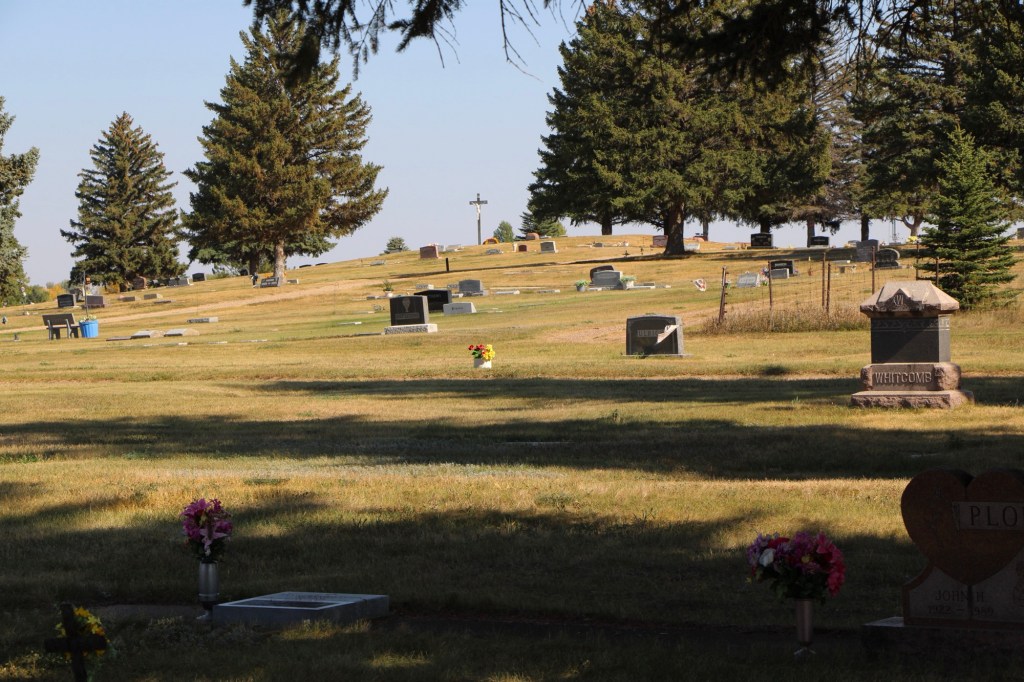
The cemetery is north of the town center at a place where first burials date to 1894. The cemetery design centers on a tree-lined road that reaches the top of a slight rise, with different roads radiating on either side of the main artery. It is not an elaborate design but the many trees planted in its early years give the place a calm, serene feel.
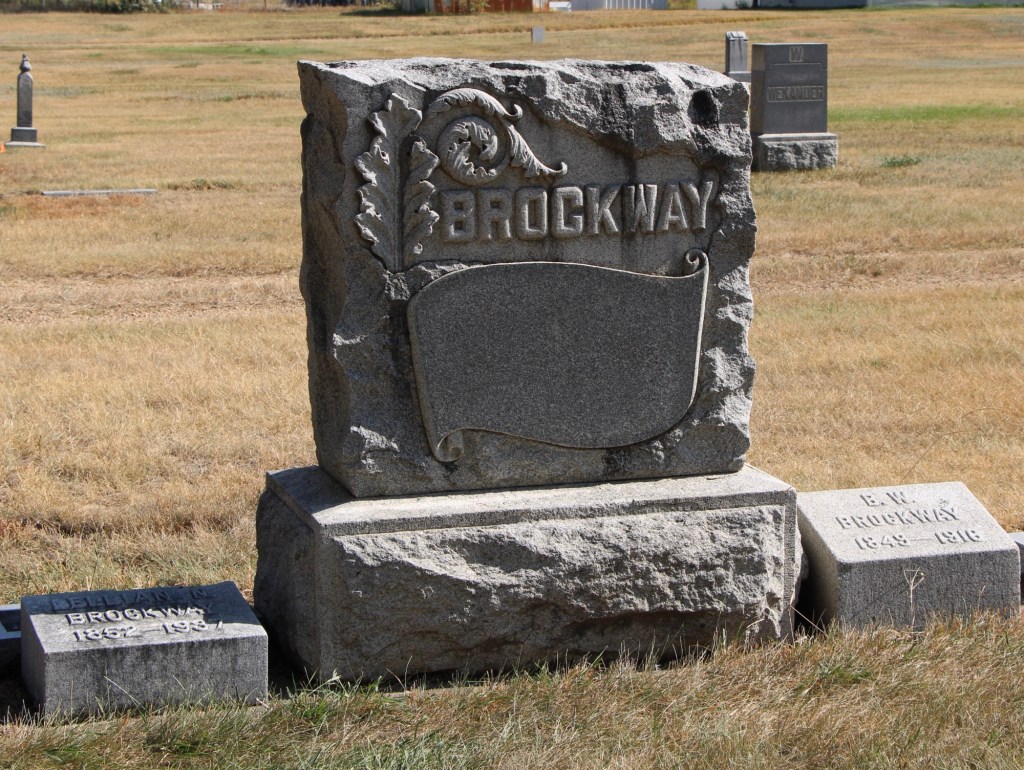
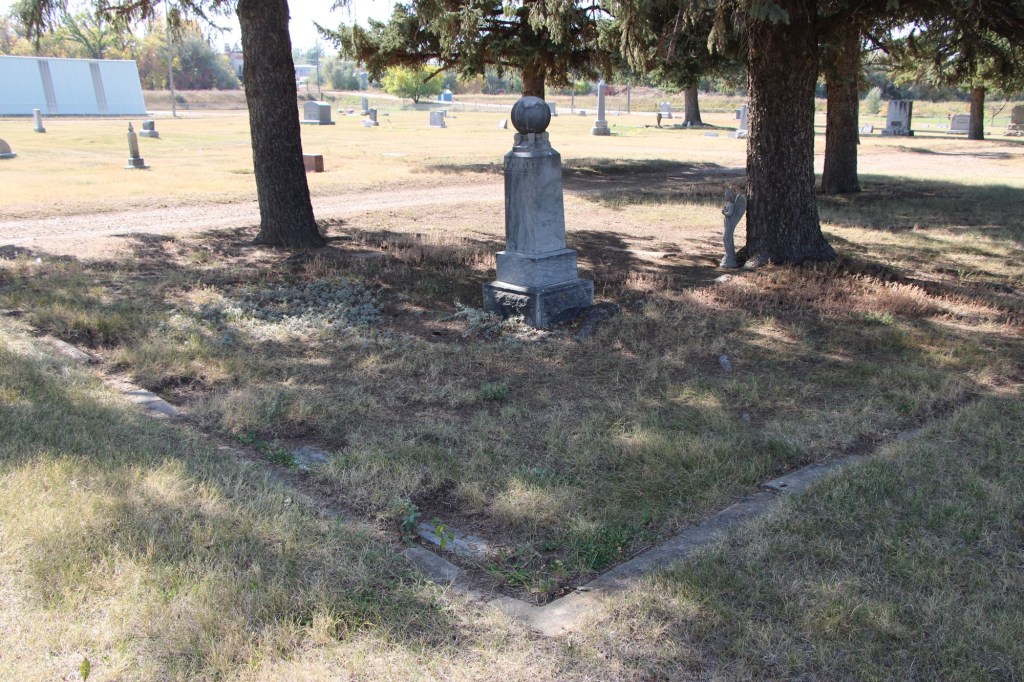
Several large, expressive stone markers identify town founders and the first generation of leaders. the Malta Enterprise of March 30, 1916, recorded the passing of Benjamin W. “Brock” Brockway, who was the town mayor, and a cemetery trustee. The newspaper emphasized that Mayor Brockway “grew to be an intregal part of the growth and development of the city of Malta. His fathful [sic] services in the various city and county organizations and his long and intimate association with the affairs of the country’s complex life made him a valuable leader, a sate adviser and a most efficient officer. He was justice of the peace in Malta for a long time, secretary of the Milk River Valley Water Users’ Association for the success of which he worked with an unusual degree. He held the secretaryship of the Malta Cemetery association, and his never ceasing interest in and devotion to the improvement as a more fit sleeping. place for the dead were deeply appreciated everywhere.”
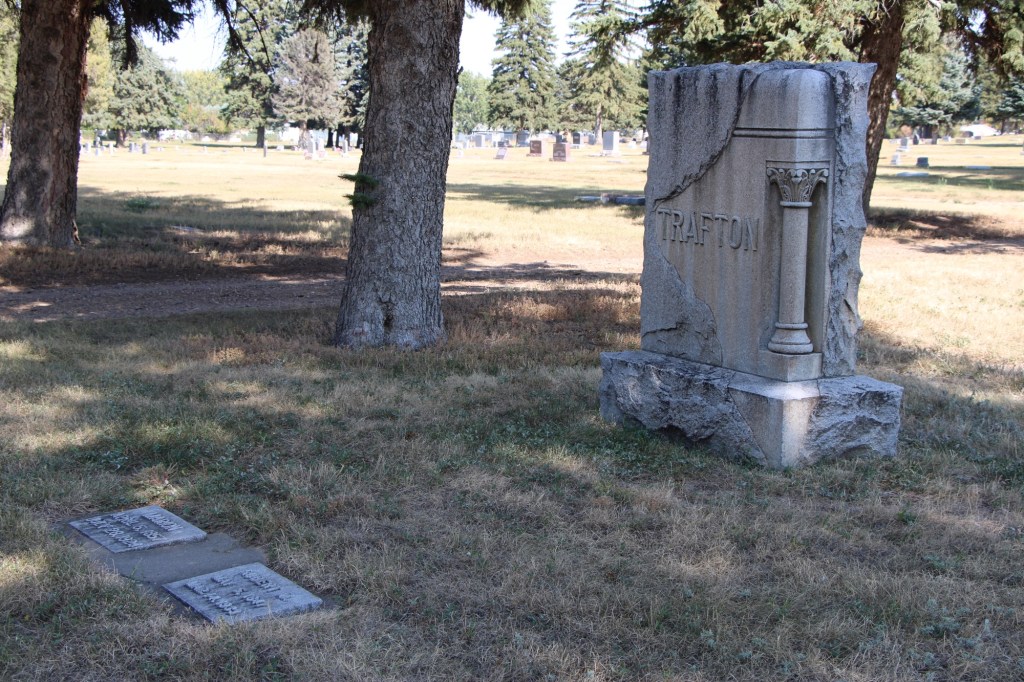
When Brockway first came to Malta, he worked for the town’s leader merchant, Robert M. Trafton, whose similar beautiful stone marker is nearby. Trafton is considered one of the town’s founders. He came in 1886 as the Manitoba Road was being completed. He traded extensively with Native Americans, paying $4 a ton for buffalo bones (according to the Billings Gazette of March 16, 1933). He made $30,000 by selling the tons of bones to fertilizer companies in the east. Later he was a founder of the First State Bank of Malta; its classical Revival building remains a town landmark.
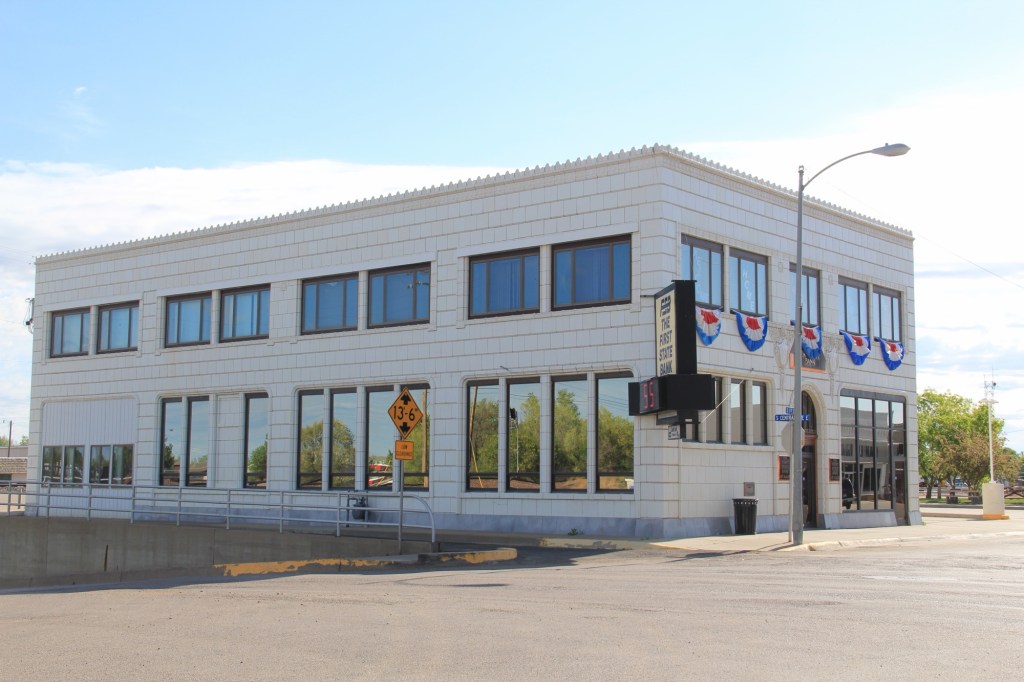
Trafton died in Long Beach, CA, but wanted to be buried in Malta.
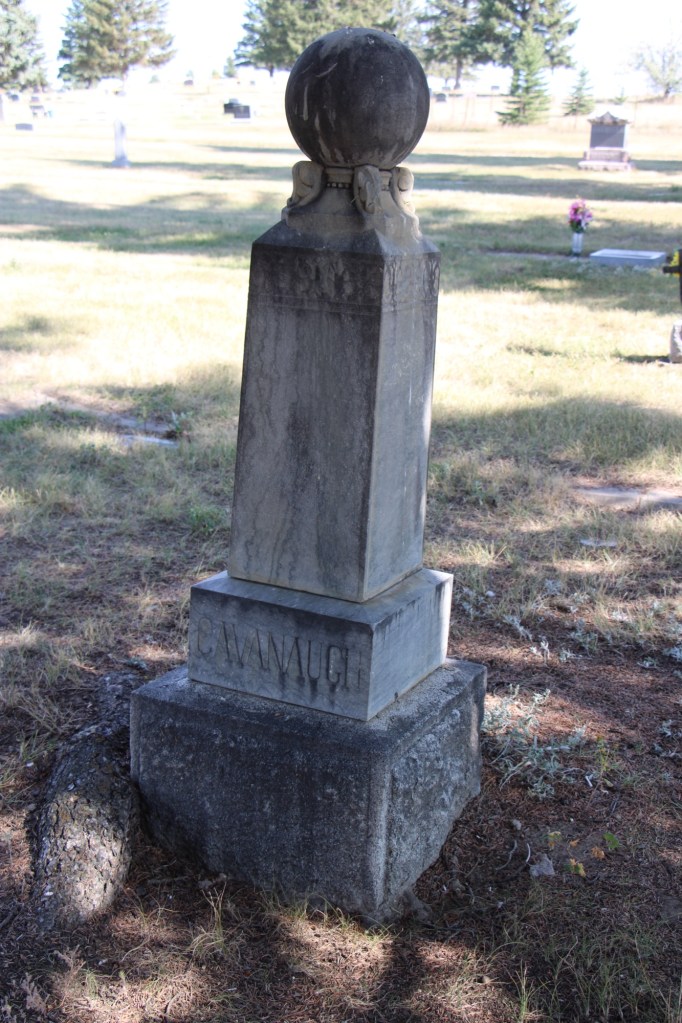
Brockway’s predecessor as Malta mayor was Arthur Cavanaugh, also a prominent businessman. He has a stone marker to the west of the Brockway and Trafton graves centered in a large concrete lined family plot.
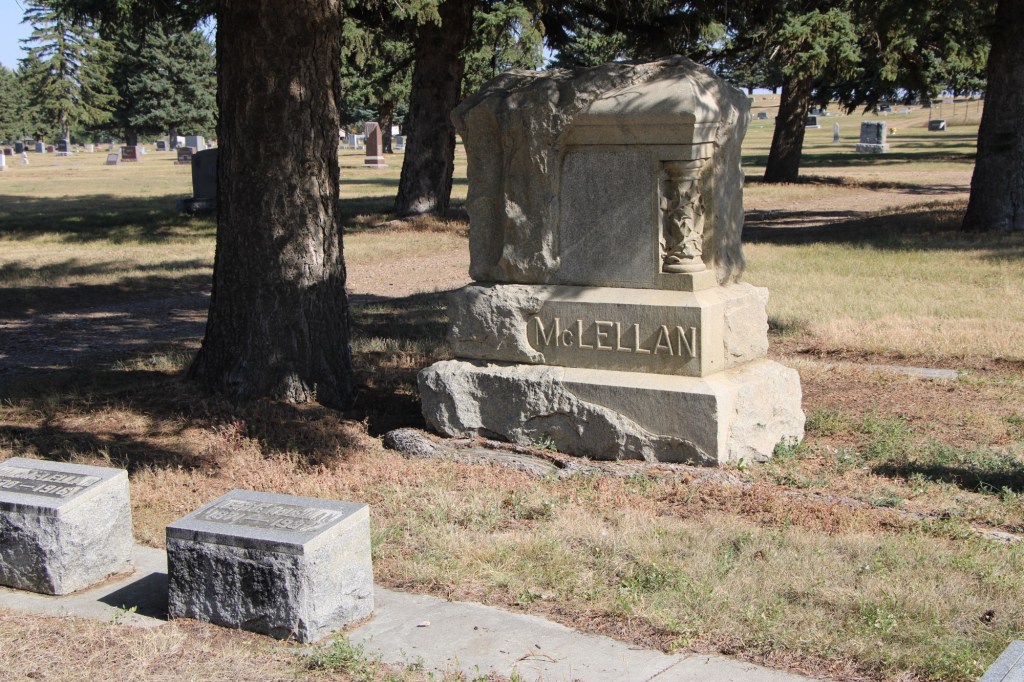
William McClellan (d. 1916) was another important early Malta merchant. He and Lee Edwards built a two-story business block prominently facing the railroad tracks in 1910. It is listed in the National Register of Historic Places.
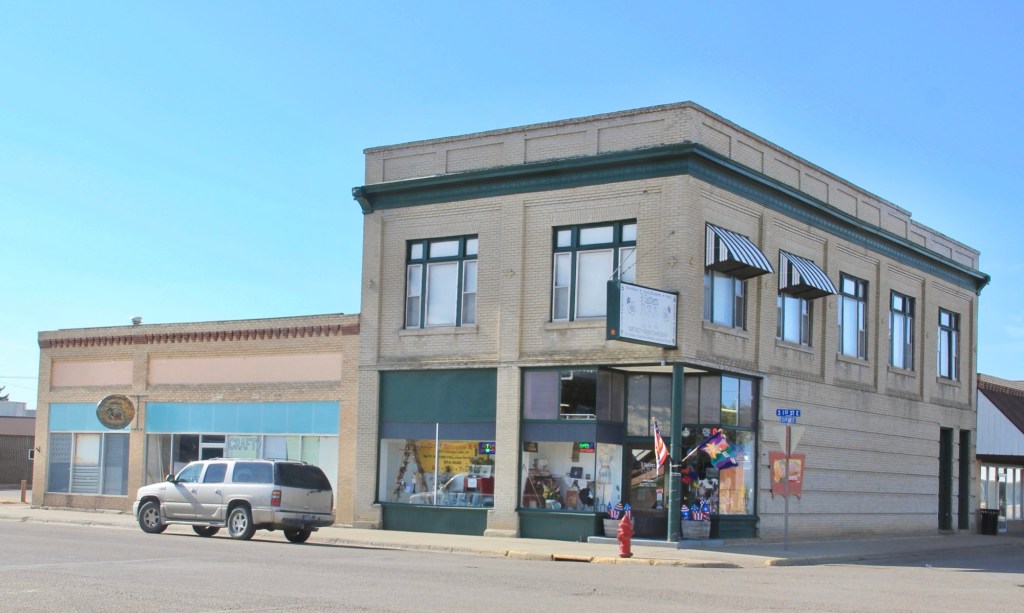
Edward’s-McClellan Block, built in 1910

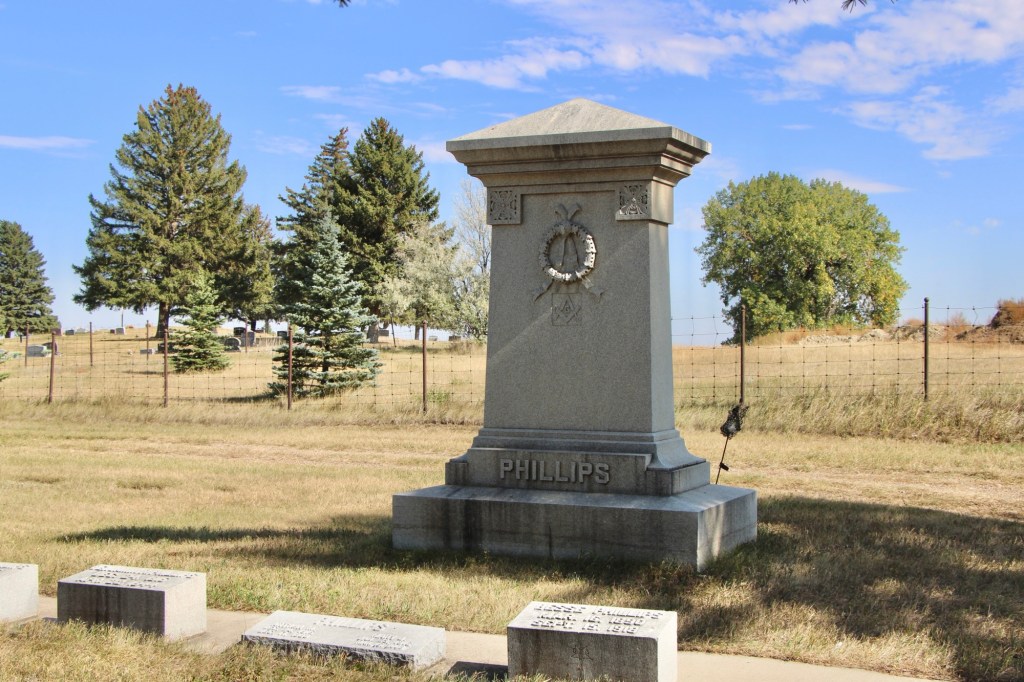
Isolated in a northwest corner is the monumental Phillips family plot that honors the county’s first family. The county was named for Benjamin D. Phillips, a rancher and miner and he is buried at Highland Cemetery in Havre. The Malta marker honors his son Benjamin M. Phillips, who ran his father’s interests in Malta, but especially Ben’s first wife Bessie Keller Phillips, who died in 1918 in a tragic fire at their home. She tried to repair a gas stove, but it exploded and Bessie died from the burns she suffered in the explosion.
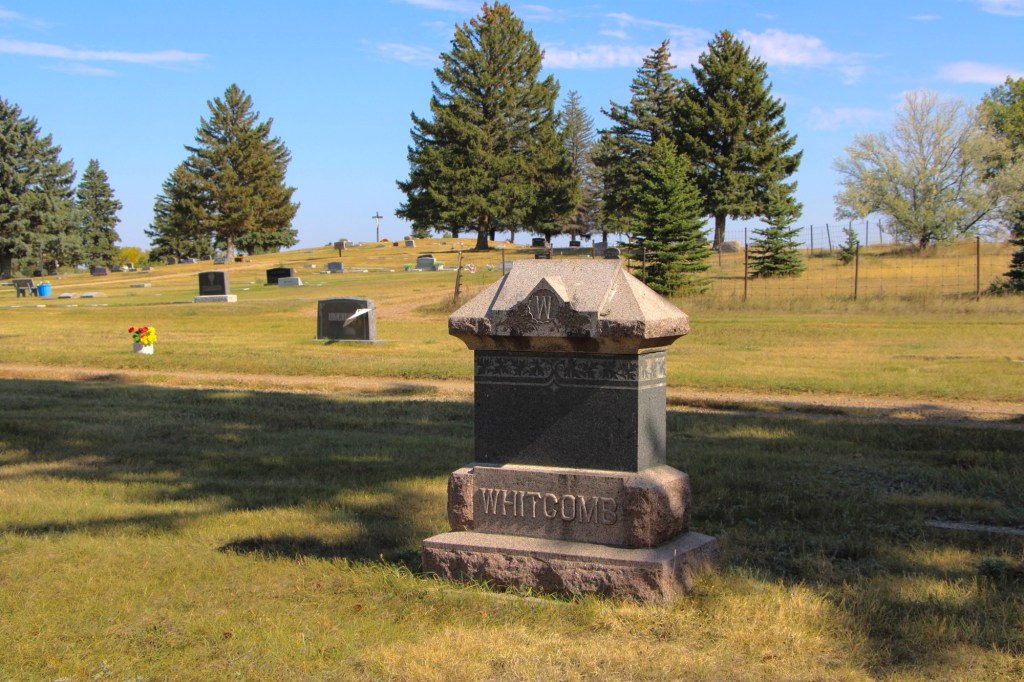
Another noted Victorian style marker is for Timothy Whitcomb who was the brother of Zortman mine owner Charley Whitcomb. Timothy worked the properties at Zortman but contracted liver disease and died in Malta in early 1910. the Whitcomb plot also includes the burial of his wife Katie McGuire Phillips who died in 1937.
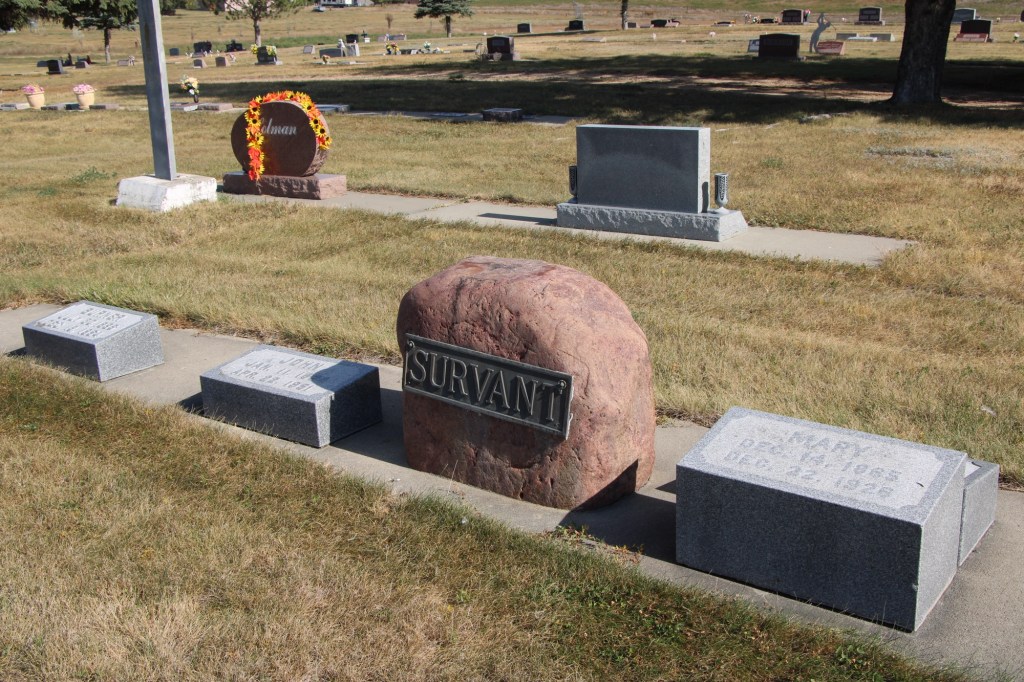
John Survant, a native of Missouri, was a State Senator, first elected in 1910. He also was a prominent businessman in both Malta and Hinsdale. Survant began as a partner of Edwards and McClellan but later bought out their interests. He owned a large ranch along the Milk River Project as well.

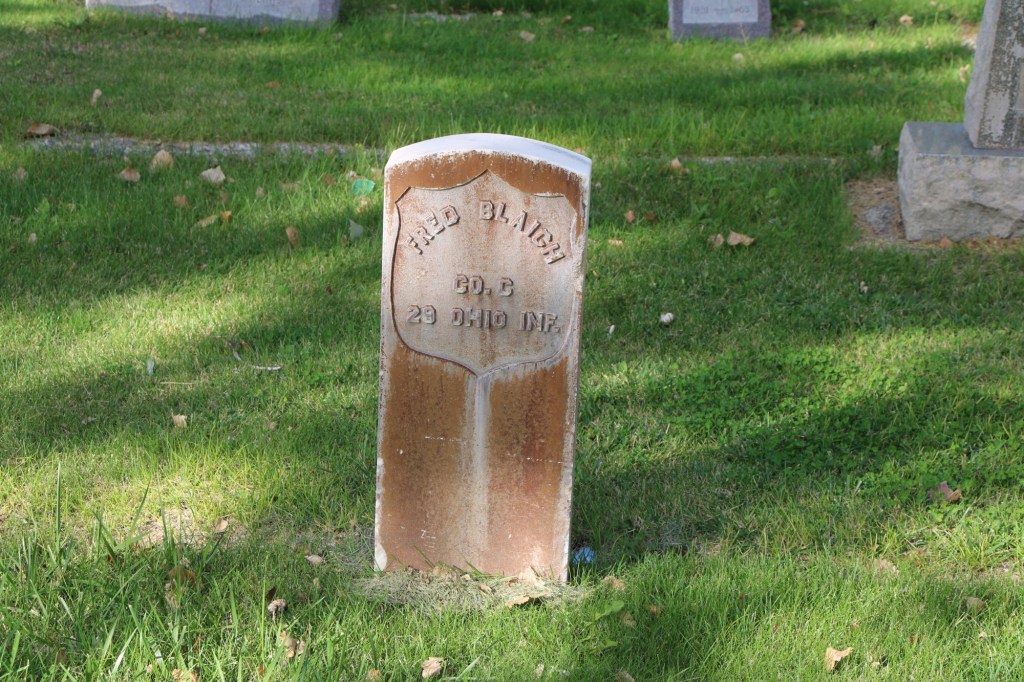
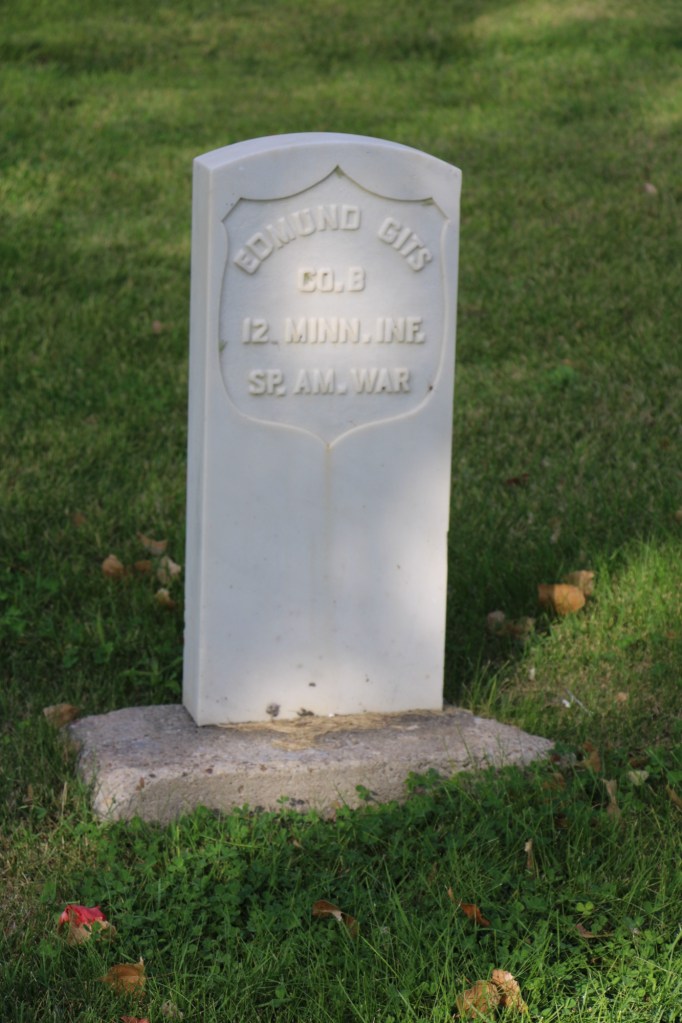
As the Survant markers indicate, at some point in the second half of the 20th century the cemetery association undertook a major renovation of the property, uprooting both gravestones and foot markers and installing them in long concrete rows.
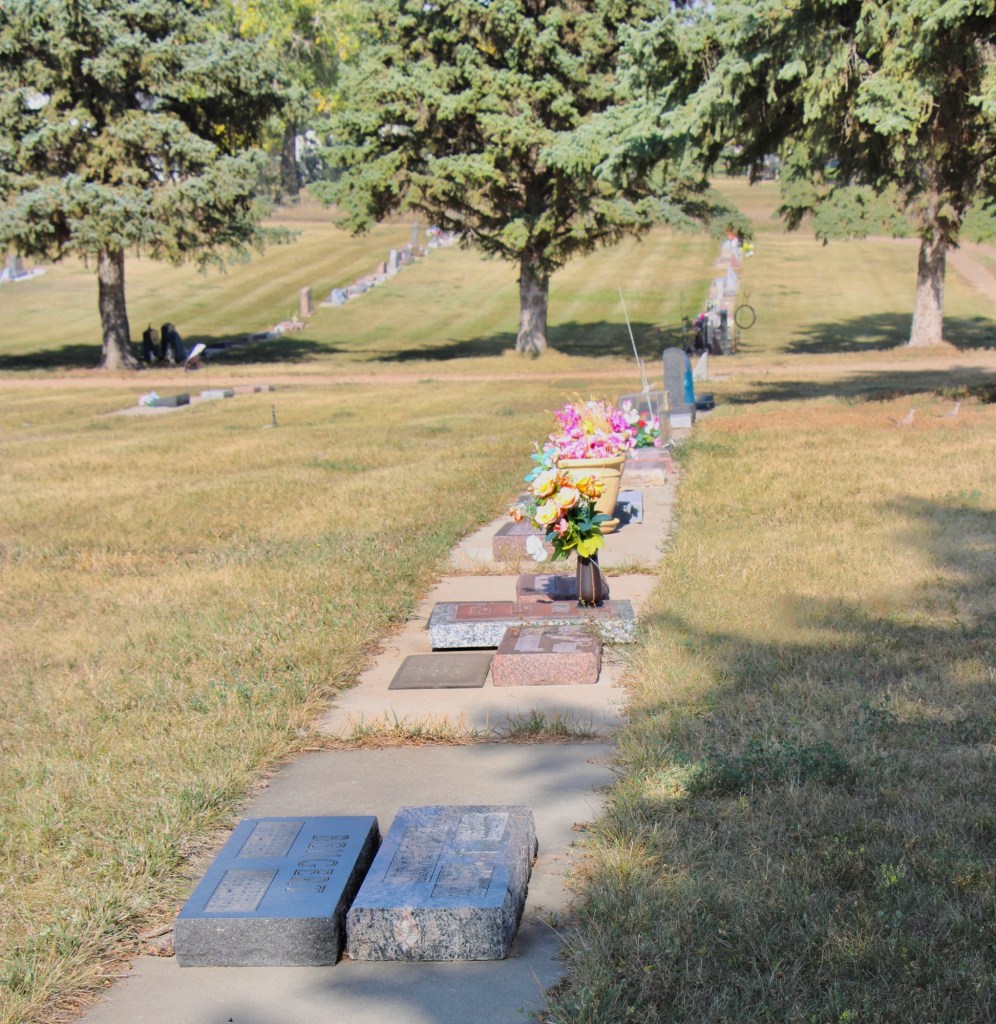
The renovation perhaps made mowing and irrigation more efficient. It certainly gave the cemetery a unique look, one that I have not found in other early northern Montana cemeteries.
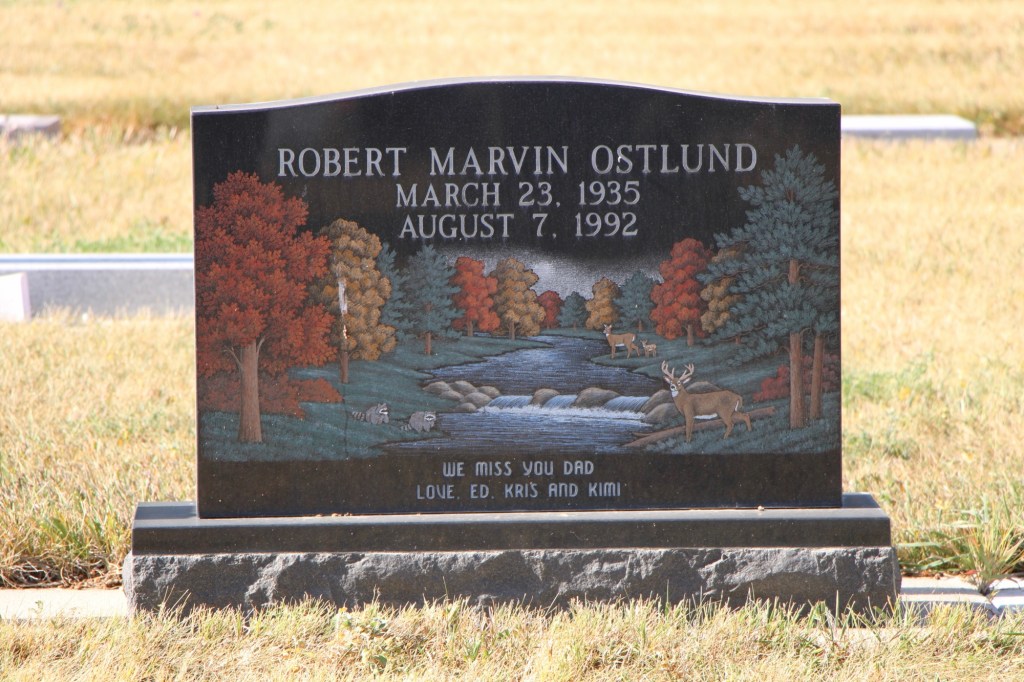
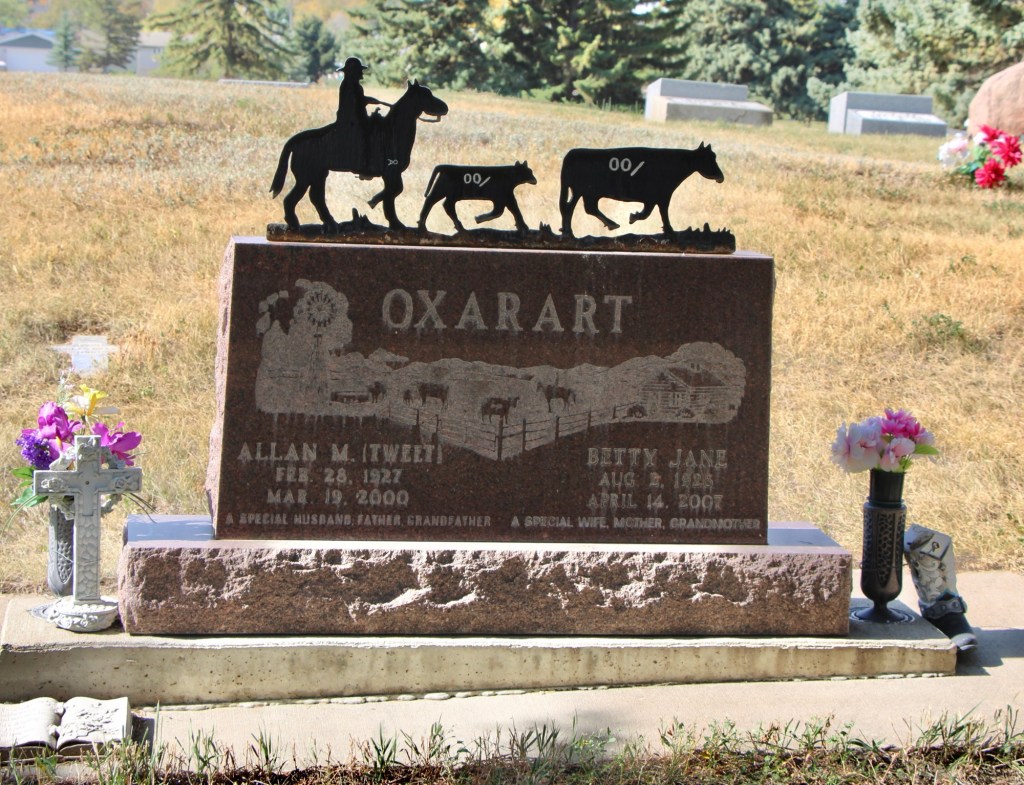
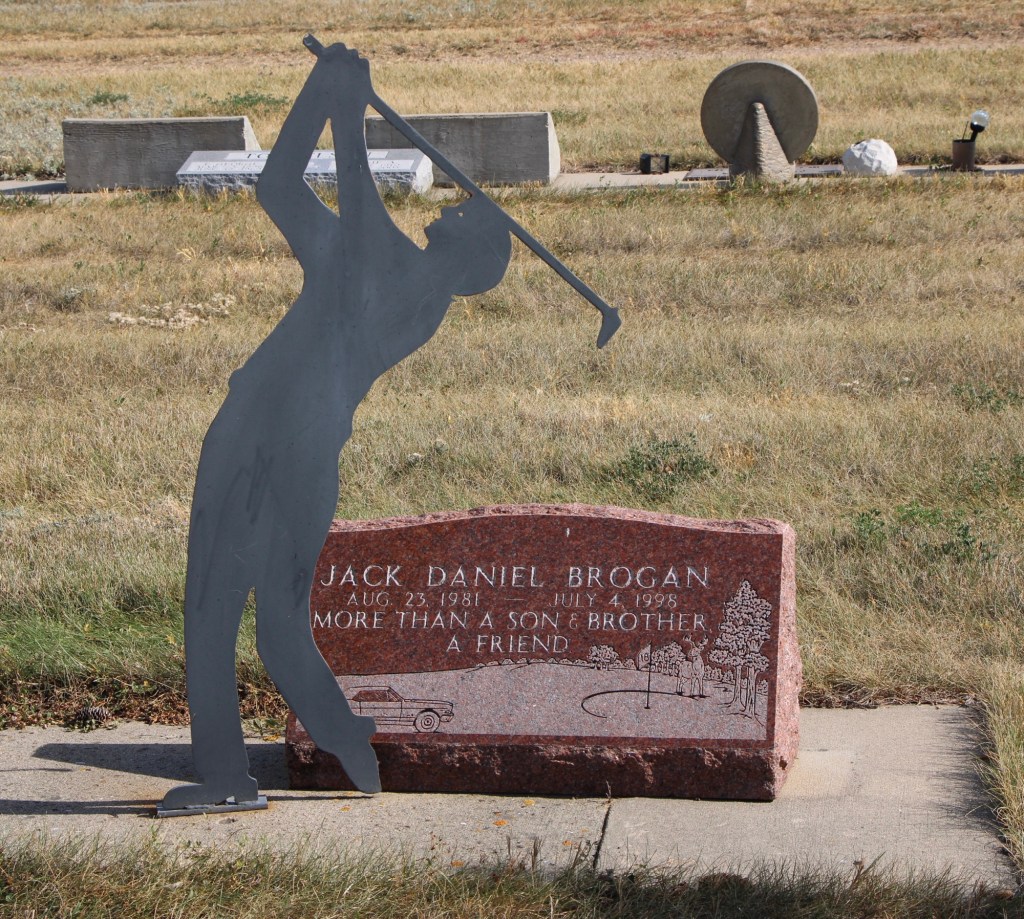
The Malta Cemetery also has several expressive grave markers placed over the last thirty years, such as the colorful river scene of Robert M. Ostlund’s marker (above) and the metal sculptures of a cattleman (Allan Oxarart) and a golfer (Jack D. Brogan), as shown below.
The Malta Cemetery is a fascinating blend of the old and new, and one of the oldest community institutions of the Hi-Line.
Glasgow’s Highland Cemetery

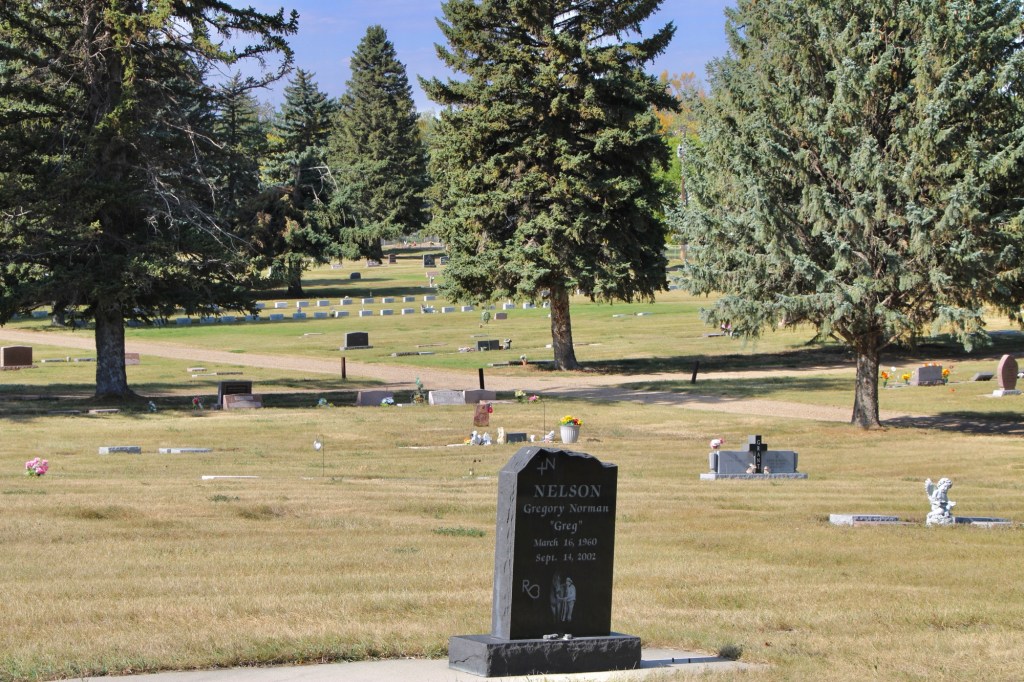
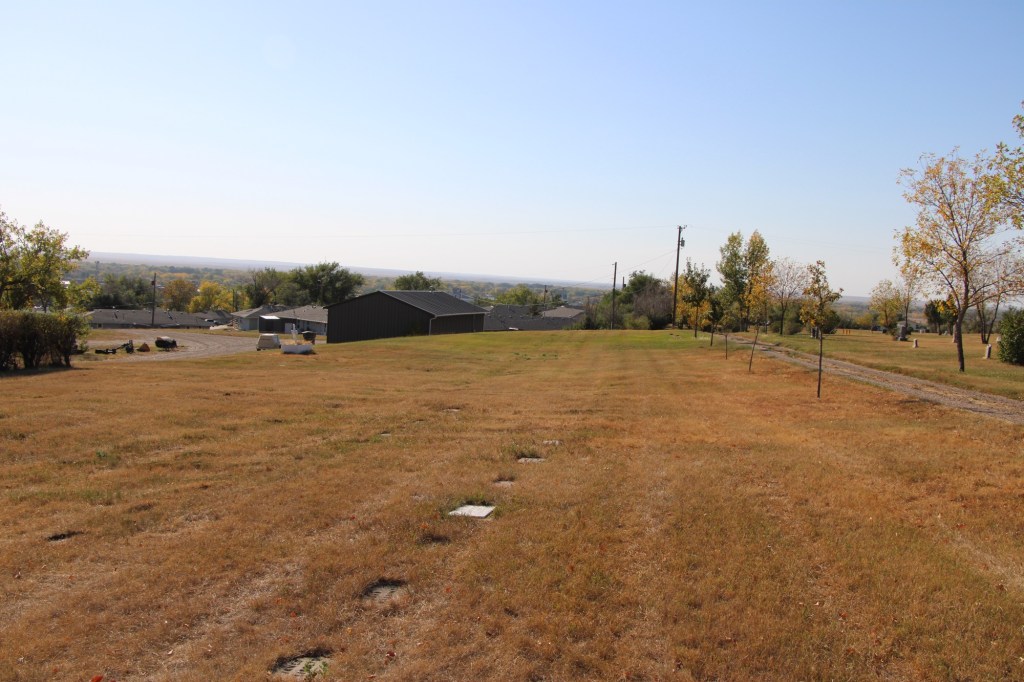
Glasgow, the seat of Valley County, dates to the late 1880s when the Manitoba Railroad (later named the Great Northern Railroad) entered the northeast corner of Montana Territory on its way west to its initial terminus in Great Falls. The first burials at what later became Highland Cemetery on a bluff northeast of the town center date to those years. The images above and below are of that first burial ground, known as Potter’s field, and part of what is designated at the first addition.

The next two images are of the cemetery’s second addition .

The section designated as Glasgow original cemetery also marks the beginning of the Highland Cemetery period. The Glasgow Montana Citizen reported on November 13, 1897: “Owing to the utter lack of system in locating the graves on the hill it was impossible to lay it [a city cemetery] out in lots so the county fathers located a strip of five acres of land adjoining the old burrying [sic] ground and laid it out into lots for future use. The cemetery is named Highland.” A couple of weeks later, the Glasgow Montana Citizen clarified the situation on December 11, 1897: The opinion prevails that the old cemetery is not a portion of the new one. This is wrong. The plat of Highland Cemetery includes a strip sixty feet wide of the old graveyard which takes in all the graves.”

Within the boundaries of the original Highland are several remarkable gravestones, many of which have fascinating stories.

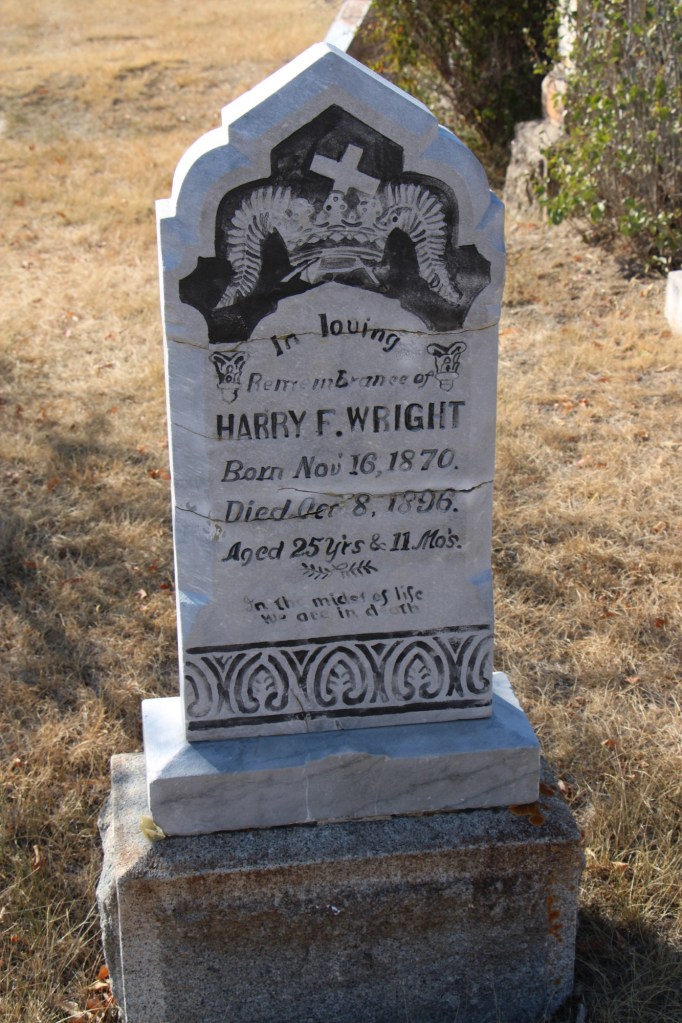
For instance, Harry Wright, according to the Glasgow Record of October 15, 1896, “was one of the best known ranchers around Saco and was a prosperous young man. He had quite a nice little bunch of cattle, a comfortable ranch and was always considered one of the most promising young men of Saco.” He was returning to England for a visit when he took ill in Buffalo, New York. He had kidney surgery which “proved most successful” but before resuming his travel Wright took a “Turkish bath” [a type of steam bath] and “death came a short while afterwards.” His sister lived in Hinsdale and had the body shipped to Glasgow to be buried in the cemetery in 1897.

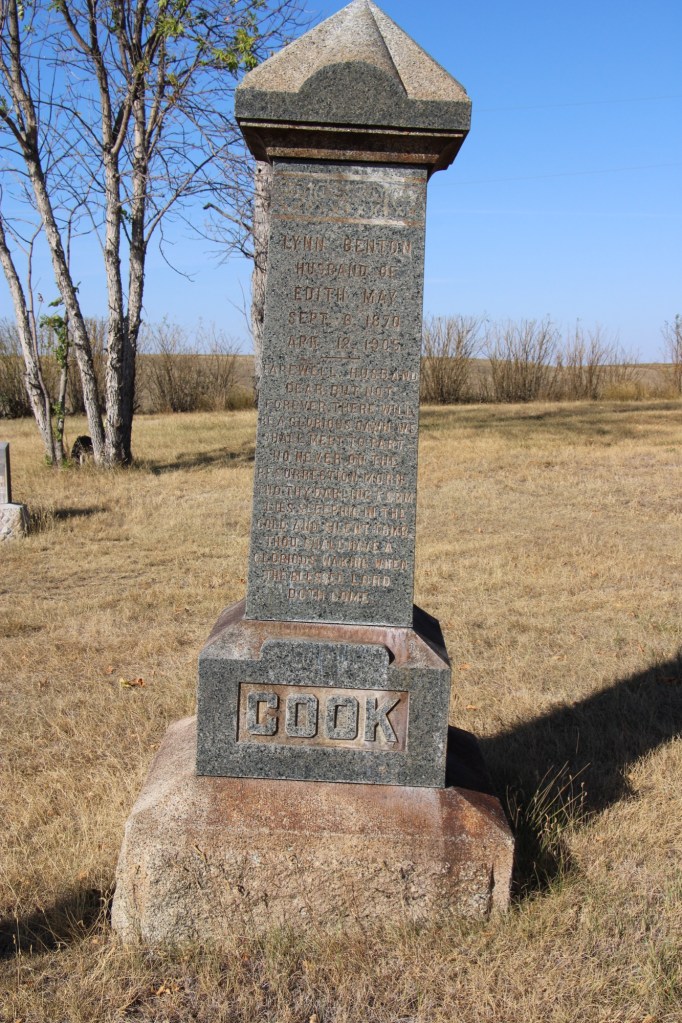
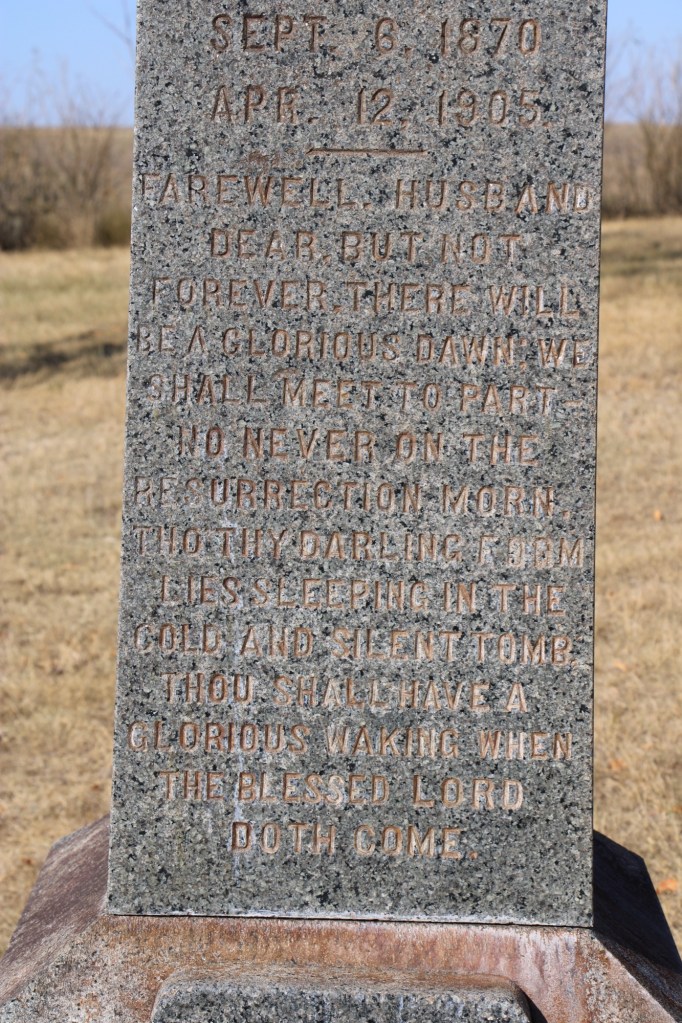
The tall obelisk marker for Lynn Benton Cook, who died at the age of 34 in 1905, has an unusually long dedication, beginning “Farewell Husband” composed by his wife Edith May.

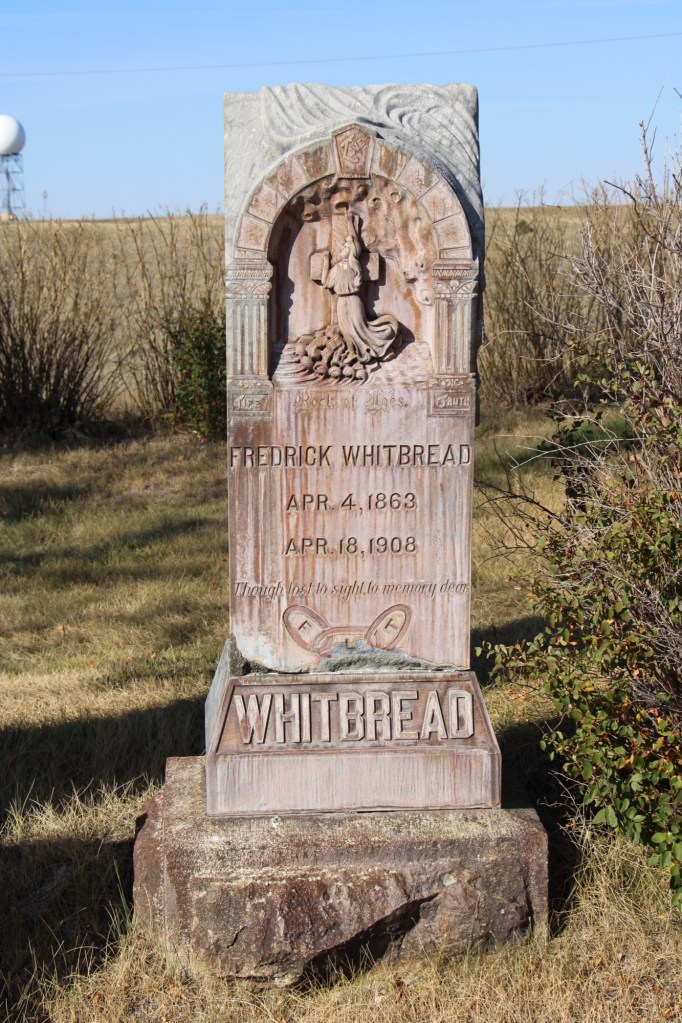
Fredrick Whitbread has a beautiful carved marker with a Richardsonian Romanesque arch framing a depiction of salvation. He was an Englishman who came to the USA in 1881. He worked as a locomotive fireman before becoming a Great Northern engineer. He left the railroad in 1897 and established a cattle ranch near Hinsdale. However in 1907 he reversed course to become the night foreman at the Great Northern’s roundhouse in Glasgow. He was a loyal member of the Odd Fellow lodge and his funeral “was the largest in the history of this city,” according to the Glasgow Montana Citizen of April 25, 1908.

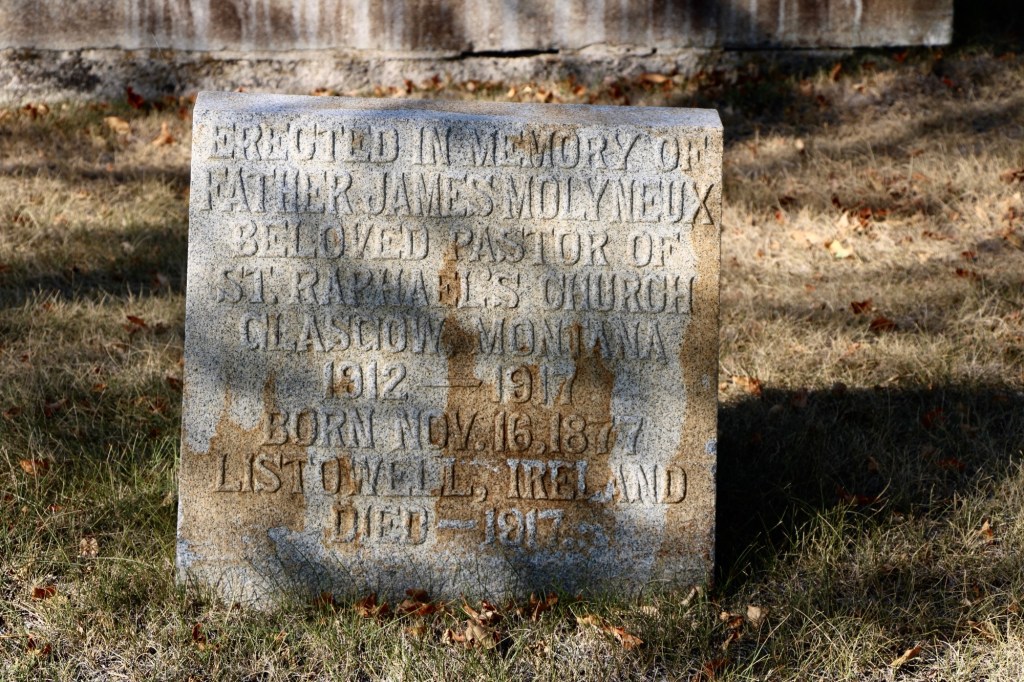
Another prominent citizen was Father James Molyneux, an Irish Catholic priest who pastored St RaphaelCatholic Church in Glasgow from 1912-1917 during the height of the county’s homesteading boom.

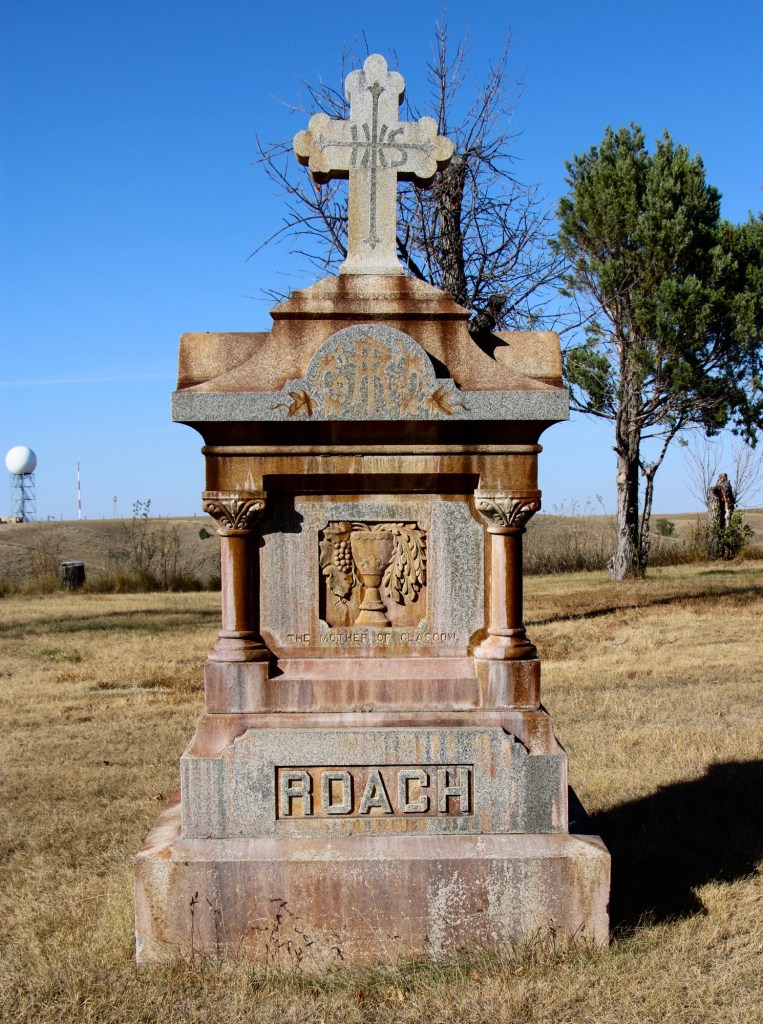
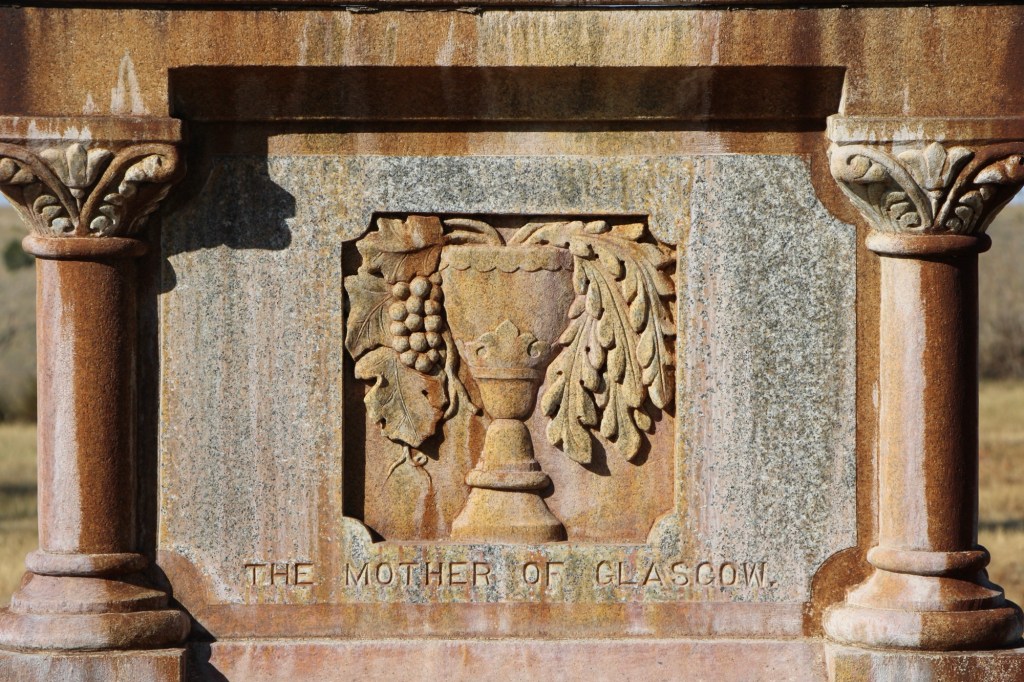
Perhaps the most compelling marker in the early history of Highland Cemetery is that of Mary Fitzpatrick Roach. She first came to Glasgow by 1890 when she worked as a cook at a local hotel before opening her own restaurant. During the railroad strike of 1895, she “became famous all along the Hi Line, by carrying her customers along whether they could pay or not.” (Glasgow Courier, June 5, 1931)

Her empathy and charity earned her the nickname “Mother of Glasgow,” which is carved in her gravestone. After the strike, her business grew and she owned a boarding house, a meat market, a large herd of cattle, and a lodging house. She married Porter Roach in 1907 and died two years later.

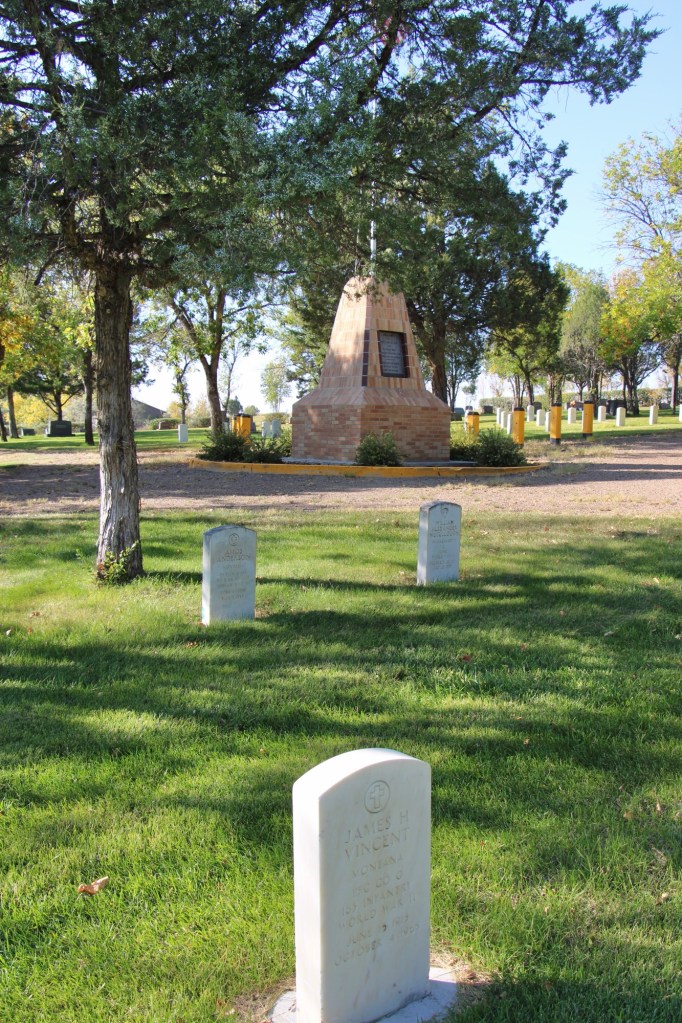
Highland Cemetery, like several other municipal cemeteries along the Hi Line, maintains an impressive Veterans section, with the four section arranged around a central flagpole.

Residents of Valley County are no doubt proud of what Highland Cemetery says about their respect for the past and those who came before. This post only begins to share the impressive grave markers and stories of this public space.

Greenwood Cemetery in Wolf Point

Municipal cemeteries are key public spaces in the Hi-Line towns of Montana. As they mostly date from the 1890s to 1910s, the cemeteries are part of the region’s progressive-era history. New settlers sought to replicate their prior homes—building permanent schools, new churches, town blocks, and homes while also establishing cemeteries.

In 1915 settlers formally incorporated Wolf Point as a municipality. A year later, mortician L.M. Clayton opened a funeral business, which would operate until 2005. On a hill several blocks north of the town’s railroad tracks, Clayton established Greenwood Cemetery by 1917. The name came from his wife, Nora May Greenwood. The Greenwood Cemetery Association was organized to administer the property, and its beautification was ensured by the town’s Woman’s Club when it worked with Wolf Point leaders and the cemetery association to extend water to the place. It became a green oasis of rest and tranquility within the often brown, water starved landscape. It remains an impressive landmark of civic pride today.

There are two ceremonial areas that immediately capture your attention. Two veterans circles have been installed to honor the many from Roosevelt County who have served the nation from World War I forward.

Scattered through the cemetery are other veteran burials, including ones from the Civil War and the Spanish-American War.

Civil War veteran
Spanish-American war veteran

The second ceremonial area is more subtle in appearance but unique in its own way.

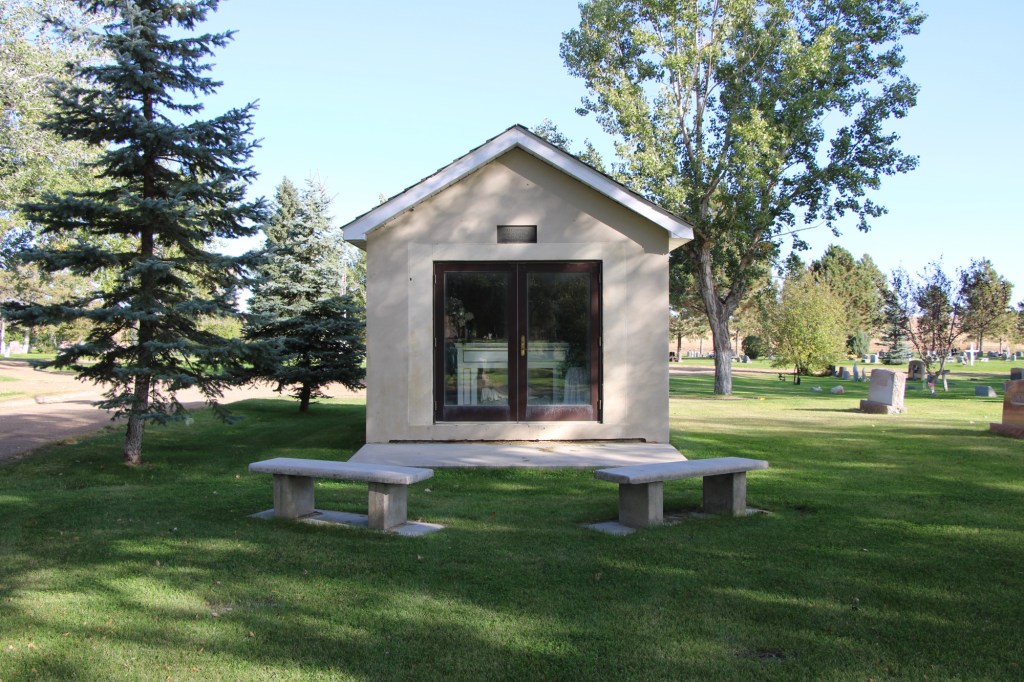
Seehaler Chapel

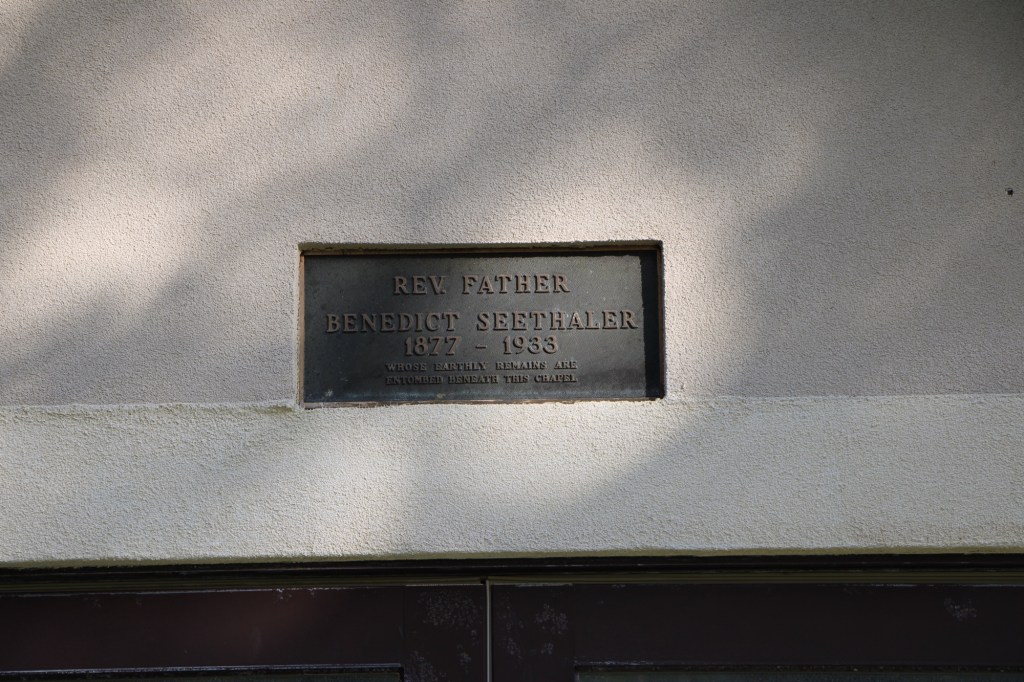
Father Benedict Seehaler established and led Wolf Point’s Immaculate Conception Catholic Church from 1917 to 1931. After his death, parishioners built a tiny memorial chapel in his memory. It was built over his grave.

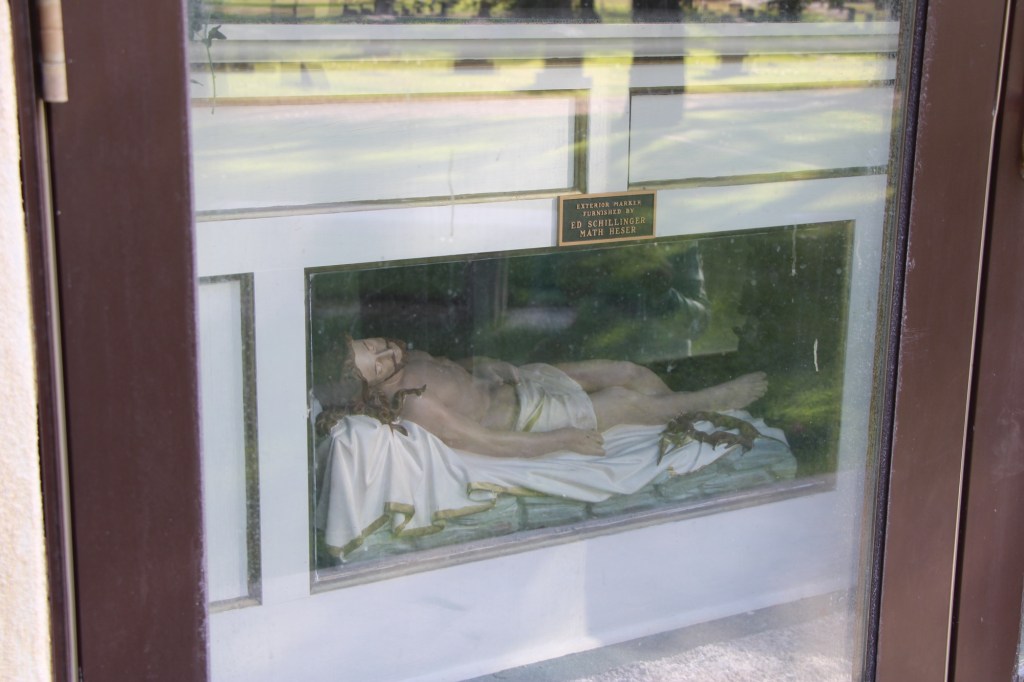
The chapel has an altar and a carved depiction of Christ. The church on Memorial Day holds a memorial mass is held (weather permitting) at the Father Benedict Seehaler Memorial Chapel in Greenwood Cemetery.

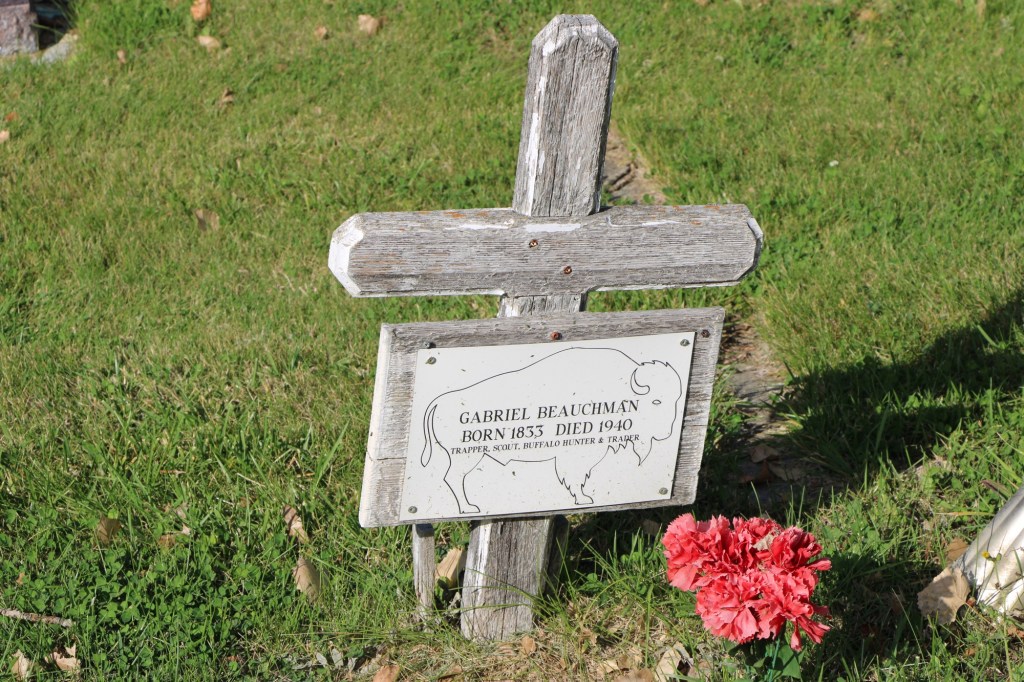
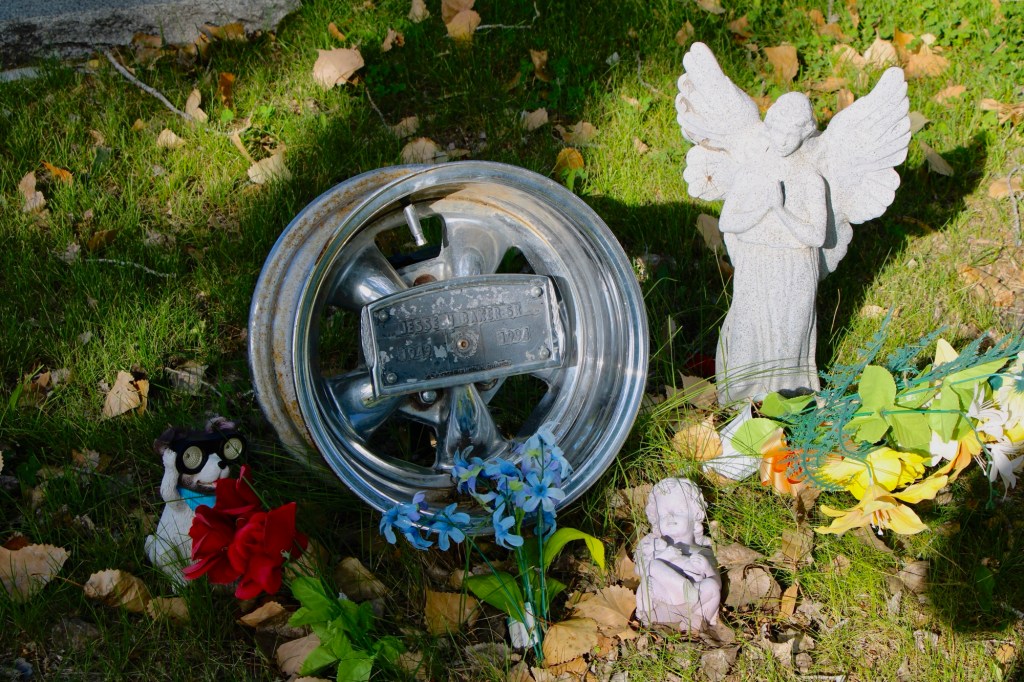
There are many impressive grave markers at the cemetery, whether they are unadorned crosses of early settlers to ones that through the materials used help to tell a story.

Gabriel Beauchman (d. 1940)
Jesse W. Baker, Sr (d. 1994)

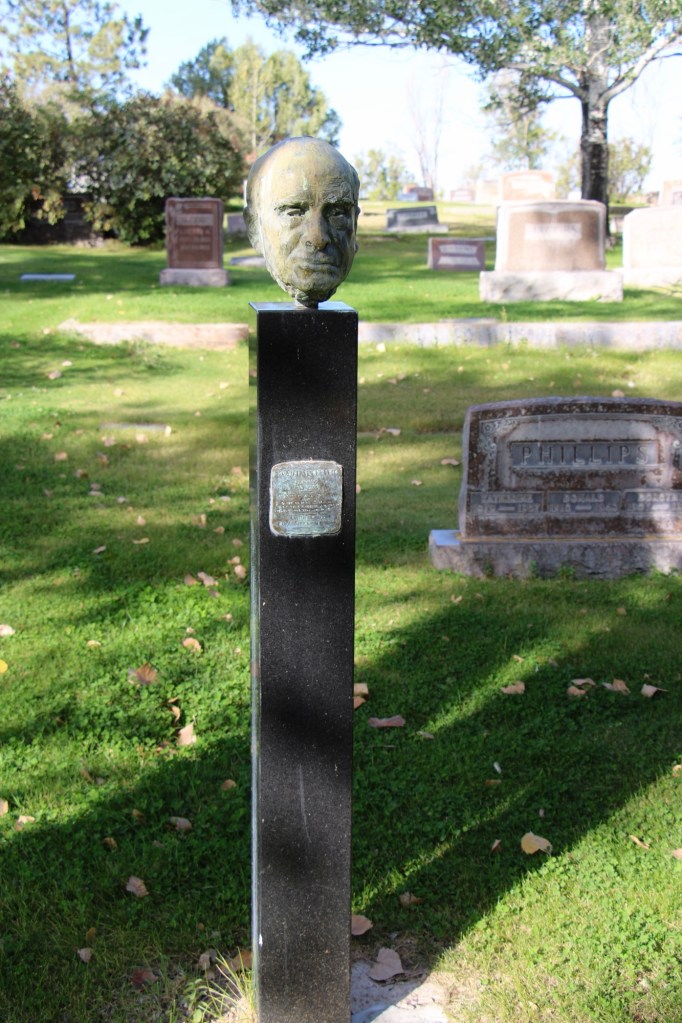
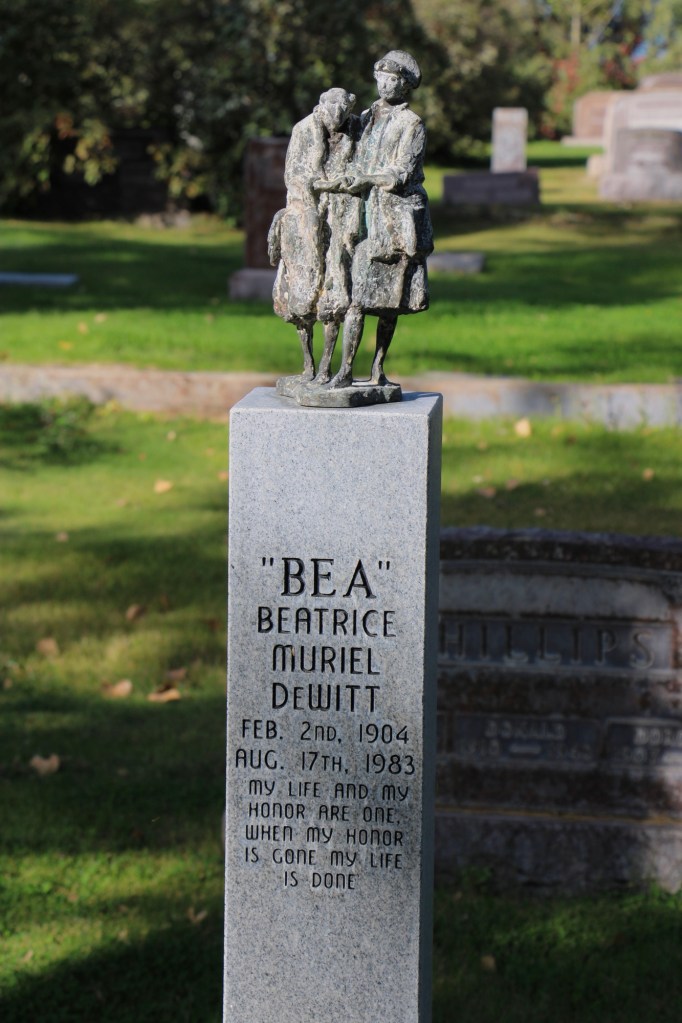
Two of the most unique, however, are pedestal sculptures in memory of a husband and wife, Floyd and Bea Dewitt. Floyd passed away in 1980, Bea followed three years later. Floyd’s sculpture is a likeness while Bea’s pedestal sculpture is more symbolic, with the interpretation left to the visitor, until you learn she was a beloved nurse.

Historian Patty Dean found the DeWitt’s obituaries published in the Billings Gazette, see below, and graciously shared them:

There are many more observations you can make about Greenwood Cemetery but this is enough for the posting (I reserve the right to revisit this place in the future. It is simply one of the most significant municipal cemeteries of northern Montana.

Great Falls’ Historic Jewish Cemetery

Over the past couple of years, I have documented several historic cemeteries in Great Falls. But I had missed one, the city’s Jewish Cemetery, and it too is on Highland Road south of the city, and east of the older Highland Cemetery. It’s a bit difficult to find as there are no signs but a metal entrance “gate” shows you the way.

The Jewish community in Great Falls established the cemetery in 1916, a few years after the establishment of the much larger and nearby Highland Cemetery. The Great Falls Hebrew Association owns the property, which according to tax records has ten acres. A 2003 story in the Great Falls Tribune estimated 20 burials but no number is certain. The majority of the intact grave markers are clustered in a row in the western end of the cemetery.

But other markers are scattered across the top half of the cemetery while other family plots had been damaged before the efforts at restoration over the last ten years.

A low metal, open fence marks a family plot erected for Anna and Abraam [is it a misspelling and should be Abraham as newspaper stories suggest?] Bass, probably installed 1931-1932.

Abraam “Abe” Bass was “well known in sporting circles” and identified as a gambler, according to the Great Falls Tribune of May 10, 1931. He had earlier in 1931 been forced to end a lottery that he operated from the Star cigar store in Great Falls. He left the town looking for opportunities in Nevada but died in an automobile accident about 30 miles from Reno, Nevada. His wife Anna had died earlier.

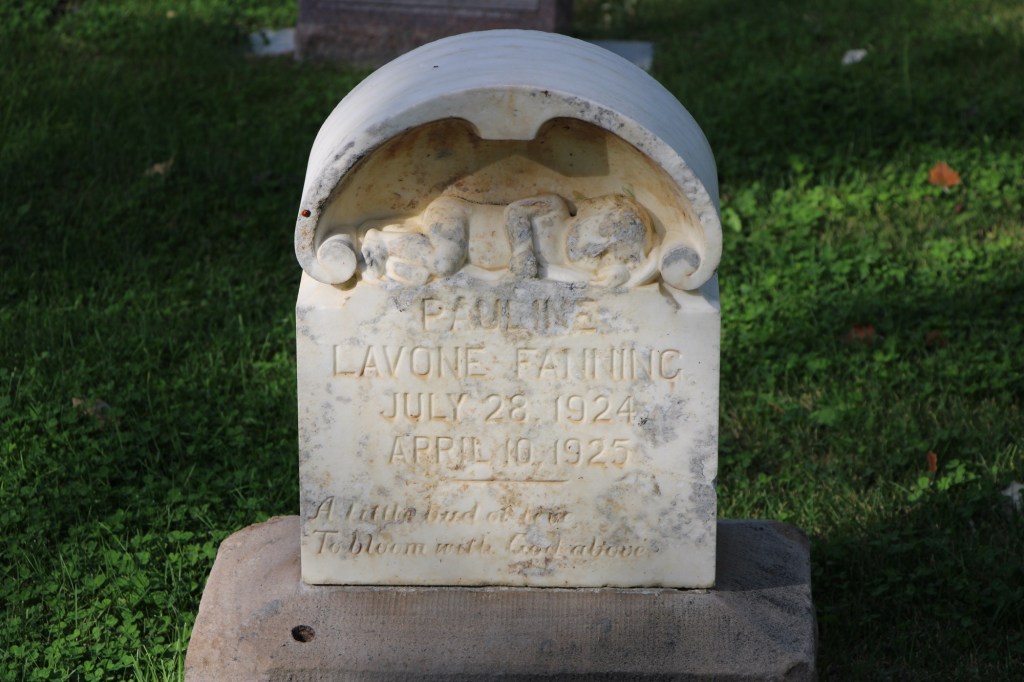
Years of neglect mean that some markers have been damaged. Or perhaps moved, as in the case of the Baby Grossman marker of 1927.

The year 1940 appears to mark the end of the cemetery’s first generation of burials. Max Gold, a retired carpenter, was born in Russia. He lived in Cut Bank for 15 years but as his death in late 1949, the family buried him in Great Falls.

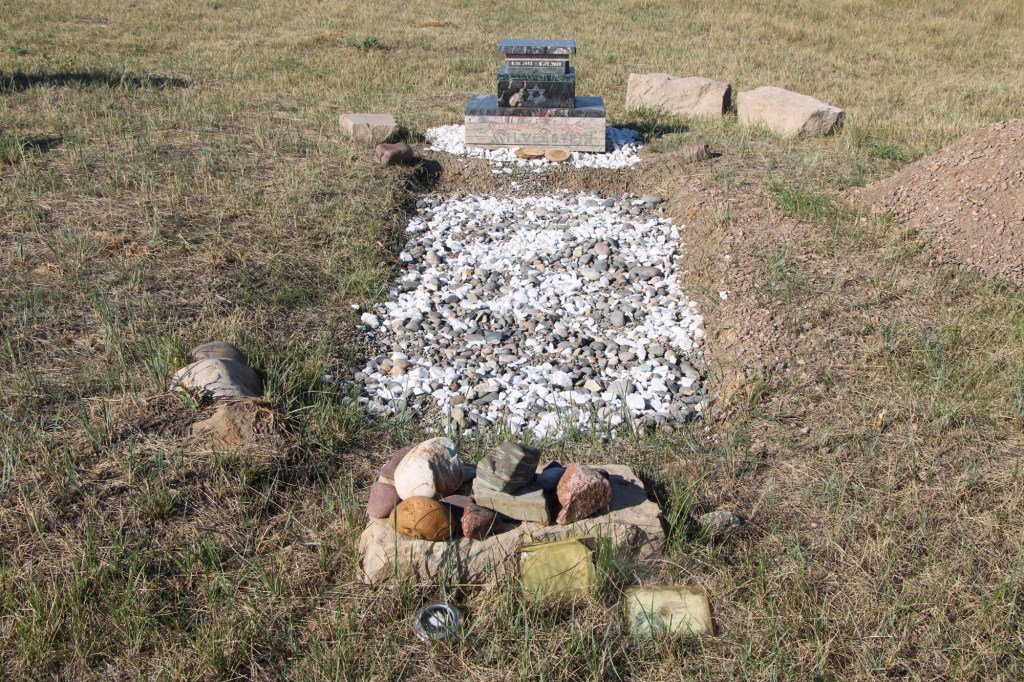
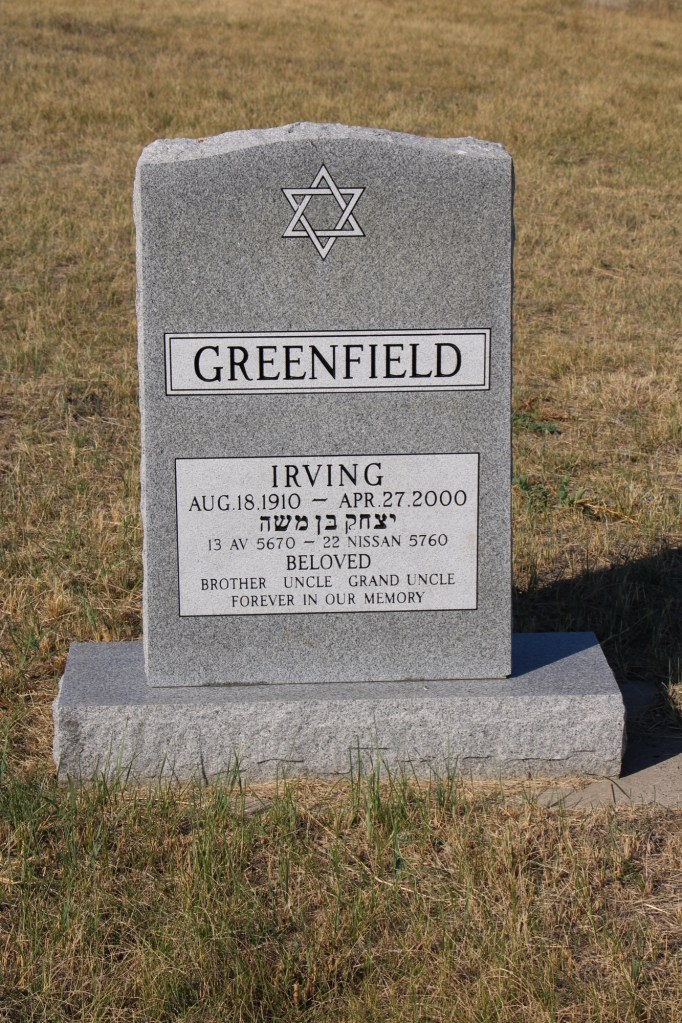
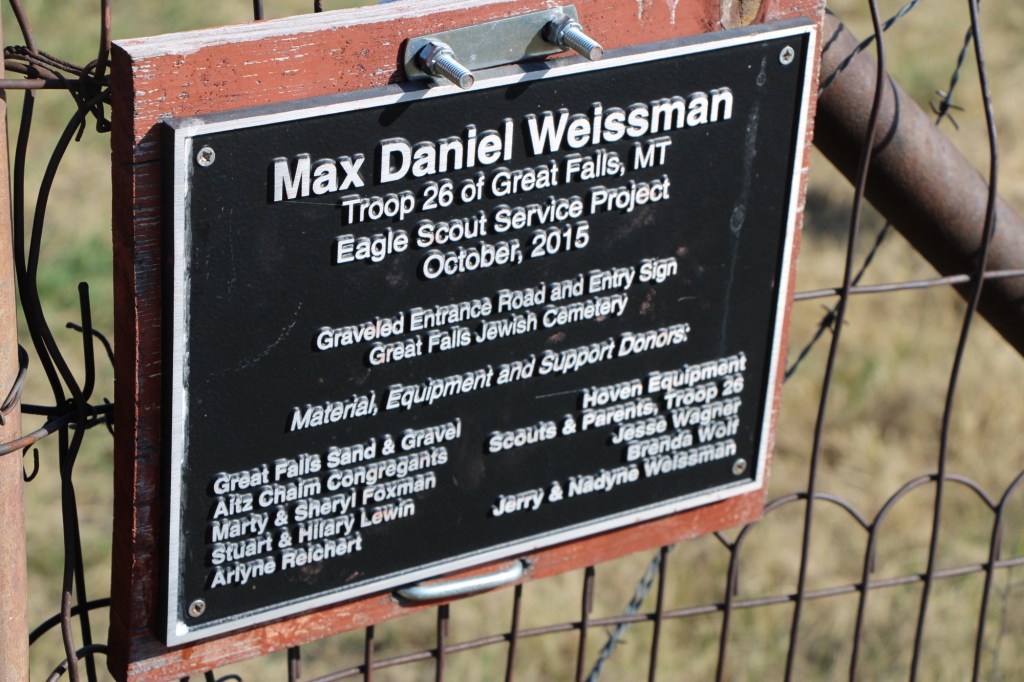
In the 21st century families again began to bury their dead here, with Irving Greenfield in 2000 and Allan Bruce Silverstein in 2012. Perhaps those burials encouraged the Association to begin regular oversight of the property, following its restoration by Max Daniel Weissman as his Eagle Scout service project in 2015.

The Great Falls Jewish Cemetery is an important but once forgotten historic place in Cascade County. We can hope that the good efforts of maintenance continue and that more research is directed to the histories of those buried there.

Montana in Black and White

In doing the photography for the 1984-85 survey for the State Historic Preservation Office, everything was in Black and White, both for the stability of black and white negatives but also for the cost—color slides were expensive. Thirty plus years later, it’s totally different. Everything is digital and only a few places will even process black and white film.

But I have continued to take a few rolls of black and white film on my recent work in Montana. Here are a few images to share.

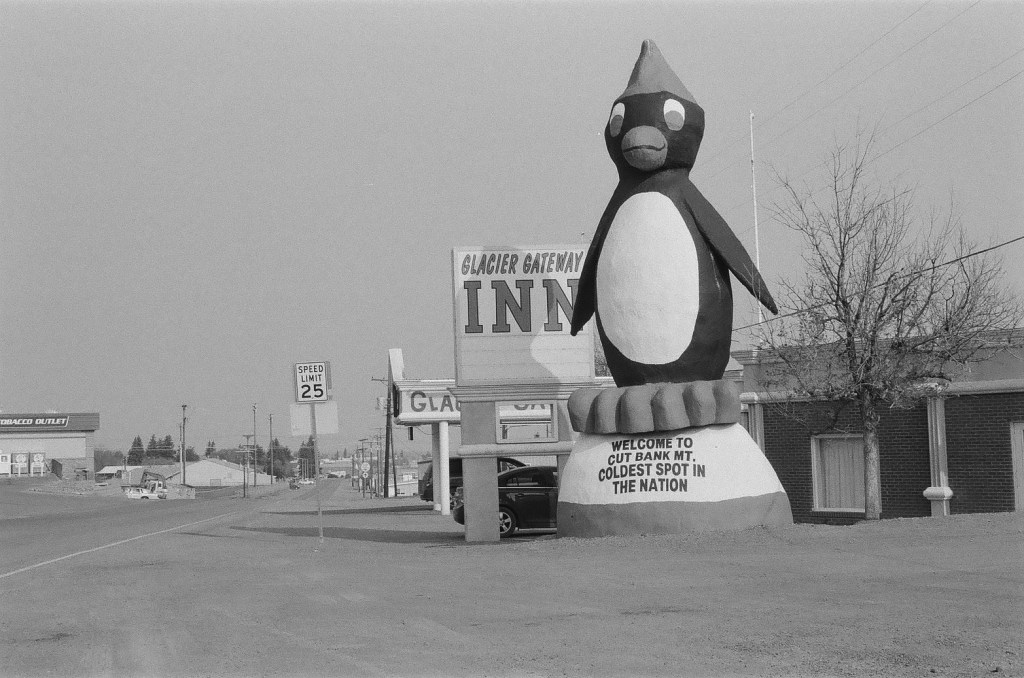
The older US 2 route into Cut Bank features this wonderful piece of roadside sculpture. And back in 1984 the Glacier Gateway Inn was the place to stay.
Frank Little Grave in Butte. The starkness and shadows of black and white film is perfect for cemetery work, as this famous grave at Mountain View Cemetery shows.
The same is true for Anaconda’s historic cemetery. As I have said in earlier posts, this place is one of the state’s most compelling places. I can explore there all day long.
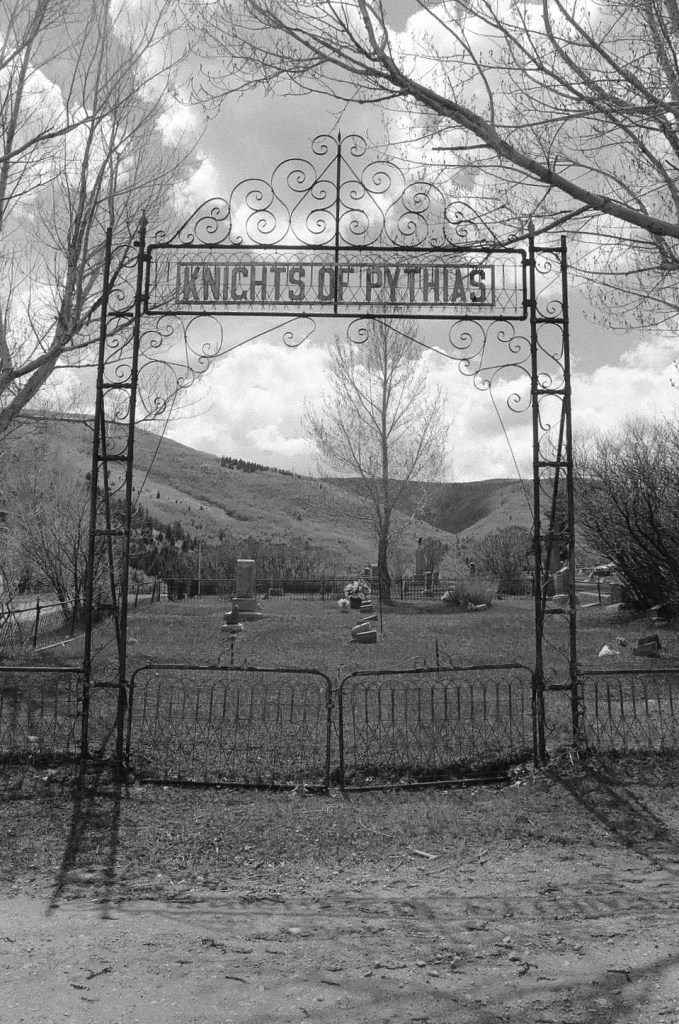
Love the decorative iron work on the gate and entrance to the Knights section at Anaconda
Ghost towns from either the mining or homestead eras always leave buildings that just seem to say more in black and white. Here we are at Barber on US Highway 12 in central Montana.
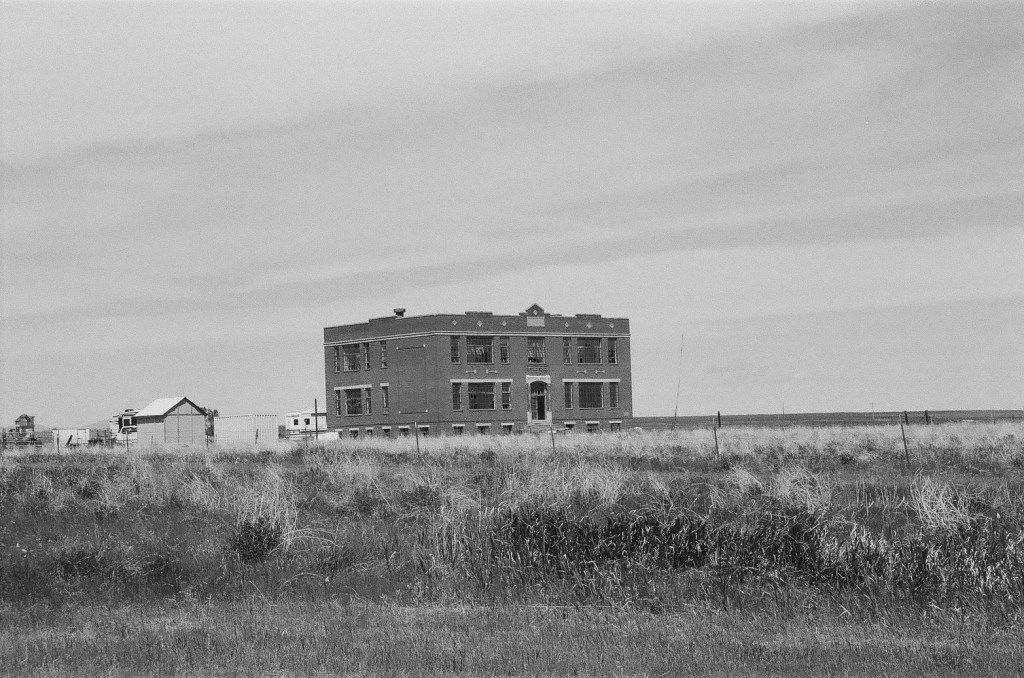
Abandoned schools that become lonely landmarks of hopes crushed: Buffalo, Montana

New United Mine Workers of America Cemetery at Klein

Entrance gate on US Highway 87.

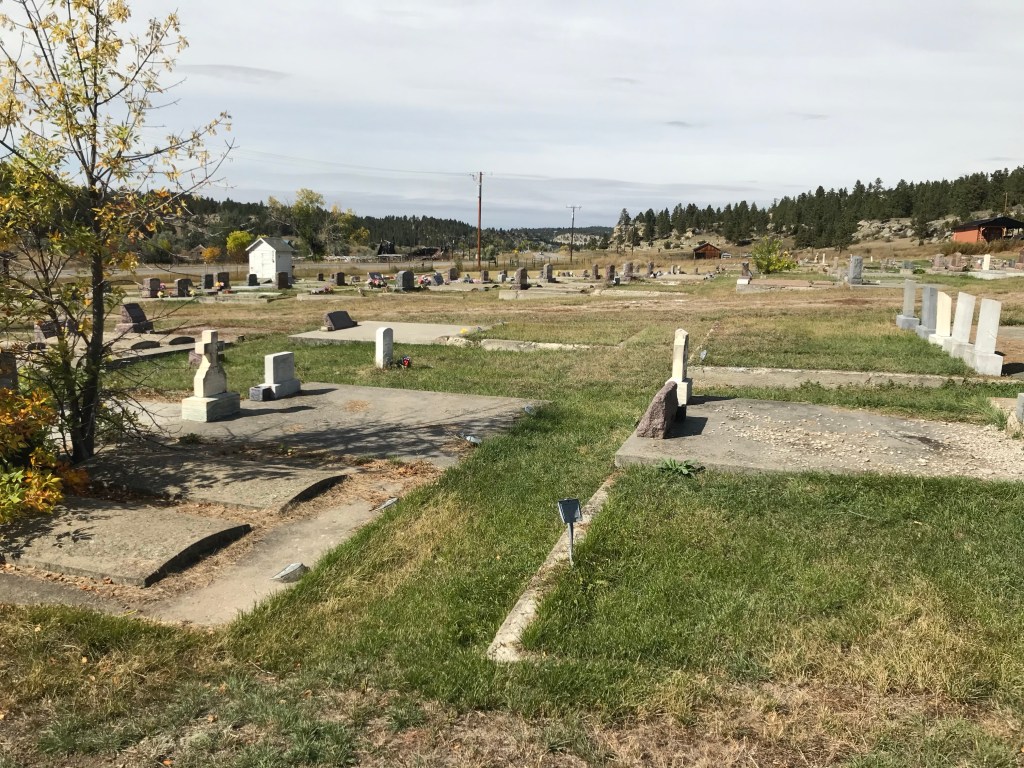
The “new” UMW cemetery refers to the southern section of the cemetery, nestled in the bluffs of the Bull Mountains outside of the historic coal mining town of Klein. The UMW local 2866 operated from 1919 to 1973. The northern section contains early burials of members.

The “new cemetery” has numerous burials from the late 1920s, 1930s, and 1940s but most of the internments date to the second half of the 20th century.

The cemetery faces west (US Highway 87) and is centered on a long driveway that ends at a flagpole. Then the rows of graves on either side are roughly equal in size, giving the “new” cemetery a sense of symmetry not apparent in the earlier north section.

Looking northwest from the center driveway
Looking south from the center driveway
Looking southwest from the center driveway.

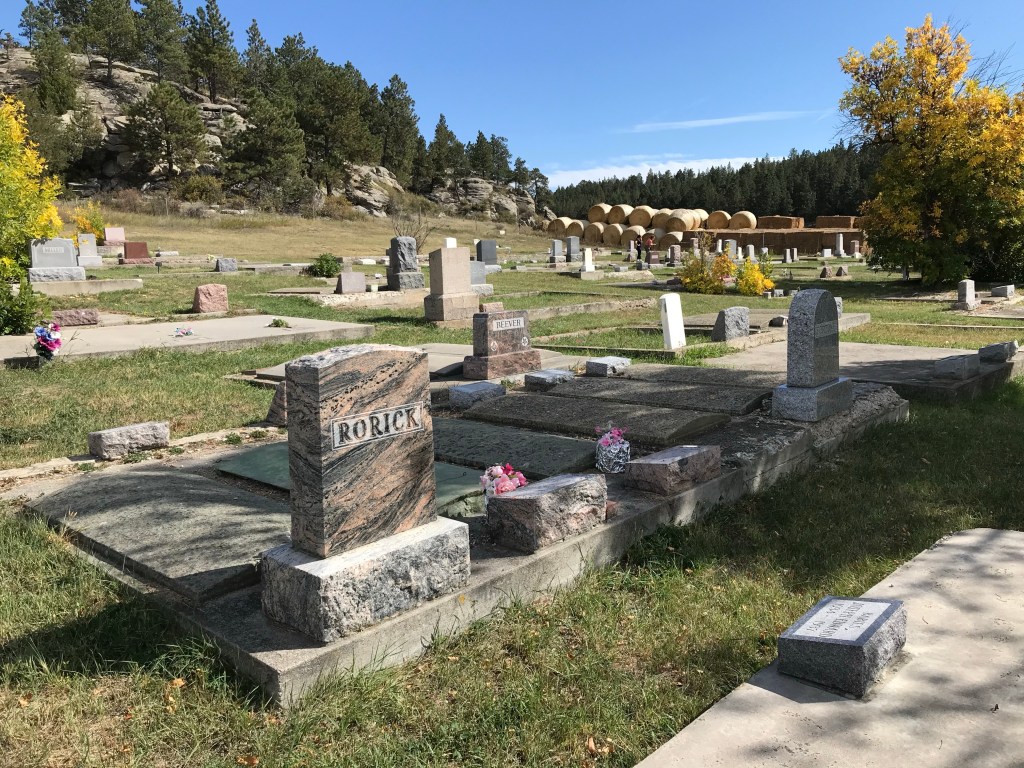
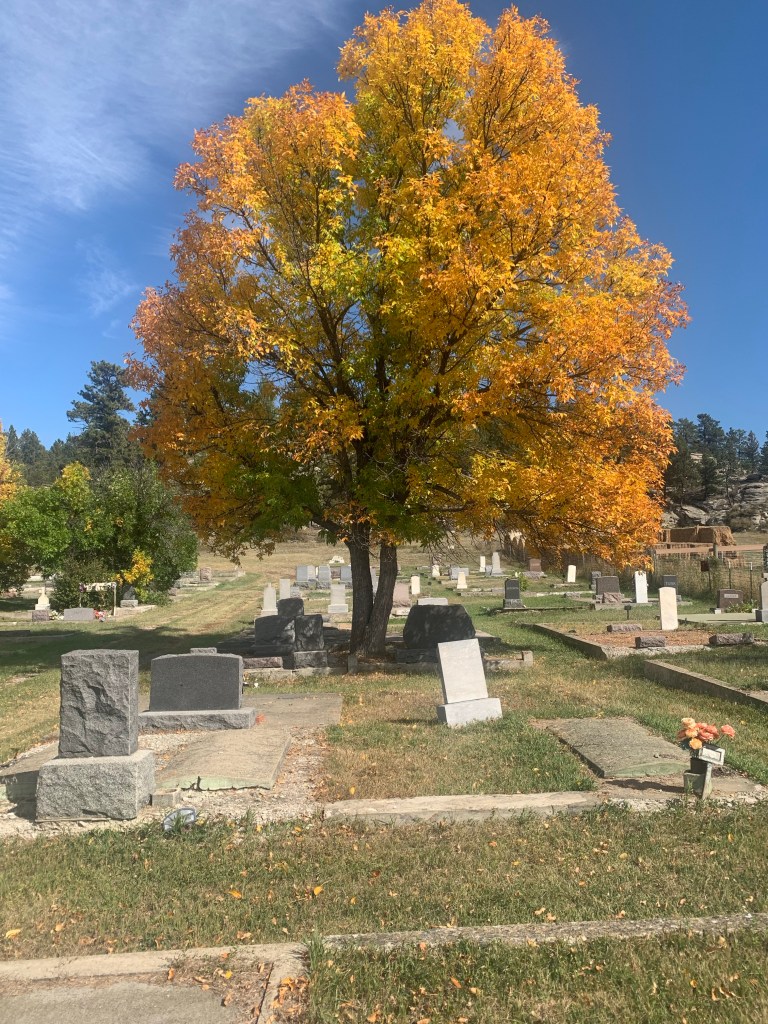
The cemetery’s rocky bluff setting, combined with colorful fall trees, is beautiful in September and October. It’s use of foliage and shade is another difference with the northern section of the UMW Cemetery.

South section facing east
South section facing southeast

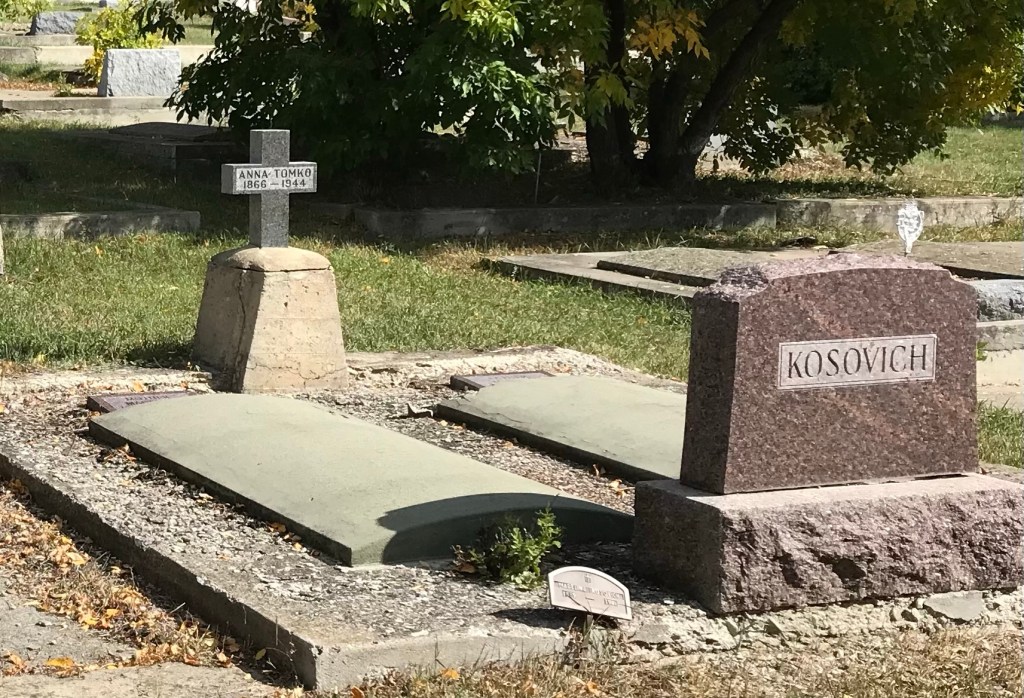
There are several interesting grave markers. Anna Tomko (d. 1944) was born in Croatia in 1866. She arrived in the United States in 1901 and was leaving in Roundup by 1920 where she became known as Annie Tomko.

The beautiful cut and polished stone marker for Carl Eldon Rorick dates to 1941. Rorick was a native of Klein and only 17 years old at the time of his death.

The large grave marker for Mary (b. 1872) and David Murphy (b. 1870) dates to 1942; she died in January while he died in December.

David was a native of Scotland, who was working as a coal miner at Klein at least by 1920. He married his wife Maggie (Margaret) McCann Murphy in about 1892.

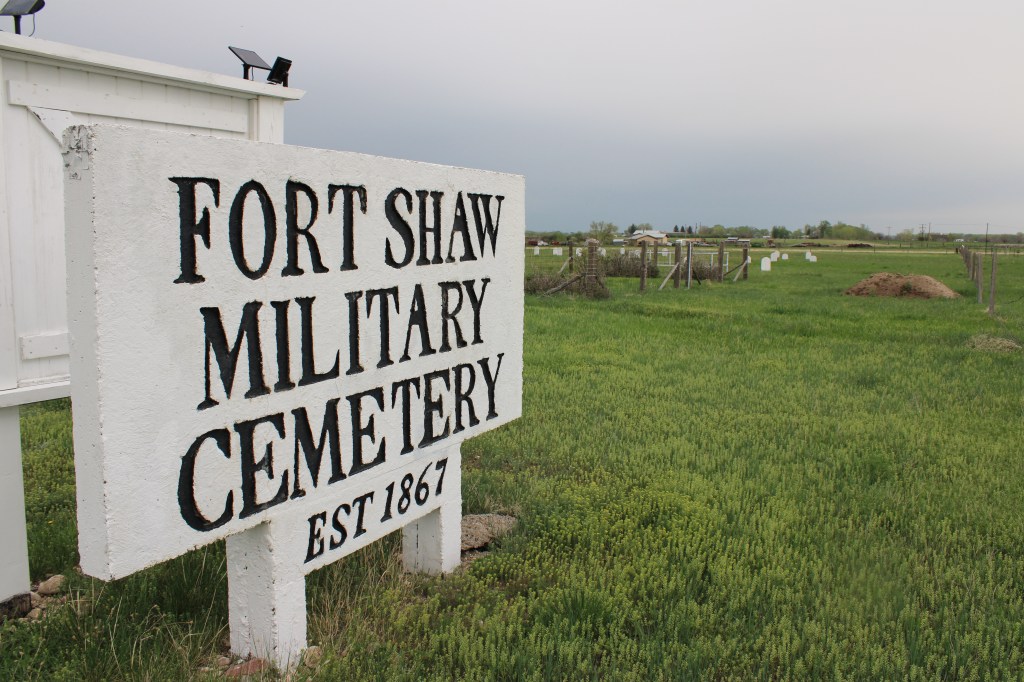
Fort Shaw Military Cemetery: once forgotten, now it can’t be ignored

For years I have emphasized the national significance of Fort Shaw, Montana, often to deaf ears it seems. But just stop and think: at this one place in the valley you have centuries of Native American history, then immediately after the Civil War comes the federal presence with the establishment of Fort Shaw in 1867. The last regiment serving at Fort Shaw were four companies from the 25th U.S. Infantry, an all African American unit, with the troops often called Buffalo soldiers. Once the military left the post in 1891 another federal program through the Interior department created the Indian Industrial Boarding School that operated 1892-1910. By that time the U.S. Reclamation Service already had launched the massive Sun River Irrigation Project, which created the infrastructure that shapes the valley today, designating the Fort Shaw district as its initial project. So much change in less than 50 years. Whew!

Sun River between Simms and Fort Shaw

Telling this huge story has largely been left to the Sun River Historical Society. I first met the group when I did a public meeting at Fort Shaw during the 1984 state historic preservation planning process. The society’s vision then was huge—but over two generations the members have met, even exceeded, that vision. In this post I want to highlight the efforts of the society and Blackfeet Nation in restoring the Fort Shaw Military Cemetery.

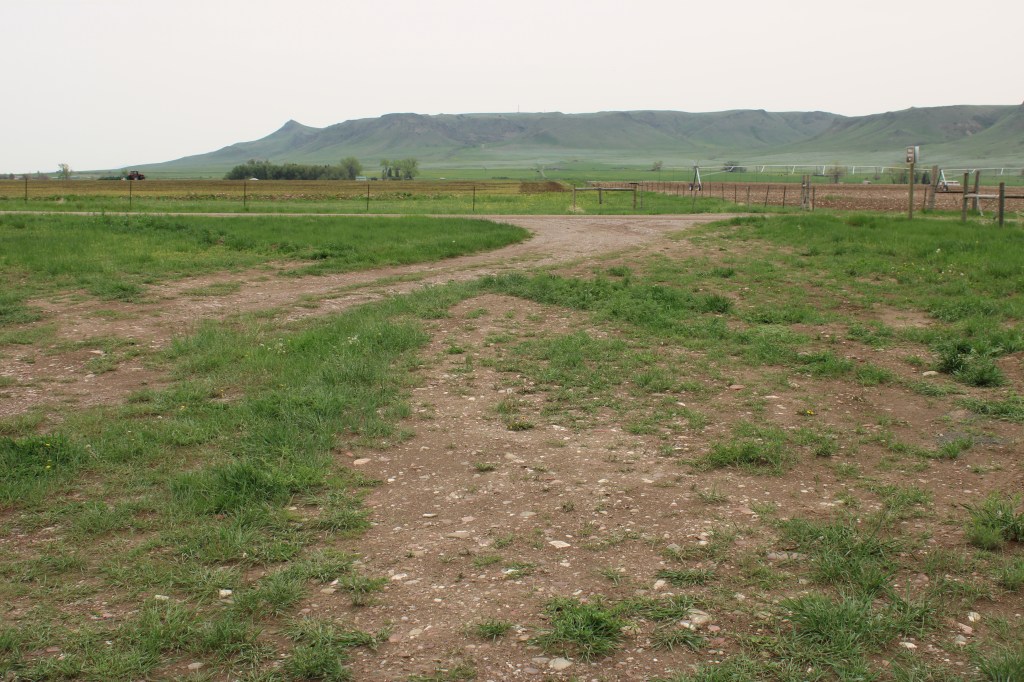
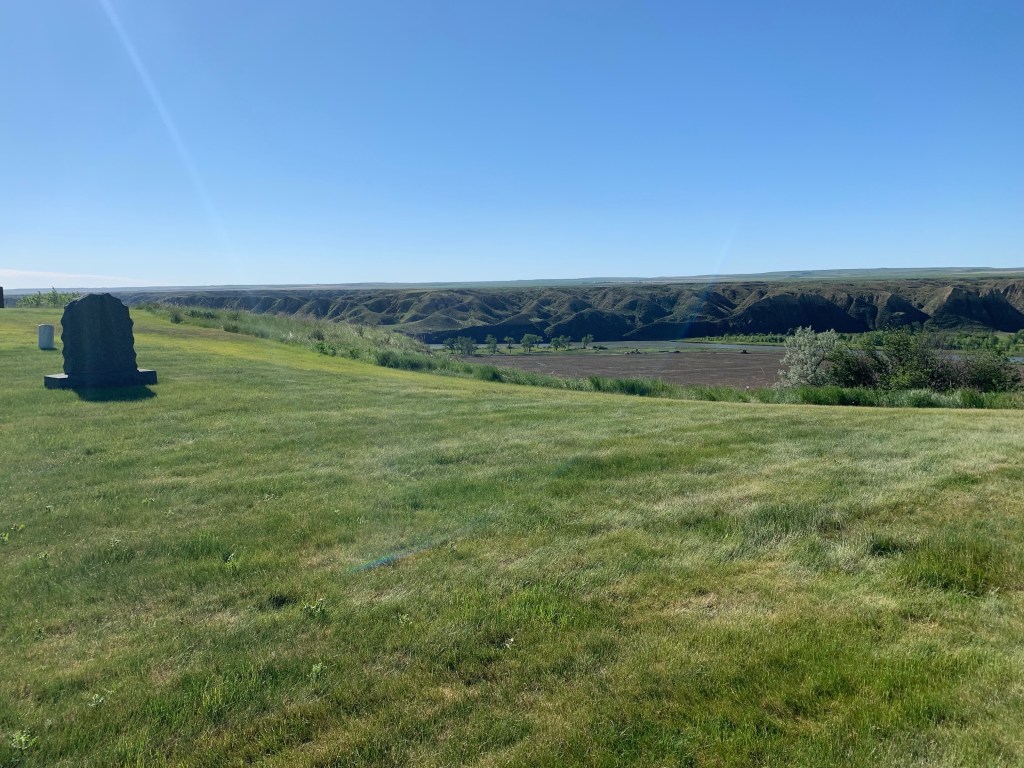
The cemetery is on a graveled county road on land managed by the federal Bureau of Land Management.

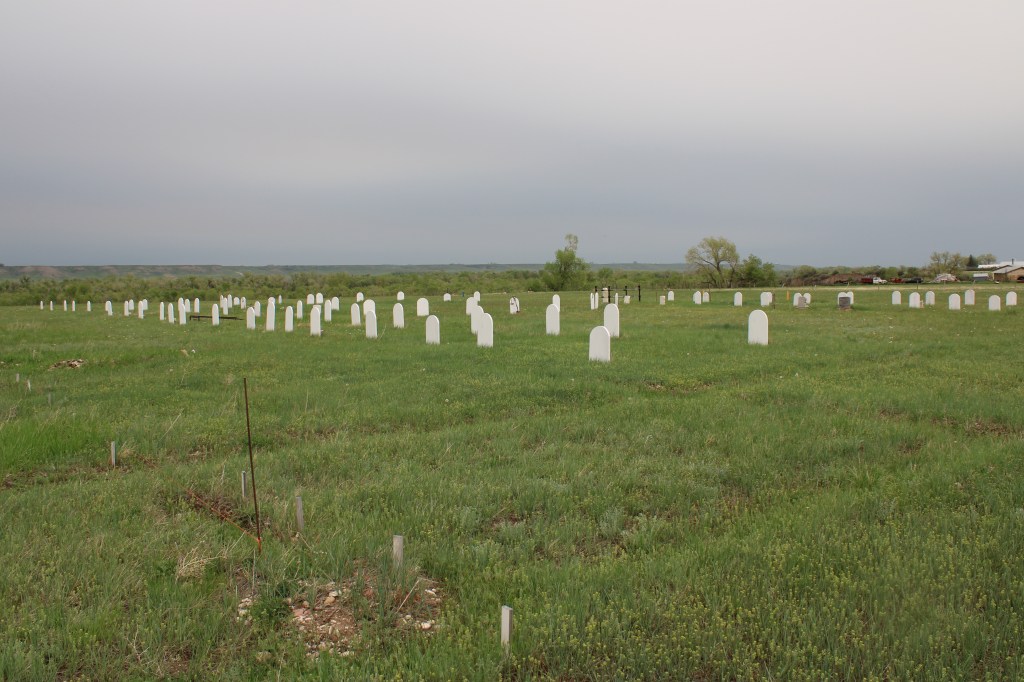
At the time of the historic preservation survey the cemetery was known but not well maintained. There were some extant grave markers but many more grave depressions that marked lost tombstones or removed graves.

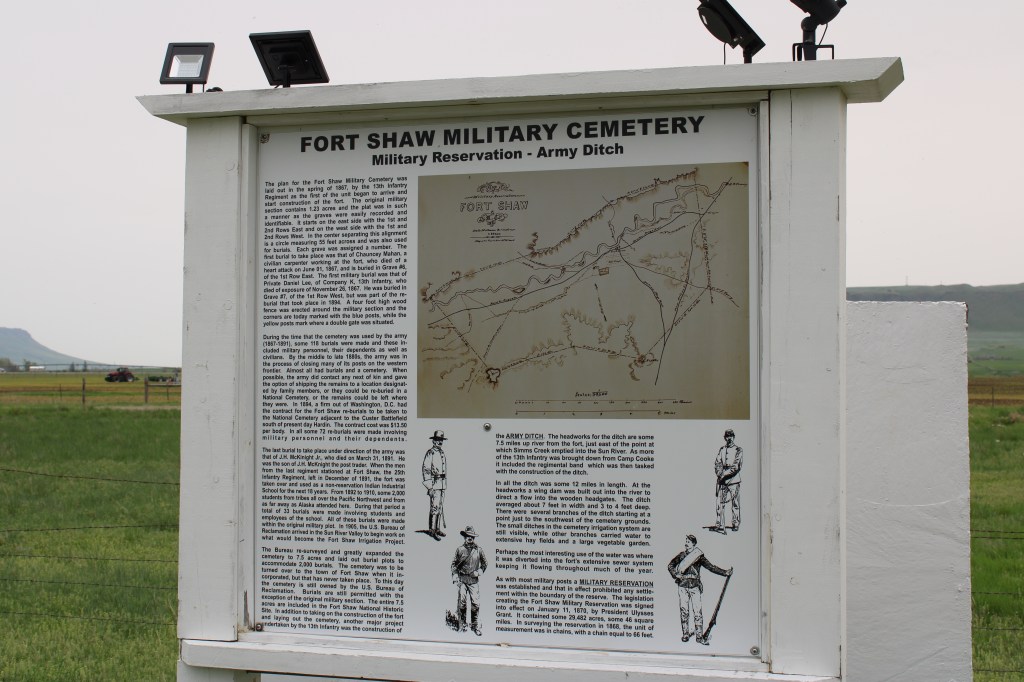
The U.S. Army, after closing the fort, had decided to remove the soldiers from the military cemetery. In 1894 that process began and 74 soldiers, fort employees, and family members were moved from Fort Shaw to either family cemeteries or to Custer Military Cemetery at the Little Big Horn Battlefield.

Seven soldiers remained buried at Fort Shaw; eventually the standardized military tombstone marked their graves.

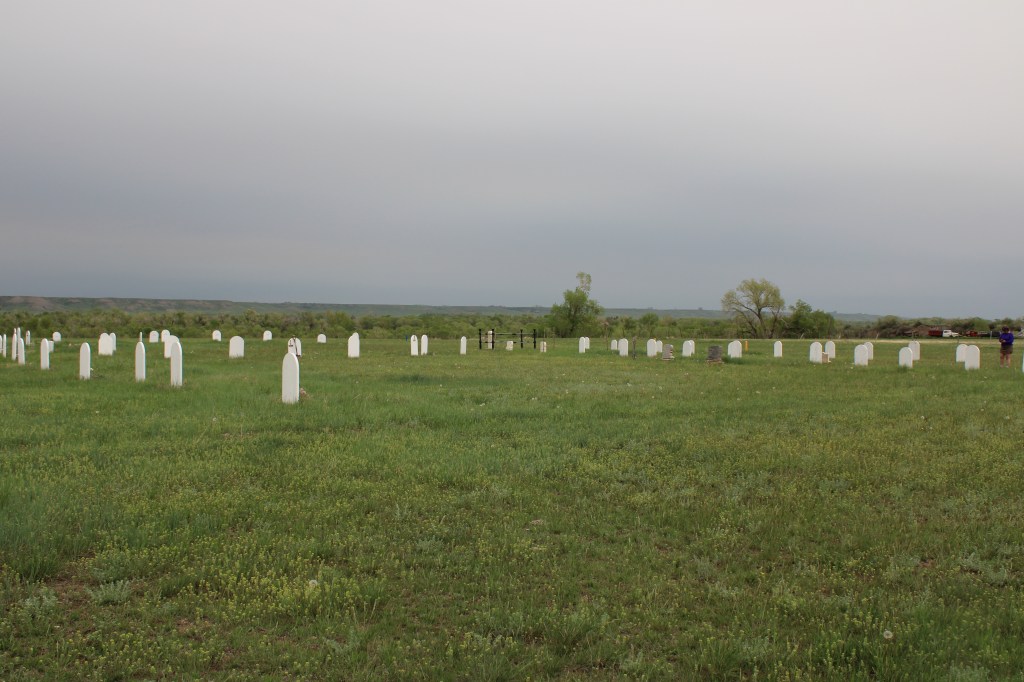
In 2016 Dick Thoroughman (who has since sadly passed away) convinced his fellow society members that they could restore the cemetery and restore a sense of dignity to those buried there by “saying their names.” The society built replica tombstones and then placed a small insert that gave the name and identification of the deceased

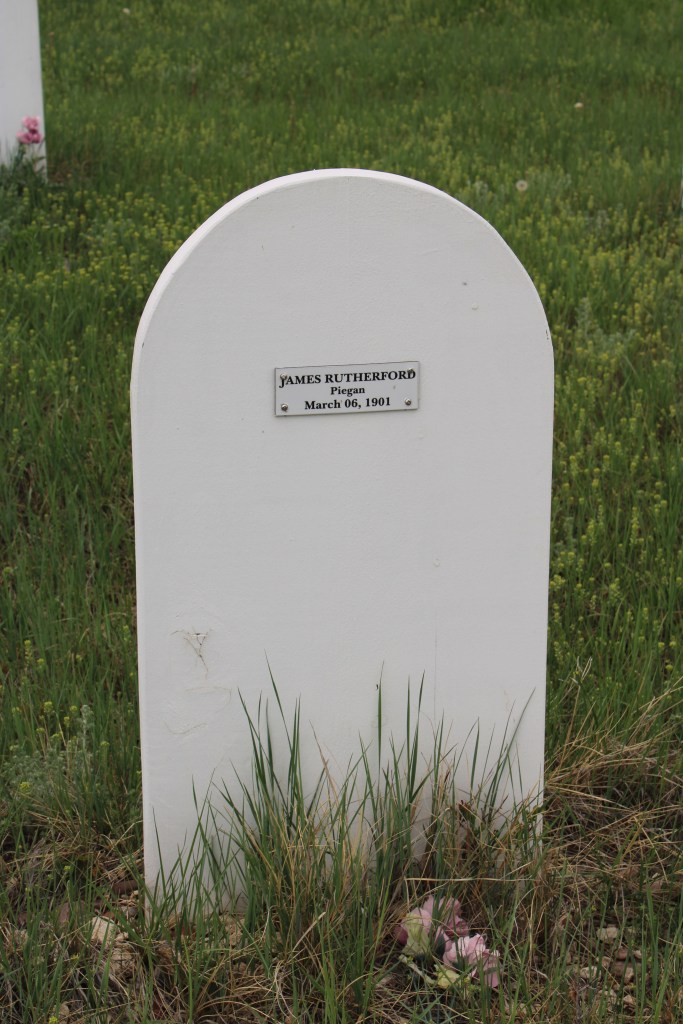
Among the marked graves are thirty-three students from the Indian Industrial Boarding School. Each tombstone is a testament to the horrors of the boarding school program. The names are not just of Blackfeet children but from many nations in the West and Alaska.

The federal boarding school program ripped children from their families, isolating them at the schools where their teachers too often literally tried to beat native culture and identity out of the students. Almost 2000 Native American children attended the Fort Shaw school from 1892-1910. Tribal members today believe that there might well be more than 33 Native American children buried at Fort Shaw.

Blackfeet Nation members have held vigils at the cemetery for years to honor and remember the victims of the boarding school. As Christine Diindiisi McCleave of the Native American Boarding school Healing Coalition told the University of Montana’s Byline Magazine, “We are in a moment of history where the wound of unresolved grief from Indian boarding schools is being ripped wide open. The truth is being unearthed and yet so much more is still unknown .”

The Sun River Historical Society recently restored the commanding officers house in 2019, where they are trying to find out more on the life of “Chinaman Joe” who worked as a domestic and is also buried at the cemetery (see below).

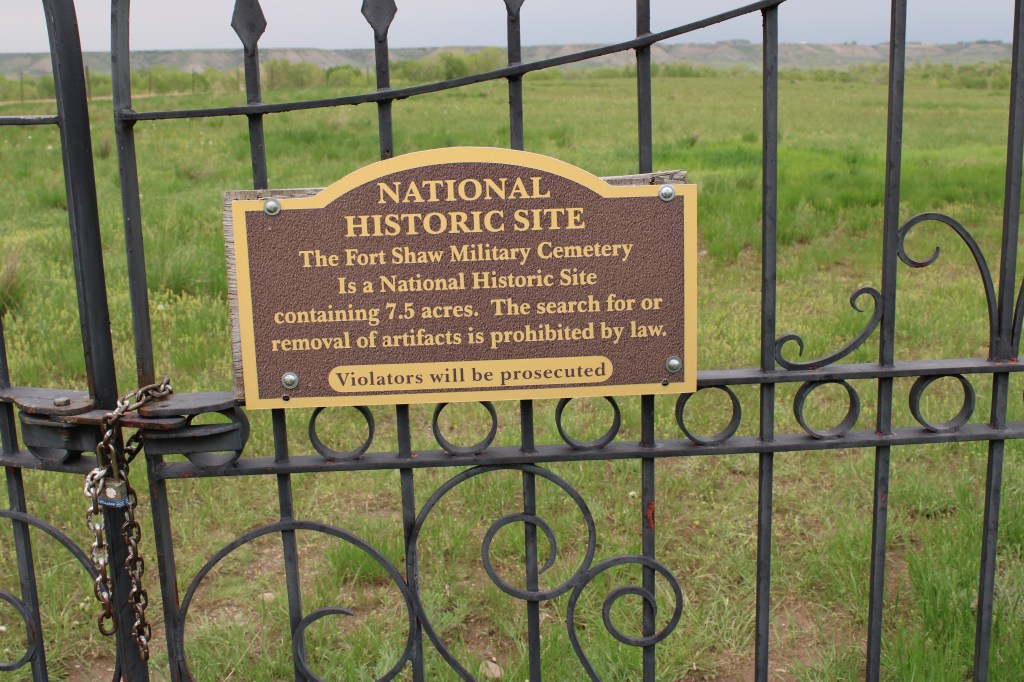
Many, many stories are yet to be identified, researched, and interpreted at this 7.5 acre property. But the 2016-17 restoration started the process. The Sun River Historical Society has earned thanks for their commitment and dedication to the task.

Riverside Cemetery, Fort Benton

Riverside Cemetery dates to 1883, a time of considerable change and expansion in Fort Benton’s history. Just 2 years earlier, summer 1881, the U.S. Army left the fort, and it began a rapid decline. In the following winter of 1881-1882 the town began a building boom that led to the construction of the Grand Union Hotel by the end of 1882.

Grand Union Hotel

Freight traffic on the Missouri River also boomed and the River Press, the city’s leading newspaper for the next 100 plus years, published its first edition. 1882 also witnessed the city’s first electric lights and the construction of many new residences. And by the year resident had formed the Riverside Cemetery Association.

Gate to Riverside Cemetery

The loss of the Chouteau County Courthouse to fire in early 1883 didn’t seem to slow momentum at all. That spring voters incorporated Fort Benton—what had been a trading and military town was now a formally established town. Soon thereafter Riverside Cemetery was established on the Missouri River bluffs northeast of town.

The new town cemetery had approximately 40 fenced acres and was ready for use by Decoration Day (now known as Memorial Day) in 1883. The cemetery also had reinterred graves from earlier in-town cemeteries at approximately the location of First Christian Church and behind Haas and Associates and Farmers Union Oil Company.

Today the gap between the initial cemetery and burials in the 20th century is noticeable. The early burials are on the east side while the modern section is on the east side clustered near a row of trees m. Clearly early tombstones have been lost—the number of grave depressions indicate that there are many additional burials that lack a grave marker.

East side of cemetery
Central section with the west section in the background among the trees. In general the west section dates to mid 20th century and later

The remaining grave markers from the late 19th century tell powerful stories. The Charles Fish (d. 1890) obelisk with urn marker below honored a Canadian native who served as a drummer boy with the 38th Wisconsin Infantry in the Civil War; he was only 15 years old when he joined.

The Patterson family section is one of the cemetery’s oldest, with the earliest tombstone dating to 1886.

Tombstones with cross themes mark the graves of Jane Jackson (d. 1885) and Edward Kelly (d. 1890).

This image of the Jackson tombstone is another visual example of the number of empty spaces in the east side of the cemetery. Existing depressions indicate that many burials without grave markers are in the section.

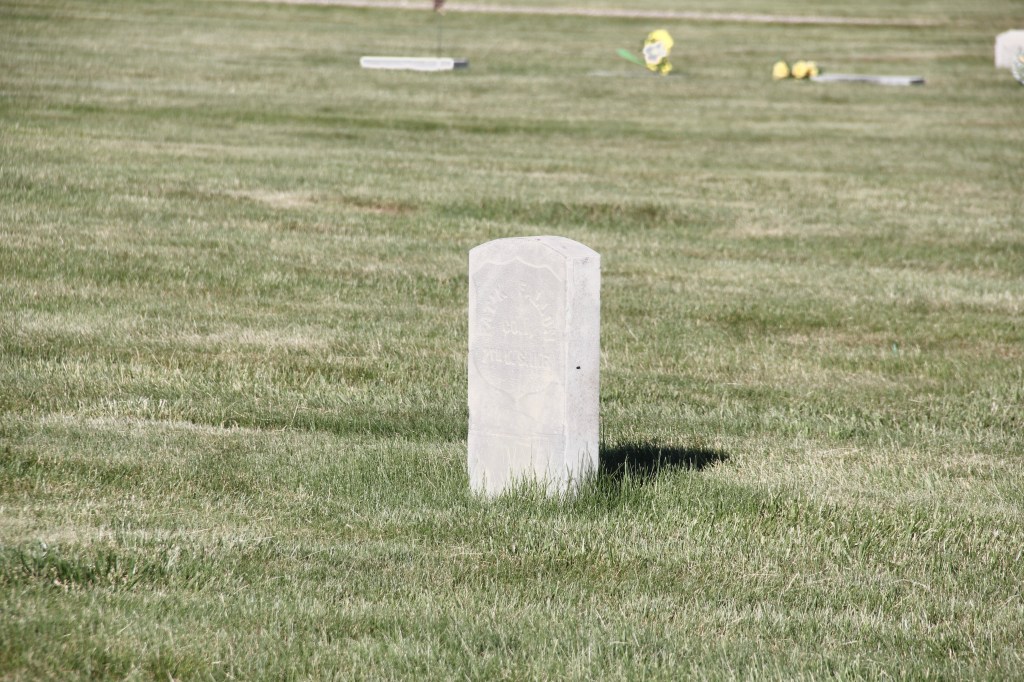
In 1891 the cemetery received its first U.S. military veterans markers. The one below was for Patrik (the spelling used on the tombstone) Fallon, a Civil War veteran. By now Fort Benton had grown to the point that its Decoration Day ceremony involved hundreds, led by the cemetery association, camps of the Grand Army of the Republic and soldiers from Fort Assiniboine.

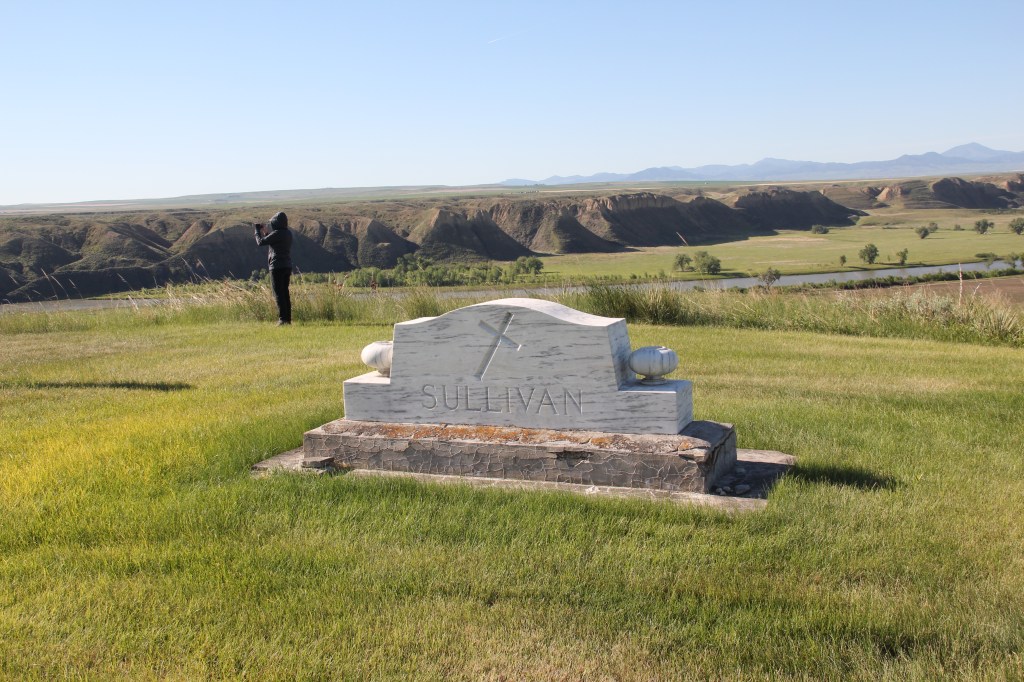
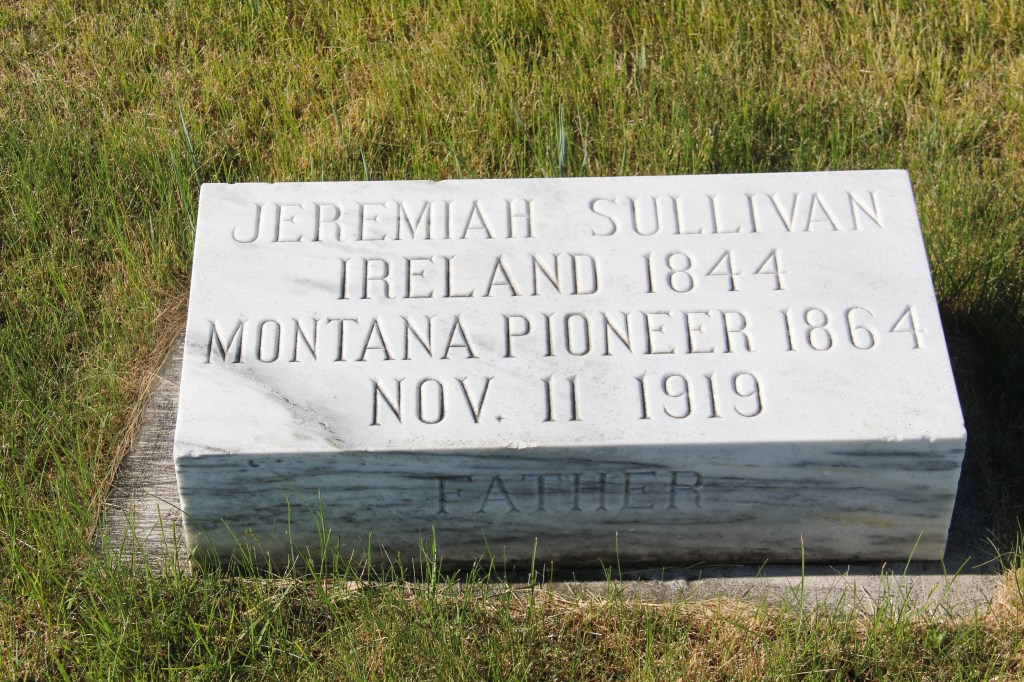
While the graves of many pioneers are unmarked, the Sullivan family located its graves near the edge of the bluff, truly an awe-inspiring setting overlooking the town, river, and railroad tracks.

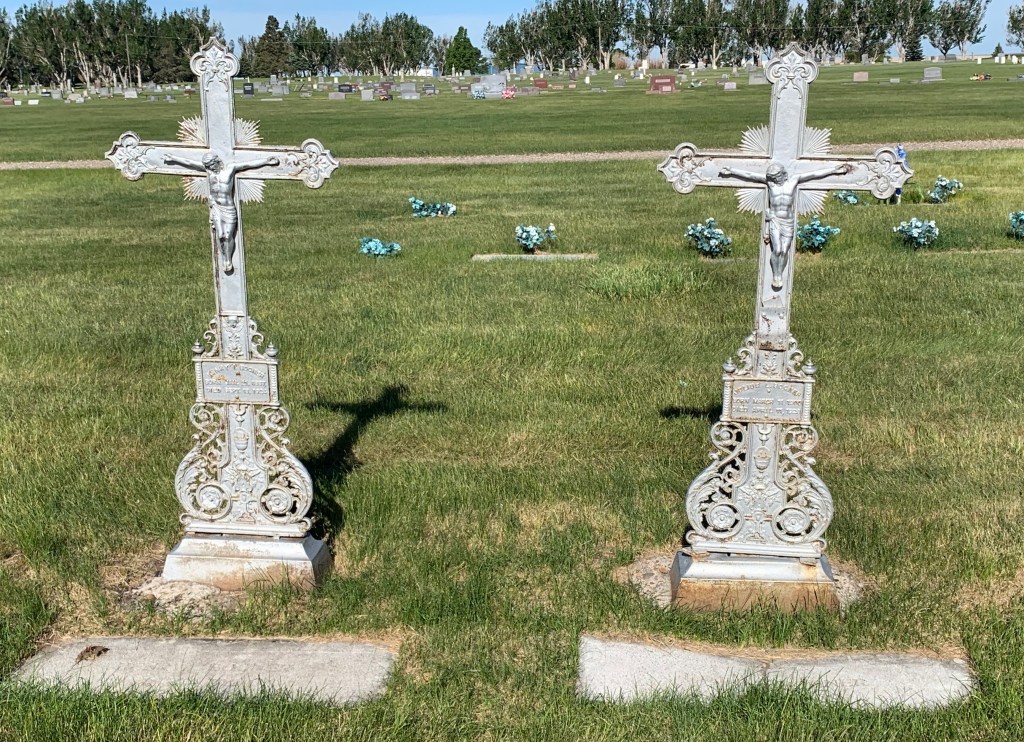
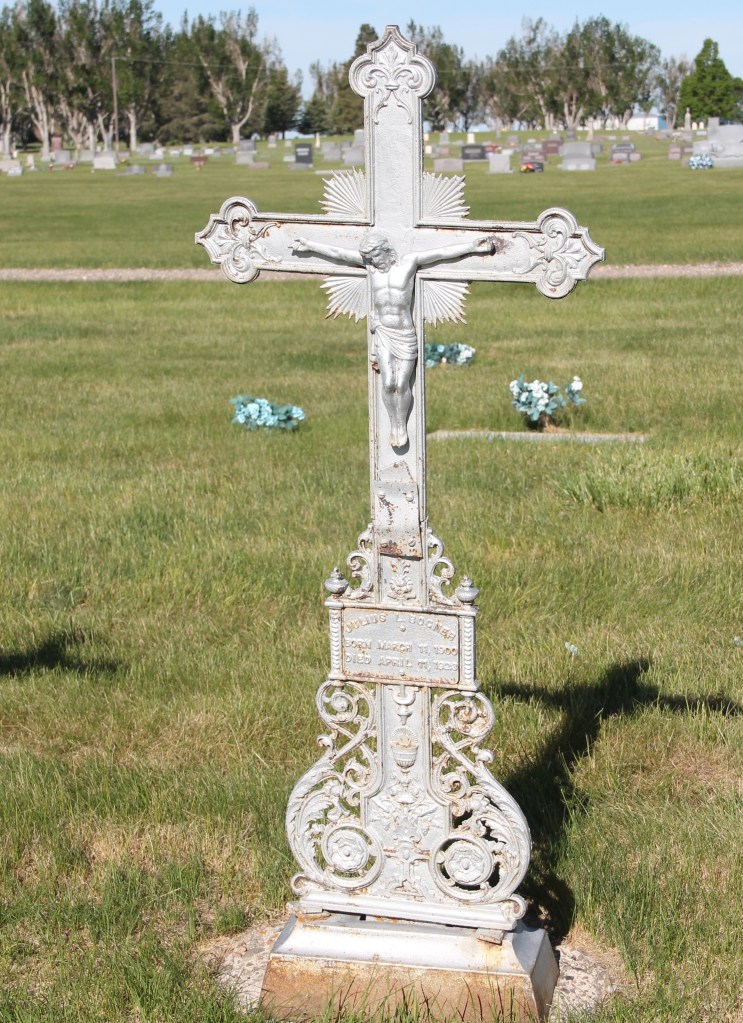
Impressive tombstone art is scattered throughout the cemetery. The unique yet beautiful pressed metal crosses for brothers Julius (d. 1923) and Henry (d. 1924) Bogner belong, stylistically to the Victorian era, but were commissioned and installed in the Jazz Age.

Julius and Henry Bogner
The Winfred and Margaret Stocking marker (c. 1910-12) is unusual in that a sizable base supports a triangular rock Boulder. Margaret Stocking upon her death in 1812 was identified as the first white woman to settle in Fort Benton in 1865.
The marker for Bessie Bright (d. 1917) has an open Bible motif, typically found in tombstones of the 19th century

Riverside Cemetery has an impressive veterans section, known as the Military Plot. Veterans from the Spanish American War of the 1890s to the conflicts of the 21st century are buried here.
The majestic flag pole was added in 2916.
Lewistown City Cemetery, Fergus County

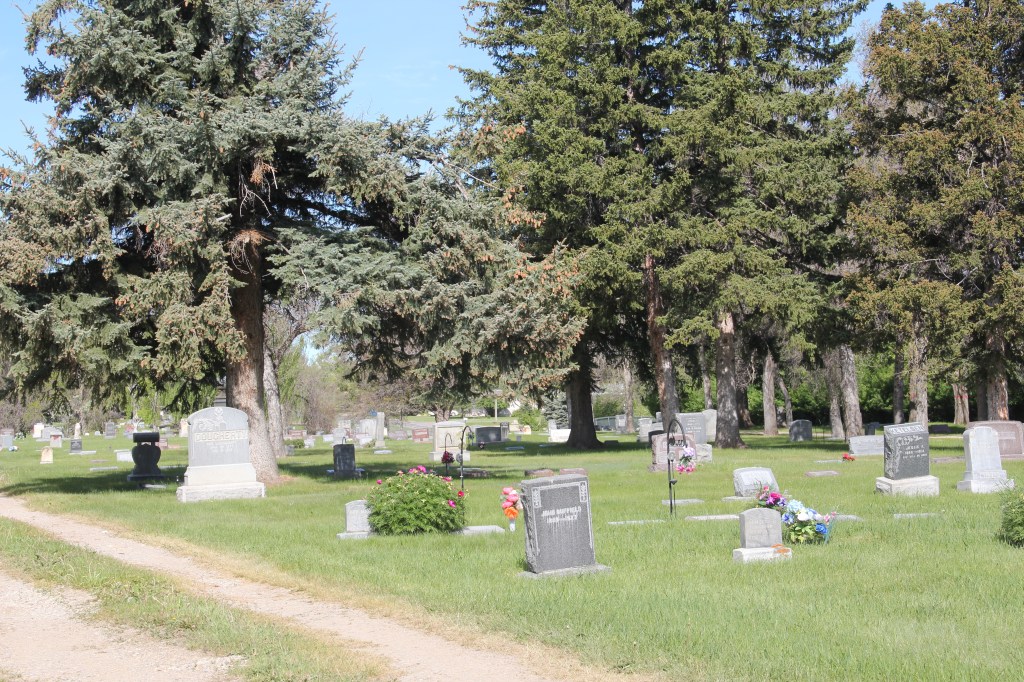
The City Cemetery is one of the oldest public institutions in Lewistown, the seat of Fergus County. Residents incorporated the city in 1899. Almost immediately citizens banded together to establish the Lewistown Cemetery Association. The association filed its articles of incorporation with the state c. 1901.

The population of Lewistown and Fergus County boomed for 20 years. Just over 1,000 people lived there in 1900; by 1920 the city had well over 6,000 residents. Such supercharged growth, fueled by homesteaders, railroads, and mining, meant that demands on the Cemetery Association were too much for a private organization. In 1918 the association transferred the property to the city.

The Ethel Gilkerson marker, c. 1900, is one of the cemetery’s early burials.
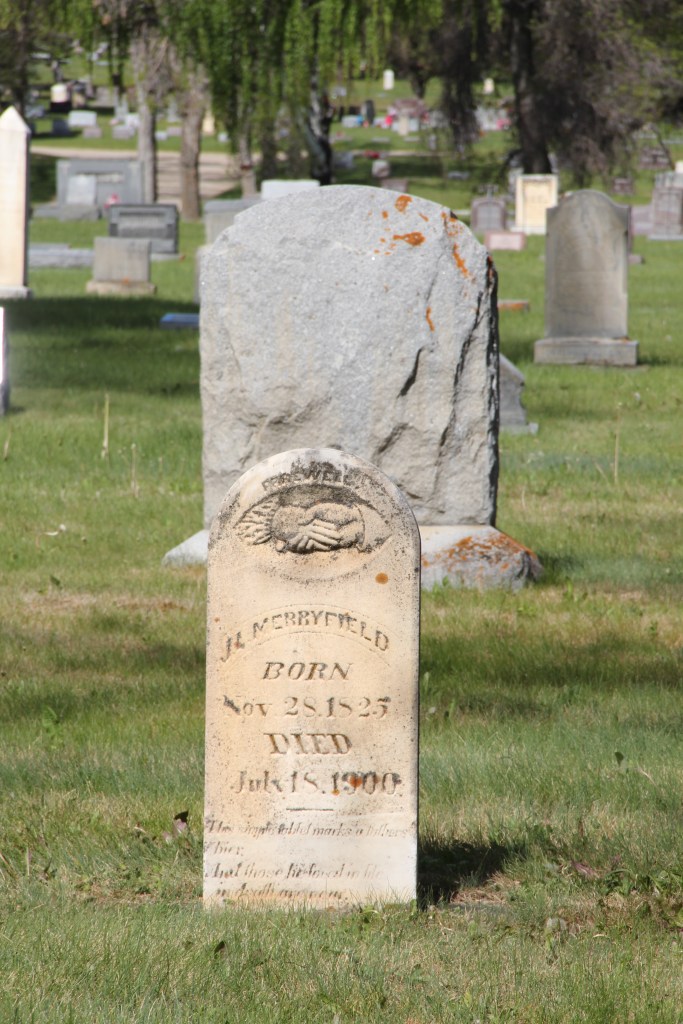
The John Merryfield marker is another early burial, 1900. He was a miner at Maiden.
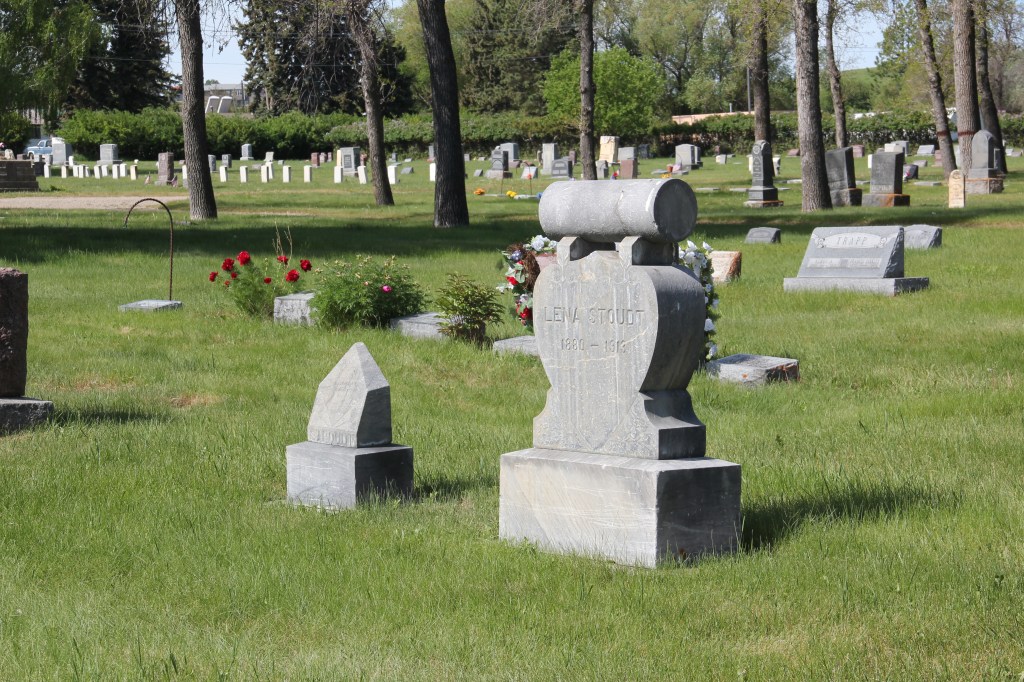
Early 20th century section

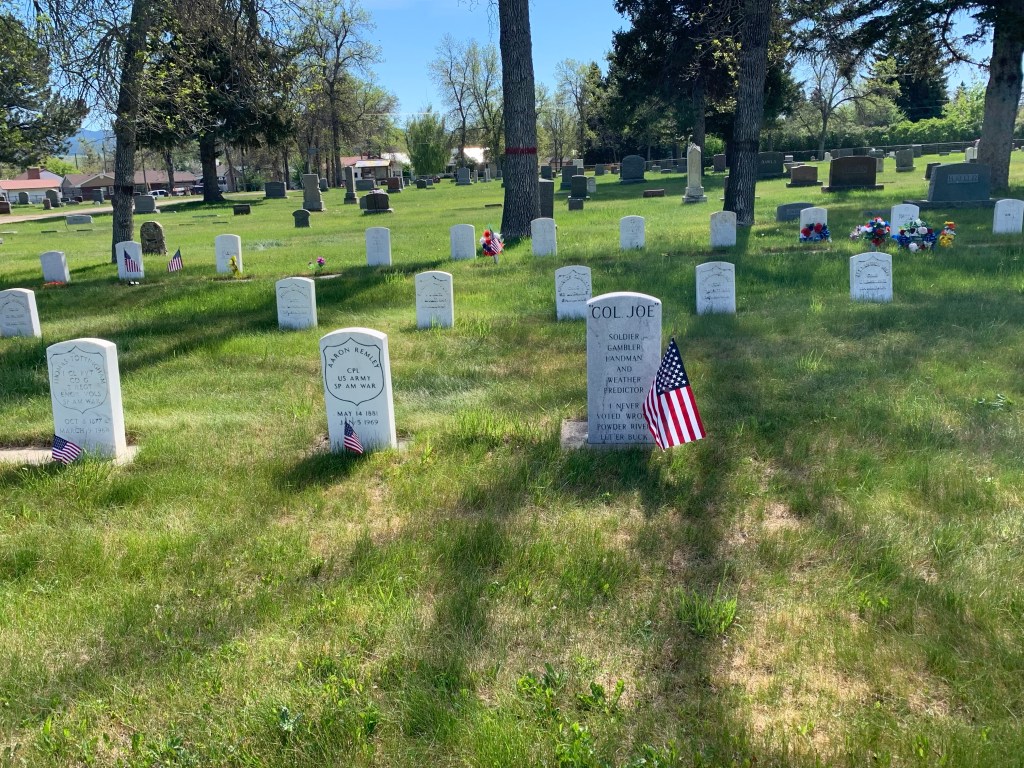
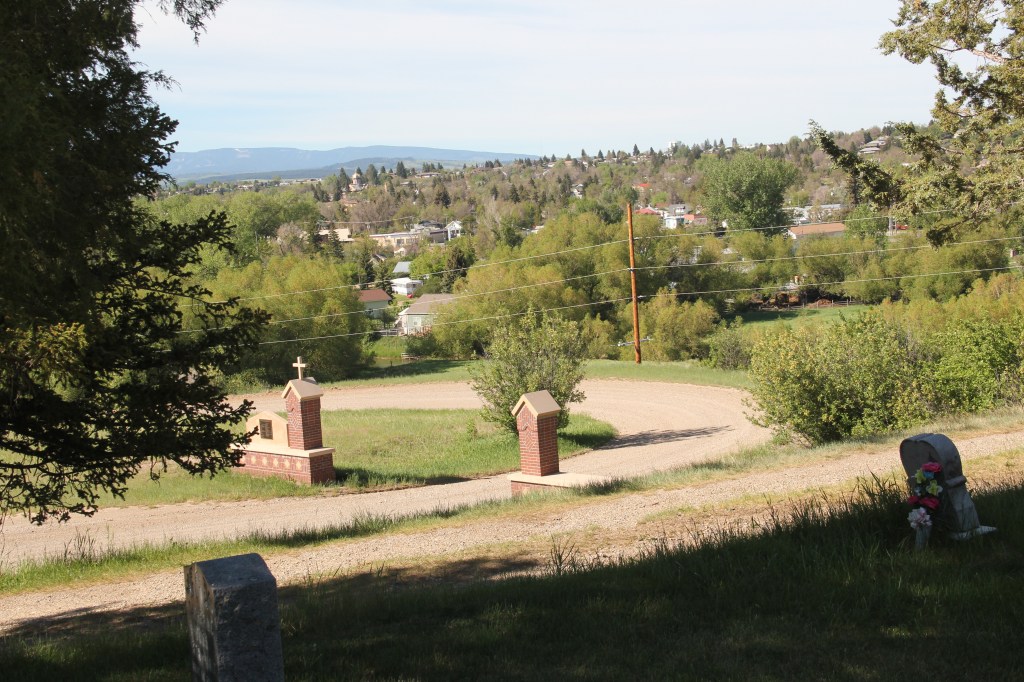
The heart of the cemetery is reserved for veterans, where the setting is low-key, dignified and effective. A gravel drive divides two sections reserved for veterans.

North side veteran’s section
South side veteran’s section. Note the bell.
South side section

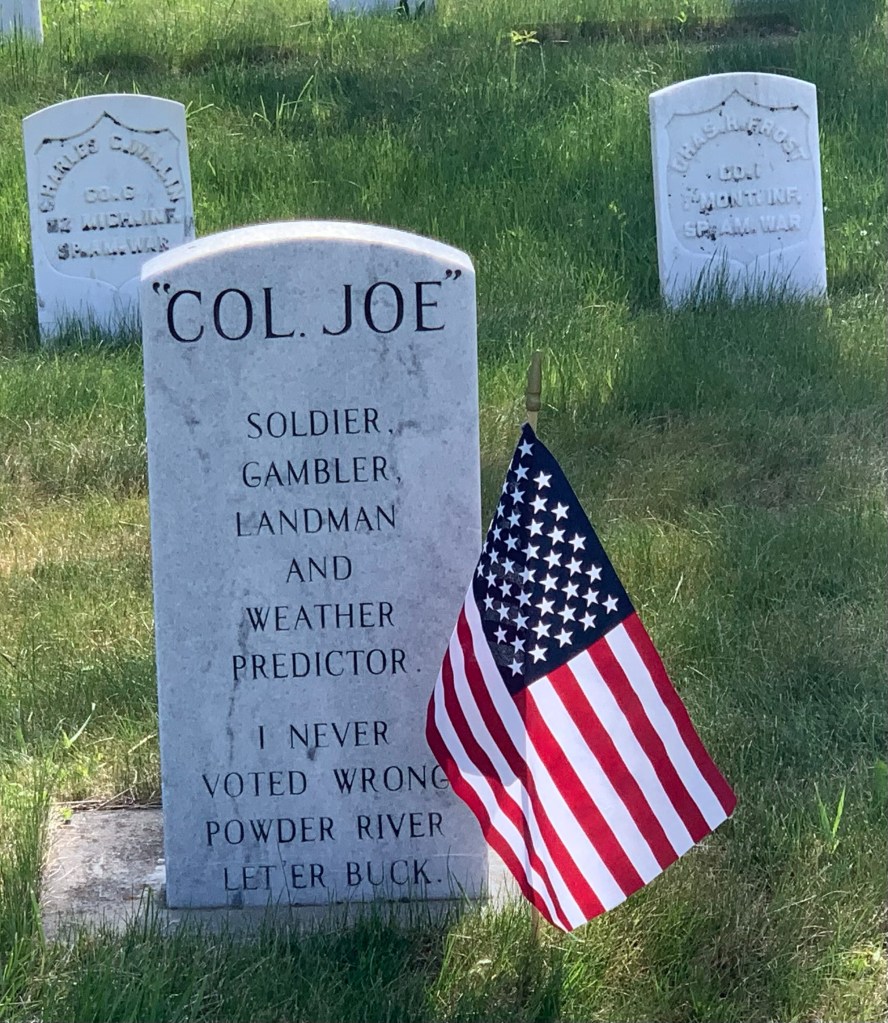
One veteran marker that catches your eye is for “Col. Joe” Montgomery. He proudly bragged: “Soldier, Gambler, Landman, and Weather Predictor. I never voted wrong. Powder River Let ‘em buck.” What a summation. And he had every right to brag. A veteran of the Spanish American War, he was 107 years old when he died in 1984. He first came to the area to work in the Kendall mines in 1894. A true Montana original.

Most of the city’s prominent Protestant leaders are buried here, as are thousands of other citizens who have made Lewistown work and progress for the last 100 years.

The Sherwood marker (d. 1904) simply notes “here lies a Woodman of the World.” There are many fraternal lodge markers in the cemetery.

Mount Calvary Cemetery, Lewistown

High on a hill northeast of downtown Lewistown is the historic Catholic cemetery, Mount Calvary, established in 1895. The cemetery is a bit challenging to find but well worth the efforts.

It is a significant property marking early settlement patterns in Lewistown, which was incorporated in 1899. But its greatest value is its wealth of funerary art.

Griffith cross tombstone c. 1915
Brooks mausoleum 1912
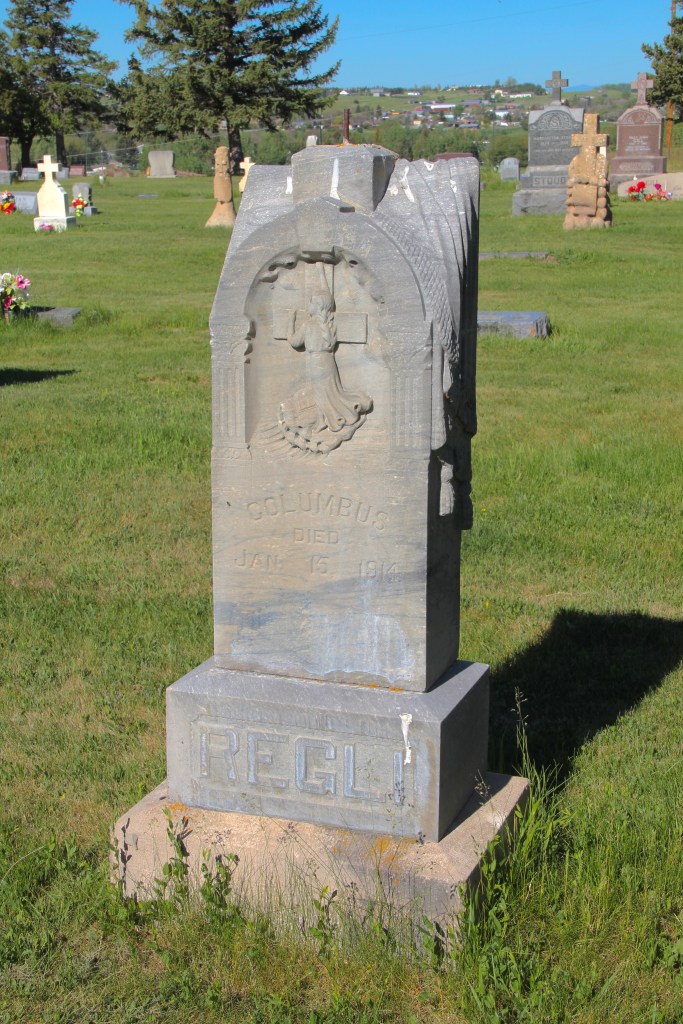
Columbus Regli, 1914 with a lovey insert carving of mourning
Burke gravehouse, c. 1921
The Hruska marker is near the Burke gravehouse
Biglen marker, statue has been damaged
Nearby the Biglen marker are burials of sisters who served the community at St Leo the Great Catholic Church and/or St. Joseph Hospital. South of those graves are an array of artistically expressive memorials.
Older section, looking southwest

Mount Calvary’s first generation of burials is concentrated on the hill top. But this cemetery is large and still active. The lower section has numerous interesting tombstones from the second half of the 20th century.