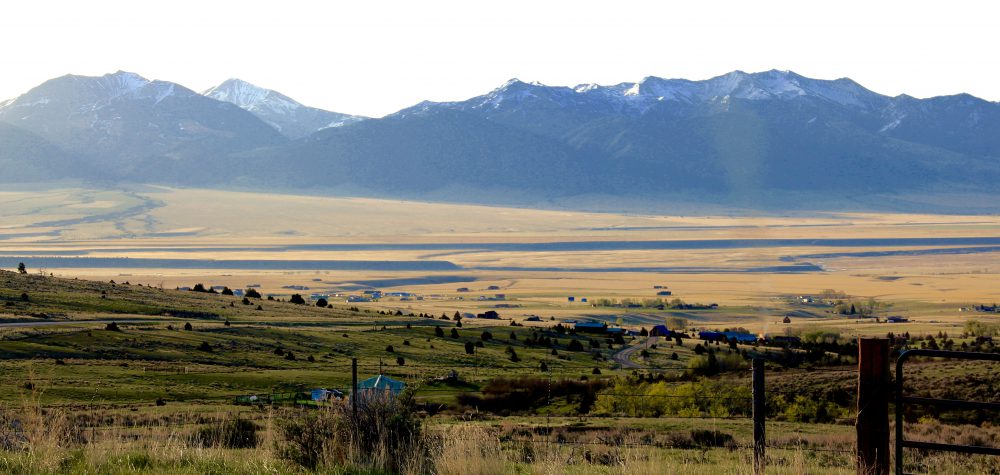
 In thinking about returning to Montana in 2012 and carrying out a huge “re-survey” of the places I had explored for the state historic preservation plan process 30 years earlier, Butte was high on my list of priorities. Not that the city and its surroundings had been given little attention in the early 1980s–the Copper City was already recognized as a National Historic Landmark, and a team of historians, architects, and engineers had just finished a large study of its built environment for the Historic American Building Survey and the Historic American Engineering Record. No, I wanted to go back because by 1985 many people counted Butte down and out, yet it had survived and started to reinvent itself. Not
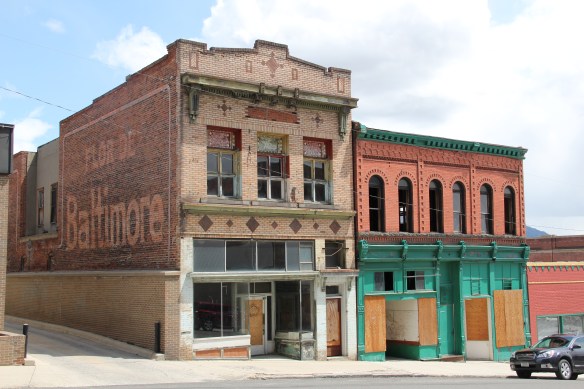 as a ghost town or the skeleton of a great mining city but as a revitalized place, both economically and culturally, centered in a strong core community, even though the challenges in front of it remain daunting, even overwhelming at times.
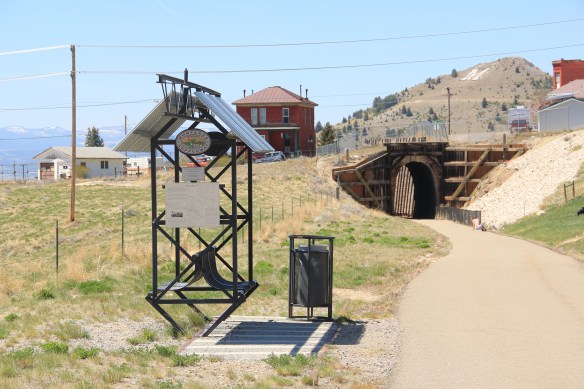
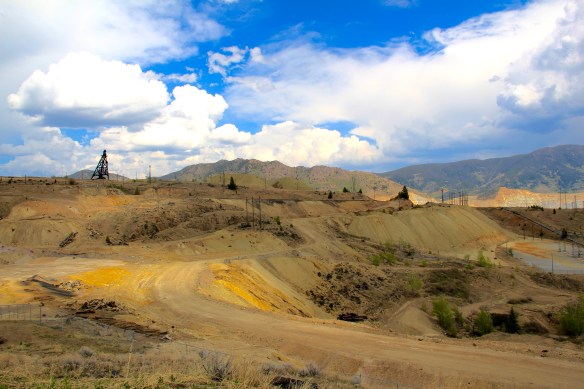 The environmental degradation left when the hard rock mines shut down is one burden that Butte has shouldered, with the help of the federal superfund program. Still, no matter how scientifically this landscape has been “cleaned up,” it remained scarred, and it is a far different challenge to build back hope into a place stripped of its life. Yet high over the city is a sign of the change to come in the Mountain Con Mine site.
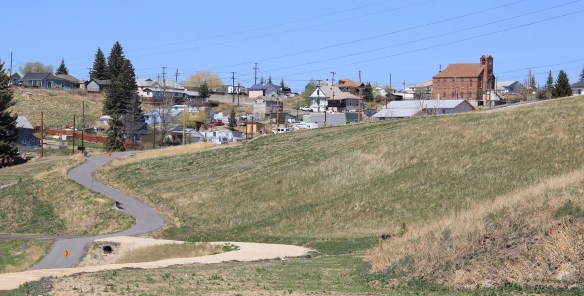
 Still labeled as a Mile High and a Mile Deep place, the mine property is stunning, not only for its technological assertion–imagine working that high, and going that deep–but for its conversion into the walking/hiking/biking trails that encircle the city and present it with such potential as a recreational landscape.


Transformation, that it is what strikes me as I wander down the trail and into Butte’s famous, or is it infamous, “Uptown” district. Butte is far from the place it was 30 years
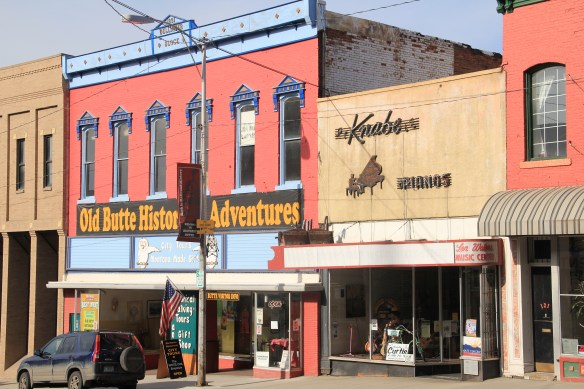
 ago, with all sorts of signs of new investment, new pride, and community identity. It may have lost a step, or two, and its swagger may not be quite as exaggerated as it was in the mid-20th century, but it remains a place with its own feel, its own funk. For me, the reopening of the M&M Bar on Main Street–a legendary dive once shuttered, reopened, and shuttered again–gives me hope for Butte in the 21st century. Around the corner is


another institution, Gamer’s Cafe, which is situated within the marvelous Victorian eclecticism of the Curtis Music Hall of 1892.


Both establishments are for locals but visitors are tolerated, even welcomed. Indeed a degree of openness and acceptance have grown in Butte, a marked change from when the city’s Chinese residents lived and operated businesses on the edge of Uptown, along
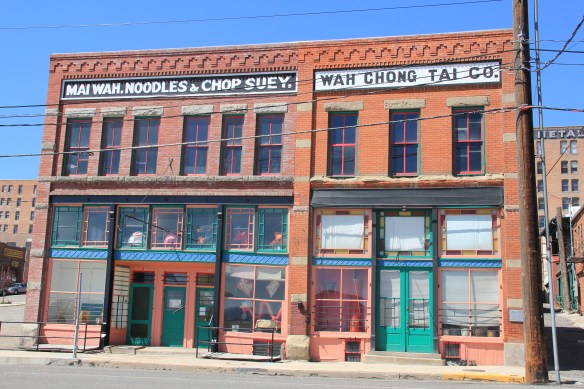 Mercury Street; at the same time the sex trade was alive and well to the east of that same street in a series of boarding houses and hotels. The Dumas Brothel, discussed in an earlier post, is listed in the National Register and its future as an adaptive reuse project and place for public interpretation is promising but not yet realized. African Americans in


early 20th century Butte lived even farther down the hill from Uptown, in a small neighborhood around Idaho Street and the Shaffers African Methodist Episcopal Church, now a pentecostal meeting house.

Uptown today is more a place for everyone, and has become the center of the community’s identity. It is easy to see why: massive, soaring buildings like the Metals Bank and Trust Tower and Hotel Finlen lend architectural dignity to the surroundings. Early 20th century classicism gives character and substance to Metals Bank whereas the Finlen has a classy


Renaissance Revival-style skin but then it has a spectacular contemporary Colonial Revival interior design, reminding us of Butte’s resurgence during the heyday of the Berkeley Pit boom from the mid-1950s through the turbulent 1960s.


The Hennessy Block is another commercial landmark, from the city’s founding generation, that has looked for a long-term solution for decades now. Built in 1898 with support from mine magnate Marcus Daly, the building housed what most consider to be the state’s first full-fledged department store, headed by and named for Daniel Hennessy. Minneapolis architect Frederick Kees designed it in a Renaissance Revival style. In 1901 the Anaconda Copper Company moved its executive offices to the top of the building, making it perhaps the leading corporate landmark in the city.
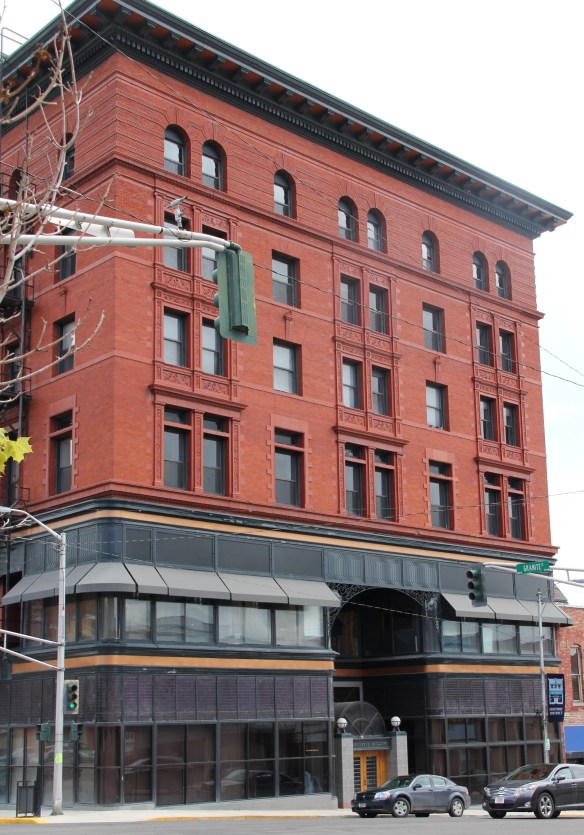
 The massive building still dominates the Uptown building, making its closure in Butte in 1980 that more disturbing for residents. When I did my preservation plan work in 1984-1985 the issue of what to do with the Hennessy was at the forefront. By the end of the decade, ENTECH renovated the building and reopened it fully for business. In 2010 came the popular Hennessy Market–giving the growing number of Uptown residents a grocery store once again.
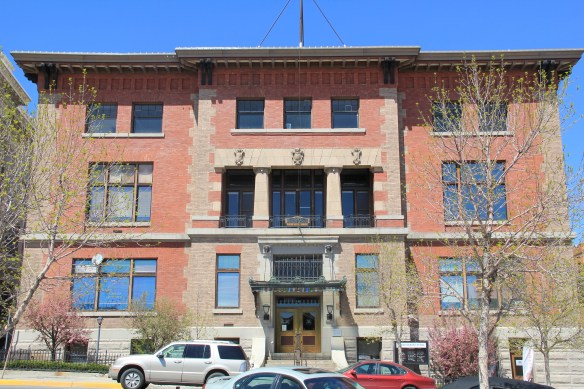 The Sliver Bow Club building (1906-7) also has shifted its purpose, from being the stately and eloquent clubhouse of the city’s elite to becoming a place for public offices and meetings in its once exclusive spaces. Originally conceived by the same Spokane architects who designed the Lake McDonald Lodge in Glacier National Park, according to recent research by museum curator and preservationist Patty Dean, the building’s architects ended up being Link and Haire, the noted Montana architectural firm.


The interior design came yet from another important firm, William A. French and Company of St. Paul, Minnesota. Here you find one of the state’s best “Arts and Crafts Movement” themed interiors–and one of the best in the entire West.


The interior design speaks loudly to the gender and class focus of the social club. Its success set there table for Link and Haire’s next Butte masterpiece, the Beaux Arts-styled Silver Bow County Courthouse (1910-1912). Few public spaces in the state, save, perhaps the State Capitol, rival the Butte courthouse for its ornate exterior and interior, representing an overstatement of public authority and power in a city where a handful of mining interests made so many of the decisions.


Two years after it opened, the courthouse was not a refuge for those in need but a barracks for the state militia during the violence of 1914. Today, however, it is most definitely the people’s house, and was duly celebrated during its 100th birthday in 2012. It is part of the city’s distinguished public landscape, including the Victorian City Hall and the Beaux Arts classicism of the Police Department.


Of course, there is much more to see and say about Uptown Butte, but hopefully this is enough to show community pride at work, the value of historic preservation, and a proud city on the upswing, despite the obstacles before it.


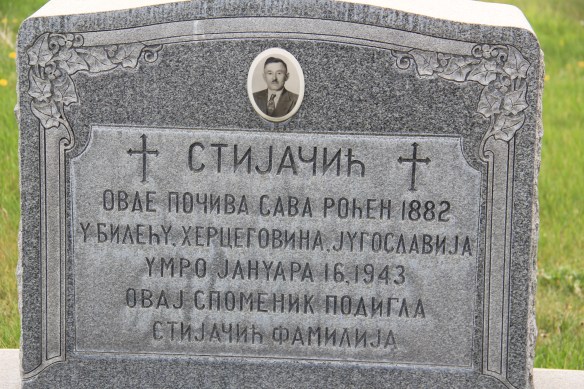

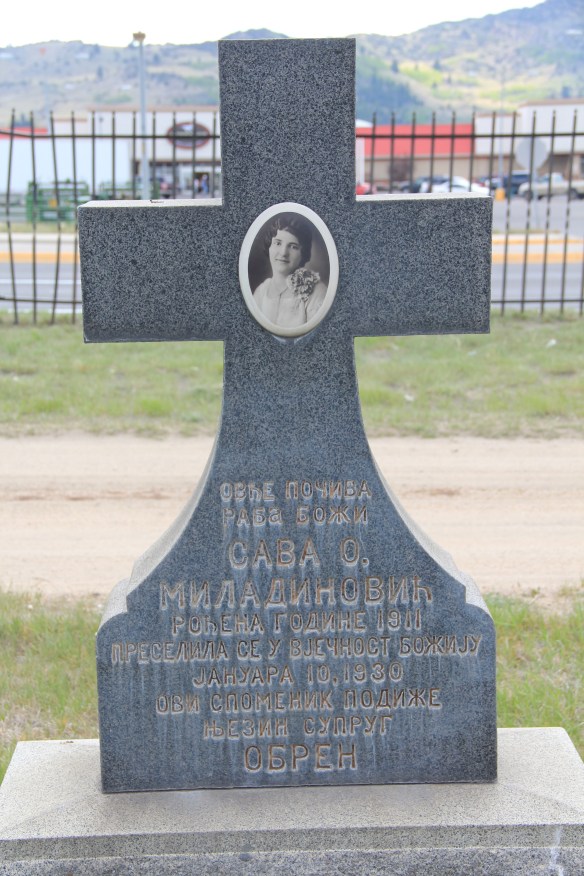

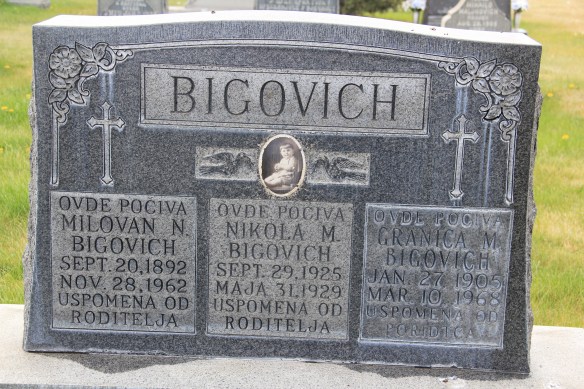


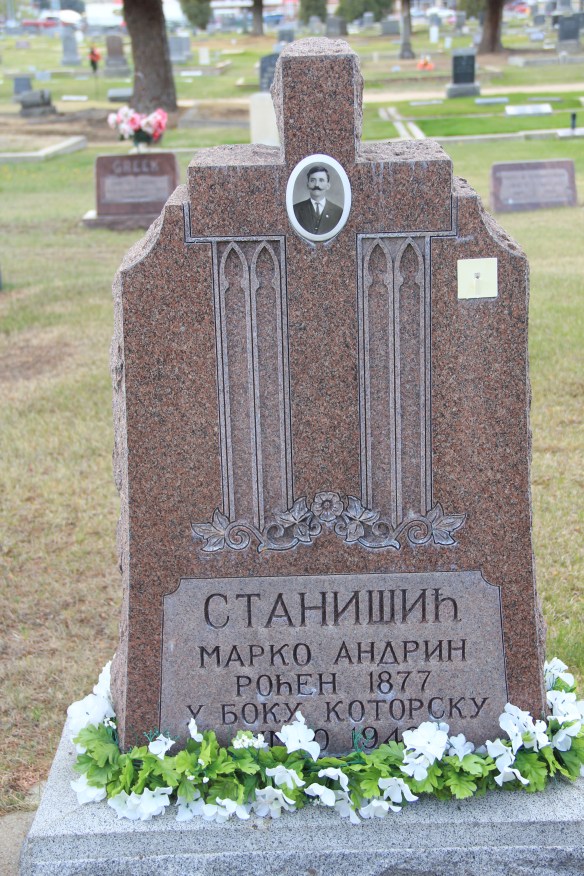


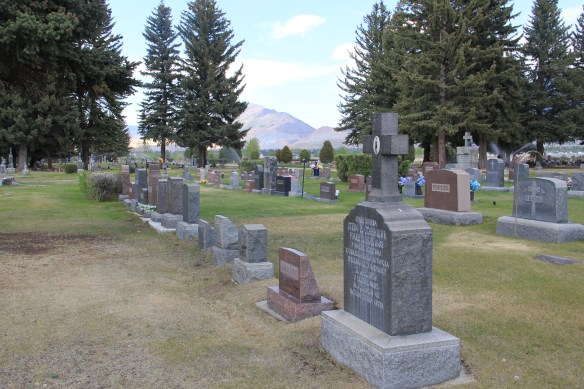

 Towering over the Butte cityscape, in competition with the corporate symbols of the steel head frames for dominance, are the steeples of Butte’s churches, in themselves powerful symbols of the ethnic diversity that make up the population of the copper city. This posting hardly pretends to cover all of the city’s historic churches–consider this a sampling of sacred spaces that too often are taken for granted.


 Stone work in a Gothic style reminiscent of a Cotswold village parish distinguishes St. John’s Episcopal Church in Butte. Built in 1881, with later additions in the 20th century, the church is considered the oldest in the city. Copper magnate William A. Clark lived nearby and he helped to fund the church.
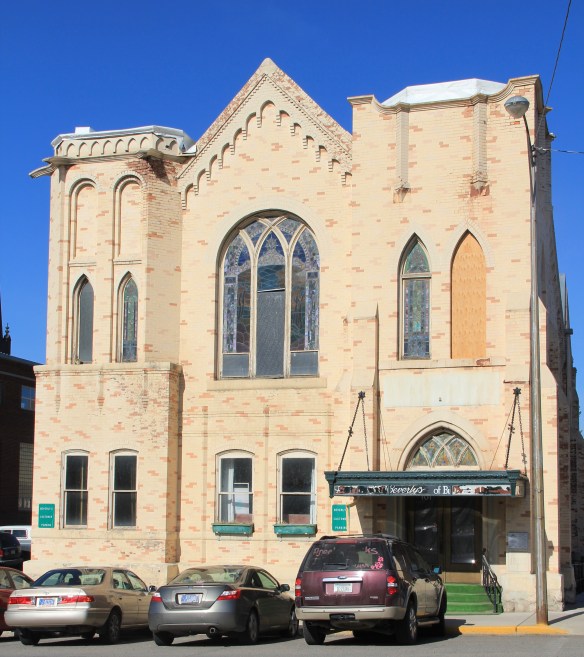 The original St. Paul Methodist Episcopal Church South (1899) was designed by architect William White in a restrained Gothic/Norman style similar to that of St. John’s Episcopal. But the real significance of the property lies with its association with miners’ attempts to organize and the influence of the International Workers of the World (IWW or Wobblies) in Butte history. The property’s National Register marker summarizes it nicely: “By 1918, the church housed the Butte Daily Bulletin, a radical newspaper voicing policies of the anti-corporate Nonpartisan League, published by William F. Dunne. The office was also a known stronghold of the incendiary Industrial Workers of the World (IWW). On September 14, 1918, local police and federal troops under Major O. N. Bradley raided the Bulletin, arresting twenty-four men and thwarting a miners’ strike.”
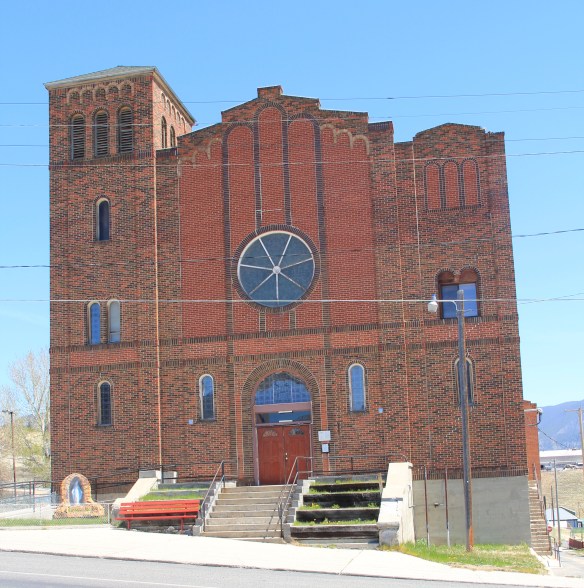 Another Gothic landmark listed in the National Register in Butte is St. Mary’s Catholic Church, now home to a Catholic women’s foundation, on North Main Street near the federal building. The congregation was among the city’s earliest but a fire destroyed the church building leading to construction of this building at the onset of the Depression.
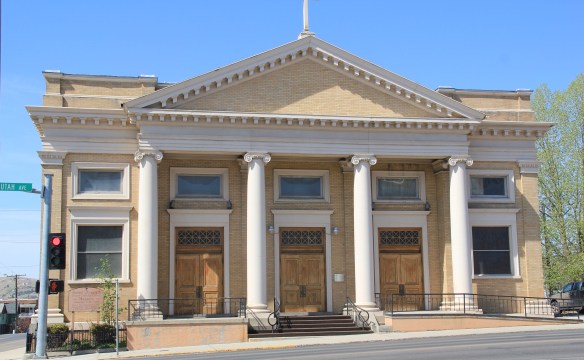 St. Joseph Catholic Church is quite different in its architecture, a strong statement of Classical Revival from 1911. The architect was Austrian-born Albert O. Von Verbalism, who also designed the magnificent High Victorian Gothic St. Helena Catholic Cathedral in Helena. St. Joseph is still an ethnically vibrant congregation some 100 years later.
 The Christian Scientist Church follows the blending of Colonial and Classical Revival design so often found in the congregation’s churches no matter their location in the United States. This building dates to 1920 and Walter Arnold was the architect.
 Perhaps the grandest of the Uptown religious buildings is the Onion-dome steeple of the historic B’nai Israel Synagogue (1903), which was one of three Jewish houses of worship in Butte and is now the oldest synagogue in continuous use in all of Montana.
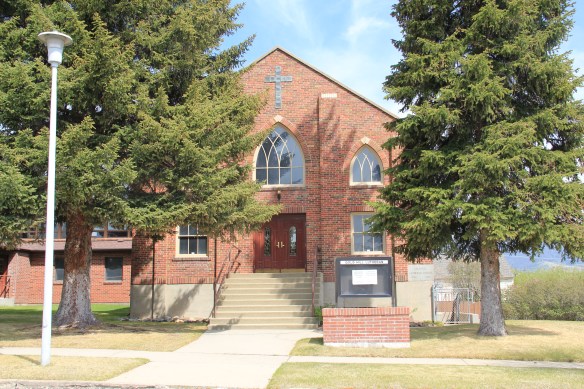 On a far different scale is the Gold Street Lutheran Church. Built in a restrained, late interpretation of Gothic style in 1936, the church shows the continued expansion of Butte’s religious centers from the Uptown area into what is called the Flats, where so many congregations now reside.
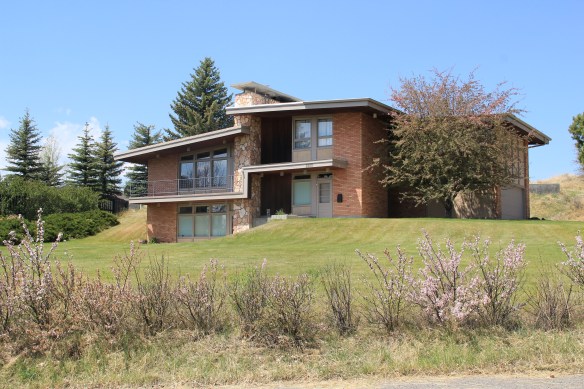 You don’t think Montana modernism when you think of Butte, but as this overview will demonstrate, you should think about it. I have already pinpointed contemporary homes on Ophir Street (above). The copper mines remained in high production during the Cold War era and many key resources remain to document that time in the city. For discussion sake, I will introduce some of my favorites.


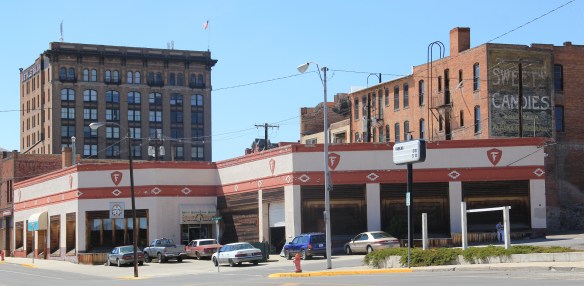 I looked at schools constantly across the state in 1984-1985 but did not give enough attention to the late 1930s Butte High School, a classic bit of New Deal design combining International and Deco styles in red brick. Nor did I pay attention to the modernist buildings associated with Butte Central (Catholic) High School.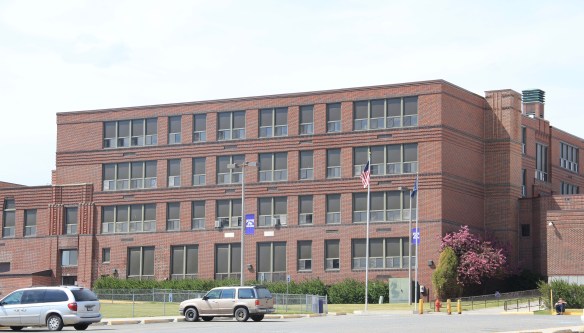


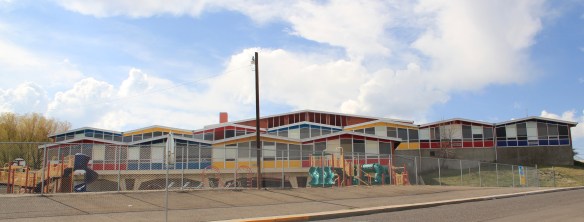


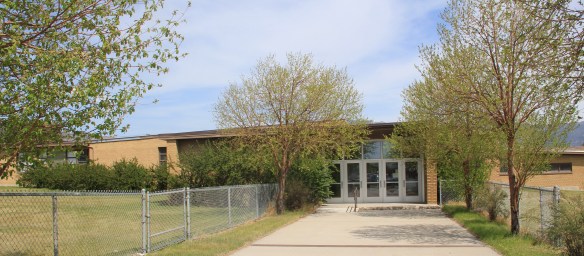

 You would think that I would have paid attention to the Walker-Garfield School since I stopped in at the nearby Bonanza Freeze, not once but twice in the Butte work of 1984. I
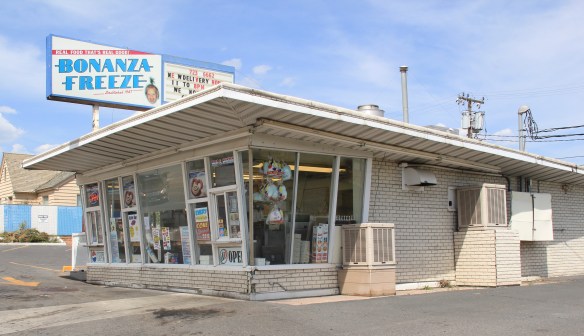 never gave a thought about recording this classic bit of roadside architecture either. Same too for Muzz and Stan’s Freeway Bar, although maybe I should not recount the number of stops at this classic liquor-to-go spot.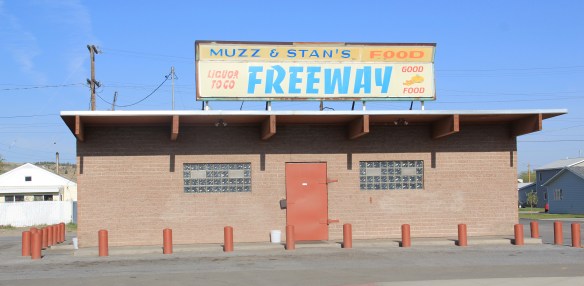


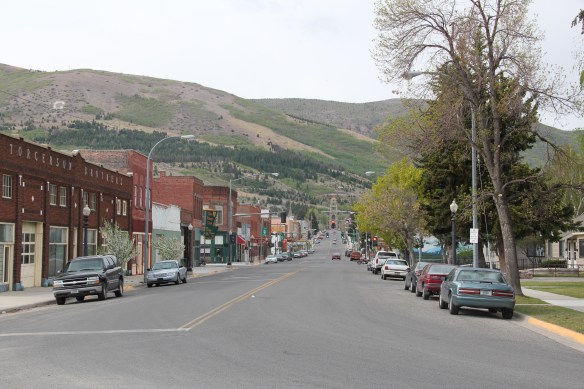


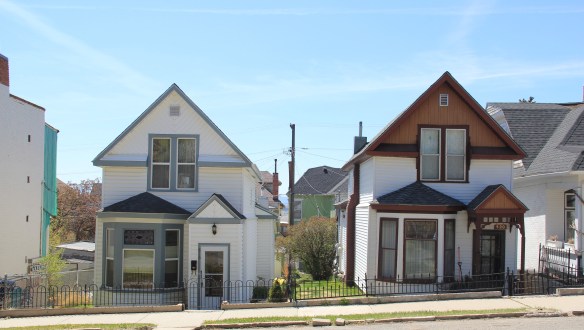
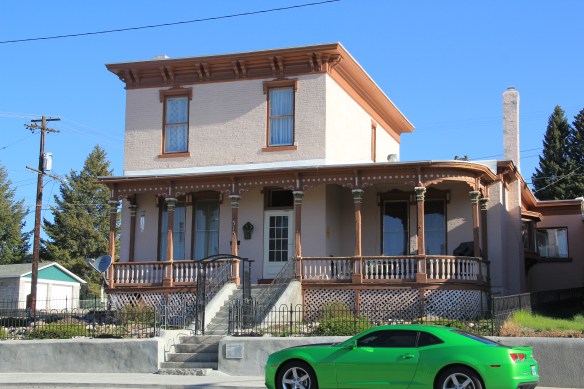


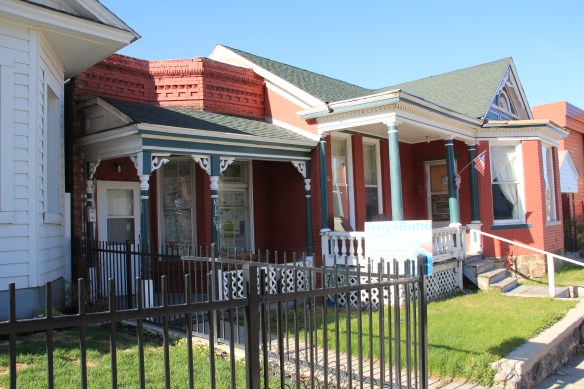


 In the north end, Walkerville still shows this working side of domestic architecture well.
 Here are blocks upon blocks of the unpretentious, yet homey, dwellings of those drilling out a life below the ground. And elsewhere in the city you have surviving enclaves of the


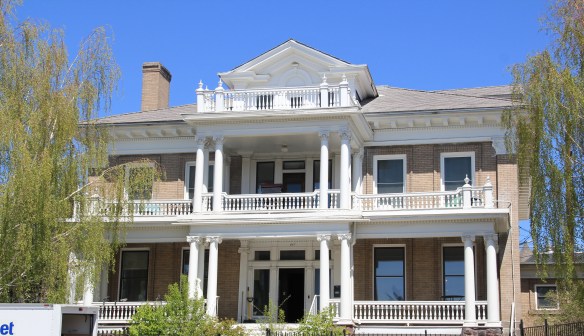
 Some places speak to larger truths, often hidden in the landscape, of segregated spaces and segregated lives. This corner of Idaho Street (see below) was once home to the local African Methodist Episcopal church, which served a small surrounding neighborhood of black families.



 Let me just jump right in: I do not know of another town in Montana that has done more with the concept of heritage development than Butte in the last 30 years. Heritage development, in brief, means that a community identifies the stories and places that define their past and sense of identity and then uses them as tools for community revitalization and growth. The stories and places must be authentic, meaningful, real–fake pasts don’t get you very far. In 1981, out of fears that its storied and nationally significant history would be lost in the haze of late 20th century urban renewal and economic change, Butte created as part of local government the Butte-Silver Bow Archives–everyone I knew were excited about its potential and its early discoveries at the time of the state historic preservation plan work in 1984-1985. Now that institution is one of the key rocks upon which Butte’s future lays. Above is the conversion of a historic firehall into the modern archives/heritage center the institution is today–in itself a great example of adaptive reuse and historic preservation at work.


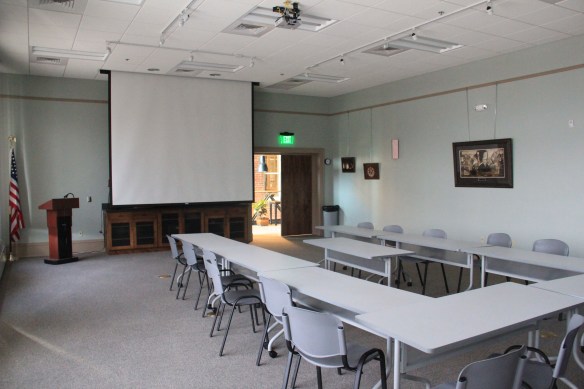 a vibrant institution, always in touch as its community room hosts other heritage groups and special programs throughout the year. The archives is just around the corner from one of the most important, and solemn, places in the city, the location of the Butte Miners’ Union Hall, which was bombed in 1914.
 Heritage development has become part of the basic sinews of Butte. Along with its active archives board, the city also maintains an effective historic district commission, and provided seed money for several key projects over the past generation. The Original Mine site below, the city’s first copper mine, not only serves as part of the city’s public

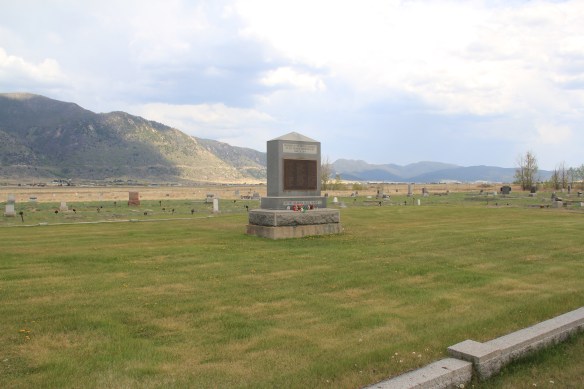
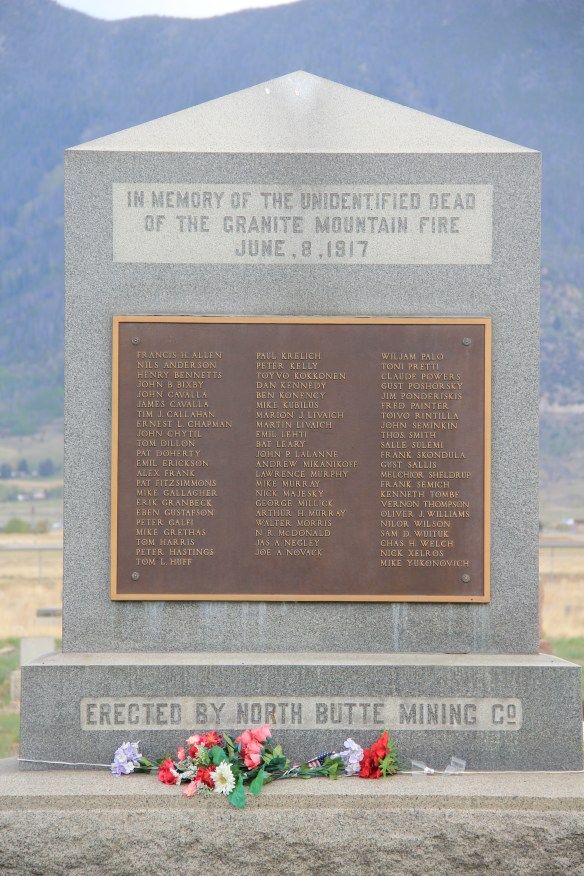 Today the Granite Mountain site is one of the best interpreted mining properties I have encountered. The miners’ stories are told–often with the words they were able to write down before dying from the lack of oxygen–and their multiple ethnic backgrounds are acknowledged, and celebrated.
 The interpretive memorial overlooks the mine, and is located high over town. But when I visited in May 2012 a school group was there too, along with visitors like me.


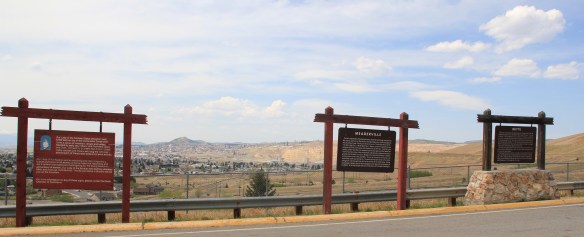 All of these efforts considerably enhance earlier efforts at public interpretation, be they along Interstate I-15 and its overview of Butte or the visitor center maintained just off the
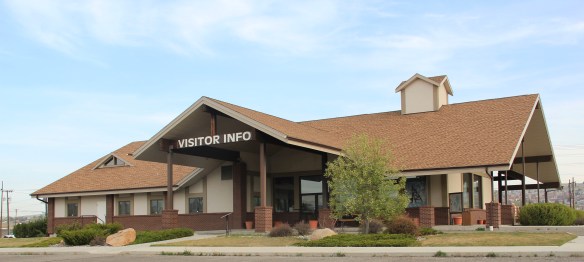 interstate by the local chamber of commerce. The center, yet another change in the last 30 years, is an attractive reproduction of a classic railroad depot design. It also provides a useful perspective of the city from its south side, giving special prominence to the soaring clock tower of the historic Milwaukee Road depot.
 The Berkeley Pit in 1984 was a giant hole in the earth, with a viewing stand. It too now has a more comprehensive heritage experience with a small visitor center/ museum adding to the public understanding of the massiveness and significance of the pit.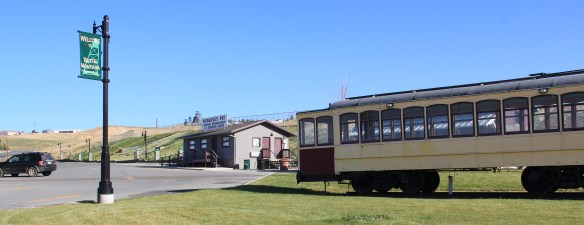





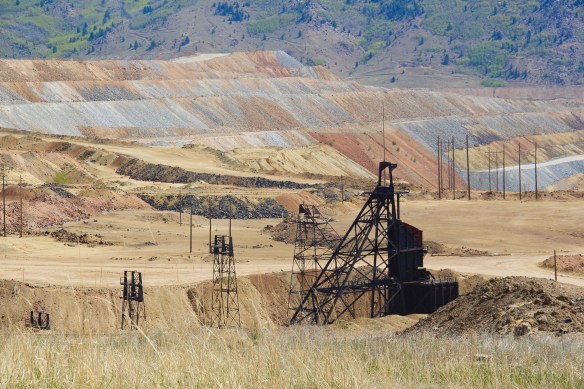 Butte–the copper city that was once the largest urban area in Montana–was a place undergoing tremendous stress at the time of state historic preservation plan work of 1984-1985. The closing of the Berkeley Pit–the most scarred landscape of that time in Montana (the coal pits of Colstrip now surpass it)–shocked so many since Anaconda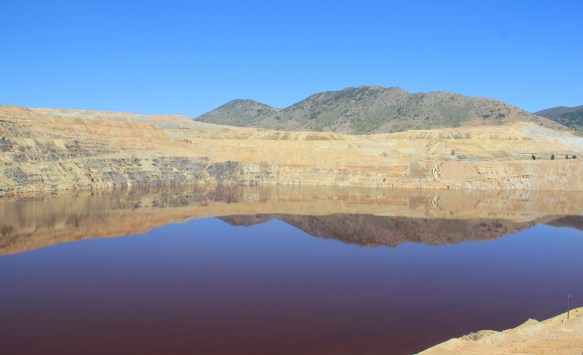
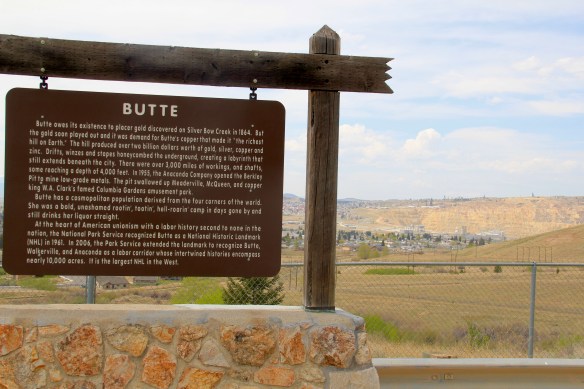

 From here you understood that Uptown–the state’s most sophisticated urban setting–was little more than a speck within a larger landscape where people lived and toiled, scratching out lives for their families, building communities, providing raw materials to a hungry industrial world. But what seemed to me to be the vastness of Butte was actually a decidedly human response to the far greater vastness of the northern Rockies. Here was a landscape of work like few others in this nation.
 There are few better places in the United States to explore the landscape of work, and how opportunity attracted all types of people from all sorts of lands to mine the copper, to house the workers, to feed the families, to provide rest and relaxation, to do all of things big and small it takes to keep a place humming 24 hours a day for decades, taking from the earth materials that made modern suburban America possible.
 I cannot touch upon everything or everyone that define the Butte experience today but in the next several posts I want to dig deep into this landscape and discuss how this transformed place is now, for me, the most compelling spot of all in Montana.

