Butte’s Dumas Hotel needs help!

fullsizeoutput_4af

The Dumas Hotel was the location of the last operating brothel in Montana.  The brothel closed in 1981, the same year I arrived in the Big Sky Country.  During the historic preservation survey of 1984-1985 the state preservation office knew the history of the Dumas, and it was part of the Butte National Historic Landmark district.  But its future was largely unknown–could it be a museum?

+5l2C5zCR%6Xx5bVdLqlpg

When I revisited the Dumas in 2006 it seemed well on its way to being a tourist attraction, not a historic site where the issue of prostitution in Butte could be interpreted fully and fairly.  Then in 2012 the future seemed different; new owners were taking the needed restoration seriously.  Then in the middle of this decade one of my MTSU M.A. students, Veronica Sales, took on the topic of the Dumas as her thesis, creating a solid context for future renovation and a more robust and accurate interpretation.

5RjfIsilTNyawT+aLg9r6A

But the unexpected death of the hotel’s owner, Michael Piche, in early 2018 has put that promise to the test.  Piche was only 34.  Who could replace his energy? Renovation stopped in its tracks.

Twn7YR3fQNGuczHmVnuJogau2lFCreTXe7nBJLUh6sIw

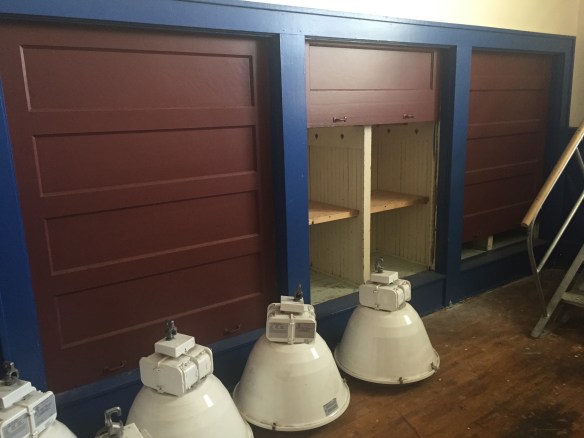
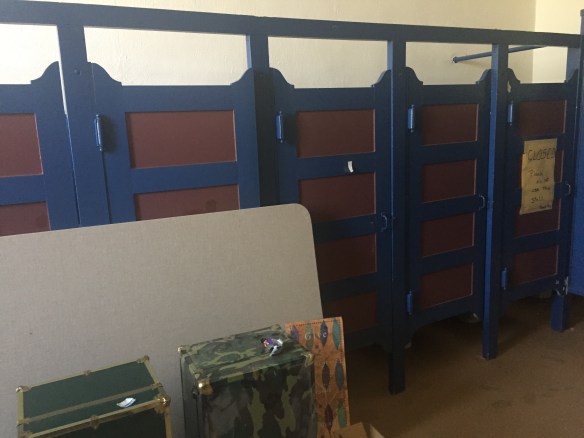
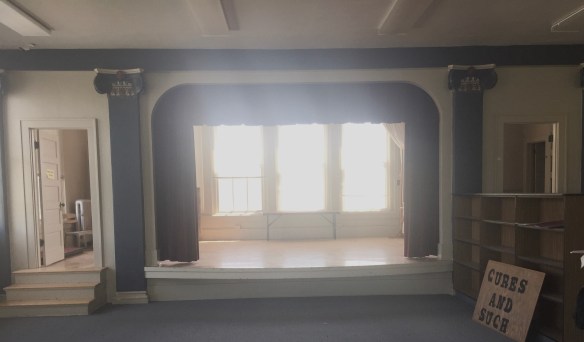
The place was disheveled when I visited in May. The family had just reopened the place and openly wondered what would and could happen next.  Let’s hope the future involves

fullsizeoutput_4aa

a comprehensive restoration and a “whole story” interpretive program.  The sex trade in the American West is an uncomfortable but necessary story and the Dumas has plenty of evocative spaces, like the bare room above, that address the reality of the business.

zvqLj+BuS6i2YS6K5MPtFg

iLkgcJVqRLG9+PJOkKmZ%Q

Progress has been made from 2012 to 2018.  But this historic place needs our help–and a similar effort needs to take place for the brick Blue Range of “cribs” that is located across the street.  The preservation of the Dumas Hotel is important as the best intact

fullsizeoutput_4ac

example of a northern Rockies brothel.  The preservation of this building and what is left of Butte’s historic red light district need to be a concern for many who want to tell the whole story of the copper mining era in Butte.

Hamilton’s Daly Mansion: A New Interior and New Interpretive Directions

4hZrqaLtSzmk1rzEQCa6FQ

The story of the Daly Mansion from a shuttered family owned property in 1984-1985 to a fully realized historic house museum 30 years later also reflects well my timeline of engagement with the historic landscapes of the Big Sky Country.  It was a time capsule in the mid-1980s–a house starting to come apart but full of family furniture, papers, and countless treasures.  When the house was saved but the interior furnishings sold at auction, it seemed like a permanent separation.

EkyLHB8mRjeXZA7n+lufyw

My first post on this blog in 2013 about the Daly Mansion and its restoration lauded the determination of the local non-profit to finish the exterior renovation and repairs, and to have the place open to the public on a regular basis.  It was and is an impressive achievement in a time when so-called experts say the era of historic house museums is over. But it was very much an exterior tour–when I visited six years ago, photographs were not allowed, not so much to protect items but because so much remained to be done. The place just did not have a historic “lived in” look.

Q%Yw%lY1Tt6X8k2QSSHZWg

In the last five years, the Daly Mansion board and its many local supporters have finished the job.  Key pieces of family furniture, like the settee above and much of the dining room below, have returned, due in large part to purchases and commitments made at the original auction in the 1980s but many objects coming back to the house due to the persistence of board members and the willingness of auction buyers to return items now that 30 years have passed.

NTJeRCuDQvK2cOyUD7zVYQ.jpg

The result is a house museum that depicts well the life of a wealthy family on their version of the 20th century country estate, and now with an appropriate focus on Margaret Daly, who selected the architectural style, purchased many of the furnishings, and kept the estate forefront in Montana luxury for four decades (Marcus Daly died in 1900, before the Colonial Revival conversion of the original house; Margaret lived until 1941).  Margaret Daly’s bedroom furniture had long been in the collections of the University of Montana Library–they are now in their rightful place in the Daly Mansion.

smgC1%CUR7KuSbdZj9mqcA.jpg

fosNfzQiRMypST1%yswmEQ

NLsfGdg6SoalUOfw4Uv2+g

The lushness, and personality, of Margaret Daly’s private quarters is now the norm across the house, from the first floor parlor to the second floor setting room.

OhKso7MERLSfWjgo2u6oEw.jpg

SbH30%5tRFajxuL%Bb0TrQ.jpg

Even the third floor ballroom, once an evocative but largely empty space, is now used to display and interpret the rather amazing clothing collections of the museum.

OC04pgQ+QjyDWAqPjJ8DXQ.jpg

Certainly the words of one visitor during my May 2018 ring true:  “they were rich but had little taste” in the decorative arts.  But for Margaret Daly her Riverside estate was not a showplace as much as a place to escape for the summer.  The hodge-lodge of trendy but individually undistinguished furniture and objects suited that purpose just fine.

fOljPdfFSMO3yiJxDTQqUg

The Daly Mansion is at a new place–a preservation and restoration project that had stretched out for thirty years.  But now the interior story, especially the focus on Margaret Daly, steps up to center stage.  The meaning of Riverside and the Bitter Root Stock Farm is still waiting for a full exploration and analysis.

mBtku6y1Tw6O+dhoStGj4g


Anaconda’s Club Moderne: May 2018 Update

In my brief trip to Montana in May 2018, I had the opportunity to visit several iconic places that had undergone changes since my field visit earlier in the decade.  One such place was Anaconda’s Club Moderne, one of Montana’s most outstanding Art Moderne-styled landmarks of the 1930s.

The tavern had caught fire in 2016 and at first everyone thought all was lost.  But the owners and the community responded quickly, the Club reopened in 2017, as I reported in a blog in late 2017.

To my eye, the place certainly looked the same from the exterior, with the new paint job even sprucing up the colorful sign, which had been an early historic replacement of the original more austere lettering.

IMG_5513

The interior had naturally changed the most since the fire caught into the roof and had burned out the roof, taking quite a bit of the original decorative material, but surprisingly enough was left to tell me that I was still in the old bar.

I really thought the restoration of the lounge had succeeded–the large open space with its distinctive bar remained, but again some modernization had taken place, with the touch of the phoenix rising along one interior wall being most appropriate.

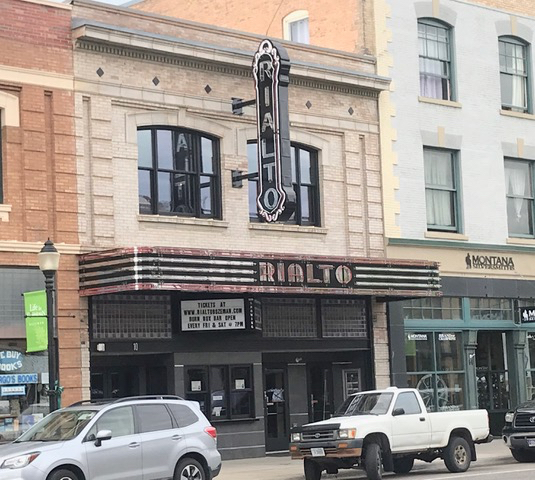
My conclusion: the Club Moderne is still a very valuable historic landmark, and the restoration undertaken by the owners and supported by the community is impressive. What is striking to me as well is that two neighboring communities, Deer Lodge to the north and Anaconda, had both in this decade rescued historic community landmarks, Deer Lodge with its Rialto Theatre and Anaconda with the Club Moderne. Historic Preservation is alive and doing well in southwestern Montana.


Ready to hit the road in 2018

Rosebud town signs, roadside, Rosebud CoIn late may I return to the Big Sky Country, my first visit in two years, when I will once again be looking for changes in the historic built environment as I speed along the state’s

Prairie Co Fallon YS bridge NR and I-94 bridge roadsidehighways and backroads, crossing the bridges over the Yellowstone River, and trying my best to catch as many Burlington Northern and Santa Fe Railroad freight trains as possible, although I doubt that I will ever have such a fun moment than in 2013 when I

Valley Co Vandalia BNSF 3caught this freight along the original Great Northern route while I was driving on the original–still dirt and gravel–road of U.S. Highway 2 between Tampico and Vandalia.

Valley Co Samuelson statues US 2 w of Glasgow 4 roadside - Version 2Certainly I will keep my eye out for Montana’s famed wildlife, although I don’t expect again to see a bighorn sheep outside of Glasgow, especially one being chased by a dinosaur.  I will also stay on the lookout, as regular readers of this blog well know, for the beef–it is rarely a question of where’s the beef in Montana.

Missoula Co MT 200/83 jct roadside  1No doubt there will be both new and older historical markers to stop and read; the evolving interpretation of Montana’s roadside continues to be such a strong trend.

Valley Co MT Hwy marker US 2 before Vandalia turn roadsideAnd through all of the brief stay in the state–perhaps 10 days at the most–I will also stop and enjoy those local places, far removed from the chain-drives roadside culture of our

Matt's Drive-in, detail, roadsidenation, where you can enjoy a great burger, rings, and shake, like Matt’s in Butte, or a good night sleep at any of the many “Mom and Pop’s” motels along the state’s highways, such as this one in Big Timber.

Big Timber roadside motel

See you on the road!

Back on the Hi-Line at Havre

Hill Co Havre 1st Lutheran 1

This week’s Great Falls Tribune featured a story about the heavy snowfall this here in Havre, the largest town along Montana’s Hi-Line.  The story got me thinking about this classic late nineteenth century railroad town, one of my favorite places to visit in Big Sky Country.  In past posts, I have talked about how residents moved their historic preservation agendas form a focus on the buffalo jump west of town along the Milk River to the old residential neighborhoods themselves.  I gave a particular focus to Havre’s wonderful array of domestic architecture, especially its many variations on the

Hill Co Havre residential historic district 1 Arts and CraftsCraftsman style popular in the early 20th century. It is a place where the pages of the famous Craftsman Magazine seem to come alive as you walk the tree-lined streets. But there is more to Havre’s historic districts than the homes–there are the churches, about which more needs to be said.

Hill Co Havre 1st LutheranAs my first two images of the First Lutheran Church show, Gothic Revival style is a major theme in the church architecture of Havre, even extending into the mid-20th century.  First Lutheran Church is a congregation with roots in Havre’s boom during the homesteading era.  As the congregation grew, members decided to build the present building in 1050-51, adding an educational wing by the end of the decade.

Hill Co Havre residential historic district Episcopal Church

An earlier example of Gothic Revival style is St. Mark’s Episcopal Church, built in 1911 by architect Mario Riffo of Kalispell.  Noted havre architect and builder Frank F. Bossout worked for Riffo at the time and this commission may have been Bossout’s introduction to a city that his designs would so shape in the years to come.

Hill Co Havre residential historic district 1st baptist The earliest Gothic Revival styled church is First Baptist Church, constructed c. 1901, shown above.  The unidentified architect combined Gothic windows into his or her own interpretation of Victorian Gothic, with its distinctive asymmetrical roof line.

Hill Co Havre 539 3rd St-AME church 1A more vernacular interpretation of Gothic style can be found in the town’s original AME Church, built c. 1916 to serve African American railroad workers and their families, and later converted and remodeled into the New Hope Apostolic Church.

Hill Co Havre residential historic district 1st presbyterian

The First Presbyterian Church represents the Classical Revival in Havre church architecture.  Built in 1917-1919 and designed by Frank F. Bossuot, the church’s style reflected that of the nearby courthouse, which Bossuot had designed in 1915, and the town’s Carnegie Library, also from Bossuot’s hand in 1914.

Hill Co Havre St Jude catholic church Spanish Revival

Hill Co Havre St Jude catholic church 1 Spanish RevivalThe Spanish Colonial Revival style of St. Jude’s Catholic Church, however, shows us that architect Frank F. Bossuot was more than a classicist.  The church’s distinctive style sets it apart from other church buildings in Havre.

Hill Co Havre Van Orsdel MethodistThe same can be said for a church building that comes a generation later, the Van Orsdel United Methodist Church.  When the Havre historic district was established, this mid-century modernist designed building was not yet 50 years old, thus it was not considered for the district.  But certainly now, in 2018, the contemporary styling of the sanctuary has merit, and the church has a long history of service.  It started just over one hundred years ago with a brick building named in honor of the Montana Methodist circuit rider W. W. Van Orsdel who introduced the faith to Havre in 1891.  A fire in late 1957 destroyed that building, and the congregation immediately began construction on its replacement, dedicating it in 1958.

From Gothic to modern, the architecture of Havre’s historic churches reflects the town’s robust history in the first half of the twentieth century–and this is just a taste of the many interesting places to be found along the Montana Hi-Line.

Fort Benton and the National Stage

img_8791

In February 1984 one of my first assignments on the grand field study of Montana known as the state historic preservation plan survey was to check on the progress of the restoration and reopening of the Grand Union Hotel in Fort Benton.

Chouteau Co Ft Benton Grand Union Hotel 4

Chouteau Co Ft Benton Grand Union Hotel 1The work was still underway then, but the result after 30 years of local investment and engagement, assisted mightily by the state historic preservation office and other state groups, is impressive.  The Grand Union is a riverfront anchor on one of the nation’s most important river towns in all of U.S. history.

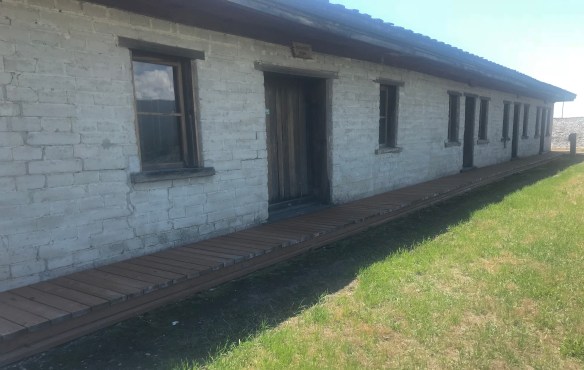
Chouteau Co Ft Benton Old Bridge 9The success of the Grand Union is mirrored in another property I visited in my 1984 day and a half in Fort Benton:  the reconstructed Fort Benton.  There were bits of the adobe blockhouse and walls still standing in 1984, as they had for decades as shown in the old postcard below.

Unknown

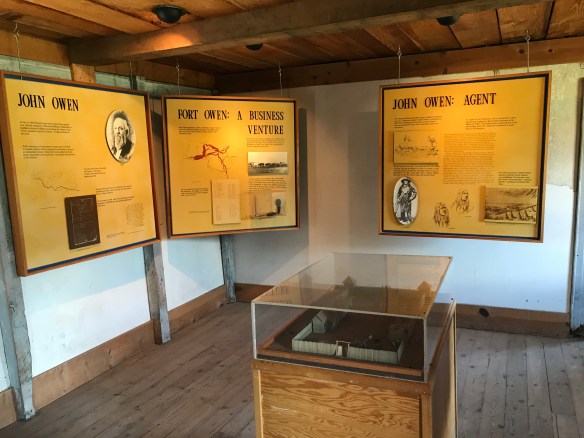
What the locally administered Museum of the Upper Missouri managed to do was to protect a vitally important site of national significance, and then through its own museum exhibits, try to convey the significance of the place to those who happened to discover it.

Chouteau Co Ft Benton Front St museum

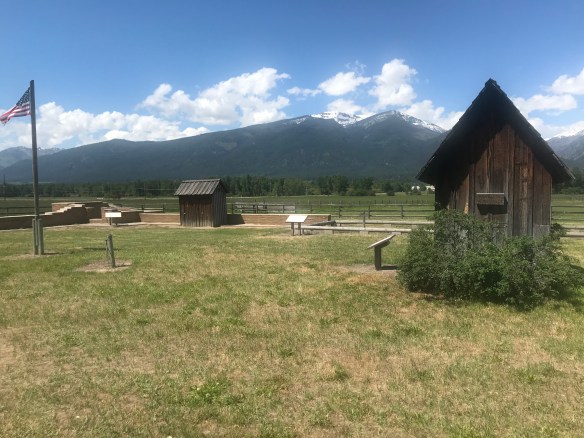
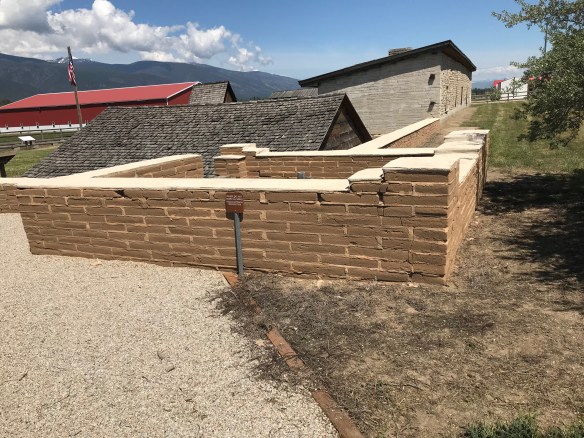
In the past 30 years, the museum and its supporters managed to continue protecting the archaeological remnants of the fort but also to rebuild the fort to its mid-19th century appearance.  This reconstruction is no small feat, and naturally requires staffing, commitment, and monies to keep the buildings and exhibits in good condition.

Chouteau Co Ft Benton old fort  and buffalo robe press


Chouteau Co Ft Benton old fort 19


A few steps away is another preserved historic building, the I. G. Baker House, built for one of the town’s leading merchants and traders, in weatherboard-disguised abode, in the traditional central hall plan of the mid-19th century.  For decades, it has been a passive historic site, opened to the public, with rooms and collections protected by plexiglass.  You already have to know much to appreciate the jewel this early bit of domestic architecture represents in understanding the building traditions of the territorial era.

Chouteau Co Ft Benton Front St Baker House

These successful heritage development of the hotel, the fort, and the preservation of the I.G. Baker House, however, has not spurred a greater recognition of the significance of Fort Benton to either national audiences or even residents of the Big Sky Country. When I mention Fort Benton here in the east I typically get blank stares or a quick change of topic.  But the town was the westernmost port on the Missouri River, the first interstate exit if you will into the northern plains and northwest.  From Fort Benton ran trails and roads into western Canada, Washington State, and into the mines of the Rocky Mountains.  The building of the Manitoba Road in the late 1980s eventually meant the town’s importance as a river port was bypassed, but from the mid-19th century into the 1880s, Fort Benton was THE place for commercial expansion, riverboat travel, economic exchange, and the deeper cultural exchanges of the fur trade, with all of those events shaping the national economy and culture.  How can such a legacy become diminished? Why? Is it the central Montana location?  The lack of national folklore heroes?

Chouteau Co Ft Benton Choteau Hotel 1

Chouteau Co Ft Benton Front St 35

Chouteau Co Ft Benton Front St 4

Fort Benton is doubly valuable because it is a town with layers, as I have discussed in earlier postings.  The town, unlike many of Montana’s early settlements, was no ghost town, instead it was a town with its frontier river port layer, its territorial layer, and its homestead boom layer all competing for attention. The past lives side to side with the present in Fort Benton and thus, it has the potential to shape the future of the town, and this region, in ways that cannot be replicated elsewhere.

Chouteau Co Ft Benton Front St 2

Now it is time to stress to our national representatives that it is time for America to cast its eyes, and its support, for the preservation and heritage enhancement of a place that tells so much of the nation’s story.  Here at Fort Benton is a living historic town, a place where you can stay a bit and learn how the country has grown, changed, and together can better face our uncertain futures. The residents have made a lasting commitment–it is now time for Fort Benton to reach the national stage.

Chouteau Co Ft Benton Front St 40


A winter day in Tennessee, fond thoughts of Montana

665FD124-6386-4018-AC4D-22477FE6D8D1

There’s been a bit of winter in Tennessee in early January 2018 and my university has been closed for two days due to three inches of snow (that’s no misprint). Days like this one lead me to reflection of my jaunt across Big Sky Country in the cold of February to the warmth of mid-May 1984. I had spent 2 months at my cubbyhole in the basement of the Montana Historical Society, shown below, and I was ready I

thought to hit the road. Wonders of all sorts I would find and here are just a few of the special (admittedly perhaps not spectacular to outsiders) places I encountered.

Just up the tracks from the opening image at the southern tip of Beaverhead County was the Hotel Metlen in Dillon. A grad student recently asked me about it, having come across it while trolling the internet. It sounds like a fleabag the student remarked–I probably didn’t help when I recalled staying there for 10 bucks in 1984. But what a great Second Empire-styled railroad hotel!

It had upgraded during my last visit in 2012–still classy in a dumpy way, if that makes any sense.

On the opposite end of the state, at Thompson Falls, was another favorite lodging spot, a classic 1950s motor lodge, the Falls Motel. Spiffy now but still Mom and Pop and so far away from the chain experience of today.

But as regulars of this blog know, I didn’t care where I stayed as long as beef, booze, and pie were nearby. Real rules for the road. The beef could range from the juicy roadside burgers from Polson (the b/w image) to the great huge steaks at Willow Creek (the yellow tinted roadhouse).

And speaking of roadhouses Wise River Club from 1984 above is still going strong and as friendly as ever. While the owners keep changing at Big Timber–the sign still

chops away and the beer is still cold. That is what you need on the road.

Wait! Pie matters too, represented by the Wagon Wheel in Drummond, above. Southerners do brag about pie, and I believed in that regional myth, until I traveled Montana. I swear that there are most great pie places in a single Montana County (say, Cascade) than all of Tennessee. On cold days I still think of a Montana cup of coffee (always strong) and a piece of grit pie. In 1984 I just needed that one afternoon stop to push on for a few more hours of driving and documenting the captivating landscape of the Big Sky Country.

Lake McDonald and its boats

Flathead Co GNP Lake McDonald

The second week of January 2018 was one of both good and bad news for historic preservation in the Big Sky Country.  First came the good news out of the State Historic Preservation Office in Helena about the National Register of Historic Places listing of two more Lake McDonald boats at Glacier National Park.  The DeSmet, shown above, has long been my favorite.  It has navigated the calm waves of the lake since 1930.  Designed and built by John Swanson of Kalispell, the boat became an important way that the increasing numbers of automobile visitors to Glacier could experience the lake and it helped make the Lake McDonald Lodge a stronger resort experience.  Quite an amazing piece of craftsmanship from Swanson, and so few of his creations remain today.  And as the photo above documents, the boat visually complements the setting–a reminder that the human presence is so small and insignificant compared to the majesty of the mountains.

Flathead Co Whitefish Main street FLW 5

The bad news also came from Northwest Montana:  the demolition of the Frank Lloyd Wright-designed Lockridge Medical Clinic in Whitefish.  Now there is no way in Montana to have a direct experience with a work from America’s best known and greatest architect. I have spoken about the preservation needs of this architectural jewel earlier in this blog–and like the loss of the Mercantile Building in Missoula last year, development pressures lacked the patience, and the vision, to see anything but a possible empty lot, where a modern “historic” take–the fake past in other words–could stand.

Flathead Co Whitefish Main street 28

Such an attitude in Whitefish is doubly disappointing because in the 35 years I have visited this great mountain railroad town, the real history continues to disappear in favor of a fake, quasi-western feel past, as above. Call this progress if you will but in reality it is just another step into the abyss where Whitefish will longer be distinctive but just a place, like hundreds of others, trying to create a sense of identity and capture again what they once had.

Butte’s World Museum of Mining: A forgotten jewel

Established in 1963, Butte’s World Museum of Mining is both a historic site and a historic building zoo. It preserves and interprets the Orphan Girl Mine while it also re-creates a fanciful Hell Roarin’ Gulch, with the townscape filled with both moved historic buildings and modern interpretations of the mining camp that existed in Butte in the late 19th century.

Butte WMM Orphan Girl mine work crew

The Orphan Mine historic site is the best single place in Montana to explore the gritty reality of deep-shaft mining in the Treasure State.

Butte WMM Orphan Girl Mine 4

Butte WMM Hell Roarin Gulch 14

The metal cages that the mines used to go down into the mines still give me the chills–the sacrifices these men made for their families and community is impressive.

Butte WMM Hell Roarin Gulch 1The Hell Roaring’ Gulch part of the museum is in stark contrast to the mid-20th century engineered, technological landscape of the Orphan Girl Mine.  It interprets the mining camp days of Butte from the late 1860s into the 1880s before the corporations stepped in and reshaped the totality of the copper mining industry and built environment of Butte.

Butte WMM Hell Roarin Gulch 4

Butte WMM Hell Roarin Gulch 3

Butte WMM Hell Roarin Gulch 20

Like many building zoos of the highway era (the museum is easily accessed from the interstate), the recreated town emphasizes the ethnic diversity of the mining camp as well as some of the stereotypes of the era.

Butte WMM Hell Roarin Gulch 9

Butte WMM Hell Roarin Gulch 10

Butte WMM Hell Roarin Gulch 9

But the exhibit buildings also have several strong points, especially in their collections, such as the “union hall” (you do worry about the long-term conservation of the valuable

Butte WMM Hell Roarin Gulch Union Hallartifacts and banners shown in this photo); the store, which displays common items sought by the miners and their families; and various offices that show the business of

Butte WMM Hell Roarin Gulch 5mapping the mines, registering claims, and assaying the metals .

Butte WMM Hell Roarin Gulch 21In my first post about the World Museum of Mining, I addressed this valuable collection of a historic mine, several historic buildings, and thousands of historic artifacts briefly.  Properties like the impressive log construction of St. Patrick’s Catholic Church, shown below,  are invaluable. The World Museum of Mining deserved more attention, and it deserves the attention of any serious heritage tourist to Montana.

Butte WMM Hell Roarin Gulch


Back from the Ashes: Club Moderne in Anaconda

club moderne 4.JPG

The story of historic preservation is always a story of highs and lows, of achievements and losses.  I cannot think of any greater achievement in 2017 than the reopening of the Club Moderne in Anaconda. Montana architect Fred Willson designed this Art Moderne-styled jewel in the height of the Great Depression of the 1930s–life was always tough in the copper smelter town of Anaconda but particularly tough then.  The bar found its community, and a community institution it has always been, from the first time I visited it in the 1980s, see below, to when I returned to visit and photograph the building in

Club Moderne Anaconda Deer Lodge Co. MT

2012. Between those 30 years, patrons might have changed, and poker machines might be stuck everywhere but it was undoubtedly a neighborhood institution, always, for me, a place to talk about history and community with those who lived nearby.

Club moderne interior

The fire that came suddenly in October did not injure anyone–thankfully–but it left an immediate mark on the community soul–would once again Anaconda lose a place that might not be very important to others but was vital to the residents and their sense of identity and place.

Screen Shot 2017-12-20 at 12.46.25 PM

Despite the damage and the immediate media stories that the bar had been destroyed, the walls remained standing, and the spirit of the owners and the patrons remained resolute–here was a place that not only mattered but that was worth the effort and the funds to restore, reopen, and resume its service to the community.

Club Moderne 1.JPG

No it is not the same place it was before the fall 2016 fire. But it is still worthy of listing in the National Register of Historic Places, and it is ready to serve the community for now and into the future.  Quite a save indeed for the town of Anaconda and determined owners.

Club Moderne 5.JPG

So in this time of holiday festivities, lift a glass or two or three to the folks in Anaconda for what they achieved in never giving up and giving a second life to a landmark that deserves every bit of attention it gets. Cheers, and happy holidays!