The Missoulian a few days ago had a splendid article about the demonstration of a beaverslide hay stacker at the Grant-Kohrs National Historic Site in Deer Lodge.
Grant Kohrs Ranch
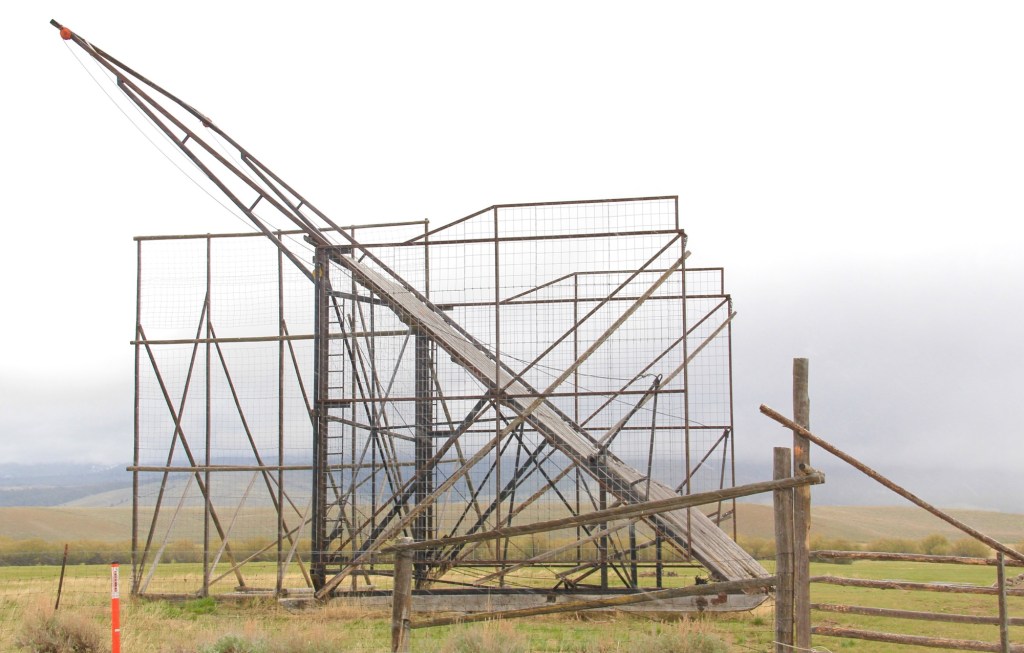
The Deer Lodge Valley is a good place to find these ingenious machines, invented in the early years of the 20th century. Indeed in my 1984 work on the state historic preservation plan I encountered my first beaverslide near Galen, as shown below.
Near Galen, 1984
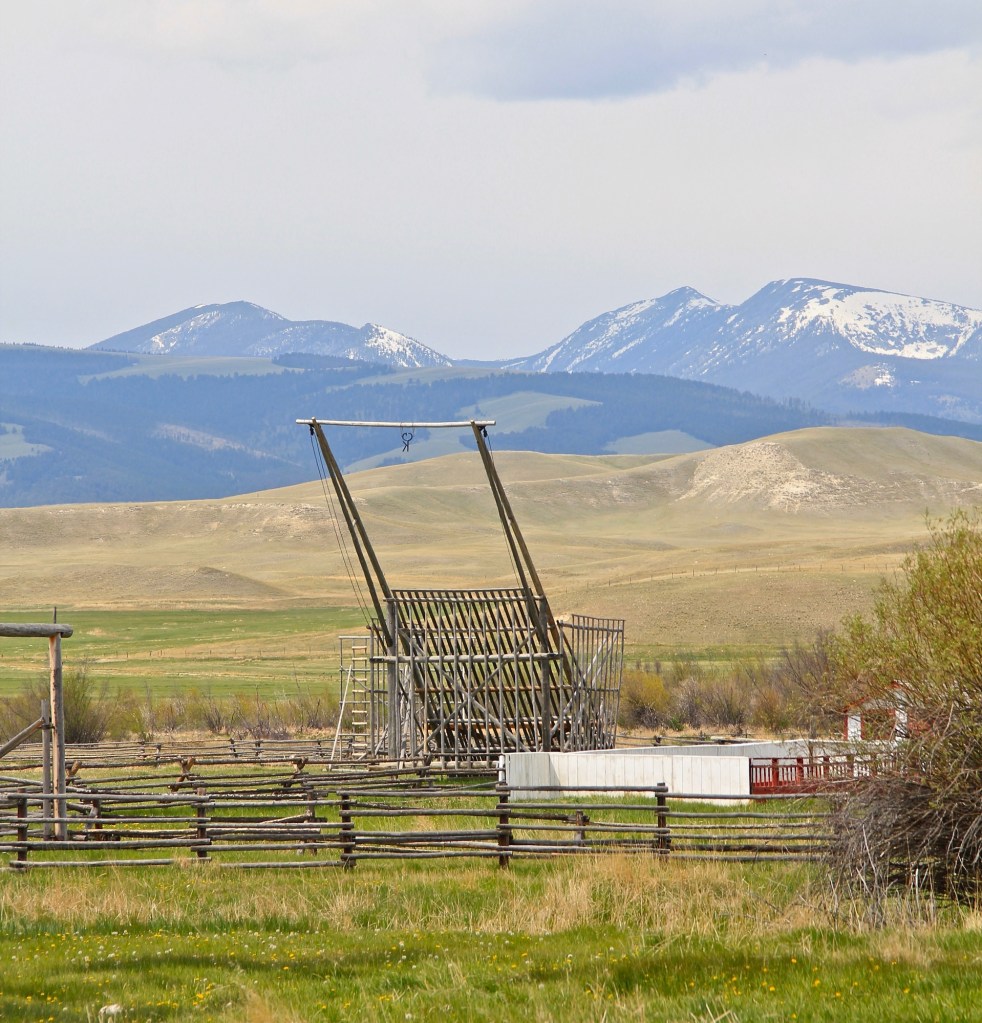
But to see the biggest concentration go to the Big Hole Valley in Beaverhead County. They were invented there in 1908. It takes two teams of horses to pull the hay up the slide and then drop it into the squarish pen, creating the hay stack.
Just outside of Wisdom Two beaverslides along highway 278
You can find great examples along the county’s historic roads.
Lemhi RoadBannock Pass Road
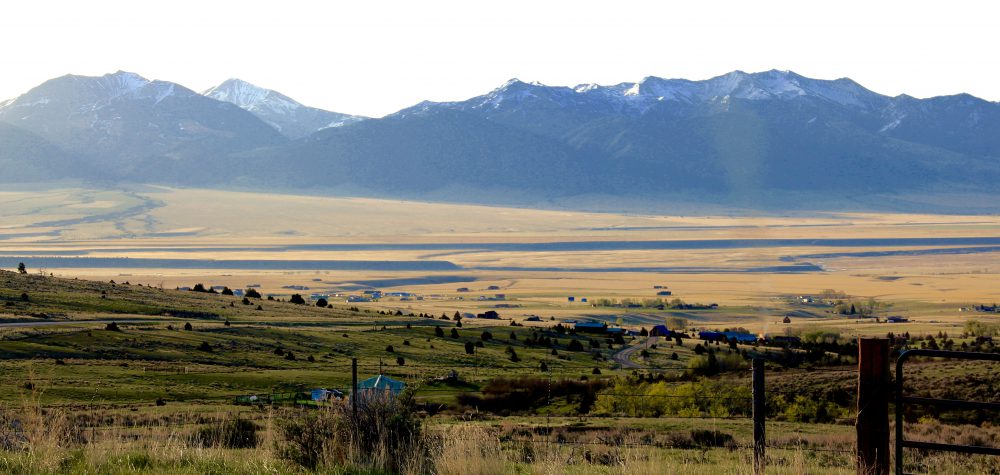
Powell County along the Blackfoot also has a scattering of the hay stackers.
Orphir Creek Road, Powell County Orphir Creek Road, Powell County A marker along US highway 12 interprets the region’s hay stackers
40 years ago I was certain that the beaverslides were not long for this world. Several folks at community meetings spoke of how many had disappeared. Yet ranch families were not ready to let them go, for tradition’s sake and the fact that loose stacked hay keeps better than modern machine baled hay. Beaverslide hay stackers remain part of the rural landscape of western Montana.
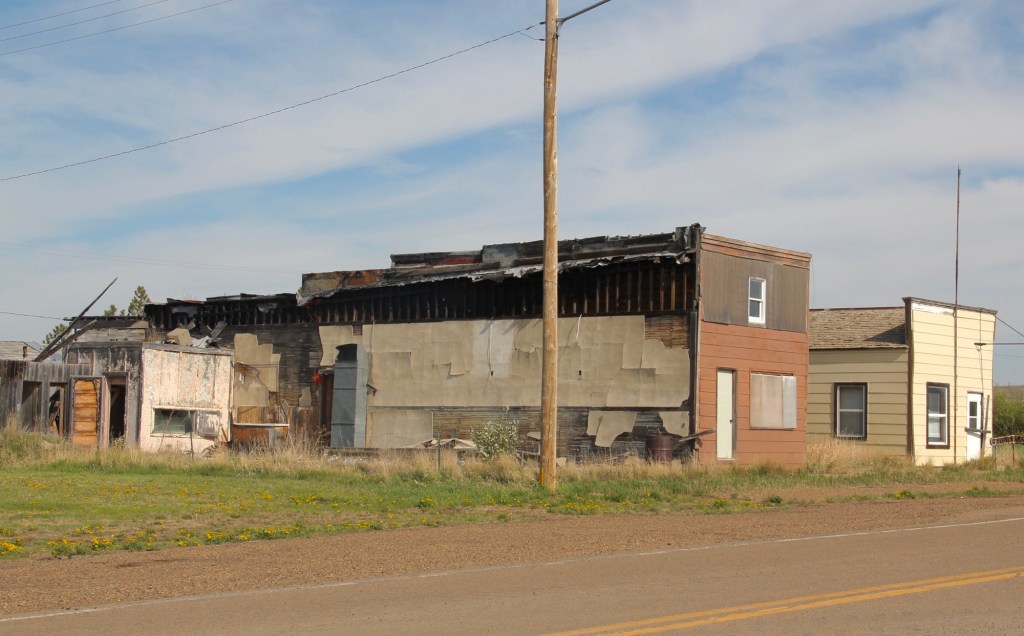
I last visited Whitetail ten years ago. Established along the Canadian-based Soo Railroad line a century earlier, the town was in a free fall, from a height of 500 c. 1920 to a handful of families in 2010. Then the Canadian, then the U.S. government closed the border crossing between 2011 and 2013. Now the town is down to a population of nine in 2020. God bless those still there, doing what they can.
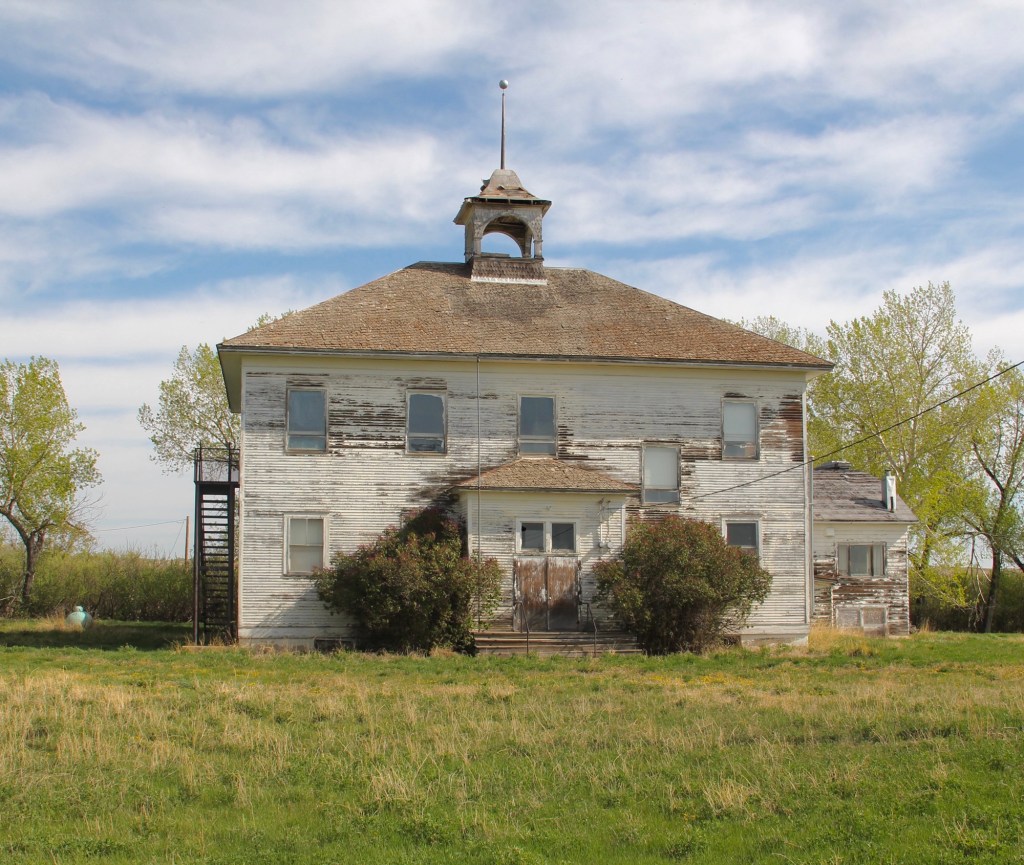
The school building tells much of the story. Built when hopes for the town were high in the 1920s, it’s two-story height and bell cupola made it a landmark in the flat open terrain. I hope when I visit next, the school is there, a silent statement of the dreams with which our high plains were settled.
Secure in its concrete base, the old school bell, removed 50 years ago, is still there to ring, or so I can hope.
The community church, still a gathering place or has it gone the way of the Catholic Church, moved to the Daniels County Museum in Scobey?
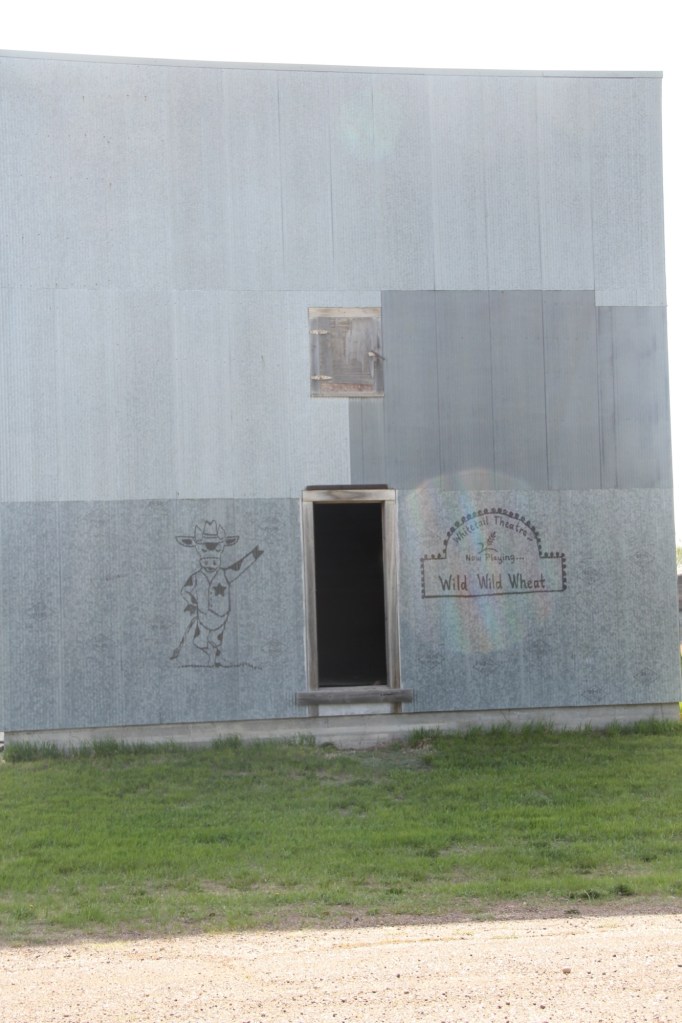
Grain Company BuildingGas station and Garage, 2013Abandoned businesses, 2013A metal facade and open door marked what was left of the Whitetail Theater.
Businesses were largely gone ten years ago. But the post office and grain elevators remained. I bet the elevators are still there serving ranch families but you wonder about the post office.
Whitetail in Montana’s northeast corner is as far removed from Whitefish in Montana’s northwest corner as two places could ever be. They both began as railroad towns. One didn’t make it; the other thrives.
Abandoned home at Whitetail
But what’s been lost at Whitetail tells as much about history as what has been gained in Whitefish. You cannot understand Montana history without both.
In doing the photography for the 1984-85 survey for the State Historic Preservation Office, everything was in Black and White, both for the stability of black and white negatives but also for the cost—color slides were expensive. Thirty plus years later, it’s totally different. Everything is digital and only a few places will even process black and white film.
But I have continued to take a few rolls of black and white film on my recent work in Montana. Here are a few images to share.
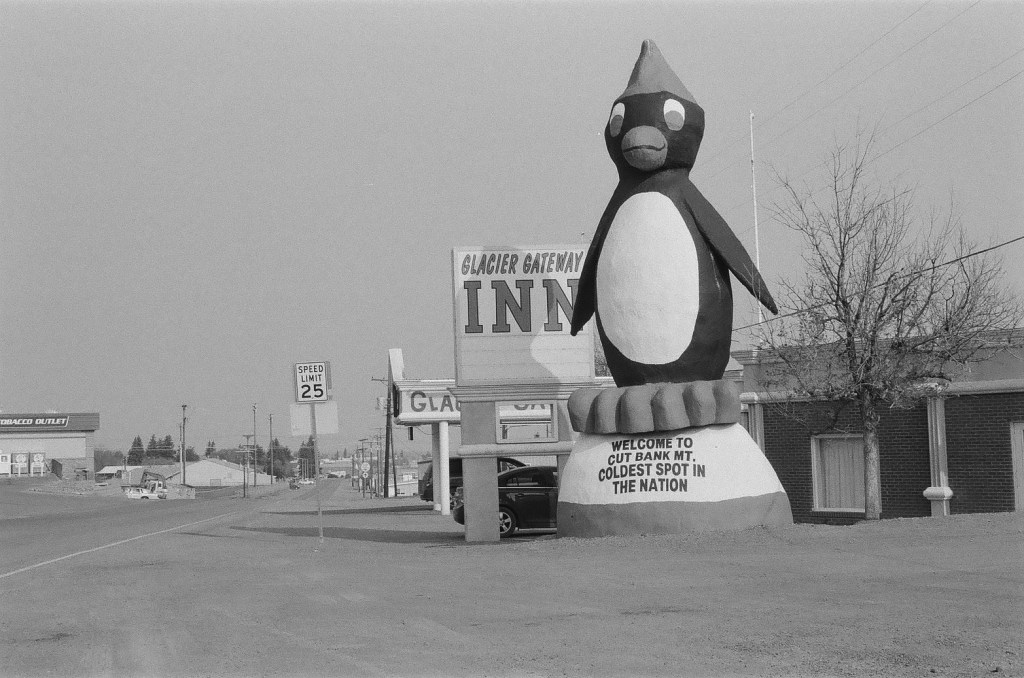
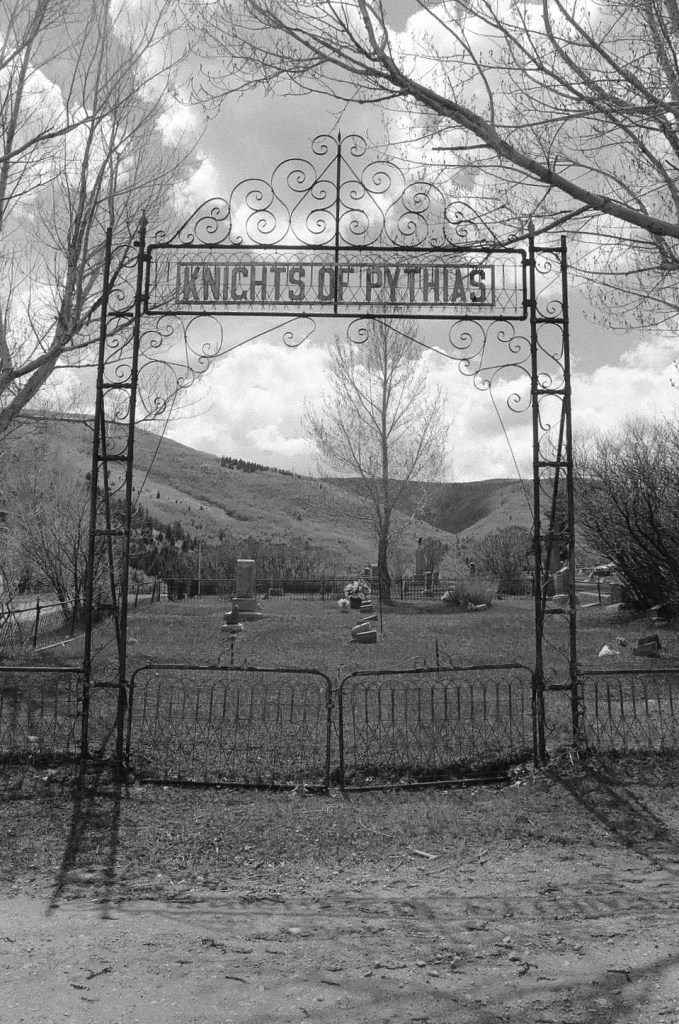
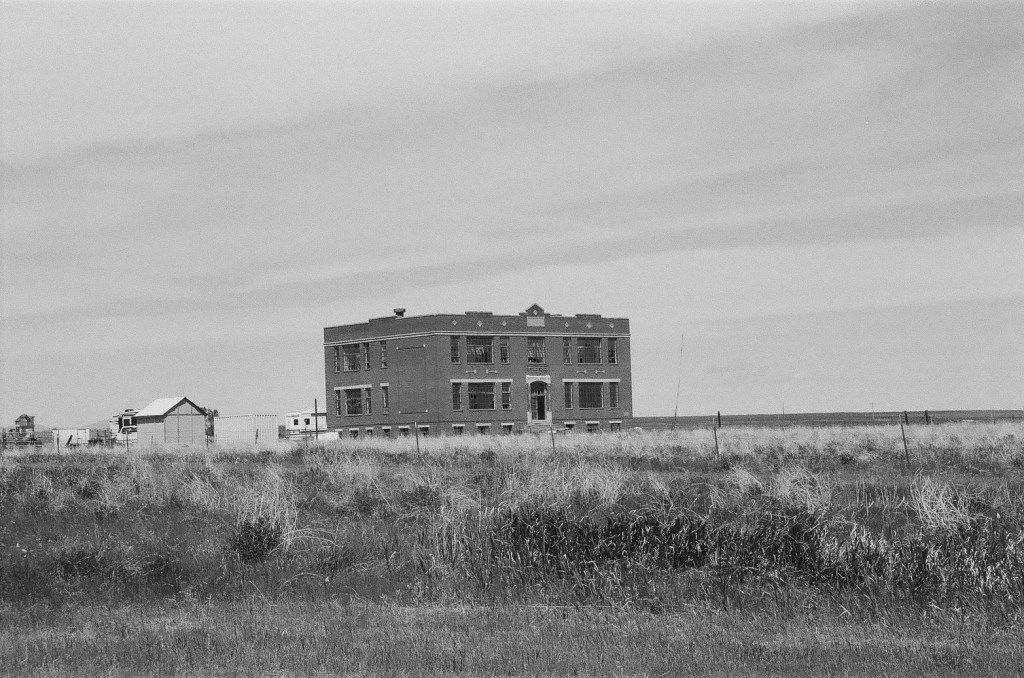
The older US 2 route into Cut Bank features this wonderful piece of roadside sculpture. And back in 1984 the Glacier Gateway Inn was the place to stay.Frank Little Grave in Butte. The starkness and shadows of black and white film is perfect for cemetery work, as this famous grave at Mountain View Cemetery shows.The same is true for Anaconda’s historic cemetery. As I have said in earlier posts, this place is one of the state’s most compelling places. I can explore there all day long. Love the decorative iron work on the gate and entrance to the Knights section at AnacondaGhost towns from either the mining or homestead eras always leave buildings that just seem to say more in black and white. Here we are at Barber on US Highway 12 in central Montana.Abandoned schools that become lonely landmarks of hopes crushed: Buffalo, Montana
In 2024 I began to see media accounts, both regionally and nationally, of how Glasgow, the seat of Valley County, was the most isolated place you can imagine, truly in the Middle of nowhere.
Historic Great Northern Railroad corridor in Glasgow
I’m not one to argue with geographers and economists. I’m sure from their perspective, they got it right. But I never thought of Glasgow as isolated: it is on the Great Northern mainline, and part of the famed Empire Builder Amtrak route, and on U.S. Highway 2.
Great Northern depot, Glasgow
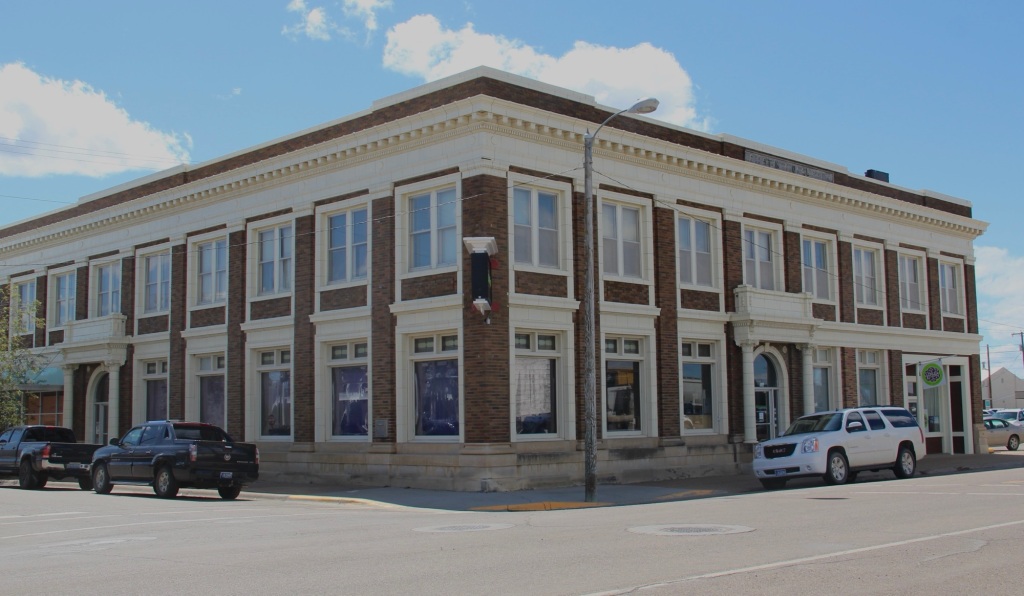
Then the town has always shown a great deal of pride and ambition, conveyed so effectively by its many historic buildings, starting with the First National Bank, built c. 1884 and listed in the National Register of Historic Places.
1st National Bank building, Glasgow
When you enter the town from the underpass of the railroad, the bank is the first landmark to catch your eye, appropriate too for the impact of local banks on a town’s economic prospects during the homesteading boom and bust of the 1910s and 1920s, respectively.
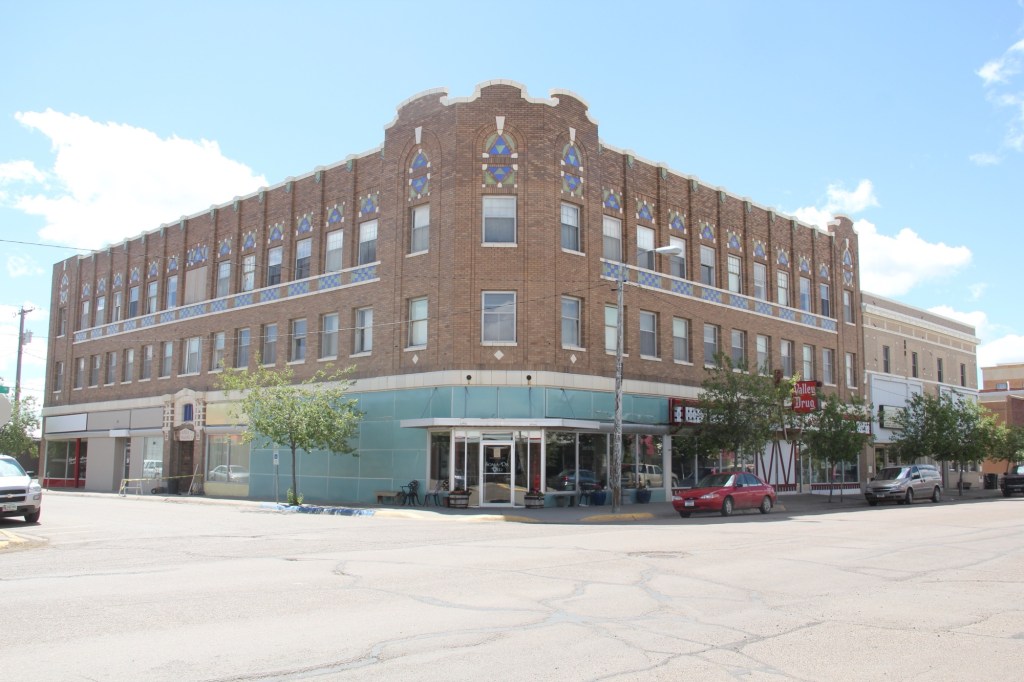
Rundle Hotel, during renovation in 2013
Another landmark from the homesteading era is the Rundle Building, once the Glasgow Hotel and restored in the last ten years as an upscale hotel in the heart of downtown. Built c. 1916 and designed by the important Billings firm of Link and Haire, the Rundle is a captivating statement of an Arts and Crafts-infused Mediterranean Revival style. I have been trying to get back to Glasgow to stay here for the last four years—maybe I will make it in 2025.
The 1930s transformed Valley County through the construction of the mammoth Fort Peck Dam on the Missouri River. Glasgow too has a major New Deal landmark in its U.S. post office and courthouse, built c. 1939 and designed by federal architect Louis A. Simon.
Post office/federal courthouse, Glasgow
Its understated New Deal Deco exterior obscures a jewel of an interior, highlighted by its New Deal-funded 1942 mural depicting local history and the changes brought about by the Fort Peck Dam by artist Forest Hill. This building too is listed in the National Register.
Glasgow post office mural
Another important New Deal supported building was all about the community, and providing new opportunities: the Glasgow Civic Center. It too has a New Deal Deco style, and its large public space has been used for almost every type of event or gathering you can imagine.
Glasgow Civic Center
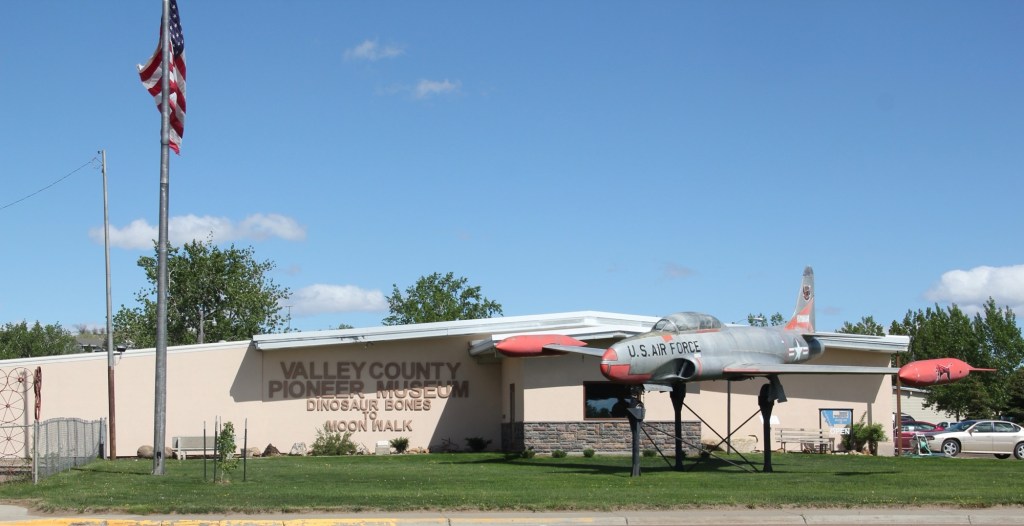
Glasgow’s sense of itself today still respects it past, brilliantly conveyed by its large and expansive museum. When I first visited Glasgow 40 years
Valley County Museum
ago, I held a public meeting on the state historic preservation plan here, and the next morning residents gave me a detailed tour of the recently established museum. I was impressed with its collection then, now it sprawls through the building to the adjoining grounds.
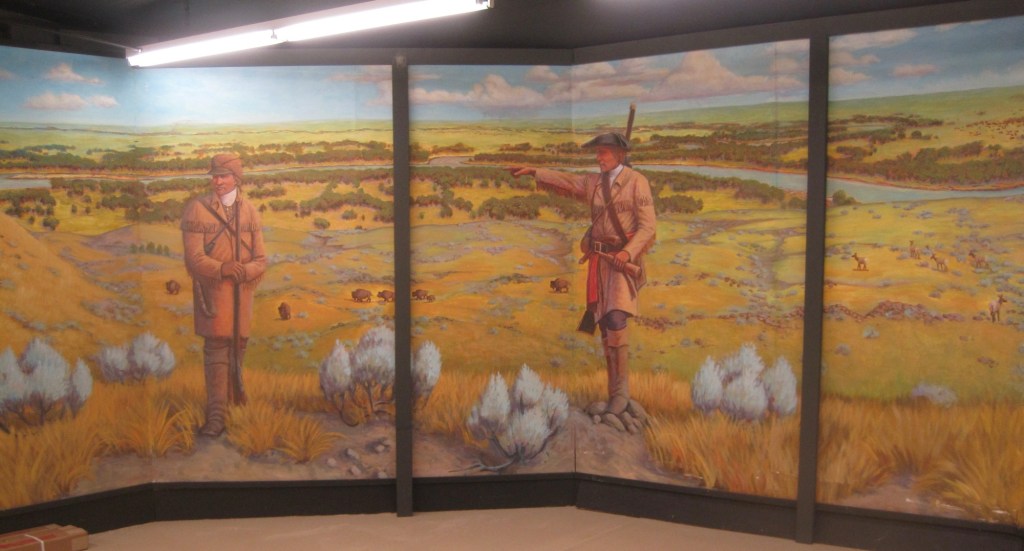
Veterans section of the museumThe high school band sectionLewis and Clark mural, 2095, by Jessie Henderson, a Chippewa/Cree artistThe back bar at saloon exhibit
Indeed, the saloon exhibit underscores another fun part of Glasgow—across from the depot in the original route of Highway 2 is an amazing collection of bars, stores, and eateries, right out of the early 1900s.
Glasgow bars at depot
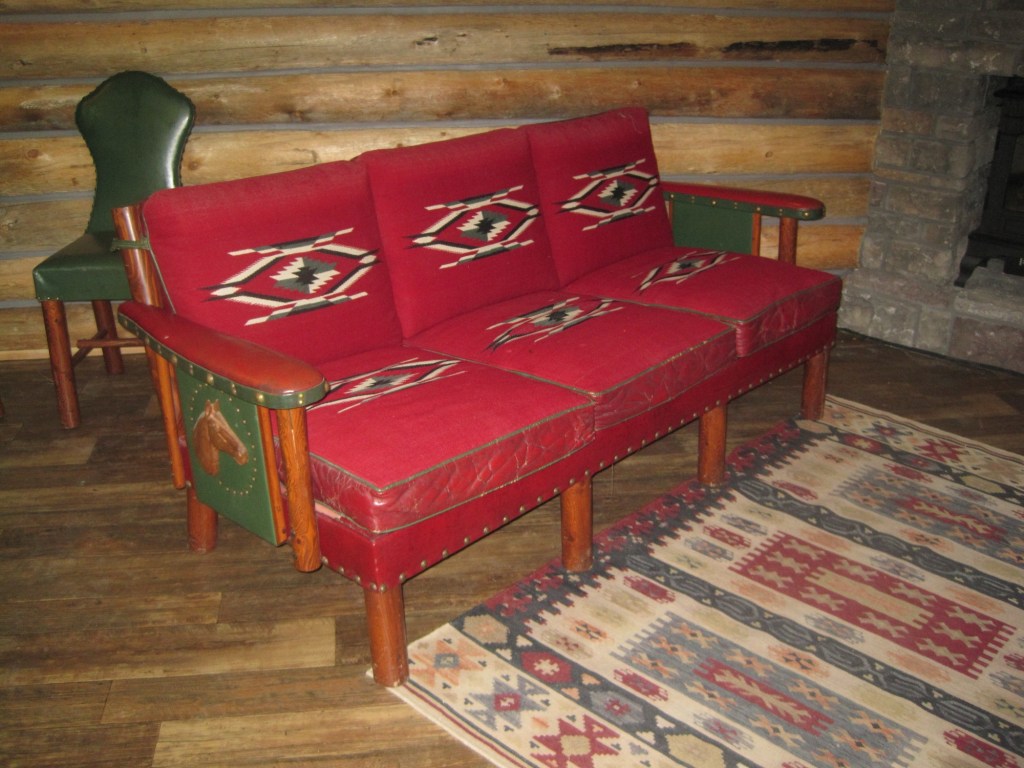
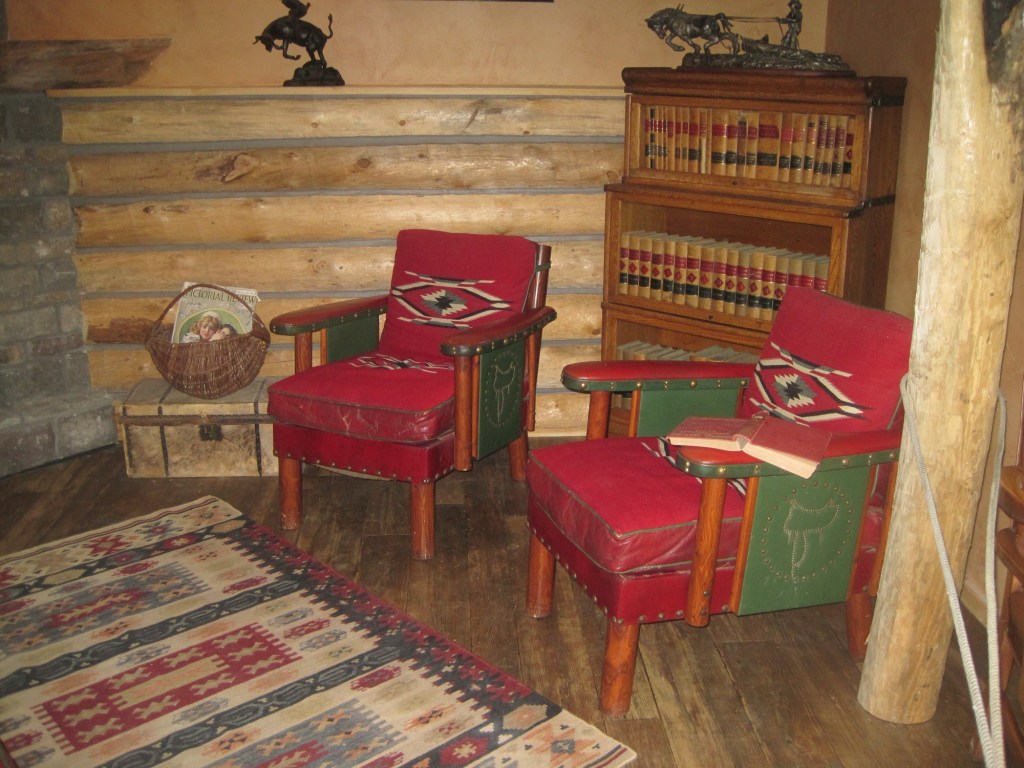
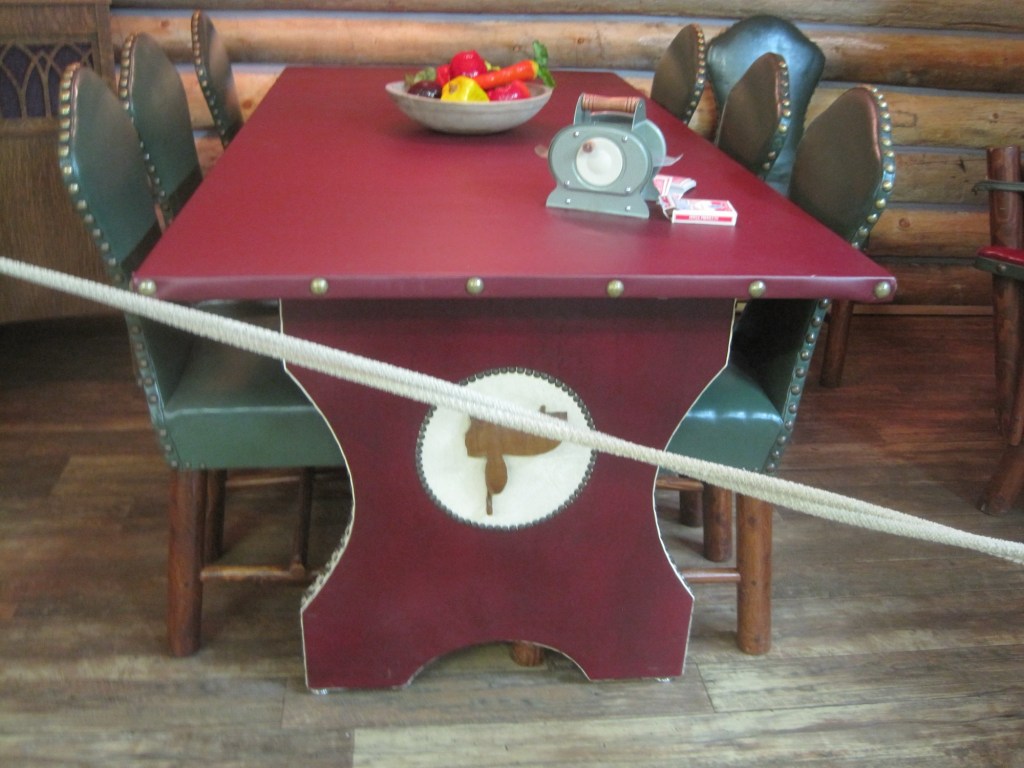
But back to the museum, and its important Montana decorative arts collection of the work of modern craftsman Thomas Molesworth, once in the town’s Carnegie library.
The newer exterior exhibits led the museum to move entire building to the property, including examples of the homestead shacks of the early 1900s that were followed by permanent homes such as this white painted bungalow.
Representative ranch house from homesteading boom
Pride of place, pride of the past. Glasgow might be in the middle but it is far from being nowhere as this small sampling of properties demonstrates.





















 Montana's Historic Landscapes