The Milwaukee Road Heads into the Musselshell Valley

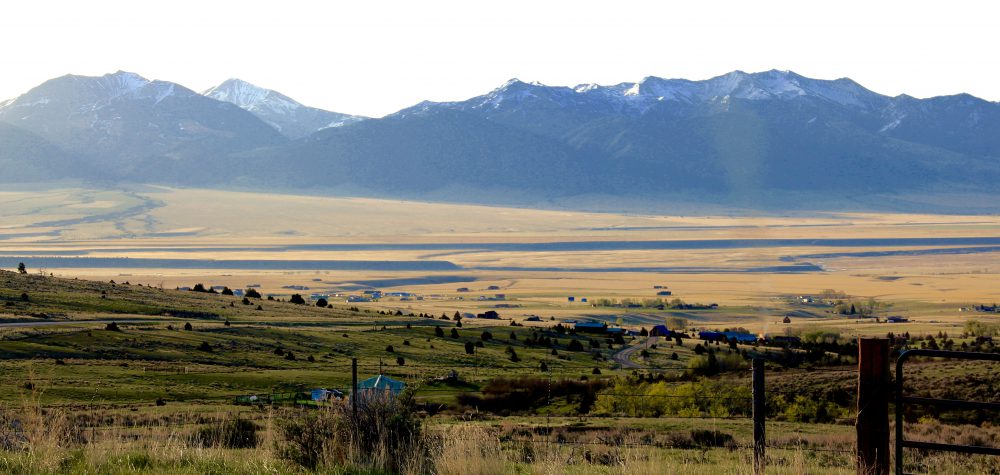
As the Milwaukee Road left the Yellowstone Valley at Forsyth and struck northwest toward the Musselshell River valley, it created one of Montana’s most classic prairie railroad towns, Ingomar, established in 1908.  The hamlet, with 25 or so residents today, compared to perhaps the 100 who lived around there in 1980 has several historic buildings that document its quick twentieth century rise, and just as quick fall in the 1920s and 1930s depression years.

IMG_6844

Jersey Lily Bar, Ingomar, 1984

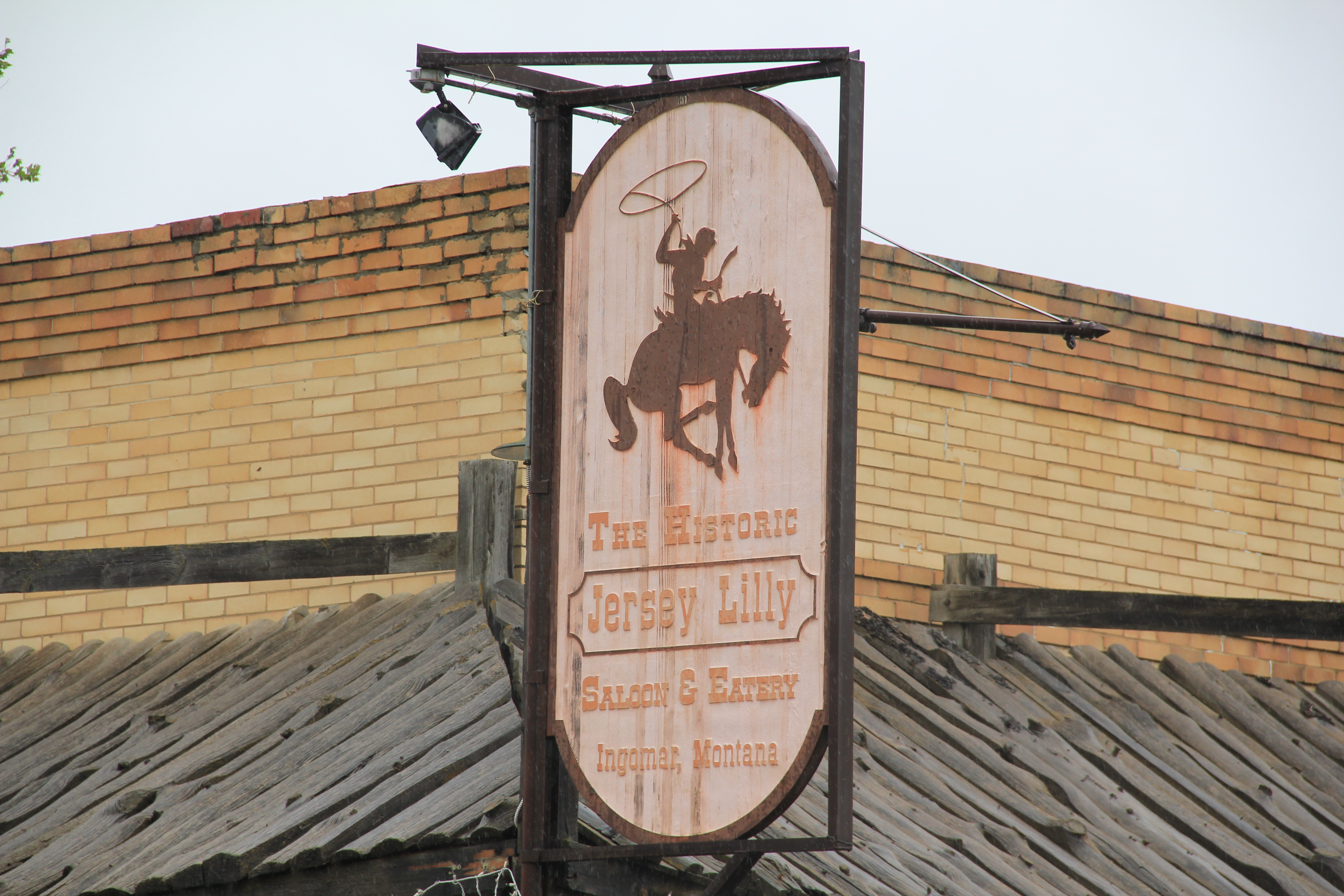
In the 1984 survey of Montana, Ingomar really just had one reason to stop:  the Jersey Lilly Bar, owned and managed by Bill Seward, who had done so since 1984.  That spring Seward and I became good friends.  Few people stopped there in February and March and since I was in the region, I found ways to stop in. do coffee (strong, hot, always ready) and have whatever Bill was thinking of cooking.  He was proud of his beans, and liked sliced red potatoes when he had them.  Seward added the faux western wood porch to a 1914 bank building:  he said that the tourists liked it, that it made the otherwise Classical Revival bank look “Old West.”  Until Seward’s death in 1995, I found reasons to visit Ingomar three other times, in a way just to make sure that both Seward and the bar was still going on.  Since the construction of the interstate highway to the south had so killed traffic along U.S. Highway 12, you wondered when the bar would close.

IMG_0115

This former homestead-era bank building, the Wiley, Clark, and Greening Bank, opened in 1914 and closed as a bank seven years later.  In 1933, the height of the Depression, it re-opened as the Oasis Bar (it certainly was that along U.S. 12) and it became the Jersey Lilly Bar in 1948.  Almost seven decades later, it is a well-known landmark on the highway, and was listed in the National Register of Historic Places in 1995.
IMG_0116

IMG_0126

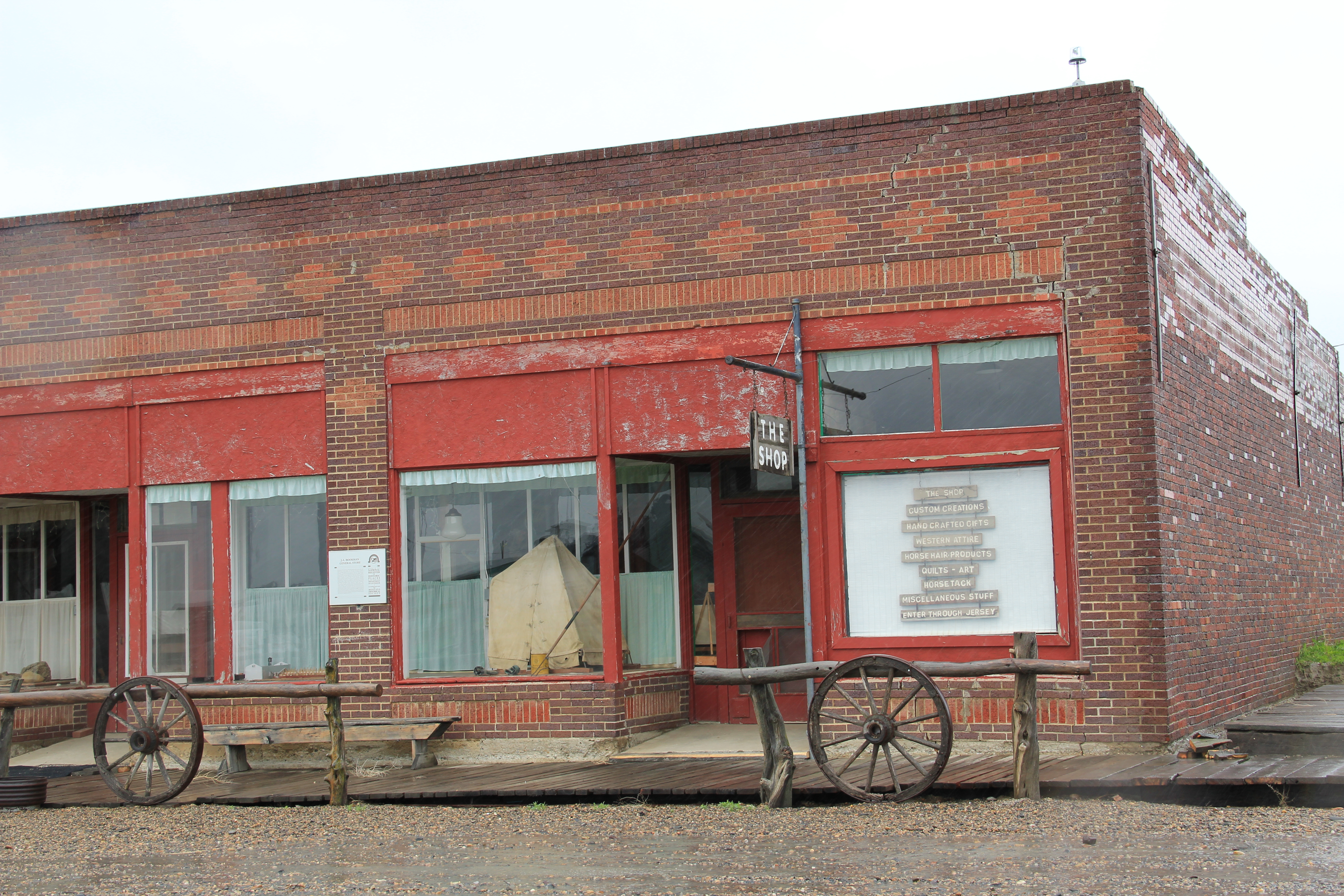
Adjoining the bar, and accessible only through the bar, is another National Register building, the Bookman General Store, constructed as really an act of faith in 1921, replacing an earlier store that had burned.  The prospects for Ingomar was not so rosy by that time but the Bookman family stayed the course–lost the store for two years from 1933-1935–but reacquired it and kept it open to 1943.
IMG_0122

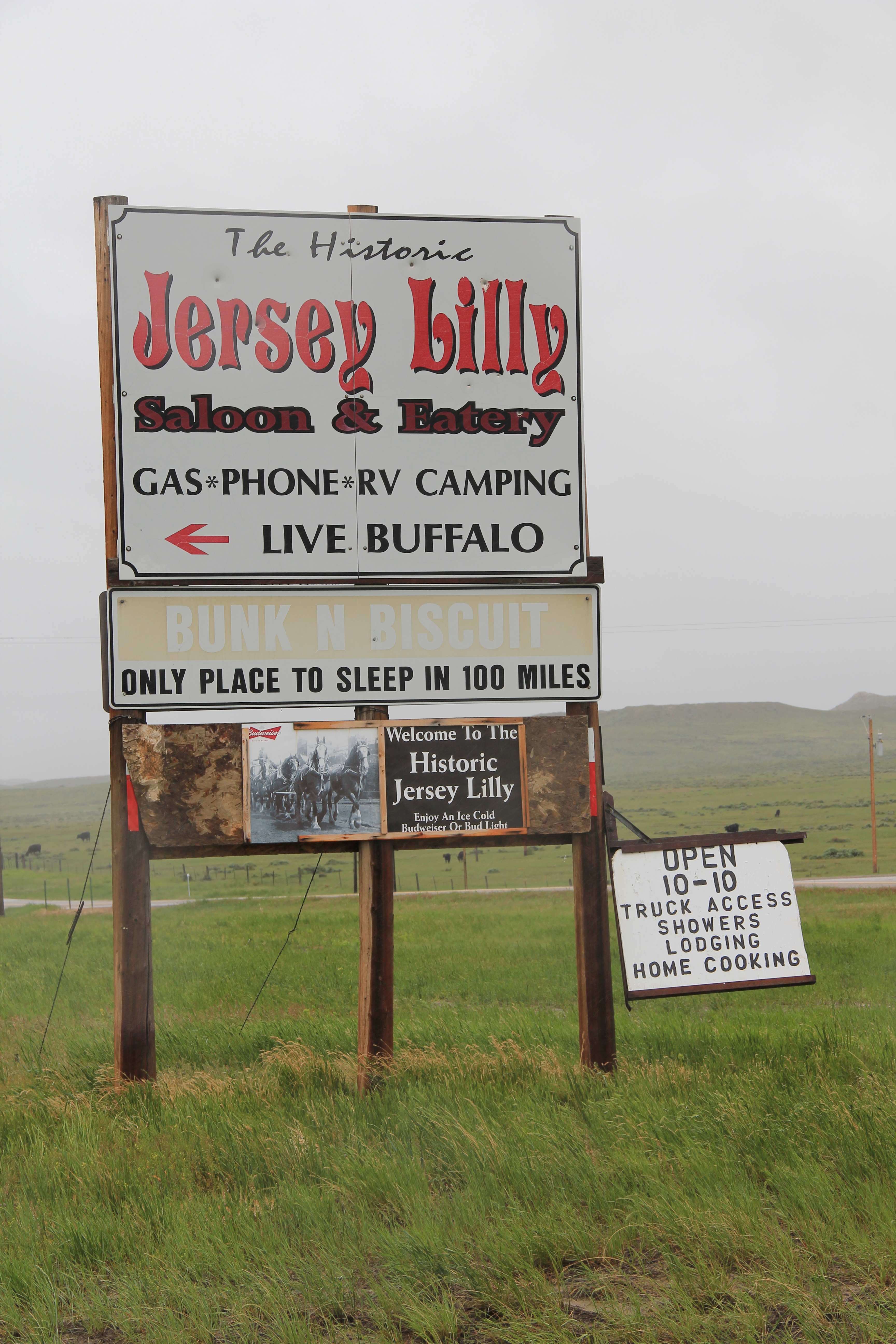
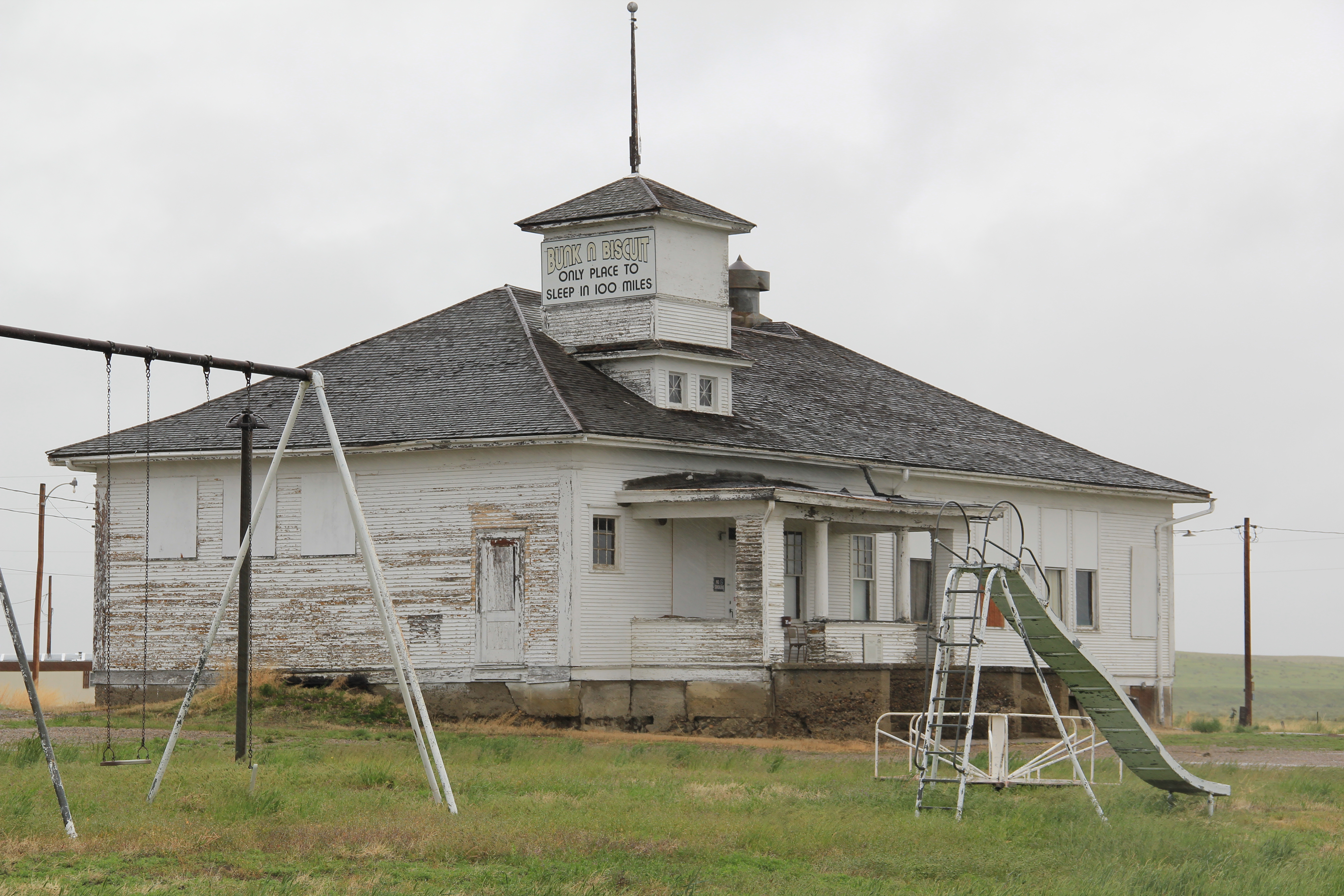
A third Ingomar landmark on the National Register is the public school, which evolved from  a one-room in 1913 to the rambling building you see today, constructed by Neils Hanson of Melstone in 1915.  When I surveyed Ingomar in 1984, the school still operated but closed for good in 1992.  It was converted into a “biscuit and bunk” later that decade.
IMG_0111

Another important historic building is the Milwaukee Road “combination-style” depot, where the passenger and freight service was combined into one building.  Many of these have disappeared along the line since its closure, and too many have disappeared or have been moved since my survey work of 1984-1985.  Ingomar has its depot, converted into a private residence along the now-gone tracks in the 1990s.

IMG_0123

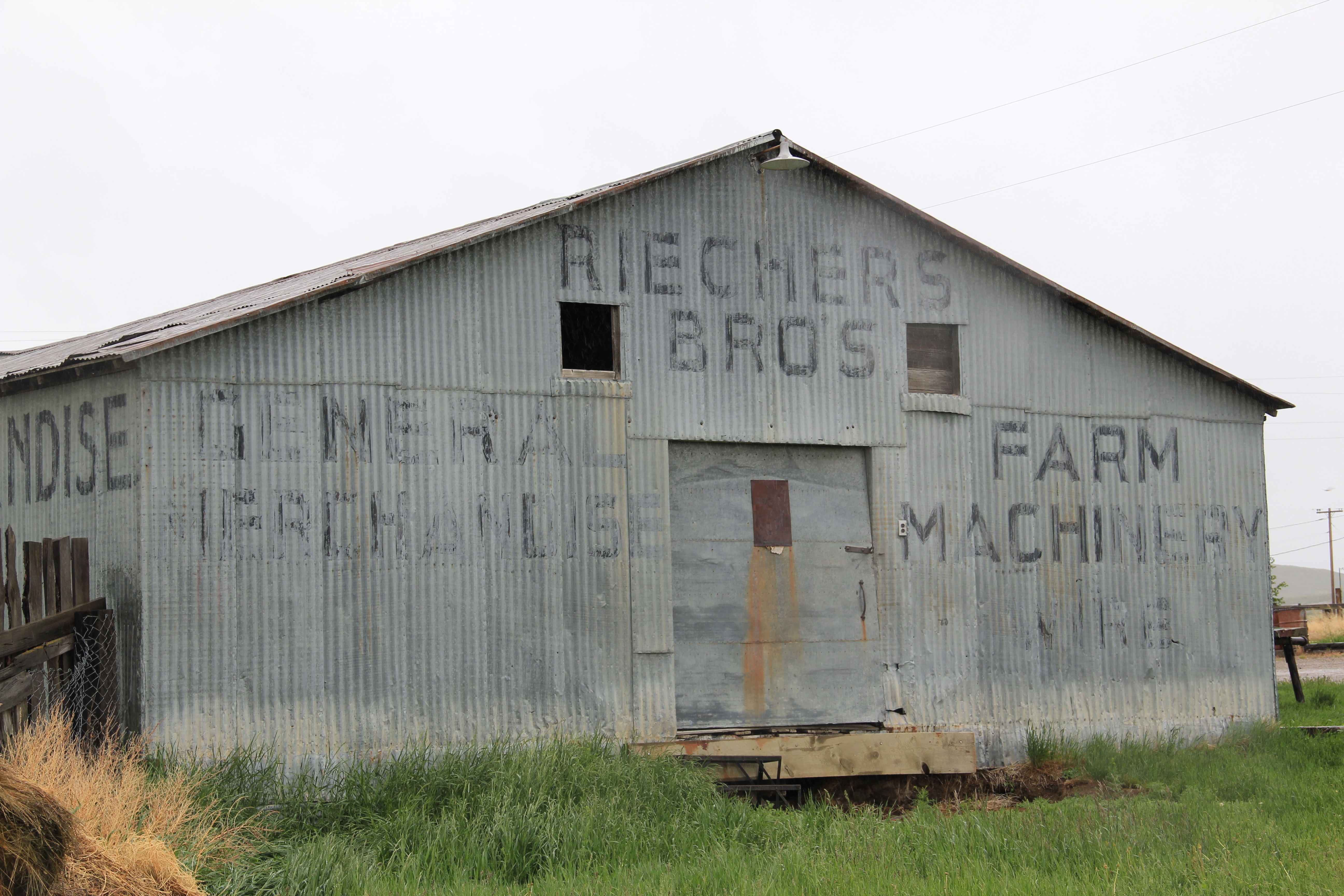
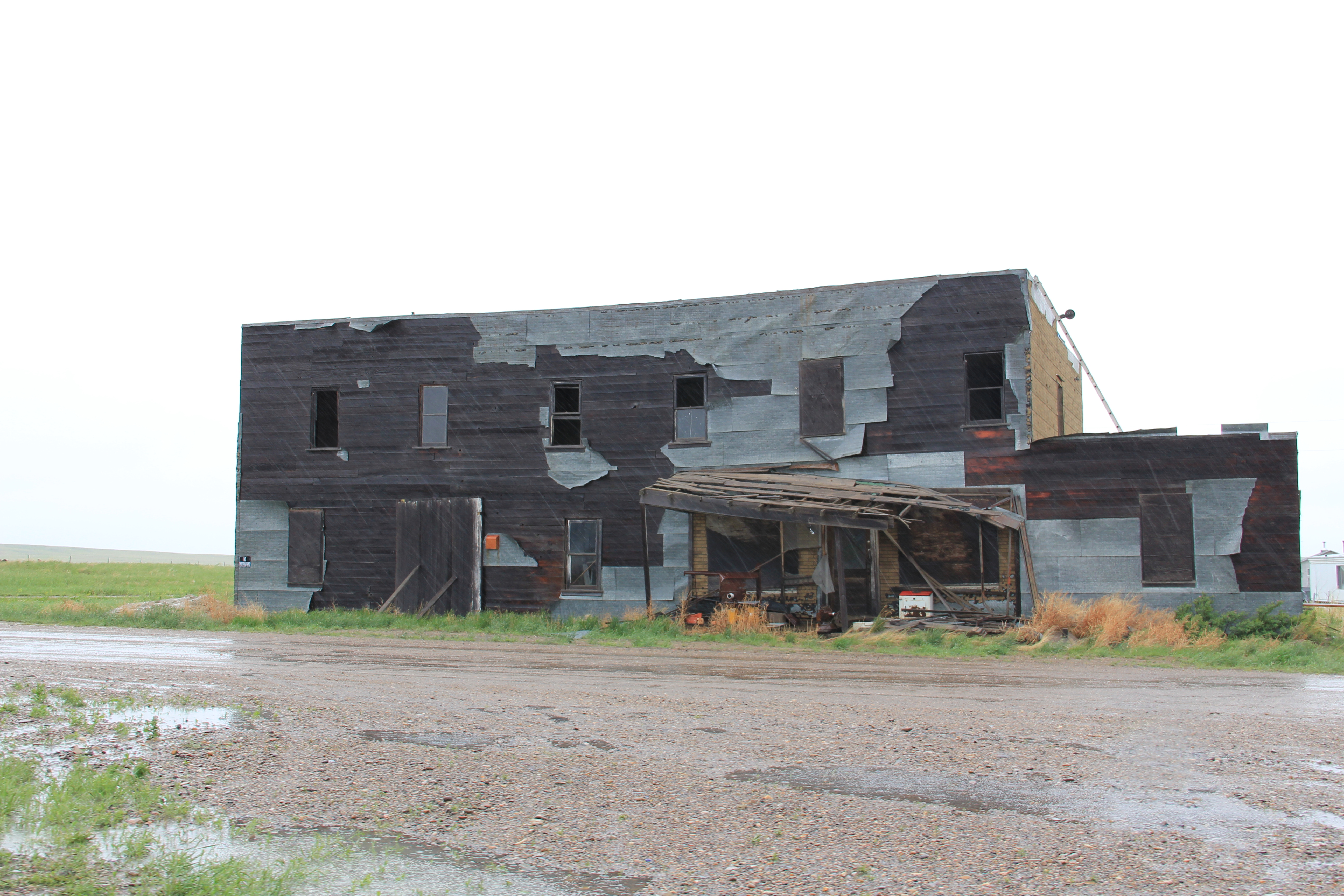
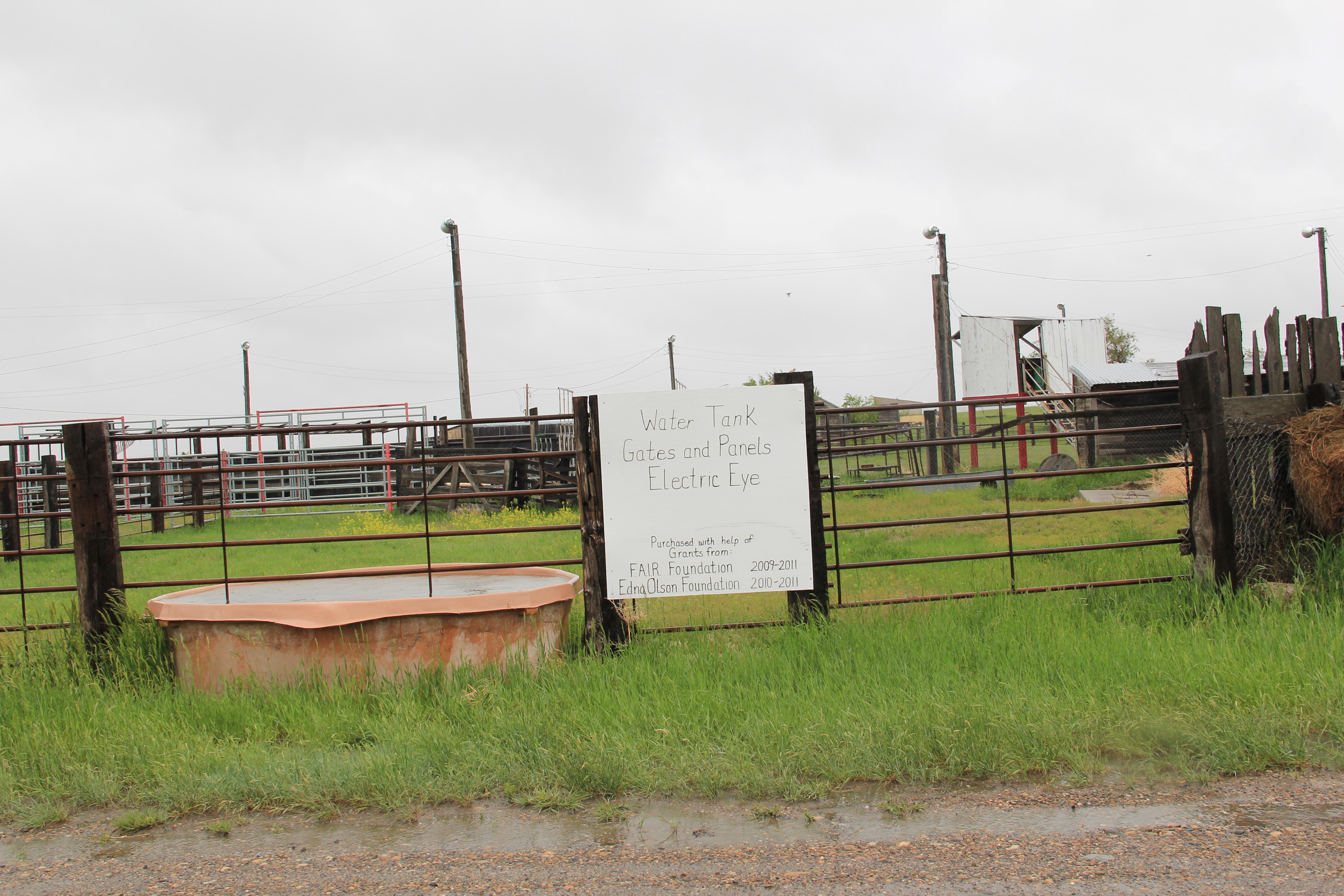
Other historic properties exist, perhaps waiting new futures.  The rodeo grounds stay in use while the Riechers Brothers general merchandise and machinery store building remains standing.  Other structures are barely hanging on.
IMG_0113

IMG_0114

IMG_0109

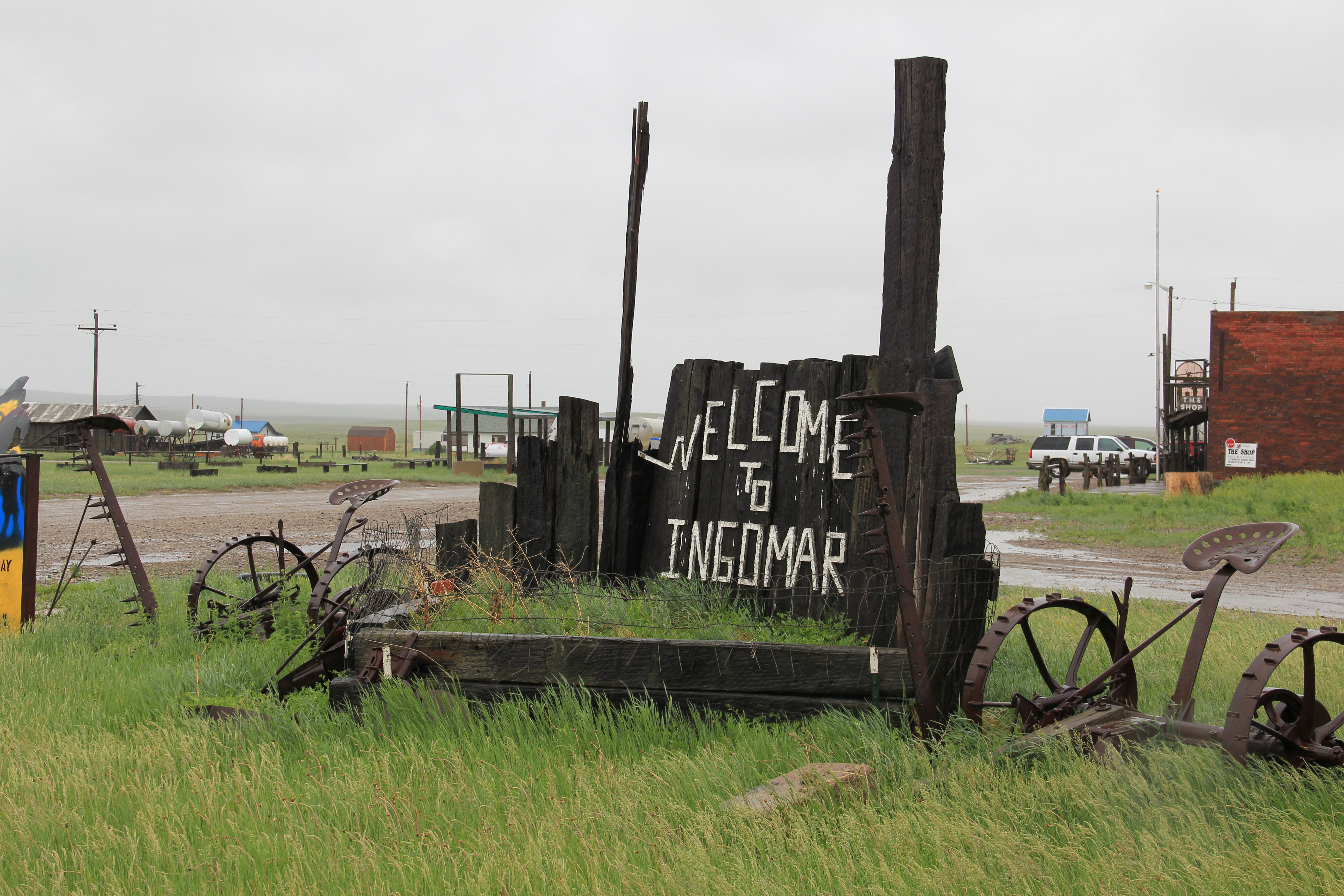
As travel dwindles and population disappears, you worry about the future of Ingomar.  Their signs and their heritage assets beckon visitors daily but will enough even come by to make a difference?
IMG_0108

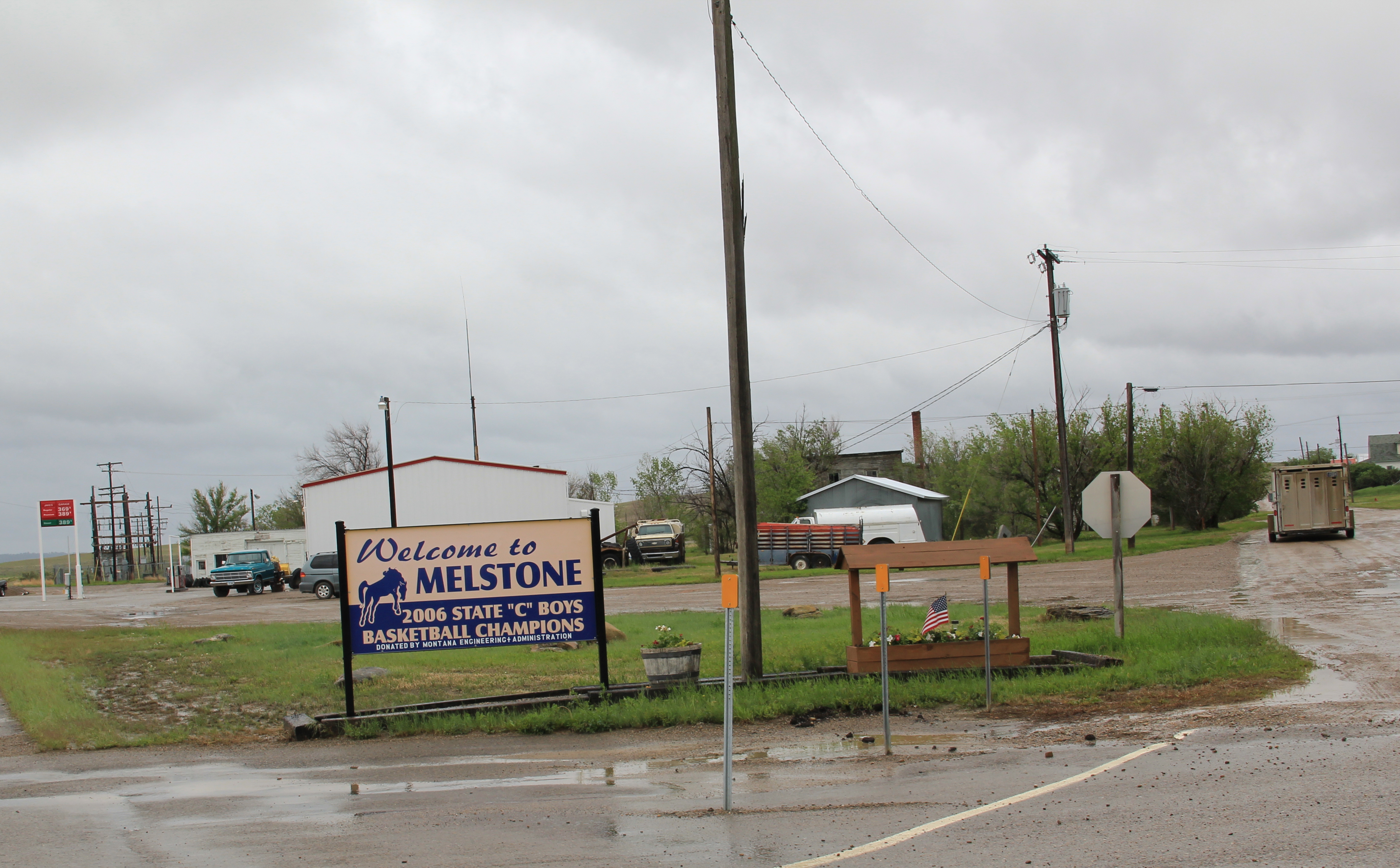
Melstone, just west of where the Milwaukee Road crossed the Musselshell River and entered its valley, is another worrisome case.  Its population has dropped to under 100–almost 150 lost since my visit in 1984.  But it still has its school, which is very much the town’s central institution and point of pride.

IMG_0103

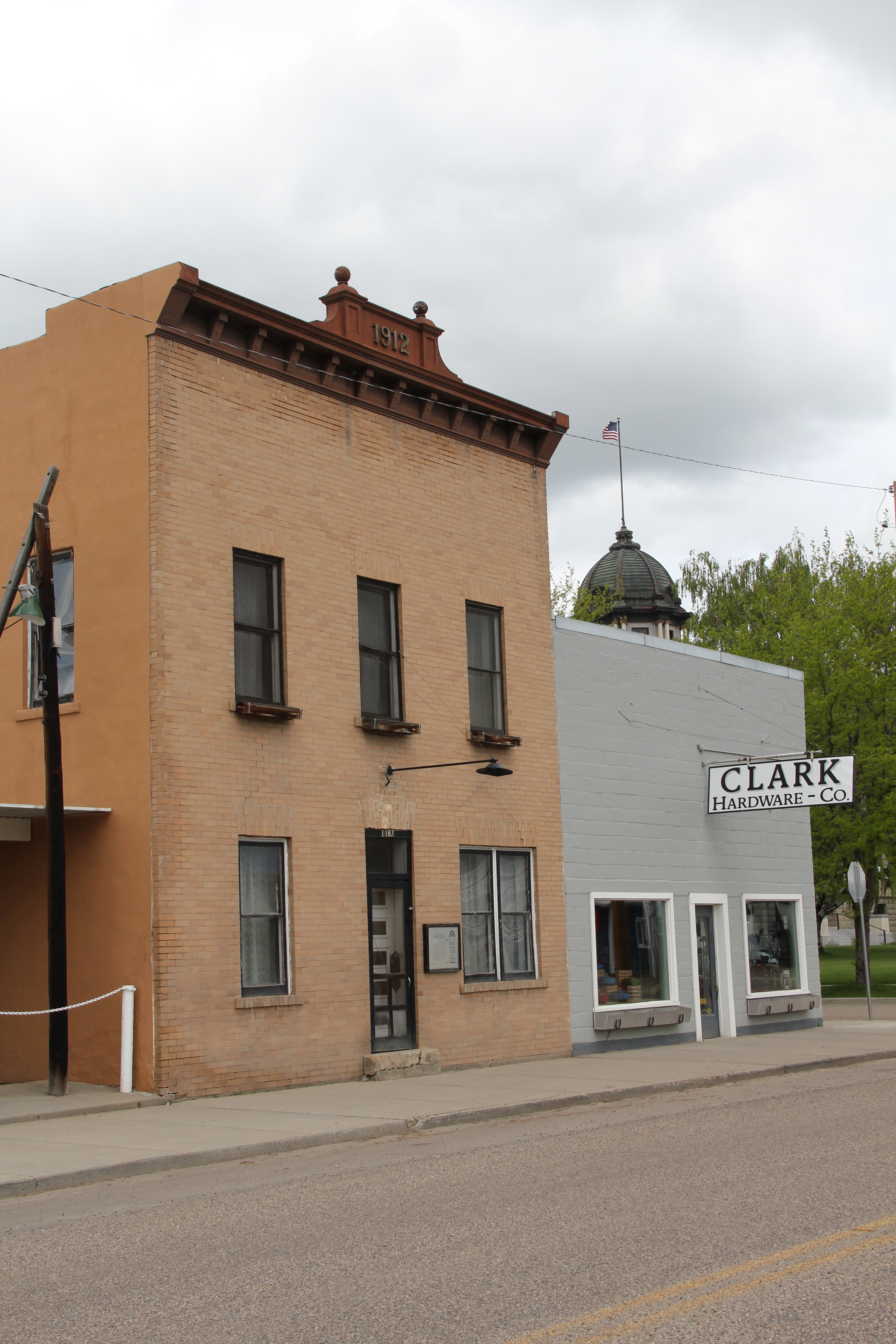
Melstone has lost its signature building, the 1912 Antlers Hotel, located on the town’s most prominent corner between its main street, that leads to the school, and the intersection with U.S. Highway 12.

IMG_4071

Antlers Hotel, Melstone, 1984

The location of the Antlers Hotel is now a grassy spot.

The location of the Antlers Hotel is now a grassy spot.

Melstone has a hardware/general store along with Jakes Garage on the highway and the Melstone Bar and Cafe, another classic roadside stop along u.S. 12.

IMG_0104

IMG_0099

Ingomar and Melstone–I understand to most eyes they are dumps, not worth a look–but in my fieldwork they are interesting and valuable, physical signs of the 20th century determination to make rural settlements work, and despite their losses, they are still here some 100 years later.

Hardin and Montana’s Modernist Traditions

The National Register-listed Burlington Route depot  is now the chamber of commerce office.

The National Register-listed Burlington Route depot is now the chamber of commerce office.

Hardin is different than so much of eastern Montana It was created along the Burlington Route–a railroad line that entered the state in the early 20th century and headed north to Billings–and not the three dominant lines of the region:  the Great Northern, the Northern Pacific, and the Milwaukee Road.  Its town plan is different: streets radiate out from the depot, the centerpiece of the design, although tradition soon overruled design:  businesses soon adapted the plan into the standard T-town look that you find throughout the region.

From the depot, looking northwest, the Hotel Becker, also in the National Register, is the town's most recognized landmark from its first decade of development.

From the depot, looking northwest, the Hotel Becker, also in the National Register, is the town’s most recognized landmark from its first decade of development.

IMG_6839

To the northeast of the depot, the street soon took on the look of an alley as owners adapted the plan to the preferred T-town look of a proper “Main Street.”

Hardin is also different because like its huge neighbor to the north, Billings, Hardin’s demographic story is not one of a boom in the early twentieth century followed by decades of declining population.  When I first visited in the early 1980s, the town’s population had grown by one thousand since the 1950s, and it has even grown a couple of hundred more since then, rather than the story so often documented in this blog of rather steep declines in eastern Montana towns from 1980 to 2010.  Hardin even weathered the closing, and now slow demolition, of its industrial mainstay, the Holly Sugar Refinery, which dominated the skyline and local industry from its opening in 1937 to its closing in the early 1970s.

The refinery, shown here in 2013, is  just east of the town proper and has served as a major landmark for travelers on I-94.

The refinery, shown here in 2013, is just east of the town proper and has served as a major landmark for travelers on I-94.

The opening of the refinery in the Depression decade also coincided with yet another trend that makes Hardin different:  its impressive collection of modernist designs, which started with the magnificent Big Horn County Courthouse.

IMG_6872

The courthouse was constructed between 1937 and 1938 as a Works Progress Administration (WPA) effort; J. G. Link of Billings was the architect, as the firm was for so many New Deal projects in the region.  The courthouse is the state’s most successful blending of regional materials with standard WPA Modern design.  South of Hardin is the Big Horn Canyon, a beautiful deep gorge that frames the river.  The striking stonework of the courthouse came from a quarry near Fort Smith and linked the modern courthouse to the local landscape.

Over the next two generations, and into the present, the town has continued to grace its built environment with interesting examples of modern design.  Some naturally reflect the Art Deco styling of the courthouse.  The entrance to the Community Bowling Alley is very mid-century Deco, and other commercial buildings have a hint here and there of Deco styling, especially in the use of a band of glass block windows on the historic Gay Block.

IMG_6877

IMG_6852

What really is really impressive in Hardin are several buildings from Montana’s contemporary era of the 1950s and 1960s, first in commercial buildings and storefronts, especially the metal-clad and International style-influenced Zelka Machine Shop.

IMG_6858

IMG_6849

IMG_6861

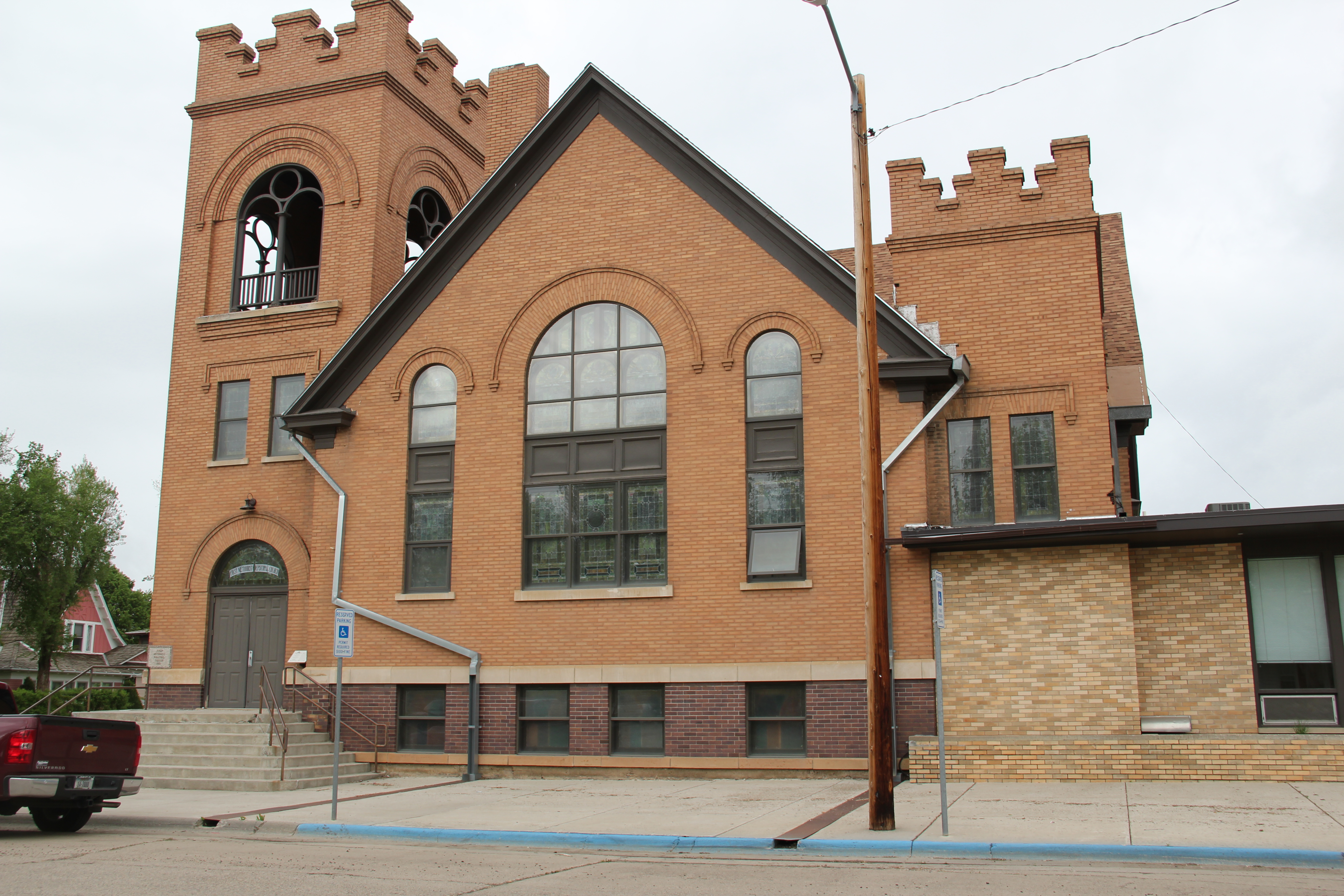
Two congregations also caught the modernist favor.  The Methodist built a rectangular brick International styled-influenced sanctuary while the Congregationalists added an almost Saarinen-esque design to the townscape.

IMG_6871

IMG_6876

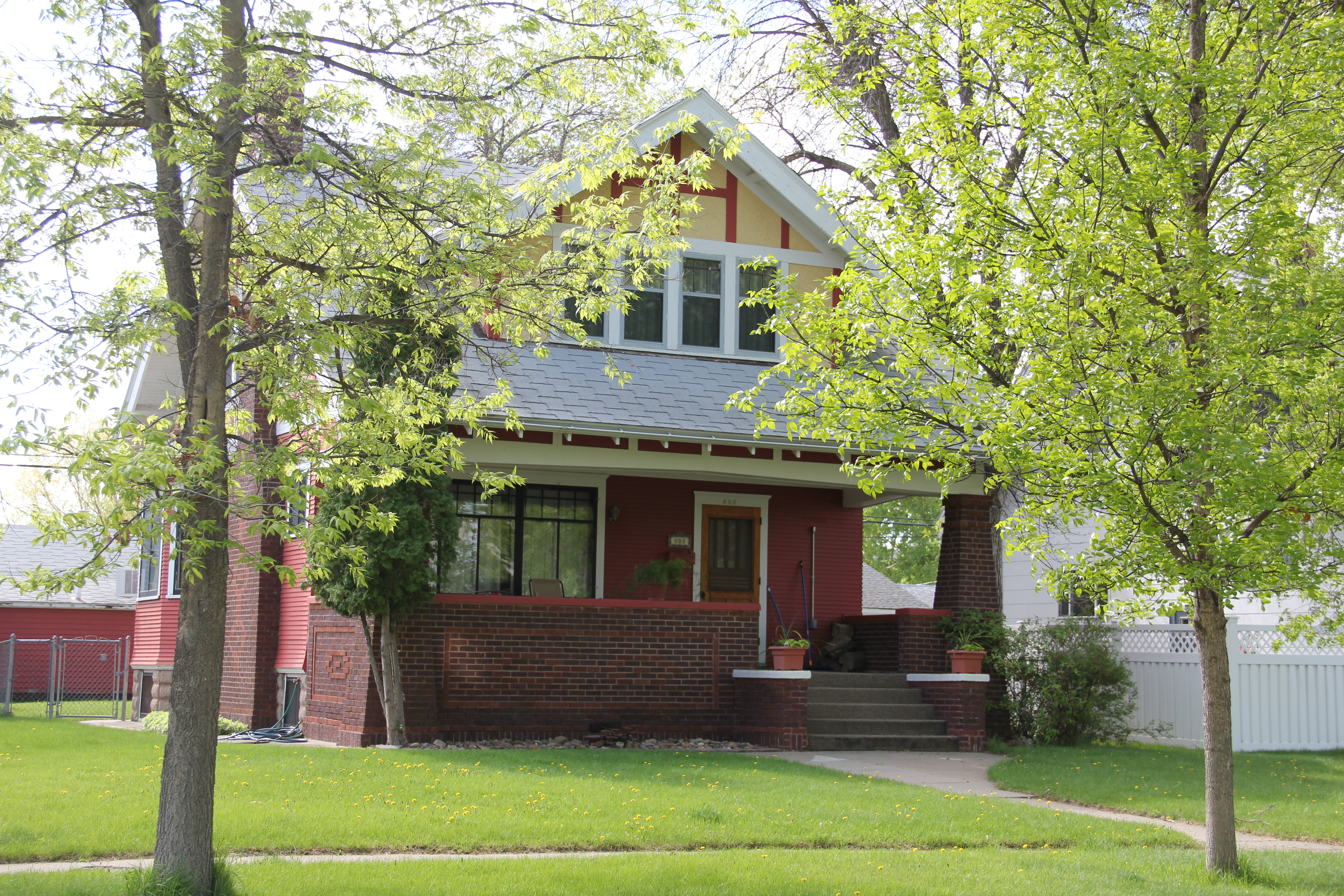
Nor did residents ignore domestic architecture styles, either in the past, as attested by this Prairie-style dwelling, or in the present, as in the recent Neo-Prairie style addition to the formerly classical-styled town library.

IMG_6868

IMG_6865

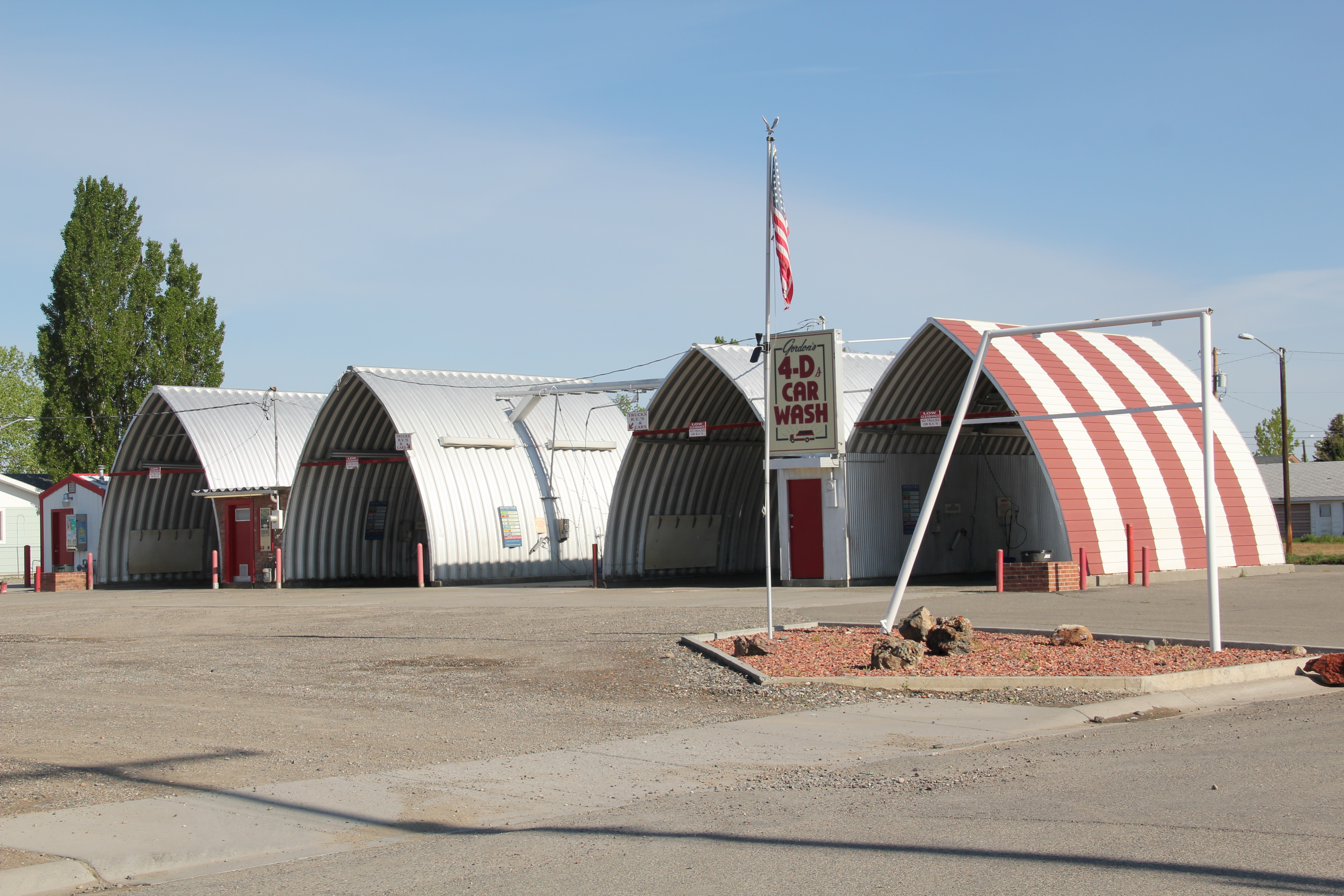
Perhaps the best comes last in the dramatic lines and stone aesthetic of the First Interstate Bank Drive-In Bank, located between the town’s commercial artery and its residential district, or the slashed up quonset-hut vernacular of a car wash located on the outskirts of town.  Whatever look you like of Montana modernism, Hardin has something that touches on that design aesthetic.

IMG_6879

IMG_6880

IMG_6881

Forsyth’s historic districts

Forsyth, the seat of Rosebud County, has used historic preservation effectively as one of many community assets to guide its economic sustainability over the last 30 years.  When I first visited there in 1984, the community had already started to grapple with the impact of the coal mining far south at Decker.  The passing of coal trains defined much of rhythms of traffic and life back then.  But even 30 years ago, residents were determined to keep their identity and to celebrate their heritage, despite being drawn into a different world.  That was impressive–and from 1986 to 1990, they put their commitment into physical terms by listing many properties in the National Register of Historic Places.

IMG_6943

You really haven’t been to Forsyth unless you take in a movie at the Roxy Theater (1930) and an after-movie libation at the Lariat Bar

Earlier posts talked about such key heritage institutions as the Rosebud County Courthouse, the adjacent Rosebud County Museum, the Howdy (Commercial) Hotel, and then the adaptive reuse of the Vananda State Bank as new landmark business.  Forsyth also has a downtown commercial historic district, which includes both the hotel, bank, the Roxy Theater shown above, but additional classic Montana two-story commercial buildings, with their understated Victorian or classical cornices.

IMG_6944

The Masonic Temple, designed by Miles City architect Byrnjulf Rivenes in 1911, served the community in many ways during its formative years, including the town library.  The Blue Front rooming house came in 1912 and served as home for Northern Pacific railroad employees for many years–today it is a remarkably intact example of that type of single-man housing from 100 years ago.

IMG_6945

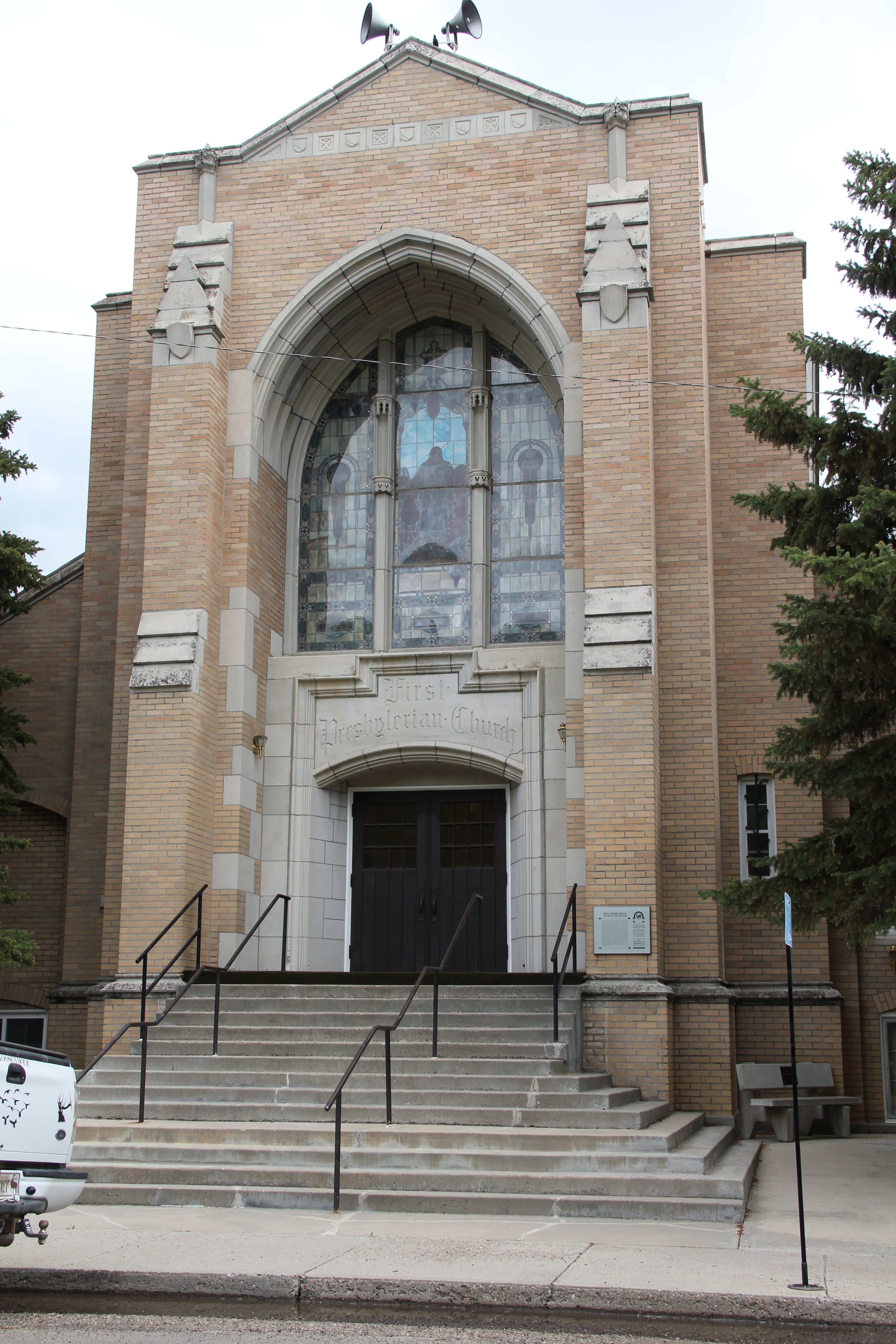
Residents also have designated a historic district of their homes and churches that developed in the early 20th century.  It is an impressive array of buildings, from the c. 1920 First Presbyterian Church, a Gothic Revival design by Howard Van Doren Shaw of Chicago in partnership with McIver and Cohagen of Billings, to the brilliant Craftsman-style of the McQuistion House (1914) built by Louis Wahl of Forsyth for ranchers Joshua and Grace McQuistion as their “town” home.  Then there is the 1897 Queen Anne-style house moved to its Forsyth lot by ranchers Robert and Dora Lane in 1909.  The Lanes moved on but the house has stayed, becoming over 100 years a real cornerstone to the historic neighborhood.

IMG_6967

IMG_6963

IMG_6966

Indeed, that is a theme found throughout town. Despite the coal industry that rumbles in the southern end of the county, Forsyth still holds on, and shows pride in, its ranching past.  No better emblem can be found than the modern front to the Forsyth high school.

IMG_6974

Like the vast majority of eastern Montana towns I visited in 2013, Forsyth has lost population from 1980.  Then over 2500 lived there; in 2010 the census takers counted over 1700 residents.  But unlike many, Forsyth is not beat up, abandoned, forgotten, depressing.  The murals by Bob Watts, discussed in an earlier post, are part of the

IMG_6975

answer.  Local stubbornness is another.  But pride in community as expressed through the town’s many historic preservation projects is another.  Forsyth has figured out how to gain a future through an appreciation of the past.  Let’s hope others follow their lead.

IMG_6985

Moving and Saving Historic Buildings in the Montana Plains

Created with GIMP

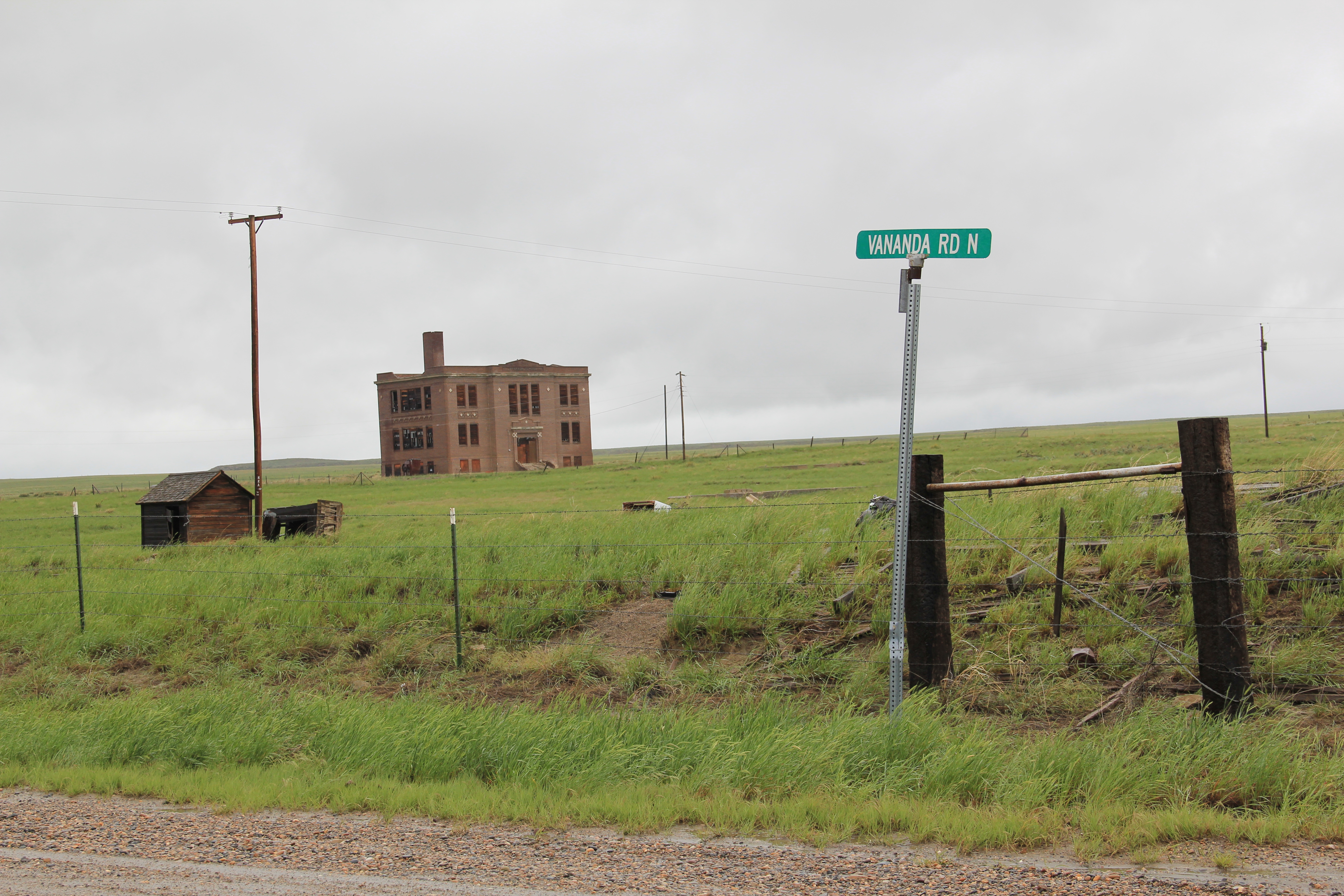
Vananda School, northern Rosebud County. I took this image during the preservation work of 1984.

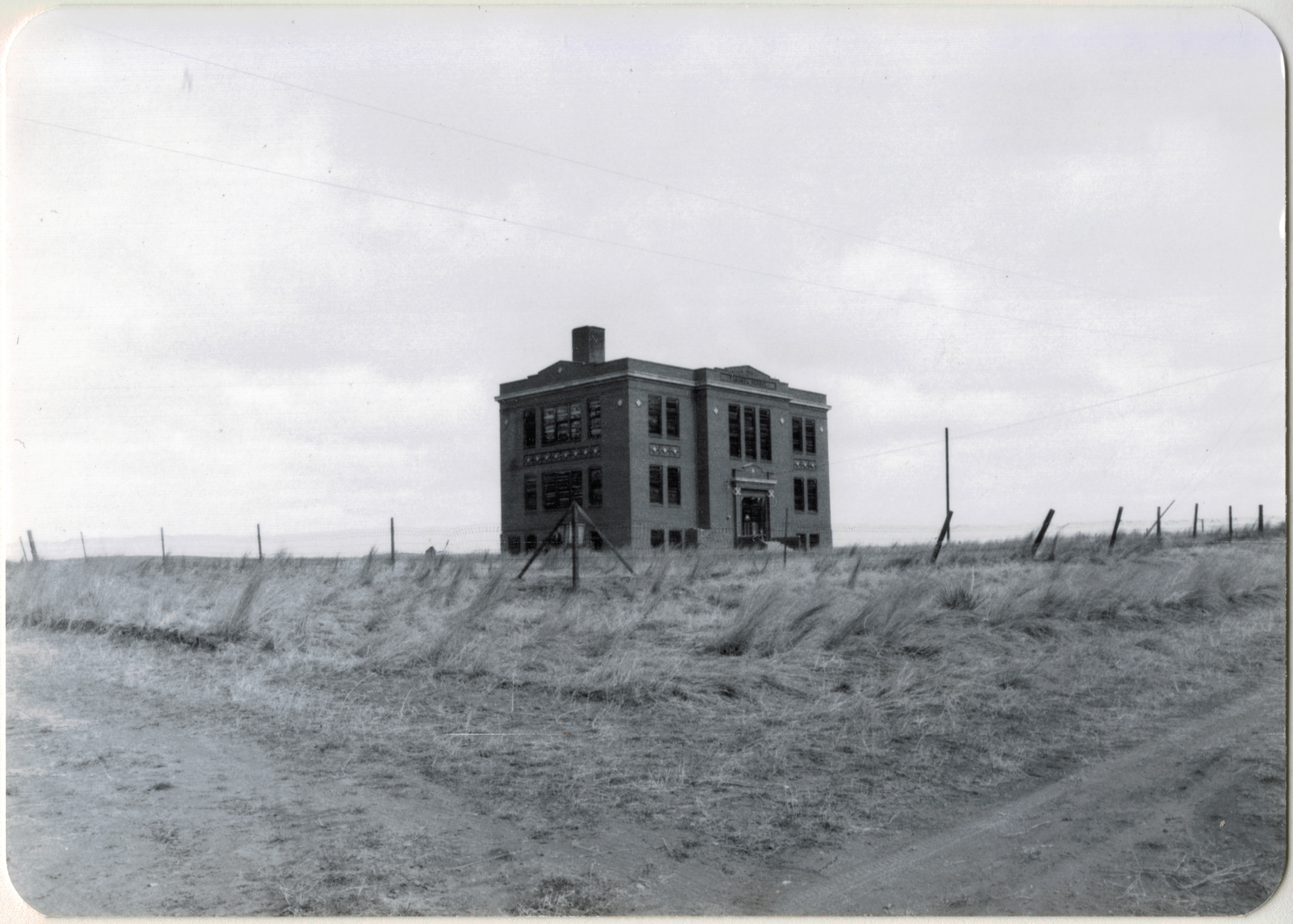
When I met with residents in Rosebud County in 1984, few places in the county captivated me more than Vananda, one of the county’s Milwaukee Road towns along U.S. Highway 12.  Vananda in 1984 had a few scattered buildings and structures, but two landmarks, a small one-story Classical Revival bank, and the three-story Vananda school. The school in particular spoke to the hopes of the settlers who flooded into the region after the Milwaukee came through in 1907-1908.  In 1917, when Louis Wahl, a Forsyth contractor, built the bank, Vananda like many other homestead towns thought a bright future awaited.  But when the bust came in the 1920s, followed by the Great Depression in the 1930s, people disappeared from here even quicker than they had arrived.

In the years since, I have stopped at Vananda several times, seeing if the buildings still stood as silent sentinels to the homesteading past. The school and the bank survived

Vananda Bank-School Rosebud Co. MT

My favorite image of Vananda, taken in 1998.

the 1990s.  In fact, the Montana State Historic Preservation Office had listed the Vananda historic district in the National Register of Historic Places in 1990, part of a countywide effort to designate local landmarks at that time.

IMG_0130

Vananda historic district, 2013

When I next visited Vananda in 2013, fifteen years had passed.  Imagine my disappointment in finding only the school, and it was looking even more worse for the wear.  This was the same year that the National Trust for Historic Preservation listed Montana’s rural schools as one of its most threatened properties in the nation.  One can hope that that designation will eventually bring help and preservation to the school.

IMG_0128

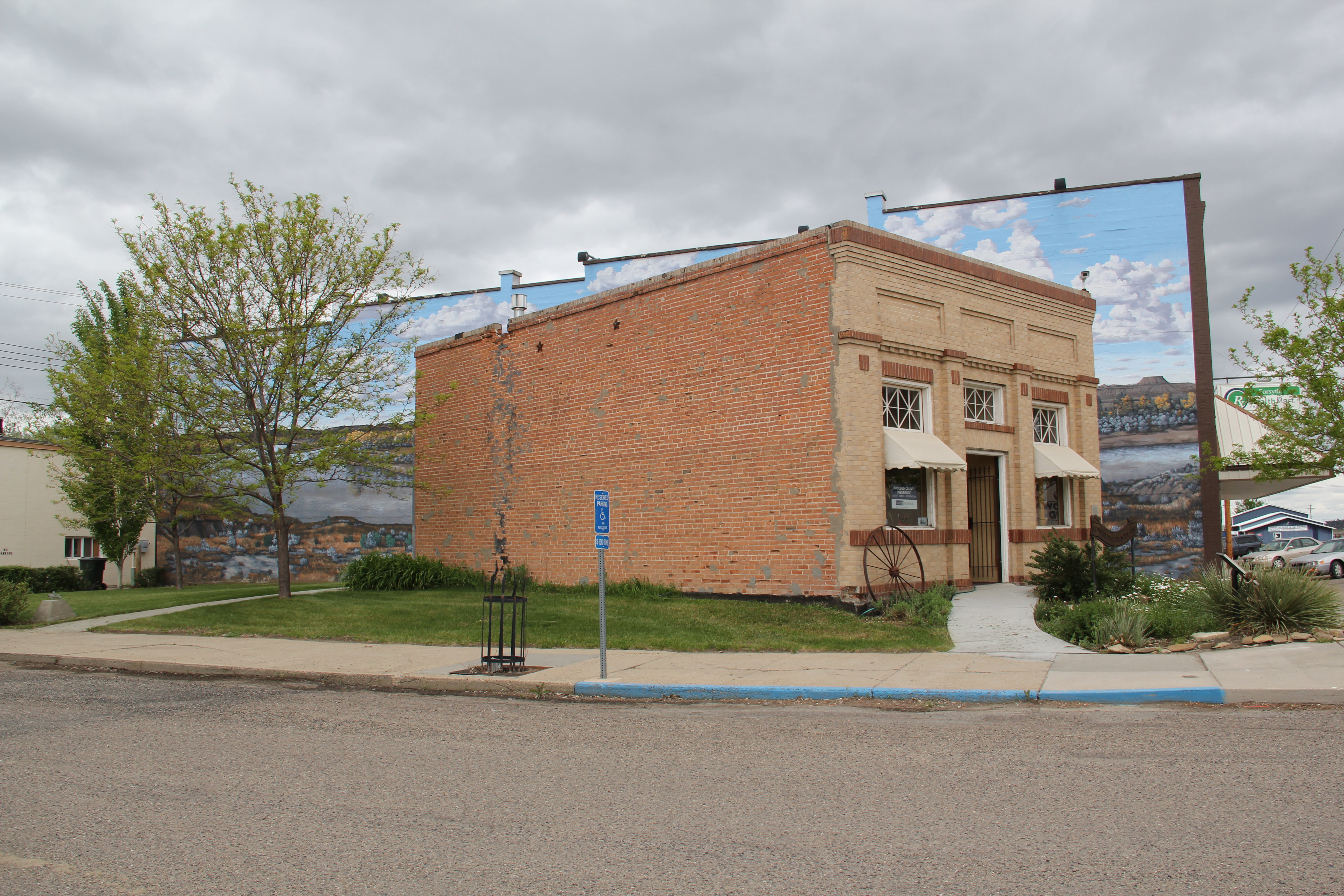
What had happened to the bank?  I found out about 17 miles later when I came into Forsyth, and stopped at something new, at the town’s most prominent crossroads, at Main and 10th Avenue.  It was the Vananda State Bank, moved to that location in 2002-2003.

IMG_6984

The abandoned building was now an insurance building, and an important contributor to town’s historic environment, especially since its corner lot was further enlivened by a mural of the Yellowstone River, “Autumn on the Yellowstone,” by local artist Bob Watts, who has several different murals located throughout town. No. moving the bank to Forsyth and restoring it there, rather than Vananda, is not historic preservation in its purest form.  But it is preservation nonetheless in my opinion.  The historic marker in front of the building tells its story, and there is an active heritage tourism infrastructure in Forsyth, with multiple historic districts, a recently expanded county museum, and a Historic Forsyth walking/driving tour you can download from the Internet.  The bank and the story of Vananda remain active contributors to Rosebud County, fulfilling some of that promise first proclaimed in 1917.

Miles City’s Boom, 1907-1925

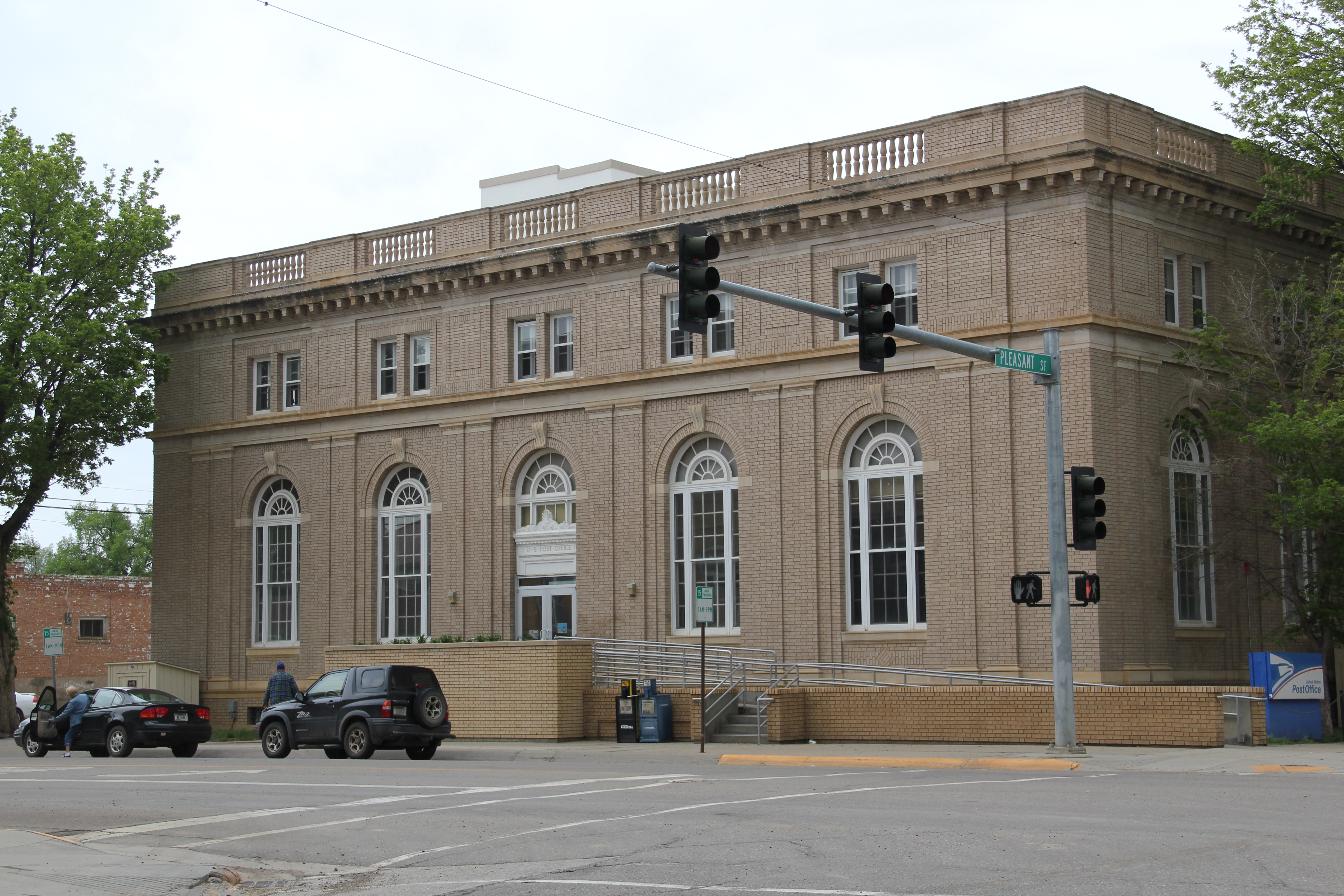
The Renaissance Revival-styled U.S. Post Office, designed by Oscar Wenderoth, opened in 1916 during the height of the region's homesteading boom.

The Renaissance Revival-styled U.S. Post Office, designed by Oscar Wenderoth, opened in 1916 during the height of the region’s homesteading boom.

Following the construction of the Milwaukee Road and its various shops, roundhouse, and offices, Miles City entered a boom period unlike any other in the town’s history.  The boom lasted for just under 20 years, ending soon after the Northern Pacific Railroad constructed its new passenger depot in 1924.  In between the arrival of the Milwaukee, and the opening of the new Northern Pacific depot, an array of new middle-class homes, churches, new public elementary and high schools, and businesses gave the city its early twentieth century “look” still prized today and protected by three historic districts.

IMG_7063

Washington School, Miles City

Census records tell us a mere 1,938 people lived in Miles City in 1900, but by 1910 that number had jumped to 4,697 and ten years later, 1920, almost 8,000 people lived there.  Hemmed in by the Yellowstone River and the mainline of the Northern Pacific, the town spread to the east, along Main Street, and then north into the new neighborhoods associated with the Milwaukee Road developments.

The East Main Historic District has a number of architecturally distinctive buildings from the 1910.  The Horton House (1911) is an excellent example of the “American Four-Square” house designed by Miles City architect Brynjulf Rivenes.  The two-story house is now a bed and breakfast business.  You don’t typically equate eastern Montana towns with the latest in domestic architecture styles, but the Love House (1916) is an excellent Montana example of the Prairie style, first created by famed architect Frank Lloyd Wright and here executed in a design from George Wageley. Another example of the Prairie style from that same decade is the Pope House, built by Thomas Horton.

Horton House Bed and Breakfast, Miles City

Horton House Bed and Breakfast, Miles City

Love House, Miles City

Love House, Miles City

Pope House, Miles City

Pope House, Miles City

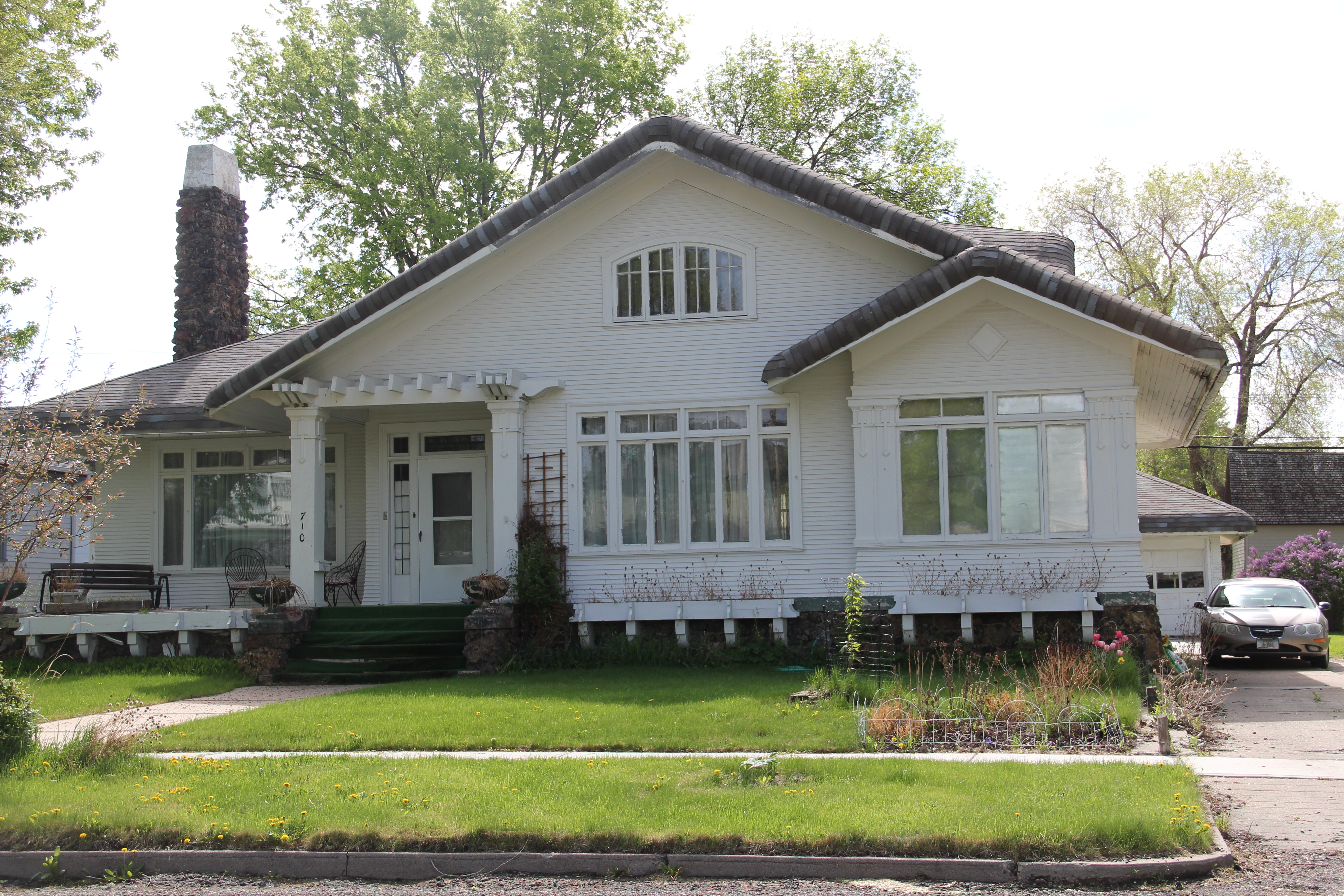
Just off of East Main Street is the Wibaux Park neighborhood, centered around a public space donated by cattleman Pierre Wibaux in 1915.  Here the dwellings included bungalows, Colonial Revival cottages, and an impressive example of Tudor Revival style.

Wibaux Park, Miles City

Wibaux Park, Miles City

Tudor Revival style house facing Wibaux Park, Miles City.

Tudor Revival style house facing Wibaux Park, Miles City.

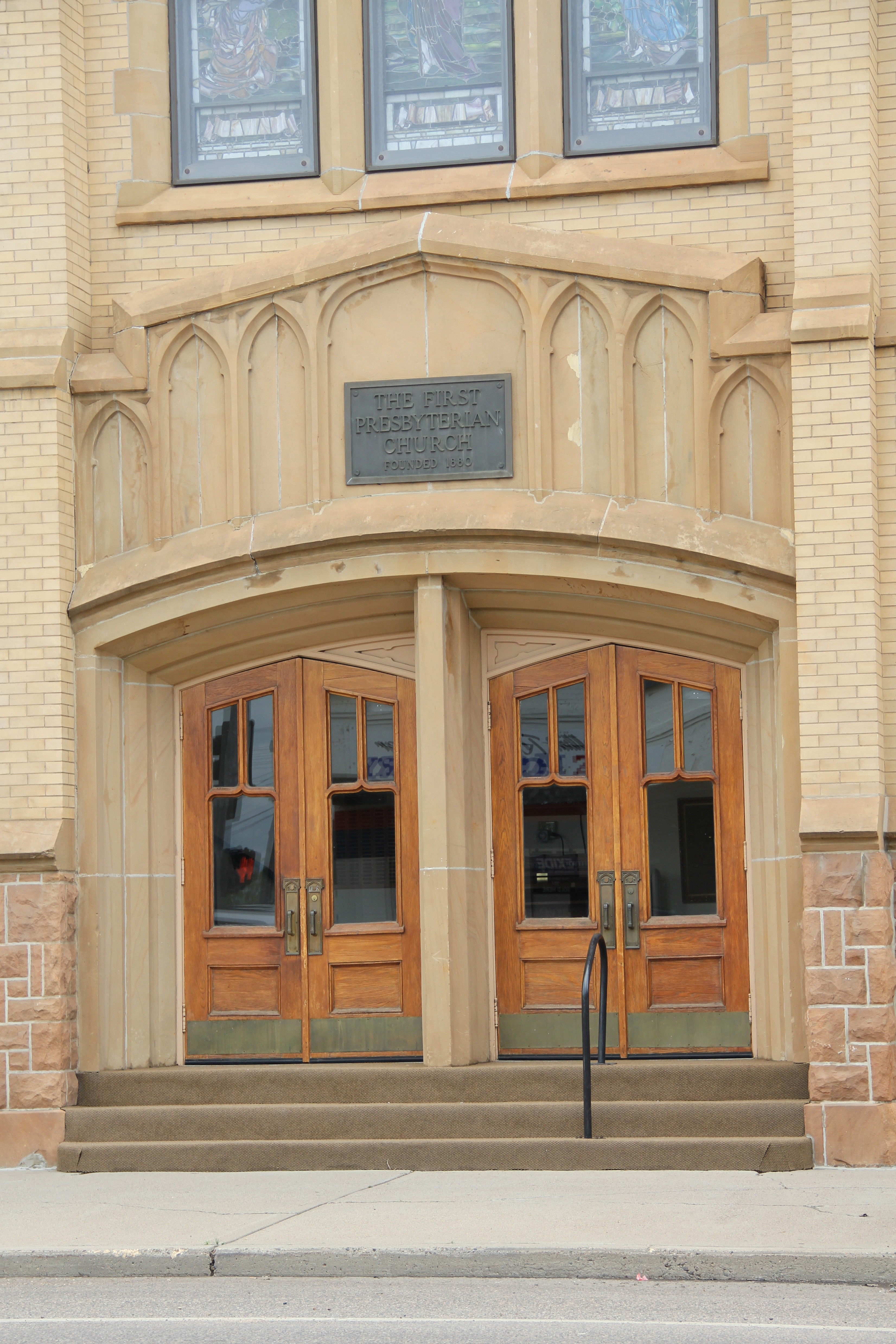
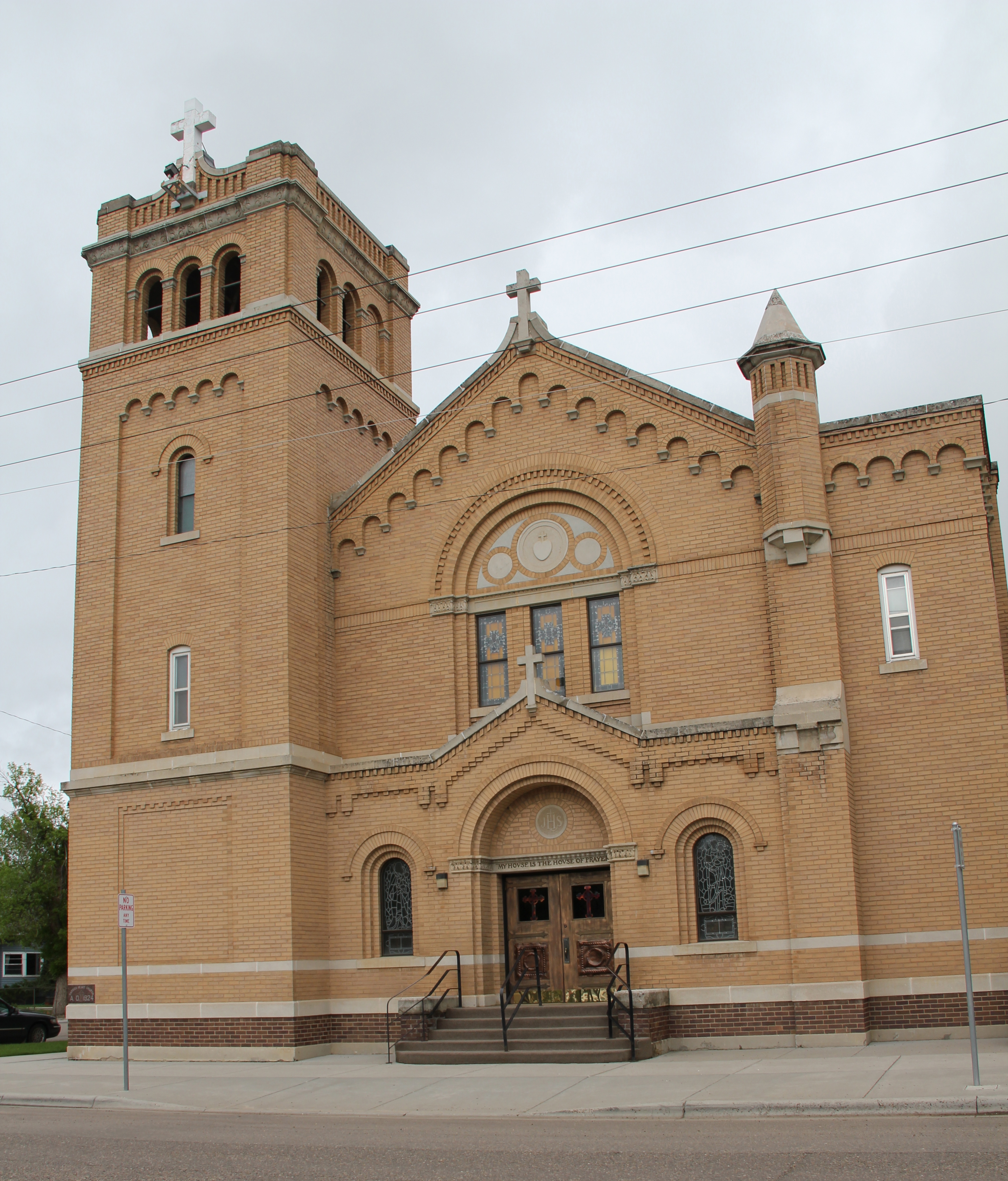
Congregations also built large, architecturally distinctive church buildings to serve their growing congregations.  The Methodists added a Gothic Revival style building, designed by Woodruff and McGulpin, in 1912.  The Presbyterians added their own Gothic edifice two years later, a mammoth building designed by Brynjulf Rivenes that stood between the downtown commercial district and the new residential areas.  The Catholics added a new Sacred Heart church in 1924, adding to the contributions started by the Ursulines at the first of the century.

Methodist Church, Miles City

Methodist Church, Miles City

First Presbyterian, entrance, Miles City

First Presbyterian, entrance, Miles City

Sacred Heart Catholic Church, Miles City

Sacred Heart Catholic Church, Miles City

New public schools–with the buildings still in use today–completed the process of urban growth between 1907 and 1925.  The Custer County High School, finished in 1922, became a centerpiece not only of Miles City but the the county as a whole.  Here was a modern facility that gave local students opportunities their parents never had. The boom had been magnificent but as drought and homesteading failures multiplified across eastern Montana by the mid-1920s, residents were learning that the bust would be transformative too.  We will look at the era of bust and recovery next.

Custer County High School, 1922

Custer County High School, 1922

Glendive and early 20th century domestic architecture

IMG_7280
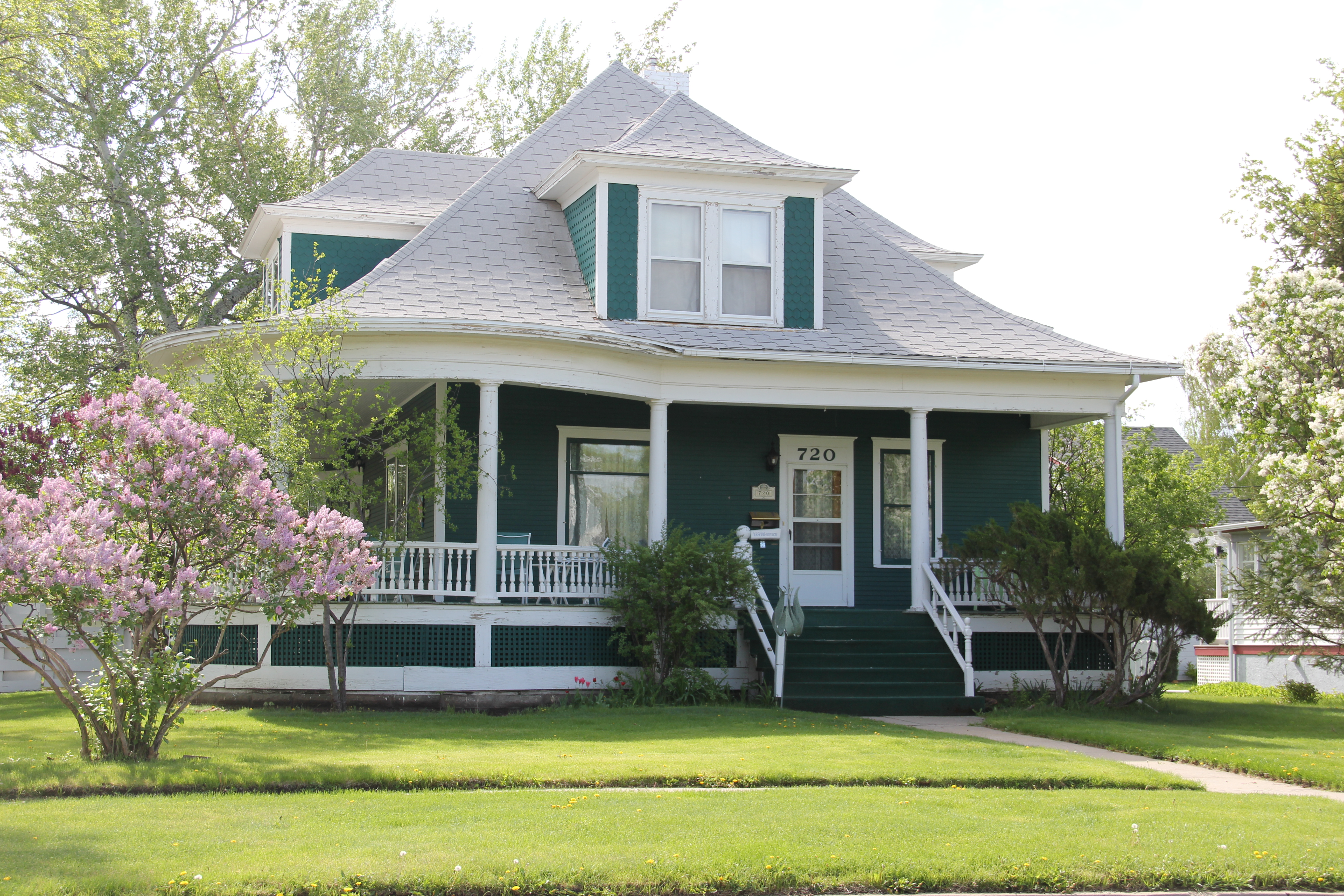
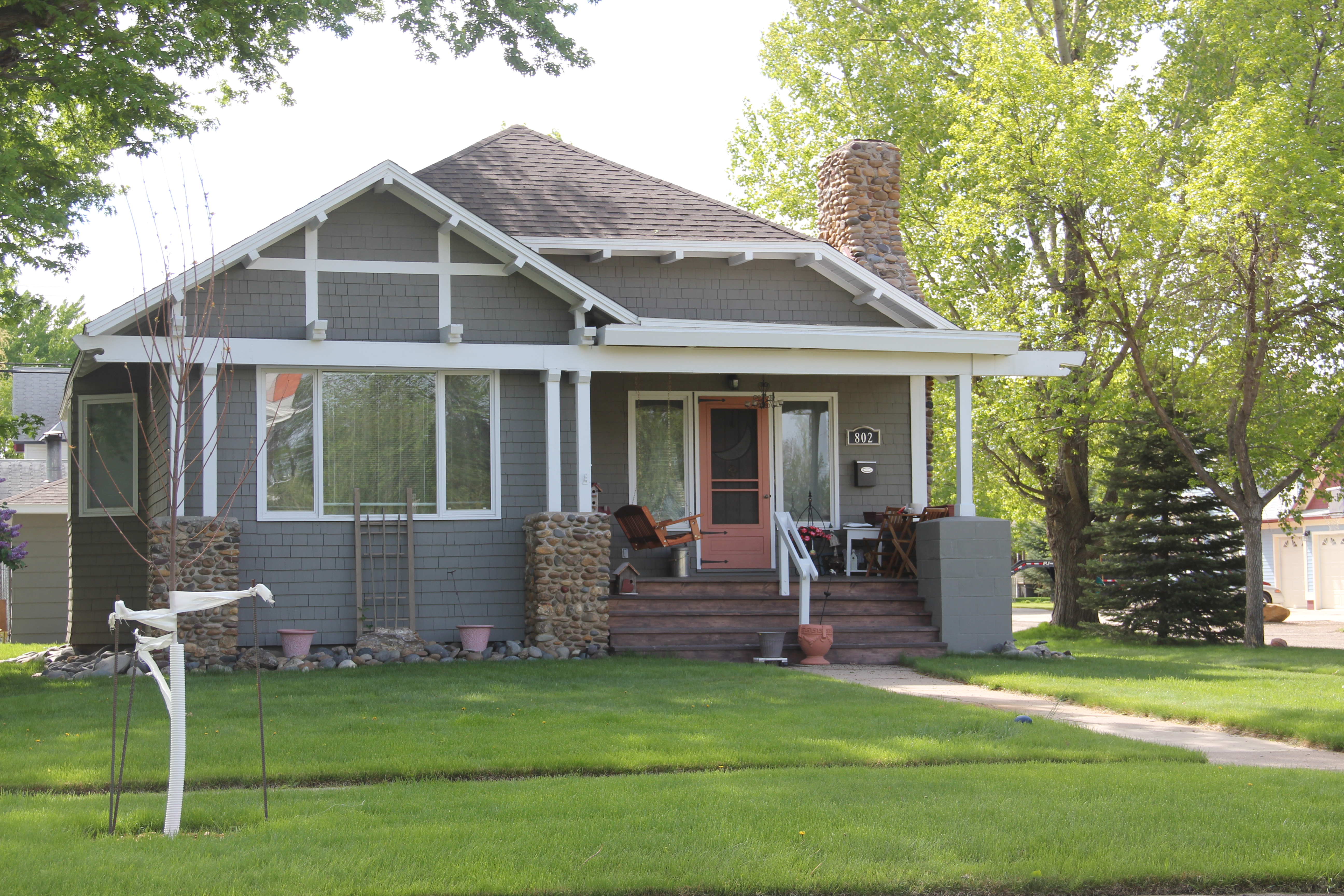
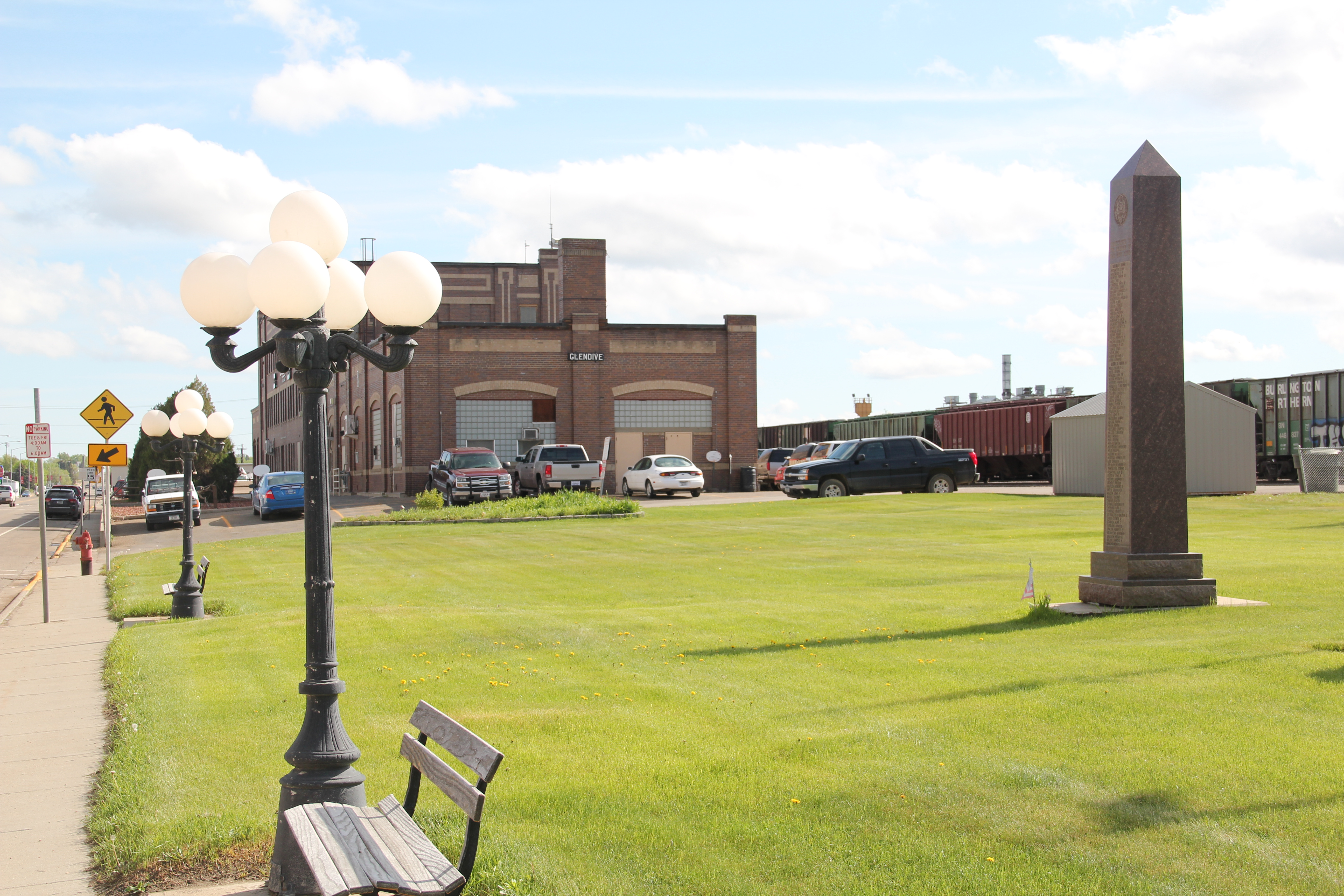
Glendive’s growth into one of the Yellowstone’s major towns in the first decades of the 20th century is well documented in its intact historic homes along Meade and Kendrick Avenues, which are located between the Yellowstone River to the west and the commercial corridor represented by Merrill Avenue to the east. Earlier posts have identified the two key economic events–the Lower Yellowstone Project of 1904/5 and the expansion of the Northern Pacific Railway shops in the 1920s–that shaped the neighborhood. Here I want to share the neighborhood’s stylistic diversity, along with the obvious pride that owners have in their homes and town. Let’s begin with an amazing set of bungalows, one of the region’s best concentrations of this early 20th century architectural style. There is a mix of what are often characterized as Craftsman Bungalows, with its thatch-like shingle roofs, exposed stick work and prominent bracketed porches. Others are more restrained in their ornament, taking on the look of a transitional design between Victorian era details and the one- and one-half story bungalow form.
IMG_7278
IMG_7276
IMG_7275
IMG_7274
IMG_7273
Next comes variations from another popular early 20th century form, the “foursquare,” a two-story, squarish dwelling, typically with a hipped roof and a less prominent porch than a bungalow, but as this example from Kendrick Avenue indicates, the Foursquare can come off looking much like a bungalow on steroids.
IMG_7271
The neighborhood also has earlier Victorian styles, such as this rambling Queen Anne-style house on Meade Avenue, while just a bit farther away on North Douglas is the Krug House, an outstanding Montana example of Classical Revival-infused Foursquare design that was completed in 1907.
IMG_7279
IMG_7216
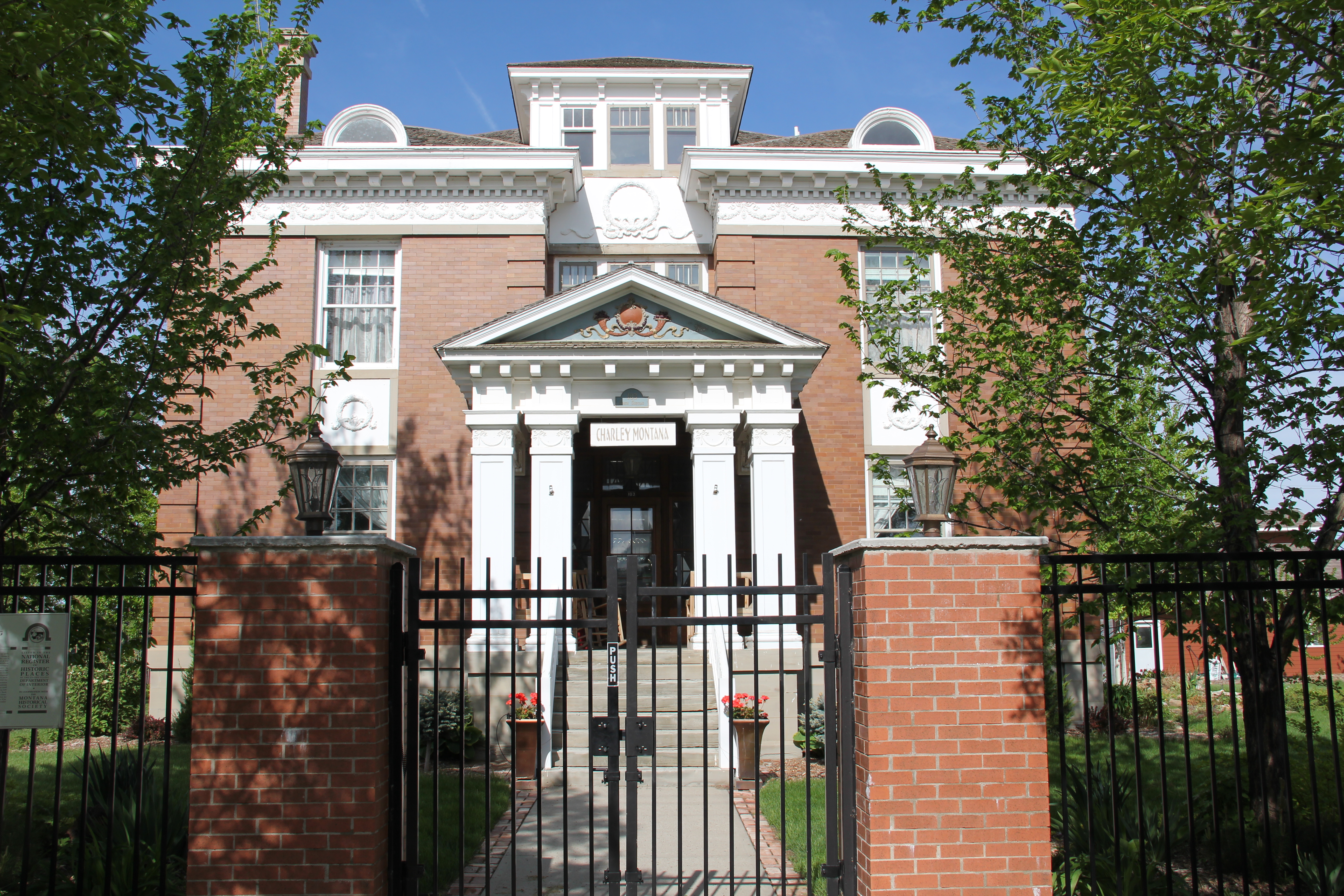
This National Register-listed property, designed by St. Louis architect Herbert G. Chivers, was the home of Charles Krug and family and definitely represents a statement house for its time. Krug wanted to prove that good money could be made from sheep–a rancher need not be only a cattleman.
A statement of modernity comes from Gresham Street, near the high school, where this Art Deco dwelling stands out among the more traditional designs of the town. Another different statement was made by this Contemporary-style home on Kendrick Avenue, which dates to the city’s last boom in the early 1960s. More at home in a modern suburban setting than the more formal early 20th neighborhood of Meade and Kendrick Avenues, this house, with its prominent A-frame center section and project front entrance garage states 1960s values well.
IMG_7286
IMG_7272
Glendive’s historic homes are complemented by its early 20th century historic churches. I will close with two: the Castellated Gothic United Methodist Church and the Romanesque-styled Sacred Heart Catholic Church.
IMG_7268
IMG_7300
Glendive in the 1980s struck me as a town in decline but one that retained a faith in its historic buildings and houses. Thirty years later than faith seemed renewed–as the historic fabric of the town has changed, certainly, but also had been maintained even enhanced by local stewardship.

Modernism in Glendive

My last post on Glendive, the primary commercial and transportation center of the Lower Yellowstone Valley, looked at the Northern Pacific Railroad’s imprint on the town. :et’s shift focus into the early 20th century, when the automobile corridors–the Yellowstone Highway or U.S.Highway 10–began to leave their marks on the town.

Historic Texaco Station in Art Moderne style, Glendive , MT

Historic Texaco Station in Art Moderne style, Glendive , MT


IMG_7213
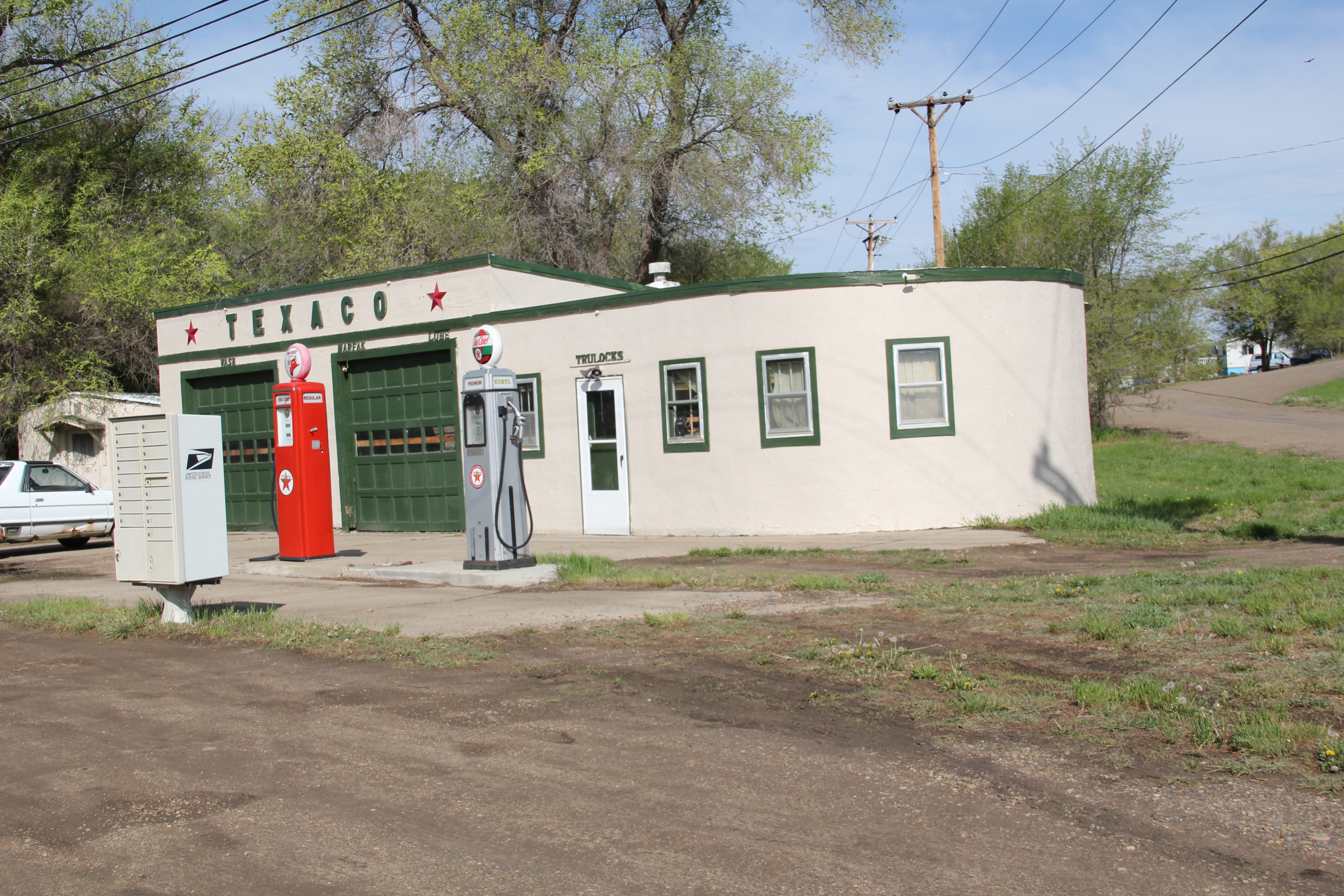
As the Yellowstone Highway left town and headed west, two outstanding examples of roadside architecture survive, the c. 1930 Art Moderne-styled Texaco gas station, complete with a small motor court for lodging in the rear, and a later historic drive-in, Frosty’s, complete with the low canopy typical of the early non-standardized drive-in establishments.
IMG_7215
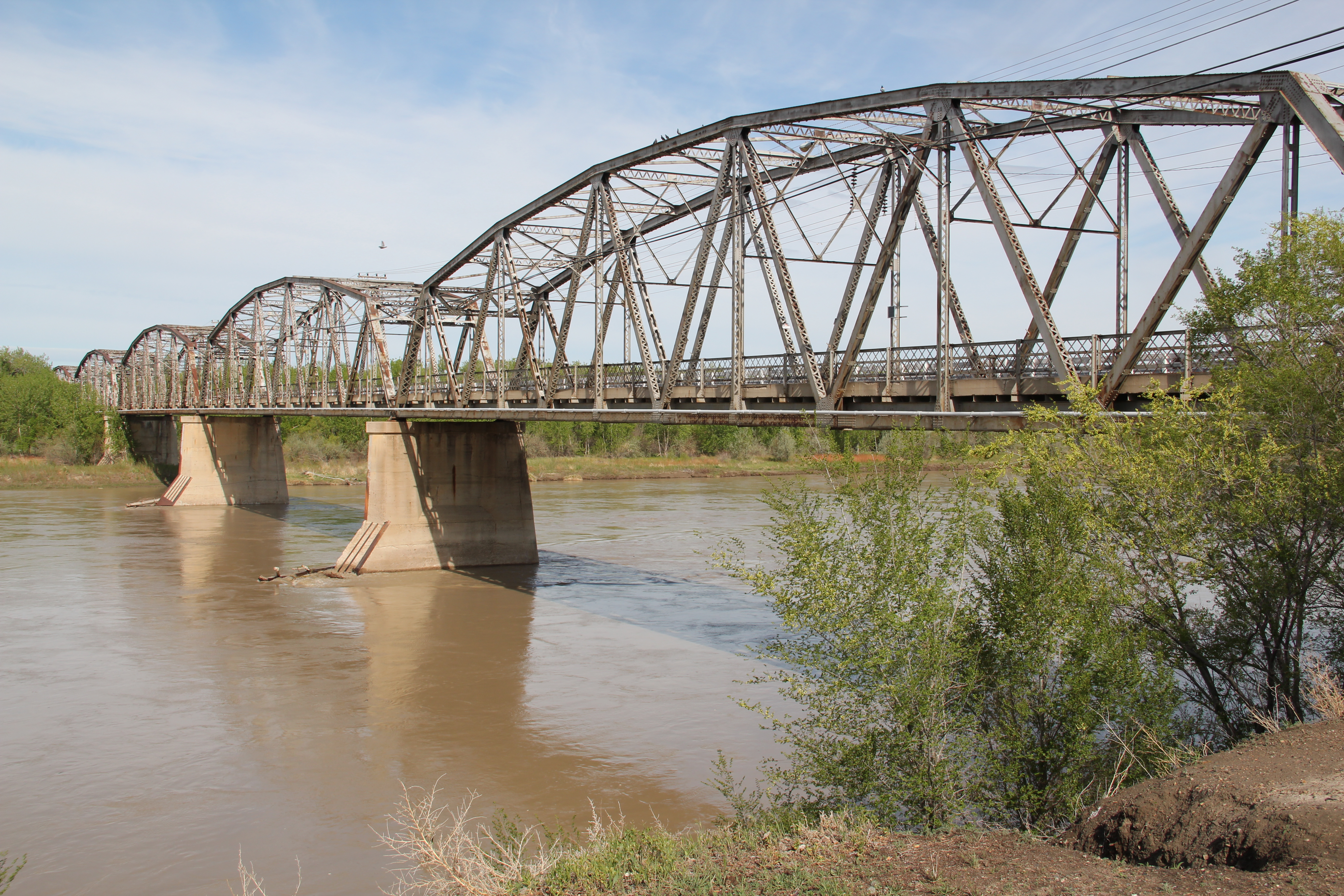
Also feeding traffic into the heart of Glendive was the 1925 Bell Street Bridge over the Yellowstone River. This National Register-listed bridge was once a gleaming steel and concrete landmark of modern transportation; it continues to serve the town as a pedestrian bridge.
IMG_7220
IMG_7224
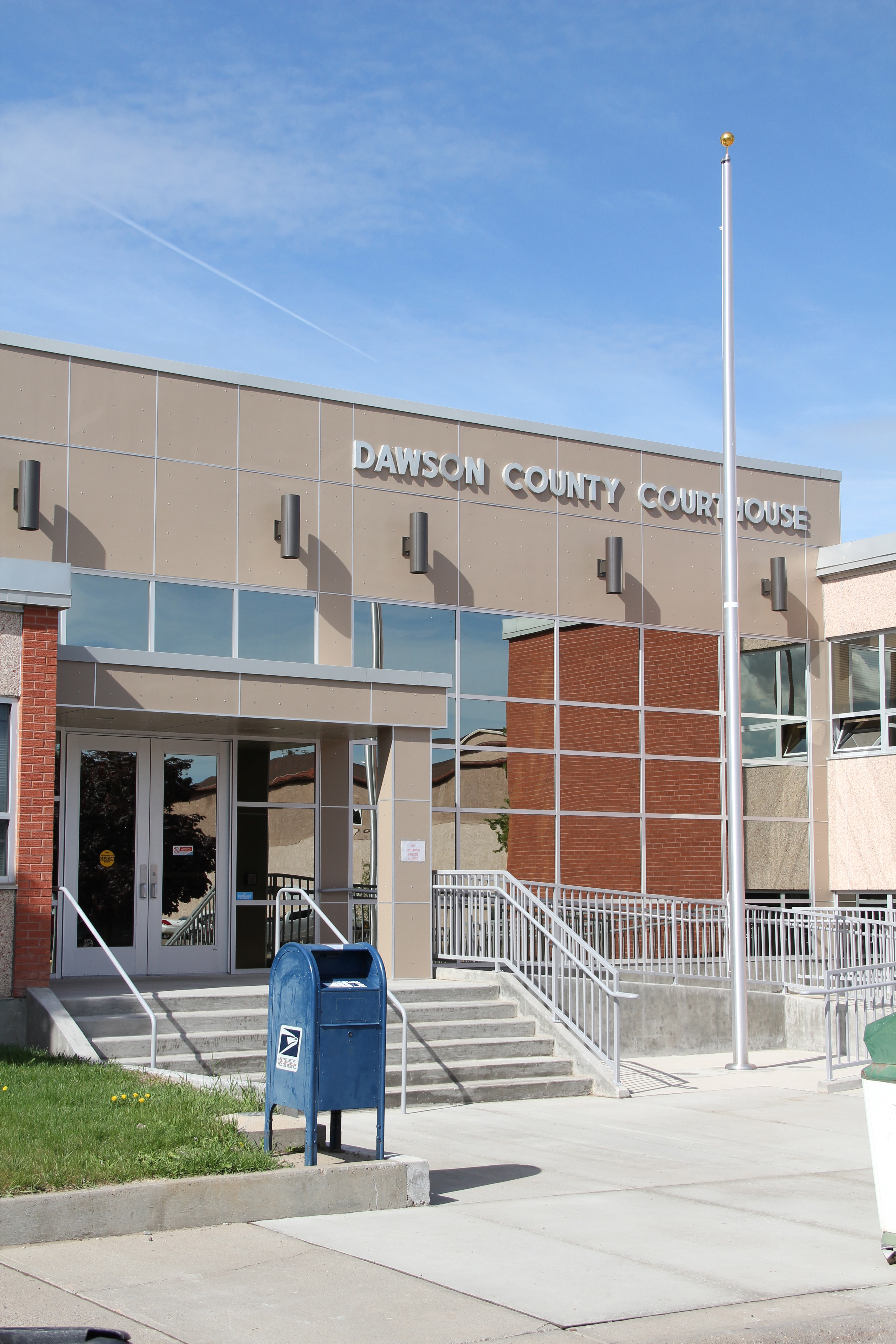
Downtown Glendive is dominated by a modern monument to its time of greatest prosperity–the city reached its population high of just over 7,000 in 1960: the Dawson County Courthouse of 1962. Designed by the long-established Billings firm of J. G. Link, the courthouse represents the “contemporary modern” movement in the state’s architecture of the 1950s and 1960s.
IMG_7225
Dawson County Courthouse, 1962, Glendive, MT

Dawson County Courthouse, 1962, Glendive, MT


An even more striking example is the space age aesthetics found in the town’s public library, which when I lasted visited Glendive in the 1980s still served its original purpose as a local bank.
IMG_7266
IMG_7267
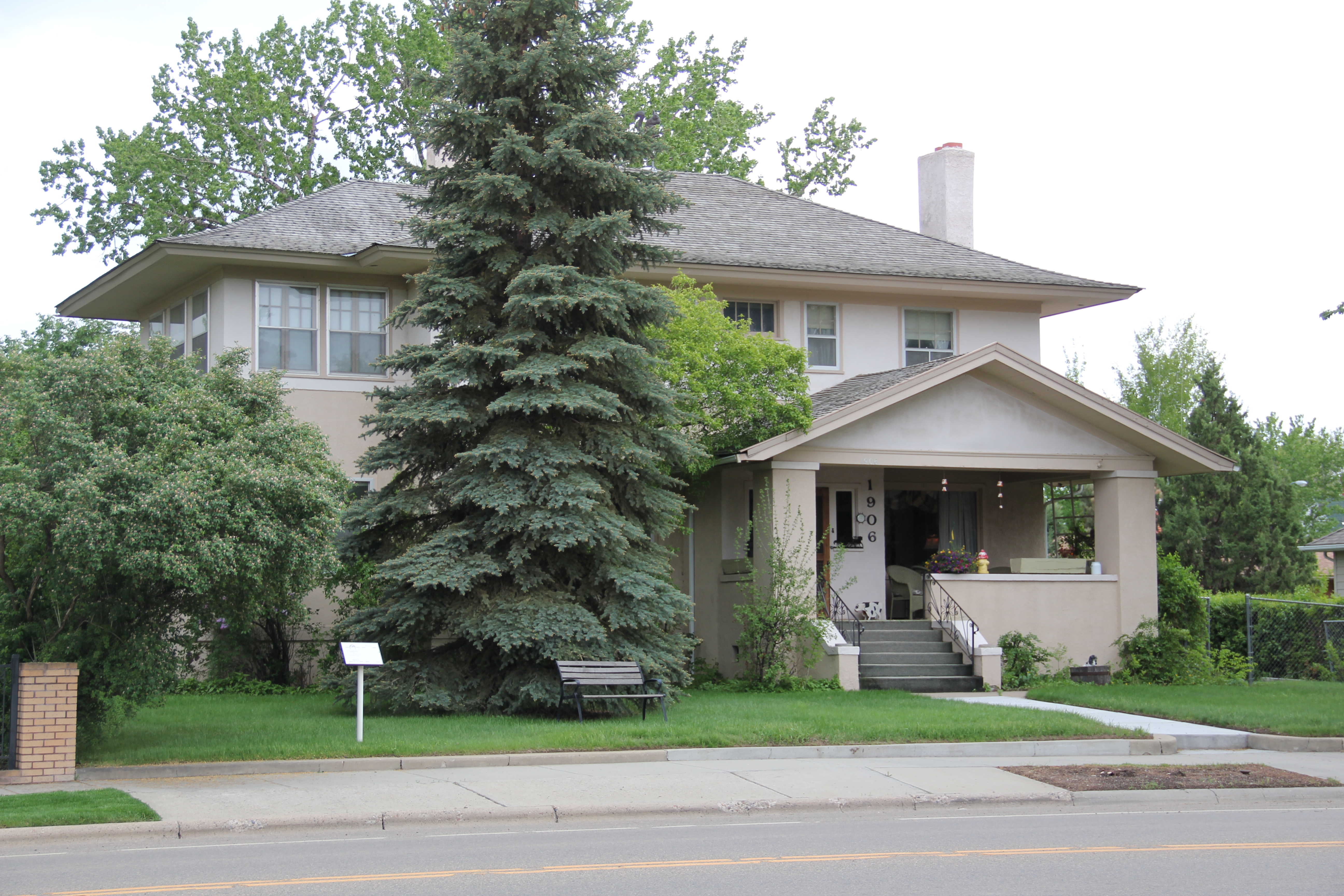
The contemporary sixties look even extended into Glendive’s historic neighborhoods, as reflected in the A-frame style of the First Congregationalist Church, and into new commercial buildings, such as the Saarinen-esque sloping roofline of the historic Safeway store, now adapted into the Eastern Montana Events Center.
IMG_7265
IMG_7261
Glendive has lost over a quarter of that 1960 population, checking in the 2010 census at just under 5,000 residents. Before we leave this spot on the Yellowstone, let’s explore more its historic neighborhoods, full of a range of interesting domestic architecture from 1900 to 1960. That’s the next post.

Glendive: the Yellowstone’s first railroad town

IMG_7244
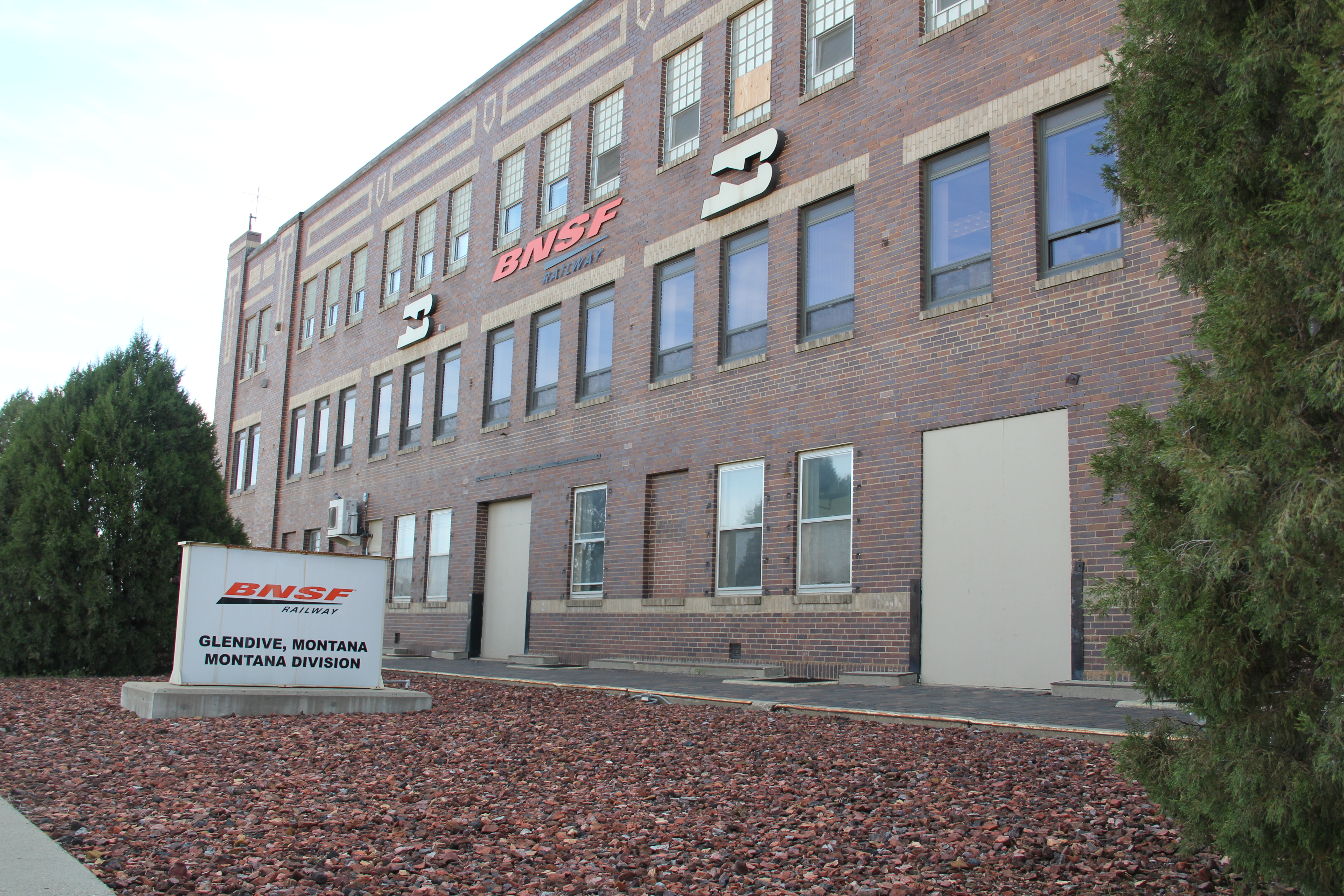
As the tracks of the Northern pacific Railroad pushed west in 1881, they encountered the Yellowstone River at a place that became Glendive, the Yellowstone Valley’s first railroad town. Here the company located a division point and built offices, roundhouses, and other support structures for the trains moving between the Great Lakes and the West Coast. In 1984 when I came to Glendive for the state historic preservation plan survey, it was not my first visit. A year earlier I had began to work with the Western Heritage Center in Billings as a historian for its first major exhibit on the Yellowstone and its history, an exhibit that eventually was titled “Yellowstone: River of Life.” Glendive as a railroad division point played a key role in that story, and when I first visited the town I enjoyed the fact that a late 19th century depot, standing just off the main line, now served as the local visitor center and Chamber of Commerce offices.
IMG_4084
At that time I saw little outside of the railroad’s imprint on the landscape. Glendive, like many initial Northern Pacific towns, had a “symmetrical plan.” The train tracks cut a path through the town, with a combination passenger station/company office commanding the corridor. On the opposite side of the tracks were housing for railroad workers and machine shops, roundhouses, elevators, etc. associated with the railroad.

Northern Pacific corridor in Glendive

Northern Pacific corridor in Glendive


Facing the depot was the primary commercial street, Merrill Avenue, which later served as the town’s primary commercial artery for U.S. Highway 10 and is now designated as “Business I-94.” The many historic commercial buildings along Merrill Avenue facing the depot and railroad tracks captivated me–the dialogue between local entrepreneurs and the massive international capitalism represented by the Northern Pacific was plain to see.
Merrill Avenue Historic District, Glendive

Merrill Avenue Historic District, Glendive


Clearly this long-stretch of buildings recorded the town’s shifting economic fortunes from the 1880s to the depression era, and was worthy of designation in the National Register of Historic Places, work that has since taken place.
Closed for sometime now, the Lulhaven Bar is a classic example of Art Deco, with its black carrera glass and glass block entrance

Closed for sometime now, the Lulhaven Bar is a classic example of Art Deco, with its black carrera glass and glass block entrance


The Jordan Hotel combines both Art Deco elements and an overall International Style feel to reflect not only the depot across the street but to invite customers into its corner entrance

The Jordan Inn combines both Art Deco elements and an overall International Style feel to reflect not only the depot across the street but to invite customers into its corner entrance


The striking 1960s metal facade of the Rose Theater was layer over an earlier brick building

The striking 1960s metal facade of the Rose Theater was layer over an earlier brick building


IMG_7252
What particularly struck my eye was the different eras of prosperity represented by buildings such as those owned by Henry Dion, a leading early 20th century merchant. Dion built the 1905 brick building above during the boom brought out by the launching of the Lower Yellowstone Irrigation Project. Later, as the railroad expanded its presence with the new passenger station and the federal highway came down Merrill Avenue, an Art Deco layer appeared, making a old building suddenly trendy and “modern.”
In 1984, however, I did not much venture beyond the railroad corridor to understand how the shifts documented in those historic buildings also could be found across the town. Much like the residents I was captivated with the railroad’s imprint–as shown in this wonderful mural of local history, prepared by high school students, and installed in the lobby of the modernist Dawson County Courthouse in 1982.
IMG_4233
IMG_4232
I spoke with the community at the courtroom around the corner one March night in 1984 and we all agreed on what was important. But later trips to Glendive, and the town’s push into historic preservation, quickly convinced me that there was more to tell.

Finding the Lewis and Clark story at Coal Banks Landing

Image

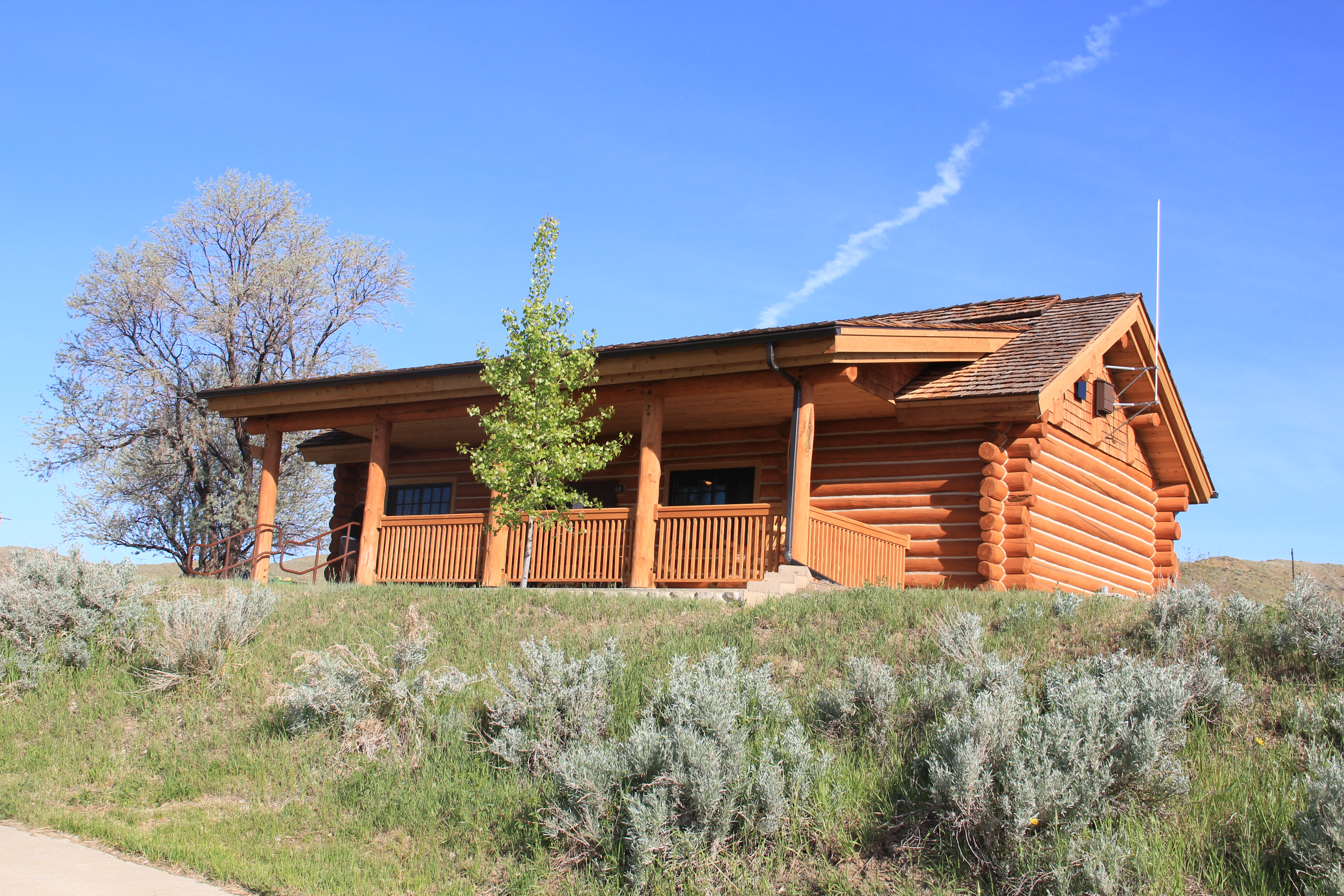
Coal Banks Landing, on the Missouri River in Chouteau County, was another site already recognized as significant when the preservation planning survey got underway in the spring of 1984.  Here was yet another documented place associated with the Lewis and Clark expedition:  it took its name literally from the band of lignite easily observed in the banks along the Missouri.

Image


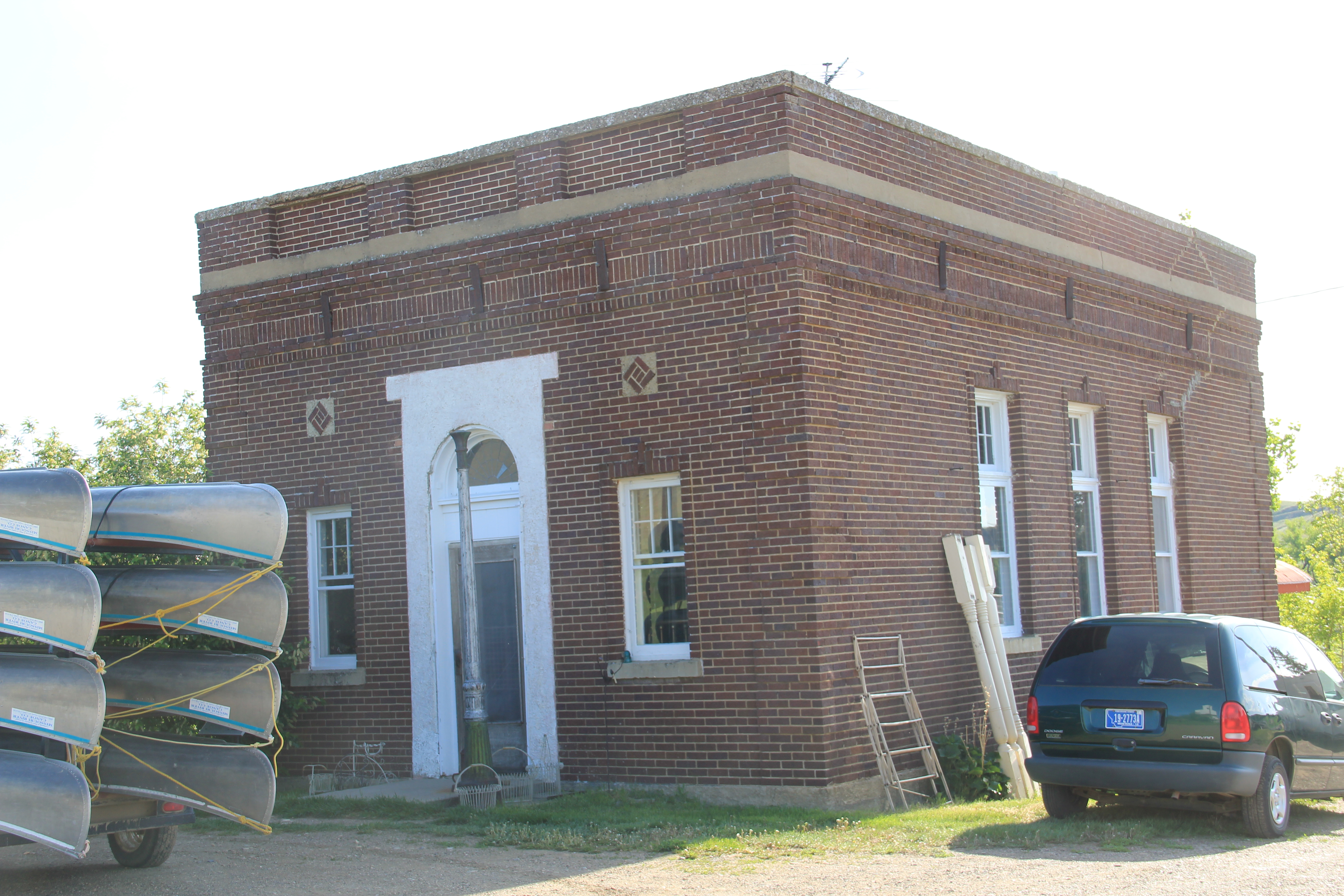
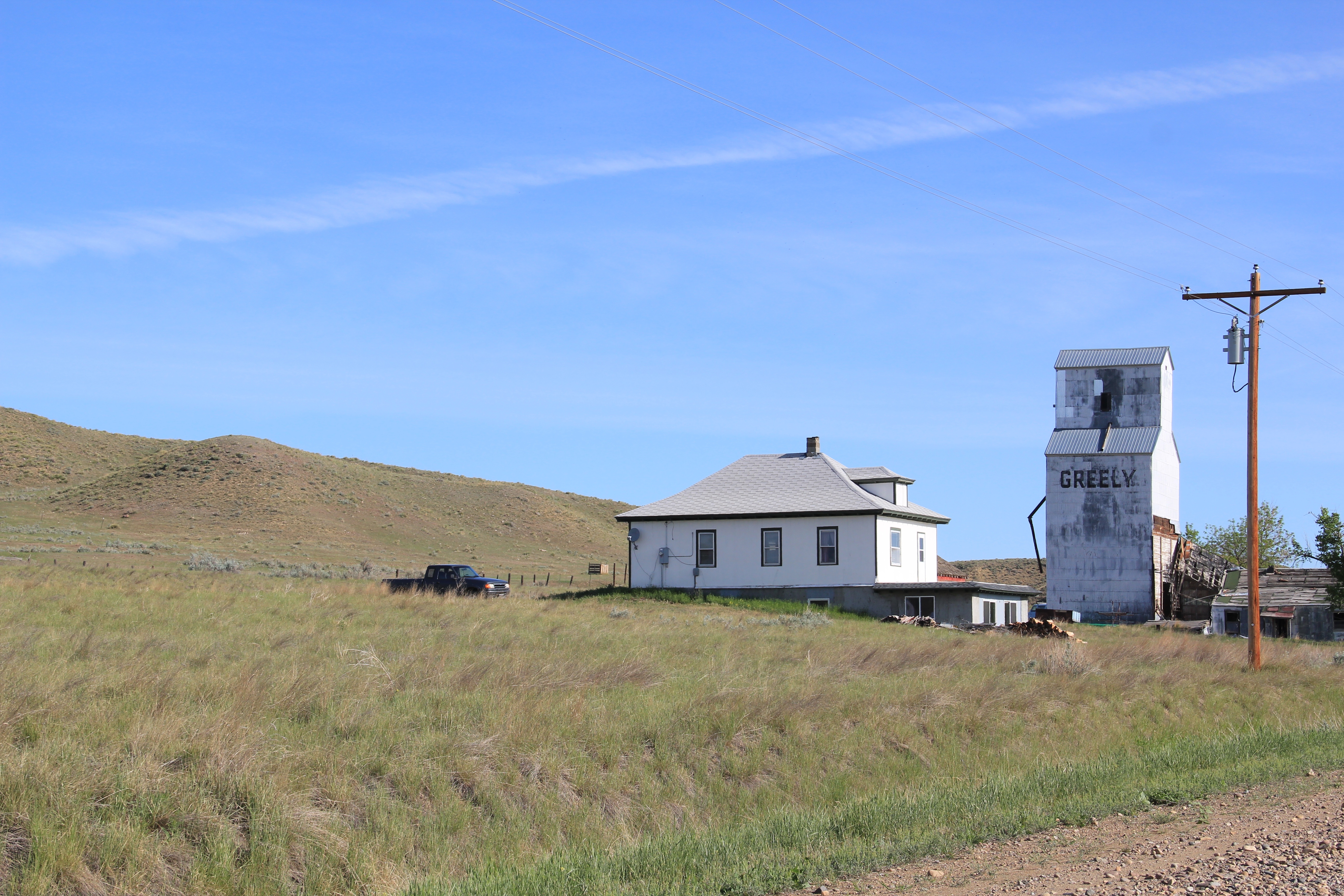
The landscape here not only speaks to the age of river transportation; to the west at Virgelle you can also find the original roadbed of James J. Hill’s Manitoba Road as it came down from Havre and connected with the Missouri River valley, its route to Great Falls.  Virgelle has National Register-listed properties in its historic pressed tin-sided general store and brick bank; across the road are a school and grain elevator.  These properties marked the forgotten town as a place once prominent along the Great Northern network.

Image Image

Image Image

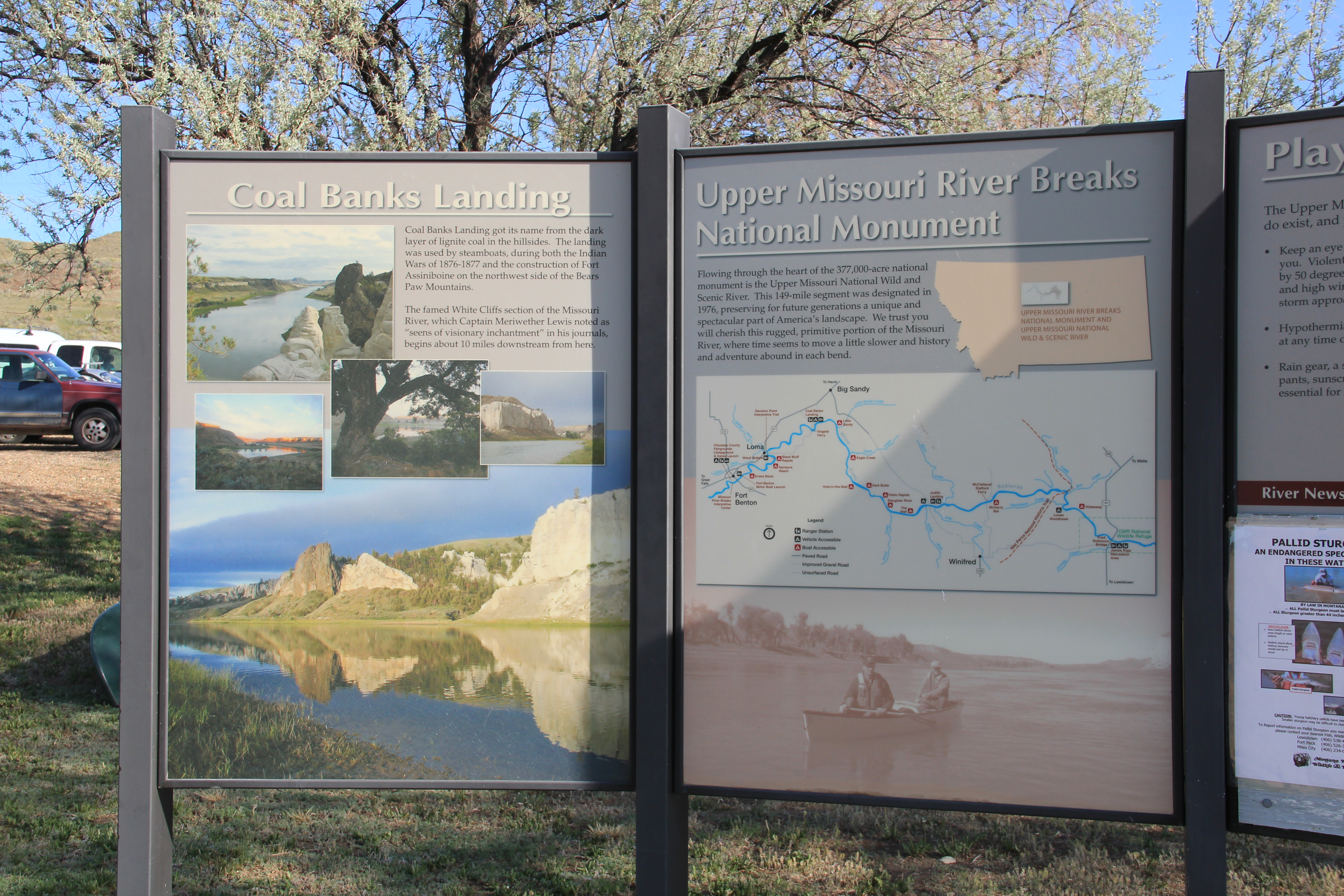
Coal Banks Landing, in comparison, was a place on the river, with little to tell its story.  Today, however, Coal Banks Landing is a prominent spot, with a modern boat landing, a seasonal interpretive center, and then year-round interpretive markers for its multiple layers of history.

Image Image


The landing and its significant Lewis and Clark story are now preserved as part of the Upper Missouri River Breaks National Monument, one of the state’s most important conservation and heritage tourism developments in the 21st century.  This national monument preserves not only one of the most breathtaking sections of the Lewis and Clark National Historic Trail it also preserves open land little changed from the centuries of occupation by various Native American groups and scattered often log-built homesteads of the multi-ethnic groups that flooded into northern Montana in the first two decades of the 20th century.

Image Image


Little was here in 1984 to help residents and visitors understand the deep significance of the Missouri River.  Today Coal Banks Landing is a must stop for any heritage tourist of northern Montana.


Square Butte and a spring storm

Image


One of my favorite Central Montana landmarks and small railroad towns is Square Butte.  Once served by the Milwaukee Road, few travelers find the town today.  Yet several key landmarks remain–the historic late 19th century stone jail is listed in the National Register of Historic Places.  

Image


There is a historic brick school building, a bit worse for wear but still a key survivor that marks the height of the homesteading boom in the county.  

Image


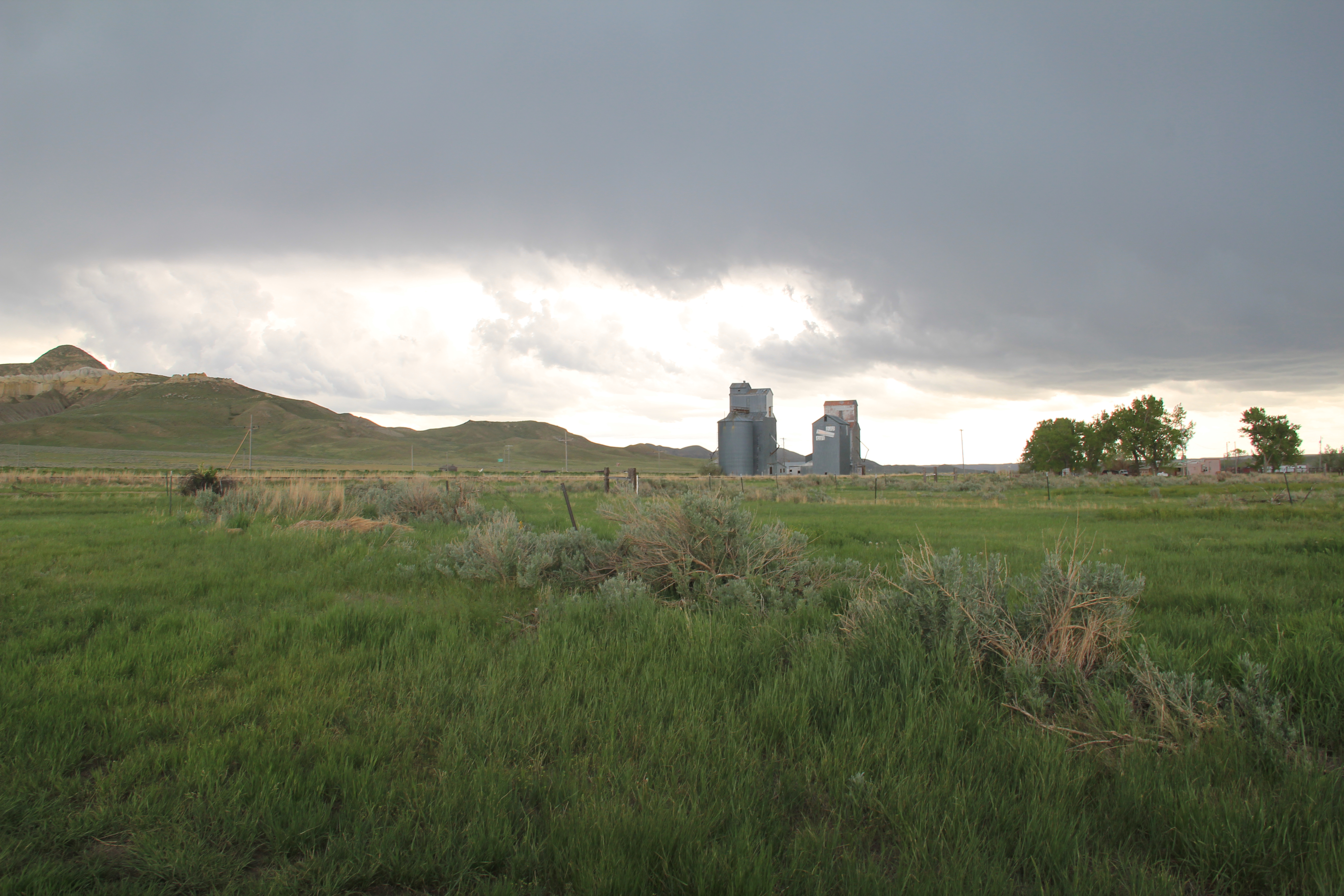
But my favorite resources are the elevators along the railroad corridor–still standing tall, although in that stormy day–I made it through a pretty strong hail storm about 10 minutes after the photo–the elevators perhaps look dramatic than normal.

Image

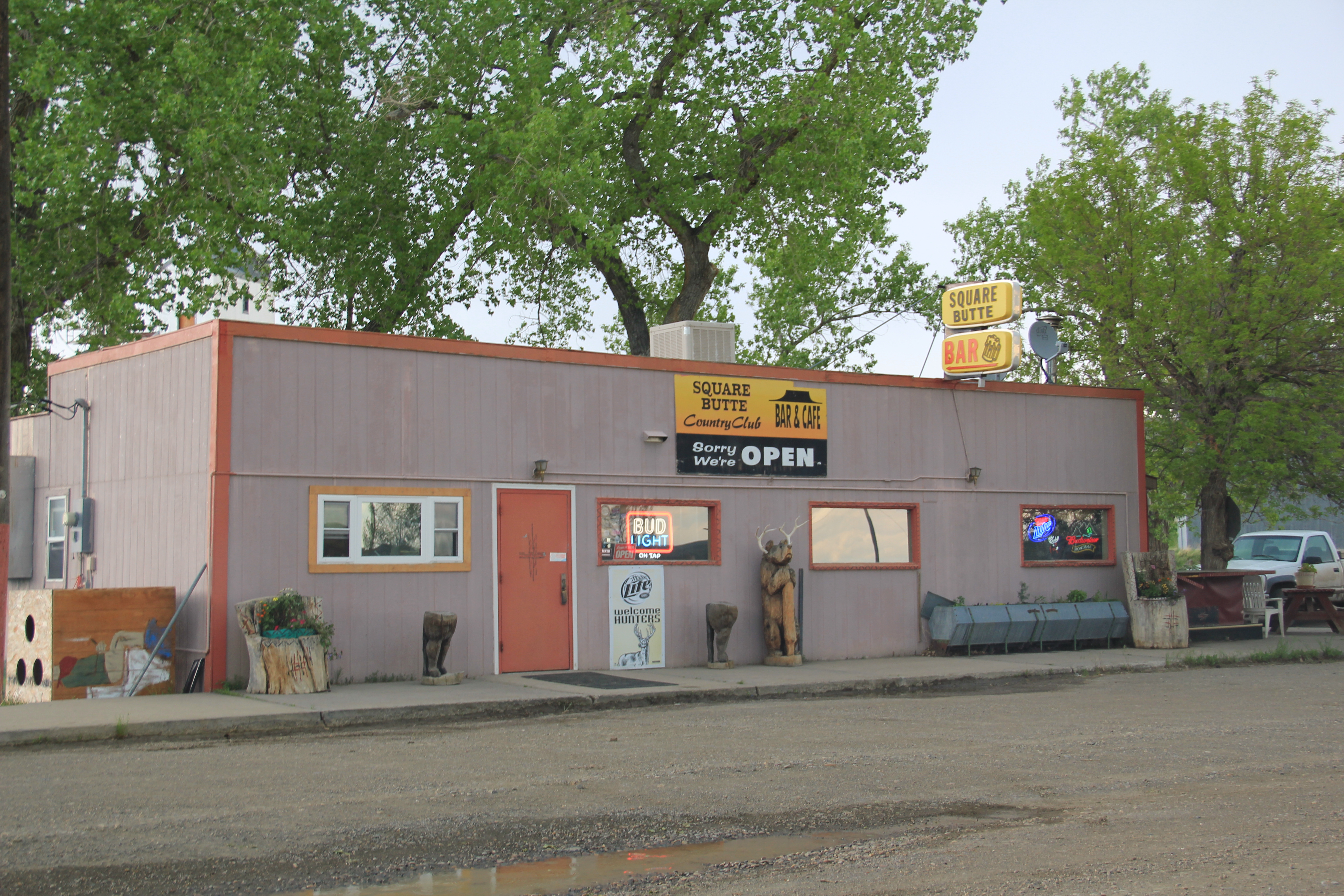
And perhaps most importantly the town still has a local tavern, the appropriately named Square Butte Country Club Bar.  Still an important community center today, as it was in 1984.
Image