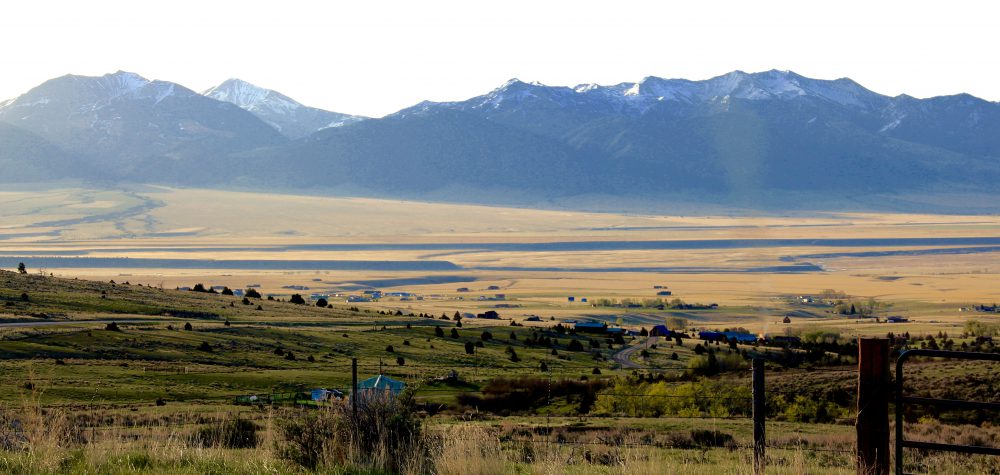
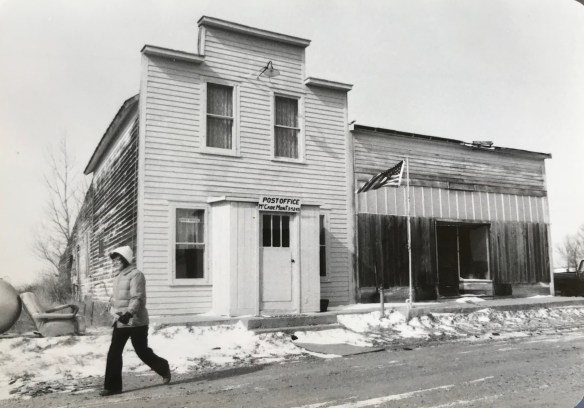
 The new year will mark 35 years since I began my systematic exploration of Montana for the state historic preservation office. I am using that loose anniversary (actually I started in Toole County in February) as an excuse to share some of my favorite images from a time that seems like yesterday but certainly belongs to another era. The image of a winter morning in McCabe in the northeast corner of Montana is still perhaps my favorite of all. The idea of a town being merely a handful of unadorned buildings fascinated me, and the primacy of the post office also struck me.
 The imprint of the metropolitan corridor of great railroad corporations crossing the northern plains with their trains speeding between Seattle and St Paul never left my memory— as four decades of my graduate students will sadly attest. The image of Hoagland in northern Blaine County recorded what happened to the spur lines of the main corridors by the end of the century. The image below of Joplin along US Highway 2 is what I always think of when someone mentions the Hi-Line.
 Small-town Montana is also defined by its local bars and taverns, as I have repeatedly emphasized in this blog. Swede’s Place in Drummond just said a lot to me in 1984. But I wasn’t sure which door to use— the one between the glass block windows did the trick.
 Some places I considered small town landmarks have disappeared in the last third of a century. The Antler Hotel and bar in Melstone on US Highway 12 is one I still miss.
 Rural schools were everywhere even though some had been abandoned for a generation. The Boston Coulee School still had its New Deal privy. The New Deal also built the modernist styled Shawmut School. I haven’t been that way in awhile—I wonder if it still serves that tiny town.
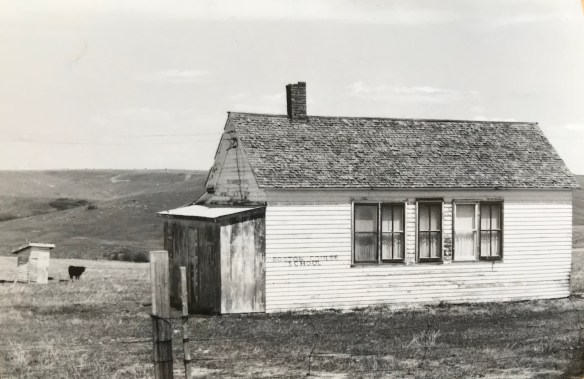
 The towns defined only by their community centers also fascinated me. Loring was bigger than Eden for what that’s worth but these comparatively substantial and obviously valued buildings told me that community meant something perhaps more profound in the Montana plains.

 I will always remember Saco fondly for the town tour that residents gave me—it ranged from an old homesteader hotel (no longer there) to a Sears Roebuck kit bungalow, which is still a family home in Saco although Sears Roebuck has largely closed up shop.
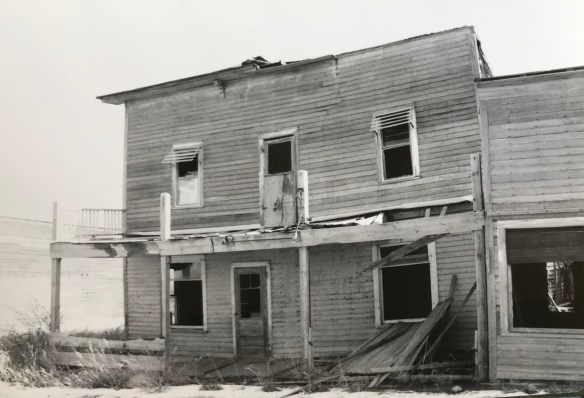
 These images are merely a beginning of my reconsideration of what I saw, heard and experienced 35 years ago but I know they represent places that still bring meaning to me today.


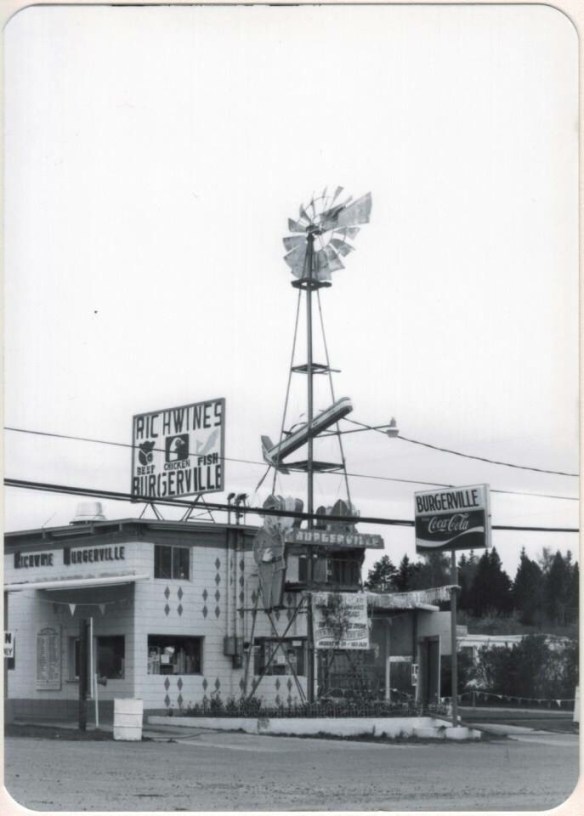

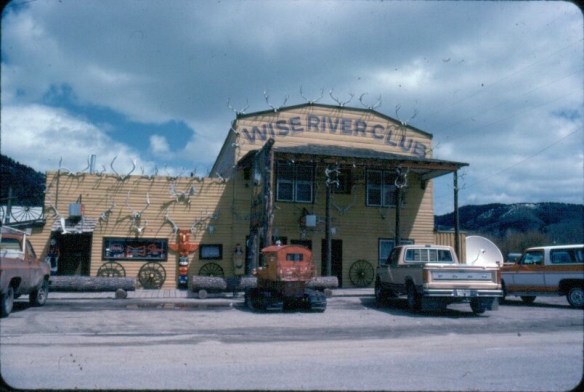
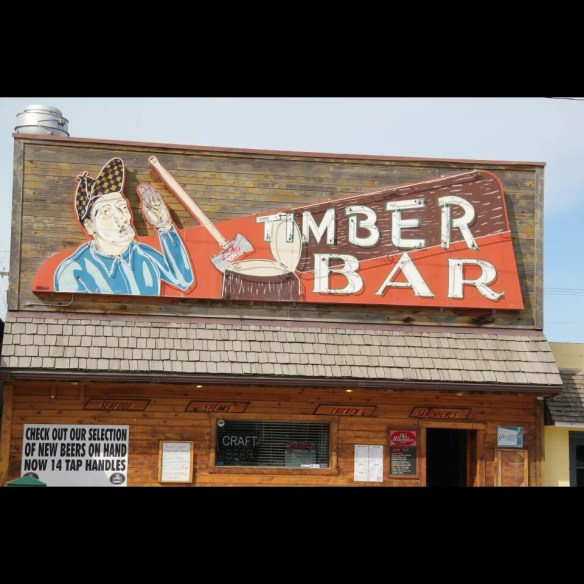 chops away and the beer is still cold. That is what you need on the road.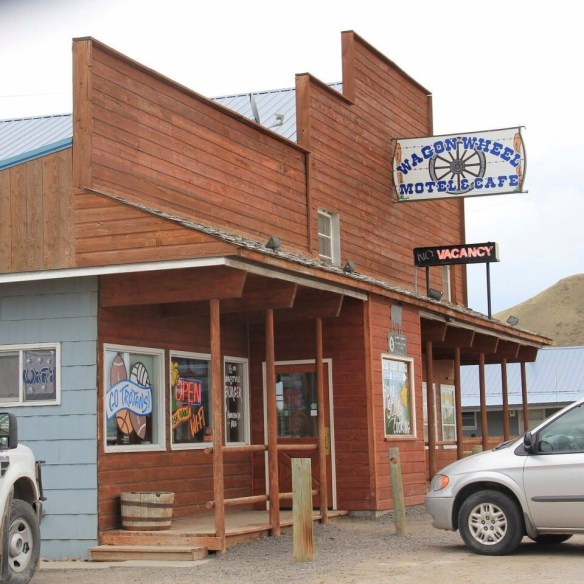
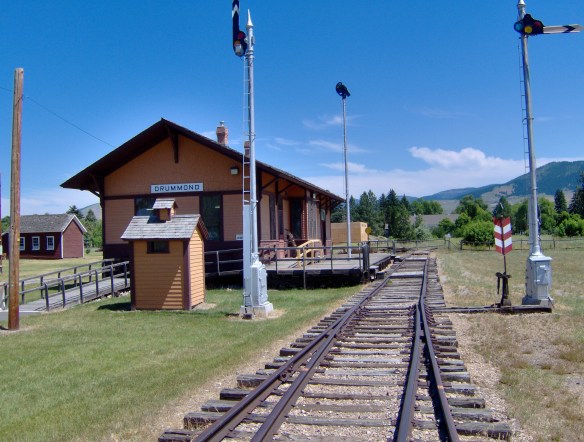
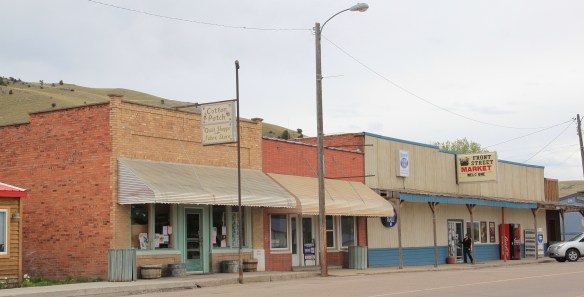 Drummond is the north entrance of the Pintler Scenic Route. The first ranchers settled here in the 1870s but a proper town, designed in symmetrical fashion facing the railroad tracks, was not established until 1883-1884 as the Northern Pacific Railroad built through here following the Clark’s Fork River to Missoula.


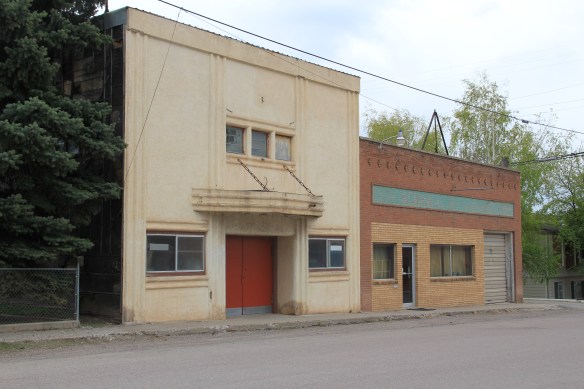
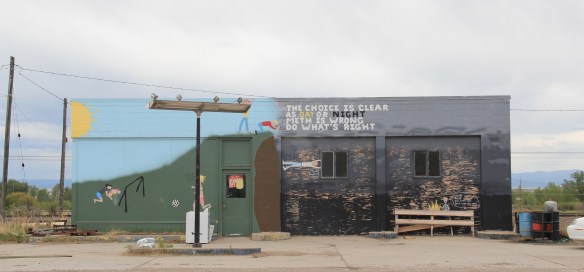 There is a faintly classically influenced two-story brick commercial block, a Masonic Lodge made of concrete block, various bars and cafes, a railroad water tank, and a slightly Art Deco movie theater, which was open in the 1980s but is now closed.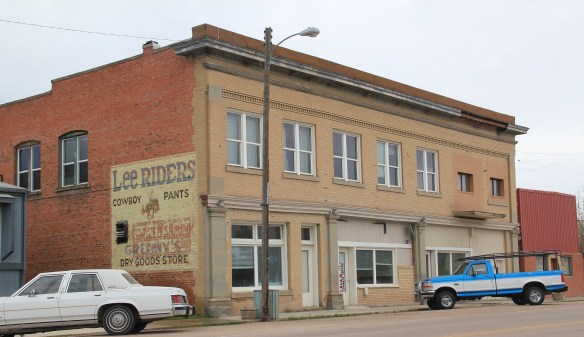


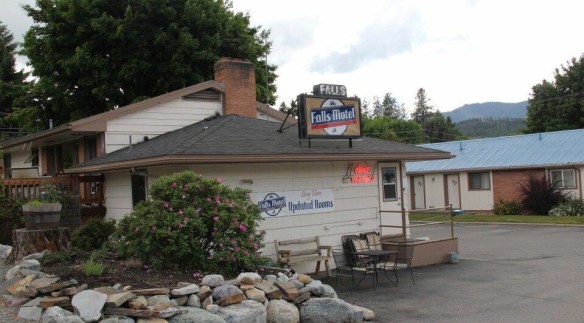
 Due to the federal highway and the later Interstate I-90 exit built at Drummond, the town even has a good bit of motel roadside architecture from c. 1970 to 1990.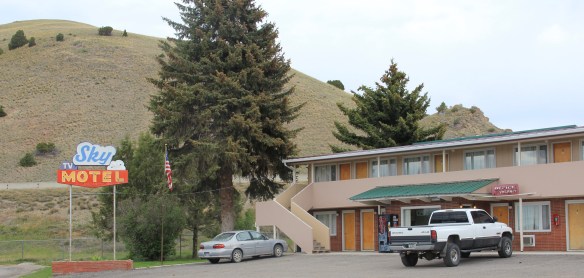
 Between the Northern Pacific corridor and old U.S. 10 is the town’s most famous contemporary business, its “Used Cow” corrals, and now far away, on the other side of the
 tracks are rodeo grounds named in honor of Frank G. Ramberg and James A. Morse, maintained by the local American Legion chapter.
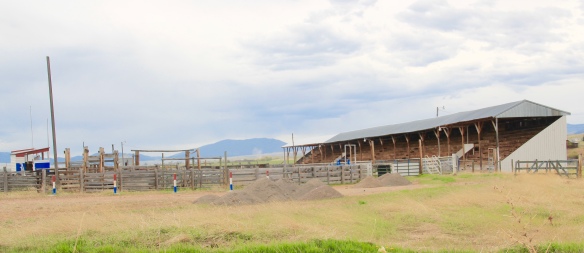 The rodeo grounds are not the only cultural properties in Drummond. The Mullan Road monument along the old highway is the oldest landmark. The local heritage museum is at the New Chicago School (1874), an frame one-story school moved from the Flint River Valley to its location near the interstate and turned into a museum.

 Another local museum emphasizes contemporary sculpture and painting by Bill Ohrmann. A latter day “cowboy artist” Ohrmann grew up in the Flint River Valley but by the 12960s he was producing sculpture and painting on a regular basis. The museum is also a gallery and his works are for sale, although the huge sculptures might not be going anywhere.


 Montana's Historic Landscapes