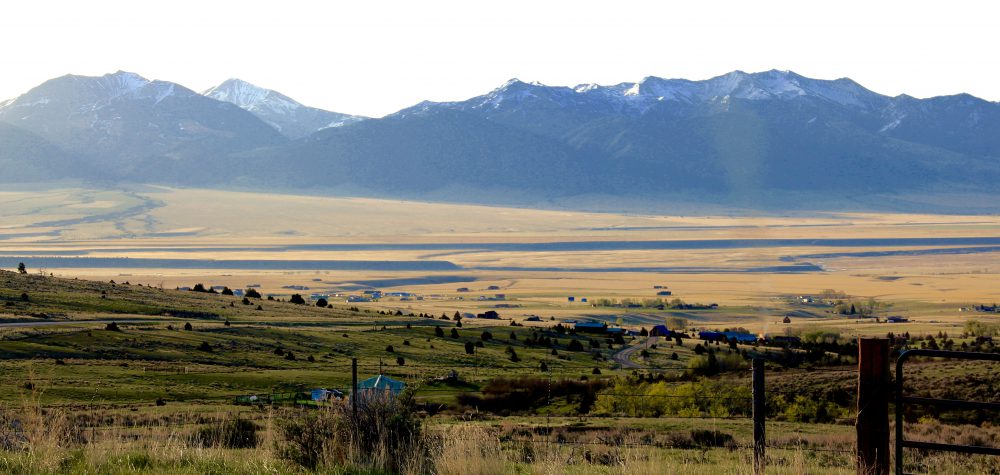
Education Legacies in Beaverhead County: Historic Buildings of University of Montana Western

Dillon is one of my favorite towns in western Montana, and a big reason why is the university. It’s a beautiful campus, donated by the Gothic Revival style of Main Hall (1895-1897), designed by John C. Paulsen.
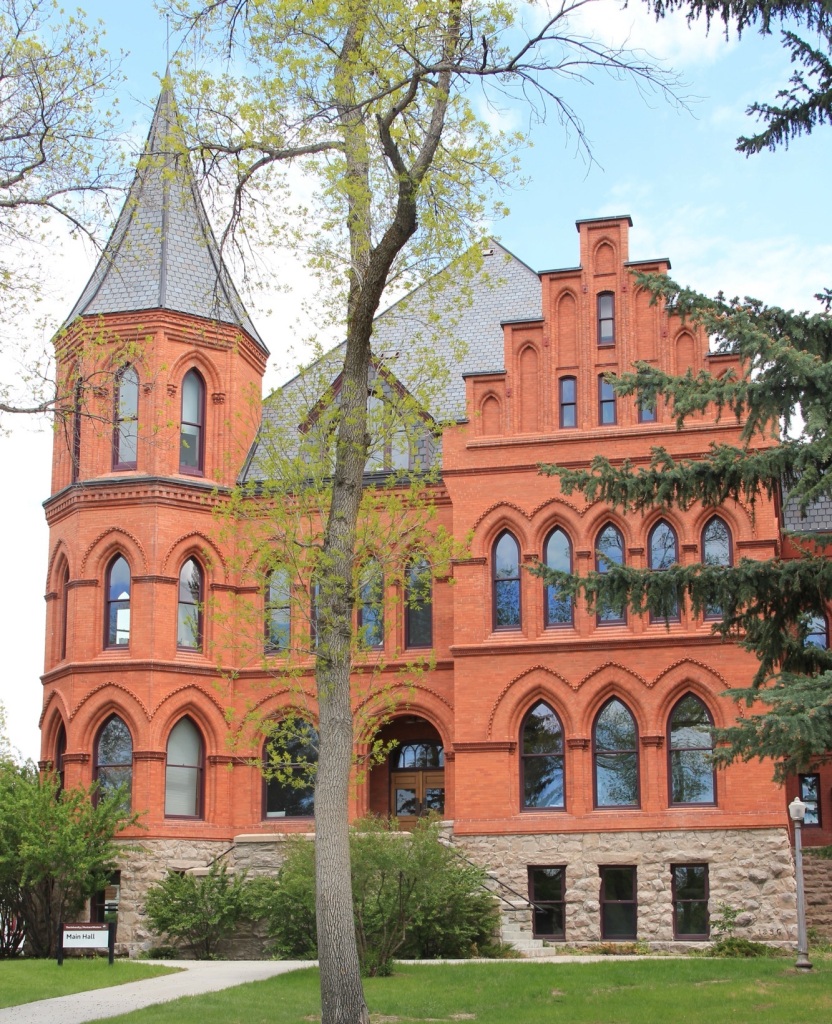
I’m a huge fan of Paulsen’s with across late 19th century Montana and Main Hall of what was originally the Montana State Normal School is one of his best designs.
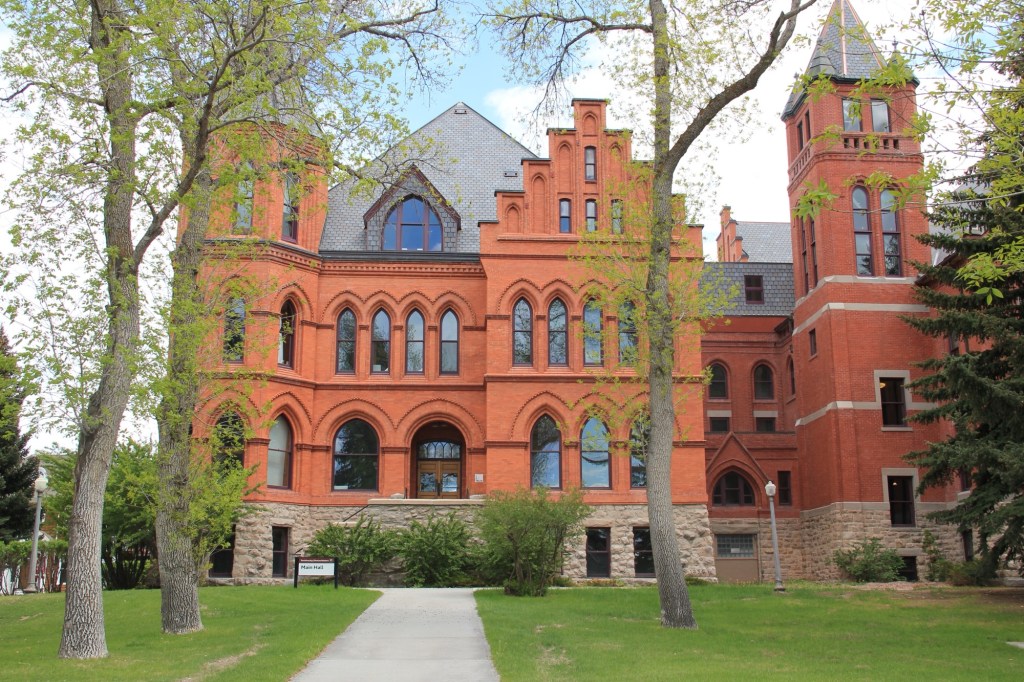
With the homesteading boom of the early 20th century, the college began to expand. Its name changed to the Montana State Normal College in 1903, and soon thereafter the one huge building was not enough. The state made the first addition in 1907, which included an auditorium.

Soon another building was added and a long rectangular, quasi Craftsman style wing was built to hold more classrooms. if I read the internet sources correctly, Billings architect Charles S. Haire was the designer, but the completion of the building was delayed by a constitutional challenge to its funding.

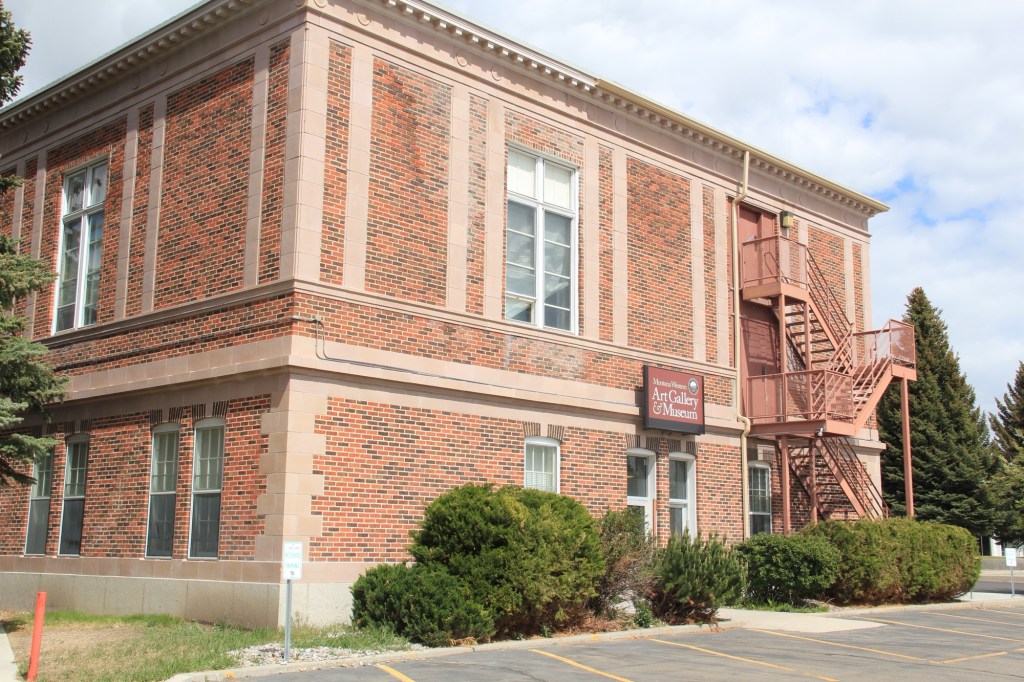
The university art museum ended up in this wing

Despite the funding controversy, the college continued to grow from 780 students in 1910 to about 1800 in 1920.

Matthews Hall, a classically inspired, yellow-brick building, was a residence hall constructed to help meet women student enrollment in 1919. The dining hall in a more Colonial Revival style came along a couple of years later in 1921.

With the construction of a new gymnasium and classroom building (later Business and Technology) in 1924, the first generation of growth at State Normal College came to an end.

The modern era introduced an entirely new architectural vocabulary to the college. The college became Montana State Teachers College in 1931 and then Western Montana College of Education in 1949. The student union building dates to that era and was built in 1958.

Once the institution became Western Montana College in 1965 and started to expand its curriculum, new buildings were a must. The James Short Center and the Lucy Carson Library came in 1969.
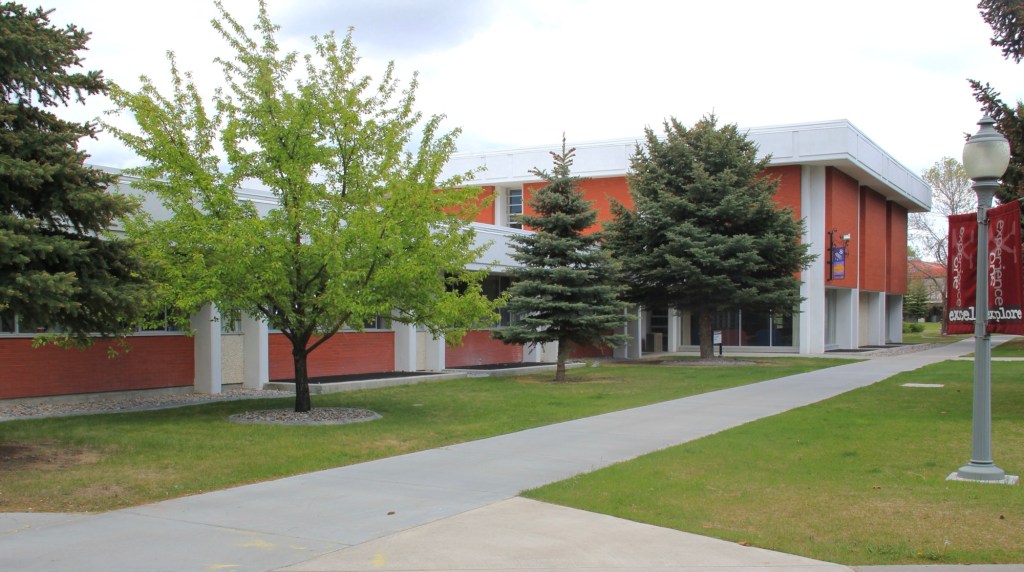
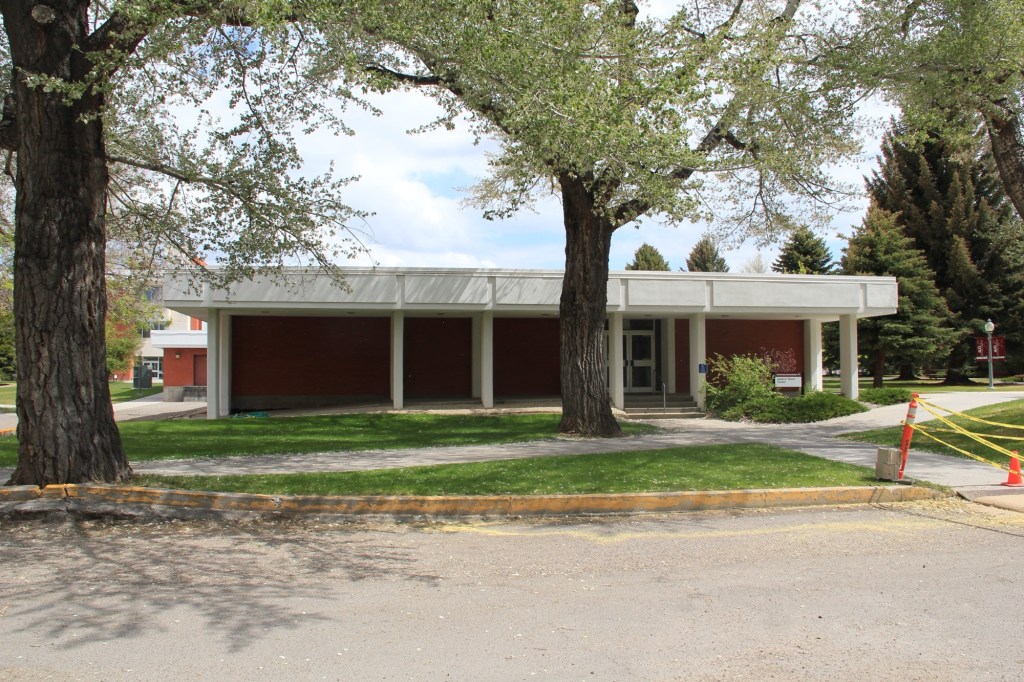
Short Center
Carson Library

Then in 1971 came my favorite, Block Hall. Named for science professor Daniel G. Block, the building gave the college modern labs and led to expansion in the college’s environmental studies program.

In 1988 the college again changed names to Western Montana College of the University of Montana and with the turn of the 21st century it changed for perhaps the final time as the University of Montana Western. Two buildings belong to this past generation of development, the Bulldog Athletic and Recreation center and the Swysgood Technology Center, finished in 2001.
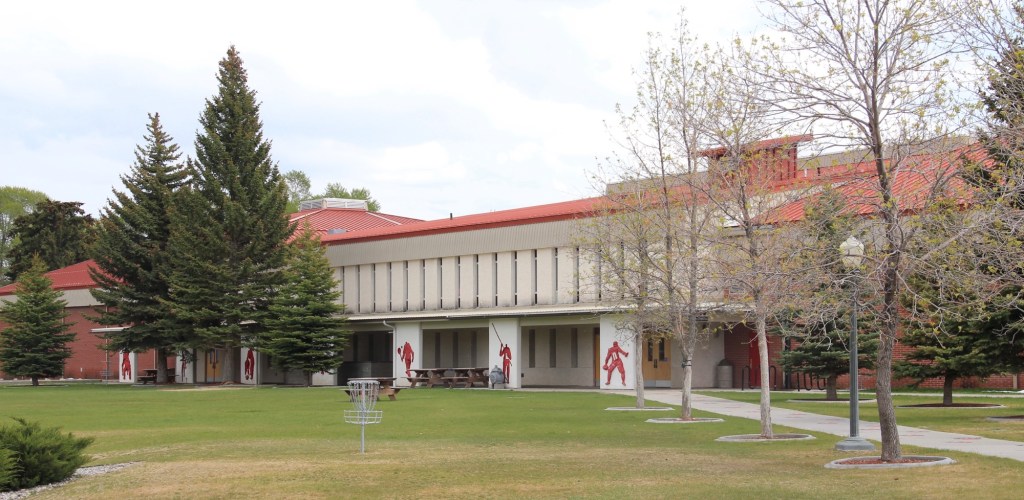
BARC building
Swysgood Center

One other building joined the campus before the end of the twentieth century, and did so in a very roundabout way. Edward and Effie Roe established a large ranch in the Clark canyon area of Beaverhead County. They built a two-story Colonial Revival ranch house. By the 1990s no one lived in the house but media baron Ted Turner owned the ranch. He gave it to the college if the college would move it—28 miles to Dillon. The move took place in 1998 and then the college restored it as offices, with further donations from the Roe family.

The Montana Western campus is a jewel in the state’s public architecture. Dillon is so lucky to have to be its home.
A bit more on Wilsall

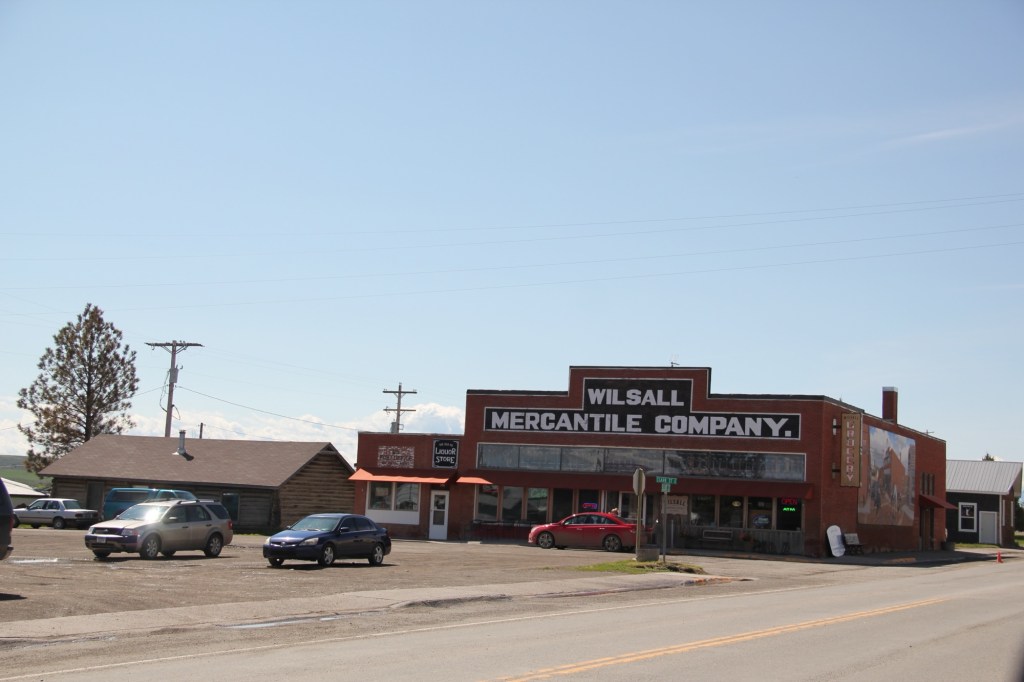
As readers of the blog know, the Shields River Valley is one of my favorite places in Montana. A good place to start any exploration is the village Wilsall, which, from my perspective, is close to a lot of larger towns and population but, then, also thrives quite well in its own.

The town’s past lies with the cattle ranch of Will and Sally Jordan—thus the same Wilsall—and the building of a spur line by the Northern Pacific Railroad in 1909, and the homesteading boom in northern Park County. The historic grain elevator is one potent reminder of both the railroad and homesteading. The tracks ran to the west of the present US 89 highway.

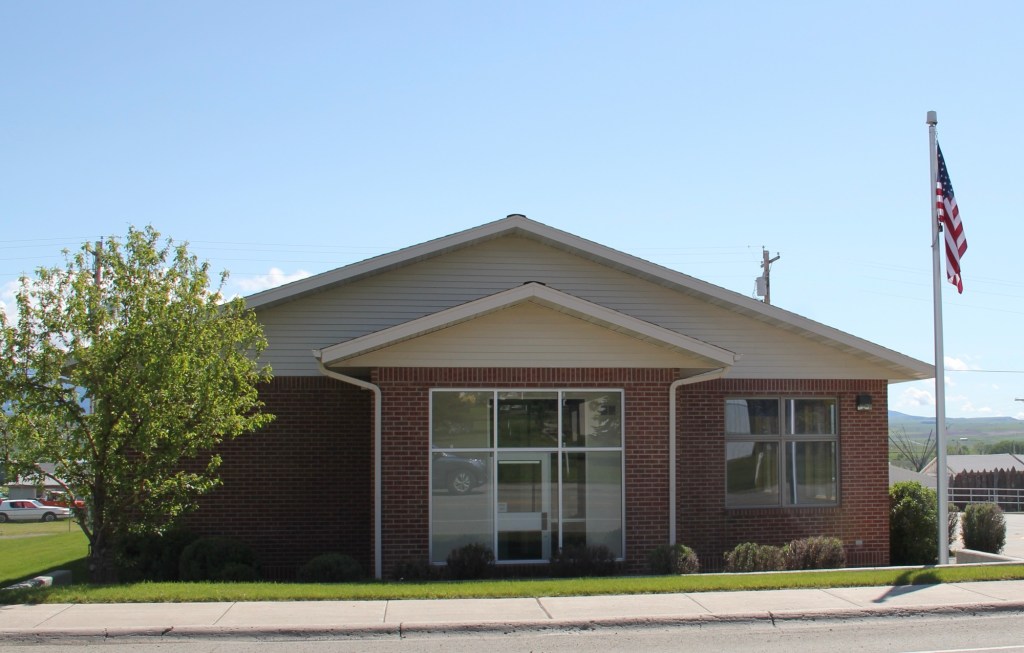
By 1910, the place had a post office; a modern one stands along the highway while an older one is attached to the mercantile building.

Soon the town’s primary crossroads at Elliot and Clark streets was defined by an impressive classical style bank on the west side and a large brick mercantile store on the east side.

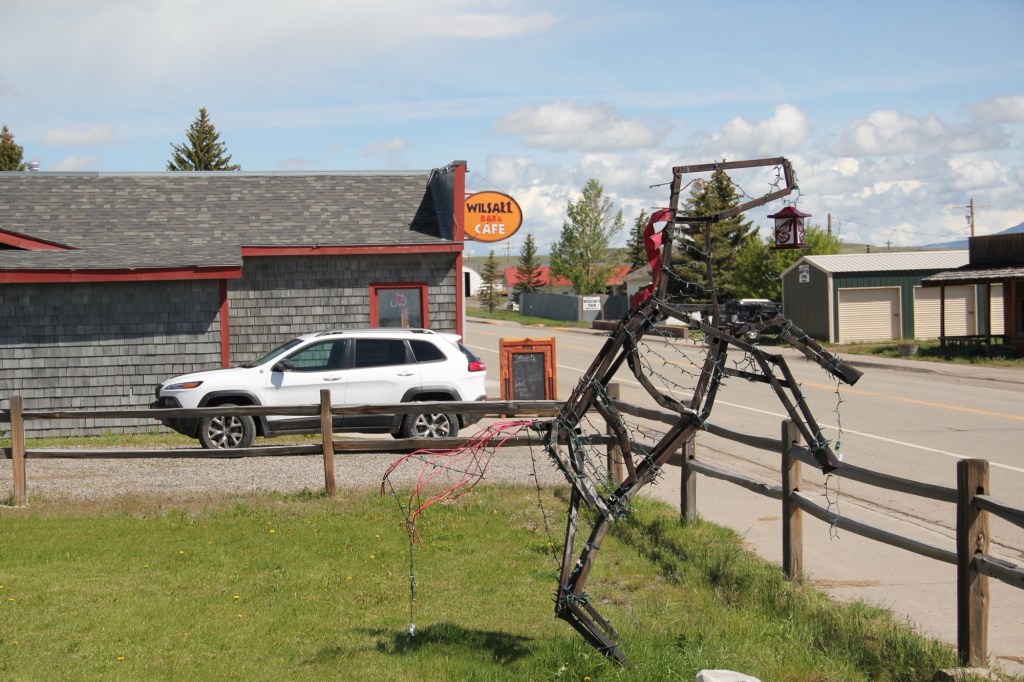
The Bank Bar in fact has recently been in the news because, guess what, national media has again “discovered” a great Montana eatery—

something that locals have known about for years. Maybe the review will get more people to slow down a bit and look around.

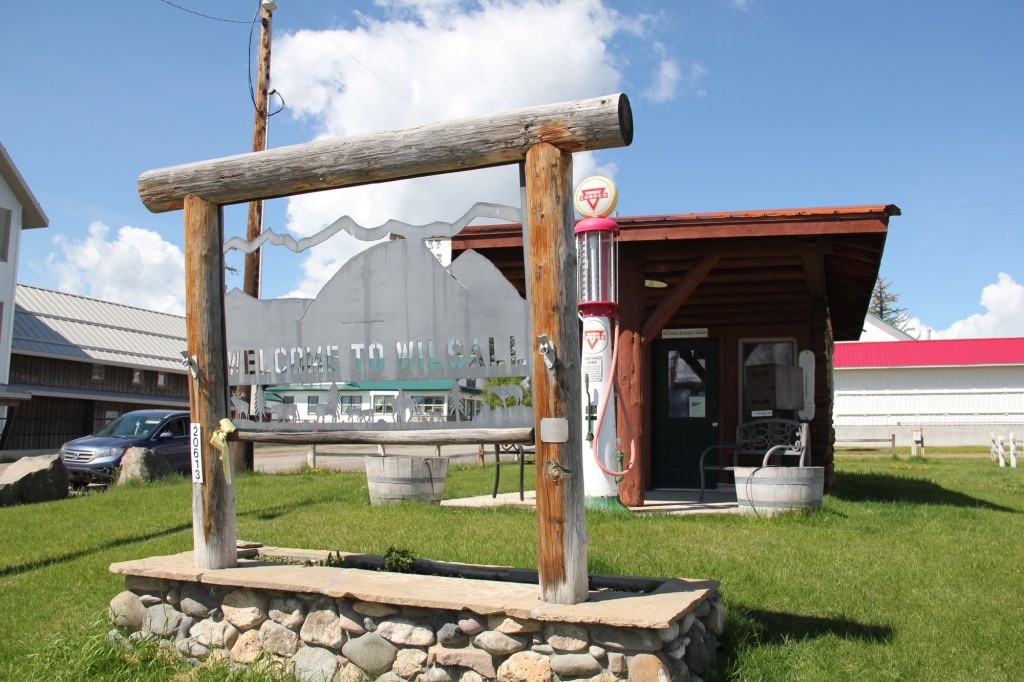
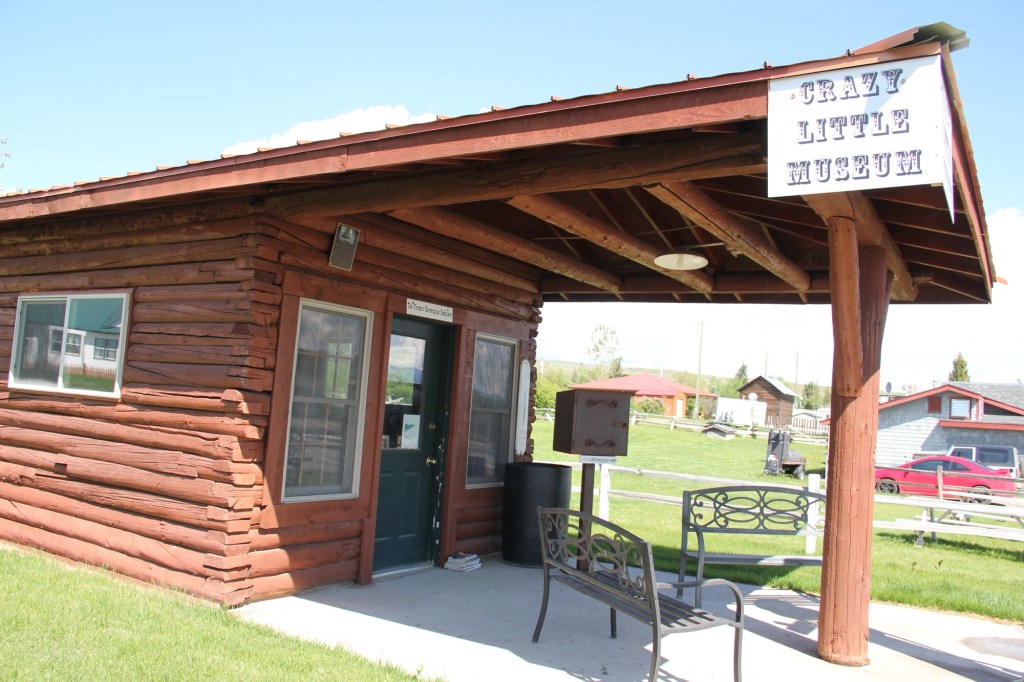
The stop is worth it, not just for a cold brew and perfect burger, but for the town’s Crazy Little Museum (also called the former Norwegian Embassy). It’s always refreshing when a place has a good perspective on itself and honors a person like Bob Tomasko who did a lot for the town before his death in 2012.

Historic community buildings survive such as the school from the 1910s, now boarded up.

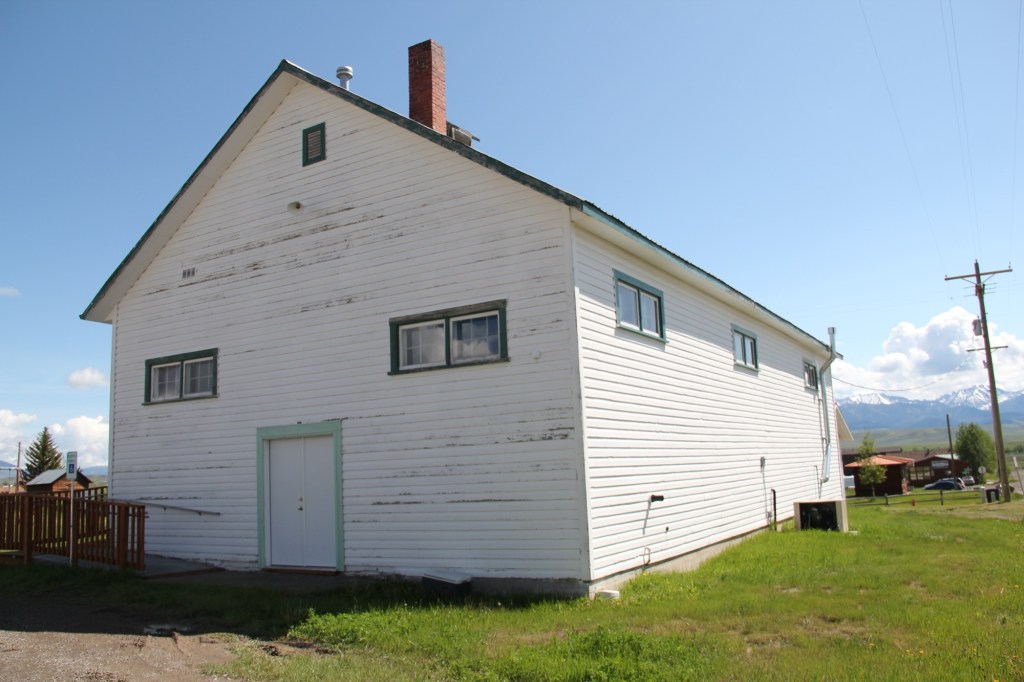
And the town community hall, which remains in use even as the population has dwindled from 237 in 2000 to under 200 in 2020.

US Highway 89 is one of my favorite north-south routes in Montana stretching into Wyoming. I always look forward to my next visit to Wilsall.

Medicine Lake, the place and town in Sheridan County

Montana Highway 16 stretches north from U.S. Highway 2 following a spur line of the Great Northern Railway laid about 1910. Following that railroad corridor first brought me to Medicine Lake, the actual lake and town of that name in February 1984.

Great Northern depot in 1984

When I returned over thirty years later, the depot was gone, but the lake and town were doing ok.

Depot is gone today

Medicine Lake is a very important place in northeast Montana and the 8,000 + acre lake has been protected as a National Wildlife Refuge since 1935.

Medicine Lake NWR
Medicine Lake NWR

Native Americans for centuries visited and hunted here, as hundreds of tipi rings along the lake bluffs documented. The lake remains a touchstone for several tribes today.

Medicine Lake, MT

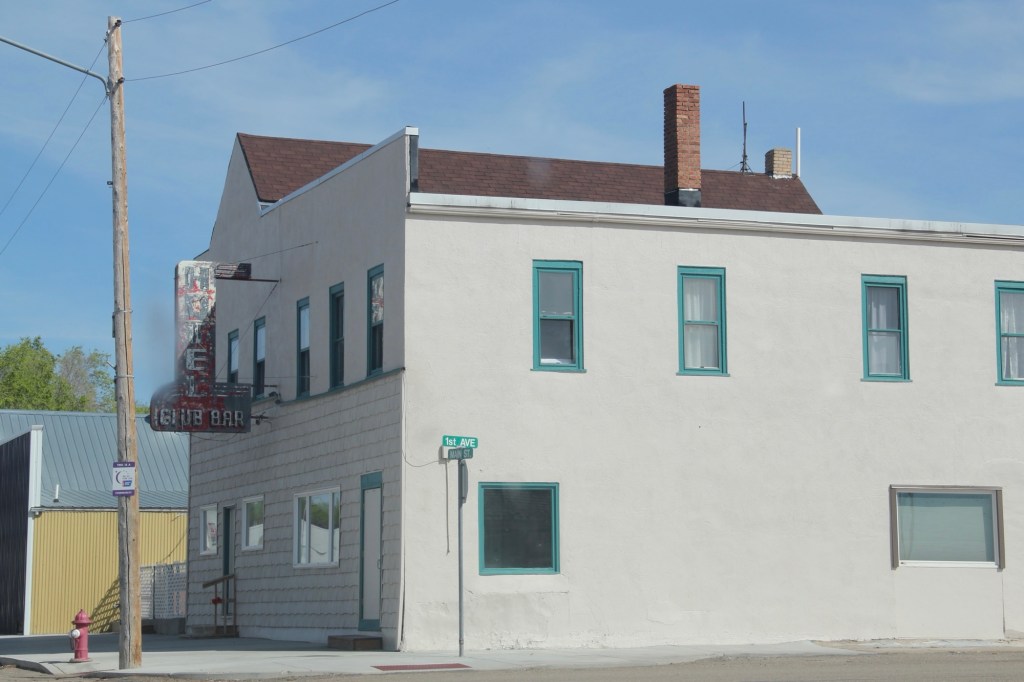
The town is much more recent, established by the railroad in 1910, with the iconic Club Hotel and Bar in business within a year.

I have stopped at the Club Bar where the old neon sign was a bit weathered but hospitality was everywhere. Don’t know about the hotel—maybe rooms was still used during the hunting season.

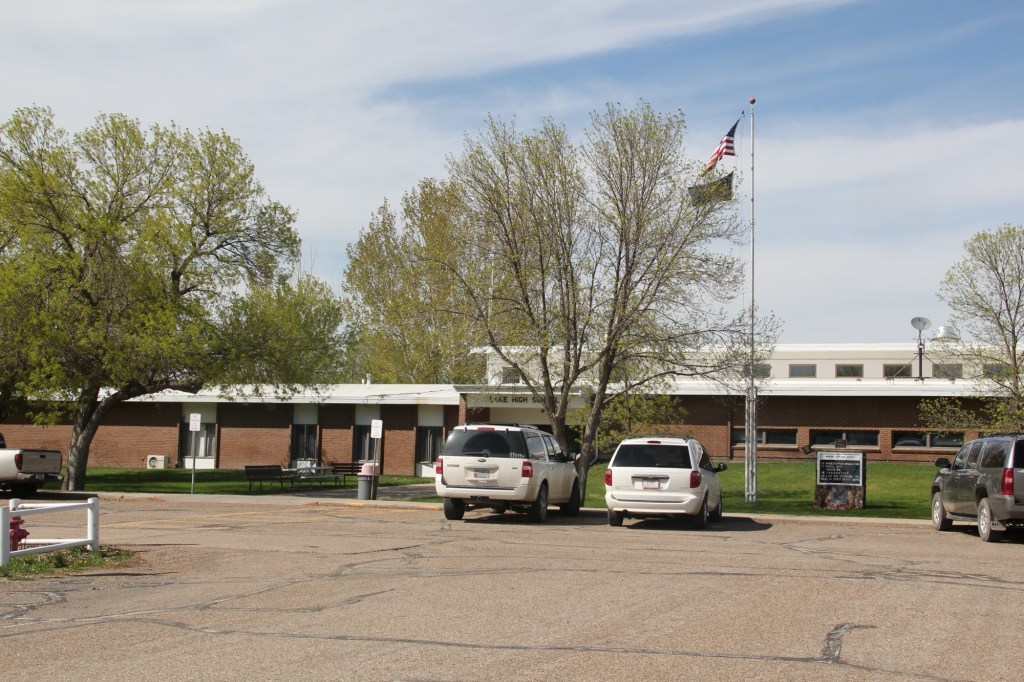
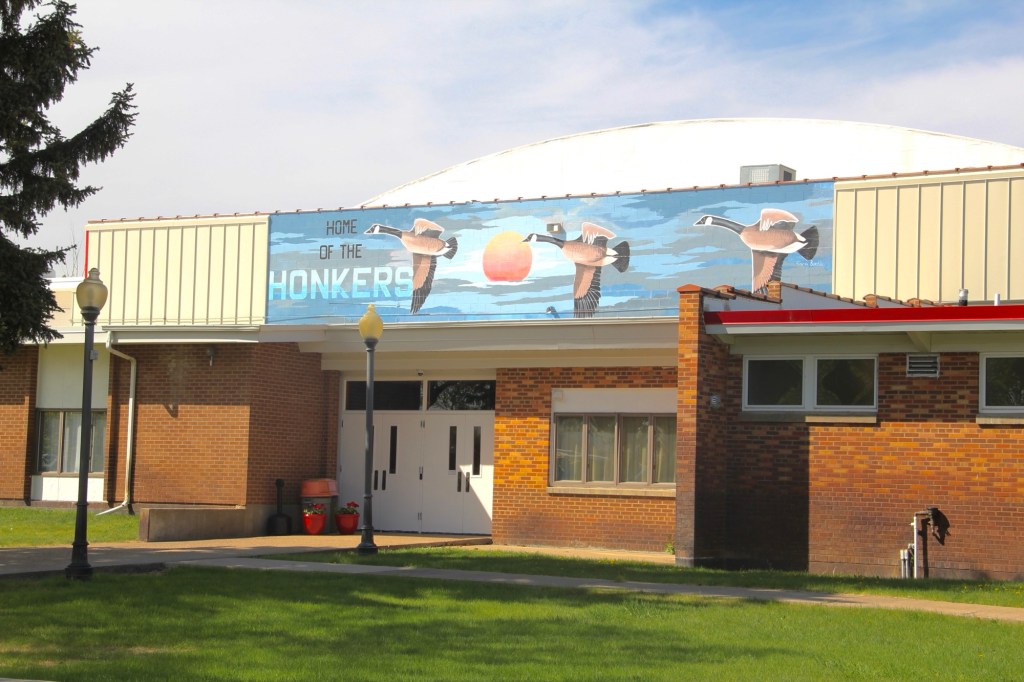
The Medicine Lake K-12 school keeps the town of about 250 people together but since my last visit the school lost its distinctive mascot name of The Honkers. For sports the school has merged with Froid and took us nickname of Red-Hawks. Did that mean that town gathering spot would change its name from the Honker Pit? Absolutely not. Great place!

Medicine Lake, the town, has several buildings from its first generation of settlement, including a corner gas station (adapted into a new business) and classic false-front one-story commercial buildings, including a lumber business and a hardware store.

Yet a dwindling population has hurt the business core. For 40 years between 1940 and 1980 the town’s population stayed around 400. The next 40 years witnessed a decline—and in a small town a loss of 150 people can really hurt.

But the town began a slight rebound in population in between 2010 and 2020, with some of it fueled by fracking man-camps

The bones of an early 20th century homestead town are still there. I hope to visit again and see new changes in 2025.