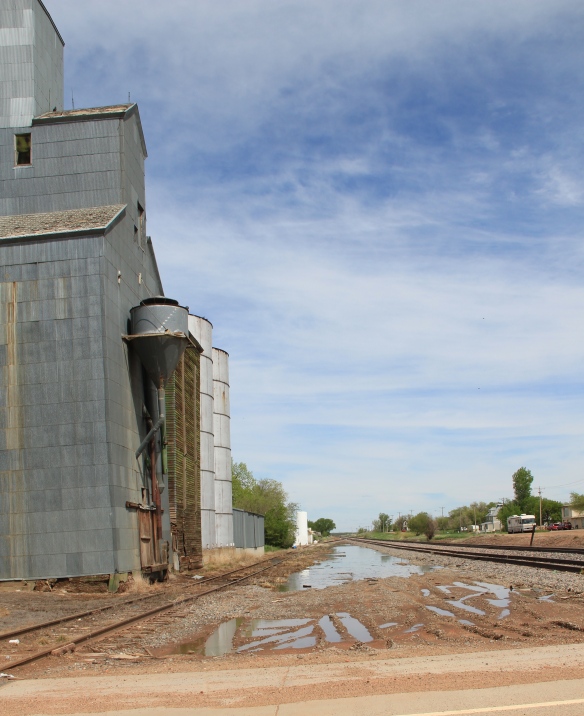
 The Milwaukee Road, the last transcontinental railroad to crisscross Montana, enters eastern Montana at the town of Baker, established in 1908, which served as an important rail center for the company with the full name of the Chicago, Milwaukee, St. Paul and Pacific. When I visited Baker in 1984 i noted that many of its buildings dated from the homesteading era although there was a clear second layer of development died to the region’s oil boom of the late 1960s and 1970s. In A Traveler’s Companion to Montana History (1986) I noted “Baker’s railroad corridor is still largely intact, and the spatial arrangement created by its Milwaukee depot and the neighboring Baker Hotel, an imposing brick building dating to 1916, symbolizes the railroad’s importance to the town.” Both buildings are gone now unfortunately but an indication of the prominence of the corridor is still conveyed by the brick building below which has served the community in many commercial and professional ways over the decades.
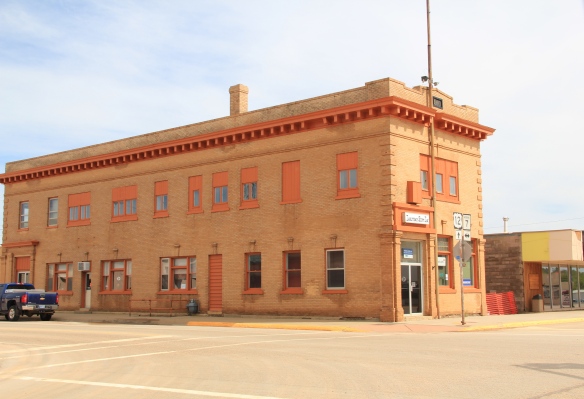
Insurance was just one of the services provided by this neoclassical styled building.
Today the hotel, the tracks, and the huge grain elevators along the railroad corridor remain, and the elevators still visually dominate the surrounding mostly one-or two-story built environment. But the depot is gone, leaving a hole in the town’s historic fabric.
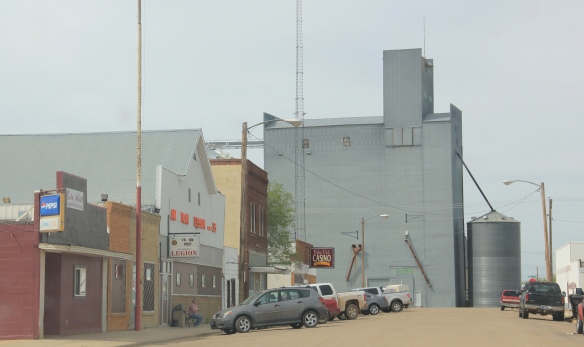 Buildings and railroad tracks were not the only legacy of the Milwaukee in Baker–there was the large lake the company developed to provide water for its trains in a largely parched region. The Baker Lake, 30 years ago, was undergoing another improvement project, part of the town’s generation-long effort to turn a forgotten corporate remnant into a community asset. The company built the lake c. 1908 but soon found that the water was too salty–it corroded the equipment. And so the lake sat, until the 1950s when the Baker’s Woman Club began an effort to convince the railroad to transfer the lake to local
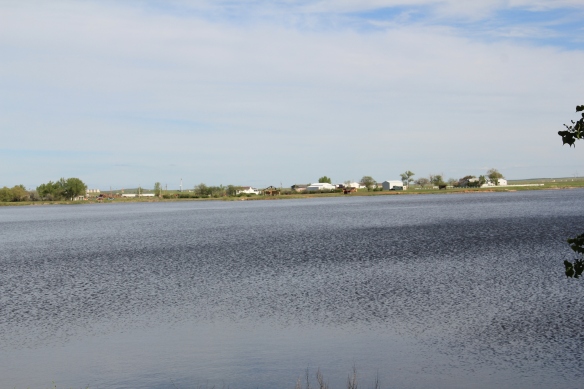 government. County leaders became convinced that yes, Baker needed a community recreation asset, and eventually the land was transferred into the public use, and Baker Lake by the end of the century was an unique asset in southeastern Montana, and a center for recreation and special events.
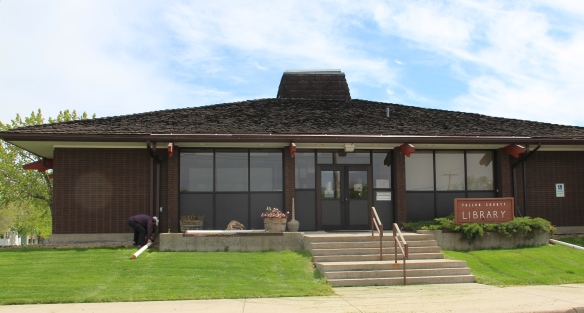 The lake is not the only contribution of the Woman’s Club. it also was central in creating, staffing, and maintaining a public library, and the contemporary-designed library from 1970 remains but also has been enlarged since 1984.
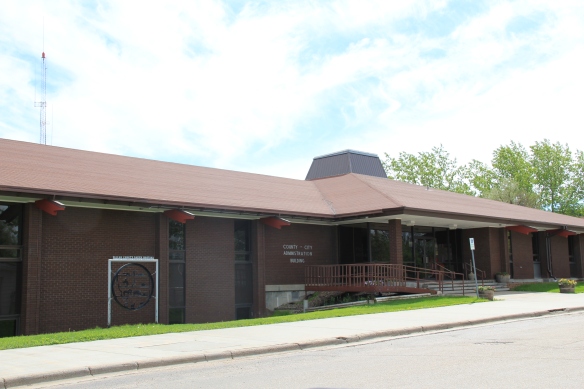
The Fallon County-City of Baker Administration Building, 1974-1975
Indeed, I noted the recent construction of the 1970s in Baker, like the new county courthouse/city administration building where I held a public meeting, but I didn’t really process the layer of modernism in the town, a reflection of its growth from 1950 to 1970, when the population grew from 1,772 to 2,584. The new joint administration building, designed by the Billings firm of Johnson Graham Associates, remains an impressive piece of contemporary design. Architects Willard Johnson and Orval Graham had established the firm in 1967. The Baker project established a connection between the firm and county that continued into the present: the new grandstand at the Fallon County Fairgrounds is also a JGA design, from 2011.
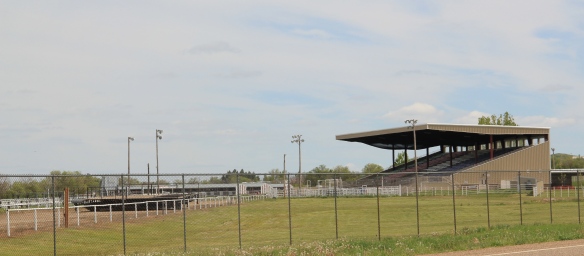
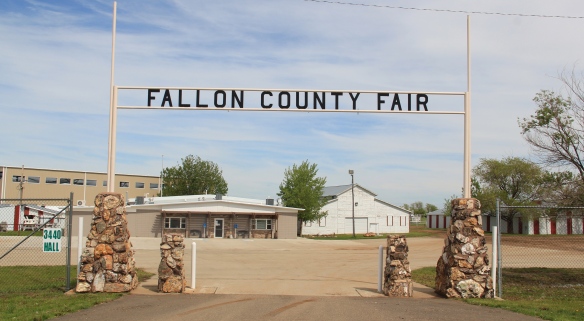
The tradition of county fairs dates to 1909 and today the Fallon County Fair is one of the region’s largest.
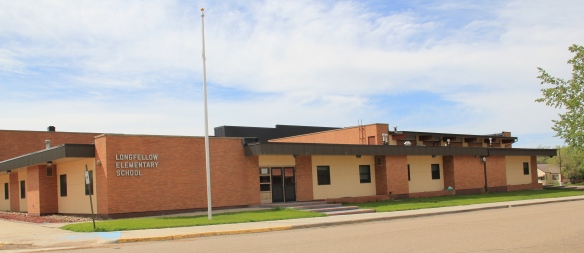
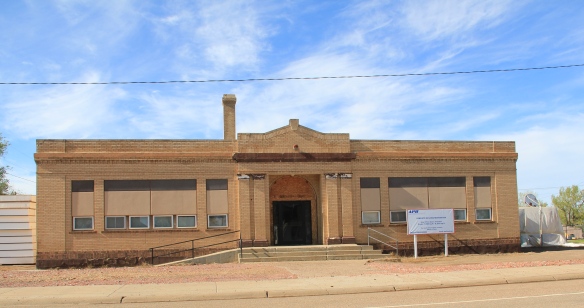 Historic schools are other important contributions to the town’s built environment. Above is the Washington School, built in 1927. It is a brick Classical Revival statement of the town’s insistence for permanence in the face of the homesteading bust. When I last visited in 2013, the school was undergoing rehabilitation to become an office building. On the other side of town stood a more modern design, the Longfellow School, built in 1968 during the height of the population boom in Baker. Its low, rectangular mass was modern school design at its best, although since my 1984 visit the casement windows have been covered so central heat and air could be installed.
 The second building in Baker listed in the National Register was the only one designated in 1984, and it was the pride and joy of the community: the old county courthouse converted into the O’Fallon Museum. Here was not only the historical exhibits typical of the area but also installations about the region’s prehistoric past and moved buildings to host special
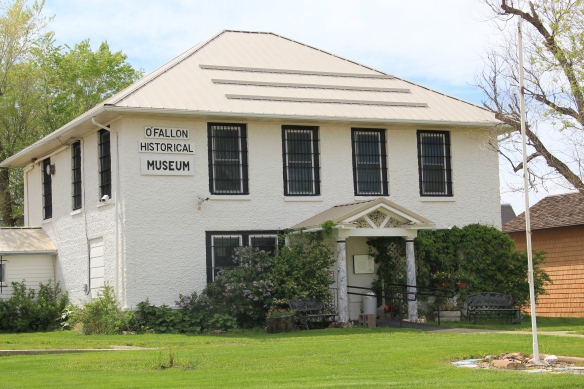 collections but also to interpret the homesteading past. I will always remember my public meeting in Baker, for the obvious pride residents had in the museum but also for the comment that they could not wait to show me “our really old stuff,” such as a 1916 homestead. Coming from my training at Colonial Williamsburg, considering places from 1916 as really old was a notion that took some getting used to, but of course in the context of settlement and development of southeastern Montana, it made perfect sense.
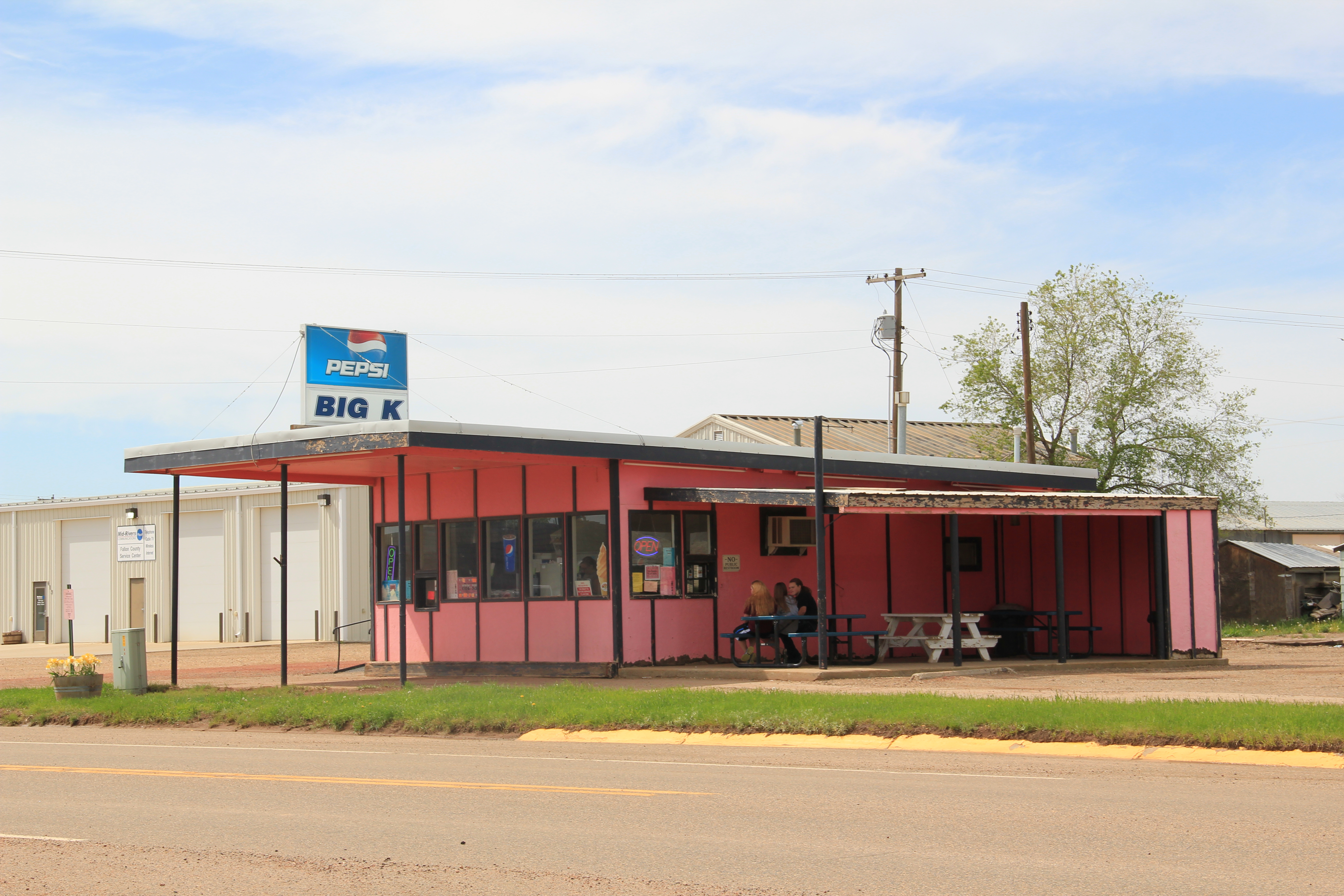
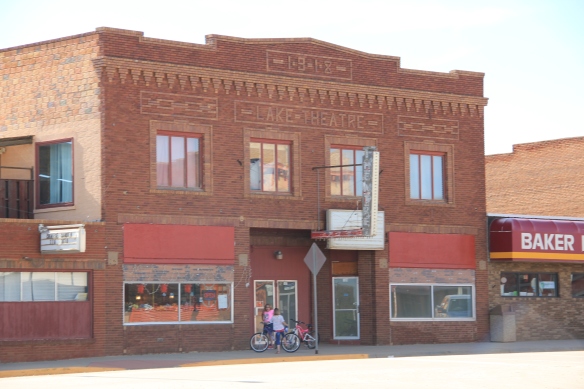 Today I would even join into the call for the “really old stuff”–like the Lake Theatre of 1918. It certainly deserves a place in the National Register as so few classic movie theaters remain in this part of the state. The same could be said for this classic c. 1960 drive-in,
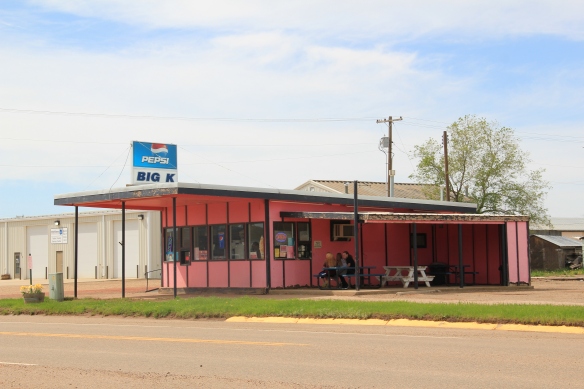 which is part of the town’s roadside architecture traditions along U.S. Highway 12, the federal road that parallels so much of the Milwaukee Road’s route through Montana. For
 good measure I would even dare say that it’s time to assess the significance of the oil wells and facilities along Montana Highway 7 as you enter or leave Baker. The discovery of oil and its development in the 1960s and 1970s certainly was the major economic story of the town and county in the second half of the 20th century.
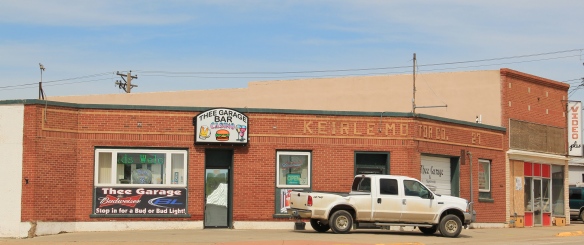
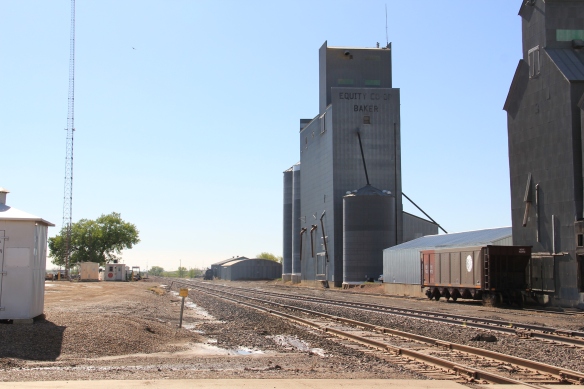 In 2015 Baker has retreated from that c. 1960-1970 boom. Population peaked at 2584 in 1970. It remained just a hundred or so under that in 1980, but changes in demand, technology and the bankruptcy of the Milwaukee meant that Baker in the last 30 years has lost residents, in 2010 down to 1741, about the same number as in 1950. Yet I like that the lake had been restored, and it remained a vibrant part of the town, that new banks and new renovations were part of the town, and indeed, that an old car dealership and garage was now the very good Three Garages Bar. Historic preservation can play a larger role in Baker’s future just as it did during Baker’s boom in the past.
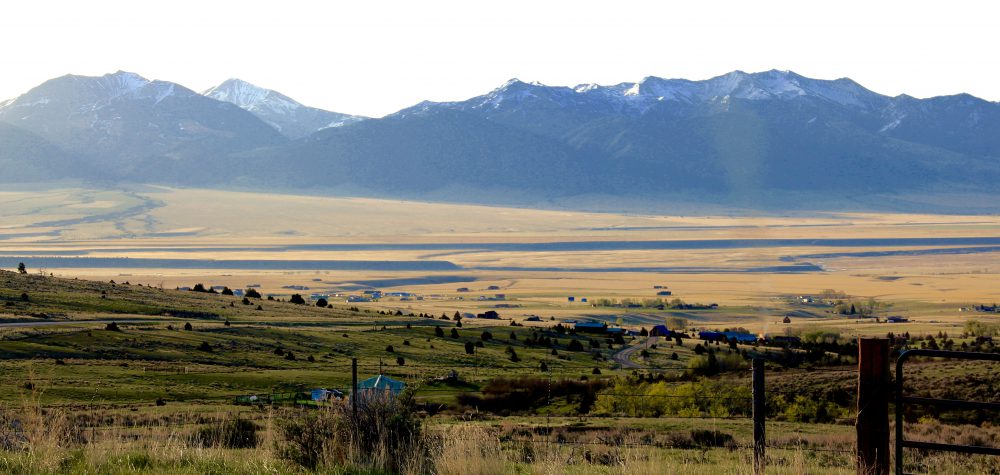
 U.S. Highway 212, as it heads west out of the high prairies of southeast Montana, becomes known as the Warriors Trail, an appropriate description because the road provides various access points to some of the most important battlefields associated with the Great Sioux War of 1876-1877. At Busby, immediately south of the highway, stands a monument and grave of one of the most prominent Northern Cheyenne warriors, Two Moons (1847-1917),
 who fought in all three major battles (Rosebud, Little Big Horn, and Wolf Mountains) of the campaign in southeast Montana . After surrendering at Fort Keogh in Miles City in April 1877, Two Moons joined the U.S. Army as a scout. He later became a recognized reservation leader and made Busby his home; his monument along the highway became a landmark. Since my last visit to the grave, a new security fence had been installed around the monument and nearby too were numerous other Cheyenne warriors, followers of Dull
 Knife, who died in 1879 trying to escape confinement at Fort Robinson, Nebraska. Their remains were kept in a museum until they were interred here in 1993, a result of the Native American Graves Protection and Repatriation Act of 1990.
 South of Busby is the Rosebud Battlefield State Park, a place barely on anyone’s radar (except for the Northern Cheyenne) when I carried out the 1984 fieldwork. A local rancher had preserved the battlefield and donated some of its land to the state, and a basic park,

 Protection Program, and state parks, this important battlefield has been enhanced with new interpretation and a new commitment to protect the battlefield’s view sheds. The battlefield commemorates the June 17, 1876 fight between U.S. Gen. George Crook and his Crow and Shoshoni Indian allies who were advancing up Rosebud Creek as part of a
 pincher movement to find and defeat a combined Lakota-Cheyenne force led by Crazy Horse. The Lakota and Cheyenne carried the day and would have surprised Crook’s troops if not for their Native American allies. Crook claimed victory but returned to his base near Sheridan, Wyoming Territory, for weeks. He was nowhere near when the Lakota and Cheyenne crushed the 7th cavalry of George A. Custer just days later. The Battle of Rosebud Creek is the army’s name for the fight; the Cheyenne call it the Battle Where the Girl Saved Her Brother. The last battle of the Great Sioux War in Montana took place in early 1877 at Wolf Mountains, in the Tongue River Valley, south of the village of Birney. Like Rosebud, the battlefield is designated a National Historic Landmark but is largely on a private ranch.














 Montana's Historic Landscapes