
 Big Timber and Sweet Grass County, in the heart of Montana’s Yellowstone Valley, create an imposing built environment set in a beautiful county, framed by mountains and defined by historic river corridors and later transportation routes. In the last post, I focused on Big Timber, its public spaces, its town plan, and the properties there already listed in the National Register. Today I want to focus on other just as worthy historic properties found both in town and in the county.


Let’s start with landmarks from the New Deal era. The town city hall/ fire hall is recognized but just southwest of Big Timber is the Mountain View Cemetery, which received a new stone gate, cemetery office, and other landscaping improvements from the WPA in the late 1930s. It is a splendid small town historic cemetery, with its majestic setting providing a proper dignity to those town founds, and generations of later residents, buried there.
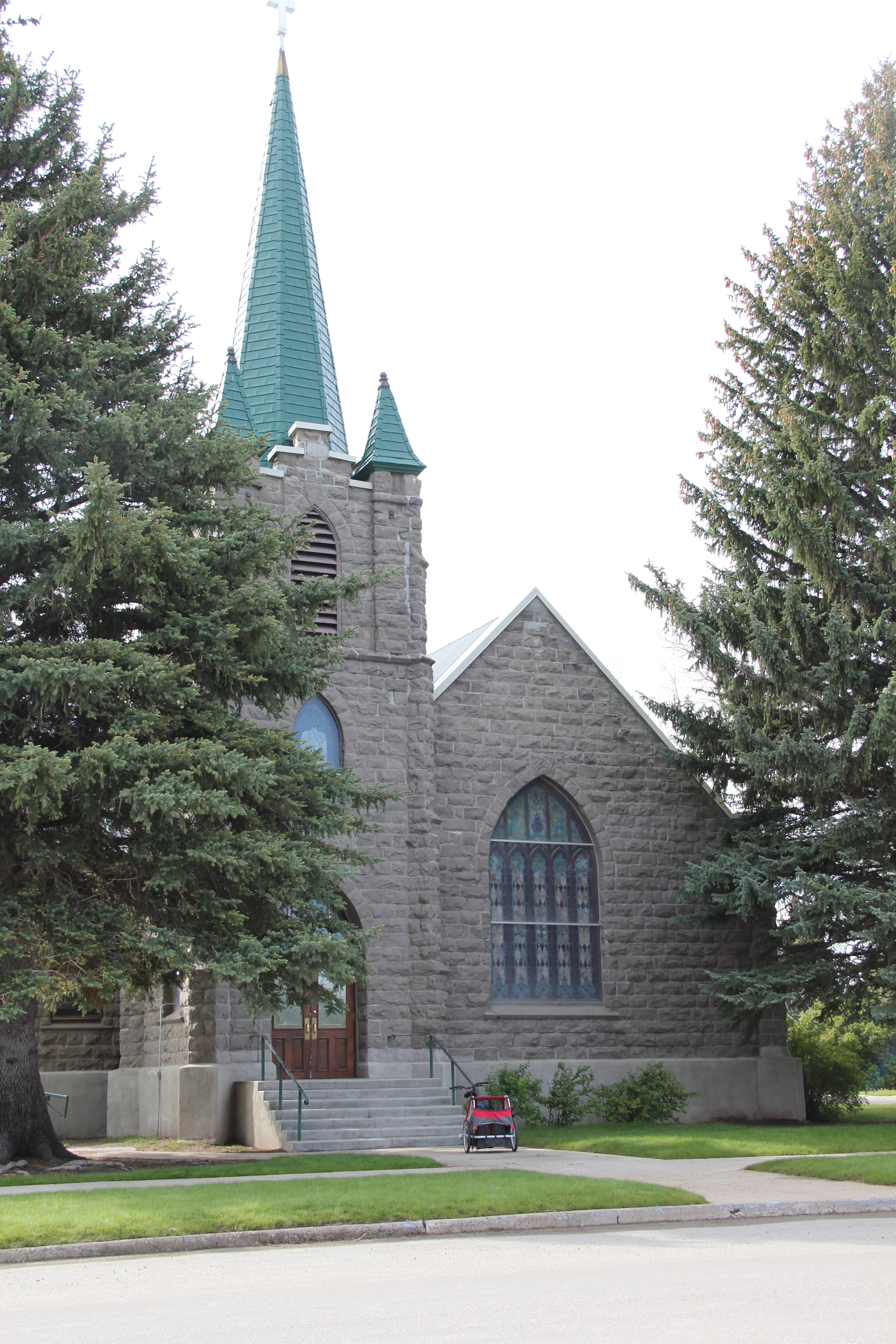 The beautiful stone masonry of the cemetery reflected a vernacular theme already noted in the Sweet Grass County Courthouse and St. Mark’s Episcopal Church. But the smart use of stone throughout the town’s residential district is a significant design theme, from the magnificent Lutheran Church above to numerous examples of early 20th century homes.


 Indeed, community institutions could be another important theme to explore in the built environment of Sweet Grass County. In addition to the town’s churches, schools, courthouse, and New Deal-era public park, downtown Big Timber still has a thriving bowling alley, the American Legion Hall, and the active Civic Center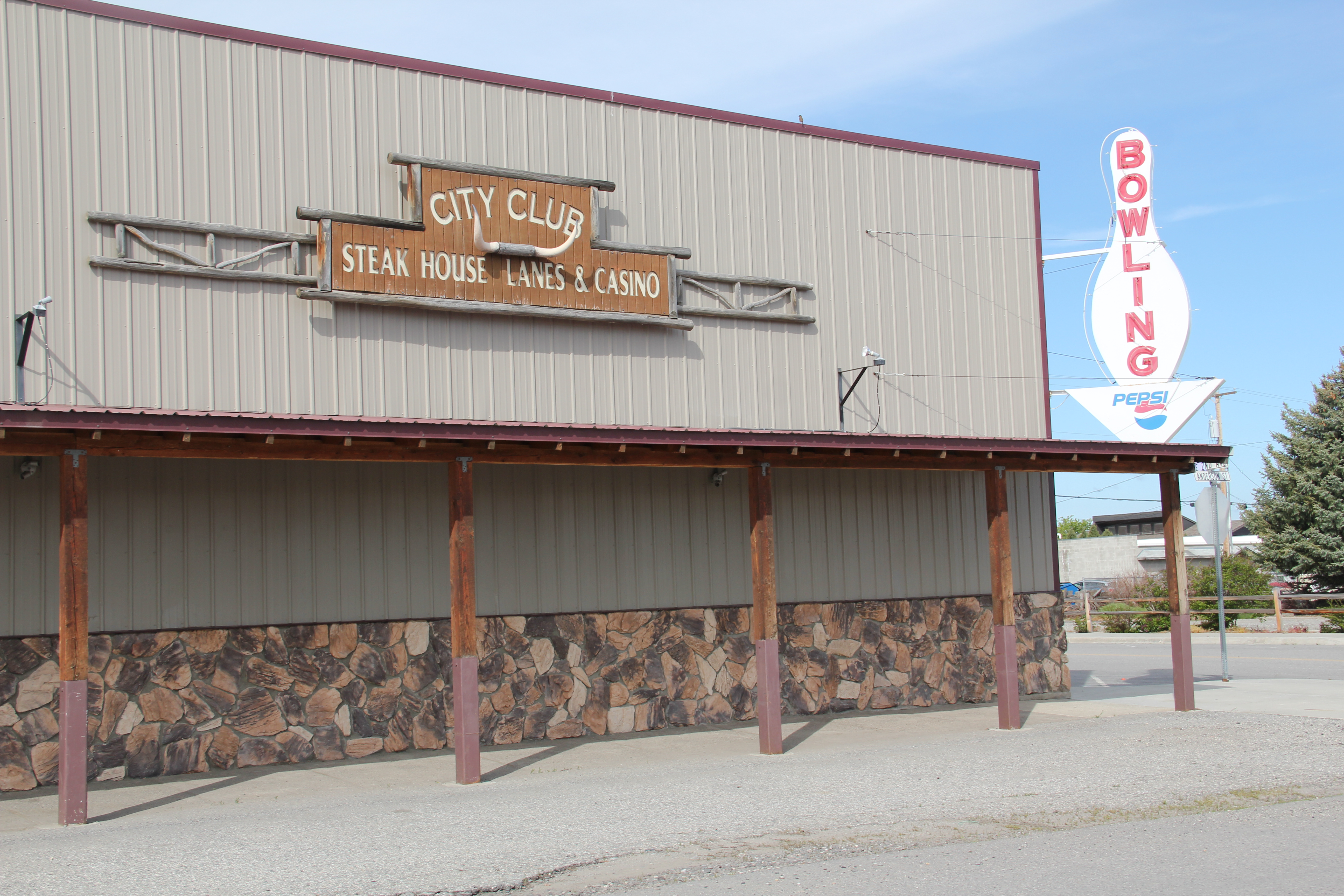

 Certainly community landmarks are a useful way to think about Melville, once an important trade town at the north end of the county on U.S. Highway 191. The town now lies just west of the realigned highway but it is worth a brief detour, if for no other reason than one of the state’s great rural churches, the Melville Lutheran Church.

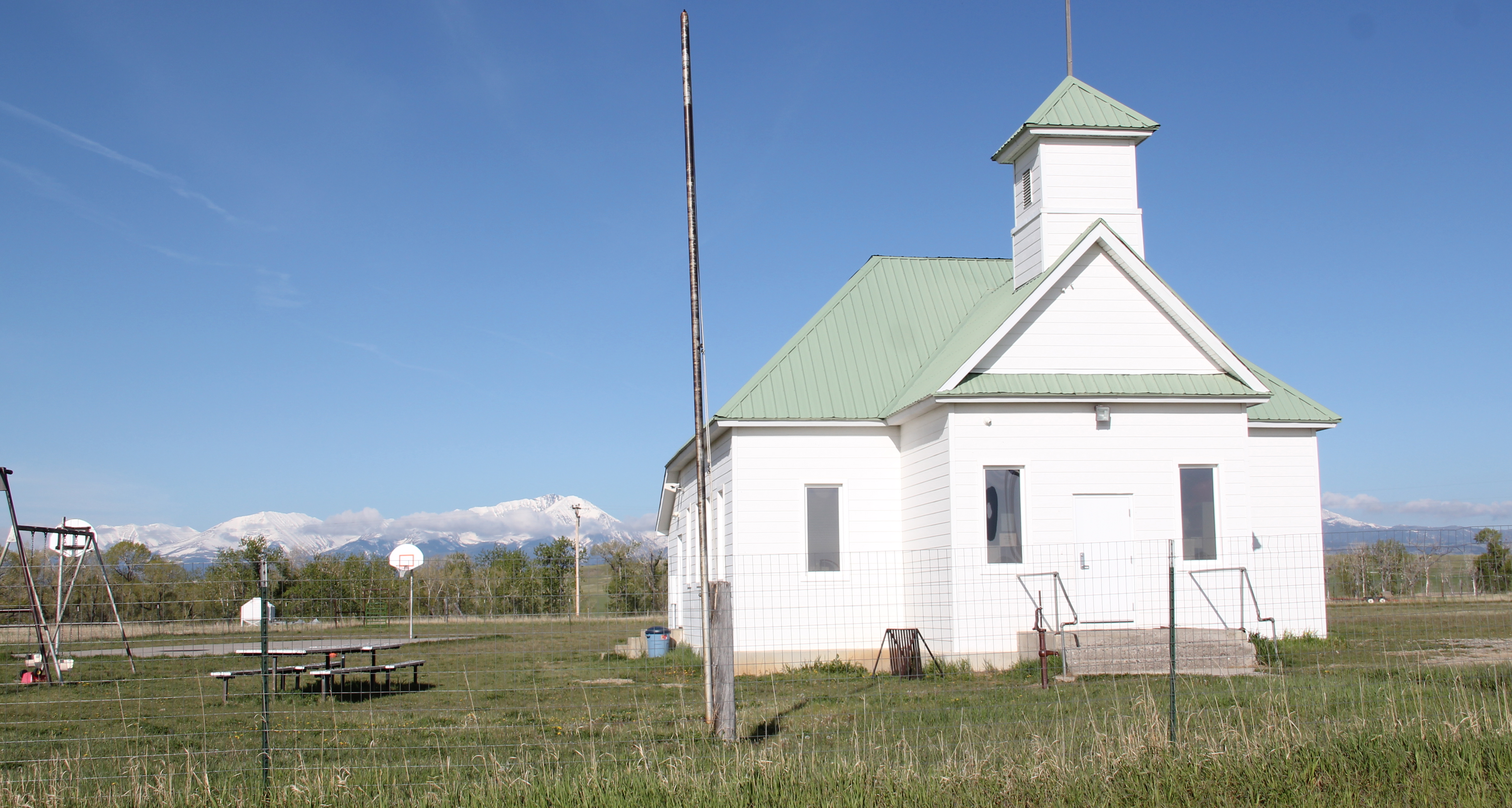
When I encountered this gable-front vernacular Gothic church in March 1984, its unadorned beauty framed by the Crazy Mountains was a take-your-breath away experience. I featured the church in my A Travelers Companion to Montana History book on page 121, and noted the congregation, established in 1885, had built the church in 1914. It has weathered the subsequent 100 years well, as the image below shows. The stewardship of the congregation in maintaining the building, when so many other rural churches have closed in the last 30 years, is to be congratulated.
 But Melville has more than the church–its rural school is still there, and probably as old as the church, serving as public space within the shadows of the Crazy Mountains.
Finally, back in the center of the county, let’s close with the Yellowstone River. Now at a public access site just north of Big Timber and just west of U.S. 191 is a Lewis and Clark National Historic Trail site that interprets the expedition’s experience at this spot in 1806.
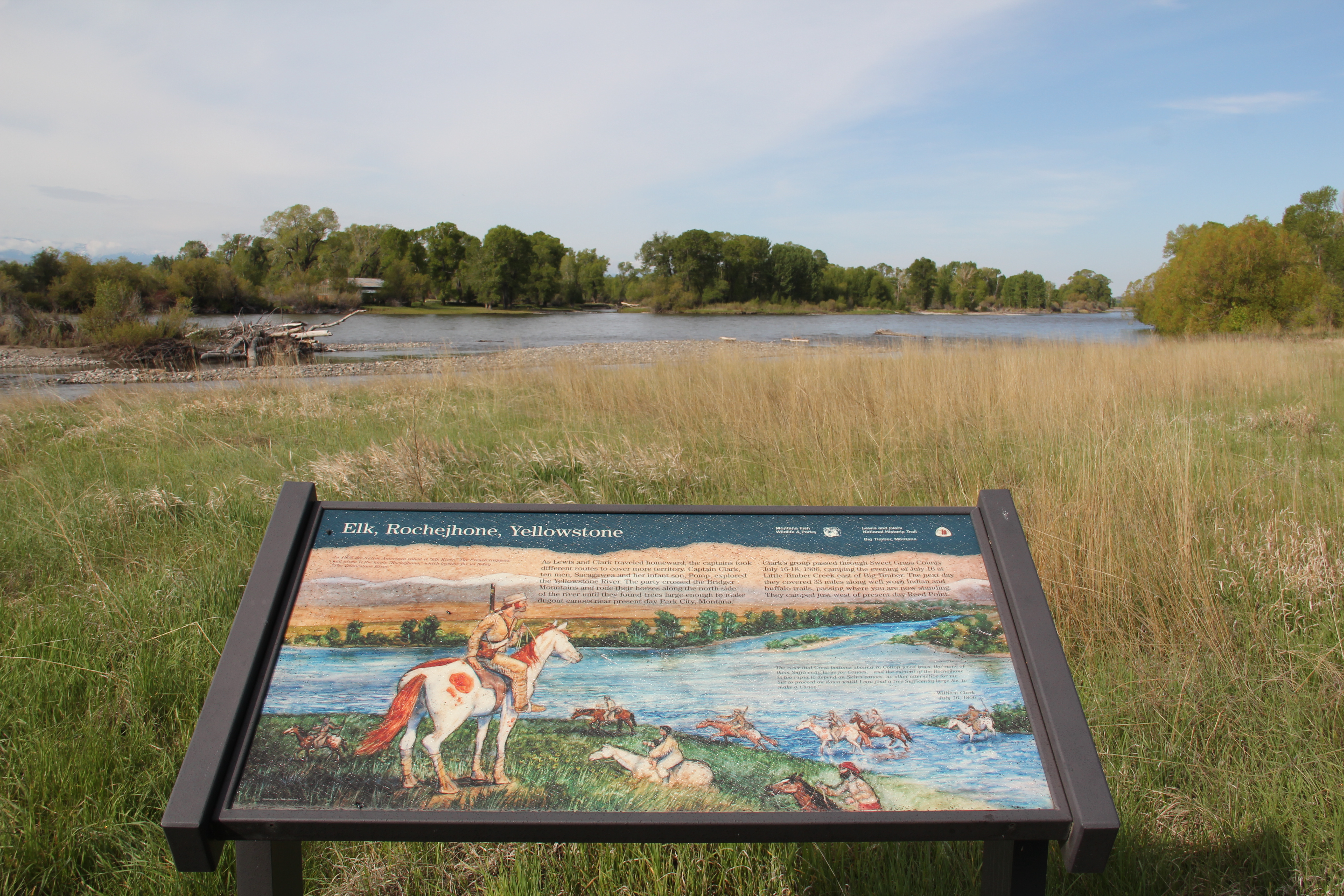
 This beautiful spot sums up the special quality of Sweet Grass County–a beautiful natural landscape that has been shaped in expected, and unexpected, ways by 200 years of history.










 Montana's Historic Landscapes