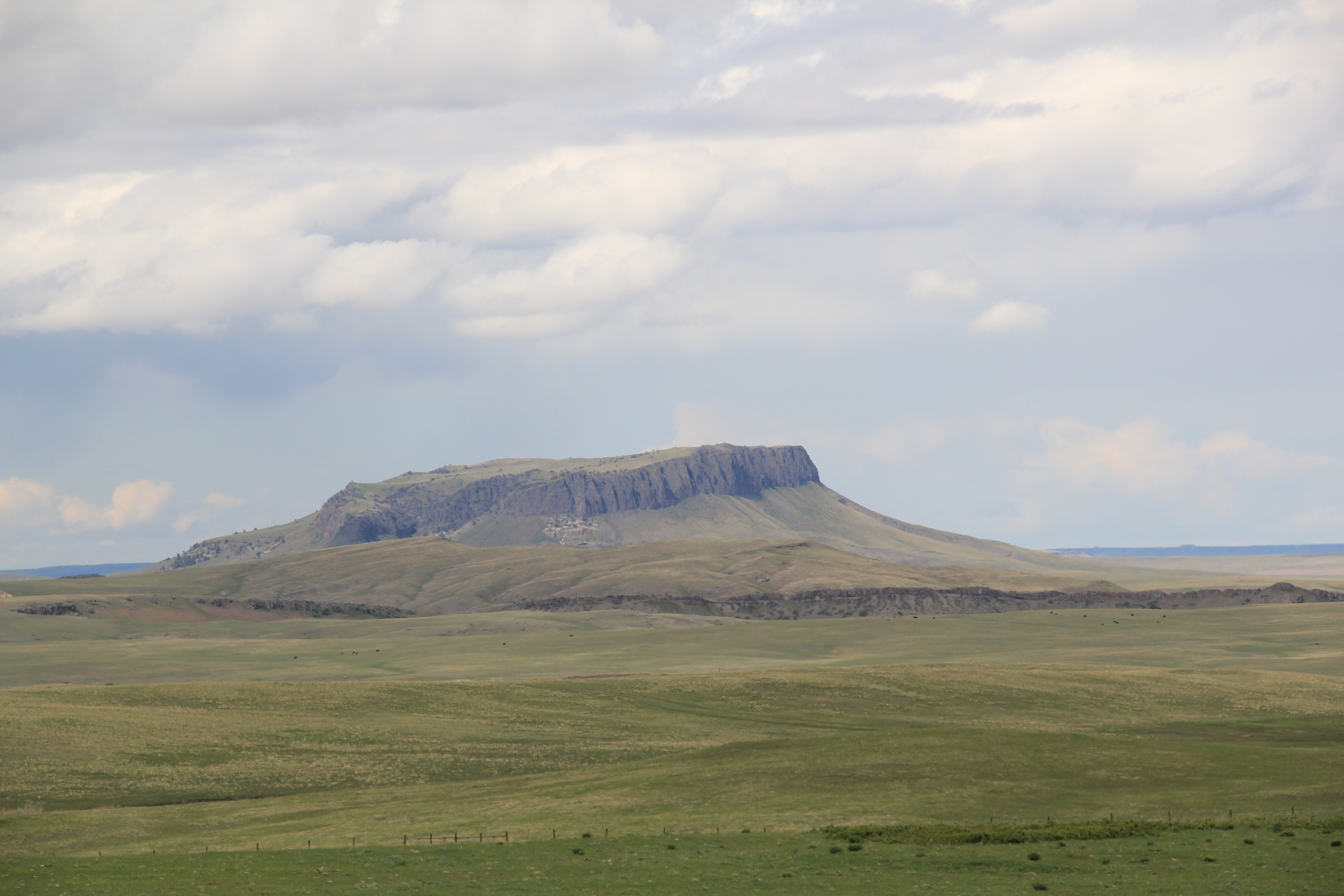
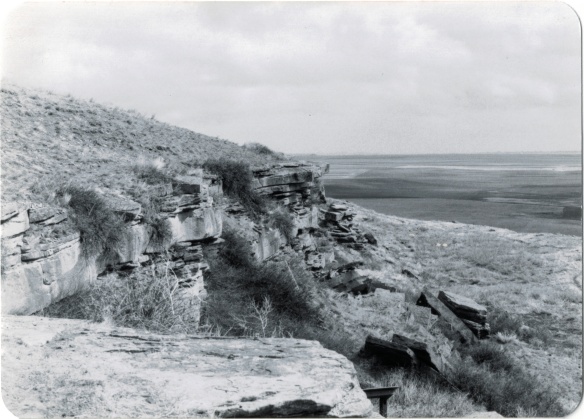
 Successful heritage areas have chronological depth to their history, and places that are of national, if not international, significance. To begin that part of the story, let’s shift to the other side of Cascade County from Belt and explore the landscape and significance of the First Nations Buffalo Jump State Park. When I visited the site in 1984 there was not much to it but the landscape: no interpretive center existed and there were only a few markers. To give the state its due, it then only owned a portion of the site, with the first land acquisition dating to the New Deal. Listed in the National Register in 1974, the site only had opened as a state park a few years earlier, and no one seemed to know much about it or even how to get to it. But as this photograph from “A Traveler’s Companion to Montana History” shows, wow, what a view: it was totally impressive, and had a big story obviously to convey.
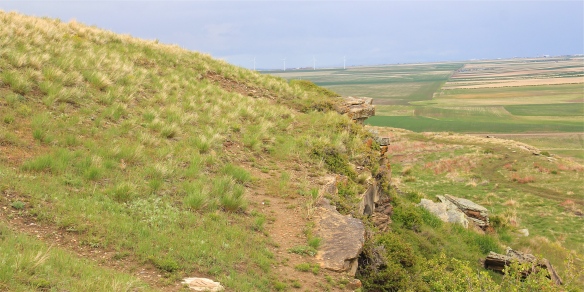 Buffalo jumps were ways that the first nations in Montana could effectively kill large number of bisons–by planning, gathering and then stampeding a herd over a steep cliff. Native Americans used this site for hundreds, if not thousands of years. The cliff is hundreds of yards long and kill sites are throughout the property.

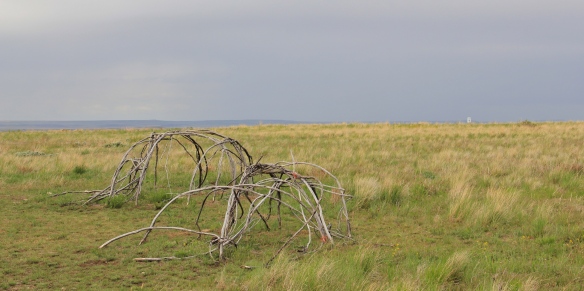
 State park officials, working with local residents and ranchers, have significantly enhanced the public interpretation at the park since the late 1990s. Hundreds of additional acres have been acquired, better access roads have been installed. and new interpretive features, such as these reproduction sweat lodges on the top of the cliff, have been added to the landscape to physically enhance the Native American feel to the park.
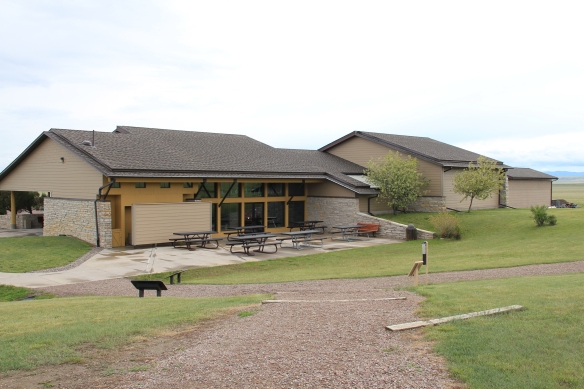
 The interpretive center is a model of 21st century Native American-focus history. It provides facilities and exhibits for visitors, and encourages a longer stay and exploration of the site.
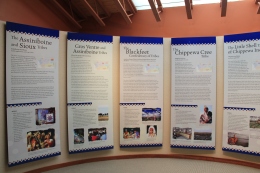
 Park managers understood that this site had special significance to all Native Americans thus they included capsule history displays about all Montana tribes of today along with displays that emphasize the Native American dominance of the landscape when the jump was in use.

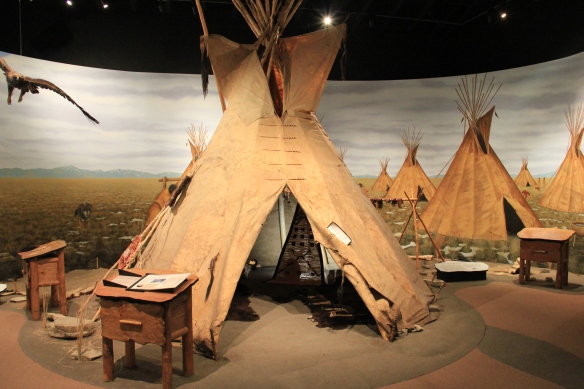 As the park was being expanded and improved into an effective heritage asset, both in its public interpretation and visitor facilities, research on the property continued. The buffalo jump is now considered the largest in the United States, and quite likely the world. In the summer of 2015, the site was designated as a National Historic Landmark as one of the nationally significant archaeological and Native American properties in America. The bone deposits remain deep and rich in artifacts, still awaiting further exploration despite being mined for a brief time during World War II for phosphorus production. Indeed the entire site is one of reflection and respect for the cultural contributions made by the First Nations long before the arrival of Lewis and Clark just over 200 years ago.
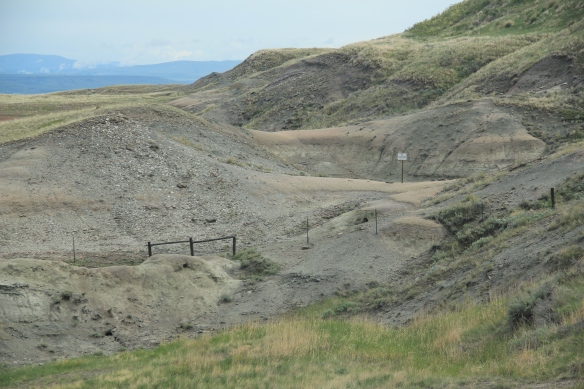 Here is a property that today tells us how the earliest Montanans used their wits and understanding of nature and landscape to enrich their diet and to make their world, one far from that of our own, and one still difficult for those of us in the 21st century to grasp.
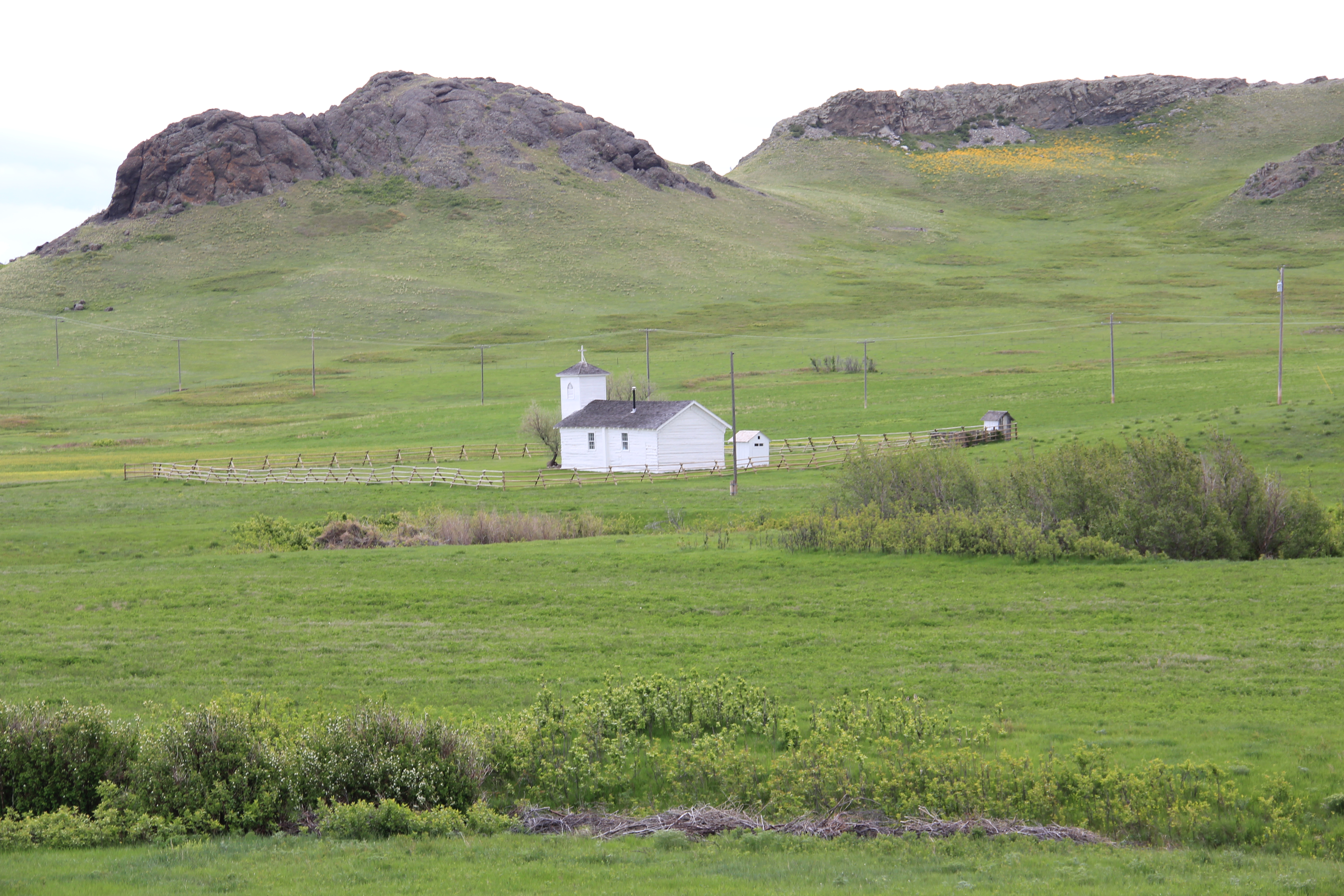
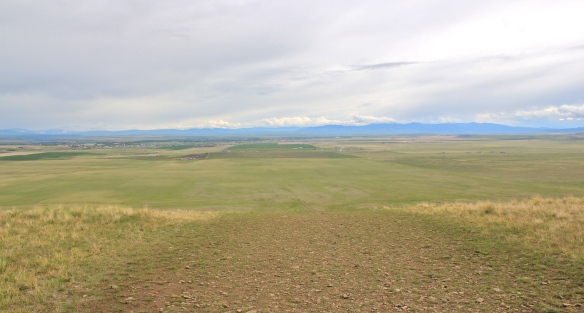
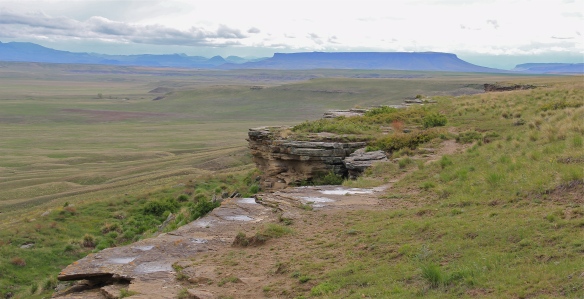 This buffalo jump remains a place of mystery and meaning, and when you look to the south and see the shadow of Crown Butte you glimpse into that world of the deep past in Montana,. If you look in an opposite direction you find the patterns of settlement that surround this sacred place. And that is where we go next to St. Peter’s Mission and the Sun River Valley.
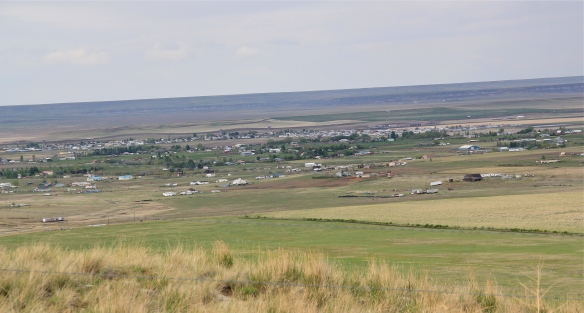
 Along the Missouri River is Paris Gibson Park, deep in the heart of Great Falls, Montana. Gibson was one of the classic civic capitalists of the late 19th century who understood that as the community prospered he too would achieve this dream of building a great western empire, with his town of Great Falls as the center. Almost 100 years after his death, in 2015, residents, preservationists, historians, and economic developers began discussions on establishing a heritage area, centered on Great Falls, but encompassing the Missouri River as the thread between the plains and mountains, that has shaped the region, and the nation, for hundreds of years. I strongly endorse the discussion and will spend the next several posts exploring key resources in Cascade County that could serve as the foundation for a larger regional story.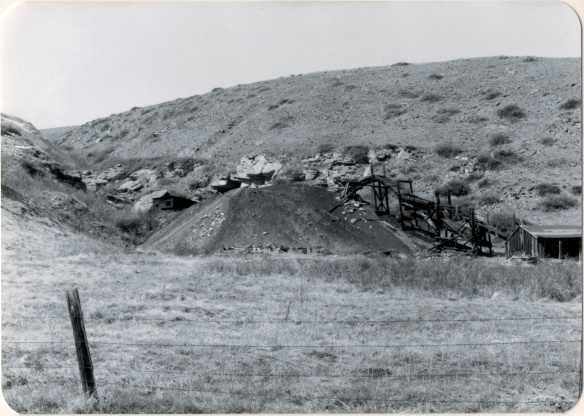
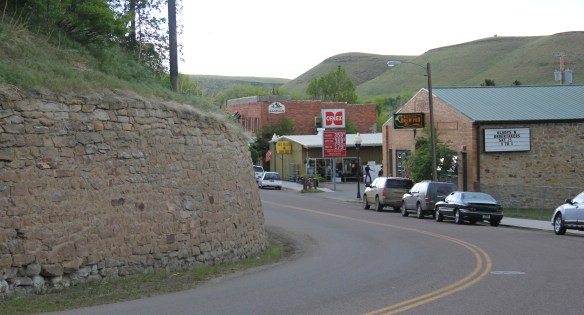
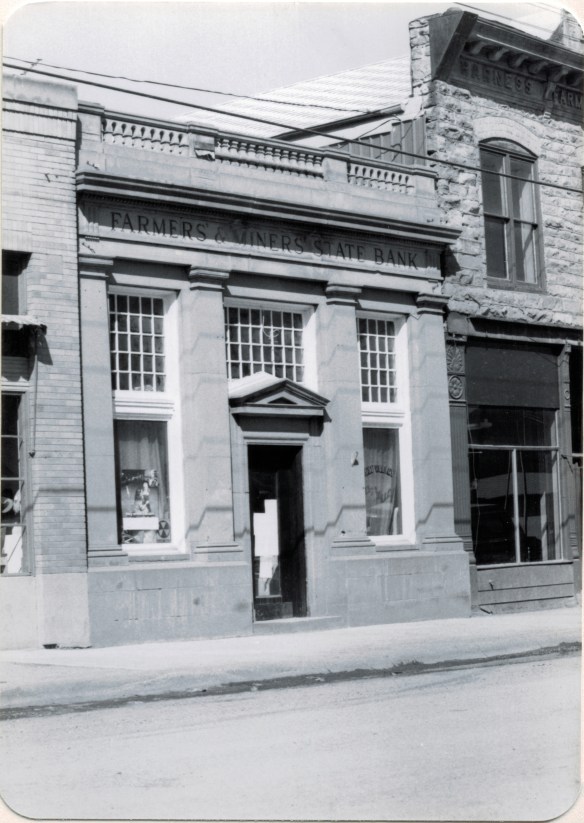
 Thirty years later, Belt’s population had bottomed out, declining to under 600 by the time of the 2010 census. But both times I have stopped by, in 2013 and 2015, the town has a sense of life about it, and hope. The town’s two historic taverns, the Harvest Moon Tavern and the Belt Creek Brew Pub, as well as the Black Diamond Bar and Supper Club attract visitors from nearby Great Falls and elsewhere, giving the place a sense of life at evenings and weekends.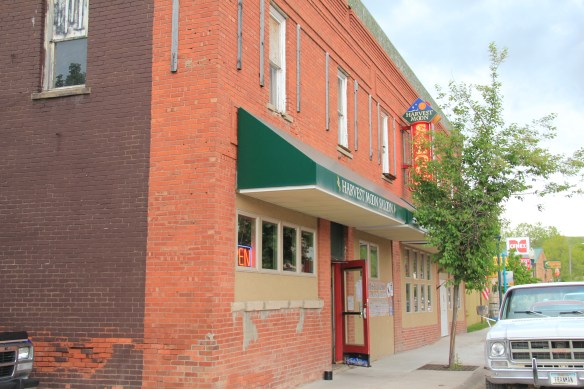
 When planners talk about heritage areas, they often focus on the contributions of local entrepreneurs who take historic buildings, like the Pioneer above, and breathe new life into them. Throughout small town Montana and urban commercial districts, new breweries and distilleries are creating such opportunities.
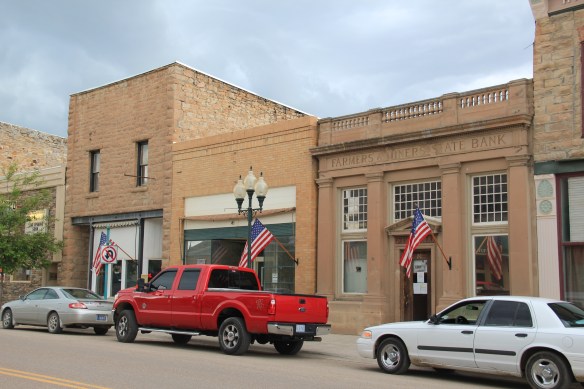
 Belt has a range of historic buildings, mostly of vernacular two-part commercial style that speak strongly to the boom of 1900 to 1920. The Victorian-styled cornice of the Belt Hardware Store (1896) speaks to the town’s origins. The Knights of Pythias Lodge of 1916 has been restored as a community theater, another reason for visitors to stop and explore.
 The result is a living cultural experience, since nothing in Belt is over-restored or phony feeling. It is still a gritty, no frills place. That feel is complemented by the Belt museum, which is housed in a historic jail on road down into town and within sight on a railroad trestle, a reminder of what literally drove the town’s development, coal for the railroads.
 During the 1984 survey, I gave the jail a good bit of attention since this stone building spoke to the craftsmanship of the era, the centrality of local government as the town developed, and the reality that this building was the only thing in Belt listed in the National Register of Historic Places. But in 2004 the state historic preservation office approved the Belt commercial historic district, and that designation has done much to drive the town’s recent revival. Belt is just the first place that speaks to the promise of the Great Falls heritage area concept.