Rimini, a “ghost town” in the Helena-Lewis and Clark National Forest

Rimini is another “ghost town” in Lewis and Clark County that actually has a number of permanent residents and that number increases during the summer and on weekends. The town served mines first discovered c. 1864 but not developed until the 1880s once the Northern Pacific Railroad ran a branch line to the town. the buildings from the late 19th century are excellent examples of False-front commercial architecture, especially where log buildings have a frame front.

The town’s 1904 school house is listed in the National Register of Historic Places. It serves as the Rimini community hall today.

Nearby is the Moose Creek Ranger Station, another National Register-listed building. Made of logs, the station was built in 1908, at the time the federal government established Helena National Forest. It is also associated with Camp Rimini, a CCC camp established across the road from the station in 1939.

The building then became associated with the U.S. army’s dog training facility from 1942-1944. The soldiers trained dogs to serve in Artic search and rescue teams.

Moose Creek Ranger Station garage

Thus this 100-year old log building is not only associated with the history of the US Forest Service but also helps to tell the story of the New Deal and World War II.

Marysville, a Montana “ghost town”

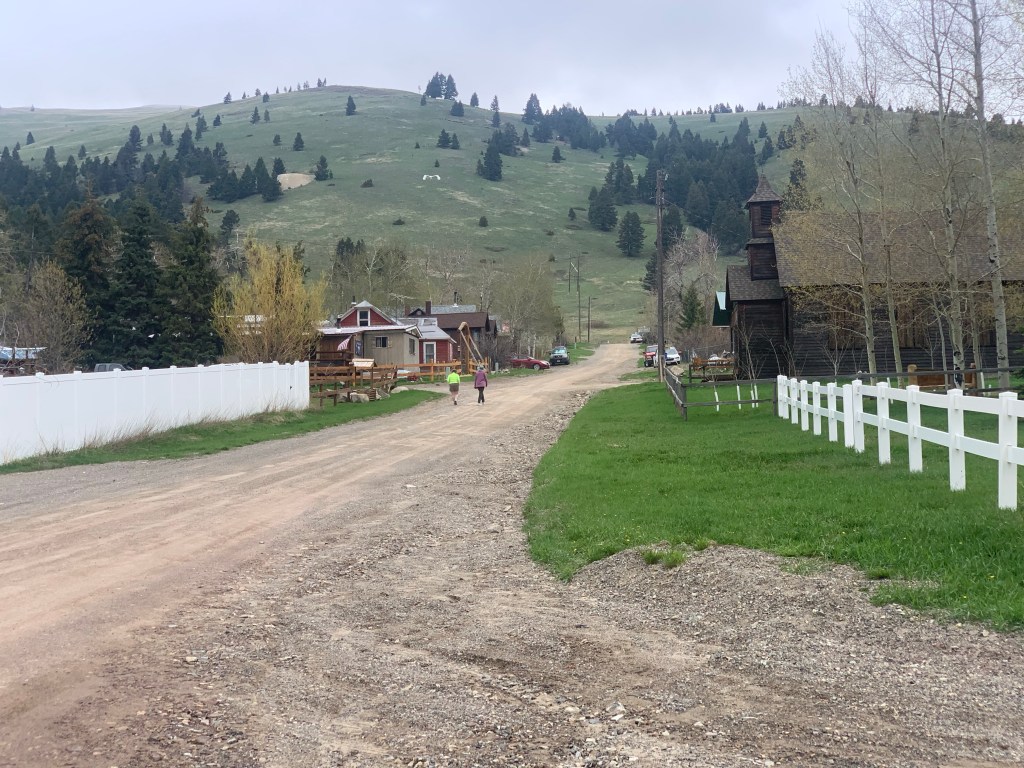
Marysville was the first mining ghost town that I visited in Montana in 1982. Forty years ago it wasn’t really a ghost town—several families lived there year round. But many buildings were abandoned, in disrepair, even one of the historic churches. Whenever families or friends visited me in Helena, I always took them to Marysville to see what was left because I wondered just what the future of the place would be.

I need not have worried. I had not been in Marysville since 1985 when I visited in May 2023. Today about 80 people live in Marysville—again far from being a ghost town. But so much preservation work had taken place since the 1980s.

Today many historic buildings from c. 1880 to the 1920s help to tell the story of gold mining in Montana at the fabled Drumlummon Mine owned by Thomas Cruse, a mine that overlooked the town. But work remains—other key buildings need their champion to ensure their preservation.

Drumlummon concentrator ruins
Ruins only remain of this dwelling
Stone commercial building from 1895
The 1898 Masonic Lodge Building with its impressive brick exterior dates to 1898. Both Mountain Star 130 and Ottawa 51 met in the building.
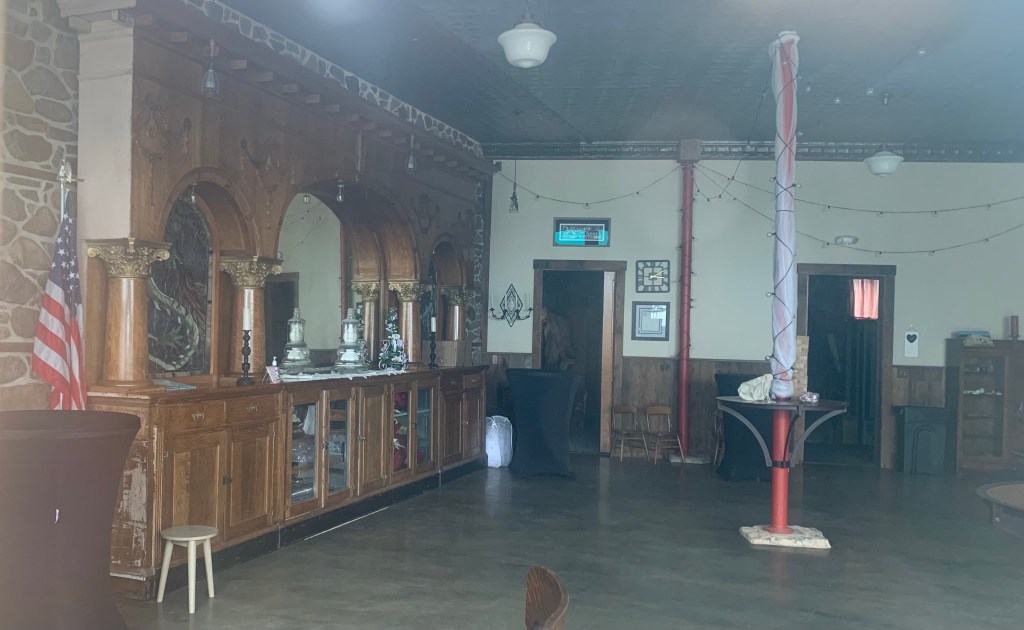
Another important building was the general store, initially established by Ann and Blibal Betor (Betor was from Lebanon) c. 1898. When I lived in Helena the place was abandoned and in rough shape. A well planned restoration began in 2004 and was finished in 2018.
The general store interior speaks to its conversion into a saloon and dance hall c. 1940.
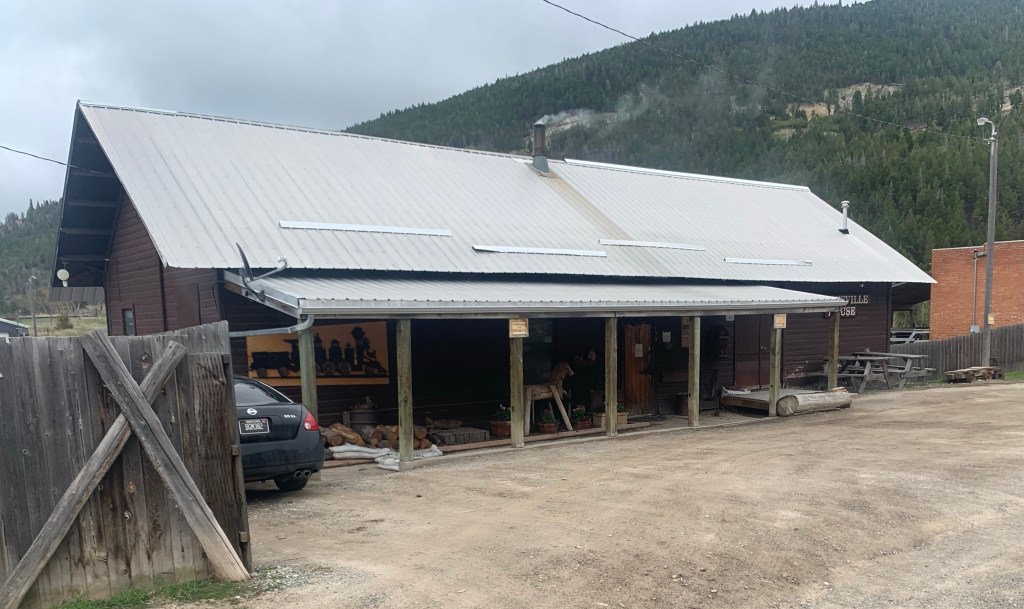
The former Northern Pacific railroad depot is now home to the town’s bar and cafe.
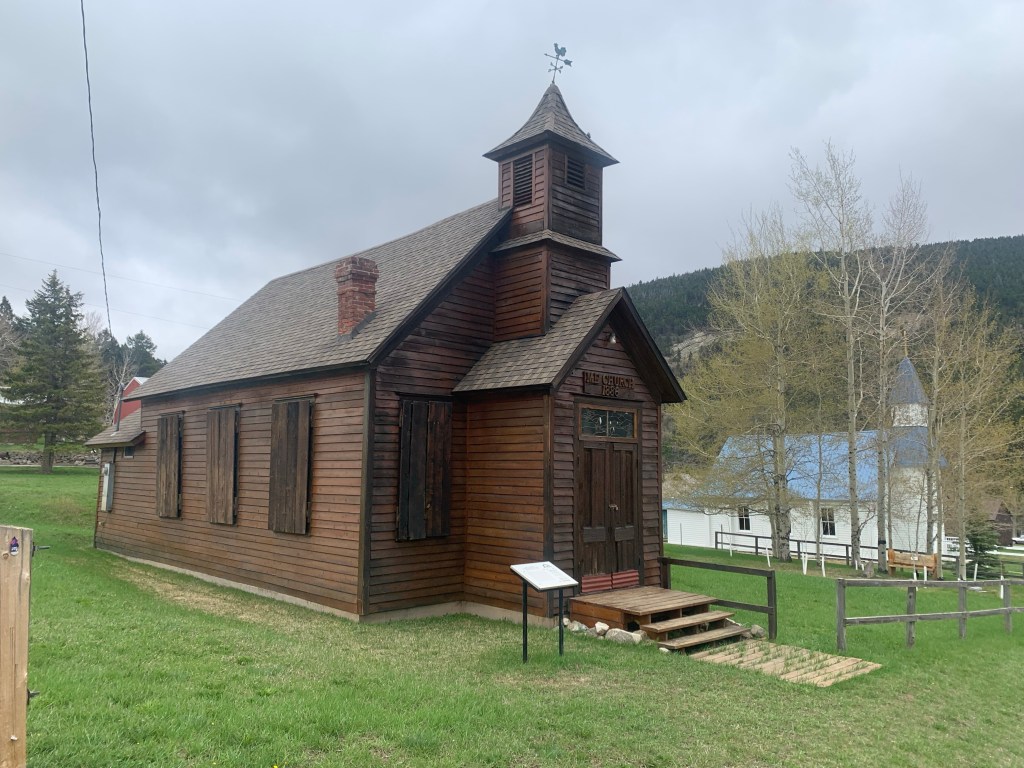
Another restoration was led by the Hollow family at the town’s Methodist Episcopal church. This 1886 building is listed in the National Register of Historic Places.
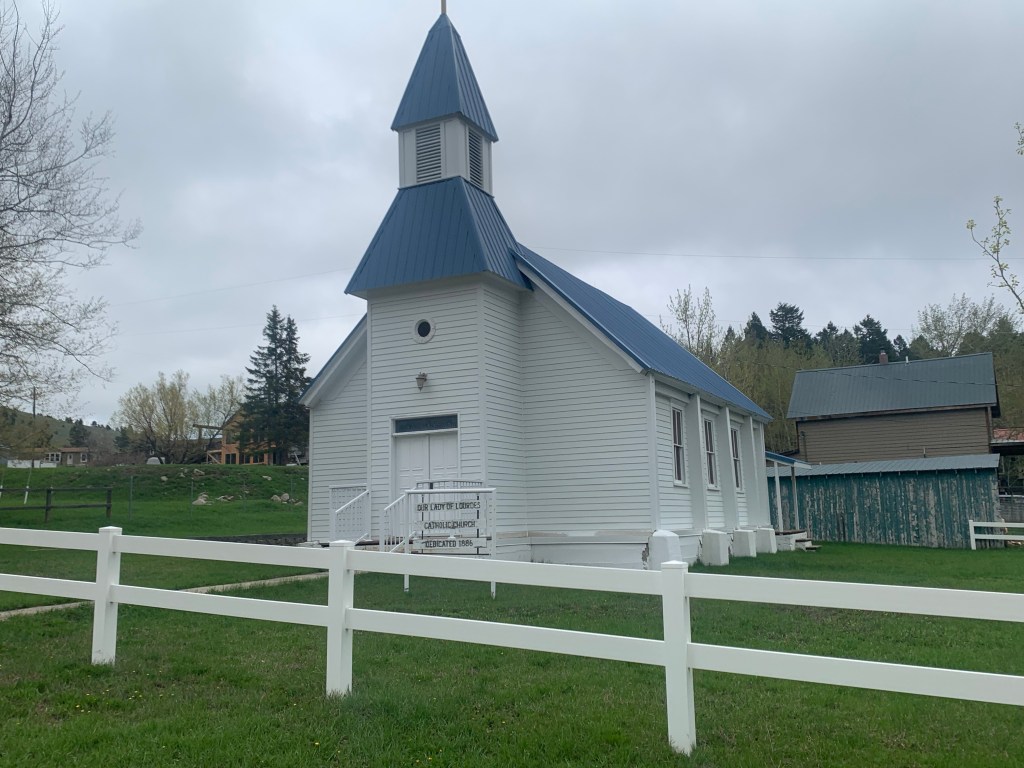
Our Lady of Lourdes Catholic Church also dates to 1886. Thomas Cruse later took some of his Drumlummon fortune and donated it for the construction of the Cathedral of St. Helena in Helena, MT.
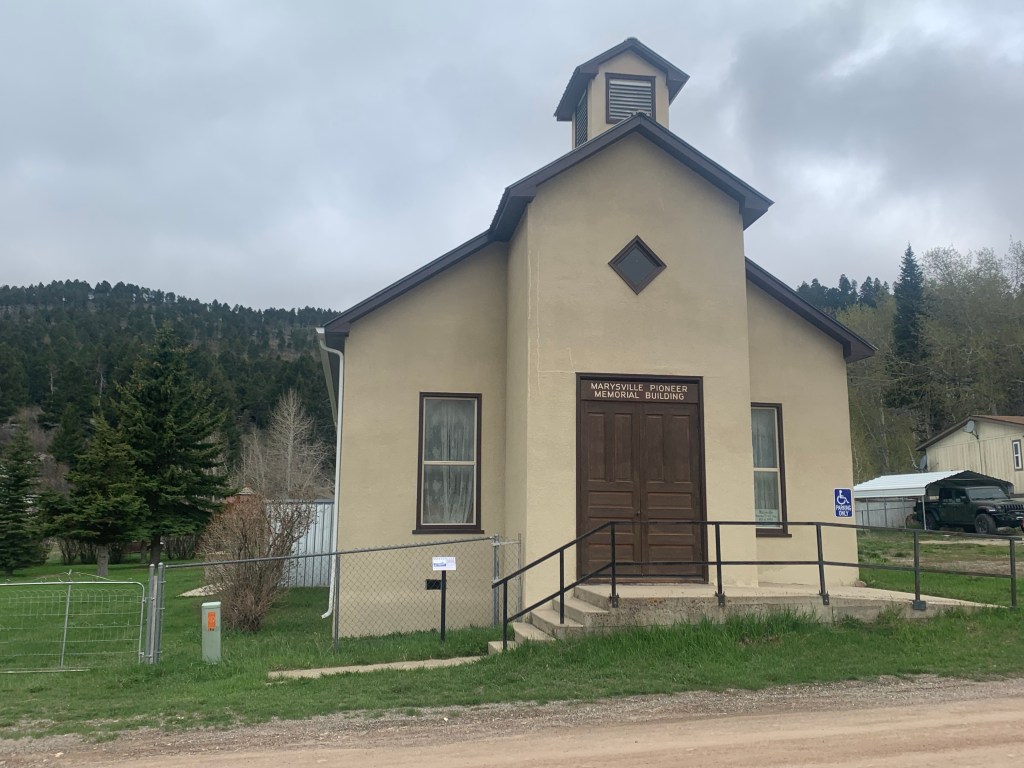
The Marysville Pioneer Memorial Building contains a museum about the town and its mining history.

The people who call Marysville home have been remarkable stewards. By keeping the town alive they also have preserved a special place in Montana’s mining past.

An Altered Modernist Landmark in Kalispell

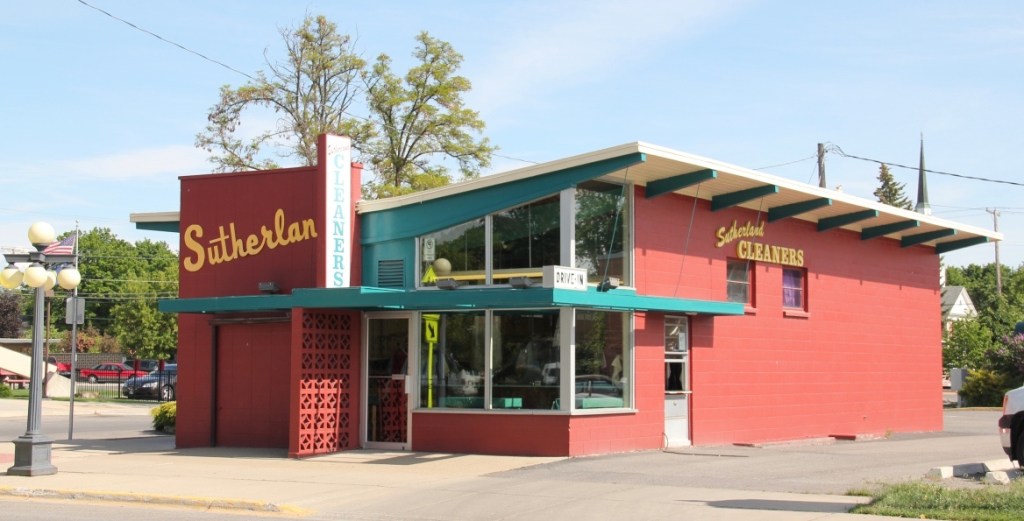
Sutherland Cleaners in downtown Kalispell was one of my favorite mid-century modern buildings in Montana when I surveyed the town in 2013.

There was the funky angled shed roof, with oh so prominent brackets, painted green. The name Sutherland in script was so 1950s. The concrete block screen and canopy setting off the entrance was cool. And the two-tone red and green color scheme gave a certain identity to what was actually little more than a functional concrete block building.

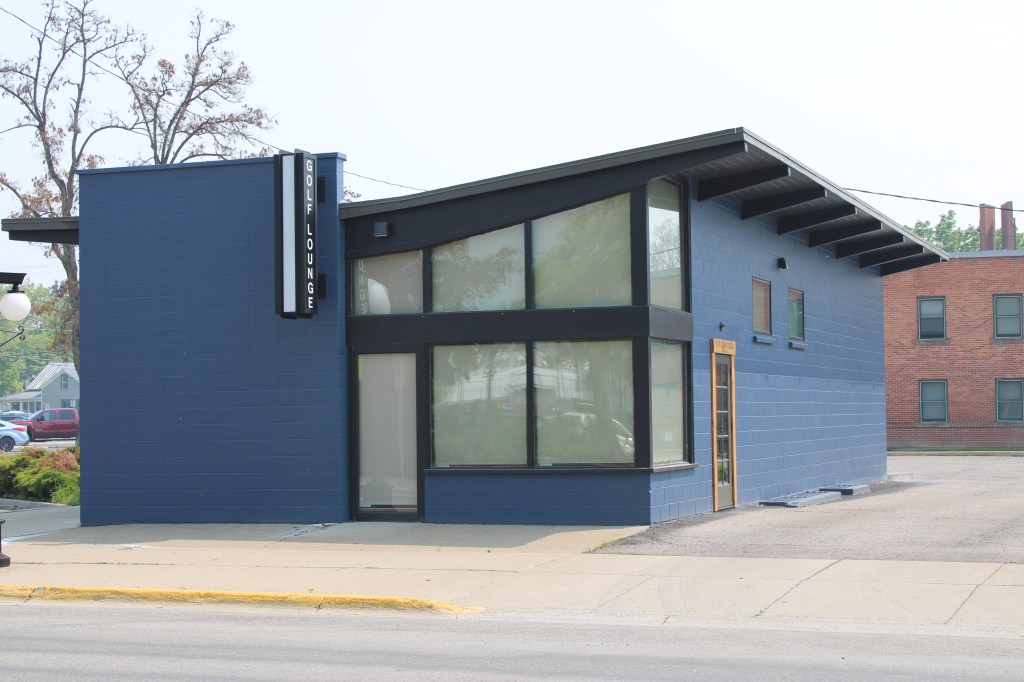
Ten years later the building still stands—thankful for that—but the entrance screen and wrap around canopy are gone. Colors are still two-tone but so close in color that the brackets get lost.

An era has passed, I understand. But what had been a vibrant historic building is now just an old remodeled place. Again I’m grateful that the building has a second life of service but boy do I miss the funkiness.

Whitehall revisited

I last addressed Whitehall, a town along the historic US 10 route (Montana Highway 2) seven years ago. I have always liked this place, as a crossroads (Montana 55 and2) and for its 20th century history as a sugar beet refinery town.

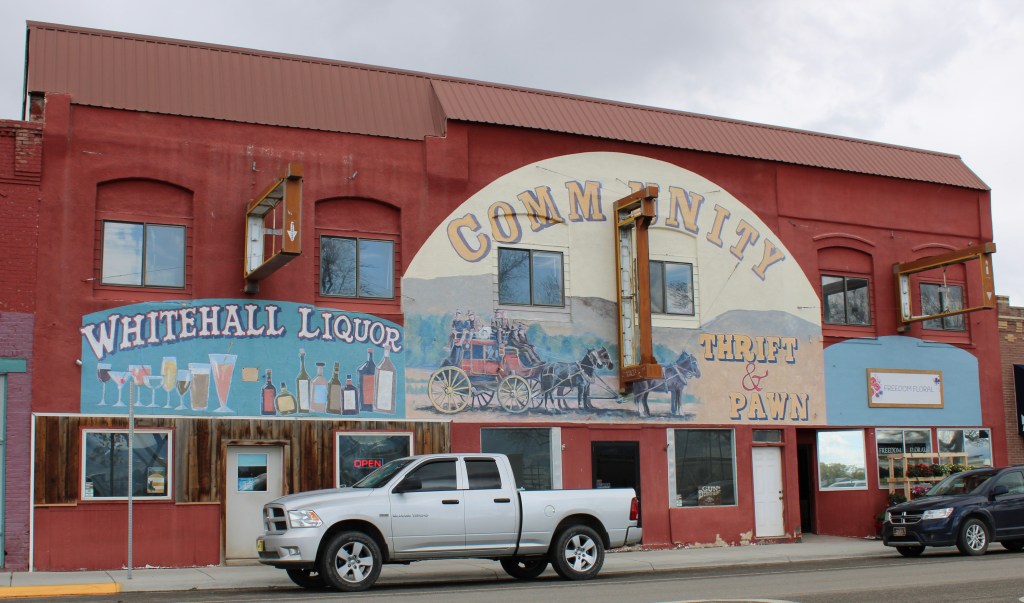
Passing through in May 2023, I realized that I had not said much about the town’s roadside art—especially murals. Is there a better decorated pawn shop than Community Pawn on Legion Avenue (Montana 2)?

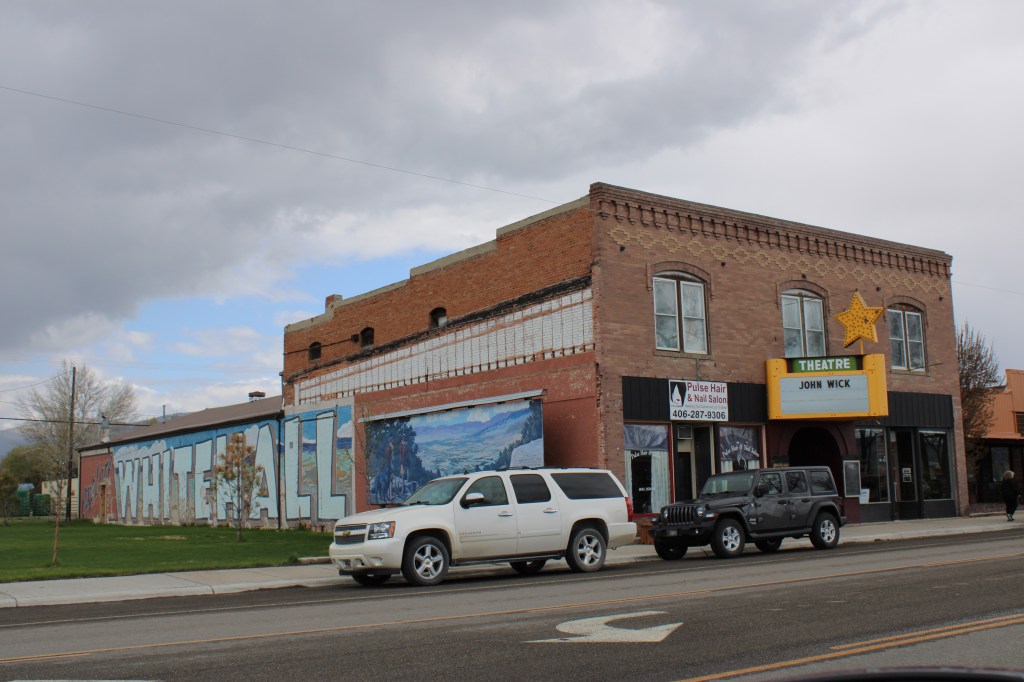
Just down the street is a mural celebrating Whitehall itself on the side of the Star Theater.

Of purse Whitehall also has a mural about the Corps of Discovery, telling the story of the Lewis and Clark expedition in Jefferson County.

The Boarders Hotel is a reminder of the age when Montana, not nearby I-90, was a major east-west highway in Montana.

A block north of Legion Avenue is the town’s residential district. Is there a better example of yard art than this bungalow?, especially with its welcoming gate titled “sans souci” (without worry)?

Why worry indeed, when you can always stop at Whitehall’s Mint Bar before continuing your journeys in Jefferson County. cheers!

“Old” Highland Cemetery in Great Falls

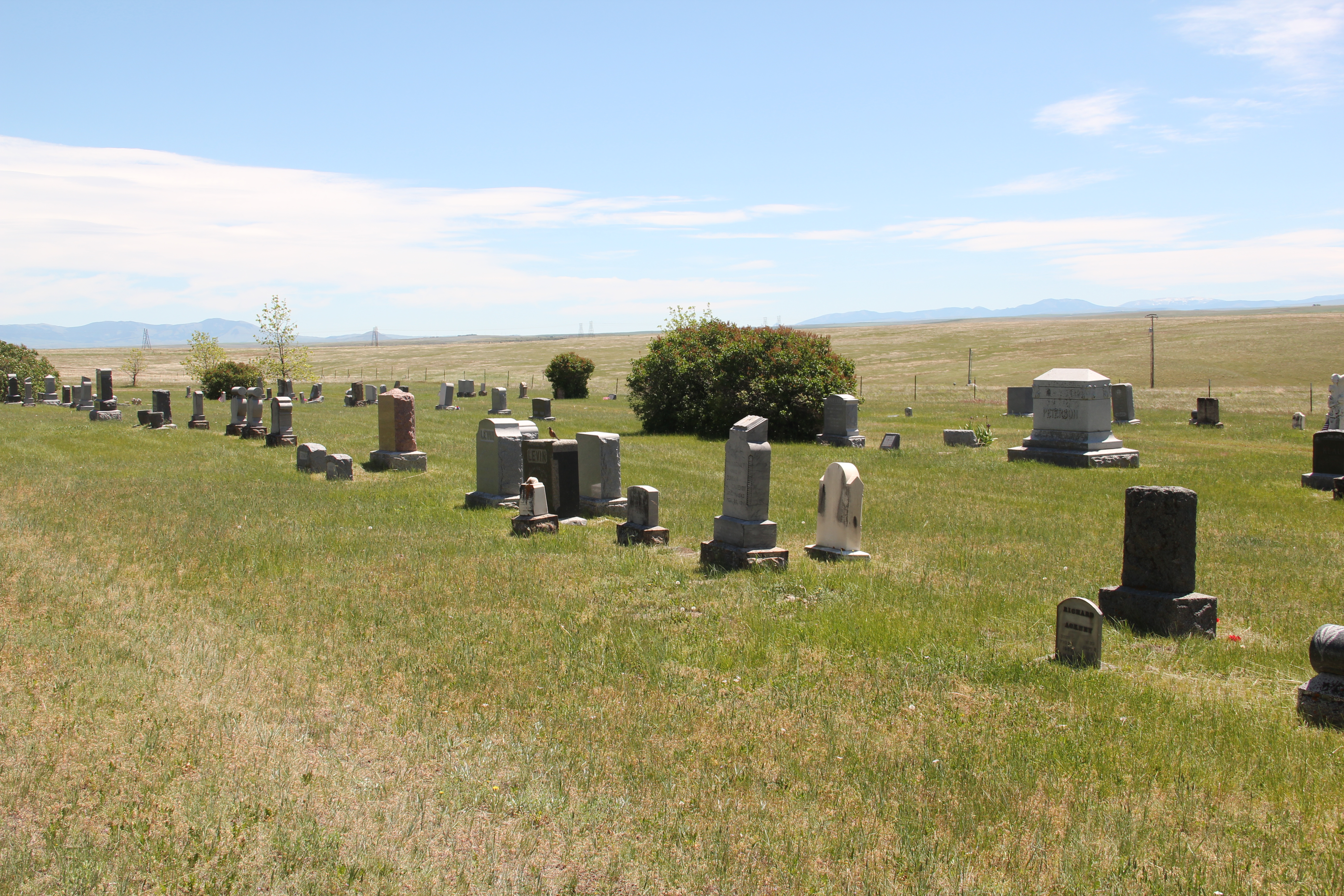
There are two Highland cemeteries in Great Falls, and for my money, the first Highland, now known as “old” Highland, is the more interesting and compelling funerary landscape. In fact, in its range of markers and the stories conveyed by the markers, Old Highland is one of the most interesting cemeteries in the state.

A paved drive divides the old from the new, but just exploring the grave markers themselves and their earlier dates separates the two cemeteries. The markers are so diverse in materials and form that it difficult to convey the place in a post of moderate length. But here goes.

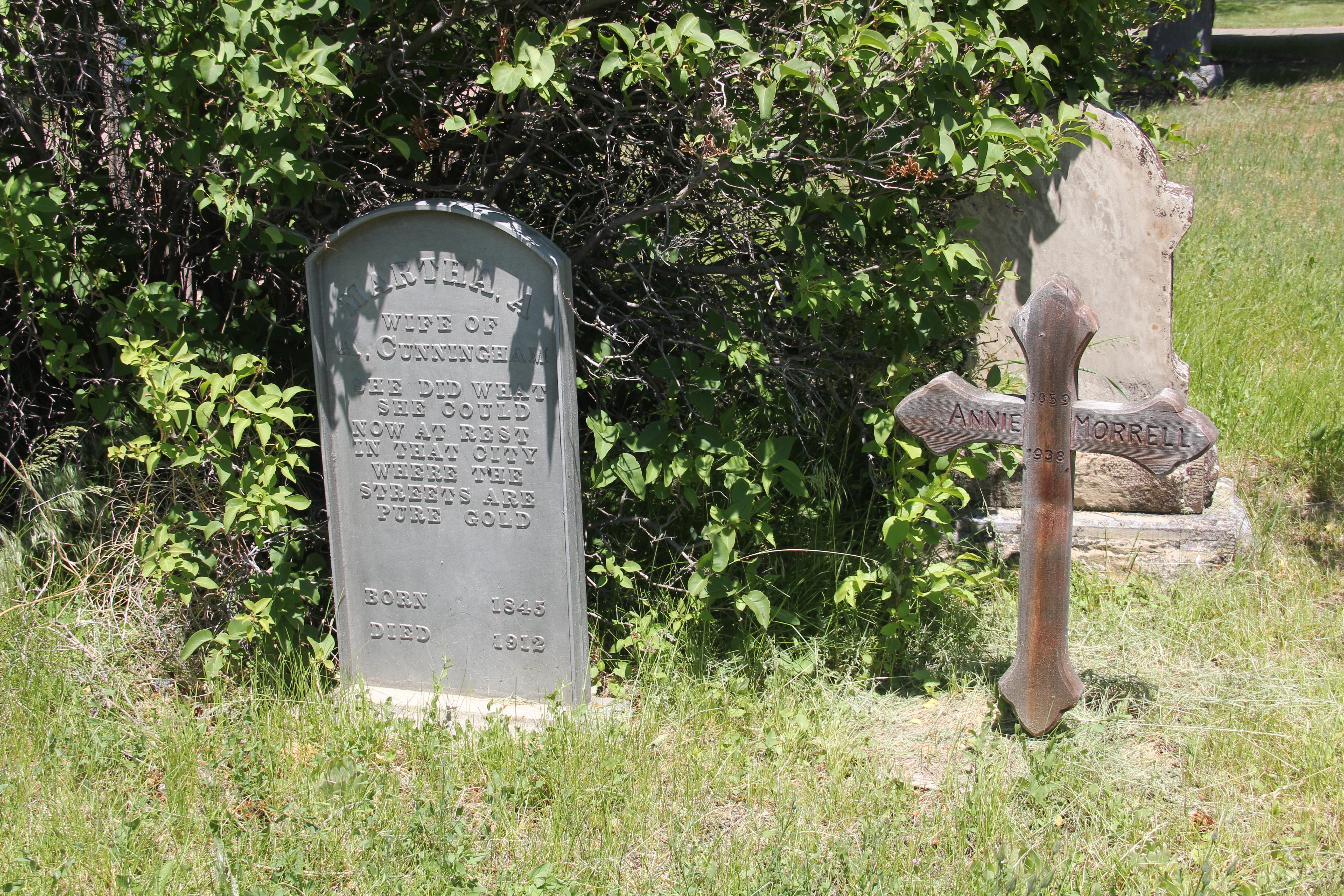
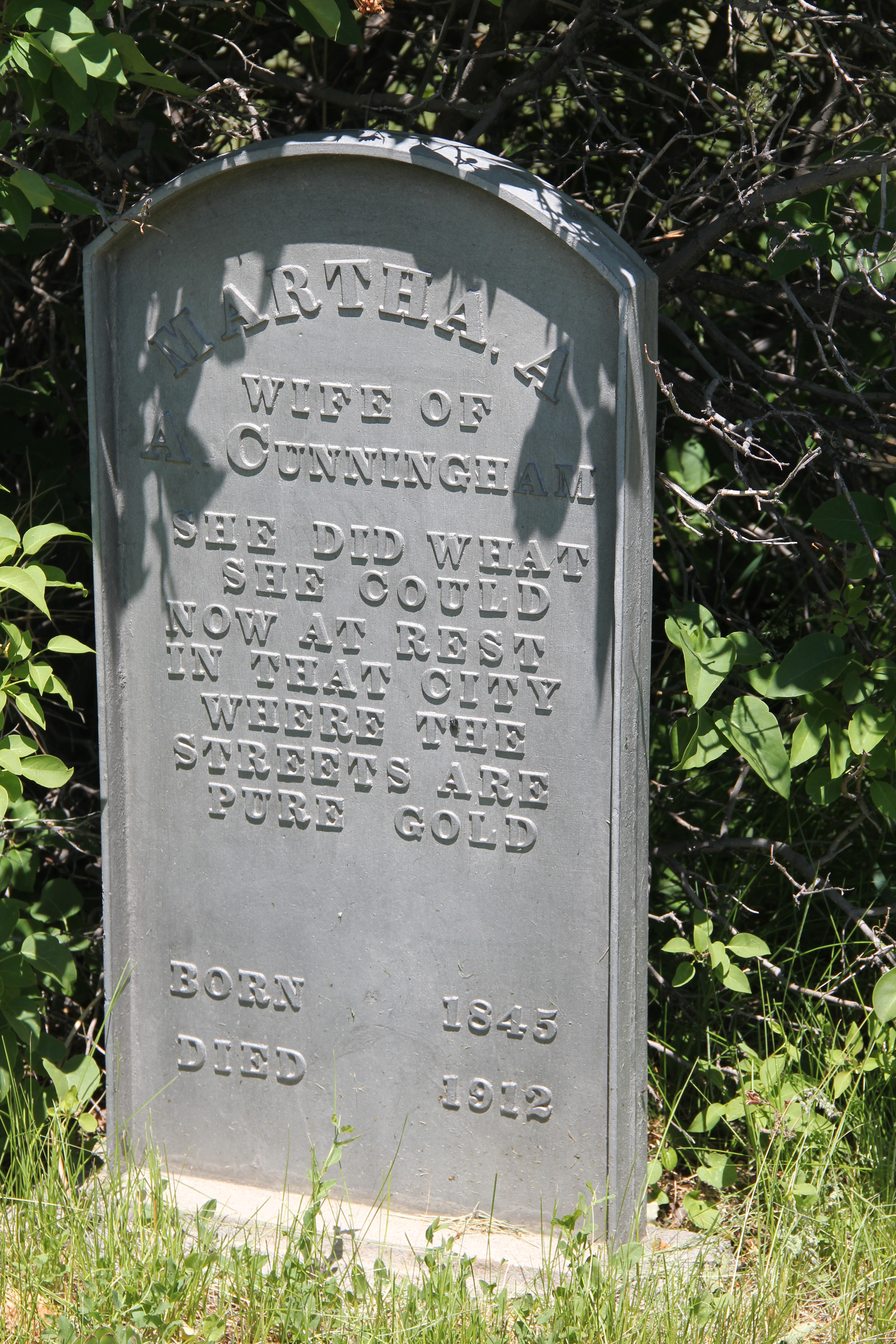
Martha Cunningham’s 1912 cast-iron marker was the first, of several, that I encountered. The marker reads: “She did what she could. Now at Rest in that city where the streets are pure gold.” Sarcasm in your marker–Martha I bet was an original.

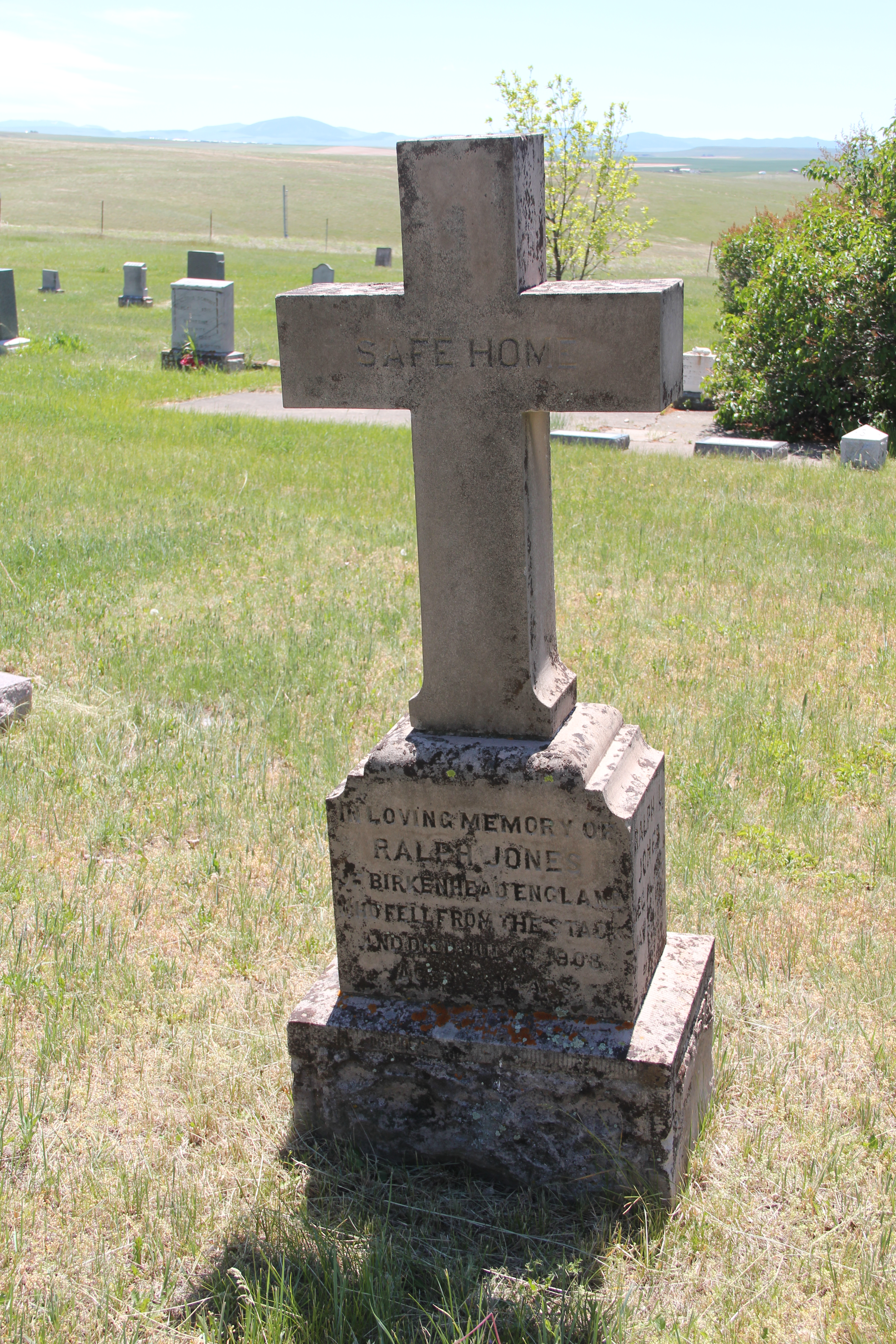
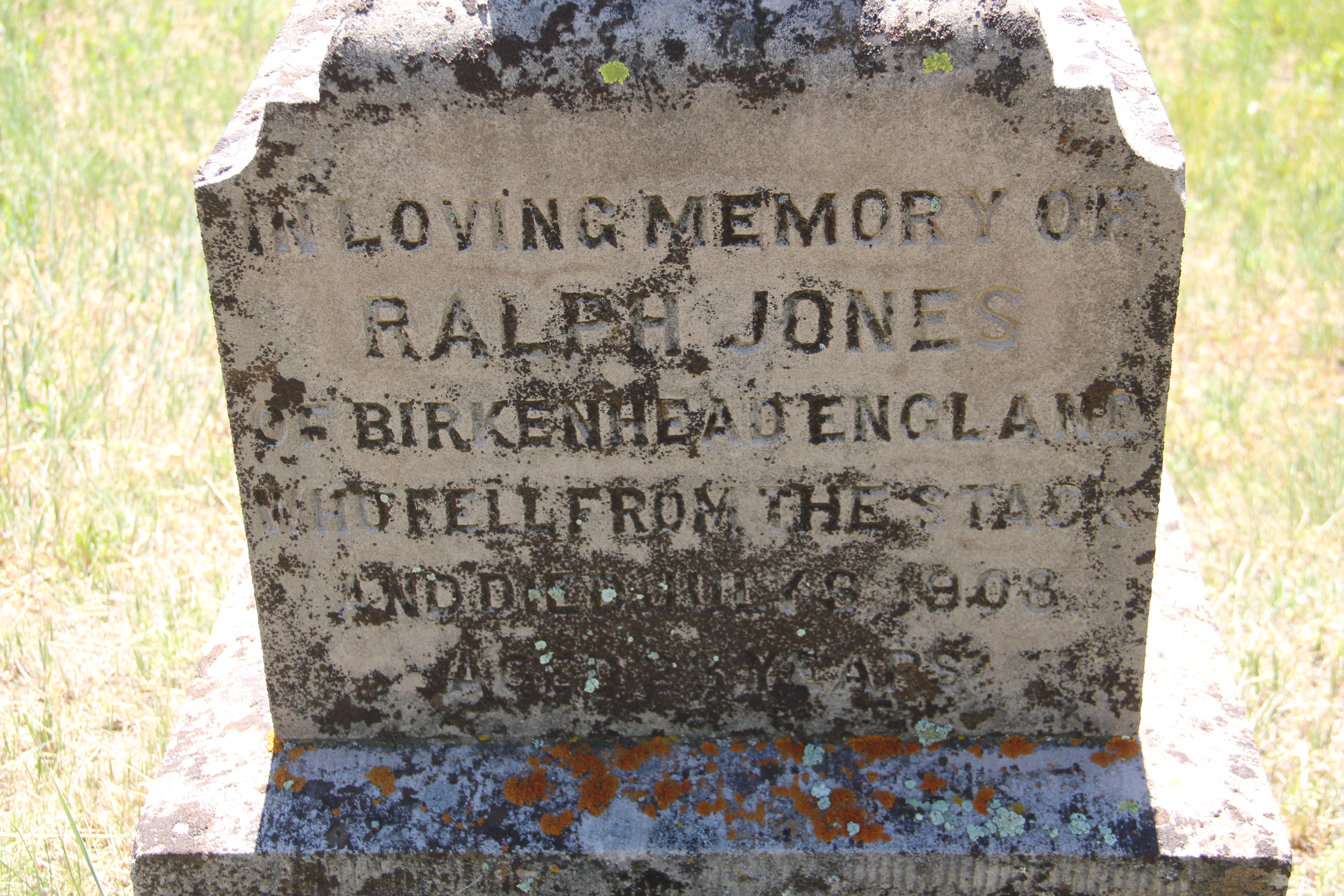
Ralph Jones, a mason from England, died while constructing the tower of the Anaconda Smelter in 1908. His friends erected the cross, with the words Safe Home, in his honor. Jones’ story is also told at annual cemetery tours.

Old Highland also has several Civil War veterans buried throughout the cemetery.

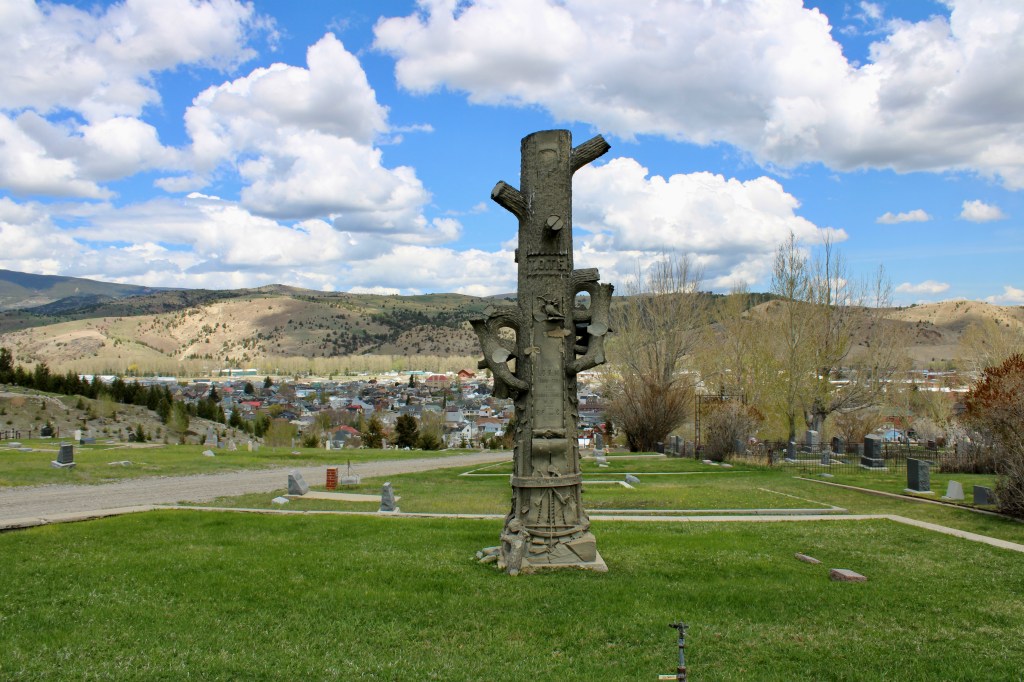
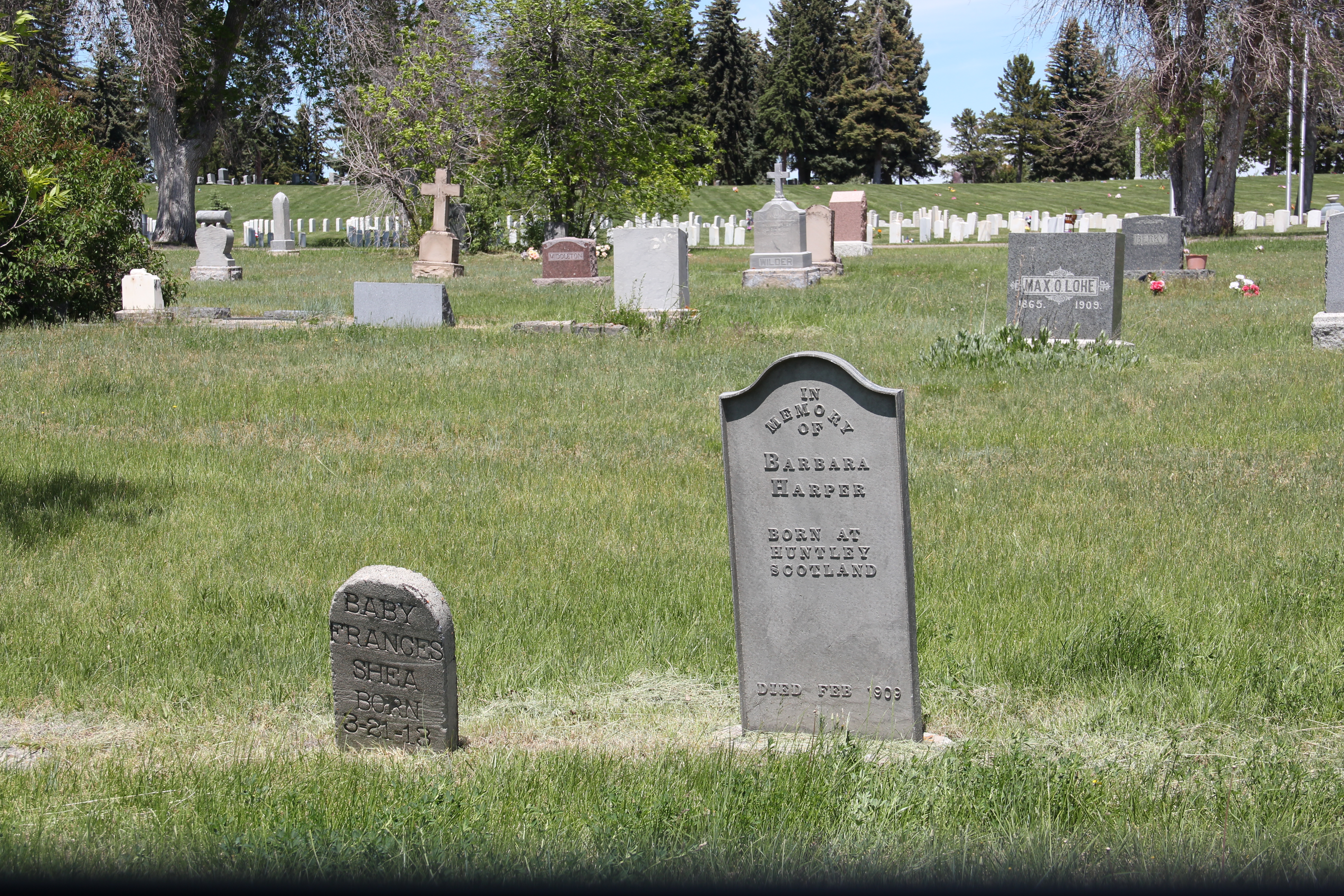
Barbara Harper’s metal marker is also noteworthy, but the most interesting metal marker by far is a small one in a corner of the cemetery. Alexander Leistiko died in 1906. His marker is pressed metal of two people at a cemetery, with the metal sculpture, complete with a skull motif, resting on a metal pedestal. I am a long ways from seeing every cemetery in Montana but this marker, thus far, is unique, and fascinating.

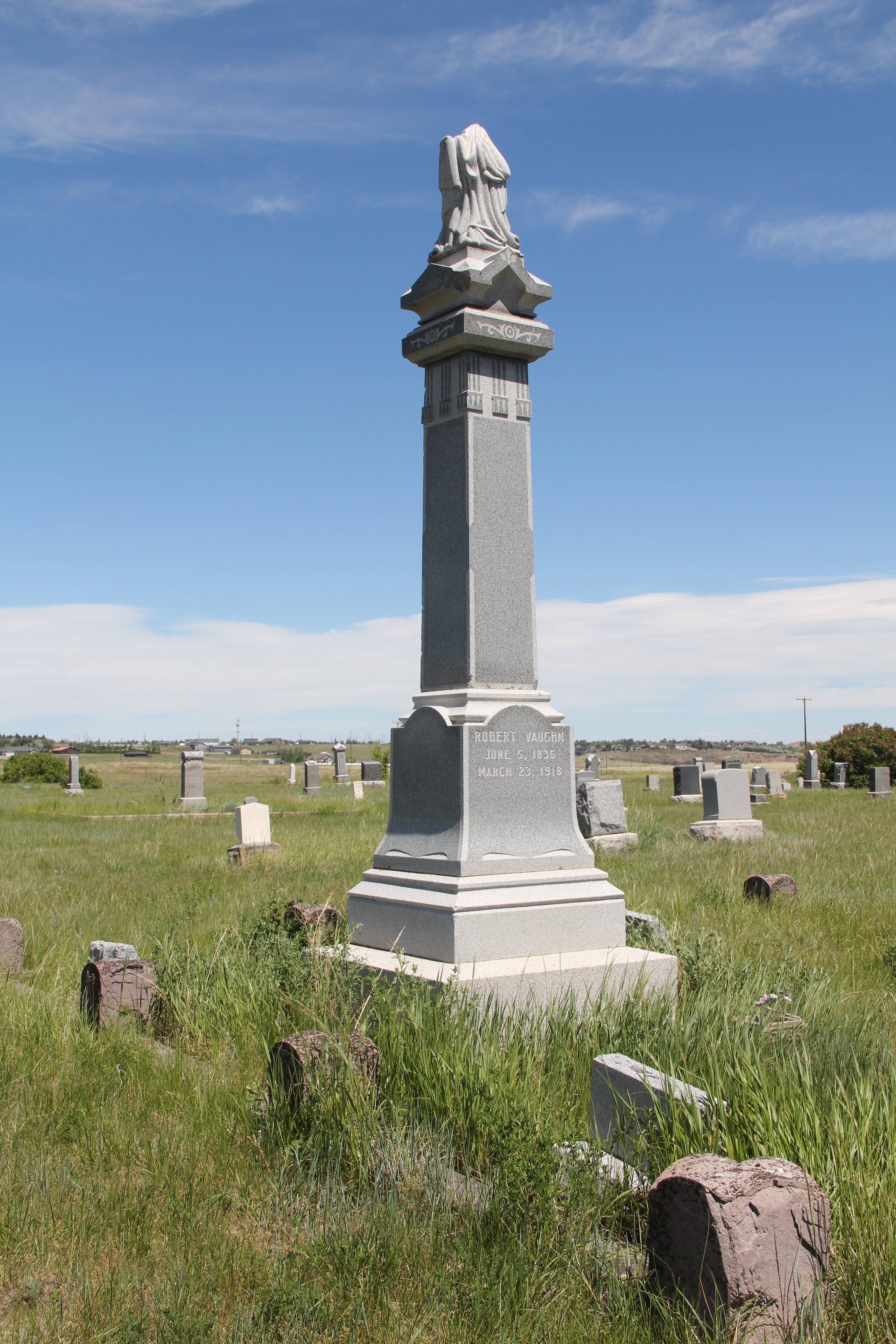
The artistic treasures of this cemetery just don’t end there. There is the grand obelisk for Robert Vaughn, a famous Cascade County rancher, dominating a low stone wall family plot.

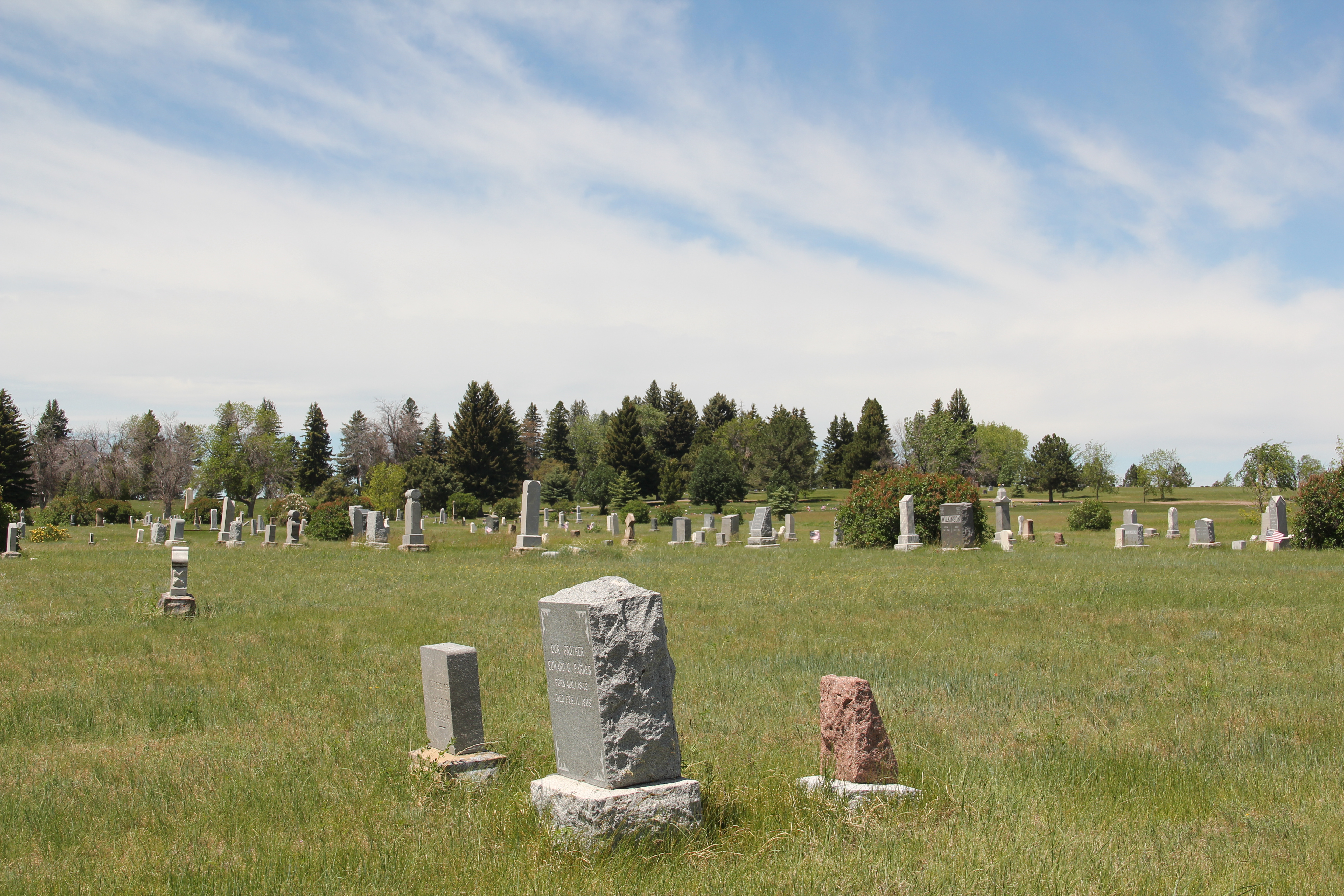
Indeed, a few steps away from the Vaughn family plot, you can look to the north and see the treed landscape of “new” Highland Cemetery, and then look to the south and see the edge of the initial Highland cemetery.

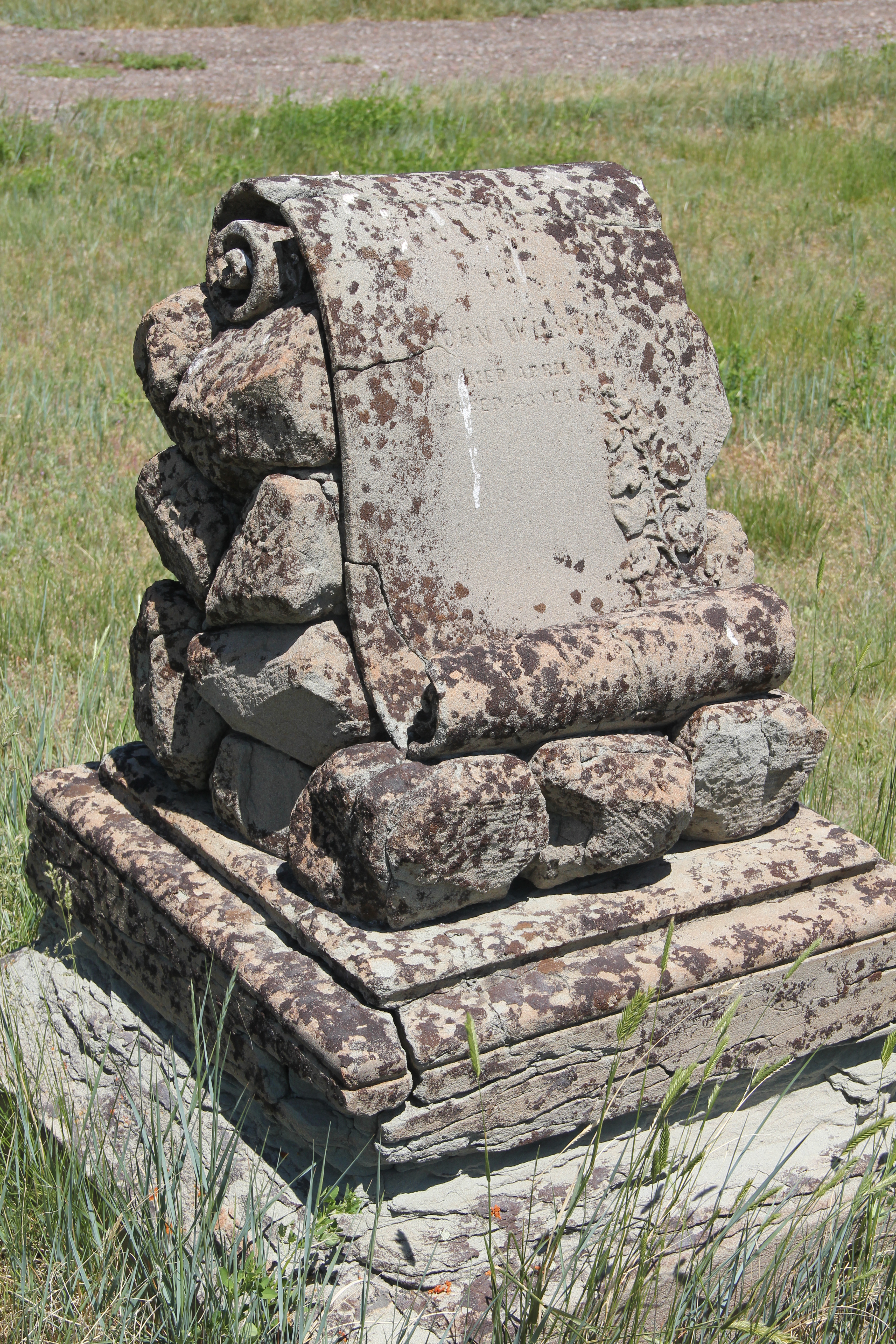
You would expect to find a more Victorian presence in the Old Highland markers since the place began in the late 19th century, The Delaney family plot, even with its overgrown ornamental planting, is an impressive statement of Victorian sensibility. The John Wilson marker of a decorated scroll over stones is just as impressive.

The heavy obelisk of Scottish immigrant James Stewart Tod (d. 1891). Tod lived with his family in Glasgow as late as 1891, being listed in a Scottish census for that year. But in the summer of 1891 he was in Montana as a merchant but died soon after arrival. The local Board of Trade (the precursor to the chamber of commerce) praised Tod for his character and service.

The Caulfield family plot also memorized service, in this case to the Great War.

There is no such to see and say about Old Highland Cemetery. I will revisit this place, hopefully soon.

Highland Cemetery in Great Falls

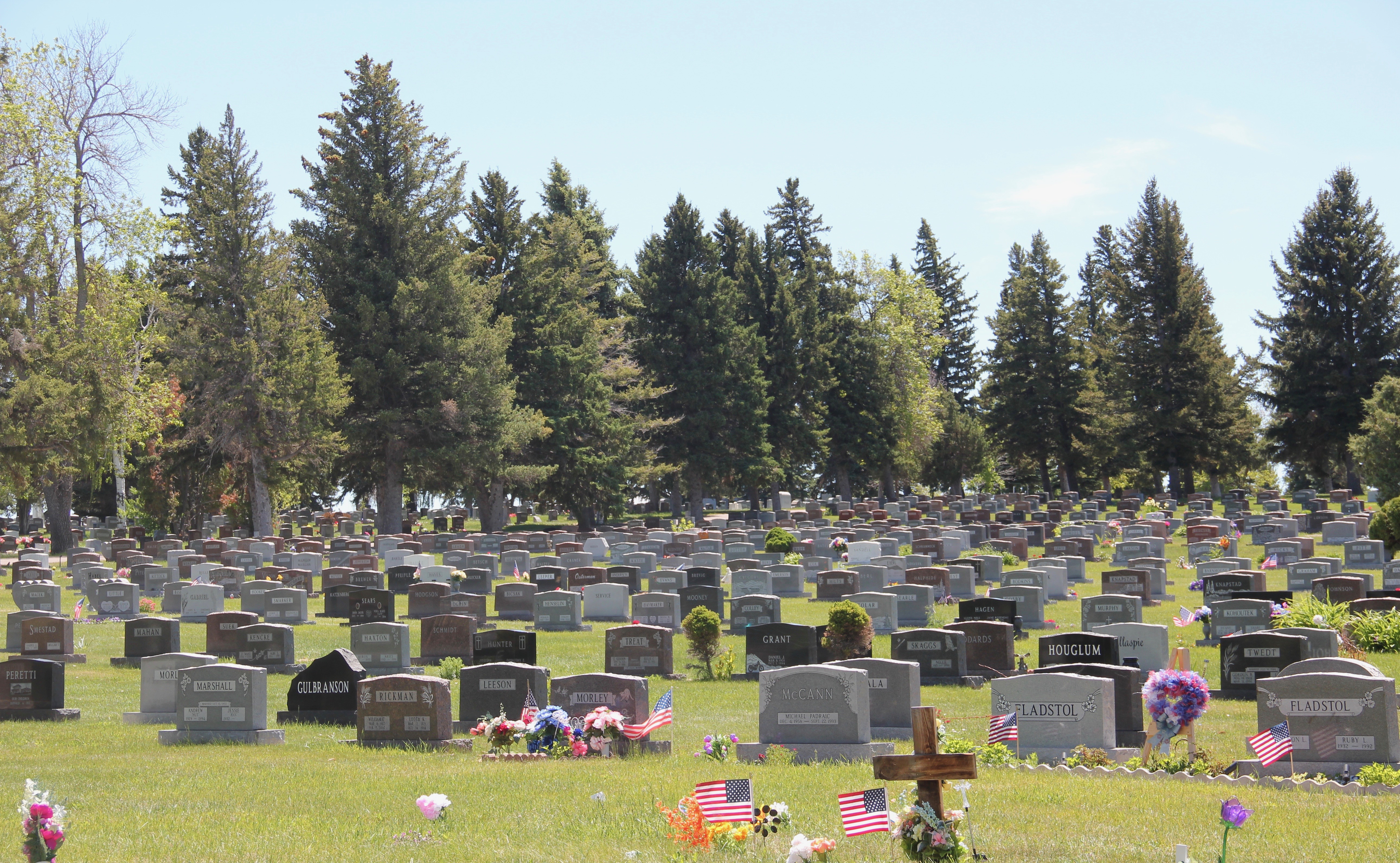
Highland Cemetery, established in 1911, is a private, perpetual care cemetery that serves as the primary burial ground in the city. Located south of the city, the cemetery’s many trees and irrigated grounds make the place a shady park-like oasis in an otherwise barren prairie.

Paris Gibson (d. 1920), the civic capitalist who founded and nurtured the city, is buried not far from the gates. Like with most ventures in Great Falls, Gibson had encouraged the creation of a new, privately administered cemetery adjacent to the original Highland Cemetery (now known as Old Highland Cemetery).

His grave marker, a tall chiseled stone, is different than most. Low rectangular, regularly sized and spaced markers characterize the cemetery in almost every direction you look.

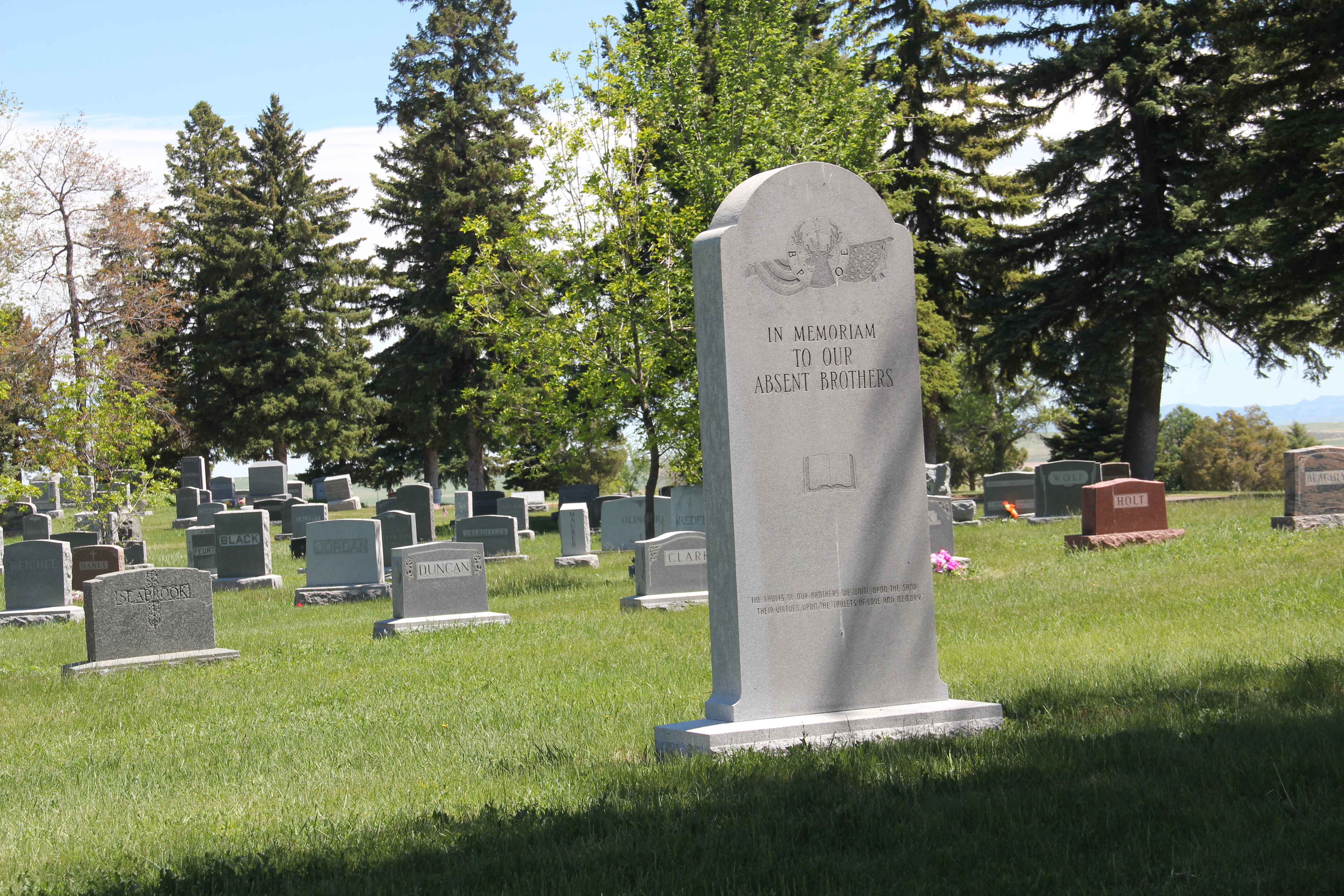
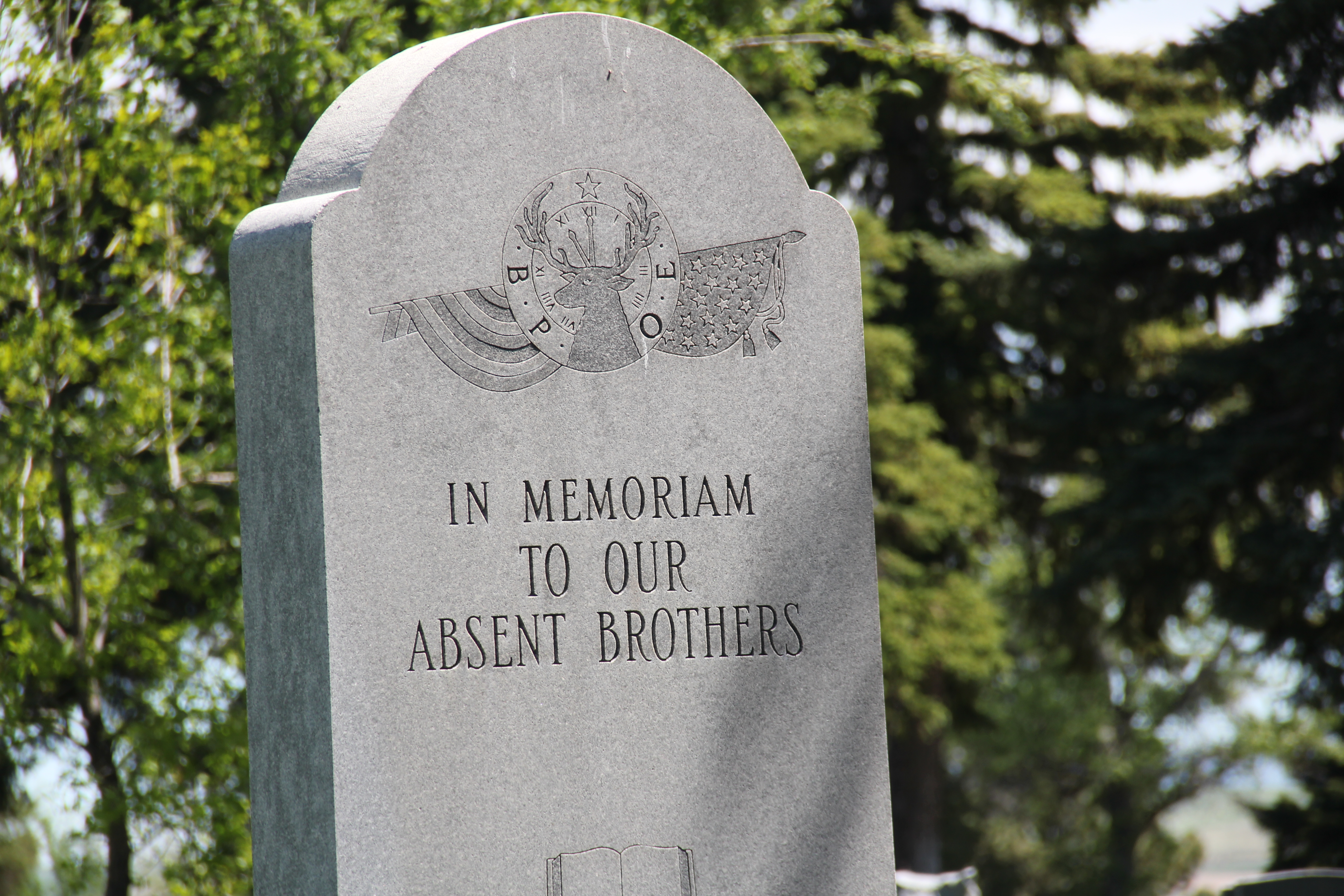
As is the case with many Montana cemeteries from over 100 years ago, you will find sponsored sections for fraternal organizations, such as the monument identifying members of the Elk Lodge, see below, as well as members of the Masons and Woodmen of the World.

The cemetery’s opening coincided with the 50th anniversary of the beginning of the American Civil War. A centerpiece of the cemetery is a large, expansive veterans section, centered on a mounted Columbiad cannon, given by New York City to the Sheridan camp of the Grand Army of the Republic in Great Falls. U.S. soldiers, and some Confederate soldiers, are buried in a circle facing the cannon and the flag. The massive stone base for the cannon tells its story and adds on a side panel “In Memory of the Boys Who Wore Blue, 1861-1865.” It is the most compelling Civil War monument in a Montana cemetery.

Two Confederate soldiers, units not identified, at the foreground of this image.
Charles M. Meek, probably born enslaved in Tennessee in 1849, served as a teenager in a Kentucky regiment of the U.S. Colored Troops in the Civil War.

Famous individuals besides Paris Gibson have been buried at Highland Cemetery. Governor Edwin Norris (d. 1924) is represented by a tall obelisk marker.

Television and movie actor George Montgomery (d. 2000), who was once married to actress and singer Dinah Shore, is also buried here, represented by a full sized metal statue, dressed in cowboy gear. It might seen odd, at first glance, for a Hollywood star to be buried at Highland, but Montgomery was born in the small town of Brady in Pondera County. By being interred at Highland, Montgomery in a sense had come home.

The most famous Montanan to be buried here is Charles M. Russell, who, like Gibson is represented by a chiseled stone boulder, with his trademark initials in a metal plaque affixed to the stone. Nearby is the grave for his wife, and manager, Nancy Russell. A scholar of Russell’s art and life, Frederic Renner (d. 1987), is also buried nearby. Speak of devotion to your subject!

Mt Olivet Cemetery in Great Falls

Mount Olivet Cemetery opened to serve the Catholic community of Great Falls and central Montana in 1928. The first Catholic cemetery in the city, Calvary Cemetery, was established a generation earlier in 1896. When the Diocese announced the establishment of Mount Olivet, it also announced that families would be free to move the graves of their loved ones from the older cemetery to the newer cemetery. It is uncertain how many families moved graves and/or grave markers. Calvary Cemetery still exists to the south but is only periodically maintained.

Mount Olivet is well maintained and the trees first planted in the late 1920s have matured and grown to lend dignity and beauty to the property.

The grave of Frank Rafferty dates to the summer of 1927 about eight months before the opening of the cemetery was announced in the Great Falls Tribune.
The Rainieri grave marker is a beautiful Art Deco-influenced design, a popular style in the late 1920s and 1930s.

Mount Olivet also has a large dedicated section to veterans from the 20th and 21st century conflicts.

Stonewall Hall restoration underway in Virginia City

Good news this week from the Montana Heritage Commission as it begins the restoration of the stonewall Hall, the first permanent home of the Montana Territorial legislature in Virginia City from 1865 to 1875. The first image is from 2012.

I next visited the place in May 2023 while planning for the restoration was underway. The images below come from that visit.

As the images document, Stonewall Hall is barely hanging on, with particular damage at the rear corner that threatens to take the entire building with it. The Montana Heritage Commission has raised 3/4 of the funds necessary for the work. Let’s all pitch in and what what we can so this very historical places lives to teach our future generations.

Kalispell’s C. E. Conrad Memorial Cemetery

The most spectacular urban cemetery along U.S. Highway 2 is just off of the historic road in Kalispell. Listed in the National Register of Historic Places, the Conrad Memorial Cemetery has 87 acres in is nominated property. Designed by architect Arthur Hobert, the cemetery began in 1902-1903, similar to other city cemeteries of the Hi-Line. But most comparisons stop there. A private non-profit, established initially by Alice Conrad, administers the cemetery.

From the gates a long ceremonial drive leads you to a winding drive that takes you past the cemetery office onto the bluffs that define the property.

There you encounter on one side a large obelisk, placed by the State of Montana, in honor of former Governor Robert Smith (d. 1908). Former Governor John Erickson is also buried here.

Smith memorial is on the left

On the opposite side of the drive is a memorial to the military veterans of Flathead County, a splendid modern classical statement.

It’s an impressive opening to a beautiful landscaped, and well maintained, city cemetery. Hobart’s rural cemetery movement design has few parallels in Montana. You can get lost in many lanes, creating multiple large sections for burials.

The quality of the early 20th century grave markers equal the beauty and creativity of the grave markers from those years.

The Richardsonian arch of the Burton memorial is unique for this region.
A much more recent mountain theme memorial

As you might expect fraternal lodge themes are common throughout the cemetery’s sections.

Other markers share poignant stories of loss and memory, in both words and symbols.

As you explore the different sections you finally encounter why this cemetery exists at this particular place: the long landscaped approach to the mausoleum for Charles is E. Conrad (d. 1902)

Alice Conrad wanted her husband’s final resting place to overlook the town he had done so much to develop in the prior decade. He was only 52 at the time of his death. His many investments separated him and his family from other civic and economic leaders in Kalispell. Thus the cemetery design placing Conrad’s mausoleum in such a honored place reflected the reality of his times.

The stone Classical Revival building still is alone, afforded a place of honor and hierarchy within the property. the circular drive from the mausoleum connects to every other part of the cemetery.

Markers date from 1903 to the present. it is a property that takes hours to assess, due to the multiple sections and many captivating markers. But the time is so well spent and rewarding.

Chester Cemetery in Liberty County

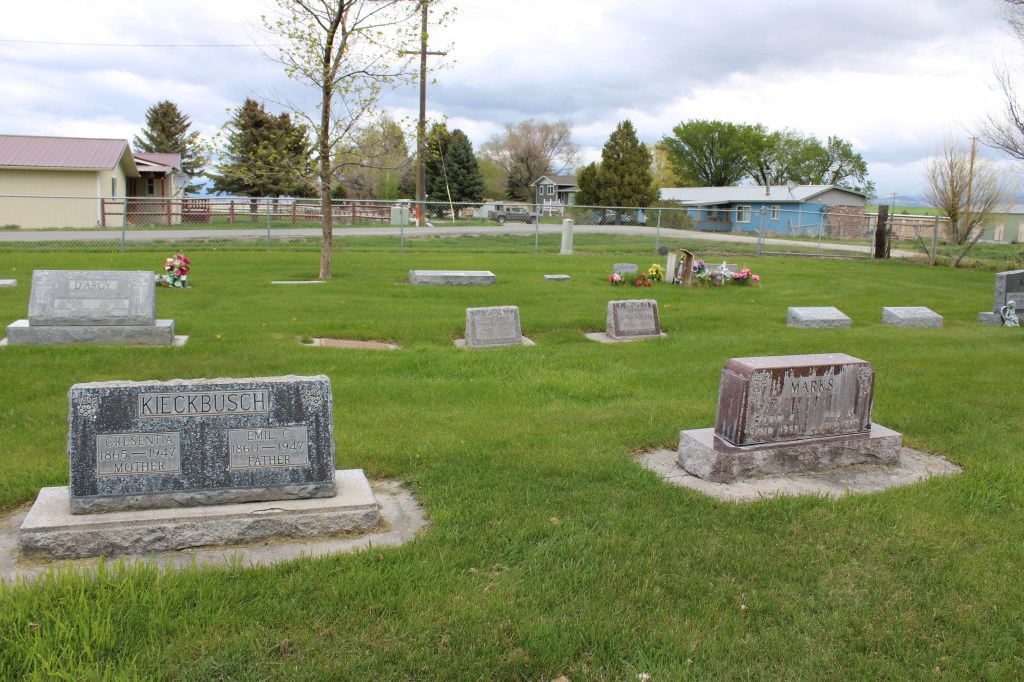
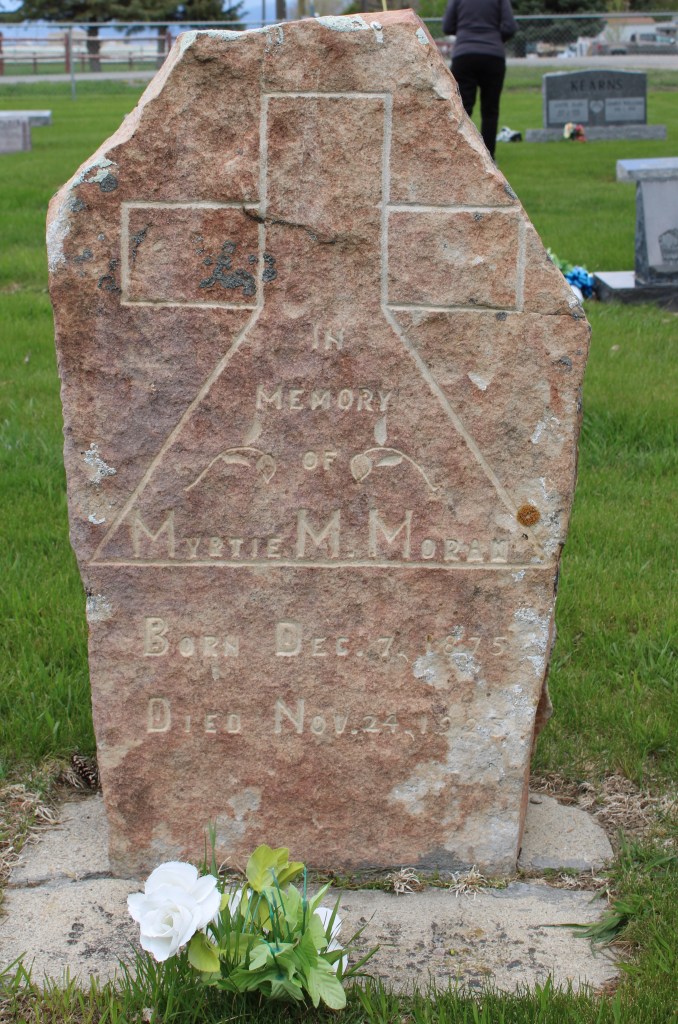
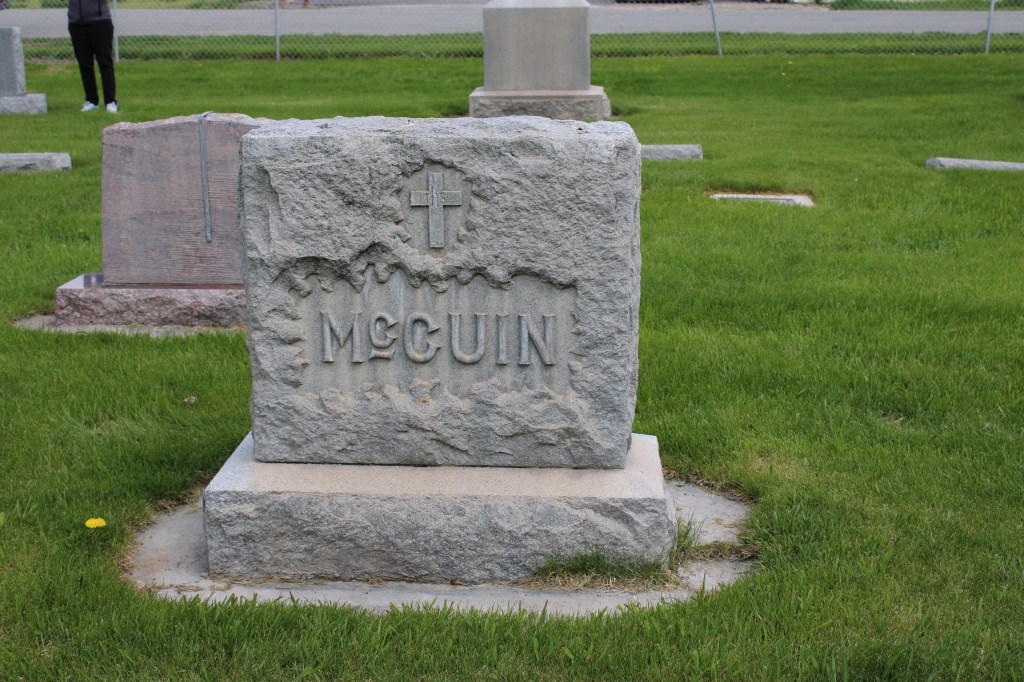
The Chester Cemetery is among the oldest historic places in Liberty County. The town of Chester was incorporated in 1910 during the homesteading boom of the northern plains. Liberty County was formed in 1919. But the cemetery dates at least to 1904; the earliest marker I found dated to 1905.

Carrie Mitchell, d. 1805

As in other Hi-Line towns, the cemetery began as a Catholic cemetery, part of an early 20th century initiative from the Diocese to establish cemeteries throughout the region. I have not determined when the property took the name Chester Cemetery. But by 1910-11, and town growth, you find more grave markers from that decade.

Note the Catholic cross memorial at the center rear of this image.

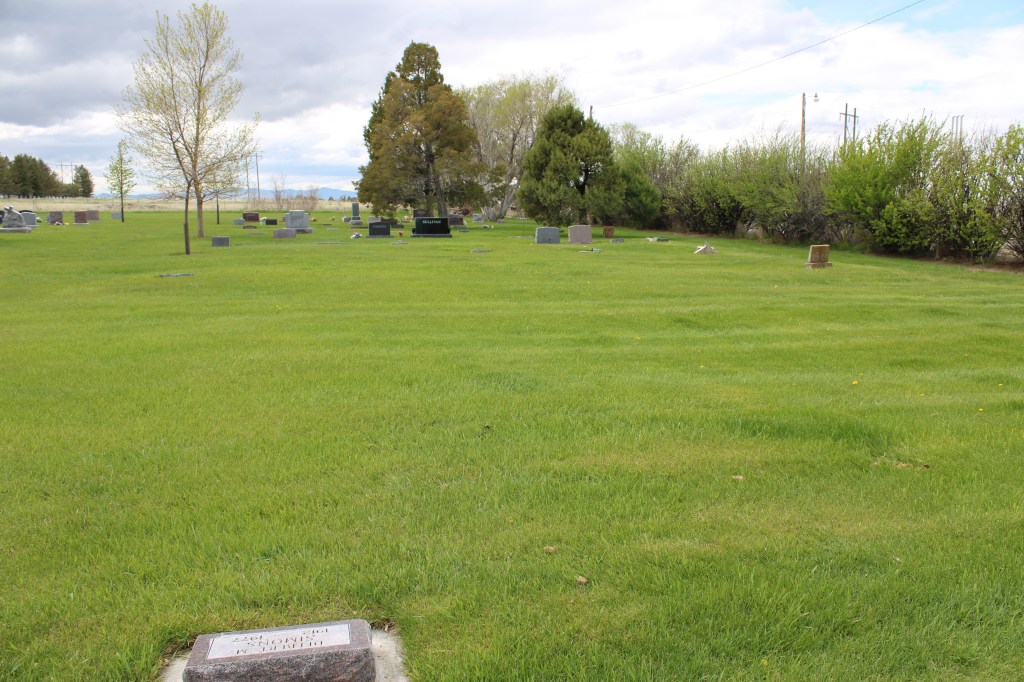
The cemetery is northwest of town on a dirt road. A 1929 newspaper account of a winter funeral noted that the funeral procession had to follow a snowplow plus three heavy trucks, loaded with railroad ties, to clear and then pack down enough snow to be able to reach the cemetery. The cemetery location creates an interesting dialogue between spaces. Even in the smoky air of May 2023 you can see grave markers facing the town, visible by the grain elevators along the Great Northern corridor.

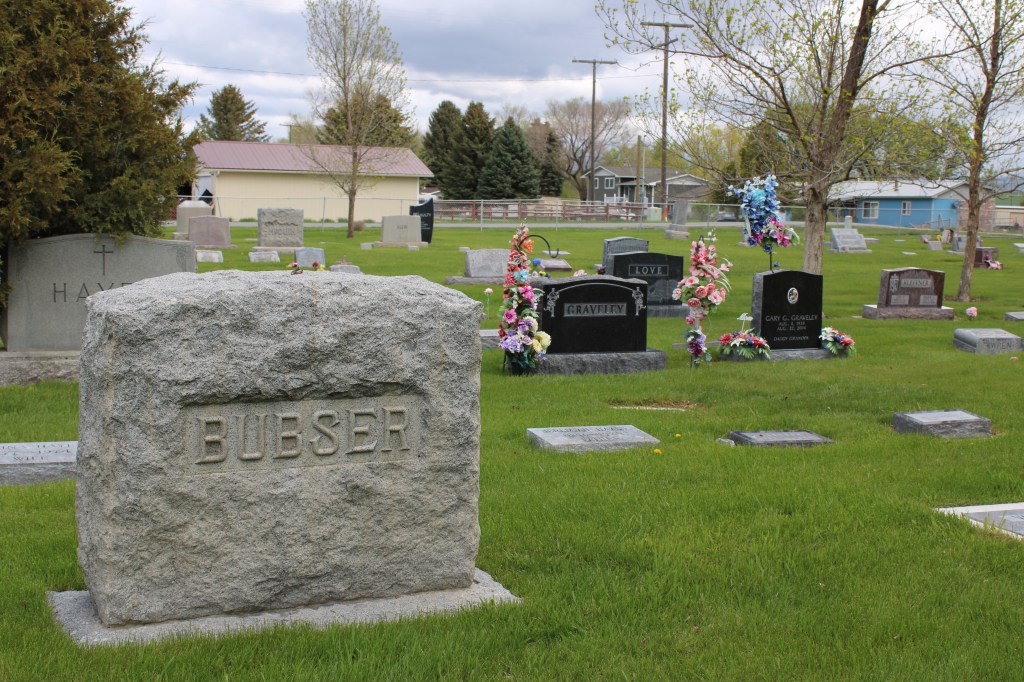
The cemetery has numerous artistic markers of note although most are smaller stone rectangles.

The Wallace family marker is interesting because both graves were covered with a concrete vault-like rectangle. I have encountered many concrete grave coVera in the south but not so many in the west. Chester Cemetery has many more than usually found in Montana cemeteries.

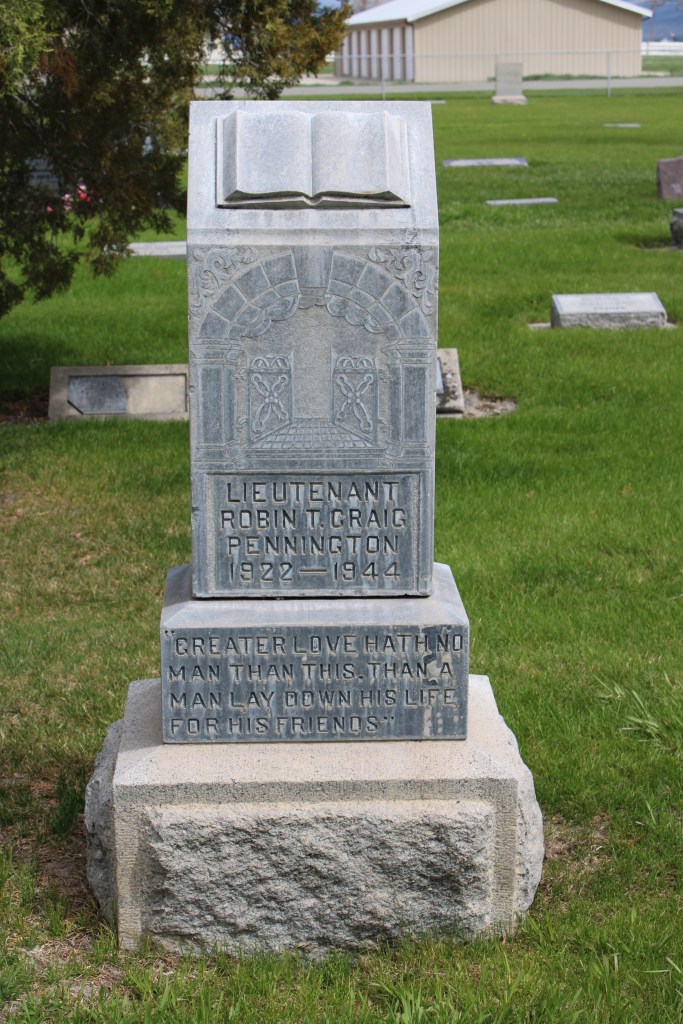
Military veterans are buried throughout the cemetery. Recently a special veterans memorial was installed near the entrance. Its plaque states: “The Price of Freedom. All Gave Some. Some Gave All.”

Chester Cemetery is worth a visit. Over one hundred years old, its markers document the historic ebbs and flows of this plains country town.