
Verona L. Burkhard’s 1939 mural for the Deer Lodge Post Office.
In the thirty years between my first visits in Deer Lodge and my most recent, the town’s population dropped almost 25%–nearly 1,000 residents. But when I spent a day there in May 2012 I witnessed one of the most impressive community revitalization efforts in all of my years in historic preservation–the grand opening of the historic Rialto Theatre.
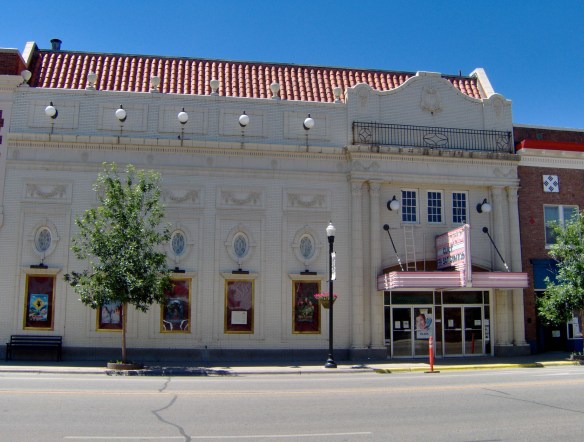
Rialto Theatre in 2007.
My first digital image of the theatre dates to 2007–and I was happy to see this monumental 1921 Beaux Arts-styled theatre, designed by the Butte firm of Arnold and Van Hausen, was still in business. With rural population decline, the rise of home movie viewing, and the impact of satellite television, so, so many small town movie theaters were closing across the country. I was glad to see this one still operating. Then a few years later came the news of a fire that severely damaged the building–and from my vantage point way back east I thought, well that’s it–the building will be gone the next time I get to Deer Lodge–and I wondered if that would not be the start of a general abandonment of Main Street.
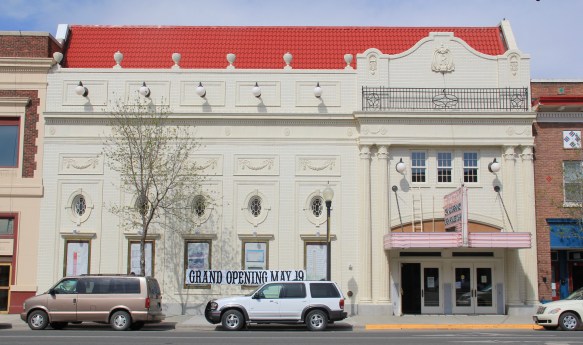 Imagine my pleasure to be there for the theatre’s grand opening May 19, 2012. Not only had the community raised the funds to repair and reopen the business, they also took great pains to restore it to its earlier architectural glory. Such an achievement for a town of just over 3,000 residents–when you consider that the next city south on Interstate I-90 is Anaconda with its monument Washoe Theatre, I immediately began to think of future “movie palace” trips. What a treat, both for the experience and architecture.


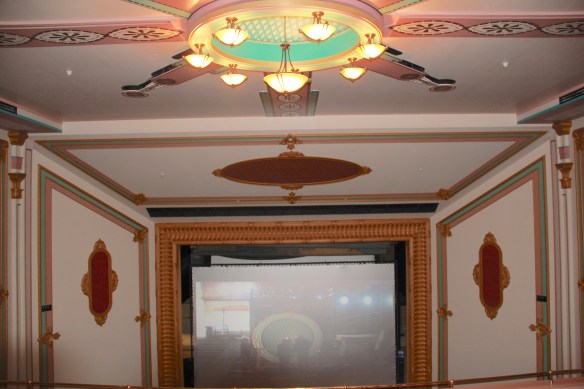


Re-energizing the Rialto to once again be an anchor for community, both in an economic sense but also a cultural sense, is an achievement not to be taken lightly. In the spring of 2016 a team of experts got together to inventory, consider, and make recommendations for Deer Lodge’s 21st century future. The report covers much ground, is well meaning, yet is devoid of the type of passion that the theatre project involved. Experience tells me that heritage assets can do that–the sense of the past, identity, promise, and nostalgia that they represent are important building blocks for any committed community.
 In that same trip to Deer Lodge, I noted how the community had recently enhanced the National Register-listed W. K. Kohrs Memorial Library (1902), one of the region’s great Classical Revival buildings by the Butte architectural firm of Link and Carter (J.G. Link would soon become one of the state’s most renowned classicists), by expanding the library
 with an addition to the side and behind the commanding entrance portico. Although it has proven to be difficult for such a small town to keep the library professionally staffed, the care they have shown the exterior and interior indicate they understand the value of this monument from the past.


The town’s New Deal era post office–a Colonial Revival design from the office of Louis A. Simon–is another National Register landmark that serves dual purposes as both a post office, but also community art museum with the wonderful mural by Verona L. Burkhard.
 Then add in the impressive examples of turn of the 20th century church architecture, represented by the Cotswold Gothic stone work of St. James Episcopal Church, the more former Tudor Revival of the 1st Presbyterian Church, and the more vernacular yet


expressive Gothic spire, with fish-scale shingles, of the Latter-Day Saints Church. The care and respect here also says much about Deer Lodge’s understanding of the value of the past, a pattern reflected in the community’s historic school buildings that range from the Victorian Gothic of Trask Hall to the 1960s modernism of the elementary school–and


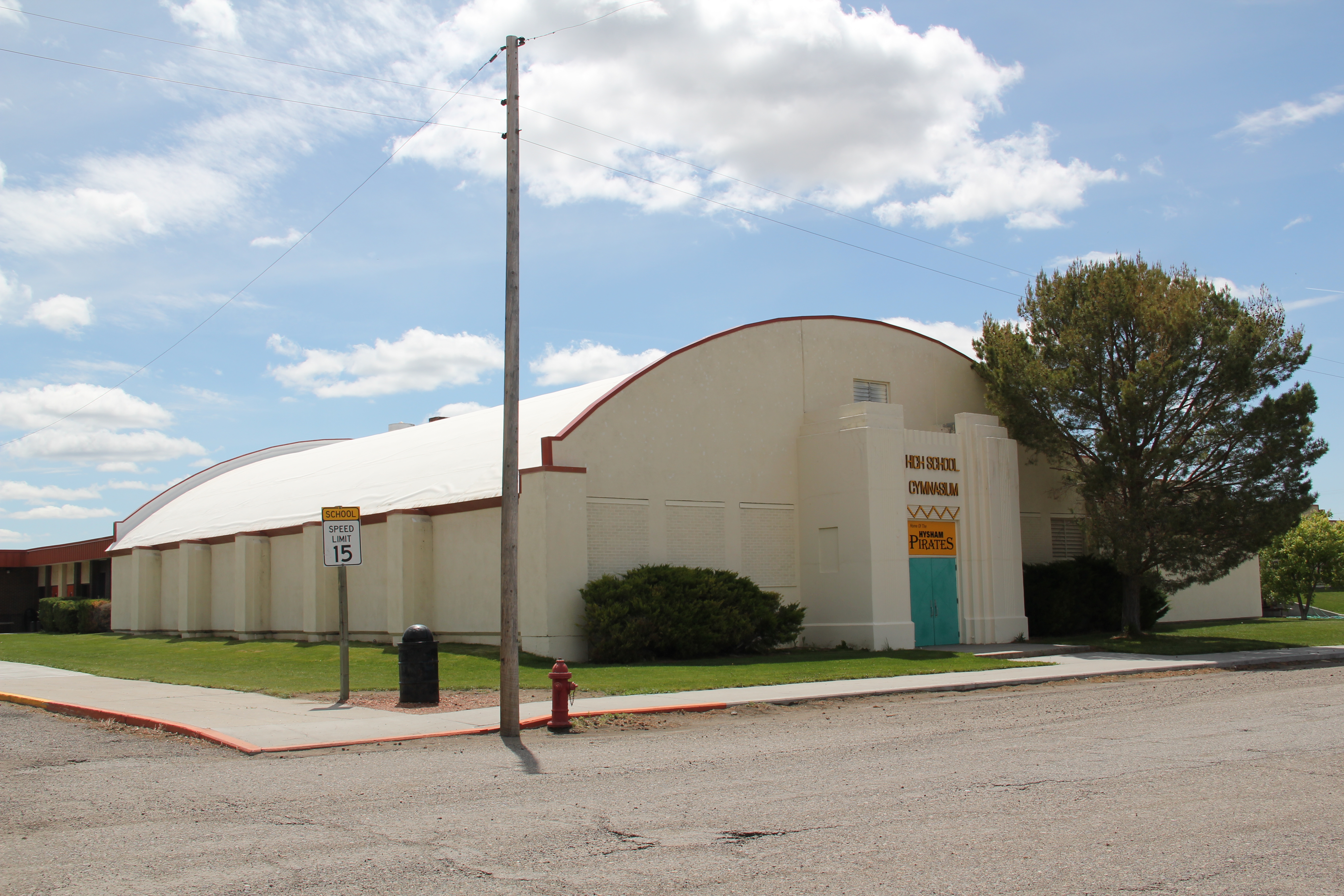
then there is Powell County High School campus that moves from the Collegiate Gothic style of the early 20th century to the New Deal functionalism of the gym for the Fighting Wardens and onto the modernism of 1960s school design. The Vo-Tech Building is one of my favorite examples of public school modernism in all of Montana.


When you add the decades-long care manifested in the Deer Lodge Woman’s Club building, what do you learn: Deer Lodge gets it, and while the road is not easy I look forward to this community charting its course in the 21st century. Next post: some of the challenges ahead.

Photograph from 2007.
 In thinking about returning to Montana in 2012 and carrying out a huge “re-survey” of the places I had explored for the state historic preservation plan process 30 years earlier, Butte was high on my list of priorities. Not that the city and its surroundings had been given little attention in the early 1980s–the Copper City was already recognized as a National Historic Landmark, and a team of historians, architects, and engineers had just finished a large study of its built environment for the Historic American Building Survey and the Historic American Engineering Record. No, I wanted to go back because by 1985 many people counted Butte down and out, yet it had survived and started to reinvent itself. Not
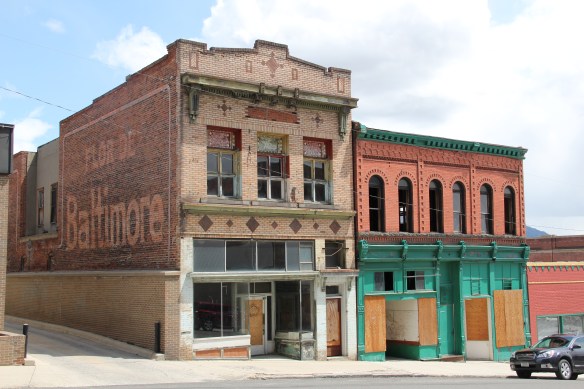 as a ghost town or the skeleton of a great mining city but as a revitalized place, both economically and culturally, centered in a strong core community, even though the challenges in front of it remain daunting, even overwhelming at times.
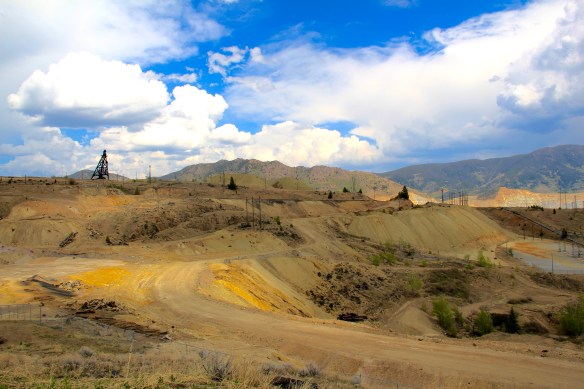 The environmental degradation left when the hard rock mines shut down is one burden that Butte has shouldered, with the help of the federal superfund program. Still, no matter how scientifically this landscape has been “cleaned up,” it remained scarred, and it is a far different challenge to build back hope into a place stripped of its life. Yet high over the city is a sign of the change to come in the Mountain Con Mine site.
 Still labeled as a Mile High and a Mile Deep place, the mine property is stunning, not only for its technological assertion–imagine working that high, and going that deep–but for its conversion into the walking/hiking/biking trails that encircle the city and present it with such potential as a recreational landscape.


 ago, with all sorts of signs of new investment, new pride, and community identity. It may have lost a step, or two, and its swagger may not be quite as exaggerated as it was in the mid-20th century, but it remains a place with its own feel, its own funk. For me, the reopening of the M&M Bar on Main Street–a legendary dive once shuttered, reopened, and shuttered again–gives me hope for Butte in the 21st century. Around the corner is


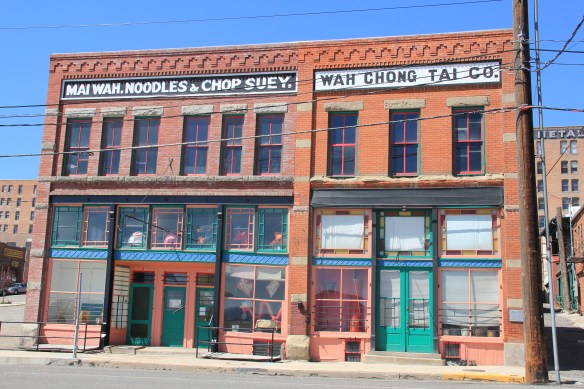 Mercury Street; at the same time the sex trade was alive and well to the east of that same street in a series of boarding houses and hotels. The Dumas Brothel, discussed in an earlier post, is listed in the National Register and its future as an adaptive reuse project and place for public interpretation is promising but not yet realized. African Americans in


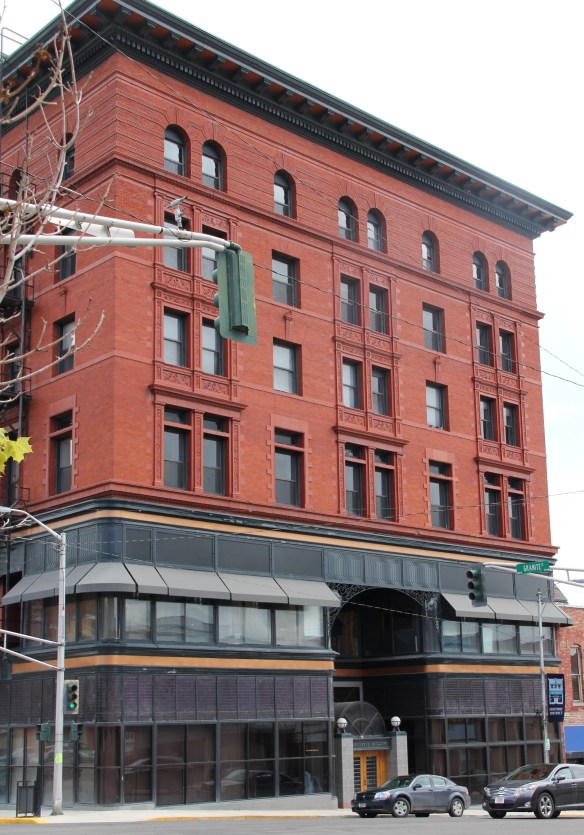
 The massive building still dominates the Uptown building, making its closure in Butte in 1980 that more disturbing for residents. When I did my preservation plan work in 1984-1985 the issue of what to do with the Hennessy was at the forefront. By the end of the decade, ENTECH renovated the building and reopened it fully for business. In 2010 came the popular Hennessy Market–giving the growing number of Uptown residents a grocery store once again.
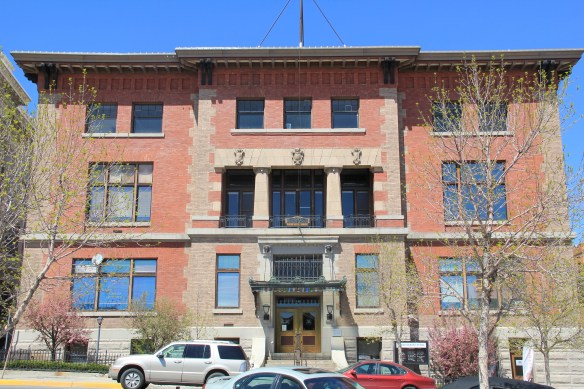 The Sliver Bow Club building (1906-7) also has shifted its purpose, from being the stately and eloquent clubhouse of the city’s elite to becoming a place for public offices and meetings in its once exclusive spaces. Originally conceived by the same Spokane architects who designed the Lake McDonald Lodge in Glacier National Park, according to recent research by museum curator and preservationist Patty Dean, the building’s architects ended up being Link and Haire, the noted Montana architectural firm.




















 Montana's Historic Landscapes