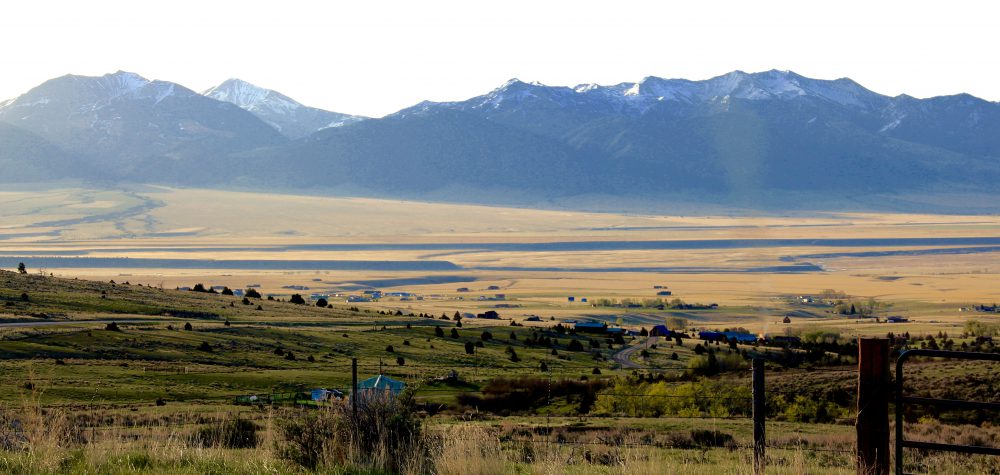

This week’s Great Falls Tribune featured a story about the heavy snowfall this here in Havre, the largest town along Montana’s Hi-Line. The story got me thinking about this classic late nineteenth century railroad town, one of my favorite places to visit in Big Sky Country. In past posts, I have talked about how residents moved their historic preservation agendas form a focus on the buffalo jump west of town along the Milk River to the old residential neighborhoods themselves. I gave a particular focus to Havre’s wonderful array of domestic architecture, especially its many variations on the
 Craftsman style popular in the early 20th century. It is a place where the pages of the famous Craftsman Magazine seem to come alive as you walk the tree-lined streets. But there is more to Havre’s historic districts than the homes–there are the churches, about which more needs to be said.
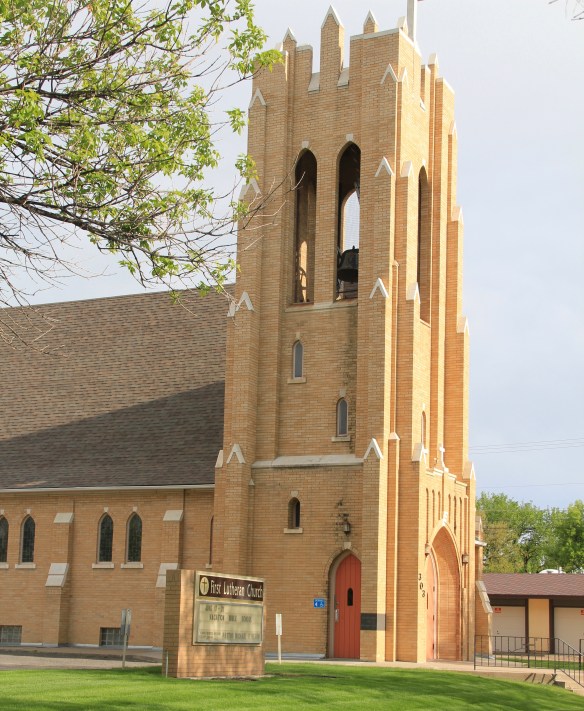 As my first two images of the First Lutheran Church show, Gothic Revival style is a major theme in the church architecture of Havre, even extending into the mid-20th century. First Lutheran Church is a congregation with roots in Havre’s boom during the homesteading era. As the congregation grew, members decided to build the present building in 1050-51, adding an educational wing by the end of the decade.

An earlier example of Gothic Revival style is St. Mark’s Episcopal Church, built in 1911 by architect Mario Riffo of Kalispell. Noted havre architect and builder Frank F. Bossout worked for Riffo at the time and this commission may have been Bossout’s introduction to a city that his designs would so shape in the years to come.
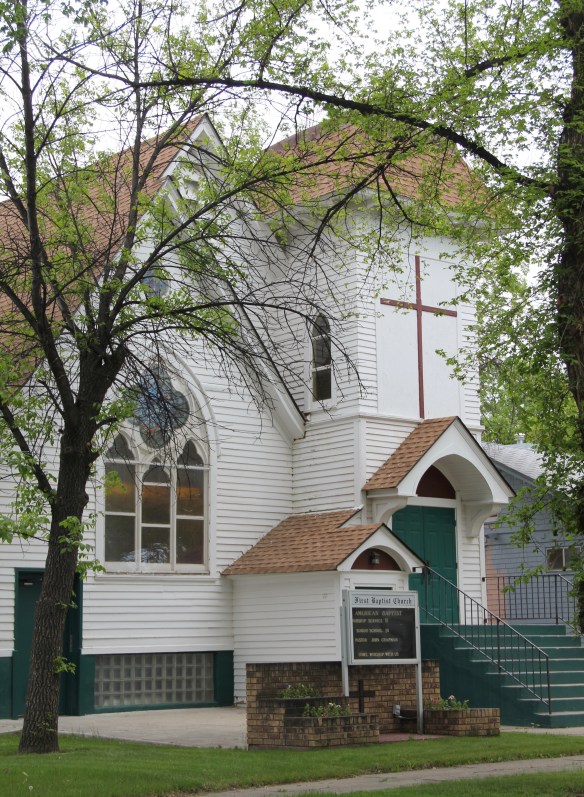 The earliest Gothic Revival styled church is First Baptist Church, constructed c. 1901, shown above. The unidentified architect combined Gothic windows into his or her own interpretation of Victorian Gothic, with its distinctive asymmetrical roof line.
 A more vernacular interpretation of Gothic style can be found in the town’s original AME Church, built c. 1916 to serve African American railroad workers and their families, and later converted and remodeled into the New Hope Apostolic Church.
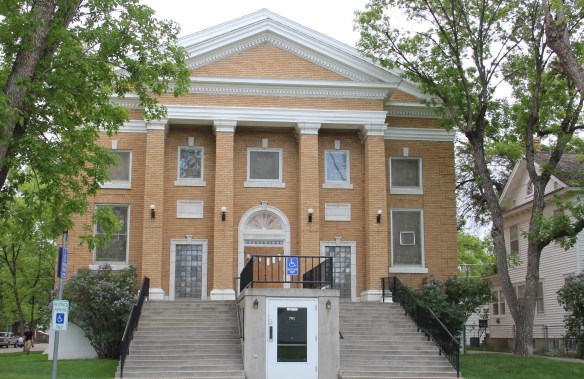
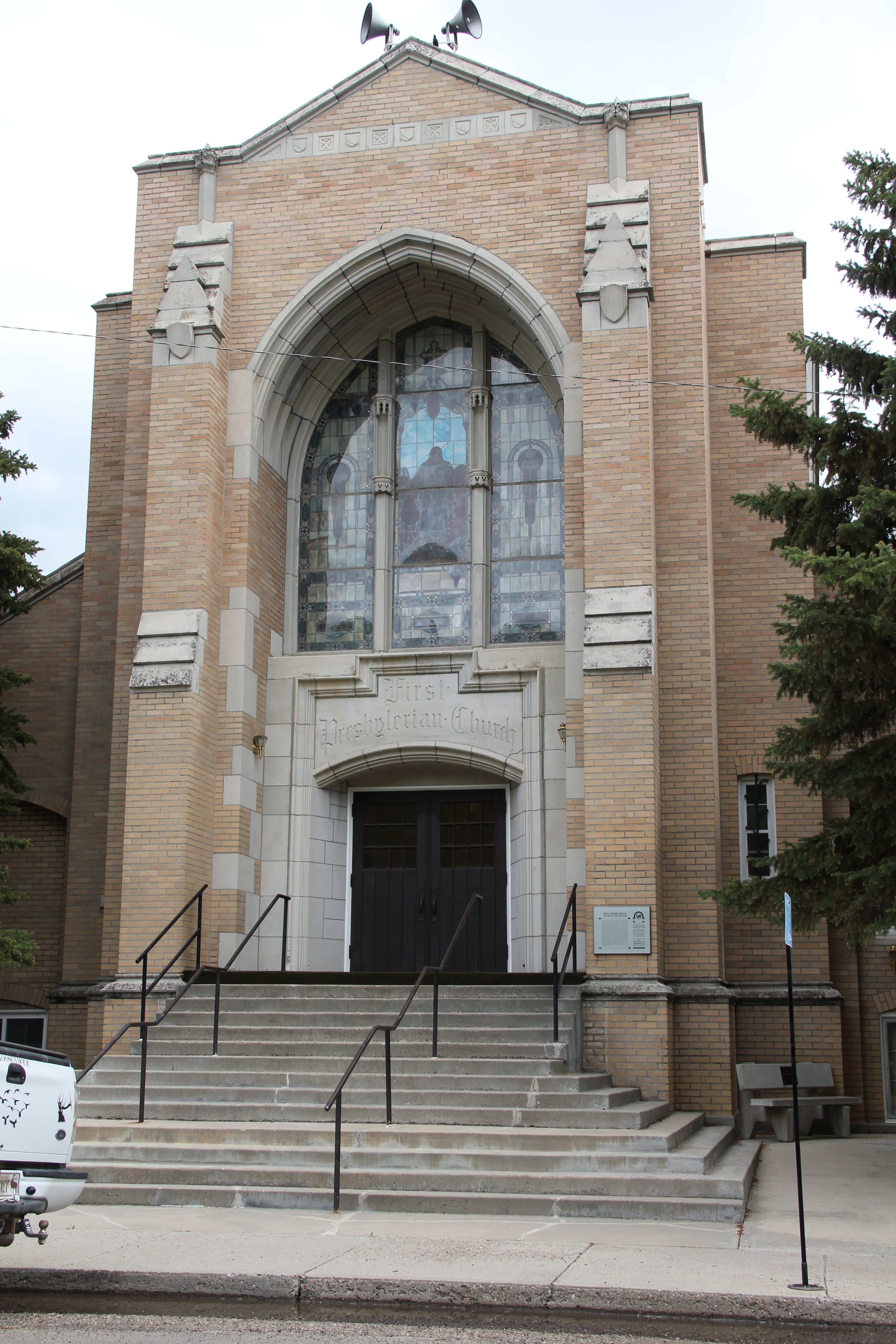
The First Presbyterian Church represents the Classical Revival in Havre church architecture. Built in 1917-1919 and designed by Frank F. Bossuot, the church’s style reflected that of the nearby courthouse, which Bossuot had designed in 1915, and the town’s Carnegie Library, also from Bossuot’s hand in 1914.
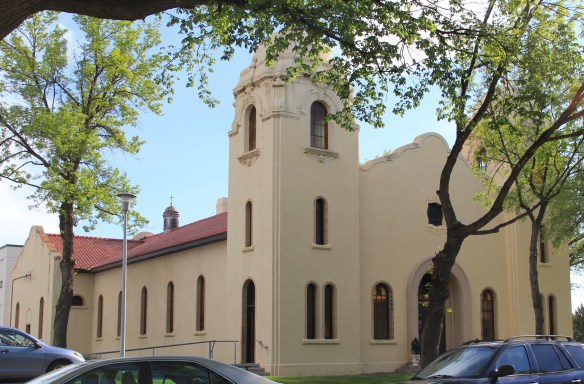
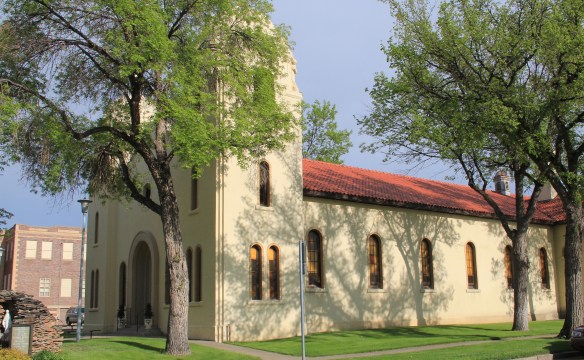 The Spanish Colonial Revival style of St. Jude’s Catholic Church, however, shows us that architect Frank F. Bossuot was more than a classicist. The church’s distinctive style sets it apart from other church buildings in Havre.
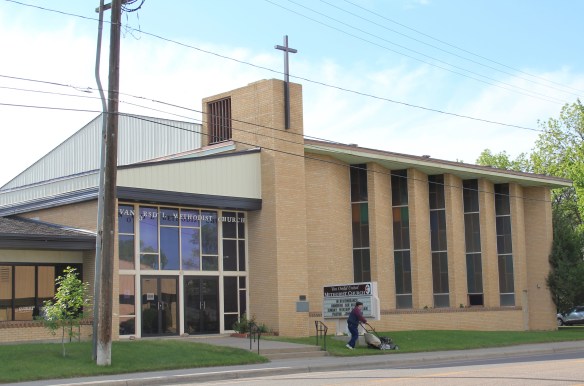 The same can be said for a church building that comes a generation later, the Van Orsdel United Methodist Church. When the Havre historic district was established, this mid-century modernist designed building was not yet 50 years old, thus it was not considered for the district. But certainly now, in 2018, the contemporary styling of the sanctuary has merit, and the church has a long history of service. It started just over one hundred years ago with a brick building named in honor of the Montana Methodist circuit rider W. W. Van Orsdel who introduced the faith to Havre in 1891. A fire in late 1957 destroyed that building, and the congregation immediately began construction on its replacement, dedicating it in 1958.
From Gothic to modern, the architecture of Havre’s historic churches reflects the town’s robust history in the first half of the twentieth century–and this is just a taste of the many interesting places to be found along the Montana Hi-Line.
 In the early posts of this exploration of Montana’s historic landscape I spoke of the transformation that I encountered when I revisited Glendive, the seat of Dawson County, for the first time in about 25 years, of how local preservation efforts had kept most of the town’s railroad era landscapes alive while leading to the revitalization of its amazing number of historic residences from 1900 to 1950.
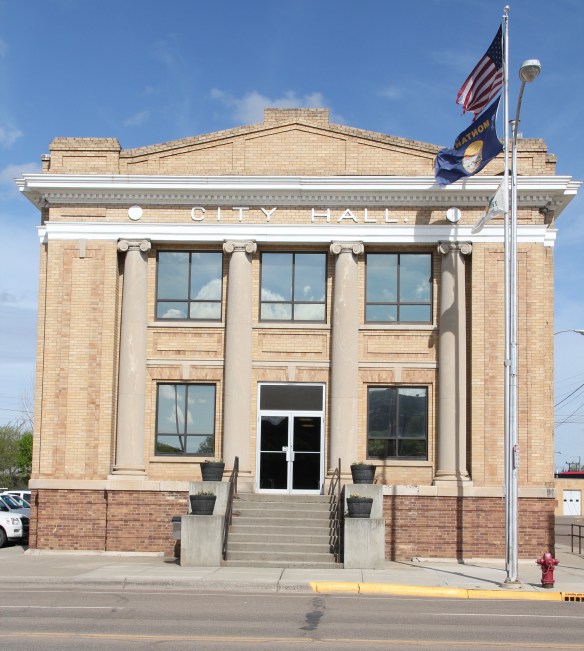 Let’s now turn our attention to public landmarks, old and more recent, that also deserve notice, starting with the magnificent Classical Revival-styled City Hall, one of the anchors of the Merrill Avenue historic district, which is listed in the National Register of Historic Places. Built in 1914, this all-in-one municipal building is an impressive architectural
 statement by the second generation of Glendale’s leaders that the town would grow and prosper during the homesteading boom of the first two decades of the 20th century. The architect was Brynjulf Rivenes of Miles City. His firm had so many commissions coming from eastern Montana and Yellowstone Valley patrons that by this time Rivenes operated offices in both Glendive and Miles City.
 Rivenes had earlier marked Glendive’s new emerging townscape with his Gothic design for the First Methodist Church, in 1909. Fifteen years later, he added another landmark church design with the Romanesque styled Sacred Heart Catholic Church (1924-1925).

 With recovery and the arrival of more and more automobile traffic from the late 1930s to the 1950s, many of the older buildings received mid-century updates. The remodels could
 The 1950s and 1960s brought many changes to Glendive. Post World War Ii growth both in the town and the many surrounding ranches led to expansion and remodeling at the historic Glendive Milling Company in 1955. When the historic districts for Glendive were designated in the late 1980s, preservationists questioned the inclusion of this important industrial/agricultural complex due to the changes of the 1950s. Viewed today, however, the mill complex is clearly a very significant historic site.
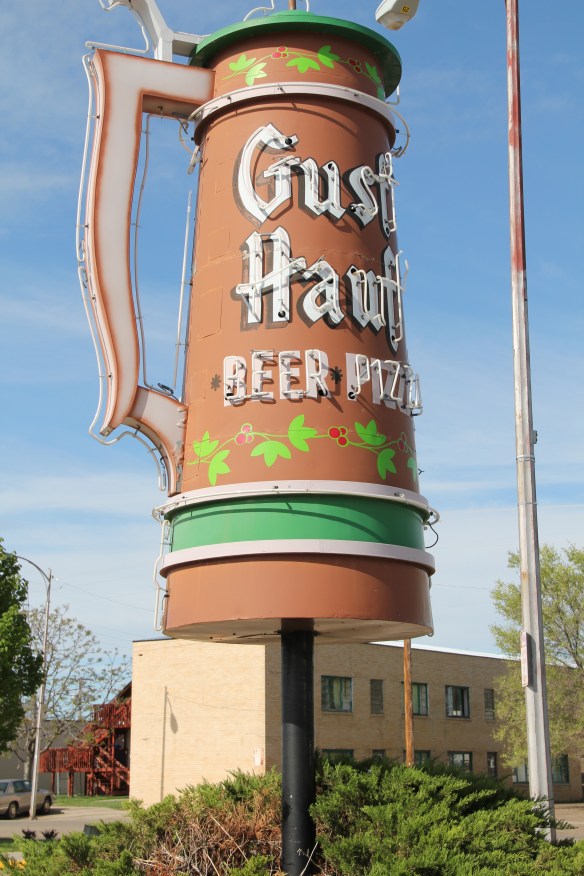 More contemporary styled church buildings were also dedicated in the mid-century, such as the classic “contemporary” styling of the Assembly of God building, with classrooms at
 at the front rather than the rear, or the modified A-frame style of the First Congregational Church, which I shared in an earlier post on Glendive.
 Glendive is very much a blending of different 20th century architectural styles, reaching back into the region’s deep, deep past, as at Makoshika State Park, where the visitor
 center/museum is an excellent example of late 20th century modern style–clearly a building of the present but one that complements, not overwhelms, the beauty of the park itself.
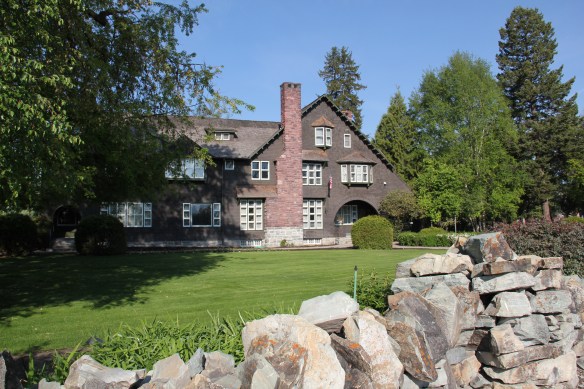


 The images above and those below come from those well maintained neighborhoods, where the sense of place and pride is so strongly stated.


 To wrap up this multi-post look at Missoula and Missoula County, let’s take a brief look at the city’s historic neighborhoods. With seven historic districts, Missoula is rich in domestic architecture, and not only the homes built during its rise and boom from the early 1880s to the 1920s–there also are strong architectural traditions from the post-World War II era. This post, however, will focus on the early period, using the South Side and East Pine historic districts as examples.
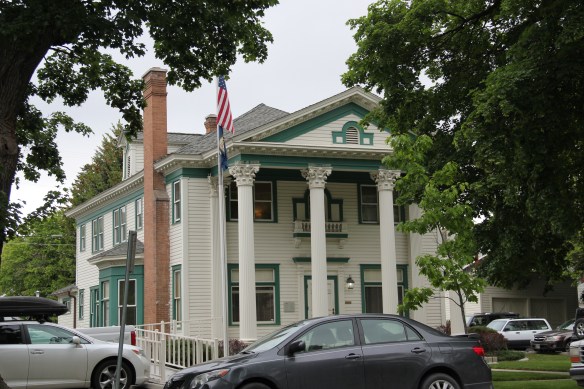
 Listed in the National Register of Historic Places 25 years ago, the south side district was platted in 1890, with development especially booming after the turn of the century and the arrival of the Milwaukee Road depot by 1910. Within that 20 year period, an impressive grouping of domestic architecture, shaped by such leading architects as A. J. Gibson, was constructed, and much of it remains today. When the state historic preservation office designated the district in 1991, there were over 200 contributing buildings.
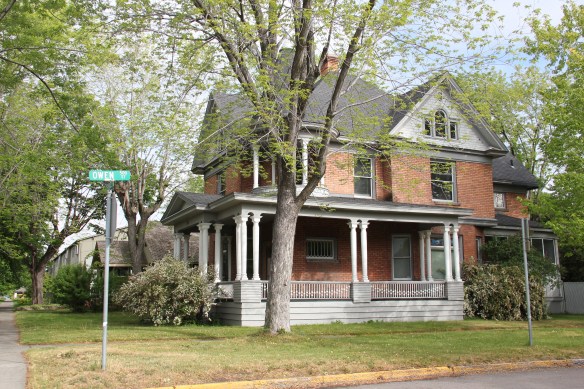 The neighborhood contains some of the city’s best examples of Queen Anne style, as seen above but also has many different examples of other popular domestic styles of the era, such as the American Four-square and variations on the various commonplace turn of the century types as the bungalow.


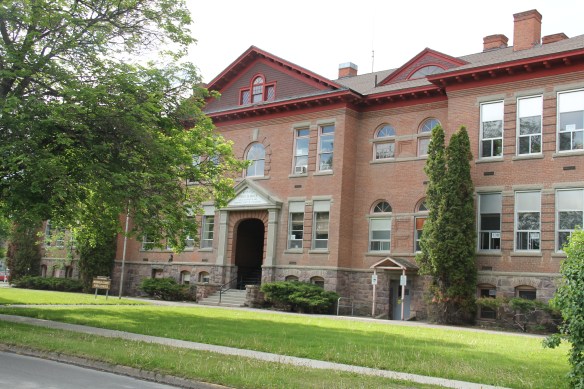 Apartment blocks and duplexes from the turn of the century also are important contributing buildings to the neighborhood. They reflect the demand for housing in a rapidly growing early 20th century western city.




 Before we leave Missoula, I want to also briefly consider its historic 1884 cemetery, an often forgotten place as it is located on the northside of the Northern Pacific Railroad corridor, and a property, like so many in 1984-1985, I gave no consideration to as I carried out the fieldwork for the state historic preservation plan.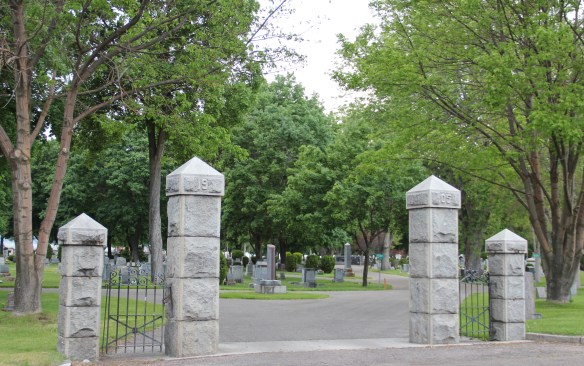
 A large concrete cross and adjacent river rock stone lined marker pay homage to the cemetery’s earliest burials as well as the many first citizens interred here.




 Montana's Historic Landscapes