Kalispell’s Main Street Business District

Flathead Co Kalispell Main St 1Kalispell’s Main Street–the stem of the T-plan that dates to the town’s very beginning as a stop on the Great Northern Railway–has a different mix of businesses today than 30 years ago when I visited during my state historic preservation plan survey.  It also now is a historic district within National Register of Historic Places, noted for its mix of one-story and two-story Western Commercial style businesses along with large historic hotels and an opera house for entertainment.
Flathead Co Kalispell Opera House 4The Opera House, and I’m sorry you have to love the horse and buggy sign added to the front some years ago, dates to 1896 as the dream of merchant John MacIntosh to give the fledging community everything it needed.  On the first floor was his store, which over the years sold all sorts of items, from thimbles to Studebakers.  The second floor was a community space, for meetings, a gymnasium, and even from a brief period from 1905 to 1906 a skating rink.  In this way, MacIntosh followed the ten-year-old model of a much larger building in a much larger city, the famous Auditorium Building in Chicago, providing Kalispell with a major indoor recreation space and landmark.  Allegedly over 1000 people attended a performance of Uncle Tom’s Cabin soon after the opening.

Another highlight of the historic is the Kalispell Grand Hotel (1912), designed by local architect Marion Riffo and constructed by B. B. Gilliland, a local builder. Designed not only as a railroad hotel for traveling “drummers,” it also served as a first stop for homesteaders flooding into the region in that decade.  Montana writer Frank B. Linderman was the hotel manager from 1924 to 1926, and his friend western artist Charles M Russell visited and stayed at the hotel in those years.  This place, frankly, was a dump when I surveyed Kalispell in 1984-1985 but five years later a restoration gave the place back its dignity and restored its downtown landmark status.

img_8485The Alpine Lighting Center dates to 1929 when local architect Fred Brinkman designed the store for Montgomery Ward, the famous Chicago-based catalog merchant.  Its eye-catching facade distinguished it from many of the other more unadorned two-part commercial blocks on Main Street.

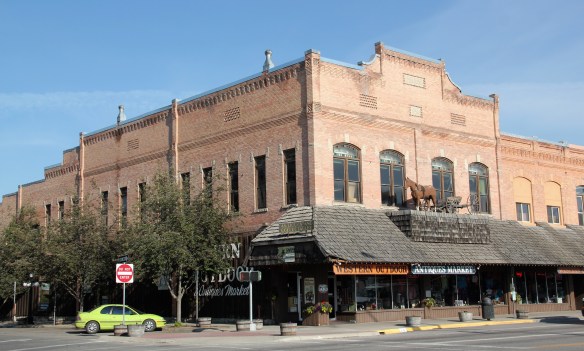
My favorite Main Street building is probably the cast-iron, tin facade over a two-story brick building that now houses an antique store.  It was once the Brewery Saloon (c. 1892). This is a classic “Western Commercial” look and can be found in several Montana towns.

Main Street defines the heart of the business district.  Along side streets are other, more modern landmarks.  Let me emphasize just a few favorites, starting with the outstanding contemporary design of the Sutherland Cleaners building, located on 2nd Street, the epitome of mid-20th century Montana modernism.  It is such an expressive building but of course in 1984 it was “too recent” for me to even note its existence.
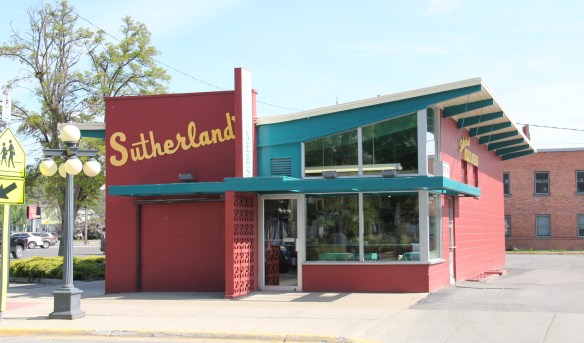
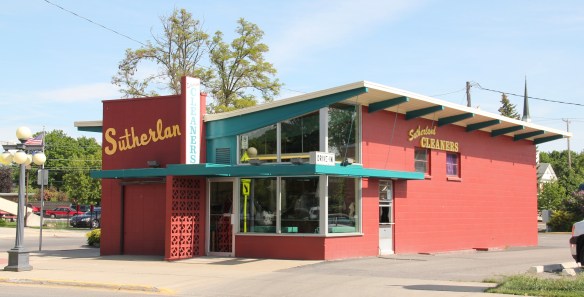
Flathead Co Kalispell sutherland Cleaners 1

Flathead Co Kalispell Sutherland Cleaners 4

At least I had enough good sense to note the existence of its neighbor, the Art Deco-styled Strand Theater (1927).  I enjoyed a movie there in 1984–and the theater kept showing movies until 2007.

The preservation of the Strand Theater, and the other downtown historic theater building, the Classical Revival-styled Liberty Theater (1920-21) by Kalispell architect Marion Riffo, is the work of the Fresh Life Church, which owns and uses both buildings to serve its congregation and the community.

Another modernist favorite is a Fred Brinkmann-inspired design, the flamboyant Art Deco of the historic City Garage (1931), now home to local television station.
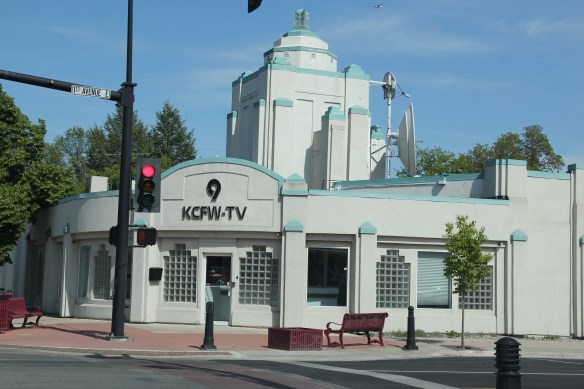
img_8819

On the other side of Main Street is another building that evokes 1930s interpretation of Art Deco, the Eagles Lodge Building, a reminder of the key role played in fraternal lodges in developing towns and cities in early Montana.

Flathead Co Kalispell Masonic Lodge 1

Let’s close this look at Kalispell’s commercial architecture with the Kalispell Mercantile Building (1892-1910), which was established by the regional retail powerhouse, the Missoula Mercantile, at the very beginning of the city’s existence.  Kalispell has figured out what Missoula refuses to do–that a building such as this is worthy of preservation, and if maintained properly, can continue to serve the town’s economy for decades more.
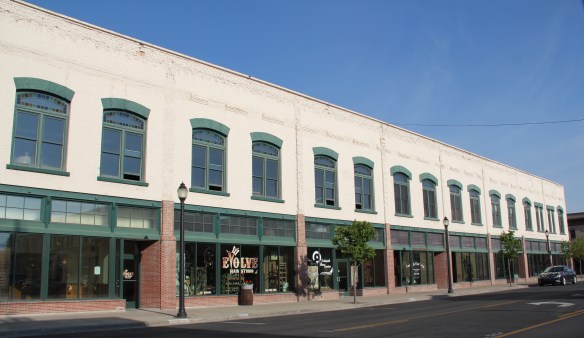
IMG_8556.jpg

Kalispell’s downtown historic districts: the public and sacred

img_8536

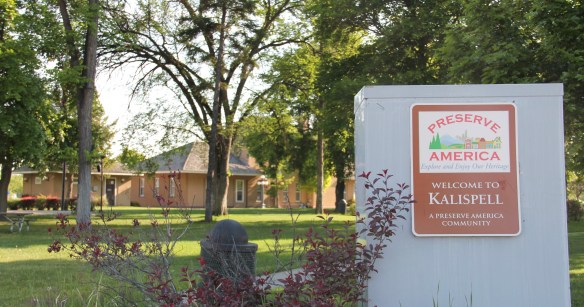
When Kalispell developed and approved its National Register multiple property nomination project in the early 1990s, the residents embraced historic preservation as part of the city’s future and its economic development.  With its Preserve America designation from the Advisory Council on Historic Preservation, residents took their efforts to a new level and when I visited in 2015 it seemed that everywhere I went I found physical examples of their determination to melt the past with the present and the future.

Flathead Co Kalispell Main St courthouse

This work throughout the city–such as the restoration of the Flathead County Courthouse (1904-5)  at the south end of the business district–is impressive.  When created in the late 19th century, Kalispell was as classic of a T-plan railroad town as you could find, with its depot and Great Northern Railroad line marking the top of the T, Main Street businesses lining the stem of the T, and then the courthouse standing at the bottom of the

Flathead Co Kalispell Main St courthouse 1

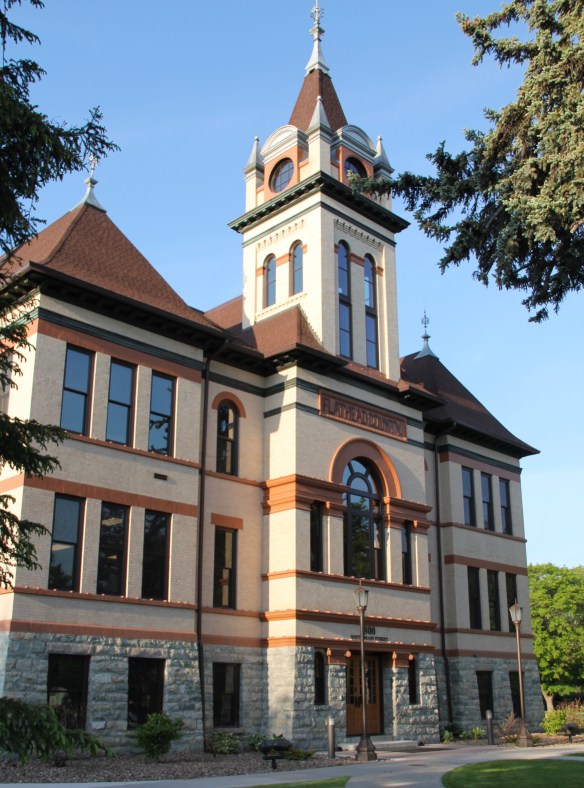
stem.  Despite its eye-popping late eclectic Victorian style and soaring clock tower, magnificence of the courthouse, designed by famed Montana architects Bell and Kent,  reacted to the railroad engineers’ arrangement of space within the town itself.  Certainly, the railroad, at the head of town, was important, but the public mattered too–not just at the courthouse but another impressive Victorian era monument, the Richardsonian Romanesque-styled Kalispell Central School of 1894, which is now a city museum.

Designed by William White of Great Falls, this impressive statement of town building by local residents was threatened with demolition in 1991–indeed its plight was one of the issues that awoke local citizens to the need for the National Register multiple property nomination.  Not only was this landmark preserved, its transformation into a museum met a heritage tourism need in the region, and also marks, in my mind, one of the most positive developments in historic preservation in the region in the last 30 years.

img_8555

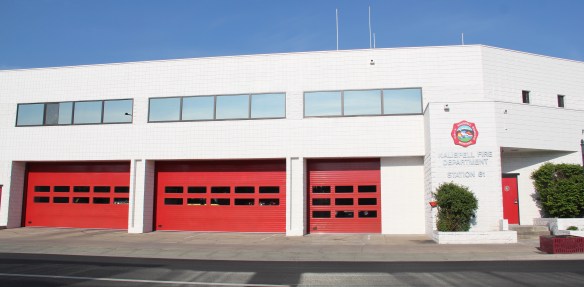
Other public buildings in Kalispell, however, show how the past can work with present.  From my work in 1984-85 to my visit in 2015, Kalispell’s population more than doubled, demanding enhanced public services.  Yet the city found a way to retain the simple yet effective Colonial Revival-styled building the 1927 City Water Department while extending that block into a new center for public safety services with a modernist styled complex.

Flathead Co Kalispell public safety building

Flathead Co Kalispell public safety building 1The town’s early religious institutions also built to stay, leaving key landmarks throughout the neighborhoods that serve as historic anchors today. On Main Street alone there is the unique Arts and Crafts styled First Presbyterian Church (1925-26) by architect Fred Brinkman, and the Gothic Revival masonry and tower of Bethlehem Lutheran Church (1932-1937).
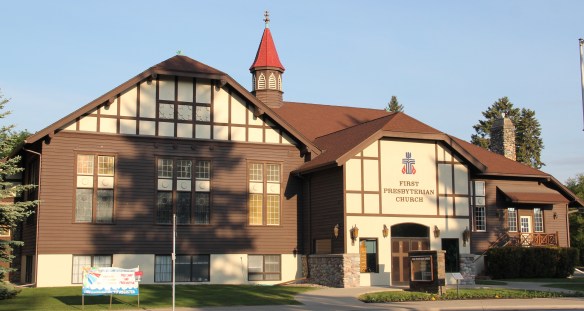
Flathead Co Kalispell Main St 1st Presbyterian 1

Also on South Main Street nearby Bethlehem Lutheran is another related architectural monument, the Hjortland Memorial Youth Center, which came out of the Bud Hjortland Memorial Fund and was constructed in contemporary 1950s style between 1953 and 1954.

Flathead Co Kalispell Hjortland Youth Lutheran center 1953

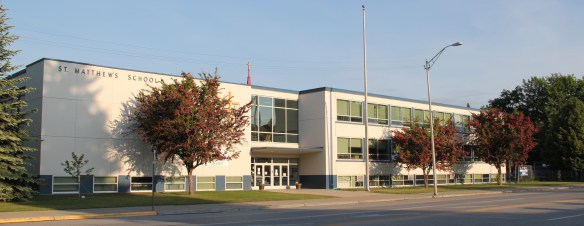
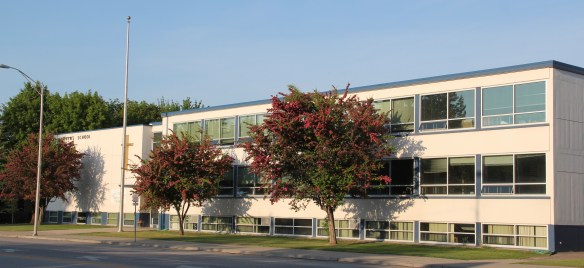
My favorite modernist style Main Street landmark is the St. Matthew’s Catholic School (1958) which serves students from preschool to grade 8.

Flathead Co Kalispell Main St catholic school 2


Flathead Co Kalispell Main St catholic schoolThe city’s first Catholic school dated to 1917.  The historic St. Matthew’s Catholic Church (1910) by Great Falls architect George Shanley remains the city’s most commanding Gothic landmark.

Flathead Co Kalispell St Matthew Catholic 3


Kalispell: Growth and Preservation in Northwest Montana


Kalispell was a Montana jewel 0n the Great Northern Railway.  Despite that fact, in 1984 the preservation of the railroad’s historic passenger station was not certain.  This landmark, at the head of the T-plan town, still stood but was viewed as an impediment even an eyesore by some.  The depot (1892, 1899, 1914, 1929) was built when Kalispell was an important division point on the railroad’s main line then altered over the next three decades to the stuccoed exterior you find today.  It marked literally the beginnings of the town’s history.  Yet, when I held a public meeting at another landmark, the town’s historic Carnegie Library (1903) that had recently been through an adaptive reuse into the

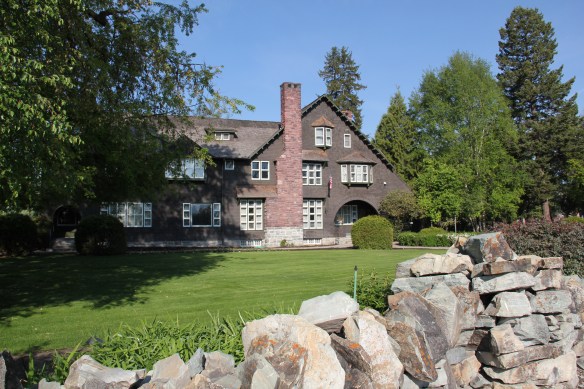
Hockaday Art Museum, strong sentiments for more preservation were rarely heard. The depot was not listed in the National Register nor were many of the downtown buildings.  There were a few of the town’s rich stock of Victorian era houses listed. The success of the Hockaday and the Conrad Mansion (1892-1895) historic site seemed to be enough for many residents, or they thought preservation only meant pretty homes and buildings.

img_8606

Then came the work east of Kalispell in and around Glacier National Park to inventory and list eligible buildings to the National Register in the mid to late 1980s.  That, along with the loss of key downtown landmarks and new voices from preservationists and property owners, began to grow the interest in historic preservation.

The result was a massive multiple property study of Kalispell for the National Register of Historic Places, resulting in the listing of dozens of additional historical properties in 1994.  The historic railroad depot was listed and serves as home for the Chamber of Commerce and a visitor center, a front porch for the downtown. A new era in historic preservation had been launched, and the result today is impressive, as the next posts will explore.

Appreciating the town’s achievement in historic preservation over the last 20 years comes at an opportune time. The economic changes in the 1980s and 1990s are ready to be repeated again.  A federal grant, matched by local sources, will mean that the historic railroad corridor through the center of town will be moved–opening up acres for new construction.  Everyone knows this will be as fundamental of a change as when the Great Northern moved their division point to Whitefish in 1904. But now Kalispell has a strong historic core, identity, and purpose–the past has become fundamental to its future. Now let’s review that preservation achievement.

Flathead Co Kalispell Preserve America sign


Flathead County’s Many Transformations

img_8057By the late 1980s there was little doubt that a substantial development boom was underway in Flathead County.  In the town near the Flathead Lake, like Bigfork, above, the boom dramatically altered both the density and look of the town.  In the northern half of the county Whitefish suddenly became a sky resort center.  In 1988, during a return visit to Montana, I did not like what I encountered in Flathead County–and thus I stayed away for the next 27 years years, until the early summer of 2015.

Bigfork had changed the most, and was almost unrecognizable to me, only the town plan having some semblance of historic feeling.  Its population had jumped by 200% between 2000 and 2010, and what I recalled as a lakeside village of several hundred was now a large Montana town of over 4,000 residents.

img_8068

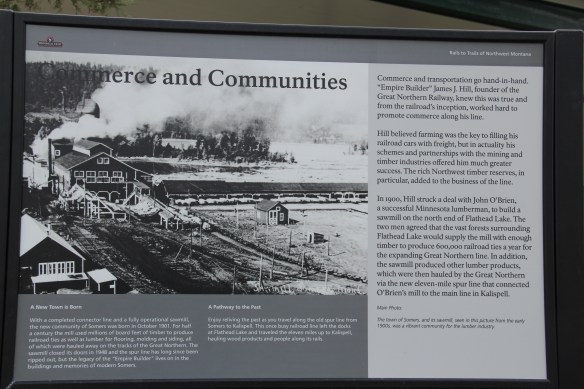
On the other hand, Somers (1901) is not as changed and older buildings both in use and abandoned speak to its history.  Located on the northwest corner of the lake, it began as a railroad town, a link on the Great Northern Railway spur to Kalispell.  The railroad also supported a large sawmill here, which drove the local economy for decades.  Its closure at the mid-20th century brought change to Somers, one that continues today with the general patterns of growth and development in the lakeside area. One of the largest changes in Somers is the 2015 creation of its railroad heritage center, which also serves as the gateway to a rails to trails project that connects different areas, and railroad corridors, in Flathead County. The heritage center effectively interprets the town’s logging history.

Dell’s Bar is another Somers’ landmark, the type of community tavern/cafe that characterizes small town life in Montana.  Retaining these types of community centers will be crucial to the region’s sense of place and identity in a rapidly changing demographic reality.

img_8062

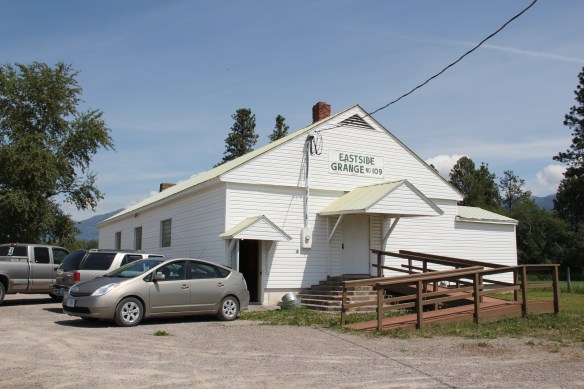
This southern part of Flathead County, between the lake and the sprawl of Kalispell, still has numerous ranches, beautiful working landscapes that deserve special consideration for agriculture was the heart of the Flathead Valley’s history.  Emblematic of that are historic rural institutions, such as the school at Creston and the nearby Eastside Grange.

img_8758

img_8760


Essex Under Fire

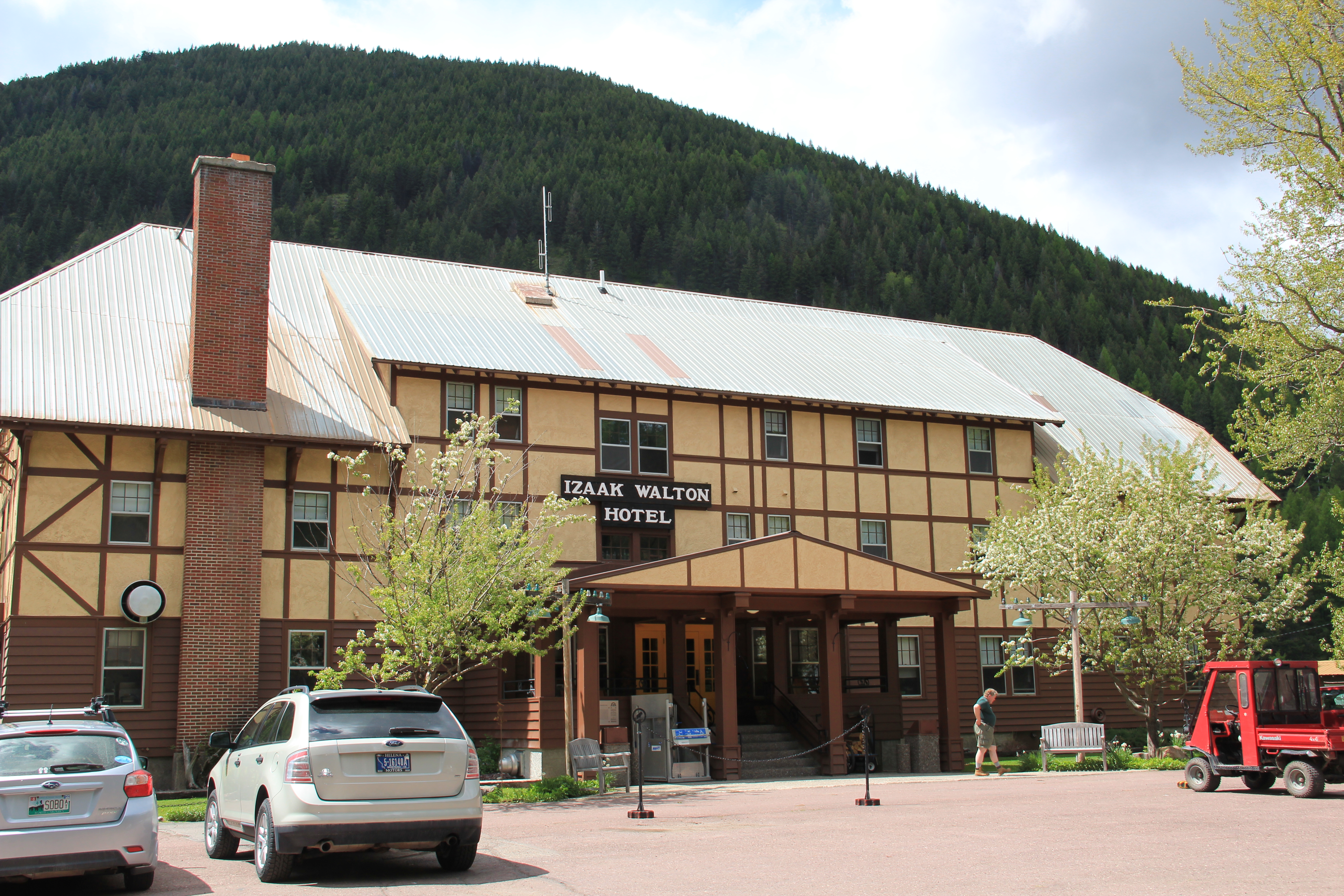
For more than a week many have been anxiously following one of the 2015 wildfires along U.S. Highway 2 that threatens the town of Essex adjacent to Glacier National Park.  I must admit a very personal concern because 30 years ago there was not much to Essex, except for its historic Great Northern Railway dormitory and the switching yards, where the railroad could add engines to help trains cross the Logan Pass.  At the state historic preservation office in Helena, I had just worked with Pat Bick and Marcella Sherfy on an exceptional significance statement to place the dormitory, which was not quite 50 years old then but certainly the town would have existed without the presence of the dormitory, in the National Register of Historic Places.

Izaak Walton Inn c. 1985

Izaak Walton Inn c. 1985

Back then travelers wishing to stop there just crossed the tracks, as generations of railroad workers had done, and came into the dormitory, which actually was little changed except the lobby had a desk to greet visitors, and the basement floor became a very nifty bar.

2011 MT Glacier Park and communities 150

2011 MT Glacier Park and communities 152Since the mid-1980s, Essex grew as a place as the Izaak Walton Inn grew as a business.  Additional buildings were added to the north side of the tracks, even an old school building was repurposed into a mini-meeting lodge.

2011 MT Glacier Park and communities 137At some point in the 1990s or early 2000s (I didn’t get to Essex between 1995 and 2005) a  pedestrian bridge was installed over the tracks, which suddenly gave you a different perspective on the old dormitory and the railroad tracks that it had served.

2011 MT Glacier Park and communities 133This view of the historic Great Northern main line, looking east toward Logan Pass, became one of my favorite spots in the state.  Here you still had the look and feel of the early 20th century when the railroad created a new engineered landscape through the mountains, and also had modern marketing had taken hold of the railroad’s image, as the vaguely Swiss Chalet look of the dormitory fit well into the entire design aesthetic that the railroad pursued in its Glacier National Park operations.

IMG_9210The Inn now has a busy winter season as skiers come here for lodging, often traveling by Amtrak train.  The business has expanded in many different ways, with even old Great Northern engines being repurposed into overnight lodging.

2011 MT Glacier Park and communities 149 spent a night at the Izaak Walton in May 2015, and now with the serious threat of fire to the entire town I am glad I did.  Thirty years ago, I enjoyed the isolated feel of the place and watching the passing of the occasional train through the night.  In May the train traffic was much heavier–thanks to the region’s overall growth but also the impact of the shale oil

IMG_8968explosion in North Dakota–and the place was not so isolated.  Essex had significantly grown in size.  That’s why the news of the past few days is so distressing.  Not only could the fires take an important Montana landmark, they could also destroy a town that has grown so much in the last 30 years.  Today comes news that the fires had so concerned

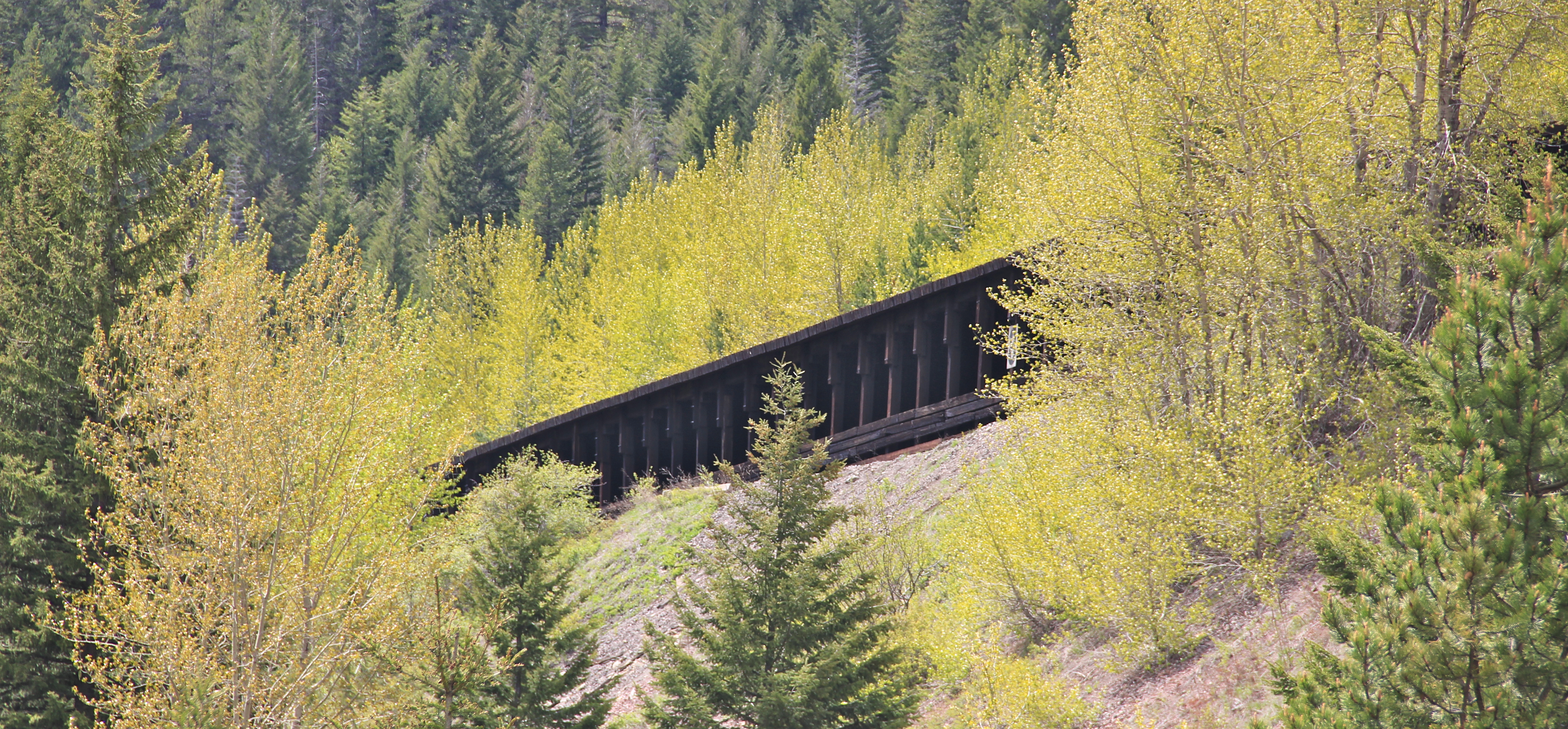
2011 MT Glacier Park and communities 131officials of the BNSF Railroad that the company is wetting down its historic avalanche sheds not far from Essex and visible from U.S. Highway 2 at several places.  If luck doesn’t come, a distinctive historic landscape could disappear.

IMG_9207