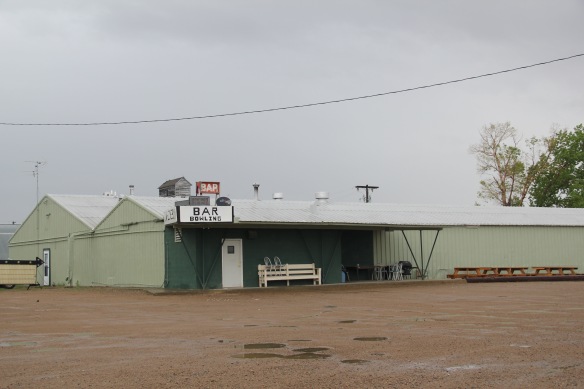
The Bar and Bowling Alley, Rudyard
During the 1984-1985 fieldwork for the state historic preservation plan I gave little thought to mid-20th century recreational buildings. Parks were on my mind, as well as my colleagues at the State Historic Preservation Office, but everyday, plain Jane architecture buildings for bowling and roller skating–not so much. I didn’t even give much attention to public swimming pools, even though I knew that they were often a large component of New Deal building projects.
The photo above from Rudyard, a small railroad town along the Hi-Line in Hill County, tells you why I “missed” on these buildings 30 years ago. Nothing National Register-quality there–or not? When you think of the National Register criteria and the themes of recreation and social history such community gathering spots take on added significance, which extends well beyond the architecture.
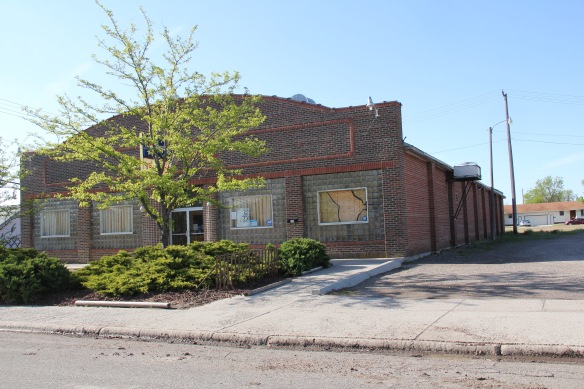 Community Center Bowl in Hardin, Big Horn County, is a wonderful recreational space, with its bays defined by c. 1960 styled “picture windows” framed in glass blocks. The owners have refurbished the lanes two years ago–this institution still has years left in it.
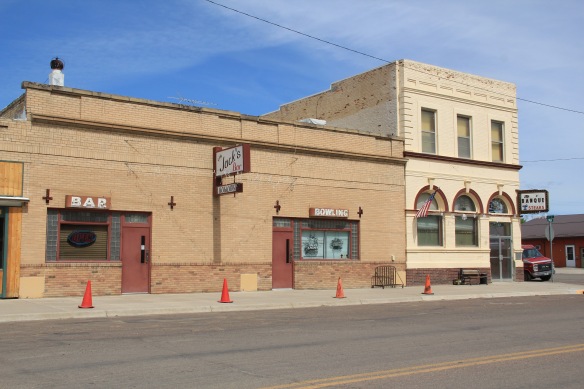
Another great mid-20th century building is Jack’s Bar and Lanes–one historic building in Fort Benton that doesn’t get much attention that way I bet. Gotta love the dual glass block entrances with neon signs. Since my visit in 2013 the owners have added a flat metal awning over the dual entrances–a poor choice in my humble opinion. But don’t let that keep you from going insider–where a “see them dead” zoo of hunting trophies awaits.
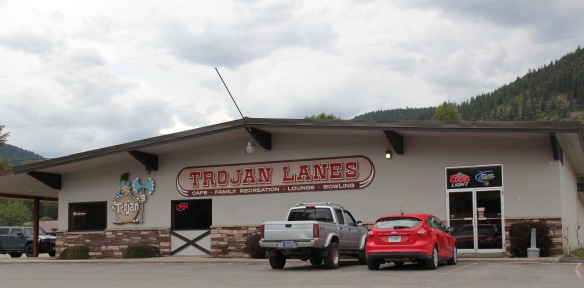 From the southeast corner of the state to its northwest corner–the Trojan Lanes (so named for the school mascot) in Troy, Montana. Here you find the type of alley that is common throughout the small towns of Big Sky Country. Not only do you have a recreational center but you often have the best family restaurant in town. That’s the
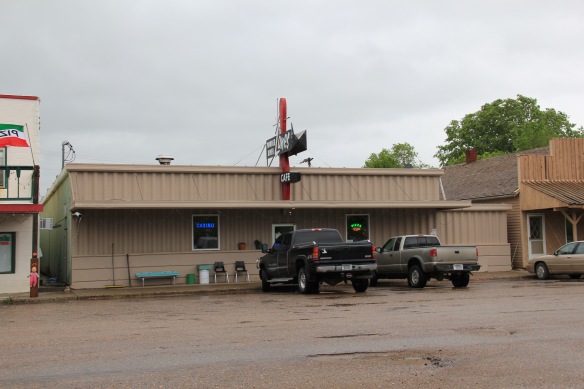 case where at Troy’s Trojan as well as–returning to the southeast corner–the Powder River Lanes in Broadus. This tiny county seat has lost several of its classic cafes from the 1980s–the Montana Bar and Cafe on the opposite side of the town square being my favorite in 1984–but Powder River Lanes makes up for it.
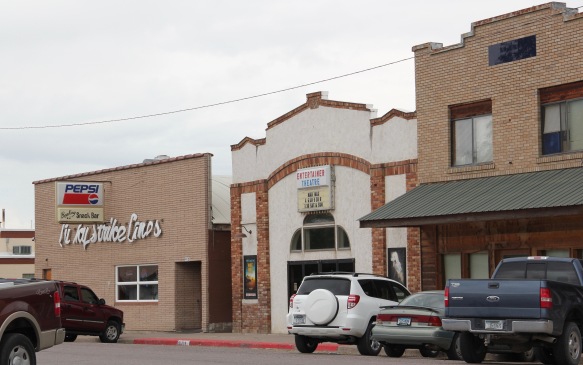 I am sorta partial to the small-town lanes, like the Lucky Strike above in Ronan, Lake County. Located next door to “Entertainer Theatre,” this corner of the town is clearly its center for pop culture experience.
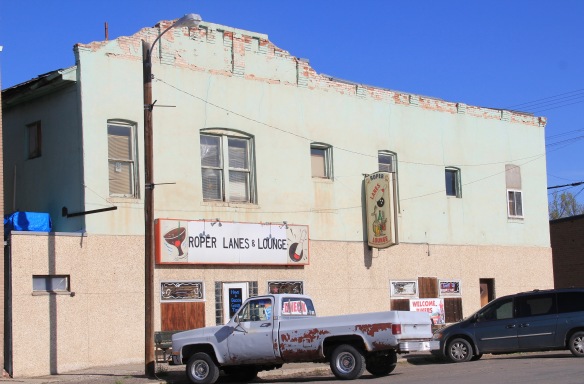 Another fav–admittedly in a beat-up turn of the 20th century building–is Roper Lanes and Lounge in Whitehall, Jefferson county, in the southwest corner of the state. Gotta love the painted sign over the entrance–emojis before they were called emojis.
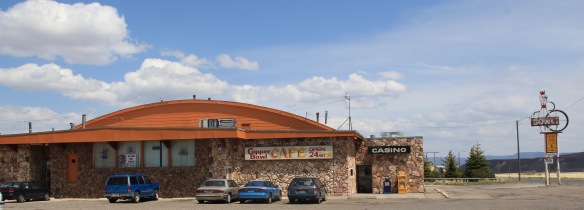
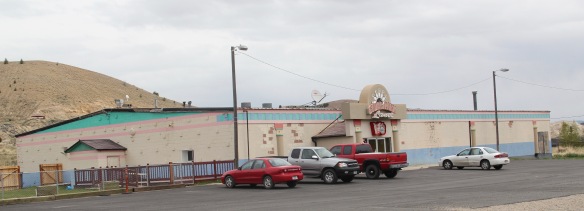
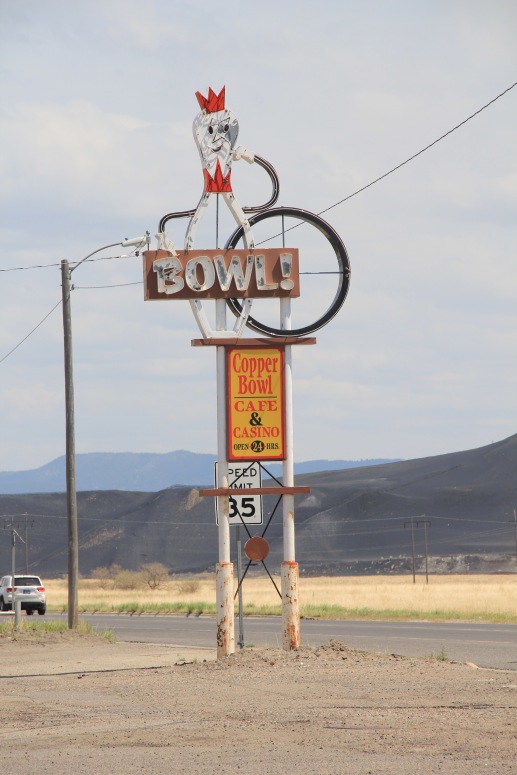
Anaconda might be the small town bowling champ in Montana, with two excellent alleys, the Copper Bowl, from the mid-20th century and the more recent Cedar Park Lanes. The alleys are located on the edge of town, between the business district and smelter–a great location to keep the bowling tradition alive. Copper Bowl can also boast of the state’s best bowling sign–along Montana 1 and U.S. 10A, the Pintlar Route, a good place to catch commercial, roadside architecture. If this bit of flash doesn’t catch your attention, you staring too much at the road in front.
These images do not capture all of the alleys across the big Sky–but they are enough to remind us that the bowling tradition is alive and kicking, and worthy of a closer look.


 Moiese is best known, by far, as the entrance to the National Bison Range, where a general store stands nearby the refuge gate. Created by Congress in 1908, the refuge took
 additional land–almost 19,000 acres- from the tribes, without their consent, to create a safe haven for the remaining bison in the region. A few hundred bison live within its boundaries today. In 2016 the National Park Service began discussions with the Consolidated Kootenai and Salish Tribe to transfer management of the refuge to the tribe.
 Eight miles north of Moiese along the railroad line is the town of Charlo, named in honor of Chief Charlo of the Bitterroot Salish, who was forced from the Bitterroot Valley to move to the reservation in 1891. Charlo served as head chief of the Bitterroot Salish from 1870-
 1910. As a railroad town, Charlo is like many along the Northern Pacific, with a brief strip of businesses facing the railroad tracks, marked by the town’s sole grain elevator. It has a classic rural bar, Tiny’s Tavern, with its brightly painted exterior of concrete block, with brick accents. Built in 1946 by Tiny Browne, it was both a motel and a tavern, and a local museum of items that Tiny thought were interesting. Browne died in 1977 and his sister, Celeste Fagan, next owned the tavern, managed by Edna Easterly who recalled in a story in the Missoulian of April 20, 2007 that Tiny “was known as the bank of Charlo. Tiny always carried a lot of money in his pocket and if you needed to cash a check, you went to Tiny.”
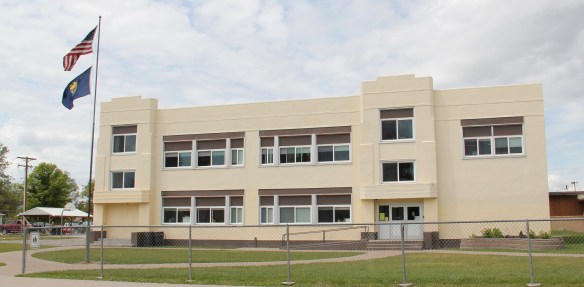
 Most important for its architecture, however, is the town’s public school, a wonderful example of Art Deco style from the New Deal decade of the 1930s.
 Ronan is a third town along the railroad corridor, named for a former white superintendent of the reservation. The town’s demographics today are mostly white, with a little more than a quarter Native American population. Ronan proudly proclaims its existence not only with a gate sign, connecting the business district to the sprawl along U.S. Highway 93 but also a log visitor center and interpretive park on the highway.


 The facade expresses a confident future, which is needed in today’s uncertain economic climate for rural hospitals across the state. But my favorite building in Ronan speaks to my love for adaptive reuse and mid-20th century modern design. The town library is an
 exquisite example of mid-century modern, and was once a local bank before being converted into the library.
 Montana's Historic Landscapes