
Verona L. Burkhard’s 1939 mural for the Deer Lodge Post Office.
In the thirty years between my first visits in Deer Lodge and my most recent, the town’s population dropped almost 25%–nearly 1,000 residents. But when I spent a day there in May 2012 I witnessed one of the most impressive community revitalization efforts in all of my years in historic preservation–the grand opening of the historic Rialto Theatre.
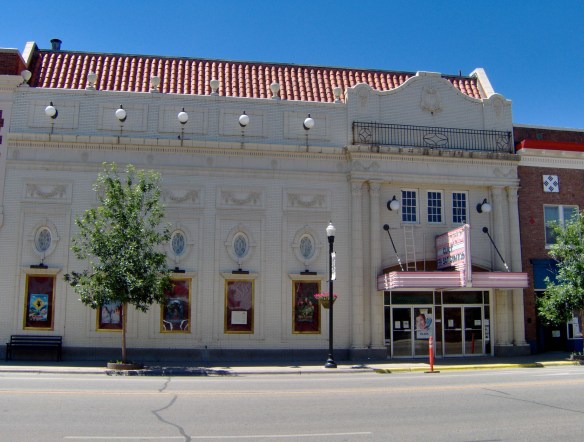
Rialto Theatre in 2007.
My first digital image of the theatre dates to 2007–and I was happy to see this monumental 1921 Beaux Arts-styled theatre, designed by the Butte firm of Arnold and Van Hausen, was still in business. With rural population decline, the rise of home movie viewing, and the impact of satellite television, so, so many small town movie theaters were closing across the country. I was glad to see this one still operating. Then a few years later came the news of a fire that severely damaged the building–and from my vantage point way back east I thought, well that’s it–the building will be gone the next time I get to Deer Lodge–and I wondered if that would not be the start of a general abandonment of Main Street.
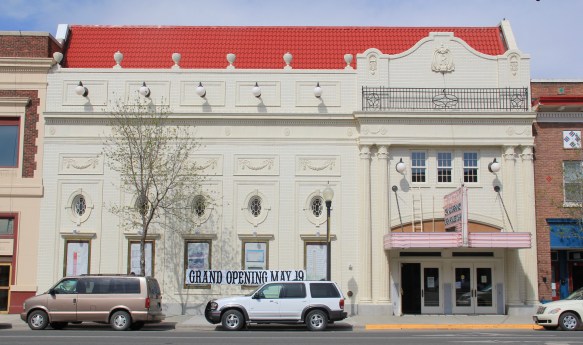 Imagine my pleasure to be there for the theatre’s grand opening May 19, 2012. Not only had the community raised the funds to repair and reopen the business, they also took great pains to restore it to its earlier architectural glory. Such an achievement for a town of just over 3,000 residents–when you consider that the next city south on Interstate I-90 is Anaconda with its monument Washoe Theatre, I immediately began to think of future “movie palace” trips. What a treat, both for the experience and architecture.


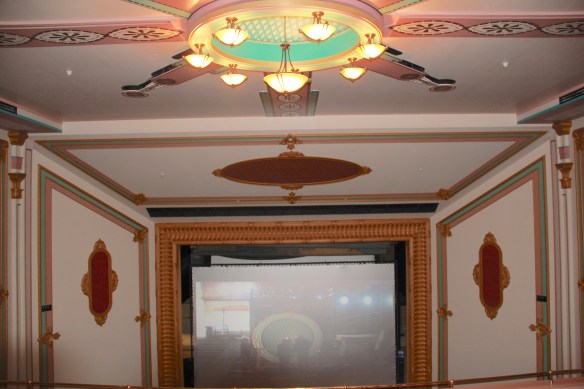


Re-energizing the Rialto to once again be an anchor for community, both in an economic sense but also a cultural sense, is an achievement not to be taken lightly. In the spring of 2016 a team of experts got together to inventory, consider, and make recommendations for Deer Lodge’s 21st century future. The report covers much ground, is well meaning, yet is devoid of the type of passion that the theatre project involved. Experience tells me that heritage assets can do that–the sense of the past, identity, promise, and nostalgia that they represent are important building blocks for any committed community.
 In that same trip to Deer Lodge, I noted how the community had recently enhanced the National Register-listed W. K. Kohrs Memorial Library (1902), one of the region’s great Classical Revival buildings by the Butte architectural firm of Link and Carter (J.G. Link would soon become one of the state’s most renowned classicists), by expanding the library
 with an addition to the side and behind the commanding entrance portico. Although it has proven to be difficult for such a small town to keep the library professionally staffed, the care they have shown the exterior and interior indicate they understand the value of this monument from the past.


The town’s New Deal era post office–a Colonial Revival design from the office of Louis A. Simon–is another National Register landmark that serves dual purposes as both a post office, but also community art museum with the wonderful mural by Verona L. Burkhard.
 Then add in the impressive examples of turn of the 20th century church architecture, represented by the Cotswold Gothic stone work of St. James Episcopal Church, the more former Tudor Revival of the 1st Presbyterian Church, and the more vernacular yet


expressive Gothic spire, with fish-scale shingles, of the Latter-Day Saints Church. The care and respect here also says much about Deer Lodge’s understanding of the value of the past, a pattern reflected in the community’s historic school buildings that range from the Victorian Gothic of Trask Hall to the 1960s modernism of the elementary school–and


then there is Powell County High School campus that moves from the Collegiate Gothic style of the early 20th century to the New Deal functionalism of the gym for the Fighting Wardens and onto the modernism of 1960s school design. The Vo-Tech Building is one of my favorite examples of public school modernism in all of Montana.


When you add the decades-long care manifested in the Deer Lodge Woman’s Club building, what do you learn: Deer Lodge gets it, and while the road is not easy I look forward to this community charting its course in the 21st century. Next post: some of the challenges ahead.

Photograph from 2007.
 Dillon is not a large county seat but here you find public buildings from the first third of the 20th century that document the town’s past aspirations to grow into a large, prosperous western city. It is a pattern found in several Montana towns–impressive public buildings designed to prove to outsiders, and perhaps mostly to themselves, that a new town out in the wilds of Montana could evolve into a prosperous, settled place like those county seats of government back east.


 The Dillon City Hall also belongs to those turn-of-the-20th century public landmarks but it is a bit more of a blending of Victorian and Classical styling for a multi-purpose building that was city hall, police headquarters, and the fire station all rolled into one.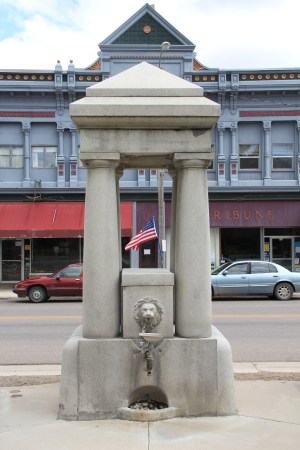
 A New Deal era post office introduced a restrained version of Colonial Revival style to Dillon’s downtown. The central entrance gave no hint to the marvel inside, one of the
 state’s six post office murals, commissioned and executed between 1937 and 1942. The Dillon work is titled “News from the States” painted by Elizabeth Lochrie in 1938. It is a rarity among the murals executed across the country in those years because it directly addressed the mail and communication in early Beaverhead County. Ironically, few of the post office murals actually took the mail as a central theme.
 The New Deal also introduced a public modernism to Dillon through the Art Deco styling of the Beaverhead County High School, a building still in use today as the county high school.
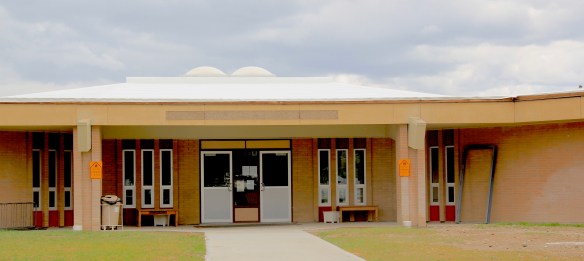
 A generation later, modernism again was the theme for the Dillon Middle School and Elementary school–with the low one-story profile suggestive of the contemporary style then the rage for both public and commercial buildings in the 1950s-60s, into the 1970s.
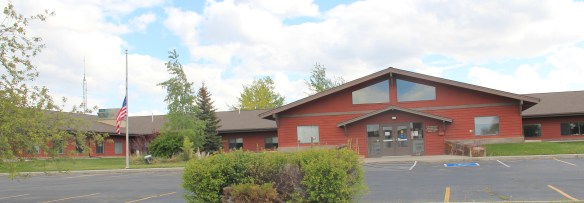
 The contemporary style also made its mark on other public buildings, from the mid-century county office building to the much more recent neo-Rustic style of the Beaverhead National Forest headquarters.






 Montana's Historic Landscapes