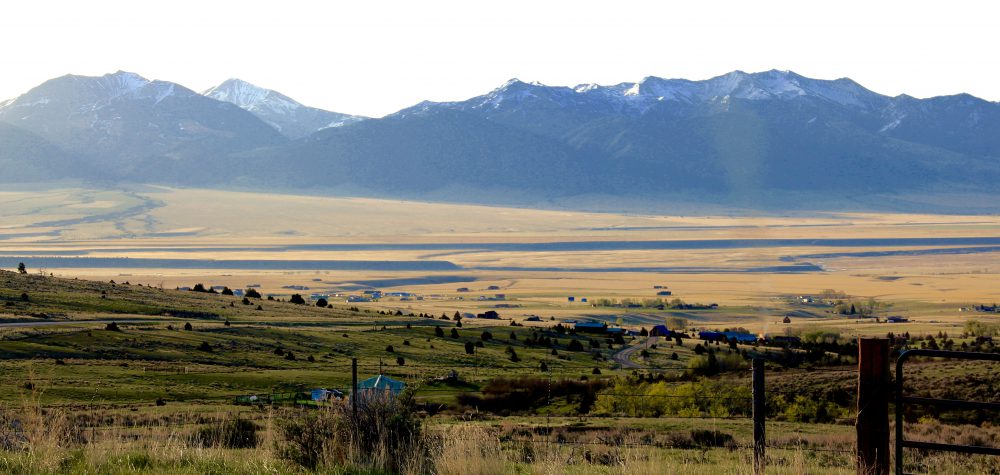
 Located between the Gallatin River and Interstate I-90, Logan is a forgotten yet still historically significant railroad junction on the Northern Pacific Railroad. Established c.


1890 the place was first known as Canyon House, for early settlers, and then named Logan in honor of a family who owned land there.

The original Canyon House name has reappeared in Logan since my last visit in 1985 with the name given to this conversion of an old store/hotel to apartments
Logan became the place where Northern Pacific trains went one of two ways: crossing the river and heading to the recently established state capitol of Helena or staying south of the river and heading to the copper mines at Butte.
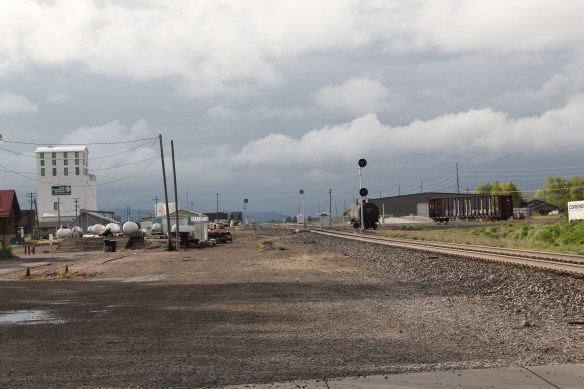
In time the railroad company developed Logan as a mini-division point with a roundhouse, other railroad support buildings, and offices. Today none of that remains–the roundhouse burned during the depression and was not replaced–but the tracks still dominate all views of the town.
One key community building that documents the early 20th century prominence of Logan is the two-story brick school. It has been closed since my last visit in the 1980s but was converted into private use, and was for sale when I stopped in 1985. Its size, brick construction, and classic progressive school architecture design speaks to the
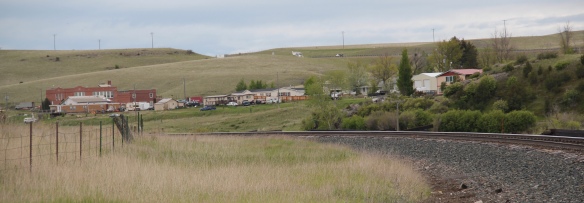
The school (far left) dominates the town’s built environment as you approach on old U.S. 10 from the west
promise that residents held for the town c. 1920. A historic church building also exists from the founding decades of Logan. It too is now closed and faces an uncertain future.


As the various images of the railroad corridor indicates, Logan is still a busy place for train traffic but its population never rebounded after the depression decade. Train traffic during World War II boosted local fortunes a bit–and the town’s large depot served hundreds of customers a day into the late 1940s. But once the Northern Pacific switched to diesel, coal stops like Logan was no longer necessary. When I visited in 2015 I expected to find little to nothing but the tracks–or much more than I ever expected if the boom that had overwhelmed Belgrade and was consuming Manhattan had reached Logan. A bit of whimsy instead has come into Logan, along with one of the best bar/steakhouses in this region: the aptly named Land of Magic Dinner Club–the type of Montana oasis you cannot get enough of.


 Manhattan was not originally Manhattan, but named Moreland, as discussed in an earlier blog about the effort to build a barley empire in this part of Gallatin County at the turn of the century by the Manhattan Malting Company and its industrial works here and in Bozeman. But the existing railroad corridor, along with the surviving one- and two-


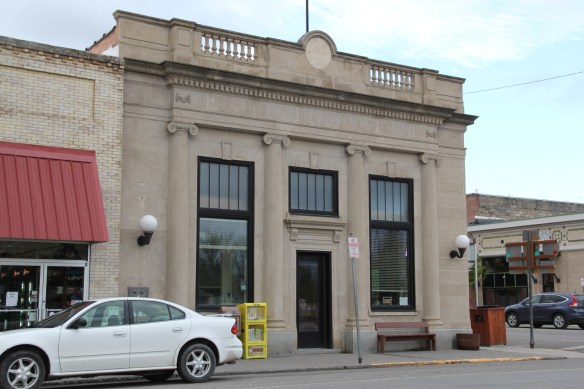
 The historic auto garage from c. 1920 above is one of the most significant landmarks left upon old U.S. 10, and I am glad it is still used for its original function in the 21st century.


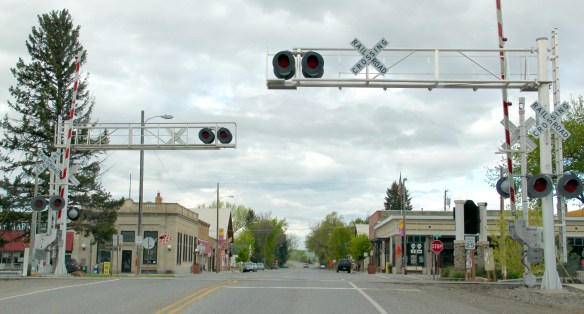 But it has many positives in place to keep its character yet change with the times. Many residents are using historic buildings for their businesses and trades. Others are clearly committed to the historic residential area–you can’t help but be impressed by the town’s well-kept historic homes and well-maintained yards and public areas.


 From 1983-85 Belgrade became one of my favorite Northern Pacific railroad towns. Often I would leave the interstate here, stop at truly one of the great small town bars/cafes along the town’s railroad corridors, and then travel on old U.S. 10 (the town’s Main Street) on to Manhattan, Logan, and Three Forks before popping up on US 287 and continuing to home in Helena.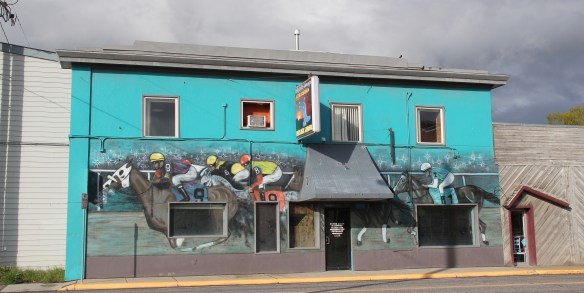

 Despite the boom, several landmarks remain. The Belgrade Community Church, built in 1904 as the town’s Presbyterian church, served in the 1980s as a joint church building for both the town’s Presbyterians and Baptists. This impressive Gothic Revival building had received several updates and additions in the mid-1970s. It became the Community Church in 1992 as the Presbyterians left and the American Baptist Church took over sole control of this historic church building.


 Montana history has many episodes that involve rich eastern and foreign capitalists who rolled the dice on Montana’s resources. Typically everyone thinks of the mining and railroad corporations of the late 19th century. But in several places across the Big Sky Country, investors looked to the land itself and dreamed of agricultural bonanzas.
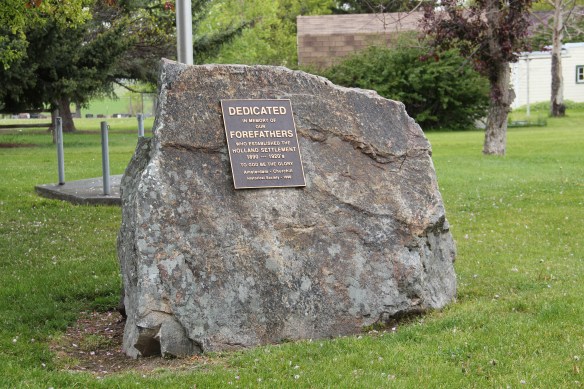
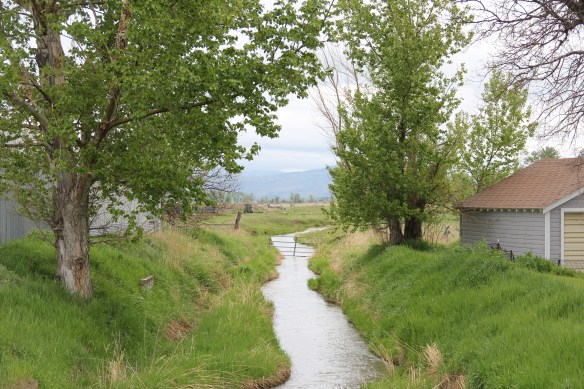 Such is the case of Amsterdam and Church Hill (now Churchill), two rural communities in today’s rapidly suburbanizing Gallatin County. The Manhattan Malting Company was mostly a New York City venture which in the early 1890s, before the terrible depression of 1893-1896, established an industrial base on the Northern Pacific Railroad, changing the name of the town from Moreland to Manhattan. The company purchased 13,000 acres,and acquired the best in agricultural technology, the Jacob Price Field Locomotive steam plow, to till the soil. They also convinced hundred of Dutch farmers to come to Gallatin County and work the land. Even with the hard times, or perhaps because of them, people still wanted good beer, and the company prospered. By 1905 the company decided to shed itself of the land and focus on malting barley.
 The new land company focused on getting farmers on its land, and to secure a railroad spur line. The railroad came in 1911, and the community name of Amsterdam reflected the ethnic origins of the surrounding farmers and ranchers. Even when the Malting Company failed during Prohibition, the farmers kept going, developing some of the still most productive farmland in the state.
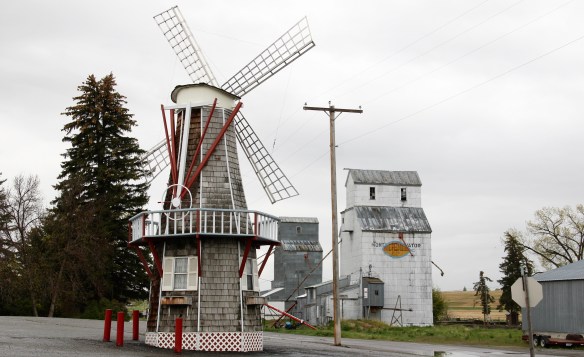
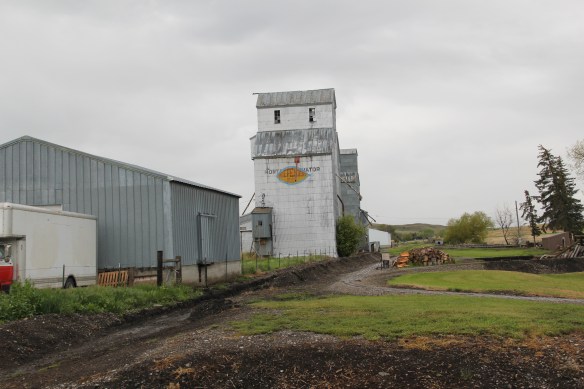 When I visited Amsterdam in 1984 the railroad line still operated but the spur closed the next year, leaving today only a faint corridor to mark its route. Look close and you can still see the outline of the T-plan town that was once “downtown Amsterdam” by the remaining historic commercial buildings, with the Danhof automobile dealership still in business today, with a newer showroom just east of the old railroad tracks.


 Montana's Historic Landscapes