Wise River Club, then and now

Image

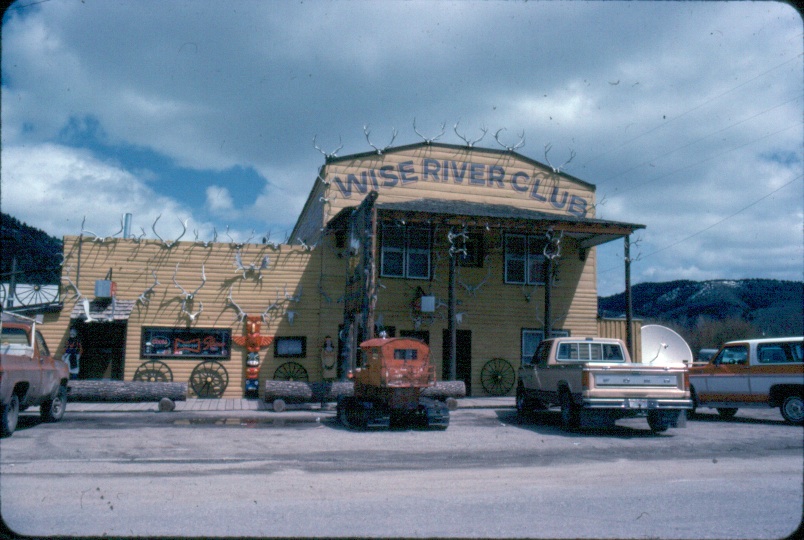
 In my 1984 travels in northern Beaverhead County, I found few local dives more evocative than the Wise River Club, which stands along Montana Highway 43 near the confluence of the Big Hole and Wise rivers.  I have used this image in the decades since multiple times to illustrate the vernacular of the Montana roadside.  At the Wise River Club, the food, company, and adult beverages were great then, as they were in the spring of 2012, when I repeated my visit.

Image

 The club was still there, and the food remained excellent but certainly the exterior had evolved over the past thirty years.  A new stone veneer–like something out of the mid-20th century–had replaced the rustic log look of 1984.  A portico was there too.  But what you really missed were the racks, wagon wheels, and totem pole of the earlier exterior.  Until you ventured inside.

Image


The racks had moved into the ceiling, throughout the tavern area.  Quiet when I first arrived and everyone stepped back to accommodate the photo.  Residents could still tolerate visitors at the Wise River Club.

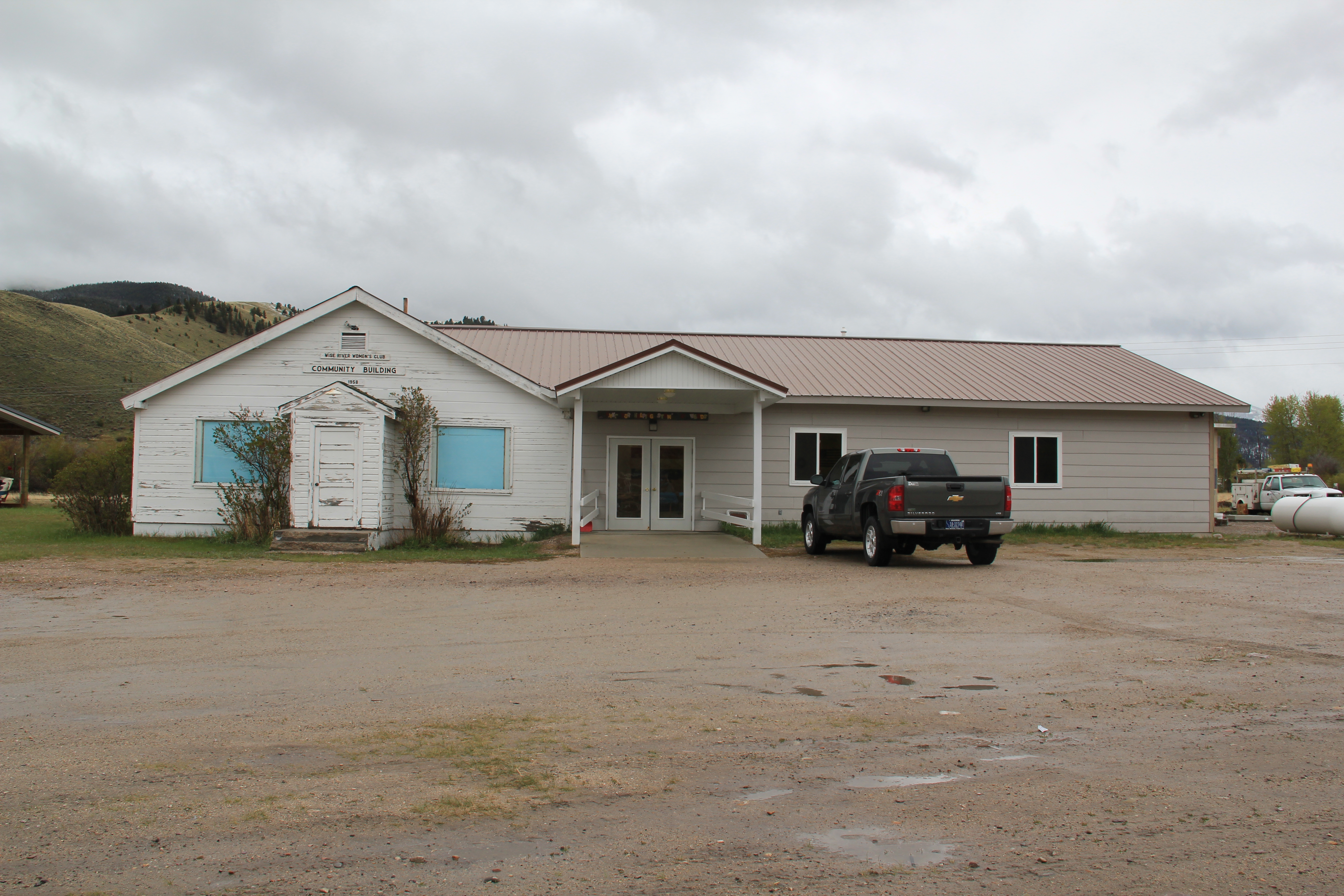
Wise River is a village, and like the club, little had changed there in 30 years.  I did document one building that I had unwisely ignored in 1984:  the Wise River Women’s Club, established in 1958. (Once again the so-called “50 year rule” clouded my vision).  The impact of women on community institutions can be found in any diary or book about rural Montana in the 19th and 20th centuries.  But we do not often look for the buildings that embody in a physical sense that impact.  This unadorned frame building is just one of many across the state that deserve much more than a quick look.

Image 

Image


Backdrops to Montana History: The Irrigation Ditch

Coming to Montana in 1981 from the wet, humid South, I thought little of irrigation as a moving force in history.  To my mind, irrigation was about sprinklers keeping suburban lawns nice and green in the summer.  I cared little for that, and thought no more about it.

Image


Milk River system, Tampico, Valley County

Realizing that irrigation had shaped the history of the United States was another of those primary contributions living and working in Montana brought to my understanding of history.  In the 1984-85 historic preservation survey of the state, I noted a few key systems and thought about their significance.  But in the time since, I came to understand irrigation as one of the key components of an engineered landscape, that literally reshaped the state and made towns, cities, and ranches possible in the early 20th century.

Image


Big Hole Valley

Early Montana settlers, especially the pioneering irrigator I.D. O’Donnell of Billings,  understood by the turn of the century that there would never be enough water to make Montana an agricultural paradise.  Men could not conquer nature–but they could build a machine that could harness it, even replace it.

Image


This irrigation effort in Valier took advantage of the 1894 Carey Act.

So with the financial assistance of the federal government, first with the Carey Act of 1894 and then the vastly more important Newlands Reclamation Act of 1902, the transformation of Montana through irrigation took place in the first third of the 20th century. 

Image


The U.S. Reclamation Service Office at Ballatine, Yellowstone County.  Championed by I.D. O’Donnell, the Huntley project was the second USRS project in the nation.

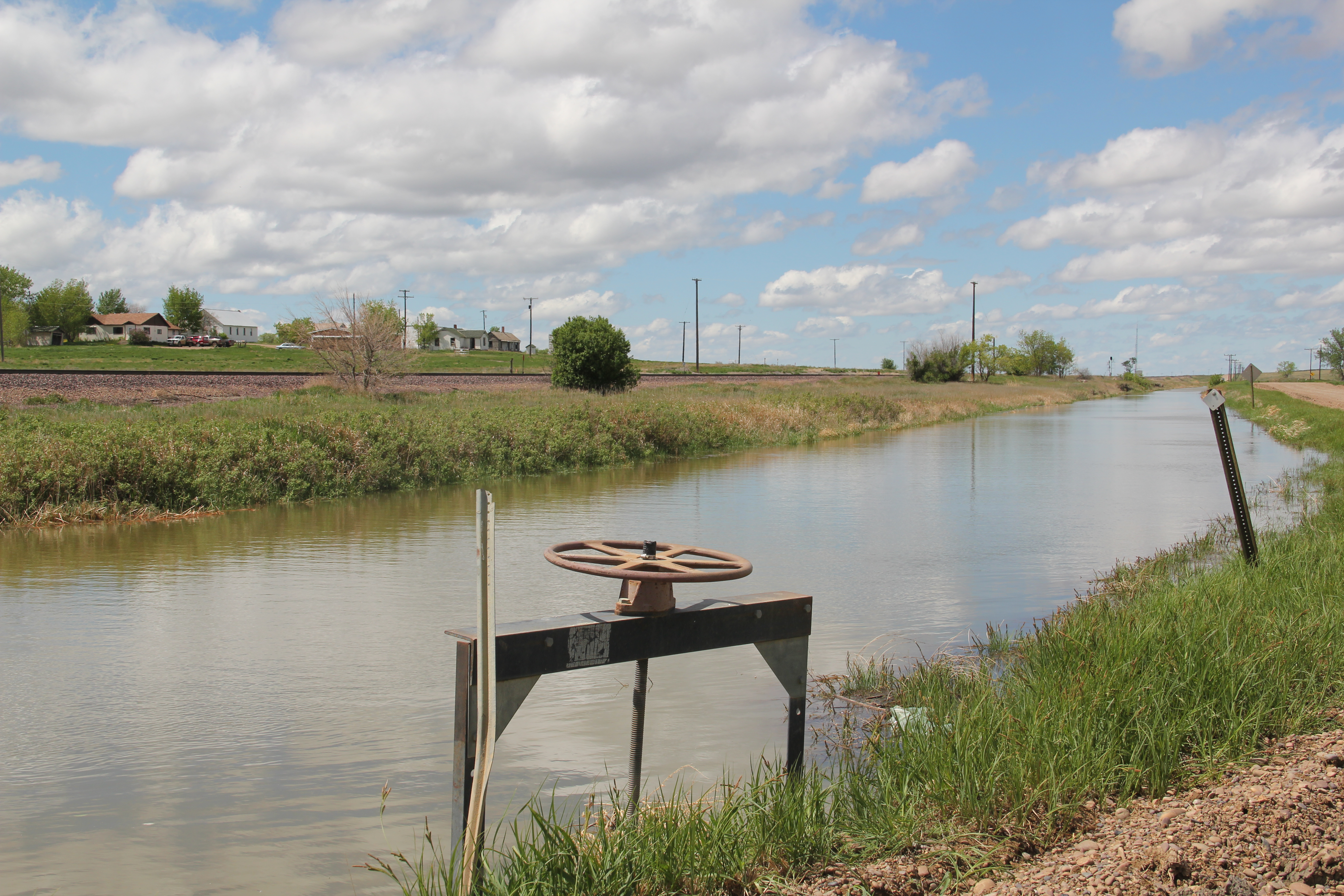
The engineered landscape represented by irrigation is everywhere in Montana.  I will pick up this theme in later postings but end today with another image that evokes the impact, even beauty, of the man-made streams that crisscross the state.

Image


Madison County, along Montana Highway 249


Hi-Line Roadside

Image


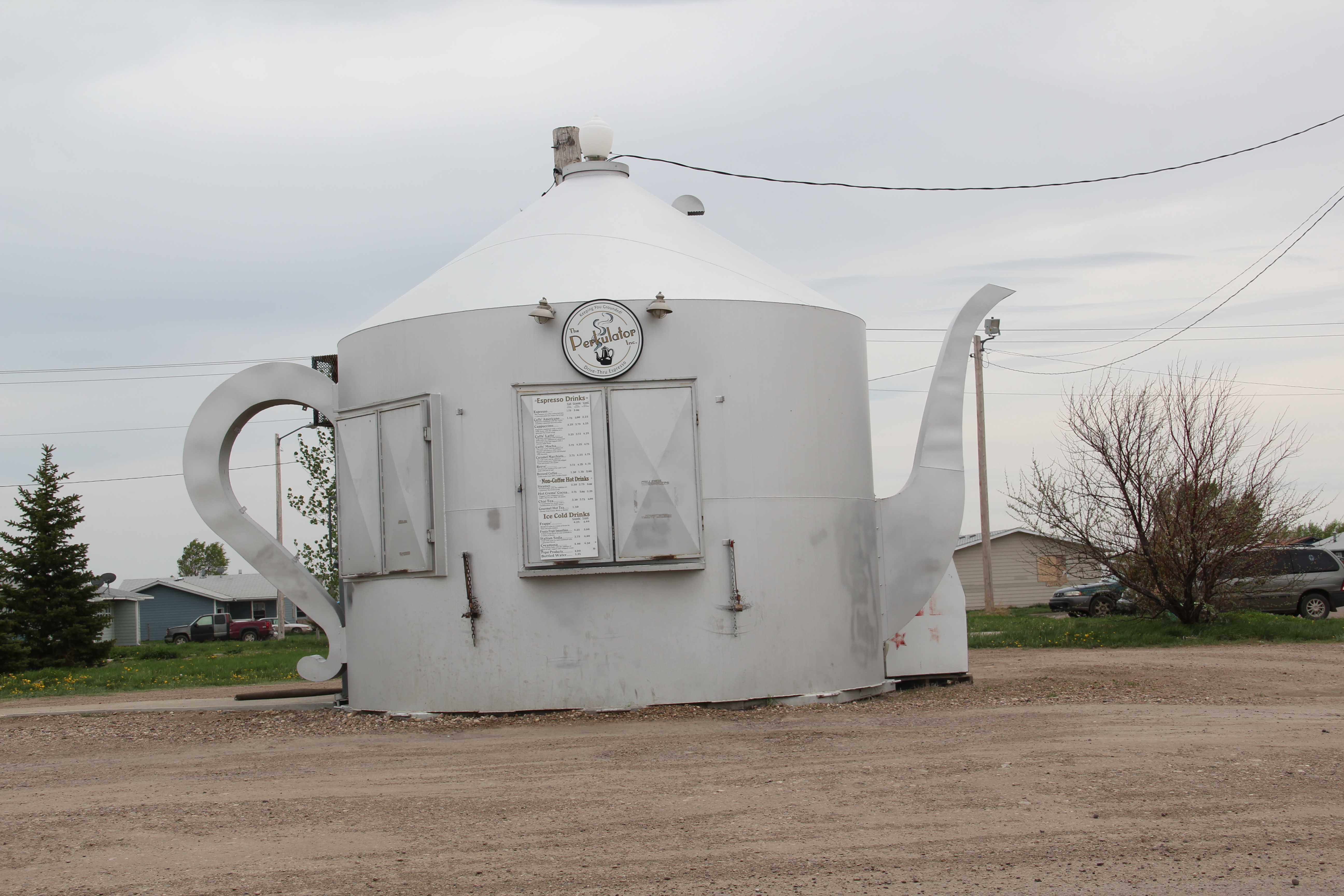
U.S. Highway 2 originally closely followed the tracks of the Great Northern Railway as it crossed Montana’s high plains counties.  Today there are places where the modern highway and the railroad tracks diverge, but still you can travel most of the route from Bainville to Glacier and still discover an astounding array of roadside architecture, from the early 20th century to the more recent past, such as the coffee pot above, on the south side of U.S. 2 in Poplar.  

This week begins the holiday traveling season.  With that in mind, I offer up a range of roadside images from the Hi-Line–places that you may roar by in a hurry to arrive at your destination but places nonetheless worth a stop and visit.

Image Image


Gas stations of course are a constant, and some may be well kept as an artifact of their function–service stations such as this one on the left in Liberty County–or they may be transformed into ice cream parlors like the station on the right from Chinook.

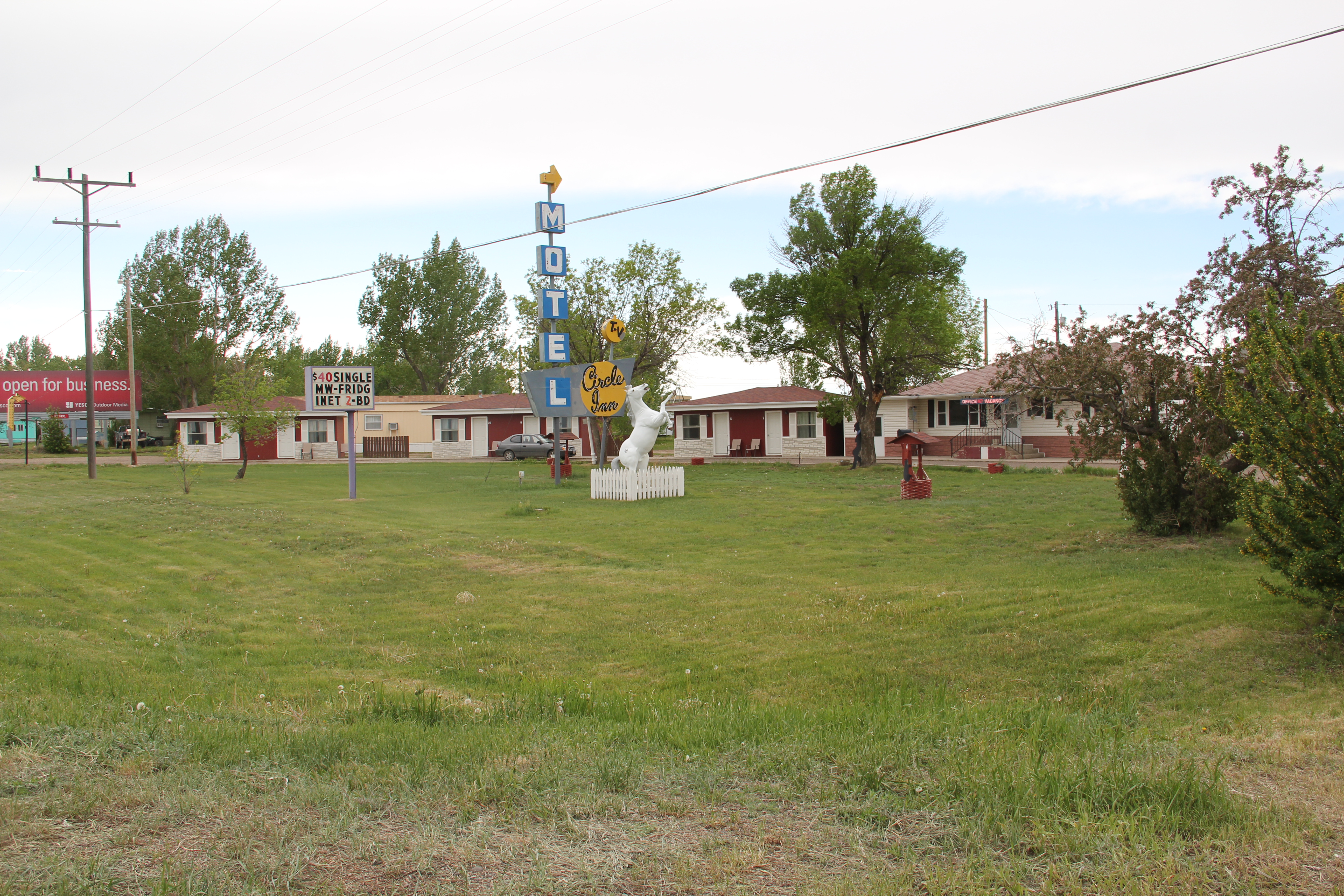
Motels are everywhere too–but the “mom and pop” businesses of the first 2/3 of the twentieth century have been rapidly replaced by the major chains, from Super 8 to the Hilton and Marriott properties of recent vintage.  This classic from just outside of Havre is a throwback to roadside lodging of a generation or two ago.

Image


Of course there are creative types all about the Hi-Line. Buck Samuelson’s collection of roadside sculpture just west of Glasgow not only plugs into that expressive tradition but also in the tourism focus on dinosaurs that you can find throughout eastern Montana.  I actually prefer the roadside 

Image


signs that you find along the highway.  Two from Hinsdale, in Valley County, are favorites. The 

Image


painted sign, courtesy of the Matthew Hansen Endowment, remands everyone of community vitality even though surface appearances may suggest otherwise.  The second sign is among the state’s most popular–painted rocks in white that outline the first letter of the town–positioned so that travelers and residents can view it.

Image


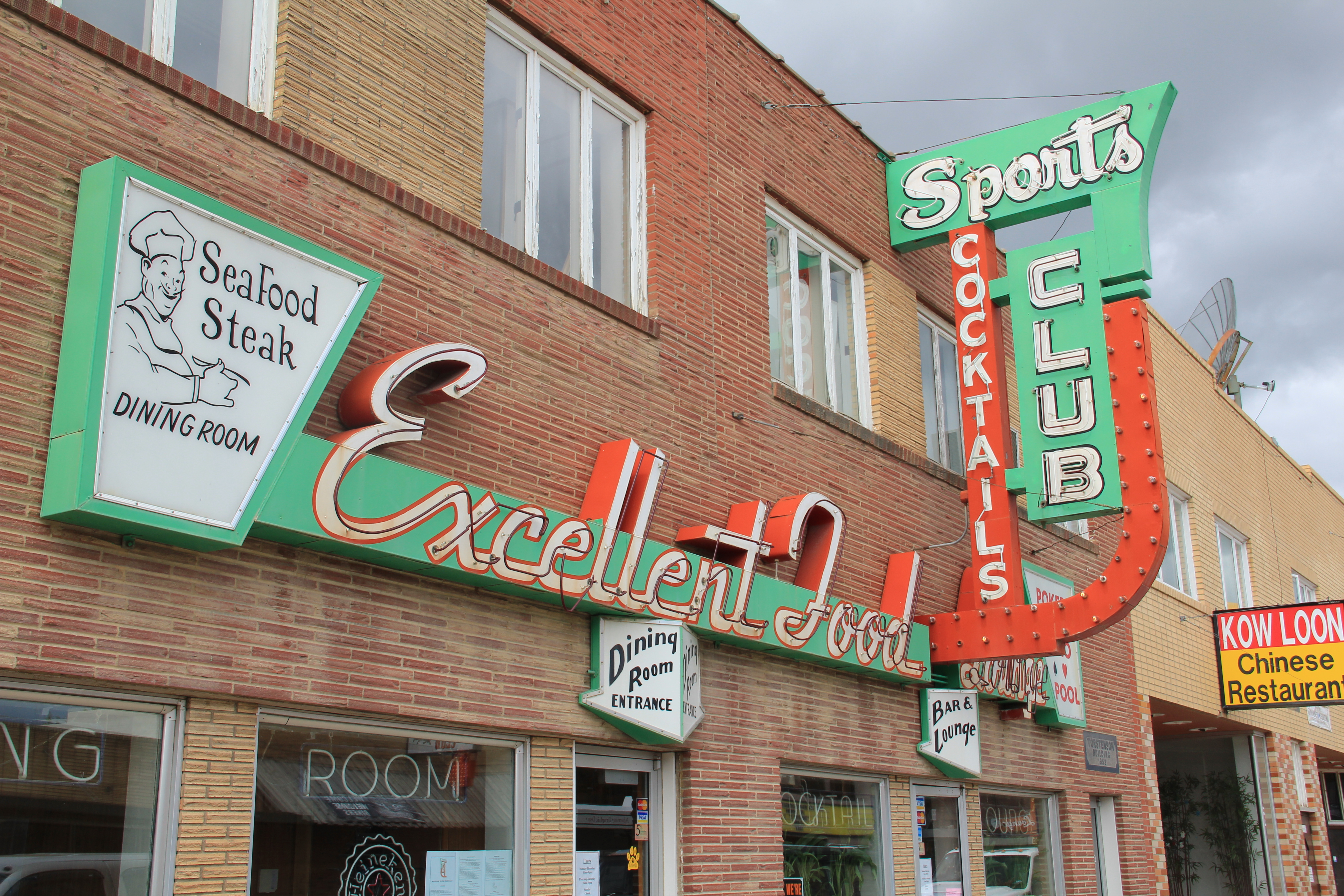
Commercial signs are another constant along the Hi-Line.  Most of course are just like millions across the nation–back-lit plastic signs.  But places like Sam’s Supper Club in Glasgow

Image


and the line of bar signs in the middle of Shelby remind us that once travelers were enticed to stop and jump into another world of flash and class behind the neon signs of U.S. 2.

Image


The roadside of U.S. is nothing if not varied, and I can spin many more words and images about the compelling and the mundane along the roadside.  We do keep up with the trends, and try out best to merge the roadside with current events, as this coffee stand in Culbertson proves.

Image


But I will close with this image from Dodson as a reminder that the roadside can be fleeting, and a place that I enjoyed in 1984 is falling apart today as everyone gravitates to the standardized chain-experiences that define our time.

Image


Martinsdale’s Milwaukee Road Depot

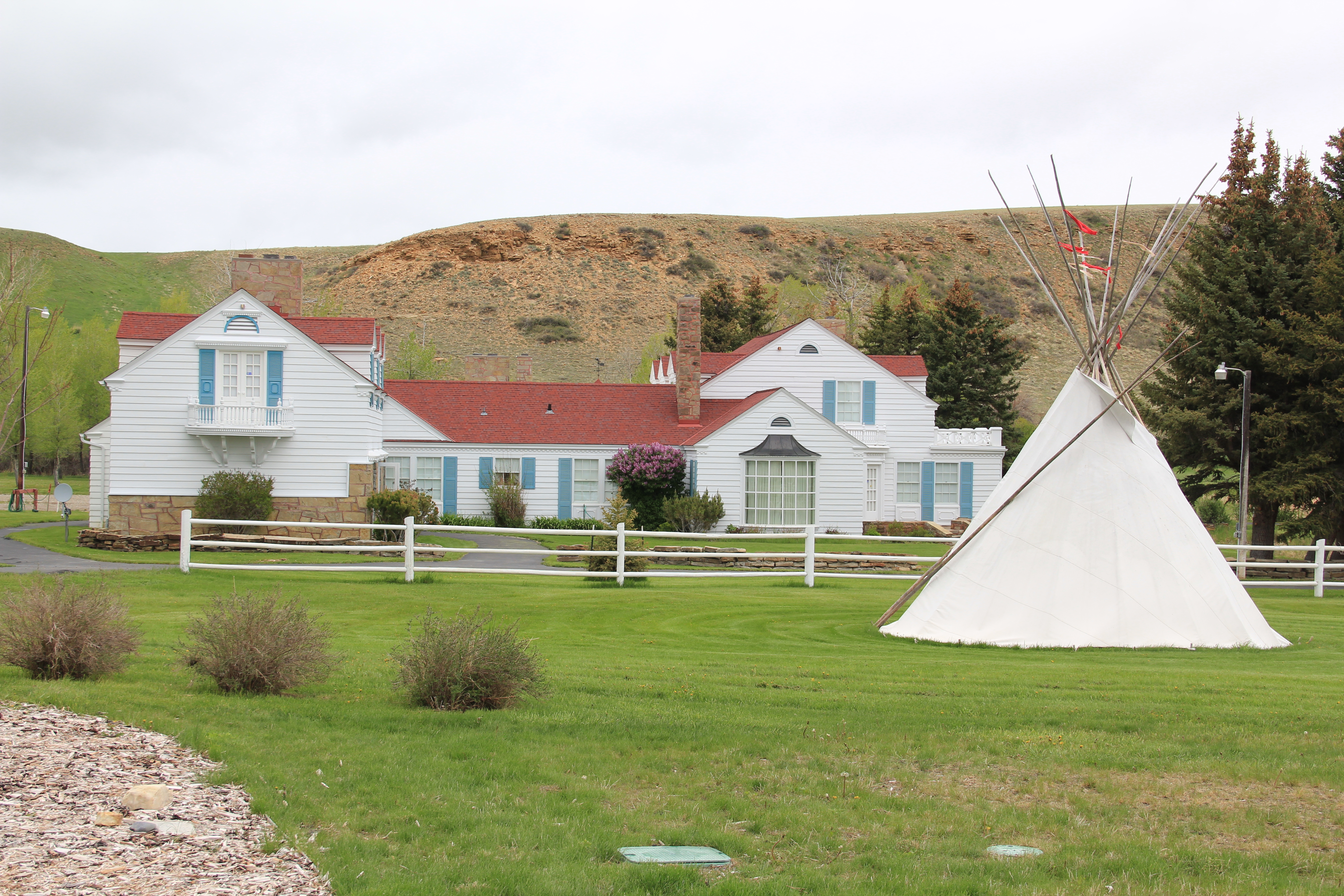
Martinsdale is a tiny town in Meagher County, just off U.S. Highway 12.  Many travelers have stopped by the historic Bair Family Ranch, the former private estate of stockman Charles Bair and his daughters, which is now a historic site and museum.

Image

But 30 years ago, the building that most captured my attention in Martinsdale was the recently abandoned combination passenger station and freight depot of the Chicago, Milwaukee, St. Paul, and Pacific Railroad, better known as the Milwaukee Road.

Image

Why did such a nondescript building interest me? Built in the first decade of the 20th century, the depot represented the increasing standardization of design across what was once a vernacular landscape.  The company constructed a full set of this combination stations across the state, but by 1984 only a handful remained.  At Martinsdale not only was the building there; it was in good shape, and even had its privy–also a standardized design–standing just east of the depot.Then there was the matter of where the depot stood.

IMG_9678


It was at the head of town–a most privileged position indeed–and that placement reflected the significance of the Milwaukee Road to the town and region.  It also reflected the Milwaukee’s decided preference for “T-town” plans, where the tracks formed the top of the T and the town’s commercial district flowed down both sides of the stem of the “T.”

IMG_9674


The building is no longer in good shape, with part of the roof decking missing just being the most obvious issue.  Thirty years ago, the assessment of this depot was a centerpiece of my “Resource Protection Planning Process” document for the State Historic Preservation Office at the Montana Historical Society.  The depot spoke to so many of the trends of that plan–design, history, settlement patterns, community planning. Now you wonder if the building will survive another year.

The Dagmar Colony in Sheridan County

A little over 100 years ago, a group of Danish Americans, encouraged by success on the prairies of Minnesota, lured by the promise of cheap, effective railroad transportation, and wanting to establish a new community of Evangelical Lutheran believers, came to the northeastern corner of Montana and established a colony, named Dagmar, in honor of the Queen Dagmar of Denmark.

Image

One of the colony’s leaders, Emil F. Madsen, proclaimed of the new land:  we encountered “the most glorious sight.  Below us lay a large lake [Medicine Lake] whose mirror-clear arms reached in over the prairie.  North of the lake spread a level plain, gold painted by the sun.”  While the colonists never established large towns, they did successfully farm the land and established a community that survives into the 21st century.

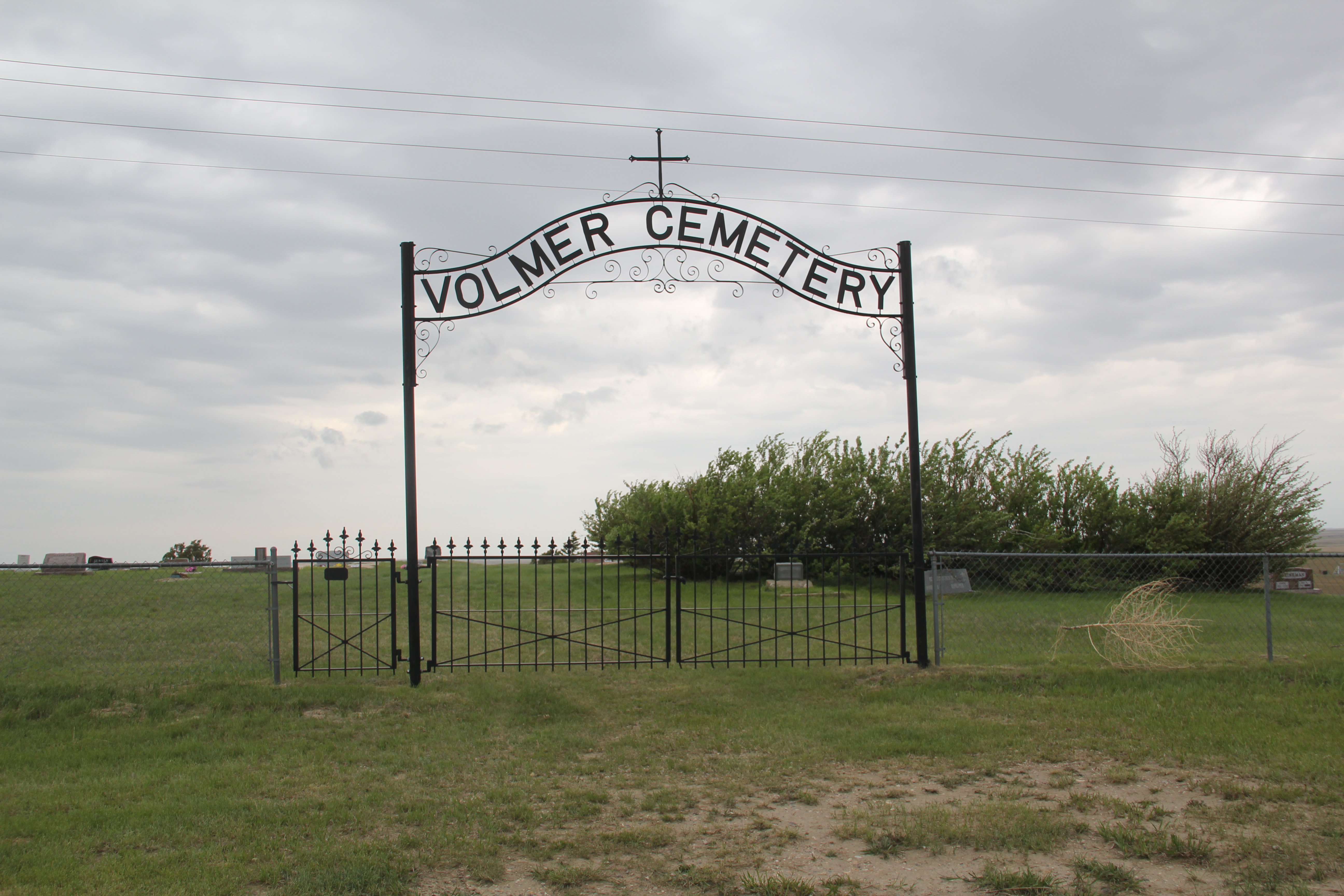
One of the best ways to explore the settlement landscape created by the colonists is to visit their churches.  Volmer Lutheran Church stands on a rise that overlooks the county, pointing toward Medicine Lake.

Image

Image


Image  Image


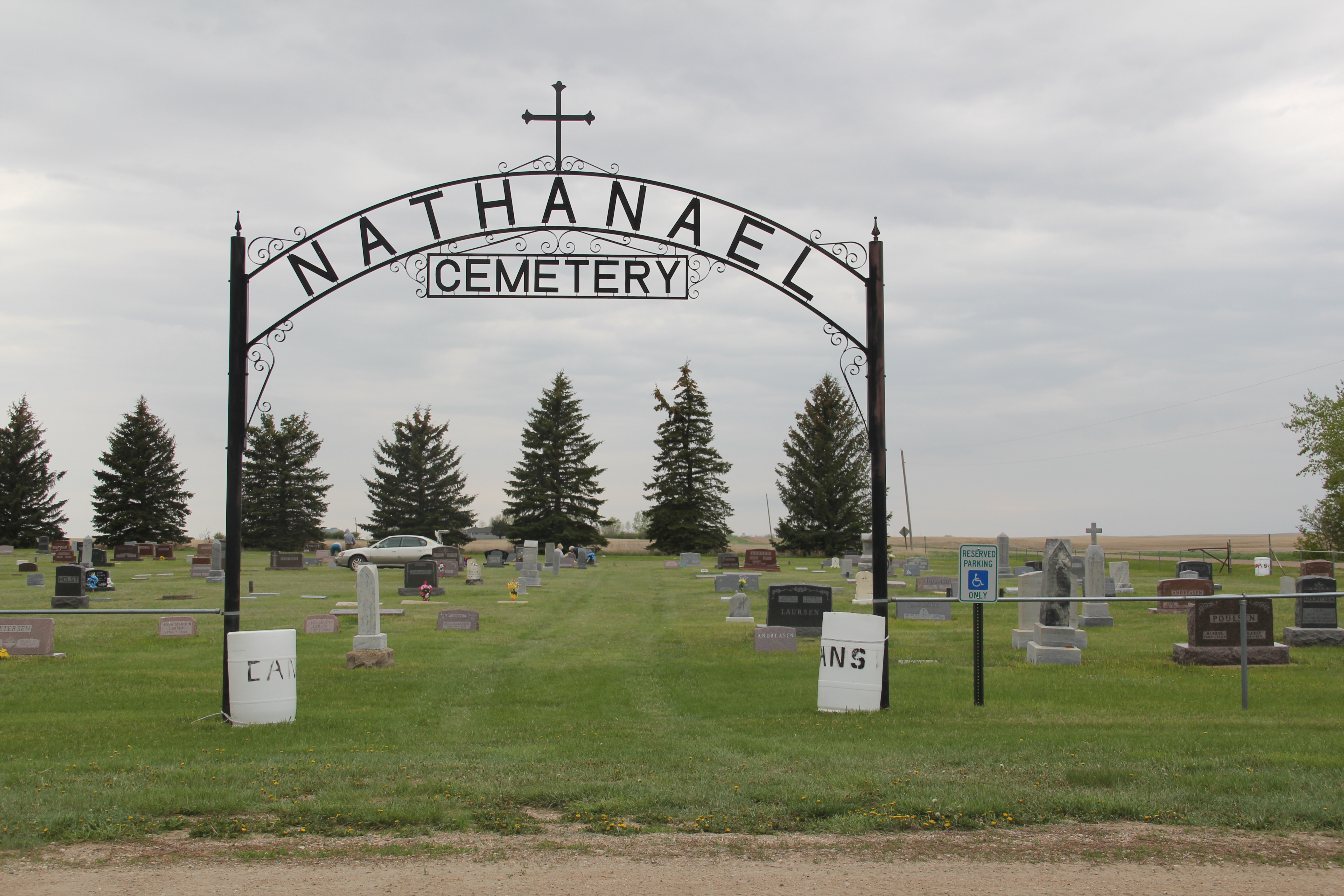
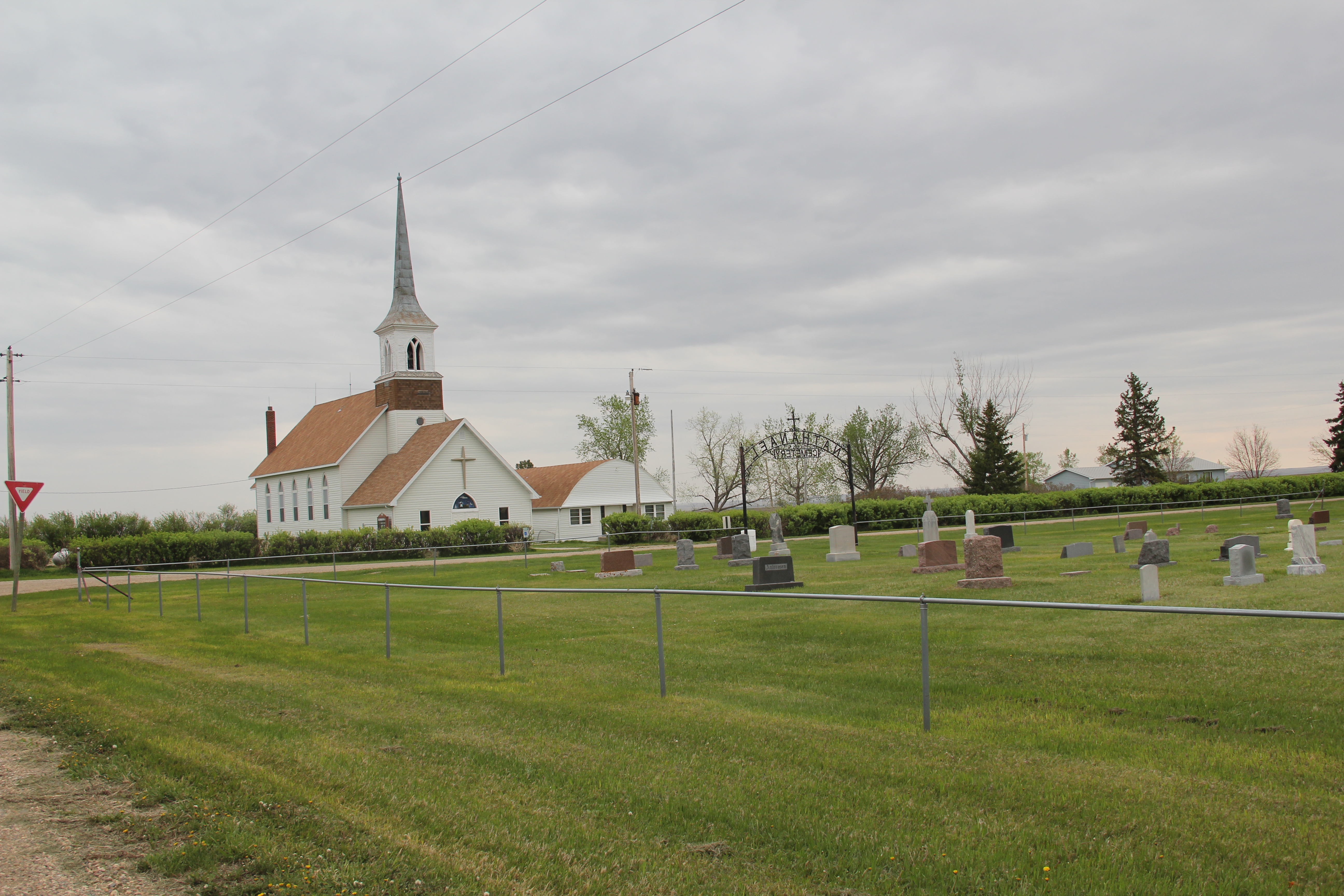
Another significant colony site is Nathanael Lutheran Church and Cemetery, where there is an early memorial marker.

Image  Image


The church is an impressive Gothic design, with its tall tower and steeple serving as landmark visible for miles across the prairie.

Image


The vastness of the Montana’s northeastern prairies served as a refuge for different sacred and secular groups in the early 20th century.  What may seem as isolated and foreboding today was a land of promise one hundred years ago, and the churches and scattered farms and ranches still mark the commitment of the Dagmar colonists to the land they made home.

Saco and Montana’s Hi-Line 30 years ago and today

Saco, a small Great Northern Railway town on Montana’s Hi-Line in Phillips County, is a good place for comparison photography from the historic preservation planning work of 1984 to my return trip in 2013.  

Image

As I worked across the state in the winter and spring of 1984, my schedule and route was mostly self-driven: choices on how much I wanted to see and in what depth were left to me.  But the State Historic Preservation Office wanted me to take a particular close look at Saco because  several citizens and property owners were turning to historic preservation and no one at the office in Helena really knew what the town looked like.

Image


Image

Saco at first glance was similar to many other Hi-Line railroad towns that were not county seats.  It had a T-town plan, that is the primary commercial artery faced the tracks (that was the route of US 2) while a secondary commercial street radiated like the stem of a T from the center of the town.  Saco then still had a Great Northern depot, one of the standardized small designs from the 1950s.  Across from the depot on the highway was the Clack Service Station, where I bought gas that morning.  The service station was later listed in the National Register as part of the effort to identify key roadside architecture along US 2: the station now serves as a visitor center.

Image


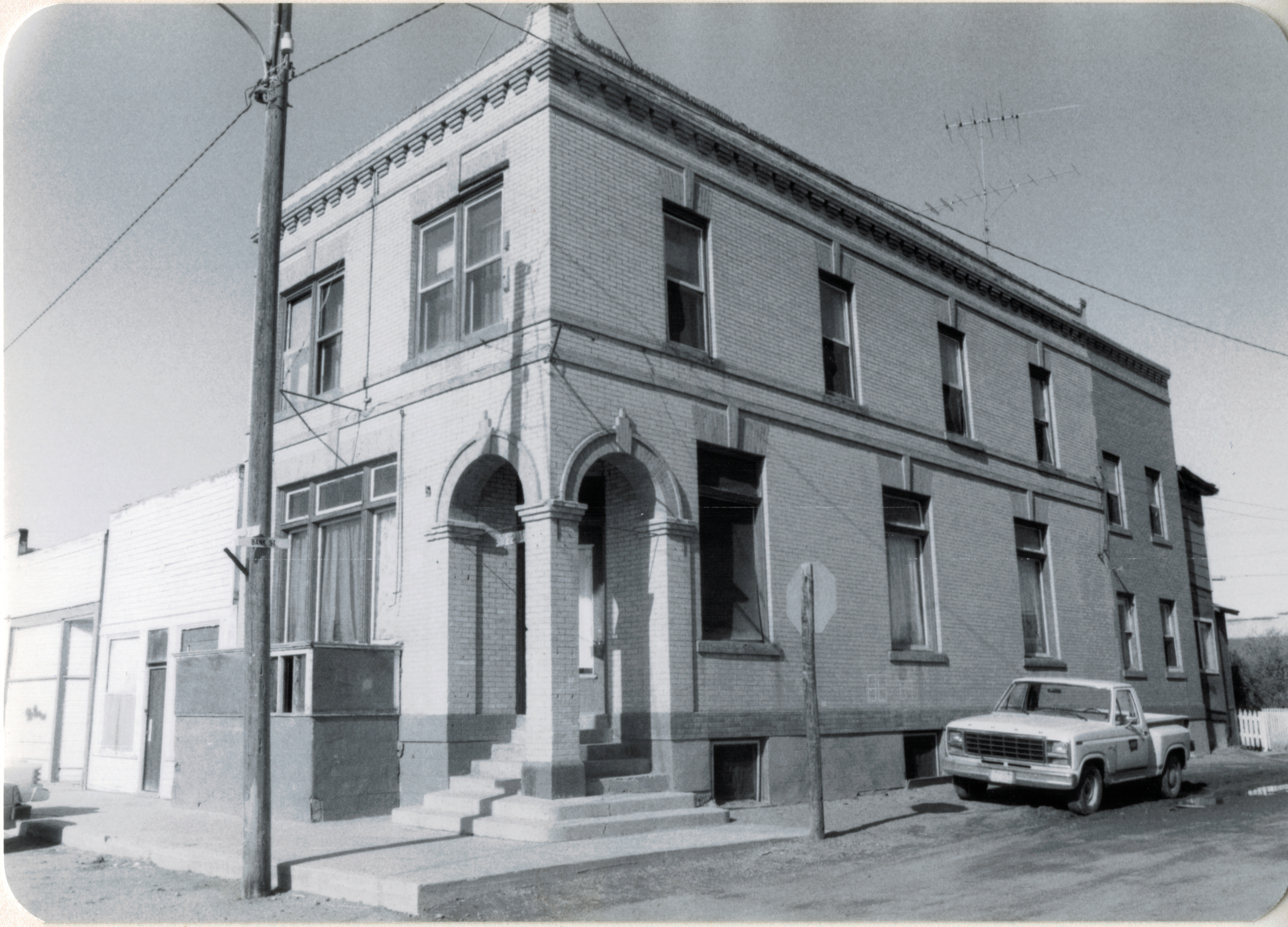
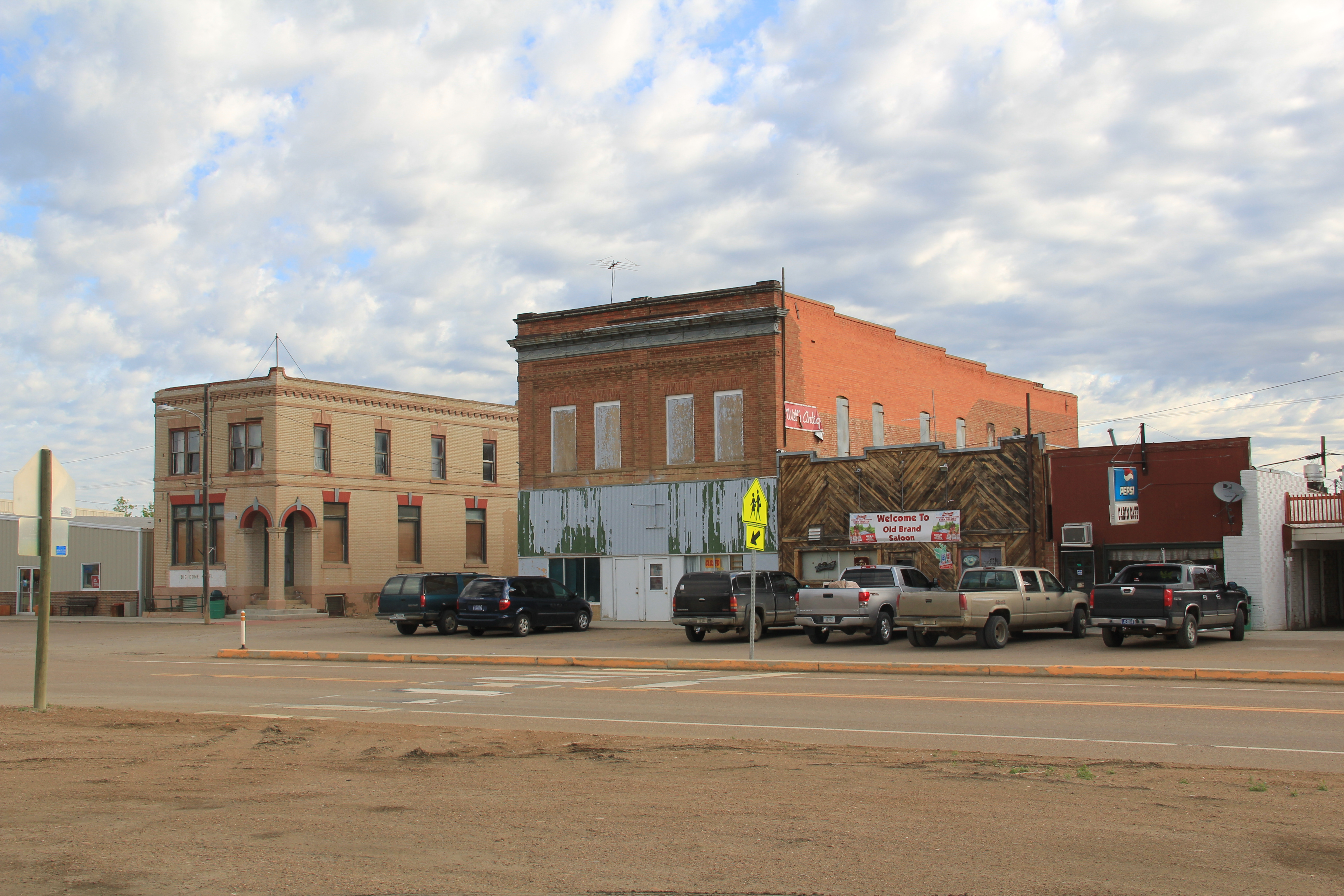
But in 1984 no one in Saco talked about roadside architecture.  The focus was on an early 20th century two-story bank building.  Many Montana railroad towns have similar buildings–really landmarks of capital, then and now.  They spoke to the promise of the town–and were always located on the prominent corner (here the point of the T) facing the tracks.  No one who passed through Saco and bothered to take a look would doubt that local residents believed in the community because there was the architecturally impressive bank building, commanding respect on the plains landscape by its mere presence. 

Image


Saco was different than other communities because the opposite corner from the bank was also occupied by an architecturally notable two-story commercial block, and today both of those buildings remain as physical anchors of the town’s early 20th century history.

Image


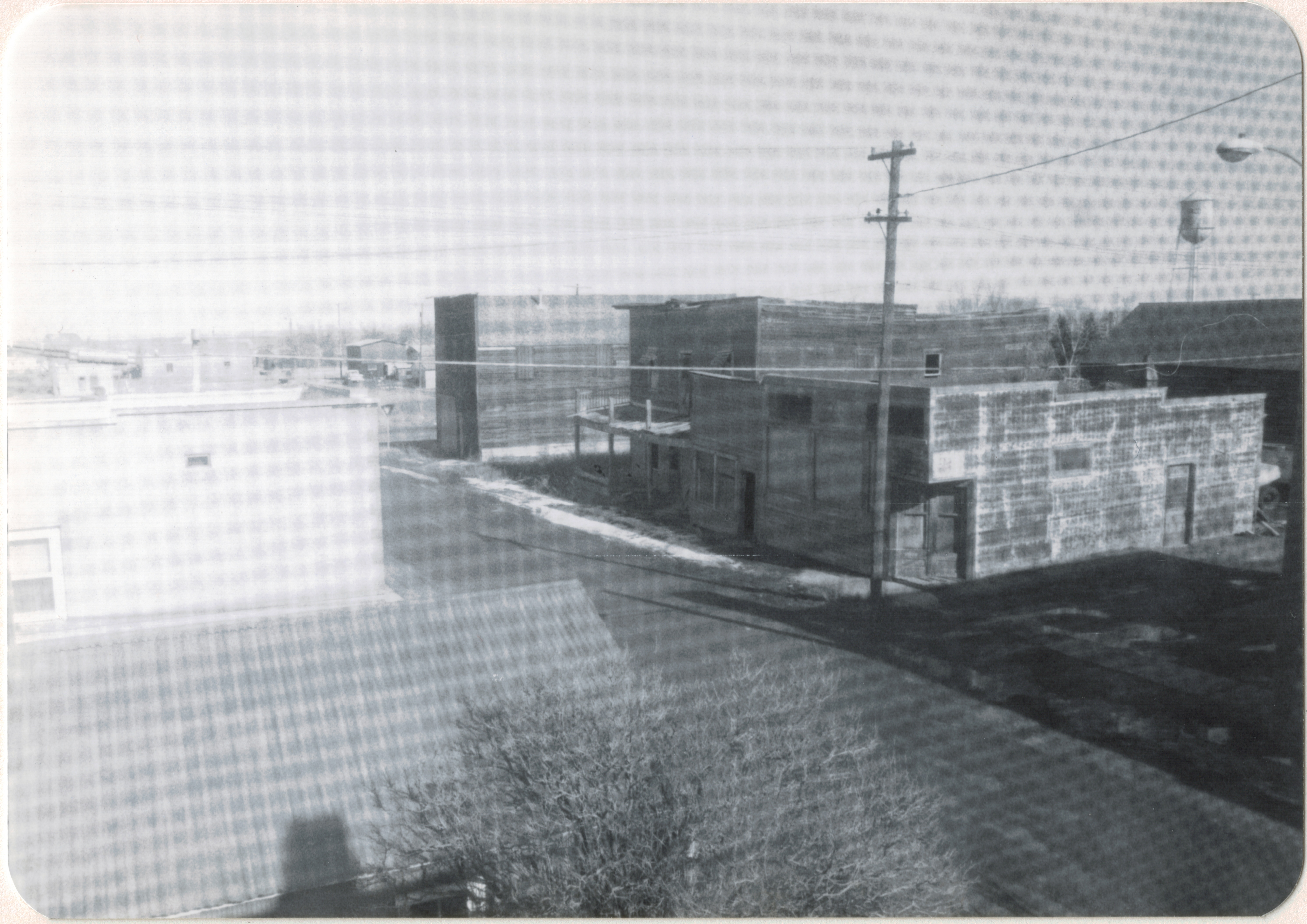
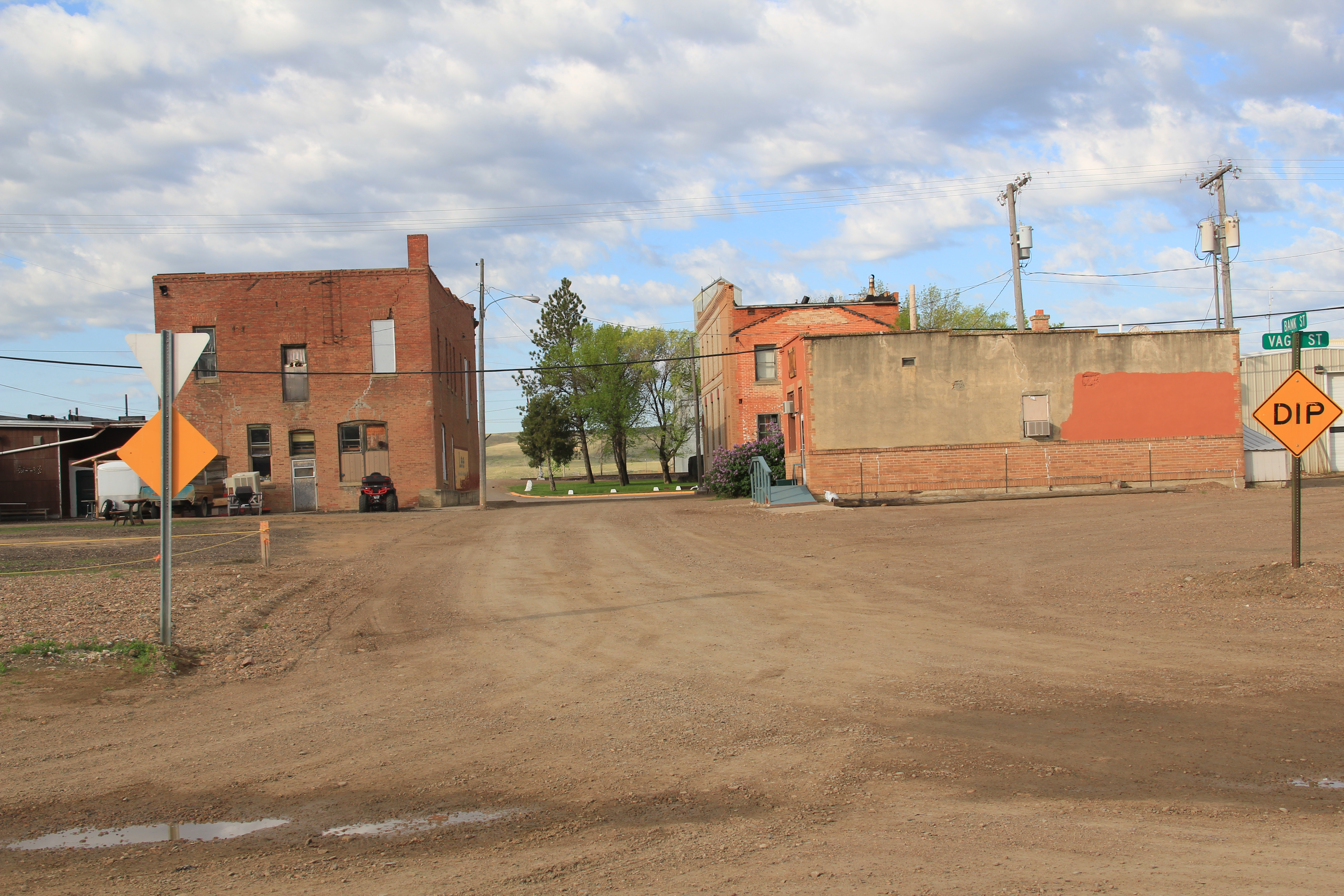
However, the commercial buildings that once lined the stem of the T are missing.  Here is a view from a window in the second floor of the bank building that show some of the buildings.

Image 

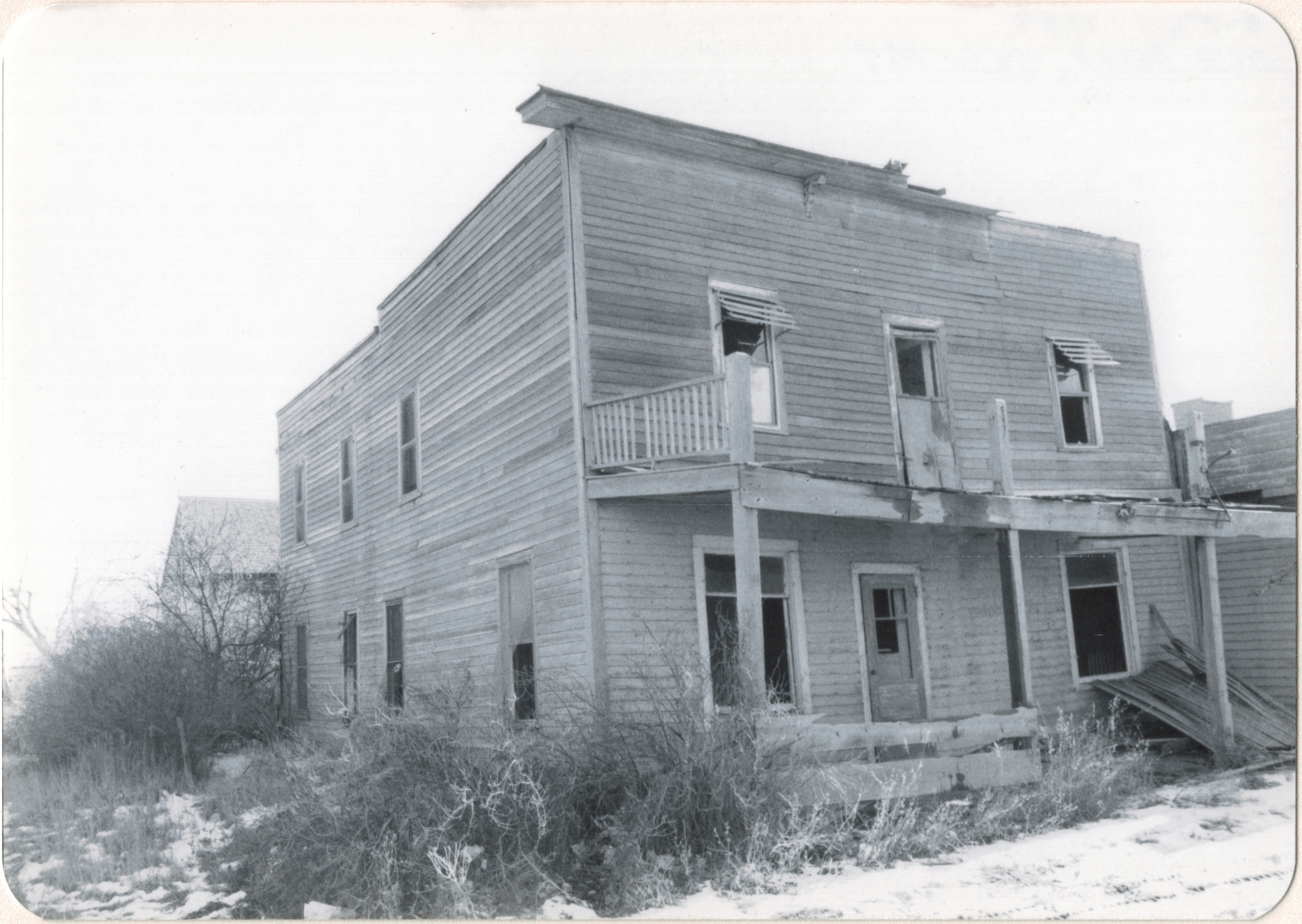
One old hotel was barely hanging on in 1984 as these two photos show. and residents wanted to keep it, but now those are gone and the block behind the bank and the commercial block have been wiped clean.

Image


Image

Image


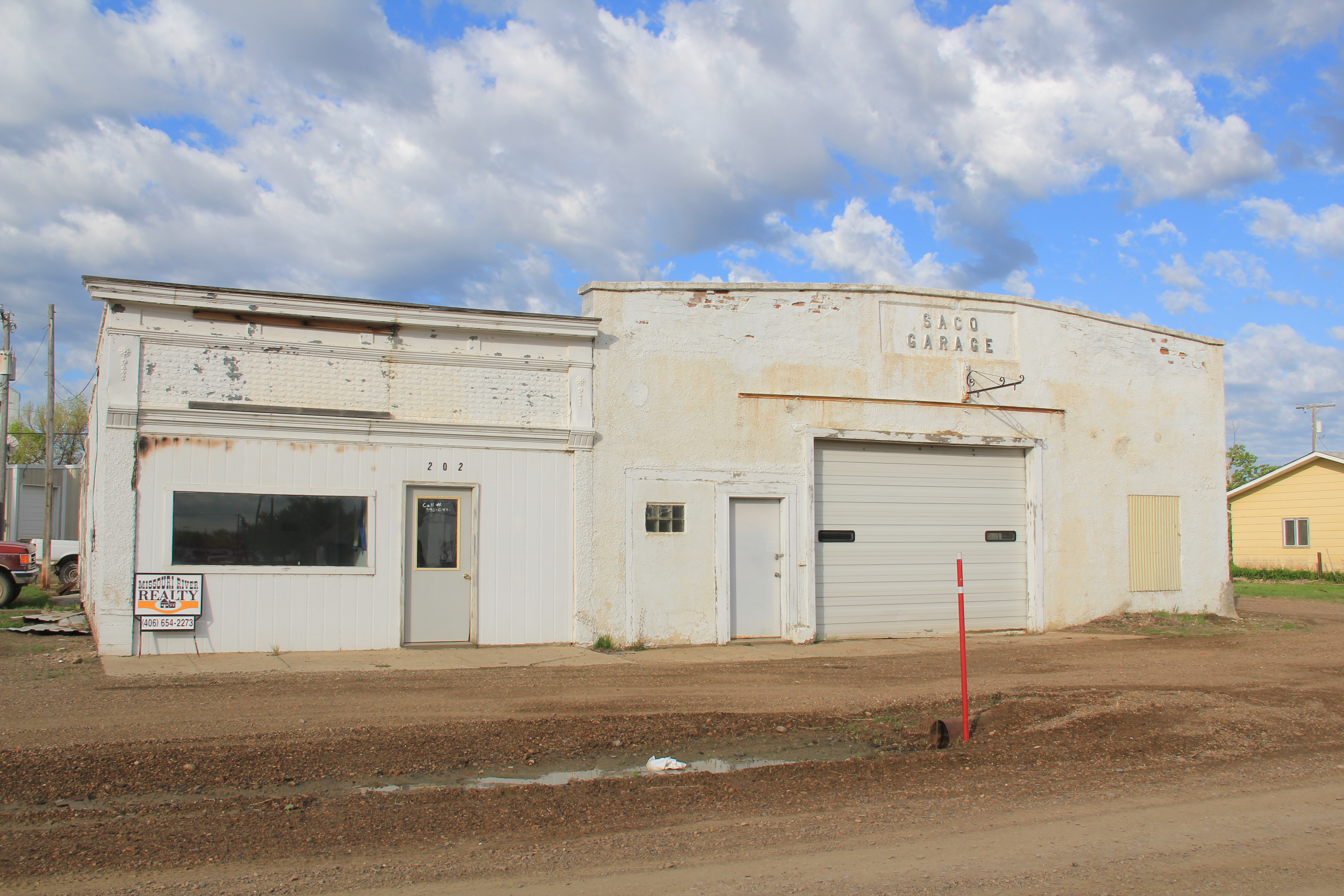
Other one-story buildings on the highway have also been demolished to make way for new prefab structures, but on the streets behind US 2 a good bit of historic Saco remains, from lodge buildings to garages.

Image

Image

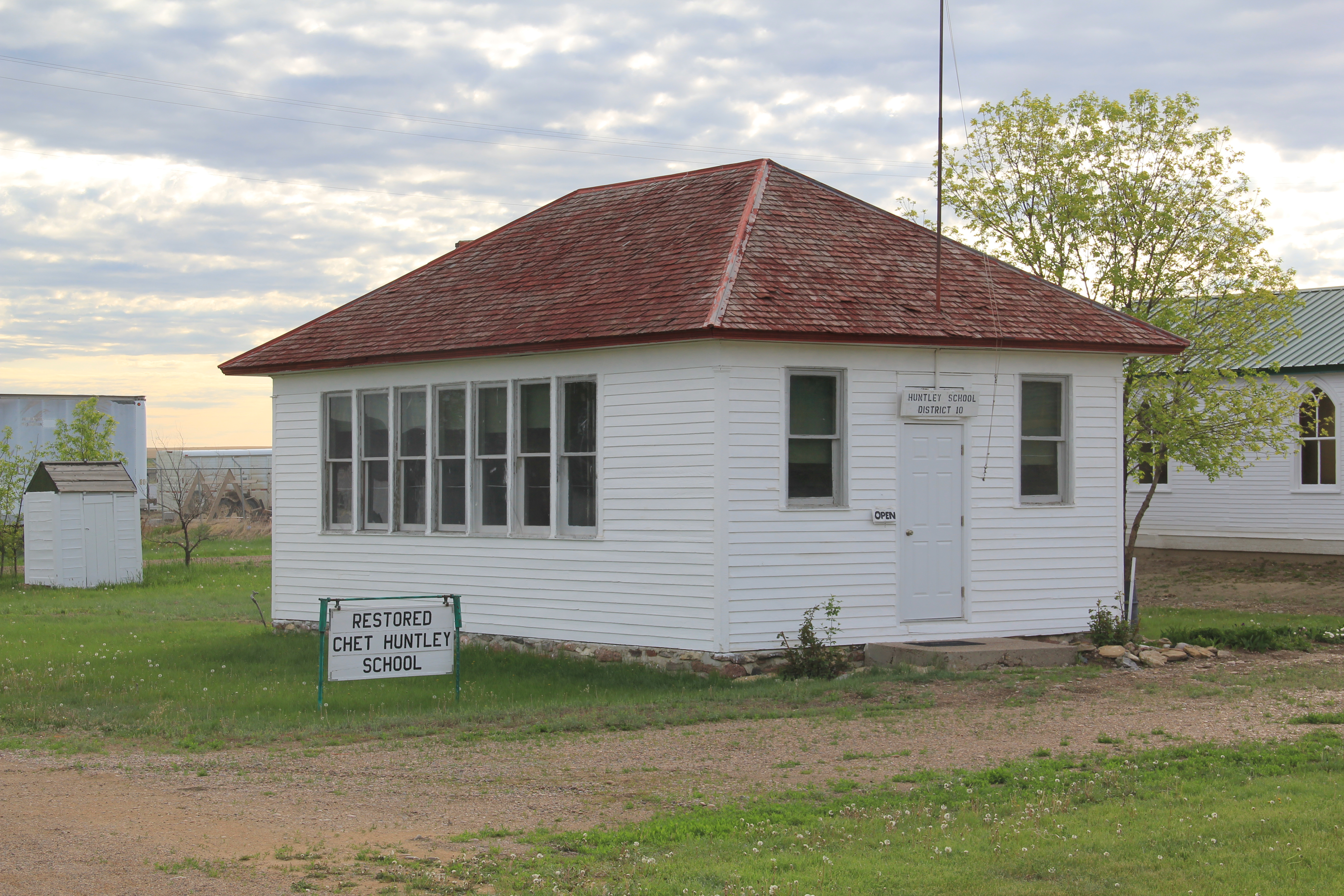
Saco in 1984 even had a historic attraction–the one-room school that Chet Huntley attended when he grew up in this part of Phillips County in the early 20th century.  In 1984 the Huntley school was worthy of a stop–because of the fame of Chet Huntley, who also wrote well of the place in his memoirs.  But now few stop to look, I was told–because no one recalls who Chet Huntley was.  He was a legendary newsman of his time, and his NBC program once ruled the airwaves.  Then CBS named Walter Cronkite as its evening news anchor.  He is the name people still speak of in the 21st century.  Chet Huntley has been forgotten. 

Image


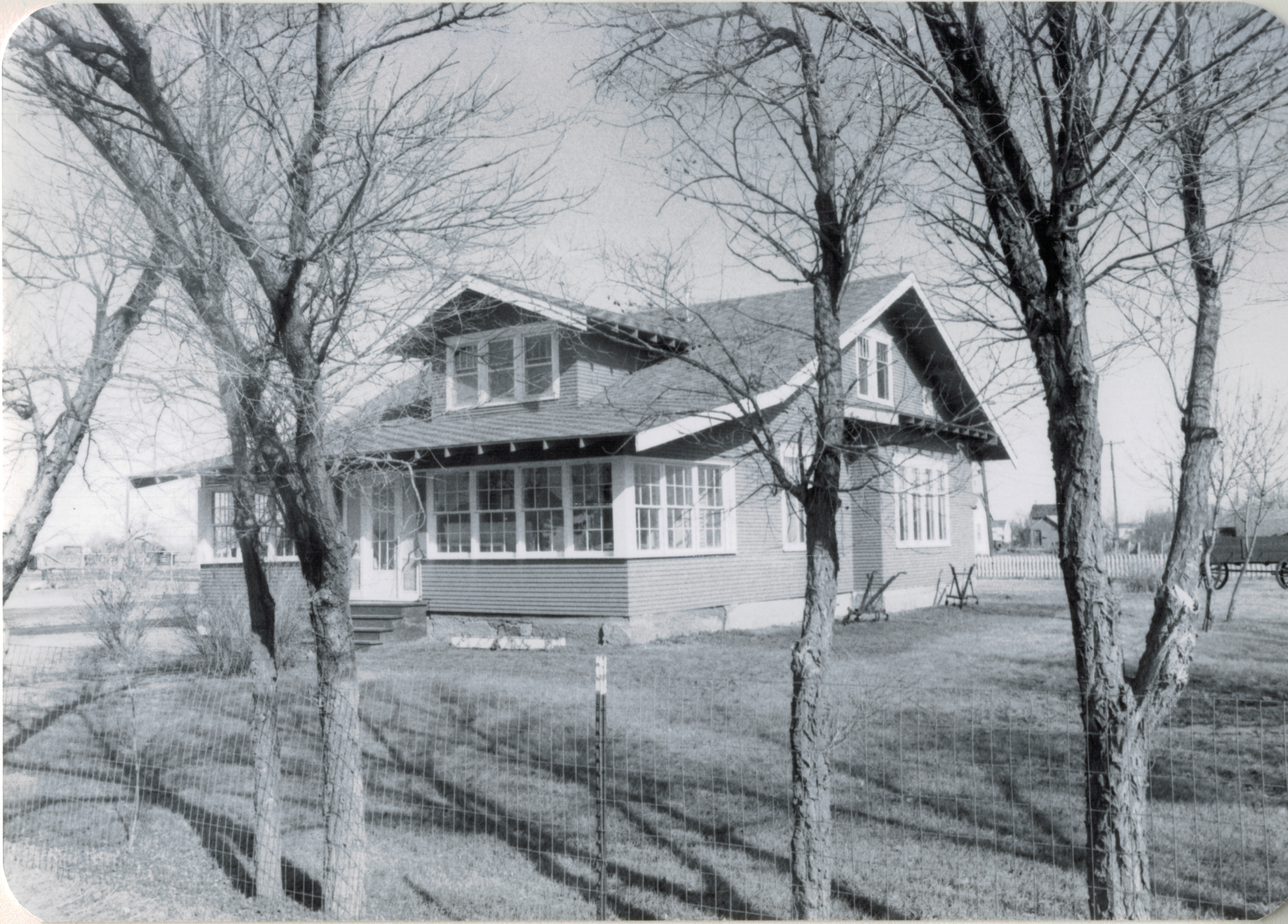
My last stop in Saco in 1984 brings this brief narrative to a happy ending.  One resident wanted to show off his home–an attractive bungalow.  We explored the place and looked over the blueprints–from Sears Roebuck–that his family used to build the place in the second decade of the 20th century.  100 years later, the house remains, as attractive as ever. 

Image


Image

Families remain devoted to Saco, and while its time as a commercial stop is diminished from the early 20th century it remains a community adding new layers of history to this place on the Hi-Line.

Image


Montana’s Civil War Veterans: Dillon’s Mountain View Cemetery

As a series of feature articles in the Great Falls Tribune have emphasized for the past 3 years, Montana does have a Civil War story, just one that has been forgotten, even neglected over the decades.  To be sure like most people exploring the Montana landscape, I too had trouble seeing those elements–outside of General Thomas Meagher’s commanding statue in front of the State Capitol in Helena.  But as I have been back in the Big Sky Country the last three years, I have found many places that help tell the state’s story in the years that transformed the United States into the country we know today.  It is more than the the Civil War Sesquicentennial that drove my greater attention–in Tennessee I am the co-chair of the state’s Civil War Sesquicentennial Commission, and here in the Volunteer State it is often all about the Civil War.

To mark Montana’s Civil War landscape, and to honor the many veterans who have served their communities, their state, and their country in this week before Veteran’s Day, I want to draw your attention to a truly exceptional place–the Mountain View Cemetery in Dillon, Montana.

Image

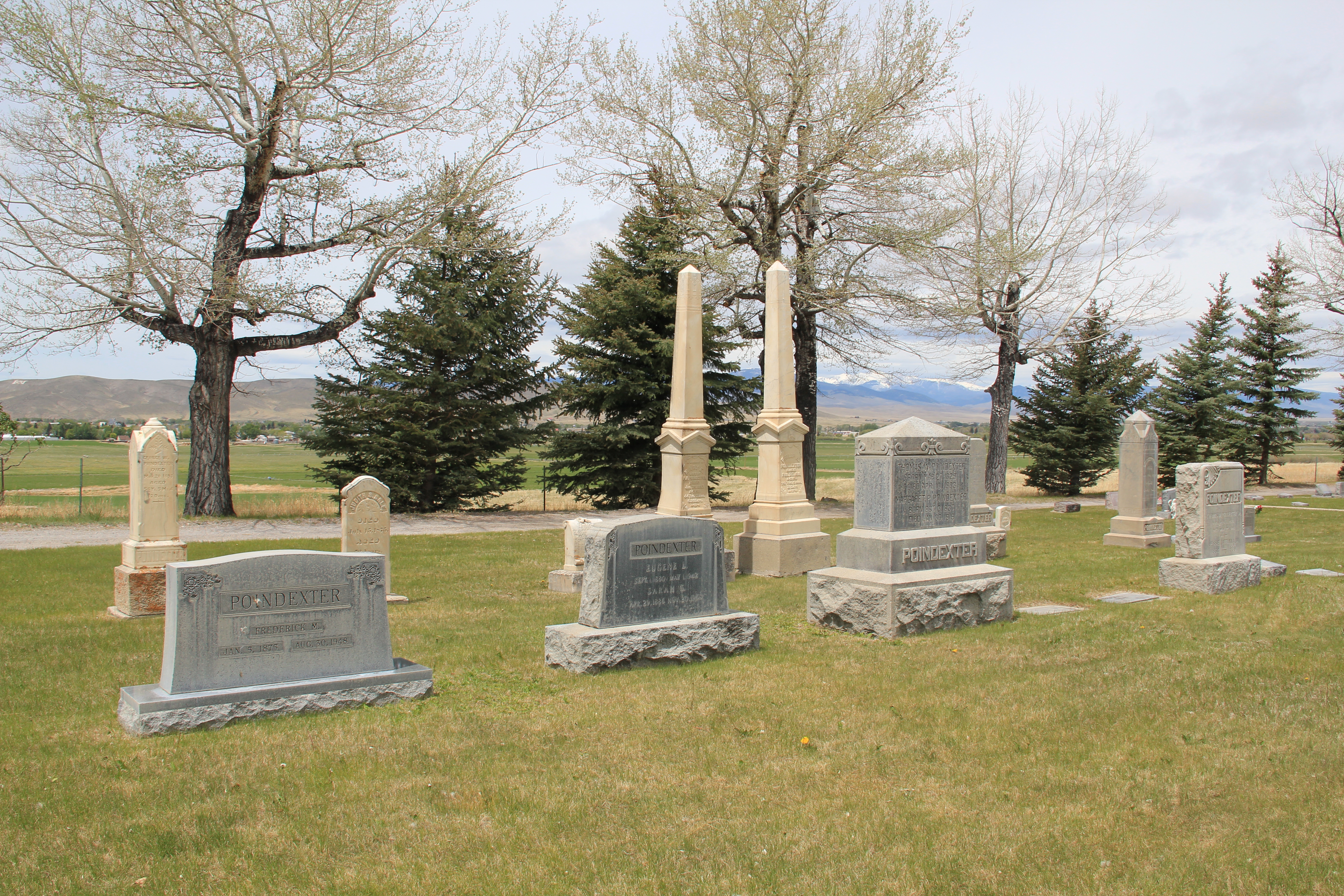
The cemetery contains a wealth of grave markers and statuary from the late 19th and into the 20th centuries.  The view from the cemetery is truly inspiring as well–it is among the best maintained community cemeteries in western Montana.

Image

IMG_3635IMG_3636

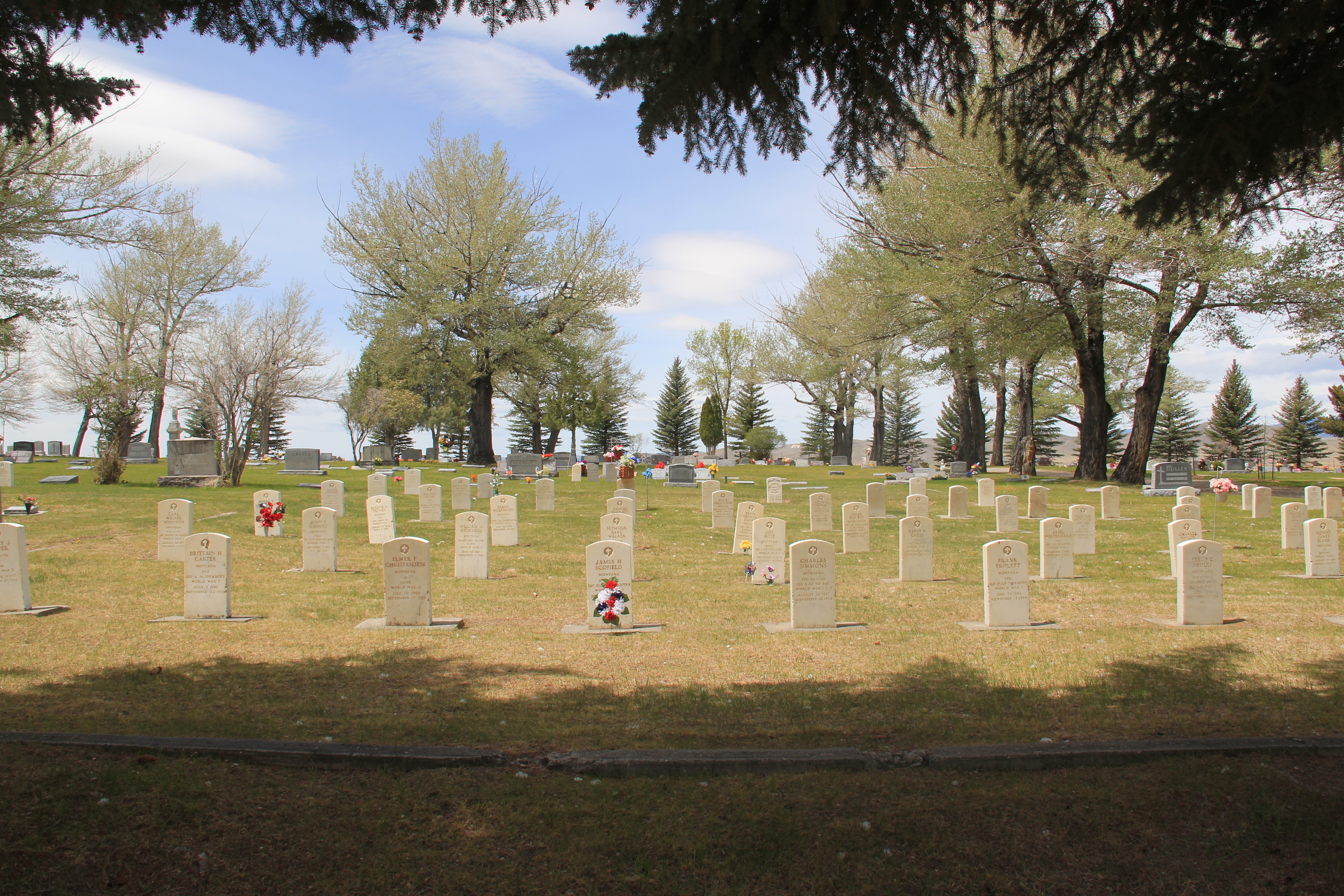
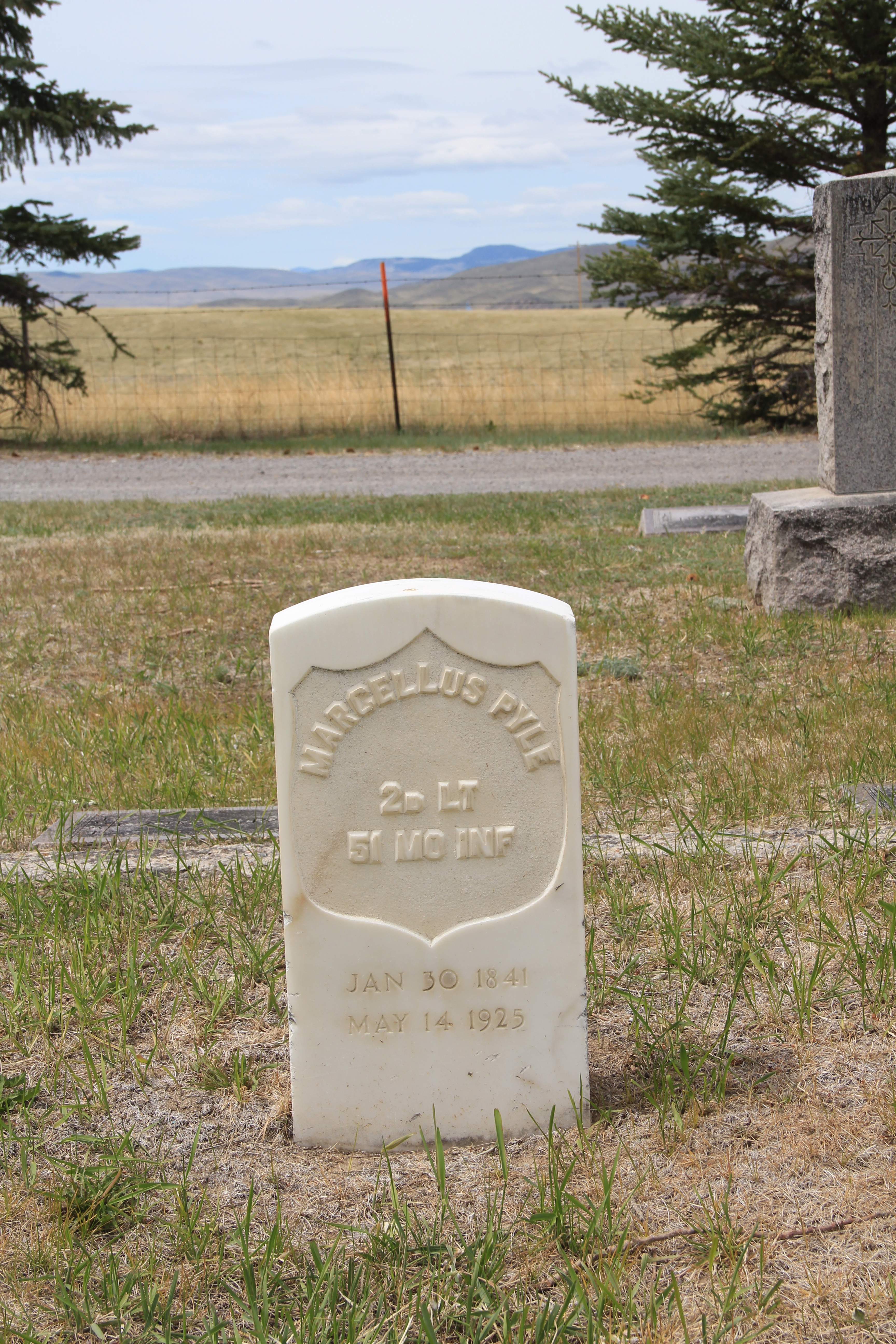
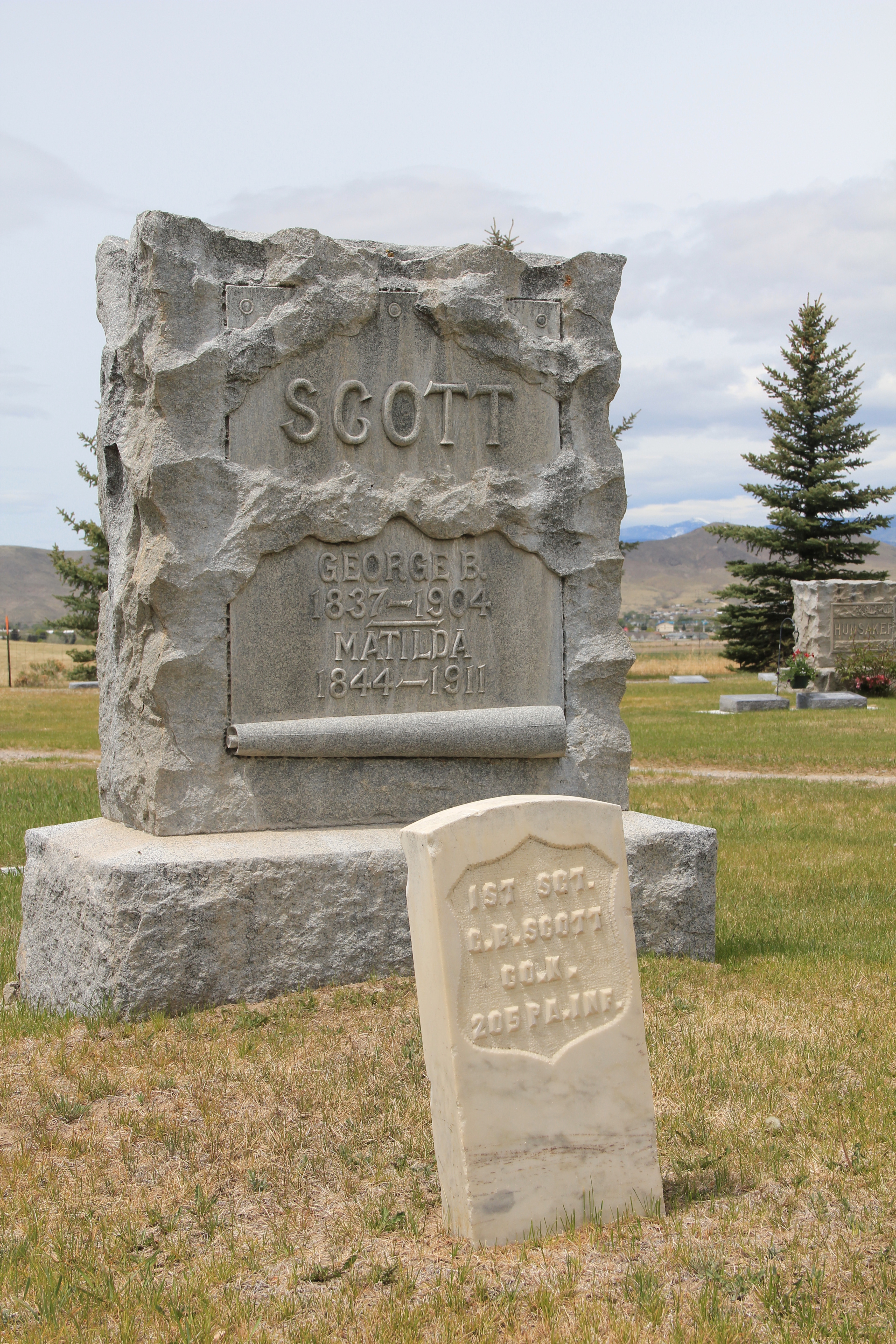
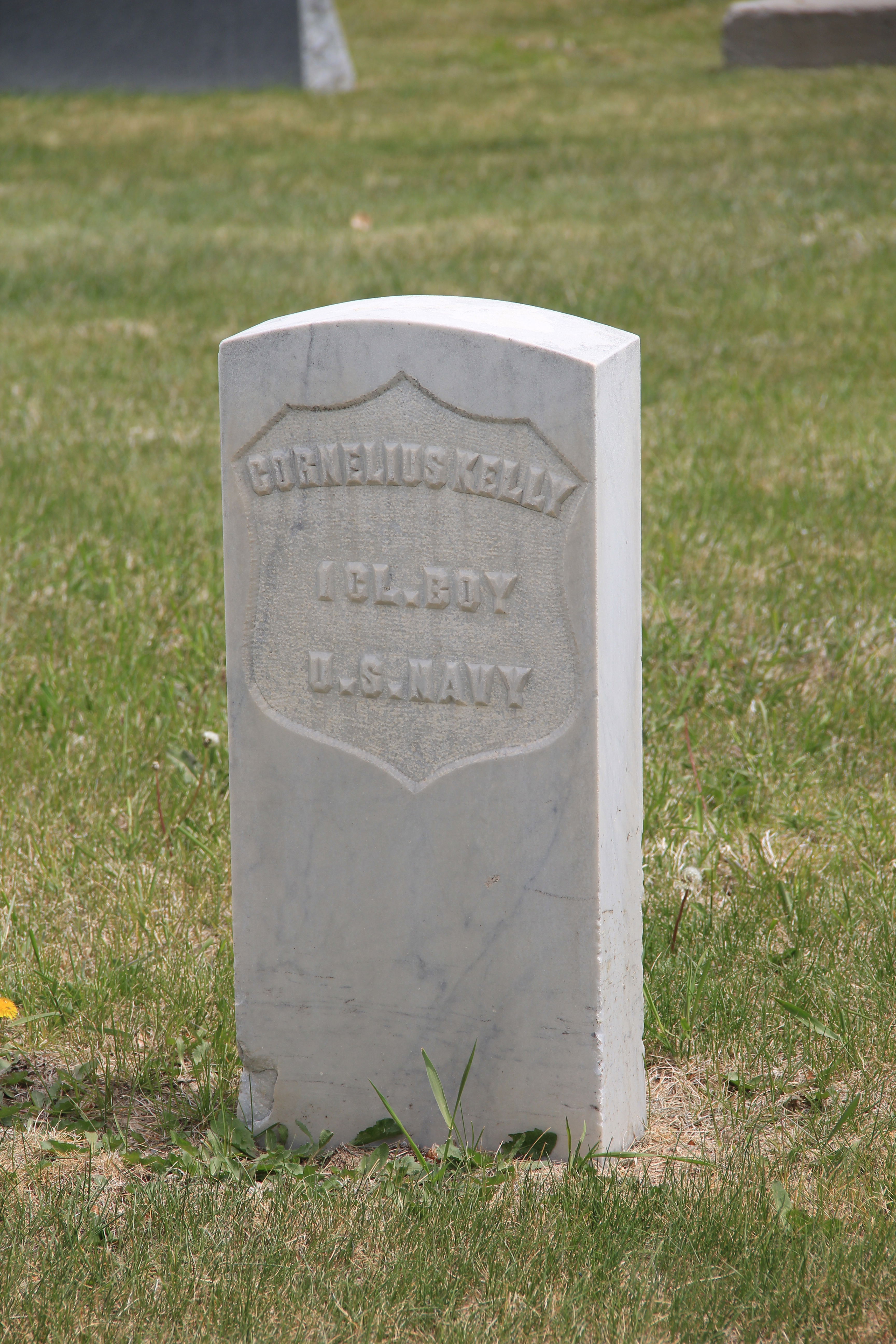
What is most striking about Mountain View Cemetery is its attention to veterans and the number of former Union soldiers buried within the cemetery.  The standardized U.S. Army shield grave marker, with the soldier’s name and his unit listed, is found in abundance at Mountain View throughout the older parts of the cemetery.

IMG_3633

Here is just a sampling of the Civil War veterans memorialized at the cemetery:

IMG_3657    IMG_3655

IMG_3652  IMG_3656


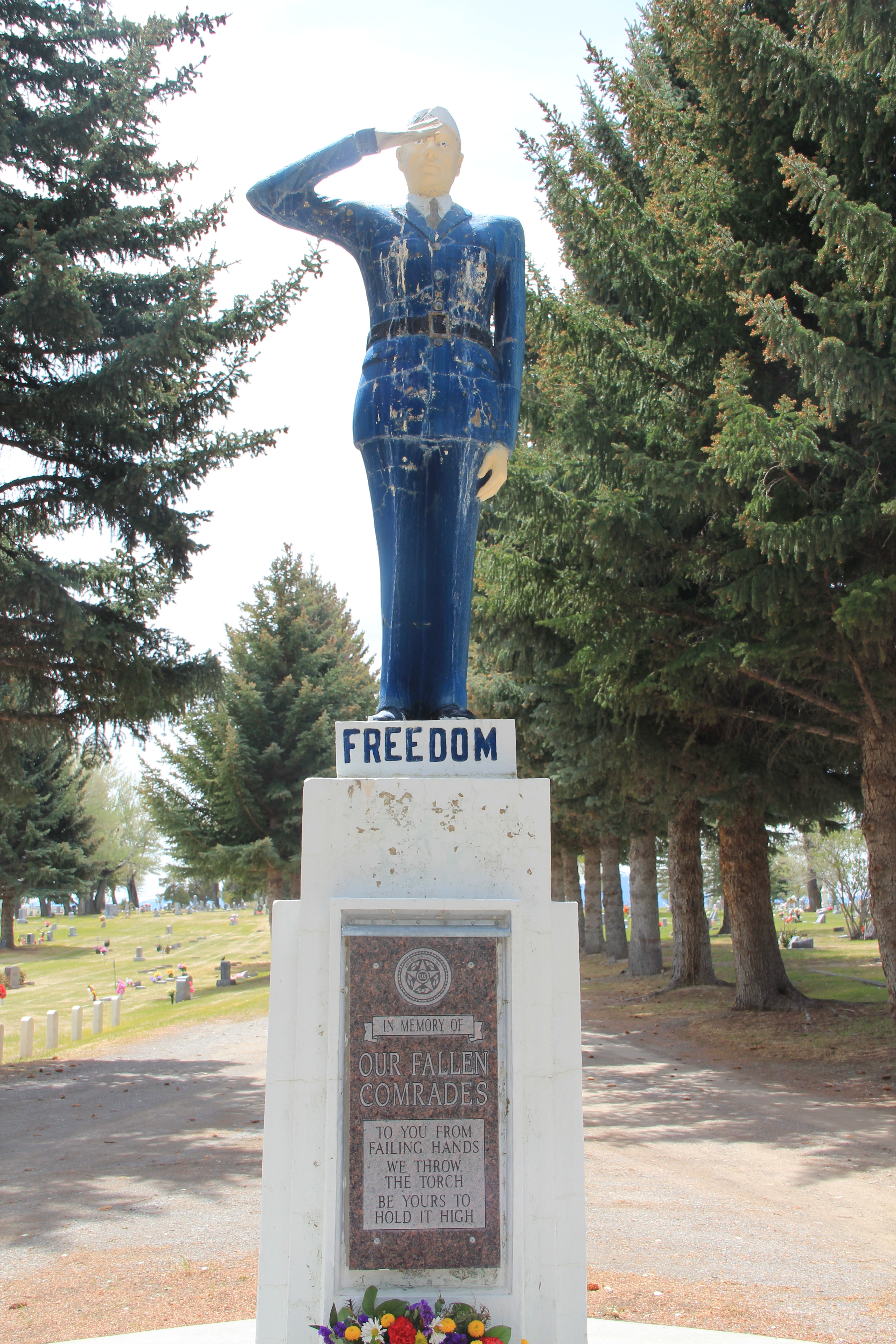
The most remarkable tribute to the veterans at Mountain View Cemetery comes from the mid-20th century:  a somber tree-lined path to veterans from more recent wars, heralded by a statue calling for freedom, honor, and justice, values that drove those federal soldiers in the Civil War and values that our veterans today take into fields of conflict across the

IMG_3625 IMG_3626

the world.  Thank you all veterans for your service to our nation.


Discovering the “Montinental Divide”: Circle

Circle, the county seat of McCone County and an important crossroads in eastern Montana, is another of the towns along the “Montinental Divide.”  It is also one of my favorite places in the region.  I first encountered the dusty streets of Circle 29 years ago, when I spent a night at the Gladstone Hotel.  This two-story frame building, built in the 1910s to serve businessmen and new residents who were flocking to the region by hundreds, even thousands during the decade’s homesteading boom, was a rarity in 1984. Many Eastern 

Image


Montana towns had long ago lost their homesteading boom-era hotels or boarding houses.  Circle still had theirs, and one that literally creaked of history as you walked its hallways.  Clearly the Gladstone, listed in the National Register of Historic Places, is now closed–and awaiting a new future.  Perhaps the expanding oil boom will convince someone to revitalize the property, which occupies one of the town’s four central corners, and give it new life.

Image


Another reason I liked Circle was its museum, and especially its director back in 1984 the rather legendary Orville Quick.  Orville had a passion for his community and its history that I

Image


had never encountered before, and have rarely encountered since.  The museum combined

Image


a rather eclectic collection of local items, memorializing the homesteading era, with the region’s preference for building museums, starting with the town’s former Northern Pacific Railroad passenger station.

The museum has expanded significantly since my last visit in 1988.  Recognizing that Circle is an important crossroads for heritage tourists traveling the region’s backroads, it has multiple interpretive kiosks identifying important places and key themes.

Image


And to one side of the museum and behind the kiosks is a set of sculptures interpreting the deep, deep past when dinosaurs roamed this land.

Image


Of course there is much more to Circle than an aging hotel and a fascinating local museum. The McCone County Courthouse (1949), designed by the architectural firm J. G. Link of Billings, is a late New Deal Moderne styled building, seemingly more at home, architecturally, in the 1930s than with the Cold War era.

Image


Across the street is the town’s Carnegie Library, still a vital community institution.  Good watering holes abound–across from the Gladstone Hotel is my favorite from 1984, the Corner Bar.

Image


The McCone County Fairgrounds hosts one of the region’s best rodeos every summer and then out at the airport is yet another rare historic property–the military’s 1940s radar and radio substations that once could be found at small airports throughout the state, helping to guide planes to the more important base at Cut Bank.  Kate Hampton of the Montana State Historic Preservation Office asked me in 2012 to keep my eyes out for these resources and, while it is more difficult just to drive into airport property today than in the past, the Circle location seems to be another of these properties that help to tell the state’s World War II story.

Image


Image


Mr. Hagermann’s “montinental divide” is a fascinating concept, and if it leads you to Circle–have fun.  Great town:  here you see only some of the highlights.

Looking at the “Montinental Divide”: Ingomar

Ingomar was another town identified in last week’s Great Falls Tribune article about the “monumental divide”–the vast landscape in central and eastern Montana defined by the drainages of the Missouri and Yellowstone rivers.  Ingomar, in Rosebud County, is a Milwaukee Road town located along U.S. Highway 12.  If you know nothing about Montana, that sounds like a fairly central location, and that the town, by extension, must have some size to it.  

Image


The opposite is true.  Ingomar is a tiny place, with a handful of residents, but one of the most famous places in eastern Montana due solely to the Jersey Lilly Bar–one of the state’s iconic community centers and watering holes.

Image 

The Jersey Lilly is the town’s former bank, built in the first decades of the 20th century when hopes for this place as a rising town along the Milwaukee Road were at their highest.

Image


But the homesteading bust of the 1920s was especially cruel in this northern part of Rosebud County.  The well-designed brick bank found a second life as a bar, serving locals primarily but also those adventuresome travelers who used US 12 to crisscross the region. I first came here 30 years ago–the ramshackle wood awning and posts existed then, giving the place a Wild West look that seemed out of place then but now with age seems perfectly legit.

Image


Thirty years ago, the local school still served students; it survives but now as a “Bunk n Biscuit” and proclaims itself as the only place to sleep within a 100 miles.

Image


Ingomar has other historic buildings that remind you of past prominence, including a faded sign on a general merchandise and equipment store and especially the town’s extant Milwaukee Road depot, now a private residence.

Image

Image

Indeed, the residents use an old train car of the Milwaukee Road to identify its roots in the railroad age–good thing since the tracks long disappeared here after the Milwaukee went bankrupt over 30 years ago.

Image


Despite its isolation, and the bust of the railroad, Ingomar has lasted better than many towns of the homesteading era.  Give thanks to local residents who won’t let the town wither away and especially to the Jersey Lilly, one of the state’s most rural National Register properties but certainly one of the places you want to visit along the “montinental divide.”

Image

Looking at the “Montinental Divide”: Broadview, Montana

I hope you saw a great story in this week’s Great Falls Tribune about the “montimental divide.”  It is a phrase coined by Doug Habermann of Montana State Parks, to discuss the landscape of eastern Montana created by the divide between the drainages of the Missouri and Yellowstone river.  Don’t want to steal the Tribune’s and Habermann’s thunder, so I encourage you to look up the article.  I am going to riff on some of the places Habermann outlines along the divide–especially the small towns and rural landscapes.  I fully agree–and many of you know I have said so for many years–that eastern Montana has many special places and compelling landscapes.  That is why I so enjoyed the article–Habermann and the Tribune highlighted places that often get forgotten when folks speak of the Big Sky Country.
Let’s start with one of the towns that many Montanans speed by–at least those in Billings heading north to central Montana via Montana Highway 3.  Broadview was one of the railroad towns created in northern Yellowstone County once the Great Northern Railway took control of the state’s railroad lines at the turn of the last century.  This image of a Burlington Northern Santa Fe train heading to Billings just south of Broadview.

Image


In the fall of 1990 James J. Hill of the Great Northern announced plans to build the Great Falls and Billings Railway that would connect the Great Northern and the Northern Pacific Railroad and then connect both lines to the Chicago, Burlington, and Quincy in Billings.   Finally the city would have that northern rail connection businessmen had wanted since 1882-1883.  The Billings Gazette proclaimed that the new line “would soon make Billings the trade center of eastern and central Montana.” That prophecy became true–for reasons more than just the railroad line.  Broadview is now the largest of those rail towns created north of Billings in Yellowstone County.  

Image


The town’s extant, and nicely preserved, Great Northern standardized design passenger depot is a reminder of the railroad’s impact on the region.  When you pull back from the depot and take in an overview of the townscape, you see the typical traits of the region’s built environment, from the grain elevators to the small scale of the other buildings to the general symmetry of the town layout.

Image


Image


The still thriving local school, home to the Pirates, speaks to the continued vitality of the community, despite its relative proximity to Billings.  Broadwater is on the edge–of Yellowstone County and of the “montinental divide.”