
I take pride in my effort to travel the state of Montana and listen to its residents to learn about its history and its special places. And I take great pride in creating this WordPress site where I can share my findings with you. But back here in the south, few ask me about Montana history–most want to know where to go to eat and drink when they encounter the Big Sky Country. So to get into the holiday spirit(s) and have a good cheer (just wish there was some place in Tennessee to get Tom and Jerry mix), I will offer my favorite Montana restaurants–but only those in historic buildings.
I have already spoken about many favorites, such as the Grizzly Bar in Roscoe (above) and the Oxford Bar and Double Front Cafe in Missoula, the M&M Bar and Cafe in Butte, the Izaak Walton in Essex, and especially Chico Hot Springs in Pray. If you have only one stop in Montana, make it Chico–I always do.


The Izaak Walton is the only “new” restaurant in the bunch, the rest being mainstays of my field work in 1984-85. But they are only the tip of the iceberg–and I am not talking salads either.


Nope I am talking beef and booze, be in at the Wagon Wheel in Drummond (above), or the much more fancy digs of the Montana Club in Helena. Whatever you do in Montana, you don’t want to miss the beef. It would be a Dirty Shame if you did (thank you, Yaak!, below)


There are the classic supper club steakhouses of central Montana such as Eddie’s Supper Club, a stone’s throw from the gates of Malstrom Air Force Base, and Borrie’s, nestled in the Black Eagle neighborhood, both in Great Falls.


Throughout rural Montana, it is the classic cafe, always good for breakfast but really superb for pie. And you don’t want to miss Montana pie, be it from Glen’s in Florence on the western end of the state to the Wagon Wheel Cafe in Choteau to the Dell Cafe (in an old school house) in the southwest corner to the Madison Valley’s Ennis Cafe to the Eat Cafe in White Sulphur Springs (right in the middle of the state). Indeed my favorite pie stop was once the small cafe at the Dude Rancher Lodge in Billings–but I understand that place has changed in recent years.


What has really been great to experience over the last 30 years is the number of “fine” dining places to come about. In Helena, back in the early 1980s, it was On Broadway, still going strong today.
 Bozeman has boomed with many new chef-driven restaurants but of the downtown establishments my favorite for good fresh, creative food remains the Co-Op Downtown nestled within the Gallatin Block, a historic building, tastefully renovated, in the downtown historic district.

In Billings, it is Walker’s Grill–a rather newcomer on the stage but now a staple of downtown life in Billings, and a big part of its re-vitalization in the 19980s, just as its neighbor to the east, the Rex Hotel restaurant, was the first really successful adaptive reuse project on Montana Avenue, the city’s old railroad corridor.


Another railroad era hotel that has gone through various restorations before meeting a happy conclusion is the magnificent Grand Union Hotel and its bar/ restaurant in Fort Benton. Here is a place worth a long drive–for there is so much to see and explore in this mid-19th century Montana place.


I have already ranged across a good part of the state–what about the eastern third, that vast landscape north and east of Billings. Winnett on Montana Highway 200 has a great local bar/ steakhouse (below) while for an endless abundance of eastern Montana fare  head to Miles City, which is the place to go if you wonder, still, “where’s the beef” and a city that is the proud home of the famous Montana Bar.


Oh yes, let’s go way up north to the state’s northeast corner and take in the Fort Peck Hotel and its equally good lounge and restaurant. Here is a New Deal era building, set
 within New Deal landscape that forever changed the look of this region in the 1930s. Locals and tourists mix together–because the hotel is the only place to go, unless you want to backtrack to Glasgow and check out Sam’s Supper Club on U.S. Highway 2, and its equally neat 1960s roadside look.

Ready to go–hope so. At least everyone is now in the holiday mood for the feasting to come. Happy holidays, and thanks for checking out my explorations into historic Montana.
 Continuing west you soon encounter post-World War II service stations and motels, some updated, some much like they were, on the outskirts of town and then, boom, you are in the heart of Livingston, facing the commanding presence of the Northern Pacific depot complex with warehouses–some now converted to new uses–coming first and then
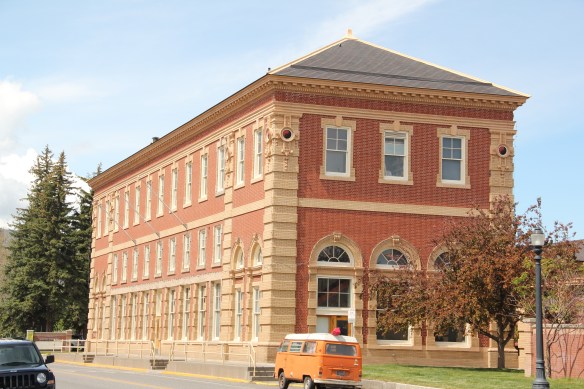
 massive passenger station itself. Opened in 1902, the passenger station was an architectural marvel for the new state, designed by Reed and Stem, who would continue on to great fame as the architects of Grand Central Station in New York City. The station, interestingly, is not Classical Revival in style–certainly the choice of most architects for their grand gateways along the nation’s rail line–but a more restrained interpretation of Renaissance Revival style, completed in red brick.
 The building is not particularly inviting for locals coming from the business district to the depot–that was not its primary audience. Rather the grand entrance is track side, where passengers headed to Yellowstone National Park could depart for food, fun, frivolity, whatever they needed before the journey into the wildness of Yellowstone.
 Travelers were welcome to use the grand covered walkways to enter the depot proper, or to take a side visit to the railroad’s cafe, Martin’s as I
 knew it back in the day, a place that rarely slept and always had good pie. The cafe changed its orientation from the railroad to the road as automobile travelers on U.S. 10 began to dominate the tourist market. Now it has been restored as a local brew pub.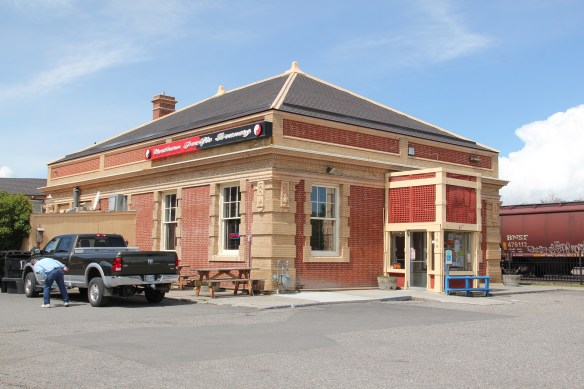


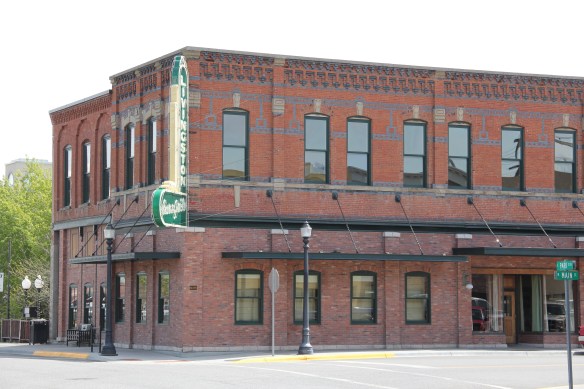 Directly facing the center of the passenger station was the mammoth Murray Hotel–a flea bag operation in the 1980s but now recently restored as a hipster place to be, especially its signature bar.

 Imagine my pleasant surprise last year when I found that Gil’s still existed but now had been converted into a decidedly up-scale establishment, far removed from the 1980s.
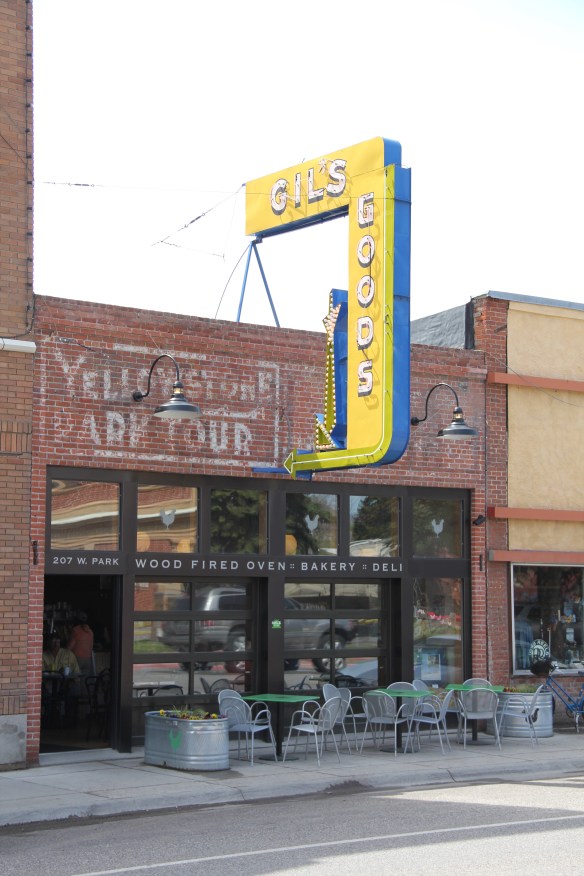 I don’t know if I have encountered a more fundamentally changed place–cheap trinkets gone, let the wood-fired pizzas come on.
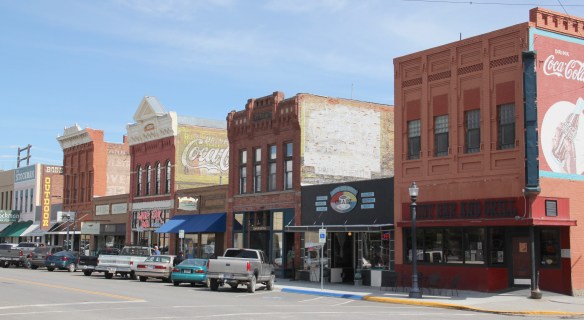 I was not so blinded in 1984 by the concept of the “metropolitan corridor” that I ignored the distinctive Victorian storefronts of Livingston–how could I since they all, in a way, fed into the tracks. But when I got to the end of that distinctive business district and watched the town, in my
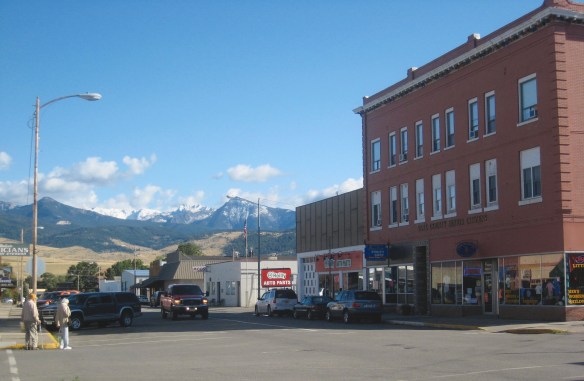 mind, fade into the Rockies, I had captured the obvious but had missed the bigger picture–that’s the next story.
 Montana's Historic Landscapes