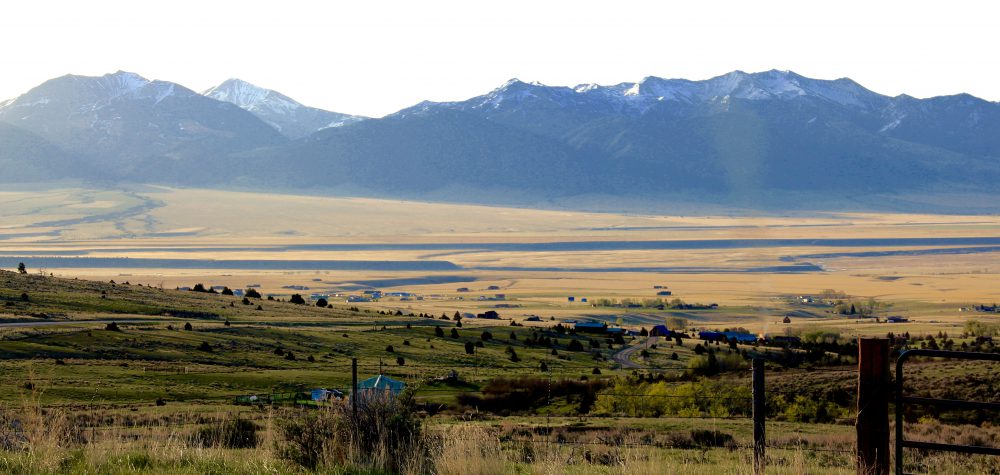
 Hot Springs, off from Montana Highway 28 on the eastern edge of Sanders County, was a place that received little attention in the survey work of 1984-1985. Everyone knew it was there, and that hot springs had been in operation trying to lure automobile travelers since the 1920s–but at that time, that was too new. The focus was elsewhere, especially on the late 19th century resorts like Chico Hot Springs (believe or not, Chico was not on the National Register of Historic Places in 1984). This section of what is now the reservation of the Consolidated Salish and Kootenai Tribes was opened to homesteaders in 1910 and first settlement came soon thereafter. The development of the hot springs as an attraction began within a generation.
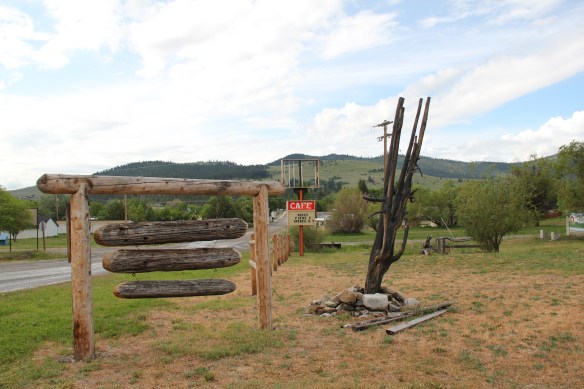 Due to the 21st century fascination from historic preservationists for the modern movement of the mid-20th century, however, Hot Springs is now squarely on the map as a fascinating example of a tourist destination at the height of the automobile age from the 1930s to 1960s.

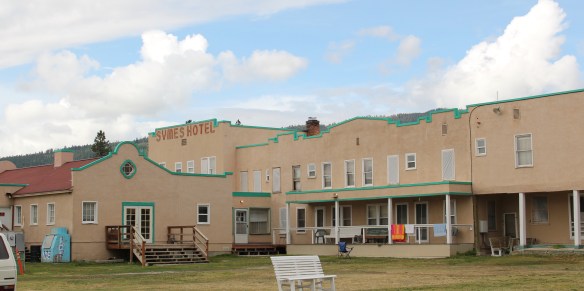
Listed in the National Register of Historic Places, Symes Hotel and hot springs takes you back to the era of the Great Depression. Fred Symes acquired the family property and opened the Mission-style hotel in 1930. It has changed somewhat over the decades, but not much. The narrow hallways of the baths, with their single tubs ready for a soak, are still in operation.


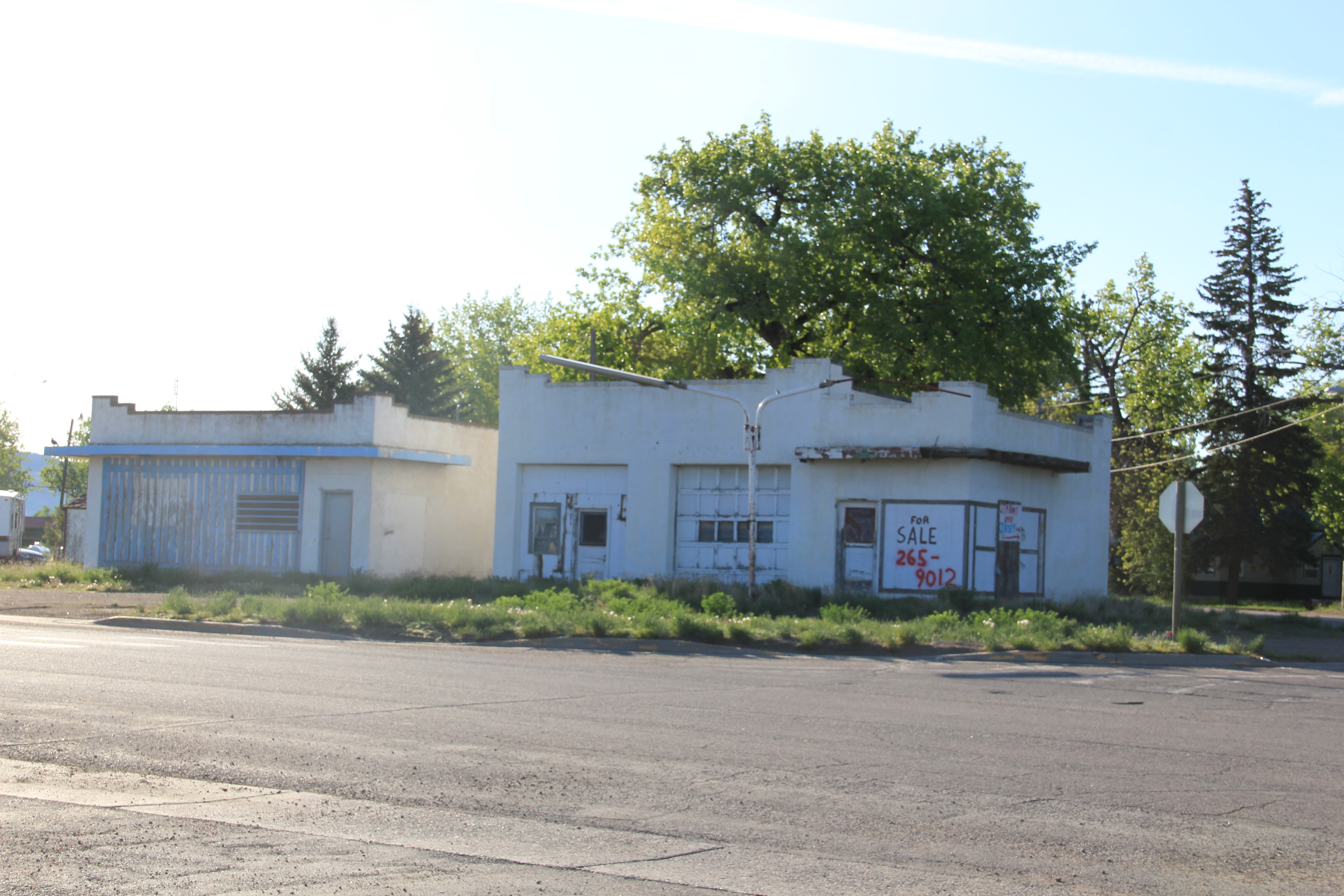
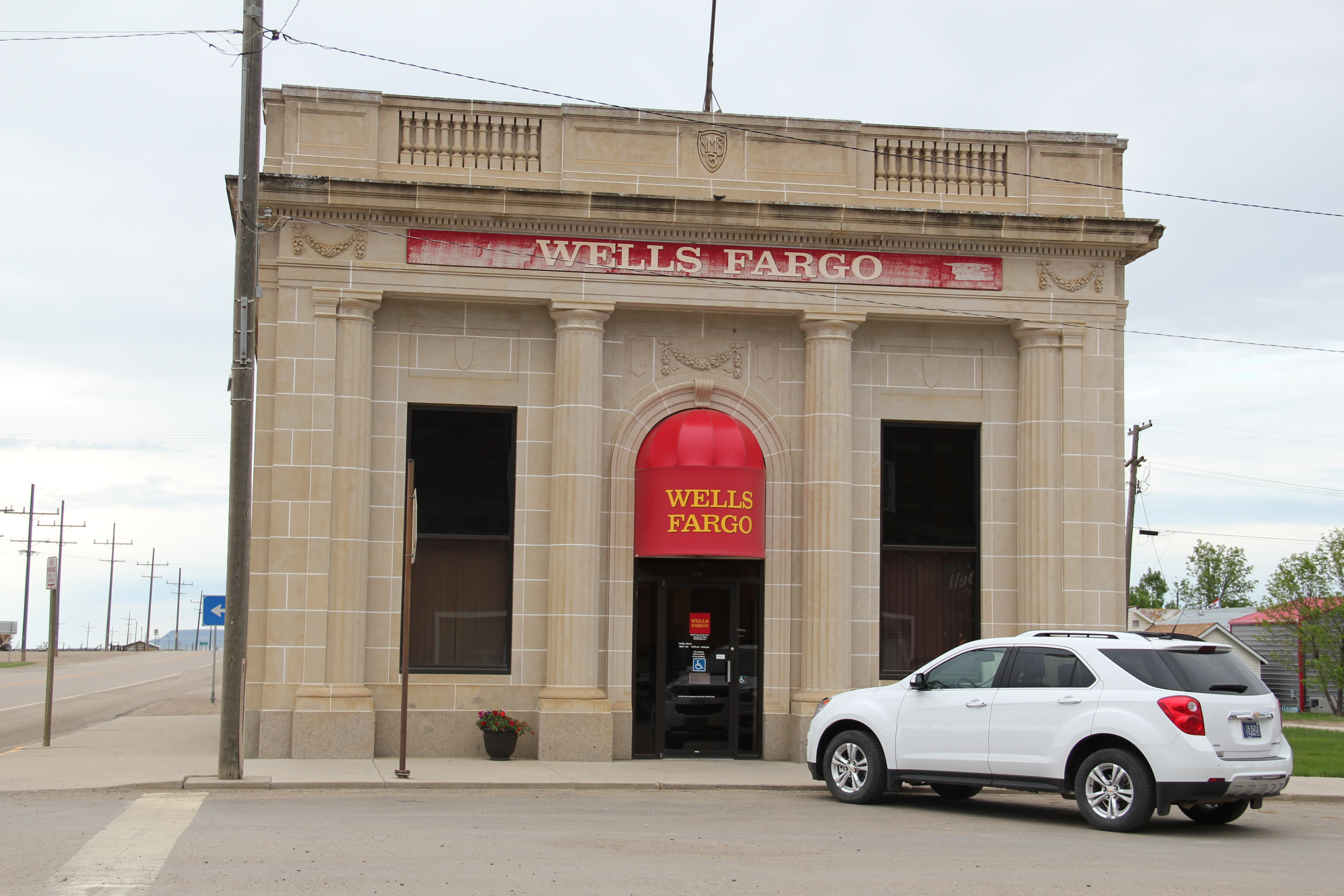
What the Symes did for Hot Springs was to make it a destination, and to give a vernacular Mission-style look to other buildings from that decade such as the old Mission style building below and other storefronts on the town’s main street.


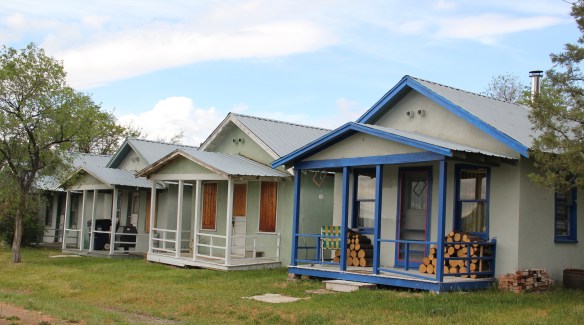
 Not everything fit into this mold, naturally. There remains a representative set of gable-front shotgun-form “cabins” that housed visitors staying for several days and various one-story buildings served both visitors and year-round residents.


Then a few years after World War II the tribe decided to invest in the town through the creation of the modernist landmark known as the Camas Hot Springs, truly a bit of the International style on the high prairie of western Montana.

From a photo in the lobby of the Symes Hotel.
This venture initially was successful and led to a population boom in the 1950s and 1960s but then as the interstates were built and the 1970s recession impacted travel choices, the Camas struggled and closed c. 1980. For the last 30 years this grand modernist design has been slowly melting away.


 The loss would be significant because few mid-20th century buildings in Montana, especially rural Montana, are so expressive of the modernist ethos, with the flat roofs, the long, low wings and the prominent chimney as a design element. Then there are the round steel stilts on which the building rests.
 As this mural suggests, today Hot Springs embraces its deep past as a place of sacred meaning to the Confederated Salish and Kootenai. And it continues to try to find a way to attract visitors as a 21st century, non-traditional hot springs resort.
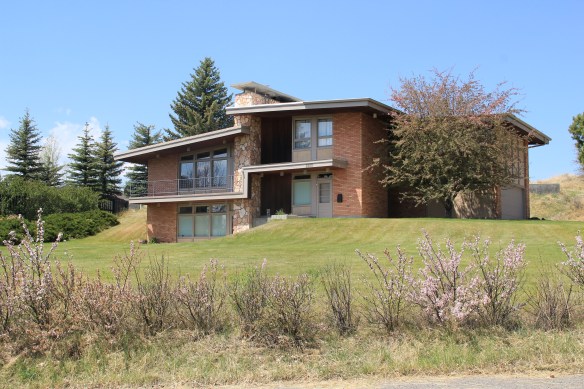 You don’t think Montana modernism when you think of Butte, but as this overview will demonstrate, you should think about it. I have already pinpointed contemporary homes on Ophir Street (above). The copper mines remained in high production during the Cold War era and many key resources remain to document that time in the city. For discussion sake, I will introduce some of my favorites.


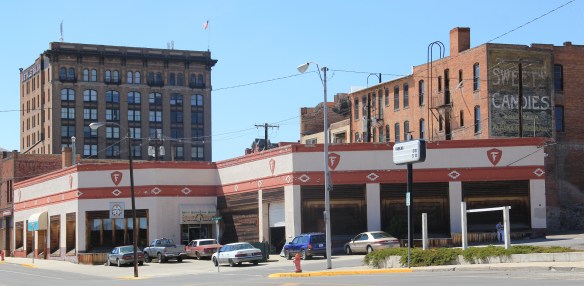 I looked at schools constantly across the state in 1984-1985 but did not give enough attention to the late 1930s Butte High School, a classic bit of New Deal design combining International and Deco styles in red brick. Nor did I pay attention to the modernist buildings associated with Butte Central (Catholic) High School.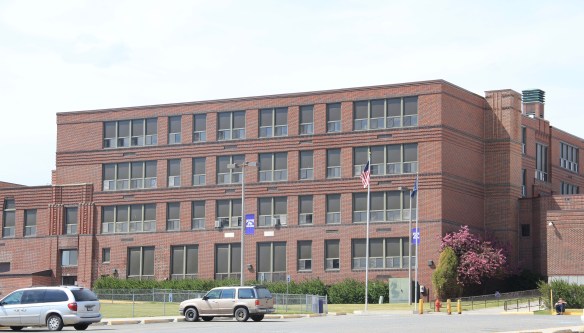


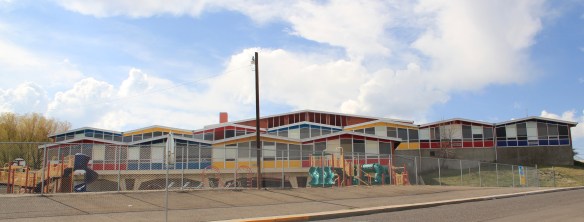


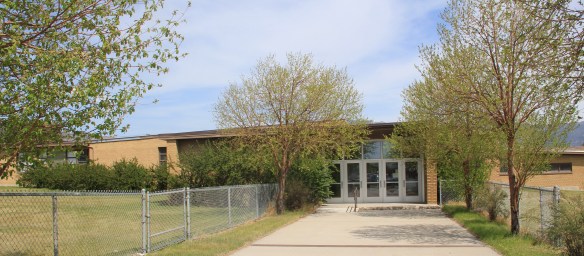

 You would think that I would have paid attention to the Walker-Garfield School since I stopped in at the nearby Bonanza Freeze, not once but twice in the Butte work of 1984. I
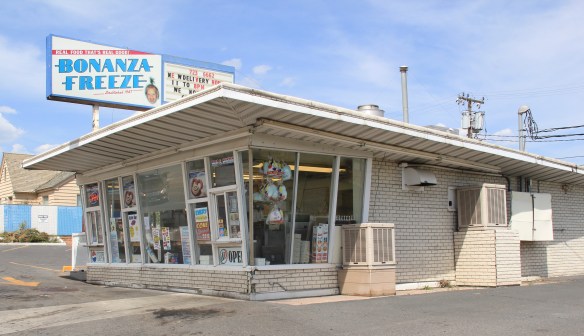 never gave a thought about recording this classic bit of roadside architecture either. Same too for Muzz and Stan’s Freeway Bar, although maybe I should not recount the number of stops at this classic liquor-to-go spot.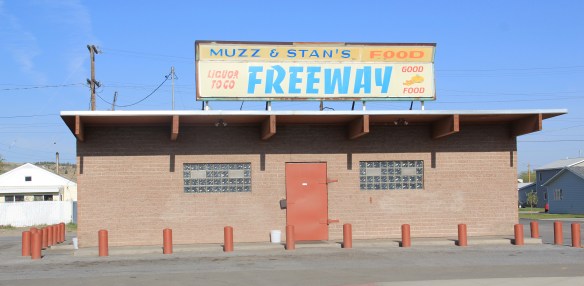


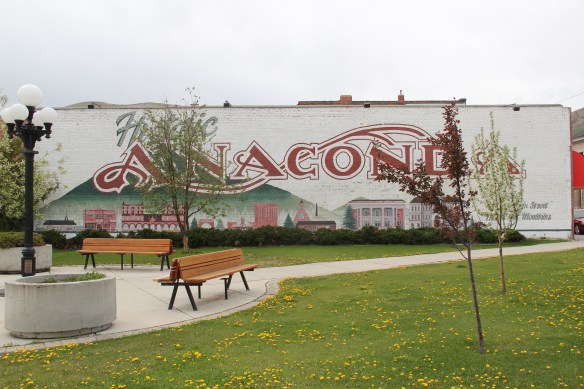 The public landscape of Anaconda has already been touched on in this blog–places like Washoe Park, the cemeteries, or Mitchell Stadium for instance. Now I want to go a bit deeper and look at public buildings, both government and education in this smelter city.
 Let’s begin with the only building in Anaconda that truly competes with the stack for visual dominance, the imposing classical revival-styled Deer Lodge County Courthouse. When copper baron Marcus Daly created Anaconda in the 1880s it may have been the industrial heart of Deer Lodge County but it was not the county seat. Daly was not concerned–his hopes centered on gaining the state capitol designation for his company town. When that did not happen, efforts returned to the county seat, which came to Anaconda in 1896. The courthouse was then built from 1898-1900.

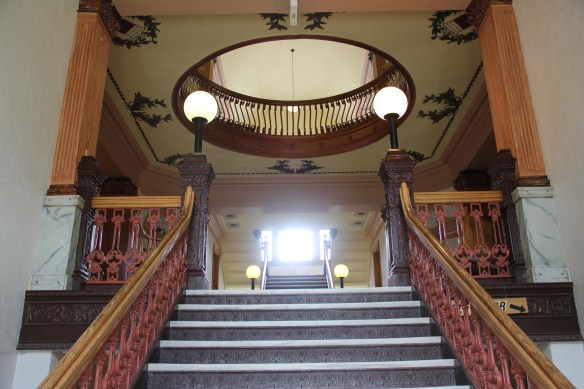
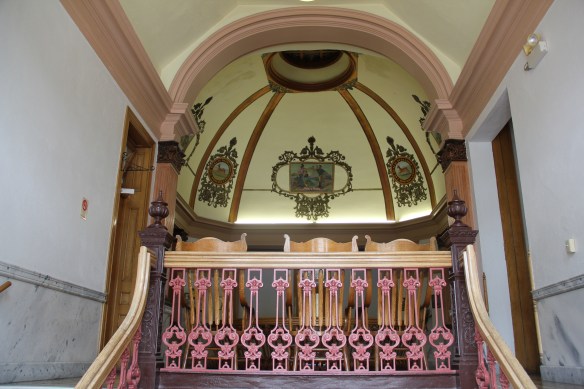
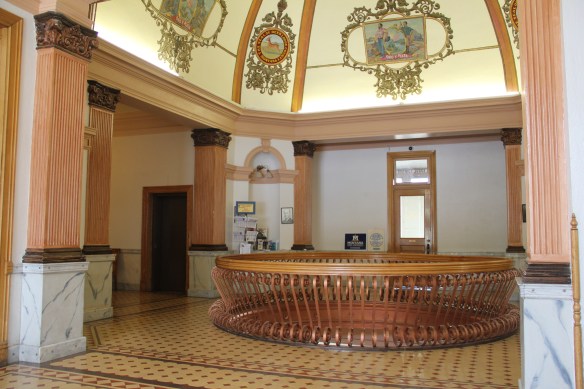
 in Montana is the lavish interior of the central lobby and then the upper story dome. The decorative upper dome frescoes come from a Milwaukee firm, Consolidated Artists. Newspaper accounts in 1900 recorded that the completed courthouse cost $100,000.
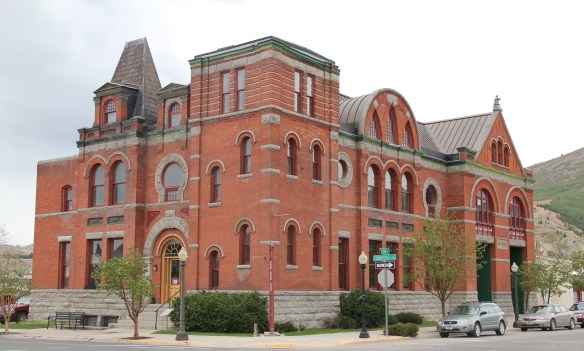 The bombastic classicism of the courthouse was at odds with the earlier more High Victorian style of City Hall, built 1895-1896, and attributed to J. H. Bartlett and Charles Lane. But classicism in the first third of the 20th century ruled in Anaconda’s public architecture, witness the Ionic colonnade of the 1931-1933 U.S. Post Office, from the office of Oscar Wenderoth.
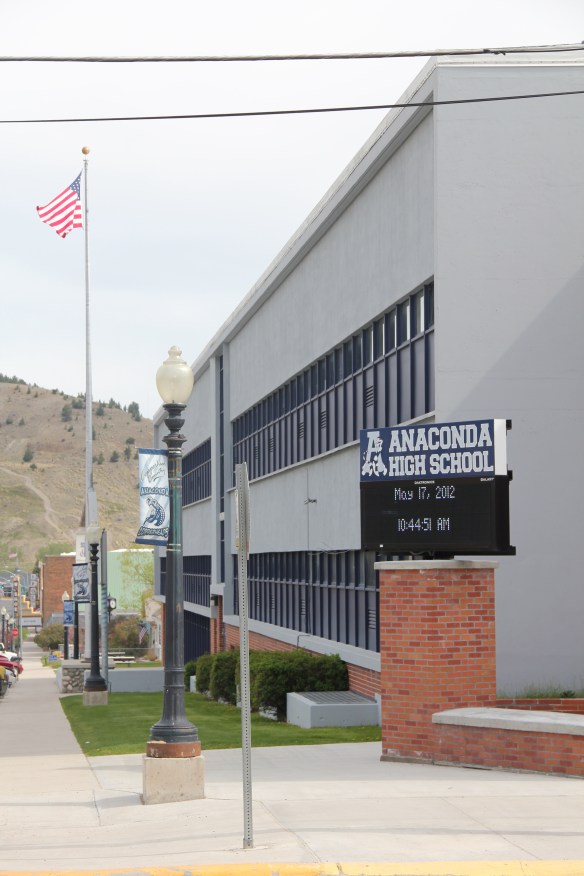
 Once Anaconda, bursting at the seams following the boom of World War II, chose to upgrade its public schools, it took a decided turn away from traditional European influenced styles and embraced modernism, as defined in Montana during the 1950s.
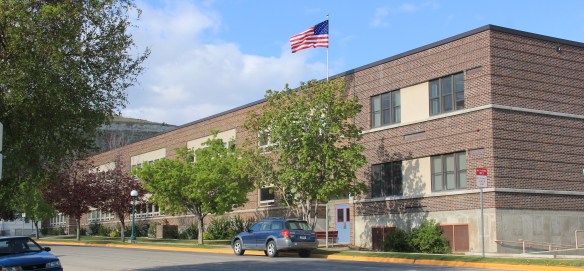 The long, lean facade of Lincoln Elementary School (1950) began the trend. Its alternating bands of brick punctuated by bands of glass windows was a classic adaptation of International style in a regional setting. The modernist bent continued in 1950-1952 with the Anaconda Central High School, the private Catholic school, now known as the Fred Moody middle school, only a few blocks away. Except here the modernist style is softened by the use of local stone, giving it a rustic feel more in keeping with mid-20th century sensibilities and the Catholic diocese’s deliberate turn to modern style for its church buildings of the 1950s and 1960s (see my earlier post on College of Great Falls).










 Montana's Historic Landscapes