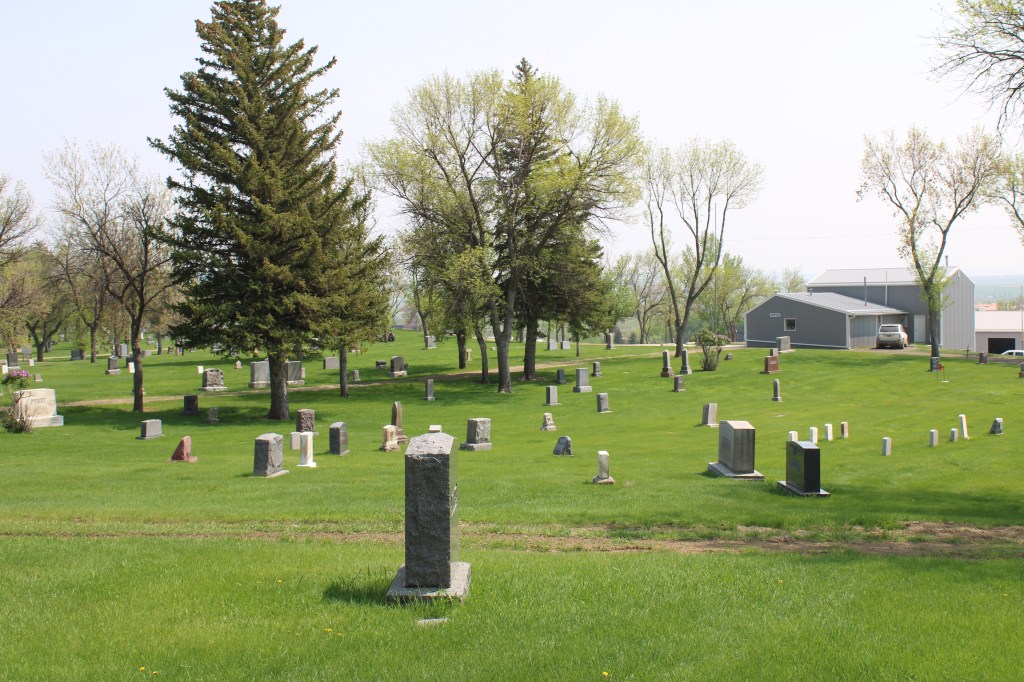
Nestled in the bluffs overlooking Havre are two adjacent historic cemeteries, Calvary (1903) and Highland (1906/7).
Entrance gate, Highland Cemetery
Catholics in north central Montana established Calvary first, taking advantage of newly located city water works to ensure that the grounds could be irrigated.
Looking north toward the Calvary Cemetery entrance. Note water works in upper right corner.
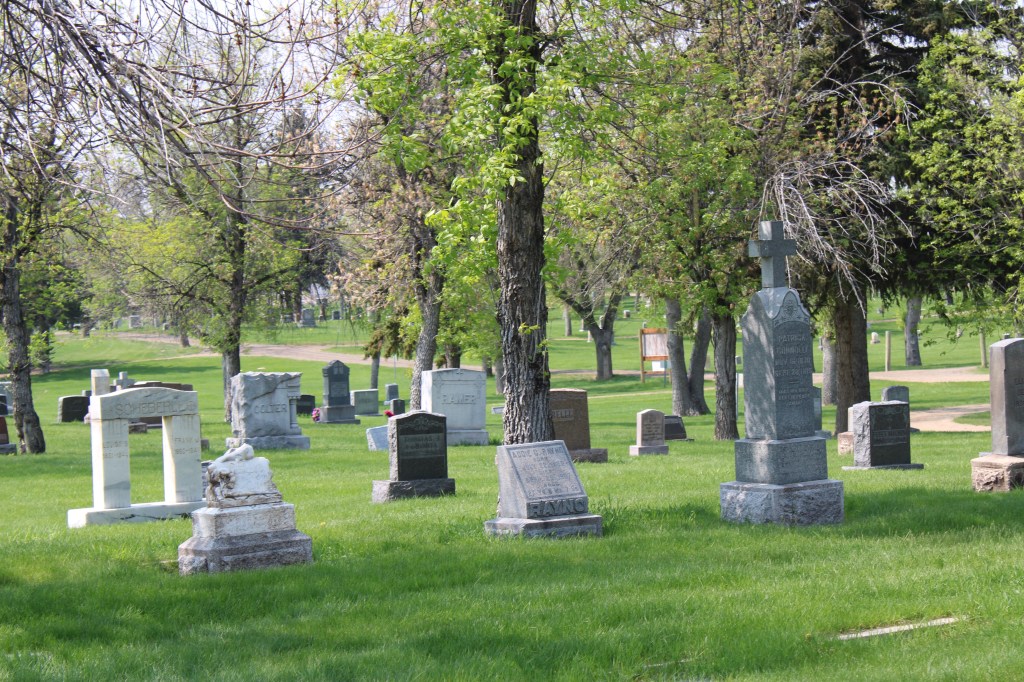
Calvary with its well manicured lawns, large mature trees, curvilinear drives and impressive view to the south set the tone for the landscaping and design of both cemeteries. Grave markers, for the most part, were modest, in keeping with the working middle class character of this Great Northern Railway division point.
Of course there were exceptions to the norm. A large Cross marks the gravesite of Judge Patrick McIntyre, one of the city’s early civic and real estate leaders who died in 1907. The classical styled marker to another of the city’s, and region’s, business leaders, Samuel Pepin, is nearby. Pepin, like McIntyre, was a Canadian who came early to Havre and developed businesses and ranches, all tied to the Railroad. Pepin died in 1914.
McIntyre markerSamuel Pepin marker
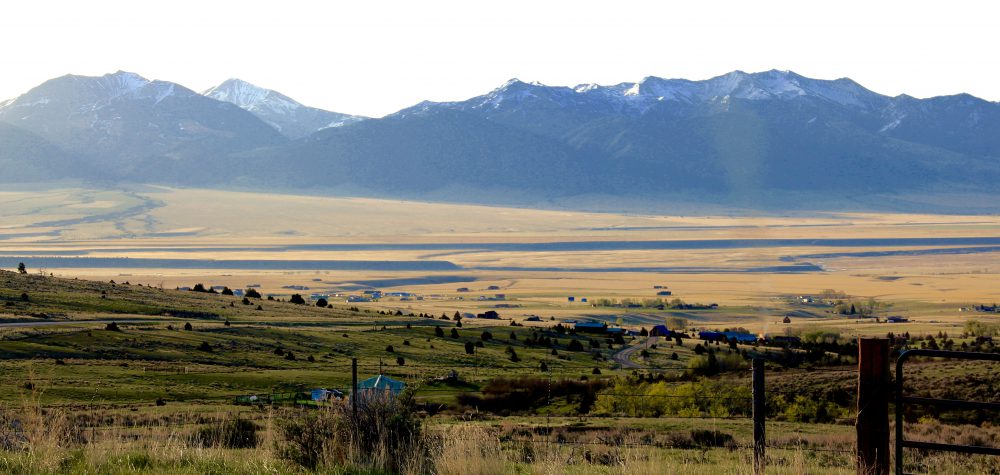
Highland Cemetery followed in the footsteps of thee catholic burial ground. Both have impressive views along the southern boundaries of the historic campus of Northern Montana University, now MSU-Northern (name change happened in 1994). The campus was established in 1929.
MSU-NorthernA panoramic view
By that year, Highland Cemetery was well established as the city’s primary public burial ground,and is still active today. Reflecting Havre’s middle class roots the cemetery is marked by rows of modest, dignified tombstones and low concrete walled family plots.
Many veterans from the 20th century are buried here, along with many tombstones marking membership in fraternal organizations from the Woodmen of the World to the Masons.
Highland Cemetery is a significant place that documents the city’s progressive response to public needs during its decade of sustained growth in the homesteading boom of the first two decades of the 20th century. Together the two cemeteries would be an excellent companion to Havre’s already established National Register-listed downtown residential district. The city does a fine job of keeping the property maintained and let’s hope that commitment stays in place for another 100 years.
July 1, 1905, the Havre Plaindealer reported that K. K. Devlin had donated three acres south of the new city reservoir for a Catholic cemetery, eventually named Calvary Cemetery. The newspaper said that engineers platted the ground on June 28, and that the first internment, the child of Joseph Gussenhoven, had been buried in the afternoon. The paper proclaimed that “The site selected is an ideal spot for a cemetery. The land slopes gently from the city reservoir to the south and east and can all be irrigated nicely from the reservoir. . . The lots will all be larger than the lots in the old cemetery [Mount Hope] thus affording ample room for trees and shrubs.”
Calvary Cemetery, May 2023
One of the engineers had already recommended to the Mount Hope Cemetery Association to secure a “cemetery site for the city adjoining the present site selected by the Catholic people. The surroundings are naturelly [sic] most beautiful. It is close to the city and at the same time in a quiet and secluded spot and when the grounds are sown to grass, and trees and shrubs adorn the driveways and walks, it will be the most beautiful burial place in the state.” Plus the city engineer added, the grounds “can be irrigated and beautified as a nominal cost.”
The newspaper closed with what could be considered the epitaph for the old city cemetery: “The expense incurred and improving the old cemetery was necessary but to beautify the place requires water and the expense of obtaining it would be beyond the reach of the city for some years to come.”
The news upset many citizens since the city had just made the effort to upgrade Mount Hope. Two weeks after the first burial at Calvary, the Havre cemetery committee reinspected Mount Hope and “returned more fully convinced than ever that the present site could be sufficiently watered and beautified at slight expense by the driving of a new points similar to those that have been so successful in the dry well system of the waterworks and the pumping of water by use of a windmill.” The committee counted 150 graves at Mount Hope and reported that the relatives of the dead did not want the bodies moved. “Efforts to raise water will at least be made before there will be any further consideration of removal,” according to the Havre Herald of July 14, 1905.
The tone was different by the fall. The Havre Herald of November 3, 1905, recorded that “the board of trustees of Mount Hope cemetery” authorized that the cemetery be put “in good shape,” with repaired fences, walks, and drives. But the newspaper also reported that “Negotiations are under way for the purchase of land for a new cemetery adjoining the Catholic grounds.” That cemetery is the present Highland Cemetery.
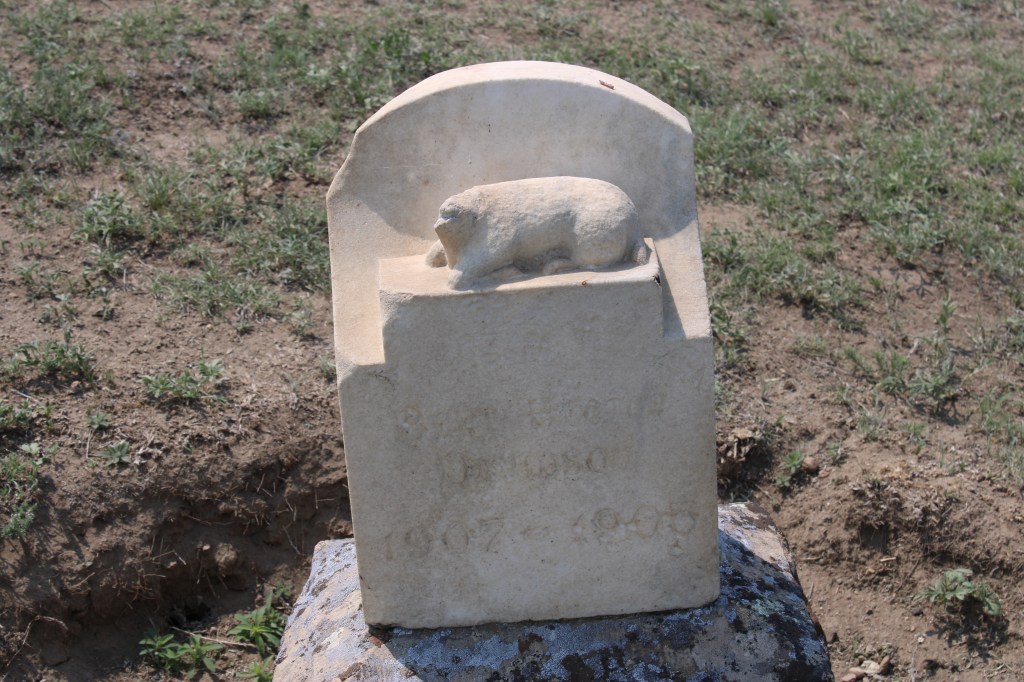
From 1905-1906 numerous burials continued at Mount Hope despite the controversy over its future. The 3 year old Margie Kaepernick was buried on July 4, 1905.
Kaepernick marker, 1905
Marian Munger and Mary Lawler were interred, respectively, in September and October. Popular card dealer P. J. “Jack Flynn” was buried about a week before Christmas in 1905. His death even brought about an ode from a friend published in the Havre Herald on February 2, 1906.
The city continued to hold its Memorial Day commemoration at Mount Hope in 1906. A detail from Ft. Assinniboine led the parade, which began at the corner of Second Street and Third Avenue, winding its way through Havre before reaching the Mount Hope Cemetery. Following the U.S. Army soldiers were: the Citizens band of Havre, Civil War veterans, Spanish-American veterans, Relief corps, Clergymen, City officials, Odd Fellows, Knights of Pythias, Eagles, Great Northern band, Shop men, and Labor unions.
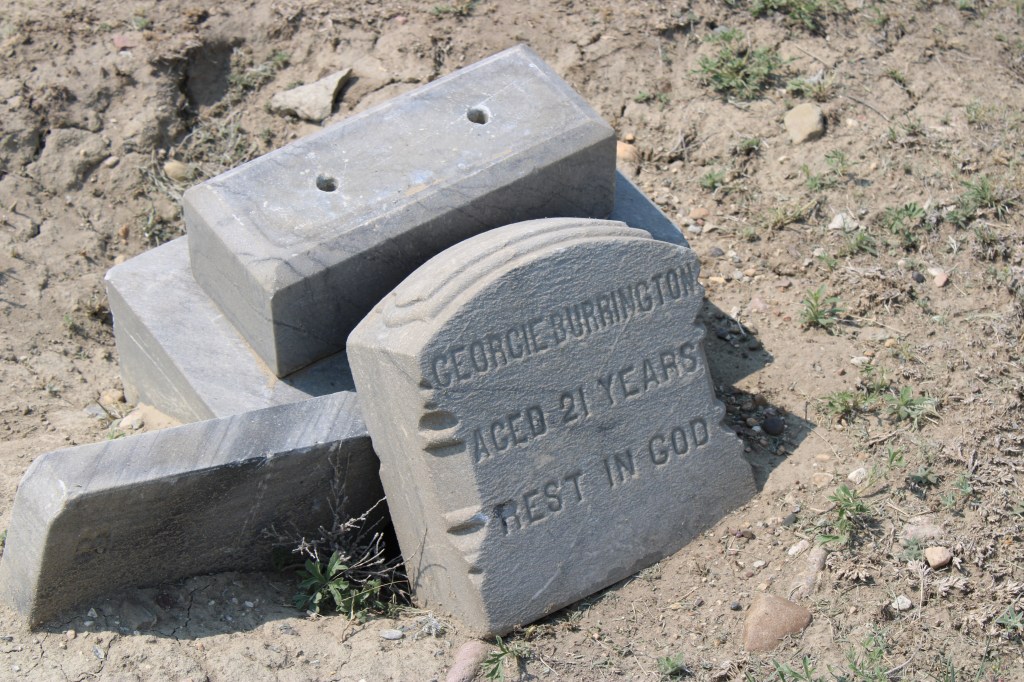
Yet as Highland Cemetery opened in 1906, joining its neighbor the Catholic Calvary Cemetery, the number of burials at Mount Hope Cemetery declined, judging from accounts published in the local newspapers. George Barrington, the son of a veteran Great Northern Railroad engineer, died in a scuffle over a pistol outside of the Gold Bug saloon. He was buried in August 1908.
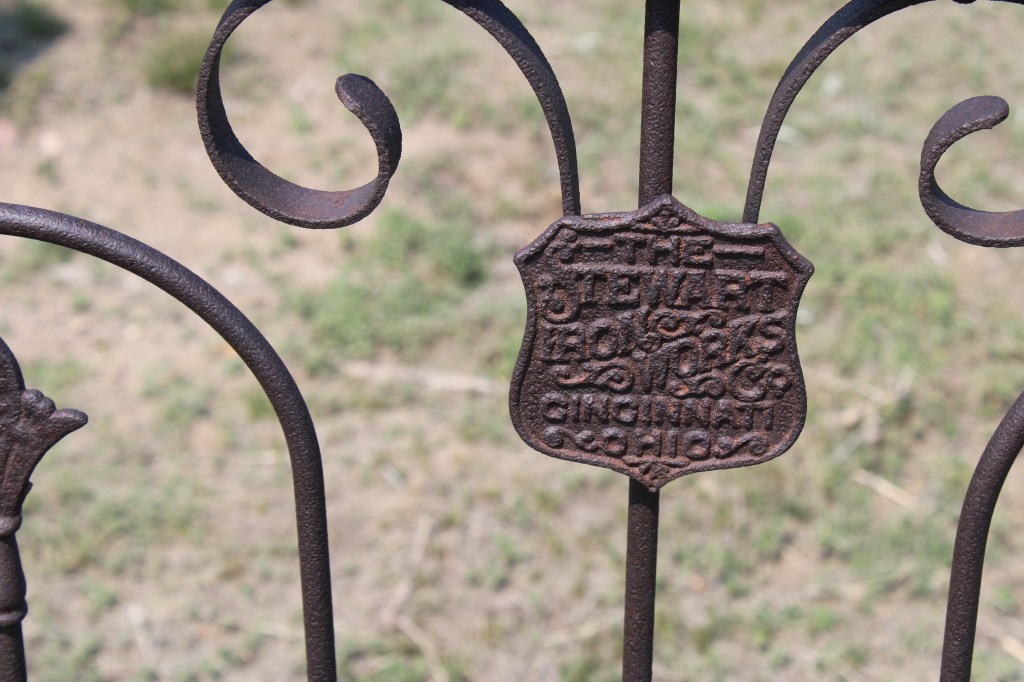
Members of the Masonic lodges in Havre and Glasgow turned out in numbers for the burial of Graham Williamson in March 1909. In May 1909, the Havre Monument Works installed a “handsome iron fence” made in Cincinnati OH, to mark the family plot of C. B. Van Alstine.
Van Alstine plot.
But then in May 1909 burials took place at Mount Hope Cemetery that may be considered the event that began the cemetery’s third historic period as the public burial ground for the unfortunate and marginalized in the city. Joseph Kirschweng escaped from the state asylum at Warm Springs returned to Hill Countyand killed his wife and children before committing suicide. All four were buried at Mount Hope.
In October, Rev. William Jackson, an African American minister who once served at Fort Assiniboine before becoming the pastor of the African Methodist Episcopal Church in Havre was buried at Mount Hope. Two years later, Martha Allen, a member of the AME church, was buried at Mount Hope with “one of the largest funeral corteges ever seen in the city.” (Havre Plaindealder, May 6, 1911). Two years later in August 1913 an abandoned baby found dead at city hall was buried at Mount Hope while in September William P. Farrow, “the stranger who was run over by a switch engine,” was buried at the cemetery (Havre Promoter, September 12, 1913). Victor Urkins, a Great Northern shop employee who allegedly committed suicide, was buried at Mount Hope in October 1913. Then in November came the funeral of Lucy Barnes, the wife of W. H. Barnes, a longtime resident and former domestic employee of Robert L. McCulloch at Fort Assiniboine, who also was African American and member of the AME Church. Most of the Japanese burials here took place from 1909 to 1920.
Burial accounts in the local newspapers about Mount Hope Cemetery become few and far between by the time of World War I. Three of the last stories were about Chinese residents: Wong Hoy Lang in 1921; N. Len, who was a gardener in 1922; and Lo Bow in 1924. Lo Bow “had lived in Havre for the past 30 years and was interested in the restaurant business at the time of his death.” (Havre Promoter, September 23, 1924). 1924 was the last year Mount Hope Cemetery would be mentioned in local newspapers for decades to come.
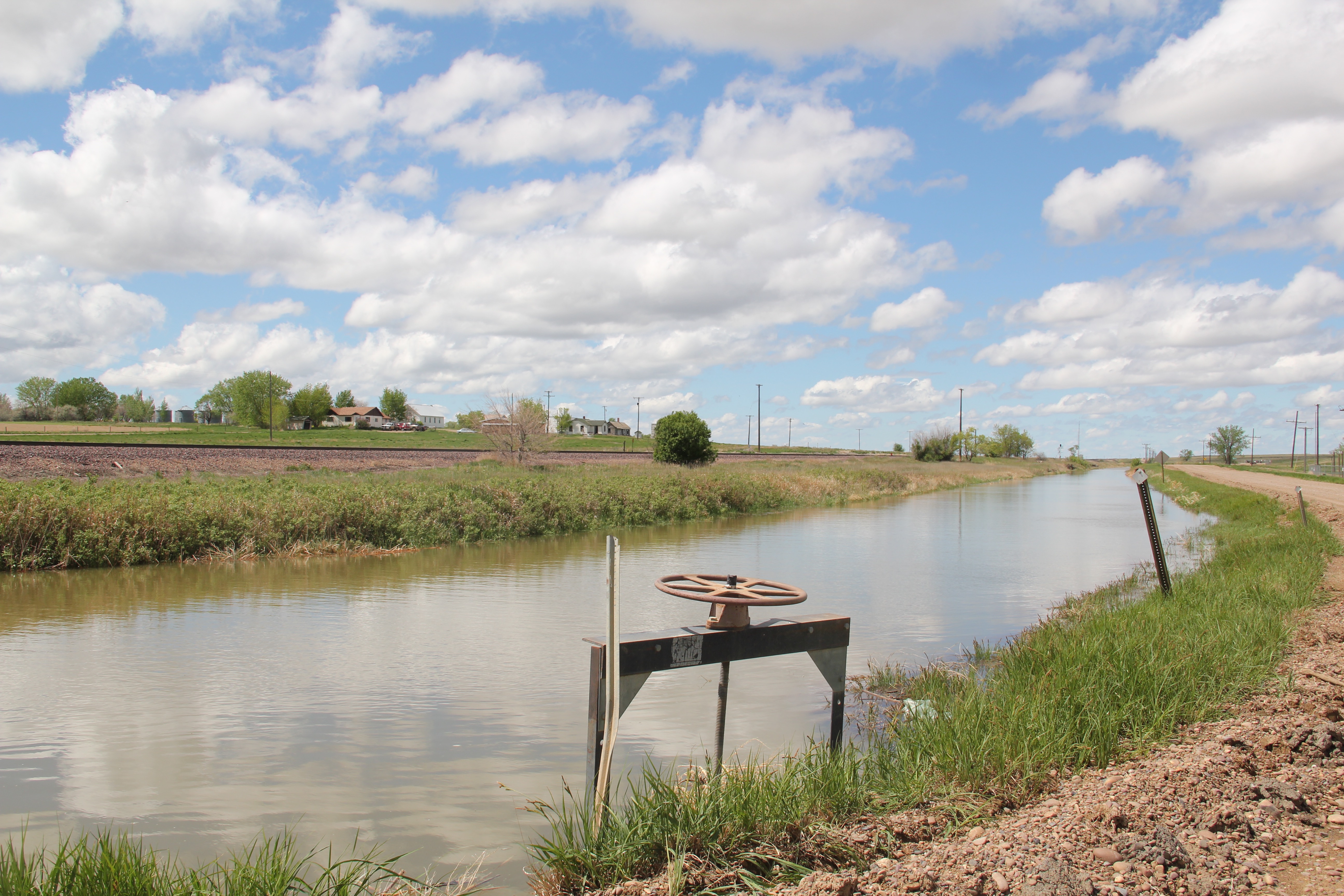
Milk River Irrigation Project Ditch at Dodson, Phillips County
In today’s New York Times (June 15, 2020), Montana Jim Robbins reported on the looming disaster facing Montana’s northern states if the St. Mary’s canal, which recently collapsed, is not repaired. The informative, insightful story focuses on the beginnings of the U.S. Bureau of Reclamation’s Milk River Irrigation Project, its pathway through southern Alberta, and its emergence in central Montana’s Hill County. It included several wonderful images of Havre, the seat of Hill County, and discussed the wide-ranging disaster faced by ranchers and small towns along the Hi-Line if the ditch did not get its long overdue repairs–to the tune of $200 million.
The Great Northern, the Milk River Project, and original U.S. 2 at Tampico
Robbins’ story immediately took my mind back to my travels throughout the Milk River Valley, from Hill County to Valley County, in 2013. The story of how modern transportation and engineering combined to transform the northern plains is so fundamental to the region’s history, yet it remains a story seldom told (another reason Robbins’ New York Times story matters). The image above represents the forces that led to the settlement and development of the Milk River Valley. Taken outside of the village of Tampico in Valley County, it centers the ditch between the two transportation systems–the Great Northern Railway on the left and the original route of U.S. Highway 2 on the right– that served the settlers drawn by the water. The image below shows the village of Tampico from the perspective of the ditch–the place would not exist without the ditch.
One of the very few historical markers in Montana that touches on the state’s irrigation history focuses about a historic bridge that once stood nearby at Tampico.
Large man-made lakes capture water to reserve it for use throughout the growing season. The images above are of Fresno Reservoir, on a rainy morning, in Hill County. While the two images below are of Nelson Reservoir, on a typically bright sunny day, many miles downstream in Phillips County.
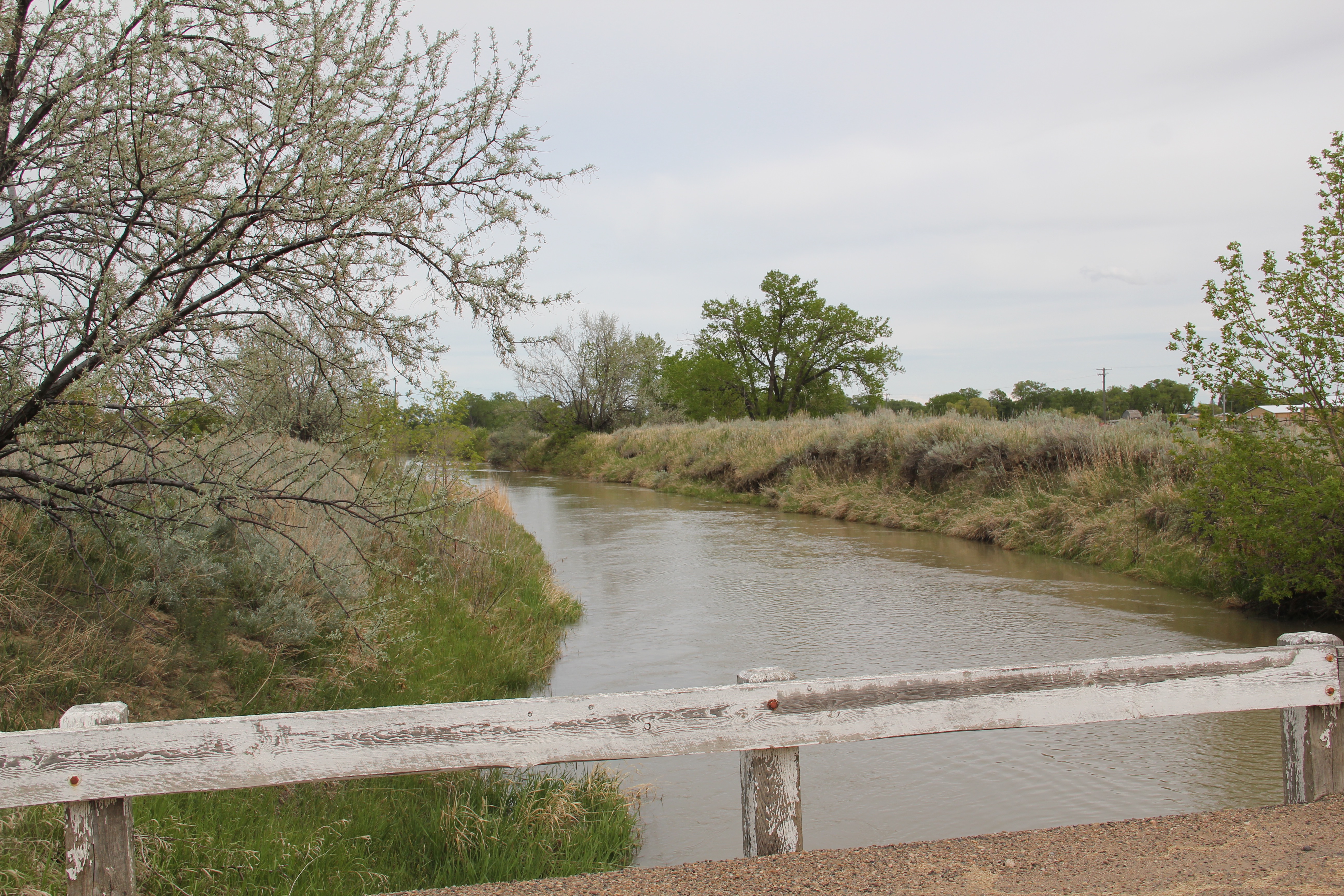
The Milk River Project shapes so much of the Hi-Line, it has become just part of the scenery. I wonder how many travelers along U.S. Highway 2 in Phillips County even notice or consider the constant presence of the ditch along their route.
Not only are their scattered small towns along the Milk River Project, early agricultural institutions are often centered on the project. A great example is the Phillips County Fairgrounds, outside of Dodson, and the question may be well posed–why there? Dodson
is a tiny place, almost 20 miles from the county seat of Malta. But at the time of the Milk River Project, Dodson was vital; the ditch neatly divided the town into two halves, and a major diversion dam was just west of town. Here was a perfect place, at the turn of the century, for a fairgrounds. And it is a gorgeous historic fairgrounds.
My first encounter with the Milk River Project and the beautiful valley it serves came in February 1984 when Eleanor Clack took me on a tour of the bison kill historic site just west of downtown Havre. It remains an excellent place to see how the waters of the Milk have nurtured countless generations of peoples who called this place home.
Just last week I posted about two other Milk River Project towns–Lohman and Zurich–in Blaine County. My next post will continue this second look at the Milk River Project as I revisit Chinook, the Blaine County seat, where the ditch once again is almost everywhere, but rarely given a second thought.
This week’s Great Falls Tribune featured a story about the heavy snowfall this here in Havre, the largest town along Montana’s Hi-Line. The story got me thinking about this classic late nineteenth century railroad town, one of my favorite places to visit in Big Sky Country. In past posts, I have talked about how residents moved their historic preservation agendas form a focus on the buffalo jump west of town along the Milk River to the old residential neighborhoods themselves. I gave a particular focus to Havre’s wonderful array of domestic architecture, especially its many variations on the
Craftsman style popular in the early 20th century. It is a place where the pages of the famous Craftsman Magazine seem to come alive as you walk the tree-lined streets. But there is more to Havre’s historic districts than the homes–there are the churches, about which more needs to be said.
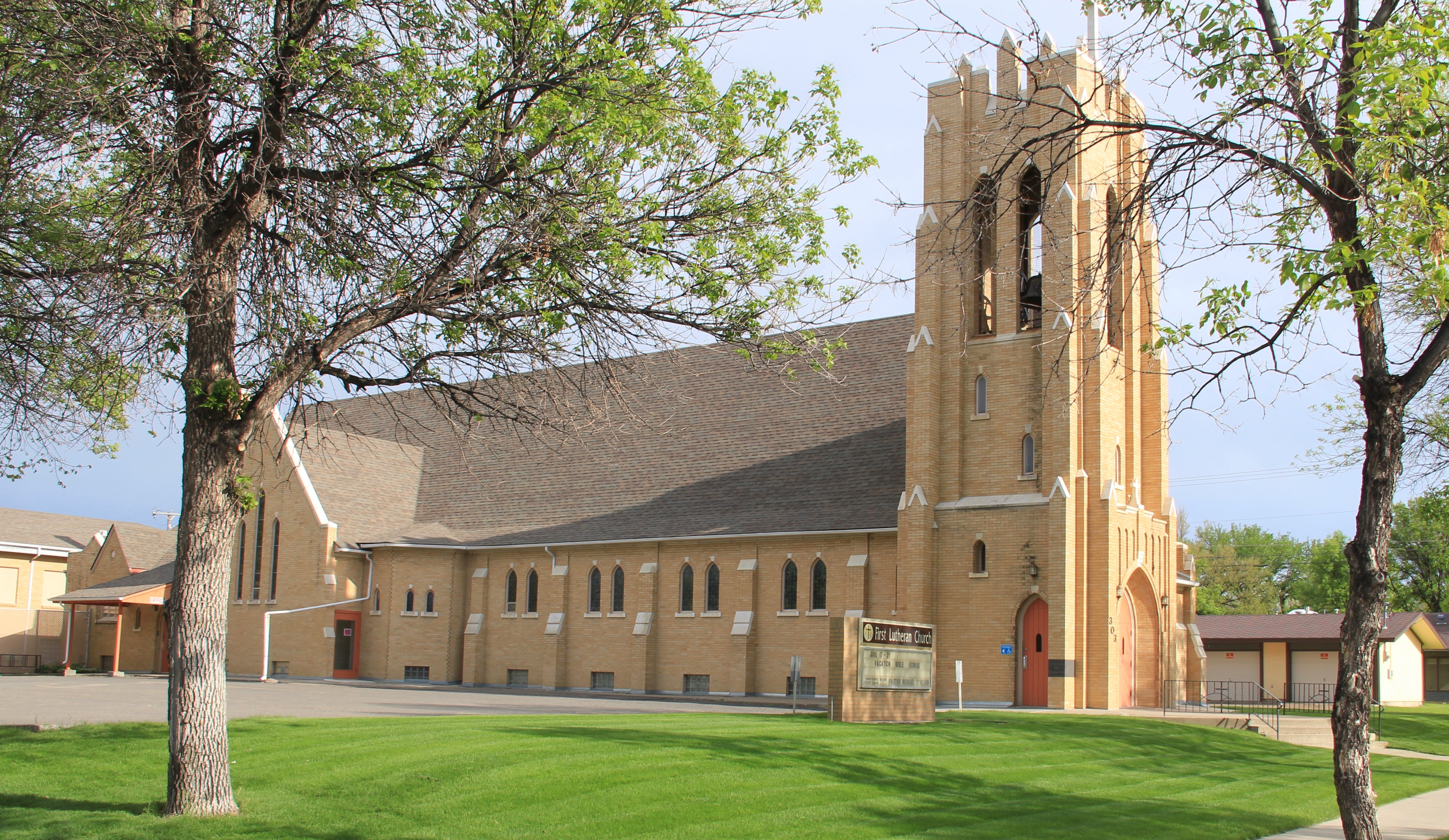
As my first two images of the First Lutheran Church show, Gothic Revival style is a major theme in the church architecture of Havre, even extending into the mid-20th century. First Lutheran Church is a congregation with roots in Havre’s boom during the homesteading era. As the congregation grew, members decided to build the present building in 1050-51, adding an educational wing by the end of the decade.
An earlier example of Gothic Revival style is St. Mark’s Episcopal Church, built in 1911 by architect Mario Riffo of Kalispell. Noted havre architect and builder Frank F. Bossout worked for Riffo at the time and this commission may have been Bossout’s introduction to a city that his designs would so shape in the years to come.
The earliest Gothic Revival styled church is First Baptist Church, constructed c. 1901, shown above. The unidentified architect combined Gothic windows into his or her own interpretation of Victorian Gothic, with its distinctive asymmetrical roof line.
A more vernacular interpretation of Gothic style can be found in the town’s original AME Church, built c. 1916 to serve African American railroad workers and their families, and later converted and remodeled into the New Hope Apostolic Church.
The First Presbyterian Church represents the Classical Revival in Havre church architecture. Built in 1917-1919 and designed by Frank F. Bossuot, the church’s style reflected that of the nearby courthouse, which Bossuot had designed in 1915, and the town’s Carnegie Library, also from Bossuot’s hand in 1914.
The Spanish Colonial Revival style of St. Jude’s Catholic Church, however, shows us that architect Frank F. Bossuot was more than a classicist. The church’s distinctive style sets it apart from other church buildings in Havre.
The same can be said for a church building that comes a generation later, the Van Orsdel United Methodist Church. When the Havre historic district was established, this mid-century modernist designed building was not yet 50 years old, thus it was not considered for the district. But certainly now, in 2018, the contemporary styling of the sanctuary has merit, and the church has a long history of service. It started just over one hundred years ago with a brick building named in honor of the Montana Methodist circuit rider W. W. Van Orsdel who introduced the faith to Havre in 1891. A fire in late 1957 destroyed that building, and the congregation immediately began construction on its replacement, dedicating it in 1958.
From Gothic to modern, the architecture of Havre’s historic churches reflects the town’s robust history in the first half of the twentieth century–and this is just a taste of the many interesting places to be found along the Montana Hi-Line.











 One of the very few historical markers in Montana that touches on the state’s irrigation history focuses about a historic bridge that once stood nearby at Tampico.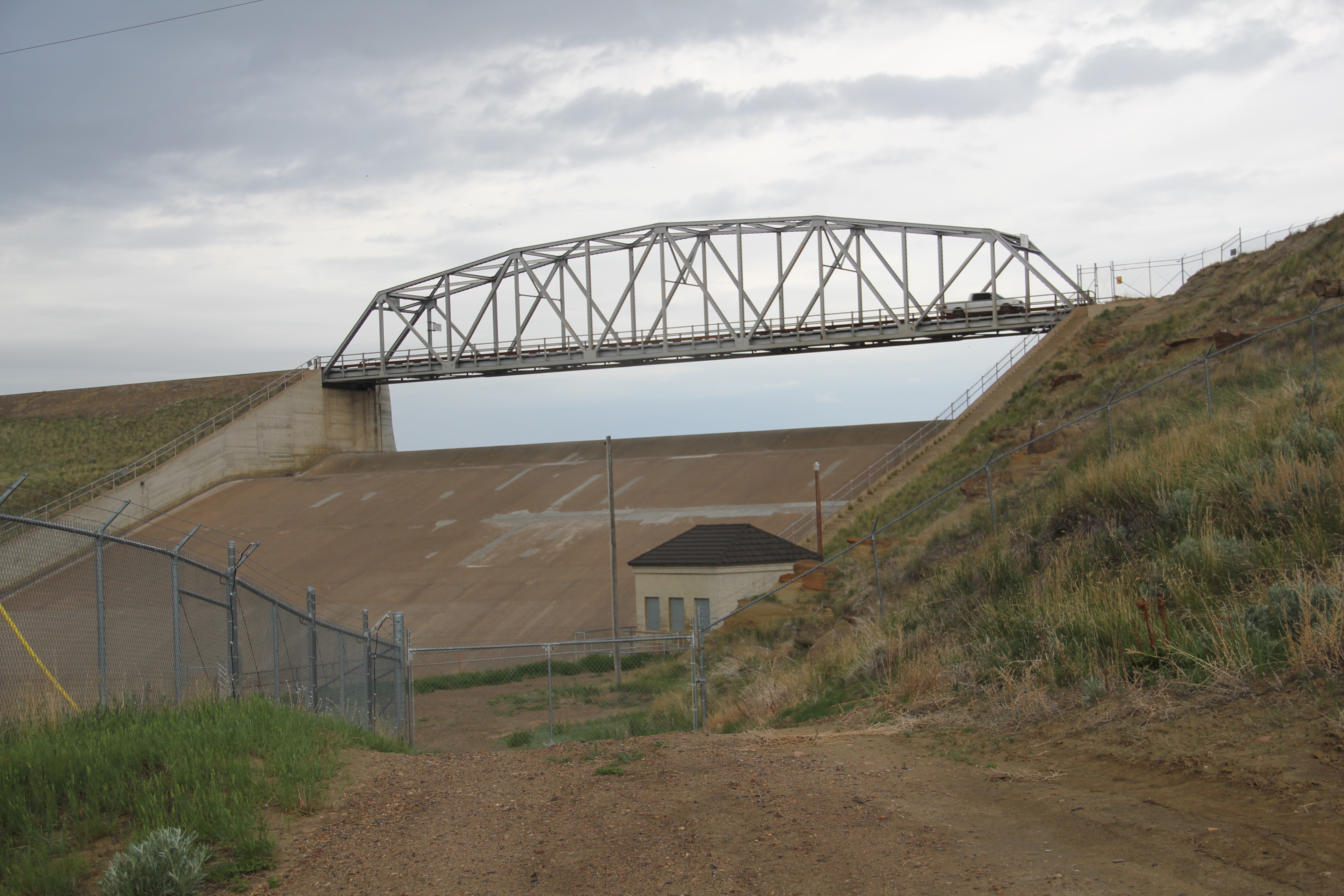
 Large man-made lakes capture water to reserve it for use throughout the growing season. The images above are of Fresno Reservoir, on a rainy morning, in Hill County. While the two images below are of Nelson Reservoir, on a typically bright sunny day, many miles downstream in Phillips County.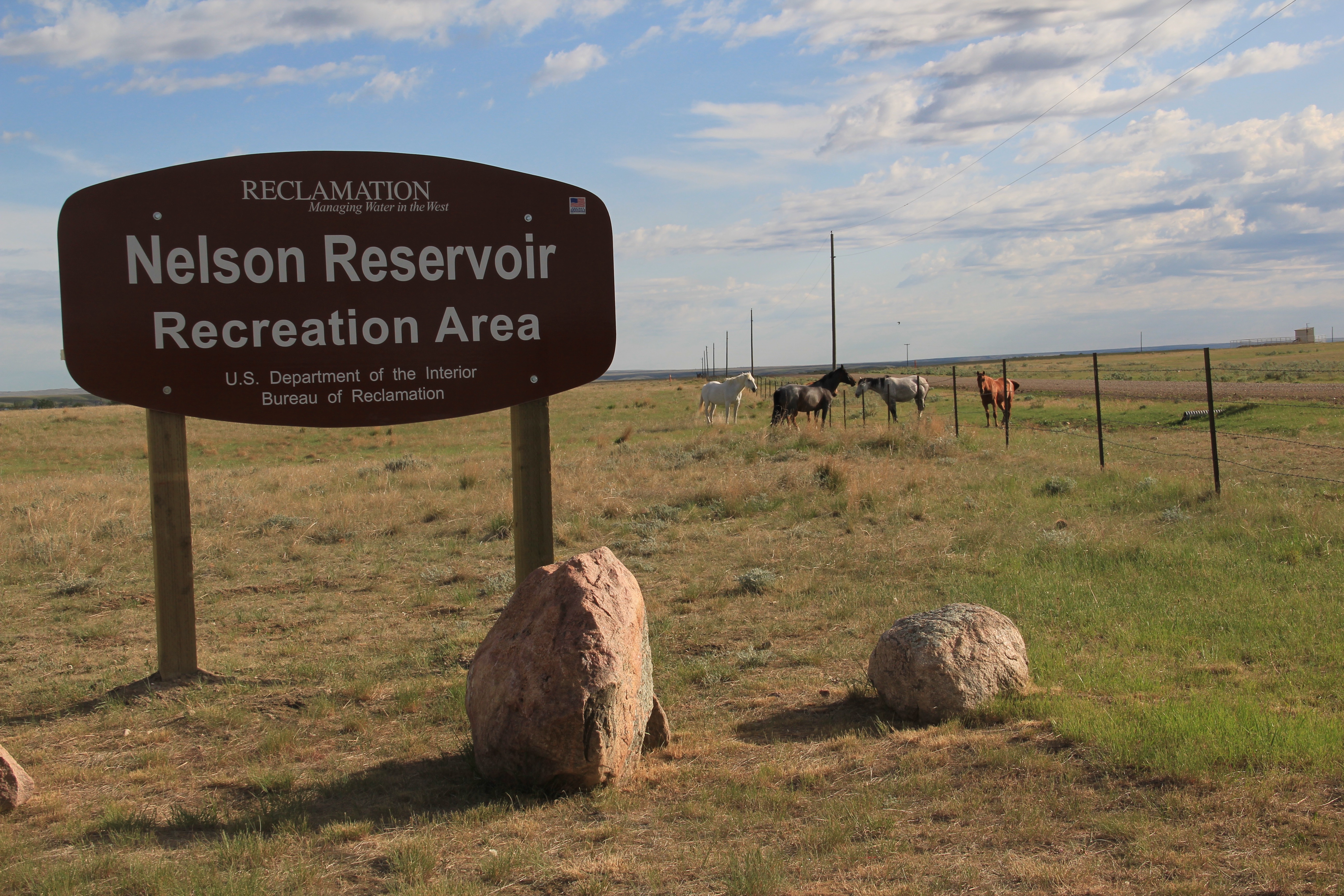
 The Milk River Project shapes so much of the Hi-Line, it has become just part of the scenery. I wonder how many travelers along U.S. Highway 2 in Phillips County even notice or consider the constant presence of the ditch along their route.

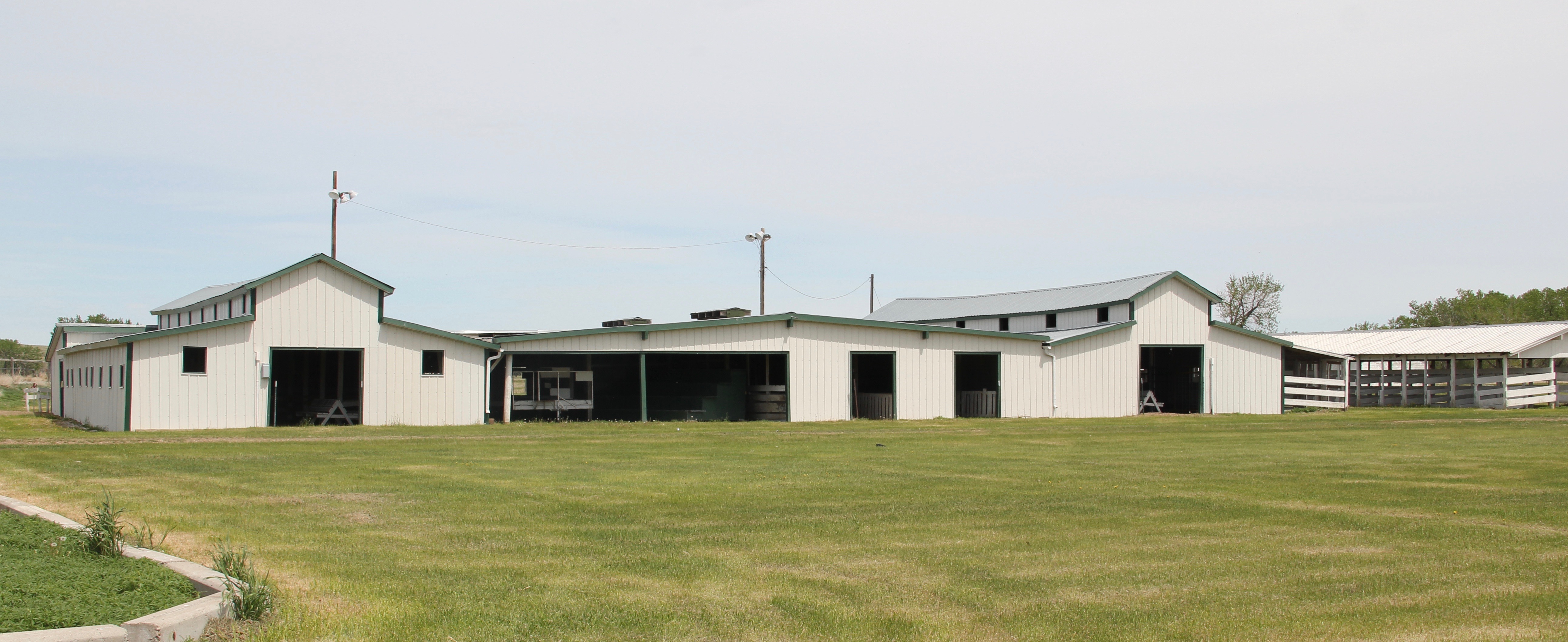 is a tiny place, almost 20 miles from the county seat of Malta. But at the time of the Milk River Project, Dodson was vital; the ditch neatly divided the town into two halves, and a major diversion dam was just west of town. Here was a perfect place, at the turn of the century, for a fairgrounds. And it is a gorgeous historic fairgrounds.


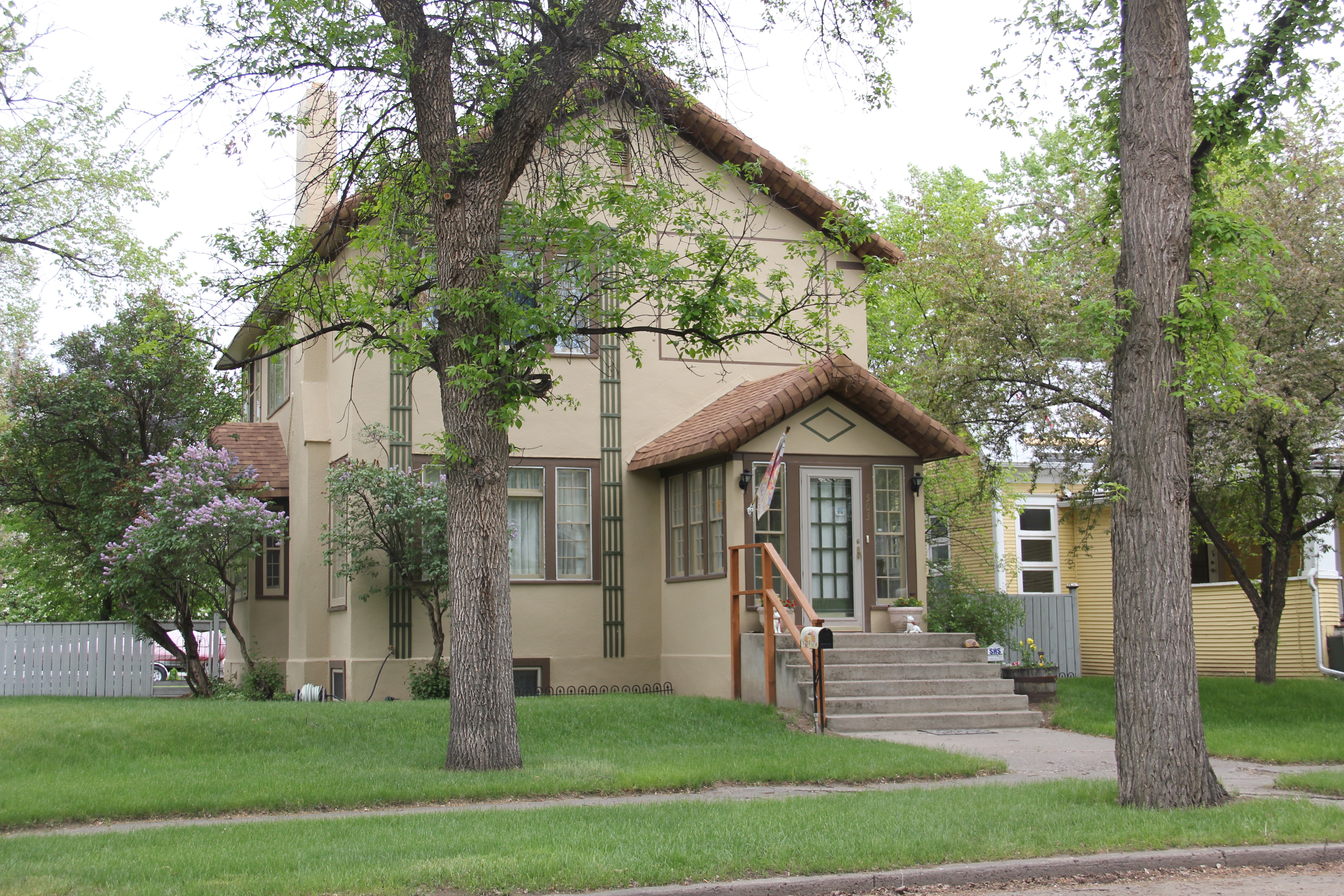 Craftsman style popular in the early 20th century. It is a place where the pages of the famous Craftsman Magazine seem to come alive as you walk the tree-lined streets. But there is more to Havre’s historic districts than the homes–there are the churches, about which more needs to be said.
 As my first two images of the First Lutheran Church show, Gothic Revival style is a major theme in the church architecture of Havre, even extending into the mid-20th century. First Lutheran Church is a congregation with roots in Havre’s boom during the homesteading era. As the congregation grew, members decided to build the present building in 1050-51, adding an educational wing by the end of the decade.
 The earliest Gothic Revival styled church is First Baptist Church, constructed c. 1901, shown above. The unidentified architect combined Gothic windows into his or her own interpretation of Victorian Gothic, with its distinctive asymmetrical roof line.
 A more vernacular interpretation of Gothic style can be found in the town’s original AME Church, built c. 1916 to serve African American railroad workers and their families, and later converted and remodeled into the New Hope Apostolic Church.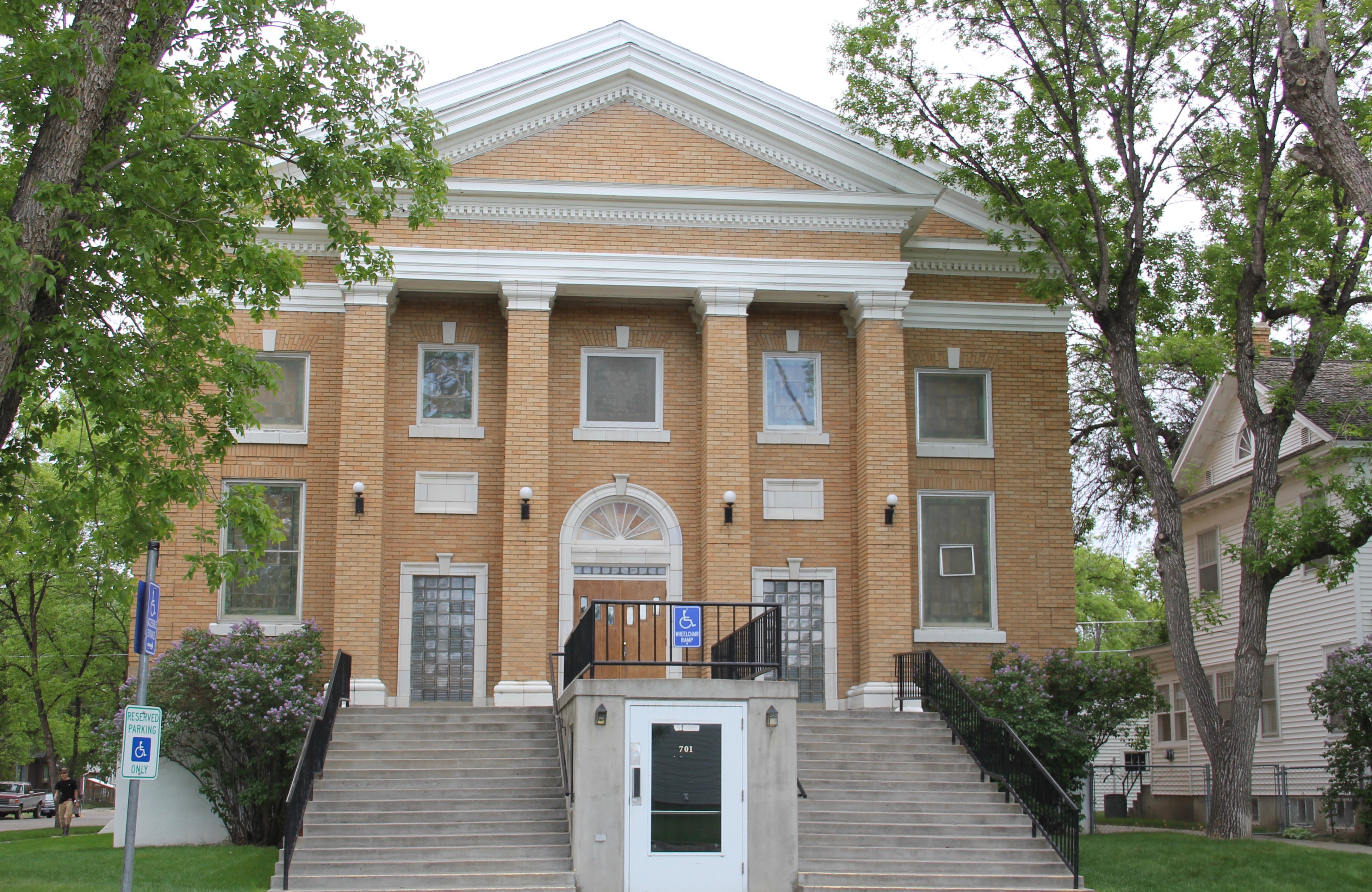

 The Spanish Colonial Revival style of St. Jude’s Catholic Church, however, shows us that architect Frank F. Bossuot was more than a classicist. The church’s distinctive style sets it apart from other church buildings in Havre.
 The same can be said for a church building that comes a generation later, the Van Orsdel United Methodist Church. When the Havre historic district was established, this mid-century modernist designed building was not yet 50 years old, thus it was not considered for the district. But certainly now, in 2018, the contemporary styling of the sanctuary has merit, and the church has a long history of service. It started just over one hundred years ago with a brick building named in honor of the Montana Methodist circuit rider W. W. Van Orsdel who introduced the faith to Havre in 1891. A fire in late 1957 destroyed that building, and the congregation immediately began construction on its replacement, dedicating it in 1958.
 Montana's Historic Landscapes