
The state basketball tournaments have been all of the talk in Montana newspapers and communities over the last three weeks, and in places like Belt, in Cascade County, they are celebrating state championships this March morning.
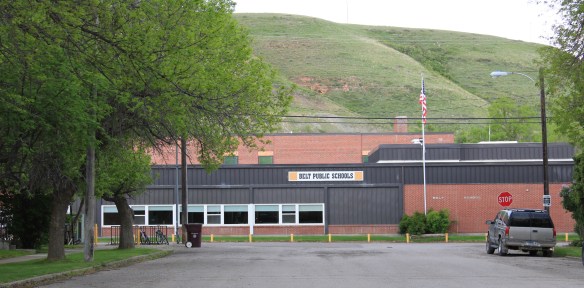
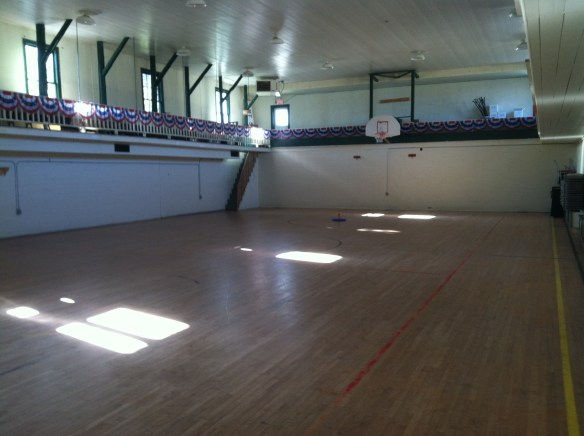
Gyms were not on my mind particularly when I carried out the 1984-1985 historic preservation plan survey for the Montana State Historic Preservation Office, but even then I picked up on some of the community gyms created by the WPA during the New Deal, such as the one in Virginia City, an unassuming building if there ever was one, and then

the tiny log construction gym for Sanders, a tiny community in Treasure County, seen below. Both the Virginia City and the Sanders gyms are listed in the National Register of
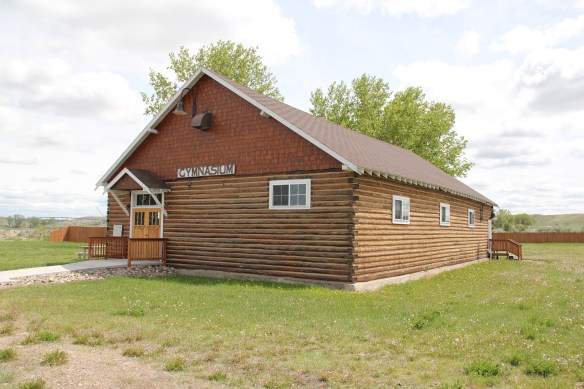
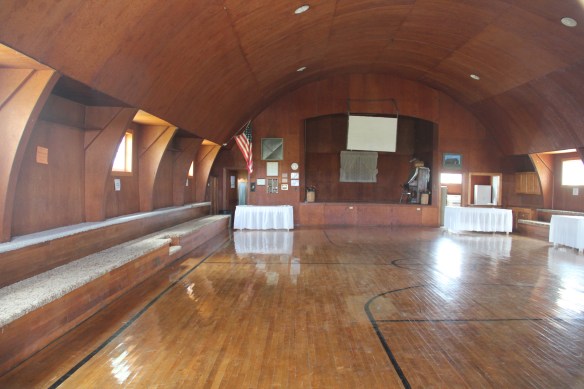
Historic Places, but the state has dozens of other worthy community gyms, that are very much at the center of recreational, sports, and social life in these towns and counties. Some await new fates and new futures, such as the gyms in Pony, Madison County, also on

the National Register, and the more architecturally distinct Craftsman-styled community gym built for Whitehall in Jefferson County.

Others date to mid-century and their more modern styles reflect their function–the half-barrels roofs–but they also dominate the one buildings around them, such as the high school gym in White Sulphur Springs, Meagher County, seen below.

Then there is the frankly spectacular modern-style gym of Twin Bridges, in the state’s southwest corner, with its sweeping overhanging roof.

But wherever you encounter community gyms, you can tell from their location and maintenance, these are buildings of local pride and achievement, and places necessary to community life when so much else is scattered and disconnected.
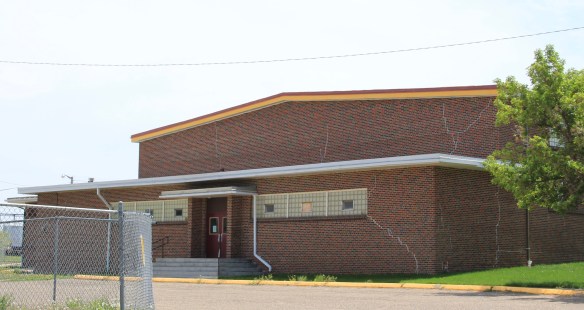
Gymnasium in Circle, McCone County.
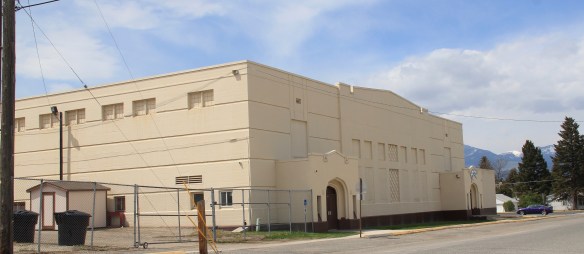
Powell County High School Gym, Deer Lodge.
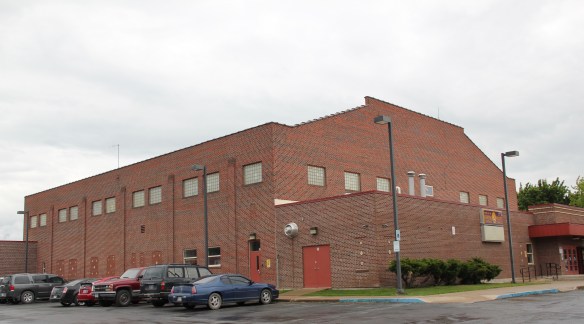
High School Gym, Polson, Lake County.

The “Old Gym” in Malta, Phillips County
Communities across Montana are clearly proud of their gyms, and even when new ones come along, they find new uses for the stately buildings, like the conversion of the old gymnasium below, located in Boulder, into a fine arts theater, which is just one example of this type of adaptive reuse project in the state.
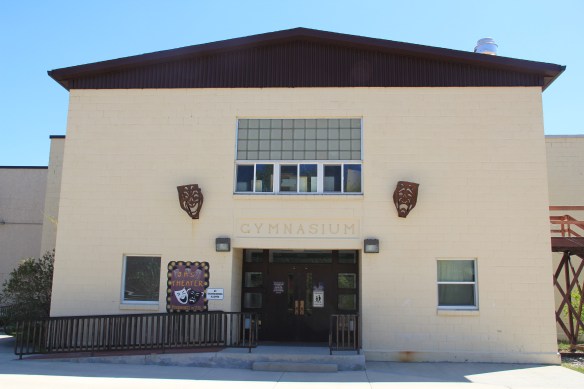
Here’s to new futures, grounded in meaningful pasts, for these community, and often times architectural, landmarks across the Big Sky Country. As a group, they are powerful reminders of the importance of community spaces in the counties, both urban and rural, of Montana.

Art Deco styled gymnasium, Kalispell, Flathead County
 Along the Missouri River is Paris Gibson Park, deep in the heart of Great Falls, Montana. Gibson was one of the classic civic capitalists of the late 19th century who understood that as the community prospered he too would achieve this dream of building a great western empire, with his town of Great Falls as the center. Almost 100 years after his death, in 2015, residents, preservationists, historians, and economic developers began discussions on establishing a heritage area, centered on Great Falls, but encompassing the Missouri River as the thread between the plains and mountains, that has shaped the region, and the nation, for hundreds of years. I strongly endorse the discussion and will spend the next several posts exploring key resources in Cascade County that could serve as the foundation for a larger regional story.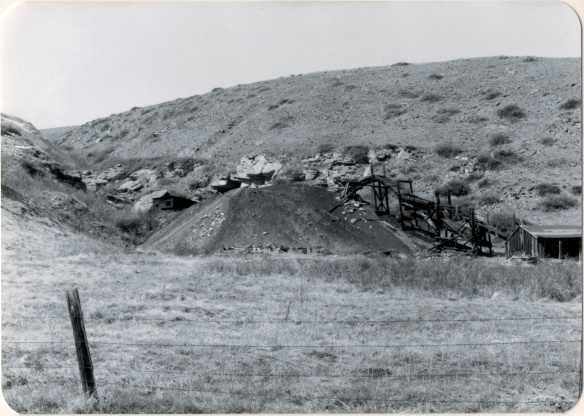
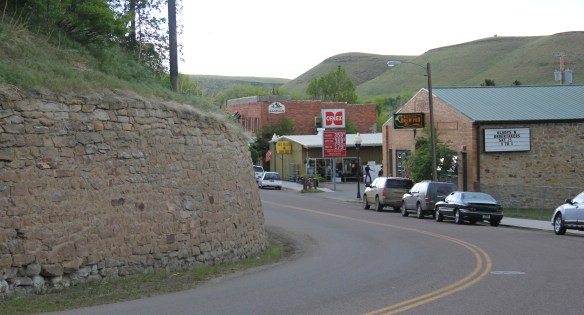
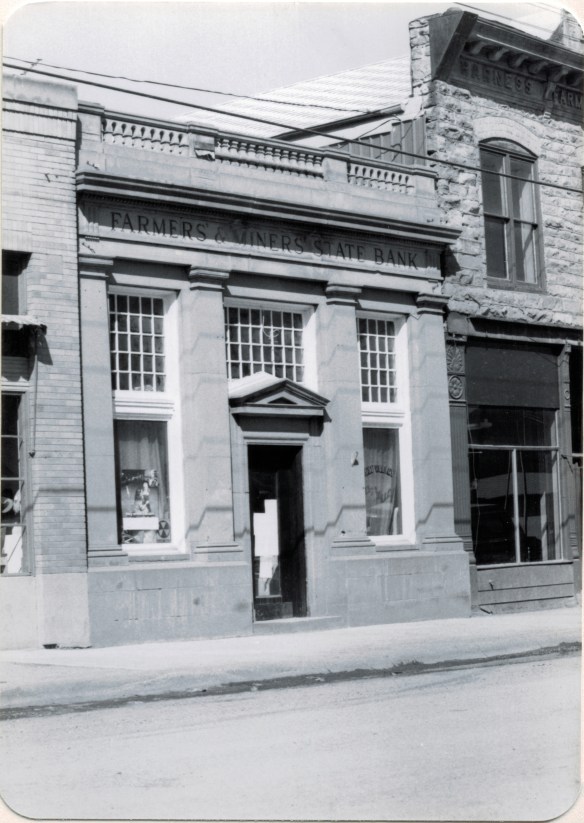
 Thirty years later, Belt’s population had bottomed out, declining to under 600 by the time of the 2010 census. But both times I have stopped by, in 2013 and 2015, the town has a sense of life about it, and hope. The town’s two historic taverns, the Harvest Moon Tavern and the Belt Creek Brew Pub, as well as the Black Diamond Bar and Supper Club attract visitors from nearby Great Falls and elsewhere, giving the place a sense of life at evenings and weekends.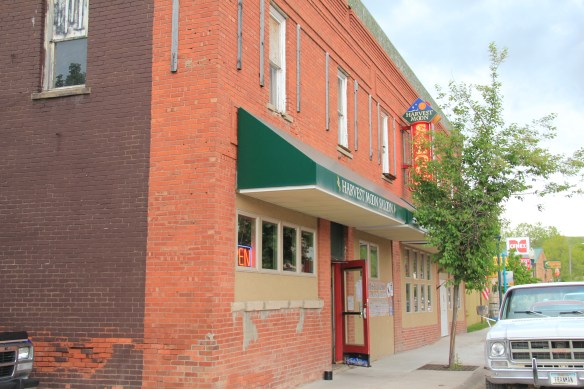
 When planners talk about heritage areas, they often focus on the contributions of local entrepreneurs who take historic buildings, like the Pioneer above, and breathe new life into them. Throughout small town Montana and urban commercial districts, new breweries and distilleries are creating such opportunities.
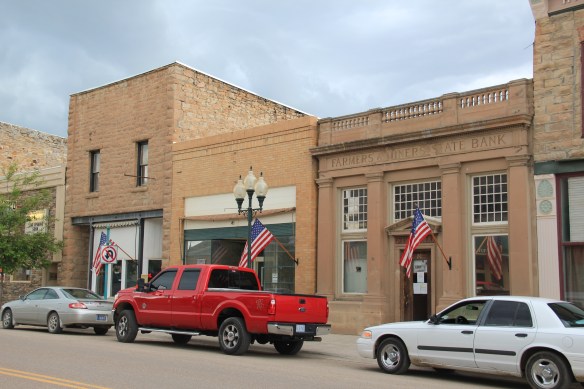
 Belt has a range of historic buildings, mostly of vernacular two-part commercial style that speak strongly to the boom of 1900 to 1920. The Victorian-styled cornice of the Belt Hardware Store (1896) speaks to the town’s origins. The Knights of Pythias Lodge of 1916 has been restored as a community theater, another reason for visitors to stop and explore.
 The result is a living cultural experience, since nothing in Belt is over-restored or phony feeling. It is still a gritty, no frills place. That feel is complemented by the Belt museum, which is housed in a historic jail on road down into town and within sight on a railroad trestle, a reminder of what literally drove the town’s development, coal for the railroads.
 During the 1984 survey, I gave the jail a good bit of attention since this stone building spoke to the craftsmanship of the era, the centrality of local government as the town developed, and the reality that this building was the only thing in Belt listed in the National Register of Historic Places. But in 2004 the state historic preservation office approved the Belt commercial historic district, and that designation has done much to drive the town’s recent revival. Belt is just the first place that speaks to the promise of the Great Falls heritage area concept.
 Montana's Historic Landscapes