High Prairie Fair: Daniels County Fairgrounds, Scobey

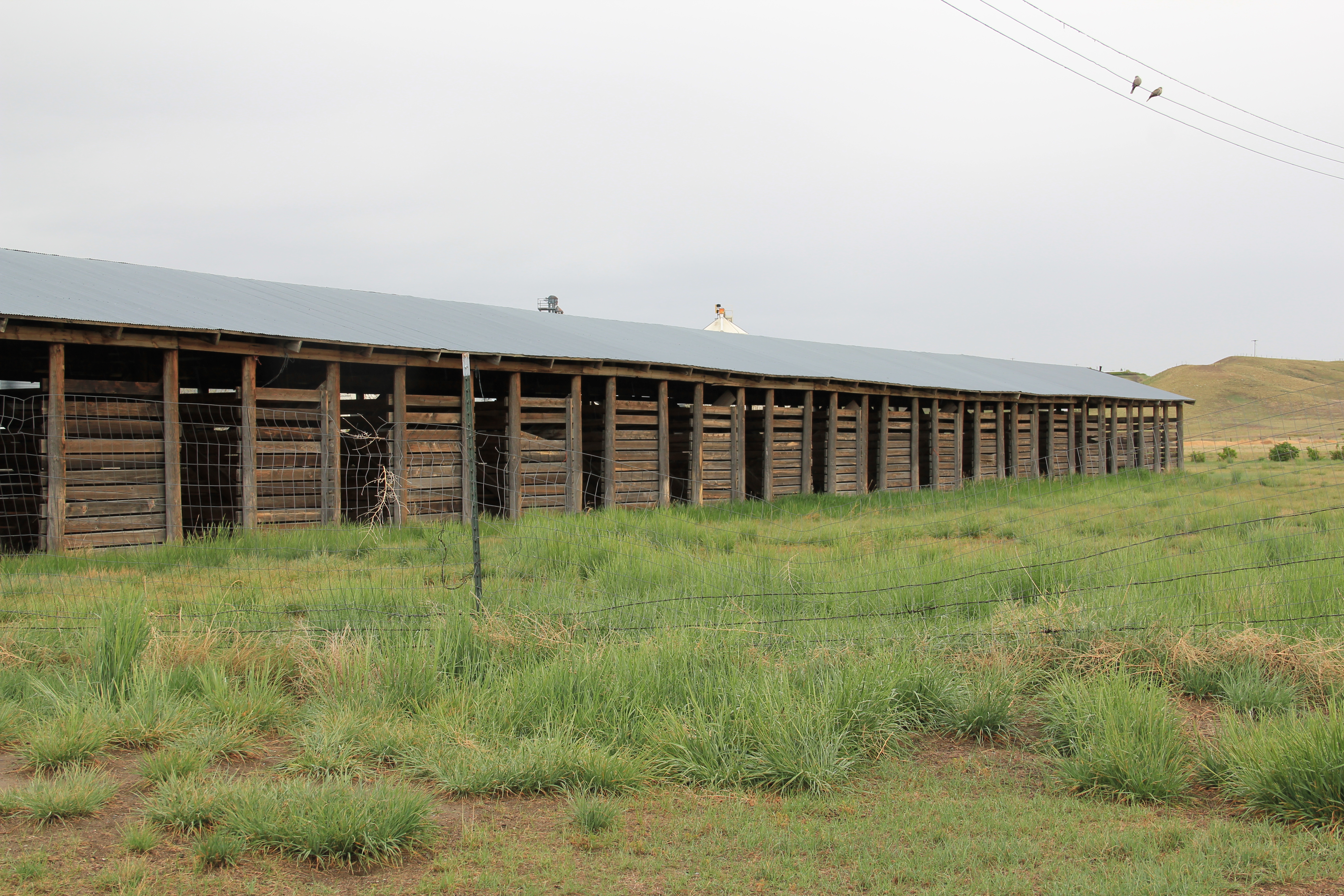
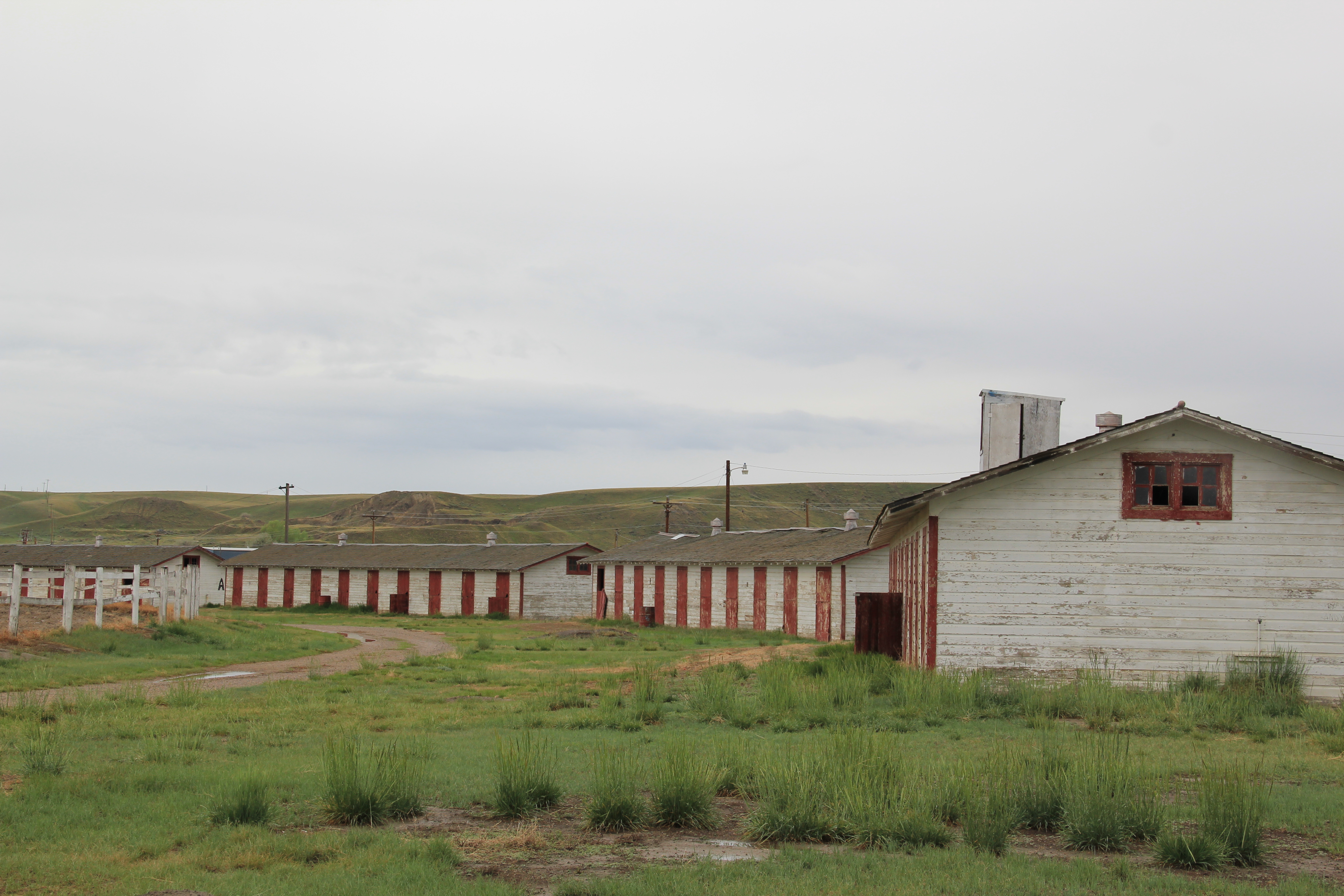
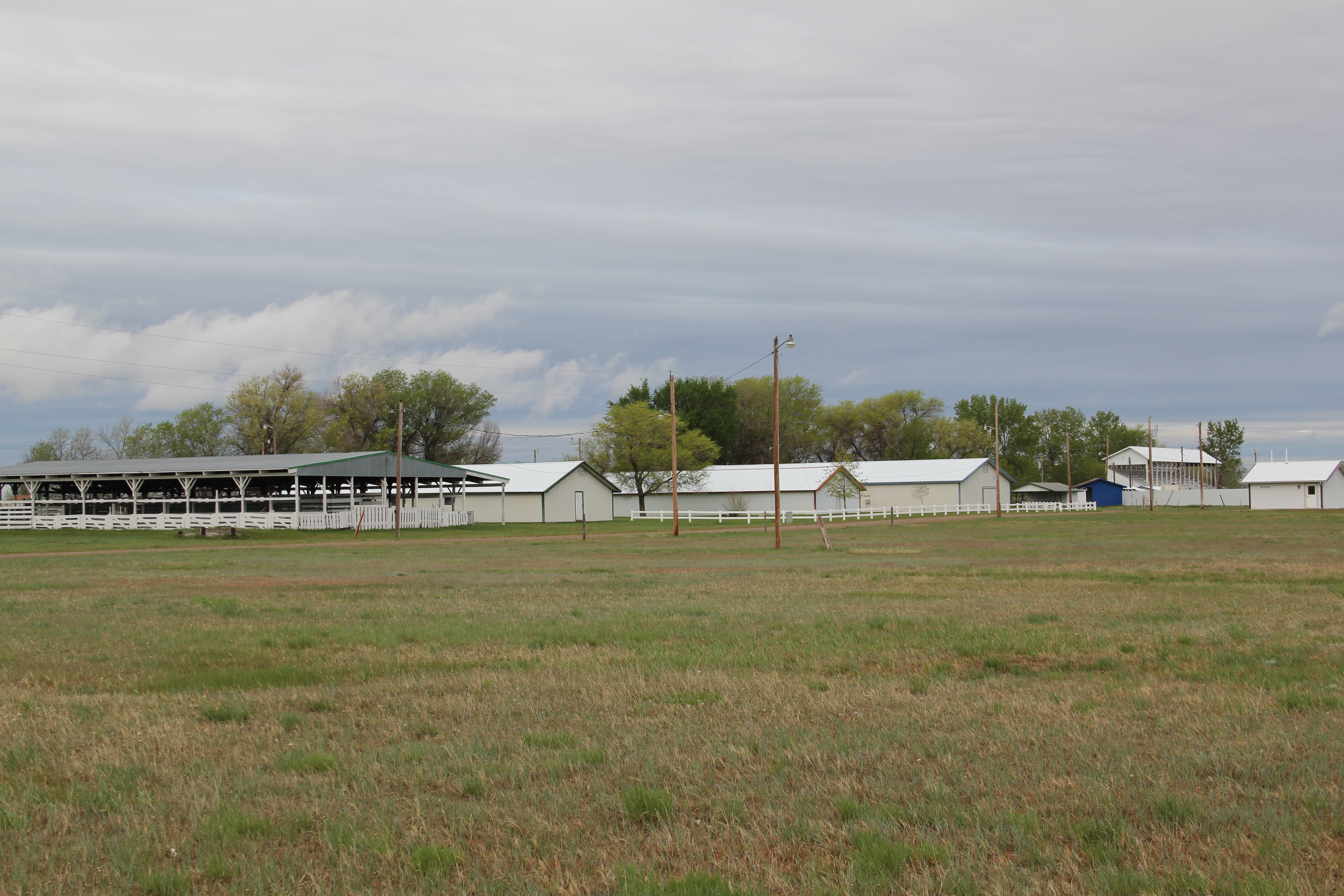
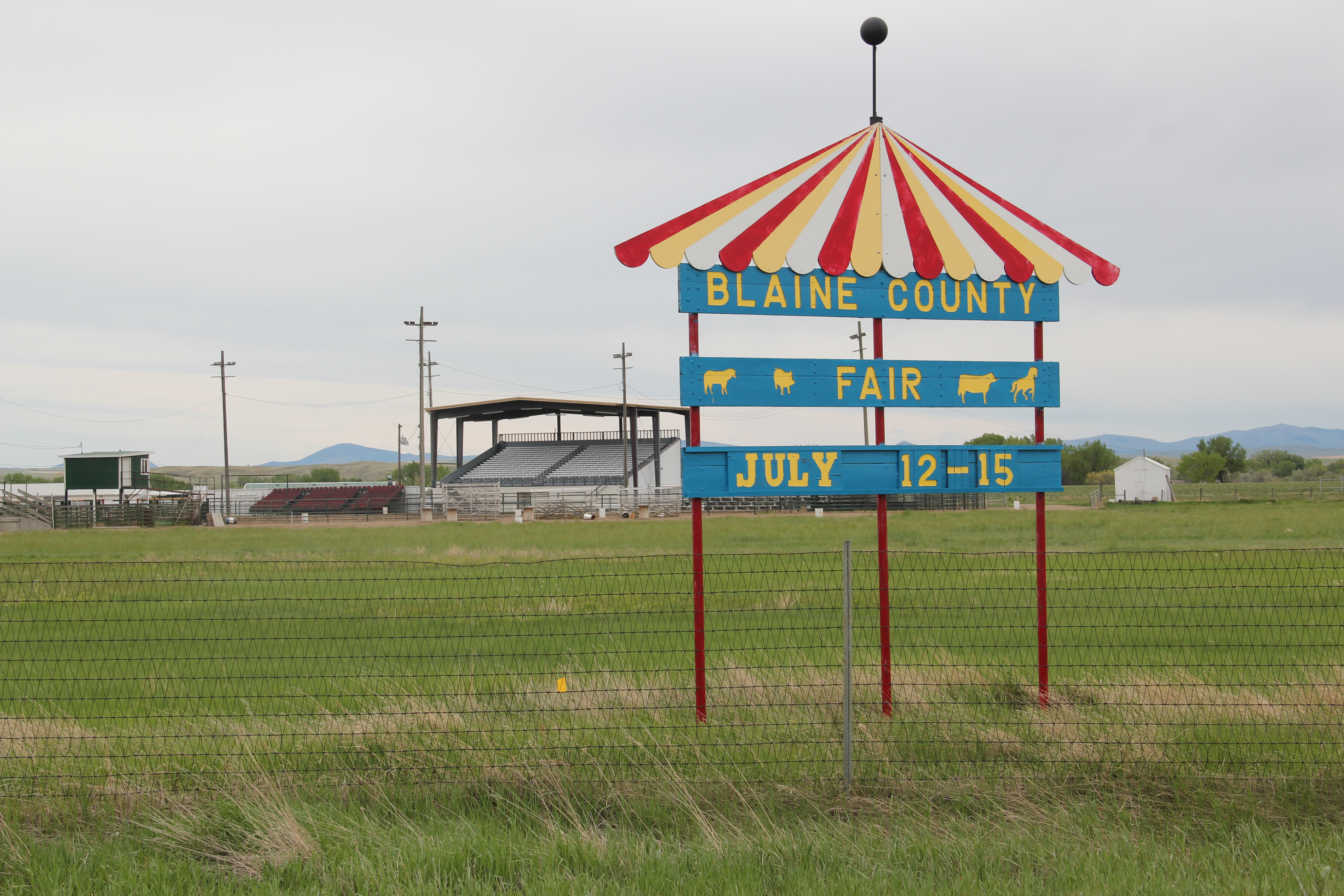
Established in the mid-century, 1951 according to one source, the Daniels County Fairgrounds now proudly hosts what organizers call the state’s best “family county fair.”  Scobey is a tiny county seat with just over 1000 residents.  But the fair consistently hosts thousands–an 1956 article in Billboard magazine reported 4,000 attendance over 2 nights and three days, a pattern that remains today.  

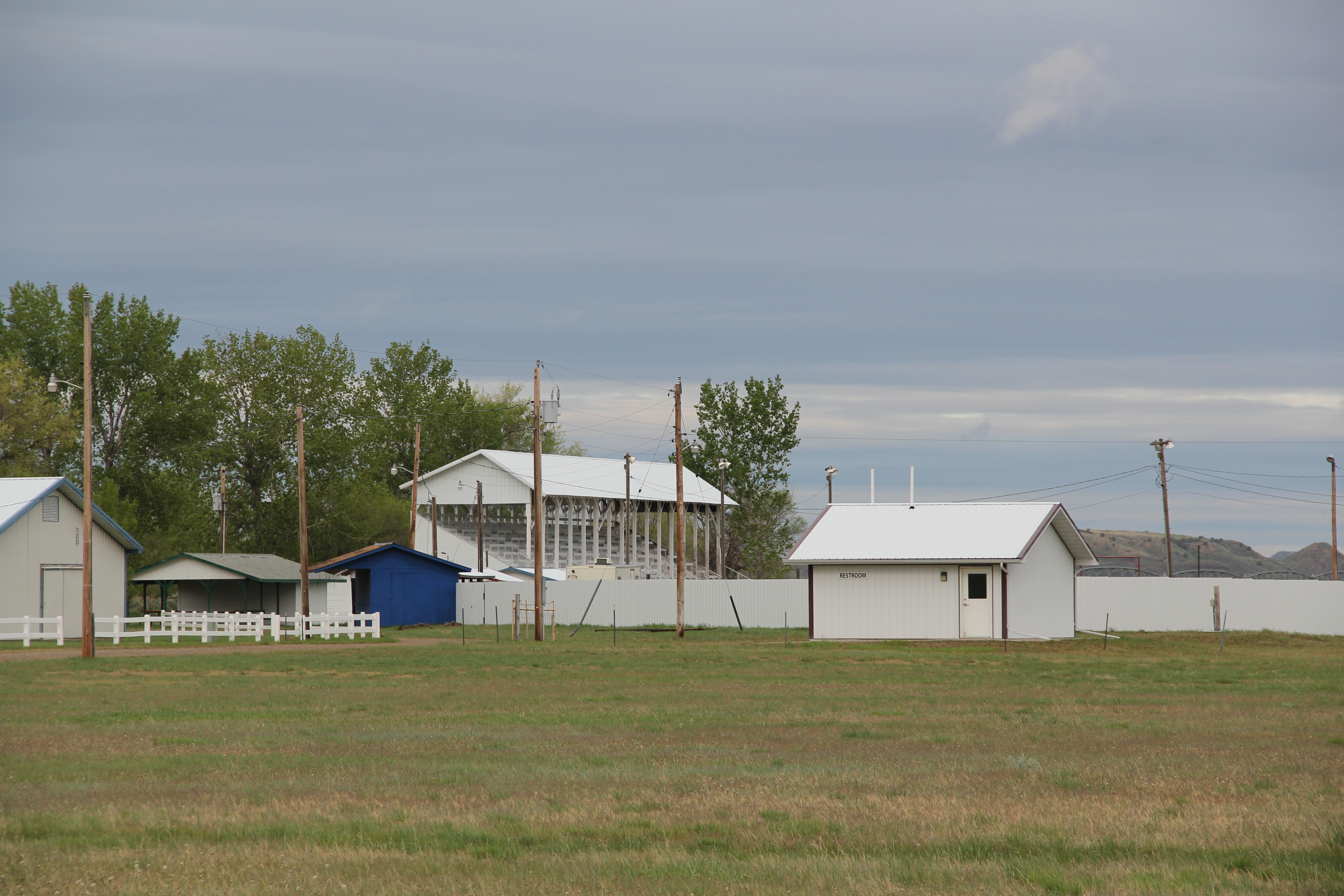
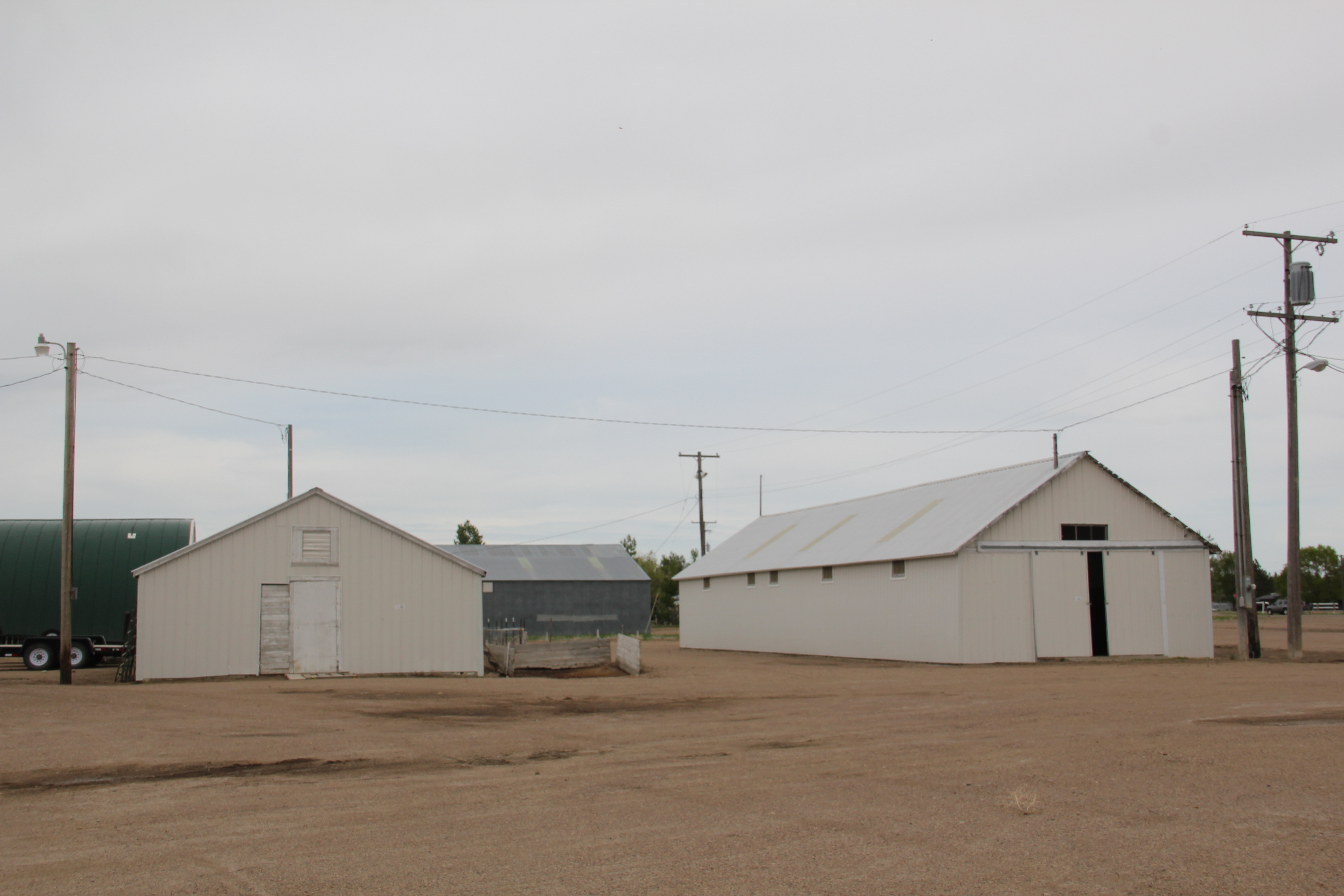
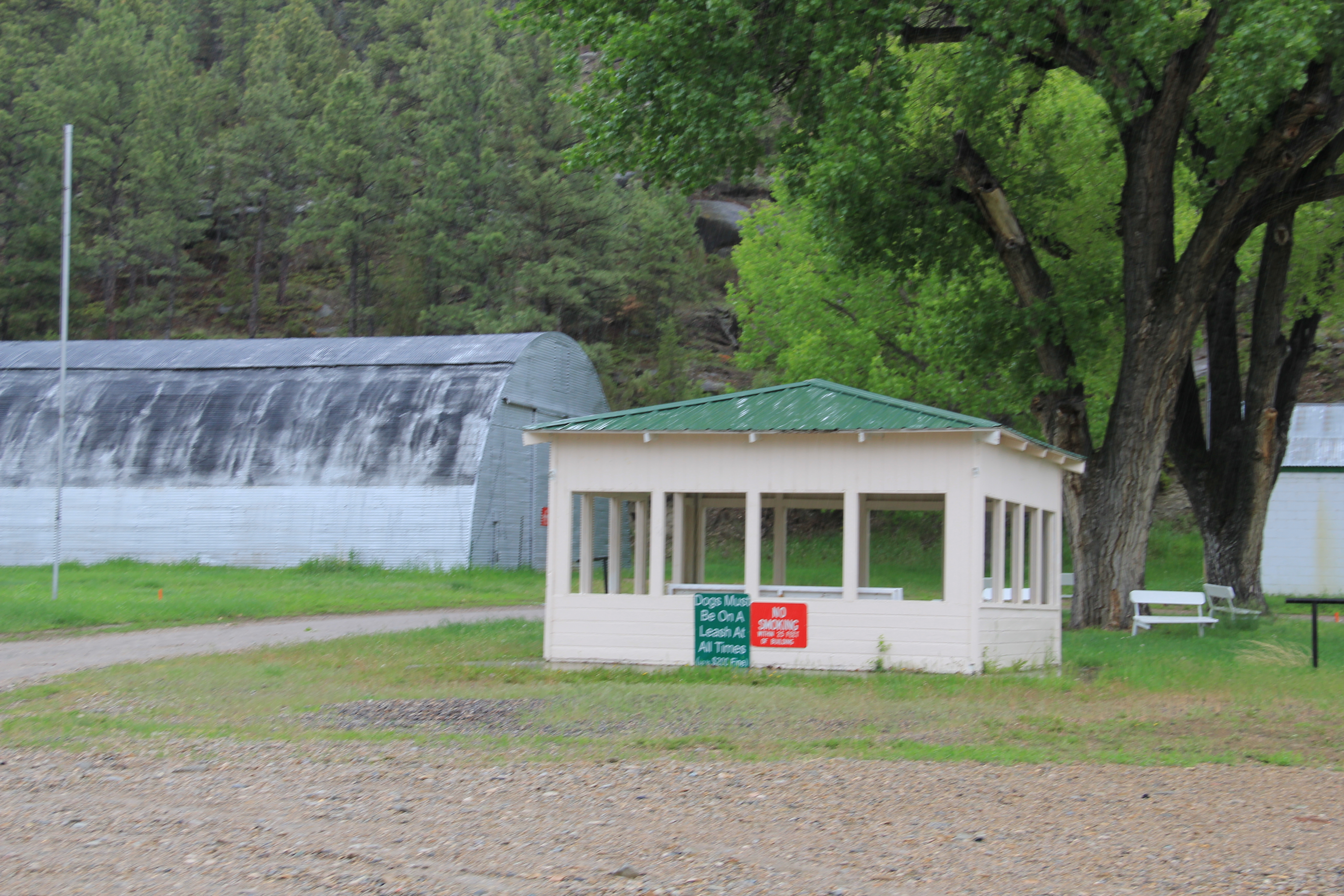
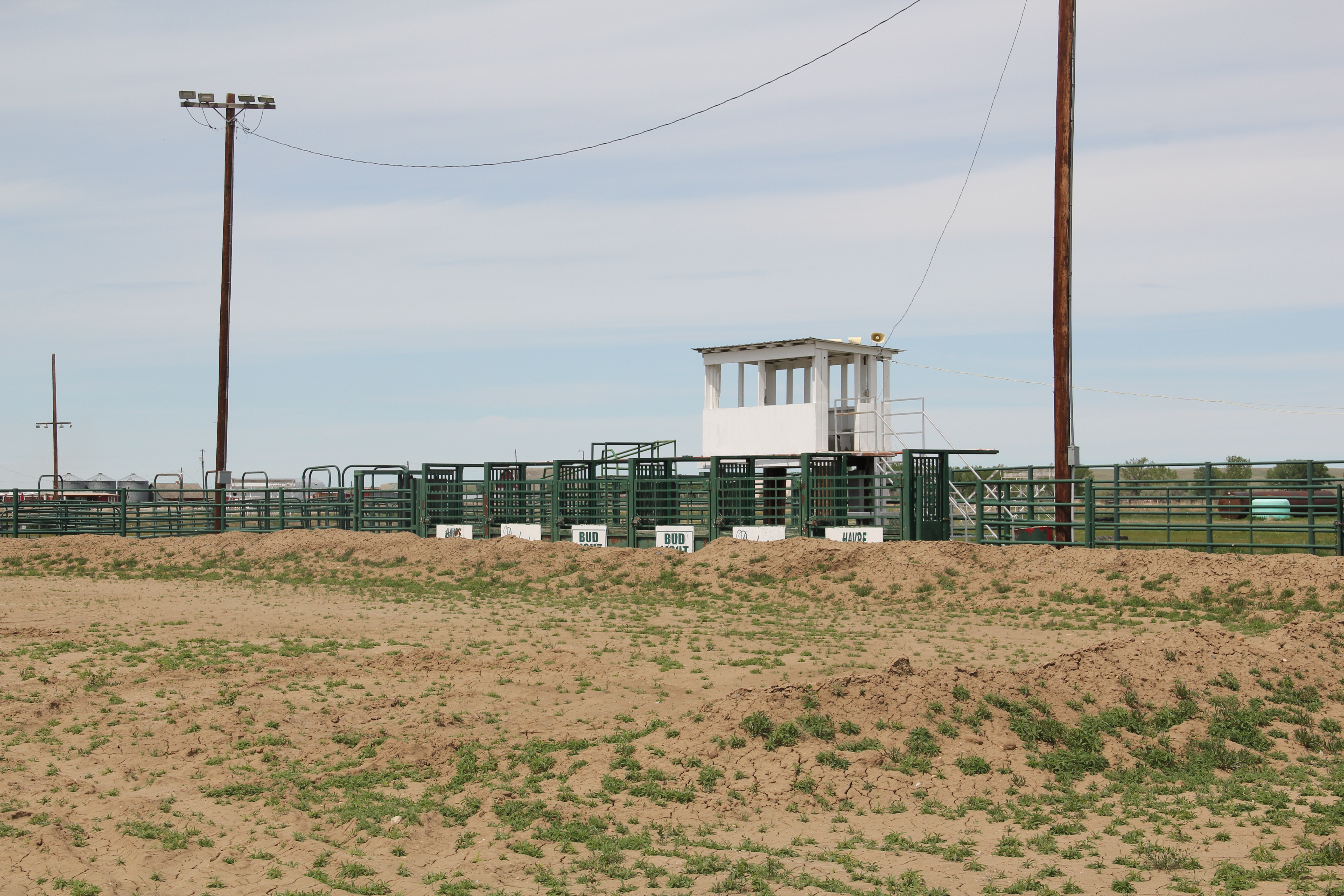
The grandstand is the focal point of the fairgrounds, and it retains its 1950s look and vibe perfect for a Montana rodeo.

Image


Image


Image


Adjacent to the rodeo grounds is the Scobey baseball field.  The town takes considerable pride in its early history of professional baseball and the Daniels County Museum has numerous objects and displays about the baseball teams and stars who have played in Scobey.

Image


Roundup’s Musselshell County Fairgrounds

Located east of the town and nestled between the old route of the Milwaukee Road and the craggy bluffs of Musselshell River is one of the prettiest and oldest locations of a county fairgrounds in Montana.

ImageCrossing of Musselshell River before you arrive at the fairgrounds in Roundup

The Roundup Record-Tribune and Winnett Times of December 10, 1915 proudly proclaimed the value of the fairgrounds to the new county:  the “natural beauty of the site will be an asset to the county for all time,” although the paper’s editor admitted that “considerable work was called for in transforming the grounds from their crude natural state into a grounds adapted for fair purposes.”  Ray E. Bushnell, the county surveyor, was credited with designing the fairgrounds and producing the overall plan for the site’s development.

Image


During the New Deal, the Works Progress Administration in 1936 undertook a major rebuilding of the fairgrounds and its buildings, given the site largely its appearance of today, until, of course, the impact of the terrible flooding of 2012.  High water inundated the grounds but the county quickly rebuilt and as the images below attest–taken in May 2013–the fairgrounds still retains its historic look, feel, and general vibe.  You also can check out the fair’s Facebook page and keep up with all of the events and developments.

Image

Livestock barns

Image

The grandstands, well situated into the bluffs of the river

Image


The Hi-Line’s Phillips County Fairgrounds

County fairgrounds may be the single most important place where rural and small-town Montanans gather every summer to celebrate community, achievement, and heritage. Young and old take delight in the exhibits, rides, food, concerts, and rodeo.  Families gather and reinforce their common sense of identity and purpose.  

Historians and preservationists need to do more with the fairgrounds as a significant historic landscape.  Over the next several postings let’s explore the historic fairgrounds of the Hi-Line.

Image


The Phillips County Fair in Dodson is the state’s longest continuously operating county fair.  According to a research paper prepared by high school students Jade Olson, Sam Petersen, and Abija Rhodes and published on the web in 2011, the fair grew out of an earlier Great Northern Railroad-supported effort to annually showcase the year’s harvest by means of an agricultural fair (dating to 1891).  The fairs were meant as a demonstration that the demanding land of the Hi-Line could produce valuable agricultural commodities.  With the creation of Phillips County, the new commissioners agreed in 1915 to take over the earlier agricultural fair and in October 1916 the inaugural Phillips County Fair took place.   Edgar Lee was the first fair president, and he held the post to 1949–a 30-year reign where he worked with the community to build a tradition that not only highlighted crops and livestock but entertained.  Certainly the rodeo came to dominate the annual fair, but this fair always offered something for almost everyone.  There were concerts, daredevil pilots doing aerial stunts, Native American battle re-enactments, and carney rides of all sorts.  Trade magazines of the 1940s and 1950s recognized the Phillips County Fair as one of the biggest small-town festivals in all of the west.  A 1946 account in Billboard Magazine noted that the 40-acre fair site had exhibit buildings worth $10,000, a grandstand that could seat 2,000 (and noted plans to enlarge the grandstand), and a half-mile race track.  After Lee’s retirement from the fair board, facilities continued to expand with the grandstand expanded to its present size in the 1950s.  As the country music industry expanded its touring acts, famous performers took their turn on the Phillips County fair stage from the 1950s to today.  This year rising star Gwen Sebastian performed–Toby Keith also once played the fair.

Image


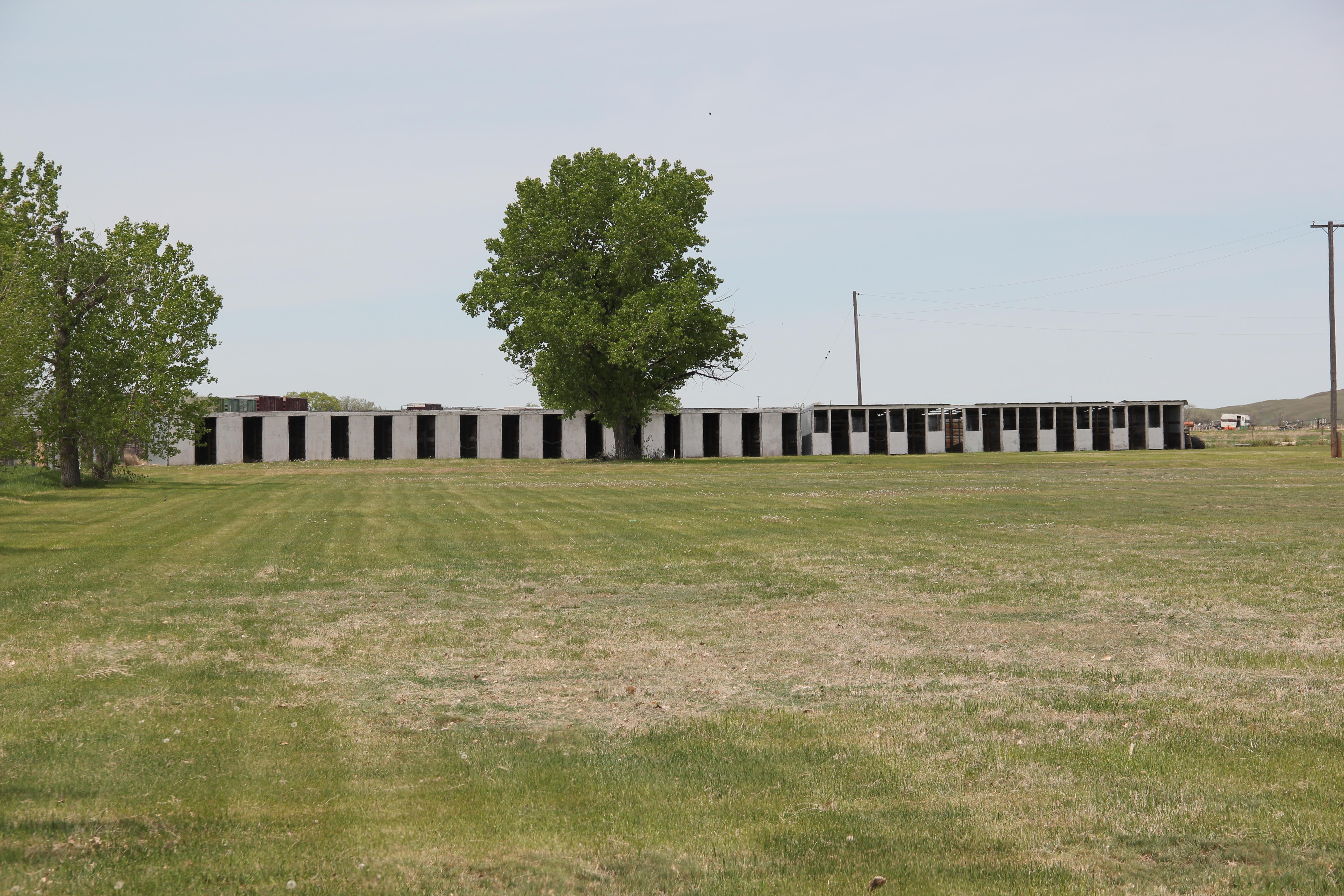
With that brief background sketch in mind, what do you find at the fairgrounds today?  To my eye, you find a very intact mid-20th century fairground landscape, impressive by the obvious stewardship of the community and the unadorned aesthetic of the wood frame, painted white buildings.  The race track is still there but now the rodeo is the key event of the fair as shown in this image of the historic chutes.Image.

The grandstands and related structures dominate the fairgrounds.  But many other buildings contribute to the historic sense of place.

Image


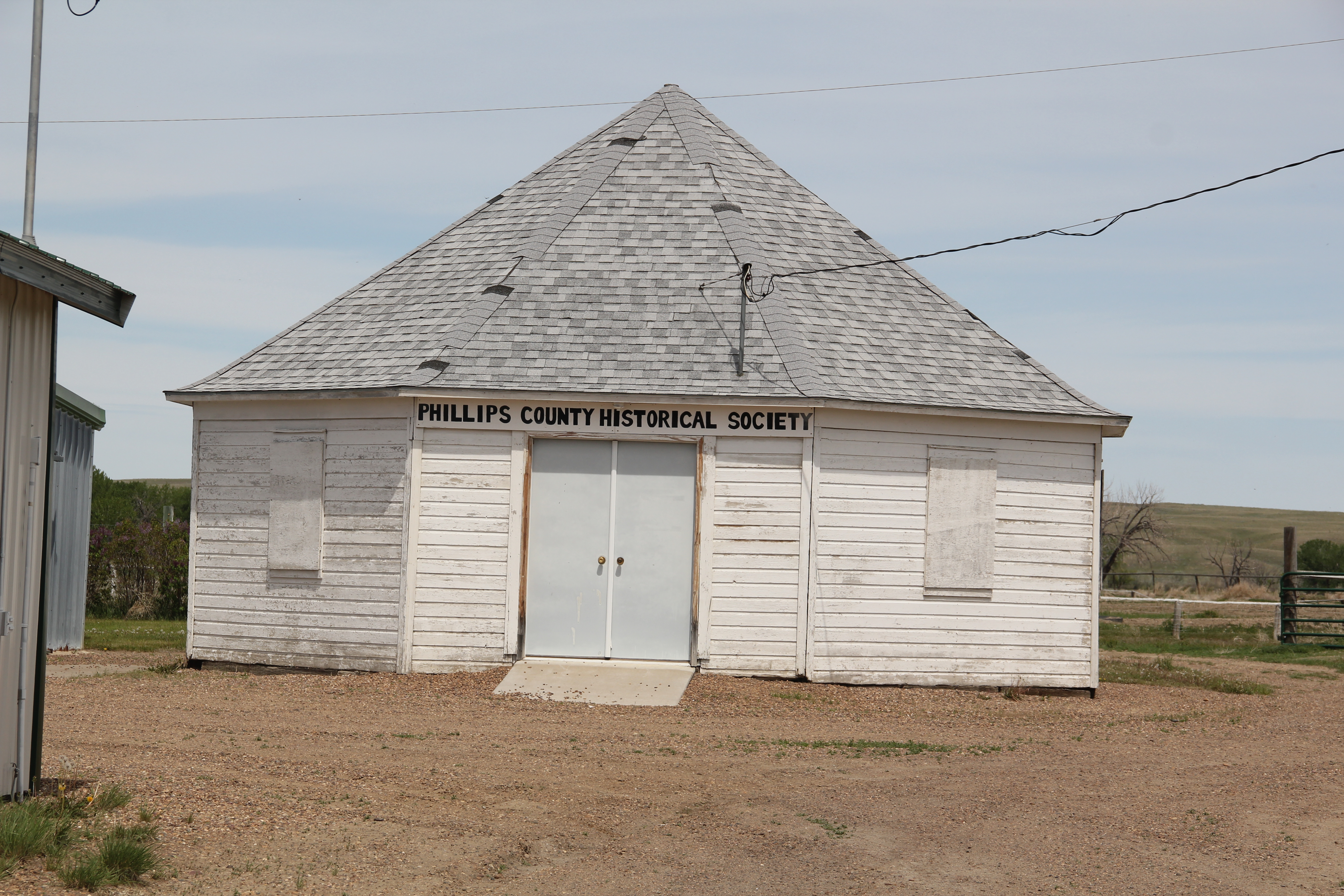
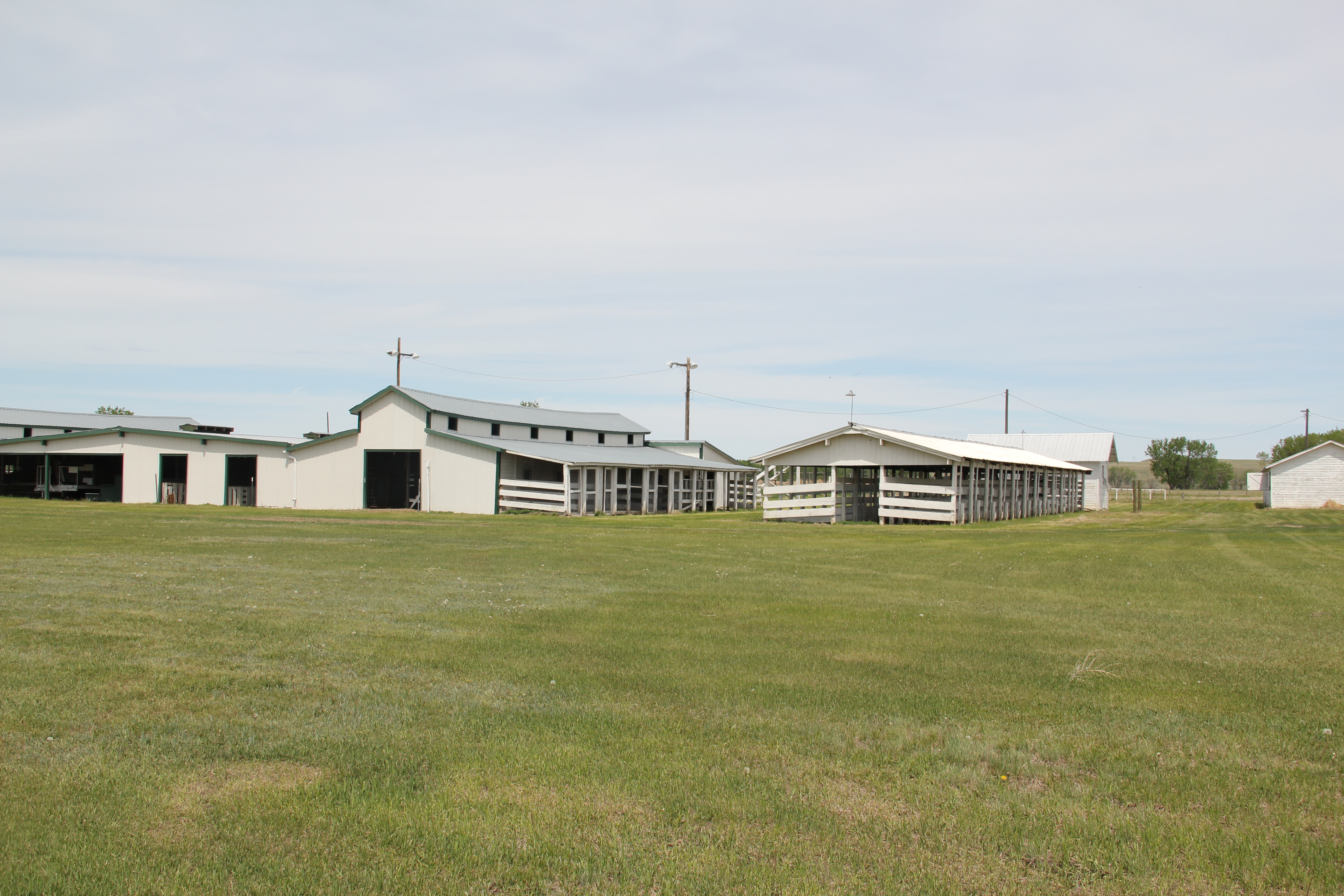
The octagonal-shaped exhibit building for the county historical society stands at the center of the fairgrounds, a reflection of the pride in heritage shared by the community.  Also impressive is the condition of the livestock barns and associated exhibit areas.  

Image

Image

Image

Located on the north side of the Great Northern tracks, which are also north of U.S. 2, most travelers probably never notice the historic fairgrounds.  The tall block of the grandstands face the tracks, meaning that railroad travelers can’t really miss noticing the grounds–and of course when the fairgrounds started, its audience came by horse, buggy, wagon, and rail–few depended on autos.

Image


The Phillips County Fair nears its 100th anniversary–the buildings, and the stories and traditions embedded in them, are a remarkable heritage testament in this tiny Hi-Line town.

Image


Town Signs along U.S. Highway 2 in Hill and Liberty counties

Right now everyone is into Montana’s traveling season with rodeos and fairs in full swing (my old residence of Helena is having Last Chance Stampede this weekend). So I thought that a rather straightforward but fun look at signs along two Hi-Line counties was in order.

Let’s begin with Joplin, in Liberty County. In 1984 it had one of my favorites in the state, a relic of old fashioned early twentieth century boosterism with its motto–“Joplin: Biggest little town on Earth”

Image

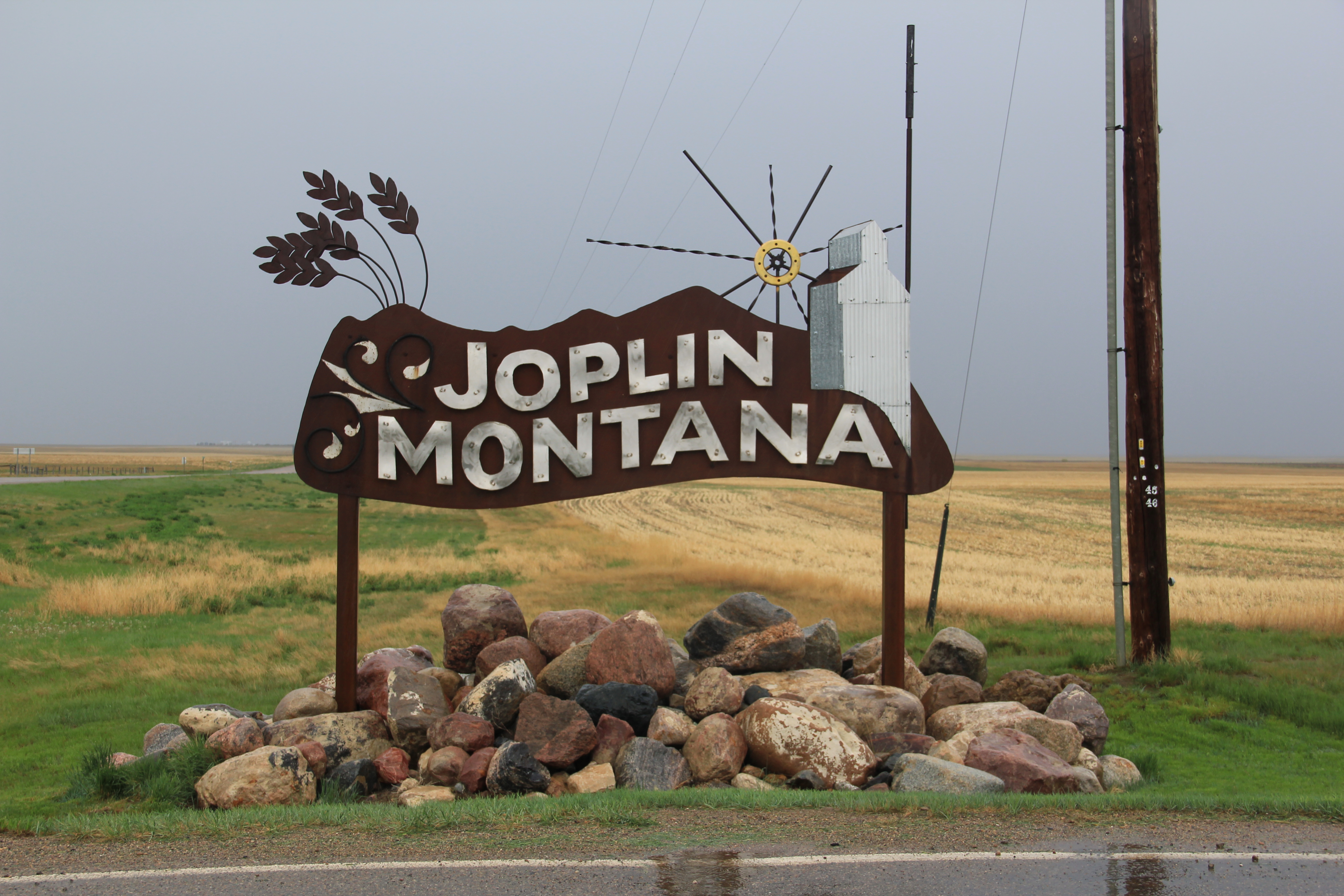
The sign still exists, located north of the highway, closer to the railroad tracks (passengers of the Empire Builder see it daily). Joplin’s highway sign, however, is more modern and sleek–and symbolic with the grain elevator and wheat motifs. This 21st century type of metal, CAD-drawn sign is found all along U.S. 2.

Image

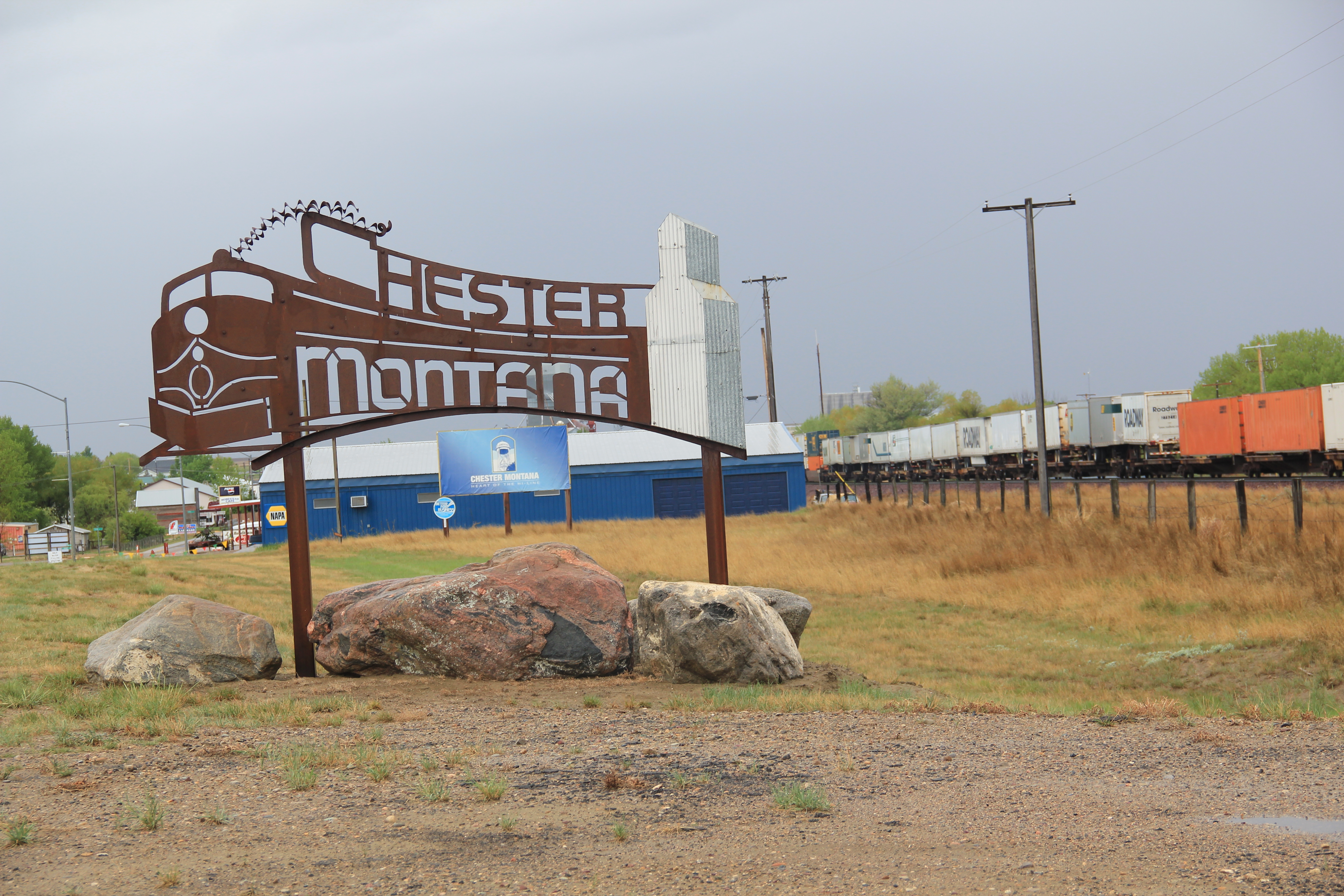
For instance, Chester, the seat of government for Liberty County, has a newer metal sign, suggesting a bit of streamlined Deco with its quotation of a classic passenger train engine.

Image

Kremlin, in Hill County, wishes to make clear its allegiances, complete with an American flag.

Image

Hingham, in Hill County, uses a metal screen to proclaim its existence, along with identifying community landmarks of importance. When compared to the standardized green rectangular state sign, “Entering Hingham,” there can be no doubt why town signs still matter. To officialdom, the small railroad towns are relics, hardly worth a glance, or slowing down. For residents, the signs say: hey we are here; we’re home.

Image

Rudyard, also in Hill County, is even willing to air its dirty laundry-an admission that in true Montana style, a resident took as the slogan for their business along the town’s main street.

Image

Image

Let’s end with Hill County’s Gildford–for no particular reason except that this town has a sign always found when bragging rights can be asserted–especially when it involves high school sports. When I come back to this topic in other parts of the state we will see many more examples of signs that not only identify but also celebrate the town’s most precious assets: their high schools.

Image

Havre Has It: Modernism that is

While working along the Hi-Line in 1984, I encountered the motto, “Havre Has It” seemingly everywhere. While the slogan was corny, it was true I kept on thinking in that Havre had the best shopping, the better restaurants (here’s to the old Duck Inn), the best collection of historic architecture, the university of the region, etc.

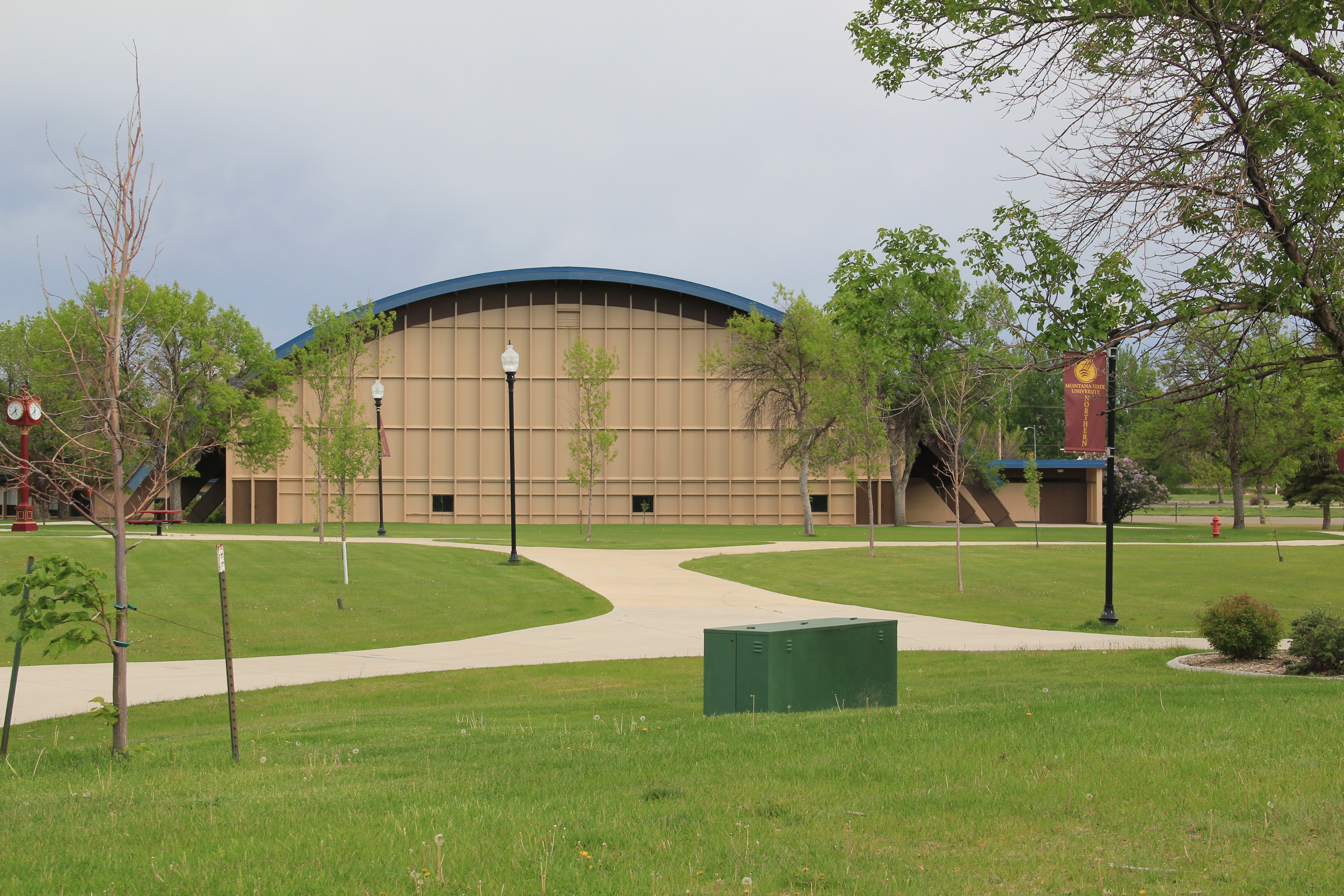
Although I didn’t realize appreciate it in 1984, it is quite apparent in the 21st century that Havre also has the region’s best collection of modernist designs. In the new issue of Montana: The Magazine of Western History, H. Rafael Chacon has a wonderful article on “Montana Modernism.” It is highly recommended reading as one of the best articles on Montana architecture published in the magazine over the last two decades. Chacon highlights MSU-Havre’s Armory Gymnasium, designed by Montana architect Oswald Berg. He includes photos of the building under construction and then as the finished building.

MSU Havre gym

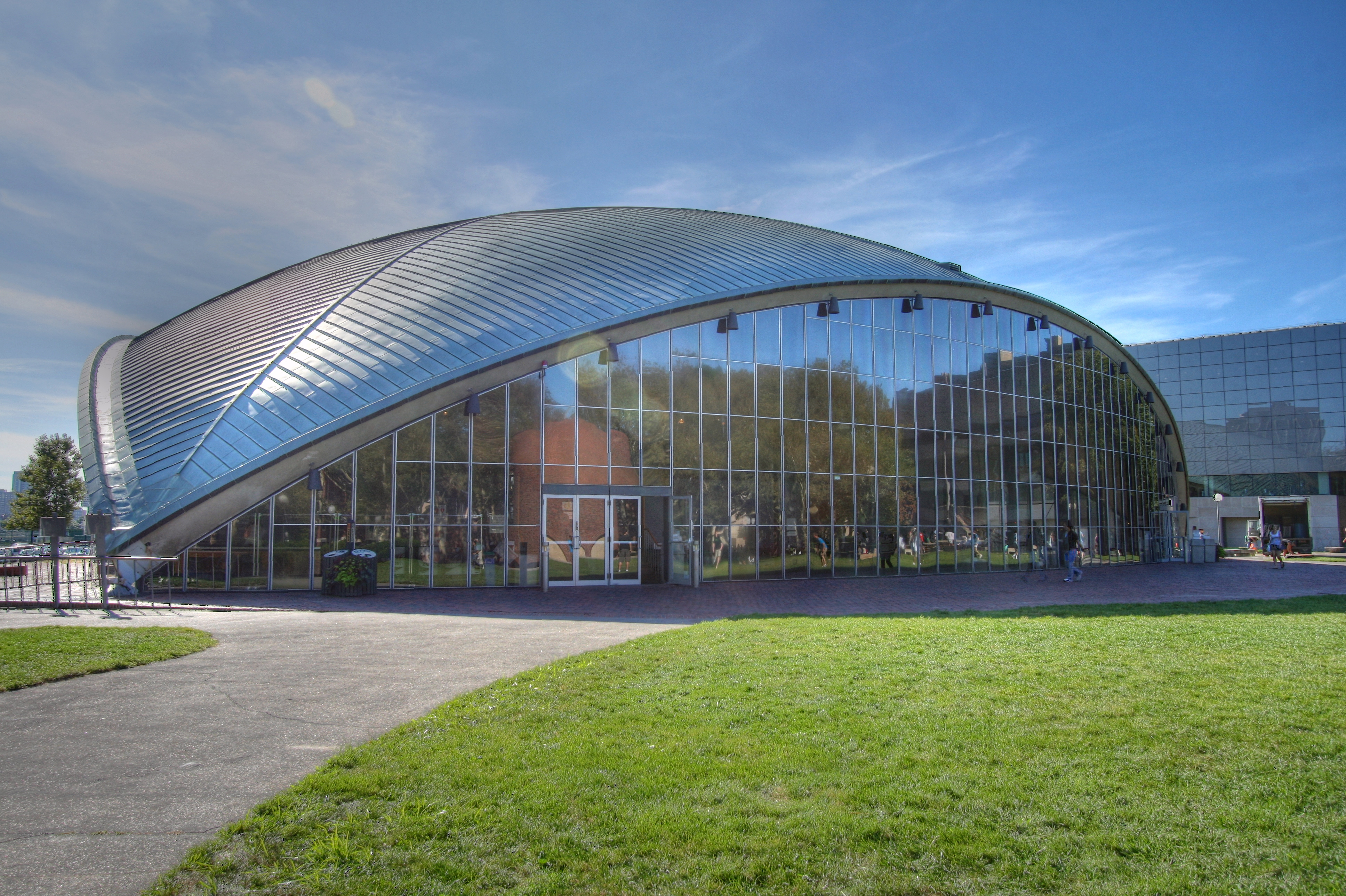
The 1950s saw many universities receiving federal dollars to construct large campus buildings that served both as new gymnasiums and growth in popularity in college basketball but also as offices for ROTC and similar military programs. In 2008 I documented a similar dual-purpose building at the University of Tennessee, also built in the late 1950s. The UT Armory-Gymnasium building is also modernist in design, but subdued in its presentation compared to the Northern Montana College gym, with its bit of influence from Saarinen’s very famous 1955 modernist design of the Kresge Auditorium at the Massachusetts Institute of Technology.

MIT_Kresge_Auditorium

Although lacking the splash and dash of the Kresge Auditorium, these views of the end elevations of the Northern Montana College gym clearly show the influence of Saarinen’s earlier design.
IMG_8458

IMG_8460

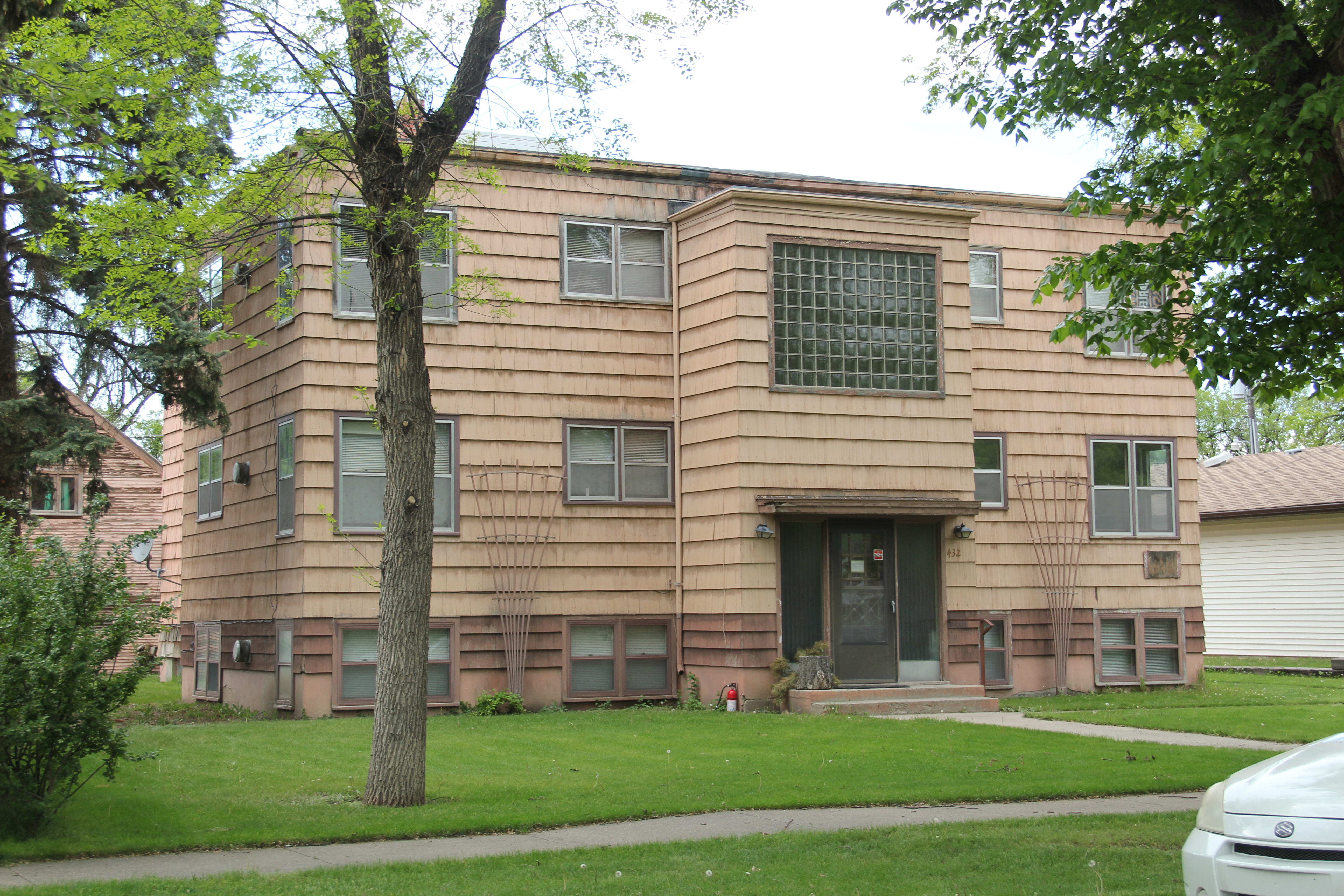
Havre’s traditions of modernism are not merely an aesthetic introduced form the outside by state government. In the residential historic district there is an Art Deco/International style building that embodies 1930s style.
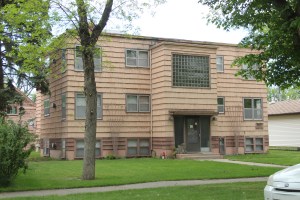
IMG_8423

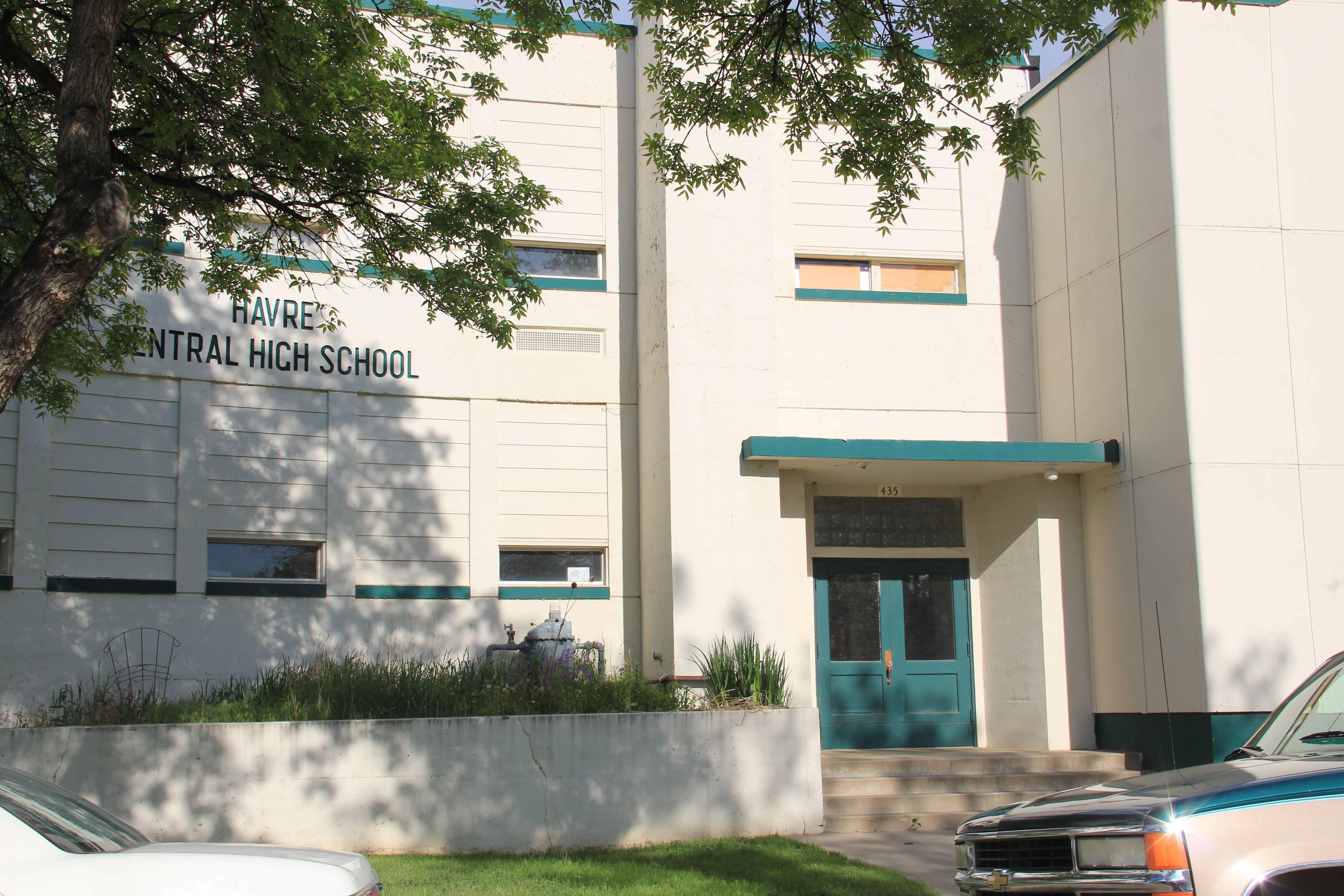
Then, more importantly, there is the Havre Central High School and Gym of 1949-1951 that reflects the New Deal interpretation of modernist ideals of the 1930s as embodied in literally hundreds of similarly styled schools funded by the Public Works Administration and the Works Progress Administration across the country.

IMG_8481
IMG_8474

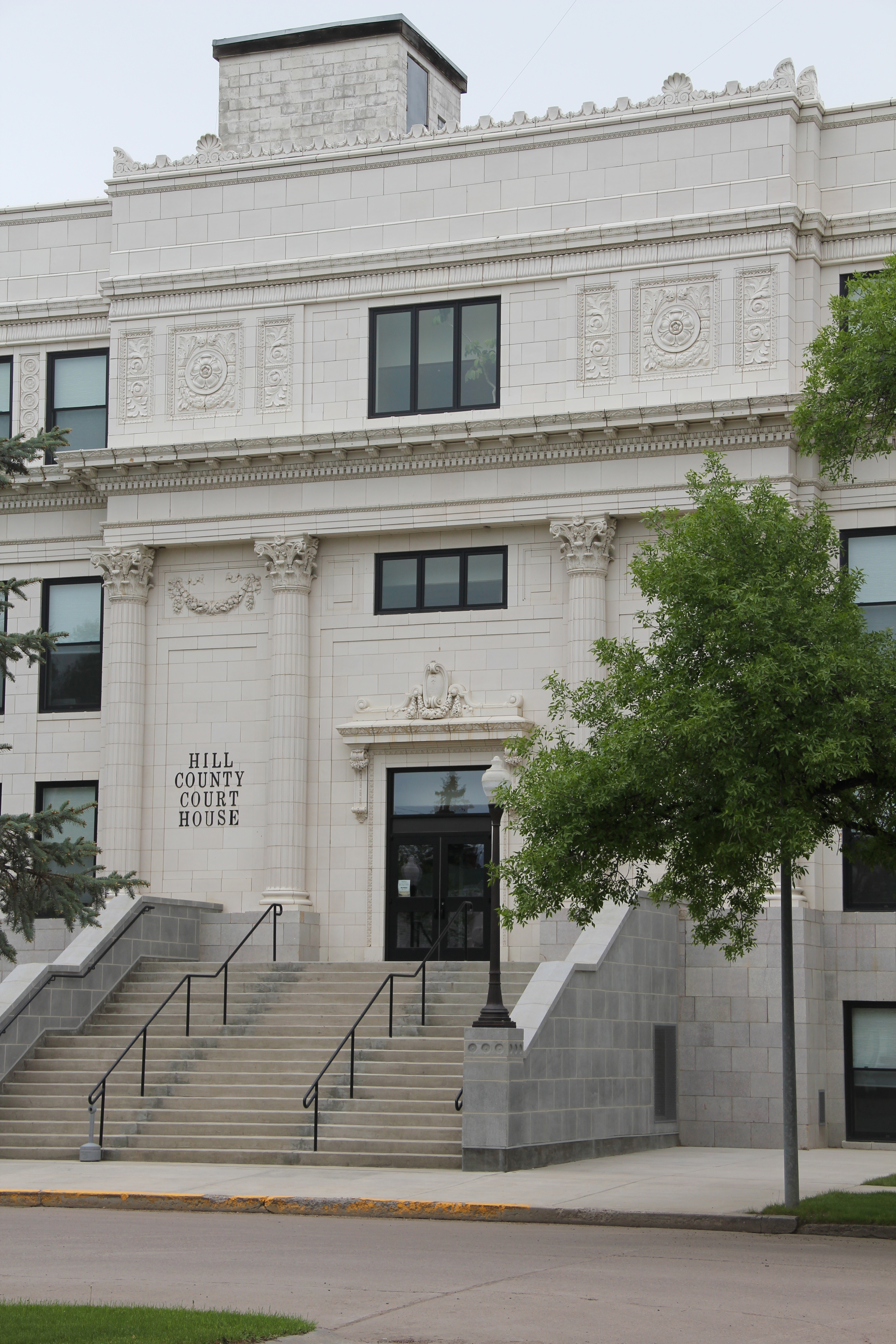
The new design of the school stood in stark contrast to the city’s public building aesthetic of the first half of the 20th century, best represented by the Classical Revival style of the Hill County Courthouse and the monumental Colonial Revival of the U.S. Post Office and Federal Building.

IMG_8430

IMG_8427

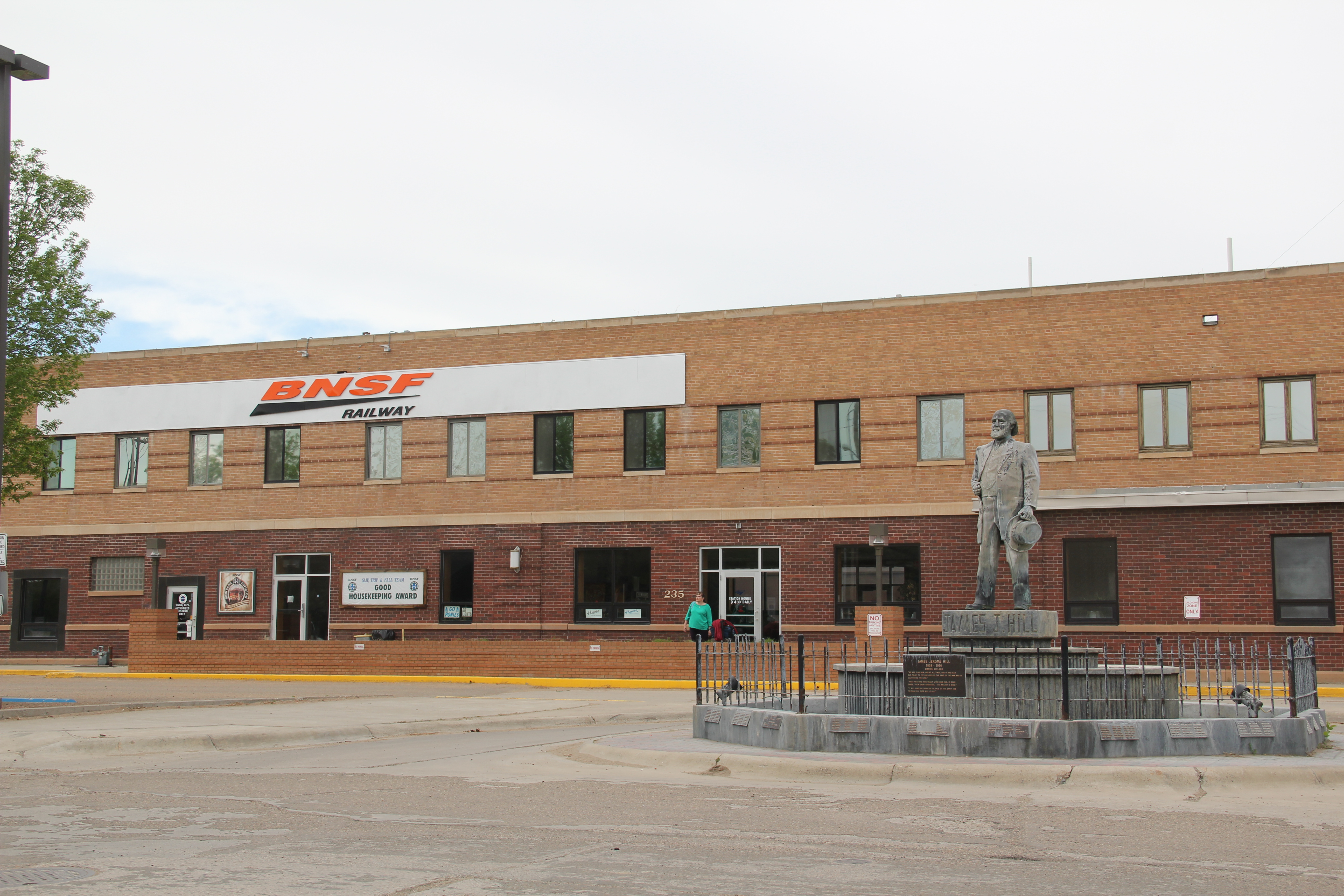
Then, two years after the high school and gym were finished came the remodeling and expansion of the Great Northern depot in 1953. Suddenly there has a long rectangular block of brown/gold bricks in the center of town, a structure totally at odds with the earlier tradition of slightly Victorian-styled or Classical influenced passenger stations that served as literal gateways to the railroad towns of the plains.

IMG_8413

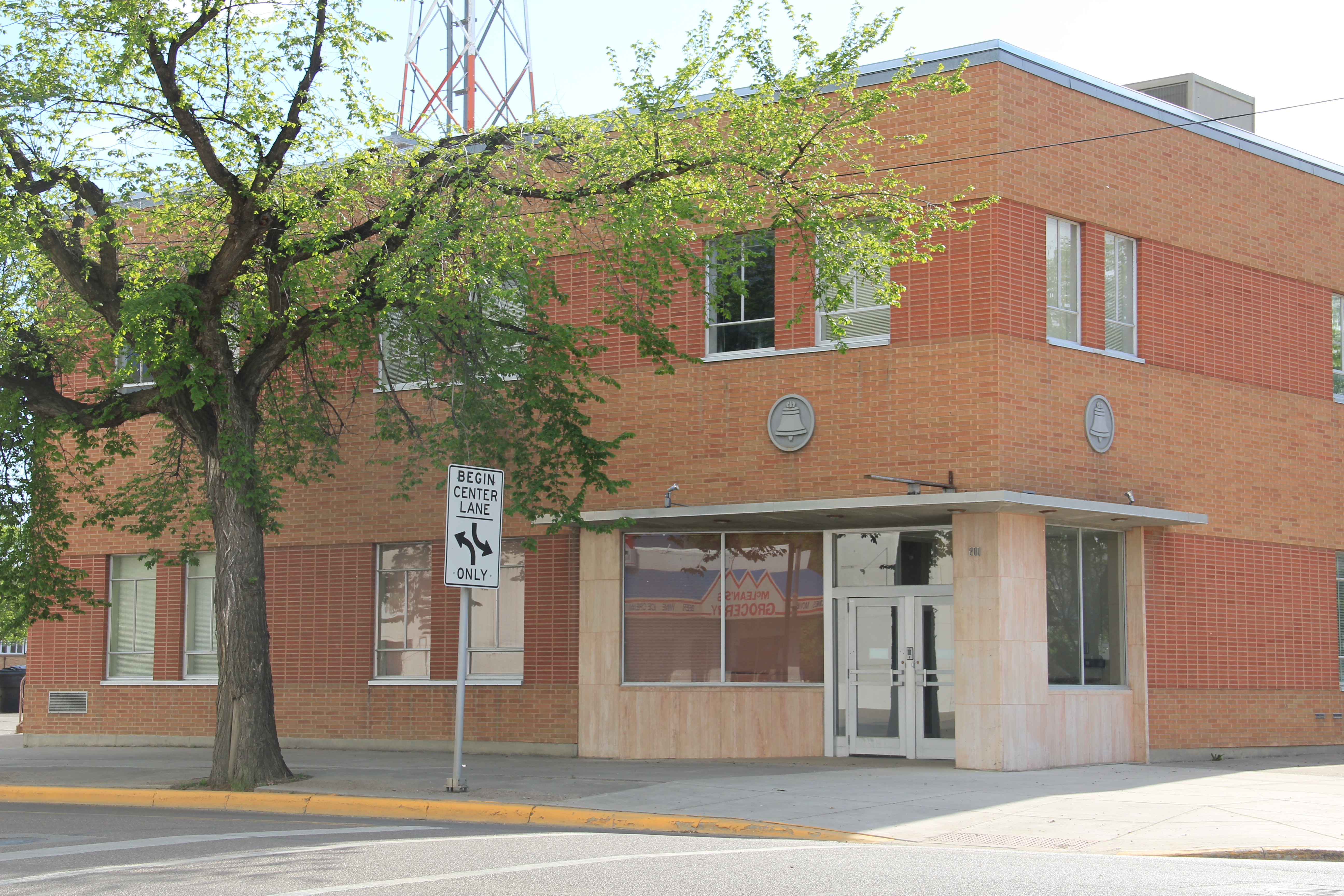
Can anyone doubt the influence of the Great Northern on the prospects and identity of Havre in the 1950s? It was the key economic engine. In the wake of the new passenger station, other businesses and institutions in downtown Havre shed their earlier skins for the look of modernism. The Bell Telephone building was a sharp-edged box, influenced by an International style look of shifting patterns of brick and glass.

IMG_8472

Adding significantly to the city’s rich legacy of church architecture is the 1959 almost Prairie -style achievement of the Van Orsdel Methodist Church, located on the edge of the town’s residential historic district.
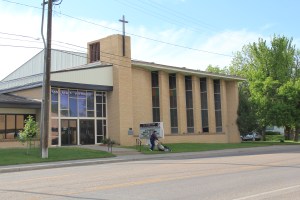
IMG_8483

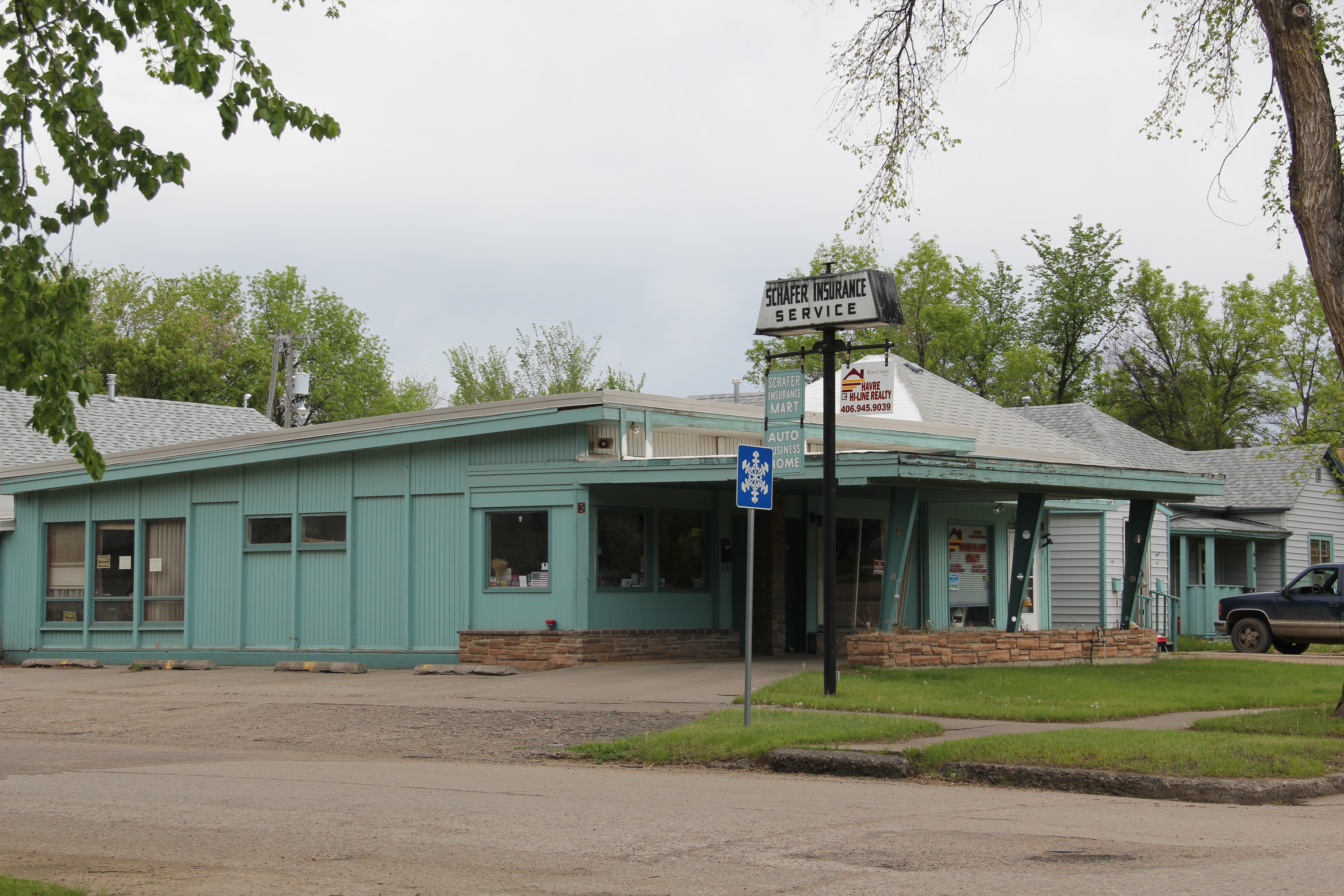
The Schafer Insurance Services building–a striking commercial example of what was called contemporary design (think of the angles and sweep of the modern house featured in the classic Hitchcock film, North by Northwest)–sits square in the town’s residential historic district.
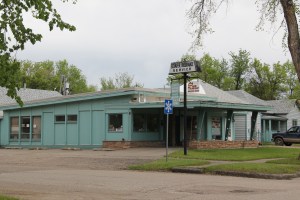
IMG_8443

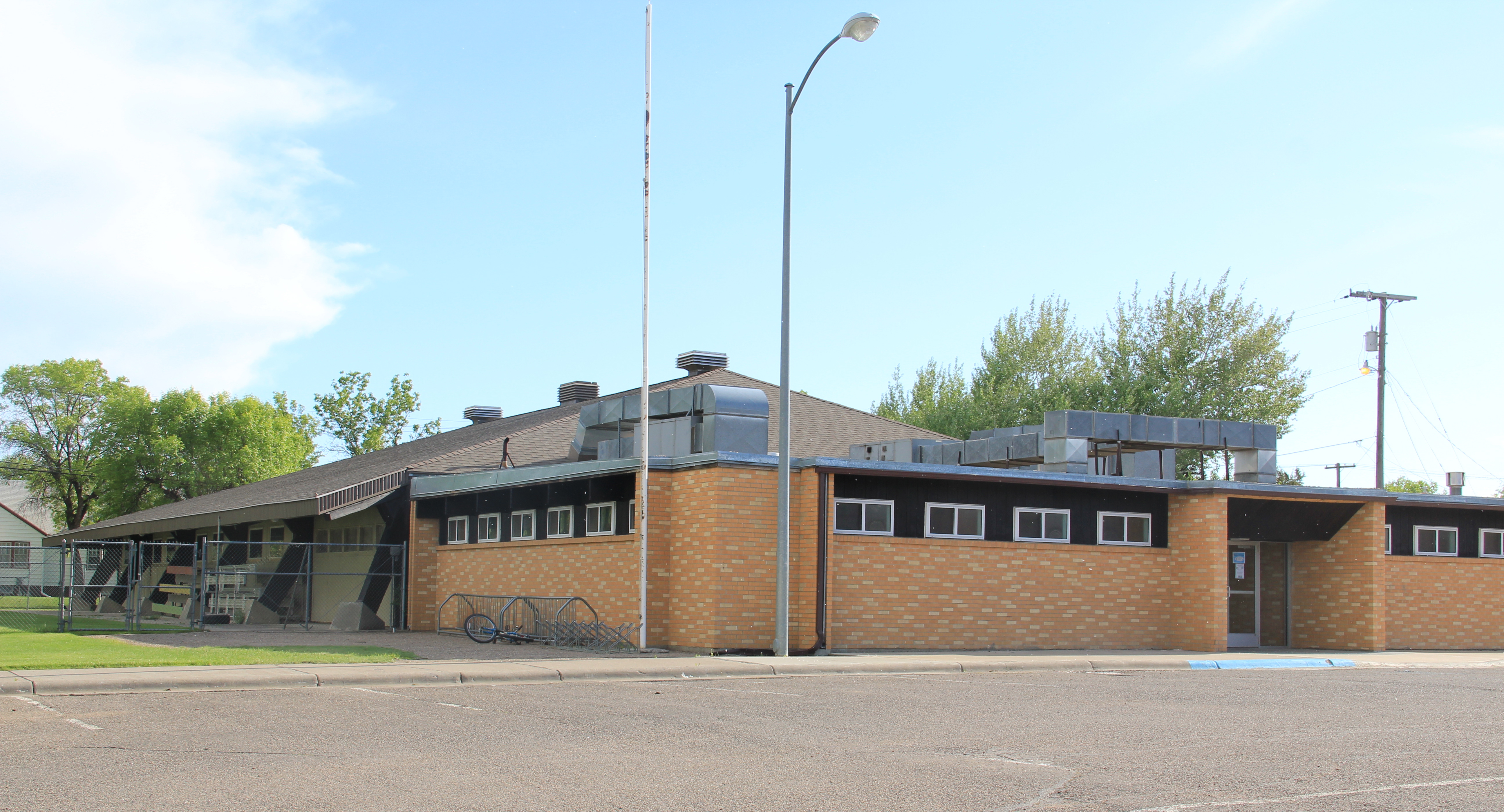
The city pool, across from the high school, exhibited another version of contemporary design, tending in fact toward what architectural historians call “Ranch style,” similar to many new suburban homes being built in Havre in the 1950s and 1960s.
IMG_8478

And the impact of modernism was not over at Northern Montana College. The rambling, Ranch-style effect of Morgan Hall and the more Miesian Student Union Center, combined with the gym and the earlier mechanical arts building to turn what had been a typically Gothic Revival campus of the turn of the century into an almost hip, “with it” college environment of the 1960s.
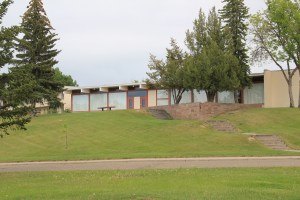
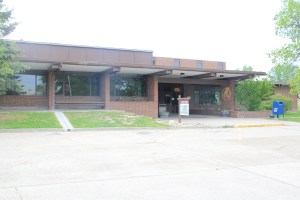
IMG_8455

IMG_8453

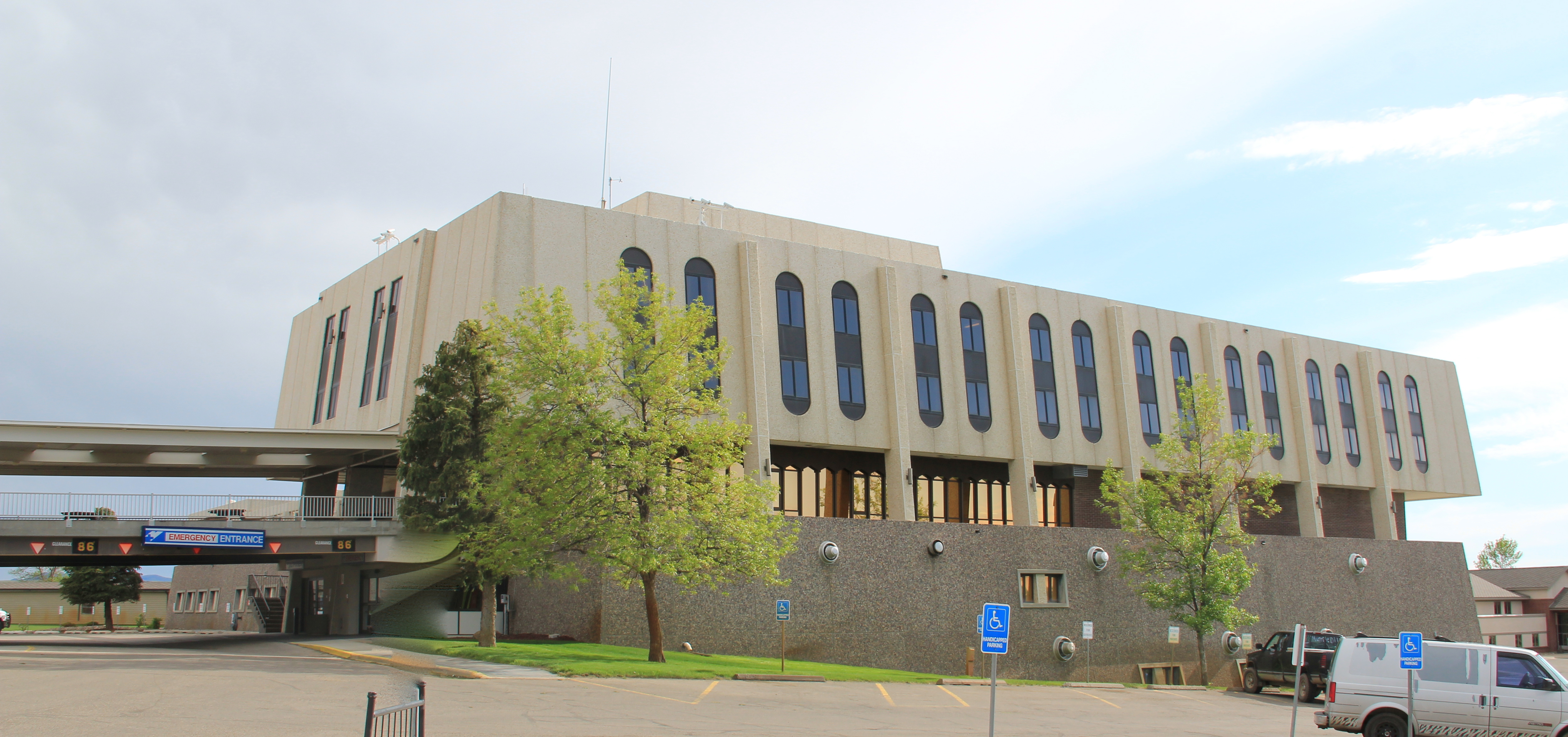
The epitome of Havre’s new look came in the early 1970s with the decision to build a new hospital. The Northern Montana Hospital (1975) is an impressive achievement, almost as if a spaceship had landed on the town’s northern outskirts. If it had been built a few years earlier, pundits no doubt would have called it “star wars” style. More fairly, the building expresses our faith in modern medicine, and complements well the modernist style of the adjacent Northern Montanq College campus. Certainly Northern Montana College represents the capstone of a generation of change within Havre, which can be explored today by discovering the town’s modern architecture landmarks.
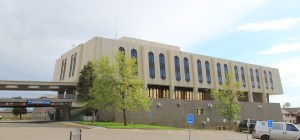
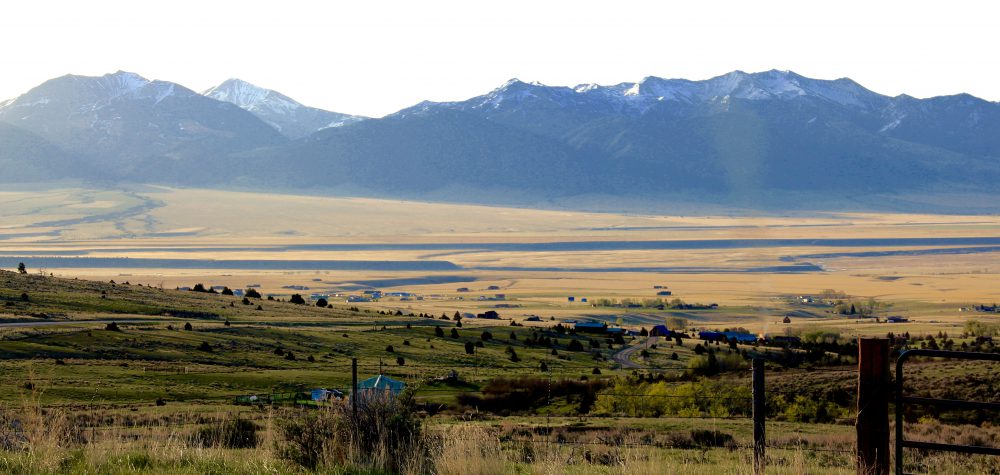
IMG_8467

The Hi-Line’s African American Legacy

The new preservation poster from the Montana State Historic Preservation office features Great Falls’ Union Bethel African Methodist Episcopal Church, one of the city’s many National Register landmarks.  As the poster emphasizes, this Gothic Revival brick sanctuary has long served as a community and cultural center for African Americans in the region, and state.
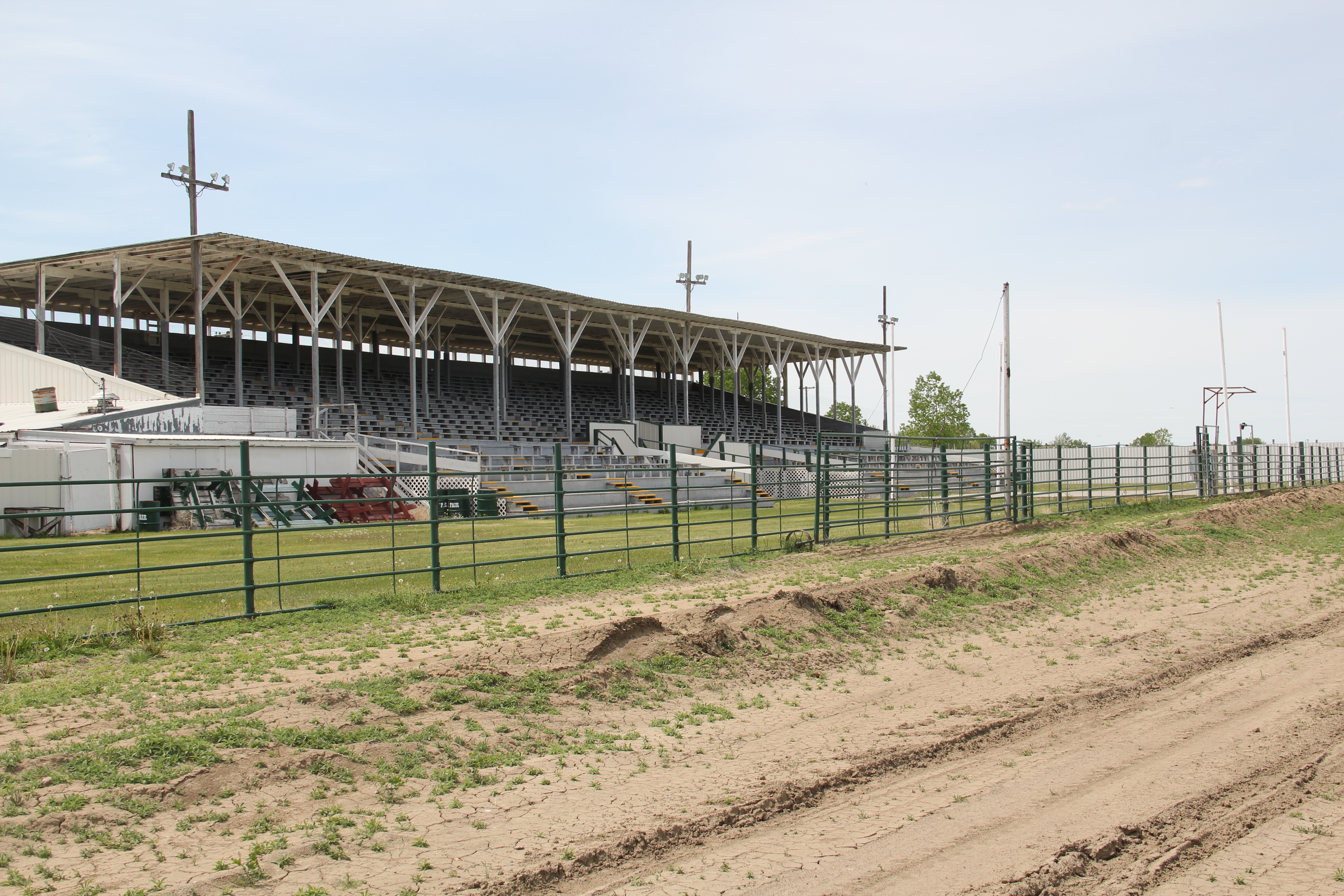
Image

Union Bethel AME Church, Great Falls, 2013

The poster also reminded me of a property and story from Havre that I explored in May.  Many times people assume that African American heritage is always a big city story–of course Great Falls had an iconic black church but you won’t find those elsewhere except like in Butte with the Shaffers Chapel AME church below.Image

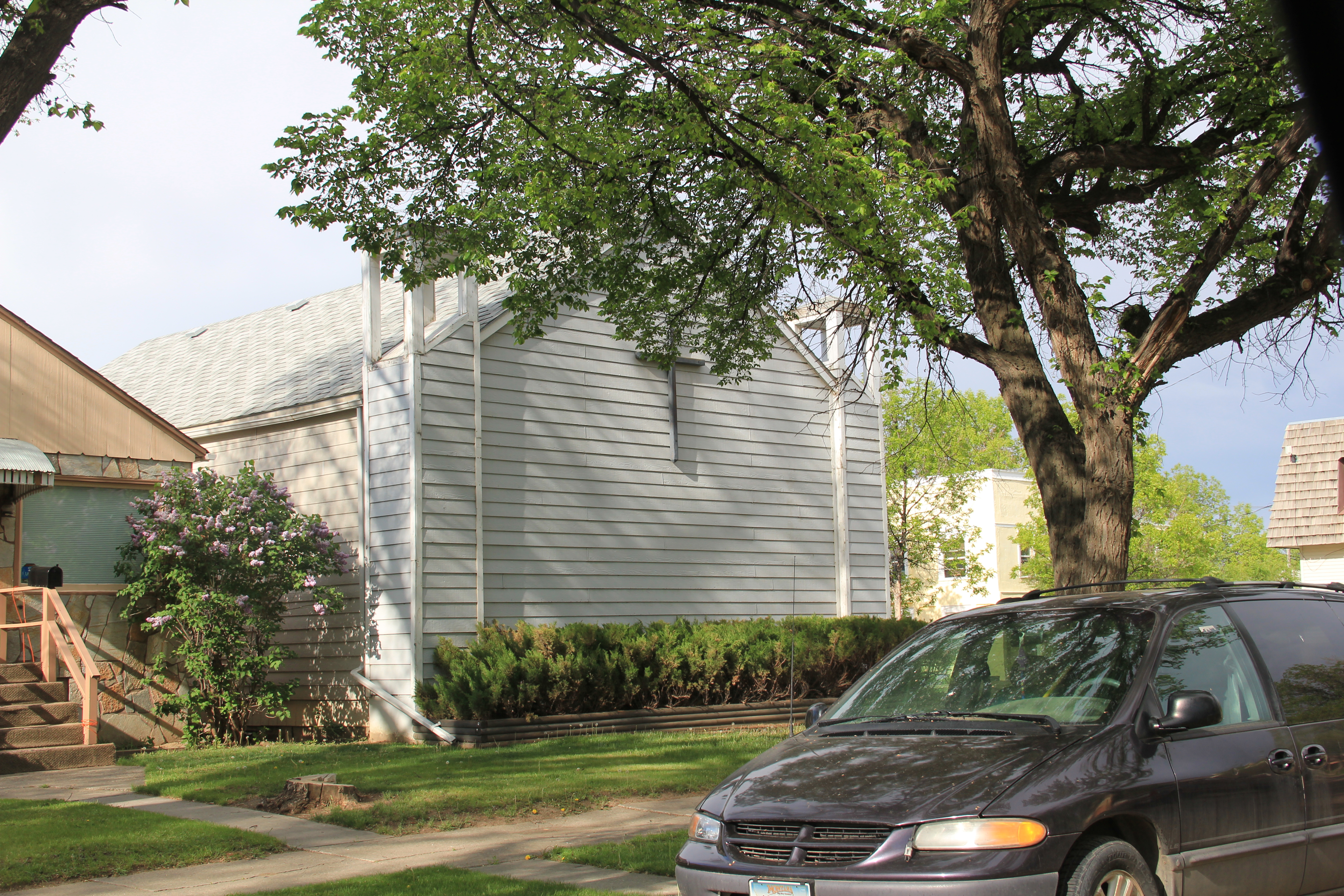
But the African American presence, as proven in the recent research on the state’s black built environment by Patty Dean, can be found throughout Montana.  In Havre, at Dean’s urging, I located the historic African Methodist Episcopal Church of Havre sanctuary (c. 1916), now home of the New Hope Apostolic Church, which is located just a short walking distance from the historic corridor and machine shops of the Great Northern Railway.  

Image


Montana writer Lillie Hall Hollingshead (born in Canada 1898, died 1986–buried in Havre’s Highland Cemetery) wrote about the church in her memoir, Life As It Was (c. 1975). The first trustees were Thomas Allsup, William Jackson, C. A. Abernathy, and Charles Lawson, with Jackson as president and Abernathy as secretary.  Its pastor was the Rev. W.B. Williams, who also pastored Union Bethel AME Church in Great Falls.

Hollingsworth’s narrative reminds us how important churches were as places of identity and sanctuary for African Americans in Jim Crow America.  She writes:  “The Havre church served the spiritual needs of not only Great Northern railways employees, but the Negroes who had to lay over in Havre between trains.  How happy our Negro neighbors from the South must have been to have a place where they could sing, pray, and praise the Lord as they wished.”  

Image


The Church of Jesus Christ of Latter-Day Saints purchased the property in 1947 and in 1969 it passed to the United Pentecostal Church, which is how the building is identified in the 1976 bicentennial publication, Grit, Guts and Gusto: A History of Hill County.  Kudos to the residents of Havre and Hill County for keeping this institution and its story alive in the 21st century.  The unassuming building is an important reminder of the depth and diversity of Montana history.


Three Schools in Madison County: Three Preservation Solutions

Madison County, Montana, is perhaps best known as one of the key locations for the 1992 film, “The River Runs Through It.” Certainly the county has earned its trout fishing haven reputation, and its growth as one of the Montana gateways into Yellowstone National Park has been noteworthy in the last 30 years.

The county is also home to various rural schools.  Since the National Trust for Historic Preservation put Montana’s rural schools on the national map last week by naming the schools among the nation’s most endangered historic properties, let’s take a look at just three schools from Madison County and explore why they have survived into the 21st century.

The magnificent Classical Revival school at Pony, designed by Butte architect H.M. Patterson and built for just over $10,000 in 1902, is perhaps the best known historic school.  It lies at the center of the Pony historic district, a set of resources that span the town’s creation as a mining camp in the early territorial period to its affluence as a mining town in the early 20th century.  

Image

With its hillside location dominating the town’s landscape, the building is a point of pride for those who remain, a true community landmark.  The preservation strategy was traditional–the building is listed in the National Register of Historic Places; it is maintained as a community shrine.  

Image


The money generator for upkeep and repairs is the adjacent school gym (c. 1920), a really splendid community center that reflects the early impact of the national recreation and fitness movement (what many of us remember as P.E. classes) in small town America.

Image

The residents of Pony established a Homecoming Club over fifty years ago, to organize and sponsor community events in the summer to keep the stories and memories of the town alive; the preservation of key buildings are the physical underpinning of their heritage preservation.

The fate of the Norris school–a typical 1920s community-plan school building–lies in its adaptive reuse, as a cafe near the junction of two key roads, Montana 84 to Bozeman and US 287 to West Yellowstone.  This one-story brick building was the first Montana school-to-cafe that I ever visited in 1981; then the conversion was relatively new, and somewhat startling.  But almost every account you read on Montana rural schools emphasize how they served as community centers.  For any of us who travel rural Montana today we know that the crossroads cafes and bars still serve as important community centers.

Image


The final, and best, preservation solution is the one that we often pass by, or forget about:  keep it as a school.  Although certainly altered and added to, the school at Harrison, where you turn to go up into the mountains at Pony, is still a vibrant contributor to the county–and not much else is vibrant in Harrison. 

Image


Harrison is among the decreasing number of elementary to high schools in the region–here generations are raised from the beginning to young adults and the place is ablaze with activity and community pride.  Sure, the school is no pristine architectural monument.  So?  Its value as a cultural heart of a rural community outweighs aesthetics. But it is among the best examples of why our rural schools matter in the connected world of the 21st century:  they maintain a dose of reality and community for our ultra-modern times.

Image


Trask Hall (1878): A forgotten Montana historic school

Image


On a hill overlooking Deer Lodge, the seat of Powell County, is one of Montana’s historic schools, the initial Montana Collegiate Institute (1878) renamed a few years later as Trask Hall by the Presbyterian Church who then managed the school for the next two generations.  In 1921 the local school district took over the building as a public school and still today the historic hall is surrounded by other public schools from more modern times.  It sits silently today almost like a rock of education for this small Montana town.

Image

But as this close-up of the cupola shows, it too needs assistance to continue its third century of service to the residents of Deer Lodge.  At the same time, the past care of the school and keeping it in place as a public landmark for now over 90 years is a credit to the sense of history and community held by the people of Deer Lodge and Powell County.  Indeed north of Trask Hall is another historic school building, the Powell County High School.  

Image

This Tudor Gothic influenced building from 1917 reflects the pride of community, and local boosterism, of that decade when the homesteading boom was reshaping rural Montana and Deer Lodge was riding high, since it was served by two railroad lines, the Northern Pacific and the Milwaukee Road.  Now this building is nearing its 100th anniversary and remains in use and in good shape, clearly a 20th century landmark of education and community for this county.

Image

The adjoining Powell County High School Gym, from the 1930s

For the modernists out there, in fact, Deer Lodge’s public schools also make their mark in 1960s contemporary design with the elementary school on Dixon Street next to Trask Hall.  There is a bit of every type of school design in this county seat.

Image

Deer Lodge’s traditions of preservation, pride, and maintaining their investments in public education are ones worth evaluating and implementing not just in Montana but across the nation.


Rural Schoolhouses in Montana, revisited

The National Trust for Historic Places has named the category of rural schoolhouses of Montana as one of its 11 most endangered places in the United States.  This designation could not have come at a better time for as I traveled extensively in eastern Montana in the second half of May I noted the number of missing schools, or those needing repair.  Let’s trust that this national designation, and publicity, will help free up resources for the adaptive reuse and preservation of these special places.

Image

Monarch-Neihart School (listed on National Register), Cascade County

Since the National Trust wisely put a spotlight on Montana’s rural schools, I will explore the topic in a series of posts over the next weeks.  Certainly there are many abandoned schools needing help.  Then again many property owners have found new uses for the buildings and still other communities have moved schools into museum settings, or in rare cases preserved them at the original location, and interpret the ways of early 20th century education for those of the 21st century. 

Image

Dell School, Beaverhead County.  It was converted into a cafe near I-15, which was a great breakfast place in 1984 and remains a great place for just about anything today.

Let me start with a brief essay I prepared for the Summer 1985 issue of Montana: The Magazine of Western History titled “Rural Schoolhouses in Montana.”  At the beginning, I observed: “Rural and small-town schools are important components of the Montana landscape and deserve our special attention.  Whether they are located at county crossroads, along dusty lanes, or in the midst of rural villages, these buildings remind us of how, as children, we once looked at the school as the most imposing structure in our lives, a place of concealed terrors and infinite wonders.  Within the schoolhouse, children of different backgrounds and ages established the shared purpose and neighborliness that are crucial to a rural community’s survival.”
“For a moment, cast aside your romantic attachments to schoolhouses and think about Montana’s schools as historical documents.  These buildings, considered in the aggregate and in the context of the regional landscape, have important things to tell us about our history.”
Image

Benchland school, 1984

The article highlighted five schools.  The Benchland school in Judith Basin County was a major $5000 investment in 1911 for a just established community but leaders wanted a brick school to show that they were serious and would be there for the long haul.  Benchland hoped to grow as a major village along the Billings and Northern branch line, but prosperity never happened, and the community had too much school for its size.  It was a barn in fair condition in 1984; almost 30 years later it needs help as its roof is nearing collapse.

Image

Benchland school, 2013

Another school highlighted in the 1985 article was Vananda School in Rosebud County, a village which then was a ghost town along the recently abandoned Milwaukee Road.

Image

Here was an even more evocative landmark of community dreams from the early 20th century.  The school dates to 1925, with “its tall physical presence on the flat, treeless prairie dominating much of the northern Rosebud County landscape.”  Over the 30 years since I made sure to periodically roar by Vananda as I returned to Billings for flights back to Tennessee.  I did not want to see this landmark of the homesteading era disappear.  As I concluded the 1985 essay:  “As monuments to town boosterism, as records of homesteader mobility, and as social centers, Montana’s schools physically link us to our roots as a community and a culture.”  The Vananda school remains empty today, but it still says much.

ImageVananda school, 2013