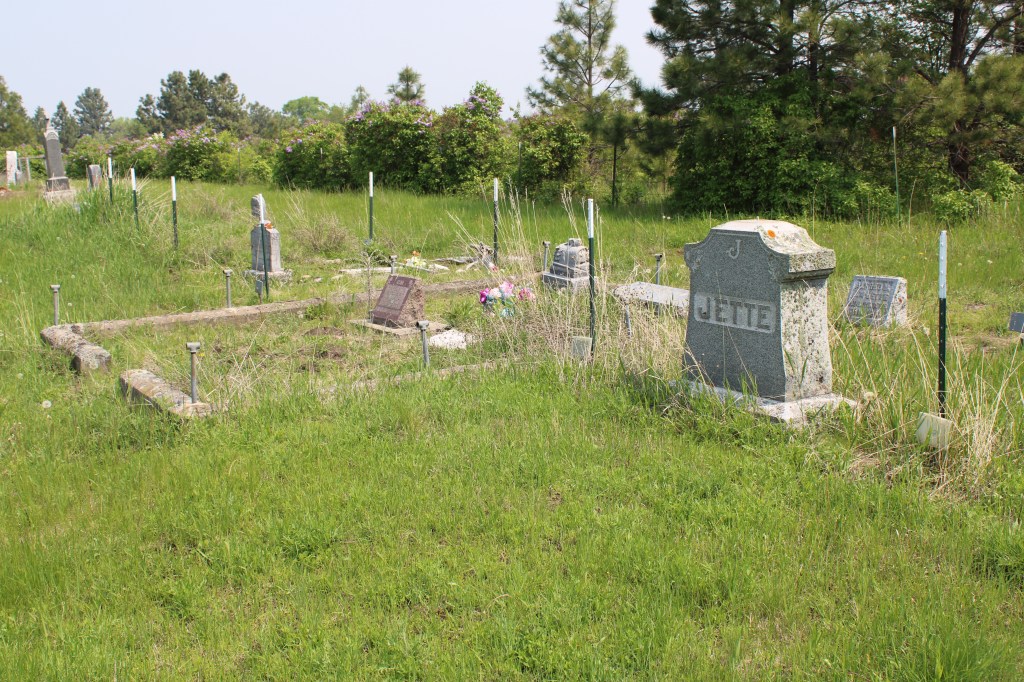
Polson’s oldest cemetery is the Beauvais-Decker Cemetery located on an old rutted road that ends at the cemetery southeast of downtown. Only in the last few years have a committed group of citizens undertaken the tough work of cleaning the cemetery and making it accessible. They hope to restore it fully in the forthcoming years.
Identified grave markers date to the first decade of Polson’s development (1898-1908) and into the 21st century. Thus the cemetery is associated with the settlement history of Polson.
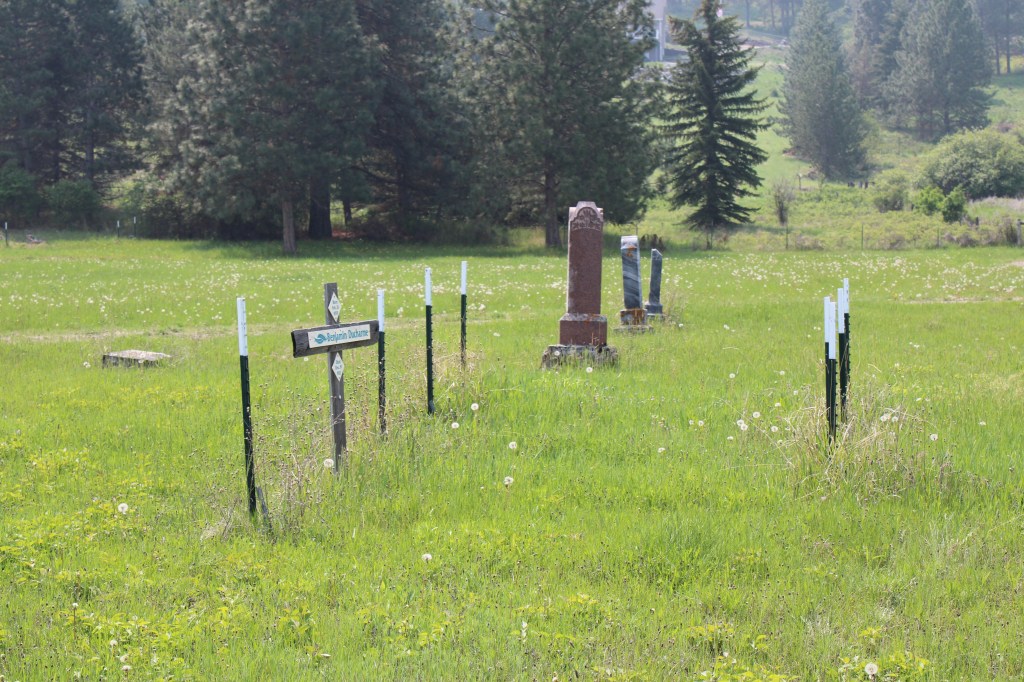
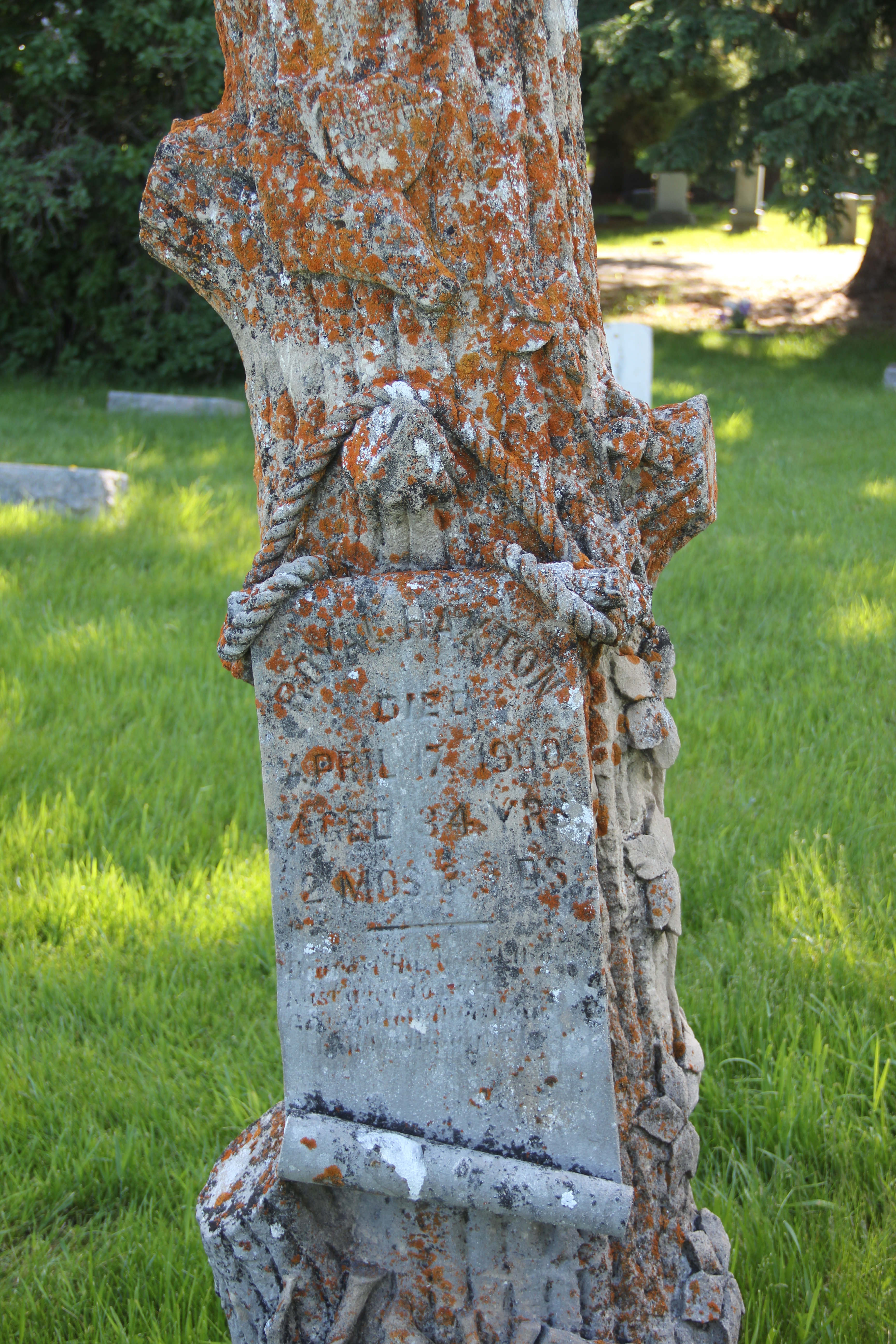
Frank B. Decker, 1898. Polson became a town in that year. It was not incorporated until 1910 and did not become the seat of Lake County until 1923. Beauvais grave marker (the cross), a recent replacement
Once the cemetery fell into disrepair some grave markers were lost. Metal poles mark some graves. The original landscaping plan had a large burial area south of the circular drive, where a flagpole was installed, extending to the adjacent tree line.
Another large burial area is north and west of the flagpole.
As the ongoing restoration proceeds, a significant early Lake County cemetery comes into view. I look forward to seeing the progress on my next visit to Polson.
Recently there has been much needed discussion in the historic preservation field on the necessity of focusing of the many types of citizens and residents who created and sustained our historic landscape. Don’t be so building focused; think about place. Nestled behind an attractive public playground on Main Street, not far from the ultra-modern Bozeman Public Library, is such a place: Sunset Hills Cemetery. It is an absolutely compelling place to walk along its many rows and curvilinear driveways to find the stories of Bozeman, written in stone, concrete, and metal.
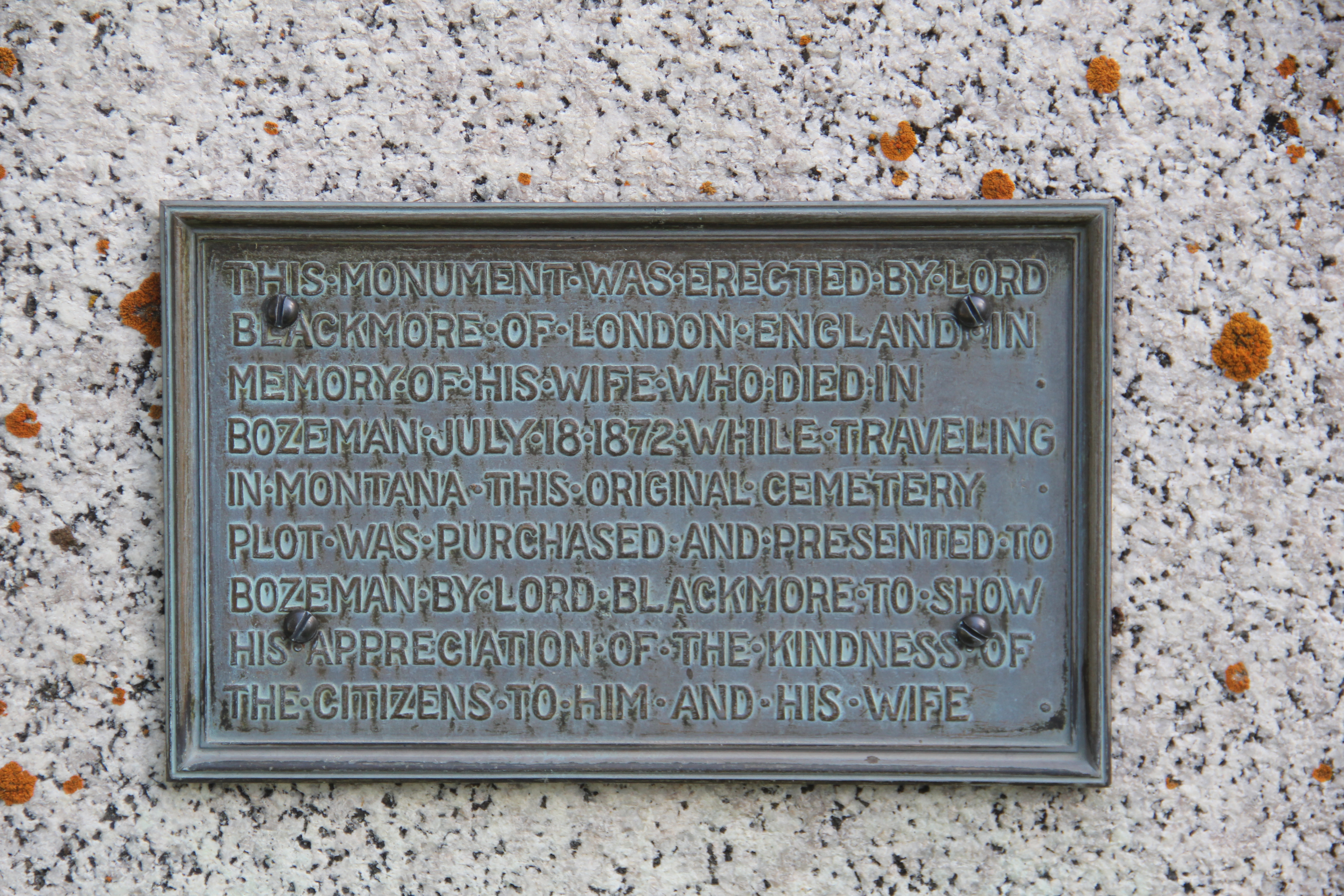
Within the cemetery is one of the oldest physical remnants from the city’s beginning: the marker for Lady Mary Blackmore, July 1872, when Bozeman was nothing more than a string of tents, log cabins, and false front buildings along the Bozeman Trail.
The metal plaque on the slowly decaying pyramid marker tells part of the story. Lord William Blackmore and Lady Mary Blackmore had a deep interest in the west and they came to visit newly designated Yellowstone National Park in 1872. Mary took ill and did not make the trip to the park. After her health markedly declined, citizens went to find Lord Blackmore and he returned, but Mary never recovered. Blackmore to honor his wife, and to acknowledge the support and kindness of local residents, purchased 5 acres for a public cemetery and had the pyramid marker installed. Today this oldest section of the cemetery is on the west side, The view from the Blackmore marker is impressive.
The Daughters of the American Revolution in 2020 addressed other early burials in the cemetery through this obelisk marker in memory of those without grave markers today.
Nearby is the very different grave marker for another important early settler and rancher, Nelson Story. Whereas the Blackmore marker is direct, dignified, the Story marker is designed to remind everyone that here lies an important person.
You walk through an overpowering classical-staled gateway to find the graves of Story and his family. And his employees. The marker for Tom Thompson (d. 1879), the son of Isaac and Barbara, tells the story of a young man who drowned in the Yellowstone River while “in the employ of the Honorable NELSON STORY.”
But Thompson’s story if far from the only one shared in Sunset Hills Cemetery. There are many gravestones that bear the emblems of fraternal organizations, some well known, some not so much.
Note here the designation of Ella Martin as an early Regent of the DAR chapterThis Woodmen of the World marker for Royal Paxton weds conservation.
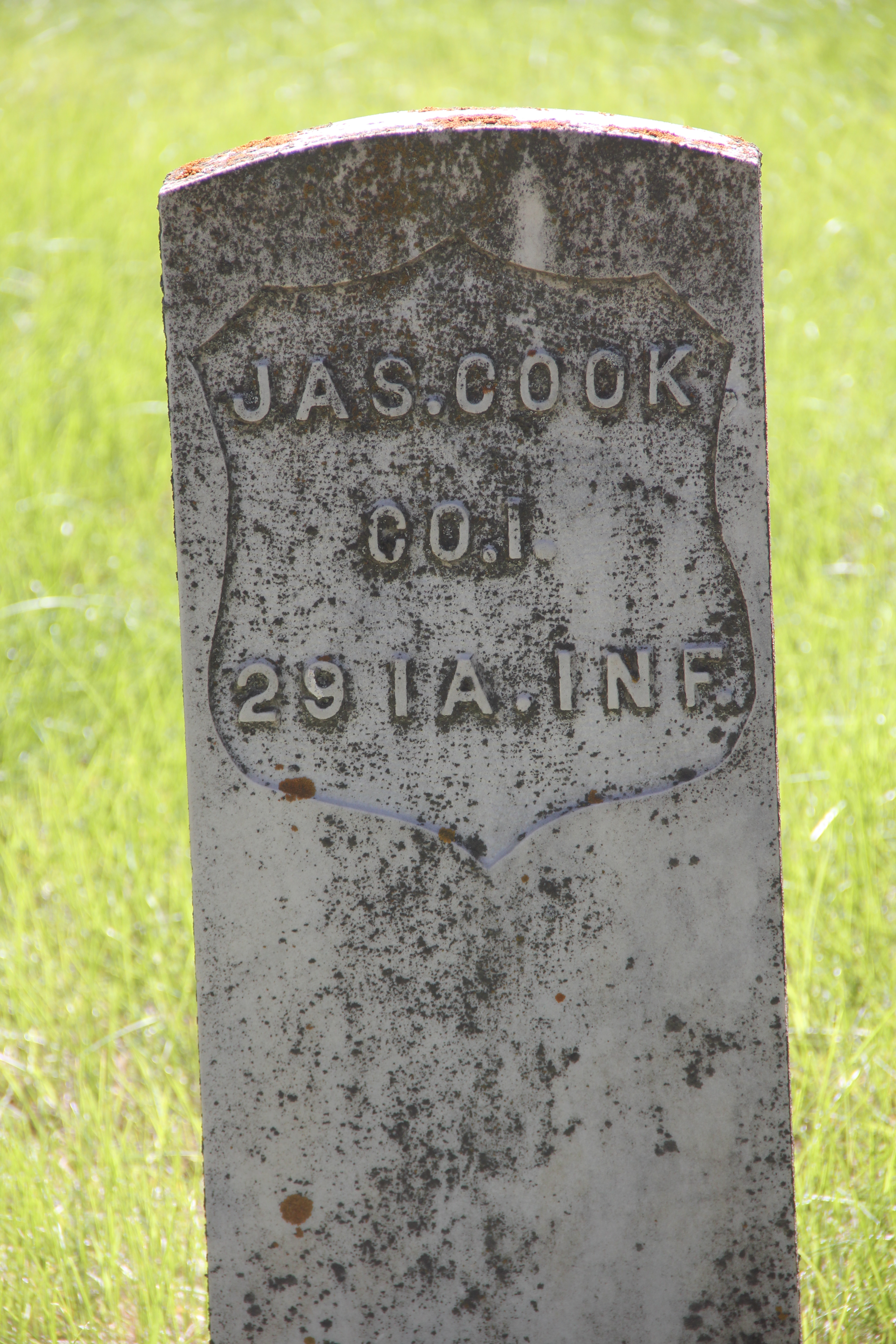
Sunset Hills Cemetery has a dedicated veterans section at the rear of the property that is centered around a 1928 Grand Army of the Republic (GAR) monument to those who served in the U.S. and Union Armies during the Civil War. It is unique because typically the GAR monuments date to the decades right after the war, or perhaps up to 1915, which was the 50th anniversary of the end of the Civil War.
Scattered throughout the cemetery are the simple standardized gravemarkers that the federal government provided to families of U.S. veterans. This place is another reminder of the impact of the Civil War on late 19th century America.
Almost all historic cemeteries in Montana have sections for veterans and special markers designate fraternal lodge membership and prominent citizens. Sunset Hills Cemetery has all of that over its 150 years of existence–and more. Whatever row of graves you choose to explore you will find markers of beauty, of memory, and sadness.
The Taylor cast metal marker is one of many artistic marvels in the cemetery.
I have explored many municipal cemeteries in Montana–but did not venture into this special place until 2021. Don’t repeat my mistake–here is a place worth exploring, just set aside plenty of time to do. It is not in the National Register of Historic Places–but it should be.
Nestled in the bluffs overlooking Havre are two adjacent historic cemeteries, Calvary (1903) and Highland (1906/7).
Entrance gate, Highland Cemetery
Catholics in north central Montana established Calvary first, taking advantage of newly located city water works to ensure that the grounds could be irrigated.
Looking north toward the Calvary Cemetery entrance. Note water works in upper right corner.
Calvary with its well manicured lawns, large mature trees, curvilinear drives and impressive view to the south set the tone for the landscaping and design of both cemeteries. Grave markers, for the most part, were modest, in keeping with the working middle class character of this Great Northern Railway division point.
Of course there were exceptions to the norm. A large Cross marks the gravesite of Judge Patrick McIntyre, one of the city’s early civic and real estate leaders who died in 1907. The classical styled marker to another of the city’s, and region’s, business leaders, Samuel Pepin, is nearby. Pepin, like McIntyre, was a Canadian who came early to Havre and developed businesses and ranches, all tied to the Railroad. Pepin died in 1914.
McIntyre markerSamuel Pepin marker
Highland Cemetery followed in the footsteps of thee catholic burial ground. Both have impressive views along the southern boundaries of the historic campus of Northern Montana University, now MSU-Northern (name change happened in 1994). The campus was established in 1929.
MSU-NorthernA panoramic view
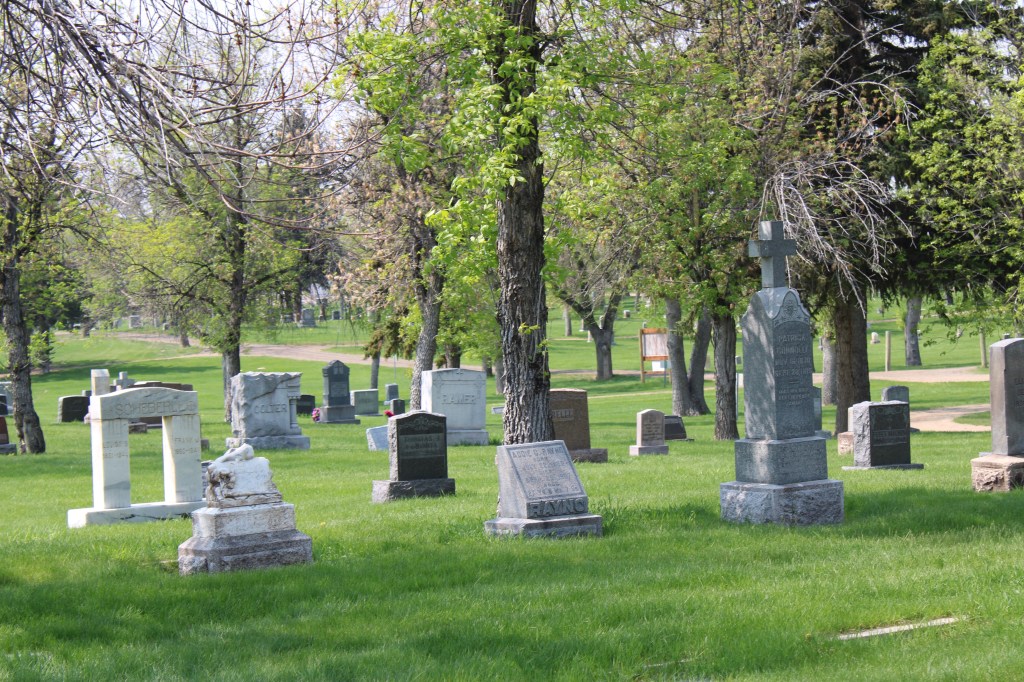
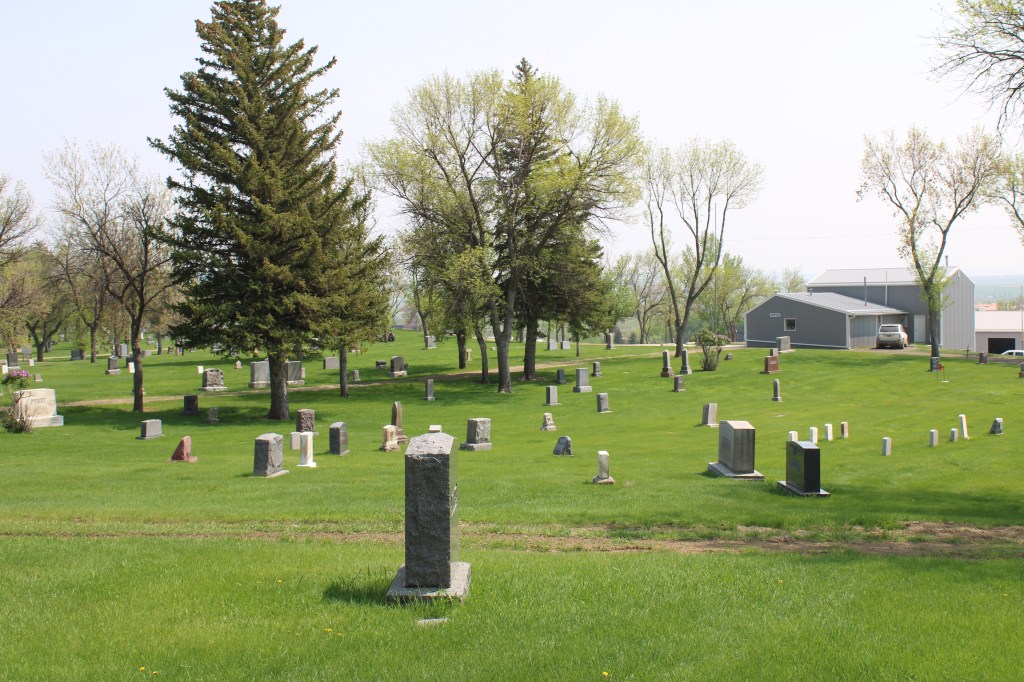
By that year, Highland Cemetery was well established as the city’s primary public burial ground,and is still active today. Reflecting Havre’s middle class roots the cemetery is marked by rows of modest, dignified tombstones and low concrete walled family plots.
Many veterans from the 20th century are buried here, along with many tombstones marking membership in fraternal organizations from the Woodmen of the World to the Masons.
Highland Cemetery is a significant place that documents the city’s progressive response to public needs during its decade of sustained growth in the homesteading boom of the first two decades of the 20th century. Together the two cemeteries would be an excellent companion to Havre’s already established National Register-listed downtown residential district. The city does a fine job of keeping the property maintained and let’s hope that commitment stays in place for another 100 years.
The news came like a thunderbolt in the December 16, 2022 edition of the Montana Free press: the Izaak Walton Inn had been sold to LOGE Camps.
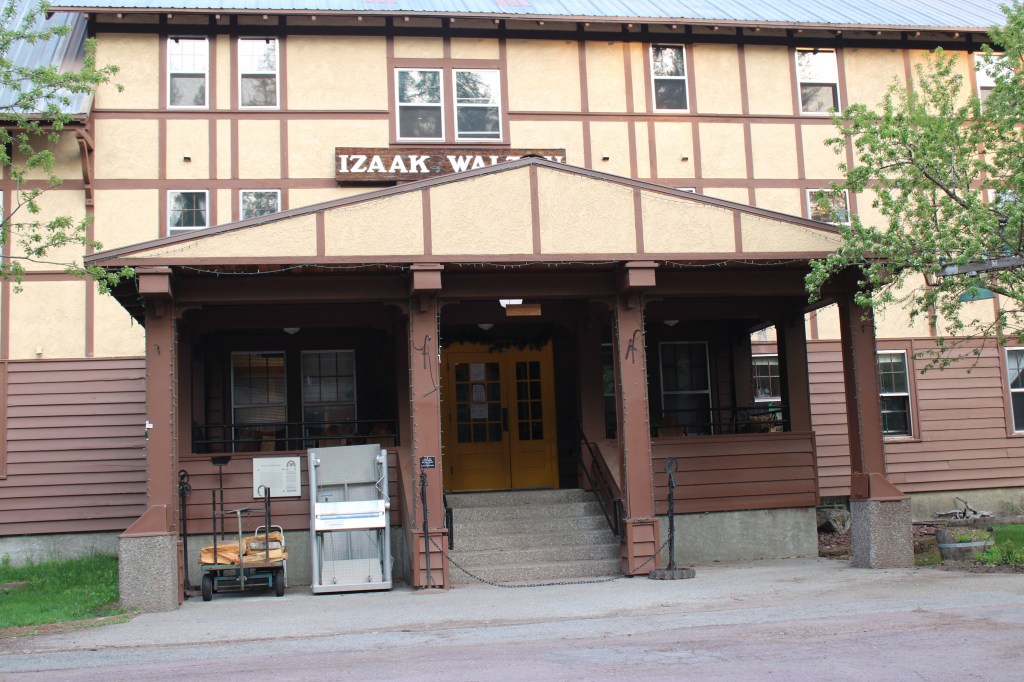
“Street” facade of the building
I must admit that the place is special to me because it was one of the first National Register of Historic Places nominations that I had ever worked on. As I have discussed earlier in this blog, my task was to document its extraordinary significance because at that time of nomination (1984) the building was not yet 50 years old.
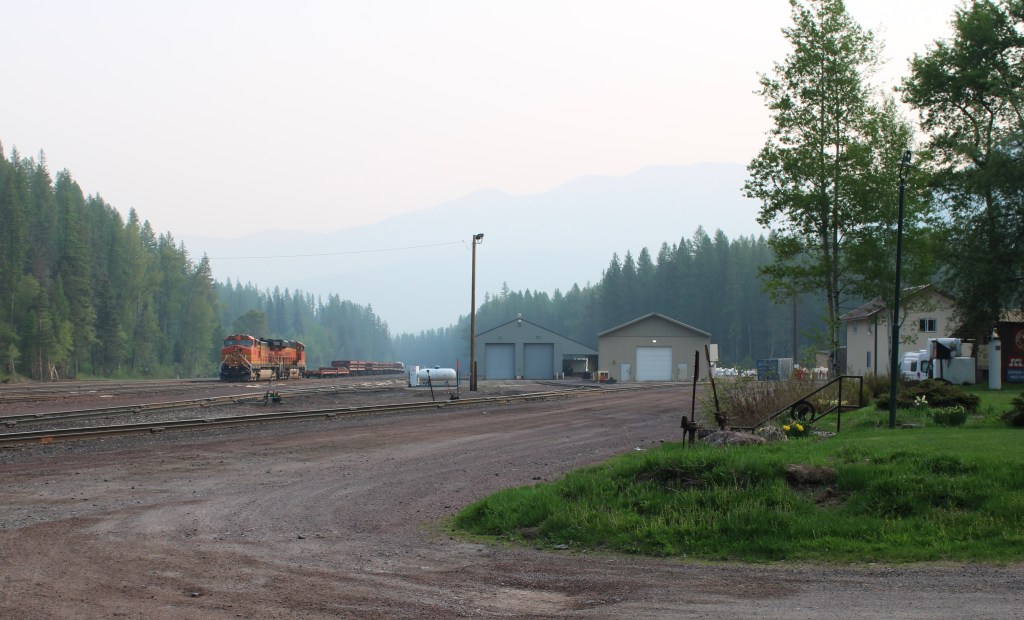
Historic Great Northern yards next to the inn, May 2023
Making the case was not that difficult because when it was built in 1939, it basically WAS the village of Essex: lodging for railroad workers, food, bar, post office, etc., but I have covered these points earlier in the blog. I stopped in May 2023 to document the place one last time, before n auction of interior stuff and collections and before renovations began.
In that December 16, 2022 Montana Free Press story, LOGE Camps official Slate “Olson said LOGE was well aware of the inn’s history and is not planning drastic changes to the property. However, the company does plan to make upgrades. Olson said it’ was’s too early to know exactly what those improvements will be, but that new furniture and room amenities are likely on deck in the coming year. We have a ton of respect for the history of the Izaak Walton Inn,” he said. “We want to create a destination where you feel the history, but you also appreciate the updated touches and amenities.””
May 2023May 2023
Let’s hope so. A good part of the historic integrity of the property lies with its rough edges. The old boarding houses was upgraded to a degree in the mid-1980s, certainly. But you also had the right spaces, the post office boxes, and the laid back vibe of common areas. And wi-fi: well good luck once you left the link in the lobby.
May 2023May 2023May 2023
Believe me, I get it. Historic places are always changing. But here at Essex you have to accept that the building was a key part of a working landscape of the railroad. That its history will forever be tied to the tracks and the people who worked here. Take away that gritty reality, and you lose so much.
May 2023May 2023This covered pedestrian walkway led to other cabins and trails into the park. It was a great way to see the inn and the railway working together.
Here’s to the first 38 years of the Izaak Walton Inn as a National Register landmark adjacent to Glacier National Park. Let’s hope the next generations recognize and nurture the qualities that make it special.

















 Montana's Historic Landscapes